NOTES.
Reading edition
4. Tu-ĭn-tsá is derived from toʻ or tu (water) and ĭntsá or ĭntsá (abundant, scattered widely). The name is spelled Tuincha, Tuintcha, and Tunicha on our maps. The Tuincha Mountains are situated partly in New Mexico and partly in Arizona, about 30 miles from the northern boundary of both Territories. They form the middle portion of a range of which the Chusca and Lukachokai Mountains form the rest. The portion known as Tuĭntsá is about 12 miles long. The highest point is 9,575 feet above sea-level. The top of the range, which is rather level and plateau-like, is well covered with timber, mostly spruce and pine, and abounds in small lakes and ponds; hence the name Tuĭntsá.
Fig. 17 shows the other form of sacred basket. It is also made of aromatic sumac, and is used in the rites to hold sacred meal. The crosses are said to represent clouds, and the zigzag lines to indicate lightning.
In cutting the reed used for a series of cigarettes, they cut off a piece first from the end nearest the root, and they continue to cut off as many pieces as may be necessary from butt to point. The pieces, according as they are cut, are notched near the butt (with a stone knife), so that the relations of the two extremities of the piece may not be forgotten. All through the painting of the cigarettes, and the various manipulations that follow, the butt end must be the nearer to the operator, and the tip end the farther away from him. Since the cigarette-maker sits in the west of the medicine-lodge facing the east, the cigarettes, while there, must lie east and west, with the tips to the east. If a number of cigarettes are made for one act of sacrifice, the first piece cut off is marked with one notch near the base, the second piece with two notches, the third piece with three notches, the fourth piece with four notches, all near the butt ends. This is done in order that they may always be distinguished from one another, and their order of precedence from butt to tip may not be disregarded. When they are taken up to be painted, to have the sacred feathers of the bluebird and yellowbird inserted into them, to be filled with tobacco, to be sealed with moistened pollen, or to be symbolically lighted with the rock crystal, the piece that came from nearest the butt (the senior cigarette, let us call it) is taken first, that nearest the tip last. When they are collected to be placed in the patient’s hands, when they are applied to his or her person, and finally when they are taken out and sacrificed, this order of precedence is always observed. The order of precedence in position, when sacrifices are laid out in a straight row, is from north to south; the senior sacrifice is in the northern extremity of the row, the junior or inferior in the southern extremity. When they are laid out in a circle, the order is from east back to east by the way of the south, west, and north. The gods to whom the sacrifices are made have commonly also an order of precedence, and when such is the case the senior sacrifice is dedicated to the higher god, the junior sacrifice to the lower god. When it is required that other articles, such as feathers, beads, powdered vegetable and mineral substances, be sacrificed with the cigarettes, all these things are placed in corn-husks. To do this, the husks are laid down on a clean cloth with their tips to the east; the cigarettes are laid in them one by one, each in a separate husk, with their tip ends to the east; and the sacred feathers are added to the bundle with their tips also to the east. When dry pollen is sprinkled on the cigarette, it is sprinkled from butt to tip. When moist pollen is daubed on the side of the cigarette, it is daubed from butt to tip. (From “A Study in Butts and Tips.”)319 The hollow internode of the reed only is used. The part containing the solid node is discarded and is split up, so that when thrown away the gods may not mistake it for a true cigarette and suffer disappointment. All the débris of manufacture is carefully collected and deposited to the north of the medicine-lodge. The tobacco of commerce must not be employed. A plug of feathers, referred to above, is shoved into the tube from tip to butt (with an owl’s feather) to keep the tobacco from falling out at the butt. The moistened pollen keeps the tobacco in at the tip end. The rules for measuring kethawns are very elaborate. One or more finger-joints; the span; the width of the outstretched hand, from tip of thumb to tip of little finger; the width of three finger-tips or of four finger-tips joined,—are a few of the measurements. Each kethawn has its established size. This system of sacrifice is common among the pueblo tribes of the Southwest, and traces of it have been found elsewhere. Fig. 23 represents a thing called ketán yaltí, or talking kethawn (described in “The Mountain Chant,”314 p. 452), consisting of a male stick painted black and a female stick painted blue. Fig. 24 shows a kethawn used in the ceremony of the night chant; a dozen such are made for one occasion, but male and female are not distinguished. Fig. 25 depicts a set of fifty-two kethawns, used also in the night chant: of these the four in the centre are cigarettes lying on meal; the forty-eight surrounding the meal are sticks of wood. Those in the east are made of mountain mahogany, those in the south of Forestiera neo-mexicana, those in the west of juniper, and those in the north of cherry. A more elaborate description of them must be reserved for a future work.
“In none of my interviews with him (Hatáli Nĕz) had he shown any impatience with my demands for explanations as we progressed, or with interruptions in our work. He lingered long over his meals, lighted many cigarettes and smoked them leisurely, got tired early in the evening, and was always willing to go to bed as early as I would let him. When, however, he came to relate the creation myth, all this was changed. He arrived early; he remained late; he hastened through his meals; he showed evidence of worry at all delays and interruptions, and frequently begged me to postpone minor explanations. On being urged to explain this change of spirit he said that we were travelling in the land of the dead, in a place of evil and potent ghosts, just so long as he continued to relate those parts of the myth which recount the adventures of his ancestors in the nether world, and that we were in danger so long as our minds remained there; but that when we came to that part of the tale where the people ascend to this—the fifth and last world—we need no longer feel uneasy and could then take our time. His subsequent actions proved that he had given an honest explanation.
“It was near sunset one afternoon, and an hour or more before his supper time, that he concluded his account of the subterranean wanderings of the Navajos and brought them safely through the “Place of Emergence,” in the San Juan Mountains, to the surface of this world. Then he ceased to speak, rolled a cigarette, said he was tired, that he would not be able to tell me any more that night, and left me.
“After his departure I learned that he had announced to some of his friends during the day that he would have to pray at night to counteract the evil effects of his journey through the lower world. After his supper he retired to the apartment among the old adobe huts at Defiance in which he had been assigned room to sleep. I soon followed, and, having waited in the adjoining passage half an hour or more, I heard the voice of the old man rising in the monotonous tones of formulated prayer. Knowing that the rules of the shaman forbade the interruption of any prayer or song, I abruptly entered the room and sat down on the floor near the supplicant.”
(Thus the prayer in question became known to the author.)
East. South. West. North.
First System White. Blue. Yellow. Black.
Second System Black. Blue. Yellow. White.
Both systems are the same, except that the colors black and white change places. The reasons for this change have not been satisfactorily determined. In general, it seems that when speaking of places over ground—lucky and happy places—the first system is employed; while, when places underground—usually places of danger—are described, the second system is used. But there are many apparent exceptions to the latter rule. In one version of the Origin Legend (Version B) the colors are arranged according to the second system both in the lower and upper worlds. In the version of the same legend here published the first system is given for all places in the lower worlds, except in the house of Tiéholtsodi under the waters (par. 178), where the east room is described as dark and the room in the north as being of all colors. Yet the Indian who gave this version (Hatáli Nĕz), in his Prayer of the Rendition (note 315), applies the second system to all regions traversed below the surface of the earth by the gods who come to rescue the lost soul. Although he does not say that the black chamber is in the east, he shows it corresponds with the east by mentioning it first. Hatáli Natlói, in the “Story of Natĭ′nĕsthani,” follows the first system in all cases except when describing the house of Tiéholtsodi under the water, where the first chamber is represented as black and the last as white. Although in this case the rooms may be regarded as placed one above another, the black being mentioned first shows that it is intended to correspond with the east. In all cases, in naming the points of the compass, or anything which symbolizes them, or in placing objects which pertain to them (note 227), the east comes first, the south second, the west third, the north fourth. The sunwise circuit is always followed. If the zenith and nadir are mentioned, the former comes fifth and the latter sixth in order. The north is sometimes symbolized by “all colors,” i.e., white, blue, yellow, and black mixed (note 22), and sometimes by red. In the myth of dsĭlyĭ′dze hatál314 (the story of Dsĭ′lyiʻ Neyáni) five homes of holy people underground are described, in all of which the second system is used. See, also, note 111, where the second system is applied to the house of the sun. In the story of the “Great Shell of Kĭntyél” at the home of the Spider Woman underground, in the sky world, the east is represented by black and the north by white. (See par. 581 and note 40.)
References to the sacred number four are introduced with tiresome pertinacity into all Navaho legends.
Nearly every god has his own special call. A few have none. Imperfect attempts have been made in this work to represent some of these calls by spelling them; but this method represents the original no better than “Bob White” represents the call of a quail. Some of the cries have been recorded by the writer on phonographic cylinders, but even these records are very imperfect. In the ceremonies of the Navahoes, the masked representatives of the gods repeat these calls. The calls of Hastséyalti and Hastséhogan are those most frequently referred to in the tales. (Pars. 287, 378, 471, etc.)
34, 35. Notes 34 and 35 are omitted.
50. Some give the name of the hermaphrodite who died as Natliyilhátse, and say that “she” is now the chief of devils in the lower world,—perhaps the same as the Woman Chief referred to in the “Prayer of a Navaho Shaman.” 315 Version B says that the first to die was the wife of a great chief. (See note 68.)
51. Version A describes the making of the sacred mountains thus: Soon after the arrival of the people in the fifth world (after the first sudatory had been built and the first corn planted), some one said: “It would be well if we had in this world such mountains as we had in the world below.” “I have brought them with me,” said First Man. He did not mean to say he had brought the whole of the mountains with him, but only a little earth from each, with which to start new mountains here. The people laid down four sacred buckskins18 and two sacred baskets5 for him to make his mountains on, for there were six sacred mountains in the lower world, just as there are six in this, and they were named the same there as they now are here. The mountain in the east, Tsĭsnadzĭ′ni, he made of clay from the mountain of the east below, mixed with white shell. The mountain of the south, Tsótsĭl, he made of earth from below mixed with turquoise. The mountain of the west he made of earth mixed with haliotis or abalone shell. The mountain of the north he made of earth mixed with cannel coal.158 Dsĭlnáotĭl he made of earth from the similar mountain in the lower world, mixed with goods of all kinds (yúdi althasaí). Tsolíhi he made of earth from below, mixed with shells and precious stones of all kinds (ĭnklĭ′z althasaí). While they were still on the buckskins and baskets, ten songs were sung which now belong to the rites of hozóni hatál. The burdens of these songs are as follows:—
1st. Long ago he thought of it.
2d. Long ago he spoke of it.
3d. A chief among mountains he brought up with him.
4th. A chief among mountains he has made.
5th. A chief among mountains is rising.
6th. A chief among mountains is beginning to stand.
7th. A chief among mountains stands up.
8th. A cigarette for a chief among mountains we make.
9th. A chief among mountains smokes.
10th. A chief among mountains is satisfied.
When the people came up from the lower world they were under twelve chiefs, but only six of them joined in the singing these songs, and to-day six men sing them. When the mountains were made, the god of each of the four quarters of the world carried one away and placed it where it now stands. The other two were left in the middle of the world and are there still. A pair of gods were then put to live in each mountain, as follows: East, Dawn Boy and Dawn Girl, called also White Shell Boy and White Shell Girl; south, Turquoise Boy and Turquoise Girl; west, Twilight Boy and Haliotis Girl; north, Darkness (or Cannel Coal) Boy and Darkness Girl: at Dsĭlnáotĭl, All-goods (Yúdi-althasaí) Boy and All-goods Girl; at Tsolíhi, All-jewels (Ĭnklĭ′z-althasaí) Boy and All-jewels Girl.
Version B speaks of the making of only four mountains, and very briefly of this.
63. Tsoz-gá-li, a large yellow bird, species undetermined.
65. A-kĭ-da-nas-tá-ni, signifying One-round-thing-sitting-on-top-of-another, is the Navaho name of an eminence called on our maps Hosta Butte, which is situated in Bernalillo County, New Mexico, 14 miles N.N.E. of Chavez Station on the Atlantic and Pacific Railroad. This butte or mesa has an altitude of 8,837 feet. Being surrounded by hills much lower, it is a prominent landmark.
69. Many of the Indians tell that the world was originally small and was increased in size. The following is the version of Náltsos Nigéhani (B): “The mountains that bounded the world were not so far apart then as they are now; hence the world was smaller, and when the sun went over the earth he came nearer to the surface than he does now. So the first day the sun went on his journey it was intolerably hot; the people were almost burned to death, and they prayed to the four winds that each one would pull his mountain away from the centre of the earth, and thus widen the borders of the world. It was done as they desired, and the seas that bounded the land receded before the mountains. But on the second day, although the weather was milder, it was still too hot, and again were the mountains and seas removed. All this occurred again on the third day; but on the fourth day they found the weather pleasant, and they prayed no more for the earth to be changed.”
70. The story of the making of the stars is told in essentially the same way by many story-tellers. It is surprising that Hatáli Nĕz totally omitted it. The following is the tale as told by Náltsos Nigéhani: “Now First Man and First Woman thought it would be better if the sky had more lights, for there were times when the moon did not shine at night. So they gathered a number of fragments of sparkling mica of which to make stars, and First Man proceeded to lay out a plan of the heavens, on the ground. He put a little fragment in the north, where he wished to have the star that would never move, and he placed near it seven great pieces, which are the seven stars we behold in the north now. He put a great bright one in the south, another in the east, and a third in the west, and then went on to plan various constellations, when along came Coyote, who, seeing that three pieces were red, exclaimed, ‘These shall be my stars, and I will place them where I think best;’ so he put them in situations corresponding to places that three great red stars now occupy among the celestial lights. Before First Man got through with his work, Coyote became impatient, and, saying, ‘Oh! they will do as they are,’ he hastily gathered the fragments of mica, threw them upwards, and blew a strong breath after them. Instantly they stuck to the sky. Those to which locations had been assigned adhered in their proper places; but the others were scattered at random and in formless clusters over the firmament.” See “A Part of the Navajo’s Mythology,” pp. 7, 8.306
Tseʻnagahi, Travelling Stone.
Tsĭndilhásitso, Great Wood That Bites.
Bĭtsóziyeadaʻaʻi,
Sánĭsdzol, Old Age Lying Down.
Tseʻtlahódĭlyĭl, Black Under Cliffs.
Tseʻtlahódotlĭ′z, Blue Under Cliffs.
Tséʻtlahaltsó, Yellow Under Cliffs
Tséʻtlahalkaí, White Under Cliffs.
Tseʻtlahóditsos, Sparkling Under Cliffs.
Tsadidahaltáli, Devouring Antelope.
Yeitsolapáhi, Brown Yéitso.
Lokáadikĭsi, Slashing Reeds.
“You see colors under the rocks, at the bottoms of the cliffs, and when you approach them some invisible enemy kills you. These are the same as the Tseʻtlayaltíʻ, or Those Who Talk Under the Cliffs.” Thus said Hatáli Nĕz when questioned.
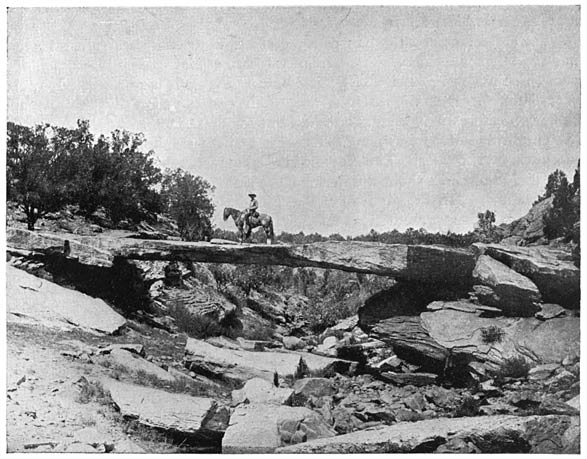
Fig. 38. Natural bridge, near Fort Defiance, Arizona.
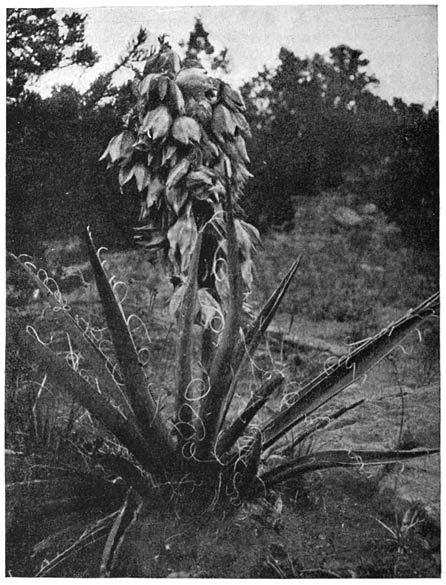
Fig. 39. Yucca baccata.
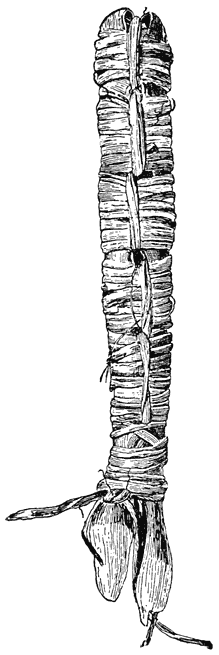
Fig. 40. Drumstick made of Yucca leaves.
97. Note omitted.
atsĭniklĭ′ska (chain-lightning arrows)
hatsĭlkĭ′ska or hadĭlkĭ′ska (sheet-lightning arrows)
saʻbitlólka (sunbeam arrows)
natsilĭ′tka (rainbow arrows)
peshál (stone knife-club)
hatsoilhál, which some say was a thunderbolt, and others say was a great stone knife, with a blade as broad as the hand. Some say that only one stone knife was given, which was for Nayénĕzgạni, and that only two thunderbolts were given, both of which were for Toʻbadzĭstsíni. The man who now personates Nayénĕzgạni in the rites carries a stone knife of unusual size (plate IV.); and he who personates Toʻbadzĭstsíni carries in each hand a wooden cylinder (one black and one red) to represent a thunderbolt. (Plate VII.)
Bĭsdá, Edge of Bank.
Toʻkohokádi, Ground Level with Water. (Here Nayénĕzgạni chased the stone four times in a circle; the chips he knocked off are there yet.)
Daatsĭ′ndaheol, Floating Corn-cob.
Nitatĭ′s, Cottonwood below Ground.
Sasdĕstsáʻ, Gaping Bear.
Béikĭthatyêl, Broad Lake.
Nánzozilin, Make Nánzoz Sticks.
Akĭ′ddahalkaí, Something White on Top (of something else).
Anádsĭl, Enemy Mountain.
Sásbĭtoʻ, Bear Spring (Fort Wingate).
Tseʻtyêlĭskĭ′d, Broad Rock Hill.
Tsadihábĭtĭn, Antelope Trail Ascending.
Kĭnhitsói, Much Sumac.
Tsúskai (Chusca Knoll).
Lestsídelkai, Streaks of White Ashes.
Dsĭlnáodsĭl, Mountain Surrounded by Mountains (Carrizo Mountains.).
Tisnáspas, Circle of Cottonwood.
The above, it is said, are all places where constant springs of water (rare in the Navaho land) are to be found. Some are known to be such. This gives rise to the idea expressed in note 8. There is little doubt that the Navahoes believe in many of the Tiéholtsodi. Probably every constant spring or watercourse has its water god.
“In the interesting account entitled ‘Some Deities and Demons of the Navajos,’ by Dr. W. Matthews, in the October issue of the “Naturalist” (note 306), he mentions the fact that the warriors offered their sacrifices at the sacred shrine of Thoyetli, in the San Juan Valley. He says that the Navajos have a tradition that the gods of war, or sacred brothers, still dwell at Thoyetli, and their reflection is sometimes seen on the San Juan River. Dr. Matthews is certain the last part is due to some natural phenomenon. The following account seems to furnish a complete explanation of this part of the myth. Several years ago a clergyman, while travelling in the San Juan Valley, noticed a curious phenomenon while gazing down upon the San Juan River as it flowed through a deep canyon. Mists began to arise, and soon he saw the shadows of himself and companions reflected near the surface of the river, and surrounded by a circular rainbow, the ‘Circle of Ulloa.’ They jumped, moved away, and performed a number of exercises, to be certain that the figures were their reflections, and the figures responded. There was but slight color in the rainbow. Similar reflections have no doubt caused the superstitious Indians to consider these reflections as those of their deities.”—G. A. Brennan, Roseland, Cook County, Illinois, January 12, 1887.
181. Another version states that when the Western immigrants were travelling along the western base of the Lukachokai Mountains, some wanted to ascend the Tseʻĭnlín valley; but one woman said, “No; let us keep along the base of the mountain.” From this they named her Base of Mountain, and her descendants bear that name now. This explanation is less likely than that in par. 393.
253. [“Klĭs-ka′, the arrow-snake, is a long slender snake that moves with great velocity,—so great that, coming to the edge of a cliff when racing, he flies for some distance through the air before reaching the ground again. The Navahoes believe he could soar if he wanted to. He is red and blue on the belly, striped on the back, six feet long or longer. Sometimes moves like a measuring-worm.”] From the above description Dr. H. C. Yarrow, formerly curator of reptiles in the Smithsonian Institution, is of the opinion that the arrow-snake is Bascanium flagelliforme.
255. Compare with description of Spider Woman and her home in paragraph 306. It would seem that the Navahoes believe in more than one Spider Woman. (May be they believe in one for each world.) In paragraph 581 we have an instance of black being assigned to the east and white to the north. (See note 18.)
MALE.
1. Hastséyalti.
2. Gánaskĭdi.
3. Tóʻnenĭli.
4. Nayénĕzgạni.
5. Toʻbadzĭstsíni.
6. Dsahadoldzá.
7. Hastsézĭni.
8. Hastséhogan.
9. Hátdastsĭsi.266
10. Hastséltsi.271
11. Tsóhanoai.
12. Kléhanoai, or Tléhanoai.
13. Hastsébaka.
Each, for the first seven, wears a different mask. The last six wear masks of one pattern, that of yébaka. (See plate I., fig. 1.)
FEMALE.
14. Hastséoltoi.
15 to 21. Hastsébaad, or goddesses.
All the female characters wear masks of one kind. (See fig. 28 and plate I., fig. 3.)
269. Plate IV. represents a man dressed to personate Nayénĕzgạni, or Slayer of the Alien Gods, as he appears in an act of succor in the ceremony of the night chant, on the afternoon of the ninth day, in company with two other masqueraders (Toʻbadzĭstsíni270 and Hastséoltoi206). The personator has his body painted black with charcoal of four sacred plants, and his hands painted white. He wears a black mask which has a fringe of yellow or reddish hair across the crown and an ornament of turkey’s and eagle’s feathers on top. Five parallel lines with five angles in each, to represent lightning, are painted on one cheek of the mask (sometimes the right, sometimes the left). Small, diamond-shaped holes are cut in the mask for eyes and mouth, and to the edge of each hole a small white shell is attached. On his body there are drawn in white clay the figures of eight bows; six are drawn as shown in the picture and two more are drawn over the shoulder-blades. All these bows are shown as complete (or strung) except those on the left leg and left side of the back, which are represented open or unstrung, as shown in the plate and fig. 41. The symbol at the left leg is made first, that on the left shoulder last of all. All the component lines of the symbol are drawn from above downward; fig. 41 shows the order in which they must be drawn. The symbols must all turn in one direction. The personator wears a collar of fox-skin, a number of rich necklaces of shell, turquoise and coral, a fine skirt or sash around his loins (usually scarlet baize, bayeta, but velvet or any rich material will do), a belt decorated with silver, and ordinary moccasins. He carries in his right hand a great stone knife, with which, in the scene of succor, he makes motions at the patient and at the medicine-lodge to draw out the disease. The patient prays to him, and gives him a cigarette painted black and decorated with the bow-symbols in white. This cigarette is preferably deposited under a piñon-tree. A dry-painting of this god has never been seen by the author, and he has been told that none is ever made.
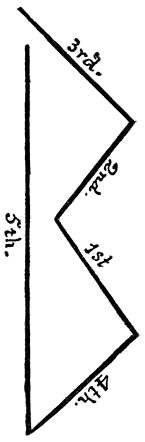
Fig. 41. Diagram of the bow-symbol on the left leg of the personator of Nayénĕzgạni.
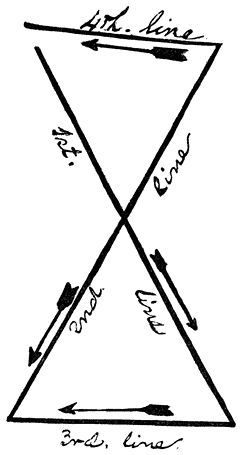
Fig. 42. Diagram of queue-symbol on the left leg of the personator of Toʻbadzĭstsíni.
NAVAHO MUSIC.
BY PROF. JOHN COMFORT FILLMORE.
272. The twenty-eight songs which I have transcribed from phonographic records made by Dr. Washington Matthews have very great scientific interest and value, inasmuch as they throw much light on the problem of the form spontaneously assumed by natural folk-songs. Primitive man, expressing his emotions, especially strongly excited feeling, in song, without any rules or theories, must, of course, move spontaneously along the lines of least resistance. This is the law under which folk-melodies must necessarily be shaped. The farther back we can get toward absolutely primitive expression of emotion in song, the more valuable is our material for scientific purposes; because we can be certain that it is both spontaneous and original, unaffected by contact with civilized music and by any and all theories. In such music we may study the operation of natural psychical laws correlated with physical laws, working freely and coming to spontaneous expression through the vocal apparatus.
These Navaho songs are especially valuable because they carry us well back toward the beginnings of music-making. One only needs to hear them sung, or listen to them in the admirable phonographic records of Dr. Matthews, to be convinced of this from the very quality of tone in which they are sung. In all of them the sounds resemble howling more than singing, yet they are unmistakably musical in two very important particulars: (1) In their strongly marked rhythm; (2) In the unquestionably harmonic relations of the successive tones. I shall deal with them, therefore, under the two heads of Rhythm and Harmonic Melody.
1. Rhythm.—Mr. Richard Wallascheck, the distinguished author of “Primitive Music,” has lately called attention to the importance of sonant rhythm. Not only does the rhythmic impulse precede the other musical elements, but the superiority of sonant rhythm is such as to serve as an incitement to tone-production. Rhythm tends to set the voice going; and of course vocal sounds, which constitute the first music, do not become music until they are rhythmically ordered. They tend to become so ordered by a natural law of pulsation which need not be discussed here. The regularly recurring pulsations, which specially show themselves in all prolonged emissions of vocal sounds, tend also to form themselves in metrical groups; speaking broadly, these metrical groups are usually twos or threes, or simple multiples of twos or threes. This is so, for the most part, in savage folk-music, in our most advanced culture-music, and in all the development which comes between. The metrical grouping into fives or sevens is comparatively rare; but I have found it more frequently by far in savage folk-music than in our music of civilization.
The most striking characteristic of the metrical grouping of tones in the Navaho songs here given is the freedom with which the singer changes from one elementary metre to the other; i.e. from twos to threes and vice versa. So in the compound metres: two twos and three twos, or two threes and three threes, are intermingled with the utmost freedom, so that few of them can be marked in the notation with a single-time signature. Or, if they are, there is almost sure to be an exceptional measure or two here and there which varies from the fundamental metrical type. Thus, the first song on cylinder No. 38 has metrical groupings of three threes and of two threes; i.e. 98 and 68 time. The two songs on cylinder No. 41 have three twos and two twos, treating the eighth note as a unit; or, better, 24 and 34 metre, mingled at the pleasure of the singer. Nearly all the songs vary the metre in this way. The one on cylinder No. 62 has an exceptionally rich variety of metrical arrangement; while the second one, on cylinder No. 38, is exceptionally simple and monotonous in metre and rhythm. A few of them, like No. 25, recorded on cylinder No. 143, are singularly irregular. This song would seem to be based on a grouping of simple twos (24 time, equal to 48) as its fundamental metrical conception; yet a great many measures contain only three eighth notes, and some contain five or even six. The song numbered 28, on cylinder No. 144, has a 88 metre as its foundation, but varied by 24, equal to 48. In respect of metrical grouping, these Navaho songs do not differ in any essential characteristic from the songs of the Omahas, the Kwakiutls, the Pawnees, the Otoes, the Sioux, and other aboriginal folk-music, nor from that of other nations and races, including our own. The complexity of metrical arrangement has been carried much farther by some other tribes, notably the Omahas and the Kwakiutls, than by the Navahoes, so far as appears from the present collection of songs. There is no record here of an accompanying drum-beat, so that, if the combinations of dissimilar rhythms which are so common in the two above-named tribes exist among the Navahoes, they are yet to be recorded and transcribed.
2. Harmonic Melody.—These songs seem to be a real connecting link between excited shouting and excited singing. In quality of tone they are shouts or howls. In pitch-relations they are unmistakably harmonic. Some of them manifest this characteristic most strikingly. For example, the two songs on cylinder No. 41 contain all the tones which compose the chord of C major, and no others. The second one on cylinder No. 38 has the tones D and F sharp and no others, except in the little preliminary flourish at the beginning, and here there is only a passing E, which fills up the gap between the two chord-tones. D is evidently the key-note, and the whole melody is made up of the Tonic chord incomplete. The first song on the same cylinder is similarly made up of the incomplete Tonic chord in C minor; only the opening phrase has the incomplete chord of E flat, the relative major. Cylinder No. 49 has nothing but the Tonic chord in C major, and the chord is complete. No. 61 has the complete chord of B flat minor and nothing else. No. 62 is made up mainly of the chord of F major complete. It has two by-tones occasionally used, G and D, the former belonging to the Dominant and the other to both the Sub-dominant and Relative minor chords. Song No. 9 on cylinder No. 100 has the incomplete chord of D sharp minor, with G sharp, the Sub-dominant in the key, as an occasional by-tone. The last tone of each period, the lowest tone of the song, sounds in the phonograph as if the singer could not reach it easily, and the pitch is rather uncertain. It was probably meant for G sharp; but a personal interview with the singer would be necessary to settle the point conclusively. Song No. 10, on the same cylinder, has the complete Tonic chord in D sharp minor and nothing else except the tone C sharp, which is here not a melodic by-tone, but a harmonic tone, a minor seventh added to the Tonic chord. This is curiously analogous to some of the melodies I heard in the Dahomey village at the World’s Fair, and also to some of the melodies of our own Southern negroes. Song No. 11, on the same cylinder, has the same characteristics as No. 9. Nos. 12 and 13, on cylinder No. 135, contain the complete chord of D flat and nothing else. The two songs on cylinder No. 138 contain the complete chord of C major and nothing else, except at the beginning, where A, the relative minor tone, comes in, in the opening phrase. As a rule, whatever by-tones there are in these songs are used in the preliminary phrase or flourish of the song, and then the singer settles down steadily to the line of the Tonic chord. The two songs recorded on No. 139 have the complete major chord of B flat, with G, the relative minor, as a by-tone. The two songs on No. 143 are in C sharp minor and embody the Tonic chord, with F sharp, the Sub-dominant, as a by-tone. Only the first of the two begins with the tone B, which does not occur again. Song No. 27, on cylinder No. 144, embodies only the complete chord of C sharp minor. No. 28 has the same chord, with F sharp as a by-tone. The two songs on No. 145 are in D minor and are made up mainly of the Tonic chord. The by-tones used are G and B flat, which make up two thirds of the Sub-dominant chord, and C, which belongs to the relative major. No. 32, on cylinder No. 146, has more of diatonic melody. It is in G major, and embodies the chord of the Tonic with by-tones belonging to both the Dominant and Sub-dominant chords, one from each chord. No. 33, on the same cylinder, is less melodious, but has the same harmonic elements. Cylinder 147 has two songs in D major which embody the Tonic chord complete, with slight use of a single by-tone, B, the relative minor. The same is true of song No. 36, on cylinder No. 148. Song No. 37, on the same cylinder, has the major chord of C and nothing else.
There are two striking facts in all this: (1) When these Navahoes make music spontaneously,—make melodies by singing tones in rhythmically ordered succession,—there is always a tone which forces itself on our consciousness as a key-note, or Tonic, and this tone, together with the tones which make up its chord (whether major or minor), invariably predominates overwhelmingly; (2) Whenever by-tones are employed, they invariably belong to the chords which stand in the nearest relation to the Tonic.
I do not care at present to go into any speculations as to why this is so. No matter now what may be the influence of sonant rhythm; what may be the relations of the psychical, physiological, and physical elements; how sound is related to music; how men come to the conception of a minor Tonic when only the major chord is given in the physical constitution of tone. All these questions I wish to waive at this time and only to insist on this one fact, viz.: That, so far as these Navaho songs are concerned, the line of least resistance is always a harmonic line. If we find the same true of all other folk-melodies, I can see no possible escape from the conclusion that harmonic perception is the formative principle in folk-melody. This perception may be sub-conscious, if you please; the savage never heard a chord sung or played as a simultaneous combination of tones in his life; he has no notion whatever of the harmonic relations of tones. But it is not an accident that he sings, or shouts, or howls, straight along the line of a chord, and never departs from it except now and then to touch on some of the nearest related chord-tones, using them mainly as passing-tones to fill up the gap between the tones of his Tonic chord. Such things do not happen by accident, but by law.
That these Navahoes do precisely this thing, no listener can doubt who knows a chord when he hears it. But the same thing is true of all the folk-music I have ever studied. Hundreds of Omaha, Kwakiutl, Otoe, Pawnee, Sioux, Winnebago, Iroquois, Mexican Indian, Zuñi, Australian, African, Malay, Chinese, Japanese, Hindoo, Arab, Turkish, and European folk-songs which I have carefully studied, taking down many of them from the lips of the native singers, all tell the same story. They are all built on simple harmonic lines, all imply harmony, are all equally intelligible to peoples the most diverse in race, and consequently owe their origin and shaping to the same underlying formative principles.
Mr. Wallascheck has called attention to the fact that the rhythmic impulse precedes the musical tones, and also to the part played by sonant rhythm in setting tone-production going. The rhythmic impulse is doubtless the fundamental one in the origination of music. But when the tone-production is once started by the rhythmic impulse, it takes a direction in accordance with the laws of harmonic perception. I was long ago forced to this conclusion in my study of the Omaha music; and these Navaho songs furnish the most striking corroboration of it. How else can we possibly account for the fact that so many of these songs contain absolutely nothing but chord tones? How can we escape the conclusion that the line of least resistance is a harmonic line? Is it not plain that, in the light of this principle, every phenomenon of folk-music becomes clear and intelligible? Is there any other hypothesis which will account for the most striking characteristics of folk-music? Every student must answer these questions for himself. But I, for my part, am wholly unable to resist the conviction that the harmonic sense is the shaping, formative principle in folk-melody.
[In the numbers of The Land of Sunshine (Los Angeles, Cal.), for October and November, 1896, under the title of “Songs of the Navajos,” the poetry and music of this tribe have already been discussed by Professor Fillmore and the author. All the music which follows (see pp. 258, 279–290), except that of the “Dove Song,” was written by Professor Fillmore.]
TEXTS AND INTERLINEAR TRANSLATIONS.
288. PRAYER OF FIRST DANCERS FROM THE CEREMONY OF THE NIGHT CHANT.
1. Tseʻgíhigi, Tseʻgíhi in
2. Hayolkál Dawn behogángi, made of house in,
3. Nahotsói Evening twilight behogángi, made of house in,
4. Kósdĭlyĭl Cloud dark behogángi, made of house in,
5. Nĭltsabaká Rain male behogángi, made of house in,
6. Áʻdĭlyĭl Mist dark behogángi, made of house in,
7. Nĭltsabaád Rain female behogángi, made of house in,
8. Thaditín Pollen behogángi, made of house in,
9. Anĭltáni Grasshoppers behogángi, made of house in,
10. Áʻdĭlyĭl Mist dark dadĭnlági, at the door,
11. Natsílĭt Rainbow bĭkedzétin, his trail the road,
12. Atsĭniklĭ′si Zigzag lightning yíki on it dasizíni, high stands,
13. Nĭltsabaká Rain male yíki on it dasizíni, high stands,
14. Hastsébaka, Deity male,
15. Kósdĭlyĭl Cloud dark nĭkégo your moccasins nahaíniyaʻ. come to us.
16. Kósdĭlyĭl Cloud dark nĭsklégo your leggings nahaíniyaʻ. come to us.
17. Kósdĭlyĭl Cloud dark niégo your shirt nahaíniyaʻ. come to us.
18. Kósdĭlyĭl Cloud dark nĭtságo your headdress nahaíniyaʻ. come to us.
19. Kósdĭlyĭl Cloud dark bininĭnlágo your mind enveloping nahaíniyaʻ. come to us.
20. Nĭkĭ′dze You above idníʻdĭlyĭl thunder dark dahitágo high flying nahaíniyaʻ. come to us.
21. Kosistsín Cloud having a shape bikégo at feet dahitágo high flying nahaíniyaʻ. come to us.
22. Ĭntsekádo Your head over kósdĭlyĭl cloud dark beatsadasyélgo made of far darkness dahitágo high flying nahaíniyaʻ. come to us.
23. Ĭntsekádo Your head over nĭltsabaká rain male beatsadasyélgo made of far darkness dahitágo high flying nahaíniyaʻ. come to us.
24. Ĭntsekádo Your head over áʻdĭlyĭl mist dark beatsadasyélgo made of far darkness dahitágo high flying nahaíniyaʻ. come to us.
25. Ĭntsekádo Your head over nĭltsabaád rain female beatsadasyélgo made of far darkness dahitágo high flying nahaíniyaʻ. come to us.
26. Ĭntsekádo Your head over atsĭniklĭ′si zigzag lightning hadahatĭlgo high out flung dahitágo high flying nahaíniyaʻ. come to us.
27. Ĭntsekádo Your head over natsílĭt rainbow adahazlágo high hanging dahitágo high flying nahaíniyaʻ. come to us.
28. Nĭtaʻlatháʻdo Your wings on ends of kósdĭlyĭl cloud dark beatsadasyélgo made of far darkness dahitágo high flying nahaíniyaʻ. come to us.
29. Nĭtaʻlatháʻdo Your wings on ends of nĭltsabaká rain male beatsadasyélgo made of far darkness dahitágo high flying nahaíniyaʻ. come to us.
30. Nĭtaʻlatháʻdo Your wings on ends of áʻdĭlyĭl mist dark beatsadasyélgo made of far darkness dahitágo high flying nahaíniyaʻ. come to us.
31. Nĭtaʻlatháʻdo Your wings on ends of nĭltsabaád rain female beatsadasyélgo made of far darkness dahitágo high flying nahaíniyaʻ. come to us.
32. Nĭtaʻlatháʻdo Your wings on ends of atsĭniklĭ′si zigzag lightning hadahatĭ′lgo high out flung dahitágo high flying nahaíniyaʻ. come to us.
33. Nĭtaʻlatháʻdo Your wings on ends of natsílĭt rainbow adahazlágo high hanging dahitágo high flying nahaíniyaʻ. come to us.
34. Kósdĭlyĭl, Cloud dark, nĭltsabaká, rain male, áʻdĭlyĭl, mist dark, nĭltsabaád rain female bil with it benatsidasyélgo made of near darkness nahaíniyaʻ. come to us.
35. Niʻgidasyél On the earth darkness nahaíniyaʻ. come to us.
36. Aíbe With the same natátso great corn nĭtadeél floating over biági at bottom tálawus foam yiltoʻlín with water flowing esĭ′nosĭn. that I wish.
37. Nigel Your sacrifice isláʻ. I have made.
38. Nadé For you smoke hiláʻ. I have prepared.
39. Sĭké My feet saádĭtlil. for me restore (as they were).
40. Sĭtsát My legs saádĭtlil. for me restore.
41. Sĭtsís My body saádĭtlil. for me restore.
42. Sĭ′ni My mind saádĭtlil. for me restore.
43. Sĭné My voice saádĭtlil. for me restore.
44. Ádĭstsin This day nalíl your spell saádilel. for me take out.
45. Ádĭstsin This day nalíl your spell saanĭ′nlaʻ. for me remove (take away).
46. Sĭtsádze Away from me tahĭ′ndĭnlaʻ. you have taken it.
47. Nĭzágo Far off sĭtsaʻ from me nénlaʻ. it is taken.
48. Nĭzágo Far off nastlín. you have done it.
49. Hozógo Happily (in a way of beauty) nadedestál. I recover.
50. Hozógo Happily sĭtáhadĭnokél. my interior becomes cool.
51. Hozógo Happily sĭná my eyes, nahodotlél. I regain (the power of).
52. Hozógo Happily sĭtsé my head dĭnokél. becomes cool.
53. Hozógo Happily sĭtsát my limbs nahodotlél. I regain.
54. Hozógo Happily nadedĕstsíl. again I hear.
55. Hozógo Happily sáhadadoltóʻ. for me it is taken off.
56. Hozógo Happily nasádo. I walk.
57. Tosohododelnígo Impervious to pain nasádo. I walk.
58. Sĭtáhago My interior sólago light nasádo. I walk.
59. Sanáʻ My feelings nĭslíngo lively nasádo. I walk.
60. Hozógo Happily (in terrestrial beauty) kósdĭlyĭl clouds dark senahotlédo. I desire (in abundance).
61. Hozógo Happily áʻdĭlyĭl mists dark senahotlédo. I desire.
62. Hozógo Happily sedaahuiltyído passing showers senahotlédo. I desire.
63. Hozógo Happily nanisé plants of all kinds senahotlédo. I desire.
64. Hozógo Happily thaditín pollen senahotlédo. I desire.
65. Hozógo Happily datóʻ dew senahotlédo. I desire.
66. Hozógo Happily natálkai corn white yasóni good beautiful niʻdahazlágo to the end of the earth niʻyilokaí. may (it) come with you.
67. Hozógo Happily natáltsoi corn yellow yasóni good beautiful niʻdahazlágo to the end of the earth niʻyilokaí. may come with you.
68. Hozógo Happily natadotlĭ′zi corn blue yasóni good beautiful niʻdahazlágo to the end of the earth niʻyilokaí. may come with you.
69. Hozógo Happily nataalthasaí corn of all kinds yasóni good beautiful niʻdahazlágo to the end of the earth niʻyilokaí. may come with you.
70. Hozógo Happily nanisé plants of all kinds yasóni good beautiful niʻdahazlágo to the end of the earth niʻyilokaí. may come with you.
71. Hozógo Happily yúdi goods althasaí of all kinds yasóni good beautiful niʻdahazlágo to the end of the earth niʻyilokaí. may come with you.
72. Hozógo Happily ĭnklĭ′z jewels althasaí of all kinds yasóni good beautiful niʻdahazlágo to the end of the earth niʻyilokaí. may come with you.
73. Tíbe With these niʻyitsĭ′de before you hozógo happily niʻyilokaí. may come with you.
74. Tíbe With these niʻyikéde behind you hozógo happily niʻyilokaí. may come with you.
75. Tíbe With these niʻyiyági below you hozógo happily niʻyilokaí. may come with you.
76. Tíbe With these niʻyikígi above you hozógo happily niʻyilokaí. may come with you.
77. Tíbe With these niʻyinagidáltso all around you hozógo happily niʻyilokaí. may come with you.
78. Tibikégo In this way hozógo happily nahodolál. you accomplish your tasks.
79. Hozógo Happily nastúwin old men taʻnĭshyítĭnolil. they will look at you.
80. Hozógo Happily sáni old women taʻnĭshyítĭnolil. they will look at you.
81. Hozógo Happily tsĭlké young men taʻnĭshyítĭnolil. they will look at you.
82. Hozógo Happily tsĭké young women taʻnĭshyítĭnolil. they will look at you.
83. Hozógo Happily asiké boys taʻnĭshyítĭnolil. they will look at you.
84. Hozógo Happily atéte girls taʻnĭshyítĭnolil. they will look at you.
85. Hozógo Happily altsíni children taʻnĭshyítĭnolil. they will look at you.
86. Hozógo Happily ĭntanitaíʻ chiefs taʻnĭshyítĭnolil. they will look at you.
87. Hozógo Happily taidoltáʻ scattering in different directions taʻnĭshyítĭnolil. they will look at you.
88. Hozógo Happily nitailté getting home taʻnĭshyítĭnolil. they will look at you.
89. Hozógo Happily thaditínke pollen trail etíngo on road nitailtéde. they get home.
90. Hozógo Happily ninádahidoka. may they all get back.
91. Hozógo Happily (or in beauty) nasádo. I walk.
92. Sĭtsĭ′dze Me before toward hozógo happily nasádo. I walk.
93. Sĭkéde Me behind from hozógo happily nasádo. I walk.
94. Siyági Me below in hozógo happily nasádo. I walk.
95. Sĭkĭ′dze Me above toward hozógo happily nasádo. I walk.
96. Sĭná Me around dáltso all hozógo happily nasádo. I walk.
97. Hozóna In happiness (or beauty) again hastlé, it is finished (or done),
98. Hozóna In beauty again hastlé, it is finished,
99. Hozóna In beauty again hastlé, it is finished,
100. Hozóna In beauty again hastlé, it is finished,
FREE TRANSLATION OF PRAYER.
1. In Tseʻgíhi (oh you who dwell!)
2. In the house made of the dawn,
3. In the house made of the evening twilight,
4. In the house made of the dark cloud,
5. In the house made of the he-rain,
6. In the house made of the dark mist,
7. In the house made of the she-rain,
8. In the house made of pollen,
9. In the house made of grasshoppers,
10. Where the dark mist curtains the doorway,
11. The path to which is on the rainbow,
12. Where the zigzag lightning stands high on top,
13. Where the he-rain stands high on top,
14. Oh, male divinity!
15. With your moccasins of dark cloud, come to us.
16. With your leggings of dark cloud, come to us.
17. With your shirt of dark cloud, come to us.
18. With your headdress of dark cloud, come to us.
19. With your mind enveloped in dark cloud, come to us.
20. With the dark thunder above you, come to us soaring.
21. With the shapen cloud at your feet, come to us soaring.
22. With the far darkness made of the dark cloud over your head, come to us soaring.
23. With the far darkness made of the he-rain over your head, come to us soaring.
24. With the far darkness made of the dark mist over your head, come to us soaring.
25. With the far darkness made of the she-rain over your head, come to us soaring.
26. With the zigzag lightning flung out on high over your head, come to us soaring.
27. With the rainbow hanging high over your head, come to us soaring.
28. With the far darkness made of the dark cloud on the ends of your wings, come to us soaring.
29. With the far darkness made of the he-rain on the ends of your wings, come to us soaring.
30. With the far darkness made of the dark mist on the ends of your wings, come to us soaring.
31. With the far darkness made of the she-rain on the ends of your wings, come to us soaring.
32. With the zigzag lightning flung out on high on the ends of your wings, come to us soaring.
33. With the rainbow hanging high on the ends of your wings, come to us soaring.
34. With the near darkness made of the dark cloud, of the he-rain, of the dark mist, and of the she-rain, come to us.
35. With the darkness on the earth, come to us.
36. With these I wish the foam floating on the flowing water over the roots of the great corn.
37. I have made your sacrifice.
38. I have prepared a smoke for you.
39. My feet restore for me.
40. My limbs restore for me.
41. My body restore for me.
42. My mind restore for me.
43. My voice restore for me.
44. To-day, take out your spell for me.
45. To-day, take away your spell for me.
46. Away from me you have taken it.
47. Far off from me it is taken.
48. Far off you have done it.
49. Happily I recover.
50. Happily my interior becomes cool.
51. Happily my eyes regain their power.
52. Happily my head becomes cool.
53. Happily my limbs regain their power.
54. Happily I hear again.
55. Happily for me (the spell) is taken off.
56. Happily I walk.
57. Impervious to pain, I walk.
58. Feeling light within, I walk.
59. With lively feelings, I walk.
60. Happily (or in beauty) abundant dark clouds I desire.
61. Happily abundant dark mists I desire.
62. Happily abundant passing showers I desire.
63. Happily an abundance of vegetation I desire.
64. Happily an abundance of pollen I desire.
65. Happily abundant dew I desire.
66. Happily may fair white corn, to the ends of the earth, come with you.
67. Happily may fair yellow corn, to the ends of the earth, come with you.
68. Happily may fair blue corn, to the ends of the earth, come with you.
69. Happily may fair corn of all kinds, to the ends of the earth, come with you.
70. Happily may fair plants of all kinds, to the ends of the earth, come with you.
71. Happily may fair goods of all kinds, to the ends of the earth, come with you.
72. Happily may fair jewels of all kinds, to the ends of the earth, come with you.
73. With these before you, happily may they come with you.
74. With these behind you, happily may they come with you.
75. With these below you, happily may they come with you.
76. With these above you, happily may they come with you.
77. With these all around you, happily may they come with you.
78. Thus happily you accomplish your tasks.
79. Happily the old men will regard you.
80. Happily the old women will regard you.
81. Happily the young men will regard you.
82. Happily the young women will regard you.
83. Happily the boys will regard you.
84. Happily the girls will regard you.
85. Happily the children will regard you.
86. Happily the chiefs will regard you.
87. Happily, as they scatter in different directions, they will regard you.
88. Happily, as they approach their homes, they will regard you.
89. Happily may their roads home be on the trail of pollen (peace).
90. Happily may they all get back.
91. In beauty (happily) I walk.
92. With beauty before me, I walk.
93. With beauty behind me, I walk.
94. With beauty below me, I walk.
95. With beauty above me, I walk.
96. With beauty all around me, I walk.
97. It is finished (again) in beauty,
98. It is finished in beauty,
99. It is finished in beauty,
100. It is finished in beauty.
REMARKS ON THE PRAYER.
This prayer is addressed to a mythic thunder-bird, hence the reference to wings; but the bird is spoken of as a male divinity, and is supposed to dwell with other yéi at Tseʻgíhi. The prayer is said at the beginning of work, on the last night of the klédzi hatál. The shaman speaks it, verse by verse, as it is here recorded, and one of the atsáʻlei or first dancers, repeats it, verse by verse, after him.
The word hozó means, primarily, terrestrial beauty. Its derivative hozógo means in a beautiful earthly manner. Hozóni means beautiful on the earth, locally beautiful (ĭnzóni refers to the beauty of objects and persons); Hozóna signifies again beautiful. But the meanings of these words, and others of similar derivation, have been extended to mean happy, happiness, in a happy or joyful manner, etc. In a free translation they must be rendered by various English words.
The four final verses have been previously recorded by the author as hozóni haslé (Qojòni qaslè), but he now regards the form hozóna hastlé as more correct.289 This expression, repeated twice or four times, according to circumstances, ends all Navaho prayers, yet recorded. It is analogous to the Christian Amen.
290. Note 290 is omitted.