Front matter
Reading edition
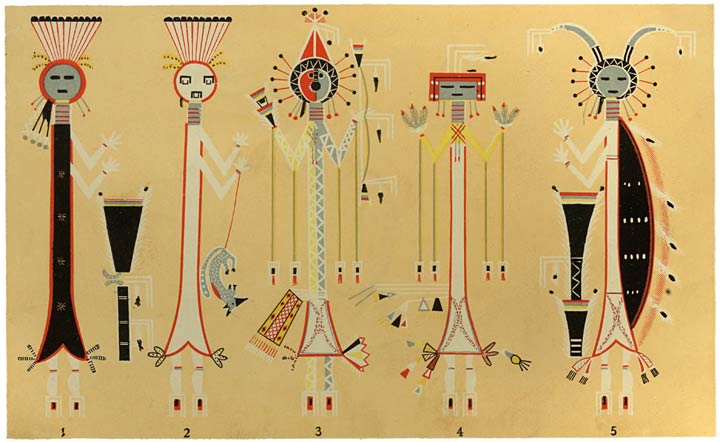
Plate I. NAVAHO GODS AS REPRESENTED IN THE DRY-PAINTINGS (par. 98).
NAVAHO LEGENDS
COLLECTED AND TRANSLATED
BY WASHINGTON MATTHEWS M.D., LL.D. MAJOR U.S. ARMY, EX-PRESIDENT OF THE AMERICAN FOLK-LORE SOCIETY, ETC. WITH INTRODUCTION, NOTES, ILLUSTRATIONS, TEXTS INTERLINEAR TRANSLATIONS, AND MELODIES
BOSTON AND NEW YORK Published for The American Folk-Lore Society by HOUGHTON, MIFFLIN AND COMPANY LONDON: DAVID NUTT, 270, 271 STRAND LEIPZIG: OTTO HARRASSOWITZ, QUERSTRASSE, 14 1897
Five hundred copies printed, of which this is No. 199
Copyright, 1897, BY THE AMERICAN FOLK-LORE SOCIETY.
All rights reserved.
The Riverside Press, Cambridge, Mass., U.S.A. Electrotyped and Printed by H. O. Houghton and Company.
Notes in this chapter
Note 1 · Has-tsé-ho-gan, spelled with alphabet of Bureau of Ethnology, Qastcéqogan, may be freely translated House God. Hastséhogan is one of the leaNote 2 · The name Has-tsé-yal-ti, spelled according to the alphabet of the Bureau of Ethnology “Qastcéyalçi” may be translated Talking God, or TalkinNote 3 · The Dsahadoldzá, or Fringe-mouths, are a class of divine beings of whom little information has been gained. They are represented in the riteNote 4 · Plate I., fig. 1, shows a yébaad, or female yéi or goddess, as she is usually represented in the dry-paintings. The following objects are heNote 5 · The Gán-as-kĭ-di are a numerous race of divinities. Their chief home is at a place called Depéhahatil (Tries to Shoot Sheep), near Tseʻgíhi,