LEGENDS.
Reading edition
THE NAVAHO ORIGIN LEGEND.
I. THE STORY OF THE EMERGENCE.
136. At Toʻbĭlhaskĭ′di (in the middle of the first world), white arose in the east, and they17 regarded it as day there, they say; blue rose in the south, and still it was day to them, and they moved around; yellow rose in the west and showed that evening had come; then dark arose in the north, and they lay down and slept.18
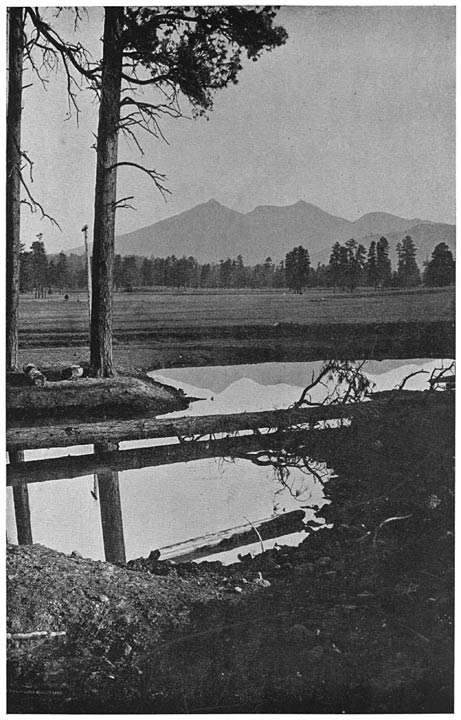
Plate II. SAN FRANCISCO MOUNTAIN (DOKOSLÍD), ARIZONA.56
(The sacred mountain of the West.)
137. At Toʻbĭlhaskĭ′di water flowed out (from a central source) in different directions; one stream flowed to the east, another to the south, and another to the west. There were dwelling-places on the border of the stream that flowed to the east, on that which flowed to the south, and on that which flowed to the west also.
138. To the east there was a place called Tan (Corn), to the south a place called Nahodoóla, and to the west a place called Lókatsosakád (Standing Reed). Again, to the east there was a place called Essalái (One Pot), to the south a place called Toʻhádzĭtĭl (They Come Often for Water), and to the west a place called Dsĭllĭtsíbehogán (House Made of the Red Mountain). Then, again, to the east there was a place called Léyahogán (Under-ground House), to the south a place called Tsĭltsĭ′ntha (Among Aromatic Sumac), and to the west a place called Tseʻlĭsíbehogán (House Made of Red Rock).
139. Holatsí Dĭlyĭ′le (dark ants) lived there. Holatsí Lĭtsí (red ants) lived there. Tanĭlaí (dragon flies) lived there. Tsaltsá (yellow beetles) lived there. Woĭntlĭ′zi (hard beetles) lived there. Tseʻyoáli (stone-carrier beetles) lived there. Kĭnlĭ′zĭn (black beetles) lived there. Maitsán (coyote-dung beetles) lived there. Tsápani (bats) lived there. Totsóʻ (white-faced beetles) lived there. Wonĭstsídi (locusts) lived there. Wonistsídikai (white locusts) lived there. These twelve people started in life there.19
140. To the east extended an ocean, to the south an ocean, to the west an ocean, and to the north an ocean. In the ocean to the east lay Tiéholtsodi; he was chief of the people there. In the ocean to the south lived Thaltláhale (Blue Heron), who was chief of the people there. In the ocean to the west lay Tsal (Frog), who was chief of the people there. In the ocean to the north was Idniʻdsĭlkaí (White Mountain Thunder), and he was chief of the people there.20
141. The people quarrelled among themselves, and this is the way it happened. They committed adultery, one people with another. Many of the women were guilty. They tried to stop it, but they could not. Tiéholtsodi, the chief in the east, said: “What shall we do with them? They like not the land they dwell in.” In the south Blue Heron spoke to them, and in the west Frog said: “No longer shall you dwell here, I say. I am chief here.” To the north White Mountain Lightning said: “Go elsewhere at once. Depart from here!”
142. When again they sinned and again they quarrelled, Tiéholtsodi, in the east, would not speak to them; Blue Heron, in the south, would not speak to them; Frog, in the west, would say nothing; and White Mountain Thunder, in the north, would not speak to them.
143. Again, at the end of four nights, the same thing happened. Those who dwelt at the south again committed crime, and again they had contentions. One woman and one man sought to enter in the east (to complain to the chief), but they were driven out. In the south they sought to go in where Blue Heron lay, but again they were driven out. In the west, where Frog was the chief, again they tried to enter; but again they were driven out. To the north again they were driven out. (The chief) said: “None of you (shall enter here). Go elsewhere and keep on going.” That night at Nahodoóla they held a council, but they arrived at no decision. At dawn Tiéholtsodi began to talk. “You pay no attention to my words. Everywhere you disobey me; you must go to some other place. Not upon this earth shall you remain.” Thus he spoke to them.
144. Among the women, for four nights they talked about it. At the end of the fourth night, in the morning, as they were rising, something white appeared in the east. It appeared also in the south, the west, and the north. It looked like a chain of mountains, without a break, stretching around them. It was water that surrounded them. Water impassable, water insurmountable, flowed all around. All at once they started.
145. They went in circles upward till they reached the sky. It was smooth. They looked down; but there the water had risen, and there was nothing else but water there. While they were flying around, one having a blue head thrust out his head from the sky and called to them, saying: “In here, to the eastward, there is a hole.” They entered the hole and went through it up to the surface (of the second world).
146. The blue one belonged to the Hastsósidĭneʻ, or Swallow People.21 The Swallow People lived there. A great many of their houses, rough and lumpy, lay scattered all around. Each tapered toward the top, and at that part there was a hole for entrance. A great many people approached and gathered around275 the strangers, but they said nothing.
147. The first world was red in color; the second world, into which the people had now entered, was blue.22 They sent out two couriers, a Locust and a White Locust, to the east, to explore the land and see if there were in it any people like themselves. At the end of two days the couriers returned, and said that in one day’s travel they had reached the edge of the world—the top of a great cliff that arose from an abyss whose bottom they could not see; but that they found in all their journey no people, no animals of any kind, no trees, no grass, no sage-brush, no mountains, nothing but bare, level ground. The same couriers were then dispatched in turn to the south, to the west, and to the north. They were gone on each journey two days, and when they returned related, as before, that they had reached the edge of the world, and discovered nothing but an uninhabited waste. Here, then, the strangers found themselves in the centre of a vast barren plain, where there was neither food nor a kindred people. When the couriers had returned from the north, the Swallows visited the camp of the newly arrived people, and asked them why they had sent out the couriers to the east. “We sent them out,” was the reply, “to see what was in the land, and to see if there were any people like ourselves here.” “And what did your couriers tell you?” asked the Swallows. “They told us that they came to the edge of the world, yet found no plant and no living thing in all the land.” (The same questions were asked and the same answers given for the other points of the compass.) “They spoke the truth,” said the Swallow People. “Had you asked us in the beginning what the land contained, we would have told you and saved you all your trouble. Until you came, no one has ever dwelt in all this land but ourselves.” The people then said to the Swallows: “You understand our language and are much like us. You have legs, feet, bodies, heads, and wings, as we have: why cannot your people and our people become friends?” “Let it be as you wish,” said the Swallows, and both parties began at once to treat each other as members of one tribe; they mingled one among the other, and addressed one another by the terms of relationship, as, my brother, my sister, my father, my son, etc.23
148. They all lived together pleasantly and happily for twenty-three days; but on the twenty-fourth night one of the strangers made too free with the wife of the Swallow chief, and next morning, when the latter found out what had happened, he said to the strangers: “We have treated you as friends, and thus you return our kindness. We doubt not that for such crimes you were driven from the lower world, and now you must leave this. This is our land and we will have you here no longer. Besides, this is a bad land. People are dying here every day, and, even if we spare you, you cannot live here long.” The Locusts took the lead on hearing this; they soared upwards; the others followed, and all soared and circled till they reached the sky.
149. When they reached the sky they found it, like the sky of the first world, smooth and hard with no opening; but while they were circling round under it, they saw a white face peering out at them,—it was the face of Nĭ′ltsi, the Wind. He called to them and told them if they would fly to the south they would find a hole through which they could pass; so off they flew, as bidden, and soon they discovered a slit in the sky which slanted upwards toward the south; through this slit they flew, and soon entered the third world in the south.
150. The color of the third world was yellow.22 Here they found nothing but the Grasshopper People. The latter gathered around the wanderers in great numbers, but said nothing. They lived in holes in the ground along the banks of a great river which flowed through their land to the east. The wanderers sent out the same Locust messengers that they had sent out in the second world to explore the land to the east, to the south, to the west, to the north, to find out what the land contained, and to see if there were any kindred people in it; but the messengers returned from each journey after an absence of two days, saying they had reached the end of the world, and that they had found a barren land with no people in it save the Grasshoppers.24
151. When the couriers returned from their fourth journey, the two great chiefs of the Grasshoppers visited the strangers and asked them why they had sent out the explorers, and the strangers answered that they had sent them out to see what grew in the land, and to find if there were any people like themselves in it. “And what did your couriers find?” said the Grasshopper chiefs. “They found nothing save the bare land and the river, and no people but yourselves.” “There is nothing else in the land,” said the chiefs. “Long we have lived here, but we have seen no other people but ourselves until you came.”
152. The strangers then spoke to the Grasshoppers, as they had spoken to the Swallows in the second world, and begged that they might join them and become one people with them. The Grasshoppers consented, and the two peoples at once mingled among one another and embraced one another, and called one another by the endearing terms of relationship, as if they were all of the same tribe.
153. As before, all went well for twenty-three days; but on the twenty-fourth one of the strangers served a chief of the Grasshoppers as the chief of the Swallows had been served in the lower world. In the morning, when the wrong was discovered, the chief reviled the strangers and bade them depart. “For such crimes,” he said, “I suppose you were chased from the world below: you shall drink no more of our water, you shall breathe no more of our air. Begone!”
154. Up they all flew again, and circled round and round until they came to the sky above them, and they found it smooth and hard as before. When they had circled round for some time, looking in vain for an entrance, they saw a red head stuck out of the sky, and they heard a voice which told them to fly to the west. It was the head of Red Wind which they saw, and it was his voice that spoke to them. The passage which they found in the west was twisted round like the tendril of a vine; it had thus been made by the wind. They flew up in circles through it and came out in the fourth world. Four of the Grasshoppers came with them; one was white, one blue, one yellow, and one black. We have grasshoppers of these four colors with us to this day.25
155. The surface of the fourth world was mixed black and white. The colors in the sky were the same as in the lower worlds, but they differed in their duration. In the first world, the white, the blue, the yellow, and the black all lasted about an equal length of time every day. In the second world the blue and the black lasted a little longer than the other two colors. In the third world they lasted still longer. In the fourth world there was but little of the white and yellow; the blue and the black lasted most of the time. As yet there was neither sun, moon, nor star.
156. When they arrived on the surface of the fourth world they saw no living thing; but they observed four great snow-covered peaks sticking up at the horizon,—one at the east, one at the south, one at the west, and one at the north.
157. They sent two couriers to the east. These returned at the end of two days. They related that they had not been able to reach the eastern mountain, and that, though they had travelled far, they had seen no track or trail or sign of life. Two couriers were then sent to the south. When they returned, at the end of two days, they related that they had reached a low range of mountains this side of the great peak; that they had seen no living creature, but had seen two different kinds of tracks, such as they had never seen before, and they described such as the deer and the turkey make now. Two couriers were next sent to the west. In two days these returned, having failed to reach the great peak in the west, and having seen no living thing and no sign of life. At last two couriers were sent to the north. When these got back to their kindred they said they had found a race of strange men, who cut their hair square in front, who lived in houses in the ground and cultivated fields. These people, who were engaged in gathering their harvest, the couriers said, treated them very kindly and gave them food to eat. It was now evident to the wanderers that the fourth world was larger than any of the worlds below.
158. The day following the return of the couriers who went to the north, two of the newly discovered race—Kisáni (Pueblos) they were called—entered the camp of the exiles and guided the latter to a stream of water. The water was red, and the Kisáni told the wanderers they must not walk through the stream, for if they did the water would injure their feet. The Kisáni showed them a square raft made of four logs,—a white pine, a blue spruce, and yellow pine, and a black spruce,—on which they might cross; so they went over the stream and visited the homes of the Kisáni.
159. The Kisáni gave the wanderers corn and pumpkins to eat, and the latter lived for some time on the food given to them daily by their new friends. They held a council among themselves, in which they resolved to mend their manners for the future and do nothing to make the Kisáni angry. The land of the Kisáni had neither rain nor snow; the crops were raised by irrigation.
160. Late in the autumn they heard in the east the distant sound of a great voice calling. They listened and waited, and soon heard the voice nearer and louder. They listened still and heard the voice a third time, nearer and louder than before. Once more they listened, and soon they heard the voice louder still, and clear like the voice of one near at hand. A moment later four mysterious beings appeared to them.26 These were: Bĭtsís Lakaí, or White Body, a being like the god of this world whom the Navahoes call Hastséyalti; Bĭtsís Dotlĭ′z, or Blue Body, who was like the present Navaho god Tóʻnenĭli, or Water Sprinkler; Bĭtsís Lĭtsói, or Yellow Body; and Bĭtsís Lĭzĭ′n, or Black Body, who was the same as the present Navaho god of fire, Hastsézĭni.
161. These beings, without speaking, made many signs to the people, as if instructing them; but the latter did not understand them. When the gods had gone, the people long discussed the mysterious visit, and tried to make out what the gods meant by the signs they had made. Thus the gods visited four days in succession. On the fourth day, when the other three had departed, Black Body remained behind and spoke to the people in their own language. He said: “You do not seem to understand the signs that these gods make you, so I must tell you what they mean. They want to make more people, but in form like themselves. You have bodies like theirs; but you have the teeth, the feet, and the claws of beasts and insects. The new creatures are to have hands and feet like ours. But you are uncleanly, you smell badly. Have yourselves well cleansed when we return; we will come back in twelve days.”
162. On the morning of the twelfth day the people washed themselves well. The women dried themselves with yellow corn-meal; the men with white corn-meal.27 Soon after the ablutions were completed they heard the distant call of the approaching gods. It was shouted, as before, four times,—nearer and louder at each repetition,—and, after the fourth call, the gods appeared. Blue Body and Black Body each carried a sacred buckskin. White Body carried two ears of corn, one yellow, one white, each covered at the end completely with grains.28
163. The gods laid one buckskin on the ground with the head to the west; on this they placed the two ears of corn, with their tips to the east, and over the corn they spread the other buckskin with its head to the east; under the white ear they put the feather of a white eagle, under the yellow ear the feather of a yellow eagle. Then they told the people to stand at a distance and allow the wind to enter. The white wind blew from the east, and the yellow wind blew from the west, between the skins. While the wind was blowing, eight of the Mirage People came and walked around the objects on the ground four times, and as they walked the eagle feathers, whose tips protruded from between the buckskins, were seen to move. When the Mirage People had finished their walk the upper buckskin was lifted,—the ears of corn had disappeared; a man and a woman lay there in their stead.
164. The white ear of corn had been changed into a man, the yellow ear into a woman. It was the wind that gave them life. It is the wind that comes out of our mouths now that gives us life. When this ceases to blow we die. In the skin at the tips of our fingers we see the trail of the wind; it shows us where the wind blew when our ancestors were created.
165. The pair thus created were First Man and First Woman (Atsé Hastín and Atsé Estsán). The gods directed the people to build an enclosure of brushwood for the pair. When the enclosure was finished, First Man and First Woman entered it, and the gods said to them: “Live together now as husband and wife.” At the end of four days hermaphrodite29 twins were born, and at the end of four days more a boy and a girl were born, who in four days grew to maturity and lived with one another as husband and wife. The primal pair had in all five pairs of twins, the first of which only was barren, being hermaphrodites.
166. In four days after the last pair of twins was born, the gods came again and took First Man and First Woman away to the eastern mountain where the gods dwelt, and kept them there for four days. When they returned all their children were taken to the eastern mountain and kept there for four days. Soon after they all returned it was observed that they occasionally wore masks, such as Hastséyalti and Hastséhogan wear now, and that when they wore these masks they prayed for all good things,—for abundant rain and abundant crops. It is thought, too, that during their visit to the eastern mountain they learned the awful secrets of witchcraft, for the antíhi (witches, wizards) always keep such masks with them and marry those too nearly related to them.
167. When they returned from the eastern mountain the brothers and sisters separated; and, keeping the fact of their former unlawful marriages secret, the brothers married women of the Mirage People and the sisters married men of the Mirage People. They kept secret, too, all the mysteries they had learned in the eastern mountain. The women thus married bore children every four days, and the children grew to maturity in four days, were married, and in their turn had children every four days. This numerous offspring married among the Kisáni, and among those who had come from the lower world, and soon there was a multitude of people in the land.
168. These descendants of First Man and First Woman made a great farm. They built a dam and dug a wide irrigating ditch. But they feared the Kisáni might injure their dam or their crops; so they put one of the hermaphrodites to watch the dam and the other to watch the lower end of the field. The hermaphrodite who watched at the dam invented pottery. He made first a plate, a bowl, and a dipper, which were greatly admired by the people. The hermaphrodite who lived at the lower end of the farm invented the wicker water-bottle.30 Others made, from thin split boards of cottonwood, implements which they shoved before them to clear the weeds out of the land. They made also hoes from shoulder-blades of deer and axes of stone. They got their seeds from the Kisáni.
169. Once they killed a little deer, and some one among them thought that perhaps they might make, from the skin of the head, a mask, by means of which they could approach other deer and kill them. They tried to make such a mask but failed; they could not make it fit. They debated over the invention and considered it for four days, but did not succeed. On the morning of the fifth day they heard the gods shouting in the distance. As on a previous occasion, they shouted four times, and after the fourth call they made their appearance. They brought with them heads of deer and of antelope. They showed the people how the masks were made and fitted, how the eye-holes were cut, how the motions of the deer were to be imitated, and explained to them all the other mysteries of the deer-hunt.31 Next day hunters went out and several deer were killed; from these more masks were made, and with these masks more men went out to hunt; after that time the camp had abundance of meat. The people dressed the deerskins and made garments out of them.
170. The people from the third world had been in the fourth world eight years when the following incident occurred: One day they saw the sky stooping down and the earth rising up to meet it. For a moment they came in contact, and then there sprang out of the earth, at the point of contact, the Coyote and the Badger. We think now that the Coyote and the Badger are children of the sky. The Coyote rose first, and for this reason we think he is the elder brother of the Badger. At once the Coyote came over to the camp and skulked round among the people, while the Badger went down into the hole that led to the lower world.
171. First Man told the people the names of the four mountains which rose in the distance. They were named the same as the four mountains that now bound the Navaho land. There was Tsĭsnadzĭ′ni in the east, Tsótsĭl in the south, Dokoslíd in the west, and Depĕ′ntsa in the north, and he told them that a different race of people lived in each mountain.
172. First Man was the chief of all these people in the fourth world, except the Kisáni. He was a great hunter, and his wife, First Woman, was very corpulent. One day he brought home from the hunt a fine fat deer. The woman boiled some of it and they had a hearty meal. When they were done the woman wiped her greasy hands on her dress, and made a remark which greatly enraged her husband; they had a quarrel about this, which First Man ended by jumping across the fire and remaining by himself in silence for the rest of the night.32
173. Next morning First Man went out early and called aloud to the people: “Come hither, all ye men,” he said; “I wish to speak to you, but let all the women stay behind; I do not wish to see them.” Soon all the males gathered, and he told them what his wife had said the night before. “They believe,” he said, “that they can live without us. Let us see if they can hunt game and till the fields without our help. Let us see what sort of a living they can make by themselves. Let us leave them and persuade the Kisáni to come with us. We will cross the stream, and when we are gone over we will keep the raft on the other side.” He sent for the hermaphrodites. They came, covered with meal, for they had been grinding corn. “What have you that you have made yourselves?” he asked. “We have each two mealing-stones, and we have cups and bowls and baskets and many other things,” they answered. “Then take these all along with you,” he ordered, “and join us to cross the stream.” Then all the men and the hermaphrodites assembled at the river and crossed to the north side on the raft, and they took over with them their stone axes and farm implements and everything they had made. When they had all crossed they sent the raft down to the Kisáni for them to cross. The latter came over,—six gentes of them,—but they took their women with them. While some of the young men were crossing the stream they cried at parting with their wives; still they went at the bidding of their chief. The men left the women everything the latter had helped to make or raise.
174. As soon as they had crossed the river some of the men went out hunting, for the young boys needed food, and some set to work to chop down willows and build huts. They had themselves all sheltered in four days.
175. That winter the women had abundance of food, and they feasted, sang, and had a merry time. They often came down to the bank of the river and called across to the men and taunted and reviled them. Next year the men prepared a few small fields and raised a little corn; but they did not have much corn to eat, and lived a good deal by hunting. The women planted all of the old farm, but they did not work it very well; so in the winter they had a small crop, and they did not sing and make merry as in the previous winter. In the second spring the women planted less, while the men planted more, cleared more land, and increased the size of their farm. Each year the fields and crops of the men increased, while those of the women diminished and they began to suffer for want of food. Some went out and gathered the seeds of wild plants to eat. In the autumn of the third year of separation many women jumped into the river and tried to swim over; but they were carried under the surface of the water and were never seen again. In the fourth year the men had more food than they could eat; corn and pumpkins lay untouched in the fields, while the women were starving.
176. First Man at length began to think what the effect of his course might be. He saw that if he continued to keep the men and the women apart the race might die out, so he called the men and spoke his thoughts to them. Some said, “Surely our race will perish,” and others said, “What good is our abundance to us? We think so much of our poor women starving in our sight that we cannot eat.” Then he sent a man to the shore to call across the stream to find if First Woman were still there, and to bid her come down to the bank if she were. She came to the bank, and First Man called to her and asked if she still thought she could live alone. “No,” she replied, “we cannot live without our husbands.” The men and the women were then told to assemble at the shores of the stream; the raft was sent over and the women were ferried across. They were made to bathe their bodies and dry them with meal. They were put in a corral and kept there until night, when they were let out to join the men in their feasts.33
177. When they were let out of the corral it was found that three were missing. After dark, voices were heard calling from the other side of the river; they were the voices of the missing ones,—a mother and her two daughters. They begged to be ferried over, but the men told them it was too dark, that they must wait until morning. Hearing this, they jumped into the stream and tried to swim over. The mother succeeded in reaching the opposite bank and finding her husband. The daughters were seized by Tiéholtsodi, the water monster, and dragged down under the water.
178. For three nights and three days the people heard nothing about the young women and supposed them lost forever. On the morning of the fourth day the call of the gods was heard,—four times as usual,—and after the fourth call White Body made his appearance, holding up two fingers and pointing to the river. The people supposed that these signs had reference to the lost girls. Some of the men crossed the stream on the raft and looked for the tracks of the lost ones; they traced the tracks to the edge of the water, but no farther. White Body went away, but soon returned, accompanied by Blue Body. White Body carried a large bowl of white shell, and Blue Body a large bowl of blue shell. They asked for a man and a woman to accompany them, and they went down to the river. They put both the bowls on the surface of the water and caused them to spin around. Beneath the spinning bowls the water opened, for it was hollow, and gave entrance to a large house of four rooms. The room in the east was made of the dark waters, the room in the south of the blue waters, the room in the west of the yellow waters, and the room in the north of waters of all colors.36
179. The man and the woman descended and Coyote followed them. They went first into the east room, but there they found nothing; then they went into the south room, but there they found nothing; next they went into the west room, where again they found nothing; at last they went into the north room, and there they beheld the water monster Tiéholtsodi, with the two girls he had stolen and two children of his own. The man and the woman demanded the children, and as he said nothing in reply they took them and walked away. But as they went out Coyote, unperceived by all, took the two children of Tiéholtsodi and carried them off under his robe. Coyote always wore his robe folded close around him and always slept with it thus folded, so no one was surprised to see that he still wore his robe in this way when he came up from the waters, and no one suspected that he had stolen the children of Tiéholtsodi.
180. Next day the people were surprised to see deer, turkey, and antelope running past from east to west, and to see animals of six different kinds (two kinds of Hawks, two kinds of Squirrels, the Hummingbird, and the Bat) come into their camp as if for refuge. The game animals ran past in increasing numbers during the three days following. On the morning of the fourth day, when the white light rose, the people observed in the east a strange white gleam along the horizon, and they sent out the Locust couriers to see what caused this unusual appearance. The Locusts returned before sunset, and told the people that a vast flood of waters was fast approaching from the east. On hearing this the people all assembled together, the Kisáni with the others, in a great multitude, and they wailed and wept over the approaching catastrophe. They wept and moaned all night and could not sleep.
181. When the white light arose in the east, next morning, the waters were seen high as mountains encircling the whole horizon, except in the west, and rolling on rapidly. The people packed up all their goods as fast as they could, and ran up on a high hill near by, for temporary safety. Here they held a council. Some one suggested that perhaps the two Squirrels (Hazáitso and Hazáistozi) might help them. “We will try what we can do,” said the Squirrels. One planted a piñon seed, the other a juniper seed, and they grew so very fast that the people hoped that they would soon grow so tall that the flood could not reach their tops, and that all might find shelter there. But after the trees grew a little way they began to branch out and grew no higher. Then the frightened people called on the Weasels (Gloʻdsĭlkái and Gloʻdsĭlzĭ′ni). One of these planted a spruce seed and one a pine seed. The trees sprouted at once and grew fast, and again the people began to hope; but soon the trees commenced to branch, and they dwindled to slender points at the top and ceased to grow higher. Now they were in the depths of despair, for the waters were coming nearer every moment, when they saw two men approaching the hill on which they were gathered.
182. One of the approaching men was old and grayhaired; the other, who was young, walked in advance. They ascended the hill and passed through the crowd, speaking to no one. The young man sat down on the summit, the old man sat down behind him, and the Locust sat down behind the old man,—all facing the east. The elder took out seven bags from under his robe and opened them. Each contained a small quantity of earth. He told the people that in these bags he had earth from the seven sacred mountains. There were in the fourth world seven sacred mountains, named and placed like the sacred mountains of the present Navaho land. “Ah! Perhaps our father can do something for us,” said the people. “I cannot, but my son may be able to help you,” said the old man. Then they bade the son to help them, and he said he would if they all moved away from where he stood, faced to the west, and looked not around until he called them; for no one should see him at his work. They did as he desired, and in a few moments he called them to come to him. When they came, they saw that he had spread the sacred earth on the ground and planted in it thirty-two reeds, each of which had thirty-two joints. As they gazed they beheld the roots of the reeds striking out into the soil and growing rapidly downward. A moment later all the reeds joined together and became one reed of great size, with a hole in its eastern side. He bade them enter the hollow of the reed through this hole. When they were all safely inside, the opening closed, and none too soon, for scarcely had it closed when they heard the loud noise of the surging waters outside, saying, “Yin, yin, yin.”37
183. The waters rose fast, but the reed grew faster, and soon it grew so high that it began to sway, and the people inside were in great fear lest, with their weight, it might break and topple over into the water. White Body, Blue Body, and Black Body were along. Black Body blew a great breath out through a hole in the top of the reed; a heavy dark cloud formed around the reed and kept it steady. But the reed grew higher and higher; again it began to sway, and again the people within were in great fear, whereat he blew and made another cloud to steady the reed. By sunset it had grown up close to the sky, but it swayed and waved so much that they could not secure it to the sky until Black Body, who was uppermost, took the plume out of his head-band and stuck it out through the top of the cane against the sky, and this is why the reed (Phragmites communis) always carries a plume on its head now.38
184. Seeing no hole in the sky, they sent up the Great Hawk, Ginĭ′tso, to see what he could do. He flew up and began to scratch in the sky with his claws, and he scratched and scratched till he was lost to sight. After a while he came back, and said that he scratched to where he could see light, but that he did not get through the sky. Next they sent up a Locust.39 He was gone a long time, and when he came back he had this story to tell: He had gotten through to the upper world, and came out on a little island in the centre of a lake. When he got out he saw approaching him from the east a black Grebe, and from the west a yellow Grebe.40 One of them said to him: “Who are you and whence come you?” But he made no reply. The other then said: “We own half of this world,—I in the east, my brother in the west. We give you a challenge. If you can do as we do, we shall give you one half of the world; if you cannot, you must die.” Each had an arrow made of the black wind. He passed the arrow from side to side through his heart and flung it down to Wonĭstsídi, the Locust.41 The latter picked up one of the arrows, ran it from side to side through his heart, as he had seen the Grebes do, and threw it down.42 The Grebes swam away, one to the east and one to the west, and troubled him no more. When they had gone, two more Grebes appeared, a blue one from the south and a shining one from the north. They spoke to him as the other Grebes had spoken, and gave him the same challenge. Again he passed the arrow through his heart and the Grebes departed, leaving the land to the locust. To this day we see in every locust’s sides the holes made by the arrows. But the hole the Locust made in ascending was too small for many of the people, so they sent Badger up to make it larger. When Badger came back his legs were stained black with the mud, and the legs of all badgers have been black ever since. Then First Man and First Woman led the way and all the others followed them, and they climbed up through the hole to the surface of this—the fifth—world.
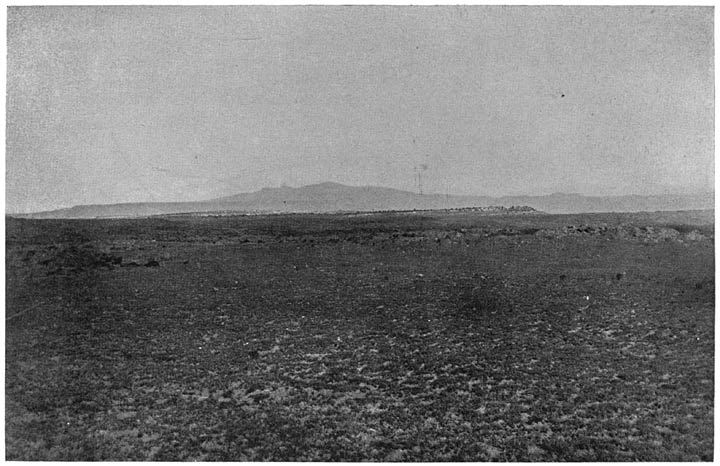
Plate III. DISTANT VIEW OF SAN MATEO MOUNTAIN (TSÓTSĬL), NEW MEXICO.54
(The sacred mountain of the South.)
II. EARLY EVENTS IN THE FIFTH WORLD.
185. The lake43 was bounded by high cliffs, from the top of which stretched a great plain. There are mountains around it now, but these have been created since the time of the emergence. Finding no way to get out of the lake, they called on Blue Body to help them. He had brought with him from the lower world four stones; he threw one of these towards each of the four cardinal points against the cliffs, breaking holes, through which the waters flowed away in four different directions.44 The lake did not altogether drain out by this means; but the bottom became bare in one place, connecting the island with the mainland. But the mud was so deep in this place that they still hesitated to cross, and they prayed to Nĭ′ltsi Dĭlkóhi, Smooth Wind, to come to their aid.45 Nĭ′ltsi Dĭlkóhi blew a strong wind, and in one day dried up the mud so that the people could easily walk over. While they were waiting for the ground to dry, the Kisáni camped on the east side of the island and built a stone wall (which stands to this day), to lean against and to shelter them from the wind.46 The other people set up a shelter of brushwood. The women erected four poles, on which they stretched a deerskin, and under the shelter of this they played the game of three-sticks,47 tsĭndĭ′, one of the four games which they brought with them from the lower world.
186. When they reached the mainland they sought to divine their fate. To do this some one threw a hide-scraper into the water, saying: “If it sinks we perish, if it floats we live.” It floated, and all rejoiced. But Coyote said: “Let me divine your fate.” He picked up a stone, and saying, “If it sinks we perish; if it floats we live,” he threw it into the water. It sank, of course, and all were angry with him and reviled him; but he answered them saying: “If we all live, and continue to increase as we have done, the earth will soon be too small to hold us, and there will be no room for the cornfields. It is better that each of us should live but a time on this earth and then leave and make room for our children.” They saw the wisdom of his words and were silent. The day they arrived at the shore they had two visitors,—Puma and Wolf. “We have heard,” said these, “that some new people had come up out of the ground, and we have come over to see them.” Puma took a bride from among the new people.
187. On the fourth day of the emergence some one went to look at the hole through which they had come out, and he noticed water welling up there; already it was nearly on a level with the top of the hole, and every moment it rose higher. In haste he ran back to his people and told them what he had seen. A council was called at once to consider the new danger that threatened them. First Man, who rose to speak, said, pointing to Coyote: “Yonder is a rascal, and there is something wrong about him. He never takes off his robe, even when he lies down. I have watched him for a long time, and have suspected that he carries some stolen property under his robe. Let us search him.”48 They tore the robe from Coyote’s shoulders, and two strange little objects dropped out that looked something like buffalo calves, but were spotted all over in various colors; they were the young of Tiéholtsodi. At once the people threw them into the hole through which the waters were pouring; in an instant the waters subsided, and rushed away with a deafening noise to the lower world.49
188. On the fifth night one of the twin hermaphrodites ceased to breathe. They left her alone all that night, and, when morning came, Coyote proposed to lay her at rest among the rocks. This they did; but they all wondered what had become of her breath. They went in various directions to seek for its trail, but could find it nowhere. While they were hunting, two men went near the hole through which they had come from the lower world. It occurred to one of them to look down into the hole. He did so, and he saw the dead one seated by the side of the river, in the fourth world, combing her hair. He called to his companion and the latter came and looked down, too. They returned to their people and related what they had seen; but in four days both these men died, and ever since the Navahoes have feared to look upon the dead, or to behold a ghost, lest they die themselves.60
189. After this it was told around that the Kisáni, who were in camp at a little distance from the others, had brought with them from the lower world an ear of corn for seed. Some of the unruly ones proposed to go to the camp of the Kisáni and take the corn away from them; but others, of better counsel, said that this would be wrong, that the Kisáni had had as much trouble as the rest, and if they had more foresight they had a right to profit by it. In spite of these words, some of the young men went and demanded the corn of the Kisáni. The latter said, after some angry talk on both sides, “We will break the ear in two and give you whichever half you choose.” The young men agreed to this bargain, and the woman who owned the ear broke it in the middle and laid the pieces down for the others to choose. The young men looked at the pieces, and were considering which they would take, when Coyote, getting impatient, picked up the tip end of the ear and made off with it. The Kisáni kept the butt, and this is the reason the Pueblo Indians have to-day better crops of corn than the Navahoes. But the Pueblos had become alarmed at the threats and angry language of their neighbors and moved away from them, and this is why the Navahoes and Pueblos now live apart from one another.
190. After the Kisáni moved away, First Man and First Woman, Black Body and Blue Body, set out to build the seven sacred mountains of the present Navaho land. They made them all of earth which they had brought from similar mountains in the fourth world. The mountains they made were Tsĭsnadzĭ′ni in the east, Tsótsĭl (Taylor, San Mateo) in the south, Dokoslíd (San Francisco) in the west, Depĕ′ntsa (San Juan) in the north, with Dsĭlnáotĭl, Tsolíhi, and Akĭdanastáni (Hosta Butte) in the middle of the land.61
191. Through Tsĭsnadzĭ′ni,62 in the east, they ran a bolt of lightning to fasten it to the earth. They decorated it with white shells, white lightning, white corn, dark clouds, and he-rain. They set a big dish or bowl of shell on its summit, and in it they put two eggs of the Pigeon to make feathers for the mountain. The eggs they covered with a sacred buckskin to make them hatch (there are many wild pigeons in this mountain now). All these things they covered with a sheet of daylight, and they put the Rock Crystal Boy and the Rock Crystal Girl53 into the mountain to dwell.
192. Tsótsĭl,54 the mountain of the south, they fastened to the earth with a great stone knife, thrust through from top to bottom. They adorned it with turquoise, with dark mist, she-rain, and all different kinds of wild animals. On its summit they placed a dish of turquoise; in this they put two eggs of the Bluebird, which they covered with sacred buckskin (there are many bluebirds in Tsótsĭl now), and over all they spread a covering of blue sky. The Boy who Carries One Turquoise and the Girl who Carries One Grain of Corn55 were put into the mountain to dwell.
193. Dokoslíd,56 the mountain of the west, they fastened to the earth with a sunbeam. They adorned it with haliotis shell, with black clouds, he-rain, yellow corn, and all sorts of wild animals. They placed a dish of haliotis shell on the top, and laid in this two eggs of the Yellow Warbler, covering them with sacred buckskins. There are many yellow warblers now in Dokoslíd. Over all they spread a yellow cloud, and they sent White Corn Boy and Yellow Corn Girl57 to dwell there.
194. Depĕ′ntsa, the mountain in the north, they fastened with a rainbow. They adorned it with black beads (pászĭni), with the dark mist, with different kinds of plants, and many kinds of wild animals. On its top they put a dish of pászĭni; in this they placed two eggs of the Blackbird, over which they laid a sacred buckskin. Over all they spread a covering of darkness. Lastly they put the Pollen Boy and Grasshopper Girl59 in the mountain, to dwell there.
195. Dsĭlnáotĭl,60 was fastened with a sunbeam. They decorated it with goods of all kinds, with the dark cloud, and the male rain. They put nothing on top of it; they left its summit free, in order that warriors might fight there; but they put Boy Who Produces Goods and Girl Who Produces Goods61 there to live.
196. The mountain of Tsolíhi62 they fastened to the earth with nĭ′ltsatlol (the streak or cord of rain). They decorated it with pollen, the dark mist, and the female rain. They placed on top of it a live bird named Tsozgáli,68—such birds abound there now,—and they put in the mountain to dwell Boy Who Produces Jewels and Girl Who Produces Jewels.64
197. The mountain of Akĭdanastáni66 they fastened to the earth with a sacred stone called tseʻhadáhonige, or mirage-stone. They decorated it with black clouds, the he-rain, and all sorts of plants. They placed a live Grasshopper on its summit, and they put the Mirage-stone Boy and the Carnelian Girl there to dwell.66
198. They still had the three lights and the darkness, as in the lower worlds. But First Man and First Woman thought they might form some lights which would make the world brighter. After much study and debate they planned to make the sun and moon. For the sun they made a round flat object, like a dish, out of a clear stone called tséʻtsagi. They set turquoises around the edge, and outside of these they put rays of red rain, lightning, and snakes of many kinds. At first they thought of putting four points on it, as they afterwards did on the stars, but they changed their minds and made it round. They made the moon of tséʻtson (star-rock, a kind of crystal); they bordered it with white shells and they put on its face hadĭlkĭ′s (sheet lightning), and tóʻlanastsi (all kinds of water).67
199. Then they counseled as to what they should do with the sun; where they should make it rise first. The Wind of the East begged that it might be brought to his land, so they dragged it off to the edge of the world where he dwelt; there they gave it to the man who planted the great cane in the lower world, and appointed him to carry it. To an old gray-haired man, who had joined them in the lower world, the moon was given to carry. These men had no names before, but now the former received the name of Tsóhanoai, or Tsínhanoai, and the latter the name of Kléhanoai. When they were about to depart, in order to begin their labors, the people were sorry, for they were beloved by all. But First Man said to the sorrowing people: “Mourn not for them, for you will see them in the heavens, and all that die will be theirs in return for their labors.”68 (See notes 69 and 70 for additions to the legend.)
200. Then the people (Dĭnéʻ, Navahoes) began to travel. They journeyed towards the east, and after one day’s march they reached Nihahokaí (White Spot on the Earth) and camped for the night. Here a woman brought forth, but her offspring was not like a child; it was round, misshapen, and had no head. The people counselled, and determined that it should be thrown into a gully. So they threw it away; but it lived and grew up and became the monster Téelgĕt,131 who afterwards destroyed so many of the people.
201. Next day they wandered farther to the east, and camped at night at Tseʻtaiská (Rock Bending Back). Here was born another misshapen creature, which had something like feathers on both its shoulders. It looked like nothing that was ever seen before, so the people concluded to throw this away also. They took it to an alkali bed close by and cast it away there. But it lived and grew and became the terrible Tseʻnă′hale,135 of whom I shall have much to tell later.
202. The next night, travelling still to the east, they camped at Tseʻbináhotyel, a broad high cliff like a wall, and here a woman bore another strange creature. It had no head, but had a long pointed end where the head ought to be. This object was deposited in the cliff, in a hole which was afterwards sealed up with a stone. They left it there to die, but it grew up and became the destroyer Tseʻtahotsĭltáʻli,142 of whom we shall tell hereafter. Because he was closed into the rock, his hair grew into it and he could not fall.
203. The next night, when they stopped at Tseʻahalzĭ′ni (Rock with Black Hole), twins were born. They were both roundish with one end tapering to a point. There were no signs of limbs or head, but there were depressions which had somewhat the appearance of eyes. The people laid them on the ground, and next day, when they moved camp, abandoned them. Tseʻahalzĭ′ni is shaped like a Navaho hut, with a door in the east. It is supposed that, when they were abandoned to die, the twin monsters went into this natural hut to dwell. They grew up, however, and became the Bĭnáye Aháni, who slew with their eyes, and of whom we shall have more to tell.
204. All these monsters were the fruit of the transgressions of the women in the fourth world, when they were separated from the men. Other monsters were born on the march, and others, again, sprang from the blood which had been shed during the birth of the first monsters,71 and all these grew up to become enemies and destroyers of the people.
205. When they left Tseʻahalzĭ′ni they turned toward the west, and journeyed until they came to a place called Toʻĭntsósoko (Water in a Narrow Gully), and here they remained for thirteen years, making farms and planting corn, beans, and pumpkins every spring.
206. In those days the four-footed beasts, the birds, and the snakes were people also, like ourselves, and built houses and lived near our people close to Depĕ′ntsa. They increased and became the cliff-dwellers. It must have been the flying creatures who built the dwellings high on the cliffs, for if they had not wings how could they reach their houses?
207. From Toʻĭntsósoko they moved to Tseʻlakaíia (Standing White Rock), and here they sojourned again for thirteen years. From the latter place they moved to Tseʻpahalkaí (White on Face of Cliff), and here, once more, they remained for a period of thirteen years. During this time the monsters began to devour the people.
208. From Tseʻpahalkaí they moved to the neighborhood of Kĭntyél72 (Broad House), in the Chaco Canyon, where the ruins of the great pueblo still stand. When the wanderers arrived the pueblo was in process of building, but was not finished. The way it came to be built you shall now hear:—
209. Some time before, there had descended among the Pueblos, from the heavens, a divine gambler, or gambling-god, named Nohoílpi, or He Who Wins Men (at play); his talisman was a great piece of turquoise. When he came he challenged the people to all sorts of games and contests, and in all of these he was successful. He won from them, first, their property, then their women and children, and finally some of the men themselves. Then he told them he would give them part of their property back in payment if they would build a great house; so when the Navahoes came, the Pueblos were busy building in order that they might release their enthralled relatives and their property. They were also busy making a race-track, and preparing for all kinds of games of chance and skill.
210. When all was ready, and four days’ notice had been given, twelve men came from the neighboring pueblo of Kĭ′ndotlĭz, Blue House, to compete with the great gambler. They bet their own persons, and after a brief contest they lost themselves to Nohoílpi. Again a notice of four days was given, and again twelve men of Kĭ′ndotlĭz—relatives of the former twelve—came to play, and these also lost themselves. For the third time an announcement, four days in advance of a game, was given; this time some women were among the twelve contestants, and they, too, lost themselves. All were put to work on the building of Kĭntyél as soon as they forfeited their liberty. At the end of another four days the children of these men and women came to try to win back their parents, but they succeeded only in adding themselves to the number of the gambler’s slaves. On a fifth trial, after four days’ warning, twelve leading men of Blue House were lost, among them the chief of the pueblo. On a sixth duly announced gambling day, twelve more men, all important persons, staked their liberty and lost it. Up to this time the Navahoes had kept count of the winnings of Nohoílpi, but afterwards people from other pueblos came in such numbers to play and lose that they could keep count no longer. In addition to their own persons the later victims brought in beads, shells, turquoise, and all sorts of valuables, and gambled them away. With the labor of all these slaves it was not long until the great Kĭntyél was finished.
211. But all this time the Navahoes had been merely spectators, and had taken no part in the games. One day the voice of the beneficent god, Hastséyalti,73 was heard faintly in the distance crying his usual call, “Wuʻhuʻhuʻhú.” His voice was heard, as it is always heard, four times, each time nearer and nearer, and immediately after the last call, which was loud and clear, Hastséyalti appeared at the door of a hut where dwelt a young couple who had no children, and with them he communicated by means of signs. He told them that the people of Kĭ′ndotlĭz had lost at game with Nohoílpi two great shells, the greatest treasures of the pueblo; that the Sun had coveted these shells and had begged them from the gambler; that the latter had refused the request of the Sun and the Sun was angry. In consequence of all this, as Hastséyalti related, in twelve days from his visit certain divine personages would meet in the mountains, in a place which he designated, to hold a great ceremony. He invited the young man to be present at the ceremony and disappeared.
212. The Navaho kept count of the passing days; on the twelfth day he repaired to the appointed place, and there he found a great assemblage of the gods. There were Hastséyalti, Hastséhogan74 and his son, Nĭ′ltsi75 (Wind), Tsalyél (Darkness), Tsápani (Bat), Lĭstsó (Great Snake), Tsĭlkáli (a little bird), Nasĭ′zi (Gopher), and many others. Besides these there were present a number of pets or domesticated animals belonging to the gambler, who were dissatisfied with their lot, were anxious to be free, and would gladly obtain their share of the spoils in case their master was ruined. Nĭ′ltsi (Wind) had spoken to them, and they had come to enter into the plot against Nohoílpi. All night the gods danced and sang and performed their mystic rites for the purpose of giving to the son of Hastséhogan powers, as a gambler, equal to those of Nohoílpi. When the morning came they washed the young neophyte all over, dried him with meal, dressed him in clothes exactly like those the gambler wore, and in every way made him look as much like the gambler as possible, and then they counselled as to what other means they should take to outwit Nohoílpi.
213. In the first place, they desired to find out how he felt about having refused to his father, the Sun, the two great shells. “I will do this,” said Nĭ′ltsi (Wind), “for I can penetrate everywhere, and no one can see me;” but the others said: “No; you can go everywhere, but you cannot travel without making a noise and disturbing people. Let Tsalyél (Darkness) go on this errand, for he also goes wherever he wills, yet he makes no noise.” So Tsalyél went to the gambler’s house, entered his room, went all through his body while he slept, and searched well his mind, and he came back saying, “Nohoílpi is sorry for what he has done.” Nĭ′ltsi, however, did not believe this; so, although his services had been before refused, he repaired to the chamber where the gambler slept, and went all through his body and searched well his mind; but he, too, came back saying Nohoílpi was sorry that he had refused to give the great shells to his father.
214. One of the games they proposed to play is called taká-thad-sáta, or the thirteen chips. (It is played with thirteen thin flat pieces of wood, which are colored red on one side and left white or uncolored on the other side. Success depends on the number of chips which, being thrown upwards, fall with their white sides up.) “Leave the game to me,” said the Bat; “I have made thirteen chips that are white on both sides. I will hide myself in the ceiling, and when our champion throws up his chips I will grasp them and throw down my chips instead.”
215. Another game they were to play is called nánzoz.76 (It is played with two long sticks or poles, of peculiar shape and construction, one marked with red and the other with black, and a single hoop. A long, many-tailed string, called the “turkey-claw,” is secured to the end of each pole.) “Leave nánzoz to me,” said Great Snake; “I will hide myself in the hoop and make it fall where I please.”
216. Another game was one called tsĭ′nbetsil, or push-on-the-wood. (In this the contestants push against a tree until it is torn from its roots and falls.) “I will see that this game is won,” said Nasĭ′zi, the Gopher; “I will gnaw the roots of the tree, so that he who shoves it may easily make it fall.”
217. In the game tsol, or ball, the object was to hit the ball so that it would fall beyond a certain line. “I will win this game for you,” said the little bird Tsĭlkáli, “for I will hide within the ball, and fly with it wherever I want to go. Do not hit the ball hard; give it only a light tap, and depend on me to carry it.”
218. The pets of the gambler begged the Wind to blow hard, so that they might have an excuse to give their master for not keeping due watch when he was in danger, and in the morning the Wind blew for them a strong gale. At dawn the whole party of conspirators left the mountain, and came down to the brow of the canyon to watch until sunrise.
219. Nohoílpi had two wives, who were the prettiest women in the whole land. Wherever she went, each carried in her hand a stick with something tied on the end of it, as a sign that she was the wife of the great gambler.
220. It was their custom for one of them to go every morning at sunrise to a neighboring spring to get water. So at sunrise the watchers on the brow of the cliff saw one of the wives coming out of the gambler’s house with a water-jar on her head, whereupon the son of Hastséhogan descended into the canyon and followed her to the spring. She was not aware of his presence until she had filled her water-jar; then she supposed it to be her own husband, whom the youth was dressed and adorned to represent, and she allowed him to approach her. She soon discovered her error, however, but, deeming it prudent to say nothing, she suffered him to follow her into the house. As he entered, he observed that many of the slaves had already assembled; perhaps they were aware that some trouble was in store for their master. The latter looked up with an angry face; he felt jealous when he saw the stranger entering immediately after his wife. He said nothing of this, however, but asked at once the important question, “Have you come to gamble with me?” This he repeated four times, and each time the young Hastséhogan said “No.” Thinking the stranger feared to play with him, Nohoílpi went on challenging him recklessly. “I’ll bet myself against yourself;” “I’ll bet my feet against your feet;” “I’ll bet my legs against your legs;” and so on he offered to bet every and any part of his body against the same part of his adversary, ending by mentioning his hair.
221. In the mean time the party of divine ones, who had been watching from above, came down, and people from the neighboring pueblos came in, and among these were two boys, who were dressed in costumes similar to those worn by the wives of the gambler. The young Hastséhogan pointed to these and said, “I will bet my wives against your wives.” The great gambler accepted the wager, and the four persons, two women and two mock-women, were placed sitting in a row near the wall. First they played the game of thirteen chips. The Bat assisted, as he had promised the son of Hastséhogan and the latter soon won the game, and with it the wives of Nohoílpi.
222. This was the only game played inside the house; then all went out of doors, and games of various kinds were played. First they tried nánzoz. The track already prepared lay east and west, but, prompted by the Wind God, the stranger insisted on having a track made from north to south, and again, at the bidding of Wind, he chose the red stick. The son of Hastséhogan threw the wheel; at first it seemed about to fall on the gambler’s pole, in the “turkey-claw” of which it was entangled; but to the great surprise of the gambler it extricated itself, rolled farther on, and fell on the pole of his opponent. The latter ran to pick up the ring, lest Nohoílpi in doing so might hurt the snake inside; but the gambler was so angry that he threw his stick away and gave up the game, hoping to do better in the next contest, which was that of pushing down trees.
223. For this the great gambler pointed out two small trees, but his opponent insisted that larger trees must be found. After some search they agreed upon two of good size, which grew close together, and of these the Wind told the youth which one he must select. The gambler strained with all his might at his tree, but could not move it, while his opponent, when his turn came, shoved the other tree prostrate with little effort, for its roots had all been severed by Gopher.
224. Then followed a variety of games, on which Nohoílpi staked his wealth in shells and precious stones, his houses, and many of his slaves, and lost all.
225. The last game was that of the ball. On the line over which the ball was to be knocked all the people were assembled; on one side were those who still remained slaves; on the other side were the freedmen and those who had come to wager themselves, hoping to rescue their kinsmen. Nohoílpi bet on this game the last of his slaves and his own person. The gambler struck his ball a heavy blow, but it did not reach the line; the stranger gave his but a light tap, and the bird within it flew with it far beyond the line, whereat the released captives jumped over the line and joined their people.
226. The victor ordered all the shells, beads, and precious stones, and the great shells, to be brought forth. He gave the beads and shells to Hastséyalti, that they might be distributed among the gods; the two great shells were given to the Sun.77
227. In the mean time Nohoílpi sat to one side saying bitter things, bemoaning his fate, and cursing and threatening his enemies. “I will kill you all with the lightning. I will send war and disease among you. May the cold freeze you! May the fire burn you! May the waters drown you!” he cried. “He has cursed enough,” whispered Nĭ′ltsi to the son of Hastséhogan. “Put an end to his angry words.” So the young victor called Nohoílpi to him and said: “You have bet yourself and have lost; you are now my slave and must do my bidding. You are not a god, for my power has prevailed against yours.” The victor had a bow of magic power named Etĭ′n Dĭlyĭ′l, or the Bow of Darkness; he bent this upwards, and placing the string on the ground he bade his slave stand on the string; then he shot Nohoílpi up into the sky as if he had been an arrow. Up and up he went, growing smaller and smaller to the sight till he faded to a mere speck and finally disappeared altogether. As he flew upwards he was heard to mutter in the angry tones of abuse and imprecation, until he was too far away to be heard; but no one could distinguish anything he said as he ascended.
228. He flew up in the sky until he came to the home of Békotsĭdi,78 the god who carries the moon, and who is supposed by the Navahoes to be identical with the God of the Americans. He is very old, and dwells in a long row of stone houses. When Nohoílpi arrived at the house of Békotsĭdi he related to the latter all his misadventures in the lower world and said, “Now I am poor, and this is why I have come to see you.” “You need be poor no longer,” said Békotsĭdi; “I will provide for you.” So he made for the gambler pets or domestic animals of new kinds, different to those which he had in the Chaco valley; he made for him sheep, asses, horses, swine, goats, and fowls. He also gave him bayeta,79 and other cloths of bright colors, more beautiful than those woven by his slaves at Kĭntyél. He made, too, a new people, the Mexicans, for the gambler to rule over, and then he sent him back to this world again, but he descended far to the south of his former abode, and reached the earth in old Mexico.
229. Nohoílpi’s people increased greatly in Mexico, and after a while they began to move towards the north, and build towns along the Rio Grande. Nohoílpi came with them until they arrived at a place north of Santa Fé. There they ceased building, and he returned to old Mexico, where he still lives, and where he is now the Nakaí Dĭgíni, or God of the Mexicans.
230. The Navaho who went at the bidding of the Sun to the tryst of the gods stayed with them till the gambler was shot into the sky. Then he returned to his people and told all he had seen. The young stranger went back to Tseʻgíhi, the home of the yéi.
231. The wanderers were not long at Kĭntyél, but while they were they met some of the Daylight People. From Kĭntyél they moved to Toʻĭ′ndotsos, and here Mai,80 the Coyote, married a Navaho woman. He remained in the Navaho camp nine days, and then he went to visit Dasáni, the Porcupine. The latter took a piece of bark, scratched his nose with it till the blood flowed freely out over it, put it on the fire, and there roasted it slowly until it turned into a piece of fine meat. Porcupine then spread some clean herbs on the ground, laid the roasted meat on these, and invited his visitor to partake. Coyote was delighted; he had never had a nicer meal, and when he was leaving he invited his host to return the visit in two days. At the appointed time Porcupine presented himself at the hut of Coyote. The latter greeted his guest, bade him be seated, and rushed out of the house. In a few minutes he returned with a piece of bark. With this he scratched his nose, as he had seen Porcupine doing, and allowed the blood to flow. He placed the bloody bark over the fire, where in a moment it burst into flames and was soon reduced to ashes. Coyote hung his head in shame and Porcupine went home hungry.
232. Soon after this Coyote visited Maítso,80 the Wolf. The latter took down, from among the rafters of his hut, two of the old-fashioned reed arrows with wooden heads, such as the Navahoes used in the ancient days; he pulled out the wooden points, rolled them on his thigh, moistened them in his mouth, and buried them in the hot ashes beside the fire. After waiting a little while and talking to his guest, he raked out from the ashes, where he had buried the arrow points, two fine cooked puddings of minced meat; these he laid on a mat of fresh herbs and told Coyote to help himself. Coyote again enjoyed his meal greatly, and soon after, when he rose to leave, he invited Wolf to pay him a visit in two days. Wolf went in due time to the house of Coyote, and when he had seated himself the host took two arrow-heads, as Wolf had done, rolled them on his thigh, put them in his mouth, and buried them in the hot ashes. After waiting a while, he raked the ashes and found nothing but two pieces of charred wood where he had placed the arrow-heads. This time he gave no evidence of his disappointment, but sat and talked with his guest just as if nothing had happened, until Wolf, seeing no sign of dinner and becoming very hungry, got up and went home.
233. In those days the Chicken-hawks and the Hummingbirds were known as great hunters. They were friendly to one another and dwelt together in one camp.
234. Coyote went to pay them a visit, and when he arrived at the camp he entered one of the huts of the Hummingbirds. He found therein two beautiful Hummingbird maidens, gayly dressed, with rows of deer-hoof pendants on their skirts and shoulders. He lay down in the lodge and said to the maidens: “Where is everybody to-day? I heard there were many people camped here, but the camp seems deserted.” The maidens replied: “There are many people camped here, but to-day the men are all out hunting.”
235. Now, Coyote was a dandy; he was always beautifully dressed; he had a nice otter-skin quiver and his face was painted in spots. The maidens, when they had looked well at him, bent their heads together and whispered to one another, “He is a handsome young man. He is beautifully dressed. He must be a person of some importance.” He spent the day gossipping with the maidens and telling them wonderful tales about himself. “Would you know who I am?” he said. “I am the God of Tsĭsnadzĭ′ni Mountain. I have no need to hunt. All I have to do is to will the death of an animal and it dies. Your people have no need to wear themselves out hunting for game. I can kill all they want without labor.”
236. At nightfall, when the hunters returned, the maidens left the lodge, went to where their friends were assembled, and told them all about the visitor. When the maidens had finished their story, the chief directed one of the young men to go over to the hut, peep in over the curtain in the doorway, and see what the stranger looked like. The young man did as he was bidden, making no noise, and looked into the lodge unobserved by Coyote. When he returned to the chief he said: “The stranger is a fine-looking man and is beautifully dressed. Perhaps he is indeed a god.” The chief then said: “It may be that all is true which he has told the maidens. We have to travel far in all sorts of weather and to work hard to secure food. He may know some way to save us from labor, so let us be kind to him. Go, one of you maidens, back to the lodge to serve him.” Hearing these words, the younger of the two young women returned to the lodge. Her clothing was ornamented with many pendants of bone and hoof that rattled with every movement she made, and for this reason Coyote named her Tsiké Nazĭ′li, or Young Woman Who Rattles.
237. In the morning she went to the lodge where her people were, and where a good breakfast was already prepared, and she brought a large dishful of the food for Coyote to eat. As she was about to depart with the food her people charged her to tell Coyote nothing of certain bad neighbors of theirs, lest he might visit them and work wonders for their benefit. But their injunctions came too late. Already Tsiké Nazĭ′li had told him all about these bad neighbors, and he had made up his mind to visit them.
238. When breakfast was over she said: “Now the hunters are going out.” He replied: “I will go with them.” So he joined the party, and they travelled together till they got to the brow of a high hill which overlooked an extensive country. Here Coyote told his companions to remain concealed while he went into the plain and drove the game toward them. When he got out of sight, he tied to his tail a long fagot of shredded cedar-bark, which he set on fire, and then he ran over the country in a wide circle as fast as he could go. Everywhere the fagot touched it set fire to the grass, and raised a long line of flame and smoke which drove the antelope up to where the hunters were concealed. A great quantity of game was killed; the hunters returned laden with meat, and their faith in Coyote was unbounded.
239. Next morning they all went out once more to hunt. Again the hunters concealed themselves on the brow of a hill, and again Coyote tied the blazing fagot to his tail and ran. The people on the hilltop watched the line of fire advancing over the plain; but when it turned around as if to come back to the place from which it started, it suddenly ceased. Much game was driven toward the party in ambush; but Coyote did not return, and the hunters went to work cutting up the meat and cooking food for themselves.
240. Coyote, in the mean time, had gone to seek the bad neighbors. He untied his brand at the place where the hunters had seen the line of fire cease, and wandered off in a different direction. After a while he came to two great trees, a spruce and a pine, growing close together, and filled with chattering birds of two kinds. The spruce-tree was filled with birds called Tsĭ′di Béze, and the pine-tree with birds called Tsĭ′di Sási. They were all busily engaged in playing a game which Coyote had never seen before. They would pull out their eyes, toss these up to the top of the tree, cry “Drop back, my eyes! Drop back!” and catch the eyes as they descended in their proper sockets. Coyote watched their play for a long time, and at length, becoming fascinated with the game, he cried out to the Tsĭ′di Sási in the pine-tree, “Pull out my eyes for me. I want to play, too.” “No,” they replied, “we will have nothing to do with you.” Again and again he begged to be allowed to join in the sport, and again and again they refused him. But when he had pleaded for the fourth time, they flew down to where Coyote sat, and, taking sharp sticks, they gouged his eyes out. The eyes were thrown up to the top of the pine-tree, and when they fell down Coyote caught them in his orbits and could see again as well as ever. Coyote was delighted with the result of his first venture, and he begged them to pull his eyes out again, but they said angrily: “We do not want to play with you. We have done enough for you now. Go and leave us.” But he continued to whine and beg until again they pulled out his eyes and tossed them up with the same happy result as before. Thus four times were his eyes pulled out, thrown upward, and caught back again in the head. But when he begged them to pull out his eyes for the fifth time, they went to a distance and held a council among themselves. When they returned they pulled his eyes out once more; but this time they took pains to pull out the strings of the eyes (optic nerves) at the same time; these they tied together, and, when the eyes were again flung up in the tree, they caught on one of the branches and there they stayed. Now Coyote was in mortal distress. “Drop back, my eyes! Drop back!” he cried. But back they never came, and he sat there with his nose pointed up toward the top of the tree, and he howled and prayed and wept. At last the birds took pity on him and said: “Let us make other eyes for him.” So they took a couple of partly dried pieces of pine gum and rolled them into two balls; these were stuck into the empty sockets, and, although they were not good eyes, they gave him sight enough to see his way home. The gum was yellow, and for this reason coyotes have had yellow eyes ever since.
241. He crept back, as best he could, to the place where he had left the hunters, and where he found them cutting and cooking meat. He sat down facing the fire, but he soon found that his gum eyes were getting soft with the heat, so he turned his side to the fire. The hunters gave him a piece of raw liver, supposing he would cook it himself. Not daring to turn towards the fire, lest his eyes should melt altogether, he threw the liver on the coals without looking, and when he tried afterwards to take it up he thrust his hand at random into the fire and caught nothing but hot coals that burned him. Fearing that his strange action was observed, he tried to pass it off as a joke, and every time he picked up a hot coal he cried: “Don’t burn me, liver! Don’t burn me, liver!” After a while the hunters seated around the fire began to notice his singular motions and words, and one said to another: “He does not act as usual. Go and see what is the matter with him.” The hunter who was thus bidden went over in front of Coyote, looked at him closely, and saw melted gum pouring out from between his eyelids.
242. It happened that during the day, while Coyote was absent, a messenger had come to the camp of the hunters from another camp to tell them that an individual named Mai, or Coyote, had left his home, and had been seen going toward the camp of the Hummingbirds, and to warn them against him. “He is an idler and a trickster,—beware of him,” said the messenger. So when they found out the condition of their visitor they said: “This must be Coyote of whom we have heard. He has been playing with the Tsĭ′di Sási and has lost his eyes.”
243. When they had arrived at this conclusion they started for camp and led the blind Coyote along. In the mean time they devised a plan for getting rid of him. When they got home they took the rattling dress of Tsiké Nazĭ′li and gave her an ordinary garment to wear. Then a Chicken-hawk took the dress in his beak, and, flying a little distance above the ground, shook the dress in front of Coyote. The latter, thinking the maiden was there, approached the sound, and as he did so the Chicken-hawk flew farther away, still shaking the dress. Coyote followed the rattling sound, and was thus led on to the brink of a deep canyon. Here the hawk shook the dress beyond the edge of the precipice. Coyote jumped toward where he heard the sound, fell to the bottom of the canyon, and was dashed to pieces.
244. But for all this he did not die. He did not, like other beings, keep his vital principle in his chest, where it might easily be destroyed; he kept it in the tip of his nose and in the end of his tail, where no one would expect to find it; so after a while he came to life again, went back to the camp of the birds, and asked for Tsiké Nazĭ′li. They told him she was gone away, and ordered him angrily to leave, telling him they knew who he was, and that he was a worthless fellow.
245. Coyote left the camp of the birds, and wandered around till he came to the house of one of the anáye, or alien gods, named Yélapahi,71 or Brown Giant. He was half as tall as the tallest pine-tree, and he was evil and cruel. Coyote said to the Brown Giant, “Yélapahi, I want to be your servant; I can be of great help to you. The reason that you often fail to catch your enemies is that you cannot run fast enough. I can run fast and jump far; I can jump over four bushes at one bound. I can run after your enemies and help you to catch them.” “My cousin,” responded Brown Giant, “you can do me service if you will.” Coyote then directed the giant to build a sweat-house for himself, and, while the latter was building it, Coyote set out on another errand.
246. In those days there was a maiden of renowned beauty in the land. She was the only sister of eleven divine brothers.81 She had been sought in marriage by the Sun and by many potent gods, but she had refused them all because they could not comply with certain conditions which she imposed op all suitors. It was to visit her that Coyote went when he left Yélapahi at work on the sweat-house.
247. “Why have you refused so many beautiful gods who want you for a wife?” said Coyote to the maiden after he had greeted her. “It would profit you nothing to know,” she replied, “for you could not comply with any one of my demands.” Four times he asked her this question, and three times he got the same reply. When he asked her the fourth time she answered: “In the first place, I will not marry any one who has not killed one of the anáye.” When he heard this Coyote arose and returned to the place where he had left Yélapahi.
248. On his way back he looked carefully for the bone of some big animal which Great Wolf had slain and eaten. At length he found a long thigh-bone which suited his purpose. He took this home with him, concealing it under his shirt. When Coyote got back, Yélapahi had finished the sweat-house.82 Together they built the fire, heated the stones, and spread the carpet of leaves. Coyote hung over the doorway four blankets of sky,—one white, one blue, one yellow, and one black, and put the hot stones into the lodge. Then they hung their arms and clothes on a neighboring tree, entered the sudatory, and sat down.83
249. “Now,” said Coyote, “if you want to become a fast runner, I will show you what to do. You must cut the flesh of your thigh down to the bone and then break the bone. It will heal again in a moment, and when it heals you will be stronger and swifter than ever. I often do this myself, and every time I do it I am fleeter of foot than I was before. I will do it now, so that you may observe how it is done.” Coyote then produced a great stone knife and pretended to cut his own thigh, wailing and crying in the mean time, and acting as if he suffered great pain. After a while of this pretence he put the old femur on top of his thigh, held it by both ends, and said to the giant: “I have now reached the bone. Feel it.” When the giant had put forth his hand, in the absolute darkness of the sweat-house, and felt the bare bone, Coyote shoved the hand away and struck the bone hard with the edge of his knife several times until he broke the bone, and he made the giant feel the fractured ends. Then he threw away the old bone, rubbed spittle on his thigh, prayed and sang, and in a little while presented his sound thigh to the giant for his examination, saying: “See! my limb is healed again. It is as well as ever.” When he had thus spoken Coyote handed his knife to Yélapahi, and the latter with many tears and loud howls slowly amputated his own thigh. When the work was done he put the two severed ends together, spat upon them, sang and prayed, as Coyote had done. “Tóhe! Tóhe! Tóhe!”84 he cried, “Heal together! Grow together!” he commanded; but the severed ends would not unite. “Cousin,” he called to Coyote, “help me to heal this leg.” Coyote thought it was now time to finish his work. He ran from the sweat-house, seized his bow, and discharged his arrows into the helpless Yélapahi, who soon expired with many wounds.
250. Coyote scalped his victim, and tied the scalp to the top of a branch which he broke from a cedar-tree; as further evidence of his victory, he took the quiver and weapons of the slain and set out for the lodge of the maiden. He knew she could not mistake the scalp, for the yéi, in those days, had yellow hair,85 such as no other people had. When he reached the lodge he said to the maiden: “Here is the scalp and here are the weapons of one of the anáye. Now you must marry me.” “No,” said the maiden, “not yet; I have not told you all that one must do in order to win me. He must be killed four times and come to life again four times.” “Do you speak the truth? Have you told me all?” said Coyote. “Yes; I speak only the truth,” she replied. Four times he asked this question, and four times he received the same answer. When she had spoken for the fourth time Coyote said: “Here I am. Do with me as you will.” The maiden took him a little distance from the lodge, laid him on the ground, beat him with a great club until she thought she had smashed every bone in his body, and left him for dead. But the point of his nose and the end of his tail she did not smash. She hurried back to her hut, for she had much work to do. She was the only woman in a family of twelve. She cooked the food and tanned the skins, and besides she made baskets. At this particular time she was engaged in making four baskets. When she returned to the lodge she sat down and went on with her basket-work; but she had not worked long before she became aware that some one was standing in the doorway, and, looking up, she beheld Coyote. “Here I am,” he said; “I have won one game; there are only three more to win.”
251. She made no reply, but took him off farther than she had taken him before, and pounded him to pieces with a club. She threw the pieces away in different directions and returned to her work again; but she had not taken many stitches in her basket when again the resurrected Coyote appeared in the doorway, saying: “I have won two games; there are only two more to win.”
252. Again she led him forth, but took him still farther away from the lodge than she had taken him before, and with a heavy club pounded him into a shapeless mass, until she thought he must certainly be dead. She stood a long time gazing at the pounded flesh, and studying what she would do with it to make her work sure. She carried the mass to a great rock, and there she beat it into still finer pieces. These she scattered farther than she had scattered the pieces before, and went back to the house. But she had still failed to injure the two vital spots. It took the Coyote a longer time on this occasion than on the previous occasions to pull himself together; still she had not wrought much on her basket when he again presented himself and said: “I have won three games; there is but one more game to win.”