II—HISTORICAL SKETCH OF THE CHEROKEE (continued 2)
Reading edition
Although frequent pressure was brought to bear to induce him and his people to remove to the West, he firmly resisted every persuasion, declaring that the Indians were safer from aggression among their rocks and mountains than they could ever be in a land which the white man could find profitable, and that the Cherokee could be happy only in the country where nature had planted him. While counseling peace and friendship with the white man, he held always to his Indian faith and was extremely suspicious of missionaries. On one occasion, after the first Bible translation into the Cherokee language and alphabet, some one brought a copy of Matthew from New Echota, but Yonaguska would not allow it to be read to his people until it had first been read to himself. After listening to one or two chapters the old chief dryly remarked: “Well, it seems to be a good book—strange that the white people are not better, after having had it so long.”
In the spring of 1848 the author, Lanman, visited the East Cherokee and has left an interesting account of their condition at the time, together with a description of their ballplays, dances, and customs generally, having been the guest of Colonel Thomas, of whom he speaks as the guide, counselor, and friend of the Indians, as well as their business agent and chief, so that the connection was like that existing between a father and his children. He puts the number of Indians at about 800 Cherokee and 100 Catawba on the “Qualla town” reservation—the name being in use thus early—with 200 more Indians residing in the more westerly portion of the state. Of their general condition he says:
Among the other notables Lanman speaks thus of Salâ′lĭ, “Squirrel,” a born mechanic of the band, who died only a few years since:
In 1852 (Capt.) James W. Terrell was engaged by Thomas, then in the state senate, to take charge of his store at Qualla, and remained associated with him and in close contact with the Indians from then until after the close of the war, assisting, as special United States agent, in the disbursement of the interest payments, and afterward as a Confederate officer in the organization of the Indian companies, holding a commission as captain of Company A, Sixty-ninth North Carolina Confederate infantry. Being of an investigating bent, Captain Terrell was led to give attention to the customs and mythology of the Cherokee, and to accumulate a fund of information on the subject seldom possessed by a white man. He still resides at Webster, a few miles from the reservation, and is now seventy-one years of age.
From 1855 until after the civil war we find no official notice of the East Cherokee, and our information must be obtained from other sources. It was, however, a most momentous period in their history. At the outbreak of the war Thomas was serving his seventh consecutive term in the state senate. Being an ardent Confederate sympathizer, he was elected a delegate to the convention which passed the secession ordinance, and immediately after voting in favor of that measure resigned from the senate in order to work for the southern cause. As he was already well advanced in years it is doubtful if his effort would have gone beyond the raising of funds and other supplies but for the fact that at this juncture an effort was made by the Confederate General Kirby Smith to enlist the East Cherokee for active service.
In 1863, by resolution of February 12, the Confederate House of Representatives called for information as to the number and condition of the East Cherokee, and their pending relations with the Federal government at the beginning of the war, with a view to continuing these relations under Confederate auspices. In response to this inquiry a report was submitted by the Confederate commissioner of Indian affairs, S. S. Scott, based on information furnished by Colonel Thomas and Captain James W. Terrell, their former disbursing agent, showing that interest upon the “removal and subsistence fund” established in 1848 had been paid annually up to and including the year 1859, at the rate of $3.20 per capita, or an aggregate, exclusive of disbursing agent’s commission, of $4,838.40 annually, based upon the original Mullay enumeration of 1,517.
Upon receipt of this report it was enacted by the Confederate congress that the sum of $19,352.36 be paid the East Cherokee to cover the interest period of four years from May 23, 1860, to May 23, 1864. In this connection the Confederate commissioner suggested that the payment be made in provisions, of which the Indians were then greatly in need, and which, if the payment were made in cash, they would be unable to purchase, on account of the general scarcity. He adds that, according to his information, almost every Cherokee capable of bearing arms was then in the Confederate service. The roll furnished by Captain Terrell is the original Mullay roll corrected to May, 1860, no reference being made to the later Mullay enumeration (2,133), already alluded to. There is no record to show that the payment thus authorized was made, and as the Confederate government was then in hard straits it is probable that nothing further was done in the matter.
In submitting his statement of previous payments, Colonel Thomas, their former agent, adds:
Shortly after this event Colonel Thomas was compelled by physical and mental infirmity to retire from further active participation in the affairs of the East Cherokee, after more than half a century spent in intimate connection with them, during the greater portion of which time he had been their most trusted friend and adviser. Their affairs at once became the prey of confusion and factional strife, which continued until the United States stepped in as arbiter.
The status of the lands held by the Indians had now become a matter of serious concern, As has been stated, the deeds had been made out by Thomas in his own name, as the state laws at that time forbade Indian ownership of real estate. In consequence of his losses during the war and his subsequent disability, the Thomas properties, of which the Cherokee lands were technically a part, had become involved, so that the entire estate had passed into the hands of creditors, the most important of whom, William Johnston, had obtained sheriff’s deeds in 1869 for all of these Indian lands under three several judgments against Thomas, aggregating $33,887.11. To adjust the matter so as to secure title and possession to the Indians, Congress in 1870 authorized suit to be brought in their name for the recovery of their interest. This suit was begun in May, 1873, in the United States circuit court for western North Carolina. A year later the matters in dispute were submitted by agreement to a board of arbitrators, whose award was confirmed by the court in November, 1874.
On August 2, 1893, ex-Chief Smith died at Cherokee, in the fifty-seventh year of his life, more than twenty of which had been given to the service of his people. Nimrod Jarrett Smith, known to the Cherokee as Tsa′lădihĭ′, was the son of a half breed father by an Indian mother, and was born near the present Murphy, Cherokee county, North Carolina, on January 3, 1837. His earliest recollections were thus of the miseries that attended the flight of the refugees to the mountains during the Removal period. His mother spoke very little English, but his father was a man of considerable intelligence, having acted as interpreter and translator for Reverend Evan Jones at the old Valleytown mission. As the boy grew to manhood he acquired a fair education, which, aided by a commanding presence, made him a person of influence among his fellows. At twenty-five years of age he enlisted in the Thomas Legion as first sergeant of Company B, Sixty-ninth North Carolina (Confederate) Infantry, and served in that capacity till the close of the war. He was clerk of the council that drafted the first East Cherokee constitution in 1868, and on the death of Principal Chief Lloyd Welch in 1880 was elected to fill the unexpired term, continuing in office by successive reelections until the close of 1891, a period of about twelve years, the longest term yet filled by an incumbent. As principal chief he signed the contract under which the school work was inaugurated in 1881. For several years thereafter his duties, particularly in connection with the suit against the western Cherokee, required his presence much of the time at Washington, while at home his time was almost as constantly occupied in attending to the wants of a dependent people. Although he was entitled under the constitution of the band to a salary of five hundred dollars per year, no part of this salary was ever paid, because of the limited resources of his people, and only partial reimbursement was made to him, shortly before his death, for expenses incurred in official visits to Washington. With frequent opportunities to enrich himself at the expense of his people, he maintained his honor and died a poor man.
BUREAU OF AMERICAN ETHNOLOGY NINETEENTH ANNUAL REPORT PL. X
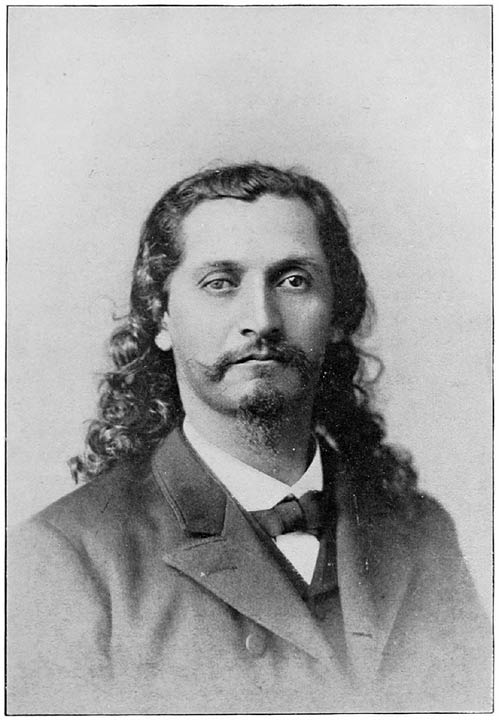
PHOTOGRAPH, 1886
CHIEF N. J. SMITH (TSALĂDIHĬ′)
While they are industrious, these people are not progressive farmers and have learned nothing of modern methods. The same crops are raised continuously until the soil will yield no more or is washed away, when new ground is cleared or broken. The value of rotation and fertilizing has not yet been discovered or taught....
By the most recent official count, in 1900, the East Cherokee residing in North Carolina under direct charge of the agent and included within the act of incorporation number 1,376, of whom about 1,100 are on the reservation, the rest living farther to the west, on Nantahala, Cheowa, and Hiwassee rivers. This does not include mixed-bloods in adjoining states and some hundreds of unrecognized claimants. Those enumerated own approximately 100,000 acres of land, of which 83,000 are included within the Qualla reservation and a contiguous tract in Jackson and Swain counties. They receive no rations or annuities and are entirely self-supporting, the annual interest on their trust fund established in 1848, which has dwindled to about $23,000, being applied to the payment of taxes upon their unoccupied common lands. From time to time they have made leases of timber, gold-washing, and grazing privileges, but without any great profit to themselves. By special appropriation the government supports an industrial training school at Cherokee, the agency headquarters, in which 170 pupils are now being boarded, clothed, and educated in the practical duties of life. This school, which in its workings is a model of its kind, owes much of its usefulness and high standing to the efficient management of Prof. H. W. Spray (Wĭlsĭnĭ′), already mentioned, who combines the duties of superintendent and agent for the band. His chief clerk, Mr James Blythe (Diskwa′ʻnĭ, “Chestnut-bread”), a Cherokee by blood, at one time filled the position of agent, being perhaps the only Indian who has ever served in such capacity.