WHY I DON'T WRITE PLAYS
Reading edition
(From the Common-place Book of a Novelist)
Because it is so much pleasanter to read one's work than to hear it on the stage.
Because publishers are far more amiable to deal with than actor-managers.
Because "behind the scenes" is such a disappointing place—except in novels.
Because why waste three weeks on writing a play, when it takes only three years to compose a novel?
Because critics who send articles to magazines inviting one to contribute to the stage, have no right to dictate to us.
Because a fairly successful novel means five hundred pounds, and a fairly successful play yields as many thousands—why be influenced by mercenary motives?
Because all novelists hire their pens in advance for years, and have no time left for outside labour.
And last, and (perhaps) not least, Why don't I send in a play? Because I have tried to write one, and find I can't quite manage it!
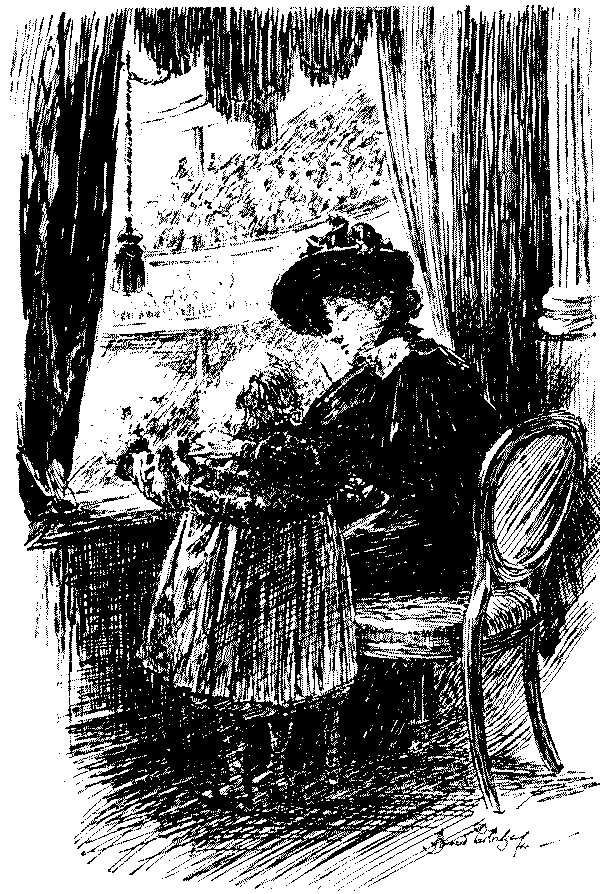
Her First Play.
Mamma (who has taken Miss Effie, as a great treat, to a morning performance). "Hush, dear! You mustn't talk!"
Miss Effie (with clear sense of injustice, and pointing to the stage). "But, mummy,—they're talking!"
Q. When are the affairs of a theatre likely to assume a somewhat fishy aspect? A. When there's a sole lessee.
Evangeline. Why is this called the dress circle, mamma? Mamma. Because the stalls are the undressed circle, dear.
A Form of Equestrian Drama.—Horseplay.
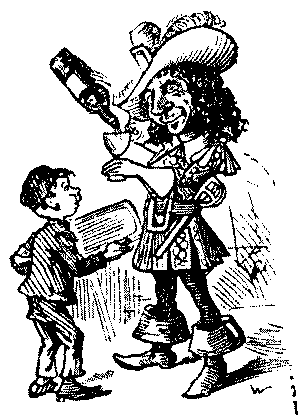
Mellow drammer
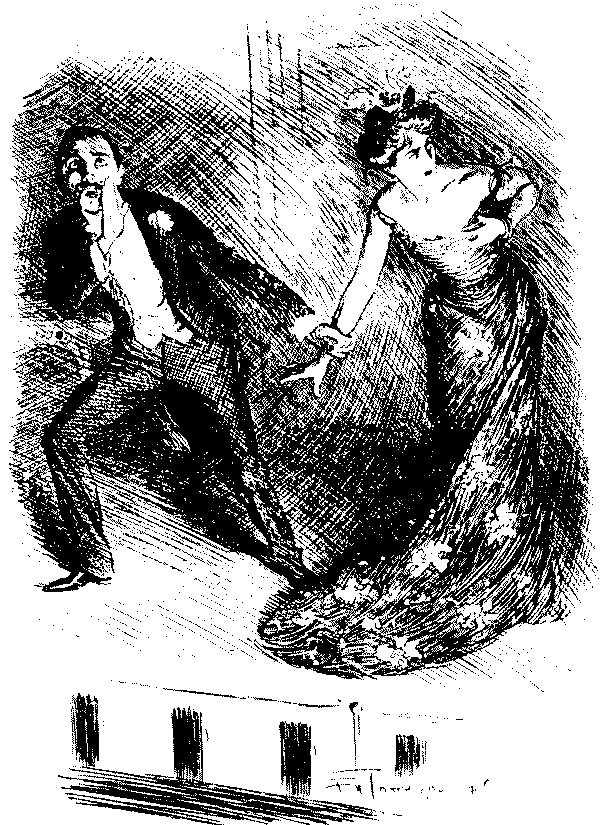
First Night of an Unappreciated Melodrama.
He. "Are we alone?" Voice from the Gallery. "No, guv'nor; but you will be to-morrow night."
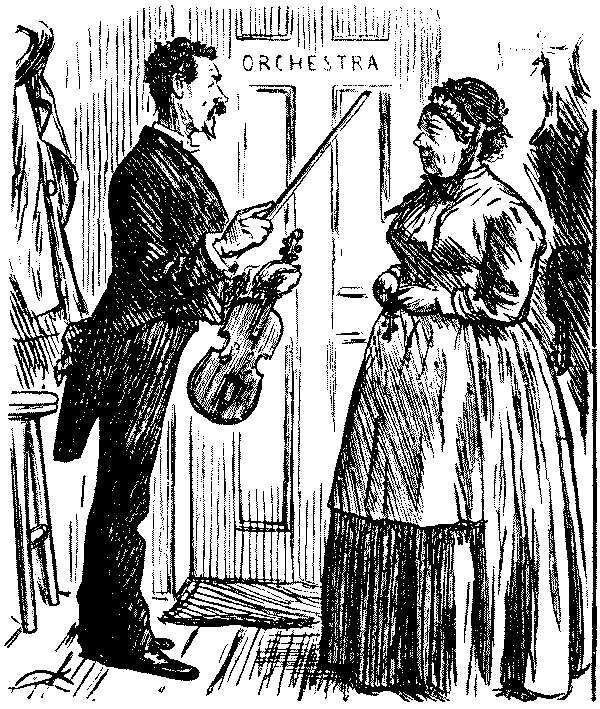
THE COMMISSARIAT
Our Bandmaster (to purveyor of refreshments). "We must hev beef sangwitches, marm! Them ham ones make the men's lips that greasy, they can't blow!"
A NOTE AND QUERY
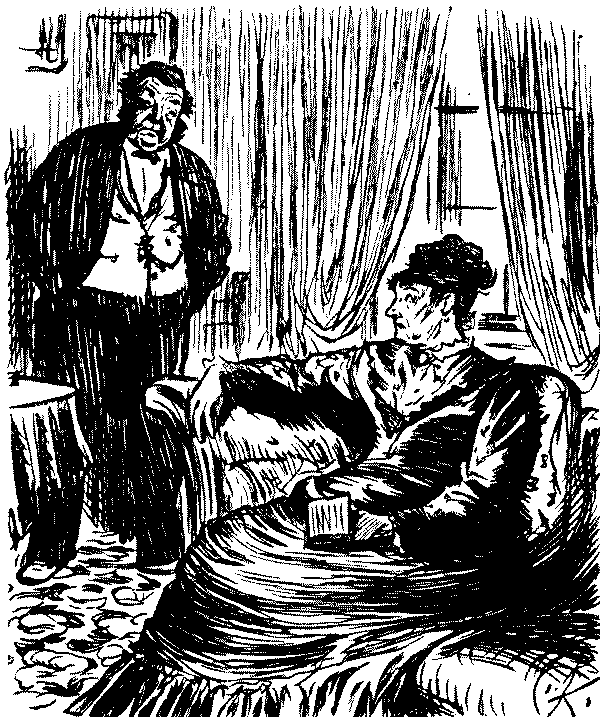
Wife (given to literature and the drama). "George, what is the meaning of the expression, 'Go to!' you meet with so often in Shakspeare and the old dramatists?"
Husband (not a reading man). "'Don't know, I'm sure, dear, unless—— Well,—p'raps he was going to say—— but thought it wouldn't sound proper!"
MR. PUNCH'S OPERA BOX
SIC VOS NON VOBIS DRAMATISATIS, WRITERS!
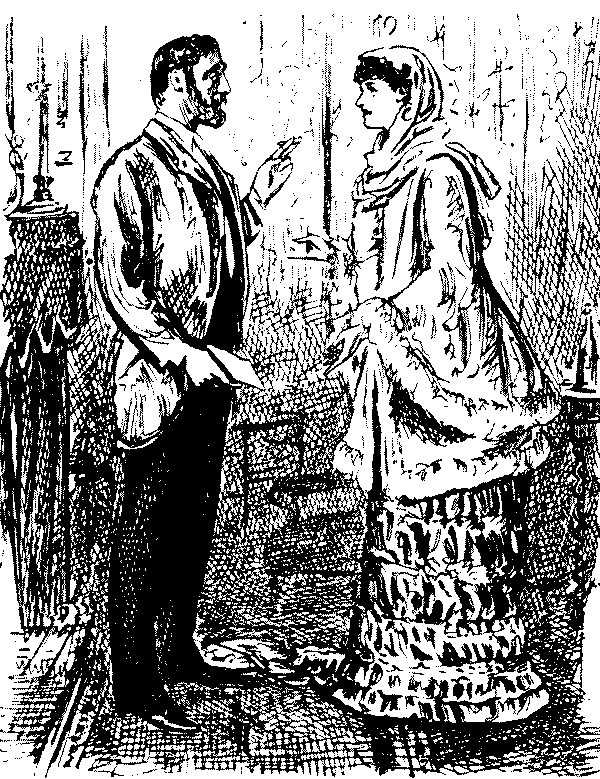
Wife of his Bosom (just home from the play). "And then that darling Walter Lisson, looking like a Greek god, drew his stiletto, and delivered, oh! such an exquisite soliloquy over her tomb—all in blank verse—like heavenly music on the organ!"
He. "Why, he's got a voice like a raven, and can no more deliver blank verse than he can fly."
She. "Ah, well—it was very beautiful, all the same—all about love and death, you know!"
He. "Who wrote the piece, then?"
She. "Who wrote the piece? Oh—er—well—his name's sure to be on the bill somewhere—at least I suppose it is!"
From our General Theatrical Fund.—Why would a good-natured dramatic critic be a valuable specimen in an anatomical museum? Because he takes to pieces easily.