THE MOAN OF A THEATRE-MANAGER
Reading edition
Who gets, by hook or crook, from me Admittance free, though well knows he That myriads turned away will be? The Deadhead. Who, while he for his programme pays The smallest silver coin, inveighs Against such fraud with eyes ablaze? The Deadhead. Who to his neighbour spins harangues, On how he views with grievous pangs The dust that on our hangings hangs? The Deadhead. Who, in a voice which rings afar, Declares, while standing at the bar, Our drinks most deleterious are? The Deadhead. Who, aye withholds the claps and cheers That others give? Who jeers and sneers At all he sees and all he hears? The Deadhead. Who loudly, as the drama's plot Unfolds, declares the tale a lot Of balderdash and tommy-rot? The Deadhead. Who dubs the actors boorish hinds? Who fault with all the scenery finds? Who with disgust his molars grinds? The Deadhead. Who spreads dissatisfaction wide 'Mongst those who else with all they spied Had been extremely satisfied? The Deadhead. Who runs us down for many a day, And keeps no end of folks away That else would for admittance pay? The Deadhead. Who keeps his reputation still, For recompensing good with ill With more than pandemonium's skill? The Deadhead. Who makes the bankrupt's doleful doom In all its blackness o'er me loom? Who'll bring my grey head to the tomb? The Deadhead.
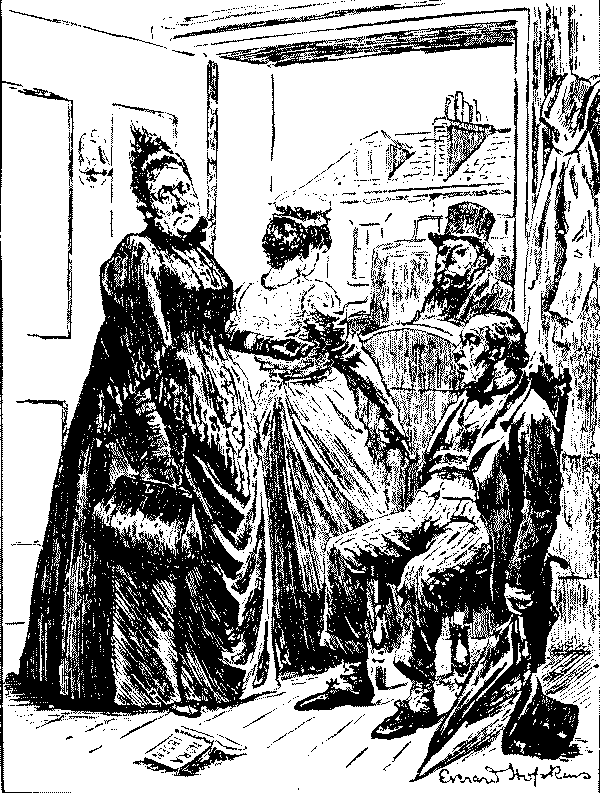
Ibsen in Brixton.
Mrs. Harris. "Yes, William, I've thought a deal about it, and I find I'm nothing but your doll and dickey-bird, and so I'm going!"
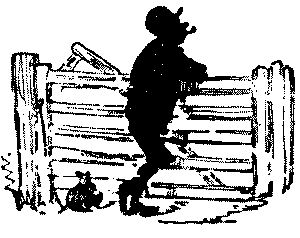
A five bar rest
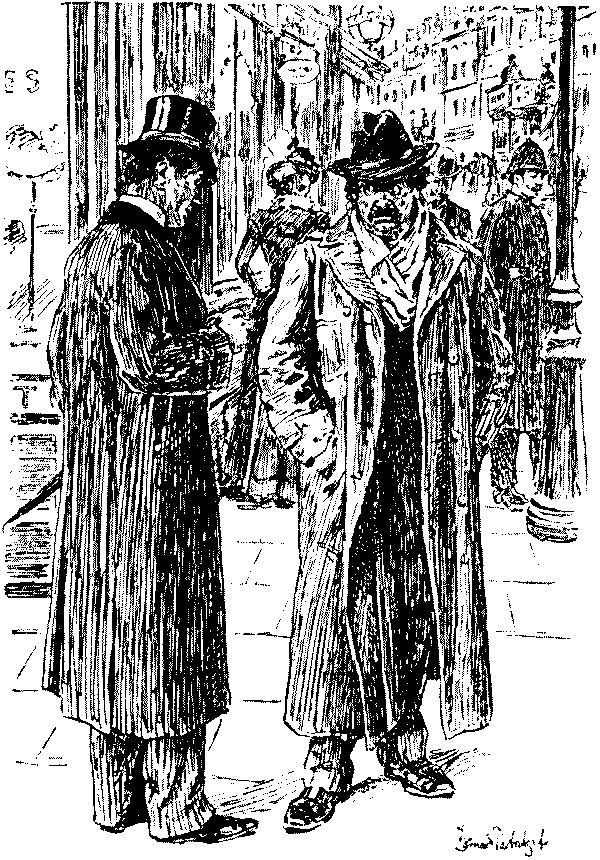
Seedy Provincial Actor. "Young man, I hear that you propose to essay the rôle of the melancholy Dane. What induced you to do it?" Prosperous London ditto. "Oh, I don't know. They egged me on to it." Seedy Provincial Actor. "H'm. They egged me OFF!"
LESSONS LEARNED AT A PANTOMIME
(By an Intelligent Schoolboy)
That demons are much given to making bad puns, and have on their visiting lists the most beautiful of the fairies.
That the attendants upon the demons (presumably their victims) spend much of their time in break-downs.
That the chief amusement in Fairyland is to stand upon one toe for a distressingly long time.
That the fairies, when they speak, don't seem to have more H.'s to their tongues, than clothes to their backs.
That the fairies have particularly fair complexions, considering they dance so much in the sunlight.
That the tight and scanty costume of the fairies is most insufficient protection from the showers that must be required to produce the gigantic and highly-coloured fairy flora.
That the chief fairy (to judge from her allusions to current events) must take in the daily papers.
That harlequin is always shaking his bat, but nothing seems to come of it, and that it is hard to say why he comes on or goes off, or, in short, what he's at altogether.
That if clown and pantaloon want to catch columbine, it is hard to see why they don't catch her.
That pantaloon must have been greatly neglected by his children to be exposed without some filial protection to such ill-usage from clown.
That clown leads a reckless and abandoned life, between thefts, butter-slides, hot pokers, nurse-maids, and murdered babies, and on the whole is lucky to escape hanging.
That policemen are made to be chaffed, cuffed, chased, and knocked head-over-heels.
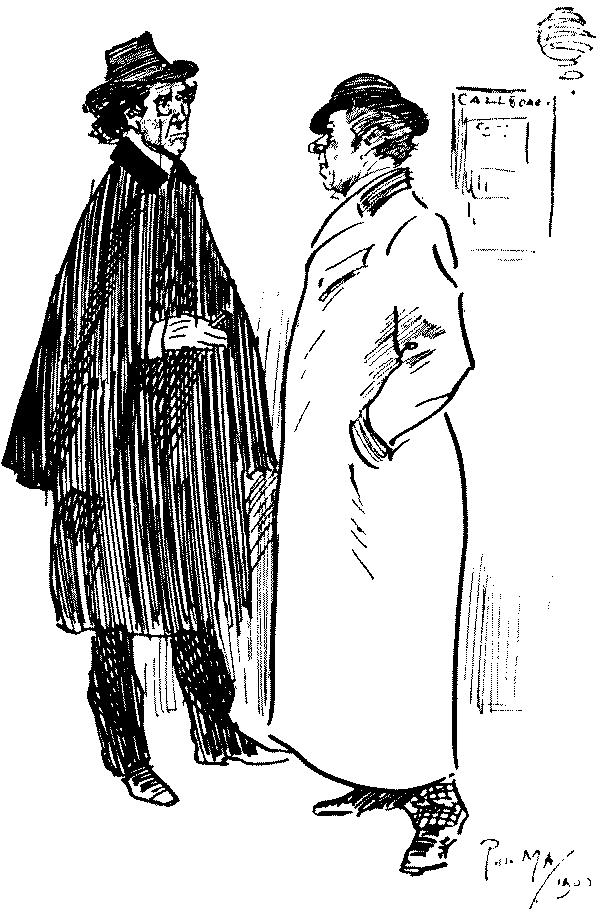
THE NEW PLAY
Low Comedian. "Have you seen the notice?"
Tragedian. "No; is it a good one?"
Low Comedian. "It's a fortnight's."
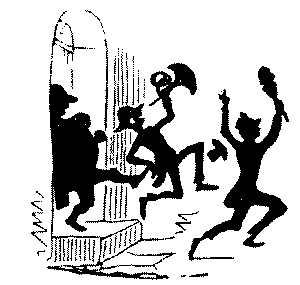
A quick movement with an obligato accompaniment.
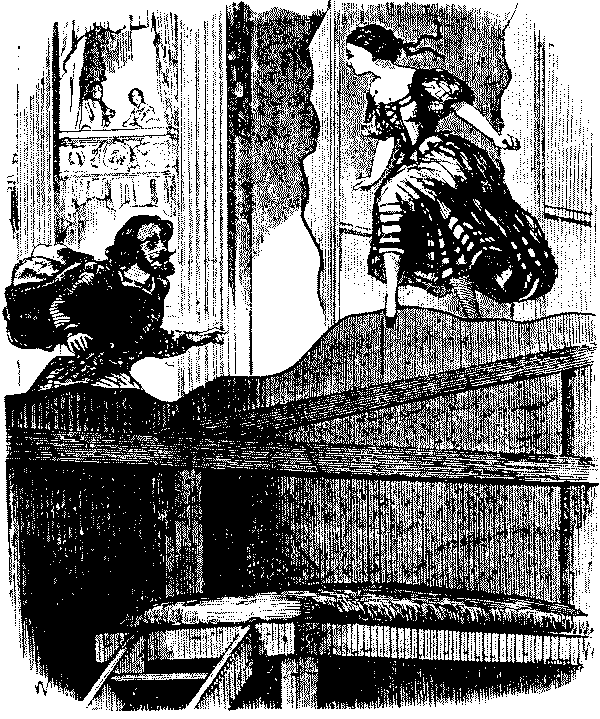
TERRIFIC SITUATION!
Heroine of domestic drama pursued by the unprincipled villain is about to cast herself headlong from a tremendous precipice!
APPRECIATIVE!
The eldest Miss Bluestocken (to Mrs. Mugby, of the village laundry). I'm delighted that you were able to come to our schoolroom performance of Scenes from Shakspeare.
Mrs. Mugby. Oh, so was I, mum. That there "'Amblet"—and the grand lady, mum——
Eldest Miss B. (condescendingly). You mean "Hamlet" and his mother—the vicar and myself. You enjoyed it?
Mrs. Mugby. Oh, we did, mum! We ain't 'ad such a rale good laugh for many a long day.
[Exit Miss B., thinking that Shakspeare is perhaps somewhat thrown away on this yokality.
The Book of the Play (as managers like it).—"All places taken for the next fortnight."
When actors complain that all they require is "parts," they generally tell the exact truth.
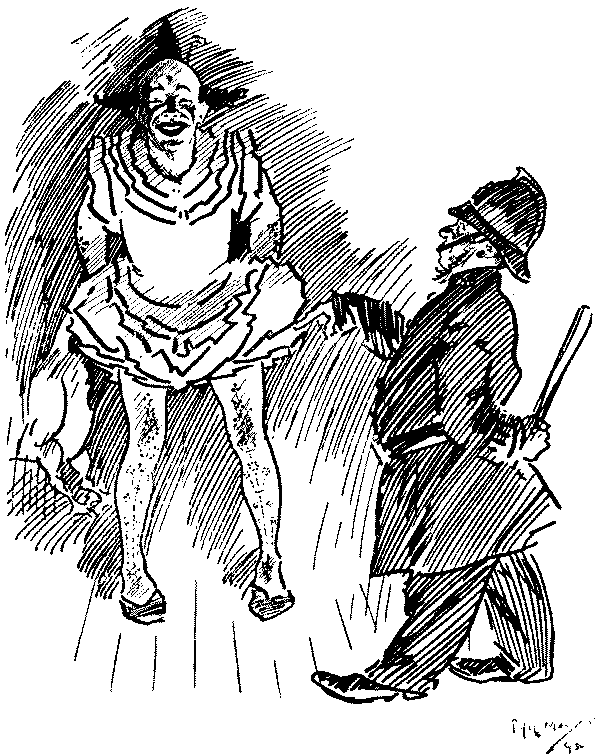
SCENE FROM SHAKSPEARIAN PANTOMIME
"Where got'st thou that goose?—look!" (Macbeth, Act V., Sc. 3.)
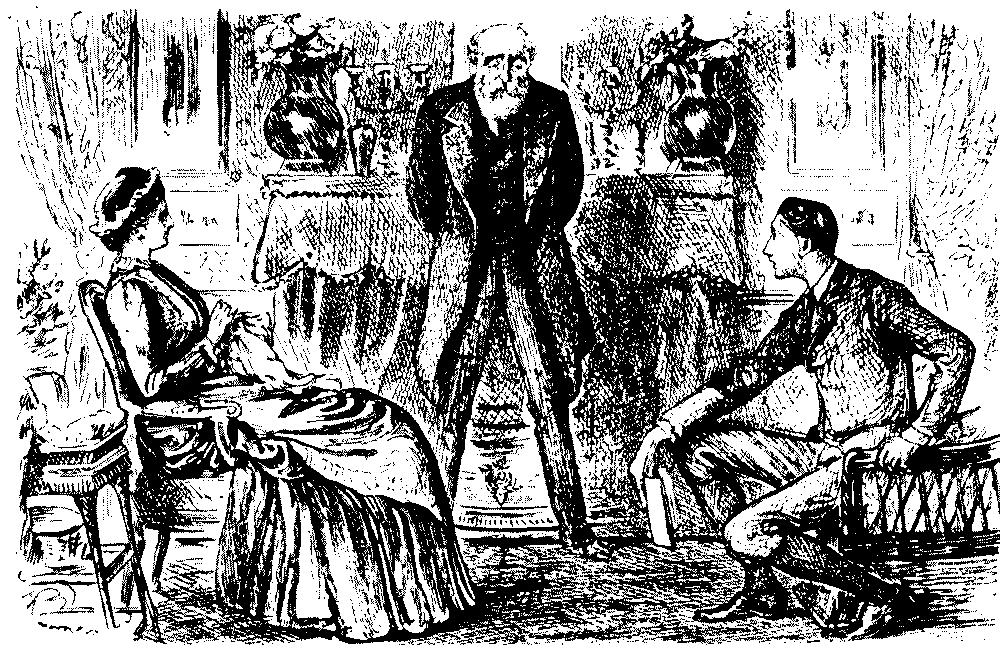
A Disenchantment.
Grandpapa. "What? Bob in love with Miss Fontalba, the comic actress at the Parthenon?" Bob (firing up). "Yes, grandpa! And if you've got a word to say against that lady, it had better not be said in my presence, that's all!" Grandpapa. "I say a word against her! Why, bless your heart, my dear boy! I was head over ears in love with her myself—when I was your age!"
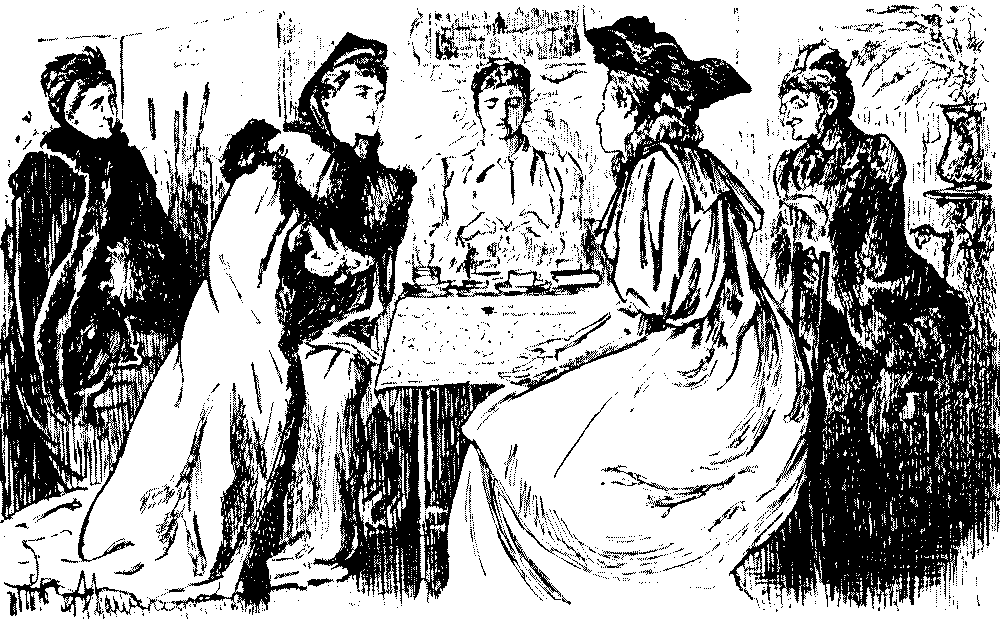
The Problem Play.
New Woman (with the hat). "No! My principle is simply this—if there's a demand for these plays, it must be supplied!" Woman not New (with the bonnet). "Precisely! Just as with the bull-fights in Spain!"
[Scores
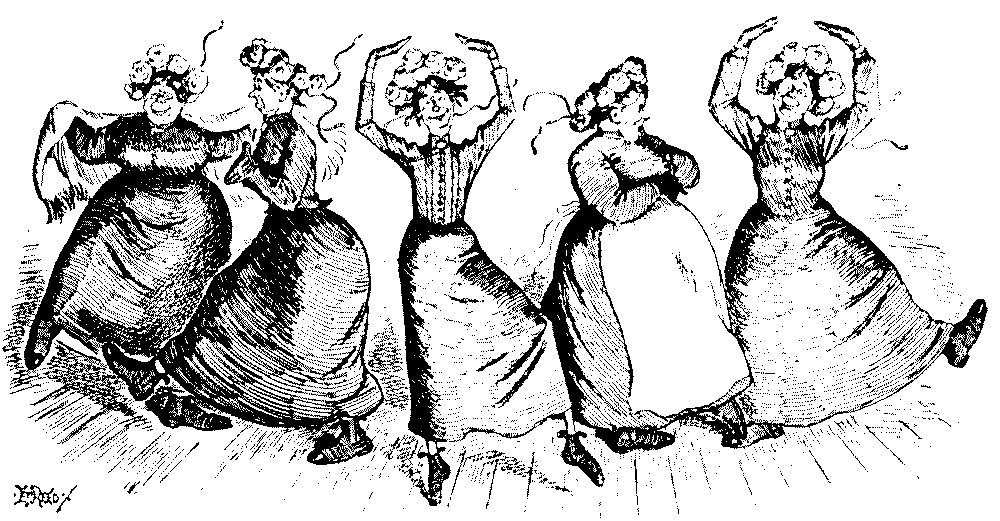
CHURCH THEATRES FOR COUNTRY VILLAGES—THE BLAMELESS BALLET
["Mr. Chamberlain has expressed himself in sympathy with the scheme of the Rev. Forbes Phillips for running theatres in connection with the churches in country villages."]
There would, our artist imagines, be no difficulty in obtaining willing coryphées among the pew-openers and philanthropic spinsters of the various parishes.
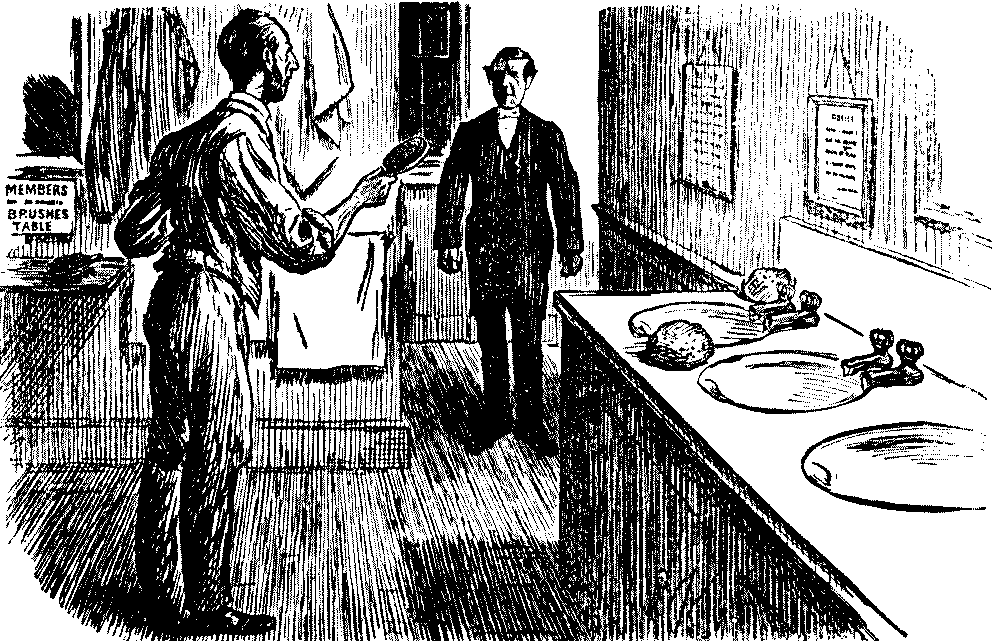
Mr. M'Chrustie (in the washing-room of the Minerva Club). "Look here, waiter, what's the meaning of this? These brushes are as beastly grimy as if they'd been blacking boots——!" Waiter. "Yes, sir: it's them members from the 'Junior Theshpian,' sir—as are 'ere now, sir. They do dye theirselves to that degree——!"
[Mr. M'C. rushes off and writes furiously to the Committee!
Q. What were the "palmy" days of the drama? A. When they were first-rate hands at acting.
Motto for all Dramatic Performers.—"Act well your part."
A Band-Box.—An orchestra.
"What an awful voice that man's got!" said the manager, who was listening to the throaty tenor. "Call that a voice," said his friend; "it's a disease!"
A Private Box.—A sentry box.
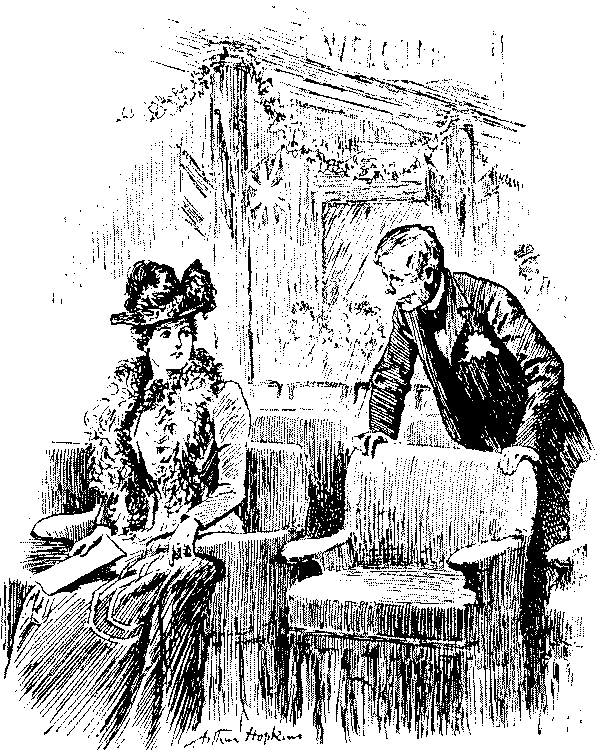
"You can't sit there, mum. These here seats are reserved."
"You don't seem to be aware that I'm one of the directors' wives!"
"And if you was his only wife, mum, I couldn't let you sit here."
During the dull season a certain manager has issued such a number of his autographs in order to ensure the proper filling of his house that he has in playfulness conferred on it the nickname of the ordertorium.
What Managers, Actresses, and Spectators all Want.—A good dressing.
Christmas Music for Theatres.—The "waits" between the acts.
What we want for the British drama generally is not so much native talent as imagi-native talent.
At the Music Halls.—The birds that fly by night—the acro-bats.
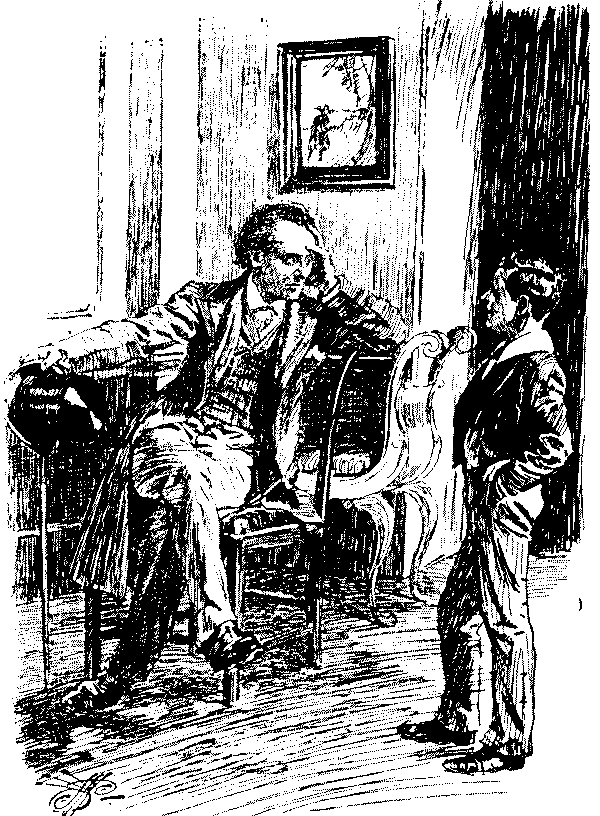
Confrères.
Master Jacky (who took part in some school theatricals last term,—suddenly, to eminent tragedian who has come to call). "I say, you know—I act!"
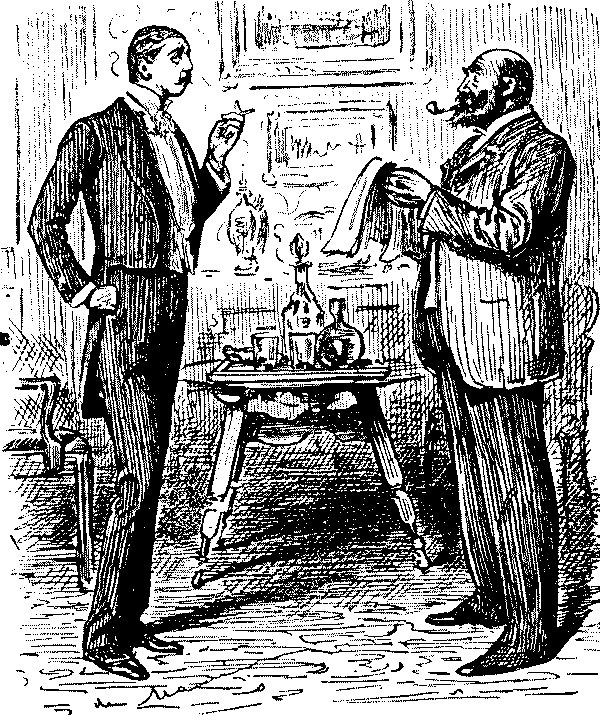
A PROP OF THE DRAMA
"What, back already, Archie! Was it a dull piece, then?"
"Don't know. Didn't stop to see. Just looked round stalls and boxes, and didn't see a soul I knew!—so I came away."
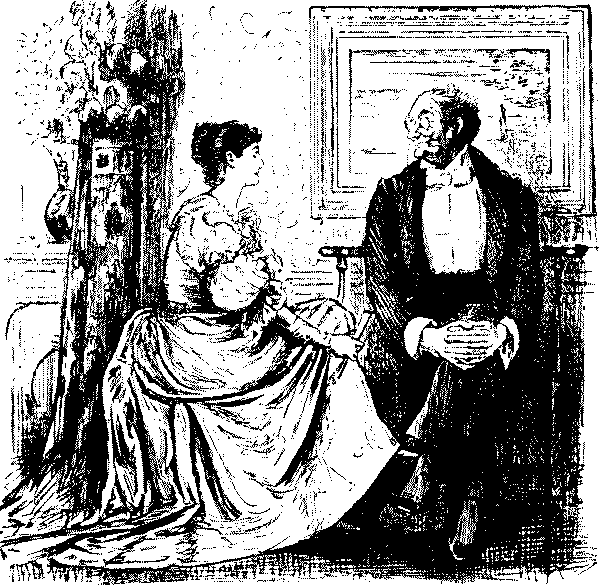
SHOWING THAT SOMETIMES IT IS GOOD FOR A COBBLER NOT TO STICK TO HIS LAST
Fair Matron. "I remember your acting 'Sir Anthony,' years ago, when I was a girl, Sir Charles! You did it splendidly!"
The Great Mathematician. "Ah, would you believe it, that bit of acting brought me more compliments than anything I ever did?"
Fair Matron. "I should think so, indeed!"
The Company that frequently fills a Theatre better than a Dramatic one.—The Stationers' Company.
The managers of Drury Lane, Gaiety, Alhambra and Empire Theatres ought ex-officio to be members of the Worshipful Guild of Spectacle-makers.
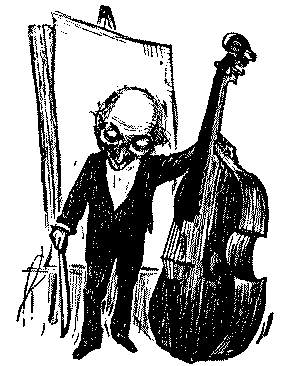
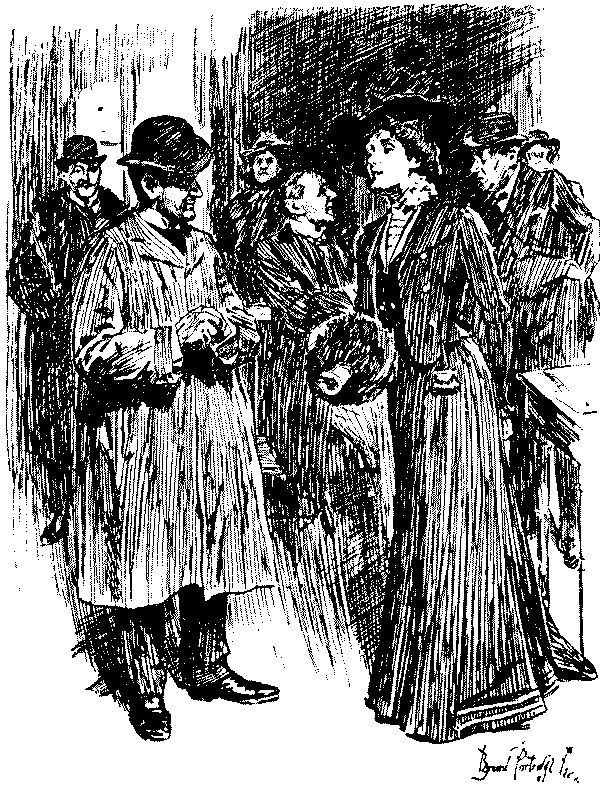
"Walking Lady" (late for rehearsal). "Oh, I'm so sorry to be late! I do hope you haven't all been waiting for me?"
Stage Manager (icily). "My dear Miss Chalmers, incompetence is the gift of heaven; but attention to business may be cultivated!"
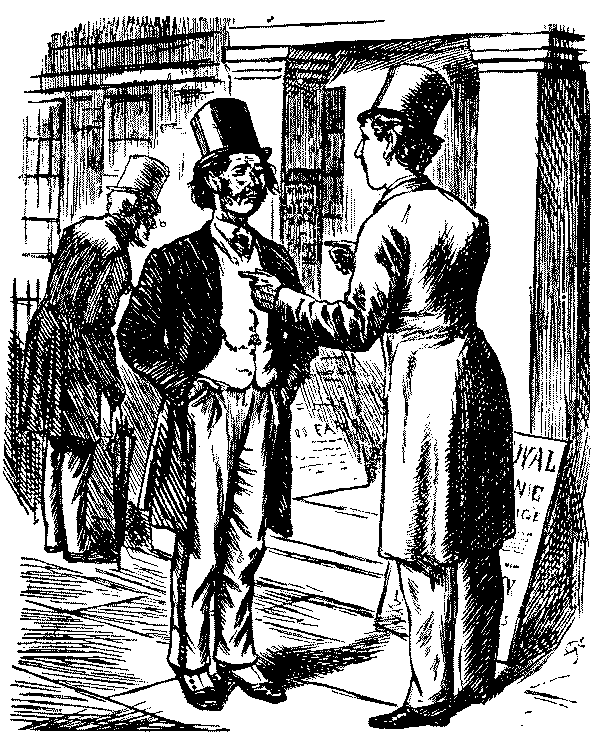
An Unkind Cut.
Amateur. "It was very kind of you to come to our performance the other night; but what did you think of my Hamlet? Pretty good?" Professional (feigning ecstasy). "Oh, my dear fellow, 'pon my word you know,—really I assure you, good's not the word!"
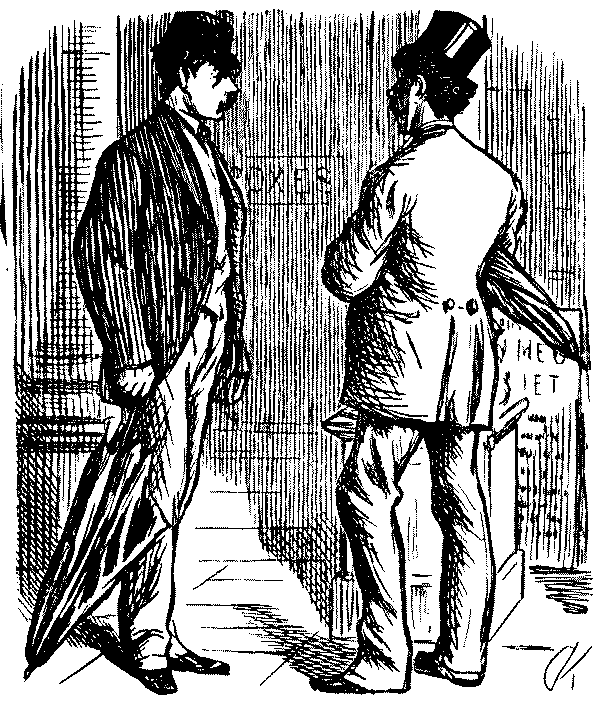
First Critic. "Well, have you seen the great tragedian in Romeo and Juliet?"
Second ditto. "I have; and I confess he didn't come up to my ixpictations. To tell ye the truth, I niver thought he would!"
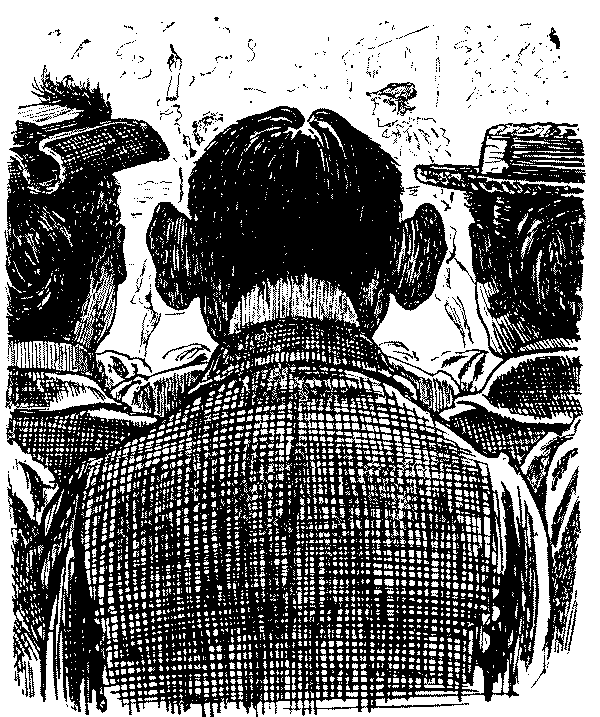
A CROWDED HOUSE
Angry Voice (from a back seat). "Ears off in front there, please!"]
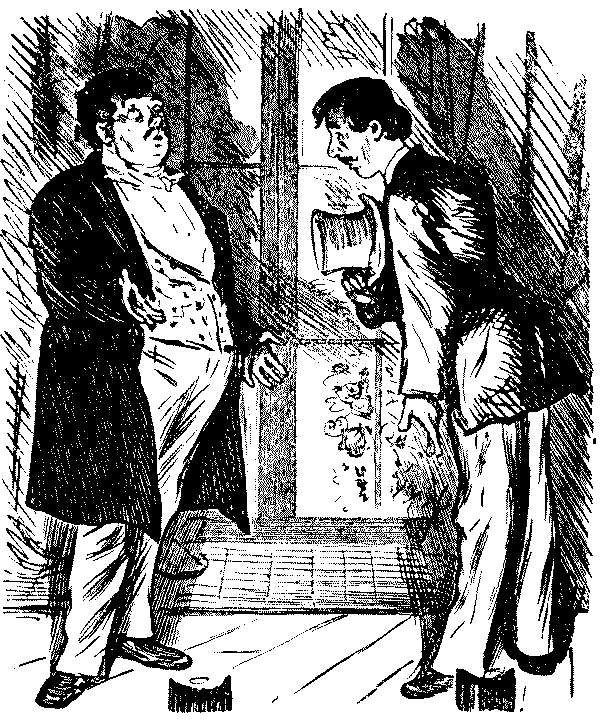
THE PROVINCIAL DRAMA
The Marquis (in the play). "Aven't I give' yer the edgication of a gen'leman?"
Lord Adolphus (spendthrift heir). "You 'ave!!"
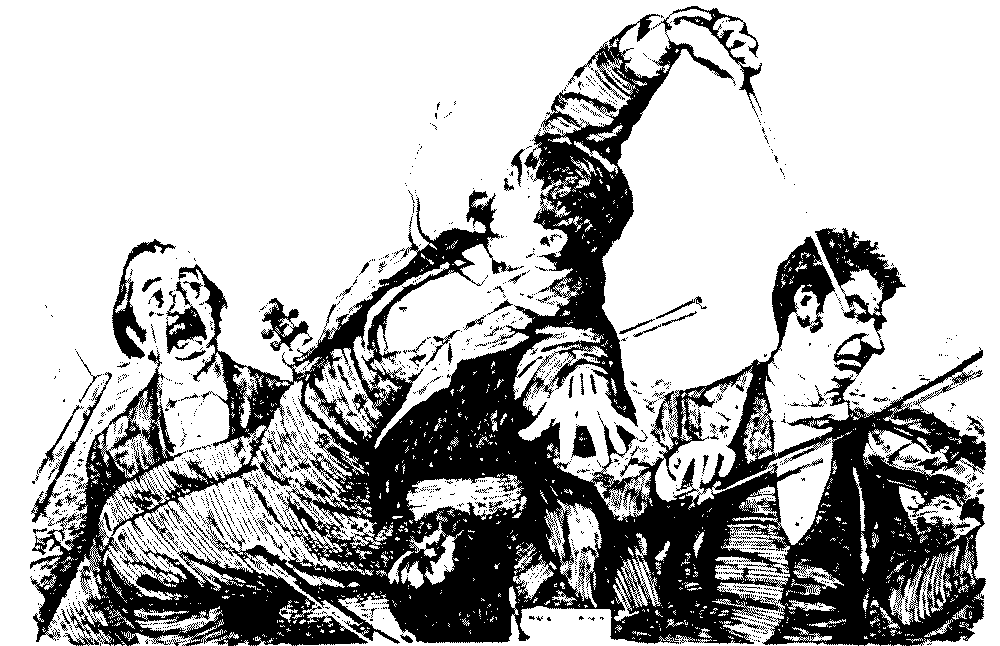
A CONDUCTOR OF HEAT
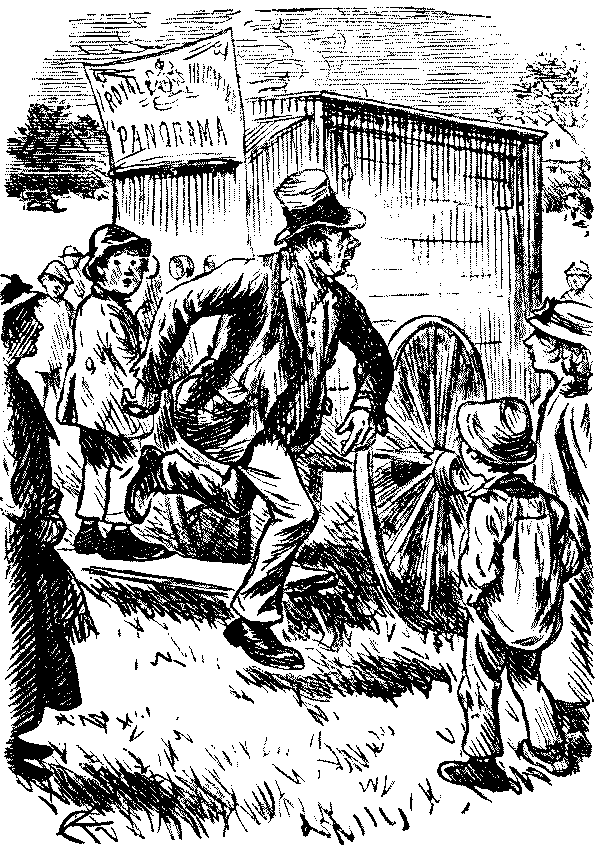
"STARTLING EFFECTS!"
Peep-Showman. "On the right you observe the 'xpress train a-comin' along, an' the signal lights, the green and the red. The green lights means 'caution,' and the red lights si'nifies 'danger'"——
Small Boy (with his eye to the aperture). "But what's the yaller light, sir?"
Peep-Showman (slow and impressive). "There ain't no yaller light—but the green and the red. The green lights means 'caution,' and the red lights si'nif——"
Small Boy (persistently). "But wha's the other light, sir?"
Peep-Showman (losing patience). "Tell yer there ain't no"—— (takes a look—in consternation)—"Blowed if the darned old show ain't a-fire!!"
EX NIHILO NIHIL FIT
["Fashions in drama change as frequently as fashions in hats. It has been reserved for our own day to evolve the comedy of nothing-in-particular. Nowadays nothing happens in a play."—The Outlook.]
Scene—Nowhere in particular. Characters. He, a nonentity. She, another.
He. Dear——!
She (wearily). Oh please don't.
[Does nothing.
He. Why, what's the matter?
She. Nothing.
[He does nothing.
She. Well, you may as well go on. It will be something, anyhow. (Yawns.) Nothing ever seems to happen in this play. I don't know why. It isn't my fault. Oh, go on.
He. All right. Don't suppose it amuses me, though. Darling, I love you—will you marry me?
She (very wearily). Oh, I suppose so.
He. Thanks very much. (Kisses her.) There!
[Returns proudly to his seat, and does nothing.
She (with sudden excitement). Supposing I had said "No," would you have shot yourself?—would you have gone to the front?—would your life have been a blank hereafter? Would anything interesting have happened?
He (with a great determination in his eyes). Had you spurned my love——
She (excitedly). Yes, yes?
He (with emotion).—I should have—I should have—done nothing.
[Does it.
She. Oh!
He. Yes. As for shooting or drowning myself if any little thing of that sort had happened it would have been off the stage. I hope I know my place.
[She does nothing.
He (politely). I don't know if you're keen about stopping here? If not, we might——
She. We must wait till somebody else comes on.
He. True. (Reflects deeply.) Er—do you mote much?
[She sleeps. The audience follows suit. Curtain eventually.
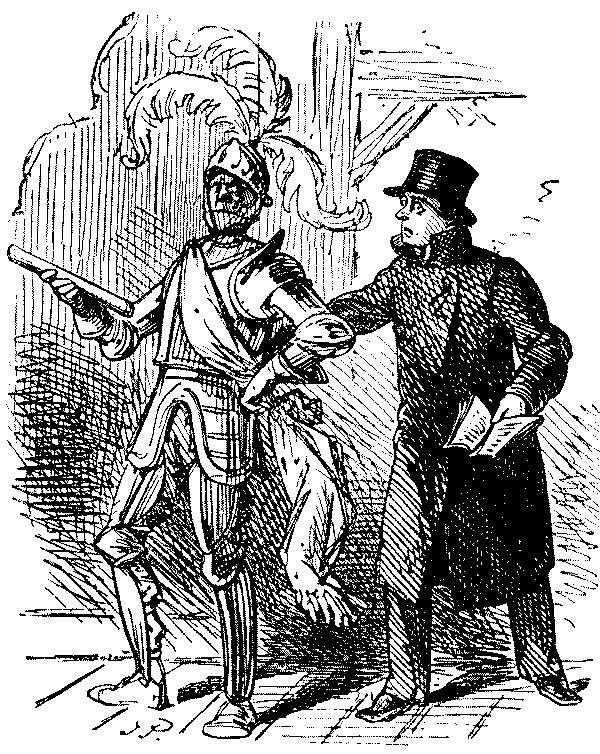
HOW HE OUGHT NOT TO LOOK
Excited Prompter (to the Ghost of Hamlet's father, who is working himself up to the most funereal aspect he can assume). "Now then, Walker, LOOK ALIVE!"
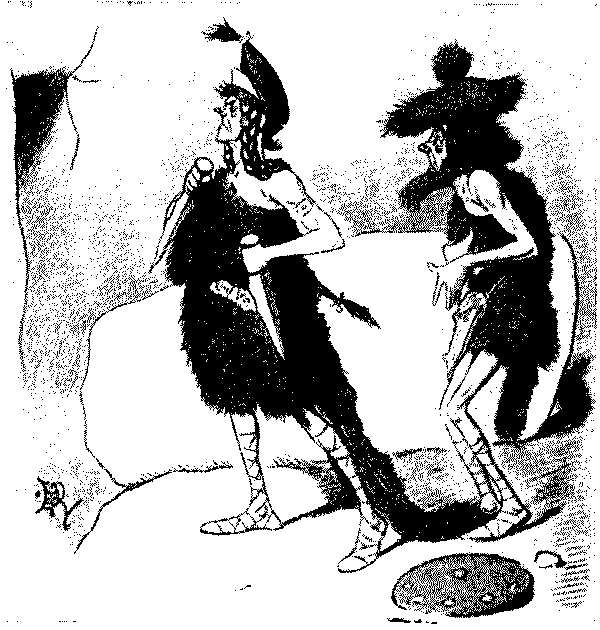
PREHISTORIC SHAKSPEARE.—"MACBETH"
"Infirm of purpose! Give me the daggers."—Act II. Sc. 2.
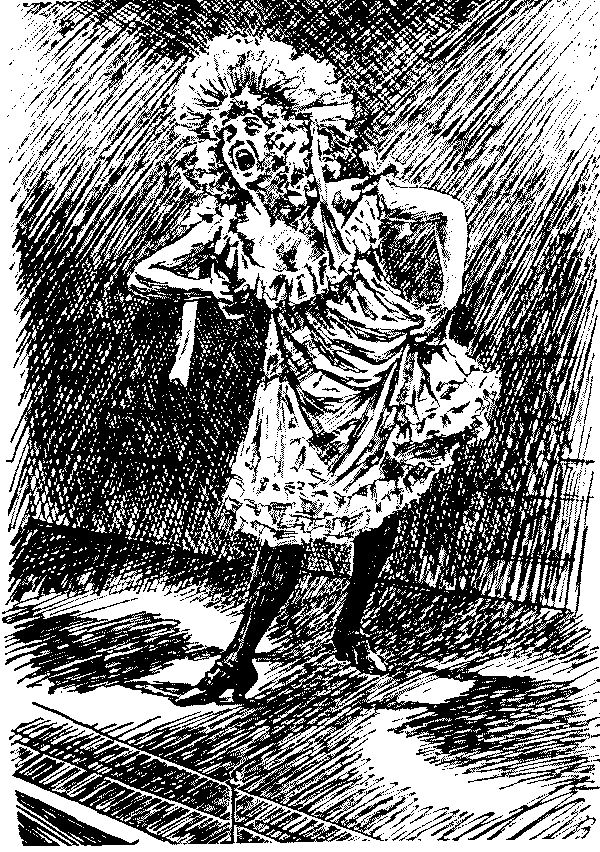
MUSIC-HALL INANITIES.—I.
Miss Birdie Vandeleur ("Society's Pet"—vide her advertisements passim) bawls the refrain of her latest song:—
"Ow, I am sow orferly shy, boys! I am, and I kennot tell wy, boys! Some dy, wen I'm owlder, Per'aps I'll git bowlder, But naow I am orfer-ly shy!"