DRAMATIC NOTES OF THE FUTURE
Reading edition
[A little cheild is the hero of Everybody's Secret; the curtain rises upon four little cheildren in Her Own Way; there are cheildren of various ages in Alice-Sit-by-the-fire.]
Mr. Barrie's new play, The Admirable Crèche, will be presented to-morrow. We understand that there is a pretty scene in the third act in which several grown-ups are discovered smoking cigars. It may confidently be predicted that all the world will rush to the "Duke of York's" to see this novelty. The Admirable Crèche will be preceded at 8.30 by Bassinette—A Plea for a Numerous Family, a one-act play by Theodore Roosevelt and Louis N. Parker.
Little Baby Wilkins is making quite a name with her wonderful rendering of "Perdita" in the Haymarket version of A Winter's Tale. As soon as actor-manager Wilkins realised the necessity of cutting the last two acts (in which "Perdita" is grown up) the play was bound to succeed. By the way, Mr. E. H. Cooper's new book, "Perditas I have Known," is announced.
Frankly, we are disappointed in Mr. Pinero's new play, Little Arthur, produced at Wyndham's last week. It treated of the old old theme—the love of the hero for his nurse. To be quite plain, this stale triangle, mother—son—nurse, is beginning to bore us. Are there no other themes in every-day life which Mr. Pinero might take? Could he not, for instance, give us an analysis of the mind of a young genius torn between the necessity for teething and the desire to edit a great daily? Duty calls him both ways: his duty to himself and his duty to the public. Imagine a Wilkins in such a scene!
The popular editor of the "Nursery," whose unrivalled knowledge of children causes him to be referred to everywhere as our greatest playwright, is a little at sea in his latest play, Rattles. In the first act he rashly introduces (though by this time he should know his own limitations) two grown-ups at lunch—Mr. Jones the father, and Dr. Brown, who discuss Johnny's cough. Now we would point out to Mr. Crouper that men of their age would be unlikely to have milk for lunch; and that they would not say "Yeth, pleath"—unless of Hebraic origin, and Mr. Crouper does not say so anywhere. Mr. Crouper must try and see something of grown-ups before he writes a play of this kind again.
We regret to announce that Cecil Tomkins, doyen of actor-managers, is down again with mumps.
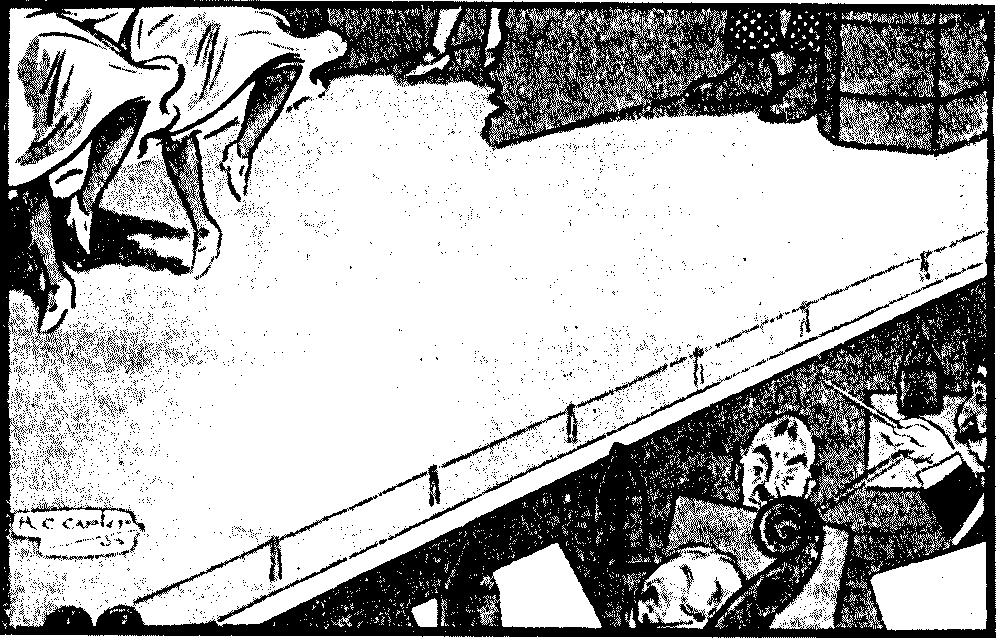
MODERN IMPRESSIONIST ART. A MUSICAL COMEDY
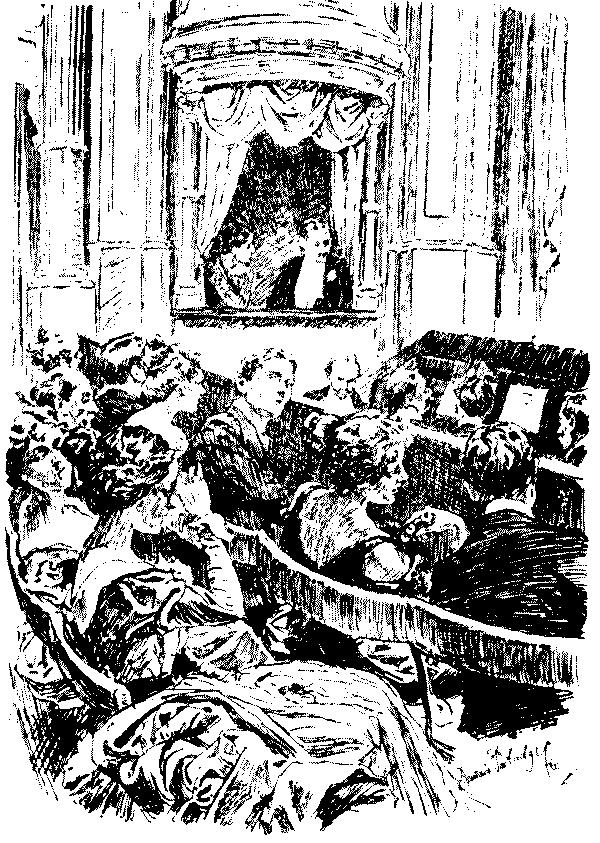
AT THE PREMIÈRE
Lady in Front Row (to her neighbour, towards the end of the second act). "Who is this man next me, who's just come in,—do you know? He doesn't seem to be paying the smallest attention to the play!"
Her Neighbour. "Oh, I expect he's a critic. He's probably made up his mind long ago what he's going to say of the piece; but he's just dropped in to confirm his suspicions."
No First-Nighter.—First Man in the Street. See the eclipse last night?
Second Man in the Street. No. Thought it might be crowded. Put off going till next week.
THE BILL OF THE PLAY
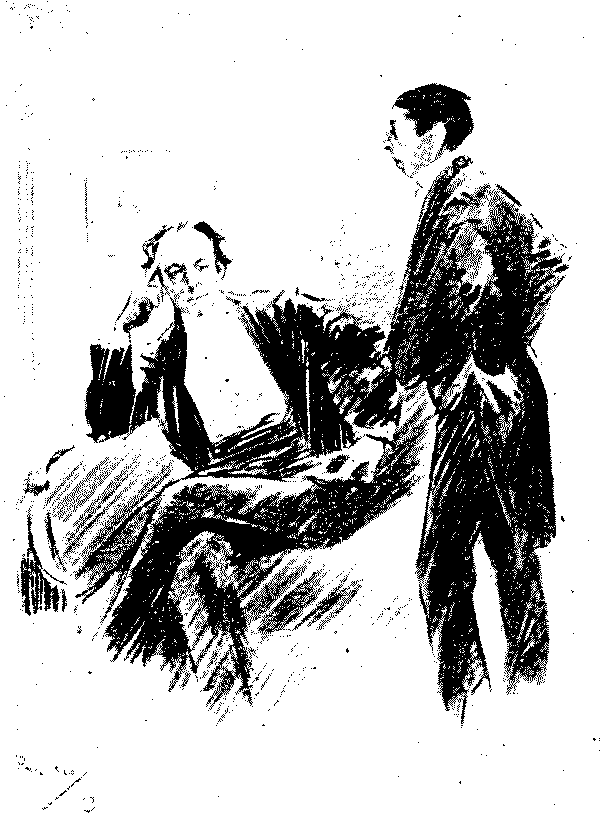
Amenities of the Profession.
Rising Young Dramatist. "Saw your wife in front last night. What did she think of my new comedy?"
Brother Playwright. "Oh, I think she liked it. She told me she had a good laugh."
R. Y. D. "Ah—er—when was that?"
B. P. "During the entr'acte. One of the attendants dropped an ice down her neighbour's neck."
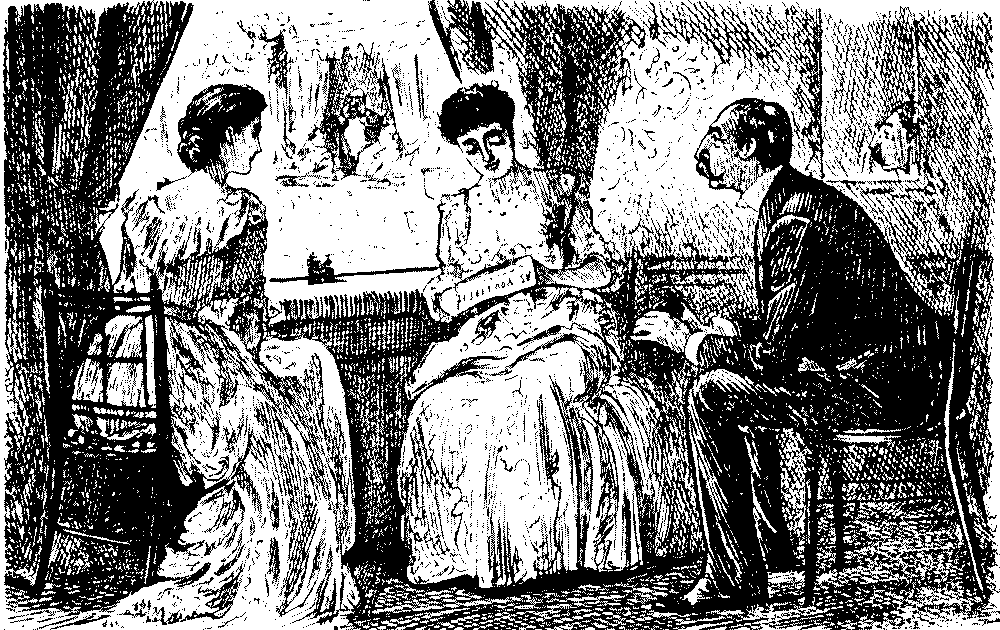
THE HIGHER EDUCATION OF WOMEN
Dora (consulting a playbill). "Only fancy! 'As You Like It' is by Shakspeare!"
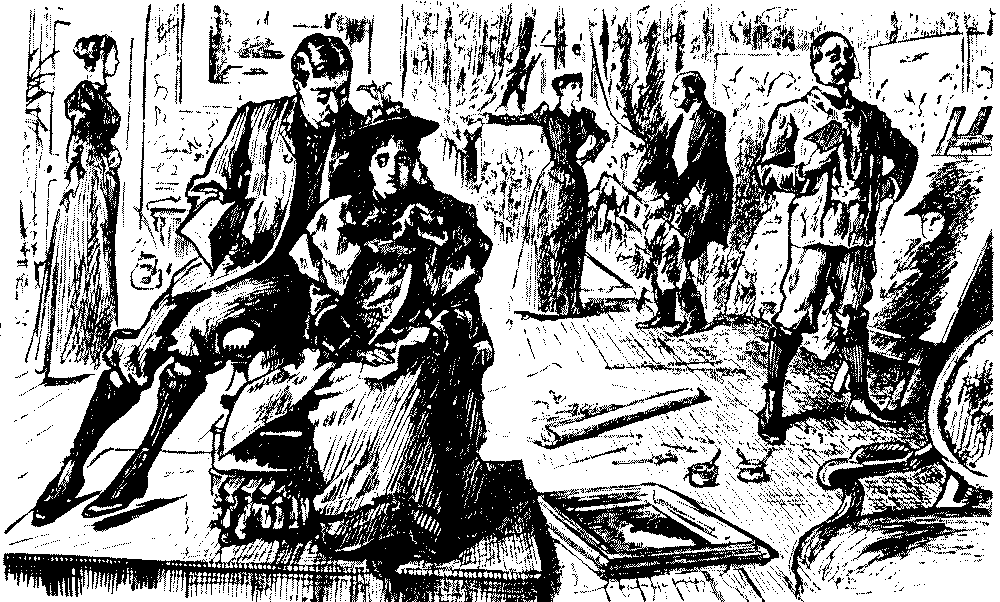
Private Theatricals.
A Rehearsal.—The Captain. "At this stage of the proceedings I've got to kiss you, Lady Grace. Will your husband mind, do you think?"
Lady Grace. "Oh no! It's for a charity, you know!"
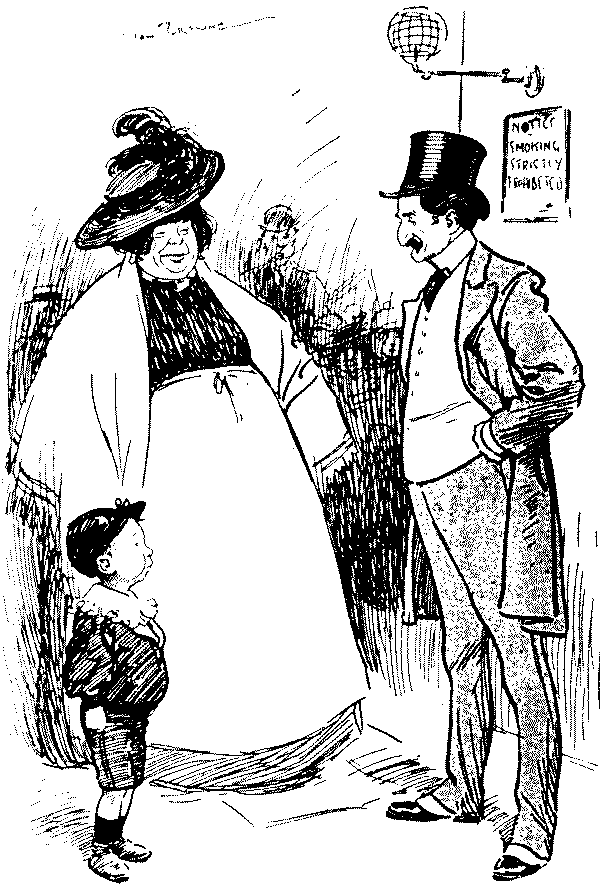
An Infant Roscius.
Stage Manager (interviewing children with the idea of engaging them for a new play). "Has this child been on the stage?"
Proud Mother. "No; but he's been on an inquest, and he speaks up fine!"
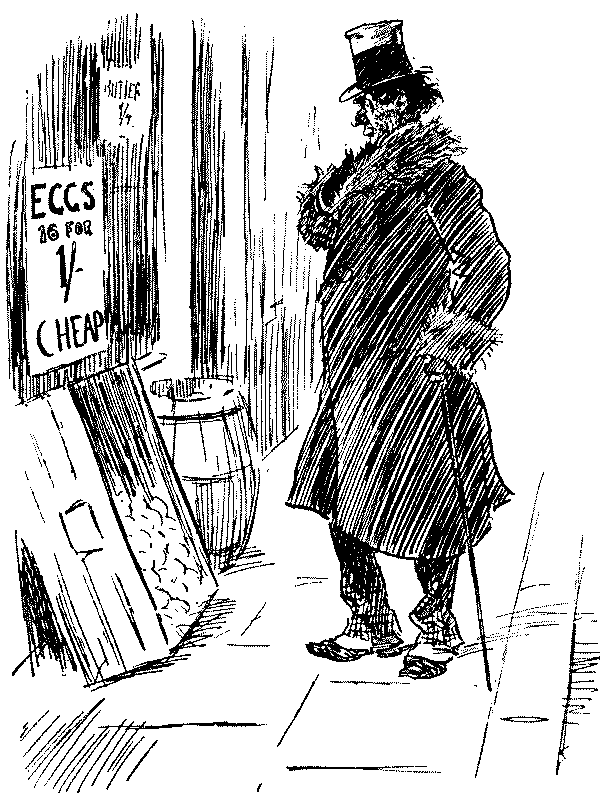
A Soliloquy.
Tragedian. "Cheap. Ha, ha! Why in my time they threw them at us!"
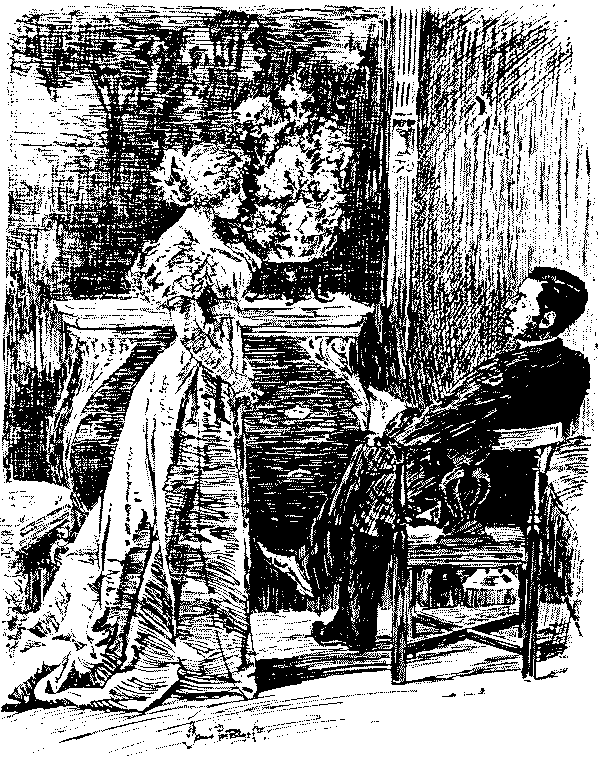
"Well, papa, how did you enjoy the play to-night?"
"Oh, I think I enjoyed it fairly well, my dear. I've got a general sort of idea that I didn't go to sleep over it!"
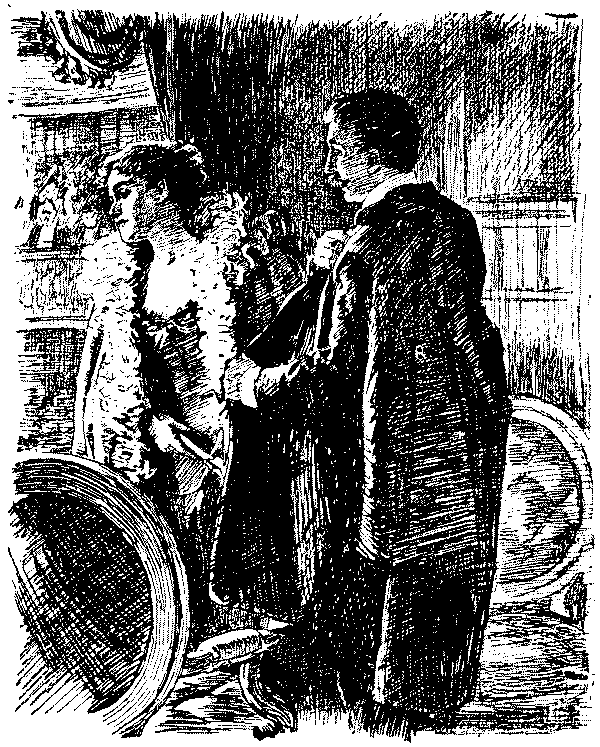
Enthusiastic Lady Amateur. "Oh, what a pity! We've just missed the first act!"
Languid Friend. "Have we? Ah—rather glad. I always think the chief pleasure of going to a theatre is trying to make out what the first act was about!"
Theatrical.—When it is announced that an actor will be supported by the entire company, it is not thereby meant that the said professional is sustained in his arduous part solely by draughts of Barclay, Perkins and Co.
The wretch who refuses to take his wife to the theatre deserves to be made to sit out a play.
Good "Piece" of Furniture for Theatrical Managers.—A chest of "drawers."
Regeneration of the British Drama.—There are at this moment three English managers in Paris "in search of novelty!" More: three distinguished members of the Dramatic Authors' Society started for France last night.
"As Good as a Play."—Performing a funeral.
A Plant in Season.—Now is the time of year when managers of theatres show a botanical taste, for there is not one of them who does not do his best to have a great rush at his doors.
The Dramatic Author's Playground.—Paris.
Theatrical Note.—Net profits are generally the result of a good "cast."
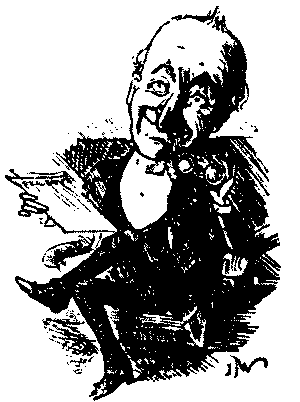
"Shakspeare and the first Quart O"
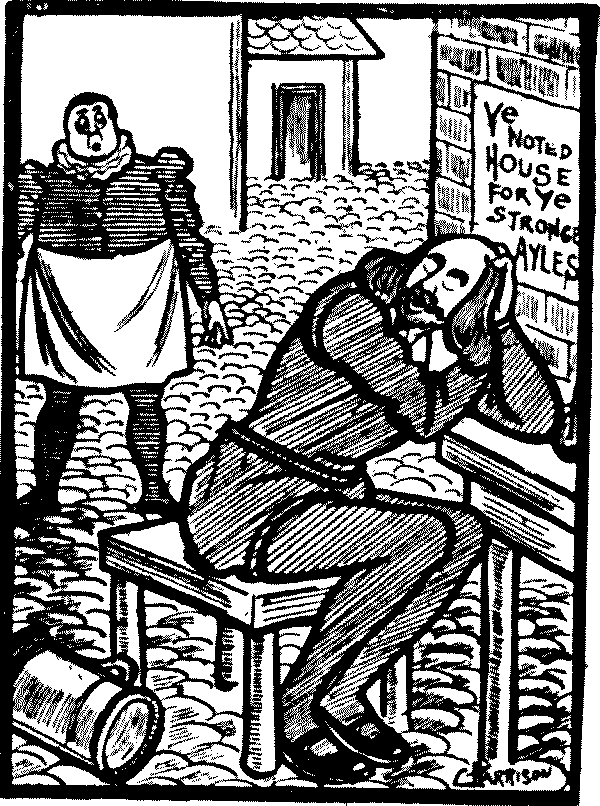
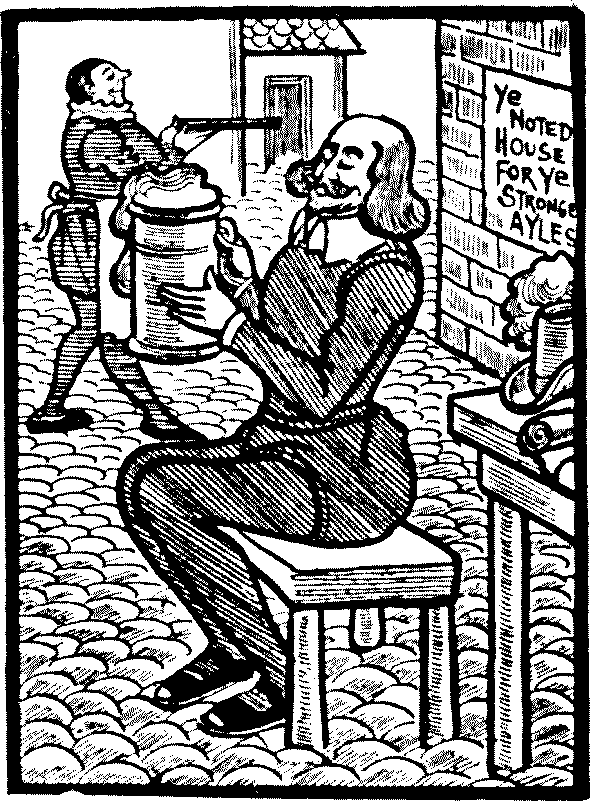
"Shakspeare and the last Quart O"
A Dubious Compliment..—Rector's Wife (after harvest festival). Well, Mrs. Piggleswade, how did you like the Bishop's sermon?
Mrs. Piggleswade. Oh! ma'am, I ain't been so much upset since my old man took me to the wariety theayter in London last August twelve-month, and 'eard a gen'leman sing about his grandmother's cat.
There was a poor actor on the Norwich circuit who squinted most dreadfully: he was put up on one occasion for "Lear." "We must succeed," said the manager, "for there never was a Lear with so strong a cast."
A Richmond Dinner.—A shouting actor who performs the part.
BY DEPUTY
As Shakspeare could not write his plays (If Mrs. Gallup's not mistaken), I think how wise in many ways He was to have them done by Bacon; They might have mouldered on the shelf, Mere minor dramas (and he knew it!) If he had written them himself Instead of letting Bacon do it. And if it's true, as Brown and Smith In many learned tomes have stated, That Homer was an idle myth, He ought to be congratulated; Since, thus evading birth, he rose For men to worship from a distance: He might have penned inferior prose Had he achieved a real existence. To him and Shakspeare some agree In making very nice allusions, But no one thinks of praising me, For I composed my own effusions: As others wrote their works divine, And they immortal thus to day are, If someone else had written mine I might have been as great as they are!
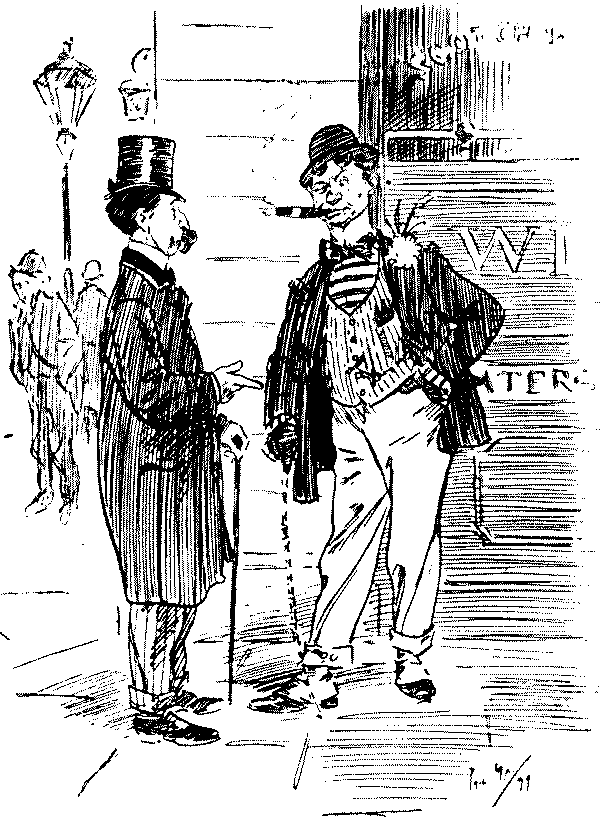
Famous Lion Comique (to his agent, who is not much of a cigar smoker). "What did you think of that cigar as I give you the other day?"
Agent. "Well, the first night I liked it well enough. But the second night I didn't like it so well. And the third I didn't like it at all!"
Numerous applications were received by the manager of Covent Garden from "professionals" wishing to take part in The Forty Thieves. It was not found possible to offer engagements to the following (amongst others):—
The Thief—who stole a march.
The Thief—in the candle.
The Thief—who was set to catch a thief.
The Thief—who stole the "purse" and found it "trash."
The Thief—who stole up-stairs.
The Thief—of time, alias procrastination, and—
The Thief—who stole a kiss (overwhelming number of applicants).
THE REAL AND THE IDEAL; OR, THE CATASTROPHE OF A VICTORIA MELO-DRAMA
Berthelda.—Sanguino, you have killed your mother!!!
Fruitwoman.—Any apples, oranges, biscuits, ginger-beer!
(Curtain falls.)
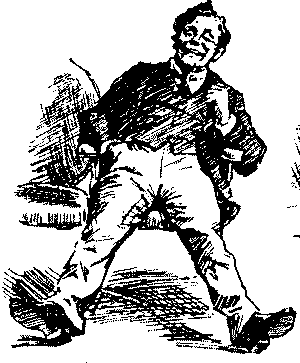
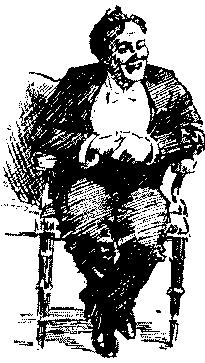
The Music-hall Screaming Farcical Comedy.
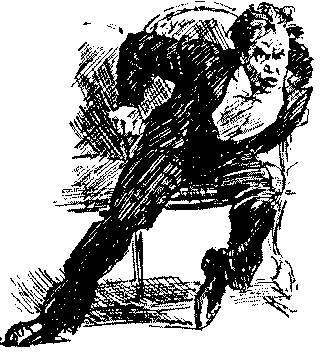
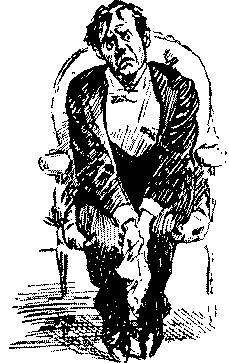
A Melodrama at the "Surrey". A pathetic "Comedy-Drama."
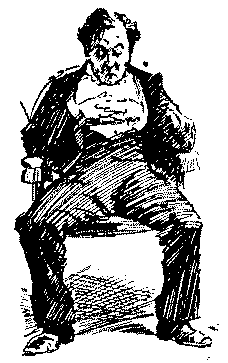
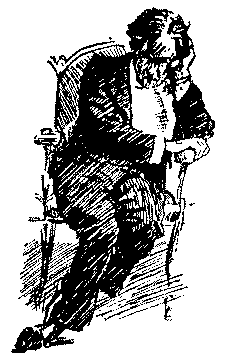
Another. The Opera.
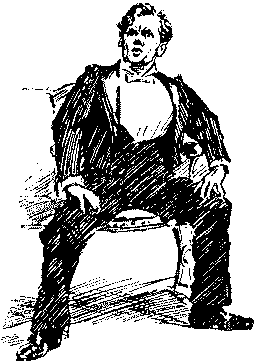
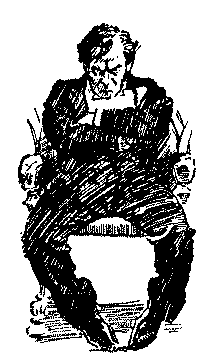
A patriotic Drama at the "National Theatre". And
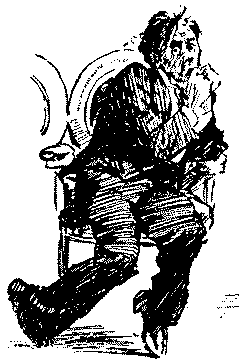
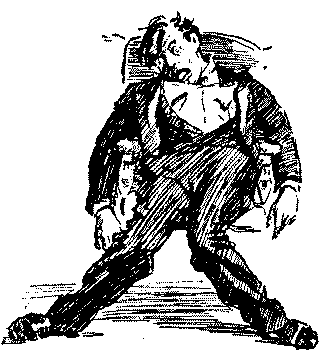
Three acts of Henrik Ibsen.
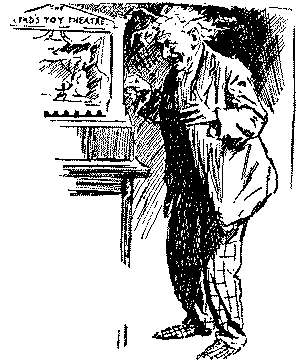
The deplorable issue.
"Bishops," said the Rev. Mr. Phillips to the Playgoers' Club, "are not really so stiff and starchy as they are made out to be. There is a good heart beneath the gaiters." Calf-love, we presume.
Different Views.—Bishops complain of a dearth of candidates for orders. Managers of theatres think differently.
Leg-itimate Successes.—Modern extravaganzas.
Theatrical.—The only people who never suffer in the long run—managers of theatres.
"Standing Orders."—Free admissions who can't get seats.
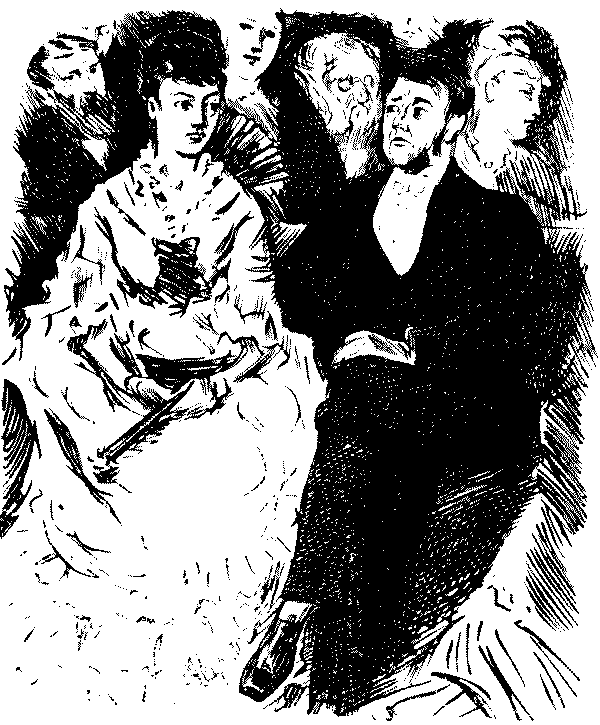
"MOST MUSICAL, MOST MELANCHOLY"
Husband (after the Adagio, to musical wife). "My dear, are we going to stay to the 'bitter end'?"
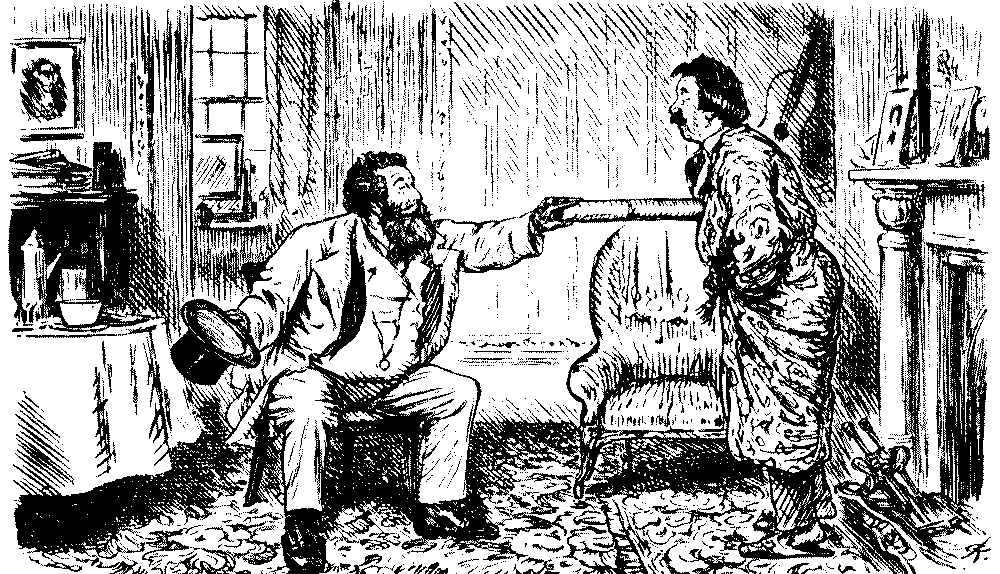
MUSIC OF THE FUTURE. SENSATION OPERA.
Manager (to his Primo Tenore, triumphantly). "My dear fellow, I've brought you the score of the new opera. We've arranged such a scena for you in the third act! o' board of the Pirate Screw, after the keelhauling scene, you know! Heavy rolling sea, eh?—Yes, and we can have some real spray pumped on to you from the fire-engine! Volumes of smoke from the funnel, close behind your head—in fact, you'll be enveloped as you rush on to the bridge! And then you'll sing that lovely barcarolle through the speaking-trumpet! And mind you hold tight, as the ship blows up just as you come upon your high D in the last bar!!!"
At a Problem Play.—Mr. Dinkershein (eminent critic). How did you enjoy the piece, Miss MacGuider?
Miss MacGuider. Well, to tell the truth, I didn't know what it was all about.
Mr. Dinkershein. Excellent. The author gives us so much to think of.
Question and Answer.—"Why don't I write plays?" Why should I?
Not exactly a Theatrical Manager's Guiding Motto.—"Piece at any price."
Our Shakspearian Society.—In the course of a discussion, Mrs. —— observed, that she was positive that Shakspeare was a butcher by trade, because an old uncle of hers had bought lambs' tails from Shakspeare.
"Sound Dues."—Fees to opera box-keepers.
Copyright and Copywrong.—The dramatist who dramatises his neighbour's novel against his will, is less a playwright than a plagiary.
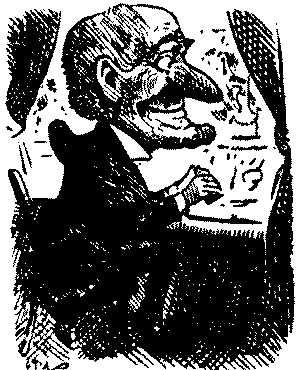
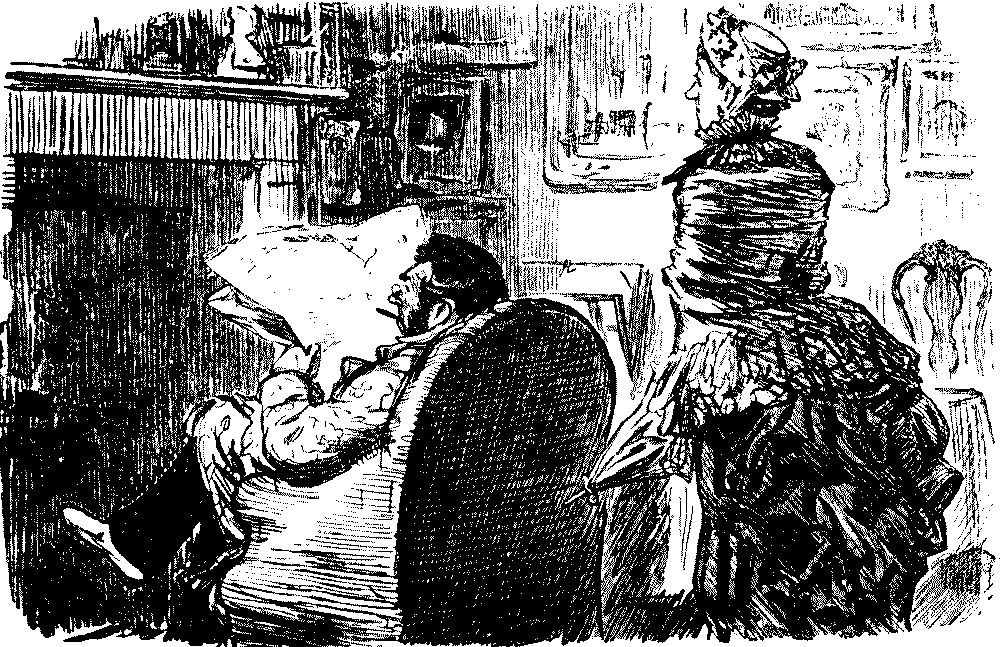
"Cross Old Thing!"
Wife. "I'm going into town now, dear. Shall I book places for Caste or Much ado about Nothing?" Husband. "Oh, please yourself, my dear; but I should say we've enough 'Ado about Nothing' at home!"
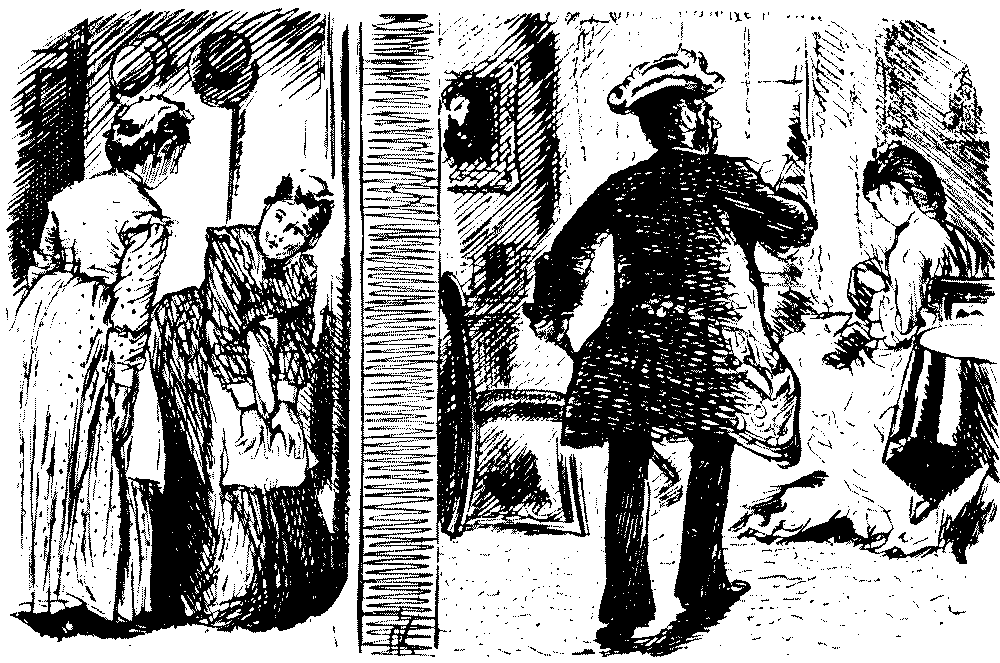
Our Theatricals.
Brown (rehearsing his part as the "Vicomte de Cherisac"). "Yas, Marie! I've fondly loved ye. (Sobs dramatically.) 'Tis well—but no mat-tar-r!" Housemaid (to cook, outside the door). "Lauks, 'Liz'beth, ain't master a givin' it to missis!"
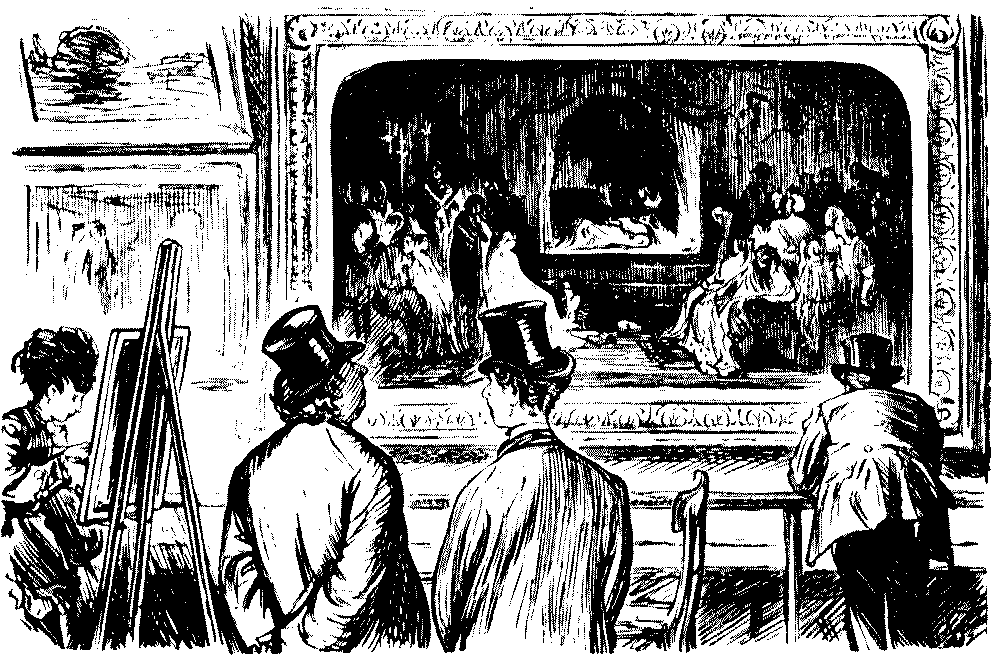
Technical.
First Player ("Juvenile Lead"). Play Scene—Hamlet. (Deferentially). "What do you think of it?" Second Player ("First Heavy"). "How precious well them 'supers' are painted, ain't they?"
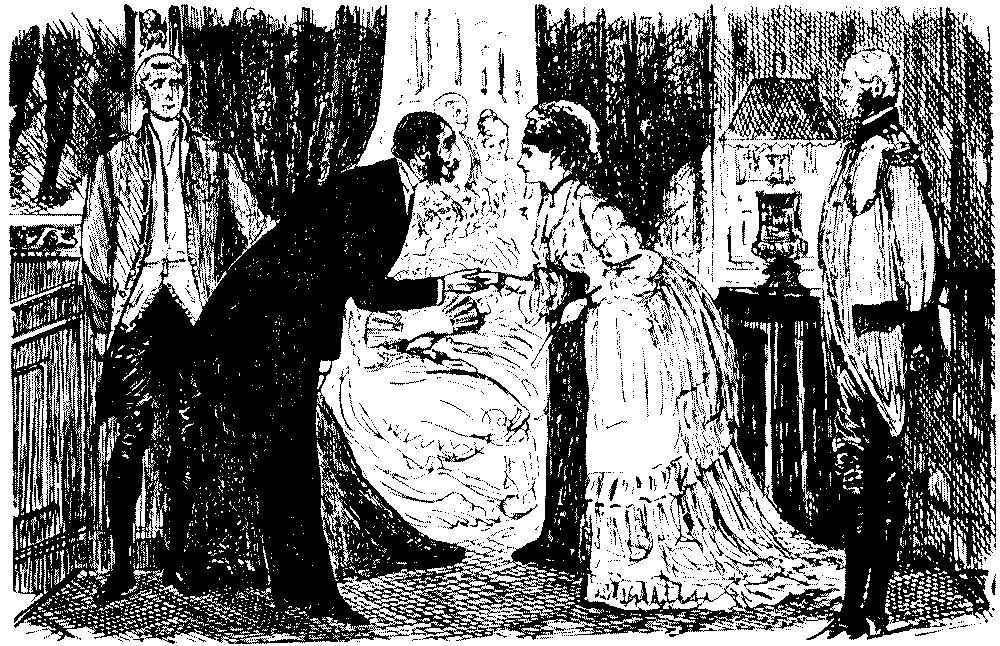
A Double Disappointment.
Stern Hostess (who is giving private theatricals). "You are very late, Mr. Fitz Smythe. They've begun long ago!" Languid Person of Importance (who abominates that particular form of entertainment). "What! You don't mean to say they're at it still!"
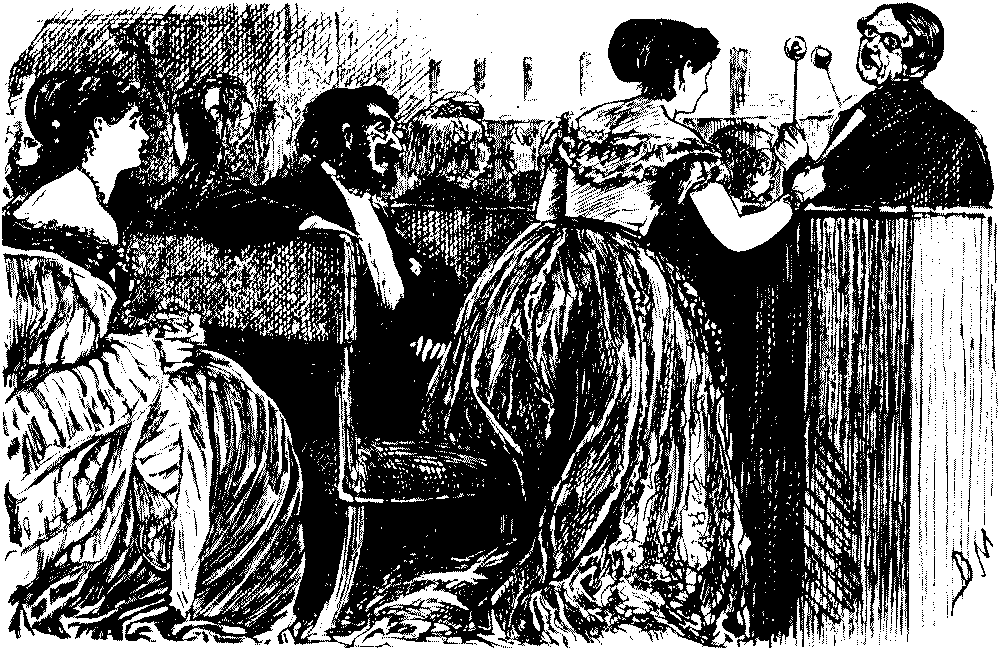
Modest Appeal.
Lady (to big drum). "Pray, my good man, don't make that horrid noise! I can't hear myself speak!"