SOMETHING FOR THE MONEY
Reading edition
(From the Playgoers' Conversation Book. Coming Edition.)
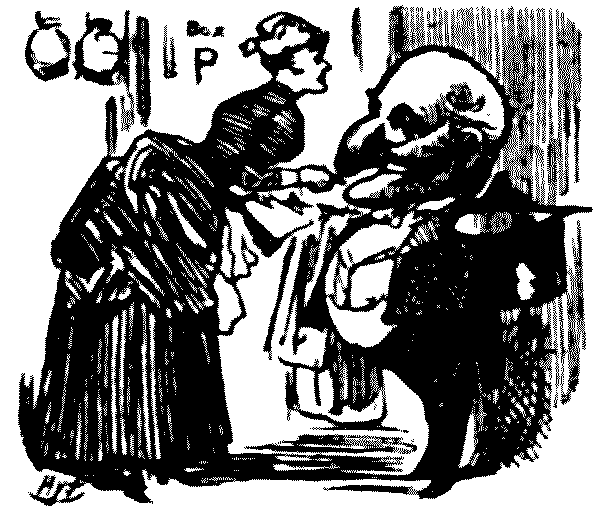
I have only paid three guineas and a half for this stall, but it is certainly stuffed with the very best hair.
The people in the ten-and-sixpenny gallery seem fairly pleased with their dado.
I did not know the call-boy was at Eton.
The expenses of this house must be enormous, if they always play Box and Cox with a rasher of real Canadian bacon.
How nice to know that the musicians, though out of sight under the stage, are in evening dress on velvet cushions!
Whoever is the author of this comedy, he has not written up with spirit to that delightful Louis the Fifteenth linen cupboard.
I cannot catch a word "Macbeth" is saying, but I can see at a glance that his kilt would be extremely cheap at seventy pounds.
I am not surprised to hear that the "Tartar's lips" for the cauldron alone add nightly something like fifty-five-and-sixpence to the expenses.
Do not bother me about the situation when I am looking at the quality of the velvet pile.
Since the introduction of the live hedgehog into domestic drama obliged the management to raise the second-tier private boxes to forty guineas, the Duchess has gone into the slips with an order.
They had, perhaps, better take away the champagne-bottle and the diamond-studded whistle from the prompter.
Ha! here comes the chorus of villagers, provided with real silk pocket-handkerchiefs.
It is all this sort of thing that elevates the drama, and makes me so contented to part with a ten-pound note for an evening's amusement.
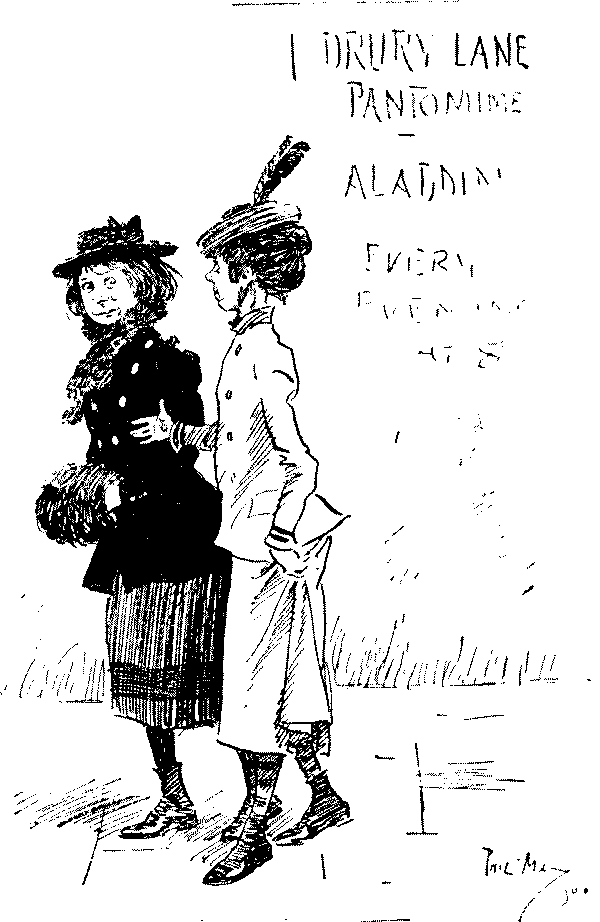
Pantomime Child (to admiring friend). "Yus, and there's another hadvantage in bein' a hactress. You get yer fortygraphs took for noffink!"
The Height of Literary Necessity.—"Spouting" Shakspeare.
When are parsons bound in honour not to abuse theatres? When they take orders.
What Vote the Manager of a Theatre always has.—The "casting" vote.
"Stand not on the Order of your Going."—An amiable manager says the orders which he issues for the pit and gallery are what in his opinion constitute "the lower orders."
Great Theatrical Effect.—During a performance of Macbeth at the Haymarket, the thunder was so natural that it turned sour a pint of beer in the prompter's-box.
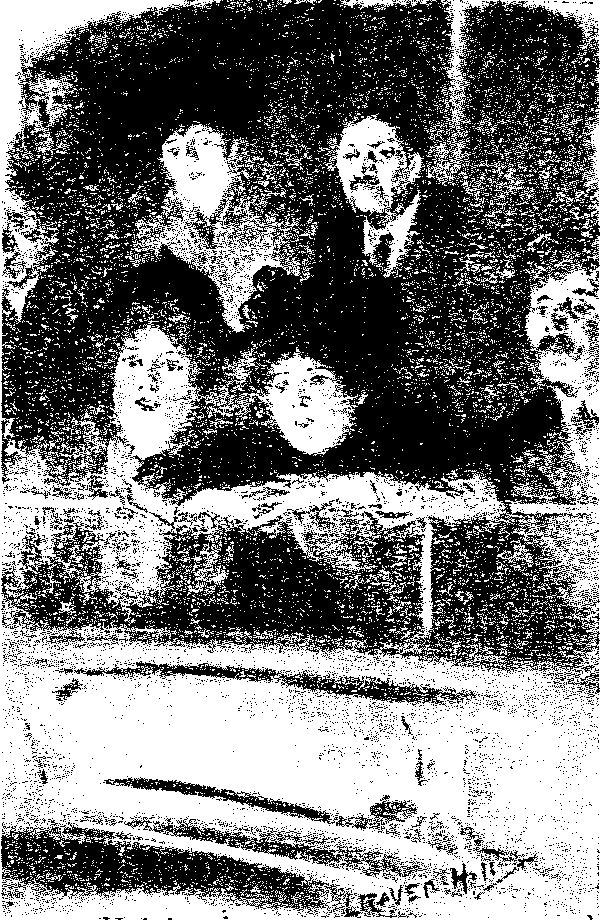
The Drama.
"'Ere, I say, 'Liza, we've seen this 'ere play before!" "No, we ain't." [Wordy argument follows.] "Why, don't you remember, same time as Bill took us to the 'Pig an' Whistle,' an' we 'ad stewed eels for supper?" "Oh lor! Yes, that takes me back to it!"
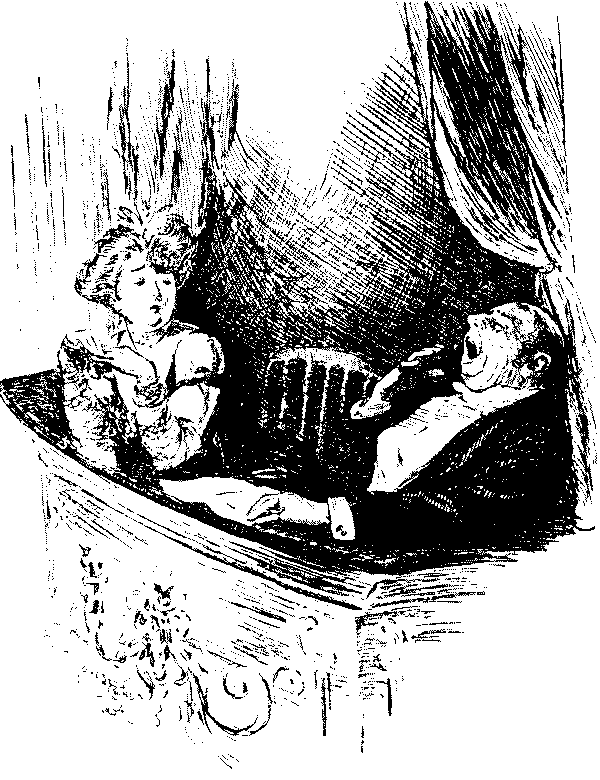
TRUE APPRECIATION
(Overheard at the Theatre)
Mrs. Parvenu. "I don't know that I'm exackly gone on Shakspeare Plays."
[Mr. P. agrees.
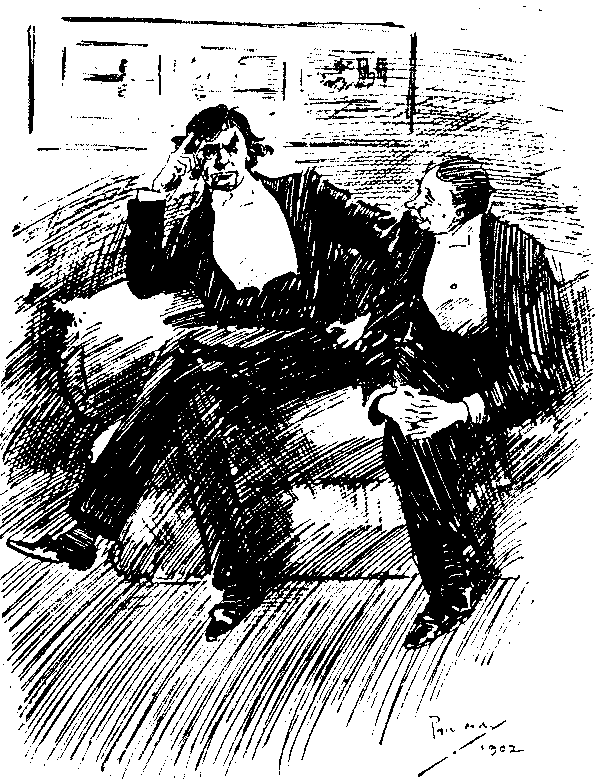
Conversationalist. "Do you play ping-pong?"
Actor. "No. I play Hamlet!"
To Actors who are not worth a Thought.—We notice that there is a book called "Acting and Thinking." This is to distinguish it, we imagine, from the generality of acting, in which there is mostly no thinking?
A Crusher.—Country Manager (to Mr. Agrippa Snap, the great London critic, who has come down to see the production of a piece on trial.) And what do you think, sir, of our theatre and our players?
Agrippa Snap (loftily). Well, frankly, Mr. Flatson, your green-room's better than your company.
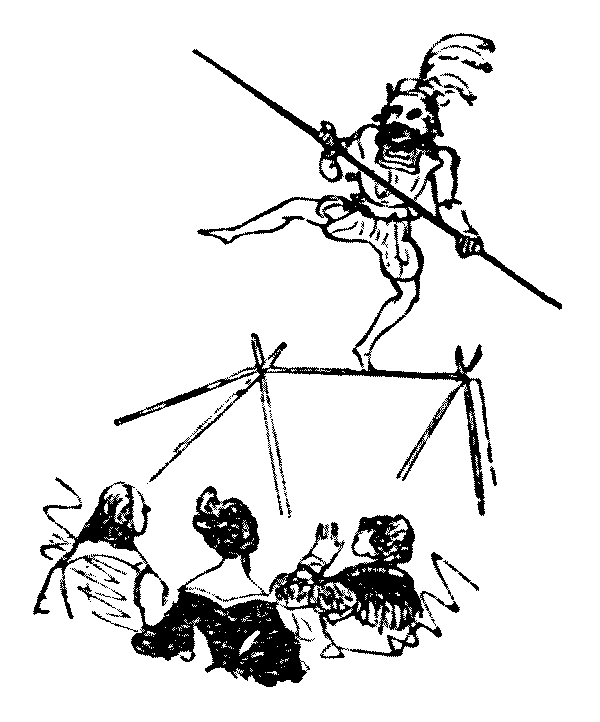
The higher walk of the drama
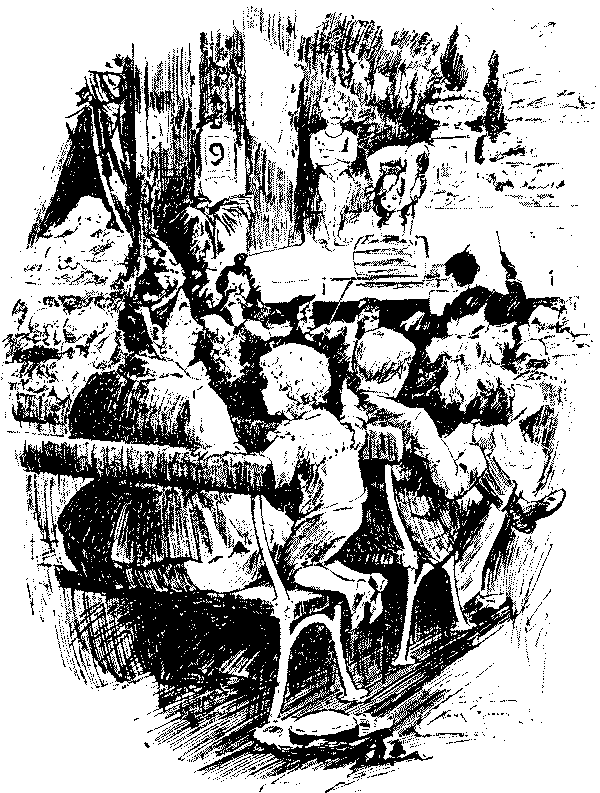
"Auntie, can you do that?"
Theatrical managers are so often accused of being unable to break with tradition, that it seems only fair to point out that several of them have recently produced plays, in which the character of "Hamlet" does not appear at all.
ON A DRAMATIC AUTHOR
"Yes, he's a plagiarist," from Tom this fell, "As to his social faults, sir, one excuses 'em; 'Cos he's good natured, takes a joke so well." "True," cries an author, "he takes mine and uses 'em."