THE FIRST MINSTREL PERFORMANCE.
Reading edition
There has always been considerable discussion as to the exact date when this interesting event took place; two things are certain, and have never been disputed, viz.: that it actually did occur, and that the initial presentation was in New York City, between January 31 and February 17, 1843.
That the idea of amalgamating the respective talents of the original four, Emmett, Brower, Pelham and Whitlock, was conceived by the latter, there is no doubt; the following was furnished by him many years before his death.
“The organization of the minstrels I claim to be my own idea, and it cannot be blotted out. One day I asked Dan Emmett, who was in New York at the time, to practice the fiddle and the banjo with me at his boarding-house in Catherine Street. We went down there, and when we had practiced, Frank Brower called in by accident. He listened to our music, charmed to his soul! I told him to join with the bones, which he did. Presently Dick Pelham came in, also by accident, and looked amazed. I asked him to procure a tambourine and make one of the party, and he went out and got one. After practicing for a while we went to the old resort of the circus crowd—the ‘Branch,’ in the Bowery—with our instruments, and in Bartlett’s billiard-room performed for the first time as the Virginia Minstrels. A program was made out, and the first time we appeared upon the stage before an audience was for the benefit of Pelham at the Chatham Theatre. The house was crammed—jammed with our friends; and Dick, of course, put ducats in his purse.”
The house on Catherine Street was No. 37, and was kept by a Mrs. Brooks. The “Branch” was a hotel opposite the Bowery Amphitheatre.
On January 31, 1843, Dick Pelham did have a benefit, but the performance was of the ordinary nature; nothing unusual, such as a quartet of black-face performers appearing at one time, which would have caused considerable stir; thus may we eliminate January 31, 1843, as the date of the first performance in public.
The following announcement appeared on February 6:
BOWERY AMPHITHEATRE,
Monday evening, Feb. 6. 1843, first night of the novel, grotesque, original and surpassingly melodious Ethiopian Band entitled
THE VIRGINIA MINSTRELS
Being an exclusively minstrel entertainment combining the banjo, violin, bone castanets and the tambourine, and entirely exempt from the vulgarities and other objectionable features which have hitherto characterized negro extravaganzas.
11:45 from the Hotel
The New York Herald commented on the performance for the first time on February 9.
The quartet remained at the Bowery Amphitheatre until February 11; five days later they were over Cornucopia Hall, at No. 28 Park Row; February 22, they began an engagement at the Park Theatre, and shortly afterwards went to Boston, where they played at Melodeon Hall for a few weeks, and sailed from New York, April 21, 1843. May 21, they gave their first performance at Liverpool, England, at the Concert Rooms on Concert Street; subsequently playing a week in Manchester, and thence to the Adelphi in London, where they remained one month; the original four disbanded then.
BILLY WHITLOCK
was a typesetter on the New York Herald, and appeared at various theatres in the evening, while retaining his position during the day.
He made his first appearance in New York City in 1835, as Cuff in “O, Hush.” He resigned from the Herald in 1837, and went with a circus; he returned to New York, and in the Winter of 1839 was engaged by P. T. Barnum to play the banjo for John Diamond, the great dancer.
Mr. Whitlock was the first to return to the United States after the dissolution of the original company; he arrived about August, 1844; subsequently appearing with various small organizations and circuses.
For many years he traveled as a Yankee comedian, and was also an actor at the Bowery Theatre about 1853; he was the composer of “Lucy Long,” one of the great songs of early minstrelsy. His last appearance was with Dan Rice’s Circus in 1855.
His daughter married Edwin Adams, the great actor.
It is a strange thing that no one seems to know where Mr. Whitlock is buried. Billy Whitlock was born in New York City, 1813; he died at Long Branch, N. J., March 29, 1878.
DICK PELHAM (Richard Ward Pell),
like Billy Whitlock, made his first appearance in his native city in “O, Hush,” in 1835. February 13, 1840, he danced against John Diamond in New York City.
November 14, 1842, he appeared at the Franklin Theatre in New York, and on January 16, 1843, he had a benefit at the Amphitheatre, on which occasion he appeared in sixteen songs and dances, and played in the farce “Negro Assurance;” yet we think continuous performances are of recent origin. After the dissolution of the original four in England, Mr. Pelham played an extended engagement at Sadler’s Wells Theatre in London. April 22, 1844, in conjunction with Dan. Emmett, Frank Brower and Joe Sweeney, they reorganized their little band and opened in Dublin, Ireland; at the Theatre Royal, afterwards, appearing in Cork, Belfast, Glasgow and Edinburgh, after which they disbanded.
Mr. Pell subsequently organized Pell’s Serenaders, and played all the large cities in England, Ireland, Scotland and Wales. His last appearance was at Birmingham, England, August 19, 1856.
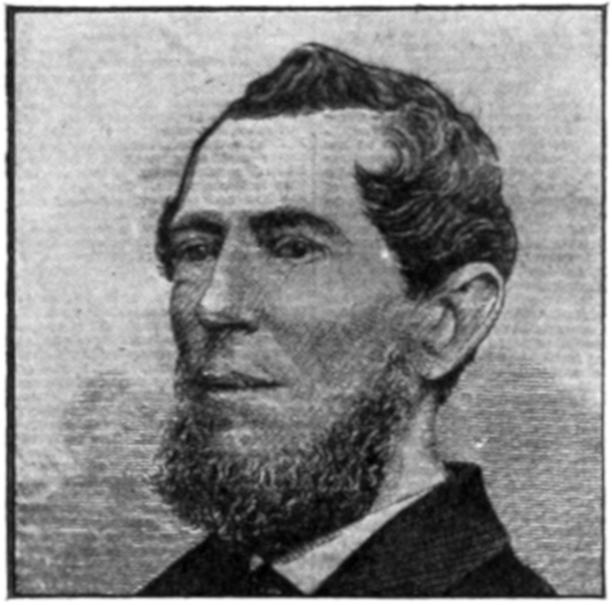
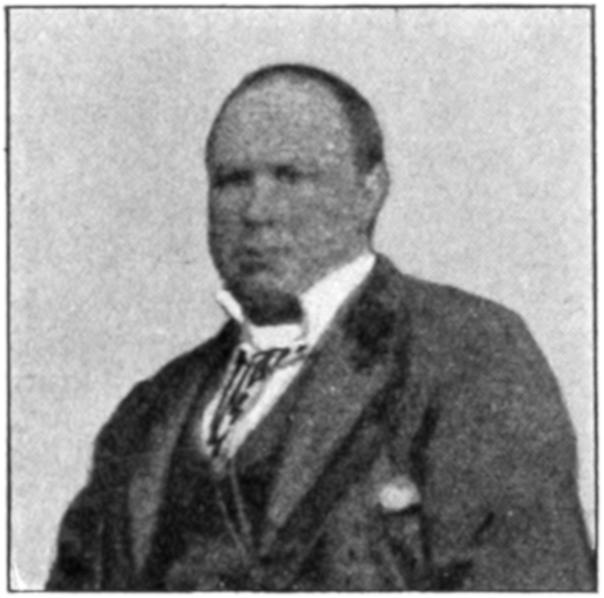
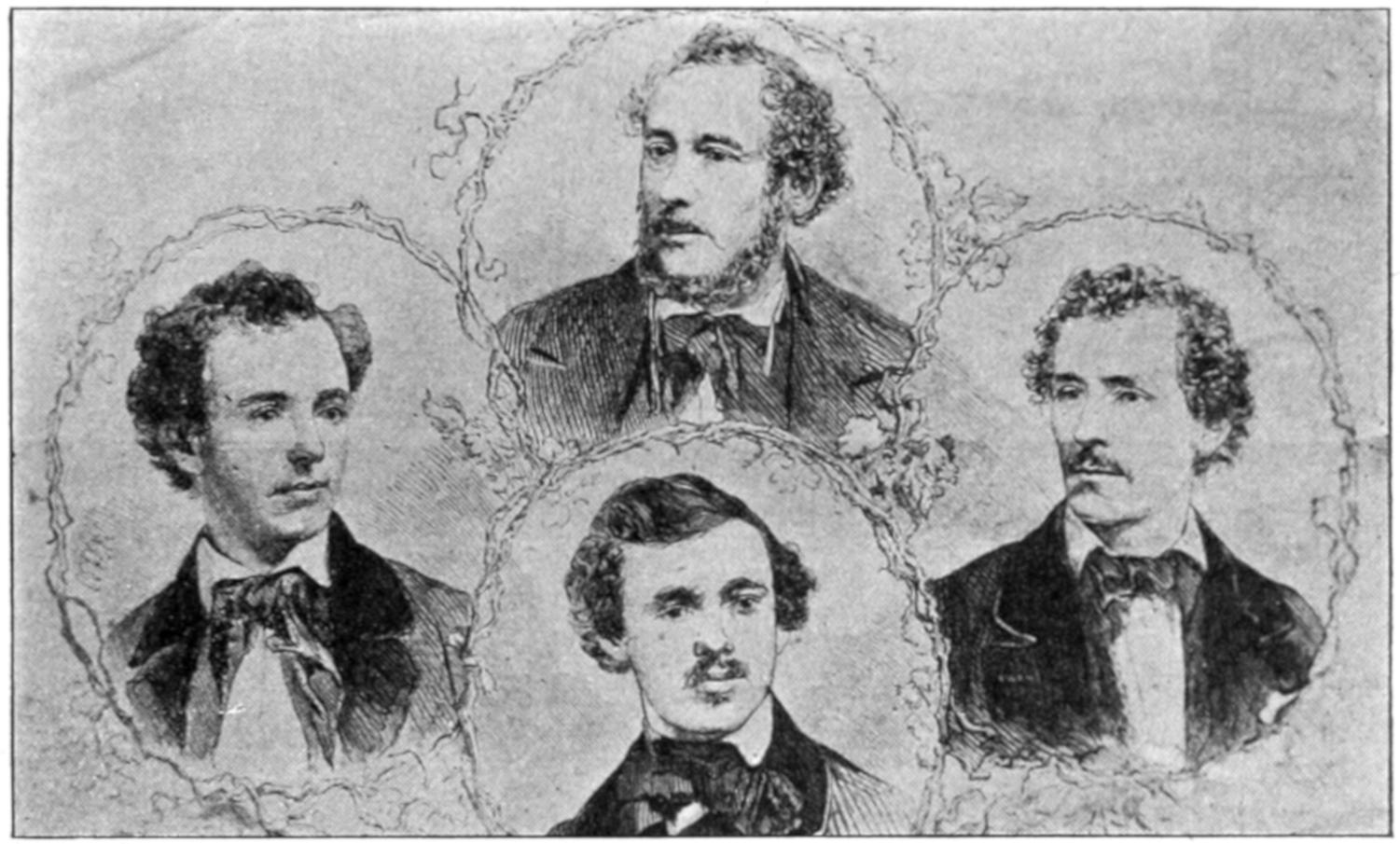
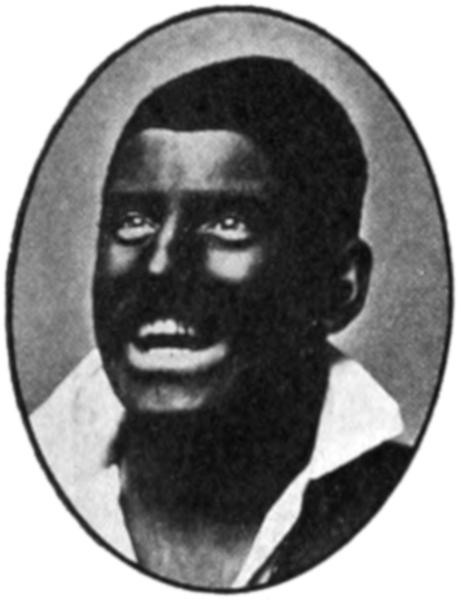
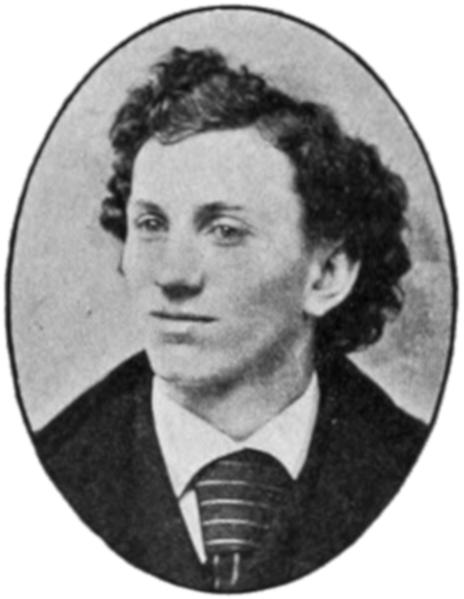
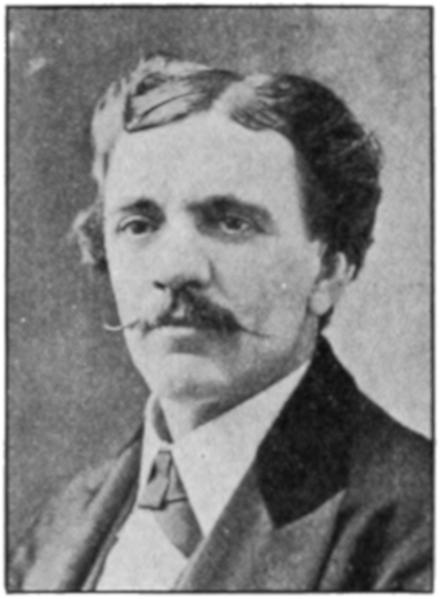
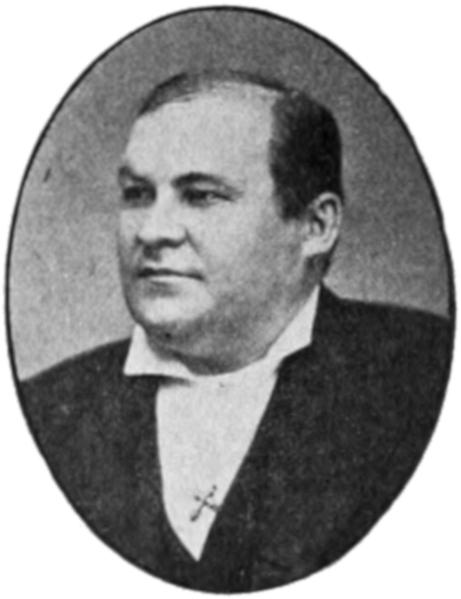
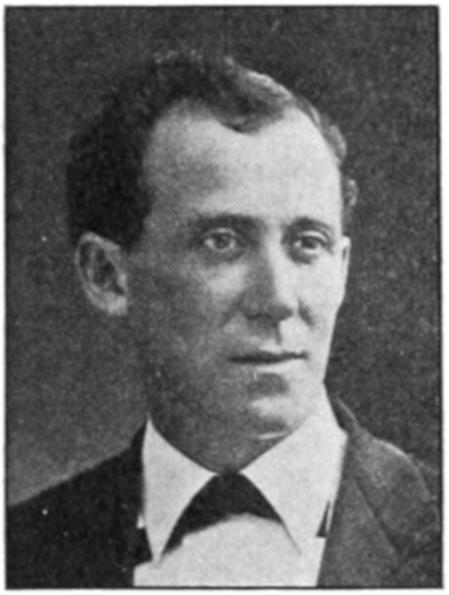
BILLY WHITLOCK DICK PELHAM
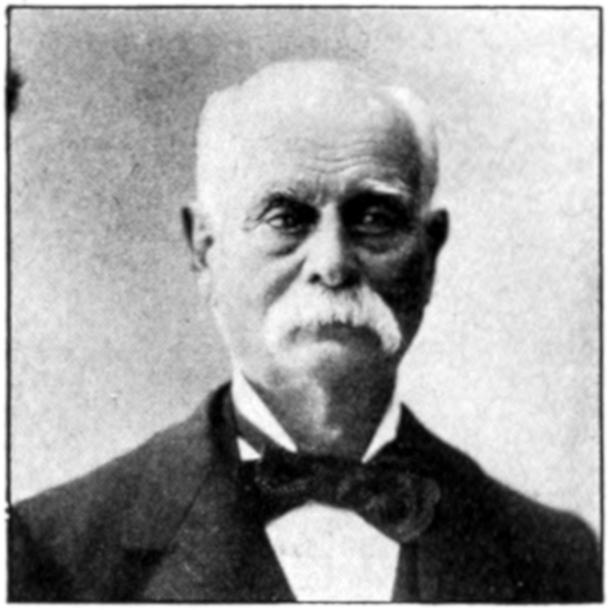
DAN. EMMETT FRANK BROWER
The above four performers gave in New York City, February 6, 1843, the first minstrel performance ever given; they were known as the Virginia Minstrels.
R. BISHOP BUCKLEY JAS. BUCKLEY SWAINE BUCKLEY
FRED. BUCKLEY
THE ORIGINAL BUCKLEY SERENADERS.
Dick Pelham was born in New York City, February 13, 1815; he died in Liverpool, England, October 8, 1876.
DAN. EMMETT (Daniel Decatur Emmett)
was better known to the general public than any of his associates, from the fact that he outlived nearly all his contemporaries, and the more important one that he was the author of “Dixie,” which will live forever.
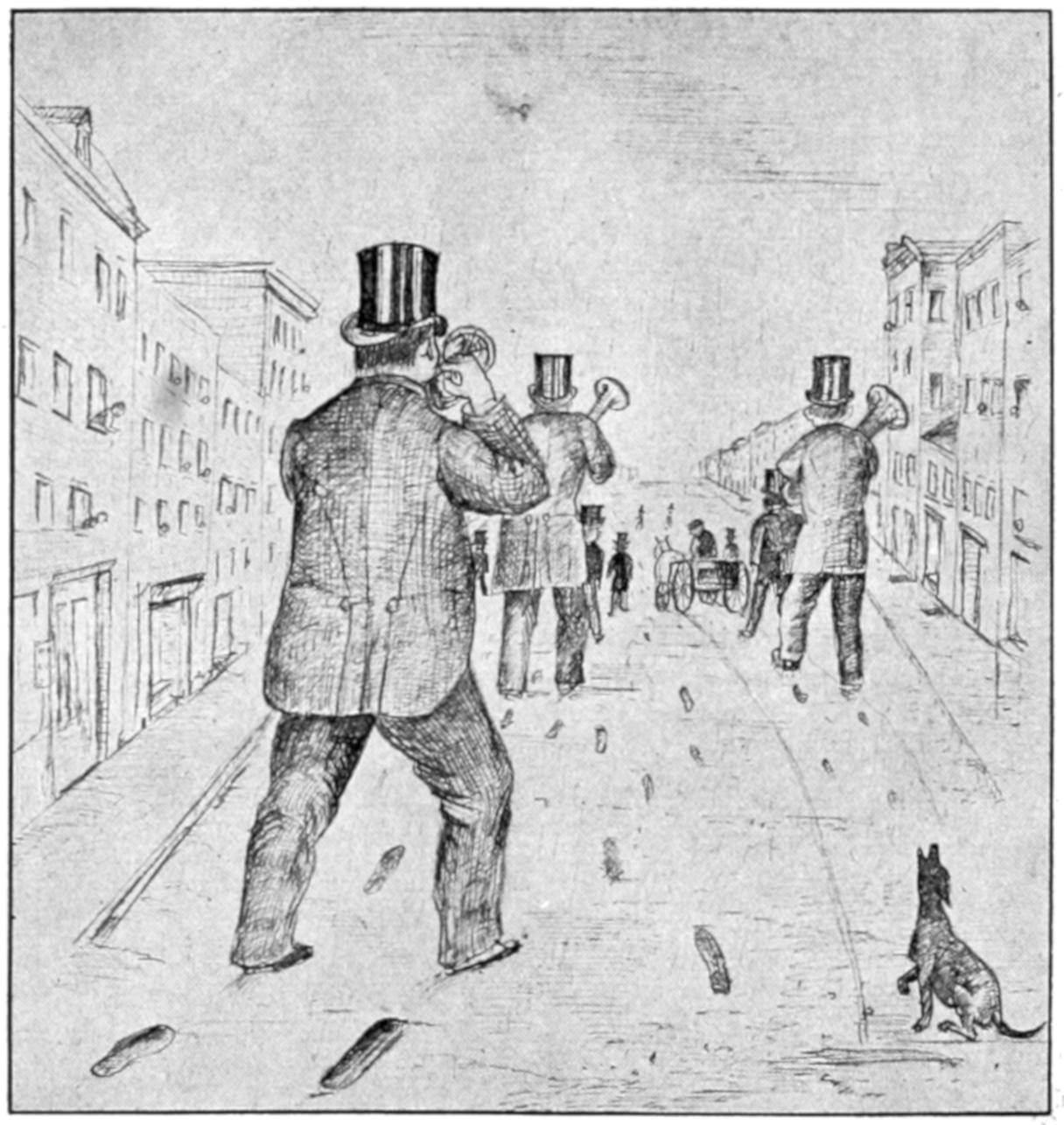
Town Hall To-Night—Minstrels.
Mr. Emmett first blacked up at the age of sixteen, and two years later joined Sam. Stickney’s Circus. At the age of twenty-five, he learned to play the banjo, and traveled with Angevine’s Circus until he reached New York, in 1842.
In 1843, after leaving his three associates in England, he performed at Bolton, Lancashire; he rejoined Pelham and Brower in Dublin, Ireland, April 22, 1844, and played with them and Joe Sweeney for several weeks.
Returning to the United States, he appeared with various circus and minstrel companies.
In 1853-54 he was part proprietor of White’s Minstrels in New York; in 1855 he opened the first minstrel hall in Chicago, at 104 Randolph Street.
Emmett’s Minstrels opened at St. Paul, Minn., April 26, 1858; he was also associated with Frank Brower in a minstrel company in the 50’s.
Mr. Emmett joined Bryant’s Minstrels in New York City in 1858, and remained several years; after Dan Bryant’s death in 1875, he accepted a position as leader in the Star Varieties, Chicago. In the Fall of 1881 he went out with Leavitt’s Minstrels, where in conjunction with several old timers, they gave a reproduction of the original Virginia Minstrels of 1843.
His last engagement was a tour of the country with Al. G. Field’s Minstrels about ten years ago.
An account of the famous song of “I Wish I Was in Dixie,” will be found elsewhere.
Dan Emmett was born in Mt. Vernon, Ohio, October 29, 1815, where he died, June 28, 1904.
FRANK BROWER,
the junior member of the first minstrel company, made his first appearance at Dick Myers’ Museum in Philadelphia, doing a song and dance, about 1838; subsequently he joined John Robinson’s Circus, and later Raymond & Waring’s Circus.
After the separation of the original minstrel company in London in 1844, Mr. Brower traveled with Cook’s Circus in England; and in the Spring of 1844, with Pelham, Sweeney and Emmett, they gave their old performance, opening in Dublin, Ireland, April 22, 1844, and playing engagements in Cork, Belfast, Glasgow and Edinburgh, after which he returned to America and played with some of the principal minstrel and circus organizations.
In 1851 he revisited England, appearing as clown with Welch’s Circus. February 28, 1856, he opened at Sanford’s Minstrels in Philadelphia.
His last engagement in minstrelsy was with Tunnison’s Minstrels in Philadelphia, November 2, 1867; and his last appearance on the stage was in the same city, November 22, 1867, at the Walnut Street Theatre, in “The Lottery of Love.”
Mr. Brower’s “Happy Uncle Tom” was as perfect a piece of acting, it has been said, that has ever been seen on any stage. He was original to a degree, and never stooped to vulgarity in any form.
Frank Brower was born in Baltimore, Md., November 20, 1823; he died in Philadelphia, June 4, 1874.
THE BUCKLEY SERENADERS.
James Buckley, the father of R. Bishop, G. Swayne and Fred Buckley was the organizer of the justly famous Buckley Serenaders; they were originally known as the Congo Melodists; subsequently upon playing an extended engagement in New Orleans, they adopted the title of “New Orleans Serenaders”; later using the name they were ever after known by.
Mr. Buckley was leader at Harrington’s Museum in Boston in 1840.
In 1843 he organized the Congo Melodists in Boston, and gave their first performance at the Tremont Theatre; in October they were playing the Tabernacle, the present site of the Howard Athenaeum. Their first New York appearance was in 1845; the following year they went to England, where they remained about two years. For family reasons each of the four Buckleys adopted different names on this trip, and retained them for a time after their return to the United States in 1848; James Buckley was known as James Burke.
Their metropolitan reappearance was made at the Society Library Rooms, corner Broadway and Leonard Street; they played here as early as January 3, 1849.
The Buckleys were the first recognized company from the East to visit California, which they did in 1852; they played in tents at $3 per ticket. In June, 1853, they made their third New York appearance at the Chinese Assembly Room, 539 Broadway, which they leased and made into a minstrel hall; they remained three years. August 25, 1856, they opened at 585 Broadway; their last performance there was January 9, 1858; subsequently they played a brief engagement at 444 Broadway, commencing two days later.
In May, 1858, they began a brief engagement at the Ordway Hall in Boston, and in November, same year, they began a short season at Allston Hall on Tremont Street; subsequently returning to New York at 585 Broadway, opening July 11, 1859.
On March 21, 1860, they sailed again for England, where they met with pronounced success; in this engagement they played under their own names.
As a matter of actual fact, their success was so great, that rival managers became jealous, and succeeded in digging up an old law which prevented an opera other than the Royal Opera from being given; as the Buckley’s success depended on the production of these operas, which they produced on a lavish scale, they were compelled to return to America, which they did in 1861. After playing several engagements, they returned to Boston and opened at Allston Hall, October 13, 1862. December 22, same year, they began an engagement at the Palace of Music, New York (the present site of the Fourteenth Street Theatre), and June 15, 1863, they again visited Boston, appearing at the new hall, corner Chauncey and Summer Streets, remaining until April 9, 1866.
The retirement of James Buckley and the deaths of R. Bishop and Fred Buckley, left only G. Swayne Buckley, who reorganized the company and toured with intermittent success and failure until about 1876, when the Buckley’s Serenaders passed into oblivion.
Such is the history of this famous family whose talents and versatility are beyond comprehension to the present generation.
They were the first company to produce burlesque opera, which they did on a scale of magnificence never since duplicated.
The company originally consisted of the four members of the family; later they were augmented by Sam Sanford and J. C. Collins; this was about 1846; in after years many of the prominent lights of the minstrel profession appeared on their roster. Mr. Jas. Buckley was the only member of the organization who was not active up to the time of his death.
James Buckley was born in Manchester, England, 1803; he died in Quincy, Mass., April 27, 1872.
R. Bishop Buckley, began his career in 1843 in Boston as member of the original Buckley Serenaders.
He was an excellent mimic, accomplished musician and good actor.
He was best known for his performance on the Chinese fiddle, which was never equaled except by a native Chinaman. He was the possessor of a good tenor voice, which he used easily and gracefully.
Mr. Buckley was known as J. C. Rainer in the late 40’s while in Europe and shortly after their return.
R. Bishop Buckley was born in England, 1826; he died in Quincy, Mass., June 6, 1867.
George Swayne Buckley, the most versatile of the famous Buckley family, made his first appearance as a prodigy at Harrington’s Museum in Boston, in 1840.
Later, while learning to play the banjo, the famous Joe. Sweeney took an interest in him, and “starred” him for a lengthy period through the country as “Young Sweeney,” which title he used as late as May 15, 1845.
Some idea of Mr. Buckley’s versatility may be gleaned from the fact that in one performance he sang a song and done a banjo solo in the first part, played a solo on the kitchen bellows in a burlesque on the Julien Concerts; gave Locust Hum in the third part; played a part in the burlesque opera; danced with two others in the finale, and gave his bone solo, which was a wonderful performance; with them he gave imitations of the drums, the march, the reveille, etc., concluding with imitations of two horses running a race. It must be understood that all these performances were given in an artistic manner; and this was about sixty-five years ago.
Probably Swayne Buckley’s chief fame rests on the act he did in later years; it was called “Musical Moments;” in it he performed on twelve different instruments, playing several at one time.
July 8, 1867, he reorganized in Boston the Buckley Serenaders with himself as the one remaining member of the famous family in its company.
In 1870 Mr. Buckley played an engagement with the San Francisco Minstrels in New York City; and on September 3, 1872, with Sam Sharpley he organized a company and gave minstrelsy on new lines, eliminating the time-honored first part.
The two following seasons saw Buckley’s Serenaders on the road, and on September 13, 1875, he opened with the minstrels at Beethoven Hall, Boston; their stay was brief; a road tour was even less successful.
In 1871 he played in a sensational melodrama called “On the Track;” in this he portrayed seven characters. Mr. Buckley’s last appearance was at the Walnut Street Theatre, Philadelphia, playing Zip, a negro, in “Devotion.”
George Swayne Buckley was born in Bolton, England, August; 1829; he died in Quincy, Mass., June 25, 1879.
Fred Buckley came to America with his father and brothers in 1839; when, as previously stated, the family changed their names, Mr. Buckley was known as Master Ole Bull.
He was leader of the orchestra in their organization for many years.
Some of the famous ballads of early minstrelsy were composed by him, such as “We Are Growing Old Together,” “I’d Choose to Be a Daisy,” “Laughing Jennie,” “I See Her Still in My Dreams,” “I’m Turning Gray, Dear Kate,” and numerous others.
Mr. Buckley married Fanny Brown, the actress, January 29, 1857.
Fred Buckley was born in Bolton, England, October 12, 1833; he died in Boston, Mass., September 12, 1864.
CHRISTY’S MINSTRELS
were originated and first organized by Edwin P. Christy, and after that gentleman retired from the profession, a few years later, part of his old company organized and went to Europe, giving their first performance there August 3, 1857; they were called the “Christy” Minstrels. From this company several others sprung, and for a great many years all minstrel organizations in England were called “Christy’s.”
E. P. Christy had a “card” on his program for many years, stating that his was the first minstrel company organized, the date given as 1842. In support of this at one time gave a statement of receipts covering a period of six months in 1842, and up to January 1, 1848.
It is a noteworthy fact that Mr. Christy’s “card” did not appear until after Wood’s, likewise Campbell’s—two permanent minstrel organizations like his own in New York City, had prospered and made their presence felt.
As has been stated elsewhere, black-face performers there were a-plenty long before the original four gave their first joint performance; they played chiefly in circuses and dance houses, and it was in one of the latter that Mrs. Harrington, mother of George Christy, and subsequent wife of E. P. Christy, kept, where these performances were given, and were very common occurrences at that time, and this was the only basis that Mr. Christy had of ante-dating the original company. There is no doubt that after the intelligence reached Buffalo of the success of Pelham, Whitlock, Emmett and Brower, that Mr. Christy, like scores of others, formed a company and called them Christy’s Minstrels; the date of this interesting event has never been made public, if indeed it was ever recorded. The first record of the company that the author has been able to find was in Albany, N. Y., May, 1844. On Sunday, August 17, 1845, R. M. Hooley is said to have led the orchestra for them at the Assembly Room in Buffalo, N. Y.
Their first metropolitan appearance was at Palmo’s Opera House, April 27, 1846; they subsequently played at the Society Library Rooms and later at the Alhambra, all in the same city.
But it was at Mechanics Hall, 472 Broadway, New York, that the name of Christy’s Minstrels became famous; they opened there on February 15, 1847, and remained until July 15, 1854. On September 20, 1854, the company sailed for California; they played a few weeks at Pratt’s Hall in San Francisco, but were not overly successful.
Such is the story of E. P. Christy’s Minstrels; the original company consisted of E. P. Christy, George Christy, Tom Vaughn and Lansing Durand; the careers of most of these performers, also their portraits, will be found elsewhere.
It was the withdrawal of George Christy from E. P. Christy’s Company that caused their dissolution.
Edwin P. Christy was best known as a ballad singer, although he played the banjo acceptably and played parts in his entertainments; he made a specialty of singing Stephen C. Foster’s songs.
He returned from California early in 1855, and never appeared again professionally; nor did he ever play in England, although his name is a household word there yet even to this day.
Edwin P. Christy was born in Philadelphia, November 28, 1815; he died (suicide) in New York City, May 21, 1862.
George N. Christy (Harrington), is conceded to have been one of the greatest performers that ever graced the minstrel stage; he was versatile by all the term applies; had he deemed to use his talents otherwise, his name might have been enrolled as one of America’s great actors.
His career began at Buffalo, N. Y., in 1839; although he had not yet entered his teens, he was rated a fine jig dancer.
He was associated with E. P. Christy a few years before the latter organized his minstrel company.
George Christy was with Christy’s Minstrels in New York from February 15, 1847, until October 29, 1853, during which period he played every conceivable part; male and female equally well; he was a great endman and as a bone player ranked with the best.
Owing to a misunderstanding, he left E. P. Christy on October 29, 1853, and two days later he joined forces with Henry Wood at 444 Broadway, where as Wood and Christy’s Minstrels they held forth many years.
During the 50’s Wood and Christy took the house vacated by E. P. Christy, put a show in there and ran both establishments for several months; Billy Birch and Christy played on the ends in their respective houses, after which each would go to the other theatre and contribute to the rest of the entertainment.
December 2, 1854, “444” was destroyed by fire, and the company after a brief tour, resumed at “472.” “444” was rebuilt and reopened October 1, 1855.
Subsequently the company opened at Wood’s Marble Palace, 561-563 Broadway, which was especially built for them, October 31, 1857; the other houses were then closed.
Christy withdrew from Wood on May 1, 1858, and went to California, opening at San Francisco under the management of Tom Maguire, June 7; the company was known as Christy’s Minstrels; they remained in California several months; subsequently Christy and R. M. Hooley formed a partnership and returned to New York, opening at 444 Broadway, May 23, 1859. Christy had previously signed an agreement with Henry Wood not to appear within 100 miles of New York for a period of eighteen months, commencing May 1, 1858.
When George Christy attempted to perform, he was enjoined from doing so by Wood; Christy then took the road until the time limit had expired, opening at Niblo’s Saloon, November 7, 1859; he played here about one year, and subsequently moved opposite to 585 Broadway.
In 1864 he was with J. W. Raynor’s Company; and on September 4, 1865, he began an engagement with Hooley in Brooklyn; a year later he opened with Kelly and Leon’s Minstrels at 720 Broadway; this was the initial performance of the latter company in the metropolis.
January 16, 1867, with G. W. H. Griffin, he organized Griffin and Christy’s Minstrels, opening at the Fifth Avenue Theatre (late Madison Square Theatre); they closed June 27, went on tour and reappeared in New York, July 29, at Union Hall, Fifth Avenue and Twenty-third Street; they closed on September 23 and went traveling.
His last appearance was with Hooley’s Minstrels, May 2, 1868, in Brooklyn, N. Y.
George Christy was born in Palmyra, N. Y., November 6, 1827; he died in New York City, May 12, 1868.
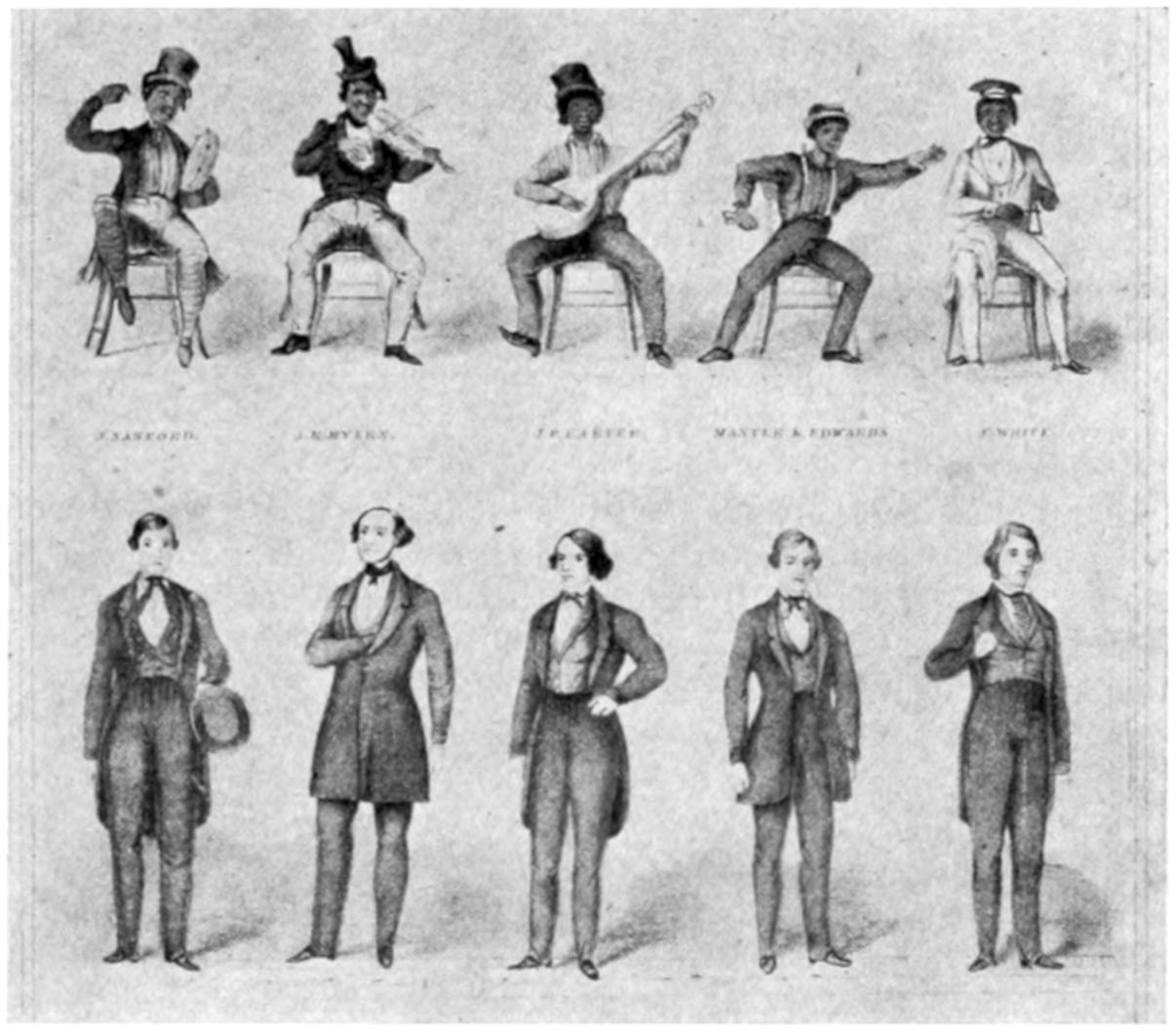
THE VIRGINIA SERENADERS, 1843.
Reading from left to right, in later years the above performers were familiarly known as Jim Sanford, “Ole Bull” Myers, Jim Carter, Bob Edwards and “Cool” White.
BILLY LESTER PAUL ALLEN
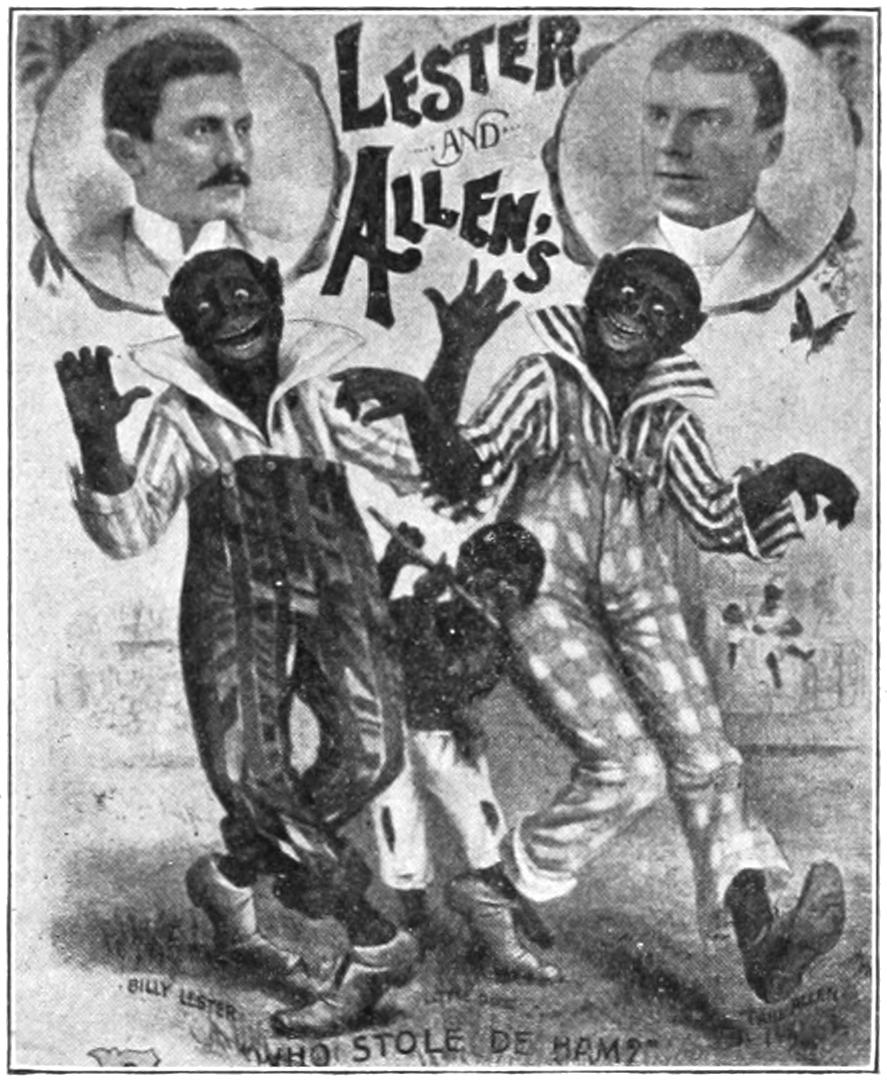
LESTER AND ALLEN—They came later.
William A. Christy, the younger son of E. P. Christy, was a comedian, and a fair end man.
His greatest proficiency was in the delineation of the female character.
Late in 1860 “Christy’s” Minstrels, under his management, toured for a brief season; they closed, and on July 4, 1861, they reorganized and opened at the Athenaeum, Brooklyn, N. Y.
William A. Christy died in New York City, December 8, 1862, aged 22 years.
E. Byron Christy was a son of E. P. Christy; he was a comedian, and best known for his stump speeches. He played with Sanford’s Minstrels in Philadelphia in 1859, and with George Christy’s Minstrels same year, after the latter’s return from California. In 1865 “Christy’s” Minstrels made a tour under his management.
He died in New York City, April 6, 1866, aged 28 years.
JOE SWEENEY (Joel Walker Sweeney)
was the “father of the banjo” and one of the earliest black-face performers.
Mr. Sweeney and two brothers traveled in a wagon through the South in the early 30’s, and certainly as early as 1838 when he was with a circus that played in Lynchburg, Va.
He played many subsequent engagements with circuses, notably with the John Robinson Show.
About 1843 he went to England, where he traveled with Cook’s Circus.
April 19, 1844, with Brower, Pelham and Emmett, he formed again the Virginia Minstrels; they played in Dublin two weeks, and several other cities, after which the quartette broke up; Pelham and Sweeney then performed in the principal cities of the United Kingdom, Sweeney returning to the United States about 1845.
He subsequently organized Joe Sweeney’s Opera Troupe and traveled chiefly through the South at intermittent periods up to within about a year or two of his death.
In April, 1852, he played an engagement with Charley White’s Minstrels in New York. Up to the time of Joe Sweeney, the banjo, so-called, was made from a gourd and had four strings only; he took an old cheese box, cut it in half, covered it with a skin and added another string; the fine instruments we see to-day are the evolution of the crude affair just described; this was about 1830.
Joe Sweeney was born at Appomattox, Va., 1813; where he died October 27, 1860.
Geo. Holland, father of the late Geo. Holland, and of E. M. and Jos. Holland, and who was known as one of the great comedians of the old stock days, made his appearance with Wood and Christy’s Minstrels in New York City, December 21, 1857, playing female parts in black-face, and remained with the company six months.
The famous “little church around the corner” gained its name and fame through the death of this great old actor.
George Holland was born near London, England, December 6, 1791; he died in New York City, December 20, 1870.
Edwin Forrest, America’s first great actor, at the Globe Theatre, Cincinnati, Ohio, July 17, 1823, played Cuff, a Kentucky negro, in the “Tailor in Distress.”
In this play Mr. Forrest imitated the black man in dress, accent, gait, dialect and manner; and was said to be the first actor to do so.
Edwin Forrest was born in Philadelphia, March 9, 1806; he died there December 12, 1872.
“Ole Bull” Myers (J. Richard Myers) was one of the earliest and best violinists in minstrelsy.
He entered the profession in 1835, and was with numerous black-face companies, notably the Virginia Serenaders in 1843; this organization, a photograph of which will be found elsewhere, played an engagement at the Chatham Theatre, New York, January 24, 1844.
“Ole Bull” Myers was born in Baltimore, Md., May 9, 1909; he died in Philadelphia, September 10, 1874.
P. T. Barnum, the great circus man, in the fall of 1836 while traveling with a small show of his own, had the misfortune to lose the services of Jim Sandford, one of his principal “cards,” who was doing “nigger” business; but rather than disappoint his audience, Barnum “blacked up” and sang “Such a Gittin Up Stairs,” and other songs that were popular that day.
P. T. Barnum was born in Bethel, Conn., July 5, 1810; he died at Bridgeport, Conn., April 7, 1891.
Tom Christian, one of the first, also one of the best to do Tyrolean warbling in minstrelsy, joined E. P. Christy’s Minstrels in New York in 1847, and continued as a member of that organization until it disbanded in 1854; subsequently he joined Sanford’s Minstrels in Philadelphia, and Raynor’s “Christy” which toured the country until they sailed for England in June, 1857, when Christian went with them; he remained with the organization which afterwards was known as Moore, Crocker and Ritter’s Minstrels, until his death.
Tom Christian died in London, England, January 29, 1867; aged 59 years.
Dr. G. R. Spalding, whose “Floating Palace” and steamers “Banjo” and “Gazelle” and “James Raymond” gave minstrel performances on the rivers for many years, commencing about 1855, was a native of Coeymans, N. Y.; he died in New Orleans, La., April 6, 1886, aged 68 years.
Sam Johnson (Isaac Ray) was one of the earliest minstrel performers; as early as the Summer of 1844 he appeared in Hoboken, N. J., at Otto Cottage as one of the Operatic Brothers and Sisters.
He died at River View, Ky., about November 1, 1876, aged 62 years.
Jim Sandford (Blandford) was one of the earliest jig dancers of minstrelsy. He appeared with small companies as early as 1843; and for several years traveled with the great John Diamond. He was noted for his fastidiousness in dress.
He was born in Baltimore, Md.; he died in Philadelphia, September 2, 1855; aged 41 years.
John Washington Smith was one of the earliest and best negro delineators ante-dating minstrelsy proper, although he was later associated with several prominent organizations.
His earliest recorded appearance was with the Lion Circus in Cincinnati, December, 1838.
The following year he played in New York, and a year later went to Europe, where he performed with “Pickaninny” Coleman. Returning to America, he played at the Bowery Amphitheatre, April 25, 1842.
In 1849 he wrote and first sung the song that was afterwards in the repertoire of many famous minstrels—“Old Bob Ridley;” this occurred in New Orleans, La.
In the Fall of 1855 he was with the original San Francisco Minstrels in the California metropolis. He subsequently went to Australia and other foreign countries, where for many years he piloted various minstrel organizations.
John Washington Smith was born in the United States about 1815; he died in S. Yarra, Australia, August 31, 1877.
Francis Germon was one of the early comedians and tambourinists in minstrelsy.
December 25, 1839, at Taunton, Mass., in a concert there he was singing the old song of “Sittin’ on a Rail.”
About 1844 he joined the Ethiopian Serenaders, and continued as a member of that party several years.
September 15, 1845, Mr. Germon and the company, as shown on another page, began an engagement at Palmo’s Opera House, New York.
Francis Germon died in Philadelphia, it is said, in the 50’s.
Ned Harper was one of the early black-face performers who ante-dated minstrelsy proper.
He was the author of “Jim Along Josey,” and the first to sing it in his drama, the “Free Nigger of New York,” about 1838.
February 22, 1837, at the Lion Theatre, Boston, he played Gumbo Cuff in “O’ Hush.”
He died in England about fifty years ago.
“Bill” Ceda (Wm. Price), up to the time of his death was the oldest living minstrel in England, where he had been since 1848; he was a comedian and general performer, and made his first appearance at the Bowery Theatre, New York, in 1840; in June, 1848, he was with the Virginia Harmonists.
Bill Ceda was born in the United States; he died in Liverpool, England, March 9, 1873.
Dick Sweeney, a brother of the famous Joe Sweeney, and who traveled with him in the 30’s and 40’s, giving concerts in black-face, died in Washington, D. C., in 1860, it is said. He was born in Virginia about 1815.
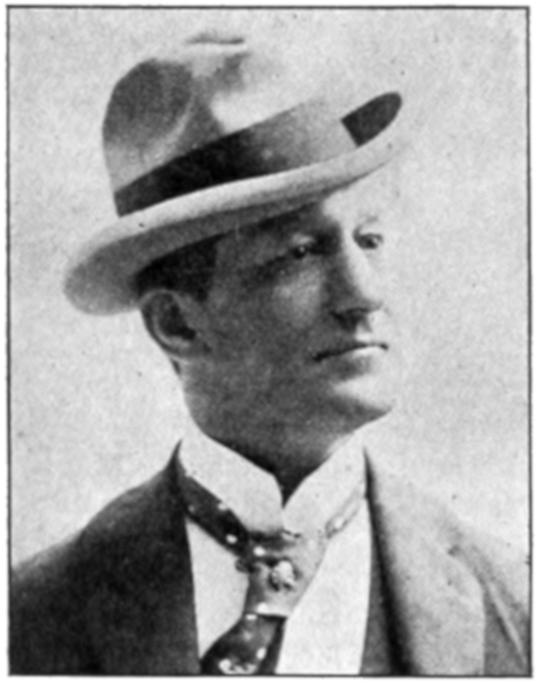
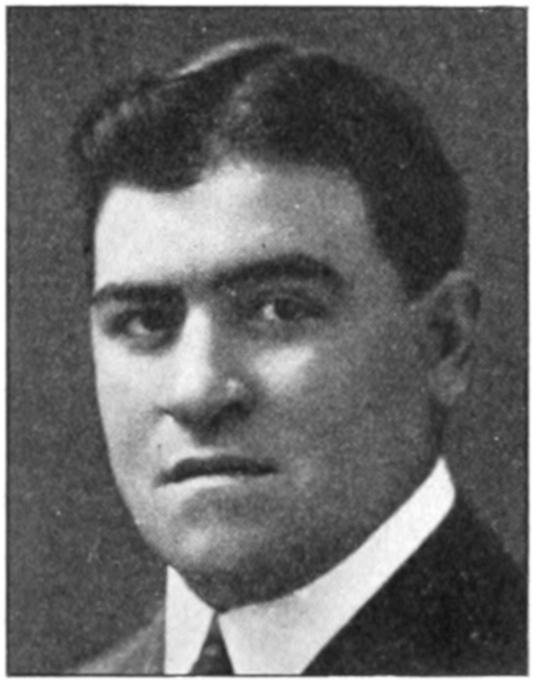
FRANK WARD (of the Original Clipper Quartette) HARRY A. ELLIS (of the Original “The Quartette”)
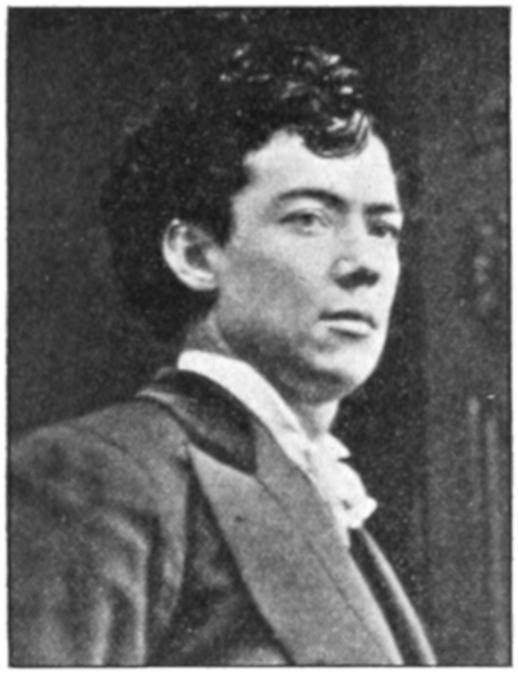
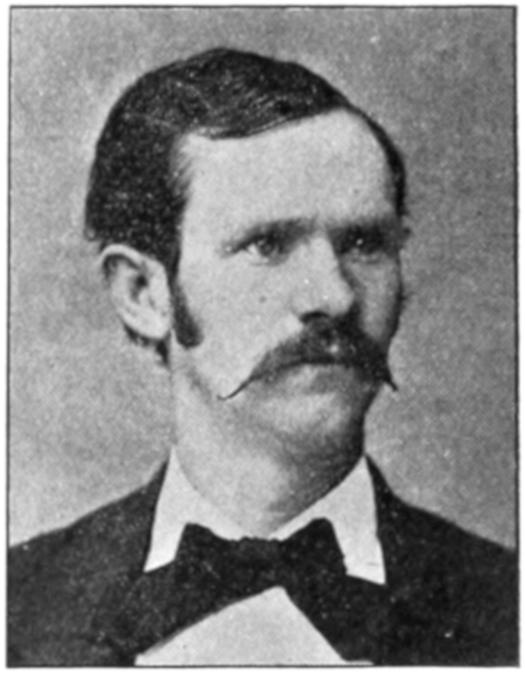
JOHNNY THOMPSON FRANK KERNS
(Thompson & Kerns were the original double song and dance team; 1862.)
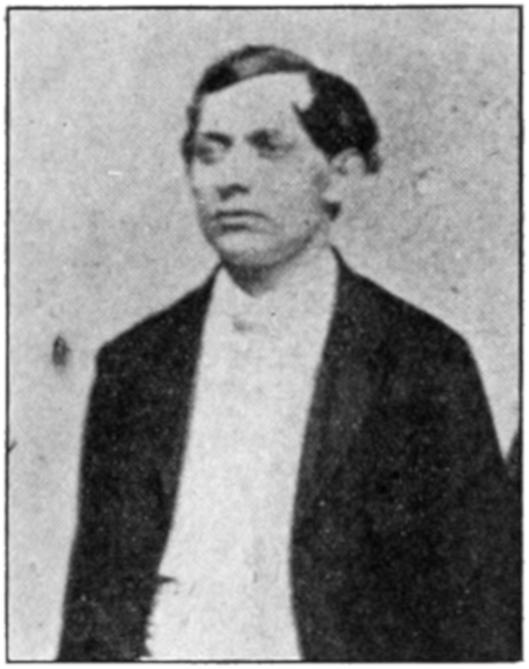
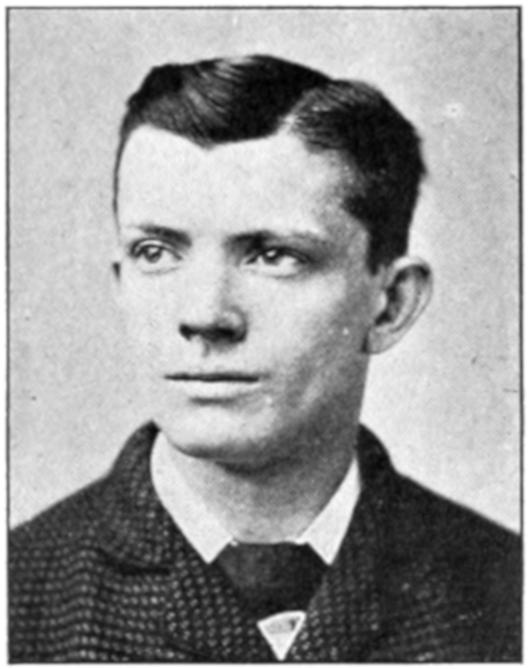
CHARLEY GARDNER (Original “Hop Light Loo”) FRANK E. McNISH (Original “Silence and Fun”)
“SOME ORIGINALS.”
Nelson Kneass’ fame has been handed down to posterity for his association with the song of Ben Bolt, which was composed by Thomas Dunn English; an old German tune was supplied by Mr. Kneass, and through it the verses have become immortalized.
Mr. Kneass followed the profession of negro minstrelsy for many years.
February 1, 1841, he was leader of the “orchestra” at the opening of the Museum, Albany, N. Y. In 1846 he was a member of the Sable Harmonists; in 1853 with Sanford’s Minstrels in Philadelphia, and on June 2, 1854, Mr. Kneass and his daughter, Annie, who later married J. N. Rentfrow, of Rentfrow’s Jolly Pathfinders, were with Wood and Christy’s Minstrels in New York, the former as Aunt Chloe, and the latter as Eva in “Uncle Tom’s Cabin.”
In 1859 he was with a minstrel company in Chicago, and late that same year was with Dan Scott’s Dramatic Company.
Nelson Kneass was born in Philadelphia; he died in Chillicothe, Ohio, September 10, 1869.
G. Warren White was a famous vocalist in the early days of minstrelsy. He began as a boy singer, and later was with Dumbleton’s Serenaders; also with Ordway’s Aeolians in Boston.
His later years were spent with the Campbell-Castle Opera Company, and the Kellogg Opera Company.
Mr. White was born in Boston, Mass., in 1816; he died in Somerville, Mass., in March, 1886.
Dan Gardner was equally at home as a clown in a circus, or as a minstrel.
At the age of 13, on the 13th of the month, he ran away from home, and after walking thirteen miles, joined a canal boat show.
He soon after returned to his heath, and subsequently held the position of assistant property man at Mt. Pitt Circus in New York, on the site that is now occupied by the Hoe Printing Press Company. Mr. Gardner began his clown business there.
As early as 1835 he did a wench character; it is considerably more than probable that he was the first performer to do a female part in black-face. And he was absolutely the first to do Lucy Long, a famous characterization in early minstrelsy.
In every decade commencing in the 30’s, Mr. Gardner was prominently identified with minstrelsy. He was with Sam Sanford’s Minstrels as early as 1844, and when the latter took the present Eleventh Street Opera House in Philadelphia, he played numerous engagements there in the 50’s, 60’s and 70’s.
In 1845 he was one of the famous Operatic Brothers and Sisters in New York City.
Mr. Gardner was the father of W. H. Gardner, prominent in circus business; also Lida Gardner, who was the original Mabel Santley of the Rentz-Santley Burlesquers.
Dan Gardner was born in New York City, October 28, 1816; he died in Atlantic City, N. J., October 7, 1880.
M. C. Campbell (Cainan), one of the great ballad singers in the early days of minstrelsy, first appeared prominently at Wood’s Minstrels in New York in 1851; he remained successively a member of Wood and Christy’s; Wood’s; and George Christy’s Minstrels, covering a period of about nine years.
In February, 1861, he organized a company with James Budworth.
On November 10, 1862, he gave the first performance of Campbell’s Minstrels at what is now known as the Fourteenth Street Theatre, New York; June 27, 1864, his company opened at what is now known as the People’s Theatre, New York; January 16, 1865, R. M. Hooley became associated in the management, and in the Spring of the same year he disposed of his interest to Hooley.
Mr. Campbell had various minstrel companies until about 1870, when he retired; subsequently he was identified with the Evening News, New York City.
M. C. Campbell was born in London, England, 1817; he died in New York, January 6, 1883.
Edwin Deaves was associated with some of the very earliest minstrel companies in existence in his native and other Eastern cities in the middle 40’s.
About 1850 he went to California, where he remained many years. When he first played in the great coast metropolis, the “theatre” was a tent.
Edwin Deaves had a pleasing personality and a commanding presence, which eminently fitted him for the position of “middle-man” in the various companies in which he was associated. Mr. Deaves was among the first to sing the lamented Foster’s ballads, such as “Old Dog Tray,” “Nellie Gray” and others.
When George Christy and his company arrived in San Francisco in the Summer of 1858, Mr. Deaves at once became a member. Likewise was he associated there with Birch, Wambold, Bernard, Backus and many other burnt cork luminaries many years before these artists made a metropolitan reputation.
Edwin Deaves was born in Philadelphia, in 1817; he died in New York City, July 19, 1890.
Eph. Horn (Evan Evans Horn) was a name to conjure with for many years.
His professional career began more than seventy years ago. He first appeared in New York City about 1847 as a member of the Ethiopian Serenaders.
In conjunction with Charley White, they formed Horn and White’s Minstrels, opening in New York, April 2, 1851. Subsequently he was identified with practically all the famous permanent minstrel companies in the metropolis, including Wood’s, Campbell’s, Buckley’s, Bryant’s, and E. P. Christy’s; with the latter he went to San Francisco, Cal., in the Fall of 1854, where he remained eighteen months. Subsequently he appeared as clown in a circus, in black face. In 1858 he played an engagement with Ordway’s Aeolians in Boston. Mr. Horn was a fine end man in his day, and all-round general comedian.
In the Summer of 1865 he went to London, where he played a brief engagement.
Eph. Horn was born in Philadelphia, Pa., 1818; he died in New York, January 1, 1877.
Sam Gardner (Sylvester Gardner) was a prominent minstrel interlocutor for forty years; he was likewise a splendid bass singer, and had been identified with many prominent organizations, notably Wm. Henry Rice’s Minstrels in Cincinnati, with whom he opened September 2, 1872. He had been a resident of Omaha, Neb., where he died March 10, 1888, for many years. He was born in New York City about 1818.
Zenas Rumsey was one of the early minstrel performers of the ’40’s. He possessed a good tenor voice, and from 1847 to 1850 he sang at the Bowery Theatre.
That year he married Mary Van Keuren, and retired from the profession.
He was born in Shawangunk. N. Y.; he died in Ellenville, N. Y., December 10, 1891, aged 73 years.
Marshall S. Pike was one of the pioneers of minstrelsy, as well as one of the first female impersonators. In 1843 in conjunction with the Powers Brothers and L. V. H. Crosby, they formed a little company, and appearing with whitened faces and flaxen wigs, styled themselves the Albino Family subsequently they changed to blackened features, and were known as the Harmoneon Family, afterwards the Harmoneons. It was this company that sang for President Polk in the White House in 1847.
Mr. Pike married in 1849, and in that same year joined Ordway’s Aeolians in Boston, and continued with them for several seasons, leaving in 1857 and organizing “Pike’s Harmoneons.”
Subsequently he was identified with various dramatic companies, Mr. Pike was the author of more than 100 songs, the most popular of which was “Home Again,” written in 1849.
Marshall S. Pike was born in Westboro, Mass., May 20, 1818; he died in Upton, Mass., February 13, 1901.
Napoleon W. Gould, famous as a vocalist and guitarist in many minstrel companies, came to the United States in 1848.
He joined E. P. Christy’s Company in New York about 1850, remaining about four years.
In 1859 he became a member of Bryant’s Minstrels, same city, and continued there for several seasons. His last professional appearance was with George Christy’s Minstrels in New York about fifteen years previous to his death.
Napoleon W. Gould was born in London, England, June 7, 1819; he died in New York, May 23, 1881.
John H. Collins was a well-known vocalist with various minstrel companies.
He was the husband of Julia Gould, the prima donna of Buckley’s Minstrels.
In the Spring of 1860 he was with Wood’s Minstrels, and in the Fall of that year he joined Rumsey and Newcomb’s Company, going to Cuba with them, where he died in December, 1860.
“Pickaninny” (Thomas E.) Coleman was one of the early black-face performers ante-dating minstrelsy proper.
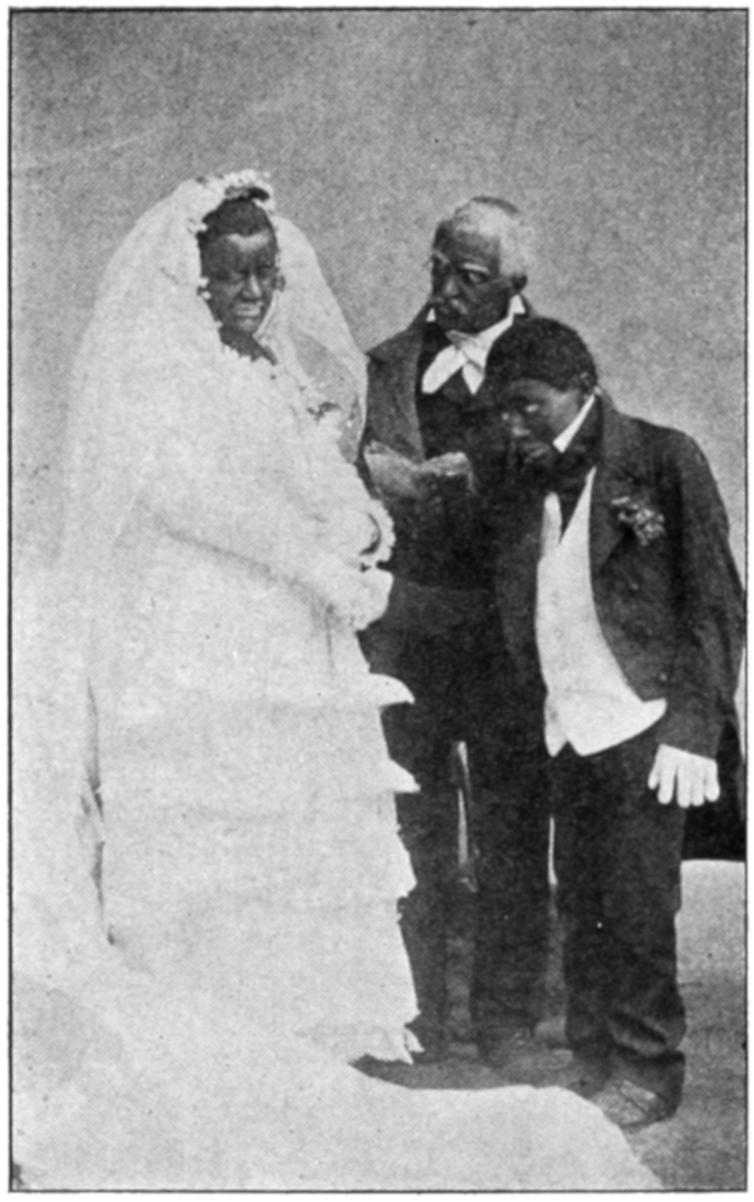
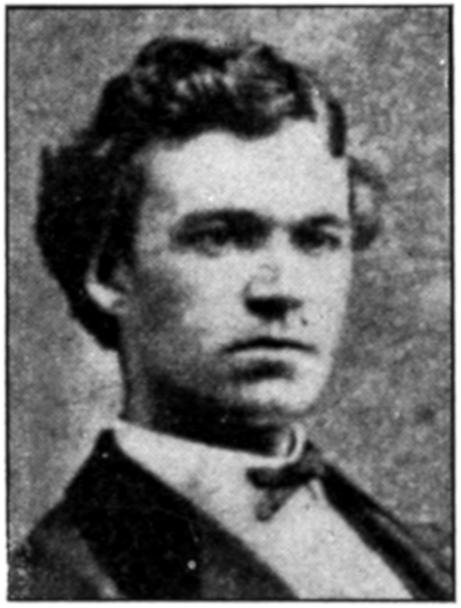
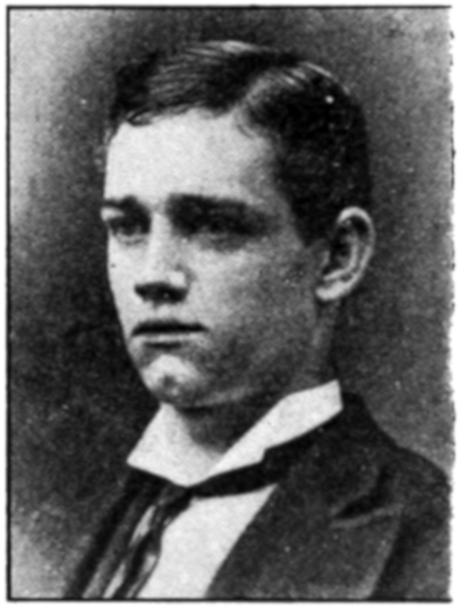
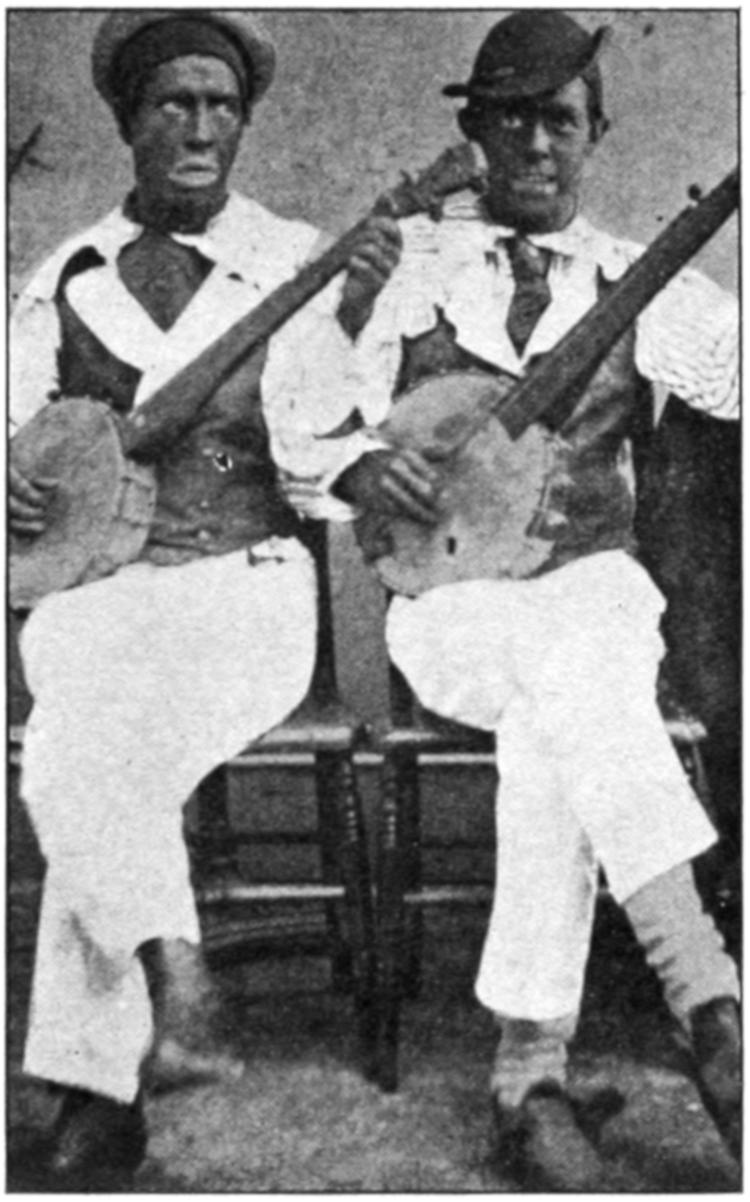
JOHN HART EMIL AMES BILLY EMERSON (1869) DAN. WALDRON (Of Original Big 4) GEO. M. DE VERE—MATT McELROY 1878.
WILLIS P. SWEATNAM
He played many engagements in New York in the early 40’s, with John W. Smith, with whom he made a trip to England in 1840.
He died in Newark, N. J., July 5, 1859.
John Landis was one of the old-time minstrels and general black-face performers; he was with Sam Sanford’s Minstrels in 1859, and at one time was prominently identified with his own company. He died in Philadelphia, September 19, 1863.
S. E. Clark was one of the early interlocutors, or “middle-men” of minstrelsy; he was rated an excellent bass vocalist, and was with the Bryant’s in New York in 1857.
He died in New Haven, Conn., February 3, 1860.
Julius A. von Bonhorst was one of the early banjo players of minstrelsy, and practically his entire career was spent with Sanford’s Minstrels in Philadelphia.
He married a Miss Luther about 1854, and three years later retired from the profession.
He died at Reading, Pa., February 16, 1869, aged 40 years.
Jim Carter, one of the earliest of black-face performers, and whose portrait may be seen on another page, was also one of the original Campbell’s Minstrels, organized June, 1847.
He died many years ago.
Philip Rice was one of the pioneer banjo players of minstrelsy.
In the very early days he constructed an instrument by tacking a skin over a peck measure that had been sawed in half; this attracted wide attention.
June 18, 1856, he was with Dave Reed’s Minstrels on board the steamer “James Raymond,” which traveled on the Mississippi River.
He died at Grand Lake, Ark., December 4, 1857.
Tom Raleigh (T. R. Mahan), one of the musicians of the real early days of minstrelsy, was accidentally shot and killed by Frank Hussey, comedian, in San Francisco, December 5, 1859.
George Lea, one of the pioneers of the variety theatre business in New York City, was the proprietor of Lea’s Minstrels at 185 Chatham Street, in the Fall of 1853.
He died at Port Jervis, N. Y., August 20, 1902.
“Picayune” Butler (John Butler), one of the best of the early banjoists, and who made famous the song “Picayune Butler’s Comin’ to Town,” had considerable vogue in the 50’s.
He died in New York City, November 18, 1864.
George A. Harrington was one of the members of the Ethiopian Serenaders who appeared in New York, September 15, 1845. The following year they appeared in London, England.
He was a good bass singer and banjoist, and was the first to sing “Lucy Neal.”
He died in Philadelphia, January, 1859.
William Parrow, who was with Joe. Sweeney’s Minstrels in the 40’s, and was said to be the original Old Bob Ridley, was murdered at Lebanon, Tenn.; he died November 29, 1870.
Wm. Henry Rice, long famous for his burlesque female impersonations, sat on the end with his own minstrel company in Cincinnati, September, 1872.
“Pony” Moore (George Washington Moore). This unique character in minstrelsy, up to the time of his death, enjoyed the double distinction of being the oldest living minstrel, as well as having attained greater longevity than any other known black-face performer.
There have been many versions of the veteran’s interesting career. Mr. Moore in a letter to the author, dated December 3, 1908, says his first appearance was in New York with Welch and Delevan at the old Broadway Circus in negro opera, playing in black-face, in 1844.
In a series of articles commencing August 1, 1909, in Lloyd’s Weekly News (London, England), Mr. Moore stated that he must have been about twenty-one when he first blacked his face, and speaks of Frank Brower, who was in the same company with him as having got the idea of making the first set of “bones” then known.
This would make the date 1841, and as the incident concerning Brower actually did occur while with Roger’s Circus, during the week of July 4, that year, the date of his first appearance in black-face may be safely stated to have been in 1841. Previous to this, however, he had been associated in many capacities with various circuses, but chiefly as a driver; it had been said that he handled as many as forty horses at one time, and in that way received the sobriquet of “Pony,” which clung to him all his life.
It was in 1844 that his first prominent engagement as a black-face performer, however, occurred.
Mr. Moore further stated that “he joined Haworth and Horton’s Opera Troupe, September 13, 1854, and the year following organized Hunter, Hedden and Moore’s Troupe.”
It is a fact that J. Hunter and William Hedden, the one a comedian and the other a fine dancer, were with Raynor’s “Christy” Minstrels as late as May 1, 1856, as likewise was “Pony” Moore. The Raynor Company returned to New York and opened there on February 2, 1857, playing about a month, after which they took a tour previous to their departure for England; Mr. Moore left the company at the conclusion of the New York engagement, and at once joined Matt. Peel’s Minstrels; he continued with this company until in the Summer of 1858, they played an engagement in New York. A short time later Matt. Peel left the organization which subsequently was known as Sniffen’s Campbell’s Minstrels.
Mr. Moore continued with this troupe until February 12, 1859, on which date he left to rejoin Matt. Peel’s company, continuing with the latter until his (Peel’s) death, May 4, 1859; after which he became a member of Burtis’ Varieties in Brooklyn, N. Y.
One month later Earl Pierce died in London, England. Pierce had been a great favorite in the British Metropolis, and J. W. Raynor sent for W. W. Newcomb, the well-known comedian, to take the place of the deceased.
Evidently Mr. Newcomb did not relish the idea of a sea trip, and “Pony” Moore, on his own initiative, went to London and presented himself to his former manager. It is an odd fact that on this occasion Mr. Moore had to sign an agreement “not to be too funny.”
It had been remarked that during the period of Pierce’s death and the subsequent occupation of his chair by Moore, that it remained vacant. This is inaccurate. Pending the advent of “Pony” Moore, it was occupied by W. P. Collins, a member of the company. Mr. Moore continued with the company for one year, at the expiration of which, Mr. Raynor retired to private life. Several companies sprang from the parent organization, one of which, Wilsom and Montague’s “Christy’s,” Mr. Moore joined.
It is pertinent at this juncture to remark that from this period, all minstrel organizations were known as “Christy’s” in England.
Mr. Moore continued with Wilsom and Montague for about four years, and immediately after, in conjunction with Johnny Ritter, J. P. Crocker and Henry Hamilton, organized a company bearing their names; with the exception of the latter, all were performers. They gave their first performance at Chester, England, November 14, 1864.
After playing through the provinces for several months, they opened in London, at St. James Hall, September 18, 1865. Subsequently through purchase and death’s intervention, Mr. Moore was sole owner of the company. Later, Fred. Burgess was taken in partnership, and as Moore and Burgess’ Minstrels flourished several years. Mr. Moore’s last appearance with his own company was in January, 1894.
April 9, 1904, saw the last of permanent minstrelsy in London. It seemed that a minstrel show at St. James Hall without “Pony” Moore was like “Hamlet” without Hamlet.
Mr. Moore’s last appearance was made in London at the Pavilion for the benefit of Mr. Frank Glenister.
Mr. Moore was twice married; first about 1860, and subsequently in 1884. Three daughters were the result of the first union. They married Fred. Vokes, of the famous theatrical family of that name; Charles Mitchell, the former champion pugilist, and Eugene Stratton, the premier black-face vaudeville artist in England. With the exception of the latter, all were English born.
“Pony” Moore was born in New York City, February 22, 1820; he died in London, England, October 1, 1909.
Frank Lynch was one of the great dancers of early minstrelsy. He traveled with Barnum in the 40’s as “John Diamond,” after the great showman had had difficulties with the original Diamond. Lynch was last heard of in St. Louis, Mo., in 1859.
Morris Abrams is one of the oldest living black-face performers. He did nigger business on the style of “Daddy” Rice in England, after Rice’s phenomenal success there in the 30’s.
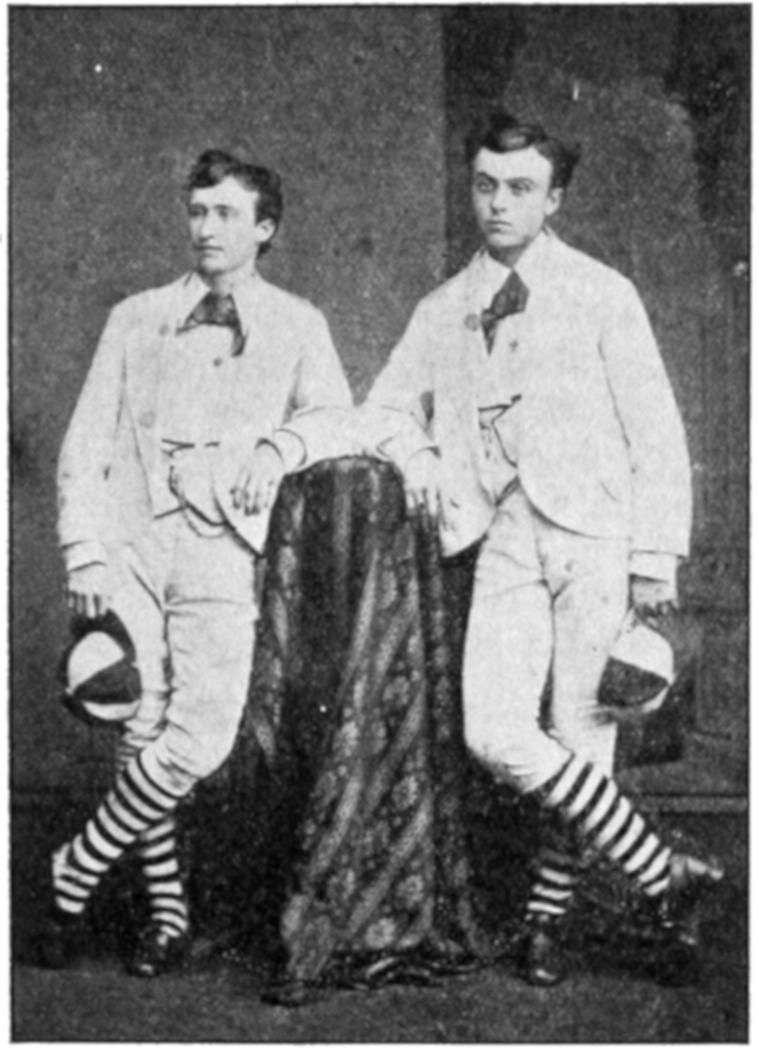
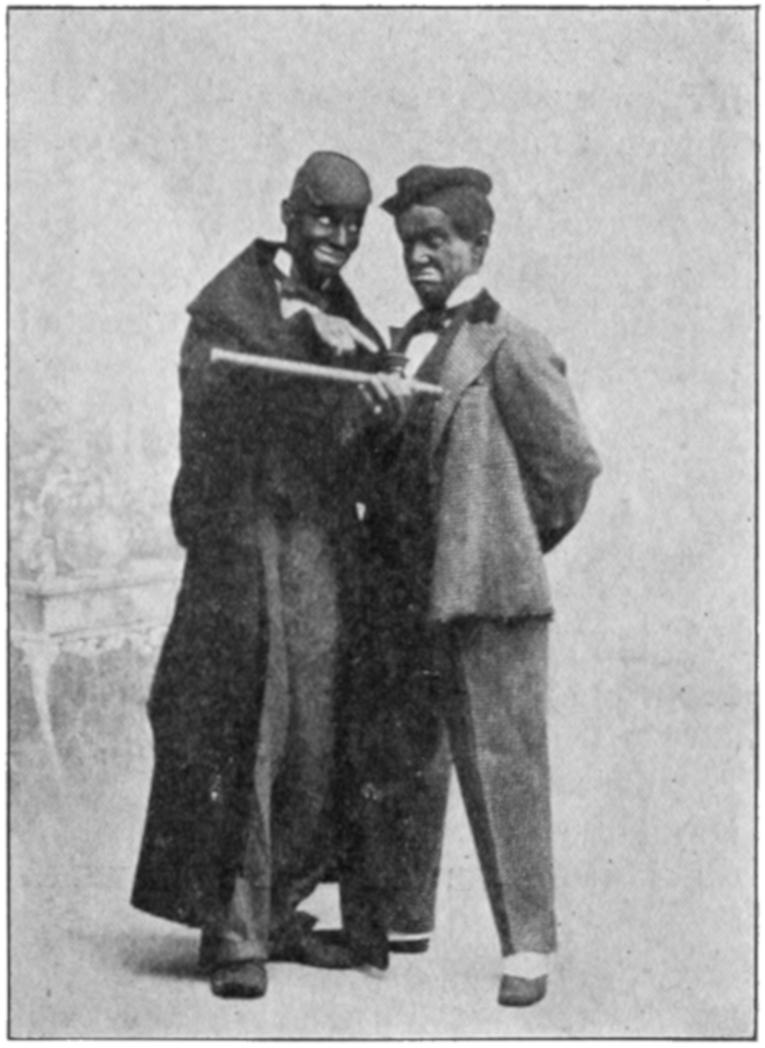
JOE—FOX & WARD—WM. H. (The oldest team of theatrical partners in existence) NED—MONROE & MACK—KELLER
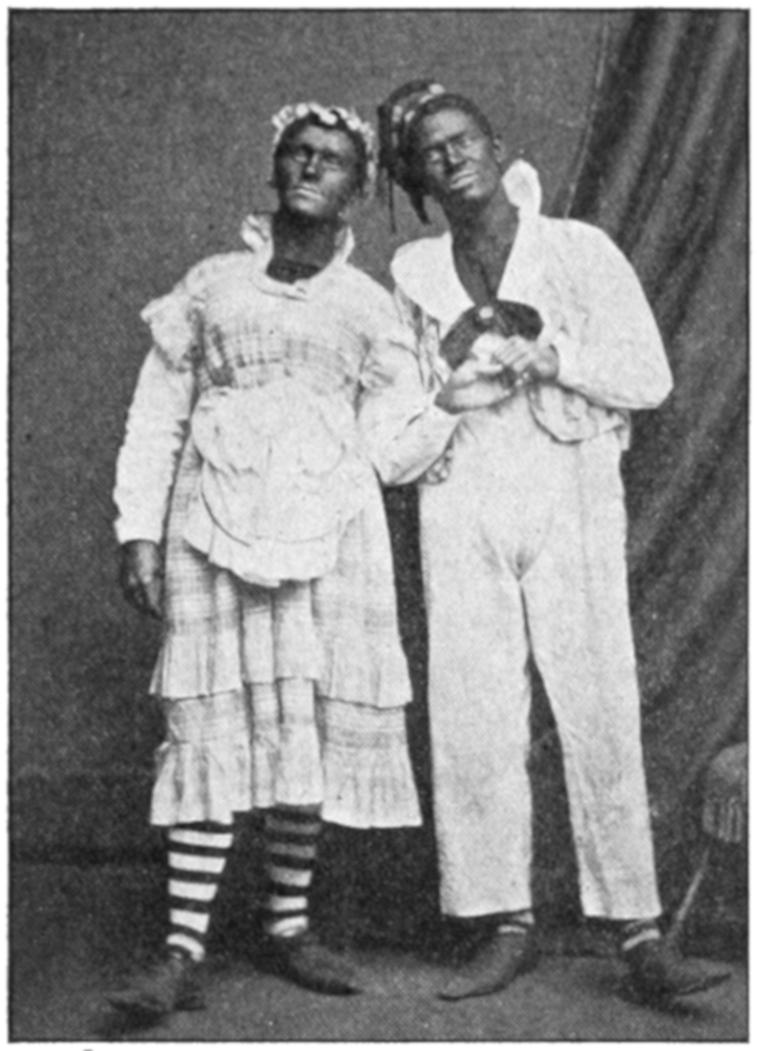
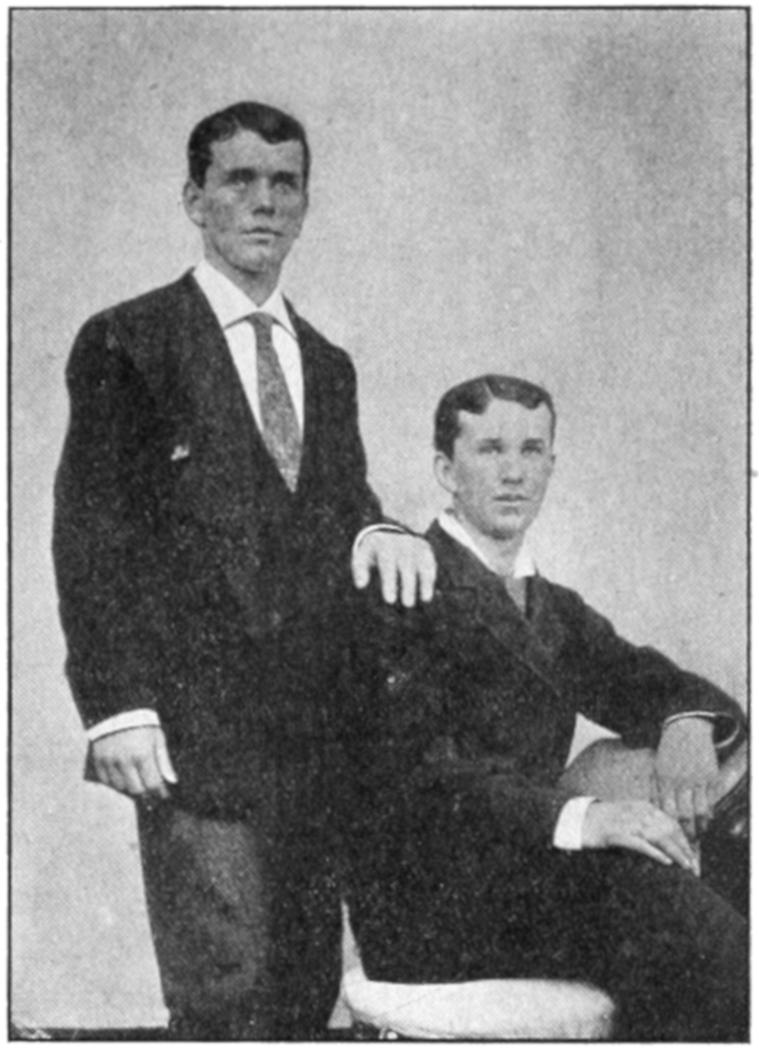
DICK—QUILTER & GOLDRICH—PETE JAS.—PELL & LEWIS—TOM (Portraits reserved)
Mr. Abrams is said to be living in retirement in Brighton, England.
Lansing Durand, one of the four original performers of E. P. Christy’s Minstrels, was a jig dancer of exceptional merit. In later years he was of the team of Painter and Durand, gymnasts. He was living as late as 1872.
John Arnold Cave is probably the oldest living black-face performer.
He made a reputation in England more than sixty years ago doing nigger acts with the late E. W. Mackney.
Mr. Cave is said to be at present a guest of the Charter House, where he obtained through the late King of England. He (Cave) was formerly proprietor of the Old Vic Theatre, London, England.
George Raynor was a well-known minstrel vocalist, and a brother of J. W. Raynor, the famous manager. He was with Wood’s Minstrels in 1860, also other prominent organizations.
He died in Brooklyn, N. Y., April 2, 1864, aged 43 years.
Sam Sanford, whose correct name is said to have been Lindsay, was one of the pioneer minstrel managers and performers.
His first appearance was at the age of nine years. He subsequently joined a circus, and on February 16, 1843, for the first time assumed managerial duties. About 1846 he joined Buckley’s Company, and went to England with them, returning late in 1848.
Mr. Sanford left the Buckleys about two years later.
He built the first theatre ever constructed especially for a minstrel company, at Twelfth and Chestnut Streets, Philadelphia, Pa., which he opened August 1, 1853; it was destroyed December 9, following. April 23, 1855, Sanford’s Minstrels opened at the Eleventh Street Opera House, that city; he continued until the Spring of 1862.
Subsequently Mr. Sanford had other theatres in the Quaker City, and one in Harrisburg, Pa., as well as many traveling minstrel organizations.
About 1875 he essayed the role of Uncle Tom, and played that character at intervals for several years. In his day Mr. Sanford was rated as one of the best comedians of his time. Sam Sanford was born in New York City January 1, 1821; he died in Brooklyn, N. Y., December 31, 1905.
Cool White (John Hodges) was one of the pioneers of minstrelsy; he entered it at its inception, and for many years was one of the most brilliant luminaries. Mr. White was a grand interlocutor, and an actor of no ordinary merit.
As early as 1838 he appeared at the Walnut Street Theatre in his native city, singing songs in black-face between the acts. He portrayed the dandy negro, and as such was very successful.
In 1843 he organized the Virginia Serenaders. Later he organized the Sable Melodists, and subsequently Sliter’s Empire Minstrels, and was with them four years. He then appeared as a Shakespearian clown with Spalding and Rogers Circus, and after engagements with some other minstrel companies, he joined Sam Sanford’s Minstrels in Philadelphia about 1855, and continued there about four years.
He then went to New York, and later organized Cool White’s Broadway Minstrels, and on September 12, 1870, in Brooklyn, N. Y., with Archie Hughes and Fayette Welch, started a permanent minstrel company in that city.
In the Fall of 1879 he played Uncle Tom. For several years prior to his death he had been connected with Hooley’s Theatre in Chicago.
Cool White was born in Philadelphia July 28, 1821; he died in Chicago, April 23, 1891.
Charles T. White was one of the greatest men that minstrelsy produced. His career began with minstrelsy in 1843, at which time he appeared with various small companies.
The following year he organized the Kitchen Minstrels, and was with many companies until November 24, 1846, when he opened the Melodeon at 53 Bowery, New York. He was twice burnt out, but rebuilt each time.
The place finally closed April 22, 1854, and on August 7 following he opened a place at 49 Bowery; each establishment was run as a minstrel show; the admission was 6¼ and 12½ cents. Mr. White was again burnt out, and later opened places at 585 and 598 Broadway. He was with Mrs. Matt. Peel’s Minstrels about 1861.
He was the author of innumerable minstrel sketches, some of which are yet in use. For several seasons he had traveled with the “White Slave,” and at the time of his death was a member of Edward Harrigan’s Company, playing Mrs. Jackson in “Reilly and the 400,” a black-face part.
Mr. White was twice married.
Charles T. White was born in New York June 4, 1821; he died there January 4, 1891.
Bob Sheppard. This famous old-time performer began his career as a jig dancer in his native city in 1832; the “theatre” where he made his debut being no less a place than his father’s slaughter-house: the admission 6¼ cents, with the privilege of looking at the cattle; the audience usually had a “bully” time.
In 1856 he opened a concert hall in Philadelphia, where many artists of prominence in later years made their appearance.
In Bob Sheppard’s day, performers had to be versatile; and as a dancer and tambourine player, he had no superior in his time; but in the delineation of Old Bob Ridley, he excelled.
He was with some notable organizations, including Shorey’s Minstrels in 1863.
Bob Sheppard was born in Philadelphia, in 1821; he died there August 15, 1898.
Andy Leavitt made his first stage appearance April 8, 1837.
In 1842 he leased Bleeker Hall in Boston and transformed it into Leavitt’s Opera House. As early as 1858 he traveled with Leavitt’s Ethiopian Troupe, and that same year he opened a small theatre at 22 Beaver Street, Albany, N. Y.
March 30, 1859, he leased the Gayety Theatre on Green Street, in the same city. In the early 70’s he went to the Howard Athenaeum in Boston, where for many years he remained. He was especially clever in the acts with Harry Bloodgood; the latter doing the comedy.
Andy Leavitt was an unusually intelligent performer, and was the author of several negro farces that were widely used.
He was likewise responsible for the song “Ham Fat,” that achieved great vogue several years ago.
In 1882 and 1889 he played white-face parts with “Joshua Whitcomb” and “Two Sisters” respectively; his stage career ended about this time. About 1891 he secured a position as stage door man at the Hollis Theatre, Boston, which he retained five years.
Andy Leavitt was born in Boston, Mass., in 1822; he died there February 1, 1901.
William B. Donaldson was the inventor of the jawbone used as a musical instrument by black-face performers several years before the first minstrel performance was given.
He was associated with minstrel and circus organizations for forty years, and was the first black-face clown to appear in a ring.
Like most performers of his day, he played the banjo; but Mr. Donaldson created a sensation by playing it with his left hand.
His professional debut was made in Poughkeepsie, N. Y., in 1836, as “Young Jim Crow,” after the style of “Daddy” Rice. In June, 1847, he was one of the five original members of the first Campbell’s Minstrels.
About three years before his death he became proprietor of the Lockwood House in Poughkeepsie, N. Y.
William B. Donaldson was born October 13, 1822; he died in Poughkeepsie, N. Y., April 16, 1873.
Bob Edwards (Dean) was one of the earliest bone players, and in his youth was known as “Master” Edwards.
In 1841-42 he traveled though Pennsylvania as a jig dancer. In 1843 and 1844 he was a member of the famous Ethiopian Serenaders, a group picture of which will be found on another page.
Subsequently he withdrew from that company, and joined Sanford’s Minstrels in Philadelphia, where he remained for a long time.
In 1862 he had the Gayety Music Hall in Harrisburg, Pa., and a few years before his death was proprietor of his own company.
Bob Edwards was born in Philadelphia in 1822; he died in Buffalo, N. Y., July 24, 1872.
George Guy was the founder of the famed Guy Bros. Minstrels.
Mr. Guy, who was an excellent baritone vocalist, had the unique distinction of sitting in the first part with his six sons; an occurrence that had no parallel in minstrelsy.
The original Guy family of entertainers consisted of father, mother, daughter and six sons.
Mr. Guy’s principal engagements were with Christy’s, and Kelly and Leon’s Minstrels. About 1874 he organized the Guy Brothers Minstrels as a permanent institution, and as such it has continued ever since.
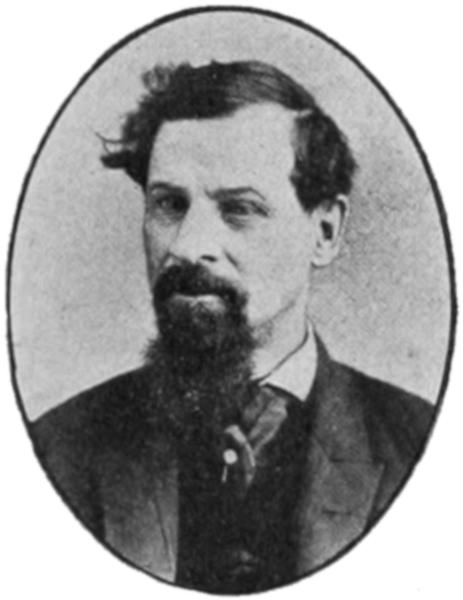
SAM. DEVERE SAM. SANFORD
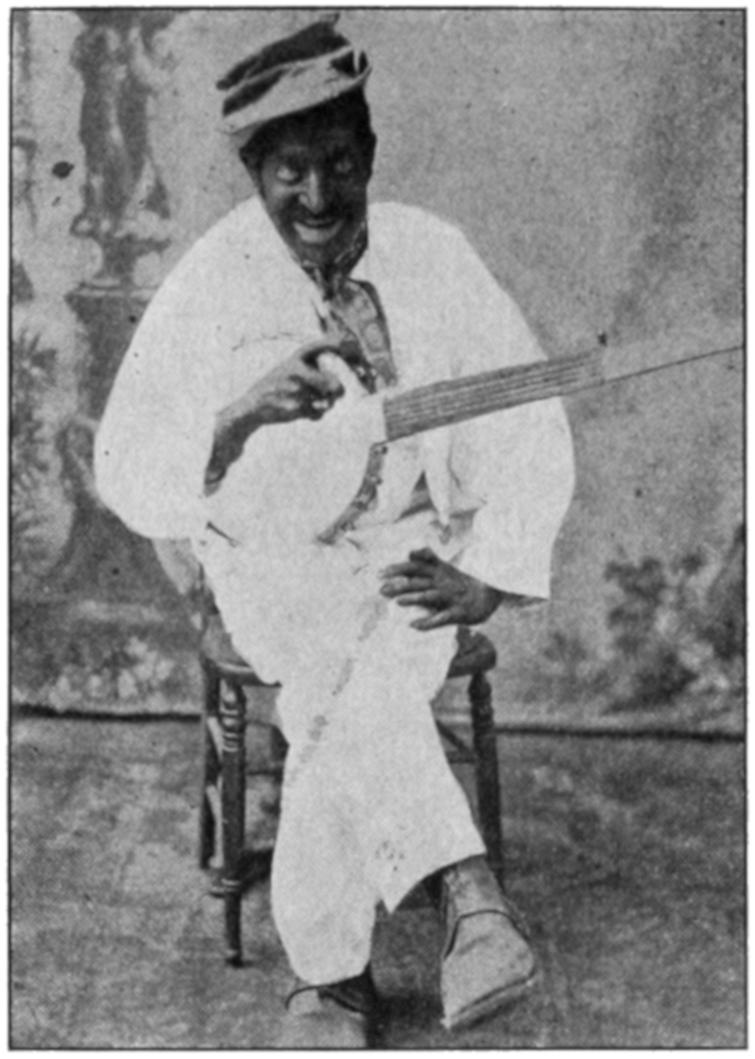
BILLY CARTER
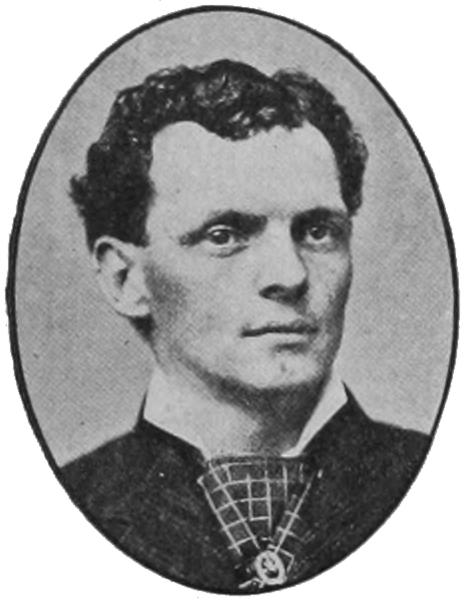
SAM. SWAIN SAM. SHARPLEY
BILLY CARTER SURROUNDED BY SOME CELEBRATED “SAMS.”
Mr. Guy married Amelia Evans in London, England, in 1851.
George Guy, Sr., was born in London, England, January 20, 1822; he died in Springfield, Mass., February 23, 1895.
R. M. Hooley was associated with all that was best in minstrelsy.
He came to America in 1844, and on August 17, the following year, he played his first engagement in Buffalo, N. Y., as “leader” of E. P. Christy’s Minstrels; he remained with Christy for two years.
About 1851 he organized his own company, and took same to Europe, where he played Paris, Boulogne, Brussels and other Continental cities. During the 50’s he was associated in the management of Maguire’s Minstrels in California, and in 1858 was proprietor with Maguire of George Christy’s Minstrels in San Francisco.
Returning to New York in 1859, he soon separated from Christy, and on February 6, 1860, in co-partnership with Sher. Campbell and G. W. H. Griffin, organized Hooley and Campbell’s Minstrels; this company disbanded in July, 1861, and the following year Mr. Hooley opened his famous minstrel hall in Brooklyn, where he continued for several years.
During the above period Hooley had a company in Philadelphia at the old Seventh Street Theatre, from September 7 to October 17, 1868.
October 19, 1868, he opened another minstrel show in Brooklyn, at the Odeon, the present site of the Novelty Theatre.
The home of the original Hooley Company was destroyed by fire May 12, 1865, and that same month the energetic manager opened at 201 Bowery, New York, the present site of the People’s Theatre. January 2, 1871, Mr. Hooley opened Bryan Hall, the present Grand Opera House in Chicago, and remained several months.
The big fire of October, 1871, having destroyed his theatre, Mr. Hooley thereupon built what is now known as Power’s Theatre, Chicago, which he opened with his company in 1872, and flourished about three years, when he returned to his old love in Brooklyn, and began an engagement in 1875.
In the Spring of 1876 in conjunction with Billy Rice, he formed Rice and Hooley’s Minstrels for a road tour; December, 1876, they opened at Hooley’s old Opera House in Brooklyn for a limited engagement. Mr. Hooley again went to Chicago, and on March 1, 1880, opened with a minstrel company at the Novelty Theatre.
In September, 1882 he associated with Rice; and Billy Rice and Hooley’s Minstrels opened in Joliet, Ill., but disbanded after a few months.
Mr. Hooley married Miss Rosina Cramer of New York, in San Francisco, about 1856, after a brief but romantic courtship.
R. M. Hooley was born in Ballina, Ireland, April 13, 1822; he died in Chicago, Ill., September 8, 1893.
William A. Porter, one of the earliest members of E. P. Christy’s Minstrels, made his first theatrical appearance as a supernumerary in the old Chatham Theatre, New York, in the fall of 1841.
His debut as a black-face performer occurred in the Spring of 1844 with the Clark Brothers Panorama Show.
Mr. Porter made his first appearance with E. P. Christy’s Minstrels at the Eagle Street Theatre, Buffalo, N. Y., April 5, 1845.
February 15, 1847, he opened with the company at Mechanic’s Hall, New York, and remained there until 1853, after which, in the Fall of that year, he became a member of George Christy and Henry Wood’s Minstrels.
Mr. Porter subsequently went to California and identified himself with Backus’ Minstrels there.
Early in 1855 he rejoined E. P. Christy’s Company in San Francisco, acting as business manager.
In August, same year, he set sail for Australia with Backus’ Minstrels; he remained in that country until 1859, during which period he engaged in mining and mercantile pursuits, as well as following his profession.
Mr. Porter returned to New York about September, 1870, later making his home at Johnsonburg, N. Y., where he died January 18, 1906.
William A. Porter was born in Hartford, Conn., May 4, 1822.
J. W. Raynor (Rea) came to America at the age of ten years.
His first professional appearance was as a vocalist in New York City about 1845. In June, 1847, Mr. Raynor was one of the original members that comprised the first Campbell’s Minstrels.
Not long after this he joined E. P. Christy’s Minstrels in New York City, and continued with them until the dissolution of the company in that city, July, 1854. Mr. Raynor then organized a “Christy Minstrels” and for three years traveled successfully in the United States and Canada. July 11, 1857, in partnership with Earl Pierce, he sailed with a company for England, where they opened in London, August 3, following.
He met with immediate and lasting success, and exactly three years from the date he left America, Mr. Raynor announced his retirement, and returned to the United States, arriving August 15, 1860.
Less than four years later the old fever came back to Mr. Raynor, and he organized another “Christy’s” Minstrels, and continued at its head until about January 1, 1866, when he laid aside business cares of that nature for good and all, settling down in Paterson, N. J., where he became one of its most honored citizens.
J. W. Raynor was born in Ireland March 31, 1823; he died in North Paterson, N. J., April 5, 1900.
George Kunkel began his career as a black-face performer in 1844. In 1853 he organized a minstrel company that became famous as the Nightingale Serenaders; they traveled until 1855.
In the latter year Mr. Kunkel became manager of a theatre in Baltimore, and continued in such until 1861, when he again reorganized his minstrel company for a tour. In 1866 the company was formed for the third time for a brief engagement, after which Mr. Kunkel played Uncle Tom, and for many years, or until shortly before his death, he appeared in that role, in which he was eminently successful.
He married Ada Proctor, the actress, about 1861.
George Kunkel was born in Green Castle, Pa.; he died in Baltimore, Md., January 25, 1885; aged 62 years.
Joseph T. Trowbridge was prominent as a bass singer and interlocutor.
He joined Ordway’s Aeolians in Boston in 1852, and continued with them until December, 1857, when Johnny Pell, Lon and Billy Morris and John T. Huntley, organized a company bearing their names, and opened in Boston. Mr. Trowbridge was with them. Mr. Huntley withdrew about March, 1859, and the company was thereafter known as that of Morris Bros., Pell and Trowbridge, and as such it continued until 1867. He later became identified in the management of two Boston theatres. About 1872 he retired from active business.
Jos. T. Trowbridge was born in Newtonville, Mass., September, 1823; he died in Chelsea, Mass., Jan. 11, 1891.
Hank Mason was familiarly known as “Hank, the Mason.” He was one of the foremost jig dancers in the early days of minstrelsy. He was born April 18, 1823; he died in Brooklyn, N. Y., October 9, 1885.
W. W. Newcomb (Coomb) was one of the best known performers of minstrelsy.
As a boy he traveled with circuses. In the late 40’s he formed a partnership with Bije Thayer, of Boston, and successfully conducted a minstrel company about four years.
He made his first New York appearance in December, 1851; subsequently playing with Fellowe’s Minstrels, and later Wood’s Minstrels, in New York, with whom he remained until July, 1853. That same year he went with Campbell’s Minstrels, and continued four years with them.
In 1857 with Hy. Rumsey he organized Rumsey and Newcomb’s Minstrels, playing in the United States, Canada, Cuba, England and Germany. The organization broke up in London in the Spring of 1862.
Mr. Newcomb and Eph. Horn organized a company the following year; Mr. Horn soon dropped out, and Newcomb’s Minstrels continued until 1871.
April 17, that year, Newcomb and Arlington’s Minstrels opened in New York, on the present site of the Fifth Avenue Theatre.
Mr. Newcomb subsequently appeared with various companies, his last appearance being at Hooley’s Theatre in Brooklyn, N. Y., February 17, 1877.
“Bill” Newcomb was the originator of the “Essence of Old Virginny” dance; a great end man; and he was especially noted for his stump speeches.
W. W. Newcomb was born in Utica, N. Y., Aug. 4, 1823; he died in New York May 1, 1877.
John Diamond was one of, if not the greatest jig dancers that the world ever knew.
At a very early age he gave evidence of the wonderful talents he possessed, but it was not until the late P. T. Barnum took him in hand, and at Vauxhall Garden, New York, in the Spring of 1840, and brought him out, and subsequently took him all over the Union, and later to Europe, that he achieved the recognition he so richly deserved.
After the original four had given their first minstrel performance in February, 1843, Diamond was called upon to strengthen the quartette at a subsequent performance, a very short time later.
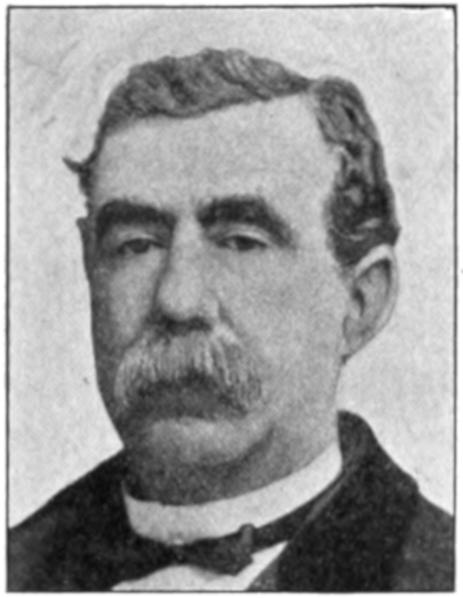
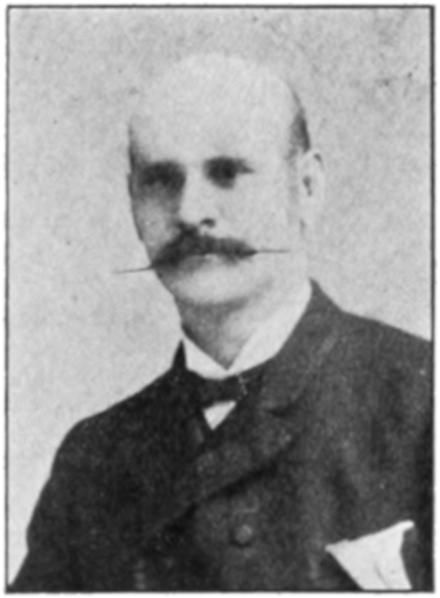
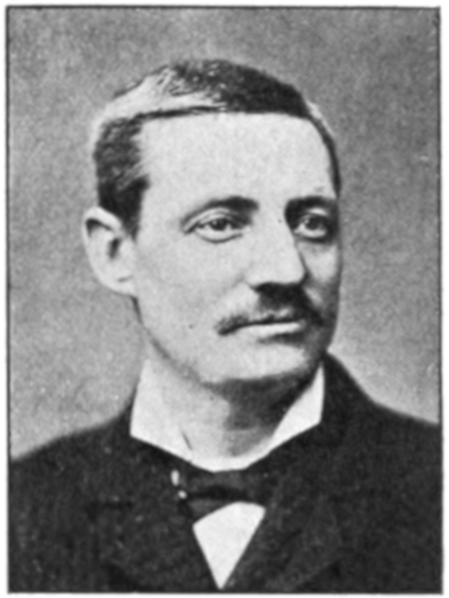
JOHN MULLIGAN MILT. G. BARLOW LEW. PARKER
JOHN PENDY BILLY ARLINGTON DAN. SHELBY
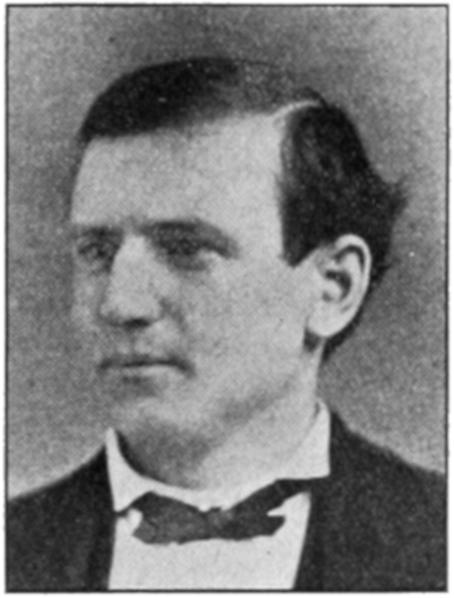
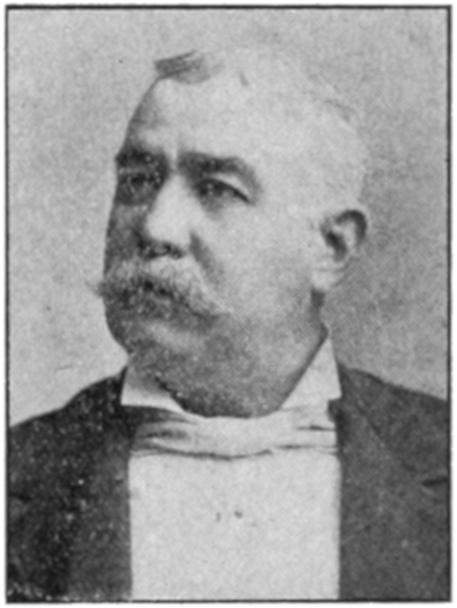
GEO. EDWARDS HUBERT W. EAGAN BILLY McALLISTER
PROMINENT PERFORMERS OF THE PAST AND PRESENT.
On July 8, 1844, he danced a contest with Master Juba, the colored dancer, and the greatest his race ever knew.
He was feted and courted for many years, but dissipation and riotous living carried him to an early grave.
John Diamond was born in New York City, in 1823; he died in Philadelphia, October 29, 1857.
J. A. Herman (Simonson) was one of the very earliest ballad singers in minstrelsy; he was the possessor of a sweet tenor voice which he used in rendering the old songs to excellent advantage.
Mr. Herman’s first appearance was in New York, at the Olympic Theatre, in 1839, singing “Norah McShane.”
His first minstrel engagement was with the “Campbell’s”; he was with this company in New York as early as October 17, 1848.
Subsequently he was associated with Wood and Fellowe’s; Henry Wood in 1852; Wood and Christy from 1853 to 1858; in the Fall of that year he joined Sniffen’s “Campbell’s” Minstrels, and when George Christy returned from California in the Summer of 1859, Mr. Herman went with him, and continued with Christy for a long period.
About 1863 he joined Hooley’s Minstrels in Brooklyn, and remained with them several years; barring the time Hooley was in Chicago.
Mr. Herman’s two brothers, George W. and William H., were both old-time minstrels. Mr. Herman retired from the profession a great many years before his death.
J. A. Herman was born in Brooklyn, N. Y., January 1, 1823; he died at Wood Haven, Long Island, N. Y., January 23, 1901.
Dan Rice (McLaren), the world-famous clown, in conjunction with Sam Sanford and others, in blackface, appeared in New York City at Palmo’s Opera House in the spring of 1843.
He was born in New York City, January 25, 1823; he died in Long Branch, N. J., February 22, 1900.
Joseph D. Murphy (Donnelly) began his minstrel career in the middle 40’s as a member of the Sable Harmonists: he was then a ballad singer.
On the 17th day of July, 1850, Mr. Murphy, Luke West, Matt. Peel and James Norris formed an organization known as the “Original Campbell Minstrels;” subsequently Mr. Norris retiring, the company flourished for several seasons as Murphy, West and Peel’s Minstrels.
About 1860 Mr. Murphy retired from minstrelsy and assumed various executive positions, notably as business manager at the Arch Street Theatre in Philadelphia, where he remained for fifteen years.
Mr. Murphy was a half brother of Jno. F. Donnelly.
Jos. D. Murphy was born in Philadelphia, January 11, 1823; he died there January 1, 1884.
C. L. Huntley, a member of Thayer’s Boston Sable Harmonists about 1850, was a fine guitar player, and very proficient in the manipulation of the bones.
He died in Boston, Mass., April 13, 1883; aged about 60 years.
Tom Vaughn was one of the earliest banjoists of minstrelsy. When sixteen years of age he made his professional debut with Holt and Nichols Circus; later he joined Turner and Rockwell’s, and Welch and Mann’s Circuses. After this he went to Buffalo, and met E. P. Christy, and when the latter formed the minstrel company that bore his name, Mr. Vaughn was one of the four original members. He continued with Mr. Christy until the dissolution of the company in July, 1854, and a few months later went with Christy’s Minstrels to California.
Mr. Vaughn returned to New York in 1855, and opened Vaughn’s Minstrels there that same year. Subsequently he was with Wood and Christy’s and George Christy’s Minstrels for several years, mostly in the Metropolis.
Tom Vaughn was born in New York, September 5, 1823; he died in Zanesville, Ohio, September 3, 1875.
J. T. Huntley was one of the early wench dancers of minstrelsy.
In December, 1857, he, with Lon and Billy Morris and Johnny Pell, seceded from Ordway’s Aeolians in Boston, and organized in that city a minstrel company bearing their names, which they conducted successfully for about two years, after which Mr. Huntley organized his own minstrel company and played an engagement at the Eleventh Street Opera House in Philadelphia in the Spring of 1859.
August 23, 1859, he married the widow of Matt. Peel, and at once assumed the management of Mrs. Matt. Peel’s Campbell’s Minstrels, and continued in that capacity for about four or five years, after which he retired to private life.
J. T. Huntley was born in New York, June 24, 1824; he died in Mamaroneck, N. Y., August 4, 1895.
Earl Horton Pierce was one of the greatest minstrel comedians of his day. April 8, 1850, he opened his own minstrel company in New York; it was subsequently Pierce and Fellowe’s Minstrels. Later, Mr. Pierce was with E. P. Christy’s Company in New York, and Ordway’s Aeolians in Boston. August 3, 1857, with J. W. Raynor, they opened in London, England, as “Christy’s Minstrels;” this was the first company to play under that title in England. Subsequently all minstrel companies were called “Christy’s.” Mr. Pierce made a tremendous hit singing a topical song called “Hoop de-Dooden-Do.” After his death his chair on the end remained vacant for three days, during which time it was draped.
Earl H. Pierce was born in New York in 1823; he died in London, England, June 5, 1859.
Tom Maguire never got the credit due him for placing minstrelsy in California on the high plane it once enjoyed. Mr. Maguire went to San Francisco in 1849, and a year later built the Jenny Lind Theatre there.
It was Maguire who brought George Christy and Company to California in 1858, and it was Maguire a dozen years or so later that paved the way for the success that later came to Billy Emerson, with whom Maguire was associated until the late 70’s.
And when Emerson made his first trip to Australia about 1873, Maguire’s Minstrels flourished on in San Francisco. Yes, the great coast metropolis owes much to Tom Maguire. Mr. Maguire died in New York, January 20, 1896; aged 72 years.
Dr. John P. Ordway was one of the earliest prominent managers engaged in permanent minstrelsy in one particular city.
He was the founder of the Aeolians, a famous minstrel organization who gave their first performance in Harmony Hall, Boston, Mass., December 16, 1849, and played in that city until September, 1859.
December 12, same year, he appeared with Anderson’s Minstrels for a few nights only; this was his last professional appearance.
Dr. Ordway was a skilled musician, and the composer of many popular ballads. While with his company he usually played the piano in the first part and invariably in white-face.
After retiring from the stage, he practiced medicine for several years, and in 1868 was a member of the Massachusetts Legislature.
He was the founder of the Massachusetts Anglers (now Fish and Game) Association.
Dr. John P. Ordway was born in Salem, Mass., in 1824; he died in Boston, Mass., April 27, 1880.
William H. Smith, the well-known manager, went to California in 1850, and in 1856 opened the Varieties Theatre in San Francisco. In 1860 he organized the California Minstrels and took them to South America, Australia and Europe.
In 1865 he was associated in the management of Cotton and Murphy’s Minstrels, frequently acting as interlocutor.
In 1880 he went to St. Louis, Mo., and at various times was manager of the Comique, Peoples and Standard Theatres there.
On September 24, 1866, Mr. Smith married Clara Sages in San Francisco.
William H. Smith was born in Norwich, Conn., August 10, 1824; he died in St. Louis, Mo., December 1, 1901.
“Bije” (Amidon L.) Thayer was one of the pioneers of minstrelsy; his operations were confined to Boston and contiguous territory chiefly.
Thayer’s Minstrels and Thayer and Newcomb’s Minstrels existed from the middle 40’s to the early 50’s.
To Mr. Thayer belongs the credit of being the first to establish a permanent minstrel company in Boston, although the Buckleys had preceded him in giving entertainments there.
“Bije” Thayer died in Boston, Mass., February 20, 1864; aged 41 years.
Barney Williams (Bernard O’Flaherty), who was one of America’s greatest legitimate Irish comedians, in his very early days was equally prominent as a burnt-cork performer.
July 8, 1845, at the Elysian Fields in Hoboken, N. J., he was advertised as “master of the tambourine.” September 6, same year, at Castle Garden, New York, he portrayed the great black-face part of “Dandy Jim, of Caroline.”
Barney Williams was born in Cork, Ireland, July 20, 1824; he died in New York City, April 25, 1876.
TOM. VAUGHN EDWIN P. CHRISTY GEO. CHRISTY
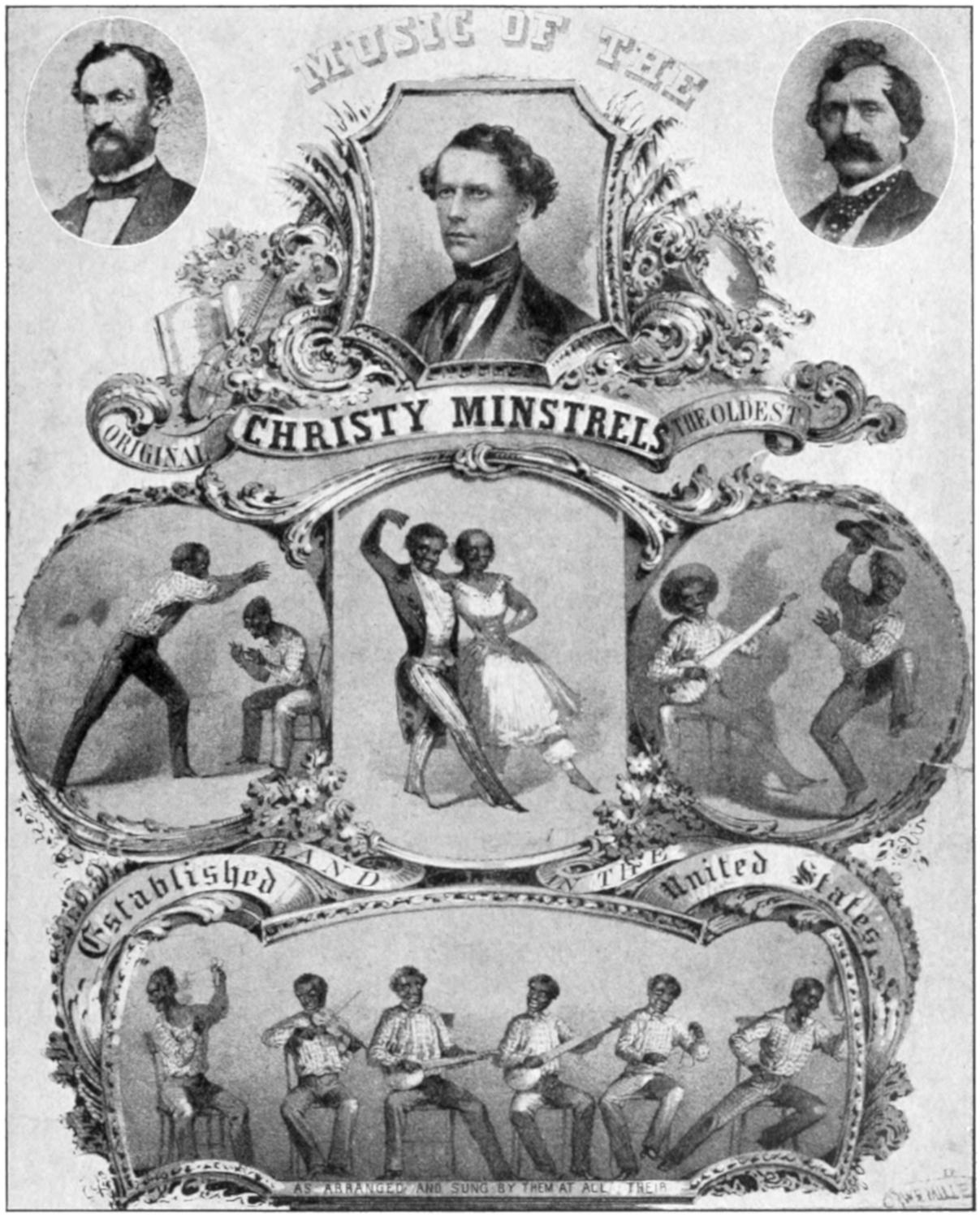
THE ORIGINAL CHRISTY MINSTRELS (Organized about 1844).
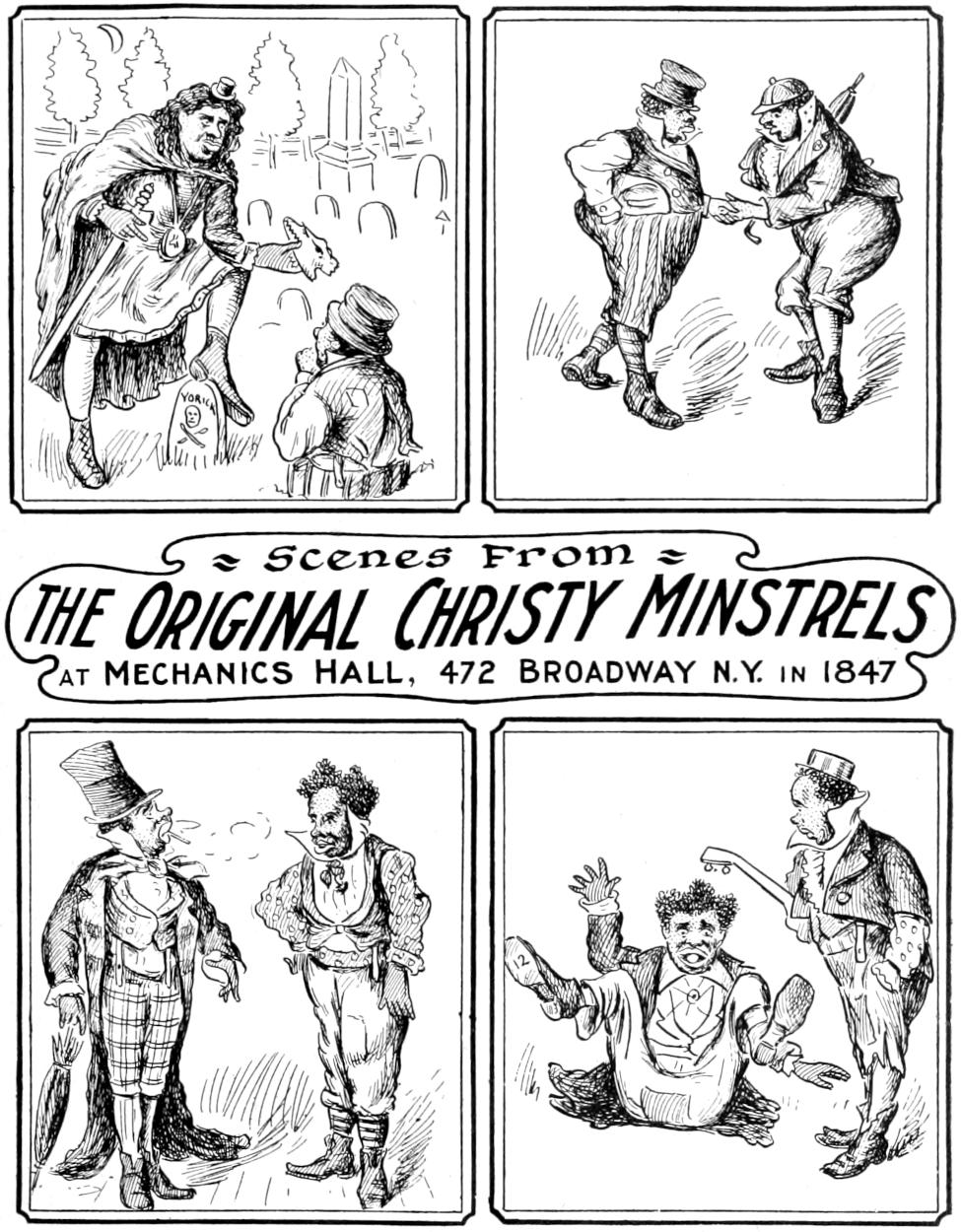
The company at its inception comprised Edwin P. Christy (the founder), Geo. Christy, Tom Vaughn and Lansing Durand. The other photos here represent minstrel scenes of that day.
Tom Briggs was one of the earliest and greatest banjo performers in minstrelsy; when he first went on the stage, in the early 40’s, he traveled under the name of Fluter.
He invented the banjo thimble in 1848, and it came into general use three years later.
He was the first to do the bell chimes, and gave imitations of a horse-race on the banjo.
He played successful engagements in the 40’s and 50’s with Wood’s Minstrels, likewise Buckley’s Serenaders. September 20, 1854, he left New York with E. P. Christy’s Minstrels to play an engagement in San Francisco; he contracted an illness on the way, and was unable to play.
Tom Briggs died in San Francisco October 23, 1854; aged 30 years.
Julia Gould was the first woman to achieve prominence in minstrelsy; she was with the famous Buckley Serenaders, and played several engagements with them in the 50’s; she was also with Maguire’s San Francisco Minstrels in San Francisco, July 11, 1864.
She essayed the principal female roles in the great operatic burlesque that made the Buckleys famous; always appearing in black-face.
Miss Gould’s first husband was A. T. Gregory Hall; she subsequently married John H. Collins, a prominent minstrel singer.
She was an actress and singer of rare and versatile talents.
Julia Gould was born in London, England, August 28, 1824; she died in Kinamundy, Ill., January 29, 1893.
Horace Weston, a colored man, was one of the world’s greatest banjoists; in addition he was a good general musician and dancer; a fact that is not generally known.
He served in the Army, and in July, 1863, was discharged, after which he joined Buckley’s Serenaders in Boston, and later traveled with them. About 1867 he became a member of the Georgia Minstrels, a famous colored organization.
In 1878 he went to Europe with an “Uncle Tom’s Cabin” Company; he played the principal Continental cities, and was a sensation.
Returning to America he joined Haverly’s Georgia Minstrels. The balance of his career was spent mostly in the variety theatres.
Horace Weston was born in Derby, Conn., in 1825; he died in New York, May 23, 1890.
The honor and distinction (and the pleasant sensation) of having received the highest salary ever paid to any black-face single performer belongs to Lew Dockstader.
Tim Woodruff appeared mostly in the West, where he was recognized as a truly great comedian.
His first appearance was made in Cincinnati, March 15, 1842; in an act called “Spirit Rappings,” later more generally known as the “Haunted House;” he achieved great success in this, and was forever identified with it.
He was at various times associated with Woodruff’s Minstrels; Woodruff, Brown and Jones’ Minstrels, and Woodruff and Foster’s Minstrels; these companies were mostly in existence in the 50’s.
About 1860 he entered the variety business, and continued with it practically up to his death.
Tim Woodruff was born in Hamilton, Ohio; he died in Cincinnati, Ohio, November 12, 1872.
E. W. Mackney was England’s earliest representative of the negro character.
He appeared in sketches with J. A. Cave, fully ten years before the first minstrel company invaded England in 1843.
He was prompted by the pronounced success achieved by “Daddy” Rice, of Jim Crow fame.
Mr. Mackney died in England, March 26, 1909; aged 84 years.
William B. Fish was one of the “Sable Harmonists” of the 40’s. He died in Argenta, Ark., July 29, 1875.
John G. Brown was a celebrated tambourinist and comedian in the earliest days of minstrelsy.
He was with the Buckleys when they played New York, May 9, 1844; at that time they were known as the Congo Melodists. In the Fall of 1848 he was with Thayer’s Minstrels, one of the famous Boston companies.
He died in New Bedford, Mass., October 8, 1858.
Joseph H. Rainer was one of the earliest vocalists and interlocutors. He was with Wood’s Minstrels in New York in 1852, and with Horn and Newcomb’s Company in 1863. He first appeared professionally in the late 40’s. He had been a resident of Lockport, N. Y., for many years.
Mr. Rainer was born in Lancaster, England, May 11, 1825; he died in Philadelphia, Pa., March 11, 1906.
George Winship was one of the pioneers of minstrelsy. As early as 1849 he occupied the bone end with the New York Serenaders, a famous minstrel company of that day.
He was long associated with J. W. McAndrews, the famous “Watermelon Man.”
About 1873 he was stage manager and performer at the Opera House, Rondout, N. Y., he had not appeared professionally much since then.
Mr. Winship had long been a resident of Fruitvale, Cal., where he died October 19, 1900.
Harry Hapgood was, up to the time of his death, the oldest living minstrel agent.
In his youth he was known as “Handsome Harry.”
His professional career began as an actor in Philadelphia in 1843. He subsequently became a manager and agent for various companies, and in the latter capacity was with Rumsey and Newcomb’s Minstrels about four years. He then was associated with Mr. Rumsey in the Rumsey Minstrels in 1863.
Harry Hapgood was born in Elizabethtown, N. Y., February 26, 1825; he died at Amityville, Long Island, N. Y., July 10, 1910.
Master Juba (William H. Lane) was a colored man, and as a jig dancer it is said that the world never saw his equal.
He played the tambourine with the Georgia Champions Minstrels in 1843, and several engagements with Charley White’s Minstrels in New York.
He went to Europe about 1848, and in the Spring of the following year played an engagement with Pell’s Serenaders at the Surrey Theatre in London. He was lionized in Europe, and took the Britishers by storm. He married a white woman there.
“Master” Juba died in London, England, about 1852; he was born in the United States about 1825.
Gilbert W. Pell was a brother of Dick Pelham, one of the original minstrels of 1843.
As a member of the Ethiopian Serenaders, he went to England in 1846. The success of the company was so great in London that morning performances had to be given, and in addition they appeared at private residences of the rich. Mr. Pell, who played the bone end, and the company, whose portraits adorn another page, played an engagement at Palmo’s Opera House, New York, September 15, 1845.
In 1849 he was in England with his brother’s company, known as Pell’s Serenaders. Subsequently he returned to the United States, but early in 1859 he again went to Europe, where he remained until his death.
Gilbert W. Pell was born in New York City; he died in Lancashire, England, December 21, 1872, aged 47 years.
Jno. H. Carle, famous for the singing of “The Lively Old Flea,” accompanied by the banjo, was one of the early prominent proprietors of a minstrel show. In the 50’s he was associated with J. G. H. Shorey and Chas. Duprez; on July 4, 1856, he withdrew from the partnership, and for many years played minstrel and variety engagements.
About 1876 he went to fill a two weeks’ engagement at Flood’s New Park Theatre, Curtis Bay, Md. He remained there until the time of his death, nearly a quarter of a century, and he had the distinction at that time of being the oldest active banjoist and vocalist before the public, retaining his vivacity all the while.
John H. Carle was born at Portland, Me.; he died at Curtis Bay, Md., September 20, 1900; age 75 years.
“Punch” Collins (W. Pearson Collins), the well-known comedian of the early minstrel days, first appeared prominently with Sam Sanford’s Minstrels April 1, 1850, at the Astor Place Opera House, New York City, and was at the opening of the first theatre ever built expressly for minstrelsy, also by Sanford, August 1, 1853; subsequently he was with Earl Pierce’s Minstrels in New York in 1855; on August 3, 1857, he opened in London, England, with Raynor and Pierce’s “Christy” Minstrels. This was the first minstrel organization that ever played in England under the title of “Christy.”
After the death of Earl Pierce Mr. Collins occupied the end chair formerly occupied by Pierce.
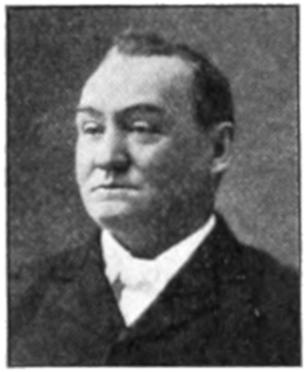
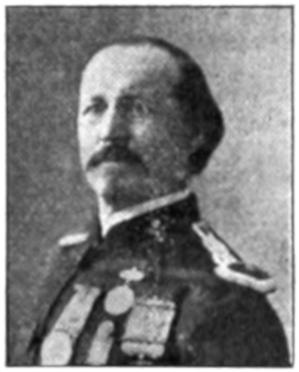
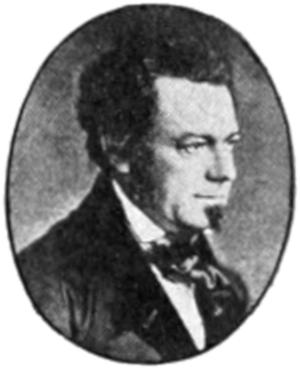
EDWIN BOOTH JAS. A. HERNE P. S. GILMORE EDWIN FORREST
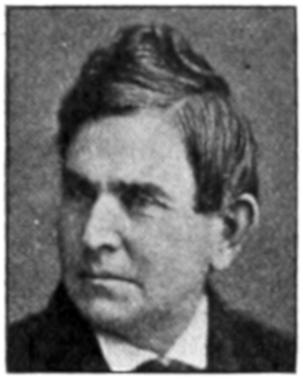
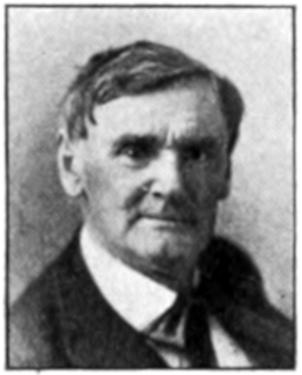
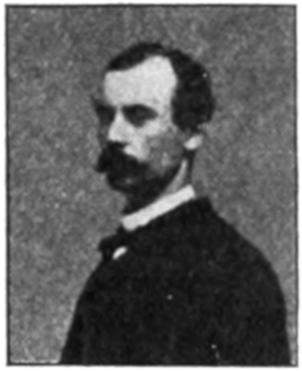
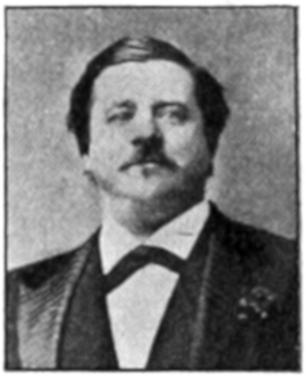
BARNEY WILLIAMS JOS. JEFFERSON WM. CASTLE TONY PASTOR
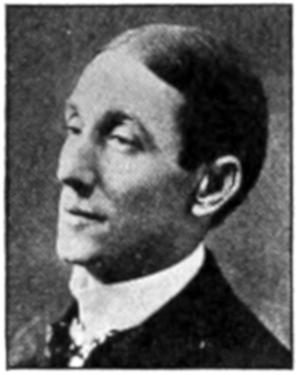
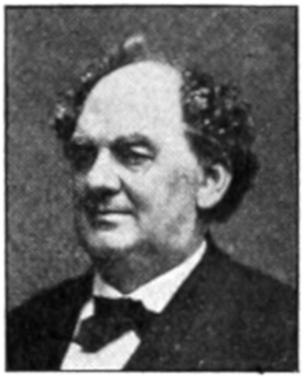
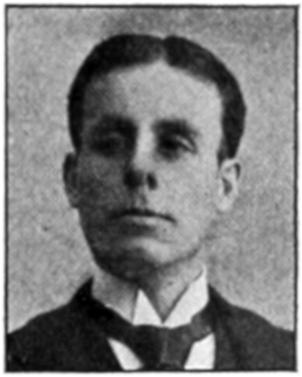
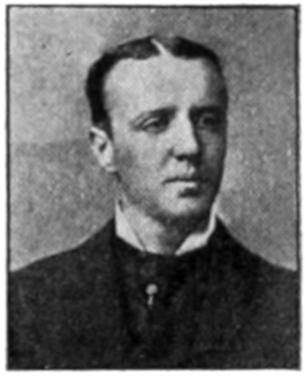
DAN. DALY P. T. BARNUM RICHARD GOLDEN HARRY KERNELL
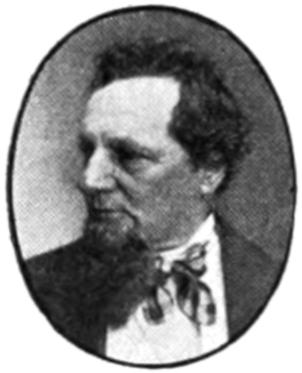
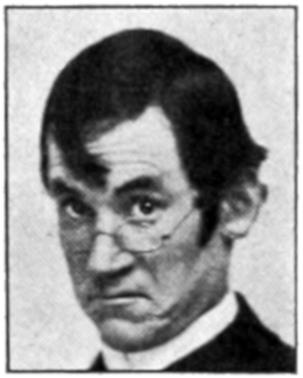
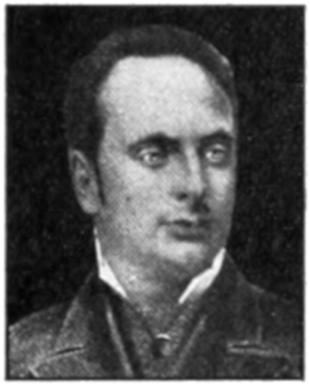
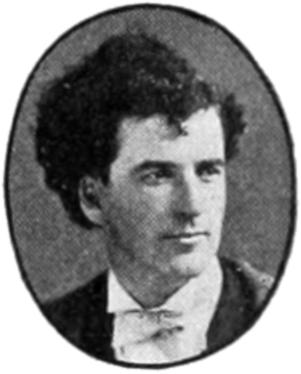
DAN. RICE J. W. KELLY NEIL. BURGESS J. K. EMMETT
FAMOUS ARTISTS OF THE PAST—THEY ALL BLACKED UP.
Mr. Collins later withdrew from this company, and with “Tony” Nish organized another “Christy” company, opening in London, England, at Her Majesty’s Concert Hall Monday, March 18, 1861; subsequently he sold his interest in this company, returned to London, and organized another troupe; they played at Polygraphic Hall as early as April 14, 1862.
In September, 1863, he sailed for India, playing the principal cities. In July, 1866, he returned to America, later going to England, where he married; subsequently he returned to Pittsburgh, where he remained until his death. He had not appeared professionally for several years prior to that.
Mr. Collins did an “end”, a stump speech and a female impersonation equally artistic.
W. P. Collins died at Pittsburgh, Pa., November 1, 1881; age about 55 years.
L. V. H. Crosby has been credited as being the first interlocutor, then called “middle man” of minstrelsy; this was about 1845, when he organized the Boston Harmoneons. This company gave a special performance at the White House in Washington, D. C., June 18, 1846, for President Polk.
Mr. Crosby was composer of several songs, and a basso of unusual ability. His late years were devoted almost exclusively to concert work.
L. V. H. Crosby died at Reynolds, Ga., March 26, 1884; age about 60 years.
James Unsworth and Nelse Seymour were born and died within thirty days of each other.
E. J. Melville (Edward John Robbins), a well-known singer of the early days of minstrelsy, came to the United States in 1849; shortly afterwards he sang in the choir of a church in Cleveland, O., where he was known as the best tenor in that city. His principal engagements were with Hooley’s Minstrels, Hooley and Campbell’s Minstrels (being with them at their inception, May 6, 1860), Lloyd’s Minstrels, Carncross and Dixey, and Duprez and Benedict. He also played an engagement at the Canterbury Music Hall, New York City, in October, 1861.
Mr. Melville was married to Miss Amelia Nash, October 1, 1848, by whom he had three daughters, one of whom became the wife of Edwin French, the banjoist.
Mr. Melville’s private life was a most happy one; he was generous, cheerful and a true friend.
E. J. Melville was born in London, England, February 4, 1825; he died in Buffalo, N. Y., January 18, 1903.
“Jim” Johnson (Gallagher), an old-time banjoist, well known in his day and popular on the steamer “Banjo”, was born in New York about 1825; he died in New Orleans, La., November 22, 1875.
Dick Sliter was one of the world’s greatest jig dancers. His professional career commenced in the late 30’s, and he had been with many of the early famous organizations, notably Sanford’s Minstrels in 1859.
He also, with Johnny Booker, organized Booker and Sliter’s Minstrels, which was quite successful. Dick Sliter died in Jackson, Mich., May 21, 1861.
Jasper H. Ross was famed as a musical director and composer. His professional career began in 1847 with Spalding and Rogers’ Circus. Subsequently he played extended engagements with the minstrel companies of Carncross, Bryant’s, White’s, Rumsey and Newcomb’s and the San Franciscos.
He was born in Northampton, Mass., in 1826; he died in New York, September 8, 1889.
Jimmy Wells, once well-known as a manager, was a member of Ordway’s Aeolians in Boston for a lengthy period in the early 50’s.
He was born in New York in 1826; he died in Grand Rapids, Mich., March 16, 1893.
Sam Wells was prominent as a bass vocalist and interlocutor. He went to Europe in the middle 40’s with the Ethiopian Serenaders, and they created a sensation.
He was with several prominent minstrel companies located in New York up to 1855, when he sailed for California, where he was located with George Christy’s and other minstrel companies until December, 1863, when he went to New York, and after playing one week with Bryant’s Minstrels, returned to California.
Mr. Wells’ death was caused by being thrown from a horse in California, August 27, 1864; he was 38 years of age.
Charley Howard has been given credit of being the first to represent the aged darkey on the stage. At the age of ten years he traveled with Joe Sweeney’s company, giving concerts in the Southern States, appearing in barns and churches, and traveling by coaches.
Mr. Howard was with many prominent minstrel organizations, and when Haverly separated from Cal. Wagner in 1873, Howard was one of the first engaged for the Haverly Minstrels.
Charley Howard was born in Virginia, June 5, 1826; He died in Brooklyn, N. Y., April 28, 1895.
Stephen Collins Foster, whose simple and homely ballads contributed as much as any other cause to the placing of early minstrelsy on a permanent and successful basis, was the author, among others, of “Willie, We Have Missed You”, “Old Uncle Ned”, “My Old Kentucky Home”, “Old Dog Tray”, “Massa’s in de Cold, Cold Ground”, “Ellen Bayne” and “Old Black Joe.”
He was born in Allegheny, Pa., July 4, 1826; he died in New York City, January 13, 1864.
James Powers was one of the real early minstrels, and a member of the Boston Harmoneons, which were especially well known in Massachusetts. With his brother John, he was with the above organization several seasons, commencing in the early 40’s.
Mr. Powers was the author of “She Sleeps in the Grave” and “Faded Flowers”, favorite ballads of days now forgotten.
James Powers died in Boston, Mass., January 5, 1890; age 64 years.
Dan Leon, a real old-time black-face comedian and general performer, died in New York City, April 27, 1863; he was born March 1, 1826.
W. Jackson Rudolph, one of the pioneers of minstrelsy, made his first appearance in his native city early in 1846 in black-face as a banjoist; the following year he was one of the Sable Harmonists; in 1849 he was with the Virginia Minstrels, and up until 1855, when he joined Sanford’s Minstrels in Philadelphia, he was almost continuously associated with one or the other of the many minstrel bands that were then in evidence.
He later went on the legitimate stage, but subsequently, in 1864, joined Carncross and Dixey’s Minstrels in Philadelphia.
About 1870 he played his last minstrel engagement with Simmons and Slocum, also in the Quaker City. November 3, 1880, he made his last appearance on the stage of Wood’s Museum in Philadelphia.
W. Jackson Rudolph was born in Philadelphia, 1826; he died there September 5, 1881.
John A. Dingess. After the dissolution of the Duprez and Green’s Minstrels as an organization in 1865, Mr. Dingess formed a partnership with Jno. E. Green and organized Dingess and Green’s Minstrels, opening at Chattanooga, Tenn., November 18, 1866; their existence was short lived. He was subsequently, and for many years, engaged in an executive capacity in the circus business.
John A. Dingess was born in Cincinnati, Ohio, in 1826; he died in New York City, April 14, 1901.
Luke West (William Sheppard) was the first performer to do a whistling solo in minstrelsy, which he did as early as 1845 at Otto Cottage, Hoboken, N. J.
In the Fall of 1848 he was one of the organizers of the Campbell’s Minstrels; November 29, 1849, he joined the E. P. Christy’s Minstrels in New York, resuming his own name of Sheppard. On August 15, 1850, in conjunction with Matt. Peel, Joseph D. Murphy and James Norris, “Campbell’s Minstrels” gave their first performance. Subsequently the organization was known as Murphy, West and Peel’s Minstrels, and as such continued until his death. In addition to his whistling ability, Mr. West was an accomplished comedian, dancer and banjoist.
Luke West was born in Philadelphia, 1826; he died in Boston, Mass., May 26, 1854.
Charles G. Long, who was for nearly forty years associated in the management of the Academy of Music, in Selma, Ala., with George T. Rees, the present incumbent, was one of the pioneers of minstrelsy.
About 1844 or 1845 he became a member of the Virginia Serenaders, a full page photograph of which is shown elsewhere. The company traveled by wagon through Pennsylvania and New York chiefly.
It has been stated that Mr. Long joined this company when he was ten years of age; this is clearly erroneous, as the little band was not organized until 1843, probably in the late Spring or early Summer.
Mr. Long played a banjo, one of his own making.
Charles G. Long was born in Carlisle, England, December 20, 1827; he died in Selma, Ala., January 28, 1908.
Fred Burgess was for many years co-proprietor with “Pony” Moore at St. James Hall, London, England, of Moore and Burgess’ Minstrels.
Mr. Burgess was a shrewd business man, and possessed intellect out of the ordinary. At one time he was a member of Kunkel’s Nightingales, an early minstrel company in the United States.
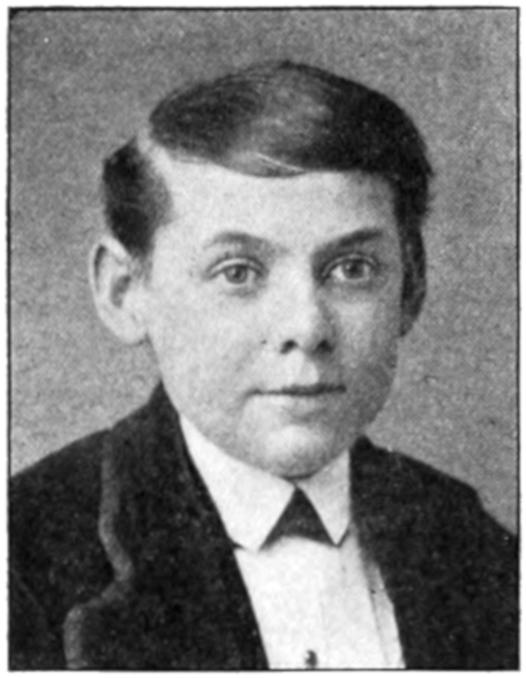
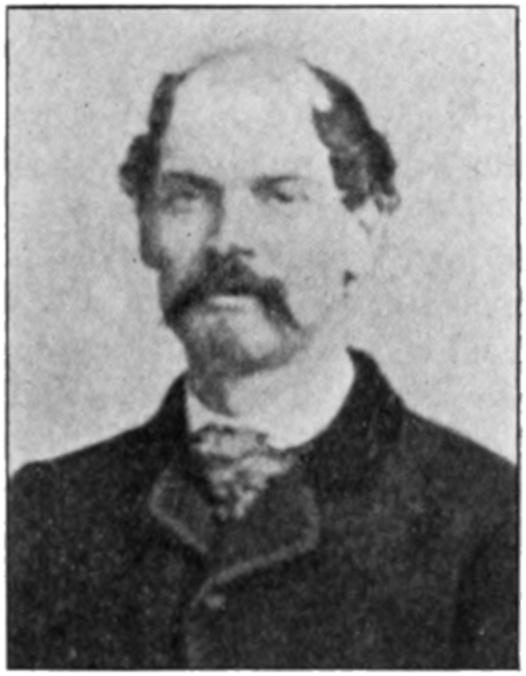
CLARENCE BURTON HY. RUMSEY
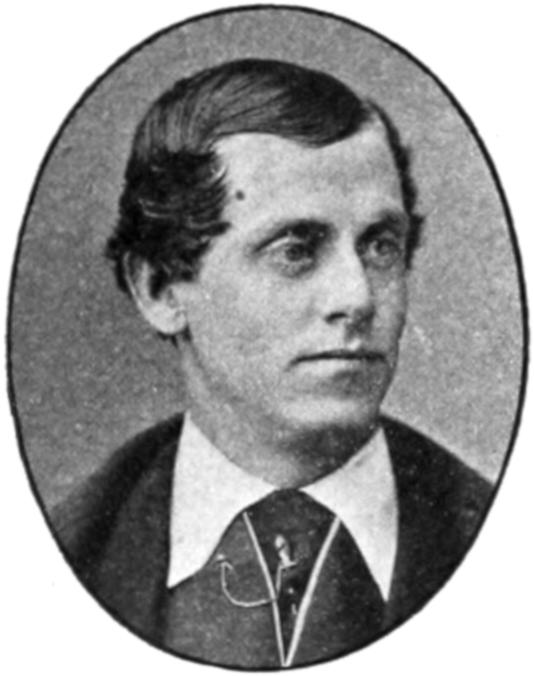
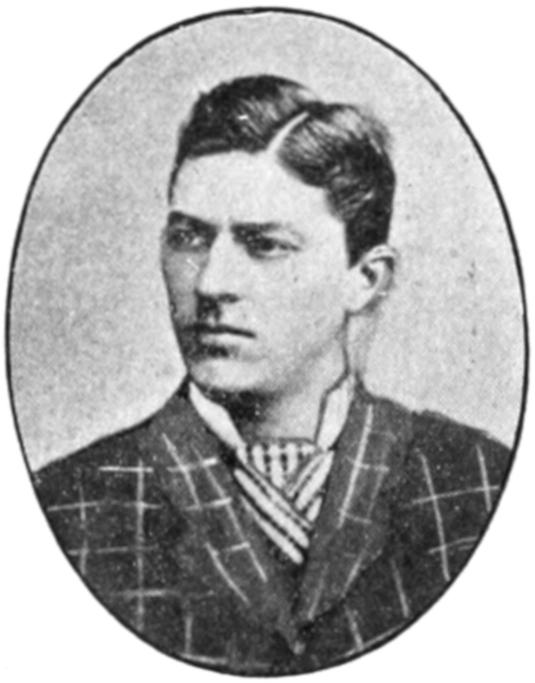
BILLY HUNTLEY EDWIN FRENCH
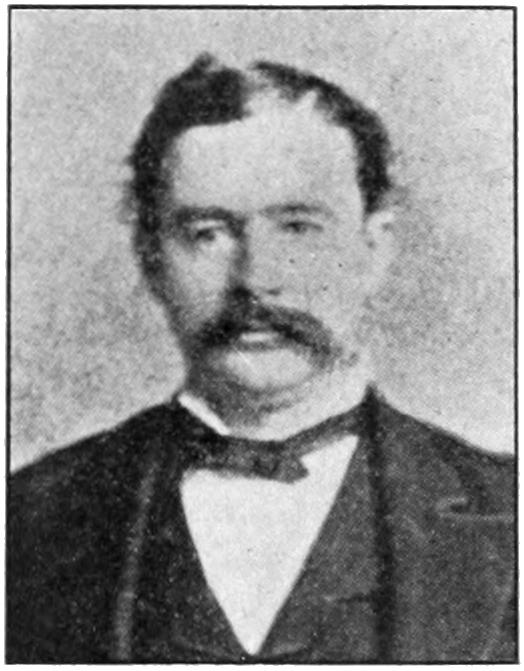
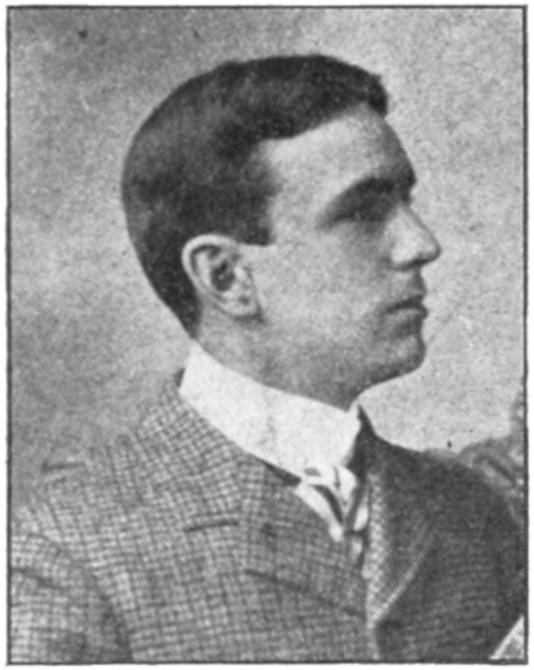
OSCAR WILLIS EDMOND G. CORBIN
BRIGHT LIGHTS OF THE BANJO.
In the fall of 1864, at Glasgow, Scotland, he was engaged as agent for Moore, Crocker, Hamilton and Ritter’s Minstrels; about a year later he secured St. James Hall, in the British metropolis, and a few years later, “Pony” Moore having bought out Hamilton and Ritter, and the death of Crocker paved the way for a partnership; the organization subsequently and for many years was known as Moore and Burgess’ Minstrels.
Mr. Burgess was twice married; his second wife was Miss Ellen Meyrick.
Fred Burgess was born in Providence, R. I.; he died at Finchley, England, July 26, 1893; age 66 years.
Charles Callender, proprietor and manager of the famous colored organization that bore his name, played many seasons on the road, commencing about 1872; several years later Haverly purchased his interests; the company subsequently became the property of Charles and Gustave Frohman.
Mr. Callender had retired from active theatricals some years before his death.
Charles Callender died at Chicago, Ill., February 24, 1897; age 70 years.
Frank Moran came to the United States at the age of four years; it was not until later that he did a stump speech.
His first appearance professionally was about 1848, as a comic singer in Philadelphia with Raymond and Waring’s Circus. He was with several small minstrel shows before going to California in 1850, and subsequently to Australia.
Some time after his return from the Antipodes, he joined Sanford’s Minstrels in Philadelphia, and later was with Carncross and Dixey at different periods, aggregating a number of years.
September 5, 1864, he opened Moran’s Minstrels on Chestnut Street, Philadelphia. Later he was with Bryant’s, and Kelly and Leon’s Minstrels in New York; Hooley’s in Brooklyn, and Moore and Burgess’ in London.
As Moran and Dixey’s Minstrels, the famous Eleventh Street Opera House in Philadelphia opened October 2, 1871; in September, the following year, the company was known as Moran’s Minstrels.
Subsequently Moran and Billy Manning’s Minstrels made a brief tour. Of later years Mr. Moran was associated with Ned Thomas in a minstrel company, and on July 17, 1890, he began an engagement with Wm. Henry Rice’s World’s Fair Minstrels.
Frank Moran was a natural born comedian, and at times was rather caustic in his wit; but underneath a seeming rough exterior was a heart that was never known to fail a fellow performer in distress.
As a stump orator he was different from all others, and he did this act almost up to the time of his death.
Mr. Moran was twice married; his first wife died a few years prior to his marriage to Miss Jessie Millar, February 1, 1898.
Frank Moran was born in Ireland, September 15, 1827; he died in Philadelphia, December 14, 1898.
“Nick” Bowers (Edward Bowers), one of the ablest and most efficient middle men and stage directors of minstrelsy, made his first appearance at Charley White’s in New York, in the early 50’s; subsequent engagements were with Ordway’s Aeolians, Morris Bros., Pell and Trowbridge and Wood and Christy’s Minstrels.
In 1858, in conjunction with Billy Birch and Charley Fox, they presented Birch, Bowers and Fox’s Minstrels, and in 1864, with Tom Prendergast, launched a company that had a brief existence. For some time he played star engagements with John Mulligan.
His last appearance was in New York City, February 11, 1865.
Nick Bowers died in Brooklyn, N. Y., February 27, 1865; age 38 years.
Paul Berger was one of the greatest bass singers in minstrelsy, and at the requests of Presidents Tyler and Van Buren, he sang before those chief executives.