THE FIRST MINSTREL PERFORMANCE. (continued 3)
Reading edition
*****
“The oysters had been disposed of,” continued Florence, “and the soup had just been placed on the table, when Charley Gaylor arose, and, in very impressive tones, spoke about as follows: ‘Gentlemen, I think this is a most auspicious occasion to bring about peace between two men who, while strangers, were once devoted friends. I do not think that rancor could exist in any heart at a gathering of this kind. To be sure, it may ill become me to act the part of a peacemaker, for, while it is true I have shed human blood, that my right hand has been red with, the gore of another, it must also be borne in mind that I was triumphantly acquitted of the offense, and that a jury of my peers said that I had acted only in self-defense.’
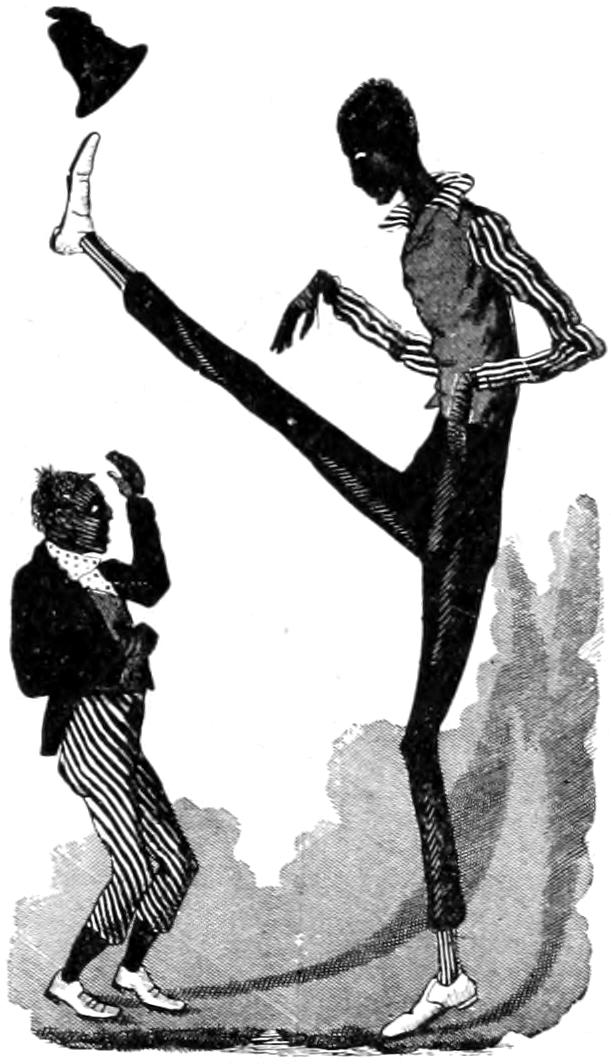
DAN BRYANT AND NELSE SEYMOUR.
“You can readily imagine that this took the breath out of my friend Lee, who had been seated upon my left. He whispered to me, ‘What has he done? Did he kill anyone?’ I looked at him warningly, and put a finger on my lips as I whispered back, ‘Sh-h-h! It was nothing; only his mother!’ I heard him mutter, ‘My God!’ as he shrunk in his chair, and then he leaned toward me and whispered, ‘Of whom is he speaking?’ As I didn’t know myself, I couldn’t well tell him, but I warned him off by saying, ‘You will learn it all in a moment. His words might apply to any two men about the board, because every fellow here has killed his man.’
*****
“Just then Gaylor threw light upon the subject by saying, as he pointed with one hand to that clever negro minstrel, Dan Bryant, and the other toward that equally famous delineator of cork humor, Nelse Seymour, ‘Of course, gentlemen, it is hardly necessary for me to say that I refer to America’s most famous poet, William Cullen Bryant, and that equally distinguished gentleman, M. Seymour, the son of the talented ex-Governor of the State of New York, Horatio Seymour, and I now request that these two gentlemen shake hands across the table and let the bloody feud which has existed between them end here!’
“I had scarcely time to give an affirmative reply to Lee’s whispered inquiry. ‘Is that really William Cullen Bryant?’ when there ensued the most remarkable scene which I ever witnessed in my life. I cannot, even after many years have elapsed, think of it without the tears of laughter coming to my eyes. Seymour was a man over six feet in height, and with legs the length of which were absurdly out of proportion to the rest of his body. He appeared to be split up almost to his neck. One of his most famous feats upon the minstrel stage was to suddenly throw one of his feet about a man’s neck and draw the other fellow toward him. Upon this occasion Bryant, in obedience to Gaylor’s summons, had reached forth his right hand, when Seymour suddenly threw that dreadful right leg of his across the table, caught his friend and fellow-minstrel by the back of the neck, drew him toward him and hit him squarely between the eyes. In another instant both men were on top of the table amid the soup dishes, and were snarling and biting and tearing at one another like a pair of bulldogs. Cooper and Dickinson, who were not in the secret, became so alarmed that they got under the table, while I could only hold Lee in his chair by main force. In the midst of the contest the table upset and the poor Englishman was almost drowned in soup. While Bryant and Seymour were making a mockery of struggling beneath the debris, Seymour, by wetting his fingers of one hand, secured a quantity of blacking from one of his shoes, and with this gave himself the semblance of a black eye. When some appearance of order had been obtained a truce was patched up between the combatants, and, after Seymour’s blackened eye had been bandaged, they were induced to shake hands, whereupon the other members of the company, who were in the secret, exclaimed admiringly, ‘Once a gentleman, always a gentleman!’ and declared that ‘a true American gentleman can always be told by his willingness to settle a little difference amicably.’
“Lee whispered to me in tremulous indignation, ‘This is most shameful!’ to which I replied, ‘I don’t see how you say that. There was no one killed.’ Thereupon he amended his remark by saying, ‘At least, it was most unfortunate. I am dreadfully sorry it occurred.’
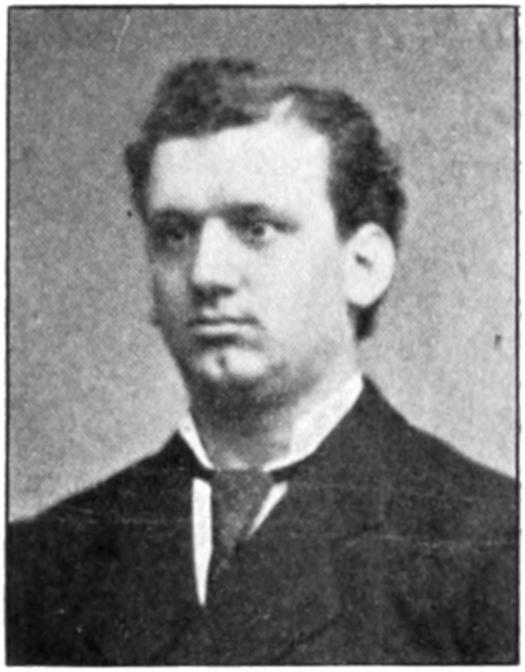
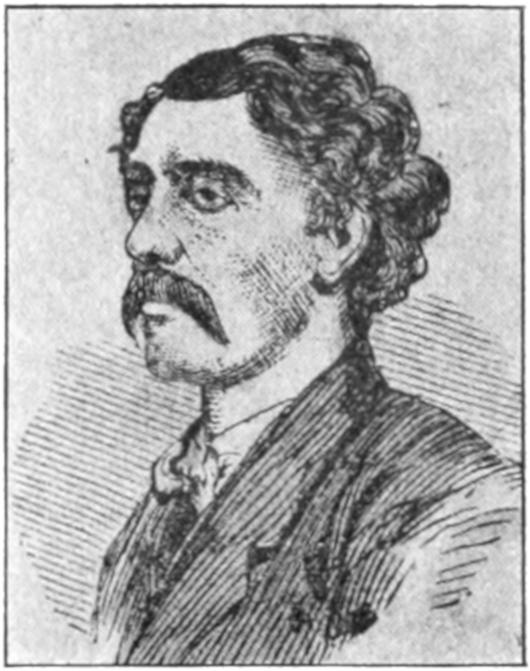
MATT. WHEELER DAVE WILSON
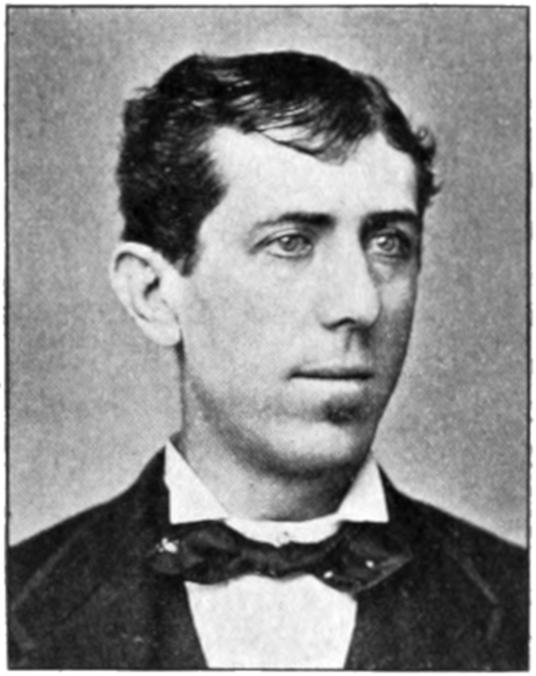
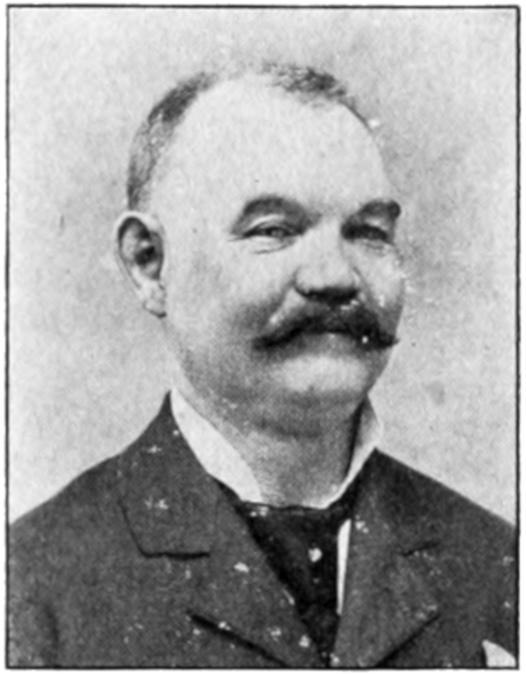
WILL COX CLARK GIBBS
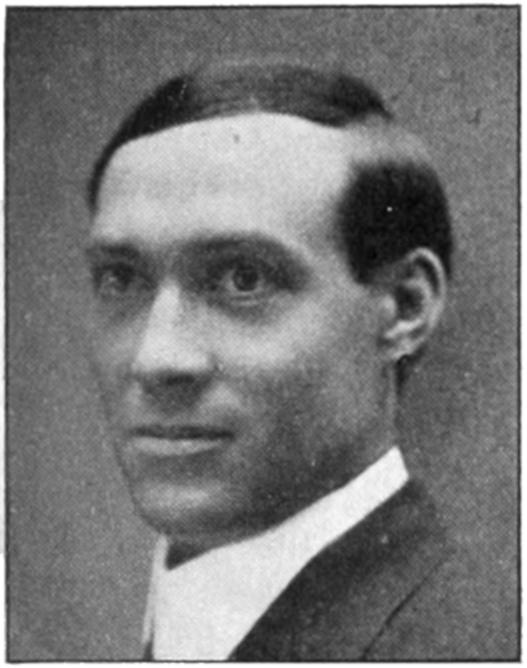
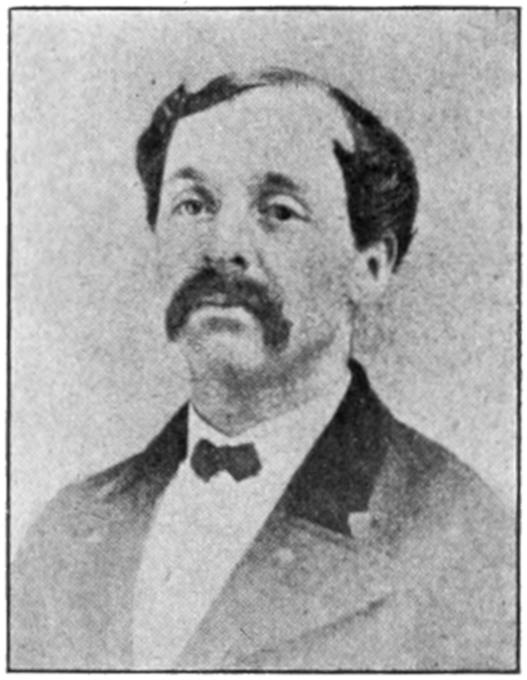
HARRY W. SMITH WILL LAVAKE
“Wheeler & Wilson,” “Will Cox & Gibbs,” and some “Singers”; nearly all “Domestics.” Try to play this on the machine.
*****
“The table was got in shape again, and things moved along smoothly and pleasantly for some time, until Polk and Sothern became engaged in apparently a very angry and excited dispute about the merits of the North and South, in the midst of which Mr. Sothern suddenly arose to his feet, and, drawing a revolver, fired it directly over Polk’s head. Immediately a scene of the wildest excitement ensued. In less than twenty minutes twenty shots from revolvers had been fired across the table. Polk, Gaylor, McCullough, Montague, Seymour, Bryant and Sothern were not only firing blank cartridges from revolvers, but were brandishing huge knives over one another’s heads. Dickinson, Cooper and Brown had by this time discovered the affair was a joke and simply added to the tumult. The terror of the Englishman was almost pitiable. He begged to be allowed to go, but his friends were so thoroughly in love with him that they would not let him depart. There was upon the table at this particular juncture a large dish of asparagus, covered with drawn butter, and most of the combatants, who were crawling across the table to carve one another’s hearts out, managed to get their hands into this mess, and, while thus besmeared, they could take turns in jumping around to where I was holding Lee in place, and, bringing their palms down upon his shoulders, would beg of him to be seated and assured him that the difficulty was simply a trifling one, and that they would regret it to their dying day should he leave them. So frequent were these expressions of hospitality that Lee was smeared from head to foot with drawn butter. I shall never forget the spectacle that the lamented John McCullough presented on that occasion. Having fired his revolver, he drew a long Roman sword from his boot, and, with a swirl, cut off the neck of a champagne bottle as if he were decapitating a foe, and then waving it threateningly over the heads of Lee and myself, he exclaimed, ‘Why does not the gallant Florence stand by his friends? Where is his revolver to-night? I have traveled with him through the West, and then he never went without his arsenal and scarcely a day passed without his killing a man.’
*****
“In the midst of the fracas, Seymour, who had temporarily disappeared, appeared in the doorway attired in a white hat and apron, which he had procured from the hotel chef, and announced that the landlord declared that the entire party must vacate the room. He had not finished his speech when everything on the table, including even the large, heavy dishes, was hurled at him, and it is really a wonder that he escaped the shower unhurt. By this time everyone in the room, and especially the Englishman, was a lamentable sight to behold. Each one was smeared and crushed and tumbled and torn from head to foot. Lee could stand it no longer. He got on his feet finally and managed to say that while he had heard such scenes as he had witnessed were enacted in the purlieus of the great cities of America, he was astounded and disappointed to find that they were the custom among gentlemen, and further said that he would have to leave to keep a dinner engagement. It was 4 o’clock. I escorted him to the street and put him in a carriage to conceal his dilapidated condition. When we came to settle for this little joke, we found that our bill was $600. The item for breakage alone amounted to $80.”
Men will sometimes become boys again; and very silly boys.
Note.—Mr. Florence was in error in giving the date of the foregoing as the Fall of 1877. Dan Bryant died in the Spring of 1875.—Author.
Charles Melville was of late years best known as a manager and agent, but in his earlier days achieved considerable fame as a balladist in minstrelsy.
As early as May 1, 1856, he was with Raynor’s “Christy” Minstrels, and in November, same year, he was a member of Turner’s Southern Serenaders.
The following year he was with Mrs. Matt. Peel’s Minstrels in the Summer; in November, 1860, Charles Melville’s Minstrels were on tour.
October 14, 1861, he began a brief engagement with Fox and Sharpley’s Minstrels in New York.
In an executive capacity he was associated among others with Col. T. Allston Browne and Shook and Palmer.
In February, 1894, Mr. Melville occupied the position as ticket taker at the Arch Street Theatre in Philadelphia, at the opening of that theatre in a revival of old stock plays by George Learock.
Charles Melville died in Newark, N. J., July 10, 1901; age about 65 years.
Lew. Meyers (Buhmeir), is a name that is practically unknown to minstrel lovers of to-day; yet to him belongs the credit of being the original “musical moke,” long familiar to variety and minstrel habitues. His first performance of the act was given in Newark, N. J., during the season of 1852-53.
He was likewise the first to perform the harmonica on the stage. He went to Europe in 1866 with Hussey, Sweney and Felton’s Minstrels. His last appearance was at Los Angeles, Cal., January 27, 1874, where he gave an entire evening’s entertainment of one and a half hours’ duration, during which he performed on twenty-six different instruments; and on one occasion four at one time.
Lew Meyers was born in Minden, Prussia; he died in Pottsville, Pa., July 11, 1875; age 40 years.
Jake Budd (Zebley), the old-time comedian, was with Buckley’s Serenaders in England, about 1855; subsequently with Dan Howard he ran Canterbury Hall in Harrisburg, Pa., for several years; in 1862 he rejoined Buckley’s; he also directed minstrel companies in Baltimore and Washington. In 1872 he was part owner of Brant’s Hall in Harrisburg, Pa.; in 1874 he was stage manager of the Comique in Washington, D. C.; subsequently becoming the manager.
The distinction of bringing before the public that famous song and dance team, Welch and Rice, in the 60’s, belongs to Mr. Budd, and while it has been said that he was the first to do a monologue in minstrelsy, the writer has no means of substantiating the assertion.
Jake Budd was born in Philadelphia; he died in Washington, D. C., October 11, 1888; age 53 years.
J. K. Campbell (John Kelly), celebrated as a banjoist and comedian, made his first appearance at Wright’s Music Hall in New York City, in 1846, as a youth, and playing under his own name. About 1851, George Lea, the well-known variety manager, suggested that Kelly take the name of Cameron, the same as the prominent theatrical printer; a typographical error made it appear Campbell; and as Campbell it always remained, except for a brief period in 1859 and 1860, when he was with George Christy’s Minstrels at Niblo’s Saloon in New York; here he sat on the opposite end to Christy, and was on the programme as J. K. Edwards.
In 1870, he was a prominent member of Hooley’s Minstrels, in Brooklyn, N. Y., and when Hooley opened in Chicago on January 2, 1871, Mr. Campbell went with him; with this company he did a song and dance with John Hogan, of Hogan and Hughes; the latter being unable to play on account of illness.
He was many years associated with the late “Fatty” Stewart, and identified with such prominent organizations as Moore and Burgess, in London, England, and Buckley’s, in Boston, where he opened in August, 1864.
Mr. Campbell was one of the great cards of minstrelsy; as a banjoist he ranked with the best; his “Essence of Old Virginny” was A1; he was versatile to a degree, and wrote several sketches, amongst them “The Rival Lovers” and “The Lawyer’s Clerk.”
Miss Fanchon Campbell, the talented young actress of the present, and who was a clever child actress at the time of Mr. Campbell’s death, is a daughter of his.
J. K. Campbell was born in New York City, 1835; he died in Pittsburg, Pa., February 6, 1878.
Joe. Buckley (Timothy Clancy), was a good general black-face performer. In 1857, he was with G. N. Eldridge’s Great Southern Circus, and for many years was associated with that style of entertainment.
In his earlier days he was associated with Joe Chatfield and Harry Wells. Mr. Buckley, likewise, was in the stock at Tony Pastor’s at 585 Broadway, New York City, also with Harrigan and Hart’s Company. At the time of his death he was not engaged in his profession.
Joe. Buckley was born in Philadelphia, September 7, 1835; he died in New York City, July 19, 1884.
Charles Henry, one of the oldest ballad singers in minstrelsy, was living as late as 1886; he is said to have died in England.
Charles Templeton (Broughton). This well-known popular vocalist of minstrelsy, began his career in Dundee, Scotland, in 1857, with Tom Lee’s Minstrels; other succeeding European engagements were with the Pelham Bros.’ Minstrels and Templeton’s African Opera Troupe, the latter in the Spring of 1859; it was here that he took the name of Campbell, emulating the distinguished Sher. Campbell.
In the Fall of 1859 he came to America and was engaged by Dan Bryant for Bryant’s Minstrels, at 472 Broadway, New York City; at the suggestion of Bryant, he took the name of Glendale, so as not to conflict with Sher. Campbell, a warm personal friend of Bryant’s.
Late in 1859 he joined Sanford’s Minstrels in Philadelphia, resuming the name of Campbell; he remained there three years. Subsequently he became a member of the following well-known minstrel organizations: Hooley’s, in Brooklyn; San Franciscos, in New York, six years; a second and third engagement at Bryant’s, also Hooley’s; Geo. Christy’s, one year; Barlow, Wilson, Primrose and West’s; Cotton and Reed’s; Cool Burgess’; Carncross, in Philadelphia; Neil Bryant’s and Cleveland’s. Also with such operatic companies as Pauline Hall’s, and E. E. Rice’s; his last engagement was with Camille D’Arville Company, about 15 years ago.
Charles Templeton was born at South Kirby, England, January 1, 1835.
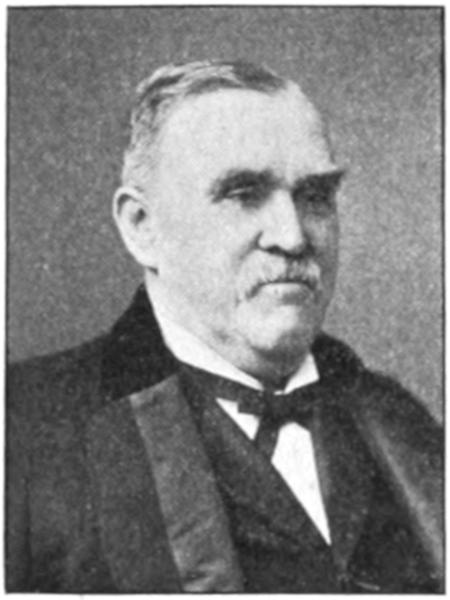
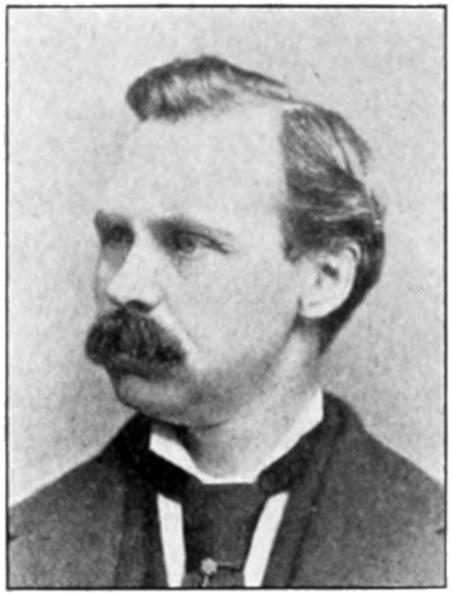
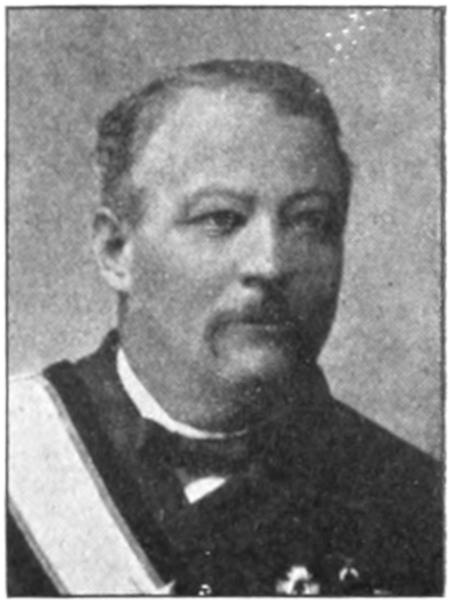
JAS. HOLDEN E. N. CATLIN FRANK CARDELLA
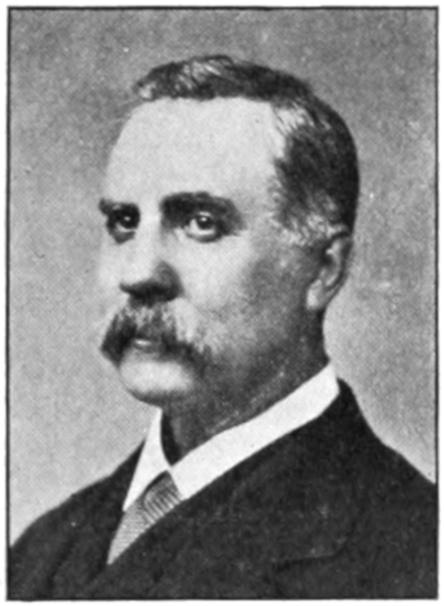
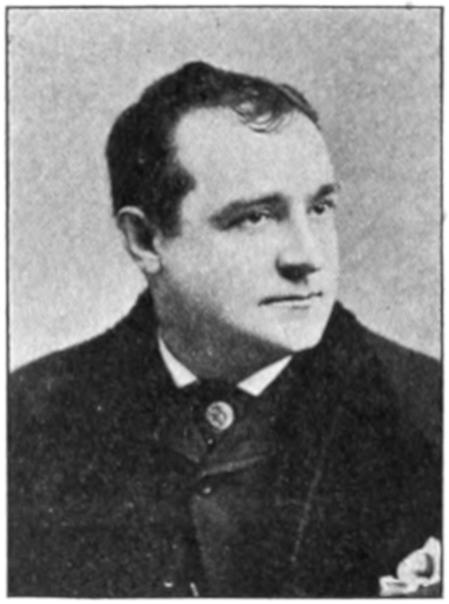
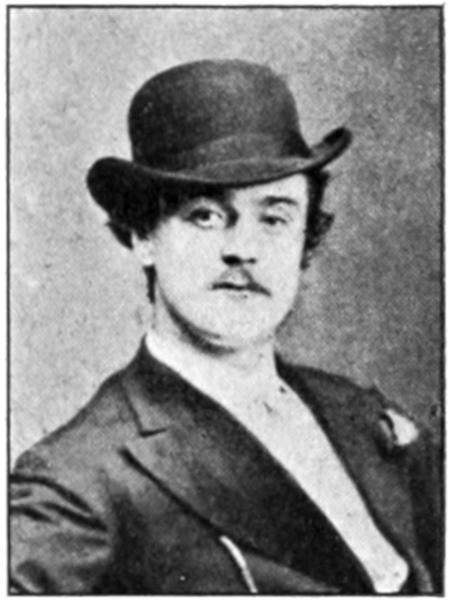
BOB. HALL EDDIE FOX W. S. MULLALLY
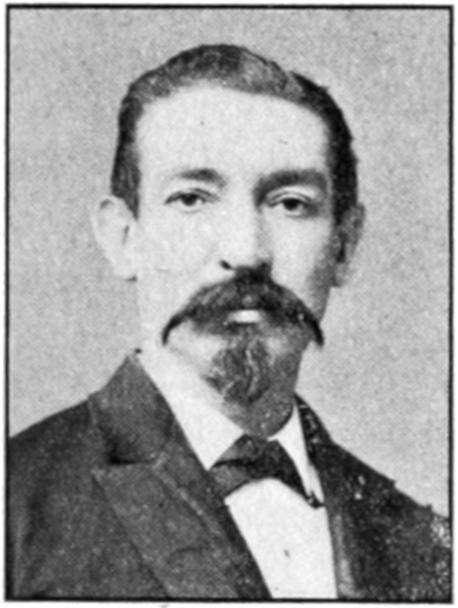
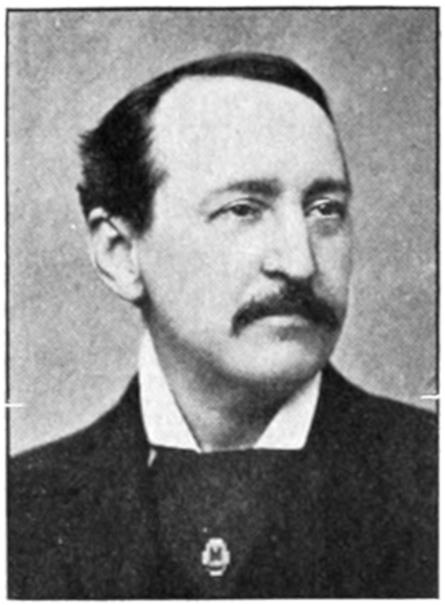
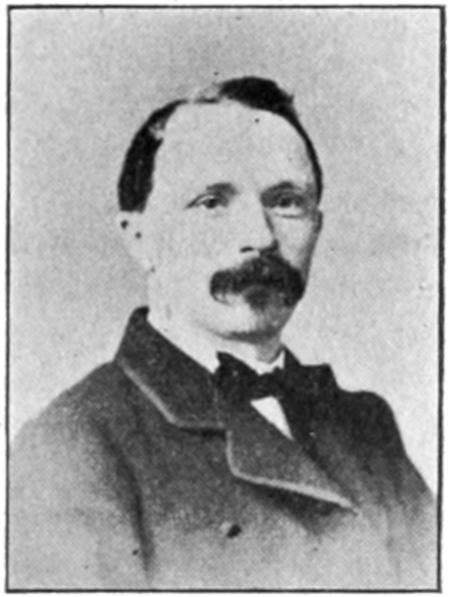
E. J. CORNU J. B. DONNIKER CHAS. HUNNEMAN
SOME LEADING LEADERS OF MINSTRELSY.
Denman Thompson, famous for many years for his unique characterization of Joshua Whitcomb, in the “Old Homestead,” sat on the end with a minstrel show many a time over 50 years ago; and at the Royal Lyceum, Toronto, Canada, February 6, 1857, he played Uncle Tom, in “Uncle Tom’s Cabin.”
“Hank” Parmley, the well-known old-time minstrel agent, died in Newark, N. J., May 7, 1902; age 67 years.
Neil Bryant (Cornelius A. O’Brien), was the youngest and the last of the three famous brothers of his name that organized Bryant’s Minstrels, in 1857.
Oddly enough, less is known about the early career of Neil Bryant than either of his brothers.
The earliest authentic record obtainable by the author is at the American Hall, Hartford, Conn., June 25, 1851, as a member of Ordway’s Aeolians, a famous Boston organization; it is highly probable that Mr. Bryant was with this company prior to the above date in the Massachusetts metropolis.
He continued with Bryant’s Minstrels in New York until the death of his brother Dan, April 10, 1875; subsequently he organized Bryant’s Minstrels, and gave intermittent performances on the road for a period of about seven years. In 1851, the programme gave Neil Bryant as giving an accordeon solo; in later years he was almost exclusively identified with his performance on the flutina.
About 1882 he secured a government position in Washington, D. C., which he retained until two years prior to his death.
July 11, 1859, Mr. Bryant married Miss Gertrude E. Ransom.
Neil Bryant was born in Keesville, N. Y., 1835; he died in Brooklyn, N. Y., March 6, 1902.
Joe. Murphy (Wm. L. Murphy). It is pretty well known to theatre goers in general, that Mr. Murphy’s early career was spent as a minstrel in California, where he drifted in the 50’s.
As late as 1858 he was with the California Minstrels, with whom he was associated many months in San Francisco.
In 1860 with Billy Birch, a company bearing the name of Birch and Murphy’s Minstrels toured. In 1864 Murphy and (Walter) Bray’s Minstrels were in existence. Mr. Murphy then came East, and with Ben Cotton formed Cotton and Murphy’s Minstrels, opening at Fall River, Mass., about March 1, 1865.
In 1867 he again went West, and late that year was with Dan and Neil Bryant’s Minstrels, in San Francisco. A few months later he joined Morris Brothers’ Company, in Boston, and on April 20, 1868, made his appearance in New York with Kelly and Leon’s Minstrels.
Once more did Mr. Murphy take Horace Greeley’s advice, and went West, where in August, 1869, at Salt Lake City, Utah, with Johnny Mack, organized Murphy and Mack’s Minstrels.
His first appearance as a legitimate performer was made in San Francisco, September 16, 1867, as Pat Murphy in “The Happy Man.”
It was in New York City, May 8, 1871, that Mr. Murphy first produced his play of “Help,” in which he impersonated a negro and other characters.
Subsequently “Shaun Rhue” and “Kerry Gow” brought him name and fame, as well as wealth.
Mr. Murphy married Miss Martha Shattuck in the early 60’s.
At San Antonio, Texas, November 11, 1909, he wedded Miss May Firmier, an actress.
Joe Murphy was born in Brooklyn, N. Y., May 16, about 1835.
J. W. Hilton was one of the favorite bass singers in minstrelsy.
He was with Bryant’s Minstrels in New York, in 1860, and continued with them intermittently for several seasons. In the Summer of 1869 he went to Liverpool, England, with Smith and Taylor’s Minstrels, opening there June 21.
J. W. Hilton was born in the United States; he died in Liverpool, England, January 2, 1871; age 36 years.
James Unsworth, or just “Unsworth” as he was more familiarly known, was one of those rare performers who were concededly away ahead of the times in which they flourished.
The word “great” may be truly applied to him, for while he excelled in all he undertook, he was famous for his stump speeches, for his banjo solos, and for his singing of Irish songs on the end, of which he was one of the first.
His professional debut was made with Sanford’s Minstrels, in Philadelphia, August 10, 1857; he continued there until January 2, 1858, when he left and joined Bryant’s Minstrels in New York that same month. After a few months with that company he went with Matt. Peel’s Minstrels for a road tour, and opened with them in New York, October 5, 1858; a few weeks later the company was known as Sniffen’s Campbell’s Minstrels, with whom Mr. Unsworth continued for several weeks.
December 6, he rejoined Bryant’s for the season; again opening there the following Fall; he left September 19, 1859, and later joined Anderson’s Minstrels, which had a brief existence. Early in 1860 he opened with Hooley and Campbell’s Minstrels: here he met “Eugene,” and a business alliance was formed which continued uninterruptedly until death intervened, fifteen years later.
He closed with Hooley and Campbell in New York City, January 26, 1861, and with “Eugene” and J. B. Donniker organized Unsworth’s Minstrels. A few months later he sailed for Europe, and subsequently joined Rumsey and Newcomb’s Minstrels in Liverpool; later going to Germany with them. Mr. Unsworth remained abroad playing the Music Halls, also a long engagement with Wilsom and Montague’s Minstrels, until the Spring of 1868, when he returned to America, and again joined Bryant’s Minstrels in New York: he remained two years.
In the Fall of 1870 he joined Hooley’s Minstrels in Brooklyn, N. Y., and later went with that company to Chicago, opening January 2, 1871, for the balance of the season.
Unsworth’s Minstrels again took the road, opening September 2, 1871, at Paterson, N. J.; December 18, he returned to Hooley’s, in Brooklyn, N. Y. In 1872, he was successively with Moran and Dixey’s; and Moran’s Minstrels in Philadelphia.
In the Spring of 1873 he joined Moran and Manning’s Minstrels, and in the Fall of that year again became a member of Bryant’s Company in New York for the season. Mr. Unsworth sailed for England in 1874, opening with Sam Hague’s Minstrels in Liverpool in the Fall of that year; he remained with the company until his death.
James Unsworth was born in Liverpool, England, July 2, 1835; he died there, February 21, 1875.
Mazzellah Ainsley Scott is one of the oldest, and at the same time one of the youngest looking minstrels. Mr. Scott, who has a keen sense of humor, gravely declares that he was born in Nashua, N. H., July 26, 1820; he looks 60.
Mr. Scott sometime ago told the author that he (Scott) made his first appearance on the stage at the age of three years as the child in “Pizarro”; then Mr. Scott had to catch a train, the author caught a cold, but managed to get the following data:
In 1858 he was with the New Orleans Opera Troupe (a minstrel company), the following year he was at Bryant’s Minstrels in New York; he has the distinction of being the only one living who was on the programme the night that “Dixie” was first sung, September 12, 1859.
Mr. Scott was in partnership with Cool Burgess in a minstrel show in 1867; the same year he was with LaRue’s Minstrels, also Lloyd and Bidaux’s Minstrels.
In 1862 he was with Sanford’s Minstrels; in 1864 at the opening of M. C. Campbell’s Minstrels, in New York, June 27. He was with the San Franciscos, also in New York, and with Duprez and Green’s Company.
In 1884 he was with the opera of “Princess Ida”; in 1892 with Miss Sidonie, as Scott and Sidonie played a sketch in vaudeville, called “Roundsey, the Copper.”
Mrs. Ainsley Scott died May 31, 1867.
When last heard of, a short time ago, Mr. Scott was a pedestrian.
Wm. H. Brockway was a well-known interlocutor of minstrelsy. He was with Morris Bros; Pell and Trowbridge’s Minstrels in Boston in the Spring of 1859, and continued with them practically until July 27, 1861, when in conjunction with Charley Morris and Jno. E. Taylor, they formed a minstrel company, opening in Gloucester, Mass., on the above date.
Mr. Brockway joined Kelly and Leon’s Minstrels in New York early in 1868, and continued with them about a year. He joined Bryant’s Minstrels in New York about 1871, and remained with them until the death of Dan Bryant, April 10, 1875.
Mr. Brockway joined Hooley’s Minstrels in Brooklyn about December 1875. He had not appeared professionally for about ten or twelve years prior to his death.
W. H. Brockway was born in New York; he died in Boston, Mass., May 25, 1888, age 53 years.
Joseph Gorton, Sr., entered the theatrical business in 1854, and has the distinction of being the oldest manager, in point of service, of any man in the annals of minstrelsy.
Mr. Gorton assumed the management of the New Orleans Minstrels in November, 1867; the company subsequently became known as Gorton’s Minstrels, and as such has continued up until the present year.
Joseph Gorton, Sr., was born in Friendship, N. Y., February 21, 1835.
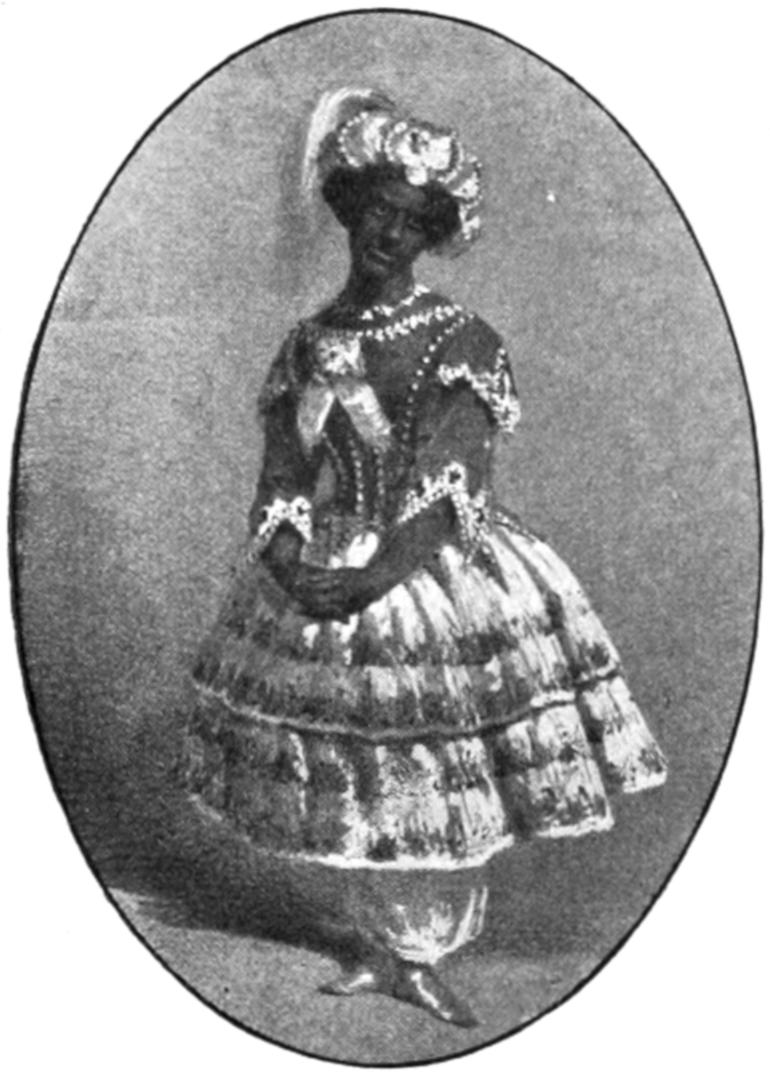
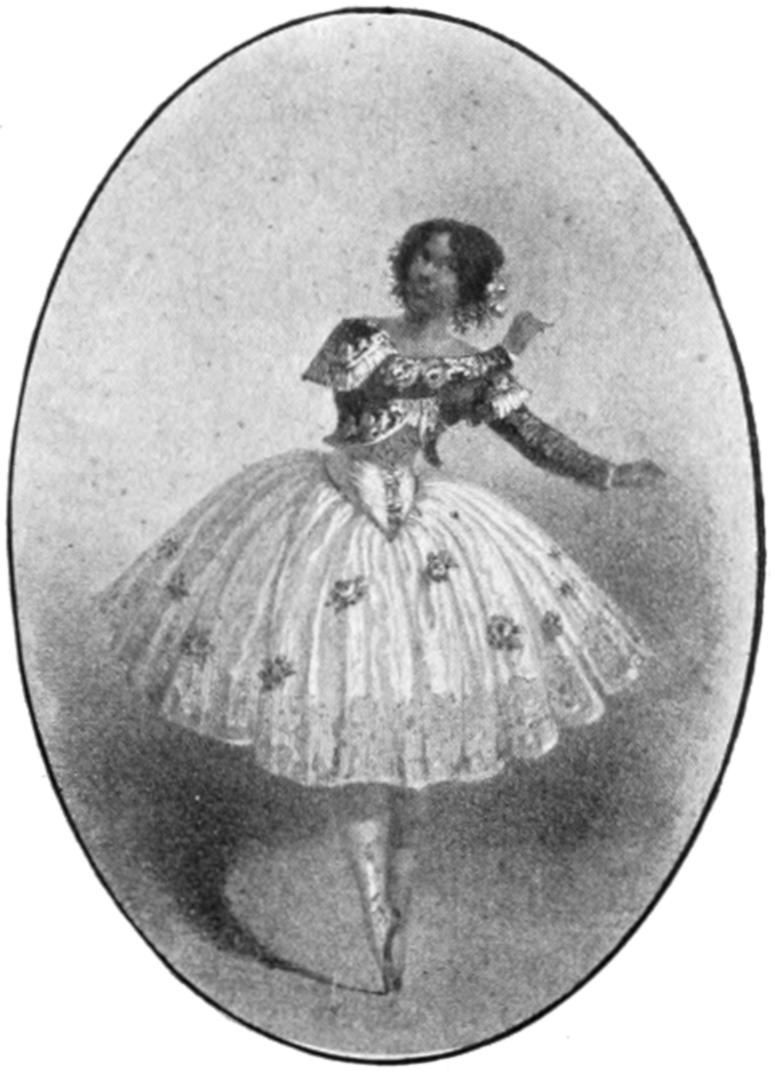
“EUGENE” (1858) “THE ONLY LEON” (1860)
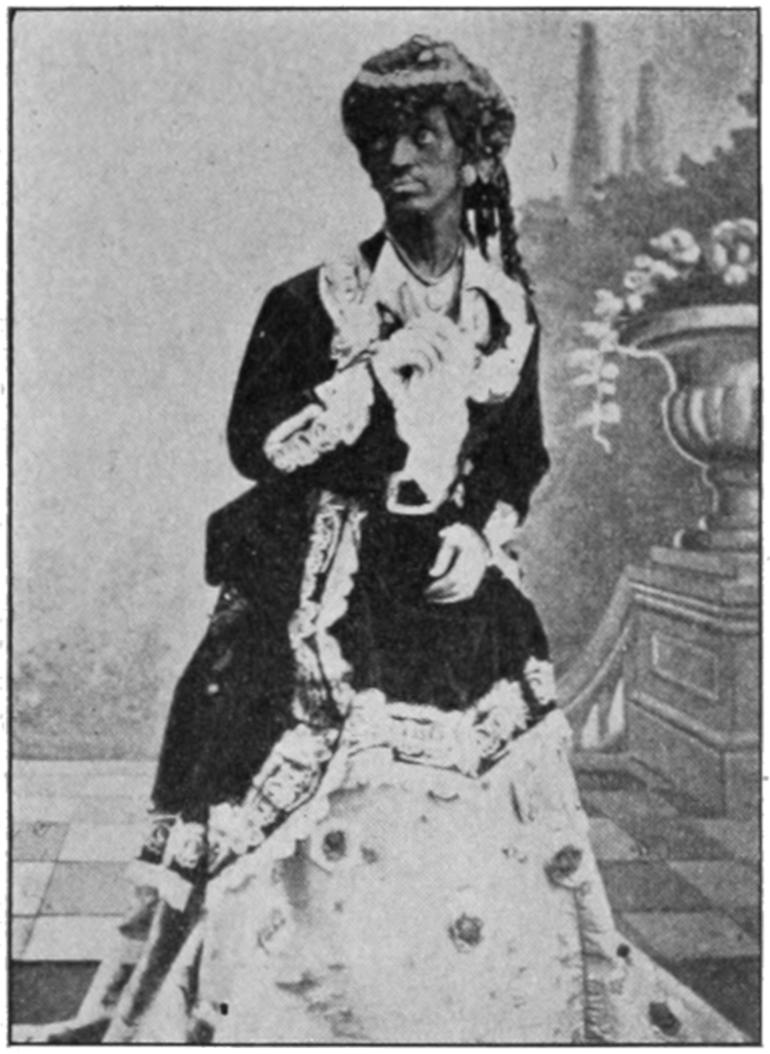
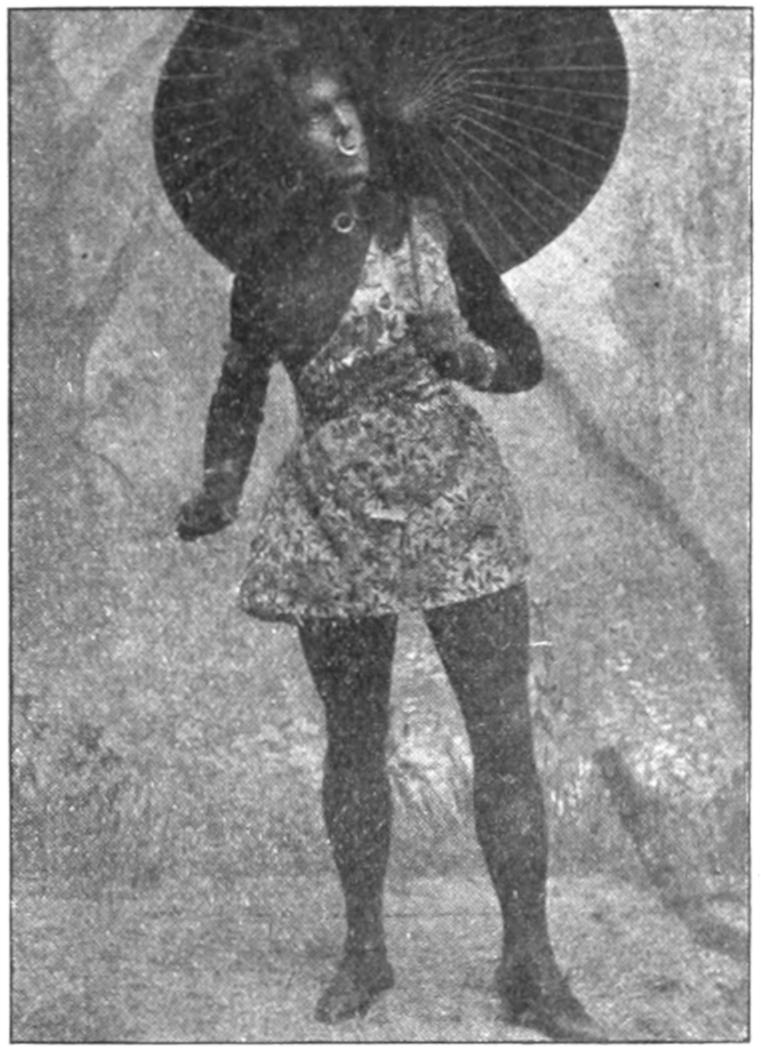
ROLLIN HOWARD FRED. DART
THEY WERE FAMOUS IN FEMALE FRIVOLITIES.
O. P. Sweet, or Dr. O. P. Sweet as it is now, began his professional career as a member of Mrs. Matt. Peel’s Minstrels in 1860; at that time he was known as Tom Leslie.
The next four years were given to concert work. Mr. Sweet joined Haverly’s Minstrels late in 1864; March 17, 1865, he opened with Arlington’s Minstrels, in Chicago; two years later he was also with Arlington. Another two years saw him a member of Buckley’s Serenaders.
April 17, 1871, he opened in New York with Newcomb and Arlington’s Minstrels; a year later he was with Mike Leavitt’s Minstrels.
Dr. Sweet has been practicing his profession for many years, but is always glad to recall “Auld Lang Syne.”
Dr. Sweet has passed the allotted three score years and ten—and some more.
Theodore Jackson, the old-time interlocutor, who in his day was prominently identified with many famous minstrel organizations, is said to have died in Brooklyn, N. Y., a few years ago.
William Castle (J. C. Reeves), the great operatic tenor, and long prominent in musical circles in Chicago, was with several famous minstrel organizations, notably Hooley & Campbell’s in 1860-61, and George Christy’s in 1862. Mr. Castle was born in England, December 20, 1836; he died in Chicago, Ill., March 31, 1909.
Jake Wallace, the famous old banjoist and black-face performer, is said to be living on a ranch in Southern California, in the neighborhood of San Diego.
The author is willing to admit he envies Mr. Wallace.
S. S. Purdy was a well-known and prominent comedian; he excelled in the song and dance of “Nicodemus Johnson,” and as early as February, 1868, in a controversy, he claimed to have been the originator of it.
In 1867 he was co-proprietor of Purdy, Coes and Converse’s Minstrels, and in 1872 of Purdy, Scott and Fostelle’s Minstrels.
In 1863-64 he was with Hooley’s Minstrels in Brooklyn, and in 1867-68-69 with Kelly and Leon’s Minstrels.
About February 1, 1876, he took out a company called the Purdy Combination, which had a brief existence.
S. S. Purdy was born in Troy, N. Y., February, 1836; he died in Chicago, Ill., March 1, 1876.
Low Gaylord (Lowrenzo Gaylord) began his theatrical career at the age of twelve as a ballad singer with Green’s Circus.
In the early 50’s he organized Gaylord and Dupont’s Minstrels in Philadelphia, where they remained for several years.
With M. T. Skiff they organized Skiff and Gaylord’s Minstrels, giving their first performance in 1864, and continued as an organization intermittently until 1878.
Low Gaylord was born in Westfield, Mass., January 19, 1836; he died in Philadelphia, April 7, 1878.
John P. Oberist was a well-known vocalist, and as a Tyrolean warbler, was one of the best.
His first theatrical appearance was with the Twilight Serenaders at Erie, Pa., June 25, 1860.
In 1865 he opened with Kelly and Leon’s Minstrels in New York, and continued with them about three years.
Subsequently he was with Newcomb’s Minstrels in 1869, and in 1870 joined the San Francisco Minstrels for the season.
Later he joined Harrigan and Hart’s Company in New York, where he remained until his death.
He was born in Buffalo, N. Y., 1836; he died in New York, January 17, 1882.
E. N. Slocum was one of the best interlocutors and actors in minstrelsy. His first appearance was with an amateur company in Warren, O., in 1849.
About 1855 he played on the Steamer “Banjo” with Ned Davis’ Minstrels; subsequently he was with Hooley, in Brooklyn, N. Y., Duprez and Green’s; Skiff and Gaylord’s and Carncross and Dixey’s Minstrels in Philadelphia, where he remained several years. August 29, 1870, he opened with Simmons and Slocum’s Minstrels at their own theatre in Philadelphia, where he continued until 1877, when he joined Carncross’ Minstrels in the same city, and remained several seasons.
About 1887 he joined Dockstader’s Minstrels in New York; this was his last professional engagement, after which he entered the mercantile business.
E. N. Slocum was born in Columbus, O., April 26, 1836; he died in Philadelphia, October 17, 1895.
Charles O. White, the great theatrical manager, who had at various times theatres in Washington, Memphis, Nashville, New Orleans, Brooklyn and Detroit, began his professional career in 1852 in Washington, D. C., as a member of the Cosmopolitan Minstrels; later he was with the famous Euterpians, and Sweeney and Parrow’s Minstrels.
Mr. White was born in Alexandria, Va., December 25, 1836; he died in Detroit, Mich., January 2, 1889.
“Eugene” (Eugene D’ Ameli) was one of the most wonderful artists in his line that minstrelsy ever knew; his delineations of female characters were so finished, so true to life, that the Germans in Berlin during an engagement there in April, 1862, were emphatic in their declarations that he was a woman.
“Eugene’s” debut was made with Wood’s Minstrels in New York, May 16, 1853; five months later, George Christy joined the company, which was known as Wood and Christy’s Minstrels until May, 1858. Eugene continued as a member all during this period.
Early in May, 1858, he went to California with George Christy, and several others; they opened in San Francisco, June 7, under the management of Tom Maguire. In January, 1859, he left there, under the management of R. M. Hooley and George Christy; returning to New York, he opened May 23, and continued until July, when he went on tour with the company; they subsequently returned to New York, where on January 28, 1860, they disbanded.
On February 6, Mr. Eugene opened with Hooley and Campbell’s Minstrels in Boston, at their inaugural performance there; with this company he met James Unsworth, and the two formed a business alliance that continued until the death of the latter, just fifteen years later.
Early in 1861, Eugene, Unsworth and J. B. Donniker organized Unsworth’s Minstrels; they disbanded at Ogdensburg, N. Y., in the Spring; shortly after, Eugene and Unsworth sailed for Europe. On August 5, 1861, they opened with Rumsey and Newcomb’s Minstrels in Liverpool, Eng.; subsequently they played through the provinces and Germany.
Later they returned to London, where they played the music halls for three years; after which they joined Wilsom and Montague’s Minstrels in Liverpool, and played there for four years; their last engagement there was April 7, 1868. Mr. Eugene and his partner arrived in the United States on April 28, and a few weeks later opened the season of 1868 at Bryant’s Minstrels in New York, and continued there for two years.
In the fall of 1870 he joined Hooley’s Minstrels in Brooklyn, and on January 2, 1871, when the latter opened in Chicago, Mr. Eugene was with him, and continued for several months.
September 2, 1871, he opened at Paterson, N. J., with Unsworth’s Minstrels at their first performance. December 18, they reopened with Hooley’s Minstrels in Brooklyn, remaining several weeks.
February 26, 1872, he began an engagement with Moran and Dixey’s Minstrels in Philadelphia, and remained until the end of the season.
In August he opened a three-months’ engagement at the Howard Athenaeum, in Boston, and on November 25, joined Frank Moran’s Minstrels in Philadelphia. At the conclusion of the regular season, the company went on tour; it was known as Moran and Manning’s Minstrels, and “Eugene” was a member of the company.
The season of 1873-74 was spent with Bryant’s Minstrels in New York; in 1874 he went to England and opened with Sam Hague’s Minstrels in Liverpool, where he remained until the death of his partner, February 21, 1875.
“Eugene” returned to New York the same year, and on September 13, commenced a short season there with Cotton and Reed’s Minstrels. November 15 he began an engagement with Carncross and Dixey’s company in Philadelphia, and continued there for four years; the last season the company was known as Carncross Minstrels.
June 4, 1879, he sailed for England for a period of much needed rest, playing but a few engagements.
In 1881 he returned to America, and on October 17, he opened with Emerson’s Minstrels in San Francisco, closing in January, 1882; subsequently sailing for a Trans-Pacific trip with a variety company, opening at Honolulu, May 13. The company disbanded in Shanghai, China, in August, and “Eugene” returned to the United States in March following.
A year later he began his final engagement with the Leon and Cushman company, and in May, 1884, he made his last appearance on any stage.
Thus after a successful career of exactly thirty-one years, this brilliant luminary of the minstrel firmament retired to private life.
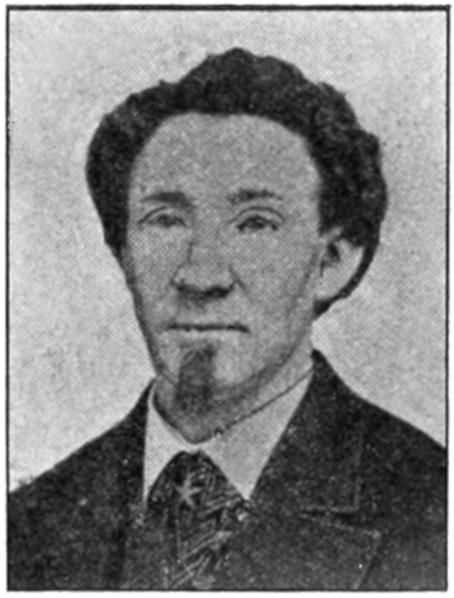
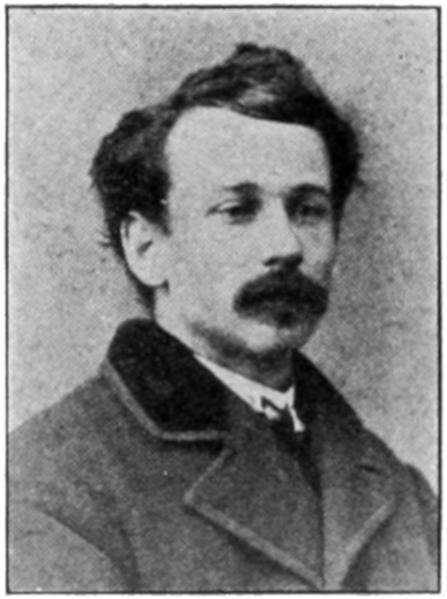
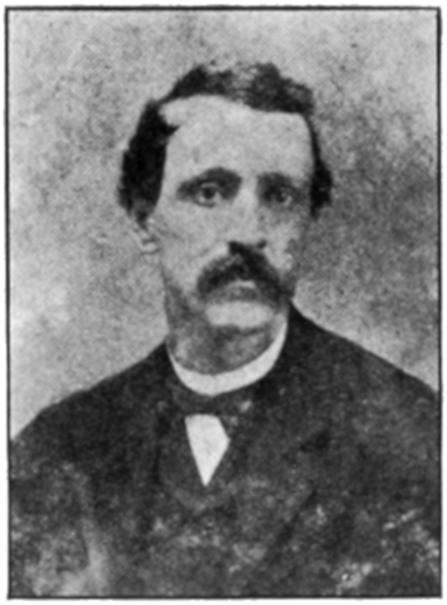
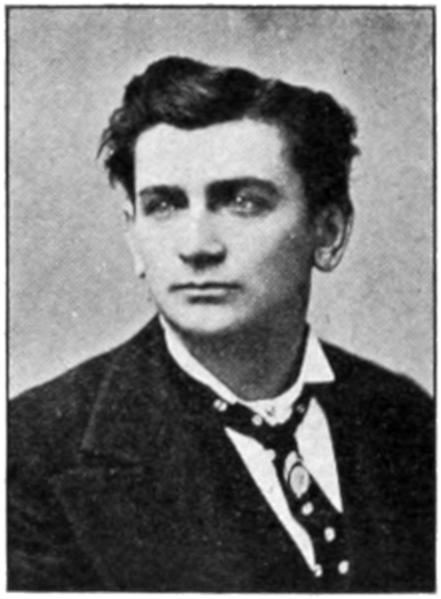
ARCHIE HUGHES HARRY TALBOTT PETE LEE JOHNNY ALLEN
THEY TICKLED THE TAMBOURINE.
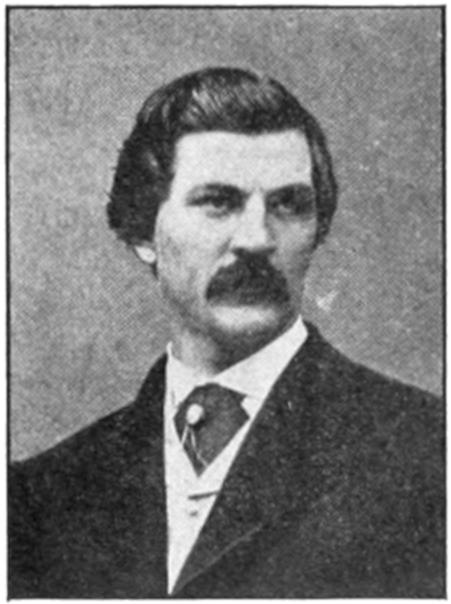
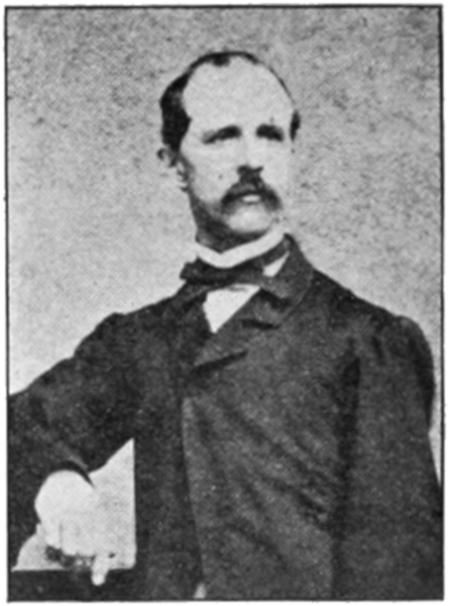
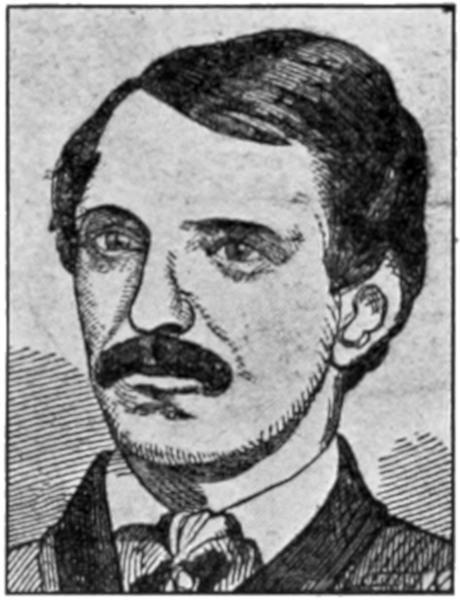
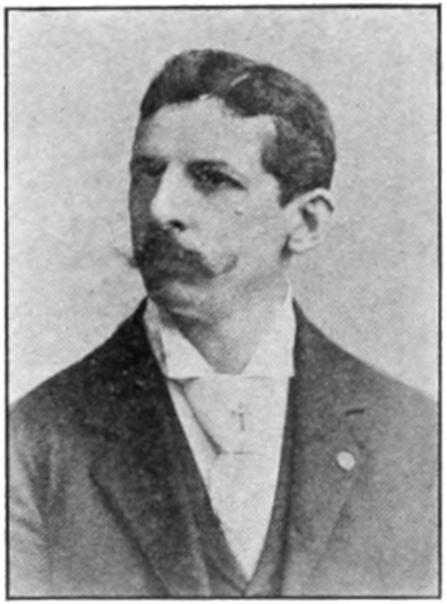
“KERRY GOW” JOE MURPHY (1865) DAVE REED E. F. DIXEY FRED HUBER
THEY BANGED THE BONES.
“Eugene” was born in New York City, June 4, 1836; he died in Brooklyn, N. Y., January 18, 1907.
Dick Parker, whose “banjoisms” attained wide popularity in the Metropolis more than thirty years ago, began his professional career about 1854.
He was stock comedian at various times in New Orleans, Baltimore, Washington, St. Louis, Boston and New York.
In 1871 in conjunction with J. E. Edwards and Jack Talbott, he formed a minstrel organization bearing their names.
In 1889 he went to Paris, opening there with the American Circus. Appearing in evening clothes, preceded by four supers, and announced by the ring-master, Mr. Parker created a sensation.
In 1879 he opened what is now known as Keeney’s Theatre in New York, and controlled its destinies about four years.
Dick Parker was born in Troy, N. Y., in 1836; he died at Staten Island, N. Y., August 28, 1908.
John A. Mack was a well-known comedian and song and dance performer of the genteel order. He was especially well-known in California.
He was born in Pittsburgh, Pa., in 1836; he died in San Rafael, Cal., July 23, 1870.
D. W. Collins (Carpenter), who was associated with Jack Haverly in Toledo, O., in the latter’s early managerial days, died at Brooklyn, N. Y., May 20, 1869; age 33 years.
Wm. S. Budworth was well known as a banjoist and comedian, and had some repute for his Dutch delineations; his “Fight Mit Siegel” was best known.
In the Spring of 1860 he was with Wood’s Minstrels on a road tour.
Mr. Budworth was with Hooley’s Minstrels in April, 1864, in Brooklyn, and the following year he was also with Hooley at 201 Bowery, New York City. He was stage manager for Tunison’s Minstrels in Philadelphia, in the 60’s; with the Globe Minstrels at 728 Broadway, New York, in the Fall of 1871, and in the same city with the San Francisco Minstrels in 1877.
Mr. Budworth was also with Emerson’s Minstrels, and played frequent variety engagements. His last appearance was with Tony Pastor about twenty-five years before his death.
Wm. S. Budworth was born in Philadelphia, November 25, 1836; he died at Mount Vernon, N. Y., January 24, 1908.
Sam Price (Valleau), was a famous old-time comedian, and especially clever in the old negro act of the “Haunted House.” He was a great favorite in the South, where the colored folks would wildly enthuse over his performances. Mr. Price was with Mrs. Matt. Peel’s Minstrels in 1860, where he made a hit singing “Pretty Gal in Blue,” and playing the tambourine end.
October 1, 1866, he opened with Kelly and Leon’s Minstrels in New York at their initial performance there; he continued with them for a lengthy period, subsequently joining Arlington, Cotton and Kemble’s Minstrels in Chicago. Mr. Price was also associated with many other prominent minstrel organizations, but had not appeared much for some years prior to his death.
Sam Price was born in New York State, September 6, 1836; he died in Brooklyn, N. Y., August 28, 1907.
Charles Edwin Reynolds was one of the most original and unctuous comedians.
As early as 1859 he was with the Metropolitan Ethiopean and Burlesque Troupe, and about 1862 was associated with Cool Burgess, and later Wally Thomas in a company of his own. Subsequently he was with Duprez and Green, Duprez and Benedict’s; Lloyd and Bidaux’; Newcomb and Arlington’s, and Sweatnam’s Minstrels.
He was with Haverly in 1869 and 1879.
Charles Edwin Reynolds was born in Belfast, Me., August 8, 1836; he died in Vineland, N. J., May 19, 1910.
Billy Arlington (Valentine Burnell), was one of the great luminaries of minstrelsy. He achieved fame as a comedian, as a stump speaker and banjoist; he was a good all round performer. Mr. Arlington’s professional career began in the 50’s.
February 20, 1860, he opened in New York with George Christy’s Minstrels, and was associated with the latter practically until the formation of Arlington and Donniker’s Minstrels in August, 1862; the organization was subsequently known as Arlington, Leon, Kelly and Donniker’s. Arlington’s Minstrels opened in Chicago in September, 1867.
October 3, 1870, Mr. Arlington commenced an engagement with Welch, Hughes, and White’s Minstrels in Brooklyn, N. Y.
April 17, 1871, Newcomb and Arlington’s Minstrels opened in New York for a run, subsequently for a road tour; November the same year, Arlington’s Minstrels again opened in Chicago; the company subsequently evolved into Arlington, Cotton and Kemble’s Minstrels, and as such continued about three years. Mr. Arlington was with Emerson’s Minstrels in Chicago in the Spring of 1875, subsequently touring with them.
About Mr. Arlington’s last minstrel engagement was with Bartlett’s California Minstrels in November, 1898. Billy Arlington was born about 1836.
Ed. H. Banker, one of the old and tried, and “not found wanting” black-face performers, began his professional career at the age of 10 years with Sam Stickney’s circus as a drummer; later he did nigger business in the ring.
He made his first appearance in New York at “Daddy” Rice’s benefit in 1853, doing a bone solo.
Mr. Banker was with George Christy in 1865; and for some time stage manager at Harry Enoch’s Varieties in Philadelphia, and subsequently at the Olympic in New Orleans.
He was the author of several successful farces, notably—“Too Hot For Comfort,” the “Wig Maker” and the “Colored Policeman.”
Mr. Banker is also credited with being the first performer of changing from black to white and back again in a few seconds.
At the time of his death, which occurred under suspicious circumstances, he was with “The Night Before Christmas” Company.
Ed. H. Banker was born in New Orleans, La., December 23, 1836; he died at Minneapolis, Minn., October 3, 1902.
Japanese Tommy (Thomas Dilverd), was a colored man, whose height of 37 inches made him a valuable acquisition to the many companies he was associated with; he was not dependent on this for his success, for he was a good comedian, and played male and female roles equally as well.
Some of his principal engagements were with the minstrel organizations of Morris Brothers, Pell and Trowbridge; Kelly and Leon’s; Emerson’s and Sam Hague’s. His last appearance was probably with the Criterion Minstrels in Brooklyn, N. Y., March 5, 1887.
Japanese Tommy was born in Brooklyn, N. Y.; he died in New York City, July 9, 1887; age about 50 years.
Prof. E. J. Cornu, the well-known and efficient musical director, came to the United States in the late 60’s, and at once associated himself with Hooley’s Minstrels in Brooklyn, N. Y. When the company went to Chicago, opening there January 2, 1871, Mr. Cornu went with them, and was with Mr. Hooley several years.
Mr. Cornu had been engaged by Mr. Hooley when the latter was abroad, for Hooley’s “Opera House”; Mr. Cornu being under the impression he was to be associated with a regular opera company. When he found he had to put cork on his face, for a long time he was inconsolable.
Prof. Cornu was born in Brussels, Belgium; he died in Brooklyn, N. Y., March 28, 1889.
Tommy Jefferson, an old-time banjoist and minstrel performer, who was with Kelly and Leon’s Company in Chicago in 1869, as well as many other like organizations, had been retired many years from the profession prior to his death at Seattle, Wash., November 1, 1897; he was 70 years of age.
James Roome was a fine banjoist and good general performer. He played with various companies, notably Ned Davis’ Minstrels in 1867.
He was born in 1837, and died in Brooklyn, N. Y., February 3, 1885.
Clark M. Gibbs was long recognized as an able black-face comedian.
His earliest professional appearance was with a circus when he was eleven years of age.
He had been associated with some of the best minstrel companies, and worked with several well-known comedians in acts, notably Cool. Burgess and Lew Simmons.
He was twice married; a son, Clark Gibbs, Jr., who was also in the profession for a time, is in Trenton, N. J.
Clark M. Gibbs was born in Chillicothe, Ohio, March 6, 1837; he died in Trenton, N. J., August 20, 1901.
Ira Paine, the famous sharpshooter, played several minstrel engagements as a ballad singer, notably Carncross and Dixey’s in Philadelphia in 1862, and the San Franciscos in New York, in August, 1869.
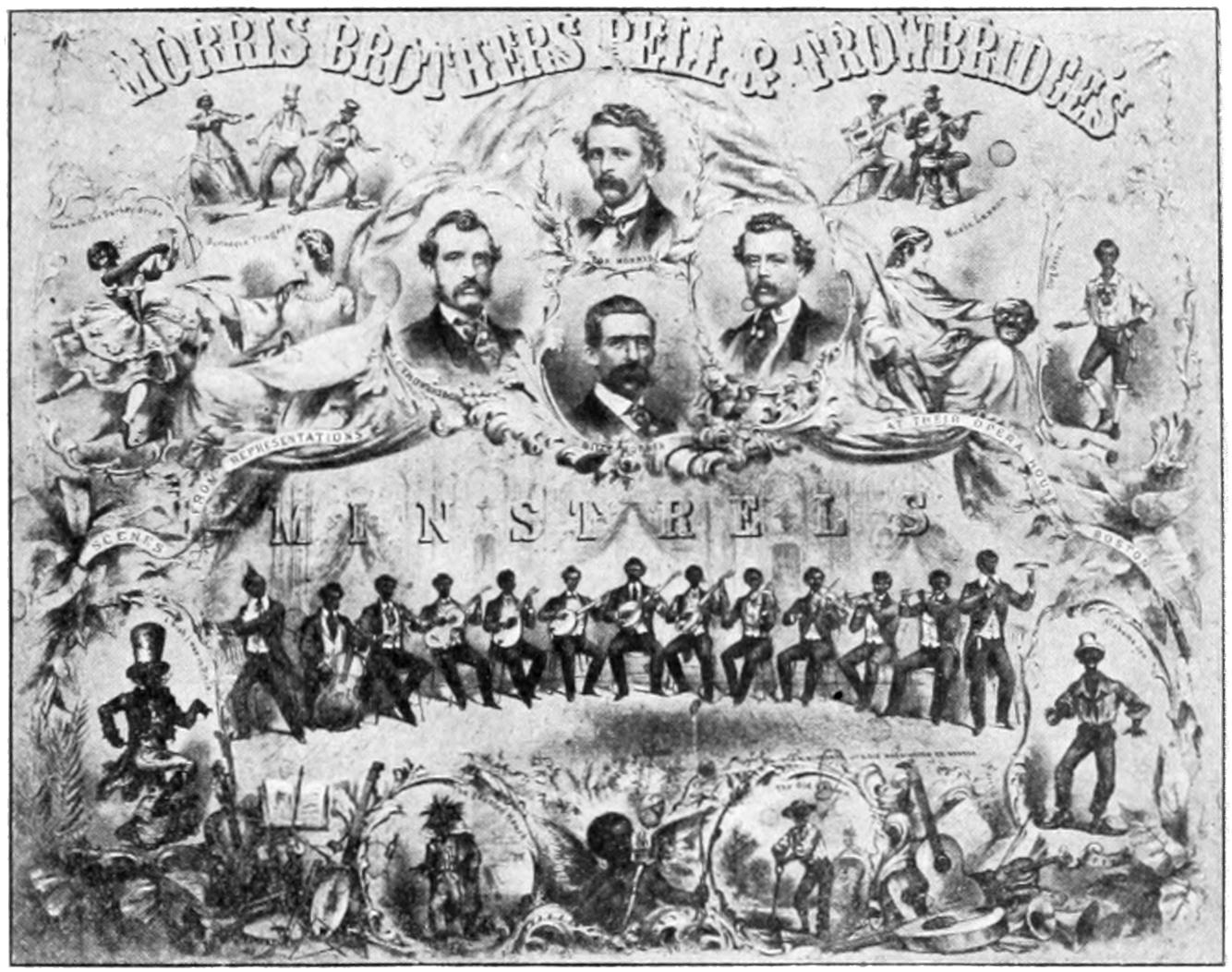
A PROMINENT BOSTON COMPANY; 1859.
J. T. TROWBRIDGE LON MORRIS JOHNNY PELL
BILLY MORRIS
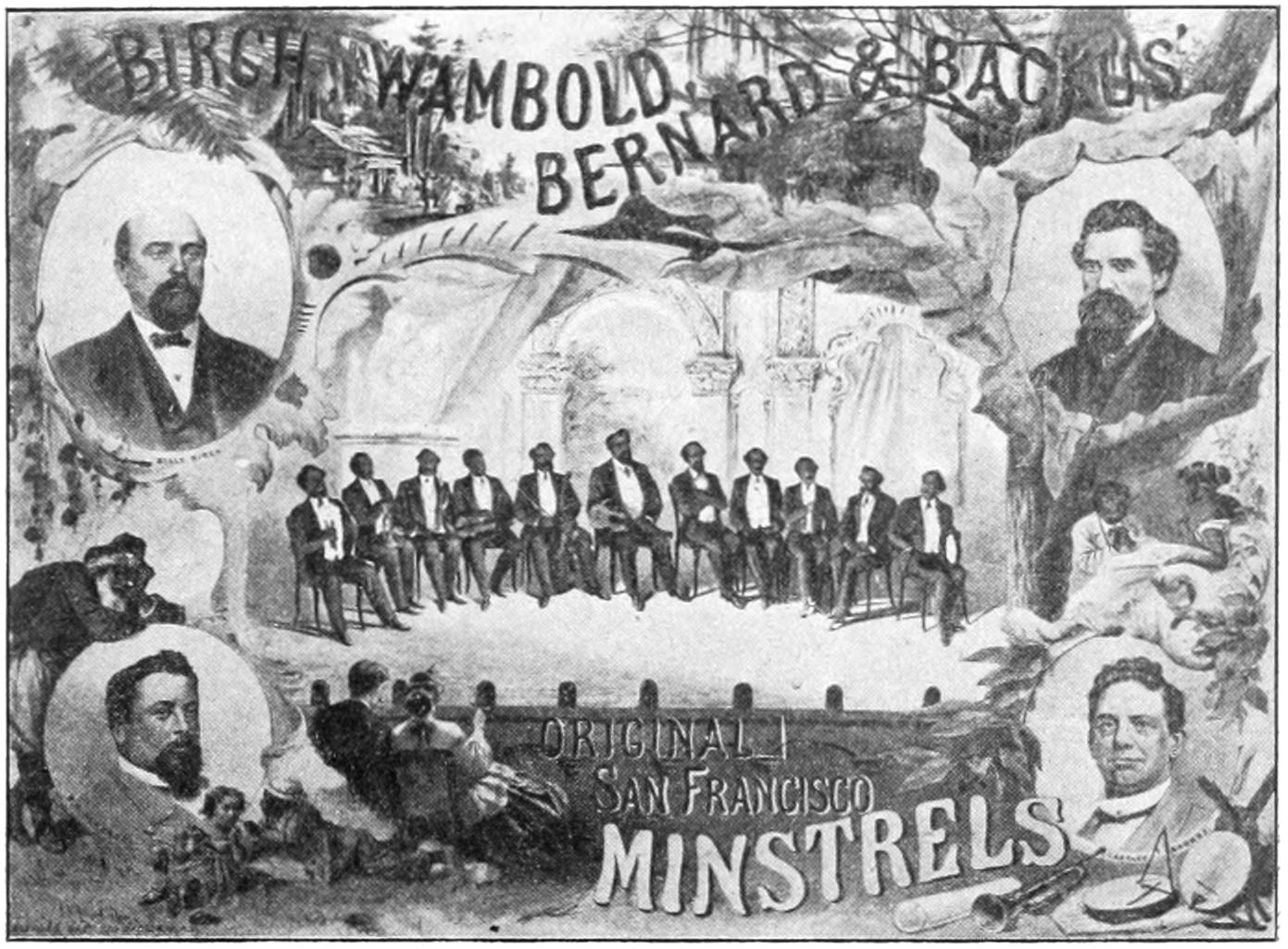
A FAMOUS NEW YORK ORGANIZATION; 1865.
BILLY BIRCH DAVE WAMBOLD
WM. H. BERNARD CHARLEY BACKUS
He was born at Hebronville, Mass., February 17, 1837; he died in Paris, France, September 10, 1889.
W. W. Pierce (Billy McMahon), was a well-known young comedian of promise.
In the Spring of 1860 he played an engagement at Bob Butler’s Variety Theatre in New York, where he made a pronounced hit dancing the “Essence of Old Virginny.”
He died in Herkimer, N. Y., January 2, 1864; age 27 years.
Ambrose A. Thayer, a young singer who was prominent with the Morris Brothers, Pell and Trowbridge Minstrels, in Boston, died there, June 10, 1863; age 26 years.
Billy Quinn was one of the best dancers of his day, and played conspicuous minstrel engagements, notably with Bryant’s in New York, commencing October 12, 1857.
He was the husband of the celebrated danseuse, Mary Blake, who subsequently married Bobby Newcomb.
Billy Quinn died in New York City, November 29, 1863; age 26 years.
Cooper and Fields were one of the very best double clog dancing teams in minstrelsy, as well as one of the earliest.
In 1864 they were with the Raynor “Christy” Minstrels, and the following year they joined the San Francisco minstrels in New York; subsequently they were with Kelly and Leon’s, and Buckley’s Minstrels in the same city. They played an engagement with Haverly’s Minstrels in June, 1869.
James Cooper was in business in Paterson, N. J., several years prior to his death. His last professional appearance was also in Paterson.
James H. Cooper died in Paterson, N. J., January 24, 1905, age 68 years.
William Fields died in New York City November 18, 1883.
Sig. Raphael Abecco gained distinction in minstrelsy chiefly for his excellent performance on the harp; but was also a fine tenor singer, and a composer of repute.
As early as October 20, 1857, he was with Matt. Peel’s Minstrels, and continued with Peel until the latter’s death in 1859. August 27, 1860, he began a season’s engagement at Sanford’s Minstrels in Philadelphia; in the Spring of 1861 fulfilling a short season with Unsworth’s Minstrels; he returned to Sanford’s for the season of 1861-62.
July 7, 1862, he opened with Wood’s Minstrels in New York City, and in 1863 Birch, Cotton, Wells and Abecco’s Minstrels inaugurated their season in San Francisco. In 1865 he sailed for Australia and remained abroad until 1872. January 9, 1875 he opened with Simmons and Slocum’s Minstrels in Philadelphia, and the following season was a member of Simmons, Slocum and Sweatnam’s Minstrels in the same city. His last engagement was with Emerson’s Minstrels, December 25, 1878.
Sig. Abecco was of foreign birth; he died in Chicago, Ill., January 3, 1879; age 42 years.
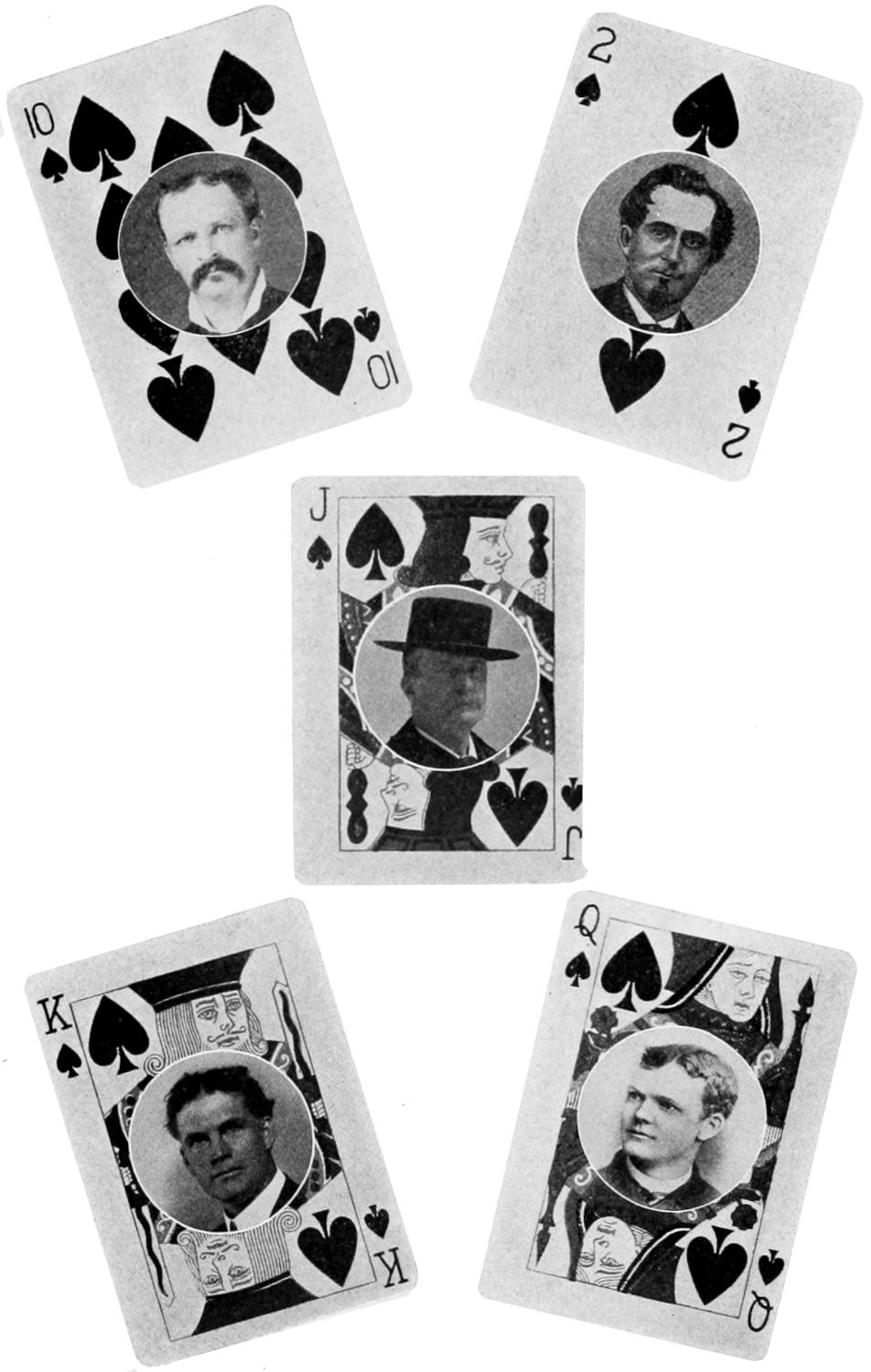
HI. HENRY LOW. GAYLORD “JACK” HAVERLY JOHN KING CHAS. QUEEN
ALL GOOD DRAWING CARDS—HI, LOW, JACK, KING and QUEEN.
Frank B. Converse. The name of Converse is indissolubly associated with all that is great in banjo playing.
Mr. Converse began the study of music at the immature age of 6; at 14 he took up the banjo, devoting all his spare time to study. His first professional appearance was with McFarland, in Detroit.
He joined Matt. Peel’s Minstrels in 1856, remaining until the Spring of 1858.
Subsequently he gave banjo lessons in Memphis, Tenn. Later he joined Mrs. Matt. Peel’s Minstrels; March 19, 1867, with George Coes and Sam Purdy, organized Purdy, Coes and Converse’s Minstrels. Mr. Converse at various times had schools in St. Louis, San Francisco and New York.
He was the author of many high-class works on the banjo, including a book for beginners.
Frank B. Converse was born in Westfield, Mass., June 17, 1837; he died in New York City, September 5, 1903.
“Chuck” (Charles H.) Atkinson, one of the great bone players of minstrelsy, when the artistic handling of them was an art, began his professional career in 1847, being then known as Master Charles, a singer with one of the early organizations; shortly afterwards he was with the famous “Yankee” Locke for a period of five weeks. What might be termed his regular career began a little later with John Carle (Uncle John, the “Lively Flea”); he remained with Carle three years; subsequently going to Boston, where he was several years in stock.
He played frequently with the Morris Brothers in Boston, and succeeded Joe Murphy after the latter had separated from Ben Cotton; Murphy himself was a great bone performer, and Atkinson simply had to be good to hold the position he did with so much credit.
Other engagements were Boyce & Mudge’s Minstrels, 1866, and “Green’s Mocking Bird Minstrels” in 1871; his last minstrel engagement was with Sam Sharpley. He retired from the profession about 20 years before his death.
Charles Atkinson was born at Limington, Maine, December 1, 1837; he died at Brookline, Mass., February 2, 1909.
Tom McNally was one of the premier “leaders” and violinists of minstrelsy.
In 1859 he was at Burtis’ Varieties in Brooklyn, N. Y.; the following year he joined Cool White’s Broadway Minstrels.
In 1861 he was with George Christy’s company, and the same year was also with William Christy’s and Fox and Sharpley’s Minstrels.
October 28, 1861, he was with Hooley’s Minstrels at their first performance in New York. Mr. McNally was with Hooley also when the latter went to Brooklyn, N. Y., opening in September, 1862; he continued with Hooley several seasons.
Early in 1866 he was with Wood’s Minstrels, and on October 21, that year, he sailed for Europe with the American Minstrels; they opened in London, December 5, 1866.
Subsequently Mr. McNally returned to the United States, and at various times was associated with several prominent minstrel organizations.
Tom McNally was born in Albany, N. Y.; he died in Brooklyn, N. Y., May 25, 1872; age 35 years.
J. H. Haverly (Christopher Haverly) began his theatrical career in 1864 in Toledo, O., where he purchased a variety theatre, and conducted until December, 1866.
There are many to-day who think that the great showman, who was the first to place minstrelsy on a gigantic scale, began as a minstrel manager with Cal. Wagner in 1870. Such is far from being the truth.
The first performance of Haverly’s Minstrels was given at Adrian, Mich., August 1, 1864; the season terminated at Ypsilanti, Mich., on the 25th of August, same year.
On October 8, 1864, Cool Burgess and Haverly’s Minstrels were inaugurated at Toronto, Canada, and November 1, it was again Haverly’s Minstrels; it remained as such until December 27, following, when Charles Mallory, who had a minstrel company, formed an alliance with Mr. Haverly, and on the above date at Titusville, Pa., Haverly and Mallory’s Combination Minstrels gave their first performance.
In 1866 Haverly and (Dick) Sands’ Minstrels toured for several weeks, and the following year Mr. Haverly assumed the management of Billy Arlington’s Minstrels. Haverly’s Minstrels were again organized, and at Peoria, Ill., November 11, 1868, gave their initial performance; the season closed in the Summer of 1869.
In the Fall of 1870, he assumed the management of Cal. Wagner’s Minstrels, and continued with them for three years, after which, in November, 1873, at Kansas City, Mo., Haverly’s Minstrels began in earnest. Not satisfied with one minstrel company, he purchased an interest from Tom Maguire in Emerson’s Minstrels in October, 1875; secured the New Orleans Minstrels in 1876, and Callender’s Colored Minstrels in 1878. In the meantime he purchased the Adelphi Theatre in Chicago, in 1876; the first of the very many he ultimately owned or controlled.
October 21, 1878, he organized his famous Mastodons in Chicago; they opened in London, England, July 30, 1880, at Her Majesty’s Theatre, where they played seventeen weeks.
In May, 1884, they returned to London, and made a tour of the Provinces, where the final performance was given in Glasgow, Scotland, late in February, 1885.
Haverly’s Minstrels continued for several years after that; the last company in which Mr. Haverly was directly interested began a season in the Summer of 1898. His last amusement venture began in Brooklyn, N. Y., May 11, 1901, where for a brief period he conducted a small museum.
“Jack” Haverly was a fine man and a lovable character; none did more for minstrelsy than he, and some of the greatest names in theatricals were once associated with him.
He was twice married; his wives being the Duval (Hechinger) Sisters, well-known vocalists.
Mrs. Sara Haverly died at Toledo, O., March 1, 1867; subsequently he married Eliza Duval, who died in New York, July 4, 1910.
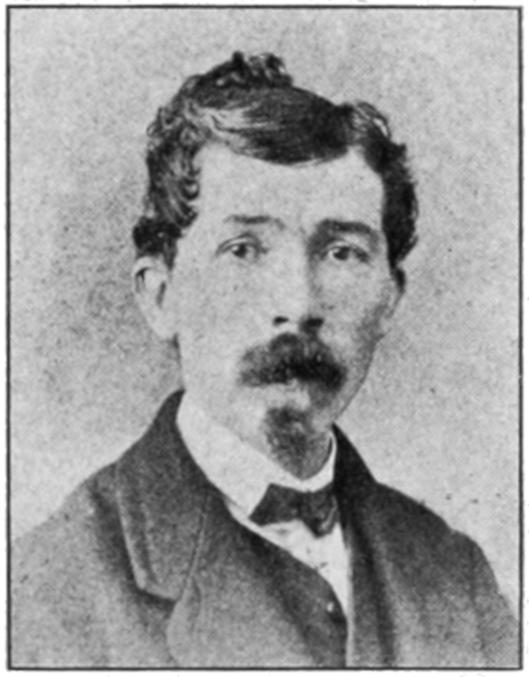
R. M. HOOLEY CHAS. A. MORRIS
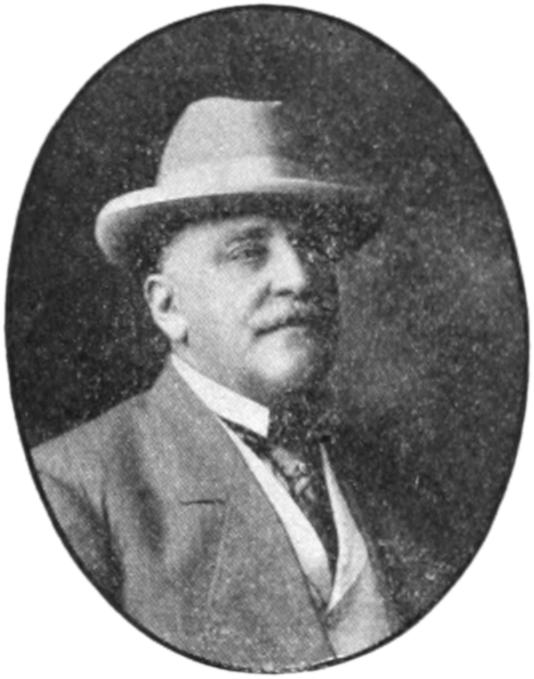
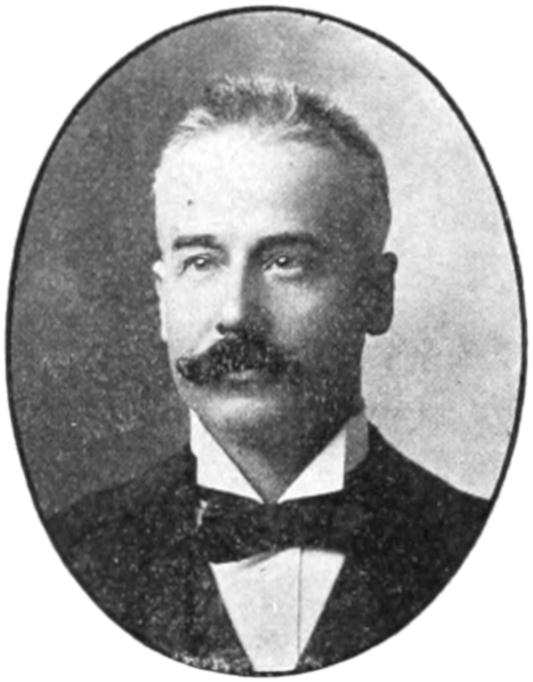
AL. G. FIELD GEO. R. GUY
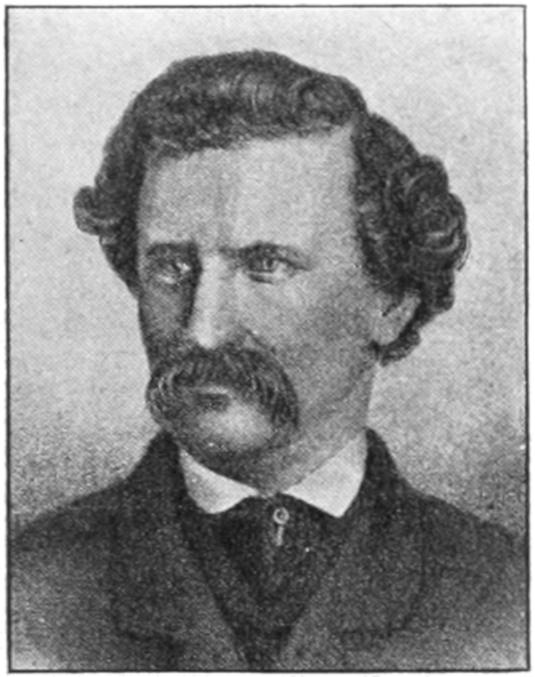
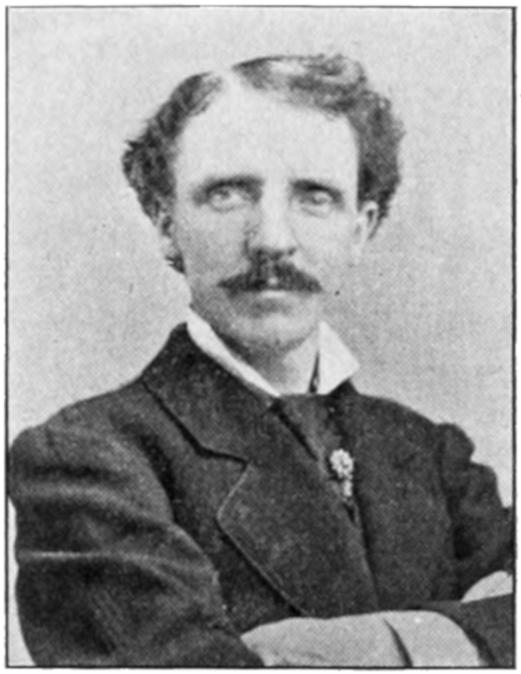
D. C. LA RUE HARRY ROBINSON
HEADS OF FAMOUS MINSTREL ORGANIZATIONS; PAST AND PRESENT.
J. H. Haverly was born in Bellefonte, Pa., June 30, 1837; he died in Salt Lake City, Utah, September 28, 1901.
Add Ryman (John Addison Ryman) was one of the greatest burlesque actors that minstrelsy ever knew.
He was likewise famed as a stump orator, in which he was different from all of his contemporaries.
His debut as a minstrel was made in 1859. In 1871, Hart, Ryman, and Barney’s Minstrels were organized. Subsequently he was with Emerson’s Minstrels in San Francisco, and with the San Francisco Minstrels in New York about six years.
He left the above company with George Thatcher, and opened Thatcher and Ryman’s Minstrels in Philadelphia, December 20, 1880, as a permanent organization.
In 1882 he took a minstrel company to Australia, remaining about two years. He later re-engaged with Emerson’s Minstrels, and in September, 1887, with Wm. Henry Rice and John Hart, organized a company bearing their names.
Mr. Ryman’s late years were with dramatic companies. Add Ryman was born in Ohio; he died (suicide) in New York, June 27, 1896; age 59 years.
Sid C. France, famous for many years for his drama “Marked for Life,” in which he enacted a black-face part which was the principal character, was born in Landsport, England, October 4, 1838; he died in New York, May 25, 1895.
The Norton Brothers made their first appearance as the Norton Family in Roxbury, Mass., in 1848 or 1849; accounts vary.
Wash. Norton subsequently went with Ordway’s Aeolians in Boston, where he remained a long time. November 14, 1859, Wash. and Tim Norton opened at Bryant’s Minstrels in New York.
When seventeen months later, Jerry Bryant died, it was Tim Norton who took his place; Wash. having left New York about a month previous for England, later visiting Africa and Australia; in the latter country they declared he was the best burlesque dancer that ever visited their shores.
Wash. returned to the United States in 1866, and remained six years; he subsequently made two other trips to foreign lands. The Nortons were good comedians, and great dancers.
Tim Norton died January 25, 1862, in New York, age 24 years.
John Norton died in Philadelphia, Pa., January 24, 1868.
Wash. Norton was born in New Orleans, La., February 22, 1839; he died in Shasta Co., Cal., November 16, 1899.
Dan. Shelby (Macher), who was the well-known manager of the Adelphi Theatre in Buffalo, N. Y., and the Academy of Music and Columbia Theatre in Chicago, at various times, began his professional career in Paris, Ind., in 1853; it was there he first blacked up.
He played several minstrel and circus engagements until 1865, when he launched Shelby’s Minstrels; in 1868 he again put a minstrel company on the road. Mr. Shelby was subsequently a clown in a circus.
Dan. Shelby was born in Gettysburg, Pa., January 1, 1838; he died in Wilkesbarre, Pa., February 4, 1895.
Fayette Welch (Patrick Walsh). The career of this once celebrated comedian which was suddenly and violently ended, commenced about fifty years ago.
He joined Hooley’s Minstrels in the late 60’s, and became a great favorite in the Brooklyn playhouse. In the Summer of 1869 he was with Haverly’s Minstrels, and while with that company did an act which he called the Musical Sensation, playing on a number of instruments, concluding by dancing a jig, accompanying himself by playing a flute at the same time.
Mr. Welch next went with Kelly and Leon’s Company, and in August, 1870, joined Buckley’s Serenaders in New York.
The following month, commencing the 12th, he became co-proprietor of Welch, Hughes and White’s Minstrels, a permanent company in Brooklyn, N. Y.; they continued there about a year.
Mr. Welch subsequently appeared with Simmons and Slocum’s Minstrels in Philadelphia. He was with Haverly’s when that gentleman organized his company in November, 1873, and with Neil Bryant’s Minstrels five years later. During an altercation between Mr. Welch and William Gould, a vaudeville performer, the latter shot and immediately killed Fayette Welch in Boston, Mass., March 6, 1892.
Mr. Welch was born in Galway, Ireland, about 1838.
James W. Lamont (Williams) was prominent for many years as a baritone vocalist and interlocutor in minstrelsy. In 1864 he was with Sharpley’s Minstrels, and in 1880 with Kyle’s “Christy’s” in Boston.
The major portion of his career was spent in Philadelphia, where he went in the 60’s as a member of Carncross and Dixey’s Minstrels.
Mr. Lamont died in Philadelphia, December 24, 1894; age 56 years.
“Leon,” the dean of minstrel female impersonators, did a stump speech with Kelly and Leon’s Minstrels, January, 1870.
Pete Lee (Shea) was conceded to be one of the greatest tambourinists in minstrelsy; as a comedian, he was excellent.
As early as February, 1858, he was touring with Pete Lee’s Empire Minstrels.
He joined Buckley’s Serenaders in the 60’s, and continued with them for several seasons.
August 28, 1871, he made his first appearance in Philadelphia, as a member of Simmons and Slocum’s Minstrels.
He was also prominently identified with the companies of Morris Brothers, and Sharpley’s. In 1872 he opened Bishop’s Opera House in St. Johns, N. B., renaming it Lee’s Opera House, and conducting it for several years.
His last professional appearance was about 1878.
A son, Wilbor F. Shea, is manager of the Memorial Opera House, Eastport, Me.
Pete Lee was born in Cambridge, Mass., January 6, 1838; he died in Eastport, Me., October 11, 1896.
J. R. Kemble (Taylor), one of the best interlocutors of minstrelsy, made his debut at Paterson, N. J., February 2, 1863, with Hart and Simmon’s Minstrels, appearing under his own name.
Subsequently he joined the Morris’ Minstrels, remaining five years.
Later he became a member of Emerson and Manning’s Minstrels, and after these artists separated early in 1870, Mr. Kemble cast his fortunes with the latter in Chicago. In that same city (Billy) Arlington, (Ben) Cotton and Kemble’s Minstrels were organized in 1871, and continued there about three years.
In 1875 Mr. Kemble was with Emerson’s Minstrels in Chicago.
He was also a member of the Dearborn Minstrels in the Illinois Metropolis, opening August 21, 1871.
Likewise in Chicago did he join Haverly’s Minstrels, March 11, 1878, and September 16, same year, he began a brief engagement with Sweatnam’s Minstrels in Philadelphia.
Mr. Kemble then went to England, and was with Moore and Burgess’ Minstrels for about twenty years.
He married Miss Ella Turner, an actress, about 1870.
J. R. Kemble was born in Kent, England, 1838; he died in London, England, June 11, 1908.
George W. Charles, the old-time wench dancer made his first appearance at the International Theatre in New York in 1852; subsequently he was with Dave. Reed’s Minstrels on Spalding and Rogers’ boat the “James Raymond,” this was as early as July 18, 1856; after this he did sketches with Billy Coleman. In 1869 he was with Carncross and Dixey’s Minstrels in Philadelphia; he remained there several seasons, and was a prime favorite.
Mr. Charles was among the earliest black-face prima donnas.
George W. Charles died in New York City, May 8, 1885; age 47 years.
Kit Clarke (Morse Myers) is one of the oldest living minstrel managers. His professional career began in 1858 as a programmer with the Satterlee and Bell Circus; Mr. Clarke continued in the circus business practically for twenty years.
In 1877 he became general manager for M. B. Leavitt’s attractions, and continued until 1881, in which year he managed the Gigantean Minstrels.
His next engagement was with J. H. Haverly’s Minstrels, with whom he remained three years.
Later he retired from theatrical life to enter mercantile business.
Kit Clarke was born February 21, 1838, in New York City.
Billy Allen was a well-known jig and “Essence” dancer in the 60’s, playing some of the principal minstrel organizations of that period, such as Arlington’s; Fred. Wilson’s; Mrs. Matt. Peel’s; Skiff and Gaylord’s; George Christy’s, and Carncross and Dixey’s. He subsequently gave dancing lessons in Chicago. In his early career he was known as one of the best dressed men in the profession.
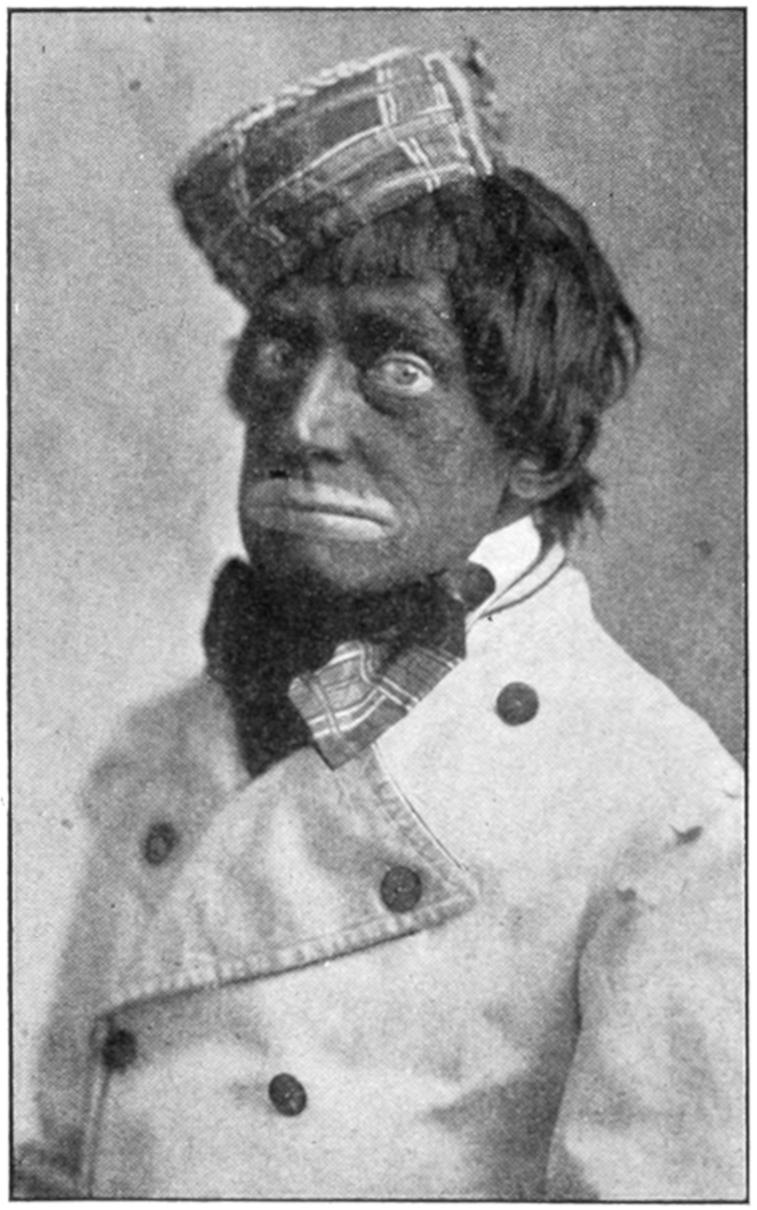
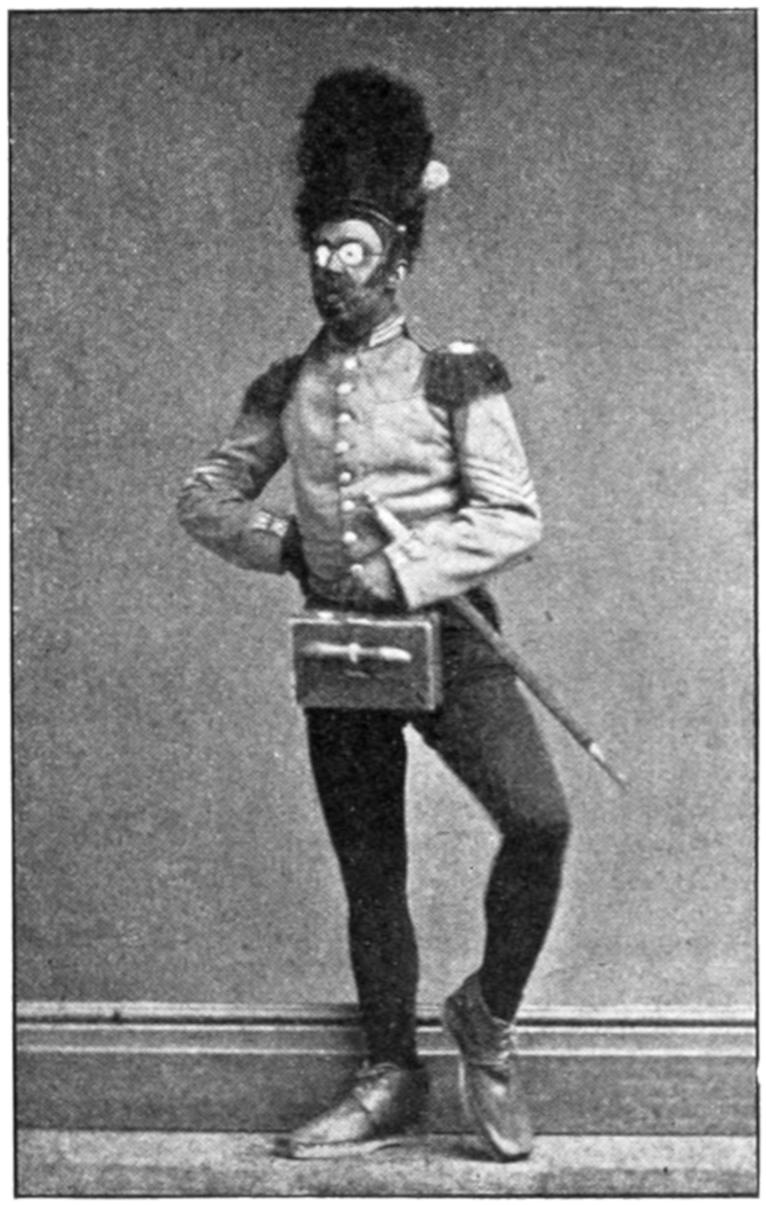
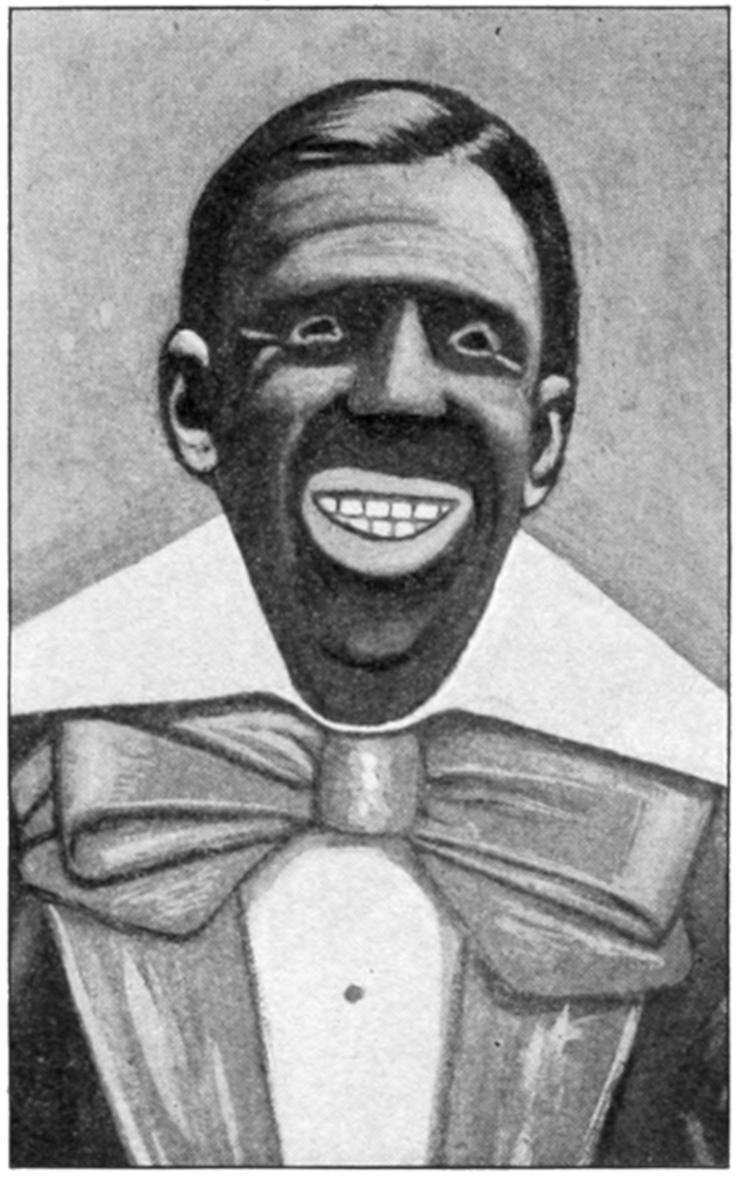
RAYMOND HITCHCOCK GEO. FROTHINGHAM JAS. J. CORBETT
IF YOU DON’T BELIEVE IT, ASK THEM.
Billy Allen died in Chicago, August 19, 1890; age 52 years.
Sam Cole, the real old-time black-face comedian, is in no way related to the old king of that name; though he has associated with them for many years; also queens and jacks.
Mr. Cole is said to be amongst the living. But who has the address?
Lew Simmons has the distinction of being the oldest active black-face performer in the world.
He commenced his career as an amateur in Warren, O., in 1849, playing the banjo, in black-face.
In 1857 Mr. Simmons went to Jake Beler’s Music Hall in Detroit, Mich., where he did his little turn for one dollar per night, and four beer tickets; which being a minor, he was unable to use.
In December, 1859, he made his first New York appearance at the popular Melodeon. In 1861 he joined Hooley and Campbell’s Minstrels, and early in 1863 in conjunction with Bob Hart organized a minstrel company bearing their names.
Subsequently he played an engagement with the Morris Minstrels, and on August 22, 1864, made his first appearance at Carncross and Dixey’s Minstrels in Philadelphia, where he became a great local favorite. He remained with that company until within a few months of the opening of Simmons and Slocum’s Minstrels at the Arch Street Opera House in Philadelphia (which was built for them), August 29, 1870. Mr. Simmons continued at this house intermittently until 1878. In the fall of 1875, Billy Sweatnam was admitted as a partner, under the firm name of Simmons, Slocum and Sweatnam’s Minstrels; in October, 1876, Simmons and Slocum withdrew. September 11, 1886, Simmons and Slocum’s Minstrels again opened at their old home in Philadelphia. In 1878 Mr. Simmons visited England and South Africa professionally.
About twenty years ago he played Uncle Eph., an aged negro, in “Shiloh.”
He left the profession in the 80’s, vowing never to return, but he did, in the early 90’s; Clark Gibbs, Tommy Harris and Frank H. White, with whom he is now playing vaudeville, were his partners at various times.
Did I say that he was one of the owners of the Athletic Club of the American Association, which won the championship in 1883? Well, he was.
Lew Simmons was born in New Castle, Pa., August 27, 1838.
J. H. Surridge was one of the prominent singers of minstrelsy. His first appearance was with Hart and Simmons’ Minstrels early in 1863. That same year he joined the Morris Minstrels, and in 1865 was with Raynor’s “Christy’s.”
In April, 1866, he opened with J. H. Clifford’s Great American Minstrels; April 17, company closed at Troy, N. Y. September 10, 1866, he opened with Sands and Herbert’s Minstrels.
With Sweeny, Hussey and Felton’s Company, he sailed for Hong Kong, October 11, 1866; storm tossed he returned to New York five days later; another five days he again set sail for Ireland and England, opening in London, December 5, 1866. Early in 1867 he went to play an engagement with “Pony” Moore and his associates, also in London.
Mr. Surridge arrived back in the United States, November 23, 1868, and shortly after joined Kelly and Leon’s Company at their New York theatre. He continued with them when they opened in Chicago, March 2, 1869, and subsequently was one of Kelly and Leon’s “Associated Artists,” after these two performers went to England.
Later Mr. Surridge joined Hooley’s Minstrels in Brooklyn, N. Y., and with Susie Galton’s Opera Company played the Dutch comedy part, succeeding W. H. Crane.
On April 17, 1871, he opened in New York City with Newcomb and Arlington’s Minstrels.
January 22, 1872, he became a member of Arlington, Cotton and Kemble’s Minstrels in Chicago, and continued with them about three years, after which he joined E. M. Hall, E. M. Kayne and Ned Wambold’s Minstrels, April 10, 1875. That same year Mr. Surridge rejoined Kelly and Leon’s Company, and continued with them when in February, 1878, they sailed for Australia. He returned in February, 1879, and joined M. B. Leavitt’s Company in San Francisco.
In the Summer of 1879 he entered the hotel business at Rockaway Beach, N. Y., and in the Fall of that year joined Pat Rooney’s Company as manager.
The following season of 1880-81, was at the London Theatre in New York. In the Fall of 1881 he went to Hopkins and Morrow’s Theatre in Providence, R. I., for a brief stay, leaving there to join Haverly’s Minstrels, where he remained but two weeks, when he joined M. B. Leavitt and continued with him as manager for the latter’s attractions until 1883, when he went to London, England, with “Evangeline,” in which he played Catharine; this engagement was followed by one with Moore and Burgess’ Minstrels, also in London.
Mr. Surridge returned to New York in February, 1884, and at once joined the Leon and Cushman combination.
In the Fall of 1884 he assumed the management of Dick Gorman, in “The Hand of a Friend.” He piloted the same attraction season of 1885-86, after which he retired from theatricals and went into business in New York.
J. H. Surridge was born in London, England, January 27, 1838; he died in New York City, March 30, 1910.
Rollin Howard (Ebenezer G. B. Holder) was one of the most cultured and capable female impersonators of minstrelsy.
He appeared on the legitimate stage for about five years previous to his minstrel debut, which was made with Wood’s Minstrels in the Spring of 1860. In the Fall of that year, for a brief period, he was associated in the management of Howard and Campbell’s Minstrels.
February 4, 1861, he made his first appearance with Hooley and Campbell’s Minstrels in New York, and for several seasons played successful engagements with nearly every prominent minstrel company there was.
About 1870 he left minstrelsy, and after a period in opera, played several years in variety houses. In 1868 he played Topsy in “Uncle Tom’s Cabin,” and in 1878 was manager of the Melodeon in Philadelphia.
His last appearance was with his own company.
Rollin Howard was born in New York City about 1840; he died in Boston, Mass., June 19, 1879.
Master Barney (Bernard Scholar) was one of the greatest dancers in minstrelsy. His first appearance was at Burtis’ Varieties in Brooklyn, N. Y., about 1858; he met Add. Weaver here, and was associated with him several years.
In 1859 he joined Campbell’s Minstrells, and subsequently with such well-known organizations as Morris Brothers, Pell and Trowbridge, Mrs. Matt. Peel’s, Hooley and Campbell’s and others.
July 17, 1869, was organized Dougherty, Wild, Barney and Mac’s Minstrels; subsequently Hughey Dougherty retiring, the company continued for a brief period.
In 1871 it was Hart, Ryman and Barney’s Minstrels.
About that time Master Barney formed a partnership with Sam Rickey, playing sketches, of which “Bad Whiskey” was the most successful.
They separated about 1877, and later he formed an alliance with Barney McNulty, being known as the Two Barneys.
“Master” Barney was born in Buffalo, N. Y., December 29, 1839; he died in Brooklyn, N. Y., February 25, 1886.
James Glenn (McDonald) was a well-known vocalist in the good old days of minstrelsy.
His first appearance was made with Sam Sanford’s Minstrels in 1858; he continued with him, chiefly in Philadelphia, until 1862, when he joined Wood’s Minstrels in New York, with whom he remained a lengthy period.
Subsequently he was with the San Franciscos in New York, and Hooley’s in Brooklyn, N. Y.
James Glenn was born in Philadelphia in 1839; he died in New York, February 26, 1870.
Billy Manning. Minstrels may come and go, but like the brook, the name and fame of this brilliant performer seems destined to live forever; for while more than three decades have passed since Billy Manning passed away, each generation in his native city seems as familiar with his former stage triumphs as those that were contemporaneous with him.
His career started in 1859, on the boat “Dixie”; where Manning, who was very proficient with the “bones,” played an end with a minstrel show.
In the fall of 1862 he was with Campbell’s Minstrels, and on November 23, 1863, he joined Morningstar’s company. The engagement was a brief one, and he next opened with Rumsey’s Minstrels, with whom he closed May 27, 1864; opening with Hooley in Brooklyn, three days later.
That same year he was with Morris and Wilson’s Minstrels, and in 1865 with Dan Shelby’s Company. Engagements with Kunkel’s Nightingales; Haight and Chamber’s Circus and LaRue’s Minstrels followed.
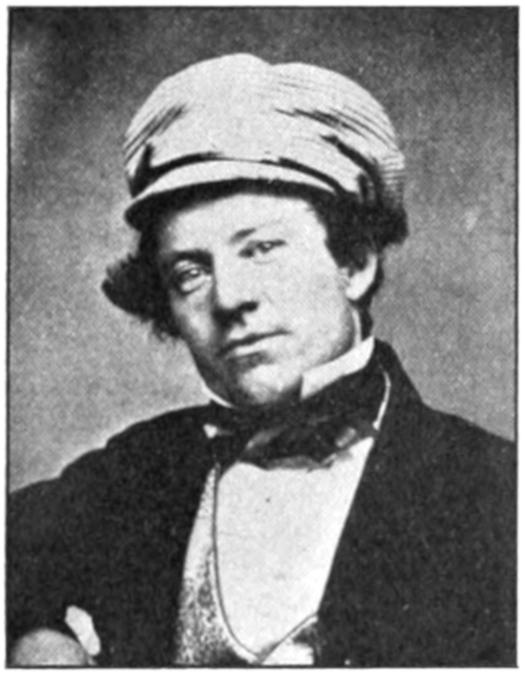
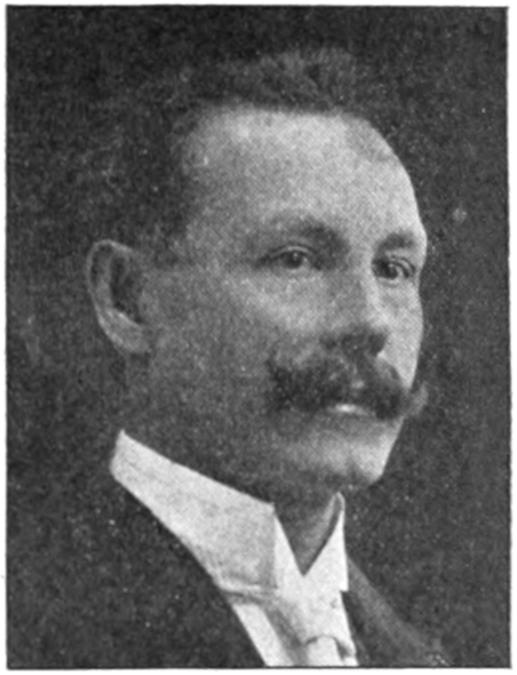
LUKE WEST NED WEST
“LOOKING WEST.”
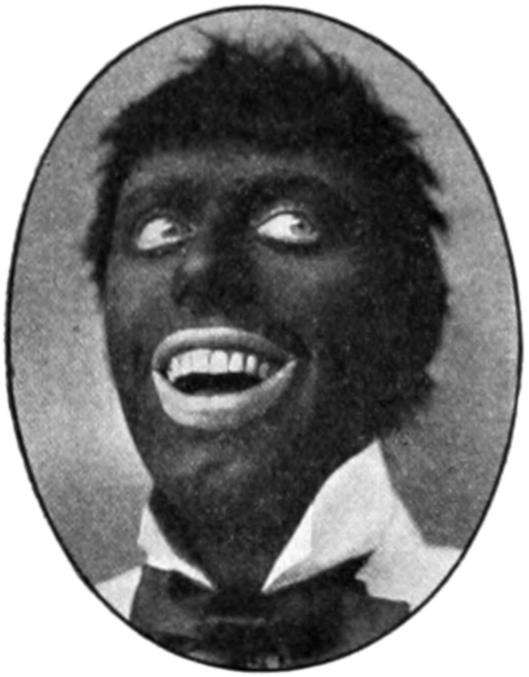
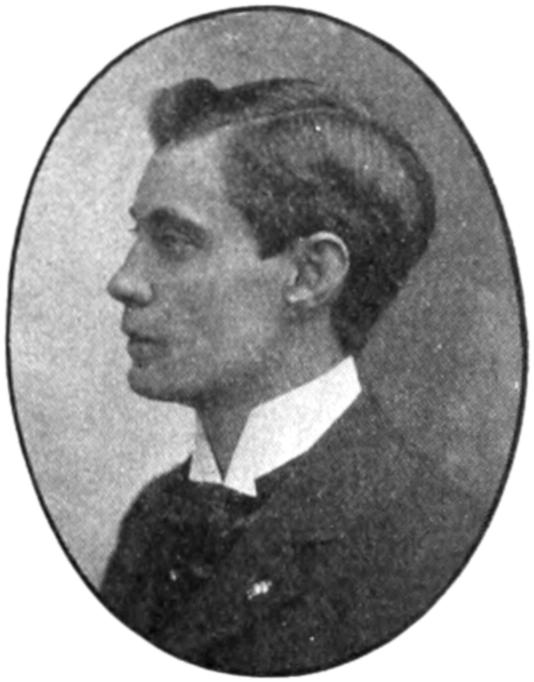
ARTHUR RIGBY ARTHUR DEMING
A PAIR OF ARTISTIC ARTHURS
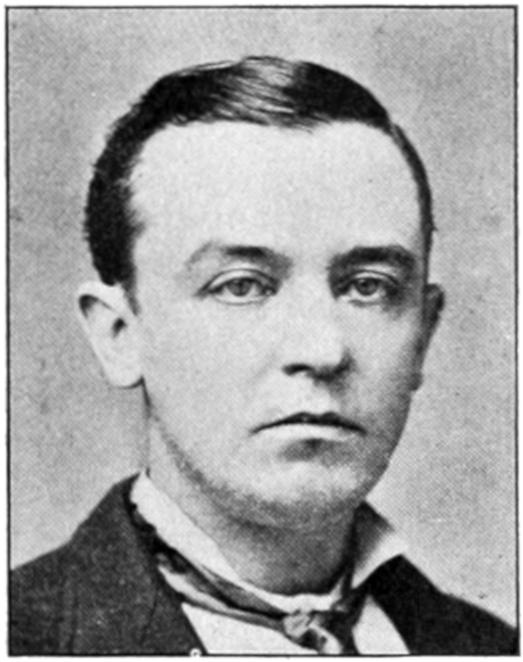
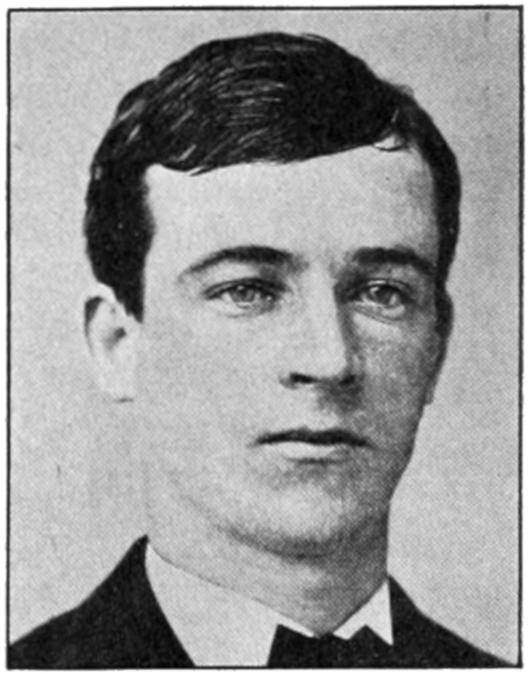
MASTER BARNEY SAM RICKEY
THEY WERE ALWAYS MASTERS.
In September, 1867, he joined Newcomb’s Minstrels, continuing with this company until the following Summer, when he left Newcomb, and in association with Billy Emerson and Johnny Allen, formed a minstrel company bearing their names.
May 22, 1869, Mr. Allen dropped out of the organization, which was thereafter known as Emerson and Manning’s. In January, 1870, in Chicago, the partners separated, and Manning continued at the Dearborn Theatre in that city with Manning’s Minstrels, where he remained several months.
Under the financial management of Tom Foley, of Chicago, the company went on tour in the Fall of 1871, giving their first performance at Xenia, Ohio, October 19.
July 6, 1872, Mr. Manning severed his association as head of the company, which subsequently was known as Newcomb’s Minstrels, in Cincinnati. September 2, 1872, in that city, he began a brief engagement with Wm. Henry Rice’s Minstrels, and on October 28 he opened with Frank Moran’s Minstrels in Philadelphia.
At the end of the season Mr. Manning became associated with Moran, and opened in Pittsburg, Pa., April 21, 1873, as Moran and Manning’s Minstrels. Mr. Manning then went to San Francisco, where, June 30, he began an extended engagement with Maguire’s Minstrels, terminating February 21 following. April 6, he made his first appearance with Simmons and Slocum’s Minstrels in Philadelphia, where he finished the balance of that season.
His debut with Kelly and Leon’s Company in Chicago was made August 31, 1874, where, with only a slight break, he played all that season.
July 12, 1875, he commenced a brief engagement with Neil Bryant’s Minstrels, and on November 8, Billy Manning, who was then far from being a well man, began what was destined to be his last engagement, with his old partner, Billy Emerson, with the latter’s minstrels.
January 9, 1870, he married Mollie Williams, a well-known actress.
Billy Manning was born in Piqua, Ohio, May 15, 1839; he died in Chicago, Ill., May 19, 1876.
Charley Gardner (Bumberry), known as “Hop Light Loo” Gardner, from the fact that he originated the black-face song and dance of that name for the first time at an amateur minstrel performance in Augusta, Ga.; this was in the late 50’s.
In 1861 he was with Duprez and Green’s Minstrels, and later with Burgess, Prendergast and LaRue’s Minstrels. Early in 1867 he toured with “Cool” Burgess with a minstrel company bearing their names.
Mr. Gardner played a brief engagement with the San Francisco Minstrels in New York, and with Emerson and Manning’s Company in Chicago.
He was the author of the following songs: “Sift Sand Sal,” “Walk Dad Lou” and “Over in Jersey.”
Charley Gardner was born in Toronto, Canada, July 24, 1839; he died in Long Island City, N. Y., May 17, 1909.
Dick McGowan was well-known as a banjoist and a comedian in the 60’s; during which period he was with Yankee Hill’s Minstrels, Harris and Smith’s, Dick McGowan’s, and some more. As Mr. McGowan failed to keep his promise and give the author more data, this sketch must necessarily be curtailed. Sorry. Mr. McGowan was born in New York, December 28, 1839.
Johnny “Froggy” Pierce (Owens) was a well-known comedian and had been identified with various prominent minstrel companies, notably Ordway’s, in Boston, in 1859; Lloyd’s, 1861; Rumsey’s, 1864; Coes, Purdy and Converse’s, 1867; Emerson’s, 1870, and many others. He died in New York, June 2, 1892; age 53 years.
John W. Thompson (Fitzpatrick), known of late years as a manager only in the South and Southwest; in his early days was a well-known black-face performer, and a great jig dancer at a time when that style of dancing prevailed.
Mr. Thompson’s first appearance was made in Buffalo, N. Y., about 1860. At one time he was associated and did an act with Oscar Willis.
He was manager at various times of theatres in Memphis, Tenn.; Vicksburg, Miss., and Dallas, Texas, covering a period of 28 years.
John W. Thompson was born in Dublin, Ireland, June 4, 1839; he died at Dallas, Texas, February 27, 1907.
James Gaynor made his first professional appearance with Sharpley’s Minstrels about 1859, as second violinist.
He played several engagements at Hooley’s Minstrels in Brooklyn, during the 70’s, where his banjo playing met with pronounced success; he was equally prominent during the same period at the Howard in Boston. November 29, 1876, Gaynor and Mudge’s (Hank) opened at Butler, Pa.
Mr. Gaynor was also with Mrs. Matt. Peel’s Minstrels in May, 1860.
James Gaynor was born in Troy, N. Y., about 1839; he died in Brooklyn, N. Y., May 29, 1906.
John T. Boyce was one of the best black-face comedians of his day, and one of the earliest performers to sing an Irish song on the end.
His first appearance was with Birch, Bowers and Fox’s Minstrels in California, about 1857; later he was a performer on the steamer “Banjo,” which plied the Mississippi. Mr. Boyce afterward appeared with such well-known organizations as Woods, in New York; Hooley’s, in Brooklyn, and Sanford’s.
May 7, 1866, with Hank Mudge, he launched Boyce and Mudge’s Minstrels, and later was a member of Griffin and Christy’s Minstrels.
His last appearance was in June, 1867.
John T. Boyce was born in Covington, Ky., about 1839; he died in Brooklyn, N. Y., June 11, 1867.
“Marsh” Adams (Marshall Anderson), an excellent and most natural delineator of the old Southern darky, began his stage career at the Race Street Varieties, Cincinnati, in the late 60’s; he remained there until 1871, when he joined the Hart, Ryman and Barney Minstrels; for a brief period he did an act with Milt. Barlow. In 1873 he went to the Metropolitan Theatre in Indianapolis, remaining until 1878; subsequently he was identified with various circuses, also Haverly’s Minstrels; and for a time with Walter Le Roy.
It is said that he was the first to sing “Old Black Joe” as a character song.
His last appearance was April 15, 1885.
Marsh Adams was born in Louisville, Ky., January 11, 1839; he died in Indianapolis, Ind., May 11, 1885.
Charles E. Dobson was one of the great banjoists of minstrelsy.
His first appearance was at Winsted, Conn., in 1856, with Sam Hague’s Concert Company.
Subsequently he played in the stock of the old Chatham Theatre, New York, and later played in the orchestra of Wallack’s Theatre, same city, at Thirteenth and Broadway.
In 1867 he went to Europe, under the management of Corbin and Wall; while there he again joined Sam Hague’s Georgia Minstrels, playing London and the provinces. On his return to the United States he played all the principal variety houses, later organized the Dobson Bros. Minstrels. Mr. Dobson was also associated in a business capacity with the Worrell Sisters, the Chapman Sisters, and the Wallace Sisters: with the latter he was with in 1878. March 29, 1879, he married Minnie Wallace. They had a son, Frank Wallace, a clever black-face performer.
About twenty-five years ago Mr. Dobson won a gold medal in a banjo tournament at Madison Square Garden, New York City.
Chas. E. Dobson was born in New York City, July 21, 1839; he died there January 18, 1910.
Lew Benedict. The name of Lew Benedict is one of the most prominent in minstrelsy; as an end man and stump speaker he excelled, but he was equally at home in anything he undertook.
Mr. Benedict’s first appearance was in the late 50’s, when he danced the “Essence”; he was then known as Johnny Hodson.
But his real professional career commenced April 6, 1861, when he joined Duprez and Green’s Minstrels; he continued with them until 1865, when he bought out Mr. Green’s interest; the organization was then known as Duprez and Benedict’s Minstrels until 1876, when Mr. Benedict and Mr. Duprez dissolved partnership.
Mr. Benedict then joined Kelly and Leon’s Minstrels in New York City in the Spring of 1876; he remained until September 16; five days later he opened at Newark, N. J., with Benedict’s Minstrels; the company closed at Washington, D. C., December 30, 1876; he subsequently returned to Kelly and Leon’s.
In 1878 he ran a variety theatre in Milwaukee, Wis.
Mr. Benedict was with Leavitt’s Gigantean Minstrels in 1881, and in later years with Cleveland’s, Vogel’s, Gorman Bros., and Great Barlow Minstrels.
April 17, 1871, he married Eva De La Motta, at Mansfield, Ohio, and on February 17, 1881, in New York City, he married Miss Fanny Mouris.
Of late years Mr. Benedict has been playing vaudeville.
Lew Benedict was born in Kingston, Canada, December 6, 1839.
Carl Rudolph (Wilbur Fiske Barrell), one of the most prominent balladists in minstrelsy, began his career in St. Louis, Mo., doing concert work; from which it was but a short step to burnt-cork honors.
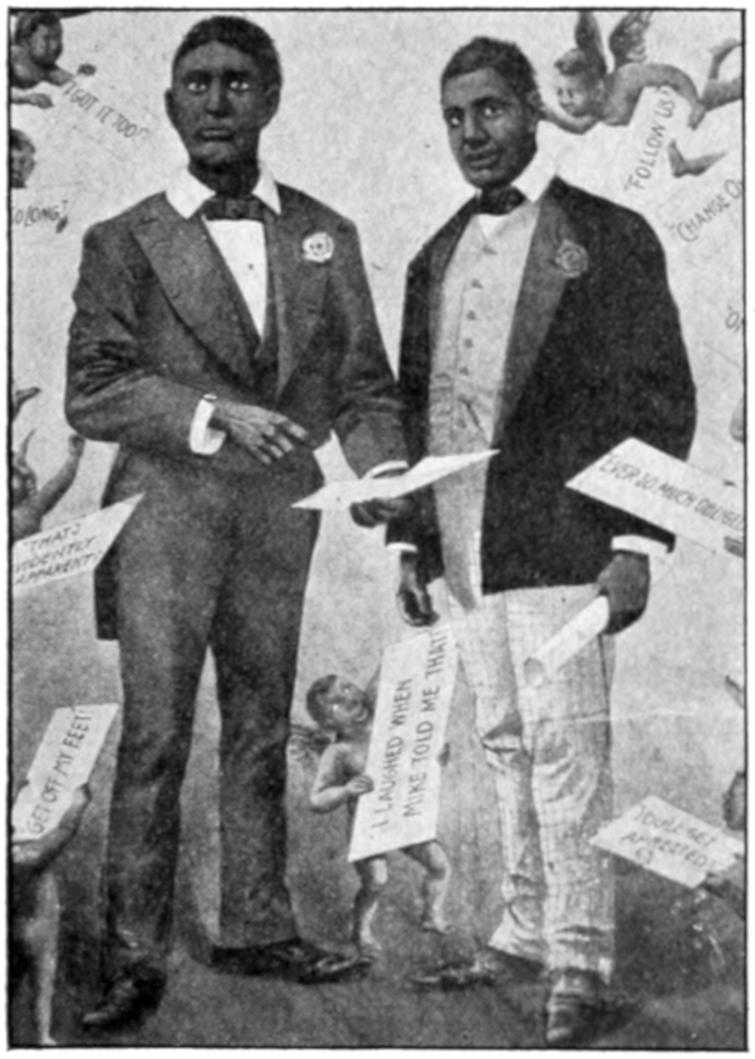
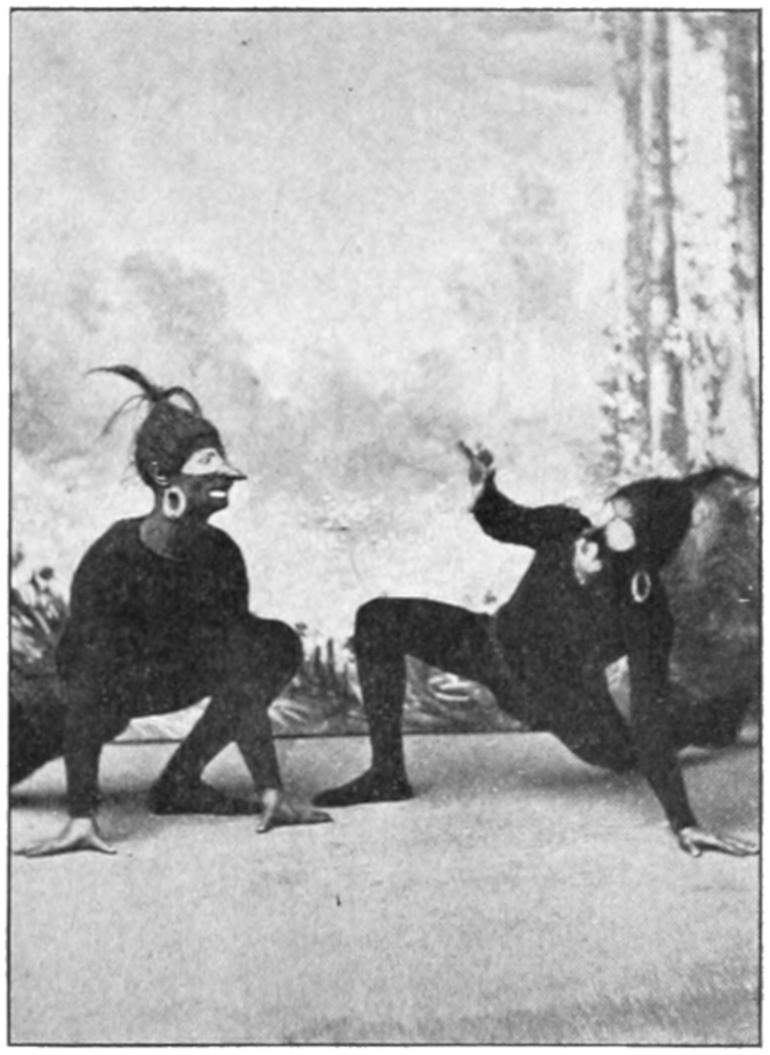
LEW.—HAWKINS & COLLINS—BEN. LAMONT & DUCROW
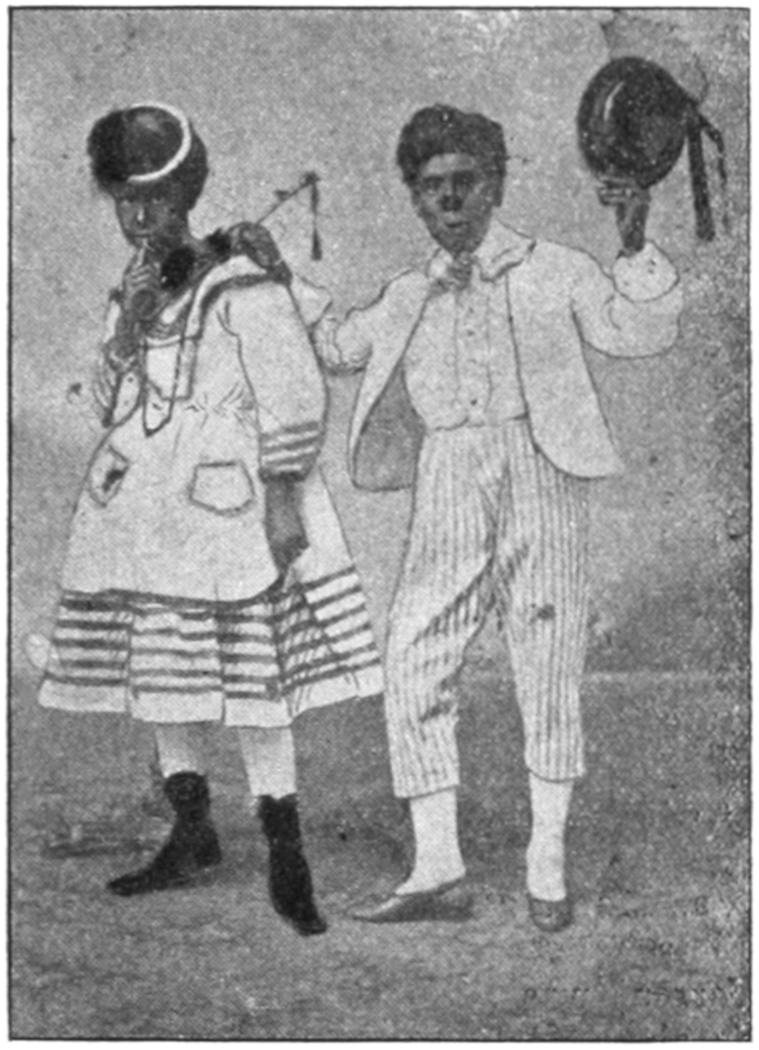
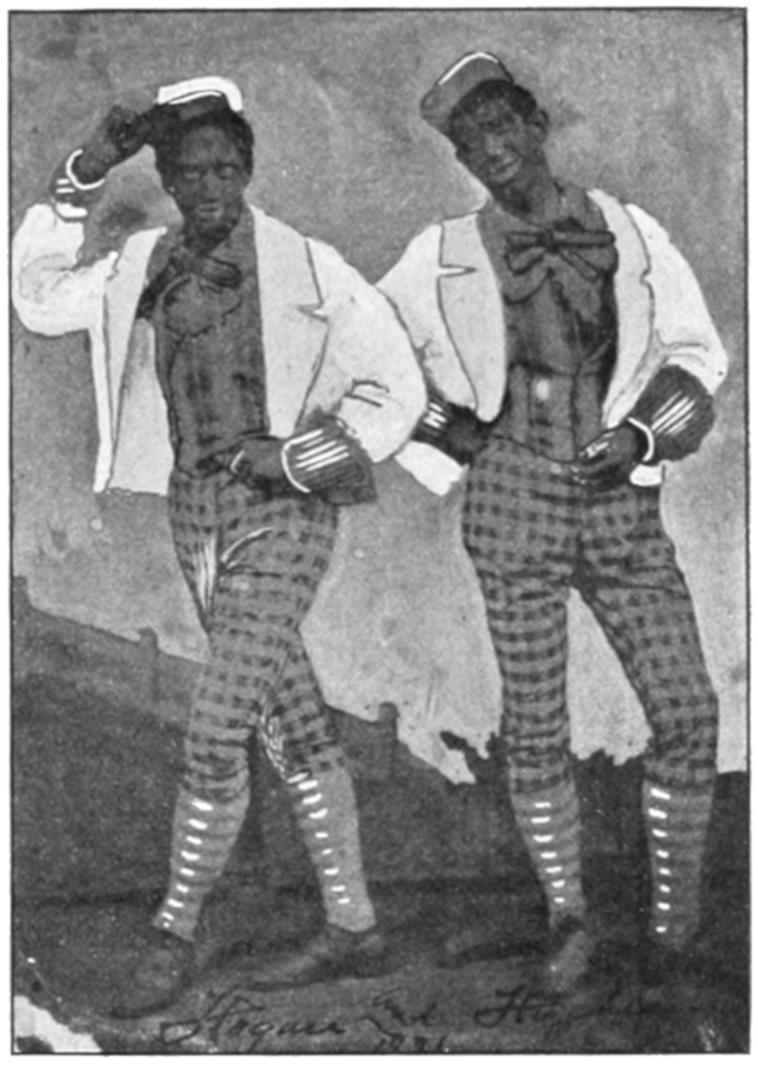
GEO. & WILLIE GUY (1866) JNO. P.—HOGAN & HUGHES—RUEY (1871)
Mr. Rudolph was one of the original members of Billy Emerson’s Minstrels, February 11, 1870.
In the Summer of 1872 he was with Sam Sharpley in New York, and that same year in the same city rejoined Emerson.
In August, 1877, Mr. Rudolph was with Barlow, Wilson, Primrose and West’s Minstrels at the initial performance of that organization.
Season of 1873 he joined Bryant’s Minstrels in New York City; the major portion of the balance of his theatrical career was spent in Philadelphia with Carncross’ Minstrels.
Carl Rudolph was born in Aspenham, Mass., October 29, 1839; he died in Brooklyn, N. Y., August 8, 1909.
J. K. Buckley (Kiley), noted for his splendid execution on the banjo, an the use of the supplementary fifth string, first played the banjo in 1861. On June 6, 1868, he launched Buckley’s Minstrels at Newark, N. J.
He was one of Haverly’s 12 banjoists, and went to Europe with the Mastodons, opening at Drury Lane Theatre, London, July 31, 1880.
He was associated with the late John M. Turner for a considerable period; the partnership dissolved November 11, 1876.
J. K. Buckley was born in New York City January 21, 1839.
Joseph H. Childs was equally well known to dramatic, variety and minstrel patrons, and up to about ten years before his death was considered one of the best clog dancers before the public.
In 1877-78 he was in the stock at the National Theatre, Cincinnati.
Jos. H. Childs was born in England; he died in Cincinnati, Ohio, November 10, 1880; age 41 years.
Wally Thomas, prominent as a jig and clog dancer, a fine drummer and a good all-round general performer of Sharpley’s Minstrels in the early 60’s, died at Lowell, Mass., May 29, 1864; age 25 years.
Lewis J. Donnelly, well-known in his day as a first-class black-face female impersonator, died in New York City, October 26, 1869; age 30 years.
Gus Howard was a pupil of George Christy, and made his first appearance with Wood and Christy’s Minstrels in New York in 1855.
He was an exceptionally versatile performer, and excelled as a banjoist and tambourinist. He continued as a member of the above company until May, 1858, Geo. Christy seceding and going to California. Howard went with him, and continued with Christy until 1861, when he joined Unsworth’s Minstrels, also Hooley and Campbell’s.
For about five years prior to his death he had been with the Wallace Sisters Combination.
Gus Howard died in Alexandria, Va., March 27, 1874; age about 35 years.
Warren Richards (Richard A. Warren) was well-known as a tenor singer with Duprez and Benedict’s Minstrels about forty years ago; he was with them for a lengthy period. He was born in New Orleans, and died in New York City, June 15, 1876.
L. Morrisey (Morrisey B. Little), a well-known and capable song and dance performer, joined Johnny Allen’s Minstrels about 1870.
He formed a partnership with Fred Emerson, and as Morrisey and Emerson opened at Bryant’s Minstrels, New York, September 4, 1871, and continued there until the Spring of 1873, when the team separated.
Mr. Morrisey played the variety houses until his death in New York, February 8, 1881.
James G. Russell (Grant), the well-known vocalist, commenced his minstrel career about 1870 in New York, and successfully appeared in the companies of Carncross and Dixey in Philadelphia; Emerson’s, Geo. Thatcher’s and Bryant’s.
He died in Richmond, Va., May 5, 1883.
J. K. Silver, of the famous Silver Brothers, was prominent for many years in minstrel and concert work.
He died at Williamsburg, Mich., May 11, 1885.
Billy Burr (W. W. H. Burrows), an old-time performer, who was excellent in negro acts, made his first appearance with Andy Williams in Gardner and Hemming’s Circus. He played with various organizations until his retirement about 1875.
He was born in Reading, Pa., November, 1840; he died at Gwynedd, Pa., January 30, 1881.
Tom. Warfield (J. B. Hersey), the old-time banjoist and black-face performer, entered the profession in his native city.
He was with several minstrel shows, also had his own company, Warfield and Wicks Minstrels.
He married Minnie Chapin in Baltimore, Md., in August, 1876.
Tom Warfield was born in New Orleans, La.; he died in Birmingham, Ala., November 12, 1899.
Queen and West constituted one of the great song and dance teams in minstrelsy. They formed a partnership about 1868, which was terminated by the death of Mr. Queen.
Together they played several prominent minstrel engagements, and later went to Harrigan and Hart’s in New York, where Mr. West remained, all told, about twenty-two years.
Mr. Queen was an exceptionally clever black-face comedian, while Mr. West, in addition to his ability as a dancer and comedian, was proficient on the banjo.
John Queen made his first appearance as a clog dancer in Boston with Morris Bros., Pell and Trowbridge’s Minstrels. While with that company, he, in conjunction with R. M. Carroll, did the first double clog dance ever seen in minstrelsy.
William West began his theatrical career in 1857 as a black-face performer, and until about 1863 played mostly with circuses.
His first minstrel engagement was with Duprez and Green. Subsequently he played with Hooley at the Novelty Theatre in Brooklyn; with the San Franciscos in New York, and with Bryant’s, Wood’s, and Morris Brothers.
Mr. West’s last stage appearance was about 1901.
John Queen (McQueeny) was born in St. Albans, Vt., November 19, 1843; he died in New York, February 11, 1884.
William West (Cox) was born in Leicester, England, May 3, 1837.
Charles E. Gibbons, an excellent clog dancer, was with Carncross and Dixey’s Minstrels in Philadelphia, in 1869; subsequently he joined the San Franciscos in New York, where he remained several years. His wife was Effie Germon, the well-known actress.
He died in New York City June 27, 1882; age 40 years.
Ned Reed was well-known mostly in the middle west, as a capable comedian. His first appearance was made in his native city about 1860.
In 1862 he organized a minstrel company, and subsequently he traveled with John Robinson’s Circus, remaining about four years, after which, in 1866, he appeared with Kelly and Leon’s Minstrels in Chicago. About 1867 Mr. Reed married Miss Ada St. Clair.
He had at various times conducted theatres in Terre Haute and Ft. Wayne, Ind.; Syracuse, N. Y., and Dayton, Ohio, where for eighteen years he was a resident, during which period Mr. Reed’s hand was frequently in his pocket to help those less fortunate than himself.
Ned Reed was born in Cincinnati, Ohio, September 27, 1840; he died in Dayton, Ohio, November 27, 1891.
C. W. Pringle was for many years associated in the management of Richard’s and Pringle’s Colored Minstrels, a popular organization. He died in Marysville, Cal., March 18, 1893.
Billy Gray (Cornelius O’Donnell) was well-known as a versatile black-face comedian. He entered the variety profession about 1862.
In 1873 he joined Harry Robinson’s Minstrels, and two years later was with Hooley in Brooklyn, N. Y. Subsequently he joined the company of Harrigan and Hart in New York, where he long remained.
Billy Gray was born in Ireland; he died in New York, November 21, 1882.
Billy Remington, a prominent black-face performer, who was an especially clever bone player, died at Grand Rapids, Mich., April 16, 1870.
Peasley and Hughes were a well-known black-face song and dance team of the variety and minstrel stage, where they played many notable engagements.
Mr. Peasley was also of Peasley and Fitzgerald; they opened with the Dearborn Minstrels in Chicago, August 21, 1871.
John A. Peasley died in Syracuse, N. Y., April 22, 1893.
Mark Hughes died in Chicago, Ill., February 6, 1882; age 34 years.
William Dwyer was a well-known tenor singer, and played successful engagements with Bryant’s, and the San Franciscos in New York, and Simmons and Slocum’s Minstrels in Philadelphia.
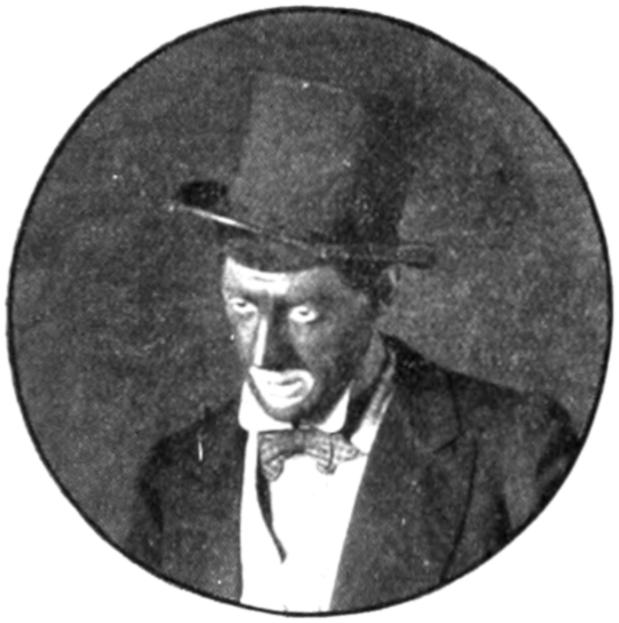
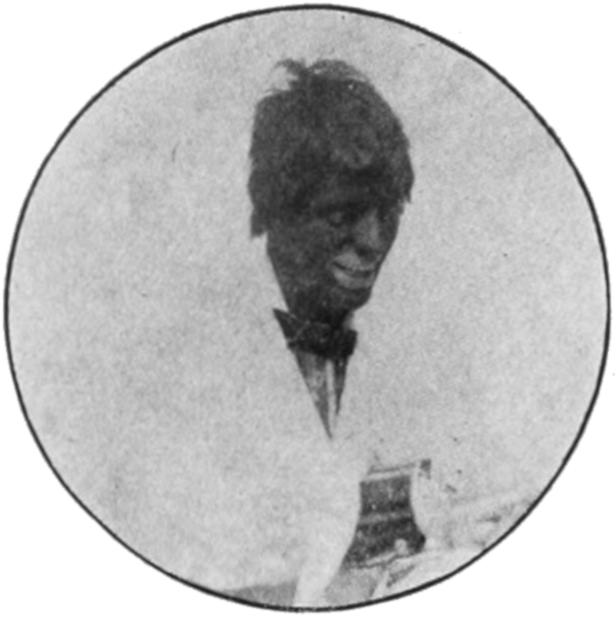
BILLY DE RUE BOBBY DE RUE
(DE RUE BROS.)
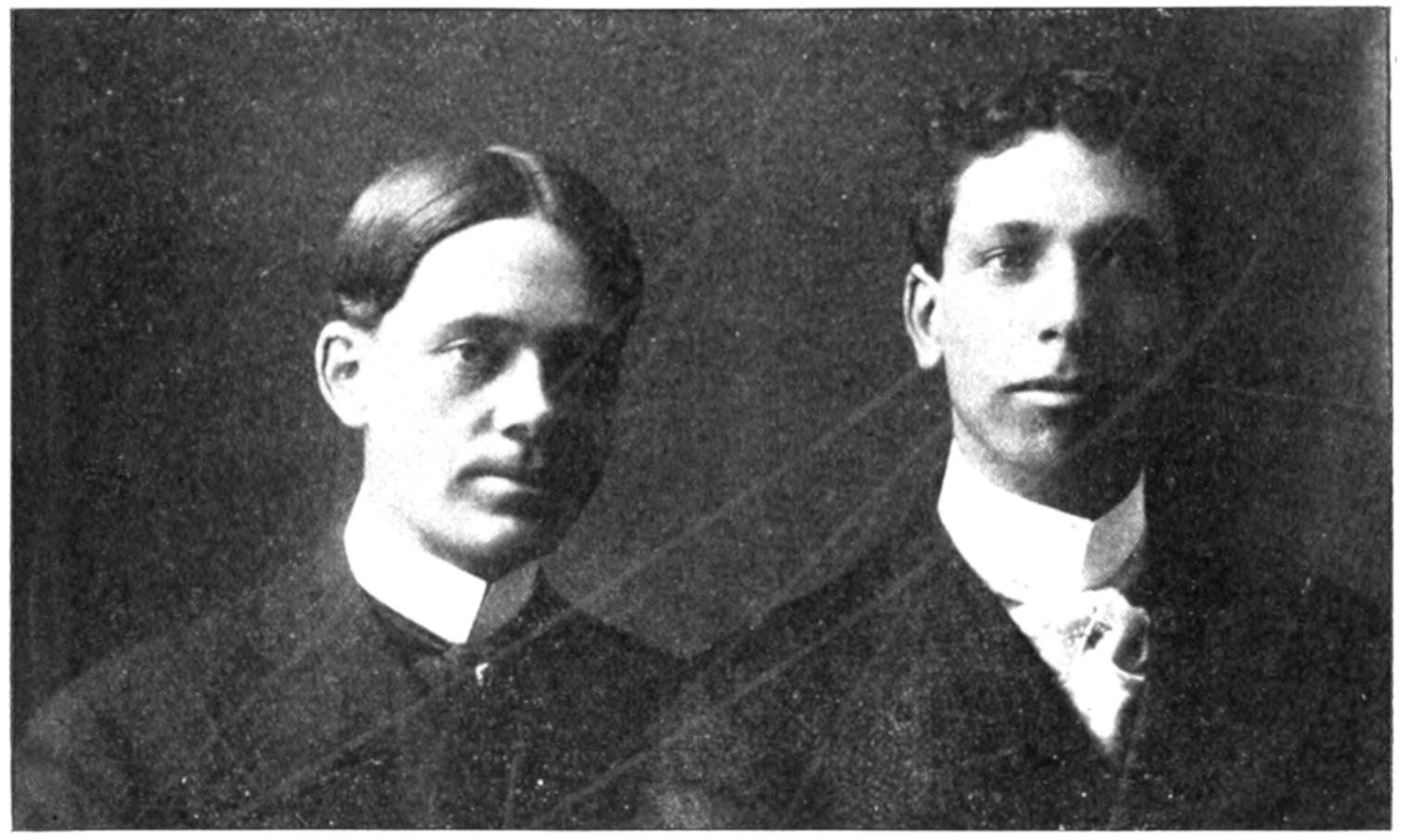
BERT. LEIGHTON FRANK LEIGHTON
(LEIGHTON BROS.)
BILLY FREEZE LARRY FREEZE
(FREEZE BROS.)
He was born in Dublin, Ireland; he died in Washington, D. C., December 30, 1898.
In the author’s possession is a document dated July 17, 1850, wherein one James Norris purchased a fourth interest in a prominent minstrel company of that day for $200.00. Imagine what a similar interest in Lew Dockstader’s Minstrels would cost to-day.
“Cool” Burgess (Colin Burgess) was one of the most famous names in minstrelsy. Tall and slender, with long, drooping moustache, he provoked merriment at sight.
He first appeared professionally in his native city about 1857, at the Melodeon.
Subsequently he was identified with many minstrel organizations, amongst the earliest was Burgess and (J. E.) Green’s. About the closing of the Rebellion he joined Hooley’s Company in Brooklyn, where he became quite popular.
In 1865 he was one of the proprietors of Burgess, (T. B.) Prendergast, (Archie) Hughes and (D. C.) LaRue’s Minstrels.
In 1867, in conjunction with his fellow townsman, Charley Gardner, he organized Burgess and Gardner’s Minstrels.
In 1864 he was associated with J. H. Haverly in an organization bearing their name.
In the Summer of 1867, Burgess and (Ainsley) Scott’s Minstrels had a brief existence.
(Charley) Reynolds, (John D.) Newcombe and Burgess’ Minstrels gave their first performance September 24, 1862.
On August 9, 1869, Mr. Burgess made his appearance with Sam Sharpley’s Minstrels in Boston, and the following month, in the same city, he joined Delehanty and Hengler’s Company.
In the Fall of 1879 he opened with Joe Norcross’ California Minstrels.
In 1875 he made his first appearance in England at Sam Hague’s Minstrels in Liverpool; subsequently he played a successful engagement with Moore and Burgess in London.
Like most prominent performers Mr. Burgess has a specialty in which he was prominently identified—in his case it was “Nicodemus Johnson,” in which he danced with abnormally long shoes, he being the first to adopt the massive footgear.
Mr. Burgess married Miss Edna S. Taylor May 20, 1862.
In the passing of “Cool” Burgess, minstrelsy lost one of its most brilliant stars.
“Cool” Burgess was born in Toronto, Canada, December 20, 1840; he died there October 20, 1905.
Hank Mudge (Henry Tyler Mudge) is one of the few old-timers left.
Mr. Mudge, who ranked with the great clog dancers of his day, made his first appearance in minstrelsy with the Porter Opera Troupe at Hartford, Conn., in 1857.
In 1859 he was at Captain John Smith’s Theatre in Albany, N. Y. Mr. Mudge avers that this Smith was in no way related to the party in Virginia that was smitten with the charms of one Pocahontas.
But to continue; in 1860 he joined Sam Sharpley’s Minstrels, and later went to Boston, where he became identified with the famous Morris Bros., Pell and Trowbridge Minstrels in that city.
Mr. Mudge was associated with A. C. Stone, and as Mudge and Stone were rated as two of the best clog dancers in minstrelsy; likewise when with Hooley’s Minstrels in Brooklyn, N. Y., did he do a great dancing act with Archie Hughes.
In New York he played successful engagements with Wood’s, and Kelly and Leon’s Minstrels.
October 11, 1866, Mr. Mudge with a party sailed for Hong Kong; October 16, 1866, Mr. Mudge arrived in New York. This might possibly strike the average observer as a quick trip; but the fact is that owing to the peevishness of old ocean, the minstrels floundered around on its huge bosom for several days, finally landing them where they started.
In five days the party recovered, and on October 21 they again set sail; this time for old England, where they arrived in due time, and after engagements on Erin’s Isle, Hussey, Sweney and Felton’s Minstrels opened in London, England, December 5, 1866.
Mr. Mudge subsequently played an extended engagement with Moore, Crocker and Ritter’s Minstrels in the British metropolis.
In 1866 Boyce and Mudge’s Minstrels made a bid for favor; later Hogan and Mudge’s troupe did likewise, and in 1876 Mudge and Gaynor’s Minstrels toured.
Mr. Mudge’s last tour was in connection with Dave Reed’s New York combination in 1887.
Hank Mudge was born in Troy, N. Y., March 12, 1840.
D. L. Morris, one of the greatest German comedians there ever was, played with Haverly’s Minstrels in 1875; and as Haverly’s “Black Dutchman” scored a big success; he was also with another minstrel organization.
He died at Cape Girardeau, Mo., August 5, 1879.
Robert McWade, whose great characterization of Rip, in “Rip Van Winkle” has made him world famous, wrote a burlesque on P. T. Barnum’s “What Is It?” for Hooley and Campbell’s Minstrels in New York, which was produced December 3, 1860.
During the week, owing to the indisposition of James Unsworth, Mr. McWade assumed the title role of “Africanus Barnum O,” and played it in black face; and ’tho fifty years have elapsed, Mr. McWade still speaks of this occasion with evident relish and satisfaction.
John H. Ward was a splendid dancer, and in the early 60’s partner of Wm. H. Delehanty, prior to the latter’s association with Thos. Hengler.
He died in East Saginaw, Mich., March 15, 1874.
Dave Wilson was a good comedian and gave a fine portrayal of the aged darky, but his principal fame rested on his manipulation of the bones, of which he was a master.
He was with Newcomb’s Minstrels in 1869, and Kelly and Leon’s in 1875; he retired shortly after that, and is said to be living in Buffalo, N. Y.
Neil Price, a black-face performer, whose fame chiefly was gained as author of “A Boy’s Best Friend Is His Mother,” died at Chattanooga, Tenn., November 5, 1889.
Harry G. Richmond (Augustus Von Boyle) was an exceedingly versatile performer; a good vocalist, dancer and comedian. His principal minstrel engagement was with Haverly in the Spring of 1878.
In Philadelphia, on October 29, 1879, during an altercation with an old friend, Dan Archer, Richmond, in pure self-defense, killed Archer.
Mr. Richmond, in conjunction with his brother, Acland Von Boyle, took out the play of “Our Candidate,” about 1879.
On May 1, 1880, he married Miss Florence Stover, an actress.
Harry G. Richmond was born in Brooklyn, N. Y.; he died in Camden, N. J., October 21, 1885.
A. C. Stone was an exceptionally good clog dancer, and in the early 60’s a partner of “Hank” Mudge, under the team name of Stone and Mudge.
In 1865 he was with Sharpley’s Ironclads; at the time of his death with LaRue’s Minstrels.
He died at Frankfort, Ky., November 13, 1866.
George Wilkes (Miller), a well-known female impersonator of several early minstrel organizations, was born in Philadelphia; he died in Memphis, Tenn., October 1, 1870.
Fred Sprung was a well-known vocalist and “straight” man in the 60’s, during which period he worked in acts with Billy Manning. In 1864 he was with Rumsey’s Minstrels, and in September of the following year with a small company, gave a show over the mountains of California, being one of the first to do so.
He died in San Jose, Cal., February 26, 1890.
John Pendy (Prendergast), a well-known black-face performer in the old variety days, married Jeffreys Warner, and played as Pendy and Warner for several years.
He died in New York City November 16, 1902.
Frank Girard (Giraud). This well-known interlocutor and “straight man” began his career with Hooley’s Minstrels in Brooklyn, N. Y., about 1863; he remained but a short period and then enlisted in the navy, where he continued until the war was over.
In September, 1866, Mr. Girard was one of the 500 passengers bound for New Orleans on the steamer “Evening Star,” which was wrecked about 300 miles off the coast of Florida (October 3, 1866); he was the only male that survived, and was on the water for five days before he was rescued. He subsequently returned to New York, and later was identified with some of the principal minstrel companies.
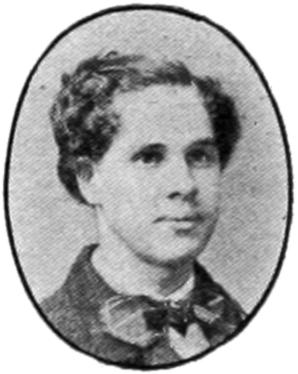
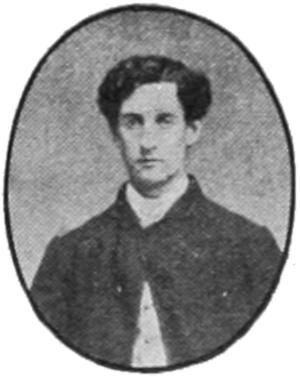
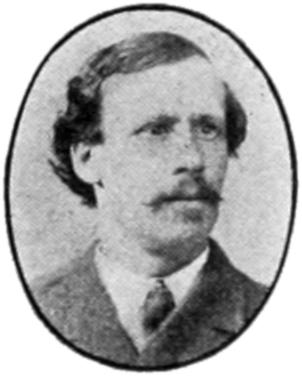
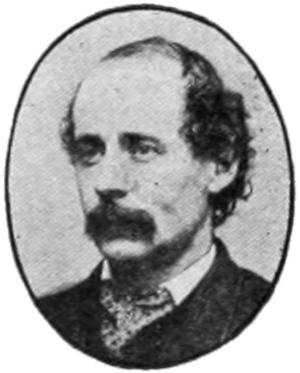
GUSTAVE BIDAUX W. H. LEWIS (RICE) FRANK KENT GONSALVO BISHOP EDWIN HOLMES
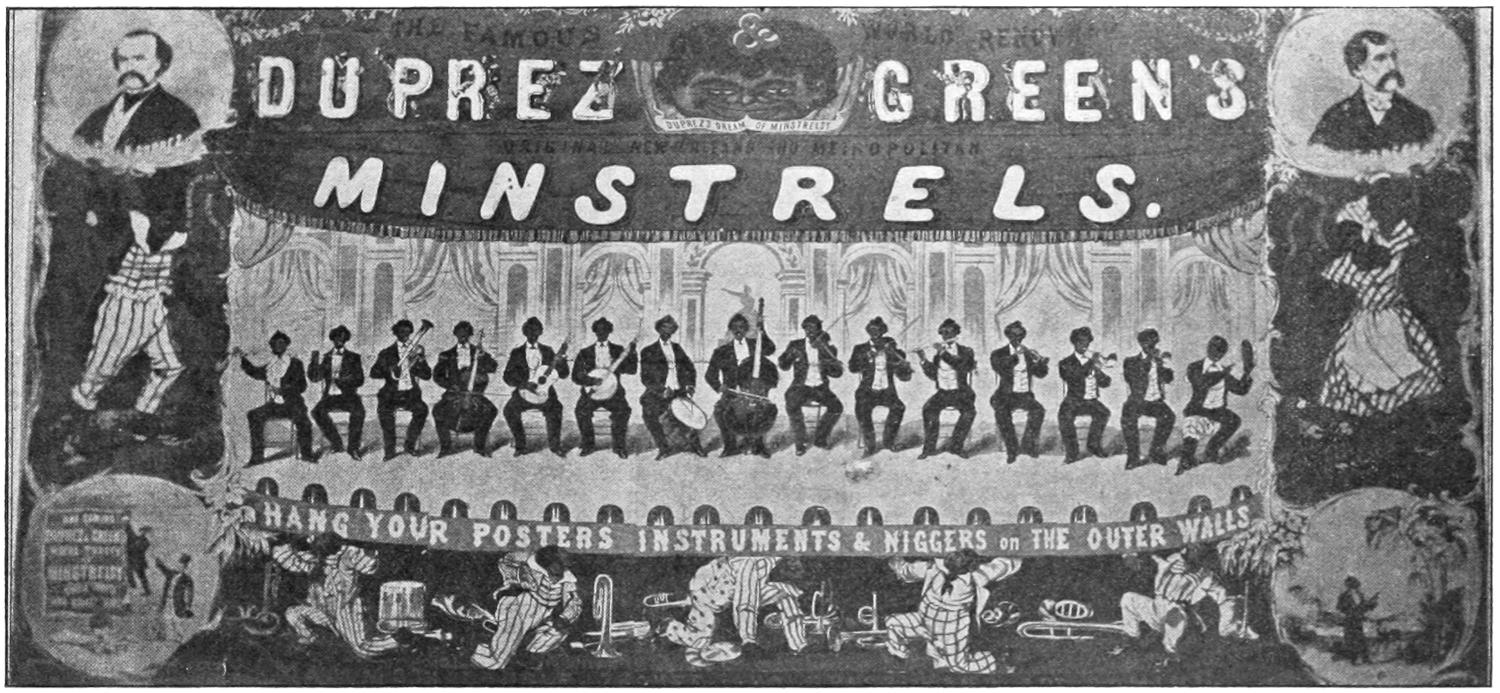
DUPREZ & GREEN’S MINSTRELS, 1863. Some prominent members of the company at that time.
About 1871 he became a member of Tony Pastor’s stock company in New York, where he acted as stage manager and played in the farces for many years.
His son is Edwin Girard, for many years manager of the Gotham Theatre, Brooklyn, N. Y.
Frank Girard was born in Brooklyn, N. Y., July 7, 1840; he died there November 1, 1900.
James D. Bohee a prominent colored performer and concededly great banjoist, went to England about 1880, where he was a great success until the time of his death in London, England, December 1, 1897.
Jimmy Clark was one of the best jig dancers in the country, and equally proficient in the manipulation of the banjo, and an all-round good general performer.
He was with Kelly and Leon’s Minstrels in New York, also with the Duprez and Benedict Company.
December, 1872, Welch, Clark and Hart’s Minstrels began a brief career.
Mr. Clark had not appeared professionally for some years. Prior to his death he was employed in the manufacturing of the banjo.
Jimmy Clark died in New York City, February 27, 1880; age 40 years.
Charles L. Monroe, considered a very good impersonator of the old Southern “darky,” died in Philadelphia, July 12, 1875; age 36 years.
John Bartley, a good general performer in negro acts, and an exceptionally fine performer with the tambourine and bones, died at Buffalo, N. Y., April 17, 1895.
Jerry McMillan, once known as “Master Jerry,” was one of the best jig dancers of his day.
He was identified with the San Francisco Minstrels in New York City for a considerable period.
He died in Philadelphia, September 9, 1873.
A. Bamford, a capable female impersonator who was prominent at one time at Hooley’s Minstrels in Brooklyn, and also played a European engagement in the 60’s, died at San Francisco, April 5, 1871. Mr. Bamford also did specialties with Harry Norman.
Harry J. Clapham. This gentleman’s name will always rank with the great managers of minstrelsy.
His career began on the 30th anniversary of his birth, at Syracuse, N. Y., with Cal. Wagner’s Minstrels, as a balladist. Six weeks later he was programme agent, and in six months was “press agent”; in 1910 we would call that “making good.” Later he became general agent, continuing in that capacity for 18 months. When Haverly’s Minstrels were organized in the Fall of 1873, he became agent; a year later he was manager, in which capacity he served for several years.
Leaving Mr. Haverly he took a much-needed rest for six months, and then assumed the management of Barlow, Wilson, Primrose and West’s Minstrels; in about two years he turned into the company $100,000 in profits; this was “going some” about 30 years ago.
John T. Raymond and Mr. and Mrs. McKee Rankin claimed his executive attention for three years; he then assumed management of the Barlow, Wilson & Co. Minstrels, remaining three years.
After the Barlow, Wilson & Co. Minstrels, Mr. Clapham took out a repertoire company; his leading man being no less a personage than that excellent actor of to-day, Mr. Thos. E. Shea, who had previously occupied a mercantile position in Boston.
A four years respite found Mr. Clapham equal owner with Lew Dockstader’s Minstrels (road company); the alliance lasted three seasons, which were very successful; the first 40 weeks profits were $24,000.
Mr. Clapham speaks in the highest terms of praise of his first manager, Col. Haverly, because he gave him (Clapham) the opportunity.
Harry J. Clapham was born in Lincoln, England, November 16, 1840.
Kelly and Leon was a great trade-mark in minstrelsy forty years ago.
Edwin Kelly was a vocalist and an actor; Leon was a female impersonator; and none were more successful than he. Together they were famous for their burlesques, which they put on in a lavish manner.