THE FIRST MINSTREL PERFORMANCE. (continued 8)
Reading edition
Mr. Dunn was twenty-three years old, February 23,—1887.
Stuart Barnes, the well-known monologist, was formerly a black-face performer. Billed as the “Kings of Ethiopian Comedy,” in a plantation act called “Fish Heads,” Mr. Barnes and his partner played an engagement at the Harlem Museum, New York City, week commencing September 28, 1891. Be it understood that “Fish Heads” was simply the name of the act of Clements and Barnes.
Will Vidocq (Murray), of the favorite, featured, furiously funny team of Haines and Vidocq, contracted the actor fever in 1876, when he was one of the three Vidocqs, a white-face act. Subsequently he was of the well-known acts of Shannon and Vidocq; Hughes and Vidocq; Vidocq and Evans, and Thompson and Vidocq. But long before these he did a black-face turn with Dan. Lester, the old-time clown; this was about 1879.
He first formed an alliance with Nat. Haines in 1884; afterwards they rejoined each other in 1889, 1898 and 1909.
Mr. Vidocq was born in New York, April 22, 1865.
Harry Leighton, the well-known vocalist, made his first professional appearance at a Sunday concert in New York City, at Wallack’s Theatre, in 1886.
His initial appearance in minstrelsy was with the Haverly Company, at Joliet, Ill., July 18, 1887.
Subsequent engagements were with Carncross’ Minstrels in Philadelphia; Cleveland’s; Dockstader’s, in 1893; Thatcher and Johnson’s, and Vogel’s Minstrels. With the latter organization he has been ten consecutive seasons.
Mr. Leighton has a peculiarly pleasing high-tenor voice, which he uses to the best advantage.
Harry Leighton was born in Bradford, England—and that’s the best the author could get.
Billy Jerome (Flannery). Everybody knows that Mr. Jerome wrote the lyrics for some of the biggest New York successes, as well as such popular songs as “Rip Van Winkle Was a Lucky Man”; “He Never Came Back”; “Bedelia”; the “Volunteer Organist,” and scores of others; but everybody don’t know that “Billy” sat on the end with Barlow, Wilson and Rankin’s Minstrels in 1885, opposite to J. Marcus Doyle; nor that five years later with Billy Buckley did a good black-face talking and singing act. But he did, he did.
Billy Jerome was born in Cornwall, N. Y., September 30, 1865.
John Queen (McQueen) achieved equal success as comedian and a song writer. He entered the profession in the early 80’s, and later as Queen, Stowe and Randall was the inventor of the trick house act used by them. He was a long time associated with Cleveland’s, also Vogel’s Minstrels.
He was the author of “Get Your Habits On,” “All Alone,” and many other coon ditties that attained more than usual prominence.
John Queen was born in New Orleans, La.; he died in New York, February 23, 1902.
“Hap” Ward (John O’Donnell) and Harry Vokes, the famous farceurs who have headed their own organizations for several seasons past, have used burnt cork copiously and freely.
Mr. Ward was a member of the Four Diamonds, a black-face act of about thirty years ago; and Mr. Vokes paraded in many a one night stand while with the Barlow, Wilson Minstrels about the same time. If you don’t believe it, ask Ward and Vokes.
Chas. Horwitz, the well-known vaudeville sketch writer and collaborator with Fred Bowers in the production of many great song successes, did an “end” for one night, July 4, 1893, at Long Branch, N. J., with “Barney Fagan’s Minstrels” without Barney Fagan.
Mr. Horwitz was born in Milwaukee, Wis., and looks it.
Joe. Cawthorne, one of America’s foremost comedians, played many black-face and minstrel engagements in his varied career. For instance, he and his brother Herbert opened at Sam Hague’s Minstrels in Liverpool, England, December 1, 1879. Doesn’t time fly?
Jas. T. Powers (McGovern), the popular light opera comedian, played “Useless Maguff,” a nig in hard luck, in the drama of “Wide Awake” at Aberle’s Theatre, New York City, week of March 22, 1880; and he’s proud of it.
Gus. Pixley. It’s not hard for him to be a happy Hobo—on the stage.
It was just as easy on March 19, 1883, at the Standard Theatre, San Francisco, with Emerson’s Minstrels, to play Lady Angela, in the burlesque on “Pinafore.” Of course, he was a black Lady Angela; for those were dark days.
De Wolf Hopper, the altitudinous comedian, was one of the features of the “Lambs’ Gambol,” in their minstrel first part of the Metropolitan Opera House, New York, May 31, 1909. He said, “Gentlemen, be seated,” and they did.
Lucille La Verne, the favorite character actress, played Judith Clancy, the negro “mammy” in “Clarice,” at the Garrick Theatre, New York, October 16, 1906. Sounds more like an Irish “mammy,” don’t you think?
Arthur Deming is one of the most entertaining black-face performers before the public to-day. He has made St. Louis, Mo., his home for many years, and it was there he made his first professional appearance at McKinley’s Museum, October 7, 1888, in a black-face monologue. A short time afterwards he formed a partnership with Eddie Powers, together they joined Geo. De Haven’s Circus as clowns, also working in the concerts.
In the Fall of 1889 his regular minstrel career began with the Vreeland Company, remaining two seasons. The next two years was Arthur Deming’s Minstrels, allied with Edwin De Coursey’s “A Stranger” Company. In 1893 he joined Cleveland’s Minstrels, closing with that company; he made his first appearance with Hi Henry’s Minstrels, Christmas, 1893, at Carbondale, Pa.; he remained with the Henry Company until the end of the season of 1895-96. Arthur Deming’s Minstrels took the road season 1896-97, and 1897-98 he was with the Haverly’s Minstrels. Vogel and Deming’s Minstrels, 1898-1900; “Don’t Tell My Wife” Company, 1900-01; a return to Hi Henry, 1901-02; a tour of vaudeville, 1902-03, and once again with Hi Henry, 1903-04; Geo. Primrose’s Minstrels claimed him for their own from 1904 until 1906; and vaudeville ever since, where he has met with universal success. Mr. Deming is now playing with much success the black-face comedy part in “Lower Berth, 13,” in Chicago, at the Whitney Theatre.
Arthur Deming was born in Green Bay, Wis., May 20, 1866.
Richard Carle, the famous elongated comedian, author and producer, says he appeared several times as an amateur in minstrel shows, recalling one in particular at the Winthrop Yacht Club in Winthrop Beach, Mass., in the Summer of 1889. Mr. Carle did a capital “end” on this auspicious occasion.
Harry Bulger, famous for his comedy creations in many Broadway productions, was one of the original members of the Al. G. Field’s Minstrels, whose initial performance was given at Marion, Ohio, October 6, 1886; he was of the team of Bulger and Jenkins.
Subsequently Mr. Bulger joined forces with Sherrie Matthews, doing a black face act.
Emil Heusel, of the German comedy team of Heusel and Walsh, played many black-face parts with Harrigan and Hart in the 70’s and 80’s, and was also a song and dance man with Barlow, Wilson and Rankin’s Minstrels in 1885. He was born in New York, April 17, 1866.
Al. Hart, famous for his impersonation of Wang, in the opera of that name, as well as other prominent companies, came to the United States about 1880, and made his first appearance with Tuck’s Minstrels in Buffalo, N. Y., shortly after.
In 1884 he was with Lester and Allen’s Minstrels as interlocutor. About February, 1885, he became a member of the famous Clipper Quartette, with whom he appeared for eight years, mostly in black-face. Mr. Hart was born in Liverpool, England, December, 1866.
Greg. Patti (Gregory Patti) is widely known in social circles in New York, Philadelphia and their environs as the “Little Comedian.”
Mr. Patti defied all theatrical traditions by making his initial professional appearance on the thirteenth anniversary of his birth.
Ten years later he organized the “Greg. Patti Minstrels,” since which time he appeared at various functions of the elite, among whom may be mentioned Mr. Pembroke Jones, Mrs. Stuyvesant Fish, Mr. William K. Vanderbilt, Jr., Mrs. James Speye, Mr. Roy Rainey, Mr. Paul Rainey, Mr. Juilliard, Mrs. Murray and many others.
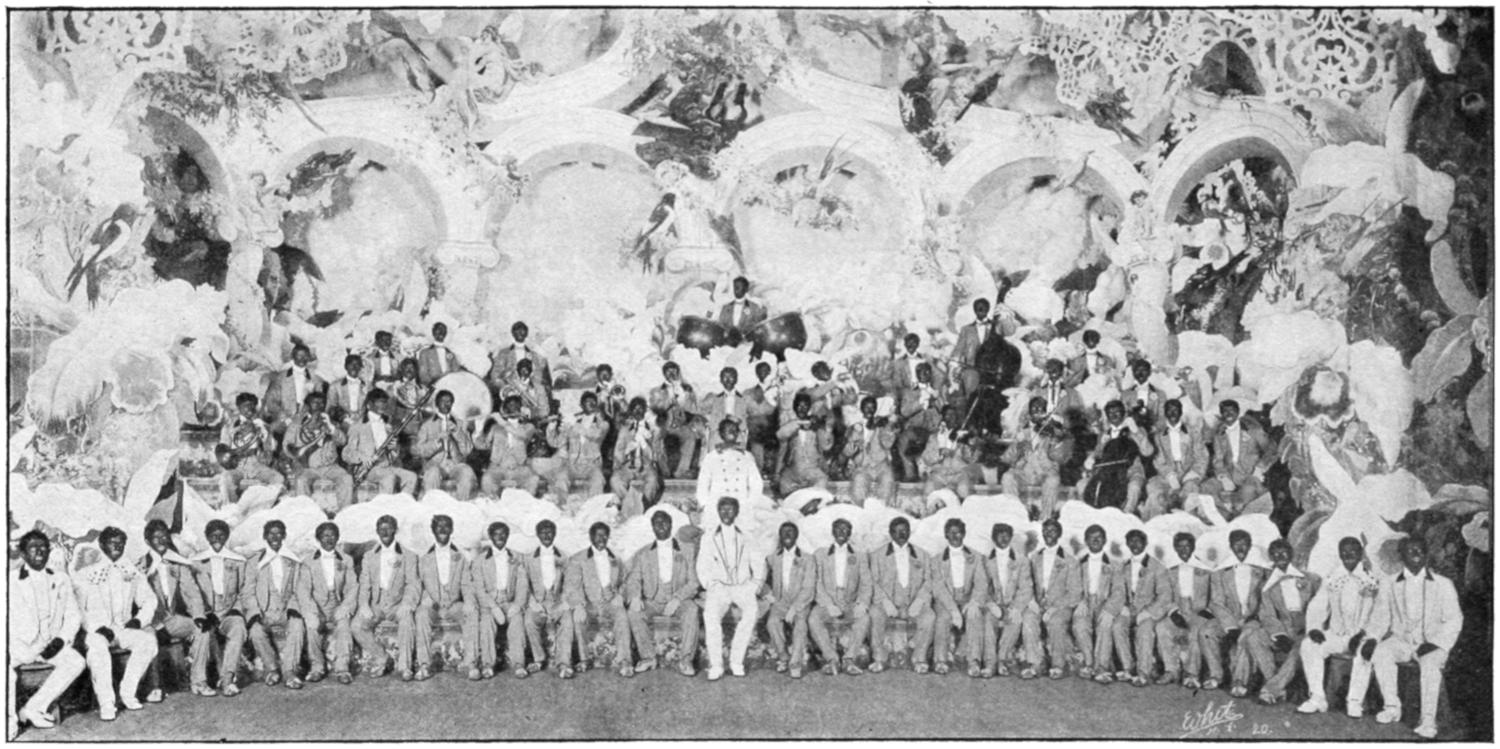
COHAN AND HARRIS’ MINSTRELS, 1908.
In addition he has shown with his merry little band at many of the bon ton clubs, notably, the Metropolitan (known as the “Millionaires”), Union League, Equestrian, at Sherry’s, all in New York City.
Also at the Tuxedo, at Tuxedo; Fort Orange at Albany, N. Y.; Algonquin, at Bridgeport, Conn.; Lakewood Club, at Lakewood, N. J., and numerous others.
Like his illustrious namesake and relative, Mr. Patti reaches for the high notes—and gets them.
Greg. Patti was born in Brooklyn, N. Y., March 23, 1866.
Boardman Carnes was one of the best known vocalists in present day minstrelsy.
He was long a member of the Quaker City Quartette, and had developed into being a fine interlocutor.
He was associated with several first-class minstrel companies, notably Al. G. Field’s, with whom he was associated at the time of his death, which occurred at Pt. Pleasant, W. Va., December 29, 1907. He was about 35 years of age.
Matt. Keefe. Minstrelsy has produced some very good Yodlers in the past; but old-timers, who should know, say that Mr. Keefe compares favorably with any of them.
If Matt. Keefe had developed into a comedian instead of a vocalist, no one would have been surprised, because the honor of having been born next door to the house Mark Twain used to live, belongs to Mr. Keefe.
He made his first professional appearance at Leadville, Colo., in 1887. Al. Fields Company was his first minstrel engagement; he was with Primrose and Dockstader, and Dockstader’s Minstrels, totaling six years.
Season of 1908-09 saw him with Cohan and Harris’ Minstrels; and for two years he was with Tony Pearl in vaudeville.
Matt. Keefe was born in Hannibal, Mo., August 13, 1867.
Edwin Guy, one of the famous Guy Brothers, has been a member of that minstrel organization many years. Mr. Guy is an eccentric comedian of unique methods.
He was born in New York, May 4, 1867.
Tierney and Wayne formed a partnership in the early 80’s, doing black-face songs and dances.
In 1885 they were with Barlow, Wilson and Rankin’s Minstrels; they continued in black-face until 1888 when they played white-face parts with “Zig-Zag.”
Mr. Wayne subsequently married Anna Caldwell, and as Wayne and Caldwell they traveled several seasons.
Mr. Wayne is still in vaudeville—with another Mrs. Wayne.
Charley Wayne was born in Ft. Wayne, Ind., August 10, 1867.
James B. Tierney died in New York, October 18, 1891; age 30 years.
John W. Early, a capable baritone singer, of late years with burlesque companies, was with Billy Rice’s Minstrels in 1897, and the following year became a member of Haverly’s Company; the last that famous manager ever exploited. Subsequently he was with Lew Dockstader’s Minstrels.
In December, 1904, Mr. Early and Miss Late formed an alliance to do sketches; since then they have been playing—Early and Late.
John W. Early was born in Dayton, Ohio, September 29, 1867.
Bert Marion (John Ryerson) made his first appearance at the old Wigwam in Paterson, N. J., 1877, playing boy parts in white-face; shortly after doing black-face songs and dances, being known as Master Ryerson.
At the age of 16 he joined forces with Dave Zimmer, doing a black-face act with him until 1890, when he formed a partnership with the late Billy Pearl, and as Marion and Pearl continued more than eight years, playing with such well-known minstrel companies as Haverly’s (Nankeville’s); Barlow Bros., Gorton’s, Cleveland’s, and two seasons under their own management with Marion, Pearl and Pendleton’s Minstrels.
After separating from Mr. Pearl, Mr. Marion formed an alliance with his wife, Sabel Dean, and as Marion and Dean have played all the prominent vaudeville houses for more than ten years.
Bert Marion was born in Paterson, N. J., August 7, 1867.
Harry “Scamp” Montgomery, well and favorably known as a capable delineator of black-face characters, with his brother Dave, now of Montgomery and Stone, appeared as one of the Montgomery Bros., the “Pullman Porters,” about 1888; a short time previous he had been with Forepaugh’s Circus. In 1889 he was with Beach and Bowers’ Minstrels, and subsequently with Crawford Bros. (Topeka, Kan.) Minstrels.
Several years ago he joined Tony Pearl in a musical act, and as Montgomery and Pearl they played all the first-class vaudeville houses, as well as many high-class combinations.
Mr. Montgomery created the negro part of Eaton Ham, in George M. Cohan’s “Geo. Washington, Jr.,” and played such other black-face character parts as Low Down Smith, in “Cape Cod Folks,” and Sylvester Q. Nightingale, in “Mary’s Lamb.” For brief periods he was “Sheppard,” of Wood and Sheppard, likewise “Bogert,” of Bogert and O’Brien; now Neil O’Brien, the great black-face comedian.
During the World’s Fair in Chicago, he was the drummer in Sousa’s Band.
The present season of 1910, Mr. Montgomery was especially engaged by Geo. M. Cohan to create the part of Abe. Gunther, in Mr. Cohan’s latest play, “Get Rich Quick Wallingford.” Needless to say, Mr. Montgomery made a decided hit—and in white face.
“Scamp” Montgomery was born in St. Joseph, Mo., April 2, 1867.
Rees Prosser sings a ballad in a manner that is entirely his own, and thereby hangs a tale; it’s a simple enough story; the answer being “He’s always engaged.”
His first appearance was in his native state, in the city of Terre Haute, as a member of the Wabash Minstrels twenty years ago. Beach and Bowers was the first professional minstrel engagement; others were Al. G. Field’s, nine years; Cleveland’s, and Dockstader’s.
June 1, 1910, “Rees Prosser” was murdered; some place in the far west. We ’uns in New York thought it was our Rees Prosser; Mr. Prosser indignantly denied that he was ever shot; north, east, south or west; and his reputation for veracity is so good that argument was unnecessary.
Rees Prosser was born in New Albany, Ind., September 13, 1867.
Waterbury Bros. made their first professional appearance with Vreeland’s Minstrels doing a straight musical act in 1892; the same year they played their first vaudeville engagement at Shea’s Music Hall in Buffalo. In 1894 they were joined by Chas. Kenna, the comedian, the act then was known as Waterbury Bros. and Kenna.
In the Summer of 1895 Ernest Tenney replaced Kenna, and as Waterbury Bros. and Tenney they have since been known.
Geo. N. Waterbury was born in New York City, December 14, 1867.
Edw. M. Waterbury was born in Stamford, Conn., May 27, 1871.
Ernest Tenney, one of the famous Tenney family who gave series of concerts some years ago, began his career as a member of the family August 6, 1882; the company comprising father, mother, sister, and four brothers, in addition to the subject of this sketch; he remained a member of this organization until 1889; engagements followed with an Uncle Tom troupe (no, reader, Mr. Tenney did not play Eva); after Tom came the Daniel Boone Company and a return to the family fold for a brief period; then an engagement with Gray and Stephen’s “Vesper Bells” Company, after which he joined Harry Whiting in a comedy musical act. In August, 1893, he joined the Four Emperors of Music, and in September, 1893, “Emperors” joined Cleveland’s Minstrels for a few months; June 15, 1895, he left Three Emperors and immediately joined the Waterbury Bros.
Waterbury Bros. and Tenney have played the principal vaudeville houses since their alliance in 1893; also engagements with Cleveland’s, Primrose and West’s, Wm. H. West’s and Cohan and Harris’ Minstrels, also two seasons with Harry Williams Company, and a season with Sam Scribner.
Weber And Fields, the famous German comedians, who for many years did all they could to disintegrate the King’s English, did a black-face act at Turn Hall, in New York, about thirty years ago.
They were each born in New York City; Mr. Weber, August 17, 1867; Mr. Fields, December 31, 1867.
Arthur C. Rigby ranks with the best of present day monologists. Mr. Rigby has a unique style of delivery, pleasant address and excellent enunciation, all of which spell success.
His first appearance was made in Paterson, N. J., as a member of St. Joseph Cadets Temperance Society, under the management of Con. Tracey. His debut professionally was made at Newark, N. J., in 1883, doing a black-face banjo solo.
A few years later Mr. Rigby made his initial appearance with a minstrel company as a member of the Gorman Bros. organization; subsequently he appeared with Cleveland’s, Al. G. Field’s and Vogel’s Minstrels.
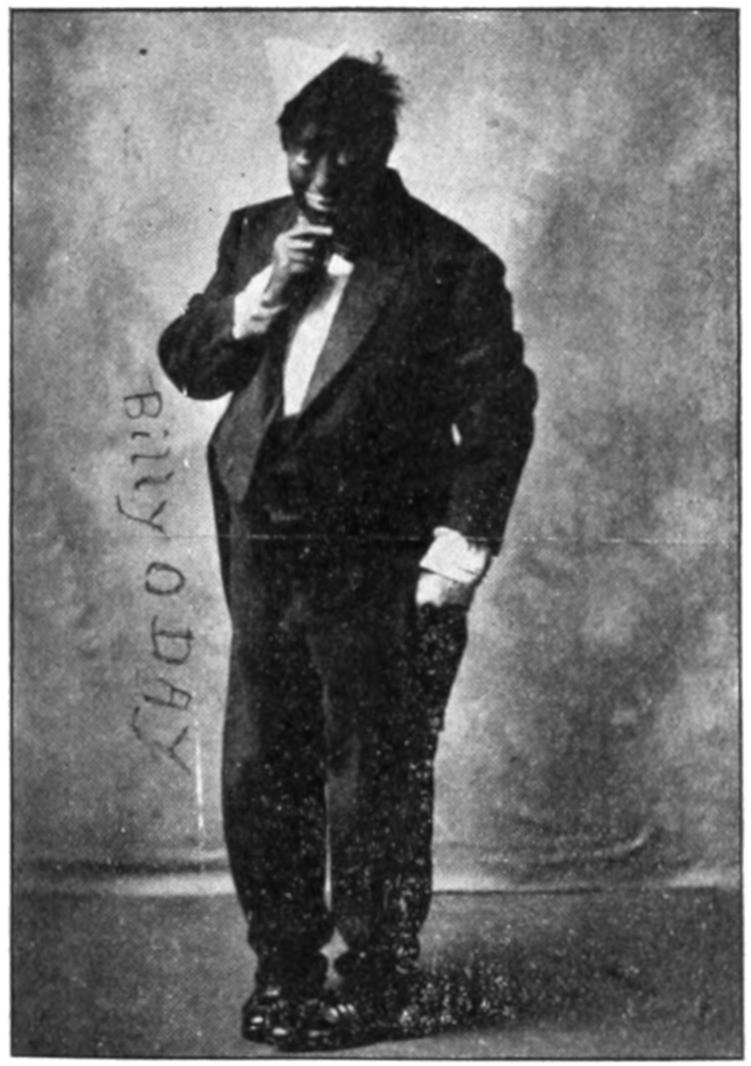
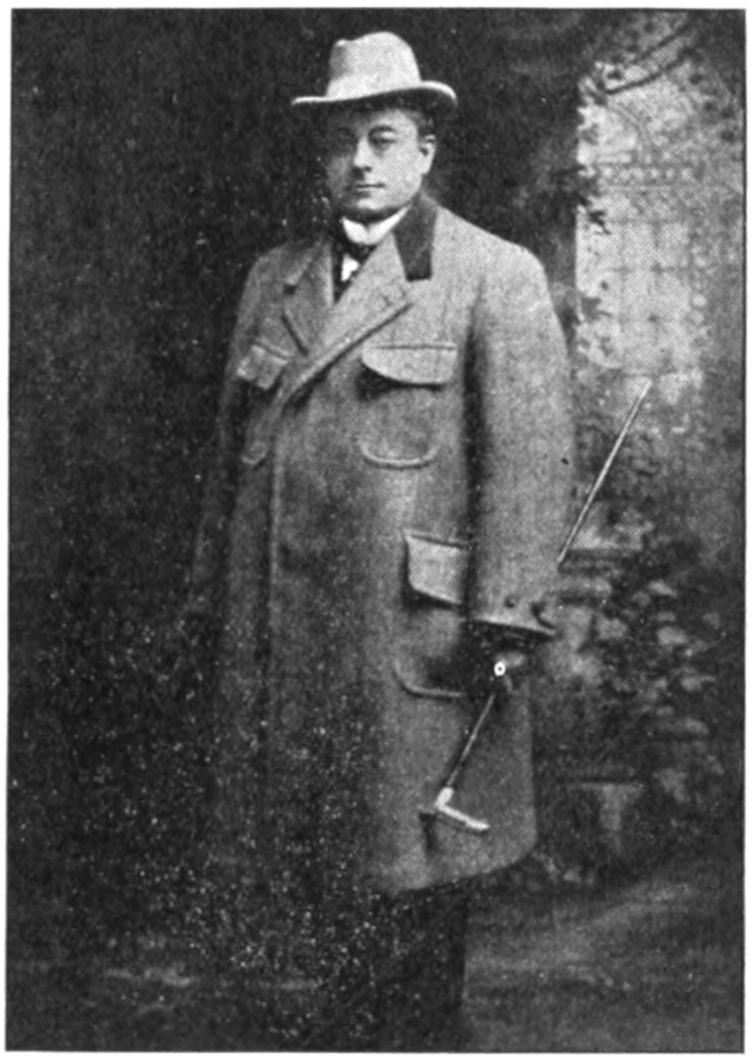
BILLY O’DAY
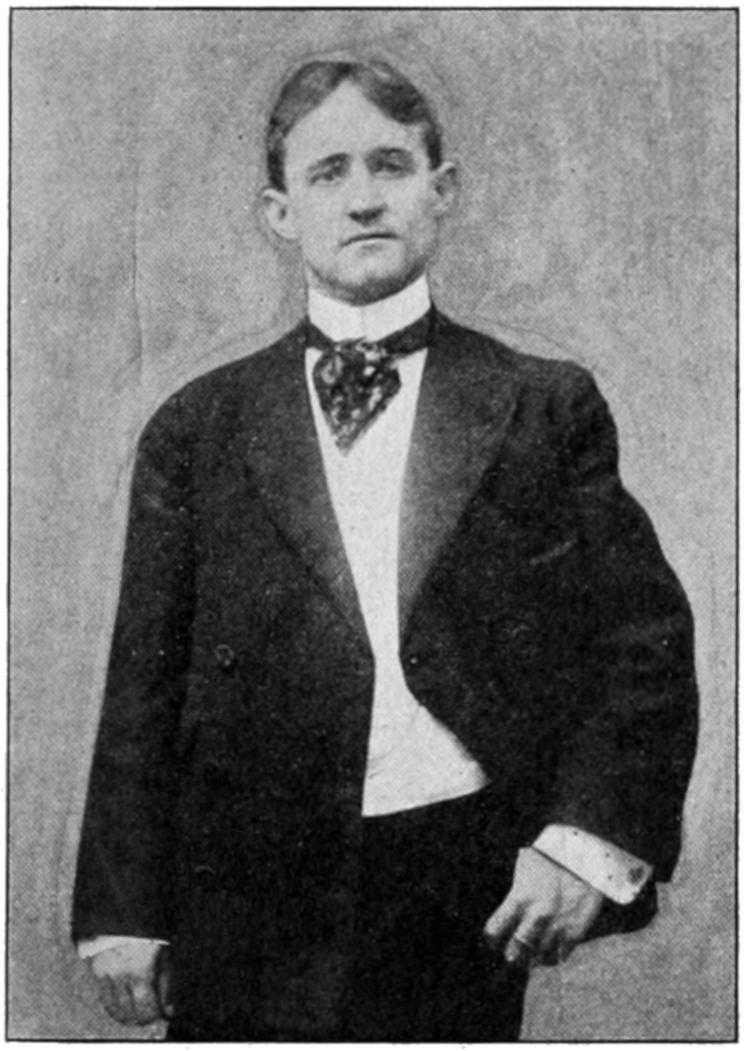
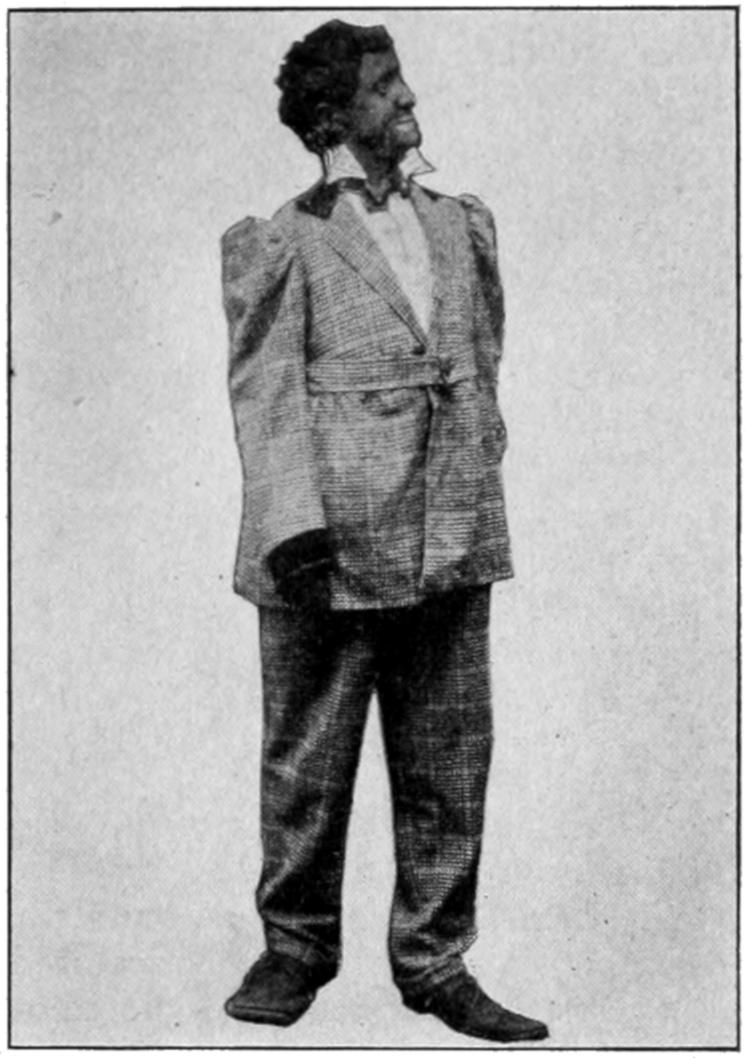
“SCAMP” MONTGOMERY
This page is the exclusive property of “Scamp” Montgomery and Billy O’Day. Trespassers will be rigidly prosecuted.
And not only that, but he played black-face parts with Joe Weber’s “Hip, Hip, Hooray” Company; “Natural Gas” and “The Rainmakers;” with the latter originating the “darky” role in the play.
Of late years Mr. Rigby’s talents have been displayed in vaudeville exclusively.
Arthur C. Rigby was born in Macclesfield, England, April 4, 1867.
Sanford B. Ricaby had his first experience in amusements as a bill-poster with Whitney’s Family Circus in 1884.
Two years later he assumed the management of the Opera House in his home town, and continued in that capacity for three years.
Subsequently he was identified with several well-known attractions until about ten years ago, when he became associated with Wm. H. West’s Minstrels; after the death of the latter, Mr. Ricaby purchased the show from Mrs. West, who had been requested by her husband to continue the minstrels with Mr. Ricaby as manager, after Mr. West’s decease.
Sanford B. Ricaby was born in Hillsdale, Mich., May 26, 1867.
Wm. D. Hall, author, actor, playwright, manager and other things theatrical, says he had a serpentine career, although never having done a dance of that name.
Mr. Hall’s stage career began as a “prodigy” at the age of ten; city, Baltimore; theatre, Odeon. Musical Comedy, drama, variety, vaudeville and minstrelsy has he also been associated with.
He wrote the life of “Dan” Emmett, the immortal composer of “Dixie” and a play for the late Ernest Hogan; he also wrote several letters to the author.
Mr. Hall began the present season of 1910 with Dumont’s Minstrels in Philadelphia.
He is a son of George L. Hall, the oldest living minstrel vocalist.
Wm. D. Hall was born in Washington, D. C., December 25, 1867.
Willie Collier (I always call him Willie), the favorite comedian, is just as funny in black-face as in white; at least he was on the night of October 12, 1896, when as a colored damsel he sang and danced in the performance of “Miss Philadelphia,” at the Park Theatre, Philadelphia.
Mr. Collier was born in New York City, November 12, 1867.
NEIL. O’BRIEN
has long ranked with the great comedians that have tended to make minstrelsy famous.
Mr. O’Brien portrays an eccentric negro of the South, a real flesh and blood darky, not an exaggerated caricature; and therein lies his success.
Indeed his depiction of the colored man is so realistic, so artistic and so natural, that in the cities wherein they are so largely represented, during the performances in which Mr. O’Brien was a contributing factor, they would invariably argue among themselves as to whom among their number the counterfeit darky of the stage was most like; it’s Henry White, one would say, while another was equally positive Mr. O’Brien was imitating Jim Jackson, both of these gentlemen named being members of their “set.”
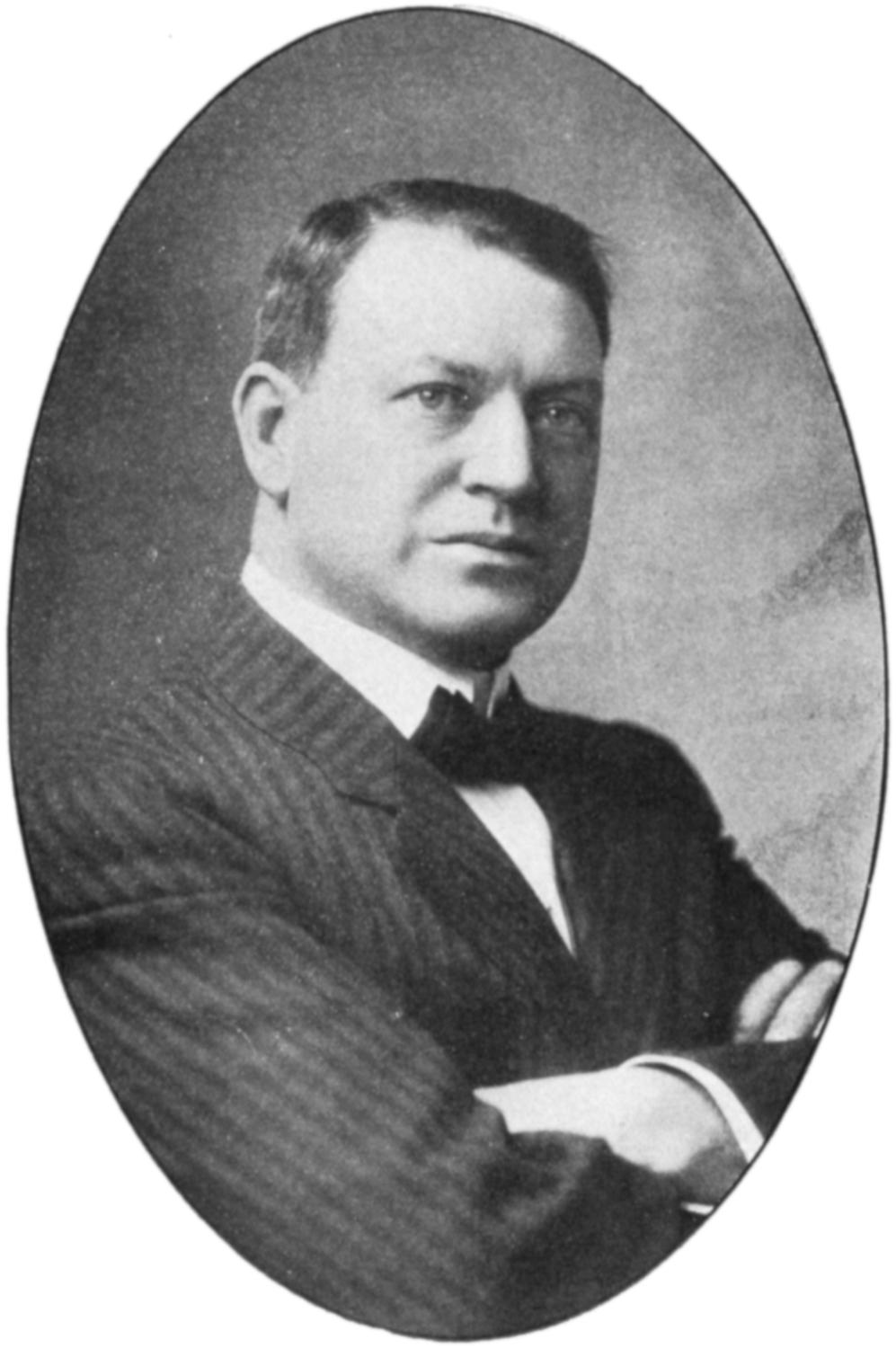
NEIL O’BRIEN.
Mr. O’Brien first appeared theatrically in 1889 with the “Student Minstrels” in Binghamton, N. Y., and nearby cities; he sat on an “end.” He later was one of the team of O’Brien and Bell; they dissolved partnership in 1891, and the musical act of Bogert and O’Brien was formed in March that year, and they continued as partners for ten years.
Mr. O’Brien was with Haverly’s Minstrels in Chicago in 1892, and remained one year; in 1898 he was again with Haverly on the last tour made by the famous manager.
Seasons of 1896-97-98 he was with Al. G. Field’s Minstrels. He joined Primrose and Dockstader’s Minstrels in 1899, and continued with them until the dissolution of the organization in 1903.
That same year he cast his fortunes with Lew Dockstader’s Minstrels, with whom he remained until the Spring of 1910. At the present time Mr. O’Brien is appearing in vaudeville with marked success in an elaborate black-face act called “Fighting the Flames;” as a raw fireman who has bought his way into the department, Mr. O’Brien is excruciatingly funny.
Neil O’Brien was born in Port Dickinson, N. Y., July 16, 1868, and enjoys the distinction of having received one of the largest salaries of any minstrel performer.
J. A. Coburn, proprietor and manager of the Coburn Greater Minstrels, has achieved considerable fame as a cornetist; to say that Mr. Coburn has blown his own horn since he was ten years old, is no reflection upon him whatever.
Before starting on his minstrel career, he was cornetist with the Elgin, Ill., National Watch Company Military Band, and others. His first professional appearance was of the musical team of Trewetz and Coburn, in 1886. Subsequently in 1890 he joined Louis Baldwin in a comedy act, and continued with the latter until his (Baldwin’s) death.
Mr. Coburn’s first minstrel engagement was with the W. S. Cleveland Company, in 1893.
Five years later he was owner and manager of the original Barlow Bros. Minstrels; subsequently known as the Great Barlow Minstrels.
Mr. Coburn rehearses and directs his own show, and has the distinction of being one of the best known men in the minstrel business.
A fine home at Daytona, Fla., is a tribute that speaks volumes for his twenty-four years in the profession.
J. A. Coburn was born in Boston, Mass., March 12, 1868.
Of Corse Payton blacked up. As a matter of cold fact, his first professional appearance was made at a county fair less than a million miles from Centreville, Iowa; Mr. Payton was the end man in a minstrel show there. Later he was with a repertoire company that acted “Uncle Tom’s Cabin;” and the report is that he played every character in the play including Eva; he only got cold feet when they insisted on his playing the “cake of ice.”
Now to be serious—the king of 10, 20, 30 played Wool, a black-face part in the “Hidden Hand” at Payton’s Lee Avenue Theatre, Brooklyn, N. Y., commencing November 4, 1901.
Corse Payton was born in Centreville, Iowa, December 18, 1867; and Centreville has never been sorry.
Eddie Horan, the well-known dancer and producer, made his first professional appearance with Thatcher, Primrose and West’s Minstrels in 1885; subsequently appearing with the following prominent minstrel companies—Hi. Henry, three seasons; Al. G. Fields, five seasons, and two years with Wm. H. West’s Company. With the exception of the first mentioned company, he was general producer for the others.
Ten years with three such organizations is a record of which Mr. Horan may justly feel proud.
Subsequently he appeared successfully with several well-known dramatic companies; after which he returned to minstrelsy with The George Primrose Co.
Mr. Horan has played vaudeville for the past few seasons.
Eddie Horan was born in Hartford, Conn.—after Lew Dockstader.
Wm. H. Hallett is well and favorably known as an interlocutor in present day minstrelsy.
His first engagement with a minstrel organization was with the Wm. H. West Company in 1896.
Subsequently he joined the Primrose and Dockstader Company, remaining three seasons, after which he identified himself with Lew Dockstader for the same period.
Mr. Hallett then forsook cork for grease paint, and for two years was with Charley Grapewin in “The Awakening of Mr. Pipp;” at the end of that period (Mr. Hallett, not Mr. Pipp) felt uneasy, and no one seemed surprised, when at the opening of the season of 1908, our rotund interlocutor was found in his accustomed place with Lew Dockstader’s Minstrels, where he remained two years.
He is now in vaudeville with Neil O’Brien.
Before his minstrel engagements Mr. Hallett was with the “Gay Debutante;” “Sis Hopkins;” and the “Daughter of Cuba.” In none of these plays did he assume the title-role.
Wm. H. Hallett was born in San Francisco, Cal., October 13, 1868.
Ned Monroe (Edwin James Pyle). Amusement seekers lost one of the very best black-face comedians of a generation when Ned Monroe forsook burnt-cork for grease paint; for one doesn’t have to be a modern Methusaleh to remember the act of Monroe and Mack.
Mr. Monroe’s first partner, amateurly speaking, was Sam Gillespie, of Philadelphia.
In the Fall of 1888 with Kellar Mack he formed a partnership, and they made their first appearance in Baltimore, as Monroe and Mack, at a joint salary of $40.00; the term “joint” does not necessarily apply to the place they played in.
Altogether the act was one of the pronounced successes of vaudeville during the decade or so they continued as partners.
After the dissolution, Mr. Monroe had various partners under the team name of Monroe and Mack. He also appeared successfully in farce, notably the “Prodigal Father,” “Johnny on the Spot,” “A Hot Old Time.”
In 1897 with Jerry Hart, he starred in the “Gay Matinee Girl.”
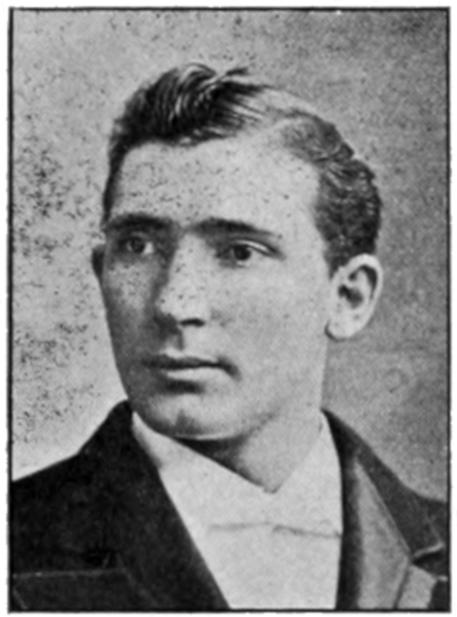
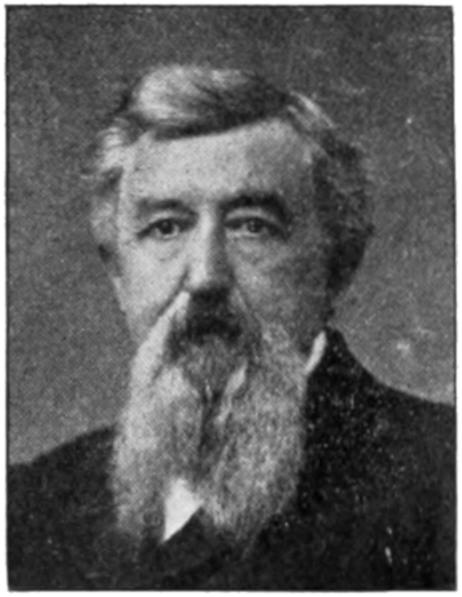
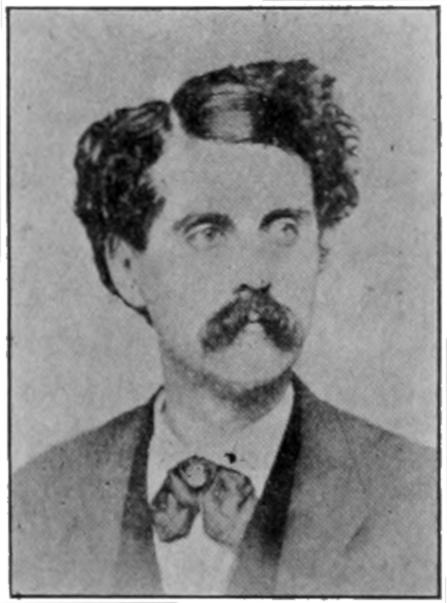
WILL H. MORTON SAM. GARDNER W. H. BROCKWAY
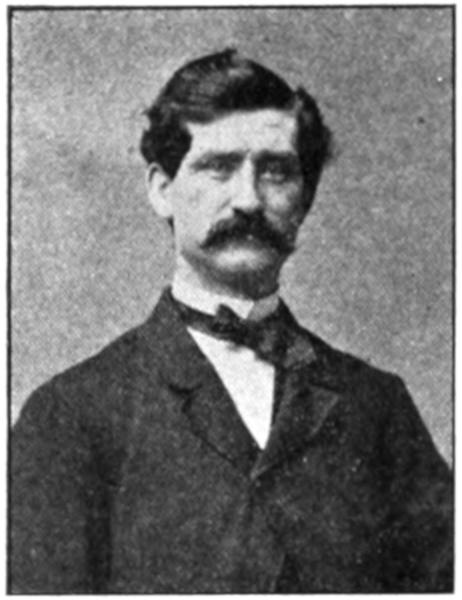
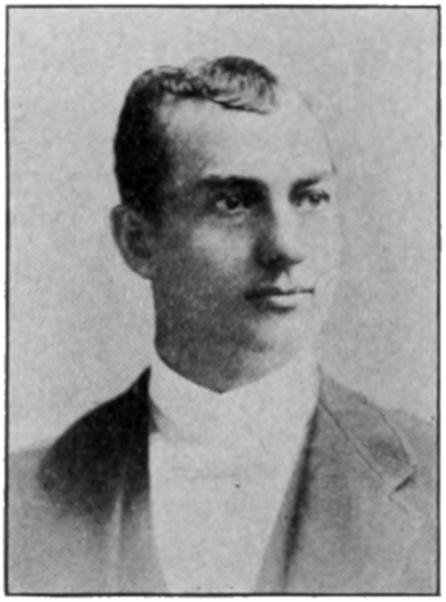
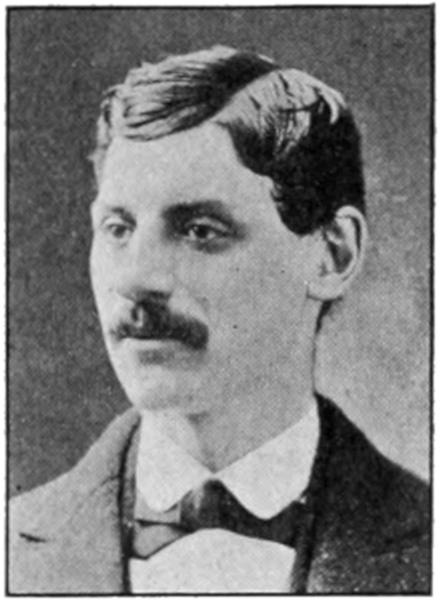
G. W. H. GRIFFIN WM. H. WEST J. R. KEMBLE
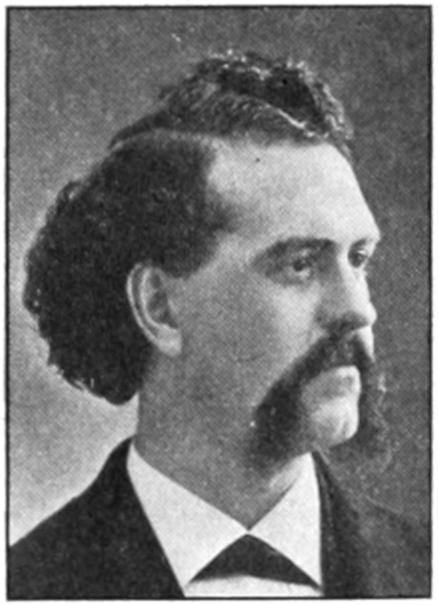
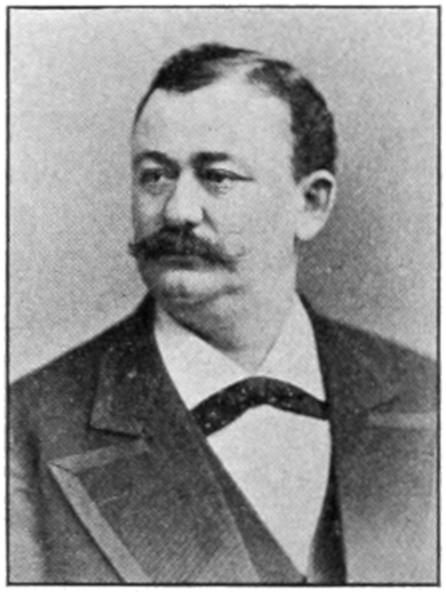
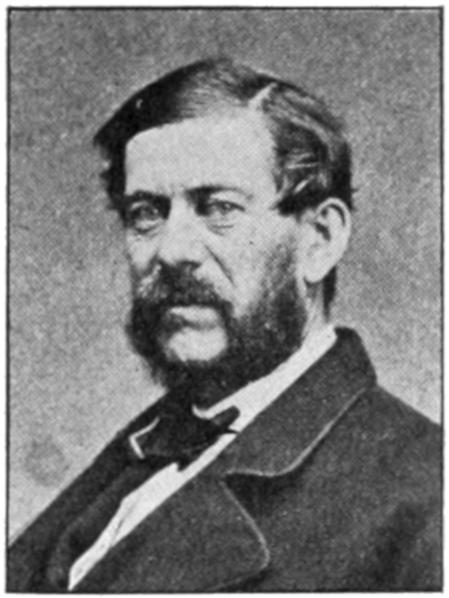
E. M. KAYNE E. N. SLOCUM SAM. WELLS
“MEN OF THE MIDDLE”; ALL PASSED AWAY.
Mr. Monroe married Fern Melrose, an actress, about 1896.
On the last day of January, 1901, he took to wife Miss Nellie Lawrence, a well-known legitimate actress, with whom he has been associated professionally practically ever since.
Ned Monroe was born in Philadelphia, January 2, 1868.
John H. King is such an excellent “rough wench” performer that his abilities as a good all-round comedian are sometimes lost sight of.
Mr. King’s first theatrical engagement was with the J. G. Stutt’s Repertoire Company; they traveled in a coach—by easy “stages”; this was in 1887, and would you believe it? Mr. King played character old men.
After this he doubled with Harry McDonald, and they played vaudeville for three years, doing a black-face specialty; then came a season with Bert Swor, under the team name of Swor and King. Mr. King afterwards joined Walter McMahon, and continued with him several years; subsequently his partner was Tim Barrett, but the team name of McMahon and King continued to be used; likewise when Frank Hammond and Mr. King were with Wm. H. West’s Minstrels in 1899. With the West (Ricaby) Minstrels he did a specialty with Fred Huber.
His last partner to date was Earl Benham; and this was “some” act. Mr. King at various times has been associated with the following well-known minstrel organizations—Haverly’s, Primrose and West’s, Hi Henry’s, Frank Cushman’s, Billy Emerson’s, Billy Rice’s, Harry Davis’, in Pittsburgh, Pa., and Cohan and Harris’. Besides Mr. King there is a queen, and two lovely young princesses.
John H. King was born in Atlanta, Ga., March 30, 1868.
Maude Raymond, the vivacious comedienne, who is always charming in everything she plays, was none the less so as Topsy in “Uncle Tom’s Cabin,” at the Academy of Music, New York, commencing March 4, 1901. When she said, “Golly, I’se so wicked,” no one believed it.
Paul Quinn began his professional career as one of the team of Quinn and Welch, doing a black-face act with Georgie Melnotte’s Female Minstrels; subsequent minstrel engagements were with Barlow Bros.; Gorman Bros., and Primrose and West. In 1891 he became a member of the Big Four, playing the principal vaudeville time, and engagements with Cleveland’s, also Dockstader’s Minstrels, also Tony Pastor’s road show. Season of 1895-96 Kennedy and Quinn played Carncross’ Minstrels in Philadelphia. In 1896 Mr. Quinn appeared for the first time in white-face.
Commencing in 1897 and for five years thereafter, Thomas and Quinn in “McFadden’s Flats,” and Halliday and Quinn in “Happy Hooligan” were under the Gus Hill banner.
In 1903 Mr. Quinn wrote and starred in “The Funny Mr. Dooley,” with Charles H. Smith and the late Frank D. Bryan, this alliance lasted three years.
He joined hands with Joe Mitchell in 1906, and as Quinn and Mitchell, they are now playing vaudeville.
Paul Quinn was born in Lowell, Mass., June 29, 1868.
Gus Sun, the present head of the big vaudeville circuit that bears his name, began his professional career as a co-proprietor of the famous Sun Bros. Circus, with which he was identified for several years. Later he organized the Gus Sun Minstrels, and was identified with it until the company closed in 1904.
On October 1, that year, Mr. Sun opened in Springfield, Ohio, the first family theatre in that section of the country. July 1, 1907, ground was broken for the new Sun Theatre in Springfield, and on November 24, same year, it was formally opened to the public.
During his active stage career Mr. Sun was recognized as a juggler of unusual ability.
January 16, 1897, Mr. Sun was married to Miss Nellie Alfredo, of Youngstown, Ohio; three children, Louise, Nina and Gus, Jr., blessed their union.
Gus. Sun was born at Toledo, Ohio, October 7, 1868.
Raymond Hitchcock, whose unique personality in musical comedy has made him a popular favorite for several seasons past, took the place of George Evans with the Cohan and Harris Minstrels, February 12, 1909, at Auburn, N. Y., during Mr. Evans’ severe illness, and finished out the season with the company. That was not the first time Mr. Hitchcock ever blacked up; away back in—but never mind.
Eddie Bogert, who joined hands with Neil O’Brien in a black-face musical act in March, 1891, was, prior to that of the team of Bogert and Henchett.
Mr. Bogert retired from the profession about ten years ago, and is now engaged in business in Binghamton, N. Y.
Tim McMahon (Barrett) was a barber in Philadelphia about fifteen years ago or so. While there he “scraped” an acquaintance with John King. The result—McMahon and King, McMahon and Chapelle, McMahon’s “Watermelon Girls” and McMahon’s “Pullman Parlor Maids.”
How’d you like to be McMahon?
Nat Wills, famous for his tramp impersonations in vaudeville, Detroit and other municipalities, gamboled (notice the spelling) at the “Lambs” Minstrel show at the Metropolitan Opera House, New York, May 31, 1909. His make-up was a dark black.
James H. Manning, of the once popular Silver Bells Quartette, of Baker Jones, Manning and Davis, with that great black-face act consisting of two males and two “wenches,” played all the first-class variety houses and were with Lew Dockstader’s Minstrels in New York, the greater time of their existence from 1886 to 1889.
The feature of this act was the wearing of a set of bells around the waists of each, and during the song and dance they played these to the air of Barney Fagan’s “Wedding Bells”; and it may be truthfully stated that a prettier song and dance “four” act has never been seen.
James H. Manning was born in Albany, N. Y., July 27, 1869.
E. W. Chipman (front name Everett) made his first professional appearance with George H. Irving’s California Minstrels in November, 1884; Mr. Chipman was the bass singer, not the base singer of the company.
After this came the Whitmore and Clark’s Minstrels and Hennessy Bros. Minstrels; then a painfully brief season with Chipman, Goss and Hyam’s Minstrels; but why dwell further?
Mr. Chipman recovered, and joined Barlow Bros. Minstrels and remained with them as interlocutor for five years; he also sang.
Subsequently he played engagements with George Arlington’s; Deming, Sweet and DeCourcey’s “A Stranger” Company; two seasons with Cleveland’s; Gus. Sun’s, three seasons; Wm. H. West’s, and Ed. Bartlett’s California Minstrels.
It was while with the latter organization that Mr. Chipman conceived the dark design of becoming a burlesque manager; this was in Nyack, N. Y., December, 1898.
In 1905 he was manager of the Colonial Theatre, Lawrence, Mass.; likewise did he manage for Rice and Barton’s Burlesque Company, two seasons; same period for T. W. Dinkin’s “Innocent Maids” Company; Ginger Girls and other girly girly companies.
Altogether Mr. Chipman was twenty-one years in minstrelsy; nineteen of which he sat in the middle.
E. W. Chipman was born in Lynn, Mass., March 13, 1869.
Fulton Bros., the “Two Dromios of Minstrelsy,” so called because of their similarity in general make up on the stage.
Their careers began in the early 80’s as stars of their own organization, the Fulton Bros. Minstrels, playing in the South, the tour was under the direction of their father.
They subsequently in conjunction with Edwin Warren formed the “Orion Trio” and produced with much success in vaudeville the Fulton Bros. trick-house act called “A Hot Chase.”
The brothers first important minstrel engagement was with Lester and Allen’s Minstrels in 1885; afterwards they were prominently identified with such high-class organizations as Thatcher, Primrose and West’s; Haverly-Cleveland Company and George Wilson’s. With the latter company they worked with Hi Tom Ward; the alliance was known as Fulton Bros, and Hi. Tom Ward.
With George Wilson’s Minstrels they put on the big song and dance numbers.
A few years ago the brothers separated for business reasons, William going into vaudeville, and James, possessing executive abilities equal to his terpsichorean talents, accepted the managerial position with the Golden Crook burlesque company five years ago, and has been with it ever since.
James C. Fulton was born in New Orleans, La., December 17, 1869.
Wm. T. Fulton was born in Pass Christian, Miss., October 12, 1871.
Keller Mack (Wm. S. Keller) formed a partnership with Ned Monroe in the Fall of 1888, doing a black-face act at the Baltimore Museum, Baltimore, Md.; as Monroe and Mack they played together until 1896; giving one of the very best black-face acts ever seen in vaudeville.
Mr. Mack’s playing of the “straight” in the act ranked with the best.
After the dissolution, Mr. Mack played for three seasons in “Town Topics,” doing comedy character parts in white-face; then a season as Finnegan, in “Finnegan’s Ball,” after which he rejoined Monroe, and the team duplicated their former successes, playing Koster and Bial’s in New York City for thirteen consecutive weeks; the partnership finally ceased a year later in Los Angeles, Cal. Mr. Mack again returned to farce, and played a white-face character part in “A Hot Old Time,” and Jonah, in “A Brass Monkey”; this was followed by two seasons in vaudeville with Tom Dempsey, under the name of Dempsey, Mack and Company.
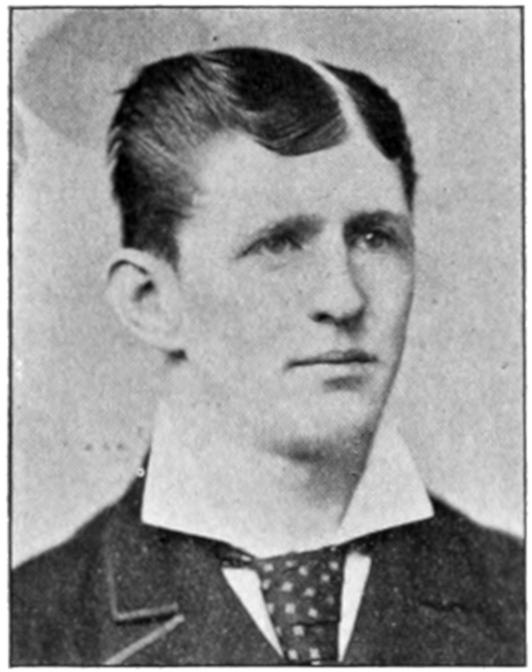
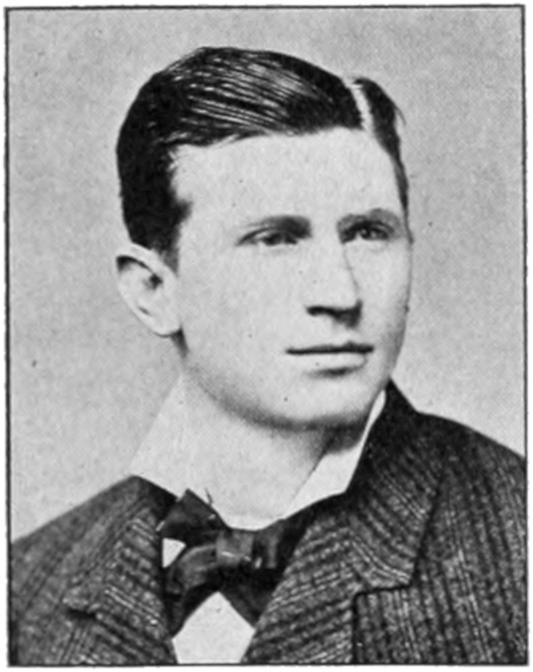
MORT. EMERSON WILLIS CLARK
(EMERSON & CLARK.)
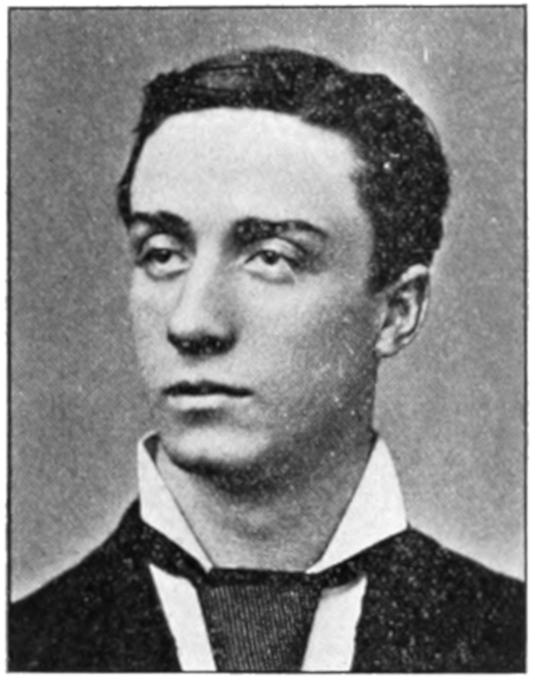
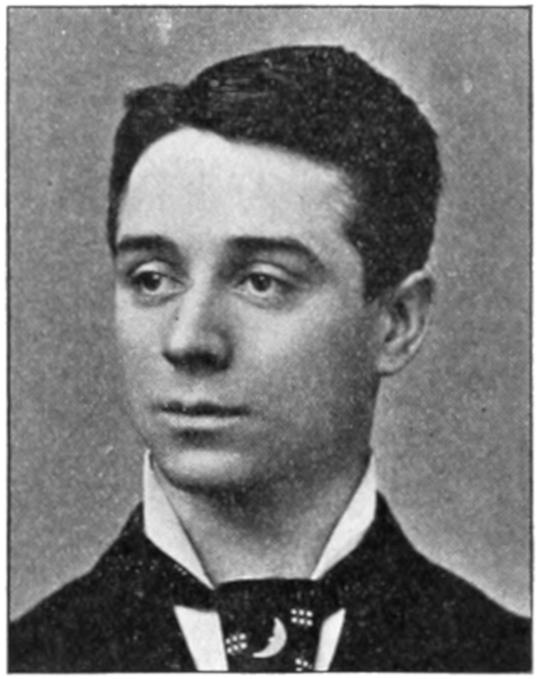
BILL. DALY TOM. DALY
(DALY BROS.)
(The above four were known as the original King High Kickers.)
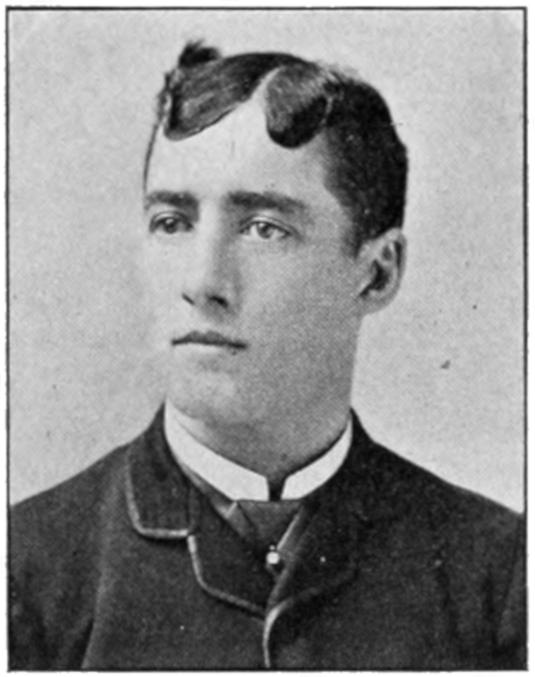
FRANK DU RELL ED. DU RELL
(DU RELL TWIN BROTHERS.)
Following this, Mr. Mack played the leading comedy part in “A Stranger in New York” and in “A Trip to Chinatown” he played Ben Gay.
After this Mr. Mack returned to black-face, doing principal end with Quinlan’s Minstrels; when this company disbanded, he joined hands with Dan Quinlan, playing as Quinlan and Mack until 1910.
Beyond a doubt Keller Mack is one of the most versatile performers we have; playing straight or comedy, black or white with equal success.
Keller Mack was born in Philadelphia, July 10, 1869.
Richard J. Jose. Never in the annals of minstrelsy has any singer met with more phenomenal success than that achieved by the subject of this sketch.
Mr. Jose came to this country as a boy, and shortly after secured a position as blacksmith in Reno, Nev., where he remained several years. Mr. Jose while at work was always singing, and his phenomenal voice, a pure contra tenor, attracted marked attention.
His first professional appearance was with Charley Reed’s Minstrels in San Francisco, March 2, 1886. He remained with Reed until the season ended, April 10, following. A few weeks later he joined Birch and Cotton’s Minstrels for a brief road trip.
In September, 1886, he joined Lew Dockstader’s permanent minstrel company in New York; here he remained about three years. George Thatcher’s Minstrels and Tuxedo Company had his services for two years.
Mr. Jose next engaged with the “Old Homestead,” and continued for eight years with that time-honored favorite; after which he again returned to his first love and joined Wm. H. West’s Minstrels, with whom he was a feature for three years. His last appearance in minstrelsy was with his own company about 1901 or 1902.
Subsequently he has devoted his talents successfully to vaudeville and dramatic work.
Mr. Jose makes a feature of singing the old minstrel ballads. In December, 1909, he produced a play written around one of these old favorites, entitled “Silver Threads Among the Gold.”
Richard J. Jose was born in Cornwall, England, June 5, 1869.
William H. Thompson began his minstrel career in Chicago with “Kelly and Leon’s” Minstrels in 1889.
The following year he was with Cleveland’s Minstrels, and from 1890 to 1893 he was with Primrose and West’s Minstrels. He then formed an alliance with Fred Oakland, and for four years Oakland and Thompson performed in the principal music halls of London and the provinces, in a great singing act.
Mr. Thompson returned to the United States in 1897, and rejoined Primrose and West’s Minstrels for the season. Practically all of the ensuing time until 1910, when he formed an alliance with Will Oakland, has been with the companies of Primrose and Dockstader, and Lew Dockstader.
Mr. Thompson is concededly one of the foremost baritones in minstrelsy.
W. H. Thompson was born in Liverpool, England, October 28, 1869.
John L. Sullivan, the former champion pugilist, was the principal feature of the Lester and Allen’s Minstrels, season of 1885-86.
Mr. Sullivan appeared in classic statuary poses; also New York, Brooklyn and Philadelphia.
Geo. Beban began—in minstrelsy. He had to begin somewhere. Away back March 19, 1883, in San Francisco at the Standard Theatre, he was with Emerson’s Minstrels.
The closing burlesque was “Pinafore”; and the man who can look and talk like Napoleon—before Waterloo—was one of the “rapturous maidens.” O! George, aren’t you awful.
Ed. Latell, the well-known comedian and banjoist, made his first professional appearance at the Bella-Union Theatre in San Francisco, in 1887. He subsequently was a feature of Cleveland’s, and George Wilson’s Minstrels.
Mr. Latell is no longer a minstrelite, but a vaudevilleite. He was born in Los Angeles, Cal., about 1869.
Billy Gould (Wm. J. Flannery), the brilliant versatile comedian, now once more of the well-known pair, Gould and Surratt, was a Madrigal Boy with “Emerson’s Minstrels” in San Francisco in 1883.
Mr. Gould was married to Nellie Marietta Burt at Hurley, Wis., March 24, 1889; subsequently he became the husband of Valeska Surratt.
Mr. Gould was born in New York City, May 1, more than forty years ago, but not more than forty-five.
George Evans, famous the country over as the “Honey Boy,” so called from the fact that he was the author of the famous song “I’ll Be True to My Honey Boy,” has the distinction of being one of the youngest minstrel comedians heading his own organization.
His first appearance was at Balser’s Music Hall, Canton, Ohio, in 1891, as a member of the Columbia Quartette; subsequently with Edwin Mayo’s “Silver Age” Company he was one-fourth of the Southern Quartette.
Like many other good performers, Mr. Evans had his experience with medicine shows, one of which was the “East India Moon Plant” Company; he left this organization because he felt that the title of the company was not dignified enough, nor in keeping with his manifold talents.
After some scouting he joined “Bamboo, or the King of Trampiana.” Mr. Evans is not a proud man, but he was sure that his ambitions could be better realized with this show; and he felt so for four days, when the “King of Trampiana” tramped—some place or other, Mr. Evans never exactly found where.
This near-tragedy occurred in St. Louis, Mo., and Mr. Evans soon found himself at the Southern Hotel, in the Mound City. Is there any opening here? quoth our hero; there was; one of the bell hops, having acquired a competence after six consecutive weeks of faithful service, had given notice, and George was installed in his place, and remained—until his uniform had been paid for.
Mr. Evans’ first minstrel engagement was at the Casino, with Haverly, in Chicago, 1892; he remained several weeks, and about January 1, 1893, he joined Cleveland’s Minstrels; subsequently he was with Primrose and West’s Minstrels, and in 1894 he returned under the Haverly banner.
Shortly after this he launched forth as a singing comedian in vaudeville, and as such continued for several years.
In musical comedy he starred in “The Runaways,” and “The Good Old Summer Time,” in which he appeared in white-face.
July 27, 1908, at Atlantic City, N. J., he opened with Cohan and Harris’ Minstrels at the inaugural performance, heading the company.
About March, 1910, at Newark, N. J., Mr. Evans became sole owner of the organization.
He is the author of several popular songs, notably—“Standing on the Corner, Didn’t Mean No Harm;” “Come Take a Trip in My Airship,” and “Down Where the Watermelon Grows.”
George Evans was born in Pontotlyn, Wales, March 10, 1870.
Billy S. Clifford, whose impersonations of the “chappie” have made him famous the country over, made his first appearance with Hi. Henry’s Minstrels in 1882, as a drummer, and a black one. The next season he was one of the song and dance men with the Barlow, Wilson Company Minstrels; following this came engagements with Robinson’s Circus, and Miles Orton’s Circus, appearing in black-face songs and dances.
In 1888 Mr. Clifford joined George Fuller Golden, and as Golden and Clifford they did a black-face song and dance act for two years, stopping only for meals and sleep.
In 1888 he joined Al. G. Field’s Minstrels as an end man and comedian; it was here that he conceived the idea of the stage dude, which he did in black-face, and which has ever since been part and parcel of his performances.
Mr. Clifford made his first appearance in white-face about twenty years ago, since which time he has starred successfully in “Courted Into Court”; “The Jolly Baron” and many others.
He married Maud Huth, July 28, 1891, at Buffalo, N. Y.
About six years ago he built and has since conducted the Urbana Theatre, in his native town.
This season Mr. Clifford stars in “The Girl, the Man and the Game.”
Billy S. Clifford was born in Urbana, Ohio, January 24, 1869.
The famous Freeze Brothers, Larry and Billy, had the distinction of being the champion tambourine spinners of the world.
They made their first professional appearance at Newton’s Varieties, in Hartford, Conn., in 1879, doing a plantation song and dance; at that time they were the youngest black-face team before the public.
The idea of the double tambourine spinning act originated in the fertile brain of their brother, John Freeze, well known as the manager of the Opera House in the hustling little town of Rockville, Conn.
The brothers put on amateur minstrel shows in their home town, and their specialty was constantly improved upon by Billy Freeze until it attained the state of perfection vaudeville and minstrel lovers know so well.
In 1885 they played their first minstrel engagement with Hi Henry’s Company; the two succeeding seasons they were with Lucier’s Minstrels, while the season of 1888-89 saw them with the Van Derveer’s Minstrels. Then came three consecutive seasons with Vreeland’s Minstrels.
After this, five years of vaudeville, followed by a season with Primrose and West’s Minstrels, commencing in 1897; the next season they were with Wm. H. West’s Minstrels.
BARNEY FAGAN R. M. (“DICK”) CARROLL
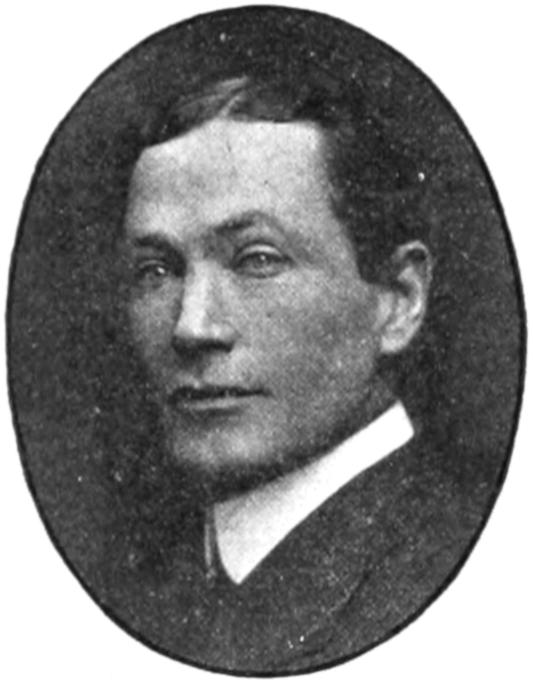
TOMMY HYDE EDDIE HORAN
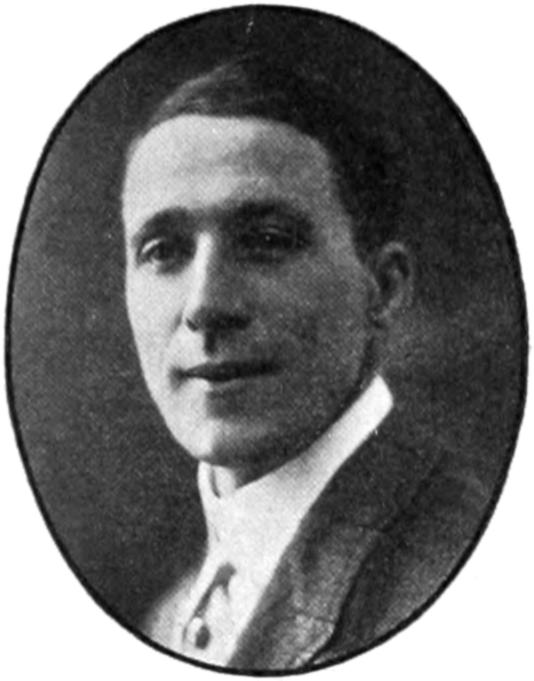
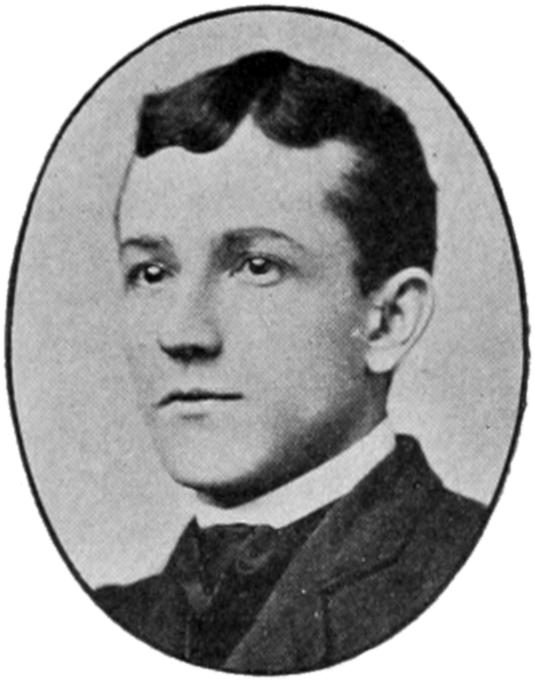
JOHNNY DOVE WILLIS PICKERT
SOME REAL DANCERS.
About 1900 they were engaged with the Barnum and Bailey Circus as a feature of the concerts; they played Russia, Austria, England, France, Holland, Hungary and other European States. In Paris the brothers played eighteen weeks at the Olympia. Their last joint engagement was with Cohan and Harris’ Minstrels, 1908-09.
Larry Freeze was a dancer of more than ordinary merit. After his death, his place was taken by his brother Frank, whose funny antics as a clown have won him considerable recognition.
Larry Freeze was born in Rockville, Conn., October 29, 1872; he died April 6, 1909.
Billy Freeze was born in Rockville, Conn., December 25, 1870.
Julius P. Witmark. It will doubtless be news to many of this gentleman’s friends to know that his career began as minstrel singer just twenty-seven years ago, when as the “boy soprano” he made his bow before a New York audience with Billy Birch’s San Francisco Minstrels, August 27, 1883; this was in what was until recently known as the Princess Theatre.
A brief respite after this engagement, and he next appeared as a “Madrigal Boy” in Gus Williams’ “One of the Finest;” he was also a “Madrigal” with Lawrence Barrett’s “Francesca di Rimini” and M. B. Leavitt’s Minstrels.
Going to the Eden Musee in New York City after this, for a series of six children’s concerts, on Saturdays only; his success was so great, that the engagement was extended for eight months.
He joined Thatcher, Primrose and West in the Spring of 1885, and the following season of 1885-86, he was also with this company.
Mr. Witmark then eschewed theatricals for about two years, when his voice, then changed into a baritone, procured him a position with Billy Emerson’s Minstrels in San Francisco, where he remained six months, after which he rejoined Thatcher, Primrose and West early in 1889; this was his last minstrel engagement.
Subsequently he met with much success in such famed organizations as “A Pair of Jacks,” “City Directory” and “A Trip to Chinatown”; he was also very successful in the brief vaudeville engagements he played.
Julius P. Witmark was born in New York City, September 19, 1870.
Montgomery and Stone, who achieved fame as the Tin Woodman and the Scarecrow in “The Wizard of Oz” as well as “The Red Mill” respectively, and subsequently “The Old Town,” made their first joint appearance with Haverly’s Minstrels at New Orleans, February 16, 1895. Later they did a great song and dance act for several seasons, appearing in black-face as real gallus coons.
About ten years before they formed a partnership, Mr. Stone played Topsy in “Uncle Tom’s Cabin”; he was the best Topsy in the show.
Dave Montgomery was born early in 1870.
Fred. Stone was born later.
Billy B. Van (Wm. Webster Vandegrift), the famous “Patsy” comedian, was a member of the “California Minstrels” (not the originals) during the season of 1882-83.
The man who owned the show also owned a bird and fish store (live birds and fish); well, anyway, the “tour” suddenly closed in Mechanicville, N. Y.; Mr. Van not being a mechanic, could get no work in that prosperous little town, and sadly wended his way to New York, where the “manager” agreed to pay Van on his arrival in the metropolis; he did. Van’s “salary” was two canaries, ditto goldfish and one Belgian Hare.
Mr. Van had plenty of hair at that time, so one more made little difference to him; being Friday, he ate the fish, and presented the canaries to a cat who promised to take good care of them. Mr. Van has used grease paint ever since.
Clarence Marks. Whether Mr. Marks’ name and fame will be handed down to posterity as a vocalist or a comedian, time alone can tell.
His first professional appearance was made with a circus in 1888.
In 1897 he joined the Irene Myers Stock Company, where for about six years he appeared in varied characters, including a “stag” after the show one night in Wilkes-Barre, Pa., in September, 1903, Dan Hart presiding.
Mr. Marks’ first appearance in minstrelsy was with the Quinlan and Wall Company in 1904; subsequently with the following well-known organizations—Culhane, Chace and Weston’s; Primrose’s; Dockstader’s; Murphy and Gibson’s; Wm. H. West’s (Ricaby’s); and Dumont’s in Philadelphia.
Season of 1909-10 he was with the George Evans’ Minstrels. One night the “Honey Boy” came back on the stage with tears in his eyes (that being the regulation place to have them); “I’m short an end man,” said the newly-made minstrel magnate, “who will volunteer?” “I will,” said little Clarence; and he did, and for the balance of the season Mr. Marks’ ponderous bass voice told every one of the trials and tribulations of one Casey Jones. And so our story ends. But Mr. Marks is still a “Honey Boy.”
Clarence Marks was born in Philadelphia, December 12, 1871.
Jas. J. Corbett, pugilist, actor and vaudevillian, made his first appearance in black-face as a member of George Evans’ Minstrels at Plainfield, N. J., August 10, 1910. Mr. Corbett as interlocutor, was a splendid success.
He commenced an engagement at the City Theatre, New York, August 13, 1910, and says, “he will come back.” But will he?
Geo. W. Chirgwin, the “White Eyed Kaffir,” is one of the most popular of England’s black-face performers.
His first bid for fame was made about thirty years ago singing the “Blind Boy.”
A few years ago Mr. Chirgwin played an engagement in the United States, where he made many friends.
Bert Swor, of the Swor Bros., made his first appearance with Haverly’s Minstrels in Chicago, doing a song and dance with John King. This was followed by ten years of stock work.
Subsequently he played engagements with Haverly’s (Nankeville) also Wm. H. West’s (Ricaby) Minstrels.
Two seasons in “The Wizard of Oz” and a return to vaudeville in a black-face act, depicting Southern scenes.
Bert Swor was born in Memphis, Tenn., January 9, 1871.
FRANCIS WILSON AS A MINSTREL MAGNATE.
Kansas City, June 30, ’77.
Ed. Clipper:
Dear Sir—We left Philadelphia May 21 last, for a Western trip, and somehow we wish we hadn’t.
We left the main road at Sedalia, Mo., for the lead mining districts of Missouri, being directed thither by “parties who knew” we would there find a bonanza. We didn’t.
The recent heavy rains had made the mines unfit to be worked, and the miners were very poor. Prospects, notwithstanding this, were very good at Galena and Empire City, and to them we turned our faces, full of hope, but the sudden “taking off” of the notorious Tiger Bill by a “companion in arms” on the day of our arrival, was a topic that must needs be discussed in the open air, so the minstrels did not thrive.
We are a most harmonious little concern, and our gentlemanly deportment is, everywhere we have seen, the topic of conversation. We receive daily very flattering and eulogistic notices from the papers, and have yet to see one dissenting criticism. We are perfectly independent, and under such little expense that we move anywhere with a very moderate income, and without any serious embarrassment. It is a great source of comfort to us to know that, but a trifle over a month old, we have outlived some much older concerns. We had no difficulty in obtaining the Clipper even in Joplin and Short Creek.
Our company consists of Mackin and Wilson, Chas. Sutton, “Bernardo,” J. H. Stout, Levino Bros. and Prof. Froude and orchestra.
Respectfully yours, F. B. W.
Chas. W. Milton, a well-known comedian who was known as the “Mansfield of Minstrelsy,” died in Milledgeville, Ga., November, 1909; age 39 years.
Barney Gilmore, Irish comedian, good fellow and matinee idol, did a black-face turn with Billy Kinsley in Philadelphia in 1888. Mr. Gilmore modestly admits that Schoolcraft and Coes did an act superior to Gilmore and Kinsley.
“Stuart” (Everett Stewart), who has achieved international fame as the “Male Patti,” began his professional career as a singer with McIntyre and Heath’s Minstrels in Springfield, Mo., in the Fall of 1887. And this is how it happened—“Tom” Heath sauntered into the Post-office at Wichita, Kan., one morning, just twenty-three years ago, and inquired if there was any mail for McIntyre and Heath’s Minstrels? Yes, indeed, there’s lots of letters for the minstrel boys, said a real gentlemanly voice back of the window. The deed was done, and a few days later, Stuart “blacked up” for the first time in his life.
It was certainly a coincidence, that the boy who had daily for many weeks answered inquiries concerning missives that were not forthcoming, should sing, “The Letter That Never Came.” Mr. Stuart also began an engagement at Emerson’s Minstrels in San Francisco, August 6, 1888. And thus it was that the mail clerk became the “Mail Patti.”
And that is the story of “Stuart.”
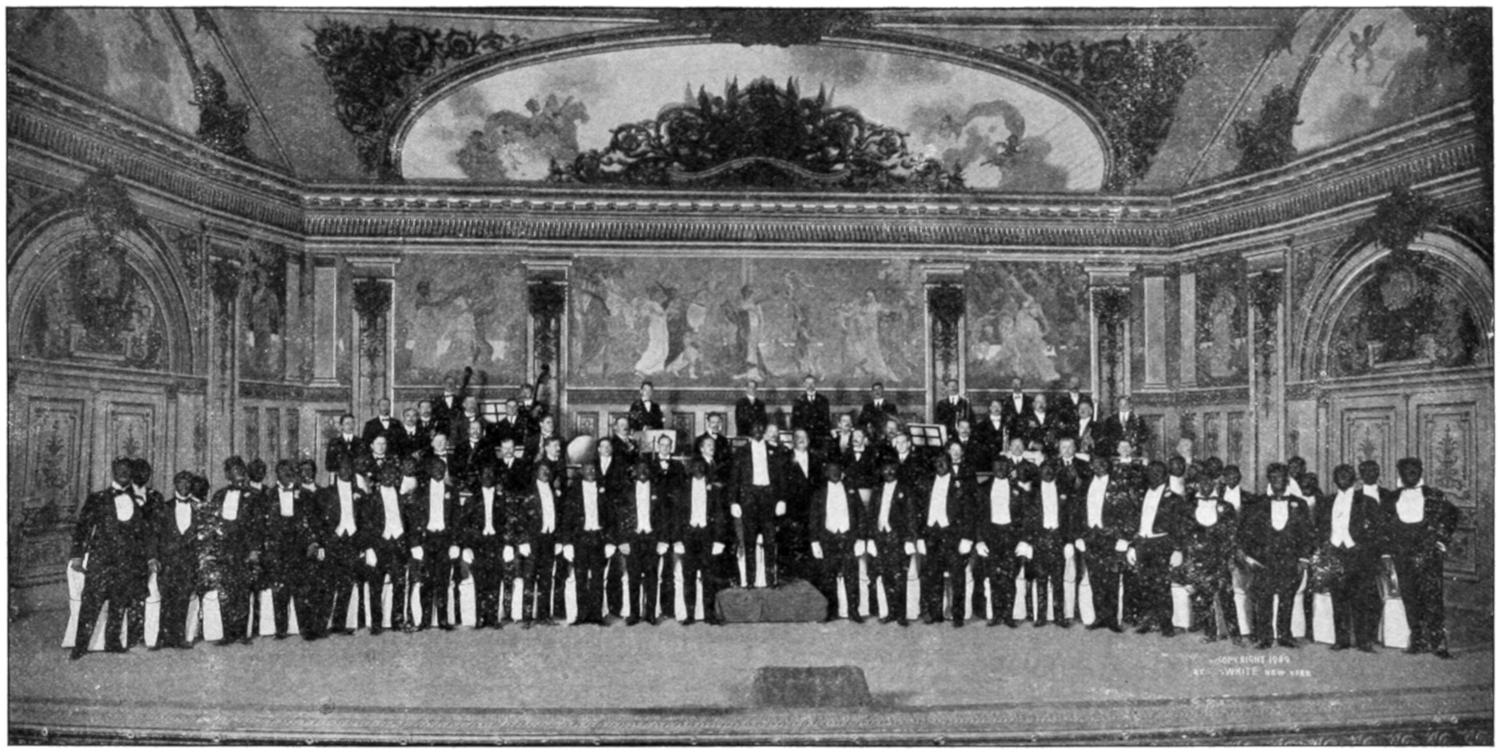
Courtesy of White Studio, New York
FAMOUS MINSTREL FIRST PART OF THE “LAMBS” CLUB, METROPOLITAN OPERA HOUSE, NEW YORK CITY, MAY 31, 1909.
Geo. Fuller Golden, the famous founder of the White Rats of America, and one of the most intellectual performers that ever graced the vaudeville stage, did a black-face act with Billy S. Clifford from 1888 to 1890.
Edna May Spooner, the favorite emotional actress, whose popularity seems to know no bounds (especially in Brooklyn, N. Y., and Centreville, Iowa), played Topsy in “Uncle Tom’s Cabin” more than once; but if you want a date, here it is—Bijou Theatre, Brooklyn, N. Y., March 21, 1910. And how she did play it!
Bert Leslie, the slick slangster of several successful seasons, joined the Kickapoo Medicine Company No. 8, in November, 1892, doing a black-face specialty, in Tamaroa, Ill. Mr. Leslie attributes his present good health to the fact that he never took any of the medicine he was surrounded with; he says every time a bottle was sold it always made him “gag.”
Bert Leslie (Wm. Albert Johnston) was born in Dubuque, Iowa, May 6, 1871.
Walter McMahon, of the original team of McMahon and King, was also associated professionally with James Snider.
After separating from Mr. King he worked with his wife, under the team name of McMahon and Kingsley.
He died in Butte, Mont., December 22, 1899; age 27 years.
Arthur Leopold Guy is the junior member of the famous Guy family.
He made his first appearance with his relatives in Cohoes, N. Y., in 1876, at the immature age of four years.
Young Mr. Guy was always ambitious, and seventeen years later was qualified to vote. His debut was made in white-face, as a singer; subsequently developing into a comedian of unusual ability.
Mr. Guy early showed executive talents, and it was no surprise to his friends when on February 22, 1909, he organized and produced what he claims to be the originator of—giving a complete minstrel performance in vaudeville.
Six years previous to this, however, he organized Arthur L. Guy’s Novelty Minstrels.
Arthur Leopold Guy was born in New York City, January 26, 1872.
Manuel Romain is the happy possessor of one of the most pleasing tenor voices in minstrelsy, and has the faculty of using it to the very best advantage.
In 1893 he made his bow to a minstrel audience in New York, with Primrose and West’s Company. In 1895 he was with Cleveland’s Minstrels, subsequently playing extended engagements with Primrose and Dockstader’s, and later Dockstader’s Minstrels.
In 1907 Mr. Romain entered the vaudeville field with an elaborate production entitled “Down in Music Row,” and met with flattering success. Two years later he produced “Before and After the Ball,” which, if possible, achieved even greater success than its predecessor.
Manuel Romain was born in Cambridge, Mass., October 1, 1872.
Will F. Phillips, whose clever portrayal of light comedy roles in “Havana,” the “Top O’ the World” and other Broadway successes, the past few years has brought him such deserved success, was a member of a stingy troupe with the explanatory title of the “American Minstrels,” in 1887.
The company was sans band, sans five dollars collectively and sans nearly everything that could be sansed. They arrived in Haverhill, Mass., the same day as the Thatcher, Primrose and West’s Company, and when the latter made their noonday parade, the “American Minstrels” acted as trailers. Strange to relate, the T. P. & W. show did the business on that memorable, never-to-be-forgotten evening.
Will F. Phillips was born in Albany, N. Y., October 31, 1873.
Eddie Mazier is one of the cleverest of the latter-day minstrel comedians; for a performer who can sing and dance equally well, and tell a story in such a way as to bring out its best points, is certainly clever; and such is Eddie Mazier.
His first appearance was as one of the team of Cain and Mazier, at Youngstown, Ohio, doing a black-face song and dance; the alliance lasted two years.
Other partnerships were—one year as Morgan and Mazier; Wright and Mazier, three years, and Mazier and Conley, three years.
Mr. Mazier was with Haverly’s (Nankeville’s) Minstrels, four years; two seasons with Primrose’s Minstrels, and with Lew Dockstader’s Minstrels 1908-’09-’10-’11.
Eddie Mazier was born at Niles, Ohio, March 14, 1873.
Harry C. Shunk began his professional career with a repertoire company in 1887. He had to begin it sometime; and as 87 rhymed with Heaven and 7-11, there was no trouble in reaching a decision.
In 1890 he joined Beach and Bowers’ Minstrels; then came Sweeny, Alviedo and Goetz’s Minstrels. Mr. Shunk was now thoroughly seasoned, and became a member of Al. G. Field’s Minstrels, with whom he remained eight years.
Subsequently he was a season with Carncross’s Minstrels in Philadelphia, and off and on for seven seasons with Dumont’s Minstrels; same theatre; same city.
Mr. Shunk played the black-face comedy part in “Hip, Hip, Hooray” a few years ago. We hope it won’t be such a long time before we see him again in something similar.
Harry C. Shunk was born in Cardington, Ohio, October 25, 1872.
Chas. D. Wilson began his professional career in an humble capacity in his native city, where later he joined Primrose and West’s Minstrels as drummer in the band and orchestra.
Mr. Wilson quickly displayed talents that gained for him promotion; and later he was made treasurer of the company. Subsequently he cast his fortunes with Lew Dockstader’s Minstrels, and became manager of that company a few years ago; he continued under the Dockstader banner several seasons.
Mr. Wilson is at present engaged in an executive capacity with William A. Brady.
Chas. D. Wilson was born in Seattle, Wash., June 10, 1872.
Augustus Phillips, a black-faced comedian? Well, not exactly a comedian, but honestly, it did seem funny to see this handsome leading man of the Spooner Stock Company at the Bijou Theatre, Brooklyn, N. Y., week of April 9, 1906, play Uncle Tom, in “Uncle Tom’s Cabin.” But then he played Othello about the same time; and that was even funnier.
Tom Waters was known as a Boy Prodigy several years before he achieved the popularity as a comedy pianist that later came to him.
But his minstrel career, which is of primary importance to readers of this volume, began in 1892 as comedian and tambourine end with Charley Dockstader’s Minstrels.
After some vaudeville playing, he joined Dumont’s Minstrels in Philadelphia about 1899, and remained there three seasons, part of which time he did an act with Bill Barlow.
Mr. Waters is meeting with success in vaudeville with his specialty.
Tom Waters was born in Shenandoah, Pa., January 10, 1873; and Shenandoah is proud of it.
The De Rue Bros.—Billy De Rue (Willis De Rue Eldridge) and Bobby De Rue (Robert De Rue Eldridge), come honestly by the varied talents they possess, for both of their parents were well known and capable musicians some years prior to the event of their interesting offspring.
In 1883 the boys, in conjunction with their father and mother formed the 4 Brass Monarchs 4, traveling under this title for four years. In 1887 their father, Prof. R. D. Eldridge, organized the Eldridge Comedians and Concert Company, consisting of a first-part and variety; both Bobby and Billy made their debut as black-face performers here, each doing an end.
In 1893 the family separated; the boys at this time taking the name of De Rue, by which they have since become so prominently identified. They subsequently appeared with such well-known minstrel organizations as Cleveland’s; J. H. Haverly; Hi. Henry; Gorton’s; Culhane, Chace and Weston’s; Hi Tom Ward and the Fulton Bros.; Ted E. Faust’s, and Washburn’s Big Double Minstrels. They likewise appeared successfully in vaudeville.
July 15, 1904, De Rue Bros. Ideal Minstrels were launched, each successive year bringing them new friends and laurels.
Billy De Rue was born March 6, 1873, at Conajoharie, N. Y.
Bobby De Rue was born at Little Falls, N. Y., May 21, 1877.
Doc. Quigley (Dockery Quigley) enjoys the unique distinction of having spent his entire professional career in one minstrel company.
Mr. Quigley joined Al. G. Field’s Minstrels at the age of sixteen as a song and dance performer. Since then he has been stage manager, comedian, producer and manager; and equally successful in each capacity; but Mr. Quigley’s grotesque dancing is a feature that one remembers for a long time.
Doc. Quigley was born in Columbus, Ohio, July 17, 1873.
Frederick V. Bowers. The success of this young man lies in the fact that he is an actor that can act, a singer that can sing, and a dancer that can dance; truly a rare trinity of theatrical virtues.
Mr. Bowers sang in the Grace Episcopal Choir in Boston, before starting out on his professional career, which began at Keith’s Old Theatre (Bijou) in his native city in 1888.
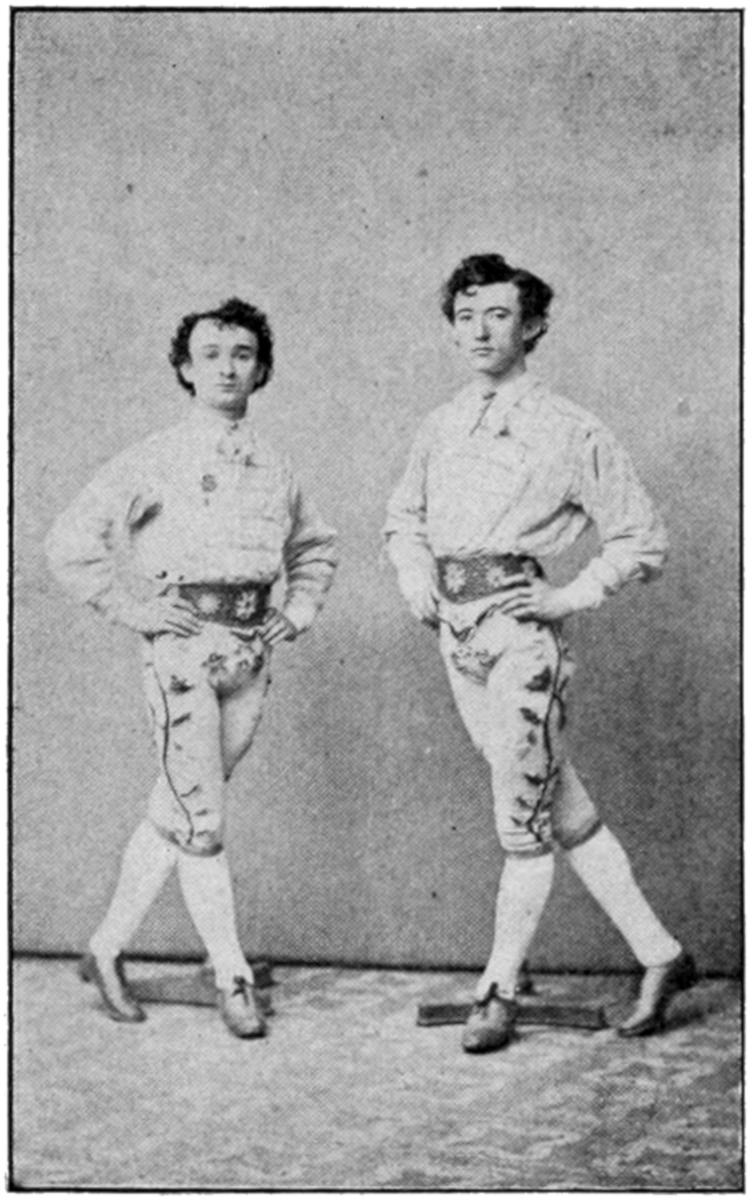
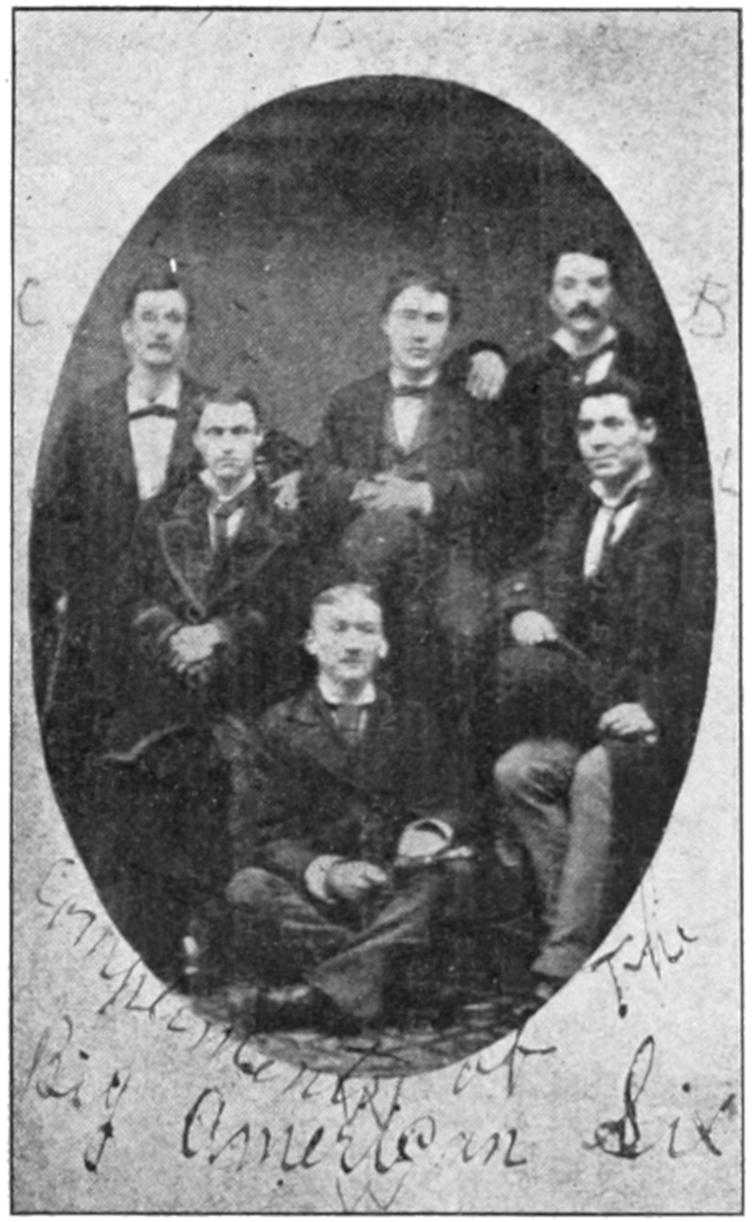
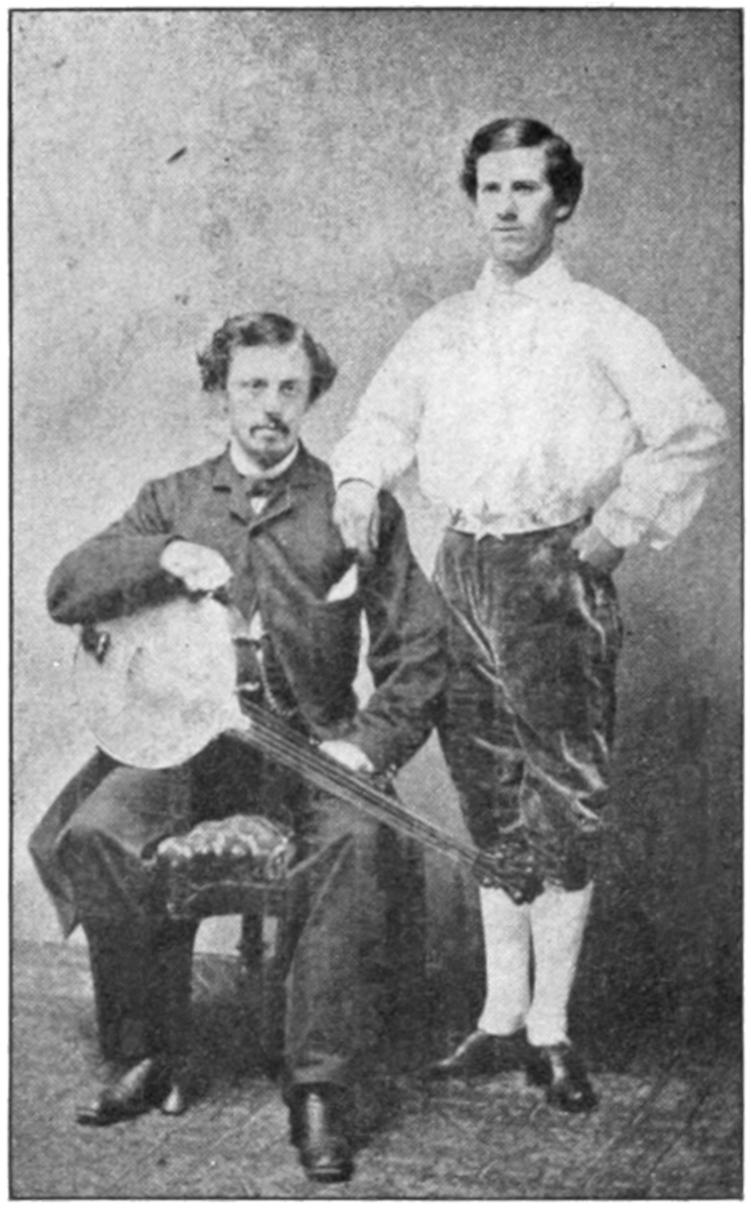
JNO. F.—SHERIDAN & MACK—JAS. W. BEN COTTON, JR.—HARRY BOOKER—BOB BIRDUE EUGENE CANFIELD JOE LOVELY BURT WAYNE FRANK CONVERSE—TOMMY PEEL
Subsequently he was with Pauline Hall in “Puritana,” “Niobe,” “Prodigal Father,” and other first-class companies.
In 1893 he joined Charles Horwitz, and as Horwitz and Bowers, for five years played the cream of the vaudeville houses, singing their own compositions, of which Mr. Bowers wrote the music; among the best known were “Always,” “Wait,” “Because,” and “When I Think of You.”
Mr. Bowers’ first minstrel engagement was with the Cleveland Company, others were Frank Cushman’s, Dockstader’s in 1903, and Wm. H. West’s (Ricaby’s) in 1905.
He was subsequently two seasons with McIntyre and Heath, in the “Ham Tree,” followed by as many seasons in vaudeville in his offering “College Days.”
As a reader of a song Mr. Bowers has no superior in present-day theatricals.
Frederick V. Bowers was born in Boston, Mass., June 11, 1874.
Pete Detzel hails from the home town of such celebrities as Johnny Jennings, Mark. Sullivan and Clarence Burton, naturally he must be good.
His first professional appearance was with Hi. Henry’s Minstrels in 1895, doing an end and acting as drum major; Billy Van’s Minstrels was next, after which Mr. Detzel says he “laid away” for a few months. But one can’t lay away much while idle, so he played two seasons with the Ted Faust’s Minstrels, and an equal length of time with Vogel’s Minstrels.
The best part of the past three years have been spent with Dockstader’s Minstrels. Mr. Detzel is now a vaudevillian with Billy Cawley.
Pete Detzel was born in Erie, Pa., November 25, 1875.
Bert Williams. This truly great colored performer made his first appearance with Lew Johnson’s Minstrels twenty odd years ago; the remuneration was $12.00 per week and “cakes” with an occasional chunk of pie. His next minstrel engagement was with Martin and Selick’s Mastodons—salary no object.
Mr. Williams decided on having a partner after this, and while in San Francisco met George Walker; the rest is fairly well known.
Mr. Williams starred successfully in “Sons of Ham,” “Bandanna Land” and “Mr. Lode, of Koal.” The partnership terminated about 1909.
Mr. Williams subsequently has played vaudeville, where he has been one of the most pronounced hits of years. Always working with corked features, he sings a song in a way that you always remember, especially is this true of “Nobody,” which will always be associated with his name.
Mr. Williams is a truly unctuous comedian, and worthy and deserving of the distinction of having received by far the highest salary ever paid to any performer of his race.
In New York in the Summer of 1910, he was highly successful in the “Follies of 1910.”
Bert Williams was born on the Island of Nassau, British West Indies, November 12, 1874.
The Bowman Bros. are frequently spoken of as the “brilliant brothers Bowman,” and justly, too, for no duo of vaudeville performers to-day give greater promise than these two boys, whose versatility is a matter of much comment among artists of more lengthy experience.
They have appeared in burlesque, drama, farce and minstrelsy, and in each have scored unqualified successes.
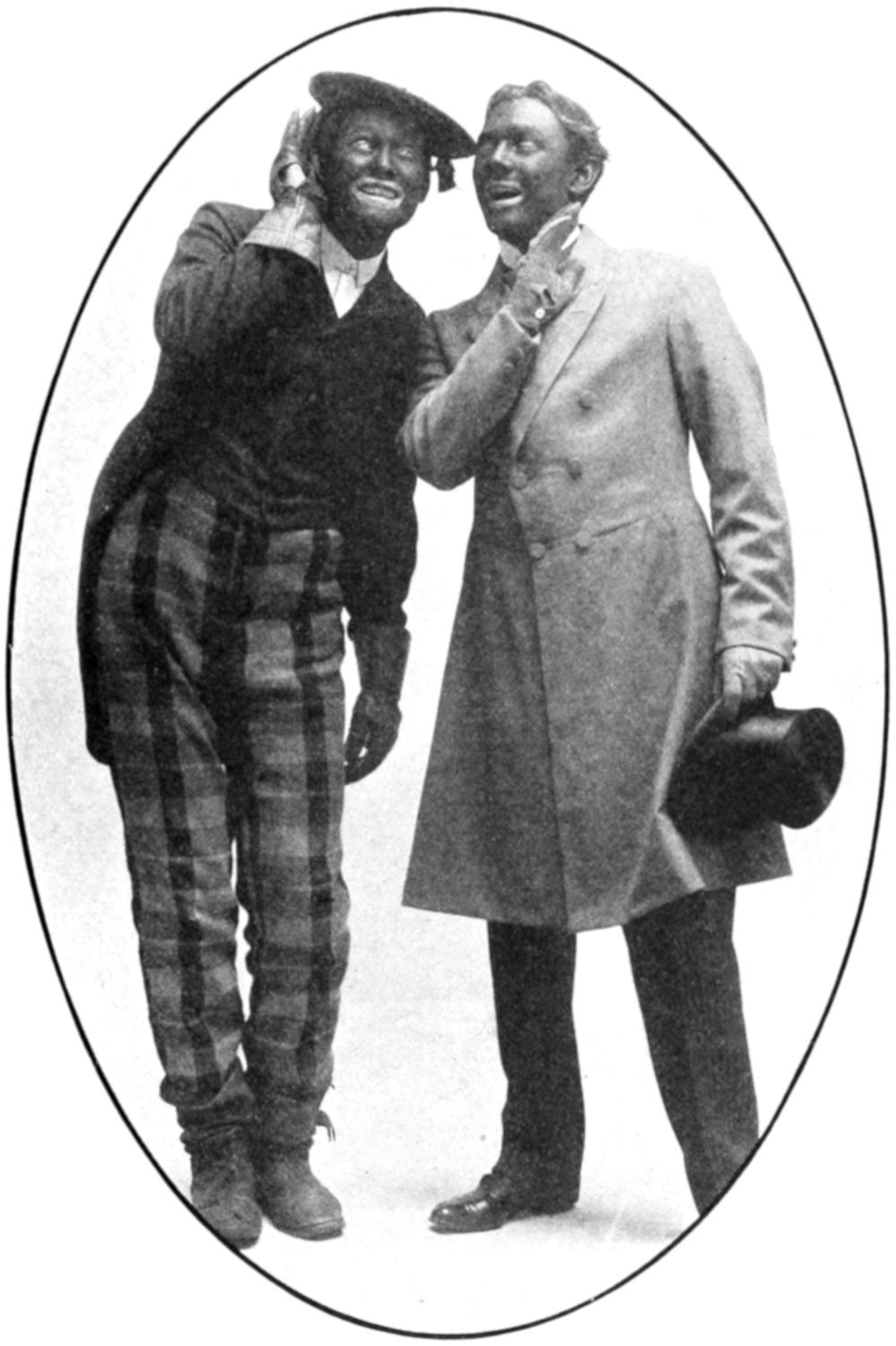
WM. T.—BOWMAN BROS.—JAS. M.
Their first joint appearance was in a black-face specialty at West Point, Ky., in 1896; they then separated and played various individual engagements until 1902, when they joined the “Sandy Bottom” Company; with this troupe “Bill” Bowman did a minister, and “Jim” Bowman did a rube, which was not the right thing to do exactly; there is some excuse for “doing” a rube; but a minister—never.
That same year they joined the stock at the Orpheum Theatre in Chicago, and in 1903 were with Miss Grace George in “Pretty Peggy.”
Subsequently they did a black-face act with that “youth” Jack Sheehan; he of the “Four Planets,” likewise of the “Four-in-Hand.”
Other legitimate engagements were the “Runaways,” and their own production of the “Isle of Mirth.”
The seasons of 1907-08-09 were spent with Bob Manchester’s “Cracker Jacks” Company, where they resumed playing in black-face, and in which they still continue.
July 31, 1909, they made their first appearance jointly with a minstrel company, when they opened at Union Hill, N. J., with Eddie Leonard’s Minstrels; Wm. Bowman playing on one end, and James Bowman officiating as interlocutor; and seldom in latter-day minstrelsy have these positions been more ably filled.
James Bowman played individual engagements with Harry Ward’s Minstrels in 1900-01; with Robert Loraine in “The Tragedy at Trenton” in 1904 and Wm. A. Brady’s “Siberia” in New York in 1905.
Wm. T. Bowman played individual engagements with Wm. A. Brady’s all-star cast of “Uncle Tom’s Cabin” in New York in 1904, and that same year appeared with Wm. Morris in the “Business Man,” and Joe Welch in “Cohen’s Luck.”
Wm. T. Bowman was born in Munfordville, Ky., February 4, 1875.
Jas. M. Bowman was born in Munfordville, Ky., April 17, 1878.
Mrs. Arthur L. Guy is the wife of—Arthur L. Guy, naturally. For the past seven years she has enjoyed the unique distinction of being the manager of the Arthur L. Guy Novelty Minstrels, where she has displayed executive ability of pronounced order.
Bailey and Austin need no introduction to theatre lovers of the lighter forms of amusement, for most of us have seen these brilliant young artists in the “Top o’ the World,” and “Two Men and a Girl.”
But as “corked comedians”—that’s different.
Bailey and Madison did an acrobatic black-face song and dance about sixteen years ago; and Ralph Austin did a tip-top end with Al. G. Field’s Minstrels about the same time; he was also of the black-face song and dance team of Austin and Curran.
Mr. Bailey deserves no credit for once having been a good black-face performer, for his mother (Polly Higginson) was a prominent dancer with the old “Black Crook” (near joke).
Mr. Bailey was born in New York, November 5, 1873.
Mr. Austin was born in Dayton, Ohio, about 1877.
Eddie Leonard (Lemuel J. Tuney) says he entered his teens and Haverly’s Minstrels about the same year.
With the minstrels he selected as his favorite, wholesome Billy Rice, of whom he was very fond.
Mr. Leonard says he used to buy the New York Clipper each week, and on these occasions he was immediately besieged by members of the company for “just one look”—which no one but Billy Rice ever got.
Mr. Leonard subsequently was with Thatcher, Primrose and West’s Minstrels; Primrose and Dockstader’s; Haverly’s (Nankeville’s); Primrose’s, Dockstader’s Minstrels, and in 1908 was one of the features of Cohan and Harris’ Minstrels.
A few seasons ago during the Summer months he appeared in New York on the New Amsterdam Roof in white-face as Texas Dan; subsequently as Dandy Dan on another roof; he scored a success on each roof with each “Dan.”
Mr. Leonard’s prominence is due to the fact that he sings a song different from any other living performer; a sort of a crooning lullaby, that goes direct to the hearts of his audience; and the ladies say he dances divinely.
Certain it is that this undoubtedly clever artist possesses that mysterious, indefinable attribute what we call magnetism, and possesses it to a large degree.
Late in July, 1909, he headed Eddie Leonard’s Minstrels; also early in August—same year.
Mr. Leonard, also in 1909, headed for the matrimonial altar; Miss Mabel Russell, daughter of the late W. J. Russell, of the old team of Le Clair and Russell, was his happy choice.
Eddie Leonard was born in Richmond, Va., October 18, 1875.
Frank Morrell, the “California Boy,” made his first appearance as a boy soprano with Cleveland’s Minstrels in 1890 at Los Angeles, Cal.; this was followed by an engagement with Sells Bros. Circus, with whom he went to Australia.
Returning to his native heath he next appeared at the Bella Union Theatre in San Francisco, subsequently playing, an engagement with Haverly’s Minstrels in the same municipality; the latter being the high-brow term for the word city.
Later, Mr. Morrell appeared with success with several burlesque and farcical attractions, and at various times was of the vaudeville teams of Morrell and Evans, and Morrell and Deely.
After a five-year tour of England and Africa, he returned to the United States, and in 1906 formed one of the original members of “That Quartette,” and continued with them until 1908, when, Cohan and Harris seeking for the best vocal talent obtainable, cabled to Mr. Morrell, who was in England, an offer that he just simply couldn’t refuse. His success with this organization is a matter of theatrical history.
In 1909 this clever young man made one of the most astonishing moves ever recorded; it was no more nor no less than making the jump from ballad singer to singing comedian, doing a black-face monologue that has given him already an eminent position in his new field of endeavor.
Frank Morrell was born in San Diego, Cal., October 10, 1875.
Dana H. Claudius, the well-known young banjoist, is now of the team of Claudius and Scarlet, but it was not always thus, for away back in the days of 1900, and until the month of February, 1902, Claudius and one Edmond Gilmore Corbin were members of the Primrose and Dockstader’s Minstrels, doing their classic act in black-face; after the last named date they worked in white-face. See James H. Decker for particulars.
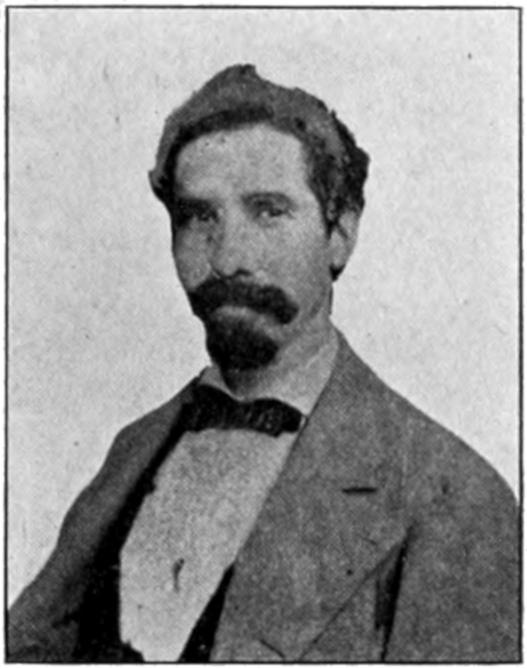
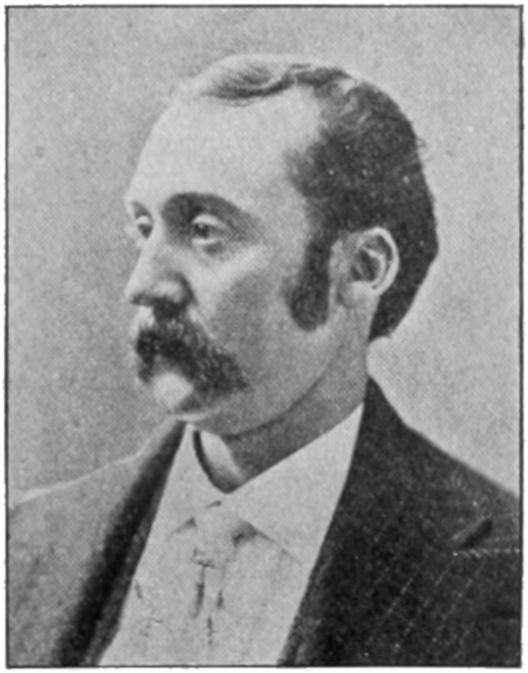
CHARLEY FOX CHARLEY HOWARD
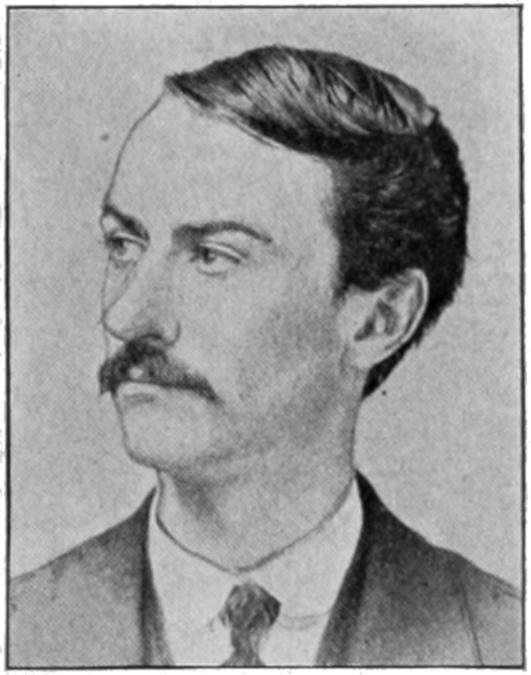
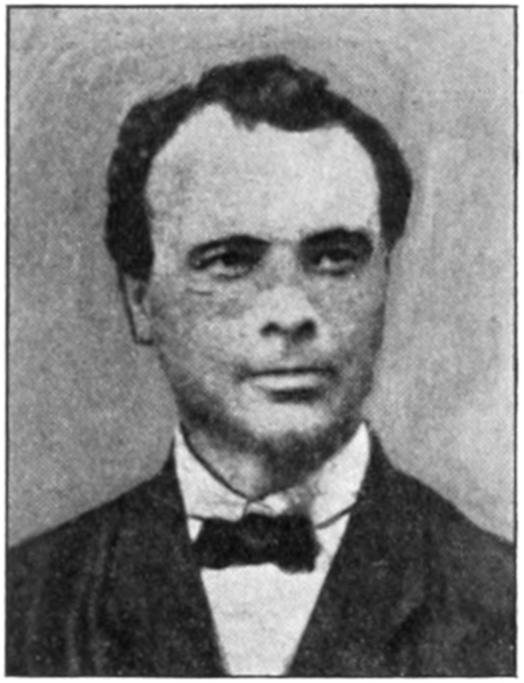
CHARLEY PETTENGILL CHARLEY REYNOLDS
CHARLEY SUTTON CHARLEY REED
THEY WERE THE “CHEERFUL CHARLEYS” OF MINSTRELSY.
Dana H. Claudius was born in Canandaigua, N. Y., June 1, 1875; and has been “hopping” ever since.
“Minstrel” Billy Clark (Wm. E. Clark) began his professional career in a theatre, and has been around theatres ever since; and this is how it happened.
He entered his thirteenth year and the Powers’ Opera House in his home city at the same time, at the latter place he was usher; he ushered so well that he was promoted—he became scenic artist at the Grand—in Grand Rapids; this is not a joke.
At eighteen he made his first appearance in black-face with a local minstrel show; subsequently he played character parts, and did a monologue in white-face.
His first minstrel show was the Crawford Bros.; in 1895 he joined the Hi Henry Minstrels and continued with them for five years; then came Billy Clark’s Minstrels, followed by the season of 1902-03 with Wm. H. West’s (Ricaby’s) Minstrels.
In 1903 he made his initial bow with Al. G. Field’s Minstrels, remaining until 1905, when he became a vaudevillian for two years; he rejoined Field’s in 1907 and remained two years.
“Minstrel” Billy Clark was born in Grand Rapids, Mich., March 15, 1875.
Trixie Friganza, the popular young comedienne, celebrated the author’s birthday August 24, 1908, by blacking up and doing an end with Cohan and Harris’ Minstrels at the New York Theatre in New York City; she sang “I’m Glad I’m Married”—mind you, she only sang it.
Beverly Sitgreaves showed her versatility at the New Theatre, New York, just previous to the new year in a new character which everyone knew would be a clever portrayal; and it was.
She played the negro “mammy” in “The Nigger,” December 6, 1909.
Harry A. Ellis (Ralph A. Grande), who was one of the singing duo of Ellis and McKenna, also a member of “The Quartette,” made his first professional appearance at Rahway, N. J., March 12, 1900, with the Heywood Comedy Company, in the play of “Mamma’s Pet.” It is the author’s impression that Mr. Ellis played the title role. “Mamma’s Pet” never had a metropolitan run; in fact, no run at all—but let bygones be bygones.
April 28, same year, he joined Primrose and Dockstader’s Minstrels at their inaugural performance under canvas; this was at Newport News, Va., and Mr. Ellis sang “The Blue and the Gray,” and what’s better sang it so good that he was engaged for the regular season of the company a few months later, being the only vocalist of the “tenters” so honored. The tent season lasted about seven weeks.
He continued with Primrose and Dockstader’s until the dissolution of that company in 1903; the same year he became a member of Lew Dockstader’s Minstrels, and remained four years. Eight years of minstrelsy in black-face. Mr. Ellis has a robust tenor voice of high quality. He is again with Lew Dockstader’s Minstrels, 1910.
Harry A. Ellis was born at Potenza, Italy, February 20, 1876.
Herman Marion (Etzer) joined Billy Pearl, doing a black-face act in Lowell, Mass., in April, 1899; and subsequently appeared with La Pearl’s Circus; Vogel and Deming’s Minstrels; Primrose and Dockstader’s; Gus. Sun’s; Haverly’s (Nankeville’s), and Washburn’s Minstrels.
He continued with Pearl until the latter’s death; subsequently joining Geo. Cunningham, one of the original “Brutal Brothers,” and as Cunningham and Marion have met with success in a white-face acrobatic act.
Herman Marion was born in Paterson, N. J., December 17, 1876.
Cecil Spooner.—This dainty, effervescent and charming bit of femininity, who has won enviable honors as America’s leading soubrette, and whose popularity in Brooklyn, N. Y., and other places, including Centreville, Iowa, seems to know no bounds, gave a delightful performance of Topsy in “Uncle Tom’s Cabin,” at the Bijou Theatre, Brooklyn, N. Y., commencing April 9, 1906.
Jimmy Devlin entered the minstrel profession as a boy, and few were better esteemed.
He was a clever dancer, but was best known for his baton swinging.
We worked with Johnny Whalen for a time, and subsequently with Doc. Quigley.
He was associated with Primrose and West’s; Al. G. Field’s and Wm. H. West’s Minstrels.
Jimmy Devlin died at Pittsfield, Mass., July 31, 1901; age 24 years.
Emil Subers, the “Georgia Sunflower,” whose rich Southern dialect has delighted thousands, began life as a ballad singer in an amateur minstrel show in Macon, Ga., in 1897, after which for three seasons he was a member of the well-known repertoire company of Peruchini-Beldini.
A couple of weeks with Harry Ward’s Minstrels in 1900, and then he joined Al. G. Field’s Company same year. In 1902 he became a member of Quinlan and Wall’s Minstrels, remaining two seasons.
On Christmas Day, 1904, he joined Geo. Primrose’s Minstrels in Springfield, Mass., and continued with them until 1907.
Mr. Subers subsequently entered vaudeville, and in 1909 formed an alliance with those clever black-face entertainers, Coakley and McBride.
Emil Subers was born in Sparta, Ga., January 7, 1877.
Artie Hall, in private life Mrs. Robert Fulgora, gives one of the most faithful portrayals of the Tennessee and Georgia negro ever seen on the vaudeville stage. Commencing March 18, 1901, Miss Hall gave a series of splendid performances of Topsy in “Uncle Tom’s Cabin” at the Academy of Music in New York City.
James Gorman, one of the most prolific producers in the annals of minstrelsy, was the first to write a burlesque on the “Mikado” when that opera had such a vogue here many years ago. Mr. Gorman showed it with Haverly’s Minstrels in San Francisco in 1885. “The Princess of Madagascar,” one of the most pretentious offerings ever shown with a black-face organization, also emanated from the fertile brain of Mr. Gorman; and there were others.
Joseph Gorton, Jr., was the son of the prominent manager of that name, and a musician and composer of extraordinary ability; no less than three operas, as well as several songs, have come from his prolific pen.
He had been several years with Gorton’s Minstrels, and for about ten seasons he did a musical act with Sam Lee, as Gorton and Lee.
Jos. Gorton, Jr., was born in Friendship, N. Y., May 30, 1877; he died there December 10, 1908.
Harry W. Smith, the pleasing young bass vocalist and interlocutor, has a brief, but none the less meritorious professional career.
It began in 1904, doing concert work; subsequently he was with Richard Carle’s and other musical extravaganzas. July 31, 1909, he became a member of Eddie Leonard’s Minstrels at their initial performance in Union Hill, N. J. In the Summer of 1910 Mr. Smith and Fred P. Russell launched Russell and Smith’s Tabloid Minstrels on the vaudeville sea, Mr. Smith acting as interlocutor, the duties of which he performs admirably.
Harry W. Smith was born in Albia, Ia., November 3, 1878.
Geo. M. Cohan. It will not surprise many to know that this famous young author-actor-manager-producer, etc., ever appeared in black-face; the year is said to be 1891, when he played Banty Bob in his father’s production of “The Molly Maguires”; nor must it be overlooked that he was co-proprietor and part producer of Cohan and Harris’ Minstrels, the first performance of which was at the Apollo Theatre, Atlantic City, N. J., July 27, 1908.
George M. Cohan was born in Providence, R. I., July 4, 1878.
Stanley Forde, whose ponderous bass voice has been heard to such excellent advantage in the “Geisha”; the “Talk of New York”; “The Man Who Owns Broadway,” and other popular successes, joined Primrose and Dockstader’s Minstrels at the Victoria Theatre, New York City, about March 1, 1902; singing a ballad in black-face. He finished the season with that organization, and the following one he toured with George Primrose’s Minstrels. Then Mr. Forde said, “Never Again”; but that’s what they all say.
Mr. Forde was born at Buffalo, N. Y., February 9, 1878.
Frank Leighton began his career as a black-face performer with a medicine show, June 1, 1897, at London, O.; joined Burt Sheppard’s Minstrels March 1, 1898, remaining until company disbanded at Waterloo, Wis., April 10, same year. With this company he formed a partnership with Ed. Elliott, doing a talking and dancing act; the partnership was dissolved January 15, 1899; Mr. Leighton shortly after became a member of the Vogel and Deming Minstrels, joining his brother Bert, with whom he has since been associated.
Frank Leighton was born April 14, 1880, near Cowden, Ill.
LUKE SCHOOLCRAFT GEO. H. COES
(SCHOOLCRAFT & COES.)
JAS. M. TIERNEY TIM. CRONIN
(TIERNEY & CRONIN.)
HARRY HOGAN GUS. HOGAN
(HOGAN BROS.)
Bert Leighton joined Barlow Bros. Minstrels (Ward, Coburn and Baldwin, owners), August 21, 1899, doing a black-face singing and dancing act with Walter Wilson, closing June 2, 1900. Leighton and Wilson opened with Vogel and Deming’s Minstrels, August 27, 1900; this partnership was dissolved later in the season owing to the ill health of Mr. Wilson. Mr. Leighton was joined by his brother Frank at Poughkeepsie, N. Y., December 8, 1900.
Bert Leighton was born in Altamont, Ill., December 29, 1878.
Leighton and Leighton’s first appearance as a team was at Poughkeepsie, N. Y., December 8, 1900, remaining the season. Other engagements were Vogel’s Minstrels; Pan-American Minstrels. September 15, 1902, they made their first appearance in white-face at the Howard in Boston. April, 1903, they joined Quinlan and Wall’s Minstrels. Considerable time was given to vaudeville before they made their appearance with Lew Dockstader’s Minstrels, July 23, 1904, ending May 8, 1905. July 14, 1905, they began their second season with this company, terminating their engagement November 17, same year, since which time they have been playing the best houses in vaudeville; their present offering “A One Night Stand in Minstrelsy” is a gem of its kind.
The Messrs. Leighton in addition to being exceptionally clever dancers, are authors of several songs that are recognized successes, among them are—“There’s A Dark Man Coming With A Bundle”; “Eb’ry Dollar Carries Trubbles Ob Its Own”; “The Message of the Old Church Bell”; “Ain’t Dat A Shame”; “Casey Jones” and others.
Joe Leighton (Le Strange), better known as “Rags,” made his first appearance with Lew Dockstader’s Minstrels, at Harrisburg, Pa., October 31, 1904, remaining until November 23, 1906; shortly after this he joined the Leighton Brothers, the alliance being known as the Three Leightons: he has been with them ever since, except for a brief period in the early part of the season of 1908, when he was with Cohan and Harris’ Minstrels.
Mr. Leighton is an eccentric dancer of uncommon ability.
Joe Leighton was born in New York City, October 7, 1887.
Billy Beard. This really clever performer who styles himself “The Party from the South,” actually is from that interesting part of the country which has produced so many capable burnt-corkers.
His story is best told in his own language, and here it is—“Trouped with Hypnotists, Magicians and sundry other “one night organizations” including a season in repertoire at 10-20 and 30; the above includes several journeys on foot and on top of box-cars.”
Mr. Beard has an engaging personality which brought him engagements with Ricaby’s “West’s” Minstrels; Nankeville’s “Haverly’s” Minstrels, George Primrose’s Minstrels and Ted Faust’s Minstrels. As a monologist and comedian he ranks with the best performers of his time, which began in 1902; at present he is in vaudeville.
Billy Beard was born in Columbia, S. C., September 1, 1879.
Will Philbrick made his first and only appearance in minstrelsy as a member of Primrose and Dockstader’s Minstrels at the Victoria Theatre, New York City, in the Spring of 1902; he sat on the end, sang “The Fortune Telling Man”; did “some” dance and made every one clap their hands awfully loud.
But I’m a trifle ahead of my story. His first appearance was selling peanuts in Barnum’s Circus in 1893; he came near being arrested for running a shell game. After that he became a real actor with “A Trip to Chinatown”; in this company he first appeared in black-face, doing a specialty with Eleanor Falk.
Mr. Philbrick played in other Hoyt productions, and “starred” for five years in “The Beauty Doctor.”
Likewise was he prominently identified with “Panhandle Pete”; Grace Cameron Opera Company, and “Foxy Grandpa.”
In vaudeville he was of the team of Philbrick and Cardownie, also with Joe. Hart’s “Bathing Girls.”
Will Philbrick was born in Boston, Mass., October 16, 1879.
Johnny Dove excels as a dancer, but whatever he does he does well; now for the rest.
Mr. Dove’s first stage appearance was with the original Bootblack Quartette, in 1896; the following year with James Corrigan he did a black-face act, which qualified him to become a member of Hi Henry’s Minstrels, where he remained six years. Lew Dockstader’s Minstrels was the next big show, and though Mr. Dove was surrounded by a galaxy of stars, his own light was none the less resplendent. His next engagement was a white-face affair with the Imperial Burlesquers, where he met with unqualified success; his own act “The Dancing Burglar”; it has a story, and here it is——
ACT I.
“As a boy, Master Dove in response to queries as to his future ideas in life, gravely told his Father he would be a dancer or a burglar.
Act II.
In a dancing contest, one night young Dove “flew the coop” and hiked away to the town hall while the family were in dreamland; Johnny won the coveted prize, a silver set of 24 pieces; sneaked home, and placed his winnings on the table; thence to bed.
ACT III.
Next morning, Dove Sr., being the first to arise, sees the new addition to the family plate, hastily, concludes that John had decided on the profession of burglar.
CURTAIN.
Johnny Dove was born in New Brunswick, N. J., April 15, 1879, and is at present with Al. G. Field’s Minstrels.
Eddie Cassady, a great Philadelphia favorite, is one of the most pleasing of present-day comedians. His first professional appearance was with Simmons and Slocum’s Minstrels in 1893.
In 1903 he became a permanent feature during the Summer season at Atlantic City, N. J., with Murphy and Gibson’s Minstrels; continuing with them until 1907.
The Summer of 1908 again saw him at the famous sea-shore resort with Murphy’s Minstrels, with whom he has since appeared. The present season of 1910 Mr. Cassady is doing one of the principal ends with Dumont’s Minstrels in Philadelphia.
He also played a white-face part with Gracie Emmett’s Company—and some day may play another.
Eddie Cassady was born in Philadelphia, June 17, 1880.
Tommy Hyde is justly entitled to take the highest rank with the younger generation of dancers; convincing proof of this can be had from the fact that both Barney Fagan and James Gorman, the world’s leading minstrel producers, found his (Hyde’s) assistance an invaluable auxiliary to their own endeavors on various occasions.
His first appearance professionally was at Rochester, N. Y., with P. J. Mundy, on a Tuesday.
For two years he played vaudeville houses, after which he joined Gilmore and Leonard in “Hogan’s Alley.”
His next engagement was with Al. G. Field’s Minstrels, and that gentleman thought so well of Mr. Hyde, that the engagement was extended until six seasons had been rounded out with that prominent organization.
Mr. Hyde subsequently joined Lew Dockstader’s Minstrels, and remained six years with the most famous of all black-face comedians.
Tommy Hyde was born in Fresno, Cal., February 10, 1881.
Vaughn Comfort belongs to the younger generation of minstrels, and has all the qualifications that tend to make an artist; youth and a handsome appearance combined with recognized ability gained in the dramatic profession might be mentioned.
His first appearance was with the Empire City Quartette in Philadelphia, at the Globe Theatre, in 1895; he continued with them all that season, serving also in the capacity of manager. Next came a brief tour with Carl and Johnson’s Minstrels.
In 1897 he joined the Irene Myers Stock Company, remaining seven years all told. In between this engagement was one with the A. E. Davis Stock Company; here Mr. Comfort played leads.
Season of 1908-09 he was with Dumont’s Minstrels in Philadelphia, where he had the distinction of taking more encores after a ballad than any singer of late years ever did in that house.
Seasons of 1909-10 Mr. Comfort became a member of Cohan and Harris’ Minstrels; his work as interlocutor with this organization brought forth lavish encomiums from the press in general, and the Metropolitan papers in particular.
The present season of 1910-11 he is with Geo. Evans’ Minstrels.
Prior to the last two engagements, he was with the Earl Burgess’ Stock Company, also with George Primrose’s Minstrels.
Mr. Comfort’s voice is a pure tenor; it is worthy of note that seldom in minstrelsy has a tenor occupied the position of interlocutor.
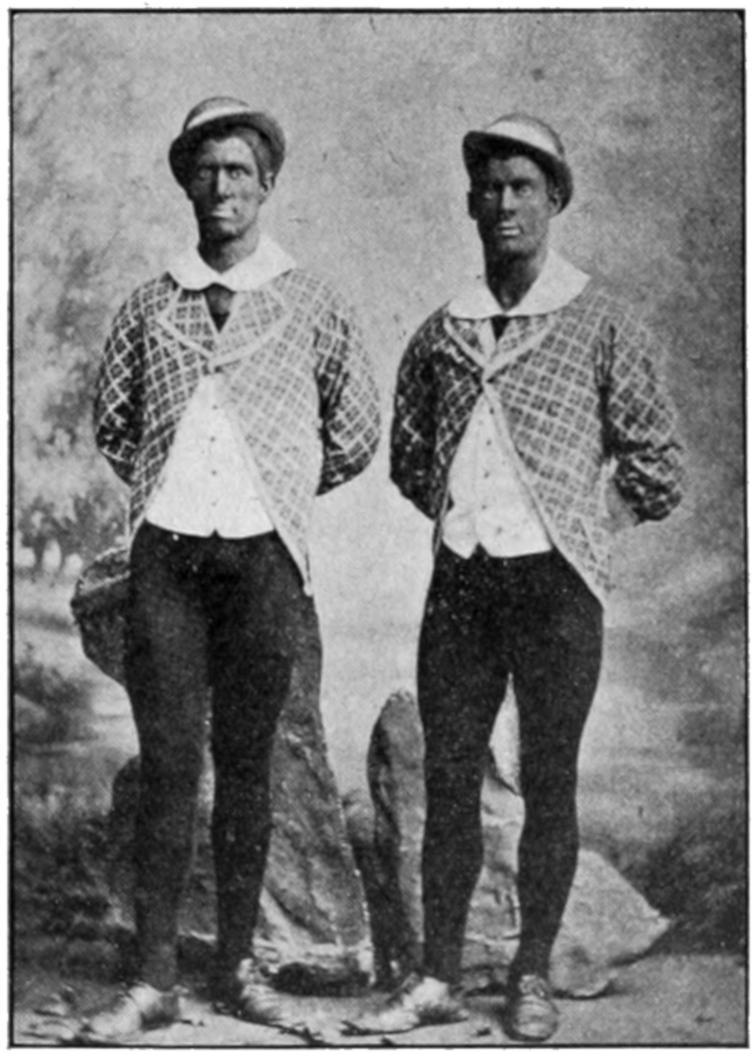
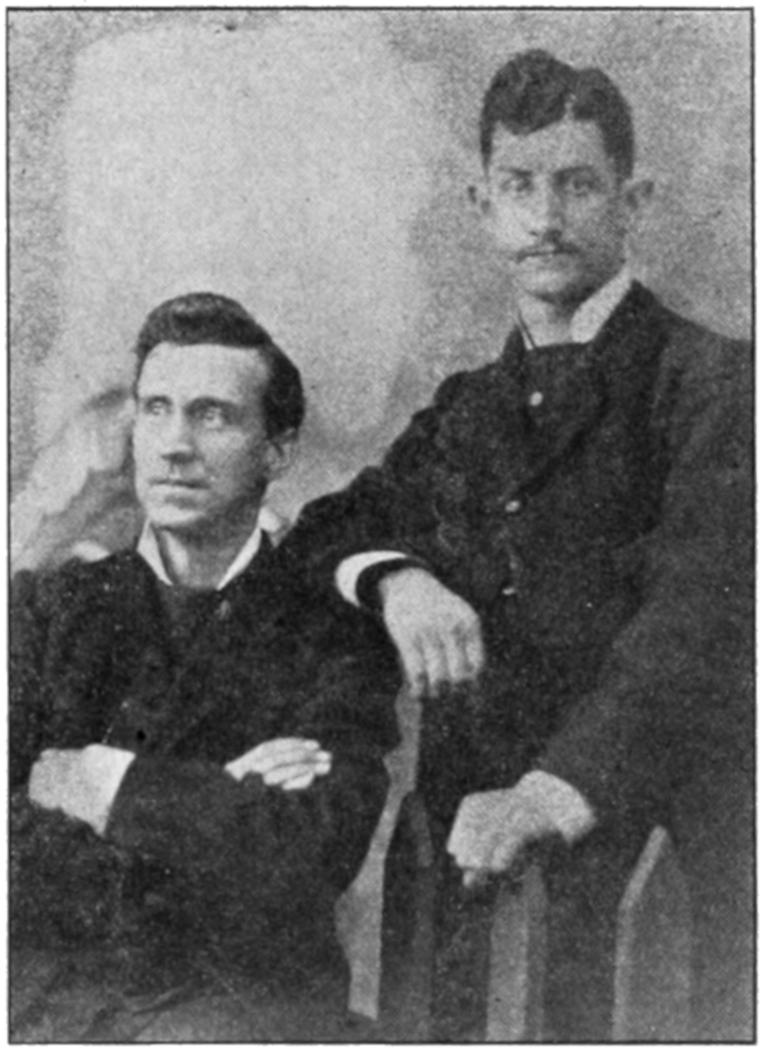
TOM—WATERS & KELLY—NOLAN LEW—COLLINS BROS.—FRANK
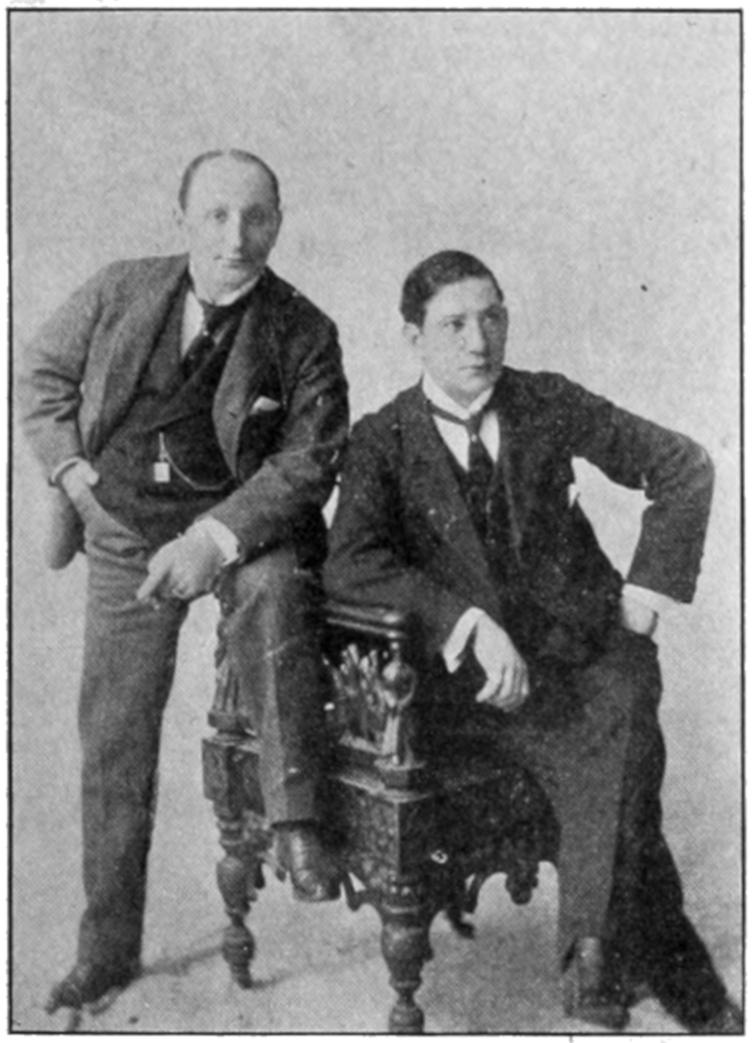
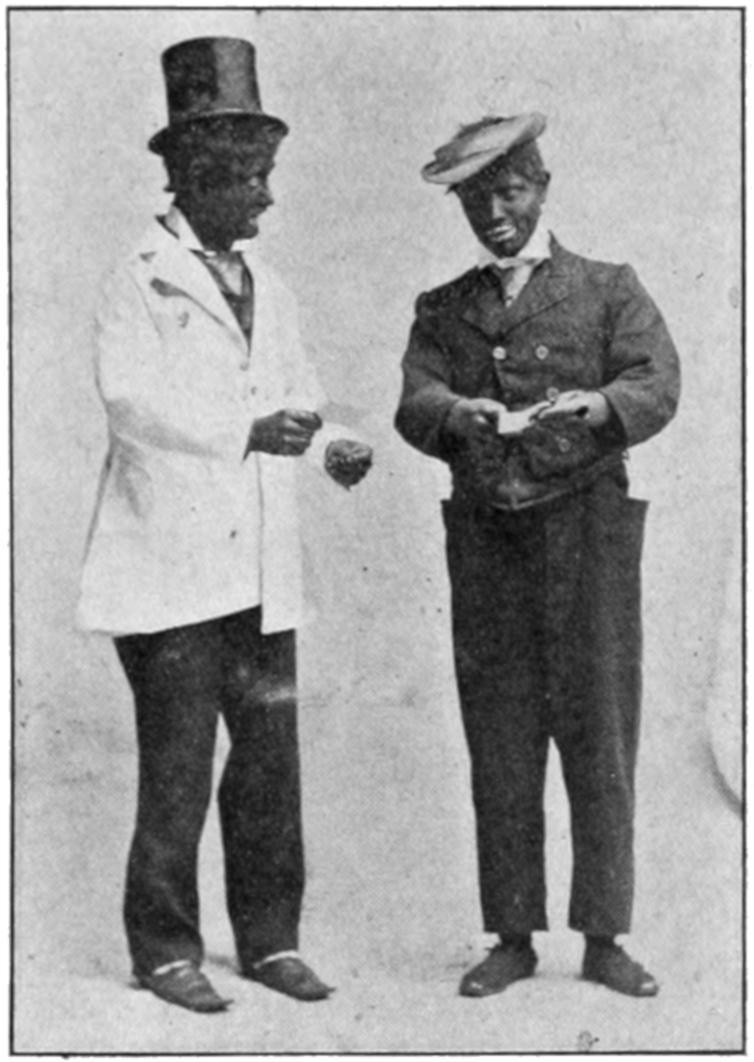
BILLY—WOOD & SHEPPARD—FRANK MORT.—EMERSON & COOK—JAS.
As this is a purely minstrel volume, it is in perfect good taste to remark that he is a great “comfort” to his friends and family.
Vaughn Comfort was born in Philadelphia, August 7, 1881.
John J. Blue, an efficient dancer of the present generation successfully conducted a dancing school in Hoboken, N. J., about eight years; desiring wider scope for his talents, he engaged with the Cohan and Harris’ Minstrels at their inception in July, 1908; he remained the season, and re-engaged for 1909-10.
John J. Blue was born in Brooklyn, N. Y., October 31, 1881.
Harry Jolson (Joelson) is undoubtedly the premier operatic black-face comedian of the day; to hear Mr. Jolson warble selections from “Lucia” gives one that Oliver Twist feeling—you want more.
The first thing theatrical he ever did was to become an usher at the Bijou Theatre in Washington, D. C.; in this way he got many good “tips.” Mr. Jolson next became a singer “in the gallery,” same theatre; after that it was easy.
His first appearance in black-face was with the Mayflower Burlesquers, where he worked with his brother Al. About five years ago at Robinson’s Park, Ft. Wayne, Ind., he appeared for the first time in a single specialty, and since then has played vaudeville.
July 31, 1909, Mr. Jolson opened with the Eddie Leonard Minstrels at Union Hill, N. J., doing an end and his specialty.
May 4, 1910, he sailed for Europe.
Harry Jolson was born in Srednick, Russia, January 12, 1881.
Joe B. McGee didn’t go to school with Mark Twain, nor did he start the late lamented humorist on the road to fame; but Mr. McGee and Mr. Clemens were both born in the same house, and evidently Mr. McGee imbibed there some of the humor created by the immortal wit.
His first professional appearance was with Robinson’s Minstrels at Hannibal, Mo., in 1898. Subsequently he was with Ward and Wade’s, and George Van’s Minstrels; also did he tour with his own minstrel company.
Mr. McGee joined Al. G. Field’s Minstrels in 1909 for the season; the following year he was in vaudeville with Russell and Smith’s Minstrels.
He is a comedian of original methods, and a dancer of more than ordinary merit.
Joe B. McGee was born in Florida, Mo., February 20, 1881.
George Jones, one of the original members of “That Quartette,” was a “boy singer” with Al. G. Field’s Minstrels in 1896.
Subsequently he did meritorious work as a comedian with Wm. H. West’s (Ricaby’s) Minstrels.
After the dissolution of “That Quartette” in 1909, Mr. Jones continued in vaudeville as one of the team of Jones and Deely.
George Jones was horn in St. Louis, Mo., September 22, 1883.
Will Oakland (Harry Hinrichs) possesses that extremely rare quality of voice that is known as a contra-tenor, which he uses to the best advantage, his enunciation being well nigh perfect.
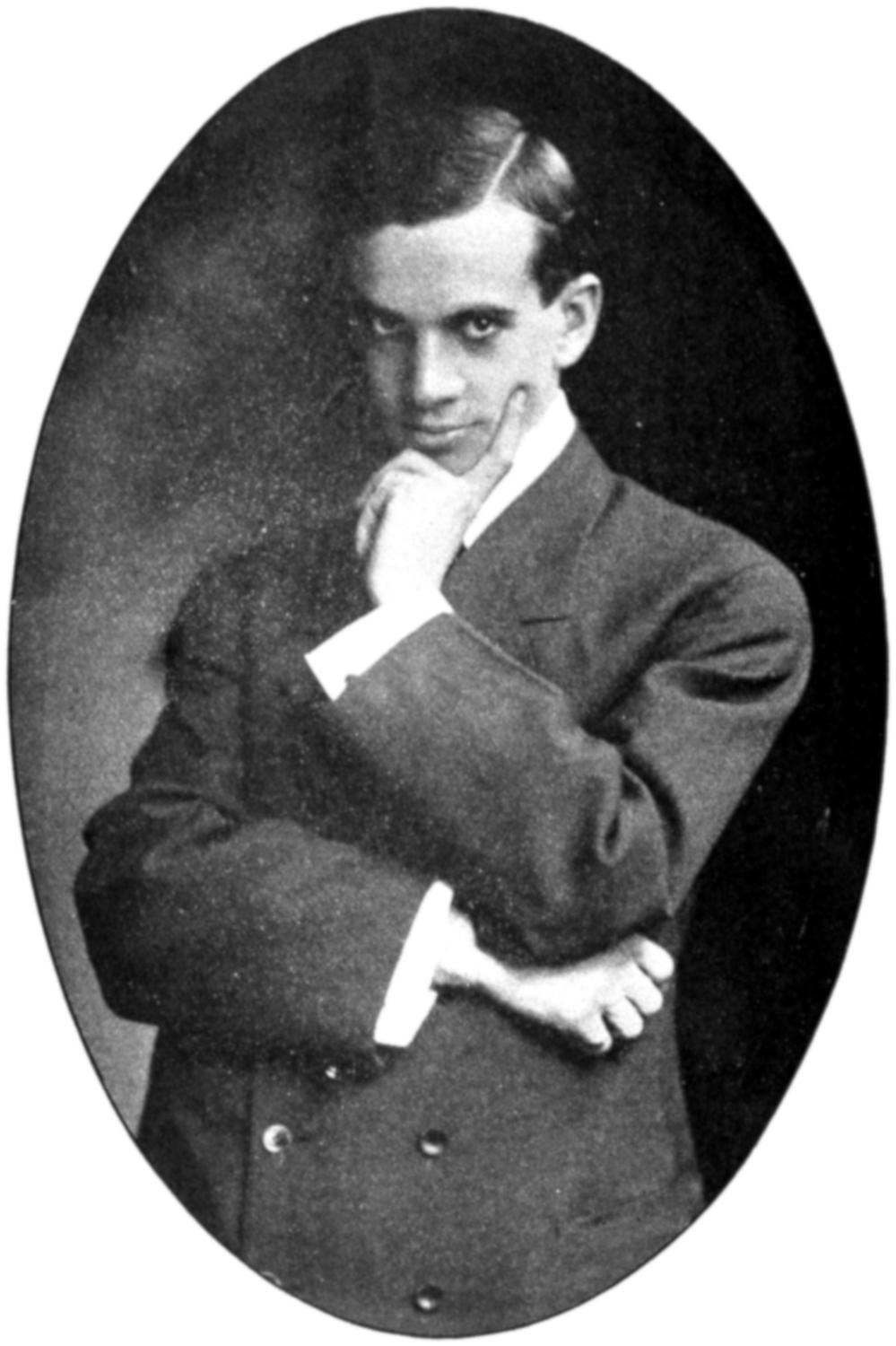
AL. JOLSON.
Mr. Oakland made his professional debut with George Primrose’s Minstrels in Rochester, N. Y., February, 1905, and continued with that company until he joined Lew Dockstader’s Minstrels in 1907; he remained with Mr. Dockstader two seasons, after which he joined Cohan and Harris’ Minstrels.
Early in 1910 Mr. Oakland joined Wm. H. Thompson in a high-class singing act, reviving a well-known trade-mark of two decades ago.
Will Oakland was born in Jersey City, N. J., January 15, 1883.
Julian Eltinge (Dalton) is usually billed as “the artist without a peer;” and you may believe it, every word.
The scion of an old Boston family, Mr. Eltinge adopted his present calling for the avowed purpose of “killing time;” that he made a “killing” there is no dispute.
He was a member of the First Corps Cadets in his native city, and when this notable organization produced “My Lady” in 1899, Eltinge was cast for the soubrette role.
In 1895 the play of “Miss Simplicity” was written around Mr. Eltinge’s talents; subsequently it became a vehicle for Frank Daniels; afterwards he appeared in “Baron Humbug” and other plays.
His first Metropolitan appearance was at the Bijou Theatre in New York City in 1903, with “Mr. Wix of Wickham.” Later, and until July 27, 1908, he played vaudeville engagements in the United States and Europe.
On the latter date he made his first minstrel appearance with the Cohan and Harris Company, at Atlantic City, N. J.; his success with this organization was nothing short of phenomenal; he remained the entire season, appearing with darkened features in the after-piece.
It may be of interest to know that during Mr. Eltinge’s Cadet Days; he played male juvenile roles equally as clever as when encompassed by skirts and those other things that it is said females wear.
Recently, while fulfilling an engagement at the American Music Hall in New York City, Mr. Eltinge performed his specialty a la minstrel.
Julian Eltinge was born in Boston, Mass., May 14, 1884.
Al. Jolson (Albert Joelson). Seldom in the annals of minstrelsy has a performer risen to such heights, and achieved such success in the brief period that this brilliant young performer has accomplished. Three years ago he attracted the attention of Lew Dockstader, who saw him perform in the South on several occasions.
Subsequently the latter engaged him for his (Dockstader’s) company, and in the Summer of 1908, Mr. Jolson made his first appearance with the latter’s minstrel organization. His success was instantaneous and pronounced.
He remained with Dockstader all that season, and part of the next; afterwards making his appearance in vaudeville, where if anything, he was even a greater hit. In the vernacular of the Rialto, Mr. Jolson was a “riot.”
Like everything and everybody, he had to have a beginning, and Mr. Jolson’s first professional appearance was with Al. Reeves’ famous Beauty Show. Subsequently with his brother Harry, and Joe Palmer, as Jolson, Palmer and Jolson, played vaudeville. Up to this period Mr. Jolson was working in white-face.
At Keeney’s Theatre, Brooklyn, N. Y., he first applied cork; and cork it has been ever since.
Mr. Jolson is a comedian by nature born; his monologue, interspersed by clever whistling solos, fully merits the approbation it receives.
Al. Jolson was born in Srednick, Russia, May 16, 1885.
Neal Abel, who appeared with much success with Primrose’s Minstrels about four years ago, subsequently went into vaudeville with Dave Irwin. Mr. Abel is unquestionably a comedian of more than ordinary merit; and anyone in Kansas City, Mo., will tell you the same thing.
Charles Hilliard (Hurst). From chorus man to burlesque prima donna in two years is certainly going some; nevertheless, that is the proud distinction accorded to the subject of this sketch, who made his first professional appearance with Frank Lalor in “Prince Humbug” in 1908, in the minor capacity already referred to. The following year Mr. Hilliard was engaged with Cohan and Harris’ Minstrels, also as a chorus singer; before the season was over he was playing a prominent part in the after-piece.
August 10, 1910, Mr. Hilliard played for the first time, the principal female role in the “Firemen’s Picnic” with George Evans’ Minstrels; his success was emphatic.
Charles Hilliard was born in Sumter, S. C., June 23, 1885.
Earl Benham (James Benham) made his first professional appearance in 1903 in the chorus of “The Fisher Maiden,” and has been fond of fish ever since; this is of course sub rosa.
It was in the year of 1907 that Mr. Benham acquired his first minstrel experience, and came face to face with a box of cork. The following year he was a ballad singer with Cohan and Harris’ Minstrels, and in 1909 he began his second season with that company, playing an end, working in a big song and dance number and in the after-piece.
Mr. Benham is an accomplished dancer and possesses a pleasing tenor voice.