THE FIRST MINSTREL PERFORMANCE. (continued 4)
Reading edition
In 1860 each were members of Geo. Christy’s Minstrels; the following season they joined Morris Bros., Pell and Trowbridge’s Company in Boston, and in 1862 they were with Arlington and Donniker’s Troupe. A year later Kelly and Leon were interested in the management of the company, which soon after was known as Kelly and Leon’s Minstrels in Chicago.
October 1, 1866, the company opened at Hope Chapel, New York, and for more than two years they were established there, meeting with pronounced success.
January 9, 1869, they gave their final performance, and shortly after sailed for London, England, opening with Montague’s “Christy’s,” May 9. After a brief engagement they organized Kelly and Leon’s “Christy’s” Minstrels, giving their initial performance July 6, 1869. Six weeks later, August 16, they appeared with Delehanty and Hengler’s Combination in Boston. They made their first appearance in San Francisco November 7, 1871.
August 26, 1872, they began an engagement at Bryant’s Minstrels in New York, which terminated November 16. Kelly and Leon then reorganized their own company, opening at their old stand, November 25, three days later, November 28, 1872, the theatre was destroyed by fire.
The following Summer they returned to California, where they played an engagement in San Francisco with Maguire’s Minstrels.
Returning East they opened in Philadelphia with Simmons and Slocum’s Minstrels, closing November 8, 1873.
The following year they were with Haverly; in 1875 Kelly and Leon’s Company took the road, under the management of Surridge and Melville.
In the Spring of 1876 their company opened at Bryant’s old minstrel hall in New York, where they continued several months.
December 10, 1877, with their company, they began their third engagement in San Francisco, and on February 2, 1878, they sailed for Australia, where about two years after their arrival their long partnership was dissolved. For a time each headed their own company in the Antipodes. Leon later returned to the United States; Mr. Kelly remained in Australia until his death.
Prior to 1860 Edwin Kelly was a balladist with Ordway’s Aeolians in Boston. In May, 1858, “Master” Leon joined Wood’s Minstrels in New York; the year following he was with Campbell’s Minstrels.
Shortly after Leon’s return to America, he joined Haverly’s Minstrels; he severed his association with that company in February, 1883. He then formed an alliance with Frank Cushman, and in April began an engagement with Barlow, Wilson’s Minstrels.
September 3, 1883, he opened with Birch’s San Francisco Minstrels in New York. Leon and Cushman sailed for Australia about January 1, 1886; they played several months in Melbourne; shortly after their return to the United States they separated, August, 1887.
“Leon” began an engagement with Emerson’s Minstrels January 19, 1889.
Since then Mr. Leon has been identified in minstrel, vaudeville and concert work, until his retirement about eight years ago.
Edwin Kelly was born in Dublin, Ireland, in 1835; he died in Adelaide, Australia, December 24, 1898.
“Leon” (Patrick Francis Glassey) was born in New York City, November 21, about 1840.
Jack Talbott (Arthur J. Talbott), well-known as a comedian, began his theatrical career in the late 50’s.
In 1860 he was with Hooley and Campbell’s Minstrels, that same year joining Sanford’s Company in Philadelphia, in which city he remained altogether about ten years with Carncross and Dixey’s, and Carncross’ Minstrels. Early in 1887 he was one of a company at the Criterion Theatre, Brooklyn, N. Y., in an attempt to revive permanent minstrelsy in that city.
Mr. Talbott was an excellent marksman, and was the first to shoot an apple from the head in a theatre.
He first performed this feat at the New Idea in San Francisco, October 21, 1864; Johnny De Angelis, father of the comedian, Jeff De Angelis, held the apple.
Mr. Talbott was a brother of Harry Talbott, the minstrel, and the husband of Emma Miles, danseuse, whom he married in the 60’s.
Jack Talbott was born in Baltimore, Md., October 3, 1840; he died in New York, April 5, 1910.
J. Henry Murphy, the well-known minstrel tenor, was with Mead’s Minstrels in New London, Conn., September 8, 1862.
About February, 1864, he joined Buckley’s Serenaders in Boston, Mass., and was associated with them for several seasons. April 17, 1871, he commenced an engagement with Newcomb and Arlington’s Minstrels in New York, and on January 29, 1872, joined Simmons and Slocum’s Company in Philadelphia.
Later he identified himself with Cal. Wagner’s Minstrels, and was with him some time. Mr. Murphy had not appeared professionally for many years.
J. Henry Murphy died in New London, Conn., April 10, 1910; age about 70 years.
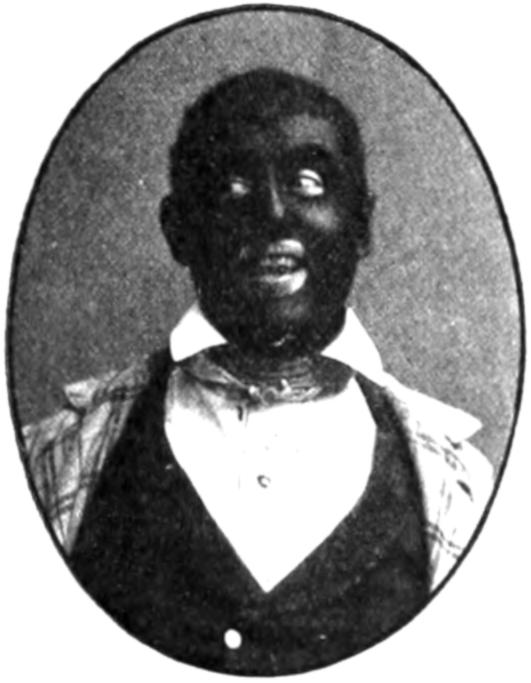
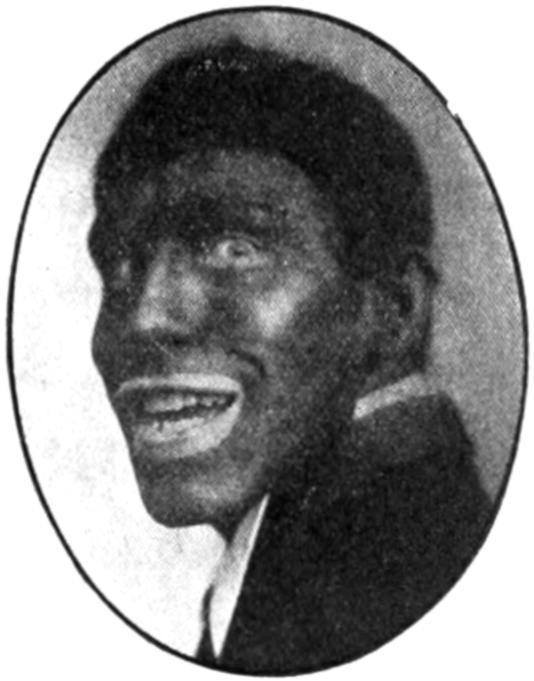
JOHN E. CAIN NEAL ABEL
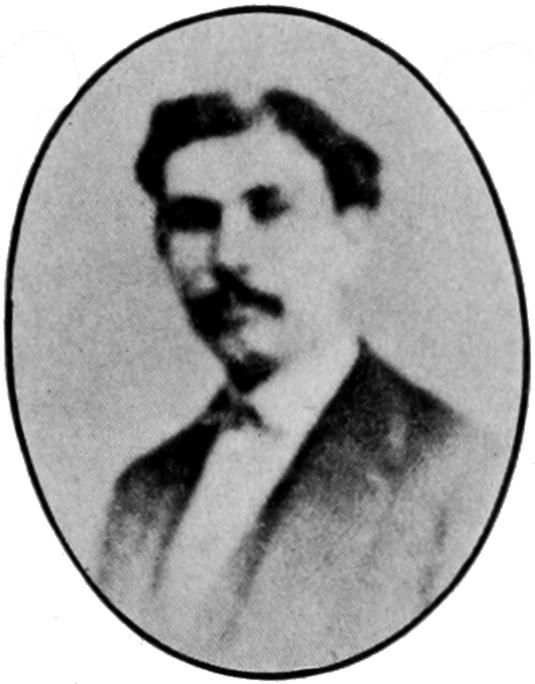
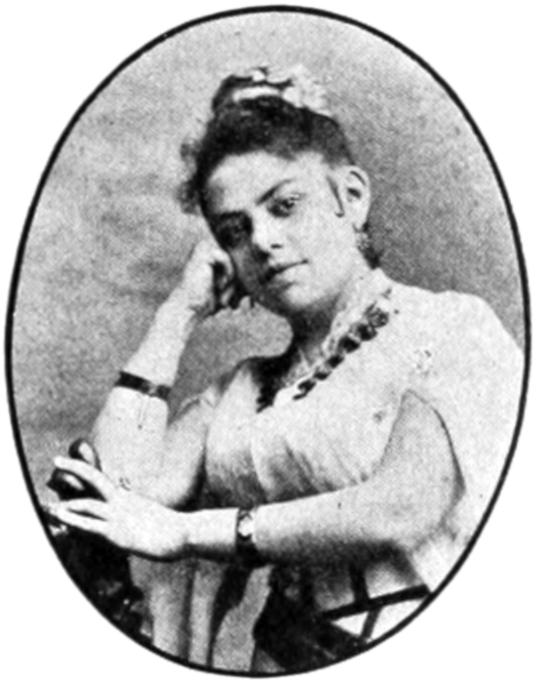
GEO. W. ROCKEFELLER JULIA GOULD
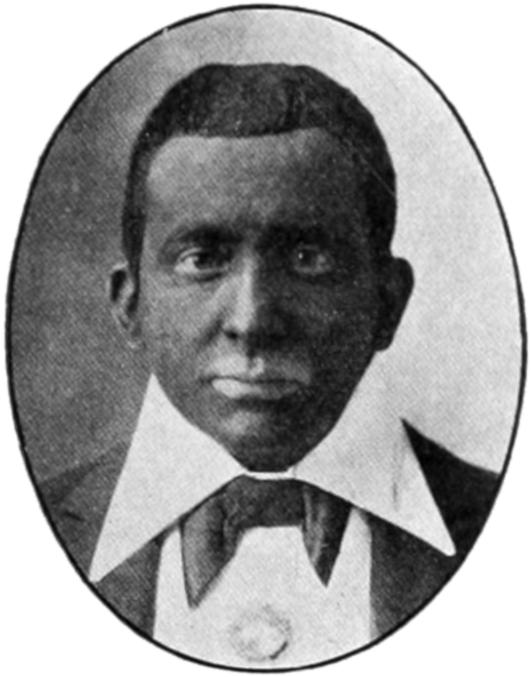
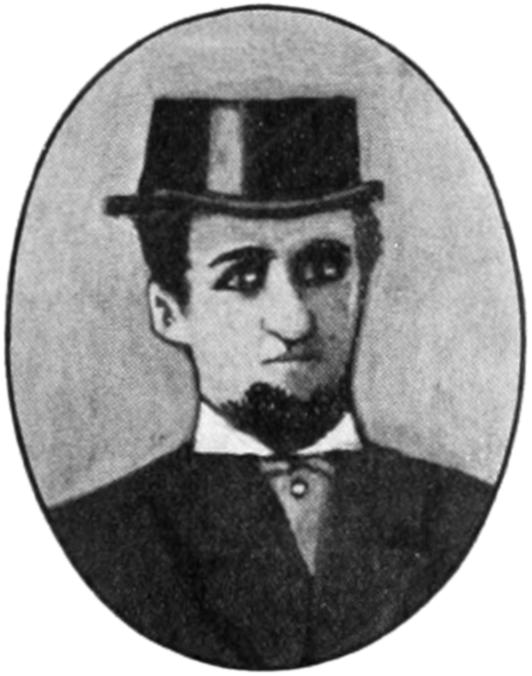
GREG. PATTI HARRY LEHR
CAIN & ABEL; ROCKEFELLER & GOULD; PATTI AND HARRY LEHR; THEY ALL “BLACKED UP.”
Charles D. Burnham, an old-time comedian, was with Green’s Mocking Bird Minstrels in 1871, also various other companies.
He married Miss Jennie Davis at Kingston, Canada, January 5, 1872.
He died at Bay City, Mich., August 1, 1902.
“English Tommy Peel” (William Howe), a jig dancer of some reputation, died in New York, January 31, 1868.
Walter Bray (Baker) was a versatile black-face performer, whose career began about fifty years ago.
In 1864, in conjunction with Joe Murphy, he had a minstrel company bearing their names. Mr. Bray made his first New York appearance September 6, 1869, doing a black-face song and dance called “Sugar Bob.”
In 1872 he was with Wm. Henry Rice’s Minstrels in Cincinnati, where his “Corkographs” received well-merited applause. Subsequently he played many minstrel and variety engagements.
He died at Fort Worth, Texas, February 25, 1891.
“Happy” Cal. Wagner was not born with that handle to his name, but just plain Calvin Wagner.
Mr. Wagner began comicalities at the age of 17, and at 70 is still “happy.” Of course he played other minstrel engagements before appearing with Charley Morris’ Company in 1864.
In 1865 he was with Sam Sharpley’s Ironclads, and the following year Wagner and (Sam) Hague’s Minstrels could readily be seen—if you had the price.
In 1867, January 21, to be exact, he joined Lloyd and Bidaux’ Minstrels; the following year found him with Fred Wilson’s Minstrels, and on March 6, 1869, he left Wilson in St. Louis; that is, he left Wilson’s company. It was getting time for “Happy” Cal Wagner’s Minstrels, and accordingly that organization soon sprang into being.
In the Fall of 1870 this company came under the able direction of “Jack” Haverly; the partnership was dissolved November 8, 1873. Mr. Wagner’s Minstrels went on touring.
In 1878 Wagner and (Ben) Cotton’s Minstrels happened; that same year they unhappened. A year or so later Mr. Wagner joined Barlow, Wilson, Primrose and West’s Minstrels, closing with them in February, 1881.
Mr. Wagner’s last appearance in minstrelsy was with Quinlan and Will’s Company, about five years ago.
Cal. Wagner was born in Mobile, Ala., July 4, 1840.
Horace Rushby, well-known as a character actor, made his first appearance in the United States with Case and Kernan’s Minstrels in 1869.
A year later he joined Blaisdell Bros. and Courtright’s Minstrels; in 1872 he was a member of Wm. Henry Rice’s organization in Cincinnati. Subsequently he appeared successfully with the minstrel companies of Harry Robinson; Haverly; I. W. Baird’s; Birch, Hamilton and Backus; Hooley and Emerson’s Megatherians; Carncross’, in Philadelphia, and several others.
Some years ago Mr. Rushby decided to enter the legitimate field, where as Cy. Prime in the “Old Homestead” and John Todd in “Old Jed Prouty” he achieved success.
Horace Rushby was born in Hull, England, November 14, 1840.
John Crosher, a well-known ballad singer who was with Cotton and Murphy’s Minstrels in 1865, and with Simmons and Slocum’s Company in Philadelphia, Pa., from 1871 to 1874; died in Toronto, Canada, January 15, 1880.
Dick Sands (George R. Sands), famous for many years as Barnum’s “Old Woman in the Shoe,” was one of the world’s greatest clog dancers.
His first appearance was made at Pierce’s Varieties in Providence, R. I., in 1857. Late that same year he joined Bryant’s Minstrels in New York, and in February, 1859, reappeared there.
In 1866 he was associated with Jack Haverly in a minstrel company bearing their name. Mr. Sands played important engagements with the Morris Bros., Pell and Trowbridge Minstrels in Boston, and many other high-class minstrel and circus companies.
Dick Sands was born at Mill Bridge, England, May 2, 1840; he died in New York, March 28, 1900.
Charles B. Hicks, one of the proprietors of Hicks and Sawyer’s Colored Minstrels, died at Suraboya, Java, in 1902.
W. H. Hamilton, who was a well-known baritone singer, was with Simmons and Slocum’s, and Frank Moran’s Minstrels in Philadelphia in the early 70’s, and in 1882 was part proprietor of Birch, Hamilton and Backus’ Minstrels in New York. He died in Los Angeles, Cal., April 17, 1897.
Gustave Geary, a well-known vocalist of Hooley’s and other minstrel companies during the 60’s, died in New York, April 25, 1877.
W. H. Strickland, the well-known minstrel agent, who was long associated with Haverly’s Minstrels, died in New York, February 27, 1903.
Charles Lockwood, a famous singer of Hooley’s Minstrels in Brooklyn, N. Y., and other prominent organizations, died in Brooklyn, N. Y., April 28, 1887.
He was the author of “A Handful of Earth,” made famous by Joe Murphy in the Irish drama.
J. H. Clifford, an excellent dancer of the 60’s, during which period he was associated with Rumsey’s, Hooley’s, Campbell’s and other well-known minstrel organizations.
He was especially well remembered for his song of “Hot Corn.”
He was on the police force in New York for some time.
He is said to have died about ten years ago.
Billy Sheppard was equally famous for his neat and artistic songs and dances, and for his rendition of the “Anvil Chorus” on the banjo.
He had been with many prominent minstrel companies, notably with the San Franciscos in California in 1865; Griffin and Christy’s in New York, two years later, and in the Summer of 1869 played in England with Smith and Taylor’s Minstrels; in 1870 he was with Hooley in Brooklyn, N. Y., and with Hooley’s in Chicago in 1871. His wife was professionally known as Sallie Clinetop, of the Clinetop Sisters.
Mr. Sheppard died at Ft. Washington, N. Y., July 8, 1872.
James A. Herne, the late well-known actor and author, whose portrayal of the lighthouse keeper in his play of “Shore Acres” will long be pleasantly remembered, played Samson, a heavy, black-face character part in the “New South,” commencing at the Broadway Theatre, New York, January 2, 1893.
James A. Herne was born in Troy, N. Y., February 1, 1840; he died in New York City, June 2, 1901.
D. R. Hawkins was well known as a capable interlocutor, and co-proprietor with Billy Courtright with a permanent minstrel company in Philadelphia bearing their names; they opened about September, 1882. He was also with Emerson’s Minstrels.
He was born in Philadelphia, and died in San Francisco, September 5, 1888; age 47 years.
Hen. Mason (Martin), was a well-known black-face performer. His wife was Celia Iferd, an actress.
He was the author of several sketches, notably, “A Night at a Free and Easy.”
He died in New York, February 22, 1873; age 33 years.
Frank Pell, a well-known and favorite comedian of many years ago, who was with Mrs. Matt. Peel’s Minstrels, in 1860; Newcomb’s Minstrels, in 1867, and other well-known companies, died in St. Paul, Minn., August 26, 1871.
Tommy Peel (O’Reilly) was one of the world’s great jig dancers. He made his first professional appearance in his native city at the age of twelve years.
About 1855 he became a member of a minstrel company in which Matt Peel was interested. Mr. Peel adopted him, and young O’Reilly thereafter was known as Tommy Peel.
He continued with Matt Peel practically until the latter’s death, in 1859, after which he joined Bryant’s Minstrels in New York, where he remained about three years.
Tommy Peel was born in Albany, N. Y., September, 1841; he died in Melbourne, Aus., July 31, 1869.
J. F. Sullivan, prominent as a balladist at various times with the minstrel companies of Duprez and Green; Sharpley’s; Buckley’s, and Skiff and Gaylord’s, died in Boston, Mass., August 20, 1866; age 25 years.
Frank Howard (Hurd), an old-time general minstrel performer of several early companies, was born in Boston, Mass.; he died in Chicago, Ill., January 4, 1897; age 56 years.
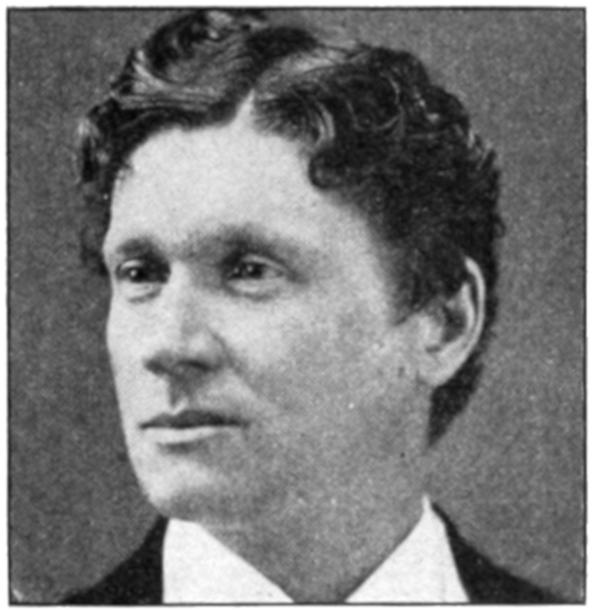
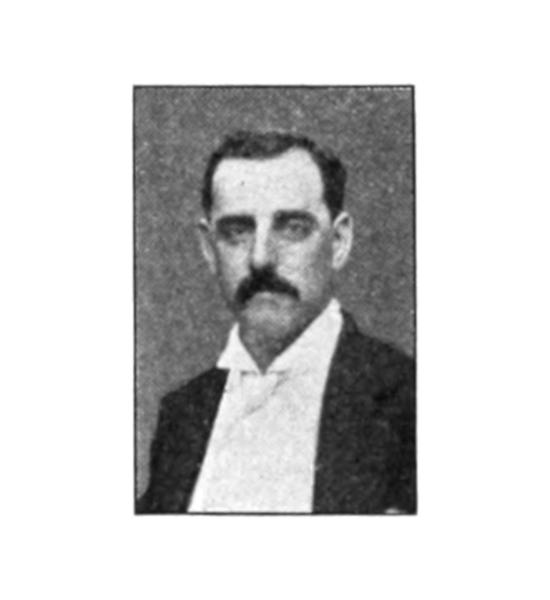
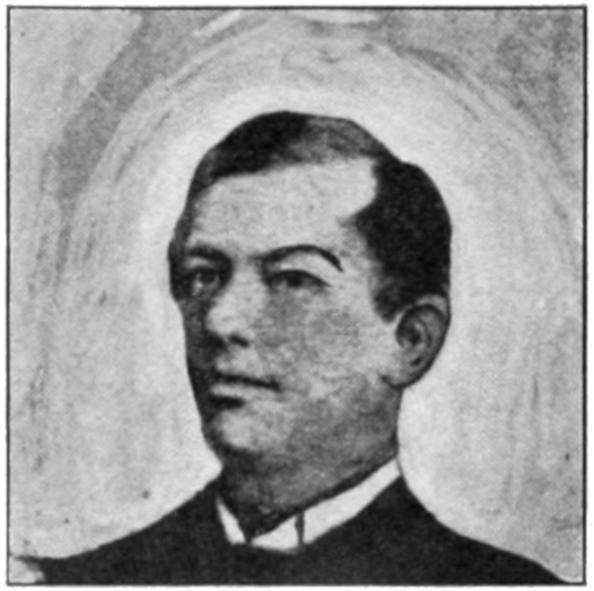
DAN. BRYANT “HANK” MUDGE S. S. PURDY
A TRIO OF TROJANS.
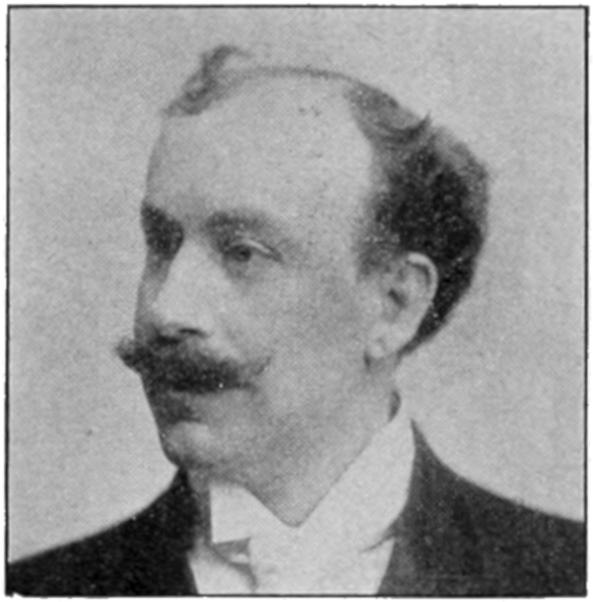
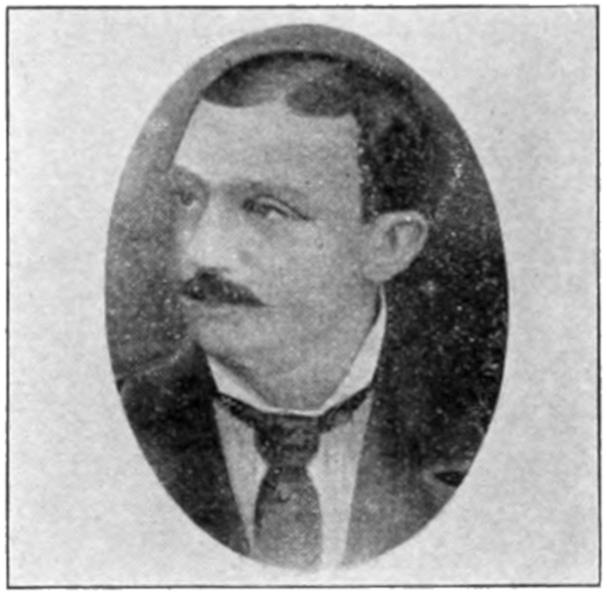
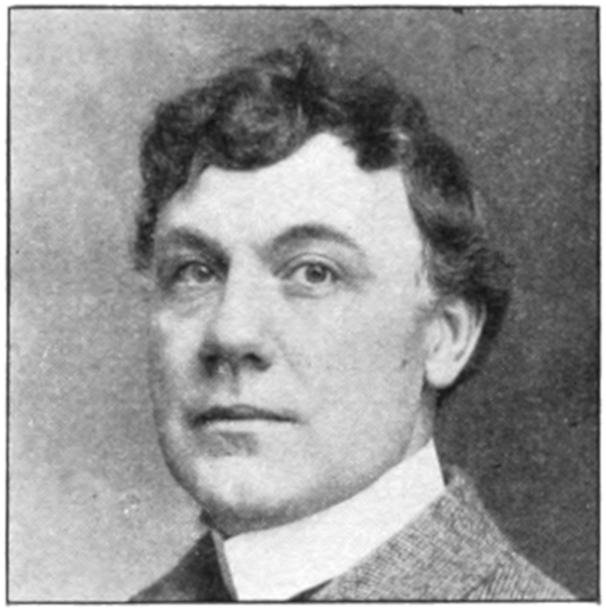
TOM ENGLISH, Born in Ireland SID. C. FRANCE, Born in England CHAS. K. FRENCH, Born in the United States
ISN’T THIS THE FUNNY OLD WORLD?
J. K. “Fritz” Emmett (Kleinfelter), the famous singing Dutch comedian, played several minstrel engagements before coming East; but always in white-face.
On June 1, 1868, at De Bar’s Opera House, St. Louis, Mo., (R. M.) Carroll and Emmett’s (J. K.) Minstrels began a brief engagement. Late in the same month he made his first New York appearance in black-face at Bryant’s Minstrels, and this was not the only time Mr. Emmett ever appeared in corked features. The engagement terminated in July following.
J. K. Emmett was born in St. Louis, Mo., March 13, 1841; he died in Cornwall, N. Y., June 15, 1891.
Ben Hayes (J. C. Allian) the old-time comedian and general performer, made his first appearance with the Sands & Mazzoni Company, in 1863.
That same year he joined the Morris Bros., Pell and Trowbridge Company, subsequently appearing with Cal. Wagner’s Minstrels for three years.
With Frank Wild in Buffalo, he was associated three years, also in many other variety houses did he play long stock engagements.
Ben Hayes was born in New York City, October 26, 1841.
Joseph M. Norcross, for many years known as Joseph Norrie, is one of the oldest and most prominent interlocutors in minstrelsy.
He first appeared professionally with the late Fred Sharpley and his own minstrel company in 1857.
In 1862 he joined Carncross and Dixey’s Minstrels in Philadelphia, and in 1870 joined Simmons and Slocum in the same city, and remained two years with that company, including a trip to California.
Subsequently Mr. Norcross joined Birch, Wambold and Backus’ Minstrels in New York, continuing there two years, after which he joined Bryant’s Minstrels, also in the Metropolis, and remained until the death of Dan Bryant.
Mr. Norcross was two years with Emerson’s Minstrels in San Francisco, and a like period with Buckley’s Serenaders. He was with Haverly seven years, including a trip to England, in 1884.
Mr. Norcross was with “Our Goblins” for four seasons, appearing in white-face. For the past few years he has intermittently appeared in vaudeville with a unique tabloid minstrel show of his own design.
Mr. Norcross married Miss Mamie Wambold at Newark, N. J., March 17, 1878.
Jos. M. Norcross was born in New York City July 5, 1841.
Hubert W. Eagan is one of the few old-time black-face performers whose active career began over half a century ago.
Mr. Eagan’s professional life began in Buffalo, N. Y., in 1857; three years later he sat on the end for the first time in Baltimore, Md., at the Melodeon, the present site of the Monumental Theatre.
He played many variety engagements before he went with LaRue’s Minstrels in 1866.
Mr. Eagan joined James Edwards in the middle 60’s, and as Eagan and Edwards were highly popular in the variety houses.
In 1863 he married Miss Jennie Williams, and after playing numerous variety and circus engagements, he retired about 1898.
Hubert W. Eagan was born in Castleragh, Ireland, December 18, 1841.
Lew Brimmer (Leslie Chase Brimmer) was not only a great banjoist, but a clever comedian as well.
In July, 1864, he was with Sanderson’s Minstrels; the same year he joined Hooley in Brooklyn, N. Y.; December 5, 1865, at Binghamton, N. Y., was given the first performance of Brimmer, Whiting, Gaynor and Clark’s Minstrels.
He was with Emerson and Manning’s Minstrels in 1869, and the following year with Emerson’s Minstrels; in the Summer of 1871 he had out Lew Brimmer’s Banjo Minstrels, and in September, 1872, he began an engagement with Moran and Dixey’s Minstrels in Philadelphia.
He was also with the San Francisco Minstrels in New York, and with Wood’s Company in the same city. His last engagement was at Sandy Spencer’s, in New York City.
Lew Brimmer was born in Cooperstown, N. Y.; he died in Fonda, N. Y., September 15, 1883; age 42 years.
George Gray, a well-known minstrel singer of the 60’s and 70’s, was identified with the companies of Hooley, Fox and Sharpley; Campbell’s and many others.
About 1880 he played Uncle Tom, and continued in that character until his death.
He was the first husband of Minnie Oscar Gray.
He was born in New York, September 25, 1841; he died in Minneapolis, Minn., March 13, 1882.
Tim. Hayes was one of the foremost clog dancers of minstrelsy. His first professional appearance was with Wild’s theatrical show under canvas in 1851.
In 1860 he came to the United States, and made his debut at the Melodeon in New York. After that he joined Hooley and Campbell’s Minstrels, and subsequently appeared with Unsworth’s; Carncross and Dixey’s, in Philadelphia; George Christy’s, and M. C. Campbell’s Minstrels.
Tim Hayes was born in Dublin, Ire., September 22, 1841; he died in Washington, D. C., May 12, 1877.
Billy Hart arrived in the United States on his eighth birthday. He made his first appearance professionally in New York, January 26, 1862. In April, same year, he appeared in black-face for the first time, and sang “Ham Fat”; subsequently and for many seasons he appeared with many prominent minstrel companies.
A few years before his death he essayed Irish characters, and was very successful.
He was born in County Tipperary, Ireland, March 17, 1842; he died in New York, July 9, 1879.
Charles H. Day spent nearly all of his life in the amusement world. He was well known as an author, agent and journalist; he was connected in an executive capacity with such minstrel organizations as Cleveland’s and Newcomb and Arlington’s.
About forty years ago he was interested in Sharpley, Sheridan, Mack and Day’s Minstrels; later this company was known as Sheridan, Mack and Day’s Minstrels.
Charles H. Day died in New Haven, Conn., October 3, 1907; age 65 years.
Harry Stanwood (Stevens) was famous as a banjoist and comedian for many years.
In 1863 he was with Duprez and Green’s Minstrels; in 1871 with Newcomb and Arlington’s Company in New York. He was also with Bryant’s Minstrels in the same city, as well as many other first-class organizations during the twenty-five years or so he was before the public. Harry Stanwood was born in Cobourg, Canada, November 2, 1842; he died there September 21, 1886.
Bob Fraser was equally well-known as a minstrel and pantomimist.
Originally a scene painter, it was while employed in that capacity with Carncross and Dixey’s Minstrels in Philadelphia, that he made his debut as an end man. He invariably arranged the Christmas pantomimes with the company in which he was identified; and in that way gradually forsook cork for chalk.
On Christmas Day, 1876, he became associated in the management of the minstrels with Billy Sweatnam at the Arch Street Opera House, Philadelphia; the organization was then known as Sweatnam and Fraser’s Minstrels.
Bob Fraser was born in Philadelphia; he died in New York City, August 4, 1896; age 54 years.
Sam. Devere was one of the best-known black-face banjoists before the public. He first applied cork to his features when twenty years of age, in a music hall in Brooklyn, on the site now occupied by the Court Theatre.
In 1879 he starred in “Jasper,” a play in which he played one of the principal characters, in black-face. One year later he went to Europe with Haverly’s Minstrels, opening in London, July 31, 1880.
September 15, 1890, at the Gayety Theatre, Albany, N. Y., the first performance of Sam Devere’s Own Company was given, and the company continued on the road ever since. Even at the present date, the trade-mark is still in use.
Mr. Devere achieved wide popularity by singing the famous ditty, “The Whistling Coon.”
Sam Devere died in Brooklyn, N. Y., March 1, 1907; age about 65 years.
Sanford and Wilson are credited with being the original musical mokes; they certainly were among the earliest double acts of this kind.
Both were big men, and both capable comedians. The violin and banjo were about the only instruments they played; but they could play them, and no two performers ever got more comedy out of these instruments than they.
They formed a partnership in August, 1873, and during their many years on the stage they played all the principal variety houses, and engagements with Bryant’s, also Haverly’s Minstrels.
Mr. Wilson retired from theatricals in May, 1892.
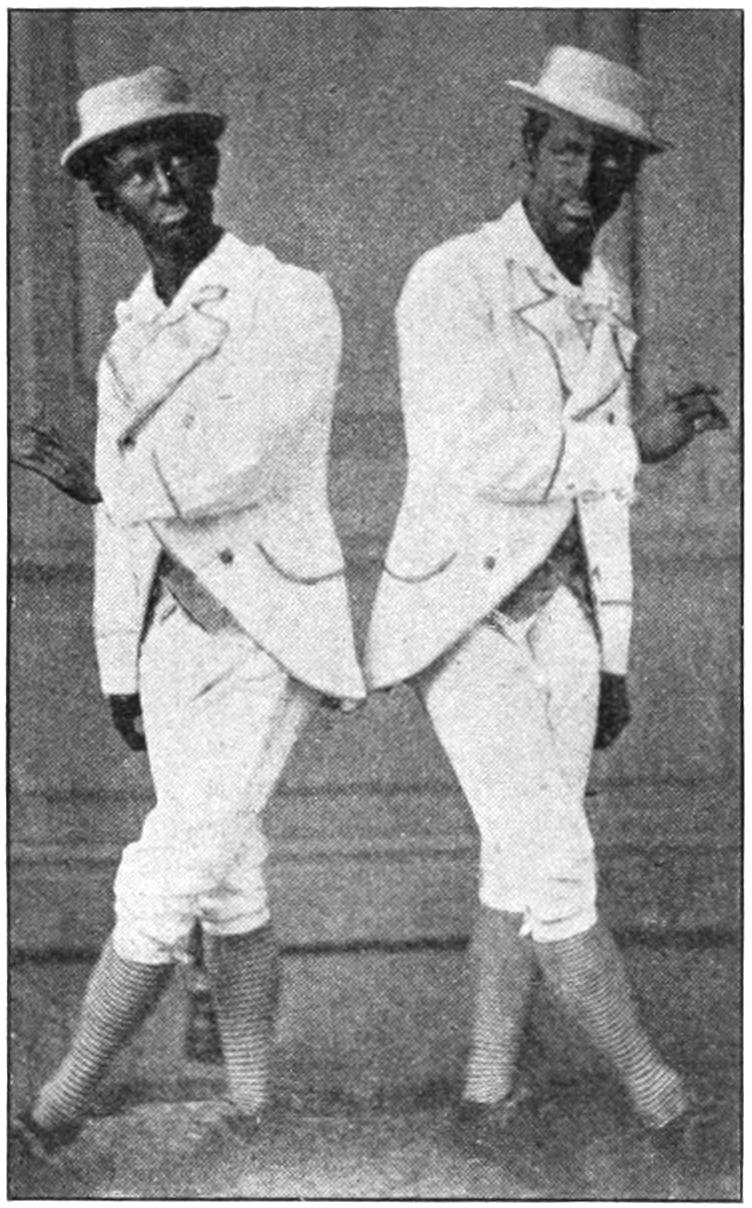
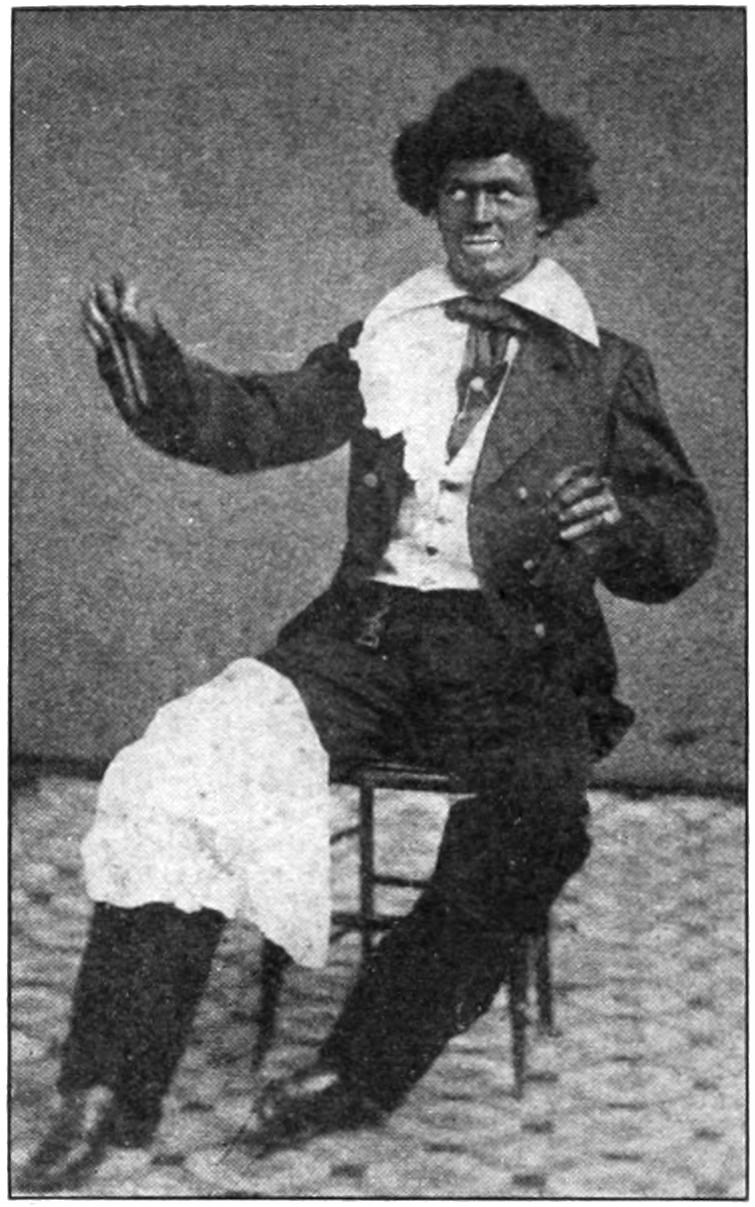
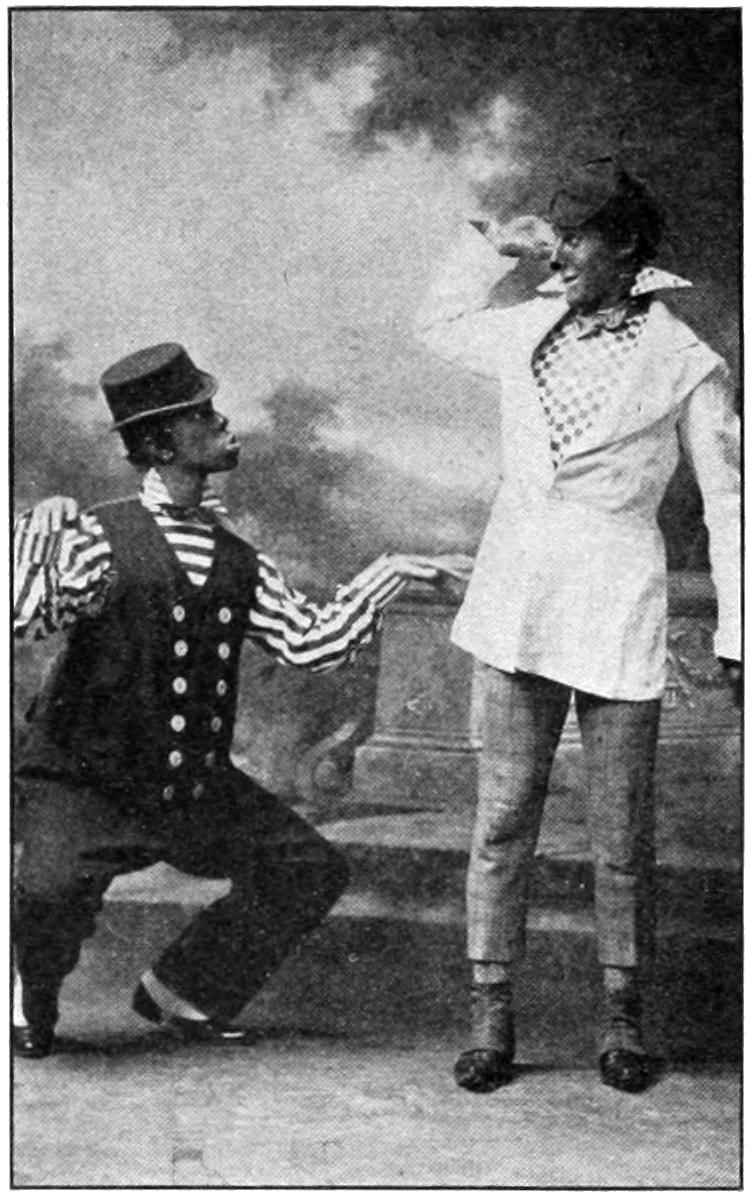
JAS—MACKIN & WILSON—FRANCIS (1875) (Courtesy of Chapin & Gore, Chicago) “KERRY GOW” JOE MURPHY (1862) DAVE—MONTGOMERY & STONE—FRED (About 1898)
THOSE WERE THE HAPPY DAYS.
James Sanford (Thos. Pynes), was born in Milbury, Mass., in 1843; he died in Cohoes, N. Y., December 23, 1891.
Charles Wilson (Neiman), was born in Milwaukee, Wis.; he died in Brooklyn, N. Y., February 15, 1893; age 51 years.
John Bowman. This prominent song and dance artist began his regular career at Graham’s Concert Hall on Market Street, near Second, St. Louis, Mo., in October, 1863, where he met with much success doing an “Essence.” It was there that he met his future partner, William Harris, though he did not join him in partnership at that time. After Graham’s he went to Jake Esher’s Bowery, same city, doing “ends” and comedy; traveling engagements followed until he met Harris again at Deagle’s in St. Louis, 1866, when the partnership was formed; they remained at Deagle’s Varieties one year, played many variety theatres, and engagements in St. Louis with Fred Wilson’s Minstrels, also Simmons and Slocum in Philadelphia. Bowman and Harris dissolved partnership in Canada in 1873 while with the L. B. Lent’s Circus.
After separating from Mr. Harris he opened in Providence, R. I., with Archie Stalker, and played other dates, later taking out the Bowman Brothers Minstrels; a wagon show.
In 1881 he went to work for William Harris, in Boston, and has been with him ever since.
John Bowman was born in Mobile, Ala., November 16, 1842.
William Harris, famous in professional circles for many years as a member of the great theatrical syndicate, began his career in St. Louis, Mo., in the early days of the Civil War, as a black-face song and dance man, playing the variety houses until 1866, when he formed a partnership with John Bowman, which lasted until 1873, when they separated. Mr. Harris next allied himself with William Carroll, a good comedian and banjoist, and as Harris and Carroll played many first-class engagements, including Tony Pastor’s Road Company; they separated in 1879. Later he went to Boston at the Howard Athenaeum, as stage and acting manager for Josh. Hart, subsequently taking the house himself, and retaining it for several seasons. Afterwards, in conjunction with Isaac Rich, they had many stars under their banner, including George Thatcher, Andrew Mack and many others.
Mr. Harris is one of the youngest looking men in the profession, retaining the appearances of youth to a remarkable degree; he hails from St. Louis, Mo. I didn’t get his age, but I am sure he must be younger than he would admit that he is.
(Overture—“Apple of My Eye.”)
Joe. Lang, the old-time black-face performer, made his first appearance with the Morris Brothers, Pell and Trowbridge’s Minstrels, at an early age. Subsequently he played an engagement with Morris and Wilson’s Minstrels in St. Louis.
Mr. Lang had the management of the Adelphi Theatre in Buffalo for several seasons, and the Halsted Street Theatre in Chicago.
He was also associated professionally with “Hank” Mudge, the old time clog dancer.
Joe Lang was born in New York, September 21, about 1843.
Mike Foley was a well-known black-face comedian, and during the 70’s did an excellent black-face act with Buck Sheffer, as Foley and Sheffer. He was also of the team of Foley and Wade.
He had retired from active theatricals about nine years prior to his death, which occurred at Syracuse, N. Y., September 10, 1888, at the age of 45 years.
Thompson and Kerns were the first black-face double song and dance team.
Prior to their advent, performers invariably worked singly. Their first joint appearance was made in Washington, D. C., in 1861; a year previous Mr. Kerns had made his professional debut at Long’s Varieties, Philadelphia. Thompson and Kerns continued in partnership for several years, playing the variety theatres almost exclusively.
After separating, Mr. Thompson joined Newcomb’s Minstrels in Cincinnati, August, 1867.
About 1871 he produced “On Hand,” a sensational drama, in which Mr. Thompson portrayed twelve distinct characters; black, white and yellow; male and female; of various nationalities. At last accounts he was still playing “On Hand,” early in the current year.
Mr. Thompson is the father of Mollie Thompson, the favorite dancer of a decade ago; and the father-in-law of Eddie Garvie, who has played more than one black-face part.
Mr. Thompson was also the oldest living musical moke.
Johnny Thompson was born in New York, July 4, 1843.
Frank Kerns was born in Philadelphia, 1844; he died in New York, September 21, 1877.
Charles Bortell was well-known as a capable and bass singer and interlocutor. His last minstrel engagement was with I. W. Baird’s Company.
At one time he was a member of the police force in Saratoga, N. Y.; he died there November 26, 1888; age 45 years.
Oscar Willis (McLain) was well-known as a banjoist and comedian chiefly on the variety stage.
His first appearance was made in his native city in 1858.
In 1871 he was end man and comedian with Unsworth’s Minstrels. November 16, 1867, he married Gussie Lamoreux, a well-known dancer, at Baltimore, Md.
Mr. Willis was born in Pittsburg, Pa., July 14, 1843; he died at Bismarck, Dakota, August 19, 1881.
John Wild. This truly great impersonator of the colored man was rather an unique performer; for whereas most of his contemporaries portrayed the black man of the plantation, John Wild’s characterizations were generally those of the town negro, of which he made an especial study from New York City life.
About 1857 Mr. Wild met Billy Arlington, and became a member of Arlington and White’s Minstrels; the company consisted of the three already named, and lasted one week. The next three years were mostly circus and variety engagements. Early in 1863 he went to Carncross and Dixey’s Minstrels in Philadelphia, occupying the tambo end; he subsequently played the variety theatres with Blanche Stanley in an act called “Nerves,” in which he created a sensation.
Mr. Wild afterwards was with the minstrel companies of Emerson, Allen and Manning’s, and the Morris Brothers in Boston, which company he left to become one of the proprietors of Dougherty, Wild, Barney and Mac’s Minstrels in 1869. He joined Harrigan and Hart’s Company, January 28, 1878, and continued with them until and after Tony Hart left the organization, remaining until 1889, when he starred in “Running Wild.”
The following year he was with George Thatcher’s Minstrels, and on December 29, 1890, he rejoined Harrigan, continuing with him until 1895.
In conjunction with Mrs. Annie Yeamans and Dan Collyer, he began a tour in vaudeville, January 10, 1898.
John Wild’s death was a distinct and irreparable loss to the profession he so ably graced.
Mr. Wild was twice married; his second wife, Ada Wray, was well-known in the profession several years ago.
John Wild was born in Manchester, England, December 29, 1843; he died in Averill Park, N. Y., March 2, 1898.
George W. Rockefeller, well-known as a vocalist and banjoist, opened with the 5th Engineer Minstrels at Auburn, N. Y., September 4, 1865; shortly after this company was known as Wagner and Hague’s Minstrels. Subsequently he was with Lloyd’s Minstrels in New York, and Tunnison’s Minstrels in Philadelphia; he joined Bryant’s Company in New York in 1868, and was with them for quite a while.
He was with Buckley’s Serenaders, also in New York, in the Summer of 1870; in the Fall he joined the San Francisco Minstrels, likewise in New York.
He opened with Emerson’s Minstrels in San Francisco, August 19, 1872; May 12, following he sailed for Australia with that company, and remained in the Antipodes after leaving Emerson, finally returning to the United States in the Summer of 1879.
He again went to California, where he died at Colton, that State, March 18, 1886. Mr. Rockefeller was born at Penfield, N. Y., March 14, 1843.
Charley Pettengill. Minstrelsy suffered an irreparable loss in the untimely death of this brilliant comedian; a comedian in fact, and versatile to a degree.
August 1, 1864, he opened with Buckley’s Serenaders in Boston, and became a great favorite at once. Subsequently he joined the Morris Bros. Minstrels in the same city, where he remained until February 13, 1866. September 10, following, he played a brief engagement with Sands and Herbert’s Minstrels, and the same month returned to his home in Albany to organize Pettengill’s Minstrels, which continued intermittently until September 22, 1869, when in conjunction with Johnny Allen and Delehanty and Hengler, a company bearing their names was launched at Brooklyn, N. Y.
In November following they opened for a run in New York, that terminated June 1, 1870.
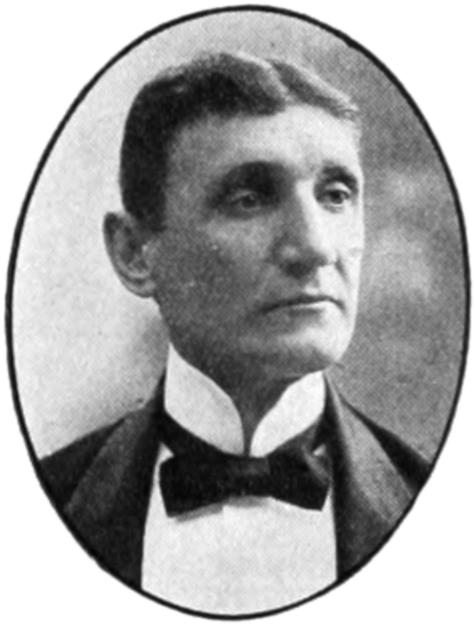
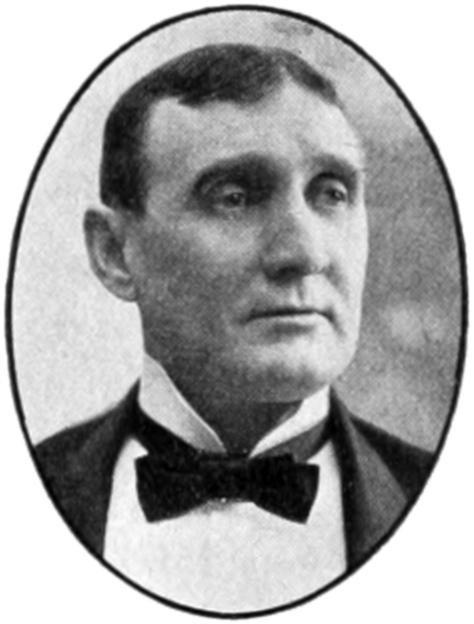
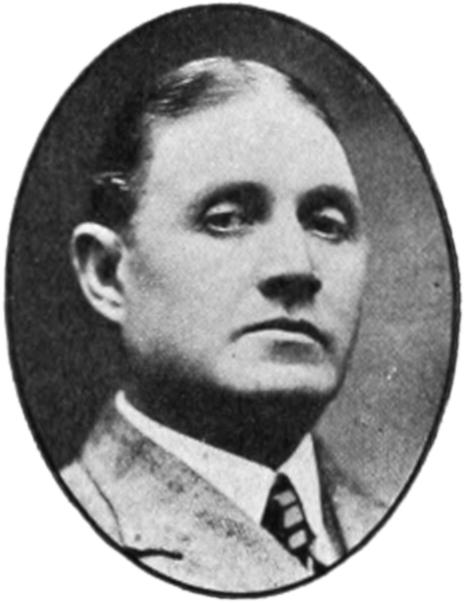
JOHN GORMAN JAMES GORMAN GEO. GORMAN
THE GORMAN BROS.; ALWAYS ON TOP.
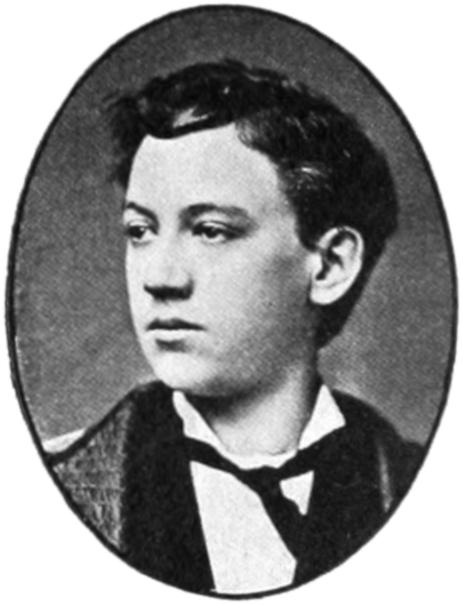
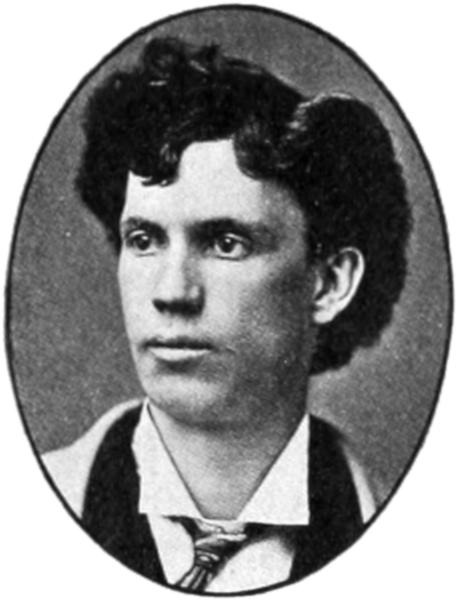
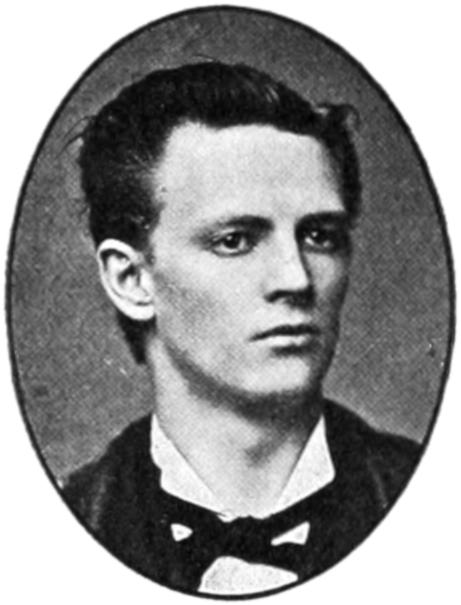
AMOS ARNOLD BILLY ARNOLD FRANK ARNOLD
THE FAMOUS ARNOLD BROS.; A GREAT TREAT FOR BILLY.
Mr. Pettengill is declared to have been the original “Nicodemus Johnson”; if he wasn’t, he certainly was the greatest. All honor to his memory.
Charley Pettengill was born in Albany, N. Y., where he died October 10, 1870; age 27 years.
M. B. Leavitt (Michael Bennett Levy) commenced his professional career as a minstrel in 1859; he was one of the end men, and appeared under his own name as M. B. Levy; Mr. Leavitt has been a comedian ever since—but not always on the stage.
To name all the minstrel companies he has been with would be a difficult matter, also all the things he did in them.
In 1867 he was a clown and comic vocalist; in 1872 he did a stump speech on the occasion of his last appearance as a “black-face” performer. There were any number of “Leavitt’s Minstrels” in the 60’s.
About forty years ago he became associated with Mme. Rentz’s Female Minstrels; when the fall season opened, September 18, 1871, Mr. Leavitt was treasurer of the company. This organization subsequently developed into the Rentz-Santley Troupe, the burlesque show of many years’ standing. Most of the Leavitt millions were made with this company.
In 1881 Leavitt’s Gigantean Minstrels were organized, and in 1889 Leavitt’s European Minstrels toured.
Mr. Leavitt has broken into the ranks of authors, and an interesting volume from his pen may shortly be expected.
M. B. Leavitt was born in Boston, Mass., June 24, 1843.
Arthur Cook, the well-known minstrel tenor who made popular “Ring the Bells Softly,” “Essie Dear” and other favorite compositions, came to America about 1853, and was prominently identified with such well-known minstrel organizations as Bryant’s, in New York; Carncross’ and Thatcher and Ryman’s in Philadelphia; Hooley’s in Brooklyn; San Franciscos in New York; Primrose and West; also with Edward Harrigan, “The County Fair” and “The Man From Boston.”
Arthur Cook was born in London, England; he died in Boston, Mass., November 1, 1893; age 50 years.
Billy McAllister’s career began at the age of sixteen, singing in concerts.
In 1862 he joined the Fuller New York combination Minstrels as a comedian, and as a comedian no one has ever been able to justly gainsay his right to that term.
In 1864 he organized the Cross, Fay and McAllister’s Minstrels, and until 1870 he was associated with various companies; in the fall of that year he joined Cal. Wagner’s Minstrels; Mr. McAllister demonstrated his versatility with this company by performing at various times the duties of balladist, interlocutor and comedian.
In 1872 he was with Harry Robinson’s Minstrels, and most of the period from then until 1880 was identified with his own companies.
Commencing in that year with I. W. Baird’s Minstrels, he remained two seasons. In 1882 he became a member of Haverly’s Mastodon Minstrels, and in 1883 Robinson and McAllister’s Minstrels took the road, but gave it back the following year.
July 30, 1885, Mr. McAllister opened with McNish, Johnson and Slavin’s Minstrels in his native city, at the initial performance of that company; early in 1886 he joined Carncross’ Minstrels in Philadelphia, sitting opposite to Lew Dockstader.
Mr. McAllister has been a prominent citizen of Troy, N. Y., where he has been engaged in business for more than twenty years.
Billy McAllister was born in Paterson, N. J., March 15, 1843.
Frank Bell (Peter Jaggers), best known as a unique stump-speaker, made his first appearance in Olean, N. Y., in September, 1864, and shortly after joined Wood’s Minstrels in New York, as a clog dancer.
Subsequent minstrel engagements were with the original New Orleans Minstrels, Simmons, Slocum and Sweatnam’s, Armstrong Bros., George Clapham’s Minstrels, Barlow, Wilson, Primrose and West’s, Haverly’s, Harry Robinson’s, and Lester and Allen’s. The crowning success of his career was with “Way Down East,” in white-face, playing the constable, and singing “All Bound Round With a Woolen String;” Mr. Bell also played a character part with Otis Skinner in “Your Humble Servant,” in 1910.
Frank Bell was born in Thurle, Can., September 17, 1843.
Major (John E.) Burk, known far and wide for his famous gun drill, has been with many prominent minstrel organizations in the United States and England, usually appearing in black-face, the act seemingly being enhanced in appearance at least, by the addition of burnt cork.
He first appeared with Hooley’s Minstrels in Brooklyn, in 1868, also played engagements there in 1869 and 1870. Subsequently he was with San Sharpley, season 1872-73; first appearance in England at Hague’s Minstrels, London, April 17, 1876; also played at Hague’s, Liverpool, and Moore and Burgess in London; Hooley & Emerson’s Megatherians, season 1879-80; Livermore Bros. in England; Frank Moran’s Minstrels, Carncross’ Minstrels in Philadelphia, and the Big 4 Minstrels, 1880-81.
Major Burk was born in New York City, June 21, 1845, and now resides there.
Milt. G. Barlow was one of the greatest “old darky” delineators that minstrelsy has known, and probably did more to popularize “Old Black Joe” than any other performer.
Mr. Barlow originally aspired to be a Dutch comedian. His first minstrel engagement was with the Jackson Emersonians in 1870; the tour lasted about four weeks; subsequently he returned to the variety business, doing black-face, Dutch and Irish.
Shortly after this he played an engagement with Harry Robinson’s Minstrels, also Benjamin’s New Orleans Minstrels.
Mr. Barlow became a member of Haverly’s Minstrels about 1874, and continued with them until March 24, 1877; two days later joining Sweatnam and Fraser’s Minstrels in Philadelphia.
On August 20, 1877, the first performance of Barlow, Wilson, Primrose and West’s Minstrels was given; the last was at Poughkeepsie, N. Y., June 10, 1882. In the latter year Barlow, Wilson & Co.’s Minstrels were organized, and later Barlow, Wilson and Rankin’s Minstrels.
Afterwards Mr. Barlow was with Thatcher, Primrose and West’s, and Primrose and West’s Minstrels.
In August, 1894, Barlow, Dolson and Powers’ Minstrels took the road. For several years after this he was with “The White Slave” Co., and “Uncle Tom’s Cabin,” playing the title role.
Milt. G. Barlow was born in Lexington, Ky., June 29, 1843; he died in New York City, September 27, 1904.
Wm. A. Huntley (Penno) made his first appearance on the stage in his native city at the age of six years, playing little Tom Bruce, in “Nick of the Woods.” His first minstrel engagement was with Mead’s Euterpean Minstrels, in 1862, at New London, Conn. In 1865 he joined the Campbell and Huntley Minstrels, remaining some years.
Minstrelsy lost him from 1868 to 1870. In September, 1871, he made his first appearance in white-face at the Howard in Boston; subsequent engagements were with the Lauri English Pantomime Troupe and the Martinetti French Ravel Pantomime Co. In the Spring of 1873 he joined the McKee and Rogers Co., afterwards rejoining the Martinetti Troupe.
In 1874 he became co-partner with Dr. Huntley in the management of Huntley’s Minstrels; then came engagements extending some years in the principal theatres of the country.
Mr. Huntley was especially engaged for Haverly’s Minstrels in London, to lead the big banjo act in which twelve performers appeared at one time; he opened at Her Majesty’s Theatre, July 31, 1880, and remained three months. It was during this period that Mr. Huntley had the honor of appearing before the Royal Family; he subsequently played in the principal cities of England, also in Paris, and returned to the United States to fill out his contract with one of Mr. Haverly’s organizations here.
From 1881 to 1884 he was with Whitmore and Clark’s Minstrels, and later formed a partnership with John H. Lee, formerly of Adams and Lee; subsequently they opened a studio in Providence, where they met with much success, especially in the introduction of the banjeaurine and the bass banjo. Mr. Huntley has long since retired from minstrelsy, but the appellation of the “Classic Banjoist” he so justly earned years ago, is still his.
Wm. A. Huntley was born in Providence, R. I., November 2, 1843.
J. J. Kelly was one of the best known vocalists in minstrelsy. He entered the profession about 1853, and had been with such famous companies as Emerson’s, Haverly’s, Bryant’s, in New York; Barlow, Wilson, Primrose and West’s; and Morris Bros., Pell and Trowbridge’s in Boston. Mr. Kelly died in Boston, Mass., July 20, 1902.
Wm. J. Ashcroft was one of the most versatile performers that ever blacked their face. His first professional appearance was in Pawtucket, R. I., as a member of the Julian Minstrels.
In 1866 he was with Seaver’s Minstrels, in Brooklyn, N. Y. He was also with Lloyd’s Minstrels. About 1872 he went to England, and later when returning to the United States, he brought over and was the first to produce in this country, an eccentric black-face specialty called the “Funny Old Gal;” in this he was phenomenally successful.
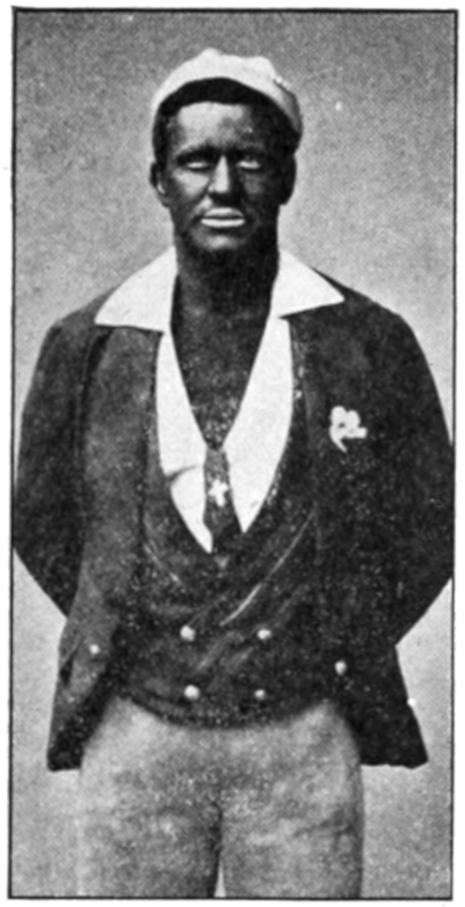
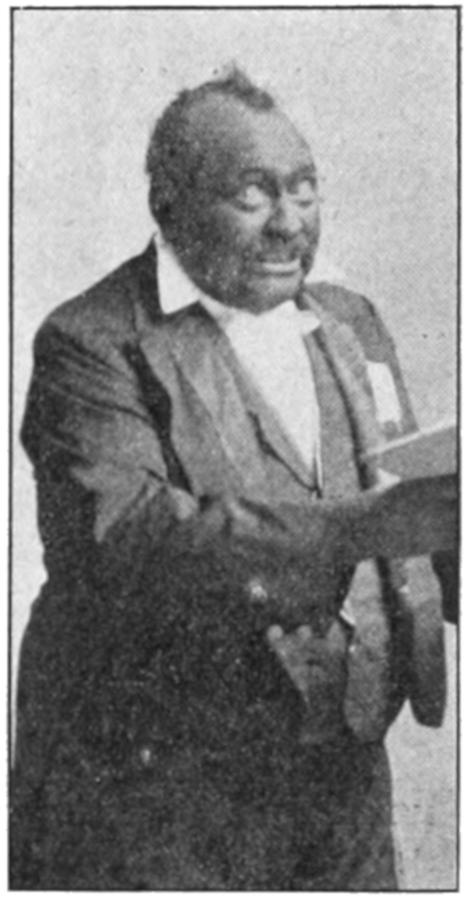
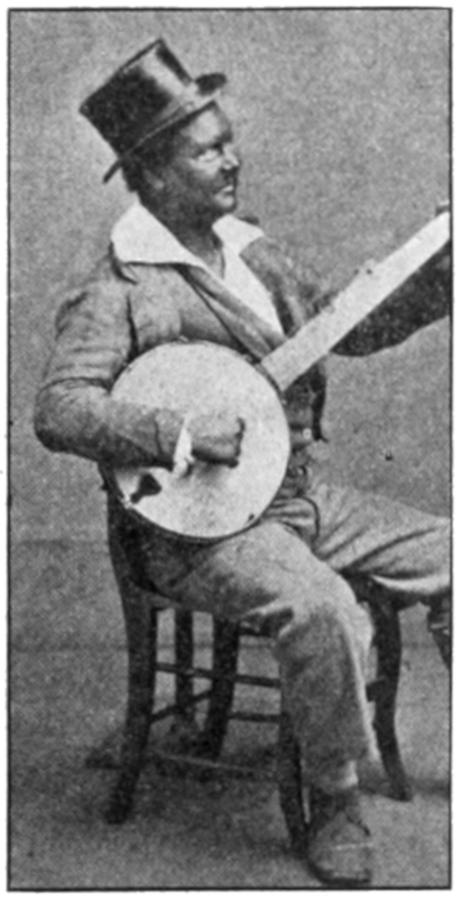
TOMMY GRANGER BILLY RICE
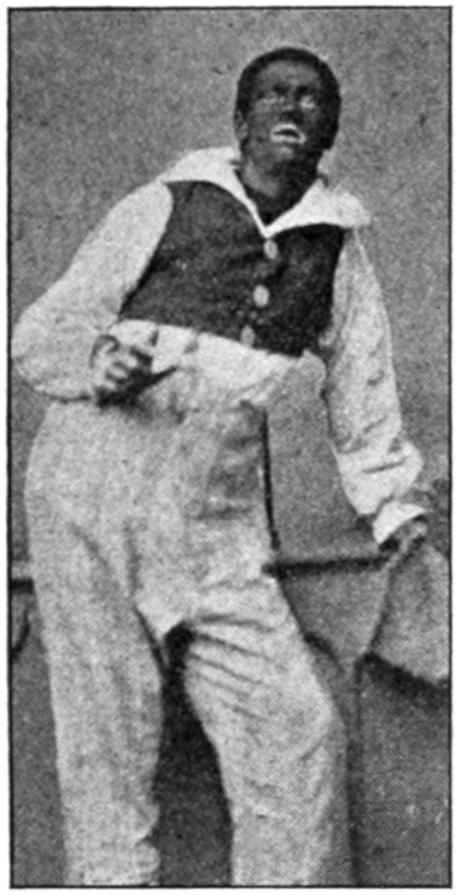
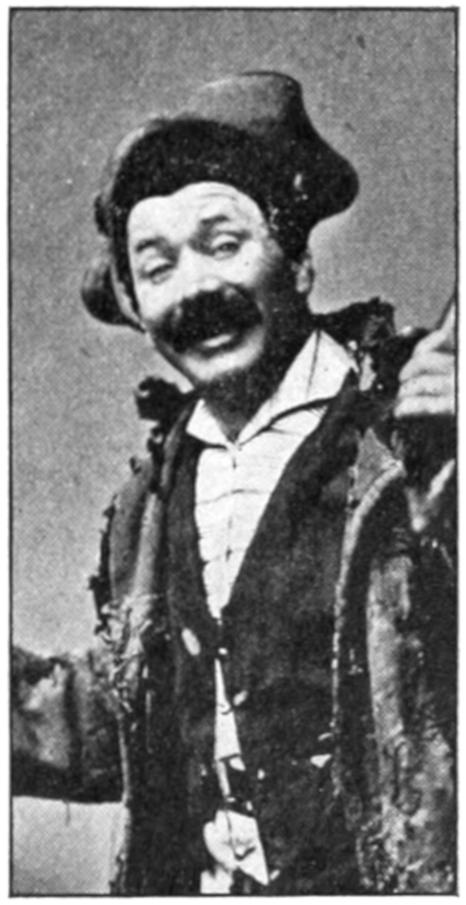
“JIM” BUDWORTH
“HAPPY” CAL. WAGNER J. W. McANDREWS (The “Watermelon Man”)
A QUAINT QUINTETTE.
Prior to this he was a partner for several months of J. W. Morton.
Mr. Ashcroft again visited England in 1875, where he became one of the greatest favorites the old world ever knew, appearing chiefly in white-face character work.
W. J. Ashcroft has resided in Europe for many years.
Matt. Wheeler (Mathias Wittenwiler) is still with us. His first professional appearance was at Sanford’s Opera House, Harrisburg, Pa., with Joe. Miller’s Minstrels in 1864. For several years following he played successful stock engagements at Baltimore, Philadelphia and other cities.
Season of 1871-72 Mr. Wheeler was with Bishop’s Serenaders; the following year he joined the Morris Bros. Minstrels for a road tour.
In 1873 he began a season’s engagement with Simmons and Slocum’s Minstrels at their theatre in Philadelphia; the following season was also spent in the Quaker City with Carncross’ Minstrels.
Mr. Wheeler was with Haverly’s Minstrels early in 1877, and in the Fall of that year returned to Carncross’ Co., and remained there until the retirement of the latter, January 25, 1896. Mr. Wheeler continued with Frank Dumont when the latter took the management of the house two days later, and has since played several engagements there.
While a member of stock in the Maryland Institute in 1869, Mr. Wheeler was very successful in the portrayal of such black-face character parts as Wool, in the “Hidden Hand”; Pete, in the “Octoroon,” and “Uncle Tom’s Cabin.”
Matt. Wheeler was born in St. Gaul, Switzerland, March 4, 1843.
Con. T. Murphy (John D. Murphy), who was widely known as an actor, author and song-writer, was also very much of a minstrel, and a good interlocutor.
He was with Bryant’s Company in New York at the opening of the season, September 1, 1873, and was identified with several other organizations.
He was born in Cork, Ireland, in 1844; he died at Lake Bluff, Ill., July 26, 1907.
Little Mac (Ebenezer Nicholson) was a dwarf scarcely more than three feet high. He took the name of Little Mac during the Civil War out of compliment to Gen. McClellan, who was very popular at that time. The major portion of his professional career was spent in New York with Bryant’s Minstrels, where he made his first appearance, November 27, 1865.
In the summer of 1869 with Hughey Dougherty, John Wild and Master Barney, he headed a minstrel company bearing their names.
He subsequently returned to Bryant’s, where he remained until late in 1871.
Thereafter his engagements were desultory; his last regular appearance was with Daly Brothers in “Upside Down.” He was a clever comedian, and was prominently identified with his “Essence” and “Big Shoe Dance.”
Little Mac was born in Brockville, Canada, July 11, 1844; he died in New York, April 7, 1890.
Tommy Gettings was a well-known jig dancer, and during his brief career had been with the Bryant’s in New York, and other well-known minstrel companies.
He died in New York, November 25, 1866; age 22 years.
Billy Rice (Wm. H. Pearl). Minstrelsy knew no greater favorite than this once well-known comedian, who made his professional debut in Brooklyn, N. Y., in 1865, at Poole and Donnelly’s Theatre, appearing in black-face, and assuming the name by which he was always identified.
He continued in the variety business mostly until 1869, when he joined Newcomb’s Minstrels; the following year he was with Hooley’s, in Brooklyn, and when that company made their first appearance in Chicago, January 2, 1871, Mr. Rice was a member.
Late that year he became identified with Manning’s Minstrels in the same city, continuing there until about February 1, 1872, when he again joined Hooley in Brooklyn. Subsequently he was with Arlington, Cotton and Kemble’s Minstrels in Chicago, and later opened a variety theatre there.
In 1874 he was with Emerson’s Minstrels in San Francisco and on tour, remaining several months. January 29, 1877, Rice and Hooley’s Minstrels opened in New York; later he rejoined Emerson, and the following year he became a member of Haverly’s Minstrels, with whom he continued several seasons.
In 1882 Rice and Hooley’s Minstrels again was formed, terminating as Billy Rice’s Minstrels the following January, when he opened with Thatcher, Primrose and West’s Minstrels, and remained with them until 1887, when Sweatnam, Rice and Fagan’s Minstrels were organized. Rice and Sheppard’s Minstrels in 1888, and subsequently with Cleveland’s Minstrels; Primrose and West’s and a return to Haverly’s Minstrels in 1898 practically completed the minstrel career of the great end man and stump-speaker.
Mr. Rice married Blanche Carman, an actress, April 8, 1871, in Chicago.
Billy Rice was born in Marion, N. Y., December 12, 1844; he died in Hot Springs, Arkansas, March 1, 1902.
The Three Arnold Brothers were prominent in the 70’s and 80’s, but away back, March 21, 1862, there was another set with Mrs. Matt. Peel’s Minstrels; Herman, Frank and Richard Arnold respectively.
Wm. Henry Rice made his first professional appearance as a boy singer in Pittsburgh, Pa., December 6, 1856.
His first minstrel engagement was at Johnson’s Hall, Norfolk, Va., September 19, 1859, with Sanford’s Minstrels, where he sang in the first part, did a dance in the olio, and otherwise was useful.
At this time and until 1865 he was known as Master Lewis, and later, W. H. Lewis, the latter being the maiden name of his mother.
In 1860 he was with Wood’s Minstrels, and Wm. A. Christy’s Minstrels.
About July, 1861, he made his first appearance in New York as a variety performer at the Melodeon.
In the fall of 1861 he joined Mrs. Matt. Peel’s Minstrels, and about March 1, following, he became a member of the famous Peak Family of Bell Ringers for a brief period, subsequently re-joining Mrs. Peel’s Company.
In June, 1862, he was with George Christy’s Minstrels in New York, and soon after joined Duprez and Green’s Company, and Mead’s Minstrels.
October 13, 1862, he made his first appearance with Hooley’s Minstrels in Brooklyn, N. Y.; in the spring of the following year he was with Horn and Newcomb’s Minstrels, the company subsequently was run by Newcomb alone.
He left the latter and re-joined Duprez and Green in the fall of 1863.
In March, 1864, he was with Yankee Hill’s Minstrels, and the next month re-joined Hooley for the balance of the season, again opening with him August 22, following.
About March 1, 1865, he became a member of Cotton and Murphy’s Minstrels, opening at Fall River, Mass.; he left this company in the Fall of that year.
November 20, 1865, he joined the famous San Francisco Minstrels of Birch, Bernard, Wambold and Backus, taking and using for the first time his own name. He remained with this company four years, in New York City. On June 14, 1869, he played his first engagement with Haverly’s Minstrels, opening at Baltimore; a few weeks later he was with Sharpley’s Minstrels in Boston.
August 23, 1869, he began a season’s engagement with Carncross and Dixey’s Minstrels in Philadelphia, and July 2, following, he sailed for Europe, but did not play there.
September 2, 1870, he opened with Welch, Hughes and White’s Minstrels in Brooklyn, N. Y.; at the initial performance of that organization; he closed there October 8, and two days later began a season’s engagement with Simmons and Slocum’s Minstrels in Philadelphia.
April 17, 1871, he opened in New York with Newcomb and Arlington’s Minstrels, continuing with them there and on tour several months.
The following August he made his first appearance with Bryant’s Minstrels in New York; he remained the season, and in June, 1872, played an engagement in the same city with Sharpley’s Minstrels, after which he went to Cincinnati, and joined Newcomb’s Minstrels. In that city, September 2, 1872, the first performance of Rice’s Minstrels was given at Melodeon Hall; subsequently moving to Thom’s Hall, and later taking the road, where they disbanded about December 1.
January 27, 1873, he re-appeared at Bryant’s, and finished the season there.
He re-joined Simmons and Slocum in Philadelphia, August 25, 1873, and barring a brief interval, was with them all season.
June 13, 1874, he sailed for England, making his first appearance there in Liverpool with Sam Hague’s Minstrels, July 13.
August 31, following, he again joined Bryant’s Minstrels in New York, and continued there until the death of Dan Bryant, April 10, 1875; the following month he joined Emerson’s Minstrels in Chicago.
August 12, 1876, he again sailed for England where he played a few weeks in the music halls.
Returning to America he joined Simmons and Slocum’s Minstrels for a tour, commencing November 20, 1876.
After this engagement he played the variety houses principally until the Spring of 1878, when he engaged again with Haverly, opening in Chicago, and going to San Francisco; he left Haverly there and opened at the Bella Union, May 13.
In the fall of 1878 he was with Neil Bryant’s Minstrels, and the following year with Joseph Norcross’ California Minstrels.
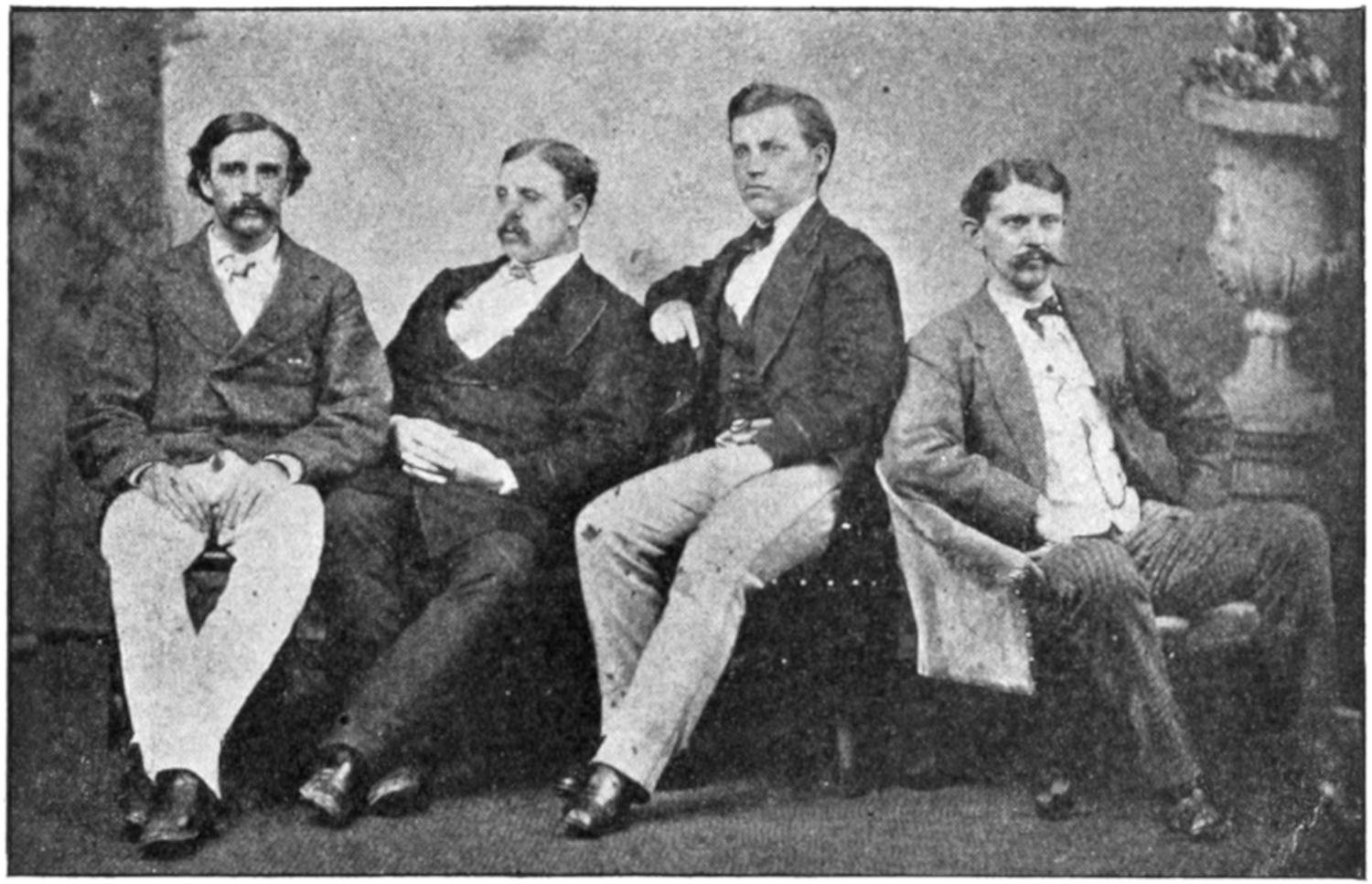
QUARTETTE WITH BRYANT’S MINSTRELS, NEW YORK CITY, 1870.
Sig. J. Brandisi, Harry Norman, Jas. G. Russell, W. P. Grier.
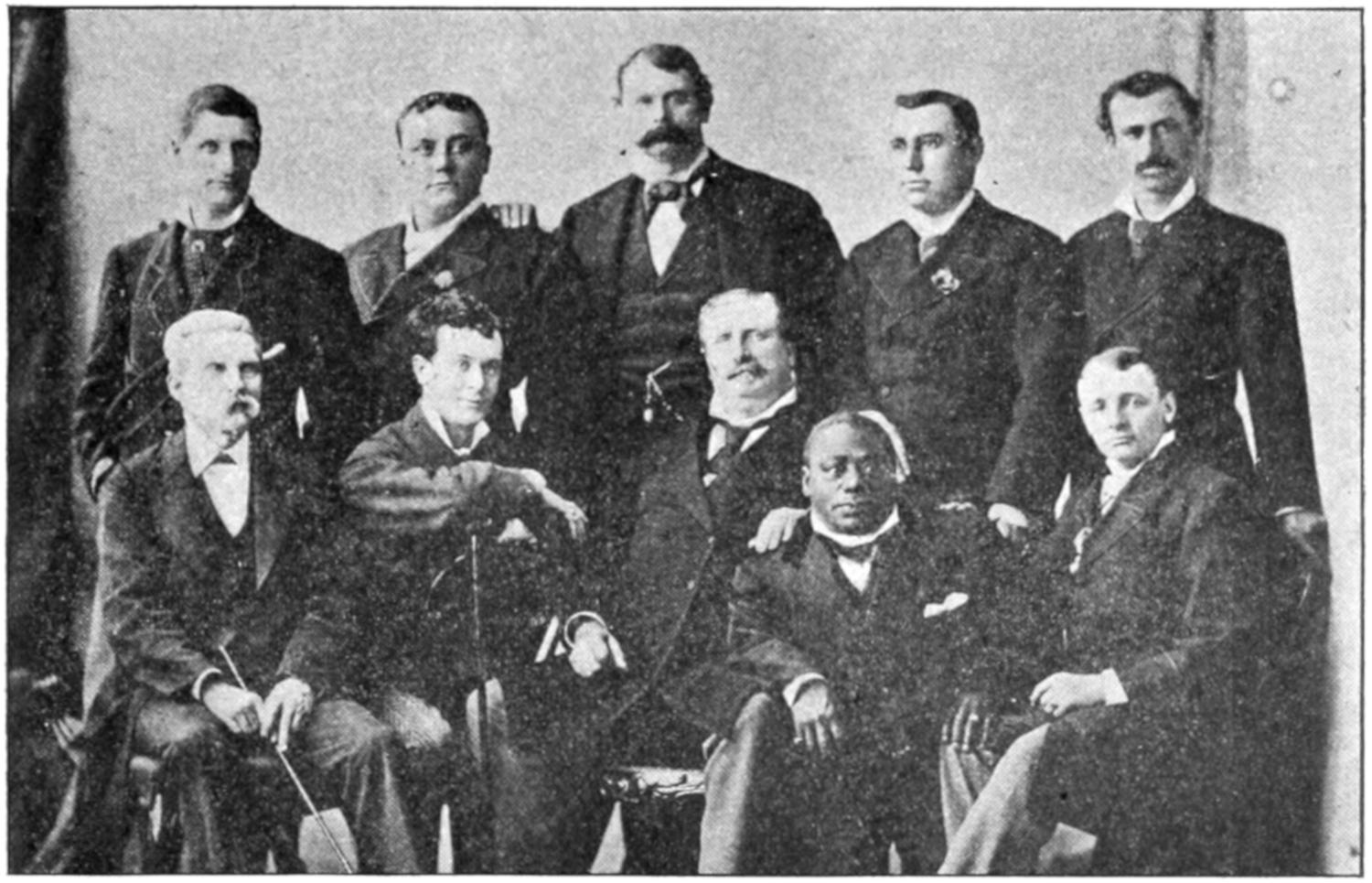
KELLY AND LEON’S MINSTRELS; NEW ZEALAND, 1878.
From left to right—Chas. Kelly, J. H. Surridge, C. Fredericks, Wm. Ball and Billy Courtright. Wm. Blakeney, “Leon,” Edwin Kelly, “Japanese Tommy,” Beaumont Read.
January 3, 1881, he began one of the most successful engagements of his career, when he opened in his native city with Thatcher and Ryman’s Minstrels, playing the title role in a burlesque on Sarah Bernhardt, called “Sarah Heartburn;” his success was phenomenal; so much so that the great French actress expressed a desire to see the caricature of herself, and accordingly, on the afternoon of January 7, 1881, a special performance was given for her benefit; on this occasion the Philadelphia Times of January 8, 1881, said: “Bernhardt looked up, blushing slightly as she perceived an enormous pair of glass bottles leveled at her in place of opera glasses by the cork female. Every eye in the house was riveted upon the woman whose characteristics were to be burlesqued, and the appearance of Rice was scarcely noticed for the second until Sarah herself showed her appreciation of the caricature by bursting into a fit of uncontrollable laughter. The agony displayed by Sarah Heartburn and her tumble on the stage only added to the merriment of Bernhardt. The fun continued and reached its climax when Rice and Ryman impersonated Camile and Armand. The imitations of Bernhardt’s stage attitudes, and gestures caused Sarah to laugh to an extent almost painful. She seemed unable to stop, although she placed her handkerchief over her mouth and leaned forward in the effort to restrain herself. She abandoned all attempts, however, when the death scene ensued and Heartburn threw herself upon the sofa, after the manner in which a diver starts for the bottom of the sea. Sarah gave vent to her sense of the ludicrous until her eyes were full of tears. There might have been danger of hysterics had not an attack of coughing interfered and had not George Thatcher made himself known as Victor, Heartburn’s son, blowing a horn and crying lustily. The concluding scene, however, again amused her, and she clapped her gloved hands right heartily, seemingly sorry when the curtain finally descended.”
Mr. Rice went to London, England, with the act, where he produced it at Moore and Burgess’ Minstrels, opening June 20, 1881. Returning in August following, he joined Barlow, Wilson, Primrose and West’s Minstrels for the season.
August 21, 1882, he opened with Billy Rice and R. M. Hooley’s Minstrels; and in June following he played a special engagement with Haverly’s Minstrels in Chicago, after which he organized Rice’s Pleasure Party in “Our Goblins” for the season of 1883-84, playing a part in the play in black-face.
August 25, 1884, he opened with the Standard Minstrels in San Francisco for a few weeks, closing October 4.
July 30, 1885, he began the season with McNish, Johnson and Slavin’s Minstrels; he was with this company part of the season of 1886-87 also. September 12, 1887, in conjunction with John Hart and Add. Ryman, he organized a company bearing their names.
December 24, 1888, he assumed the business management of the Star Theatre in Buffalo, N. Y., on the opening of that theatre; he resigned the position and soon after joined Johnson and Slavin’s Minstrels.
In 1890 he organized the World’s Fair Minstrels, opening July 17, at Elizabeth, N. J. Season of 1891-92 he was with George Wilson’s Minstrels. May 16, same year, he played his first performance with Cleveland’s Minstrels, and continued with them intermittently until May 1, 1896.
In November, 1898, he opened with Bartlett’s California Minstrels for a brief season.
July 31, 1899, he began a special engagement of four weeks with Wm. H. West’s Minstrels; October 9, same year, he opened with Harry Davis’ Minstrels in Pittsburgh, Pa., in an attempt at making a permanent company in that city; he finished the season with Primrose and Dockstader’s Minstrels. About January, 1900, he began a series of annual engagements with Frank Dumont’s Minstrels in Philadelphia.
His last traveling engagement was with the “Great Lafayette” Company in November, 1902.
His last stage appearance was at Atlantic City, N. J., November 30, 1907. The author has no exact knowledge of engagements said to have been played with Haverly, at Chicago in 1892; Kelly and Leon in New York in 1876, and with Duprez and Benedict’s Minstrels.
It is obviously a delicate matter for one to speak of the talents, capabilities, etc., of one’s own father; but a reproduction of some notices from the press of the country, may not be considered bad form.
The Daily Commercial (Cincinnati) of July 29, 1863, said: “The singing of Mr. Lewis surprises us more and more. His imitations of the Prima Donna are superb, and the brilliant qualities of his singular voice are an unfailing theme for wonder among his hearers. The first time he breaks into a song he invariably startles his audience, who are simply prepared to hear the strained falsetto, to which the mock crinoline of minstrelsy has heretofore been committed.”
The Sun (Baltimore), July 11, 1865, said: “The voice of W. H. Lewis, the Prima Donna, is something remarkable, and it strikes us could be better employed than mere burlesquing.”
The Philadelphia correspondent of the New York Clipper, September 4, 1869, said: “This is Mr. Rice’s first appearance in his native city, and he has made a big hit, for on the night we were present, he received the only third encore, and a fourth was demanded, but not given.”
The Evening Post (Albany, N. Y.), of June 13, 1871, said: “Wm. Henry Rice does the Prima Donna capitally; he is one of the best grotesque singers we ever saw—Rice is a star of the first magnitude, and can infuse more low comedy into an operatic song than any other artist.”
The Stage (New York), November 13, 1871, said: “Nillson is capitally burlesqued by W. H. Rice, who never descends to vulgarity, and who displays his peculiar talents to the best possible advantage.”
The Era (New York), June 15, 1873, said: “One noticeable feature about the performance was the gorgeous dress of Mr. W. H. Rice, prima donna of Bryant’s company. The dress could not have cost less than nine hundred dollars. The workmanship was far superior to anything we have yet seen upon the stage. Neither Morris, Davenport or Ethel can boast of such rich apparel. * * * * * Rice deserves great praise for his painstaking endeavors. He is an excellent singer, and conscientious actor, and would only acquire the distinction he has already made but by application and study. To-day he is without a peer in the profession, and undoubtedly one of the best that ever appeared upon the minstrel stage.”
An advertisement in a Liverpool, England, paper, of Hague’s Minstrels, July 20, 1874, reads, “Second week of the star Burlesque Prima Donna of the world, Mr. W. Henry Rice, whose success with the Hague’s is unprecedented in the history of minstrelsy in Liverpool. Each night at the conclusion of his performance Mr. Rice has received a most enthusiastic call before the curtain, an instance of popularity seldom equaled.”
The Times (Philadelphia), of December 17, 1901, said: “Wm. Henry Rice again made his appearance as a special member of the Dumont troupe, in the Eleventh Street Opera House, and duplicated his hit of last season in a new skit, “Roosevelt’s Reception,” in which he gave a grotesque feminine impersonation along the lines long ago made familiar by him. He is the best and one of the very last exemplars of an older style of burnt-cork fun-making than obtains to-day, and was wholly successful with last evening’s audience.”
Frank Dumont, in an interview in the North American (Philadelphia), Dec. 29, 1907, said: “* * * To my dying day I will not forget his scene where Camille writes to the father of Armand that she will give him up. Talk about acting! Why, he had Bernhardt beaten a mile in that scene. It was the purest burlesque I have ever seen. For more than twenty minutes he would keep the audience in convulsions of laughter. No end man ever equaled him as a genuine comedian.
“I really think he ought to be classed among the greatest of actors. I mean the really great ones, for his work was as much of an art as that of the most classic actors that are world-famous. * * * He deserves to live in the traditions of the stage. * * * ‘Bill’ was too fond of Philadelphia to remain long away from it. Here he wanted to live and die; and he had his wish.”
Wm. Henry Rice was born in Philadelphia, June 1, 1844; he died there December 20, 1907.
Frank Cushman’s life’s ambition was to be associated with a minstrel company in his native city. He died as it was about to be realized.
G. Washington (“Slim Jim”) Dukelan. Probably no active musician in theatredom has had a more varied and lengthy career than “Slim Jim,” so named in 1864, by G. Brooks Clark, the well-known ring master; Mr. Dukelan was about six feet high, and 130 in avoirdupois then; he has filled in considerably since, but he’s still “Slim Jim,” and probably always will continue so. As Will Shakespeare once remarked, “A Rose with any other name, etc.”
His very first public appearance was with an amateur minstrel show, doing a song and dance, about 1862, at Fulton, N. Y. Two years later he began his professional career as member of the band in A. P. Ball’s American Coliseum Circus; with this troupe G. W. once did an “end.”
Mr. Dukelan was with various organizations until 1868, when he joined the Flint (Mich.) band; he remained there some time, subsequently allying himself with several well-known miscellaneous companies until September 15, 1877, when he joined Harry Saxton’s famous theatre orchestra at Mitchell’s Theatre Comique, St. Louis, Mo.; he continued there for three years, then going with Mr. Saxton to the old Howard Athenæum, in Boston, Mass., where he remained four years; at the end of this period, with this same Saxton at the Grand Central Theatre in Philadelphia, he commenced an engagement that lasted three years.
Now comes the “Slim Jim” we all know. From 1887 to 1889 he was with Thatcher, Primrose and West’s Minstrels; following season with Primrose and West. In 1890 he was with George Thatcher’s Minstrels, and the following year with Thatcher in “Tuxedo” (here “slender James” enacted a “rube”). In 1892 he was with Hughey Dougherty’s “Tuxedo” and Minstrel Company.
It was not until 1893 that our friend qualified as a “real trouper;” he then joined Stowe’s “Uncle Tom’s Cabin” Company. He played in the first performance of Primrose and Dockstader’s Minstrels in 1898, and continued with them two seasons; in 1900 he was with William H. West’s Minstrels, subsequently he returned to Primrose and Dockstader, and remained with them until the dissolution of the organization in 1903.
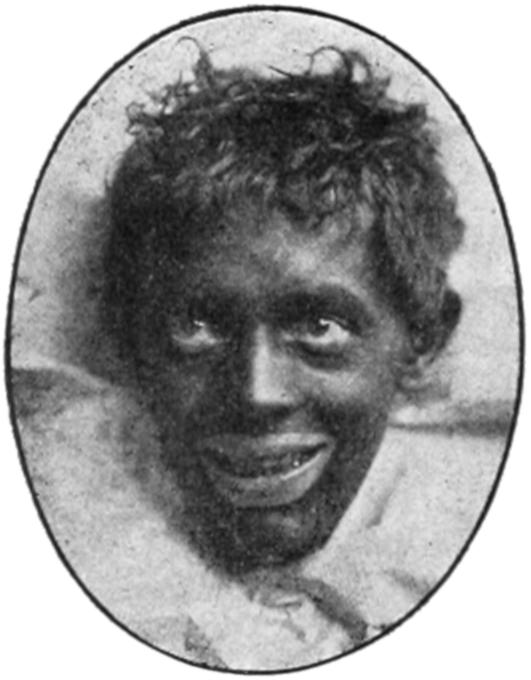
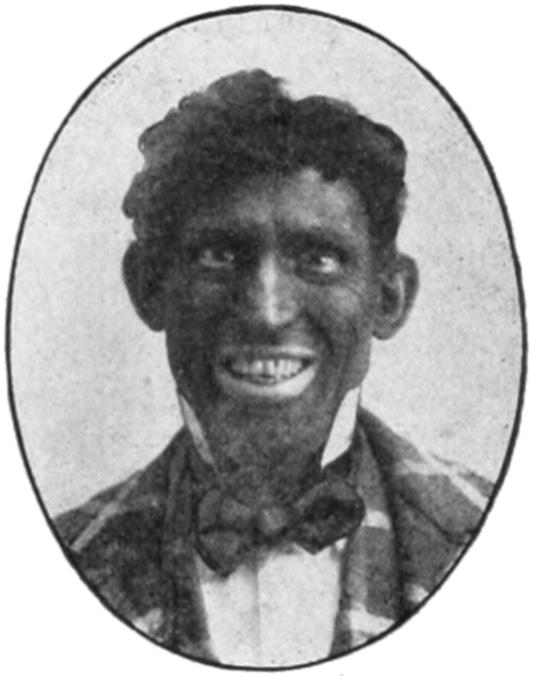
JOE. B. McGEE ALF. GIBSON
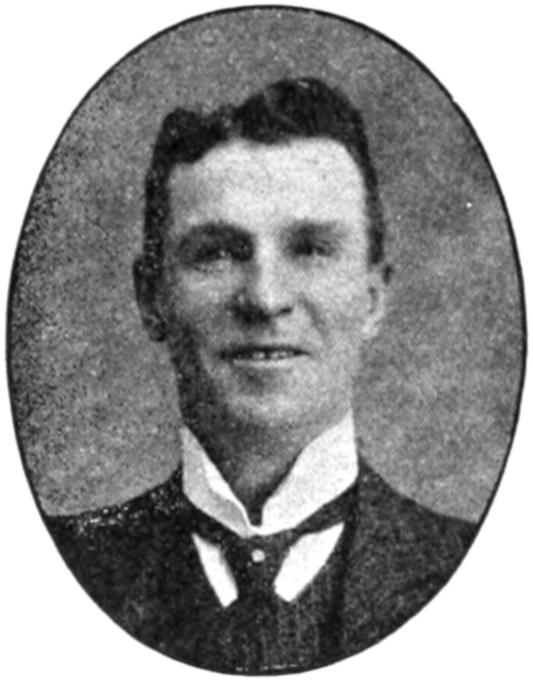
JERRY HART
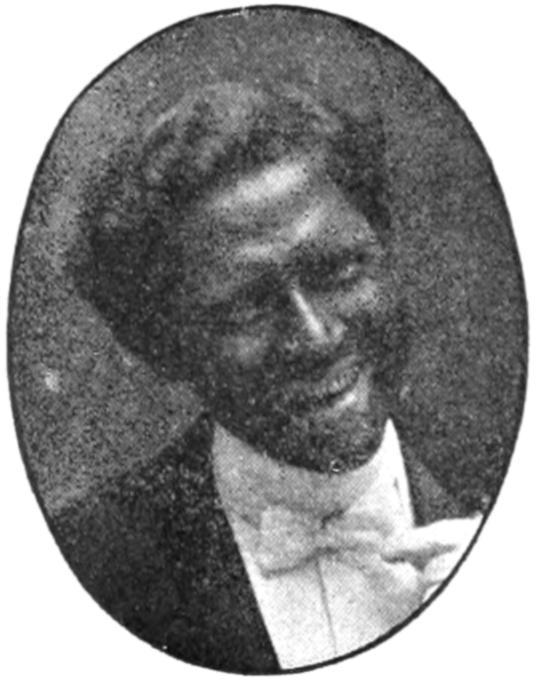
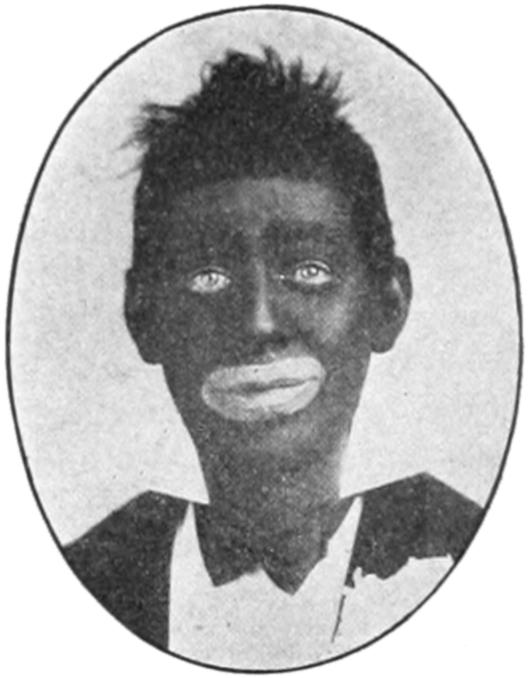
EDDIE CASSADY BILLY VAN
OUR ENGLISH COUSINS WOULD CALL THEM GOOD CORNER MEN.
He played at the inaugural performance of Cohan and Harris’ Minstrels in 1908, and is at present with George Evans’ Minstrels.
G. Washington (Slim Jim) Dukelan was born at Smith’s Falls, Canada, January 12, 1844; but you’d never believe it—the year, of course.
Hughey Dougherty—if you never heard of him, better get acquainted now.
His real career began Monday evening, January 4, 1858, at the famous 11th Street Opera House, in his native city, with Sanford’s Minstrels; it was Sam Sanford who christened him “Young America,” and the title stuck to him for many years; other performers appropriated it, but it originated with Hughey Dougherty; “stick a pin in dar, Brudder Bones.” He continued with Sanford until 1860, when he went to Frank River’s Melodeon, also in the Quaker City.
Mr. Dougherty’s greatest success was made as a stump-speaker, when the art had its greatest vogue thirty odd years ago; though he occasionally gives a speech, and is apparently as good as ever.
He has been associated with the greatest minstrel companies of the past and present, such as Skiff and Gaylord’s; Simmons and Slocum’s, (Philadelphia); Thatcher, Primrose and West’s; Hooley’s (Brooklyn); Cleveland’s; Morris Brothers (Boston), three years; Carncross’, and Carncross and Dixey’s (Philadelphia); Johnson and Slavin’s; Moore and Burgess’ (London, Eng.); Barlow, Wilson’s; Barlow, Wilson and Rankin’s; Haverly; and Duprez and Benedict. In addition there was Dougherty, Wild (John) Barney (Master) and Mac’s (Little) Minstrels, who gave their first performance July 12, 1869.
About three years later he formed an alliance with Messrs. Harvey, Leslie and Braham; they organized a minstrel show and made an extensive tour of Africa. June 18, 1877, he opened the Alhambra Palace, a variety theatre in Philadelphia. Mr. Dougherty also has a record, unique in minstrelsy—just about one-half of his professional career was spent at the theatre in which he made his debut; and one-half of the total number was with Dumont’s Minstrels.
Hughey Dougherty was born in Philadelphia, July 4, 1844.
Billy Emmett (George Busteed) was known chiefly in his later years as a manager, notably of the Academy of Music in Chicago.
While yet in his teens he became stage struck, and after a few inconspicuous engagements, began playing dates in the variety houses, doing a black-face specialty. In 1864 he went to Carr’s Melodeon, Buffalo, N. Y., and with Nick Norton, did Dutch character sketches. The following year he was with Green’s “Mocking Bird” Minstrels, and in 1866 went to New York, where he played several seasons with the San Francisco Minstrels. He was associated at various times with John L. Sullivan, Callender’s Minstrels and Sam Hague’s Minstrels, the latter in the early 80’s.
Mr. Emmett was noted for his philanthropy; at one time he was reputed to have left word in the Chicago hospitals, that in the event of the death of any improvident variety or minstrel performer, not to give a pauper burial, but to notify him (Emmett) at once.
A few more “Billy Emmett’s” and the Actor’s Fund would not be so heavily burdened.
Billy Emmett was born in New York City, in 1844; he died in Chicago, June 4, 1886.
McKee and Rogers joined forces in the Fall of 1871, and during the first years of their co-partnership played the principal variety houses and specialty companies of their day.
Their first joint appearance was in St. Louis, Mo., where they gave their original song and dance “Rebecca Jane;” with it they were ever after identified, as well as “Mischief,” “Lucinda” and several others.
About 1874 they went to London, England, where they played a most successful engagement with Moore and Burgess’ Minstrels.
On their return to the United States in 1875, they joined Tony Pastor’s road company, and continued with it until the death of Rogers.
Stevie Rogers, or “Little Stevie,” as he was generally called, was one of the most lovable characters in minstrelsy. As a clog dancer he was second to none in his day.
His first professional appearance was with the 50 Engineer Pontoon Minstrels, September 5, 1865; this company in the spring of the following year was known as Sam Hague’s and Cal. Wagner’s Minstrels. With that company he had a partner by the name of John O’Brien.
Stevie Rogers’ success was so pronounced that he quickly obtained a metropolitan engagement with Charley White.
Subsequently he was with Kelly and Leon’s in New York, and Hooley’s Minstrels in Brooklyn, N. Y.
In 1870 he joined Manning’s Minstrels, and on August 21, 1871, he opened with the Dearborn Minstrels in Chicago. About this time he met Andy McKee, and the rest has been told.
Stevie Rogers was born in Elmira, N. Y., December 11, 1853; he died in New York City, March 3, 1876.
Andy McKee first appeared professionally in 1865 at Cairo, Illinois.
Mr. McKee’s success was so pronounced with his eccentric dancing, that he had little trouble in obtaining other variety engagements in Memphis, New Orleans, Cincinnati and St. Louis.
In 1867 he played his first minstrel engagement with Skiff and Gaylord; other prominent engagements were with Hooley, and with Simmons and Slocum. Later he joined Manning’s Minstrels, and subsequently met and joined forces with Stevie Rogers.
After the death of the latter he went to Europe with Hall’s New York Minstrels, playing Scotland and Ireland; subsequently re-organizing with Lew Simmons and Charley Sutton, they went to South Africa, opening at Cape Town, March 17, 1879; thus preceding Colonel Roosevelt in the exploration of that country just thirty years. Afterwards Mr. McKee formed a partnership with John F. Byrne, of the Brothers Byrne.
And here’s two more little items. After Stevie Rogers’ death, Mr. McKee doubled with Charley Walters for a brief season, opening at the Olympic Theatre, New York, August 28, 1876, and—that same year at the Globe Theatre, also same city, Mr. McKee created the character of Cy. Prime, in “Josh Whitcomb;” the latter subsequently evolutioned into the “Old Homestead.”
Andy McKee was born in Little Rock, Arkansas, May 11, 1844; and is now a citizen of Seattle, Washington.
George Wilson. Few monologue performers have worn so well with the public as George Wilson, whose minstrel career began about forty years ago in San Francisco, as co-proprietor of Courtright (Billy), Farren (T. S.) and Wilson’s Minstrels; Mr. Wilson was the song and dance performer with this company.
It was not until the fall of 1871 that he decided to adopt minstrelsy as a regular profession, which he did in Chicago.
Mr. Wilson’s talents must have been thoroughly appreciated, for when later he accepted an engagement of four weeks at the Theatre Comique, in Detroit, his success was so pronounced that he remained nine months.
Then came a season with Fred Wilson’s (his brother) Minstrels in St. Louis; by this time his fame had reached Jack Haverly, who engaged Mr. Wilson for his company; this was at Kansas City, Mo., in November, 1873; he remained under the Haverly banner until August, 1877, when in conjunction with Milt. Barlow, George H. Primrose and William H. West, the big company bearing their names gave their first performance, August 20, same year.
Barlow, Wilson, Primrose and West’s was one of the greatest minstrel companies that ever performed; the dissolution of this alliance occurred in the summer of 1882.
Thereafter Mr. Wilson and Milt. Barlow organized Barlow, Wilson and Co.’s Minstrels; subsequently Barlow, Wilson and Rankin’s, and lastly George Wilson’s Minstrels, which were instituted in 1888; the final performance of the latter was at Danbury, Conn., February, 1892.
Subsequently Mr. Wilson played under the management of Primrose and West for a period of about five years; one season, 1894, he appeared in white-face, as well as black, in the musical play of “Monte Carlo.”
In the summer of 1898, Mr. Wilson, in conjunction with W. S. Cleveland, organized the Wilson-Cleveland Minstrels; this was his last minstrel venture; since then he has played vaudeville exclusively, until the Spring of 1910, when he joined George Primrose’s Minstrels for a few weeks. August 15, same year, he played his first engagement in his native city at The Empire.
Mr. Wilson may justly look with pride on his long career as a black-face star.
George Wilson was born in London, England, September 28, 1844.
Hi Henry (Hiram Patrick Henry). For three decades Hi Henry’s Minstrels have been an institution that has been known nearly all over the United States.
Mr. Henry is an accomplished cornettist, and before he entered the ranks of minstrel proprietors, he was many years in the dramatic business, notably as leader of the band with the Wallace Sisters combination in 1872.
On May 4, 1875, he joined Sam Price’s Minstrels, and in September, 1879, the first performance of Hi Henry’s Minstrels was given, and barring the season of 1889-90, when he directed a tour of Estelle Clayton’s, the company has made an annual tour ever since.
The past few years Mr. Henry has not been actively engaged with his company, owing to ill health.
Hi Henry was born in Buffalo, N. Y., August 22, 1844.
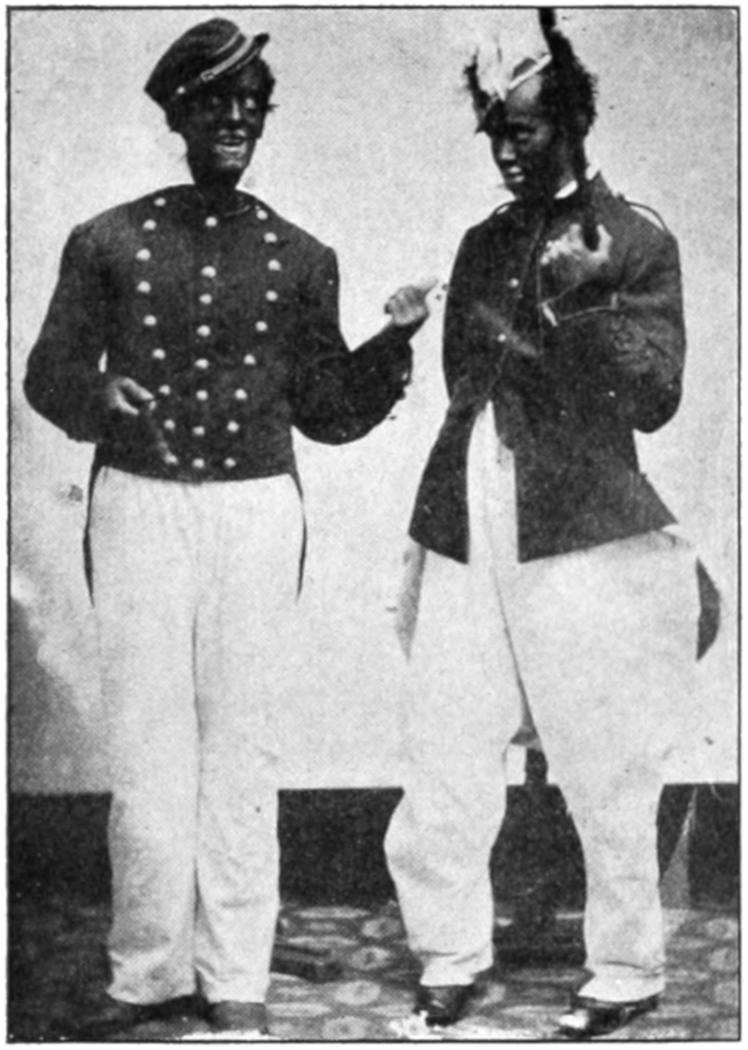
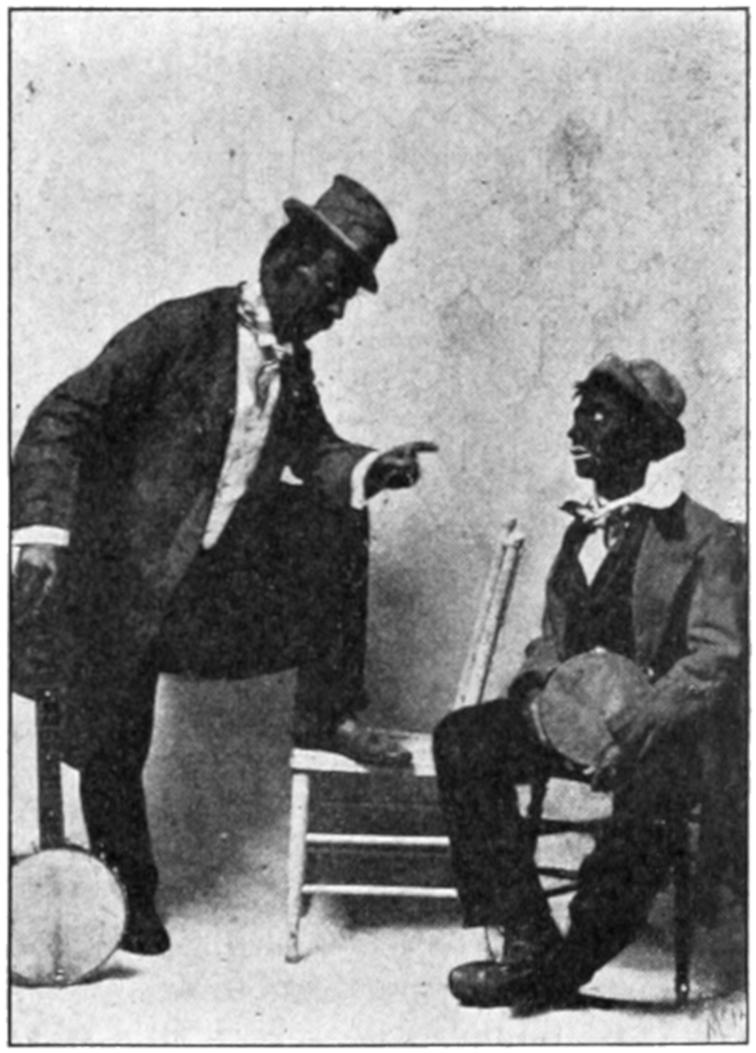
WM. E.—HINES & BLOSSOM—NAT. (Portraits reversed) LEW.—SIMMONS & WHITE—FRANK H.
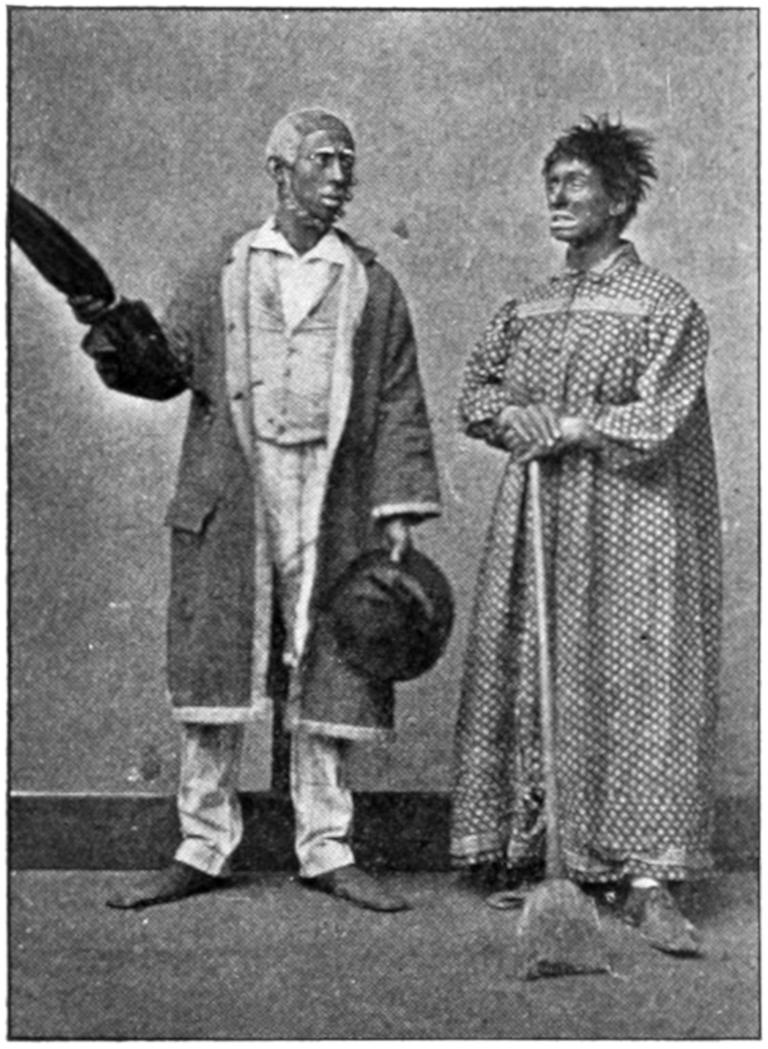
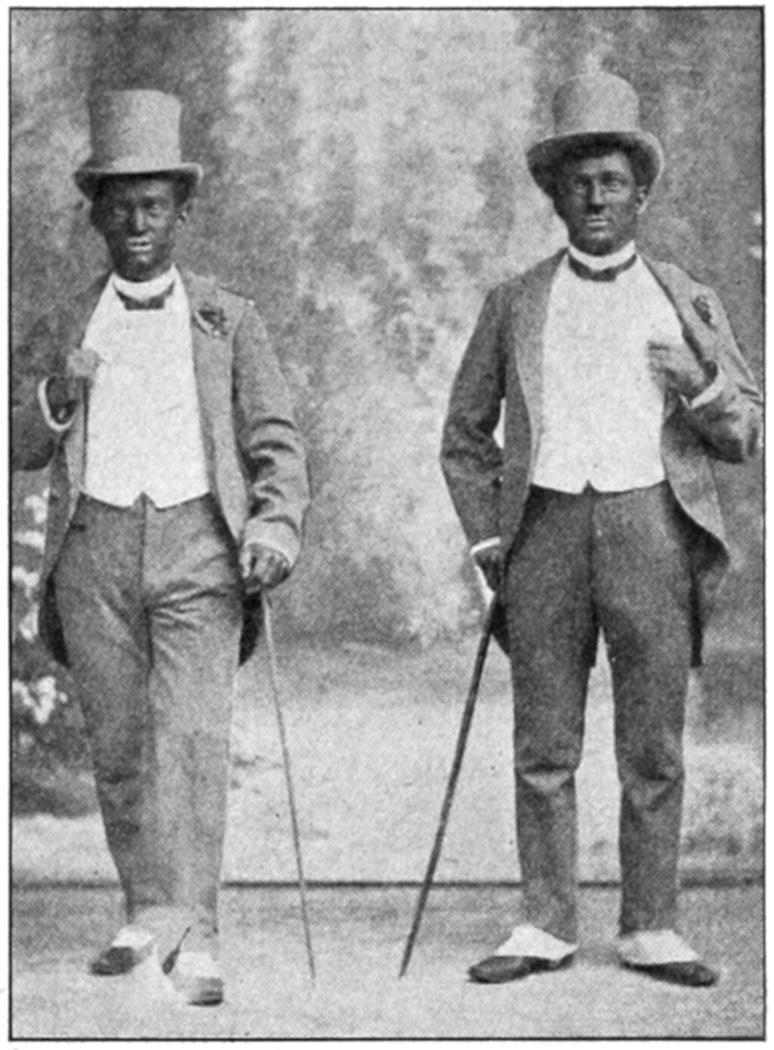
JNO.—QUEEN & WEST—WM. (Portraits reversed) JAS.—TIERNEY & WAYNE—CHAS.
William Foote, the well-known minstrel manager, began and ended his career in that branch of theatricals.
In 1861 he was treasurer with M. C. Campbell’s Minstrels; and in 1864 was agent for Haverly and Mallory; this being one of Haverly’s earliest minstrel ventures.
Subsequently he was associated with Sam Sharpley, La Rue and many of the earlier burnt cork troupes.
In conjunction with Mr. Haverly, on January 1, 1876, he re-organized the New Orleans Minstrels, and when Haverly amalgamated the famous Mastodons in 1878, Mr. Foote was manager, and continued in that capacity for several years.
William Foote was born in Utica, N. Y., February 22, 1844; he died in Albany, N. Y., March 2, 1899.
J. C. Campbell (George Keller St. John), better known as “Pomp” Campbell, from the fact that he portrayed the character of “Pomp” in the play of that name in 1871, was a printer by trade, in Dayton, Ohio.
He was an excellent comedian and equally clever as a tambourine or bone player. His first important engagement was with the Morris Minstrels in the middle 60’s; subsequently he was with Kelly and Leon in New York, opening there August 31, 1868; also with John Hooley and Hawxhurst’s Minstrels in Brooklyn, N. Y., in 1873.
J. C. Campbell was born in Frederick, Md.; he died in Brooklyn, N. Y., January 26, 1875; age 31 years.
Geo. Frothingham, the famous basso, who created and played Friar Tuck in “Robin Hood,” more than 3,000 times, was many years in the minstrel profession, and as far back as 1869 was with Dougherty, Wild, Barney and Mac’s Minstrels, also Sharpley’s, Billy Morris’ and Swayne Buckley’s Minstrels.
In the late 70’s and early 80’s he sat in the middle with Carncross and Dixey’s and Carncross’ Minstrels, respectively, in Philadelphia.
An interesting photo of Mr. Frothingham will be found elsewhere in the book.
George Frothingham was born in Boston, Mass., April 12, 1844.
Dick Ralph. This good old-timer made his first appearance at Burtis’ Varieties, Brooklyn, N. Y., under the name of Master Tommy, in 1860, doing a jig and the “Essence”; in 1861 he was with Christy’s Minstrels under the name of Mast. Dick Reynolds; a year later he was “Mast. Brigg” with Campbell’s Minstrels, in New York City.
In 1863 he decided that his own name was good enough, and as such he opened at Hooley’s Minstrels, Brooklyn, N. Y. Other minstrel companies he was identified with were—Cool White’s Broadway Minstrels; Hooley’s, New York City (201 Bowery); Cotton and Sharpley’s, New York City; return to Hooley’s, Brooklyn, 1869; Kelly and Leon’s, New York City; Sam Sharpley’s, and Kelly and Leon’s, Chicago.
Mr. Ralph was a popular end man, being equally proficient with the bones or tambourine; but it was as a dancer that he excelled; his “Essence” and “George, the Charmer,” are well remembered by many; he was likewise a versatile musician.
Mr. Ralph appeared some years ago in the drama, “Our South,” with success.
Dick Ralph was born in Brooklyn, N. Y., March 22, 1844—but not on Good Friday, as he avers; that day fell on April 5, that year.
Melvin S. Kurtz was a comedian and song and dance performer; his first appearance was in Philadelphia about 1862.
He was the husband of Marie Van Zandt, actress, whom he married about 1874.
Mr. Kurtz’s last appearance was October 15, 1881.
He was horn in Lancaster, Pa., July 29, 1844; he died in Philadelphia, March 20, 1882.
“Ricardo” (Foley McKeever) well and favorably known as a clever female impersonator, was with Mrs. Matt. Peel’s Minstrels about 1863.
Subsequently he appeared with the Associated Artists of Kelly and Leon in 1869. Early in 1870 he joined Billy Emerson’s Minstrels, and on April 10, 1871, made his debut with Manning’s Minstrels in Chicago.
He was a member of Haverly’s Minstrels in November, 1873, after the latter withdrew from Cal. Wagner. Later he was associated with some of the principal minstrel organizations.
“Ricardo” was born in Ireland, about 1844; he died in New York City, October 30, 1883.
John Unsworth is the only living representative of Anderson’s Minstrels, organized in Boston late in 1859.
Mr. Unsworth was associated with his brother, James Unsworth, and “Eugene” practically their entire professional careers.
He was born in Liverpool, England, January 12, 1844—and is not sorry.
Johnny Allen (George Erb) was an excellent comedian and dancer, and especially well remembered for his “Nicodemus Johnson,” a song and dance. His first appearance in black-face was in 1861. October 23, 1865 he joined Hooley’s Minstrels in Brooklyn, N. Y. March 5, 1866 he was at the opening of Seaver’s Minstrel Hall, same city, and October 1, he was also at the initial performance of Kelly and Leon’s Minstrels in New York; Emerson, Allen and Manning’s Minstrels gave their first performance in Brooklyn, N. Y., in June, 1868. Mr. Allen seceded from the organization May 22, following, and a month later helped to organize Allen and Sam Sharpley’s Minstrels.
Brooklyn, N. Y., also saw the first performance of Allen, Pettengill, Delehanty and Hengler’s Minstrels, September 22, 1869; a few months later it was Johnny Allen’s Minstrels. Mr. Allen next branched out as a German comedian in the play of “Schneider.” He continued alternately with this and minstrel engagements until the early 80’s; the first performance of “Schneider” was on March, 24, 1871. April 6, 1874, he opened with Hart and Ryman’s Minstrels and a few weeks later Johnny Allen’s Cosmopolitan Minstrels toured briefly. When Dan. Bryant died, April 10, 1875, Mr. Allen sat in the latter’s chair in New York, and when May 3, following, Neil Bryant’s Minstrels were organized, Johnny Allen was with them. September 18, 1876, he re-appeared with Kelly and Leon’s Minstrels in New York. Johnny Allen was born in Newark, N. J., April 20, 1844; he died there January 16, 1885.
Charley Sutton (Leman). This well-known performer of the past was a member of the “Young Campbell’s Minstrels,” a famous amateur organization of Boston, about 1860.
Mr. Sutton was a comedian of unquestionable ability, and had been with most of the prominent minstrel organizations of his time, notably Emerson’s Minstrels in San Francisco, later going to Australia with that company, opening at Melbourne, August 2, 1873. He was with Charley Morris’ Minstrels in 1877, and afterwards with Hooley’s.
He sailed for Europe April 24, 1880, and joined Moore and Burgess’ Minstrels, in London, and remained there for some time. About 1885 he became one of the team of Bunth and Rudd, doing a grotesque act in white-face; he was thereafter known as Hugo Bunth.
Charles Sutton was born in Boston, Mass., in 1844; he died in Moscow, Russia, January 27, 1904.
Billy Wild, the old-time black-face performer, made his first professional appearance at the Bella Union Theatre, San Francisco, about 1866, doing a black-face song and dance. In 1871 he was with Unsworth’s Minstrels. Later he formed a partnership with Charley Armstrong; they played an engagement with Simmons and Slocum’s Minstrels about 1873, in Philadelphia.
Mr. Wild’s last black face appearance was at the Howard Athenæum, in Boston, in 1886. Billy Wild was born in New York, January 21, 1844.
Neil Rogers, a capable and clever comedian, and a brother of Stevie Rogers, had a comparatively brief career as a minstrel.
His last appearance was at Pastor’s Theatre in New York. He was born in Elmira, and died in New York, February 28, 1873.
Harry Bloodgood (Carlos Moran) was one of the most accomplished and versatile performers that ever blacked his face; good in everything he undertook; he could sing, dance and act.
He made his first New York appearance at the American Theatre, and remained there one year. In May, 1866, he joined Boyce and Mudge’s Minstrels; subsequently appearing with Sam Sharpley’s, and later with Joseph Trowbridge, he had the Bloodgood and Trowbridge’s Minstrels; their season ended July 16, 1871; Mr. Bloodgood then taking his own show, with which he traveled intermittently for several seasons.
In 1869 he also was associated with Delehanty, Hengler and Bloodgood’s Minstrels.
Mr. Bloodgood was without exception the most pronounced favorite that ever played the old Howard Athenæum in Boston; he was in the stock there at various times, covering a period of several years.
About 1881 he wrote and appeared in the play, “Hix’s Fix,” sharing the lead with W. A. Mestayer; the piece was afterwards called “Wanted, A Partner.”
Mr. Bloodgood married Helene Smith, the danseuse, about 1864; they were divorced in the spring of 1867; and on January 20, 1870, in Boston, he married Clara Gettis, also a dancer. It was not until about three years later that he found connubial blessedness, when he married Lisle Riddell, with whom he lived most happily the balance of his life.
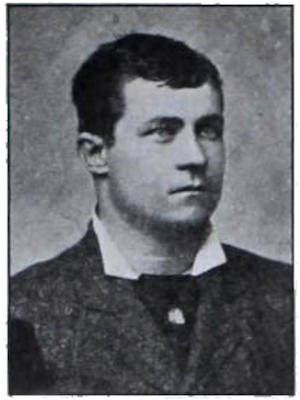
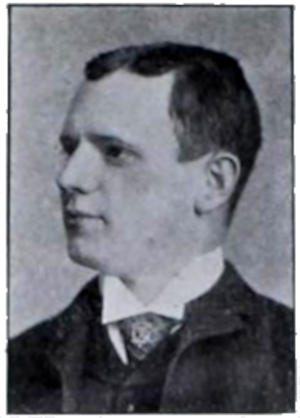
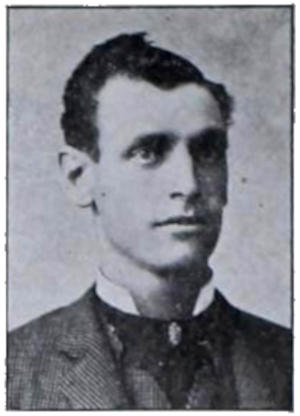
FRANK GEYER (of Turner & Geyer) HEN. ALLEN (of Devere & Allen) ARTIE HUGHES (of Foster & Hughes)
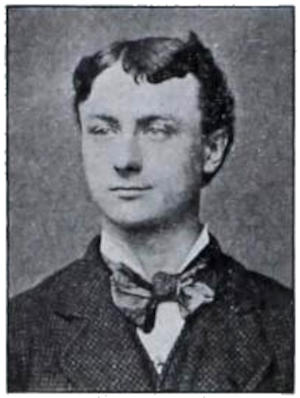
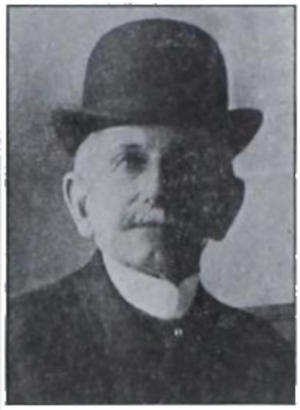
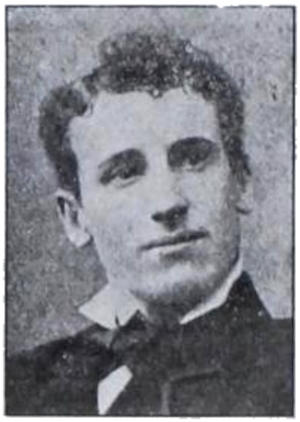
EDW. SANDS (of Keating & Sands) JOHN BOWMAN (of Bowman & Harris) TOMMY TURNER (of Three Turner Brothers)
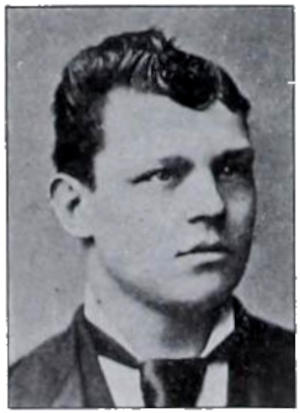
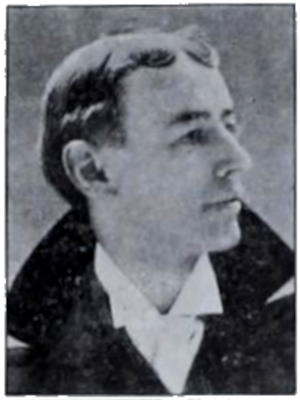
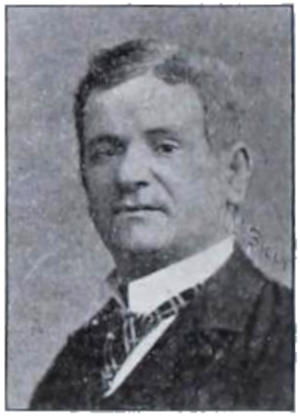
FRED BRYANT (of Bryant & Hoey) EDDIE BOGERT (of Bogert & O’Brien) BILLY WILLIAMS (of Williams & Sully)
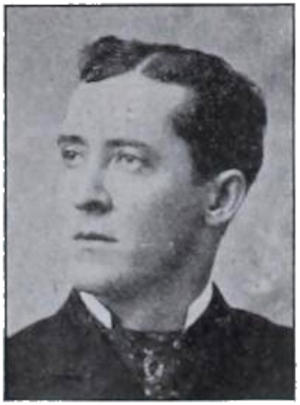
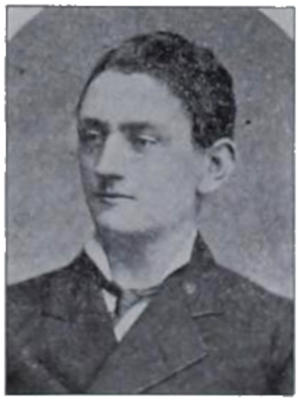
CHARLEY SEAMON (of Seamon & Sommers) JOHN D. GILBERT (of Courtright & Gilbert) EDW. KENNEDY (of Cheevers & Kennedy)
“ALL ALONE”; THEY PINE FOR THEIR PARTNERS.
Mr. Bloodgood made a distinct hit playing Uncle Tom at the Boston Theatre, with an all-star cast.
Harry Bloodgood was born in Savannah, Georgia, March 31, 1845; he died in N. Conway, N. H., June 12, 1886.
Lucius M. Phelps, of the well-known song and dance team of Stiles and Phelps, also Armstrong, Stiles and Phelps, had been out of the profession about four years prior to his death, which occurred in Springfield, Mass., about August, 1876.
He had been with Unsworth’s Minstrels in 1871; Moran and Dixey’s in 1872, and also with the companies of Skiff and Gaylord, Carncross and Dixey, and Hooley’s.
Ned Fox was a brother of Jim Fox, of Goss and Fox, and was very well known during his comparatively brief career, as a comedian of more than ordinary merit.
After his death, the following lines by Billy Devere, were dedicated to his (Fox’s) widow:
“Another old-timer gone they said. As I came to the green-room door to-night; Another “old pard” has passed away To that beauteous land of joy and light— Buoyed aloft by a Saviour’s love, Searching the home of the good and true As Noah from the Ark sent the carrier dove Out of the old world into the new.”
Ned Fox died at Hartford, Conn., March 28, 1875; age about 30 years.
W. S. Mullally was one of the best and most prominent of minstrel leaders.
As early as when he was fifteen years of age he was leader at a Boston theatre. His final minstrel engagement was about 1864 with Hy. Rumsey’s Company.
The following year he joined the San Francisco Minstrels in New York, and continued with them about fifteen years. In the summer of 1869 he played in Liverpool, England, with Smith and Taylor’s Minstrels. He was with Charley Reed’s Minstrels in San Francisco in 1884.
Subsequently he played an extended engagement with Dockstader’s Minstrels in New York, and later was with several legitimate and farcical attractions. He had composed considerable dramatic and popular music, and was the author of “Mottoes That Are Framed Upon the Wall.”
He was born in Manchester, England, in 1845; he died in Westboro, Mass., August 2, 1905.
Harry Percy (John H. Peabody) a prominent vocalist of many important minstrel companies, died at Jersey City, N. J., January 2, 1880.
Charles Goodyear was well-known as a capable and clever comedian.
He entered the profession when a boy, and had been prominently associated with such well-known minstrel organizations as Haverly’s, Primrose and West’s, and Cleveland’s. He was also co-proprietor of Goodyear, Cook and Dillon’s, and Goodyear, Schilling and Elitch’s Minstrels.
He was especially instrumental in the planning and building of Elitch’s Garden in Denver, Colorado, and had been connected with it since its opening.
Charles Goodyear was born on Staten Island, N. Y., February 18, 1845; he died in Denver, Colorado, May 13, 1897.
Johnny Shay, who excelled in the delineation of negro characters, began his professional career in Louisville, Ky.
He was several seasons with Harrigan and Hart in New York, where he enjoyed wide popularity.
He was born in Liverpool, England, in 1845; he died in New York, October 20, 1879.
Johnny McVeigh entered the variety profession about 1858; he was a good black-face performer and dancer.
He was born in Bambury, England, in 1845; he died in New York, January 20, 1883.
“Lotta” (Lotta Crabtree), one of the greatest and most famous soubrettes of the American stage, “blacked up” many times in her early career. In October, 1863, she was a member of a minstrel company playing Virginia City, California, at Maguire’s Theatre.
Barry Maxwell says that when he was with Spalding and Manning’s Minstrels more than four years ago, a colored boy in Columbia, Tenn., came up and asked for the boss; having found him, he inquired if he wanted anyone to “tote catalogues.” He wanted to pass bills.
Willis Palmer Sweatnam, long known to his familiars as “Billy,” began his theatrical career at the age of seven years, playing comedy parts in white-face with a juvenile company called the Union Children.
His first black-face appearance was at the Western Museum in Cincinnati, four years later, occupying the bone end in a minstrel show.
Mr. Sweatnam entered minstrelsy proper at the age of fifteen, when he was a member of a boat show plying the Little Miami Canal in Ohio; the boat was the “Huron,” and was the fastest boat of that name that traveled the canal. Mr. Sweatnam shortly after this went South, and became lessee of the Savannah Theatre, where minstrel performances were given.
Subsequently he became a member of Fred Wilson’s Minstrels in St. Louis, Newcomb’s Minstrels in Cincinnati, Skiff and Gaylord’s, and Morris Brothers.
Mr. Sweatnam was the principal comedian of Simmons and Slocum’s Minstrels at the opening of that famous organization in Philadelphia. September 6, 1875, he was taken in as a partner, the firm name being Simmons, Slocum and Sweatnam’s Minstrels, by which it was known until October 28, 1876, after which it became Sweatnam’s Minstrels, and later, December 25, 1876, Sweatnam and Fraser’s Minstrels. Mr. Sweatnam played several engagements in San Francisco with Charley Reed’s, Emerson’s, and Maguire’s Minstrels; with Dockstader’s, and Birch and Backus in New York; with Haverly in Chicago, also in Europe; Moore and Burgess in London, England, and Carncross in Philadelphia.
In 1887, commencing July 25, at Albany, N. Y., Sweatnam, Rice and Fagan’s Minstrels were organized; this was one of the most magnificent companies of its kind the world ever saw.
Mr. Sweatnam subsequently played an extended engagement with Cleveland’s Minstrels, and shortly afterwards made his appearance in the “City Directory,” a famous farce of twenty years ago; he was with this company three seasons; several more under the management of Charles E. Blaney, and then with the “County Chairman” for three years.
He was next seen in “George Washington, Jr.”; in all of these plays Mr. Sweatnam’s art shone forth resplendently.
As a delineator of the negro character he is alone and without a peer; there is but one Sweatnam, nor is it likely we will ever have another. During the present season of 1910 he played a black-face part with the “Summer Widowers.”
Willis P. Sweatnam was born in Zanesville, Ohio.
Frank Howard (Martindale), famed as one of minstrelsy’s greatest tenors, and who was with McNish, Johnson and Slavin’s; Thatcher, Primrose and West’s, and Barlow, Wilson, Primrose and West’s Minstrels in the 80’s; is said to be living in Chicago.
Charles Fostelle (Stephens) of late years was best known for his portrayal of eccentric female characters, but long before—well, just read on.
His first appearance was made in Detroit, Mich., in dramatic stock. The year following he made his first appearance in black-face with Cal. Wagner’s Minstrels, as a wench dancer.
Subsequent minstrel engagements were with Billy Arlington’s; Dingess and Green’s; Harry Robinson’s; Simmons and Slocum’s, (Philadelphia); (Wm. Henry) Rice’s, in Cincinnati; Purdy and Vincent’s; Arlington, Cotton and Kemble’s; Allen, Delehanty and Hengler’s, and his own company, Purdy, Scott and Fostelle’s Minstrels, opening at Denver, Colorado, March 4, 1872. His last minstrel engagement was with Sweatnam, Rice and Fagan’s Minstrels, season of 1887-88.
Since then Mr. Fostelle has appeared with Corinne for ten years; starred in “Mrs. Partington” for five years, and for a season was located in New York City with the Weber & Field’s Company.
Charles Fostelle was born in New York City, and he’s there now.
John S. Stout (Shafer) is one of the best-known singers in minstrelsy.
He first appeared with Rumsey’s Minstrels in 1864, and has appeared successfully, if not successively with such well known companies as Skiff and Gaylord’s; Buckley’s; Simmons and Slocum’s; Haverly’s; Barlow, Wilson, Primrose and West’s; Sharpley’s; Duprez and Benedict’s; Cal. Wagner’s and many others.
His last minstrel engagement was with the Barlow, Wilson Company.
John S. Stout was born in Dayton, Ohio, July 4, 1845.
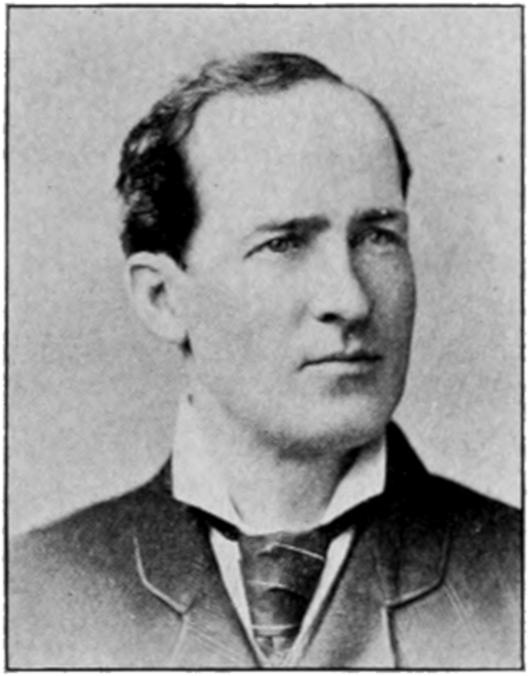
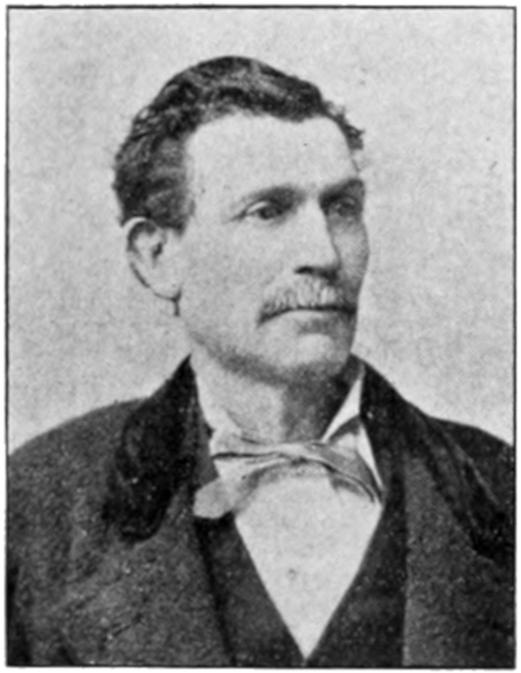
JOE. BUCKLEY BOB. SHEPPARD
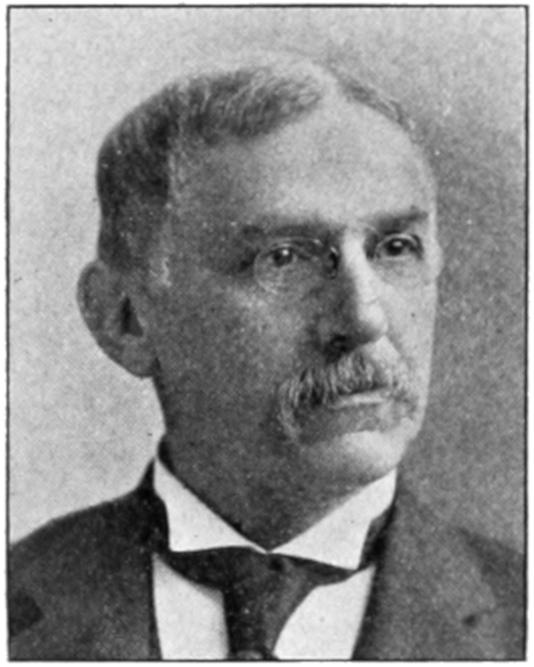
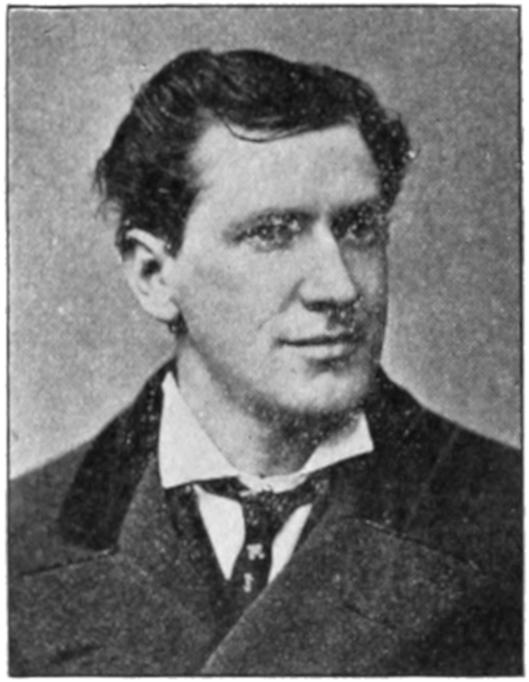
JOHN L. CARNCROSS BOB. FRASER
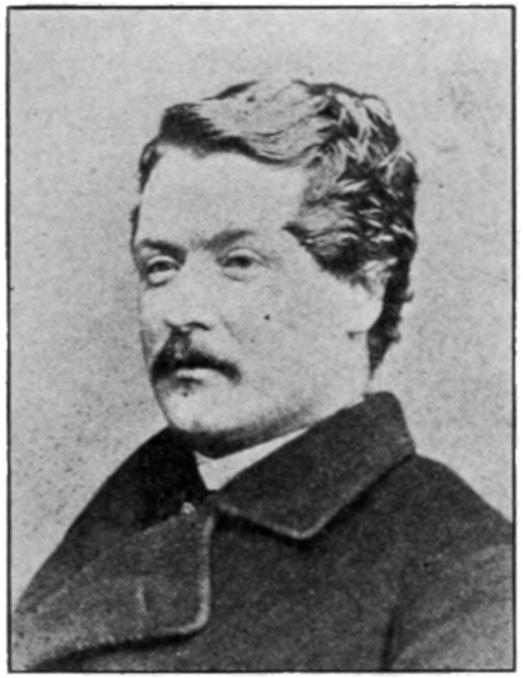
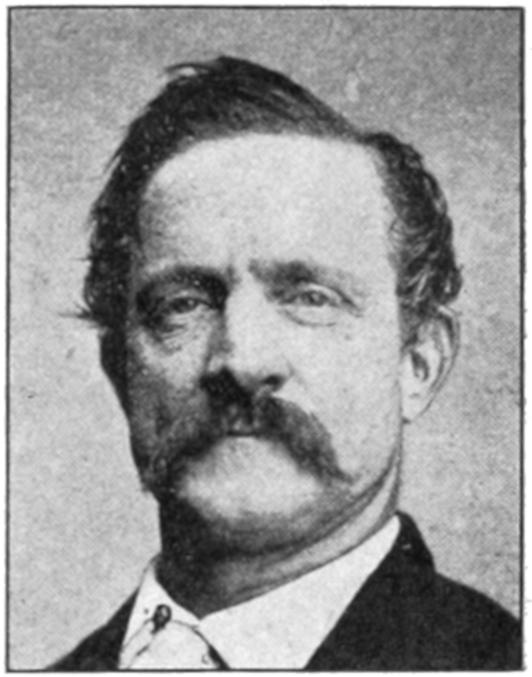
JAMES GLENN EPH. HORN
A PAGE OF PHILADELPHIANS.
Robert J. Filkins, at one time one of Haverly’s most valued executives, got his early schooling with John Robinson’s circus; with which organization he became identified with in about 1867.
In 1874 he met Col. Haverly in New Orleans, and at once joined the latter’s forces, and continued under the Haverly banner for three years.
In 1879 he was in charge of the business management of the present 14th Street Theatre, New York, at that time Haverly’s Theatre.
Grace Filkins, the present well-known actress, was his wife.
Robert J. Filkins was born in Michigan; he died in Wichita, Kansas, April 19, 1886; age about 40 years.
Ike Withers was one of the early ones to do a musical act in a minstrel show.
His first professional appearance was with Bryant’s Minstrels in New York in 1862.
Subsequent minstrel engagements were with Wilson’s Minstrels in St. Louis; Kelly and Leon’s; Newcomb and Arlington’s; Skiff and Gaylord’s; Sharpley’s; Simmons and Slocum’s, and the San Franciscos, in New York, where he remained thirteen years.
Ike Withers was born in Palmyra, N. Y., July 29, 1845; he is now a guest at the Actors’ Home, Staten Island, N. Y.
James Sharpley was the last surviving member of the three Sharpley’s; Fred, Charles and James; a prominent musical act of the 70’s.
Mr. Sharpley, who had been blind some time previous to his death, was an exceptionally clever performer on the concertina.
He was born in Liverpool, England, and died in New York City, May 12, 1902; age 57 years.
William H. Crane, one of America’s foremost legitimate comedians, appeared in black-face with an amateur organization called the “Young Campbell” Minstrels; Mr. Crane fixes the date in the fall of 1860.
The little band were offered $2.50 a piece to play the small town of Stoughton, Mass., irrespective of the fact that the comedians services might possibly be rated higher than one of the musicians. Nevertheless the juvenile “corkers” accepted; the $30.00 went into the coffers of the most popular restaurant to be found that same evening.
William H. Crane was born in Leicester, Mass., April 30, 1845.
R. G. (“Boots”) Allen was an excellent banjoist and in conjunction with Fred. Huber in 1878-79, played the principal variety houses.
In the Spring of 1880, with Harry Woodson, he formed Woodson and Allen’s Minstrels, which continued at intermittent periods for about two or three years.
In December, 1881, he played an engagement with Emerson’s Minstrels in San Francisco, and in the summer of 1886 Allen’s Banjo Minstrels inaugurated a brief season.
R. G. Allen died May 21, 1892; age 47 years.
B. C. Hart, who has so long and ably represented the New York Morning Telegraph, and who is personally known to nearly every vaudevillian in the country, did a black-face act with the late Billy Barry in Memphis, Tenn., in 1868; that was the first. Since then and as late as 1881, Mr. Hart met with flattering success in his portrayal of “Old Black Joe” and in the sketch of the “Old Servant’s Return.”
As a “bingler on the bones,” and “thumber of the tambourine,” Mr. Hart has often responded to “Gentlemen, be seated.” Now for a secret. B. C. Hart was born in Cincinnati, Ohio, September 10, 1845. Wouldn’t believe it would you?
Sheridan and Mack were a great protean character sketch team. They never had their superiors, and it is doubtful if their equal was known during their partnership, which was formed in the middle 60’s, doing black-face songs and dances. They soon left off burnt cork and were the first recognized black-face team to do so. They played innumerable minstrel engagements, and were always in demand. Mr. Sheridan’s first professional appearance was April 12, 1864. After separating from Mr. Mack he played minstrel engagements, doing a single specialty. Later he went to Australia where he met with phenomenal success playing a female Irish part in “Fun on the Bristol.”
John F. Sheridan was born in Providence, R. I.; he died in Sydney, Australia, December 25, 1908.
James H. Mack (McGrath) was born in Providence, R. I.; he was the husband of Ada Boshell, the well-known actress.
Mr. Mack died in New York, December 24, 1889; age 41 years.
E. M. Hall was one of minstrelsy’s greatest banjoists, and a good comedian. His career began in 1865, doing a song and dance with Sharpley’s Minstrels; subsequently he did banjo duets with Harry Stanwood. Later he was identified with such well-known minstrel organizations as Emerson’s, in San Francisco; Manning’s, in Chicago; Carncross’, in Philadelphia; and Moore and Burgess’, in London, England, in 1880. In the latter city he joined Haverly’s Minstrels, with whom he was a star feature for several seasons. In 1875 he was associated with E. M. Kayne and Ned. Wambold in a minstrel venture bearing their names. December 30, 1903, Mr. Hall purchased a ticket for the matinee performance at the Iroquois Theatre in Chicago; that was the date of the fearful holocaust, and he has never been seen since.
E. M. Hall was born in Chelsea, Me., about 1845.
John Lang, a well-known and popular tenor vocalist, who was with Arlington, Cotton and Kemble’s Minstrels in Chicago, died in that city, December 5, 1874.
Hugh Hamall was the fourth son of the late Arthur Hamall, and a singer of more than ordinary merit. Previous to his death he had been a member of Hamall’s Serenaders.
Mr. Hamall died in Montreal, Canada, October 10, 1875.
J. C. (“Toothless”) Murphy, the old-time comedian and “Excelsior Bone Player,” was with Harry Robinson’s Minstrels in 1874, and other prominent organizations subsequently. Mr. Murphy was the husband of Marie De Von, from whom he separated in Chicago, April 6, 1877. Mr. Murphy is still active, and a resident of Nashville, Tenn.
Delehanty and Hengler—These truly wonderful artists were the greatest in their line that the world ever knew, or ever will know, in all probability.
William H. Delehanty made his first appearance in his native city at the old Green Street Theatre, at the age of 14; he did a bone solo, and incidentally it may be remarked that in their manipulation he ranked with the best in minstrelsy.
About 1865 he joined Skiff and Gaylord’s Minstrels, where he did songs and dances with John H. Ward, under the team name of Delehanty and Ward; they continued with this company until November 11, 1866, when Mr. Delehanty severed his business relations with Ward, and just one week later, joined T. M. Hengler with Dingess and Green’s Minstrels at Champaign, Ill.; this season closed at Penn Yan, N. Y., January 7, 1867.
Their first New York appearance was with Kelly and Leon’s Minstrels, August 12, 1867.
On September 22, 1869, (Johnny) Allen, Delehanty, Hengler and Pettengill’s (Charley) Minstrels gave their first performance in Brooklyn, N. Y.
Previous to this, and for several years subsequent, they had their own variety companies; in addition to playing the best variety theatres in the land; likewise were they identified with some of the foremost minstrel organizations; they also made a trip to Europe, playing England and Ireland.
In the Summer of 1875, Delehanty and Hengler separated in Pittsburg. Mr. Delehanty then formed a partnership with James Cummings, and as Delehanty and Cummings they made their first appearance at the Theatre Comique, New York, August 23, 1875.
December 4, 1876, Delehanty and Hengler, who were something more than business associates, again formed a partnership, reappearing at the Howard Athenaeum in Boston; the alliance was broken by the death of Delehanty.
William H. Delehanty was more than a good dancer; he was a thorough musician, and a man of intellect. He composed most of the songs and dances that the team used, notably “Little Bunch of Roses,” “Apple of My Eye,” “I Hope I Don’t Intrude,” “Strawberries and Cream” and many others. Delehanty and Hengler were the original “Happy Hottentots,” though this act was extensively copied.
T. M. Hengler came to this country at the age of three months, and at the age of two years his family settled in Albany, N. Y., where ten years later he made his first public appearance at the Green Street Theatre; subsequently he was with W. W. Newcomb’s Minstrels for three seasons; later he was with Sharpley’s Minstrels.
He joined W. H. Delehanty in 1866, and continued as his partner until 1875, after which time he did a single act, and was known as “The Merry Minstrel.”
In December, 1876, he rejoined Delehanty, and continued with him until the latter’s death.
When Mr. Delehanty died, Mr. Hengler seemed to lose all ambition for the stage; he mourned his old friend sincerely, and played infrequently; in the name only was he the “Merry Minstrel.”
Tom Hengler was likewise the author of several songs, notably “Sweet Aleen” and “My Pretty Little Kittie,” also the musical sketch “Fun in the Kitchen.”
Mr. Hengler married Miss May Fanning in 1870; they had two daughters who have helped to perpetuate their father’s name and fame—Flo and May Hengler.
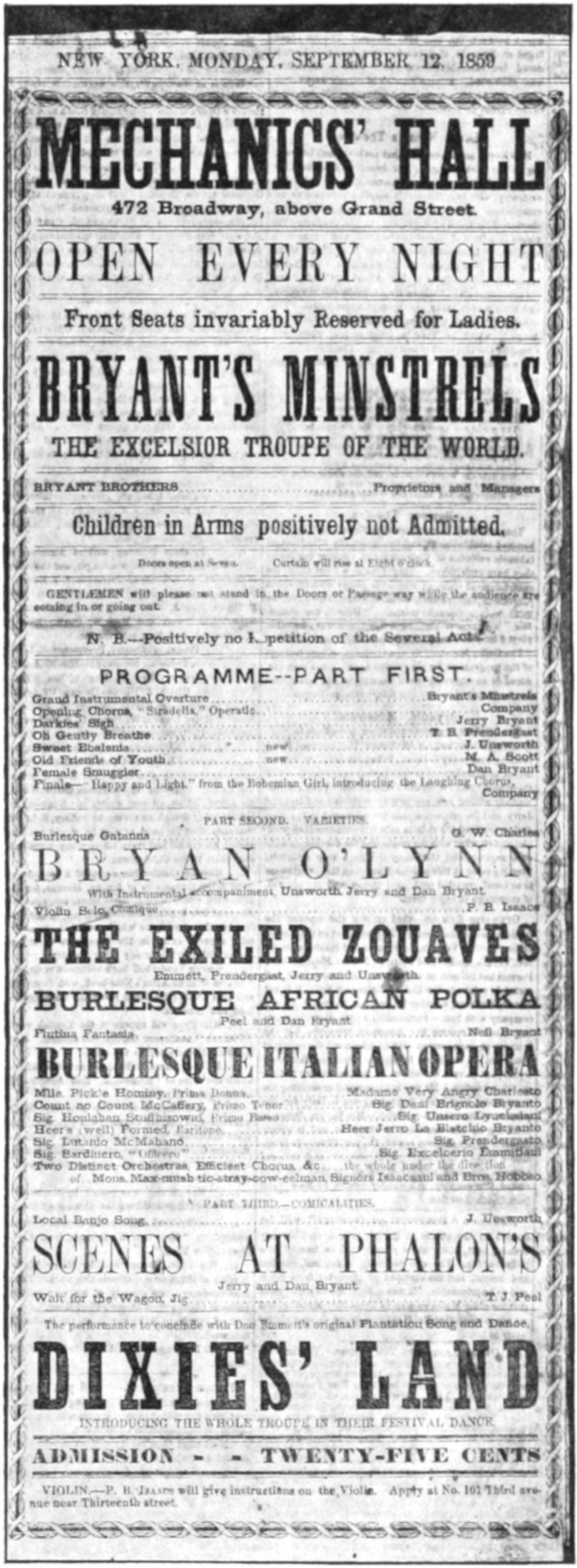
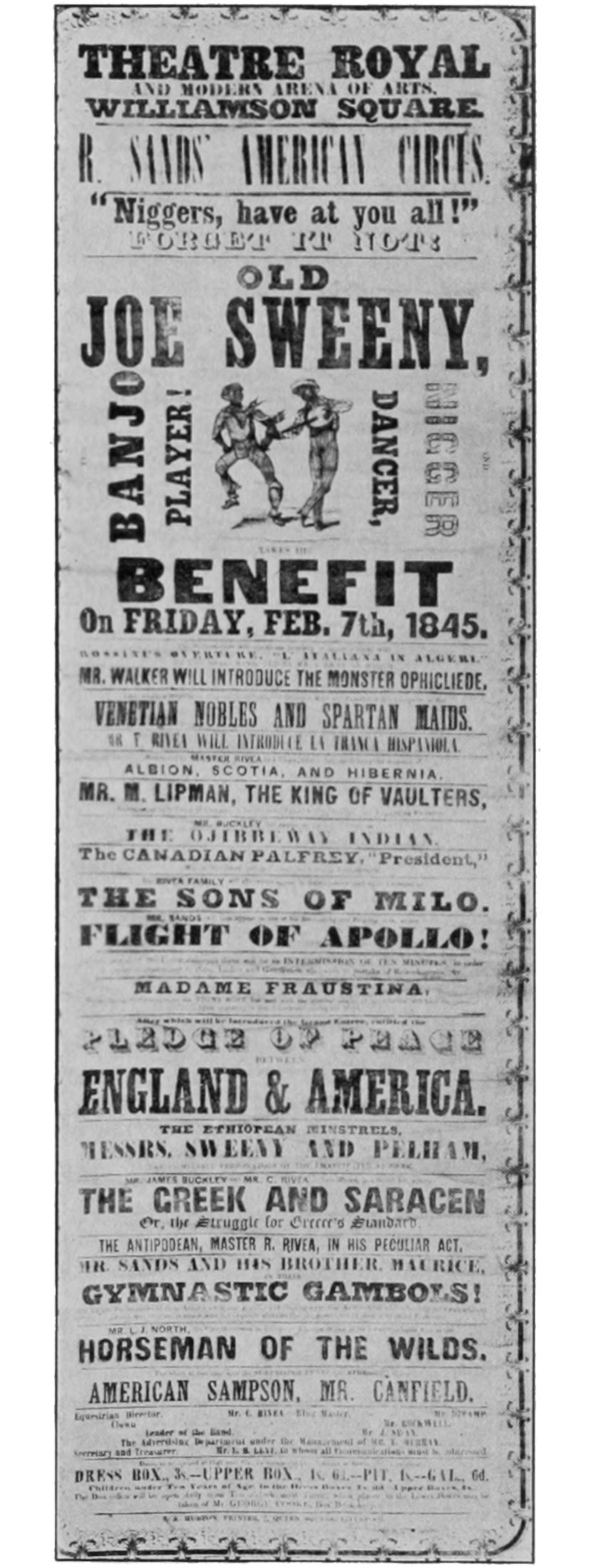
FIRST PERFORMANCE OF “I WISH I WAS IN DIXIE” OLD LIVERPOOL, ENG., BILL
TWO RARE PROGRAMMES.
William H. Delehanty was born in Albany, N. Y., September 25, 1846; he died in New York City, May 13, 1880.
T. M. Hengler (Slattery) was born in the town of Cashel, Ireland, in 1844; he died in Brooklyn, N. Y., August 21, 1888.
Billy Emerson (Redmond) was a unique figure in minstrelsy, for he stood absolutely alone in his chosen profession; never before his advent had his equal been seen, nor will we ever again.
The acme of versatility, the personification of grace, the quintessence of greatness, such was Billy Emerson, who was gifted with a voice that an opera singer might have envied, and endowed by Nature with talents that are but seldom given to man.
His very early days were spent in Oswego, N. Y., but soon with his family moved to Washington, D. C., where he made his first professional appearance with Joe Sweeney’s Minstrels about 1858. From 1860 to 1864 he played chiefly in the music halls; in that year he joined Robert’s and Wilson’s Minstrels; also in 1864 he was with Sanderson’s Minstrels.
His first prominent minstrel engagement was with Newcomb and Arlington in 1866. December 3, 1866, he made his initial New York appearance at Pastor’s Theatre. In 1867 he joined Newcomb’s Minstrels, and continued with them (barring a brief interval when he was with Spalding and Bidwell) until the organization of his own company, June, 1868, when Emerson, Allen and Manning’s Minstrels gave their initial performance in Brooklyn, N. Y.