THE FIRST MINSTREL PERFORMANCE. (continued 6)
Reading edition
Tommy Granger, the “Prince Jockey” as he was sometimes called, from the fact that his entrance on the stage was made on a coal black steed arrayed in Tod Sloan habiliments (Granger, not the horse) began “acting up” in 1861, doing a black-face song and dance at an exceedingly tender age, and in black face; this was in Buffalo; “Root Hog or Die” was the song used on this auspicious occasion.
But it was as a dancer that Mr. Granger gained fame; and his “Raffle for an Eight Day Stove,” is recalled by many a theatre goer of 30 years ago. His first minstrel engagement was with W. W. Newcomb in 1865; subsequently he allied himself with such well-known companies as Simmons and Slocum’s in Philadelphia; Thatcher, Primrose and West’s and the “California” Minstrels; his last engagement with a minstrel company was with the Barlow Brothers.
Tom Granger’s Georgia Minstrels in 1878 didn’t conflict with Haverly’s Mastodons of the same year.
Tommy Granger was born in Kingston, Canada, August 9, 1851.
John McVickar (Harrington), one of the original “Bay State Boys,” who did a good clog dancing act, made his first appearance as a member of that quartette at the old Howard in Boston, Mass., September 13, 1869. They played with the Morris Brother’s Minstrels, also with Dougherty, Wild, Barney and Mac’s Minstrels in the Hub.
The four disbanded in 1871. About 1883 Mr. McVickar went to Lothrop’s Theatre in Boston, as manager, later going to the Howard, where he continued until about 1904.
John McVickar died in Boston, Mass., May 24, 1909.
Seamon S. Pettitt made his first professional appearance at the age of nine years.
His first partner was James Sharpley; subsequently with Tommy Moore they worked as Masters Tommy and Willie. In 1871 Pettitt, Phillips and White formed an alliance which continued one year, after which Pettitt and White did a double song and dance until the death of Mr. Pettitt.
He had been with Skiff and Gaylord’s Minstrels and other well known companies. During the Summer season he acted as singing clown in the circus.
Mr. Pettitt was born October 6, 1851; he died at Taylorsville, Pa., August 10, 1880.
Tommy Winnett made his first appearance in 1864 at the Canterbury Music Hall. In 1866 he formed a partnership with Charley Holly, and as Winnett and Holly they continued until July 10, 1868.
Mr. Winnett has been associated with the following well-known minstrel companies—“Campbell’s”; Sam Sanford’s; Kunkel’s “Nightingale’s”; Skiff and Gaylord’s; Hooley’s, in Brooklyn, and Welch, Hughes and White, same city.
Mr. Winnett won a medal in Mobile, Ala., for his dancing, and a silver cup in Memphis, Tenn.
For twenty-five years he traveled with his wife, as Tom and Lottie Winnett. His last professional appearance was in Chicago, at the Olympic Theatre, in 1898.
Tommy Winnett was born in New York, May 25, 1851.
The Gorman Brothers, or the three Gorman boys, as they are invariably spoken of, are synonymous with all that is best in minstrelsy; for these gentlemen had the schooling on the variety and minstrel stage that the present generation of performers never may hope to attain.
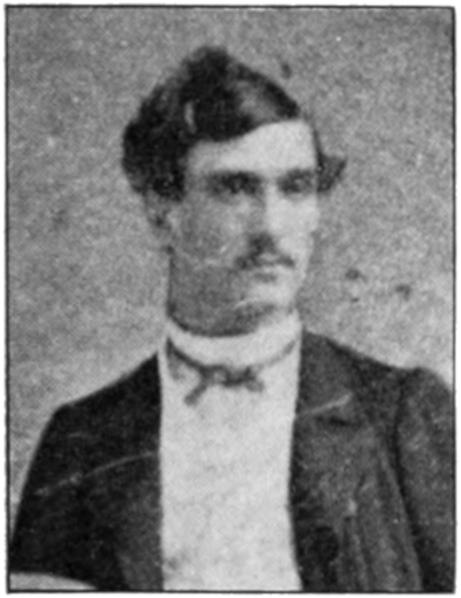
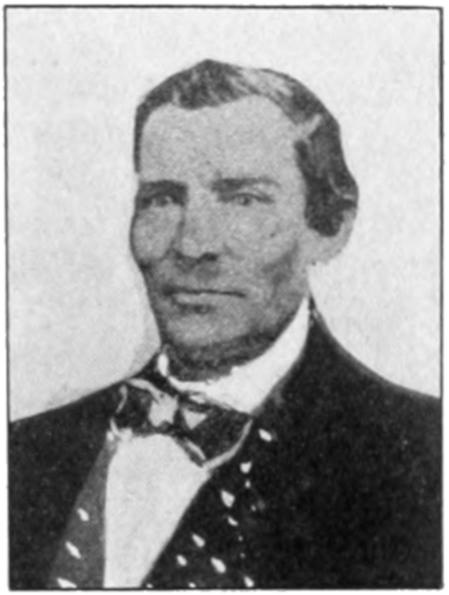
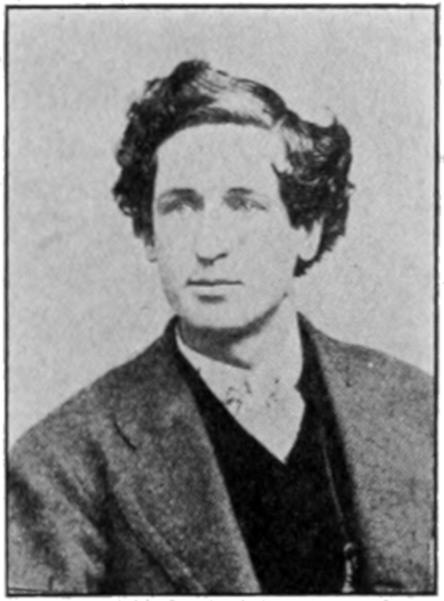
TOMMY GETTINGS DICK SLITER BILLY ALLEN
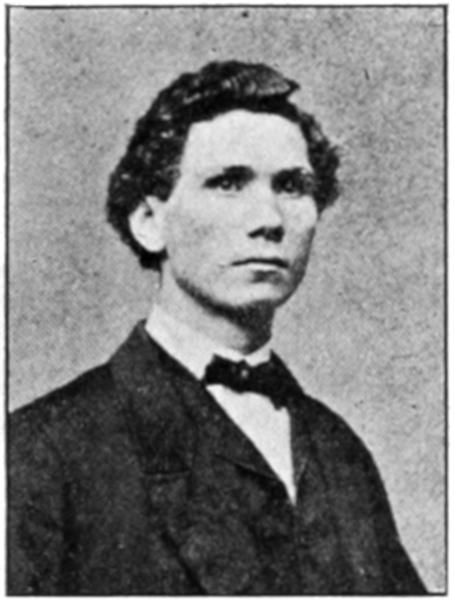
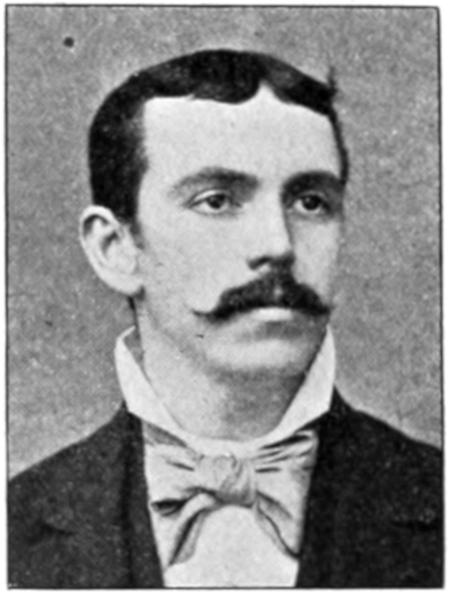
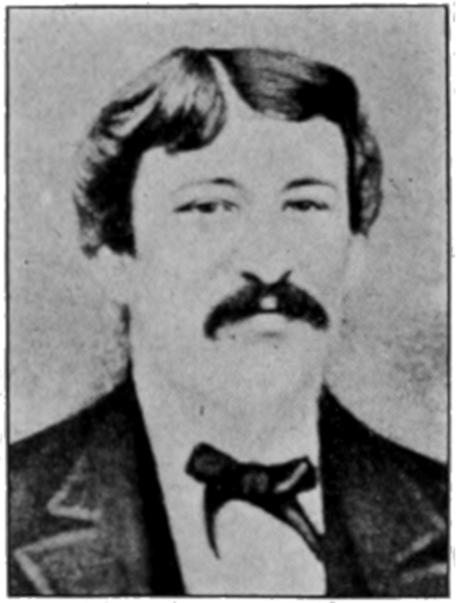
MIKE KANANE BOBBY NEWCOMB BILLY SHEPPARD
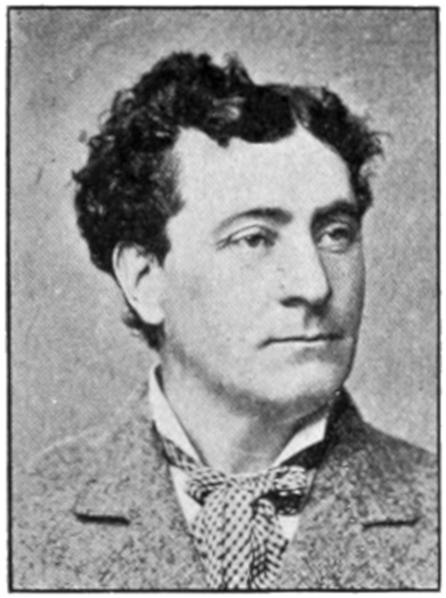
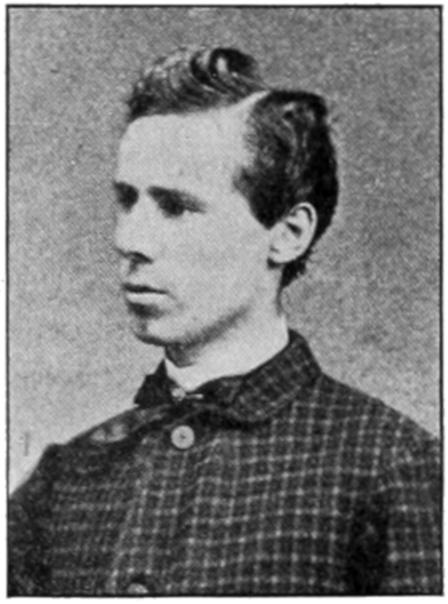
WASH. NORTON TIM. HAYES WALLY THOMAS
DAISY DANCERS OF MANY DECADES.
Gifted with natural talents that place them on the highest plane in their profession, they used these to the best advantage, and thus hold the enviable positions they occupy to-day.
James Gorman, or “Jim” as we all love to call him, was the first of the trio to make his professional entrée, which he did with Hooley’s Minstrels in the Williamsburg section of Brooklyn, N. Y.; the theatre is now known as the Novelty; the date, February, 1869.
Mr. Gorman’s salary was seventy-five cents per night, most of which he has since squandered.
In 1872 brother John joined brother Jim, and as the Gorman Brothers made their first joint appearance at the Bowery Theatre, in New York.
Three years later little Georgie joined his brothers, then and there creating a trade-mark which subsequently became prominent all over the country.
Several years were spent in the principal variety houses, and on October 21, 1878, at the Adelphi Theatre in Chicago, they made their appearance with the newly organized Haverly’s Mastodon Minstrels, at the initial performance of that famous organization.
The brothers continued with Haverly mostly until 1883, when in conjunction with Gorton’s Minstrels, Gorman Bros.’ Royal Pantomime Company toured the country for several months.
In the Summer of 1884 they rejoined Haverly at the Drury Lane Theatre, London, England, playing there ten weeks; after which they made a tour of the provinces, and returned to the United States, opening in Cincinnati, Ohio, at Heuck’s Opera House, March 18, 1885.
They remained under the Haverly banner until they organized their own company, the Gorman Bros.’ Minstrels, giving their first performance August 24, 1887; they continued as an organization for six consecutive seasons.
In 1893 they played with Primrose and West’s “Monte Carlo” Company. The “boys” next appeared with the “Gilhooley’s Abroad,” as the vehicle for their talents; they continued with this for three seasons.
Subsequently they produced “Mr. Beane, from Boston,” which ran for two seasons.
In August, 1906, the Gorman Brother’s Minstrels again took the field, but owing to gross mismanagement, did not continue as long as the artistic merits of the organization justified it in doing. As a production, this company was an event in minstrelsy.
We are wont to speak of the Gormans as dancers; and of James, as a producer; but the versatility of these “youths” know no bounds.
John and George are comedians of high degree, as attested by their success with Marie Dressler, in “Tillie’s Nightmare” at the Herald Square Theatre, New York, during the Summer of 1910; and they have many other successes to their credit.
George Gorman is conceded to be one of the world’s greatest dancers. And John, the altitudinous one, excels as a character comedian. Such in brief, are the careers of the “Gentlemanly Gormans.”
James Gorman was born in New York City, August 23, 1852.
John Gorman was born in New York City, November 4, 1855.
George Gorman was born in New York City, December 16, 1864.
Wm. F. Holmes, the favorite baritone vocalist, began his professional career at an early age with the Caroline Richings Troupe.
He was with several prominent minstrel companies, notably Thatcher and Ryman in Philadelphia in 1881, and McNish, Johnson and Slavin’s, with whom he was at the time of his death in Boston, Mass., December 10, 1886. He was 34 years of age.
Charles Brickwood (Brickett), well known as a comedian and banjoist, entered the profession about 1875. He had been successfully identified with the minstrel companies of Whitmore and Clark’s; I. W. Baird’s and George Irving’s California Minstrels. In 1878 he was with Washburn’s Last Sensation.
For several years he had played Uncle Tom in a most acceptable manner; he had likewise played Marks, also in “Uncle Tom’s Cabin.” Mr. Brickwood was a brother of the late Mayor of Haverhill, Mass., and a man of unusual intelligence. Charles Brickwood died at Haverhill, Mass., October 22, 1900; age 48 years.
Everett Weslyn joined Frank Casey about 1872 in a musical act, and continued with him until his (Weslyn’s) death.
He was with Carncross and Dixey’s Minstrels in Philadelphia, in 1877; subsequently with Haverly’s Mastodons.
He died in St. Louis, Mo., November 8, 1879; age 27 years.
Fox and Ward—To Fox and Ward belong the enviable distinction of having existed as partners (perhaps we should say theatrical associates), for a longer period than that of any other team; active partners is the term meant. Their initial joint appearance was in Cincinnati in 1868.
Early in 1870 they played their first minstrel engagement with Dan Shelby’s Company, and the same year they joined Duprez and Benedict’s Minstrels, and were features of this famous organization until 1879, when they joined Barlow, Wilson, Primrose and West’s Minstrels.
Subsequently they were with the Skiff and Gaylord Company, and in September, 1882, Fox and Ward’s Minstrels made their first appearance.
In 1884 they were members of Haverly’s Minstrels.
In 1886 they played with Lester and Allen’s Minstrels, and two years later returned to Haverly.
In 1890 they traveled with George Arlington’s Minstrels.
Fox and Ward eschewed minstrelsy for several years, when in 1897 they played their third engagement with Haverly.
Again deserting their burnt cork friends, they played vaudeville and combination dates for a few seasons. They joined Dumont’s Minstrels in Philadelphia in 1905, and the major portion of the intervening time has been since spent with that notable organization.
Joseph Fox (Monahan), was born in Ogdensburg, N. Y., May 7, 1852.
William H. Ward (Marvin Morton Mallison), was born in Canandaigua, N. Y., September 17, 1852.
Did it ever occur to you that of the many minstrel companies of the past in which two or more headed the organization, the last named member of the alliance was the first to pass away?
For example, Skiff and Gaylord; Low. Gaylord was the first to die—there are about thirty other such instances.
George H. Primrose (Delaney), in addition to being one of the most graceful dancers in the profession, is concededly one of its best business men; a rare combination in theatrical history.
Mr. Primrose’s career began about 1867 in Detroit, Mich., with McFarland’s Minstrels, at which time he was billed as Master Georgie, the infant clog dancer; subsequently he joined the New Orleans Minstrels.
In the Summer of 1871 he went to Smith’s Opera House, Saginaw, Mich.; here he met and formed a partnership with Bobby McGown, and shortly afterwards they joined O’Brien’s Circus, where they performed a double clog in the concert; at the end of the tent season, Primrose and McGown dissolved partnership, and Mr. Primrose went with Skiff and Gaylord’s Minstrels; it was here he first met William H. West; late in 1871. A few months later they formed a partnership that continued about thirty years.
About May 1, 1873, Mr. Primrose and his new partner joined O’Brien’s Circus, again playing in the concerts; a little later they played their first joint minstrel engagement with Simmons and Slocum in Philadelphia, closing with them in the Spring of 1874. That same year, November 20, they made their initial appearance with Haverly’s Minstrels in Brooklyn, N. Y.; continuing with them until June 14, 1877; two months later Barlow, Wilson, Primrose and West’s Minstrels gave their first performance; this was a grand organization; it continued until the Summer of 1882.
In conjunction with George Thatcher, Mr. Primrose and his partner organized Thatcher, Primrose and West’s Minstrels at Elmira, N. Y., August 3, 1882; this alliance was dissolved at the conclusion of the season of 1888-89. In the Summer of 1889, Primrose and West’s Minstrels made their initial bow and continued as an organization until April 30, 1898, when at Milwaukee, Wis., the long partnership that existed between Primrose and West dissolved.
Season of 1897-98, Mr. Primrose headed one minstrel company, while Mr. West piloted another; both companies being under their joint management.
Beginning in 1898, and continuing until the Spring of 1903, Mr. Primrose and Lew Dockstader joined forces, and Primrose and Dockstader’s company was the premier minstrel organization until the Spring of 1903.
Since that period Mr. Primrose has headed his own organization, with an occasional season in vaudeville.
On August 2, 1879, Mr. Primrose married Miss Emma Catlin, at Buffalo, N. Y. The first Mrs. Primrose died some years ago. On April 24, 1904, he married Miss Esther Nerney, at Mount Vernon, N. Y.
George H. Primrose was born in London, Canada, November 12, 1852.
J. Marcus Doyle, the accomplished dancer, producer and comedian, made his first appearance at a concert hall in Buffalo, N. Y., as boy, in the middle 60’s, subsequently joining a circus, and later forming one of the team of Baker and Doyle.
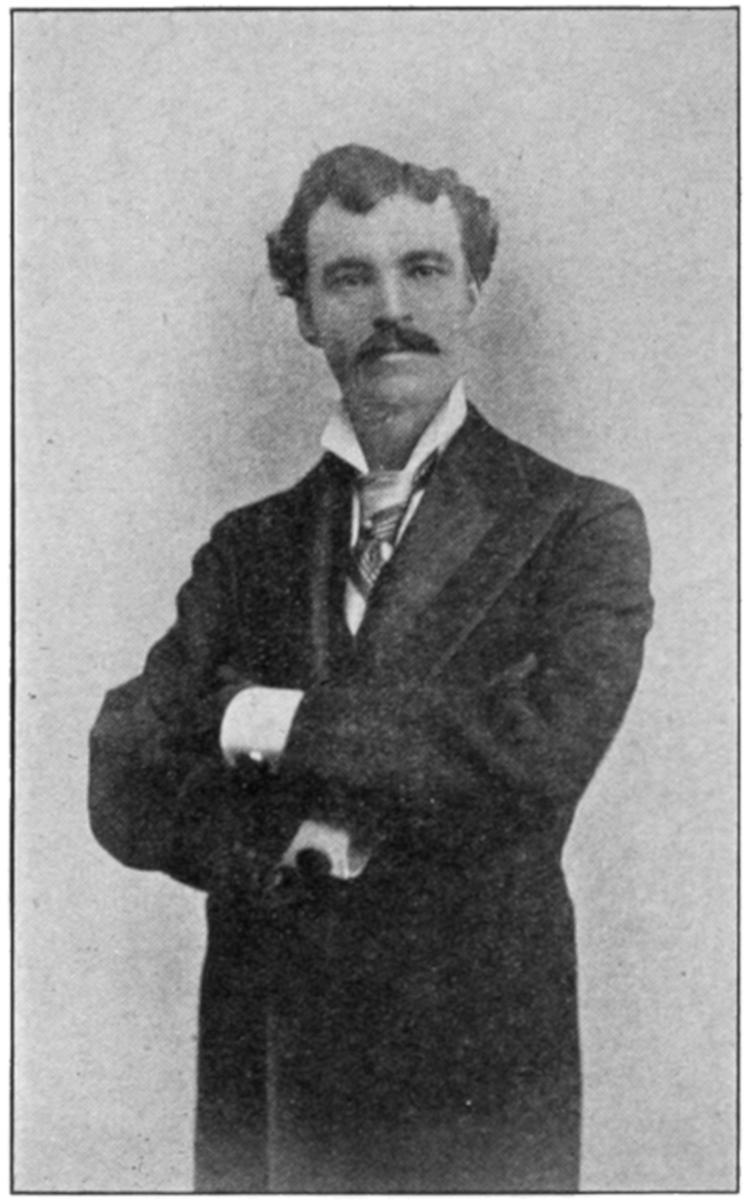
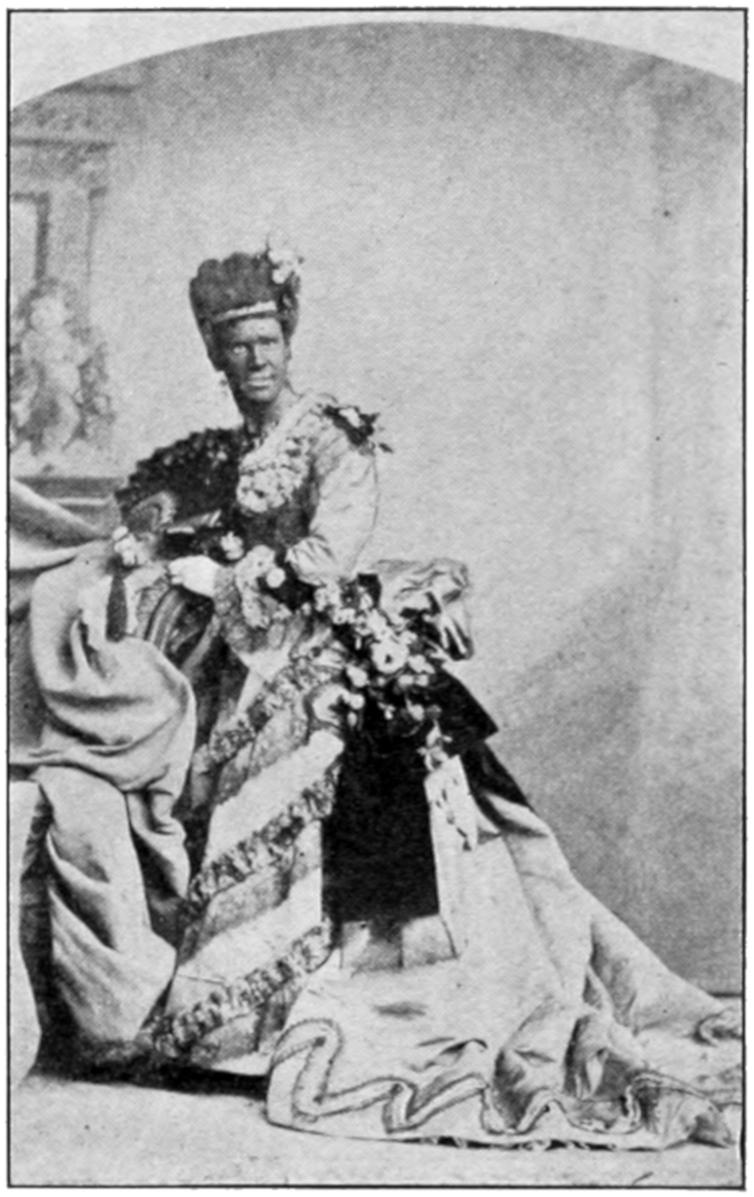
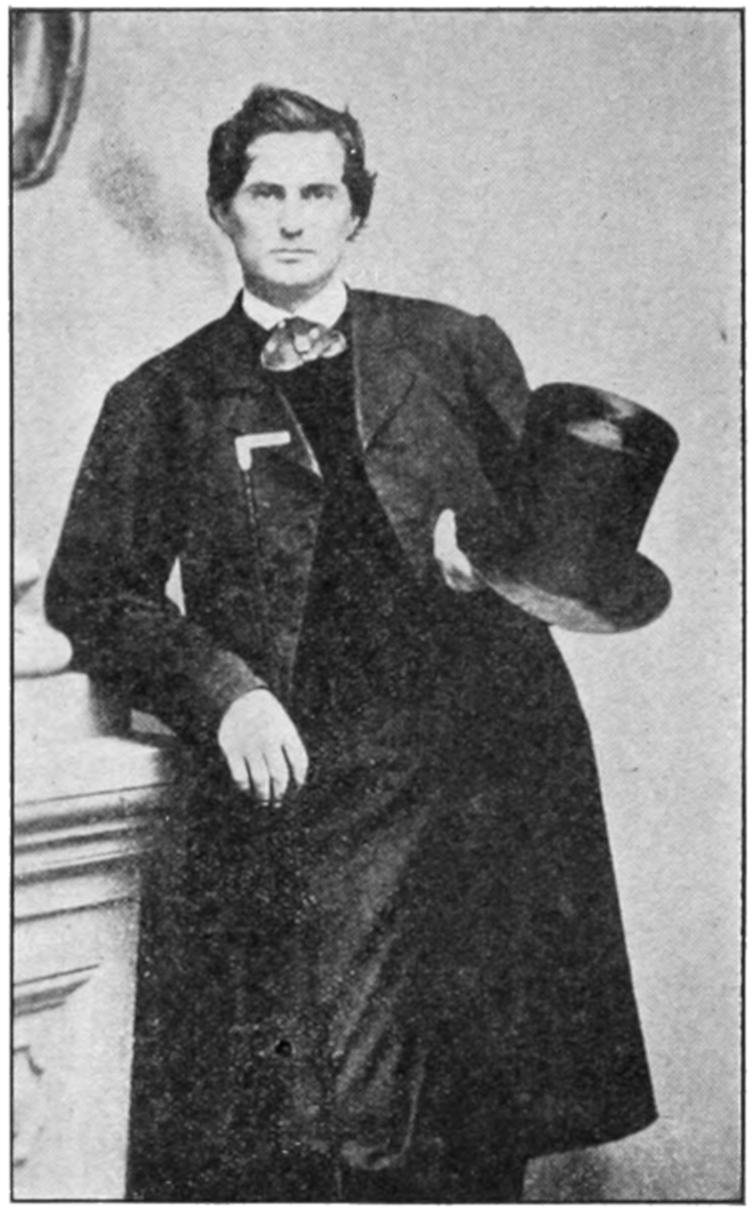
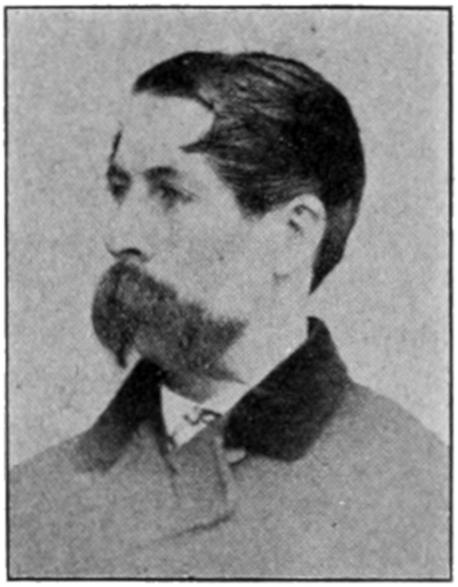
BILLY EMERSON WM. HENRY RICE (1870) BILLY MANNING
SHINING LIGHTS OF MINSTRELSY.
His best work was done in minstrelsy, and he was identified with such organizations as Barlow, Wilson, Primrose and West’s; Hi Henry’s; Cleveland’s and Barlow Brothers.
About 1896 he joined the May Russell Burlesque Company.
J. Marcus Doyle was born in Elyria, Ohio; he died in Buffalo, N. Y., December 23, 1899; age 47 years.
Harry Woodson (John Archer Shields), considered by many as the greatest delineator of the “aged darky” that the stage ever knew, began his professional career as an amateur in his native city. His first professional engagement was with the Buckley and Morris Minstrels singing in character “Old Black Joe.”
September 2, 1878, he began an engagement at Carncross’ Minstrels in Philadelphia, and in the Spring of 1881 he played another engagement in the same city with Thatcher & Ryman’s Minstrels. Commencing in 1880 he was one of the proprietors of Woodson and Allen’s Minstrels, which made tours off and on until October 28, 1883, when the last performance was given at Cynthiana, Ky. Season of 1886-87 he created the part of “Rufus,” the old negro in “Held by the Enemy.”
He married Miss Laura Bennett, a well-known star of the old variety days; they had one daughter.
Mr. Woodson’s singing of “That Old Gray Mule of Mine” was a classic.
His last engagement was with Cleveland’s Minstrels in 1891.
Harry Woodson was born in Richmond, Va., January 15, 1852; he died at Amityville, Long Island, N. Y., August 30, 1898.
W. S. Belknap, prominent as a bass singer with Haverly’s Mastodon Minstrels; Barlow, Wilson, Primrose and West’s and other minstrel organizations, died at Louisville, Ky., February 15, 1900; age 48 years.
Billy O’Day (Geo. F. Day), who excelled as a “rough wench,” commenced “acting up” late in 1871 at Frank Wild’s Varieties in Buffalo, N. Y.; remained one year at $12 per — not $12.00 per year; but perhaps you have guessed it.
Afterwards he was with Shay’s Quinciplexal Minstrels, and joined Billy Wild; known as O’Day and Wild, the “Ebony Kings,” the partnership continued two years. He then played variety engagements, and was three years at Harry Enoch’s in Philadelphia.
In 1890 O’Day and Jerry Cunningham were partners, and remained so for one year. Mr. O’Day has since that time played white- and black-face characters in several prominent dramatic organizations, including Rufus, in “Held by the Enemy” and Decatur in “Alabama,” not forgetting Uncle Tom in the latter’s Cabin.
I most forgot to say that about 1873 Mr. O’Day appeared as “Master Willie” with the San Francisco Minstrels in New York, and sang “There’s A Letter In The Candle.”
Mr. O’Day was married at Johnstown, Pa., October 13, 1892, to Miss Mary Eagel, a non-professional.
Billy O’Day was born April 1, 1852, in Brooklyn, N. Y.; that’s no joke.
The Reynolds Brothers were a well-known and popular song and dance team. As early as 1865 as the “Utica Boys” they were with Burgess, Prendergast, Hughes and Donniker’s Minstrels; the year following with Burgess and La Rue’s Minstrels.
They joined M. C. Campbell’s company in 1867, and subsequently appeared with Emerson and Manning’s; Emerson’s, and Arlington, Cotton and Kemble’s Minstrels; the latter in 1872. After the death of his brother Charles, George Reynolds appeared for a short time with Charley Cogill as Cogill and Reynolds.
Charles Reynolds was born in Utica, N. Y., in 1852; he died in San Francisco, Cal., January 7, 1878. George Reynolds died in New York City, March 4, 1895.
Tommy Turner (Trainor) was one of the Three Turner Brothers, and well known as a banjoist.
He was the husband of Lulu Francis, and had been in the profession about ten years prior to his death, which occurred in Leadville, Colo., May 31, 1879, at the age of 25 years. Mr. Turner was born in New York, September 29, 1854.
Fred Walz, during his comparatively brief career as a vocalist in minstrelsy, achieved distinction that has often been denied those of more mature years.
His first professional engagement was with Newcomb and Arlington’s Minstrels in 1871. In 1872 he was with Moran and Dixey’s Minstrels in Philadelphia, and subsequently with Frank Moran’s Minstrels.
In 1873 he joined Simmons and Slocum’s Minstrels for the season, also in the Quaker City. August 31, 1874, he became a member of Bryant’s Minstrels in New York, and continued with them until the death of Dan Bryant, April 10, 1875, when he almost immediately joined Emerson’s California Minstrels in Chicago, and continued with them several weeks.
Subsequently he became a member of Carncross and Dixey’s, and later Carncross’ Minstrels in Philadelphia, where he remained until his death.
Fred Walz was born in Philadelphia about 1852; he died there September 7, 1884.
James H. Cummings was one of minstrelsy’s best dancers. He formed a partnership with John P. Hogan late in 1871, and played an engagement at Moran and Dixey’s Minstrels in Philadelphia, terminating about February 1, 1872.
Later his partner was W. H. Delehanty, whom he joined August 23, 1875; the alliance lasted about fifteen months.
Mr. Cummings subsequently did an act with Harry Orndorf while with the Emily Soldene Company, where he remained two seasons. He left the profession for a time, and embarked in business in Indianapolis, Ind.
Mr. Cummings married one of the Stanley Sisters, well known performers of three decades ago. James H. Cummings was born in Rochester, N. Y.; he died in San Francisco, February 15, 1889; age 37 years.
Welby and Pearl are not exactly the pioneers of song and dance teams, but they have been associated as partners since 1874, which is enough to make them qualify.
They have been with several first-class organizations, including Al. G. Field’s Minstrels, with whom they were with in 1899; subsequently they joined Gorton’s Minstrels, and continued with them almost to date. Mr. Pearl, of recent years, was manager of the company.
Jake Welby (Bucher), was born October 13, 1852, at Syracuse, N. Y.
Charles C. Pearl (Fell), was born in West Chester, Pa., December 4, 1858.
Dan Collyer (McAnerny), the well known comedian of Broadway fame, was one of the Collyer Brothers as early as 1872, doing black-face acts. Doesn’t look it, does he? November 16, 1889, he opened in New York with “Running Wild,” in which he played the wench.
In the stock with Pastor’s Company, likewise Harrigan and Hart’s, he essayed many black-face roles; he also did vaudeville with Add. Ryman—and there were others, notably Dockstader’s Minstrels in New York, December, 1888. Mr. Collyer was born in Baltimore, Md., March, 1853.
Frank McNish (Francis Edward McNish), like the good American that he is, began his theatrical career on July 4, the year, 1873. Garry Doon shared the honors.
He first appeared professionally April 16, 1877, in Buffalo, N. Y., at the Adelphi.
August 21, 1878, he joined Barlow, Wilson, Primrose and West’s Minstrels, continuing with them until February 21, 1879. Mr. McNish later formed an alliance with the Leland Sisters, and played variety engagements with much success for about three years, after which he joined Thatcher, Primrose and West’s Minstrels, August 3, 1882, and was a feature with them for three years.
Mr. McNish was now ripe for stellar honors, and accordingly on July 30, 1885, the first performance of McNish, Johnson and Slavin’s Minstrels was given in Paterson, N. J.; the organization continued three years, after which McNish, Ramza and Arno’s Minstrels did appear—and disappear.
Mr. McNish was with Al. G. Field’s Minstrels in 1892, and with Hi Henry in 1895—and there were others.
Also did he “star” in “An Actor’s Romance” or “An Actor’s Holiday,” the author forgets which; however, the tour was neither a romance nor a holiday.
January 4, 1887, Meriden, Conn., had the honor of being the first city of witnessing Mr. McNish’s appearance as an end man.
Most everybody knows that Frank McNish was the originator of the Silence and Fun specialty that made him famous, and which has been extensively copied by other performers. In addition to being a good dancer, he is also a good singer; originally a plumber, Mr. McNish always has his pipes in good working order.
An early partner was Edward Gildea; the latest were Joe. Penfield and Frank McNish, Jr.
Frank McNish was born in Camden, N. Y., December 14, 1853.
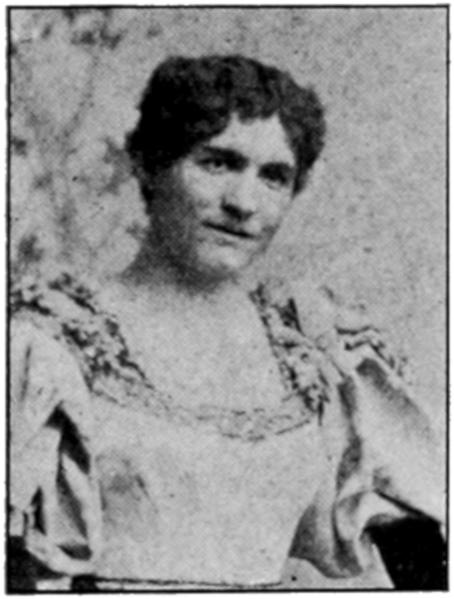
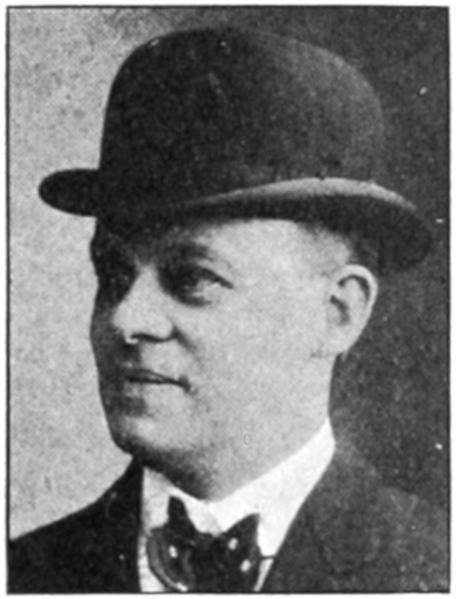
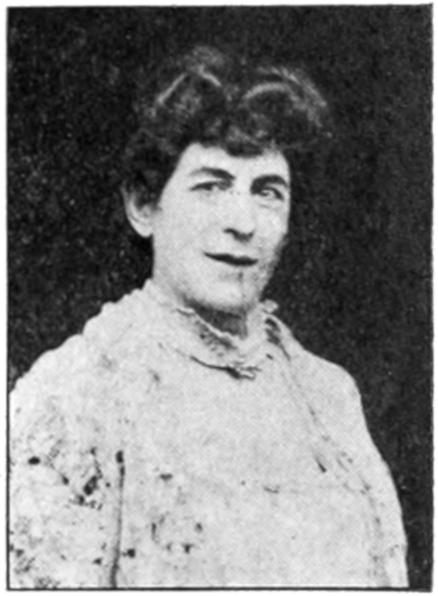
BILLY LYONS FRED. MALCOLM CHAS. HEYWOOD
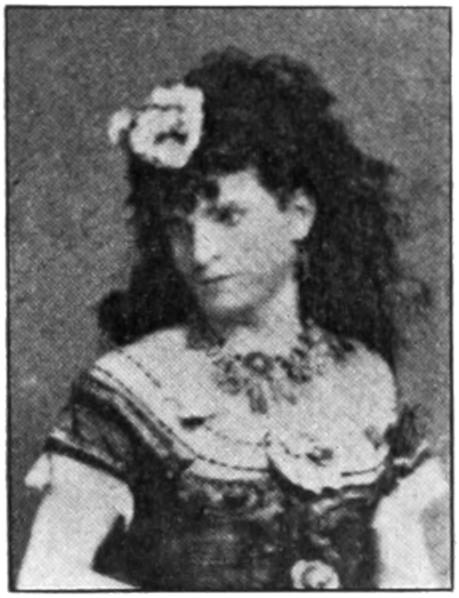
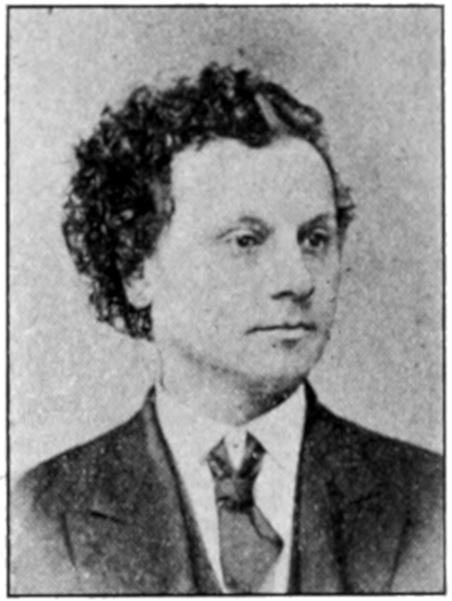
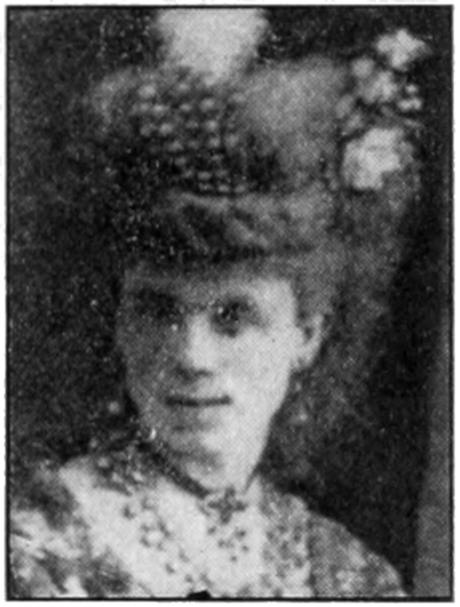
JUSTIN ROBINSON THE GREAT “EUGENE” ERNEST LINDEN
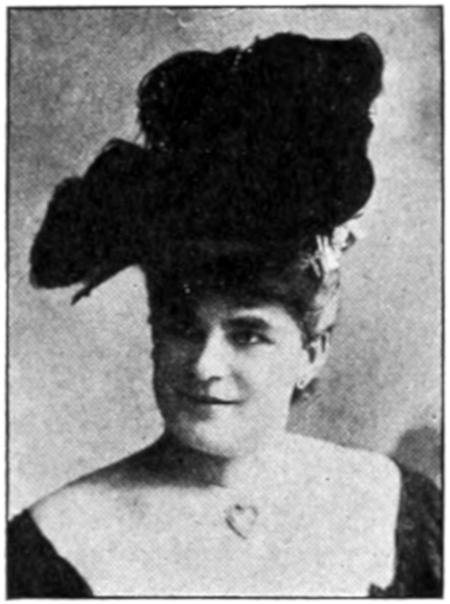
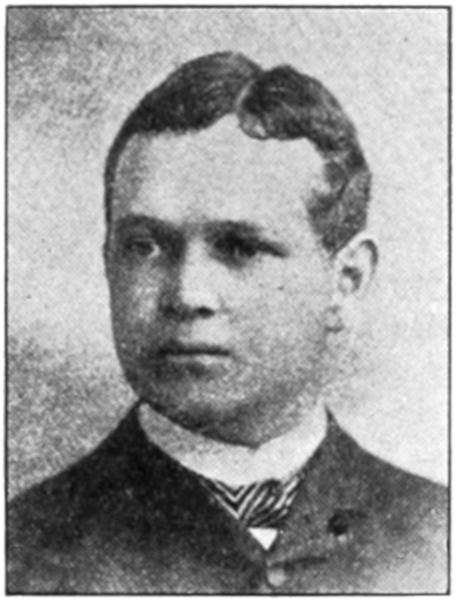
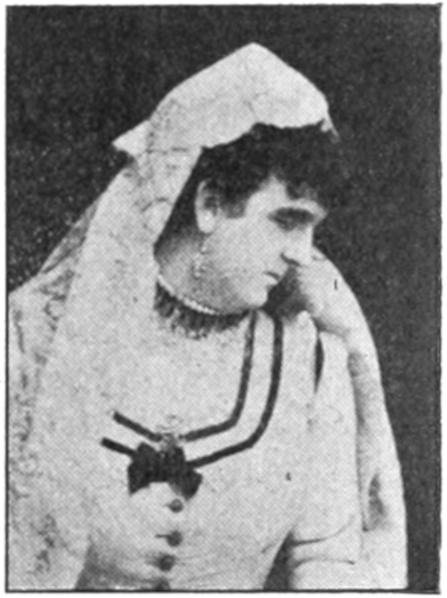
LINCOLN ELLWOOD BURT. SHEPARD PAUL VERNON
FAMED FAVORITES WHO FEATURED FEMININE FANCIES—SECOND EDITION.
Gus Mills achieved considerable popularity as a female impersonator with Simmons, Slocum’s and Sweatnam’s Minstrels in Philadelphia; Dockstader’s in New York, as well as Emerson’s and other well known organizations; he died in Chicago, Ill., October 6, 1903; age about 55 years.
Johnny Mack entered the profession at an early age. He had as partners at various times Johnny Gardner, Billy Conway and Lew Dockstader. With the latter he played with Whitmore and Clark’s Minstrels in 1874, as Mack and Clapp.
He died at Hoosick Falls, N. Y., February 28, 1891; age 38 years.
Willie (Wm. H.) Guy was the first of the Guy boys to enter minstrelsy, making his initial appearance with Hooley in Brooklyn, N. Y., about 1863; the following year he was with M. C. Campbell’s Minstrels in New York.
Subsequently he joined his brother George, and as George and Willie Guy became quite popular at Hooley’s Minstrels in Brooklyn, where they remained for a considerable time.
The next few years he was with the minstrel organization of Kelly and Leon; Moore and Burgess, Harry Robinson’s, Welch, Hughes and White; Smith and Taylor’s, and George Christy’s.
In 1874 he became a member of Guy Brother’s Minstrels, and as such continued practically until his death. Mr. Guy ranked high as a song and dance performer and comedian.
Willie Guy was born in Hartford, Conn., October 16, 1853; he died in Springfield, Mass., February 26, 1906.
Richard Golden (Frank Golden), whose fame as “Old Jed Prouty” will long live, did a black-face song and dance with Lew Davis (later Chace and Davis), in the late 60’s; he was also with Sharpley’s Minstrels.
Mr. Golden was born in Bangor, Me., February 6, 1853; he died in Brooklyn, N. Y., August 10, 1909.
Harry M. Morse. It would be a difficult matter to say off-hand whether this gentleman is best known as a minstrel or as a delineator of “rube” characters; in the one he has been associated with several famous organizations; in the other he is as readily recalled by several well remembered characterizations.
He first appeared professionally with Rice’s “Evangeline” in 1877, where his splendid bass voice was used as a member of a quartette.
In 1881 he played his initial minstrel engagement with the Haverly Mastodons; the following year with the new Mastodons saw his first appearance as “middle man.”
In 1883 he was with Sam Hague’s Minstrels, under the Haverly management. Thatcher, Primrose and West’s Minstrels had him for a member in 1884, and the following season he was with the inaugural performance of McNish, Johnson and Slavin’s Minstrels, and remained with them until the dissolution of the company at Washington, D. C., May 19, 1888.
Right here Mr. Morse’s inherent Yankeeism asserted itself; carefully sealing up his box of cork, he placed it in storage, and went in for “rube” characters exclusively.
From 1888 to 1892 he played Zeb in “Old Jed Prouty”; Mr. Morse was great in this character; so was the wig.
“Rush City”; Pete Dailey’s “Country Sport”; Joe Hart’s “Gay Old Boy” and four years as the Giant in “Jack, the Giant Killer,” followed; a return to “Old Jed Prouty” and Mr. Morse began to repent.
Primrose’s Minstrels, Dockstader’s Minstrels and Cohan and Harris’ Minstrels, the latter in 1908, followed the repentance.
Now Mr. Morse is showing his “rube” to vaudeville lovers—and they seem to like it.
Taken all in all, Putnam, Conn., may well feel proud of its distinguished citizen.
Harry M. Morse was born in Woodstock, Conn., August 4, 1853.
Frank Cushman (Peter Clishman) was one of the very best singing comedians of minstrelsy; he possessed a peculiar voice, and could reach high C with ease.
At the outset of his career he gave impersonations of the old colored man, which ever after he made a feature of his repertoire; in these delineations he was exceptionally clever.
He made his first appearance with Professor John Hammond’s Company at Havre de Grace, Md., in 1874; subsequently he joined Tommy Jefferson’s company, where his success was pronounced.
After this he went to the Odeon Theatre in Baltimore, remaining a year; likewise he played stock engagements at the Grand Central Theatre, Philadelphia, and other houses. His first prominent minstrel engagement was with Carncross and Dixey, in Philadelphia.
October 21, 1878, made his appearance at the Adelphi Theatre, Chicago, as a member of Haverly’s original Mastodons. He went to England with Haverly, opening in London, July 31, 1880; he continued under this management for a considerable period.
About 1882 he formed an alliance with the “Only Leon,” playing star engagements in the variety houses and minstrel companies; during this period they made a trip to Australia, where they played several months; they separated in the Spring of 1887.
In the fall of that year he became a member of Sweatnam, Rice and Fagan’s Minstrels; he was likewise with Primrose and West’s; Cleveland’s, and Al. G. Field’s Minstrels.
In the fall of 1889 with Ned Thomas he organized the Cushman and Thomas Minstrels.
Mr. Cushman created the black-face part in the production of “Natural Gas”; and in 1898 he was with the last minstrel show Jack Haverly ever put out. He was married to the widow of Billy Welch about 1888, and they lived very happily together.
His last appearance was at Lexington, Ky., a few days before his death.
Frank Cushman was born in Baltimore, Md., March 11, 1853; he died in Louisville, Ky., December 19, 1907.
Edwin French (Adam Kunz) was one of the great banjoists of minstrelsy.
He made his first appearance in St. Louis, Mo., as Master Eddie with Morris and Wilson’s Minstrels.
He next appeared with Green’s “Mocking Bird” Minstrels, and in 1867 was with Sam Sharpley’s Company.
Subsequently he played a long engagement with Birch, Wambold and Backus in New York City.
He was also with Carncross in Philadelphia; Moore and Burgess in London, England, and Dockstader in New York. In 1882 he was with Leavitt’s Giganteans; and likewise played an important engagement with Haverly’s Minstrels.
Edwin French was born in Cleveland, Ohio, January 31, 1853; he died at Saranac Lake, N. Y., September 16, 1903.
Burt. Haverly (Geo. Burton Oliver), the favorite minstrel and farceur, began in Boston at an early age with a minstrel company headed by the late Andy Leavitt; Mr. Haverly’s vocal offering on this occasion was—“And His Feet Hung Out the Door.”
In 1881 he was with Billy Emerson in San Francisco, a place where Haverly loved above all others; in this city he was highly thought of, personally and as a performer.
It was in 1879 that he attained his first prominence as a member of Hooley and Emerson’s “Megatherian” Minstrels.
In the middle and late 80’s he was with McNish, Johnson and Slavin’s, and Johnson and Slavin’s Minstrels.
Shortly after leaving the last company, he went into white-face with the “City Directory”; subsequently, with Laura Biggar, he was co-star in “A Trip to Chinatown,” for several seasons.
Mr. Haverly married Miss Nellie Carter, in San Jose, Cal., February 21, 1882.
In New York, on March 21, 1901, he married Mme. Dowling.
Burt. Haverly was born in Saccarappa, Me., August 12, 1853; he died in San Francisco, Cal., October 31, 1908.
Hawkins and Collins. This great black-face singing act made their first joint appearance at the Garden Theatre in Chicago, Ill., in the Fall of 1882.
They played successful minstrel engagements with Carncross’ in Philadelphia; Thatcher, Primrose and West’s; Haverly’s and Hyde and Behman’s Company, as well as several first-class specialty organizations.
They continued as a team until the death of Ben Collins.
Lew Hawkins made his first professional appearance as a jig dancer in the Winter Garden, Chicago, Ill., in 1873; he worked in white-face, his weekly stipend was $6.00; he gets more now.
He went to San Francisco from Chicago, played all the variety houses on the way back three years later, and opened with Ed. Hodson, again in Chicago, at the Coliseum, where they did a Dutch act; a year later he separated from Hodson and joined J. W. Kelly, who afterwards won fame as the “Rolling Mill Man”; Mr. Hawkins’ claims, and he undoubtedly is correct when he asserts that he first brought Kelly before the public as a professional entertainer; this was in August, 1878, at the Cosmopolitan (present Olympic) Theatre in Chicago; they separated in 1882, and Mr. Hawkins joined Collins.
Since the death of the latter, Lew Hawkins has worked alone doing a black-face monologue and singing act; he is known as the “Chesterfield of Minstrelsy.”
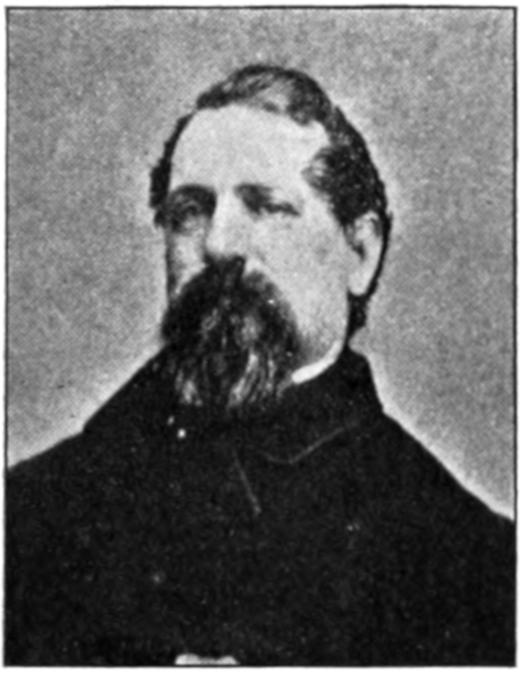
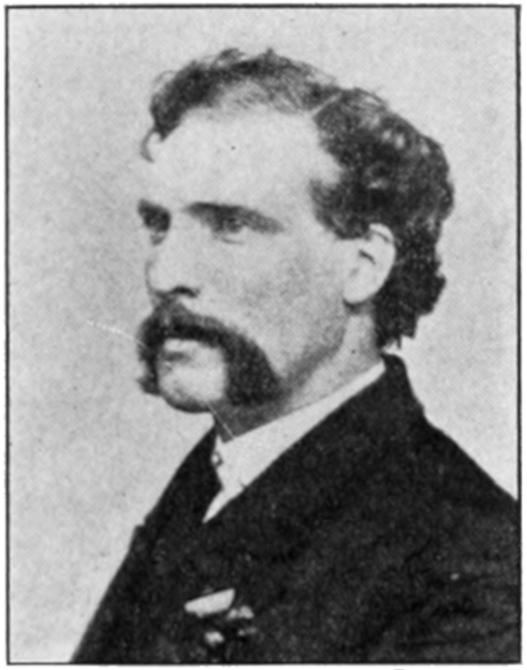
“COOL” WHITE “COOL” BURGESS
A PAIR OF “COOL” PROPOSITIONS.
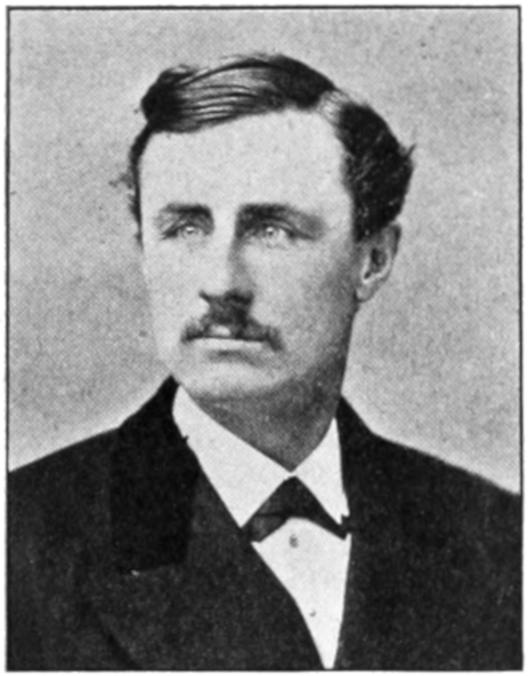
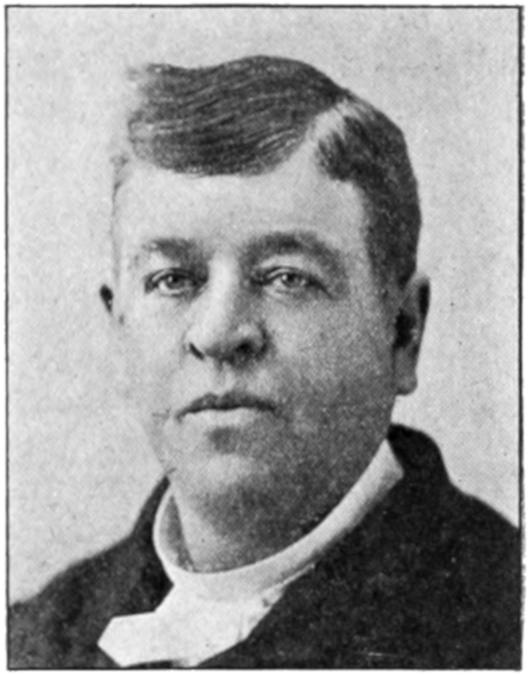
“ADD.” RYMAN “ADD.” WEAVER
NOT A CASE OF ADDITION.
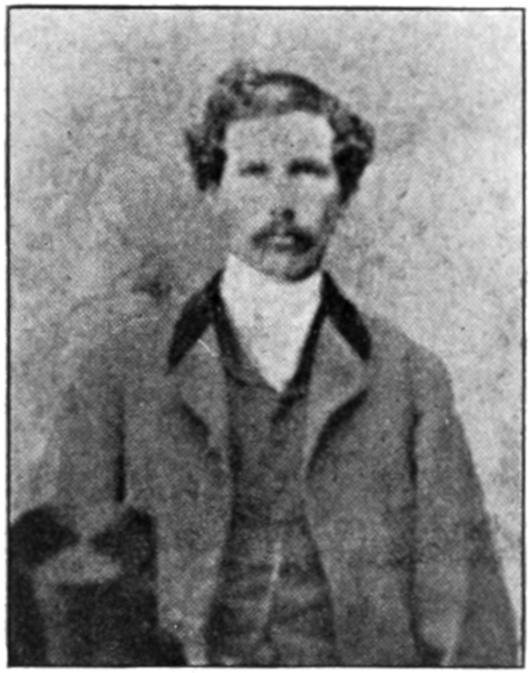
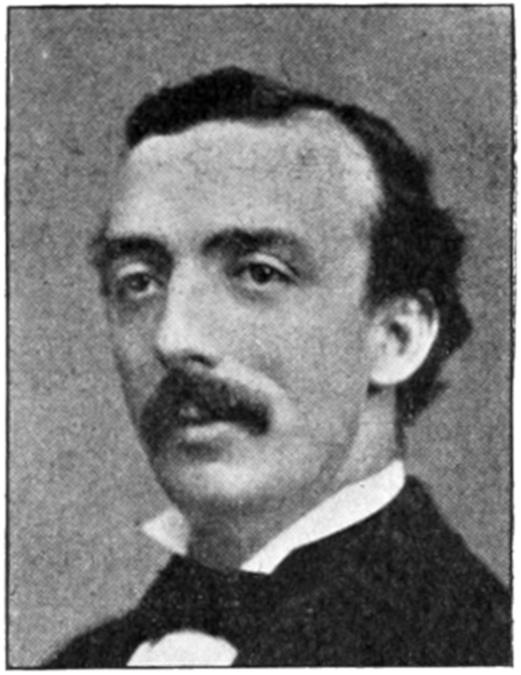
FRANK WILD JOHN WILD
WILD, BUT NOT DANGEROUS.
Lew Hawkins was born in Hudson, Mich., August 20, 1853.
Ben Collins was born in Chicago, Ill.; he died in Boston, Mass., March 20, 1890; age 31 years.
Wm. H. West (Flynn), famous as a great clog dancer and producer, and for many years associated with George H. Primrose in their many minstrel organizations, made his first appearance in a variety theatre in Buffalo, N. Y., August 20, 1870; the following year he joined Skiff and Gaylord’s Minstrels, where he made the acquaintance of George H. Primrose, and shortly after this they made their first joint appearance, playing variety theatres, and continuing with Mr. Primrose for many years.
November 20, 1874, he joined Haverly’s Minstrels, and remained with them until June 14, 1877.
On Aug. 20, same year, with his partner, Milt. G. Barlow and George Wilson, they gave the first performance of Barlow, Wilson, Primrose and West’s Minstrels; the last in the Summer of 1882.
That same year Mr. West, Mr. Primrose and George Thatcher, organized Thatcher, Primrose and West’s Minstrels; they gave their final performance in the Summer of 1889.
From 1889 until April 30, 1898, Primrose and West’s Minstrels took the road; the last season (1897), Mr. West headed his own company, Mr. Primrose another.
In the Summer of 1898, William H. West’s Big Jubilee Minstrels gave their first performance, and he continued with his company until within a few months of his death.
Mr. West was thrice married; his first wife was Fay Templeton, the well-known actress whom he married about 1883; they separated soon after. His second wife was Miss Lizette Morris, of Philadelphia, a daughter of our former Minister to Turkey; on October 27, 1892, he married Miss Emma Hanley, the well-known actress of light opera fame.
Mr. West sat in the middle with his various companies, his style of interlocutor being different from any of his predecessors.
William H. West was born in Syracuse, N. Y., June 18, 1853; he died in Chicago, Ill., February 15, 1902.
Emerson and Clark were a favorite song and dance team of the middle 70’s; they appeared in the well-known variety houses, and in 1877 they played an engagement with Cal. Wagner’s Minstrels; in the fall of the same year they associated themselves with the Daly Brothers, Tom and Bill. The four took a European tour and later were with Hooley and Emerson’s Megatherian Minstrels, in 1879.
Mr. Emerson married Julia Emmonds, and as Emerson and Emmonds they played the variety houses; in the course of time the act received an addition, and as Emerson, Emmonds and Emerson they were well known.
Mr. Emerson also did a black-face specialty with James Cook, of the present team of Cook and Lorenz; this was with Barlow, Wilson and Rankin’s Minstrels about 1885.
After their separation, Mr. Clark published “Willis Clark’s Joke Book,” which met with indifferent success.
Mort. Emerson was born in Philadelphia, November 27, 1853.
Willis Clark died (suicide) in New York City, December 23, 1899; age 42 years.
The Daly Bros. Tom Daly’s early partner was Bob Birdue; they played an engagement at the Howard Athenaeum in Boston, where they met with pronounced success; subsequently he was joined by his brother Bill.
In April, 1871, as Master Willie and Tommy, they did their specialties with Newcomb and Arlington’s Minstrels in New York City; season of 1875 they played Carncross and Dixey’s Minstrels in Philadelphia; the next year they were with Haverly, and after the conclusion of that engagement the brothers joined Emerson and Clark, and the four were known as the King High Kickers.
The Dalys were brothers of the lamented Dan Daly; and Tom Daly’s second wife was Lizzie Derious, the well-known soubrette, now Mrs. Sam Tuck.
Tom Daly was a man of exemplary habits; his death was the result of a brutal assault received in Chicago a few years previous to it.
Bill Daly, or “Cap. Bill” as he is best known, has not appeared professionally in several years.
Tom Daly was born at Bathurst, N. B., in 1855; he died at Somerville, Mass., July 20, 1892.
ORIGINAL BIG FOUR—LESTER-ALLEN-SMITH-WALDRON.
Billy Lester (Albert Manasse) made his first appearance as a clog dancer with Sam Colville’s Variety Company, at the age of 13.
His first partner was John Turner, and as Turner and Lester they played the principal variety houses, also an engagement with Simmons and Slocum’s Minstrels in Philadelphia, in 1874.
About October 1, 1875, he formed a partnership with Paul Allen, and in the fall of 1876 the team consolidated with Smith and Waldron; this was the original Big 4.
February 28, 1878, saw the first performance of Billy Emerson’s and the Big 4 Minstrels; which continued several months; Lester and Allen joined Tierney and Cronin, and were known as the 4 Aces; this, however, was not the original act of that title.
About 1884 Lester and Allen’s Minstrels took the road, and continued as an organization for three years.
Shortly after this they appeared in “A Plug Hat”; later Mr. Lester separated from Mr. Allen.
Mr. Lester’s first wife was Viola Clifton, whom he married in 1876. November 24, 1887, he became the husband of Annie Hart.
Billy Lester was born in London, England; he died at Fair Haven, N. J., July 11, 1893; age 40 years.
Paul Allen (Kayser) joined Billy Lester in 1875, and while the major portion of his professional career was identified with Lester’s, it was not entirely so.
In 1880, with Dan Waldron, William Smith and Master Martin the Big 4 Minstrels were on the road.
After separating from Mr. Lester, he did a black-face monologue, and as “Mayor of the Ohio River” met with unqualified success.
Mr. Allen married Louise Montague (Laura Keene Stewart) at San Francisco, in 1877.
Paul Allen was born in Baltimore, Md.; he died in New York City, February 23, 1896; age 43 years.
William Smith associated himself with Dan Waldron in the middle 70’s, doing black-face songs and dances. In 1876 Smith and Waldron joined Lester and Allen, and were associated about three years.
In 1879 the Big 4 consisted of Smith, Waldron, Morton and Martin, and a year later it was Smith, Allen, Morton and Martin.
In 1898 with Haverly’s Minstrels, the Big 4 was Smith, Waldron, Daly and Martin; and at the time of his (Smith’s) death, it was Smith, Waldron, Peasley and Martin.
Mr. Smith was the brother of Helene Smith, the beautiful danseuse of a generation ago.
William Smith died (suicide) in New York City, April 16, 1900.
Dan Waldron (McQuinny), the last of the original Big Four, joined William Smith in a black-face song and dance act about 1875, and continued a member of the various combinations of “Big 4’s” longer than any of his associates.
After severing relations with them he appeared with many prominent minstrel companies, notably George Thatcher’s, and Haverly’s (Nankeville’s) Minstrels.
Dan Waldron was born in New York City; he died April 1, 1905, at Washington, D. C.; age 47 years.
They tell this one about the famous Billy Manning—Manning’s Company and that of Dan Bryant met on one occasion on the road; in the course of the conversation it turned out that Bryant’s Company was to follow Manning’s in at a certain town; Dan Bryant requested Manning to “announce” the coming of his (Bryant’s) troupe; which of course, Manning promised to do.
About ten days later the minstrels met again, and Manning informed Bryant that he (Manning), had played the previous evening in the town already referred to.
Did you “announce” me said Dan? I was just going to, said Manning, when the fellow got up and went out.
Billy Bryant (Wm. Thos. Hanson). Who among theatre-goers of twenty years ago who recall Bryant & Richmond in the act “Imprisoned,” cannot see Billy Bryant as he carefully felt the topmost portion of his anatomy, ruefully exclaiming—“O! my coco.” That was comedy.
Bryant’s career began in 1868 with the Walter Bray Company, where he joined hands with Arthur Hegeney, under the team name of Hanson and Hegeney. It was Bray that suggested a change, and forthwith Hanson became Bryant, in honor of Dan Bryant, and Hegeney was thereafter known as Williams, after the famous Barney Williams, whose early days were spent in minstrelsy.
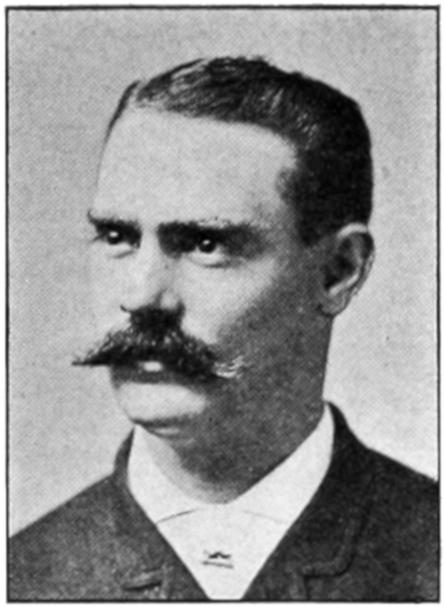
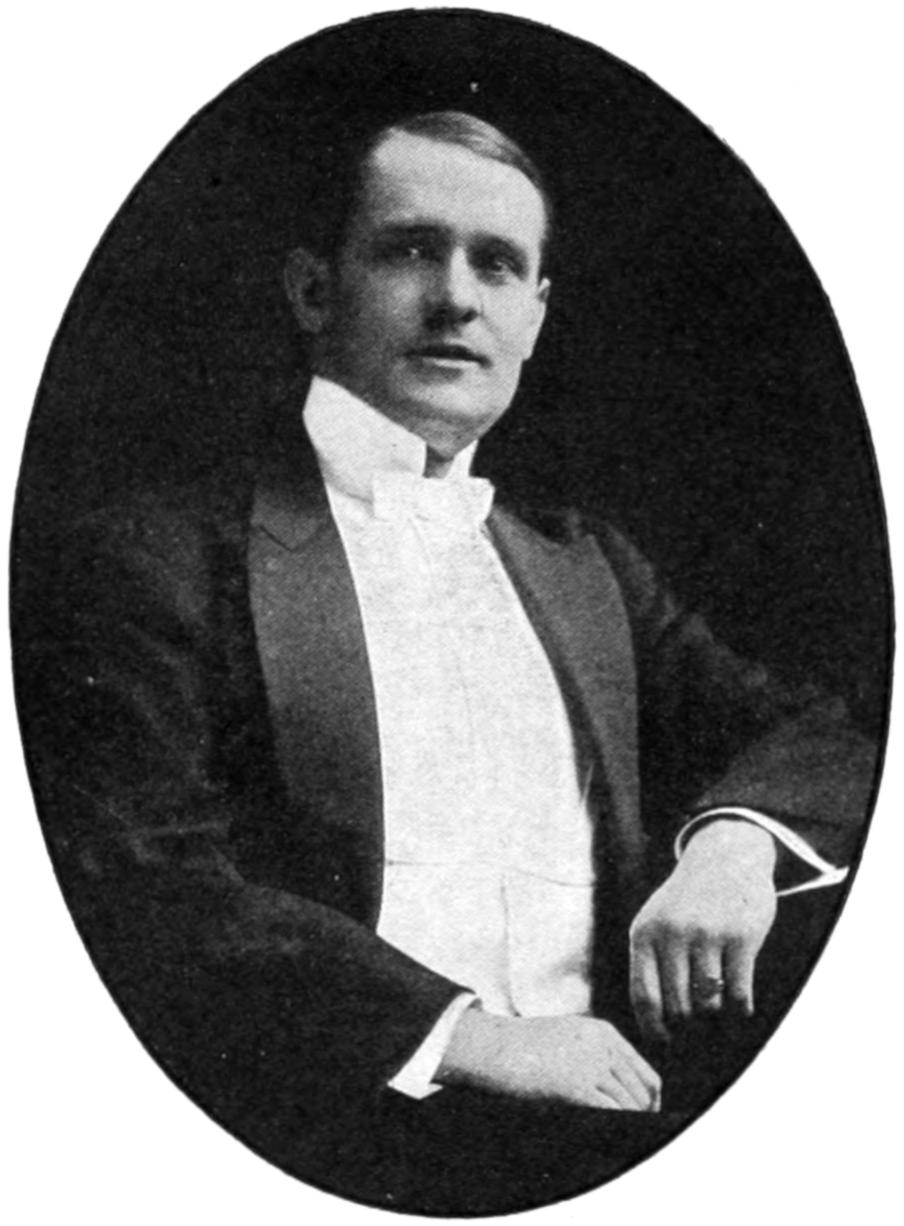
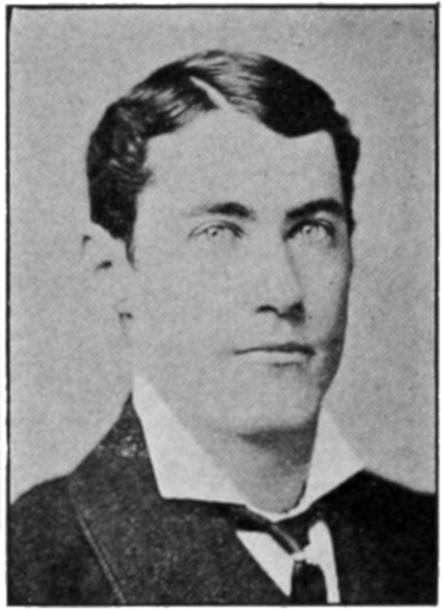
LEW DOCKSTADER P. J. NILES
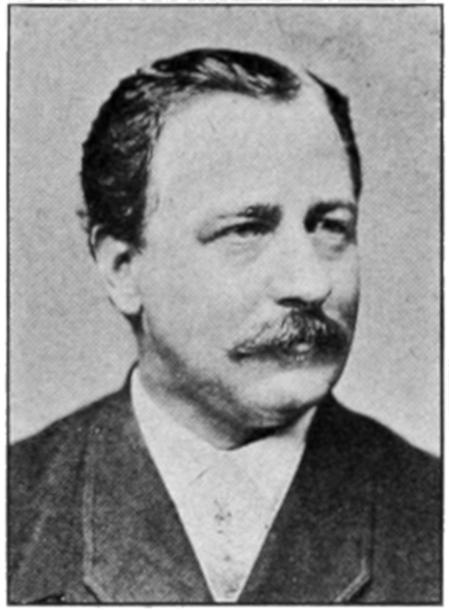
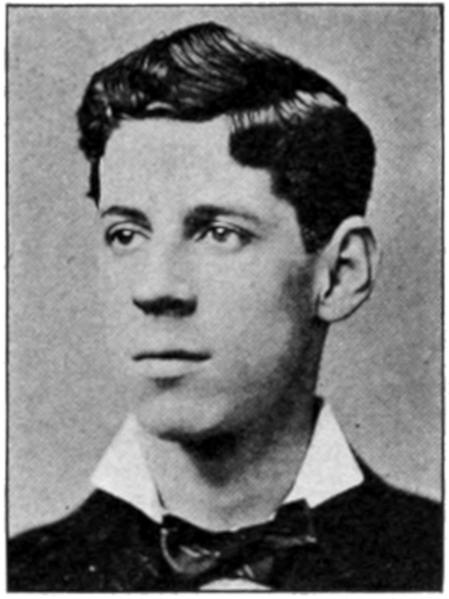
CHAS. DOCKSTADER WILL OAKLAND, The Famous Contra Tenor CHAS. E. EVANS
DOCKSTADER BROS. (1879) NILES & EVANS (1878)
Bryant and Williams played the best variety houses in the country until 1876, when he married Lizzie Richmond, and as Bryant & Richmond they gave “Imprisoned” for many years; afterwards they produced “Keep it Dark”; for seven seasons they played it with much success.
Alice Hanson, an unusually clever and vivacious soubrette, is his daughter.
Billy Bryant was born in Platteville, Wis., October 12, 1853; he died at Chicago, Ill., July 22, 1902.
Bob Slavin was one of the most brilliant comedians in the minstrel firmament; a natural wit; a great entertainer.
About 1874 he did a specialty with George Nelson; and a year or so later he doubled with “Buck” Sheffer; the partnership continued about two years. Subsequently he appeared with unqualified success with Haverly’s, the San Franciscos, and Emerson’s, in San Francisco.
In July, 1885, at Paterson, N. J., McNish, Johnson and Slavin’s Minstrels gave their first performance; they continued as an organization for three seasons; Mr. McNish retiring, Johnson and Slavin’s Minstrels took the road; the partnership dissolved in June, 1889.
July 17, 1890, Mr. Slavin opened for a limited engagement with Wm. Henry Rice’s World’s Fair Minstrels, and closed September 2, at Elmira, N. Y. September 10, he opened with the Howard Athenaeum Company in Troy, N. Y., doing his specialty in white-face; sad to say, this engagement lasted only about a month.
Mr. Slavin subsequently appeared with the May Russell Burlesque Company. On November 19, 1892, he began an engagement with Crawford Brother’s Minstrels in South Bend, Ind.; Mr. Slavin made his last appearance with this company about Christmas, the same year, at Toledo, Ohio.
Mr. Slavin married Agnes Louise Laurence, a non-professional, in 1878.
Bob Slavin was born in Baltimore, Md., November 28, 1853; he died in Toledo, Ohio, December 29, 1892.
William J. Carroll, known as a first-class banjoist and negro impersonator, came to this country at a very early age, and began his professional career while yet in his teens; in 1873 he joined William Harris, and as Harris and Carroll remained with him until 1879; they played various variety engagements. December 20, 1880, he joined Thatcher and Ryman’s Minstrels at the Arch Street Opera House, Philadelphia, doing his specialty, and sitting on the end, opposite George Thatcher; he remained all season. Subsequently he was with Primrose and West, and other organizations.
William Carroll was born in Ireland about 1853; he died in Chelsea, Mass., January 25, 1896.
John F. Fields made his first appearance with the San Francisco Minstrels in New York City, December, 1865, as a boy vocalist. It was in August, 1874, that his professional career began when he formed a partnership with Fred Sharpley, who died in 1879.
His next partner was William F. Hoey, later known as “Old Hoss,” the team name being Fields and Hoey, doing a black-face musical act. Mr. Fields played an engagement with Cal. Wagner’s Minstrels while a member of this alliance. In 1878 he formed a partnership with Frank Hanson. As the straight man in these acts, Mr. Fields excels, and after thirty-six years we find him as good as ever.
At the termination of his partnership with Mr. Hanson in 1885, Mr. Fields’ took another partner, the team name of Fields & Hanson was retained and is still a valuable trade-mark. Since 1885 “Fields and Hanson” have been with Haverley’s Minstrels; Cleveland’s Minstrels, Gus. Hill, Hyde’s Comedians and Reilly & Woods Company; and for five years he had on tour Fields & Hanson’s Drawing Cards.
Mr. Fields and his present partner are now in vaudeville.
Jno. F. Fields was born in Newark, N. J., October 17, 1853.
Frank Hanson worked a year with a performer named Billy Phillips, but only as amateurs. He left Phillips in 1877, and joined a party by the name of Smith, with whom he worked several months, making their first appearance at the Boylston Museum. Then came Hanson and Rich, and a short time after, the famous team of Fields and Hanson was formed in 1878.
In 1885 after the team broke up, Mr. Hanson went in the hotel business in Boston, in which he has been ever since.
Frank Hanson was born at Ossipee, N. H., March 13, 1860.
Fields and Hanson joined hands in 1878, playing variety engagements for that season. Seasons of 1879-1880, 1880-81, were spent with Barlow, Wilson, Primrose and West, followed by seasons with Leavitt’s All Star Specialty Company, and Barry and Fay’s organization. In 1883 they began an engagement with the Howard Athenaeum Company, at the conclusion of which they played a season of sixteen weeks in the larger cities of Europe; returning to the United States, they began their last season as a team, with the Howard Athenaeum Company, at the conclusion of which in 1885, they separated.
Manchester and Jennings worked harmoniously as a team for eighteen years, during which period they were associated with some of the best minstrel organizations traveling. As a black-face comedy act they were among the leaders.
Their first joint appearance was in 1870. About 1874 they joined Washburn’s Last Sensation, remaining two seasons.
September 27, 1875, they made their first appearance with Hooley, Haverly and Maguire’s Minstrels in Chicago.
Subsequently they were members of Kelly and Leon’s Company, and then—and then—unable to wait another day—they launched forth Manchester and Jenning’s Minstrels in the Spring of 1878. Without going into details, it may be said that the season was a backward one that year.
The partnership lasted until the death of Johnny Jennings.
Bobby Manchester made his debut on the stage in 1865 with Newcomb’s Minstrels. September 24, 1886, he gave the first performance of his “Night Owls” Burlesque Company; since which date he has been prominently identified with the burlesque world.
Johnny Jennings was an exceptionally clever dancer; he made his first appearance in his native city at old Farrar Hall about 1864. About a year later he joined Morris Brothers, Pell and Trowbridge’s Minstrels in Erie, and subsequently appeared with them in their Boston theatre. He continued with this company for an extended period, part of which time as Collins, Queen and Jennings, they did an act called the “Alabama Triplets.”
Mr. Jennings is reputed to have been the original skate dancer, in which he was marvelously adept.
Bob Manchester (Aaron Mills), was born in Gloversville, N. Y., July 2, 1853.
John Jennings was born in Erie, Pa., about 1857; he died there, November 7, 1888.
George F. Campbell was one of the original members of the Clipper Quartette, who made their first appearance at Tony Pastor’s Theatre in New York, in 1879.
Subsequently he separated from his partners, and organized a Clipper Quartette of his own.
Several years ago Mr. Campbell retired from theatricals, and entered the mercantile business, in which he is now engaged.
George F. Campbell was born in Baltimore, Md., March 6, 1853.
Fred Huber was a well-known black-face performer more than thirty years ago. In 1878 Huber and “Boots” Allen did a black-face musical act; 1879; Huber and Glidden were known as the “Oyster Can Mokes”; subsequently he married Kitty Allyne, and for many years Huber and Allyne played the principal variety houses. About seven years ago he formed a partnership with John King while with the William H. West’s (Ricaby’s) Minstrels.
Mr. Huber was also well-known as an excellent “bones” manipulator.
He was several years with Gus Hill in an executive capacity.
Fred Huber was born in St. Louis, Mo.; he died in New York City, April 3, 1904; age 50 years.
Fred Oakland (Wright) had the distinction of being one of the leading tenors of minstrelsy about twenty years ago. He had a remarkably fine cultivated voice which he used mostly in concert work until about 1878, when he left England for South Africa, where he played leading tenor roles with the Victoria Loftus Troupe and other organizations, visiting Ceylon, India and other countries.
About 1883 he came to the United States, and joined Thatcher, Primrose and West’s Minstrels, remaining several seasons; subsequently he became a member of Primrose and West’s Minstrels, and while with this company he formed the acquaintance of William H. Thompson, with whom he joined George Thatcher’s “Tuxedo” Company.
With Mr. Thompson he went to England in January, 1895; they remained four years; the partnership was then dissolved.
Mr. Oakland married a Miss Stratton, of Swampscott, Mass., in December, 1887.
Fred Oakland was born in London, England; he died there October 5, 1900; age 46 years.
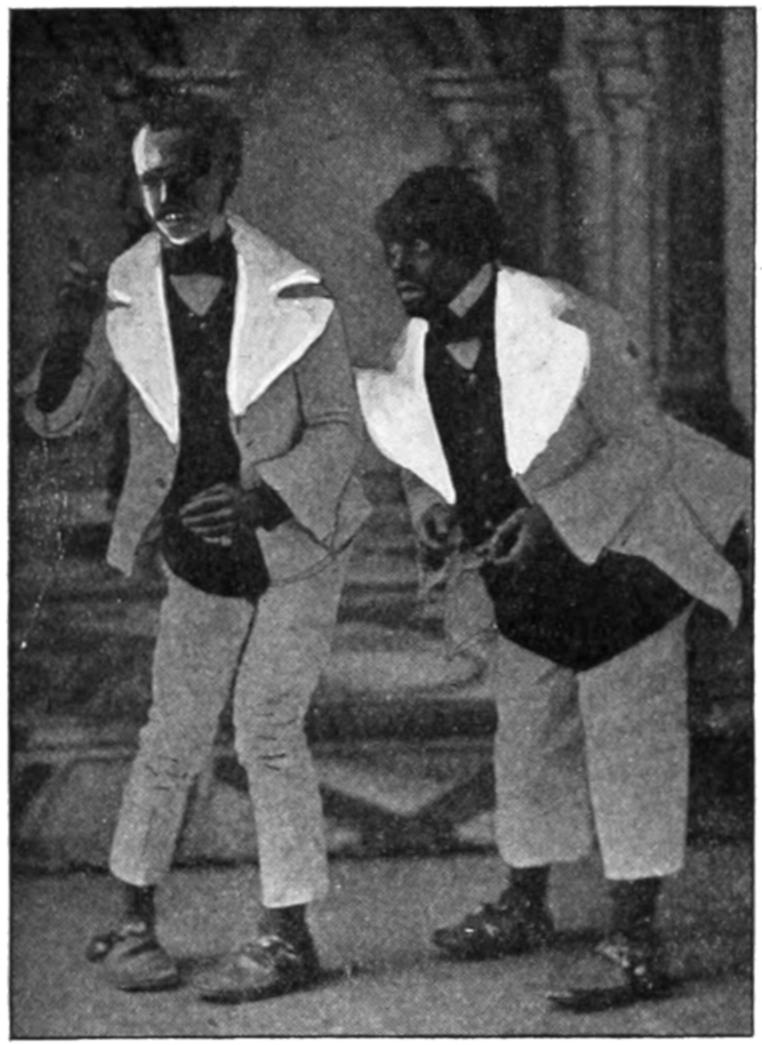
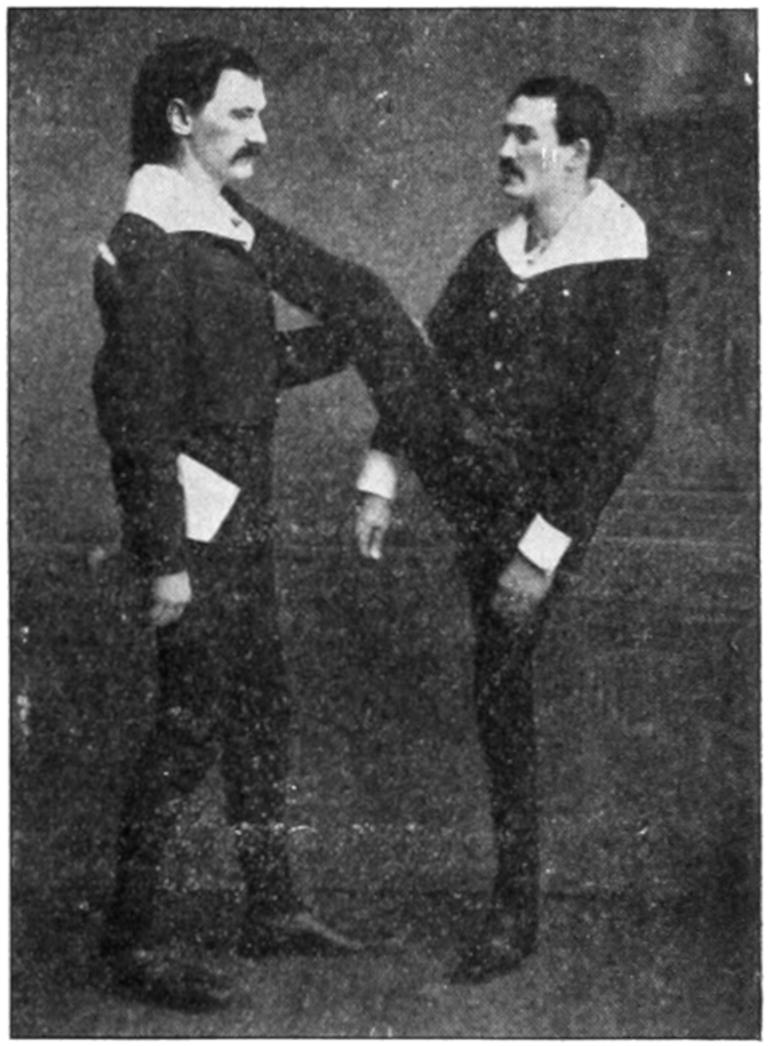
J. C.—HARRINGTON & JOHNSON—ARTHUR JAS.—CONNORS & KELLY—JAS. (Portraits reversed)
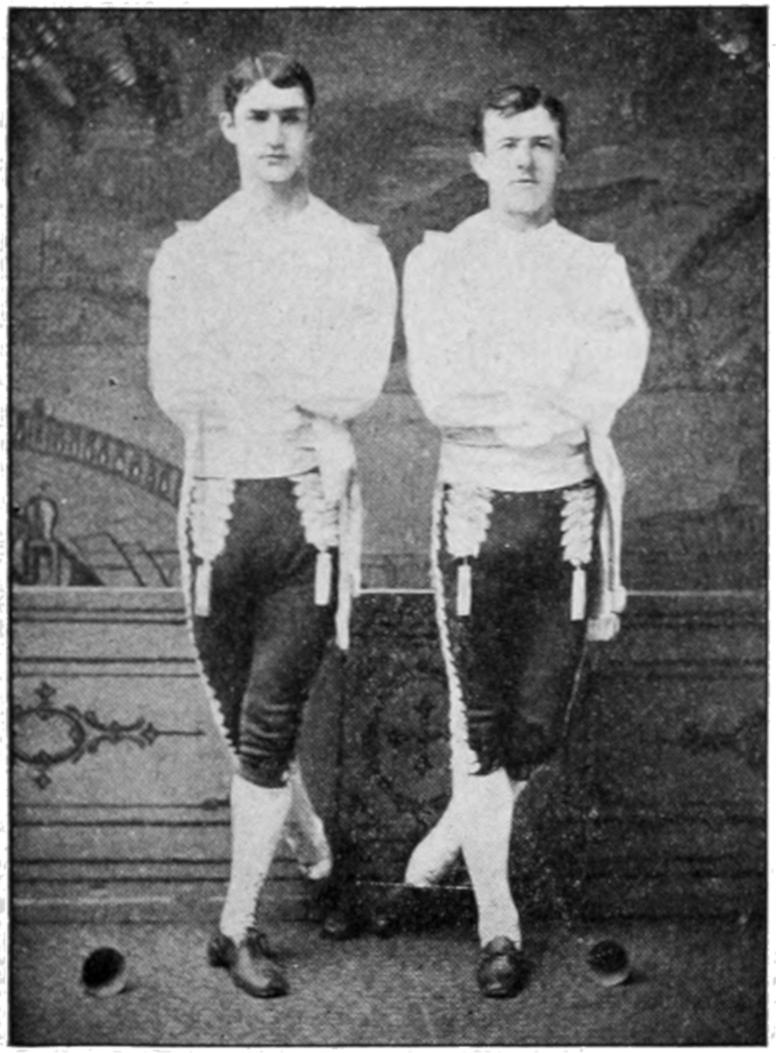
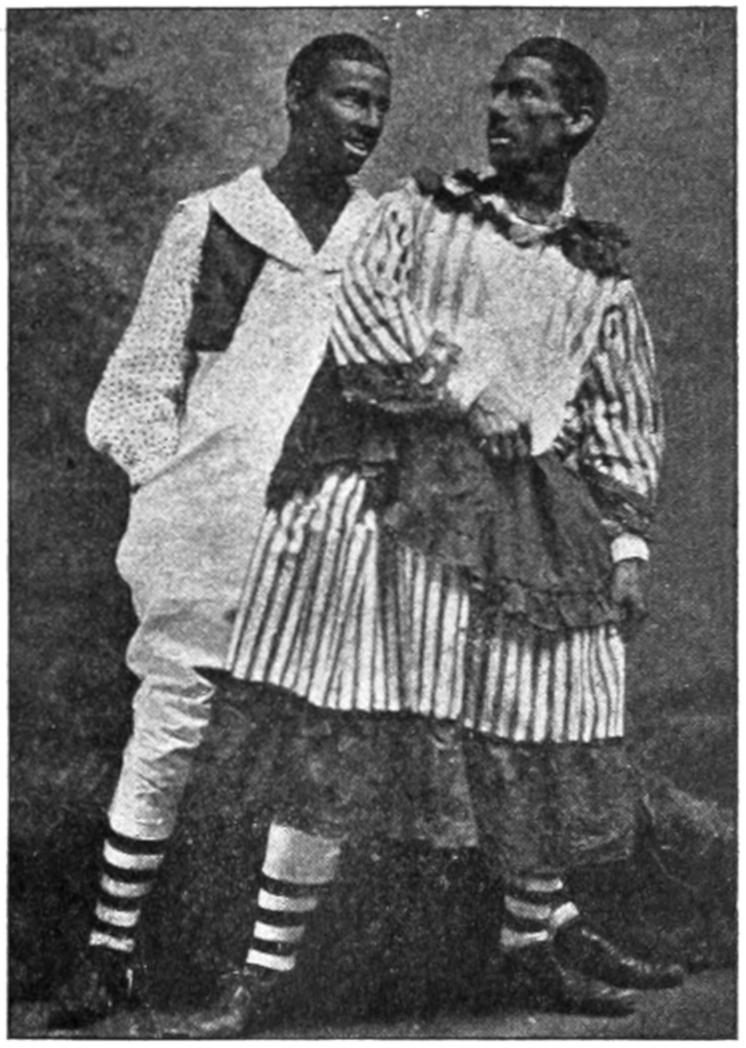
ED.—KELLY & O’BRIEN—JOHN C. W.—COGILL & COOPER—FRED
Charles Queen (Kane) was one of the best clog dancers in minstrelsy. January 26, 1882, at Montreal, Can., he performed for the first time in public on a pedestal fifteen inches square and six feet high, on which he turned somersaults and flip flops; this was while a member of Haverly’s Minstrels.
He was born in St. Louis, in 1854; he died in Kansas City, Mo., June 29, 1886.
The Diamond Brothers were well-known as clever song and dance performers.
They generally played joint engagements, and at various times had been with such well-known minstrel companies as McNish, Johnson and Slavin’s, Primrose and West’s, Haverly’s, Big Four, Gorton’s, Hi Henry’s, and Al. G. Field’s; with the latter organization they had been associated several seasons. A few years prior to their deaths they headed their own organization.
Matt. Diamond died at New Castle, Pa., June 14, 1907; age 53 years.
Lawrence Diamond died at New Castle, Pa., December 15, 1906; age 42 years.
Charley Young began young, and is still young. His career commenced at the Palace Varieties, Cincinnati, about 1865, as Call Boy, remaining two years. Being a natural born dancer, he took the place of Johnny Collins when the illness of the latter prevented him from appearing in the Challenge Dance, a feature of most variety and minstrel shows of the early days.
In 1868 he doubled with Billy Reed, and played variety houses for two years; after which he worked single for some time.
In 1875 Tony Pastor sent him to Albany for five nights; he remained two years, which was much better than going for two years, and remaining but five nights. Mr. Young was so pleased with this two-year engagement that he went to Heuck’s in Cincinnati, and played there two years. Then came a spell of traveling and a season at Leadville, Colo.
In 1880 he formed a partnership with Sage Richardson, and shortly afterwards they joined Cal. Wagner’s Minstrels.
Subsequent minstrel engagements were with Billy Rice and Hooley’s; McIntyre and Heath’s, and J. H. Haverly’s; remaining three years with the latter.
Other companies were Murray and Murphy, seven years; a four-year starring tour in “A Soap Bubble”; four seasons with Bobby Gaylor; in conjunction with Charles A. Mason, one season with Gus Hill’s New York Stars; and a season each with Nellie McHenry; Edna May; and Ward and Vokes. Mr. Young then starred four seasons in melodrama under the management of Percy G. Williams.
Charles Young was born in Cincinnati, Ohio, July 3, 1854.
Billy Conway (Marble) the well-known comedian, first appeared professionally about 1871, with Mart. Healy, known as Healy and Conway; this was in his native city; he was with Whitmore and Clark’s Minstrels several seasons, where he joined the late Johnny Mack; afterwards Healy, Saunders (Ella) and Conway formed an alliance; subsequently he rejoined Mack, and they went with I. W. Baird’s Minstrels, where they remained about eight seasons. He separated from Mack about three years before his (Conway’s death), and appeared with McIntyre and Heath’s; Dockstader’s, and Wilson’s Minstrels.
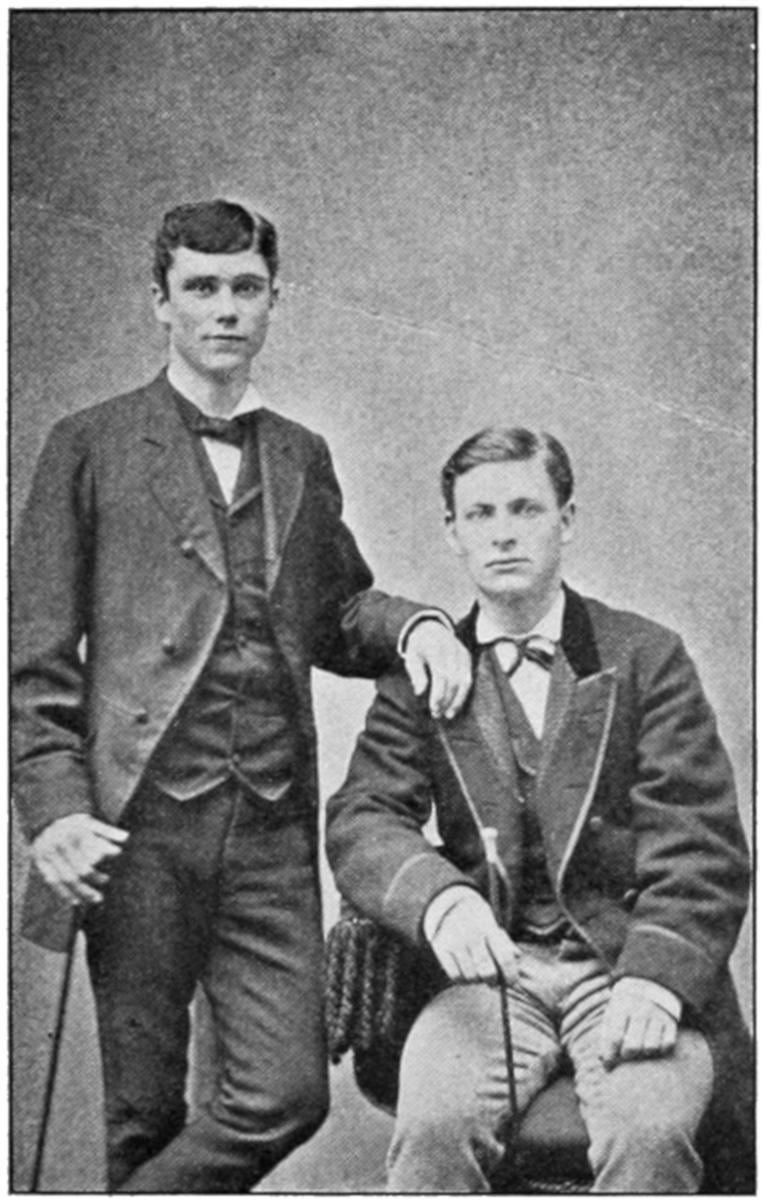
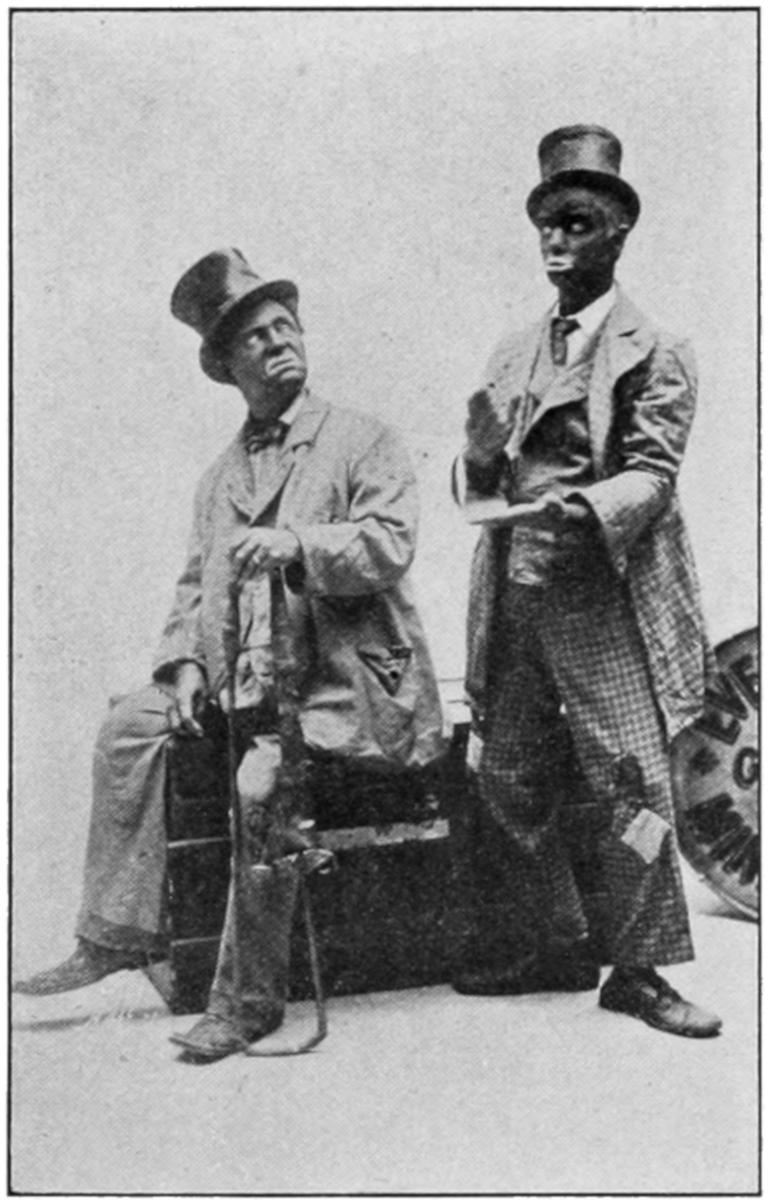
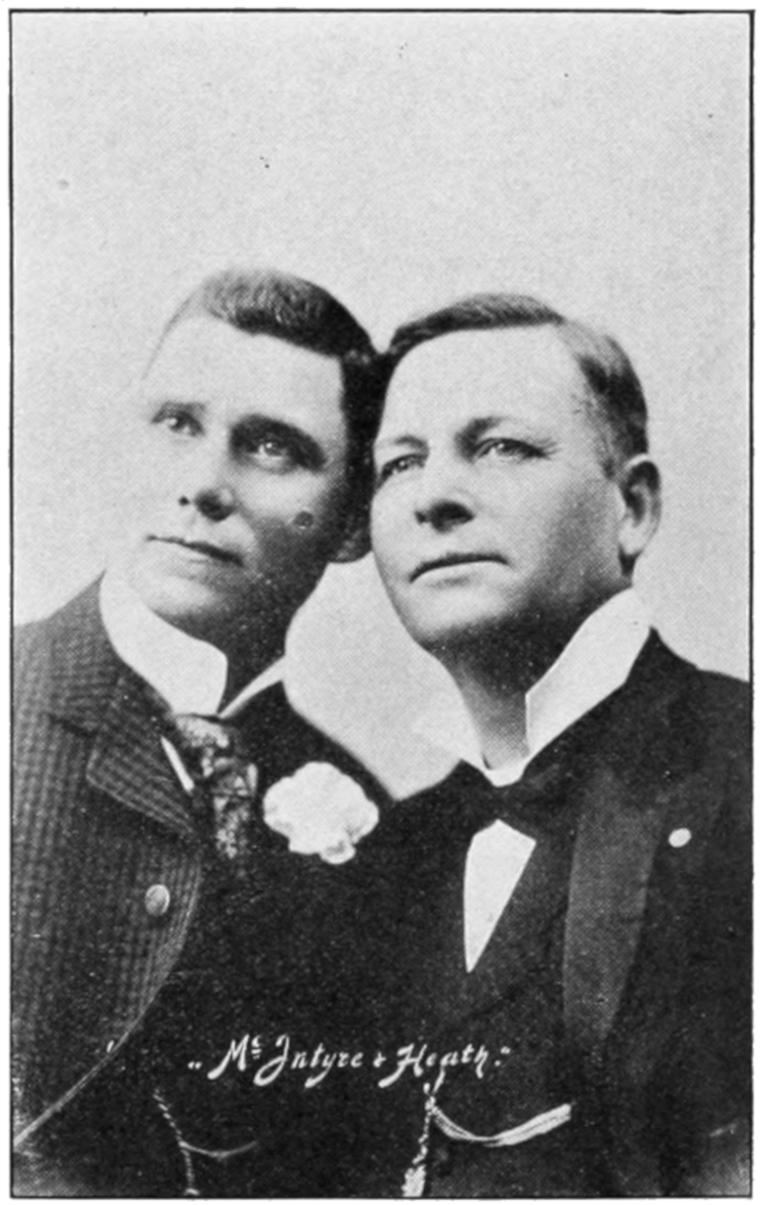
JAS.—McINTYRE & HEATH—THOS. K. (1874) THE “GEORGIA MINSTRELS” JAS.—McINTYRE & HEATH—THOS. K. (1910)
McINTYRE & HEATH—YESTERDAY, TO-DAY and TO-MORROW.
Mr. Conway was one of the Four Invincibles—Conway, Mack, Gardner and Clark.
His last appearance was in New Haven, Conn., February 29, 1892.
Billy Conway was born in Hartford, Conn.; he died in Boston, Mass., March 8, 1892; age 38 years.
McINTYRE and HEATH
are beyond all question the greatest duo of black-face delineators of the real Southern darky that the stage ever has or ever will know.
They give an absolutely faithful portrayal of the black man as he really exists.
Mr. McIntyre as a pessimistic coon, and Mr. Heath as the colored gemmen with pronounced optimistic ideas of life, are excruciatingly funny in everything they do; but as the “Georgia Minstrels” their talents probably appear to the greatest advantage.
McIntyre and Heath joined hands in San Antonio, Texas, in the Spring of 1874, at the Vaudeville Theatre. They played many variety and circus engagements until the fall of 1878, when they organized McIntyre and Heath’s Minstrels. A year later they made their first New York appearance at Tony Pastor’s Theatre; their success was instantaneous and pronounced.
In the Fall of 1880 they engaged with the Alice Oates Company, playing “Long Branch.”
In the Fall of 1881 they again headed their own minstrel organization, and the following season McIntyre and Heath’s Specialty Company took the road.
In 1883 they were under the management of Hyde and Behman, and the following season headed their own company under the direction of Primrose and West. In 1886, Spencer, McIntyre and Heath’s Minstrels toured.
Their next important minstrel engagement was with Lew Dockstader’s Company in 1891. Subsequently they played extended engagements with Hyde & Behman’s Company, and Weber and Fields’ organization.
It was with the latter company that their famous “Georgia Minstrels” was first produced at the Gayety Theatre, Brooklyn, N. Y., in August, 1894.
McIntyre and Heath played vaudeville until 1906, when they starred in the “Ham Tree,” a big musical production written, around the talents of these famous funsters. They continued with that play for three seasons. In 1909 they appeared with “In Hayti,” another pretentious musical offering, in which they, of course, played black-face parts.
James McIntyre began his professional career at Chicago in the Fall of 1868, at Pete Kerwin’s, doing a song and dance in black-face; this particular song was called “My Name Was Little Ned.”
The following year he went with Katie Putnam’s Company, where he played Willie in “East Lynne,” and did a double clog with Peter Lester it is now, but at that time, Peter Johnson. McIntyre and Johnson played engagements with McKenzie’s Circus and Burton and Ridgway’s Minstrels and a return to Katie Putnam’s Company.
The Minstrels closed at Indianapolis, Ind., in the Winter of 1871, and Mr. McIntyre met Billy Fleming, and they decided to become pedestrians; they “pedestered” from Indianapolis to Terre Haute, giving performances at the various school houses en route.
Evansville, Ind., was the next objective point, after which Mr. Fleming became enamoured with Mr. McIntyre’s professional attire, and without permission from the latter young man, took them for his own.
* * * Mr. McIntyre’s next engagement was in a livery stable in Henderson, Ky., where he remained two months, during which time he organized an amateur minstrel company from local talent available; they played four nights, the receipts of which were donated to McIntyre to get him a new wardrobe, and a ticket to Louisville.
Several of Henderson, Ky’s. most prominent future citizens blacked up in that memorable year of 1871, among whom were Jeff. Davis, Harry Gilligan, Newton Shaw, John Reichert, Jr., and “Killis” Callender; and when thirty-seven years later McIntyre and Heath returned to play an engagement in the thrifty Blue Grass City, many of those “minstrels of ’71” responded to Mr. McIntyre’s invitation to a banquet, and pleasant recollections were recalled.
Mr. McIntyre subsequently formed a partnership with Mike Butler, and as McIntyre and Butler worked for several months; subsequently William Carroll, (afterwards one of the Miaco Brothers), and Mr. McIntyre were partners.
In the Spring of 1874 he again joined Butler and continued with him until he met Mr. Heath.
Thomas K. Heath first “acted” at Mr. Kit Burns’ Theatorium in New York City, 1867; the salary was $12 per week, most of which has been invested in real estate at Deer Park, Long Island.
Mr. Heath then learned the trade of book binder, and continued at it until he became programmer for Joseph Murphy in “Help”; this was in 1872. That same year he formed a partnership with George Howard, and as Howard and Heath they did a black-face song and dance act, playing the many variety theatres, finally landing at San Antonio, Texas, where he formed a partnership with Mr. McIntyre.
James McIntyre was born in Kenosha, Wis., August 8, 1857.
Thomas K. Heath was born in Philadelphia, August 11, 1853.
Al. Decker (Ladd) entered the profession about 1873 as partner with Walter Gibbs.
A few years later he formed an alliance with Charles H. Yale, doing black-face songs and dances, and pantomimic business. He continued with Mr. Yale for several seasons, and after the latter branched into the managerial field, he also was with him.
Mr. Decker died at Fall River, Mass., January 24, 1898; age 44 years.
Billy Williams (Carmody) ranked with the best of wench impersonators.
His stage experience began at the age of three years at the Front Street Theatre, in Baltimore. Later he did acrobatic work in circuses until 1870, when on September 30, that year, he joined Billy Manning’s Minstrels in Chicago.
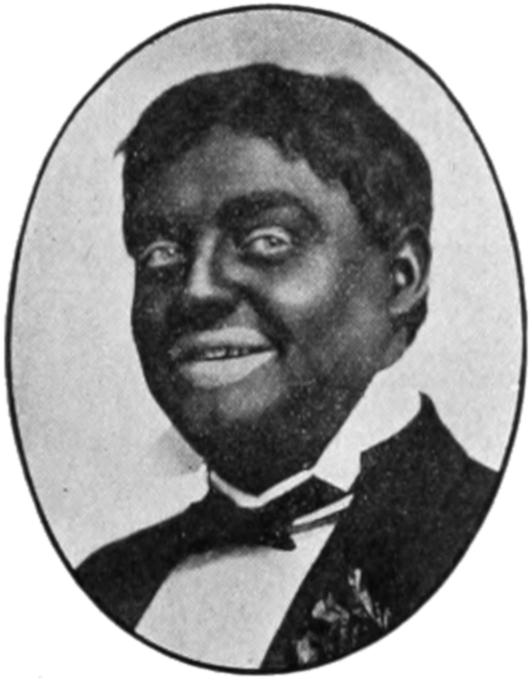
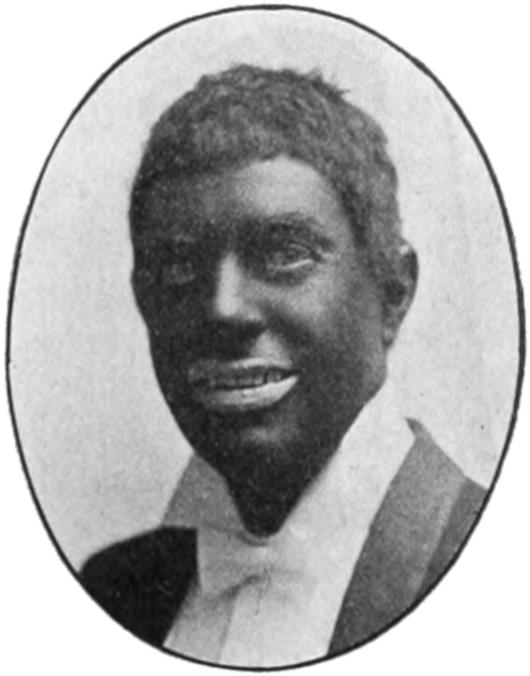
EDDIE MAZIER SAM. LEE
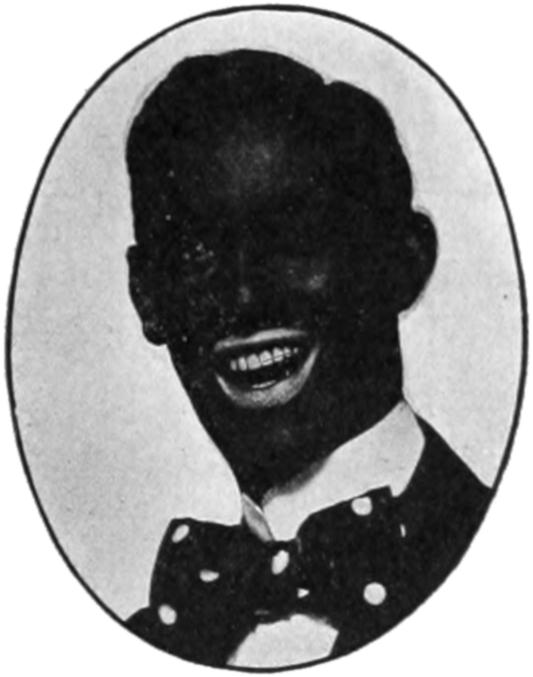
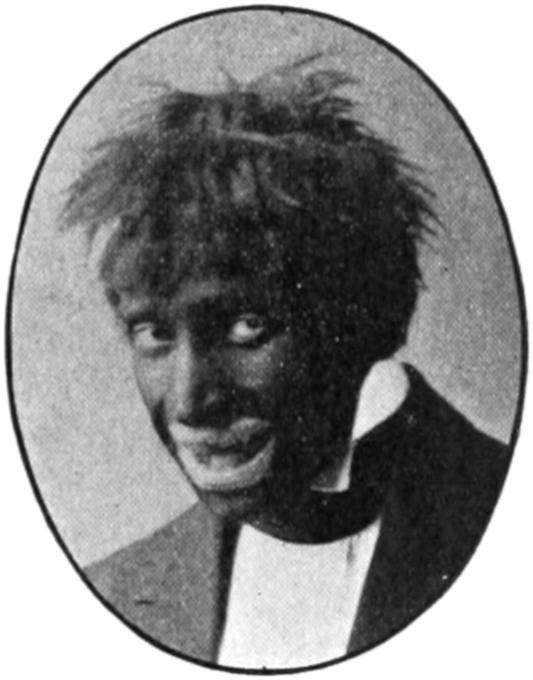
EARL BENHAM HARRY JOLSON
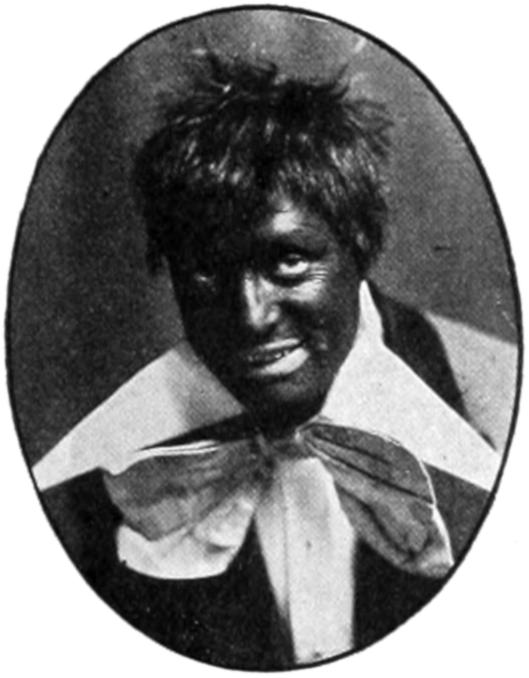
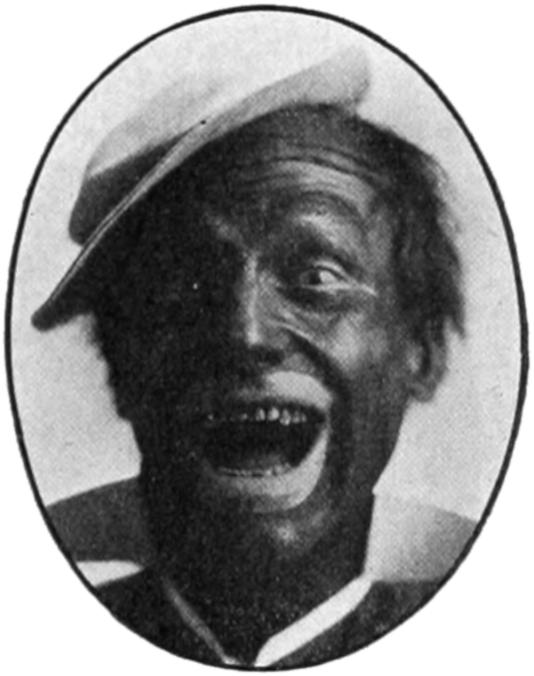
CLARENCE MARKS ARTHUR GUY
THEY’RE WORKING NOW; THAT’S WHY THEY SMILE.
He remained with Manning for a long period, and then played the variety houses until 1876, when he formed a partnership with William J. Sully, and as Williams and Sully did a black-face song and dance act for eleven years.
Since which time Mr. Williams did mostly dramatic work. Billy Williams was born in New York, July 1, 1854; he died in Elizabeth, N. J., July 25, 1910.
Patsy Howard, one of the original “Bay State Boys,” made his first appearance as a clog and jig dancer in his native city in 1868, at the old Globe Hall.
September 13, 1869, he organized the above act comprising John Harrington, Jimmy Fitzpatrick, Henry Drummond and Patsy Howard, making their first appearance on that date at the Howard Athenaeum in Boston; they remained there five weeks, doing clog dances. After that engagement they played two weeks at Morris Brother’s Minstrels in the same city. After several variety engagements they returned to their native heath and joined Dougherty, Wild, Barney and Mac’s Minstrels. The four disbanded in 1871, Mr. Howard forming a partnership with Harrington, who took the name of McVickar; Howard that of Sully; they were known as McVicker and Sully until they separated in 1873, after which he formed an alliance with Billy Sully; this lasted a year. Mr. Howard then retired from the profession in 1874, and lived happily ever afterwards.
Patsy Howard was born in Boston, Mass., June 26, 1854.
George Richards, the well-known comedian, for many seasons associated with the late Eugene Canfield, was a member of Emerson’s Minstrels about five years, commencing 1870; he was a regular comic.
Mr. Richards was born in Somerville, Mass., January 3, 1854.
Mackin and Wilson were one of the premier song and dance teams of minstrelsy during a period when that style of performance had its greatest vogue many years ago.
Jimmy Mackin and Francis Wilson (then known as Frank Wilson) were boys in their ’teens when they formed a partnership that lasted for seven years; during which time they played engagements with some of the foremost minstrel organizations of their day.
Their initial appearance as a team was at the Metropolitan Theatre, Indianapolis, Ind., August 7, 1871.
July 1 following, they began a brief engagement with Sam Sharpley’s Minstrels.
Their first New York appearance was at the Comique, commencing September 16, 1872; they reappeared there October 28, following, after which they opened in Chicago with Arlington, Cotton and Kemble’s Minstrels, December 2, same year. They remained with the above organization the balance of the season, and part of the next one, commencing August 26, 1873. September 3, 1874, they began a season’s engagement with Birch, Wambold and Backus’ famous San Francisco Minstrels in New York, after which they joined Emerson’s Minstrels, July, 1875.
Later they were with Hooley, Haverly and Maguire.
They rejoined Emerson’s Company in Detroit, September 30, 1875; January 13, 1877, they left Emerson; and nine days later became members of Sweatnam and Fraser’s Minstrels in Philadelphia.
There Mackin and Wilson decided to head their own organization, and accordingly on the twenty-first day of May, 1877, Mackin and Wilson, Sutton and “Bernardo’s” Minstrels left Philadelphia to win fame and fortune; they did neither. The thrilling account of the trials and tribulations of this little band are best explained in Mr. Wilson’s own letter, which will be found elsewhere in this volume.
The name of the company underwent several changes before its dissolution in September, 1877; the obsequies were held in Cleveland, Ohio.
Mackin and Wilson next engaged with Neil Bryant’s Minstrels in New York, opening October 8 following; they closed December 8.
Shortly after this they joined Simmons, Slocum and Sweatnam’s Minstrels in Philadelphia, where they remained until the end of the season, May 11, 1878; this was followed by a supplemental tour, after which Mackin and Wilson separated, each going their respective ways.
James F. Mackin was an exceptionally clever clog dancer and good performer, when with Tom Sullivan he joined Harry McCarthy’s Minstrels in Indianapolis, Ind., September 14, 1870. The team was known as Mackin and Sullivan; they continued with the company until it closed, January 26, 1871.
After separating from Mr. Wilson, he joined the late John D. Griffin in New York, doing a black-face song and dance, week of July 1, 1878; he continued with Griffin a few weeks, after which he became a member of Barlow, Wilson, Primrose and West’s Minstrels; he remained with this company until 1881.
Mr. Mackin played various variety engagements after this until his death.
Francis Wilson first made the acquaintance of burnt cork in his native city in the middle 60’s; Mr. Wilson’s parents was not made aware of the acquaintance until some time later. It was not all honey, and not all jam in those days, as Mr. Wilson will Frankly admit (jest).
It was not until October 29, 1868, that he saw his name in print, for it was on that date that the first performance of the “Amateur Minstrels” at the Assembly Buildings in Philadelphia was given; the entertainment closed with the “Grand Duchess, 2d.” Whether or not Mr. Wilson was the Duchess on this august occasion, history does not state.
After severing relations with Mackin, Mr. Wilson entered the ranks of the Chestnut Street Theatre Stock Company in Philadelphia, where, on September 9, 1878, he played his first part in white-face; that of Cool, in “London Assurance.”
He made rapid strides in his new field of endeavor, and continued as a member of the stock until February 21, 1880; two days later he joined “Our Goblins,” a musical comedy, playing the role of Octavius Longfellow Warbler. Subsequently Mr. Wilson purchased an interest in the company, and played the more important part of Alfred Comstock Silvermine.
August 1, 1881, he began a two weeks’ engagement at the Walnut Street Theatre, Philadelphia, as Moe Jewell, in the “World.”
Mr. Wilson afterwards returned to “Our Goblins,” and he also played Templeton Fake with Annie Pixley in “M’liss.” His subsequent career in light opera and other amusements are too well known to require further mention.
Probably no one man in the annals of theatricals has achieved more in his chosen profession than Francis Wilson.
When Mackin and Wilson dissolved partnership the team were getting a good salary; and when Mr. Wilson applied for a small position in the stock company in Philadelphia he was told he would have to begin all over again; Mr. Wilson, however, was willing; and the weekly stipend was just about 25 per cent. of what he received as a song and dance performer. But Francis Wilson had the courage of his convictions, for he never considered his minstrel and variety days in any other than a school for the talents he later intended to develop.
Mr. Wilson was always a student; and when his companions would invite him to participate in their nightly dissipations, he would politely but firmly refuse; study was more to his liking.
Francis Wilson is a man of letters; the author of “Reminiscences of a Fellow Player,” “Recollections of a Player,” and the comedy in which he is now appearing, the “Bachelor’s Baby.”
Likewise did he write the “Life of Jos. Jefferson,” the “Eugene Field I Knew,” and contributed several short stories to magazines.
He is co-proprietor with Mrs. Wilson (formerly Miss Myra V. Barrie) of the Misses Adelaide and Frances Wilson.
James F. Mackin was born in Providence, R. I.; he died in Sturgis, Dak., May 4, 1883.
Francis B. Wilson was born in Philadelphia, February 7, 1854.
Billy Ginniven, the well known black-face song and dance performer, worked at various times with John E. Henshaw, Charley Gilday, and his wife, professionally known as Frankie Lee, whom he married about 1878.
He died in Denver, Colo., January 11, 1879.
Petrie and Fish formed a partnership in 1876, doing a black-face act.
In 1878 they were joined by Connors and Kelly, and as the Original Four they met with great success in the United States and Europe. They subsequently separated, Mr. Petrie doing an act with his wife in the variety houses, billed as Petrie and Elise, in “Passing the Toll Gate.”
In 1896 Mr. and Mrs. Petrie, with their two sons, formed the Four Olifans, a grotesque act, which they performed successfully for several seasons. Mr. Petrie married Margaret Cockrell in 1880.
Mr. Fish formed one of the team of Fish and Quigg, a “big and little act,” and was very successful after separating from Mr. Petrie.
William O. Petrie was born in Lockport, Ill., in 1855; he died in Chicago, Ill., May 26, 1901.
Fred C. Fish died in New York, December 8, 1900; age 40 years.
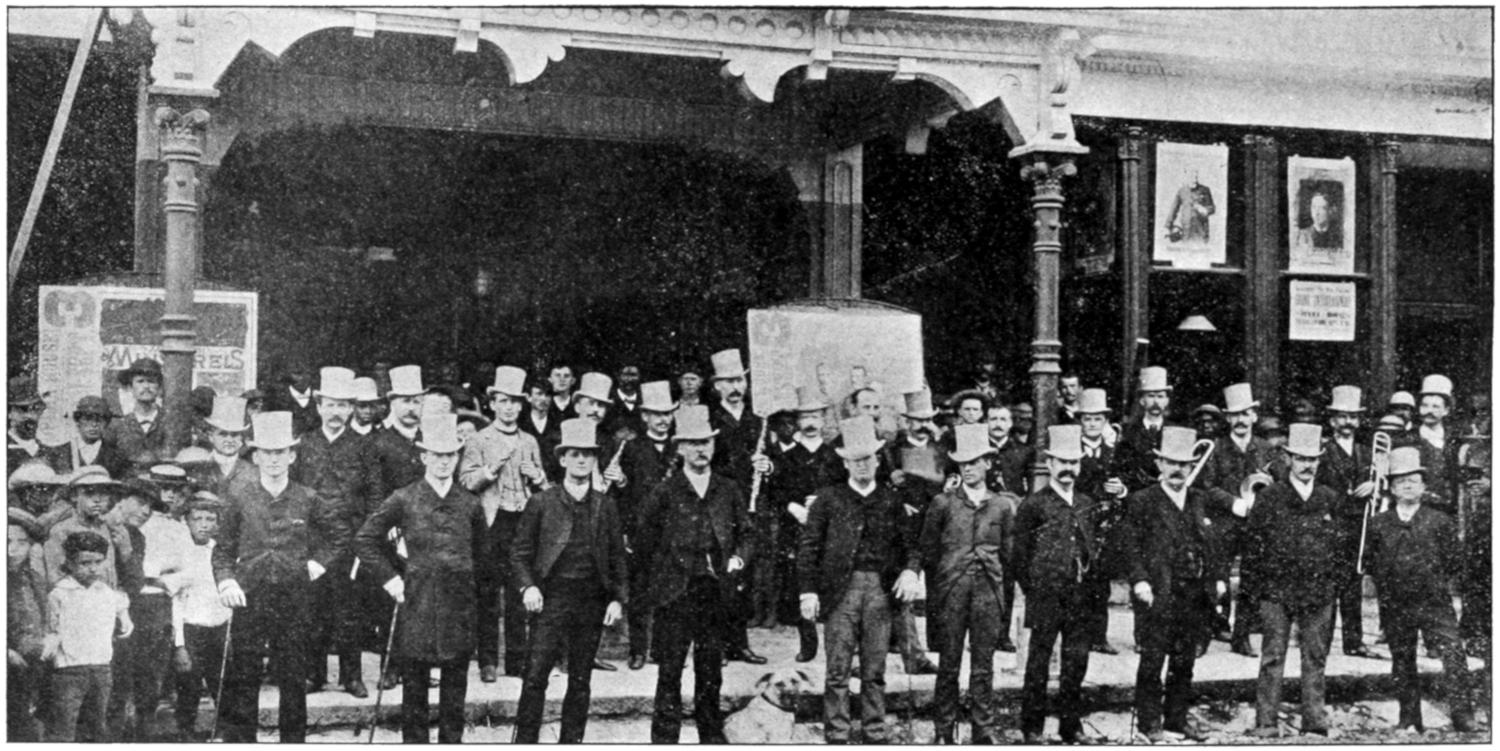
BARLOW, WILSON AND RANKIN’S MINSTRELS. Frankfort, Ky., 25 Years Ago.
Keating and Sands were one of the earliest and best of black-face musical acts.
They formed an alliance in the 70’s, which practically continued until Mr. Sands’ death.
They were said to be the first act of their kind to visit Europe; they played a two years’ engagement there with Hague’s Minstrels.
Subsequent to the death of Sands, Mr. Keating worked with several partners, notably Harry Barton, Harry Leopold and Tom Ardell. He was also of the team of Keating and Harris.
John J. Keating died in Boston, Mass., April 26, 1897; age 43 years.
Edw. Sands (Stanstedt) was born in Boston, Mass.; he died there February 12, 1887; age 30 years.
Murphy and Morton were equally as well known in black-face specialties as they were in white. They made their first appearance about 1874 with Tony Pastor in New York. They played the principal variety houses, and were with such well-known minstrel companies as Hooley’s; Thatcher’s, in Philadelphia; Emerson’s, in San Francisco; Hooley’s, in Chicago; Haverly, same city, and Carncross, in Philadelphia. About 1880, they joined forces with Griffin and Rice, and did a “four” act for about two seasons. All told, Mr. Murphy has spent about twenty years at Carncross’, and half that at Dumont’s Minstrels in Philadelphia.
He has been also associated with Alf. Gibson, and produced Murphy and Gibson’s Minstrels in Atlantic City, N. J., for several years past.
John E. Murphy (DeAngelis) was born in Philadelphia, July 26, 1855.
Jos. Morton (McGarvey) was born in Philadelphia; he died there July 17, 1884; age 29 years.
The highest salary ever drawn by any black-face team in the history of theatricals was paid to McIntyre and Heath.
The Three Rankins achieved enviable distinction for their musical act, which was one of the best. Originally there were four brothers, Carl, Will, Rit and Fitch, and they played an engagement with E. M. Hall’s Minstrels, opening in Chicago, June 29, 1878. In the Fall of the same year Fitch Rankin retiring, the Three Rankins joined Wagner and Cotton’s Minstrels for a short season.
The following year with Lew Simmons, they organized Simmons and Rankin’s Minstrels, and after the dissolution they re-organized as Three Rankin’s Minstrels, opening at Columbus, Ohio, November 27, 1879, and closing same date.
December 20, 1880, they joined Kyle’s “Christy” Minstrels in Boston for a brief engagement.
After the death of Rit his place was taken by John Mosure, and as the “Three Rankins” they played with Leavitt’s Giganteans, in 1882. The death of Will broke up the act, and Carl joined Thatcher, Primrose and West’s Minstrels July 3, 1885. A few weeks after this he left the company to become a partner with George Wilson in his company, which was known as Barlow, Wilson and Rankin’s Minstrels.
Carl Rankin’s last appearance was with Lew Dockstader’s permanent minstrel company in New York, which he joined in 1887.
Carl Rankin had a superb bass voice, and as a comedian had developed into one of the best in minstrelsy. His death was a severe blow to the profession.
Rit Rankin died in Columbus, Ohio, December 11, 1881.
Will Rankin died in Philadelphia, January 31, 1885; age 30 years.
Carl Rankin was born in Columbus, Ohio, October, 1859; he died in Philadelphia, November 25, 1888.
Harrigan and Hart formed a partnership in the Spring of 1871. Prior to this Tony Hart, who was known as Master Anthony Cannon, appeared with various minstrel companies as a ballad singer.
February 26, 1872, they began an engagement with Arlington, Cotton and Kemble’s Minstrels in Chicago. In later years they each played in black-face on several occasions, notably Mr. Harrigan as “Pete.” Mr. Hart was probably the best “genteel wench” that ever trod the boards.
Edw. Harrigan was born in New York, October 26, 1845.
Tony Hart (Anthony Cannon) was born in Worcester, Mass., July 25, 1855; he died there November 4, 1891.
George Robert Guy, the senior member of the famous Guy Family, blacked his face for the first time in 1863, and has been successfully following his profession ever since; and is now fairly in sight of the half-century mark as a minstrel performer. This is a record that is probably unique in the annals of minstrelsy; more than forty-seven years continuously and exclusively as a black-face performer; and the end is not in sight, for those who know, declare George Guy is as alert and active as any performer of half his years.
Mr. Guy’s first appearance was in New York in 1863, dressed as a little clown; the following week at Newark, N. J., he blacked his face for the first time.
About two years later, with his brother Willie, they joined Hooley’s Minstrels in Brooklyn, N. Y., remaining several months, subsequently playing an engagement with Geo. Christy’s in New York.
October 1, 1866, they were at the opening performance of Kelly and Leon’s Minstrels in New York, where Mr. Guy and his brother soon after produced for the first time on any stage, Mr. Guy claims, a “boy and girl” duet, portraits of which may be seen elsewhere. Mr. Guy continued with Kelly and Leon for several years, and in the Summer of 1869 went to England with Smith and Taylor’s Minstrels, and later appeared with Moore and Burgess’ Company in London. About 1870 he joined Harry Robinson’s Minstrels, and some months later was with Welch, Hughes and White in Brooklyn, N. Y.
Next came the organization of the Guy Bros. Minstrels; subsequently the Guy Family in concerts, after which the Guy Bros. Minstrels were reorganized, and Mr. Guy has been continuously identified with that company for more than thirty-five years. For several seasons past he has been sole proprietor and manager. Truly George Guy is a monument to the profession he so befittingly represents.
George R. Guy was born in Hartford, Conn., October 7, 1855.
THE FROHMANS IN MINSTRELSY.
Gus Frohman was manager of Callender’s Colored Minstrels in 1874; early in 1882 he was one of the proprietors. He was born in Sandusky, Ohio, about 1855.
Daniel Frohman became advance agent for Callender’s Colored Minstrels in 1874; subsequently he was with Haverly in an executive ability. Mr. Frohman was born in Sandusky, Ohio, about 1850.
Charles Frohman, one of the world’s foremost theatrical managers, was treasurer for Haverly’s Mastodon Minstrels at their inception in Chicago, October 21, 1878. In 1880 he went to Europe with them, and while there, December 25, 1880, the members of the company, to show the high esteem in which they held their treasurer, presented him with a handsome gold watch, chain and locket suitably engraved.
Mr. Frohman subsequently became manager of the company and continued with Haverly until January, 1882, when he left, and in conjunction with his brother Gus, became proprietor of Callender’s Colored Minstrels a few weeks later, and continued with that company about three years.
Charles Frohman was born in Sandusky, Ohio, July 20 or 22, 1857.
Foster and Hughes were one of the great black-face acrobatic song and dance teams of the minstrel and variety stage. They formed an alliance about 1876 and continued for several years.
They traveled with their own specialty company in 1886. Subsequent to their separation, Mr. Foster married Fannie Lewis, and did an act with her up to the time of his death.
Mr. Hughes joined John Slavin in a knockabout act after separating from Mr. Foster; he has retired from the stage.
Dave Foster (Patterson) died in New York, December 6, 1898.
Artie Hughes (Quigg) was born in Albany, N. Y., March 28, 1855.
John T. Kelly, the favorite Irish comedian, was an end man with Leavitt’s Minstrels. Ask him when.
Mr. Kelly was born in Boston, Mass., August 26, 1855.
Wm. F. Hoey, better known to later generations of playgoers as “Old Hoss,” was one of the cleverest of black-face musical comedians. His first appearance was in his native city at the Thirty-fourth Street Theatre in 1873.
In 1875 he formed a partnership with John F. Fields, and as Fields and Hoey continued until 1878; during this period they played an engagement with Cal. Wagner’s Minstrels in 1876.
In 1878 they dissolved partnership, and Mr. Hoey subsequently and for several seasons did an excruciatingly funny act with Fred Bryant.
Bryant and Hoey played with Thatcher and Ryman’s Minstrels in Philadelphia, and the San Francisco Minstrels in New York.
In 1882 Mr. Hoey, Bryant, and Charles E. Evans formed the “Meteors,” Hoey appearing in a sketch called the “Book-Agent,” as a tramp; this was the inception of the “Parlor Match,” with which he was identified for several years.
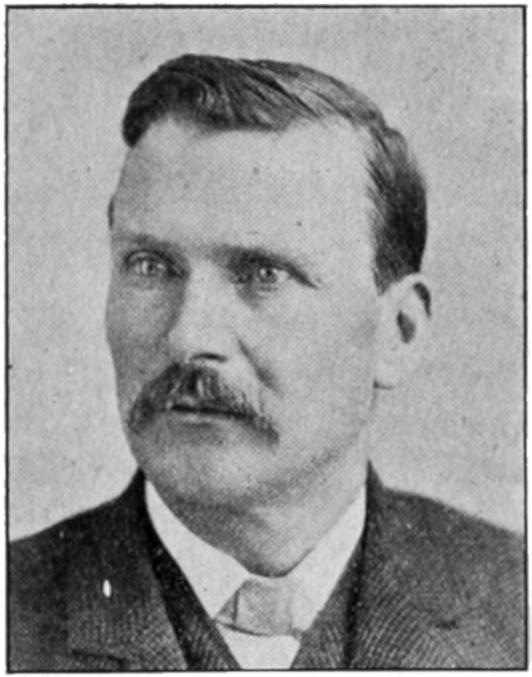
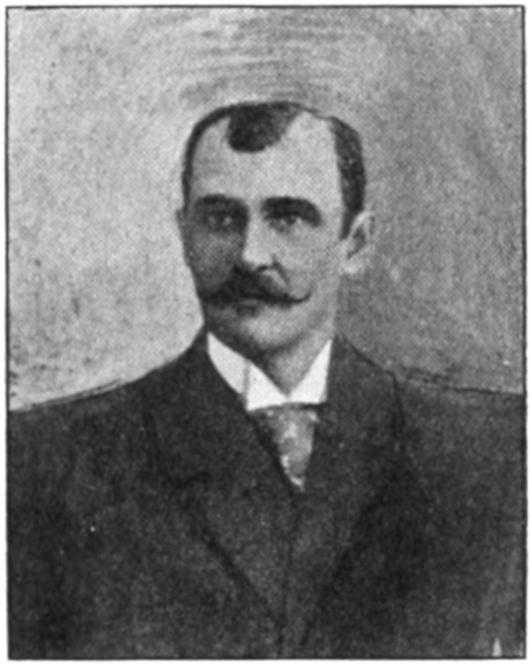
W. S. BUDWORTH E. M. HALL
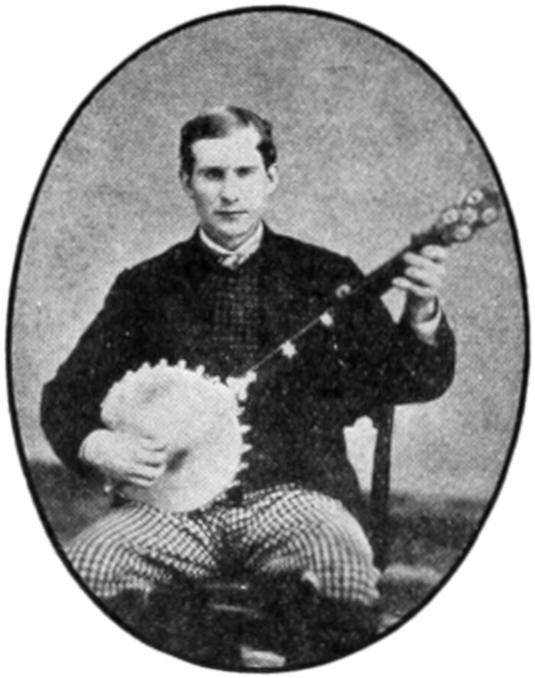
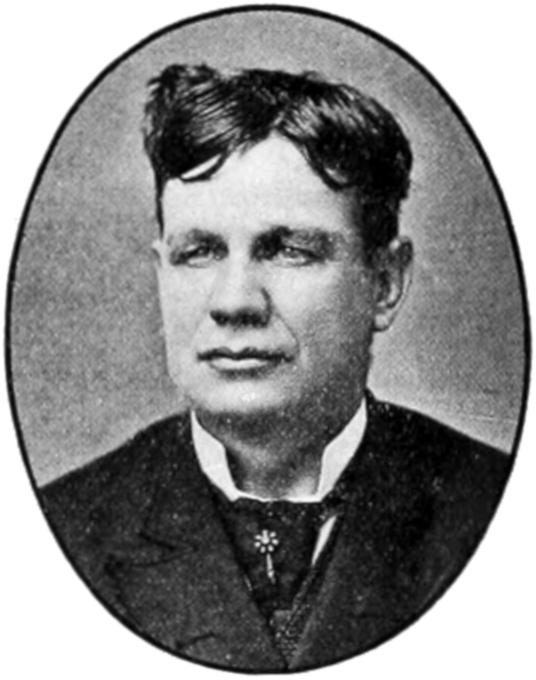
LEW. BRIMMER TOM. WARFIELD
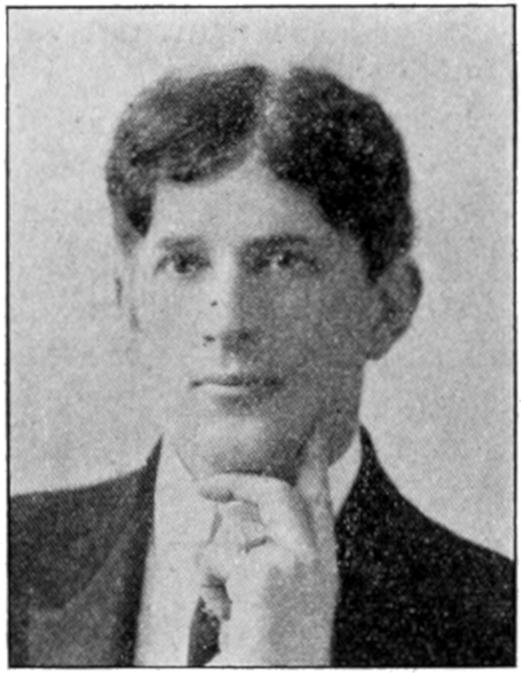
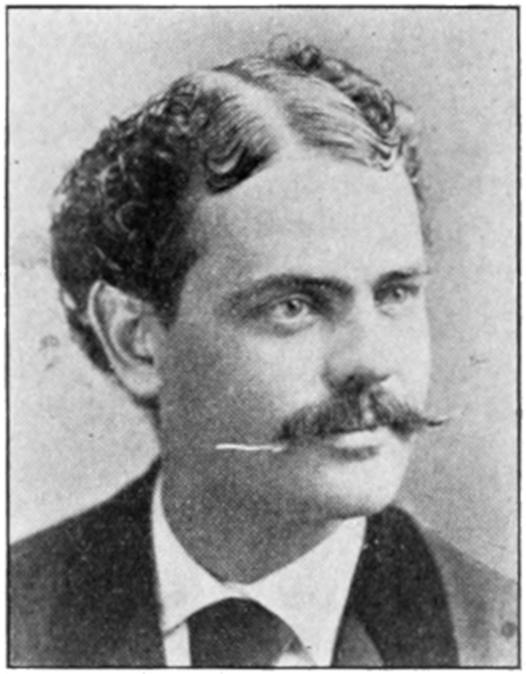
DANA H. CLAUDIUS HARRY STANWOOD
BRILLIANT BANJOISTS OF MINSTRELSY.
Mr. Hoey was married to Helena French, of the French Twin Sisters, and was a brother of James F. Hoey.
William F. Hoey was born in New York City, January 1, 1855; he died there June 9, 1897.
The Russell Bros., famous for many years in practically every variety and vaudeville theatre in the land for their great act, the “Irish Servant Girls,” began their professional career in January, 1877, doing the old-time specialty of changing from white to black in full view of the audience.
About 1880 they joined Woodson and Allen’s Minstrels, James doing an end, and John singing in the first part.
John Russell was born in New York City August 19, 1854.
James Russell was born in New York City October 26, 1859.
Hyde And Behman, whose theatre in Brooklyn, N. Y., for many years played all the prominent black-face, as well as other luminaries, were the proprietors and managers of a first-class minstrel organization bearing their names in 1885.
Richard Hyde was born in Brooklyn, N. Y., May 22, 1849.
Louis Behman was born in Brooklyn, N. Y., June 4, 1855; he died there, February 27, 1902.
Frank C. Geyer, an excellent acrobatic song and dance man, made his first professional appearance at Deagle’s Varieties, St. Louis, Mo.; shortly after this he formed a partnership with George A. Turner and Billy Mendel, being known as the Big 3; Mendel soon dropped out, and the team was known as Geyer and Turner, and as such continued for several years, finally separating. Mr. Geyer then allied himself with James B. Mackie, and as Geyer and Mackie they continued giving black-face specialties; subsequently the team was known as Geyer and Sylvester, and Geyer and Lord.
He managed the opera house at Bellaire, Ohio, several years.
Mr. Geyer’s first wife was Amy Nelson, a prima donna, with whom he was professionally associated a considerable period; subsequently he married Mamie Forrest, of the Forrest Sisters; they played the principal variety houses.
He traveled with O’Brien’s Circus for two years; and was one of the three Geyer Brothers—Frank, Charles and Albert; an odd coincidence concerning the latter was that for a brief period he did a black-face song and dance act with Frank Turner, of the Three Turner Brothers, known as Turner and Geyer; in one case a Turner was associated with one of the Three Geyer Brothers; in the other a Geyer worked with one of the Three Turner Brothers; the two Turners were not related.
Frank C. Geyer was born in Newark, N. J., September 5, 1855; he died at Lexington, Mo., June 4, 1900.
Donald Harold (O’Donnell Harrold) was once the “boy tenor”; you wouldn’t think so to see him now, but bear in mind that was in 1872, on the first day of that year at Simmons and Slocum’s Minstrels in Philadelphia.
Mr. Harold continued with the minstrels until August, same year; his voice changing, he also changed his job, and two years and one month later he identified himself with the famous Holman Opera Troupe, remaining until May 20, 1878.
Since that date Mr. Harold has been associated with many musical and farcical productions—but no minstrels.
Donald Harold was born in Philadelphia, December 5, 1855.
Bobby Beach (Anin W. Gardner) entered the theatrical profession at the age of 15, doing a contortion act; subsequently developing into a good dancer.
He was with Barlow, Wilson, Primrose and West’s Minstrels in 1881, and about a year or so later with Otis Bowers formed the Beach and Bowers Minstrels, which were prominent for several seasons.
He was seriously injured while doing a pedestal act.
Bobby Beach was born in Rome, N. Y.; he died in Watertown, Wis., December 1, 1905; age 50 years.
Tommy Harris (McGuigan), one of the very few men left capable of playing the old-time nigger acts, made his first appearance at Fox’s Theatre, Philadelphia, in 1875, with a partner, whose name was Ward; the team name being Ward and Harrison; subsequently they played an engagement in Philadelphia with Skiff and Gaylord’s Minstrels; late in 1876 they separated. His next partner was Jack McNeil; joining Fattie Stewart’s Company, the team was accidently billed as Harris and McNeil; and Harris it has remained ever since. In 1879 they joined the Three Arnold Bros. Minstrels, and while with this company they dissolved partnership; McNeil died about 1902.
Mr. Harris then played variety engagements with his wife, the team being known as the Harrises, until 1889; he then taking a stock engagement at the Odeon, Baltimore, remaining there 10 years.
A season with his son and daughter, known as the 3 Harrises followed; then he worked with his daughter Laura (now of Cartmell and Harris) for about four years, after which he joined Lew Simmons for a season; then a brief season as one of the 4 Cartmells, after which was Smith and Harris.
Tommy Harris was born in Philadelphia, February 3, 1855.
Harry Kennedy (W. H. Kennedy), the well-known ventriloquist and song writer, played many minstrel engagements, notably with Haverly’s Mastodons.
In the Fall of 1884 he was associated with Billy Birch with the San Francisco Minstrels.
Harry Kennedy was born in Manchester, Eng.; he died in Brooklyn, N. Y., January 3, 1894; age 39 years.
Charley Reed. “Just the Plain Comedian” he was termed, and he was a comedian, as anyone who remembers him will testify.
Charley Reed’s professional career began and ended in white-face, but the major portion of it was given to minstrelsy, where he was always a star.
About 1872 he went to the California Theatre in San Francisco, where he became successively call-boy, prompter and low comedian.
In 1873 he joined Maguire’s Minstrels at the latter’s opera house in the Western metropolis. August 31, 1874, he opened for the season in Philadelphia with Simmons and Slocum’s Minstrels; the following August he joined Emerson’s Minstrels in Cincinnati. In 1876 he returned to San Francisco, and for the next three years he continued there with the minstrels at Maguire’s Opera House and comedian at the Bella Union Theatre.
July 7, 1879, with a variety company under the management of Martin Simon, he sailed for Australia, remaining away for more than a year. On February 7, 1881, he began an engagement with Thatcher and Ryman’s Minstrels in Philadelphia.
A season with “Muldoon’s Picnic,” with Hyde & Behman, and Mr. Reed returned with Emerson’s Minstrels in San Francisco, subsequently becoming a partner of Emerson, and later Charley Reed’s Minstrels held sway at the Standard Theatre until April 10, 1886. August 16, 1886, he opened at the Madison Street Theatre in Chicago, with a minstrel company. He continued here a few weeks, and in the following October he appeared with Lew Dockstader’s Minstrels in New York, playing a brief engagement; this was his last appearance in black-face. Later he appeared as Ko-Ko in the “Mikado,” “A Rag Baby,” “City Directory” and other farcical plays.
At the time of his death he was associated in partnership with William Collier in “Hoss and Hoss.”
Charley Reed was born in New York City, May 22, 1855; he died in Boston, Mass., November 21, 1892.
Nat. C. Goodwin in minstrelsy? Why, yes. He commenced an engagement with Haverly’s Minstrels at Chicago, September 11, 1876, doing a specialty consisting chiefly of imitations.
Griffin and Rice ranked with the premier black-face song and dance teams of minstrelsy.
They made their first appearance as an act in Pittsburg, Pa., about 1873. September 15, 1875, they opened with Buckley’s Serenaders in Boston; the season closed October 25, 1875.
December 20, same year, they began an engagement with Carncross and Dixey’s Minstrels in Philadelphia, and continued throughout the season.
On November 20, 1876, they opened with Sweatnam’s Minstrels, also in the Quaker City, an engagement that terminated December 16. Two days later they returned to Carncross and Dixey, where they remained the major portion of the time until the dissolution of their partnership in 1883.
In June, 1878, they played a limited engagement with Neil Bryant’s Minstrels in New York. August 6, 1880, they were with Sweatnam and Dougherty’s Minstrels, and September 6, 1881, with Murphy and Morton, opened with George Thatcher’s Minstrels in Philadelphia, as Murphy, Morton, Griffin and Rice.
In 1883 Mr. Rice broke away from his black-face affiliations, and with Geo. S. Knight’s “Over the Garden Wall,” played a German comedy role.
About 1885 Mr. Rice formed a partnership with Geo. W. Monroe, and for several years they starred in “My Aunt Bridget.” Subsequently he was identified with May Irwin’s and other high-class farcical productions.
Mr. Rice excels as a neat dancer, and as a light comedian, leaves nothing to be desired.
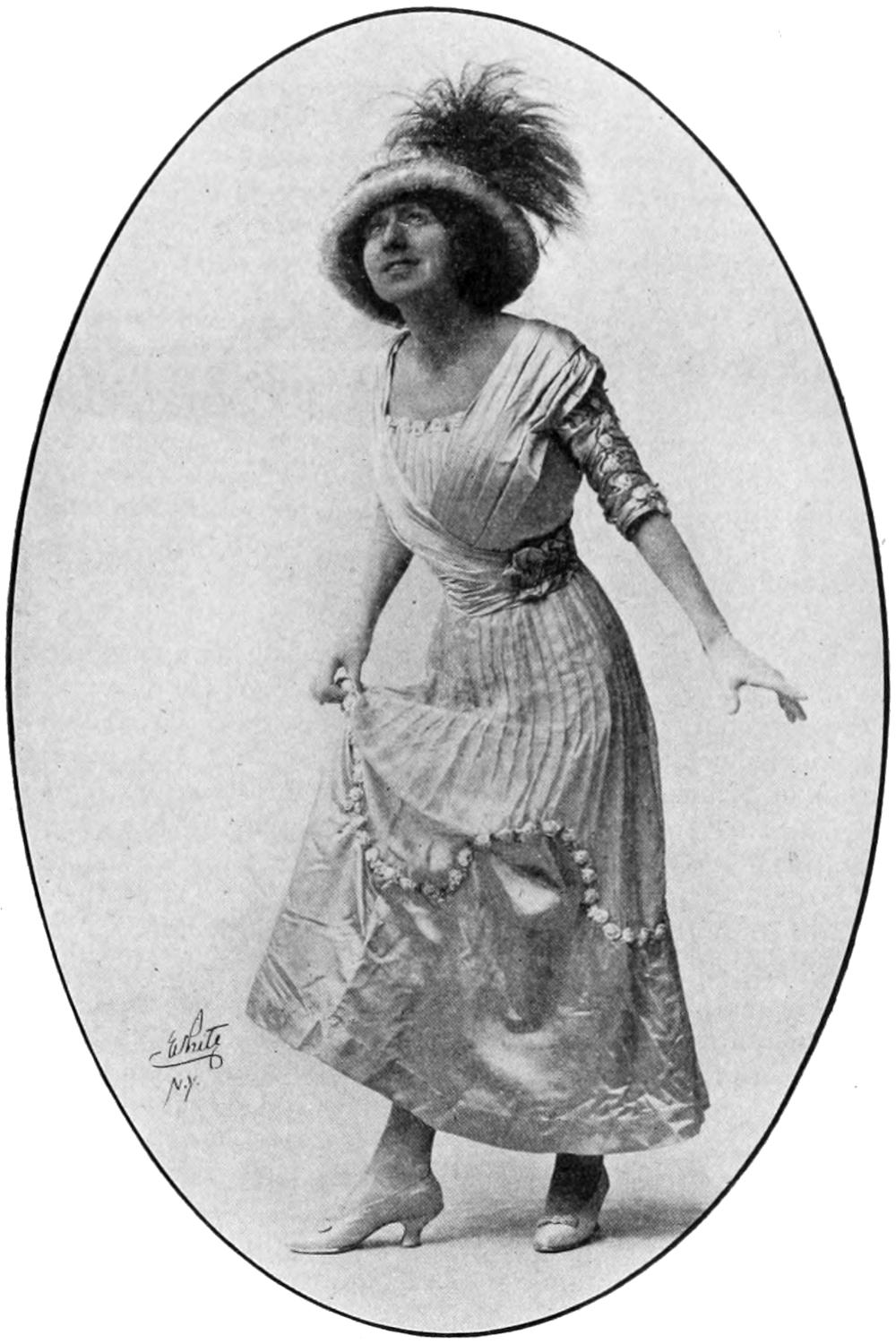
CHARLES HILLIARD.
Of course, everyone knows that Sallie Cohen, of Rice and Cohen, is none other than Mrs. John C. Rice; as a guess, the author would say the change occurred about 1890.
James Griffin formed a partnership with Ned Ainsley in the late 60’s, doing black-face songs and dances, and as Ainsley and Griffin were together for several years.
In 1872 Mr. Griffin was with Purdy, Scott and Fostelle’s Minstrels.
After separating from Mr. Rice, Griffin played engagements with Carncross’ Minstrels in Philadelphia and Lew Dockstader’s Minstrels, in New York City; in 1893, he made a trip to South Africa with Serrill’s Minstrels.
He also played in various melodramatic productions.
John C. Rice (Hildeberg) was born in Beaver Kills, N. Y.—the reader must guess the rest.
James Griffin (McNally) was born in Rochester, N. Y., September 10, 1852; he died in Philadelphia, May 10, 1904.
Fred Hallen (Smith), prominent for many years as one of the famous farcical duo of Hallen and Hart, was “Master Ad. Weaver” as late as April, 1875, doing black-face parts in acts with that once well-known minstrel, Ad Weaver.
If Mr. Hallen has any regrets, he doesn’t look it.
Harry Le Clair, the famous protean player, had his experience with cork.
About 1876, at the Terrace Garden, Buffalo, N. Y., Manager Dan Shelby suddenly confronted LeClair and asked him if he could play Topsy. Mr. LeClair said he could play pinochle and seven up, but had never heard of Topsy, except in “Uncle Tom’s Cabin.” That’s the same party, said Shelby. So Mr. LeClair blacked up, and he blacked-down, he blacked in and he blacked out; he blacked his lips and he blacked his teeth; and he probably would still be blacking if the cork had not run out. After the show they had to run him through a washing machine to un-black him.
Smith and Byrne were a well-known black-face musical act thirty years ago. Their first appearance was at Washington Hall in New York, in 1878, on which occasion they introduced the famous “dislocated organ” solos, of which Mr. Byrne claims to be the originator—and to date no one has disputed it.
The team separated in 1884; Mr. Smith later ran for several years Smith’s Opera House in Bridgeport, Conn.
Mr. Byrne became a monologuist, but before that, a pessimist.
He is now a playwright, and is willing to prove it on the slightest provocation.
Ed C. Smith is said to be a resident of Boston or its environs.
John H. W. Byrne was born in Celbridge, Ireland, May 4, 1855.
Harry Lacy, the well-known actor, and star for many years in the “Still Alarm,” was a member of Harry Robinson’s Minstrels as early as March 29, 1873, 8:15 P. M.
He sang a ballad in the first part, and sang it well.
Michael F. Hennessy, one of the Hennessy Bros., was a well-known minstrel performer. He went to Europe with Haverly in 1884; subsequently appearing with other companies. For two seasons he was associated with Hennessy Bros. Minstrels.
His last engagement was with Cushman and Thomas’ Minstrels. He died in Milford, Mass., April 24, 1890; age 35 years.
Percy G. Williams, the prominent vaudeville manager and theatre owner, played many black-face parts while a member of the Park Theatre, Brooklyn, N. Y., Stock Company, many years ago. To be specific, he enacted the role of Goliah, a colored boy, in the play of “Echoes” week of October 23, 1876. I have the programme.
Dan Mason, the tangled Teutonic talker, was a comedian on the minstrel first part at the old National Theatre, Cincinnati, Ohio, in the Spring of 1874.
Dan says that was the beginning of the “end.”
Mr. Mason was born in Syracuse, N. Y., February 9, 1855.
Niles and Evans were an excellent song and dance team; Mr. Evans’ “make-up” as a wench was something remarkable. They made their first joint appearance at Rochester, N. Y., January 1, 1872, appearing in white faces in “Under the Gaslight.”
They subsequently played in black-face, and made their initial appearance in minstrelsy with John Hooley’s Company in Brooklyn, N. Y., in April, 1873; they remained a few weeks and liked it so well that they joined Purdy and White’s Minstrels May 19 following. There is reason to believe that they did not like this so well. In December, 1874, Mr. Evans temporarily retired, and with Burt Wayne, Mr. Niles joined Kelly and Leon’s Minstrels.
Subsequently they again joined hands and continued until March 18, 1882; owing to the illness of Mr. Niles, they made their last appearance as a team in Louisville, Ky., on the above date.
Mr. Evans’ career since then is well known.
On August 18, 1882, he formed an alliance with Bryant and Hoey, and for two years headed a variety company in which the principal act was that of the “Book Agent”; this was the inception of “A Parlor Match,” which was first produced September 5, 1884, and which had a continuous run for ten years, since which time Mr. Evans has been successfully manager, producer, actor and vaudevillian.
P. J. Niles was born in Syracuse, N. Y., February 8, 1851; he died at Lewis Station, N. Y., October 17, 1882.
Charles E. Evans was born in Rochester, N. Y., September 6, 1856.
Delmore and Wilson are recognized as clever performers in white face, but that they were equally clever disguised with cork, not all are aware. They made their first appearance in Hoboken, N. J. (most anyone can tell you where it is), in 1880, doing a neat black-face character change act.
Their first minstrel engagement was with Cal. Wagner in 1884; subsequently they played with the following well-known companies: Duprez and Benedict’s; Barlow Bros. and Frost’s; Hi Henry’s; Beach and Bower’s; two seasons with Carncross’ Minstrels, in Philadelphia; their last appearance in black-face was with Haverly’s Minstrels about fifteen years ago.
Subsequently they played six seasons with “Finnigan’s Ball” and two years with “The Irish Pawnbrokers.” These gentlemen also played several weeks in London and the provinces, and thirteen weeks in South Africa.
Len Delmore was born in Brooklyn, N. Y., March 23, 1861.
Fred Wilson was born in Brooklyn, N. Y., September 10, 1856.
Jerry Hart is a black-face comedian whom we should see more of, and I am sure we will.
Mr. Hart was raised in New Orleans, La., which gave him an opportunity of studying the “darky” at close range.
During Mr. Hart’s career he was associated with such companies as Barlow, Wilson and Rankin’s; Haverly’s; Al. G. Fields’, and Schilling’s Minstrels.
In 1897 he starred with Ned Monroe in the “Gay Matinee Girl.”
About ten years ago he went to England, and later to Africa, where Hart and Leo played for eight years.
Jerry Hart was born in Boston, Mass., January 23, 1856.
James M. Tierney made his first professional appearance at the age of 10 years; he was billed as Master Eddy.
About 1872 he joined Tim Cronin, and as Tierney and Cronin they constituted one of the best song and dance teams of their day, during which period they played the principal variety houses, and some of the famous minstrel organizations, notably Kelly and Leon’s; Neil Bryant’s and Hooley’s, in Brooklyn.
Mr. Tierney separated from Cronin about 1881, subsequently engaging with Harrigan and Hart in New York; he left them April 18, 1885, after which he joined the Alice Oates Company, where he remained until his death.
James M. Tierney was born in New York in 1856; he died in St. Louis, Mo., July 28, 1885.
Billie Barlow (Wm. S. Wyatt), a clever female impersonator who was with Hi Henry’s Minstrels in 1888, died in Mobile, Ala., September 2, 1897; age 41 years.
Fred. Dart was considered one of the best and most versatile “wenches” in minstrelsy; he was for many years with Sam Hague’s Minstrels in Liverpool, and when Mr. Hague came to this country in 1881, Mr. Dart was with him, subsequently joining Carncross’ Minstrels in Philadelphia, where he remained until the time of his death.
Fred Dart was born in Liverpool, England; he died in Philadelphia, March 30, 1890; age 34 years.
Billy (Wm. H.) Chace began his professional career in his native city, doing an “essence” in black-face; this was in September, 1870. His first minstrel show was Huntley’s Minstrels; other minstrel engagements were Harry Robinson’s; I. W. Baird’s; Barlow, Wilson’s; Emerson’s; Alex Comstock’s. With Will Culhane and Wm. R. Weston they traveled as Culhane, Chace and Weston’s Minstrels for 8 years.
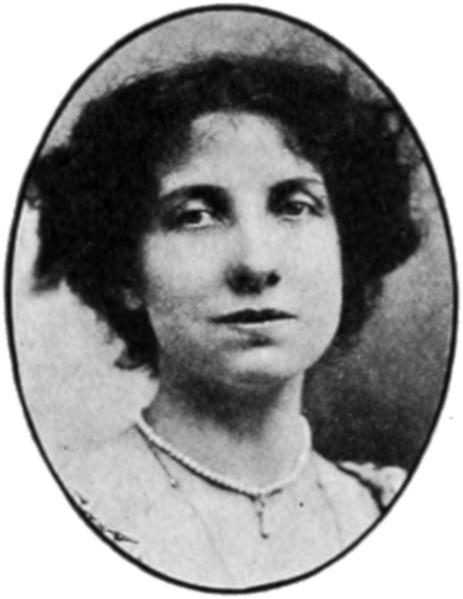
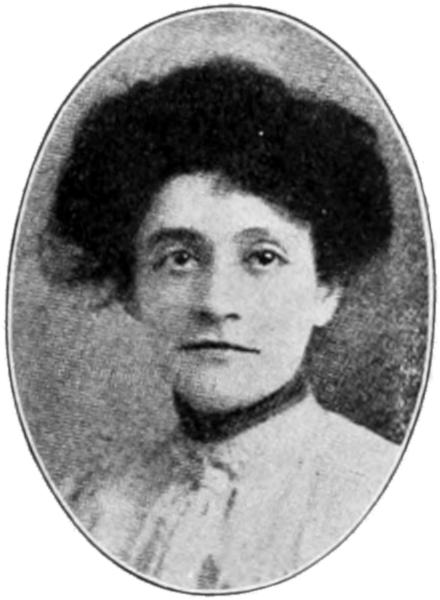
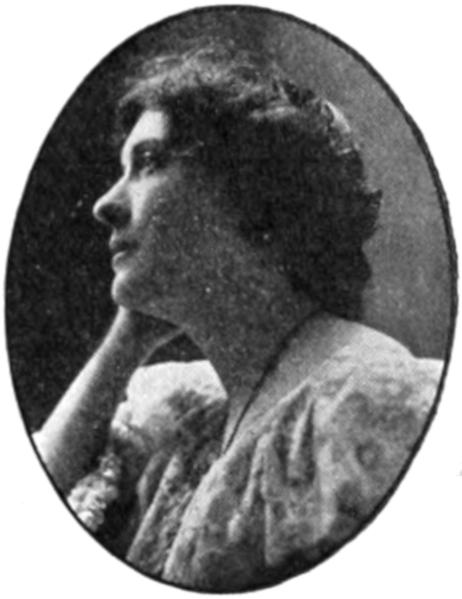
EDNA MAY SPOONER SALLIE COHEN CECIL SPOONER
TRIXIE FRIGANZA LOTTA JENNIE YEAMANS
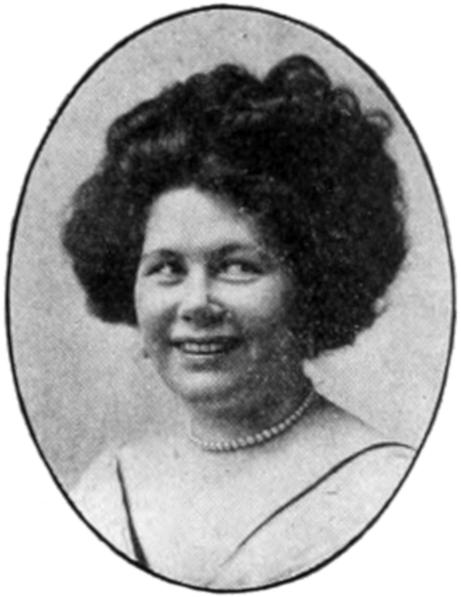
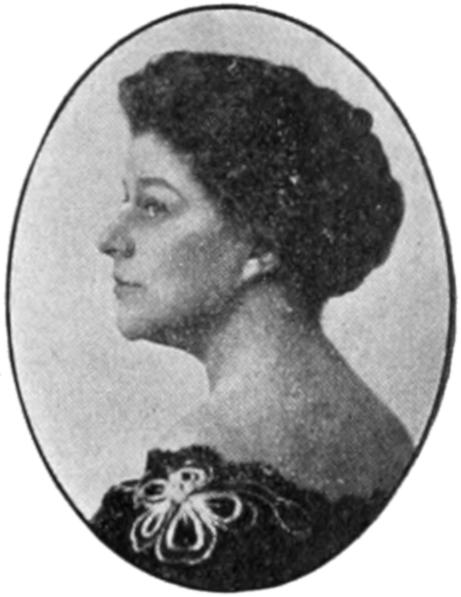
MAUDE RAYMOND ARTIE HALL BEVERLY SITGREAVES
THEY ALL BLACKED UP.
He was of the song and dance teams of Chace and Davis, Chace and Yale and Chace and Buckley.
Other engagements were Washburn’s “Last Sensation,” 3 years; at the Theatre Comique, Providence, R. I., 3 years, and Rentz-Santley Company, 3 years; also clown with Howe’s London Circus and other circus engagements; James R. Waites Company, 3 years, and played Joshua Simpkins in the play of that name for one season, also with Rice and Barton’s Company.
Mr. Chace was married to Miss Kitty Elzel, at Worcester, Mass., April 18, 1882; subsequently he became the husband of Henrietta St. Felix, of the 4 St. Felix Sisters, at Bainbridge, Ga., February 1, 1893.
Mr. Chace says that he is of the opinion that Chace and Davis at the Wigwam Theatre, Paterson, N. J., February, 1873, were the first to do a black-face “gagging” turn; I place it up to my readers.
Billy Chace was born May 31, 1856; at Providence, R. I.
LEW DOCKSTADER (Geo. Alfred Clapp).
Minstrelsy didn’t commence with Lew Dockstader, but Lew Dockstader commenced with minstrelsy, and has been associated with it ever since, always appearing in black face, a distinction enjoyed but by few burnt-cork artists. Mr. Dockstader’s success is due to many things, the most conspicuous being his ability to ascertain just what the public wants and when it wants it; and then giving it to them.
The name of Dockstader has been a household word for many years; the fame of Dockstader will live forever.
Mr. Dockstader’s initial appearance dates back to 1873, when, in his native city he was a member of an amateur organization by the very minstrel name of Earl, Emmett and Wild’s Minstrels; with Frank Lawton he did a song and dance act under the team name of Lawton and Clapp. That there was some class even at that early date to the great artist in embryo, is evinced from the fact that the late Harry Bloodgood, who was at that time organizing a company, engaged young Clapp, and he forthwith became a member of Bloodgood’s Comic Alliance, opening in Springfield, Mass., about September 1, 1873, and continuing the season.
The following year he formed a partnership with Johnny Mack, and as Mack and Clapp joined Whitmore and Clark’s Minstrels, remaining until the Spring of the next year.
From 1875 to 1876 he was associated with Mart Healy, also Healy and Ella Saunders, playing the variety houses, and billed as the “Big Three.” Then something happened. Mr. Dockstader fell into some money; but how fall out? Have a theatre of your own, someone suggested. Accordingly, on the 11th day of September, 1876, Newton’s Varieties, in Hartford, Conn., was opened under the management of Lew Clapp; four weeks later the name of the theatre was changed to the Adelphi and as the Adelphi it continued until January 13 following, when Mr. Clapp surrendered the reins of management to the more venerable Ad. Weaver.
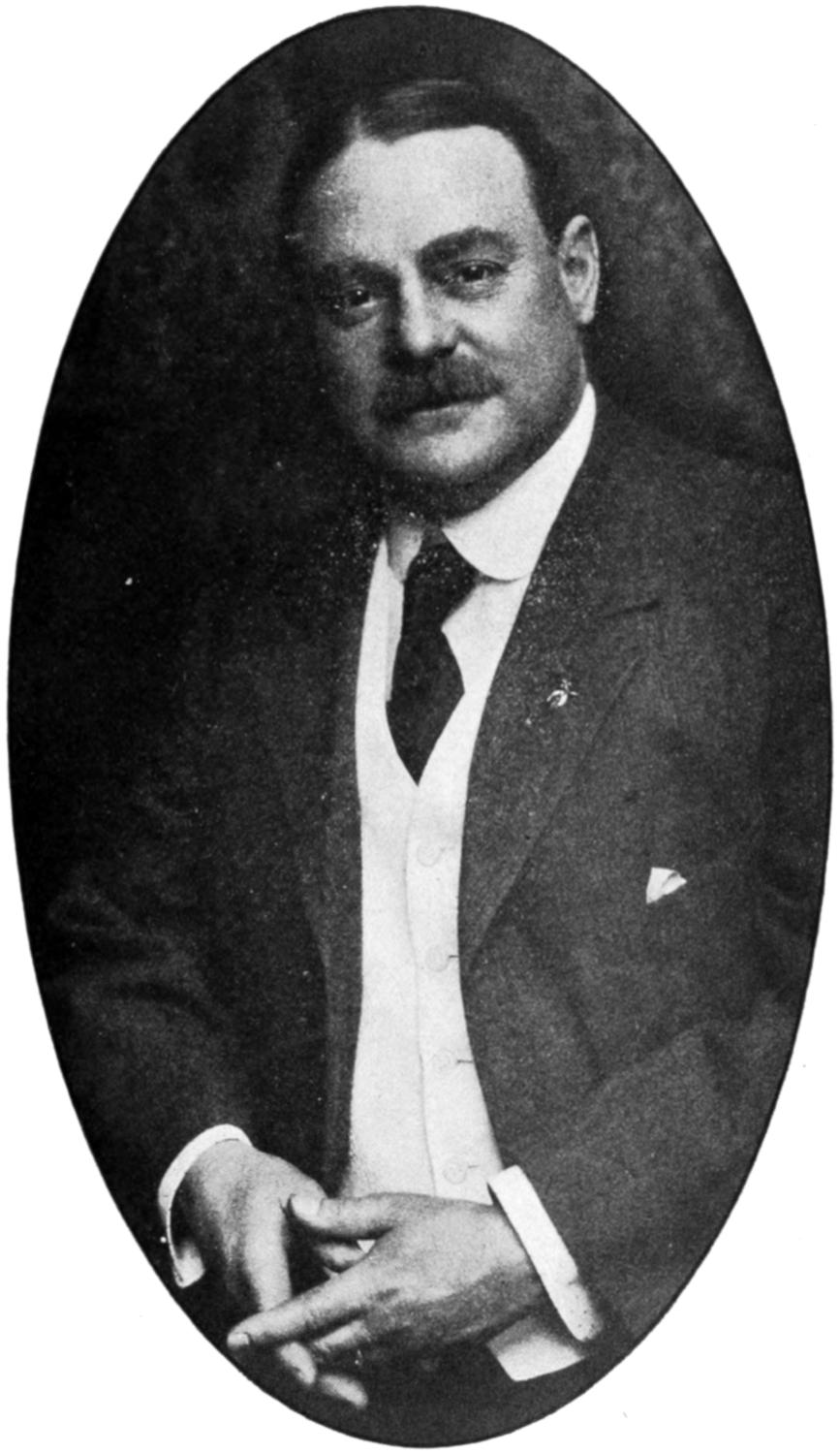
LEW. DOCKSTADER.
Thinking he had said goodby to the theatrical business for good and all, Mr. Clapp (who still retained some of his inheritance) set out for California, where he reached in due time. This was before the day of “Seeing San Francisco” cars were in evidence; nevertheless he saw all that was worth seeing before it dawned upon him that the end of his money had been nearly reached.
Fate in the guise of Cogill and Cooper appeared on the scene, and in May, 1877, opened the new Adelphi Theatre in the great Western metropolis; Lew Clapp doing a song and dance, “Peter, You’re in Luck This Morning,” was one of the features of the bill.
After a pleasant and profitable engagement of several months he joined Sargent’s Minstrels for a tour, opening early in September and closing in Sacramento, Cal., December 10, 1877.
He gradually worked his way to New York, where in August, 1878, he formed a partnership with Charles Dockstader, doing black-face songs and dances; the alliance, which was known as the Dockstader Brothers, continued until the illness of Charles Dockstader caused a severance of their business relations in Philadelphia, in March, 1883. Mr. Dockstader made his initial appearance with his new partner in Jersey City, September, 1878; they remained there several weeks.
Their first minstrel engagement was with Jerry Thomas’ Minstrels in New York at the Brighton Theatre (present site of Bijou) December 30, 1878.
They then played the principal variety houses until the commencement of the season of 1880 when they joined Carncross’ Minstrels in Philadelphia for the season; the following year they returned there, and remained until about January 1, 1882, when they joined George Thatcher’s Minstrels, also in Philadelphia, for a brief engagement, terminating January 21st; a week later they opened with Haverly’s Minstrels in St. Louis, Mo., for the balance of the season.
In the Fall of 1882 they again returned to Carncross’, in Philadelphia, where after the sickness of Charles Dockstader in March, 1883, Lew Dockstader remained until the season closed; drawing the double salary for his individual services, and generously sharing it with his afflicted partner.
Mr. Dockstader began his fourth season with Carncross in the Fall of 1883; he continued there until the Spring of 1886. On the 17th day of September that year, Dockstader’s Minstrels opened as a permanent institution in New York City, where for more than three years he held forth, surrounded at all times with the luminaries of the minstrel world; during this period he made a trip to California with his company.
The final performance was given December 9, 1889.
December 23, 1889, he opened with Hermann’s Trans-Oceanic Vaudeville Company for a limited engagement.
The following month he became a member of Primrose and West’s Minstrels and continued with them until the Spring of 1891, after which he joined George Thatcher’s Minstrels in San Francisco, and finished the season with that company.
Dockstader’s Minstrels were next organized for a road tour and made their first appearance at Dayton, Ohio, July 23, 1891. They traveled successfully until February 20, 1895; on that date giving their closing performance in Cincinnati.