VERSES BY A. E. HOUSMAN
Reading edition
There pass the careless people That call their souls their own: Here by the road I loiter, How idle and alone. Ah, past the plunge of plummet, In seas I cannot sound, My heart and soul and senses, World without end, are drowned. His folly has not fellow Beneath the blue of day That gives to man or woman His heart and soul away. There flowers no balm to sain him From east of earth to west That's lost for everlasting The heart out of his breast. Here by the laboring highway With empty hands I stroll: Sea-deep, till doomsday morning Lie lost my heart and soul. From "A Shropshire Lad."
When I arrived in the United States again, the impeachment trial was over and President Johnson had been acquitted. There had indeed not been any revolutionary disturbance, but the public mind was much agitated by what had happened.
I had, since I left Washington, been quietly engaged in editing the Detroit Post, when one day in the spring of 1867 I received, quite unexpectedly, a proposition from the proprietors of the Westliche Post, a daily journal published in the German language in St. Louis, Missouri, inviting me to join them, and offering me, on reasonable terms, a property interest in their prosperous concern. On further inquiry I found the proposition advantageous, and accepted it. My connection with the Detroit Post, which, owing to the excellent character of the persons with whom it brought me into contact, had been most pleasant, was amicably dissolved, and I went to St. Louis to take charge of the new duties.
A particular attraction to me in this new arrangement was the association with Dr. Emil Preetorius, one of the proprietors of the Westliche Post. He was a native of the Bavarian Palatinate, the same province in which in 1849 the great popular uprising in favor of the National Constitution of Germany had taken place, and of the town of Alzei, which, according to ancient legend, had been the home of the great fiddler among the heroes of the Nibelungenlied—"Volker von Alzeien," grim Hagen's valiant brother in arms. The town of Alzei still carries a fiddle in its coat of arms. Mr. Preetorius was a few years older than I. He had already won the diploma of Doctor of Laws when the revolution of 1848 broke out. With all the ardor of his soul he threw himself into the movement for free government and had to leave the Fatherland in consequence. But all the idealism of 1848 he brought with him to his new home in America. As a matter of course, he at once embraced the anti-slavery cause with the warmest devotion and became one of the leaders of the German-born citizens of St. Louis, who, in the spring of 1861, by their courageous patriotism, saved their city and their State to the Union. He then remained in public life as a journalist and as a speaker of sonorous eloquence.
The Convention of 1868
In the winter of 1867-8, as I have said, I made a visit to Germany. Not long after my return to St. Louis, the Republican State Convention was held for the purpose of selecting delegates for the Republican National Convention which was to meet at Chicago on the 20th of May. I was appointed one of the delegates at large, and at its first meeting the Missouri delegation elected me its chairman. At Chicago a surprise awaited me which is usually reckoned by men engaged in politics as an agreeable one. The chairman of the Republican National Committee, Mr. Marcus L. Ward, informed me that his committee had chosen me to serve as the temporary chairman of the Republican National Convention. It was an entirely unexpected honor, which I accepted with due appreciation. I made as short a speech as is permissible on such occasions, and, after the customary routine proceedings, surrendered the gavel to the permanent president, General Joseph R. Hawley of Connecticut.
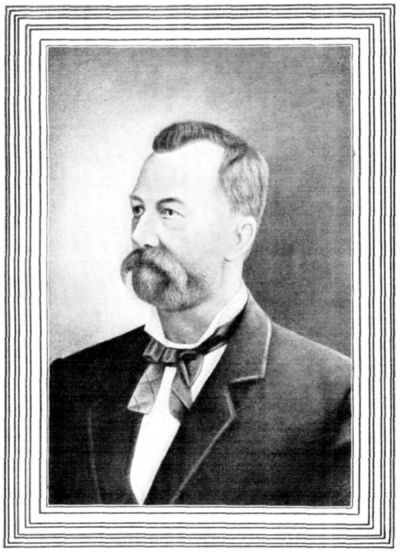
DR. EMIL PREETORIUS
ONE OF THE PROPRIETORS OF THE WESTLICHE POST, THE NEWSPAPER WITH WHICH CARL SCHURZ BECAME ASSOCIATED IN 1867
That General Grant would be nominated as the Republican candidate for the presidency was a foregone conclusion. As to the nomination for the vice-presidency, there was a rather tame contest, which resulted in the choice of Schuyler Colfax, the Speaker of the National House of Representatives, who at that time enjoyed much popularity and seemed to have a brilliant future before him, but was fated to be wrecked on the rocks of finance.
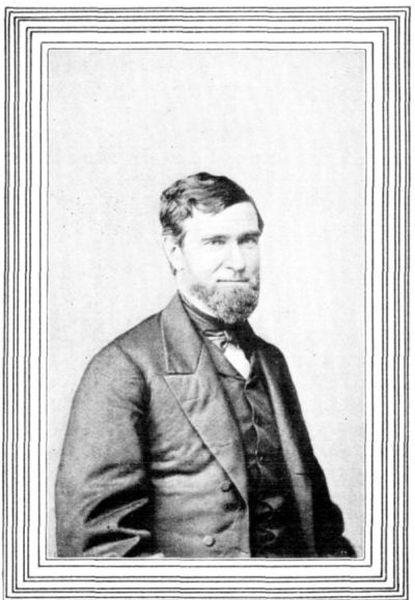
From the collection of F. H. Meserve
SCHUYLER COLFAX
WHO WAS ELECTED VICE-PRESIDENT OF THE UNITED STATES ON THE REPUBLICAN TICKET OF 1868
When the Committee on Resolutions made its report, I observed with surprise that the proposed platform contained nothing on the subject of an amnesty to be granted to any of the participants in the late rebellion. This omission struck me as a grave blunder. Should the great Republican party go into the next contest for the presidency without, in its profession of faith and its program of policy, holding out a friendly hand to the erring brethren who were to return to their old allegiance, and without marking out for itself a policy of generosity and conciliation? I resolved at once upon an effort to prevent so grievous a mistake by offering an amendment to the platform. Not knowing whether the subject had not been thought of in the committee, or whether a resolution touching it had been debated and voted down there, and deeming it important that my amendment should be adopted by the Convention without a discussion that might have let loose the lingering war passions of some hot-heads, I drew up a resolution which did not go as far as I should have liked it to go, but which would substantially accomplish the double object I had in view—the encouragement of well-disposed Southerners and the commitment of the Republican party—without arousing any opposition. It was as follows:
"That we highly commend the spirit of magnanimity and forbearance with which men who have served in the rebellion, but who now frankly and honestly coöperate with us in restoring the peace of the country and reconstructing the Southern State governments upon the basis of impartial justice and equal rights, are received back into the communion of the loyal people; and we favor the removal of the disqualifications and restrictions imposed upon the late rebels in the same measure as the spirit of disloyalty will die out, and as may be consistent with the safety of the loyal people."
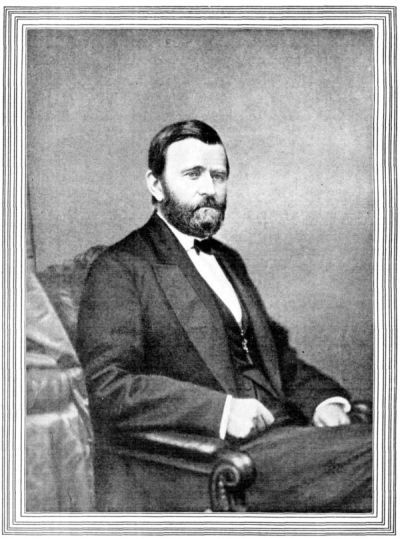
ULYSSES S. GRANT
FROM A PHOTOGRAPH TAKEN IN 1869, THE YEAR OF HIS FIRST INAUGURATION
The resolution received general applause when it was read to the Convention, and, as I had hoped, it was adopted and made a part of the platform without a word of adverse debate.
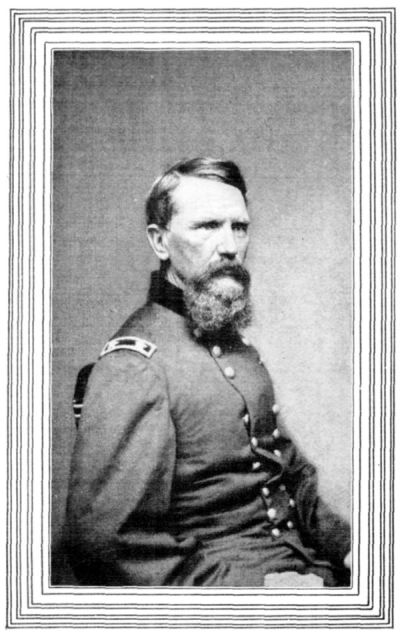
FRANCIS PRESTON BLAIR
THE DEMOCRATIC CANDIDATE FOR VICE-PRESIDENT IN THE CAMPAIGN OF 1868
Grant, the Candidate of the Whole Republic
The presidential campaign of 1868 was not one of uncommon excitement or enthusiasm. The Republican candidate, General Grant, was then at the height of his prestige. He had never been active in politics and never identified himself with any political party. Whether he held any settled opinions on political questions, and, if so, what they were, nobody could tell with any assurance. But people were willing to take him for the presidency, just as he was. It is quite probable, and it has frequently been said, that, had the Democrats succeeded in "capturing" him as their candidate, he would have been accepted with equal readiness on that side. He was one of the most striking examples in history of the military hero who is endowed by the popular imagination with every conceivable capacity and virtue. People believed in perfectly good faith that the man who had commanded such mighty armies, and conducted such brilliant campaigns, and won such great battles, must necessarily be able and wise and energetic enough to lead in the solution of any problem of civil government; that he who had performed great tasks of strategy in the field must be fitted to accomplish great tasks of statesmanship in the forum or in the closet. General Grant had the advantage of such presumptions in the highest degree, especially as he had, in addition to his luster as a warrior, won a reputation for wise generosity and a fine tact in fixing the terms of Lee's surrender and in quietly composing the disagreements which had sprung from the precipitate action of General Sherman in treating with the Confederate General Johnston. On the whole, the country received the candidacy of General Grant as that of a deserving and a safe man.
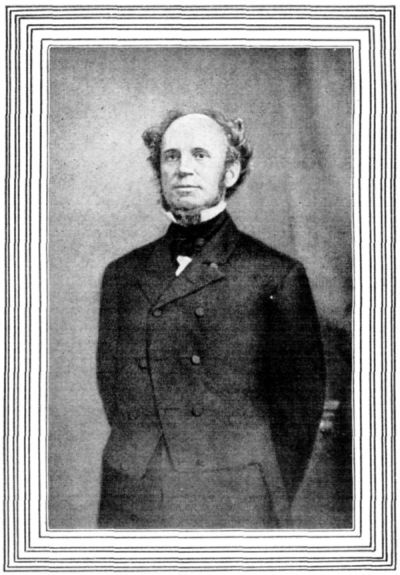
HORATIO SEYMOUR
THE DEMOCRATIC CANDIDATE FOR PRESIDENT IN THE CAMPAIGN OF 1868
On the other hand, the Democratic party had not only to bear the traditional odium of the sympathy of some of its prominent members with the rebellion, which at that time still counted for much, but it managed to produce an especially unfavorable impression by the action of its convention. Its platform stopped but little short of advocating violence to accomplish the annulment of the reconstruction laws adopted by Congress, and it demanded the payment of a large part of the national debt in depreciated greenbacks. The floundering search for a candidate and the final forcing of the nomination upon the unwilling, weak, and amiable Horatio Seymour presented an almost ludicrous spectacle of helplessness, while the furious utterances of the fiery Frank Blair, the candidate for the vice-presidency, sounded like the wild cries of a madman bent upon stirring up another revolution when the people wanted peace. The Democrats were evidently riding for a fall.
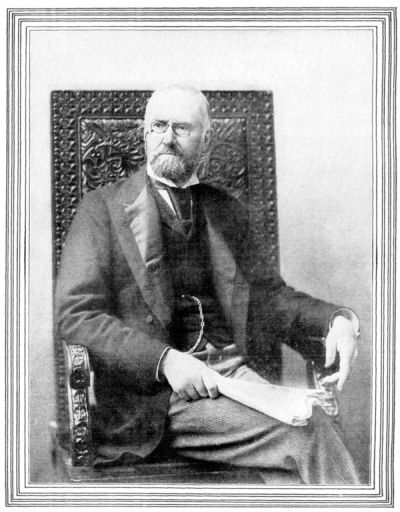
JOHN B. HENDERSON
ONE OF THE SEVEN REPUBLICAN SENATORS WHOSE VOTES DEFEATED THE IMPEACHMENT OF PRESIDENT JOHNSON. HE WAS SUCCEEDED IN THE SENATE BY CARL SCHURZ
I was called upon for a good many speeches in the campaign, and had large and enthusiastic audiences. One of the experiences I had in this campaign I remember with especial pleasure. The movement in favor of paying off national bonds, not in coin, but in depreciated paper money, which found advocacy in the Democratic platform, was in fact not confined to the ranks of the Democratic party. Although the Republican Convention had in its platform sternly declared against any form of repudiation, yet that movement found supporters among the Republicans, too, especially among people of confused moral notions, small politicians eager to win a cheap popularity by catering to questionable impulses, and politicians of higher rank nervously anxious to catch every popular breeze and inclined to bend to it whenever it seemed to blow with some force.
An Appeal to the Plain People
In the early part of the campaign I was asked to make a series of speeches in Indiana, and to begin with an outdoor mass-meeting at a little place—if I remember rightly its name was Corydon—near the Illinois line, at which a large number of farmers were expected. While a great crowd was gathering, I dined at the village hotel with the members of the local committee. They seemed to have something on their minds, which finally came forth, apparently with some hesitation. One of them, after a few minutes of general silence, turned to me with a very serious mien, as if he had to deliver an important message, saying that they thought it their duty to inform me of a peculiar condition of the public mind in that region: that the people around there were all, Republicans as well as Democrats, of the opinion that all the United States bonds should be paid off in greenbacks and that an additional quantity of greenbacks should be issued for that purpose; that there was much feeling on that question, and that they, the committee, would earnestly ask me, if I could not conscientiously advocate the same policy, at least not to mention the subject in my speech.
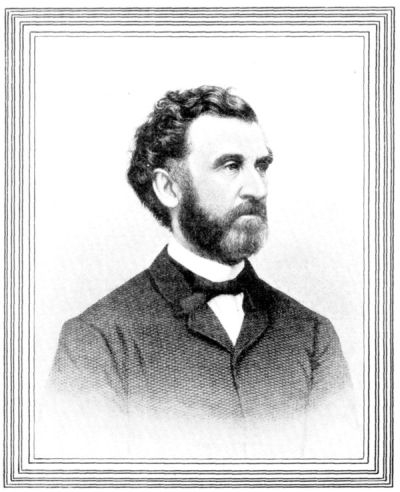
SENATOR CHARLES D. DRAKE
WHOM CARL SCHURZ MET IN JOINT DEBATE, WHILE RUNNING AGAINST DRAKE'S CANDIDATE FOR THE MISSOURI SENATORSHIP
Having been informed that there had been a good deal of greenback talk in that neighborhood, I was not surprised. But I thought it a good opportunity to administer a drastic lesson to my chicken-hearted party friends. "Gentlemen," I said, "I have been invited here to preach Republican doctrines to your people. The Democratic platform advocates the very policy which you say is favored by your people. The Republican platform emphatically condemns that policy. I think it is barefaced, dishonest, rascally repudiation. If your people favor this, they stand in eminent need of a good, vigorous talking to. But if you, the committee managing this meeting, do not want me to speak my mind on this subject, I shall not speak at all. I shall leave instantly, and you may do with the meeting as you like."
It was as if a bombshell had dropped among my committee-men. They were in great consternation and cried out accordingly. I had been announced as the principal speaker. A large number of people had come to hear me. If I left, there would be a great disappointment which would hurt the party. But I did not mean it—did I?
I assured them that I was in dead earnest. I would stay and speak only on condition that I should feel at perfect liberty to express my convictions straightforwardly and impressively. They looked at one another as if in great doubt what to do, and then, after a whispered consultation, told me that, of course, if I insisted, they must let me have my way; but they begged me to "draw it mild." I replied that I could not promise to "draw it mild," but that I believed they were mistaken in thinking that their people, if properly told the truth, would favor the rascally policy of repudiation. They shook their heads and sighed, and "hoped there would be no row."
The meeting was very large, mostly plain country people, men and women. The committee-men sat on the platform on both sides of me, with anxious faces, evidently doubtful of what would happen. I had put the audience in sympathetic temper when in the due order of my speech I reached the bond question. Then I did not "draw it mild." I described the circumstances under which the bonds were sold by our government and bought by our creditors: the rebellion at the height of its strength; our armies in the field suffering defeat after defeat; our regular revenues sadly insufficient to cover the expenses of the war; our credit at a low ebb; a gloomy cloud of uncertainty hanging over our future. These were the circumstances under which our government called upon our own citizens and upon the world abroad for loans of money. The people whom we then called bond-holders lent their money upon our promise that the money should be paid back in coin. They did so at a great risk, for if we had failed in the war, they might have lost all or much of what they had lent us. Largely owing to the help they gave us in our extremity, we succeeded. And now are we to turn round and denounce them as speculators and bloodsuckers, and say that we will not give them in the day of success and prosperity what we promised them in the day of our need and distress? Would not that be downright knavery and a crime before God and men?
When I had advanced thus far, cries of "shame! shame!" came from the audience. Then I began to denounce the vile politicians who advocated such a disgraceful course, first the Democrats who had made such an ignominious proposition a part of their platform, and then the Republicans who, believing that such a movement might develop some popular strength, had cowardly bent their knees to it. By this time my hearers were thoroughly warmed up, and when I opened my whole vocabulary of strong language, in all parts of the crowd arose such cries as "You are right!" "Bully for you!" "Give it to them!" "Hit them again!" and other ebullitions of the unsophisticated mind; and when I added that I had been told the whole population of this region were in favor of that crime of repudiating the honest debts of the republic, and that I had in their name repelled the charge as a dastardly slander, my hearers broke out in a storm of applause and cheers lasting long enough to give me time to look round at my committee-men, who returned my gaze with a smile of pitiable embarrassment on their faces.
The Moral Cowardice of Politicians a National Danger
When my speech was over, I asked them what they now thought of the repudiation sentiment in their neighborhood. Ah, they had "never been so astonished in their lives." One of them attempted to compliment me upon my "success in so quickly turning the minds of those people." But I would not let them have that consoling conception of the facts, and answered that I had not turned the minds of those people at all; that their feelings and impulses were originally honest; that I had only called forth a manifestation of that original honesty; and that if the local political leaders had believed in the original honesty of the people and courageously stood up for truth and right instead of permitting themselves to be frightened by a rascally agitation and of pusillanimously pandering to it, they would have had the same experience.
In fact, the same experience has repeated itself in the course of my political activity again and again until a late period. I have had an active part in a great many political campaigns and probably addressed as many popular meetings as any man now living; and I have always found that whenever any public question under public discussion had in it any moral element, an appeal to the moral sense of the people proved uniformly the most powerful argument. I do not, of course, mean to say that there were not at all times many persons accessible to selfish motives and liable to yield to the seduction of the opportunity for unrighteous gain, and that such evil influences were not at times hard to overcome. But with the majority of the people, notably the "plain people"—using the term in the sense in which Abraham Lincoln was wont to use it—I found the question "is this morally right?" to have ultimately more weight than the question "will this be profitable?"
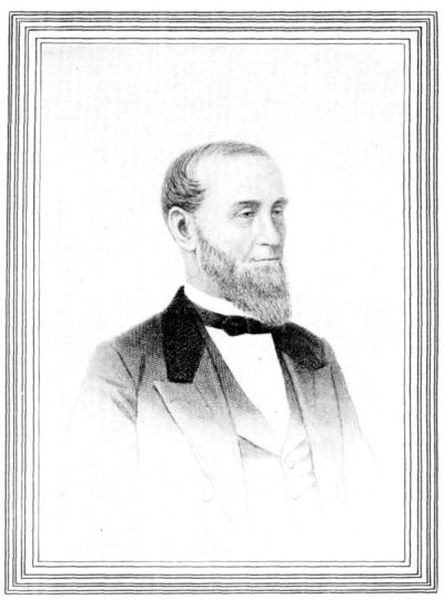
ALEXANDER T. STEWART
IN WHOSE BEHALF PRESIDENT GRANT ASKED CONGRESS TO SUSPEND THE ACT ESTABLISHING THE TREASURY DEPARTMENT
We have, indeed, sometimes witnessed so-called "crazes" in favor of financial policies that were essentially immoral, such as the "inflation craze" and the "silver craze," gaining an apparently almost irresistible momentum among the people. But that was not owing to a real and wide-spread demoralization of the popular conscience, but rather to an artful presentation of the question which covered up and disguised the moral element in it, and so deceived the unsophisticated understanding, and also to the cowardice of politicians of high as well as low rank, who, instead of courageously calling things by their right names, would, against their better convictions, yield to what they considered a strong current of opinion, for fear of jeopardizing their personal popularity. I have seen men of great ability and high standing in the official world do the most astonishing things in this respect when they might, as far as their voices could be heard, have easily arrested the vicious heresies by a bold utterance of their true opinions. The moral cowardice of the politicians is one of the most dangerous ailments of democracies.
Missouri Retires Senator Henderson
To me the Republican victory brought a promotion which I had not anticipated while I was active in the campaign. One of the United States Senators from Missouri, Mr. John B. Henderson, had voted in the impeachment trial for the acquittal of President Johnson. He was a gentleman of superior ability and of high character, but he had voted for the acquittal of Andrew Johnson. He had done so for reasons entirely honorable and entirely consistent with his principles and convictions of right, but in disregard of the feelings prevalent among his constituents and in spite of a strong pressure brought upon him by hosts of Republicans in his own State; and as his term as a Senator was just then expiring, this clash was fatal to his prospects of a reëlection. The warmest of his friends frankly recognized the absolute impossibility of keeping him in his place.
Indeed, all the Republican Senators who had voted for Johnson's acquittal found themselves more or less at variance with their party in their respective States; but Republicanism in Missouri was in one respect somewhat different from Republicanism elsewhere. In Missouri a large part of the population had joined the rebellion. The two parties in the Civil War had not been geographically divided. The Civil War had therefore had the character of a neighborhood war—in Missouri it was not only State against State, or district against district, but house against house. The bitter animosities of the civil conflict survived in Missouri much longer than in the northern States, and any favor shown to "the traitor" Andrew Johnson appeared to the great mass of Missouri Republicans simply unpardonable.
The immediate consequence of Mr. Henderson's course was that his colleague in the Senate, Mr. Charles D. Drake, obtained a directing influence in the party which for the moment seemed to be undisputed. Senator Drake was an able lawyer and an unquestionably honest man, but narrow-minded, dogmatic, and intolerant to a degree. He aspired to be the Republican "boss" of the State—not, indeed, as if he had intended to organize a machine for the purpose of enriching himself or his henchmen. Corrupt schemes were absolutely foreign to his mind. He merely wished to be the recognized authority dictating the policies of his party and controlling the federal offices in Missouri. This ambition overruled with him all others.
Senator Drake was of small stature, but he planted his feet upon the ground with demonstrative firmness. His face, framed with grey hair and a short, stubby white beard and marked with heavy eyebrows, usually wore a stern and often even a surly expression. His voice had a rasping sound, and his speech, slow and peremptory, was constantly accompanied with a vigorous shake of the forefinger which meant laying down the law. I do not know to what religious denomination he belonged; but he gave the impression that no religion would be satisfactory to him that did not provide for a well-kept hell-fire to roast sinners and heretics. Still, he was said to be very kind and genial in his family and in the circle of his intimate friends. But in politics he was inexorable. I doubt whether, as a leader, he was ever really popular with the Republican rank and file in Missouri. But certain it is that most of the members of his party, especially in the country districts, stood much in awe of him.
How Schurz Became a Candidate
Mr. Drake, very naturally, wished to have at his side, in the place of Mr. Henderson, a colleague sympathizing with him and likely to shape his conduct according to Senator Drake's wishes. He chose General Ben Loan of the western part of the State, a gentleman of excellent character, and respectable but not uncommon abilities. Senator Drake permitted it to go forth as a sort of decree of his that Mr. Loan should be elected to the Senate, and, although the proposition did not seem to meet with any hearty response in the State, he would have been so elected, had not another candidacy intervened.
It happened in this wise: I was a member of a little club consisting of a few gentlemen of the same way of thinking in politics, who dined together and discussed current events once or twice a month. At one of those dinners, soon after the presidential election of 1868, the conversation turned upon the impending election of Senator Henderson's successor and the candidacy of Mr. Drake's favorite, General Loan. We were all agreed in heartily disliking Mr. Drake's kind of statesmanship. We likewise agreed in disliking the prospect of seeing Mr. Drake duplicated in the Senate—indeed fully duplicated—by the election of Mr. Loan. But how prevent it? We all recognized, regretfully, the absolute impossibility of getting the Legislature to reëlect Mr. Henderson. But what other candidate was there to oppose to Mr. Loan? One of our table turned round to me and said: "You!" The others instantly and warmly applauded.
The thought that I, a comparative newcomer in Missouri, should be elected senator in preference to others, who had been among the leaders in the great crisis of the State only a few years ago, seemed to me extravagant, and I was by no means eager to expose myself to what I considered almost certain defeat. But my companions insisted, and I finally agreed that a "feeler" might be put out in the Globe-Democrat, the leading Republican journal in St. Louis, of which Colonel William M. Grosvenor, a member of our little table-company, was the editor in chief. The number of Republican papers in the State which responded approvingly was surprisingly large, and I soon found myself in the situation of an acknowledged candidate for the senatorship "in the hands of his friends." It seemed that when "stumping" the State in the last campaign, I had won more favor with the country people than I myself was aware of. Still, my chances of success would have been slim, had not my principal adversary, Senator Drake, appeared in person upon the scene.
When he learned that my candidacy was developing strength, he hurried from Washington to Jefferson City, the capital of Missouri, to throw the weight of his personal influence with the Legislature into the scale against me. By his side appeared General Loan. There was then perfect justification for me to be on the ground with some of my friends. My manager was Colonel Grosvenor, the editor of the Globe-Democrat, an uncommonly bright, genial, active, and energetic young man. I could not have had a more efficient and more faithful champion, or a more skilful tactician. In their talks with members of the Legislature my opponents were reckless in the extreme. They denounced me as a foreign intruder, as a professional revolutionist, as a "German infidel," as a habitual drunkard, and what not.
Our plan of campaign was very simple: Not a word against my competitor, General Loan; no champagne or whisky, nor even cigars; no noisy demonstrations; no promises of offices or other pledges in case of my election; but a challenge to General Loan and also to Senator Drake, if he would accept it, to meet me in public debate before the day when the caucus of the Republican majority for the nomination of a senatorial candidate was to be held. The campaign attracted much attention throughout the North and was commented upon in the newspapers, mostly in my favor. There were some symptoms of friendly zeal in my behalf. My friend Sigismund Kaufmann in New York telegraphed to me that if I needed any money for my campaign he would put $10,000 at my disposal. I telegraphed back my thanks, but declined the money, since I had no use for it. My reliance was upon the public debate.
A Joint Debate for a Senatorship
Senator Drake accepted the challenge for himself and General Loan. Arrangements were made for two meetings on two consecutive evenings. On the first evening I was to open with a speech of a certain length, and on the second evening Loan and Drake were to answer me, and I was to close. The announcement, as it went over the State, attracted from the country districts—as well as the cities—so many of the friends of the two candidates who wished to witness what they considered a great event, that the hotels of the State capital were crowded to the utmost.
Remembering the debate between Lincoln and Douglas at Quincy, Illinois, to which I had listened ten years before, I kept my opening speech in a calm, somewhat tame defensive tone, reserving my best ammunition for my closing argument and putting forth in a somewhat challenging manner only a few sharp points which I wished Drake to take up the next evening. The effect of my speech was satisfactory in a double sense. My supporters were well pleased with the courtesy and moderation with which I had stated my position and repelled certain attacks, and Mr. Drake was jubilant. He could not conceal his anticipation of triumph. Before a large crowd he said in a loud voice: "That man was described to me as a remarkable orator, something like Cicero and Demosthenes combined. But what did we hear? A very ordinary talk. Gentlemen, to-morrow night about this hour General Carl Schurz will be as dead as Julius Cæsar!" When I heard this, I was sure that his speech would be as bitter, overbearing, and dictatorial as I could wish, and that thus he would deliver himself into my hands.
The next evening the great hall of the assembly was crowded to suffocation. General Loan spoke first. His speech was entirely decent in tone but quite insignificant in matter. Its only virtue was its brevity. It received only that sort of applause which any audience will grant to any respectable man's utterance which is not too long and not offensive, even if uttered in a voice too low to be heard.
Senator Drake then mounted the rostrum with a defiant air, as of one who would make short work of his antagonists. After a few remarks concerning his attitude on the negro question, he took me in hand. Who was I, to presume to be a candidate for the Senate? He would, indeed, like to inquire a little into my past career, were it not that he would have to travel too far—to Germany, and to various places in this country, to find out whether there was not much to my discredit. But he had no time for so long a journey, however instructive such a search might be. This insinuation was received by the audience with strong signs of displeasure, which, however, stirred up Mr. Drake to greater energy. Then he launched into a violent attack on the Germans of Missouri, for whose political character and conduct he made me responsible. He denounced them as an ignorant crowd, who did not understand English, read only their German newspapers, and were led by corrupt and designing rings; as marplots and mischief-makers who could never be counted upon, and whose presence in the Republican party hurt that party more than it helped it. Finally, after having expressed his contempt for the newspapers and the politicians who supported my candidacy, he closed with an elaborate eulogy of General Loan and of himself, the length of which seemed to tire the audience, for it was interrupted by vociferous calls for me coming from all parts of the house. The immediate effect of Mr. Drake's speech was perceptibly unfavorable to him and his candidate—especially his bitter denunciation of the Germans and of a large part of the Republican party which advocated my election, for many members of the Legislature remembered how important an element of their constituency those same Germans formed, and how much their political standing depended on those same newspapers.
When I rose, the audience received me with a round of uproarious cheers. I succeeded in putting myself into relations of good humor even with my opponents by introducing myself as "a young David who, single-handed and without any weapon except his sling and a few pebbles in his pouch, had to meet in combat two heavily armed Goliaths at once." The audience laughed and cheered again. I next brushed away Mr. Loan's "harmless" speech with a few polite phrases and "passed from the second to the principal."
I then proceeded to take the offensive against Mr. Drake in good earnest. To the great amusement of my hearers I punctured with irony and ridicule the pompous pretence that he was the father of the new constitution with which Missouri was blessed. I took up his assault upon the Germans. I asked the question, "Who was it that at the beginning of the war took prisoners the rebel force assembled in camp Jackson and thus saved St. Louis and the State to the Union, and who was foremost on all the bloody fields in Missouri?" The whole audience shouted "The Germans! The Germans!" I asked where Mr. Drake was in those critical days, and answered that having been a Democrat before the war, pleading the cause of slavery, he sat quietly in his law office, coolly calculating when it would be safe for him to pronounce himself openly for the Union, while the Germans were shedding their blood for that Union. This was a terrible thrust.
My unfortunate victim nervously jumped to his feet and called my friend, General McNeil, who was present, to witness that the General himself advised him to stay quietly at home, because he could do better service there than twenty men in the field. Whereupon General McNeil promptly answered: "Yes, but that was long after the beginning of the war"—an answer which made Mr. Drake sink back into his chair, while the meeting burst out in a peal of laughter. Soon he rose again to say that I was wrong in imputing to him any hostility to the Germans, for he was their friend. My reply instantly followed that then we had to take what he had said of them to-night as a specimen of Mr. Drake's characteristic friendship. The audience again roared with laughter.
But the sharpest arrow was still to be shot. I reviewed the Senator's career as a party leader—how he had hurled his anathema against every Republican who would not take his word as law, thus disgusting and alienating one man after another, and was now seeking to read out of the party every man and every newspaper, among them the strongest journal in the State, that supported me. Almost every sentence drew applause. But when I reached my climax, picturing Mr. Drake as a party leader so thinning out his following that he would finally stand "lonesome and forlorn, surrounded by an immensity of solitude, in desolate self-appreciation," the general hilarity became so boisterous and the cheering so persistent, that I had to wait minutes for a chance to proceed. I closed my speech in a pacific strain. There had been talk that, if I were elected, the unseemly spectacle would be presented of two Senators from the same State constantly quarrelling with one another. I did not apprehend anything of the kind. I was sure that if we ever differed, Senator Drake would respect my freedom of opinion, and I certainly would respectfully recognize his. Our watchword would be: "Let us have peace."
When I had finished there was another outbreak of tumultuous applause and a rush for a handshake, the severest I have ever had to go through. With great difficulty I had to work my way to my tavern and to bed, where I lay long awake hearing the jubilant shouts of my friends on the streets. The first report I received in the morning was that Mr. Drake had quickly withdrawn from last night's meeting before its adjournment, had hurried to his hotel, had asked for his bill and the washing he had given out, and when told that his shirts and collars were not yet dry, had insisted upon having them instantly whether wet or dry, and then had hurried to the railroad station for the night train East. The party-dictatorship was over, and its annihilation was proclaimed by the flight of the dictator.
The Republic's Crowning Honor to an Adopted Son
That same day the caucus of the Republican members of the Legislature took place. I was nominated for the senatorship on the first ballot, and on motion the nomination was made unanimous. My election by the Legislature followed in due course. No political victory was ever more cleanly won. My whole election expenses amounted only to my board bill at the hotel, and absolutely unencumbered by any promise of patronage or other favor I took my seat in the Senate of the United States on the 4th of March, 1869. My colleague, Mr. Drake, courteously escorted me to the chair of the president of the Senate where I took the oath of office.
I remember vividly the feelings which almost oppressed me as I first sat down in my chair in the Senate chamber. Now I had actually reached the exalted public position to which my boldest dreams of ambition had hardly dared to aspire. I was still a young man, just forty. Little more than sixteen years had elapsed since I had landed on these shores, a homeless waif saved from the wreck of a revolutionary movement in Europe. Then I was enfolded in the generous hospitality of the American people, opening to me, as freely as to its own children, the great opportunities of the new world. And here I was now, a member of the highest law-making body of the greatest of republics. Should I ever be able fully to pay my debt of gratitude to this country, and to justify the honors that had been heaped upon me? To accomplish this, my conception of duty could not be pitched too high. I recorded a vow in my own heart that I would at least honestly endeavor to fulfil that duty; that I would conscientiously adhere to the principle "Salus populi, suprema lex"; that I would never be a sycophant of power nor a flatterer of the multitude; that, if need be, I would stand up alone for my conviction of truth and right; and that there would be no personal sacrifice too great for my devotion to the republic.
My first official duty was to witness, with the Senate, the inauguration of General Grant as President of the United States. I stood near the same spot from which, eight years before, I had witnessed the inauguration of Abraham Lincoln. It was a remarkable contrast—then the anxious patriot, in the hour of stress, with pathetic tenderness appealing to the wayward children of the nation; now the victorious soldier speaking in the name of the restored national authority. General Grant's inaugural address, evidently his own work, was somewhat crude in style, but breathed a rugged honesty of purpose. With particular rigor it emphasized our obligations to the national creditor—in striking contrast to Mr. Johnson's last annual message, which had stopped little short of advising downright repudiation.
On the whole, General Grant's accession to the presidency was welcomed by almost everybody with a sense of relief. It put an end to the unseemly, not to say scandalous brawl between the executive and the legislative branches of the national government, which at times came near threatening the peace of the country. It was justly expected to restore the government to its proper dignity and to furnish, if not a brilliant, at least a highly decent and efficient business administration. As General Grant had really not owed his nomination to any set of politicians, nor even, strictly speaking, to his identification with a political party, he enjoyed an independence of position which offered him peculiarly favorable possibilities for emancipating the public service from the grasp of the spoils politician, and the friends of civil service reform looked up to him with great hope.
It was not unnatural that in the absolute absence of political experience he should not only have had much to learn concerning the nature and conduct of civil government, but that he should also have had much to unlearn of the mental habits and the ways of thinking he had acquired in the exercise of almost unlimited military command. This was strikingly illustrated by some remarkable incidents.
A. T. Stewart and the Law of the Treasury
As usual, the nominations made by the President for Cabinet offices were promptly ratified by the Senate without being referred to any committee. But after this had been done, it was remembered and reported to President Grant that one of the nominees so confirmed, Mr. A. T. Stewart of New York, whom President Grant had selected for the secretaryship of the treasury, as a person engaged in commerce, was disqualified by one of the oldest laws on the statute-book—in fact, the act of September 2, 1789, establishing the Treasury Department. That this law, which provided that the Treasury Department, having the administration of the custom houses under its control, should not have at its head a merchant or importer in active business, was an entirely proper, indeed, a necessary one, had never been questioned. The next morning, March 6th, I had occasion to call upon President Grant for the purpose of presenting to him a congratulatory message from certain citizens of St. Louis. I found him alone, engaged in writing something on a half-sheet of note-paper. "Mr. President," I said, "I see you are busy, and I do not wish to interrupt you. My business can wait." "Never mind," he answered, "I am only writing a message to the Senate." My business was quickly disposed of, and I withdrew.
In the course of that day's session of the Senate a message from the President was brought in, in which, after quoting the statute of September 2, 1789, the President asked that Mr. Stewart be exempted by joint resolution of the two Houses of Congress from the operation of the law which stood in Mr. Stewart's way. There were some signs of surprise among Senators when the message was read, but Mr. Sherman at once asked unanimous consent to introduce a bill in accordance with the President's wish. But Mr. Sumner objected to the immediate consideration thereof because of its great importance. This stopped further proceedings, and the bill was laid on the table never to be heard of again. However, the President's message had evidently made an impression, and there was forthwith a little council held in the cloakroom, which agreed that some Senator should without delay go to see Mr. Elihu B. Washburn, the new Secretary of State, who was General Grant's intimate friend, and urgently ask him to suggest to the President that, while there was now perfect good feeling all round, it would be prudent for him to drop Mr. Stewart and to abstain from demanding the suspension or the repeal of good laws which he found in his way. Whether Mr. Washburn did carry this admonition to President Grant, I do not know. Probably he did, for Mr. Stewart was promptly dropped. Mr. Boutwell of Massachusetts was made Secretary of the Treasury in Mr. Stewart's place, and the repeal or suspension of the old law was never again heard of.
A Governor's Right to His Staff
So this incident passed, harmless. But the cloakroom of the Senate, where Senators amused one another with the gossip of the day, continued to buzz with anecdotes about President Grant's curious notions of the nature and functions of civil government. One of these anecdotes, told by a Senator who was considered one of the best lawyers in that body and one of the most jealous of the character of his profession, was particularly significant. He heard a rumor that President Grant was about to remove a Federal judge in one of the territories of the United States. The Senator happened to know that judge as a lawyer of excellent ability and uncommon fitness for the bench, and he went to the President to remonstrate against so extreme a measure as the removal of a judge unless there were cogent reasons for it connected with the administration of the office. President Grant admitted that, as far as he knew, there was no allegation of the unfitness of the judge, as a judge, "but," he added, "the governor of the territory writes me that he cannot get along with that judge at all, and is very anxious to be rid of him; and I think the governor is entitled to have control of his staff." The Senator closed his story by saying that he found it to be a delicate as well as a difficult job to make the great general in the chair of the President of the United States understand how different the relations between a territorial governor and a Federal judge were from those between a military commander and his staff officers. The anecdote was received by the listeners with a laugh, but the mirth was not far from apprehension. However, there being sincere and perfect goodwill on both sides, things went on pleasantly in the expectation that the military hero at the head of the government would learn what he needed to know and that the men in places of political power would treat him with due consideration and fairness.
Grant Presses for San Domingo Annexation
It was a few days later when I met President Grant at an evening reception given by Colonel Forney, the Secretary of the Senate. I was somewhat surprised when I saw the President coming toward me from the opposite side of the room, saying: "Senator, you have not called to see me at the White House for some time, and I have been wanting to speak to you." All I could say in response was that I was very sorry to have missed a conversation I might have had with him, but that I knew him to be a busy man who should not be robbed of his time by merely conventional visits. He repeated that he wished very much to see me. Would I not call upon him at my earliest convenience some evening? I put myself at once at his service, and went to the White House the next night. He received me in the library room and invited me to sit with him on a sofa. He plunged forthwith into the subject he had at heart. "I hear you are a member of the Senate committee that has the San Domingo treaty under consideration," he said, "and I wish you would support the treaty. Won't you do that?" I thought it would be best not to resort to any circumlocution in answering so pointblank a summons, but to be entirely frank. I said I should be sincerely happy to act with his administration whenever and wherever I conscientiously could, but in this case, I was sorry to confess, I was not able to do as he wished, because I was profoundly convinced it would be against the best interests of the republic. Then I gave him some of my dominant reasons; in short, acquisition and possession of such tropical countries with indigestible, unassimilable populations would be highly obnoxious to the nature of our republican system of government; it would greatly aggravate the racial problems we had already to contend with; those tropical islands would, owing to their climatic conditions, never be predominantly settled by people of Germanic blood; this federative republic could not, without dangerously vitiating its vital principles, undertake to govern them by force, while the populations inhabitating them could not be trusted with a share in governing our country; to the difficulties we had under existing circumstances to struggle with in our Southern States, much greater and more enduring difficulties would be added; and for all this the plan offered absolutely no compensating advantages. Moreover, the conversations I had had with Senators convinced me that the treaty had no chance of receiving the two-thirds vote necessary for its confirmation, and I sincerely regretted to see his administration expose itself to a defeat which, as I thought, was inevitable.
The Liveryman and the Foreign Mission
I spoke with the verve of sincere conviction, and at first the President listened to me with evident interest, looking at me as if the objections to the treaty which I expressed were quite new to him and made an impression on his mind. But after a little while I noticed that his eyes wandered about the room, and I became doubtful whether he listened to me at all. When I had stopped, he sat silent for a minute or two. I, of course, sat silent too, waiting for him to speak. At last he said in a perfectly calm tone, as if nothing had happened: "Well, I hope you will at least vote for the confirmation of Mr. Jones, whom I have selected for a foreign mission."
I was very much taken aback by this turn of the conversation. Who was Mr. Jones? If the President had sent his nomination to the Senate, it had escaped me. I had not heard of a Mr. Jones as a nominee for a foreign mission. What could I say? The President's request that I should vote for Mr. Jones sounded so child-like and guileless, at the same time implying an apprehension that I might not vote for the confirmation of Mr. Jones, which he had evidently much at heart, that I was sincerely sorry that I could not promptly answer "Yes." I should have been happy to please the President. But I had to tell him the truth. So I gathered myself together and replied that I knew nothing of Mr. Jones, either by personal acquaintance or by report; that it was the duty of the Committee on Foreign Relations to inquire into the qualifications for diplomatic service of the persons nominated for foreign missions and to report accordingly to the Senate, and that if Mr. Jones was found to possess those qualifications, it would give me the most genuine pleasure to vote for him. This closed the conference.
A few days later there was a meeting of the Committee on Foreign Relations. After having disposed of some other business, Charles Sumner, its chairman, said in his usual grave tone: "Here is the President's nomination of Mr. Jones for the mission to Brussels. Can any member of the committee give us any information concerning Mr. Jones?" There was a moment's silence. Then Senator Morton of Indiana, a sarcastic smile flickering over his face—I see him now before me—replied: "Well, Mr. Jones is about the most elegant gentleman that ever presided over a livery stable." The whole committee, except Mr. Sumner, broke out in a laugh. Sumner, with unbroken gravity, asked whether any other member of the committee could give any further information. There was none. Whereupon Mr. Sumner suggested that the nomination be laid over for further inquiry, which was done.
At a subsequent meeting the committee took up the case of Mr. Jones again. It was a matter of real embarrassment to every one of us. We all wished to avoid hurting the feelings of President Grant. There had been no malice in Senator Morton's remark about the elegant gentleman presiding over a livery stable. Morton was one of the staunchest administration men, but he simply could not resist the humor of the occasion. I do not recollect what the result of the "further inquiry" was. I have a vague impression that Mr. Jones turned out to be in some way connected with the street-car lines in Chicago, and to have had much to do with horses, which was supposed to be the link of sympathy between him and President Grant. However reluctant the committee was to wound the President's feelings in so personal a matter, yet it did not think it consistent with its sense of duty and dignity positively to recommend to the Senate to confirm the nomination of Mr. Jones. It therefore, if I remember rightly, reported it back to the Senate without any recommendation, whereupon the Senate indulgently ratified it.
The foregoing article will be the last of the Carl Schurz Reminiscences to appear in McClure's Magazine. The writing of the Memoirs was broken off at this point by Mr. Schurz' death, which occurred in 1906. A conclusion to the series, compiled by Mr. Frederic Bancroft from Carl Schurz' notes and letters, will appear in Volume III of the book, which will be issued in the fall.