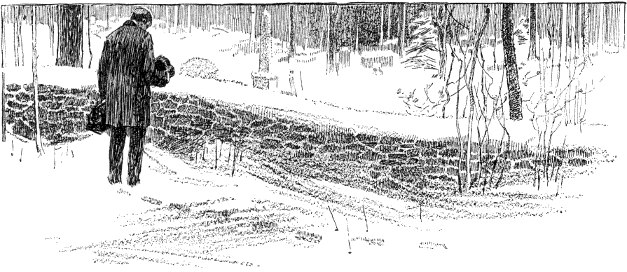
THE STORY I HEARD ON THE CARS. By Mrs. E. V. Wilson.
Reading edition
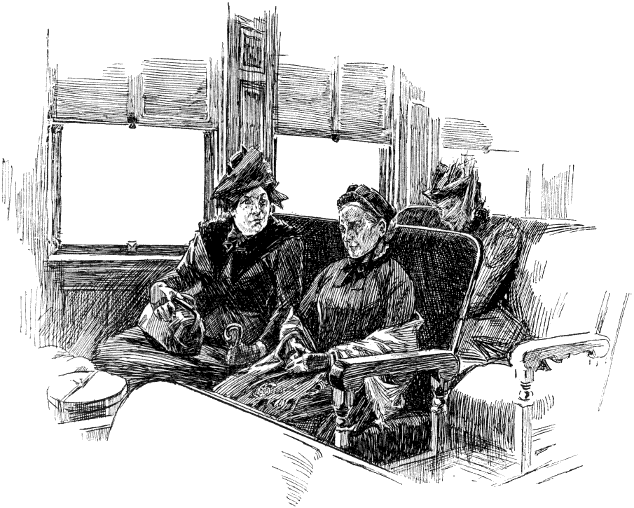
It was very tiresome riding on the cars all day, with the same monotonous stretch of prairie to be seen from the window; so I am sure it was pardonable in me to listen to the conversation of my fellow-passengers.
Just in front of me (their bundles on a seat before them) sat two elderly women, old friends, it seemed, who had chanced to meet in their journeying; and it was a sentence or two of their talk that caught my attention, and presently I became so interested that I no longer felt my weariness.
“And so,” said one, “you say they are livin’ all alone in that big house of their’n! I knowed the girls was all married an’ gone, but I heerd Jim had tuk a wife home to live with the old folks, and I said to Simon, says I, ‘Well, it’ll take more’n a mortal woman to live with Mary Ann Curtis onless she’s mightily changed sence I use ter know her,’ says I.”
“Well,” said the other voice, and a sweet, patient-sounding voice it was—so sweet, indeed, that I glanced over to look at its owner. She was a little, quaint old woman, with soft brown eyes and a pathetic, lovable face. I fell in love with her at once. Her companion was a younger woman, with shrewd, black, observing eyes and sharp nose and chin. From appearances and manner, I judged both were wives of well-to-do farmers.
“Well,” said the sweet voice, “Jim did marry a mortal woman, but Mary Ann soon made a angel out of her. I knowed Jim Curtis’s wife as well as if she’d ben my own child; and no wonder, seein’ as she boarded with me and Jonathan nigh on to a year. You see, she was left an orphan, and her uncle that raised her, not bein’ well off, give her what schoolin’ he could, an’ then when she was about sixteen year old he got her first the summer school in our deestric, and then, as she suited the folks, the d’rectors they let her have it fur the winter. I was sort o’ feared for her to tackle the winter school, seein’ as some of the big boys, and girls, too, for that matter, ’s pritty obstreperous; but Rhody she laughed and tossed her head an’ said, ‘I’ll get along, Aunt Nancy!’ (You know everybody in the neighborhood calls me Aunt Nancy, and Rhody she picked it up as natral as could be.)
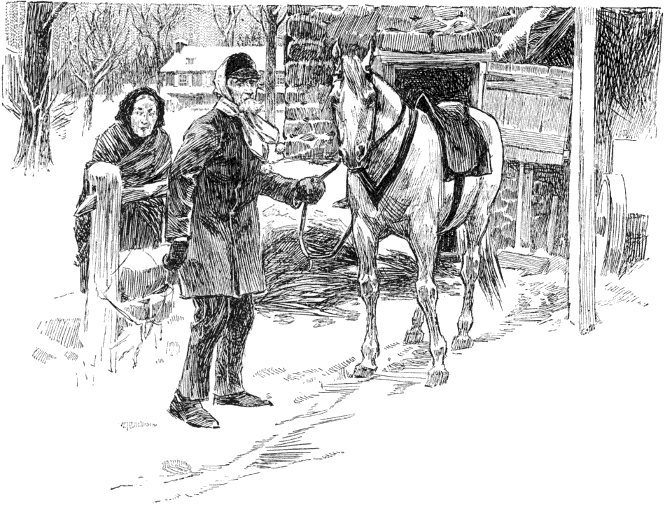
“Well, she did manage somehow, an’ never had a bit of trouble. An’ I use ter watch o’ evenin’s for her to come, allus smilin’, and with somethin’ funny to tell about the scholars. I declare to you, Mis’ Johnson, if she’d ben our own, Jonathan an’ me couldn’t a sot more by her. Why, whenever it was rainy or snowy the ole man would saddle a horse an’ go for her, an’ she’d look that cute, settin’ behin’ on ole Molly an’ holdin’ on to the ole man!
“One cold evenin’ (it was a Friday evenin’, too—I’ll never forgit it), jist as Jonathan got the saddle on the mare, we heard sleigh-bells, for I was out at the fence talkin’ to the ole man, an’ who should come sailin’ up the road, large as life, but Jim Curtis in his new sleigh, with our Rhody, smilin’ and rosy, beside him. ‘There, ole man,’ says I, ‘your cake’s dough.’ And I declare fur it, ef he warn’t that cut up he could scarce be civil to the youngsters.
“Of course you know how it was after that—no needcessity fur the ole man botherin’ any more; not ’at it was bother, for he allus liked goin’ fur Rhody; but laws! Jim was allus on hand, no matter how the weather was, an’ he tuk her to her uncle’s two or three times, an’ to meetin’ Sundays, an’ I up an’ tole her one day that I b’lieved I’d ask Jim to board with us, an’ her face got mighty red, an’ she stepped up an’ put both arms roun’ my neck, she was such a lovin’ leetle critter, an’ she says, ‘You aint mad, Aunt Nancy, are you? You like Jim, don’t you?’
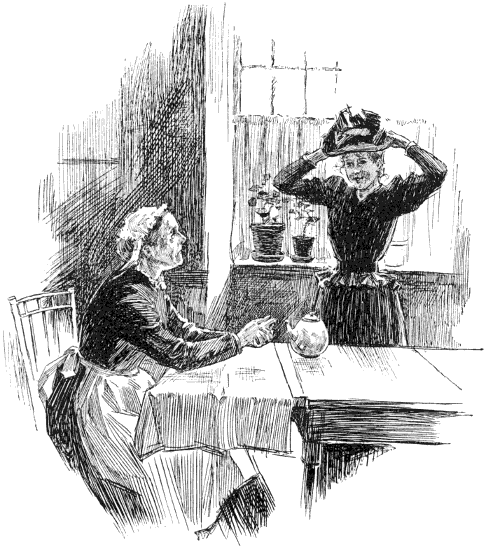
“‘Well,’ says I, ‘ef I don’t, somebody else does; but I’d like to know what this deestric’s goin’ to do fur a teacher.’
“‘Oh,’ she says, blushin’ more ’an ever, ‘I am goin’ to teach my school out.’
“‘An’ then what?’ says I.
“‘Then I’ll tell you,’ she says, and run off laughin’.
“So I says to the ole man that night, after we’d gone to bed, says I, ‘Jonathan, Rhody is goin’ to marry Jim Curtis, an’ I dunno whether to be glad or sorry.’
“An’ he laughed till the bed shuk, an’ says he, ‘Why, whot on ’arth is ther’ to be sorry ’bout?’ says he; ‘ther’ aint a likelier feller’n the neighborhood than Jim, an’ as for Rhody, pshaw! she’s good enough an’ purty ’nough for anybody.’
“‘Oh,’ says I, ‘’tain’t that—they’re both well ’nough; but how’s our little girl goin’ to git along with Mis’ Curtis?’”
“Yes,” interrupted Mrs. Johnson, appreciatively, “that was a question. What did you let ’em go there to live for? That’s what I want to know, Nancy Riley.”
“Well,” sighed Aunt Nancy, “I did try to prevent it. I talked to Rhody, but she thought she could surely git along with Jim’s mother—said she loved her already, pore thing! Then I tuk Jim to task, an’ he said the ole folks weren’t willin’ fur him to leave ’em; his father was gittin’ old, an’ ther’ were lots ’o rooms in the house, an’ his mother was glad he was goin’ to marry an’ bring his wife there, she was so lonesome now all her girls was gone, an’ a heap more sich stuff.”
“Lonesome, indeed!” snapped Mrs. Johnson. “She was glad to git rid of her girls, so she was! Laws! don’t I mind what times them poor girls had to git decent clothes? She jist grudged ’em everything, an’ kep’ ’em workin’ like—I was goin’ to say darkys, but no darky ever worked like old Mis’ Curtis made her girls. No wonder they up an’ tuk the first feller ’at came along an’ asked ’em. But I stopped you, Aunt Nancy—excuse me—for I knowed Mis’ Curtis so well. The idea of her a-bein’ lonesome! She wanted somebody to help with the work, she did. Her own girls got away soon’s they could. That Jim must ’a’ been a fool!”
“Oh, no, he wasn’t,” went on the soft voice. “It’s mighty little a young feller like him knows about housework, an’ his mother’s work never bothered him. So as soon as Rhody’s school was out in the spring they was married. You see, her uncle thought for a pore girl she was doin’ purty well, an’ I ’low she was ef she had been jes’ marryin’ Jim Curtis, but she warn’t—she was a tyin’ of herself to his mother.”
“More fool Jim!” snarled Mrs. Johnson.
“Now, Mis’ Johnson,” said Aunt Nancy, “Jim meant well, an’ he worshipped the very ground Rhody walked on; but, you see, old Mis’ Curtis she didn’t believe in young folks makin’ simpletons of theirselves, and when she see Jim slip his arm ’roun’ Rhody, or her run her hand through his curly hair, she’d snap out something sort o’ hateful; so Rhody she got afraid of her, an’ there’s where the trouble begun, in my ’pinion, fur if my pore child had let Jim see how she was imposed on, he certingly’d have made a change, but to keep peace she jist made believe she was happy ’nough. I use’ ter go over sometimes, though I knowed Mis’ Curtis set no store by my comin’, but Rhody was allus that glad, and I tell you it riled me to see how she was treated. It was: ‘Rhody, bring the milk out of the suller’; ‘Rhody, fetch some wood’; ‘Rhody, set the table,’ till I wondered she didn’t drop.
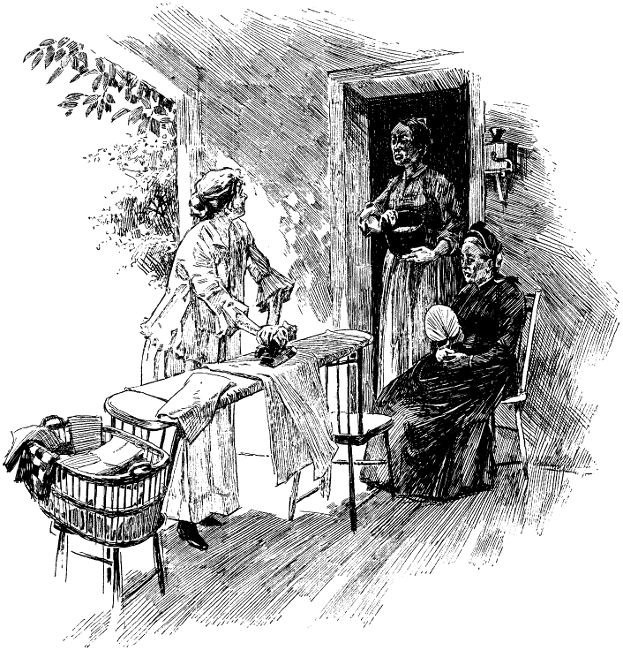
“One awful hot day I was there, an’ Rhody she was ironin’ in the back porch, an’ Mis’ Curtis she was makin’ pies; she was a master-hand at cookin’; you’ll ’low that, Mis’ Johnson.”
“Oh, yes,” snapped Mrs. Johnson, “Mary Ann Curtis was a master at anything she put her hand to.”
“As I was sayin’,” went on Aunt Nancy meekly, “Rhody was ironin’; and sich a pile of clothes!—white winder-curtains starched like boards, an’ table-cloths, let alone shirts and other things—an’ I was thinkin’ how pale she was, an’ peaked-lookin’, when Mis’ Curtis calls out, ‘Rhody, the fire’s goin’ down. I wonder if you ’spect to iron with cold irons. Ef you do, you kin quit, for I don’t have my ironin’ done that way, if some folks does.’
“Rhody never said a word, but jist went to the wood-pile for more wood, an’ I says to Mis’ Curtis, says I, ‘Ef I was you, I’d hev some of the men-folks bring in the wood. Rhody don’t look well.’
“You oughter seen her look at me; her eyes fairly scared me. ‘Our men-folks,’ says she, ‘’s tired enough when they come in, ’thout havin’ women’s work to do. Ef they was shiftless as some I knows, that’s all they’d be fit fur.’
“I tell you, that sort o’ riled me,” went on the gentle voice; “but Rhody came in with a big armful of wood, so I didn’t say anything.”
“As if you would have said anything, you good soul!” said Mrs. Johnson.
“You don’t know me,” said Aunt Nancy. “Jonathan says I am right smart when I get riled—scares him;” and a mellow laugh rippled over her thin lips, which sounded so sweet that more than one passenger turned to see the laugher. Mrs. Johnson joined in the merriment, and I smiled too—the idea of that voice scolding was so absurd. And now it went on again:
“I thought I’d say something to Jim about Rhody, for I felt oneasy about her; an’ so when he was helpin’ me on my horse in the evenin’ (Rhody couldn’t come to the fence, ’cause Mis’ Curtis called her back when she started), I says to him, ‘Jim,’ says I, ‘Rhody looks mighty bad; I’m feered she’s doin’ too much this hot weather.’ You see, it was September, an’ you know what tirin’ weather we sometimes have in September.
“‘Oh, she’s all right,’ says Jim.
“‘No, she ain’t,’ says I.
“Jim laughed, and his face reddened up, and says I,
“‘You better take good care of her, Jim; she’s not a strong woman like your mother; she can’t stand everything,’ an’ no more she couldn’t, pore little thing.
“Well, the very nex’ Sunday, here came Jim and Rhody to see us. An’ I tell you the ole man an’ me was that glad he would have Rhody sing for us, an’ she sang some of the songs he liked, but not many; she said she hadn’t sung any fur so long it tired her.
“‘Why don’t you sing, Rhody?’ says the ole man; ‘you used to sing like a bird.’
“‘I guess I’m not like a bird any more, Uncle Jonathan,’ she says. An’ then she sighed, but catchin’ Jim lookin’ at her, she lightened up and says, ‘I am an old married woman now.’
“After a while Jim an’ the ole man they went out to the stable, and then the pore little darlin’ says,
“‘Oh, Aunt Nancy, I’d be the happiest woman in the world if Jim and me was livin’ by ourselves! Mother Curtis is a good woman, but somehow I can’t please her, an’ I try so hard. Sometimes I’m so tired I can’t sleep or eat, an’ she thinks I’m puttin’ on airs, she calls it, an’ she’s allus saying she pities a man with a do-nothin’, whiny wife.’
“‘It’s a shame!’ says I; ‘why don’t you tell Jim, and coax him to get another place?’
“‘Oh, Aunt Nancy,’ she says, wipin’ her purty eyes, ‘I can’t bear to make trouble, and what would Pap Curtis do? He’s awful good to us. He brings me candy and sometimes oranges from town, and gives ’em to me when she don’t see him, and he often helps me, too; gets wood and water and milks the cows—but there’s Jim with the buggy,’ and off she went.
“I made up my mind to have another talk with Jim Curtis, but laws! we never can tell. The ole man he took the bed with rheumatiks in October, and I never seen anybody much fur three months, and then our Sarah’s baby was born, and I was over there awhile, an’ my own worriments drove other people’s clean out of my head, till one day ’long the last of February Jonathan came in (he’d be’n to town for somethin’ or other), an’ says he,
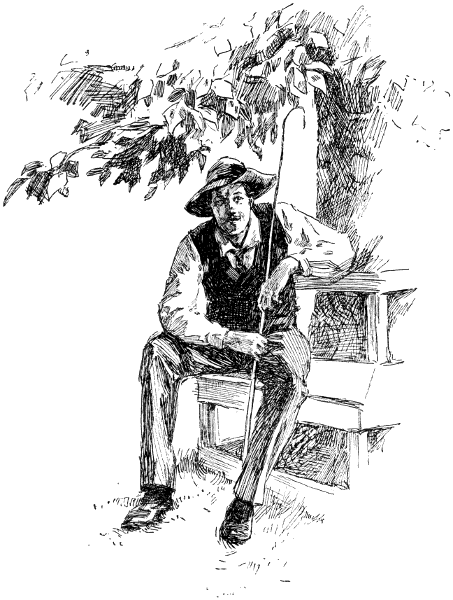
“‘Nancy, Rhody’s got a boy!’
“Laws! I was jist as s’prised as ef I’d never thought of sich a thing, an’ says I, ‘Who tole you?’
“‘Ole man Curtis,’ says he, ‘an’ he’s that sot up he wants you to come right over.’
“‘An’ so I will,’ says I. ‘The blessed darlin’; an’ it’s a boy, an’ our Sarah’s is a boy, too. Well, that beats me.’ An’ I ’low ’twas odd, Mis’ Johnson;” and Mrs. Johnson “’lowed” it was, too, and the story went on:
“In a day or two I managed to go over to the Curtis place, an’ though Mary Ann Curtis didn’t seem over-pleased to see me, I’ll say that for her, she treated me well enough, and asked me right up stairs to see Rhody and the baby. My! but my girl was glad to see me!
“‘Aunt Nancy,’ she says, ‘is Sarah’s baby bigger’n mine?’ and she turned down the kiver and showed me the littlest mite of a boy, with such a wrinkled old face! I wonder what does make a pore weakly baby look so much like old folks, anyhow. Did you ever notice it, Mis’ Johnson?”
“Oh, yes, often,” said Mrs. Johnson. “There was my Silas, looked just like his Grandfather Johnson when he was born. But was her baby weakly?”
“I saw it was in a minute,” said Aunt Nancy, “but I never let on. I looked at the baby an’ praised it all I could—said it wasn’t as big as Sary’s, but size was nothin’.
“Mis’ Curtis she sniffed sort o’ scornful, an’ says she, ‘The child might have been bigger ef its mother’d knowed how to take keer of herself;’ an’ then she says, ‘Well, I ain’t no time to be a-foolin’. I must go to work.’
“‘I suppose you’ve got a girl?’ says I.
“‘No, I ain’t,’ says she; ‘an’ what’s more, I don’t want one. I never seen one yet that they didn’t eat an’ waste more than their work came to, let alone their wages;’ an’ off she went down-stairs.
“Rhody said nothing for a minute, an’ I didn’t, either. We just looked at the baby, an’ it begun to pucker its face and cry a little, ’bout as loud as a young kitten. I thought of Sary’s squaller of a boy, but I didn’t say anything, and when it was quiet Rhody says:
“‘Aunt Nancy, is my baby like Sary’s baby?’ and she looked so pitiful I felt as if I could cry.
“‘Well,’ I says, ‘Sary’s is bigger. Why do you ask that?’
“Her lips quivered, an’ she says:
“‘Everybody ’at sees it says, “What an old-fashioned baby! Poor little thing! Re’ly it’s so odd-looking.” Is it odd, Aunt Nancy? An’ is there fashions in babies? I thought babies were all alike;’ an’ she tried to smile while tears rolled down her white face.
“I tried to cheer her up. She was a baby herself—only a little over eighteen, you know; an’ I went down and made her some toast and tea, and then fed the baby and got it to sleep, an’ left her feelin’ pretty cheerful.
“After that I went over as often as ever I could, and sometimes carried a little somethin’ I cooked to Rhody, but I saw Mis’ Curtis didn’t thank me. Once she’s good as said so—said her victuals was good ’nough for anybody. Says I, ‘Sick folks like strange cookin’ sometimes, Mis’ Curtis, an’ Rhody allus liked my ways.’ Which was an unfortunate thing for me to say, fur Mis’ Curtis she flew all to pieces, and said I put mischief in Rhody’s head.
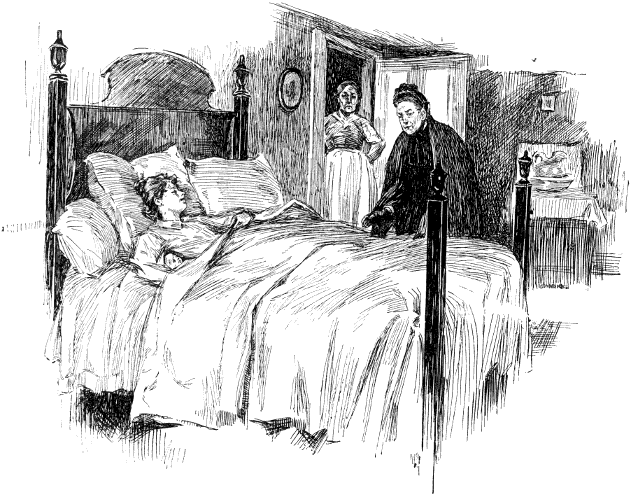
“‘Here,’ she says, ‘is her baby three weeks old, an’ her barely settin’ up. Your Sary was at work afore her baby was that old, an’ I know it; an’ if Mis’ Rhody can’t wait on herself now, she can go ’thout waitin’ on for all of me,’ she says.
“‘Mis’ Curtis,’ says I, ‘my Sary’s a different woman from Rhody.’
“‘I guess she is,’ says Mis’ Curtis, mad as fire.
“‘An,’ says I, ‘Jim ought to get somebody to help wait on Rhody and take care of the baby,’ says I, ‘or else it’s my ’pinion he won’t have ’em long; fur,’ says I, ‘Rhody’s gettin’ weaker instead of stronger, and she ain’t got milk fur that pore baby.’
“Then Mis’ Curtis she jes’ let loose, an’ I ketched it. She said it was all my doin’s that Jim married that pore no-’count, stuck-up school-mistress, an’ brought her there to be waited on, an’ she knowed it all along, and now I needn’t come a-tryin’ to make out as Rhody wasn’t treated well, fur she had wore herself out trottin’ up and down stairs, an’ she didn’t mean to do it any longer.
“Just then the kitchen door was opened, and old Mr. Curtis came in.
“‘Why, howdy, Aunt Nancy?’ says he as cheerful, though I knowed he must have seen somethin’ was up.”
“Yes,” interrupted Mrs. Johnson angrily, “that’s the way people do, and call it keepin’ peace. I despise sich ways. Why didn’t he make her behave herself? Suppose there was a fuss; ef she’d found he was goin’ to be boss, she’d soon give up.”
“I guess not, Mis’ Johnson,” said the other; “she had sich a temper.”
“As if I didn’t know that! an’ I know when folks give up to sich tempers they make ’em worse. Wouldn’t it been better if ole man Curtis had jes’ let her see from the first that he didn’t care for her temper? Why, she jesso natrally drove her girls to marry; and think of poor Molly tied to that drunken, shiftless Ned Pelton, and Betsy married to a old widower with seven or eight children, and him nearly as old as her father! I tell you, Aunt Nancy, Curtis is to blame.”
“Well,” said the old lady gently, “I went up-stairs and found Rhody looking better’n I expected, with that midget of a baby with its eyes wide open on her lap. She was glad to see me.
“‘O Aunt Nancy!’ she cried before I got my bunnit off, ‘Jim has rented the old Duncan place, and as soon as I am able we are going there to live. He is over there now, fixing up.’
“‘Aha!’ thought I, ‘that’s what’s up!’ but I said I was glad, and that I had brought her some sponge cake and other things; an’ I ’mused the baby while she et a little—a mighty little, I was sorry to see; but she went on to tell me Jim had been to the doctor about her, an’ he said she needed tonics, and he sent her some, an’ she was goin’ to take the med’cin’ an’ would soon be well and strong, an’ so happy! ‘But, Aunt Nancy,’ she says, ‘baby don’t grow a bit. I’m afraid he is too old-fashioned. Mother Curtis says I don’t stir ’round enough to get an appetite. Do you think that’s it—that baby don’t get enough to make him grow because I can’t eat?’ She looked so weak and pitiful.
“I says, ‘Well, it ain’t your fault; I reckon you can’t make yourself eat.’
“She laughed a little. ‘You are such a comfort, auntie!’ she says; ‘but that wonderful tonic’ll set me up again.’
“An’ so I left her an’ went home, promising to be back in a day or two an’ take her home with me for a little visit if she was strong enough. You’d jes’ oughter to seen her face when I said that; it jes’ lit up.
“‘Mother Curtis?’ she whispered.
“‘Oh,’ says I, ‘she’ll be glad to get rid of you for a while,’ an’ I went off plannin’ how I’d see Jim and make him bring her over. But it did seem as if there was a spite to be worked out agin me, for that very evenin’ it set in to rain, an’ that stiffened the ole man up bad, an’ for days he could not move hisself, an’ I was kep’ close at home for three weeks, hearin’ from the neighbors every once in a while that Rhody was gainin’ slowly, but the baby wasn’t right somehow.
“Well, Jonathan got able to hobble round again, an’ a purty spell of weather sot in, but there was garden to make, an’ soap to bile, an’ another week slipped away, an’ I says to Jonathan, says I, ‘As sure as I live I am going to see Rhody to-morrer ef old Mis’ Curtis’ll let me in;’ an’ the words wasn’t hardly out of my mouth when somebody knocked at the door. ‘Come in,’ says I, and who was it but old man Curtis, looking like a ghost. ‘What’s the matter?’ says I. He r’al’y couldn’t speak for a minit, an’ then he got out somethin’ ’bout Rhody an’ the baby, and comin’, but I sensed it all, an’ in less’n a minit I was ready an’ in the buggy with him.
“From what I could make out as we druv as fast as we could, Jim had been away from home over to the Duncan place from airly in the mornin’ till about five o’clock that afternoon. When he got home he run right up to Rhody’s room, an’ found her a-settin’ there with the baby in her arms, asleep he thought, but when he spoke to Rhody she began to scream, so that he was scared an’ tuk hold of the baby an’ it was dead.
“‘Then he hollered,’ said the old man, ‘an’ me an’ Mary Ann an’ Tom (that’s the hired man) ran up there, fur we was jes’ settin’ down to supper, an’ when we saw what it was Tom went for the doctor and I came for you.’
“An’ oh, Mis’ Johnson, I never want to see such sights agin! The baby was dead, sure enough, poor little thing, an’ out of its misery, but Rhody, she jes’ went out o’ one faint into another till the doctor came, an’ then we worked over her a long time, an’ when she quit faintin’ she was ravin’ in a high fever. Dangerous, the doctor said, an’ turned everybody but Jim an’ me out o’ the room. Such an awful time! Rhody would scream, ‘Oh, do come, Mother! Mother! Mother! Baby’s dyin’!’ till she couldn’t scream any more, an’ then she’d ask for the baby, an’ lie still, waitin’ like, an’ then scream again.
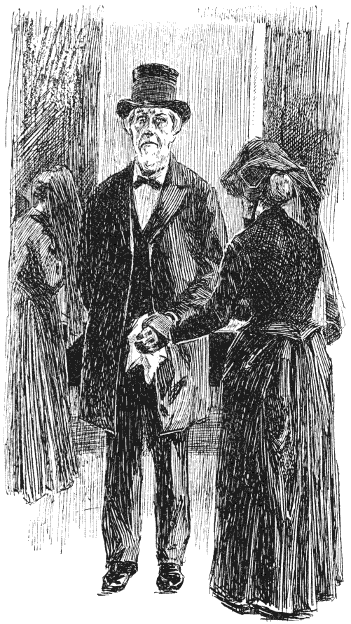
“It was midnight before the doctor got her quiet, and then she lay in a stupor like, with Jim settin’ watchin’ her. Then I thought of the pore baby an’ went to see about it, but some of the other neighbors hed come in, an’ I found they had it laid out nice in the parlor.
“Mis’ Curtis was settin’ by the kitchen stove, fur it was a cool evenin’, an’ I says to her, ‘Mary Ann,’ says I, ‘what ailed the child? It was tuk suddent, wasn’t it?’
“She looked at me. I knowed she was mad as well as feelin’ bad, but she didn’t want to show it then, an’ she says,
“‘Yes, I reckon you might say it was, ’though I never spected the child to live from the first. What’d Jim marry that no-’count spindly girl fur? He might ’a ’knowed.’
“‘Mis’ Curtis,’ says I, ‘Rhody’ll not trouble you long; and it’s my belief,’ says I, ‘you’ve hurried her into her grave.’
“‘It’s no sich thing,’ says she. ‘I waited on her as good as if she was my own; but I had lots to do to-day, an’ I tole her this mornin’ I was done packin’ victuals up stairs for a lazy trollop like her, an’ she could come down to dinner if she wanted any. She’s plenty able to, Nancy Riley, an’ it’s my ’pinion she didn’t take half care of that baby. An’ she set Jim agin me. He’s fixin’ to go off to live by hisself.’
“I jes’ turned round and left her, an’ she bounced up an’ says to one of the women, ‘I spect you’re all hungry, an’ I’ll get supper’; an’ in spite of all they could do, to work she went.”
“Oh, yes,” said Mrs. Johnson, “the madder she got the harder she’d work, an’ a mighty good worker, too, she was; but how did that poor Rhody get along?”
“Well, she lay quiet all that mornin’, but about the middle of the afternoon she roused up and seemed to know me an’ Jim, an’ asked for the baby.
“‘It’s down stairs, Rhody,’ says I.
“She looked at me so queer.
“‘Is it?’ she said. ‘Mother was mad, Jim, an’ wouldn’t come up stairs; an’ baby was so sick, an’ I tried to call her, an’ I couldn’t make her hear, an’ then I tried to go down stairs an’ I couldn’t, an’ baby got so stiff and cold, an’ I couldn’t get him warm.’ An’ then, O Mis’ Johnson, she began to scream again. It was awful, but after a while she was still again for several hours, an’ I tried to get Jim to lay down, but he wouldn’t leave her; an’ his mother come up for him to get him to go down an’ eat somethin’, but he jes’ looked at her, an’ she went an’ left him.
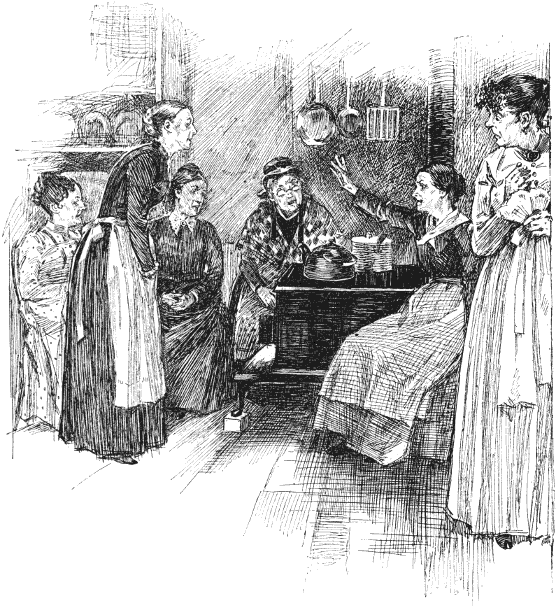
“It was night when Rhody roused up agin’, an’ she looked so much better out of her eyes that I felt sort a cheered.
“‘Jim,’ she says, whispering, ‘is that Aunt Nancy?’
“‘Yes, dear,’ he says.
“‘An’ has she got the baby?’ she went on.
“Well, Jim didn’t say nothin’, pore feller, an’ she says,
“‘Aunt Nancy, when Jim an’ me’s keepin’ house you’ll come an’ see us?’
“‘Yes, dear,’ I says. ‘Now go to sleep, like a good girl.’
“‘All right,’ she says, ‘you keep the baby, an’, Jim, kiss me good night. I love you—Jim. We’ll be—so happy—by—ourselves.’
“The last words were a long time comin’, an’ Jim, after he kissed her, looked at me an’ whispered, ‘Send for the doctor.’ I hurried out, but before the doctor came he was not needed. Rhody had said her last good night.”
“How did Mary Ann take it?” said Mrs. Johnson, wiping her eyes.
“Laws, she tuk on like all possessed, cried and hollered till I thought she’d go inter fits; but somehow I felt sorrier for the ole man. He’d stan’ an’ look at the pore thing after she was laid out, an’ the big tears’d run down his wrinkled face, an’ he says to me, ‘She’s too good fur this world, Nancy, Rhody was.’”
Just then the brakeman shouted the name of the town at which I was to stop, and I must gather up my traps. I leaned over and whispered to “Aunt Nancy,” “What did poor Jim do?”
The old lady’s face flushed. “Was you a-listenin’?” says she.
“I couldn’t help it,” I said. “Poor Rhoda! But what about Jim, Aunt Nancy?”
“This way, Madam,” said the conductor briskly. “Let me have your valise.”
“Jim?” she whispered excitedly, “he like to went wild, but he was mighty quiet, an’ soon’s the funeral was over he sold everything he had and went to Californy.”
“Did he forgive his mother?” I asked, but the conductor took my arm and marched me out, and to this day I am wondering about “Jim” and his mother and “ole man Curtis.” If I knew where “Aunt Nancy” lived, I would write to her.