Volume 9 — THOMAS CHATTERTON
Reading edition
(1752-1770)

o the third quarter of the eighteenth century belongs the tragedy of the life of Thomas Chatterton, who, misunderstood and neglected during his brief seventeen years of poetic revery, has by the force of his genius and by his actual achievement compelled the nineteenth century, through one of its best critics, to acknowledge him as the father of the New Romantic school, and to accord him thereby a place unique among his contemporaries. His family and early surroundings serve in a way to explain his development. He was born at Bristol, a town rich in the traditions and monuments of bygone times. For nearly two hundred years the office of sexton to the church of St. Mary Redcliffe had been handed down in the family. At the time of the poet's birth it was held by a maternal uncle; for his father, a "musical genius, somewhat of a poet, an antiquary and dabbler in occult arts," was the first to aspire to a position above the hereditary one, and had taken charge of the Pyle free schools in Bristol. He died before his son's birth, and left his widow to support her two children by keeping a little school and by needlework. The boy, reserved and given to revery from his earliest years, was at first considered dull, but finally learned to spell by means of the illuminated capitals of an old musical folio and a black-letter Bible. He spent much of his time with his uncle, in and about the church. St. Mary Redcliffe, one of the finest specimens of mediæval church architecture in England, is especially rich in altar tombs with recumbent carved figures of knights, and ecclesiastic and civic dignitaries of bygone days. These became the boy's familiar associates, and he amused himself on his lonely visits by spelling out the old inscriptions on their monuments. There he got hold of some quaint oaken chests in the muniment room over the porch, filled with parchments old as the Wars of the Roses, and these deeds and charters of the Henrys and Edwards became his primers. In 1760 he entered Colston's "Blue-Coat" charity school, located in a fine old building of the Tudor times. The rules of the institution provided for the training of its inmates "in the principles of the Christian religion as laid down in the Church catechism," and in fitting them to be apprenticed in due course to some trade. During the six years of his stay, Chatterton received only the rudiments of a common-school education, and found little to nourish his genius. But being a voracious reader, he went on his small allowance through three circulating libraries, and became acquainted with the older English poets, and also read history and antiquities. He very early entertained dreams of ambition, without however finding any sympathy; so he lived in a world of his own, conceiving before the age of twelve the romance of Thomas Rowley, an imaginary clerk of the fifteenth century, and his patron Master William Canynge, a former mayor of Bristol whose effigy was familiar to him from the tomb in the church. This fiction, which after his death gave rise to the celebrated controversy of the 'Rowley Poems,' matured at this early age as a boy's life-dream, he fashioned into a consistent romance, and wove into it among the prose fragments the ballads and lyrics on which his fame as poet now rests. His earliest literary forgery was a practical joke played on a credulous pewterer at Bristol, for whom he fabricated a pedigree dating back to the time of the Norman Conquest, which he professed to have collected from ancient manuscripts. It is remarkable as the work of a boy not yet fourteen. He was rewarded with a crown piece, and the success of this hoax encouraged him further to play upon the credulity of his townspeople, and to continue writing prose and verse in pseudo-antique style.
Thomas Chatterton
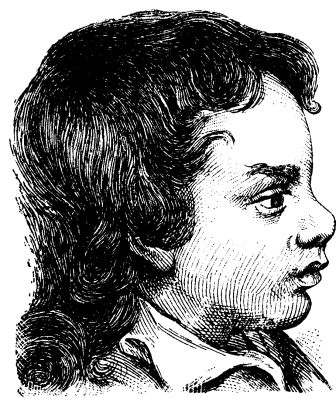
In 1767 he was bound apprentice to John Lambert, attorney. The office duties were light. He spent his spare time in poetizing, and sent anonymously transcripts from professedly old poems to the local papers. Their authorship being traced to him, he now claimed that his father had found numerous old poems and other manuscripts in a coffer of the muniment room at Redcliffe, and that he had transcribed them. Under guise of this fiction he produced, within the two years of his apprenticeship, a mass of pseudo-antique dramatic, lyric, and descriptive poems, and fragments of local and general history, connected all with his romance of the clerk of Bristol. A scholarly knowledge of Middle English was rare one hundred and thirty years ago, and the self-taught boy easily gulled the local antiquaries. He even deceived Horace Walpole, who, dabbling in mediævalism, had opened the way for prose romances with his 'Castle of Otranto,' a spurious antique of the same time in which Chatterton had placed his fiction. Walpole at first treated him courteously, even offering to print some of the poems. But when Gray and Mason pronounced them modern, he at once gave Chatterton the cold shoulder, entirely forgetting his own imposition on a credulous public.
Chatterton now turned to periodical literature and the politics of the day, and began to contribute to various London magazines. In the spring of 1770 he finally came up to London, to start on the life of a literary adventurer on a capital of less than five pounds. He lived abstemiously and worked incessantly, literally day and night. He had a wonderful versatility; he would write in the manner of any one he chose to imitate, and he tried his hand at every species of book-work. But even under the strain of this incessant productivity he found time to turn back to his boyhood dreams, and produced one of his finest poems, the 'Ballad of Charity.' At first his contributions were freely accepted, but he was poorly paid, and sometimes not at all. Yet out of his scanty earnings he bought costly presents for his mother and sister, as tokens of affection and an earnest of what he hoped to do for them. After scarcely two months in London he was at the end of his resources. He made an attempt to gain a position as surgeon's assistant on board of an African trader, but was unsuccessful. He now found himself face to face with famine; and, too proud to ask for assistance or to accept even the hospitality of a single meal, he on the night of August 25th, 1770, locked himself into his garret, destroyed all his note-books and papers, and swallowed a dose of arsenic. It is believed that he was privately buried in the churchyard of St. Mary Redcliffe. There a monument has been erected, with an inscription from his poem 'Will':—
"To the memory of Thomas Chatterton. Reader! judge not. If thou art a Christian, believe that he shall be judged by a superior power. To that power alone is he now answerable."
His death attracted little notice, for he was regarded merely as the transcriber of the 'Rowley' poems. They were collected after his death, from the various persons to whom he had given the manuscripts, and occasioned a controversy that has lasted almost down to the present generation. But only an age untrained in philological research could ever have received them as genuine productions of the fifteenth century: for Chatterton, who knew little of the old authors antedating Spenser, constructed with the help of Bailey's and Kersey's English dictionaries a lingo of his own; he strung together old words of all periods and dialects, and even coined words himself to suit the metre. His lingo resembles anything rather than Middle English. It is supposed that he wrote first in modern English, and then translated into his own dialect; for the poems do not suffer by retranslation,—on the contrary, they are more intelligible and often more rhythmical. Chatterton had a wonderful memory, and having read enormously, there are frequent though perhaps unconscious plagiarisms from Spenser, Shakespeare, Dryden, Pope, Gray, and others.
Yet after all has been said against the spurious character of the 'Rowley' poems, Chatterton's two volumes of collected writings, produced under the most adverse circumstances, are a record of youthful precocity unparalleled in literary history. He wrote spirited satires at ten, and some of his best old verse before sixteen. 'Ælla' is a dramatic poem of sustained power and originality, and its songs have the true lyric ring; the 'Ode to Liberty,' a fragment from the tragedy of 'Goddwyn,' is with its bold imagery one of the finest martial lyrics in the language; the 'Ballad of Charity,' almost the last poem he wrote, comes in its objectivity and artistic completeness near to some of Keats's best ballad work. But more wonderful perhaps than this early blossoming of his genius is its absolute originality. At a time when Johnson was the literary dictator of London, and Pope's manner still paramount, Chatterton, unmindful of their conventionalities and the current French influence, instinctively turned to earlier models, and sought his inspiration at the true source of English song. Bishop Percy's 'Reliques of Old English Poetry,' published in 1765, first made the people acquainted with their fine old ballads; but by that year Chatterton had already planned the story of the monk of Bristol and written some of the poems. Gifted with a rich vein of romance, he heralded the coming revival of mediæval literature. But he not only divined the new movements of poetry—he was also responsible for one side of its development. He had a poet's ear for metrical effects, and transmitted this gift to the romantic poets through Coleridge; for the latter, deeply interested in the tragedy of the life of the Bristol boy, studied his work; and traces of this study, resulting in freer rhythm and new harmonies, are found in Coleridge's own verse. The influence of the author of 'Christabel' on his brother poets is indisputable; hence his indebtedness to Chatterton gives to the latter at once his rightful position as the father of the New Romantic school. Keats also shows signs of close acquaintance with Chatterton; and he proves moreover by the dedication of his 'Endymion' that he cherished the memory of the unfortunate young poet, with whom he had, as far as the romantic temper on its objective side goes, perhaps the closest spiritual kinship of any poet of his time.
But quite apart from his youthful precocity and his influence on later poets, Chatterton holds no mean place in English literature because of the intrinsic value of his performance. His work, on the one hand, aside from the 'Rowley' poems, shows him a true poet of the eighteenth century, and the best of it entitles him to a fair place among his contemporaries; but on the other hand he stands almost alone in his generation in possessing the highest poetic endowments,—originality of thought, a quick eye to see and note, the gift of expression, sustained power of composition, and a fire and intensity of imagination. In how far he would have fulfilled his early promise it is idle to surmise; yet what poet, in the whole range of English, nay of all literature, at seventeen years and nine months of age, has produced work of such excellence as this "marvelous boy," who, unrecognized and driven by famine, took his own life in a London garret?
FINAL CHORUS FROM 'GODDWYN'
When Freedom, dreste yn blodde-steyned veste, To everie knyghte her warre-songe sunge, Uponne her hedde wylde wedes were spredde; A gorie anlace bye her honge. She dauncèd onne the heathe; She hearde the voice of deathe; Pale-eyned affryghte, hys harte of sylver hue, In vayne assayled her bosomme to acale; She hearde onflemed the shriekynge voice of woe, And sadnesse ynne the owlette shake the dale. She shooke the burled speere, On hie she jeste her sheelde, Her foemen all appere, And flizze alonge the feelde. Power, wythe his heafod straught ynto the skyes, Hys speere a sonne-beame, and hys sheelde a starre, Alyche twaie brendeynge gronfyres rolls hys eyes, Chaftes with hys yronne feete and soundes to war. She syttes upon a rocke, She bendes before hys speere, She ryses from the shocke, Wieldynge her owne yn ayre. Harde as the thonder dothe she drive ytte on, Wytte scillye wympled gies ytte to hys crowne, Hys longe sharpe speere, hys spreddynge sheelde ys gon, He falles, and fallynge rolleth thousandes down. War, goare-faced war, bie envie burld, arist, Hys feerie heaulme noddynge to the ayre, Tenne bloddie arrowes ynne hys streynynge fyste.
THE FAREWELL OF SIR CHARLES BALDWIN TO HIS WIFE
From 'The Bristowe Tragedie'
And nowe the bell beganne to tolle, And claryonnes to sounde; Syr Charles hee herde the horses' feete A-prauncing onne the grounde: And just before the officers His lovynge wyfe came ynne, Weepynge unfeignèd teeres of woe, Wythe loude and dysmalle dynne. "Sweet Florence! nowe I praie forbere, Ynne quiet lett mee die; Praie Godde, thatt ev'ry Christian soule May looke onne dethe as I. "Sweet Florence! why these brinie teeres? Theye washe my soule awaie, And almost make mee wyshe for lyfe, Wythe thee, sweete dame, to staie. "'Tys butt a journie I shalle goe Untoe the lande of blysse; Nowe, as a proofe of husbande's love, Receive thys holie kysse." Thenne Florence, fault'ring ynne her saie, Tremblynge these wordyès spoke:— "Ah, cruele Edwarde! bloudie kynge! My herte ys welle nyghe broke: "Ah, sweete Syr Charles! why wylt thou goe, Wythoute thye lovynge wyfe? The cruelle axe thatt cuttes thye necke, Ytte eke shall ende mye lyfe." And nowe the officers came ynne To brynge Syr Charles awaie, Whoe turnedd toe hys lovynge wyfe, And thus to her dydd saie:— "I goe to lyfe, and nott to dethe; Truste thou ynne Godde above, And teache thye sonnes to feare the Lorde, And ynne theyre hertes hym love: "Teache them to runne the nobile race Thatt I theyre fader runne: Florence! shou'd dethe thee take—adieu! Yee officers, leade onne." Thenne Florence rav'd as anie madde, And dydd her tresses tere; "Oh! staie, mye husbande! lorde! and lyfe!" Syr Charles thenne dropt a teare. 'Tyll tyrèdd oute wythe ravynge loud, She fellen onne the flore; Syr Charles exerted alle hys myghte, And march'd fromme oute the dore. Uponne a sledde hee mounted thenne, Wythe lookes fulle brave and swete; Lookes, thatt enshone ne more concern Thanne anie ynne the strete.
MYNSTRELLES SONGE
O! synge untoe mie roundelaie, O! droppe the brynie teare wythe mee, Daunce ne moe atte hallie daie, Lycke a reynynge ryver bee; Mie love ys dedde, Gon to hys deathe-bedde, Al under the wyllowe tree. Blacke hys cryne as the wyntere nyghte, Whyte hys rode as the sommer snowe, Rodde hys face as the mornynge lyghte, Cale he lyes ynne the grave belowe; Mie love ys dedde, Gon to hys deathe-bedde, Al under the wyllowe tree. Swote hys tyngue as the throstles note, Quycke ynn daunce as thoughte canne bee, Defte hys taboure, codgelle stote, O! hee lyes bie the wyllowe tree; Mie love ys dedde, Gonne to hys deathe-bedde, Alle underre the wvllowe tree. Harke! the ravenne flappes hys wynge, In the briered delle belowe; Harke! the dethe-owle loude dothe synge, To the nyghte-mares as heie goe; Mie love ys dedde, Gonne to hys deathe-bedde, Al under the wyllowe tree. See! the whyte moone sheenes onne hie; Whyterre ys mie true loves shroude; Whyterre yanne the mornynge skie, Whyterre yanne the evenynge cloude; Mie love ys dedde, Gon to hys deathe-bedde, Al under the wyllowe tree. Heere, uponne mie true loves grave, Schalle the baren fleurs be layde; Nee one hallie Seynete to save Al the eelness of a mayde. Mie love ys dedde, Gonne to hys deathe-bedde, Alle under the wyllowe tree. Wythe mie hondes I'll dente the brieres Rounde his hallie corse to gre; Ouphante fairie, lyghte youre fyres; Heere mie boddie stylle schalle bee. Mie love ys dedde, Gon to hys deathe-bedde, Al under the wyllowe tree. Comme, wythe acorne-coppe and thorne, Drayne mie hartys blodde awaie; Lyfe and all yttes goode I scorne, Daunce bie nete, or feaste by daie. Mie love ys dedde, Gon to hys deathe-bedde, Al under the wyllowe tree. Waterre wytches, crownede wythe reytes, Bere mee to yer leathalle tyde. I die! I come! mie true love waytes. Thus the damselle spake, and died.
AN EXCELENTE BALADE OF CHARITTE
As Wroten bie the Gode Prieste Thomas Rowleie, 1464.
In Virgyne the sweltrie sun gan sheene, And hotte upon the mees did caste his raie: The apple rodded from its palic greene, And the mole peare did bende the leafy spraie; The peede chelandri sunge the livelong daie; 'Twas nowe the pride, the manhode of the yeare, And eke the grounde was dighte in its mose defte aumere. The sun was glemeing in the midde of daie, Deadde still the aire, and eke the welken blue, When from the sea arist in drear arraie A hepe of cloudes of sable sullen hue, The which full fast unto the woodlande drewe, Hiltring attenes the sunnis fetyve face, And the blacke tempeste swolne and gatherd up apace. Beneathe an holme, faste by a pathwaieside, Which dyde unto Seynete Godwine's covent lede, A hapless pilgrim moneynge dyd abide; Pore in his viewe, ungentle in his weede, Longe bretful of the miseries of neede, Where from the hail-stone coulde the almer flie? He had no housen theere, ne anie covent nie. Look in his gloomed face, his sprighte there scanne; Howe woe-be-gone, how withered, forwynd, deade! Haste to thie church-glebe-house, asshrewed manne! Haste to thie kiste, thie onlie dortoure bedde. Cale, as the claie whiche will gre on thie hedde, Is Charitie and Love aminge highe elves; Knightis and Barons live for pleasure and themselves. The gatherd storme is rype; the bigge drops falle; The forswat meadowes smethe, and drenche the raine; The comyng ghastness do the cattle pall, And the full flockes are drivynge ore the plaine; Dashde from the cloudes the waters flott againe; The welkin opes; the yellow levynne flies; And the hot fierie smothe in the wide lowings dies. Liste! now the thunder's rattling clymmynge sound Cheves slowlie on, and then embollen clangs; Shakes the hie spyre, and losst, dispended, drown'd, Still on the gallard eare of terroure hanges; The windes are up; the lofty elmen swanges; Again the levynne and the thunder poures, And the full cloudes are braste attenes in stones showers. Spyrreynge his palfrie oere the watrie plaine, The Abbote of Seynete Godwynes convente came; His chapournette was drented with the reine, And his penete gyrdle met with mickle shame; He aynewarde tolde his bederoll at the same; The storme encreasen, and he drew aside, With the mist almes-craver neere to the holme to bide. His cope was all of Lyncolne clothe so fyne, With a gold button fasten'd neere his chynne; His autremete was edged with golden twynne, And his shoone pyke a loverds mighte have binne; Full well it shewn he thoughten coste no sinne: The trammels of the palfrye pleasde his sighte, For the horse-millanare his head with roses dighte. An almes, sir prieste! the droppynge pilgrim saide: O! let me waite within your covente dore, Till the sunne sheneth hie above our heade, And the loude tempeste of the aire is oer; Helpless and ould am I, alas! and poor: No house, ne friend, ne moneie in my pouche; All yatte I calle my owne is this my silver crouche. Varlet, replyd the Abbatte, cease your dinne; This is no season almes and prayers to give; Mie porter never lets a faitour in; None touch mie rynge who not in honour live. And now the sonne with the blacke cloudes did stryve, And shettynge on the grounde his glairie raie, The Abbatte spurrde his steede, and eftsoones roadde awaie. Once moe the skie was blacke, the thounder rolde; Faste reyneynge oer the plaine a prieste was seen; Ne dighte full proude, ne buttoned up in golde; His cope and jape were graie, and eke were clene; A Limitoure he was of order seene; And from the pathwaie side then turned hee, Where the pore almer laie binethe the holmen tree. An almes, sir priest! the droppynge pilgrim sayde, For sweete Seynete Marie and your order sake. The Limitoure then loosen'd his pouche threade, And did thereoute a groate of silver take; The mister pilgrim dyd for halline shake. Here, take this silver, it maie eathe thie care; We are Goddes stewards all, nete of oure owne we bare. But ah! unhailie pilgrim, lerne of me, Scathe anie give a rentrolle to their Lorde. Here, take my semecope, thou arte bare I see; Tis thyne; the Seynetes will give me mie rewarde. He left the pilgrim, and his waie aborde. Virgynne and hallie Seynete, who sitte yn gloure, Or give the mittee will, or give the gode man power!
THE RESIGNATION
O God! whose thunder shakes the sky, Whose eye this atom-globe surveys, To thee, my only rock, I fly,— Thy mercy in thy justice praise. The mystic mazes of thy will, The shadows of celestial night, Are past the power of human skill; But what the Eternal acts is right. O teach me, in the trying hour— When anguish swells the dewy tear— To still my sorrows, own thy power. Thy goodness love, thy justice fear. If in this bosom aught but thee, Encroaching, sought a boundless sway, Omniscience could the danger see, And Mercy look the cause away. Then why, my soul, dost thou complain— Why drooping seek the dark recess? Shake off the melancholy chain; For God created all to bless. But ah! my breast is human still; The rising sigh, the falling tear, My languid vitals' feeble rill, The sickness of my soul declare. But yet, with fortitude resigned, I'll thank the Inflictor of the blow— Forbid the sigh, compose my mind, Nor let the gush of misery flow. The gloomy mantle of the night, Which on my sinking spirit steals, Will vanish at the morning light, Which God, my East, my Sun, reveals.