WITCHCRAFT LORE
Charles Godfrey Leland translation
I
THE WIZARD’S CHANT
[Passamaquoddy]
Nil nolbin naga ntetlitemen pekholagon.[46]
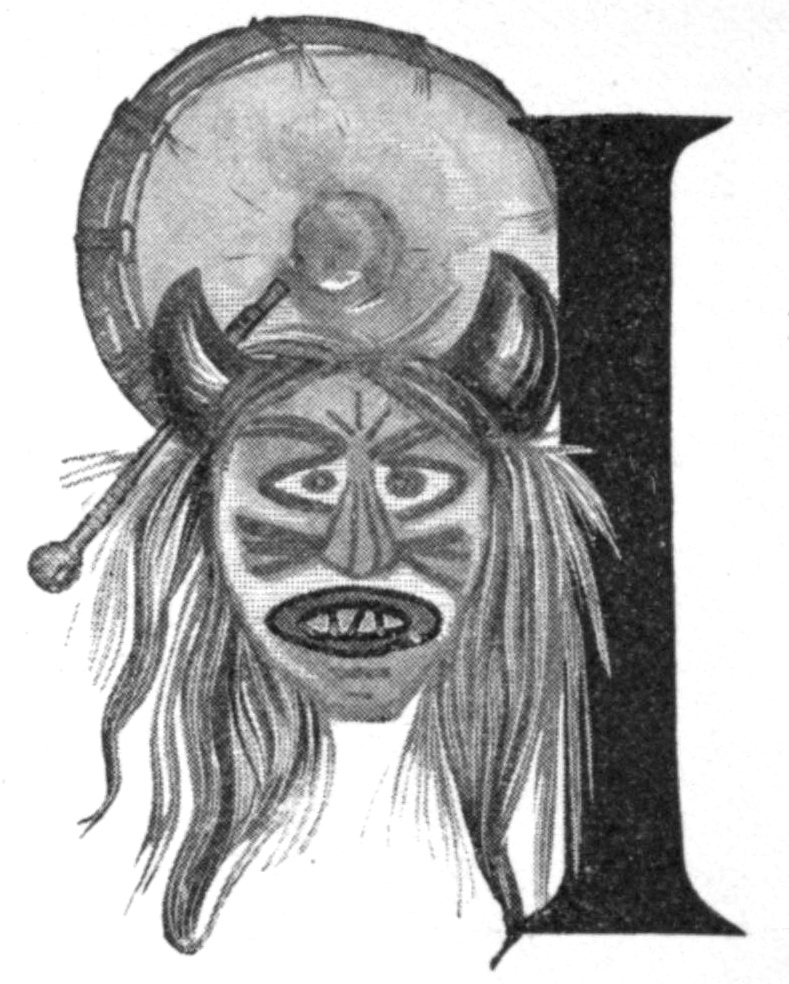
I sit and beat the wizard’s magic drum; And by its mystic sound I call the beasts. From mountain lair and forest nook they throng; E’en mighty storms obey the dreadful sound. I sit and beat the wizard’s magic drum; The storm and thunder answer when it calls. Aplasemwesit, mighty whirlwind, stops To hearken to the mystic sound I make. I sit and beat the wizard’s magic drum; And Chibelaʿkwe, night-air spirit, flies To hearken to the mystic sound I make; And old Wuʾchoʿsen, storm-bird of the North, Rests his great pinions, causing calm to reign, To hearken to the mystic sound I make. I sit and beat the wizard’s magic drum; And Lumpeguin, who dwells beneath the wave, Arises to the surface struck with awe, To hearken to the mystic sound I make. E’en Atwuskniges, armed with axe of stone, Will cease his endless chopping, and be still To hearken to the mystic sound I make. I sit and beat the wizard’s magic drum; And Appodumken, with his long, red hair, Ariseth from the depths, and draweth near To hearken to the mystic sound I make. The lightning, thunder, storm and forest sprite, The whirlwind, gale, and spirit of the deep, The Chibelaʿkwe, loathly night-air ghost, All come together, and with reverent mien Will hearken to the mystic sound I make. P.
FOOTNOTES:
II
THE WOMAN AND THE SERPENT
[Passamaquoddy]
Piʿchedog Laʿtogwesnuk.[47]
Far away, very far in the North, There dwelt by a great fair lake An Indian and his wife, A very beautiful woman Given to strange wild dreams; Passion was in her blood. The lake was frozen over For many months in the year; One day, when she cut away The ice, she saw in the water A pair of wonderful eyes Steadily gazing at her; Bright eyes which charmed her so That she could not move a hand; Then she saw a handsome face And a graceful slender young man, Who rose from the glittering water, And he himself, like it, Glittered from head to foot; On his breast were nʾskemanul, Or shining silvery plates. He said, “I am Aʿtosis, The King of all the Serpents”; Little she cared for his nature, She talked with him of love, She returned his fond embraces; Every day she came to meet him, And often in the night. Her husband noticed that often She strayed away from home, And asked her, why she wandered? She answered, “To get fresh air.” The weather grew ever warmer; The ice from the lake had melted, Grass, flowers and leaves were growing. The woman patiently waited Till her husband was asleep; Then she stole away in silence From the one whom she kissed no more Unto her serpent lover Whom she kissed with all her heart. The husband greatly suspecting, Resolved to watch her wandering. And so, to avert suspicion, Said, “Stay here in the wigwam, For I shall be gone three days To hunt the deer in the forest.” But at the end of the second He came again to the wigwam, And found that she was absent. As he sat, re-kindling the fire, She entered. He saw upon her Bright shining silver scales; He asked her what ’twas that glittered? She answered, “My silver brooches.” He said. “I must go again To be absent hunting to-morrow.” He went to the top of a hill Overlooking the lake, where he watched her. She went and sat by the shore; Then rose afar in the water What seemed to his sight to be A shining flake of ice, But when it came to the shore ’Twas a tall and slender man All clad, as it seemed, in silver. The woman leapt up and embraced him, And gave him many kisses. The husband in awe and anger Went forth to other people, And left his wife forever; But soon her father and mother Came to her home to see her, And dwelt with her many days. And every day, when returning From an absence they knew not whither, She brought them furs and venison, With fish and fowl in plenty. They asked her whence she had it? She answered, “I have another, A husband who suits me better Than him whom first I married. This one can give me all. He is a better hunter.” She sent them away with presents, With many silver bracelets, With many ear-rings and brooches And said: “Do not return Till the ice is here in winter.” When they returned they found her White as a silver lily: Her Indian hue had faded; And soon she gave birth to offspring But her children all were serpents. Then the parents went away; But even as they left her She said: “When you come again You will see me but never know me!” Years after three Indian hunters Who had heard this wondrous story Sought by the lake for the wigwam. It was standing still, but empty, But all the wood about it Was full of great black serpents Which from the grass uprising Would look them in the face Then glide away in silence. L.
FOOTNOTES:
III
THE WIZARD SNAKE
[Abenaki]
Noñwat nizwak noñkskwesizak.[48]
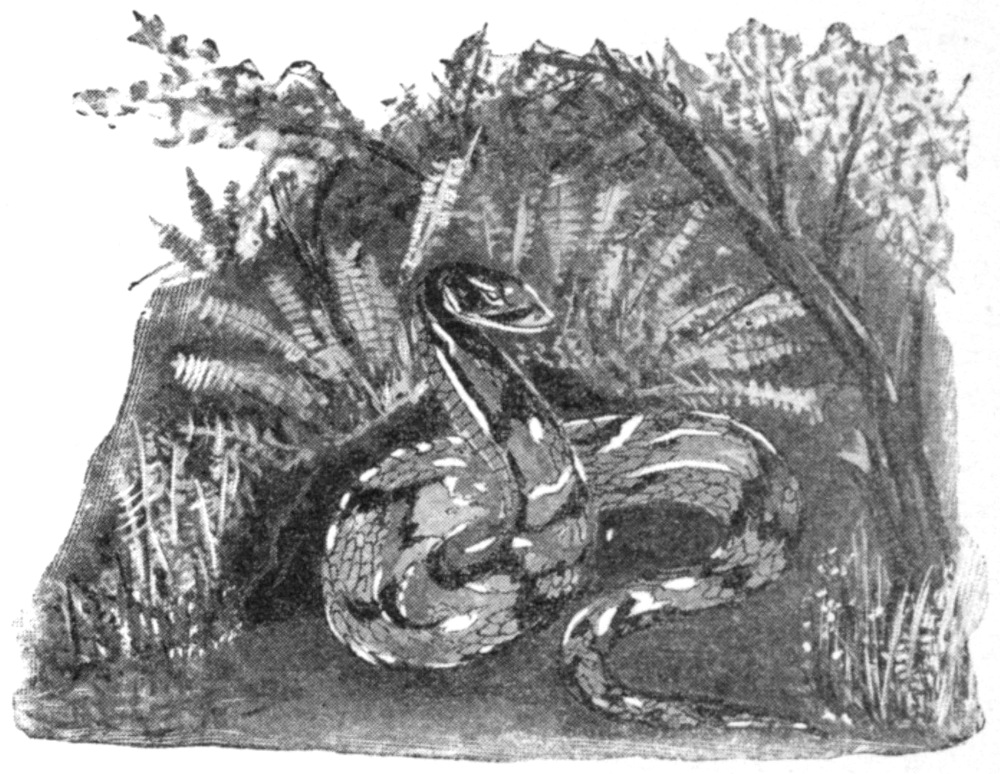
Long years ago, two lovely Indian girls Were wont to leave their people every week, Embarking secretly in birch canoe. Their tribe knew neither why nor where they went. One summer’s noon a hunter chanced to stray Close to a well-hid pond in forest deep, Where, puzzled by the sound of plashing spray, He stole behind the alders for a peep. There swam the damsels in abandoned glee, Their hair all streaming with a loathly snake. Then when they felt the hunter’s look of awe Straightway they dived beneath the surface foul. In horror, back the hunter made his way And told the Indians what his eyes had seen. Then, all together left the happy town And struggling through the brush and tangled wood Went straightway to that fearsome pool to save The damsels from a fate too dread to tell. But ah, when they drew near, they heard them sing, All sad and woful in a wailing chant: “No more, no more may we turn back again, For mortal eye hath seen us in our sin.” P.
FOOTNOTES:
IV
THE MEASURING WORM
[Abenaki]
Noñwat alnoñbak liwʾlalmoñldamōk Ali mʾdaulinʾwak aïdit.[49]
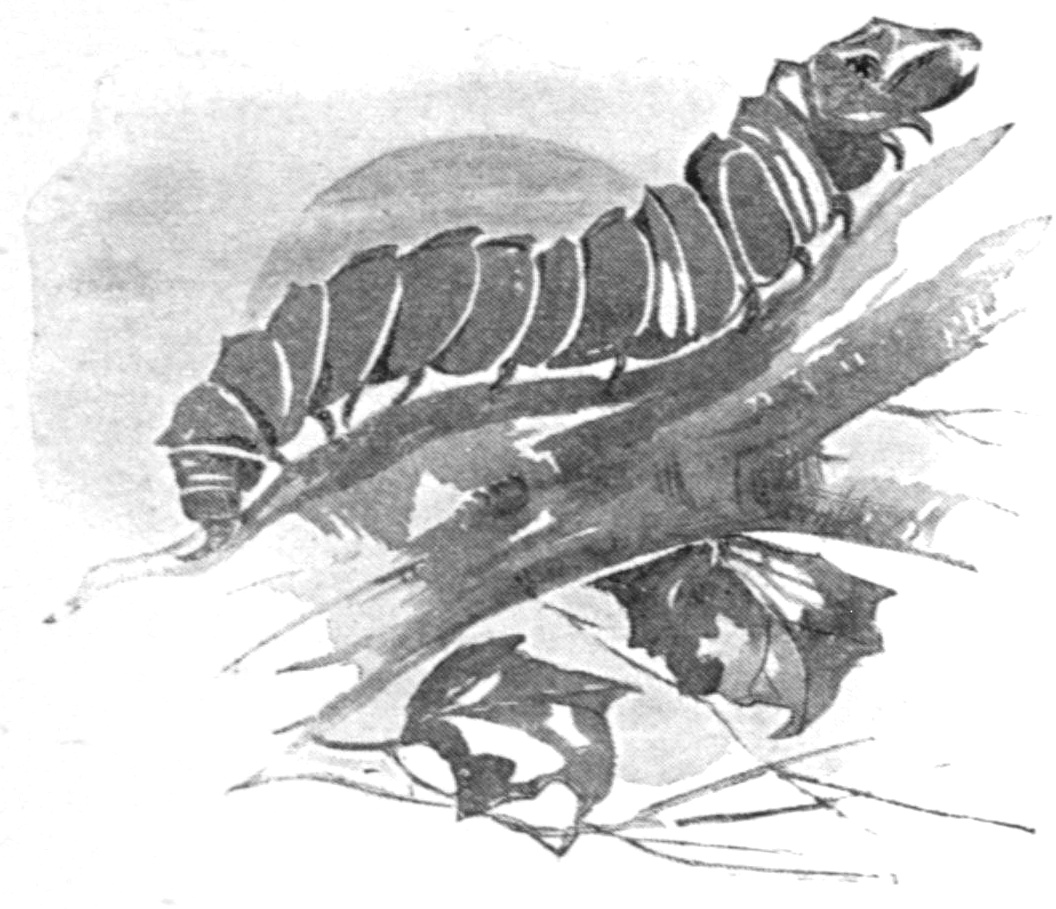
Long, long ago the Indians believed in witches’ power. One day a man was hunting far from human sights and sounds, Deep in the wildest forest glades, nor thought of magic wiles, When suddenly he heard a voice which said to him: “Depart, And come again to this same spot at earliest streak of dawn.” Awestruck, the hunter at the hour appointed sought once more To hear the mystic tones which came to him he knew not whence. So at the morrow’s dawn he trod again the darksome glade; And once again he heard the voice command him in this wise: “Begone from here and seek the spot where yawns a precipice. There on the earth thine eyes shall see a liver freshly cut This eat and then depart; but come again, I’ll give thee strength.” Then on the following day, he brought his bow and arrows sharp And heard the voice command him: “Do thou shoot at yonder tree,” He shot, and saw his arrow pass straight through the doomèd tree. Astonished beyond measure then, he bade his mother look. “O kini nikʾn,” “mother, see,” he cried in wonder great. His mother saw and straightway feared; began to watch the lad, And marked that when he lay at night no sleep would come to him, But always after little time he’d rise and steal away, Till daylight dawned and then he would come creeping back to bed. At last, all tortured by her pain and harrowed by her fears, She questioned him and said: “My son, where hast thou been all night?” Quoth he: “My friend and I have played together in the wood.” She asked once more: “My son, pray tell what is it that you do.” “We have been killing serpents vile and eating them,” said he; “A serpent’s liver eaten giveth magic gifts to man. I am not as I was before, but have the power to move And climb from ledge to ledge as doth a worm, upon my head. My friend hath taught me how to pass through ways impassable To all save us.” “Who is thy friend?” His mother asked of him. “His name is Tatebákwunowat, which means ‘a Measuring Worm.’ Of sport like this I never dreamed;” and yet the mother feared, And told her agèd husband that their son was lost to them; For he’d become mʾdaulin and endowed with secret might. Then spake the father: “This shall cease; I know a way to save The foolish lad.” So when the evening came, he locked him in And would not let him forth to roam in spite of all his prayers. Then came the sound of some one walking heavily and hard, The old man looked and saw a Thing of horror at his door, Large eyes, short arms, short body and long legs of insect shape. “Set free thy son thou foolish one,” the loathsome wizard cried. “Not I,” replied the father, and at once let fall the flap Before his wigwam door. The lad grew very ill and begged, Entreated and implored that he might be allowed to roam As he had done before, but only got the answer “No.” Yet once again when morning’s light shone whitely on the trees, Another wizard slowly came before the wigwam door. At his approach the leaves and shrubs all rustled as from wind. “Why dost thou seek to keep thy son from getting magic power? He hath the magic gift to be the greatest of the great Among us men who practise arts unknown to thee and thine.” So spoke the wizard scornfully; the father stern replied: “I have no wish that son of mine should be like thee and thine.” Then quoth the wizard: “Thou shalt see thy son die here to-night, For we have taken him too far to let him back to thee.” “I care not if he die or no,” the father answering said, And moaning with an angry moan the wizard drew away And soon was lost to sight amid the waving forest leaves. In awful agony the boy lay stretched upon the earth Retching and crying out as one who soon must breathe his last. Till suddenly he vomited a mass of serpent skins, And then at last cast up the magic liver from his mouth. This was the end of all his woe, for when that loathsome thing Had left his body he arose all strong and purged and clean And never more was known to seek to practise magic arts. P.
FOOTNOTES:
V
THE PʾMULA OR AIR-DEMON
[Abenaki]
Noñwat agua ni alnoñbak pʾmigowak kʾpiwi.[50]
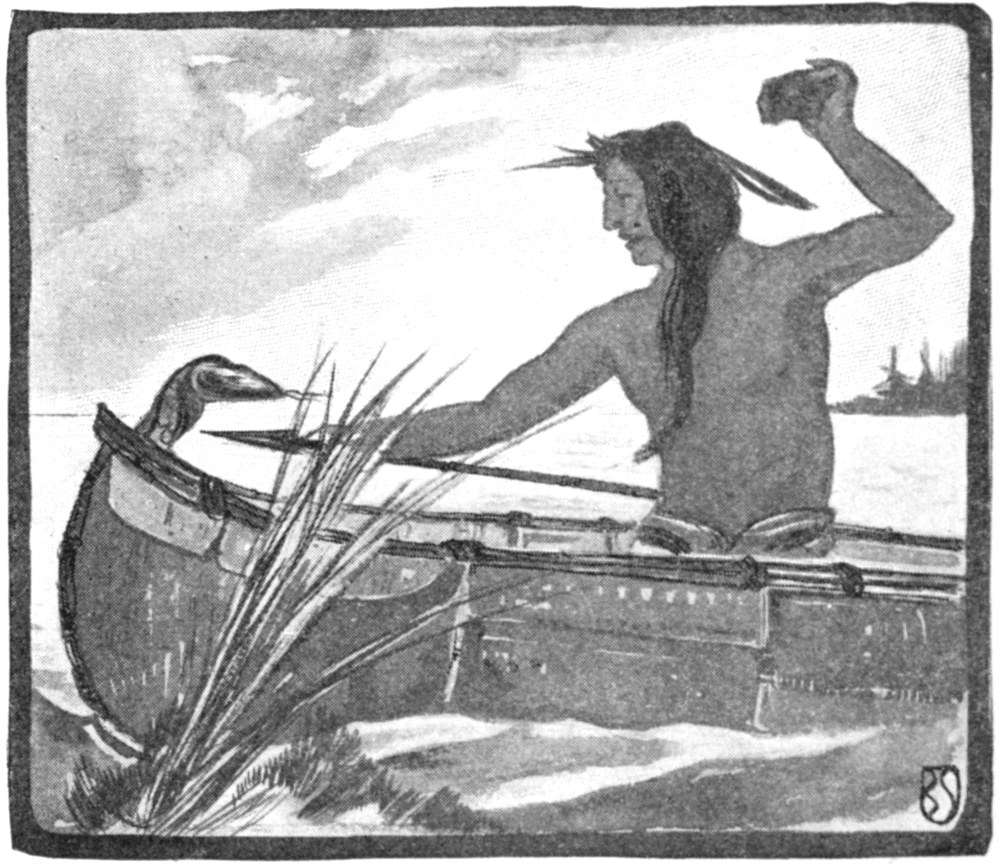
In days of yore some Indians were camping in the woods And one of them when near a stream heard a strange sound o’erhead. At once he looked and lo he saw a sprite of upper air, Called by the Indians, Pʾmûla, alighting on a ledge. The demon took a piece of yellow metal from his lips And bent himself to drink and then, restoring to his mouth The metal, spread his spacious wings and, rising, soared away. The man perceived that power to fly lay hidden in this charm, And so at once decided he would steal the thing away. It was not long before he heard again the rush of wings. This time, though, when the demon had alighted, he ran forth, And, snatching up the yellow charm, said, laughingly: “Ha, ha, My friend, do thou lie there a while, and I will fly about!” Then the Pʾmûla told the man: “If thou wilt let me go, I’ll give to thee another charm which aye will bring thee luck.” The Indian at once believed the demon’s given word And gave him back the yellow charm which brings the power of flight. Soaring aloft the Pʾmûla at once was lost to view But after a brief period returned and gave the man The two great eye-rings of a snake, and once again was gone. No sooner had the hapless wight these eye-rings in his hands, Than every kind of snake and beast that roam the northern woods Surrounded him, till, terrified, he rushed to his canoe. E’en there a giant serpent’s head confronted him agape. Then, quite beside himself with fear, he fled to thickest wood, And when at length all out of breath and weary with the chase He had to pause, he saw that still a host of snakes was there. Then suddenly he thought: “This dread comes from the magic rings.” So, raising up a heavy stone, he laid them safe beneath. And there they lie unto this day all full of mystic power. The Indian then ran away and saw no more strange sights, But ever on his hunts abroad he killed sufficient food, For all the forest creatures had no fear of him who once Had had the serpent’s eye-rings from the demon of the air. P.
FOOTNOTES:
VI
THE LITTLE BOY KIDNAPPED BY THE BEAR
[Penobscot]
Nâwad agua eleʿkza niʿkwop kʾdado kéowun.[51]
I am going to tell you now what happened long ago. Some Indians were camping with their children near a lake And one fair morning started off to hunt the wary moose, The children left alone in camp, as is the Indian way. On that same day a little lad who scarce could walk unhelped, Tottered and crawled away from camp until he lost the path And passed the cold and bitter night afar out in the bush. When morning dawned he thought he saw his mother drawing near And, rushing to her side, he held her fast in firm embrace. This was a she-bear, shaggy, great and strong as oxen twain. She seized the lad and bore him off and fed him in her den. When the old folk returned to camp they sought the boy in vain.
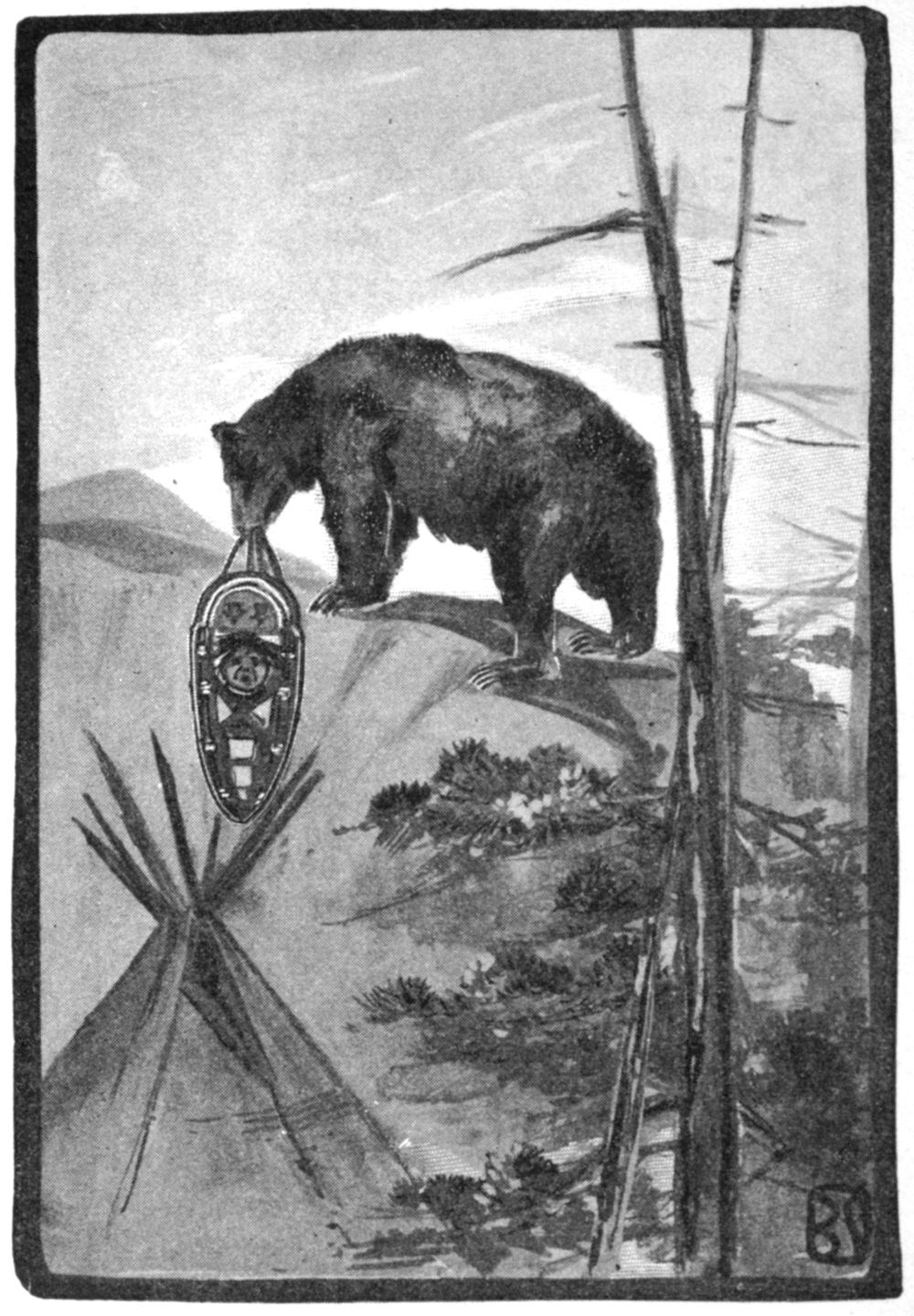
This was a she-bear, shaggy, great and strong as oxen twain, She seized the lad and bore him off.
For ten full days, all day and night, they sought the boy in vain. At last they broke up camp and, sorrowing, went back unto their town. All winter long the baby lay warmed by the sleeping bear And drawing nourishment at need forth from her milky teats— A wonder this, and quite unlike the usual way of bears. But this one was a wizard bear who wished to keep the lad. When spring-time came, the wizard of the little Indian town Took twenty men and started off to seek the long-lost lad. He had found out by secret arts the way to his abode. When they arrived, the furious bear rushed forth in anger dire But met her death by magic shot, and thus the boy was saved; He ran away, but soon was caught and to his kind restored, But during many years that lad was wild as any bear. P.
FOOTNOTES:
VII
THE WIZARD AND THE CHRISTIAN PRIEST
[Abenaki]
Askua ali wigiidit waʿkasimigʾzowak Salaʾki agua ni wijiganun kigamʾwinno.[52]
A priest of God came to an Indian town And settled there to teach the people truth, Which some received and others spurned with scorn. Some hostile Mohawks fell upon that town, Killing the folk, all save the Priest and one, An Indian of many magic gifts. Late in the afternoon of that same day The Mohawks reached their village with these two: The holy Priest and Wizard skilled in craft. The Mohawks held a council by the fire Discussing how to torture best the twain, So as to see their frenzy, and enjoy With gloating satisfaction every pain. They all agreed to heat two earthen pots On fiery coals unto the whitest heat; Then place these pots upon the head of each And watch them dance about till life was spent. With merry whoop they started up the fires; Began at once to heat the torture pots. Soon, when they thought the glow was great enough, They first of all laid hands upon the Priest. Then he who had been taken with the Priest At once brought all his magic arts to bear, And burst his bonds asunder with a yell That curdled every heart among the foe. The Wizard cried in Indian tongue: “Nda Awâni niûna ndelima— Magahôûnana,” which means: “My friends, We shall not torture any one (to-day).” And then he leapt upon the fiery coals And danced and danced, until his feet did fry And sizzle hot like bacon in a pan. Then all the Indians were full of fear. But when to crown the horror of the whole They saw the wizard put the glowing pot On his own head and leap about in glee, They all took flight in terror to the woods. Then spake the Wizard: “Father, now escape.” When they had reached all safe and sound their home, The Priest said to the Wizard: “O my son, Thou shouldst repent and turn thee from thine art Unto God’s ways and ever keep the Faith.” Then quoth the Wizard laughing: “Father mine, Had I repented and mine art eschewed, Then were we both of us dead men this day.”[53] P.
FOOTNOTES:
VIII
WIZARD WARFARE
[Abenaki]
Noñwat nd-odananok Mʾsalok mdaulinʾwak.[54]
Long, long years ago When wizards were not few There happened near our town A war of which I’ll tell. One day a wizard wise Sought counsel from the gods, And entered in the hut They knew as petegwîgun— A round-house made of bark, With opening above; No door nor window there Save only at the top Through which the wizard climbed, And, lying there in trance, Saw all the foemen’s wiles. Then, singing magic songs, Forth from that hut he came And ordered all the tribe To rise and meet the foe, The cruel Mohawk foe, Encamped not far away. So all the Indian braves Embarked in their canoes, Went down one stream, then up Another, paddling soft, Avoiding any sound. At last they saw a smoke Arising far away. Then spake the wizard thus: “Do ye all wait me here And I will go and spy The numbers of the foe, Taking with me but one; Another Indian brave Who hath the magic gift.” These wizards then withdrew Into a thicket’s shade, Whence suddenly emerged In beaver’s guise the one, In muskrat form his friend. When they drew very near The island where the foe, The cruel Iroquois, Were feasting on a moose, The beaver and the rat Dived deep beneath the stream, Causing that sudden plash Which even to this day Makes many a hunter jump. Among the Iroquois Another wizard sat And when he heard the plash Quoth he: “The foe is there, The fierce Abenakis.” Then, grasping in his hand, The legbone of a moose, He flung it straight and far To where the muskrat swam And struck him on the head. The beaver seized his friend And drew him ’neath the stream And held him till he drowned, In order that his pains And struggle for his life Should not alarm the foe. The Iroquois then rose And danced around the fire Thinking in hideous glee Of how when morrow came They’d torture all their foes.
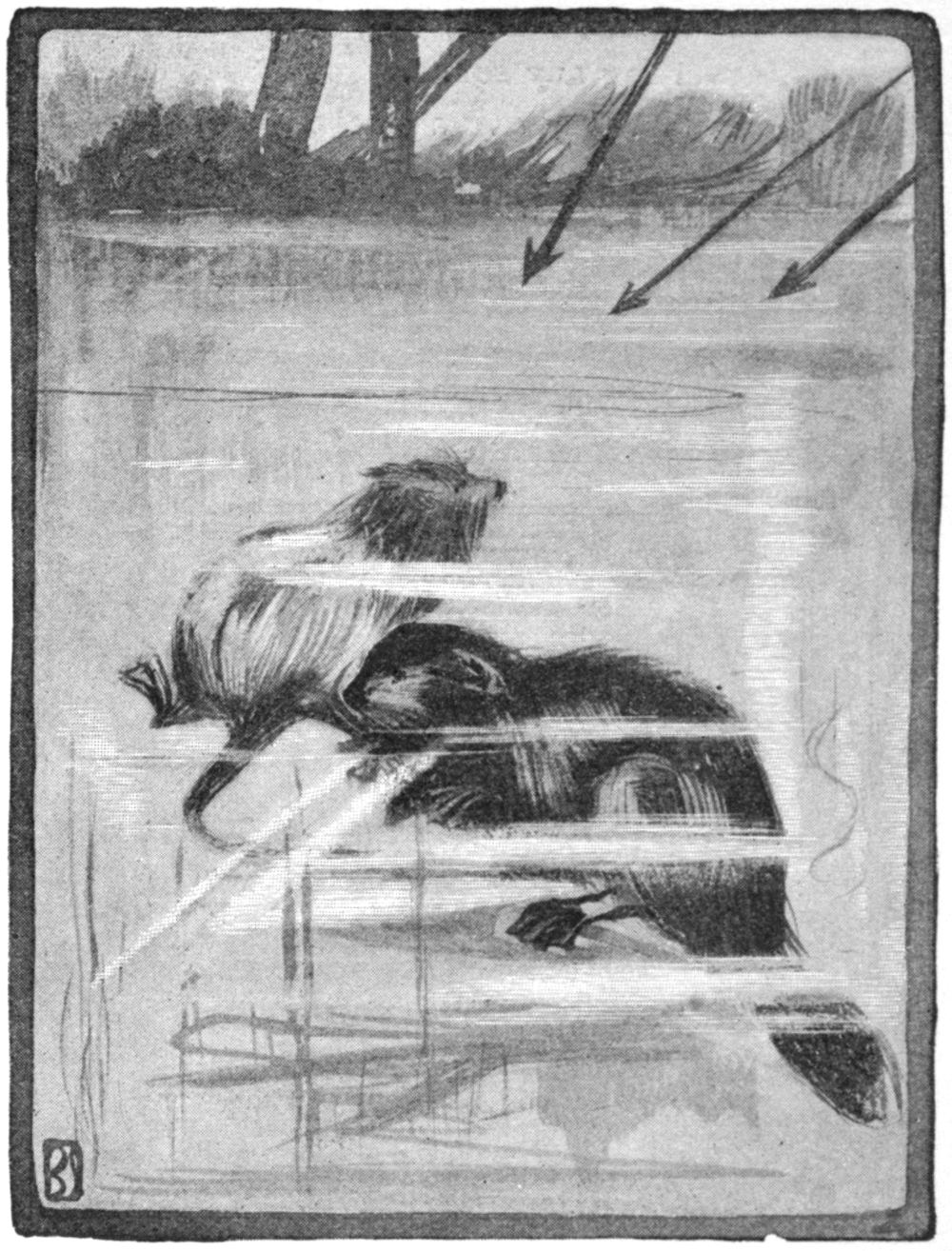
The beaver seized his friend And drew him ’neath the stream.
They then lay down to sleep. At once the beaver swam To shore to their canoes And gnawed with his sharp teeth Great holes in the birch bark Of which these craft were made. The wizard beaver then Swam back to his own folk To whom he said: “Arise, Come, quickly hunt them out.” The fierce Abenakis Came stealthily and still And landed on the isle Where lay the Iroquois. Then, whooping with the cry Of war which chills the soul, The fierce Abenakis Awoke the Iroquois Who, paralyzed with fright, Rushed straight to their canoes Which sank in mid-stream all— The work of wizard teeth. Then the Abenakis Swooped down with horrid cries And then slew all their foes Save only two. I’ll tell What ’twas they did to them. Of all their slaughtered foes They first cut off the heads And stuck them up on stakes All over that fair isle. Then to their prisoners Whom they had saved alive, They gave a little thought. So first they bound them fast Then pried with cruel sticks Their mouths till open wide; Cut off their lower lips, Showing the grinning teeth, Then severing half their ears And half their noses too, They said to them in scorn: “Kdihleba nda mina Ni nojimigahakw:” “We warn you now, my friends, Do not attempt again To come against us here.” This was the way they marked The prisoners in old days. Then they gave them food Enough to give them life Upon the journey home, In order that these maimed And harshly usèd foes Should tell the Iroquois In northern forest far That the Abenakis Were mightier than they. That island to this day Is called the Place of Skulls, Wdupsek in our tongue. P.
FOOTNOTES:
IX
THE WIZARD’S HUNTING
[Abenaki]
Noñwat mʾzi mʾdaulinowak nadialoldowak.[55]
In ancient days when wizard power was great There were two mighty men who knew these arts And understood full well unholy skill. Once on a time it chanced that these great twain Did quarrel for a certain hunting ground. The one had set up deadfalls in the paths Where run the timid deer, all ignorant Of man, and man’s desire to slaughter them. The other wizard straightway came along And, ruthless, snapped these deadfalls every one, To irritate his fellow wizard’s heart. Twice did the mischief-maker do this deed, Till, finally, the injured man bethought Him that he must consult the secret powers How he should catch and punish well the foe. So crawling into petegwîgun′s shade— This was the magic round-house where the gods Give wisdom unto man—he lay in trance Until he saw a cruel wolverine, Which he at once knew well to be the foe. Then, leaping from the house of magic arts, He followed fast the trail of Wolverine Who was the evil-hearted enemy. This mischief-making wizard straightway knew That he was being followed, so he changed Himself into a hooting, snowy owl That wakes the echoes of the forest night. Thus he escaped and forthwith went again And full of glee the other’s deadfalls broke. At last the injured wizard in despair Went to consult his uncle in the glade Where hang the alders drooping by the stream. “O Uncle, aid me in my direst need And find for me this rascal foe,” he cried, “Who changes into every living thing, And thus escapes my burning righteous wrath.” His uncle was a wizard full of power, So he at once departed for a time And then, returning, said: “I’ve found thy foe, He lives within thy shanty in the woods, He’s taken his abode within the cracks Where thou hast sewn the bark upon thy roof.” “How then shall I be able to outwit A foe so wily and so full of skill?” The nephew asked. The uncle told him all. And then the injured wizard went his way Unto his barken shanty in the woods. When he was sitting by the fire that night An evil bat of monstrous size flew forth From underneath the shanty’s sloping roof. Straightway the wizard seized and held the bat So close unto the glowing fiery coals That all his filthy, vermin-reeking hair Was clean consumed—then let him fly away, Feeling that vengeance had been wreaked full well. No more thereafter was there mischief wrought And all his hunting met with fortune fair. Then later in the year the wizard came Home to the village laden down with spoils And trophies of the chase, and there he saw A man he knew with skin all scarred and burned. Quoth this one to the wizard: “O my friend I have been duly punished for my sin. Do thou now heal me quickly and forgive That I have caused thee trouble in the chase.” The wizard then took pity on his foe And healed his burns and made him whole again. P.
FOOTNOTES:
X
SIX SHORT TALES OF WITCHCRAFT
[Passamaquoddy]
Kʾchi Joe Benoit mʾdeaulin Kʾchi kʾnokwchil pohégunul.[56]
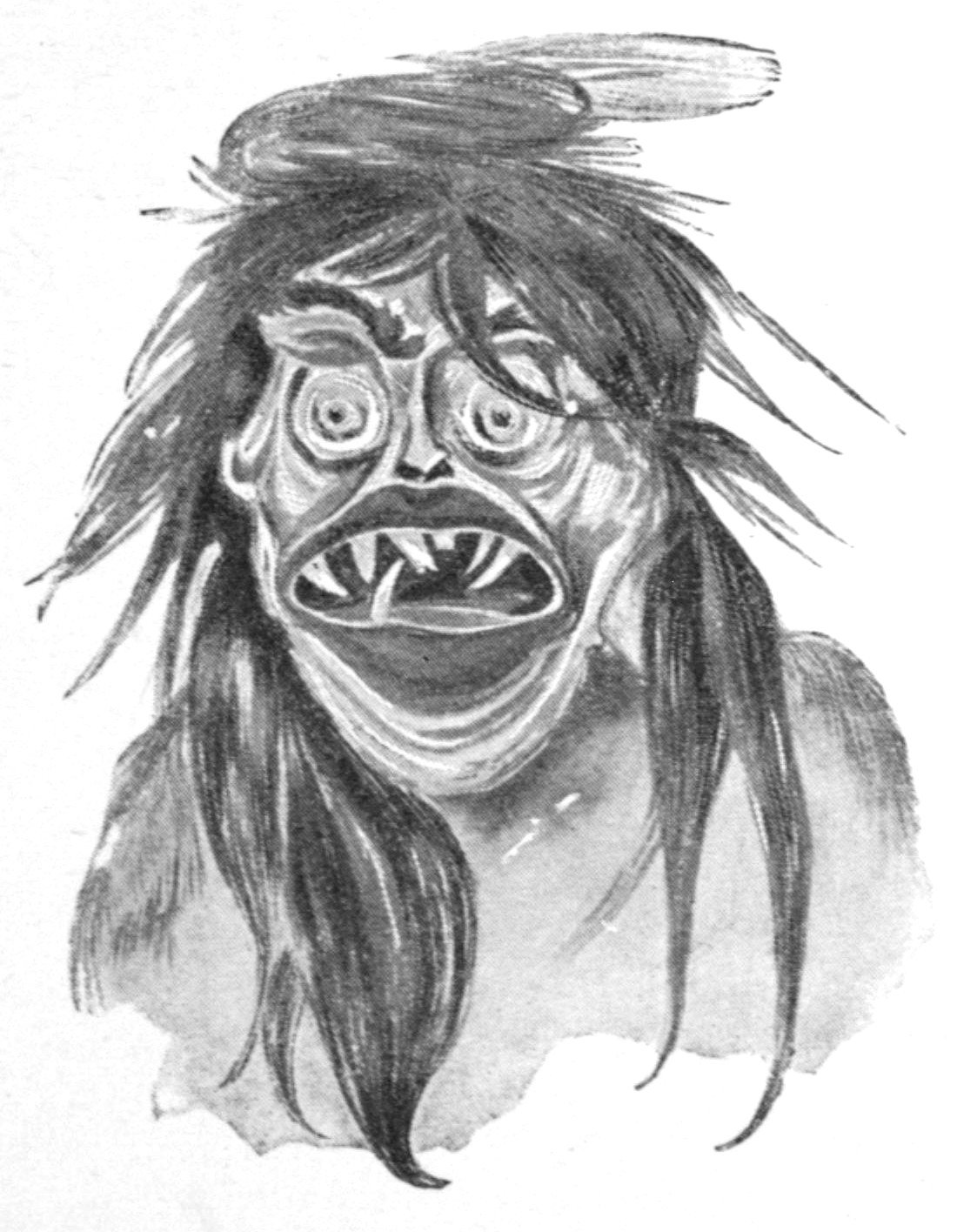
Old Joe Benoit, a friend of mine, Was full of all unholy skill and power. He quarrelled with a man who like himself, Was wizard and a guileful, crafty foe. A giant turtle’s form Joe Benoit took; The other changed himself into a snake; The twain then met and fought in combat dire Within the waters of a little lake Which since that time has ever borne the name Of Neʿseyik, which means “the muddy lake,” Because their strife had stirred up all the soil And weeds, and roiled the waters of that pool. Joe Benoit slew his foe, the giant snake. Old Lacote was a wizard made a trap, A deadfall trap for bear off in the woods. When he had set the trap all fast and firm, He crawled within to test the prop-stick stout. But by the magic arts of wizard foe Through old Sabatis’ guile who owed him hate, The prop-stick fell and let the great bear-trap Drop full upon old Lacote’s head and back. His son was there and dragged the old man forth. But Lacote knew to whom he owed ill-luck. When I was fifteen years I saw a man Who had become a demon of the wood, A Miʿkumwess with power to change his size And art to sink into the rocky soil Up to his ankle-joints or knees as though ’twere sand. I saw myself the tracks where he had sunk Into a soil all full of rocks and roots. My father was a wizard and had power To call unto his partner miles away. I’ve often heard him singing in the night All low and weird, and when the morning dawned, He’d tell me what his partner’s luck had been. I never knew his magic skill to fail. My brother told me, many years ago, Some wizards had a quarrel, and they slew One of their number, took his corpse away And ate it on the isle of Grand Manan, Sitting upon a ledge above the sea. Two men were hunting on an inland lake When suddenly they heard a fearful whoop As of a man in agony, who ran Adown the lake along the farther shore. They went out in their barque and there they saw Him come right up to where their shanty lay. Returning to the shore they begged him then: “Pray stay and eat,” but he, with accents wild, Cried: “Nay, I may not stop in this warm place. I must away, away unto the North, Where ice and snow shall cool my bounding blood.” This man was a Kiwaʿkw, a demon ghoul, Ice-giant—of that race which loves to prey Upon the tender flesh of man and babe. P.
FOOTNOTES:
XI
A DELAWARE YOUTH AND HIS UNCLE
[Delaware]
Weekwaum lawee kohpee Weekena withkeelno wauk wʾsheetha.[57]
Afar in the midst of the forest Dwelt a youth and his uncle, His uncle of many summers. Once on a time the old man Was sick unto death with an illness Whose cause was unknown to himself And his nephew, his fond loving nephew. So, thinking the light of his being Was soon to go out, the old uncle Called to his bedside the young man To hear his last words of affection. The loving nephew grievèd, Grieved in the depths of his heart, Then thought to himself: “My dear uncle, At least shall not die on bare earth. I’ll make for him now a great basket And line it with soft, downy feathers. So shall he die in all comfort.” He worked all the night at the basket And then, when the morrow dawned, Presented his work to his uncle Who wept tears of gladness and said: “Dear nephew—how great is thy kindness!” The old man then lay in the basket And to him came a vision of dread; He stretched forth his hand to his nephew, A gesture to draw his attention, And then told the youth of his vision. Quoth: “Some one is coming at midnight From whom thou shalt shrink with great trembling, But fear not, take courage, my nephew, Although he shall come to our wigwam At midnight when all things are sleeping.” That night, long after their supper, The youth sat him down by the fire, On the further side of the fire,[58] And waited to see what was coming. Then all of a sudden a creature Too awful to tell of was with him, A wizard of hideous presence Who dropped through the smoke-hole a-shrieking: “Give up to me, youth, thine old uncle I wish to devour his lean flesh.” The youth gave not way to his terror But leapt to his feet and said boldly: “Foul being, mine uncle remains here And ne’er shall be eaten by thee.” Howled the wizard, the cannibal wizard: “When I come here once more have him ready, Rash lad, or thou dearly shalt rue it.” Thought the youth in his heart: “He is awful. It must be that my uncle shall leave me. I will journey afar toward the sunset If perchance I may find there some people Who shall aid me in this my dire need.” Then the young man took leave of his uncle And said to him: “Fear not, beloved, I go to seek aid for thy sickness, Soon I’ll return to thy side.” After journeying days through the forest He passed a small curious wigwam From which came a lad who addressed him: “Hail, stranger, how fareth thine uncle?” The youth was amazed beyond measure That one who appeared but an infant Should know all about his affairs, But he passed on in silence and wonder. Soon after he came to a wigwam Near which stood a great, kindly wizard, Who saw from the face of the traveller That he was in fear for his uncle. Then when he heard how the nephew Had met with the terrible being, He said: “This in truth is Muttóntoe, Muttóntoe, the spirit of evil, Who yearns for the flesh of thy kinsman. But fear not, my lad, I will aid thee, I’ll tell thee the way to o’ercome him.” When the nephew had heard all the wisdom And learned how to conquer Muttóntoe, He went back at once to his uncle. Then after they’d eaten that evening, He swept up the dirt from the wigwam And placed in his own bed the uncle. Then he lay himself in the basket, Where he felt himself filled full of magic And power to conquer Muttóntoe. At the dead hour of midnight Once more in the midst of the wigwam The monster dropped down through the smoke-hole. “Awake, lad,” quoth he, “I’m Muttóntoe. Bring forth thine old uncle, I want him.” Then out from the basket the nephew Stept boldly, all covered with feathers. A terrible sight to Muttóntoe, Who leapt with a shriek through the smoke-hole And never returned to that wigwam, Where the youth and his uncle, still living, Dwell happily in the dark forest. P.
FOOTNOTES:
XII
THE DANCE OF OLD AGE
[Passamaquoddy]
Piʾche uskichinwi utenesizek.[59]
All in the early time In an inland village Many Indians lived, Of two of them I’ll tell: One was a handsome man, Young, brave, a great hunter; The other, a beautiful girl. What might be her name?— Malikakusquess? Or Kaliwahdasi? I do not remember Which of the two it was. But she was very proud, Fierce as she was fair, And through and through revengeful. And, what was worst of all, She was an awful witch, Seven witches in one, Like seven devils united But this she hid from all; Only the Wʾnagʾmeswuk, The singular silent spirits, Who are ever flitting around us, Knew of this terrible secret. She wanted the youth to wed her, But he at that time was busy, Very busy in getting ready To go on his autumn hunt, Which would last far into the winter; And he had no time for wooing, As he very plainly told her. Truly he must have spoken Very plainly indeed; For her heart shrunk up in anger Until ’twas hard as a flint With sharply cutting edges, And thus she cut in reply: “You may go afar to the North, You may go if you like on your hunt But you never will return The same as when you departed; Remember me when the change Comes over you in the forest.” He gave no heed to her words, He cared not for her, nor feared her, So he went away with his brother, And for many days together They hunted in the North, Hunted the deer and moose; The girl was all forgotten. But one day when deep in the woods, And very far in the North, In the mid winter gloom, The youth went raging mad, For the witch had struck him sore, Though far and far away, Struck him with sorcery. The elder brother with him Was a brave among the braves, A fierce and terrible man Who had no dream of fear: And as he could do naught else He did the most desperate deed Which the wildest of the warriors Among the Wabanaki Has ever dared to do; For he went down to the river At midnight and alone, And sang the terrible song Which calls the Wîwilmekw, The Demon of the Worm, Even to devils a terror. Nil nʾwikwima Wîwilmekw Nil nʾwikwima chipinaʿkwsit Nit besq weshʾmʾwit Nil npechikinapin nekmomeswelas “I call on the Wîwilmekw, I call on the Terrible One, On the One with the Horns, I dare him to appear!” It came in all its horrors, Its eyes were like deep red fire, Its horns rose sharp and high. It asked him, what he would have? He answered that his brother Had lost himself in madness, And he fain would cure the youth. “I will give you what you want,” Answered the Wîwilmekw, “If you are not afraid.” “I have no fear at all,” The Indian replied, “Of anything that lives.” “Hast thou no fear of me?” The Demon Worm inquired. “No more of thee than I Have of the Michihant, Who is the Devil of all.” “If you dare take me by My horns,” the fiend replied, “And scrape them with your knife, And lay the scrapings by, Then you may have your wish.” In truth this Indian was As savage, wild and brave, As was the Devil himself; He had great need indeed To be all that he was; For the Wîwilmekw, Most terrible to see, Grew fiercer than before, Yet the man drew out his knife And boldly scraped away, Until the Demon said: “Now hold! You have enough.” “And now go seek your camp, Put half the scrapings then Into a cup half full Of water from the spring, And bid your brother drink!” “And with the other half?” The Indian inquired. “Keep that till you return, Then give it to the girl Who made the trouble—she Needs medicine as well.” So the man returned to camp And made his brother well. And when the hunt was o’er They turned them to their home. There they arrived at night; A great festivity Was stirring all the town, Torches were everywhere, And everywhere the scent Of mskîkwul wʾli-mhaskil, Which is the perfumed grass Burning intensely sweet. The dance was going on, So, many were athirst. And this the hunter knew, The younger of the pair; So he had made a drink Cool, and with honey sweet, Fragrant with pleasant herbs— A dainty drink indeed— But, mingled with it all, There lurked a subtle life, The powder from the horn Of the Wîwilmekw. So thirsty was the witch As she from dancing came, So warm that, when the youth Held out to her the cup, She seized and drank it dry All without giving heed As to what hand had held The cool, refreshing draught; Then turning to the one Who was her partner, she Went on into the dance, And then a wondrous thing Was seen by all therein: For lo! at every turn The maiden older grew, One year for every round; Beginning as a girl In all her freshest youth She at the lodge’s end, Seemed fifty years of age, And still, as she danced on, Added unto her age, Till just as she returned Unto the very place Whence she had come, she fell All dead upon the floor, A little dried-up thing, A wrinkled, wizened squaw, A thing of the last old age Or of a hundred years.
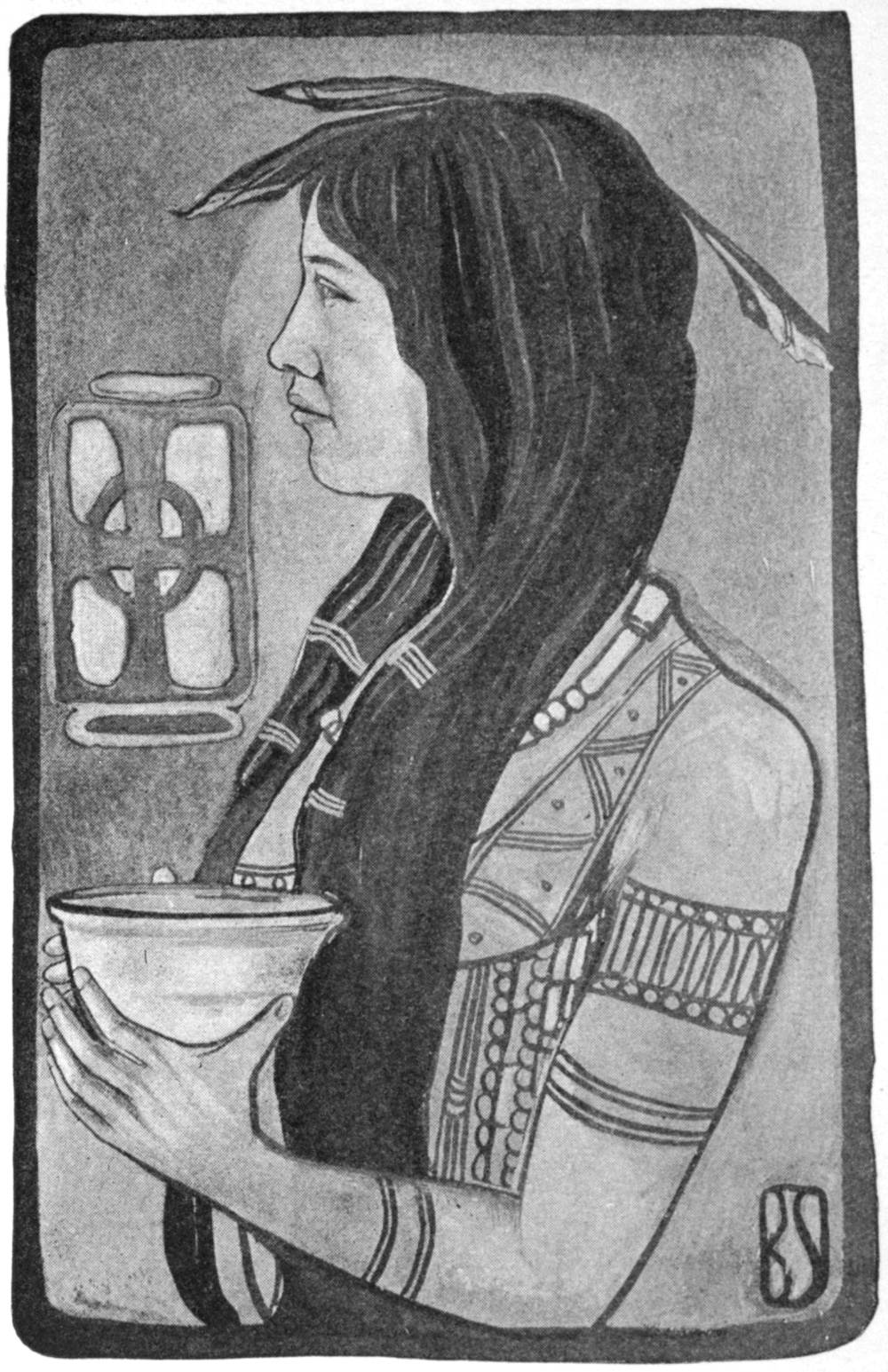
She seized and drank it dry All without giving heed As to what hand had held The cool, refreshing draught.
There is another Passamaquoddy version of this poem which is hardly less striking in its ending. The brother, having obtained the scrapings of the horn, merely touches with them a large green beech tree which becomes dead in an instant and then falls to the ground, actually rotten as if it were a century old. And, when the same powder is given to the witch,
She grew older in an instant, She became very old indeed: A pale color rippled All over her face. She fell, Looking a hundred years, Dead upon the floor. Shrivelled and dried as she fell, Then dropped to powder—“She Will trouble you no more.” Then said the conjurer; “Her dance is over now.” L.
FOOTNOTES:
XIII
A TALE OF THE RIVER-ELVES
[Abenaki]
Noñwat Manoñuamasak Udainoñ kwaʿliwi kd-odana-na.[60]
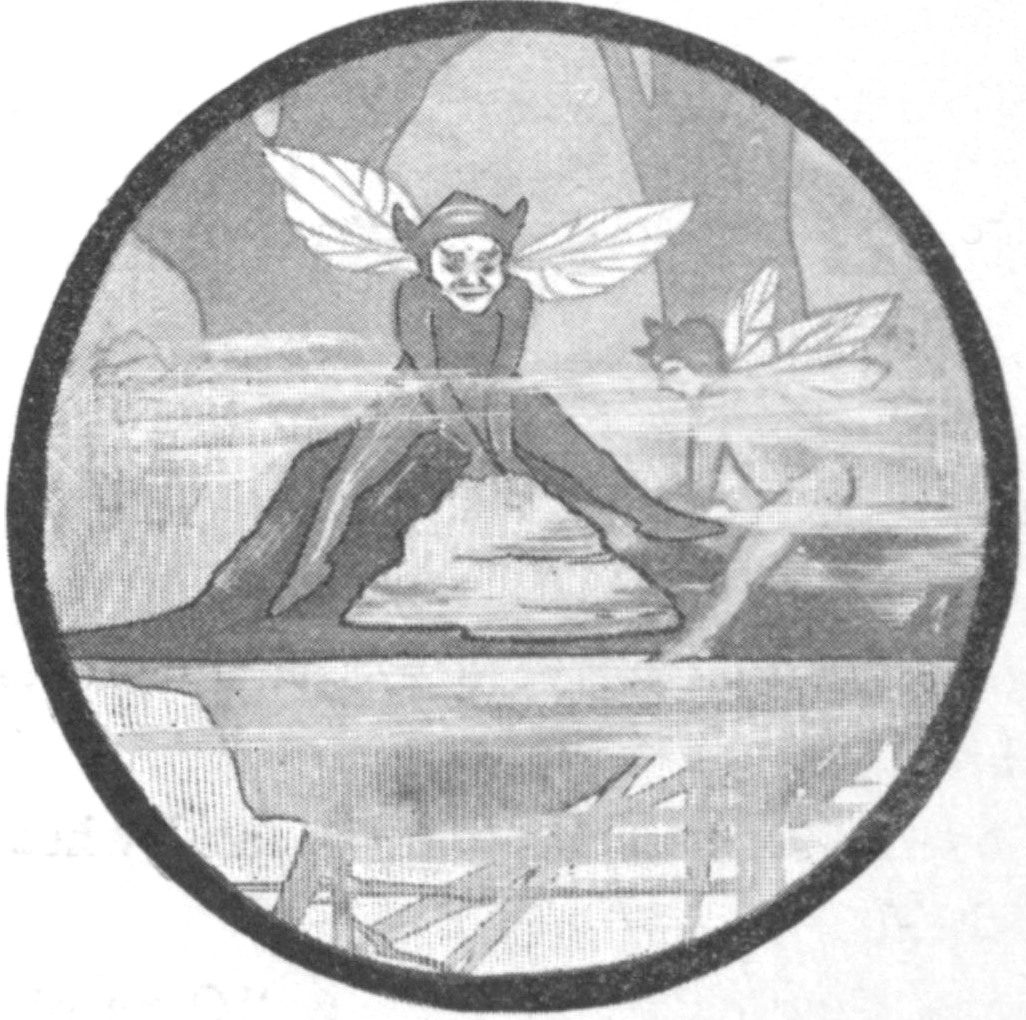
Long ago some River-elves were living near our town. These Elves would always work at night along the river shore, And fashion little wheels of clay and leave them on the bank. When these small cakes of clay were fresh some Indians there were Who learned to eat them and to take great pleasure in their taste. In ancient times—this is the tale which oft was told to me— An Indian and squaw were out afar in bark canoe When in the current’s swirling waves they right before them saw A wee canoe in which there sat two children, as they thought. Now these were hideous River-elves, and when they had beheld The Indians, they called to them: “O ye of fairer face And better looks go back,” and then tipped over their canoe, Which, as it rolled, the Indians perceived to be of stone, And nevermore thereafter did they see the River-elves, Who when the loud-voiced Whites had settled all the country-side, Withdrew far up the rushing stream where no canoe may pass Save only stone ones. Nor again did ever Indian find Those wheels of clay which he of old so dearly loved to eat.[61] P.
FOOTNOTES:
PART THIRD
Lyrics and Miscellany
LYRICS AND MISCELLANY
I
THE SONG OF LAPPILATWAN, THE SINGER IN THE DUSK
Piʿche Lappilatwan mechimiu-olamto Wʾtagwsiu-ut msiu sipsis.[62]
Lappilatwan, fair tree-fungus, From days of old, The ever good-natured, Of all the birds cousin. Dwelt on the birch-tree; All the birds of the forest, Even the little insects, Even the little worms, Crawled up the great birch To see their good friend. Thus always at sunset They heard him singing: Lappilatwan Wappilatwan Wechkutonébit, “Fair tree-fungus, Fair tree-fungus, Sits with mouth open,” The signal song Unto all wood birds, Worms and insects, To go to sleep; So that all the birds, Little worms, little insects, When they heard Lappilatwan Wappilatwan Knew he was silent For all the night There where he hung In the cold birch tree, Cold, rough and damp, All night, all day! All through the year. But when the day dawns His song rings again; Lappilatwan Wechkutonébit, “Fair tree-fungus Fair tree-fungus Sits with mouth open.” Then every bird Every small insect, All creeping things Who heard his song, Knew there was coming A beautiful day: “Let us arise! The daylight is breaking!” They rose at his call. One bright fresh morning, Lively Sexkâtû The flying squirrel Climbed the great birch-tree, And there he found Lappilatwan From a branch hanging, And he thus spoke; “Tell me how long Have you dwelt here?” “I have lived in this tree Since your great grandfather Kʾchî Kʾmûsums Was born on that cedar From which you came Early this morning.” “But tell me truly, Lappilatwan, How long will you Dwell in this birch-tree?” “While the birch-tree Sends forth its leaves, While its trunk stands, I will dwell in its branches.” Sexkâtû the squirrel Wanted that birch-tree For his own home: He would be nesting In that same place. Thus he then answered: “You have been here Long—and far too long. It is time for you To yield to another: Let me come here!” Lappilatwan Answered him quietly: “Noses, ‘my grandchild:’ I cannot go hence. If I should do so Birds and the insects Could not hear me call. Could not hear my songs From another tree; You, who are so clever, Far quicker than I am. You can make your home All over the forest.” “You must go!” said Sexkâtû, Then he gnawed at the branch; There was the nest Of the Hamw[´ĕ]sŭk, Of the stinging wasps, Who came swarming out From their little wigwam; More than a hundred, Flew at Sexkâtû Clung to his back Madly they stung him, Till stunned with their stinging Saucy Sexkâtû Fell to the ground. Well nigh a-dyin, With stings and with bruises. Ere long the news spread, Soon all the squirrels Said: “Sexkâtûwuk Kʾputwusin,” “Let us take council.” Red squirrels, gray squirrels, Striped squirrels, flying ones, Came running together, Then they cried out: “Lappilatwan Must leave his tree, And if it may be, Be put to death!” All in a band They went to the birch-tree, Then they observed that In one way only Could they approach Lappilatwan. Straight up the trunk Not many together.
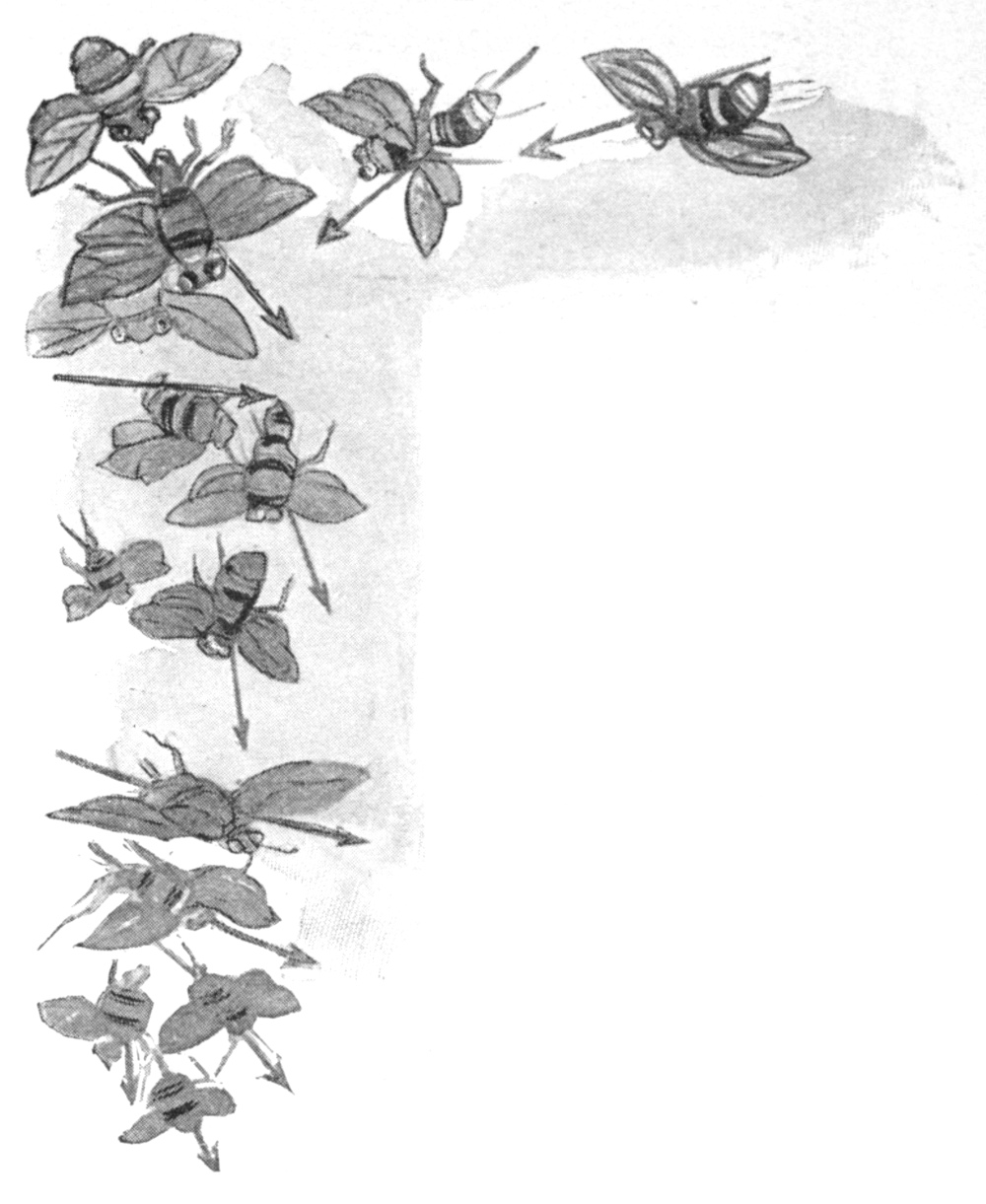
The news spread afar, Soon there came flying The wasps and the hornets, The bees and the black flies, The angry mosquitoes: Even the midges, The little Chessúyek Came to the rescue Of Lappilatwan. The chief of the squirrels Gave out the order: “Let the battle begin!” The squirrels rushed onward They rushed to the birch-tree: Yet only a few At once together Could climb up the trunk: Musesaaqua, the horse-fly, Was brave in that battle. Mosquitoes and midges Like gallant warriors Rushed on the squirrels, With their sharp spears. Ere the first squirrel Was half-way up the birch-tree, He and his followers Fell to the ground Wounded and dying. Lappilatwan High up on the birch-tree Saw the battle rage, But was ever silent, Silent till sunset; Then his loud song Rang through the forest: “Lappilatwan Wechkûtonébit.” “Fair tree-fungus Sits with mouth open.” Soon as they heard it All of the warriors, Squirrels and insects Valiant mosquitoes, Humble hornets, Bold bumble-bees, Wild whizzing wasps, Gallant merry midges Went to their wigwams. Lappilatwan Had faith in his warriors: Truly he trusted That they could defend him. When in the morning They heard the signal, The song of awaking, Ring from the birch-tree, The mighty armies Again assembled; The chiefs held council; Thus spoke Sexkâtû While all were silent: “Listen, oh squirrels! Last night in dreaming This was revealed to me: If in the battle One of your warriors Can touch for an instant Lappilatwan Ever so lightly, Before he sings us The summons to sleep, Then we shall conquer; Failing to touch him Ere we hear ringing ‘Lappilatwan Wappilatwan’ We are defeated. Now you have heard me, On to the birch-tree!” The angry flies Sharpen their spears; Dip them in poison; Loud was their buzz! As they went to battle, Terrible slaughter Followed their onrush; Desperate squirrels Heedless of death Clung to the birch-tree Wingèd warriors By many thousands Swarmed on the foe; Many a horse-fly Beheld no more His wife and children; Many a hornet Sat no more By the fire of his wigwam; The dying bumble-bee Chanted his death song. Dire was the slaughter, Full thrice greater Than on the first day; Still they rushed onward, Fiercer for battle, Giving no heed That the day was ending; Never observing The sun down-sinking, When over the forest Rang loud the summons: “Lappilatwan Wappilatwan.” All was over. High on the birch-tree Untouched by a foeman— Sat the watchman— The flies were victorious!
This poem is like Homer’s Batrachomyomachia, the battle of the frogs and mice, as sung by some Icelandic bard. The humor is as Greek as the form is Norse. L.
FOOTNOTES:
II
THE STORY OF NIPON THE SUMMER
[Passamaquoddy]
Piʿche weligit ēpit Liwiha Nipon Metchimiû wikos Kwihio kizosek.[63]
In the far old time Lived near the sun A beautiful woman, Nipon her name. Green were her garments All of fresh leaves. And with green leaves And beautiful flowers She covered her wigwam. She had a grandmother, Kʾmēwun, the rain, Who dwelt far away. But when she came To visit her grandchild One thing she ever Said ere she left her: “One thing I bid thee With hardest warning, To one thing I bind thee With a strong will: Look that thou never Seek in thy wandering The Laʿtogwesnuk, The land of the North: For there dwells Pûn, Pûn, the winter; A deadly foe Thou wilt surely find him. Should thy feet fall In the Laʿtogwesnuk Thy beauty will leave thee, Thy green dress fade, Hair turning gray Thy strength become weakness.” Little heed And scant attention Gave Nipon To Kʾmēwun, the rain. One fair morning She sat by her wigwam In the bright sunshine, And looking afar At the Laʿtogwesnuk All that she saw Seemed strangely lovely As if enchanted. No human being Was in the Northland, But o’er it all Was beautiful sunshine; There she beheld At a long distance A wonderful land: Broad shining lakes, High blue mountains, Bright rolling rivers All strange and sweet. Something came over her, She knew not what; A dream or a voice; There was no help, She must rise and go. Must go to the land Of Laʿtogwesnuk Unto the Northland. Up rose Nipon Unto the North Wending her way, When she heard a voice, The voice of the Rain (Though she could not see her), Kʾmēwun, a-wailing: “Bide, my daughter! If thou goest Unto the Northland Pûn the winter Will surely kill thee!” She heard nothing Of all the warning, She could not stay For a spell was on her; Ever onward She went to the North. For many days, For many moons, Still the sun shone, Still she saw The beautiful country Of mountains and rivers, Until one day Nipon noted That as she followed, The land went onward, And as she travelled, It travelled before her. All around her Was nothing but sunshine. Stopping a little To think of the wonder, She heard a whisper, The voice of the Rain: “Stay, my daughter!” It made her wilful, She still went onward; On to the North.
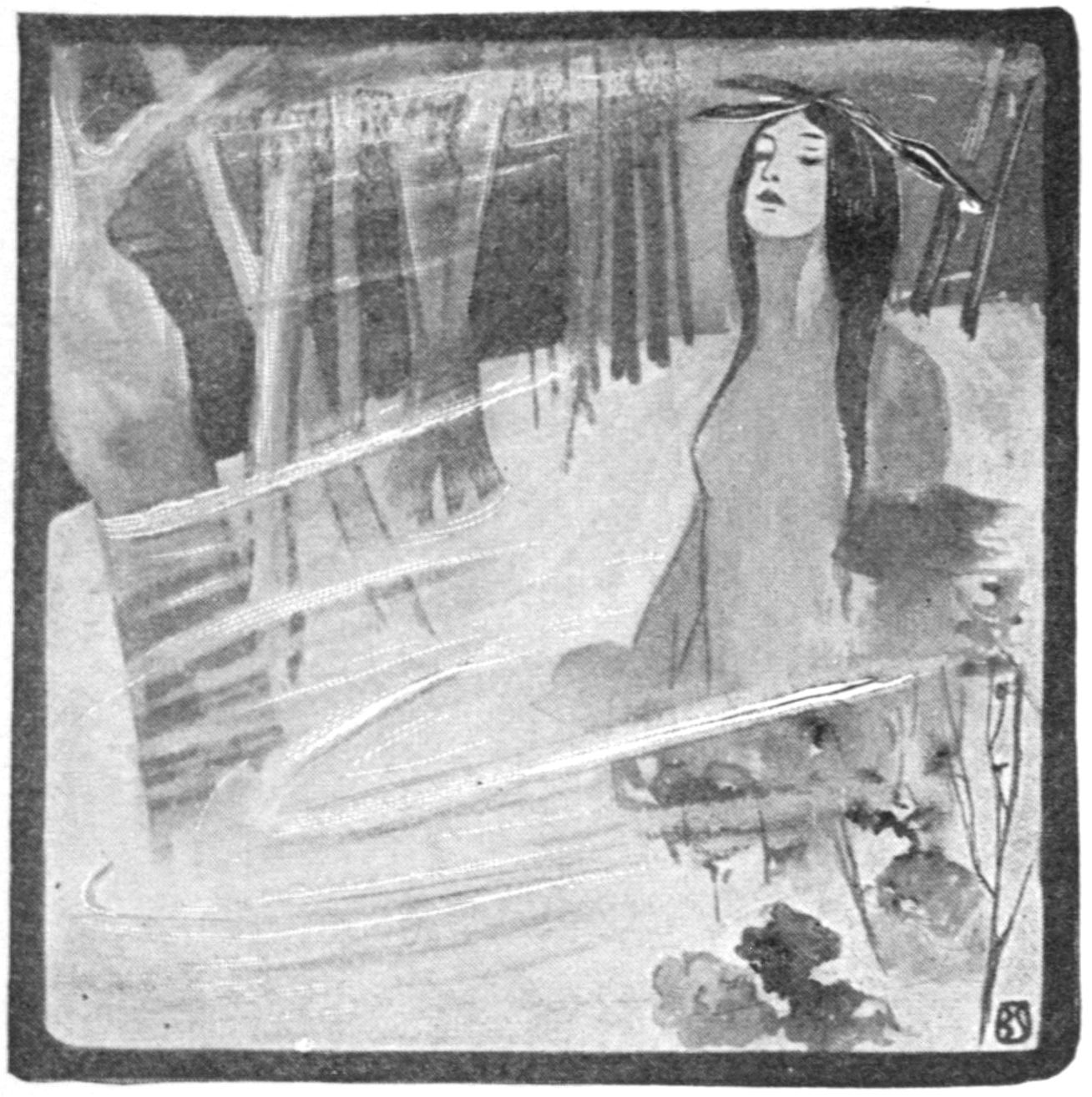
Still the far country Went on before her, And something she never Had known came o’er her— She felt the cold! An unseen power Now drove her onward; Will had departed, Still the mountains Went on before her; The green leaves Of her beautiful garment Grew yellow and faded, And were blown away By the grim wind; Her long hair Turned gray and white; The sun grew dim And then shone no more; She was very weak; The beautiful mountains Were heaps of snow; The beautiful rivers And lakes were of ice— All in the North. Kʾmēwun, the Rain, Was sad in her soul. She looked afar No smoke was rising From Nipon’s wigwam: “She has not returned,” Said the Rain-mother, So in her fear She went to the wigwam. All was silent, The boughs and the flowers Which covered the wigwam Were yellow and faded: “My child!—my child! Thou art caught at last By the icy Pûn, By the wicked winter! Afar in the North.” Straight she called for Her bravest warriors. The ever-unseen. These were their names: Saunésen the south wind, Wchîpi the east wind, With Sĕnusóktun The warming breeze. Quickly she cried: “Hasten away To the Laʿtogwésnuk, Fight like heroes, Use all your power To rescue Nĭpon From Pûn, the winter, Fly to the North!” The wind warriors, The unseen by man, Flew like lightning On their long journey. As they entered The Laʿtogwesnuk Pûn the winter Felt ill at ease; He called his chieftains: Great Laʿtogwĕsin The terrible north wind, And the wild north-wester, The chill north-east wind, With all the frosts Sleet-spirits, snow-spirits, And every child Of the killing cold Who dwell in the North. “Fly!” he cried, “For our foes are coming! Up from the Southland, The home of Summer!” Even as he spoke The sweat dropped from him His face grew thin, His feet seemed smaller: “I feel them coming! Fly to the battle!” The mighty wind-giants Flew to the fight, Great snow-flakes And heavy hail-stones Met and melted With the great rain-drops; Winds were loud roaring, Thunder pealing, Tempest fighting tempest, Storm against storm; The drops of sweat Grew ever bigger On Pûn’s cheeks; On Nipon’s head The hair grew whiter; Louder and louder The winds were blowing, Snow was falling, Thicker and thicker, But the driving rain And the mild south winds Were ever warmer And bigger the drops Grew on Pûn’s face; His strength had left him. Down he fell And in his falling A leg was broken: “Lo, I must perish If this lasts longer, Set Nipon free! She it is Who has brought this trouble And made this battle. By my own prisoner I have been conquered. Set Nipon free!” At the word spoken, Even in the instant, The winds were silent. Snow and rain ceased. Turning her back To the Laʿtogwesnuk And Pûn the winter, Weary Nipon Set out on her journey. Old she was, old As she bore from the North In her white hair The hue of its snows, In her tottering weakness Its chilling frosts. Many moons passed, Still she travelled; The sun grew warmer, Days and shadows Were ever longer; The air was softer; Greener and greener Grew the mountains; Freer from ice Rivers were rushing; Lakes were shining In the sunlight; Flowers were unfolding To the warm breezes. Weary Nipon Was weary no longer; Her heart grew lighter, Her hair grew darker, Her face was fairer, Brighter and younger, Thus becoming All she had been In her early beauty. Then the butterflies Knew her again, And fluttered round her, And all the flowers Greeted with perfume In scent-voices As she went past. On she went To the grandmother’s wigwam, To old Kʾmēwun. As she drew near The clouds grew thicker; Rain-winds were blowing, Rain-drops falling, Showers pelting, Torrents pouring, Thunder roaring round: Still she went on, Her path lit By wild lightning, Till in the midst Where the clouds were darkest She found the wigwam And entered the door. There as if dying Lay Kʾmēwun The ancient Rain-mother, Weaker and older, And worn and weary. “Thou, my daughter!” She said to Nipon, “Hast well-nigh killed me! By disobedience Thou hast brought suffering On me and all things. But for my battle With Pûn the winter All life had perished: Never again though, While life is in me Can I venture On such a struggle! Be this thy warning! Else will Pûn, The cruel winter, Conquer all things And ice and snow For ever and ever Cover the world.” L.
FOOTNOTES:
III
THE SCARLET TANAGER AND THE LEAF
[Passamaquoddy]
Piche yut kʾchî wachok nit wigit welitasit mipis.[64]
In the earliest time on the greatest mountain Lived merry Mĭpis, the Little Leaf; When spring is coming and sunlight is shining He climbs a tree, and there, all summer, Dressed in green he rocks in the branches, Listens all day to the birds and the breezes, And goes to sleep to the song of the owl. When fall is coming and days are shorter, Mĭpis dresses himself in scarlet; Glad and gay in the Indian Summer; But as the nights grow cold and longer, He puts on a coat of brown or yellow, Curls himself up like a bear for winter, Lets go his hold and falls to the ground; There he sleeps, all under the snow-drift Till he hears in the spring the blue-bird calling, And the stream fighting its enemy ice— Carrying proudly in pieces as prisoners The foe which kept it a frozen captive, All the winter under its wigwam. Then little Mĭpis, the Leaf, awaking, Dresses in green and climbs in the sunshine, Up through a tree, and upon the branches, Lives as he did the summer before. Merry Mĭpis on a bright May morning Was stretching himself in the warm sunshine When he heard afar a wonderful music, A sound like a flute and the voice of a maiden, Rippling melodies melting in one. Never before had he heard such singing; Then looking up he beheld before him A beautiful merry little bird-girl, Dressed in garments of brilliant scarlet, Just like his own in the Indian Summer. “O fairest of small birds!” said merry Mĭpis; “Who are you, and what is your name?” Thus she answered: “I am Squʿtes: The Little Fire. When I fly in the forest And meet in my way a bar of sunshine, I look as I enter and leave the shadow Like a red flame which leaps up in darkness, And then falls asleep in the night again. I have lived in the deep green forest, Even as you have, for many ages, Singing my songs to Kʾmûsomsʾn Unto our Father the mighty mountain, And because he well loved my music, For a reward he sent me hither To seek a youth whose name is Mĭpis, Whom he wills that I should wed. And as I think, and hope as I think it, You are truly the one whom I seek.” Little Leaf listened in silence Being by nature very cunning, Trained to suspicion from his childhood; Thus his grandmother ever taught him: “My child—beware of all living creatures, Even the very smallest insect May eat your life out. A worm so little That it can pass through the prick of a needle Even as a rabbit runs through a valley, Or as a fish swims free up a river, May cut your stem or blight your beauty; Anything living may be your death.” So to Squʿtes, Mĭpis listened, Charmed with her beauty yet still mistrusting, Liking her look yet deeply doubting, Wondering whether this lovely creature Was truly a friend or a false-hearted foe. Beautiful Squʿtes, never heeding What the Leaf thought, began to warble; Pouring out in the pleasant sunshine Her morning song. As Mĭpis listened To the melodious trill, he melted; For the sweet tune filled all the forest, Every leaf on the tree was listening, Branches were waving in keeping cadence, Even the busy ants stopped running, The butterfly sat on a flower to hear; And as the music grew tender and stronger, And as in one long soft note it ended, Little Leaf said to her: “Be my own!” So in the greenwood they lived together; Other singers often assembled, Other birds were often about them, Coming to see the beautiful stranger, Longing to try with hers their voices, But at every trial the Little Fire Flew in her melody far above them, Even as she went beyond them in beauty. One morning Squʿtes sang to the Leaf: “Let us go and visit Kʾmûsomsʾn Our mighty grandfather—the Mountain: He made us happy—let us thank him!” So the little Squʿtes and Mĭpis Went like a flame through the shades of the forest, Till they came to the cave of the grandsire. Glad the grandfather was when he saw them! Thus he spoke unto them—“Nosesak! Grandchildren! Heed well what I tell you! While you live never leave the mountain! While you are here you are always in safety: But when away from it, ever in danger From one who is ever seeking to kill you: The little Indian boy Monimques, Who, armed with a terrible bow and arrows, Shoots all the little birds of the forest, And carries them home to old Monimques, Who roasts them all in the fire and eats them. Even worse is another foeman, A dreadful little boy who is flying All the time over rivers and valleys, Aplasemwesit, the Little Whirlwind, Who never rests. He is always trying To blow the leaves away from the branches, And drives them headlong, in flocks together, To his grandfather the terrible Tempest, The great wild Whirlwind who kills them all.” Taking the Leaf in her bill, the Red Bird Flew through the forest among the branches To the great tree which grew secluded In the safest place in all the mountain. On its topmost branch they built a wigwam; Bad little Indians never came near them Hunting for birds with their bows and arrows, Nor the wicked whirlwind looking for leaves. There they lived and were perfectly happy, Nothing but kind words passed between them, Only kind words and favorite songs.[65] Leaves like men are never contented, When all’s for the best they never know it; So it came to pass that Mĭpis one morning Saw far away in the pleasant sunlight A land of beautiful lakes and mountains, Lovelier far than the place they lived in; And felt in his heart an earnest longing To wander away. So he said to the Red Bird: “Look, my dear, at that beautiful country! There we are sure to be perfectly happy: I can no longer live here on the mountain!” Taking the Leaf in her little bill, The Red Bird flew over rock and river, Till she came to the beautiful country; Again on a tree they built their wigwam, And Squʿtes sat and sang on the branches: The little Indian boy Monimques Never had heard such beautiful singing, Never beheld such wonderful feathers; Amazed he stood for a while and listened, Then bending his bow let fly an arrow. Down fell the Red Bird, sorely wounded, And proud of his prey the boy ran homeward. Then another foe came rushing after, Aplasemwesit the Little Whirlwind, Seeing the Red Leaf soon he seized it, Took it in triumph unto his grandsire The mighty Storm; when the chief beheld it, “This,” he said, “is no common capture, This is the Leaf of the Leaves, my grandson! He shall not die. I will keep him a prisoner: He has come from afar. We must guard him with care.” Greatly the Storm Chief fears the Mountain Who stops the wind in its wildest flight. That night there came a dream to Kʾmûsomsʾn And he learned that the Leaf had been taken prisoner, By Aplasemwesit and kept as captive. Waking in anger he called to his son: “Go to the chief of the storms and tell him To send me the Leaf!” His son departed And when he came to the mighty Whirlwind Said: “Give me the Leaf! Else, ere the evening All of our tribe will be on the war path.” Gladly the Whirlwind gave up his captive, And the son of the Mountain carried him home. Soon the Leaf was safe in his wigwam On the great tree. He lived in sorrow, And when the notes of a bird came ringing Out of the forest, his grief was greater; His life was gone with the Little Fire, And the fire of his life was all in ashes. Thus it fared with the beautiful Red Bird; When the old Monimques beheld her, Long he was silent, then said: “My grandson! This is truly no common capture! Well it is that thou didst not kill it! Let the bird live in peace in our wigwam! But take good care lest it escape!” Day after day the Red Bird grew better And soon her color was as bright as ever, Until one morning when least expected, Her voice broke forth like a brook into sunshine. These were her words: “Could the Wind but hear me, I should not long be kept a captive, Soon he would carry the news to the Mountain! Soon the Mountain would send a warrior, Soon the warrior would give me freedom! Soon I should be with the Leaf again!” As the old Monimques heard her singing: His heart at the words grew weak with fear: “Truly it was a bad beginning That ever my grandson shot this singer, And truly, ’twould have a woful ending, If the Mountain should learn she is here! It is madness to keep her a captive, But certain death if we let her go free!” While he thought it over his grandson returned Bringing a burden of birds of the forest, And little singers who live by the rivers: And when they were cooked, and the chief had eaten, Down by the fire he lay on a bear skin, Smoking himself into silent sleep. The door was closed, nor was there a crevice Through which the Red Bird could creep to freedom When all at once she thought of the opening Through which the smoke from the fire ascended Ever upward so densely pouring Nobody deemed she would dare to pass it. As the head of Monimques drooped on his shoulder And as the pipe stem dropped from his fingers And as the little Wʾnagʾmeswuk The tiny fairies who tap the eyelids, Soothed him into deepest slumber, Softly the Red Bird rose and taking A birchen bucket, filled it with water. Dipping her wing in the water she sprayed it Little by little upon the fire; Little by little the fire, like Monimques Sunk to sleep, and the bright red flame Lay down to rest in the dull gray ashes. Out of the smoke-hole, in careful silence Flitted Squʿtes, and when far from the wigwam, In the fresh air and the beautiful sunshine, Heard other song-birds far beneath her. As she went flying over the forest, Leaving death behind, with love before her, She had never been half so happy. And what was her joy when she reached the mountain And saw from afar on the great tree rising A bright Red Leaf which shone in the sunset; Straight was her flight as that of an arrow, Fast as an arrow, when she beheld him. And the Red Leaf leapt as if smit by an arrow, When all in an instant her arms were round him. Then without an instant’s warning All his darkness was turned to daylight, And the Red Wing burst into tears of rapture. It was long ago, even in the morning Of the first moons that this all happened; Trees had not mouldered as yet in the valleys, To the cold depths of many a river Fishes as yet had not found their way, And all the secret roads of the forest Had not been learned by the bear or woodchuck; But even then the Squʿtes and Mĭpis Lived all the summer upon the mountain, Sung in its shadows and shone in the sunshine Still as of yore they are singing and shining; And so it will be while the mountain is there. L.
FOOTNOTES:
IV
THE BLIND BOY
A VERY OLD SONG
[Passamaquoddy]
Nit neke epit pʾiche nitwechi moskesits Poskaniknikok mechinechik etli-poskʿnot.[66]
There was a woman, long, long ago, She came out of a pit In which dead people were buried; She made her home in a tree; She was dressed in leaves; All long, long ago. When she walked among the dry leaves, Her feet were so covered That they could not be seen; She walked in the woods Singing all the time: “I want company: I am lonesome!” All long, long ago! From afar o’er the lakes and mountains A wild man heard her cry; He came to her, she saw him, Saw him and was afraid; She tried to flee away, For he was clothed with the rainbow, Color and light were his garments. She ran and he pursued her, Pursued her rapidly, Unto the foot of a mountain. He spoke in a strange language, She could not understand him. He would make her tell where she dwelt. They married and had two children One of them was a boy, A boy who was blind from his birth. But he frightened his mother by his sight; He could tell her what was coming: What was coming from afar, What was near he could not see. He could see the bear and moose, Far away beyond the mountains; He could see through everything. The father was a great being, He was a mighty hunter; His wife had magic gifts. A boy was born to them Alas, the boy was blind! In time his sight returned, He said that he could see. The mother did not believe it, She thought it was magic sight. So one day she bade her husband Put on him certain things Which no one could behold Who saw them not with eyes As every one could see them. And then she asked the boy “What is it that your father Uses to pull his sled?” Promptly the child replied “The rainbow.” Then she said: “What has he for a bow-string?” To which his answer was “It is Ketaksuwauʿt That is the Spirits’ Road” (Meaning the Milky Way). Yet once more she inquired: “What has he on his sled?” “A beaver,” he replied; She knew that he could see.
It would appear from collateral indications of other songs in different tribes that this song is of very great antiquity. The first portion of it was chanted to Mrs. W. Wallace Brown by an old Indian woman; the remainder was recovered from the Passamaquoddy Thomas Josephs or Tamaquah. There appears to be in the myth, for such it undoubtedly is, a refinement of philosophic or theosophic speculation. This is shown in the conception of the young magician, or poet, so gifted though blind that his mother could not determine whether he saw all things by clairvoyance or natural vision.L.
FOOTNOTES:
V
PASSAMAQUODDY LOVE SONG
ORIGINAL TEXT
Anigowanotenu! Boski ktabin elmi nelemwik Elmi papkeyik; boski ktlabin, Anigowanotenu! Neket mpesel etli-nemiotyikw. Etuchi wlinakwben sebayi sibuk; Etuchi wli baquasketen. Kʾmachtina nolithasiben. Mechinoltena keppithamʾl. Anigowanotenu! Boski ktlabin elmi nelemwik Elmi papkeyik; boski ktlabin, Anigowanotenu! Negetlo he eli-alnisukmekwben Sibayi guspenik Etuchi welanakwsititben wuchowek He eli-machip klamisken mipisel. Anigowanotenu! Anigowanotenu! Nittloch apch eli-alnisuknukw tan etuch apachyaie; Tan etuch boski pʾkesik mipisel Yut pemden nit kʾtlaskuyin. Anigowanotenu! Boski kʾtlabin elmi nelemwik Elmi papkeyik; Boski kʾtlabin, Anigowanotenu!
V
PASSAMAQUODDY LOVE SONG
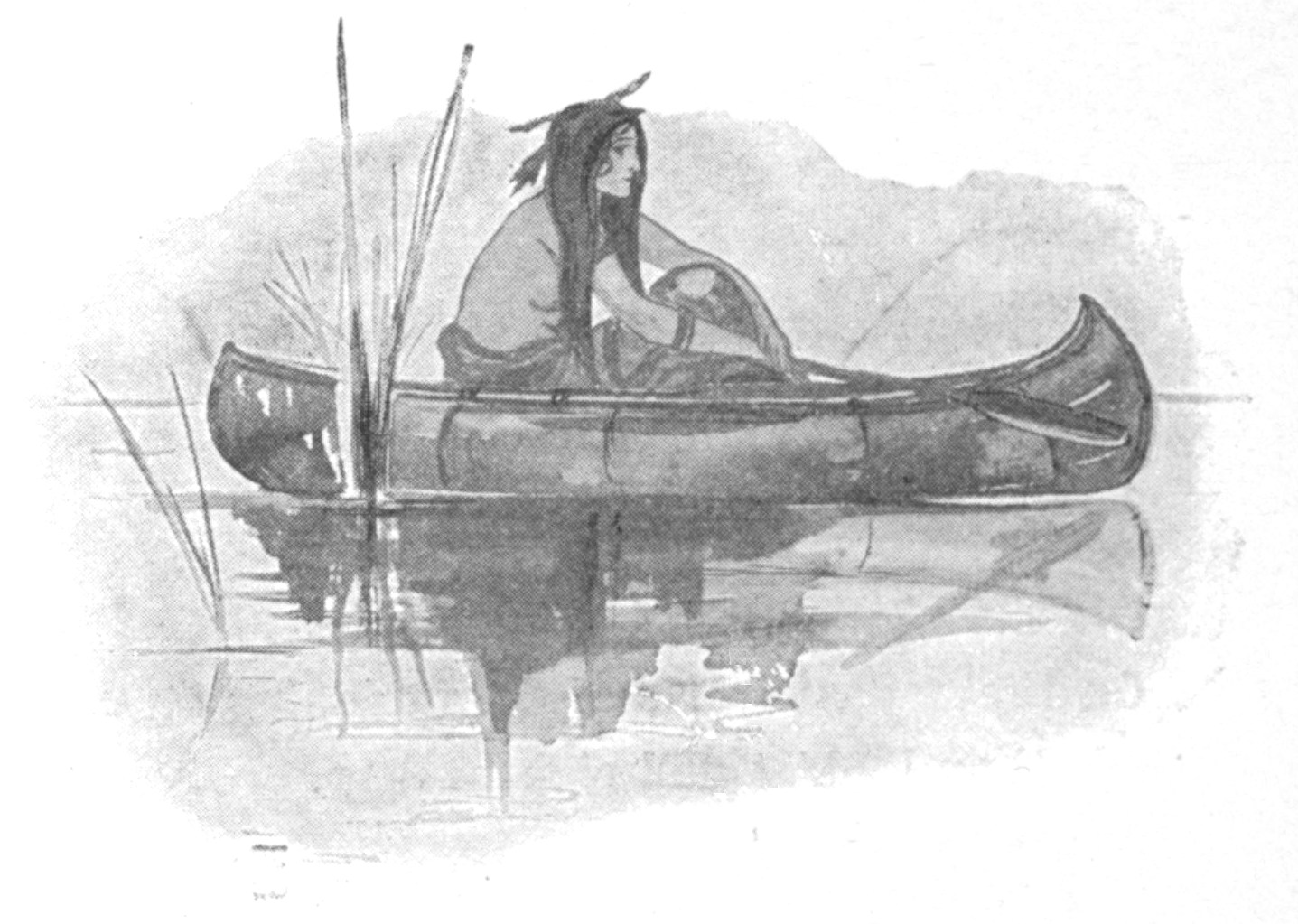
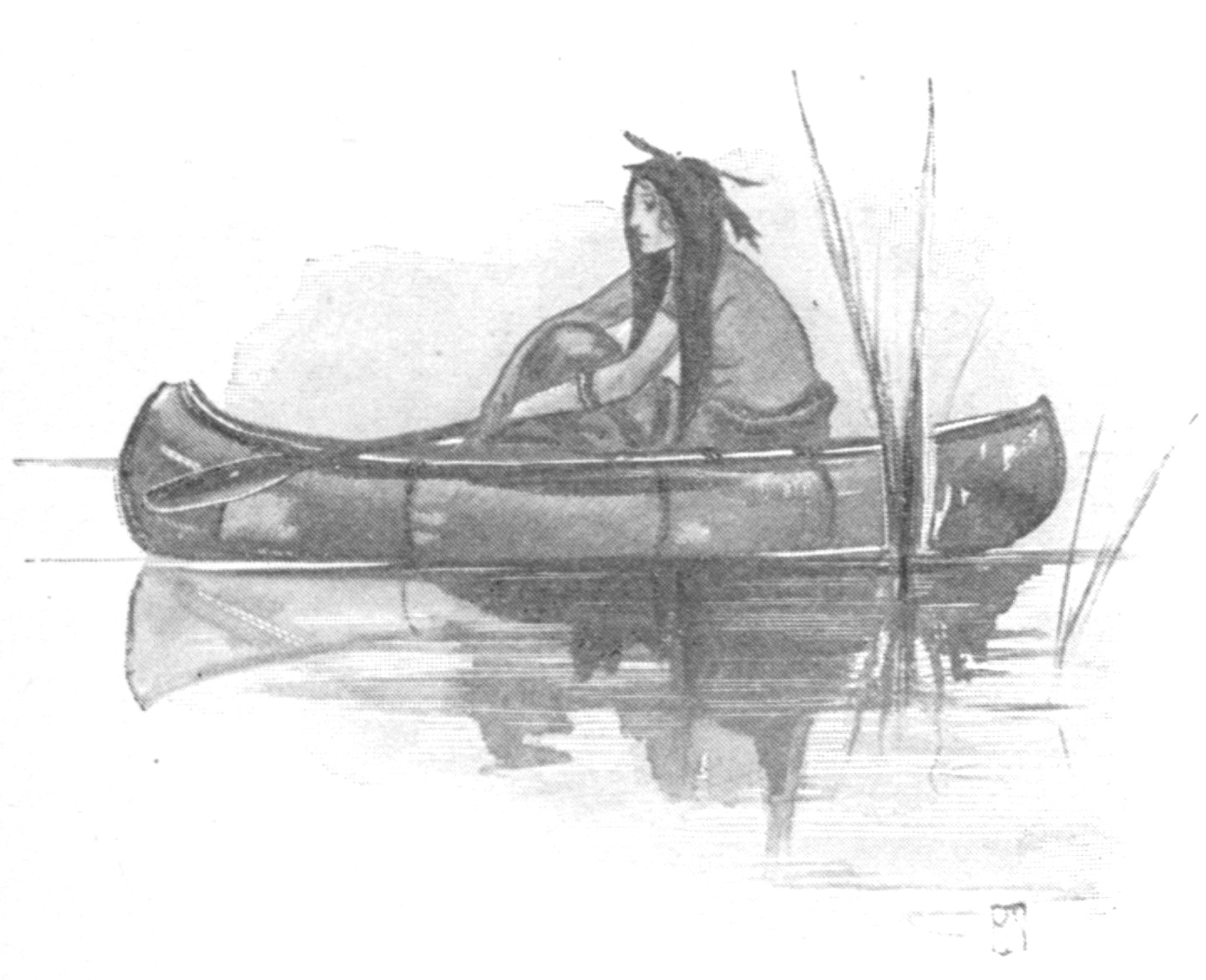
Anigowanotenû! Oft these lonely days thou look’st On beauteous river and down shining stream. Oft thou look’st and sighest deep, Anigowanotenû! With me thy lover by thy side How fair that stream did bubble on! How lovely was the silver moon! Thy heart now tells thee of that joy. E’en unto death I think of thee. Anigowanotenû! Oft these lonely days thou look’st On beauteous river and down shining stream. Oft thou look’st and sighest deep. Anigowanotenû! When we in birch canoe did glide Together on that glistening lake, How fair the hills and how we watched The red leaves whirling in the breeze. Anigowanotenû! Anigowanotenû! We’ll rove once more in bark canoe And watch the green leaves swirl on high When spring smiles on the mountain tops. Anigowanotenû! Oft these lonely days thou look’st On beauteous river and down shining stream. Oft thou look’st and sighest deep. Anigowanotenû! P.
VI
THE SONG OF THE STARS
[Passamaquoddy text]
Nilun pesazmuk elintaquik. Ntʾlintotebin kʾpesaukhenmâgonok. Nilun sipsizuk squʿtek; Kʾpʾmitoiapon pissokiqs Kʾpesaukhenmagon pesazum. Kʾtʾlintoanen âût niwesquok; Otâût Kʾchî-Niwesq Koitchimkononnoak nohowok katonkewinoak, Nosokoat moinial Nit mesq tepnaskwiewis Mesq katonketitiq Ketlapinen pemtenikek Yot lintoakʾn pemtenikek.
VI
THE SONG OF THE STARS
We are the stars which sing. We sing with our light. We are the birds of fire We fly across the heaven, Our light is a star. We make a road for Spirits, A road for the Great Spirit. Among us are three hunters Who chase a bear: There never was a time When they were not hunting; We look down on the mountains. This is the Song of the mountains. L. & P.
VII
HOW THE INDIANS LOST THEIR POWER
[Penobscot]
Uskichinwi pilskwessis muiso Ktatnok Naya kamach okiwachitahasin.[67]
All of the olden time! Once as an Indian girl Was gathering blue-berries, On Mount Katahdin’s side, She felt a strange loneliness, And said unto herself: “I would that I were wed Unto some brave great man!” And, seeing the great mount In glory rising high E’en as ’twere to heaven (White the red sunlight shone Upon the very head), She said: “A man indeed, Like great Katahdin there! High rising over all, That were the man for me.” This she was heard to say Ere she went further on Up to the mountain top— Three years then passed away Ere she was seen again, And then when she returned ’Twas with a charming child, The fairest in the land; Only one thing was strange: His eyebrows were of stone. She had been wed in truth, To Mount Katahdin’s self; The Spirit of the Mount Had ta’en her to himself, And when she greatly longed To see her folk again, He said: “Then go in peace.” But one thing he forbade With terrible command: That she should ever tell To any mortal soul Who ’twas had married her. The boy had wondrous gifts; The sages of the tribe Said he was soon to be A mighty sorcerer; For when he did but point His finger at the moose, Or anything which ran, At once it would drop dead, Killed by his magic will; And, when in a canoe He pointed at the ducks, The wild fowl swam no more, And all the water round Was full of floating game Which all might gather in, As freely as they would. And so it came to pass That through that wondrous Boy The mother and her tribe Had ever food enough. Now this is all the truth, And ’twas a wondrous thing, As ever yet was told. Katahdin the great lord Of the Wabanaki; The children of the Light, Or of the Break of Day; Had wed him to the girl That she might have a child Who should raise up the tribe, And make them great once more Even a mighty race, The Lords of all the land. And so to her he said: “Declare unto thy folk That they shall never ask Of thee, who was the sire Of this brave lad, our son; They’ll know it all right well If they but see his face, And thou shalt not be teased By questions and by talk From fools who fain would know The by-ways of a god.” And so she made it known That none should question her, And gave them all their food, And bade them let her be! And truly this was like The casting oil on fire, And men and women all Were raging to inquire About the mystery, And ask the wife herself Who might her husband be? Though everybody knew In all the country round. And though it had been said That life and death and all Hung on her telling naught. Though what were life or death To any woman born, Likewise to many a man, Compared unto the joy Of learning that which is None of their business— And tattling it abroad? And so they pressed her sore, Still teasing her to tell, And giving her no rest As fools are wont to do. Until one day, enraged, She thought: “This passes strength And I’ll bear it no more. Truly my lord was right, These people are too vile, Too petty and too mean, For subjects to my son, He ne’er shall lead them on To glorious victory! They are not of the kind To make a mighty race: With them it shall be o’er!” And as they still kept on Tormenting, teasing her. She spoke and said: “Ye fools! Who fain would kill yourselves By your own folly, ye Mud-wasps who sting the hands Which fain would pluck you forth When drowning in the pool. Why will ye trouble me To tell you what ye know? When ye keep asking me ‘Who my boy’s father was?’ Can ye not plainly see Katahdin in his brows? Now it shall be indeed To your great woe and pain, And abject misery, That ever ye did ask Of what concerned you not. So now from this day forth, Ye all may feed yourselves; For now my boy no more Will lend his help to you.” So she arose and went Her way into the woods And up the mountain side, Leading her little son; And from that day and hour Was seen on earth no more. And since that time our tribe With all the Indian folk Who once might have become A great and glorious race, Have dwindled down into A very little folk. For when our minds grow small And gossip is our god, We must diminish too. Truly it had been wise For them of olden time, And for us too, indeed, Could they have held their tongues. L.
FOOTNOTES:
VIII
THE PARTRIDGE AND THE SPRING
[Passamaquoddy]
Uskitap iaqu bamose kʾchikok Etuchi nodak metetaguak kequ pichikok.[68]
A man was walking the woods When he heard afar a noise As of footsteps beating the ground. With a cry as of merry singing; So he sought to find the people; ’Twas a week before he found them. ’Twas a man and his wife a-dancing About a tree; on its summit There sat a great Raccoon, And by their constant treading They had worn a trench in the ground— Yea, in it, up to their waists. And when the stranger in wonder Asked of them, “What are you doing?” They answered that being hungry They were trying to fell the tree, And bring it down by dancing. The stranger said to them: “Know ye not that another, A newer and better way Of felling trees more quickly, Has come into the land?” They asked him how it might be. Then, while they greatly wondered, Taking his axe, he showed them How to cut down trees in a hurry; But made it a condition That when the Raccoon should be taken They might have his meat and eat it, But the pelt should be his portion. So, when the tree had fallen, And the game became their booty, The woman tanned the skin Which was strangely large and glossy And gave it to the Indian Who took it and went away. Then afar in a path in the forest He met with another man, And was greatly amazed at the sight, Because the other was bearing A very large birch wigwam, A dwelling with many rooms. He never had seen the like, And at first was in a fright, But the man, putting down the house, Burst into a fit of laughter, And shook him by the hand, Seeming in faith to be A downright honest fellow. Then, while they smoked and laughed, The man of the house beheld The skin which the other bore Of Espuns, the Raccoon, And said with curious air: “He kekw nit?” “What have you there The skin of magic power?” Then the other answering told How he met the man and his wife Who danced around the tree: Whereat the man of the house Offered to buy the skin At any price at all, And offered the house for it. Then the other looked it through And truly he was amazed To find how many rooms Were all contained in it, And what a wondrous store Of furniture and arms And kettles and the like Were stored in every room. “But oh and alack,” he cried, “I could never carry this house As you do, on your head.” “You can do it with ease,” replied Pilowî wʾskichin, That is “the stranger man;” “Just put it on your head.” He tried and found it as light As a kchi bʾsnŭd, or A basket made of birch. And so he went his way, Bearing the magic house Lightly upon his head, Till he came to a hard-wood ridge In which was a bubbling spring; And here he said: “I will live.” So searching he found a room In which there was a bed; A better he ne’er had seen, All covered with the skin Of a snow-white northern bear. So he laid him down to sleep. In the morning when he awoke What was his wonderment To see above his head, All hanging to the beams, Good food of every kind, All dainties known to man. For there were venison, Bear hams and many ducks, Buckets of maple sugar, Others of cranberries, And many golden ears Of drying Indian corn. But as in his delight He stretched out both his hands To grasp the tempting food, The bear-skin, melting fast, As water ran away— For it was but the snow Which all the winter long Had gathered o’er his nest. And as he stretched his arms, Lo! they were changed to wings! And up he flew to the food, Which was the early buds Of the birch on which they hung. He was in truth himself A Partridge who had been Wintering beneath the snow, And who in joy came forth To greet the pleasant spring. L.
FOOTNOTES:
IX
LOX, THE INDIAN DEVIL
[Passamaquoddy]
Laks uskiehinwi Wahant Nekŭm mechikit wesis kchikok.[69]
Lox the Wolverine, Is of all the beasts of the forest Crafty and most ferocious, Cunning and utterly given To every kind of mischief. In all the world of the wood There is none so utterly evil, And therefore he is called By right, the Indian Devil. Now it happened on a time, That Lox, or the Wolverine, Who had many a time been killed, And as often rose from the dead By his sheer force of will— The one great gift he had— Found himself down in luck, Yea, very deeply down. Crossing in bitter winter A wide and dismal region Very poorly supplied For travel of any kind, The cold wind blew like knives, Snow fell with sleet and frost, And hail and pelting rain All in bad company Came on him all in one. And yet this evil soul Was reckless through it all And jolly, for he had With every devilish vice One virtue, as I said, One saving gift, and that Was, that of all the beasts Who in the forest dwelt, Or devils in Hʿlamkîk (That is the Indian hell), He had the hardest heart, Toughest, as all allowed, And most unconquerable. He was the first to fight And last one to give in (Indeed, he never did Give in, nor meant to do), From which it came that he Was specially admired By all the blackguard beasts Who prowled about the woods; Wherein they differed little From many among men. Now, as of all the rogues, Rowdies and rascal roughs, The Wolves are just the worst, You may right well believe That ’twas with wondrous joy Lox heard, as night came on, Afar a long sad howl, Betokening the presence Of a pack of these pleasant folk; It was music to the ears Of the Indian Devil, Lox. So he lifted up his voice All in the Wolfish tongue; For he was deeply learned In many languages; And soon was in the midst Of a score of howling beasts Of lupine land-loafers, Who danced and rolled and screamed, Biting each other for joy At seeing him again— The Indian Devil, Lox. And then the eldest wolf The Sagem or the chief, Said unto him: “I hope Thou’lt camp with us to-night; For truly it is ill For any gentleman To be alone where he Might meet with vulgar beasts!” And Lox replied as if He did a favor, all With condescending air; And ate their best dried meat, And took the highest place Beside their fires, and smoked The chief’s best tomawe, That is tobacco, from The chieftain’s choicest pipe; While all the others grinned At his tremendous cheek, To see him put it on— The Indian Devil, Lox. And when they laid them down To sleep, the Sagamore Said to the younger wolves: “Be sure and cover up The stranger with your tails.” But Lox, who thought it was A blanket made of fur, Soon threw the cover off, And then the chief and all Admired the plucky guest Who seemed to have no care Of cold, or for their care; And little did he care— The Indian Devil, Lox. Then in the early morn When he would wend his way, The Sagem of the Wolves Said to the Wolverine: “Oh Uncle—thou hast yet Before thee three long days All in a land where there Is neither house nor hearth, And thou wilt find it hard To camp without a fire; Now by good luck I have An admirable spell By which thou canst have fires, And only three—yet they Will serve thee to the end— This is the way ’tis done: Build up a pile of sticks, And then jump over it, Even as children do, And thou wilt see it blaze. This is a sacred charm Of great antiquity A secret ’mong the wolves. Thou art the very first, Not of our holy race, To whom it hath been given; No Gentile knoweth it.” And so he bade farewell To the Indian Devil Lox. So Lox went trudging on, Away unto the West; And, as he went, he thought Of the great gift of the Peculiar pious race, And, wondering to himself If ’twere not all a flam, Since ’twas his nature to Suspect all kinds of deeds, As he had ne’er done one Save to some evil end, And being curious And very anxious to Behold some strange new thing, He said unto himself: “Tush! I will try it now.” So piling up some sticks He bounded over them; They burst into a blaze. So all had come to pass As the Wolf prophesied: Which greatly did amaze The Indian Devil Lox. So having warmed himself He went his way with joy, But very soon observed That it grew cold again. The wind blew sharp and shrill, The snow began to fall, And Lox began to think How very nice ’twould be, And pleasant, to be warm. Now ’tis a curious truth All very wicked men Have always one weak spot, So Lox the Wolverine Without reflection piled More sticks together; then Jumped over them at once. Up leaped a jolly blaze As if to dance with him; This was the second fire And he had still three nights Of bitter killing cold, Ere he could reach his home— The Indian Devil Lox! And yet this Wolverine Who was wise in all that’s bad, Wicked and witty in sin, Had not indeed gone far Or out-walked the afternoon, Before he began to think, As he shivered and cursed the cold, Of lighting another fire. “Ah—hem!” he said, “who knows But the weather may take a turn To a thaw, and give us a night Which may be rather warm! Hum! ha! Methinks by the look Of the clouds that the wind may be South-westerly! I think I have heard my grandmother say: That a color such as I see, Of red in the sky, means something— I forget what it is—but it may be A change for the better—or worse! Well, I’ll take the chance.” Thus saying, He piled up the sticks again, And had a third fire—although The first night had not come. But he warmed himself and was happy— The Indian Devil Lox!
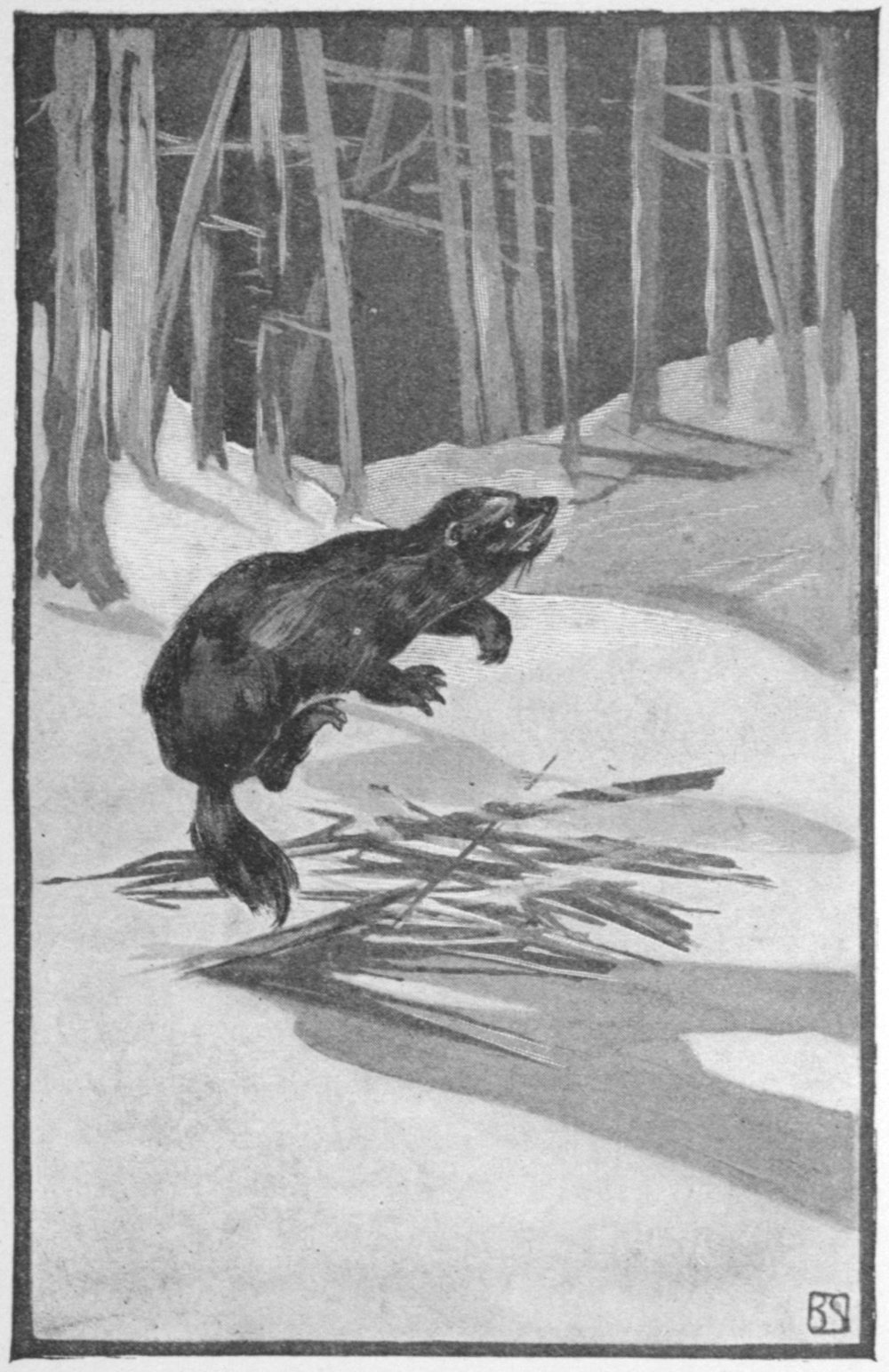
Then gayly jumping over Awaited the cheerful blaze.
Then as it grew dark and darker, As the coals and sticks grew blacker, When a fire is dying away, He came to his camping place, And then it grew cold in earnest, A cold to split a flint. However, Lox the Believing, Said, “What is good for once Must surely be good for ever,” And made up a pile of sticks, Then gayly jumping over Awaited the cheerful blaze. But all in vain, not a sparkle, Not a hint of anything burning, Not even a tiny crackle Came from the silent wood. But as Lox was persevering, He hopefully kept on jumping, Till after some thirty efforts There arose a little smoke Which came as if it were angry At being so frequently called, And then returned no more. But Lox to himself repeating “All smoke has fire behind it,” Kept bravely at his leaping Until the Indian Devil Of madness and desperation Awoke within his soul, And he swore by it that he ever Would keep straight on with his jumping Till something blazed—or burst! He himself was almost blazing— The Indian Devil Lox. So he kept on a-leaping, But to him there came no comfort, Not even the glow of a spark; And being at last aweary He fell in a swoon on the wood-pile, And so he froze to death, And that was the last that winter, Which was heard of him in the land. Yet I think in time he recovered, For since then, he very often Has appeared among the people— Lox, The Indian Devil, The Indian Devil Lox. L.
FOOTNOTES:
L’Envoi
L’ENVOI
O happy sylvan hours and days of yore! O quaint old speech which echoes in our ears! From you we learn our country’s early lore, The forest people’s sorrows, joys and fears. So pass in peace, ye simple woodland race! We may no longer hope to bid you live. In our mad turmoil ye can have no place, But we have taken what ye have to give. P.
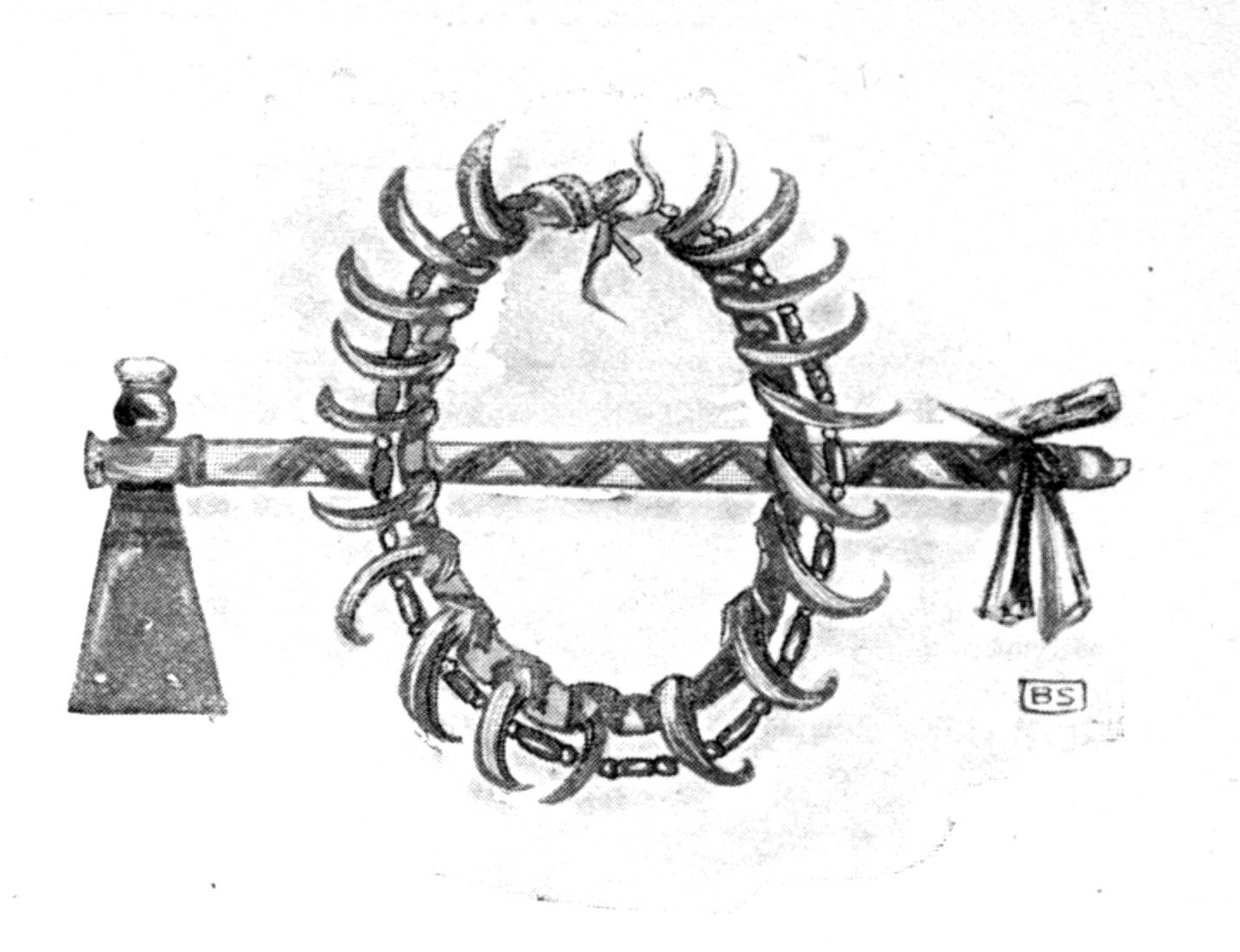
APPENDIX
The Passamaquoddy Wampum Records
APPENDIX
The Passamaquoddy Wampum Records
[This is an emendation of the text published by me in Proceedings of the American Philosophical Society, xxxvi., pp. 479 ff. P.]
Mechi mieu begokni tohocioltowuk kʾchi ya wioo wʾskitap epitjik wasisek nespi wʾsikyojik yot mechi mipniltimkil; nit etuch alit-huswinook negmaoo tepit-hodmotit chewi kegw layoo kegusitch eliyoek chewi layoo tech na neksayiu. Nit etuchi mʾsioo sise pʾchittaketil kinwetaswinoo mʾsitte elipitt wʾskichin anquotch elquiyik sownisnook anquotch wʾchipenook ketkik snoot segdenook ketkik kʾski yasnook. Pechiote pechiyik Wabnakik.[70] Kʾmach wʾsipkikmʾn yaka keswook naga wewʾchiyanya nitta tama wejiwetit wʾtiyawa wʾskichunoo kepechip-tolnen wʾliagnotmagʾn. Nit ettlowsittgw-ton kisipootwusoo likislootemook. Mʾsitte tekepitt wʾskichin kinwetto nit kʾchi lagootwagʾn kitwitasso. Mʾsioo wʾskichin nootek aknoomagʾn mʾsioo wʾlitt-hasoo. Mʾsioo wʾsiwatch yogonyalkatkisilet tekowmʾk maltnitin. Nit mʾsioo kesookmik sittobjitakan opootwuswinoom. Mʾsioo kesookmik sittopetchitakan nissoo kessena agwamʾk opootwuswinoom natchiwitchitagwik kʾchi lagootwagʾn kessena kʾchi mawopootwuswagʾn.
Nit mʾsioo kisma wewsettil nit omache tipit-hodmʾnya ta nʾteh wʾtelook-hʾdinya. Stepal mʾsioo siwatch yokotit eli wʾabli pemowsittit; yokt kʾchi sogmak wʾtiyana-kʾt kihee yot elapimʾk asittwechosyokw kʾnʾmittunen elipegak naptwuk kenemittonenwul kesek ewablikil yotʾl pegaknigil temʾhigʾnsisʾl to (?) naga tapyik tepakw-yil chewi pooskenoswul oskemioo nitte mʾsioo wʾtlkislootmʾnya wʾtlagootinya; nit otaginwipoonmʾnya kisook etuchi pootwusitit.
Nit liwettasoo chikte wigwam. Yot wʾkesekmenya etasikiskakil katama loo-wen-kelosioo mʾsitte pootwuswin chewitpit-hasoo tanetch wʾtitmʾn. Tan etuchi littootit tebaskuswagʾnʾl mʾsitte wʾtipithodmʾnya tanetch likisi-chenetasso manʾtimʾk guni chikpultowuk topemlokemkil.
Apch etuchi apkw-timootit wigwam liwitassoo mʾsittakw-wen tlewestoo nitt na guni omache pootwuswinya; mʾsioo potwooswin wʾtoknootmʾn elipipyaks naga mech matnuttitit mʾsioo eli wʾsikyoltotitits guenipnʾltimʾk; nittlo alteketch tepnasko yotipit-hatosoo naga kʾtemakitt-haman wʾtepittemowa wʾtowasismowa naga mamatwikoltijik; mechi mieu yokli-wʾsikyaspenik tahalote saglit-hat wʾsikap naga mʾtappeguin. Nit mʾsioo mitte westotitit. Nit likisloomuk wʾtlitonia kʾchi lakalosnihagʾn naga tochioo opoomʾnya epasioo kʾchi wigwam tebagalosneoo; na wʾtlitunia ebiss oponmoonya omittakw-sowall nit wen pelestowat nit etuch eshemhoottam yotʾl eyilijil wʾnijanʾl tebakalusneoo. Mʾsitte na wʾtachwiyik settswawall naga na mejimioo wʾmʾtutwatmʾn wʾkchi squt wa wechi skanekaswenook. Yot wechi mach-hak wababi tebaskuswagʾnʾl.
Nit lagalosnihagʾnʾl etli-nʾsettwasik spemek nit nitmame lagootwi-kislootmewagʾn mʾsitte kesigpesitt wʾskichin newanko kesookinito kenooklo kechayami milijpesw. Mʾsitte yokteke wʾskichinwuk wʾtachwi elyanya naga wiginya tebagaloosneoo teketch wen kegw liwableloket chiwisemha wʾnikikowal wʾtesemhogol; nit ebis kisi mawettasiks nittlo tane teppo wigit tebakalosneoo chejik sʾtʾmenal tan eyigil tebaskuswagʾnʾl kessena essemha. Nit wigwam ettlinwasik tabakalosneoo hidmowioo mʾsitte kesitt wʾskichin kesittakw chewi sanke wipemowsoo. Katama apch chigawi yotoltiwun chewi lipemowsowuk tahalo wesi westoltijik witsegesotoltijik opeskon wenikicowa. Nittlo kʾchi squt etli wʾsittwasik wigwamek hidmowiw mʾsitte ta wut kiswichitakw wʾskichin nittetch ettlositit squtek wela manch skat apch teke yiwibmes-honwal. Nittlo wenikigowal ettlin mʾsitt woot wigwamek nit kʾchi Sagem Kanawak. Nitte lakaloshigʾn naga hibis hidmowiw wababi tebaskuswagʾnl. Tan woot pelsetek chewi mawe sagyawal etli nʾsettwojik nit mʾsigekw kisittpiyak.
Nitte apch omach elok-hʾdinya hʾnʾwʾtlitunia apsegiguil wʾtebaskuswagʾnowal. Mʾsioo yotʾl tebaskuswagʾnʾl chewi-littaswul wababik. Wechich kiskittasik tan teppo elikimwittpiyak elnogak mʾsittech yo naga elimilichpegek wapap. Yot wapap elyot sagmak naga mʾitapeguinwuk naga nipwultimkil. Elok-hʾdimek tan etuchi metchmete sagem naga elipuskenoot eli-mʾtakittmowatil mʾsitte wʾskichinwuk. Wulasikowdowi wapap; wigwamkewi wapap.
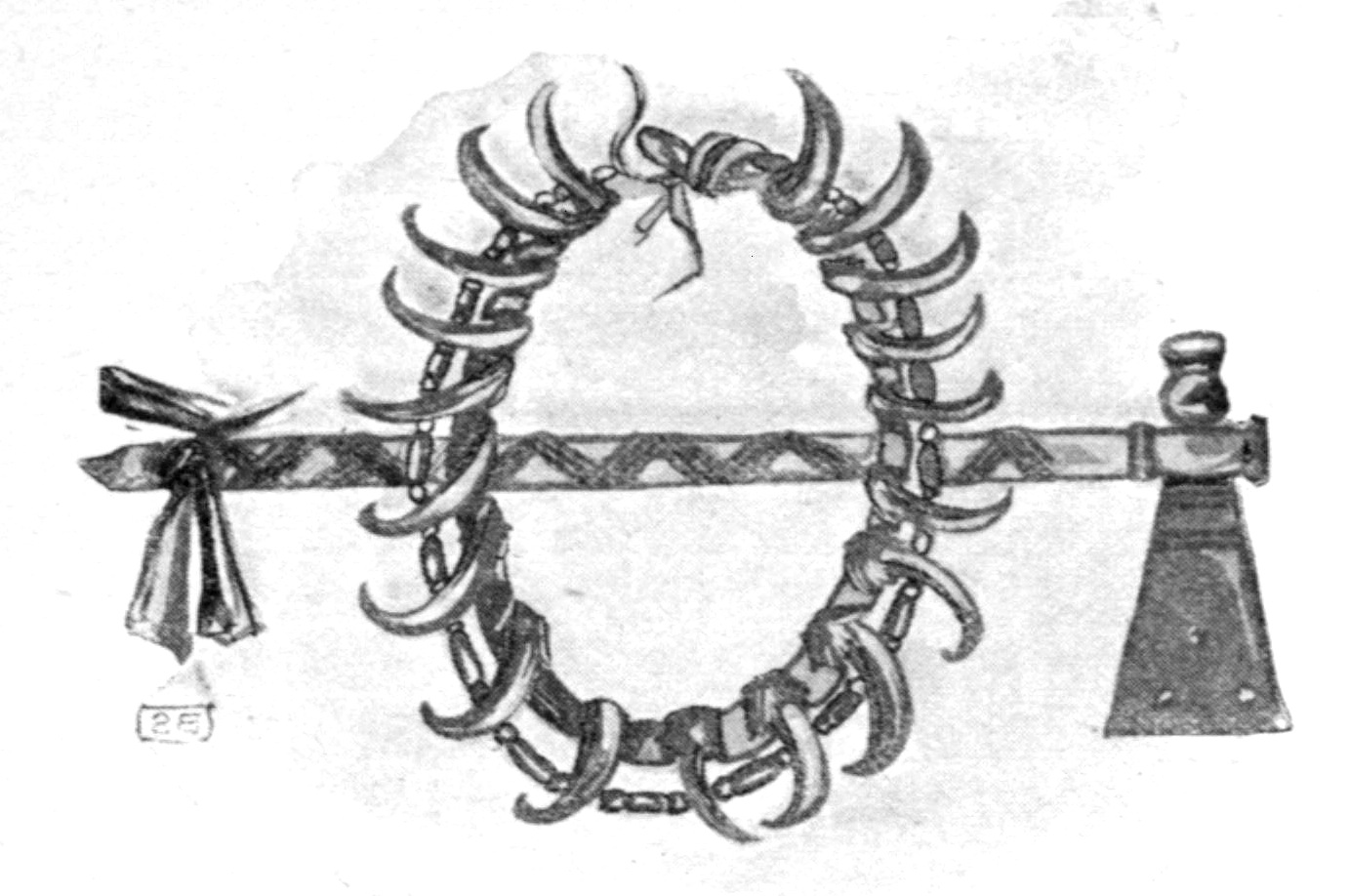
APPENDIX
The Wampum Records in English
Many bloody fights had been fought, many men, women and children had been tortured by constant and cruel wars until some of the wise men among the Indians began to think that something must be done, and that whatever was to be done should be done quickly. They accordingly sent messengers to all parts of the country, some going to the South, others to the East, and others to the West and Northwest. Some even went as far as the Wabanaki. It was many months before the messengers reached the farthest tribes. When they arrived at each nation, they notified the people that the great Indian nations of the Iroquois, Mohawks and others had sent them to announce the tidings of a great Lagootwagon or general council for a treaty of peace. Every Indian who heard the news rejoiced, because they were all tired of the never-ending wars. Every tribe, therefore, sent two or more of their cleverest men as representatives to the great council.
When all the delegates were assembled they began to deliberate concerning what was best to do, as they all seemed tired of their evil lives. The leading Chief then spoke as follows: “As we look back upon our bloodstained trail, we see that many wrongs have been done by all of our people. Our gory tomahawks, clubs, bows and arrows must undoubtedly be buried for ever.” It was decided, therefore, by all concerned to make a general Lagootwagon or treaty of peace, and a day was appointed when they should begin the rites.