PART III PREVENTIVE MEASURES AGAINST INDUSTRIAL POISONING
Thomas Morison Legge translation
I GENERAL MEASURES
In discussing preventive measures against industrial poisoning the deductive method from the general to the particular will be followed. The numerous instances of poisoning mentioned in Part I afford a practical basis on which to formulate general rules before passing on to describe special measures. Technical details will be omitted, as they must be left to the technical expert whose business it is to draw up the plans as a whole and to modify them according to the requirements of individual cases.
In the effort to control industrial poisoning and disease it is necessary to insist absolutely on the concerted action of all concerned. In this co-operation every one is called who through his knowledge and sphere of activity is in a position to assist.
The medical man comes in with his special knowledge of the action of poisons as toxicologist, as practising physician (especially as works surgeon and doctor of the sick insurance society), and also in an official capacity as appointed surgeon or medical officer of health; the technical expert comes in as engineer, as manager, as foreman, and as factory inspector. But above all the interest and active co-operation of employers and employed are needed as well as the organisations of both. That the workers should understand and co-operate is essential for the success of preventive measures, and subsequently it will be shown in what direction this co-operation is most necessary.
To make possible such co-operation interest must be aroused and suitable information and teaching supplied to the parties concerned. Medical men and practical workers require to receive instruction in industrial hygiene, and teaching on this subject should be arranged for in secondary and technical schools. Medical men and others who, as officials and insurance doctors, are brought constantly into touch with industrial workers should have opportunity—by means of special courses and lectures—to keep pace with advancing knowledge in this direction. Beside these there are, as educative organisations, special Institutes of Industrial Hygiene and special hospitals for treatment of diseases of occupation which bring together the patients and the teaching staff and so facilitate pursuit of knowledge and research. A beginning of this kind has already been made by the Industrial Hygiene Institute, Frankfurt a.-Main, and the hospital for diseases of occupation at Milan, showing that the ideas are attainable. International agencies which unite all circles interested in the subject irrespective of profession or nationality in common interchange of thought and discussion are of great significance for uniform development of needful preventive measures; international congresses, often in connection with exhibitions, have given valuable stimulus and have been the starting-point of permanent international societies, unions, and organisations. The significance for our inquiry of these international efforts will be more closely considered in the following pages.
II GENERAL CONSIDERATIONS ON SOCIAL AND LEGISLATIVE MEASURES
INTERNATIONAL PREVENTIVE MEASURES, NOTIFICATION OF INDUSTRIAL POISONING, LISTS AND SCHEDULES OF INDUSTRIAL POISONS
Experience and inquiry in the field of industrial poisoning led to a series of demands which, supported as they were by a general movement for the protection of workers, were soon followed by regulations and legislative action. For a long time efforts have been directed to treat industrial disease and poisoning in the same way as has been done in the case of industrial accidents. The question, however, is attended with much greater difficulty. On the other hand, uniform international regulation of questions affecting prevention of disease is called for both on humanitarian and economic grounds.
The idea of international legislation for the protection of workers was first mooted about the year 1870. The possibility and need of such intervention was much discussed and interest in it kept constantly alive, especially in Switzerland, until the organisations of the workers took up the idea. Several attempts failed. In France in 1883 a proposal of the Socialist party aiming at international agreement on the subject of protection of the workers was rejected. In 1885 (in opposition to Hertling) Prince Bismarck expressed himself strongly against the possibility of such international protection. But the stone, once set rolling, could not be stayed. In the years 1886, 1887, and 1888 the French and English trade unions, as well as the Swiss Federal Council, took up the question afresh. These endeavours at last took tangible shape in the first International Conference for the protection of workers held in Berlin in March 1890. This date remains a landmark in the history of the subject, but not until ten years later—1900—did the Congress held in Paris for the international legal protection of workers lead to the establishment of what had been repeatedly urged, namely, creation of an International Bureau. This was inaugurated at Basle in 1901 and forms the headquarters of the National Associations for Labour Legislation called into being in various countries.
This International Association meets regularly in conference, as in Cologne (1902), Berne (1905), Lucerne (1908), Lugano (1910), and Zurich (1912). The questions raised in the International Labour Bureau, which receives financial aid from a number of States, are fully and scientifically discussed with the object of finding a basis on which to bring into agreement the divergent laws of the different countries. A further task of this strictly scientific institution is the collection and publication of literature bearing on the protection of workers in one and another country, distribution of information, and the editing of reports and memoranda. The question of prevention of industrial poisoning has always taken a foremost place in the programme of the International Association and in the agenda of the International Labour Bureau. At its first meeting a resolution was adopted advocating the prohibition of the use of white phosphorus and white lead, and the Labour Bureau in Basle was instructed to take the necessary steps. Special, if not prohibitive, economical considerations foreshadowed difficulties—all the greater because the matter at issue concerned prohibition of articles playing a part in the markets of the world. Just on that account international treatment of such questions is necessary, since a peaceful and orderly solution can only be arrived at on such lines. International effort endeavours here to press with equal weight on the countries competing with one another commercially, so that in the protection of the workers economic adjustment is sought in order that efforts based on humanitarian grounds shall not at the same time cause economic disadvantages, the aim being to produce general welfare and not merely protection of one class at the expense of another.
Through these international agreements between various countries success in the direction aimed at is hopeful, and indeed to a certain extent—as in the phosphorus and lead questions—actually attained. Thus, for example, Germany and Italy were in a position to enforce prohibition of the use of white phosphorus early, while their neighbour Austria, on account of commercial and political considerations and the conditions of the home lucifer match industry, has only recently decided on prohibition.
As international agreement for the protection of workers is advisable on economic grounds, so also is it reasonable and just from purely humanitarian reasons that workers, without reference to civil condition or nationality, should be equally protected. On this point it is proposed to take a vote and to press only for those reforms which are thoroughly sound and recognised as necessary.
The first step in such a comprehensive attack is precise knowledge of the extent and source of origin of the particular forms of industrial poisoning and disease and the collection of reliable statistics. This suggested the obligation to notify such cases to the proper authorities in the same way as is now done in the case of infectious disease. A motion to this effect had already been passed at the Conference of the International Association for Labour Legislation held in Basle, and a request was made to the Labour Bureau to prepare a list of the diseases and poisonings in question. To them we shall refer later, but a schedule is necessary as a basis to work upon. Yet even when this is done there are obviously great difficulties to be overcome in carrying out the requirement of notification when the aim is kept in mind of collecting complete statistical data for controlling the conditions giving rise to industrial disease. The proposal of the International Association seeks to make notification obligatory on the part both of the medical practitioner in attendance and the occupier, and in connection with this to secure the co-operation of the Sick Insurance Society.[D] The proposal to require the appointed surgeons and surgeons of the Insurance Society to notify all cases is hardly feasible in view of their dependent position. Nor can the obligation on the occupiers lead to the desired result because of their lack of medical knowledge and the fact that by notifying they might be forced to act to their own disadvantage. A successful effort in this direction is recorded in Saxony, where lead poisoning was first made a notifiable disease, and later the general duty of notification of industrial poisoning was prescribed by Order dated March 4, 1901.
Disease and Industry. (1) Reported Cases.[E]
1912. (2) 1911. (3) 1910. (4) 1909. (5) 1908. (6) 1907. (7) 1906. (8) 1905. (9) 1904. (10) 1903. (11) 1902. (12) 1901. (13) 1900. (14)
Lead Poisoning 587 44 669 37 505 38 553 30 646 32 578 26 632 33 592 23 597 26 614 19 629 14 863 34 1058 38
1. Smelting of metals 56 7 48 3 34 5 66 5 70 2 28 2 38 1 24 1 33 1 37 2 28 54 3 34 1
2. Brass works 5 9 1 7 5 6 9 1 11 5 1 10 1 15 5 6 1 3
3. Sheet lead and lead piping 6 12 4 9 2 14 6 7 9 7 11 12 17 17 1
4. Plumbing and soldering 35 5 37 2 25 1 28 27 20 2 16 4 24 2 21 3 26 23 1 23 9
5. Printing 37 32 2 33 4 21 1 30 2 26 3 16 2 19 4 15 13 2 19 23 1 18 2
6. File cutting 13 18 2 9 1 8 9 2 10 15 12 20 4 24 2 27 1 46 7 40 3
7. Tinning 15 11 13 17 22 10 25 18 1 14 1 10 14 11 10 5
8. White lead 23 41 2 34 1 32 2 79 3 71 108 7 90 116 2 109 2 143 1 189 7 358 6
9. Red lead 3 13 1 10 10 12 7 6 10 11 6 13 14 19
10. China and earthenware 80 14 92 6 77 11 58 5 117 12 103 9 107 4 84 3 106 4 97 3 87 4 106 5 200 3
10a. Litho-transfers 1 1 1 1 1 2 10 5 5 3 3 2 7 10
11. Glass cutting and polishing 1 1 5 — 4 2 3 1 4 4 1 3 — 4 8 2 11 3 7
12. Vitreous Enamelling 5 19 1 17 7 7 6 4 2 3 4 3 1 9 11
13. Electric accumulators 38 1 24 1 31 27 2 25 1 21 26 27 1 33 28 16 1 49 1 33
14. Paints and colours 19 21 17 1 39 2 25 35 1 37 57 1 32 1 39 1 46 56 56 1
15. Coach building 84 7 104 5 70 6 95 6 70 3 70 3 85 7 56 3 49 4 74 5 63 1 65 4 70 5
16. Ship building 34 2 36 6 21 2 27 1 15 22 1 26 1 32 2 48 24 1 15 1 28 1 32 2
17. Paint used in other industries 48 3 56 1 51 3 42 47 1 49 2 37 3 49 2 27 3 46 1 44 1 61 50 5
18. Other industries 84 2 88 4 47 3 52 2 78 5 56 2 66 2 70 1 53 3 40 64 89 1 86 4
Phosphorus Poisoning — — — 3 1 1 1 — 3 1 1 1 — 1 2 4 3
Arsenic Poisoning 5 10 1 7 4 23 1 9 2 5 1 5 5 5 12 1 22 3
Mercurial Poisoning 17 12 10 1 9 10 7 4 8 3 8 8 18 9
Anthrax 47 64 11 51 9 56 12 47 7 58 11 67 22 59 18 50 10 47 12 38 9 39 10 37 7
Wool 31 6 35 10 28 3 28 3 18 3 23 3 24 8 34 12 12 1 20 5 12 2 6 4 9 2
Horsehair 7 8 1 6 1 8 2 10 17 4 10 4 7 1 12 4 7 1 10 2 9 1 12 3
Handling of hides and skins 8 20 14 3 18 6 13 1 12 2 19 7 17 4 18 3 12 1 11 5 20 5 9 1
Other industries 1 1 3 2 2 1 6 3 6 2 14 3 1 1 8 2 8 5 5 4 7 1
My own experience does not lead me to expect much in elucidation of industrial diseases from the Sick Insurance Societies. In Austria they make a statistical return as to the causation of illness to the central authorities. I have myself—in my capacity as an official of the State Central Board—examined these in order to try and gain knowledge of the extent of industrial disease in Bohemia. In spite of the returns drawn up by the district surgeon who visits the factories in question, it was impossible for me to obtain a complete picture of the extent of industrial sickness. The reports only give valuable data on which to base action in particular cases, and from this standpoint I do not under-estimate their value. But so far as the expressed wish of the International Association is concerned they appear to fulfil it, inasmuch as for specially dangerous trades special reports are issued, the Austrian law for sick insurance requiring such industries to institute separate sick insurance funds with separate statistics. Hence, under present conditions, I do not see how the duty of notification will be effective. There remains the endeavour to secure insurance and the right to claim compensation for industrial disease in the same way as is provided for accidents. This point was fully discussed at the eighth International Congress for Workmen’s Insurance held in Rome in 1908. There is no valid ground for granting compensation only for sudden disturbance of health arising in the course of employment by accident or acute poisoning, and withholding it in the case of gradual disturbance of health caused equally by the trade, as the effects of such chronic indisposition weigh often no less heavily on the sufferer. Inclusion of industrial disease in the same category as accident insurance, as indeed has been done in France, Switzerland and Great Britain, has, apart from the fact that it is dictated by fairness and humanity, the advantage of removing existing hardship and of solving doubtful cases. Correct statistics, further, would thus be obtainable for the first time, and the employer by insurance would be freed from the legal proceedings now frequently brought against him for injury due to chronic industrial poisoning. And it seems the more right and just course to institute a general scheme of insurance against industrial disease than to have recourse to an Employer’s Liability Act in this or that case, particularly as the question often arises in regard to a disease which develops gradually—In whose employment was the disease contracted?
Clearly in such a scheme of insurance against both accident and industrial disease only specific industrial diseases would be included, i.e. diseases in which the connection with the industry can be clearly established as due to causes inherent in the industry, and traceable to definite materials used. Such diseases as tuberculosis and the effects of dust inhalation (bronchitis, &c.), which as industrial diseases occur only too often, cannot be called specific, because they arise outside the industry and make decision impossible as to whether or not in a particular case the disease owed its origin to the occupation. In order to determine what should be regarded as specific industrial poisons it was deemed necessary to draw up a schedule. For one such list Sommerfeld (in collaboration with Oliver and Putzeys) is responsible, Carozzi of Milan for a second, and Fischer[F] for a third, published in 1910. Those by Sommerfeld and Fischer are constructed in similar fashion—enumeration of (1) the poisonous substance, (2) the industries in which it is made or used, (3) the channel of absorption, and (4) the symptoms produced. Sommerfeld enumerates the poisons in alphabetical order, noting against each the requisite preventive measures, while Fischer adopts a chemical classification, confining himself to general introductory remarks as to prevention.
Sommerfeld proposes to limit notification to poisoning sharply defined as to the symptoms set up, such as lead, phosphorus, mercury, arsenic, chromium, carbonic oxide, aniline, benzene, nitrobenzene, carbon bisulphide, and nitrous fumes. This simplifies the obligation to notify, but does not dissipate the fears expressed above as to the difficulty, because in the present development of the chemical industries new substances involving new danger to the persons handling them are constantly being discovered, and thus there can be no finality as to which industrial poisonings should entitle to compensation. And if recourse were had from time to time to additions of new substances to the schedule, reliance would have to be placed on experience with regard to each substance added, and thus the actual individual who had suffered would not benefit. Fischer, indeed, acknowledges that any schedule must be incomplete, and emphasises the fact that continual additions would be necessary; otherwise it would be better to refrain altogether from publication of a list. Such lists may be valuable guides, but no sure foundation for insurance legislation. The only possible way to do this is to give as far as possible a correct definition of the industrial diseases entitling to compensation and, in isolated cases, to leave the decision to the expert opinion of competent judges.
Extension of workmen’s insurance to cover chronic industrial poisoning is, however, most desirable in the interest of employers and employed, and also of science. The German accident insurance legislation is especially suited to do this, since the trade organisations direct their attention not only to the prevention of accidents but of industrial diseases also.
III SPECIAL PREVENTIVE MEASURES FOR WORKERS
SELECTION, CHOICE OF TRADE, ALTERNATION OF EMPLOYMENT, MEDICAL CONTROL, SAFETY APPLIANCES, INSTRUCTION AND CO-OPERATION OF WORKERS, CLOTHING, ATTENTION TO CLEANLINESS, FOOD, GENERAL WELFARE
As a practical measure in protection against trade risk selection of those capable of resisting danger has to be considered. It is obviously desirable to select for employment in a dangerous trade persons possessing powers of resistance, because predisposition and resistance to the action of poisons differ markedly in individuals. To some extent such a selection comes of itself, as those who are very susceptible are obliged by repeated attacks to give up the work. The social and physical misery, undeserved loss of employment, illness, and perhaps early death following on this kind of selection might be checked by timely medical examination so as to weed out the unfit. But medical examination prior to admission into a dangerous trade (actually practised in many industries involving risk of poisoning) inflicts hardship on those seeking employment, and recruits the ranks of the unwillingly unemployed. It would be much better were it possible to meet the need of selection by pertinent direction and guidance in choice of calling. There should be insistence in technical schools especially on the dangers inherent in certain industries, school medical examination as to physical qualifications for certain industries, and careful note made of individual suitability in labour bureaus, apprentice agencies, and the like.
Young female workers, naturally less able to resist, should be excluded from work involving risk of poisoning—a principle which has been acted on in the legislation of civilised countries.
Further, workers engaged in industries involving risk should not be exposed to the pernicious influence for too long a time. Hence the hours of employment should be shortened in occupations proved to be injurious to health. An important aid in this respect is alternation of employment. Change of occupation is particularly recommended where the nature of the poisoning of which there is risk is cumulative in action, because in the intervals from the work the system will rid itself of the accumulated store. In this way a number of skilled resistant workers, familiar with the risk and knowing how to meet it, will be maintained. Casual labour works in a vicious circle—increase of fresh workers increases the danger and the number of cases of poisoning, and, vice versa, these augment again the need of change in the personnel, so that the number of cases of poisoning rises very high. Thus the industry itself may be endangered, since its prosperity depends mainly upon the existence of a skilled staff of workers. In dangerous trades, therefore, Hermann Weber’s words, ‘Change of work instead of change of workers,’ have much force.
Periodical medical examination in these industries cannot well be omitted in order to weed out the physically unfit, and to suspend from work those who show early symptoms. Note should be kept of the state of health of the workers, the results of the periodical medical examination, the duration of symptoms, and the treatment of any illness that occurs. Medical supervision presupposes special training and experience in the medical man entrusted with the task.
Further, in some industries in which poisonous materials are used, especially such as set up acute sudden poisoning, there should be a trained staff competent to recognise the first symptoms of poisoning and to render first aid, and having at its disposal adequate means of rescue.
Apart from the rescue appliances generally needed in dangerous trades, stress must be laid on the value of oxygen apparatus as a means of saving life. In addition to what is needed for the sufferer there must be defensive apparatus at hand for the rescuers (breathing helmets, &c.), to facilitate and make safe their rescue work when in a poisonous atmosphere. Without such defensive equipment rescuers should never venture into gas conduits, or into any place where presumably a poisonous atmosphere is to be met with. It hardly requires to be said that in dangerous industries medical aid should be within easy reach; in large works actual medical attendance may be necessary.
In acute as well as in chronic cases of poisoning early medical intervention is advisable. Hence medical aid should be sought on the earliest appearance of symptoms, and the worker, therefore, should know the nature and action of the poison with which he comes into contact. This brings us to the subject of the education of the worker and particularly observance of all those rules and regulations in which his co-operation is necessary. This co-operation of the workers is indispensable; it is the most important condition of effective defence. The best regulations and preventive measures are worthless if the worker does not observe them. He must be taught their aim, the way of using the means of defence; he must be admonished to use them, and, if necessary, compelled to do so. The co-operation of workmen’s organisations in this matter can avail much, since a workman most readily follows the advice of a fellow-worker.
Teaching of the kind suggested can be done in different ways. Apart from lectures and practical courses, concise instructions, either in the form of notices or as illustrated placards, should be posted up in the workrooms or handed in the form of leaflets particularly to the newly employed. Distribution of such leaflets might well be placed as a duty on the employer.
Of preventive measures applying to the individual those are of prime importance which serve to protect the worker, as far as is practicable, from coming into contact with the poison. Protection of this kind is attained by wearing suitable clothing, use of respirators, and careful cleanliness—especially before partaking of food. It cannot be too strongly urged that these precautions are a very potent defence against the danger of industrial poisoning, especially of the chronic forms, and in teaching workers their importance must be insisted on. It is not sufficient merely to put on overalls over the ordinary clothes. The ordinary clothes must be taken off before the commencement of work, and working suits put on, to be taken off again before the principal midday meal and before leaving work. They should be made of smooth, durable, washable material, and be properly washed and dried not less often than once a week. They must be plainly cut without folds or pockets.
Direct handling of the poisonous substances is to be avoided, but where this is necessary impervious gloves may have to be worn, especially in the case of poisons which can be absorbed through, or act injuriously on, the skin. If there is risk of splashing or spilling of poisonous liquids on to the clothes, impermeable or partly impermeable overalls (aprons, &c.) should be worn. The obligation of providing the overalls or working suits falls naturally on the employer in industries where poisonous substances are used, and there is equally obligation on the employee to use the articles provided.
Suitable cloakroom accommodation is essential, by which is meant room not only to change clothes with cupboards or hooks on one side for clothing taken off on commencement of work and on the other the working suits, but also ample washing accommodation. These cupboards should be double, that is, be divided by a partition into two parts, one serving for the ordinary and the other for the working clothes.
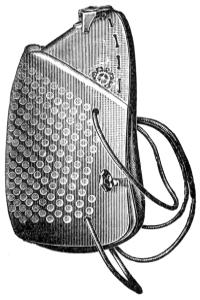
Fig. 35.—Aluminium Respirator
Protection of the respiratory organs can to some extent be obtained by so-called respirators worn over the mouth and nose. Often they consist simply of a moist sponge or folds of cloth, or again may be complicated air-proof affairs enclosing mouth and nose, or the whole face like a mask, or even the head like a helmet; they fit close, and the aperture for respired air is provided with filtering material (cotton wool, &c.) placed between two layers of wire gauze. The outer layer of the gauze moves on a hinge, so that the filtering material can be renewed after each time that it has been used. The construction of respirators is extraordinarily varied. One form is illustrated. They must be light, and in order not to obstruct breathing seriously they are often provided with valves—closing during inspiration and opening during exhalation. Generally the respirators in common use do not quite satisfactorily fulfil the conditions required. After a time the pressure becomes irksome, the face becomes hot, breathing more difficult, and discomfort from wearing them unbearable.
Respirators are only to be regarded in the light of secondary aids and for occasional use.
During temporary exposure to an atmosphere charged with poisonous dust the wearing of an efficient apparatus—preferably one protecting the head—is very desirable.
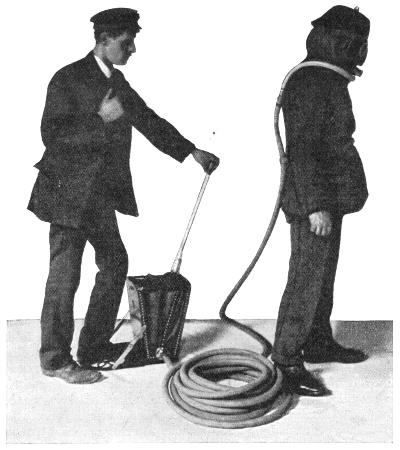
Fig. 36.—Smoke Helmet, Flexible Tubing, and Foot Bellows (Siebe, Gorman & Co.)
Respirators afford no protection, or a very imperfect one, against dangerous gases or fumes. If soaked with an absorbing or neutralising fluid they can scarcely be worn for any length of time.
In an atmosphere charged with poisonous gas recourse should be had either to a smoke helmet with flexible tubing and bellows or to an oxygen breathing apparatus so constructed that the workman carries the necessary supply of oxygen with him in a knapsack on his back. In the latter case oxygen from a compressed cylinder of the gas is conveyed to the breathing mask, so that respiration is independent of the surrounding atmosphere.
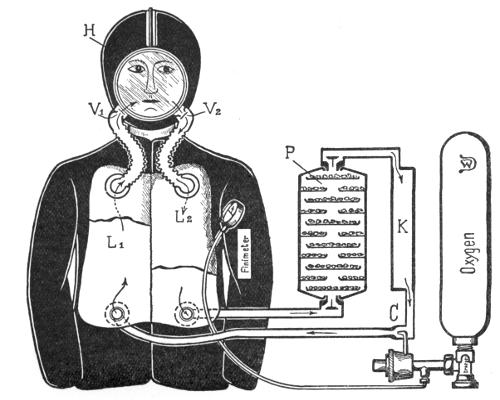
Fig. 37.—Diagram of Draeger 1910-11, Pattern H (R. Jacobson)
P Alkali cartridges; K Cooler; C Aspirating pipe; L₁ Purified air; L₂ Expired air.
The mode of working is represented diagrammatically in figs. 37 and 40. After putting on the helmet, the bag is first filled with fresh air, the air valve is then closed, and the valve of the oxygen cylinder unscrewed so as to permit of the flow of the oxygen which, mixes with the air in the bag, and begins to circulate; the expired air passes through the caustic potash pellets P, which free it of carbonic acid gas, so that, with a fresh supply of oxygen from the cylinder through the pipe C, it is regenerated and made fit for breathing again. The pressure in the cylinder is measured by a manometer, which indicates also when the supply of oxygen gives out.
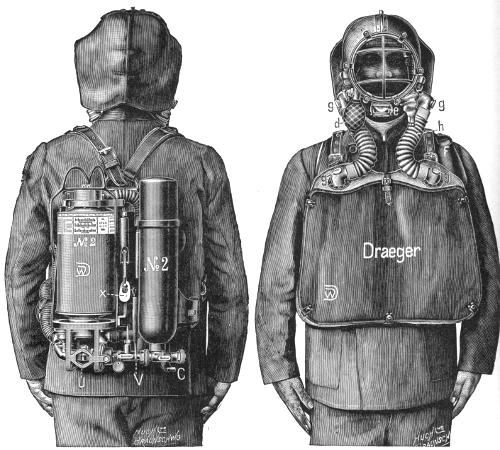
Fig. 38.—Showing the Potash Cartridge No. 2 with Change Mechanism X; No. 2 Oxygen Cylinder with Spanner V; and on the Left a Hexagonal Socket U, for unscrewing the Locking Nuts of Reserve Cylinders (R. Jacobson)
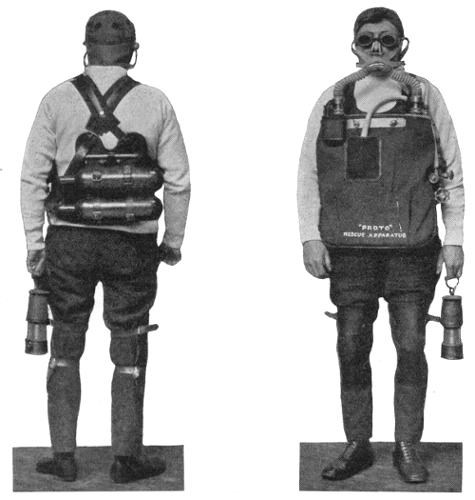
Fig. 39.—‘Proto’ patent self-contained breathing apparatus (Siebe, Gorman & Co.)
Another apparatus—the ‘Proto’ patent self-contained breathing apparatus (Fleuss-Davis patents)—is also illustrated in fig. 39. Illustration 40 gives a diagrammatic view of the principle upon which it is designed. The instructions for using the ‘Proto’ apparatus are as follows:
The oxygen cylinders (B, B), having been charged with oxygen through the nipple at (H) to a pressure of 120 atmospheres (about 1800 lbs. per square inch), are to be re-attached to the belt as shown, and the reducing valve, with its tubes, &c., is to be connected to the nipple at (H). This supply is sufficient for fully two hours.
Charging the breathing bag.—Put 4 lbs. of stick caustic soda into the bag (D), i.e. 2 lbs. into each compartment, and immediately fasten the mouth of the bag by means of the clamps and wing nuts (O). If the apparatus is not to be used at once, but is to be hung up for use at some future time, the indiarubber plug which is supplied with the apparatus should be tightly fitted into the mouthpiece in order to prevent access of air to the caustic soda, and to preserve it until required for use.
See that the inlet and outlet valves (T and S) and the connection (N) are screwed up tightly.
The small relief valve (K) is only to be opened (by pressing it with the finger) when the bag becomes unduly inflated through excess of oxygen. This may occur from time to time, as the reducing valve is set to deliver more than the wearer actually requires.
Equipment.—The whole apparatus is supported upon a broad belt which is strapped round the body. The bag is also hung by a pair of shoulder braces.
The wearer having put the equipment over his shoulders, fastens the belt and takes the plug out of the mouthpiece. The moment the mouthpiece is put into the mouth or the mask is adjusted, the main valve (H) is to be opened not more than one turn and the necessary supply of oxygen will then flow into the bag. It is advisable to open the by-pass (I) to inflate partially the breathing bag (D) for a start, but this valve should again be screwed up quite tight and not touched again, except in the case of emergency as previously described should the bag become deflated. Breathing will then go on comfortably.
Should the by-pass (I) on the reducing valve (C) get out of order then the wearer should turn on the by-pass (I) from time to time to give himself the necessary quantity of oxygen, but, as stated above, this is only to be done in case of deflation of the bag. The best guide as to the quantity of oxygen to admit in the above circumstances is the degree of inflation of the breathing bag. It will be found to be quite satisfactory if the bag be kept moderately distended.
After using the apparatus.—The caustic soda should at once be thrown away, but if it is neglected and the soda becomes caked, it must be dissolved out with warm water before putting in a fresh supply. Caustic soda will not damage vulcanised indiarubber, but it will damage canvas and leather, and will burn the skin if allowed to remain upon it.
If the apparatus is to be used again at once, it can be recharged with caustic soda at once, but if it is only to be charged ready for use at some future time the indiarubber bag should be thoroughly washed out with warm water and dried inside with a cloth or towel.
When emptying or recharging the rubber bag with caustic soda, it must always be removed from the canvas bag. After use each day, it is advisable to wash the rubber mouthpiece (or mask, as the case may be) with yellow soap and water. This acts as a preservative to the indiarubber.
Every man who is to use the apparatus should have his own mouthpiece and noseclip, or mask, as the case may be, under his own special care, both for sanitary reasons and so that he may shape and adjust the mask to fit himself comfortably and air-tightly, to such an extent that if the outlets are stopped up by the hands while the mask is held in position by its bands no breath can pass in or out.
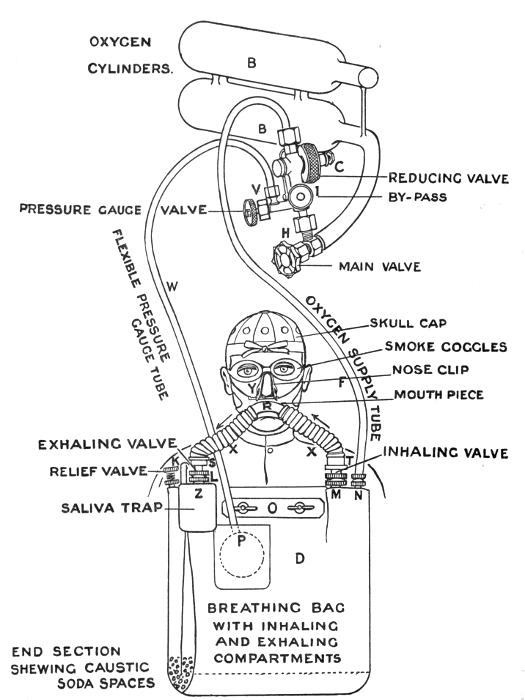
Fig. 40.—‘Proto’ Patent Self-breathing Apparatus (Siebe, Gorman & Co.)
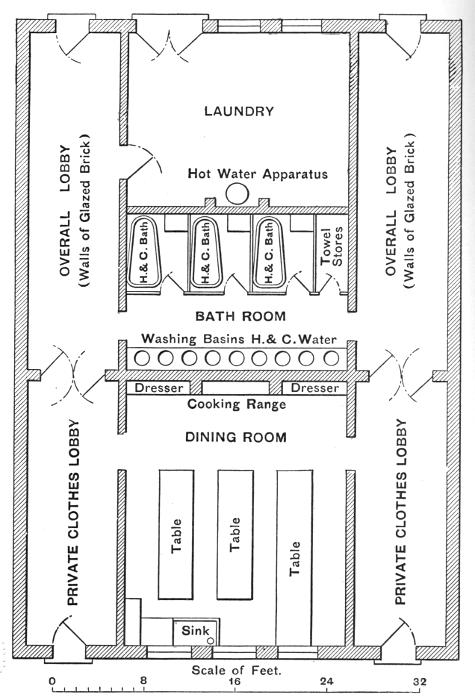
Fig. 41.—Arrangement of Cloak-room, Washing and Bath Accommodation, and Meal-room in a White Lead Factory
Where poisonous substances giving off dust or fumes are used, regular washing and rinsing the mouth (especially before meals and on leaving) is of great importance. Naturally the washing conveniences (basins, soap, brushes, towels) must be sufficient and suitable, and the workers instructed as to the importance of cleanliness by the foreman. They should be urged to bath in rotation, and time for it should be allowed during working hours.
The taking of meals and use of tobacco in the workrooms must be prohibited. Meal rooms should be so arranged as to be contiguous to the cloakroom and washing accommodation, the worker gaining access to the meal room through the cloakroom and bathroom. The arrangement described is illustrated in fig. 41. The meal room serves also the purpose of a sitting-room during intervals of work, and it goes without saying that cloakroom and lavatory accommodation are as necessary in small as in large premises.
Simple lavatory basins of smooth impervious surface fitted with a waste pipe and plug, or tipping basins, are recommended in preference to troughs which can be used by several persons at once. Troughs, however, without a plug, and with jets of warm water, are free from objection.
The douche bath has many advantages for workmen over the slipper bath. The initial cost is comparatively small, so that it can be placed at the disposal of the workers at very small outlay. Maintenance and cleanliness of douche baths are more easily secured than of other kinds, where changing the water and keeping the bath in good order involve time and expense. A dressing-room should form part of the douche or slipper bath equipment. Walls and floors must be impervious and, preferably, lined with smooth tiles or cement. It is better that the shower bath should be under the control of the worker by a chain rather than be set in motion by means of mechanism when trodden upon. The arrangement of baths is illustrated in fig. 43. In many large works large bath buildings have been erected. Fig. 44 is a plan of the splendid bath arrangements at the colour works of Messrs. Lucius, Meister & Brüning of Höchst a.-M.
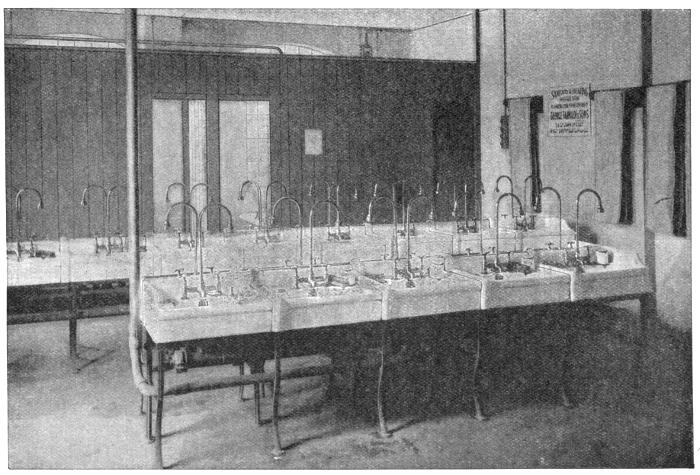
Fig. 42.—Good Washing and Bath Accommodation in a Lead Smelting Works
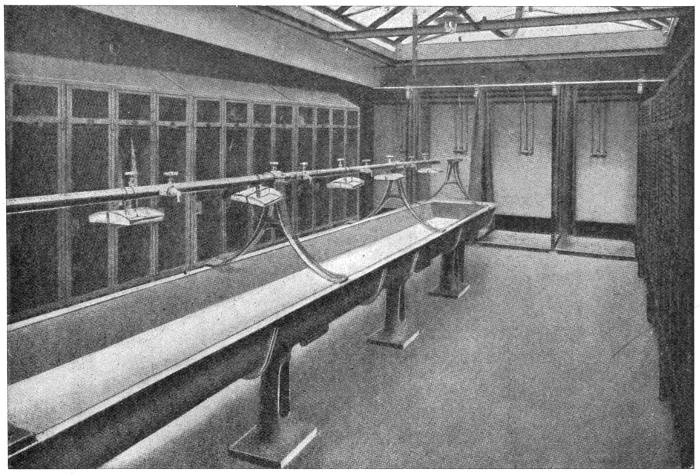
Fig. 43.—Washing Trough, Douche Baths, and Clothes Cupboards, Type common on the Continent
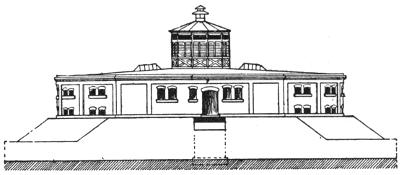
Fig. 44a.—Baths in the Höchst Aniline Works (after Grandhomme)
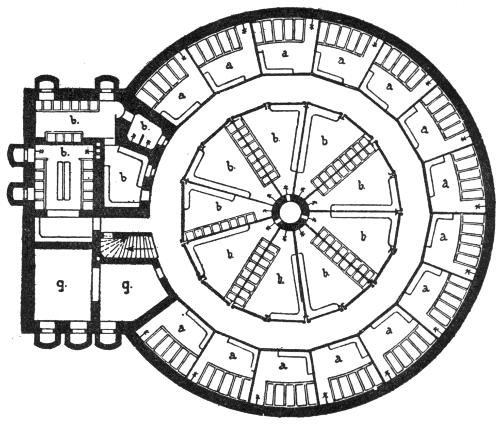
Fig. 44b.—Ground Floor
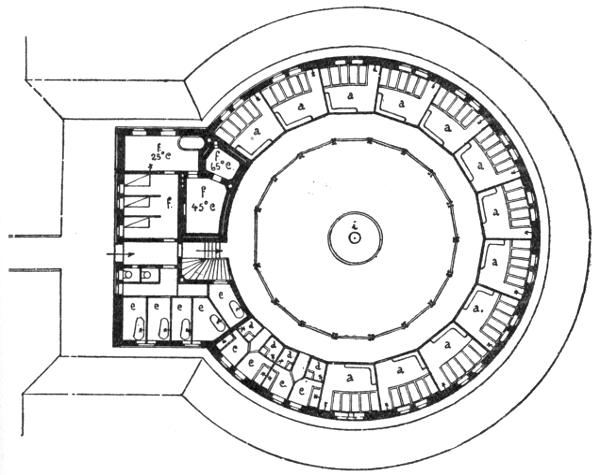
Fig. 44c.—First Floor. a, c, Baths (slipper and douche) for workmen; b, Washing accommodation for workmen; d, e, Baths for officials; g, Attendant’s quarters; f, Hot air (Turkish) baths; i, Warm water reservoir.
Naturally maintenance of the general health by good nourishing diet is one of the best means of defence against onset of chronic industrial poisoning. Over and over again it has been noticed that ill-fed workers speedily succumb to doses of poison which well-nourished workers can resist. It is not our province here to discuss fully the diet of a working-class population. We merely state that it is a matter of vital importance to those employed in dangerous trades. The question of a suitable drink for workers to take the place of alcohol calls for special attention, as, when complicated with alcoholism, both acute and chronic poisonings entail more serious results than they otherwise would do. Over-indulgence in alcohol, owing to its effect on the kidneys, liver, digestion, nervous system, and power of assimilation generally, requires to be checked in every way possible. Apart from good drinking water, milk, coffee, tea, fruit juices and the like, are excellent. Milk is especially recommended, and should be supplied gratis to workers in dangerous trades, notably where there is risk of lead poisoning.
Lastly, other features such as games and exercise in the open air, which help to strengthen bodily health, must not be forgotten. In this connection much good work has already been done by employers’ and workers’ organisations.
IV GENERAL REMARKS ON PREVENTIVE MEASURES
GENERAL PRINCIPLES, SUBSTITUTES FOR DANGEROUS MATERIALS, CLEANLINESS OF WORKROOMS, CUBIC SPACE, VENTILATION, REMOVAL OF DUST AND FUMES
Preventive measures against industrial poisoning aim at an unattainable goal of so arranging industrial processes that employment of poisonous substances would be wholly avoided. Such an ideal must be aimed at wherever practicable. Prohibition of direct handling of poisonous substances is also sometimes demanded, which presupposes (although it is not always the case) that this is unnecessary or can be made unnecessary by suitable mechanical appliances. We have to be contented, therefore, for the most part, with removal of injurious dust and fumes as quickly as possible at the point where they are produced, and regulations for the protection of workers from industrial poisoning deal mainly with the question of the prevention of air contamination and removal of contaminated air. Substitution of non-injurious for injurious processes is only possible in so far as use of the harmless process gives technically as good results as the other. If such a substitute can be found let it be striven for. Mention has already been made of international prohibition of certain substances, and attention has been drawn to economical considerations affecting this point.
Prohibition obviously may paralyse branches of industry and hit heavily both employers and employed. The skilled trained workers are just the ones to suffer, since they are no longer in a position to take up another equally remunerative trade.
Judgment has to be exercised before enforcing new regulations in order that good and not harm may follow. If a satisfactory substitute be discovered for methods of work injurious to health, then ways and means will be found to make the alteration in the process economically possible. It may, however, demand sacrifice on the part of employers and employed, but the progress is worth the sacrifice.
The following are instances of substitution of safe processes for those involving risk: generation of dust can sometimes be avoided by a ‘wet’ method (watering of white lead chambers, grinding pulp lead with oil, damping of smelting mixtures, &c.); the nitrate of silver and ammonia process has replaced the tin and mercury amalgam used in silvering of mirrors; electroplating instead of water gilding (coating objects with mercury amalgam and subsequently volatilising the mercury); enamelling with leadless instead of lead enamels; use of air instead of mercury pumps in producing the vacuum in incandescent electric lamps.
Dealing further with the sanitation of the factory and workshop after personal cleanliness, the next most important measure is cleanliness of the workroom and purity of the air. Workrooms should be light and lofty; and have floors constructed of smooth impervious material easily kept clean. The walls should be lime-washed or painted with a white oil paint. Angles and corners which can harbour dirt should be rounded. Cleansing requires to be done as carefully and as often as possible, preferably by washing down or by a vacuum cleaner. Saturation of the floor with dust oil is recommended by some authorities in trades where poisonous dust is developed and is permitted as an alternative to the methods described. I refrain from expressing an opinion on this method of laying dust, since by adoption of the practice insistence on the need for removal of the poisonous material from the workrooms loses its force—a thing, in my opinion, to be deprecated.
The necessity of keeping the atmosphere of workrooms pure and fresh makes it essential that there should be sufficient cubic space per person and that proper circulation of the air should be maintained. The minimum amount of cubic space legally fixed in many countries—10-15 cubic metres—is a minimum and should be greatly exceeded where possible. Natural ventilation which is dependent upon windows, porosity of building materials, cracks in the floors, &c., fails when, as is desirable for purposes of cleanliness, walls and floors are made of smooth impermeable material, and natural ventilation will rarely supply the requisite cubic feet of fresh air quickly enough. Ordinarily, under conditions of natural ventilation, the air in a workroom is renewed in from one to two hours. Artificial ventilation therefore becomes imperative. Natural ventilation by opening windows and doors can only be practised in intervals of work and as a rule only in small workrooms. During work time the draught and reduction of temperature so caused produce discomfort.
Artificial ventilation is effected by special openings and ducts placed at some suitable spot in the room to be ventilated and arranged so that either fresh air is introduced or air extracted from the room. The first method is called propulsion, the latter exhaust ventilation. Various agencies will produce a draught in the ventilating ducts, namely, difference of temperature between the outside and inside air, which can be artificially strengthened (a) by utilising the action of the wind, (b) by heating the air in the exhaust duct, (c) by heating apparatus, and (d) by mechanical power (use of fans).
Where advantage is taken of the action of the wind the exit to the ventilating duct must be fitted with a cowl.
The draught in pipes is materially increased if they are led into furnace flues or chimneys; in certain cases there is advantage in constructing perpendicular ventilating shafts in the building extending above the roof and fitted with cowls. Combination of heating and ventilation is very effective.
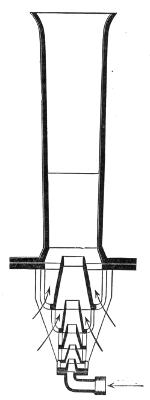
Fig. 45.—Steam Injector (after Körting), showing steam injector and air entry
In workrooms, however, where there is danger of poisoning by far the most effective method of ventilation is by means of fans driven by mechanical power. All the means for securing artificial ventilation hitherto mentioned depend on a number of factors (wind, difference of temperature, &c.), the influence of which is not always in the direction desired. Exact regulation, however, is possible by fans, and the quantity of air introduced or extracted can be accurately calculated beforehand in planning the ventilation. In drawing up such a plan, detailing the arrangement, proportions of the main and branch ducts, expenditure of power, &c., a ventilating engineer should be consulted, as it is his business to deal with complicated problems of ventilation depending entirely for success on the design of the ventilation.
Injectors are usually only employed for special technical or economical reasons. A jet of steam or compressed air which acts on the injector creates a partial vacuum and so produces a powerful exhaust behind. Fig. 45 shows the mechanism of an injector. They are used for exhausting acid fumes which would corrode metal fans and pipes, and for explosive dust mixtures where fans are inadmissible.
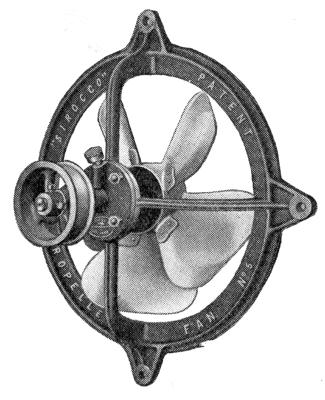
Fig. 46.—Propeller Fan coupled to Electromotor (Davidson & Co., Ltd.)
In the industries described in this book fans are most commonly used. These are, in the main, wheels with two or more wing-shaped flattened blades. Some are encased, others are open and fitted by means of annular frames in the ducts according to the intended effect and kind of fan. Fans are of two kinds, propeller and centrifugal, and, according to the pressure they exert, of low, medium, or high pressure. They are now often driven electrically, in which case there is advantage in coupling them directly with the motor.
Propeller fans have curved screw-shaped blades and are set at right angles in the duct upon the column of air in which they act by suction. The air is moved in the direction of the axis of the fan, and generally it is possible, by reversing the action, to force air in instead of extracting it. The draught produced is a low-pressure one (generally less than 15 mm. of water). The current of air set in motion travels at a relatively slow speed, yet such fans are capable, when suitably proportioned, of moving large volumes of air. Propeller fans are specially suitable for the general ventilation of rooms when the necessary change of air is not being effected by natural means.
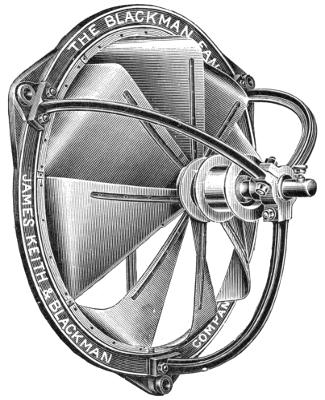
Fig. 47.—The Blackman (Belt-driven) Fan.
Centrifugal or high-pressure fans (see figs. 48a and 48b ) are always encased in such a way that the exhaust ducts enter on one or both sides of the axis. The air thus drawn in is thrown by the quickly rotating numerous straight blades to the periphery and escapes at the outlet. The centrifugal fan travels at a great speed, and the air current has therefore great velocity and high pressure. When the pressure is less than 120 mm. it is described as a medium, and when greater, a high-pressure fan. For the former a galvanised iron casing suffices; for the latter the casing requires to be of cast iron. Medium pressure centrifugal fans are used to exhaust dust or fumes locally from the point at which they are produced. They play a great part in industrial hygiene.
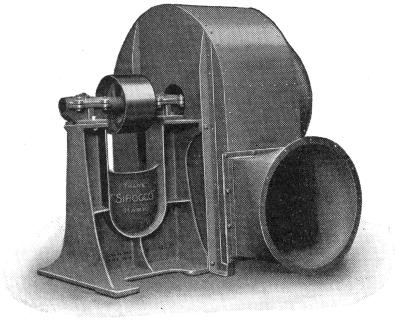
Fig. 48a.—‘Sirocco’ Centrifugal Fan
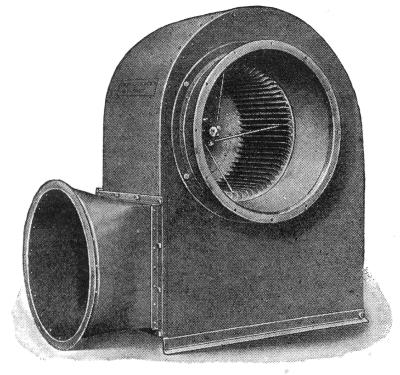
Fig. 48b.—Showing exhaust aperture and fan blades
High-pressure fans are used mainly for technical purposes, as, for example, the driving of air or gas at high pressure. Localised ventilation is needed to limit diffusion of dust and fumes, which is attained in a measure also by separation of those workrooms in which persons come into contact with poisonous materials from others. Separation of workrooms, however, is not enough, as it is the individual who manipulates the poison for whom protection is desired. To enclose or hood over a dusty machine or fume-producing apparatus completely, or to close hermetically a whole series of operations by complicated technical arrangements, is only possible when no opening or hand feeding is required. Dangerous substances can only be wholly shut in by substitution of machinery for handwork.
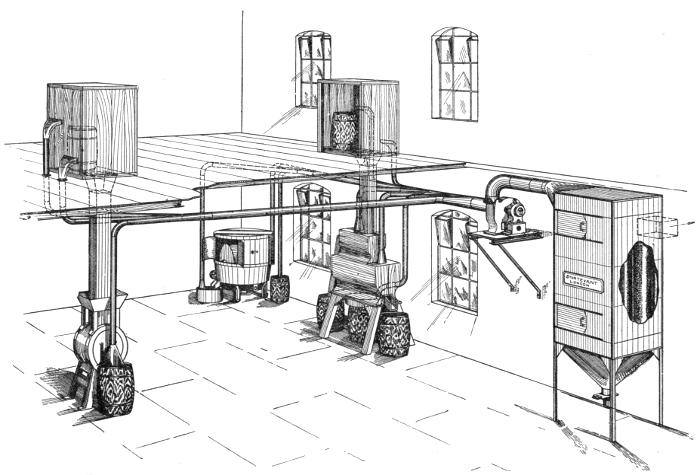
Fig. 49.—Localised Exhaust Ventilation in a Colour Factory (Sturtevant Engineering Co., Ltd.)
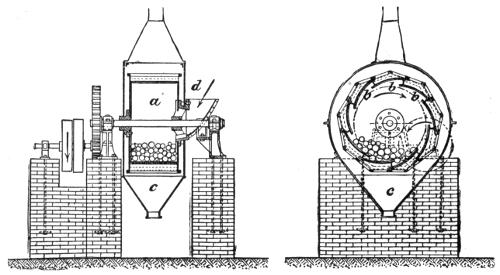
Fig. 50a. Fig. 50b.
Ball Mills
Where, however, absolute contact is unavoidable the dust or fume must be carried away at its source. This is done by exhaust ventilation, locally applied, in the following manner: A suitable hood or air guide of metal or wood is arranged over the point where the dust is produced, leaving as small an opening as possible for necessary manipulations. The hood is connected with a duct through which the current of air travels. An exhaust current dependent upon heat will only suffice in the case of slight development of dust or fumes. As a rule exhaust by a fan is necessary. Where exhaust ventilation has to be arranged at several points all these are connected up by branch ducts with the main duct and centrifugal fan. Where the ducts lie near the floor it is advisable to fix adjustable openings in them close to the floor to remove the sweepings.
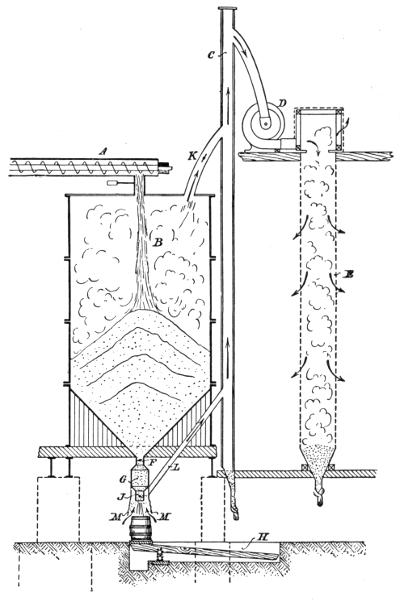
Fig. 51.—Ventilated Packing Machine (after Albrecht)
A Worm; B Collector; D Fan; E Filter bag; J, F Movable shutters; H Jolting arrangement
It is important for the exhaust system of ventilation to be designed in general so that the dust is drawn away from the face of the worker downwards and backwards. Many horrible arrangements are found in which the dust is first aspirated past the mouth and nose before it is drawn into a hood overhead. The proportions of the branch pipes to the main duct require to be thought out, and friction and resistance to the flow must be reduced as far as possible by avoidance of sharp bends. Branch pipes should enter the main duct at an angle of thirty degrees. A completely satisfactory system requires very special knowledge and often much ingenuity when the apparatus is complicated.
Disintegrators and edge runners can generally be covered in and the cover connected with an exhaust. Ball mills, when possible, are best as the rotating iron cylinder containing the steel balls and the material to be pulverised is hermetically closed.
Powdered material can be carried mechanically from one place to another by worms, screws, endless bands, or be driven in closed pipes by means of compressed air. The inevitable production of dust in packing can be avoided by the use of ventilated packing machines, which are especially necessary in the case of white lead, bichromates, basic slag, &c.
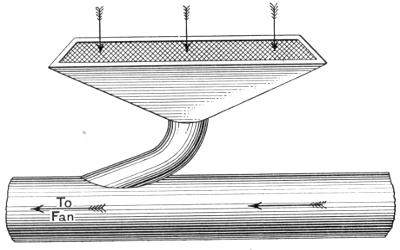
Fig. 52.
The difficulty is great in preventing dust in sieving and mixing, since this is mainly done by hand. Still here, for example, by use of cases with arm-holes and upper glass cover, injury to health can be minimised. Benches with a wire screen and duct through which a downward exhaust passes are useful in sorting operations (fig. 52).
Fig. 53 illustrates a grinding or polishing wheel fitted with localised exhaust.
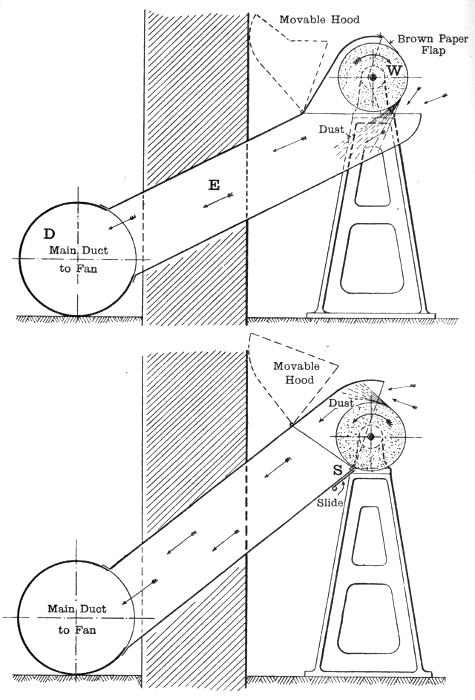
Fig. 53.—Removing Dust from Bobs and Mops (James Keith & Blackman Co., Ltd. By permission of the Controller of H.M. Stationery Office)
To prevent escape of injurious gases all stills and furnaces must be kept as airtight as possible and preferably under a slight negative pressure. Agitators must be enclosed and should be fitted with arrangements for carrying on the work mechanically or by means of compressed air and, if necessary, exhaust ventilation applied to them. The aim should be to enclose entirely drying and extracting apparatus.
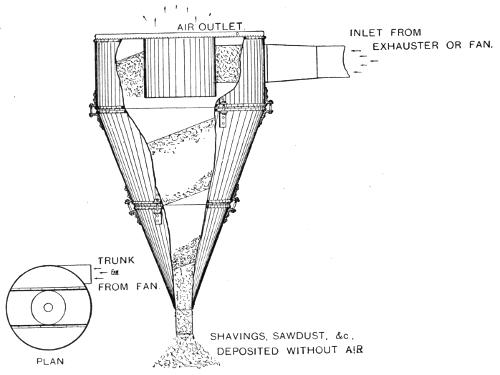
Fig. 54.—‘Cyclone’ Separator (Matthews & Yates, Ltd.)
An important question remains as to what shall be done with the dust and fumes extracted. In many cases they cannot be allowed to escape into the atmosphere outside, and in the interests of economy recovery and utilisation of the waste is the thing to aim at. This vital subject can only receive barest mention here. The dust or fumes extracted require to be subjected to processes of purification with a view to recovery of the often valuable solid or gaseous constituents and destruction of those without value.
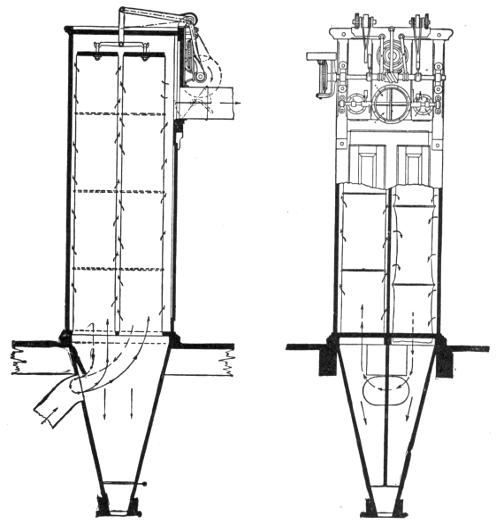
Fig. 55a. Fig. 55b.
Dust-filter of Beth-Lübeck (after Albrecht)
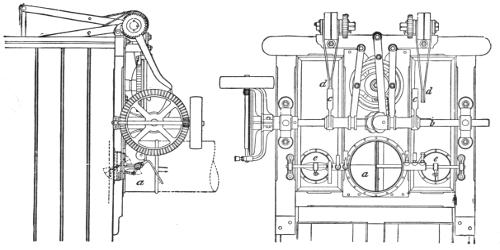
Fig. 56.—Dust-filter of Beth-Lübeck—Detail
Collection of dust may take place in settling chambers as in a cyclone separator in which the air to be purified is made to travel round the interior of a cone-shaped metal receptacle, depositing the dust in its passage (see fig. 54).
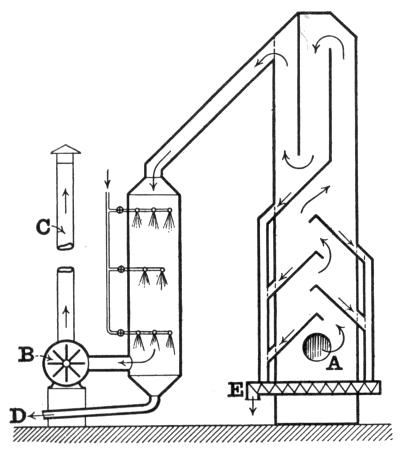
Fig. 57.—Arrangement for Precipitating Dust (after Leymann)
A Entry of dust laden air; B Fan; C Purified air; D Pipe carrying away water and last traces of dust; E Worm carrying away collection of dust.
The most effective method, however, is filtration of the air through bags of canvas or other suitable fabric as in the ‘Beth’ filter (see figs. 55 and 56). In the ‘Beth’ filter a mechanical knocking apparatus shakes the dust from the bag to the bottom of the casing, where a worm automatically carries it to the collecting receptacle. In the absence of mechanical knocking the filtering material becomes clogged and increases the resistance in the system. Contrivances of the kind unintelligently constructed become a source of danger to the workers. Dust of no value is usually precipitated by being made to pass through a tower down which a fine spray of water falls. If the gases and fumes can be utilised they are either absorbed or condensed—a procedure of the utmost importance for the protection of the workers.
Condensation of the gases into a liquid is effected by cooling and is an essential part of all processes associated with distillation. The necessary cooling is effected either by causing the vapours to circulate through coils of pipes surrounded by cold water or by an increase in the condensing surface (extension of walls, &c.), and artificial cooling of the walls by running water.
Absorption of gases and fumes by fluids (less often by solid substances) is effected by bubbling the gas through vessels filled with the absorbing liquid or conducting it through towers (packed with coke, flints, &c.), or chambers down or through which the absorbent flows. Such absorption towers and chambers are frequently placed in series.
The material thus recovered by condensation and absorption may prove to be a valuable bye-product. Frequently the gases (as in blast furnace gas, coke ovens, &c.) are led away directly for heating boilers, or, as in the spelter manufacture, to make sulphuric acid.
V PREVENTIVE REGULATIONS FOR CHEMICAL INDUSTRIES
Sulphuric Acid Industry
(See also pp. 4-14 and 171)
Danger arises from escape of acid gases or in entering chambers, towers, containers, &c., for cleaning purposes. The whole chamber system, therefore, requires to be impervious and the sulphur dioxide and nitrous gases utilised to their fullest extent—a procedure that is in harmony with economy in production. The pyrites furnace must be so fired as to prevent escape of fumes, which is best attained by maintenance of a slight negative pressure by means of fans. The cinders raked out of the furnace because of the considerable amount of sulphur dioxide given off from them should be kept in a covered-in place until they have cooled. Any work on the towers and lead chambers, especially cleaning operations, should be carried out under strict regulations. Such special measures for the emptying of Gay-Lussac towers have been drawn up by the Union of Chemical Industry. Before removal of the sediment on the floor they require a thorough drenching with water, to be repeated if gases are present. Perfect working of the Gay-Lussac tower at the end of the series of chambers is essential to prevent escape of acid gases. In a well-regulated sulphuric acid factory the average total acid content of the final gases can be reduced to 0·1 vol. per cent. Under the Alkali Works Regulation Act of 1881 the quantity was limited to 0·26 per cent. of sulphur dioxide—and this should be a maximum limit.
Entering and cleaning out chambers and towers should only be done, if practicable, by workmen equipped with breathing apparatus, and never without special precautionary measures, as several fatalities have occurred at the work. Towers, therefore, are best arranged so as to allow of cleaning from the outside; if gases are noticed smoke helmets should be donned. The same holds good for entering tanks or tank waggons. After several cases of poisoning from this source had occurred in a factory the following official regulations were issued:
The deposit on the floor of waggons or tanks shall be removed either by flushing with water without entering the tank itself, or if the tank be entered the deposit is to be scooped out without addition of water or dilute soda solution.
Flushing out shall only be done after the workmen have got out.
Workmen are to be warned every time cleaning is undertaken that poisonous gases are developed when the deposit on the floor is diluted.
Acid eggs, further, are to be provided with a waste pipe and manhole to enable cleaning to be done from outside.
The poisoning likely to arise is partly due to arsenic impurity (development of arseniuretted hydrogen gas) in the sulphuric acid used. Unfortunately arsenic free acid is very difficult to obtain.
Hydrochloric Acid—Saltcake and Soda Industries
(See also pp. 15-23 and 170)
Preventive measures here depend upon observance of the general principles already discussed.
The saltcake pan and reverberatory furnace require to be accurately and solidly constructed and the process carefully regulated. Regulations indeed were drawn up at an early date in England as to their working to prevent escape of gases when adding the acid, raking over in the reverberatory furnace, and withdrawal of the still fuming saltcake.
The following are the most important of these recommendations:
The saltcake pan must not be charged when overheated.
Sulphuric acid shall be added only after all the salt has been charged and the door shut.
If hydrochloric acid fumes escape at the door when the Glover acid flows in the flow must be interrupted.
All doors must be closed while work is in progress.
Definite times shall be fixed for withdrawal of the saltcake in order to try and ensure that it be not still fuming, but should this be the case cold sulphate of soda shall be sprinkled over it.
The general principle should be observed of maintaining a slight negative pressure in the furnace by insertion of a fan in the gas conduit so as to avoid possible escape of gas. The fuming saltcake is best dealt with by depositing it at once to cool in ventilated receptacles or chambers.
On grounds of economy and hygiene as complete an absorption as possible of the hydrochloric acid gas developed in the saltcake and soda ash process is to be aimed at, by conveying it through impervious conduits to the bombonnes and lofty absorption tower filled with coke or flints down which water trickles. The entire loss of hydrochloric acid should not amount to more than 1·5 per cent. of the whole. Under the Alkali Act at first 5 per cent. was allowed, but this is excessive now in view of improved methods of condensation.
In the Leblanc process the revolving furnace is on health grounds to be preferred to the hand furnace. Such a furnace occupies the space of but three hand furnaces and can replace eighteen of them. The vast accumulation of waste, consisting mainly of calcium sulphide, and generating sulphuretted hydrogen gas in such amount as to constitute a nuisance, is only partially prevented by the Chance-Claus and other methods of recovery, and makes it most desirable to adopt the Solvay ammonia process.
Note.—Sulphonal, Oxalic acid, Ultramarine, Alum.—The production of sulphonal is intensely unpleasant owing to the disagreeable smell (like cats’ excrement) of the mercaptan developed. All work therefore must be carried on in air-tight apparatus under negative pressure and careful cooling. Any escaping fumes must be absorbed in solution of acetone and fine water spray.
Preparation of oxalic acid unless carried on in closed-in vessels gives rise to injurious and troublesome fumes. If open pans are used, hoods and ducts in connection with a fan should be placed over them.
Grinding of ultramarine and alum requires to be done in closed-in mills, and any dust drawn away by locally applied ventilation and filtered. The gases given off in the burning process contain 3 per cent. of sulphur dioxide, which requires to be absorbed—a procedure most easily effected in towers where the upstreaming gas comes into contact with a dilute solution of lime or soda.
Chlorine, Bleaching Powder, Chlorine Compounds
(See also pp. 23-9 and 173)
What has been said as to imperviousness of apparatus, negative pressure maintained by the tall chimney stack or earthenware or fireclay fan, &c., applies equally here. The exhaust ventilation is also required to aspirate the gas into the bleaching chambers.
At the end of the system there must be either a tower packed with quicklime to absorb the last traces of chlorine or such a number of bleach chambers into which the gas can be led that no chlorine escapes. Production of chlorine gas electrolytically is to be preferred to other processes on hygienic grounds.
Careful cleanliness is the best prophylactic against occurrence of chlorine rash among persons employed in the electrolytic production of chlorine. In some factories attempt has been made to use other substances (magnetite) instead of carbon for the anode, and the success attending their adoption is further proof that the tar cement at the anode helped to cause the acne.
In the Weldon process care must be taken that the water lutes are intact, and the stills must not be opened before the chlorine has been drawn off. All processes in which manganese dust can arise (grinding of manganese dioxide and drying of Weldon deposit) should be done under locally applied exhaust. The bleaching powder chambers must be impervious and care taken that they are not entered before the chlorine has been absorbed. Usually the number of lime chambers connected up with each other is such that no chlorine escapes free into the air. Emptying of the finished product should not be done by hand, as considerable quantities of chlorine escape and make the work extremely irksome. Mechanical methods of emptying should be adopted in substitution for hand labour, and of these the Hasenclever closed-in apparatus is the best.
Nitric Acid and Explosives
(See also pp. 39-49 and 172)
In the production of nitric acid complete imperviousness of the system and as complete condensation of the gases as possible by means of tourilles, cooling condensers, and the requisite number of towers are necessary. The method suggested by Valentine of manufacture of nitric acid in apparatus under a partial vacuum has advantages from a hygienic standpoint. Earthenware fans are used to force the nitric acid gases onwards and have the advantage of creating a negative pressure. Great care is needed in handling, emptying, packing, conveying, and storing the acid in consequence of the danger from breaking or spilling. The bottles used must be in perfect condition and must be well packed. No greater stock of nitric acid should be allowed in a room than is absolutely necessary, and care must be exercised in the event of a carboy breaking that the spilt acid does not come into contact with organic substances, as that would increase development of nitrous fumes.
Workers must be warned not to remain in rooms in which acid has been spilt. They are only to be entered by workers equipped with breathing apparatus (smoke helmets).
Among the special regulations on the subject may be mentioned those of the Prussian Ministerial Decree, dated January 8, 1900, concerning nitrous fumes and means of protection for workers employed with the acid. What has been said on p. 257 in regard to the transport of sulphuric acid applies equally to nitric acid.
In the nitrating process in the manufacture of explosives (see p. 47) it is essential that the apparatus is hermetically closed, that agitation is done mechanically, or better still by means of compressed air, and that any fumes developed are exhausted and condensed. In the preparation of nitro-glycerin (see p. 46) the gases developed in the nitration of the waste acid require to be carefully condensed. Contact of nitro-glycerin with the skin has to be avoided and the attention of the workers drawn to the danger. Preparation of gun cotton (see p. 48) takes place in machines which are at the same time nitrating and centrifugalising machines. The apparatus is first filled with the nitrating acid and the cotton added; the fumes are drawn off by earthenware ducts and fans, and lastly the bulk of the acid is removed by centrifugal action. Such machines carry out effectually the principles of industrial hygiene.
In the preparation of fulminate of mercury nitrous fumes, cyanogen compounds, and acetic acid compounds are developed by the action of the nitric acid on mercury, and require to be dealt with by exhaust ventilation.[G]
Artificial Manures, Fertilizers
(See also pp. 53 and 54)
In grinding phosphorite and superphosphates, corrosive dust is produced. All grinding operations must, therefore, be carried out automatically in closed apparatus (ball mills, disintegrators, &c.). In making the phosphorite soluble by treatment with sulphuric acid, and subsequent drying of the product, corrosive hydrofluoric acid gas is developed, which requires to be carried away by an acid proof exhaust fan, and condensed in a tower by water (see fig. 58). The modern revolving drying machines are especially serviceable.
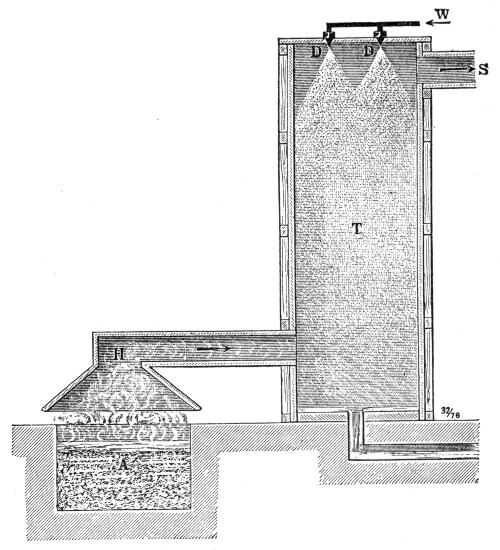
Fig. 58.—Washing tower for hydrofluoric acid (after Leymann.)
In the production of basic slag corrosive dust is given off, causing ulceration of the mucous membrane. Grinding and other manipulations creating dust must be carried on in apparatus under local exhaust ventilation. The following—somewhat shortened—are the German Imperial Regulations, dated July 3, 1909, for basic slag factories.
Basic Slag Regulations
1. Workrooms in which basic slag is crushed, ground, or stored (if not in closed sacks) shall be roomy and so arranged as to ensure adequate change of air. Floors shall be of impervious material allowing of easy removal of dust.
2. Preliminary breaking of the slag by hand shall not be done in the grinding rooms, but either in the open air or in open sheds.
3. Slag crushers, grinding mills, and other apparatus shall be so arranged as to prevent escape of dust as far as possible into the workrooms. They shall be provided with exhaust ventilation and means for collecting the dust if this cannot be done in the absence of dust.
4. Arrangements shall be made whereby barrows conveying material to the grinding mills shall be emptied directly into partially hooded hoppers provided with exhaust ventilation so as to prevent escape of dust into the workrooms.
5. The casing and joints of the grinding mills, ducts, dust collectors and sieves shall be airtight; if leaks are noticed they must be repaired forthwith.
6. Ducts, dust collectors and sieves shall be so arranged as to enable periodical cleansing to be undertaken from the outside.
7. Repairs of the plant mentioned in Para. 5 in which workers are exposed to inhalation of slag dust shall be entrusted by the occupier only to such workers as wear respirators supplied for the purpose or other means of protecting mouth and nostrils such as wet sponges, handkerchiefs, &c.
8. Emptying of slag powder from the grinding mills and dust collectors and transference to the store rooms shall only be done in accordance with special regulations designed to minimise dust.
9. Filling slag powder into sacks from the outlets of the mills, elevating and discharging it into receptacles shall only be done under efficient exhaust ventilation.
10. Sacks in which the powder is transported and piled in heaps shall be of a certain defined strength to be increased in the case of sacks to be piled in heaps more than 3½ metres in height. Special rooms separated from other workrooms shall be provided for storage of slag powder in sacks. Only the sacks representing the previous day’s production may be stored in the grinding rooms.
Basic slag in powder and not in sacks shall be kept in special storage rooms shut off entirely from other workrooms. No person shall enter such storage rooms when they are being filled or emptied. Discharging the contents of the sacks into them shall be done under exhaust ventilation.
11. The floors of the workrooms described in Para. 1 shall be cleaned before the commencement of each shift or in an interval during each shift. No person except those engaged in cleaning shall be present during the operation. If cleaning is effected by sweeping, the occupier shall require the persons doing it to wear the respirators provided or other protection for the mouth and nose.
12. The occupier shall not permit the workers to bring spirits into the factory.
13. A lavatory and cloakroom and, separated from them and in a part of the building free from dust, a meal room shall be provided. These rooms shall be kept clean, free from dust, and be heated during the winter.
In the lavatory and cloakroom water, soap, and towels shall be provided and adequate arrangements shall be made for keeping the clothing taken off before commencing work.
The occupier shall give the persons employed opportunity to take a warm bath daily before leaving work in a bathroom erected inside the factory and heated during the winter.
14. No woman or male young person under eighteen years of age shall work or remain in a room into which basic slag is brought.
Persons under eighteen years of age shall not be employed in beating sacks which have contained basic slag.
15. No person employed in breaking or grinding, emptying, packing, or storing basic slag, shall work more than ten hours daily.
There shall be intervals during working hours amounting in the aggregate to two hours, one of them lasting at least an hour. If duration of employment daily is limited to seven hours with never longer than four hours’ work without an interval, only one interval of at least one hour is required.
16. For work mentioned in Para. 15 no person shall be employed without a certificate from an approved surgeon stating that he is free of disease of the lungs and not alcoholic. The occupier shall place the supervision of the health of the workers under a surgeon who shall examine them at least once a month for signs of disease of the respiratory organs and alcoholism. Workers engaged in the operations mentioned in Para. 15 shall be suspended from employment when the surgeon suspects such illness or alcoholism. Those showing marked susceptibility to the effect of basic slag dust shall be permanently suspended.
17. A health Register shall be kept in which shall be entered the precise employment, duration of work, and state of health of the persons employed.
18. The occupier shall obtain a guarantee from the workers that no alcohol or food shall be taken into the workrooms.
Preparation of Hydrofluoric Acid
(See also pp. 37 and 171)
The fumes given off in the preparation of hydrofluoric acid require to be collected in leaden coolers and vessels; that which escapes requires to be absorbed by a water spray in towers. The apparatus must be impervious and kept under a slight negative pressure.
Chromium Compounds
(See also pp. 55-8 and 185)
The German Imperial Decree, dated May 16, 1907, contains the preventive measures necessary in bichromate factories. According to this, workers suffering from ulceration of the skin (chrome holes, eczema) are not to be employed except on a medical certificate that they are free from such affections, and daily examination for signs of ulceration is enjoined, so that those affected may receive prompt treatment. Further, periodical medical examination of the workers is required at monthly intervals. Respirators (for work in which dust cannot be avoided), with lavatory, cloakroom, and meal room accommodation, are to be provided, and also baths. In handling bichromates wearing of impervious gloves may be necessary, and smearing the hands and face with vaseline is recommended. In addition diffusion of dust and fumes must be minimised; machines in which mixing, crushing, and grinding are done must be impervious, and provided with exhaust ventilation. Charging of the furnaces, where possible, should be effected mechanically and the fumes developed both in manipulation of the furnaces and from hot bichromate liquor removed by an exhaust.
A leaflet containing directions for workers coming into contact with chromium compounds in chemical factories, dyeing, tanning, wood staining, calico printing, wall paper printing, painting, &c., has been drawn up by Lewin. It contains a list of the poisonous chrome compounds and of the industries in which chrome poisoning occurs, information as to the action of chrome upon the skin and mucous membrane, and the preventive measures necessary. Among the last named are: smearing the skin with oil, use of impervious gloves, respirators in work where dust arises, necessity of cleanliness, and periodical medical examination.
For the chrome tanning industry the following leaflet was drawn up by the Imperial Health Office in Berlin, which succinctly states the measures against chrome poisoning in these industries and contains much practical information for the workers:
In chrome tanning by the two bath process, the first bath containing potassium bichromate and hydrochloric acid has a corroding effect upon broken surfaces of the skin (scratches, chapped hands, eruptions, &c.). In consequence, they develop into round ulcers (chrome holes) with hard raised edges which are difficult to heal and go on increasing in size unless work at the process is temporarily given up. In persons with very sensitive skin, even though the surface may be intact, handling the liquor brings on sometimes an obstinate rash (eczema) on the hands and forearms.
The solution used in the one bath process has no corrosive action, but it is a strong poison, just as is the solution of potassium bichromate of the two bath process. If swallowed, the solutions cause vomiting, diarrhœa, kidney trouble, and even death. Chromium compounds can also enter the body through skin wounds and cause illness.
Prevention.—In order to prevent the occurrence of chrome ulceration, workers employed with chrome or chrome solutions must be especially careful in avoiding injury to the skin of the hands or forearms. This applies especially to workers who carry the vessels containing bichromate, who weigh and dissolve the potassium bichromate, or who come into contact with the tanning liquor or with undressed skins and hides which have lain in the liquor.
If, in spite of precautions, eruptions, rashes, or ulceration occur, all work necessitating contact with corrosive tanning liquors should be suspended until they are healed.
In order to reduce risk of action of the liquor on the skin, workers employed in the process described would do well if, before commencing work, they carefully smeared hands and forearms with unsalted lard, vaseline, or the like, and during work avoided, as much as possible, soiling the bare hands and arms with the liquor.
If, nevertheless, a worker has contracted a chrome hole, or eruption, he should consult a medical man, informing him at the same time of the nature of his work.
To avoid internal absorption of chrome, workers preparing the baths must carefully avoid inhaling the dust of chromium salts. These and all other workers engaged with the liquors containing chromium must not take food and drink while at work. Working suits should be taken off and face and hands washed with soap before eating or drinking, and before leaving the factory.
Petroleum, Benzine
(See also pp. 59-64 and 222-4)
As crude petroleum and the higher fractions first distilled from it affect the skin injuriously, wetting the skin should be avoided, and careful cleanliness on the part of the workers enjoined. Workers exposed to the influence of gases escaping from naphtha springs and wells should be equipped with breathing apparatus (smoke helmets); this applies to those who have to enter stills and other apparatus connected with the distillation of petroleum.
In the preparation of petroleum by sulphuric acid sulphur dioxide in great quantity is developed, constituting a distinct danger to the workers. This process, therefore, should be carried on in closed vessels furnished with mechanical stirrers or compressed air agitators. The most suitable apparatus is that illustrated in fig. 13.
Petroleum tanks must be thoroughly aired before they are cleaned and should be entered only by workers equipped with breathing apparatus. Apparatus containing petroleum and benzine requires, as far as possible, to be closed in and air tight (as, for example, in the extraction of fat from bones and oil seed, in the rubber industry, and in chemical cleaning establishments); where benzine fumes develop they should be immediately drawn away by suitably applied exhaust ventilation. This is necessary, on account of the danger of fire, in chemical cleaning establishments where purification is effected by means of benzine in closed drums.
Regulations for benzine extraction plants are contained in the Prussian Ministerial Decree, dated January 5, 1909, for benzine extraction works, and also in that of August 3, 1903, for dry-cleaning premises, to which last were added ‘Directions for safety,’ containing important regulations as to risk from fire. From our standpoint the following points are of interest: care is to be taken to provide and maintain exhaust ventilation directly across the floor. The air, however, must not be allowed to pass near any fire. Drying rooms especially are to be lofty and airy, and separated from other workrooms. In factories with mechanical power the authorities may require provision of artificial ventilation for the drying rooms. Washing machines, centrifugalising machines, and benzine rinsing vessels should be furnished with well-fitting covers to be removed only for such time as is absolutely necessary for putting in and taking out the articles to be cleaned, shaken, or rinsed. The vessels named are to be examined as to their imperviousness at least once every quarter by a properly qualified person. The condition in which they are found is to be noted in a book to be shown to the Factory Inspector and police authorities on demand.
Lastly, substitution for benzine of other less poisonous substances such as carbon tetrachloride has been urged.
Phosphorus, Lucifer Matches
(See also pp. 49-53 and 190)
In view of the danger of the lucifer match industry, measures were taken at an early date in almost all civilised states to guard against phosphorus poisoning, and in many countries have led to the prohibition of the use of white phosphorus. Complete prohibition of its manufacture and use was first enacted in Finland (1872) and in Denmark (1874). Prohibition was decreed in Switzerland in 1879 (in January 1882 this was revoked, but again enacted in 1893), and in the Netherlands in 1901. In Germany the law prohibiting the use of white phosphorus came into force in January 1908, and runs as follows:
1. White or yellow phosphorus shall not be employed in the production of matches and other lighting substances. Lighting substances made with white phosphorus shall not be kept for sale, or sold, or otherwise brought on the market. Provided that this shall not apply to ignition strips which serve for the lighting of safety lamps.
2. Persons wilfully infringing this law shall be punished by a fine of 2000 marks. If the infringement occurs through ignorance the fine shall consist of 150 marks.
In addition to the fine, all prohibited articles produced, imported, or brought into the trade shall be confiscated, as well as the implements used in their production, without reference to whether they belong to the person convicted or not. If prosecution or conviction of the guilty party cannot be brought home, confiscation nevertheless is to be carried out independently.
Roumania and France have a state monopoly of matches; in these states no white phosphorus matches have been produced since 1900 and 1898 respectively. France, by the Law of December 17, 1908, signified concurrence with the International Convention in regard to the prohibition of the use of white phosphorus.
In Sweden and Norway the prohibition of white phosphorus is in force only for the home trade. A Swedish Decree, dated December 9, 1896, permitted factories carrying on the manufacture for export to use white phosphorus, and almost precisely similar provisions are contained in the Norwegian Decree. The Swedish Decree, dated March 30, 1900, permits white phosphorus matches to be exported, but not to be sold in the country. In Austria difficulties in regard to prohibition of white phosphorus arose owing to trade conditions (especially in the East), and the attitude of the states competing in the lucifer match trade, particularly Italy and Japan. Austria, therefore, made agreement with international prohibition of white phosphorus, dependent on the attitude of Japan; since Japan did not concur, the decision of Austria fell through. When, however, Italy in the year 1906 joined the Convention, the difficulties were also overcome in Austria, and by a law similar to that of Germany, dated July 13, 1909, prohibition of the manufacture and sale of white phosphorus matches dates from the year 1912.[H]
Belgium has refrained from prohibition of white phosphorus, but on the other hand has passed a series of enactments relating to the match manufacture, of which the most essential are here cited, since they characterise the measures which come into consideration for factories in which white phosphorus is still employed.
Royal Decree, dated March 25, 1890, modified by the Royal Decree, dated February 12, 1895, and November 17, 1902, concerning employment in lucifer match factories.
1. In match factories where white phosphorus is used, mixing the paste and drying the dipped matches shall be carried on in a place specially set apart for the purpose.
2. Mixing the paste shall be carried on in an entirely closed vessel or in one connected with an efficient exhaust draught locally applied.
The proportion of white phosphorus in the paste shall not exceed in weight 8 per cent. of the total material, not including water.
3. Hoods and ducts communicating with an exhaust draught shall be installed at the level of the plates for dipping white phosphorus matches, and over the vessels containing the paste.
4. Drying rooms for white phosphorus matches, if entered by the workers, shall be mechanically ventilated.
5. Rooms in which phosphorus fumes can arise shall be lofty and well ventilated, preferably by an exhaust at the level of the work benches, communicating with the main chimney stack.
The workrooms shall be kept clean. No food or drink shall be taken in them.
6. In every match factory the workers shall have at their disposal a special cloak room and suitable and sufficient washing accommodation, so as to be able to change clothes before commencing, and at the end of, work, and to wash the hands and face on leaving.
Cleanliness will be obligatory upon the workers manipulating phosphorus paste or matches.
7. Workers coming into contact with phosphorus paste or matches shall be examined monthly by a surgeon appointed by the Minister of Industry, who shall be paid by the occupier.
Workers having decayed, unstopped teeth, or exhibiting symptoms of gingivitis or stomatitis, or in poor health at the time of examination, shall be temporarily suspended from work.
The surgeon shall enter the results of his monthly examinations in a prescribed register.
This register shall be shown to the Factory Inspector on demand.
These decrees are supplemented by further orders regarding the taking of samples of paste in match factories and store houses (Royal Orders of March 25, 1890; February 12, 1895; April 18, 1898; November 17, 1902).
As is evident from the Belgian enactment, in states where prohibition of white phosphorus is not in force, palliative measures only are possible and even then they can only be enforced in large factories when automatic machinery is used to eliminate hand labour in dangerous operations. In this respect the introduction of closed, ventilated, mechanical mixing apparatus provided with mechanical stirrers, closed and ventilated mechanical dipping and drying apparatus, are especially important. Certain modern American machines carry through the whole complicated process of the phosphorous match industry automatically. Seeing that prohibition of white phosphorus is an accomplished fact and that matches free from risk in their manufacture answer every purpose, the universal enforcement of the prohibition of white phosphorus should be striven for in civilised states.
Carbon bisulphide
(See also pp. 68-71 and 193-5)
Use of carbon bisulphide in the vulcanising of indiarubber goods by dipping them into the liquid and subsequently drying them (usually in a current of hot air) causes development of carbon bisulphide fumes in considerable quantity, especially if the articles to be dried are laid on shelves or hung up in the workroom, a procedure which should never be permitted. Drying must be carried out under local exhaust ventilation.
All vessels holding carbon bisulphide used for dipping can be placed in a wooden channel above the dipping vessels, provided with openings for manipulation, and connected with an exhaust system.
The following are the German Imperial Regulations, dated March 1, 1902, for vulcanising of indiarubber by means of carbon bisulphide:
Vulcanising by Means of Carbon Bisulphide
(Notice concerning the erection and management of industrial premises in which indiarubber goods are vulcanised by means of carbon bisulphide or chloride of sulphur.)
The following regulations shall apply in accordance with paragraph 120 (e) of the Industrial Code:
1. The floor of such rooms as are used for the vulcanising of indiarubber goods by means of carbon bisulphide shall not be lower than the surrounding ground. The rooms shall have windows opening into the outer air, and the lower halves shall be capable of being opened so as to render possible sufficient renewal of air.
The rooms shall be ventilated by fans mechanically driven. With the approval of the higher authorities permission to dispense with mechanical draught may be allowed, provided that in other ways powerful change of air is secured. With the approval of the higher authorities special ventilating arrangements can be dispensed with if the fumes of carbon bisulphide are removed immediately, at the point where they are produced, by means of a powerful draught, and in this way purity of the air be secured.
2. The vulcanising rooms shall not be used as a dwelling, or for sleeping in, or for preparing food in, or as a store, or drying room, nor shall other processes than those of vulcanising be carried on in them. No persons, except those engaged in vulcanising processes, shall be allowed in the rooms.
There shall be at least 20 cubic meters (700 cubic feet) of air space allowed for each person employed therein.
3. Only such quantities of carbon bisulphide shall be brought into the vulcanising rooms as shall serve for the day’s supply. Further storage shall be made in a special place separate from the workrooms. Vessels to hold the vulcanising liquid shall be strongly made, and when filled and not in use shall be well covered.
4. Vulcanising and drying rooms shall be warmed only by steam or hot-water pipes.
These rooms shall be lighted only by means of strong incandescent electric lamps.
Exceptions from paragraphs 1 and 2 may be allowed by the higher authorities.
5. Machines intended for vulcanising long sheets of cloth shall be covered over (e.g., with a glass casing) so as to prevent as far as possible the entrance of carbon bisulphide fumes into the workrooms, and from the casing the air shall be drawn away effectually by means of a fan mechanically driven. Entrance to the space which is enclosed shall only be allowed in case of defects in the working.
In cases where a covering of the machine is not practicable for technical reasons the higher authorities can, if suitable means of protection are used (especially when the machine is placed in an open hall, and provided that no person works at the machine for more than two days a week), allow of exception to the above arrangement.
6. Vulcanising of other articles (not mentioned in par. 5), unless carried out in the open air, shall be done in covered-in boxes into which the worker need only introduce his hands, and so arranged as to keep the fumes away from the face of the worker.
The air must be drawn away from the box by means of a powerful draught.
7. Rule 6 shall apply in vulcanising both the outside and inside of indiarubber goods. In vulcanising the inside no worker shall be allowed to suck the fluid through with the mouth.
8. The goods after their immersion in the vulcanising fluid shall not lie open in the room, but shall either be placed under a ventilated cover or at once be carried into the drying chamber.
The drying chamber or drying rooms in which the wares are exposed to artificial heat immediately after vulcanising shall be so arranged that actual entrance into them for the putting in or taking out of the vulcanised goods shall not be necessary. No person shall be allowed to enter the drying chamber while work is going on. The higher authorities can permit of exceptions to this rule in the case of the drying of long rolls if sufficient protecting arrangements are made.
9. When vulcanisation is effected by means of chloride of sulphur the vessels or chambers used for holding it shall be so arranged that escape of the fumes is prevented.
No person shall enter the vulcanising chamber until the air in the chamber has been completely changed; it shall not be used for purposes other than vulcanising.
10. Employment in vulcanising with carbon bisulphide or in other work exposing the workers to carbon bisulphide vapour shall not be allowed without a break for more than two hours and in no case for more than four hours in one day; after two hours a pause of at least one hour must be allowed before resumption.
No person under 18 years of age shall be employed.
11. The occupier shall provide all workers employed in work mentioned in paragraph 10 with proper and sufficient overalls. By suitable notices and supervision he shall see that when not in use they are kept in their proper place.
12. Separate washing accommodation and dressing-rooms for each sex shall be provided, distinct from the workrooms, for all persons employed as stated in paragraph 11.
Water, soap, and towels and arrangements for keeping the clothes put off before the commencement of work shall be provided in sufficient amount.
13. The occupier shall appoint a duly qualified medical practitioner (whose name shall be sent to the Inspector of Factories) to supervise the health of those exposed to the effects of carbon bisulphide. He shall examine the workers once every month with a view to the detection of poisoning by carbon bisulphide.
By direction of the medical practitioner workers showing signs of carbon bisulphide poisoning shall be suspended from work and those who appear peculiarly susceptible shall be suspended permanently from work in processes mentioned in paragraph 10.
14. The occupier shall keep a book, or make some official responsible for its keeping, of the changes in the personnel in the processes mentioned in paragraph 10 and as to their state of health. The book shall contain—
(1) The name of the person keeping the book;
(2) The name of the appointed surgeon;
(3) Surname, Christian name, age, residence, date of first employment, and date of leaving of every worker mentioned in paragraph 10, and the nature of the employment;
(4) The date of any illness and its nature;
(5) Date of recovery;
(6) The dates and results of the prescribed medical examination.
15. The occupier shall require the workers to subscribe to the following conditions:—
No worker shall take food into the vulcanising rooms;
The workers shall use the protection afforded in paragraphs 5-7 and use the overalls in the work named;
The workers shall obey the directions of the occupier given in accordance with Rule 5, paragraphs 1 and 2, Rule 8, paragraphs 1 and 2, and Rule 9, paragraph 2. Workers contravening these orders shall be liable to dismissal without further notice.
If in a factory regulations already exist (paragraph 134(a) of the Industrial Code) the above shall be included.
16. In the vulcanising rooms mentioned in Rule 1 there shall be posted up a notice by the police stating—
(a) The cubic capacity of the rooms;
(b) The number of workers who may be employed.
Further, in every vulcanising room there shall be posted up in a conspicuous place and in clear characters Rules 1-15 and the conditions in paragraph 15.
Reference should be made also to the Prussian Ministerial Decree, dated February 23, 1910, on the preparation, storing, and manufacture of carbon bisulphide, and to the French Ministerial Circular, dated January 20, 1909 (Manufacture of Indiarubber).
Employment of benzine and chloride of sulphur for vulcanising is, from a hygienic standpoint, to be preferred to that of the much more dangerous carbon bisulphide. The same applies also to the process of the extraction of fat.
In the references made to general arrangements for the protection of workers dealing with poisons, stress was laid on the complete enclosing of extraction apparatus. This applies, of course, to extraction by means of carbon bisulphide, both on grounds of economy, health, and risk from fire.
On account of the risk to health, efforts have been made to substitute other means of equal efficiency, free from danger. Such a substitute may be found in carbon tetrachloride. This extracts well, and dissolves grease spots (like benzine), is not explosive, is scarcely inflammable, and is less poisonous than the substances commonly used for extraction. Its employment is to be recommended on hygienic grounds, but the relatively high price may stand in the way of its use.
Illuminating Gas Industry. Production of Tar and Coke
(See also pp. 71-90 and 199)
In illuminating gas factories imperviousness of the whole working system is especially important from an economical and hygienic standpoint, since only in this way can danger to the working staff be avoided. This applies especially to the retorts, from which no gas should be allowed to escape. If the exhaust is working satisfactorily this should not be possible, as the pressure of the gas in the retorts during distillation will be a negative one. Correct regulation of pressure is thus of the greatest importance in the prevention of poisoning in gas works.
Further, special precaution is necessary in operations with gas purifying material containing cyanogen, since otherwise the workers suffer from the gases developed from the gas lime.
Work with gas purifying material should be so arranged that injurious gases are carried away by suitable ventilating arrangements. Consideration for the neighbourhood forbids their discharge into the open air, and forbids also operations with the gas purifying material in the open air; therefore non-injurious removal of these gases is necessary.
Quenching of the coke also should, on account of the annoyance to the working staff and to lessen nuisance to the neighbourhood, be carried out so that the fumes are drawn into the main chimney stack.
In coke ovens escape of tarry constituents and of poisonous emanations are prevented by imperviousness of the apparatus, by sufficiency of the exhaust draught, and especially by passing the products of distillation, which cannot be condensed, under a fire, or by absorbing them either with water or oil.
Special precautionary measures are needed further in the distillation of the washing oil, and generally escape of poisonous emanations must be prevented by the greatest possible imperviousness of the distillation system and corresponding regulation of pressure.
Gas Motors (Power Gas Stations)
(See also pp. 80-5)
The following points, taken from an Austrian Ministerial Decree (dated December 2, 1903), for the prevention of poisoning in power gas works, may be useful:
Power Gas Installations
In mixed gas installations (Dowson, water gas) of the older system, the way in which the gas is produced causes the whole apparatus and pipes to be under slight negative pressure, because the steam required for the process must be blown into the generator. In these works, therefore, a small special steam boiler is required and a gas receiver to store the gas.
In more modern suction generator gas installations the piston is used to suck in steam and air as well as the gases arising in the generator and to draw them into the motor cylinder. Thus the whole system is kept in a condition of slight negative pressure during the process. While the suction generator gas system is working, only so much gas is produced as the motor uses for the time being, so that with this system there is no greater store of gas than is requisite.
In such an installation the following rules should be borne in mind:
1. All the apparatus (gas pipes, valves, &c.) must be constructed and maintained in a completely impervious condition. Any water seals especially which may be in use must receive attention.