OSCAR BIE (continued 6)
E. E. (Ernest Edward) Kellett translation
That enigmatical daemon, whom fate had allowed to grow up within the walls of Paris—George Sand—was Chopin’s one grand passion. This was his one overmastering emotion—but its influence never faded. The beginning and the end of their association were varied a hundredfold. His love for her seems to have begun in hate and to have ended in it; hers began in dreaming, and ended with emotion; and, as she carried through the episode in actual life with bel esprit, so she clothed it poetically with the same. Who can reproach a Don Juan nature with wickedness? George Sand must have been wicked to play her vampire-part to the end. But there was nothing petty about the style in which she played it.
The Powers were cruel who brought these two persons together. Now in Paris, now at George Sand’s country place at Nohant, now in travel, Fate compelled them to play this fearful comedy, in which, at bottom, neither truly knew or comprehended the other. The woman remained a bel esprit, and the artist remained a dreamer. And in the midst of the comedy stands the ridiculous idyll of Majorca, in which these two persons live near each other, in a prison of their souls. The man delicate and pining, with agile limbs, slight hands, slight feet, silky-brown hair, transparent complexion, finely-curved nose, quiet smile, voice muffled “like a creeper whose calyx rocks on the delicate stem, dressed in wonderful colours, but of such airy texture that it tears at the slightest motion.” The woman, with an ideal Greek countenance on a somewhat thick-set body; a face that might seem to have come down from earlier ages, as Heine describes it, but softened by a surprising gentleness—Musset’s “femme à l’œil sombre.” They sit in the midst of the cypresses, oranges, and myrtles in the deserted monastery of Valdemosa with its chapels, churches, carved statues, and moss-grown stonework. In the evening the populace come out and dance ghostlike boleros with castanets, or at other times the wind howls as if possessed and the rain falls without intermission. Eating is impossible; ships cannot come through the storm. A Pleyel piano, brought there with difficulty, stands in the deserted halls, and Chopin sits at it and shivers. He longs for home; and she is soon compelled to recognise that nothing increased his chest-complaint so much as this winter in Majorca, which she had aided him in planning.
This winter in Majorca was that of 1838 and 1839. It has long been believed that it gave rise to Chopin’s Preludes. Some have even fancied they recognised in the dropping motives of some of them, especially the E minor, the B minor, and the D flat major, the effect of the constant rain of Majorca. The truth is that a large part of the Preludes were written, or half written, before this, and that only the last touches were given to them in Majorca. Nay, it is even possible that the mighty and fiery A major Polonaise was conceived and finished under the gloomy sky of Majorca. Dates are difficult to obtain, and also of very little importance. Chopin writes his works so entirely from the heart that they have very little dependence on the moment of their composition. The single case of an impulse of this kind would seem to be the news of the sack of Warsaw, upon which he is said to have written the stormy C minor Étude. Poetic influences, also, Polish or French, move him only as it were on the circumference. He is a delicately emotional nature, but far from a literary one.
Chopin’s habit of conceiving his pieces as great wholes is precisely what renders an analysis of his works impossible. Chopin, with all the charms we know so well, with all his wide embracing harmonies, his spirited voice-outlines, is but one, and one whole: and this single Chopin takes now one, now another, isolated form, in which, from the original motives, ever fresh creations are fused together. In every piece he is entirely present. There are, it is true, a few weaker pieces of his youth; and Fontana has published a large stock from his remains (these are numbered from Op. 66 on)—a thing to which he would have objected; he hated this stirring of dead bones. But these pieces have now vanished even from the practising repertoire of the following generations. Certain lines can always be drawn over his general work. We see him, at first, plainly dominated by his only true forerunner, Hummel, for whom he felt a passionate admiration, and whose method of execution he has only further enlarged; so that in Chopin’s daintiest colourations a keen observer can detect the relics of the old “manieren” and ornamental flourishes. The E flat major Rondo, the Concert-Polonaise, and, above all, the two Concertos in E minor and F minor, show clearly the influence of Hummel, notably in their jerky insertion of étude-like murmuring motives, their simply broken accompaniment to the cantilena, their brilliant effects in the high registers, their easy drawing-room phrases, and their surprisingly Mozart-like charm in melodic line. But the concertos, the most fairy-like in the whole range of that class of literature, already point to regions so far out of the reach of Hummel that they cannot be exhaustively summed up under that category. Scarcely to be separated chronologically from them are the pure commencements of the genuine art of Chopin, which is clearly visible in the first Mazurkas, and stretches far into the forties. Even those remarkable spirited variations in B flat minor, dated 1833, on an operatic theme of Herold, in which Chopin seemed to make a concession to fashion, are not removed a hair’s breadth from the distinction of his best style. In 1840, a year so fruitful for Schumann also, appeared Op. 35 to 50. Chopin was thirty-one, the age at which Schubert died. At last a certain later style has been marked off; restrained, contrapuntal, and yet unfettered. His most brightly-coloured examples he gave in the wildly poetical Barcarolle, the spiritual B major Nocturne, and the full-bodied Fantasia-Polonaise.
Chopin’s work shows but few departures from his regular lines. Of these we may mention the beautiful pasticcio of the F minor Fantasia, which should be played with a sort of extempore laxity; the Barcarolle; the Tarantelle; the Bolero; and the refined Berceuse, in which, over the uniform accompaniment, a splendid succession of motives ascends or descends; which form an epitome of Chopin’s “manieren,” as the Goldberg Variations were of Bach’s, the Diabelli of Beethoven’s, or the C sharp minor of Schumann’s. Apart from these his pieces fall into symmetrical groups, each of which has its own pronounced character.
His sonatas remain most strange to us; they are sonatas in the strict sense as little as the other sonatas by the Romantics. Chopin cares so little for form that he avoids the recurrence to the first theme. The whole falls into fragments: the B flat minor has its wild first theme and its dainty second; the capricious Scherzo, the Funeral March, which, alas! has become so popular (it was introduced into the Sonata only by an afterthought), and the spirited unisono storm of the last Presto, right on to the fortissimo concluding bar. But from the B minor Sonata, the sultry Largo, and the last movement, a kind of giant boating-piece, strike us as most remarkable.
Chopin finds his true form in the Ballades and Scherzi. This is the extempore form, which even in the Impromptus has for long not been so unfettered. The dividing lines of the sections are drawn from free invention, and the thought is constrained by no scheme. An artistic order introduces the rhythm of the arrangement with which the moment would have been obliged to dispense. It is naturalism lifted into the sphere of discrete art.
The improvised form is shown in the Preludes still more purely, but with less pretension. They are a succession of musical aphorisms, from the sketch to the finished piece, running through the gamut of all forms.
In these Ballades, Scherzi and Preludes, we reach again one of those solitary peaks of piano literature in which improvisatorial invention and artistic construction meet again in a higher unity.
The Études crown the efforts of this period, to bring technique and tune into the friendly relation peculiar to them. While we admire their mechanical value in point of polyrhythmical effects, wide stretches, double trills, independence of the left hand, airy piano-effects, freedom of the wrist, and quickness of finger-change, we praise their poetry, the grace of the C major or the magic of the A flat major, the solemnity of the C sharp minor, or the intoxication of the G flat major, the Titanic force of the C minor, or the melancholy of the E flat minor.
The Nocturnes—with the silken web of the D flat major in their midst—are the high songs of melody which Chopin nowhere else has framed with such entrancing aspiration or such broad exclamatory sighs. But the dances are the high songs of rhythm, to which never yet was so intellectual a homage paid. The Polonaises have the galant and knightly features of the old Polish nobility; and Chopin’s head rears itself in them more proudly than one would have expected from his feminine nature. But the Mazurkas are bourgeois little joys, half bathed in sorrow, half crushing their pain in the jubilation of the rhythm—an unparalleled series of intellectual inspirations. In the Waltzes we have only a higher kind of Mazurkas, with less of the national spirit, like Poles in the Parisian drawing-room. The slow Waltz in A minor, not without reason, was dearest to Chopin’s own heart.
Chopin’s playing was the rapture of his contemporaries. All agree that his individuality could only be made intelligible by himself. How long did Moscheles torment himself with the remarkable harmonic transitions which he found in Chopin’s compositions! But when he heard the master himself, all doubt vanished; what had seemed violent now became self-intelligible. Chopin’s playing was dainty and airy; his fingers seemed to glide sideways, as if all technique were a glissando; even the Forte was in him not an absolute but a relative forte—relative, that is, to the gentle voice of the rest; and it rises, the older he grew, so much the less by force than by a subtle play of touch. All execution has made way for a certain free extempore poesy; the rubato softens the harshness of bar-accent. Liszt’s definition of the rubato is well known—“You see that tree; its leaves move to and fro in the wind and follow the gentlest motion of the air; but its trunk stands there, immovable in its form.” Chopin seems never to have carried the rubato so far that this trunk itself would have stirred. Once already had a player arisen who cultivated this graceful and airy kind of execution. Field, a Scot by birth, Clementi’s pupil, a pale and dreamy man, had anticipated the delicate breadth of Chopin’s touch; and the world had been enraptured with his melancholy renderings by means of apparently motionless hands. Alongside of not very important sonatas, concertos, and rondos, he had published a series of song-like pieces, which he called “Nocturnes,” and in which he put to special use his longing melodies, his dreamy portamenti, his rose-chains of airy colourations. Compared with Chopin’s Nocturnes, these must necessarily appear pale and even monotonous; but in his whole essence, in the form of his pieces, and the delicacy of his touch, Field was a prelude to Chopin—as Dussek or Louis Ferdinand were in their kind. When Chopin once played before Alexander Klengel, Clementi’s pupil, the latter was strongly reminded of Field. And when Chopin, after his arrival in Paris, conceived the idea of taking further lessons under Kalkbrenner, whose delicate playing he admired above everything, the latter likewise thought that the style reminded him of Cramer, but the playing of Field. “Were you Field’s pupil?” he asked. Chopin’s true teacher, the forgotten Elsner of Warsaw, had had no share in it. Chopin had formed his own playing, as he formed his own style. In early years he had a mania for width of stretch, and even invented a device for stretching the fingers. The experiment was fortunately more successful than Schumann’s attempt to increase the independence of the fingers by means of a sling. The difference is noteworthy: Chopin aimed at a richer impression of voluptuous fullness in the chords; Schumann at increased independence of part playing.
Chopin, as a sensitive artist, laid special stress on the kind of instrument he used. In his youth he would only willingly play on Graf’s pianos; in Paris only on those of Pleyel, whose silvern muffled tone was specially attractive to him. In those of Erard he thought the tone too insistent. “If I am in a bad humour I play an Erard, and easily find there the tone ready-made. But if I am in the humour, and strong enough to make my own tone, I use a Pleyel.” The fingering, also, he regulates for himself. For the sake of a better execution he never objects to put his thumb on a black key in suitable places, or to glide with one finger over two keys, or to let longer fingers pass over the shorter without using the thumb. In his Études he has expressly written marks for many such naturalistic fingerings.
The special character of Chopin’s method, which in this literature created an epoch, consisted in an effective use of three voices. Of course it is not meant that he constantly writes strictly in three parts; quite on the other hand, he has made a quite unique use of the unison in the B flat minor Sonata, in the fourteenth and eighteenth Preludes, and in the second movement of the F minor Concerto; and there are plenty of examples in him of the simple accompaniment of a simple melody. But the peculiar charm of his technique begins only in the parallel application of three voices (I am not using this term in the contrapuntal sense), in the laying alongside of three motived systems, three musical thoughts, three principal paths. In the Berceuse, for example, upon the heels of the one voice over the accompaniment treads instantly a second, and the threefold combination of accompaniment and two overparts is carried through in all possible variations. The two overparts are no less present in several passages, which appear on paper merely as zigzag runs, which bind together continuously the two melodic lines. In favourable cases, as in the boldly accented chords toward the conclusion of the B flat minor Scherzo, this peculiar line-counterpoint is carried to an extreme. The fusion of unfusable things in melody, rhythm, and harmony is the new synthesis by means of which this art advances. The charm of certain melodies of Chopin is increased by their taking up intervals foreign to the key, which affect us half with Eastern, half with ecclesiastical associations, but on closer inspection these are seen to be merely due to the collision of two melodic lines.[132] There are, for example, resolutions of suspensions, which are postponed for the moment; the main melody of the First Ballade, the whispering second Intermezzo of the famous B flat major Mazurka, the D in the C sharp minor Nocturne, the A in the B minor Prelude, are instances. It is a rubato of melody: a musical, not a rhythmical rubato. If a section of a Mazurka in Op. 30, 3 is repeated pianissimo, it does not shock us, if certain notes already played reappear a semitone lower, precisely as if the dynamic weakening had a musical weakening as its result. It is an effect of intellectual naturalistic charm. Everywhere the straight line is by preference avoided. Suspensions (retardations) are boldly prolonged at the conclusion of a bar, as in the B flat major Mazurka or in the stretto of the G minor Ballade. The melodies wind themselves round invisible axles, and the fioriture play in turn round the supports of the melodies. The time is ignored, incommensurable passages can only be worked in by the feel, triplets and duplets are mingled with each other, or a wonderful pseudo-rhythm, as in the F major theme of the A flat major Ballade, makes us waver pleasantly between two time-emotions. There is constantly a combination, by the two independent hands, or by the independent movement of an upper or under group of fingers in one hand: this is the extreme attainment of artistic finger-mechanism on a harmonic instrument.
The sensuous charm of sound in Chopin’s music rests essentially on this use of the individualisation of the fingers. Formerly the fingers had only been tools, which rendered on the piano the general many-voiced piece. Now, however, a music had arisen from the essence of the fingers which was quite peculiar to the piano. The pedal held the dissected music again together. The left hand continues its own melodic lines under the right, as we find in the E minor Prelude, in the C sharp minor Étude, in the middle movement of the C sharp minor Polonaise, and the Scherzo of the B flat minor Sonata, in the F sharp major Impromptu, in the G minor Ballade, in the A flat major Waltz (Op. 34, 1), or in so many Études with characteristic full figuration in the left hand. Or in passages which run swiftly enough to allow this little acoustic deception to grow into a charm, the two melodic passages or one melody unite with their retardation notes into those zig-zag contours which became Chopin’s distinguishing mark. There is a long spirited series from the first Hummel-like pieces in the E minor Concerto, through the ethereal sounds in the middle movement of the third Scherzo, to the B minor Scherzo which forms its wild main movement entirely by means of this mannerism. The concluding trills of the concertos, the arpeggios of wide chords; the ornamentations in the middle of the chords, take a share in the using-up of the polyphony for sound effects; until at last we meet the threefold or fourfold web in the concluding sections of the Barcarolle.
We have, in these last phrases of Chopin been reminded of the influences of Bach, and in fact, the extreme individualisation of the fingers leads us of necessity back to Bach, in whose works the fingers are called upon to perform the last possibilities of many-voiced music. Throughout it all Chopin knew that Bach is nature in music. When he was practising for his recitals, he played, not Chopin but Bach.
[The English pianist and composer, William Sterndale Bennett, contemporary and friend of Mendelssohn, equally popular as a musician both in Germany and his own country, demands notice in this place. If England has not succeeded in forming a definite musical style for itself in the nineteenth century, at least it can take credit for having possessed one composer who may be called “unique” in the true sense of the word. As far as his powers extended, Sterndale Bennett achieved the highest distinction. There is no one like him—his pianoforte music (on which alone he can afford to take his stand) ranks quite by itself in expression, character, and technical difficulty. Those who class him with Mendelssohn look merely on the surface, and show themselves incapable of making a worthy distinction.
Sterndale Bennett’s music is never weak, although for the most part cast in a delicate mould. On the other hand, he seems to have felt that the “grand” style was out of his reach, and that it was no part of his business to act the strong man. Accordingly, he seldom shows any inclination to venture too high a flight. This alone suffices to distinguish him from Mendelssohn.
Probably most pianists, when speaking of Sterndale Bennett, would naturally think first of the Three Sketches (Op. 10, Nos. 1, 2, 3), “The Lake,” “The Millstream,” and “The Fountain.” And it would be difficult to better this as a specimen list—the first as a perfect expression of natural tranquillity, the second as an example of Sterndale Bennett’s peculiar technical difficulties, and the last as a complete imitative picture.
The “Six Studies” (Op. 11) are quite characteristic. Their musical value is very evident to the hearer; it is only the player who can appreciate the perfection of execution they demand. No. 3, in B flat, is the gem of the set. No. 6, the octave study in G minor, approaches real power in the first section. The cantabile second subject is an exemplification of the quite inimitable style of the composer. Amongst other miscellaneous pieces the following must be named—the Fantasia in A, Op. 16, dedicated to Schumann, especially the first movement, with its lovely melody on arpeggiando accompaniment—the Caprice in E (with orchestra), Op. 22, an excellent proof of Sterndale Bennett’s mastery of the “concerto” manner—the Rondo piacevole in E, Op. 25, where one notes the wonderful grace of the first subject, the expressive power of the second.
Sterndale Bennett comparatively seldom rises to emotional heights; however, see his Op, 28, No. 1, the Introduction and Pastorale in A, particularly the early bars of the Introduction, where, if he does not attain the seventh heaven of a man or an archangel, he at least reaches the clear empyrean of the happy skylark. He touches the same high level towards the close of the Pastorale itself. For other examples of his capacity for the expression of deep feeling compare also the third and fourth movements of the “Maid of Orleans” Sonata, Op. 46, an idyllic work, almost unknown, and scarcely ever played. Description of this Sonata would be useless: it should be studied. It shows Sterndale Bennett at his best and worst—it shows all his strength, and some of his peculiar weaknesses.
Space prevents more than the mere mention of other works in which the pianoforte takes a prominent part:—The Concerto in F minor, Op. 19 (played by Sterndale Bennett himself “at the concerts of Leipsic”); the violoncello and piano duet, Op. 32; the Sextett for two violins, viola, violoncello and contrabasso, with pianoforte, Op. 8; the pianoforte Trio in A, Op. 26; and, not least important, from the point of view of this book, the twelve songs, the accompaniments of which are of ideal beauty.]
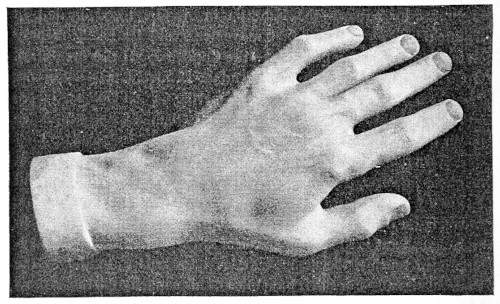
Chopin’s Hand. From a marble in the National Museum at Budapest.
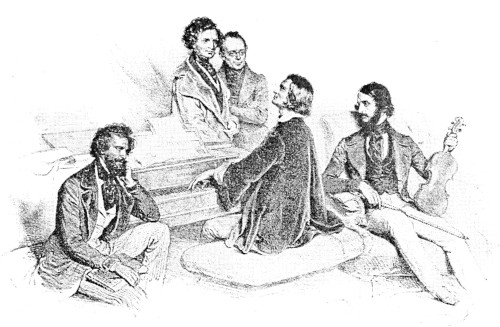
An Afternoon with Liszt. Lithograph by Kriehuber. Kriehuber. Berlioz. Czerny. Liszt. The violinist Ernst.
Liszt and the Present Time
At the beginning of the era of present-day piano-art, perhaps also at the culmination of all independent and advancing piano-art, stands Franz Liszt. The artistic phenomenon of Liszt is yet so near to us, that it is still misunderstood. Even to-day he has fanatical friends and bitter foes: blind assailants and diplomatic defenders. And through it all, the whole world of piano-playing stands under his influence.
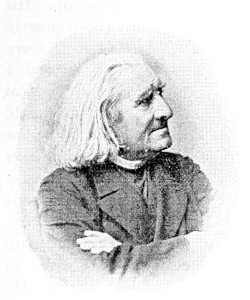
Photograph of Liszt, taken in Budapest.
This was possible because Liszt was a developed artistic nature, who did not fall in with the established scheme, was by everybody differently understood, differently loved, differently hated. We can distinguish three types of artists. The one is the rapid composer, whose new thoughts readily find their new suitable form. The second class is that of the artists of the will—great innovators, like Manet and Degas among the painters, who worked not so much by their visible productiveness, as by their personal influence, exerted from day to day; an influence which after their death seems almost inconceivable. The third consists of the compilers, classics in the historical sense, who form a synthesis of all the constituent parts, a unity of opposites, into which history continually diverges, a conjunction of all begun and severed paths, the complete culture of a time made living. Liszt belongs to none of these types; he belongs to the last two together. The union of the innovator and the classic forms his essence; and in understanding this lies the complete comprehension of him. He possessed a double power, which influenced the world as it did, because the world never saw the one half of his nature before the other.
Liszt the revolutionary cast his seed wide into the world. His system of patronage, founded on artistic feeling, not merely smoothed the way for Wagner and Berlioz, but assured to every suppliant the preservation of a modicum of self-respect and a modicum of hope. He pointed out to the modern musical development, in a kind of theoretical praxis peculiar to himself, the paths which led from the revolutionary principles of Berlioz to the popular musical realism of to-day. He scattered over both hemispheres the seeds of intimate personal instructions, of great and small disclosures; so that even now eternal gratitude to this most kind-hearted of all artists is felt over the world.
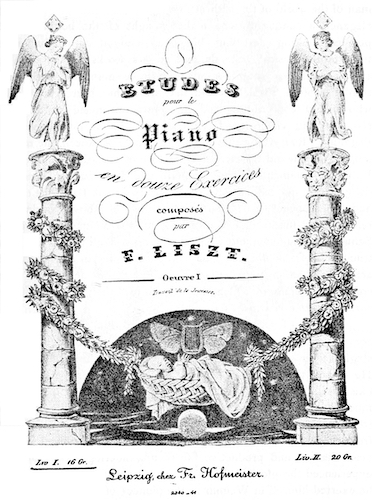
Title-page of Hofmeister’s Edition of Liszt’s Op. 1.
Liszt the compiler is a new Liszt. Here the revolutionary remained apart, and the new Liszt came forth, who rushed in undreamed-of splendour through real and imagined worlds. He gathers cultures, a princely collector, with the crown of rare desert upon his head. The world did not know that this same man could pass through times of quiet creation and thought. He is a man of the world of the highest savoir faire, a writer of bewitching elegance, a conqueror who makes nought of the boundaries of peoples, a king despising kings, a demigod as conductor of tumultuous musical festivals, and in his works, which seem to appear daily in countless, uncontrollable numbers, a classical combiner of that which is and that which has been. It was he who united composition and interpretation, music and poetry, romance and virtuosity, Olympian and Titan, Beethoven and Paganini. Everything that the piano had experienced, the mystic longings of the old counterpoint, the love of variation of Bird and Bull, the ornamentation of Couperin and Rameau, the sensuous delight in sound of Scarlatti, the absolute art of Bach, the charm and formal beauty of Mozart, the pain of Beethoven crying for release, the intellectual confessions of the unique triumvirate, Schubert, Schumann, and Chopin—the rays of all met in him. A true combiner, he did not jumble these cultures in a learned and academic fashion together in himself, but he developed their common medium, in which they could test their mutual effects, with ever new charms.
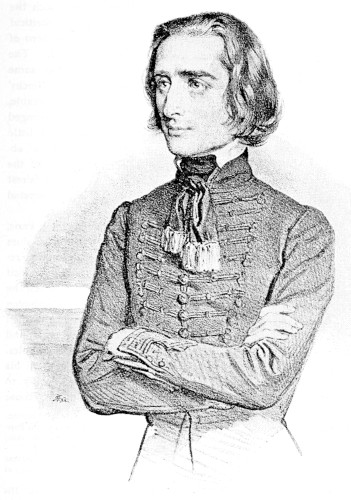
Liszt in his youth. Lithograph by Kriehuber.
The life of Liszt necessarily prepared him for this mighty combination. It is a co-ordination of cultures, each of which, singly experienced, might have sufficed for an ordinary mortal. He passed through six such lives in the various parts of his existence. As “petit Litz” he lived the life of a precocious much-loved child; then in Paris he penetrated to the depths of a romantic idealism, which drew closely together the men of that fruitful epoch; next, with the Comtesse d’Agoult he lived for five years the free and productive life of a wandering artist: then he experienced the glories of European renown as a virtuoso; next, he exerted himself in Weimar as the pioneer of the modern style; and finally, in Rome, Buda-Pest, and Weimar, he lived the peaceful life of a ruler, having attained the heights of worldly honour and equally those of that conquest of the world which found its symbol in his priestly robe. Lina Ramann had the courage to make three volumes of biography out of this unparalleled life, in which the unique material is spoilt by doubtful German and uncritical enthusiasm. Liszt is in her books not the subject but the hero of the tale; and the wickedness of women is the theme. The Comtesse d’Agoult receives the same measure as George Sand in Niecks’ “Life of Chopin.” It is remarkable, how in the archives which are arranged after the death of great men, so little is said of humanity and so much of abstract right. Is the moral order of the world so inexorable that even its fairest opponents must be docketed and ticketed in accordance with it?[133]
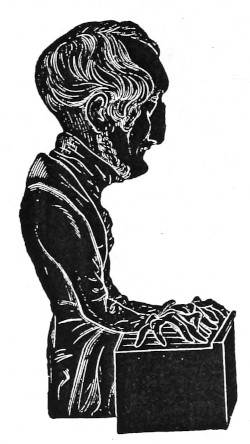
After Dantan’s Caricature of Thalberg.
In the romantic Thirties, and in Paris, men thought otherwise. In the freedom of that society Liszt’s personality received its stamp. In Paris he remained after the tour of the world which he made in childhood, on which Beethoven had kissed him; and in Paris he learned the elegance of a man of the world, and a depth of pantheistic thought. These were his two opposite poles. And very soon this mental culture raised him far above all his contemporaries in his profession; Chopin alone was worthy to be placed at his side. It was a good preparation for those triumphs of virtuosity that were soon to come, which were to transform him from a delicate Parisian into a European citizen. The splendour of virtuosity lay like the eternal sun over Paris. From time to time something would happen to cast even that splendour into the shade. In the twenties came Moscheles; then the wonders of the little Liszt; and now the appearance of Thalberg. Thalberg, the natural son of a prince, a ravishing and brilliant person, a cavalier through and through, came to Paris in 1835 and took her by storm. He had a luxuriant, fascinating execution, in which the silken glitter was that of the fontaine lumineuse; and he had besides the peculiarity of holding the middle melody supported by the pedal, both hands taking part, while they enfolded it in arabesques of chords. In the rivalry with him Liszt was the complete and foursquare man: no longer the “petit Litz,” standing on the height of the time, but the mature Liszt, with his “profil d’ivoire,” who left the time far behind. Liszt and Thalberg were both gentlemen. They never showed such animosity as their respective partisans, who split Paris as once it had been split by the Gluckists and the Piccinists. But their rivalry had nevertheless something dramatic in it, and in it lay a regard for piano-culture never yet seen. The crisis of the struggle was reached on the 31st of March 1837, when the Princess Belgioso ventured to invite both Liszt and Thalberg to a benefit-concert, at which the price of the tickets, forty francs, was proportioned to the character of the company. Hitherto each had performed on his own account; and each had been applauded for himself. Both came; and both played. The following conversation gives the decision of the audience—“Thalberg est le premier pianiste du monde!” “Et Liszt?” “Liszt, Liszt est—le seul!” It seemed a drawn match. But meanwhile the depth of Liszt’s artistic character was conquering though unobserved. Liszt had in an article severely censured the empty compositions of Thalberg. Fétis, the musical historian, took the other side, and maintained strongly that not Liszt but Thalberg was the man of the new school. A few years only had to pass, when people grew sick of playing Thalberg. The broader humanity of Liszt’s art had won the victory over external glitter in popular dress—a victory which Liszt’s personality could not gain over that of Thalberg. Thenceforward Liszt’s supremacy was uncontested.
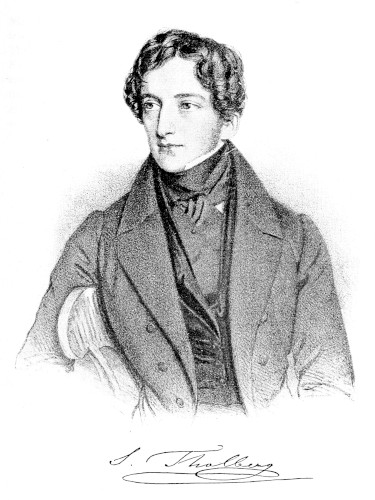
Lithograph of 1835 by Staub.
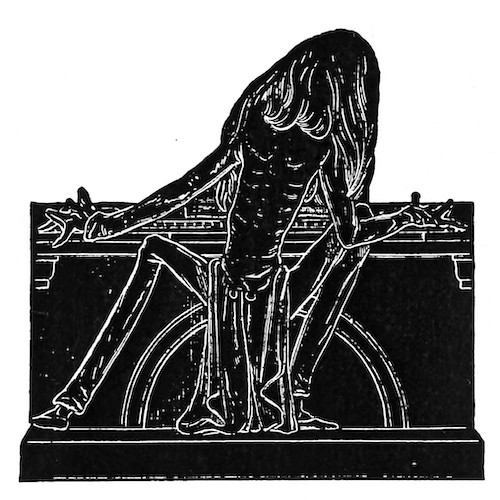
After Dantan’s Caricature of Liszt. From the Nicolas-Manskopf collection, Frankfort-on-Main.
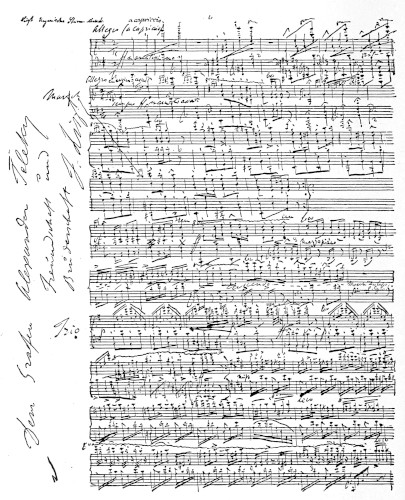
Facsimile of Liszt’s Hungarian Storm-March.
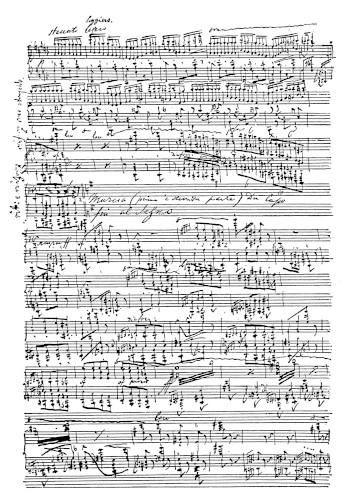
Facsimile of Liszt’s Hungarian Storm-March.
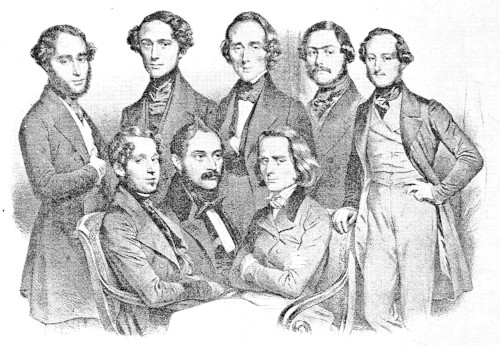
The “jeune école” of Parisian Pianists. Lithographed by Maurin. Standing—J. Rosenhain, Döhler, Chopin, A. Dreyschock, Thalberg. Sitting—Edward Wolff, Henselt, Liszt.
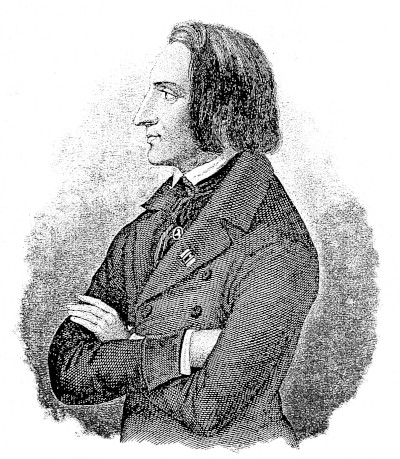
Liszt in his youth. Engraved on steel by Carl Mayer.
In the same year, 1837, Liszt made a confession, in an essay written for the Gazette Musicale, which was the greatest flattery that ever the piano received from one of its masters. Liszt refuses to go nearer to the orchestra or to the opera. “My piano is to me what his boat is to the seaman, what his horse is to the Arab: nay, more, it has been till now my eye, my speech, my life. Its strings have vibrated under my passions, and its yielding keys have obeyed my every caprice. Perhaps the secret tie which holds me so closely to it is a delusion; but I hold the piano very high. In my view it takes the first place in the hierarchy of instruments; it is the oftenest used and the widest spread.... In the circumference of its seven octaves it embraces the whole circumference of an orchestra; and a man’s ten fingers are enough to render the harmonies which in an orchestra are only brought out by the combination of hundreds of musicians.... We can give broken chords like the harp, long sustained notes like the wind, staccati and a thousand passages which before it seemed only possible to produce on this or that instrument.... The piano has on the one side the capacity of assimilation; the capacity of taking into itself the life of all (instruments); on the other it has its own life, its own growth, its individual development.... It is a microcosm, a micro-theus.... My highest ambition is to leave to piano players after me some useful instructions, the footprints of attained advance, in fact a work which may some day provide a worthy witness of the labour and study of my youth. I remember the greedy dog in La Fontaine, which let the juicy bone fall from its mouth in order to grasp a shadow. Let me gnaw in peace at my bone. The hour will come, perhaps all too soon, in which I shall lose myself and hunt after a monstrous intangible shadow.”
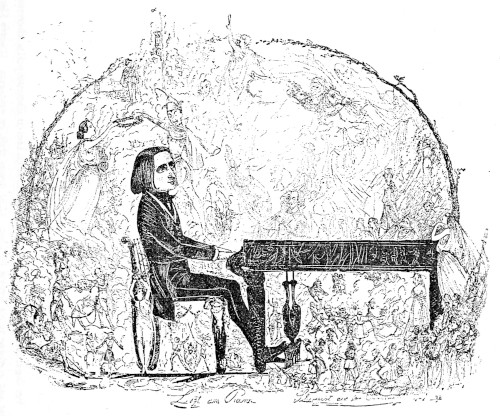
Cartoon representing Liszt and his Works. 1842.
It is due in very great measure to the example of Paganini’s violin-playing that Liszt at this time, with slow, deliberate toil, created modern piano-playing. The world was struck dumb by the enchantment of the Genoese violinist; men did not trust their ears; something uncanny, inexplicable, ran with this demon of music through the halls. The wonder reached Liszt; he ventured on his instrument to give sound to the unheard of: leaps which none before him had ventured to make, “disjunctions” which no one had hitherto thought could be acoustically united: deep tremolos of fifths, like a dozen kettle-drums, which rushed forth into wild chords; a polyphony which almost employed as a rhythmical element the overtones which destroy harmony; the utmost possible use of the seven octaves in chords set sharply one over another; resolutions of tied notes in unceasing octave graces with harmonies thrown in the midst; an employment hitherto unknown of the interval of the tenth to increase the fulness of tone-colour; a regardless interweaving of highest and lowest notes for purposes of light and shade; the most manifold application of the tone-colours of different octaves for the coloration of the tone-effect; the entirely naturalistic use of the tremolo and the glissando; and above all a perfect systematization of the method of interlacing the hands, partly for the management of runs so as to bring out the colour, partly to gain a doubled power by the division, and partly to attain, by the use of contractions and extensions in the figures, a fulness of orchestral chord-power never hitherto practised. This is the last step possible for the piano in the process of individualisation begun by Hummel and continued by Chopin. The three systems of notes, instead of two, appear more frequently; in fact the two hands appear for the most part to play a group of notes which seem to be conceived for three. And precisely by this means the two hands run inside and through one another, as if they were only a single tool of ten fingers. The music appears again to become a corporate unity of tone, as it had already once been in its first beginnings. But, it has now become, out of a universal music, a music for the piano. An historic mission is fulfilled.
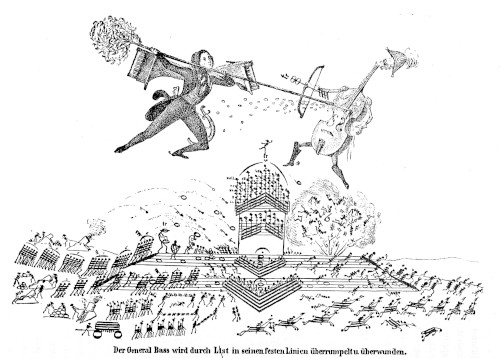
Der General Bass wird durch List in seinen festen Linien überrumpelt u überwunden. “General” Bass surprised and overcome in his fortress by Liszt. (List means craft, or stratagem. Observe Liszt’s wings, flügel, which word also means grand piano. General or “thorough” Bass is a personification of the “classical” school.)
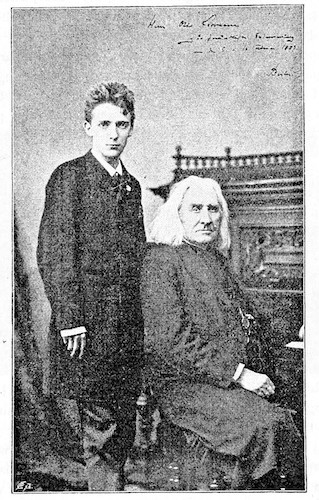
Liszt and Stavenhagen.
Liszt invents a fingering for his purposes which has no other principle than that of the most absolute opportunism. Scales, struck by one finger, trills played with changing fingers, strenuous parallel octave passages, heavy fingering in order to drag out parts which otherwise glide too lightly—everywhere, in place of the academic rule, there is an attempt to grasp the effect of the moment, a moulding after the impulses of the expression. And thence arises a soul-giving power even down to the most trifling passing-note, until the man and the playing are one. Liszt did the miracles of a prophet in his recitals, tumultuous assemblies, in which it actually happened that the people did not stir from the place till one o’clock in the morning.
So early as 1839 he was able to venture on the first pure piano-recital ever given, after Moscheles had paved the way with his mixed piano-recital without orchestra. Not only could he fill up a whole evening with performances on this instrument alone; he was able to fill with his performances twenty-one evenings in the short space between December 27, 1841, and March 2, 1842. This was the brilliant period of his virtuoso-years; twenty-one recitals in Berlin within this short space! In the history of piano-playing they are festival weeks, holy days, in which by the greatest of all pianists a world-literature was made living on the keys, so that all Europe resounded. At that time we hear of a critic wondering how this marvellous man could actually improvise along with an orchestra! So little were people accustomed to playing by heart, which since Liszt’s time has become the universal rule.
Liszt’s innumerable compositions for the piano, which were first completely named in Ramann’s book, remind us again of the three types of artists of which we spoke above. We find in them Liszt the compiler, who makes use of the experiences of centuries; and we find Liszt the innovator, who points out new ways in motives which we might think were only seen in Wagner, in naturalisms which developed music, and in technical means of expression; but we do not find in him a composer of genius, who can hardly hold himself back from his inspirations, and who with unforced ease, creates new forms for the new ideas. We shall, as time advances, suffer less and less from illusions on this point. And Liszt himself was content to be an innovator without being a creator. He was a clever artist who knew his own limitations accurately. He invents a theme which is spirited, new, and characteristic; and when he has invented the theme he sits down and arranges it according to all the powers of technical expression; and varies it in forms whose technique is their content, so that technique and content become identical. This is the last effect of the Étude-principle, in which an idea finds, not its form, but its technical expression.
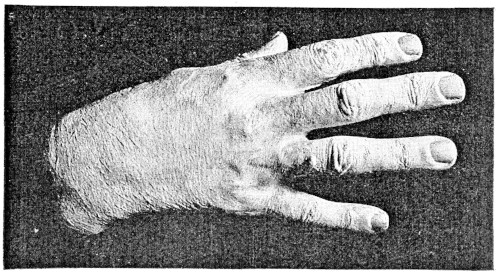
Plaster Cast of Liszt’s Hand. Weimar.
This special method of Liszt is preserved at its best in the twenty Rhapsodies. The Magyar Dallok had appeared already as studies. But these Rhapsodies far surpass them in polish. Hungarian national airs, with their rushing rhythmical and unrhythmical verve, were here for the first time taken up into the circle of art, and supplied the motives from which he poured forth a pyrotechnic display of brilliant variations, whose technique has not a single useless note, and whose working-out is indescribably delicate and harmonically interesting. Nos. 2, 6, 9 (Pester Karneval), 12 (to Joachim), and 14 (to Bülow), are not unjustly preferred to the rest. No 14, with its astounding development from the funeral march to the joyous stretto, has remained one of the most marvellous piano-pieces on record. In it an unparalleled technique is revealed, while the piece is not thereby rendered hollow or superfluous.
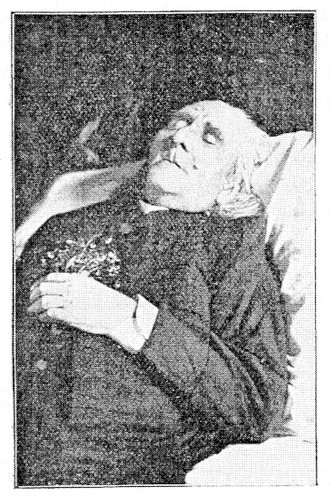
Liszt lying in state. Bayreuth. 1886.
The charming Spanish Rhapsody, the Chopin-like “Consolations,” the wonderfully impromptu-like “Apparitions” and “Harmonies Poétiques et Religieuses,” that grand congeries of various differently arranged and differently put together Études and drawing-room pieces, the “Années de Pélerinage” (three volumes) with the Tarantelle, the Paganini Études with the Campanella, further collections of Études till we reach the Twelve Études d’exécution transcendente, the “Dream Nocturnes,” the “Mephisto Waltzes and Polkas,” the “Caprice Valses,” the “Chromatic Galop”—I will only refer to a few pieces which possess a special historic or artistic interest. In 1834, as his first romantic production, appeared the “Pensée des Morts,” in mixed time, senza tempo, with mottos from Lamartine, for whom, with Chateaubriand, he felt the highest literary admiration. In the same year came out “Lyon,” a realistic piece on the uprising of the Lyons working-classes, and one of the few piano-compositions relating to contemporary events. “Sposalizio” and “Il Penseroso” (1838, 1839) are notable as pieces inspired by the impressions of the representative arts, as the somewhat feeble “Fantasia quasi Sonata” (1837) arose from the perusal of Dante. The whole of these are romantic confessions in which the arts greet each other in friendly wise. In importance, however, they are far surpassed by the later piano works; above all by the five best original pieces, the Legends, the Concertos, and the B minor Sonata.
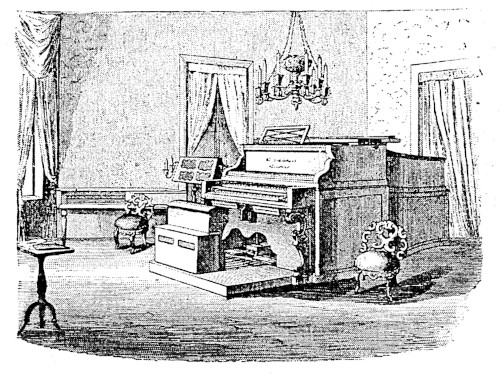
Music-room in the “Altenburg” at Weimar, with Liszt’s giant piano by Alexandre, Paris. In the background a clavier of Mozart’s.
The Legends of 1866 are in honour of his patron saint, St Francis. The first shews him in an ecclesiastical theme, sweeping over the waves, which are represented by the usual variation. In the other he is preaching to the birds. It is a wonderful free impromptu, in which a church air is set over against the twitter of the birds, which is marked by masterly technique. The birds seem to be listening to the saint; their twittering seems likely to give way to his pious harmonies; but at the conclusion we see them again in a cheerfulness which leads on to a ravishing cry of birds. It is the most poetical piece that Liszt ever wrote for the piano.
The Sonata in B minor (1854) dedicated to Schumann, has one movement but many themes. Six motives of varied colouring are knitted into one web, which unfolds itself into a splendid picture. A royal brilliancy lies over the whole. More free and lively are the two single-movement Concertos. The one in A major has its characteristic line C sharp B C B, which is to be followed out into the cadenzas; a main theme with all kinds of subordinate themes, in a natural threefold quickening from slower reflective sections. The E flat major is constructed on the opposite model—its characteristic line is E flat, D, E flat; D E flat, D, D flat. This work is probably the most frequently heard of Liszt’s concerted pieces. It is more giusto in essence, with slower by-themes—especially the beautiful Adagio with the Tristan-like motive and the Pastorale middle-section—swinging up in Bacchic style. On the return to the main theme all the motives alter into a more cheerful strain; the adagio gives way to a martial movement, and the Pastorale is taken up by the piano with increased ornamentation. In the place of the old formal scheme a psychological process had entered; an inward conversation of the piano with the orchestra and its instruments.
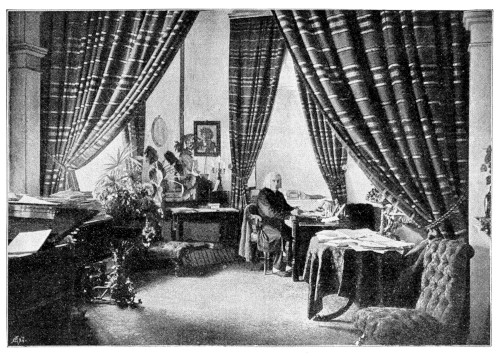
Liszt at Weimar, 1884. From a Photograph.
From the point of view of number, still greater than the original pieces are the arrangements, which embrace a whole world, from variations to complete transformations of themes, from the “Dance of the Dead” on the Cantus of the Dies Irae to the Rhapsodies, from his arrangements of Bach to his Paraphrases of Wagner, from the innumerable songs and waltzes of Schubert to the settings of Beethoven’s symphonies, and the symphonic poems of Liszt’s own. Here was a huge mass of material, which was transmitted spiritually and artistically to the public by means of the piano. And in the hither and thither of the arrangements we trace the most labyrinthine paths. Schubert’s Marches, for example, were first transcribed for four hands, then arranged for orchestra, and finally re-transcribed from the orchestral setting for the pianoforte. Liszt’s arrangements are no mere transcriptions; they are poetical re-settings, seen through the medium of the piano. He assimilates the composition before him into himself, and reproduces it on the piano as if he had conceived it, with all its special peculiarities, for the piano alone. Such things seemed often to be the very best expression of his genius. This great series begins with the transcriptions of Paganini’s Capriccios, and that of the “Symphonie fantastique” of Berlioz; and it reaches its height in the two-handed settings of Beethoven’s symphonies. The pieces have become genuine piano-compositions, in which a full score is reproduced by specific fulness of chord, and a sweeping chord by broken harmonies sustained by the pedal. The piano is no longer merely one pillar of the musical structure; it has become the architect of an art of its own. This art of its own becomes yet more visible when it deals, not with the transcription of ready-made works, but with paraphrases of given sections, which were to be released from their surroundings. Liszt made many operatic fantasias of this kind, and did not always utterly oppose the taste of the time, which did not object to dissolve a characteristic melody into flourishes, or to make a sad and trembling motive tower into unexpected heights. Of this his Tannhäuser March and his Don Giovanni Fantasia are proofs. But the rule, nevertheless, is that he never undertakes anything contrary to the character of the passage to be paraphrased, and that—as he does most successfully in the Rienzi Fantasia—he does not overlay the melody with cadenzas and ornamentations from without, but extracts them, as it were, from the substance of the piece itself.
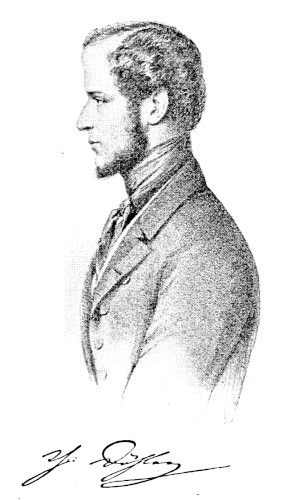
Döhler. Lithograph by Mittag, after the picture of Count Pfeil.
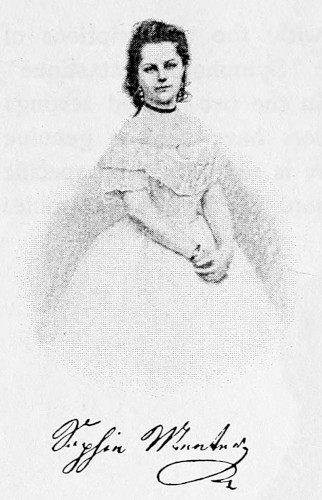
Sophie Menter in her youth.
Only those parts of the opera does he bind together in his paraphrase, which stand in an inward relation to each other. It is now entirely drawn from a leading idea, and is related to the earlier externally-connected operatic fantasia as the symphonic poem to the symphony.
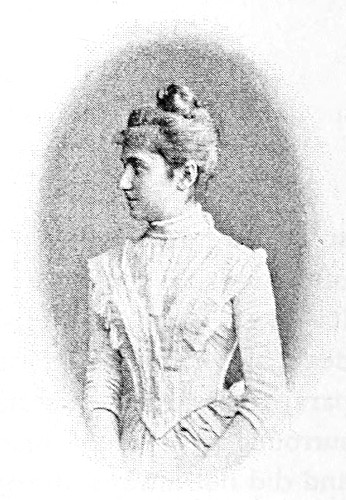
Clotilde Kleeberg, 1888.
The immense difficulties of Liszt’s compositions retarded their popularity for many years. Clara Schumann and Sophie Menter were amongst the first brave performers to introduce them into their repertoires. To-day they almost overburden the recitals, and include much of little value, which would hardly survive except as the disjecta membra gigantis. His influence was of a kind never seen before. He created a type of recital in which his imitators often copy the Master down to his very hair. His missionaries travelled over the whole world from the circle which he gathered round himself at Weimar in the summer months. Their ideal is his creation; the perfect, memoriter, technically and stylistically adjusted mastery of the great and many-sided piano literature, without regard for century or nation.
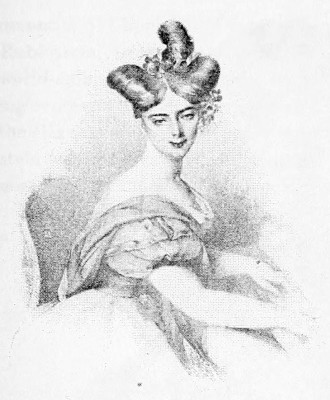
Madame de Belleville, 1808-1880. Pupil of Czerny. Well-known pianist. After the picture by Agricola.
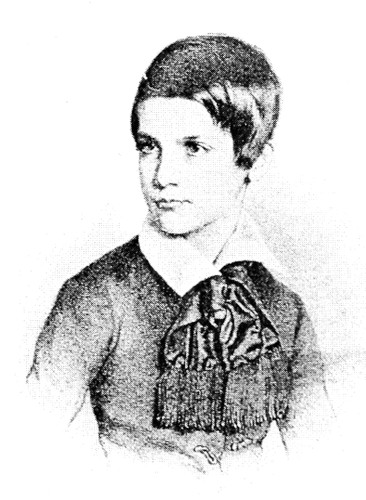
Carl Filtsch, infant prodigy. Pupil of Chopin. Died very young.
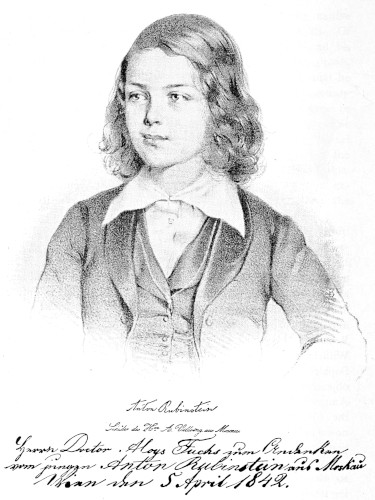
“Anton Rubinstein, pupil of Mr A. Villoing, Moscow. To Dr. Aloys Fuchs, as a souvenir from the young Anton Rubinstein, Moscow. Vienna, April 5, 1842.”
Liszt’s contemporaries in piano-virtuosity are almost forgotten. Their name vanishes like a dream. Others succeed in their place; generations press eagerly on each other’s heels. There was the wild and headstrong Mortier de Fontaine, who was the first to venture on playing Beethoven’s Op. 106 in public. Döhler, Dreyschock, Rosenhain, Jaell and his wife, Wilhelmina Clauss-Savardy, Sophie Menter, like her in objectivity, the more vigorous Annette Essipoff, afterwards the wife of Leschetizki, who now holds the very centre of piano-teaching in Vienna. In our time are Madame Carreño, so masculine in her convincing interpretations, and Clotilde Kleeberg, her opposite, so sympathetic and delicate, the truly womanly executant of Schumann and Chopin. Madame Essipoff was a pupil of Anton Rubinstein, from whom a by-stream ran out alongside of the world-embracing school of Liszt. Rubinstein’s and Bülow’s playing represented the difference which was bound to arise between the classical and the spiritual interpretation of piano-works. Rubinstein was the great subjective artist, who gave way entirely to the mood of the moment, and could rush on in an instant in such a way as to leave no room for the cool criticism of a later hour. But Bülow was the great objective artist, the teacher and unfolder of all mysteries, the unraveller of the knottiest points in Beethoven’s latest works, which he understood to their innermost details. In his playing the intellect had the gratification of clear-cut sharpness, while the heart retained the emotion long after the artist left the platform. Both artists were in their kind finished and complete, and both were of incalculable influence on whole generations. The impressionist Rubinstein and the draughtsman Bülow had each the technique which suited him. The one rushed and raved, and a slight want of polish was the natural result of his impressionist temperament; the other drew carefully the threads from the keys, occasionally showing them with a smile to his audience, while every tone and every tempo stood in ironbound firmness, and every line was there before it was drawn.
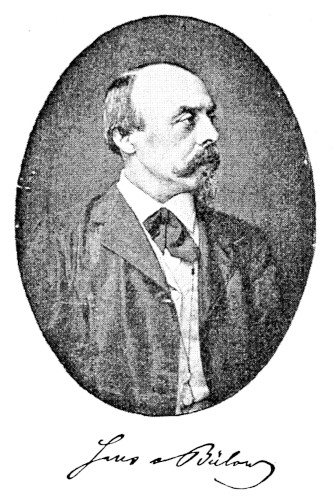
Hans von Bülow. Taken in the year 1879.
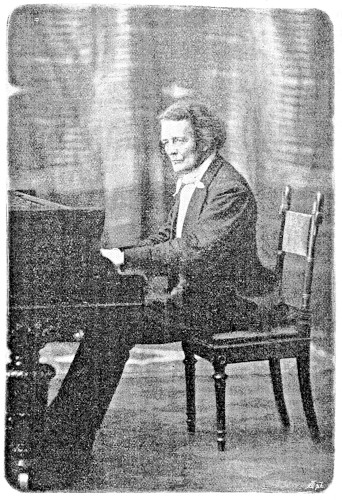
Last Portrait of Rubinstein.
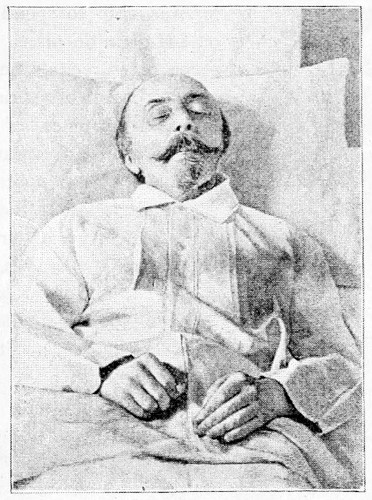
Bülow on his deathbed. Cairo, 1894.
Rubinstein and Bülow were both interpretative natures. Rubinstein composed much, Bülow little; and Rubinstein’s compositions are hollow while Bülow’s are fragmentary. In their compositions the two men are at their worst; the pathos of Rubinstein became maudlin, and the severity of Bülow became simple harshness. The best that Bülow ever wrote for the piano was the piano-arrangement of Tristan, which is unparalleled in its expression of pain; but his best work of all was his annotations to Beethoven’s Sonatas and Variations. Rubinstein’s innumerable Dances and National Airs are played indeed, but they are practically forgotten; his Tarantelles, Serenades, Sonatas, Concertos, get nearer to sinking every year. Rubinstein’s experiences, his activity in St Petersburg, his final stay in a pension at Dresden, were rather external than internal changes. Later in his life he was able to spend more money on his gigantic plans. In a cycle of seven piano-recitals he undertook to give a complete picture of the historical development of his art. It is well known with what self-sacrifice he gave these recitals, and how nobly he followed the unique principle which great virtuosos should set before themselves, namely that those who have should pay for the art, in order that those who have not should receive it gratuitously. Bülow’s experiences, on the other hand, were internal. His change from Wagner to Brahms will be regarded by every student of great souls, not as a desertion of his colours, but as a mental phenomenon. In Bülow’s nature there was at bottom nothing in common with Wagner; and it may well be that he never saw Wagner except through the glasses of the concert, of execution, of display, not of the stage, or of sensuous perception. Bülow was not stage-bitten, nor was he even a man with a head full of the philosophy of the stage; he was a downright worker, a teacher, to whom indeed teaching came so natural that he for a considerable time gave lessons with Raff in Frankfort and Klindworth in Berlin. When he gave public recitals he did not, like Rubinstein, crowd a history of the piano into a few evenings. He took by preference a single author, like Beethoven, and played only the five last Sonatas, or he unfolded the whole of Beethoven historically in four evenings. He would have preferred to play every piece twice. Great draughtsman as he was, he hated all half-lights and colourations; he pointed his pencil very finely, and his paper was very white. If he laid his pencil down, it was only for a short time; and if he played any work, the composer was a made man. Over the variations of Tschaïkowski could be read, “Joué par M. Bülow dans ses concerts.”
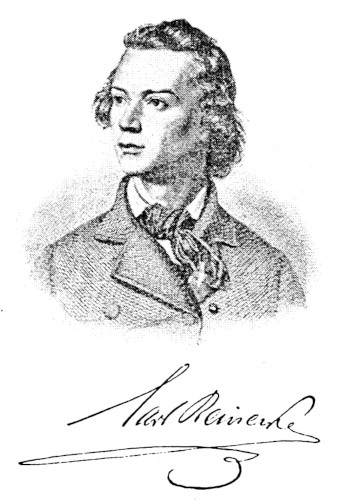
Reinecke in his youth. Most famous of modern Mozart players, afterwards Director of the Leipsic Conservatorium. After the picture by Seel.
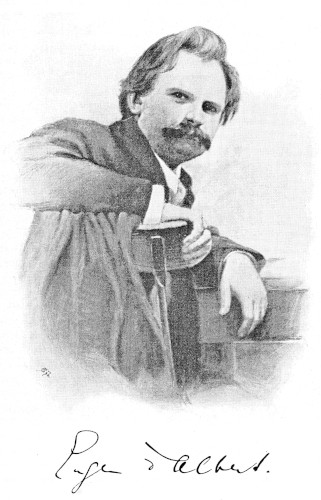
Portrait by H. Katsch.
Teacher and virtuoso—these mark great pianists into two groups, or at least into two temperaments; and it was this marked difference which was signalised by the appearance of Bülow and of Rubinstein. In all, the severance is perfected according to the natural aptitude and inner development. Of course over every virtuoso at a certain time there comes the wish to busy himself with teaching, but only in a small circle; but on the other hand we observe that the decision to follow the teaching profession is instantly taken by those artists who have no turn for publicity, or do not like to face the competition which to-day is more keen than ever. The extreme of the virtuoso type is seen in certain international geniuses, who continued rather the tradition of Thalberg than that of Liszt. Thalberg, in the fifties, like Henri Herz in the forties, toured in America and Brazil. Rubinstein also, in the sixties, visited America. The most travelled of all was the Irish pianist and composer Wallace, who, for the sake of his health, toured and gave concerts through Australia, New Zealand, India, South America, the United States and Mexico—long before Thalberg’s Brazilian journey. To-day a tour in America is almost a matter of course in the life of every virtuoso. Countries like France and Italy are shut off from a great international intercourse of this kind, since their concert-life, and especially their cultivation of the piano, has never duly unfolded itself. The opera is there all powerful. But England, as a hundred years ago, invites to her shores the great men of the Continent, and sends them back loaded with treasures. As London pianists Hartvigson, the pupil of Bülow, Borwick, and Dawson, stand in the front rank. Russia, formerly a colony of foreign emigrants, has now, by Anton Rubinstein’s foundations in St Petersburg, and by the like activity of his highly-esteemed brother Nicholas in Moscow, awaked to a noble concert-life, in which the rivalry of the two capitals is remarkably balanced. It was inevitable that in nearer and further states ever more numerous pupils of German or Parisian masters should settle and labour as teachers. In America, so early as the sixties and seventies, a great number of naturalised teachers was known, among whom Wolfsohn is perhaps most distinguished. His eighteen evenings of historically arranged piano-music, which he gave so early as 1877 in Chicago, are deservedly famous.
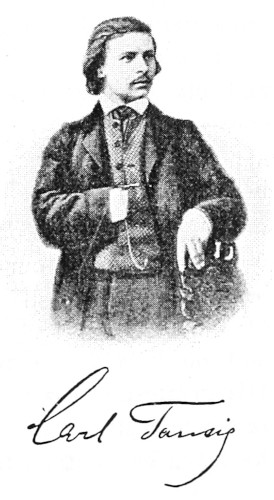
Tausig, the pupil of Liszt, who by his brilliant technique and his extraordinary sense for style was the wonder of his contemporaries, left behind him various good arrangements and compositions perhaps too obvious in their virtuosity. He was born in Warsaw and died at thirty. He would have meant to our time a teaching power of the first magnitude. The crown of piano-playing in our time has been won by Eugene d’Albert, born in 1864, a small man with giant power, a loveable person of astonishing artistic seriousness. He was a pupil of Liszt, and on him the mantle of Liszt has fallen in our generation. His greatest virtue is his classic temperament. In his memory rest safely stored the greatest works from Bach to Tausig. If he takes one out, he takes with it the sphere in which it stayed unspoilt—the style of its execution. The piece stands fast in its construction; not a phrase appears inorganic, not a rhythm accidental. The seriousness of Brahms’s Concertos, the murmuring of Chopin’s Berceuse, the Titanic power of his A minor Étude, the grace of Liszt’s Soirées de Vienne, the solemnity of Bach, move under his hand in the concert, without one taking the least from another. It is objectivity, but we do not cry out for subjectivity; it is personality, but we do not miss the rapport with eternity.
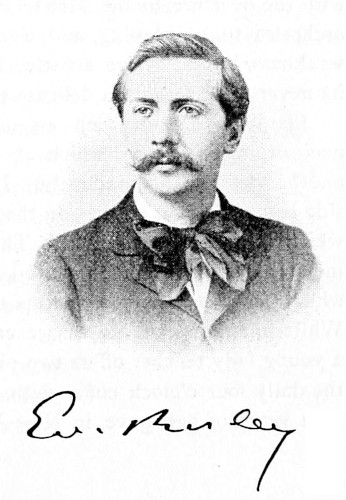
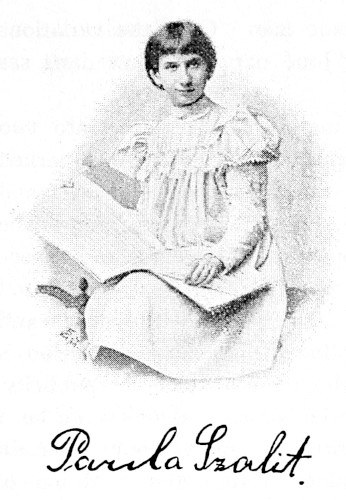
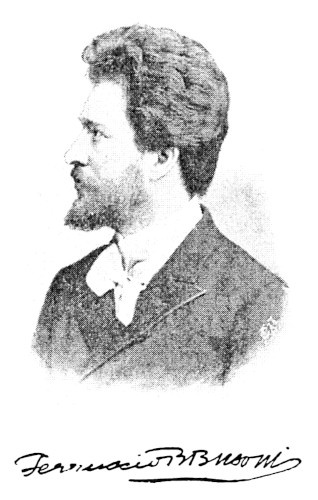
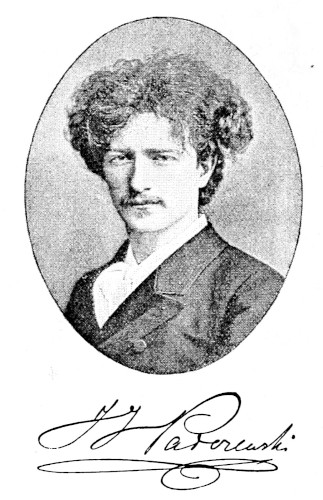
Liszt’s pupils Reisenauer and Stavenhagen endeavoured on a similar ground to play a part as more general interpreters. But chance and change played them many tricks. Others, again, had and have their special excellencies. Paderewski, idolised in England and America, is the delicate, emotional, drawing-room player; Sauer, the bravura pianist; Siloti, the interpreter of Russian piano-music; Friedheim, the Liszt-player; Karl Heymann, the graceful. Barth, the pupil of Bülow, is severe; Rosenthal, an amazing technician; Ansorge, one of the most intellectual; Gabrilowitsch, who drives the horses of Rubinstein; Vladimir von Pachmann, with all his extravagancy, at least plays Chopin’s Mazurkas with absolute faithfulness to their national character; Busoni shows great passion; Lütschg has an extraordinarily strong wrist; the miraculous child Paula Szalit transposes fugues on the spot; Josef Hofmann, once an “infant prodigy,” is now an astonishingly individualistic artist; and Eduard Risler has an inimitable soft touch. Since the triumphs of Planté, indeed, Risler is the first French pianist to achieve a universal renown. He is a pupil of the eminent Parisian master Diémer. He has discovered those last delicate nuances which lie precisely between tone and silence. His tones seem not to begin and not to cease; they are woven out of ethereal gossamer. While d’Albert plays with the whole upper body, seeks the keys and rivets them fast, breaks the sforzatos, and soothes the pianissimos; Risler is a statue at the piano, externally a Stoic; but his gliding and crossing fingers, so soon as they have struck the first chord, become the most sensitive agents of an emotional soul. Under Risler’s treatment the commonplace becomes a novelty. Out of Liszt’s sermon of St Francis to the birds he draws the last poetical breath; Beethoven he bathes in a warm brilliancy of his own; and, not to be charged with too much sweetness, he flings himself loose with the overture to the Meistersinger, so that we fancy the whole orchestra to be playing, and we have an assurance that it is not weakness, but an active artistic restraint which gives to his touch its never-to-be-forgotten delicate profundity.
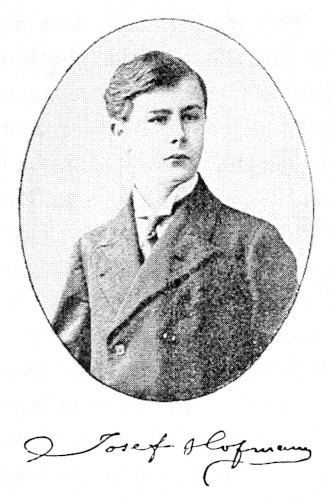
Piano-playing, in such an unparalleled advance, became of necessity a profession, which at one time enticed to deceive, at another rewarded abundantly. It is a profession which on one side leads to royal wealth, on the other to that extreme of misery which is the half of all art. The collision, which in our age is inevitable between industry and art, revealed the terrible abysses which yawn between the claims of a profession and those of art. While in a Frankfort paper we can read advertisements in which a young lady teacher offers two piano lessons a week in return for the daily four o’clock coffee with the family, young Hofmann, at nine years of age, gave, in New York alone, within three months, thirty-five recitals, from which his impresario, out of a gross receipt of over twenty-five thousand pounds, took at least ten thousand for himself.
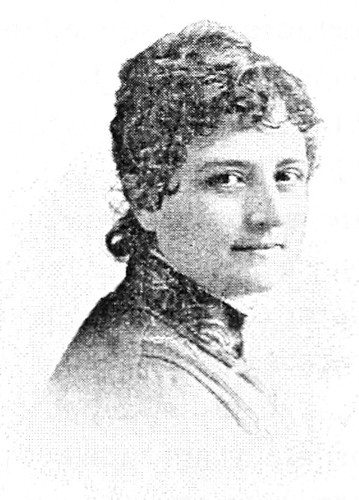
Madame Carreño.
The piano has become an essential part of life. Those who cannot play it stand outside a great company which cultivates it as an engine of social and home intercourse. In households where there is no piano we seem to breathe a foreign atmosphere. To-day we need no longer explain the piano from the church or the theatre, from the ballet or the volkslied, from the artistic song or the violin; it has on the contrary become an active centre, which has given its form to our whole musical culture; nay, more, which has even given the stamp to our whole conception of music, not only in the minds of all amateurs, but in the minds of many professionals. Whether the young girl spends her time with Chopin’s E flat major Nocturne, or whether a false sentiment attaches itself to the “Maiden’s Prayer” or the “Cloister Bell”; whether the waltzes of Lanner delight a quiet mind or Strauss calls to the dance; whether the eager pupil plies her healthy sport in Cramer’s, Schmitt’s, or Czerny’s Studies, or the rising virtuoso exercises himself mechanically in scales after d’Albert’s fashion, while he simultaneously reads new notes, or as Henselt plays Bach while he reads his Bible; whether amateurs enjoy themselves with the piano-abstracts of operatic fragments; or whether artists like the Kapellmeisters Fischer and Sucher, offer those Fantasias from Wagner over which they have spent their lives; whether the professor allows himself the enjoyment of private piano-literature, or performs standard works before thousands in the concert hall;—all these are accidents of culture, they are phenomena which offer a picture of that intimate interdependence of music and actual life which has developed so fruitfully since the art ceased to be the private possession of a clique, and which has established it on an absolutely new foundation. Of course, the more general piano culture has become, the more has it been in turn used up as a profession, and the more easily were its wings fettered. Our chief men also have ceased to improvise during a recital. Only our “comic artists” do so at the present day. And of a power of magical improvisation, exercised in private such as Beethoven and Liszt so often displayed, we now hear less and less. The recitals, in great part, deal with the interpretation of known works, which often—like Beethoven’s E flat major concerto—are repeated ad nauseam. We have learning, we have playing, but we never see the enthusiasm which can be evoked by the stress of immediate creation. Piano-playing is a universal business even to the extremest limits of an amateurism which cannot strike a single chord instantaneously, nor dot a single note correctly. It is a long line from the little yawning schoolgirl, through the teacher running up and down stairs, to the virtuosos who play in the winter and give instruction in the summer. With excess of zeal comes sin. Nowhere in an art is a sin so often committed as in the choice of masters popular to-day. From false economy, musical culture, which is so profound and so difficult, is intrusted to the most incompetent, and fortunes are squandered in ruining the music in a child. In a paper once was to be read a somewhat humorous satire, entitled, “Directions for use,” in which the teachers were thus handled: “For beginners the choice of a master is recommended—there are masters at all prices—very good lessons can be had for sixpence; but masters with long hair charge three shillings and upwards—for male adults the choice of a mistress is recommended, because pleasure and love are thus excited together.”
In order to put a check on amateur teaching a movement has of late years been set on foot to forbid untried teachers to occupy any position. As yet, however, the movement wants legal enforcement. Kullack and Klauwell in Cologne, Breslaur in Berlin, publisher of the Piano-teacher (a paper now twenty-one years old), have founded seminaries for intending teachers. In 1896, in Cologne, out of four hundred students only thirty received a diploma of teaching capacity—but no means at present exists of forbidding the others to teach. Consider the enormous crowds that pass out of our music-schools. An infinitesimal proportion may perhaps decide for a virtuoso career. Of the rest half remain amateur, the other half go in to the teaching profession. The overcrowding may easily be imagined. The largest music-school in the world, the English “Guildhall School” of Music, had till lately 140 professors, 42 teaching-rooms, 2700 students; and will shortly be enlarged till it has 69 rooms and 5000 students. I have made special inquiries at the Berlin Conservatorium of Klindworth and Scharwenka. My numbers are I think exact to a few figures. In 1895-6, out of 387 students, 41 men and 208 women took piano only; 8 men and 15 women took piano with some other subject. In 1896-7, out of 383 pupils, 40 men and 239 women learnt piano alone, and 4 men and 8 women learnt piano with something else. Of these 247 women, besides, about 43 are English or Americans. Since on the average we reckon two years for a course, there go from this school alone, every year, more than fifty women-teachers into the world. Some of them perhaps may win a doubtful testimonial in a dearly-bought Berlin concert; others, who aimed at virtuosity, may, after a pitiful experience, themselves sink into teachers. Of the frequency of piano-performances in concerts the following figures may give some notion. I have counted the more important Berlin concerts in nine weeks taken at random—159 in all. Among them are 58 piano-concerts, partly combined with performances on other instruments, partly interesting through the personality of the pianist; mere accompanying of songs being of course not reckoned.
The number of music-schools has increased specially in the capital cities. In France the Parisian High School has a great repute; in Russia the Moscow and St Petersburg Conservatoriums; in Belgium the Brussels Conservatoire, under the guidance of Dupont, who is also distinguished as the editor of old piano-works; in London the Royal Academy of Music [and the Royal College of Music]. In Germany we have in Frankfort the Hoch Conservatorium under Bernhard Scholz, and the Raff under Max Schwarz; Stuttgart has somewhat declined through the deaths of Lebert and Starck, the editors of the great Theoretical and Practical School; but Cologne has greatly gained in importance under Wüllner. In Leipzig under Mendelssohn, Moscheles and Plaidy, piano-playing took the first place; new technical devices like the pedal-clavier—that is, with organ pedals for the low notes—were freely admitted, as in our days the Janko-keyboard. But with the inevitable reaction, this school has decayed, and its importance in piano-art is not what it was. In Berlin the Royal “Hochschule” with Barth, Raif, Rudorff, and others, at its head, experienced a like fate. Private institutions have come to the front. Tausig’s School for higher piano-playing (1866-1870), was very distinguished. From it went Joseffy to New York and Robert Freund to Zürich. The New Academy, founded by Theodor Kullak, was also famous. It was afterwards replaced by another Institute founded by his son. The Stern Conservatorium, now directed by Gustav Holländer along with Jedliczka; the Klindworth, at which for a time Bülow and Moszkowski laboured; and that of Scharwenka, which, after Xaver Scharwenka’s departure for America, was for a time united with the Klindworth;—are known to all.
Like the practical “schools,” the theoretical have also become innumerable. I take as a few of the most important works the following: Adolph Kullak’s “Aesthetic of Piano-playing,” re-edited by Bischoff, a unique and profound work on the theory of the art, as a hundred years’ experience and the careful observations of the author have enlarged it; Hugo Riemann’s “Comparative Theoretical and Practical Piano School, presenting system, method, and materials, in a historic and organic connection”; and, among the innumerable “schools” and volumes of exercises, the various thoughtful works of Germer. Two main principles have come to occupy the first place in the newest school-practice. First, the systematic carrying out—not merely of a musical mechanic of the hand, but its thorough gymnastic. This was the natural advance, which carried yet further the teaching of Czerny. The hand is adapted for piano-playing—as in the systems of Thilo, Virgil, and others—by gymnastics of the fingers, and stretching of the muscles. Thus a great part of the gymnastic cultivation is got over before actual musical practice begins. In this work the dumb keyboards, which to-day are constructed with great delicacy, have borne a great part. They now admit of legato playing and of different degrees of strength in touch.
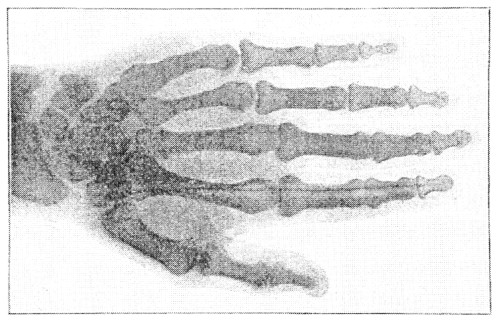
Hand of Eugene d’Albert. Röntgen ray photograph by Spies.
The second great principle is to take into account in instruction the peculiarities of the pupil’s hand. It stands to reason that the same exercises will not do for all hands. One hand demands this, the other that. This method is carried out with the utmost precision by the greatest of teachers, Leschetizky. A similar principle prevails in modern teaching of singing. We no longer endeavour to base voice-cultivation on the universal vowel A, but on that vowel which comes most natural to the organ of the pupil.
The arrangement of the keys is the sacred tradition of centuries. It presents the tone-system, as it were, lengthways, and is the natural expression of a melodic musical concept. The separation of the black and the white keys has been introduced in accordance with a certain theoretical principle, which allows the difference of position in our scales over the black and white keys to appear somewhat complicated. Our keyboards are constructed entirely on the C major scale; the tones outside this scale are thrown into the black keys, and thus appear in a subordinate position: thus all other scales have a strange form and often a somewhat difficult fingering. But since the seventeenth century our conception of music has gradually, from melodic, become harmonic; we hear vertically as well as horizontally; we hear the beauty of all chords as sounded together, and, unconsciously, we fill in the harmonies to every melody we hear. It would have been natural if the keyed instruments had adapted themselves to this altered musical conception, and had resigned the original conception of the scale to make way for harmonic conveniences. Nothing, however, is slower to be reached than the determination to revolutionise from the foundation a technique adopted in the schools, since no one is willing to make the sudden break with the old and the sudden start with the new.
Attempts had already been made to break the monopoly of the C major scale, and to form a regular chromatic scale of twelve similar keys. In our own day Paul von Janko has improved this system by repeating every regular chromatic series three times in terrace-style one above another, so that not only wider stretches, but also, without much movement of the hand, a surprising control of full chords and of rapid passages is attained. The tones are thus brought more narrowly together as the monopoly of the C major key is destroyed; and the result betokens a decisive advance in the conception of modern music. This conception still embodies a compromise between the old scale-keyboard and an arrangement of the keys, which, founded on harmonic ideas, has promise for the future. Janko’s keyboard is slowly gaining converts. Great houses, like those of Ibach, Duysen, Kaps, and Blüthner, are taking it up. Hausmann in Berlin, and Wendling in Leipzig, are the chief supporters of the scheme. In America we hear stories of remarkable results. Only by the development of such a new keyboard, which will have to answer the demands of the modern conception of music, will it be possible to draw new tone-effects from the piano. Its utmost capacities, in its present form, have been exhausted, it would seem, by Liszt.
Meanwhile the construction of the instruments has advanced to an unexampled perfection. It is only a hundred years since Stein began his laborious attempts on the new pianoforte. To-day a network of factories is spread over the whole world, in which innumerable faultless instruments are made, which put to use all the results of experience in the treatment of wood and wires. The modern pianos have already attained so completely the ideal of the hammer-mechanism that we are beginning to hark back to the forgotten tones of the cembalo. In Paris these aims have their strongest support in Diémer, who plays his Couperin on clavecins, and at the same time wins new renown for the oboe d’amour and the viol da gamba in the chamber-concert. Already quill-claviers are being more frequently constructed, and the reaction against the predominance of the pianoforte finds its satisfaction in their sweet and thrilling sounds.
It is impossible to review all the piano-factories of both hemispheres, or to register all their innovations. I must content myself with mentioning the system of “overstringing,” invented simultaneously by several persons; the felting of the hammers, introduced by Pape; the third pedal of Steinway which holds on single tones without affecting the others; the use of a cast-iron frame and of cast-steel strings; and the vertical stringing of the upright “cottage” piano, which is developed out of older forms. Bechstein’s factory in Berlin stands at the head of German manufacture; but there are also Duysen, Blüthner, Schiedmayer, Irmler, Westermayer, Kaps, Ibach, and innumerable others; Bösendorfer in Vienna, Knabe in Baltimore, and Steinway in New York, who have succeeded to the renown of Chickering; besides the many other older-established firms. Bechstein, so fundamentally sound; and Steinway, with his patent fulness of tone, are the two rivals for the laurel at the end of the century.
Henry Engelhard Steinway, born in Brunswick, began, in the fifties, his New York business in very small circumstances. A three-storied house was the factory, and one piano a week was the output. In 1859, however, the firm was in a position to build a great establishment, which now, after several enlargements, covers more than four acres. The output advanced with giant strides: numerous patents were taken out for the improvement of the resonance and the fulness of tone: in 1872 the Emperor Alexander bought the twenty-five thousandth piano, and in 1883 Baron Nathaniel de Rothschild of Vienna bought the fifty thousandth. Besides the factory, the firm possesses in Astoria great estates, the timber of which covers not less than a hundred and fifty acres. There they have their yards, saw-mills, turning-mills, foundries, metal-workshops, and mechanical wood-bending and carving apparatus. The parts are sent from Astoria to New York to be fitted together. When completed, the pianos are exhibited in Steinway Hall (14th Street) with a view to sale. More than ninety thousand have been completed up to date, of which a large proportion has been transmitted to Europe through the London and Hamburg branches.
Bechstein has adopted a similar division of his work. He has two factories, the one in the suburbs, for the preparation of the parts and the drying of the wood, the other in the town for the fitting together of the pieces. This latter is in close connection with the shop. Karl Bechstein, like Steinway, began in the fifties on a very small scale, and in 1860 founded his great house in Johannisstrasse. In 1880 he acquired the first portion of the suburban estate, on which to-day four factories stand. The victorious brilliancy of modern ingenuity is to be seen in the whole establishment. The probation through which the wood has to pass in the yards, then in the dry-rooms, in the store-cellars, and finally when sized in the store-houses of the factories, before it can be used, is a grand guarantee of its suitability. Two important rooms are devoted to steam-power. The one is the planing-room, where sides and lid are planed together by machines of such extraordinary power that the shavings hum about under centrifugal force, and are carried off by an exhaust apparatus. The other is the foundry, where all the metal work is carried on, from the boring of the cast frame to the preparation of the screws. Next, in the upper storeys, in the more distant factories, begins the process of fitting the piano together from the rough parts. The action is provided by a separate factory, the Nürnberg wires are spun, the walls of the grand pianos are glued together in from twelve to twenty thicknesses, the frame is bronzed, the wood inlaid, the ornaments put on, every tiny screw, every spindle is touched up with rare attention, till the instrument gains its speech, and is tested, for the last refinements, in separate rooms. Since the completion of the last building, they reckon on a yearly output of not less than three thousand five hundred pianos, on which eight hundred workers are employed. The proportion of grands to cottages is as three to four, a proof of the enormous popularity of the cottage, for which as a piece of furniture it is so easy to find room, but which, even in its best specimens, can never give to the musician the fulness of tone and the resonance of a grand. The demand for Bechsteins is greater than their factories can meet. It is remarkable that half of them go to England and the English colonies through the London branches; while Germany, Austria, Russia, Italy, Spain, and South America, share the other half. In a business of such magnitude it is no mere ostentation to record these figures, which simply supply the necessary statistics of the general trade.
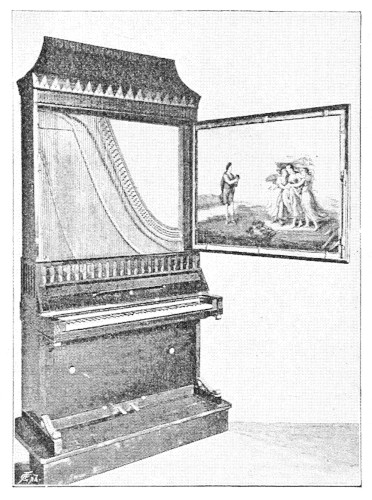
Upright Hammerclavier (pianoforte), Italian, beginning of 19th century. Two pedals, one to raise the dampers, the other a “jalousie schwellung” (i.e. Venetian shutters, like an organ swell or the harmonium “forte” action). Richly inlaid. Engraved crowns on the fronts of the keys. De Wit collection.
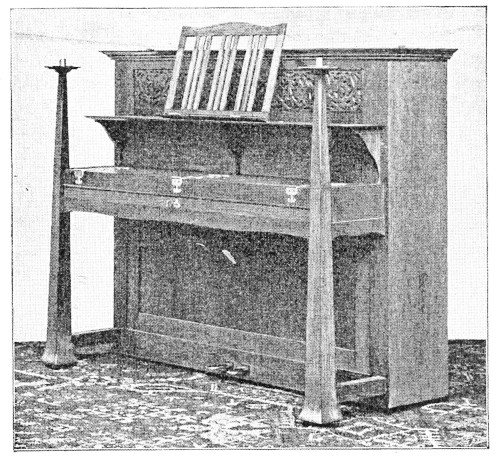
Bechstein Cottage Piano, “English style.”
So long as the piano was merely an instrument for more or less gifted musicians, it was unnecessary to consider the question which to-day, when it has become a general means of social pleasure, stands in the foreground—namely its treatment as a piece of furniture. The “square” instrument has only certain parts, particularly the lower extremities, in which the style of the time could be expressed. The legs and the feet were, in the time of the Ruckers, baroque; as in the time of the Streichers they adopted the style of the Empire, and in our day that of the Renaissance. The rest of the body was fixed in its main lines by the given natural forms; and has altered very little in architectural relations in the course of centuries. The piano was in the fortunate position, even in the times when as yet little attention was paid to constructive logic, of being a construction, which, from its very aim, gained the most beautiful form. With its gracefully-bending walls, and its natural and yet characteristic shape, the grand piano, in many furnishing schemes of the insipid fifties or the glaring eighties, in many a jerry-built and cheaply appointed house, stood as the single solid and carefully wrought article in the place. The cottage, on the other hand, which too often is meant to be nothing but a piece of furniture, and which with its encasing wood-walls offers only too much opportunity to fashionable taste, has sunk deep into the domestic style, and even to-day has hardly freed itself from these false influences. It would seem that the cottage piano was invented in 1739 by the priest Don Domenico of Mela in Gagliano. Only at the commencement of this century did it begin to spread on this side of the Alps. It offered a grand field for dubious artistic experiments. Now it was treated merely as a sideboard, now as an Egyptian pyramid, now as an altar with figurative paintings, now as the corpus vile for all kinds of marqueterie-experiments. I know only one cottage piano that expresses its essence in characteristic style, and develops its form without grimaces: this is the “English” type, plain and unadorned, introduced into the trade by Bechstein, a principal feature of which is that the legs are continued above the keyboard in a very graceful style, as candle-brackets.
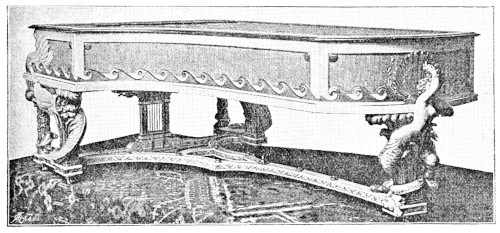
Bechstein Grand Piano de luxe, “Rheingold.” 1896.
When the grand piano is used as an object for decoration, the result is usually unsatisfactory. The contradiction between its plain form and gaudy ornamentation becomes very marked. Earlier ages saw clearly that the walls of the piano and its lid are best left plain, and adorned with paintings. But to-day the cases are more frequent in which specially magnificent pianos are so carefully fitted up with plastic ornamentation in all styles with pillars, reliefs, and other descriptions of carving, that one can only smile at the waste of labour. In the over-rich rococo adornment, which was presented by a piano built by Bechstein some time ago for the Empress Frederick for a particular apartment, a trained eye can to-day find no pleasure. More tolerable are the splendid grands, richly adorned with paintings, in which, in Germany, Max Koch is chiefly concerned. The Wagner piano for the Prince of Anhalt-Dessau, or the Rheingold piano, both by Bechstein, are also worth noticing. The latter has the daughters of the Rhine for legs, a waving ornamentation on the walls, and carved bulrushes on the lid; it is one of the most interesting monster-pianos built in our time. In England Alma Tadema is the piano-painter most in request. For Henry Marquand of New York he prepared an instrument, adorned with precious stones and with painting, which was priced at £15,000. His own piano is also extraordinary. The ornamentation chosen is in the style of mediæval mosaics, with expensive surface ornamentations. Under the lid are framed and adorned parchment strips, on which Liszt, Tschaïkowski, Gounod, and others, inscribed their names. This was appraised at £2500. A piano built in London for Carmen Sylva had ivory legs. Perhaps a varied ebony and ivory ornamentation, which springs from the appearance of the keys, taking advantage of the splendid surface provided by these materials, would be more promising than any kind of rococo or Gothic design. Ivory is still in strong demand for pianos. Ninety thousand instruments are yearly issued from the hundred and seventy London houses; and these take ten thousand tusks.
Ever since composers began to write easier pieces the demand for pianos has been greater. The market has of course been well supplied. In 1896 appeared over 2500 “books”[134] of piano solos, 2000 songs with piano accompaniment, more than 250 books of duets, and 300 pieces for piano and violin. Among these figure many new editions of old works, which to-day form a literature by themselves. The arrangement of historical material, as it gives its character to the calling of the modern pianist, is also reflected in it. We have excellent editions, like the Berlin “Original Texts” (Urtexte), “Bischoff’s Bach,” published by Steingräber, “Klindworth’s Chopin,” published by Bote and Bock, “Bischoff and Neitzel’s Schumann,” “Bülow’s Beethoven’s Sonatas.” Breitkopf and Härtel have extended their Popular Library over the widest area. They have arranged their piano-publications into a uniform piano-library, which soon will embrace 10,000 numbers. Nay, the “Moonlight Sonata” is already to be purchased for a penny. And yet we must confess that really beautiful editions of bibliographical value are not to be found. An edition in artistic binding, on thick paper, in elegant engraving, following the best original copy, with none of those instructive but unornamental marks of fingering or phrasing, and at the same time well adapted for opening out without injury, and calculated for perfect typographical pictures on every page—why is there no such edition of Beethoven, when people can be found who will pay ten or twelve thousand pounds for a piano?
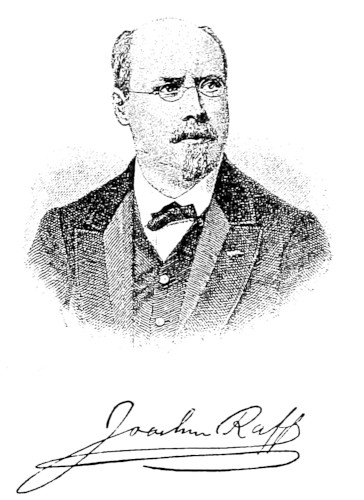
Where the historic tendency is so well marked, creativeness has degenerated. Since the middle of the century plenty of good sound stuff has been written for the piano; but it must be confessed that piano-music has shown no tendency to strike out a new path. No commanding or revolutionary personality, like Schumann, Chopin, or Liszt, has arisen. Almost all modern production is but the popularisation of Liszt, or a respectable mean between Chopin and Schumann.
Ferdinand Hiller began the endless succession of these eclectic musicians. But the last of the solid old style was Alkan, a solitary, eccentric, misanthropic, but withal interesting old man. He was born in Paris in 1813, and remained there. He was one of the many pupils of Zimmermann, that modest but most influential teacher. Alkan’s pieces were highly esteemed by Bülow, who gave him a place in his list of Étude-masters. In his works, which are chiefly Études and Preludes, there speaks a Berlioz, with an elemental and realistic power. He stands in his kind half-way between Chopin and Liszt. Some pieces, like the highly original Op. 39, 1, do not easily fade out of the memory. The seventh of the twelve Études, dedicated to Fétis, is a remarkably significant Chopin-like Ballade in Berlioz’ style, with kettle-drum rolls, and other most peculiar harmonic and orchestral effects. In the “Allegro Barbaro” of the fifth Étude he gives full play to his propensity to exotic phrases of foreign colouring. He works with uncanny, lengthy unisons, or with cutting climbing ninths. An out-and-out romantic, he delights not merely to rush into the middle of his pieces with explanatory words—“Mors” is one of these—but he has hit upon the most original titles that ever an association of ideas led a composer to adopt: “Pseudo-naïveté,” “Fais Dodo,” “Heraclitus and Democritus,” “Railroad,” “Odi profanum vulgus,” “Morituri te salutant.” To play his pieces is as difficult as to construe the Talmud.
Stephen Heller. Ferdinand Hiller. Adolf Henselt.
A constant succession of romantic writers of Études or small pieces stretches from that era to our own. First stands the intellectual Volkmann; next, the somewhat too dainty Kirchner, a regular album-writer, who went so far in his admiration for Schumann as to publish “New Davidsbündler” and “The New Florestan and Eusebius.” Adolf Henselt, who lived at St Petersburg, practised an extraordinary longdrawn legato technique. He is still esteemed for his tolerable F minor Concerto, and for his second and fifth Études, especially the well-known “Si oiseau j’étais.” Stephen Heller, who lived in Paris, wrote a hundred and forty-nine works, almost exclusively for the piano. He is a combination of Schumann, Chopin, Mendelssohn, and water; but we light occasionally on passages of some inspiration. His well-known Saltarellos and Tarantelles, his effective “Forellen” (Trout) Fantasia, and his excellent “Danses Bois,” are in the taste of the time. More important was his pretty idea, in the Freischütz Studies, of uniting operatic motives and étude-practice in an organic and poetic combination.
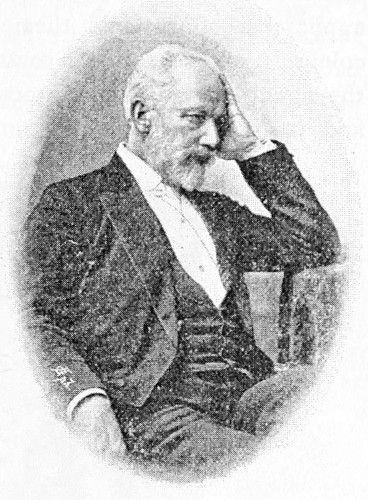
Tschaïkowski.
The lesser Romantics and Romanticists were meanwhile working diligently in Paris. A group of successful piano-composers of this class reaches down to our own day. The chief names are Fauré, Widor, Vincent d’Indy, Chabrier, César Franck, Dubois, Cécile Chaminade, Paul Lacombe. The drawing-room romance, which in Chaminade unfortunately tends too often to shallowness, exhibits often a Mendelssohnian classicism, of which dainty specimens are given in Lacombe’s Toccatina, and in the Toccata of Chaminade herself. The literature for two pianos is well illustrated in Chabrier’s Romantic Waltzes, which are unusually spirited. César Franck’s symphonic variations, serious and academic, and St Saens’ Concertos, more interesting in their effective technique than in content, stand out from the mass of orchestral piano-work.
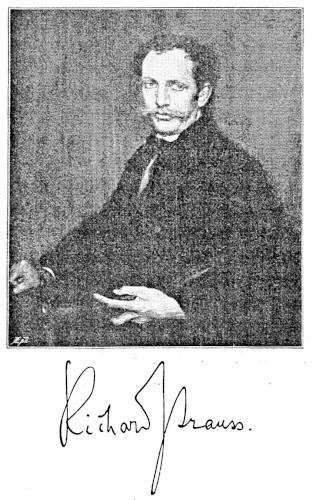
From painting by Fritz Erler.
An equally important group is that of the Russians, headed by the emotional and highly-strung Tschaïkowski, whom Bülow, not without justice, honoured with his special admiration. Tschaïkowski’s variations are one of the soundest and most genuine of modern piano works; and the B flat minor concerto has a swing and rush that carries us away. His Sonata, not only by its application of national themes, but specially by the national colouring of the episodic parts, down to the light and shade of the figurations, is unique among piano pieces. He was simpler and more popular in his numerous drawing-room pieces, which constantly reward study by a spirited phrase or unusual harmony. The school of older and younger Russians has worked on the same popular lines. To this school belong Borodin, Cui, Liadoff, Rimsky-Korsakoff, Mussorgsky, Glazounow, Naprawnik. A third group is that of the Scandinavians, who gained importance in Europe about the middle of the century, not merely in fiction and painting, but in music also. But they were rather inspired than inspirers. Their leader is Grieg, whose well-known concerto Op. 16, in spite of certain eccentricities, has a very flowing course suggesting the united influence of many predecessors. His themes are good specimens of a music which is not the product of experience, but of invention. Scores of variations and dainty isolated pieces keep the same happy and attractive medium between the shallow and the interesting. They are in any case more important than Gade’s Mendelssohniana. For a long time less known, but far deeper and more genuine than Grieg, is Halfdan Kjerulf, whose works have been republished by Arno Kleffel (Simon). Humorous little pieces in the post-romantic style, but of concentrative ability, deserve the highest praise a Romantic can receive; they are like Schubert in spirit. Among the later Scandinavians, Schytte and Sinding have tried no new paths; Stenhammer, also of importance as a virtuoso, has given us works of pith and character, which may rank among the first.
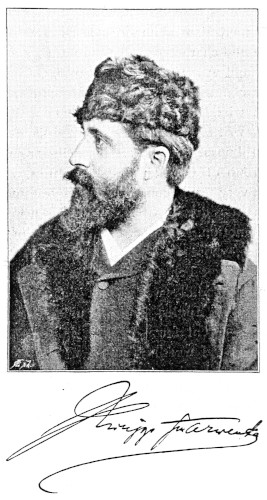
In England and America, in later times, Graham Moore and Macdowell may claim notice as lesser Romantics. The former is not free from triviality; the latter invents with more delicate genius, and has written a very respectable piano-concerto. But Germany may still boast that she retains the supremacy.
From the group of German post-Romantics, which found in Franz Brendel a very fertile composer of programme tone-pictures, two great personalities drew apart. Adolf Jensen was the inheritor of Schumann’s emotion, Johannes Brahms of Schumann’s musical character. Jensen, whose character is the mean between Chopin and Schumann, has left behind him music which will not die, in his clear-cut and splendidly worked-out Suites, in his emotional “Wanderbilder” and Idylls, in the unique Eroticon, which characterises the different forms of love in separate movements, and in the four-handed wedding music, which is lovely and full of power. But Brahms inherited from his patron Schumann, not youth, not this simple thinking and inventing, but manhood, in which music became an absolute self-supported world. He worked in the world of tone, with no trace of virtuosity, with not a suspicion of a concession to the understanding of the mere amateur. His Sonatas and Concertos, the sparkling Scherzo Op. 4, the Variations, the Études, even the four-handed waltzes and the unique “Liebes-lieder” waltzes—for four hands with voices—there has, in our time, been no music written so free from the slightest condescension. Stubborn, at times repellent, even in her smiles not very gracious, this music seeks to make no proselytes; but whomsoever she wins as a friend, she holds fast and allows that rarest of pleasures—the pursuit of lofty aims, and the quiet rapture of a student.
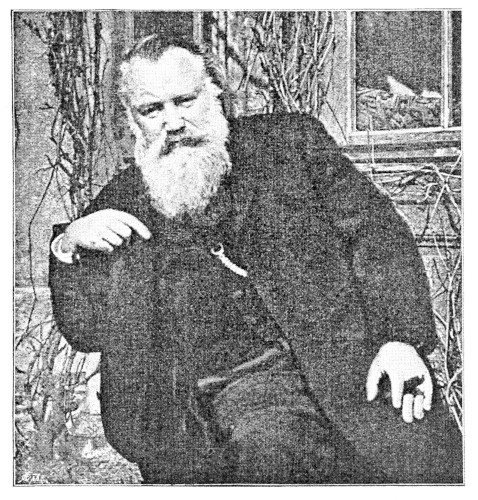
Johannes Brahms. Photograph from life by Marie Fellinger, Vienna.
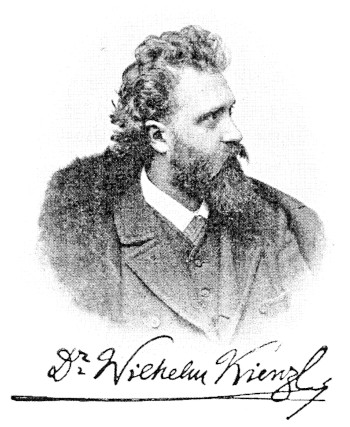
Over against these two originals stands Joachim Raff, the eclectic. We have grown accustomed to count his eclecticism no reproach, for never did man more bitterly experience the sorrow of art. His great legacy of piano-pieces will at least give a good picture of the time. In them the most commonplace demands of art are mingled with the most heart-felt lamentations—as they never mingled except in our age. They are a long catalogue of virtues and vices, from the hapless Polka de la Reine to the Sonatas, in which, whether for piano alone, or more especially for piano and violin, he attained astonishing heights; from the ravishingly graceful suite-movements to the romanticism of his lyrical songs. And over all broods the unrest of the time.
Among living Germans the same two main groups are in general to be distinguished: the artists of the serious, self-sufficient music, and the poets of the lighter, post-romantic genre. Rheinberger’s sound and solid Sonatas and smaller pieces are the purest representatives of the more absolute conception of music, and they deserve the highest praise. Richard Strauss, also, in his earlier years, came out with some remarkably original piano-pieces, which betrayed a strong sense for absolute music. I would mention particularly the pithy Burlesque for Orchestra and Piano. In such serious and solid endeavour Wilhelm Berger stands out among the younger masters. But—as in the middle section of his great variations for two pianos—he must beware of a too great fluency, which is the stumbling-block of all absolute musical emotion.
Eugene d’Albert, in spirit, resembles Brahms. This appears most clearly in the eight massive Piano-pieces of his Op. 5, which live by their infelt music, and are in that respect to be numbered amongst the noblest fruits of modern piano-literature. This inclination to absolute music appeared even in his first work, a very interesting Suite, and has received further active expression in certain arrangements of Bach, which take a front rank along with those of Busoni. Among his piano-concertos, the second, which is included in a single movement, is without serious rival, at least among works that have appeared since Liszt, in wealth of invention and variety of colour. His secular turn will probably continue itself in his later works, which, in consequence of his devotion to opera, will necessarily cease to be influenced by Bach and Brahms.
Paderewski stands perhaps on the dividing line between the severer absolute musicians, in whose style he composed his Variations and Humoresques à l’antique, and the daintier drawing-room romantics, with whom he associates himself specially in numerous fiery Polish dances. His Concerto in A minor is absolutely bathed in this national spirit.
Xaver Scharwenka strikes a similar note. Something of Chopin at his best still lives in him; and his Concertos, above all, have given him a name as a composer. His brother Philip renounces the virtuoso, and appears rather as a teacher and former of taste. He has created a rich piano-literature, which prefers to deal in graceful and galant forms, and holds itself utterly aloof from storm and revolution. Scharwenka has the rare merit of having successfully cultivated four-handed piano music; and his “Herbstbilder” and “Abendmusik” belong to the most tasteful productions of this class. Among his multiform “Jugendstücke” the “Kinderspiele,” in several volumes, are the most successful. A similar activity has been shown by Wilhelm Kienzl, who has been able to work the light romantic genre in all its aspects. Kienzl is one of our most fertile piano-composers. His pieces are all occasional, thought out for delicate orchestral effects, and thus are extremely unassuming. His “Boat-Scene” gained the special approval of Liszt, while his Dance Airs and Dance Pictures belong to the most popular class of piano-works. His illustrated cycle “Child-love and Life,” which appeared with text in four languages, seeks to apply to the piano the method of intuitive instruction. The cycle “From my Diary” is the best example of the specially subtle and suggestive touch, by which Kienzl attains his detailed orchestral effects; while the two volumes, “A Poet’s Journey,” are to be regarded as his ripest work.
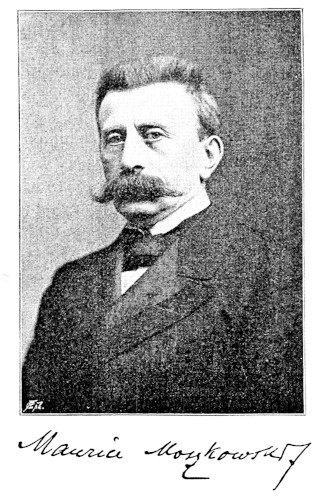
Moritz Moszkowski, who has not yet laid aside his career as a virtuoso, and only the other day appeared with a new piano-concerto, is among the most remarkable in the band of modern piano-poets. A delicate and polished virtuosity, as it appears in the Etincelles and the Tarantelle, is allied with a characteristic force in form, which has made his four-handed Spanish dances, and his “From Foreign Parts,” so popular.
History shows that the piano only flourishes in a pronounced opposition to the opera, which is the other extreme, the triumph of all arts united. The opera seeks to realise the impossible; it calls into requisition a whole world of forces in order to grasp in a sensuous manner the heights of life. It forms a Titanic resolve to build mountains out of sand; an intoxication, an extraordinary consciousness of victory, gives wings to this most daring of experiments. A great man once appeared, who made Dionysus his lord, and sought to win from the stage a mirror of the world and worldly honour. We stand on the fair ruins of his splendid failure. We have been instructed, we have been elevated; but the tragedy of the theatre is too deep. Then come the hours in which we flee to the household-ingle of chamber-music, and strive to disentangle its enlacing lines, in which we see the whole of life included, since it depicts itself without the need of foreign aid. The piano will further be the central point of this introspection. Let us have no concertos, in which this delicate instrument is dragged before the crowd and has to fight a duel with the orchestra. All beautiful compositions notwithstanding, the piano is no concerto-instrument. In concertos the delicate ear is outraged. The piano will not adapt itself for new ideas in the hall, in the midst of virtuosity, or against the orchestra. It must become chaste; it must turn in faith to Bach’s Wohltemperiertes Klavier, the Old Testament, as Bülow called it, of the musician’s creed, and to Beethoven’s Sonatas, the New.