VOLUME XIII SLICE I Harmony to Heanor (continued 11)
Reading edition
HAY, a market town and urban district of Breconshire, south Wales, on the Hereford and Brecon section of the Midland railway, 164½ m. from London, 20 m. W. of Hereford and 17 m. N.E. of Brecon by rail. Pop. (1901), 1680. The Golden Valley railway to Pontrilas (18¾ m.), now a branch of the Great Western, also starts from Hay. The town occupies rising ground on the south (right) bank of the Wye, which here separates the counties of Brecknock and Radnor but immediately below enters Herefordshire, from which the town is separated on the E. by the river Dulas.
Leland and Camden ascribe a Roman origin to the town, and the former states that quantities of Roman coin (called by the country people “Jews’ money”) and some pottery had been found near by, but of this no other record is known. The Wye valley in this district served as the gate between the present counties of Brecknock and Hereford, and, though Welsh continued for two or three centuries after the Norman Conquest to be the spoken language of the adjoining part of Herefordshire south of the Wye (known as Archenfield), there must have been a “burh” serving as a Mercian outpost at Glasbury, 4 m. W. of Hay, which was itself several miles west of Offa’s Dyke. But the earliest settlement at Hay probably dates from the Norman conquest of the district by Bernard Newmarch about 1088 (in which year he granted Glasbury, probably as the first fruits of his invasion, to St Peter’s, Gloucester). The manor of Hay, which probably corresponded to some existing Welsh division, he gave to Sir Philip Walwyn, but it soon reverted to the donor, and its subsequent devolution down to its forfeiture to the crown as part of the duke of Buckingham’s estate in 1521, was identical with that of the lordship of Brecknock (see Breconshire). The castle, which was probably built in Newmarch’s time and rebuilt by his great-grandson William de Breos, passed on the latter’s attainder to the crown, but was again seized by de Breos’s second son, Giles, bishop of Hereford, in 1215, and retaken by King John in the following year. In 1231 it was burnt by Llewelyn ab Iorwerth, and in the Barons’ War it was taken in 1263 by Prince Edward, but in the following year was burnt by Simon Montfort and the last Llewelyn. From the 16th century the castle has been used as a private residence.
The Welsh name of the town is Y Gelli (“the wood”), or formerly in full (Y) Gelli ganddryll (literally “the wood all to pieces”), which roughly corresponds to Sepes Inscissa, by which name Walter Map (a native of the district) designates it. Its Norman name, La Haia (from the Fr. haie, cf. English “hedge”), was probably intended as a translation of Gelli. The same word is found in Urishay and Oldhay, both between Hay and the Golden Valley. The town is still locally called the Hay, as it also is by Leland.
Even down to Leland’s time Hay was surrounded by a “right strong wall,” which had three gates and a postern, but the town within the wall has “wonderfully decayed,” its ruin being ascribed to Owen Glendower, while to the west of it was a flourishing suburb with the church of St Mary on a precipitous eminence overlooking the river. This was rebuilt in 1834. The old parish church of St John within the walls, used as a school-house in the 17th century, has entirely disappeared. The Baptists, Calvinistic Methodists, Congregationalists and Primitive Methodists have a chapel each. The other public buildings are the market house (1833); a masonic hall, formerly the town hall, its basement still serving as a cheese market; a clock tower (1884); parish hall (1890); and a drill hall. The Wye is here crossed by an iron bridge built in 1864. There are also eighteen almshouses for poor women, built and endowed by Miss Frances Harley in 1832-1836, and Gwyn’s almshouses for six aged persons, founded in 1702 and rebuilt in 1878.
Scarcely anything but provisions are sold in the weekly market, the farmers of the district now resorting to the markets of Brecon and Hereford. There are good monthly stock fairs and a hiring fair in May. There is rich agricultural land in the district.
Hay was reputed to be a borough by prescription, but it never had any municipal institutions. Its manor, like that of Talgarth, consisted of an Englishry and a Welshery, the latter, known as Haya Wallensis, comprising the parish of Llanigon with the hamlet of Glynfach, and in this Welsh tenures and customs prevailed. The manor is specially mentioned in the act of Henry VIII. (1535) as one of those which were then taken to constitute the new county of Brecknock.
(D. Ll. T.)
HAY (a word common in various forms to Teutonic languages; cf. Ger. Heu, Dutch hooi; the root from which it is derived, meaning “to cut,” is also seen in “to hew”; cf. “hoe”), grass mown and dried in the sun and used as fodder for cattle. It is properly applied only to the grass when cut, but is often also used of the standing crop. (See Haymaking below). Another word “hay,” meaning a fence, must be distinguished; the root from which it is derived is seen in its doublet “hedge,” cf. “haw-thorn,” i.e. “hedge thorn.” In this sense it survives in legal history in “hay bote,” i.e. hedge-bote, the right of a tenant, copyholder, &c. to take wood to repair fences, hedges, &c. (see Estovers), and also in “hayward,” an official of a manor whose duty was to protect the enclosed lands from cattle breaking out of the common land.
Haymaking.—The term “haymaking” signifies the process of drying and curing grass or other herbage so as to fit it for storage in stacks or sheds for future use. As a regular part of farm work it was unknown in ancient times. Before its introduction into Great Britain the animals intended for beef and mutton were slaughtered in autumn and salted down; the others were turned out to fend for themselves, and often lost all the fat in winter they had gained the previous summer. The introduction of haymaking gave unlimited scope for the production of winter food, and improved treatment of live stock became possible.
Though every country has its own methods of haymaking, the principal stages in the process everywhere are: (1) mowing, (2) drying or “making,” (3) “carrying” and storage in stacks or sheds.
In a wet district such as the west of Ireland the “making” is a difficult affair and large quantities of hay are often spoiled, while much labour has to be spent in cocking up, turning over, ricking, &c., before it is fit to be stacked up. On the other hand, in the dry districts of south-eastern England it is often possible to cut and carry the hay without any special “making,” as the sun and wind will dry it quickly enough to fit it for stacking up without the expenditure of much labour. This rule also applies to dry countries like the United States and several of the British colonies, and it is for this reason that most of the modern implements used for quickly handling a bulk of hay have been invented or improved in those countries. Forage of all kinds intended for hay should be cut at or before the flowering stage if possible. The full growth and food value of the plant are reached then, and further change consists in the formation and ripening of the seed at the expense of the leaves and stems, leaving these hard and woody and of less feeding value.
Grass or other forage, when growing, contains a large proportion of water, and after cutting must be left to dry in the sun and wind, a process which may at times be assisted by turning over or shaking up. In fine weather in the south of England grass is sufficiently dried in from two to four days to be stacked straight away. In Scotland or other districts where the rainfall is heavy and the air moist, it is first put into small field-ricks or “pykes” of from 10 to 20 cwt. each. In the drying process the 75% of water usually present in grass should be reduced to approximately 15% in the hay, and in wet or broken weather it is exceedingly difficult to secure this reduction. With a heavy crop or in damp weather grass may need turning in the swathe, raking up into “windrows,” and then making up into cocks or “quiles,” i.e. round beehive-like heaps, before it can be “carried.” A properly made cock will stand bad weather for a week, as only the outside straws are weathered, and therefore the hay is kept fresh and green. Indeed, it is a good rule always to cock hay, for even in sunny weather undue exposure ends in bleaching, which is almost as detrimental to its quality as wet-weathering.
In the last quarter of the 19th century the methods of haymaking were completely changed, and even some of the principles underlying its practice were revised. Generally speaking, before that time the only implements used were the scythe, the rake and the pitchfork; nowadays—with the exception of the pitchfork—these implements are seldom used, except where the work is carried on in a small way. Instead of the scythe, for instance, the mowing machine is employed for cutting the crop, and with a modern improved machine taking a swathe as wide as 5 or 6 ft. some 10 acres per day can easily be mown by one man and a pair of horses (figs. 1 and 2).
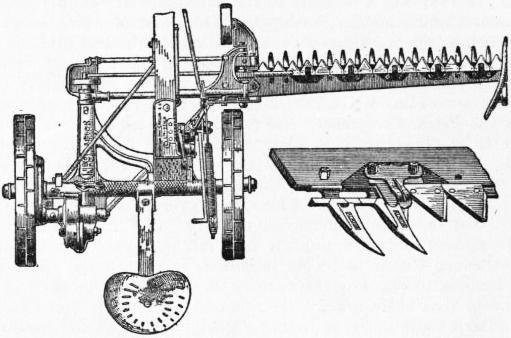
Fig. 1.—Mower (viewed from above) with enlarged detail of Blade. (Harrison, M‘Gregor & Co.)
It will be seen from the figures that a mower consists of three principal parts: (1) a truck or carriage on two high wheels carrying the driving gear; (2) the cutting mechanism, comprising a reciprocating knife or sickle operating through slots in the guards or “fingers” fastened to the cutting bar which projects to either the right or left of the truck; and (3) the pole with whipple-trees, by which the horses are attached to give the motive power. The reciprocating knife has a separate blade to correspond to each finger, and is driven by a connecting rod and crank on the fore part of the truck. In work the pointed “fingers” pass in between the stalks of grass and the knives shear them off, acting against the fingers as the crank drives them backwards and forwards. In the swathe of grass left behind by the machine, the stalks are, in a manner, thatched over one another, so that it is in the best position for drying in the sun, or, per contra, for shedding off the rain if the weather is wet. This is a great point in favour of the use of the machine, because the swathe left by the scythe required to be “tedded” out, i.e. the grass had to be shaken out or spread to allow it to be more easily dried.
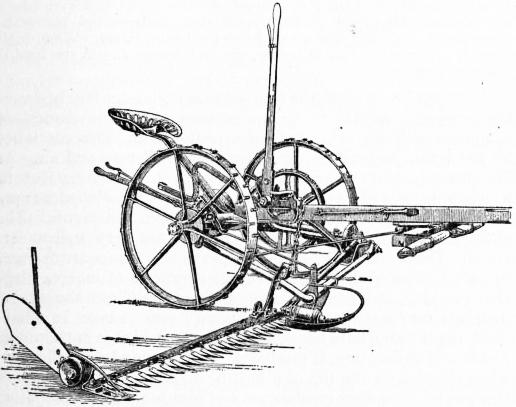
Fig. 2.—Mower (side view).
After the grass has lain in the swathe a day or two till it is partly dried, it is necessary to turn it over to dry the other side. This used to be done with the hand rake, and a band of men or women would advance in échelon across a field, each turning the swathe of hay by regular strokes of the rake at each step: “driving the dusky wave along the mead” as described in Thomson’s Seasons. This part of the work was the act of “haymaking” proper, and the subject of much sentiment in both prose and poetry. The swathes as laid by the mowing machine lent themselves to this treatment in the old days when the swathe was only some 3 to 4 ft. wide, but with the wide cut of the present day it becomes impracticable. If the hay is turned and “made” at all, the operation is now generally performed by a machine made for the purpose. There is a wide selection of “tedders” or “kickers,” and “swathe-turners” on the market. The one illustrated in fig. 3 is the first prize winner at the Royal Agricultural Society’s trials (1907). It takes two swathes at a time, and it will be seen that the working part consists of a wheel or circle of prongs or tines, which revolves across the line of the swathe. Each prong in turn catches the edge of the swathe of grass and kicks it up and over, thus turning it and leaving it loose for the wind to blow through.
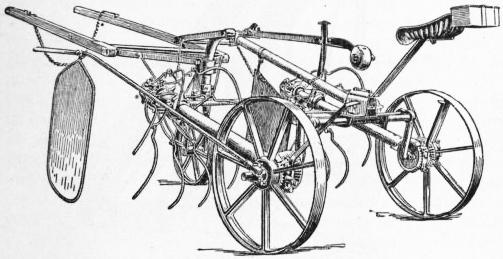
Fig. 3.—Swathe-turner. (Blackstone & Co., Ltd.).
The “kicker” is mounted on two wheels, and carries in bearings at the rear of the frame a multiple-cranked shaft, provided with a series of forks sleeved on the cranks and having their upper ends connected by links to the frame. As the crankshaft is driven from the wheels by proper gearing the forks move upward and forward, then downward and rearward, in an elliptical path, and kick the hay sharply to the rear, thus scattering and turning it.
It is a moot point, however, whether grass should be turned at all, or left to “make” as it falls from the mowing machine. In a dry sunny season and with a moderate crop it is only a waste of time and labour to turn it, for it will be cured quite well as it lies, especially if raked up into loose “windrows” a little before carrying to the stack. On the other hand, where the crop is heavy (say over 2 tons per acre) or the climate is wet, turning will be necessary.
With heavy crops of clover, lucerne and similar forage crops, turning may be an absolute necessity, because a thick swathe of a succulent crop will be difficult to dry or “make” excepting in hot sunny weather, but with ordinary meadow grass or with a mixture of “artificial” grasses it may often be dispensed with. It must be remembered, however, that the process of turning breaks the stalks (thus letting out the albuminoid and saccharine juices), and should be avoided as far as possible in order to save both labour and the quality of the hay.
One of the earlier mechanical inventions in connexion with haymaking was that of the horse rake (fig. 4). Before its introduction the hay, after making, had to be gathered up by the hand rake—a tedious and laborious process—but the introduction of this implement, whereby one horse and one man can do work before requiring six or eight men, marked a great advance. The horse rake is a framework on two wheels carrying hinged steel teeth placed 3 in. apart, so that their points slide along the ground below the hay. In work it gathers up the loose hay, and when full a tipping mechanism permits the emptying of the load.
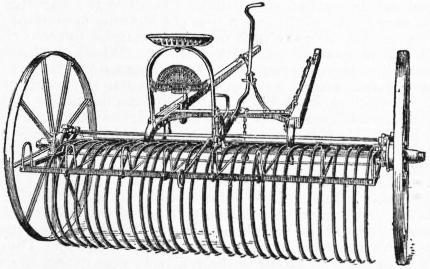
Fig. 4.—Self-acting Horse Rake. (Ransomes, Sims & Jefferies, Ltd.).
The tipping is effected by pulling down a handle which sets a leverage device in motion, whereby the teeth are lifted up and the load of hay dropped below and left behind. On some rakes a clutch is worked by the driver’s foot, and this put in action causes the ordinary forward revolving motion of the driving wheels to do the tipping.
The loads are tipped end to end as the rake passes and repasses at the work, and thus the hay is left loose in long parallel rows on the field. Each row is termed a “windrow,” the passage of the wind through the hay greatly aiding the drying and “making” thereof. When hay is in this form it may either be carried direct to the stack if sufficiently “made,” or else put into cocks to season a little longer. The original width of horse rakes was about 8 ft., but nowadays they range up to 16 and 18 ft. The width should be suited to that of the swathes as left by the mower, and as the latter is now made to cut 5 and 6 ft. wide, it is necessary to have a rake to cover two widths. The very wide rakes are only suitable for even, level land; those of less width must be used where the land has been laid down in ridge and furrow. As the swathes lie in long parallel rows, it is a great convenience in working for two to be taken in width at a time, so that the horse can walk in the space between.
The side-delivery rake, a development of the ordinary horse rake, is a useful implement, adapted for gathering and laying a quantity of hay in one continuous windrow. It is customary with this to go up the field throwing two swathes to one side, and then back down on the adjacent swathes, so that thus four are thrown into one central windrow. The implement consists of a frame carried on two wheels with shafts for a horse; across the frame are fixed travelling or revolving prongs of different varieties which pick up the hay off the ground and pass it along sideways across the line of travel, leaving it in one continuous line. Some makes of swathe-turners are designed to do this work as well as the turning of the hay.
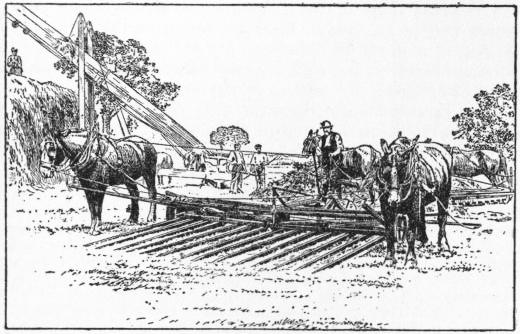
Fig. 5.—Sweep Rake.
Perhaps the greatest improvement of modern times is the method of carrying the hay from the field to the stack. An American invention known as the sweep rake was introduced by the writer into England in 1894, and now in many modified forms is in very general use in the Midlands and south of England, where the hay is carried from the cock, windrow or swathe straight to the stack. This implement consists of a wheeled framework fitted with long wooden iron-pointed teeth which slide along the ground; two horses are yoked to it—one at each side—the driver directing from a central seat behind the framework. When in use it is taken to the farther end of a row of cocks, a windrow, or even to a row of untouched swathes on the ground, and walked forward. As it advances it scoops up a load, and when full is drawn to where the stack is being erected (fig. 5). In ordinary circumstances the sweep rake will pick up at a load two-thirds of an ordinary cart-load, but, where the hay is in good order and it is swept down hill, a whole one-horse cart-load can be carried each time. The drier the hay the better will the sweep rake work, and if it is not working sweetly but has a tendency to clog or make rolls of hay, it may be inferred that the latter is not in a condition fit for stacking. Where the loads must be taken through a gateway or a long distance to the stack, it is necessary to use carts or wagons, and the loading of these in the field out of the windrow is largely expedited by the use of the “loader,” also an American invention of which many varieties are in the market. Generally speaking, it consists of a frame carrying a revolving web with tines or prongs. The implement is hitched on behind a cart or wagon, and as it moves forward the web picks the loose hay off the ground and delivers it on the top, where a man levels it with a pitchfork and builds it into a load ready to move to the stack. At the stack the most convenient method of transferring the hay from a cart, wagon or sweep rake is the elevator, a tall structure with a revolving web carrying teeth or spikes (fig. 6). The hay is thrown in forkfuls on at the bottom, a pony-gear causes the web to revolve, and the hay is carried in an almost continuous stream up the elevator and dropped over the top on to the stack. The whole implement is made to fold down, and is provided with wheels so that it can be moved from stack to stack. In the older forms there is a “hopper” or box at the bottom into which the hay is thrown to enable the teeth of the web to catch it, but in the modern forms there is no hopper, the web reaching down to the ground so that hay can be picked up from the ground level. Where the hay is brought to the stack on carts or wagons it can be unloaded by means of the horse fork. This is an adaptation of the principle of the ordinary crane; a central pole and jib are supported by guy ropes, and from the end of the jib a rope runs over a pulley. At the end of this rope is a “fork” formed of two sets of prongs which open and shut. This is lowered on to the load of hay, the prongs are forced into it, a horse pulls at the other end of the rope, and the prongs close and “grab” several cwt. of hay which are swung up and dropped on the stack. In this way a large cart or wagon load is hoisted on to the stack in three or four “forkfuls.” The horse fork is not suited for use with the sweep rake, however, because the hay is brought up to the stack in a loose flat heap without sufficient body for the fork to get hold of.
In northern and wet districts of England it is customary to “make” the hay as in the south, but it is then built up into little stacks in the field where it grew (ricks, pykes or tramp-cocks are names used for these in different districts), each containing about 10 to 15 cwt. These are made in the same way as the ordinary stack—one person on top building, another on the ground pitching up the hay—and are carefully roped and raked down. In these the hay gets a preliminary sweating or tempering while at the same time it is rendered safe from the weather, and, thus stored, it may remain for weeks before being carried to the big stacks at the homestead. The practice of putting up the hay into little ricks in the field has brought about the introduction of another set of implements for carrying these to the stackyard.
Various forms of rick-lifters are in use, the characteristic feature of which is a tipping platform on wheels to which a horse is attached between shafts. The vehicle is backed against a rick, and a chain passed round the bottom of the latter, which is then pulled up the slant of the tipped platform by means of a small windlass. When the centre of the balance is passed, the platform carrying the rick tips back to the level, and the whole is thus loaded ready to move. Another variety of loader is formed of three shear-legs with block and tackle. These are placed over a rick, under which the grab-irons are passed, and the whole hauled up by a horse. When high enough a cart is backed in below, the rick lowered, and the load is ready to carry away.
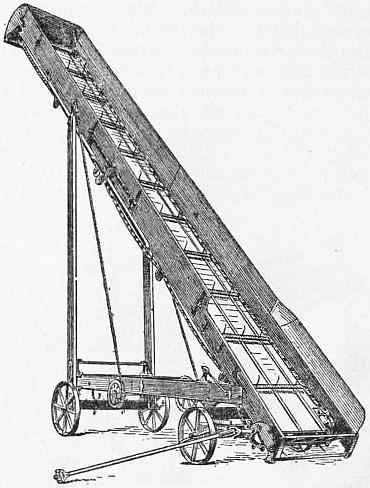
Fig. 6.—Hay Elevator. (Maldon Iron Works Co.).
When put into a stack the next stage in curing the hay begins—the heating or sweating. In the growing plants the tissues are composed of living cells containing protoplasm. This continues its life action as long as it gets sufficient moisture and air. As life action involves the development of heat, the temperature in a confined space like a stack where the heat is not dissipated may rise to such a point that spontaneous combustion occurs. The chemical or physical reasons for this are not very well understood. The starch and sugar contents of the tissues are changed in part into alcohol. In the analogous process of making silage (i.e. stacking wet green grass in a closed building) the alcohol develops into acetic acid, thus making “sour” silage. In a haystack the intermediate body, acetaldehyde, which is both inflammable and suffocating, is produced—men having been suffocated when sleeping on the top of a heating stack. The production of this gas leads to slow combustion and ignition. One explanation of the process is that the protoplasm of the cells acts as a fermenting agent (like yeast) until a temperature sufficient to kill germ life, say 150° F., is reached, beyond which the action which leads up to the temperature of ignition must be purely chemical. If the stack contains no air at all it does not heat, or if it has excess of air it is safe. The danger-point in a stack is the centre at about 6 ft. from the ground; below this the weight of the hay itself squeezes out the air, and at the sides and top the heat is dissipated outwards. If a stack shows signs of overheating (a process that may take weeks or even months to develop) it can be saved by cutting a gap in the side of it with the hay knife, thus letting out the heat and fumes, and admitting fresh air to the centre. The essential point in haymaking is that the hay should be dried sufficiently to ensure the sweating process in the stack reaching no further than the stage of the formation of sugar. Good hay should come out green and with the odour of coumarin—to which is due the scent of new-mown hay. Only part of a stack can ever attain to a perfect state: the tops, bottom and outsides are generally wasted by the weather after stacking, while there may be three or four intermediate qualities present. In some markets hay that has been sweated till it is brown in colour is desired, but for general purposes green hay is the best.
Hay often becomes musty when the weather during “making” has been too wet to allow of its getting sufficiently dry for stacking. Mustiness is caused by the growth of various moulds (Penicillium, Aspergillus, &c.) on the damp stems, with the result that the hay when cut out for use is dusty and shows white streaks and spots. Such hay is inferior to that which has been overheated, and in practice it is found that a strong heating will prevent mouldiness by killing the fungi.
Heavy lush crops—especially those containing a large proportion of clover or other leguminous plants—are proportionately more difficult to “make” than light grassy ones. Thus, if one ton is taken as a fair yield off one acre, a two-ton crop will probably require four times as much work in curing as the smaller crop. In the treacherous climate of Great Britain hay is frequently spoiled because the weather does not hold good long enough to permit of its being properly “made.” Consequently many experienced haymakers regard a moderate crop as the more profitable because it can be stacked in first-class condition, whereas a heavy crop forced by “high farming” is grown at a loss, owing to the weather waste and the heavier expenses involved in securing it.
In handling or marketing out of the stack hay may be transported loose on a cart or wagon, but it is more usual to truss or bale it. A truss is a rectangular block cut out of the solid stack, usually about 3 ft. long and 2 ft. wide, and of a thickness sufficient to give a weight of 56 ℔: thirty-six of these constitute a “load” of 18 cwt.—the unit of sale in many markets. A truss is generally bound with two bands of twisted straw, but if it has to undergo much handling it is compressed in a hay-press and tied with two string bands. In some districts a baler is used: a square box with a compressible lid. The hay is tumbled in loose, the lid forced down by a leverage arrangement and the bale tied by three strings. It is usually made to weigh from 1 to 1½ cwt. The customs of different markets vary very much in their methods of handling hay, and in the overseas hay trade the size and style of the trusses or bales are adapted for packing on ship-board.
HAYASHI, TADASU, Count (1850- ), Japanese statesman, was born in Tōkyō (then Yedo), and was one of the first batch of students sent by the Tokugawa government to study in England. He returned on the eve of the abolition of the Shōgunate, and followed Enomoto (q.v.) when the latter, sailing with the Tokugawa fleet to Yezo, attempted to establish a republic there in defiance of the newly organized government of the emperor. Thrown into prison on account of this affair, Hayashi did not obtain office until 1871. Thereafter he rose rapidly, until, after a long period of service as vice-minister of foreign affairs, he was appointed to represent his country first in Peking, then in St Petersburg and finally in London, where he acted an important part in negotiating the first Anglo-Japanese Alliance, for which service he received the title of viscount. He remained in London throughout the Russo-Japanese War, and was the first Japanese ambassador at the court of St James after the war. Returning to Tōkyō in 1906 to take the portfolio of foreign affairs, he remained in office until the resignation of the Saionji cabinet in 1908. He was raised to the rank of count for eminent services performed during the war between his country and Russia, and in connexion with the second Anglo-Japanese Alliance of 1905.
HAYDEN, FERDINAND VANDEVEER (1829-1887), American geologist, was born at Westfield, Massachusetts, on the 7th of September 1829. He graduated from Oberlin College in 1850 and from the Albany Medical College in 1853, where he attracted the notice of Professor James Hall, state geologist of New York, through whose influence he was induced to join in an exploration of Nebraska. In 1856 he was engaged under the United States government, and commenced a series of investigations of the Western Territories, one result of which was his Geological Report of the Exploration of the Yellowstone and Missouri Rivers in 1859-1860 (1869). During the Civil War he was actively employed as an army surgeon. In 1867 he was appointed geologist-in-charge of the United States Geological and Geographical Survey of the Territories, and from his twelve years of labour there resulted a most valuable series of volumes in all branches of natural history and economic science; and he issued in 1877 his Geological and Geographical Atlas of Colorado. Upon the reorganization and establishment of the United States Geological Survey in 1879 he acted for seven years as one of the geologists. He died at Philadelphia on the 22nd of December 1887.
His other publications were: Sun Pictures of Rocky Mountain Scenery (1870); The Yellowstone National Park, illustrated by chromolithographic reproductions of water-colour sketches by Thomas Moran (1876); The Great West: its Attractions and Resources (1880). With F. B. Meek, he wrote (Smithsonian Institution Contributions, v. 14. Art. 4) “Palaeontology of the Upper Missouri, Pt. 1, Invertebrate.” His valuable notes on Indian dialects are in The Transactions of the American Philosophical Society (1862), in The American Journal of Science (1862) and in The Proceedings of the American Philosophical Society (1869). With A. R. C. Selwyn he wrote North America (1883) for Stanford’s Compendium.
HAYDN, FRANZ JOSEPH (1732-1809), Austrian composer, was born on the 31st of March 1732 at Rohrau (Trstnik), a village on the borders of Lower Austria and Hungary. There is sufficient evidence that his family was of Croatian stock: a fact which throws light upon the distinctively Slavonic character of much of his music. He received the first rudiments of education from his father, a wheelwright with twelve children, and at an early age evinced a decided musical talent. This attracted the attention of a distant relative named Johann Mathias Frankh, who was schoolmaster in the neighbouring town of Hainburg, and who, in 1738, took the child and for the next two years trained him as a chorister. In 1740, on the recommendation of the Dean of Hainburg, Haydn obtained a place in the cathedral choir of St Stephen’s, Vienna, where he took the solo-part in the services and received, at the choir school, some further instruction on the violin and the harpsichord. In 1749 his voice broke, and the director, Georg von Reutter, took the occasion of a boyish escapade to turn him into the streets. A few friends lent him money and found him pupils, and in this way he was enabled to enter upon a rigorous course of study (he is said to have worked for sixteen hours a day), partly devoted to Fux’s treatise on counterpoint, partly to the “Friedrich” and “Württemberg” sonatas of C. P. E. Bach, from which he gained his earliest acquaintance with the principles of musical structure. The first fruits of his work were a comic opera, Der neue krumme Teufel, and a Mass in F major (both written in 1751), the former of which was produced with success. About the same time he made the acquaintance of Metastasio, who was lodging in the same house, and who introduced him to one or two patrons; among others Señor Martinez, to whose daughter he gave lessons, and Porpora, who, in 1753, took him for the summer to Männersdorf, and there gave him instruction in singing and in the Italian language.
The turning-point of his career came in 1755, when he accepted an invitation to the country-house of Freiherr von Fürnberg, an accomplished amateur who was in the habit of collecting parties of musicians for the performance of chamber-works. Here Haydn wrote, in rapid succession, eighteen divertimenti which include his first symphony and his first quartet; the two earliest examples of the forms with which his name is most closely associated. Thenceforward his prospects improved. On his return to Vienna in 1756 he became famous as teacher and composer, in 1759 he was appointed conductor to the private band of Count Morzin, for whom he wrote several orchestral works (including a symphony in D major erroneously called his first), and in 1760 he was promoted to the sub-directorship of Prince Paul Esterhazy’s Kapelle, at that time the best in Austria. During the tenure of his appointment with Count Morzin he married the daughter of a Viennese hairdresser named Keller, who had befriended him in his days of poverty, but the marriage turned out ill and he was shortly afterwards separated from his wife, though he continued to support her until her death in 1800. From 1760 to 1790 he remained with the Esterhazys, principally at their country-seats of Esterhàz and Eisenstadt, with occasional visits to Vienna in the winter. In 1762 Prince Paul Esterhazy died and was succeeded by his brother Nicholas, surnamed the Magnificent, who increased Haydn’s salary, showed him every mark of favour, and, on the death of Werner in 1766, appointed him Oberkapellmeister. With the encouragement of a discriminating patron, a small but excellent orchestra and a free hand, Haydn made the most of his opportunity and produced a continuous stream of compositions in every known musical form. To this period belong five Masses, a dozen operas, over thirty clavier-sonatas, over forty quartets, over a hundred orchestral symphonies and overtures, a Stabat Mater, a set of interludes for the service of the Seven Words, an Oratorio Tobias written for the Tonkünstler-Societät of Vienna, and a vast number of concertos, divertimenti and smaller pieces, among which were no less than 175 for Prince Nicholas’ favourite instrument, the baryton.
Meanwhile his reputation was spreading throughout Europe. A Viennese notice of his appointment as Oberkapellmeister spoke of him as “the darling of our nation,” his works were reprinted or performed in every capital from Madrid to St Petersburg. He received commissions from the cathedral of Cadiz, from the grand duke Paul, from the king of Prussia, from the directors of the Concert Spirituel at Paris; beside his transactions with Breitkopf and Härtel, and with La Chevardière, he sold to one English firm the copyright of no less than 129 compositions. But the most important fact of biography during these thirty years was his friendship with Mozart, whose acquaintance he made at Vienna in the winter of 1781-1782. There can have been little personal intercourse between them, for Haydn was rarely in the capital, and Mozart seems never to have visited Eisenstadt; but the cordiality of their relations and the mutual influence which they exercised upon one another are of the highest moment in the history of 18th-century music. “It was from Haydn that I first learned to write a quartet,” said Mozart; it was from Mozart that Haydn learned the richer style and the fuller mastery of orchestral effect by which his later symphonies are distinguished.
In 1790 Prince Nicholas Esterhazy died and the Kapelle was disbanded. Haydn, thus released from his official duties, forthwith accepted a commission from Salomon, the London concert-director, to write and conduct six symphonies for the concerts in the Hanover Square Rooms. He arrived in England at the beginning of 1791 and was welcomed with the greatest enthusiasm, receiving among other honours the degree of D Mus. from the university of Oxford. In June 1792 he returned home, and, breaking his journey at Bonn, was presented with a Cantata by Beethoven, then aged two-and-twenty, whom he invited to come to Vienna as his pupil. The lessons, which were not very successful, lasted for about a year, and were then interrupted by Haydn’s second visit to England (January 1794 to July 1795), where he produced the last six of his “Salomon” symphonies. From 1795 onward he resided in the Mariahilf suburb of Vienna, and there wrote his last eight Masses, the last and finest of his chamber works, the Austrian national anthem (1797), the Creation (1799) and the Seasons (1801). His last choral composition which can be dated with any certainty was the Mass in C minor, written in 1802 for the name-day of Princess Esterhazy. Thenceforward his health declined, and his closing years, surrounded by the love of friends and the esteem of all musicians, were spent almost wholly in retirement. On the 27th of March 1808 he was able to attend a performance of the Creation, given in his honour, but it was his last effort, and on the 31st of May 1809 he died, aged seventy-seven. Among the mourners who followed him to the grave were many French officers from Napoleon’s army, which was then occupying Vienna.
Haydn’s place in musical history is best determined by his instrumental compositions. His operas, for all their daintiness and melody, no longer hold the stage; the Masses in which he “praised God with a cheerful heart” have been condemned by the severer decorum of our own day; of his oratorios the Creation alone survives. In all these his work belongs mainly to the style and idiom of a bygone generation: they are monuments, not landmarks, and their beauty and invention seem rather to close an epoch than to inaugurate its successor. Even the naïf pictorial suggestion, of which free use is made in the Creation and in the Seasons, is closer to the manner of Handel than to that of the 19th century: it is less the precursor of romance than the descendant of an earlier realism. But as the first great master of the quartet and the symphony his claim is incontestable. He began, half-consciously, by applying through the fuller medium the lessons of design which he had learned from C. P. E. Bach’s sonatas; then the medium itself began to suggest wider horizons and new possibilities of treatment; his position at Eisenstadt enabled him to experiment without reserve; his genius, essentially symphonic in character, found its true outlet in the opportunities of pure musical structure. The quartets in particular exhibit a wider range and variety of structural invention than those of any other composer except Beethoven. Again it is here that we can most readily trace the important changes which he wrought in melodic idiom. Before his time instrumental music was chiefly written for the Paradiesensaal, and its melody often sacrificed vitality of idea to a ceremonial courtliness of phrase. Haydn broke through this convention by frankly introducing his native folk-music, and by writing many of his own tunes in the same direct, vigorous and simple style. The innovation was at first received with some disfavour; critics accustomed to polite formalism censured it as extravagant and undignified; but the freshness and beauty of its melody soon silenced all opposition, and did more than anything else throughout the 18th century to establish the principle of nationalism in musical art. The actual employment of Croatian folk-tunes may be illustrated from the string quartets Op. 17, No. 1; Op. 33, No. 3; Op. 50, No. 1; Op. 77, No. 1, and the Salomon Symphonies in D and E♭, while there is hardly an instrumental composition of Haydn’s in which his own melodies do not show some traces of the same influence. His natural idiom in short was that of a heightened and ennobled folk-song, and one of the most remarkable evidences of his genius was the power with which he adapted all his perfection and symmetry of style to the requirements of popular speech. His music is in this way singularly expressive; its humour and pathos are not only absolutely sincere, but so outspoken that we cannot fail to catch their significance.
In the development of instrumental polyphony Haydn’s work was almost as important as that of Mozart. Having at his disposal a band of picked virtuosi he could produce effects as different from the tentative experiments of C. P. E. Bach as these were from the orchestral platitudes of Reutter or Hasse. His symphony Le Midi (written in 1761) already shows a remarkable freedom and independence in the handling of orchestral forces, and further stages of advance were reached in the oratorio of Tobias, in the Paris and Salomon symphonies, and above all in the Creation, which turns to good account some of the debt which he owed to his younger contemporary. The importance of this lies not only in a greater richness of musical colour, but in the effect which it produced on the actual substance and texture of composition. The polyphony of Beethoven was unquestionably influenced by it and, even in his latest sonatas and quartets, may be regarded as its logical outcome.
The compositions of Haydn include 104 symphonies, 16 overtures, 76 quartets, 68 trios, 54 sonatas, 31 concertos and a large number of divertimentos, cassations and other instrumental pieces; 24 operas and dramatic pieces, 16 Masses, a Stabat Mater, interludes for the “Seven Words,” 3 oratorios, 2 Te Deums and many smaller pieces for the church, over 40 songs, over 50 canons and arrangements of Scottish and Welsh national melodies.
His younger brother, Johann Michael Haydn (1737-1806), was also a chorister at St Stephen’s, and shortly after leaving the choir-school was appointed Kapellmeister at Grosswardein (1755) and at Salzburg (1762). The latter office he held for forty-three years, during which time he wrote over 360 compositions for the church and much instrumental music, which, though unequal, deserves more consideration than it has received. He was the intimate friend of Mozart, who had a high opinion of his genius, and the teacher of C. M. von Weber. His most important works were the Missa hispanica, which he exchanged for his diploma at Stockholm, a Mass in D minor, a Lauda Sion, a set of graduals, forty-two of which are reprinted in Diabelli’s Ecclesiasticon, three symphonies (1785), and a string quintet in C major which has been erroneously attributed to Joseph Haydn. Another brother, Johann Evangelist Haydn (1743-1805), gained some reputation as a tenor vocalist, and was for many years a member of Prince Esterhazy’s Kapelle.
Bibliography.—S. Mayr, Brevi notizie storiche della vita e delle opere di Giuseppe Haydn (1809); Griesinger, Biographische Notizen über Joseph Haydn (1810); Carpani, Le Haydeni (1812 and 1823); Bombet (M. de Stendhal), Vies de Haydn, de Mozart et de Métastase (Paris, 1854); Karajan, Joseph Haydn in London (1861); C. F. Pohl, Mozart und Haydn in London (1867); Joseph Haydn (vol. i. 1875, vol. ii. 1882: this, the standard biography, was left unfinished at Dr Pohl’s death and needs a third volume to complete it); article on Haydn in Grove’s Dictionary of Music and Musicians; Fr. S. Kuhač, Josip Haydn i Hravatske Narodne Popievke (Joseph Haydn and the Croatian Folk-songs) (Agram, 1880); A. Niggli, Joseph Haydn, sein Leben und Werken (Basel, 1882); L. Nohl, Biographie Haydns (Leipzig, Reclam); P. D. Townsend; Joseph Haydn (London, 1884), Biography in H. Reimann’s Berühmte Musiker (Berlin, 1898); J. C. Hadden, Joseph Haydn (Great Musicians series) (London, 1902). To these should be added the list of Haydn’s symphonies printed in Alfred Wotquenne’s Catalogue de la Bibliothèque du Conservatoire Royal de Bruxelles, vol. ii. (1902).
(W. H. Ha.)
HAYDON, BENJAMIN ROBERT (1786-1846), English historical painter and writer, was born at Plymouth on the 26th of January 1786. His mother was the daughter of the Rev. Benjamin Cobley, rector of Dodbrook, Devon, whose son, General Sir Thomas Cobley, signalized himself in the Russian service at the siege of Ismail. His father, a prosperous printer, stationer and publisher, was a man of literary taste, and was well known and esteemed amongst all classes in Plymouth. Haydon, an only son, at an early date gave evidence of his taste for study, which was carefully fostered and promoted by his mother. At the age of six he was placed in Plymouth grammar school, and at twelve in Plympton St Mary school. He completed his education in this institution, where Sir Joshua Reynolds also had acquired all the scholastic training he ever received. On the ceiling of the school-room was a sketch by Reynolds in burnt cork, which it used to be Haydon’s delight to sit and contemplate. Whilst at school he had some thought of adopting the medical profession, but he was so shocked at the sight of an operation that he gave up the idea. A perusal of Albinus, however, inspired him with a love for anatomy; and Reynolds’s discourses revived within him a smouldering taste for painting, which from childhood had been the absorbing idea of his mind.
Sanguine of success, full of energy and vigour, he started from the parental roof, on the 14th of May 1804, for London, and entered his name as a student of the Royal Academy. He began and prosecuted his studies with such unwearied ardour that Fuseli wondered when he ever found time to eat. At the age of twenty-one (1807) Haydon exhibited, for the first time, at the Royal Academy, “The Repose in Egypt,” which was bought by Mr Thomas Hope the year after. This was a good start for the young artist, who shortly received a commission from Lord Mulgrave and an introduction to Sir George Beaumont. In 1809 he finished his well-known picture of “Dentatus,” which, though it brought him a great increase of fame, involved him in a lifelong quarrel with the Royal Academy, whose committee had hung the picture in a small side-room instead of the great hall. In 1810 his difficulties began through the stoppage of an allowance of £200 a year he had received from his father. His disappointment was embittered by the controversies in which he now became involved with Sir George Beaumont, for whom he had painted his picture of “Macbeth,” and Payne Knight, who had denied the beauties as well as the money value of the Elgin Marbles. “The Judgment of Solomon,” his next production, gained him £700, besides £100 voted to him by the directors of the British Institution, and the freedom of the borough of Plymouth. To recruit his health and escape for a time from the cares of London life, Haydon joined his intimate friend Wilkie in a trip to Paris; he studied at the Louvre; and on his return to England produced his “Christ’s Entry into Jerusalem,” which afterwards formed the nucleus of the American Gallery of Painting, erected by his cousin, John Haviland of Philadelphia. Whilst painting another large work, the “Resurrection of Lazarus,” his pecuniary difficulties increased, and for the first time he was arrested but not imprisoned, the sheriff-officer taking his word for his appearance. Amidst all these harassing cares he married in October 1821 a beautiful young widow who had some children, Mrs Hyman, to whom he was devotedly attached.
In 1823 Haydon was lodged in the King’s Bench, where he received consoling letters from the first men of the day. Whilst a prisoner he drew up a petition to parliament in favour of the appointment of “a committee to inquire into the state of encouragement of historical painting,” which was presented by Brougham. He also, during a second imprisonment in 1827, produced the picture of the “Mock Election,” the idea of which had been suggested by an incident that happened in the prison. The king (George IV.) gave him £500 for this work. Among Haydon’s other pictures were—1829, “Eucles” and “Punch”; 1831, “Napoleon at St Helena,” for Sir Robert Peel; “Xenophon, on his Retreat with the ‘Ten Thousand,’ first seeing the Sea”; and “Waiting for the Times,” purchased by the marquis of Stafford; 1832, “Falstaff” and “Achilles playing the Lyre.” In 1834 he completed the “Reform Banquet,” for Lord Grey—this painting contained 197 portraits; in 1843, “Curtius Leaping into the Gulf,” and “Uriel and Satan.” There was also the “Meeting of the Anti-Slavery Society,” energetically treated, now in the National Portrait Gallery. When the competition took place at Westminster Hall, Haydon sent two cartoons, “The Curse of Adam” and “Edward the Black Prince,” but, with some unfairness, he was not allowed a prize for either. He then painted “The Banishment of Aristides,” which was exhibited with other productions under the same roof where the American dwarf Tom Thumb was then making his début in London. The exhibition was unsuccessful; and the artist’s difficulties increased to such an extent that, whilst employed on his last grand effort, “Alfred and the Trial by Jury,” overcome by debt, disappointment and ingratitude, he wrote “Stretch me no longer on this rough world,” and put an end to his existence with a pistol-shot, on the 22nd of June 1846, in the sixty-first year of his age. He left a widow and three children (various others had died), who, by the generosity of their father’s friends, were rescued from their pecuniary difficulties and comfortably provided for; amongst the foremost of these friends were Sir Robert Peel, Count D’Orsay, Mr Justice Talfourd and Lord Carlisle.
Haydon began his first lecture on painting and design in 1835, and afterwards visited all the principal towns in England and Scotland. His delivery was energetic and imposing, his language powerful, flowing and apt, and replete with wit and humour; and to look at the lecturer, excited by his subject, one could scarcely fancy him a man overwhelmed with difficulties and anxieties. The height of Haydon’s ambition was to behold the chief buildings of his country adorned with historical representations of her glory. He lived to see the acknowledgment of his principles by government in the establishment of schools of design, and the embellishment of the new houses of parliament; but in the competition of artists for the carrying out of this object, the commissioners (amongst whom was one of his former pupils) considered, or affected to consider, that he had failed. Haydon was well versed in all points of his profession; and his Lectures, which were published shortly after their delivery, showed that he was as bold a writer as painter. It may be mentioned in this connexion that he was the author of the long and elaborate article, “Painting,” in the 7th edition of the Encyclopaedia Britannica.
To form a correct estimate of Haydon it is necessary to read his autobiography. This is one of the most natural books ever written, full of various and abundant power, and fascinating to the reader. The author seems to have daguerreotyped his feelings and sentiments without restraint as they rose in his mind, and his portrait stands in these volumes limned to the life by his own hand. His love for his art was both a passion and a principle. He found patrons difficult to manage; and, not having the tact to lead them gently, he tried to drive them fiercely. He failed, abused patrons and patronage, and intermingled talk of the noblest independence with acts not always dignified. He was self-willed to perversity, but his perseverance was such as is seldom associated with so much vehemence and passion. With a large fund of genuine self-reliance he combined a considerable measure of vanity. To the last he believed in his own powers and in the ultimate triumph of art. In taste he was deficient, at least as concerned himself. Hence the tone of self-assertion which he assumed in his advertisements, catalogues and other appeals to the public. He proclaimed himself the apostle and martyr of high art, and, not without some justice, he believed himself to have on that account a claim on the sympathy and support of the nation. It must be confessed that he often tested severely those whom he called his friends. Every reader of his autobiography will be struck at the frequency and fervour of the short prayers interspersed throughout the work. Haydon had an overwhelming sense of a personal, overruling and merciful providence, which influenced his relations with his family, and to some extent with the world. His conduct as a husband and father entitles him to the utmost sympathy. In art his powers and attainments were undoubtedly very great, although his actual performances mostly fall short of the faculty which was manifestly within him; his general range and force of mind were also most remarkable, and would have qualified him to shine in almost any path of intellectual exertion or of practical work. His eager and combative character was partly his enemy; but he had other enemies actuated by motives as unworthy as his own were always high-pitched and on abstract grounds laudable. Of his three great works—the “Solomon,” the “Entry into Jerusalem” and the “Lazarus”—the second has generally been regarded as the finest. The “Solomon” is also a very admirable production, showing his executive power at its loftiest, and of itself enough to place Haydon at the head of British historical painting in his own time. The “Lazarus” (which belongs to the National Gallery, but is not now on view there) is a more unequal performance, and in various respects open to criticism and censure; yet the head of Lazarus is so majestic and impressive that, if its author had done nothing else, we must still pronounce him a potent pictorial genius.
The chief authorities for the life of Haydon are Life of B. R. Haydon, from his Autobiography and Journals, edited and compiled by Tom Taylor (3 vols., 1853); and B. R. Haydon’s Correspondence and Table Talk, with a memoir by his son, F. W. Haydon (2 vols., 1876).
(W. M. R.)
HAYES, RUTHERFORD BIRCHARD (1822-1893), nineteenth president of the United States, was born in Delaware, Ohio, on the 4th of October 1822. He received his first education in the common schools, graduated in 1842 at Kenyon College, Gambier, Ohio, and was a student at the law school of Harvard University from 1843 until his graduation in 1845. He was admitted to the bar in 1845, and practised law, first at Lower Sandusky (now Fremont), and then at Cincinnati, where he won a very respectable standing, and in 1858-1861 served as city solicitor. In politics he was at first an anti-slavery Whig and then from the time of its organization in 1854 until his death was a member of the Republican party. In December 1852 he married Lucy Ware Webb of Chillicothe, Ohio, who survived him. After the breaking out of the Civil War the governor of Ohio, on the 7th of June 1861, appointed him a major of a volunteer regiment, and in July he was sent to western Virginia for active service. He served throughout the war, distinguished himself particularly at South Mountain, Winchester, Fisher’s Hill and Cedar Creek, and by successive promotions became a brigadier-general of volunteers and, by brevet, a major-general of volunteers. While still in the field he was elected a member of the National House of Representatives, and took his seat in December 1865. He was re-elected in 1866, and supported the reconstruction measures advocated by his party. From 1868 to 1872 he was governor of Ohio. In 1873 he removed from Cincinnati to Fremont, his intention being to withdraw from public life; but in 1875 the Republican party in Ohio once more selected him as its candidate for the governorship. He accepted the nomination with great reluctance. The Democrats adopted a platform declaring in favour of indefinitely enlarging the volume of the irredeemable paper currency which the Civil War had left behind it. Hayes stoutly advocated the speediest practicable resumption of specie payments, and carried the election. The “sound-money campaign” in Ohio having attracted the attention of the whole country, Hayes was marked out as a candidate for the presidency, and he obtained the nomination of the Republican National Convention of 1876, his chief competitor being James G. Blaine. The candidate of the Democratic party, Samuel J. Tilden, by his reputation as a statesman and a reformer of uncommon ability, drew many Republican votes. An excited controversy having arisen about the result of the balloting in the states of South Carolina, Florida, Oregon and Louisiana, the two parties in Congress in order to allay a crisis dangerous to public peace agreed to pass an act referring all contested election returns to an extraordinary commission, called the “Electoral Commission” (q.v.), which decided each contest by eight against seven votes in favour of the Republican candidates. Hayes was accordingly on the 2nd of March 1877 declared duly elected.
During his administration President Hayes devoted his efforts mainly to civil service reform, resumption of specie payments and the pacification of the Southern States, recently in rebellion. In order to win the co-operation of the white people in the South in maintaining peace and order, he put himself in communication with their leaders. He then withdrew the Federal troops which since the Civil War had been stationed at the southern State capitals. An end was thus made of the “carpet-bag governments” conducted by Republican politicians from the North, some of which were very corrupt, and had been upheld mainly by the Federal forces. This policy found much favour with the people generally, but displeased many of the Republican politicians, because it loosened the hold of the Republican party upon the Southern States. Though it did not secure to the negroes sufficient protection in the exercise of their political rights, it did much to extinguish the animosities still existing between the two sections of the Union and to promote the material prosperity of the South. President Hayes endeavoured in vain to induce Congress to appropriate money for a Civil Service Commission; and whenever he made an effort to restrict the operation of the traditional “spoils system,” he met the strenuous opposition of a majority of the most powerful politicians of his party. Nevertheless the system of competitive examinations for appointments was introduced in some of the great executive departments in Washington, and in the custom-house and the post-office in New York. Moreover, he ordered that “no officer should be required or permitted to take part in the management of political organizations, caucuses, conventions or election campaigns,” and that “no assessment for political purposes on officers or subordinates should be allowed”; and he removed from their offices the heads of the post-office in St Louis and of the custom-house in New York—influential party managers—on the ground that they had misused their official positions for partisan ends. In New York the three men removed were Chester A. Arthur, the collector; Alonzo B. Cornell, the naval officer of the Port; and George H. Sharpe, the surveyor of the customs. While these measures were of limited scope and effect, they served greatly to facilitate the more extensive reform of the civil service which subsequently took place, though at the same time they alienated a powerful faction of the Republican party in New York under the leadership of Roscoe Conkling. Although the resumption of specie payments had been provided for, to begin at a given time by the Resumption Act of January 1875, opposition to it did not cease. A bill went through both Houses of Congress providing that a silver dollar should be coined of the weight of 412½ grains, to be full legal tender for all debts and dues, public and private, except where otherwise expressly stipulated in the contract. President Hayes returned this bill with his veto, but the veto was overruled in both Houses of Congress. Meanwhile, however, the preparations for the return to specie payments were continued by the Administration with unflinching constancy and on the 1st of January 1879 specie payments were resumed without difficulty. None of the evils predicted appeared. A marked revival of business and a period of general prosperity ensued. In his annual message of the 1st of December 1879 President Hayes urged the suspension of the silver coinage and also the withdrawal of the United States legal tender notes, but Congress failed to act upon the recommendation. His administration also did much to ameliorate the condition of the Indian tribes and to arrest the spoliation of the public forest lands.
Although President Hayes was not popular with the professional politicians of his own party, and was exposed to bitter attacks on the part of the Democratic opposition on account of the cloud which hung over his election, his conduct of public affairs gave much satisfaction to the people generally. In the presidential election of 1880 the Republican party carried the day after an unusually quiet canvass, a result largely due to popular contentment with the then existing state of public affairs. On the 4th of March 1881 President Hayes retired to his home at Fremont, Ohio. Various universities and colleges conferred honorary degrees upon him. His remaining years he devoted to active participation in philanthropic enterprises; thus he served as president of the National Prison Association and of the Board of Trustees chosen to administer the John F. Slater fund for the promotion of industrial education among the negroes of the South, and was a member, also, of the Board of Trustees of the Peabody Education fund for the promotion of education in the South. He died at Fremont, after a short illness, on the 17th of January 1893.
There is no adequate biography, but three “campaign lives” may be mentioned: Life, Public Services and Select Speeches of Rutherford B. Hayes, by James Quay Howard (Cincinnati, 1876); Life of R. B. Hayes, by William D. Howells (New York, 1876); and a Life by Russell H. Conwell (Boston, 1876). See also Paul L. Haworth, The Hayes-Tilden Disputed Presidential Election of 1876 (Cleveland, O., 1906).
(C. S.)
HAY FEVER, Hay Asthma, or Summer Catarrh, a catarrhal affection of the mucous membrane of the upper respiratory tract, due to the action of the pollen of certain grasses. It is often associated with asthmatic attacks. The disease affects certain families, and is hereditary in about one-third of the cases. It is more common among women than men, city than country dwellers, and the educated and highly nervous than the lower classes. It has no connexion with the coryzas that are produced in nervous people by the odour of cats, &c. The complaint has been investigated by Professor W. P. Dunbar of Hamburg, who has shown that it is due to the pollens of certain grasses (notably rye) and plants, and that the severity of the attack is directly proportional to the amount of pollen in the air. He has isolated an albuminoid poison which, when applied to the nose of a susceptible individual, causes an attack, while there is no result in the case of a normal person. By injecting the poison into animals, he has obtained an anti-toxin, which is capable of aborting an attack of hay fever. The symptoms are those commonly experienced in the case of a severe cold, consisting of headache, violent sneezing and watery discharge from the nostrils and eyes, together with a hard dry cough, and occasionally severe asthmatic paroxysms. The period of liability to infection naturally coincides with the pollen season.
The radical treatment is to avoid vegetation. Local treatment consisting of thorough destruction of the sensitive area of the mucous membrane of the nose often produces good results. There are various drugs, the best of which are cocaine and the extract of the suprarenal body, which, when applied to the nose, are sometimes effectual; in practice, however, it is found that larger and larger doses are required, and that sooner or later they afford no relief. The same remarks apply to a number of patent specifics, of which the principal constituent is one of the above drugs. An additional and stronger objection to the use of cocaine is that a “habit” is often contracted, with the most disastrous results. Finally Dunbar’s serum may be applied to the nose and eyes on rising, and on the slightest suggestion of irritation during the day; it will, in the large majority of cases, be found to be quite effectual.
HAYLEY, WILLIAM (1745-1820), English writer, the friend and biographer of William Cowper, was born at Chichester on the 9th of November 1745. He was sent to Eton in 1757, and to Trinity Hall, Cambridge, in 1763; his connexion with the Middle Temple, London, where he was admitted in 1766, was merely nominal. In 1767 he left Cambridge and went to live in London. Two years later he married Eliza, daughter of Thomas Ball, dean of Chichester. His private means enabled Hayley to live on his patrimonial estate at Eartham, Sussex, and he retired there in 1774. He had already written many occasional poetical pieces, when in 1771 his tragedy, The Afflicted Father, was rejected by David Garrick. In the same year his translation of Pierre Corneille’s Rodogune as The Syrian Queen was also declined by George Colman. Hayley won the fame he enjoyed amongst his contemporaries by his poetical Essays and Epistles; a Poetical Epistle to an Eminent Painter (1780), addressed to his friend George Romney, an Essay on History (1780), in three epistles, addressed to Edward Gibbon; Essay on Epic Poetry (1782) addressed to William Mason; A Philosophical Essay on Old Maids (1785); and the Triumphs of Temper (1781). The last mentioned work was so popular as to run to twelve or fourteen editions; together with the Triumphs of Music (Chichester, 1804) it was ridiculed by Byron in English Bards and Scotch Reviewers. So great was Hayley’s fame that on Thomas Warton’s death in 1790 he was offered the laureateship, which he refused. In 1792, while writing the Life of Milton (1794), Hayley made Cowper’s acquaintance. A warm friendship sprang up between the two which lasted till Cowper’s death in 1800. Hayley indeed was mainly instrumental in getting Cowper his pension. In 1800 Hayley also lost his natural son, Thomas Alphonso Hayley, to whom he was devotedly attached. He had been a pupil of John Flaxman’s, to whom Hayley’s Essay on Sculpture (1800) is addressed. Flaxman introduced William Blake to Hayley, and after the latter had moved in 1800 to his “marine hermitage” at Felpham, Sussex, Blake settled near him for three years to engrave the illustrations for the Life of Cowper. This, Hayley’s best known work, was published in 1803-1804 (Chichester) in 3 vols. In 1805 he published Ballads founded on Anecdotes of Animals (Chichester), with illustrations by Blake, and in 1809 The Life of Romney. For the last twelve years of his life Hayley received an allowance for writing his Memoirs. He died at Felpham on the 12th of November 1820. Hayley’s first wife died in 1797; her mind had been seriously affected, and since 1789 they had been separated. He married in 1809 Mary Welford, but they also separated after three years. He left no children.
Hayley’s Poetical Works were published in 3 vols. (1785); his Poems and Plays in 6 vols. (1788).
See Memoirs ... of William Hayley ... and Memoirs of his son T. A. Hayley, ed. John Johnson (2 vols., 1823) (containing many of Hayley’s letters); an article on these memoirs by Robert Southey in the Quarterly Review, vol. xxxi., 1825; William Blake, by A. C. Swinburne (2nd ed., 1868, pp. 28 et seq.); Life of William Blake, by Alexander Gilchrist (vol. i., 1880), with some of Blake’s letters to Hayley; The Correspondence of William Cowper, arranged by Thomas Wright (vol. iv., 1904), containing many letters to Hayley.
HAYM, RUDOLF (1821-1901), German publicist and philosopher, was born at Grünberg, in Silesia, on the 5th of October 1821, and died at St Anton (Arlberg) on the 27th of August 1901. He studied philosophy and theology at Halle and Berlin, and lived at Halle during 1846 and 1847. He was a member of the National Assembly at Frankfort in 1848, and wrote an account of the proceedings from the standpoint of the Right Centre. From 1851 he lectured in literature and philosophy at the university of Halle, and became professor in 1860. His writings are biographical and critical, devoted mainly to modern German philosophy and literature. In 1870 he published a masterly history of the Romantic school. He also wrote biographies of W. von Humboldt (1856), Hegel (1857), Schopenhauer (1864), Herder (1877-1885), Max Duncker (1890). In 1901 he published Erinnerungen aus meinem Leben.
HAYNAU, JULIUS JACOB (1786-1853), Austrian general, was the natural son of the landgrave—afterwards elector—of Hesse-Cassel, William IX. He entered the Austrian army as an infantry officer in 1801, and saw much service in the Napoleonic wars. He was wounded at Wagram, and distinguished during the operations in Italy in 1813 and 1814. Between 1815 and 1847 he rose to the rank of field marshal lieutenant. A violent temper, which he made no attempt to control or conceal, led him into trouble with his superiors. His hatred of revolutionary principles was fanatical. When the insurrectionary movements of 1848 broke out in Italy, his known zeal for the cause of legitimacy, as much as his reputation as an officer, marked him out for command. He fought with success in Italy, but was chiefly noted for the severity he showed in suppressing and punishing a rising in Brescia. It ought to be remembered that the mob of Brescia had massacred invalid Austrian soldiers in the hospital, a provocation which always leads to reprisals. In June 1849 Haynau was called to Vienna to command first an army of reserve, and then in the field against the Hungarians. His successes against the declining revolutionary cause were numerous and rapid. In Hungary, as in Italy, he was accused of brutality. It was, for instance, asserted that he caused women who showed any sympathy with the insurgents to be whipped. His ostentatious hatred of the revolutionary parties marked him out as the natural object for these accusations. On the restoration of peace he was appointed to high command in Hungary. His temper quickly led him into quarrels with the minister of war, and he resigned his command in 1850. He then travelled abroad. The refugees had spread his evil reputation. In London he was attacked and beaten by Messrs Barclay & Perkins’ draymen when visiting the brewery, and he was saved from mob violence in Brussels with some difficulty. He died on the 14th of March 1853. On the 11th of October 1808 Haynau had married Thérèse von Weber, the daughter of Field Marshal Lieutenant Weber, who was slain at Aspern. She died, leaving one daughter, in 1850.
See R. v. Schönhals, Biographie des K. K. Feldzeugmeisters Julius Freiherrn von Haynau (Vienna, 1875).
HAYNE, ROBERT YOUNG (1791-1839), American political leader, born in St Paul’s parish, Colleton district, South Carolina, on the 10th of November 1791. He studied law in the office Of Langdon Cheves (1776-1857) in Charleston, S.C., and in November 1812 was admitted to the bar there, soon obtaining a large practice. For a short time during the War of 1812 against Great Britain, he was captain in the Third South Carolina Regiment. He was a member of the lower house of the state legislature from 1814 to 1818, serving as speaker in the latter year; was attorney-general of the state from 1818 to 1822, and in 1823 was elected, as a Democrat, to the United States Senate. Here he was conspicuous as an ardent free-trader and an uncompromising advocate of “States Rights,” opposed the protectionist tariff bills of 1824 and 1828, and consistently upheld the doctrine that slavery was a domestic institution and should be dealt with only by the individual states. In one of his speeches opposing the sending by the United States of representatives to the Panama Congress, he said, “The moment the federal government shall make the unhallowed attempt to interfere with the domestic concerns of the states, those states will consider themselves driven from the Union.” Hayne is best remembered, however, for his great debate with Daniel Webster (q.v.) in January 1830. The debate arose over the so-called “Foote’s Resolution,” introduced by Senator Samuel A. Foote (1780-1846) of Connecticut, calling for the restriction of the sale of public lands to those already in the market, but was concerned primarily with the relation to one another and the respective powers of the federal government and the individual states, Hayne contending that the constitution was essentially a compact between the states, and the national government and the states, and that any state might, at will, nullify any federal law which it considered to be in contravention of that compact. He vigorously opposed the tariff of 1832, was a member of the South Carolina Nullification Convention of November 1832, and reported the ordinance of nullification passed by that body on the 24th of November. Resigning from the Senate, he was governor of the state from December 1832 to December 1834, and as such took a strong stand against President Jackson, though he was more conservative than many of the nullificationists in the state. He was intendant (mayor) of Charleston, S.C., from 1835 to 1837, and was president of the Louisville, Cincinnati & Charleston railway from 1837 to 1839. He died at Asheville, N.C., on the 24th of September 1839. His son, Paul Hamilton Hayne (1830-1886), was a poet of some distinction, and in 1878 published a life of his father.
See Theodore D. Jervey, Robert Y. Hayne and his Times (New York, 1909).
HAYTER, SIR GEORGE (1792-1871), English painter, was the son of a popular drawing-master and teacher of perspective who published a well-known introduction to perspective and other works. He was born in London, and in his early youth went to sea. He afterwards studied in the Royal Academy, became a miniature-painter, and was appointed in 1816 miniature-painter to the princess Charlotte. He passed some years in Italy, more especially in Rome, between 1816 and 1831, returned to London in the last-named year, resumed portrait-painting, now chiefly in oil-colour, executed many likenesses of the royal family, and attained such a reputation for finish and refinement in his work that he received the appointment of principal painter to Queen Victoria and teacher of drawing to the princesses. In 1842 he was knighted. He painted various works on a large scale of a public and semi-historical character, but essentially works of portraiture; such as “The Trial of Queen Caroline” (189 likenesses), “The Meeting of the First Reformed Parliament,” now in the National Portrait Gallery, “Queen Victoria taking the Coronation Oath” (accounted his finest production), “The Marriage of the Queen,” and the “Trial of Lord William Russell.” The artistic merits of Hayter’s works are not, however, such as to preserve to him with posterity an amount of prestige corresponding to that which court patronage procured him.
He is not to be confounded with a contemporary artist, John Hayter, who produced illustrations for the Book of Beauty, &c.
HAYTON (Haithon, Hethum), king of Little Armenia or Cilicia from 1224 to 1269, traveller in western and central Asia, Mongolia, &c., was the son of Constantine Rupen, and became heir to the throne of Lesser Armenia by his marriage with Isabella, daughter and only child of Leo II. After a reign of forty-five years he abdicated (1269) in favour of his son Leo III., became a monk and died in 1271. Before his accession he had been “constable,” or head of the Armenian army, and “bailiff” of the realm. Throughout his reign he followed the policy of friendship and alliance with the overwhelming power of the Mongols. In about 1248 he sent his brother Sempad, who was now constable in his place, on a mission to Kuyuk Khan, the supreme Mongol emperor. Sempad was well received and returned home in 1250, bringing letters from Kuyuk. After Mangu’s accession in 1251, Batu (the most powerful of the Mongol princes and generals, and the conqueror—in name at least—of eastern Europe, now commanding on the line of the Volga) summoned Hayton to the court of the new grand khan. Carefully disguised, so as to pass safely through the Turkish states in the interior of eastern Asia Minor (where he was hated as an ally of the Mongols against Islam), Hayton made his way to Kars, the central Mongol camp in Great Armenia, where the famous general Bachu, or Baiju, commanded. Here he reported himself, and was permitted to remain some time in the Ararat region, at the foot of Mt Alagoz, near the metropolitan church of Echmiadzin. Being joined by his suite, especially the clerical diplomatists Basil the Priest, and James the Abbot, Hayton next passed through eastern Caucasia, threading the pass of the Iron Gates of Derbent, and so reached the camp of Batu on the Volga, where he was cordially welcomed. Thence he set out (May 13th, 1254) on the “very long road beyond the Caspian Sea” to the residence of Mangu at or near Karakorum, south of Lake Baikal. After passing the Ural river, we only hear of his arrival at Or, probably the present Ili province, east of Balkhash, and of his reaching the Irtish, entering the Naiman country, and passing through “Karakhitai” (apparently the capital of the ruined Karakhitai empire is intended, a place perhaps situated on the Chu, mentioned out of its proper place in Hayton’s record). On the 13th of September the travellers entered Mongolia, and on the 14th (?) of September were received by Mangu. Here the king remained till the 1st of November, when he left with diplomas, seals and letters of enfranchisement which promised great things for the Armenian state, church and people. His return journey was by very unusual and interesting routes—through the Urumtsi region, the basin of “the sea of milk,” Lake Sairam, the valley of the Ili, the neighbourhood of Kulja, and so over mountains, which probably answer to certain outliers of the Alexander range, to Talas near the present Aulie Ata, midway between the Syr Daria and the Chu. Here he met and conferred with Hulagu Khan, Mangu’s brother, the future conqueror of Bagdad: probably Hayton was expected to aid in the coming forward movement of the Mongol armies against the Moslem world. From Talas Hayton made a detour to the north-west to meet another Mongol prince, Sartach the son of Batu; after which he ascended the valley of the Syr Daria, crossed into Trans-Oxiana, visited Samarkand and Bokhara, and passed the Oxus apparently near Charjui. By way of Merv and Sarakhs he then entered Khorasan and traversed north Persia, passing through Rai near Tehran, Kazvin and Tabriz, and so returning to the camp of Bachu in Armenia, now at Sisian near Lake Gokcha (July 1255). Thanks to his powerful friends, Hayton’s journey was unusually rapid. Eight months after quitting Mangu’s horde, he was back in Great Armenia. The narrative of this journey, which was written by a member of the king’s suite, one Kirakos of Gandsak (the modern Elizavetpol), concludes with some interesting references to Buddhist tenets, to Chinese habits, to various monstrous races and to certain “women endowed with reason” dwelling “beyond Cathay.” It also gives some notes, compounded of truth and legend, on the wild tribes and animals of the Gobi and adjoining regions.
The record drawn up by Kirakos Gandsaketsi was in Armenian. A MS. of his, dated 1616, was found in the Sanahin monastery in Georgia, and translated into Russian by Prince Argutinsky in the Sibirsky Vyestnik for 1822, pp. 69, &c. This Russian version was again translated into French by Klaproth in the Nouveau Journal asiatique for 1833 (vol. xii. pp. 273, &c.). Another French translation was made direct from the Armenian by M. Brosset in the Mémoires de l’Académie des Sciences de St Pétersbourg for 1870; a fresh Russian version of the original, by Professor Patkanov, appeared in 1874. See also E. Bretschneider, Medieval Researches from Eastern Asiatic Sources, i. 164-172 (London, 1888, “Trübner’s Oriental” Series); C. R. Beazley, Dawn of Modern Geography, ii. 381-391 (1901).
(C. R. B.)
HAYWARD, ABRAHAM (1801-1884), English man of letters, son of Joseph Hayward, of an old Wiltshire family, was born at Wilton, near Salisbury, on the 22nd of November 1801. After education at Blundell’s school, Tiverton, he entered the Inner Temple in 1824, and was called to the bar in June 1832. He took part as a conservative in the discussions of the London Debating Society, where his opponents were J. A. Roebuck and John Stuart Mill. The editorship of the Law Magazine; or, Quarterly Review of Jurisprudence, which he held from 1829 to 1844, brought him into connexion with John Austin, G. Cornewall Lewis, and such foreign jurists as Savigny, whose tractate on contemporary legislation and jurisprudence he rendered into English. In 1833 he travelled abroad, and on his return printed privately a translation of Goethe’s Faust into English prose (pronounced by Carlyle to be the best version extant in his time). A second and revised edition was published after another visit to Germany in January 1834, in the course of which Hayward met Tieck, Chamisso, De La Motte Fouqué, Varnhagen von Ense and Madame Goethe. In 1878 he contributed the rather colourless volume on Goethe to Blackwood’s Foreign Classics. A successful translation was in those days a first-rate credential for a reviewer, and Hayward began contributing to the New Monthly, the Foreign Quarterly, the Quarterly Review and the Edinburgh Review. His first successes in this new field were won in 1835-1836 by articles on Walker’s “Original” and on “Gastronomy.” The essays were reprinted to form one of his best volumes, The Art of Dining, in 1852. In February 1835 he was elected to the Athenaeum Club under Rule II., and he remained for nearly fifty years one of its most conspicuous and most influential members. He was also a subscriber to the Carlton, but ceased to frequent it when he became a Peelite. At the Temple, Hayward, whose reputation was rapidly growing as a connoisseur not only of a bill of fare but also (as Swift would have said) of a bill of company, gave recherché dinners, at which ladies of rank and fashion appreciated the wit of Sydney Smith and Theodore Hook, the dignity of Lockhart and Lyndhurst and the oratory of Macaulay. At the Athenaeum and in political society he to some extent succeeded to the position of Croker. He and Macaulay were commonly said to be the two best-read men in town. Hayward got up every important subject of discussion immediately it came into prominence, and concentrated his information in such a way that he habitually had the last word to say on a topic. When Rogers died, when Vanity Fair was published, when the Greville Memoirs was issued or a revolution occurred on the continent, Hayward, whose memory was as retentive as his power of accumulating documentary evidence was exhaustive, wrote an elaborate essay on the subject for the Quarterly or the Edinburgh. He followed up his paper by giving his acquaintances no rest until they either assimilated or undertook to combat his views. Political ladies first, and statesmen afterwards, came to recognize the advantage of obtaining Hayward’s good opinion. In this way the “old reviewing hand” became an acknowledged link between society, letters and politics. As a professional man he was less successful; his promotion to be Q.C. in 1845 excited a storm of opposition, and, disgusted at not being elected a Bencher of his Inn in the usual course, Hayward virtually withdrew from legal practice. In February 1848 he became one of the chief leader-writers for the Peelite organ, the Morning Chronicle. The morbid activity of his memory, however, continued to make him many enemies. He alienated Disraeli by tracing a purple patch in his official eulogy of Wellington to a newspaper translation from Thiers’s funeral panegyric on General St Cyr. His sharp tongue made an enemy of Roebuck, and he disgusted the friends of Mill by the stories he raked up for an obituary notice of the great economist (The Times, 10th May 1873). He broke with Henry Reeve in 1874 by a venomous review of the Greville Memoirs, in which Reeve was compared to the beggarly Scot deputed to let off the blunderbuss which Bolingbroke (Greville) had charged. His enemies prevented him from enjoying a well-selected quasi-sinecure, which both Palmerston and Aberdeen admitted to be his due. Samuel Warren attacked him (very unjustly, for Hayward was anything but a parasite) as Venom Tuft in Ten Thousand a Year; and Disraeli aimed at him partially in Ste Barbe (in Endymion), though the satire here was directed primarily against Thackeray. After his break with Reeve, Hayward devoted himself more exclusively to the Quarterly. His essays on Chesterfield and Selwyn were reprinted in 1854. Collective editions of his articles appeared in volume form in 1858, 1873 and 1874, and Selected Essays in two volumes, 1878. In his useful but far from flawless edition of the Autobiography, Letters and Literary Remains of Mrs (Thrale) Piozzi (1861), he again appears as a supplementer and continuator of J. W. Croker. His Eminent Statesmen and Writers (1880) commemorates to a large extent personal friendships with such men as Dumas, Cavour and Thiers, whom he knew intimately. As a counsellor of great ladies and of politicians, to whom he held forth with a sense of all-round responsibility surpassing that of a cabinet minister, Hayward retained his influence to the last years of his life. But he had little sympathy with modern ideas. He used to say that he had outlived every one that he could really look up to. He died, a bachelor, in his rooms at 8 St James’s Street (a small museum of autograph portraits and reviewing trophies) on the 2nd of February 1884.
Two volumes of Hayward’s Correspondence (edited by H. E. Carlisle) were published in 1886. In Vanity Fair (27th November 1875) he may be seen as he appeared in later life.
(T. Se.)
HAYWARD, SIR JOHN (c. 1560-1627), English historian, was born at or near Felixstowe, Suffolk, where he was educated, and afterwards proceeded to Pembroke College, Cambridge, where he took the degrees of B.A., M.A. and LL.D. In 1599 he published The First Part of the Life and Raigne of King Henrie IV. dedicated to Robert Devereux, earl of Essex. This was reprinted in 1642. Queen Elizabeth and her advisers disliked the tone of the book and its dedication, and the queen ordered Francis Bacon to search it for “places in it that might be drawn within case of treason.” Bacon reported “for treason surely I find none, but for felony very many,” explaining that many of the sentences were stolen from Tacitus; but nevertheless Hayward was put in prison, where he remained until about 1601. On the accession of James I. in 1603 he courted the new king’s favour by publishing two pamphlets—“An Answer to the first part of a certaine conference concerning succession,” and “A Treatise of Union of England and Scotland.” The former pamphlet, an argument in favour of the divine right of kings, was reprinted in 1683 as “The Right of Succession” by the friends of the duke of York during the struggle over the Exclusion Bill. In 1610 Hayward was appointed one of the historiographers of the college which James founded at Chelsea; in 1613 he published his Lives of the Three Norman Kings of England, written at the request of James’s son, Prince Henry; in 1616 he became a member of the College of Advocates; and in 1619 he was knighted. He died in London on the 27th of June 1627. Among his manuscripts was found The Life and Raigne of King Edward VI., first published in 1630, and Certain Yeres of Queen Elizabeth’s Raigne, the beginning of which was printed in an edition of his Edward VI., published in 1636, but which was first published in a complete form in 1840 for the Camden Society under the editorship of John Bruce, who prefixed an introduction on the life and writings of the author. Hayward was conscientious and diligent in obtaining information, and although his reasoning on questions of morality is often childish, his descriptions are generally graphic and vigorous. Notwithstanding his imprisonment under Elizabeth, his portrait of the qualities of the queen’s mind and person is flattering rather than detractive. He also wrote several works of a devotional character.
HAYWOOD, ELIZA (c. 1693-1756), English writer, daughter of a London tradesman named Fowler, was born about 1693. She made an early and unhappy marriage with a man named Haywood, and her literary enemies circulated scandalous stories about her, possibly founded on her works rather than her real history. She appeared on the stage as early as 1715, and in 1721 she revised for Lincoln’s Inn Fields The Fair Captive, by a Captain Hurst. Two other pieces followed, but Eliza Haywood made her mark as a follower of Mrs Manley in writing scandalous and voluminous novels. To Memoirs of a certain Island adjacent to Utopia, written by a celebrated author of that country. Now translated into English (1725), she appended a key in which the characters were explained by initials denoting living persons. The names are supplied to these initials in the copy in the British Museum. The Secret History of the Present Intrigues of the Court of Caramania (1727) was explained in a similar manner. The style of these productions is as extravagant as their matter. Pope attacked her in a coarse passage in The Dunciad (bk. ii. 11. 157 et seq.), which is aggravated by a note alluding to the “profligate licentiousness of those shameless scribblers (for the most part of that sex which ought least to be capable of such malice or impudence) who in libellous Memoirs and Novels reveal the faults or misfortunes of both sexes, to the ruin of public fame, or disturbance of private happiness.” Swift, writing to Lady Suffolk, says, “Mrs Haywood I have heard of as a stupid, infamous, scribbling woman, but have not seen any of her productions.” She continued to be a prolific writer of novels until her death on the 25th of February 1756, but her later works are characterized by extreme propriety, though an anonymous story of The Fortunate Foundlings (1744), purporting to be an account of the children of Lord Charles Manners, is generally ascribed to her.
A collected edition of her novels, plays and poems appeared in 1724, and her Secret Histories, Novels and Poems in 1725. See also an article by S. L. Lee in the Dictionary of National Biography.
HAZARA, a race of Afghanistan. The Hazaras are of Mongolian origin, speak a dialect of Persian, and belong to the Shiah sect of Mahommedans. They are of middle size but stoutly made, with small grey eyes, high cheek bones and smooth faces. They are descendants of military colonists introduced by Jenghiz Khan, who occupy all the highlands of the upper Helmund valley, spreading through the country between Kabul and Herat, as well as into a strip of territory on the frontier slopes of the Hindu Kush north of Kabul. In the western provinces they are known as the Chahar Aimak (Hazaras, Jamshidis, Taimanis and Ferozkhois), and in other districts they are distinguished by the name of the territory they occupy. They are pure Mongols, intermixing with no other races (chiefly for the reason that no other races will intermix with them), preserving their language and their Mongol characteristics uninfluenced by their surroundings, having absolutely displaced the former occupants of the Hazarajat and Ghor. They make good soldiers and excellent pioneers. The amir’s companies of engineers are recruited from the Hazaras, and they form perhaps the most effective corps in his heterogeneous army. They are now recruited into the British service in India.
HAZARA, a district of British India, in the Peshawar division of the North-West Frontier Province, with an area of 3391 sq. m. It is bounded on the N. by the Black Mountain, the Swat country, Kohistan and Chilas; on the E. by the native state of Kashmir; on the S. by Rawalpindi district; and on the W. by the river Indus. On the creation of the North-West Frontier Province in 1901 the district was reconstituted, the Tahsil of Attock being transferred to Rawalpindi. The district forms a wedge of territory extending far into the heart of the outer Himalayas, and consisting of a long narrow valley, shut in on both sides by lofty mountains, whose peaks rise to a height of 17,000 ft. above sea level. Towards the centre of the district the vale of Kagan is bounded by mountain chains, which sweep southward still maintaining a general parallel direction, and send off spurs on every side which divide the country into numerous minor dales. The district is well watered by the tributaries of the Indus, the Kunhar, which flows through the Kagan Valley into the Jhelum, and many rivulets. Throughout the scenery is picturesque. To the north rise the distant peaks of the snow-clad ranges; midway, the central mountains stand clothed to their rounded summits with pines and other forest trees, while grass and brushwood spread a green cloak over the nearer hills, and cultivation covers every available slope. The chief frontier tribes on the border are the cis-Indus Swatis, Hassanzais, Akazais, Chagarzais, Pariari Syads, Madda Khels, Amazais and Umarzais. Within the district Pathans are not numerous.
The name Hazara possibly belonged originally to a Turki family which entered India with Timur in the 14th century, and subsequently settled in this remote region. During the prosperous period of the Mogul dynasty the population included a number of mixed tribes, which each began to assert its independence, so that the utmost anarchy prevailed until Hazara attracted the attention of the rising Sikh monarchy. Ranjit Singh first obtained a footing here in 1818, and, after eight years of constant aggression, became master of the whole country. During the minority of the young maharaja Dhuleep Singh, the Sikh kingdom fell into a state of complete disorganization; the people seized the opportunity for recovering their independence, and rose in 1845 in rebellion. They stormed the Sikh forts, laid siege to Haripur, and drove the governor across the borders. After the first Sikh War it was proposed to transfer Hazara with Kashmir to Gulab Singh, but it remained under the Lahore government in charge of James Abbott, who pacified it in less than a year and held it single-handed throughout the troubles of the second Sikh War. It was also undisturbed during the Mutiny. The population in 1901 was 560,288, showing an increase of 8.52% in the decade. The headquarters are at Abbotabad; pop. (1901) 7764. Through the Kagan valley and over the Babusar pass at its head lies the most direct route from the Punjab to Chilas and Gilgit.