VOLUME XII SLICE III Gordon, Lord George to Grasses (continued 12)
Reading edition
Tribe 3. Paniceae (about 25 genera, tropical to subtropical; a few temperate), a second flower, generally male, rarely hermaphrodite, is often present below the fertile flower. Paspalum, is a large tropical genus, most abundant in America, especially on the pampas and campos; many species are good forage plants, and the grain is sometimes used for food. Amphicarpum, native in the south-eastern United States, has fertile cleistogamous spikelets on filiform runners at the base of the culm, those on the terminal panicle are sterile. Panicum, a very polymorphic genus, and one of the largest in the order, is widely spread in all warm countries; together with species of Paspalum they form good forage grasses in the South American savannas and campos. Panicum Crus-galli is a polymorphic cosmopolitan grass, which is often grown for fodder; in one form (P. frumentaceum) it is cultivated in India for its grain. P. plicatum, with broad folded leaves, is an ornamental greenhouse grass. P. miliaceum is millet (q.v.), and P. altissimum, Guinea grass. In the closely allied genus Digitaria, which is sometimes regarded as a section of Panicum, the lowest barren glume is reduced to a point; D. sanguinalis is a very widespread grass, in Bohemia it is cultivated as a food-grain; it is also the crab-grass of the southern United States, where it is used for fodder.
In Setaria and allied genera the spikelet is subtended by an involucre of bristles or spines which represent sterile branches of the inflorescence. Setaria italica, Hungarian grass, is extensively grown as a food-grain both in China and Japan, parts of India and western Asia, as well as in Europe, where its culture dates from prehistoric times; it is found in considerable quantity in the lake dwellings of the Stone age.
In Cenchrus the bristles unite to form a tough spiny capsule (fig. 12); C. tribuloides (bur-grass) and other species are troublesome weeds in North and South America, as the involucre clings to the wool of sheep and is removed with great difficulty. Pennisetum typhoideum is widely cultivated as a grain in tropical Africa. Spinifex, a dioecious grass, is widespread on the coasts of Australia and eastern Asia, forming an important sand-binder. The female heads are spinose with long pungent bracts, fall entire when ripe and are carried away by wind or sea, becoming finally anchored in the sand and falling to pieces.
Tribe 4. Oryzeae (16 genera, mainly tropical and subtropical). The spikelets are sometimes unisexual, and there are often six stamens. Leersia is a genus of swamp grasses, one of which L. oryzoides occurs in the north temperate zone of both old and new worlds, and is a rare grass in Surrey, Sussex and Hampshire. Zizania aquatica (Tuscarora or Indian rice) is a reed-like grass growing over large areas on banks of streams and lakes in North America and north-east Asia. The Indians collect the grain for food. Oryza sativa (rice) (q.v.). Lygeum Spartum, with a creeping stem and stiff rush-like leaves, is common on rocky soil on the high plains bordering the western Mediterranean, and is one of the sources of esparto.
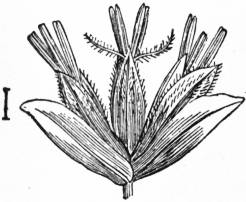
Fig. 19.—Phalarideae. Spikelet of Hierochloe.
Tribe 5. Phalarideae (6 genera, three of which are South African and Australasian; the others are more widely distributed, and represented in our flora). Phalaris arundinacea, is a reed-grass found on the banks of British rivers and lakes; a variety with striped leaves known as ribbon-grass is grown for ornament. P. canariensis (Canary grass, a native of southern Europe and the Mediterranean area) is grown for bird-food and sometimes as a cereal. Anthoxanthum odoratum, the sweet vernal grass of our flora, owes its scent to the presence of coumarin, which is also present in the closely allied genus Hierochloe (fig. 19), which occurs throughout the temperate and frigid zones.
Tribe 6. Agrostideae (about 35 genera, occurring in all parts of the world; eleven are British). Aristida and Stipa are large and widely distributed genera, occurring especially on open plains and steppes; the conspicuously awned persistent flowering glume forms an efficient means of dispersing the grain. Stipa pennata is a characteristic species of the Russian steppes. St. spartea (porcupine grass) and other species are plentiful on the North American prairies. St. tenacissima is the Spanish esparto grass (q.v.), known in North Africa as halfa or alfa. Phleum has a cylindrical spike-like inflorescence; P. pratense (timothy) is a valuable fodder grass, as also is Alopecurus pratensis (foxtail). Sporobolus, a large genus in the warmer parts of both hemispheres, but chiefly America, derives its name from the fact that the seed is ultimately expelled from the fruit. Agrostis is a large world-wide genus, but especially developed in the north temperate zone, where it includes important meadow-grasses. Calamagrostis and Deyeuxia are tall, often reed-like grasses, occurring throughout the temperate and arctic zones and upon high mountains in the tropics. Ammophila arundinacea (or Psamma arenaria) (Marram grass) with its long creeping stems forms a useful sand-binder on the coasts of Europe, North Africa and the Atlantic states of America.
Tribe 7. Aveneae (about 24 genera, seven of which are British). Holcus lanatus (Yorkshire fog, soft grass) is a common meadow and wayside grass with woolly or downy leaves. Aira is a genus of delicate annuals with slender hair-like branches of the panicle. Deschampsia and Trisetum occur in temperate and cold regions or on high mountains in the tropics; T. pratense (Avena flavescens) with a loose panicle and yellow shining spikelets is a valuable fodder-grass. Avena fatua is the wild oat and A. sativa the cultivated oat (q.v.). Arrhenatherum avenaceum, a perennial field grass, native in Britain and central and southern Europe, is cultivated in North America.
Tribe 8. Chlorideae (about 30 genera, chiefly in warm countries). The only British representative is Cynodon Dactylon (dog’s tooth, Bermuda grass) found on sandy shores in the south-west of England; it is a cosmopolitan, covering the ground in sandy soils, and forming an important forage grass in many dry climates (Bermuda grass of the southern United States, and known as durba, dub and other names in India). Species of Chloris are grown as ornamental grasses. Bouteloua with numerous species (mesquite grass, grama grass) on the plains of the south-western United States, afford good grazing. Eleusine indica is a common tropical weed; the nearly allied species E. Coracana is a cultivated grain in the warmer parts of Asia and throughout Africa. Buchloe dactyloides is the buffalo grass of the North American prairies, a valuable fodder.
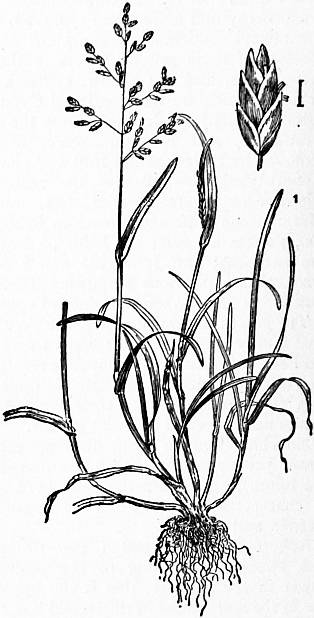
Fig. 20.—Poa annua. Plant in Flower; about ½ nat. size. 1, one spikelet.
Tribe 9. Festuceae (about 83 genera, including tropical, temperate, arctic and alpine forms) many are important meadow-grasses; 15 are British. Gynerium argenteum (pampas grass) is a native of southern Brazil and Argentina. Arundo and Phragmites are tall reed-grasses (see Reed). Several species of Triodia cover large areas of the interior of Australia, and from their stiff, sharply pointed leaves are very troublesome. Eragrostis, one of the larger genera of the order, is widely distributed in the warmer parts of the earth; many species are grown for ornament and E. abyssinica is an important food-plant in Abyssinia. Koeleria cristata is a fodder-grass. Briza media (quaking grass) is a useful meadow-grass. Dactylis glomerata (cock’s-foot), a perennial grass with a dense panicle, common in pastures and waste places is a useful meadow-grass. It has become naturalized in North America, where it is known as orchard grass, as it will grow in shade. Cynosurus cristatus (dog’s tail) is a common pasture-grass. Poa, a large genus widely distributed in temperate and cold countries, includes many meadow and alpine grasses; eight species are British; P. annua (fig. 20) is the very common weed in paths and waste places; P. pratensis and P. trivialis are also common grasses of meadows, banks and pastures, the former is the “June grass” or “Kentucky blue grass” of North America; P. alpina is a mountain grass of the northern hemisphere and found also in the Arctic region. The largest species of the genus is Poa flabellata which forms great tufts 6-7 ft. high with leaves arranged like a fan; it is a native of the Falkland and certain antarctic islands where it is known as tussock grass. Glyceria fluitans, manna-grass, so-called from the sweet grain, is one of the best fodder grasses for swampy meadows; the grain is an article of food in central Europe. Festuca (fescue) is also a large and widely distributed genus, but found especially in the temperate and cold zones; it includes valuable pasture grasses, such as F. ovina (sheep’s fescue), F. rubra; nine species are British. The closely allied genus Bromus (brome grass) is also widely distributed but most abundant in the north temperate zone; B. erectus is a useful forage grass on dry chalky soil.

Fig. 21.—Spike of Wheat (Triticum sativum). About 2⁄3 nat. size.
Tribe 10. Hordeae (about 19 genera, widely distributed; six are British). Nardus stricta (mat-weed), found on heaths and dry pastures, is a small perennial with slender rigid stem and leaves, it is a useless grass, crowding out better sorts. Lolium perenne, ray- (or by corruption rye-) grass, is common in waste places and a valuable pasture-grass; L. italicum is the Italian ray-grass; L. temulentum (darnel) contains a narcotic principle in the grain. Secale cereale, rye (q.v.), is cultivated mainly in northern Europe. Agropyrum repens (couch grass) has a long creeping underground stem, and is a troublesome weed in cultivated land; the widely creeping stem of A. junceum, found on sandy sea-shores, renders it a useful sand-binder. Triticum sativum is wheat (q.v.) (fig. 21), and Hordeum sativum, barley (q.v.). H. murinum, wild barley, is a common grass in waste places. Elymus arenarius (lyme grass) occurs on sandy sea-shores in the north temperate zone and is a useful sand-binder.
Tribe 11. Bambuseae. Contains 23 genera, mainly tropical. See Bamboo.
III. Distribution.—Grasses are the most universally diffused of all flowering plants. There is no district in which they do not occur, and in nearly all they are a leading feature of the flora. In number of species Gramineae comes considerably after Compositae and Leguminosae, the two most numerous orders of phanerogams, but in number of individual plants it probably far exceeds either; whilst from the wide extension of many of its species, the proportion of Gramineae to other orders in the various floras of the world is much higher than its number of species would lead one to expect. In tropical regions, where Leguminosae is the leading order, grasses closely follow as the second, whilst in the warm and temperate regions of the northern hemisphere, in which Compositae takes the lead, Gramineae again occupies the second position.
While the greatest number of species is found in the tropical zone, the number of individuals is greater in the temperate zones, where they form extended areas of turf. Turf- or meadow-formation depends upon uniform rainfall. Grasses also characterize steppes and savannas, where they form scattered tufts. The bamboos are a feature of tropical forest vegetation, especially in the monsoon region. As the colder latitudes are entered the grasses become relatively more numerous, and are the leading family in Arctic and Antarctic regions. The only countries where the order plays a distinctly subordinate part are some extra-tropical regions of the southern hemisphere, Australia, the Cape, Chili, &c. The proportion of graminaceous species to the whole phanerogamic flora in different countries is found to vary from nearly ¼th in the Arctic regions to about 1⁄25th at the Cape; in the British Isles it is about 1⁄12th.
The principal climatic cause influencing the number of graminaceous species appears to be amount of moisture. A remarkable feature of the distribution of grasses is its uniformity; there are no great centres for the order, as in Compositae, where a marked preponderance of endemic species exists; and the genera, except some of the smallest or monotypic ones, have usually a wide distribution.
The distribution of the tropical tribe Bambuseae is interesting. The species are about equally divided between the Indo-Malayan region and tropical America, only one species being common to both. The tribe is very poorly represented in tropical Africa; one species Oxytenanthera abyssinica has a wide range, and three monotypic genera are endemic in western tropical Africa. None is recorded for Australia, though species may perhaps occur on the northern coast. One species of Arundinaria reaches northwards as far as Virginia, and the elevation attained in the Andes by some species of Chusquea is very remarkable,—one, C. aristata, being abundant from 15,000 ft. up to nearly the level of perpetual snow.
Many grasses are almost cosmopolitan, such as the common reed, Phragmites communis; and many range throughout the warm regions of the globe, e.g. Cynodon Dactylon, Eleusine indica, Imperata arundinacea, Sporobolus indicus, &c., and such weeds of cultivation as species of Setaria, Echinochloa. Several species of the north temperate zone, such as Poa nemoralis, P. pratensis, Festuca ovina, F. rubra and others, are absent in the tropics but reappear in the antarctic regions; others (e.g. Phleum alpinum) appear in isolated positions on high mountains in the intervening tropics. No tribe is confined to one hemisphere and no large genus to any one floral region; facts which indicate that the separation of the tribes goes back to very ancient times. The revision of the Australian species by Bentham well exhibits the wide range of the genera of the order in a flora generally so peculiar and restricted as that of Australia. Thus of the 90 indigenous genera (many monotypic or very small) only 14 are endemic, 1 extends to South Africa, 3 are common to Australia and New Zealand, 18 extend also into Asia, whilst no fewer than 54 are found in both the Old and New Worlds; 26 being chiefly tropical and 28 chiefly extra-tropical.
Of specially remarkable species Lygeum is found on the sea-sand of the eastern half of the Mediterranean basin, and the minute Coleanthus occurs in three or four isolated spots in Europe (Norway, Bohemia, Austria, Normandy), in North-east Asia (Amur) and on the Pacific coast of North America (Oregon, Washington). Many remarkable endemic genera occur in tropical America, including Anomochloa of Brazil, and most of the large aquatic species with separated sexes are found in this region. The only genus of flowering plants peculiar to the arctic regions is the beautiful and rare grass Pleuropogon Sabinii, of Melville Island.
Fossil Grasses.—While numerous remains of grass-like leaves are a proof that grasses were widespread and abundantly developed in past geological ages, especially in the Tertiary period, the fossil remains are in most cases too fragmentary and badly preserved for the determination of genera, and conclusions based thereon in explanation of existing geographical distribution are most unsatisfactory. There is, however, justification for referring some specimens to Arundo, Phragmites, and to the Bambuseae.
Bibliography.—E. Hackel, The True Grasses (translated from Engler and Prantl, Die natürlichen Pflanzenfamilien, by F. Lamson Scribner and E. A. Southworth); and Andropogoneae in de Candolle’s Monographiae phanerogamarum (Paris, 1889); K. S. Kunth, Revision des graminées (Paris, 1829-1835) and Agrostographia (Stuttgart, 1833); J. C. Döll in Martius and Eichler, Flora Brasiliensis, ii. Pts. II. and III. (Munich, 1871-1883); A. W. Eichler, Blüthendiagramme i. 119 (Leipzig, 1875); Bentham and Hooker, Genera plantarum, iii. 1074 (London, 1883); H. Baillon, Histoire des plantes, xii. 136 (Paris, 1893); J. S. Gamble, “Bambuseae of British India” in Annals Royal Botanic Gardens, Calcutta, vii. (1896); John Percival, Agricultural Botany (chapters on “Grasses,” 2nd ed., London, 1902). See also accounts of the family in the various great floras, such as Ascherson and Graebner, Synopsis der mitteleuropäischen Flora; N. L. Britton and A. Brown, Illustrated Flora of the Northern United States and Canada (New York, 1896); Hooker’s Flora of British India; Flora Capensis (edited by W. Thiselton-Dyer); Boissier, Flora orientalis, &c. &c.
1 The word “grass” (O. Eng. gærs, græs) is common to Teutonic languages, cf. Dutch Ger. Goth, gras, Dan. græs; the root is the O. Teut. gra-, gro-, to increase, whence “grow,” and “green,” the typical colour of growing vegetation. The Indo-European root is seen in Lat. gramen. The O. Eng. grasian, formed from græs, gives “to graze,” of cattle feeding on growing herbage, also “grazier,” one who grazes or feeds cattle for the market; “to graze,” to abrade, to touch lightly in passing, may be a development of this from the idea of close cropping; if it is to be distinguished a possible connexion may be found with “glace” (Fr. glacer, glide, slip, Lat. glacies, ice), to glance off, the change in form being influenced by “grate,” to scrape, scratch (Fr. gratter, Ger. kratzen).