VOLUME IX SLICE III Electrostatics to Engis (continued 2)
Reading edition
The Galvanic, Continuous or Direct Current.—In using the galvanic or direct current the electrode must be covered with padded webbing or some other absorbent material, the metal of the electrode never being allowed to come in contact with the skin. The padding by retaining moisture helps to make good contact, and also helps to guard against burning the skin. But when a continuous current of 3 am. or more is passed for more than 5 min. the electrodes must be raised periodically and the skin inspected. If the current be too strong or applied for too long a time, small blisters are raised which break and are very troublesome to heal. Nor does the patient always feel much pain when this occurs. Also the electrodes must be remoistened every five or six minutes, as they soon become dry, and the skin will then be burnt. It is best to use a solution of sodium bicarbonate. Again, the danger of burning the skin depends on the density of the current per sq. in. of electrode, so that a strong current through a small electrode will burn the skin, whereas the same current through a larger electrode will produce a beneficial effect. If the patient be immersed up to his neck in an electric bath, much stronger currents can be passed without causing either pain or injury, as in this case the whole area of the skin in contact with the water acts as an electrode. In passing the current it must be remembered that the negative electrode or kathode is the more painful of the two, and its action more stimulating than the positive electrode or anode, which is sedative. If a muscle be stimulated over its motor point, it will contract with a sharp twitch and then become quiescent. With normal muscle the KCC (kathodal closure contraction) is stronger than that produced by the closure of the current at the anode ACC (anodal closure contraction). And if the muscle be normal the opening contraction KOC and AOC are not seen. When a galvanic current is passed along a nerve its excitability is increased at the kathode and diminished at the anode. The increased excitability at the kathode is katelectrotonus, and the lowered excitability at the anode anelectrotonus. But since in a patient the electrode cannot be applied directly to the nerve, the lines of force from the electrode pass into the nerve both in an upward and downward direction, and hence there are two poles produced by each electrode. If the current be suddenly reversed, so that what was the anode becomes the kathode, a stronger contraction is obtained than by simply making and breaking the current. To avoid the four poles on the nerve to be tested, it is found most satisfactory to have one electrode placed at some distance, on the back or chest, not on the same limb.
As explained above, when the nerve supplying a muscle is diseased it no longer responds to the faradic current. On further testing this with the galvanic or continuous current it responds, but the contraction is not brisk but begins slowly and relaxes slowly, though the contraction as a whole may be larger than that of a normal muscle. This excessive contraction is known as hyperexcitability to galvanism. This form of contraction is that obtained when the muscle fibre itself is stimulated. Again, whereas in normal muscle KCC > ACC, when the nerve is degenerated KCC = ACC or ACC > KCC. Also in the more severe forms of nerve injury tetanic contractions may be set up in the paralysed muscles, by closure of the current either at the anode or kathode. These charges are known as the reaction of degeneration or RD, and are of great value in diagnosis. They occur only after sudden or acute damage to the nerve cells of the anterior horn of the spinal cord, or to the motor nerve fibres proceeding from these cells. Thus RD is present in infantile paralysis, acute neuritis, &c., but absent in progressive muscular atrophy where the wasting of nerve and muscle takes place extremely slowly. The reaction of degeneration in the nerve is shown by disappearance of reaction to either kind of current, preceded for some days by hyperexcitability to either current. Where the muscle wasting is due to a lesion in the muscle alone, as in ischaemic myositis (usually due to injury from tight bandaging or badly applied splints), no reaction of degeneration is found; the only change is a loss of power in the contraction. If the damage to the anterior horn cells be only very slight, there may only be partial RD, and the prognosis is given according to the extent of RD. From this account it is clear that the greatest value of the continuous current lies in its use in diagnosis. But it is also applied extremely successfully, in combination with massage, to cases of infantile paralysis. Wrist drop from lead poisoning and lead neuritis of all kinds, reflex muscular atrophy and the muscular wasting of hemiplegia, are all benefited by the continuous current; the severe pain of sciatica, and the inflammation of the nerve sheath in these cases, can be arrested more quickly by galvanic treatment than in any other way. Nearly all forms of neuritis, both of the cranial and other nerves, are best treated by the continuous current. The action in all cases is to stimulate the natural tendency to repair, very largely by improving the circulation through the injured parts.
Another effect of an electric current is electrolysis, and the phenomena of electrolytic conduction involve not merely the ionization of the compounds, but also the setting in motion of the ions towards their respective poles. Solutions which conduct electric currents are called electrolytes, and in the case of the human body the electrolyte is the whole mass of the saline constituents in solution throughout the body. When a current is passed through an electrolyte, dissociation into ions takes place, the ions which are freed round the anode being called anions and those which are freed round the kathode being called kations. The anions carry negative charges and are consequently attracted by the positive electricity of the anode. The kations carry positive charges, hence they are repelled by the anode and attracted by the kathode. But a certain number of molecules do not dissociate, and hence in an electrolytic solution there are neutral molecules, anions and kations. The chemical actions, and thus the antiseptic, remedial or toxic effects of electrolytes, are due to the actions of their ions. The phosphides and phosphates may be taken as examples. Some are extremely toxic, while others are quite harmless. But it is to the phosphorus ion that the toxic or therapeutic effect is due. In the phosphates the phosphorus is part of a complex ion possessing quite different properties to those of the phosphorus ion of the phosphides. The strikingly different effects of the sulphates and sulphides are due to similar conditions, as also of many other compounds. There are certain solvents, as alcohol, chloroform, glycerin and vaseline which do not dissociate electrolytes, and consequently the latter become inert when mixed with these solvents. These solutions do not conduct electricity, and hence ionic effects are extremely slow. A vaseline ointment containing 5% of phenol makes a good dressing for an ulcer of the leg, and produces no irritant effect, but a 5% aqueous solution may be both caustic and toxic. Since the toxic or therapeutic action of a solution is due to its ions, the action must be proportional to the number of ions in a given volume, that is, the action of an electrolyte depends on the degree of dissociation. Thus a strong acid is one that is much dissociated, a weak acid one that has undergone but little dissociation and so on. In 1896-1897 it was shown that the bactericidal action of salts varies with their degree of dissociation and therefore depends on the concentration of the active ions. In the medical application of these facts it must be remembered that when an ion is introduced into the body by electrolysis, it is probably forced into the actual cellular constituents of the body, whereas the drug administered by one of the usual methods though circulating in the blood may perhaps never gain access to the cell itself. Hence the different effects that have been recorded between a drug administered by the mouth or subcutaneously and the same administered by electrolysis. Thus a solution of cocaine injected subcutaneously produces quite different effects to that introduced by electrolysis. By the latter method it produces anaesthesia but does not diffuse, and the anaesthesia remains strictly limited to the surface covered by the electrode. It would appear that the ion is never introduced into the general circulation but into the cell plasma.
In the technical working of medical electrolysis the most minute precautions are required. The solution of the drug must be made with as pure water as possible, recently distilled. The spongy substance forming the electrode must be free from any trace of electrolytic substances. Hence all materials used must be washed in distilled water. Absorbent cotton answers all requirements and is easily procured. The area of introduction can be exactly circumscribed by cutting a hole in a sheet of adhesive plaster which is applied to the skin and on which the electrolytic electrodes are pressed. The great advantage of electrolytic methods is that it enables general treatment to be replaced by a strictly local treatment, and the cells can be saturated exactly to the degree and depth required. Strong antiseptics and materials that coagulate albumen cannot be introduced locally by ordinary methods, as the skin is impermeable to them, but by electrolysis they can be introduced to the exact depth required. The local effects of the ions depend on the dosage; thus a feeble dose of the ions of zinc stimulates the growth of hair, but a stronger dose produces the death of the tissue. Naturally the different ions produce different effects. Thus the ions of the alkalis and magnesium are caustic, those of the alkaline earthy metals produce actual mortification of the tissue and so on. According to the ion chosen the effect may be caustic in various degrees, antiseptic, coagulating, producing vascular or nervous changes, &c., &c. And again electrolysis can also be used for extracting from the body such ions as are injurious, as uric and oxalic acid from a patient suffering from gout.
One of the latest advances is the treatment of ankylosed joints by the electrolytic method, the electrolyte used being chloride of sodium, and the marvellous results being attributed to the introduction of the chlorine ions. This sclerolytic property of the current is applicable to all parts of the body accessible to the current. Old cases of rheumatic scleritis, entirely unaffected by the routine treatment of salicylates and iodide, have often cleared up entirely under electrolytic treatment. Cases of chronic iritis with adhesions and old pleural adhesions are also suited for this method of procedure. Certain menstrual troubles of women and also endometritis yield rapidly to electrolysis with a zinc anode. Before this method of introduction, the zinc salts, though excellent disinfectants, acted only on the surface in consequence of their coagulating action on the albuminoids, but by the electric current, under the influence of a difference of potential, the zinc iron will penetrate to any desired depth. Cases of rodent ulcer unaffected by all other methods of treatment have been cured by electric kataphoresis with zinc ions, and the method is now being applied to the treatment of inoperable malignant tumours. As very strong currents are required for this latter, the patient has first to be anaesthetized by a general anaesthetic. Another direction in which electric ions are being used is that of the induction of local anaesthesia before minor surgical operations. Cocaine is the drug used, the resulting anaesthesia is absolute, and the operation can be made almost bloodless by the admixture of suprarenal extract.
ELECTROTYPING, an application of the art of electroplating (q.v.) to typography (q.v.). In copying engraved plates for printing purposes, copper may be deposited upon the original plate, the surface of which is first rendered slightly dirty, by means of a weak solution of wax in turpentine or otherwise, to prevent adhesion. The reversed plate thus produced is then stripped from the first and used as cathode in its turn, with the result that even the finest lines of the original are faithfully reproduced. The electrolyte commonly contains about 1½ ℔ of copper sulphate and ½ ℔ of strong sulphuric acid per gallon, and is worked with a current density of about 10 amperes per sq. ft., which should give a thickness of 0.000563 in. of copper per hour. As time is an object, the conditions alluded to in the article on Copper as being favourable to the use of high current densities should be studied, bearing in mind that a tough copper deposit of high quality is essential. Moulds for reproducing plates or art-work are often taken in plaster, beeswax mixed with Venice turpentine, fusible metal, or gutta-percha, and the surface being rendered conductive by powdered black-lead, copper is deposited upon it evenly throughout. For statuary, and “undercut” work generally, an elastic mould—of glue and treacle (80 : 20 parts)—may be used; the mould, when set, is waterproofed by immersion in a solution of potassium bichromate followed by exposure to sunlight, or in some other way. The best results, however, are obtained by taking a wax cast from the elastic mould, and then from this a plaster mould, which may be waterproofed with wax, black-leaded, and used as cathode. In art-work of this nature the principal points to be looked to in depositing are the electrical connexions to the cathode, the shape of the anode (to secure uniformity of deposition), the circulation of the electrolyte, and, in some cases, the means for escape of anode oxygen. Silver electrotyping is occasionally resorted to for special purposes.
ELECTRUM, ELECTRON (Gr. ἤλεκτρον, amber), an alloy of gold and silver in use among the ancients, described by Pliny as containing one part of silver to four of gold. The term is also applied in mineralogy to native argentiferous gold containing from 20 to 50% of silver. In both cases the name is derived from the pale yellow colour of electrum, resembling that of amber.
ELEGIT (Lat. for “he has chosen”), in English law, a judicial writ of execution, given by the Statute of Westminster II. (1285), and so called from the words of the writ, that the plaintiff has chosen (elegit) this mode of satisfaction. Previously to the Statute of Westminster II., a judgment creditor could only have the profits of lands of a debtor in satisfaction of his judgment, but not the possession of the lands themselves. But this statute provided that henceforth it should be in the election of the party having recovered judgment to have a writ of fieri facias (q.v.) unto the sheriff on lands and goods or else all the chattels of the debtor and the one half of his lands until the judgment be satisfied. Since the Bankruptcy Act 1883 the writ of elegit has extended to lands and hereditaments only. (See further Execution.)
ELEGY, a short poem of lamentation or regret, called forth by the decease of a beloved or revered person, or by a general sense of the pathos of mortality. The Greek word ἐλεγεία is of doubtful signification; it is usually interpreted as meaning a mournful or funeral song. But there seems to be no proof that this idea of regret for death entered into the original meaning of ἐλεγεία. The earliest Greek elegies which have come down to us are not funereal, although it is possible that the primitive ἐλεγεία may have been a set of words liturgically used, with music, at a burial. When the elegy appears in surviving Greek literature, we find it dedicated, not to death, but to war and love. Callinus of Ephesus, who flourished in the 7th century, is the earliest elegist of whom we possess fragments. A little later Tyrtaeus was composing his famous elegies in Sparta. Both of these writers were, so far as we know, exclusively warlike and patriotic. On the other hand, the passion of love inspires Mimnermus, whose elegies are the prototypes not only of the later Greek pieces, and of the Latin poems of the school of Tibullus and Propertius, but of a great deal of the formal erotic poetry of modern Europe. In the 6th century B.C., the elegies of Solon were admired; they are mainly lost. But we possess more of the work of Theognis of Megara than of any other archaic elegist, and in it we can observe the characteristics of Greek elegy best. Here the Dorian spirit of chivalry reaches its highest expression, and war is combined with manly love.
The elegy, in its calm movement, seems to have begun to lose currency when the ecstasy of emotion was more successfully interpreted by the various rhythmic and dithyrambic inventions of the Aeolic lyrists. The elegy, however, rose again to the highest level of merit in Alexandrian times. It was reintroduced by Philetas in the 3rd cent. B.C., and was carried to extreme perfection by Callimachus. Other later Greek elegists of high reputation were Asclepiades and Euphorion. But it is curious to notice that all the elegies of these poets were of an amatory nature, and that antiquity styled the funeral dirges of Theocritus, Bion and Moschus—which are to us the types of elegy—not elegies at all, but idylls. When the poets of Rome began their imitative study of Alexandrian models, it was natural that the elegies of writers such as Callimachus should tempt them to immediate imitation. Gallus, whose works are unhappily lost, is known to have produced a great sensation in Rome by publishing his translation of the poems of Euphorion; and he passed on to the composition of erotic elegies of his own, which were the earliest in the Latin language. If we possessed his once-famous Cytheris, we should be able to decide the question of how much Propertius, who is now the leading figure among Roman elegists, owed to the example of Gallus. His brilliantly emotional Cynthia, with its rich and unexampled employment of that alternation of hexameter and pentameter which had now come to be known as the elegiac measure, seems, however, to have settled the type of Latin elegy. Tibullus is always named in conjunction with Propertius, who was his contemporary, although in their style they were violently contrasted. The sweetness of Tibullus was the object of admiration and constant imitation by the Latin poets of the Renaissance, although Propertius has more austerely pleased a later taste. Finally, Ovid wrote elegies of great variety in subject, but all in the same form, and his dexterous easy metre closed the tradition of elegiac poetry among the ancients. What remains in the decline of Latin literature is all founded on a study of those masters of the Golden Age.
When the Renaissance found its way to England, the word “elegy” was introduced by readers of Ovid and Propertius. But from the beginning of the 16th century, it was used in English, as it has been ever since, to describe a funeral song or lament. One of the earliest poems in English which bears the title of elegy is The Complaint of Philomene, which George Gascoigne began in 1562, and printed in 1576. The Daphnaida of Spenser (1591) is an elegy in the strict modern sense, namely a poem of regret pronounced at the obsequies of a particular person. In 1579 Puttenham had defined an elegy as being a song “of long lamentation.” With the opening of the 17th century the composition of elegies became universal on every occasion of public or private grief. Dr Johnson’s definition, “Elegy, a short poem without points or turns,” is singularly inept and careless. By that time (1755) English literature had produced many great elegies, of which the Lycidas of Milton is by far the most illustrious. But even Cowley’s on Crashaw, Tickell’s on Addison, Pope’s on an Unfortunate Lady, those of Quarles, and Dryden, and Donne, should have warned Johnson of his mistake. Since the 18th century the most illustrious examples of elegy in English literature have been the Adonais of Shelley (on Keats), the Thyrsis of Matthew Arnold (on Clough), and the Ave atque Vale of Mr Swinburne (on Baudelaire). It remains for us to mention what is the most celebrated elegy in English, that written by Gray in a Country Churchyard. This, however, belongs to a class apart, as it is not addressed to the memory of any particular person. A writer of small merit, James Hammond (1716-1742), enjoyed a certain success with his Love Elegies in which he endeavoured to introduce the erotic elegy as it was written by Ovid and Tibullus. This experiment took no hold of English literature, but was welcomed in France in the amatory works of Parny (1753-1814), in those of Chênedollé (1769-1833), and of Millevoye (1782-1816). The melancholy and sentimental elegies of the last named are the typical examples of this class of poetry in French literature. Lamartine must be included among the elegists, and his famous “Le Lac” is as eminent an elegy in French as Gray’s “Country Churchyard” is in English. The elegy has flourished in Portugal, partly because it was cultivated with great success by Camoens, the most illustrious of the Portuguese poets. In Italian, Chiabrera and Filicaia are named among the leading national elegists. In German literature, the notion of elegy as a poem of lamentation does not exist. The famous Roman Elegies of Goethe imitate in form and theme those of Ovid; they are not even plaintive in character.
Elegiac Verse has commonly been adopted by German poets for their elegies, but by English poets never. Schiller defines this kind of verse, which consists of a distich of which the first line is a hexameter and the second a pentameter, in the following pretty illustration:—
“In the hexameter rises the fountain’s silvery column. In the pentameter aye falling in melody back.”
The word “elegy,” in English, is one which is frequently used very incorrectly; it should be remembered that it must be mournful, meditative and short without being ejaculatory. Thus Tennyson’s In Memoriam is excluded by its length; it may at best be treated as a collection of elegies. Wordsworth’s Lucy, on the other hand, is a dirge; this is too brief a burst of emotion to be styled an elegy. Lycidas and Adonais remain the two unapproachable types of what a personal elegy ought to be in English.
(E. G.)
ELEMENT (Lat. elementum), an ultimate component of anything, hence a fundamental principle. Elementum was used in Latin to translate the Greek στοιχεῖον (that which stands in a στοῖχος, or row), and is a word of obscure origin and etymology. The root of Lat. alere, to nourish, has been suggested, thus making it a doublet of alimentum, that which supports life; another explanation is that the word represents LMN., the first three letters of the second part of the alphabet, a parallel use to that of ABC. Apart from its application in chemistry, which is treated below, the word is used of the rudiments or principia of any science or subject, as in Euclid’s Elements of Geometry, or in the “beggarly elements” (τὰπτωχὰ στοιχεῖα, of St Paul in Gal. iv. 9); in mathematics, of a fundamental concept involved in an investigation, as the “elements” of a determinant; and in electricity, of a galvanic (or voltaic) “element” in an electric cell (see Battery: Electric). In astronomy, “element” is used of any one of the numerical or geometrical data by which the course of a varying phenomenon is computed; it is applied especially to orbital motion and eclipses. The “elements of an orbit” are the six data by which the position of a moving body in its orbit at any time may be determined. The “elements of an eclipse” express and determine the motion of the centre of the shadow-axis, and are the data necessary to compute the phenomena of an eclipse during its whole course, as seen at any place. In architecture the term “element” is applied to the outline of the design of a Decorated window, on which the centres for the tracery are found. These centres will all be found to fall on points which, in some way or other, will be equimultiples of parts of the openings.
Chemical Elements.
Like all other scientific concepts, that of an element has changed its meaning many times in many ways during the development of science. Owing to their very small amount of real chemical knowledge, the generalizations Ancient ideas. of the ancients were necessarily rather superficial, and could not stand in the face of the increasing development of practical chemistry. Nevertheless we find the concept of an element as “a substance from which all bodies are made or derived” held at the very beginning of occidental philosophy. Thales regarded “water” as the element of all things; his followers accepted his idea of a primordial substance as the basis of all bodies, but they endeavoured to determine some other general element or elements, like “fire” or “spirit,” or “love” and “hatred,” or “fire,” “water,” “air” and “earth.” We find in this development an exact parallelism to the manner in which scientific ideas generally arise, develop and change. They are created to point out the common part in a variety of observed phenomena, in order to get some leading light in the chaos of events. At first almost any idea will do, if only it promises some comprehensive arrangement of the facts; afterwards, the inconsistencies of the first trial make themselves felt; the first idea is then changed to meet better the new requirements. For a shorter or longer time the facts and ideas may remain in accord, but the uninterrupted increase of empirical knowledge involves sooner or later new fundamental alterations of the general idea, and in this way there is a never-ceasing process of adaptation of the ideas to the facts. As facts are unchangeable by themselves, the adaptation can be only one-sided; the ideas are compelled to change according to the facts. We must therefore educate ourselves to regard the ideas or theories as the changing part of science, and keep ourselves ready to accept even the most fundamental revision of current theories.
The first step in the development of the idea of elements was to recognize that a single principle would not prove sufficient to cover the manifoldness of facts. Empedocles therefore conceived a double or binary elementary principle; and Aristotle developed this idea a stage further, stating two sets of binary antagonistic principles, namely “dry-wet” and “hot-cold.” The Aristotelian or peripatetic elements, which played such a great rôle in the whole medieval philosophy, are the representatives of the several binary combinations of these fundamental properties, “fire” being hot and dry, “air” hot and wet, “water” cold and wet, “earth” cold and dry. According to the amount of these properties found in any body, these elements were regarded as having taken part in forming this body. Concerning the reason why only these properties were regarded as fundamental, we know nothing. They seem to be taken at random rather than carefully selected; they relate only to the sense of touch, and not to vision or any other sense, possibly because deceptions in the sense of touch were regarded as non-existent, while the other senses were apparently not so trustworthy. At any rate, the Aristotelian elements soon proved to be rather inadequate to meet the requirements of the increasing chemical knowledge; other properties had therefore to be selected to represent the general behaviour of chemical substances, and in this case we find them already much more “chemical” in the modern sense.
Among the various substances recognized by the chemists, certain classes or groups readily distinguished themselves. First the metals, by their lustre, their heaviness, and a number of other common properties. According to Elements of the alchemists. the general principle of selecting a single substance as a representative of the group, the metallic properties were represented by “mercury.” The theoreticians of the middle ages were rather careful to point out that common mercury (the liquid metal of to-day) was not at all to be identified with “philosophical” mercury, the last being simply the principle of metallic behaviour. In the same way combustibility was represented by “sulphur,” solubility by “salt,” and occasionally the chemically indifferent or refractory character by “earth.” According to the subsistence and preponderance of these properties in different bodies, these were regarded as containing the corresponding elements; conversely, just as experience teaches the chemist every day that by proper treatment the properties of given bodies may be changed in the most various ways, the observed changes of properties were ascribed to the gain or loss of the corresponding elements. According to this theory, which accounted rather well for a large number of facts, there was no fundamental objection against trying to endow base metals with the properties of the precious ones; to make artificial gold was a task quite similar to the modern problem of, e.g. making artificial quinine. The realization that there is a certain natural law preventing such changes is of much later date. It is therefore quite unjust to consider the work of the alchemists, who tried to make artificial gold, as consummate nonsense. A priori there was no reason why a change from lead to gold should be less possible than a change from iron to rust; indeed there is no a priori reason against it now. But experience has taught us that lead and gold are chemical elements in the modern sense, and that there is a general experimental law that elements are not transformable one into another. So experience taught the alchemists irresistibly that in spite of the manifoldness of chemical changes it is not always possible to change any given substance into another; the possibilities are much more limited, and there is only a certain range of substances to be obtained from a given one. The impossibility of transforming lead or copper into noble metals proved to be only one case out of many, and it was recognized generally that there are certain chemical families whose members are related to one another by their mutual transformability, while it is impossible to bridge the boundaries separating these families.
The man who brought all these experiences and considerations into scientific form was Robert Boyle. He stated as a general principle, that only tangible and ponderable substances should be recognized as elements, an element being Work of Robert Boyle. a substance from which other substances may be made, but which cannot be separated into different substances. He showed that neither the peripatetic nor the alchemistic elements satisfied this definition. But he was more of a critical than of a synthetical turn of mind; although he established the correct principles, he hesitated to point out what substances, among those known at his time, were to be considered as elements. He only paved the way to the goal by laying the foundations of analytical chemistry, i.e. by teaching how to characterize and to distinguish different chemical individuals. Further, by adopting and developing the corpuscular hypothesis of the constitution of the ponderable substances, he foreshadowed, in a way, the law of the conservation of the elements, viz. that no element can be changed into another element; and he considered the compound substances to be made up from small particles or corpuscles of their elements, the latter retaining their essence in all combinations. This hypothesis accounts for the fact that only a limited number of other substances can be made from a given one—namely, only those which contain the elements present in the given substance. But it is characteristic of Boyle’s critical mind that he did not shut his eyes against a serious objection to his hypothesis. If the compound substance is made up of parts of the elements, one would expect that the properties of the compound substance would prove to be the sum of the properties of the elements. But this is not the case, and chemical compounds show properties which generally differ very considerably from those of the compounds. On the one hand, the corpuscular hypothesis of Boyle was developed into the atomic hypothesis of Dalton, which was considered at the beginning of the 19th century as the very best representation of chemical facts, while, on the other hand, the difficulty as to the properties of the compounds remained the same as Boyle found it, and has not yet been removed by an appropriate development of the atomic hypothesis. Thus Boyle considered, e.g. the metals as elements. However, it is interesting to note that he considered the mutual transformation of the metals as not altogether impossible, and he even tells of a case when gold was transformed into base metal. It is a common psychological fact that a reformer does not generally succeed in being wholly consistent in his reforming ideas; there remains invariably some point where he commits exactly the same fault which he set out to abolish. We shall find the same inconsistency also among other chemical reformers. Even earlier than Boyle, Joachim Jung (1587-1657) of Hamburg developed similar ideas. But as he did not distinguish himself, as Boyle did, by experimental work in science, his views exerted only a limited influence amongst his pupils.
In the times following Boyle’s work we find no remarkable outside development of the theory of elements, but a very important inside one. Analytical chemistry, or the art of distinguishing different chemical substances, was rapidly developing, Phlogiston theory. and the necessary foundation for such a theory was thus laid. We find the discussions about the true elements disappearing from the text-books, or removed to an insignificant corner, while the description of observed chemical changes of different ways of preparing the same substance, as identified by the same properties, and of the methods for recognizing and distinguishing the various substances, take their place. The similarity of certain groups of chemical changes, as, for example, combustion, and the inverse process, reduction, was observed, and thus led to an attempt to shape these most general facts into a common theory. In this way the theory of “phlogiston” was developed by G.E. Stahl, phlogiston being (according to the usual way of regarding general properties as being due to a principle or element) the “principle of combustibility,” similar to the “sulphur” of the alchemists. This again must be regarded as quite a legitimate step justified by the knowledge of the time. For experience taught that combustibility could be transferred by chemical action, e.g. from charcoal to litharge, the latter being changed thereby into combustible metallic lead; and according to Boyle’s principle, that only bodies should be recognized as chemical elements, phlogiston was considered as a body. From the fact that all leading chemists in the second half of the 18th century used the phlogiston theory and were not hindered by it in making their great discoveries, it is evident that a sufficient amount of truth and usefulness was embodied in this theory. It states indeed quite correctly the mutual relations between oxidation and reduction, as we now call these very general processes, and was erroneous only in regard to one question, which at that time had not aroused much interest, the question of the change of weight during chemical processes.
It was only after Isaac Newton’s discovery of universal gravitation that weight was considered as a property of paramount interest and importance, and that the question of the changes of weight in chemical reactions became Lavoisier’s reform. one worth asking. When in due time this question was raised, the fact became evident at once, that combustion means not loss but gain of weight. To be sure of this, it was necessary to know first the chemical and physical properties of gases, and it was just at the same time that this knowledge was developed by Priestley, Scheele and others. Lavoisier was the originator and expounder of the necessary reform. Oxygen was just discovered at that time, and Lavoisier gathered evidence from all sides that the theory of phlogiston had to be turned inside out to fit the new facts.
He realized that the sum total of the weights of all substances concerned within a chemical change is not altered by the change. This principle of the “conservation of weight” led at once to a simple and unmistakable definition of a chemical element. As the weight of a compound substance is the sum of the weights of its elements, the compound necessarily weighs more than any of its elements. An element is therefore a substance which, by being changed into another substance, invariably increases its weight, and never gives rise to substances of less weight. By the help of this criterion Lavoisier composed the first table of chemical elements similar to our modern ones. According to the knowledge of his time he regarded the alkalis as elements, although he remarked that they are rather similar to certain oxides, and therefore may possibly contain oxygen; the truth of this was proved at a later date by Humphry Davy. But the inconsistency of the reformer, already referred to, may be observed with Lavoisier. He included “heat and light” in his list of elements, although he knew that neither of them had weight, and that neither fitted his definition of an element; this atavistic survival was subsequently removed from the table of the elements by Berzelius in the beginning of the 19th century. In this way the question of what substances are to be regarded as chemical elements had been settled satisfactorily in a qualitative way, but it is interesting to realize that the last step in this development, the theory of Lavoisier, was based on quantitative considerations. Such considerations became of paramount interest at once, and led to the concept of the combining weights of the elements.
The first discoveries in this field were made in the last quarter of the 18th century by J.B. Richter. The point at issue was a rather commonplace one: it was the fact that when two neutral salt solutions were mixed to undergo mutual J.B. Richter’s work. chemical decomposition and recombination, the resulting liquid was neutral again, i.e. it did not contain any excess of acid or base. In other words, if two salts, A’B’ and A” B”, composed of the acids A’ and A” and the bases B’ and B”, undergo mutual decomposition, the amount of the base B’ left by the first salt, when its acid A’ united with the base B” to form a new salt A’B”, was just enough to make a neutral salt A”B’ with the acid A” left by the second salt. At first sight this looks quite simple and self-evident,—that neutral salts should form neutral ones again and not acid or basic ones,—but if this fact is once stated very serious quantitative inferences may be drawn from it, as Richter showed. For if the symbols A’, A”, B’, B” denote at the same time such quantities of the acids and bases as form neutral salts, then if three of these quantities are determined, the fourth may be calculated from the others. This follows from the fact that by decomposing A’B’ with just the proper amount of the other salt to form A’B”, the remaining quantities B’ and A” exist in exactly the ratio to form a neutral salt A” B’. It is possible, therefore, to ascribe to each acid and base a certain relative weight or “combining weight” by which they will combine one with the other to form neutral salts. The same reasoning may be extended to any number of acids and bases.
It is true that Richter did not find out by himself this simplest statement of the law of neutrality which he discovered, but he expressed the same consequence in a rather clumsy way by a table of the combining weights of different bases related to the unit amount of a certain acid, and doing the same thing for the unit weight of every other acid. Then he observed that the numbers in these different tables are proportionate one to another. The same holds good if the corresponding series of the combining weights of acids for unit weights of different bases were tabulated. It was only a little later that a Berlin physicist, G.E. Fischer, united the whole system of Richter’s numbers simply into a double table of acids and bases, taking as unit an arbitrarily chosen substance, namely sulphuric acid. The following table by Fischer is therefore the first table of combining weights.
Bases. Acids.
Alumina 525 Fluoric 427
Magnesia 615 Carbonic 577
Ammoniac 672 Sebacic 706
Lime 793 Muriatic (hydrochloric) 712
Soda 859 Oxalic 755
Strontiane 1329 Phosphoric 979
Potash 1605 Formic 988
Baryte 2222 Sulphuric 1000
Succinic 1209
Nitric 1405
Acetic 1480
Citric 1683
Tartaric 1694
It is interesting again to notice how difficult it is for the discoverer of a new truth to find out the most simple and complete statement of his discovery. It looks as if the amount of work needed to get to the top of a new idea is so great that not enough energy remains to clear the very last few steps. It is noteworthy also to observe how difficult it was for the chemists of that time to understand the bearing of Richter’s work. Although a summary of his results was published in Berthollet’s Essai de statique chimique, one of the most renowned chemical books of that time, nobody dared for a long time to take up the scientific treasure laid open for all the world.
At the beginning of the 19th century the same question was taken up from quite another standpoint. John Dalton, in his investigations of the behaviour of gases, and in order to understand more easily what happened when gases John Dalton’s atomic theory. were absorbed by liquids, used the corpuscular hypothesis already mentioned in connexion with Boyle. While he depicted to himself how the corpuscles, or, as he preferred to call them, the “atoms” of the gases, entered the interstices of the atoms of the liquids in which they dissolved, he asked himself: Are the several atoms of the same substance exactly alike, or are there differences as between the grains of sand? Now experience teaches us that it is impossible to separate, for example, a quantity of pure water into two samples of somewhat different properties. When a pure substance is fractionated by partial distillation or partial crystallization or partial change into another substance by chemical means, we find constantly that the residue is not changed in its properties, as it would be if the atoms were slightly different, since in that case e.g. the lighter atoms would distil first and leave behind the heavier ones, &c. Therefore we must conclude that all atoms of the same kind are exactly alike in shape and weight. But, if this be so, then all combinations between different atoms must proceed in certain invariable ratios of the weights of the elements, namely by the ratio of the weights of the atoms. Now it is impossible to weigh the atoms directly; but if we determine the ratio of the weights in which oxygen and hydrogen combine to form water, we determine in this way also the relative weight of their atoms. By a proper number of analyses of simple chemical compounds we may determine the ratios between the weights of all elementary atoms, and, selecting one of them as a standard or unit, we may express the weight of all other atoms in terms of this unit. The following table is Dalton’s (Mem. of the Lit. and Phil. Soc. of Manchester (II.), vol. i. p. 287, 1805).
Table of the Relative Weights of the Ultimate Particles of Gaseous and other Bodies.
Hydrogen 1 Nitrous oxide 13.7
Azot 4.2 Sulphur 14.4
Carbone 4.3 Nitric acid 15.2
Ammonia 5.2 Sulphuretted hydrogen 15.4
Oxygen 5.5 Carbonic acid 15.3
Water 6.5 Alcohol 15.1
Phosphorus 7.2 Sulphureous acid 19.9
Phosphuretted hydrogen 8.2 Sulphuric acid 25.4
Nitrous gas 9.3 Carburetted hydrogen from
Ether 9.6 stagnant water 6.3
Gaseous oxide of carbone 9.8 Olefiant gas 5.3
Dalton at once drew a peculiar inference from this view. If two elements combine in different ratios, one must conclude that different numbers of atoms unite. There must be, therefore, a simple ratio between the quantities of the one element united to the same quantity of the other. Dalton showed at once that the analysis of carbon monoxide and of carbonic acid satisfied this consequence, the quantity of oxygen in the second compound being double the quantity in the first one. A similar relation holds good between marsh gas and olefiant gas (ethylene). This is the “law of multiple proportions” (see Atom). By these considerations Dalton extended the law of combining weights, which Richter had demonstrated only for neutral salts, to all possible chemical compounds. While the scope of the law was enormously extended, its experimental foundation was even smaller than with Richter. Dalton did not concern himself very much with the experimental verification of his ideas, and the first communication of his theory in a paper on the absorption of gases by liquids (1803) attracted as little notice as Richter’s discoveries. Even when T. Thomson published Dalton’s views in an appendix to his widely read text-book of chemistry, matters did not change very much. It was only by the work of J.J. Berzelius that the enormous importance of Dalton’s views was brought to light.
Berzelius was at that time busy in developing a trustworthy system of chemical analysis, and for this purpose he investigated the composition of the most important salts. He then went over the work of Richter, and realized that by his Work of J.J. Berzelius. law he could check the results of his analyses. He tried it and found the law to hold good in most cases; when it did not, according to his analyses, he found that the error was on his own side and that better analyses fitted Richter’s law. Thus he was prepared to understand the importance of Dalton’s views and he proceeded at once to test its exactness. The result was the best possible. The law of the combining weights of the atoms, or of the atomic weights, proved to hold good in every case in which it was tested. All chemical combinations between the several elements are therefore regulated by weight according to certain numbers, one for each element, and combinations between the elements occur only in ratios given by these weights or by simple multiples thereof. Consequently Berzelius regarded Dalton’s atomic hypothesis as proved by experiment, and became a strong believer in it.
At the same time W.H. Wollaston had discovered independently the law of multiple proportions in the case of neutral and acid salts. He gave up further work when he learned of Dalton’s ideas, but afterwards he pointed out that it was necessary to distinguish the hypothetical part in Dalton’s views from their empirical part. The latter is the law of combining weights, or the law that chemical combination occurs only according to certain numbers characteristic for each element. Besides this purely experimental law there is the hypothetical explanation by the assumption of the existence of atoms. As it is not proved that this explanation is the only one possible, the existence of the law is not a proof of the existence of the atoms. He therefore preferred to call the characteristic combining numbers of the elements not “atomic weights” but “chemical equivalents.”
Although there were at all times chemists who shared Wollaston’s cautious views, the atomic hypothesis found general acceptance because of its ready adaptability to the most diverse chemical facts. In our time it is even rather difficult to separate, as Wollaston did, the empirical part from the hypothetical one, and the concept of the atom penetrates the whole system of chemistry, especially organic chemistry.
If we compare the work of Dalton with that of Richter we find a fundamental difference. Richter’s inference as to the existence of combining weights in salts is based solely on an experimental observation, namely, the persistence of neutrality after double decomposition; Dalton’s theory, on the contrary, is based on the hypothetical concept of the atom. Now, however favourably one may think of the probability of the existence of atoms, this existence is really not an observed fact, and it is necessary therefore to ask: Does there exist some general fact which may lead directly to the inference of the existence of combining weights of the elements, just as the persistence of neutrality leads to the same consequence as to acids and bases? The answer is in the affirmative, although it took a whole century before this question was put and answered. In a series of rather difficult papers (Zeits. f. Phys. Chem. since 1895, and Annalen der Naturphilosophie since 1902), Franz Wald (of Kladno, Bohemia) developed his investigations as to the genesis of this general law. Later, W. Ostwald (Faraday lecture, Trans. Chem. Soc., 1904) simplified Wald’s reasoning and made it more evident.
The general fact upon which the necessary existence of combining weights of the elements may be based is the shifting character of the boundary between elements and compounds. It has already been pointed out that Lavoisier considered the alkalis and the alkaline earths as elements, because in his time they had not been decomposed. As long as the decomposition had not been effected, these compounds could be considered and treated like elements without mistake, their combining weight being the sum of the combining weights of their (subsequently discovered) elements. This means that compounds enter in reaction with other substances as a whole, just as elements do. In particular, if a compound AB combines with another substance (elementary or compound) C to form a ternary compound ABC, it enters this latter as a whole, leaving behind no residue of A or B. Inversely, if a ternary compound ABC be changed into a binary one AB by taking away the element C, there will not be found any excess of A or B, but both elements will exhibit just the same ratio in the binary as in the ternary compound.
Experimentally this important fact was proved first by Berzelius, who showed that by oxidizing lead sulphide, PbS, to lead sulphate, PbSO4, no excess either of sulphur or lead could be found after oxidation; the same held good with barium sulphite, BaSO3, when converted into barium sulphate, BaSO4. On a much larger scale and with very great accuracy the inverse was proved half a century later by J.S. Stas, who reduced silver chlorate, AgClO3, silver bromate, AgBrO3, and silver iodate, AgIO3, to the corresponding binary compounds, AgCl, AgBr and AgI, and searched in the residue of the reaction for any excess of silver or halogen. As the tests for these substances are among the most sensitive in analytical chemistry, the general law underwent a very severe test indeed. But the result was the same as was found by Berzelius—no excess of one of the elements could be discovered. We may infer, therefore, generally that compounds enter ulterior combinations without change of the ratio of their elements, or that the ratio between different elements in their compounds is the same in binary and ternary (or still more complicated) combinations.
This law involves the existence of general combining weights just in the same way as the law of neutrality with double decomposition of salts involves the law of the combining weights of acids and bases. For if the ratio between A and B is determined, this same ratio must obtain in all ternary and more complicated compounds, containing the same elements. The same is true for any other elements, C, D, E, F, &c., as related to A. But by applying the general law to the ternary compound ABC the same conclusion may be drawn as to the ratio A : C in all compounds containing A and C, or B : C in the corresponding compounds. By reasoning further in the same way, we come to the conclusion that only such compounds are possible which contain elements according to certain ratio-numbers, i.e. their combining weight. Any other ratio would violate the law of the integral reaction of compounds.
As to the law of multiple proportions, it may be deduced by a similar reasoning by considering the possible combinations between a compound, e.g. AB, and one of its elements, say B. AB and B can combine only according to their combining weights, and therefore the quantity of B combining with AB is equal to the quantity of AB which has combined with A to form AB. The new combination is therefore to be expressed by AB2. By extending this reasoning in the same way, we get the general conclusion that any compounds must be composed according to the formula AmBnCp..., where m, n, p, &c., are integers.
The bearing of these considerations on the atomic hypothesis is not to disprove it, but rather to show that the existence of the law of combining weights, which has been considered for so long as a proof of the truth of this hypothesis, does not necessarily involve such a consequence. Whether atoms may prove to exist or not, the law of combining weights is independent thereof.
Two problems arose from the discoveries of Dalton and Berzelius. The first was to determine as exactly as possible the correct numbers of the combining weights. The other results from the fact that the same elements may Atomic weight determinations. combine in different ratios. Which of these ratios gives the true ratio of the atomic weights? And which is the multiple one? Both questions have had most ample experimental investigation, and are now answered rather satisfactorily. The first question was a purely technical one; its answer depended upon analytical skill, and Berzelius in his time easily took the lead, his numbers being readily accepted on the continent of Europe. In England there was a certain hesitation at first, owing to Prout’s assumption (see below), but when Turner, at the instigation of the British Association for the Advancement of Science, tested Berzelius’s numbers and found them entirely in accordance with his own measurements, these numbers were universally accepted. But then a rather large error in one of Berzelius’s numbers (for carbon) was discovered in 1841 by Dumas and Stas, and a kind of panic ensued. New determinations of the atomic weights were undertaken from all sides. The result was most satisfactory for Berzelius, for no other important error was discovered, and even Dumas remarked that repeating a determination by Berzelius only meant getting the same result, if one worked properly. In later times more exact measurements, corresponding to the increasing art in analysis, were carried out by various workers, amongst whom J.S. Stas distinguished himself. But even the classical work of Stas proved not to be entirely without error; for every period has its limit in accuracy, which extends slowly as science extends. In recent times American chemists have been especially prominent in work of this kind, and the determinations of E.W. Morley, T.W. Richards and G.P. Baxter rank among the first in this line of investigation.
During this work the question arose naturally: How far does the exactness of the law extend? It is well known that most natural laws are only approximations, owing to disturbing causes. Are there disturbing causes also with atomic weights? The answer is that as far as we know there are none. The law is still an exact one. But we must keep in mind that an absolute answer is never possible. Our exactness is in every case limited, and as long as the possible variations lie behind this limit, we cannot tell anything about them. In recent times H. Landolt has doubted and experimentally investigated the law of the conservation of weight.
Landolt’s experiments were carried out in vessels of the shape of an inverted U, each branch holding one of the substances to react one on the other. Two vessels were prepared as equal as possible and hung on both sides of a most sensitive balance. Then the difference of weight was determined in the usual way by exchanging both the vessels on the balance. After this set of weighings one of the vessels was inverted and the chemical reaction between the contained substances was performed; then the double weighing was repeated. Finally also the second vessel was inverted and a third set of weighings taken. From blank experiments where the vessels were filled with substances which did not react one on the other, the maximum error was determined to 0.03 milligramme. The reactions experimented with were: silver salts with ferrous sulphate; iron on copper sulphate; gold chloride and ferrous chloride; iodic acid and hydriodic acid; iodine and sodium sulphite; uranyl nitrate and potassium hydrate; chloral hydrate and potassium hydrate; electrolysis of cadmium iodide by an alternating current; solution of ammonium chloride, potassium bromide and uranyl nitrate in water, and precipitation of an aqueous solution of copper sulphate by alcohol. In most of these experiments a slight diminution of weight was observed which exceeded the limit of error distinctly in two cases, viz. silver nitrate with ferrous sulphate and iodic acid with hydriodic acid, the loss of weight amounting from 0.068 to 0.199 mg. with the first and 0.047 to 0.177 mg. with the second reaction on about 50 g. of substance. As each of these reactions had been tried in nine independent experiments, Landolt felt certain that there was no error of observation involved. But when the vessels were covered inside with paraffin wax, no appreciable diminution of weight was observed.
These experiments apparently suggested a small decrease of weight as a consequence of chemical processes. On repeating them, however, and making allowance for the different amounts of water absorbed on the surface of the vessel at the beginning and end of the experiment, Landolt found in 1908 (Zeit. physik. Chem. 64, p. 581) that the variations in weight are equally positive and negative, and he concluded that there was no change in weight, at least to the extent of 1 part in 10,000,000.
There is still another question regarding the numerical values of the atomic weights, namely: Are there relations between the numbers belonging to the several elements? Richter had arranged his combining The periodic arrangement. weights according to their magnitude, and endeavoured to prove that they form a certain mathematical series. He also explained the incompleteness of his series by assuming that certain acids or bases requisite to the filling up of the gaps in the series, were not yet known. He even had the satisfaction that in his time a new base was discovered, which fitted rather well into one of his gaps; but when it turned out afterwards that this new base was only calcium phosphate, this way of reasoning fell into discredit and was resumed only at a much later date.
To obtain a correct table of atomic weights the second question already mentioned, viz. how to select the correct value in the case of multiple proportions, had to be answered. Berzelius was constantly on the look-out for means to distinguish the true atomic weights from their multiples or sub-multiples, but he could not find an unmistakable test. The whole question fell into a terrible disorder, until in the middle of the 19th century S. Cannizzaro showed that by taking together all partial evidences one could get a system of atomic weights consistent in itself and fitting the exigencies of chemical systematics. Then a startling discovery was made by the same method which Richter had tried in vain, by arranging all atomic weights in one series according to their numerical values.
The Periodic Law.—The history of this discovery is rather long. As early as 1817 J.W. Döbereiner of Jena drew attention to the fact that the combining weight of strontium lies midway between those of calcium and barium, and some years later he showed that such “triads” occurred in other cases too. L. Gmelin tried to apply this idea to all elements, but he realized that in many cases more than three elements had to be grouped together. While Ernst Lenssen applied the idea of triads to the whole table of chemical elements, but without any important result, the other idea of grouping more than three elements into series according to their combining weights proved more successful. It was the concept of homologous series just developed in organic chemistry which influenced such considerations. First Max von Pettenkofer in 1850 and then J.B.A. Dumas in 1851 undertook to show that such a series of similar elements could be formed, having nearly constant differences between their combining weights. It is true that this idea in all its simplicity did not hold good extensively enough; so J.P. Cooke and Dumas tried more complicated types of numerical series, but only with a temporary success.
The idea of arranging all elements in a single series in the order of the magnitude of their combining weights, the germ of which is to be found already in J.B. Richter’s work, appears first in 1860 in some tables published by Lothar Meyer for his lectures. Independently, A.E.B. de Chancourtois in 1862, J.A.R. Newlands in 1863, and D.I. Mendeléeff in 1869, developed the same idea with the same result, namely, that it is possible to divide this series of all the elements into a certain number of very similar parts. In their papers, which appeared in the same year, 1869, Lothar Meyer and Mendeléeff gave to all these trials the shape now generally adopted. They succeeded in proving beyond all doubt that this series was of a periodic character, and could be cut into shorter pieces of similar construction. Here again gaps were present to be filled up by elements to be discovered, and Mendeléeff, who did this, predicted from the general regularity of his table the properties of such unknown elements. In this case fate was more kind than with Richter, and science had the satisfaction of seeing these predictions turn out to be true.
The following table contains this periodic arrangement of the elements according to their atomic weight. By cutting the whole series into pieces of eight elements (or more in several cases) and arranging these one below another in the alternating way shown in the table, one finds similar elements placed in vertical series whose properties change gradually and with some regularity according to their place in the table. Not only the properties of the uncombined elements obey this rule, but also almost all properties of similar compounds of the elements.
He 4.0 Li 7.03 Be 9.1 B 11.0 C 12.00 N 14.01 O 16.00 F 19.0 .. .. ..
Ne 20 Na 23.00 Mg 24.32 Al 27.1 Si 28.4 P 31.0 S 32.06 Cl 35.45 .. .. ..
Ar 39.9 K 39.15 Ca 40.1 Sc 44.1 Ti 48.1 V 51.2 Cr 52.0 Mn 55.0 Fe 55.9, Ni 58.7, Co 59.0
.. Cu 63.6 In 65.4 Ga 70 Ge 72.5 As 75.0 Se 79.2 Br 79.96 .. .. ..
Kr 83.0 Rb 85.5 Sr 87.6 Y 89.0 Zr 90.6 Cb(Nb) 94 Mo 96.0 .. Ru 101.7, Rh 103.0, Pd 106.5
.. Ag 107.93 Cd 112.4 In 115 Sn 119.0 Sb 120.2 Te 127.6 I 126.97 .. .. ..
Xe 130.7 Cs 132.9 Ba 137.4 La 138.9 Ce &c. 140 Ta 181 W 184 .. Os 191, Ir 193.0, Pt 194.8
.. Au 197.2 Hg 200.0 Tl 204.1 Pb 206.9 Bi 208.0 .. .. .. .. ..
.. .. Ra 225 .. Th 232.5 .. U 238.5 .. .. .. ..
But upon closer investigation it must be confessed that these regularities can be called only rules, and not laws. In the first line one would expect that the steps in the values of the atomic weights should be regular, but it is not so. There are even cases when it is necessary to invert the order of the atomic weights to satisfy the chemical necessities. Thus argon has a larger number than potassium, but must precede it to fit into its proper place. The same is true of tellurium and iodine. It looks as if the real elements were scattered somewhat haphazard on a regular table, or as if some independent factor were active to disturb an existing regularity. It may be that the new facts mentioned above will lead also to an explanation of these irregularities; at present we must recognize them and not try to explain them away. Such considerations have to be kept in mind especially in regard to the very numerous attempts to express the series of combining weights in a mathematical form. In several cases rather surprising agreements were found, but never without exception. It looks as if some very important factor regulating the whole matter is still unknown, and before this has been elucidated no satisfactory treatment of the matter is possible. It seems therefore premature to enter into the details of these speculations.
In recent times not only our belief in the absolute exactness of the law of the conservation of weight has been shaken, but also our belief in the law of the conservation of the elements. The wonderful substance radium, whose Transmutation of elements. existence has made us to revise quite a number of old and established views, seems to be a fulfilment of the old problem of the alchemists. It is true that by its help lead is not changed into gold, but radium not only changes itself into another element, helium (Ramsay), but seems also to cause other elements to change. Work in this line is of present day origin only and we do not know what new laws will be found to regulate these most unexpected reactions (see Radioactivity). But we realize once more that no law can be regarded as free from criticism and limitation; in the whole realm of exact sciences there is no such thing as the Absolute.
Another question regarding the values of atomic weights was raised very soon after their first establishment. From the somewhat inexact first determinations William Prout concluded that all atomic weights are multiples of the Prout’s assumption. atomic weight of hydrogen, thus suggesting all other elements to be probably made up from condensed hydrogen. Berzelius found his determinations not at all in accordance with this assumption, and strongly opposed the arbitrary rounding off of the numbers practised by the partisans of Prout’s hypothesis. His hypothesis remained alive, although almost every chemist who did exact atomic weight determinations, especially Stas, contradicted it severely. Even in our time it seems to have followers, who hope that in some way the existing experimental differences may disappear. But one of the most important and best-known relations, that between hydrogen and oxygen, is certainly different from the simple ratio 1 : 16, for it has been determined by a large number of different investigators and by different methods to be undoubtedly lower, namely, 1 : 15.87. Therefore, if Prout’s hypothesis contain an element of truth, by the act of condensation of some simpler substance into the present chemical elements a change of weight also must have occurred, such that the weight of the element did not remain exactly the weight of the simpler substance which changed into it. We have already remarked that such phenomena are not yet known with certainty, but they cannot be regarded as utterly impossible.
It may here be mentioned that the internationality of science has shown itself active also in the question of atomic weights. International table of atomic weights. These numbers undergo incessantly small variations because of new work done for their determination. To avoid the uncertainty arising from this inevitable state of affairs, an international committee was formed by the co-operation of the leading chemical societies all over the world, and an international table of the most probable values is issued every year. The following table is that for 1910:—
International Atomic Weights, 1910.
Name. Symbol. Atomic Weights. O = 16. Name. Symbol. Atomic Weights. O = 16.
Aluminium Al 27.1 Mercury Hg 200.0
Antimony Sb 120.2 Molybdenum Mo 96.0
Argon Ar 39.9 Neodymium Nd 144.3
Arsenic As 74.96 Neon Ne 20.0
Barium Ba 137.37 Nickel Ni 58.68
Beryllium Be 9.1 Nitrogen N 14.01
(Glucinum) Gl Osmium Os 190.9
Bismuth Bi 208.0 Oxygen O 16.00
Boron B 11.0 Palladium Pd 106.7
Bromine Br 79.92 Phosphorus P 31.0
Cadmium Cd 112.40 Platinum Pt 195.0
Caesium Cs 132.81 Potassium K 39.10
Calcium Ca 40.09 Praseodymium Pr 140.6
Carbon C 12.00 Radium Ra 226.4
Cerium Ce 140.25 Rhodium Rh 102.9
Chlorine Cl 35.46 Rubidium Rb 85.45
Chromium Cr 52.0 Ruthenium Ru 101.7
Cobalt Co 58.97 Samarium Sm 150.4
Columbium Cb 93.5 Scandium Sc 44.1
(Niobium) (Nb) Selenium Se 79.2
Copper Cu 63.57 Silicon Si 28.3
Dysprosium Dy 162.5 Silver Ag 107.88
Erbium Er 167.4 Sodium Na 23.00
Europium Eu 152.0 Strontium Sr 87.62
Fluorine F 19.0 Sulphur S 32.07
Gadolinium Gd 157.3 Tantalum Ta 181.0
Gallium Ga 69.9 Tellurium Te 127.5
Germanium Ge 72.5 Terbium Th 159.2
Gold Au 197.2 Thallium Tl 204.0
Helium He 4.0 Thorium Th 232.42
Hydrogen H 1.008 Thulium Tm 168.5
Indium In 114.8 Tin Sn 119.0
Iodine I 126.92 Titanium Ti 48.1
Iridium Ir 193.1 Tungsten W 184.0
Iron Fe 55.85 Uranium U 238.5
Krypton Kr 83.0 Vanadium V 51.2
Lanthanum La 139.0 Xenon Xe 130.7
Lead Pb 207.10 Ytterbium
Lithium Li 7.00 (Neoytterbium) Yb 172.0
Lutecium Lu 174.0 Yttrium Y 89.0
Magnesium Mg 24.32 Zinc Zn 65.37
Manganese Mn 54.93 Zirconium Zr 90.6
In the long and manifold development of the concept of the element one idea has remained prominent from the very beginning down to our times: it is the idea of a primordial matter. Since the naive statement of Thales that all Concluding remarks. things came from water, chemists could never reconcile themselves to the fact of the conservation of the elements. By an experimental investigation which extended over five centuries and more, the impossibility of transmuting one element into another—for example, lead into gold—was demonstrated in the most extended way, and nevertheless this law has so little entered the consciousness of the chemists that it is seldom explicitly stated even in carefully written text-books. On the other side the attempts to reduce the manifoldness of the actual chemical elements to one single primordial matter have never ceased, and the latest development of science seems to endorse such a view. It is therefore necessary to consider this question from a most general standpoint.
In physical science, the chemical elements may be compared with such concepts as mass, momentum, quantity of electricity, entropy and such like. While mass and entropy are determined univocally by a unit and a number, quantity of electricity has a unit, a number and a sign, for it can be positive as well as negative. Momentum has a unit, a number and a direction in space. Elements do not have a common unit as the former magnitudes, but every element has its own unit, and there is no transition from one to another. All these magnitudes underlie a law of conservation, but to a very different degree. While mass was considered as absolutely invariable in the classical mechanics, the newer theories of the electrical constitution of matter make mass dependent on the velocity of the moving electron. Momentum also is not entirely conservative because it can be changed by light-pressure. Entropy is known as constantly increasing, remaining constant only in an ideal limiting case. With chemical elements we observe the same thing as with momentum; though till recently considered as conservative, there is now experimental evidence that they do not always show this character.
Generally the laws of the conservation of mass, weight and elements are expressed as the “law of the conservation of matter.” But this expression lacks scientific exactness because the term “matter” is generally not defined exactly, and because only the above-named properties of ponderable objects do not change, while all other properties do to a greater or less extent. Considered in the most general way, we may define matter as a complex of gravitational, kinetic and chemical energies, which are found to cling together in the same space. Of these energies the capacity factors, namely, weight, mass and elements, are conservative as described, while the intensity factors, potential, velocity and affinity, may change in wide limits. To explain why we find these energies constantly combined one with another, we only have to think of a mass without gravity or a ponderable body without mass. The first could not remain on earth because every movement would carry it into infinite space, and the second would acquire infinite velocity by the slightest push and would also disappear at once. Therefore only such objects which have both mass and weight can be handled and can be objects of our knowledge. In the same way all other energies come to our knowledge only by being (at least temporarily) associated with this combination of mass and weight. This is the true meaning of the term “matter.”
In this line of ideas matter appears not at all as a primary concept, but as a complex one; there is therefore no reason to consider matter as the last term of scientific analysis of chemical facts, and the idea of a primordial matter appears as a survival from the very first beginning of European natural philosophy. The most general concept science has developed to express the variety of experience is energy, and in terms of energy (combined with number, magnitudes, time and space) all observed and observable experiences are to be described.
(W. O.)
ELEMI, an oleo-resin (Manilla elemi) obtained in the Philippine Islands, probably from Canarium commune (nat. ord. Burseraceae), which when fresh and of good quality is a pale yellow granular substance, of honey-like consistency, but which gradually hardens with age. It is soluble in alcohol and ether, and has a spicy taste with a smell like fennel. In the 17th and 18th centuries the term elemi usually denoted an oleo-resin (American or Brazilian elemi) obtained from trees of the genus Icica in Brazil, and still earlier it meant oriental or African elemi, derived from Boswellia Frereana, which flourishes in the neighbourhood of Cape Gardafui. The word, like the older term animi, appears to have been derived from enhaemon (Gr. ἔναιμον), the name of a styptic medicine said by Pliny to contain tears exuded by the olive tree of Arabia.
ELEPHANT, the designation of the two existing representatives of the Proboscidea, a sub-order of ungulate mammals, and also extended to include their more immediate extinct relatives. As the distinctive characteristics of the sub-order, and also of the single existing genus Elephas, are given in the article Proboscidea, it will suffice to point out how the two existing species are distinguished from one another.
The more specialized of the two species is the Indian or Asiatic elephant, Elephas maximus, specially characterized by the extreme complexity of the structure of its molar teeth, which are composed of a great number of tall and thin plates of enamel and dentine, with the intervals filled by cement (see Proboscidea, fig. 1). The average number of plates of the six successive molar teeth may be expressed by the “ridge-formula” 4, 8, 12, 12, 16, 24. The plates are compressed from before backwards, the anterior and posterior surfaces (as seen in the worn grinding face of the tooth) being nearly parallel. Ears of moderate size. Upper margin of the end of the proboscis developed into a distinct finger-like process, much longer than the lower margins, and the whole trunk uniformly tapering and smooth. Five nails on the fore-feet, and four (occasionally five) on the hind-feet.
The Asiatic elephant inhabits the forest-lands of India, Burma, the Malay Peninsula, Cochin China, Ceylon and Sumatra. Elephants from the last-named islands present some variations from those of the mainland, and have been separated under the names of E. zeylonicus and E. sumatranus, but they are not more than local races, and the Ceylon animal, which is generally tuskless, may be the typical E. maximus, in which case the Indian race will be E. maximus indicus. The appearance of the Asiatic elephant is familiar to all. In the wild state it is gregarious, associating in herds of ten, twenty or more individuals, and, though it may under certain circumstances become dangerous, it is generally inoffensive and even timid, fond of shade and solitude and the neighbourhood of water. The height of the male at the shoulder when full grown is usually from 8 to 10 ft., occasionally as much as 11, and possibly even more. The female is somewhat smaller.
The following epitome of the habits of the Asiatic elephants is extracted from Great and Small Game of India and Tibet, by R. Lydekker:—
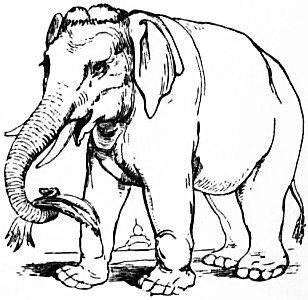
Fig. 1. Asiatic Elephant (Elephas maximus).
“The structure of the teeth is sufficient to indicate that the food consists chiefly of grass, leaves, succulent shoots and fruits; and this has been found by observation to be actually the case. In this respect the Asiatic species differs very widely from its African relative, whose nutriment is largely composed of boughs and roots. Another difference between the two animals is to be found in the great intolerance of the direct rays of the sun displayed by the Asiatic species, which never voluntarily exposes itself to their influence. Consequently, during the hot season in Upper India, and at all times except during the rains in the more southern districts, elephants keep much to the denser parts of the forests. In Southern India they delight in hill-forest, where the undergrowth is largely formed of bamboo, the tender shoots of which form a favourite delicacy; but during the rains they venture out to feed on the open grass tracts. Water is everywhere essential to their well-being; and no animals delight more thoroughly in a bath. Nor are they afraid to venture out of their depth, being excellent swimmers, and able, by means of their trunks, to breathe without difficulty when the entire body is submerged. The herds, which are led by females, appear in general to be family parties; and although commonly restricted to from thirty to fifty, may occasionally include as many as one hundred head. The old bulls are very generally solitary for a considerable portion of the year, but return to the herds during the pairing season. Some ‘rogue’ elephants—gunda of the natives—remain, however, permanently separated from the rest of their kind. All such solitary bulls, as their colloquial name indicates, are of a spiteful disposition; and it appears that with the majority the inducement to live apart is due to their partiality for cultivated crops, into which the more timid females are afraid to venture. ‘Must’ elephants are males in a condition of—probably sexual—excitement, when an abundant discharge of dark oily matter exudes from two pores in the forehead. In addition to various sounds produced at other times, an elephant when about to charge gives vent to a shrill loud ‘trumpet’; and on such occasions rushes on its adversary with its trunk safely rolled up out of danger, endeavouring either to pin him to the ground with its tusks (if a male tusker) or to trample him to death beneath its ponderous knees or feet.”
Exact information in regard to the period of gestation of the female is still lacking, the length of the period being given from eighteen to twenty-two months by different authorities. The native idea, which may be true, is that the shorter period occurs in the case of female and the longer in that of male calves. In India elephants seldom breed in captivity, though they do so more frequently in Burma and Siam; the domesticated stock is therefore replenished by fresh captures. Occasionally two calves are produced at a birth, although the normal number is one. Calves suckle with their mouths and not with their trunks. Unlike the African species, the Indian elephant charges with its trunk curled up, and consequently in silence.
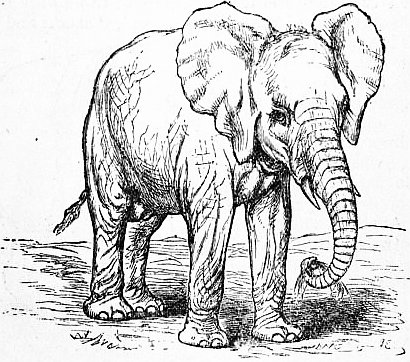
Fig. 2.—Immature African Elephant (Elephas africanus).
As regards their present distribution in India, elephants are found along the foot of the Himalaya as far west as the valley of Dehra-Dun, where the winter temperature falls to a comparatively low point. A favourite haunt used to be the swamp of Azufghur, lying among the sal-forests to the northward of Meerut. In the great tract of forest between the Ganges and Kistna rivers they occur locally as far west as Bilaspur and Mandla; they are met with in the Western Ghats as far north as between latitude 17° and 18°, and are likewise found in the hill-forests of Mysore, as well as still farther south. In this part of the peninsula they ascend the hills to a considerable height, as they do in the Newara Eliya district of Ceylon, where they have been encountered at an elevation of over 7000 ft. There is evidence that about three centuries ago elephants wandered in the forests of Malwa and Nimar, while they survived to a later date in the Chanda district of the Central Provinces. At the comparatively remote epoch when the Deccan was a forest tract, they were probably also met with there, but the swamps of the Bengal Sundarbans appear unsuited to their habits.
Of tusks, the three longest specimens on record respectively measure 8 ft. 9 in., 8 ft. 2 in. and 8 ft.; their respective weights being 81, 80 and 90 ℔. These are, however, by no means the heaviest—one, whose length is 7 ft. 33⁄8 in., weighing 102 ℔; while a second, of which the length is 7 ft. 3¼ in., scaled 97½ ℔. Of the largest pair in the possession of the British Museum, which belonged to an elephant killed in 1866 by Colonel G.M. Payne in Madras, one tusk measures 6 ft. 8 in. in length, and weighs 77¾ ℔, the other being somewhat smaller. It should be added that some of these large tusks came from Ceylon; such tuskers being believed to be descended from mainland animals imported into the island. “White” elephants are partial or complete albinos, and are far from uncommon in Burma and Siam. Young Indian elephants are hairy, thus showing affinity with the mammoth.
The African elephant is a very different animal from its Asiatic cousin, both as regards structure and habits; and were it not for the existence of intermediate extinct species, might well be regarded as the representative of a distinct genus. Among its characteristics the following points are noticeable. The molar teeth are of coarse construction, with fewer and larger plates and thicker enamel; the ridge-formula being 3, 6, 7, 7, 8, 10; while the plates are not flattened, but thicker in the middle than at the edges, so that their worn grinding-surfaces are lozenge-shaped. Ears very large. The upper and lower margins of the end of the trunk form two nearly equal prehensile lips. Only three toes on the hind-foot. A very important distinction is to be found in the conformation of the trunk, which, as shown in fig. 2, looks as though composed of a number of segments, gradually decreasing in size from base to tip like the joints of a telescope, instead of tapering gradually and evenly from one extremity to the other. The females have relatively large tusks, which are essential in obtaining their food. Except where exterminated by human agency (and this has been accomplished to a deplorable extent), the African elephant is a native of the wooded districts of the whole of Africa south of the Sahara. It is hunted chiefly for the sake of the ivory of its immense tusks, of which it yields the principal source of supply to the European market, and the desire to obtain which is rapidly leading to the extermination of the species. In size the male African elephant often surpasses the Asiatic species, reaching nearly 12 ft. in some cases. The circumference of the fore-foot is half the height at the shoulder, a circumstance which enables sportsmen to estimate approximately the size of their quarry. A tusk in the British Museum measures 10 ft. 2 in. in length, with a basal girth of 24 in. and a weight of 226½ ℔; but a still longer, although lighter, tusk was brought to London in 1905.
Several local races of African elephant have been described, mainly distinguished from one another by the form and size of the ears, shape of the head, &c. The most interesting of these is the pigmy Congo race, E. africanus pumilio, named on the evidence of an immature specimen in the possession of C. Hagenbeck, the well-known animal-dealer of Hamburg, in 1905. According to Hagenbeck’s estimate, this elephant, which came from the French Congo, was about six years old at the time it came under scientific notice. Moreover, in the opinion of the same observer, it is in no wise an abnormally dwarfed or ill-grown representative of the normal type of African elephant, but a well-developed adolescent animal. In height it stood about the same as a young individual of the ordinary African elephant when about a year and a half old, the vertical measurement at the shoulder being only 4 ft., or merely a foot higher than a new-born Indian elephant. Hagenbeck’s estimate of its age was based on the presence of well-developed tusks, and the relative proportion of the fore and hind limbs, which are stated to show considerable differences in the case of the African elephant according to age. Nothing was stated as to the probability of an increase in the stature of the French Congo animal as it grows older; but even if we allow another foot, its height would be considerably less than half that of a large Central African bull of the ordinary elephant.
By Dr Paul Matschie several races of the African elephant have been described, mainly, as already mentioned, on certain differences in the shape of the ear. From the two West African races (E. a. cyclotis and E. a. oxyotis) the dwarf Congo elephant is stated to be distinguished by the shape of its ear; comparison in at least one instance having been made with an immature animal. The relatively small size of the ear is one of the most distinctive characteristics of the dwarf race. Further, the skin is stated to be much less rough, with fewer cracks, while a more important difference occurs in the trunk, which lacks the transverse ridges so distinctive of the ordinary African elephant, and thereby approximates to the Asiatic species.
If the differences in stature and form are constant, there can be no question as to the right of the dwarf Congo elephant to rank as a well-marked local race; the only point for consideration being whether it should not be called a species. The great interest in connexion with a dwarf West African race of elephant is in relation to the fossil pigmy elephants of the limestone fissures and caves of Malta and Cyprus. Although some of these elephants are believed not to have been larger than donkeys, the height of others may be estimated at from 4 to 5 ft., or practically the same as that of the dwarf Congo race. By their describers, the dwarf European elephants were regarded as distinct species, under the names of Elephas melitensis, E. mnaidriensis and E. cypriotes; but since their molar teeth are essentially miniatures of those of the African elephant, it has been suggested by later observers that these animals are nothing more than dwarf races of the latter. This view may receive some support from the occurrence of a dwarf form of the African elephant in the Congo; and if we regard the latter as a subspecies of Elephas africanus, it seems highly probable that a similar position will have to be assigned to the pigmy European fossil elephants. If, on the other hand, the dwarf Congo elephant be regarded as a species, then the Maltese and Cyprian elephants may have to be classed as races of Elephas pumilio; or, rather, E. pumilio will have to rank as a race of the Maltese species. In this connexion it is of interest to note that, both in the Mediterranean islands and in West Africa, dwarf elephants of the African type are accompanied by pigmy species of hippopotamus, although we have not yet evidence to show that in Africa the two animals occupy actually the same area. Still, the close relationship of the existing Liberian pigmy hippopotamus to the fossil Mediterranean species is significant, in relation to the foregoing observations on the elephant.
It may be added that fossil remains of the African elephant have been obtained from Spain, Sicily, Algeria and Egypt, in strata of the Pleistocene age. Some of the main differences in the habits of the African as distinct from those of the Asiatic elephant have been mentioned under the heading of the latter species. The most important of these are the greater tolerance by the African animal of sunlight, and the hard nature of its food, which consists chiefly of boughs and roots. The latter are dug up with the tusks; the left one being generally employed in this service, and thus becoming much more worn than its fellow.
(R. L.*)
ELEPHANTA ISLE (called by the natives Gharapuri), a small island between Bombay and the mainland of India, situated about 6 m. from Bombay. It is nearly 5 m. in circumference, and the few inhabitants it contains are employed in the cultivation of rice, and in rearing sheep and poultry for the Bombay market. The island, till within recent times, was almost entirely overgrown with wood; it contains several springs of good water. There are also important quarries of building stone. But it owes its chief celebrity to the mythological excavations and sculptures of Hindu superstition which it contains. Opposite to the landing-place was a colossal statue of an elephant, cracked and mutilated, from which the island received from the Portuguese the name it still bears. The statue was removed in 1864, and may now be seen in the Victoria Gardens, Bombay. At a short distance from this spot is a cave, the entrance to which is nearly 60 ft. wide and 18 high, supported by pillars cut out of the rock; the sides are sculptured into numerous compartments, containing representations of the Hindu deities, but many of the figures have been defaced by the zeal of the Mahommedans and Portuguese. In the centre of the excavations is a remarkable Trimurti or bust, formerly thought to represent the Hindu Triad, namely, Brahma the Creator, Vishnu the Preserver, and Siva or Mahadeva the Destroyer, but now held to be a triform representation of Siva alone. The heads are from 4 to 5 ft. in length, and are well cut, and the faces, with the exception of the under lip, are handsome. The head-dresses are curiously ornamented; and one of the figures holds in it’s hand a cobra, while on the cap are, amongst other symbols, a human skull and an infant. On each side of the Trimurti is a pilaster, the front of which is filled up by a human figure leaning on a dwarf, both much defaced. There is a large compartment to the right, hollowed a little, and covered with a great variety of figures, the largest of which is 16 ft. high, representing the double figure of Siva and Parvati, named Viraj, half male and half female. On the right is Brahma, four-faced, on a lotus—one of the very few representations of this god which now exist in India; and on the left is Vishnu. On the other side of the Trimurti is another compartment with various figures of Siva and Parvati, the most remarkable of which is Siva in his vindictive character, eight-handed, with a collet of skulls round his neck. On the right of the entrance to the cave is a square apartment, supported by eight colossal figures, containing a gigantic symbol of Mahadeva or Siva cut out of the rock. In a ravine connected with the great cave are two other caves, also containing sculptures, which, however, have been much defaced owing to the action of damp and the falling of the rocks; and in another hill is a fourth cave. This interesting retreat of Hindu religious art is said to have been dedicated to Siva, but it contains numerous representations of other Hindu deities. It has, however, for long been a place not so much of worship as of archaeological and artistic interest alike to the European and Hindu traveller. It forms a wonderful monument of antiquity, and must have been a work of incredible labour. Archaeological authorities are of opinion that the cave must have been excavated about the 10th century of the Christian era, if not earlier. The island is much frequented by the British residents of Bombay; and during his tour in India in 1875 King Edward VII., then prince of Wales, was entertained there at a banquet.
ELEPHANTIASIS (Barbadoes leg; Boucnemia), is a disease dependent on chronic lymphatic obstruction, and characterized by hypertrophy of the skin and subcutaneous tissue. Two distinct forms are known, (1) elephantiasis arabum, due to the development of living parasites, filaria sanguinis hominis (or filaria Bancrofti), and (2) the non-filarial form due to lymphatic obstruction from any other cause whatsoever, as erysipelas, the deposit of tuberculous or cancerous material in the lymphatic glands, phlegmasia dolens (white leg), long-continued eczema, &c. The enlargement is limited to a particular part of the body, generally one, or in rare cases both of the lower limbs, occasionally the scrotum, one of the labiae or the mammary gland; far more rarely the face. An attack is usually ushered in by febrile disturbance (elephantoid fever), the part attacked becoming rapidly swollen, and the skin tense and red as in erysipelas. The subcutaneous tissues become firm, infiltrated and hard, pitting only on considerable pressure. The skin becomes roughened with a network of dilated lymphatics, and vesicles and bullae may form, discharging a chyle-like fluid when broken (lymphorrhoea). In a later stage still the skin may be coarse and wart-like, and there is a great tendency for varicose ulcers to form. At the end of a variable time enlargement ceases to take place, and the disease enters a quiescent state: but recrudescences occur at irregular intervals, always ushered in by elephantoid fever. At the end of some years the attacks of fever cease, and the affected part remains permanently swollen. The only difference in the history of the two forms of the disease lies in the fact that the non-filarial form progresses steadily, until either the underlying condition is cured, or in the case of cancer, &c., brings about a fatal issue. The elephantiasis due to filaria is spread by the agency of mosquitoes, in whose bodies the intermediate stage is passed. The dead mosquito falls upon the water, which thus becomes infected, and hence the ova reach the human stomach. The young worm develops, bores through the gastric mucous membrane and finally becomes lodged in the lymphatics, usually of one or other of the extremities. A large number of embryonic filariae are produced. Some remain in the lymphatic spaces and cause lymphatic obstruction, while others enter the blood stream by night (filaria nocturna), or by day (filaria diurna). It is supposed that a mosquito, biting an infected person, itself becomes infected with the blood it abstracts, and that so a new generation is developed.