VOLUME VIII SLICE VII Drama to Dublin (continued 10)
Reading edition
It was due to the happy selection of Professor E. A. Schäfer, as chairman of a committee appointed by the Royal Medical & Chirurgical Society for the investigation of the methods in use for resuscitation of the apparently drowned, that the new method was devised. This committee made many experiments upon the cadaver but failed to arrive at any definite conclusion by that means. The necessity then appeared of thorough investigation of the subject by experiments upon animals, so that the phenomena attendant upon drowning might be better known, and the various methods of resuscitation properly tried. These experiments were made in Edinburgh by Professor Schäfer, with the co-operation of Dr P. T. Herring, and the results obtained were embodied in the report of the committee, which was presented to the Royal Medical and Chirurgical Society in 1904, and published as a supplement to volume 86 of the Transactions of the society. As the direct outcome of these experiments, Professor Schäfer was led to believe that a pressure method of resuscitation was not only simpler to perform but also more efficacious than any other. This conclusion was put to the test by measurements of the results obtained upon the normal human subject by the various methods in vogue; from these measurements, which were published in the Proceedings of the Royal Society of Edinburgh in December 1903, it appeared that when such pressure is exerted in the prone position the highest degree of efficiency as well as simplicity is obtained. The description of this method was communicated to the Royal Medical and Chirurgical Society, and was published in the following year (1904) in volume 87 of the Transactions of the society.
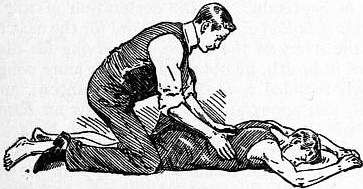
Fig 8..—Schäfer method of treatment of the apparently drowned. Position A.
Thus it came about that by investigating the phenomena of drowning, and the means of resuscitation in dogs, and by applying the results obtained to man, the method which the society now advocates as the best was arrived at. In the experiments referred to, it was found necessary to drown 38 dogs, all but two of which were from first to last in a complete state of anaesthesia, the two exceptions having been simply drowned without anaesthesia. It is important that the public should understand that the evolution of a method which will probably be the means of saving thousands of lives has resulted from the painless sacrifice of less than 40 dogs, a number which would doubtless in any case have been destroyed by drowning or some other form of suffocation, but without the benefit of the anaesthetics which were employed in the experiments.
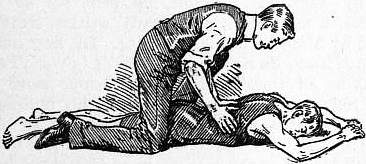
Fig. 9.—Schäfer method of treatment of the apparently drowned. Position B.
Professor Schäfer describes the method as follows:—Lay the subject face downwards on the ground, then without stopping to remove the clothing the operator should at once place himself in position astride or at one side of the subject, facing his head and kneeling upon one or both knees. He then places his hands flat over the lower part of the back (on the lowest ribs), one on each side (fig. 8), and then gradually throws the weight of his body forward on to them so as to produce firm pressure (fig. 9)—which must not be violent, or upon the patient’s chest. By this means the air, and water if any, are driven out of the patient’s lungs. Immediately thereafter the operator raises his body slowly so as to remove the pressure, but the hands are left in position. This forward and backward movement is repeated every four or five seconds; in other words, the body of the operator is swayed slowly forwards and backwards upon the arms from twelve to fifteen times a minute, and should be continued for at least half an hour, or until the natural respirations are resumed. Whilst one person is carrying out artificial respiration in this way, others may, if there be opportunity, busy themselves with applying hot flannels to the body and limbs, and hot bottles to the feet, but no attempt should be made to remove the wet clothing or to give any restoratives by the mouth until natural breathing has recommenced.
In his paper read before the Royal Society of Edinburgh in December 1903 Professor Schäfer gave the following table of the relative exchanges of air under different methods:—
Mode of Respiration. Number per minute. Amount of air exchanged per respiration. Amount of air exchanged per minute.
Natural respiration (supine) 13 489 c.c. 6.460 c.c.
Natural ” (prone) 12.5 422 ” 5.240 ”
Prone (pressure), “Schäfer” 13 520 ” 6.760 ”
Supine (pressure), “Howard” 13.6 295 ” 4.020 ”
Rolling (with pressure), “Marshall Hall” 13 254 ” 3.300 ”
Rolling (without pressure), “Marshall Hall” 12 192 ” 2.300 ”
Traction (with pressure), “Silvester” 12.8 178 ” 2.280 ”
These experiments all tend to show that by far the most efficient method of performing artificial respiration is that of intermittent pressure upon the lower ribs with the subject in the prone position or face downward. It is also the easiest to perform, requiring practically no exertion, as the weight of the operator’s body produces the effect, and the swinging forwards and backwards of the body some thirteen times a minute, which alone is required, is by no means fatiguing, and has the further great advantage that it can be effectively carried out by one person.
See Taylor, Medical Jurisprudence; “Description of a simple and efficient method of performing artificial respiration in the human subject, especially in cases of drowning,” by E. A. Schäfer, F.R.S. (vol. 87, Medico-Chirurgical Society’s Transactions); “The relative efficiency of certain methods of performing artificial respiration in man,” by E. A. Schäfer, F.R.S. (vol. 23, part i. Proceedings of the Royal Society of Edinburgh); A Method for the Treatment of the Apparently Drowned, by R. S. Bowles (London, 1903); Handbook of Instruction, Royal Life Saving Society (London, 1908).
(W. Hy.)
Penal Use of Drowning.—As a form of capital punishment, drowning was once common throughout Europe, but it is now only practised in Mahommedan countries and the Far East. Tacitus states that the ancient Germans hanged criminals of any rank, but those of the low classes were drowned beneath hurdles in fens and bogs. The Romans also drowned convicts. The Lex Cornelia ordained that parricides should be sewn in a sack with a dog, cock, viper and ape, and thrown into the sea. The law of ancient Burgundy ordered that an unfaithful wife should be smothered in mud. The Anglo-Saxon punishment for women guilty of theft was drowning. So usual was the penalty in the middle ages that grants of life and death jurisdiction were worded to be “cum fossa et furca” (i.e. “with drowning-pit and gallows”). The owner of Baynard’s Castle, London, in the reign of John, had powers of trying criminals, and his descendants long afterwards claimed the privileges, the most valued of which was the right of drowning in the Thames traitors taken within their jurisdiction. Drowning was the punishment ordained by Richard Cœur de Lion for any soldier of his army who killed a fellow-crusader during the passage to the Holy Land. Drowning was usually reserved for women as being the least brutal form of death-penalty, but occasionally a male criminal was so executed as a matter of favour. Thus in Scotland in 1526 a man convicted of theft and sacrilege was ordered to be drowned “by the queen’s special grace.” In 1611 a man was drowned at Edinburgh for stealing a lamb, and in 1623 eleven gipsy women suffered there. By that date the penalty was obsolete in England. It survived in Scotland till 1685 (the year of the drowning of the Wigtoun martyrs). The last execution by drowning in Switzerland was in 1652, in Austria 1776, in Iceland 1777; while in France during the Revolution the penalty was revived in the terrible Noyades carried out by the terrorist Jean Baptiste Carrier at Nantes. It was abolished in Russia at the beginning of the 18th century.
DROYSEN, JOHANN GUSTAV (1808-1884), German historian, was born on the 6th of July 1808 at Treptow in Pomerania. His father, Johann Christoph Droysen, was an army chaplain, in which capacity he was present at the celebrated siege of Kolberg in 1806-7. As a child young Droysen witnessed some of the military operations during the War of Liberation, for his father was pastor at Greifenhagen, in the immediate neighbourhood of Stettin, which was held by the French during the greater part of 1813. The impressions of these early years laid the foundation of the ardent attachment to Prussia which distinguished him, like so many other historians of his generation. He was educated at the gymnasium of Stettin and at the university of Berlin; in 1829 he became a master at the Graue Kloster (or Grey Friars), one of the oldest schools in Berlin; besides his work there he gave lectures at the university, from 1833 as privat-dozent, and from 1835 as professor, without a salary. During these years he was occupied with classical antiquity; he published a translation of Aeschylus and a paraphrase of Aristophanes, but the work by which he made himself known as a historian was his Geschichte Alexanders des Grossen (Berlin, 1833, and other editions), a book which still remains probably the best work on the subject. It was in some ways the herald of a new school of German historical thought, for it shows that idealization of power and success which he had learnt from the teaching of Hegel. It was followed by other volumes dealing with the successors of Alexander, published under the title of Geschichte des Hellenismus (Hamburg, 1836-1843). A new and revised edition of the whole work was published in 1885; it has been translated into French, but not into English.
In 1840 Droysen was appointed professor of history at Kiel. He was at once attracted into the political movement for the defence of the rights of the Elbe duchies, of which Kiel was the centre. Like his predecessor F. C. Dahlmann, he placed his historical learning at the service of the estates of Schleswig-Holstein and composed the address of 1844, in which the estates protested against the claim of the king of Denmark to alter the law of succession in the duchies. In 1848 he was elected a member of the Frankfort parliament, and acted as secretary to the committee for drawing up the constitution. He was a determined supporter of Prussian ascendancy, and was one of the first members to retire after the king of Prussia refused the imperial crown in 1849. During the next two years he continued to support the cause of the duchies, and in 1850, with Carl Samwer, he published a history of the dealings of Denmark with Schleswig-Holstein, Die Herzogthümer Schleswig-Holstein und das Königreich Dänemark seit dem Jahre 1806 (Hamburg, 1850). A translation was published in London in the same year under the title The Policy of Denmark towards the Duchies of Schleswig-Holstein. The work was one of great political importance, and had much to do with the formation of German public opinion on the rights of the duchies in their struggle with Denmark.
After 1851 it was impossible for him to remain at Kiel, and he was appointed to a professorship at Jena; in 1859 he was called to Berlin, where he remained till his death. In his later years he was almost entirely occupied with Prussian history. In 1851 he brought out a life of Count Yorck von Wartenburg (Berlin, 1851-1852, and many later editions), one of the best biographies in the German language, and then began his great work on the Geschichte der preussischen Politik (Berlin, 1855-1886). Seven volumes were published, the last not till after his death. It forms a complete history of the growth of the Prussian monarchy down to the year 1756. This, like all Droysen’s work, shows a strongly marked individuality, and a great power of tracing the manner in which important dynamic forces worked themselves out in history. It was this characteristic quality of comprehensiveness that also gave him so much influence as a teacher.
Droysen, who was twice married, died in Berlin on the 19th of June 1884. His eldest son, Gustav, is the author of several well-known historical works, namely, Gustav Adolf (Leipzig, 1869-1870); Herzog Bernhard von Weimar (Leipzig, 1885); an admirable Historischer Handatlas (Leipzig, 1885), and several writings on various events of the Thirty Years’ War. Another son, Hans Droysen, is the author of some works on Greek history and antiquities.
See M. Duncker, Johann Gustav Droysen, ein Nachruf (Berlin, 1885); and Dahlmann-Waitz, Quellenkunde der deutschen Geschichte (Leipzig, 1906).
(J. W. He.)
DROZ, ANTOINE GUSTAVE (1832-1895), French man of letters, son of the sculptor J. A. Droz (1807-1872), was born in Paris on the 9th of June 1832. He was educated as an artist, and began to exhibit in the Salon of 1857. A series of sketches dealing gaily and lightly with the intimacies of family life, published in the Vie parisienne and issued in book form as Monsieur, Madame et Bébé (1866), won for the author an immediate and great success. Entre nous (1867) was built on a similar plan, and was followed by some psychological novels: Le Cahier bleu de Mlle Cibot (1868); Autour d’une source (1869); Un Paquet de lettres (1870); Babolein (1872); Les Étangs (1875); L’Enfant (1885). His Tristesses et sourires (1884) is a delicate analysis of the niceties of family intercourse and its difficulties. Droz’s first book was translated into English under the title of Papa, Mamma and Baby (1887). Un Été à la campagne, a book which caused considerable scandal, was erroneously attributed to him. He died on the 22nd of October 1895.
DROZ, FRANÇOIS-XAVIER JOSEPH (1773-1850), French writer on ethics and political science, was born on the 31st of October 1773 at Besançon, where his family had furnished men of considerable mark to the legal profession. His own legal studies led him to Paris in 1792; he arrived on the very day after the dethronement of the king, and was present during the massacres of September; on the declaration of war he joined the volunteer bataillon of the Doubs, and for the next three years served in the Army of the Rhine. Receiving his discharge on the score of ill-health, he obtained a much more congenial post in the newly-founded école centrale of Besançon; and in 1799 he made his first appearance as an author by an Essai sur l’art oratoire (Paris, Fructidor, An VII.), in which he acknowledges his indebtedness more especially to Hugh Blair. Removing to Paris in 1803, he became intimate not only with the like-minded Ducis, but also with the sceptical Cabanis; and it was on this philosopher’s advice that, in order to catch the public ear, he produced the romance of Lina, which Sainte-Beuve has characterized as a mingled echo of Florian and Werther. Like several other literary men of the time, he obtained a post in the revenue office known as the Droits réunis; but from 1814 he devoted himself exclusively to literature and became a contributor to various journals. Already favourably known by his Essai sur l’art d’être heureux (Paris, 1806), his Éloge de Montaigne (1812), and his Essai sur le beau dans les arts (1815), he not only gained the Monthyon prize in 1823 by his work De la philosophie morale ou des différents systèmes sur la science de la vie, but also in 1824 obtained admission to the Académie Française. The main doctrine inculcated in this last treatise is that society will never be in a proper state till men have been educated to think of their duties and not of their rights. It was followed in 1825 by Application de la morale à la philosophie et à la politique, and in 1829 by Économie politique, ou principes de la science des richesses, a methodical and clearly written treatise, which was edited by Michel Chevalier in 1854. His next and greatest work was a Histoire du règne de Louis XVI (3 vols., Paris, 1839-1842). As he advanced in life Droz became more and more decidedly religious, and the last work of his prolific pen was Pensées du Christianisme (1842). Few have left so blameless a reputation: in the words of Sainte-Beuve, he was born and he remained all his life of the race of the good and the just.
See Guizot, Discours académiques; Montalembert, “Discours de réception,” in Mémoires de l’Académie française; Sainte-Beuve, Causeries du lundi, t. iii.; Michel Chevalier, Notice prefixed to the Économie politique.
DRUG, a district and town of British India, in the Chhattisgarh division of the Central Provinces. The district was formed in 1906 out of portions of the districts of Bilaspur and Raipur. It has an area of 3807 sq. m., and the population on that area in 1901 was 628,885, showing a heavy decrease in the preceding decade, owing to the famines of 1897 and 1900. The district is a long narrow tract, with lofty ridges of gravel in the centre and north, but otherwise consisting of open rolling country. The Tendula and Seonath are the principal rivers. Rich black soil covers a large part of the district, and rice, wheat and other crops are grown. The main line of the Bengal-Nagpur railway passes through the district. Drug, the capital of the district, is on the railway, 685 m. from Bombay, and had in 1901 a population of 4002. Bell-metal-founding and cotton-weaving are carried on.
DRUG (from Fr. drogue, a word common in Romance languages, cf. Span. and Ital. droga; the origin of the word is obscure, but may possibly be connected with Dutch droog, dry), any organic and inorganic substance used in the preparation of medicines, by itself or in combination with others, and either prepared by some method or used in a natural state (see Pharmacology and Pharmacopoeia). In a particular sense “drug” is often used synonymously for narcotics or poisonous substances, and hence “to drug” means to stupefy or poison. The word is also applied to any article for which there is no sale, or of which the value has greatly depreciated—a “drug in the market.”
DRUIDISM, the name usually given to the religious system of the ancient inhabitants of Gaul and the British Islands. The word Druid (Lat. druida) probably represents a Gaulish druid-s, Irish drúi, gen. sing. drúad. On the analogy of Irish súi<su-vid-s the word has been analysed into dru-vid-, “very knowing, wise.” The ancient Welsh form of the word does not exist. Welsh derwydd and dryw are probably to be regarded as of recent coinage, as also the Breton forms drouiz, druz. The important part played by the oak in the religious cults of other countries suggests a connexion with Greek δρῦς, oak, but this etymology is rather in disfavour at the present time.
We find in Caesar the first and at the same time the most circumstantial account of the Druids to be met with in the classical writers. He tells us that all men of any rank and dignity in Gaul were included among the Druids or the nobles. In other words, the Druids constituted the learned and the priestly class, and they were in addition the chief expounders and guardians of the law. We are, however, informed by Diodorus and Strabo that this class was composed of Druids, bards and soothsayers. Hence Caesar seems to assign more extensive functions to the Druids than they actually possessed. The substance of Caesar’s account is as follows. On those who refused to submit to their decisions they had the power of inflicting severe penalties, of which excommunication from society was the most dreaded. As they were not a hereditary caste and enjoyed exemption from service in the field as well as from payment of taxes, admission to the order was eagerly sought after by the youth of Gaul. The course of training to which a novice had to submit was protracted, extending sometimes over twenty years. All instruction was communicated orally, but for ordinary purposes they had a written language in which they used the Greek characters. The president of the order, whose office was elective and who enjoyed the dignity for life, had supreme authority among them. They taught that the soul was immortal. Astrology, geography, physical science and natural theology were their favourite studies.
Britain was the headquarters of Druidism, but once every year a general assembly of the order was held within the territories of the Carnutes in Gaul. The Gauls were accustomed to offer human sacrifices, usually criminals. Cicero remarks on the existence among the Gauls of augurs or soothsayers, known by the name of Druids, with one of whom, Divitiacus, an Aeduan, he was acquainted. Diodorus informs us that a sacrifice acceptable to the gods must be attended by a Druid, for they are the intermediaries. Before a battle they often throw themselves between two armies to bring about peace. They are said to have had a firm belief in the immortality of the soul and in metempsychosis, a fact which led several ancient writers to conclude that they had been influenced by the teaching of the Greek philosopher Pythagoras.
A rescript of Augustus forbade Roman citizens to practise druidical rites. In Strabo we find the Druids still acting as arbiters in public and private matters, but they no longer deal with cases of murder. Under Tiberius the Druids were suppressed by a decree of the senate, but this had to be renewed by Claudius in a.d. 54. In Mela we find the Druids teaching in the depths of a forest or in caverns. In Pliny their activity is limited to the practice of medicine and sorcery. According to this writer the Druids held the mistletoe in the highest veneration. Groves of oak were their chosen retreat. Whatever grew on that tree was thought to be a gift from heaven, more especially the mistletoe. When thus found, the mistletoe was cut with a golden knife by a priest clad in a white robe, two white bulls being sacrificed on the spot. Tacitus, in describing the attack made on the island of Mona (Anglesea) by the Romans under Suetonius Paulinus, represents the legionaries as being awe-struck on landing by the appearance of a band of Druids, who, with hands uplifted towards heaven, poured forth terrible imprecations on the heads of the invaders. The courage of the Romans, however, soon overcame such fears; the Britons were put to flight; and the groves of Mona, the scene of many a sacrifice and bloody rite, were cut down.
After this the continental Druids disappear entirely, and are only referred to on very rare occasions. Ausonius, for instance, apostrophizes the rhetorician Attius Patera as sprung from a race of Druids.
When we turn to the British Islands we find, as we should expect, no traces of the Druids in England and Wales after the conquest of Anglesea mentioned above, except in the story of Vortigern as recounted by Nennius. After being excommunicated by Germanus the British leader invites twelve Druids to assist him. These probably came from North Britain. In Irish literature, however, the Druids are frequently mentioned, and their functions in the island seem to correspond fairly well to those of their Gaulish brethren described by classical writers. The functions of Caesar’s Druids we here find distributed amongst Druids, bards and poets (fili), but even in very early times the poet has usurped many of the duties of the Druid and finally supplants him with the spread of Christianity. The following is the position of the Druid in the pagan literature. The most important documents are contained in MSS. of the 12th century, but the texts themselves go back in large measure to about a.d. 700. In the heroic cycles the Druids do not appear to have formed any corporation, nor do they seem to have been exempt from military service. Cathbu (Cathbad), the Druid connected with Conchobar, king of Ulster, in the older cycle is accompanied by a number of youths (100 according to the oldest version) who are desirous of learning his art, though what this consisted in we are not told. The Druids are represented as being able to foretell the future and to perform magic. Before setting out on the great expedition against Ulster, Medb, queen of Connaught, goes to consult her Druid, and just before the famous heroine Derdriu (Deirdre) is born, Cathbu prophesies what sort of a woman she will be. We may cite two instances of the magical skill of the Druids. The hero Cuchulinn has returned from the land of the fairies after having been enticed thither by a fairy-woman named Fand, whom he is now unable to forget. He is given a potion by some Druids, which banishes all memory of his recent adventures and which also rids his wife Emer of the pangs of jealousy. More remarkable still is the story of Etain. This lady, now the wife of Eochaid Airem, high-king of Ireland, was in a former existence the beloved of the god Mider, who again seeks her love and carries her off. The king has recourse to his Druid Dalān, who requires a whole year to discover the haunt of the couple. This he accomplished by means of four wands of yew inscribed with ogam characters. The following description of the band of Cathbu’s Druids occurs in the epic tale, the Cattle-spoiling of Cualnge (Cooley): “The attendant raises his eyes towards heaven and observes the clouds and answers the band around him. They all raise their eyes towards heaven, observe the clouds, and hurl spells against the elements, so that they arouse strife amongst them and clouds of fire are driven towards the camp of the men of Ireland.” We are further told that at the court of Conchobar no one had the right to speak before the Druids had spoken. In other texts the Druids are able to produce insanity.
In the religious literature they are almost exclusively represented as magicians and diviners opposing the Christian missionaries, though we find two of them acting as tutors to the daughters of Laegaire, the high-king, at the coming of St Patrick. They are represented as endeavouring to prevent the progress of St Patrick and St Columba by raising clouds and mist. Before the battle of Culdremne (561) a Druid made an airbe drúad (fence of protection?) round one of the armies, but what is precisely meant by the phrase is obscure. The Irish Druids seem to have had a peculiar tonsure. The word drúi is always used to render the Latin magus, and in one passage St Columba speaks of Christ as his Druid.
See D’Arbois de Jubainville, Les Druides et les dieux celtiques à forme d’animaux (Paris, 1906), and Introduction à l’étude de la littérature celtique (Paris, 1883); P. W. Joyce, A Social History of Ancient Ireland (London, 1903).
(E. C. Q.)
DRUIDS, ORDER OF, a friendly society founded, as an imitation of the ancient Druids, in London in 1781. They adopted Masonic rites and spread to America (1833) and Australia. Their lodges are called “Groves.” In 1872 the Order was introduced into Germany. (See Friendly Societies.)
DRUM (early forms drome or dromme, a word common to many Teut. languages, cf. Dan. tromme, Ger. Trommel: the word is ultimately the same as “trumpet,” and is probably onomatopoeic in origin; it appears late in Eng. about the middle of the 16th century), the name given to the well-known musical instrument (see below) and also to many objects resembling it in shape. Thus it is used of any receptacle of similar shape, as a “drum” of oil, &c.; in machinery, of a revolving cylinder, round which belting is passed; of the tympanum or cylindrically shaped middle ear, and specially of the membrane that closes the external auditory meatus; and, in architecture, of the substructure of a dome when raised to some height above the pendentives. The architectural drum had a twofold object; first, to give greater elevation to the dome externally so that it should rise well above the surrounding building, and secondly, to allow of the interior being lighted with vertical windows cut in the drum, instead of forming penetrations in the dome itself, as in St Sophia, Constantinople. The term is also applied to the circular blocks of stone, which in columns of large dimensions were built with a series of drums. At Selinus in Sicily some of these great circular blocks are found on the road between the quarries and the temples; they vary from 8 to 10 ft. in diameter, being about 6 ft. high. The term frusta is sometimes applied to them.
In music the drum (Fr. tambour; Ger. Trommel; Ital. tamburo) is an instrument of percussion common in some form to all nations and ages. It consists of a frame or vessel forming a resonant cavity, over one or both ends of which is stretched a skin or vellum set in vibration by direct percussion of hand or stick. Drums fall into two divisions according to the nature of their sonority:—(1) instruments producing sounds of definite musical pitch, and qualified thereby to take part in the harmony of the orchestra, such as the kettledrum (q.v.); (2) instruments of indefinite sonorousness, and therefore excluded from the harmony of the orchestra; such are the bass drum, the side or snare drum, the tenor drum, the tambourine, all used for marking the rhythm and adding tone colour.
Drums are further divided into three classes according to special features of construction:—(1) instruments having a skin stretched over one end of the resonant cavity, the other being open, such as the tambourine (q.v.) and the darabukkeh or Egyptian drum, shaped like a mushroom; (2) instruments consisting of a cup-shaped receptacle of metal, wood or earthenware entirely closed by a skin or vellum stretched across the opening, as in the kettledrum; (3) a receptacle in the shape of a cylinder closed at both ends by skins, as in the bass drum, side drum, &c.
Skin or parchment only acquires the elasticity requisite to produce vibration by tension; the vibrations of the parchment are taken up by the air enclosed in the receptacle, which thus reinforces the sound produced by the parchment. The tone of the instrument whether definite or indefinite depends upon the dimensions of the vellum, the shape of the resonant receptacle, and the method of percussion. The intensity of the sound depends upon the degree of percussive force used and the diameter of the vellum in proportion to the dimensions of the resonant receptacle; the material of which the latter consists has little or no influence on the tone of the instrument. The pitch of the sound is determined by the dimensions of the vellum taken in conjunction with the degree of tension, the pitch varying in acuteness directly with the degree of tension and inversely with the size of the vellum.
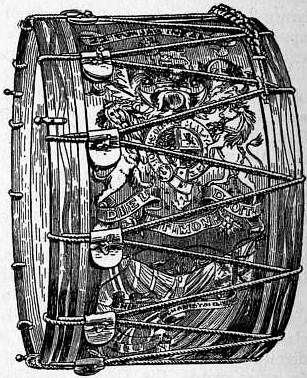
Fig. 1.—Military Bass Drum (Besson & Co.)
The bass drum or Turkish drum (Fr. grosse caisse; Ger. Grosse Trommel; Ital. gran cassa or tamburo grande) consists of a short cylinder of very wide diameter covered at both ends by vellum stretched over thin hoops, which in turn are kept in place by larger hoops fitting tightly over them. At regular intervals in the two large hoops are bored holes through which passes an endless cord stretched in zig-zag round the cylinder and connecting the two hoops. The tension of the vellum is controlled by means of leather braces which are made to slide up and down the zig-zag of cord, slackening or tightening the large hoops, and with them the vellum, at the will of the performer. Systems of rods and screws are also used for the purpose. The bass drum is mounted on a stand when used in the orchestra. The sound is produced by striking the centre of the vellum on the one end of the drum with a stick having a large soft round knob composed of wood covered with cork, sponge or felt. The bass drum cannot be tuned since it gives out no definite note, but the pitch may be varied, according as a rich full tone or a mere dull thud be required, by tightening or loosening the braces; the instrument can, moreover, be muffled by covering it with a piece of cloth. The music for the bass drum is generally written on a stave with a bass clef, , the C being merely used to show the rhythm and accents. Sometimes the stave is dispensed with, a single note on a single line being sufficient. The bass drum has a place in every orchestra, although it is used but sparingly to accentuate the rhythm. It is possible to make gradations in forte and piano on the bass drum, and to play quavers and semi-quavers in moderate tempo. A roll is sometimes played by holding a short stick, furnished with a knob at each end, in the middle and striking in quick succession with each knob alternately; two kettledrum sticks answer the purpose still better. It is understood that the cymbals play the same music as the bass drum unless the composer has written senza piatti over the part. Wagner did not once score for the bass drum after he composed Rienzi, but Verdi, Gounod, Berlioz and Sullivan used it effectively. The bass drum was formerly known as the long drum, the cylinder being long in proportion to the diameter.

The side or snare drum (Fr. tambour militaire; Ger. Militärtrommel; Ital. tamburo militare) is an instrument consisting of a small wooden or brass cylinder with a vellum at each end. The parchments are lapped over small hoops and pressed firmly down by larger hoops. As in the bass drum, these and the vellums are tightened or slackened by means of cords and leather braces, or by a system of rods and screws. Across the lower head are stretched two or more catgut strings called snares, which produce a rattling sound at each stroke on the upper head, owing to the sympathetic vibration of the lower head which jars against the snares. The upper head, set in vibration by direct percussion from the sticks, induces sympathetic vibrations in the air contained within the resonating receptacle, and these vibrations are communicated to the lower head. The presence of the snares across the diameter of the latter produces a phenomenon which gives the side drum its peculiar timbre, changing the nature of the vibrations, now no longer free: the snares form a kind of nodal contact, inducing double the number of vibrations and a sound approximately an octave higher than would be the case were the heads left to vibrate freely. Moreover, the vibrations of the upper head being weaker, the latter is compelled to vibrate synchronously with the lower vellum.1
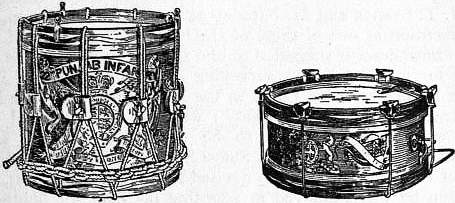
Fig. 2.—Guards pattern Side Drum (Besson & Co.). Fig. 3.—Regulation Side Drum (Besson & Co.).
The side drum, so called because it is worn at the side, is struck in the centre by two small wooden sticks with elongated heads or knobs of hard wood, producing a hard rasping sound when the drum is played singly and in close proximity to the hearer; when, however, several drums are played simultaneously or with other instruments the effect is brilliant and exhilarating. The roll is produced by striking two blows alternately with each hand quite regularly and very rapidly, the result being a rattling tremolo. This roll (“daddy-mammy”) is very difficult to acquire, and requires long practice. The side drum can be muffled by loosening the snares or by inserting a piece of silk or cloth between the snares and the parchment. An impressive effect is produced by a continued roll on muffled drums in funeral marches. The notation for the side drum is similar to that in use for the bass drum; the value of the note is alone of importance; the place of the note on the staff is immaterial and purely a matter of custom. In orchestral scores, a single line is often used, or the part for side and bass drum is written on the same staff. A great variety of rhythmical figures can be played on the side drum, such as

The tenor drum (Fr. caisse roulante; Ger. Roll- or Rührtrommel; Ital. tamburo rulante) is similar to the side drum but has a larger cylinder of wood and no snares; consequently its timbre lacks the brilliancy and incisiveness of the side drum. It is used for the roll in military bands, in some theatre orchestras, and on the stage.
The tambourin de Provence is a small drum with a long cylinder of narrow diameter used in the Basque provinces with a small pipe (galoubet) having three holes. The drum is beaten with one stick only, the performer steadying it with the hand which fingers the pipe. The tambourin and galoubet are in fact a survival of the pipe and tabor (q.v.).
The popularity of all kinds of drums in the most ancient civilizations is established beyond a doubt by the numerous representations of the instrument in a variety of shapes and sizes on the monuments and paintings of Egypt, Assyria, India and Persia. The tympanon, under which name seem to have been included tambourines and kettledrums, as well as the dulcimer (during the middle ages), was in use among Greeks and Romans chiefly in the worship of Cybele and Bacchus; it was introduced through the medium of the Roman civilization into western Europe. It is often said that the drum was introduced by the crusaders, but it was certainly known in England long before the crusades, for Bede (Musica practica) mentions it in his list of instruments, and Cassiodorus (ii. p. 507) describes it. The side drum was, until the reign of Elizabeth, of a much larger size than now and was held horizontally and beaten on one head only. It is not known at what date snares were added; Praetorius (Syntagma musicum, 1618) and Mersenne (L’Harmonie universelle, Paris, 1636) both mention them. A drawing of a side drum showing a snare appears in a book2 from the printing press of J. Badius Ascensius (1510); the instrument also has cords and braces. Another woodcut of the same century is given as frontispiece to an edition of Flavius Vegetius Renatus.3 An actual side drum with two curved drumsticks belonging to the ancient Egyptians was found during the excavations conducted at Thebes in 1823.4 It measured 1½ ft. in height by 2 ft. in diameter; the tension of the heads was regulated by cords braced by means of catgut encircling both ends of the drum, and wound separately round each cord so that these could be tightened or slackened at will by pulling the catgut bands closer together or pushing them farther apart. The Berlin Museum possesses some ancient Egyptian straight drumsticks with handle and knob. Drums were used at the battle of Halidon Hill (1333). An old ballad celebrating Edward III.’s victory on this occasion appears in a chronicle of the 14th century, preserved in the British Museum (Harl. MS. 4690),
“This was do with merry sowne. With pipes trumpes and tabers thereto. And loud clariones they blew also.”
A prose account of the battle in the same MS. states that the “Englische mynstrelles beaten their tabers and blewen their trompes and pipers pipenede loude and made a great schowte upon the Skottes.”
Froissart, under date 1338, gives details of the means taken by the Scots to intimidate the soldiers of Edward III.5 Having mentioned their great horns, he adds, “ils font si grand’ noise avec grands tambours qu’ils ont aussi.” The same chronicler, describing the triumphal entry of Edward III. into Calais (1347), gives the following list of instruments used: “trompes, tambours, nacaires, chalemies, muses.”6
Drums were used in the British army in the 16th century to give signals in war and peace-side drums by the infantry and dragoons, and kettledrums by the cavalry.7 In the reign of Henry VIII. two drummers were allowed to every company of 100 men. The chief drum beats used by the infantry in the 17th century8 were call, troop, preparative, march, battaile and retreat; these were later9 changed to general, réveillé, assembly or troop, tattoo, chamade, &c. The side drum was admitted into the orchestra in the 17th century, when Marais (1636-1728) scored for it in his opera Alcione.
(K. S.)
1 See Victor Mahillon, Catalogue descriptif (Ghent, 1880), vol. i. pp. 19 and 20.
2 Joannes Mauburnius, Rosetum exercitiorum spiritualium et sacrarum meditationum (Paris, 1510), Alphabetum, ix.
3 Vier Bücher der Ritterschaft; mit manicherleyen gerüsten, &c.; (Augsburg, 1534).
4 Carl Engel, The Music of the Most Ancient Nations (London, 1864), p. 219.
5 Chron. ii. p. 737, see also Grose’s Military Antiquities, ii. 41.
6 See Froissart in J. A. Buchon, Panthéon litt. (Paris, 1837), vol. i. cap. 322, p. 273.
7 Sir John Smythe, A Brief Discourse (London, 1594), pp. 158-159.
8 Lieut.-Col. W. Bariffe, Militarie Discipline, or the Young Artilleryman (London, 1643).
9 Sir James Turner, Pallas armata (1685), xxi. 302.
DRUMMOND, HENRY (1786-1860), English banker, politician and writer, best known as one of the founders of the Catholic Apostolic or “Irvingite” Church, was born at the Grange, near Alresford, Hampshire, on the 5th of December 1786. He was the eldest son of Henry Drummond, a prominent London banker, by a daughter of the first Lord Melville. He was educated at Harrow and at Christ Church, Oxford, but took no degree. His name is permanently connected with the university through the chair of political economy which he founded in 1825. He entered parliament in early life, and took an active interest from the first in nearly all departments of politics. Thoroughly independent and often eccentric in his views, he yet acted generally with the Conservative party. His speeches were often almost inaudible but were generally lucid and informing, and on occasion caustic and severe. From 1847 until his death in 1860 he represented West Surrey in parliament. Drummond took a deep interest in religious subjects, and published numerous books and pamphlets on such questions as the interpretation of prophecy, the circulation of the Apocrypha, the principles of Christianity, &c., which attracted considerable attention. In 1817 he met Robert Haldane at Geneva, and continued his movement against the Socinian tendencies then prevalent in that city. In later years he was intimately associated with the origin and spread of the Catholic Apostolic Church. Meetings of those who sympathized with the views of Edward Irving were held for the study of prophecy at Drummond’s seat, Albury Park, in Surrey; he contributed very liberally to the funds of the new church; and he became one of its leading office-bearers, visiting Scotland as an “apostle” and being ordained as an “angel” for that kingdom. The numerous works he wrote in defence of its distinctive doctrines and practice were generally clear and vigorous, if seldom convincing. He died on the 20th of February 1860.
DRUMMOND, HENRY (1851-1897), Scottish evangelical writer and lecturer, was born in Stirling on the 17th of August 1851. He was educated at Edinburgh University, where he displayed a strong inclination for physical and mathematical science. The religious element was an even more powerful factor in his nature, and disposed him to enter the Free Church of Scotland. While preparing for the ministry, he became for a time deeply interested in the evangelizing mission of Moody and Sankey, in which he actively co-operated for two years. In 1877 he became lecturer on natural science in the Free Church College, which enabled him to combine all the pursuits for which he felt a vocation. His studies resulted in his writing Natural Law in the Spiritual World, the argument of which was that the scientific principle of continuity extended from the physical world to the spiritual. Before the book issued from the press (1883), a sudden invitation from the African Lakes Company drew Drummond away to Central Africa. Upon his return in the following year he found himself famous. Large bodies of serious readers, alike among the religious and the scientific classes, discovered in Natural Law the common standing-ground which they needed; and the universality of the demand proved, if nothing more, the seasonableness of its publication. Drummond continued to be actively interested in missionary and other movements among the Free Church students. In 1888 he published Tropical Africa, a valuable digest of information. In 1890 he travelled in Australia, and in 1893 delivered the Lowell Lectures at Boston. It had been his intention to reserve them for mature revision, but an attempted piracy compelled him to hasten their publication, and they appeared in 1894 under the title of The Ascent of Man. Their object was to vindicate for altruism, or the disinterested care and compassion of animals for each other, an important part in effecting “the survival of the fittest,” a thesis previously maintained by Professor John Fiske. Drummond’s health failed shortly afterwards, and he died on the 11th of March 1897. His character was full of charm. His writings were too nicely adapted to the needs of his own day to justify the expectation that they would long survive it, but few men exercised more religious influence in their own generation, especially on young men.
DRUMMOND, THOMAS (1797-1840), British inventor and administrator, was born at Edinburgh on the 10th of October 1797, and was educated at the high school there. He was appointed to a cadetship at the Royal Military Academy, Woolwich, in 1813; and in 1815 he entered the Royal Engineers. In 1819, when meditating the renunciation of military service for the bar, he made the acquaintance of Colonel T. F. Colby (1784-1852), from whom in the following year he received an appointment on the trigonometrical survey of Great Britain. During his winters in London he attended the chemical lectures of W. T. Brande and M. Faraday at the Royal Institution, and the mention at one of these of the brilliant luminosity of lime when incandescent suggested to him the employment of the lime light for making distant surveying stations visible. In 1825, when he was assisting Colby in the Irish survey, his lime-light apparatus (“Drummond light”) was put to a practical test, and enabled observations to be completed between Divis mountain, near Belfast, and Slieve Snaght, a distance of 67 m. About the same time he also devised an improved heliostat, and in 1829 he was employed in adopting his light for lighthouse purposes. In 1831 he entered political life and was appointed superintendent of the boundary commission. Four years later he was made under-secretary of state for Ireland, where he proved himself a most successful administrator, and did much to promote law and order. It was he who in 1838 told the Irish landlords that “property has its duties as well as its rights.” In 1836 he proposed the appointment of a commission on railways in Ireland, and took a large share in its work, which resulted in the recommendation, not, however, carried out, that the state should construct a system of lines throughout the island. Drummond’s health was undermined by overwork, and he died at Dublin on the 15th of April 1840.
See Life by J. F. M’Lennan (1867); Life and Letters by R. Barry O’Brien (1889); and Sir T. A. Larcom in Papers on the Duties of the Royal Engineers, vol. iv. (1840).
DRUMMOND, WILLIAM (1585-1649), called “of Hawthornden,” Scottish poet, was born at Hawthornden, near Edinburgh, on the 13th of December 1585. His father, John Drummond, was the first laird of Hawthornden; and his mother was Susannah Fowler, sister of William Fowler (q.v.), poet and courtier. Drummond received his early education at the high school of Edinburgh, and graduated in July 1605 as M.A. of the recently founded university of Edinburgh. His father was a gentleman usher at the English court (as he had been at the Scottish court from 1590) and William, in a visit to London in 1606, describes the festivities in connexion with the visit of the king of Denmark. Drummond spent two years at Bourges and Paris in the study of law; and, in 1609, he was again in Scotland, where, by the death of his father in the following year, he became laird of Hawthornden at the early age of twenty-four. The list of books he read up to this time is preserved in his own handwriting. It indicates a strong preference for imaginative literature, and shows that he was keenly interested in contemporary verse. His collection (now in the library of the university of Edinburgh) contains many first editions of the most famous productions of the age. On finding himself his own master, Drummond naturally abandoned law for the muses; “for,” says his biographer in 1711, “the delicacy of his wit always run on the pleasantness and usefulness of history, and on the fame and softness of poetry.” In 1612 began his correspondence with Sir William Alexander of Menstrie, afterwards earl of Stirling (q.v.), which ripened into a life-long friendship after Drummond’s visit to Menstrie in 1614.
Drummond’s first publication appeared in 1613, an elegy on the death of Henry, prince of Wales, called Teares on the Death of Meliades (Moeliades, 3rd edit. 1614). The poem shows the influence of Spenser’s and Sidney’s pastoralism. In the same year he published an anthology of the elegies of Chapman, Wither and others, entitled Mausoleum, or The Choisest Flowres of the Epitaphs. In 1616, the year of Shakespeare’s death, appeared Poems: Amorous, Funerall, Divine, Pastorall: in Sonnets, Songs, Sextains, Madrigals, being substantially the story of his love for Mary Cunningham of Barns, who was about to become his wife when she died in 1615. The poems bear marks of a close study of Sidney, and of the Italian poets. He sometimes translates direct from the Italian, especially from Marini. Forth Feasting: A Panegyricke to the King’s Most Excellent Majestie (1617), a poem written in heroic couplets of remarkable facility, celebrates James’s visit to Scotland in that year. In 1618 Drummond began a correspondence with Michael Drayton. The two poets continued to write at intervals for thirteen years, the last letter being dated in the year of Drayton’s death. The latter had almost been persuaded by his “dear Drummond” to print the later books of Poly-Olbion at Hart’s Edinburgh press. In the winter of 1618-1619, Drummond had included Ben Jonson in his circle of literary friends, and at Christmas 1618 was honoured with a visit of a fortnight or more from the dramatist. The account of their conversations, long supposed to be lost, was discovered in the Advocates’ Library, Edinburgh, by David Laing, and was edited for the Shakespeare Society in 1842 and printed by Gifford & Cunningham. The conversations are full of literary gossip, and embody Ben’s opinion of himself and of his host, whom he frankly told that “his verses were too much of the schooles, and were not after the fancie of the time,” and again that he “was too good and simple, and that oft a man’s modestie made a fool of his witt.” But the publication of what was obviously intended merely for a private journal has given Jonson an undeserved reputation for harsh judgments, and has cast blame on Drummond for blackening his guest’s memory.
In 1623 appeared the poet’s fourth publication, entitled Flowers of Sion: By William Drummond of Hawthornedenne: to which is adjoyned his Cypresse Grove. From 1625 till 1630 Drummond was probably for the most part engaged in travelling on the Continent. In 1627, however, he seems to have been home for a short time, as, in that year, he appears in the entirely new character of the holder of a patent for the construction of military machines, entitled “Litera Magistri Gulielmi Drummond de Fabrica Machinarum Militarium, Anno 1627.” The same year, 1627, is the date of Drummond’s munificent gift (referred to above) of about 500 volumes to the library of the university of Edinburgh.
In 1630 Drummond again began to reside permanently at Hawthornden, and in 1632 he married Elizabeth Logan, by whom he had five sons and four daughters. In 1633 Charles made his coronation-visit to Scotland; and Drummond’s pen was employed in writing congratulatory speeches and verses. As Drummond preferred Episcopacy to Presbytery, and was an extremely loyal subject, he supported Charles’s general policy, though he protested against the methods employed to enforce it. When Lord Balmerino was put on his trial on the capital charge of retaining in his possession a petition regarded as a libel on the king’s government, Drummond in an energetic “Letter” (1635) urged the injustice and folly of the proceedings. About this time a claim by the earl of Menteith to the earldom of Strathearn, which was based on the assertion that Robert III., husband of Annabella Drummond, was illegitimate, roused the poet’s pride of blood and prompted him to prepare an historical defence of his house. Partly to please his kinsman the earl of Perth, and partly to satisfy his own curiosity, the poet made researches in the genealogy of the family. This investigation was the real secret of Drummond’s interest in Scottish history; and so we find that he now began his History of Scotland during the Reigns of the Five Jameses, a work which did not appear till 1655, and is remarkable only for its good literary style. His next work was called forth by the king’s enforced submission to the opposition of his Scottish subjects. It is entitled Irene: or a Remonstrance for Concord, Amity, and Love amongst His Majesty’s Subjects (1638), and embodies Drummond’s political creed of submission to authority as the only logical refuge from democracy, which he hated. In 1639 Drummond had to sign the Covenant in self-protection, but was uneasy under the burden, as several political squibs by him testify. In 1643 he published Σκιαμαχία: or a Defence of a Petition tendered to the Lords of the Council of Scotland by certain Noblemen and Gentlemen, a political pamphlet in support of those royalists in Scotland who wished to espouse the king’s cause against the English parliament. Its burden is an invective on the intolerance of the then dominant Presbyterian clergy.
His later works may be described briefly as royalist pamphlets, written with more or less caution, as the times required. Drummond took the part of Montrose; and a letter from the Royalist leader in 1646 acknowledged his services. He also wrote a pamphlet, “A Vindication of the Hamiltons,” supporting the claims of the duke of Hamilton to lead the Scottish army which was to release Charles I. It is said that Drummond’s health received a severe shock when news was brought of the king’s execution. He died on the 4th of December 1649. He was buried in his parish church of Lasswade.
Drummond’s most important works are the Cypresse Grove and the poems. The Cypresse Grove exhibits great wealth of illustration, and an extraordinary command of musical English. It is an essay on the folly of the fear of death. “This globe of the earth,” says he, “which seemeth huge to us, in respect of the universe, and compared with that wide pavilion of heaven, is less than little, of no sensible quantity, and but as a point.” This is one of Drummond’s favourite moods; and he uses constantly in his poems such phrases as “the All,” “this great All.” Even in such of his poems as may be called more distinctively Christian, this philosophic conception is at work.
A noteworthy feature in Drummond’s poetry, as in that of his courtier contemporaries Ayton (q.v.), Lord Stirling and others, is that it manifests no characteristic Scottish element, but owes its birth and inspiration rather to the English and Italian masters. Drummond was essentially a follower of Spenser, but, amid all his sensuousness, and even in those lines most conspicuously beautiful, there is a dash of melancholy thoughtfulness—a tendency deepened by the death of his first love, Mary Cunningham. Drummond was called “the Scottish Petrarch”; and his sonnets, which are the expression of a genuine passion, stand far above most of the contemporary Petrarcan imitations. A remarkable burlesque poem Polemo-Middinia inter Vitarvam et Nebernam (printed anonymously in 1684) has been persistently, and with good reason, ascribed to him. It is a mock-heroic tale, in dog-Latin, of a country feud on the Fifeshire lands of his old friends the Cunninghams.
Drummond’s Poems, with Cypresse Grove, the History, and a few of the minor tracts, were collected in 1656 and edited by Edward Phillips, Milton’s nephew. The Works of William Drummond, of Hawthornden (1711), edited by Bishop Sage and Thomas Ruddiman, contains a life by the former, and some of the poet’s letters. A handsome edition of the Poems was printed by the Maitland Club in 1832. Later editions are by Peter Cunningham (1833), by William R. Turnbull in “The Library of Old Authors” (1856), and by W. C. Ward (1894) for “The Muses’ Library.” The standard biography of Drummond is by David Masson (1873). Extracts from the Hawthornden MSS. preserved in the Library of the Society of Antiquaries of Scotland were printed by David Laing in Archaeologia Scotica, vol. iv.
DRUNKENNESS, a term signifying generally a state resulting from excessive drinking, and usually associated with alcoholic intoxication, or alcohol poisoning. It may represent either an act or a habit, the latter consisting in frequent repetitions of the former. As an act it may be an accident, most usually arising from the incautious use of one or other of the commonly employed intoxicating agents; as a habit (as in the form of chronic alcoholism) it is one of the most degrading forms of vice which can result from the enfeeblement of the moral principle by persistent self-indulgence.
What appears to be “intoxication” may arise from many different causes (e.g. epilepsy, fractured skull, intracranial haemorrhage, and the toxaemic coma of diabetes and uraemia), and the close resemblance between the pathological and the toxic phenomena has been the cause of many untoward accidents. Cold alone may produce such peculiar effects that Captain Parry said in his Journal, “I cannot help thinking that many a man may have been punished for intoxication who was only suffering from the benumbing effects of frost; for I have more than once seen our people in a state so exactly resembling that of the most stupid intoxication, that I should certainly have charged them with the offence had I not been quite sure that no possible means were afforded them on Melville Island to procure anything stronger than snow water.” The same confusion is frequently found in cases which come before the police-courts, people being arrested as “drunk and disorderly” who can prove that the symptoms were not due to over-indulgence in drink at all. Some individuals have, moreover, a special idiosyncrasy or susceptibility to alcohol, due to heredity or to one of the sequelae of sunstroke or cranial injury. The children of drunkards are usually very susceptible to the poison, becoming intoxicated by a far smaller quantity than is needed by a normal person.
But, as a rule, the phenomena of drunkenness are actually due to excessive consumption of some intoxicating liquid. The physiological action of all such agents may be described as a cumulative production of paralysis of various parts of the nervous system, but this effect results only in doses of a certain amount—a dose which varies with the agent, the race and the individual. Even the cup so often said to “cheer, but not inebriate,” cannot be regarded as altogether free from the last-named effect. Tea-sots are well known to be affected with palpitation and irregularity of the heart, as well as with more or less sleeplessness, mental irritability and muscular tremors, which in some culminate in paralysis; while positive intoxication has been known to be the result of the excessive use of strong tea. In short, from tea to haschisch we have, through hops, alcohol, tobacco and opium, a sort of graduated scale of intoxicants, which stimulate in small doses and narcotize in larger,—the narcotic dose having no stimulating properties whatever, and only appearing to possess them from the fact that the agent can only be gradually taken up by the blood, and the system thus comes primarily under the influence of a stimulant dose. In certain circumstances and with certain agents—as in the production of chloroform narcosis—this precursory stage is capable of being much abbreviated, if not altogether annihilated; while with other agents—as tea—the narcotic stage is by no means always or readily produced.
No subject in modern times has led to more extreme opinions than this of indulgence in “intoxicants” to any degree whatever. It is well to remember that (in spite of apparently authoritative modern views to the contrary) there is not a shadow of proof that the moderate use of any one of these agents as a stimulant has any definite tendency to lead to its abuse; it is otherwise with their employment as narcotics, which, once indulged in, is almost certain to lead to repetition, and to a more or less rapid process of degradation, though there are many exceptions to this latter statement. It is interesting to know that a former English judge, who lived to nearly ninety years of age, believed he had prolonged his life and added greatly to his comfort by the moderate use of ether, which he was led to employ because neither wine nor tobacco agreed with him; while the immoderate use of the same agent has given rise to a most deleterious form of drunkenness, both in parts of Ireland and in some of the large industrial centres in Great Britain.
Various modern biologists have discussed, with more or less acceptance in certain circles, the historical conditions in various races and in different countries as to the use and abuse of intoxicants, and have drawn varying conclusions from their theories. It has even been contended, with much show of learned authority, that since drunkenness leads to disease and early death, the proneness to strong drink in the long run causes the elimination of the unfit, and results in a general sobering of the community, a race being therefore temperate in proportion to its past sufferings through alcohol. But on this subject it may be said that, at least, no agreement has been reached.
The effects of intoxicants are variously modified by the temperament of the individual and the nature of the inebriant. When that is alcohol, its action on an average individual is first to fill him with a serene and perfect self-complacency. His feelings and faculties are exalted into a state of great activity and buoyancy, so that his language becomes enthusiastic, and his conversation vivacious if not brilliant. The senses gradually become hazy, a soft humming seems to fill the pauses of the conversation, and modify the tones of the speaker, a filmy haze obscures the vision, the head seems lighter than usual, the equilibrium unstable. By-and-by objects appear double, or flit confusedly before the eyes; judgment is abolished, secretiveness annihilated, and the drunkard pours forth all that is within him with unrestrained communicativeness; he becomes boisterous, ridiculous, and sinks at length into a mere animal. Every one around him, the very houses, trees, even the earth itself, seem drunken and unstable, he alone sober, till at last the final stage is reached, and he falls on the ground insensible—dead drunk (alcoholic coma)—a state from which, after profound slumber, he at last awakes feverish, exhausted, sick and giddy, with ringing ears, a throbbing heart and a violent headache.
The poison primarily affects the cerebral lobes, and the other parts of the cerebro-spinal system are consecutively involved, till in the state of dead-drunkenness the only parts not invaded by a benumbing paralysis are those automatic centres in the medulla oblongata which regulate and maintain the circulation and respiration. But even these centres are not unaffected; the paralysis of these as of the other sections of the cerebro-spinal system varies in its incompleteness, and at times becomes complete, the coma of drunkenness terminating in death. More usually the intoxicant is gradually eliminated, and the individual restored to consciousness, a consciousness disturbed by the secondary results of the agent he has abused, which vary with the nature of that agent. Whether, however, directly or indirectly through the nervous system, the stomach suffers in every case; thus nutrition is interfered with by the defective ingestion of food, as well as by the mal-assimilation of that which is ingested; and from this cause, as well as by the peculiar local action of the various poisons, the various organic degenerations are induced (cirrhosis of the liver, &c.) which in most cases shorten the drunkard’s days.
The primary discomforts of an act of drunkenness are readily removed for the time by a repetition of the cause. Thus what has been an act may readily become a habit, all the more readily that each repetition more and more enfeebles both the will and the judgment, till they become utterly unfit to resist the temptation to indulgence supplied by the knowledge of the temporary relief to suffering which is sure to follow, and in spite of the consciousness that each repetition of the act only forges their chains more tightly. From this condition there is no hope of relief but in enforced abstinence; any one in this condition must be regarded as temporarily insane (see Insanity and Neuropathology), and ought to be placed in an inebriate asylum till he regain sufficient self-control to enable him to overcome his love for drink. Numerous “cures” have been started in recent years, which have often succeeded in individual cases. An anti-alcoholic serum obtained from alcoholized horses has been advocated by Dr Sapelier.
For the law concerning drunkenness the reader is referred to Inebriety, Law of. Its prevalence as a vice has varied considerably according to the state of education or comfort in different classes of society. In considering the extent to which intemperance has prevailed, the statistics of prosecutions upon which such comparisons are usually based are far from being completely satisfactory, but, inasmuch as they constitute the only possible data for such comparisons, we are compelled to accept them. The following table gives the average number of persons per 1000 of the population proceeded against for drunkenness in England and Wales for quinquennial periods, dating from 1857, the first year of the Judicial Statistics:—
1857-1861 4.28
1862-1866 4.78
1867-1871 5.47
1872-1876 7.83
1877-1881 7.25
1882-1886 6.90
1887-1891 6.19
1892-1896 5.84
1897-1901 6.42
1902-1906 6.51
The figures, it will be seen, show a steady decline from 1872-1876 (when the consumption of alcohol was quite abnormal) to 1892-1896. After that year, however, the figures again rose. The increase was especially marked in 1899, when a tide of exceptional prosperity was again accompanied by great drunkenness. It is also disquieting to discover that the average number of prosecutions for drunkenness in the three years 1897-1899 was 51% higher than the average for 1857-1861, and 35% higher than the average for 1862-1866. That the increase was partly due to more efficient police administration is probable, but that this is not a complete explanation of the figures is made evident by an analysis of the general statistics of crime during the same period, from which it may be seen that, while crime generally (excluding drunkenness) decreased 28% in England and Wales since 1857-1861, drunkenness increased 51%. Speaking generally, it may be said that in the United Kingdom drunkenness appears chiefly prevalent in the seaport and mining districts. If a line be drawn from the mouth of the Severn to the Wash, it will be found that the “black” counties, without exception, lie to the north-west of this line. The worst counties in England and Wales in the matter of drunkenness are Northumberland, Durham and Glamorganshire, while Pembrokeshire and Lancashire follow close behind. The most sober counties, on the other hand, are Cambridgeshire, Suffolk, Oxfordshire and Wiltshire. Averages based upon the returns of entire counties do not, however, afford a complete guide to the distribution of drunkenness, inasmuch as offences are not equally distributed over the whole area of a county. A heavy ratio of drunkenness in a small district may often give a county an unfavourable position in the general averages, notwithstanding favourable conditions in the rest of its area.
Analysis of the prosecutions for drunkenness shows that about 24% of the total number of offences are committed by women. In the larger towns the proportion, as a rule, is higher. In London, 38% of the drunkenness is attributable to women; in Manchester, 36%; in Belfast and Glasgow, 32%. In Liverpool, on the other hand, the proportion is only 24%. The much-controverted question as to whether intemperance is increasing among women can hardly, however, be decided by an appeal to the criminal statistics. So far as these statistics throw any light at all upon the question, they suggest important local differences. A more direct clue is afforded by the registrar-general’s annual returns of deaths directly attributed to intemperance. The figures are given below. In order to eliminate accidental variations, the comparison is based upon the average mortality during consecutive periods:—
Years. Average No. of deaths (England and Wales). Males per cent. Females per cent.
1877-1881 1071 69 31
1882-1886 1320 66 34
1887-1891 1710 64 36
1892-1896 2044 61 39
1897-1899 2577 61 39
1899 2871 60 40
For the ten years ending 1904, out of 26,426 deaths from alcoholism, 59.34% were males and 40.66% females.
The figures are certainly striking. They show, it will be noticed, that out of every 100 deaths from alcoholic excess in England and Wales women contributed nine more at the end of the century then they did in 1880. If, instead of taking the total number of deaths, we take the ratio per million persons living, the increase is seen even more clearly:—
Years. Males per million living. Females per million living.
1877-1881 60 25
1882-1886 67 32
1887-1891 79 42
1892-1896 86 51
1897-1899 103 63
1899 112 70
It appears that, while the ratio of mortality from alcoholic excess increased 87% among males during the last two decades of the century, among females it increased by no less than 180%.
See also Liquor Laws and Temperance.
DRURY, SIR WILLIAM (1527-1579), English statesman and soldier, was a son of Sir Robert Drury of Hedgerley in Buckinghamshire, and grandson of another Sir Robert Drury (d. 1536), who was speaker of the House of Commons in 1495. He was born at Hawstead in Suffolk on the 2nd of October 1527, and was educated at Gonville Hall, Cambridge. Fighting in France, Drury was taken prisoner in 1544; then after his release he helped Lord Russell, afterwards earl of Bedford, to quell a rising in Devonshire in 1549, but he did not come to the front until the reign of Elizabeth. In 1559 he was sent to Edinburgh to report on the condition of Scottish politics, and five years later he became marshal and deputy-governor of Berwick. Again in Scotland in January 1570, it is interesting to note that the regent James Stewart, earl of Murray, was proceeding to keep an appointment with Drury in Linlithgow when he was mortally wounded, and it was probably intended to murder the English envoy also. After this event Drury led two raids into Scotland; at least thrice he went to that country on more peaceable errands, during which, however, his life was continually in danger from assassins; and he commanded the force which compelled Edinburgh Castle to surrender in May 1573. In 1576 he was sent to Ireland as president of Munster, where his stern rule was very successful, and in 1578 he became lord justice to the Irish council, taking the chief control of affairs after the departure of Sir Henry Sidney. The rising of the earl of Desmond had just broken out when Sir William died in October 1579.
Drury’s letters to Lord Burghley and others are invaluable for the story of the relations between England and Scotland at this time.
DRUSES, or Druzes (Arab. Druz), a people of mid-Syria (for the derivation of the name see History section below), distributed nowadays into three isolated groups, of which the most numerous inhabits Jebel Hauran (Jebel Druz), E. of Jordan (about 55,000); the second, the cazas of Shuf and Metn in Lebanon (about 50,000); the third, the cazas of Hasbeya, Rasheya, W. al Ajem, Homs, Hamadiyeh and Selimiyeh in Anti-Lebanon and Hermon (about 45,000). The first group, which has been greatly increased by migrants from the second, since the establishment of the privileged Lebanon province (1861) under Christian auspices, lives apart from other peoples in semi-independence. The second is now confined to the southern Lebanon, and even there is greatly outnumbered by Maronites, who, in the whole “Mountain,” stand to Druses as 9 to 2. The third is counterbalanced everywhere by a large population of Moslem and Orthodox Syrians. The Hauran, therefore, has become the stronghold of the Druses, offering nowadays the best field for studying their peculiar customs and religion; and the group there still increases at the expense of the other groups, despite efforts on the part of the Ottoman government to check Druse migration by both conciliatory and repressive measures. The actual distinction of the Druses, as a racial unity, despite their dispersion, depends so exclusively on the peculiarity of their common religion, that it will be well at once to give an account of Druse creed and practice as they are understood to stand at the present day. How this religion may have grown up and come to be theirs will be considered later.
Religion.—Druse religion is a secret faith, and the following account is given with all reserves. There are many indications that a more primitive cult, containing elements of Nature worship, preceded it, and still survives in the popular practices of the more remote Druse districts, e.g. in the eastern Hauran. The Muwahhidin (Unitarians), as the Druses call themselves, believe that there is one and only one God, indefinable, incomprehensible, ineffable, passionless. He has made himself known to men by successive incarnations, of which the last was Hakim, the sixth Fatimite caliph. How many these incarnations have been is stated variously; but seventy, one for each period of the world, seems the best-attested number. Jesus appears to be accepted as one such incarnation, but not Mahomet, although it is agreed that, in his time, the “Universal Intelligence” (see later) was made flesh, in the person of Mikdad al-Aswad. No further incarnation can now take place: in Hakim a final appeal was made to mankind, and after the door of mercy had stood open to all for twenty-six years, it was finally and for ever closed. When the tribulation of the faithful has reached its height, Hakim will reappear to conquer the world and render his religion supreme. Druses, believed to be dispersed in China, will return to Syria. The combined body of the Faithful will take Mecca, and finally Jerusalem, and all the world will accept the Faith. The first of the creatures of God is the Universal Intelligence or Spirit, impersonated in Hamza, Hakim’s vizier. This Spirit was the creator of all subordinate beings, and alone has immediate communion with the Deity. Next in rank, and equally supporting the throne of the Almighty, are four Ministering Spirits, the Soul, the Word, the Right Wing and the Left Wing, who, in Hakim’s time, were embodied respectively in Ismael Darazi, Mahommed ibn Wahab, Selama ibn Abd al-Wahal and Baha ud-Din; and beneath these again are spiritual agents of various ranks. The material world is an emanation from, and a “mirror” of, the Divine Intelligence. The number of human beings admits neither of increase nor of decrease, and a regular process of metempsychosis goes on continually. The souls of the virtuous pass after death into ever new incarnations of greater perfection, till at last they reach a point at which they can be re-absorbed into the Deity itself; those of the wicked may be degraded to the level of camels or dogs. All previous religions are mere types of the true, and their sacred books and observances are to be interpreted allegorically. The Gospel and the Koran are both regarded as inspired books, but not as religious guides. The latter function is performed solely by the Druse Scriptures. As the admission of converts is no longer permitted, the faithful are enjoined to keep their doctrine secret from the profane; and in order that their allegiance may not bring them into danger, they are allowed (like Persian mystics) to make outward profession of whatever religion is dominant around them. To this latter indulgence is to be attributed the apparent indifferentism which leads to their joining Moslems in prayers and ablutions, or sprinkling themselves with holy water in Maronite churches. Obedience is required to the seven commandments of Hamza, the first and greatest of which enjoins truth in words (but only those of Druse speaking with Druse); the second, watchfulness over the safety of the brethren; the third, absolute renunciation of every other religion; the fourth, complete separation from all who are in error; the fifth, recognition of the unity of “Our Lord” in all ages; the sixth, complete resignation to his will; and the seventh, complete obedience to his orders. Prayer, however, is regarded as an impertinent interference with the Creator; while, at the same time, instead of the fatalistic predestination of Mahommedanism, the freedom of the human will is distinctly maintained. Not only is the charge of secrecy rigidly obeyed in regard to the alien world, but full initiation into the deeper mysteries of the creed is permitted only to a special class designated Akils, (Arabic ‘Akl, intelligence), in contradistinction from whom all other members of the Druse community, whatever may be their position or attainments, are called Jahel, the Ignorant. About 15% of the adult population belong to the order of Akils. Admission is granted to any Druse of either sex who expresses willingness to conform to the laws of the society, and during a year of probation gives sufficient proof of sincerity and stability of purpose. There appears to be no formal distinction of rank among the various members; and though the amir, Beshir Shehab, used to appoint a sheikh of the Akils, the person thus distinguished obtained no primacy over his fellows. Exceptional influence depends upon exceptional sanctity or ability. All are required to abstain from tobacco and wine; the women used not to be allowed to wear gold or silver, or silk or brocade, but this rule is commonly broken now; and although neither celibacy nor retirement from the affairs of the world is either imperative or customary, unusual respect is shown to those who voluntarily submit themselves to ascetic discipline. While the Akils mingle frankly with the common people, and are remarkably free from clerical pretension, they are none the less careful to maintain their privileges. They are distinguished by the wearing of a white turban, emblematic of the purity of their life. Their food must be purchased with money lawfully acquired; and lest they should unwittingly partake of any that is ceremonially unclean, they require those Jahels, whose hospitality they share, to supply their wants from a store set apart for their exclusive use. The ideal Akil is grave, calm and dignified, with an infinite capacity of keeping a secret, and a devotion that knows no limits to the interests of his creed. On Thursday evening, the commencement of the weekly day of rest, the members of the order meet together in the various districts, probably for the reading of their sacred books and consultation on matters of ecclesiastical or political importance. Their meeting-houses, khalwas, are plain, unornamented edifices. These have property attached to them, the revenues of which are consecrated to the relief of the poor and the demands of hospitality. In the eastern Hauran, there are hill-top shrines containing each a black stone, on which rugs, &c., are hung, and these seem to perpetuate features of pre-Islamic Arabian cult, including the sacrifice of animals, e.g. goats. They are held in reverence by the Bedouins. The women assemble in the khalwas at the same time as the men, a part of the space being fenced off for them by a semi-transparent black veil. Even while the Akils are assembled, strangers are readily enough admitted to the khalwas; but as long as these are present the ordinary ceremonies are neglected, and the Koran takes the place of the Druse Scriptures. It has been frequently asserted that the image of a calf is kept in a niche, and traces of phallic and gynaecocratic worship have been vaguely suspected; but there is no authentic information in support of either statement. The calf, if calf there be, is probably a symbol of the execrable heresy of Darazi, who is frequently styled the calf by his Orthodox opponents. Ignorance is the mother of suspicion as well as of superstition; and accordingly the Christian inhabitants of the Lebanon have long been persuaded that the Druses in their secret assemblies are guilty of the most nefarious practices. For this allegation, so frequently repeated by European writers, there seems to be little evidence; and it is certain that the sacred books of the religion contain moral teaching of a high order on the whole.
As a formulated creed, the Druse system is not a thousand years old. In the year a.d. 996 (386 A.H.) Hakim Biamrillahi (i.e. he who judges by the command of God), sixth of the Fatimite caliphs (third in Egypt), began to reign; and during the next twenty-five years he indulged in a tyranny at once so terrible and so fantastic that little doubt can be entertained of his insanity. He believed that he held direct intercourse with the deity, or even that he was an incarnation of the divine intelligence; and in a.d. 1016 (407 a.h.) his claims were made known in the mosque at Cairo, and supported by the testimony of Ismael Darazi. The people showed such bitter hostility to the new gospel that Darazi was compelled to seek safety in flight; but even in absence he was faithful to his god, and succeeded in winning over certain ignorant inhabitants of Lebanon. According to the Druses, this great conversion took place in a.d. 1019 (410 a.h.). Meanwhile the endeavours of the caliph to get his divinity acknowledged by the people of Cairo continued. The advocacy of Hasan ibn Haidara Fergani was without avail; but in 1017 (408 a.h.) the new religion found a more successful apostle in the person of Hamza ibn Ali ibn Ahmed, a Persian mystic, felt-maker by trade, who became Hakim’s vizier, gave form and substance to his creed, and by an ingenious adaptation of its various dogmas to the prejudices of existing sects, finally enlisted an extensive body of adherents. In 1020 (411 A.H.) the caliph was assassinated by contrivance of his sister Sitt ul-Mulk; but it was given out by Hamza that he had only withdrawn for a season, and his followers were encouraged to look forward with confidence to his triumphant return. Darazi, who had acted independently in his apostolate, was branded by Hamza as a heretic, and thus, by a curious anomaly, he is actually held in detestation by the very sect which perhaps bears his name. The propagation of the faith in accordance with Hamza’s initiation was undertaken by Ismael ibn Mahommed Tamimi, Mahommed ibn Wahab, Abul-Khair Selama ibn Abd al-Wahal ibn Samurri, and Moktana Baha ud-Din, the last of whom became known by his writings from Constantinople to the borders of India. In two letters addressed to the emperors Constantine VIII. and Michael the Paphlagonian he endeavoured to prove that the Christian Messiah reappeared in the person of Hamza.
It is possible, even probable, that the segregation of the Druses as a people dates only from the adoption of Hamza’s creed. But when it is recalled that other inhabitants of the same mountain system, e.g. the Maronites, the Ansarieh, the Metawali and the “Isma‘ilites,” also profess creeds which, like the Druse system, differ from Sunni Islam in the important feature of admitting incarnations of the Deity, it is impossible not to suspect that Hamza’s emissaries only gave definition and form to beliefs long established in this part of the world. Many of the fundamental ideas of Druse theology belong to a common West Asiatic stock; but the peculiar history of the Mountain is no doubt responsible for beliefs, held elsewhere by different peoples, being combined there in a single creed. Some allowance, too, must be made for the probability that Hamza’s system owed something to doctrines Christian and other, with which the metropolitan position of Cairo brought Fatimite society into contact.
History—There is good reason to regard the Druses as, racially, a mixture of refugee stocks, in which the Arab largely predominates, grafted on to an original mountain population of Aramaic blood and Incarnationist tendencies. The latter is represented more purely by the Maronites (q.v.). The native tradition regards an immigration of Hira Arabs into S. Lebanon, under Khalid ibn Walid in the 9th century, as the beginning of Druse distinctiveness and power; but it also accepts Turkoman and Kurdish elements in the original Druse state. About the same time, or a little later (in the reign of Saladin), it believes that Hermon was colonized by a population of 15,000 Hira and Yemenite Arabs, who had sojourned awhile in Hauran. The name Druse is met with first in Benjamin of Tudela (c. a.d. 1170), and its origin has been much disputed. Some authorities see in it a descriptive epithet, derived from Arabic darasa (those who read the Book), or darisa (those in possession of Truth) or durs (the clever or initiated); but more connect it with the name of the first missionary, Ismael Darazi.
As soon as we begin to know anything of the Druses they were living in a feudal state of society, as village communities under sheikhs, themselves generally subordinate to one or more amirs. In the time of the first crusades the main power was in the hands of the Arslan family, which, however, suffered so severely in wars with the Franks, that it was superseded by the Tnuhs, who, holding Beirut and nearly all the Phoenician coast, came into conflict with the sultans of Egypt. One of these latter, Malik Ashraf, about a.d. 1300, forced outward compliance with Sunni Islam on the Mountain, after defeating the Druses at Ain Sofar. Meanwhile, however, the Maan family, lately immigrant from N. Arabia, was growing in power, and throwing in its lot with the Osmanli invaders in the reign of Selim I., it was promoted to the supreme amirate about 1517. Fakr ud-Din Maan II. increased Druse dominion until it included all the N. Syrian region from the edge of the Antioch plain to Acre, with part of the eastern desert, dominated by his castle at Tadmor (Palmyra), and the important towns of Latakia, Tripoli, Beirut and Saida; and forming further ambitious designs, he intrigued with Christians and broke with the Turks. In 1614 the pasha of Damascus moved against him with a large force, and compelled him to fly from Syria. He sought the courts of Tuscany and Naples and tried to enlist Frank sympathies, inventing (probably) the curious myth, so often credited since, that the Druses are of crusading origin and owe their name to the counts of Dreux.1 He landed again at Saida in 1619 and recovered his old position. But in 1633 Kuchuk Ahmed Pasha was sent against him with a large army, and succeeded in capturing him with his sons. The family was sent to Constantinople, and two years later strangled. The dynasty struggled on till the end of the century, amid civil war, in which the parties seem to have been divided by the earlier Arab factions of Kaisites (Qaisites) and Yemenites, the Maan belonging to the latter.
The Shehab family, originally Hira Arabs, which had governed Hauran under the early caliphs of Damascus, and thereafter held power in Hermon, intermarried with the Maan; and in the latter’s day of weakness sided with the Kaisi faction and obtained the supreme amirate of the Mountain. But it appears never to have professed the Druse creed, remaining Sunnite. Haidar Shehab, third of the line, inflicted a notable defeat on the pasha of Saida (capital of an Ottoman eyalet since 1688) and the Yemenite Druses at Ain Dara, near Zahleh, in 1711, and proceeded to consolidate Shehab power, breaking up the old feudal society and substituting for the sheikhs mukatajis (tax-contractors), who had penal jurisdiction. The Yemenite Druses thereupon emigrated in large numbers to the Hauran, and laid the foundation of Druse power there. The Turks recognized the status quo, and made terms with the Shehab amir in 1748; but his power was none too well secured against the opposition of the Kurdish Jumblat family, even though he was supported by the Talhuk, Abd al-Malik and Yezbeki families; and it appears that some members of the Shehab joined the Maronite faith in the middle of the 18th century, causing a suspicion of secret apostasy to fall on all the family.
It is said that the amir Beshir, who succeeded about 1786, was himself a crypto-Christian. This remarkable man, who ruled the Mountain for fifty-four years, maintained his power by taking the side of one rebel pasha after another, betraying each in turn, and cultivating relations with European admirals. His earliest ally was Ahmed “Jezzar,” who established himself in Acre in contumacious independence late in the 18th century. Beshir supported Jezzar against Napoleon in 1799 and earned the friendship of Sir Sidney Smith. Falling out with Jezzar, Beshir fled to Cairo in 1805, attached himself to Mehemet Ali, and returned to take up the reins. Once more chased out by the Turks, he was again in the Mountain in 1823, allied with Abdallah, on whom Jezzar’s mantle had ultimately fallen at Acre, and maintaining friendly relations with the “English Princess,” Lady Hester Stanhope. He now finally worsted the Jumblat. The invasion of Syria by Mehemet Ali in 1831 caused Beshir to desert Abdallah and throw in his lot with Ibrahim Pasha; but he was not cordially followed by the Druses in general, and had good excuse for revolt in 1839, and intrigue with the British admiral in 1840. Ibrahim, however, by his possession of Druse hostages, restrained the amir, and after the bombardment of Acre, the Turks called him to account for his record of rebellion and treachery. He fled to Malta on a British ship, but was induced to go to Constantinople, where he died in 1851.
His successor, Beshir al-Kassim, openly joined the Maronites, and instigating these against the malcontents of his own people, brought enmities, which had been growing for a century, to a head, and initiated a devastating internecine warfare which was to continue for twenty years. The state of the Lebanon went from bad to worse, and at last, in January 1842, the Turkish government appointed Omar Pasha as administrator of the Druses and Maronites, with a council of four chiefs from each party; but the pasha, attempting to effect a disarming, was besieged in November in the castle of Beit ed-Din by the Druses under Shibli el-Arrian. At the instigation of the European powers he was recalled in December, and the Druses and Maronites were placed under separate kaimakams (governors), who, it was stipulated, were not to be of the family of Shehab. Disturbances again broke out in 1845, the native mukatajis refusing to obey the kaimakams. The Maronites flew to arms, but with the assistance of the Turks their opponents carried the day. A superficial pacification effected by Shekib Effendi, the Ottoman commissioner, lasted only till his departure; and the Porte was obliged to despatch a force of 12,000 men to the Lebanon. Forty of the chiefs were seized, the people was nominally disarmed, and in 1846 a new constitution was inaugurated, by which the kaimakam was to be assisted by two Druses, two Maronites, four Greeks, two Turks and one Metawali. All, however, was in vain: the conflict was continued through 1858, 1859 and 1860; and the disturbance culminated in the famous Damascus massacre (see Syria). The European powers now determined to interfere; and, by a protocol of the 3rd of May 1860, it was decided that the Lebanon should be occupied by a force of 20,000 men, of whom half were to be French. A body of troops was accordingly landed on the 16th of August under General Beaufort d’Hautpoul; and Fuad Pasha, who had been appointed Turkish commissioner with full powers, proceeded to bring the leaders of the massacres to justice. The French occupation continued till the 5th of June 1861, and the French and English squadrons cruised on the coast for several months after. In accordance with the recommendation of the European powers the Porte determined to appoint a Christian governor not belonging to the district, and independent of the pasha of Beirut, to hold office for three years. The choice fell on Daud Pasha, an Armenian Catholic, who was installed on the 4th of July. In spite of many difficulties, and especially the ambitious conduct of the Maronite Jussuf Karam, he succeeded in restoring order; and by the formation of a military force from the inhabitants of the Lebanon he rendered unnecessary the presence of the Turkish soldiery.
The privileged province of Lebanon (q.v.) was finally constituted by the Organic Statute of the 6th of September 1864, and the subsequent history of the Lebanon Druses is one of gradual withdrawal from the jurisdiction of that state, in which they see their ancient independence irretrievably compromised, and their religion subordinated to Christian supremacy. Many now emigrate, when occasion offers, to America.
Meanwhile, the Hauran, the old seat of the Shehab family and Hermon Druses, had been steadily receiving a Druse influx, since the day of Ain Dara (see above). Towards the close of the 18th century some 600 families left Lebanon for the Hauran, in discontent with the rule of the Shehab dynasty, and their place and property were taken by 1500 families driven out of Jebel Ansarieh by Topal Ali in 1811. The Hauran Druses increased by the middle of the 19th century to 7000 souls. They had successfully resisted Ibrahim, the Egyptian, in 1839 in the Lija, and asserted complete independence of the Turks, living under a theocratic government directed by the chief Akil in Suweda. A great effort, made by Kibrisli Pasha in 1852 to subdue the Hauran, came to nothing. In 1879 the population numbered 20,000, and by a murderous raid attracted the attention of Midhat Pasha, then vali of the province of Syria. After experiencing one disaster he defeated their forces and imposed a kaimakam, at first drawn from the Talhuks, but subsequently chosen from the Atrash family of Kunawat. But the Druses still refused to pay taxes, to serve in the Ottoman army, or to recognize the kaimakam, and maintained their contumacy under the lead of the Jumblat, till 1896; when, as the result of a military expedition under Tahir Pasha and a great defeat at Ijun, a compromise was arrived at, under which the Druses agreed to pay taxes, but to serve in their own territory only as a frontier guard. The government was put into the hands of a mutessarif resident at Sheikh Saad, under whom are kaimakams at Suweda and Salkhad. Since that epoch there has been comparative peace between the Druses and the government, largely because the latter, having learned wisdom, leaves the people very much to itself, maintaining only a small garrison of regular troops, and enlisting Druse police for service in Jebel Druz itself. The Druses are allowed to carry on their feuds with the Bedouins of the E. Desert as they will, so long as they do not disturb western districts. With the recent opening out of the W. Hauran by railway, the Druse sheikhs are beginning to acquire commercial ambitions, and to desire peace.