VOLUME VII SLICE VIII Cube to Daguerre, Louis (continued 3)
Reading edition
The strata met with in the Great and Little Cumbrae belong to the Upper Old Red Sandstone and Carboniferous systems. The former, consisting of false-bedded sandstones and conglomerates, are confined to the larger island. The Carboniferous rocks of the Cumbrae belong to the lower part of the Calciferous Sandstone series with the accompanying volcanic zone. In the larger island these sediments, comprising sandstones, red, purple and mottled clays with occasional bands of nodular limestone or cornstone, occupy a considerable area on the north side of Millport Bay. In the Little Cumbrae they appear on the east side, where they underlie and are interbedded with the lavas. The interesting geological feature of these islands is the development of Lower Carboniferous volcanic rocks. They cover nearly the whole of the Little Cumbrae, where they give rise to marked terraced features and are arranged in a gentle synclinal fold. The flows are often scoriaceous at the top and sometimes display columnar structure, as in the crags at the lighthouse. Those rocks examined microscopically consist of basalts which are often porphyritic. In Great Cumbrae the intrusive rocks mark four periods of eruption, three of which may be of Carboniferous age. The oldest, consisting of trachytes, occur as sheets and dikes trending generally E.N.E., and are confined chiefly to the Upper Old Red Sandstone. They seem to be of older date than the Carboniferous lavas of Little Cumbrae and south Bute. Next come dikes of olivine basalt of the type of the Lion’s Haunch on Arthur’s Seat, which, though possessing the same general trend as the trachytes, are seen to cut them. The members of the third group comprise dikes of dolerite or basalt with or without olivine, which have a general east and west trend, and as they intersect the two previous groups they must be of later date. They probably belong to the east and west quartz dolerite dikes which are now referred to late Carboniferous time. Lastly there are representatives of the basalt dikes of Tertiary age with a north-west trend.
CUMIN, or Cummin (Cuminum Cyminum), an annual herbaceous plant, a member of the natural order Umbelliferae and probably a native of some part of western Asia, but scarcely known at the present time in a wild state. It was early cultivated in Arabia, India and China, and in the countries bordering the Mediterranean. Its stem is slender and branching, and about a foot in height; the leaves are deeply cut, with filiform segments; the flowers are small and white. The fruits, the so-called seeds, which constitute the cumin of pharmacy, are fusiform or ovoid in shape and compressed laterally; they are two lines long, are hotter to the taste, lighter in colour, and larger than caraway seeds, and have on each half nine fine ridges, overlying as many oil-channels or vittae. Their strong aromatic smell and warm bitterish taste are due to the presence of about 3% of an essential oil. The tissue of the seeds contains a fatty oil, with resin, mucilage and gum, malates and albuminous matter; and in the pericarp there is much tannin. The volatile oil of cumin, which may be separated by distillation of the seed with water, is mainly a mixture of cymol or cymene, C10H14, and cumic aldehyde, C6H4(C3H7)COH. Cumin is mentioned in Isaiah xxviii. 25, 27, and Matthew xxiii. 23, and in the works of Hippocrates and Dioscorides. From Pliny we learn that the ancients took the ground seed medicinally with bread, water or wine, and that it was accounted the best of condiments as a remedy for squeamishness. It was found to occasion pallor of the face, whence the expression of Horace, exsangue cuminum (Epist. i. 19), and that of Persius, pallentis grana cumini (Sat. v. 55). Pliny relates the story that it was employed by the followers of Porcius Latro, the celebrated rhetorician, in order to produce a complexion such as bespeaks application to study (xx. 57). In the middle ages cumin was one of the commonest spices of European growth. Its average price per pound in England in the 13th and 14th centuries was 2d. or, at present value, about 1s. 4d. (Rogers, Hist. of Agric. and Prices, i. 631). It is stimulant and carminative, and is employed in the manufacture of curry powder. The medicinal use of the drug is now confined to veterinary practice. Cumin is exported from India, Mogador, Malta and Sicily.
CUMMERBUND, a girdle or waistbelt (Hindostani kamar-band, a loin-band). In the East the principle of health is to keep the head cool and the stomach warm; the turban protects the one from the sun, and the cummerbund ensures the other against changes of temperature. In India the cummerbund consists of many folds of muslin or bright-coloured cloth.
CUMMING, JOSEPH GEORGE (1812-1868), English geologist and archaeologist, was born at Matlock in Derbyshire on the 15th of February 1812. He was educated at Oakham grammar school, and Emmanuel College, Cambridge, taking the degree of M.A., and entering holy orders in 1835. In 1841 he was appointed vice-principal of King William’s College, Castletown, in the Isle of Man, and this position he held until 1856. During this period his leisure time was devoted to a study of the geology and archaeology of the island. The results were published in a classic volume The Isle of Man; its History, Physical, Ecclesiastical, Civil and Legendary (1848). In 1856 he became master of King Edward’s grammar school at Lichfield, in 1858 warden and professor of classical literature and geology in Queen’s College, Birmingham, in 1862 rector of Mellis, in Suffolk, and in 1867 vicar of St John’s, Bethnal Green, London. He died in London on the 21st of September 1868.
CUMNOCK AND HOLMHEAD, a police burgh of Ayrshire, Scotland, on the Lugar, 33¾ m. S. of Glasgow by road, with two stations (Cumnock and Old Cumnock) on the Glasgow & South-Western railway. Pop. (1901) 3088. It lies in the parish of Old Cumnock (pop. 5144), and is a thriving town, with a town hall, cottage hospital, public library and an athenaeum. Coal and ironstone are extensively mined in the neighbourhood, and the manufactures include woollens, tweeds, agricultural implements and pottery. When Alexander Peden (1626-1686), the persecuted Covenanter, died, he was buried in the Boswell aisle of Auchinleck church; but his corpse was borne thence with every indignity by a company of dragoons to the foot of the gallows at Cumnock, where they intended to hang it in chains. This proving to be impracticable they buried it at the gallows-foot. After the Revolution the inhabitants out of respect for the “Prophet’s” memory abandoned their then burying-ground and turned the old place of execution into the present cemetery. Five miles S.E. lies the parish of New Cumnock (pop. 5367) at the confluence of Afton Water and the Nith. It is rich in minerals, iron, coal, limestone and freestone, and has a station on the Glasgow & South-Western railway. Two miles N.W. of Cumnock is Auchinleck (pronounced Affleck), with a station on the Glasgow & South-Western railway. Coal and iron mining and farming are important industries. It is the seat of the Boswell family, three generations of which abbreviated greatness—Lord Auchinleck, the judge (who dubbed Dr Johnson “Ursa Major”), his son James, the biographer, and his grandson Sir Alexander, the author of “Gude nicht and joy be wi’ you a’,” “Jenny’s Bawbee,” “Jenny dang the weaver,” and other songs and poems, who perished miserably in a duel. Pop. of Auchinleck parish (1901) 6605.
CUNARD, SIR SAMUEL, Bart. (1787-1865), British civil engineer, founder of the Cunard line of steam-ships, was born at Halifax, Nova Scotia, on the 21st of November 1787. He was the son of a merchant, and was himself trained for the pursuits of commerce, in which, by his abilities and enterprising spirit, he attained a conspicuous position. When, in the early years of steam navigation, the English government made known its desire to substitute steam vessels for the sailing ships then employed in the mail service between England and America, Cunard heartily entered into the scheme, came to England, and accepted the government tender for carrying it out. In conjunction with Messrs Burns of Glasgow and Messrs MacIver of Liverpool, proprietors of rival lines of coasting steamers between Glasgow and Liverpool, he formed a company, and the first voyage of a Cunard steamship was successfully made by the “Britannia” from Liverpool to Boston, U.S.A., between July 4 and 19, 1840 (see Steamship Lines). In acknowledgment of his energetic and successful services Cunard was, in 1859, created a baronet. He died in London on the 28th of April 1865.
CUNAS, a tribe of Central American Indians. Their home is the Isthmus of Panama, from the Chagres to the Atrato. They are sometimes called Darien or San Blas Indians. They are a small active people, with remarkably light complexions.
CUNDINAMARCA, till 1909 a department of the eastern plateau of Colombia, South America, having the departments of Quesada and Tundama on the N., Tolima on the W. and S., and the Meta territory on the S.E. and E. The territorial redistribution of 1905 deprived Cundinamarca of its territories on the eastern plains, and a part of its territory in the Eastern Cordillera out of which Quesada and the Federal district were created—its area being reduced from 79,691 to 5060 sq. m., and its estimated population from 500,000 to 225,000. A considerable part of its area consists of plateaus enjoying a temperate climate and producing the fruits and cereals of the temperate zone, and another important part lies in the valley of the Magdalena and is tropical in character. The district of Fusagasuga in the southern part of this region is celebrated for the excellence of its coffee. The capital of the department was Facatativá (est. population, 7500), situated on the western margin of the sabana of Bogotá, 25 m. N.W. from that capital by rail. Other important towns are Caqueza, Sibaté, La Meza and Tocaima.
CUNEIFORM (from Lat. cuneus, a wedge), a form of writing, extensively used in the ancient world, especially by the Babylonians and Assyrians. The word “cuneiform” was first applied in 1700 by Thomas Hyde, professor of Hebrew in the university of Oxford, in the expression “dactuli pyramidales seu cuneiformes,” and it has found general acceptance, though efforts have been made to introduce the expression “arrow-headed” writing. The name “cuneiform” is fitting, for each character or sign is composed of a wedge ( or ), or a combination of wedges (), written from left to right. The wedge is always pointed towards the right () or downwards () or aslant (), or two may be so combined as to form an angle () called by German Assyriologists a Winkelhaken, a word now sometimes adopted by English writers on the subject. The word cuneiform has passed into most modern languages, but the Germans use Keilschrift (i.e. wedge-script) and the Arabs mismārī () or nail-writing.



In Persia, 40 m. N.E. of Shiraz, is a range of hills, Mount Rachmet, in front of which, in a semicircular form, rises a vast terrace-like platform. It is partly natural, but was walled up in front, levelled off and used as the base Discovery and decipherment. of great temples and palaces. The earliest European, at present known to us, who visited the site was a wandering friar Odoricus (about A.D. 1320), who does not seem to have noticed the inscriptions cut in the stone. These were first observed by Josaphat Barbaro, a Venetian traveller, about 1472. In 1621 the ruins were visited by Pietro della Valle, who was the first to copy a few of the signs, which he sent in a letter to a friend in Naples. His copy was not well made, but it served the useful purpose of directing attention to an unknown script which was certain to attract scholars to the problem of its decipherment. To this end it was necessary that complete inscriptions and not merely separate signs should be made accessible to European scholars. The first man to attempt to satisfy this need was Sir John Chardin, in whose volumes of travels published at Amsterdam in 1711 one of the small inscriptions found at the ruins of Persepolis was carefully and accurately reproduced. It was now plainly to be seen, as indeed others had surmised, that these inscriptions at Persepolis had been written in three languages, distinguished each from other by an increasing complexity in the signs with which they were written. The three languages have since been determined as Persian, Susian and Babylonian. But before the decipherment could begin it was necessary that all the available material should be copied and published. The honour of performing this great task fell to Carsten Niebuhr, who visited Persepolis in March 1765, and in three weeks and a half copied all the texts, so well that little improvement has been made in them since. When Niebuhr returned to Denmark he studied carefully the little inscriptions and convinced himself that the guesses of some of his predecessors were correct, and that the inscriptions were to be read from left to right. He observed that three systems of writing were discernible, and that these were always kept distinct in the inscriptions. He did not, however, draw the natural conclusion that they represented three languages, but supposed that the proud builders of Persepolis had written their inscriptions in threefold form. He divided the little inscriptions into three classes, according to the manner of their writing, calling them classes I., II. and III. He then arranged all those he had copied that belonged to class I., and by careful comparison decided that in them there were employed altogether but forty-two signs. These he copied out and set in order in one of his plates. This list of signs was so nearly complete and accurate that later study has made but slight changes in it. When Niebuhr had made his list of signs he naturally enough decided that this language, whatever it might be, was written in alphabetic characters, a conclusion which later investigation has not overthrown. Beyond this Niebuhr was not able to go, and not even one sign revealed its secret to his inquiry. When, however, he had published his copies (in 1777) there were other scholars ready to take up the difficult task. Two scholars independently, Olav Tychsen of Rostock and Friedrich Münter of Copenhagen, began work upon the problem. Tychsen first observed that there occurred at irregular intervals in the inscriptions of the first class a wedge that pointed neither directly to the right nor downward, but inclined diagonally. This he suggested was the dividing sign used to separate words. This very simple discovery later became of great importance in the hands of Münter. Tychsen also correctly identified the alphabetic signs for “a,” “d,” “u” and “s,” but he failed to decipher an entire inscription, chiefly perhaps because, through an error in history, he supposed that they were written during the Parthian dynasty (246 B.C.-A.D. 227). Münter was more fortunate than Tychsen in his historical researches, and this made him also more successful in linguistic attempts. He rightly identified the builders of Persepolis with the Achaemenian dynasty, and so located in time the authors of the inscriptions (538-465 B.C.). Independently of Tychsen he identified the oblique wedge as a divider between words, and found the meaning of the sign for “b.” These may appear to be small matters, but it must be remembered that they were made without the assistance of any bilingual text, and were indeed taken bodily out of the gloom which had settled upon these languages centuries before. They did not, however, bring us much nearer to the desired goal of a reading of any portion of the inscriptions. The whole case indeed seemed now perilously near a stalemate. New methods must be found, and a new worker, with patience, persistence, power of combination, insight, the historical sense and the feeling for archaeological indications.
In 1802 Georg Friedrich Grotefend (q.v.) was persuaded by the librarian of Göttingen University to essay the task. He began with the assumption that there were three languages, and that of these the first was ancient Persian, the language of the Achaemenians, who had erected these palaces and caused these inscriptions to be written. For his first attempts at decipherment he chose two of these old Persian inscriptions and laid them side by side. They were of moderate length, and the frequent recurrence of the same signs in them seemed to indicate that their contents were similar. The method which he now pursued was so simple, yet so sure, as he advanced step by step, that there seemed scarcely a chance of error. Münter had observed in all the Persian texts a word which occurred in two forms, a short and a longer form. This word appeared in Grotefend’s two texts in both long and short forms. Münter had suggested that it meant “king” in the short form and “kings” in the longer, and that when the two words occurred together the expression meant “king of kings.” But further, this word occurred in both inscriptions in the first line, and in both cases was followed by the same word. This second word Grotefend supposed to mean “great,” the combined expression being “king great,” that is, “great king.” All this found support in the phraseology of the lately deciphered Sassanian inscriptions, and it was plausible in itself. It must, however, be supported by definite facts, and furthermore each word must be separated into its alphabetic parts, every one of them identified, and the words themselves be shown to be philologically possible by the production of similar words in related languages. In other words, the archaeological method must find support in a philological method. To this Grotefend now devoted himself with equal energy. His method was as simple as before. He had made out to his own satisfaction the titles “great king, king of kings.” Now, in the Sassanian inscriptions, the first word was always the king’s name, followed immediately by “great king, king of kings,” and Grotefend reasoned that this was probably true in his texts. But if true, then these two texts were set up by two different kings, for the names were not the same at the beginning. Furthermore the name with which his text No. I. began appears in the third line of text No. II., but in a somewhat longer form, which Grotefend thought was a genitive and meant “of N.” It followed the word previously supposed to be “king” and another which might mean son (N king son), so that the whole expression would be “son of N king.” From these facts Grotefend surmised that in these two inscriptions he had the names of three rulers, grandfather, father and son. It was now easy to search the list of the Achaemenian dynasty and to find three names which would suit the conditions, and the three which he ventured to select were Hystaspes, Darius, Xerxes. According to his hypothesis the name at the beginning of inscription I. was Darius, and he was ready to translate his texts in part as follows:—
I. Darius, great king, king of kings ... son of Hystaspes....
II. Xerxes, great king, king of kings ... son of Darius king.
The form which he provisionally adopted for Darius was Darheush; later investigation has shown that it ought really to be read as Daryavush, but the error was not serious, and he had safely secured at least the letters D, A, R, SH. It was a most wonderful achievement, the importance of which he did not realize, for in it was the key to the decipherment of three ancient languages. To very few men has it been given to make discoveries so important both for history and for philology.
To Grotefend it was, however, not given to translate a whole text, or even to work out all the words whose meaning he had surmised. Rasmus Christian Rask (1787-1832), who followed him, found the plural ending in Persian, which had baffled him; and Eugène Burnouf (1801-1852), by the study of a list of Persian geographical names found at Naksh-i-Rustam, discovered at a single stroke almost all the characters of the Persian alphabet, and incidentally confirmed the values already determined by his predecessors.
At the same time as Burnouf, the eminent Sanskrit scholar Professor Christian Lassen (1800-1876), of Bonn, was studying the same list of names; and his results were published at the same time. The controversy which resulted as to priority of discovery may be here passed over while we sum up the results in general conclusions. Lassen may certainly claim in the final court of history that he discovered independently of Burnouf the values of at least six and possibly of eight signs. But in another respect he made very definite progress over Burnouf. He discovered that, if the system of Grotefend were rigidly followed, and to every sign were given the value Grotefend had assigned, some words would be left wholly or almost wholly without vowels; and therefore unpronounceable. As instances of such words he mentioned ÇPRD, THTGUS, KTPTUK, FRAISJM. This situation led Lassen to a very important discovery, towards which his knowledge of the Sanskrit alphabet did much to bring him. He came, in short, to the conclusion that the ancient Persian signs were not entirely alphabetic, but were at least partially syllabic, that is, that certain signs were used to represent not merely an alphabetic character like “b,” but also a syllable such as “ba,” “bi” or “bu.” He claimed that he had successfully demonstrated that the sign for “a” was only used at the beginning of a word, or before a consonant, or before another vowel, and that in every other case it was included in the consonant sign. Thus in the inscription No I. in the second line the signs should be read VA-ZA-RA-KA. This was a most important discovery, and may be said to have revolutionized the study of these long puzzling texts.
During the entire time of this slow process of decipherment, from the first essays of Grotefend in 1802 until the publication of Lassen’s book in 1836, there were more sceptics than believers in the results of the deciphering process. Indeed the history of all forms of decipherment of unknown languages shows that scepticism concerning them is far more prevalent than credulity or even a too ready acceptance. There was need for a man of another people, of different training and a fresh and unbiased mind, to put the capstone upon the decipherment, and he was already at work when Lassen’s important researches appeared.
Major (afterward Sir) Henry Rawlinson had gone out to India, in the service of the East India Company, while still a boy. There he had learned Persian and several of the Indian vernaculars. That was not the sort of training that had prepared Grotefend, Burnouf or Lassen, but it was the kind that the early travellers and copyists had enjoyed. In 1833 young Rawlinson went to Persia, to work with other British officers in the reorganization of the Persian army. While engaged in this service his attention was drawn to the ancient Persian cuneiform inscriptions. In 1835 he copied with great care the texts at Hamadan, and began their decipherment. Of all the eager work which had been going on in Europe he knew little. It is no longer possible to ascertain when he gained his first information of Grotefend’s work, for Norris, the secretary of the Royal Asiatic Society, has left us no record of when he began to send notices of the German’s work. Whenever it was, there seems to be no doubt that Rawlinson worked independently for a time. His method was strikingly like Grotefend’s. He had copied two trilingual inscriptions, and recognized at once that he had three languages before him. In 1839 (Journal of the Royal Asiatic Society, x. pp. 5, 6) he thus wrote of his method: “When I proceeded ... to compare and interline the two inscriptions (or rather the Persian columns of the two inscriptions, for, as the compartments exhibiting the inscription in the Persian language occupied the principal place in the tablets, and were engraved in the least complicated of the three classes of cuneiform writing, they were naturally first submitted to examination) I found that the characters coincided throughout, except in certain particular groups, and it was only reasonable to suppose that the grounds which were thus brought out and individualized must represent proper names. I further remarked that there were but three of these distinct groups in the two inscriptions; for the group which occupied the second place in one inscription, and which, from its position, suggested the idea of its representing the name of the father of the king who was there commemorated, corresponded with the group which occupied the first place in the other inscription, and thus not only served determinately to connect the two inscriptions together, but, assuming the groups to represent proper names, appeared also to indicate a genealogical succession. The natural inference was that in these three groups of characters I had obtained the proper names belonging to three consecutive generations of the Persian monarchy; and it so happened that the first three names of Hystaspes, Darius and Xerxes, which I applied at hazard to the three groups, according to the succession, proved to answer in all respects satisfactorily and were, in fact, the true identification.”
Rawlinson’s next work was the copying of the great inscription of Darius on the rocks at Behistun (q.v.). He had first seen it in 1835, and as it was high up on the rocky face, and apparently inaccessible, he had studied it by means of a field-glass. He was not able to copy the whole of the Persian text, but in 1837, when he was more skilled in the script, he secured more of it. In the next year he forwarded to the Royal Asiatic Society of London his translation of the first two paragraphs of the Persian text, containing the name, titles and genealogy of Darius. This was little less than a tour de force, for it must be remembered that this had been accomplished without the knowledge of other ancient languages which his European competitors had enjoyed. The translation, received in London on the 14th of March, made a sensation, and a transcript sent in April to the Asiatic Society of Paris secured him an honorary membership in that distinguished body. He was now known, and many made haste to send him copies of everything important which had been published in Europe. The works of Burnouf, Niebuhr, le Brun and Porter came to his hands, and with such assistance he made rapid progress, and in the winter of 1838-1839 his alphabet of ancient Persian was almost complete. In 1839 he was in Bagdad, his work written out and almost ready for publication. But he delayed, hoping for more light, and revising sign by sign with exhaustless patience. He expected to publish his preliminary memoir in the spring of 1840, when he was suddenly sent to Afghanistan as political agent at Kandahar. Here he was too busily engaged in war administration to attend to his favourite studies, which were not renewed until 1843 when he returned to Bagdad. There he received fresh copies and corrections of the Persepolis inscriptions which had been made by Westergaard, and later made a journey to Behistun to perfect his own copies of the texts which had formed the basis of his own first study. At last, after many delays and discouragements, he published, in 1846, in the Journal of the Royal Asiatic Society, his memoir, or series of memoirs, on the ancient Persian inscriptions, in which for the first time he gave a nearly complete translation of the Persian text of Behistun. In this one publication Rawlinson attained imperishable fame in Oriental research. His work had been carried on under greater difficulties than those in the path of his European colleagues, but he had surpassed them all in the making of an intelligible and connected translation of a long inscription. He had indeed not done it without assistance from the work of Burnouf, Grotefend and Lassen, but when all allowance is made for these influences his fame is not diminished nor the extent of his services curtailed. His method was adopted before he knew of Lassen’s work. That two men of such different training and of such opposite types of mind should have lighted upon the same method, and by it have attained the same results, confirmed in the eyes of many the truth of the decipherment.
The work of the decipherment of the old Persian texts was now complete for all practical purposes. But in 1846 there appeared a paper read before the Royal Irish Academy by the Rev. Edward Hincks of Killyleagh, County Down, Ireland, whose keen criticisms of Lassen’s work, and original contributions to the definite settlement of syllabic values, may be regarded as closing the period of decipherment of Persian cuneiform writing.
The next problem in the study of cuneiform was the decipherment of the second language in each of the trilingual groups. The first essay in this difficult task was made in 1844 by Niels Louis Westergaard. His method was very similar to that used by Grotefend in the decipherment of Persian. He selected the names of Darius, Hystaspes, Persians and others, and compared them with their equivalents in the Persian texts. By this means he learned a number of signs, and sought by their use in other words to spell out syllables or words whose meanings were then ascertained by conjecture or by comparison. He estimated the number of characters at eighty-two or eighty-seven, and judged the writing to be partly alphabetic and partly syllabic. The language he called Median, and classified it in “the Scythian, rather than in the Japhetic family.” The results of Westergaard were subjected to incisive criticism by Hincks, who made a distinct gain in the problem. It next passed to the hands of de Saulcy, who was able to see further than either. But the matter moved with difficulty because the copied texts were not accurate. By the generosity of Sir Henry Rawlinson his superb copies of the Behistun text, second column, were placed in the hands of Mr Edwin Norris, who was able in 1852 to present a paper to the Royal Asiatic Society deciphering nearly all of it. Mordtmann followed him, naming the language Susian, which was met with general acceptance and was not displaced by the name Amardian, suggested by A. H. Sayce in two papers which otherwise made important contributions to the subject. With his contributions the problem of decipherment of Susian may be considered as closed. The latter workers could only be builders on foundations already laid.
The decipherment of the third of the three languages found at Persepolis and Behistun followed quickly on the success with Susian. The first worker was Isadore Löwenstern, who made out the words for “king” and “great” and the sign for the plural, but little more. The first really great advance was made by Hincks in 1846 and 1847. In these he determined successfully the values of several signs, settled the numerals, and was apparently on the high-road toward the translation of an entire Assyrian text. He was, however, too cautious to proceed so far, and the credit of first translating a short Assyrian text belongs to Longpérier, who in 1847 published the following as the translation of an entire text: “Glorious is Sargon, the great king, the (...) king, king of kings, king of the land of Assyria.” It was nearly all correct, but it advanced our knowledge but slightly because it did not give the forms of the words—because (to put it in another way) he was not able to transliterate the Assyrian words. This was the great problem. In the Persian texts there were but forty-four signs, but in the third column of the Persepolis texts Grotefend had counted one hundred and thirty different characters, and estimated that in all the Babylonian texts known to him there were about three hundred different signs, while Botta discovered six hundred and forty-two in the texts found by him at Khorsabad. That was enough to make the stoutest heart quail, for a meaning must be found for every one of these signs. There could not be so many syllables, and it was, therefore, quite plain that the Babylonian language must have been written in part at least in ideograms. But in 1851 Rawlinson published one hundred and twelve lines of the Babylonian column from Behistun, accompanied by an interlinear transcription into Roman characters, and a translation into Latin. That paper, added to Hinck’s still more acute detail studies, brought to an end the preliminary decipherment of Babylonian. There were still enormous difficulties to be surmounted in the full appreciation of the complicated script, but these would be solved by the combined labours of many workers.
The cuneiform script had its origin in Babylonia and its inventors were a people whom we call the Sumerians. Before the Semitic Babylonians conquered the land it was inhabited by a people of unknown origin variously Origin. classified, by different scholars, with the Ural-altaic or even with the Indo-European family, or as having blood relationship with both. This people is known to us from thousands of cuneiform inscriptions written entirely in their language, though our chief knowledge of them was for a long time derived from Sumerian inscriptions with interlinear translations in Assyrian. Their language is called Sumerian (li-ša-an Su-me-ri) by the Assyrians (Br. Mus. 81-7-27, 130), and its characteristics are being slowly developed by the elaborate study of the immense literature which has come down to us. In 1884 Halévy denied the existence of the Sumerian language, and claimed that it was merely a cabalistic script invented by the priests of the Semites. His early success has not been sustained, and the vast majority of scholars have ceased to doubt the existence of the language.
The Sumerians developed their script from a rude picture-writing, some early forms of which have come down to us. In course of time they used the pictures to represent sounds, apart from ideas. They wrote first on stone, and when clay was adopted soon found that straight lines in soft clay when made by a single pressure of the stylus tend to become wedges, and the pictures therefore lost their character and came to be mere conventional groups of wedges. Some of these wedge-shaped signs are of such character that we are still able to recognize or re-construct the original picture from which they came. The Assyrian sign , which means heaven, appears in early texts in the form in which its star-like form is quite evident (star = heaven) and from which the linear form may be not improbably pre-supposed. A number of other cases were enumerated by the Assyrians themselves (see Cuneiform Texts from Bab. Tab. in Brit. Museum, vol. v., 1898), and there can be no reasonable doubt that this is the origin of the script.


The number of the original picture-signs cannot have been great, but the development of new signs never ceased till the cuneiform script passed wholly from use. The simplest form of development was doubling, to express plurality Development and characteristics. or intensity. After this came the working of two signs into one; thus “water,” when placed in “mouth” gave the new sign “to drink,” and many others. Other signs were formed by the addition of four lines, either vertically or horizontally, to intensify the original meaning. Thus, for instance, the old linear sign means dwelling, but with four additional signs, thus , it means “great house.” This sign gradually changed in form until it came to be . This method of development was called by the Sumerians gunu, and signs thus formed are now commonly called by us, gunu signs. They number hundreds and must be reckoned with in our study of the script development, though perhaps recent scholars have somewhat exaggerated their importance. The process of development is obscure and must always remain so.


The script as finally developed and used by the Assyrians is cumbrous and complicated, and very ill adapted to the sounds of the Semitic alphabet. It has (1) simple syllables, consisting of one vowel and a consonant, or a vowel by itself, thus “a,” ab, ib, ub, ba, bi, bu. In addition to these the Assyrian had also (2) compound syllables, such as bit, bal, and (3) ideograms, or signs which express an entire word, such as beltu, lady, abu, father. The difficulty of reading this script is enormously increased by the fact that many signs are polyphonous, i.e. they may have more than one syllabic value and also be used as an ideogram. Thus the sign has the ideographic values of matu, land, shadu, mountain, kashadu, to conquer, napachu, to arise (of the sun), and also the syllabic values kur, mad, mat, shad, shat, lat, nad, nat, kin and gin. This method of writing must lead to ambiguity, and this difficulty is helped somewhat by (4) determinatives, which are signs intended to indicate the class to which the word belongs. Thus, the is placed before names of persons, and (the ideogram for matu, country, and shadu, mountain) is placed before names of countries and mountains, and (ilu, god) before the names of gods.


The cuneiform writing, begun by the Sumerians in a period so remote that it is idle to speculate concerning it, had a long and very extensive history. It was first adopted by the Semitic Babylonians, and as we have seen was History. modified, developed, nay almost made over. Their inscriptions are written in it from circa 4500 B.C. to the 1st century B.C. From their hands it passed to the Assyrians, who simplified some characters and conventionalized many more, and used the script during the entire period of their national existence from 1500 B.C. to 607 B.C. From the Babylonian by a slow process of evolution the much simplified Persian script was developed, and with the Babylonian is also to be connected the Susian, less complicated than the Babylonian, but less simple than the Persian. The Chaldians (not Chaldaeans), who lived about Lake Van, also adopted the cuneiform script with values of their own, and expressed a considerable literature in it. The discovery in 1887 of the Tell-el-Amarna tablets in upper Egypt showed that the same script was in use in the 15th century B.C., from Elam to the Mediterranean and from Armenia to the Persian Gulf for purposes of correspondence. There is good reason to expect the discovery of its use by yet other peoples. It was one of the most widely used of all the forms of ancient writing.
Bibliography.—The history of the decipherment may be further studied in R. W. Rogers, History of Babylonia and Assyria, vol. i. (N.Y. and London, 1900); and in A. J. Booth, The Discovery and Decipherment of the Trilingual Cuneiform Inscriptions (London, 1902), which is very exhaustive and accurate. The Sumerian question may best be studied in F. H. Weissbach, Die Sumerische Frage (Leipzig, 1898), and Charles Fossey, Manuel d’Assyriologie, tome i. (Paris, 1904). For development and characteristics, see Friedrich Delitzsch, Die Entstehung des ältesten Schriftsystems (Leipzig, 1897); Paul Toscanne, Les Signes sumériens dérivés (Paris, 1905).
(R. W. R.)
CUNEO (Fr. Coni), a town and episcopal see of Piedmont, Italy, the capital of the province of Cuneo, 55 m. by rail S. of Turin, 1722 ft. above sea-level. Cuneo lies on the railway from Turin to Ventimiglia, which farther on passes under the Col di Tenda (tunnel 5 m. long). It is also a junction for Mondovi and Saluzzo, and has steam tramways to Borgo S. Dalmazzo, Boves, Saluzzo and Dronero. Pop. (1901) 15,412 (town), 26,879 (commune). Its name (“wedge”) is due to its position on a hill between two streams, the Stura and the Gesso, with fine views of the mountains. The Franciscan church, now converted into a military storehouse, belongs to the 12th century, but there are no other buildings of special interest. The fortifications have been converted into promenades. Cuneo was founded about 1120 by refugees from local baronial tyranny, who, after the destruction of Milan by Barbarossa, were joined by Lombards. In 1382 it swore fealty to Amedeus VI., duke of Savoy. It was an important fortress, and was ceded by the treaty of Cherasco (1796), with Ceva and Tortona, to the French. In 1799 it was taken after ten days’ bombardment by the Austrian and Russian armies, and, in 1800, after the victory of Marengo, the French demolished the fortifications.
CUNEUS (Latin for “wedge”; plural, cunei), the architectural term applied to the wedge-shaped divisions of the Roman theatre separated by the scalae or stairways; see Vitruvius v. 4.
CUNITZ, MARIA (c. 1610-1664), Silesian astronomer, was the eldest daughter of Dr Heinrich Cunitz of Schweinitz, and the wife (1630) of Dr Elias von Löven, of Pitschen in Silesia—both of them men of learning and distinction. From her universal accomplishments she was called the “Silesian Pallas,” and the publication of her work, Urania propitia (Oels, 1650), a simplification of the Rudolphine Tables, gained her a European reputation. It was composed at the village of Lugnitz, close by the convent of Olobok (Posen), where, with her husband, she had taken refuge at the outbreak of the Thirty Years’ War, and was dedicated to the emperor Frederick III. The author became a widow in 1661, and died at Pitschen on the 24th of August 1664.
See A. G. Kästner, Geschichte der Mathematik, iv. 430 (1800); N. Henelii, Silesiographia renovata, cap. vi. p. 684; J. C. Eberti’s Schlesiens wohlgelehrtes Frauenzimmer, p. 25 (Breslau, 1727); Allgemeine deutsche Biographie (Schimmelpfenning); &c.
CUNNINGHAM, ALEXANDER (c. 1655-1730), Scottish classical scholar and critic, was born in Ayrshire. Very little is known of his uneventful life. It is probable that he completed his education at Leiden or Utrecht. He was tutor to the son of the first duke of Queensberry, through whose influence he was appointed professor of civil law in the university of Edinburgh. In 1710, the Edinburgh magistrates, regarding the university patronage as their privilege, appointed another professor, ignoring the appointment of Cunningham, who had been installed in the office for at least ten years. Cunningham thereupon left England for the Hague, where he resided until his death. He is chiefly known for his edition of Horace (1721) with notes, mostly critical, which included a volume of Animadversiones upon Richard Bentley’s notes and emendations. They marked him as one of the most able critics of Bentley’s (in many cases) rash and tasteless conjectural alterations of the text. Cunningham also edited the works of Virgil and Phaedrus (together with the Sententiae of Publilius Syrus and others). He had also been engaged for some years in the preparation of an edition of the Pandects and of a work on Christian evidences.
Life by D. Irving in Lives of Scottish Writers (1839).
The above must not be confused with Alexander Cunningham, British minister to Venice (1715-1720), a learned historian and author of The History of Great Britain (from 1688 to the accession of George I.), originally written in Latin and published in an English translation after his death.
CUNNINGHAM, ALLAN (1784-1842), Scottish poet and man of letters, was born at Keir, Dumfriesshire, on the 7th of December 1784, and began life as a stone mason’s apprentice. His father was a neighbour of Burns at Ellisland, and Allan with his brother James visited James Hogg, the Ettrick shepherd, who became a friend to both. Cunningham contributed some songs to Roche’s Literary Recreations in 1807, and in 1809 he collected old ballads for Robert Hartley Cromek’s Remains of Nithsdale and Galloway Song; he sent in, however, poems of his own, which the editor inserted, even though he may have suspected their real authorship. In 1810 Cunningham went to London, where he supported himself chiefly by newspaper reporting till 1814, when he became clerk of the works in the studio of Francis Chantrey, retaining this employment till the sculptor’s death in 1841. He meanwhile continued to be busily engaged in literary work. Cunningham’s prose is often spoiled by its misplaced and too ambitious rhetoric; his verse also is often over-ornate, and both are full of mannerisms. Some of his songs, however, hold a high place among British lyrics. “A Wet Sheet and a Flowing Sea” is one of the best of our sea-songs, although written by a landsman; and many other of Cunningham’s songs will bear comparison with it. He died on the 30th of October 1842.
He was married to Jean Walker, who had been servant in a house where he lived, and had five sons and one daughter. Joseph Davey Cunningham (1812-1851) entered the Bengal Engineers, and is known by his History of the Sikhs (1849). Sir Alexander Cunningham (1814-1893) also entered the Bengal Engineers, attaining the rank of major-general; he was director general of the Indian Archaeological Survey (1870-1885), and wrote an Ancient Geography of India (1871) and Coins of Medieval India (1894). Peter Cunningham (1816-1869) published several topographical and biographical studies, of which the most important are his Handbook of London (1849) and The Life of Drummond of Hawthornden (1833). Francis Cunningham (1820-1875) joined the Indian army, and published editions of Ben Jonson (1871), Marlowe (1870) and Massinger (1871).
The works of Allan Cunningham include Lives of the Most Eminent British Painters, Sculptors and Architects (1829-1833); Sir Marmaduke Maxwell (1820), a dramatic poem; Traditionary Tales of the Peasantry (1822), several novels (Paul Jones, Sir Michael Scott, Lord Roldan); the Maid of Elwar, a sort of epic romance; the Songs of Scotland (1825); Biographical and Critical History of the Literature of the Last Fifty Years (1833); an edition of The Works of Robert Burns, with notes and a life containing a good deal of new material (1834); Biographical and Critical Dissertations affixed to Major’s Cabinet Gallery of Pictures; and Life, Journals and Correspondence of Sir David Wilkie, published in 1843. An edition of his Poems and Songs was issued by his son, Peter Cunningham, in 1847.
CUNNINGHAM, WILLIAM (1805-1861), Scottish theologian and ecclesiastic, was born at Hamilton, in Lanarkshire, on the 2nd of October 1805, and educated at the university of Edinburgh. He was licensed to preach in 1828, and in 1830 was ordained to a collegiate charge in Greenock, where he remained for three years. In 1834 he was transferred to the charge of Trinity College parish, Edinburgh. His removal coincided with the commencement of the period known in Scottish ecclesiastical history as the Ten Years’ Conflict, in which he was destined to take a leading share. In the stormy discussions and controversies which preceded the Disruption the weight and force of his intellect, the keenness of his logic, and his firm grasp of principle made him one of the most powerful advocates of the cause of spiritual independence; and he has been generally recognized as one of three to whom mainly the existence of the Free Church is due, the others being Chalmers and Candlish. On the formation of the Free Church in 1843, Cunningham was appointed professor of church history and divinity in the New College, Edinburgh, of which he became principal in 1847 in succession to Thomas Chalmers. His career was very successful, his controversial sympathies combined with his evident desire to be rigidly impartial qualifying him to be an interesting delineator of the more stirring periods of church history, and a skilful disentangler of the knotty points in theological polemics. In 1859 he was appointed moderator of the General Assembly. He had received the degree of D.D. from the university of Princeton in 1842. He died on the 14th of December 1861. He was one of the founders of the Evangelical Alliance. A theological lectureship at the New College, Edinburgh, was endowed in 1862, to be known as the Cunningham lectureship.
A Life of Cunningham, by Rainy and Mackenzie, appeared in 1871.
CUNNINGHAM, WILLIAM (1849- ), English economist, was born at Edinburgh on the 29th of December 1849. Educated at Edinburgh Academy and University and Trinity College, Cambridge, he graduated 1st class in the Moral Science tripos in 1873, and in the same year took holy orders. He was university lecturer in history from 1884 to 1891, in which year he was appointed professor of economics at King’s College, London, a post which he held until 1897. He was lecturer in economic history at Harvard University (1899), and Hulsean lecturer at Cambridge (1885). He became vicar of Great St Mary’s, Cambridge, in 1887, and was made a fellow of the British Academy. In 1906 he was appointed archdeacon of Ely. Dr Cunningham’s Growth of English Industry and Commerce during the Early and Middle Ages (1890; 4th ed., 1905) and Growth of English Industry and Commerce in Modern Times (1882; 3rd ed., 1903) are the standard works of reference on the industrial history of England. He also wrote The Use and Abuse of Money (1891); Alien Immigration (1897); Western Civilization in its Economic Aspect in Ancient Times (1898), and in Modern Times (1900), and The Rise and Decline of Free Trade (1905). Dr Cunningham’s eminence as an economic historian gave special importance to his attitude as one of the leading supporters of Mr Chamberlain from 1903 onwards in criticizing the English free-trade policy and advocating tariff reform.
CUP (in O.E. cuppe; generally taken to be from Late Lat. cuppa, a variant of Lat. cupa, a cask, cf. Gr. κύπελλον), a drinking vessel, usually in the form of a half a sphere, with or without a foot or handles. The footless type with a single handle is preserved in the ordinary tea-cup. The cup on a stem with a base is the usual form taken by the cup as used in the celebration of the eucharist, to which the name “chalice” (Lat. calix, Gr. κύλιξ, a goblet) is generally given. (See Drinking Vessels and Plate.)
CUPAR, a royal, municipal and police burgh, and capital of the county of Fifeshire, Scotland, 11 m. W. by S. of St Andrews by the North British railway. Pop. (1901) 4511. It is situated on the left bank of the Eden, in the east of the Howe (Hollow) of Fife, and is sometimes written Cupar-Fife to distinguish it from Coupar-Angus in Perthshire. Among the chief buildings are the town hall, county buildings, corn exchange, Duncan Institute, cottage hospital, Union Street Hall and the Bell-Baxter school. The school, formerly called the Madras Academy, was originally endowed (1832) by Dr Bell, founder of the Madras system of education, but, having been enriched at a later date by a bequest of Sir David Baxter (1873), it was afterwards called the Bell-Baxter school. The Mercat Cross stands at “the Cross” in the main street, where it was set up in 1897, having been removed from Hilltarvit, an eminence in the neighbourhood of Cupar, on the western slope of which, at Garliebank, the truce was signed between Mary of Guise and the lords of the Congregation. In the parish, but at a distance from the town, are the Fife and Kinross asylum and the Adamson institute, a holiday home for poor children from Leith. The town received its charter in 1356 from David II., and, being situated between Falkland and St Andrews, was constantly visited by Scottish sovereigns, James VI. holding his court there for some time in 1583. The site of the 12th-century castle, one of the strongholds of the Macduffs, thanes or earls of Fife, is occupied by a public school. On the esplanade in front of Macduff Castle, still called the Playfield, took place in 1552 one of the first recorded performances of Sir David Lindsay’s Ane Satyre of the Three Estaits (1540); his Tragedy of the Cardinal (1547), referring to the murder of Beaton, being also performed there. Sir David sat in the Scottish parliament as commissioner for Cupar, his place, the Mount, being within 3 m. north-west of the town. Lord Chancellor Campbell (1799-1861) was a native of Cupar.
Cupar is an agricultural and legal centre. Its chief industry is the manufacture of linen, and tanning is carried on. At Cupar Muir, 1½ m. to the west, there are a sandstone quarry and brick works. The town has also some repute for the quality of its printing, both in black and colour. This was largely due to the Tullis press, which produced about the beginning of the 19th century editions of Virgil, Horace and other classical writers, under the recension of Professor John Hunter of St Andrews, which were highly esteemed for the accuracy of their typography. Cupar belongs to the St Andrews district group of burghs for returning one member to parliament, the other constituents being Crail, the two Anstruthers, Kilrenny, Pittenweem and St Andrews.
There are several interesting places within a few miles. To the north-east is the parish of Dairsie, where one of the few parliaments that ever met in Fife assembled in 1335. The castle in which the senate sat was also the residence for a period of Archbishop Spottiswood, who founded the parish church in 1621. Two miles and a half north of Dairsie is situated Kilmany, which was the first charge of Thomas Chalmers. He was ordained to it in May 1803 and held it for twelve years. David Hackston, the Covenanter, who was a passive assister at the assassination of Archbishop Sharp, belonged to this parish, his place being named Rathillet. After his execution at Edinburgh (1680) one of his hands was buried at Cupar, where a monument inscription records the circumstances of his death. To the west of Kilmany lies Creich, where Alexander Henderson (1583-1646), the Covenanting divine and diplomatist, and John Sage (1652-1711), the non-juring archbishop of Glasgow, were born. Henderson took a keen interest in education and gave the school at Creich a small endowment. Some 3 m. to the south-west of Cupar is Cults, where Sir David Wilkie, the painter, was born. His father was minister of the parish, and Pitlessie, the fair of which provided the artist with the subject of the first picture in which he showed distinct promise, lies within a mile of the manse. In the sandstone of Dura Den, a ravine on Ceres Burn, 2½ m. E. of Cupar, have been found great quantities of fossils of ganoid fishes. The rocks belong to the Upper Old Red Sandstone.
CUPBOARD, a fixed or movable closet usually with shelves. As the name suggests, it is a descendant of the credence or buffet, the characteristic of which was a series of open shelves for the reception of drinking vessels and table requisites. After the word lost its original meaning—and down to the end of the 16th century we still find the expression “on the cupboard”—this piece of furniture was, as it to some extent remains, movable, but it is now most frequently a fixture designed to fill a corner or recess. Throughout the 18th century the cupboard was a distinguished domestic institution, and the housewife found her chief joy in accumulating cupboards full of china, glass and preserves. With the exception of a very few examples of fine ecclesiastical cupboards which partook chiefly of the nature of the armoire in that they were intended for the storage of vestments, the so-called court-cupboard is perhaps the oldest form of the contrivance. The derivation of the expression is somewhat obscure, but it is generally taken to refer to the French word court, short. This particular type was much used from the Elizabethan to the end of the Carolinian period. It was really a sideboard with small square doors below, and a recessed superstructure supported upon balusters. Of these many examples remain. Less frequent is the livery cupboard, the meaning of which may be best explained by the following quotation from Spenser’s Account of the State of Ireland:—“What livery is we by common use in England know well enough, namely, that it is an allowance of horse-meat, as they commonly use the word stabling, as to keep horses at livery; the which word I guess is derived of livering or delivering forth their nightly food; so in great houses the livery is said to be served up for all night—that is, their evening allowance for drink.” The livery cupboard appears usually to have been placed in bedrooms, so that a supply of food and drink was readily available when a very long interval separated the last meal of the evening from the first in the morning. The livery cupboard was often small enough to stand upon a sideboard or cabinet, and had an open front with a series of turned balusters. It was often used in churches to contain the loaves of bread doled out to poor persons under the terms of ancient charities. They were then called dole cupboards; there are two large and excellent examples in St Alban’s Abbey. The butter, or bread and cheese cupboard, was a more ordinary form, with the back and sides bored with holes, sometimes in a geometrical pattern, for the admission of air to the food within. The corner cupboard, which is in many ways the most pleasing and artistic form of this piece of furniture, originated in the 18th century, which as we have seen was the golden age of the cupboard. It was often of oak, but more frequently of mahogany, and had either a solid or a glass front. The older solid-fronted pieces are fixed to the wall half-way up, but those of the somewhat more modern type, in which there is much glass, usually have a wooden base with glazed superstructure. Most corner cupboards are attractive in form and treatment, and many of them, inlaid with satinwood, ebony, holly or box, are extremely elegant.
CUPID (Cupido, “desire”), the Latin name for the god of love, Eros (q.v.). Cupid is generally identical with Amor. The idea of the god of love in Roman poetry is due to the influence of Alexandrian poets and artists, in whose hands he degenerated into a mischievous boy with essentially human characteristics. His usual attribute is the bow. For the story of Cupid and Psyche, see under Psyche.
CUPOLA (Ital., from Lat. cupula, small cask or vault, cupa, tub), a term, in architecture, for a spherical or spheroidal covering to a building, or to any part of it. In fortification the word is used of a form of armoured structure, in which guns or howitzers are mounted. It is a low flat turret resembling an overturned saucer and showing little above the ground except the muzzles of the guns. See for details and illustrations Fortification and Siegecraft; also Ordnance.
CUPPING. The operation of cupping is one of the methods that have been adopted by surgeons to draw blood from an inflamed part in order to relieve the inflammation. The skin is washed and dried; a glass cup with a rounded edge is then firmly applied, after the air in it has been heated; the cooling of the air causes the formation of a partial vacuum, and the blood is thus drawn from the neighbouring parts to the skin under the cup. Either the blood is drawn from the patient’s body through a number of small wounds which are made in the skin, with a special instrument, before the cup is applied; or the cup is simply applied to the unbroken skin and the blood drawn into the subcutaneous tissue within the circumference of the cup. The result of both methods is the same,—namely, a withdrawal of blood locally from the inflamed part. The former is called moist cupping, the latter dry cupping. This operation has naturally declined in vogue with the obsolescence of blood-letting as a remedy.
CUPRA, the name of two ancient Italian municipia in Picenum.
1. Cupra Maritima (Civita di Marano near the modern Cupra Marittima), on the Adriatic coast, 48 m. S.S.E. of Ancona, erected in the neighbourhood of an ancient temple of the Sabine goddess Cupra, which was restored by Hadrian in A.D. 127, and probably (though there is some controversy on the point) occupied the site of the church of S. Martino, some way to the south, in which the inscription of Hadrian exists. At Civita the remains of what was believed to be the temple were more probably those of the forum of the town, as is indicated by the discovery of fragments of a calendar and of a statue of Hadrian. Some statuettes of Juno were also among the finds. An inscription of a water reservoir erected in 7 B.C. is also recorded. But the more ancient Picene town appears to have been situated near the hill of S. Andrea, a little way to the south, where pre-Roman tombs have been discovered.
See C. Hülsen in Pauly-Wissowa, Realencyclopädie (Stuttgart, 1901), iv. 1760; G. Speranza, Il Piceno (Ascoli Piceno, 1900), i. 119 seq.
2. Cupra Montana, 10 m. S.W. of Aesis (mod. Jesi) by road. The village, formerly called Massaccio, has resumed the ancient name. Its site is fixed by inscriptions—cf. Th. Mommsen in Corp. Inscrip. Lat. ix. (Berlin, 1883), p. 543; and various ruins, perhaps of baths, and remains of subterranean aqueducts have been discovered near the church of S. Eleuterio.
See F. Menicucci in G. Colucci, Antichità Picene, xx. (1793).
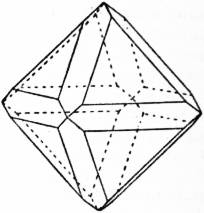
CUPRITE, a mineral consisting of cuprous oxide, Cu2O, crystallizing in the cubic system, and forming an important ore of copper, of which element cuprite contains 88.8%. The name cuprite (from Lat. cuprum, copper) was given by W. Haidinger in 1845; earlier names are red copper ore and ruby copper, which at once distinguish this mineral from the other native copper oxide—cupric oxide—known as black copper ore or melaconite. Well-developed crystals are of common occurrence; they usually have the form of the regular octahedron, sometimes in combination with the cube and the rhombic dodecahedron. A few Cornish crystals have been observed with faces of a form {hkl} known as the pentagonal icositetrahedron, since it is bounded by twenty-four irregular pentagons. In this class of cubic crystals there are no planes or centre of symmetry, but the full number (thirteen) of axes of symmetry; it is known as the trapezohedral hemihedral class, and cuprite affords the best example of this type of symmetry. The etching figures do not, however, conform to this lower degree of symmetry, nor do crystals of cuprite rotate the plane of polarization of plane-polarized light. The colour of the mineral is cochineal-red, and the lustre brilliant and adamantine to sub-metallic in character; crystals are often translucent, and show a crimson-red colour by transmitted light. On prolonged exposure to light the crystals become dull and opaque. The streak is brownish-red. Hardness 3½; specific gravity 6.0; refractive index 2.85.
Compact to granular masses also occur, and there are two curious varieties—chalcotrichite and tile-ore—which require special mention. Chalcotrichite (from Gr. χαλκός, copper, and θρίξ, τριχός, hair) or “plush copper ore” is a capillary form with a rich carmine colour and silky lustre; the delicate hairs are loosely matted together, and each one is an individual crystal enormously elongated in the direction of the diagonal or the edge of the cube. Tile-ore (Ger. Ziegelerz) is a soft earthy variety of a brick-red to brownish-red colour; it contains admixed limonite, and has been formed by the alteration of chalcopyrite (copper and iron sulphide).
Cuprite occurs in the upper part of copper-bearing lodes, and is of secondary origin, having been produced by the alteration of copper sulphides. Beautifully crystallized specimens were formerly found in Wheal Gorland and Wheal Unity at Gwennap, and in Wheal Phoenix near Liskeard in Cornwall; they also occur in the copper mines of the Urals, and in Arizona. Isolated crystals bounded by faces on all sides, and an inch or more in diameter, are found embedded in a soft white clay at Chessy near Lyons; they are usually altered on the surface, or throughout, to malachite. Chalcotrichite comes from Wheal Phoenix and Fowey Consols mine in Cornwall, and from Morenci in Arizona; tile-ore from Bogoslovsk in the Urals, Atacama in South America, and other localities. Small crystals of cuprite, together with malachite, azurite and cerussite, are sometimes found encrusting ancient objects of copper and bronze, such as celts and Roman coins, which have for long periods remained buried in the soil. Artificially formed crystals have been observed in furnace products.
(R. W. R.)
CUPULIFERAE, a botanical order, or, in recent arrangements, group of orders, containing several familiar trees. The plants are trees or shrubs with simple leaves alternately arranged and small unisexual flowers generally arranged in catkins and pollinated by wind-agency. The generally one-seeded nut-like fruit is associated with the persistent often hardened or greatly enlarged bracts forming the so-called cupule which gives the name to the group. The group is subdivided as follows, and these subdivisions are now generally regarded either as distinct natural orders or the first two as sub-orders of one natural order.
Betuleae or Betulaceae. Female flowers arranged, two to three together on scale-like structures formed by the union of bracts, in catkins; ovary two-celled; fruit small, flattened, protected between the ripened scales of the catkin. Includes Betula (birch) and Alnus (alder).
Coryleae or Corylaceae. Female flowers in pairs, the bracts enlarging in the fruit to form a membranous cup (hazel), or a flat three-lobed structure (hornbeam). Ovary two-celled. Includes Corylus (hazel) and Carpinus (hornbeam).
Fagaceae (Cupuliferae in a restricted sense). Bracts forming a fleshy or hard cupule which envelops the one to several fruits. Ovary three-celled. Includes Quercus (oak), Fagus (beech), Castanea (sweet-chestnut).
Detailed accounts of the trees will be found under separate headings.
CURAÇAO, or Curaçoa, an island in the Dutch West Indies. It lies 40 m. from the north coast of Venezuela, in 12° N. and 69° W., being 40 m. long from N.W. to S.E., with an average width of 10 m. and an area of 212 sq. m. The surface is generally flat, but in the south-west there are hills attaining an elevation of 1200 ft. The shores are in places deeply indented, forming several natural harbours, the chief of which is that of St Anna on the south-west coast. Curaçao consists of eruptive rocks, chiefly diorite and diabase, and is surrounded by coral reefs. Streams are few and the rainfall is scanty, averaging only 16 in. per annum. Although the plains are for the most part arid wastes, sugar, aloes, tobacco and divi-divi are produced with much toil in the more fertile glens. Salt, phosphates and cattle are exported. The commerce is mainly with the United States, and there is a large carrying trade with Venezuela. The famous Curaçoa liqueur (see below) was originally made on the island from a peculiar variety of orange, the Citrus Aurantium curassuviensis. Willemstad (pop. about 8000), on the harbour of St. Anna, is the principal town. It bears a strong resemblance to a Dutch town, for the houses are built in the style of those of Amsterdam, and the narrow channel separating it from its western suburb of Overzijde and the waters of the Waigat, which intersect it, recall the canals. The narrow entrance leading to the Schottegat or Inner Harbour is protected by forts. The negroes of the island speak a curious dialect called Papaimento, composed of Spanish, Dutch, English and native words. Curaçao gives name to the government of the Dutch West Indies, which consists of Aruba, an island lying W. of Curaçao, with an area of 69 sq. m. and a population of 9591; Buen Ayre, lying 20 m. N.E., with an area of 95 sq. m. and a population of 4926; together with St Eustatius, Saba and part of St Martin. The governor is assisted by a council of four members and a colonial council of eight members nominated by the crown. The island of Curaçao has a population of 30,119; and altogether the Dutch West Indies have a population of 51,693.
Curaçao was discovered by Hojeda about 1499 and occupied by the Spaniards in 1527. In 1634 it fell into the hands of the Dutch, who have held it ever since, except during the year 1798 and from 1806 to 1814 when it passed into the possession of Great Britain.
See Wynmalen, “Les Colonies néerlandaises dans les Antilles,” Revue colon. internat. (1887), ii. p. 391; K. Martin, West-Indische Skizzen (Leiden, 1887); De Veer, La Colonie de Curaçoa (Les Pays Bas, 1898). Also several articles on all the islands in Tijdschrift v. h. Ned. Aardr. Genootschap (1883-1886).
CURAÇOA, a liqueur, chiefly manufactured in Holland. It is relatively simple in composition, the predominating flavour being obtained from the dried peel of the Curaçoa orange. The method of preparation is in principle as follows. The peel is first softened by maceration; then a part of the softened peel is distilled with spirit and water, and the remainder is macerated in a portion of the distillate so obtained. After two or three days the infusion is strained and added to the remainder of the original distillate. This simple method is subject to variations in manufacture, and the addition of a small quantity of Jamaica rum, in particular, is said to much improve the flavour. Dry Curaçoa contains about 39%, the sweet variety about 36% of alcohol. A lighter variety of Curaçoa, made with fine brandy, is known as “Grand Marnier.”
CURASSOW (Cracinae), a group of gallinaceous birds forming one of the subfamilies of Cracidae, the species of which are among the largest and most splendid of the game birds of South America, where they may be said to represent the pheasants of the Old World. They are large, heavy birds, many of them rivalling the turkey in size, with short wings, long and broad tail, and strong bill. In common with the family to which they belong, they have the hind toe of the foot placed on a level with the others, thus resembling the pigeons, and unlike the majority of gallinaceous birds. With the exception of a single species found north of Panama, the curassows are confined to the tropical forests of South America, east of the Andes, and not extending south of Paraguay. They live in small flocks, and are arboreal in their habits, only occasionally descending to the ground, while always roosting and building their nests on the branches of trees. Their nests are neat structures, made of slender branches interlaced with stems of grass, and lined internally with leaves. They feed on fruits, seeds and insects. They are often tamed in several parts of South America, but have never been thoroughly domesticated anywhere. Large numbers of these birds were, according to K. J. Temminck, brought to Holland from Dutch Guiana towards the end of the 18th century, and got so completely acclimatized and domesticated as to breed in confinement like ordinary poultry; but the establishments in which these were kept were broken up during the troubles that followed on the French Revolution. Their flesh is said to be exceedingly white and delicate, and this, together with their size and the beauty of their plumage, would make the curassows an important gain to the poultry yards of Europe, if they were not such bad breeders. The subfamily of curassows contains four genera and twelve species, all confined to South America, with the exception of Crax globicera—a Central American species, which extends northward into Mexico. This bird is about 3 ft. in length, of a glossy black colour over the whole body, excepting the abdomen and tail coverts, which are white. In common with the other species of this genus its head bears a crest of feathers curled forward at the tips, which can be raised or depressed at will. The female is of a reddish-brown colour, although varying greatly in this respect, and was formerly described as a separate species—the red curassow. In another species, Crax incommoda, the greater part of the black plumage is beautifully varied with narrow transverse bars of white. The galeated curassow (Pauxi galeata) is peculiar in having a large blue tubercle, hard and stony externally, but cellular within, and resembling a hen’s egg in size and shape, situated at the base of the hill. It only appears after the first moulting, and is much larger in the male than in the female.
CURATE (from the Lat. curare, to take care of), properly a presbyter who has the cure of souls within a parish. The term is used in this general sense in certain rubrics of the English Book of Common Prayer, in which it is applied equally to rectors and vicars as to perpetual curates. So, on the continent of Europe, it is applied in this sense to parish priests, as the Fr. curé, Ital. curato, Span. cura, &c. In a more limited sense it is applied in the Church of England to the incumbent of a parish who has no endowment of tithes, as distinguished from a perpetual vicar, who has an endowment of small tithes, which are for that reason sometimes styled vicarial tithes. The origin of such unendowed curacies is traceable to the fact that benefices were sometimes granted to religious houses pleno jure, and with liberty for them to provide for the cure; and when such appropriations were transferred to lay persons, being unable to serve themselves, the impropriators were required to nominate a clerk in full orders to the ordinary for his licence to serve the cure. Such curates, being not removable at the pleasure of the impropriators, but only on due revocation of the licence of the ordinary, came to be entitled perpetual curates. The term “curate” in the present day is almost exclusively used to signify a clergyman who is assistant to a rector or vicar, by whom he is employed and paid; and a clerk in deacon’s orders is competent to be licensed by a bishop to the office of such assistant curate. The consequence of this misuse of the term “curate” was that the title of “perpetual curate” fell into desuetude in the Anglican Church, and an act of parliament (1868) was passed to authorize perpetual curates to style themselves vicars (see Vicar). The term is in use in the Roman Catholic Church in Ireland to designate an assistant clergyman, and also to a certain extent in the American Episcopal Church, though “assistant minister” is usually preferred.
CURATOR (Lat. for “one who takes care,” curare, to take care of), in Roman law the “caretaker” or guardian of a spendthrift (prodigus) or of a person of unsound mind (furiosus), and, more particularly, one who takes charge of the estate of an adolescens, i.e. of a person sui juris, above the age of a pupillus, fourteen or twelve years, according to sex, and below the full age of twenty-five. Such persons were known as “minors,” i.e. minores viginti quinque annis. While the tutor, the guardian of the pupillus, was said to be appointed for the care of the person, the curator took charge of the property. The term survives in Scots law for the guardian of one in the second stage of minority, i.e. below twenty-one, and above fourteen, if a male, and twelve, if a female. Under the Roman empire the title of curator was given to several officials who were in charge of departments of public administration, such as the curatores annonae, of the public supplies of corn and oil, or the curatores regionum, who were responsible for order in the fourteen regiones or districts into which the city of Rome was divided, and who protected the citizen from exaction in the collection of taxes; the curatores aquarum had the charge of the aqueducts. Many of these curatorships were instituted by Augustus. In modern usage “curator” is applied chiefly to the keeper of a museum, art collection, public gallery, &c., but in many universities to an official or member of a board having a general control over the university, or with the power of electing to professorships. In the university of Oxford “curators” are nominated to administer certain departments, such as the University Chest.
CURCI, CARLO MARIA (1810-1891), Italian theologian, was born at Naples. He joined the Jesuits in 1826, and for some time was devoted to educational work and the care of the poor and prisoners. He became one of the first editors of the Jesuit organ, the Civiltà Cattolica; but then came under the influence of Gioberti, Rosmini and other advocates for reform. He wrote a preface to Gioberti’s Primato (1843), but dissented from his Prolegomena. After the events of 1870, Curci, at Florence, delivered a course on Christian philosophy; and in 1874 began to publish several Scriptural works. In his edition of the New Testament (1879-1880) he makes some severe remarks on the neglect of the study of Scripture amongst the Italian clergy. In the meantime he began to attack the political action of the Vatican, and in his Il Moderno Dissidio tra la Chiesa e l’Italia (1878) he advocated an understanding between the church and state. This was followed by La Nuova Italia ed i Vecchi Zelanti (1881), another attack on the Vatican policy; and by his Vaticano Regio (1883), in which he accuses the Vatican of trafficking in holy things and declares that the taint of worldliness came from the false principles accepted by the Curia. His former work at Naples drew him also in the direction of Christian Socialism. He was condemned at Rome, and in a letter to The Times (10th of September 1884) declares that it was on account of his disobedience to the decrees of the Roman Congregation: “I am a dutiful son of the Church who hesitates to obey an order of his mother because he does not see clear enough the maternal authority in it.” He was cast out of the Society of Jesus and suspended, and during this time Cardinal Manning put his purse at Curci’s disposal. Finally he accepted the decrees against him and retracted “all that he said contrary to the faith, morals and discipline of the Church.” He passed the remainder of his life in retirement at Florence, and, a few months before his death, was readmitted to the Jesuit Society. He died on the 8th of June 1891.
(E. Tn.)
CUREL, FRANÇOIS, Vicomte de (1854- ), French dramatist, was born at Metz on the 10th of June 1854. He was educated at the École Centrale as a civil engineer, the family wealth being derived from smelting works. He began his literary career with two novels, L’Été des fruits secs (1885) and Le Sauvetage du grand duc (1889). In 1891 three pieces were accepted by the Théâtre Libre. The list of his plays includes L’Envers d’une sainte (1892); Les Fossiles (1892), a picture of the prejudices of the provincial nobility; L’Invitée (1893), the story of a mother who returns to her children after twenty years’ separation; L’Amour brode (1893), which was withdrawn by the author from the Théâtre Français after the second representation; La Figurante (1896); Le Repas du lion (1898), dealing with the relations between capital and labour; La Fille sauvage (1902), the history of the development of the religious idea; La Nouvelle Idole (1899), dealing with the worship of science; and Le Coup d’aile (1906).
See also Contemporary Review for August 1903.
CURÉLY, JEAN NICOLAS (1774-1827), French cavalry leader, was the son of a poor peasant of Lorraine. Joining, in 1793, a regiment of hussars, he served with great distinction as private and as sous-officier in the Rhine campaigns from 1794 to 1800. He was, however, still a non-commissioned officer of twelve years’ service, when at Afflenz (12th of November 1805) he attacked and defeated, with twenty-five men, a whole regiment of Austrian cavalry. This brilliant feat of arms won him the grade of sous-lieutenant, and the reputation of being one of the men of the future. The next two campaigns of the Grande Armée gained him two more promotions, and as a captain of hussars he performed, in the campaign of Wagram, a feat of even greater daring than the affair of Afflenz. Entrusted with despatches for the viceroy of Italy, Curély, with forty troopers, made his way through the Austrian lines, reconnoitred everywhere, even in the very headquarters-camp of the archduke John, and finally accomplished his mission in safety. This exploit, only to be compared to the famous raids of the American Civil War, and almost unparalleled in European war, gained him the grade of chef d’escadrons, in which for some years he served in the Peninsular War. Under Gouvion St Cyr he took part in the Russian War of 1812, and in 1813 was promoted colonel. In the campaign of France (1814) Curély, now general of brigade, commanded a brigade of “improvised” cavalry, and succeeded in infusing into this unpromising material some of his own daring spirit. His regiments distinguished themselves in several combats, especially at the battle of Arcis-sur-Aube. The Restoration government looked with suspicion on the most dashing cavalry leader of the younger generation, and in 1815 Curély, who during the Hundred Days had rallied to his old leader, was placed on the retired list. Withdrawing to the little estate of Jaulny (near Thiaucourt), which was his sole property, he lived in mournful retirement, which was saddened still further when in 1824 he was suddenly deprived of his rank. This last blow hastened his death. Curély, had he arrived at high command earlier, would have been ranked with Lasalle and Montbrun, but his career, later than theirs in beginning, was ended by the fall of Napoleon. His devoted friend, De Brack, in his celebrated work Light Cavalry Outposts, considers Curély incomparable as a leader of light cavalry, and the portrait of Curély to be found in its pages is justly ranked as one of the masterpieces of military literature. The general himself left but a modest manuscript, which was left for a subsequent generation to publish.
See also Thoumas, Le Général Curély: itinéraires d’un Cavalier léger, 1793-1815 (Paris, 1887).
CURES, a Sabine town between the left bank of the Tiber and the Via Salaria, about 26 m. from Rome. According to the legend, it was from Cures that Titus Tatius led to the Quirinal the Sabine settlers, from whom, after their union with the settlers on the Palatine, the whole Roman people took the name Quirites. It was also renowned as the birthplace of Numa, and its importance among the Sabines at an early period is indicated by the fact that its territory is often called simply ager Sabinus. At the beginning of the imperial period it is spoken of as an unimportant place, but seems to have risen to greater prosperity in the 2nd century. It appears as the seat of a bishop in the 5th century, but seems to have been destroyed by the Lombards in A.D. 589. The site consists of a hill with two summits, round the base of which runs the Fosso Corese: the western summit was occupied by the necropolis, the eastern by the citadel, and the lower ground between the two by the city itself. A temple, the forum, the baths, &c., were excavated in 1874-1877.
See T. Ashby in Papers of the British School at Rome, iii. 34.
(T. As.)
CURETES (Gr. Κούρητες and Κουρῆτες). (1) A legendary people mentioned by Homer (Il. ix. 529 ff.) as taking part in the quarrel over the Calydonian boar. They were identified in antiquity as either Aetolians or Acarnanians (Strabo 462, 26), and were also represented by a stock in Chalcis in Euboea. (2) In mythology (unconnected with the above), the attendants of Rhea. The story went that they saved the infant Zeus from his father Cronus in Crete by surrounding his cradle and with clashing of sword and shield preventing his cries from being heard, and thus became the body-guard of the god and the first priests of Zeus and Rhea. In historic times the cult of the Curetes was widely known in Greece in connexion with that of Rhea (q.v.). Its ceremonies consisted principally in the performance of the Pyrrhic dance to the accompaniment of hymns and flute music, by the priests, who represented and thus commemorated the original act of the Curetes themselves. The dance was originally distinguished from that of the Corybantes by its comparative moderation, and took on the full character of the latter only after the cult of the Great Mother, Cybele, to which it belonged, spread to Greek soil. The origin of the dance may have lain in the supposed efficacy of noise in averting evil.
The Curetes are represented in art with shield and sword performing the sacred dance about the infant Zeus, sometimes in the presence of a female figure which may be Rhea. Their number in art is usually two or three, but in literature is sometimes as high as ten. Of their names the following have survived: Kures, Kres, Biennos, Eleuther, Itanos, Labrandos, Panamoros, Palaxos; but no complete list of names is possible because of their confusion with the names of the Corybantes and other like deities. Their origin is variously related: they were earth-born, sprung of the rain, sons of Zeus and Hera, sons of Apollo and Danais, sons of Rhea, of the Dactyli, contemporary with the Titans (Diod. Sic. v. 66). Rationalism made them the mortal sons of a mortal Zeus, or originators of the Pyrrhic dance, inventors of weapons, fosterers of agriculture, regulators of social life, &c. A plausible theory is that of Georg Kaibel (Göttinger Nachrichten, 1901, pp. 512-514), who sees in them, together with the Corybantes, Cabeiri, Dactyli, Telchines, Titans, &c., only the same beings under different names at different times and in different places. Kaibel holds that they all had a phallic significance, having once been great primitive deities of procreation, and that having fallen to an indistinct, subordinate position in the course of the development and formalization of Greek religion, they survive in historic times only as half divine, half demonic beings, worshipped in connexion with the various forms of the great nature goddess. The resemblances, especially between Rhea and her Curetes and the Great Mother and her Corybantes (q.v.), were so striking that their origins were inextricably confused even in the minds of the ancients: e.g. Demetrius of Scepsis (Strabo 469, 12) derives the Curetes and Rhea from the cult of the Great Mother in Asia, while Virgil (Aen. iii. 111) looks upon the latter and the Corybantes as derivations from the former. The worship of both was akin in nature to that of the Dactyli, the Cabeiri, and even of Dionysus, the special visible bond being the orgiastic character of their rites.
Consult Immisch in Roscher’s Lexicon, s.v. “Kureten.”
(G. Sn.)
CURETON, WILLIAM (1808-1864), English Orientalist, was born at Westbury, in Shropshire. After being educated at the free grammar school of Newport, and at Christ Church, Oxford, he took orders in 1832, became chaplain of Christ Church, sub-librarian of the Bodleian, and, in 1837, assistant keeper of MSS. in the British Museum. He was afterwards appointed select preacher to the university of Oxford, chaplain in ordinary to the queen, rector of St Margaret’s, Westminster, and canon of Westminster. He was elected a fellow of the Royal Society and a trustee of the British Museum, and was also honoured by several continental societies. He died on the 17th of June 1864.
Cureton’s most remarkable work was the edition with notes and an English translation of the Epistles of Ignatius to Polycarp, the Ephesians and the Romans, from a Syriac MS. that had been found in the monastery of St Mary Deipara, in the desert of Nitria, near Cairo. He held that the MS. he used gave the truest text, that all other texts were inaccurate, and that the epistles contained in the MS. were the only genuine epistles of Ignatius that we possess—a view which received the support of F. C. Baur, Bunsen, and many others, but which was opposed by Charles Wordsworth and by several German scholars, and is now generally abandoned (see Ignatius). Cureton supported his view by his Vindiciae Ignatianae and his Corpus Ignatianum,—a Complete Collection of the Ignatian Epistles, genuine, interpolated and spurious. He also edited a partial Syriac text of the Festal Letters of St Athanasius, which was translated into English by Henry Burgess (1854), and published in the Library of Fathers of the Holy Catholic Church; Remains of a very Ancient Recension of the Four Gospels in Syriac, hitherto unknown in Europe; Spicilegium Syriacum, containing Remains of Bardesan, Meliton, Ambrose, Mara Bar Serapion; The third Part of the Ecclesiastical History of John, Bishop of Ephesus, which was translated by Payne Smith; Fragments of the Iliad of Homer from a Syriac Palimpsest; an Arabic work known as the Thirty-first Chapter of the Book entitled The Lamp that guides to Salvation, written by a Christian of Tekrit; The Book of Religious and Philosophical Sects, by Muhammed al Sharastani; a Commentary on the Book of Lamentations, by Rabbi Tanchum; and the Pillar of the Creed of the Sunnites. Cureton also published several sermons, among which was one entitled The Doctrine of the Trinity not Speculative but Practical. After his death Dr W. Wright edited with a preface the Ancient Syriac Documents relative to the earliest Establishment of Christianity in Edessa and the neighbouring Countries, from the Year of our Lord’s Ascension to the beginning of the Fourth Century; discovered, edited and annotated by the late W. Cureton.
CURETUS, a tribe of South American Indians, inhabiting the country between the rivers of Japura and Uaupés, north-western Brazil. They are short but sturdy, wear their hair long, and paint their bodies. Their houses are circular, with walls of thatch and a high conical roof. They are a peaceable people, living in small villages, each of which is governed by a chief.
CURFEW, Curfeu or Couvre-feu, a signal, as by tolling a bell, to warn the inhabitants of a town to extinguish their fires or cover them up (hence the name) and retire to rest. This was a common practice throughout Europe during the middle ages, especially in cities taken in war. In the law Latin of those times it was termed ignitegium or pyritegium. In medieval Venice it was a regulation from which only the Barbers’ Quarter was exempt, doubtless because they were also surgeons and their services might be needed during the night. The curfew originated in the fear of fire when most cities were built of timber. That it was a most useful and practical measure is obvious when it is remembered that the household fire was usually made in a hole in the middle of the floor, under an opening in the roof through which the smoke escaped. The custom is commonly said to have been introduced into England by William the Conqueror, who ordained, under severe penalties, that at the ringing of the curfew-bell at eight o’clock in the evening all lights and fires should be extinguished. But as there is good reason to believe that the curfew-bell was rung each night at Carfax, Oxford (see Peshall, Hist. of Oxford), in the reign of Alfred the Great, it would seem that all William did was to enforce more strictly an existing regulation. The absolute prohibition of lights after the ringing of the curfew-bell was abolished by Henry I. in 1100. The practice of tolling a bell at a fixed hour in the evening, still extant in many places, is a survival of the ancient curfew. The common hour was at first seven, and it was gradually advanced to eight, and in some places to nine o’clock. In Scotland ten was not an unusual hour. In early Roman times curfew may possibly have served a political purpose by obliging people to keep within doors, thus preventing treasonable nocturnal assemblies, and generally assisting in the preservation of law and order. The ringing of the “prayer-bell,” as it is called, which is still practised in some Protestant countries, originated in that of the curfew-bell. In 1848 the curfew was still rung at Hastings, Sussex, from Michaelmas to Lady-Day, and this was the custom too at Wrexham, N. Wales.
CURIA, in ancient Rome, a section of the Roman people, according to an ancient division traditionally ascribed to Romulus. He is said to have divided the people into three tribes, and to have subdivided each of these into ten curiae, each of which contained a number of families (gentes). It is more probable that the curiae were not purely artificial creations, but represent natural associations of families, artificially regulated and distributed to serve a political purpose. The local names of curiae which have come down to us suggest a local origin for the groups; but as membership was hereditary, the local tie doubtless grew weak with successive generations. Each curia was organized as a political and religious unit. As a political corporation it had no recognized activities beyond the command of a vote in the Comitia Curiata (see Comitia), a vote whose nature was determined by a majority in the votes of the individual members (curiales). But as a religious unit the curia had more individual activity. There were, it is true, ceremonies (sacra) performed by all the curiae to Juno Curis in which each curia offered its part in a collective rite of the whole people; but each curia had also its peculiar sacra and its own special place of worship. The religious affairs of each were conducted by a priest called curio assisted by a flamen curialis. The thirty curiae must always have comprised the whole Roman people; for citizenship depended on membership of a gens (gentilitas) and every member of a gens was ipso facto attached to a curia. They therefore included plebeians as well as patricians (q.v.) from the date at which plebeians were recognized as free members of the body politic. But, just as enjoyment of the full rights of gentilitas was only very gradually granted to plebeians, so it is probable that a plebeian did not, when admitted through a gens into a curia, immediately exercise all the rights of a curialis. It is unlikely, for instance, that plebeians voted in the Comitia Curiata at the early date implied by the authorities; but it is probable that they acquired the right early in the republican period, and certain that they enjoyed it in Cicero’s time. A plebeian was for the first time elected curio maximus in 209 B.C. The curia ceased to have any importance as a political organization some time before the close of the republican period. But its religious importance survived during the principate; for the two festivals of the Fornacalia and the Fordicidia were celebrated by the Curiales (Ovid, Fasti, ii. 527, iv. 635).
The term curia seems often to have been applied to the common shrine of the curiales, and thus to other places of assembly. Hence the ancient senate house at Rome was known as the Curia Hostilia. The curia was also adopted as a state division in a large number of municipal towns; and the term was often applied to the senate in municipal towns (see Decurio), probably from the name of the old senate house at Rome.
Authorities.—Mommsen, Römisches Staatsrecht, iii. p. 89 ff. (Leipzig, 1887); Römische Forschungen i. p. 140 ff. (Berlin, 1864, &c.); Clason, “Die Zusammensetzung der Curien und ihrer Comitien” (Kritische Erörterungen i., Rostock, 1871); Karlowa, Römische Rechtsgeschichte, i. p. 382 ff. (Leipzig, 1885); E. Hofmann, Patricische und plebeische Curien (Wien, 1879); for the Fornacalia, &c., Marquardt, Staatsverwaltung, iii. p. 197 (Leipzig, 1885); for local names of curiae, Pauly-Wissowa, Realencyclopädie, iv. p. 1822 (new edition, 1893, &c.); O. Gilbert, Geschichte und Topographie der Stadt Rom (Leipzig, 1883); for municipal curiae, Mommsen, in Ephemeris epigraphica, ii. p. 125; Schmidt, in Rheinisches Museum, xlv. (1890) p. 599 ff. On the Roman comitia in general see also G. W. Botsford, Roman Assemblies (1909).