Volume 5 — STOCK BROKERS' ACCOUNTS[4]
Reading edition
STOCK BROKERS' ACCOUNTS[4]
1. The principal feature of brokerage accounting is that such companies are not supposed to make investments upon their own account, but to act as intermediaries or agents for those who desire either to buy or sell.
As this is the case, such companies' profits depend entirely upon the commission charged their clients, which is charged whether they buy or sell for a client. There is also a margin of profit on the interest account, as large brokerage firms are enabled to secure money from banks at very favorable rates, sometimes much lower than the regular six per cent charged to customers.
The legitimate broker actually buys and sells, as instructed by his client. If a customer instructs the broker to buy one thousand shares of D. & R. G. preferred at 88½, the customer deposits the margin required by the broker, usually 10 per cent, and the broker at the first opportunity thereafter, buys in open market the one thousand shares of D. & R. G. stock ordered, paying in full for the same. The customer may have a certain time to take up this stock, say thirty or sixty days, but as he is still indebted to the company for ninety per cent of the purchase, he is required to pay six per cent interest upon the deferred payments until such time as the stock is finally taken up and paid for.
LARGE CAPITAL REQUIRED
2. It will be seen that in a multitude of transactions of this character, a very large amount of money is required by the broker, to carry on his business successfully. As very few of them have the amount of capital necessary, they resort to bank loans. Banks are very willing to loan money with listed stocks as collateral security, and frequently do so at favorable rates for the broker. This rate is determined by the condition of the money market, but is invariably less than the rate of interest charged to the client.
196
GRAIN PURCHASES
3. Purchases of grain at a stipulated price differ from stock purchases, inasmuch as the full amount of the purchase does not have to be paid until the delivery of the goods, although there are frequently charges, such as storage and insurance, which must be made upon long time purchases. These charges do not accrue, however, until after delivery. If a customer buys fifty thousand bushels of wheat in April for September delivery, the purchase is made by the brokers at the earliest date possible, in order to avoid any fluctuation of the market. When the broker makes the purchase he pays over the amount necessary to secure the same. If the deal is carried through to maturity, the grain is delivered to the broker who has made the purchase for his client, and is in turn delivered to the client upon the payment of the balance due, including all charges upon the same.
It is frequently the case, however, that before the actual delivery takes place, the client has ordered the broker to sell a sufficient amount to cover the deal. This may be either at an advance or a decline from the price purchased, but in either case the broker receives his commissions for both transactions—buying and selling.
BULLS AND BEARS
4. Investors who are always figuring upon an advance in prices are termed bulls, and those who are confident of lower prices are termed bears. If a seller sells for future delivery what he does not own, he is termed short and becomes temporarily a buyer, in order that he may have a sufficient amount to fill his orders. If a buyer holds stock or grain for a rise, or contracts for future delivery, he is termed long and becomes temporarily a seller, seeking to bring his holdings down to the normal demand.
EXACT BOOKKEEPING NECESSARY
5. It will be seen from the nature of the business that the bookkeeping department must be very exact, careful in its dealings, and as prompt as a bank in its action. Every precaution must be taken to safeguard the broker and protect the customer. The accounts must show, with each transaction, the brokerage or commission charges and, as in active times the transactions are very numerous, they must be quickly and accurately recorded in the books of the company.
197
BROKER'S COMMISSION
6. The percentage or commission due to the broker is included in the amount deposited to protect the deal, which is called a margin. If there should be a decline in price of either stock or grain, sufficient to cause the broker to feel insecure, he always reserves the right to call upon the customer for an additional deposit, even though the time of delivery has not yet arrived. In case the customer fails to make such additional deposit, the broker can sell the securities, grain, or other purchase, at once, in order to protect himself; the amount primarily deposited by the customer is thereby forfeited.
All orders for the purchase and sale of any article are received and executed with the distinct understanding that actual delivery is contemplated and that the party giving the order so understands and agrees.
SECURITIES
7. It is understood and agreed between the broker and his client, that all securities carried in his account, or deposited to secure the same, may be carried in the broker's general loans, and may be bought or sold at public or private sale without notice, when such sale or purchase is deemed necessary by the broker for his protection.
It is also understood and agreed that the right is reserved by the broker to close transactions on all accounts without notice, when protection is exhausted, or when, in his judgment, it is near enough exhausted as to endanger the account, and the broker reserves the right to settle contracts with his client, in accordance with the rules and customs of the exchange where the order is executed.
BUCKET SHOPS
8. The class of brokerage concerns termed bucket shops are those which do not actually carry out the orders of their customers, who neither buy nor sell anything, but who expect quick deals, frequent changes and, speaking plainly, merely gamble with their clients, allowing them to take whichever side they prefer. The large margin which this fraternity receives is a commission on deals whether they win or lose.
198In order to maintain at least a pretense of legality, there must be an actual transfer of all stocks and commodities speculated in. The broker must acquire nominal possession of something which represents stocks, grain, cotton, or other commodities. To do this he must borrow money from the bank, or borrow stock or warehouse receipts from those who have them to lend. In either instance he charges interest to his speculative customers.
It is estimated that the brokers in New York City who are members of the various exchanges, have an average amount in call loans outstanding of about $600,000,000.00, all of which vast sum is used to finance the orders of the brokers' customers. In dull times the minimum falls as low as $350,000,000.00, but there have been periods of speculative activity when $1,100,000,000.00 have been thus employed. The interest rate charged brokers constantly varies, but those who have had dealings with them state that their accounts rarely show less than five per cent interest. The broker charges the customer six per cent, thus averaging one per cent profit upon all money borrowed.
The New York Stock Exchange was founded for a high and honorable purpose, the same being true of the New York Produce Exchange, The Chicago Board of Trade, and other institutions for coöperative trading and the determination of values, in accordance with the recognized codes of business, and in conformity with the laws of supply and demand. Such exchanges serve admirably the producer and the merchant. They have a valid function to the investor in railroad and corporation securities, and are indispensable in facilitating the massing and distribution of capital required by large commercial enterprises.
LEGITIMATE DEALERS
9. Every legitimate brokerage concern has its representative or representatives on the board of trade in the city wherein it is located, and they are members in good standing of the board. When an order is given by a customer, either through the wicket or by wire, it is immediately transferred to the floor man and he proceeds to buy or sell as the instructions are given. In an active market the client must take the chances of slight fluctuations, which are just as likely to be in his favor as against him. The floor man reports the 199sales or purchases as soon as made, with the price paid and from whom purchased. The entries are immediately made to the customer's account.
CLEARING HOUSE
10. The boards of trade in different cities maintain a clearing house somewhat similar to that used by the banks, to settle the deals of each member of the board each day. The deals consummated during the day's session are reported to the clearing house and the amounts due from and payable to each firm or individual member are computed. If the brokerage firm has purchased ten thousand dollars more than it has sold, a check is given to the board for ten thousand dollars, as there must be some other firm or firms who have sold more than they have purchased to whom this ten thousand dollars is due, and to whom it is paid. Deliveries of stock are made at the time the balance is paid.
RING SETTLEMENT
11. At the close of the day, settlements for grain purchases are made between brokers at an agreed settlement price. If brokers have bought and sold to each other in varying amounts, only the difference in the price is adjusted with each other. What are called ring settlements save considerable time, money, and labor. The ring settlement is a settlement between three or more parties without the necessity of margining and may be illustrated in this manner:
A has bought 50,000 bushels of wheat of B, and has sold 50,000 bushels to C. By inquiry, it is found that C has sold 50,000 bushels to B. It is ascertained that the transactions between A, B, and C offset each other, and instead of each party being obliged to put up margins upon each transaction, a settlement may be effected by paying the difference in price, as the sale from C to B may be at a different price from the sale made by B to A, and the sale made by A to C, may have been at a still different price. By the adjustment between the different parties of the difference in price, the necessity of margining by A, B, or C is rendered unnecessary.
ILLUSTRATION
A bought 50,000 bushels of wheat of B at $1.23; A sold 50,000 bushels of wheat to C at $1.23½. By making up the ring it was found that C has sold to B 50,000 bushels at $1.22½. In making the settlement it is found that C 200is indebted to B ½ cent per bushel for the amount sold, as B sold at ½ cent advance; C is also indebted to A ½ cent per bushel as he purchased of A at a ½ cent advance on the price A bought from B. The settlement of this deal would be made by C giving his check for the amount due to B and to A, and there would be no necessity for any one of the three brokers putting up a margin on the deals. The amount of grain is offset one by the other, and the difference in price has been adjusted by payment of cash.
COMMODITIES HANDLED
12. The commodities that are handled upon the board and by brokers in general—food stuffs—are wheat, corn, oats, pork, lard, and short ribs. The various listed stocks are also bought and sold, a considerable business is done in bonds, and in some exchanges mining properties are listed, bought, and sold; although the latter is not common in the larger and more important exchanges. Cotton is a very important factor in some exchanges, and tobacco in others.
CORNERING THE MARKET
13. To corner the market is to offer to buy and be prepared to carry out your offer, for an amount more than is offered for sale, thus causing the price to advance. Sometimes this is done by large operators to their advantage and sometimes, in spite of their large purchases, which encourage a rising market, the prices fall before their deals are consummated, and they are left high and dry with a considerable loss instead of a large profit. The bull who tries to run a corner has a strong foretaste of what it means to advance sensationally, a staple article of consumption. Stocks and bonds may be hoisted ever so high; real estate may be boomed to far beyond its intrinsic or even potential worth—the public has no objection; the process is, in fact, rather pleasing to it. A lift in cereals or cotton above the normal lines encounters many protests and the higher the lift, the more savage the protest. This of course does not include the farmer or planter, unless he has disposed of his output; then he willingly enough joins the chorus of protestation.
VALUE OF THE WIRE
14. The telegraph is a very important factor to the grain and stock broker, as a large majority of their business is done by wire. Many of their clients are distributed through the country and keep 201close watch of the fluctuations of the market, sending their orders by wire, at what they consider an opportune time.
Most brokerage firms have a number of customers outside of the city, and these customers as well as those in the city who are large buyers, keep a considerable deposit on hand with the broker at all times. This deposit is frequently augmented by advantageous sales or decreased by losses, commissions, and interest charges. Reports of the condition of customers' accounts are made with frequency and any customer who finds that he has more money in the hands of the broker than is considered necessary, can secure part of the same by asking, or if he desires to close all transactions, the total amount due him is paid over at once. All amounts thus deposited are credited to customers' accounts and properly taken care of through the bookkeeping department.
SETTLEMENT OF CONTRACTS BY OFFSET
15. To quote from the rules of the Chicago Board of Trade:
In case it shall appear that the delivery of any outstanding trade or contract between members of the association may be offset by some other corresponding trade or contract, made by the parties with other members of the association; and the parties to such trade or contract, or their authorized agents, consent to such offset, such trade or contract shall be deemed to have been settled; any balance between the current value of the property covered by such trade or contract, and the several contract prices shall be due and payable immediately by the party from whom such balance may be due, to the party entitled to receive the same under his contract.
This is the rule applying to ring settlements hereinbefore described. To quote further:
"MARKET VALUE TO BE POSTED
The current market value of the property contracted for shall be conspicuously posted, at a stated hour each day, under the direction of the Board of Directors, in the Exchange Hall and in the Settlement Room of the Board, which posting shall serve as a basis for the adjustment of all contracts settled, as herein provided on that day.
"ADJUSTMENT OF BALANCES ON SETTLEMENT
In order to facilitate the operation of this section, each member is required to keep a settlement book, in which shall be entered the names of parties with whom settlements have been made and the dates and terms of the trades included in such settlement, and the terms of such settlements, and the prices at which the commodities were originally sold or purchased, and the amounts due to or from him or them on each separate settlement, also the net amount due to or from him or them on all settlements.
202 "CLEARING HOUSE AND REPORTS
The Board of Directors is hereby authorized to provide a suitable office, with the necessary employes, to which members shall be required, at stated hours each day, to make reports, showing the net balance due to or from each member, as shown by such settlement book, and also the general balance due to or from him or them upon all such settlements; each report to be accompanied with an acceptable check for the balances, if any, due from him or them on the contracts so settled; whereupon, if said report is found to be correct, as compared with other reports rendered him, the person in charge of said office shall, at a stated hour each day, pay to each of the parties making such report any balances which he may have collected, and which shall appear to be due to them by said reports, less such charges as shall be prescribed by the Board of Directors as compensation for the services of said office.
"CONFIRMATION OF TRANSACTIONS FOR FUTURE
DELIVERY, ETC.
It shall be the duty of each member or firm making a transaction for future delivery of grain or flax-seed in five thousand or one thousand bushel lots, lard and pork in two hundred and fifty or fifty package lots, and D. S. short ribs and D. S. extra short clears in lots of fifty thousand or twenty-five thousand pounds, under the Rules of the Association, to confirm such transaction by sending to the clearing house a memorandum of the same by 6 o'clock P. M. of the day on which it is made; such memorandum shall be in writing, and shall state on its face the date of the transaction, the quantity and kind of property covered by the same, the month of delivery, the price, and the name of the party to whom sold or of whom bought, and shall be signed by the party or firm making the same. All transactions of the same date made with any member or firm may be included in one memorandum, and all such memoranda shall be sent to the clearing house by the member or firm making the same, in unsealed envelopes addressed to the member or firm with whom such transactions were made. It shall be the duty of the clearing house manager to assort and have ready for delivery by 8 o'clock A. M. of the following day, and to deliver, on application, all envelopes containing such memoranda as are left with him in compliance with this section.
There is a fine imposed upon any member failing to comply with the above provisions.
"FAILURE TO DELIVER OR RECEIVE ON CONTRACT
In case any property contracted for future delivery is not delivered at maturity of contract, the purchaser may, if he shall so elect, consider the contract forfeited; or he may purchase the property on the market for the account of the seller, by 1:15 o'clock P. M. of the next business day, notifying him at once of such purchase; or he may require a settlement with the seller at the average market price on the day of maturity of contract, and any damages or loss due to the purchaser, by reason of such purchase or declared settlement, shall be due and payable by the seller immediately.
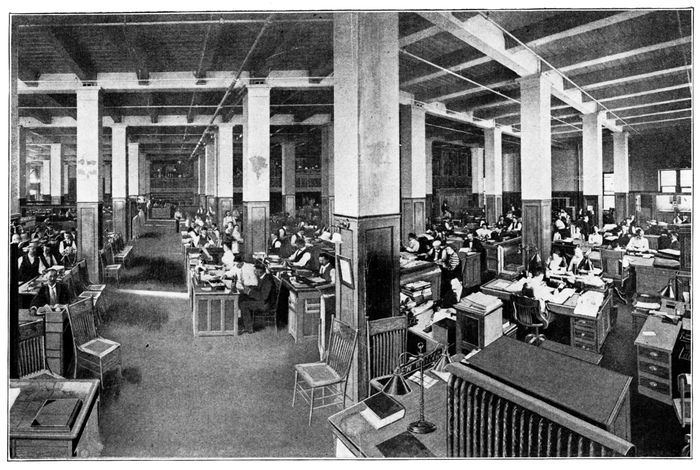
A SECTION IN THE GENERAL OFFICES OF THE SIMMONS HARDWARE COMPANY, ST. LOUIS, MO.
203In case any property contracted for future delivery is not received and paid for when properly tendered, it shall be the duty of the seller, in order to establish any claim on the purchaser, to sell it on the market at any time during the next twenty-four hours, at his discretion, after such default shall have been made, notifying the purchaser within one hour of such sale; and any loss resulting to the seller shall be paid by the party in default.
DEPOSITS TO SECURE THE FULFILLMENT OF TIME CONTRACTS
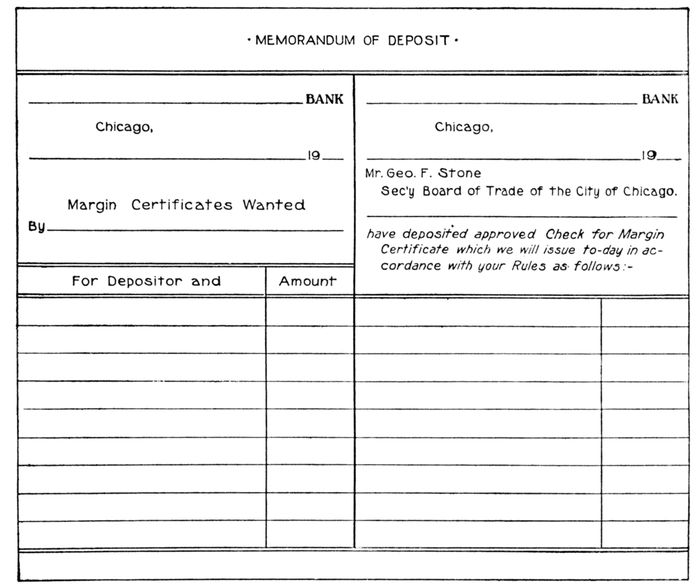
Fig. 1. Memorandum of Deposit with Broker to Secure Contracts
16. The rules of the board of trade provide that on time contracts, purchasers shall have the right to require of sellers as security, a deposit of ten per cent, which amount is based on the contract price of the property purchased; they are also further allowed to demand security from time to time to the extent of any advance in the market value above selling price. Sellers shall have the same right on property sold, and, in addition, any difference that may exist or occur between the estimated legitimate value of any such property and the price of sale. It is required that all securities shall be deposited with the treasurer of the association or with some 204bank duly authorized by the board of directors to receive such deposits. The board requires in each instance a memorandum which shall state the name of the depository, the date on which the deposit is made, the name of the depositor, and also the name or names of the party or parties in whose favor the deposit is to be made, together with the amount of such deposit in detail and also in the aggregate. The left-hand part of the memorandum is retained by the depository selected, the right-hand portion thereof being taken by the depositor after being duly signed by the person authorized to receipt for the said deposit, and without delay this memorandum must be placed in the office of the clearing house. A detail of this memorandum is shown in Fig. 1.
Upon the fulfillment or settlement of any contract or upon the closing of any contract—deposits upon which have been made—when the full adjustment of all differences relating to the same shall have been effected, the deposit shall be paid to the party depositing.
COMMISSIONS ALLOWED BY BOARD TO BROKERS
17. The commissions to be collected by brokers from customers are fully prescribed by the board of trade in each city and do not materially differ. While it will not be possible to give all the rates of brokerage or the charges allowed for buying, selling, or accounting, the commissions allowed on the Chicago Board of Trade for buying or selling, or for buying and selling, are as follows:
For the purchase, or for the sale, or for the purchase and sale by grade alone of wheat, corn, or oats, to be delivered in store, either for immediate or for future delivery, one-eighth of one cent per bushel.
For the purchase, or for the sale, or for the purchase and sale, by grade alone, of rye, barley, or flax-seed, to be delivered in store, either for immediate or for future delivery, one-quarter of one cent per bushel.
For the purchase, or for the sale, or for the purchase and sale of lard, six cents per tierce.
For the purchase, or for the sale, or for the purchase and sale of pork, five cents per barrel.
For the purchase, or for the sale, or for the purchase and sale of D. S. short ribs, or D. S. extra short clears, twenty-five cents per thousand pounds.
The minimum rates allowed upon the above transactions made for the account of members of the board are one-half of the foregoing minimum rates.
BOOKS AND FORMS USED
18. There are a number of ordinary forms, such as checks, drafts, receipts, requisitions, etc., that are common with most lines 205of business and used in the brokerage business, which will not be necessary to reproduce. Most brokers have all such forms printed or lithographed for their especial use with their name and address prominently displayed thereon.
ORDER BLANK
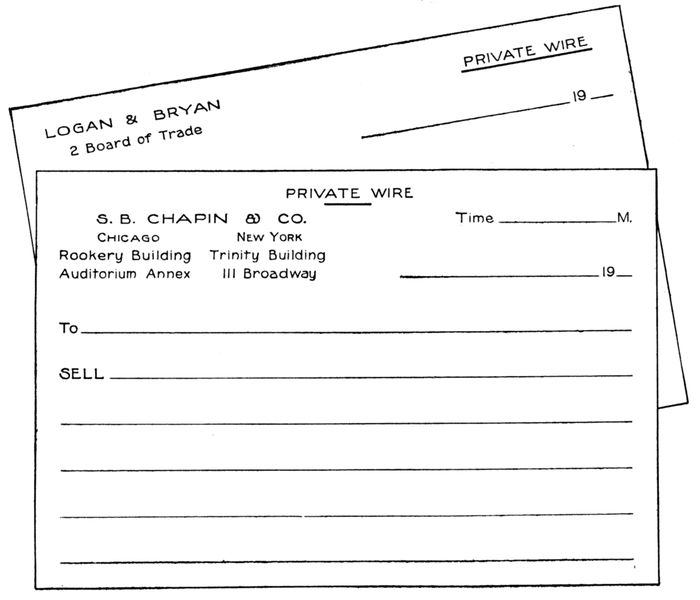
Fig. 2. Telegraphic Buying and Selling Orders
19. The first form of importance in connection with the accounting department of a brokerage firm is the order of the customer. This must invariably be in written form with the signature of the customer and the order must be expressed in the plainest terms so that there is no possibility of misconstruction. As these orders are frequently received by wire, or often dispatched by wire to New York or other branch office for execution, blanks for the purpose, as shown in Fig. 2, are furnished to customers, those used for buying orders being printed in black and those used for selling orders being printed in red. These orders are made out by the purchaser or 206his authorized agent and should not only show the date of the order but also the time of the day it was given, which is frequently of great importance in an active market. Whatever margin is required by the broker upon the deal must be deposited by the client at the time the order is given, as without this protection, the broker will not proceed to execute the order. It is sometimes the custom for brokers to accept collateral covering a certain amount of margin, in which case the broker gives the customer a receipt in due form, holding the collateral as trustee until settlement of account. All orders are executed at the earliest possible moment after their receipt. Legitimate brokers are members of the board of trade often in various cities and have their representatives on the floor, during the business hours of the board, to buy or sell as ordered.
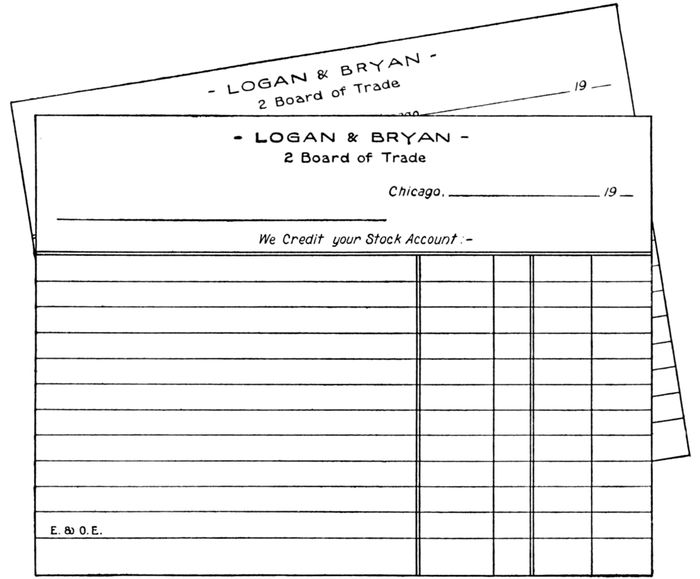
Fig. 3. Credit Slip Given to Customer by Broker
DEBIT AND CREDIT SLIP
20. As soon as the transaction is accepted by the broker, he gives to the customer a debit or credit slip showing the nature of 207the transaction, or it is sent by mail, as soon as possible after business hours; the charge or credit depend upon whether it is a purchase or a sale. The blanks for this purpose, as shown in Fig. 3, should be printed on different colored paper; the debit blank is usually on white and the credit blank on buff or yellow paper. If a client buys, the amount of his purchase appears as a debit to his account, with the commission added. He receives credit for whatever amount of margin he deposits, and the account stands thus until delivery, when the entire balance must be paid. If a sale is made by the client before the time of delivery, the amount of the sale is credited to his account, less the commission due for selling and any other charges. The difference in the account, whether it is an amount due from the broker to the client or from the client to the broker, is paid in cash as soon as the deal is closed.
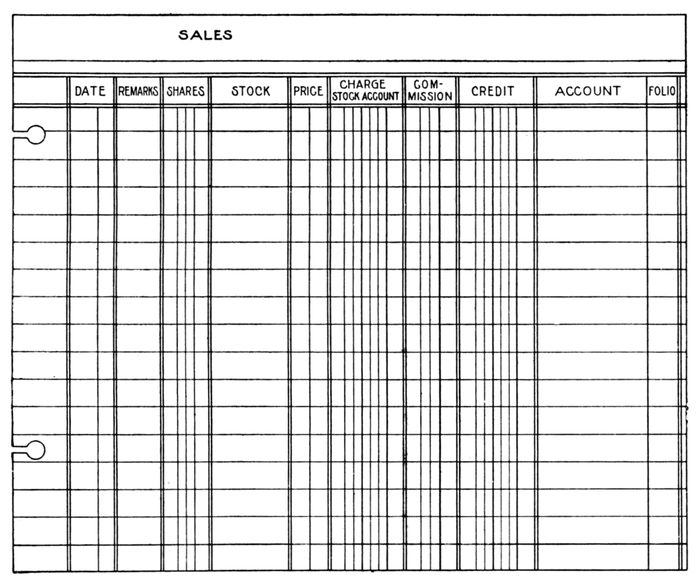
Fig. 4. Daily Sales Journal or Record of Stock Sales
208
DAILY RECORD SHEET
21. As a most perfect record must be kept of every transaction, the daily record sheets, as shown in Fig. 4, are of the greatest importance. This book is called the daily journal as frequently as it is designated the daily record.
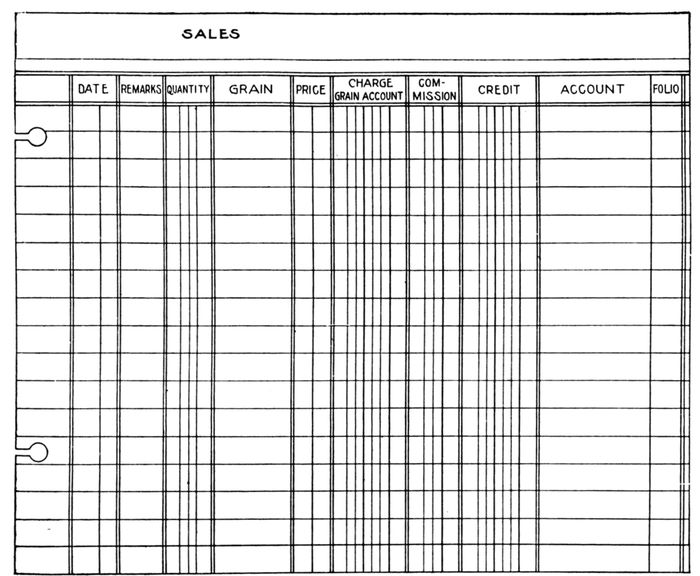
Fig. 5. Daily Sales Journal or Record of Grain Sales
This book is most convenient when kept in loose-leaf form, as a small number of leaves may be kept in the binder for current use, and after the sheet is filled, it may be filed away for future reference. The size of the sheet is usually 16 by 14 inches, and it is ruled and printed to show date, remarks, shares, stock, price, charge stock account, commission, credit account of, and folio. The purchase blank for this record is exactly the same with the exception that it is used to credit stock account instead of charging, and to charge customers' accounts instead of crediting. There should also be a grain sales sheet and a grain purchase sheet, which differ slightly in the column headings but not necessarily in the ruling—number of bushels 209taking the place of the column headed shares, and kind of grain taking the place of stock, as shown in Fig. 5. There should also be a sundries sales and purchase sheet for recording orders upon other commodities than grain or stock. Its form is the same as that shown with the exception that amount takes the place of shares, and commodities the place of stock in each form.
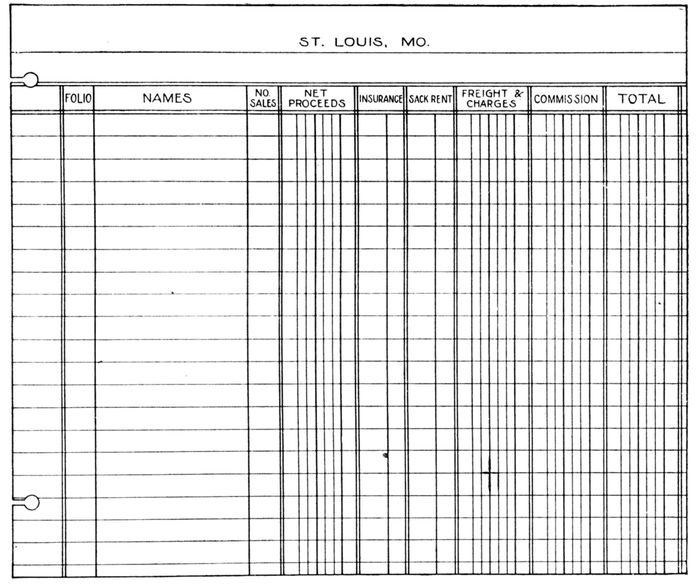
Fig. 6. Special Journal Used by a Grain Commission Company
As soon as an order is received, it is entered upon the proper record with all of the particulars, and the postings to customers' accounts are made daily, but the posting to the general ledger accounts need not be made more frequently than once a month, unless it is desired to take off a general ledger balance at more frequent intervals.
210
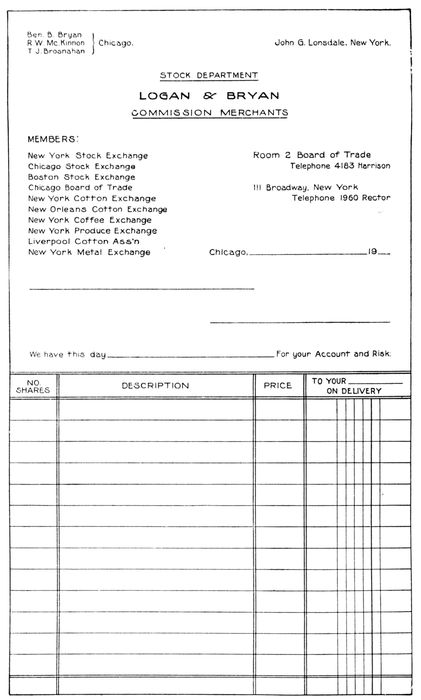
Fig. 7. Daily Advice of Purchase or Sale Rendered to Customers
211
GRAIN COMMISSION JOURNAL SHEET
22. In this connection it is advantageous for the student to study the journal form used by an exclusive grain commission company, Fig. 6. This form is used for recording the sales as they are made in a manner similar to that described in the daily record sheet. The form is loose-leaf and may be 11 by 14 inches in size, or if preferred could be made 16 by 14 inches, giving the advantage of a longer page. The necessity for a long or short page is determined altogether by the amount of business done by the house in one day, as it is the intention with this record to use one full page or more for each day's transactions. This journal bears the day and the date at the top of the page, and is ruled and printed to show columns for folio, names, number of sale, net proceeds, insurance, sack rent, freight and charges, commission, and total. The entries in this journal are made from the sales sheet, and the total amount is posted to the ledger for customers from this medium.
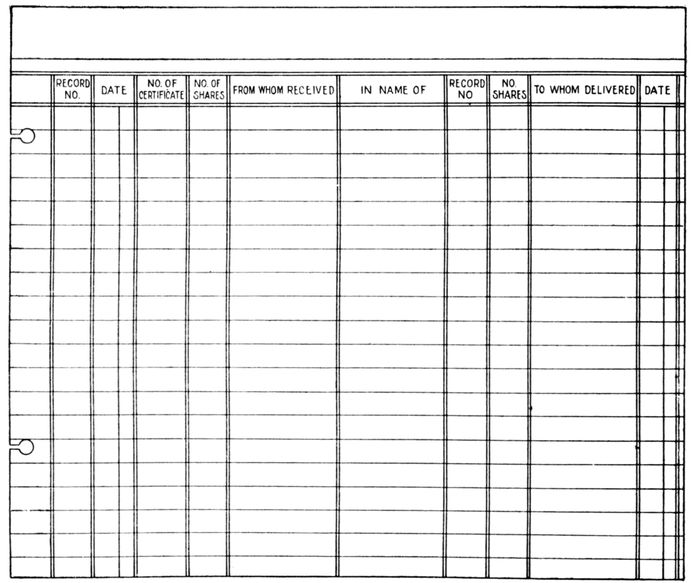
Fig. 8. Record of Stocks in Hands of the Broker
ADVICE OF PURCHASE OF SALE
23. A very important document used by commission merchants and brokers is the advice or notification to customer of their 212action in filling his orders. This advice is rendered daily to each customer and should be checked by him carefully, so that there may be no errors in the deals and no differences in opinion between the client and his broker. The advice would begin with the date and read something like this: "Mr. Geo. Bronson, Milwaukee, Wis.: We have this day bought for your account and risk, 100 shares American Car and Foundry (preferred) at 111⅛; 200 shares Canadian Pacific at 177; 100 shares Pullman at 187." On the lower part of the form, as shown in Fig. 7, are printed the rules of the house in regard to the order and it should be signed by some one in authority. If the customer accepts the same, it is an evidence that the transaction is according to orders.
STOCK RECORD
24. Owing to the fact that a very large amount of stock of various companies is being bought and sold continually by a brokerage firm, no book kept in the accounting department is of greater importance than the stock record. Not only is the broker's business with customers but it is also very largely with other brokerage concerns as he is buying and selling continually. Every share of stock which is bought or sold must be recorded in the stock record. This record shows: Record number, date, number of certificate, number of shares, from whom received, in name of, record number, number of shares, to whom delivered, and date of delivery, as in Fig. 8. It is not necessary in this book, to keep a record of either the price paid or the price at which sold, as this register is intended merely to show the disposition of the certificates of stock and whether they are still in the house, or if disposed of, to whom they have been delivered. It is needless to point to the necessity for the greatest care in keeping this record, as any errors might make it very difficult to trace the paper and result in loss, or at least considerable trouble for the house.
CASH BOOK
25. The general cash book for a brokerage firm in loose leaf should be sheet size 14 by 14 inches. In a bound book, it would not be necessary to have it more than 12 inches wide. In this particular business, it is not desirable to carry the general cash debit on one 213sheet and the general cash credit on another, although it might be advantageous in certain cases to run the grain in the general cash book and to keep a subsidiary cash book for the stocks, which might be run upon similarly ruled sheets, the total of the day's transactions being brought into the general cash at night. By doing this the posting clerk could be using one of the cash books while the cashier was working on the other.
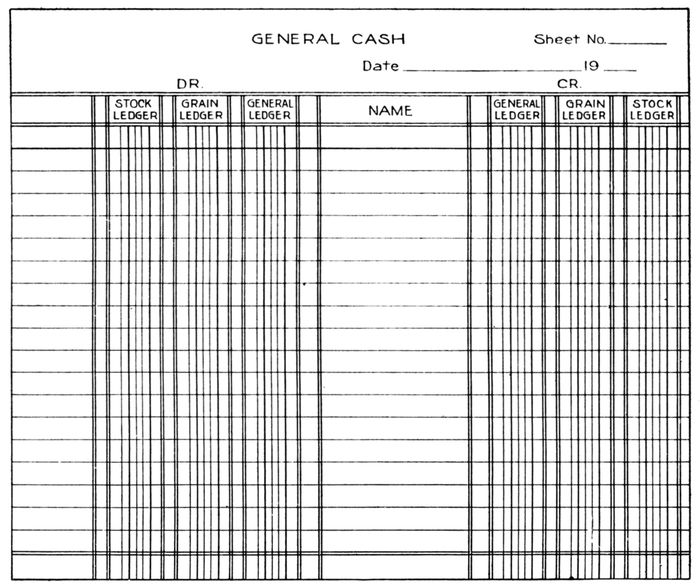
Fig. 9. Broker's General Cash Book
At the heading of the general cash sheet appears the sheet number and either the date (providing one sheet or more is used for each day), or the month with an extra day column, next to the margin. The columns are ruled and printed to show stocks, grain, and general ledger on the debit side and the same on the credit side, with the posting columns and sufficient room for the names of customers in center, as in Fig. 9. In this cash book should be entered all payments for margin on purchases of either grain or stock, all deposits by customers, which should be carried into the column indicated 214by their account—if they deal in grain their account is in the grain ledger and if in stocks their account is in the stocks ledger. All items of receipts or expenditures, not from or to customers, should be entered in the general ledger column, except as shown in the subsidiary cash sheet called office cash disbursements. Cash book sheets should always be paged consecutively when made, and each sheet accounted for, if loose-leaf cash books are used.
The best binder to use for a loose-leaf cash book is a flat opening spring back holder, in which may be placed enough leaves to last for the month, to be used for the current work, and when the new month is started the sheets for the previous month are placed in a reserve binder—which should be of the sectional post variety—for reference. If the back of the binder is labeled as the front and the leaves are reversed when placed in the transfer binder, they will run consecutively as to pages and dates.
At the end of the month the totals of the grain ledger and stocks ledger are brought into the general ledger column and posted to the controlling account for that ledger.
OFFICE CASH DISBURSEMENTS
26. As there are a number of disbursements for office help, advertising, telegraph, etc., that should be kept separate from the general cash, it is very desirable to establish an office cash fund. This fund is started by charging to office cash in the general ledger a definite amount, say $500.00, which amount is drawn from the bank or set aside for special checking for the payment of all miscellaneous bills or drawings of principals on account of salary, also the drawings of salaried employes. This account may be as large as is required for the purpose, and when the office cash becomes depleted, more is drawn which can be added to the account. At the end of the month, a statement is made of the totals of the different columns which should be a duplicate of the office disbursement sheet. These totals are entered in the general cash posted therefrom, a check given for office cash disbursements for the amount of the interest, say $500.00, and credit given the account for the difference in the amount spent as shown by the statement.
215
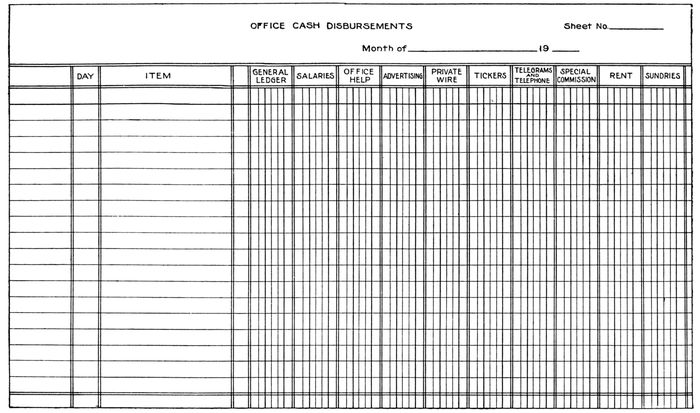
Fig. 10. Detailed Record of Office Cash Disbursements
216The office cash disbursement sheet, shown in Fig. 10, should be 14 by 16 inches in size, with sheet number and month of, in the heading. The box headings are as follows: Day, item, posting, general ledger, salaries, office help, advertising, private wire, tickers, telephone and telegraph, special commissions, rent, and sundries. The office cash balance should be kept independent of the general cash balance and, preferably, by another clerk.
Entries should be made as money is disbursed, with the proper vouchers for the same, to be turned in with the report.
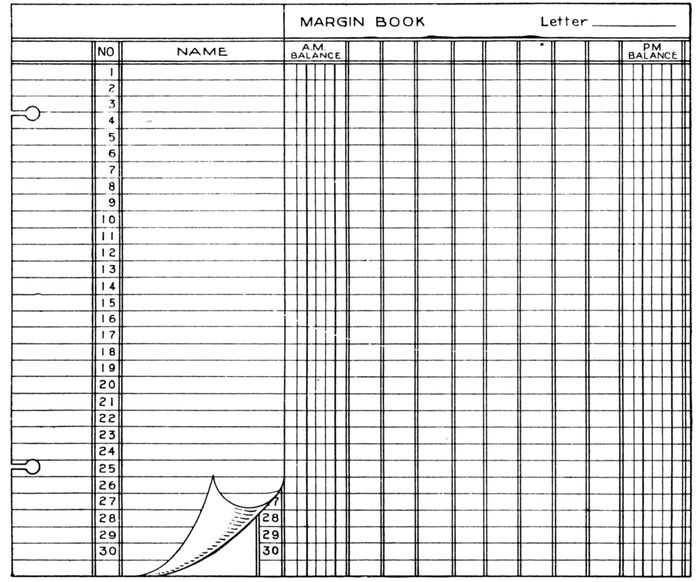
Fig. 11. Record of Margin Balances to Protect the Customer's Account
The totals of the different accounts, having been entered in the general cash, are posted to the debit of their respective accounts in the general ledger.
In localities where cotton is largely dealt in, or where tobacco is largely dealt in, it may be necessary to add columns for the tobacco ledger or the cotton ledger in the general cash, but in localities where the transactions are not frequent, the accounts for such transactions and also the deals in provisions are carried in the grain ledger.
217Any cash book sheet which should happen to be spoiled should be marked void in red ink, and filed in its regular order with the other cash sheets, but in no case should it be destroyed.
MARGIN BOOK
27. It is as necessary in the brokerage business to know the condition of customers' accounts as it is in a bank, and perhaps a little more so, as fluctuations in the market may wipe out his margin without his knowledge, and while it is not absolutely obligatory on the part of the broker to notify his customer, still it is very much to his interest to do so.
The margin clerk has the balance of each customer every morning. All orders to buy or sell received during the day pass through his hands and he makes the necessary memorandum against the customer's account. He keeps posted on the fluctuations of the market and immediately notifies the principals of any account which needs protection. After the trading for the day is finished, which on the board is 1:15 o'clock P.M. on any day except Saturday, and Saturday at 12:00 M., the margin clerk extends the balances of the various customers' accounts, these balances are checked by the bookkeeper from his accounts to prove their correctness, and a new list of the balances is made for the use of the margin clerk the following day.
This book is kept in most houses as a form of blotter, but the best form is a short sheet with numbered lines for the names of customers and a long sheet with similarly numbered lines divided into inch columns, with the balance column at the beginning and at the end, to be inserted under the short sheet, to care for the transactions of the day. By this means the names of customers will not have to be duplicated daily.
The sheets should be kept in a holder so that the names run alphabetically and the initial letter of the names on one short sheet should be penciled upon the long sheet each day. The bookkeeper can, if desired, have a duplicate set of the short sheets, shown in Fig. 11, to use for making up the balances for the succeeding day.
Where there are a sufficient number of accounts to warrant, they should be divided by tabbed index sheets with a leather tab projecting, in alphabetical arrangement, so that any account may 218be turned to instantly; for instance, if the account of L. S. Tucker & Co. is wanted, turning up the tab T will bring to light all of the customers whose names begin with T. This index may be further subdivided if it is deemed advisable.
The sheets for each day's work should be dated at the beginning of the day and may be kept, if desired, for reference, although after they have been proven by the books, they are of no practical value.
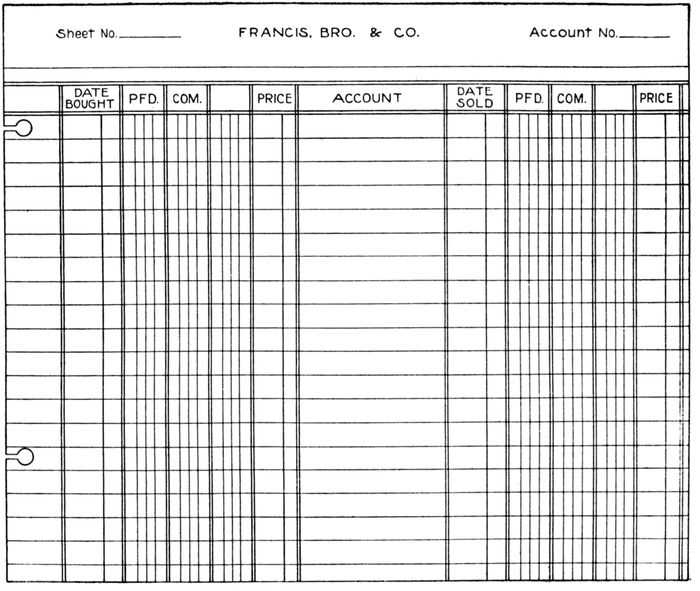
Fig. 12. Ledger Account of Each Stock Handled
THE LEDGERS
28. Stock Ledger. Some brokerage firms, besides keeping the stock record, keep a stock ledger, opening an account with each line of stock bought or sold and posting therein daily from the orders. This ledger account, with each class of stock, indicates at all times just how much of each line is held by the house and is very necessary in order to show what may be sold if occasion demands. As a large amount of stock held by brokerage firms is usually deposited with their bank as collateral for loans, and, as it is frequently the case that portions of this stock must be delivered to customers or sold upon their order, it is necessary to frequently change the collateral deposited with the bank, substituting other stock for that taken from the bank.
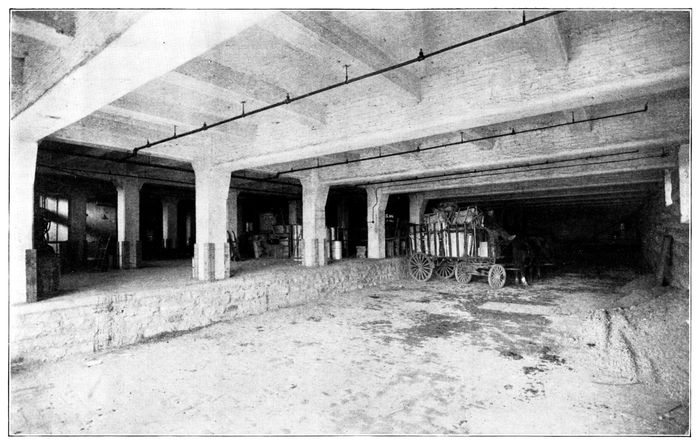
BASEMENT SHIPPING PLATFORM, FARWELL, OZMUN, KIRK & CO. (WHOLESALE HARDWARE), ST. PAUL, MINN.
219
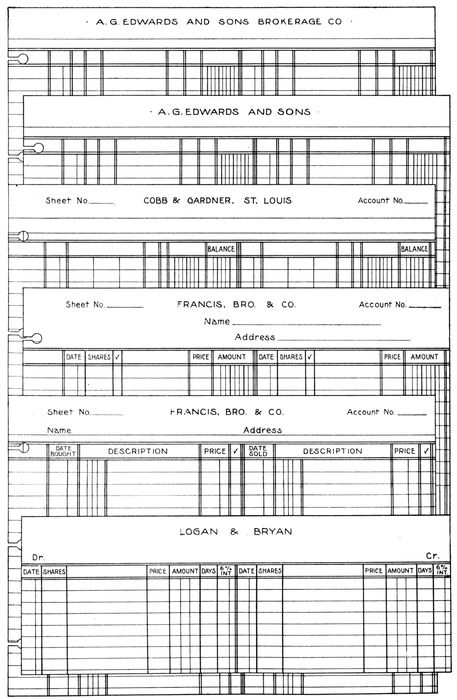
Fig. 13. This Shows a Variety of Rulings for the Customers' Ledger
220The stock ledger form in loose leaf is 13¾ by 14 inches, and the name of the stock should be inserted in the heading. It is ruled and printed to show: Date bought, preferred, common, extra column, price, account, date sold, preferred, common, extra column, and price, as shown in Fig. 12. Each sheet should have a number, and these numbers should follow consecutively. There are two ways of indexing these accounts. The one strictly in accordance with the theory of loose leaf is the insertion of the sheets in their proper alphabetical sequence. When the accounts are carried in this manner, leather tabbed index sheets appear at intervals throughout the ledger or ledgers. The division of the alphabet depends entirely upon how many accounts it is necessary to run and ledgers may be alphabetically subdivided into from twenty-five to two hundred divisions. The better the subdivision, the easier it becomes to turn to an account.
Since the majority of listed stocks are designated by initials or abbreviations in order to handle them with greater ease, some firms prefer to run the stock ledger on the numerical plan. By this plan each account is numbered and the accounts follow consecutively. Tabbed index sheets occur at intervals of from ten to twenty numbers, showing the location of any numbered account. With this arrangement it is necessary to keep a separate index of the various listed stocks, with their respective numbers, and to find an account the number of the stock must first be ascertained. By constant handling and entering, the bookkeeper becomes very familiar with the numbers and it is but little trouble for him to locate an account. The greater difficulty would be for someone who is unfamiliar with the books to find an account when wanted. Owing to this fact, the alphabetical arrangement is preferred.
29. Customers' Ledger. Brokers who deal in grain and other food products, cotton, and stocks, usually require ledger sheets slightly differing, to keep a record of customers' accounts. The different rulings are not frequently used for the same customer, as those who deal in grain are not often stock manipulators. As interest 221is charged to the customer for deferred payments upon stock deals, this item must be taken care of in the ledger. Upon grain transactions, the balance on the purchase price is not paid until the delivery of the goods, consequently there are no interest charges upon these accounts until after maturity.
Fig. 13 shows rulings of six ledgers used by prominent brokerage houses in Chicago and St. Louis, and a study of the different forms as to the columnar arrangement will show how varied are ideas in regard to ledger rulings. All of these forms are useful, and the choice is merely a matter of individual preference. One thing which should be borne in mind in regard to ledger rulings is that the information shown in the ledger account should be exactly the same as that which it is necessary to convey to the customer in his monthly or weekly statement. The reason for this is that it should never be necessary to refer to any book except the ledger in preparing customers' statements, and it will be noticed in the statement of Logan & Bryan, shown later, that it is not only a reproduction of the ledger account as to matter contained therein, but also follows it exactly in form and ruling.
This book is used the same as any other loose-leaf ledger with the exception that there is much more detail entered in these ledger accounts than is usual in a mercantile business.
Not more than one account should be entered on one leaf, for the reason that it is impossible to maintain a perfect alphabetical arrangement unless each account is absolutely independent.
After the names have been entered, the ledger sheets should be arranged alphabetically under each leather tabbed indexed subdivision. This arrangement should be carried, if necessary, to the fifth or sixth letter and when names are the same, like Smith, they are indexed alphabetically by initials. The brokerage business is one where there should be no loss of time in referring to accounts, hence the more perfect the indexing the more easily the account is located. Ledgers can be balanced daily by the aid of an adding machine without writing off the amounts of the balances.
The binders to use for this ledger are a current binder for active accounts and a transfer binder for closed accounts.
Postings should be made from the daily record sheet to the ledger as soon as possible after the consummation of the deal, and the postings 222from the cash book must also necessarily be kept up to date. At any moment the statement of the customer may be required, and it would be quite inconvenient for the broker if, on account of delayed posting, the statement were incomplete or incorrect. The number of customers' ledgers that should be kept depends entirely upon the number of customers. One loose-leaf ledger binder will accommodate at least five hundred accounts, and if the number exceeds this, two current binders should be used. By keeping the ledgers well gleaned and transferring closed accounts to a transfer ledger, the active accounts only remain in the current binder, which facilitates posting, statement making, and reference.
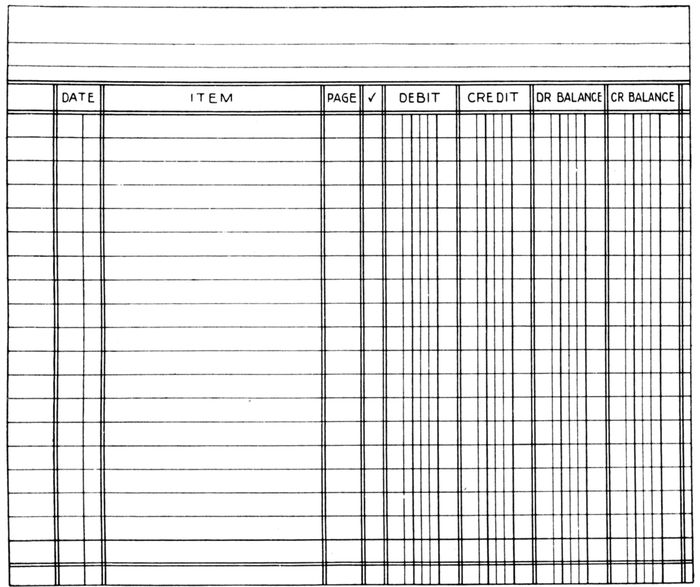
Fig. 14. Conventional Balance Form for General Ledger
Some firms use the vertical filing drawer for transferred accounts instead of placing them in another binder, as it is much easier to secure these accounts for replacement in the current binder in case the account is reopened.
30. General Ledger. A general ledger should be kept for the personal accounts of members of the firm, controlling accounts of subsidiary 223ledgers, controlling account of bills receivable and bills payable, and all impersonal accounts. This book may be in loose leaf if desired, although many firms prefer to use a bound ledger for this purpose. The best form is the regular four-column ledger, debit, credit, debit balance, and credit balance, as in Fig. 14.
The periodical statement of the condition of the firm is taken from the general ledger, and all subsidiary books controlled through its accounts must balance with the amounts shown therein.
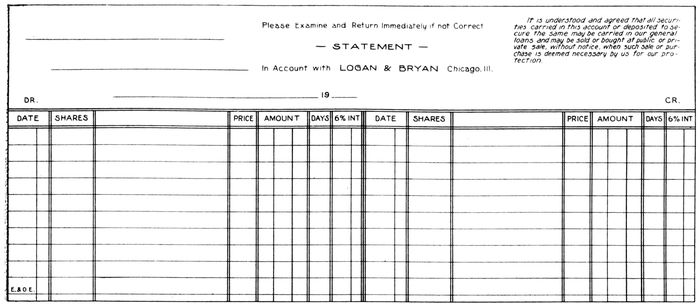
Fig. 15. Broker's Statement to a Customer, Which is a Duplicate of his Ledger Account
Most large brokerage houses have branches in 224different cities and it is necessary to keep accounts in the general ledger with each of these branches showing the expense of the branch and the receipts therefrom, taken from the regular statements furnished at whatever period required. It is very necessary that the profits or losses from these branches be readily computed as it might be deemed expedient, if it were known that the branch was not doing well, to discontinue it. Frequent statements, complete in their nature as to receipts and expenditures, should be demanded.
The principal expense accounts of a brokerage firm are salaries, rent, private telegraph wires, telephone booths, tickers, advertising, special commissions, and sundry expenses. As before stated, the receipts are from commissions and interest. Commissions accruing to brokers from the sale of stock are twenty-five cents per share—twelve and one-half cents for sales, and the same amount for purchases.
CUSTOMERS' STATEMENT
31. In a brokerage and commission business, customers are very likely to demand a statement at any time, and even should they not do so, it is deemed expedient to make statements to customers often enough to keep them fully posted regarding the condition of their accounts. The best form of statement to use for this purpose is shown in Fig. 15, and is an exact reproduction of the ledger account. As these statements are made very frequently it is unnecessary to provide blanks with more than nine or ten lines.
BILLS PAYABLE RECORD
32. Taking into consideration the large amount of money borrowed in this business, and the constant fluctuation of the amount due to banks, it will be seen that a careful, complete, and simple bills payable record is a prime necessity. This usual record shows date of loan, call or time, from whom borrowed, to whose account, rate of interest, securities—amount, when paid; securities—when released. A more simple form of this record is shown in Fig. 16.
225
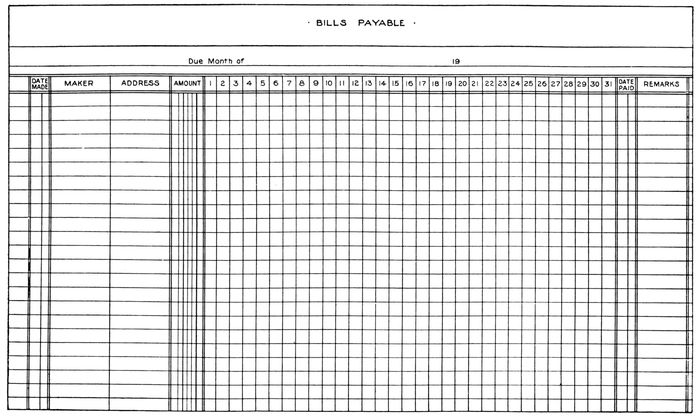
Fig. 16. A Detailed Record of Loans Payable During Each Month
226Loans made should be reported immediately to the cashier in writing, and the data concerning them should be entered at once in the cash book and the bills payable record. In some cases, banks arrange with the brokerage firm for what is called a blanket loan varying in amount—from $100,000.00 upward—according to the requirements of the firm. In increasing a loan of this character it is always necessary to keep upon deposit with the bank, collateral amply sufficient to cover the highest amount required, and any part of this collateral may be withdrawn by the substitution of other collateral satisfactory to the bank. In such a case there should be a blanket loan account kept in the general ledger showing, specifically, the collateral in the hands of the bank, and by the system of debit and credit, the record of that withdrawn and that substituted should be kept.
In case there is sufficient fluctuation in values to warrant, a bank can demand additional security at any time or the withdrawal of that held by them and the substitution of something more acceptable, or they may, upon call loans, demand a part or full payment at any time, in which case it is necessary for the broker to make arrangements to take up the loan at once.
JOURNAL
33. All orders received are copied from the order blank into the journal, as the order blank used is not of a character to allow its being numbered and filed consecutively, nor can it be readily adapted to the division of the buying and selling accounts.
The journal sheet should have debit and credit columns for each ledger used for customers, and a general ledger column as shown in Fig. 17. Entries from the orders are carried into the proper ledger column. If a man buys stock, he is debited in the stock ledger column; if he buys grain he is debited in the grain ledger column; and if he sells either, he is credited in the proper column.
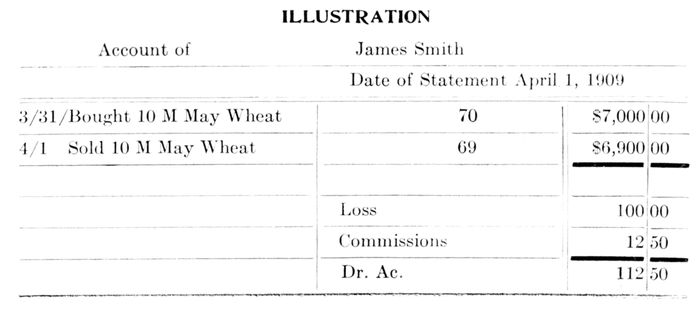
In making a statement to the customer of purchase and sale, the profit or loss together with the commission charged is shown.
ILLUSTRATION
227
CHECK REGISTER
34. Most brokers have accounts with several banks; it is therefore necessary that a check register be kept with each bank, showing the date, number, to whom issued, amount of each check drawn, the deposits, and the daily balance, as in Fig. 18.
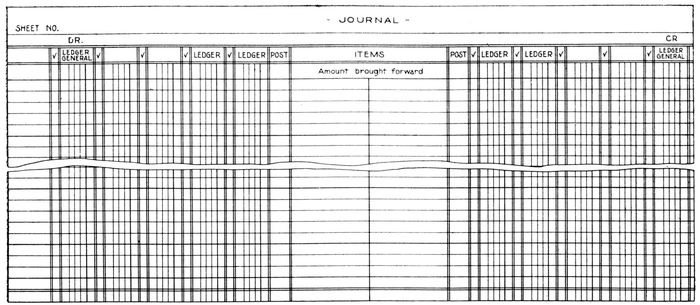
Fig. 17. General Journal in Which All Orders are Entered
By using this register the account with each bank may be kept separately, and the necessity for filling out stubs in a check book entirely avoided. Many houses have given up the use of check books altogether, having their checks padded in numerical sequence and as the numbers follow consecutively on the 228check register, each numbered check must be accounted for. In case a check is spoiled, the line should be voided in red ink, and the spoiled check filed with returned checks.
In case the office cash carries an account for itself from which checks are made, a separate check register should be kept for this account, as its balance does not enter into the general cash balance of the firm.
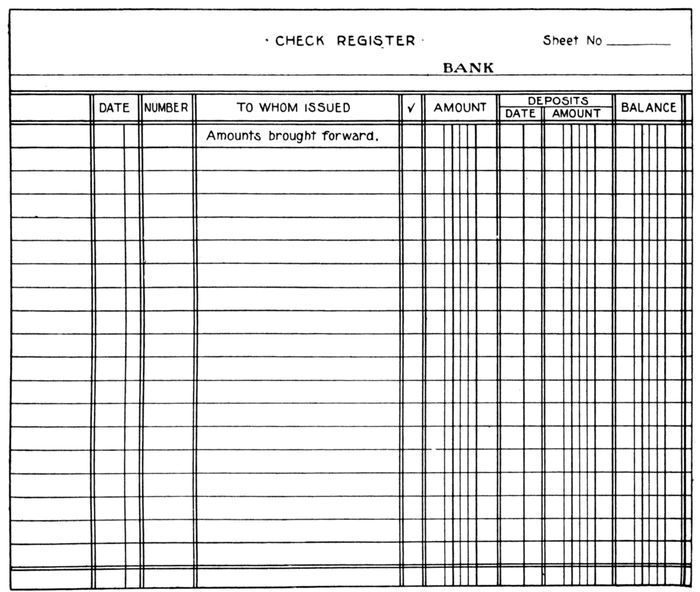
Fig. 18. Check Register Showing Condition of Bank Account
In no just sense can a broker be held to be the owner of shares of stock which he purchases and carries for a customer, and it is a breach of trust to use this collateral to his own advantage. The certificate of shares of stock is not considered, according to the decision of the Supreme Court of the United States, property itself; it is but the evidence of the property in the shares.
To sum up, the accounting work in connection with the brokerage business is in taking care of the orders received from customers, being sure that they are correctly interpreted and promptly filled, 229noting the loans necessary to complete the contract, keeping a careful record of commissions and interest due the house, being watchful in regard to the margins of customers, and arranging all accounts with customers so that they may be kept up to date and instantly available.
GLOSSARY OF BOARD OF TRADE TERMS
BEAR: One who believes the conditions are ripe for a decline in prices, or one who desires such an event. One may believe that the price of a certain security is about to decline and therefore is said to be a bear on that particular security, whereas he may not be so on others. The natural attitude of a bear is that of a seller but he may be so for the sake of buying at a lower price later.
BEARING THE MARKET: An artificial lowering or forcing down of prices.
BID PRICE: The price offered or bid for any security or commodity.
BORROWING STOCK: A broker borrows stock when he has made a contract to deliver and the stock which he has sold, for any one of various reasons cannot be delivered at the time agreed.
BREAK IN THE MARKET: A sudden and considerable decline in price.
BROKEN LOT: Same as odd lot in reference to stocks and less than ten thousand dollars par value in bonds.
BUCKET SHOPS: Offices run by irresponsible brokers not members of any stock exchange and who do a marginal business upon one dollar per share and upwards. As a matter of fact the stock itself is neither purchased nor sold for the customer by these operators. If the order is actually executed upon a bonâ fide exchange then the bucket shop puts in a contrary order for a like amount. For example: This kind of a dealer would sell an amount equivalent to a customer's purchase or purchase an amount equivalent to a customer's sale, thus, in no event carrying stocks.
BULL: One who believes that conditions are ripe for an advance in prices or one who desires such an advance and talks bullish in consequence. One writer defines a bull as a man who has something to sell, consequently he is anxiously waiting for prices to go up that he may sell at a good price.
BUY AT MARKET: An order to buy at the lowest prices at which the security can be obtained without any price limit being set by the one giving the order.
BUYER'S OPTION: A contract under the terms of which the buyer of a security need not receive delivery until the end of a specified time, but he has the right to demand delivery at any time within the period covered by the contract by giving the seller one day's notice. The understanding is briefly expressed as "buyer 4," "buyer 10," the figures indicating the number of days provided for in the agreement.
230BUYING ORDER: An order given to a broker to buy a certain security with or without limit as to price as the case may be. An order to buy is good for the date for which it was given only, unless otherwise specified. Sometimes an order is given "until countermanded" or "until cancelled" by which the broker understands that there is no definite limit as to time; but brokers usually remind their customers regarding orders to be sure that they still desire them to be kept in force.
CABLES: Telegrams from foreign countries on the conditions of the market. Large brokers receive cables each morning from London, Paris, and other points giving closing prices of grain and provision in that market.
CALL: A privilege which one party buys of another to call (receive) from him a certain amount of stocks, grain, etc., at a certain price and date.
CARRYING CHARGES: The interest charged by brokers for the amount of money advanced by them to customers in marginal transactions; also used by a Chicago firm to indicate storage rates, interest, and insurance on grain or provisions.
CASH GRAIN: Grain for delivery at once. Spot grain has the same meaning.
COMMISSIONS: The charge made by any broker for buying or selling securities for someone else.
CURB: Securities which are not traded in upon the large stock exchanges or new securities which have not yet been listed upon such exchanges are handled in what is known as the curb market. The reason for the existence of "curb market" in the open rather than in some building is that if the latter plan were pursued there would, in truth, exist another exchange, and it would not be permissible for a member of the regular exchange of the same city to be represented thereon as he frequently now is upon the curb.
CURBSTONE BROKER: One who usually, not being a member of the stock exchange, goes from office to office or transacts his business on the curb.
DELIVERY: The actual turning over to the buyer of the thing bought. If delivery is offered after hours, the buyer may refuse it until the following business day, but the seller has no right to demand interest for extended time.
DIVIDEND: A portion of the profit of a corporation authorized by the board of directors to be paid to the stockholders.
DUMP: An amount of stock that is forced upon the market for the purpose of getting rid of it. It does not mean so much the disposing of an undesirable investment but in offering any investment in large amounts.
EVEN: A broker is even on stock when he has contracted to receive and deliver equal amounts of the same stock with another broker. A settlement of the difference in prices is the only thing called for.
FLURRY: A small panic. An excitement caused by a rapidly falling market and advancing money rates.
231FUTURES: Buying or selling grain for future delivery. Literally speaking when you buy grain in February which is known as May grain you contract for delivery in May at prices then existing.
IN SIGHT: The amount of grain, coffee, cotton, tobacco, or any commodity available for immediate use.
LIMIT: A price which a broker must not exceed in executing an order for his customers. It may also be a restriction of the amount to be purchased or sold.
LISTED SECURITIES: Securities before they can be listed upon any board of trade or stock exchange must have complied with certain rules of the exchange. This does not imply that listed stock has any greater intrinsic merit than unlisted stock but it merely shows that certain facts and figures in relation to the security have been given more or less publicity.
LONG: One who holds stock or grain for a rise in price, or, one who has a contract under which he can demand such stock or grain on or before a certain day. The opposite of short.
MARGIN: An amount of money deposited with the broker to insure him against loss; a part of the purchase or selling price.
O: The "Ticker" abbreviation for offered when accompanied by figures; for instance, "G. N. O. 76" would mean that Great Northern Common Stock was offered at $76.00 per share.
OPEN MARKET: A market where any or all may buy or sell.
OPEN ORDER: An order which is good until cancelled.
OPTION: An agreement of purchase or sale, good only for a certain time.
PIT: The portion of the board of trade where floor trades are made. This term is particularly applied to Chicago. Other stock exchanges set aside certain places signified by posts set in the floor for trading and in these exchanges the trading points are called posts instead of pits.
POOL: A combination of buyers who work together and invest their joint capital as one. (The different boards of trade have enacted strict rules against pooling.)
PUT: A privilege which one party buys of another to put (deliver) to him a certain amount of stock, grain, etc., at a certain price and date.
PUT AND CALL: A put and a call may be combined in one instrument, the holder of which may either buy or sell as he chooses at a fixed price and date.
REMARGIN: To give more margin.
RING: A combination of brokers to offset and settle trades with each other; also an exclusive combination of persons for a selfish purpose as, to control the market. (Rings have the same standing in the board of trade as pooling, if of the same character.)
SELL AT MARKET: An order to one's broker giving authority to sell stock or grain at market price.
SELL AT OPENING: An order to sell immediately after the opening of the stock exchange at the best price obtainable.
232SELLING ORDER: An order given to a broker to sell a certain security with or without limit as to price, as the case may be. A selling order is good for the day for which it is given only unless otherwise specified.
SETTLEMENT: The payment of differences in trades between brokers.
SHORT: One who has sold for future delivery what he does not own, but hopes to buy at a lower rate.
SKYROCKETING: Pushing the prices of securities up to unnatural levels or forcing the price up with startling rapidity.
SLUMP: A sudden and a considerable fall in prices.
SPREAD: A "put and call" at differing prices.
STOP LOSS ORDER: This is a method of limiting losses by giving a stop order to the broker to sell if stock declines below a certain point. These are sometimes called stock orders.
STRADDLE: A "put and a call."
SWEETEN: To give more collateral or margin.
TICKER: A small printing machine operated by telegraph by which the outside world obtains the reliable information as to the prices of securities and commodities dealt in upon the principal exchanges of the world. It is a never failing source of information to the broker. The results are printed on a strip of paper like a ribbon which automatically unwinds and after passing under the printing device runs into a basket. The ribbon is called the tape. All fluctuations in prices are thus wired to the principal exchanges immediately.
WASH SALE: An illegitimate or fictitious transaction.
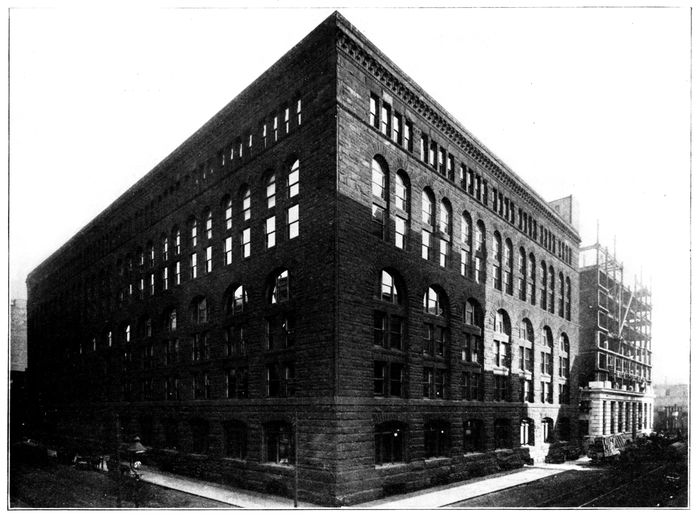
THE WHOLESALE HOUSE OF MARSHALL FIELD & CO., CHICAGO, ILL.
235