Volume 5 — BILLING AND ORDER RECORDING[5]
Reading edition
BILLING AND ORDER RECORDING[5]
Introduction. The survival of the fittest applies most forcefully to business men and their methods. The success of the men depends upon their methods; the efficiency of the methods, upon the men. Large corporations of to-day would be impossible without method. They plan their work, and method tells them daily whether they are working their plan successfully or unsuccessfully.
It is commonly supposed by the smaller business men that method is a result of business growth. Sometimes it is. If a business grows fast, better methods become a necessity. Without method any business must remain small—with few exceptions, just as small as the capacity of the man at the helm. "To the extent which system is intelligently used, it multiplies one's powers of achievement in all directions."
The importance of the order billing and shipping departments, the amount of waste effort therein, and the relation of each to all other branches of the business, make them a most interesting and profitable study for the progressive business student, whether he be a beginner, an executive, or an owner. To attain quick results and to eliminate useless head, hand, and leg work, learn the capacity, capability, and usefulness of office machinery and the short-cut methods made possible thereby.
During the last eight years there has been a tremendous amount of improvement made both in this country and abroad in handling office work, changing from hand to machine methods. Most of these improvements have been literally forced upon the business men of the country by specialty companies having labor-saving devices for sale. Wide-awake merchants have in some cases left the installation of such devices to office people who feared the loss of their positions through the use of them.
236One of the pioneers in the development of the class of work above mentioned is Hiram J. Halle, who overcame all obstacles, and gave the impetus to modern billing methods which has been such a help to our economic results in office practice. The typewriter companies have followed his lead and equipped cylinder machines with the necessary attachments for accomplishing almost any desired result, except writing in a bound book. In order to overcome this obstacle, the McMillan and the Empire and some other loose-leaf books have been invented. These books are loose-leaf only while they are being written upon; after completion they are permanently bound by a simple device, and become as secure as a sewed book.
In any book of this character, the student must consider the text as a series of problems, with explanations of how each has been solved. If the student does not learn to exercise his own powers of originality as a result of a study of this volume, he will fail to secure the result intended. Rarely, if ever, will two problems be met in two commercial establishments which will be alike. The judgment of the person installing the system will determine the best method to be used under certain conditions.
Before starting in on the regular work, it will not be out of place to give a comparison of the methods of business in various foreign countries.
The rush in the business life of the United States is accounted for by our fast growth and national desire to accumulate wealth. Commercial concerns have grown both fast and slowly to undreamed proportions. Strenuous efforts have been made to secure business, and then a corresponding effort has been made to effect the small economies which in a large business aggregate large sums. As a nation, we are rushing at headlong speed, seeking all the means which will give us results. In transportation we advance from steam to electricity; in social life we turn from horses and carriages to automobiles; in commercial life we use every known device to short-cut the work and effect economies—adding machines, typewriters, cash registers, envelope openers, envelope sealers, multigraphs, etc.
A distinct surprise awaits the person visiting Europe on a mission of introducing "short-cut" methods. While we are in business to make all the money we can, most of the Europeans are in business to make a living, or reasonable earnings.
237Imagine the surprise of the writer when told by the managing director of one of the largest department stores in London that they did not care to save the services of thirty-five clerks (which was possible by modern methods) as they were making a certain amount of money each year, and did not care to make any more; besides, they did not wish to put these people out of positions. It is not an easy matter to secure positions in England. Employes are very diligent and pay strict attention to business. A manager of one of the large banks in London said that once a clerk is hired he is discharged for gross misconduct only—not even for incompetency. There are young men clerks (pronounced clarks) in the Bank of England who are doing the same work for the bank as done by their grandfathers. There are old men in the Bank of England to-day who still use quill pens and the sand box instead of a blotter. There are, however, adding machines being used there by the younger generation, and they are of more use to them than to us in a way, as their currency is so much more difficult to add.
Each year, more improved methods are being introduced into England. Typewriters have been used for a number of years, and of late years adding machines have made headway. It is more difficult there to introduce new methods, but, once installed, it is difficult to dislodge them for other ones.
Some of the wholesale houses have very old methods. In one house in London, an order was copied twenty-nine times from the time it was received until it was finally charged. The concern was over two hundred years old and had never made any effort to improve its methods. It had four boys whose duty it was to hunt orders lost about the warerooms. A system of manifolding was installed, which eliminated so much waste of time in copying and recopying orders that it was difficult to convince the firm that something had not been overlooked. After four weeks they were delighted.
An American going abroad is much impressed by the deliberation of Europeans and is inclined to criticise them for it. After a time, they can point out enough Americans who have worn out at forty years of age, and are in Europe seeking health, to convince them that perhaps the Europeans are not wholly wrong.
In Germany, the railroads are controlled by the government. When one attempts to introduce short-cut methods, he is confronted 238by the fact that work is needed to keep busy old soldiers for whom the government has to care. In asking an agent of an American firm dealing in labor-saving devices why he did not use any of the devices, the answer was given that in Germany the young men work three years for nothing; he did not feel the necessity of doing away with any of them. At the end of three years' work in an office, a young man receives a diploma for efficiency, if he has attained it. The government exercises a strict supervision over all commercial concerns, and inspects their books at periodic intervals. Commercial failures are therefore more rare there than at home. Fraudulent schemes are dealt with severely.
There are many large firms in Germany, both jobbers and manufacturers, that are striving to be progressive. The Siemens-Halske Electric Co. are just as progressive in their order and billing methods as any American firm in the same line. To show the attention to details given by the Germans—a managing director of one of the large department stores in Berlin, when asked how long he had lived in the United States, said he had never been there. Upon being complimented upon his American accent, he replied that when talking to an American he always used the American accent, slang, intonation, etc., and when talking to an Englishman he changed his accent, etc., to correspond. He had all the American devices in his accounting department which one would find in any department store in the United States, and sent out monthly typewritten bills the same as John Wanamaker, Altman, and others of New York, and the same as all large department stores do in all American cities.
In France, the commercial houses are very conservative and are subject to the same government supervision as practiced in Germany. In one of the railroad companies, the Chemin de fer du Nord, they use the manibill system of billing (whereby each shipment is billed separately and manifolded on a form of seven sheets) which is the shortest form of billing known, but which has never been adopted by American railroads on account of the bulk of papers increasing too rapidly. The present American method is to put several shipments on a way bill for shipments to any given town, and when the goods arrive at the given town, the receiving stations make out separate freight bills for each shipment, copying the information from the blanket way bill made out at the forwarding station. Some 239of the American railroads are now adopting the special roll machine for car accountants' work, as shown in Fig. 1.
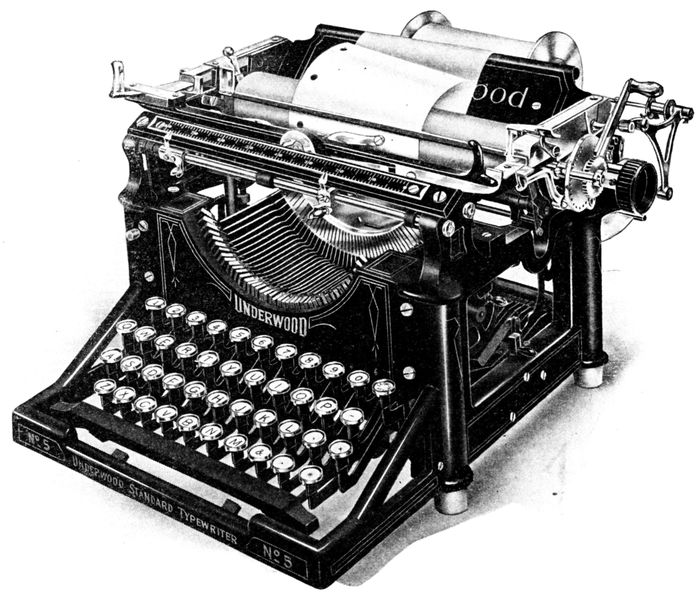
Fig. 1. Underwood Special Roll Machine for Car Accountants' Work
The French people do not, as a rule, form large companies like the Americans and Germans and English. There are a large number of small manufacturers and jobbers in France. The large department stores, like the Louvre, in Paris, are run on a strictly cash basis.
MACHINES FOR MANIFOLDING
Neither the billing machines (book-writing machines) nor typewriters were originally intended for heavy manifolding work. The flat-bed billing machines were originally invented to write in books used for court records, sales books, etc. The book was to remain 240stationary and the machine was to travel over the books. The flat-bed machines are the only machines made for writing in bound books—the latter are being gradually replaced by loose-leaf books. A flat-bed machine for bound books is shown in Fig. 2.
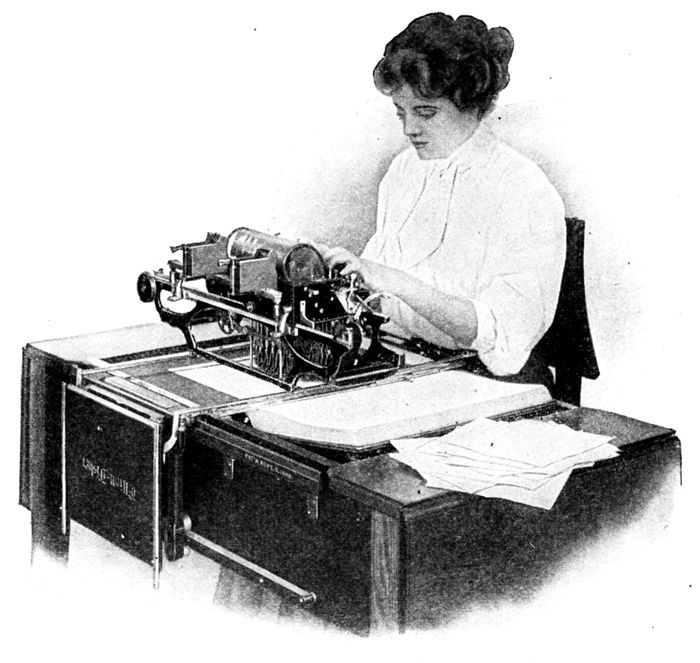
Fig. 2. Flat-Bed Typewriter for Bound Books. Elliott-Fisher Co.
The typewriter was originally intended to write on one sheet of paper only. If extra copies were needed, a copying ribbon was used, and a wet copy taken in a letter-press book. In the evolution from bound books (official record and commercial) to loose sheets, the book typewriter was equipped with devices for holding loose sheets of paper—used alone or in connection with books. In the evolution from letter-press copies to carbon copies, the typewriter was equipped with hard-rubber and brass platens for taking from one to twenty-five copies, and in some cases even more, with extremely thin paper and carbon paper.
241The flat-bed billing machines are equipped with heavier type-bar springs than the cylinder machines. The operator in depressing the keys overcomes the additional resistance to the touch, due to the heavier type-bar springs, and strikes a heavy blow on the paper, making a good manifold copy in all cases. The operator on a cylinder billing machine strikes a heavier blow than usual to secure the heavy manifolding results. The heavier the blow, the clearer the result on a billing machine. The Underwood billing machine is shown in Fig. 3.
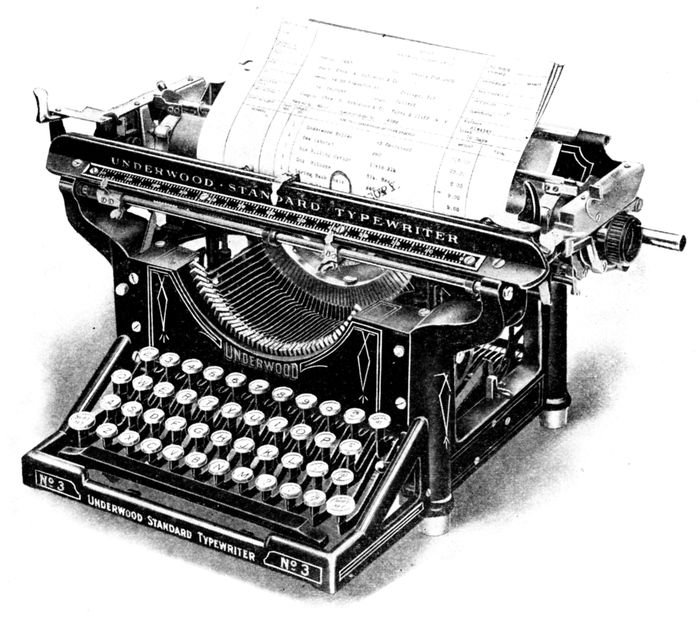
Fig. 3. Underwood Billing Machine
All typewriters equipped with special attachments for holding the sales sheets, invoices, and orders are called cylinder billing machines. The paper upon which the machine writes is held by, and passes over and around, a round rubber roll, the cylinder.
This is in contrast to the flat-bed billing machines (or book 242typewriters) on which the paper lies flat on a rubber plate while the machine moves over the paper.
Development of Billing Machines. This text has been prepared by taking the simplest forms of billing and order work, and leading up gradually to the more complicated forms. This is actually what took place in the improvement of office and factory work.
A bill and a copy were first made—an extra sheet was made for some additional purpose. The advantages of doing two or three things at once led to further investigation. This resulted in still additional sheets being used for other purposes. Every time an additional sheet was added, the labor of typewriting that sheet separately was eliminated.
Gradually it developed that it would be useful to copy a part only of the typewritten information on some of the under sheets. Means were found for accomplishing this. For instance, on an order form, it was desirable to have the prices show on the office copy, but not on the copy which was intended for the warehouse or factory.
In some cases it was desirable to write all the information on the top copies and split up the information thereon on the sheets underneath. The final development of all the above ideas is embodied in the compound form, in which all sheets for the office, customer, warehouse, factory, shipping room, and loading platform are typewritten at one operation, and the invoice and duplicate finished as a separate operation.
Wholesale and manufacturing lines are used mostly in this text to illustrate the evolution and improvement of billing and order work. Some of the conditions which have to be considered in installing office systems are as follows:
Whether the orders are received from customers or salesmen or both, and which are in the majority.
Whether the goods are carried in stock or manufactured or bought outside, or all of these.
Whether the orders can be filled completely, or nearly so.
Whether or not the factory may know the prices.
Whether the goods are shipped by freight, mail, express, or all of these.
243Whether copies of the bills have to be made for any other purpose.
Whether a copy of the sales sheet has to be sent to the home office, or made for any department.
If additional copies of either are necessary, what colors to use for readily distinguishing them.
How many ledger clerks, and how to sort their work to the best advantage so that each clerk handles his work only.
How to file office and factory copies for quick reference.
How to plan all the above so that improper filing of sheets does not destroy the chain of record.
The reasons for these considerations will be better appreciated after further progress is made.
If the business student learns the capabilities of office machinery, the advantage of manifolding, the use of colored papers, and the important feature of correctly grouping statistics (which is almost an art in itself), he will have accomplished much. He should learn also to develop his own power of originality and suggestion.
The natural order in which order billing and shipping ought to be presented is the way in which the transactions occur. Methods of billing (making out invoices) in many businesses govern the manner in which the orders are made up, and therefore will be considered first.
In order to more clearly bring out the advantages of new methods, it is deemed advisable to consider old-style methods and contrast them with the newer ideas. By showing the weak points in the older methods and why the new are better, the gradual evolution and improvements can be traced.
Old-Style Method of Billing and Making Wet Copy in Tissue Book. There are enough firms who still follow this plan of billing to resent the term "old-style." The best that can be said for this plan is that it is shorter than writing the bill-and-sales book, or sales journal, separately. The wet copy takes the place of rewriting the bill. One objection to this method of copying bills is that if all the bills are copied some of them are either blurred or are too light when the copy has dried on the tissue leaf. This is a difficulty which can be corrected by careful attention.
The worst feature is that one never knows whether all the 244bills have been copied, and there is no way of knowing this unless the copies in the tissue book are checked back with the orders from which the bills were made. Many firms spend thousands of dollars in advertising, traveling expense, labor, etc., ship out and bill large invoices of goods, "double check" the invoices, and leave the copying of the invoices in tissue books to a young office boy. They never think to check back the invoices with the orders to be absolutely certain that the goods have been charged as well as invoiced (billed out).
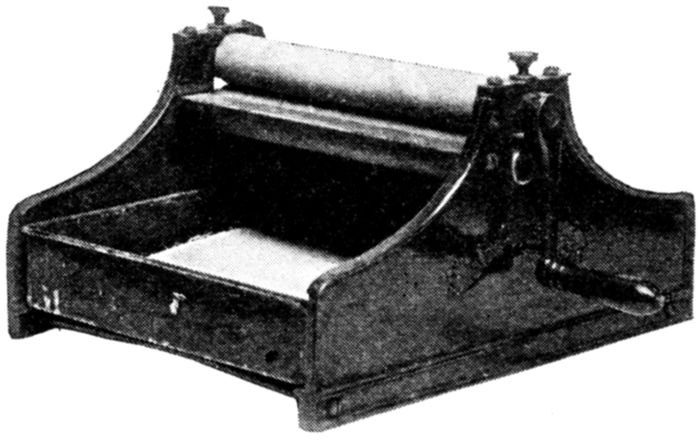
Fig. 4. Old-Style Cloth Bath. Underwood Typewriter Co.
If one should ask them how they know that all invoices are charged (or copied into the tissue books) the invariable answer would be, "Oh! we never lose any bills before they are copied." Ask them how they know none are lost and, after thinking a while, they will admit that they really do not know for sure. They begin to check back the tissue book after some customer brings in a bill for payment which has never been copied into the tissue book, and hence has not been posted to the customer's account.
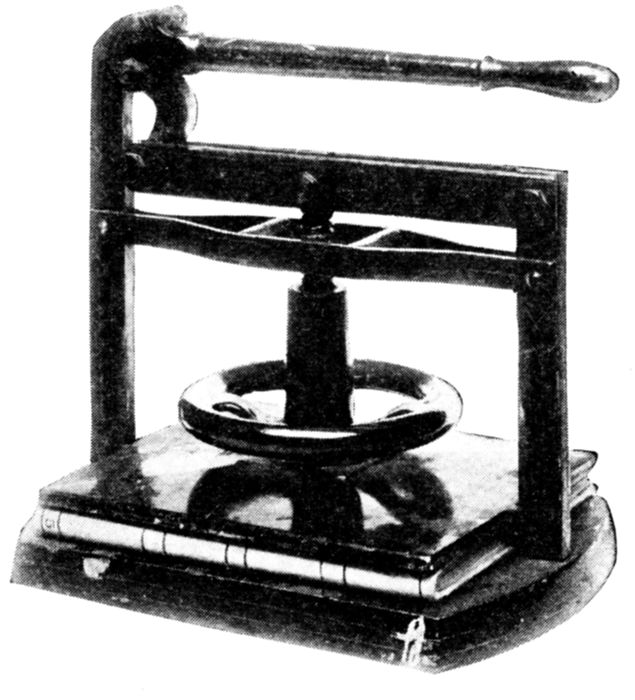
Fig. 5. Old-Style Copy Press. Underwood Typewriter Co.
Fig. 4 shows the old-style cloth bath, Fig. 5 the old-style copy press, and Fig. 6 the old-style sales book (tissue paper leaves).
LOOSE-LEAF SALES SHEETS AND INVOICES
This style of billing was the first variation from the plan of using copying ink, or pencil, on invoices and then transferring the ink to tissue paper books, by wetting the leaves with water and then absorbing the surplus water with paper blotters. Or this was done by placing damp cloths on the under side of the leaf and covering 245it with a leaf, placing the invoice downward on the tissue leaf, closing the book, and placing it in a copying press. The ink from the invoice was sufficiently transferred to the tissue paper to make an impression thereon.
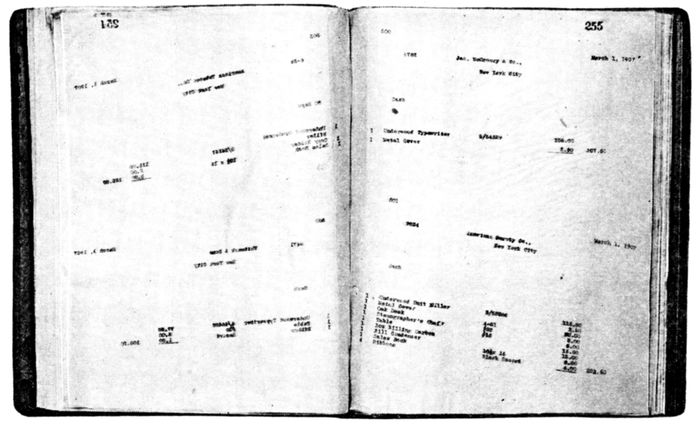
Fig. 6. Old-Style Sales Book. Underwood Typewriter Co.
If the person who did the copying did not use due care, the paper would be too wet and the ink would run and blur the copy and the invoice. If two invoices were accidently picked up by the person copying, the top invoice would not be copied on the tissue sheet. This is a most serious objection, for the reason that the copy in the tissue was used as record of the invoice for the purpose of posting into the ledger.
Another difficulty was the usual one experienced through the use of bound books in office work. Only one person can use a book at one time. If Fayette Henry, the accountant, was using the tissue-copy book, and Dave Pike, the order clerk, wanted to use it to see if all invoices had been copied by the office boy, he had to wait on Fayette Henry. The loose-leaf sales sheet shown in Fig. 7, with the pages serially numbered and placed in proper binders after each sheet has been filed, overcomes all of the difficulties mentioned—with many additional benefits.
246
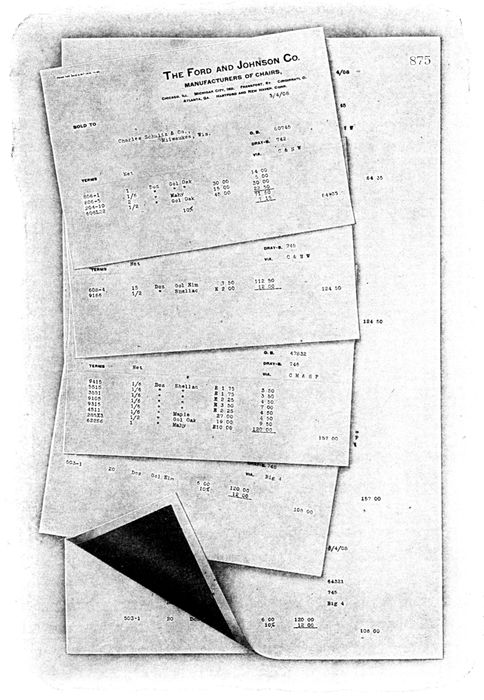
Fig. 7. Loose-Leaf Sales Sheet and Invoices. No Ruling on Sales Sheet. Remington Typewriter Co.
247The loose-leaf sales sheet and invoice were first used with the flat-bed billing machine, the sales sheet being held in position by being placed over studs (round metal posts), which fitted into the punched holes in the edge of the paper. These punched holes were used ultimately for fitting over the metal binder posts in the loose-leaf binders. The invoices were wider than the regular-size invoice and were perforated about 1 inch or 1½ inches from the left side, as shown in Fig. 8. To the left of the perforated edge were two small holes about 2¾ inches apart, which fitted over two small studs on a sliding bill-holder device. This plan provided a means of holding the large sheet and invoice in proper relation to each other. A piece of carbon paper the same size as the sales sheet was placed between the invoice and the sales sheet. This ruling of the sales sheet is shown in Fig. 9.
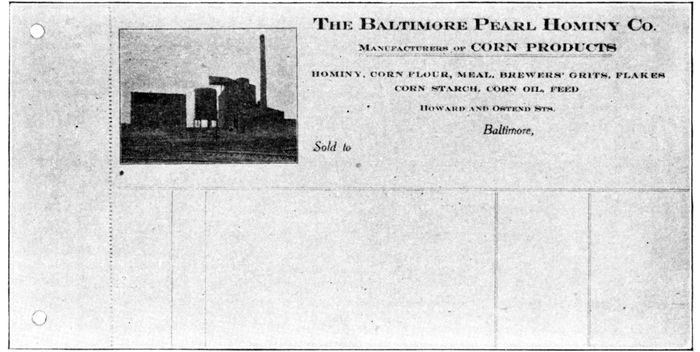
Fig. 8. Invoice for Use on Billing Machine
When an invoice was written on the billing machine, it was manifolded on the sales sheet beneath. When the invoice was finished it was ready to mail—no delay in copying invoices, no blurred invoices through careless copying. No fading of the manifolded copy where black carbon paper was used. Inks are not made of indestructible carbons as black carbon paper is made. A condensed billing or invoicing loose-leaf sales book for this purpose is shown in Fig. 10.
The following are some of the many good features of the condensed system, as it is in use to-day, briefly stated:
248
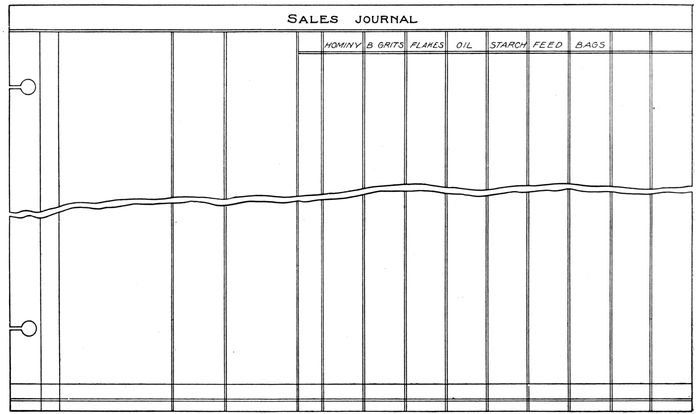
Fig. 9. Loose-Leaf Sales Sheet
249Bill and entry in sales book are obtained at one operation.
Entries upon sales book agree absolutely with bill rendered.
The bill clerk becomes bill and entry clerk combined.
There is no danger of a bill being rendered without the proper charge being made.
Entries under this system occupy but one-fourth the space required for those written with the pen.
There is no waste space upon sales sheet.
Both sides of the sales sheet may be utilized.
The saving in vault space alone is worthy of special consideration.
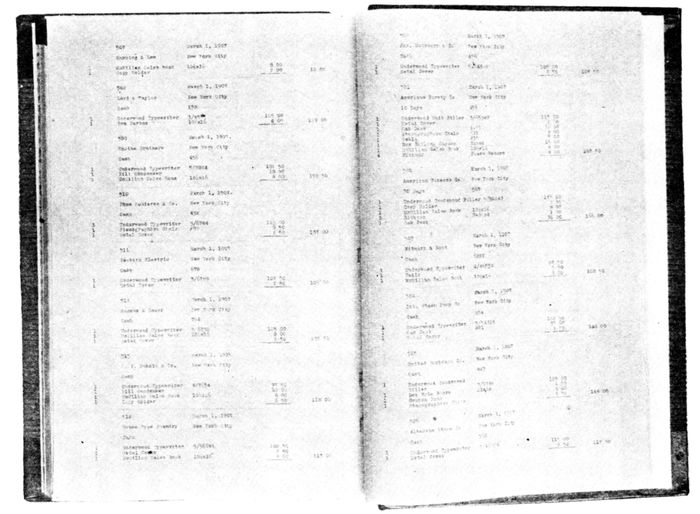
Fig. 10. Condensed Billing or Invoicing Loose-Leaf Sales Book. Underwood Typewriter Co.
In recent years, the typewriter companies have placed devices on their typewriters which permit of the sales sheet being held independently of the invoices. This permits one to hold the large sales sheet in the machine until enough invoices have been manifolded thereon to cover the page, at which time the sales sheet is reversed. The invoices can be placed in the machine and removed therefrom after being written, without interfering with the sales sheet. No 250extra width of invoice is required, which permits of old stationery being used in the form of invoices. The flat-bed machines can use old stationery, but not quite so well. However, when billing by machinery, it is false economy to use stationery designed for pen work. The reasons for this will be touched upon later.
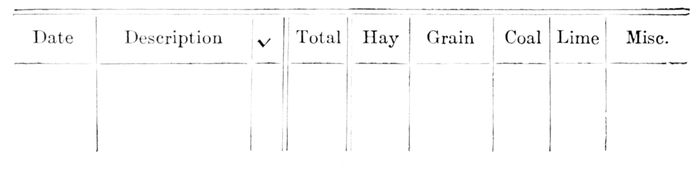
The use of two ledgers necessitates the use of two columns at the right side of the page. All names from A to L are placed in the first column; all names from M to Z are placed in the second. For instance, an invoice reading as shown in the sales journal, Fig. 11, illustrates the idea of writing the totals in the two columns at the right side of sheet according to the initials of the last name of the firm or the individual, as the respective ledgers are arranged in that manner. If at the end of the month the first column shows a total of $3,000.00 the bookkeeper knows that he has posted that amount into Ledger A-L, etc.
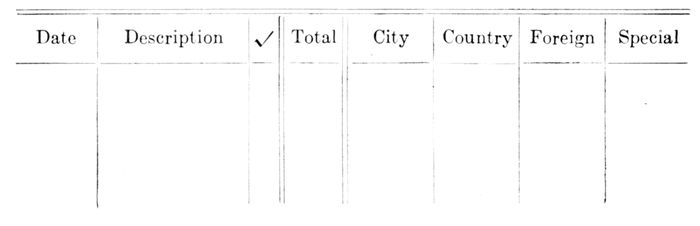
The above plan enables the bookkeeper to add separately the totals which are posted to the respective ledgers. The desire to separate the charges to a country ledger and a city ledger can be accomplished by using two columns in the same way.
The desire to place all credit memoranda in the sales book can be accomplished by using two columns in the sales book as noted above. The first column is used for the charges, and the second one for entering the credits. One difficulty arises in connection with this plan. Credits are liable to be entered in the debit column. To obviate this, the invoices are made just wide enough to reach over the first column, the credit memoranda are made wider to reach over the last column. When an amount is written in the last column of the invoice, it manifolds in the proper column of the sales sheet. The same is true of an amount written in the last column of a credit memo.
This subdivision of columns is carried a step further to permit of the analyzation of sales in several ways.
According to classes of goods, as follows:
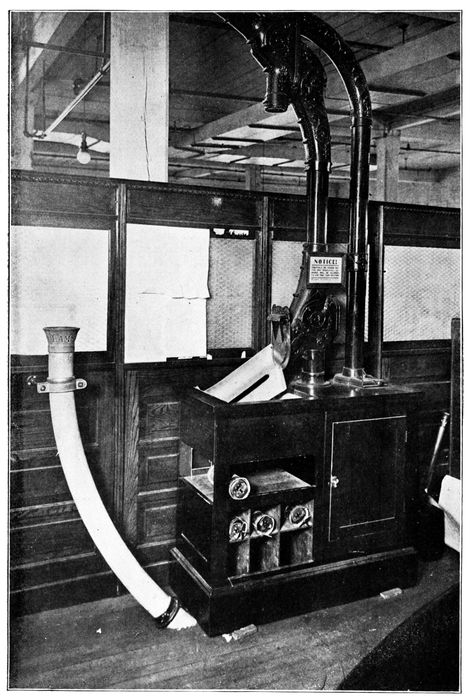
LAMSON FOUR-INCH PNEUMATIC TUBE ORDER CARRYING SYSTEM FOR A LARGE WHOLESALE ESTABLISHMENT OR A FACTORY Lamson Consolidated Store Service Co.
251
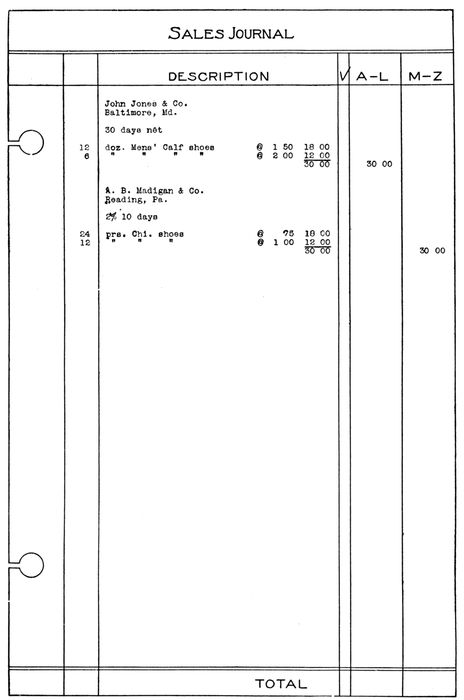
Fig. 11. Sales Journal Arranged for Distribution to Two Ledgers
252According to territory, as follows:
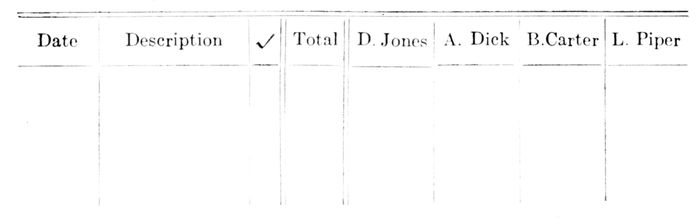
According to salesmen, as follows:
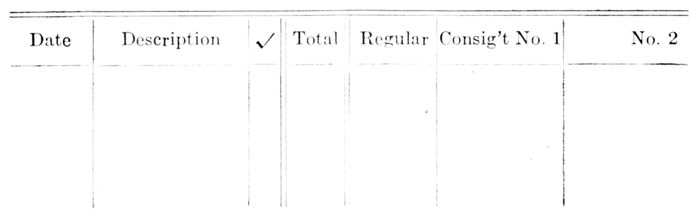
To separate the sale of regular goods from goods which are being sold on consignment, as follows:
Generally the invoice is wide enough to reach over the total column only, as shown in Fig. 12. Therefore, a total amount written in the total column of the invoice will manifold onto the sales sheet, and in the column marked Total.
A wide-carriage billing machine, if used, can be adjusted with tabulator stops to jump to any column desired. The total amount is then written therein a second time. The amount of the total column should always equal the total of all the columns placed to the right of the total column. This plan eliminates the old way of waiting until the end of the month, and then laboriously going over the 253sales book with one total column only, and picking out the various items according to the classification wanted.
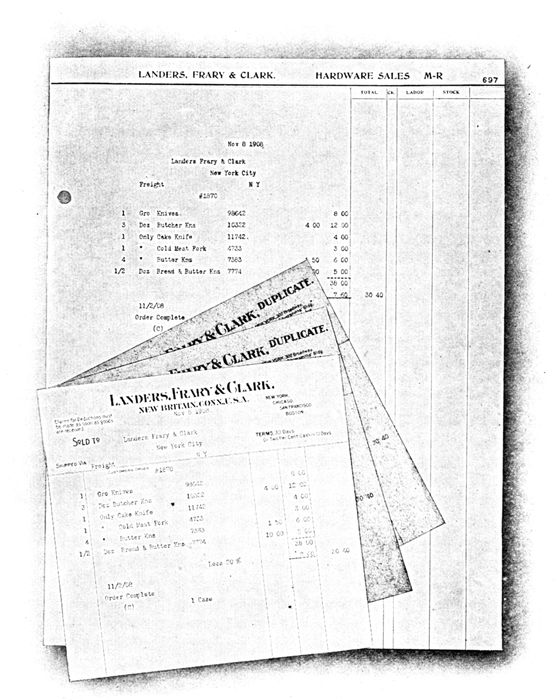
Fig. 12. Loose-Leaf Sales Sheet and Invoices with Columns for Distribution of Labor and Stock
The work should be planned in a manner which permits of each day's work being finished each day—leaving nothing to accumulate until the end of the month, necessitating the retracing of steps to secure certain statistical information.
In certain lines of business it is desirable to make two sales sheets, 254one of which is retained in a binder for an office record and the other is used for various purposes. It can be used as record of sales from a branch to a home office, each page being numbered in duplicate, and of a distinctive color. This is the plan used all over the world by the Standard Oil Company. As the sales sheets arrive at the home office, they are placed in their respective binders and are gradually made into a built-up book. The loss of a sheet would be instantly detected by the missing page number.
A large French perfumery firm in New York pursues this plan, and sends to Paris the duplicate sales sheet on thin paper. It gives the home office a fine record of every invoice sent out to any customer by the branch office or warehouse. As several invoices can be manifolded on each page, and on both sides of the sheet, it is the most economical method of billing as far as stationery is involved. The name condensed billing indicates this fact.
In other instances, the duplicate sales sheet is wide enough only to allow quantity and description of goods to be manifolded thereon, prices and extensions not showing. This narrow sheet can be used for posting to the stock records without disclosing to that department the prices at which the particular goods have been sold. This form of the sales sheet is shown in Fig 13.
Duplicate Invoices. There are many reasons, in various lines, why duplicate invoices are desirable and even necessary. Some customers request invoices rendered in duplicate with one copy complete, the other minus the prices and extensions. To accomplish this, it is either necessary to place a piece of paper between the carbon and duplicate invoice in such a manner that the prices and extensions will not copy, or to use a short invoice cut off at the left of the price column, or to use a short piece of carbon paper between the original and second, or duplicate, invoice.
It is desirable to make extra copies of invoices or duplicates for the use of various departments of a business, for instance, analysis of sales by salesmen. Where a company employs a large number of salesmen, it is very convenient to file in binders a duplicate copy of all invoices sold by each salesman, using a binder for each salesman. This is preferable to having separate columns in the sales book (sales sheets in binders). The latter method permits each salesman to see what every other salesman is doing.
255
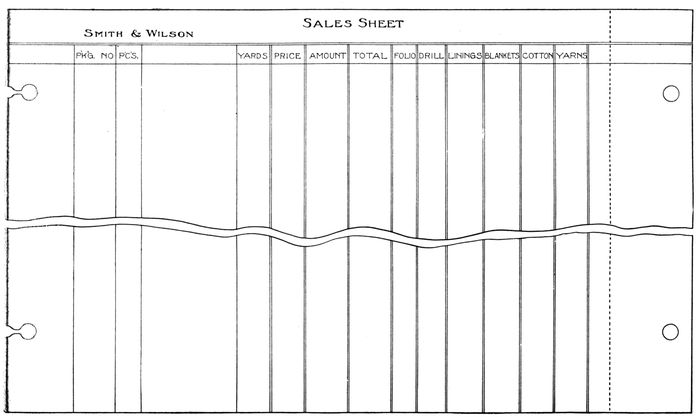
Fig. 13. Sales Sheet for Condensed Billing
256Department Records. A separate binder allows each man to consult his record without inconvenience to any other one. In large companies having a traffic department, it is necessary to provide a duplicate copy of each invoice for the record, showing complete details of every charge.
A distinction should be made between those firms who make their invoices before the goods are shipped, and those who make the invoices after the goods have been shipped. In the cloak business, for instance, the goods are generally billed before the goods are shipped, the invoice being placed in an envelope and packed with the goods.
Ofttimes the goods are manufactured in proper quantities, properly checked from the order to the packers' table, and then packed improperly—some customer receiving too many garments, another, too few. Yet the order will be properly checked. To obviate this difficulty, a scheme was devised whereby the packer received a duplicate typewritten copy of the bill (or invoice) showing everything but the quantities. This makes it necessary for the packer to count all the garments and mark down in pencil on this copy of the bill the quantity of each style and kind to be shipped. Before the goods are shipped, the packer's copy of the invoice, with his quantities marked in lead pencil, is compared with the quantities charged on the sales sheet. This scheme forces the packer to count all garments instead of double checking someone else's figures in an absent-minded, or even neglectful, way.
This is accomplished by placing a narrow strip of paper over the quantity column of the duplicate invoice, but under the carbon paper. The quantity figures manifold onto the strip of paper instead of onto the duplicate invoice. This plan is termed using a blind. The narrow strip of paper between the invoice and duplicate is the blind described a little further on.
The next step in short cutting work is the printing of a label in connection with the invoice and sales sheet. In the book business, where it is generally possible to fill orders from stock, and where the invoice can be made before the goods are shipped, it is possible to place a small piece of paper (the label) between a folded invoice in such a manner that when the name is written on the invoice it manifolds onto the label as well as onto the duplicate invoice and sales sheet.
257Analysis of Quantities and Amounts. In certain lines of business which sell three or four varieties of goods, it is desirable to analyze the weights or quantities in the proper columns, which in turn manifold onto the sales sheets, as shown in Fig. 14.
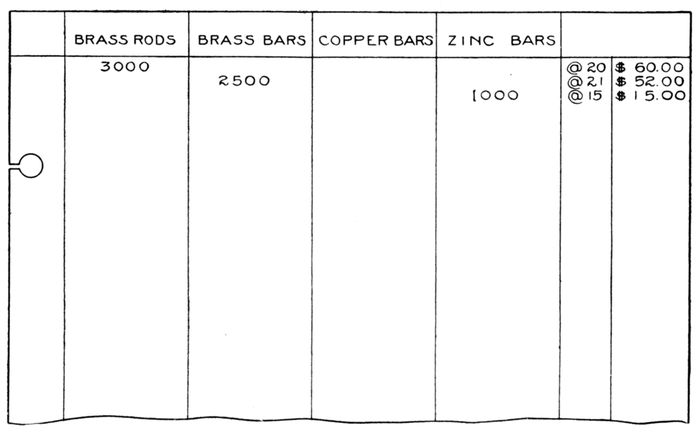
Fig. 14. Sales Sheet for Analyzing Quantities and Amounts of Goods
This saves a great deal of time as compared with making out the same invoice in the following way:
3000 # Brass Rods @20 $60.00
2500 # Brass Bars @21 $52.50
1000 # Zinc Bars @15 $15.00
By following the first plan, all of the weights for the respective classes of goods will be manifolded into the proper columns, and it is therefore an easy matter to total each column, and at the end of the month the classification of sales will be totaled according to weights as well as according to dollars and cents. The invoice is ruled to match the sales sheet.
Information on Sales Sheet Not on Invoice. In certain lines of business, such as wire-screen manufacture, it is desirable at times to substitute the next size of wire in order to fill orders promptly. In such cases, it is necessary to have the invoice show the size of wire ordered, but to have the sales sheet show the size really sent. It would seem impossible therefore to write No. 8 wire on the invoice and have No. 9 wire manifold on the sales sheet.
258The idea used to accomplish the desired result is to place the invoice in such a position with relation to the sales sheet that a margin is left on the left-hand side of the sales sheet, which would permit the operator typewriting directly on the sales sheet, and placing thereon the actual size of the wire shipped. The size ordered would be written on the invoice in the regular manner, and of course would manifold onto the sales sheet.
There are other cases where it is desirable to use this idea. For instance, wholesale dry goods firms when purchasing dry goods from eastern manufacturers request the latter when billing to use lot numbers furnished by the purchaser. It is also necessary for the manufacturers to bill the goods according to their own lot numbers. Hence it becomes necessary to have both the customer's lot number and their own on the sales sheet. This is accomplished by writing their own lot numbers directly upon the sales sheets at the left of the invoice and then making the invoice out in the regular way. This idea carries out the customer's wishes, and always gives a comparison of lot numbers to the manufacturers on their sales sheets. Flat-bed machines require wider invoice, Fig. 15.
Goods Purchased Outside. It is possible to make a short cut in some lines of business where the goods sold are not kept in stock but are purchased from other firms in the same city. When placing the invoice in the billing machine over the sales sheet, requisition blanks in duplicate or triplicate can also be placed in the machine with the invoice, and the items which have to be ordered outside written first on the invoice. When all of these items have been entered on the invoice, the requisition blanks may be removed, and the invoice and sales sheet left in the billing machine, putting the remaining items which are to be shipped and charged on the invoice (sales sheet). This occurs where orders can be shipped complete.
This plan can also be used when writing up the order, where the billing is done after the goods are shipped. It is to be remembered that there is a great distinction to be made in handling the billing work of firms who are able to fill their own orders complete, as contrasted with those firms who have to wait until goods are shipped in order to determine which items to bill. Some firms who always carry a complete stock are able to make up an invoice and order blank, a label for the express package, and a charge on sales sheet, simultaneously, because they know that they can ship every item called for, and consequently do not have to wait to see what items are shipped before billing them.
259
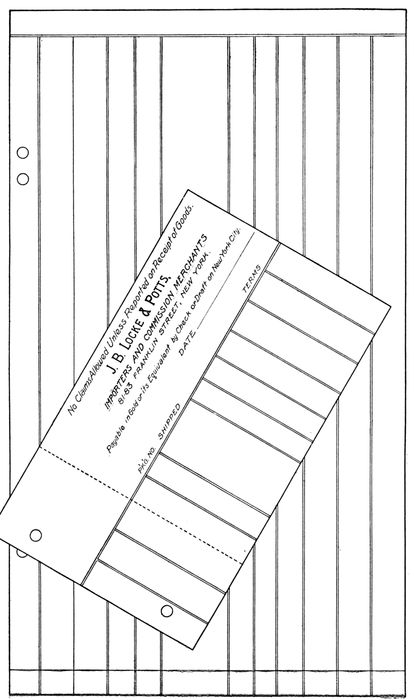
Fig. 15. Form to Provide on Sales Sheet Information not on Invoice
260Unit Billing. The unit idea in billing has grown considerably in the last few years, notwithstanding that the size of the bills have to be uniform, and as large an invoice has to be used for one item as for a large bill. Many firms prefer the unit idea to the condensed sales sheet idea.
This is due chiefly to the elasticity of the scheme. The duplicate, triplicate, or quadruplicate of the invoice can be sorted in any desirable way. It is especially convenient for bookkeepers to sort duplicates of the invoices alphabetically, and save a great deal of time in posting to loose-leaf ledgers arranged alphabetically, in the same manner. (In mentioning loose-leaf ledgers, card-ledgers are always included, as the same principles are applied to one as to the other, as far as accounting methods are concerned.) It is easier to handle unit billing forms on the typewriters with billing attachments, which is an added reason that many firms prefer to use them. Some of these forms are shown in Fig. 16.
Another idea to be recommended is the color scheme, whereby each copy of the invoice is manifolded onto a different-colored piece of paper. In sorting the various copies for different departments, different colors will greatly facilitate the recognition of various sheets, and the uses or departments for which each is intended.
ORDER WORK OF WHOLESALE GROCERS
There are hardly two firms who handle their order work alike. The first consideration in treating order methods is to distinguish the classes of business in which the orders are made up ready for execution by the salesman, from those which are received from customers and transcribed on typewriters. The first class will be discussed separately from the second.
Wholesale grocers, druggists, and similar lines receive the great majority of their orders from the salesmen in the field. After the orders are opened, the first step is to stamp on each order a number with an automatic numbering machine. After this is done they are copied into an order register as follows:
261
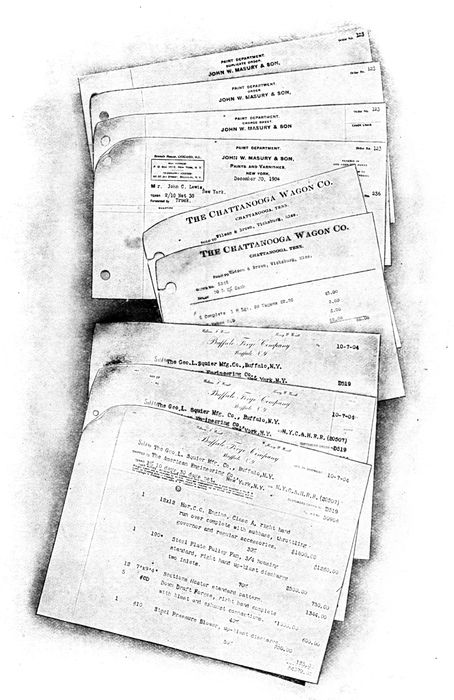
Fig. 16. Samples of Unit Billing. Remington Typewriter Co.
262
1012 John Smith & Co., Plainfield, N. J.
1013 A. B. Jones & Bro., Providence, R. I.
1014 U. J. Benedict, Elmira, N. Y.
1015 Grace Barnes & Co., Alliance, Ohio.
After the orders are filled and charged, they are checked on the order register. About once a week all of the unchecked numbers on the order register are compared with the unfilled orders. If an order should become lost, the fact would not remain unknown longer than one week's time.
It should always be remembered that in case an order is not completely filled and is "back ordered," the back order should always show the original order number in order to prevent confusion. A little practical experience will quickly show how wrong it is to use a new number for a back order.
Back Orders. In the problem of systematizing any kind of business, the question of back orders and the proper method of handling them is one of the most troublesome. Some firms do not wish an order blank returned to the warerooms after it has once been there, because they do not wish the wareroom or factory to know the prices which are placed on order blanks in the office after they have been received there for pricing, extending, and billing. Many firms therefore make an entirely new order to be returned to the factory or wareroom with the letter A used in connection with the order number, as follows: 1013A. This of course delays the filling of the order until the back order is typewritten. If it is necessary to make a second back order, the same would read 1013B. Other firms use the color scheme. This is a very good idea, as it indicates clearly to the order fillers old orders which should receive attention first.
Many important improvements in the order and billing methods have been inaugurated in recent years in the business of wholesale grocers. Formerly it was the custom, after the order had been numbered and recorded in the order register, to pass the orders out into the warehouse with the general understanding that they were to be filled as quickly as possible. The order fillers would generally start at the top floor and pick all of the items which were to be shipped, place them on a truck and take them to the next lower floor, and follow this plan until the order was entirely filled. In stores above a certain size this resulted in considerable delay.
263The first improvement was to send the orders to the shipping department, where they were split up by clerks known as Slippers, who wrote on slips the items which were to be taken out of stock, each slip representing the goods to be gotten out on a certain order from a certain floor. This idea allowed the order fillers on all floors to work simultaneously, and resulted in considerable saving of time.
Another favorable result obtained through this system is that the shipping clerk retains an original copy of the order (the copy sent in by the salesman) and is enabled therefore to follow up all departments and hurry up any department which may be delinquent in the filling of a certain order. In planning work, it is always advisable to have one department act as a follow-up on some other department. In the grocery business, it is much more satisfactory for the shipping clerk to have a complete record of all the orders to be shipped that day, than to hand the original orders into the warehouse to be sent down to the shipping department after the order has been entirely filled, and then have the shipping clerk rushed at the last minute to plan his loads and do all of the clerical work, such as making up bills of lading, etc.
The next improvement was necessitated by a desire on the part of those wholesale groceries which are located in cities having an efficient interurban electric car service to fill orders at different hours of the day. One western firm transcribed all of its orders on cylinder billing machines, giving the shipping clerk a full copy of the order, and each department a copy of the items which are to be filled from that department only. On the shipping clerk's copy, the notation 11 A.M., is marked, also on all of the department order slips. This indicates that the order is to be shipped on the 11 o'clock car. Other stationery is printed with the 1 P.M., 2 P.M., 3 P.M., 4 P.M., 5 P.M. to indicate the hours at which the orders are to be shipped. Many small retail merchants delay ordering until the last minute, and the wholesale house which can give the promptest service gets the business. The above plan advises the shipping department the time that the goods are to be delivered, and makes it responsible for results. All delays are noted, and a daily report made of the causes, which are promptly investigated and removed.
264Split Orders. Some wholesale drug houses have their stock arranged on different floors, of which their salesmen are fully advised. If the salesman takes an order for goods which are held in stock on four different floors, he sends in the order on four sheets of paper with the items for each floor written on the respective sheets which indicate the respective floors. Different-colored sheets of paper are used for the various floors. This scheme puts more clerical work on the salesmen, but it enables the office to quickly hand each department its part of the order without the delay of transcribing the department slips on the typewriter at the office. In all order schemes where an order is split up and written on several sheets of paper in order that each department may fill the order without delay, the term split orders is used. In all split-order schemes, the number of sheets in which the order has been divided is written on each sheet. For instance, if there are departmental order sheets for three different floors, the figure 3 is marked on each slip. In this way the biller, by counting the number of sheets attached to the complete order, will know that all of the split-order sheets have been returned to the office. Fig. 17 illustrates this system of orders. The three blank sheets at the top are departmental order sheets, and each contains only a part of the whole order. This is accomplished by removing one departmental sheet at a time from the billing machine, but allowing the three top sheets to remain in the machine until the entire order is written.
Some firms are willing to make four copies of an order, each copy containing all of the items of an order. Other firms do not wish the employes to know what a customer is buying outside of the goods relating to the department in which the employe is working. Further, sometimes two departments in the same factory are equipped to make the same class of goods, and if each department received a complete copy of the order there might be some confusion and duplication in the filling of the order.
Some firms, instead of making split orders, make a summary of the goods to be delivered from each floor, giving each floor several of these summaries in the course of a day. The goods are delivered to the shipping department in large quantities, and are separated by the shipping clerk according to the quantities wanted for each order. Concerns which are using this idea claim that it takes less time for the shipper to separate goods than it does for the order department to make split orders for each individual.
265
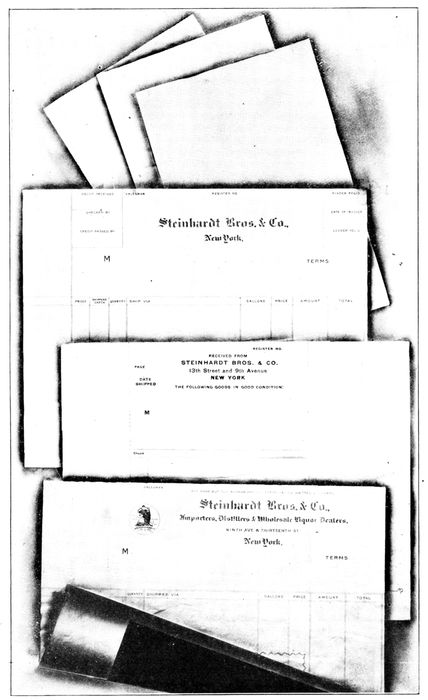
Fig. 17. Forms for Split-Order Schemes
266In planning the clerical work in order billing and shipping methods, the volume of business being handled must be taken into consideration. A plan which is necessary with a large business would be considered as red tape in a smaller one. The larger a business grows, the more it is possible to "specialize" the work.
In a very small business, one man could fill all the orders and make out all of the bills. In a little larger business it would be necessary to devote one person's entire time to filling orders, another's to making out the bills. In a business twice as large as the one just mentioned, it would be necessary for one person to devote his entire time to filling the orders from one floor only. In an exceptionally large business, it might be necessary for one person to devote his entire time to filling orders for some particular class of goods on one floor. These examples are given to illustrate the meaning of the word specializing.
Simple Order Form. The majority of firms transcribe their customers' orders onto their own order forms from letters or requisitions. The simplest form of order is one containing an original for use of the warehouse or factory, a duplicate to be mailed to the customer as an acknowledgment of the order, and a third copy which is held in the office as a record of unfilled orders. The requisition form illustrated in Fig. 18 conveys the idea.
The practice of sending an exact copy of the order to the customer eliminates the necessity of acknowledging the order by letter, and gives the customer an opportunity of checking over the order as entered. It is customary to print on acknowledgment of order forms the sentence: This is an exact copy of the order as entered—if any errors are noted kindly advise us at once. One firm in Buffalo saved $300.00 the first week they installed this scheme, through the detection of an error by the customer.
A YACHT STORAGE BASIN AT THE SHIPBUILDING PLANT OF THE GAS ENGINE & POWER CO. AND CHARLES L. SEABURY & CO., CONSOLIDATED.
267
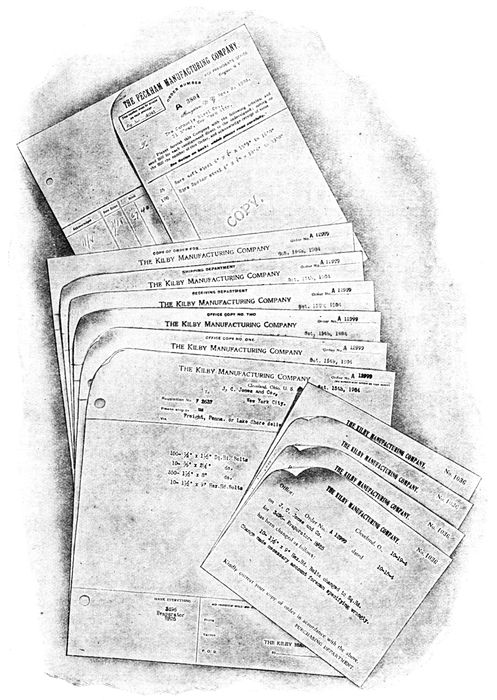
Fig. 18. Simple Requisition Forms for Order Handling. Remington Typewriter Co.
268It is imperative that before a remedy or short-cut methods can be prescribed, it is necessary to thoroughly diagnose all of the conditions incident to the business. It should also be remembered that clerks and even department heads will see all of the imaginary difficulties of a new idea and overlook all of the benefits to be derived therefrom. It should be further remembered that if a new method shortens nine-tenths of any particular class of work and slightly increases one-tenth, the party involved will many times fail to see the net advantages accruing through the introduction of the new idea. If objections are raised to a suggested short-cut method it is always well to ascertain whether the objections apply to a majority of the work or a portion of it only. Most people in clerical positions rather resent new ideas, and seem to take a pleasure in trying to find some reason why a new idea will not succeed. This is one phase of human nature which requires the utmost tact and diplomacy to handle successfully. In advancing or suggesting new methods, it should be assumed as far as possible, that the idea has been suggested by the person to whom one is talking, for the reason that most people are willing to "father" their own ideas.
Simple Order Form with Copy for Shipping Department. The second short cut which was instituted in connection with order forms was the addition of a sheet on which was manifolded a copy of the order for the shipping department.
The idea is to give the shipper information in advance, in order that he may prepare his bills of lading and plan his work for his teams, order cars in advance from the railroad, call up express companies, and such other work as might be necessary to the proper shipment and delivery of the goods manufactured and sold, and to file the copy as his permanent record, in some cases.
Some firms desire to prevent the shipper from knowing the prices at which their goods are sold. This is accomplished by using for the shipping department a short sheet of paper which reaches from the left edge of the order-blank to the price column only. Another method is to use a narrow sheet of carbon paper with a full-size sheet of paper. This plan is not as satisfactory as the former one, as the carbon paper sometimes slips to the right and allows the prices to manifold.
Acknowledgment of Order to Salesman. In some lines of business, it is desirable to add an additional sheet which is termed acknowledgment of order to salesman. This plan enables the salesman to know that the order has been received and properly entered for execution (in manufacturing lines it is necessary to transcribe orders on order forms which contain too many copies for a salesman to manifold by pencil), and gives him the opportunity of checking the 269order as entered. It should be remembered that in some lines of business there is such an enormous amount of detailed information in connection with an order that neither the customer nor a salesman would check over an exact copy of the order as entered. This should always be taken into consideration when considering the addition of this sheet.
STATIONERY
The various styles of loose-leaf sheets and binders should be fully understood in order to appreciate their importance in order and billing work.
Loose-Leaf Sheets. The first loose-leaf sheets were punched with closed holes, as shown in the illustration of Kilby Mfg. Company forms in Fig. 18. The trouble with the closed-hole punching is that, when placed over the metal posts of the binder, it is impossible to remove a sheet in the center of the binder without removing all of the sheets immediately above the one desired.
To obviate this difficulty, the slotted hole was devised. This is illustrated in the forms of the Commercial Sash & Door Company, in Fig. 19. The slot from the edge of the paper to the punched hole permits the paper to be placed over the posts of the binder between any two sheets. Holes are punched in both the closed and slotted styles in various sizes, ranging generally from a ¼ to 5/16 of an inch in diameter. In late years, manufacturers have introduced punched holes of different shapes from that of a circle.
For permanent records where the sheets are filed serially according to page number, order number, etc., the closed-hole loose-leaf sheet is perfectly satisfactory. For records which are to be removed from any given part of the binder and reinserted in another part, the slotted-hole loose-leaf sheet is the most satisfactory style to use.
Binders. Binders are generally made of two covers and a set of posts, which ordinarily are attached to one of the covers. The other cover is movable in order to accommodate the increased thickness of the binder as loose-leaf sheets are added. Great strides have been made in the manufacture of improved binders. There are so many styles of posts and other ingenious arrangements, where the two covers are held together and closed or opened by the use of a key, that only reference to catalogs of manufacturers will supply detailed information.
270
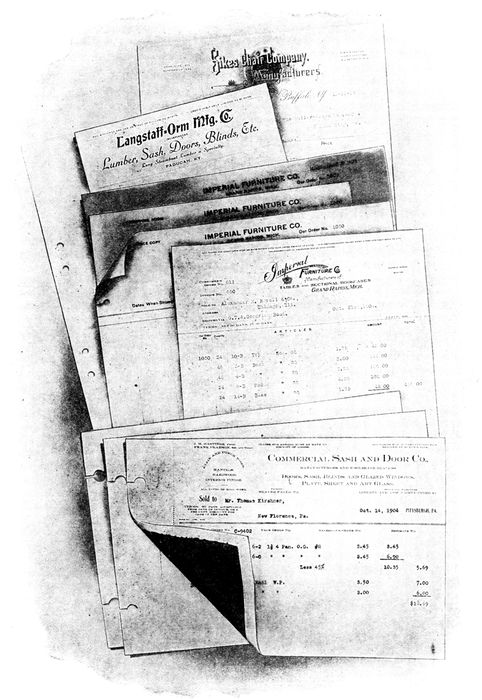
Fig. 19. Two Styles of Punching for Loose-Leaf Sheets. Remington Typewriter Co.
271In buying binders and loose-leaf sheets, it is well to buy both of the same firm. Heretofore, trouble has been experienced where the punched holes of the loose-leaf sheets were probably 1/64 inch further apart or closer together than the metal posts in the binder in which they were to be used. The manufacturer of the binders will always claim that the sheets were punched incorrectly by the printer, and vice versâ.
It is pretty generally understood now that all punched holes should be placed with the center of the hole ½ in. from the edge of the paper. This allows enough margin to permit of the paper being held firmly over the posts. In all cases where the holes are punched too near the edge of the paper, the narrow margin between the edge of the paper and the hole becomes torn very quickly.
Stationery Printed for Typewritten Work. Very few people recognize the great value of properly designed stationery for typewritten work. The law of usage and custom is so strong that invariably invoices and order forms are printed the same as if they were to be hand-written. The headings are printed with the first letter of each word lined up vertically. This plan causes great waste of time on the part of an operator.
All billing and order work should be done on machines equipped either with a column stop or a decimal tabulator. A column stop is a device on a writing machine which automatically stops the carriage at any one of several predetermined points. A decimal tabulator is a device on a writing machine which automatically stops the carriage at the units, tens, hundreds, etc. place in any predetermined column.
It should also be understood that all typewriters and billing machines are equipped with marginal stops. These stops are adjustable, and can be arranged on either side of the machine in such a manner that the carriage will always stop at any given point at either edge of the paper.
It is vitally important that either a column stop or a decimal tabulator should be used in connection with marginal stops on writing machines, and these three points should be taken into consideration when designing stationery for use with a machine. The following illustrations show poorly designed and correct invoice headings.
272
J. B. WILLIAMS & BRO.
NASSAU, N. Y.
NAME SALESMAN
SHIPPING ADDRESS ORDER NUMBER
P. O. ADDRESS REQUISITION NUMBER
VIA
This blank form has purposely been shown in order to contrast it with an invoice printed in the same way with the headings properly filled in.
J. B. WILLIAMS & BRO.
NASSAU, N. Y.
NAME, Geo. Brown & Co. SALESMAN, Jenkins
SHIPPING ADDRESS, Flat Rock, W. Va. ORDER NUMBER 2246
P. O. ADDRESS, Wenonah, W. Va. REQUISITION NUMBER A341
VIA N. & W. R. R. Co. OUR ORDER NUMBER 9422
Contrast this heading with that of an invoice which has the last letters of each line lined up vertically. This makes it possible for the operator of the billing machine to draw the carriage to the extreme right, as the first letter to be written in every line of the heading starts at the same point.
NAME Geo. Brown & Co. SALESMAN Jenkins
SHIPPING ADDRESS Flat Rock, W. Va. ORDER NUMBER 2246
P. O. ADDRESS Wenonah, W. Va. REQUISITION NUMBER A341
VIA N. & W. R. R. Co. OUR ORDER NUMBER 9422
The latter form does not have as good appearance before being typewritten as afterwards. However the change is made for the sake of utility and speed. In the first form it is necessary for the operator to position the carriage at a different starting point for each line, whereas in the last illustration it can be readily seen that all the operator has to do is to draw the carriage to the right to the marginal stop, and write without any loss of time.
At one time a speed contest between pen billers and machine billers was held on one of the large railroads of this country, and permission was given the machine people to change the position of the headings of the freight bills. The salesman in charge of the test studied to eliminate certain wasted movements of the typewriter carriage. He succeeded in arranging the printed matter on the bill in a manner which permitted of three starting points in the heading and body of the bill. By pressing his tabulator stop after writing 273a name or figure, the machine would immediately jump to the next printing point on the line. This arrangement greatly facilitated the work, and enabled him to prove the superiority of machine over pen work. If he had endeavored to use the old stationery with its irregular headings, he would have made a failure of the test.
Designing Stationery. In designing invoices, order forms, and statistical forms, it should be always borne in mind that the ordinary typewriter or billing machine spaces ten letters to the inch, sometimes twelve spaces to the inch with elite type, and sometimes eight spaces to the inch with large Roman type. Therefore, all vertical lines separating various columns of the form should be ruled in multiples of tenths, twelfths, or eighths of inches, according to the spacing (escapement) of the machine to be used. The different styles of type are shown in Fig. 20.
In estimating the distance between lines, it should be borne in mind that all typewriters and billing machines are arranged for spacing one line, two lines, and three lines. By adjusting the spacing device, the paper can be advanced the width of one, two, or three lines. All headings on the invoice should be arranged so that the next writing point below, on the invoice or order, will be one, two, or three spaces, and the beginning of the body of the bill should be arranged for in the same manner. This prevents any waste of time, and eliminates the necessity of throwing off the ratchet spacing device of the machine and turning the carriage by hand.
The first printing point on an order or billing form should be placed in such a manner that the marginal stop of the typewriter carriage, instead of a tabulator stop, will be available for use. The second writing point on the form should be the first column stop (the column finder on the billing machine is the device which automatically stops the carriage at certain given points). The third writing point on the line should be the second column stop, or decimal tabulator stop, according to the one which is on the machine.
In Fig. 21 is shown an illustration showing the top sheets of an order form designed to facilitate the work of the billing machine. In addition to having all of the printed headings aligned vertically on the last letter of each word, each line is either one space or two spaces of the billing machine platen (rubber roll). This eliminates any waste of time in spacing the order form through the machine.
274
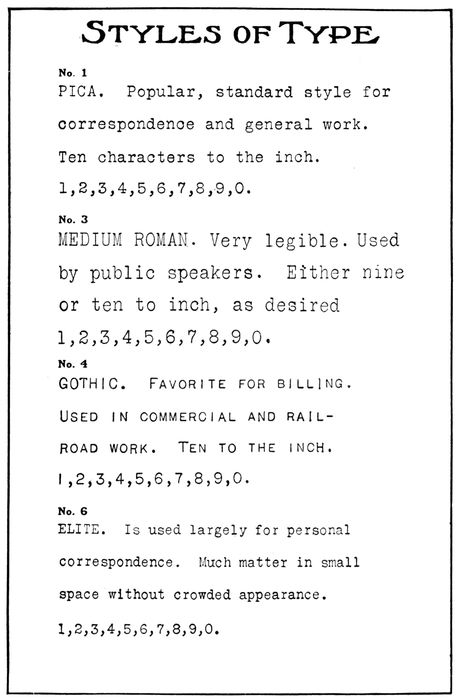
Fig. 20. Styles of Typewriter and Billing Machine Type
275The last sheet of the form of the McCaskey Register Co. is cardboard, with the numbers 1 to 31 printed along the top. A movable metal "spud," or tip, is used to show the due dates of each invoice, and to enable the collection clerks to quickly find the desired copies of charges for the purpose of sending out statements from three to five days ahead of due dates.
Styles of Type. The size and style of type is a very important factor in all classes of work where legible manifolding results are wanted. There are several classes of type used in connection with billing machines. Different companies use different names in describing them. The four sizes of type used are as follows:
ELITE
PICA
MEDIUM ROMAN
LARGE (or full) ROMAN
Elite. This style has come into general use in connection with correspondence. It gives a dignified style to a letter. It is the hardest type to keep clean—the most destructive to the rubber roll and typewriter ribbon of any type made. It also manifolds very poorly where a number of copies are used, as the type is so small that the sixth or seventh copy, and many times the third and fourth, are so blurred that it is impossible to tell an e from an a or an o.
This style of type is sometimes used for making up tabulated statements where it is desired to crowd a large number of figures to the inch.
Pica. This is the most generally used type of any. It manifolds quite well up to six and seven copies. It is possible to write only ten figures of this size to the inch.
Medium Roman. This is the next larger size type than the pica and, on account of it being larger, it gives better manifolding results. It also writes ten letters to an inch.
Large Roman. This is the size type which is used by railroad and steamship companies for typewriting their way-bills. It is possible to write only eight letters to an inch.
276
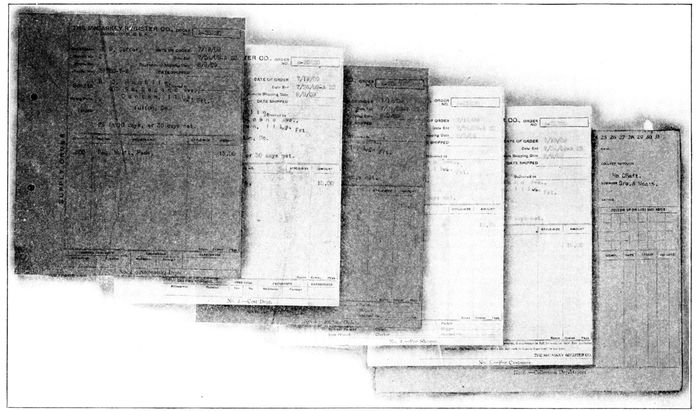
Fig. 21. Forms Showing Properly Designed Stationery
277Gothic Type. The term Gothic indicates the style, and not the size of the type. If the small points at the top and bottom of the Roman type were removed (these points are called serifs) the effect would be that of Gothic type. A very pleasing combination on a billing machine is two different sizes of Gothic type, the larger size to be used for capital letters, the smaller size for the small (or lower case) letters. Recent practice has demonstrated the value of using capital Gothic letters of one size, as it increases the legibility of an order or an invoice.
In manifolding, numerals should always be of the "open" kind, that is, 1 2 3 4 5 6 7 8 9 0, and not 1 2 3 4 5 6 7 8 9 0, as the former are much the more legible.
Carbon Paper. There is no article which is so generally misused in the commercial world and which is so little understood as carbon paper. In order that the correct usage may be clearly understood a brief description of its manufacture is given.
The chief ingredients of carbon paper are oil, wax, paper, and color. Oils and waxes are used to give wearing surface, elasticity, and body to the color mixture. Tissue paper—generally of imported quality—with a fine, strong fiber is used. The quality must be first class in order to insure absence of holes and other imperfections in the sheets. Generally the sheets are cut 20 x 30 inches. A ream is regarded as containing 500 sheets. Three weights of paper are used, 4lb., 7lb., 10lb., respectively, meaning that 500 sheets of the above size of paper will weigh the number of pounds named, according to the thickness of the paper.
Color. The only really indelible color is black; that is because carbon is the basis of the color. The colors which are used are powders which have been ground as fine as possible. They are mixed in proper proportions with oils and waxes. Formerly the mixture was applied by hand, but great strides have been made in machinery for automatically applying the color evenly to the paper. It is important that the color or pigment be applied evenly to the paper and that it penetrates the fiber. Unless the paper retains the pigment, the carbon paper will not wear properly. The longer the color adheres to the paper, the longer it can be used.
Finish. The finish of carbon paper is the factor which is so little understood by the public. Carbon papers are finished with soft, medium, and hard finishes. The first will hardly rub off on the hand under pressure, the next will rub some, and the soft finish will smudge if pressed against the hand. Each finish is intended for 278a definite use, which will be explained later. The manifolding power of carbon paper depends absolutely on the typewriter itself, the hardness of the rubber roll, the touch of the operator, and the weight of paper, and lastly, the finish of coating on the paper. Two operators on the same typewriter can secure totally different results because one will have light, and the other heavy, touch. The regular rubber rolls which are furnished with typewriters are medium hard—in six months or a year they gradually grow harder, eventually becoming as hard as slate. If a typewriter is to be used for regular work as well as heavy manifolding, it should have two different rolls, one for each kind of work. There is no reason for using a medium hard rubber roll on the machine, getting poor results, and then blaming the carbon paper. Use a hard rubber roll on the machine and there will be no difficulty. Some makes of machines have interchangeable rolls (known as platens) which are very useful. It is the work of a minute only, to remove one and place the other on the machine.
Four-Pound Paper. This class of carbon paper has a heavy, sensitive coating, and is intended for heavy manifolding—for making from five to twenty copies. Soft-finish carbon papers are always used where heavy manifolding is to be done. The finish of the paper which is being written upon is also a factor. Papers with a hard finish—that is, a shiny surface—do not allow the color of the carbon paper to take hold, and yet a paper with the soft finish will allow the color to spread, and make a poor copy. This class of paper is also used for making a few copies on very light-stroke machines like the Hammond.
Seven-Pound Paper. This weight of paper is adapted for making from one to five copies. Being heavier than the four-pound, it will wear longer. If coated heavily it will give more impressions than if lightly coated, but the impressions will not be as clear and clean.
Ten-Pound Paper. This weight of paper is intended for use where one or two copies are wanted. Its weight enables it to stand the hard usage to which it is put. On one or two copies, the additional weight or thickness of the carbon paper does not affect the imprint. This class of paper is used with billing machines of all kinds.
279Full Carbon Papers. This is a paper which is coated on both sides for making a multiplicity of copies on tissue. The pieces of carbon paper are placed between every other piece of tissue paper and manifold on the top of one sheet and the bottom of the next. This carbon paper is used to reduce the bulk of paper in the typewriter—one-half as much carbon paper being required. It is sometimes called double carbon paper, and is mostly used by railroads in making up way bills on yellow (dandelion grade) tissue paper.
Copy Carbon Papers. This paper is for use where it is necessary or desirable to make a carbon copy from which to make a letter-press copy. Hektograph carbons are for making carbon copies to be used in a hektograph.
Pencil Carbons. This class of carbon paper is made in the heavy grades of paper from seven-pound to twenty-pound and is made full carbon in the seven-pound weight.
Pen Carbon. This class of carbon paper is made in the seven-pound and ten-pound weights.
Troubles and Remedies. Carbon papers made in summer have different treatment in the matter of color mixture than those made in winter. Users should always remember that carbon paper which has lain unused all year has gradually dried out and depreciated in efficiency. The fresher a carbon paper the better—therefore it is not economy to buy too large a supply if it is liable to stand for more than six months. Never store carbon paper near heat, nor in the direct rays of the sun.
The one great difficulty experienced with carbon paper is the streaked effect called "treeing." This is caused by the carbon paper being inserted unevenly between the sheets of paper used with it. Once wrinkled, it remains so, and gives the streaked result as long as it lasts. To guard against this trouble, the operator should watch that the carbon paper is not wrinkled when inserting it between the sheets of paper, and should press the release lever on the typewriter to release the paper-feed rolls on the machine, after the paper is inserted in it, so that the unequal tension of the paper and carbon paper may adjust itself.
Durability of Color. Black paper made of carbon pigment is indelible and most durable. Blue or purple papers are next in the order of durability of color, and are made of aniline dyes. Green 280next, and red next. The fact is that red and green carbon papers should not be used for permanent records, as they will fade quickly.
Wearing Quality of Paper. Many times a typewriter will have a rubber roll (platen) which has become pitted and worn from age and the use of periods, commas, hyphens, and ditto marks. This is very destructive to carbon paper. New rubber rolls should be placed on the machine. It is not economy to use the cheap variety which can be purchased for 75 cents and which is nothing more than rubber hose drawn over a wooden core. The latter is not cylindrical and will give trouble. The type will print unevenly and cause bad alignment, for which the machine will be blamed.
Blinds. Blind is the name given to a sheet of paper used in connection with manifold work for preventing all of the information on the top sheets from being manifolded on certain of the sheets underneath.
For instance, in describing the scheme for providing the packing department with a description of the goods to be shipped, but with the quantity column blank, it will be remembered how a strip of paper of proper size wide enough to cover the quantity column was placed over the left side of the invoice from top to bottom. Therefore all quantities, instead of manifolding onto the packer's sheet, manifolded onto the strip of paper known as the blind.
A blind may be of any given shape, and cut away at the top, side, or bottom; or, in some cases, irregular-shaped cuts are made in the middle of the sheet or near the edges. The cuts are made in order to allow certain information to be manifolded on the next sheet under the blind. The balance of the information on the top sheet is manifolded onto the blind, which is thrown away. It is reasoned that it is cheaper to use a sheet of paper for this purpose than it is to stop and make a separate sheet with part of the information only, typewritten thereon.
HOW TO HANDLE ORDERS AND BILLS ON BILLING MACHINES
Loose-Leaf Sheets with Invoices in Blanket Form. In some lines of business it is possible to use invoices of equal size. Some firms therefore have the invoices and sales sheets of equal size. The 281top sheet is perforated horizontally at equal distances, which permits the invoices to be torn apart so that one blanket of form invoices may be separated into three or four separate invoices. This plan can be used where the work is done on an ordinary letter-writing machine. In preparing the papers for billing, a sheet of carbon equal in size to the sales sheet is used. A heavy-weight carbon (10lb.) with hard finish is the best kind of carbon to use for this work. If an extra sales sheet is needed for any purpose, a duplicate sheet of paper, preferably of another color, can be used with another sheet of carbon interleaved between the two sales sheets. This method is wasteful of space as far as the sales sheet is concerned. If each invoice were loose and placed in the machine in such a manner that the first written line on the invoice would be two or three spaces only below the last item of the previous invoice manifolded on the sales sheet, generally one more invoice of average size could be manifolded onto the sales sheet.
Loose-Leaf Sales Sheet with Separate Invoices. This combination is made possible by the billing machine, the flat-bed and the cylinder style. Cylinder billing machines are equipped with special carriages having special feed rolls which hold the sales sheet until it is fed entirely through the machine. Cylinder machines also have an independent feed roll which can be released by a special lever. This permits an invoice to be inserted in the machine, and then clamped into position by the intermediate feed roll and fed through the machine with the sales sheet until the invoice is completed. The intermediate feed roll is then released, and the invoice removed without disturbing the sales sheet. The next invoice is then placed in position, and the same operation is repeated. This allows one invoice to be manifolded very nearly under the previous invoice. Some firms having invoices of one or two items only, which permits of from seven to nine invoices being manifolded on each page, have the invoices made up in blanket form; that is, seven or eight invoices to a strip. After each invoice is manifolded they advance the next invoice into position and then tear the invoices apart as previously described.
Carbon Paper Cut for this Class of Work. Some operators doing condensed billing work prefer to use carbon paper the same size as the invoice, and to remove the carbon paper each time an invoice 282is completed. This necessitates a great deal of handling of carbon paper. It is preferable to use a large sheet of carbon paper the same size as the sales sheet, feeding it through the billing machine with the sales sheets. This eliminates the necessity of picking up a piece of carbon paper each time an invoice is placed in the machine. With the former method, if one had four invoices to one page of a sales sheet, it required one to pick up the same piece of carbon paper four times, or once with each invoice. The latter plan necessitates handling the carbon paper once only, when the sales sheet is placed in the machine. The operator positions the second or third invoice on a sales sheet, in order to avoid writing over the previous invoice, by spacing the carriage three times after an invoice is completed.
Using the Sheets Serially. All sales sheets should be serially numbered, in order that when placed in a binder the loss of any sheet may be detected by a missing number. Some firms prefer to use one side of a sales sheet only. In this case, a sales binder holding 375 sheets would have 375 pages. Where the sheets are numbered on both sides, the sales binder would have 750 pages. If the appearance of a page is marred by an invoice being spoiled, that sheet is not thrown away, and the fact that it is not is an incentive for the operator to do good work.
Handling Credit Memoranda. Some firms prefer to handle their credit memoranda on different-colored paper (generally pink) for both invoices and the large sheets which correspond to sales sheets. All of the rules which govern the making of invoices and loose-leaf sales sheets apply to the execution of credit memoranda.
General Remarks Regarding Billing Machines. The flat-bed billing machine enlarged somewhat upon the idea of using special characters for certain abbreviations peculiar to various lines of trade. For instance, in the shoe business, the following abbreviations are some of those used:
WOM means Women's
CHI " Child's
BOYS' " Boys'
BAL " Balmorals
BLU " Bluchers
PR " Pair
PRS " Pairs
DOZ " Dozens
283The cylinder machines have adopted the same plan. In the cylinder machines there are two distinct classes—those having two type to a type-bar, such as the Remington and the Underwood, and those having one type to a type-bar, with double the number of bars, such as the Smith-Premier. Both classes of machines can use special characters, but the machines having one type only to a bar have a preference in that they have more room in which to place special characters.
There is considerable saving in the use of special characters, as evidenced by the following example:
OCT 14 09.
This necessitates nine strokes where each letter is written separately. Had this been written by three special characters, it would have necessitated five strokes only. The special characters would be used as follows: OCT.-space-14-space-09.
To the uninitiated, it would seem that a special character of three letters, such as the abbreviation OCT., would occupy three spaces on the machine, and consequently would overlap on the word at the right. This is obviated by placing the type on the type-bar in such a manner that the letter T of the abbreviation is in the printing point of the paper. The following illustration will show how the type are placed or aligned in order to secure the desired results:
OCT 14 09
│ │ │
As the month always precedes the next word, the abbreviation OCT is aligned so that the two first letters are to the left of the printing point. In case a machine were equipped with numbers for all the days of the month, the character 14 would be aligned to print either side of the printing point. As the abbreviation 09 would always follow and never precede, it would be aligned with the 0 in the printing point, with the 9 printing to the right of it. It is very important to have special characters properly aligned so that the abbreviations which always precede are aligned to print on the last letter, and the abbreviations which follow are aligned to print on the first letter.
It is impossible to print abbreviations in solid matter such as a letter. They are only to be used in connection with dates of invoices 284or orders, in connection with names of firms. For instance, the abbreviation Messrs., at the beginning of a firm name where such a term is desired, or the abbreviation Co. at the end of a firm name or the abbreviations Pr., Doz., Gro., and similar abbreviations, come in the body of a bill and, preferably, in the first column after the quantity.
It should be remembered that when the rubber platen of a billing machine becomes worn and cut with holes incident to the use of periods, commas, hyphens, etc., the special character type will sometimes print heavy at the top and light at the bottom of the letter, or vice versâ. This is remedied to some extent by placing a new rubber roll on a cylinder billing machine, or a new rubber covering on a flat-bed billing machine.
Special characters are used to a better advantage on the under-stroke (or blind machine) than on the visible machine. In the latter, the type-bars are all grouped in less than a half circle, which necessarily crowds the type-bars a little closer together, and therefore does not permit of special characters of a large size.
Tabulators on Billing Machines. It is absolutely essential that every billing machine be furnished with either a single-stop (known as a column-stop) tabulator or a decimal tabulator, preferably the latter. A single-stop tabulator is used as follows:
On the billing machine frame rests a bar on which metal stops or pegs are placed at predetermined intervals. By pressing the column stop, the carriage holding the paper is released, and jumps automatically to the first stop. After the information is written, the stop is again pressed, and the machine jumps automatically to the next printing point. The following example shows the use of the column stop:
John Jones Marion, Ind. XXV
A. B. Smith Washington, D. C. XXX
G. Barnes Seattle, Wash. XXX
The following example shows the use of the decimal tabulator:
10.50
.50
150.25
15560.65
With the decimal tabulator, the operator would press the tens key, which automatically places the carriage in a position to begin 285writing the amount 10.50. If the column stop were used for this purpose, it would have stopped the machine at the period point, and necessitated the operator pushing the carriage two points to the right in order to begin printing two points to the left of the decimal points. Some operators place the column stop so that the machine always stops at the tens point, and if an amount of 1.00 or less is to be written, they use the space key. This is quicker than to always stop at the decimal point and then position the carriage properly by hand. However, where any tabulated work involving figures which vary greatly is to be done, it is decided economy to use a decimal tabulator. Most operators do not see the advantage of using tabulators, and in many instances will continue to waste time spacing the machine with the space bar. If they would avail themselves of the tabulator device they would jump from one part of the line to the next desired point instantaneously. It should be remembered that billing work is a constant repetition of certain manual movements. If one movement in ten can be eliminated, it is equivalent to saving one hour in ten. To show the great advantage of, and it might be said, necessity for, time saving and short cuts in large establishments, a device used by Butler Bros., a large mail-order house with warehouses in several of the large cities, is an excellent illustration. This particular scheme is used in Jersey City, N. J. It consists of two rows of billing machine operators (sixty-five in number) placed in parallel positions with an endless belt running between them, and two checking clerks at the end of the row. As fast as the operators transcribe the orders onto the order forms, the original and typewritten order (with departmental copies) are placed on the belt and carried automatically to the checker's desk.
The rubber belt passes over a pulley at the edge of the checker's desk, which allows the orders to fall from the belt to the desk. The belt returns to the end of the line, where it revolves around another pulley. The power is furnished by a small electric motor.
Arrangement of Billing Machines in Large Business Houses. In large businesses in the wholesale dry goods, wholesale notions, and kindred lines, special arrangement enables a few billing machines to accomplish a large amount of billing. In these classes of business, it is the custom to call the lot number, class of goods, and the number of yards to the bill-clerk, who in turn enters it on the bill and duplicate. 286The system used will be described elsewhere. Here it is desired to touch upon the movable-platform idea only. The operator is seated on an elevated platform on which is placed the billing machine and the chair. This platform has rollers, and can be moved in the aisle between two rows of counters on which the goods to be shipped are placed. As soon as the callers call off the lot numbers, description, and quantities of one shipment, the billing machine operator moves the platform to the next lot of goods, which enables him to hear the caller clearly wherever the caller may be. If the bill clerk were permanently located in one portion of the room, he would be liable to make errors through misunderstanding the caller. A scheme which is largely used in those classes of business which demand the "call off system" or, as they term it, "billing from call" is to call off the word sixty-five as if it were sixity-five, and the word fifty-five as if it were fifity-five. This prevents confusion between these amounts which sound so much alike. Some firms for sixty-five use the term sticky-five.
Use of Computing Machines in Connection with Billing. Many firms use computing machines such as the comptometer for proving the extensions on invoices. With a machine of this character, it is possible to figure all of the extensions. The machine at the same time automatically adds the totals, and, if there are discounts to be taken off the bill, this operation can be performed without clearing the machine. For instance, in the following example:
12 yards lace 50 $6.00
15 yards ruching 10 1.50
24 doz. hdchfs. 12.00 288.00
$295.5
25% 221.63
By clearing the machine, is meant pulling the handle which returns all of the wheels to 0 for the beginning of a new computation. Without desiring to enter into the mechanical merits of adding machines, either listing or non-listing machines, it is important to touch upon the various arguments used in favor of billing machines with adding attachments and without them.
The flat-bed machines were the first to use the combined machines. The plan in use was to place two recording registers on the billing machine and prove the total of each bill separately with one register, and accumulate the totals of all the bills for the day on the other 287register. Certain firms used extra recording registers for recording the totals of extra columns on the sales sheets in which they analyzed the sales according to classes of goods or some other classification. Some firms did not add the bills when making the extensions of the prices and quantities, but left the additions for the adding machine. The only draw-back to this plan was that if the operator copied a wrong total from the register dial it caused trouble. This fault, if fault it may be called, as it is not the fault of the machine, but of the operator, has been corrected by placing a subtracting device on the late models of combined billing and adding machines, whereby the subtracting device is thrown into action when the total of the bill is being written. If the correct amount of the bill is written on the invoice, the dial figures all turn to ciphers, which indicates that the amount has been correctly transcribed by the operator. Other improvements will likely follow in the many machines which are being placed upon the market. See Fig. 29 on Page 67.
Some firms prefer to do all the billing as one operation, and use a separate or computing machine, as the case may be, for proving the additions at the end of the day. The reason is that by having two separate machines they can be used by different people during the day for different work.
If computing machines are needed for adding, multiplying, and taking off discounts, the non-listing machines are recommended, as they are key-driven. If adding machines are needed when printed lists are wanted of all additions, then listing machines are recommended. The general public has recognized that each class of machine has its separate use. Some firms check the totals of listing machines with non-listing machines, in order to save time and paper. Non-listing machines are used for taking a record of rolls and yards of cloth during inventory time, and later are used to multiply the extensions. Some dry goods firms hire expert operators at a dollar an hour to do this class of work, as it can be done in one-fifth the time that it would otherwise take. For instance, an example in multiplication, such as 432 × 235, would take approximately ten seconds to write down, multiply, and set down the figures. With a multiplying machine mentioned above, it can be done in two seconds.
With listing adding machines, equally valuable results can be obtained. In certain classes of work, such as collection letters in 288banks where there are rows of figures representing the various checks, and typewritten information, such as description of endorsements, it is much faster to place the sheets in the adding machine and list the amounts thereon and automatically print the total with the adding machine. This avoids the trouble due to operators printing wrong totals on the billing machine. The typewritten information is then put in on the typewriter or billing machine. There is this to be said, however, if an operator prints a wrong amount on a listing adding machine, the answer will be incorrect, but the machine will print a correct total of the figures printed by the machine. A listing machine can be equipped with a wide carriage and used for printing lists of figures just the same as a typewriter. Time should never be wasted printing a statement covering rows of tabulated figures on any typewriter, and then taking the statement to an adding machine and adding the columns to prove them, if it can possibly be arranged to make up the entire statement on the listing machine. Listing machines are now prepared to manifold at least two extra copies, and are equipped with column tabulators.
For adding a number of columns, with or without a grand total column at either the right or left side of the book or sheet, and where the items are written one at a time in different columns, the combined typewriter and adding machine is recommended. One such is shown in Fig. 22.
COLORED SHEETS
The "colored sheet system" indicated below makes it unnecessary to refer to the written matter for distribution. A glance indicates the department or service for which every slip is intended. The distribution may be as follows:
The office record (register) may be filed numerically;
The order book copies alphabetically;
The requisitions by departments;
The shipping instructions, chronologically;
The salesman's records, territorially;
The cost sheets, according to classification.
One copy may also be filed geographically for comparison of results. This furnishes a complete record and makes reference easy.[6]
289This summary illustrates the use of the color scheme, and gives a brief hint of the plan usually followed in filing order sheets for various departments. It should be remembered that the best billing and order plan in the world can be made the most abject failure, if proper attention is not given to the proper filing of sheets.
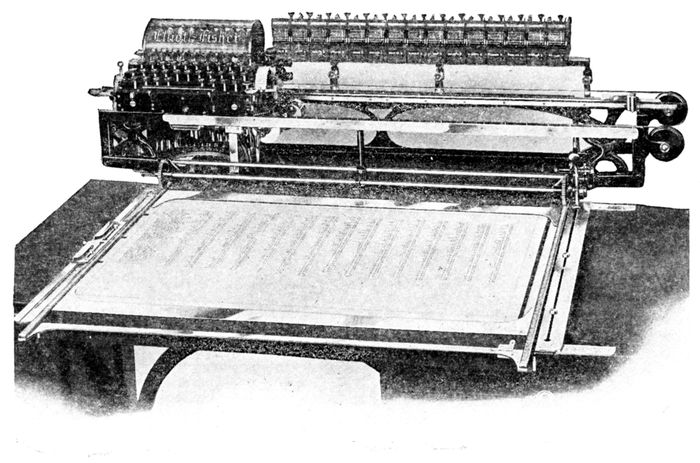
Fig. 22. Combined Typewriter and Adding Machine. Elliott-Fisher Co.
For example, if clerks in looking for a certain order could always give the order number, but not the name of the customer, it would be wrong to file the orders alphabetically; in such cases, file the orders numerically. Always file papers according to the information which the clerk or executive will have at hand when looking up the same. Sometimes, papers will be just as easily found when filed numerically as alphabetically.
Reference Information. One very important feature to remember in designing forms is to place all reference information on the right-hand side of the sheet. In leafing loose sheets held in binders, it will be easy to find the desired sheet if this plan is followed; but, if the reference numbers are placed on the left side of the sheet, it will be necessary to open the binder relatively wide to see each number.
In the illustration, Fig. 23, it will be noted that the order number is properly placed, and that the printed headings are aligned 290horizontally at the back, which permits all typewritten matter to be started evenly. The value of this point was touched upon in a previous chapter, as to saving of time in the execution of the work. In this particular form, however, there is typewritten matter to the left of the headings, such as account of, ship to, etc. The marginal stop on the billing machine should be set for the first typewritten matter, and tabulator stops used for all matter to the right on each line.
COMPOUND FORMS
One of the most effective means of short-cutting work, where the nature of the business will permit, is through the use of compound forms. These forms derived their name from the combination of order and billing work on one set of sheets and accomplish in one operation, sometimes in two, all the clerical work incident to the receipt, registering, acknowledgment, billing, charging, and shipping of an order.
It can be readily seen that if a firm can fill its orders completely, or almost so, that there is no use to wait until the order is filled before billing it. It is a great deal easier to place another sheet along with the order forms and use it for an invoice. It is generally placed as the top sheet of the set, and therefore it is the original.
Goods Shipped for Entire Order. If the nature of the business is such that the firm can always fill its orders completely, it is perfectly safe to enter prices, make the extensions, and complete the invoice, with the possible exception of the date when the goods are finally shipped, if they cannot be sent out the same day. In such cases, a printed heading is provided on the invoice, opposite which the shipping date is typewritten. This then becomes the date of invoice.
291
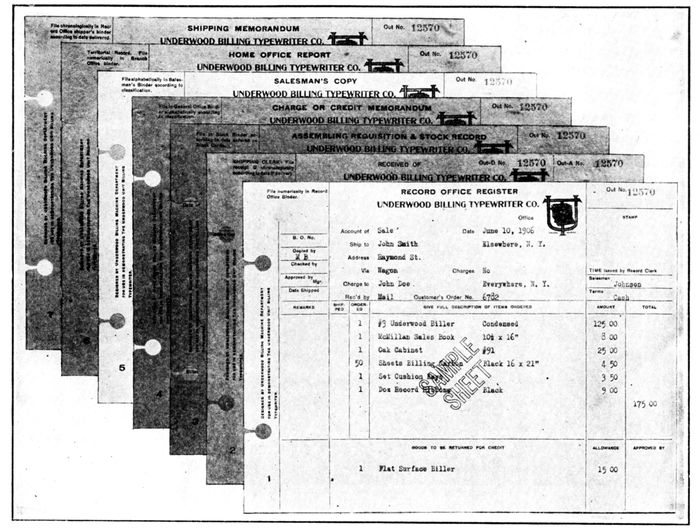
Fig. 23. The Colored-Sheet System. A Different-colored Sheet is Used for Each Department Underwood Typewriter Co.
Goods Almost Completely Shipped. If it is possible that one, two, or three items cannot be shipped at all, or in part only, it is the custom to hold the invoice (and copy, or copies, when there are any) in the office, arranged alphabetically according to customers, pending receipt of information from the shipping department as to quantities, weights, etc., of goods shipped. This invoice is an exact typewritten duplicate of the balance of the order forms, and has the heading for quantities to be shipped and, usually, prices for each article. Neither the extensions of the items nor the footing of the bill have been made. Generally, a copy of the order showing the quantities, weights, or measures marked thereon is handed to the office. The copy of the invoice is then placed in the machine, and the prices, extensions, and footings made to correspond with the items which have been shipped. The question arises in regard to the items which have not been shipped. Some firms print on the bottom of each invoice the sentence: All items which are not priced nor extended have been "back-ordered" and will be shipped later. Other firms typewrite an X in the price column, 292or number the items which have not been shipped. They then make a written explanation on the bottom of the invoice regarding the date at which the balance of the goods will be shipped. In some lines of business this plan tells the customer not only what he ordered, but what has been shipped and when the balance will be shipped. The memo on the bottom of the invoice also saves the writing of letters to customers.
In other lines of business, this plan would be absolutely unfit—for the reason that certain firms do not wish to call the customer's attention to the items which have been omitted.
Compound forms generally have two columns at the left—one for the goods ordered, the other for the goods shipped. If this were not provided, it would be necessary to erase quantities in all instances where a different quantity were shipped from the quantity ordered.