CORRESPONDENCE AND FILING
Reading edition
INTRODUCTION
This book deals with a subject of growing importance in every office—that of handling correspondence and filing all papers and documents which form a part of the records of every business. While making no attempt to teach letter writing, suggestions are made which, it is hoped, will prove of assistance to those whose duty it is to handle correspondence. Among those whom it is hoped a study of this book will benefit, are the incoming-mail clerk, the correspondent, the stenographer, the private secretary, the file clerk, and, in fact, every person who has anything to do with handling and preserving business or professional correspondence.
Present-day conditions tend to increase the volume of correspondence in every office, and any improvement that will reduce labor or contribute to more prompt service is welcomed. Every concern, except possibly the small establishment doing a strictly neighborhood business, uses the mails more and more in the transaction of its business; we buy, sell, pay bills, collect money, make contracts, and execute all sorts of transactions by mail—all of which necessitates writing letters. Not only is it necessary to answer letters promptly, but the increasing accumulation of correspondence must be preserved and filed in a manner that will permit of easy reference; all of which emphasizes the necessity of systematic methods in the conduct of this very important department.
In the belief that more representative illustrations will result, and that they can readily be adapted to the needs of a small establishment, the suggestions herein are applied to a business in which the correspondence is large in volume.
OPENING AND DISTRIBUTING MAIL
Opening Mail. Incoming mail should invariably be delivered to one desk in charge of a clerk, usually known as the incoming-mail clerk. When a business has reached a position where a large correspondence is handled, it is poor business policy for an executive to assume the task of opening the mail. The natural conclusion, when a house has a large correspondence, is that its business is correspondingly large, and the executive who is fitted for his position can devote his energies to larger tasks with better results. He should be free to look after the big things—to plan greater results for his business or his department.
The argument has been advanced that it might be dangerous to trust a clerk with such business secrets as are found in the correspondence, but in the handling of business transactions practically every one of these "secrets" come to the knowledge of several clerks. Surely, if employes can be trusted with the cash and to keep the accounts—if stenographers can be trusted to take letters of the most confidential nature—a clerk can be trusted to open and distribute the mail.
Sorting Mail. Sorting the mail is the first duty of the incoming-mail clerk. This sorting is important in that all personal mail may be taken out before it is opened. A general rule among all large houses is to instruct all employes to have personal mail sent to their private or home addresses, but in spite of all precautions an occasional personal communication will come to the business address. An acquaintance may know that Smith works for Jones & Co. and, having forgotten his personal address, sends his letter in care of the house.
If Smith happens to be an unimportant employe, there will be no question about the communication being personal; but if he is a department head, there may be reasons for doubt. Large business organizations are divided into departments, each in charge of a manager. The correspondence of each department is signed by the head, over his official title. A reply may be addressed in the name of the house, to Smith, Sales Manager, or to Smith, without the title. The letter addressed to Smith, Sales Manager, belongs to the house, but if his title is omitted, it belongs to Smith, and to open it without permission is a violation of the law. When the departmental correspondence is heavy, a considerable number of letters addressed to the manager, but without his title, may be received, and it is the custom in many houses to secure written permission from department heads to open all such letters. This protects the clerk in case a personal letter is opened by mistake, and insures prompt attention to correspondence received during the absence of the department manager.
Distributing Incoming Mail. After the mail is opened, it should be carefully distributed. While it is not necessary to read every letter, the incoming-mail clerk should read as much of each letter as may be necessary to determine to what department it should go. Frequently, a letter addressed to one department refers to matters requiring the attention of another—a letter ordering goods may be addressed to the advertising manager, or a remittance to the sales department; or a letter may require the attention of more than one department.
In a large organization it is a very good plan to designate the departments and executives by numbers, that is, the president might be No. 1, the general manager, No. 2, the sales manager, No. 3, etc. When a letter requires the attention of two or more departments, these numbers should be placed on the letter in the order of their importance. On a letter containing a remittance and asking for a quotation, the sales manager's number would follow that of the cashier. Such letters are sent to the department whose number appears first, and the numbers indicate to the correspondent that the letter is to be referred to another department.
For distributing the mail, the clerk should be supplied with baskets labeled with the names or numbers of the departments. Mail can then be distributed quickly to the proper departments. If the number of baskets exceeds six, a rack should be provided for them at the side of the desk.
In some offices, the incoming-mail clerk makes a record of all orders received, before sending them to the sales or order department; in most concerns, however, this is done in the statistical department, after the orders have been passed upon. If the business is strictly cash and not too large, the statistical work can be done by the mail clerk.
Fig. 1 shows a tally sheet which is made up by the mail clerk for a small mail-order house. The sales of this house are divided by departments, each department representing a few specialties. While the business is essentially mail-order, a few agents are employed. On this sheet, columns are provided for a record of the articles sold by each department, the number and amount of cash and credit sales as a result of advertising, sales by salesmen divided in the same manner, total cash and credit sales, and the grand total. The cross-footings show the total sales of each article, while the column footings show the total sales, divided between advertising and salesmen, and whether cash or credit.
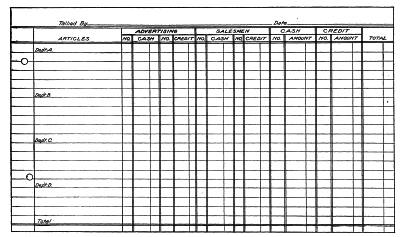
Fig. 1. Tally Sheet of Sales for Small Mail-Order House
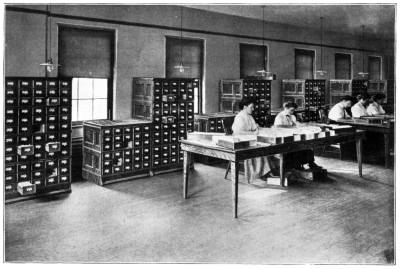
AN EXTENSIVE EQUIPMENT OF CARD FILES IN THE OFFICE OF A LARGE CORPORATION. MANUFACTURED BY YAWMAN & ERBE MFG. CO., ROCHESTER, N.Y.
When the mail is sorted, all orders are placed together, and these are then sorted into the classes shown by the tally sheet. To prevent holding order, a memorandum tally should be made of each lot of mail handled, and the totals for the day entered on the sheet.
The tally sheet should be loose-leaf and made in manifold. A sufficient number of copies should be made to supply all department heads who have a direct interest in the volume of the day's business. Usually, copies will be required by the executives and the sales manager.
Departmental Distribution. The sorting and distribution of the mail, after it reaches the department for which it is intended, is also of considerable importance. And, in this sorting, the department manager's stenographer can render valuable assistance. For the same reason that the head of the house is relieved of details, the head of a department should strive to rid himself of tasks which can be as well performed by a subordinate.
Whether the mail is sorted by the correspondent or his stenographer, it should be gone through before an attempt is made to answer it. Letters that can be answered at once should be placed by themselves; those necessitating further information should be handled specially; if a letter requires the attention of another department, it should be answered immediately and passed on.
Under this plan, the mail is prepared for answer before a stenographer is called to take dictation, which saves time. The correspondent who does not plan his work calls a stenographer and starts dictating, taking the first letter that comes to hand. When a letter about which further information is needed is found, he sends to the files for correspondence, wasting both his own and his stenographer's time while waiting for the information.
Before any letters are answered, the necessary notations should be made on all letters requiring information, and the letters sent to the proper departments. The very first letters answered should be those that must be referred to another department. These should be not only dictated first, but transcribed and forwarded to the next department before further dictation is given.
These methods will go far toward solving the problem of the prompt handling of correspondence. Most large houses receive complaints of delay in answering letters, and when these complaints are investigated the causes of delay are found to be divided between a lack of method in handling correspondence and ignorance or carelessness on the part of the complainant. In any well-managed concern everything possible will be done to overcome the first-named defect, even to the extent of providing a system which will, at least partially, overcome the defects due to the latter cause.
As to the complaints due to ignorance or carelessness, it is found that at least 75% of all complaints received come within this classification. In many cases complaints come from persons whose correspondence is limited to a half-dozen letters, or less, a day. They fail to appreciate the difficulties of the correspondent whose dictation averages a hundred letters a day; being unaccustomed to the departmental plan of organization, they do not realize that each subject about which they write must be referred to one certain department. And so, a single letter contains an order, a remittance, and a request for some special information, and, because he does not receive a reply covering all subjects referred to in his letter by return mail, the customer complains of delay. It is entirely legitimate to politely request a customer to use a separate sheet for each subject—as orders, remittances, complaints, etc.—but since not all will comply, some such method as has been described is needed to insure against unreasonable delay in handling letters that require the attention of several departments.
In another class is the letter which, for some reason, cannot be answered at once. An example is the letter to a manufacturer, asking for a price on a special machine. Before a price can be named, the engineering department must make a careful estimate of the cost, and it may be necessary to secure quotations on some special material needed. This means an unavoidable delay, but the prospective customer should not be left in a state of expectancy—the letter should be acknowledged immediately, and the cause of the delay explained. The customer then feels that he is receiving attention, while if no reply is made until full information can be given, a competitor more courteous may secure the order.
Interdepartment Correspondence. Of considerable importance in every large organization is the interdepartment correspondence—the notes from one department head to another. Every department head finds it necessary at times to request information from other departments. Even with an intercommunicating telephone system, with which every large office and plant should be equipped, many of these requests are of a nature that, to guard against misunderstandings, demand written communications.
Usually, these communications call for prompt replies; a letter from a customer may be held or some important action delayed until the information is received. A good rule for the correspondent is to give attention to these notes as soon as received, and answer them at the earliest possible moment. The stenographer should, as a rule, write these notes first, or if written in the order in which they are dictated, should place them on the correspondent's desk immediately. Of course, judgment must be exercised, for some of these notes do not require immediate attention and should be held until more important correspondence is disposed of.
There are also many notes giving instructions, either from a department head to his subordinates, or from the executive heads to the heads of departments. Except on general orders, affecting all employes, the names of all department heads to whom the order applies, should appear at the head of such notes. The manager may wish to call attention to some act, common to all department heads, without making it a personal matter with any one of them, so writes the same note to all. For example:
July 15, 1909.
Mr. Blake, Mr. Watson, Mr. Kimball, Mr. Cobb, Mr. Royce,
Gentlemen;
During the past few days some of you have been a little careless about getting to the office on time. If you arrive 5 or 10 minutes late, it will have a very unfortunate effect on the discipline of your department, and I trust that each of you will strive to overcome the habit of arriving late—a habit which, I am sure, is entirely due to carelessness on your part.
Yours truly,
General Manager.
In the above example, five copies of the note are required, and four of these can be carbon copies. When Mr. Blake or Mr. Watson receives the note, he knows that it is not addressed to him alone, but that each of the others has received a copy. Without detracting from, but rather adding to, its effectiveness, this note leaves a much more pleasant impression than a personal note to each man. No one man feels that he has been singled out for criticism.
CORRESPONDENCE SHORT CUTS
Dictating by Number. One of the greatest time savers in handling correspondence is dictation by numbers. The plan is to indicate each letter by a number, instead, of requiring the stenographer to take down the name and address.
Probably 90 per cent of the letters dictated are replies to other letters. When the correspondent has his mail ready for dictation, he should write, or stamp with a numbering stamp, No. 1 on the first letter answered. To the stenographer he will say "No. 1," and, instead of the name and address, this number is entered in the stenographer's notebook. The original letter, from which the address is obtained, is turned over to the stenographer. A new series of numbers, beginning with No. 1, should be used each day, to run consecutively during the day.
Careful tests, made in different offices, show that in taking ordinary business correspondence dictation, the stenographer wastes about 20 per cent of the time writing the name and address. By the use of the numbering plan, practically all of this time is saved.
Form Paragraphs. A large per cent of the correspondence of the average business is a repetition of the things that have been said before. Day after day the same questions are asked and answered, the same complaints are received, the same arguments, formal acknowledgments, and requests form a large part of the dictation. Over and over the same paragraphs are used to say the same things, a repetition and waste of time for both correspondent and stenographer, which can be done away with by the use of form paragraphs.
For illustration, the acknowledgment of remittances is entirely formal, rarely necessitating a special letter. Many times, however, the letter of remittance asks for special information, which can be given in the same letter with the acknowledgment. If one or more form acknowledgment paragraphs are prepared to meet different conditions, one of these can be used, saving the time required for dictation.
Form paragraphs are especially applicable in answering complaints and in sales letters. Complaints can usually be divided into a few classes, and one paragraph will answer all complaints of the same kind. In sales letters, form paragraphs will answer all requests for certain information about the product, the terms of sale, the guaranty, etc.
Not only do form paragraphs save much time in dictation, but they result in stronger letters. It is the experience of every correspondent that he can write better letters one day than another. The best form paragraphs are found in the letters written on the correspondent's good days.
Form paragraphs should be arranged for ready reference. A very satisfactory method is to write them on sheets punched for filing in a binder. The paragraphs should be numbered consecutively, and indexed by subject. Copies should be supplied to all correspondents and stenographers who have occasion to use them.
Frequently a large part of the day's correspondence can be handled with form paragraphs, and through constant use the stenographer will become so familiar with them that he will be in a position to answer many letters without dictation. The really efficient stenographer—one of the kind who expects to advance to the position of private secretary—will make a careful study of form paragraphs, fitting himself to handle the minor correspondence, thereby saving the more valuable time of the correspondent.
Talking Machines for Dictation. Every year sees an increase in the use of the talking machine for dictation. These machines have now been brought to a state of perfection which makes their use feasible, and in many large offices they are used to the almost complete exclusion of shorthand writers.
An outfit for correspondence work consists, usually, of two machines—one for recording and one for reproducing dictation. The correspondent dictates his letters to the recording machine and passes the cylinders on which the record has been made to the stenographer, who transcribes on the typewriter direct from the reproducing machine. In small offices, one machine is made to answer every purpose, as it can be changed instantly from a recorder to a producer.
After the dictation on a cylinder has been transcribed it is shaved, and is then ready for a new record. This permits of the use of the cylinders until they are worn thin, and reduces the expense to a minimum.
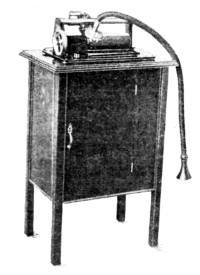
Fig. 2. The Dictaphone Columbia Phonograph Co.
The principal advantages claimed for this machine are that it saves all of the time of the stenographer usually required for taking dictation; the correspondent can dictate at any time without waiting for a stenographer; the work is more evenly distributed, and consequently finished earlier in the day. In the opinion of the writer, the chief advantage lies in having the machine at hand ready for dictation day or night.
While in some offices the shorthand writer has been almost entirely supplanted, the machine is more likely to be used as an auxiliary. It can never supply the brains of the human machine, and is not likely to lessen the demand for competent stenographers. Fig. 2 is an illustration of one of the well-known makes of correspondence machines.
Correspondence Requisitions. A considerable per cent of the letters to be answered in a business office are of such a nature that former correspondence must be referred to before an intelligent reply can be given. The unsatisfactory character of the replies to many letters can be traced to the fact that the correspondent did not take the trouble to first find out what had been written before.
To insure against the loss of correspondence, it should be most carefully filed, and every letter should be accounted for. Also, if a correspondent wants certain correspondence from the files he should state explicitly what correspondence or information he desires. This not only insures his getting the information needed to formulate an intelligent reply, but protects the file clerk.
The systematic method is to have a correspondence requisition, similar to the one shown in Fig. 3. On this requisition is noted just what is wanted—invoice, order, or letter—with room for special instructions. One of these requisitions should be sent to the files whenever any papers are wanted, and nothing should be delivered without such a requisition. By placing this requisition in the files, in place of the papers removed, the file clerk can always trace missing correspondence.
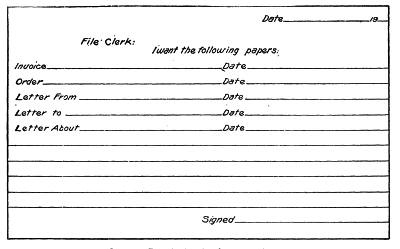
Fig. 3. Requisition for Correspondence
Complaints and Changes of Address. In some lines of business, complaints and notices of change of addresses are quite numerous. An example is the business of publishing a weekly or monthly periodical. Many complaints are received from subscribers who claim that they do not receive the publication regularly. The great majority of these complaints can be traced to carelessness on the part of the subscriber in failing to notify of change of address.
In some businesses, the handling of complaints requires the services of a correspondent, and a clerk to trace the complaint and gather the information necessary before an adjustment can be made. In a smaller business, the work of looking up the information usually falls on the stenographer. But no matter who gathers the information, the correspondent never should attempt to answer or adjust a complaint until he has made a thorough investigation. Not until he understands all of the causes leading up to the complaint, can he correctly judge of its merits.
The policy of having all complaints handled by one man is in keeping with approved business practice. A man who makes a study of the subject soon learns to handle complaints to the ultimate satisfaction of all concerned. Being independent of the selfish interests of a particular department, he is much more likely to serve the best interests of the house than any other man in the organization. The sales manager, for instance, is not the best man to adjust complaints of customers; he is likely to be more liberal than is warranted, because of his fear of losing trade.
When a complaint has been investigated, everything possible should be done to remove the cause, and to guard against a similar complaint in the future. The seemingly little precautions count for much. In the matter of changes of address, for instance, it is a small matter for the one who makes the change to see that it is made not only on the ledger but on the sales list, the collection card, and in every place where the address is permanently recorded. Failure to make the change in one place may lead to endless confusion.
Stenographer's Reference Index. Here is a suggestion for the special benefit of the stenographer. Keep in your desk a reference index of names, addresses, and telephone numbers. There are certain persons and firms to whom your employer frequently writes letters. These are not in reply to letters, but are written in the usual course of business. The names of these persons should be on your index so that when you are told to write to Mr. Hunter or Mr. Roberts you will not be obliged to ask the address.
Probably your employer will not ask you to keep such an index, but surely will appreciate your knowing the addresses. When he finds that you always know the telephone numbers of the printer, the bank, and other local houses with whom he does business regularly, as well as the addresses of prominent out-of-town correspondents, he will at least not place it to your discredit.
But do not keep the addresses on sheets of paper that surely will soon become confusing on account of changes and additions which make an alphabetical arrangement impossible. Ask for a small card tray, holding 3"×5" cards, that will go in the drawer of your desk, a set of alphabetical indexes, and a supply of blank cards. Such an outfit can be bought at any first-class stationer's for a dollar or two. When you want to preserve an address, write it on a card, and file it alphabetically. If your employer will not supply the outfit, cut slips of paper and indexes to fit one of the small compartments in the desk drawer. Have the index, even if you must devise your own method of keeping it; you will at least have the satisfaction of saving many minutes of your time. And in the formation of a systematic habit you will be adding to your equipment.
Making Corrections. All stenographers make mistakes, and no correspondent is entirely free from faulty dictation, which necessitates corrections in letters after they are written. But the time of the stenographer and, incidentally, expense to the house, can be saved if the correspondent will exercise reasonable care in indicating the corrections to be made.
Do not deface the letter so that neat corrections will be impossible, unless the mistake is so serious as to necessitate rewriting the entire letter. When the wrong word has been used, draw a light pencil line under it and write the correct word on the margin or the end of the letter; if the word is misspelled, underline it and write the correct spelling at the end of the line. This takes even less time than to deface the letter, and leaves it in such shape that corrections can be made quickly and neatly.
To the stenographer it is well to say, "If you find it impossible to make a neat correction, rewrite the letter." Nothing gives a more unfavorable impression of a house than an untidy letter, and your employer is more willing to overlook an occasional mistake than a letter filled with visible erasures.
COPYING CORRESPONDENCE
Copies of outgoing correspondence are a part of the system of every business office. There was a time when copies of important letters were made by hand, and then came the copying press and tissue impression book with many cloths, wringers, pans of water, and other paraphernalia for moistening the sheets of the book. The copying press is an awkward machine, difficult to operate, and altogether unsatisfactory, but, until a better method was offered, it answered the purpose.
One of the greatest defects in the copying-book method is the impossibility of making uniformly clear copies; some will be clear while others are blurred, and the important letter is usually the one that is illegible. The difficulty in securing clear copies is due to the impossibility of securing uniform pressure. While the copying press is still found in a few small offices, it is practically obsolete, and not used in offices where modern efficient methods receive consideration.
Carbon Copies. A simple method of obtaining copies of outgoing letters, invoices, orders, etc., is to make duplicates by means of carbon paper. In its adaptability and far-reaching effect, the sheet of carbon paper has proved to be one of the greatest of all aids to modern business methods. Used in connection with a typewriter of modern construction, the carbon sheet has revolutionized manifolding processes, making possible as many duplicate copies of any paper as are required in ordinary business.
The carbon method of obtaining copies of letters has the merit of economy in time. When the letter is written, the copy is made; if extra copies, up to a half-dozen, are wanted, all are made at one writing. If the last letter is being written when it is time for the mail to leave the office, it need not be held to make a copy.
The carbon method is not expensive. Good carbon paper costs 2 cents or less a sheet, and for 1,000 copies only about 30 sheets are required. A satisfactory quality of plain paper for copies can be bought for $1.00 or less a thousand. These prices are naturally subject to slight fluctuations, depending on the quantities purchased and the locality.
A defect in the carbon method is found in the manner of making corrections. It is not uncommon for a man to make a slight correction, or add a note, in his own handwriting; such corrections and additions cannot appear on the carbon copy. When corrections are made on the typewriter, it is very difficult to obtain a clear copy of the correction on the second, or carbon, sheet—the correction on the copy is very likely to be blurred. If the correction is written directly on the copy, without using carbon paper, the essential feature of the copy is destroyed; it is no longer a facsimile, and its value as evidence is very materially lessened.
Mechanical Copiers. There are now on the market several mechanical copiers, without the many disadvantages of the copying press, or the defects of the carbon method. One of the most satisfactory and best known is the roller copier. The fundamental principle of the roller copier is that of the clothes wringer; the original letter, with a wet tissue sheet placed against the written side, is passed between rubber rollers, to which just the right amount of pressure is applied.
Working from the clothes-wringer idea as a basis, the inventor of the roller copier set about to remedy the defects of the copying press. It was found that clear copies could be obtained only under certain conditions; the pressure must be absolutely uniform, and the tissue sheet must be moistened evenly.
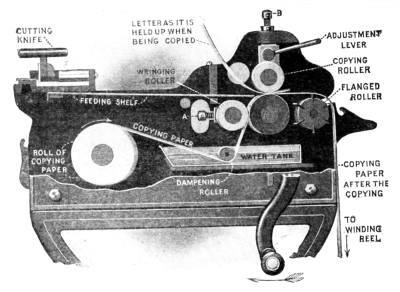
Fig. 4. Mechanism of the Yawman & Erbe Roller Copier
As to the pressure, it was found that too much or too little resulted in unsatisfactory copies—some faint, others blurred—the very defect that had made the use of the copying press objectionable. This was overcome by using an adjusting screw by which the exact pressure required could be obtained. But, if the pressure were left on all of the time, the rubber rollers would soon be flat. So, an adjustment lever was added, by which the pressure could be thrown on before copying, and thrown off when the machine is not in use.
To adjust a single sheet of tissue paper so that it would lie smooth on the letter, was out of the question. This difficulty was overcome by copying on a continuous roll, and the problem of moistening was solved by passing the paper through water, insuring equal moisture over the entire surface.
The mechanism of the roller copier is shown in Fig. 4. The paper from the roll is passed under the dampening roll in the water tank, then between the large roller and the wringing roller, over the same large roller and between it and the copying roller, thence out over the flanged roller and down to the winding reel. The pressure on the wringing and copying roller is adjusted by the adjusting screws A and B, and the adjustment lever throws the pressure on or off. The letter to be copied is laid face down on the feeding shelf, the edge is placed under the copying roller, pressure thrown on, and a turn of the crank carries the letter through into a receiving basket, leaving a perfect copy. If additional copies are wanted—any number up to a half-dozen—the operation is repeated for each copy.
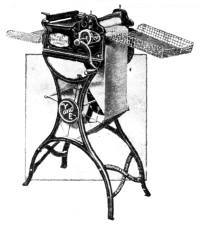
Fig. 5. General View of the Yawman & Erbe Roller Copier
The paper on which the copies have been made passes to a winding reel under the copier, as shown in Fig. 5. This is a large rectangular reel on which the paper is stretched tightly, so that it will be smooth when dry. The open construction of the reel affords free circulation of air, drying the copies very quickly. After the day's copying is done, the action of the machine is reversed by the turn of a thumbscrew, the paper is broken above the last copy, that on the reel is brought back over the copier, and the letters cut apart with the cutting knife at the end of the feeding shelf. The separate copies are then ready for filing with the original letters, keeping letters and replies together.
Among the advantages claimed for the machine are certainty of legible copies, copies of all corrections, and economy of operation. The copies are made after the letter has been written and corrected; consequently it must be a facsimile. If a note is written at the bottom or on the margin, it is shown in the copy.
Copying is the last operation before mailing. Frequently a man finds, after the letter is written, that he needs additional copies. With the carbon system it is necessary to rewrite the letter; with the copier, the copies can be obtained any time before the letter is mailed.
The copier is economical in operation. The best quality of paper costs 50 cents a roll, and a little more than one roll, or about 60 cents' worth of paper is required for 1,000 copies; and there is no carbon paper to buy. The office boy can operate the copier, and it takes but a few minutes to copy the day's mail of the average concern. If desired, the machine can be obtained with an electric motor attached, but this power is really unnecessary unless the correspondence averages 300 or more letters a day.
STENOGRAPHIC DIVISION
As has been stated elsewhere in this series of books, the modern plan for a large organization is to have an independent stenographic division or department. Instead of each department head and correspondent having one or more stenographers in his office, to handle his work only, this plan contemplates placing all stenographers and typists in one room, in charge of a chief stenographer. Except where an executive officer has a stenographer who acts as his private secretary, this plan is now carried out in the most highly organized of our larger enterprises.
The stenographers are subject to the call of any correspondent, the chief stenographer supplying the one who is first available. The plan is sometimes modified to the extent of holding a stenographer for the work of a certain correspondent during stated hours; the stenographer being, at other times, available for any other correspondent.
The plan has proved to be economical and beneficial in many other ways. It is economical, as it reduces the number of stenographers actually needed to handle the work. Under the old plan, some of the stenographers are idle a part of the time, or obliged to do copy work to keep busy. For example, in a certain house, two departments were located in adjoining rooms. The department heads each had more work than one stenographer could do, but not sufficient to keep two busy all the time; it was necessary for each to employ two stenographers—four in all—and let them fill in a part of their time addressing envelopes, and similar work. The plan of having a common stenographic force was tried, and three stenographers handled the work of both departments, with some time to spare for the work of other departments—a clear saving of 25%.
The stenographer is benefited by becoming familiar with the correspondence of all departments. While not learning all of the secrets of one department, the stenographer obtains a much better insight into the business as a whole—far more valuable as a business training than a more intimate knowledge of a single department.
Every correspondent is benefited by having several stenographers who are familiar with his work. If a certain stenographer leaves, is ill, or takes a vacation, he is not placed under the handicap of having his work stand still until he can break in a substitute. The new stenographer can be given some dictation in each department while becoming familiar with the work.
The work is more evenly distributed, with the result that the mail is out on time and no stenographer is obliged to work after hours. When all work together under one chief, the efficiency of the stenographic force, individually and collectively, is materially increased.
Not the least of the many advantages of this plan is the one of having all typewriters in one place, confining the noise. Employes in other departments of the office are greatly benefited by working in comparative quiet. Especially advantageous is the absence of the noise of the typewriter in private offices.
When the stenographic division is installed, it is necessary to provide a system of call bells, with a push button at the desk of each correspondent. Each correspondent is assigned a signal by which he may summon a stenographer. The chief assigns a stenographer to answer each call, or in the absence of the chief, the one whose turn it is answers the call.
Records of Work. An independent stenographic division necessitates a careful record of work performed. These records are required in order that the expense may be distributed and the wages of the stenographers charged to the proper departments. A distribution of office expense is just as necessary as a distribution of factory charges. The records should show exactly what it costs to conduct the purchasing, sales, or credit departments. If a man divides his time between two or more departments, his salary should be charged accordingly. In like manner, the wages of a stenographer should be distributed.
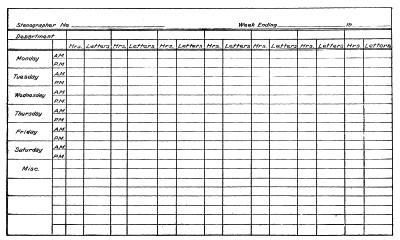
Fig. 6. Stenographer's Weekly Record of Work, Distributed by Departments
Elaborate or complicated records are not required; a record of the time worked for each department is sufficient, though usually the number of letters written is included. First, is the record of work done by each individual. This should be a record covering a week's work, and may be kept on a card. Fig. 6 shows a form designed for such a record. This is on a 5"×8" card, one of which is given to each stenographer, who keeps the record from day to day.
This form provides for a record of the work of the stenographer each day in the week. The columns from left to right are headed with the names of the departments, but instead of having these printed in, it is best to leave the spaces blank and write the names. The daily record shows the hours worked and number of letters written, both morning and afternoon, for each department. Space is also provided for a record of miscellaneous or special work, which should be explained briefly. The total number of hours shown by this record should, of course, agree with the time for which the stenographer is paid.
These cards should be turned in to the chief stenographer, who will file them under the name or the number of the stenographer, keeping all records of each employe together. If preferred, daily reports can be used, though the weekly report will prove satisfactory in almost every case.
On receipt of the individual reports, the chief stenographer should make up a weekly report of the work of the entire division. The object of the report is primarily to show the amount to be charged to each department for stenographic work, but may also show the cost of each stenographer.
The form shown in Fig. 7 provides for a complete report. The work of each stenographer for each day of the week is distributed among the several departments, showing the number of hours worked, the number of letters written, and the cost. A record for five departments with six stenographers is provided for in the form shown. The footings of the columns show the total cost to the departments and the total column at the right, which is an extension of daily costs, shows the total cost for each stenographer. The footing of the total column, and the cross-footing of the departmental columns, must agree and exactly equal the amount of the pay-roll of the stenographic division.
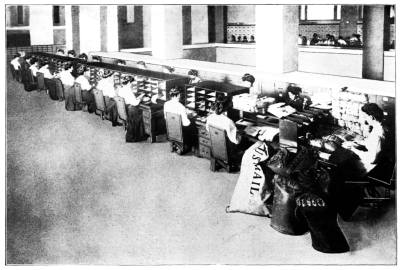
THE "IN-MAIL" DEPARTMENT WHERE 10,000 LETTERS ARE RECEIVED DAILY AND SORTED FOR DISTRIBUTION AND ATTENTION The Larkin Co., Buffalo, N. Y.
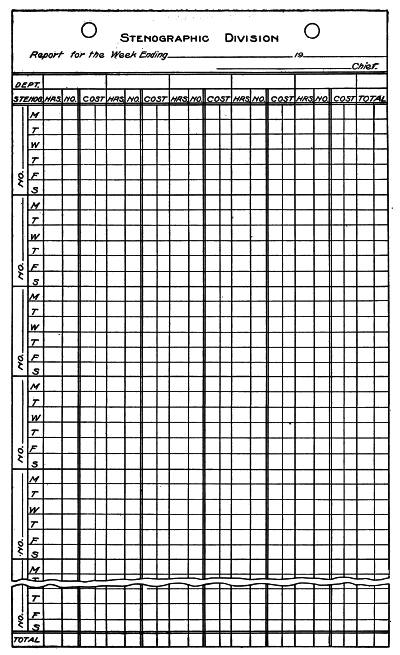
Fig. 7. Departmental Distribution of Work of Stenographic Division
One valuable comparison shown by this report is the cost to handle the work of one department or correspondent, when different stenographers are used. The comparison must be based on the letters of one correspondent, because, while they are not likely to vary materially, there is a marked difference in the length of the letters written by different correspondents; also, the dictation of some correspondents is much more easy to take than others.
The form shown should be loose-leaf, and made in duplicate. One copy goes to the comptroller and one is kept by the chief stenographer. The size can be increased to accommodate a large number of departments or stenographers, but rather than use a sheet that is bulky, it is better to use more than one sheet. To provide for a monthly distribution of costs, these reports should be closed on the last day of the month, regardless of the day of the week.
Hints for Stenographers. Telegrams. When a telegram is sent, it is safe to assume that its object is to secure quick action; otherwise a letter would serve the purpose. Telegrams should, therefore, be transcribed and dispatched immediately, regardless of any other work that may be on the machine.
It has become the usual custom of business to confirm telegrams by mail. The more usual custom is to write a letter, in which the telegram is quoted, but the matter can be handled with less labor by the use of triplicate telegraph blanks. The original is the regulation blank supplied by the telegraph companies; the duplicate is on a sheet of the same size as the telegraph blank, but printed as shown in Fig. 8; the triplicate is a blank sheet of paper. The duplicate is mailed to the correspondent, while the triplicate is filed with his correspondence. Unless some special explanation is demanded, it is unnecessary to write a letter.
Don'ts. Don't keep your employer waiting while you hunt for, or sharpen, a pencil. Always keep a supply of at least a half-dozen well-sharpened pencils on hand. Keep them in a handy place and take them with you when your employer calls you to his desk to take dictation. Remember that his time is more valuable than your own.
Don't be afraid of working a few minutes overtime, when requested to do so. Only an unreasonable employer will ask you to work after hours, excepting when it is really necessary. But occasionally something will come up at the last moment, making it necessary to write and mail a letter that night. Remember that what seems to you a trivial matter, may be of the utmost importance to your employer.
Don't overlook the important letters. If you handle a heavy correspondence there will be many days when you will find it impossible to transcribe all of the dictation you have taken, but some of the letters will be important while others can be held over without loss. Write the important letters first; if you are not sure which they are, ask your employer. He will appreciate your interest.
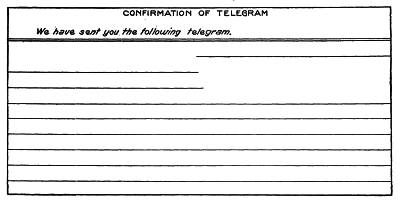
Fig. 8. Confirmation of Telegram
Don't overlook the necessity of learning something about the business in which you are employed. Every business has its own nomenclature—technical terms peculiar to the business, with which you may be unfamiliar. When you accept a new position, read the catalogs, circulars, and other literature of the house; this is the easiest way to familiarize yourself with the technical terms. You will find your position improved if you can correctly transcribe the terms peculiar to the business.
Don't waste envelopes and postage. Your employer may write a half-dozen letters to one firm the same day. This frequently happens in writing to branch offices and agencies. See to it that all letters to the same address are enclosed in one envelope. The saving in postage will be very considerable.
Don't underestimate the opportunities afforded by your position. There really is no position offering better chances for advancement than that of the willing and competent stenographer. There are many incompetents, and for such salaries are small; but there are plenty of positions at good salaries open to the really competent. A stenographer handles many confidential matters, learns the business secrets of his employer, and has every opportunity to learn the business. The stenographer who takes advantage of the opportunities to learn becomes a private secretary, and rapidly advances to even more important positions.
Don't betray secrets. This is the most important don't of all. Remember that your employer dictates many confidential letters, imparting business and private secrets. Do not, under any circumstances, impart these confidential matters to others, and never talk about the business to those outside the office.
FILING DIVISION
Only a small per cent of the records of a business are found in the books of account; the larger part are in the form of business papers of various kinds. And, since the records in the books are, in the main, based on the records found in these papers, the papers themselves are not less valuable than the books. Letters, orders, invoices, receipts, vouchers, contracts, specifications, and estimates form the basis of the larger part of the business transactions of all houses, giving authority for transactions and offering proof that the transactions have been completed. The proper preservation of these papers is, therefore, a necessity, and, since they form so important a part of the records, they must be accessible.
The filing division is, therefore, one of the most necessary in the office of any enterprise, and should receive the careful attention that its importance deserves. Whether the equipment of the filing division consists of a single file or many large cabinets, it should be located where it will be accessible to all departments. It should be given as nearly a central location as the general plan of the office will permit. In a very large enterprise a separate room may be required, while in a small business the files may be arranged along the wall or around a corner. But whatever its location, aisles leading to the filing division should be left open, that it may be reached conveniently from any part of the office. Since good light is not so essential as for some other divisions, it is sometimes advisable to locate the filing division where the light is not sufficient for another division—as the bookkeeping division. At the same time, there must be sufficient light to enable the file clerk to do the work properly.
As a general rule, all filing should be in one place, although under certain conditions, which are referred to later, special departmental filing is justified. It should be possible to obtain from the general files all papers that have a bearing on a particular transaction, or all of the correspondence of a given concern. More or less confusion results when certain of the papers are missing. For example, if a part of the correspondence about an order is filed in the sales department, the papers in the general file may not give a complete history of the case, and the order may be accepted or rejected under a wrong impression because the most important letter is missing.
When independent filing systems are maintained by the different departments, it is sometimes difficult to determine just where certain papers will be found. To say the least, it is quite difficult to collect all of the papers referring to one subject, when the filing is handled in this manner.
Experience has demonstrated that a central filing division is really more convenient for the department manager, than to maintain his own filing system. If the system has been properly installed, he can obtain correspondence or other papers from the general files about as quickly as from his own files, with the added advantage of obtaining all of the correspondence with a particular person. If another department has been in correspondence with the same person, he has their letters as well as his own. When the credit man, for example, reviews the correspondence of a customer from whom he is trying to collect an account, he will not be ignorant of the existence of a letter from the sales manager in which special terms were offered to secure the order.
The File Clerk. The filing division should be in charge of a file clerk and the clerk should have full control of the work of the division. In a large business, a chief file clerk and several assistants will be required, while in a small business it is customary for the stenographer to do the filing. No matter what the extent of the filing, the principle is the same; if but two persons are employed and one is expected to do the filing, the other should neither file nor remove papers from the file. When a letter is wanted, the file clerk should be asked for it.
The essential qualifications of a file clerk may be summed up as follows:
A good memory; The habit of accuracy; The ability to read confusing chirography; The ability to spell correctly; Speed.
To these might be added the possession of a liberal amount of common sense, the faculty of absorbing information, and ability to correlate facts according to their importance.
A good memory is very necessary, for the papers that have been filed must be found when wanted. Letters signed by an individual may be filed with the correspondence of his firm. When the manager calls for "that letter from Whitcomb," it is embarrassing to ask him with what firm Mr. Whitcomb is connected; still more so to keep the manager waiting while an index is consulted.
A comprehensive index is necessary, of course, and the efficient file clerk will be fortified against all possible contingencies with proper indexes, but a memory which will permit of ignoring indexes, except in special cases, is a valuable asset. It may be stated as a rule that it should not be necessary to refer to special indexes to locate the letters of a regular correspondent.
Accuracy is another very necessary qualification. Accuracy is a habit—the habit of first finding the right way to do a thing, and then doing it that way every time. The habit of doing a thing the same way every time is very important in filing. If the rule is to file all correspondence in the name of the firm from whom it is received, no matter by whom signed, it is very essential that all letters from the firm be filed in exactly the same way—not a part of them in the name of the individual.
Accuracy is necessary also in placing letters in the files. Letters that belong in the Be division of the index must be filed there—not in the Ba division; letters intended for folder No. 19 are to all intents lost, if placed in No. 91.
To be able to read confusing chirography is a talent that is much appreciated in more than one line of endeavor; it is especially valuable to the file clerk. The signatures of many men are notoriously difficult to read, and large numbers of such signatures come to the filing division of every concern having an extensive correspondence.
Spelling might seem to be an accomplishment not absolutely essential to the equipment of a file clerk, but the ability to spell correctly is very helpful. It is a great help in indexing. Especially when a finely subdivided index is used, correct spelling is necessary to determine the division under which a paper should be filed.
Speed is an absolute requirement. When the manager wants a letter, he wants it at once. When the day's mail reaches the filing division, it must be filed as quickly as possible. Some one may call for a letter within an hour after it reaches the files, and to find it in the unfiled correspondence means inevitable delay. Nowhere is prompt service more thoroughly appreciated than in the filing division.
The importance of securing a file clerk with proper qualifications is apparently overlooked in many offices. A girl is placed in charge because she will work for a small salary, resulting—unless she is qualified—in very poor service. An incompetent file clerk can, in a short time, get the files in a demoralized condition almost impossible to straighten out. The necessity of proper filing makes the position one of real importance. On the other hand, the possibilities of the position are seldom appreciated by the clerk. This is due, perhaps, to the policy of making the position one of the lowest in the office from the salary standpoint; but the greatest possibilities of the position lie outside of the salary question.
The position of file clerk is a sure stepping stone to something better—a more responsible and better paid position. No clerk in the office has a better opportunity to obtain a general knowledge of the business. From the stenographer who files the manager's personal correspondence, to the clerk in charge of an extensive filing division, each is intrusted with important papers revealing the very secrets of the business. The position is a confidential one, and the clerk who can absorb the information that must inevitably come to his notice, and keep the information to himself, is surely preparing to fill a higher position; he has a golden opportunity to demonstrate his absolute trustworthiness.
FILING SYSTEMS
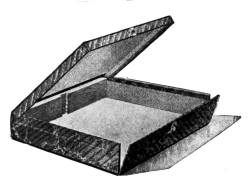
Fig. 9. Flat Letter File. Browne-Morse Co.
The evolution of methods of filing is itself an interesting study. From the days when the merchant preserved his bills and important letters by hanging them on a sharp-pointed hook, to the present with filing cabinets of pleasing design and careful construction, in sizes to hold papers of all shapes and kinds, there has been constant progress. The advance of business methods, bringing with it an ever-increasing volume of papers to be preserved, has resulted in a demand for more simple methods—more scientific systems of filing. Those confronted with a practical solution of the problem, and those attempting to supply the demand, have devoted much time to a study of the subject. This has brought into being the filing expert who makes a study of the filing problems of concerns in all lines of business. The manufacturer has kept pace with the development, and now is prepared to furnish the right device for filing any document from a small card to the largest drawing or map.
In this discussion of filing systems, it is not necessary to consider the obsolete methods, even though they have at some time been considered standard. The purpose of this discussion will be better served by a study of the more modern systems.
Flat Files. One of the filing systems still found in some offices is the flat, or box file. This file is made in the form of a box, with a hinged cover, as shown in Fig. 9. This box is of the right size to hold letters without folding, and is equipped with an A to Z index. Letters and other papers are filed between the index sheets in the order of their receipt. Sometimes an attempt is made to keep all of the correspondence of one person together but, since the letters are simply laid in the file, with no means of separating those of the several correspondents filed in one subdivision, it is very difficult to maintain this arrangement.
Cabinets are also made with box drawers of wood, the number of drawers in a cabinet ranging from two to sixty. This permits of the use of a more finely subdivided index, and better classification of the contents. Each box in the cabinet is equipped with a spring compressor which holds the contents in place. To file or remove papers it is necessary to release this compressor. The index is removable, and when the drawer is full, the index and contents are placed in one of the box files referred to, which then becomes a transfer case. A new index is placed in the file, which is then ready for current correspondence.
This style of cabinet was for long the best to be had, but when used for filing an extensive correspondence, its defects became apparent. Among the disadvantages of its use, one of the chief is the uneven filling up of the separate divisions. Where the alphabet is divided among several drawers, one may fill up in two months, while another is but half full at the end of a year. This means that the transferring must be done whenever a single drawer is filled, instead of transferring the contents of the entire file at one time, adding to the difficulty of locating correspondence at a given date.
Other disadvantages are that correspondence is mixed together, making it difficult to locate all of the correspondence of one person; to remove a letter, the drawer must be taken from the file, and a search made through all of the letters in a given subdivision of the alphabet. Frequent transfers are necessary, resulting in an accumulation of transfer files which occupy valuable space in the office.
Vertical Filing. The vertical system of filing takes its name from the fact that papers are filed vertically, on edge, instead of being laid flat in a drawer. Vertical filing is the result of a gradual evolution of filing methods.
Those who recognized the defects of the old systems, set about to correct them. In the search for a remedy, all systems in use—for whatever purpose—were carefully investigated, among others the so-called railroad system. For years, railroads had been keeping all correspondence relating to one subject together, attaching the letters to a strong backing sheet. The sheet, with the letters attached, was folded twice, making a package about 3½"×9" in size, which package was known as a file. These files were numbered, and kept in numerical sequence in pigeon holes, or in boxes similar to the present-day document files. When the document boxes were used, which was the case in the larger offices, the packages or files were placed on end—filed vertically. This undoubtedly was the forerunner of the present-day vertical file.
The plan of keeping together all correspondence about a given subject naturally appealed to the investigator as being practicable for use in a commercial house. Not a few houses adopted the system in its entirety, which included an alphabetically indexed book in which a brief synopsis of the correspondence was written. The book was also used for a cross-index to the names of individual correspondents. It was really a system of recording the principal contents of letters, with references to the files where all of the correspondence could be found.
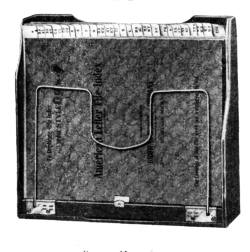
Fig. 10. The Principle of Vertical Filing. Browne-Morse Co.
While the idea of keeping all of the correspondence on one subject, or with one individual, together, was excellent, this system was not well adapted to commercial use. Writing the contents of letters in a book was entirely impractical, and too much time was required to open the files and refer to the contents. But, said someone, why not adopt the numerical idea, and substitute a numerical for the alphabetical index in the box file; instead of index sheets printed with the letters, why not have them numbered from 1 up? Then a number could be assigned to each correspondent and all of his letters could be filed under the index sheet bearing the corresponding number. An index book could be used for the names and references to the numbers.
Next came the card-index man with a proposition to use his cards for an index to the files. Not long ago the writer inspected a filing system consisting of a number of box files indexed numerically, arranged on a shelf. A card index supplied the cross-references. In this particular case the system was designed by a card-index manufacturer to create a market for card files.
But the use of card indexes furnished the final solution of the filing problem. If small cards could be filed on edge, why not letters? With a larger drawer, with index guides to fit, the card index idea could be adapted to the filing of correspondence. Indeed, a flat file drawer, standing on edge, as shown in Fig. 10, illustrates the principle of vertical filing.
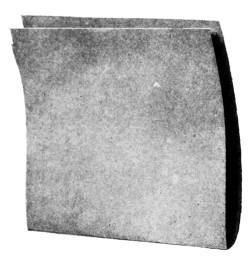
Fig. 11. Folder for Vertical Filing Browne-Morse Co.
To preserve the idea of keeping all correspondence of one individual or firm together, folders are used. A folder, as shown in Fig. 11, consists of a piece of heavy manila paper folded, with one edge higher than the other, forming a pocket 9¾"×11⅞" in size. The higher or projecting edge of the folder is used for writing the name of the correspondent or other reference; or the folder may be made with a projecting tab for the purpose.
One of these folders is used for each correspondent. Suppose, for example, that correspondence develops with Scott & Blake. The name of the concern is written on the projection of a folder, and all letters from, with copies of all letters written to, Scott & Blake are placed in this folder in the order of their date—the last letter in front. The folder provides a complete history of the correspondence with the concern.
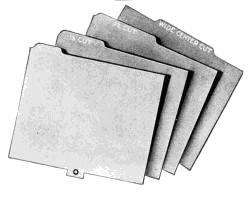
Fig. 12. Guides for Vertical Filing. Browne-Morse Co.
The folders are filed on edge between guides or index cards having projections on which the indexes are written or printed. The indexes are fastened in a vertical file drawer, yet are removable. On the bottom of the guide, Fig. 12, is a square-cut projection, punched with a round hole. This projection drops into an opening in the bottom of the drawer, and engages a countersunk rod which is passed through the hole. The rod holds the guide firmly in place, but since the rod is removable, the guide can be taken out when it is desired to do so. The folders are not fastened in any way, and any folder can be removed without disturbing the others, as shown in Fig. 13.
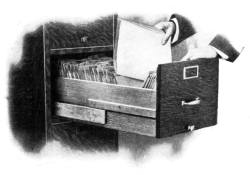
Fig. 13. Vertical File Drawer Showing Folders and Guides Browne-Morse Co.
Methods of Indexing. There are four principal methods of indexing the vertical file; namely, the numerical, alphabetical, geographical, and subject. These four methods, with their resulting combinations, provide for the proper indexing of any class of papers.
Numerical Indexing. Numerical indexing was the method first used with the vertical file, and still is extensively used. With the numerical system of indexing, the folders are numbered consecutively in the upper right-hand corner. The folders are filed in numerical sequence between guides, numbered usually by 10's, as shown in Fig. 14.
Each correspondent is known by a number, and all of his correspondence—both original letters and copies of replies—is filed in a folder bearing his number. To locate his folder, a cross-index is necessary, as it is not possible to remember the numbers of all correspondents. The index is provided by a card on which is written the name, the folder number or file number, and any other memoranda that may be desired. The card is filed in a card drawer behind the proper alphabetical index guide, where it can be found very quickly.
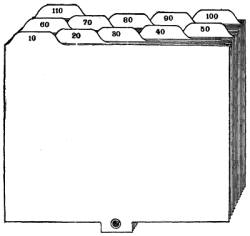
Fig. 14. Numerical Indexing Browne-Morse Co.
Suppose, for example, that correspondence develops with B. J. Anderson. We will file his letter or a copy of our reply in the next unused numbered folder—which happens to be No. 545—and this will be Mr. Anderson's number as long as we have any dealings with him. Before placing the folder in the proper place in the file—following folder No. 544, back of guide 540—we will write Mr. Anderson's name near the upper edge, and at the same time we will fill out an index card as shown in Fig. 15. This card will be filed in its proper place in the card index drawer, and whenever we wish to refer to this correspondence we will turn to the card, which shows that it will be found in folder No. 545.
When a letter refers to more than one person or subject, it is filed under the most important. For example, when correspondence develops with a firm, it should always be filed under the firm name, even though the letters are signed by individuals. We will suppose that one of our correspondents is the Norton Machine Co., and that folder No. 610 is assigned. Later, a letter signed by T. J. Watson, Secretary, is received. Since the letter refers to the business of the Norton Machine Co., it will be filed in their folder, and we will fill out a cross-index card for T. J. Watson, Secretary, referring to the company's folder, as shown in Fig. 16. This will be filed with the other cards in the alphabetical card index, and will enable us to locate the correspondence of T. J. Watson, even if we do not remember the name of the company.
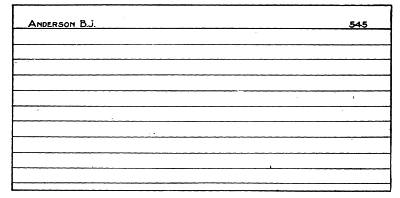
Fig. 15. Index Card for Numerical Filing
Alphabetical Indexing. The alphabetical is the simplest method of indexing. The guide or index cards are printed with the letters of the alphabet, providing an alphabetical index between which the folders are filed. Sets of alphabetical guides with any number of subdivisions up to 4000 are to be had.
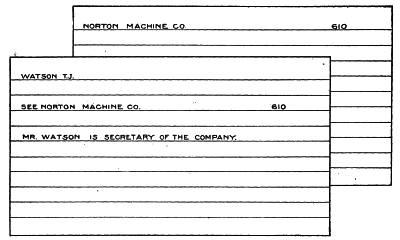
Fig. 16. Indexing Firm Correspondence for Numerical Filing
With the alphabetical system a folder is assigned to each regular correspondent, as with the numerical system, but instead of a number, only the name is written on the folder, or on the tab projection. The folder is filed back of the proper alphabetical guide, as in Fig. 17, and is used exclusively for that one correspondent.
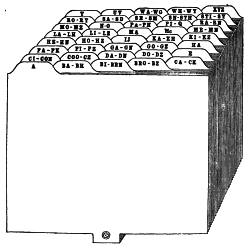
Fig. 17. File with 50 Alphabetical Subdivisions Browne-Morse Co.
It is the experience of every business house that a small correspondence is received from a large number of persons. Perhaps but one or two letters will be received, the person never developing into a regular correspondent. This correspondence is treated as miscellaneous. For miscellaneous correspondence a separate folder, on which the index letters are written or printed, is used for each alphabetical subdivision. This may be placed either behind or in front of the name folders, as in Fig. 18.
The miscellaneous folder should not be allowed to become too full. When a sufficient number of letters are accumulated with a firm or individual, or whenever the nature of the correspondence indicates that it is likely to become permanent, it should be transferred to a separate folder.
Geographical Indexing. When for any reason it is desirable to have correspondence arranged according to territory, the geographical system of indexing is used to excellent advantage. The plan is exactly like alphabetical indexing, with the exception that the files are divided according to territory. First, the files are divided by states by means of state guides—indexes printed with the names of the states. A very large concern may require guides for all states, while a smaller business will use only three or four such divisions. Or a concern doing business in a half-dozen states may find it advisable to arrange the correspondence from but two of them territorially, indexing the balance alphabetically. The correspondence from a single state may require two or more drawers; or one drawer may accommodate that from several states.
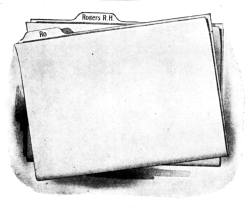
Fig. 18. Tab Folders. Miscellaneous Folders in front. Library Bureau
To subdivide the states, guide cards printed with the names of the towns are used. These are arranged alphabetically between the state guides. Correspondence folders are filed back of the town guides in alphabetical sequence. If there is a large number of correspondents in one town, the folders are subdivided with a set of alphabetical guides. The geographical method of indexing is shown in Fig. 19.
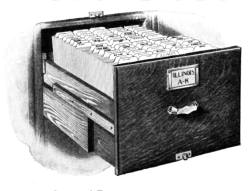
Fig. 19. Geographical-Alphabetical Filing with Guides for States and Towns. Library Bureau
When the correspondence in a state is scattered, with but few correspondents in each town, a set of alphabetical guides can be substituted for the town guides. In New York state, for instance, the letter A would represent Albion, Attica, and other towns the names of which begin with that letter. If there is a large town—as Albany—in which there are a number of correspondents, a town guide should be inserted in its proper place in the alphabetical index. Then, if the correspondence from Albany is sufficient, it can be subdivided with alphabetical guides, but these should be of a different color than those representing the towns. The geographical index can be expanded to any limit by inserting additional town and alphabetical guides, wherever and whenever needed.
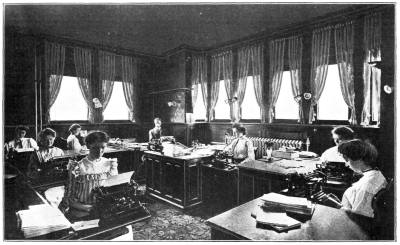
ONE OF THE STENOGRAPHERS' ROOMS AT THE PLANT OF THE POSTUM CEREAL COMPANY, LTD., BATTLE CREEK, MICH.
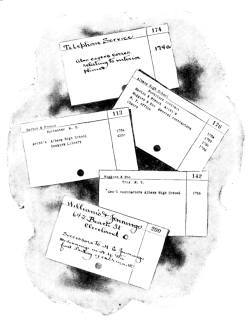
Fig. 20. Subject Indexing and Cross-Reference Notice Memoranda on Index Cards Library Bureau
Subject Index. The subject index is used whenever the subject of the correspondence is more important than the name of the writer. Subject indexing may be used in connection with the regular correspondence.
When it is desired to file by subjects indexed numerically, a numbered folder is headed with the name of the subject, and all correspondence pertaining to the subject is filed in that folder. An index card is then filled in with the name of the subject and the number of the folder, and filed alphabetically. Additional cross-index cards are headed with the names of correspondents, and refer to the subject and folder number. Several subject index cards are shown in Fig. 20.
Subject filing can be adapted to the alphabetical index by inserting folders or guides headed with the names of subjects, as shown in Fig. 21. These folders are used for correspondence pertaining to a given subject, and cross-index cards are made for the names of individuals.
Selecting the Index. The selection of the index for correspondence files is important, and must be governed by the nature of the business, and the correspondence to be filed. Subject indexing is the least used of any of the methods described. Railroads, and a few large corporations determine as far as possible a number of subject headings under which all correspondence shall be filed, individuals being known only in the miscellaneous correspondence; but these are exceptions, and this method of filing is not adapted to the needs of the average business concern.
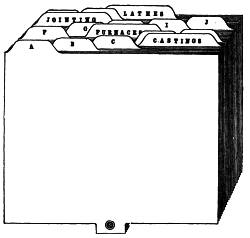
Fig. 21. Subject and Alphabetical Folder Browne-Morse Co.
Geographical indexing is quite largely used by jobbers, and is a very practicable method for a concern whose correspondence is confined within a definite territory. It is also used to advantage in connection with other methods of indexing. For example, a concern in Chicago, with a large number of customers in Illinois, Iowa, and Wisconsin, might use a geographical index for those states, while filing all other correspondence alphabetically.
This leaves alphabetical and numerical indexing from which to make a selection. A thorough investigation, which has included consultations with many leading filing experts, and examinations of the systems used by more than a hundred representative houses, from the small retail store to the largest corporations, leads to the conclusion that, except in special cases, the alphabetical index is best. It is best because simplest; and to do a thing in the most simple way is one of the cardinal principles of business system.
Alphabetical indexing adapts itself to every possible requirement. Suppose, for example, that the correspondence of the Norton Machine Company is filed alphabetically, and that you want to refer to the correspondence of T. J. Watson, who is secretary of the company. A cross-index card is headed with the name of the company. This would be exactly like the cross-index shown in Fig. 16, except that the number would be omitted.
There may be times when you will wish to keep together all correspondence pertaining to a given subject—as a contract in which you are interested. A folder can be made for this contract, headed with the subject name, and filed in its proper place in the alphabetical index. Cross-reference cards can be made, headed with the names of individuals, and referring to the subject. Perhaps, when the contract is completed, there will be no further reason for keeping the correspondence together, and it can then be distributed according to the regular alphabetical arrangement.
Should you wish to adapt the geographical idea to any part of the correspondence, the alphabetical index lends itself to the change without disturbing the general arrangement of the files. It can be expanded to any size; any class of correspondence can be segregated; and with properly subdivided indexes, papers can be quickly located.
Probably the two most important advantages of the alphabetical over the numerical system of indexing are its economy of operation and safety. As to the first named advantage, there is a saving at the start in the outfit required. Only the letter file and alphabetical index are needed—there is no investment in a card-index outfit, unless it be a very small one for cross-references. But the greatest saving is in the time required for its operation.
Without considering the operations involved in filing letters, compare the two methods when a letter is wanted from the files. Suppose that the file clerk has received a requisition for the correspondence of the Norton Machine Company. With the numerical index, the following steps are taken:
(1) Open card index drawer;
(2) Refer to cards filed back of the N guide, and find index card showing that folder No. 610 holds the correspondence;
(3) Close card index drawer;
(4) Open vertical file drawer;
(5) Refer to folders back of the 600 index, find No. 610,remove folder;
(6) Close vertical file drawer.
When the alphabetical index is used, only the following steps are necessary:
(1) Open vertical file drawer;
(2) Refer direct to folder of Norton Machine Company, back of the N guide, and remove correspondence;
(3) Close file drawer.
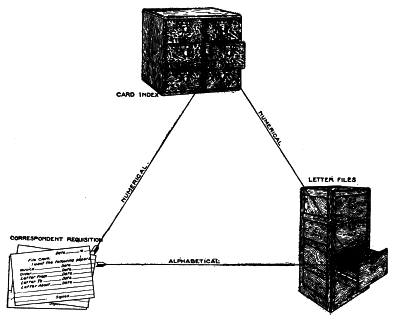
Fig. 22. Alphabetical vs. Numerical Filing
This is merely an application of the principle that a straight line is the shortest distance between two points, as illustrated in Fig. 22.
Alphabetical indexing is the safer for the reason that there is less liability of filing a letter in the wrong place. With the numerical system, the filing of letters in the wrong folder is not uncommon, and when this is done the letters are practically lost.
The usual routine in numerical filing is first to place the folder numbers on the letters, and then file according to these numbers without reference to the name. Naturally, the file clerk commits to memory the numbers of a large part of the active correspondents, and places them on the letters without referring to the card index. Memory is ever fickle, and if the wrong number is placed on the letter, it is probable that it will be filed accordingly.
In the use of figures, the most common of all errors is transposition, and this is a constant source of danger in filing. Suppose, for example, that in placing the number on a letter from the Norton Machine Company, a transposition is made and the number reads 160 instead of 610. The letter is filed in folder No. 160, just four hundred and fifty folders out of the way. The letter is practically lost, for there is no way to locate it except to look through all of the folders until it is found.
With the alphabetical index there is some danger of filing a letter in the wrong place, but it is materially lessened by the fact that the name must be kept in mind. If the letter is incorrectly filed, it probably will be placed in a folder close to the right one. Almost without exception, it will be found within two or three folders of its proper place; there is scarcely a possibility that a letter from Norton will be filed in White's folder.
MISCELLANEOUS FILING
Salesmen's Correspondence. The correspondence from salesmen and branch houses is, as a rule, more bulky than that from even the largest customers. A sub-divison should be provided that will make it possible to locate quickly a letter of any date, without looking through a great mass of correspondence. The most simple way to accomplish this is to divide the correspondence of each salesman or branch by months. A folder should be used each month.
Sufficient space should be provided in the general files to hold salesmen's correspondence for an entire year. If subdivided by months, old correspondence can be located much more quickly than if scattered through several transfer files.
One way to reduce the bulk of this correspondence in the salesmen's folders is to require each salesman to use a separate sheet for each subject about which he writes. Nine out of every ten letters from a salesman refer specifically to transactions with certain customers, and are chiefly important in connection with the correspondence of those customers. Such letters should be filed in the customers' folders, where they will be found when it is wished to investigate transactions with a customer.
The correspondence of some very large customers is also quite bulky. This, also, can be subdivided by the use of a new folder each month. A similar plan is used to advantage in connection with subject filing, a separate folder, filed back of the subject guide, being used for each correspondent.
Correspondence of Temporary Value. Every large enterprise receives a considerable amount of correspondence which has no permanent value. Inquiries for catalogs in response to advertising are of no value unless further correspondence is developed. It is advisable to set aside sufficient space in the files, and file such correspondence alphabetically, in miscellaneous folders. Later, when further correspondence develops, separate folders can be made and transferred to the regular files. After a reasonable time—when the follow-up is abandoned—the inquiries can be destroyed, saving space in the permanent files.
Orders. The manner of filing orders depends on the business and the method of handling. It will depend on whether the greater part of the orders are received direct from customers on their own blanks, on blanks supplied by the house, or from salesmen on the blanks of the house.
When orders are received direct from customers, whether in the form of letters or on the customers' blanks, it is customary to copy them on the house order blanks, from which orders are filled and billed. The most practical disposition of customers' original orders is to file them with their correspondence, instead of providing a special file for them. There are certain exceptions, as subscriptions received by a magazine and which, for certain reasons, should be kept by themselves; but that outlined can be regarded as a general rule. One reason for filing orders with the correspondence is that, in case of dispute, it will very likely be necessary to refer to past correspondence.
The manner of filing the house blanks depends on the number of copies made. Some houses make but two copies of the order—one to be sent to the customer as an acknowledgment, and one from which the order is filled. This leaves but one copy for the office, and this should be filed numerically, which also brings it in the order of the date. If the order copy is also used as a posting medium, it should be filed in a loose-leaf binder; otherwise a vertical file drawer can be used.
Another very satisfactory method is to enter the order in triplicate—one copy as an acknowledgment, an office copy, and a shipping copy—leaving two copies for the files. One copy should be filed numerically, the other alphabetically. This provides a cross-index without the necessity of writing a card index, showing how easy it is to provide valuable records by using ordinary care. A complete order record is provided by making one extra copy, which is done with no additional labor.
Orders received from salesmen on the house blanks are sometimes used as a posting medium, in which case they are filed in a binder, by date. Another method is to make the invoice in duplicate, and use one copy as a posting medium. In such case, the copy of the order can be filed alphabetically, bringing all orders from each customer together.
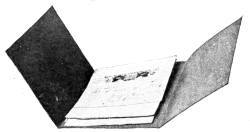
Fig. 23. Special Invoice Folder—Open Browne-Morse Co.
Invoices. The method of filing invoices depends on whether or not a complete voucher system is used. When no voucher system is used, all invoices should be filed alphabetically in a vertical file. A folder should be used for each firm or person from whom goods are purchased, so that all of their invoices can be kept together. Invoices should be filed in the folder in the order of their dates, the last one in front.
With the voucher system, invoices are sometimes attached to the voucher, in which case they are filed according to the voucher number and a separate card index is kept for alphabetical reference. The more modern plan, however, is to file the voucher numerically, retaining the alphabetical index for invoices.
Invoices can be filed in the same file with the correspondence, or in a special file. When the former method is adopted a folder of a special color should be used. There would then be two folders for a firm, one for invoices and one for correspondence. Special folders with double folds are largely used for filing invoices, as shown in Fig. 23.
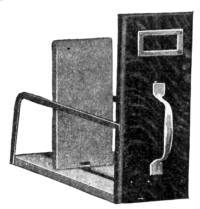
Fig. 24. Document File. Browne-Morse Co.
Documents and Legal Papers. For filing documents and legal papers, there are two standard methods. The older of the two is to fold the papers and file them on end in a document drawer, like the one shown in Fig. 24. The drawer is equipped with a compressor or following block for keeping the papers in an upright position, and either alphabetical or numerical indexes. These drawers can be obtained singly or in cabinets containing any number.
The more modern method is to file documents and legal papers in a vertical file, using document envelopes, as shown in Fig. 25. These envelopes are of the right size to hold legal papers flat, insuring convenient reference, which is a decided improvement over the older method of folding the papers. Any of the several methods of indexing can be used, depending on the requirements of the business.
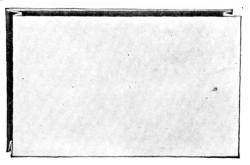
Fig. 25. Document File Envelopes Browne-Morse Co.
As a filing system for the lawyer's office, this method is unsurpassed. Every record of the office is kept in one complete filing system, yet each case is separate and distinct. Every paper and all correspondence relating to a given case is filed, unfolded, in one of the document envelopes—or a folder can be used—bringing all papers on the same subject together.
If indexed alphabetically, the papers are filed according to the name of the client. When the numerical index is adopted, an alphabetical index card with cross-references, including the docket index, is used. The folders may be numbered by case or office numbers. Copies of opinions can be filed in the same manner, making every opinion available whether given yesterday or ten years ago. The usual confusion in the lawyer's office, incident to the search for papers scattered through several files, is entirely done away with.
Clippings. The vertical system is the most practicable for filing clippings, but, since they are liable to be lost through the open ends of the ordinary correspondence folder, it is best to use either the envelope or the invoice folder—preferably the former. Indexing for clippings should be by subject, and if a file is used exclusively for clippings, it may be either numerical or alphabetical. As a rule, the latter is most satisfactory, though the former is used quite extensively.
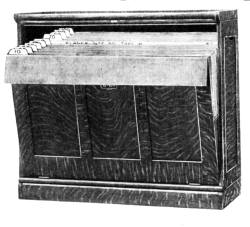
Fig. 26. Drawing or Map File C. J. Lundstrom Co.
An envelope should be used for each subject. On the front of the envelope the name of the subject and a list of the contents is written. All clippings relating to that subject are filed in the envelope, which is placed back of the proper alphabetical guide. Cross-references, when needed, are provided by a card index.
Drawings and Maps. A large concern, especially a manufacturing enterprise, has a large number of drawings, blue prints, maps, and photographs to file. One method is to file them in large folders, laid flat in a flat drawer, using a card index for cross-reference.
A more convenient method is to file them vertically. The ordinary vertical file drawer is too small for large drawings, but in Fig. 26 is shown a special file which will accommodate drawings measuring 24"×36". The drawings are filed in heavy folders, made to fit the drawer. This drawer is hinged at its lower front edge, permitting it to be opened by simply tilting the drawer forward, an operation which is accomplished with very little exertion. The drawer is held in open position by an automatic catch which is quickly released when it is desired to close the drawer. Each drawer is provided with an adjustable follower which moves back as the space fills up. When open the drawer exposes its entire contents, any of which may be picked out instantly and again filed with the utmost convenience and dispatch. When a large tracing is to be filed, it is desirable to first pull out the folder to which it belongs and, after having placed the tracing therein, to slip the folder back in its place. This prevents any accidental creasing of the drawing.
Either an alphabetical or numerical index can be used, depending on the class of drawings to be filed. In a machine shop, where all machines and parts are known by number, the numerical index is best. In a publishing house, where it is desired to keep all drawings used for each book, they should be filed alphabetically by subject.
Credit Reports. Vertical filing is best for credit reports, as it brings together all credit information about a customer. Unlike correspondence, it is customary to fasten credit reports in the folder by using a drop of paste at the top of each report. A folder is used for each customer, and all reports are attached in the order of their date.
The index may be numerical, alphabetical, or geographical. When the numerical system is used, a card index furnishes the cross-reference. The card contains the name and the number of the folder, with a brief history of the customer's dealings with the house.
FILING HELPS
Guiding. The importance of guiding should not be overlooked, for guides are the great essential of a successful filing system. They must be simple and correct. They must be inserted at sufficient intervals to guide eye and hand instantly to the desired folder. A vertical file drawer holds about 5000 letters, and, assuming that the average is 10 letters to a folder, this would mean 500 folders. A general rule is to use 50 guides to a drawer, or one guide for every ten folders.
The estimate of the number of guides required should be liberal. If there are 500 regular correspondents, it is better to equip the files with a 60 subdivision alphabetical index than to confine it to a 50 subdivision index.
Guides must stand hard usage and remain legible; therefore the best quality should be used. All manufacturers of filing equipment now supply guides of heavy pressboard with metal tips. The metal tip guide is entirely rigid and supports the papers or folders in the file, keeping them rigid and in alignment. An important feature is that the index heading (name, letter, or number) can be changed at any time by merely inserting a new slip in the metal tip. Metal tip guides cost more than the old-style manila guide stock, but in the end are more economical. The money paid for a filing outfit should be regarded as a permanent investment; if the expense is to be cut down, let it be in the purchase of supplies used for transfer, rather than in the regular files which are used every day.
Transferring. Correspondence which is out of date should be removed from the current file and filed in transfer files or boxes, indexed as in the regular files. Transfers should not be made too frequently. It is often advisable to use cabinets large enough to hold the correspondence for two years, one part being used for current correspondence, the other for correspondence one year back. At the end of the year, all of the correspondence is removed from the older file, which becomes the current file during the succeeding year.
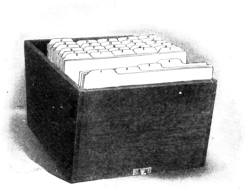
Fig. 27. Sorting Tray
Sorting. The work of the file clerk is facilitated and greater accuracy insured by the use of a sorting tray, as shown in Fig. 27. This consists of a wooden tray, equipped with alphabetical or numerical guides according to the system used. For the alphabetical system a set of A to Z guides—one for each letter of the alphabet—is used.
Before attempting to file, the clerk sorts the day's correspondence in this tray. All correspondence belonging in one division of the alphabet is thus brought together, and can be quickly filed.
SELECTING FILING EQUIPMENT
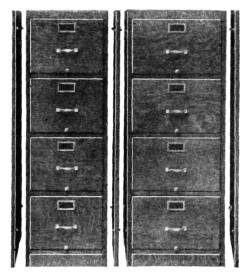
Fig. 28. Showing Manner of Joining Upright Sections. Browne-Morse Co.
The selection of filing equipment has been greatly simplified by the manufacturers, who have studied the filing problem with the view to supplying the demand for equipment to accommodate every business paper. As new problems have presented themselves, new equipment has been designed. The needs of the smallest office, as well as those of the largest corporation, have been studied and met. Heavy cabinets of solid construction have given way to cabinets built in sections, any one of which can be carried by the office boy. The man who has but a half-dozen letters a day to file finds a section exactly suited to his requirements; as his business grows, he adds other sections; the cabinet grows with the business, making one complete system, no matter how small or how large.
The most universally used of all filing devices is the vertical file. As has been explained in the preceding pages, it adapts itself to almost all of the papers found in a business office. Vertical files are made with drawers in three standard sizes: letter size, for ordinary correspondence, or papers up to 9½"×11" in size; legal or cap size, for legal blanks, reports, and other large papers up to 10"×15" in size; invoice size, for invoices, orders, credit reports, and all papers not larger than 5¼"×8". Papers 8"×10" can be filed in the invoice size by folding once.
Styles of Construction. Two standard styles of construction are used for vertical files, horizontal sections and upright sections or units. The horizontal section is made one vertical file drawer high and either two or three drawers wide. Upright units are one drawer wide, four drawers high for letter and cap sizes, and five drawers high for the invoice size.
The upright unit is the newer and preferred style of construction; it is more substantial, and for either large or small filing systems occupies less floor space. Upright units are put together as shown in Fig. 28. Each section is built with skeleton ends, and at each end of the cabinet—whether one or a dozen sections—end panels are used, making one complete cabinet. The sections are locked together, and can be separated at will. Fig. 29 shows three upright sections, in the three standard sizes, joined together to make a complete cabinet. This gives some indication of the possibilities offered by this style of construction in building a cabinet to meet every requirement.
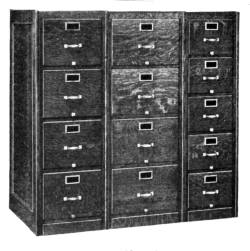
Fig. 29. Three Upright Sections in Standard Sizes Browne-Morse Co.
Upright units are also made with combinations of drawers for different purposes. For a small business, an assortment of files for different purposes is frequently desirable. An entire section filled with files of one kind may not be needed, but a combination section offers a solution. The combination illustrated in Fig. 30 contains one cupboard, six shallow storage blanks, two double card-index drawers, and three document files. A vertical file drawer can be substituted for the cupboard unit.
If vouchers, or other folded documents are to be filed, the document drawers shown in the combination unit can be used, or provision can be made for filing these papers in the vertical file. The vertical file drawer is divided lengthwise by partitions into compartments of the same width as the document file. Each compartment is equipped with a follower block and countersunk rod for holding guides.
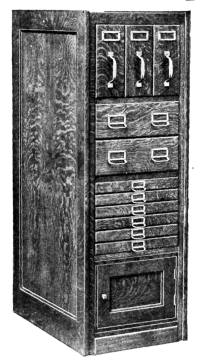
Fig. 30. Combination Cabinet Browne-Morse Co.
Where a large number of folded documents are to be filed, as in the office of a corporation using a voucher system, this file is much more convenient than the old style. An old-style document file has a limited filing capacity, and must be taken from the cabinet for consultation. A vertical file drawer, legal size, provides three compartments, each 24" in length. This gives an actual filing capacity of six feet in a single drawer. An upright section, equipped for document filing, is shown in Fig. 31. If an entire section is not needed for this purpose, one drawer can be equipped for document filing, and the others used for correspondence.
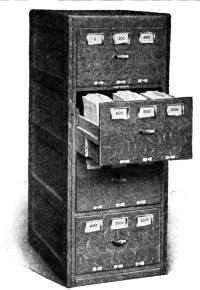
Fig. 31. Upright Cabinet for Documents Library Bureau
A style of construction designed to combine the expansion idea with variety is known as the inter-inter cabinet. This cabinet consists primarily of an outer cabinet or shell of standard height, depth, and width. This shell is divided into compartments of standard height into which the filing devices are fitted. The various filing devices are arranged in skeleton units of standard dimensions, made interchangeable so that any desired combination can be produced. Fig. 32 shows an outside cabinet, card index, and vertical file units, which fit the openings in the cabinet.
OUTSIDE CABINET
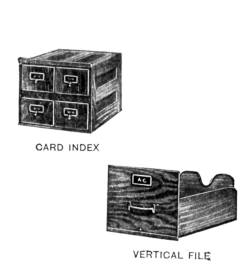
Fig. 32. Inter-Inter Construction Macey Co.
This construction enables the user to make a combination of small units of various kinds to suit present requirements, all housed in a single case in a compact form. Provision for future expansion is unnecessary, since an additional outside cabinet can be added at any time, and the units rearranged at will to conform with changes in the system.
An inter-inter cabinet shown in Fig. 33 suggests the variety of devices that can be accommodated in a single shell. This cabinet contains vertical file, card index, legal blank drawers, and document files.
The need has been felt for a small filing cabinet, or stack of sections, that would be complete and give the proper variety. The professional man, the department manager, and the executive have need for a small cabinet for personal correspondence, reports, statistics, records of matters requiring personal attention, blanks and forms, private papers, and all matters of a confidential nature. This need seems to have been met satisfactorily by the small sections known to the trade as sectionets.
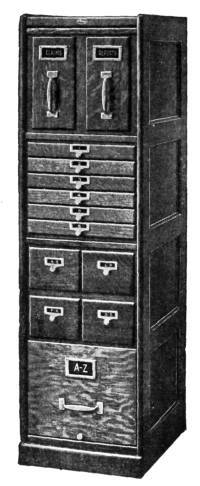
Fig. 33. Inter-Inter Cabinet The Macey Co.
These are complete sections, the largest size being that of the vertical file drawer, which can be stacked one on top of the other or side by side. Any of the standard filing devices can be made up into these sections. A small section for 4"×6" cards is shown in Fig. 34. A single section, with top and base, makes a complete cabinet, which can be added to as needed. Fig. 35 shows a small stack of sections consisting of vertical file, 5"×8" card index, and 3"×5" card-index drawers, and one document file, on a leg base.
Transfer Files. Files for the storage of transferred correspondence can be of cheaper construction than the regular filing cabinets, as they are less frequently referred to and not subject to the same hard usage. They should, however, be of reasonably substantial construction; it is usual to keep business correspondence at least two years, and it may be necessary to refer to it many times after it is transferred. Then, too, if substantial transfer files are provided, they can be used again and again; sufficient transfer files to hold two years' correspondence will last indefinitely.