Volume 3 — K (continued 4)
Reading edition
In connection with butchers, I may quote the following extract from a petition to the Governor of Madras on the subject of a strike among the Madras butchers in 1907. “We, the residents of Madras, beg respectfully to bring to your Excellency’s notice the inconvenience and hardship we are suffering owing to the strike of the butchers in the city. The total failure of the supply of mutton, which is an important item in the diet of non-Brāhmin Hindus, Muhammadans, Indian Christians, Parsis, Eurasians and Europeans, causes a deprivation not merely of something to which people have become accustomed, but of an article of food by which the health of many is sustained, and the want of which is calculated to impair their health, and expose them to diseases, against which they have hitherto successfully contended.”
Katorauto.—A name for the offspring of maid servants in the harems of Oriya Zamindars, who are said to claim to be Kshatriyas.
Katta.—Katta or Kattē, meaning a bund, dam, or embankment, has been recorded as an exogamous sept or gōtra of Dēvānga and Kurni.
Kattelu (sticks or faggots).—An exogamous sept of Bōya.
Kattira.—A sub-division of Gadaba.
Kāttu.—See Kādu.
Kāttu Kāpari (dweller in the forest).—Said to be a name for Irulas or Villiyans. The equivalent Kāttu Kāpu is, in like manner, said to be a name for Jōgis.
Kāttu Marāthi.—A synonym of Kuruvikāran.
Kaudikiāru.—Kaudikiāru or Gaudikiāru is a title of Kurubas.
Kāvadi.—In the Madras Census Report, 1901, Kabadi is returned as the name of a class of Telugu wood-cutters. Kāvadi is the name of a division of Koravas, who carry offerings to Perumālswāmi at Tirupati on a pole (kāvadi). Kāvadi or Kāvadiga is further the name given to Kannadiyan curd-sellers in Madras, who carry the curds in pots as head-loads.
Kavandan.—At the census, 1901, more than nine thousand people returned themselves as Kavandan or Kaundan, which is a title of Konga Vellālas, and many other castes, such as Anappan, Kāppiliyan, Palli, Sembadavan, Urāli, and Vēttuvan. The name corresponds to the Canarese Gauda or Gaunda.
Kaundinya (a sage).—A Brāhmanical gōtra adopted by Rāzus and Bhatrāzus.
Kavanē (sling).—An exogamous sept of Gangadikāra Holeyas.
Kavarai.—Kavarai is the name for Balijas (Telugu trading caste), who have settled in the Tamil country. The name is said to be a corrupt form of Kauravar or Gauravar, descendants of Kuroo of the Mahābaratha, or to be the equivalent of Gauravalu, sons of Gauri, the wife of Siva. Other suggested derivatives are: (a) a corrupt form of the Sanskrit Kvaryku, badness or reproach, and Arya, i.e., deteriorated Aryans; (b) Sanskrit Kavara, mixed, or Kavaraha, a braid of hair, i.e., a mixed class, as many of the Telugu professional prostitutes belong to this caste; (c) Kavarai or Gavaras, buyers or dealers in cattle.
The Kavarais call themselves Balijas, and derive the name from bali, fire, jaha sprung, i.e., men sprung from fire. Like other Telugu castes, they have exogamous septs, e.g., tupāki (gun), jetti (wrestler), pagadāla (coral), bandi (cart), sīmaneli, etc.
The Kavarais of Srīvilliputtūr, in the Tinnevelly district, are believed to be the descendants of a few families, which emigrated thither from Manjakuppam (Cuddalore) along with one Dora Krishnamma Nāyudu. About the time of Tirumal Nāyak, one Rāmaswāmi Rāju, who had five sons, of whom the youngest was Dora Krishnamma, was reigning near Manjakuppam. Dora Krishnamma, who was of wandering habits, having received some money from his mother, went to Trichinopoly, and, when he was seated in the main bazar, an elephant rushed into the street. The beast was stopped in its career, and tamed by Dora Krishnamma, to escort whom to his palace Vijayaranga Chokkappa sent his retinue and ministers. While they were engaged in conversation, news arrived that some chiefs in the Tinnevelly district refused to pay their taxes, and Dora Krishnamma volunteered to go and subdue them. Near Srīvilliputtūr he passed a ruined temple dedicated to Krishna, which he thought of rebuilding if he should succeed in subduing the chiefs. When he reached Tinnevelly, they, without raising any objection, paid their dues, and Dora Krishnamma returned to Srīvilliputtūr, and settled there.
Their marriage ceremonies are based on the type common to many Telugu castes, but those who belong to the Sīmaneli sept, and believe themselves to be direct descendants of Krishnamma, have two special forms of ceremonial, viz., Krishnamma pērantālu, and the carrying of pots (gurigelu) on the heads of the bride and bridegroom when they go to the temple before the Kāsiyatra ceremony. The Krishnamma pērantālu is performed on the day prior to the muhūrtam (tāli-tying), and consists in the worship of the soul of Krishnamma, a married woman. A new cloth is purchased and presented to a married woman, together with money, betel, etc., and she is fed before the rest. It is practically a form of srādh ceremony, and all the formalities of the srādh, except the hōmam (sacred fire) and repeating of mantras from the Vēdas, are gone through. This is very commonly observed by Brāhmans, and a few castes which engage a Brāhman priest for their ceremonies. The main idea is the propitiation of the soul of the dead married woman. If such a woman dies in a family, every ceremony of an auspicious nature must be preceded by sumangaliprarthana, or worship of this married woman (sumangali). Orthodox females think that, if the ceremony is not performed, she will do them some harm. Another custom, now dying out, is the tying of a dagger to the waist of the bridegroom.
Kāvuthiyan.—The Kāvuthiyans are described as follows in the Gazetteer of Malabar. “They are barbers who serve the Tiyans and lower castes; they are also sometimes given the title Kurup. Their females act as midwives. There seem to be several sections, distinguished by the affix of the name of the castes which they serve, as for instance Tacchakāvuthiyan or Tacchakurup, and Kanisakāvuthiyan, appropriated to the service of the Asāris and Kanisans respectively; while the barbers who serve the Izhuvans are known both as Aduttōns, Vattis, or Izhuva Kāvuthiyans. But whether all these should be regarded as offshoots of one main barber caste, or as degraded sections of the castes which they serve, the Kāvuthiyans proper being only barbers to the Tiyans, it is difficult to determine. The fact that the Nāviyan or Kāvuthiyan section of the Veluttedans, as well as the Kāvuthiyan section of the Mukkuvans, are admittedly but degraded sections of these castes, makes the second the more probable view. It is also to be noticed that the Kāvuthiyans, in the north at least, follow marumakkattāyam (inheritance in the female line), while the Taccha and Kanisa Kāvuthiyans follow the other principle of descent.”
Kayalān.—The Kayalāns are Tamil-speaking Muhammadans, closely allied to the Marakkāyars and living at Kāyalpatnam in Tinnevelly. Many of them have settled as merchants in Madras, and sell glass beads, cowry shells, dolls from Tirupati, toys, etc. Some are money-lenders to the lower classes, and others travel about from village to village selling, for cash or credit rates, cloths, brass vessels, and other articles. They are sometimes called Ārumāsaththukadankārar, or six months’ debt people, as this is the time usually allowed for payment. At Kāyalpatnam, a Kayalān husband is expected to live in his father-in-law’s house, and, in connection with this custom, the following legend is narrated. The chiefman of the town gave his daughter in marriage to a man living in an adjacent village. One evening, she went to fetch water from a tank, and, on her way back, trod on a cobra. She could not move her foot, lest she should be bitten, so she stood where she was, with her water-pot on her head, till she was discovered by her father on the following morning. He killed the snake with the kitti (tweezers) and knife which he had with him, and told the girl to go with him to his house. She, however, refused to do so, and went to her husband’s house, from which she was subsequently taken to that of her father. The kitti is an instrument of torture, consisting of two sticks tied together at one end, between which the fingers were placed as in a lemon squeezer. With this instrument, the fingers were gradually bent backwards towards the back of the hand, until the sufferer, no longer able to endure the excruciating pain, yielded to the demands made on him to make confession of guilt.
Kāyasth.—Kāyasth or Kāyastha is the writer-caste of Bengal. See Risley, Tribes and Castes of Bengal.
Kayerthannāya (Strychnos Nux-vomica sept).—An exogamous sept of the Bants and Shivalli Brāhmans in South Canara.
Kayila (unripe fruit).—An exogamous sept of Orugunta Kāpu.
Keimal (kei, hand, as an emblem of power).—A sub-division of Nāyar.
Kēla.—A small class of Oriya jugglers and mountebanks, whose women, like the Dommara females, are often prostitutes. The name is derived from kēli, dancing, or khēl to play.
The barbers of South Canara are of different castes or sub-castes according to the language they speak, or the people for whom they operate. Thus there are (1) the Tulu Kelsi (Kutchidāye, man of the hair) or Bhandāri; (2) the Konkani Kelsi or Mhāllo, who must have migrated from the north; (3) the Hindustani Kelsi or Hajāms; (4) the Lingāyat Kelsi or Hadapavada (man of the wallet); (5) the Māppilla (Moplah) barber Vasa; (6) the Malayāli barber Kāvudiyan; and even Telugu and Tamil barbers imported by the sepoy regiments until recently stationed at Mangalore. Naturally the Tulus form the bulk of the class in Tuluva. There is among them a section known as Maddele, employed by palm-tappers, and hence considered socially inferior to the Bhandāri, who is employed by the higher classes. [The Billava barbers are called Parēl Madiali or Parēl Madivala.] If a high caste barber operates for a man of lower caste, he loses his caste thereby, and has to pay a fine, or in some other way expiate his offence before he gains re-admission into his community. Pariahs in these parts have no separate caste of barbers, but anyone among themselves may try his skill on any head. Māppilla barbers are employed only by the Muhammadans. Even in their own community, however, they do not live in commensality with other Māppillas though gradations of caste are not recognised by their religion.
The barber is not ambitious enough to claim equality of rank with the Bant, the potter, the piper, the weaver, or the oilmonger; but he shows a decided disposition to regard himself as above the level of the fisherman or the palanquin-bearer. The latter often disclaim any such inferiority, and refer to the circumstance that they discharge the functions of carrying the huge umbrella in marriage processions, and shouldering the gods in religious processions. They argue that their rivals perform an operation, the defilement of which can only be wiped off by bathing the head with a solution of sacred earth taken from besides the roots of the tulsi plant (Ocimum sanctum). In justice to the barber, however, it must be mentioned that he has to perform certain priestly duties for most Sūdras. His presence is essential at two of the ceremonies observed by castes professing to be superior to his. At the name-giving ceremony a Tulu barber has to tie a thread round the waist of the child, and name it, among Sūdras of a higher caste than himself. [At the present day, the Bhandāri is said to receive his fee for tying the thread, though he does not actually perform the act.] Again, on the death of a high caste Sūdra, the barber has to carry the fire to the cremation ground, though the funeral pyre is lighted by the relations of the deceased. He also has to assist at certain other rites connected with funeral obsequies, such as purifying the house.
[The collection of fragments of bones from the ashes, heaping up the ashes, and cleaning the spot where the corpse was burnt, are the business of the Kelasi. These duties he performs for Morlis, Bants, Gattis, and Vodaris. The Bhandāri or Kelasi is an object of intense hatred to Konkani women, who call them by abusive names, such as fellow with a burnt face, miserable wretch, widow-maker, etc.]
The barber in South Canara has invented several stories concerning the origin of his first progenitor. At a time when the barber had not yet been created, Siva was a bachelor, spending his time in austere devotions, and allowing his hair to grow into long matted locks. A time came when he became bent on matrimony, and he thought that the hirsute condition of his face would not be appreciated by his bride, the young daughter of the king of the mountains. It was at this juncture that the barber was created to make Siva a good-looking bridegroom, and the Brāhman to officiate at the marriage ceremony. According to another legend, a Gāndharva-born woman was on one occasion cast into the sea by irate Brahma, and doomed to be turned into a rock. Moved by her piteous entreaties, however, Brahma relented, and ordained that she should be restored to human form when Parasurāma should happen to set his foot upon the rock. This came to pass when Parasurāma thrust back the waters of the western sea in order to create the western coast. The re-humanised woman thereupon offered her thanksgivings in such winning words that the great Brāhman hero asked her to beg any boon she wished. She begged a son, who should in some way remind generations to come of the great Brāhman who had reclaimed her from her inanimate state. The boon was thereupon granted that she should give birth to sons, who would not indeed be Brāhmans, but who would perform functions analogous to those performed by Brāhmans. The barber thus discharges certain priestly duties for Sūdras, and cleanses the body even as the Brāhman cleanses the soul; and the defilement caused by the razor can be removed only by the smearing of mud and water, because the barber’s female progenitor was a rock recovered out of water.
The primary occupation of the barber does not always bring in a sufficient income, while it leaves him a large amount of leisure. This he spends, if possible, in agricultural labour, in which he is materially assisted by his female relations. Barbers residing in towns hold no land to fall back upon, but their average monthly earnings range from five to seven rupees. Their brethren in the villages are not so busy plying the razor, so they cultivate land as tenants. One of the blessings conferred by Parasurāma is that the barber shall never starve.
When a child is born, a male member of the family has to tie a thread round its waist, and give it a name. The choice of a name often depends upon the day of the week on which the child was born. If it is born on a Sunday it is called, if a boy, Aitha (Auditya, sun), or, if a girl, Aithe; if on a Monday, Sōmē or Sōmu; if on a Tuesday, Angāra or Angāre; if on a Wednesday, Budāra or Budāre, changed among Pariahs into Mudāra or Mudāru; if on a Thursday, Guruva or Guruvu; if on a Friday, Tukra (Shukra) or Tukru; if on a Saturday, Taniya (Saniya) or Taniyaru. Other names which are common are Lakkana (Lakshmana), Krishna, Subba, and Korapulu (Koraga woman). Those who can afford to do so often employ a Brāhman priest to ascertain whether the child is born lucky or unlucky; and, in the latter case, the barber is advised to offer something to the tutelary deity or the nine planets, or to propitiate the village deity, if it is found that the child is born under its evil eye. No lullaby should be sung while the child is being rocked for the first time in a cradle, perhaps because, if the very first rocking is done with a show of rejoicing, some evil spirit may be envious of the human joy, and mar the happiness.
The initiation of a boy into the mysteries of his hereditary profession takes place between the tenth and the fourteenth year. In very rare cases, nowadays, a boy is sent to school between the sixth and eighth year. These occasions are marked by offerings of cocoanuts and plantains to the village deity.
With boys marriage takes place between the sixteenth and twenty-fifth year, with girls before or after puberty. Matches are made by selection on the part of the parents. Lads are sometimes allowed to choose their own brides, but their choice is subject to the approval of the parents, as it must necessarily be in a joint family. Bridegrooms have to pay for their brides a dowry varying from twenty to fifty rupees, and sometimes as much as a hundred rupees. Deformed girls, however, fetch no price; on the other hand, they have to pay some pecuniary inducement to the bridegroom. Widows are allowed, and, when young, encouraged to remarry. The most essential condition of a valid marriage is that the contracting parties should belong to different baris or balis (exogamous septs). As examples of the names of these balis, the following may be cited: Bangāru (gold), Sālia (weaver), Uppa (salt), Kombara (cap made of areca palm leaf), Karimbara (sugar-cane). Horoscopes are not consulted for the suitability or future prosperity of a match, but the day and hour, or lagnam of a marriage are always fixed by a Brāhman priest with reference to the conjunction of stars. The marriage lasts for three days, and takes place in the house of the bridegroom. This is in accordance with the primitive conception of marriage as a bringing away by force or procuring a bride from her parents, rather than with the current Brāhman idea that the bridegroom should be invited, and the girl given away as a present, and committed to his custody and protection. The marriage ceremony takes place in a pandal (booth) on a raised or conspicuous place adorned with various figures or mandala. The pair are made to sit on a bench, and rice is sprinkled on their heads. A barber then shaves the chin and forehead of the bridegroom, the hair border being in the form of a broken pointed arch converging upwards. He also touches the bride’s cheeks with the razor, with the object of removing what is called monetha kale, the stain on the face. The full import of this ceremony is not clear, but the barbers look upon the act as purificatory. If a girl has not come of age at the time of marriage, it is done on the occasion of the nuptials. If she has, the barber, in addition to touching the cheeks with the razor, goes to her house, sprinkles some water over her with a betel leaf, and makes her touch the pot in which rice is to be cooked in her husband’s house. At the bridegroom’s house, before the assembled guests, elders, and headman of the caste, the man and the girl are linked together in the marriage bond by having water (dhāre) poured on their joined hands. Next, the right hands of the pair being joined (kaipattāvane), the bridegroom leads the bride to her future home.
Soon after a death occurs, a barber is summoned, who sprinkles water on the corpse, and touches it with a razor if it be of a male. In every ceremony performed by him, the barber must have recourse to his razor, even as the Brāhman priest cannot do without his kūsa grass. The rich burn their dead, and the poor bury them. Persons dying of infectious diseases are always buried. Prior to the removal of the corpse to the cremation or burial ground, all the clothes on and about it, with the exception of one cloth to cover it from head to foot, are removed and distributed to Pariahs, who have prepared the pyre or dug the grave. Before the mourners return from the cemetery, they light four lamps in halves of cocoanuts, and leave them burning on the spot. Coming home, the chief mourner places in the hands of the Gurukāra or headman of the caste a jewel or other valuable article as a security that he will duly perform all the funeral rites. This is termed sāvuotti dipunā. The Gurukāra, in the presence of the relations and friends assembled, returns the same, enjoining its recipient to be prepared to perform the requisite rites, even with the proceeds of the sale of the pledged article if necessary. The eleventh day is the sāvu or principal mourning day, on which the headman and elders of the caste, as well as the friends and relations of the deceased ought to be present. On the spot where the deceased expired, or as near thereto as possible, an ornamental square scaffolding is erected, and covered with cloth coloured with turmeric. The ground below the scaffolding is covered with various figures, and flowers and green leaves are strewn on it. Each mourner throws on this spot handfuls of cooked rice, coloured yellow and red, and cries out “Oh! uncle, I cry murrio,” or “Oh! father, I cry murrio,” and so on, according to the relationship in which the deceased stood to the mourner. This ceremony is called murrio korpuna, or crying alas. In well-to-do families it is usual to accompany this with devil-dancing. On the twelfth day, rice is offered to crows, the original belief apparently being that the spirits of the deceased enter into birds or beasts, so that food given to these may happen to reach and propitiate them. On the night of the thirteenth day, the relations of the deceased set apart a plantain leaf for the spirit of the departed, serve cooked rice on it, and, joining their hands, pray that the soul may be gathered unto its ancestors, and rest in peace. The anniversary of the death, called agel, is celebrated by placing cooked rice on two plantain leaves placed over sacrificial twigs, and burning incense and waving lamps before it. This is called soma dipunā.
The family god of the barber is Krishna of Udipi, and the high-priest to whom he pays homage is the Saniyāsi (religious ascetic), who for the time being worships that god. The same high-priest is also the final court of appeal from the decisions of the village council of the barbers in matters relating to caste and religion. The powers which are ever present to the barber’s mind, and which he always dreads and tries to propitiate, are the village demons, and the departed spirits of members of his own family. If a child falls ill, he hastens to the Brāhman seer, to learn who is offended, and how the spirit should be appeased. If his cow does not eat hay, he anxiously enquires to which demon he should carry a cock. If the rain fails or the crops are poor, he hies to the nearest deity with cocoanuts, plantains, and the tender spikes of areca. In case of serious illness, he undertakes a vow to beg from door to door on certain days, and convey the money thus accumulated to Tirupati. In his house, he keeps a small closed box with a slit in the lid, through which he drops a coin at every pinch of misfortune, and the contents are eventually sent to that holy place.
The affairs of the community are regulated by a council of elders. In every village, or for every group of houses, there is an hereditary Gurukāra or headman of the barbers, who is assisted by four Moktesars. If any of these five authorities receives a complaint, he gives notice to the others, and a meeting is arranged to take place in some house. When there is a difference of opinion, the opinion of the majority decides the issue. When a decision cannot be arrived at, the question is referred to the council of another village. If this does not settle the point at issue, the final appeal lies to the Swāmi of the the Udipi temple. The council inquires into alleged offences against caste, and punishes them. It declares what marriages are valid, and what not. It not only preserves discipline within the community itself, but takes notice of external affairs affecting the well-being of the community. Thus, if the pipers refuse to make music at their marriage processions, the council resolves that no barber shall shave a piper. Disputes concerning civil rights were once submitted to these councils, but, as their decisions are not now binding, aggrieved parties seek justice from courts of law.
Punishments consist of compensation for minor offences affecting individuals, and of fine or excommunication if the offence affects the whole community. If the accused does not attend the trial, he may be excommunicated for contempt of authority. If the person seeks re-admission into the caste, he has to pay a fine, which goes to the treasury of the temple at Udipi. The presiding Swāmi at the shrine accepts the fine, and issues a writ authorising the re-admission of the penitent offender. The headman collects the fine to be forwarded to the Swāmi, and, if he is guilty of any mal-practice, the whole community, generally called the ten, may take cognisance of the offence. Offences against marriage relations, shaving low caste people, and such like, are all visited with fine, which is remitted to the Swāmi, from whom purification is obtained. The power of the village councils, however, has greatly declined in recent years, as the class of cases in which their decision can be enforced is practically very small.
The Tulu barbers, like many other castes on the western coast, follow the aliya santāna system of inheritance (in the female line). The tradition in South Canara is that this, and a number of other customs, were imposed upon certain castes by Bhūtāla Pāndya. The story relates that Dēva Pāndya, a merchant of the Pāndya kingdom, once had some new ships built, but before they put to sea, the demon Kundodara demanded a human sacrifice. The merchant asked his wife to spare one of her seven sons for the purpose, but she refused to be a party to the sacrifice, and went away with her sons to her father’s house. The merchant’s sister thereupon offered her son. Kundodara, however, was so very pleased with the appearance of this son that he spared his life, and made him a king, whose sway extended over Tuluva. This king was called Bhūtāla Pāndya, and he, being directed by Kundodara, imposed upon the people the system of nephew inheritance.
The barber is changing with the times. He now seldom uses the old unfoldable wooden-handled razor forged by the village blacksmith, but has gone in for what he calls Rāja sri (royal fortune; corruption of Rodgers) razors. He believes that he is polluted by the operation which it is his lot to perform, and, on his return home from his morning round, he must bathe and put on washed clothes.
Ken.—Ken (red) and Kenja (red ant) have both been recorded as gōtras of Kurni.
Kenna.—A division of Toda.
Kēpumāri.—It is noted, in the Gazetteer of South Arcot, that “the Kēpumāris are one of the several foreign communities from other districts, who help to swell the total of the criminal classes in South Arcot. Their head-quarters is at Tiruvallūr in the Chingleput district, but there is a settlement of them at Māriyānkuppam (not far from Porto Novo), and another large detachment at Kunisampet in French territory. They commit much the same class of crime as the Donga Dāsaris, frequenting railway trains and crowded gatherings, and they avert suspicion by their respectable appearance and pleasant manners. Their house-language is Telugu. They call themselves Alagiri Kēpumāris. The etymology of the second of these two words is not free from doubt, but the first of them is said to be derived from Alagar, the god of the Kallans, whose temple at the foot of the hills about twelve miles north of Madura town is a well-known place of pilgrimage, and to whom these people, and other criminal fraternities annually offer a share of their ill-gotten gains.” Information concerning the criminal methods of these people, under the name Capemari, will be found in Mr. F. S. Mullaly’s ‘Notes on Criminal Classes of the Madras Presidency.’
Kērē (tank).—A gōtra of Kurni.
Kēsari (lion).—A gōtra of Kurni.
Kēthaki (Pandanus fascicularis).—An exogamous sept of Stānika.
Kethri.—See Khatri.
Kēvuto.—It is recorded, in the Madras Census Report, 1891, that “the Kēvutas are the fisherman caste of Ganjam, and they are said to be the descendants of the Kaibartas, a fishing caste of Bengal. Besides fishing in rivers, canals and lakes, they ply boats and catamarans, and some are also traders. Uriya Brāhmans and Bairāgis are their priests. From the fifth day after child-birth till the twenty-first, the Uriya Brāhmans read the Bhāgavata Purāna in the house, and on the last day they give a name to the child. The married girls and widows put a veil over their faces whenever they go out of doors.”
The Kēvutos are low in the social scale, but not a polluting caste. They apparently recognise the following endogamous sub-divisions:—Bhettiya, Bilva, Jonka, Khottia, Koibarto or Dasa, Liyāri, Chuditiya, and Thossa. Of these the Thossas are cultivators, the Liyāris make a preparation of fried rice (liya), and the Chudityas are engaged in parching grain (chuda, parched rice). By reason of their change of occupation, the Liyāris and Chudityas have practically become distinct castes, and some deny that there is any connection between them and the Kēvutos. Telugu people sometimes call the Chuditiyas Neyyalu, and I am told that there is a street in Parlakimedi almost wholly inhabited by Kēvutos, who say that they are of the Neyyalu caste.
Of gōtras which occur among the Kēvutos, nāgo (cobra), bhāgo (tiger), and kochipo (tortoise) are the most common. They also have exogamous septs or bamsams, among which are gogudiya (bells) and nolini (bamboo carrier). The titles which occur in the caste are Bēhara, Sitto, Torei, Jalli, Bejjo, and Paiko.
The marriage rite is performed at night, and the bride’s father ties a gold bead (konti) on the neck of the bridegroom. The Kēvutos worship especially Dasarāj and Gangadēvi. The latter is worshipped at the Dasara festival, and, in some places, fowls and goats are sacrificed in her honour. In the neighbourhood of the Chilka lake, the goats are not sacrificed, but set at liberty, and allowed to graze on the Kālikadēvi hill. There is a belief that animals thus devoted to Gangadēvi do not putrify when they die, but dry up.
In the Vizagapatam Agency tracts, the Kēvutos are said to be notorious for their proficiency in magic and necromancy.
Khadi.—A sub-division of Telli.
Khadiya.—A name, said to be derived from ghatiyal, meaning a person possessed, and used as a term of reproach for Kudumis of Travancore.
Khajjaya (cake).—An exogamous sept of Vakkaliga.
Kharvi.—The Kharvis are described, in the South Canara Manual, as “Marāthi fishermen, who migrated to this district from the Bombay Presidency. The name Kharvi is said to be a corrupt form of the Sanskrit kshār, salt. They are hardworking but thriftless, and much given to drink, chiefly toddy. They are sea-fishermen and good sailors, and also work as domestic servants and labourers. They employ Havīk Brāhmans to perform their marriage and other ceremonies. The head of the Sringēri Math is their spiritual teacher.”
The Kharvis are Konkani-speaking fishermen and cultivators, found in the Kundapūr tāluk of South Canara. Those who are not engaged in fishing always wear the sacred thread, whereas the fishermen wear it for seven days from the Srāvana Hunnami, or full-moon day of the month Srāvana (August-September), and then remove it. All are Saivites, and disciples of the Sringēri mutt. Ajai Masti and Nagu Masti are the deities specially worshipped by them. They follow the makkala santāna law of inheritance (from father to son). Their headmen are called Sāranga or Patēl, and these names are used as titles by members of the families of the headmen. The assistant to the headman is styled Naik or Naicker.
For the performance of the marriage ceremonial, Shivalli or Kota Brāhmans are engaged. The dhāre form of marriage (see Bant) is observed, but there are a few points of detail, which may be noted. Five women decorate the bride inside her house just before she comes to the marriage pandal (booth), and tie on her neck a gold bead (dhāre mani) and black beads. At the pandal she stands in front of the bridegroom, separated from him by a screen, which is stretched between them. Garlands of tulsi (Ocimum sanctum) are exchanged, and the screen is removed. Bāshingams (chaplets) are tied on the foreheads of the bridal pair at the outset of the ceremonial, and are worn for five days.
The dead are cremated, and, in most cases, the ashes are thrown into a river. But, among the orthodox, they are taken to Gokarna, and thrown into the river at that place. On the eleventh day, presents are made to Brāhmans after purification. On the following day, food is offered on two leaves to the soul of the deceased.
One of the leaves is thrown into water, and the other given to a cow or bull.
Khāsgi.—Marāthas, of whom a few families constitute the aristocracy in the Sandūr State.
The following note relates to the Khatris of Conjeeveram, where most of them trade in silk thread, silk sashes, and dye-stuffs. Some deal in human hair, which is used by native females as a chignon. By reason of their connection with the silk industry, the Khatris are called Patnūlkāran by other castes. The true Patnūlkārans are called Kōshta by the Khatris. The Khatris give Bhuja Rāja Kshatriya as their caste name, and some say that they are the descendants of one Karta Virya Arjuna of the human race. Their tribal deity is Renukāmba, the mother of Parasu Rāma, to whom pongal (boiled rice) is offered, and a goat sacrificed in the month of Thai (January-February). They have exogamous septs, such as Sulēgar, Powar, Mudugal, Sonappa, Bojagiri, etc., and have adopted the same Brāhmanical gōtras as the Bhāts or Bhatrāzus, e.g., Gautama, Kāsyapa, Vasishta, and Bhāradwaja. Attached to them is a caste beggar, called Bhāt, who comes round at long intervals. He is said to keep the genealogies of the Khatri families. He ties a flag to a post of the house at which he intends to claim a meal, and, after partaking thereof, he receives information concerning the births and marriages, which have taken place in the family since his last visit. Girls are married both before and after puberty, and infant marriage is fashionable at the present day. The remarriage of widows is permitted, but a divorced woman may not marry again so long as her husband is alive. A man may not marry the widow of his brother, or of an agnate. The custom of mēnarikam, by which a man may marry his maternal uncle’s daughter, is prohibited. Families belonging to one sept may give their daughters in marriage to men of another sept, from which, however, they are not allowed to receive girls as wives for their sons. For example, a man of a Sulēgar sept may give his daughters in marriage to men of the Powar sept, but may not take Powar girls as wives for his sons. But a certain elasticity in the rule is allowed, and the prohibition ceases after a certain number of generations by arrangement with the Bhāt. The marriage ceremonies last over seven days. On the first day, the deity Bharkodēv, who is represented by seven quartz pebbles placed in a row on plantain leaves, is worshipped with offerings of fruit, etc., and a goat is sacrificed. The blood which flows from its cut neck is poured into a vessel containing cooked rice, of which seven balls are made, and offered to the pebbles. Towards evening some of the rice is thrown to the four cardinal points of the compass, in order to conciliate evil spirits. On the second day, the house is thoroughly cleansed with cow-dung water, and the walls are whitewashed. The eating of meat is forbidden until the marriage ceremonies are concluded. The third day is devoted to the erection of the marriage pandal (booth) and milk-post, and the worship of female ancestors (savāsne). Seven married women are selected, and presented with white rāvikes (bodices) dyed with turmeric. After bathing, they are sumptuously fed. Before the feast, the bridegroom’s and sometimes the bride’s mother, goes to a well, tank (pond) or river, carrying on a tray a new woman’s cloth, on which a silver plate with a female figure embossed on it is placed. Another silver plate of the same kind, newly made, is brought by a goldsmith, and the two are worshipped, and then taken to the house, where they are kept in a box. The bridegroom and his party go in procession through the streets in which their fellow castemen live. When they reach the house of the bride, her mother comes out and waves coloured water to avert the evil eye, washes the bridegroom’s eyes with water, and presents him with betel and a vessel filled with milk. The bride is then conducted to the bridegroom’s house, where she takes her seat on a decorated plank, and a gold or silver ornament called sari or kanti is placed on her neck. She is further presented with a new cloth. A Brāhman purōhit then writes the names of the contracting parties, and the date of their marriage, on two pieces of palm leaf or paper, which he hands over to their fathers. The day closes with the performance of gondala pūja, for which a device (muggu) is made on the ground with yellow, red, and white powders. A brass vessel is set in the centre thereof, and four earthen pots are placed at the corners. Pūja (worship) is done, and certain stanzas are recited amid the beating of a pair of large cymbals. On the fourth day, the bridal couple bathe, and the bridegroom is invested with the sacred thread. They then go to the place where the metal plates representing the ancestors are kept, with a cloth thrown over the head like a hood, and some milk and cooked rice are placed near the plates. On their way back they, in order to avert the evil eye, place their right feet on a pair of small earthen plates tied together, and placed near the threshold. The bride’s mother gives the bridegroom some cakes and milk, after partaking of which he goes in procession through the streets, and a further ceremony for averting the evil eye is performed in front of the bride’s house. This over, he goes to the pandal, where his feet are washed by his father-in-law, who places in his hands a piece of plantain fruit, over which his mother-in-law pours some milk. The bride and bridegroom then go into the house, where the latter ties the tāli on the neck of the former. During the tying ceremony, the couple are separated by a cloth screen, of which the lower end is lifted up. The screen is removed, and they sit facing each other with their bashingams (forehead chaplets) in contact, and rice is thrown over their heads by their relations. The Brāhman hands the contracting couple the wrist-threads (kankanams), which they tie on. These threads are, among most castes, tied at an earlier stage in the marriage ceremonies. On the fifth day, seven betel nuts are placed in a row on a plank within the pandal, round which the bride and bridegroom go seven times. At the end of each round, the latter lifts the right foot of the former, and sweeps off one of the nuts. For every marriage, a fee of Rs. 12–5–0 must be paid to the headman of the caste, and the money thus accumulated is spent on matters such as the celebration of festivals, which affect the entire community. If the fee is not paid, the bride and bridegroom are not permitted to go round the plank the seventh time. On the sixth day, the bride receives presents from her family, and there is a procession at night. On the last day of the ceremonies, the bride is handed over to her mother-in-law by her mother, who says “I am giving you a melon and a knife. Deal with them as you please.” The bride is taken inside the house by the mother-in-law and shown some pots containing rice into which she dips her right hand, saying that they are full. The mother-in-law then presents her with a gold finger-ring, and the two eat together as a sign of their new relationship.
The dead are cremated, and, when a married man dies, his corpse is carried on a palanquin to the burning-ground, followed by the widow. Near the pyre it is laid on the ground, and the widow places her jewelry and glass bangles on the chest. The corpse should be carried by the sons-in-law if possible, and the nomination of the bearers is indicated by the eldest son of the deceased person making a mark on their shoulders with ashes. On the third day after death, the milk ceremony takes place. Three balls of wheat-flour, mixed with honey and milk, are prepared, and placed respectively on the spot where the deceased breathed his last, where the bier was laid on the ground, and at the place where the corpse was burnt, over which milk is poured. The final death ceremonies (karmāndhiram) are observed on the seventh or tenth day, till which time the eating of flesh is forbidden.
The headman of the Khatris, who is called Grāmani, is elected once a month, and he has an assistant called Vanja, who is appointed annually.
The Khatris are Saivites, and wear the sacred thread, but also worship various grāma dēvatas (village deities). They speak a dialect of Marāthi. The caste title is Sā, e.g., Dharma Sā.
Kethree is described, in the Vizagapatam Manual, as “the caste of the Zamindar’s family in Jeypore. It is divided into sixteen classes. They wear the paieta (sacred thread), and the Zamindar used formerly to sell the privilege of wearing it to any one who could afford to pay him twelve rupees. Pariahs were excluded from purchasing the privilege.”
The Khatri agriculturists of the Jeypore Agency tracts in Vizagapatam are, Mr. C. Hayavadana Rao informs me, entirely distinct from the weaving Khatris of the south. They are divided into four septs, viz., Surya (Sun), Bhāg (tiger), Kochchimo (tortoise), and Nāg (cobra). Girls are married before puberty, and an Oriya Brāhman officiates at their marriages, instead of the customary Dēsāri. They do not, like other castes in the Agency tracts, give fermented liquor (madho) as part of the jholla tonka or bride-price, which consists of rice, a goat, cloths, etc. The marriage ceremonies are performed at the bride’s house. These Khatris put on the sacred thread for the first time when they are married, and renew it from time to time throughout life. They are fair skinned, and speak the Oriya language. Their usual title is Pātro.
Khinbudi (bear).—A sept of Rōna.
Khodālo.—See Bāvuri.
Khodikāro.—A name for Panditos, derived from the stone (khodi), with which they write figures on the floor, when making astrological calculations.
Khoira.—Recorded, in the Madras Census Report, 1901, as a low caste of Oriya cultivators.
Khōja.—In the Madras Census Report, 1901, eleven Khōjas are recorded as belonging to a Mussalman tribe of traders from Bombay.
“Of the two classes, the Kojahs are the artificially created eunuchs, in contradistinction to the Hijras (impotents) or natural eunuchs. Some years ago there were three Kojahs at the head of the State prison or Royal Mahal at Vellore, in charge of some of the wives, descendants, and other female connections of Tippoo Sultan. These men were highly respected, held charges of considerable trust, and were Muhammadans by birth. Tales were often repeated that the zenana women (slaves and adopted girls) were in the habit of stripping them naked, and poking fun at their helplessness. There were two Kojahs in the employ of the late Nabob of the Carnatic. They were both Africans. On the death of the Nabob, the Government allowed one of them a pension of fifteen rupees a month.
“The second class, Hijras or natural eunuchs as they are termed, are not so, strictly speaking, but are said to be impotent. While some are naturally so from birth, others are impressed with a belief in childhood, and are dressed up in women’s clothes, taught to ape their speech and manners, whilst a few adopt it as a profession in after-life. They are chiefly Mussalmans. The hair of the head is put up as in women, well oiled, combed, and thrown back, tied into a knot, and shelved to the left side, sometimes plaited, ornamented, and allowed to hang down the back. They wear the cholee or short jacket, the saree or petticoat, and put on abundance of nose, ear, finger, and toe rings. They cultivate singing, play the dhol (a drum), and attitudinise. They go about the bazaars in groups of half a dozen or more, singing songs with the hope of receiving a trifle. [Such a group I saw at Sandūr, who, on hearing that I wished to photograph them, made tracks for another place.—E.T.] They are not only persistent, but impudent beggars, singing filthy, obscene, and abusive songs, to compel the bazaarmen to give them something. Should they not succeed, they would create a fire and throw in a lot of chillies, the suffocating and irritative smoke producing violent coughing, etc., so that the bazaarmen are compelled to yield to their importunity, and give them a trifle to get rid of their annoyance. While such were the pursuits in the day, at nightfall they resorted to debauchery and low practices by hiring themselves out to a dissipated set of Moslems, who are in the habit of resorting to these people for the purpose, whilst they intoxicate themselves with a preparation termed majoon, being a confection of opium, and a drink termed boja, a species of country beer manufactured from rāgi (Eleusine Coracana), which also contains bhang (Indian hemp). In addition to this, they smoke bhang. The Hijras are met with in most of the towns of Southern India, more especially where a large proportion of Mussalmans is found.”
In Hyderabad, castration used to be performed at about the age of sixteen. A pit, 3½ feet deep, was dug in the ground, and filled with ashes. After the operation, the patient had to sit on the ashes, with crossed legs, for three days. The operation was performed, under the influence of narcotics, by a Pīr—the head of the Khōja community.
I am informed by Mr. G. T. Paddison that, at the annual festival of the Gadabas of Vizagapatam, thorns are set on a swing outside the shrine of the goddess. On these the priest or priestess sits without harm. If the priest is masculine, he has been made neuter. But, if the village is not fortunate enough to possess a eunuch, a woman performs the ceremony.
The following notes were recorded by me on the occasion of an interview with some eunuchs living in the city of Madras:—
Hindu, aged about 30. Generative organs feebly developed. Is a natural eunuch. Speaks and behaves like a female. Keeps a stall, at which he sells cakes. Goes out singing and dancing with four other eunuchs, and earns from ten annas to a rupee in a night. There are, in Madras, about thirty eunuchs, who go about dancing. Others keep shops, or are employed as domestic servants.
One well acquainted with the Hindu eunuchs of Madras stated that, when a boy is born with ill-developed genitalia, his unnatural condition is a source of anxiety to his parents. As he grows up he feels shy, and is made fun of by his companions. Such boys run away from home, and join the eunuchs. They are taught to sing and dance, and carry on abominable practices. They are employed by dancing-girls, to decoy paramours to them. For this purpose, they dress up as dancing-girls, and go about the streets. At times of census, they return themselves as males engaged in singing and dancing.
Khond.—See Kondh.
Khongar.—See Kangara.
Kīchagāra.—A small class of Canarese basket-makers and beggars. The name is said to be derived from kichaku, meaning an imitative sound, in reference to the incessant noise which the Kīchagāras make when begging.
Kidāran (copper boiler).—A synonym for Malayālam artisans.
Kilakku Teru (east street).—A section of Kallan.
Killavar.—A sub-division of Tottiyan.
Some of the women are engaged as professional tattooers.
Kimedi.—A local name for Koronos who live at Parlakimedi.
Kindal (basket-maker).—A sub-division of Savara.
Kinkila (the koel or cuckoo).—A gōtra of Kurni. The cuckoo, named Eudynamis honorata, is the bird, whose crescendo cry, ku-il, ku-il, is trying to the nerves during the hot season.
Kinthali.—A sub-division of the Telugu Kālingis.
Kīra (parrot).—A sept of Gadaba. Kīra also occurs as a sub-division of Sondi.
Kīraikkāran.—Kīraikkāran is an occupational name, denoting those who cultivate kīrai (Amarantus). The Kīraikkārans are stated, in the Census Report, 1901, to be usually Agamudaiyans in Coimbatore. I gathered, however, that the name is given by Tamil-speaking people to the Kempati Okkiliyans of Coimbatore, a Canarese people who migrated thither from Kempati in Mysore. The majority of them cultivate kīrai and other edible vegetables, but some are petty traders or fishermen. Some of their marriage divisions are named after deities, e.g., Masāni and Vīramashti, and one division is called Jōgi.
Kirāta (hunter).—A name assumed by Bēdars, Ēkāris, and other classes.
Kirgāniga.—Kirgāniga or Kirugāniga is the name of a sub-division of Gānigas, who express oils in wooden mills.
Kiriyam.—A sub-division of Nāyar. Also the Malayālam word for house name or sept.
Kiriyattil.—A sub-division of Nāyar.
Kizhakathi.—Recorded, in the Madras Census Report, 1891, as a sub-division of Paraiyan. The word means easterner, and a Paraiyan of North or South Arcot would call a Paraiyan of Madras by this name.
Koalaka (arrow).—An exogamous sept of Jātapu.
Kobbiriya.—A sub-division of Dōmb.
Kochattabannaya.—Kochattabannaya or Kojjarannāya (jāk tree, Artocarpus integrifolia, sept) is an exogamous sept of Bant.
Kochimo (tortoise).—A sept of Oriya Gaudo, Bosantiya, Bottada, Konda Dora, Mattiya, and Omanaito.
Kochuvālan.—Recorded, in the Travancore Census Report, 1901, as a name for Ullādans.
Kōdaketti (umbrella tying).—A sub-division of Pānan.
Kodavili (sickle).—An exogamous sept of Karna Sālē.
Kodekal Hata-kāraru (cloth-weavers).—A sub-division of Dēvānga.
Kōdi (cock).—An exogamous sept of Kāpu. Thōrika occurs as a sept of Jātapus, who are said to revere a species of fowl called thōrika kōdi, and Kōdi Kandla (fowl’s eyes) as a sept of Bōya.
Kodikkāl.—Kodikkāl, Kodikkar, or Kodikkālkāran, meaning betel vine man, is the occupational name of a sub-division of Vella̱las, and of Labbai Muhammadans who cultivate the betel vine. In the Census Report, 1901, it is noted that those who gave this as the name of their caste returned their parent tongue as Tamil, and their title as Na̱yakkan, and were therefore clubbed with Pallis. Kodikkāl is further a sub-division of the Shānāns, who derive the name from kōdi, a flag, and give flag-bearer as its significance. Other castes, however, make it to mean a betel garden, in reference to Shānāns who were betel vine growers. Kodikkāl Pillaimar is a synonym of the Sēnaikkudaiyāns, indicating Pillaimars who cultivate the betel vine.
Kodiyāl.—A sub-division of Kudubi.
Kōdla.—Kōdla (fowl) has been recorded as an exogamous sept of Tsākala, and Kōdla bochchu (fowl’s feathers) as an exogamous sept of Kāpu.
Kōdu.—A form of Kondh. Also a sub-division of Konda Rāzu.
Kohōro.—A form of Kahar.
Koi.—See Kōya.
Koibarto.—A sub-division of Kēvuto.
Koil Pandala (keeper of the royal treasury).—One of the divisions of Kshatriyas in Travancore.
Koil Tampurān.—The following note is extracted from the Travancore Census Report, 1901. The Koil Tampurāns form a small community, made up of the descendants of the immigrant Kshatriya families from certain parts of Malabar lying to the north of Travancore and Cochin. They are also known as Koil Pantalas. In early records, the term Koviladhikārikal appears to have been used. Immemorial tradition connects the Koil Tampurāns with Chēramān Perumāl, and goes to say that their original settlement was Beypore. About 300 M.E. a few male members were invited to settle in Travancore, and form marital alliances with the ladies of the Travancore Royal House, known then as the Vēnāt Svarūpam. Houses were built for them at Kilimānūr, six miles from Attingal, where all the female members of the Royal Family resided. In M.E. 963, eight persons—three males and five females—from the family of Āliakkōtu, oppressed by the invasion of Tīpū Sultan, sought shelter in Travancore. Maharāja Rāma Varma received them kindly, and gave them the palace of the Tekkumkūr Rāja, who had been subjugated by Rāma Iyen Dalawah. This site in Changanachery is still recognised as Nīrāzhikkottāram. In 975 M.E. one of the five ladies removed to Kirtipuram near Kantiyūr (Mavelikara tāluk), and thence to a village called Grāmam in the same tāluk. Another shifted to Pallam in the Kottayam tāluk, a third to Pa̱liyakkara in Tiruvalla, and a fourth, having no issue, continued to live at Changanachery with the fifth lady who was the youngest in the family. Ra̱ja Raāja Varma Koil Tampura̱n, who married Ra̱ni Lakshmi Bai, sovereign of Travancore from 985 to 990 M.E. was the eldest son of the lady that stayed at Changanachery. Their present house at that place, known as Lakshmipuram Kotta̱ram, was named after the Koil Tampurān’s royal consort. Rāja Rāja Varma’s sister gave birth to three daughters and two sons. The eldest daughter and sons removed to Kartikapalli in 1040, and thence, in 1046, to Anantapuram in Haripad. In 1041, the second daughter and issue removed to Chemprōl in Tiruvalla, while the third continued to live at Changanachery. Thus there came into existence seven families of Koil Tampurāns, namely those of Kilimānūr, Changanachery, Anantapuram, Pallam, Chemprōl, Grāmam, and Pāliyakkare. Some time after 1040 M.E. (A.D. 1856), three more families, viz., those of Cherukōl, Kārāmma, and Vatakkēmatham, immigrated from North Malabar.
The Koil Tampurāns are all regarded as blood relations, and observe birth and death pollutions like Dāyādis among Brāhmans. They follow the matriarchal system of inheritance. Nambūtiri Brāhmans marry their ladies. Their religious ceremonies are the same as those of Nambūtiris, whom they resemble in the matter of food and drink. Their caste government is in the hands of the Nambūtiri Vaidikans.
Their ceremonies are the usual Brāhmanical Samskāras—Gātakarma, Nāmakarana, Annaprāsana, etc. Regarding the Nāmakarana, or naming, the only noteworthy fact is that the first-born male always goes by the name of Rāja Rāja Varma. The Upanāyana, or investiture with the sacred thread, takes place in the sixteenth year of age. On the morning of the Upanāyana, Chaula or the tonsure ceremony is performed. It is formally done by the Nambūtiri priest in the capacity of Guru, just as the father does to his son among Brāhmans, and afterwards left to be completed by the Mārān. The priest invests the boy with the thread, and, with the sacrificial fire as lord and witness, initiates him in the Gāyatri prayer. The Koil Tampurāns are to repeat this prayer morning, noon and evening, like the Brāhmans, but are to do so only ten times on each occasion. On the fourth day, the boy listens to a few Vēdic hymns recited by the priest. There is not the prolonged course of severe discipline of the Brāhmanical Brahmachāri, which the Nambūtiris so religiously observe. The Samāvartana, or pupilage stage, is performed on the fifteenth day. The ceremony of proceeding to Benares is then gone through. Just as in the case of the Brāhmans, a would-be father-in-law intercedes, and requests the Snātaka (past Brahmachāri) to bless his daughter, and settle in life as a Grihastha. The Nambūtiri priest then steps in to remind the boy of his dharma (duty) as a Kshatriya, and gives him a sword symbolic of his pre-ordained function in society.
The marriage of a Koil Tampurān does not present many peculiar features. One item in the programme, called Dīkshavirippu, may be referred to. During all the four days of the marriage, the bride is confined to a special room, where a white cloth with a carpet over it is spread on the floor, and a lamp burns day and night. The ceremonial bridegroom is either an Aryappattar or a Nambūtiri, now generally a Nambūtiri. Of course, the marriage is a mere ceremonial, and the bridegroom at the ceremony is not necessarily the spouse of actual life. His death deprives her of the right to wear the tāli, and makes her an Amangali (an inauspicious person) for all socio-religious purposes. At srāddhas (memorial service for the dead), the Tampurātti with her married husband alive faces the east, and one that has lost him has to look in the direction of Yamalōka (south).
Kōkala (woman’s cloth).—An exogamous sept of Golla.
Kokkara.—Recorded, in the Travancore Census Report, as a sub-division of Nāyar.
Kokkundia.—See Kukkundi.
Kōla (ear of corn).—An exogamous sept of Mēdara.
Kōlāri.—See Kōlayān.
Kolālo (arrack-seller).—A name of Sōndis.
Kolata Gudiya.—A name for Gudiyas engaged in agriculture.
Kōlayan.—It is recorded, in the Madras Census Report, 1901, that “the caste is found chiefly in the Kasaragōd tāluk of South Canara, and in the northern part of Malabar. In South Malabar, it is called Ūrāli. Its traditional occupation is herding cows, and it claims the privilege of supplying milk and ghee to certain Hindu temples, but at present most of its members are masons. It has two endogamous sections, Āyan or Kōl-Āyan, and Māriyan or Erumān” (Erumā, a cow-buffalo). It is further noted, in the same report under the heading Erumān, that “the people of the caste were originally buffalo drivers and keepers, and still follow their traditional occupation in the Kasaragōd tāluk of South Canara. In North Malabar, they are masons and bricklayers.” The masonry work of temples is done by Kōlayans.
The name Kōlayan has been said to be derived from Golla and Ayan, meaning cowherd. Golla is, however, a Telugu word not used in the Malayālam country.
Members of the two sections, Kōlayan and Erumān (or Eruvān), are said not to intermarry. Women of both sections may affect sambandham (alliance) with Nāyars. Children born of such unions are regarded as somewhat inferior to those born of Kōlayan parents, and are not allowed to worship at the temples. The priests of the Kōlayans are called Mūthavan or Poduvan, and are usually elected by Rājas.
Kōlayan girls go through the mangalam or tāli-kettu ceremony before they reach puberty. On an auspicious day fixed by the Kanisan (astrologer), the girl sits on a plank in the middle room of the house, and four lamps are placed near her. Her father throws rice and flowers over her head, and ties the tāli (marriage emblem) on her neck. The girl, four women, and four girls, are fed in the middle room. On the following day, a priest (Vāthiyan) places rice, paddy (unhusked rice), tender cocoanut, betel leaves and areca nuts, before the girl. Men and women of the priest’s family wave rice, cocoanuts, etc., in front of her both in the morning and afternoon. Finally, towards evening, a Vāthiyan woman waves the rice and other articles thrice, calling out “Kolachi, Kolachi, Kolachi.” The girl may then leave the middle room.
At the first menstrual period, a girl is under pollution for three days. On the first day, a cloth (māttu) is given to her by a washerwoman, and on the fourth day she receives one from a Malayan woman.
The dead are usually cremated. Daily, until the twelfth day of the death ceremonies, food is offered to the spirit of the deceased, on a dais set up outside the house, by the relatives. On the fifth day, all the agnates are purified by the Vāthiyan sprinkling water over them. On the twelfth day, the Vāthiyan draws the image of a man with vibūthi (sacred ashes) on the spot where the deceased breathed his last. Near the figure, cooked rice, vegetables, etc., are placed. The chief mourner offers these to the dead person, and makes a bundle of them in his cloth. Going outside the house, he kicks the dais already referred to with his foot, while the Vāthiyan holds one hand, and his relations the other hand or arm. He then bathes in a tank (pond) or river, while his hands are held in like manner.
Kōli.—In the Madras Census Report, 1901, the Kōlis are described as being “a Bombay caste of fishermen and boatmen in South Canara; also a low class of Bengal weavers found in Ganjam.” The Kōlis who were investigated in Ganjam are an Oriya-speaking class, who are apparently Telugu people who have settled in the Oriya country as weavers of coarse cloths, traders, and agriculturists. They have Oriya titles such as Bēhara. They worship village deities (Tākurānis), are Saivites, and none of them have been converted to the Paramartho form of Vishnavism. The caste council, puberty and death ceremonies, are based on the common Oriya type, but the marriage rites are an interesting blend of the Oriya and Telugu types of ceremonial. Thus the usual Telugu marriage post, but made of Streblus asper wood, is set up, and nine kinds of grain are placed near it. A bottu (marriage badge) is tied on the neck of the bride by the bridegroom, and the hands of the contracting couple are united (hasthagōnthi) as among the Oriyas.
Kōliyan.—The Kōliyans are summed up, in the Madras Census Report, 1901, as “a weaver caste, the members of which were originally Paraiyans, but now do not eat or intermarry with that caste.” They are largely found in the Tanjore and Madura districts, and are divided into various nādus (territories) and kuppams (settlements). Those at Pattukottai, for example, belong to Ambu Nādū, and are sub-divided into five kuppams. Many of the Kōliyans are engaged in weaving coarse white cloths, while some work as field labourers. As some Paraiyans have Sāmbān (Siva) as their title, so the title of the Kōliyans is Īsan (god). At times of marriage, the names of persons must not be mentioned without this title, e.g., one who is, in everyday life, called Ponnan is addressed as Īsa Ponnan.
An interesting point in connection with the first puberty ceremonial of a girl is that, on the sixteenth day, when she bathes, a withe of a creeper (Dalbergia, sp.) made into a loop, is passed round her body by a barber from head to foot thrice, without touching her. If this is not done, it is believed that the girl is not free from pollution.
There are two forms of marriage ceremony, called chinna (little) and periya (big) kalyānam. The former is resorted to by those who cannot afford the more elaborate ceremonial. The sister of the bridegroom is sent to the house of the bride on an auspicious day. She there ties the tāli (marriage badge) on the bride’s neck, and conducts her to the house of the bridegroom. Women who are thus married may not take part in the marriage of their children. More especially, they may not decorate them with garlands and flowers, unless they have themselves performed the sadangu rite. In this, which is usually carried out a day or two before the child’s marriage, the husband and wife sit on planks, and, after being decorated, and the performance of wave offerings (ārathi), the former ties the tāli on his wife’s neck.
In the periya kalyānam, the bridegroom goes on a horse to the bride’s house, where he is met by her brother, who is also on horseback. They exchange garlands, and proceed to the marriage pandal (booth). The bridegroom receives from the bride’s father a cocoanut, and the bride seats herself on a bench. The bridegroom gives her the cocoanut, and ties the tāli on her neck. They then exchange garlands, and their fingers are linked together. All these items must be performed as quickly as possible, in accordance with a saying that the tāli should be tied without dismounting from the horse, which one is riding. Before the tāli is tied, the contracting couple go through the sadangu ceremony, in which a loop of cotton thread is passed over them from head to foot, without touching them. Then the kankanams, or wrist threads, are tied on their wrists. The milk-post and marriage pots are set up within the pandal, and the bride and bridegroom prostrate themselves before them, and salute their maternal uncles, parents and relations, and lastly the musicians. The day’s proceedings terminate with a feast, at the conclusion of which hands are washed within the house. For six days the bride and bridegroom pay visits to each other alternately, and, on the seventh day, the wrist-threads, marriage pots, and milk-post are removed. During marriage and other auspicious ceremonies, coloured water, into which leaves of Bauhinia variegata are thrown, are waved (ārathi).
On ceremonial occasions, and at times of worship, the Kōliyans put on Saivite sect marks. Among other deities, they worship Aiyanar, Pattavanswāmi, and Pothiamman.
The dead are burnt, and the body is placed in a seated posture with fingers and toes tied together. On the way to the burning-ground, a widow goes round the corpse, and breaks a pot containing water. On the day after the funeral, the calcined bones are collected, and arranged so as to represent a human figure, to which food is offered. The final death ceremonies (karmāndhiram) are performed on the sixteenth day. A mass of cooked rice, vegetables, and meat, is placed within an enclosure, round which the relations go in tears.
Kollakar.—There are about seven hundred members of this community at Cochin, to which place the Kollakars, or people of Kollam, are said to have come from Quilon (Kollam) in Travancore one or two centuries ago. The majority of the men work as coolies on board steamers, and a few as fishermen. The women of the poorer classes twist rope and sell fish, while the others make lace. A few hold appointments under the Government, and, in 1907, two had passed the Matriculation examination of the Madras University. They are Roman Catholics, and are said to have been converted to Christianity by the Portuguese. They marry among themselves. The Kollakars are also found at Calicut, Cannanore, Mahē, and Tellicherry, and are mainly occupied in fishing, rope-making, and making fishing-nets. A few at Tellicherry are employed as carpenters, tailors, and petty shopkeepers.
Kolla Kurup.—The Kolla Kurups of Malabar are described, in the Gazetteer of Malabar, as a sub-caste of, or a caste allied to, the Kammālans. “They combine two professions, which at first sight seem strangely incongruous, shampooing or massage, and the construction of the characteristic leather shields of Malabar. But the two arts are intimately connected with the system of combined physical training, as we should now call it, and exercise in arms, which formed the curriculum of the kalari (gymnasium), and the title Kurup is proper to castes connected with that institution.” Among Kolla Kurups, the following symbolical ceremony is necessary to constitute a valid divorce. “The husband and the wife’s brother stand east and west respectively of a lighted lamp placed in the yard of the woman’s original home. The husband pulls a thread from his cloth, and approaches the lamp, and breaks the thread saying ‘Here is your sister’s acchāram.’”
Kollar.—A section of Tottiyan, the full name of which is Yerrakollavāru or Yerrakolla Tottiyar. Kollar is a corrupt Tamil form of Golla, to which caste the Tottiyans trace their descent.
Kolli (fire-brand).—A sub-division of Kādu Kurumba.
Kolli (a hill-range, the Kollimalais).—A sub-division of Malayālis.
Komāli (buffoon).—An exogamous sept of Oddē.
Kōmanāndi.—A sub-division of Āndis, who go about naked, except for a small loin cloth (kōmanam).
Komāro.—Oriya blacksmiths. See Badhōyi.
Kōmati.—The Kōmatis form the great trading caste of the Madras Presidency, and are found in almost all the districts thereof. They are further found in the Mysore State, Bombay Presidency, Berar, Central Provinces, and as far north-west as Baroda. Their wide distribution accounts for the great variety which prevails in the minor details of the religious and social ceremonials.
The name Kōmati has been derived in many different ways. By some it is said to be from ko-mati, meaning fox-minded. This has reference to the cunning of the Kōmatis in business, and is undoubtedly the outcome of their unpopularity with their customers. The phrase Kōmatiguttu (the secrecy of a Kōmati) is said to be a common one. Others say that it is from gō-mati, meaning the possessor of cows, one of the ordained duties of Vaisyas being the protecting of cows. Others, again, say that it is from gō-mati, meaning cow-minded. A modern redaction of the Kanyakā Purāna, the sacred book of the Kōmatis, gives this derivation. According to this work, the Kōmatis did severe penance, and were consequently invited to live in heaven. Their continued absence from this world gave rise to serious trouble, and Vishnu accordingly asked them to return thither for the good of mankind. They, however, refused to do so. Vishnu then called for Siva, and asked him to induce them to return. Siva brought a cow, and directed all the Kōmatis to get into its right ear. From there they saw gloriously decorated towns, with magnificent temples, pleasure gardens, etc., and begged permission to live in them. Siva assented, and they speedily began to march off to their new abodes. But, almost immediately, a huge conflagration came in view, and began to overwhelm them. Terror-stricken, they cried out to Siva to help them in their trouble. He consented on condition that they would return to the mortal world. This they accordingly did. Siva gave them the name of Gōmati, because they exhibited as much fear at the conflagration as a cow would when anything untoward happened. Yet another derivation of Kōmati is gō-mati, meaning sprung from the cow in accordance with the above legend, or cow-gored in reference to the story that the ancestors of the Kōmatis commingled in a cow-shed, where a pregnant woman was gored by a cow. The derivation ku-mati, meaning evil-minded, is grammatically impossible. The Kōmatis are said to have originally lived, and still live in large numbers on the banks of the Godāvari river. One of the local names thereof is Gōmati or Gōmti, and the Sanskrit Gōmati would, in Telugu, become corrupted into Kōmati.
The Kōmatis everywhere speak Telugu, and are devoted to their mother-tongue. There is a common proverb among them, “Telugu thēta, Aravam adhvānam,” meaning that Telugu is easy (has an easy flow), and Tamil is wretched. “Of all Dravidian languages,” Mr. Henry Morris writes, “Telugu is the sweetest and most musical. It is exceedingly mellifluous, and sounds harmonious even in the mouth of the most vulgar and illiterate. It has justly been called the Italian of the East.” Kōmatis are clever at learning languages other than their own. In the Tamil and Canarese districts, they are conversant with the languages thereof, and in Bombay they speak Marāthi. In the Ganjam and Vizagapatam Agencies, they speak the Kondh and Savara languages very fluently.
As a commercial caste, the Kōmatis have a secret trade language of their own, which is substantially the same all over the country. It will be seen from the tables given how complete their numerical tables are, ranging, as they do, from one pie to a thousand rupees. It will be observed that the rupee is represented by the word thēlupu, which means white. Some Tamil trading castes in like manner call the rupee vellē (white):—
1. Pie table.
Pies.
Nakili batu 1
Ke batu 2
Kēvu nakili batu 3
Rāyam batu 4
Rāyam nakili batu 5
2. Anna table.
Annas.
Thāpi kamanālu ¼
Nakili ana ½
Kēv ana 1
Kēvan nakili ana 1½
Rāyam anālu 2
Uddulam anālu 3
Uddulam nakili anālu 3½
Kungidu anālu 4
Sūlalu anālu 12
The word sūlalu is connected with trisūlam, the trident emblem of Siva, and sometimes used to denote three annas.
3. Rupee table.
Rs.
Thāpi thēlupu ¼
Nakili thēlupu ½
Kē thēlupu 1
Rāyam thēlupu 2
Uddulam thēlupu 3
Uddulam nakili thēlupu 3½
Panam thēlupu 4
Mūlam thēlupu 5
Thīpam thēlupu 6
Māram thēlupu 7
Thāmam thēlupu 8
Navaram thēlupu 9
Gālam thēlupu 10
Rāyam gālālu 20
Uddulam gālālu 30
Panam gālālu 40
Mūlam gālālu 50
Thīpanam gālālu 60
Maram gālālu 70
Thāmam gālālu 80
Navaram gālālu 90
Kē savalu 100
Rāyam savalu 200
Uddulam savalu 300
Panam savalu 400
Mūlam savalu 500
Thīpanam savalu 600
Māram savalu 700
Thāmam savalu 800
Navaram savalu 900
Gālam savalu 1,000
4. Varāham (pagoda) table.
Kē makaram 1
Rāyam makaram 2
Uddulam makaram 3
Panam makaram 4
Mūlam makaram 5
Thīpanam makaram 6
Māram makaram 7
Thāmam makaram 8
Navaram makaram 9
Gālam makaram 10
A common saying is that, if you commence at gālam, it will be settled at mūlam, or, in plain language, begin at ten varāhams, and the bargain will be closed at five. When one man says to another “Dōtu” or “Dōtra,” it means strike the bargain. If a Kōmati is the purchaser, and another says to him “Dōt ko,” it means take it.
The Kōmatis are a highly organised caste. In each place where they are settled there is a Pēdda Setti, who, among the Kalinga Kōmatis, is known as Puri Setti or Sēnāpathi. Among the latter, there is also a headman for several villages, who is styled Kularāju or Vaisyarāju. Each Pēdda Setti is assisted by a Mummadi Setti, who assembles the castemen for the settlement of important questions, by fines, excommunication, etc. There is further a caste guru Bhāskarāchārya, whose duties are more religious than social. Kōmatis have recourse to the established Courts of Justice only as a last resort. They are consulted by other castes in the settlement of their disputes, and it must be said to their credit that their decisions are usually sound, and bear ample testimony to the confidence which is placed in them.
The Kōmatis are, broadly speaking, divided into two great sections, called Gavara and Kalinga. The former live as far north of Vizianagram, and are then replaced by the latter. The Gavaras or Gauras are said to be so called because, by following the caste goddess Kanyakamma into the fire-pits, they maintained the gauravam or social status of the caste. According to another version, they are so called because they revere Gauri (Parvati), the consort of Siva, whose incarnation was the goddess Kanyakamma. The Kalinga Kōmatis are those who live in the old Kalinga or Kling country, which extended roughly from Vizagapatam to Orissa. They are forbidden to settle beyond Rāmatīrtham, a place of pilgrimage close to Vizianagram. The story goes that their ancestors lived at Padmanābham, the hill close to Bimlipatam, well known from the battle which took place close to it in 1794, and there sustained great losses. Hence the place was deserted, and has ever since been regarded as inauspicious. The Kōmatis have since that time not resided at any place from which the hill can be seen. In fact, they make their first appearance at Chīpurupalli, and increase in numbers as we go north-eastward. The Kalinga Kōmatis believe themselves to be Gavara Kōmatis, who became separated from the main stock owing to their emigration from their original home. Their meat-eating habit has, they say, widened the breach which separates the two divisions.
While the Kalinga Kōmatis form a fairly compact division by themselves, the Gavaras have become more and more sub-divided. Their sub-divisions are either territorial, occupational, or religious in character. Thus there are Penukonda and Vēginādu Kōmatis, of whom the former belong to the town of Penukonda in the Godāvari district, and the latter to the Vēgi or Vēngi country, the former name of part of the modern Kistna district. Again, there are Trinikas or Traivarnikas (third caste people), who are invariably Vaishnavas, and to which section a good many of the Kōmatis in the city of Madras belong. Lingadhāri Kōmatis are found mostly in the Vizagapatam, Godāvari, Guntūr and Kistna districts. They wear the lingam in a gold or silver casket. Besides these, there are the Siva, Vaishnava, and Mādhva Kōmatis, of which the last are mostly found in the Bellary district. Of occupational sub-divisions, the following may be noted:— Nūnē (oil); Nēthi (ghī, clarified butter); Dūdi (cotton); Uppu (salt); Gōnē (gunny-bag); Gantha (torn cloth). Lastly, there are other divisions, of which the origin dates back to the time of Kanyakamma, the caste goddess. Thus, there are those who entered the fire-pits with Kanyakamma, and those who did not. The former are known as Vēgina, and the latter as Bēri, which is said to be a corruption of Bēdari, meaning those who fled through fear. All Gavara Kōmatis are said to be descended from those who entered the fire-pits. The majority of the Kōmatis of the Sandūr State, in the Bellary district, belong to the Kallankanadavaru section, which is said to be descended from those who sat on the stone (kallu) mantapa outside the Penukonda Kanyakamma temple, when the question whether to enter the fire-pits or not was being discussed by the caste elders.
The mutual relations between the various sub-divisions vary much. Broadly speaking, Gavaras and Kalingas do not intermarry, and the objection to intermarriage is due to several causes. The former, according to the caste Purāna, gave their lives to their goddess, while the latter did not. Moreover, the former do not partake of animal food and spirituous drinks, whereas the latter do. Lingadhāris and ordinary Saivites intermarry, as also do Saivites and Mādhvas. Gavaras and Traivarnikas occasionally intermarry, but such marriages are looked down upon. The Traivarnikas, like the Kalingas, eat animal food. The occupational sub-divisions neither intermarry nor interdine. Socially, the Gavaras are held in the highest esteem, while the Beris are regarded as the lowest in the social scale.
The sub-divisions are split up into septs, which are of a strictly exogamous character. That these originated in totemistic belief seems to be supported by what remains of these beliefs at the present day. All the sub-divisions contain such septs, which are very numerous, the names of as many as a hundred and twenty having been collected. The tendency for a long time past has been to reduce the number to a hundred and two, to represent the number of families which followed Kanyakamma to the fire-pits. It would be tedious to enumerate the names of all these septs, from which the following, with the corresponding totems, are selected:—
(a) Plants.
Munikula Agasi (Sesbania grandiflora).
Amalaka or Usiri Āmalaka or Usiri (Phyllanthus Emblica).
Anupa or Anupāla Anupala (Dolichos Lablab).
Tulasi or Tulashishta. Tulasi (Ocimum sanctum).
Chinta, Chintya, or Varachinta. Chinta (Tamarindus indica).
Vakkala Vakkalu (Areca Catechu).
Puchcha Puchcha (Citrullus Colocynthis).
Padma-sista Padma (red lotus).
Kamala Kamalam (white lotus).
Aranta Arati (Musa sapientum: plantain).
Thōtakula Thōtakūra (Amarantus, sp.).
Uthakula Uththarēni (Achyranthes aspera).
Mandu Māmadikāya (Mangifera indica).
Dikshama Drākshapandu (grapes).
Venkōla Vankāya (Solanum Melongena: brinjal).
Sauna Sāmanthi (Chrysanthemum indicum).
(b) Animals.
Gōsīla, Sathya Gōsīla, and Uthama Gōsīla. Cow.
Asthi Elephant.
Enupa Buffalo.
Ghōnta Horse.
Ananta Cobra.
Bhramada or Bhramara Bee.
(c) Heavenly bodies.
Arka or Sūrya Sun.
Chandra, Chandra Sishta, Suchandra, or Vannavamsam. Moon.
It may be observed that the totems are variously termed gōtram, vamsam, and kulam. The first of these is in imitation of the Brāhman gōtras. Vamsam is the bams of the Agency tracts of Ganjam, Vizagapatam, and the Godāvari districts. The name means bamboo, and denotes a family, whose branches are as countless as those of a bamboo. Kulam is used as the equivalent of group or family. The totem objects are revered in the usual way, and no secret is made of the reverence shown to them. In regard to plant totems, it is stated that, if the totem objects are not strictly treated as tabu, delinquents will be born as insects for seven generations. But an exception is allowed. A person who wishes to eat the forbidden plant may do so by annually performing the funeral ceremonies of the totem ancestor at Gāya, the great Hindu place of pilgrimage where obsequial ceremonies to ancestors are performed.
In recent times, the Kōmatis have claimed to be the Vaisyas mentioned in the Vēdic Purusha-sūkta. Accordingly, the totems have been arranged under the different Brāhmanical gōtras, whose pravaras have been appropriated. Thus, Munikula and four others are grouped under Madgalya Rishi gōtra, whose pravara is given for all the five. Similarly, Vakkāla kula and another kula come under Vāyavya Rishi; Ghōnta kula under Goupaka Rishi; Arati, Arisishta and a few others under Atri Rishi; Anupa kula under Agasthya Rishi, and so on. It is said that the totem names are secret names (sankēta nāmamulu) given by Kanyakamma, in order that the bearers thereof may be distinguished from those who did not take up her cause. All sub-divisions of the caste, however, have these septs in common.
In the northern parts of the Madras Presidency, the sept is further sub-divided into sections called intipērulu (house names). These are either named after some distinguished ancestor, or the place where the family once lived before emigrating to their present abode. These intipērulu are purely exogamous.
A Kōmati can claim his maternal uncle’s daughter in marriage, in accordance with the custom of mēnarikam. The rigidity with which this right is exercised is testified by the sacred book of the caste—the Kanyakā Purāna. On their descent from heaven, it is said, the Kōmatis settled in eighteen towns (ashtā dasapuramulu), which had been built by Visvakarma under the orders of Siva. These towns are said to be situated in a tract of country sixty-four yojanas in extent, and bounded on the east by the Gautami (Godāvari), on the south by the sea, on the west by the Gōstani, and on the north by the Ganges. Of these, Penukonda, in the modern Godāvari district, was the capital. In it are the temples of Nagariswaraswāmi (dedicated to Siva), and Janardhanaswāmi (dedicated to Vishnu). Its Pedda Setti was Kusama Srēshti, and his wife was Kusamāmba. He performed Putra Kāmēshti sacrifice, and was blessed with a son and daughter. The former was named Virupāksha, and the latter Vāsavāmbika (Vāsavakanya, Kanyakamma, or Kanyaka Paramēswari). The girl was possessed of indescribable beauty. Vishnu Vardhana, the son of Vijayarka of the lineage of the moon, who had his capital at Rājamundry, while on a pleasure tour round his dominions, halted at Penugonda, on learning that it was ruled by Setti Rājas, who paid no tribute to him. Being informed of his arrival by their boys, the caste elders, headed by Kusuma Setti, welcomed him, and took him in procession through the town. Then the women of the place waved ārathi before him. Among them was the beautiful Vāsavāmbika, with whom the king instantly fell in love. He proposed to her father that he should give her in marriage to himself, and in return obtain the gift of half of his kingdom. Kusuma Srēshti protested, and said that the sāstras were against such a union. The king, through his minister, threatened that he would plunder his town, take him prisoner, and, with the riches of the place, carry off his daughter, and marry her. The Setti chief and his compatriots prayed for time to think over the matter, and retired. The chief then called a meeting of the castemen, at which it was decided that they should make a false promise to the king that they would give the girl in marriage to him, and send him off with a dinner, to return to Penugonda for the marriage after the lapse of a couple of months. Meanwhile, the boys of the town assembled, and resolved that the dinner ought not to be given. They informed their elders of this resolution, and were commissioned to induce the king to leave the town without it. This they did, with the ambiguous promise that, if they did not give the girl in marriage to him, they would kill themselves. On this, the king went off towards his capital, and Kusuma Setti called a caste meeting of the eighteen towns, at which various proposals were made. One proposed that the girl should not be given in marriage, and that, if the king came to claim her hand, he should be driven off. Another proposed that they should give the girl to the king, and save themselves from ruin. Others suggested that it would be best to marry the king to a substituted girl, to secrete the coveted girl, or to bribe the ministers to induce the king to abandon his intention of marrying her. The last of these proposals was adopted, and a few elders were sent to Rājamundry, to negotiate the affair. They first argued that, though they promised to give the girl in marriage, the promise was made through fear of the king’s anger, and they could not give the girl in contravention of the rule of mēnarikam. The king, in his fury, ordered that the troops should immediately besiege the eighteen towns, imprison the inhabitants in dark dungeons, and carry off the girl in a palanquin. On this, the envoys heavily bribed the ministers, and begged them not to march the army on their towns. But the king would not yield, and sent his troops on Penugonda. The envoys returned home, and narrated their sad tale. A further meeting of the castemen was called at the instance of Bhāskarāchārya, the caste guru, and it was resolved that all who wished to maintain the caste rule of mēnarikam should prepare to kill themselves in burning fire-pits. The majority fled rather than comply with the resolution. Those, however, who determined to sacrifice themselves in the fire-pits were 102 gōtras in number, and they assembled in council, and asked Kusuma Srēshti to induce his daughter (who was only seven years old) to die with them. To this she consented, and showed herself in her true form of Paramēsvari, the wife of Siva. On this, the Setti chief returned to his castemen, who asked him to get 103 fire-pits ready in the western portion of the town before the arrival of the king. These were accordingly dug, and decorated with festoons and plantain trunks at the four corners. Then the heads of the 102 gōtras assembled, with their wives, in the courtyard of the temple of Nagarēsvaraswāmi, where Vāsavāmbika was symbolically married to the god. The headmen then tied on vīra kankanams (heroes’ wrist-threads), and marched in a body, with Vāsavāmbika, to the fire-pits. There they gave counsel to their children that they should not ask vōli (bride-price) for the marriage of their daughters, or communicate their secrets to females, or allow karnams (village accountants), rulers, unbelievers, or those universally abused into their homes. They further counselled them to give their daughters in marriage to the sons of their paternal aunts, even though they should be black-skinned, plain, blind of one eye, senseless, or of vicious habits, and though their horoscopes did not agree, and the omens were inauspicious. They were warned that, if they failed in so doing, they would lose their riches, and misfortune would fall on their families. Moreover, full power was given to the castemen to excommunicate the delinquents, and put them outside the town limits. If the transgressors subsequently repented, they were, after the lapse of six months, to be sent to Kāsi (Benares), bathe in the Ganges, and return to their home. There they were to openly express their regret for their past conduct, fast the whole day, feed Brāhmans, and present them with three hundred cows, and hear the Mahābhāratha during the night. On the following day, they were again to fast, present two hundred cows to Brāhmans and feast them, and hear the Rāmayana during the night. On the third day, they were once more to fast, present a hundred cows, and hear the Bhāgavatam during the night. On the fourth day, they were again to feast Brāhmans, and worship Nagarēsvaraswāmi of Penugonda, and thus purge themselves from the sin of contravening the rule of mēnarikam. But they were not bound to follow the rule, if the paternal aunt’s son was totally blind, deaf, insane, stricken with disease, a eunuch, thief, idiot, leper, dwarf, or immoral, or if an old man or younger than the girl. The children were further advised to respect, at the time of their marriage, the families whose heads went as envoys to the king at Rājamundry, and the boys who made false promises to the king, and induced him to withdraw to his capital. The heads of the families then made various gifts to Brāhmans, and asked Vāsavāmbika to enter the pit. In her true form of Paramēsvari, she blessed those gōtras which had resolved to follow her, and announced that those who had fled would be nameless and without caste. She then declared that, immediately Vishnu Vardhana entered Penugonda, his head would fall severed from his neck. Finally, she invoked Brahma not to create thenceforth beautiful girls in the caste in which she was born, and prayed that in future they should be short of stature, with gaping mouth, disproportionate legs, broad ears, crooked hands, red hair, sunken eyes, dilated eye-balls, insane looks, broad noses and wide nostrils, hairy body, black skin, and protruding teeth. She then jumped into her pit, and immediately afterwards the heads of the 102 gōtras, with their wives, fell into their respective pits, and were reduced to ashes. On the morrow, Vishnu Vardhana started on his journey from Rājamundry to Penugonda. Brāhmans portended evil, and a voice from heaven said that he would lose his life. An evil spirit obstructed him, and it rained blood. Lightning struck men, and numerous other signs of impending evil occurred. Arrived at Penugonda, Vishnu Vardhana was informed that the castemen and Vāsavāmbika had been burnt in the fire-pits. Stunned by the news, he fell from his elephant, and his head was severed from his body, and broke into a thousand pieces. His broken head and body were carried by his followers to Rājamundry, and cremated by his son Rāja Rāja Narēndra. Then the latter pacified the citizens of Penugonda, and appointed Virupāksha, the son of Kusuma Srēshti, Pedda Setti of the towns. The 102 families performed funeral rites for their dead parents, visited Kāsi and Rāmēsvaram, and built a temple in honour of Vāsavāmbika at Penugonda, in which they placed an image in her name, and worshipped it ever afterwards.
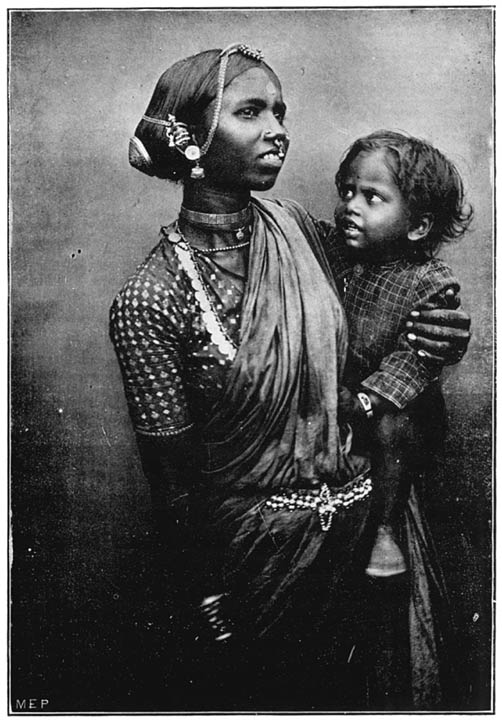
Kōmati.
It is impossible to identify with certainty the Vishnu Vardhana of the Purāna. There are as many as eleven individuals of that name known in Eastern Chalukyan history. The Purāna refers to Vishnu Vardhana, the son of Vijayarka, who had his capital at Rājamundry. His son, according to the same authority, was Rāja Rāja Narēndra. According to the Mackenzie manuscripts, the town of Rājamundry was founded by a king named Vijayāditya Mahēndra, who has not been identified. Dr. Fleet is of opinion that Vishnu Vardhana VI, who ruled between 918 and 925 A.D., was the first to occupy, and re-name it. He, therefore, called himself Rājamahēndra. Amma II, who ruled between 945 and 970 A.D., bore the same title. His brother and successor was Danarnaya (970—73 A.D.). Passing over the hiatus of thirty years, when the country was in the hands of the Chōlas, we come to the reign of Saktivarman, the eldest son of Danarnaya. If we are to believe the Kanyaka Purāna, then we must identify this Saktivarman with its Vijayarka. Saktivarman’s successor, according to inscriptions, was Vimalāditya, who must be identified with the Vishnu Vardhana of the Purāna. Vimalāditya’s son, according to inscriptions, was Rāja Rāja I, surnamed Vishnu Vardhana VIII. He has been identified with the Rāja Rāja Narēndra of current tradition in the Telugu country, to whom Nannayya Bhatta dedicated his translation of the Mahābhāratha. He must also be the Rāja Rāja Narēndra of the Purāna. If that is so, we must set down the cardinal incidents mentioned in it to the first quarter of the 11th century A.D. The actual spots where the principal events of the tragedy were enacted are still pointed out at Penugonda. Thus, the garden in which king Vishnu Vardhana halted is said to be the site on which the hamlet of Vanampalli (meaning village of gardens) stands at present. The spot where the huge fire-pit for Kanyakamma was dug is pointed out as having been in field Nos. 63/3 and 63/4 to the north of the now non-existent Nagarasamudram tank. The 102 other pits were, it is said, in the fields round the bund (embankment) of this tank. The tank is now under cultivation, but faint traces of the bund are said to be still visible. It is about two furlongs to the north-west of the temple of Nagarēsvaraswāmi. It is locally believed that Kanyakamma’s fire-pit was, on the morning following her tragic end, found to contain, among the ashes, a golden likeness of herself, which was placed by the side of the image of Nagarēswara, to whom she had been married. Long afterwards, the golden image was removed, and one in stone substituted for it, in accordance, it is said, with the direction of Kanyakamma, who appeared to one of the townsmen in a dream.
That about the end of the 14th century A.D., the story of Kanyakamma was popular is obvious from the Telugu version of the Markandēya Purāna, which was composed by the poet Mārana, the disciple of Tikkana, the part author of the Telugu Bhārata. In this Purāna, the following episode, which bears a close resemblance to the story narrated in the Kanyaka Purāna, is introduced. A king, named Vrushadha, while on a hunting expedition, killed a cow, mistaking it for a “bison.” He was cursed by Bhābhravya, the son of a Rishi, who was in charge of it, and in consequence became a Sūdra, by name Anaghakāra. He had seven sons, a descendant of one of whom was Nābhāga, who fell in love with a Kōmati girl, and asked her parents to give her in marriage to him. The Kōmatis replied much in the same manner as Kusuma Srēshti and his friends did to the ministers of Vishnu Vardhana in the Kanyaka Purāna. Their answer will be found in canto VII, 223, of the Markandēya Purāna, which contains the earliest authentic literary reference to the name Kōmati. In effect they said “Thou art the ruler of the whole of this universe, Oh! King; we are but poor Kōmatis living by service. Say, then, how can we contract such a marriage?” The king was further dissuaded by his father and the Brāhmans. But all to no purpose. He carried off the girl, and married her in the rākshasa form (by forcible abduction), and, in consequence, in accordance with the law of Manu, became a Kōmati. He then performed penance, and again became a Kshatriya. It would seem that this episode, which is not found in the Sanskrit Markandēya Purāna, is undoubtedly based on the incident recorded in the Kanyaka Purāna.
There remain only three arguments to adduce in support of the suggestion that the chief event narrated in the Kanyaka Purāna is worthy of credence. In the marriage ceremonies as performed by the Kōmatis, some prominence is given to certain of the incidents alleged to have taken place in setting at naught the demands of king Vishnu Vardhana. Such, for instance, is the respect shown to the bāla nagaram boys, which is referred to later on. Secondly, there are certain castes which beg only from Kōmatis, in return for services rendered during this critical period of their history. These are the Mailāris and Vīramushtis. The former still carry round the villages an image of Kanyakamma, sing her story, and beg alms of devotees. The Vīramushtis are wrestlers, who, by acrobatic performances, delayed, by previous arrangement, the second advance of Vishnu Vardhana, before the Kōmatis committed themselves to the flames. Allied to these castes are the Bukka Kōmatis. Originally, it is explained, the Bukkas belonged to the Kōmati caste. When Kanyakamma threw herself into the fire-pit, they, instead of following her example, presented bukka powder, saffron, and kunkumum prepared by them to her. She directed that they should live apart from the faithful Kōmatis, and live by selling the articles which they offered to her. The Kalinga Kōmatis also have a beggar caste attached to them, called Jakkali-vāndlu, who have nothing to do with the Gavara Kōmati beggar castes. Thirdly, if we may place any faith in the stories told by other castes, e.g., the Jains of South Arcot, the Tottiyans, Kāppiliyans, and Bēri Chettis, the persecution of their subjects by their kings, in the manner indicated in the Kanyaka Purāna, seems to have been widely practiced all over the country. And the method adopted by the Kōmatis to evade the king, and maintain the mēnarikam rule, has its counterpart in the popular ballad known as Lakshmammapata, still sung all over the Northern Circars, which gives a graphic description of the murder of his wife by a husband, who would not agree to giving their daughter away from his own sister’s son. Even now, the sentiment on this subject is so strong that a man who goes against the rule of mēnarikam, not only among the Kōmatis, but among all castes observing it, is looked down on. It is usually described as bending the twig from its natural course, and, as the twig would waste away and die in consequence, so would parties to such marriages not prosper. In 1839, according to the Asiatic Journal, a case was taken before the Supreme Court of Madras, in which the plaintiff brought an action against his uncle for giving his daughter away in marriage, without making him an offer of her hand. The Judges were anxious that the matter should be settled out of Court, but the parties disagreed so entirely that nothing less than a public trial would satisfy them. It has not been possible to trace the decision of the Court.