Introduction.
Reading edition
The vast tract of country, over which my investigations in connection with the ethnographic survey of South India have extended, is commonly known as the Madras Presidency, and officially as the Presidency of Fort St. George and its Dependencies. Included therein were the small feudatory States of Pudukōttai, Banganapalle, and Sandūr, and the larger Native States of Travancore and Cochin. The area of the British territory and Feudatory States, as returned at the census, 1901, was 143,221 square miles, and the population 38,623,066. The area and population of the Native States of Travancore and Cochin, as recorded at the same census, were as follows:—
Area. Population.
Sq. Miles.
Travancore 7,091 2,952,157
Cochin 1,361 512,025
Briefly, the task which was set me in 1901 was to record the ‘manners and customs’ and physical characters of more than 300 castes and tribes, representing more than 40,000,000 individuals, and spread over an area exceeding 150,000 square miles.
The Native State of Mysore, which is surrounded by the Madras Presidency on all sides, except on part of the west, where the Bombay Presidency forms the boundary, was excluded from my beat ethnographically, but included for the purpose of anthropometry. As, however, nearly all the castes and tribes which inhabit the Mysore State are common to it and the Madras Presidency, I have given here and there some information relating thereto.
It was clearly impossible for myself and my assistant, in our travels, to do more than carry out personal investigations over a small portion of the vast area indicated above, which provides ample scope for research by many trained explorers. And I would that more men, like my friends Dr. Rivers and Mr. Lapicque, who have recently studied Man in Southern India from an anthropological and physiological point of view, would come out on a visit, and study some of the more important castes and tribes in detail. I can promise them every facility for carrying out their work under the most favourable conditions for research, if not of climate. And we can provide them with anything from 112° in the shade to the sweet half English air of the Nīlgiri and other hill-ranges.
Routine work at head-quarters unhappily keeps me a close prisoner in the office chair for nine months in the year. But I have endeavoured to snatch three months on circuit in camp, during which the dual functions of the survey—the collection of ethnographic and anthropometric data—were carried out in the peaceful isolation of the jungle, in villages, and in mofussil (up-country) towns. These wandering expeditions have afforded ample evidence that delay in carrying through the scheme for the survey would have been fatal. For, as in the Pacific and other regions, so in India, civilisation is bringing about a radical change in indigenous manners and customs, and mode of life. It has, in this connection, been well said that “there will be plenty of money and people available for anthropological research, when there are no more aborigines. And it behoves our museums to waste no time in completing their anthropological collections.” Tribes which, only a few years ago, were living in a wild state, clad in a cool and simple garb of forest leaves, buried away in the depths of the jungle, and living, like pigs and bears, on roots, honey, and other forest produce, have now come under the domesticating, and sometimes detrimental influence of contact with Europeans, with a resulting modification of their conditions of life, morality, and even language. The Paniyans of the Wynaad, and the Irulas of the Nīlgiris, now work regularly for wages on planters’ estates, and I have seen a Toda boy studying for the third standard instead of tending the buffaloes of his mand. A Toda lassie curling her ringlets with the assistance of a cheap German looking-glass; a Toda man smeared with Hindu sect marks, and praying for male offspring at a Hindu shrine; the abandonment of leafy garments in favour of imported cotton piece-goods; the employment of kerosine tins in lieu of thatch; the decline of the national turban in favour of the less becoming pork-pie cap or knitted nightcap of gaudy hue; the abandonment of indigenous vegetable dyes in favour of tinned anilin and alizarin dyes; the replacement of the indigenous peasant jewellery by imported beads and imitation jewellery made in Europe—these are a few examples of change resulting from Western and other influences.
The practice of human sacrifice, or Meriah rite, has been abolished within the memory of men still living, and replaced by the equally efficacious slaughter of a buffalo or sheep. And I have notes on a substituted ceremony, in which a sacrificial sheep is shaved so as to produce a crude representation of a human being, a Hindu sect mark painted on its forehead, a turban stuck on its head, and a cloth around its body. The picturesque, but barbaric ceremony of hook-swinging is now regarded with disfavour by Government, and, some time ago, I witnessed a tame substitute for the original ceremony, in which, instead of a human being with strong iron hooks driven through the small of his back, a little wooden figure, dressed up in turban and body cloth, and carrying a shield and sabre, was hoisted on high and swung round.
In carrying out the anthropometric portion of the survey, it was unfortunately impossible to disguise the fact that I am a Government official, and very considerable difficulties were encountered owing to the wickedness of the people, and their timidity and fear of increased taxation, plague inoculation, and transportation. The Paniyan women of the Wynaad believed that I was going to have the finest specimens among them stuffed for the Madras Museum. An Irula man, on the Nīlgiri hills, who was wanted by the police for some mild crime of ancient date, came to be measured, but absolutely refused to submit to the operation on the plea that the height-measuring standard was the gallows. The similarity of the word Boyan to Boer was once fatal to my work. For, at the time of my visit to the Oddēs, who have Boyan as their title, the South African war was just over, and they were afraid that I was going to get them transported, to replace the Boers who had been exterminated. Being afraid, too, of my evil eye, they refused to fire a new kiln of bricks for the club chambers at Coimbatore until I had taken my departure. During a long tour through the Mysore province, the Natives mistook me for a recruiting sergeant bent on seizing them for employment in South Africa, and fled before my approach from town to town. The little spot, which I am in the habit of making with Aspinall’s white paint to indicate the position of the fronto-nasal suture and bi-orbital breadth, was supposed to possess vesicant properties, and to blister into a number on the forehead, which would serve as a means of future identification for the purpose of kidnapping. The record of head, chest, and foot measurements, was viewed with marked suspicion, on the ground that I was an army tailor, measuring for sepoy’s clothing. The untimely death of a Native outside a town, at which I was halting, was attributed to my evil eye. Villages were denuded of all save senile men, women, and infants. The vendors of food-stuffs in one bazar, finding business slack owing to the flight of their customers, raised their prices, and a missionary complained that the price of butter had gone up. My arrival at one important town was coincident with a great annual temple festival, whereat there were not sufficient coolies left to drag the temple car in procession. So I had perforce to move on, and leave the Brāhman heads unmeasured. The head official of another town, when he came to take leave of me, apologised for the scrubby appearance of his chin, as the local barber had fled. One man, who had volunteered to be tested with Lovibond’s tintometer, was suddenly seized with fear in the midst of the experiment, and, throwing his body-cloth at my feet, ran for all he was worth, and disappeared. An elderly Municipal servant wept bitterly when undergoing the process of measurement, and a woman bade farewell to her husband, as she thought for ever, as he entered the threshold of my impromptu laboratory. The goniometer for estimating the facial angle is specially hated, as it goes into the mouth of castes both high and low, and has to be taken to a tank (pond) after each application. The members of a certain caste insisted on being measured before 4 P.M., so that they might have time to remove, by ceremonial ablution, the pollution from my touch before sunset.
Such are a few of the unhappy results, which attend the progress of a Government anthropologist. I may, when in camp, so far as measuring operations are concerned, draw a perfect and absolute blank for several days in succession, or a gang of fifty or even more representatives of different castes may turn up at the same time, all in a hurry to depart as soon as they have been sufficiently amused by the phonograph, American series of pseudoptics (illusions), and hand dynamometer, which always accompany me on my travels as an attractive bait. When this occurs, it is manifestly impossible to record all the major, or any of the minor measurements, which are prescribed in ‘Anthropological Notes and Queries,’ and elsewhere. And I have to rest unwillingly content with a bare record of those measurements, which experience has taught me are the most important from a comparative point of view within my area, viz., stature, height and breadth of nose, and length and breadth of head, from which the nasal and cephalic indices can be calculated. I refer to the practical difficulties, in explanation of a record which is admittedly meagre, but wholly unavoidable, in spite of the possession of a good deal of patience and a liberal supply of cheroots, and current coins, which are often regarded with suspicion as sealing a contract, like the King’s shilling. I have even known a man get rid of the coin presented to him, by offering it, with flowers and a cocoanut, to the village goddess at her shrine, and present her with another coin as a peace-offering, to get rid of the pollution created by my money.
The manifold views, which have been brought forward as to the origin and place in nature of the indigenous population of Southern India, are scattered so widely in books, manuals, and reports, that it will be convenient if I bring together the evidence derived from sundry sources.
In the chapter devoted to ‘Migration and Distribution of Organisms,’ Haeckel, in referring to the continual changing of the distribution of land and water on the surface of the earth, says: “The Indian Ocean formed a continent, which extended from the Sunda Islands along the southern coast of Asia to the east coast of Africa. This large continent of former times Sclater has called Lemuria, from the monkey-like animals which inhabited it, and it is at the same time of great importance from being the probable cradle of the human race. The important proof which Wallace has furnished by the help of chronological facts, that the present Malayan Archipelago consists in reality of two completely different divisions, is particularly interesting. The western division, the Indo-Malayan Archipelago, comprising the large islands of Borneo, Java, and Sumatra, was formerly connected by Malacca with the Asiatic continent, and probably also with the Lemurian continent, and probably also with the Lemurian continent just mentioned. The eastern division, on the other hand, the Austro-Malayan Archipelago, comprising Celebes, the Moluccas, New Guinea, Solomon’s Islands, etc., was formerly directly connected with Australia.”
In discussing the racial affinities of the Sakais, Skeat and Blagden write8 that “an alternative theory comes to us on the high authority of Virchow, who puts it forward, however, in a somewhat tentative manner. It consists in regarding the Sakai as an outlying branch of a racial group formed by the Vedda (of Ceylon), Tamil, Kurumba, and Australian races.... Of these the height is variable, but, in all four of the races compared, it is certainly greater than that of the Negrito races. The skin colour, again, it is true, varies to a remarkable degree, but the general hair character appears to be uniformly long, black and wavy, and the skull-index, on the other hand, appears to indicate consistently a dolichocephalic or long-shaped head.” Speaking of the Sakais, the same authorities state that “in evidence of their striking resemblance to the Veddas, it is perhaps worth remarking that one of the brothers Sarasin who had lived among the Veddas and knew them very well, when shown a photograph of a typical Sakai, at first supposed it to be a photograph of a Vedda.” For myself, when I first saw the photographs of Sakais published by Skeat and Blagden, it was difficult to realise that I was not looking at pictures of Kādirs, Paniyans, Kurumbas, or other jungle folk of Southern India.
It may be noted en passant, that emigration takes place at the present day from the southern parts of the Madras Presidency to the Straits Settlements. The following statement shows the number of passengers that proceeded thither during 1906:—
Madras— Total.
South Arcot Porto Novo 2,555

Cuddalore 583
Pondicherry 55
Tanjore Negapatam 238
and
Nagore 45,453
Karikal 3,422
Length 19.6 cm.
Breadth 13.2 cm.
Cephalic index 67.3
Nasal height 4.8 cm.
Nasal breadth 2.5 cm.
Nasal index 52.1 cm.
Another “Hindu” skull, in the collection of the Madras Museum, with similar marked development of the superciliary ridges, has the following measurements:—
Length 18.4 cm.
Breadth 13.8 cm.
Cephalic index 75
Nasal height 4.9 cm.
Nasal breadth 2.1 cm.
Nasal index 42.8
Cephalic length, Cephalic breadth, Cephalic index.
cm. cm.
18.8 12.4 66.
19.1 12.7 66.5
18.3 12.4 67.8
18. 12.2 67.8
18. 12.8 77.1
16.8 13.1 78.
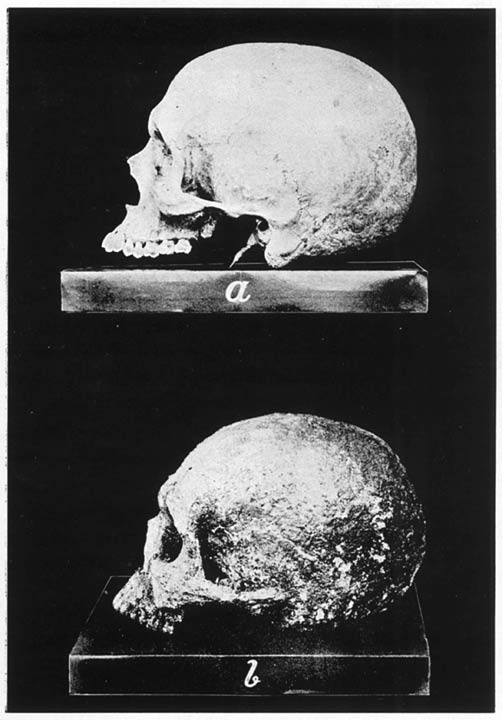
a. Skull of Tamil Man.
b. Skull From Aditanallur.
The following extracts from my notes show that the hyperdolichocephalic type survives in the dolichocephalic inhabitants of the Tamil country at the present day:—
Class Number examined. Cephalic index below 70.
Palli 40 64.4; 66.9; 67; 68.2; 68.9; 69.6.
Paraiyan 40 64.8; 69.2; 69.3; 69.5.
Vellāla 40 67.9; 69.6.
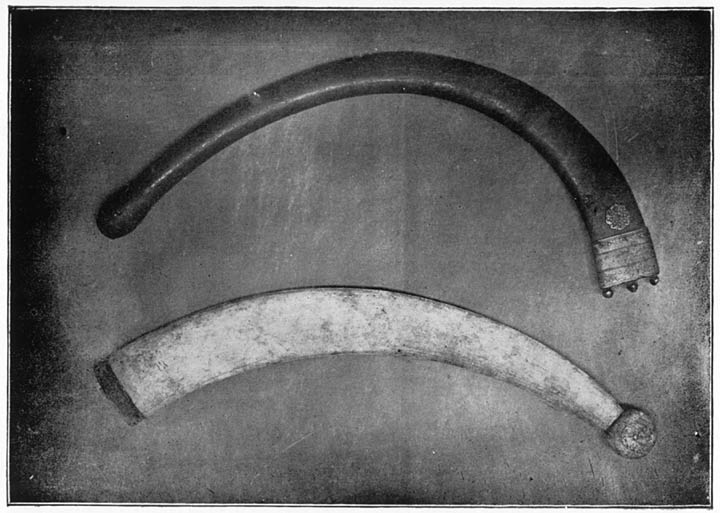
South Indian boomerangs.
In an article devoted to the Australians, Professor R. Semon writes as follows. “We must, without hesitation, presume that the ancestors of the Australians stood, at the time of their immigration to the continent, on a lower rung of culture than their living representatives of to-day. Whence, and in what manner, the immigration took place, it is difficult to determine. In the neighbouring quarter of the globe there lives no race, which is closely related to the Australians. Their nearest neighbours, the Papuans of New Guinea, the Malays of the Sunda Islands, and the Macris of New Zealand, stand in no close relationship to them. On the other hand, we find further away, among the Dravidian aborigines of India, types which remind us forcibly of the Australians in their anthropological characters. In drawing attention to the resemblance of the hill-tribes of the Deccan to the Australians, Huxley says: ‘An ordinary cooly, such as one can see among the sailors of any newly-arrived East India vessel, would, if stripped, pass very well for an Australian, although the skull and lower jaw are generally less coarse.’ Huxley here goes a little too far in his accentuation of the similarity of type. We are, however, undoubtedly confronted with a number of characters—skull formation, features, wavy curled hair—in common between the Australians and Dravidians, which gain in importance from the fact that, by the researches of Norris, Bleek, and Caldwell, a number of points of resemblance between the Australian and Dravidian languages have been discovered, and this despite the fact that the homes of the two races are so far apart, and that a number of races are wedged in between them, whose languages have no relationship whatever to either the Dravidian or Australian. There is much that speaks in favour of the view that the Australians and Dravidians sprang from a common main branch of the human race. According to the laborious researches of Paul and Fritz Sarasin, the Veddas of Ceylon, whom one might call pre-Dravidians, would represent an off-shoot from this main stem. When they branched off, they stood on a very low rung of development, and seem to have made hardly any progress worth mentioning.”
“The Scytho-Dravidian type of Western India, comprising the Marātha Brāahmans, the Kunbis and the Coorgs; probably formed by a mixture of Scythian and Dravidian elements, the former predominating in the higher groups, the latter in the lower. The head is broad; complexion fair; hair on face rather scanty; stature medium; nose moderately fine, and not conspicuously long.
“The Dravidian type extending from Ceylon to the valley of the Ganges, and pervading the whole of Madras, Hyderabad, the Central Provinces, most of Central India, and Chutia Nāgpur. Its most characteristic representatives are the Paniyans of the South Indian Hills and the Santals of Chutia Nāgpur. Probably the original type of the population of India, now modified to a varying extent by the admixture of Aryan, Scythian, and Mongoloid elements. In typical specimens, the stature is short or below mean; the complexion very dark, approaching black; hair plentiful with an occasional tendency to curl; eyes dark; head long; nose very broad, sometimes depressed at the root, but not so as to make the face appear flat.”
Class Language Number of subjects examined Cephalic Index Number of times index was 80 or above
Average Maximum, cm. Minimum, cm.
Sukun Sālē Marāthi 30 82.2 90.0 73.9 21
Suka Sālē Do. 30 81.8 88.2 76.1 22
Vakkaliga Canarese 50 81.7 93.8 72.5 27
Billava Tulu 50 80.1 91.5 71.0 27
Rangāri Marāthi 30 79.8 92.2 70.7 14
Agasa Canarese 40 78.5 85.7 73.2 13
Bant Tulu 40 78.0 91.2 70.8 12
Kāpu Telugu 49 78.0 87.6 71.6 16
Tota Balija Do. 39 78.0 86.0 73.3 10
Boya Do. 50 77.9 89.2 70.5 14
Dāsa Banajiga Canarese 40 77.8 86.2 72.0 11
Gāniga Do. 50 77.6 85.9 70.5 11
Golla Telugu 60 77.5 89.3 70.1 9
Kuruba Canarese 50 77.3 83.9 69.6 10
Bestha Telugu 60 77.1 85.1 70.5 9
Pallan Tamil 50 75.9 87.0 70.1 6
Mukkuvan Malayālam 40 75.1 83.5 68.6 2
Nāyar Do. 40 74.4 81.9 70.0 1
Vellāla Tamil 40 74.1 81.1 67.9 2
Agamudaiyan Do. 40 74.0 80.9 66.7 1
Paraiyan Do. 40 73.6 78.3 64.8
Palli Do. 40 73.0 80.0 64.4 1
Tiyan Malayālam 40 73.0 78.9 68.6
The difference in the character of the cranium is further brought out by the following tables, in which the details of the cephalic indices of typical classes in the five linguistic areas under consideration are recorded:—
(a) Tulu. Billava.
71 ◆◆
72 ◆◆
73 ◆
74
75
76 ◆◆◆
77 ◆◆◆◆◆
78 ◆◆◆◆◆◆
79 ◆◆
80 ◆◆ Average.
81 ◆◆◆
82 ◆◆◆◆◆
83 ◆◆◆◆◆◆◆◆
84 ◆◆◆◆
85 ◆◆◆◆
86 ◆
87
88
89
90 ◆
91 ◆
(b) Canarese. Vakkaliga.
73 ◆
74
75 ◆◆
76 ◆◆◆◆◆
77 ◆◆
78 ◆◆◆◆◆
79 ◆◆◆◆◆◆◆
80 ◆◆
81 ◆◆◆
82 ◆◆◆ Average.
83 ◆◆◆
84 ◆◆
85 ◆◆◆
86 ◆◆◆
87 ◆◆
88 ◆◆
89 ◆
90
91 ◆
92 ◆
93 ◆
94 ◆
(c) Telugu. Kāpu.
72 ◆
73 ◆◆◆◆◆◆◆
74 ◆◆
75 ◆◆
76 ◆◆◆◆◆◆◆
77 ◆◆◆◆◆◆
78 ◆ Average.
79 ◆◆◆◆
80 ◆◆◆◆
81 ◆◆◆◆◆◆◆
82 ◆◆
83 ◆◆◆
84 ◆
85 ◆
86
87
88 ◆
(d) Vellāla. Tamil.
68 ◆
69
70 ◆
71 ◆◆◆
72 ◆◆◆◆◆◆◆◆◆◆
73 ◆◆◆◆◆◆◆
74 ◆◆ Average.
75 ◆◆◆◆◆◆
76 ◆◆◆
77 ◆◆◆◆
78
79
80 ◆◆
81 ◆
(e) Malayālam. Nāyar.
70 ◆◆
71 ◆◆◆◆◆
72 ◆◆◆◆◆
73 ◆◆◆◆◆◆
74 ◆ Average.
75 ◆◆◆◆◆◆
76 ◆◆◆◆
77 ◆◆◆◆
78 ◆◆◆
79 ◆◆
80
81
82 ◆
These tables not only bring out the difference in the cephalic index of the classes selected as representative of the different areas, but further show that there is a greater constancy in the Tamil and Malayālam classes than in the Tulus, Canarese and Telugus. The number of individuals clustering round the average is conspicuously greater in the two former than in the three latter. I am not prepared to hazard any new theory to account for the marked difference in the type of cranium in the various areas under consideration, and must content myself with the observation that, whatever may have been the influence which has brought about the existing sub-brachycephalic or mesaticephalic type in the northern areas, this influence has not extended southward into the Tamil and Malayālam countries, where Dravidian man remains dolicho- or sub-dolichocephalic.
As an excellent example of constancy of type in the cephalic index, I may cite, en passant, the following results of measurement of the Todas, who inhabit the plateau of the Nilgiri hills:—
69 ◆◆
70 ◆◆◆◆◆◆◆
71 ◆◆◆◆◆◆◆◆◆◆◆
72 ◆◆◆◆◆◆◆
73 ◆◆◆◆◆◆◆◆◆◆◆◆◆◆ Average.
74 ◆◆◆◆◆◆◆◆◆◆◆◆◆◆◆◆◆◆◆◆◆
75 ◆◆◆◆◆◆◆◆◆
76 ◆◆◆◆◆◆
77 ◆
78 ◆
79 ◆
80
81 ◆
I pass on to the consideration of the type of cranium among various Brāhman classes. In the following tables, the results of measurement of representatives of Tulu, Canarese, Marāthi, Tamil and Malayālam Brāhmans are recorded:—
(a) Tulu. Shivalli.
69 ◆
70
71
72 ◆
73 ◆
74
75
76 ◆◆◆◆
77
78 ◆◆◆
79 ◆◆◆
80 ◆◆ Average.
81 ◆◆◆
82 ◆◆◆◆
83 ◆◆
84 ◆◆
85
86 ◆
87
88 ◆
89 ◆
90
91
92
93
94
95
96 ◆
(b) Canarese. Karnātaka Smarta.
70 ◆
71 ◆◆
72 ◆◆
73 ◆◆
74 ◆◆◆◆◆◆
75 ◆◆◆
76 ◆◆◆◆
77 ◆◆◆◆◆
78 ◆◆◆◆◆◆◆◆◆◆ Average.
79 ◆◆
80 ◆◆◆◆◆
81 ◆◆◆◆
82 ◆◆◆◆
83 ◆◆
84 ◆◆
85 ◆
86 ◆
87 ◆
88 ◆◆
89 ◆
(c) Tamil. Madras City.
69 ◆
70 ◆◆
71 ◆
72 ◆
73 ◆◆
74 ◆◆◆
75 ◆◆◆◆
76 ◆◆◆◆ Average.
77 ◆◆◆◆◆◆
78 ◆◆◆◆◆
79 ◆◆◆◆◆
80 ◆◆
81
82 ◆◆
83 ◆
84 ◆
(d) Tamil. Pattar.
69 ◆◆
70 ◆
71 ◆◆◆
72 ◆◆
73 ◆◆◆
74 Average.
75 ◆◆◆◆
76 ◆◆◆◆◆
77
78 ◆
79 ◆◆
80 ◆
81 ◆
Taking the evidence of the figures, they demonstrate that, like the other classes which have been analysed, the Brāhmans have a higher cephalic index, with a wider range, in the northern than in the southern area.
A character, with which I am very familiar, when measuring the heads of all sorts and conditions of natives of Southern India, is the absence of convexity of the segment formed by the posterior portion of the united parietal bones. The result of this absence of convexity is that the back of the head, instead of forming a curve gradually increasing from the top of the head towards the occipital region, as in the European skull figured in plate IIIa, forms a flattened area of considerable length almost at right angles to the base of the skull as in the “Hindu” skull represented in plate IIIb. This character is shown in a marked degree in plate IV, which represents a prosperous Linga Banajiga in the Canarese country.
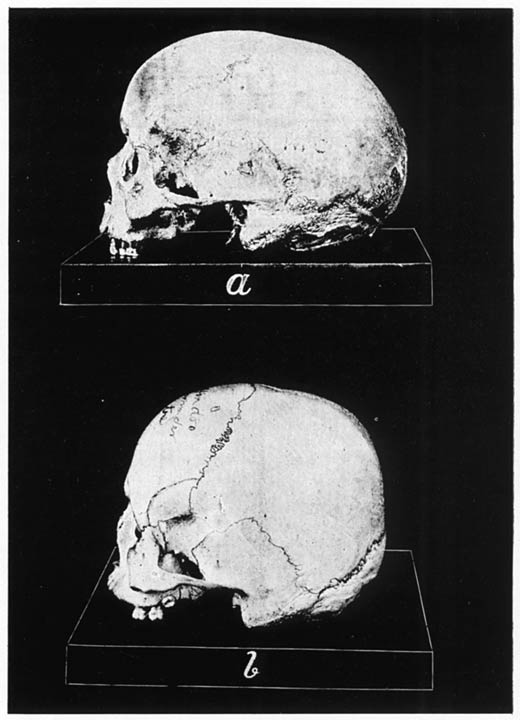
a. European Skull.
b. Hindu Skull.
Stature cm. Nasal Index.
Av. Max. Min. Av. Max. Min.
Jungle 155.2 170.3 150.2 84.6 105 72.3
Domesticated 158.7 170.4 148 81.2 90.5 70.8
Some jungle Chenchus, who inhabit the Nallamalai hills in the Kurnool district, still exhibit the primitive short stature and high nasal index, which are characteristic of the unadulterated jungle tribes. But there is a very conspicuous want of uniformity in their physical characters, and many individuals are to be met with, above middle height, or tall, with long narrow noses. A case is recorded, in which a brick-maker married a Chenchu girl. And I was told of a Bōya man who had married into the tribe, and was living in a gudem (Chenchu settlement).
Stature cm. Nasal Index.
Av. Max. Min. Av. Max. Min.
162.5 175 149.6 81.9 95.7 68.1
By the dolichocephalic type of cranium which has persisted, and which the Chenchus possess in common with various other jungle tribes, they are still, as shown by the following table, at once differentiated from the mesaticephalic dwellers in the plains near the foot of the Nallamalais:—
Cephalic Index. Number of times the index was 80 or over.
40 Chenchus 74.3 1
60 Gollas 77.5 9
50 Bōyas 77.9 14
39 Tōta Balijas 78.0 10
49 Kāpus 78.8 16
19 Upparas 78.8 4
16 Mangalas 78.8 7
17 Verukalas 78.6 6
12 Mēdaras 80.7 8
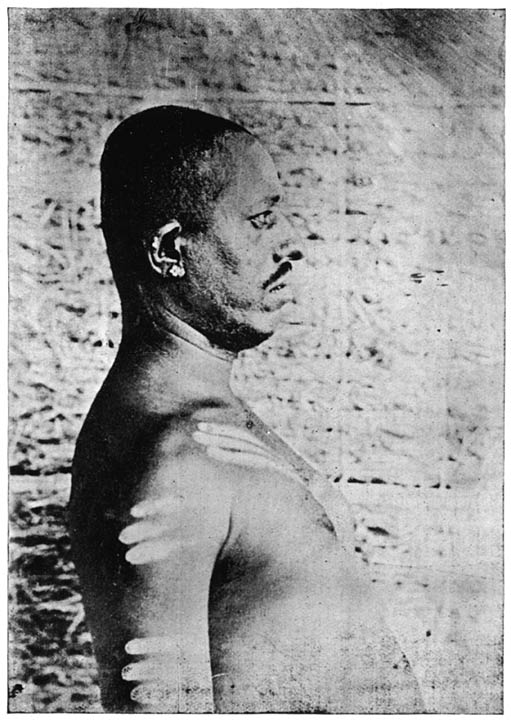
Linga Banajiga.
In support of M. Lapicque’s statement that the primitive inhabitant was dolichocephalic or sub-dolichocephalic, I may produce the evidence of the cephalic indices of the various jungle tribes which I have examined in the Tamil, Malayālam, and Telugu countries:—
Cephalic Index.
Average. Maximum. Minimum.
Kadir 72.9 80.0 69.1
Irula, Chingleput 73.1 78.6 68.4
Kānikar 73.4 78.9 69.1
Mala Vēdan 73.4 80.9 68.8
Panaiyan 74.0 81.1 69.4
Chenchu 74.3 80.5 64.3
Shōlaga 74.9 79.3 67.8
Paliyan 75.7 79.1 72.9
Irula, Nilgiris 75.8 80.9 70.8
Kurumba 76.5 83.3 71.8
Nasal Index.
Average. Maximum. Minimum.
Paniyan 95.1 108.6 72.9
Kādir 89.8 115.4 72.9
Kurumba 86.1 111.1 70.8
Shōlaga 85.1 107.7 72.8
Mala Vēdan 84.9 102.6 71.1
Irula, Nīlgiris 84.9 100. 72.3
Kānikar 84.6 105. 72.3
Chenchu 81.9 95.7 68.1
In the following table, I have brought together, for the purpose of comparison, the average stature and nasal index of various Dravidian classes inhabiting the plains of the Telugu, Tamil, Canarese, and Malayālam countries, and jungle tribes:—
Linguistic area. Nasal Index. Stature.
Paniyan Jungle tribe 95.1 157.4
Kādir Do. 89.8 157.7
Kurumba Do. 86.1 157.9
Shōlaga Do. 85.1 159.3
Irula, Nīlgiris Do. 84.9 159.8
Mala Vēdan Do. 84.9 154.2
Kānikar Do. 84.6 155.2
Chenchu Do. 81.9 162.5
Pallan Tamil 81.5 164.3
Mukkuvan Malayālam 81. 163.1
Paraiyan Tamil 80. 163.1
Palli Do. 77.9 162.5
Gāniga Canarese 76.1 165.8
Bestha Telugu 75.9 165.7
Tīyan Malayālam 75. 163.7
Kuruba Canarese 74.9 162.7
Bōya Telugu 74.4 163.9
Tōta Balija Do. 74.4 163.9
Agasa Canarese 74.3 162.4
Agamudaiyan Tamil 74.2 165.8
Golla Telugu 74.1 163.8
Vellāla Tamil 73.1 162.4
Vakkaliga Canarese 73. 167.2
Dāsa Banajiga Do. 72.8 165.3
Kāpu Telugu 72.8 164.5
Nāyar Malayālam 71.1 165.2
This table demonstrates very clearly an unbroken series ranging from the jungle men, short of stature and platyrhine, to the leptorhine Nāyars and other classes.
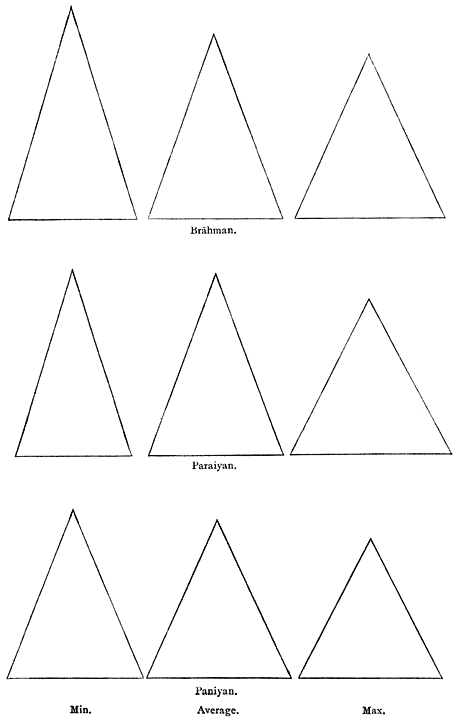
PLATE V.
DIAGRAMS OF NOSES.
In plate V are figured a series of triangles representing (natural size) the maxima, minima, and average nasal indices of Brāhmans of Madras city (belonging to the poorer classes), Tamil Paraiyans, and Paniyans. There is obviously far less connection between the Brāhman minimum and the Paraiyan maximum than between the Brāhman and Paraiyan maxima and the Paniyan average; and the frequent occurrence of high nasal indices, resulting from short, broad noses, in many classes has to be accounted for. Sir Alfred Lyall somewhere refers to the gradual Brāhmanising of the aboriginal non-Arayan, or casteless tribes. “They pass,” he writes, “into Brāhmanists by a natural upward transition, which leads them to adopt the religion of the castes immediately above them in the social scale of the composite population, among which they settle down; and we may reasonably guess that this process has been working for centuries.” In the Madras Census Report, 1891, Mr. H. A. Stuart states that “it has often been asserted, and is now the general belief, that the Brāhmans of the South are not pure Aryans, but are a mixed Aryan and Dravidian race. In the earliest times, the caste division was much less rigid than now, and a person of another caste could become a Brāhman by attaining the Brāhmanical standard of knowledge, and assuming Brāhmanical functions; and, when we see the Nambūdiri Brāhmans, even at the present day, contracting alliances, informal though they be, with the women of the country, it is not difficult to believe that, on their first arrival, such unions were even more common, and that the children born of them would be recognised as Brāhmans, though perhaps regarded as an inferior class. However, those Brāhmans, in whose veins mixed blood is supposed to run, are even to this day regarded as lower in the social scale, and are not allowed to mix freely with the pure Brāhman community.”
Popular traditions allude to wholesale conversions of non-Brāhmans into Brāhmans. According to such traditions, Rājas used to feed very large numbers of Brāhmans (a lakh of Brāhmans) in expiation of some sin, or to gain religious merit. To make up this large number, non-Brāhmans are said to have been made Brāhmans at the bidding of the Rājas. Here and there are found a few sections of Brāhmans, whom the more orthodox Brāhmans do not recognise as such, though the ordinary members of the community regard them as an inferior class of Brāhmans. As an instance may be cited the Mārakas of the Mysore Province. Though it is difficult to disprove the claim put forward by these people, some demur to their being regarded as Brāhmans.
Between a Brāhman of high culture, with fair complexion, and long, narrow nose on the one hand, and a less highly civilised Brāhman with dark skin and short broad nose on the other, there is a vast difference, which can only be reasonably explained on the assumption of racial admixture; and it is no insult to the higher members of the Brāhman community to trace, in their more lowly brethren, the result of crossing with a dark-skinned, and broad-nosed race of short stature. Whether the jungle tribe are, as I believe, the microscopic remnant of a pre-Dravidian people, or, as some hold, of Dravidians driven by a conquering race to the seclusion of the jungles, it is to the lasting influence of some such broad-nosed ancestor that the high nasal index of many of the inhabitants of Southern India must, it seems to me, be attributed. Viewed in the light of this remark, the connection between the following mixed collection of individuals, all of very dark colour, short of stature, and with nasal index exceeding 90, calls for no explanation:—
Stature. Nasal height. Nasal breadth. Nasal Index.
cm. cm. cm.
Vakkaliga 156 4.3 3.9 90.7
Mōger 160 4.3 3.9 90.7
Saiyad Muhammadan 160 4.4 4 90.9
Kammalan 154.4 4.4 4 90.9
Chakkiliyan 156.8 4.4 4 90.9
Vellāla 154.8 4.7 4.3 91.6
Malaiyāli 158.8 4 3.7 92.5
Konga Vellāla 157 4.1 3.8 92.7
Pattar Brāhman 157.6 4.2 3.9 92.9
Oddē 159.6 4.3 4 93
Smarta Brāhman 159 4.1 3.9 95.1
Palli 157.8 4.1 3.9 95.1
Pallan 155.8 4.2 4.2 100
Bestha 156.8 4.3 4.3 100
Mukkuvan 150.8 4 4 100
Agasa 156.4 4.3 4.3 100
Tamil Paraiyan 160 4 4.2 105
The five principal languages are Tamil, Telugu, Malayālam, Canarese, and Oriya. Of these, Oriya belongs to the eastern group of the Indo-Aryan family, and is spoken in Ganjam, and a portion of the Vizagapatam district. The population speaking each of these languages, as recorded at the census, 1901, was as follows:—
Tamil 15,543,383
Telugu 14,315,304
Malayālam 2,854,145
Oriya 1,809,336
Canarese 1,530,688
In the preparation of the following brief summary of the other vernacular languages and dialects, I have indented mainly on the Linguistic Survey of India, and the Madras Census Report, 1901.
Savara.—The language of the Savaras of Ganjam and Vizagapatam. One of the Mundā languages. Concerning the Mundā, linguistic family, Mr. Grierson writes as follows. “The denomination Mundā (adopted by Max Müller) was not long allowed to stand unchallenged. Sir George Campbell in 1866 proposed to call the family Kolarian. He was of opinion that Kol had an older form Kolar, which he thought to be identical with Kanarese Kallar, thieves. There is absolutely no foundation for this supposition. Moreover, the name Kolarian is objectionable, as seeming to suggest a connexion with Aryan which does not exist. The principal home of the Mundā languages at the present day is the Chota Nagpur plateau. The Mundā race is much more widely spread than the Mundā languages. It has already been remarked that it is identical with the Dravidian race, which forms the bulk of the population of Southern India.”
Gadaba.—Spoken by the Gadabas of Vizagapatam and Ganjam. One of the Mundā languages.
Kond, Kandhī, or Kui.—The language of the Kondhs of Ganjam and Vizagapatam.
Gōndi.—The language of the Gōnds, a tribe which belongs to the Central Provinces, but has overflowed into Ganjam and Vizagapatam.
Gattu.—A dialect of Gōndi, spoken by some of the Gōnds in Vizagapatam.
Kōya or Kōi.—A dialect of Gōndi, spoken by the Kōyis in the Vizagapatam and Godāvari districts.
Poroja, Parjā, or Parjī.—A dialect of Gōndi.
Tulu.—The language largely spoken in South Canara (the ancient Tuluva). It is described by Bishop Caldwell as one of the most highly developed languages of the Dravidian family.
Bellera.—Spoken by the Belleras of South Canara, and regarded as a dialect of Canarese or Tulu.
Kota.—A mixture of Canarese and Tamil spoken by the Kotas of the Nīlgiri hills.
Badaga.—The language of the Badagas of the Nīlgiri hills. Said to be an ancient form of Canarese.
Irula.—Spoken by the Irulas of the Nīlgiris, and said to be a dialect of Tamil. According to Mr. Stuart, Kasuba or Kasuva is another dialect of Tamil spoken by the sub-division of the Irulas which bears the same name.
Kurumba.—Spoken by the Kurumbas of the Nīlgiri hills, Malabar, and Mysore, and regarded as a dialect of Canarese.
Konkani.—A dialect of Marāthi, spoken almost entirely in the South Canara district by Sārasvat and Konkani Brāhmans and Roman Catholic Christians.
Marāthi.—In the Tanjore district, the descendants of the former Marātha Rajas of Tanjore speak this language. It is also spoken in the Bellary district, which was formerly under Marātha dominion, by various Marātha castes, and in the feudatory State of Sandūr.
Patnūli or Khatri.—A dialect of Gujarāti, spoken by the Patnūlkārans who have settled for the most part in the town of Madura. They are immigrants from Saurāshtra in Gujarāt, who are said to have come south at the invitation of the Nāyak kings of Madura.
Korava or Yerukala.—A dialect of Tamil spoken by the nomad caste bearing these names. Like the Lambādis, they have a thieves’ slang.
Vadāri.—Recorded as a vulgar Telugu dialect spoken by a wandering tribe of quarrymen in the Bombay Presidency, the Berars, and elsewhere. They are doubtless Oddēs or Wudder navvies, who have migrated from their home in the Telugu country.
TABLE A.
Head Measurements.
C. = Canarese. M. = Malayālam. Tam. = Tamil. Tu. = Tulu. J. = Jungle Tribe. Mar. = Marāthi. Tel. = Telugu.
No. Caste or Tribe. Length cm. Breadth cm. Index. Index 80 and over.
Av. Max. Min. Av. Max. Min. Av. Max. Min.
40 Badaga, Nīlgiris 18.9 20.2 18. 13.6 14.5 12.8 71.7 77.5 66.1 0
M. 18 Kānikar 18.8 19.5 18.2 13.6 14.2 13. 72.5 76.1 68.1 0
M. 40 Māppilla, Muhammadan 18.9 20. 18. 13.7 14.6 13. 72.8 78.5 68. 0
J. 23 Kādir 18.4 19.4 17.2 13.4 13.8 12.5 72.9 80. 69. 1
M. 40 Tiyan 18.9 20.3 17.8 13.7 14.9 12.6 73. 80.3 68.5 1
Tam. 40 Palli 18.6 19.6 17.4 13.6 14.6 12.1 73. 80. 64.4 1
Tam. 40 Irula 18.5 19.6 17. 13.5 14.4 12.8 73.1 78.6 68.4 0
82 Toda, Nīlgiris 19.4 20.4 18.2 14.2 15.2 13.3 73.3 81.3 68.7 1
J. 20 Kāanikar 18.5 19.4 17.8 13.6 14.2 13. 73.4 78.9 69.1 0
Tam. 29 Ambattan 18.6 19.2 18. 13.7 14.6 12.5 73.4 76.9 67.2 0
J. 25 Mala Vēdan 18.5 19.6 17.4 13.6 14.6 13. 73.4 80.9 68.8 1
Tam. 40 Paraiyan 18.6 19.7 17. 13.7 14.5 13. 73.6 78.3 64.8 0
M. 25 Cheruman 18.3 19.3 17.1 13.5 14.2 12.3 73.9 80.1 67.7 1
M. 25 Paniyan 18.4 19.3 17.5 13.6 14.9 13. 74. 81.1 69.4 1
Tam. 40 Agamudaiyan 18.8 20. 17.8 13.9 14.6 12.8 74. 80.9 66.7 1
25 Kota, Nīlgiris 19.2 20.2 18.3 14.2 15.1 13.4 74.1 79.1 69.9 0
Tam. 40 Vellāla 18.6 19.6 17.7 13.8 14.6 13.1 74.1 81.1 67.9 2
Tam. 20 Smarta Brāhman 18. 19.2 17.8 14. 14.8 13. 74.2 80.4 67.8 1
Tam. 50 Malaiyāli 18.3 19.3 17. 13.6 14.4 12.8 74.3 82.8 61. 2
J. 40 Chenchu 18.2 19.6 17.2 13.5 14.4 12.4 74.3 80.5 64.3 1
M. 40 Nāyar 18.7 19.8 17.4 13.9 15. 13.2 74.4 81.9 70.4 1
Tam. 25 Pattar Brāhman 18.8 20.3 17.2 14. 15.1 13.1 74.5 81.4 69.1 2
Tam. 23 Malasar 18.2 19.2 17.3 13.5 14.4 12.4 74.5 80. 70. 1
J. 57 Urāli 18.2 19.3 17.2 13.5 14.4 12.8 74.6 81.9 69.8 1
Tam. 50 Chakkiliyan 18.6 19.8 17.6 13.9 15.2 13. 74.9 80.9 70.4 1
J. 20 Shōlaga 18.2 19.4 17.2 13.6 14.6 12.2 74.9 79.3 67.8 0
Tel. 30 Mādiga, Adoni 18.6 20.2 17. 13.9 14.6 13. 75. 82.2 71.3 2
Tam. 40 Kammālan 18.4 19.7 17.3 13.7 14.7 13.1 75. 81.5 68.4 5
M. 40 Mukkuvan 19. 20.4 17.6 14.2 15.2 13.4 75.1 83.5 68.6 2
Tam. 40 Sheik Muhammadan 18.3 20. 16.7 13.8 14.5 12.8 75.6 81.6 71.5 2
C. 50 Dāyarē Muhammadan 18.5 19.7 17. 14. 15. 13. 75.6 83.3 68.5 8
Tam. 40 Saiyad Muhammadan 18.5 19.6 17.2 14. 15. 13.1 75.6 84.9 68.2 2
J. 26 Paliyan 17.8 18.6 17.1 13.5 14. 13. 75.7 79.1 72.8 0
J. 25 Irula 18. 19.1 17. 13.7 14.3 13.1 75.8 80.9 70.8 1
Tam. 50 Pallan 18.3 19.6 17.2 13.9 14.9 12.6 75.9 87. 70.1 6
Tam. 42 Idaiyan 18.3 19. 16.8 14. 14.6 13.2 76. 81.9 71.3 5
Tam. 40 Pathān Muhammadan 18.5 19.6 17.2 14.2 15.2 13.3 76.2 83.1 71.1 2
M. 24 Pulayan 18.3 19.3 17. 13.9 15. 13. 76.3 83. 72.3 5
J. 22 Kurumba 17.9 18.7 16.9 13.7 14.5 13. 76.4 83.3 71.8 2
Tel. 40 Mādiga, Hospet 18.3 20. 17.2 14. 15.4 13. 76.5 83.3 68. 8
C. 50 Sēdan 18.4 19.4 17. 14.1 14.8 13.2 76.6 82.6 72.6 7
C. 40 Toreya 18.3 19.2 17.2 14.1 15.2 13. 76.6 86.4 70.2 5
Mar. 24 Dēsastha Brāhman 18.7 20.2 18. 14.4 15.2 13.2 77. 83.4 71. 4
Tel. 30 Māla 18.4 19.8 16.8 14.2 14.8 13.4 77.1 85.9 70.3 6
Tel. 60 Bestha 18.4 19.4 16.6 14.2 15.6 13.2 77.1 85.1 70.5 11
C. 50 Kuruba, Mysore 18.1 19.4 17.2 14. 15. 12.8 77.3 83.9 70.3 9
Tel. 40 Oddē 18.2 20.4 17.2 14.1 15.2 13.4 77.3 83.1 70.1 10
Tel. 60 Golla 18.2 19.6 16.4 14.1 15.1 13.2 77.5 89.3 70.1 12
C. 40 Dāsa Banajiga 18.6 19.8 17.3 14.4 15.6 13.4 77.8 85.5 72. 11
Tel. 25 Kōmati, Adoni 18.2 19.4 17. 14.3 15.2 13.3 77.9 88.2 72.2 8
C. 40 Okkiliyan, Coimbatore 18.2 19.4 17. 14.2 15.2 13.2 77.9 88.2 71.7 9
C. 50 Bōya 18. 19.2 16.8 14. 15.2 13. 77.9 89.2 70.5 14
Tu. 40 Bant 18.5 20. 17. 14.4 16.6 13.1 78. 91.2 70.8 12
Tel. 49 Kāpu 18.2 19.8 16.8 14.2 15.6 13.2 78. 87.6 71.6 16
Tel. 39 Tōta Balija 18.1 19. 17. 14.1 15. 13. 78. 86. 73.3 10
C. 60 Mādhva Brahman 18.4 19.8 16.6 14.3 15.2 13.2 78. 88.5 68. 18
C. 40 Bēdar, Hospet 18.4 20. 16.8 14.3 15.2 13.2 78.1 85.3 70.8 13
Tel. 38 Uppara 18. 19. 16.2 14. 15.2 13.2 78.1 87.8 71.7 9
C. 25 Linga Banajiga, Sandūr 18.2 19.4 16.6 14.2 15. 13.4 78.3 87.9 73.7 7
C. 60 Karnataka Smarta Brāhman 18.5 20.7 17. 14.4 15.8 13.4 78.4 89.5 69.8 19
Tel. 30 Padma Sālē 17.8 19. 16.5 14.1 15.1 13.2 78.7 86.2 72.8 10
C. 50 Kuruba, Hospet 18.1 19.6 17. 14.2 15.4 13.4 78.9 88.4 72.9 19
Tel. 50 Telugu Banajiga 18.4 19.2 16.6 14.5 15.4 13.2 79. 89.5 71.9 18
C. 50 Panchāla 18.3 19.4 17.2 14.4 15.6 13. 79. 89.5 71.3 23
C. 50 Holeya 17.9 19.6 16.6 14.1 15.2 13.2 79.1 87.4 70. 20
C. 25 Bēdar, Adoni 18.1 19.2 17. 14.4 15. 13.6 79.4 85.9 74.1 12
Mar. 30 Rangāri 18.1 19.8 16.8 14.5 15.4 13.8 79.8 92.2 70.7 14
Tel. 25 Togata 17.7 19. 16.2 14.2 14.8 13.6 80. 88.1 73.7 13
Tu. 50 Billava 18.2 20.6 16.4 14.6 15.6 13.2 80.1 91.5 71. 28
C. 30 Linga Banajiga, Adoni 18.1 19.4 16.7 14.4 15.2 13.6 80.1 87.4 74.1 14
C. 50 Hebbar Brāhman 18.4 19.6 17.2 14.7 16.4 13.4 80.1 92.1 72.8 21
C. 50 Mandya Brāhman 18.5 20.2 16.6 14.8 15.8 13.4 80.2 88.2 69.8 31
Tu. 30 Shivalli Brāhman 18.5 19.6 16.8 14.9 16.2 13.6 80.4 96.4 72.3 17
C. 20 Gāniga 18. 19.1 16.6 14.4 15.2 14. 80.5 86.7 74.5 11
C. 20 Dēvānga 18. 19.6 17. 14.5 15.5 13.6 80.8 87.1 74.7 10
Tel. 25 Kōmati 17.6 18.8 16.4 14.3 14.8 13.4 81. 87.1 74.5 16
C. 50 Vakkaliga, Mysore 17.7 19.5 15.8 14.5 15.7 13.2 81.7 93.8 72.5 27
Mar. 30 Suka Sālē 17.7 18.8 16.6 14.5 15. 13.4 81.8 88.2 76.1 22
Mar. 30 Sukūn Sālē 17.6 19. 16. 14.4 15.4 13.6 82.2 90. 73.9 21
TABLE B.
Stature and Nasal Index.
No. Caste or Tribe. Stature cm. Nasal Index.
Av. Max. Min. Av. Max. Min.
M. 40 Nāyar 165.2 179. 152.2 71.1 78.7 54.4
C. 50 Hebbar Brāhman 163.2 174.4 150.8 71.2 87.2 55.4
C. 60 Karnataka Smarta Brāhman 164.2 176. 150.6 71.5 91.5 61.1
C. 50 Dāyarē Muhammadan 166.4 181.8 150. 71.5 82.6 59.3
Mar. 60 Mādhva Brāhman 163.3 176.2 151.8 72. 93.2 58.8
Tu. 40 Bant 165.7 179.2 155.8 72.2 86.1 61.6
Tam. 40 Sheik Muhammadan 164.6 174.8 153.8 72.4 87. 60.
Tam. 29 Ambattan 165.7 173.2 153.2 72.4 84.3 57.9
Tu. 50 Billava 163.2 175.8 149.4 72.6 92.8 60.
C. 50 Sēdan 163.3 177.2 153.2 72.7 92.9 59.3
C. 40 Dāsa Banajiga 165.3 177.8 152. 72.8 82.6 59.3
Tel. 49 Kāpu 164.5 177.6 152.6 72.8 90.5 62.7
C. 50 Mandya Brāhman 165.7 177.8 150.6 73. 97.8 58.4
C. 50 Vakkaliga, Mysore 167.2 181. 155.2 73. 85. 62.3
Tam. 40 Vellāla 162.4 172.8 153.2 73.1 91.5 60.8
Tel. 30 Padma Sālē 159.9 171.4 153.8 73.2 83.7 61.5
C. 40 Okkiliyan 166. 179.6 154.6 73.5 90.7 63.5
C. 50 Kuruba, Mysore 163.6 174.2 152. 73.5 88.4 64.
Mar. 30 Rangāri 161.3 168.4 154.4 73.6 84.1 63.5
Tam. 42 Idaiyan 164.3 178. 154.6 73.6 91. 62.7
Tel. 25 K mati, Sandūr 162.5 169.2 153.4 74.1 88.9 62.5
C. 30 Linga Banajiga 163.4 171.2 154. 74.1 85.7 60.4
Tel. 60 Golla 163.8 173.8 151. 74.1 83. 61.5
M. 40 Tiyan 164.2 171.6 155.2 74.2 85.7 61.5
Tam. 40 Agamudaiyan 165.8 175.6 153.6 74.2 88.9 73.8
Tel. 39 Tōta Balija 163.9 176.8 149.6 74.4 83. 65.4
C. 25 Linga Banajiga, Sandūr 165.6 173. 157.8 74.6 86.4 61.5
Mar. 30 Sukūn Sālē 160.3 167.6 152.5 74.8 84.4 61.5
Mar. 30 Suka Sālē 161.1 170. 147.8 74.8 86.1 62.3
C. 50 Panchāla 162.3 177.2 151.6 74.8 88.9 62.
C. 50 Kuruba, Hospet 162.7 175.4 162.2 74.9 92.2 75.8
.. 82 Toda, Nīlgiris 169.8 186.8 157.6 74.9 89.1 61.2
C. 50 Bōya 160.8 171.6 151.9 75. 86. 66.
Tel. 50 Telugu Banajiga 164.6 176.2 151.6 75. 97.7 66.
M. 40 Māppilla, Muhammadan 164.8 174.4 145. 75.1 88.1 64.
C. 50 Holeya 162.8 175.2 151.5 75.1 88.9 64.6
... 40 Badaga, Nīlgiris 164.1 180.2 154. 75.6 88.4 62.7
Mar. 24 Dēsastha Brāhman 163.4 175. 151.4 75.8 87.2 66.7
Tel. 60 Bestha 165.7 181. 155. 75.9 100. 63.3
C. 30 Toreya 164.2 180.6 156.4 76.1 87.2 62.7
Tel. 30 Māla 163.9 175. 153.8 76.2 93.2 67.3
Tam. 40 Pathān Muhammadan 164.4 177.6 155.6 76.2 83.1 71.1
Tam. 25 Pattar Brāhman 164.3 175. 153.4 76.5 95.3 64.7
... 25 Kota, Nīlgiris 162.9 174.2 155. 77.2 92.9 64.
Tam. 40 Palli 162.5 171.6 149.8 77.3 90.5 68.3
Tam. 40 Kammālan 159.7 171.8 146.4 77.3 90.9 63.3
Tel. 40 Oddē 164.4 172.4 155. 77.3 93. 65.4
C. 40 Bēdar, Hospet 165.4 176.6 156. 77.5 93. 78.1
Tel. 40 Mādiga, Hospet 162.9 173.4 152.2 77.5 90.1 66.7
Tel. 30 Togata 160.5 168.9 151.4 77.5 93.9 68.8
Tam. 50 Malaiyāli 163.9 173.2 153.2 77.8 100. 63.8
Tel. 25 Kōmati, Adoni 161. 168.3 153.2 77.8 100. 65.3
Tam. 40 Palli 162.5 169.4 151. 77.9 95.1 60.8
M. 25 Cheruman 157.5 166.4 145.8 78.1 88.9 69.6
Tam. 50 Chakkiliyan 162.2 174.5 150.3 78.9 97.6 64.
M. 24 Pulayan 153. 162.6 143.4 79.3 92.7 68.
C. 25 Bēdar, Adoni 165.4 176.2 156.6 79.4 91. 65.2
Tam. 40 Paraiyan 162.1 171.4 149.4 80. 91.8 66.
J. 57 Urali 159.5 171.6 147.8 80.1 97.7 66.7
Tam. 40 Irula 159.9 166.8 150.2 80.4 90.5 79.
Tel. 30 Mādiga, Adoni 163.1 173.2 154.2 80.8 102.6 69.4
M. 40 Mukkuvan 163.1 177.8 150.8 81. 104.8 62.5
M. 18 Kānikar 158.7 170.4 148. 81.2 90.5 70.8
Tam. 50 Pallan 164.3 177.6 151.5 81.5 100. 68.8
J. 40 Chenchu 162.5 175. 148. 81.9 95.7 68.1
J. 26 Pulayan 150.5 158.4 143.1 82.9 100.2 70.8
J. 20 Kānikar 155.2 170.3 150.2 84.6 105. 72.3
J. 25 Mala Vēdan 154.2 163.8 140.8 84.9 102.6 71.1
J. 25 Irula 159.8 168. 152. 84.9 100. 72.3
J. 20 Shōlaga 159.3 170.4 151.2 85.1 107.7 72.8
J. 22 Kurumba 158. 167. 149.6 86.1 111.1 70.8
J. 23 Malasar 161.2 170.5 152.8 87.2 102.4 75.4
J. 23 Kādir 157.7 169.4 148.6 89.8 115.4 72.9
J. 25 Paniyan 157.4 171.6 152. 95.1 108.6 72.9