A MONOGRAPH UPON PARÁ RUBBER (continued 2)
Reading edition
Article second provides a prize of 50 contos of réis paper money at most, to be awarded at the Government’s discretion, to the discoverer or inventor of some process of manufacturing or preparing rubber, which may afford undeniable advantages as regards its manufacture and reduces the inferior classes to a single standard of rubber “fina,” ensuring a high price for the article.
The State of Amazonas also, as per Law No. 675 of May 20, 1911, authorizes the Executive Power to concede any advisable favors to individuals or undertakings that may bind themselves to put up in Manáos factories for refinement of rubber by means of new and improved methods, so as to obtain a standard class of rubber for exportation.
The Commercial, Industrial and Agricultural Congress held at Manáos in February, 1910, resolved in its final conclusions to recommend to the Brazilian Government and the immediate neighboring Republics, the reforming of their freights, especially as regards the food supplies; grant favors to navigation; free rivers from obstructions; construct railways; create colonial centres; admit of the pressing and absolute necessity to plant rubber trees in the Amazon valley and open new fields of plantation; suggests the establishment of permanent exhibitions of a highly educational character; advises the rubber extractors not to give up the process of curing by smoke and condemns entirely the use of acids or alum in the coagulation, and calls attention to the question of the commercial classes of rubber which should be properly defined. Going into details it requests numerous favors for the agriculturists that may go in for planting hevea rubber trees, cacao and cereals, cotton and other products, and that prizes be granted to cattle breeders, experimental fields be opened, as also laboratories of analysis and a service be established for dealing with the yellow fever and paludinous fevers, etc.
Such an important matter could not be solved by half-measures; it was necessary and even indispensable to adopt a plan embracing all the solutions suggested and proclaimed as being elements of success, thus obtaining a united plan entailing some complexity in its execution, it is true, yet clear and simple in its combined purposes.
And this desideratum was achieved by the Federal Law No. 2,543 A of the fifth of January, 1912.
MEASURES ADOPTED BY THE FEDERAL GOVERNMENT—RIO DE JANEIRO CONGRESS OF RUBBER—REGULATIONS OF THE NEW RUBBER DEFENSE ACT
For a long time back the attention of the Brazilian Government has been drawn to the necessity of adopting a plan of defence for India rubber, which might solve in a practical and decisive manner the so-long-debated “problem of the North.”
In August, 1911, the Minister of Agriculture, after a close study, made with the aid of specialists and persons having full knowledge of that region of the country, drew up a project in the above sense and, recognizing the necessity of still hearing those who are most directly interested in the matter, convened a meeting of representatives of the State Governments, Commercial Associations and other Institutions which might lead to a perfect understanding of what was most advisable to do.
The first meeting was held on August 14, and the Government’s plan was hailed with great applause, the same being approved, with slight alterations, in the last session which took place on the twenty-second of the same month.
By Message of September 14, 1911, Marshal Hermes da Fonseca, President of the Republic, sent to the National Congress for approval, the plan duly elaborated; after being carefully studied by Congress it was approved and converted into Law, under No. 2,543 A and was sanctioned on January 5, 1912.
On April 17, 1912, Decree No. 9,521 was enacted with the Regulation for carrying out the measures and services provided for in the law of January.
The measures and services prescribed by Law No. 2,543 A of January, 1912, for the economic defence of rubber, regulated by Decree No. 9,521 of April 17, 1912, are as follows:
I. To encourage the rubber extractor and the cultivator of the principal rubber-producing trees.
II. To form industries for the refinement and manufacture of rubber articles.
III. To aid immigrants, both from the country and those who have recently arrived from abroad, and the workmen already established in the Amazon valley.
IV. To render transport easy and decrease the cost in the Amazon valley.
V. To install productive centres of food supplies in the Amazon valley.
VI. To hold three-yearly exhibitions in Rio de Janeiro, comprehending all that relates to the rubber industry of the country.
The measures contained in the law in regard to making agreements with the States which produce rubber “seringa,” with a view to decreasing the export duties and protecting the rubber trade, will be dealt with separately, and with regard to the definition and legalization of freeholds in the Federal Territory in Acre and the revision and consolidation of regulations concerning the coasting service of steamers (included in No. IV) special By-Laws will be drawn up which shall be published in due course.
The measures in reference to the first group and whose object is to encourage the extracting industry and plantation of the principal rubber producing trees are: First, reduction of the cost of tools and materials employed in the rubber trade; second, granting of prizes in money to the planters of the principal rubber trees; third, installation of experimental stations for the cultivation of rubber.
For the reduction in the cost of utensils and materials, free entrance is granted with exemption from any import duties, as well as to everything intended for the cultivation of the seringueira, caucho, maniçoba and mangabeira and the gathering-in and improving of rubber extracted from those trees; whether as regards the extracting industry or the plantation work.
These pecuniary premiums for encouraging the industry, will be conceded to all those who plant entirely anew, or who devote themselves to replanting; in the first case and for every group of 12 hectares, the premiums will be Rs. 2:500$000 when the planting is of “seringueira”; Rs. 1:500$000 when it treats of “caucho” or “maniçoba”; and 900$000 when it is mangabeira; in the second case and for every group of 25 hectares the premiums will be 2:000$000, 1:000$000 and 720$000 respectively. The minimum number of trees for the new plantations will be 250 per hectare for the seringueira and caucho, and 400 for the maniçoba and mangabeira; in the case of re-planting, the distance to keep between the trees should be from 6 metres to 6m50 for the first mentioned case and 5 metres for the second. In order to obtain the payment of the premium, it is requisite that the trees be well cared for, and that not more than 15 per cent are damaged or useless.
The subsidiary cultivation of alimentitious plants or of those useful for industrial purposes, will secure an annual gratuity corresponding to 5 per cent of the value of the principal premium.
For the cultivation of the seringueira, experimental stations will be localized in the Territory of the Acre, and in the States of Matto Grosso, Amazonas, Pará, Maranhão, Piauhy and Bahia and for the growing of the maniçoba conjointly with that of the mangabeira in the States of Piauhy, Ceará, Pernambuco, Bahia, Minas Geraes, S. Paulo, Goyaz, Paraná and Matto Grosso.
Each station will have an area of from 80 to 100 hectares, the land selected having to be suited to the climatic and agrological conditions exacted by the nature or quality of the plant to be cultivated.
Besides the grounds for experimental cultivation, each station will possess laboratories of vegetable physiology for the testing of seeds and phytopathology, of agricultural entomology; of agricultural vegetable chemistry and bromotology and of microbiology and technology; an agricultural and woodlands museum; a gallery of machines and a meteorological post. Thus it will be properly equipped in order to serve those who may consult it upon any matter whatsoever, within the scope of its competency, carry out the analysis of manures and other chemical fertilizers, plants and waters, distribute plants and selected seeds, study the diseases common to growing plants and the means of combatting them, making commonly known by means of the publication of an official bulletin which will be distributed gratuitously to all interested parties, the results obtained relative to the most practical and economical means of carrying out the cultivation of rubber, the best means of bettering its condition, its preservation, the packing of the products, etc.
In order to stimulate the creation in Brazil of the industries for refining and manufacturing all kinds of articles made of rubber, monetary premiums will be instituted as well as exemption from taxes, the right of disappropriation for private individuals, that may be necessary for the installation and mounting of factories and the preference of the Government will be granted for such articles, which each factory produces, when supplies are made to the army and to the navy, as well as to other public departments.
The premiums will be as high as 400:000$000 for the first factory for the refining of seringa rubber that may be established in each of the cities of Belém and Manáos; up to 100:000$000 for the first rubber-refining factory of “maniçoba” and of mangabeira, which may be installed in each one of the States of Piauhy, Ceará, Rio Grande do Norte, Pernambuco, Bahia, Minas Geraes and São Paulo; and finally of 500:000$000 for the first factory of rubber-made articles, which is inaugurated in Manáos, Belém, Recife, Bahia and Rio de Janeiro.
The exemption from import duties embraces the rights of importation for the materials, machinery, utensils and the necessary tools for the construction and mounting of the factory and the chemical substances, textile articles and divers materials, combustibles and lubricants indispensable for the up-keep and working of the factory during the time-term of 25 years; and immunity from the State and Municipal taxes for the time term of the contract by reason of the factory being considered a Federal Service.
The premium in cash shall only be considered when the capital of the factory is equivalent to 4 times its value. The payment of such premium will be effected immediately after the inauguration of the factory.
The problem of assisting immigrants both national and foreign, who may have just arrived and the laborers established in the valley of the Amazon, is met by the installation of emigrant-hotels in Belém, in Manáos and in the Territory of the Acre, by the construction of hospitals in the Interior and by the creation of agricultural colonies adjacent to such hospitals.
The hotels for the reception of immigrants shall follow the rule and be guided in their installation by that of the Ilha das Flores in Rio de Janeiro, that latter being considered a Model Institution, at the same time the modifications exacted by the conditions of each particular case, that of Belém having sufficient capacity to accommodate 1,500 immigrants; that of Manáos 1,200 and that of Acre 800. Close to each of these immigrant-quarters, a store-house will be erected which shall contain all kinds of special tools and utensils employed in the India rubber industry, the which will be sold to the immigrants, who desire to buy them at strictly cost price.
The families of both national and foreign immigrants who do not expressly declare that they prefer another destination will be sent to the National Fazendas (ranches) of the Rio Branco, where they will be located and distributed among the different colonial centres in the different colonies.
The hospitals in the Interior are created with a view of providing the inhabitants of the Amazon valley with a centre to which they may have recourse and where they may be treated, acquire medicine and protect themselves against contagious diseases. The points selected for these are Boa Vista of the Rio Branco, S. Gabriel on the Rio Negro, Teffé or Fonte Boa on the river Solimões, São Felippe on the river Juruá, Bocca do Acre on the Rio Purús, at the confluence of the river Arinos with the Juruéna, in the Alto Tapajóz, Conceição of the river Araguaya, and Montenegro on the Amapá.
Each hospital will have accommodation for 100 sick people and will be divided into 5 pavillions, one of these latter being constructed with all the requisites necessary for the isolation of infectious diseases; there will also be a disinfecting house, a laboratory for chemical and microbiologic diagnosis, rooms for surgical operations and for autopsies, consulting rooms and pharmacy.
There will also be a service of propaganda of the habits and hygienic measures necessary for the laborers who work and live in the Amazonian valley.
Adjoining each hospital, agricultural centres will be founded wherein to localize 100 families at the least, these agricultural centres will have for their object the production of the alimenticiary products necessary for the supply of the said hospitals, the cultivation and extensive breeding of the plants and animals consumed as food by the neighboring population located all around, and the constitution of fixed centres of population which shall help towards the increased peopling of the region. The Government will assist the emigrants in the acquiring of lands and shall furnish them with food stuffs at a low price and their maintenance during the initial period.
Amongst the improvements and means tending to facilitate transport and diminish its cost in the valley of the Amazon, the construction of systems of railways and the betterment of the navigability of the rivers most peopled, is of great importance.
The network of iron roads will be of two different categories: systems of great lines forming an integral part of the general Federal system of railroads and a network of economic narrow-gauged railways having the character simply of penetration lines.
Belonging to the first of these categories the following networks will be commenced at once, and constructed within the shortest space of time possible: 1º starting from Belém de Pará and joining onto the general railway system in Pirapóra, Minas Geraes and in Coroatá, in Maranhão, with the necessary branches to connect the initial or terminal point of navigation on the rivers Araguaya, Tocantins, Parahyba and S. Francisco; 2º starting point from the Madeira e Mamoré Railway in the proximity of the mouth of the Abunã, passing by the town of Rio Branco and by the most appropriate point between Senna Madueira and Catay and terminating in the town of Thaumaturgo, with branch line right up to the frontier of Perú, along the valley of the river Purús.
The construction and renting out of these railways will be done in competition by Public Tender.
The concession for the railways of the second category shall only be made to those who undertake to colonize and exploit in proportion as that may be justified, the respective marginal lands, i.e., the land lying along each side of such said lines. The Government will concede a subsidy of 25:000$000 per kilometre constructed; the technical conditions are: a line of the Decauville portatil, the weight of the rails being 50 kilos per metre, with a gauge of 0.60 between the rails and the minimum radius of the curve 40 meters inclination 0.10 and weight of the locomotives in full working order, 18 to 20 tons.
By way of experiment the Governments will bring about at once, the construction of 2 economic railway systems, 1º starting from Antiga Sauzel on the left bank of the river Xingú and going up the valley as far as the river Careahy, with a branch leading to the river Tapajóz, whose valley it will follow until the river S. Manoel and with other sub-branches; 2º starting from the confluent of the Rio Negro with the Rio Branco and following the valleys of Seruiny and the Caratimani passing over the water-shed and going on until it terminates in the Alto Uraricoera, with 2 branches, the one for the Alto Paduary and the other for the town of Boa Vista.
The necessary improvements to be made towards effecting the navigability of the rivers at all seasons of the year, by steamers drawing up to 3 feet of water, of the Rio Negro, between S. Isabel and Cucuhy, on the Rio Branco from its mouth as far as S. Joaquim; of the river Purús between Hiutanahã and Senna Madureira, and of the river Acre from its mouth as far as Riosinho de Pedras, will be contracted for by public-tender or by some public company which can prove itself sufficiently capable for the carrying out of the same. The maximum time-term for the termination of the improvements will be 7 years.
As supplementary measures, the exemption from taxes is conceded to the floating material of whatever kind destined to fluvial navigation in the valley of the Amazon and floating depots for the supply of coal and oil-fuel will be established at different points of the river Amazon, its affluents and sub-affluents.
The establishment of these depots and the business of supplying the combustibles will be done by signed contract, with the Minister of Agriculture, after the competition by public-tender, the concessioner enjoys besides other favors, exemption from import-duties for the floating material and for the combustible material imported as also full exemption from all State and Municipal taxes by reason of the object of his contract being considered a federal public service.
The creation of centres for producing food-stuffs in the valley of the Amazon being held as an element of the greatest urgency towards the successful issue of the plan elaborated, is assured by the following series of administrative measures: 1º, the renting out of the 2 national ranches on the Rio Branco, that of S. Bento and that of S. Marcus, to a public Company or undertaking which agrees to open up, and practice cattle-breeding of different kinds on a large scale and the cultivation of cereals commonly used as aliments, the establishment of a curing establishment for preparing dry meat, known as xarque, and a factory of alimenticiary conserved goods, a dairy establishment, a rice-mill and 2 mandioca grinding-mills. The company in question will take charge of and localize the emigrants who desire to be placed upon the lands belonging to the said ranches in accordance with the Federal laws regulating such matters.
The favors of exemption from duties for the imported material necessary to the mounting of the fazenda or ranch and the installation of the mills and factories will be conceded, as also for the stud-cattle and seeds imported and for the chemical manures and all materials necessary for the factories and for the cultivation during the whole of the time of the contract. They shall also enjoy the right to disappropriate for public utility and shall have preference for the contract to carry out the necessary works and improvements in the navigation of the Rio Branco.
The colonization of the lands of the “fazenda” of São Marcus situated between the rivers Mahú, Takutú, Surumú and Cotingo on the frontier of British Guyana, will be made directly by the Ministry of Agriculture. 2º Premiums and favors will be conceded to whomsoever may found great ranches for cattle breeding and for great agricultural purposes in territory of the Acre (between Rio Branco and Xapury), in the State of Amazonas (in the region of the Autaz), in the State of Pará (in the Island of Marajó), or in other more convenient points of the lower Amazon.
These premiums are of 30:000$000 per group of 1,000 hectares of artificial pastures, planted and fenced round, of 100:000$000 per group of 1,000 hectares of lands effectively cultivated with rice, black haricot beans, Indian-corn and mandioca, and 100:000$000 per group of 500 tons of manufactured goods, of dairy produce and of preserved meat and xarque, which may have been produced within a time-space of 5 years.
The favors are those of exemption from import duties for everything whatsoever that may be necessary to the proper installation and maintenance of the fazenda or ranch during 5 years. 3º Concession of favors to a fishing company or undertaking, that shall be established either in Belém or in Manáos, for exercising that industry and all subsidiary industries connected therewith on a large scale on the rivers of Amazonia. The favors consist of the entry free from import duties for all the material belonging to the company as also for all the fittings of steamers and other floating material and factories that may be necessary during the first 15 years, encouragement premiums of 10:000$000 during 5 consecutive years in the event of the production of fish either preserved or salted being maintained at a figure above 100 tons; the right of disappropriation for public utility of the lands or buildings that may be necessary for the undertaking, the exemption from state and municipal taxes.
Recognizing the utility of periodical expositions which are held as centres of special studies, producing practical results by the sum of knowledge which may be derived from them, 3 yearly expositions shall be held in Rio de Janeiro, which shall embrace all and everything which has relation to the rubber-industry.
THE COMMENCEMENT OF THE WORK—THE EXPOSITION OF RUBBER IN RIO DE JANEIRO IN THE MONTH OF MAY, 1913
The Superintendence Department of the Rubber-Defence, a provisional Department of the Ministry of Agriculture, Industry and Commerce on which is incumbent the direction and fiscalizing of all the services comprised under the Law No. 2543 of the fifth of January of 1912, has already initiated its works, undertaking the execution of the following measures.
1. Resolution to hold a National Rubber Exhibition in Rio de Janeiro, opening on the thirteenth of May of 1913.
2. Installation of experimental stations, 7 centres for the cultivation of the seringueira (Acre, Amazonas, Pará, Maranhão, Piauhy, Bahia and Matto Grosso), and 6 for the cultivation of maniçoba and mangabeira (Piauhy, Ceará, Pernambuco, Bahia, Minas Geraes and São Paulo).
3. Studies in the valley of the Amazon, in the basins of the rivers Negro, Solimões, Juruá, Purús, Tapajóz and Araguaya, and in the territory of Amapá for the establishment of interior hospitals surrounded by small agricultural colonies.
4. Preliminary services for the construction of 4 of those hospitals situated respectively in Teffé or Fonte Boa on the river Solimões in S. Felippe on the river Juruá, in Bocca do Acre and in Montenegro of the Amapá.
5. Drawing up of the plan and inventory of the cattle and buildings in the part to rent out of the National fazendas of the Rio Branco; idem of the part to be colonized by the Government and projects of the colonial centres model farm for cattle-breeding, horse and mule-raising, radiographic stations, etc.
6. Laying of a Decauville line of railway along the rapids of the Rio Branco, in order to secure prompt communication with the national ranches, which are to be let out.
7. Construction by contract or by administration of 3 dwelling quarters for immigrants in the Acre, in Manáos and in Belém.
The rubber exposition which is to take place in Rio de Janeiro, 1 every 3 years, will have for its object to show the triennial balance of rubber in its various modalities, comparing it with the situation of the same industry in other countries.
The first exhibition will be inaugurated on the thirteenth of May of the coming year and will be divided into four sections; 1º The cultivation; 2º extraction; 3º improvement; 4º manufacture of articles.
The sections will be divided into groups and classes comprising the native or cultivated plants, machinery, utensils, processes, commercial types, studies and statistics.
Encouragement premiums will be conferred for the best processes of cultivation, extraction and preparing and for the objects best manufactured, whether of raw material constituting trade types for exportation or as manufactured articles.
The sale of machinery, utensils and rubber articles and products of all kinds will be provided for against payment of a small percentage, fixed by the organizing commission.
Foreign products may be admitted to the exhibition, but without having the right to a premium. They will enjoy full custom-house freedom from import-duty, but should they be sold they shall pay the respective import-duty on the occasion of their being handed over to the buyers. The re-exportation of the products not sold will run for account of the exhibitor.
Lectures upon the rubber-industry will be given during the Exhibition-Congress.
The Commission which will carry out the Exposition of the thirteenth of May, is constituted by their Excellencies Senhores Drs. Pedro de Toledo, Minister of Agriculture, Industry and Commerce, Raymondo Pereira da Silva, Superintendent of the Rubber-Defence Department, Miguel Calmon du Pin e Almeida, Representative of the National Agricultural Society, Jorge Street, President of the Centro Industrial of Brazil, Julho Furtado, Inspector of Forests, Gardens, Tree-planting, Hunting and Fishing of the Federal District, Representative of the Municipal Prefecture and Candido Mendes de Almeida, Director of the Commercial Museum of Rio de Janeiro, Secretary General.
The site chosen for the exposition is in the Quinta de Boa Vista, perhaps the most beautiful park of Rio de Janeiro.
The preparatory works, such as the ground-leveling, laying-out of gardens, adoption of pavillions already existing, etc., is now already in full course of being carried out.
The opportuneness of this event, the interest evinced in it by the South and North and the United forces of the Institutions that form the organizing commission, will secure a very considerable number of exhibitors.
The month of May, one of the pleasantest months as regards temperature in Rio de Janeiro, is the season chosen by those who desire to visit the beautiful capital and thus the gathering of visitors to the exhibition will certainly be notable.
Thus appears certain the most brilliant success for the Rubber Exhibition of Rio de Janeiro.
RUBBER EXPORTERS
ESTADO DO AMAZONAS—MANÁOS
A. Santos Cardoso
Ahlers & Co.
Armazens Andresen
Albert H. Alden, Limited
Barbosa Tocantins
De Lagotellerie & Co.
E. Kingdon & Co.
Gruner & Co.
Gordon & Co.
J. G. Araujo
J. H. Barros
Leite & Co.
Mesquita & Co.
R. Suarez & Co.
Semper & Co.
Scholtz Hartze & Co.
Theodor Levy & Co.
ESTADO DO PARÁ
A. Meirelles & Co.
A. de la Reviere & Co.
Alves Braga & Co. Boulevard da Republica 34
Adelbert H. Alden, Ltd. Boulevard da Republica 32
A. A. Antunes & Co. Rua da Industria 27 e 29
Barboza & Tocantins Rua 13 de Maio 21 e 23
Braga Sobrinho & Co. Caixa do Correio 353
Coutinho & Co.
Candido José Rodrigues Rua Senador Manoel Barata
De Lagotellerie & Co. Boulevard da Republica 24
E. Pinto Alves & Co.
Gumer & Co.
Gordon & Co.
Guilherme Augusto de Mendonça Rua da Industria 43
I. Serfaty & Co.
Jeronymo C. Botelho
José Furtado de Mendonça
J. Marques Braga Travessa Campos Salles
Leite & Co.
Mello & Co. Boulevard da Republica 37
Pereira Bessa & Co. Rua 15 de Novembro 30
Pires Teixeira & Co. Travessa Marquez de Pombal 8
Pinho & Costa
Pereira Lemos & Co. Rua 13 de Maio 46
Raymundo Vieira Lima
Rocha Silva & Co.
R. Ahlers & Co.
R. Suarez & Co. Rua da Industria 59
Santos Amaral & Co.
Cunock Schrader & Co. Boulevard da Republica 36
D. Costa & Co. Boulevard da Republica 25
H. A. Astlett & Co. Praça Visconde Rio Branco 20
J. Marques Boulevard da Republica 7
Neale & Staats Praça Visconde do Rio Branco
Sluglehurst Brocklehurst & Co. Rua da Industria 5
ESTADO DA BAHIA—S. SALVADOR
Ulmann & Co. Rua das Princezas 12
F. Benn & Co.
F. Stevenson & Co.
Hesse & Co.
Hirsch, Hes & Co. Cães do Ouro 27
L. Costa & Co. Caixa do Correio 133
Ottens & Co.
Rosbach Brazil Company Rua Corpo Santo
S. S. Schindler
ESTADO DO MARANHÃO—S. LUIZ
Jorge & Santos
Joaquim Julio Correia & Co. Rua da Estrella 25
Francisco Freitas & Co.
Oliveira Neves & Co.
Currha Santos & Co. Rua Portugal 28
ESTADO DE MATTO GROSSO—CUYABÁ
Almeida & Co.
Alexandre Ador & Co.
Figueiredo & Oliveira
Lucas Borges & Co.
Orlando Irmãos & Co.
Ponce Azevedo & Co.
CORUMBÁ
Yosetti & Co.
Pereira Sobrinho & Co.
Wanderley Bais & Co.
Pasques Fillio & Co.
S. LUIZ DE CACERES
Benedicto R. Villas Boas
Joao Campos Vidal
José Dulce & Co.
Manoel Pedroso da Silva Bouden
MINISTERIUM OF AGRICULTURE, INDUSTRY AND COMMERCE
BRAZIL
FEDERAL LAW AND REGULATIONS COVERING THE PROTECTION AND DEVELOPMENT OF THE RUBBER INDUSTRY IN BRAZIL
Decree No. 2,542A of January 5, 1912 and Decree No. 9,521 of April 17, 1912
PUBLISHED BY THE BRAZILIAN COMMISSIONER THIRD INTERNATIONAL RUBBER AND ALLIED TRADES EXHIBITION NEW YORK, 1912
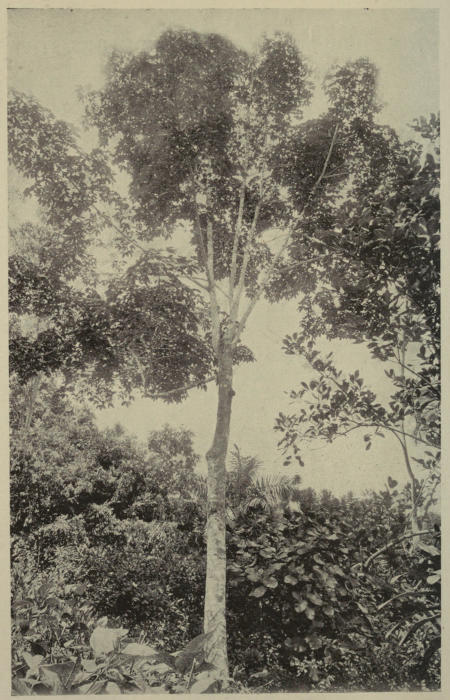
HEVEA BRASILIENSIS.