Part 5 — The Drawing Room. (continued 3)
Reading edition
By mentioning Herbert in the present place, I have a little inverted the order of my narrative. A crowd of distinguished bibliomaniacs, in fancy's eye, is thronging around me, and demanding a satisfactory memorial of their deeds.
Loren. Be not dismayed, Lysander. If any one, in particular, looks "frowningly" upon you, leave him to me, and he shall have ample satisfaction.
Lysand. I wish, indeed, you would rid me of a few of these book-madmen. For, look yonder, what a commanding attitude Thomas Baker[373] assumes!
Tho. Baker.
And now, O my God, into thy hands I contentedly resign myself: whether it be to life or death, thy will be done! Long life I have not desired (and yet thou hast given it me). Give me, if it be thy good pleasure, an easy and happy death. Or if it shall please thee to visit me sorely, as my sins have deserved, give me patience to bear thy correction, and let me always say (even with my dying breath) Thy will be done, Amen, Amen." Subjoined was this curious memorandum: "At the making of this will, I have, in the corner of my outer study, next my chamber, 170 guineas; and on the other side of the study towards the river, 100 guineas, more or less, in several canvass bags, behind the shelves, being more secret and hidden, to prevent purloyning. One or more of the shelves markt G. among the latter is a five pound (Jacobus) piece of gold."
Loren. Never fear. He is an old acquaintance of mine; for, when resident at St. John's, Cambridge, I was frequently in the habit of conversing with his spirit in the library, and of getting curious information relating to choice and precious volumes, which had escaped the sagacity of his predecessors, and of which I fear his successors have not made the most proper use.
Phil. This is drawing too severe a conclusion. But Baker merits the thanks of a book-loving posterity.
Lysand. He is satisfied with this mention of his labours; for see, he retreats—and Theobald[374] and Tom Rawlinson rush forward to claim a more marked attention: although I am not much disposed to draw a highly finished picture of the editor of Shakespeare.
Lis. Is Thomas Rawlinson[375] so particularly deserving of commendation, as a bibliomaniac?
Lysand. If the most unabating activity and an insatiable appetite—if an eye, in regard to books, keen and sparkling as the ocean-bathed star—if a purse, heavily laden and inexhaustible—if store-rooms rivalled only by the present warehouses of the East-India Company—if a disposition to spread far and wide the influence of the Bibliomania, by issuing a carte blanche for every desperately smitten antiquary to enter, and partake of the benefits of, his library—be criteria of book-phrensy—why then the resemblance of this said Tom Rawlinson ought to form a principal ornament in the capital of that gigantic column, which sustains the temple of Book Fame! He was the Tom Folio of the Tatler, and may be called the Leviathan of book-collectors during nearly the first thirty years of the eighteenth century.
Lis. I suppose, then, that Bagford, Murray, and Hearne, were not unknown to this towering bibliomaniac?
Lysand. On the contrary, I conclude, for certain, that, if they did not drink wine, they constantly drank coffee, together: one of the huge folio volumes of Bleau's Atlas serving them for a table.
But see yonder the rough rude features of Humphrey Wanley[376] peering above the crowd! All hail to thy honest physiognomy—for thou wert a rare Book-wight in thy way! and as long as the fame of thy patron Harley shall live, so long, honest Humphrey, dost thou stand a sure chance of living "for aye," in the memory of all worthy bibliomaniacs.
O Wanley, whence com'st thou with shorten'd hair, And visage, from thy shelves, with dust besprent?
But let us hear the testimony of a friend and fellow bibliomaniac, called Thomas Hearne. The following desultory information is translated from the preface to the Annales Prioratûs de Dunstable—wherein, by the bye, there is a good deal of pleasant information relating to Wanley. We are here told that Wanley was "born at Coventry; and, in his younger days, employed his leisure hours in turning over ancient MSS., and imitating the several hands in which they were written. Lloyd, Bishop of Litchfield and Coventry, in one of his episcopal visitations, was the first who noticed and patronized him. He demanded that Wanley should be brought to him; he examined him "suis ipsius, non alterius, oculis;" and ascertained whether what so many respectable people had said of his talents was true or false—'A few words with you, young man,' said the Bishop. Wanley approached with timidity—'What are your pursuits, and where are the ancient MSS. which you have in your possession?' Wanley answered readily; exhibited his MSS., and entered into a minute discussion respecting the ancient method of painting." Hearne then expatiates feelingly upon the excessive care and attention which Wanley devoted to ancient MSS.; how many pieces of vellum he unrolled; and how, sometimes, in the midst of very urgent business, he would lose no opportunity of cultivating what was useful and agreeable in his particular pursuit. His hobby horse seems to have been the discovery of the ancient method of colouring or painting—yet towards British History and Antiquities he constantly cast a fond and faithful eye. How admirably well-calculated he was for filling the situation of librarian to Lord Oxford is abundantly evinced by his catalogue of the Harleian MSS.; vide p. 89, ante. Of his attachment to the Bibliomania there are innumerable proofs. Take this, inter alia; "I spoke to Mr. Wanley, who is not unmindful of his promise, but says he will not trouble you with a letter, till he has something better to present you, which he doubts not he shall have this winter among Mr. Harley's MSS. Mr. Wanley has the greatest collection of English Bibles, Psalters, &c., that ever any one man had. They cost him above 50l., and he has been above twenty years in collecting them. He would part with them, I believe, but I know not at what price." Masters's Life of Baker, p. 27. Consult also the preface to the Catalogue of the Harleian MSS., 1808, 3 vols., folio, p. 6.
A softer noise succeeds; and the group becomes calm and attentive, as if some grand personage were advancing. See, 'tis Harley, Earl of Oxford![377]
ANALYSIS OF THE HARLEIAN LIBRARY.
I shall take the liberty of making an arrangement of the books different from that which appears in the Harleian catalogue; but shall scrupulously adhere to the number of departments therein specified. And first of those in
1. Divinity.
In the Greek, Latin, French, and Italian languages, there were about 2000 theological volumes. Among these, the most rare and curious were Bamler's bible of 1466, beautifully illuminated, in 2 volumes: Schæffer's bible of 1472. The famous Zurich bible of 1543, "all of which, except a small part done by Theodoras Bibliander, was translated from the Hebrew by a Jew, who styled himself Leo Judæ, or the Lion of Judah. The Greek books were translated by Petrus Cholinus. The New Testament is Erasmus's." The Scrutinium Scripturarum of Rabbi Samuel, Mant., 1475; a book which is said "to have been concealed by the Jews nearly 200 years: the author of it is supposed to have lived at a period not much later than the destruction of Jerusalem." The Islandic bible of 1664, "not to be met with, without the utmost difficulty, and therefore a real curiosity." The works of Hemmerlin, Basil: 1497; "the author was ranked in the first class of those whose works were condemned by the church of Rome." The Mozarabic Missal printed at Toledo, in 1500—of which some account is given at p. 161, ante. The collection of English books in Divinity could not have amounted to less than 2500 volumes. Among the rarest of these, printed in the fifteenth century, was "The Festyvall, begynning at the fyrst Sonday of Advent, in worship of God and all his Sayntes," &c., printed at Paris, in 1495. There was ten books printed by Caxton, and some exceedingly curious ones by Wynkyn de Worde and Pynson.
2. History and Antiquities.
There appear to have been, on the whole, nearly 4000 volumes in this department: of which, some of those relating to Great Britain were inestimable, from the quantity of MS. notes by Sir William Dugdale, Archbishop Parker, Thomas Rawlinson, Thomas Baker, &c. The preceding number includes 600 relating to the history and antiquities of Italy; 500 to those of France. (This part of the catalogue deserves particular attention, as it contains a larger collection of pieces relating to the history of France than was, perhaps, ever exposed to sale in this nation; here being not only the ancient chronicles and general histories, but the memoirs of particular men, and the genealogies of most of the families illustrious for their antiquity. See Bibl. Harl., vol. iii., p. 159.) 150 to those of Spain; and about 250 relating to Germany and the United Provinces.
3. Books of Prints, Sculpture, and Drawings.
In this department, rich beyond description, there could not have been fewer than 20,000 articles, on the smallest computation: of which nearly 2000 were original drawings by the great Italian and Flemish masters. The works of Callot were preserved in 4 large volumes, containing not fewer than nine hundred and twelve prints. "All choice impressions, and making the completest set of his works that are to be seen." See Bibl. Harl., vol. iii., no. 562, "Hollar's works, consisting of all his pieces, and bound in 12 folio volumes, in morocco. One of the completest and best sets in the world, both as to the number and goodness of the impressions." Vid. ibid., no. 468. It is now in the library of the Duke of Rutland. "One hundred and thirty-three heads of illustrious men and women, after Vandyke. This set of Vandyke's heads may be said to be the best and completest that is to be met with any where: there being the 12 heads which he etched himself, as likewise 79 worked off by Martin Vanden Enden: and what adds still to the value of them is that the greater part were collected by the celebrated Marriette at Paris, his name being signed on the back, as warranting them good proofs." Tne engravings from Raphael's paintings, upwards of 200 in number, and by the best foreign masters, were contained in 4 splendid morocco volumes. The works of the Sadelers, containing upwards of 959 prints, in 8 large folio volumes, were also in this magnificent collection: and the Albert Durers, Goltziuses, Rembrandts, &c., innumerable!
4. Collection of Portraits.
This magnificent collection, uniformly bound in 102 large folio volumes, contained a series of heads of illustrious and remarkable characters, to the amount of nearly 10,000 in number. It is said, in the catalogue, to be "perhaps the largest collection of heads ever exposed to sale." We are also informed that it "was thought proper, for the accommodation of the curious, to separate the volumes." Eheu! Eheu!
5. Philosophy, Chemistry, Medicine, &c.
Under this head, comprehending anatomy, astronomy, mathematics, and alchemy, there appear to have been not fewer than 2500 volumes in the foreign languages, and about 600 in the English: some of them of the most curious kind, and of the rarest occurrence.
6. Geography, Chronology, and General History.
There were about 290 volumes on these subjects, written in the Latin, French, Italian, and Spanish languages: and about 300 volumes in our own language. Some of the scarcest books printed by Caxton were among the latter.
7. Voyages and Histories relating to the East and West Indies.
About 800 volumes:—nearly equally divided into the English and foreign languages. Among the English, were Caxton's "Recuyell of the historys of Troye," 1471 (supposed to be the first book printed in this country;) and his "Siege and conquest of Jherusalem," 1481.
8. Civil, Canon, and Statute Law.
At least 800 volumes: 300 in the foreign languages, and the remaining in English.
9. Books of Sculpture, Architecture, &c.
Not fewer than 900 volumes, comprehending every thing published up to that period which was valuable or rare. Of these, more than 700 were written in Latin, Italian, French, or Spanish—and embellished with every beauty of graphic illustration.
10. Greek and Latin Classics; Grammars and Lexicons.
This very valuable body of Grecian and Roman literature could not have included fewer than 2400 volumes—and, among these, almost every work of rarity and excellence. In the article of "Cicero" alone, there were 115 volumes printed in the fifteenth century; every subsequent edition of that and other authors, then distinguished for its accuracy or erudition, may also, I believe, be discovered in the catalogue. Most book-collectors know the sumptuous manner in which the Harleian copies are bound.
11. Books printed upon Vellum.
In this interesting department of typography, there were about 220 volumes—upwards of 70 in folio, 40 in quarto, and 100 in octavo. Of the former, the most curious and rare articles were the Mentz bible of 1462, 2 vols., and the travels of Breydenbachus, printed at Mentz in 1486. "This book is an uncommon object of curiosity, as it is, perhaps, the first book of travels that was ever printed, and is adorned with maps and pictures very remarkable. The view of Venice is more than five feet long, and the map of the Holy Land more than three; there are views of many other cities. It is printed in the Gothic character." See Bibl. Harl., vol. iii., no. 3213. The octavos were chiefly "Heures à l'usage," so common at the beginning of the 16th century: but, if the catalogue be correctly published, there appears to have been one of these books printed at Paris, as early as the year 1466, "extremely beautiful cuts." See the Bibl. Harl., vol. iv., no. 18406. Now, if this were true, it would make known a curious fact in Parisian typography—for the usually received opinion among bibliographers is that no printed book appeared in France before the year 1467, when the art was first introduced at Tours; and none at Paris before the year 1469-70—when Crantz and Friburger were engaged to print there.
12. English Poetry, Romances, and Novels.
There could not have been fewer than 900 volumes in this amusing department; and among them some editions of the rarest occurrence. Every thing printed by Caxton on these subjects, including a complete and magnificent copy of Morte d'Arthur, was in the collection—and, in respect to other curious works, it will be sufficient to mention only the following, as a specimen. "Kynge-Richarde Cuer du Lyon, W. de Worde, 1528: Gascoigne's Poesies, 1575—Spenser's Shepheardes Calenders, 1586: Webbe's Discourse of English Poetrie, 1586: Nash's Art of English Poesie, 1589." Some of these volumes were afterwards marked by Osborne, in his catalogues, at 3 or 4 shillings!
13. Livres François, Ital., et Hispan.
There might have been 700 volumes in these foreign languages, of which nearly 500 related to poetry (exclusively of others in the foregoing and following departments).
14. Parliamentary Affairs and Trials.
Upwards of 400 volumes.
15. Trade and Commerce.
About 300 volumes.
It will be seen from the preceding divisions, and from the gradual diminution of the number of volumes in each, that I have gone through the principal departments of the Harleian collection of books: and yet there remain fifty departments to be enumerated! These are the following: 16. Critici et Opera collecta. 17. Vultus et Imagines Illust. Virorum. 18. Pompæ, Ceremoniæ, et Exequiæ. 19. De re Militari, de Arte Equestri, et de re Navali. 20. Heraldica. 21. Epistolæ, Panegyrici, et Orationes. 22. Bibliothecarii et Miscellanei. 23. Tractatus Pacis et Politici. 24. Traductions des Auteurs Gr. et Latin. 25. Translations from Greek and Latin Authors. 26. Laws, Customs, &c., of the City of London. 27. Military, Naval affairs, and Horsemanship. 28. Heraldry. 9. Husbandry, Gardening, Agriculture. 30. Magic, Sorcery, Witchcraft. 31. Miraculous, Monstrous, and Supernatural. 32. Lives of Eminent Persons. 33. Laws and Customs of divers Places. 34. Tythes, Sacrilege, and Non-residence, &c. 35. Cases of divers Persons. 36. Prisons and Prisoners. 37. Lives of Murderers, Highwaymen, Pirates, &c. 38. Speeches of Persons executed for divers Offences. 39. Justices, Juries, and Charges. 40. Poor, and Charitable Uses. 41. Matrimony, Divorce, &c. 42. Universities. 43. Allegiance, Supremacy, Non Resistance, &c. 44. Bank and Bankers. 45. Funds, Taxes, Public Credit, Money, Coin, &c. 46. War and Standing Armies. 47. Admiralty and Navy. 48. Letters on various Subjects. 49. Treatises of Peace, Royal Prerogative, &c. 50. Navigation. 51. Education, Grammar and Schools. 52. Ludicrous, Entertaining, Satirical, and Witty. 53. English Miscellanies. 54. Ecclesiastical and Civil History of Scotland. 55. Do. of Ireland. 56. Grammars and Dictionnaries. 57. Plays, and relating to the Theatre. 58. Mathematics. 59. Astrology, Astronomy, and Chymistry. 60. Horsemanship. 61. Cookery. 62. Convocation. 63. Sieges, Battles, War, &c. 64. Pomp and Ceremony. 65. Books relating to Writing and Printing. 66. Essays on various Subjects. It will probably be no very unreasonable computation to allow to each of these remaining divisions 80 volumes: so that multiplying the whole 50 divisions by 80 there will be the additional number of 4000 volumes to make the library complete. I ought to mention that, in my account of this extensive library, I have not included the Pamphlets. Of these alone, according to Mr. Gough (Brit. Topog. v., i., 669), there were computed to be 400,000! We will now say a few words about the private character of Lord Oxford, and conclude with a brief account of Osborne. Every body has heard of the intimacy which subsisted between Pope and the Earl of Oxford. In the year 1721, when the latter was at his country seat, Pope sent him a copy of Parnell's poems (of which he had undertaken the publication on the decease of Parnell), with a letter in poetry and prose. It seems that Pope wished to prefix his own verses to the collection; and thus alludes to them, in his letter to Lord Harley of the date of 1721: "Poor Parnell, before he died, left me the charge of publishing those few remains of his: I have a strong desire to make them, their author, and their publisher, more considerable, by addressing and dedicating them all to you, &c. All I shall say for it is that 'tis the only dedication I ever writ, and shall be the only one, whether you accept it or not: for I will not bow the knee to a less man than my Lord Oxford, and I expect to see no greater in my time."
The following is the latter part of the Poetical Epistle here alluded to:
And sure, if aught below the seats divine Can touch immortals, 'tis a soul like thine: A soul supreme, in each hard instance tried, Above all pain, all passion, and all pride; The rage of power, the blast of public breath, The lust of lucre, and the dread of death. In vain to deserts thy retreat is made; The muse attends thee to thy silent shade: 'Tis her's the brave man's latest steps to trace, Rejudge his acts, and dignify disgrace. When int'rest calls off all her sneaking train, And all th' obliged desert, and all the vain; She waits, or to the scaffold, or the cell, When the last lingering friend has bid farewell. Ev'n now, she shades thy evening walk with bays, (No hireling she, no prostitute of praise) Ev'n now, observant of the parting ray, Eyes the calm sun-set of thy various day; Thro' fortune's cloud one truly great can see, Nor fears to tell that Mortimer is he! Pope's Works, vol. ii., p. 320-3. Bowles's edit.
The following was the reply of the Earl of Oxford to Mr. Pope.
Sir,
I received your packet, which could not but give me great pleasure to see you preserve an old friend in your memory; for it must needs be very agreeable to be remembered by those we highly value. But then, how much shame did it cause me when I read your very fine verses inclosed! My mind reproached me how far short I came of what your great friendship and delicate pen would partially describe me. You ask my consent to publish it: to what straits doth this reduce me! I look back, indeed, to those evenings I have usefully and pleasantly spent with Mr. Pope, Mr. Parnell, Dean Swift, the Doctor (Arbuthnot), &c. I should be glad the world knew you admitted me to your friendship; and since your affection is too hard for your judgment, I am contented to let the world know how well Mr. Pope can write upon a barren subject. I return you an exact copy of the verses, that I may keep the original, as a testimony of the only error you have been guilty of. I hope, very speedily, to embrace you in London, and to assure you of the particular esteem and friendship wherewith I am your, &c.,
Oxford.
Of Tom Osborne I have in vain endeavoured to collect some interesting biographical details. What I know of him shall be briefly stated. He was the most celebrated bookseller of his day; and appears, from a series of his catalogues in my possession, to have carried on a successful trade from the year 1738 to 1768. What fortune he amassed, is not, I believe, very well known: his collections were truly valuable, for they consisted of the purchased libraries of the most eminent men of those times. In his stature he was short and thick; and, to his inferiors, generally spoke in an authoritative and insolent manner. "It has been confidently related," says Boswell, "that Johnson, one day, knocked Osborne down in his shop with a folio, and put his foot upon his neck. The simple truth I had from Johnson himself. 'Sir, he was impertinent to me, and I beat him. But it was not in his shop: it was in my own chamber.'" 4to. edit., i., 81. Of Osborne's philological attainments, the meanest opinion must be formed, if we judge from his advertisements, which were sometimes inserted in the London Gazette, and drawn up in the most ridiculously vain and ostentatious style. He used to tell the public that he possessed "all the pompous editions of Classicks and Lexicons." I insert the two following advertisements, prefixed, the one to his catalogue of 1748, the other to that of 1753, for the amusement of my bibliographical readers, and as a model for Messrs. Payne, White, Miller, Evans, Priestley, and Cuthell. "This catalogue being very large, and of consequence very expensive to the proprietor, he humbly requests that, if it falls into the hands of any gentleman gratis, who chooses not himself to be a purchaser of any of the books contained in it, that such gentleman will be pleased to recommend it to any other whom he thinks may be so, or to return it." To his catalogue of 1753 was the following: "To the Nobility and Gentry who please to favour me with their commands. It is hoped, as I intend to give no offence to any nobleman or gentleman, that do me the honour of being my customer, by putting a price on my catalogue, by which means they may not receive it as usual—it is desired that such nobleman or gentleman as have not received it, would be pleased to send for it; and it's likewise requested of such gentleman who do receive it, that, if they chuse not to purchase any of the books themselves, they would recommend it to any bookish gentleman of their acquaintance, or to return it, and the favour shall be acknowledged by, their most obedient and obliged,
T. Osborne."
I shall conclude with the following curious story told of him, in Mr. Nichols's Anecdotes of Bowyer the Printer. "Mr. David Papillon, a gentleman of fortune and literary taste, as well as a good antiquary (who died in 1762) contracted with Osborne to furnish him with an 100l. worth of books, at threepence a piece. The only conditions were, that they should be perfect, and that there should be no duplicate. Osborne was highly pleased with his bargain, and the first great purchase he made, he sent Mr. P. a large quantity; but in the next purchase, he found he could send but few, and the next, still fewer. Not willing, however, to give up, he sent books worth five shillings a piece; and, at last, was forced to go and beg to be let off the contract. Eight thousand books would have been wanted!"—See p. 101-2, note ‡‡.
Lis. Let us rise to pay him homage!
Phil. Lisardo is now fairly bewitched. He believes in the existence of the group!—Help, ho! Fetters and warder for—
Loren. Philemon loves to indulge his wit at his friend's expense. Is't not so, Lisardo?
Lis. I forgive him. 'Twas a "glorious fault." But, indeed, I would strip to the skin, if this said nobleman longed for my coat, waistcoat, small clothes, and shirt, to form him a cushion to sit upon! I have heard such wonderful things said of his library!—
Lysand. And not more wonderful than its reputation justifies. Well might Pope be enamoured of such a noble friend—and well might even Dr. Mead bow to the superior splendour of such a book-competitor! While the higher order of bibliomaniacs, reposing upon satin sofas, were quaffing burgundy out of Harley's curiously cut goblets, and listening to the captivating tale of Mead or Folkes, respecting a vellum Editio Princeps—the lower order, with Bagford at their head, were boisterously regaling themselves below, drinking ale round an oaken table, and toasting their patron, till the eye could no longer discover the glass, nor the tongue utter his name. Aloft, in mid air, sat the soothed spirits of Smith and North; pointing, with their thin, transparent fingers, to the apotheosis of Caxton and Aldus! Suddenly, a crowd of pipy fragrance involves the room: these ærial forms cease to be visible; and broken sounds, like the retiring tide beneath Dover cliff, die away into utter silence. Sleep succeeds: but short is the slumber of enthusiastic bibliomaniacs! The watchman rouses them from repose: and the annunciation of the hour of "two o'clock, and a moonlight morning," reminds them of their cotton night-caps and flock mattrasses. They start up, and sally forwards; chaunting, midst the deserted streets, and with eyes turned sapiently towards the moon, "Long life to the King of Book-Collectors, Harley, Earl of Oxford!"
Loren. A truce, Lysander! I entreat a truce!
Lysand. To what?
Loren. To this discourse. You must be exhausted.
Phil. Indeed I agree with Lorenzo: for Lysander has surpassed, in prolixity, the reputation of any orator within St. Stephen's chapel. It only remains to eclipse, in a similar manner, the speeches which were delivered at Hardy's trial—and then he may be called the Nonpareil of orators!
Lysand. If you banter me, I am dumb. Nor did I know that there was any thing of eloquence in my chit-chat. If Lisardo had had my experience, we might then have witnessed some glittering exhibitions of imagination in the book-way!
Lis. My most excellent friend, I will strive to obtain this experience, since you are pleased to compliment me upon what I was not conscious of possessing—But, in truth, Lysander, our obligations to you are infinite.
Lysand. No more; unless you are weary of this discourse—
Phil. Lis. Weary!?
Loren. Let me here exercise my undeniable authority. A sandwich, like the evening rain after a parching day, will recruit Lysander's exhausted strength. What say you?
Lysand. "I shall in all things obey your high command." But hark—I hear the outer gate bell ring! The ladies are arrived: and you know my bashfulness in female society. Adieu, Bibliomania! 'till the morrow.
Loren. Nay, you are drawing too dismal conclusions. My sisters are not sworn enemies to this kind of discourse.

The arrival of Almansa and Belinda, the sisters of Lorenzo put a stop to the conversation. So abrupt a silence disconcerted the ladies; who, in a sudden, but, it must be confessed, rather taunting, strain—asked whether they should order their bed-chamber candlesticks, and retire to rest?
Lis. Not if you are disposed to listen to the most engaging book-anecdote orator in his majesty's united realms!
Alman. Well, this may be a sufficient inducement for us to remain. But why so suddenly silent, gentlemen?
Loren. The conversation had ceased before you arrived. We were thinking of a hung-beef sandwich and a glass of madeira to recruit Lysander's exhausted powers. He has been discoursing ever since dinner.
Belind. I will be his attendant and cup-bearer too, if he promises to resume his discourse. But you have probably dispatched the most interesting part.
Lysand. Not exactly so, I would hope, fair Lady! Your brother's hospitality will add fresh energy to my spirit; and, like the renewed oil in an exhausted lamp, will cause the flame to break forth with fresh splendour.
Belind. Sir, I perceive your ingenuity, at least, has not forsaken you—in whatever state your memory may be!—

Here the sandwiches made their appearance: and Lorenzo seated his guests, with his sisters, near him, round a small circular table. The repast was quickly over: and Philemon, stirring the sugar within a goblet of hot madeira wine and water, promised them all a romantic book-story, if the ladies would only lend a gracious ear. Such a request was, of course, immediately complied with.
Phil. The story is short—
Lis. And sweet, I ween.
Phil. That remains to be proved. But listen.
You all know my worthy friend, Ferdinand: a very Helluo Librorum. It was on a warm evening in summer—about an hour after sunset—that Ferdinand made his way towards a small inn, or rather village alehouse, that stood on a gentle eminence, skirted by a luxuriant wood. He entered, oppressed with heat and fatigue; but observed, on walking up to the porch "smothered with honey-suckles" (as I think Cowper expresses it), that every thing around bore the character of neatness and simplicity. The holy-oaks were tall and finely variegated in blossom: the pinks were carefully tied up: and roses of all colours and fragrance stood around, in a compacted form, like a body-guard, forbidding the rude foot of trespasser to intrude. Within, Ferdinand found corresponding simplicity and comfort.
The "gude" man of the house was spending the evening with a neighbour; but poached eggs and a rasher of bacon, accompanied with a flagon of sparkling ale, gave our guest no occasion to doubt the hospitality of the house, on account of the absence of its master. A little past ten, after reading some dozen pages in a volume of Sir Egerton Brydges's Censura Literaria, which he happened to carry about him, and partaking pretty largely of the aforesaid eggs and ale, Ferdinand called for his candle, and retired to repose. His bed-room was small, but neat and airy: at one end, and almost facing the window, there was a pretty large closet, with the door open: but Ferdinand was too fatigued to indulge any curiosity about what it might contain.
He extinguished his candle, and sank upon his bed to rest. The heat of the evening seemed to increase. He became restless; and, throwing off his quilt, and drawing his curtain aside, turned towards the window, to inhale the last breeze which yet might be wafted from the neighbouring heath. But no zephyr was stirring. On a sudden, a broad white flash of lightning—(nothing more than summer heat) made our bibliomaniac lay his head upon his pillow, and turn his eyes in an opposite direction. The lightning increased—and one flash, more vivid than the rest, illuminated the interior of the closet, and made manifest—an old mahogany Book-Case, stored with books. Up started Ferdinand, and put his phosphoric treasures into action. He lit his match, and trimmed his candle, and rushed into the closet—no longer mindful of the heavens—which now were in a blaze with the summer heat.
The book-case was guarded both with glass and brass wires—and the key—no where to be found! Hapless man!—for, to his astonishment, he saw Morte d'Arthur, printed by Caxton—Richard Cœur de Lyon, by W. de Worde—The Widow Edyth, by Pynson—and, towering above the rest, a large paper copy of the original edition of Prince's Worthies of Devon; while, lying transversely at top, reposed John Weever's Epigrams, "The spirit of Captain Cox is here revived"—exclaimed Ferdinand—while, on looking above, he saw a curious set of old plays, with Dido, Queen of Carthage, at the head of them! What should he do? No key: no chance of handling such precious tomes—'till the morning light, with the landlord, returned! He moved backwards and forwards with a hurried step—prepared his pocket knife to cut out the panes of glass, and untwist the brazen wires—but a "prick of conscience" made him desist from carrying his wicked design into execution. Ferdinand then advanced towards the window; and throwing it open, and listening to the rich notes of a concert of nightingales, forgot the cause of his torments—'till, his situation reminding him of "The Churl and the Bird," he rushed with renewed madness into the cupboard—then searched for the bell—but, finding none, he made all sorts of strange noises. The landlady rose, and, conceiving robbers to have broken into the stranger's room, came and demanded the cause of the disturbance.
"Madam," said Ferdinand, "is there no possibility of inspecting the books in the cupboard—where is the key?" "Alack, sir," rejoined the landlady, "what is there that thus disturbs you in the sight of those books? Let me shut the closet-door and take away the key of it, and you will then sleep in peace." "Sleep in peace!" resumed Ferdinand—"sleep in wretchedness, you mean! I can have no peace unless you indulge me with the key of the book-case. To whom do such gems belong?" "Sir, they are not stolen goods."—"Madam, I ask pardon—I did not mean to question their being honest property—but"—"Sir, they are not mine or my husband's." "Who, madam, who is the lucky owner?" "An elderly gentleman of the name of—Sir, I am not at liberty to mention his name—but they belong to an elderly gentleman." "Will he part with them—where does he live? Can you introduce me to him?"—The good woman soon answered all Ferdinand's rapid queries, but the result was by no means satisfactory to him.
He learnt that these uncommonly scarce and precious volumes belonged to an ancient gentleman, whose name was studiously concealed; but who was in the habit of coming once or twice a week, during the autumn, to smoke his pipe, and lounge over his books: sometimes making extracts from them, and sometimes making observations in the margin with a pencil. Whenever a very curious passage occurred, he would take out a small memorandum book, and put on a pair of large tortoise-shell spectacles, with powerful magnifying glasses, in order to insert this passage with particular care and neatness. He usually concluded his evening amusements by sleeping in the very bed in which Ferdinand had been lying.
Such intelligence only sharpened the curiosity, and increased the restlessness, of poor Ferdinand. He retired to this said bibliomaniacal bed, but not to repose. The morning sun-beams, which irradiated the book-case with complete effect, shone upon his pallid countenance and thoughtful brow. He rose at five: walked in the meadows till seven; returned and breakfasted—stole up stairs to take a farewell peep at his beloved Morte d'Arthur—sighed "three times and more"—paid his reckoning; apologised for the night's adventure; told the landlady he would shortly come and visit her again, and try to pay his respects to the anonymous old gentleman. "Meanwhile," said he, "I will leave no bookseller's shop in the neighbourhood unvisited, 'till I gain intelligence of his name and character." The landlady eyed him steadily; took a pinch of snuff with a significant air; and, returning, with a smile of triumph, to her kitchen, thanked her stars that she had got rid of such a madman!
Ladies and gentlemen, I have done.
Lis. And creditably done, too!
Alman. If this be a specimen of your previous conversation, we know not what we have lost by our absence. But I suspect, that the principal ingredient of poetry, fiction, has a little aided in the embellishment of your story.
Belin. This is not very gallant or complimentary on your part, Almansa. I harbour no suspicion of its verity; for marvellous things have been told me, by my brother, of the whimsical phrensies of book-fanciers.
Loren. If you will only listen a little to Lysander's sequel, you will hear almost equally marvellous things; which I suspect my liberally minded sister, Almansa, will put down to the score of poetical embellishment. But I see she is conscious of her treasonable aspersions of the noble character of bibliomaniacs, and is only anxious for Lysander to resume.
Alman. Sir, I entreat you to finish your History of Bibliomaniacs. Your friend, Philemon, has regaled us with an entertaining episode, and you have probably, by this time, recovered strength sufficient to proceed with the main story.
Lysand. Madam, I am equally indebted to your brother for his care of the body, and to my friend for his recreation of the mind. The midnight hour, I fear, is swiftly approaching.
Loren. It is yet at a considerable distance. We have nearly reached the middle of the eighteenth century, and you may surely carry on your reminiscential exertions to the close of the same. By that time, we may be disposed for our nightcaps.
Lysand. Unheeded be the moments and hours which are devoted to the celebration of eminent Book-Collectors! Let the sand roll down the glass as it will; let "the chirping on each thorn" remind us of Aurora's saucy face peering above the horizon! in such society, and with such a subject of discussion, who—
Lis. Lysander brightens as his story draws to a close: his colouring will be more vivid than ever.
Belind. Tell me—are bibliographers usually thus eloquent? They have been described to me as a dry, technical race of mortals—quoting only title-pages and dates.
Lysand. Madam, believe not the malicious evidence of book-heretics. Let ladies, like yourself and your sister, only make their appearance with a choice set of bibliomaniacs, at this time of night, and if the most interesting conversation be not the result—I have very much under-rated the colloquial powers of my brethren. But you shall hear.
We left off with lauding the bibliomaniacal celebrity of Harley, Earl of Oxford. Before the dispersion of his grand collection, died John Bridges,[378] a gentleman, a scholar, and a notorious book-collector. The catalogue of his books is almost the first classically arranged one in the eighteenth century: and it must be confessed that the collection was both curious and valuable. Bridges was succeeded by Anthony Collins,[379] the Free Thinker; a character equally strange and unenviable. Book-fanciers now and then bid a few shillings, for a copy of the catalogue of his library; and some sly free-thinkers, of modern date, are not backward in shewing a sympathy in their predecessor's fame, by the readiness with which they bid a half-guinea, or more, for a priced copy of it.
We may here but slightly allude to the bibliographical reputation of Maittaire, as so much was said of him the day before yesterday.[380]
Belin. All this may be very learned and just. But of these gentlemen I find no account in the fashionable necrologies.
Loren. Only wait a little, and Lysander will break forth with the mention of some transcendental bibliomaniac.
Lysand. Yes, ever renowned Richard Mead![381] thy pharmacopæal reputation is lost in the blaze of thy bibliomaniacal glory! Æsculapius may plant his herbal crown round thy brow, and Hygeia may scatter her cornucopia of roses at thy feet—but what are these things compared with the homage offered thee by the Gesners, Baillets, and Le Longs, of old? What avail even the roseate blushes of thousands, whom thy medical skill, may have snatched from a premature grave—compared with the life, vigour, animation and competition which thy example infused into the book-world!
His books produced£5496150
Pictures3417110
Prints and drawings1908140
Coins and medals1977170
Antiquities3246150
Amount of all the sales£16,047120
It would be difficult to mention, within a moderate compass, all the rare and curious articles which his library contained—but the following are too conspicuous to be passed over. The Spira Virgil, of 1470, Pfintzing's Tewrdanchk's, 1527, Brandt's Stultifera Navis, 1498, and the Aldine Petrarch, of 1501, all upon vellum. The large paper Olivet's Cicero was purchased by Dr. Askew, for 14l. 14s., and was sold again at his sale for 36l. 15s. The King of France bought the editio princeps of Pliny Senior for 11l. 11s.: and Mr. Wilcock, a bookseller, bought the magnificently illuminated Pliny by Jenson, of 1472, for 18l. 18s.: of which Maittaire has said so many fine things. The French books, and all the works upon the Fine Arts, were of the first rarity and value, and bound in a sumptuous manner. Winstanley's Prospects of Audley End brought 50l. An amusing account of some of the pictures will be found in Mr. Beloe's Anecdotes of Literature and scarce Books, vol. i., 166, 71. But consult also Nichols's Anecdotes of Bowyer, p. 225, &c. Of the catalogue of Dr. Mead's books, there were only six copies printed upon large paper. See Bibl. Lort, no. 1149. I possess one of these copies, uncut and priced. Dr. Mead had parted, in his life-time, to the present king's father, with several miniature pictures of great value (Walpole Anec., vol. i., 165) by Isaac Oliver and Holbein, which are now in his majesty's collection. Dr. Askew had purchased his Greek MSS. for 500l. Pope has admirably well said,
"Rare monkish manuscripts for Hearne alone, And Books for Mead, and butterflies for Sloane." Epistle iv.
Upon which his commentator, Warburton, thus observes: "These were two eminent physicians; the one had an excellent library, the other the finest collection in Europe of natural curiosities." For nearly half a century did Dr. Mead pursue an unrivalled career in his profession. He was (perhaps "thrice") presented with the presidentship of the College of Physicians, which he ("thrice") refused. One year it is said he made 7000l., a great sum in his time! His regular emoluments were between 5000l. and 6000l. per annum. He died on the 25th of February, 1754, in the 81st year of his age. On his death, Dr. Askew, who seems to have had a sort of filial veneration for his character, and whose pursuits were in every respect congenial with Dr. Mead's, presented the College of Physicians with a marble bust of him, beautifully executed by Roubilliac, and for which he paid the sculptor 100l. A whimsical anecdote is connected with the execution of this bust. Roubilliac agreed with Dr. Askew for 50l.: the doctor found it so highly finished that he paid him for it 100l. The sculptor said this was not enough, and brought in a bill for 108l. 2s. Dr. Askew paid this demand, even to the odd shillings, and then enclosed the receipt to Mr. Hogarth, to produce at the next meeting of artists. Nichols's Anec. of Bowyer, p. 580. "I cannot help," says Mr. Edwards, the late ornithologist, "informing succeeding generations that they may see the real features of Dr. Mead in this bust: for I, who was as well acquainted with his face as any man living, do pronounce this bust of him to be so like that, as often as I see it, my mind is filled with the strongest idea of the original." Hearne speaks of the Meadean Family with proper respect, in his Alured de Beverly, p. xlv.; and in Walter Hemingford, vol. i., xxxv. In his Gulielmus Nubrigensis, vol. iii., p. 744 (note), he says of our illustrious bibliomaniac:—"that most excellent physician, and truly great man, Dr. Richard Mead, to whom I am eternally obliged." There is an idle story somewhere told of Dr. Mead's declining the acceptance of a challenge to fight with swords—alleging his want of skill in the art of fencing: but this seems to be totally void of authority. Thus far, concerning Dr. Mead, from the first edition of this work, and the paper entitled "The Director." The following particulars, which I have recently learnt of the Mead Family, from John Nicholl, Esq., my neighbour at Kensington, and the maternal grandson of the Doctor, may be thought well worth subjoining. Matthew Mead, his father, was a clergyman. He gave up his living at Stepney in 1662; which was afterwards divided into the four fine livings now in the gift of Brazen-Nose College, Oxford. His parishioners built him a chapel; but he retired to a farm in the country, and had the reputation of handling a bullock as well as any butcher in the county. He went abroad in the reign of James II., and had his sons, Samuel and Richard, educated under Grævius. Samuel Mead, his brother, was a distinguished Chancery barrister, and got his 4000l. per ann.; his cronies were Wilbraham and Lord Harcourt. These, with a few other eminent barristers, used to meet at a coffee-house, and drink their favourite, and then fashionable, liquor—called Bishop, which consisted of red wine, lemon, and sugar. Samuel was a shy character, and loved privacy. He had a good country house, and handsome chambers in Lincoln's Inn, and kept a carriage for his sister's use, having his coachmaker's arms painted upon the panel. What is very characteristic of the modesty of his profession, he pertinaciously refused a silk gown! A word or two remains to be said of our illustrious bibliomaniac Richard. His brother left him 30,000l., and giving full indulgence to his noble literary feelings, the Doctor sent Carte, the historian, to France, to rummage for MSS. of Thuanus, and to restore the castrated passages which were not originally published for fear of offending certain families. He made Buckley, the editor, procure the best ink and paper from Holland, for this edition of Thuanus, which was published at his own expense; and the Doctor was remarkably solicitous that nothing of exterior pomp and beauty should be wanting in the publication. The result verified his most sanguine expectation; for a finer edition of a valuable historian has never seen the light. Dr. Ward, says Mr. Nichols, is supposed to have written Mead's Latin, but the fact is not so; or it is exclusively applicable to the later pieces of Mead. The Doctor died in his 83rd year (and in full possession of his mental powers), from a fall occasioned by the negligence of a servant. He was a great diagnostic physician; and, when he thought deeply, was generally correct in judging of the disorder by the appearance of the countenance.
The tears shed by virtuous bibliomaniacs at Harley's death were speedily wiped away, when the recollection of thine, and of thy contemporary's, Folkes's[382] fame, was excited in their bosoms. Illustrious Bibliomaniacs! your names and memories will always live in the hearts of noble-minded Literati: the treasures of your Museums and Libraries—your liberal patronage and ever-active exertions in the cause of virtu—whether connected with coins, pictures, or books—can never be banished, at least, from my grateful mind:—And if, at this solemn hour, when yonder groves and serpentine walks are sleeping in the quiet of moon-light, your spirits could be seen placidly to flit along, I would burst from this society—dear and congenial as it is—to take your last instructions, or receive your last warnings, respecting the rearing of a future age of bibliomaniacs! Ye were, in good earnest, noble-hearted book-heroes!—but I wander:—forgive me!
Dr. Birch has drawn a very just and interesting character of this eminent man, which may be found in Nichols's Anecdotes of Bowyer, pp. 562-7. Mr. Edwards, the late ornithologist, has described him in a simple, but appropriate, manner. "He seemed," says he, "to have attained to universal knowledge; for, in the many opportunities I have had of being in his company, almost every part of science has happened to be the subject of discourse, all of which he handled as an adept. He was a man of great politeness in his manners, free from all pedantry and pride, and, in every respect, the real, unaffected, fine gentleman."
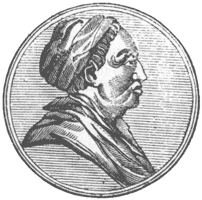
Alman. Pray keep to this earth, and condescend to notice us mortals of flesh and blood, who have heard of Dr. Mead, and Martin Folkes, only as eminently learned and tasteful characters.
Lysand. I crave your forgiveness. But Dr. Mead's cabinet of coins, statues, and books, was so liberally thrown open for the public inspection that it was hardly possible for modest merit, if properly made known to him, to depart unrewarded or ungratified. Nor does the renowned President of the Royal and Antiquarian Societies—Martin Folkes—merit a less warm eulogy; for he filled these distinguished situations with a credit which has never since been surpassed.
But there is yet an illustrious tribe to be recorded. We have, first, Richard Rawlinson,[383] brother of the renowned Tom Folio, whose choice and tasteful collection of books, as recorded in auctioneering annals, is deserving of high commendation. But his name and virtues are better known in the University, to which he was a benefactor, than to the noisy circles of the metropolis. The sale of Orator Henley's books "followed hard upon" that of Richard Rawlinson's; and if the spirit of their owner could, from his "gilt tub," have witnessed the grimaces and jokes which marked the sale—with the distorted countenances and boisterous laughter which were to be seen on every side—how it must have writhed under the smart of general ridicule, or have groaned under the torture of contemptuous indignation! Peace to Henley's[384] vexed manes!—and similar contempt await the efforts of all literary quacks and philosophical knaves!
Και γαρ ὀ ταὼς διὰ τὸ σπάνίον θαυμάζεται. Eubulus.
("The peacock is admired on account of its rarity.")
This valuable library must have contained nearly 25,000 volumes, multiplying the number of articles (9405) by 3—the usual mode of calculation. Unfortunately, as was the case with Dr. Mead's and Mr. Folkes's, the books were not arranged according to any particular classification. Old black-letter English were mixed with modern Italian, French, and Latin; and novels and romances interspersed with theology and mathematics. An alphabetical arrangement, be the books of whatever kind they may, will in general obviate the inconvenience felt from such an undigested plan; and it were "devoutly to be wished," by all true bibliographers, that an act of parliament should pass for the due observance of this alphabetical order. We all know our A, B, C, but have not all analytical heads; or we may differ in our ideas of analysis. The scientific and alphabetical united is certainly better; like Mr. Harris's excellent catalogue, noticed at p. 99, ante. The "Méthode pour dresser une bibliothéque," about which De Bure, Formey, and Peignot have so solemnly argued, is not worth a moment's discussion. Every man likes to be his own librarian, as well as "his own broker." But to return to Dr. Rawlinson's collection. On examining a priced catalogue of it, which now lies before me, I have not found any higher sum offered for a work than 4l. 1s. for a collection of fine prints, by Aldegrever. (No. 9405.) The Greek and Latin Classics, of which there were few Editiones Principes, or on large paper, brought the usual sums given at that period. The old English black-letter books, which were pretty thickly scattered throughout the collection, were sold for exceedingly low prices—if the copies were perfect. Witness the following:
£s.d.
The Newe Testament in English, 1500029
The Ymage of both Churches, after the Revelation of St. John, by Bale, 1550016
The boke called the Pype or Tonne of Perfection, by Richard Whytforde, 1553019
The Visions of Pierce Plowman, 1561020
The Creede of Pierce Plowman, 1532016
The Bookes of Moses, in English, 1530039
Bale's Actes of English Votaryes, 1550013
The Boke of Chivalrie, by Caxton0110
The Boke of St. Alban's, by W. de Worde110
These are only very few of the rare articles in English literature; of the whole of which (perhaps upwards of 200 in number) I believe the boke of St. Albans brought the highest sum. Hence it will be seen that this was not the age of curious research into the productions of our ancestors. Shakspeare had not then appeared in a proper variorum edition. Theobald, Pope, and Warburton, had not investigated the black-letter lore of ancient English writers for the illustration of their favourite author. This was reserved for Capell, Farmer, Steevens, Malone, Chalmers, Reed, and Douce: and it is expressly to these latter gentlemen (for Johnson and Hanmer were very sparing, or very shy, of the black-letter), that we are indebted for the present spirit of research into the works of our ancestors. The sale of the books lasted 50 days. There was a second sale of pamphlets, books of prints, &c., in the following year, which lasted 10 days: and this was immediately succeeded by a sale of the doctor's single prints and drawings, which continued 8 days. Dr. Rawlinson's benefactions to Oxford, besides his Anglo-Saxon endowment at St. John's College, were very considerable; including, amongst other curiosities, a series of medals of the Popes, which the Doctor supposed to be one of the most complete collections in Europe; and a great number of valuable MSS., which he directed to be safely locked up, and not to be opened till seven years after his decease. He died on the 6th of April, 1755. To St. John's College, where he had been a gentleman commoner, Dr. Rawlinson left the bulk of his estate, amounting to near 700l. a year: a plate of Abp. Laud, 31 volumes of Parliamentary Journals and Debates, a set of Rymer's Fœdera, his Greek, Roman, and English coins, not given to the Bodleian Library; all his plates engraved at the expense of the Society of Antiquaries; his diploma, and his heart; which latter is placed in a beautiful urn against the chapel wall, with this inscription:
Urbi thesaurus, ibi cor. Ric. Rawlinson, LL.D. & Ant. S.S. Olim hujus collegii superioris ordinis commensalis. Obiit. vi. Apr. mdcclv.
Hearne speaks of him, in the preface of his Tit. Liv. For. Jul. vita Hen. V., p. xvi., as "vir antiquis moribus ornatus, perque eam viam euns, quæ ad immortalem gloriam ducit."
High on a gorgeous seat, that far outshone Henley's gilt tub——
"He had also an altar, and placed over it this extraordinary inscription, 'The primitive Eucharist.'" We are told by his friend Welsted (narrative in Oratory Transact. No. 1) that "he had the assurance to form a plan, which no mortal ever thought of; he had success against all opposition; challenged his adversaries to fair disputations, and none would dispute with him: he wrote, read, and studied, twelve hours a day; composed three dissertations a week on all subjects; undertook to teach in one year what schools and universities teach in five: was not terrified by menaces, insults, or satires; but still proceeded, matured his bold scheme, and put the church and all that in danger!" See note to Dunciad, book iii., v. 199. Pope has described this extraordinary character with singular felicity of expression:
But, where each science lifts its modern type, Hist'ry her Pot, Divinity her Pipe, While proud philosophy repines to shew, Dishonest sight! his breeches rent below; Imbrown'd with native bronze, lo! Henley stands, Tuning his voice and balancing his hands. How fluent nonsense trickles from his tongue! How sweet the periods, neither said nor sung! Still break the benches, Henley! with thy strain, While Sherlock, Hare, and Gibson, preach in vain. Oh great restorer of the good old stage, Preacher at once, and zany of thy age, Oh worthy thou, of Egypt's wise abodes, A decent priest, where monkeys were the gods! But fate with butchers plac'd thy priestly stall, Meek modern faith to murder, hack, and mawl; And bade thee live, to crown Britannia's praise, In Toland's, Tindal's, and in Woolston's days. Dunciad, b. iii., v. 190, &c.
Bromley, in his catalogue of engraved Portraits, mentions four of orator Henley: two of which are inscribed, one by Worlidge "The Orator of Newport Market;" another (without engraver's name) "A Rationalist." There is a floating story which I have heard of Henley. He gave out that he would shew a new and expeditious method of converting a pair of boots into shoes. A great concourse of people attended, expecting to see something very marvellous; when Henley mounted his "tub," and, holding up a boot, he took a knife, and cut away the leg part of the leather!
There are, I had almost said, innumerable contemporaneous bibliomaniacal characters to be described—or rather, lesser stars or satellites that move, in their now unperceived orbits, around the great planets of the book world—but, at this protracted hour of discussion, I will not pretend even to mention their names.
Lis. Yet, go on—unless the female part of the audience be weary—go on describing, by means of your great telescopic powers, every little white star that is sprinkled in this bibliomaniacal Via Lactea![385]
Alman. Upon my word, Lisardo, there is no subject however barren, but what may be made fruitful by your metaphorical powers of imagination.
Lis. Madam, I entreat you not to be excursive. Lysander has taken a fresh sip of his nectar, and has given a hem or two—preparing to resume his narrative.
Lysand. We have just passed over the bar that separates the one half of the 18th century from the other: and among the ensuing eminent collectors, whose brave fronts strike us with respect, is General Dormer:[386] a soldier who, I warrant you, had faced full many a cannon, and stormed many a rampart, with courage and success. But he could not resist the raging influence of the Book-Mania: nor could all his embrasures and entrenchments screen him from the attacks of this insanity. His collection was both select and valuable.
We have before noticed the celebrated diplomatic character, Consul Smith, and have spoken with due respect of his library: let us here, therefore, pass by him,[387] in order to take a full and complete view of a Non-Pareil Collector: the first who, after the days of Richard Smith, succeeded in reviving the love of black-letter lore and of Caxtonian typography—need I say James West?[388]
PREFACE.
"The following catalogue exhibits a very curious and uncommon collection of printed books and tracts. Of British History and Antiquities, and of Rare Old English Literature, the most copious of any which has appeared for several years past; formed with great taste, and a thorough knowledge of authors and characters, by that judicious critic and able antiquary the late James West, Esq., President of the Royal Society. Several anonymous writers are herein brought to light—many works enlarged and further explained by their respective authors and editors—and a far greater number illustrated with the MS. notes and observations of some of our most respectable antiquaries: among whom will be found the revered names of Camden, Selden, Spelman, Somner, Dugdale, Gibson, Tanner, Nicolson, Gale, Le Neve, Hearne, Anstis, Lewis, St. Amand, Ames, Browne, Willis, Stukely, Mr. West, &c. But, above all, the intense application and unwearied diligence of the admirable Bishop White Kennett, upon the ecclesiastical, monastical, constitutional, and topographical history of Great Britain, so apparent throughout this collection, furnish matter even to astonishment; and are alone sufficient to establish the reputation, and to perpetuate the memory, of this illustrious prelate, without any other monuments of his greatness." "In an age of general inquiry, like the present, when studies less interesting give place to the most laudable curiosity and thirst after investigating every particular relative to the history and literature of our own country, nothing less than an elaborate digest of this valuable library could be expected; and, as a supplement to the history of English literature, more desired." "That task the Editor has cheerfully undertaken: and, he flatters himself, executed as well as the short time allowed would permit. He further hopes, to the satisfaction of such who are capable of judging of its utility and importance." "The lovers of engraved English portraits (a species of modern connoisseurship which appears to have been first started by the late noble Earl of Oxford, afterwards taken up by Mr. West, Mr. Nicolls, editor of Cromwell's State-Papers, Mr. Ames, &c., and since perfected by the Muse of Strawberry-Hill, the Rev. Wm. Granger, and some few more ingenious collectors) may here look to find a considerable number of singular and scarce heads, and will not be disappointed in their search." Thus much Paterson; who, it must be confessed, has promised more than he has performed: for the catalogue, notwithstanding it was the second which was published (the first being by a different hand, and most barbarously compiled) might have exhibited better method and taste in its execution. Never were rare and magnificent books more huddled together and smothered, as it were, than in this catalogue. Let us now proceed to an analysis of Mr. West's Collection.
1. Volumes of Miscellaneous Tracts.
These volumes extend from no. 148 to 200, from 915 to 992, from 1201 to 1330, and from no. 1401 to 1480.—Among them are some singularly choice and curious articles. The following is but an imperfect specimen.
NO. £ s. d.
154. Atkyns on Printing, with the frontispiece, &c., &c., 4to.
164. G. Whetstone's Honorable Profession of a Soldier, 1586, &c., 4to.
179. Life and death of Wolsey, 1641, &c.
183. Nashe's Lenten Stuffe, with the Praise of the Red Herring, 1599, &c. 4to. (the three articles together did not exceed) 0 12 0
188. A Mornynge Remembrance, had at the Moneth Mynde of the Noble Prynces Countesse of Rychmonde, &c. Wynkyn de Worde, &c. 4to. 2 2 0
194. Oh! read over Dr. John Bridges, for it is a worthie Worke, &c. bl. letter, &c. 4to. Strange and fearful Newes from Plasto, near Bow, in the house of one Paul Fox, a Silk Weaver, where is daily to be seene throwing of Stones, Bricbats, Oyster-shells, Bread, cutting his Work in Pieces, breaking his Windows, &c. No date, 4to. 0 12 6
1477. Leylande's Journey and Serche, given of hym as a Newe Yeares Gyfte to K. Henry 8th, enlarged by Bale, bl. letter, 1549, 8vo., (with three other curious articles.) 0 17 6
1480. A disclosing of the great Bull and certain Calves that he hath gotten, and especially the Monster Bull that roared at my Lord Byshop's gate. Bl. letter, pr. by Daye. No date. 4to.
The preceding affords but a very inadequate idea of the "pithie, pleasant, and profitable" discourses mid tracts which abounded among the miscellaneous articles of Mr. West's library. Whatever be the defects of modern literature, it must be allowed that we are not quite so coarse in the title pages of our books.
2. Divinity.
This comprehended a vast mass of information, under the following general title. Scarce Tracts: Old and New Testaments (including almost all the first English editions of the New Testament, which are now of the rarest occurrence): Commentators: Ecclesiastical History: Polemics: Devotions, Catholic and Calvinistical: Enthusiasm: Monastical History: Lives of Saints: Fathers: Missionaries: Martyrs: Modern Divines and Persons of eminent piety: Free Thinkers: Old English Primers: Meditations: Some of the earliest Popish and Puritanical Controversy: Sermons by old English Divines, &c. In the whole 560 articles: probably about 1200 volumes. These general heads are sufficient to satisfy the bibliographer that, with such an indefatigable collector as was Mr. West, the greater part of the theological books must have been extremely rare and curious. From so many Caxtons, Wynkyn de Wordes, Pynsons, &c., it would be difficult to select a few which should give a specimen of the value of the rest. Suffice it to observe that such a cluster of Black Letter Gems, in this department of English literature, has never since been seen in any sale catalogue.
3. Education, Languages, Criticism, Classics, Dictionaries, Catalogues of Libraries, &c.
There were about 700 volumes in these departments. The catalogues of English books, from that of Maunsell in 1595, to the latest before Mr. West's time, were nearly complete. The treatises on education, and translations of the ancient classics, comprehended a curious and uncommon collection. The Greek and Latin Classics were rather select than rare.
4. English Poetry, Romances, and Miscellanies.
This interesting part of the collection comprehended about 355 articles, or probably about 750 volumes: and, if the singularly rare and curious books which may be found under these heads alone were now to be concentrated in one library, the owner of them might safely demand 4000 guineas for such a treasure! I make no doubt but that his Majesty is the fortunate possessor of the greater number of articles under all the foregoing heads.
5. Philosophy, Mathematics, Inventions, Agriculture, and Horticulture, Medicine, Cookery, Surgery, &c.
Two hundred and forty articles, or about 560 volumes.
6. Chemistry, Natural History, Astrology, Sorcery, Gigantology.
Probably not more than 100 volumes. The word "Gigantology," first introduced by Mr. Paterson, I believe, into the English language, was used by the French more than two centuries ago. See no. 2198 in the catalogue.
7. History and Antiquities.
This comprehended a great number of curious and valuable productions, relating both to foreign and domestic transactions.
8. Heraldry and Genealogy.
An equal number of curious and scarce articles may be found under these heads.
9. Antient Legends and Chronicles.
To the English antiquary, few departments of literature are more interesting than this. Mr. West seems to have paid particular attention to it, and to have enriched his library with many articles of this description of the rarest occurrence. The lovers of Caxton, Fabian, Hardyng, Hall, Grafton, and Holinshed, may be highly gratified by inspecting the various editions of these old chroniclers. I entreat the diligent bibliographer to examine the first 8 articles of page 209 of the catalogue. Alas! when will such gems again glitter at one sale? The fortunate period for collectors is gone by: a knowledge of books almost every where prevails. At York, at Exeter, at Manchester, and at Bristol, as well as in London, this knowledge may be found sometimes on the dusty stall, as well as in the splendid shop. The worth of books begins to be considered by a different standard from that of the quantity of gold on the exterior! We are now for "drinking deep," as well as "tasting!" But I crave pardon for this digression, and lose sight of Mr. West's uniques.
10. Topography.
Even to a veteran like the late Mr. Gough, such a collection as may be found from p. 217 to 239 of the catalogue, would be considered a very first-rate acquisition. I am aware that the Gothic wainscot and stained glass windows of Enfield Study enshrined a still more exquisite topographical collection! But we are improved since the days of Mr. West; and every body knows to whom these improvements are, in a great measure, to be attributed! When I call to mind the author of "British Topography" and "Sepulchral Monuments," I am not insensible to the taste, diligence, and erudition of the "par nobile fratrum," who have gratified us with the "Environs of London," and the three volumes of "Magna Britannia!" Catalogues of Mr. West's library, with the sums for which the books were sold, are now found with difficulty, and bring a considerable price. The late Mr. G. Baker, who had a surprisingly curious collection of priced catalogues, was in possession of the original sale one of West's library. It is interleaved, and, of course, has the prices and names of the purchasers. Mr. Heber has also a priced copy, with the names, which was executed by my industrious and accurate predecessor, William Herbert, of typographico-antiquarian renown. The number of articles, on the whole, was 4653; and of the volumes as many articles were single, probably about 8000. Ample as some "pithy" reader may imagine the foregoing analysis to be, I cannot find it in my heart to suffer such a collection, as was the Bibliotheca Westiana, to be here dismissed in so summary a manner. Take, therefore, "pleasaunt" reader, the following account of the prices for which some of the aforesaid book-gems were sold. They are presented to thee as a matter of curiosity only; and not as a criterion of their present value. And as Master Caxton has of late become so popular amongst us, we will see, inter alios, what some of the books printed by so "simple a person" produced at this renowned sale.
NO. £ s. d.
564. Salesbury (Wyllyam) his Dictionary in Englyshe and Welshe, moste necessary to all such Welshemen as wil spedly learne the English tongue, &c. Printed by Waley, 1547, 4to. 0 17 0
566. Mulcaster (Rich.) of the right writing of our English Tung. Imp. by Vautrollier, 1582, 4to. 0 2 6
575. Florio's Frutes to be gathered of 12 trees of divers but delyghtfule tastes to the Tongues of Italians and Englishmen, also his Garden of Recreation, &c., 1591, 4to. 0 6 6
580. Eliot's Indian Grammar, no title. 0 4 0
Thus much for Grammatical Tracts.
808. The fyve Bokes of Moses, wythe the Prologes of Wyllyam Tyndale, b.b. 1534, printed in different characters at different periods, 8vo. 4 4 0
813. The Actes of the Apostles translated into Englyshe metre, by Chrystofer Tye, Doctor in musyke, with notes to synge, and also to play upon the lute. Printed by Seres, 1553, 12mo. 0 11 6
819. The Newe Testament, with the Prologes of Wyllyam Tyndale, cuts, printed at Andwarp, &c., 1534, 12mo. 0 18 0
820. The same, with the same cuts, emprynted at Antwerpe, by M. Crom, 1538, a fine copy, in morocco binding (title wanting). 2 4 0
1341. The Gospels of the fower Evangelists, translated in the olde Saxons Tyme, &c. Sax. and Eng. Imprinted by Daye, 1571, 4to. 1 12 0
1383. The Discipline of the Kirk of Scotlande, subscribet by the Handes off Superintendentes, one parte off Ministers, and scribet in oure generalle Assemblies ad Edenbourg, 28 Decemb., 1566. No title. 4to. 1 3 0
1714. The most sacred Bible, recognised with great diligence by Richard Taverner, &c., printed by Byddell for Barthelet, 1539, in russia. 3 5 0
1716. The Byble in Englyshe of the largest and greatest volume, &c. Printed by Grafton, 1541, Folio. 1 3 0
1870. Speculum Vite Christi, the Booke that is cleped the Myrroure of the blessed Lyf of Jhesu Cryste, emprynted by Caxton, fol., no date, fine copy in morocco. 9 9 0
1871. The prouffytable Boke for Mannes Soule, &c., emprynted by Caxton, fol., no date, a fine copy in morocco. 5 0 0
1873. Cordyale, or of the fowre last Thynges, &c., emprynted by Caxton, 1480, fol., fine copy in morocco. 14 0 0
1874. The Pylgremage of the Sowle, &c., 1483, folio, emprynted by Caxton. 8 17 6
1875. The Booke entytled and named Ryal, &c., translated and printed by Caxton, 1484, fine morocco copy. 10 0 0
1876. The Arte and Crafte to knowe well to dye; translated and prynted by Caxton, 1490, folio. 5 2 6
So take we leave of Divinity!
1047. Hall's Virgidemiarum, lib. vi. 1599, 1602, 12mo. "Mr. Pope's copy, who presented it to Mr. West, telling him that he esteemed them the best poetry and truest satire in the English language." (N.B. These satires were incorrectly published in 1753, 8vo.: a republication of them, with pertinent notes, would be very acceptable.) 0 18 0
1658. Churchyard's Works; 3 vols. in 1, very elegant, bl. letter. 3 13 6
1816. The Passe Tyme of Pleasure, &c., printed by Wynkyn de Worde, 1517, 4to., fine copy. 3 3 0
1821. Merie conceited Jests of George Peele, Gent. 1607, 4to. Robin the Devil, his two penni-worth of Wit in half a penni-worth of paper, &c., 1607, 4to. 0 18 6
1846. The Hye Waye to the Spyttell Hous; printed by the compyler Rob. Copland, no date. 0 6 6
1847. Another copy of the Spyttell House; "A thousande fyve hundredth fortye and foure," no printer's name, mark, or date, 4to. Here begynneth a lytell propre Jest, called Cryste Crosse me spede, a b c. 1 11 6
2274. Chaucer's Work; first edition, emprentyd by Caxton, folio, in russia. 47 15 6
2280. —— Troylus and Creseyde, printed b Caxton, folio. 10 10 0
2281. —— Booke of Fame, printed by Caxton, folio. 4 5 0
2297. Gower de Confessione Amantis; printed by Caxton, 1483, folio, in morocco. 9 9 0
2282. The Bokys of Haukyng and Hunting; printed at Seynt Albons, 1486, folio: fine copy in morocco. 13 0 0
And here farewell Poetry!
1678. The Booke of the moste victoryouse Prynce, Guy of Warwick. Impr. by W. Copland, 4to. 1 1 0
1683. The Historye of Graunde Amoure and la bell Pucel, &c. Impr. by John Wayland, 1554, 4to. 1 2 0
1685. The Historye of Olyver of Castylle, &c. Impr. by Wynkyn de Worde, 1518, 4to. 1 12 0
1656. The Booke of the Ordre of Chyvalry or Knyghthode. Translated and printed by William Caxton; no date, a fine copy in russia, 4to. 5 5 0
(Shall I put one, or one hundred marks—not of admiration but of astonishment—at this price?! but go on kind reader!)
2480. The Boke of Jason: emprynted by Caxton, folio. 4 4 0
2481. The Boke of Fayttes of Armes and of Chyvalrye, emprynted by Caxton, 1489, folio. 10 10 0
2582. Thystorye, &c., of the Knyght Parys, and of the fayre Vyenne, &c. 1485, fol., translated and printed by Caxton. 14 0 0
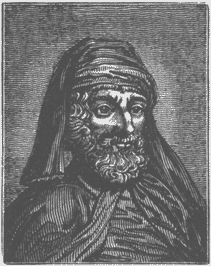
CAXTON.
But why should I go on tantalising the S——s, H——s, S——s, R——s, and U——s, of the day, by further specimens of the enormous sums here given for such common editions of old Romances? Mr. George Nicol, his majesty's bookseller, told me, with his usual pleasantry and point, that he got abused in the public papers, by Almon and others, for his having purchased nearly the whole of the Caxtonian volumes in this collection for his Majesty's library. It was said abroad that "a Scotchman had lavished away the king's money in buying old black-letter books." A pretty specimen of lavishing away royal money, truly! There is also another thing, connected with these invaluable (I speak as a bibliomaniac—and, perhaps, as a metaphysician may think—as a fool! but let it pass!) with these invaluable purchases:—his Majesty, in his directions to Mr. Nicol, forbade any competition with those purchasers who wanted books of science and belles-lettres for their own professional or literary pursuits: thus using, I ween, the powers of his purse in a manner at once merciful and wise.—"O si sic"—may we say to many a heavy-metalled book-auction bibliomaniac of the present day!—Old Tom Payne, the father of the respectable Mr. Payne, of Pall-Mall, used to tell Mr. Nichol—pendente hastâ—that he had been "raising all the Caxtons!" "Many a copy," quoth he, "hath stuck in my shop at two guineas!" Mr. Nichols, in his amusing biography of Bowyer, has not devoted so large a portion of his pages to the description of Mr. West's collection, life, and character, as he has to many collectors who have been less eminently distinguished in the bibliographical world. Whether this was the result of the paucity, or incongruity, of his materials, or whether, from feelings of delicacy he might not choose to declare all he knew, are points into which I have neither right nor inclination to enquire. There seems every reason to conclude that, from youth, West had an elegant and well-directed taste in matters of literature and the fine arts. As early as the year 1720, he shewed the munificence of his disposition, in these respects, by befriending Hearne with a plate for his Antiquities of Glastonbury; see p. 285—which was executed, says Hearne, "Sumptibus ornatissimi amicissimique Juvenis (multis sane nominibus de studiis nostris optime meriti) Jacobi West," &c. So in his pref. to Adam de Domerham de reb. gest. Glaston:—"antiquitatum ac historiarum nostrarum studiosus in primis—Jacobus West." p. xx. And in his Walter Hemingford, we have:—"fragmentum, ad civitatem Oxoniensem pertinens, admodum egregium, mihi dono dedit amicus eximius Jacobus West—is quem alibi juvenem ornatissimum appellavi," &c., p. 428. How the promise of an abundant harvest, in the mature years of so excellent a young man, was realized, the celebrity of West, throughout Europe, to his dying day, is a sufficient demonstration. I conclude with the following; which is literally from Nichols's Anecdotes of Bowyer. "James West, of Alscott, in the county of Warwick, Esq., M.A., of Baliol College, Oxford, (son of Richard West, said to be descended, according to family tradition, from Leonard, a younger son of Thomas West, Lord Delawar, who died in 1525) was representative in parliament for St. Alban's, in 1741; and being appointed one of the joint Secretaries of the Treasury, held that office till 1762. In 1765 or 1766, his old patron the Duke of Newcastle, obtained for him a pension of 2000l. a year. He was an early member, and one of the Vice Presidents, of the Antiquary Society; and was first Treasurer, and afterwards President, of the Royal Society. He married the daughter and heiress of Sir Thomas Stephens, timber merchant, in Southwark, with whom he had a large fortune in houses in Rotherhithe; and by whom he had a son, James West, Esq., now (1782) of Alscott, one of the Auditors of the Land-Tax, and sometime Member of Parliament for Boroughbridge, in Yorkshire (who in 1774 married the daughter of Christopher Wren, of Wroxhall in Warwickshire, Esq.), and had two daughters. Mr. West died in July, 1772. His large and valuable collection of Manuscripts was sold to the Earl of Shelburne, and is now deposited in the British Museum."
Loren. All hail to thee—transcendant bibliomaniac of other times!—of times, in which my father lived, and procured, at the sale of thy precious book-treasures, not a few of those rare volumes which have so much gladdened the eyes of Lisardo.
Belin. I presume you mean, dear brother, some of those black-looking gentlemen, bound in fancifully marked coats of morocco, and washed and ironed within (for you collectors must have recourse to a woman's occupation) with so much care and nicety that even the eyes of our ancient Rebecca, with "spectacle on nose" to boot, could hardly detect the cunning' conceit of your binder!
Loren. Spare my feelings and your own reputation, if you wish to appreciate justly the noble craft of book-repairing, &c.—But proceed, dear Lysander.
Lysand. You cannot have a greater affection towards the memory of the collector of the Bibliotheca Westiana than myself. Hark—! or is it only a soft murmur from a congregation of autumnal zephyrs!—but methought I heard a sound, as if calling upon us to look well to the future fate of our libraries—to look well to their being creditably catalogued—"For" (and indeed it is the voice of West's spirit that speaks) "my collection was barbarously murdered; and hence I am doomed to wander for a century, to give warning to the ——, ——, and ——, of the day, to execute this useful task with their own hands! Yes; even the name of Paterson has not saved my collection from censure; but his hands were then young and inexperienced—yet I suffer from this innocent error!" Away, away, vexed spirit—and let thy head rest in peace beneath the sod!
Alman. For heaven's sake, into what society are we introduced, sister? All mad—book mad! but I hope harmless.
Lysand. Allay your apprehensions; for, though we may have the energies of the lion, we have the gentleness of the "unweaned lamb." But, in describing so many and such discordant characters, how can I proceed in the jog-trot way of—"next comes such a one—and then follows another—and afterwards proceeds a third, and now a fourth!?"
Alman. Sir, you are right, and I solicit your forgiveness. If I have not sufficient bookish enthusiasm to fall down and worship your Caxtonian Deity, James West, I am at least fully disposed to concede him every excellent and amiable quality which sheds lustre upon a literary character.
Lysand. All offence is expiated: for look, the spirit walks off calmly—and seems to acknowledge, with satisfaction, such proper sentiments in the breast of one whose father and brother have been benefited by his book treasures.
The rapturous, and, I fear you will think, the wild and incoherent, manner in which I have noticed the sale of the Bibliotheca Westiana had nearly driven from my recollection that, in the preceding, the same, and subsequent, year, there was sold by auction a very curious and extraordinary collection of books and Prints belonging to honest Tom Martin,[389] of Palgrave, in Suffolk: a collector of whom, if I remember rightly, Herbert has, upon several occasions, spoken with a sort of veneration. If Lavater's system of physiognomy happen to receive your approbation, you will conclude, upon contemplating Tom's frank countenance—of which a cut precedes the title-page of the first catalogue—that the collector of Palgrave must have been "a fine old fellow." Martin's book-pursuits were miscellaneous, and perhaps a little too wildly followed up; yet some good fortune contributed to furnish his collection with volumes of singular curiosity.
NO. s. d.
4071. Wynkyn de Worde's reprint of Juliana Berners' book of Hawking, &c., 1496, folio, 1l. 11s. 6d.: no. 4292. Copland's ditto of ditto, fair 7 6
4099. A collection of Old Romances in the Dutch Language, with wood-cuts, very fair, 1544 to 1556, folio 10 6
4169. Horace's Art of poetry, by Drant, 1567, 4to. 3 6
4234. A certayne Tragedye, &c., entitled, Freewil, wants title, very fair and scarce, 4to. 5 0
4254. Historie of Prince Arthur and his Knights of the Round Table, 1634, 4to. 7 6
4336. The Life off the 70 Archbishopp off Canterbury presentlye sittinge, &c. Imprinted in 1574, 8vo., neat 10 6
A severe satire against Parker, Abp. of Canterbury, for which 'tis said the author was punished with the loss of his arm.
4345. Amorous Tales, by James Sanforde, very rare, printed by Bynneman, 1567, 12mo. (or small 8vo. perhaps) 5 0
4432. Hereafter followeth a little boke whyche hath to name Whye come ye not to court: by Mayster Skelton; printed by Anthony Kytson, no date. A little boke of Philip Sparrow, compiled by Mayster Skelton; printed by Ant. Veale, no date, very fair, both 8vo. 7 6
"This is a most extraordinarily scarce edition of Skelton's Pieces, and has besides these, some other fragments of his by various early printers."
But I proceed. The commotions excited in the book world, by means of the sales of the Bibliotheca Westiana and Martiniana, had hardly ceased, when a similar agitation took place from the dispersion of the Monastic Library which once belonged to Serjeant Fletewode;[390] a bibliomaniac who flourished in full vigour during the reign of Elizabeth. The catalogue of these truly curious books is but a sorry performance; but let the lover of rare articles put on his bathing corks, and swim quietly across this ocean of black-letter, and he will be abundantly repaid for the toil of such an aquatic excursion.
NO. £ s. d.
172. Bale's brefe Chronycle relating to Syr Johan Oldecastell, 1544. The Life off the 70th Archbishop off Canterbury, presentlye sittinge, 1574, &c. Life of Hen. Hills, Printer to O. Cromwell, with the Relation of what passed between him and the Taylor's Wife in Black Friars, 1688, 8vo., &c. 0 7 9
Purchased by Mores.
361 to 367. Upwards of thirty scarce Theological Tracts, in Latin and English. 1 5 0
746 to 784. A fine collection of early English Translations, in black letter, with some good foreign editions of the classics. Not exceeding, in the whole 10 10 0
837, 838. Two copies of the first edition of Bacon's Essays, 1597. mirabile dictu! 0 0 6
The reader will just glance at no. 970, in the catalogue, en passant, to
1082. (1l. 2s.) and 1091 (12s.) but more particularly to
1173. The Boke of Tulle of Olde Age, &c. Emprynted by Caxton, 1481, folio 8 0 0
1174. The Boke which is sayd or called Cathon, &c. printed by the same, 1483, folio. Purchased by Alchorne 5 0 0
1256. The Doctrinal of Sapyence, printed by the same, 1489, folio. Purchased by Alchorne 6 6 0
1257. The Booke named the Cordyal, printed by the same, 1479, folio 6 12 6
But there is no end to these curious volumes. I will, however, only add that there were upwards of 150 articles of Old Plays, mostly in quarto. See page 73. Of Antiquities, Chronicles, and Topography, it would be difficult to pitch upon the rarest volumes. The collection, including very few MSS., contained probably about 7000 volumes. The catalogue, in a clean condition, is somewhat uncommon.
You will imagine that the Book-Disease now began to be more active and fatal than ever; for the ensuing year (namely, in 1775) died the famous Anthony Askew, M.D. Those who recollect the zeal and scholarship of this illustrious bibliomaniac,[391] and the precious volumes with which his library was stored, from the choice collections of De Boze, Gaignat, Mead, and Folkes, cannot but sigh, with grief of heart, on reflecting upon such a victim! How ardently, and how kindly (as I remember to have heard one of his intimate friend say) would Askew unlock the stores of his glittering book-treasures!—open the magnificent folio, or the shining duodecimo, printed upon vellum, and embossed with golden knobs, or held fast with silver clasps! How carefully would he unrol the curious manuscript, decipher the half effaced characters—and then, casting an eye of ecstacy over the shelves upon which similar treasures were lodged, exult in the glorious prospect before him! But death—who, as Horace tells us, equally exercises the knocker of the palace and cottage-door, made no scruple to rap at that of our renowned Doctor—when Askew, with all his skill in medicine and knowledge of books, yielded to the summons of the grim tyrant—and died lamented, as he lived beloved!
NO. £ s. d.
168. Chaucer's Works, by Pynson, no date 7 17 6
172. Cicero of Old Age, by Caxton, 1481 13 13 0
518. Gilles (Nicole) Annales, &c., de France. Paris, fol. 1520, 2 tom. sur velin 31 10 6
647. Æginetæ (Pauli) Præcepta Salubria; Paris, quarto, 1510. On vellum 11 0 0
666. Æsopi Fabulæ. Edit. Princeps circ. 1483 6 6 0
684. Boccacio, il Teseide, Ferar., 1475. Prima Edizione 85 0 0
[This copy, which is called, "probably unique," was once, I suspect, in Consul Smith's library. See Bibl. Smith, p. lxiii. The reader will find some account of it in Warton's History of Engl. Poetry, vol. i., 347. It was printed, as well as the subsequent editions of 1488, and 1528, "with some deviations from the original, and even misrepresentations of the story." His majesty was the purchaser of this precious and uncommon book.]
708. Cornelius Nepos, 1471. Edit. Prin. 11 11 0
713. Alexander de Ales, super tertium Sententiar. 1474, on vellum 15 15 0
817. Anthologia Græca. Edit. Prin. 1494, on vellum 28 7 0
In Dr. Hunter's Museum.
856. Ammianus Marcellinus, 1474. Edit. Prin. 23 0 0
1332. Ciceronis Opera omnia, Oliveti, 9 vols. quarto, 1740, Charta Maxima 36 15 0
1389. Ejusdem Officia, 1465. Edit. Prin. 30 0 0
1433. Catullus, Tibullus, et Propertius; Aldi, 8vo., 1502. In Membranis 17 10 0
This copy was purchased by the late Mr. M.C. Cracherode, and is now, with his library, in the British Museum. It is a beautiful book; but cannot be compared with Lord Spencer's Aldine vellum Virgil, of the same size.
1576. Durandi Rationale, &c., 1459. In Membranis 61 0 0
The beginning of the 1st chapter was wanting. Lord Spencer has a perfect copy of this rare book, printed upon spotless vellum.
2656. Platonis Opera, apud Aldum; 2 vols., fol., 1513. Edit. Prin. on vellum. 55 13 0
Purchased by the late Dr. William Hunter; and is, at this moment, with the Doctor's books and curiosities, at Glasgow. The reader can have no idea of the beauty of these vellum leaves. The ink is of the finest lustre, and the whole typographical arrangement may be considered a masterpiece of printing. If I could forget the magnificent copy which I have seen (but not upon vellum) of the "Etymologicum magnum," in the Luton Library, I should call this the chef-d'œuvre of the Aldine Press.
2812. Plinii Hist. Natural; apud Spiram, fol., 1469. Edit. Princeps. 43 0 0
This copy has been recently sold for a sum considerably less than it brought. It bears no kind of comparison with the copy in Lord Spencer's, Dr. Hunter's, and the Cracherode, collections. These latter are giants to it!
2813. Id. cum notis Harduini; 1723, 3 vols., on vellum 42 0 0
3345. Tewrdranckhs; Poema Germanica, Norimb. fol., 1517, on vellum. 21 0 0
This is a book of uncommon rarity. It is a poetical composition on the life and actions of the Emperor Maximilian I., and was frequently reprinted; but not with the same care as were the earlier editions of 1517 and 1519—the latter, at Augsburg, by John Schouspergus. Kœllerus, who purchased a copy of this work on vellum, for 200 crowns, has given a particularly tempting description of it. See Schelhorn's "Amœnitates Literaræ," tom. ii., 430-iii., 144. Dr. Hunter purchased Dr. Askew's copy, which I have seen in the Museum of the former: the wood-cuts, 118 in number, justify every thing said in commendation of them by Papillon and Heinecken. Probably Dr. Askew purchased the above copy of Osborne; for I find one in the Bibl. Harleian, vol. iii., no. 3240. See, too, Bibl. Mead, p. 239, no. 43; where a vellum copy, of the edition of 1527, was sold for 9l. 9s. My friend, Mr. Douce, has also beautiful copies of the editions of 1517 and 1519, upon paper of the finest lustre. It has been a moot point with bibliographers whether the extraordinary type of this book be wood, and cut in solid blocks, or moveable types of metal. No one is better able to set this point "at rest," as lawyers call it, than the gentleman whose name is here last mentioned.
3337. Terentianus Maurus de Literis, Syllabis, et Metris Horatii. Mediol. fol., 1497 12 12 0
"This is judged to be the only copy of this edition in England, if not in the whole world. Dr. Askew could find no copy in his travels over Europe, though he made earnest and particular search in every library which he had an opportunity of consulting." Note in the catalogue. It was purchased by Dr. Hunter, and is now in his Museum. Originally it belonged to Dr. Taylor, the editor of Lysias and Demosthenes, who originally procured it from the Harleian Library, for four guineas only. We are told that, during his life, one hundred guineas would not have obtained it!
Rare and magnificent as the preceding articles may be considered, I can confidently assure the reader that they form a very small part of the extraordinary books in Dr. Askew's library. Many a ten and twenty pounder has been omitted—many a prince of an edition passed by unregarded! The articles were 3570 in number; probably comprehending about 7000 volumes. They were sold for 4000l. It remains only to add that Dr. Askew was a native of Kendal, in Westmorland; that he practised as a physician there with considerable success, and, on his establishment in London, was visited by all who were distinguished for learning, and curious in the fine arts. Dr. Mead supported him with a sort of paternal zeal; nor did he find in his protegé an ungrateful son. (See the Director, vol. i., p. 309.) Few minds were probably more congenial than were those of Mead and Askew: the former had, if I may so speak, a magnificence of sentiment which infused into the mind of the latter just notions of a character aiming at solid intellectual fame; without the petty arts and dirty tricks which we now see too frequently pursued to obtain it. Dr. Askew, with less pecuniary means of gratifying it, evinced an equal ardour in the pursuit of books, MSS., and inscriptions. I have heard from a very worthy old gentleman, who used to revel 'midst the luxury of Askew's table, that few men exhibited their books and pictures, or, as it is called, shewed the Lions, better than did the Doctor. Of his attainments in Greek and Roman literature it becomes not me to speak, when such a scholar as Dr. Parr has been most eloquent in their praise. I should observe that the MSS. of Dr. Askew were separately sold in 1781, and produced a very considerable sum. The Appendix to Scapula, published in an 8vo. volume, in 1789, was compiied from one of these MSS.
After an event so striking and so melancholy, one would think that future Virtuosi would have barricadoed their doors, and fumigated their chambers, in order to escape the ravages of the Book-Pest:—but how few are they who profit by experience, even when dearly obtained! The subsequent History of the Bibliomania is a striking proof of the truth of this remark: for the disease rather increased, and the work of death yet went on. In the following year (1776) died John Ratcliffe;[392] a bibliomaniac of a very peculiar character. If he had contented himself with his former occupation, and frequented the butter and cheese, instead of the book, market—if he could have fancied himself in a brown peruke, and Russian apron, instead of an embroidered waistcoat, velvet breeches, and flowing periwig, he might, perhaps, have enjoyed greater longevity; but, infatuated by the Caxtons and Wynkyn de Wordes of the West and Fletewode collections, he fell into the snare; and the more he struggled to disentangle himself, the more certainly did he become a victim to the disease.
NO. £ s. d.
1315. Horace's Arte of Poetrie, Pistles, and Satyres, by Durant, 1567. First English. Edition 0 16 0
1321. The Shepard's Calendar, 1579. Whetstone's Castle of Delight, 1576 1 2 0
1392. The Pastyme of People, printed by Rastell. Curious wood-cuts 4 7 0
1393. The Chronicles of Englande, printed by Caxton, fine copy, 1480 5 5 0
1394. Ditto, printed at St. Albans, 1483. Purchased by Dr. Hunter, and now in his Museum (which copy I have seen) 7 7 0
1403. Barclay's Shyp of Folys, printed by Pynson, 1508, first edit., a fine copy 2 10 0
1426. The Doctrinal of Sapyence, printed by Caxton, 1489 8 8 0
1427. The Boke called Cathon, ditto, 1483. Purchased by Dr. Hunter, and now in his Museum 5 5 0
1428. The Polytyque Boke, named Tullius de Senectute, in Englyshe, printed by Caxton, 1481 14 0 0
1429. The Game of Chesse Playe. No date. Printed by Caxton 16 0 0
1665. The Boke of Jason, printed by Caxton 5 10 0
1669. The Polychronicon of Ranulph Higden, translated by Trevisa, 1482. Printed by the same, and purchased by Dr. Hunter 5 15 6
1670. Legenda Aurea, or the Golden Legende. Printed by the same, 1483 9 15 0
1674. Mr. Ratcliffe's MS. Catalogue of the rare old black-letter and other curious and uncommon books, 4 vols. 7 15 0
[This would have been the most delicious article to my palate. If the present owner of it were disposed to part with it, I could not find it in my heart to refuse him compound interest for his money. As is the wooden frame-work to the bricklayer, in the construction of his arch, so might Mr. Ratcliffe's MS. Catalogues be to me in the compilation of a certain magnum opus!]