SYSTEMATIC AND DESCRIPTIVE PART. (continued 7)
Reading edition
“Lampreys” are found in the rivers and on the coasts of the temperate regions of the northern and southern hemispheres. Their habits are but incompletely known, but so much is certain that at least some of them ascend rivers periodically, for the purpose of spawning, and that the young pass several years in rivers, whilst they undergo a metamorphosis (see p. 170). They feed on other fishes, to which they suck themselves fast, scraping off the flesh with their teeth. Whilst thus engaged they are carried about by their victim; Salmon have been captured in the middle course of the Rhine with the Marine Lamprey attached to them.
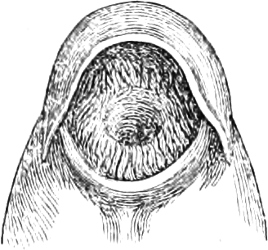
Fig. 315.—Mouth of Larva of Petromyzon branchialis.
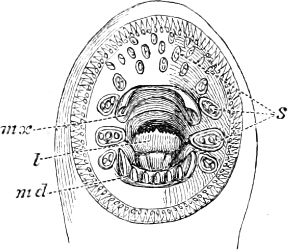
Fig. 316.—Mouth of Petromyzon fluviatilis. mx, Maxillary tooth; md, Mandibulary tooth; l, Lingual tooth; s, Suctorial teeth.
Petromyzon.—Dorsal fins two, the posterior continuous with the caudal. The maxillary dentition consists of two teeth placed close together, or of a transverse bicuspid ridge; lingual teeth serrated.
The Lampreys belonging to this genus are found in the northern hemisphere only; the British species are the Sea-Lamprey (P. marinus), exceeding a length of three feet, and not uncommon on the European and North American coasts; the River-Lamprey or Lampern (P. fluviatilis), ascending in large numbers the rivers of Europe, North America, and Japan, and scarcely attaining a length of two feet; the “Pride” or “Sand-Piper” or Small Lampern (P. branchialis), scarcely twelve inches long, the larva of which has been long known under the name of Ammocoetes.
Ichthyomyzon from the western coasts of North America is said to have a tricuspid maxillary tooth.
Mordacia.—Dorsal fins two, the posterior continuous with the caudal. The maxillary dentition consists of two triangular groups, each with three conical acute cusps; two pairs of serrated lingual teeth.
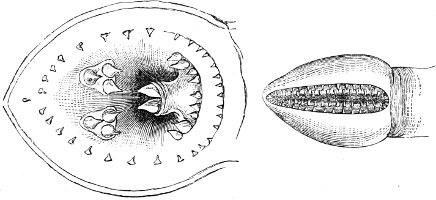
Fig. 317.—Mouth of Mordacia mordax, closed and opened.
A Lamprey (M. mordax) from the coasts of Chile and Tasmania. This fish seems to be provided sometimes with a gular sac, like the following.[47]
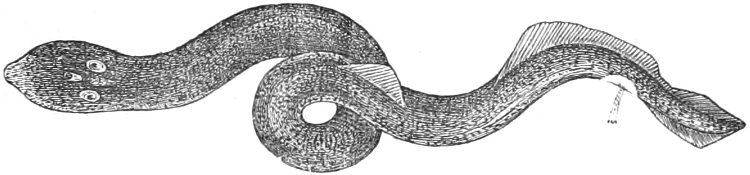
Fig. 318.—Mordacia mordax.
Geotria.—Dorsal fins two, the posterior separate from the caudal. Maxillary lamina with four sharp flat lobes; a pair of long pointed lingual teeth.
Two species, one from Chile and one from South Australia. They grow to a length of two feet, and in some specimens the skin of the throat is much expanded, forming a large pouch. Its physiological function is not known. The cavity is in the subcutaneous cellular tissue, and does not communicate with the buccal or branchial cavities. Probably it is developed with age, and absent in young individuals. In all the localities in which these Extra-european Lampreys are found, Ammocoetes forms occur, so that there is little doubt that they undergo a similar metamorphosis as P. branchialis.
Second Family—myxinidæ.
Body eel-shaped, naked. The single nasal aperture is above the mouth, quite at the extremity of the head, which is provided with four pairs of barbels. Mouth without lips. Nasal duct without cartilaginous rings, penetrating the palate. One median tooth on the palate, and two comb-like series of teeth on the tongue (see Fig. 101). Branchial apertures at a great distance from the head; the inner branchial ducts lead into the œsophagus. A series of mucous sacs along each side of the abdomen. Intestine without spiral valve. Eggs large, with a horny case provided with threads for adhesion.
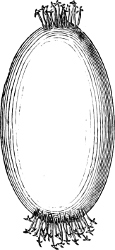
Fig. 319.—Ovum of Myxine glutinosa, enlarged.
The fishes of this family are known by the names of “Hag-Fish,” “Glutinous Hag,” or “Borer;” they are marine fishes with a similar distribution as the Gadidæ, being most plentiful in the higher latitudes of the temperate zones of the northern and southern hemispheres. They are frequently found buried in the abdominal cavity of other fishes, especially Gadoids, into which they penetrate to feed on their flesh. They secrete a thick glutinous slime in incredible quantities, and are therefore considered by fishermen a great nuisance, seriously damaging the fisheries and interfering with the fishing in localities where they abound. Myxine descends to a depth of 345 fathoms, and is generally met with in the Norwegian Fjords at 70 fathoms, sometimes in great abundance.
Myxine.—One external branchial aperture only on each side of the abdomen, leading by six ducts to six branchial sacs.
Three species from the North Atlantic, Japan, and Magelhæn’s Straits.
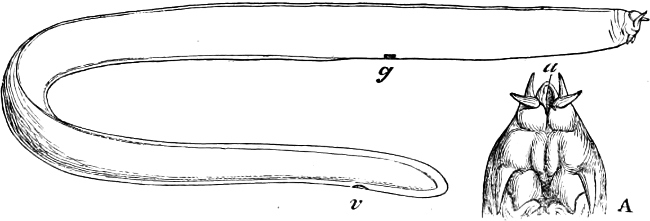
Fig. 320.—Myxine australis. A, Lower aspect of head; a, Nasal aperture; b, Mouth; g, Branchial aperture; v, Vent.
Bdellostoma.—Six or more external branchial apertures on each side, each leading by a separate duct to a branchial sac.
Two species from the South Pacific.
FOURTH SUB-CLASS—LEPTOCARDII.
Skeleton membrano-cartilaginous and notochordal, ribless. No brain. Pulsating sinuses in place of a heart. Blood colourless. Respiratory cavity confluent with the abdominal cavity; branchial clefts in great number, the water being expelled by an opening in front of the vent. Jaws none.
This sub-class is represented by a single family (Cirrostomi) and by a single genus (Branchiostoma);[48] it is the lowest in the scale of fishes, and lacks so many characteristics, not only of this class, but of the vertebrata generally, that Hæckel, with good reason, separates it into a separate class, that of Acrania. The various parts of its organisation have been duly noticed in the first part of this work.
The “Lancelet” (Branchiostoma lanceolatum, see Fig. 28, p. 63), seems to be almost cosmopolitan within the temperate and tropical zones. Its small size, its transparency, and the rapidity with which it is able to bury itself in the sand, are the causes why it escapes so readily observation, even at localities where it is known to be common. Shallow, sandy parts of the coasts seem to be the places on which it may be looked for. It has been found on many localities of the British, and generally European coasts, in North America, the West Indies, Brazil, Peru, Tasmania, Australia, and Borneo. It rarely exceeds a length of three inches. A smaller species, in which the dorsal fringe is distinctly higher and rayed, and in which the caudal fringe is absent, has been described under the name of Epigionichthys pulchellus; it was found in Moreton Bay.