Chapter III · THE END OF A CENTURY
Reading edition
Mr. Harrison entered office amidst signs of a new age. The Republican party which had put him forward was not the Republican party of the war and of reconstruction but the Republican party of the new day of industrial revolution. Old questions had fallen out of sight or were transformed by changes in the nation itself; new questions pressed for solution which had in them no flavor of the older passion of party politics. Mr. Cleveland’s four years of office had altered many things. For the mass of voters they had altered the very principle of choice between parties. That choice turned now once again upon questions of the day, not upon the issues of a war long ago fought out or of a reconstruction of southern society which politicians had touched only to mar and embarrass. A full century had gone by since the government of the nation was set up. Within that century, it now began to appear, fundamental questions of governmental structure and political authority had been settled and the country drawn together to a common life. Henceforth matters were to be in debate which concerned the interests of society everywhere, in one section as in another, questions which were without geographical boundary, questions of the modern world, touching nations no less than communities which fancied themselves to lie apart.
And yet a new sectionalism began to show itself, not political, but economic. In 1890, for the first time, the census takers found it impossible to trace upon their maps any line which marked the front of settlement between the Mississippi and the rising heights of the Rockies. Hitherto there had always been a “frontier” within the body of the continent, a line along which ran the outposts of settlement, and beyond that, between the newest settlements and the slopes of the Pacific, a well defined space as yet unpeopled. But now such regions had lost their definite outlines. Here and there were yet vacant spaces, some of them, it might be, as extensive in area as a great State: some tract of desert, some region which promised neither the fruits of the earth nor hidden wealth of minerals; but for the rest population had diffused itself so generally that frontiers had disappeared and the differences between region and region seemed little more than differences in the density of population. And yet there were lines of separation, none the less, which no census taker could draw but to which statesmen of necessity gave heed, which were as significant as anything the older maps had shown. The careful student of economic conditions might almost have made a sketch upon the map of the new divisions of the country,—divisions of interest: those most fundamental of all differences, differences in the stage of development. Any observant traveller might remark them as he moved from the teeming eastern seaports into the West or South. From the Atlantic seaboard to the Mississippi and the great lakes there stretched, north of Mason and Dixon’s line, a region substantially homogeneous in all the larger interests of trade and industry, not unlike European countries in the development of its resources and the complex diversification of its life; but beyond it, to the west and south, lay regions and communities of another kind, at another stage of development, agricultural, for the most part, up to the very ridges of the Rockies, or else set apart to some special interest like that of mining or of cattle raising on the great scale. Throughout all the vast continent, to the east of the Mississippi as to the west, contrasts were, indeed, modulated; hardly anywhere was the transition sharp from one set of social and economic conditions to another. But, taken upon the large view, they were very great, very radical, very significant, openly prophetic of differences of opinion and of interest.
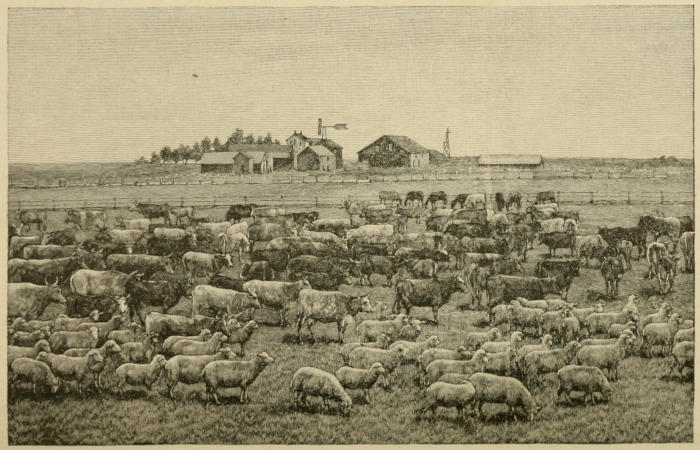
A PRAIRIE STOCK FARM
Settlement had crossed the continent, but always with a thin and scattered front, its masses neither homogeneous nor uniform, its processes hasty, imperfect, crude until the third or fourth generation. In many places settlers were yet but in the first generation. Line after line to be found upon the decennial maps of the census office, to mark the frontier of fixed settlement decade by decade, was still to be traced in differences of habit and development between community and community from east to west, not yet effaced by the feet of those who had crossed them to make homes beyond. Communities were still making and to be made. Conditions as if of a first day of settlement, conditions such as had once existed upon the coast of the Atlantic in the far-away days of the first colonies, conditions which had been shifted generation by generation from east to west across the whole breadth of the great continent, were still to be observed in hastily built towns at the far West, upon broad cattle ranches, in rough mining villages, in new regions upon the vast western plains where the plough had but just begun to break the surface of the virgin land into fruitful furrows. The land itself, by reason of its own infinite variety of character and resource, commanded changes of life and diversity of occupation. There were broad tracts of country which were entirely without cities or centres of population or any industry which brought men together in intimate co-operative groups, tracts given over by nature to the farmer and the grazier. There were States where communities sharply contrasted in life and motive were set side by side, to the sore perplexity of those who sought to make their laws and reconcile their interests: placer mines which poured the refuse of their operations down the slopes of the western mountains upon smiling farms which they were like to ruin; towns perched high within the peaks of the towering Rockies, where precious metals were to be found, which yet lay within the same political boundaries with keepers of sheep and cattle in the plains below; centres of trade and of manufacture, lying upon some great watercourse or by the coasts of the western ocean, which seemed hardly more than huge trading posts on the routes of commerce from east to west, from west to east, so little intimate part did they have in the life of the rural people amidst whose prairie farms or broad orchards of fruit they were set.
It was these differences, this lack of homogeneity, this diversity of habit, interest, and point of view which had begun to tell upon the politics of the country with the ending of the war and of the processes of reconstruction, and which now began to be decisive in the formulation of party programmes. The South, with the passing away of slavery and of the leadership of the greater landholders, bred in an elder school of politics, had become like the newer regions of the West in motive and opinion. It, too, was predominantly agricultural. Its farmers were not the aristocratic planters of the elder society which the war had destroyed, but were for the most part men of the class from which Andrew Johnson had come: plain men who did not stand for the old traditions, who had not themselves owned slaves and who had felt none of the esprit of privilege that had ruled affairs in the days gone by; men as new in politics, as new in political thinking and constructive purpose, as much bound within the narrow limits of their own experience as the men of the western farms. Any one who noted how the tenets of the Farmers’ Alliance and the new and radical heresies with regard to money took root there could see how the South had in fact become itself a new region in all that touched its social organization and its political thinking, a region as it were of recent settlement and late development so far as all the new order of the nation’s life was concerned. Errors of opinion began to prevail there, as in the new regions of the West, like those which had swept through the crude colonies in the unquiet days which preceded and followed the War for Independence: hopes that the credit of the government itself might in some manner be placed at the disposal of the farmers in the handling and marketing of their crops, demands for a “cheap” currency, of paper or of silver, which should be easier to get and easier to pay debts with than the gold which lay so secure in the vaults of the banks and of the federal Treasury. The communities from which such demands came lay remote from the centres of trade where men could see in the transactions of every day what the real laws of credit, of value, and of exchange must always be, whether legislators would have them so or not. Moreover, they felt profoundly, though vaguely, the economic uneasiness of the time, the novel power of the railways to determine markets and prices and margins of profit, the rising influence of great aggregations of capital in the controlling industries of the country, the providential oversight of banks and of those who made the arrangements of credit and exchange. Every farmer, every rural shopkeeper and trader, every man who attempted manufacture upon a small scale felt at a cruel disadvantage, and, letting his thoughts run only upon his own experience and observation, dreamed of bettering his chances by an abundant issue of at least the cheaper of the two monetary metals by the government itself, in order that bankers and capitalists might no longer keep poor men in bondage.
It was the rise and spread of such opinions that the Republicans, now once again in power, in Congress as in the presidency, had to face. There was as good reason for the apostles of the new radicalism to hope to establish themselves in the counsels of the Republican party as to hope to control the action of the Democrats. Republican constituencies were touched with the new heresies, in many parts of the country, as sharply as Democratic constituencies, and the one party was not more expressly committed than the other against the policies proposed. The Whigs, from whom chiefly the Republicans took their political lineage, had stood always for a sound and stable currency; but so also had the Democrats, with their unbroken party history since the days of Mr. Jefferson himself. The difference between them had been hardly more than this, that the Whigs wished to use the instrumentality of a national bank in the management of the public finances, while the Democrats, rejecting a bank, had sought to make the Treasury in all things independent of private business interests. The Democrats had sought to break all connection between the federal government and the banks, but they had never thought to touch the credit of the country with the hopeless demoralization of a depreciated and fluctuating currency by any imprudent law of coinage or by any substitution of a body of paper issues for the accepted monetary metals. General Jackson had come perilously near to wrecking the whole fabric of credit in order to put all payments to the government upon a gold basis. No doubt it was the questionable decisions of the Supreme Court of the United States in the legal tender cases which had opened the minds of politicians to rash experiment in the field of financial legislation. Those decisions justified the government in making its own mere promises legal tender in the payment of both public and private debts. The immense issues of the war time were made in their reasoning to seem compatible with the ordinary processes of public finance. Legislators got a novel and misleading sense of power in the creation of values. The country was ready to believe that such measures as the Bland Silver Bill of 1878, passed through Congress by votes drawn from both parties, might come from either party, should the movement of opinion in that direction but grow strong enough. The Democrats, it might be, stood nearer to the mass of the people in such matters, and undoubtedly drew their chief strength from the West and South, where the new opinions showed themselves strongest and most aggressive; but the Republicans, though they drew their support chiefly from the industrial and commercial centres of the country, showed also an uneasy fear lest they should seem to fail to meet popular doctrine half way. They were not loath, observers began to remark, to play to the populace upon occasion.
That impression was not a little strengthened by the action of the new Republican Congress. In midsummer, 1890, an Act was passed which put the coinage of silver and its use as a medium of exchange on a new footing, but which by no means reversed the policy of the government or turned away from experiment. It in set terms repealed the Bland Act of 1878, and it put a limit of one year upon the continued coinage of the silver bullion purchased by the Treasury; but it did not discontinue the purchase of silver by the government. It provided that the Treasury should each month purchase four and a half million ounces of silver at its market price; that the bullion thus bought should be paid for in Treasury notes of the United States; that after July 1, 1891, the silver purchased should no longer be coined, except so far as might be necessary in order to supply the Treasury with coin enough to redeem its notes; that the notes issued in payment for the bullion should be legal tender in the satisfaction of all debts; and that they should be redeemable in either gold or silver at the discretion of the Secretary of the Treasury. The Act declared it to be “the established policy of the United States to maintain the two metals at a parity with each other” at a fixed ratio determined by law. It was with a view to maintaining their parity that the Secretary of the Treasury was bidden use his discretion in the redemption of the notes, being expected to see to it that the one metal was not suffered wholly to supplant the other, or that the one should not be made more difficult to obtain than the other. Mr. John Sherman, the honored senator from Ohio, a man whom business men the country over looked upon as a careful student of affairs, and particularly of public finance, had fathered the measure. It was a significant political sign of the times that he should thus take part in an effort to give silver an artificial value, despite the movement, the irresistible movement, of the market. The ratio of value between gold and silver fixed by statute was not the ratio fixed by the law of supply and demand. The price of silver rose a little at first, under the influence of the Act, but it could not be kept up. The law of supply and demand was not checked in its operation. It governed the value of the metal as of all other things bought and sold. The statutes of no single government could set the efficacy of that law aside. The experience of the one-time monetary union of the Latin countries of Europe seemed to make it unlikely that even international agreement in matters of coinage could keep the values of the two metals to a fixed and stable ratio. Mr. Sherman and his colleagues both in House and Senate must have been conscious that they were playing to the galleries.
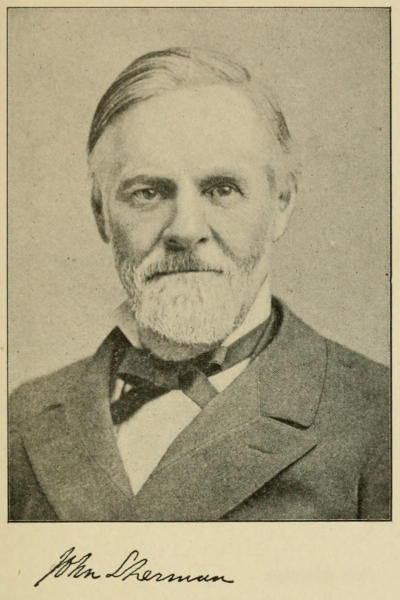
JOHN SHERMAN
All policy came, as in General Grant’s day, as in Johnson’s day, from the leaders of Congress. Mr. Harrison did not possess the gifts of leadership. A man of unquestionable character and gifted above most of his predecessors with the power to think and speak clearly, impressively, and to the point upon every public issue, a man of culture, thoughtfully read in affairs and trained by long experience in the public service, he utterly lacked personal charm and the power either to persuade or to please the men about him. His manner was cold and distant; he seemed neither to give nor to invite confidence. A cool air of orderly routine seemed always to pervade the executive chambers of the White House. It was not a place of intimate counsel where leaders conferred, but a place, rather, where the public duties of the President were performed in a sort of dignified seclusion. There was a pleasing independence in the way in which Mr. Harrison showed his good conscience and careful diligence in affairs, but no warm impulse came from him which the leaders in Congress felt constrained to reckon with. The legislative acts of the majority showed, consequently, no single informing purpose. Rank and file were apparently looking for safe ground rather than framing systematic and consistent policies.
The question of the tariff held the chief place of attention in debate. Before the close of May, 1890, the House, under the leadership of Mr. William McKinley, the chairman of its Committee of Ways and Means, had passed a new tariff Act, considerably increasing the protective duties, especially upon wool and woollen goods. The tariff had been the chief issue upon which the elections of 1888 had turned, at which the Republicans had won their majority. Mr. Cleveland had made the issue by his unexpected, outspoken message of December, 1887. The Republican leaders deemed their victory at the polls a sort of mandate not merely to maintain but also to strengthen the system of protective duties; and the Ways and Means Committee of the House had made it its first task to prepare a bill which should satisfy the expectations of the country. The House accepted the bill after but two weeks of debate. The Senate kept it all summer under consideration and so altered it before finally adopting it in September that a conference between the two houses became necessary before an agreement could be reached; but by October 1 it had become law. It had passed by a strict party vote in each House. Even members of the Republican majority had had uneasy misgivings as they watched the movements of opinion out-of-doors. It was not certain that they had not won in the elections as much because Mr. Cleveland had disappointed some of his independent supporters by proving himself more of a party man than they cared to be as because he had demanded a revision of the tariff. There was at least candor and a definite party purpose in what the new majority had done, however. Their party was once more unequivocally committed upon one of the chief questions of the day.
It was growing from year to year more and more difficult to calculate, more and more difficult to guide the movements of opinion. The new age of growth which had followed the war showed a quickened pace of change. The years 1889-1890 saw six new States added to the roster of the Union: North Dakota, South Dakota, Montana, Washington, Idaho, and Wyoming, and thoughtful men perceived how significant a thing it was that but five Territories remained in all the broad continent, with scattered Reservations here and there in the farther West, set apart for the redmen. In 1889 the government had purchased of the tribes even a part of the Indian Territory which lay within the circle of Kansas, Arkansas, and Texas, to be thrown open to white settlers,—the fairest portion of it, Oklahoma, the Beautiful Land which lay almost at its heart; and all the country had heard how mad a rush there had been across its borders to secure its coveted acres. A host of settlers fifty thousand strong had encamped upon its very boundary lines to await the signal to go in and take possession. At noon on the 22d of April, 1889, at the sound of a bugle blown to mark the hour set by the President’s proclamation, the waiting multitude surged madly in, and the Territory was peopled in a single day. It was the old, familiar process of first occupation and settlement carried out as if in a play, the story of the nation’s making in a brief epitome. Its suddenness, its eagerness, its resistless movement of excited men marked in dramatic fashion the end of the day of settlement. The best parts of the continent, save isolated Reservations here and there, were taken up; and the stream of population was dammed at their borders only by the barriers of law. When they were removed it would spring forward like a flood.
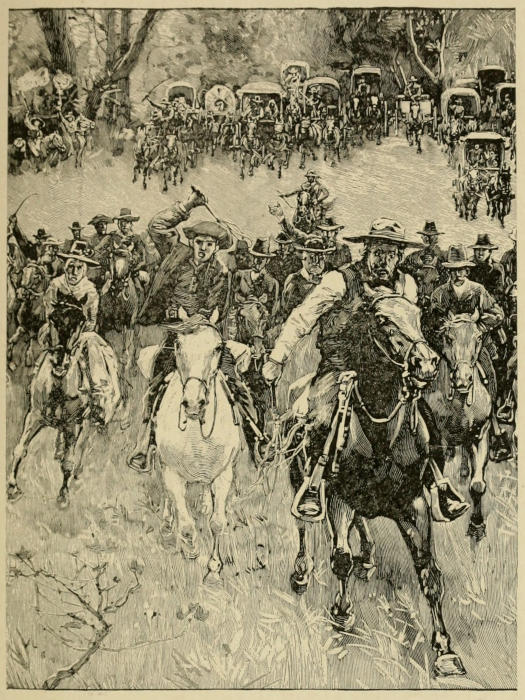
THE RUSH OF SETTLERS INTO OKLAHOMA
The census of 1890 showed the population of the country increased to 62,622,250, an addition of 12,466,467 within the decade. Immigrants poured steadily in as before, but with an alteration of stock which students of affairs marked with uneasiness. Throughout the century men of the sturdy stocks of the north of Europe had made up the main strain of foreign blood which was every year added to the vital working force of the country, or else men of the Latin-Gallic stocks of France and northern Italy; but now there came multitudes of men of the lowest class from the south of Italy and men of the meaner sort out of Hungary and Poland, men out of the ranks where there was neither skill nor energy nor any initiative of quick intelligence; and they came in numbers which increased from year to year, as if the countries of the south of Europe were disburdening themselves of the more sordid and hapless elements of their population, the men whose standards of life and of work were such as American workmen had never dreamed of hitherto. The people of the Pacific coast had clamored these many years against the admission of immigrants out of China, and in May, 1892, got at last what they wanted, a federal statute which practically excluded from the United States all Chinese who had not already acquired the right of residence; and yet the Chinese were more to be desired, as workmen if not as citizens, than most of the coarse crew that came crowding in every year at the eastern ports. They had, no doubt, many an unsavory habit, bred unwholesome squalor in the crowded quarters where they most abounded in the western seaports, and seemed separated by their very nature from the people among whom they had come to live; but it was their skill, their intelligence, their hardy power of labor, their knack at succeeding and driving duller rivals out, rather than their alien habits, that made them feared and hated and led to their exclusion at the prayer of the men they were likely to displace should they multiply. The unlikely fellows who came in at the eastern ports were tolerated because they usurped no place but the very lowest in the scale of labor.
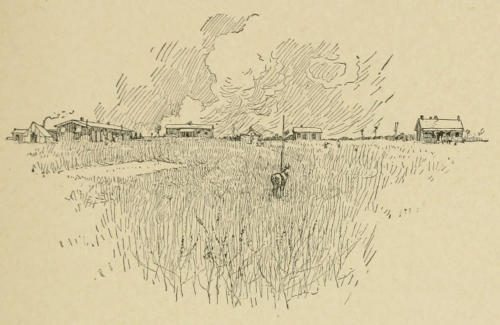
OKLAHOMA ON THE DAY OF OPENING
The year of the McKinley tariff and of the Sherman Act for the purchase of silver had brought fresh congressional elections, and after that there had been no more important party legislation. The Chinese exclusion Act had been no party measure, but a concession which both parties were willing to make to the opinion of the Pacific coast. The elections of 1890 had created in the House, instead of the slender Republican majority of a dozen votes, a Democratic majority of close upon one hundred and fifty. The tide was beginning to run which in 1892 swept the Republicans altogether from power. Once again, for the third time, when it came to the nomination of presidential candidates, the Democrats nominated Mr. Cleveland; for a second time the Republicans nominated Mr. Harrison; and the result of the elections of 1888 was reversed. The popular vote for Mr. Cleveland exceeded that for Mr. Harrison by less than three hundred thousand in a total vote of more than twelve million, but the turning about of opinion had been singularly widespread. Every State accounted doubtful in its choice between parties had given its electoral vote to Mr. Cleveland, and his minority of sixty-five in the electoral college of 1888 was turned into a majority of one hundred and ten. Colorado, Nevada, Oregon, Idaho, North Dakota, and Kansas had cast their votes for the candidates of the People’s party. In most of those States the Democrats had nominated no presidential electors; they had satisfied themselves with supporting the growing People’s party, pleased if by any means they might discomfit the Republicans and half inclined to accept the opinions of their new allies in preference to the opinions of their own leaders.
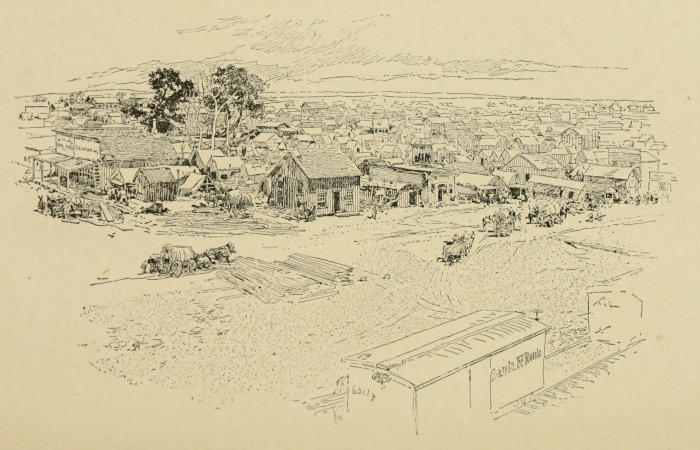
OKLAHOMA FOUR WEEKS AFTER THE OPENING
The People’s party, which the newspapers of the country promptly dubbed “Populist,” had put forth a platform which demanded that the federal government should itself acquire the ownership of all railways, telegraphs, and telephones, that the free coinage of gold and silver at the ratio of sixteen to one should be accorded by law, that a graduated income tax should be established, postal savings banks created, and all lands held by aliens, or by corporations in excess of their needs, reclaimed,—a radical programme which jumped with the humor of hundreds of thousands of workingmen and farmers the country over. It was noted how universal a defection there was from the Republican ranks in the West. Those who knew how opinion moved there said that even those who had voted for the Republican electors and the Republican nominees for Congress had done so rather out of habit or conservative temper or the hope that time and the influences of opinion would bring their leaders to a creed and policy like that of the advocates of free coinage and of governmental restrictions upon the railways and upon organized capital than because they still believed in the doctrines professed from of old by their party.
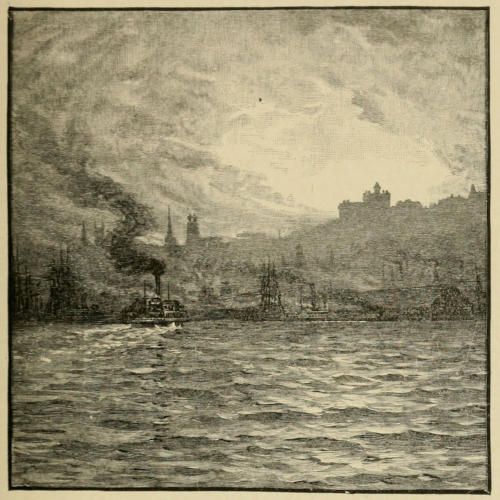
SAN FRANCISCO FROM THE BAY
There was apparently no reason why they should not entertain the hope, at least with regard to the coinage. The platforms of both the Republican and the Democratic nominating conventions spoke very strongly for the continued use of both gold and silver as money and for some arrangement which should maintain them at an equality in value, and the language which they held in the matter might without too much ingenuity be made to square with almost any policy. The Republican platform spoke of the use of both the metals “with such restrictions and under such provisions, to be determined by legislation, as will secure the maintenance of the parity of values of the two metals, so that the purchasing and debt-paying power of the dollar, whether of silver, gold, or paper, shall be at all times equal.” The Democratic platform spoke of making the units of the coinage of the two metals “of equal intrinsic and exchangeable value, adjusted through international agreement or by such safeguards of legislation as shall ensure the maintenance of the parity of the two metals and the equal power of every dollar at all times in the markets and in the payment of debts.” No doubt experiment was in the air and radical experimenters might, if they were but shrewd and persistent enough, gain control of either party as opinion made head. After the party conventions had met and spoken (July 1, 1892) the Republican Senate passed a bill which provided for the free coinage of all silver brought to the mints, the repeal of the Sherman Act, and the coinage of all the bullion purchased under its terms. The Democratic House declined to consider the bill, by a vote of 154 to 136, but rather, it was suspected, because its leaders thought it prudent to await the result of the presidential election than because there lacked advocates of free coinage enough to pass it.
For the moment Democratic advocates of “free silver” stood embarrassed by their candidate. Before the nominating conventions had met Mr. Cleveland had spoken his mind very clearly, very positively, as was his wont, upon the monetary question. He had given out for publication a brief letter which spoke in terms which no one could possibly mistake against any such tampering with the standards of value as the People’s party and their secret partisans within the Democratic and Republican ranks desired. His personal friends had wished him to make no public announcement of his views, had begged him not unnecessarily to commit himself upon a question upon which his nomination might turn; but he had rejected their counsel with a sort of scorn and had uttered his conviction in the matter with that fearless decision and that unequivocal way of speech which the country most admired in him. He had been nominated, nevertheless, taken upon his own terms, and the country’s knowledge of his conviction in that critical matter had probably saved his party the discrediting suspicion which the fusion of Democrats with Populists upon the Pacific coast might have brought upon it.
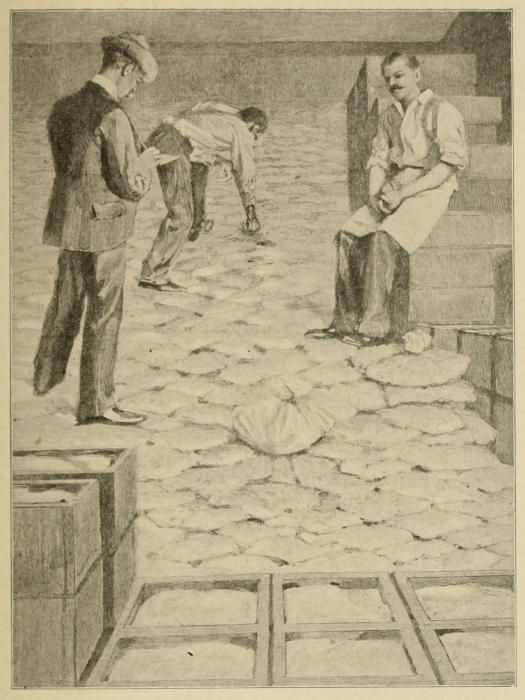
INSIDE A TREASURY VAULT AT WASHINGTON. TAKING BAGS OF SILVER OUT TO BE WEIGHED
The country had never needed a man of his fibre more. It had reached a sharp crisis of opinion, and crises in affairs followed fast which no man without courage and steadfast character could have swung the government clear of. The four years which followed Mr. Cleveland’s second election were among the most remarkable years of peace the country had ever seen. Disorders of the most serious character, alike in business and in politics, had within that brief space their sharp culmination; foreign questions of the most delicate and critical kind unexpectedly arose; society itself seemed upheaved by forces which threatened it with lasting injury; and amidst parties which seemed without leadership or cohesion the President alone stood firm and spoke definite counsel.
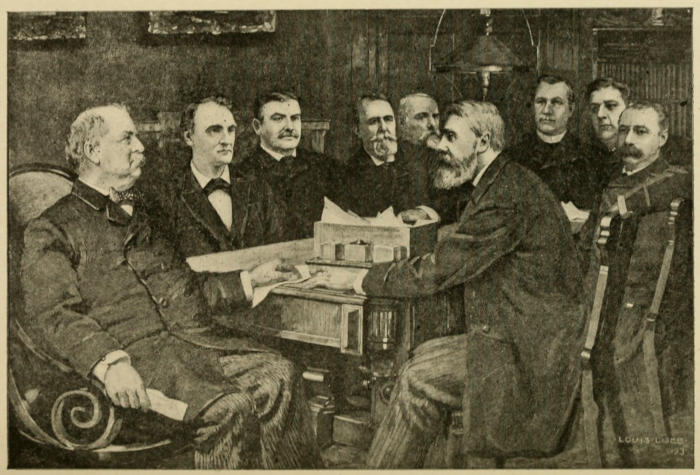
MR. CLEVELAND AND HIS CABINET
The Democrats had come into power again upon a definite issue, the issue to which Mr. Cleveland had given such sharp definition in his famous message of 1887, the issue of the tariff. Upon no other matter so much as upon that had the voting turned; upon no other matter did the Democrats bear so unmistakable a commission from the country. But Mr. Cleveland saw that the matter which called first and most imperatively for action was the financial situation of the government and of the country. The financial experiments of the last fourteen years had begun to bear fruit in abundance. There were outstanding some five hundred million currency notes of the government which it was obliged upon demand to redeem in gold; and yet even when once redeemed they were not cancelled. The law directed that they should be issued again, to come back once more, if their holders chose to present them, to be redeemed in gold. Gold was constantly demanded, and in immense sums which seemed to grow ominously from quarter to quarter, not only for profitable export and to pay foreign balances, but also as a safe fund against what might happen when the crash should come which every observant man feared to be at hand. The government was obliged by the Sherman Act of 1890 to buy four and a half million ounces of silver every month and pay for them in notes which the Secretary of the Treasury knew that he must redeem in gold on demand if he would keep panic off. So soon as the government ceased paying in gold the artificial “parity” between gold and silver which the laws sought to maintain would be destroyed; silver would, in effect, become the only standard of values, the only medium of exchange; every piece of property in the country, tangible or intangible, would lose half its value; and credit would collapse. And yet how could the government keep itself supplied with gold? Very few of its debtors were obliged to pay in that coin; it could replenish its diminishing stock only by borrowing, and could borrow only by the issue of bonds made payable “in coin” of which lenders might well grow shy as they saw politicians grow less and less firm in their resistance to the demands of the advocates of the free coinage of silver.
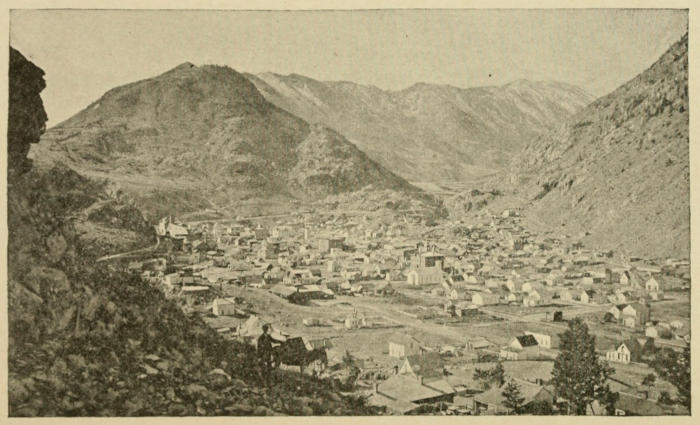
A SILVER MINING TOWN, GEORGETOWN, COLORADO
It was clear enough what Mr. Cleveland thought and intended, but it was by no means clear that Congress would willingly lend him its aid. He led a party in which silver advocates abounded, men who lived remote from the seats of trade and knew nothing of its laws. It was not certain that the Republicans were any stiffer in their resistance to the pressure of radical opinion in the matter of the coinage. What might happen when it came to actual legislation by Congress who could foresee? Early in June, 1893, Mr. Cleveland announced his purpose to call Congress together in extraordinary session for the consideration of the finances. On the 26th of June the authorities of India closed their mints to the free coinage of silver, and the price of the metal dropped as it had never dropped before. On the 30th of June the President summoned Congress to meet on the 7th of August. The silver mines of the West were promptly closed, and thousands of miners were thrown out of employment, to be taken care of and become a serious menace to order in the nearby cities, into which they crowded hungry and forlorn. The greatest excitement prevailed in the West. Before Congress assembled conventions of the advocates of silver had been held in Denver and Chicago which protested vehemently against Mr. Cleveland’s evident intention to have the law which obliged the Treasury to purchase silver set aside, and declared that he was acting in concert with the eastern bankers to thrust silver altogether out of use as money. They demanded that, should the Sherman Act be repealed, the free coinage of silver should be substituted. When Congress assembled it was noted that the ordinary party lines seemed for a little while almost to disappear. The advocates of silver coinage acted together in both houses without regard to their differences upon other subjects, and acted with the ardor of men who serve a cause.
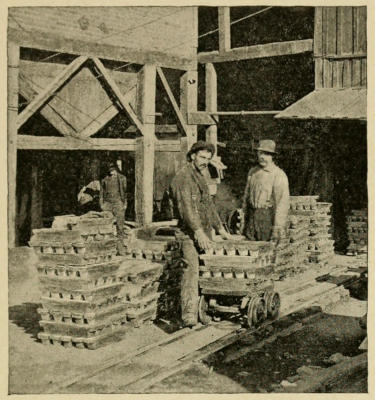
BULLION AT THE AMERICAN SMELTER, LEADVILLE, COLORADO
Mr. Crisp, whom the House chose Speaker, was of the silver group within his party, but felt bound, as the party’s official leader in matters of legislation, to give the President all the support the authority of the speakership could afford. Mr. Cleveland asked for a single, specific act of relief, the repeal of the purchasing clause of the Sherman Act of 1890, and Mr. Crisp held together as he could the members who were inclined to meet the crisis as the needs of the Treasury seemed to demand. Public opinion out of doors pressed uncomfortably, too. Panic had already come in the money market, and the business of the country was suffering the consequences. A repealing bill was introduced on August 11th, and on the 28th was passed, by a vote of 240 to 110, so sensitively did the House feel the airs of opinion and the necessity for acting in good faith with the President for the relief of the Treasury. But the Senate would make no such show of compliance. There the silver men mustered so strong that it was not clear until the autumn had come that a majority for repeal could be obtained at all, and every delay known to the leisurely rules of the body was made use of to hold action off. Meanwhile the country took the consequences. Credit collapsed; loans could nowhere be obtained; the very currency seemed to disappear, being hoarded and kept out of the currents of trade in such extraordinary quantities that those who needs must have it were obliged to pay a premium for its use and the banks used clearing house certificates in its stead. Failure followed failure. The very processes of manufacture stood still. Business men knew not what to do. The business of the country was sound; its resources were untouched. There had been no speculative flurries, no irregular operations that could justify panic or impair confidence. Nothing was awry except the public finances: men could not be sure of the value of the money they handled. It was not certain that the government would not put all exchanges upon the silver basis. The worst was over before the Senate acted. Business of sheer necessity recovered its tone; and when at last, at the very end of October, the repeal became law, trade and manufacture began to stir again with reassuring evidences of returning life.
But the results of panic and failure were not stayed. A Treasury report of the 19th of October showed a falling off in the revenues, as compared with the estimates, during the preceding three months, which would mean, if continued, a deficit of $50,000,000 for the fiscal year. Every industry was slackened, imports had fallen off, foreign capitalists were withdrawing their investments. It was hardly a propitious time at which to undertake a revision of the tariff. The Democrats were pledged, nevertheless, to undertake it. That was the only reform to which they were explicitly pledged; they had majorities in both houses, and Mr. Cleveland was President. The financial legislation most immediately and imperatively needed was out of the way, and the field was apparently clear before them. They could not face the country again upon the tariff issue should they fail to redeem their promises in the matter of the reduction of the duties. The House Committee on Ways and Means had begun the preparation of a tariff bill during the special session at which the battle against the purchase of silver had been fought out, and before the time set for the regular session of December had made public the terms of the measure they meant to propose. In the House there was little difficulty in pressing it to its passage. Reported early in January, it had passed by the 1st of February, together with an internal revenue bill meant to make good the estimated reductions in the receipts at the ports. It was a genuine measure of reform. It proceeded upon the principle that the raw materials of manufacture ought for the most part to be entirely freed from duty; that there should be throughout the whole list of dutiable articles as considerable a reduction of duties as a prudent regard for vested interests would permit; and that duties should be ad valorem rather than specific in order that the burden of the consumer might in every case be clearly calculable. Coal, iron ore, and sugar were put upon the free list. The internal revenue bill associated with the revision embodied, as its chief features, a tax upon incomes and an increased excise on distilled spirits.
The trouble came, as before, in the Senate. There the disintegration of the Democratic party was evident as it was not evident in the House. Senators allowed themselves to be attached to particular interests, put party pledges aside very lightly, acted like men who had forgot the compulsions of political principle and played each for his own benefit. Before the measure got out of their hands they had altered it almost beyond recognition. They had put in once more an elaborate schedule of duties on sugar, had taken coal and iron ore from the free list, had changed ad valorem duties to specific, and had all through the bill made alterations which increased the rates of duty proposed by the House, each senator exerting himself, as it seemed, to secure protection or advantage for the industries of his own State. The average rate of duty under the McKinley Act had been about 50 per cent.; the House bill had reduced it to about 35½; the changes made in the Senate increased it to about 37. It was not the general increase of rates effected in the Senate that held the attention of the country so much as the very noticeable activity of a group of senators in the interest of the sugar manufacturers and dealers. There was manifestly no thought of either party interest or public duty in what they did; they were acting in some private interest, it was to be feared upon some private motive,—were heeding, not their party leaders, but the representatives of a particular industry who had obtained a hold upon them which could not be shaken. Their headstrong, stubborn rejection of political obligations wrecked the Democratic programme and utterly discredited their party. The House, in despair of getting anything better, accepted the mutilated bill which came from their hands (August 13, 1894), and the President suffered it to become law without his signature.
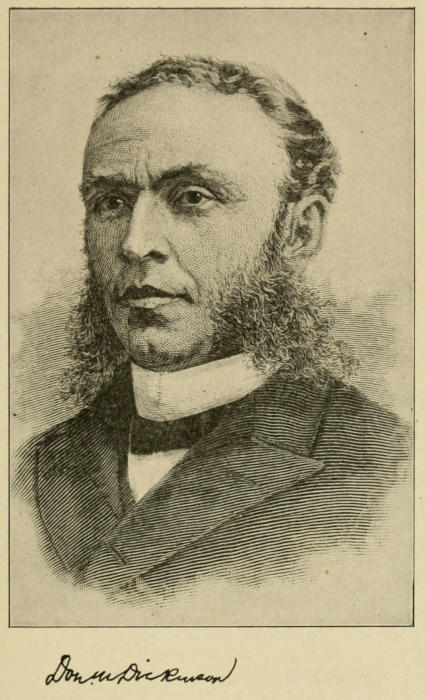
DON M. DICKINSON
The internal revenue Act, with its provision for an income tax, had gone through both houses as a part of the tariff measure; but it stood as law only nine months. The income tax was at once challenged in the federal courts, test cases were hurried to a conclusion, and on the 20th of May, 1895, the Supreme Court declared it unconstitutional. It was a reversal of former decisions. A tax upon incomes had been among the innumerable taxes adopted to support the war for the Union, and the court had then deemed the tax permissible. But it now took another position. The tax was, it said, a direct tax; the constitution provided that direct taxes should be apportioned among the several States in proportion to their population; and, inasmuch as this tax was not so apportioned, it was unconstitutional. Without the income tax the deficit caused by the reductions of duty just effected could not be made good, and the financial position of the government became more difficult than ever. There was not likely to be revenue enough to meet the expenditures, which Congress had voted as lavishly as if the Treasury were full to overflowing.
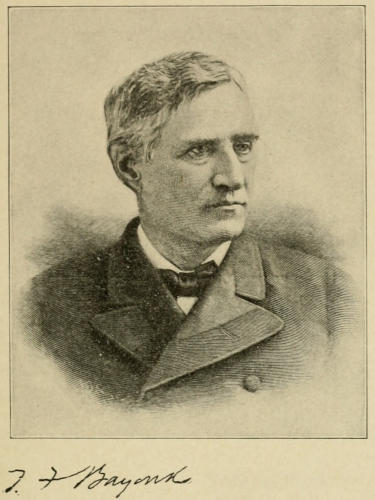
THOMAS FRANCIS BAYARD
The repeal of the silver purchasing clause of the Sherman Act had only in small part relieved the embarrassments of the Treasury. There was still the unending difficulty of maintaining the gold reserve, the “endless chain” of Treasury notes coming in to be redeemed in gold and immediately paid out again to be presented at their holders’ pleasure for more gold, always being paid for and yet never redeemed. The President, in a special message of the 28th of January, 1895, very earnestly requested Congress to authorize the Secretary of the Treasury to sell bonds for the replenishment of the gold reserve which should be explicitly payable in gold at their maturity and therefore sure of sale at a handsome premium, and also to authorize the retirement of the notes, instead of their re-issue, upon redemption, in order to stop in part at least the inroads upon the reserve. But the houses would do nothing. The advocates of silver coinage were strong enough in both houses to block what legislation they chose, and regarded Mr. Cleveland as their arch opponent. They would allow nothing to be done to relieve the embarrassments of the administration.
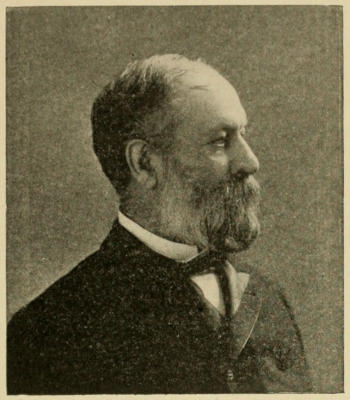
WILLIAM FREEMAN VILAS
For the first time since the war for the Union, for the first time in thirty-two years, the Democrats controlled both houses and the presidency; and yet Mr. Cleveland seemed like a President without a party. Some attributed it to his lack of tact, his aggressive independence in action, his too confident initiative, his way of using his power as if he were under no obligation to his party associates to consult or consider them. He did, in fact, hold upon occasion very strictly to the literary theory of the constitution, the theory which the makers of the constitution had accepted from M. Montesquieu. He regarded the legislative and executive departments of the government as by intention set apart from each other and meant each to exercise an independent judgment and discretion in the performance of the duties which fell to it, co-operating, indeed, but not compounding, not parts of a party system, ministry and majority, but the balanced checks of a carefully devised mechanism of legal action. He had never had the point of view with regard to executive functions which is natural to a member of a legislative body. As mayor, as governor, and as President, he had always conceived it his function to check legislative action rather than guide it, had thought of himself always as an administrative officer, not as a party leader. It was noticeable that he made up his cabinets upon that theory. In his first cabinet there had been men like Mr. Thomas F. Bayard, of Delaware, Mr. Lucius Q. C. Lamar, of Mississippi, Mr. William F. Vilas, of Wisconsin, and Mr. Don M. Dickinson, of Michigan, who had been chosen in accordance with well recognized precedents in such matters: because of their service in party counsels; but the rest were men, so far as might be, of his own personal selection, whom he chose, not for their influence among politicians or in political canvass, but because he knew their efficiency as men of business. In his second cabinet the element of personal choice was still more noticeable. The Secretary of State had been a distinguished federal judge, and had been in the cabinet of Mr. Arthur,—had but the other day turned from his former Republican associates to support Mr. Cleveland, a fresh recruit in the Democratic ranks. The Secretary of War had in his previous administration been Mr. Cleveland’s private secretary. The Postmaster General had been his partner in Buffalo in the practice of law. The Attorney General was one of the leaders of the bar of Massachusetts, no politician, a great lawyer merely. The President’s object was to surround himself, not with a party council, but with capable heads of departments.
No doubt he seemed to members of his party in Congress a trifle too separate and absolute. He did not seem to regard it as any part of his constitutional business to be forever arranging agreements between the Executive and the houses. He held to a very strict principle of duty in every matter upon which he was approached, deeming his connection with his party in some sense broken or suspended so long as he was President, in order that he might serve the country as a whole without any too sensitive scruples as to the effect of his decisions upon coming elections. It was inevitable, since he held himself so and swung free of party advice when he pleased, that he should seem to put his own judgment above that of the congressmen who approached him. Sometimes he would patiently confer, persuade, and come to terms of agreement; but at other times he would decline with a noticeable touch of impatience to take any part in the arrangement of legislative plans, and in effect bid members of the houses go their own way while he went his.
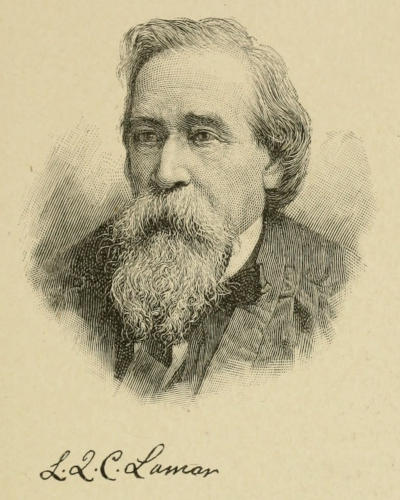
L. Q. C. LAMAR
But his action in such matters grew out of the situation in which he found himself as much as out of his theory with regard to his office and his natural temperament in dealing with men who did not act upon fixed conviction, as he did, but rather upon considerations of political or personal expediency. His party was in fact going to pieces and turning away from him, under the compulsion of forces over which he had no control. The business of the country had fallen dull and inactive because of the financial disquietude of the time. A great poverty and depression had come upon the western mining regions and upon the agricultural regions of the West and South. Prices had fallen; crops had failed. Drought swept the western plains clean of their golden harvests. Farmers in the districts most stricken could not so much as buy clothes for their backs, and went clad in the sacks into which they would have put their grain had they had any, their feet wrapped about with pieces of coarse sackcloth for lack of shoes. Men of the poorer sort were idle everywhere, and filled with a sort of despair. All the large cities and manufacturing towns teemed with unemployed workingmen who were with the utmost difficulty kept from starvation by the systematic efforts of organized charity. In many cities public works were undertaken upon an extensive scale to give them employment. In the spring of 1894 “armies of the unemployed” began to gather in the western country for the purpose of marching upon Washington, like mendicant hosts, to make known to the government itself, face to face, the wants of the people. The dramatic plan seems to have been originated by one Coxey, of Massillon, Ohio, who announced that he would lead an “Army of the Commonweal of Christ” to Washington to propose that the government issue $500,000,000 in greenbacks to be paid out for work upon the public roads, in order that the country might at one and the same time be supplied with serviceable highways and abundant money. On the 25th of March he actually set out, and by the 1st of May was at the capital. A hundred men began the journey with him, and their ranks had swelled to three hundred and fifty by the time they entered Washington. They made no disturbance. Most of the towns and villages on their way supplied them with food, partly out of charitable good humor, partly in order to speed them on their way and be quit of them, lest they should linger or grow ugly in temper; good natured sympathizers and men who wished to see the comedy played out subscribed funds for their most urgent needs. The painful farce was soon over. Their errand of course came to nothing. They reached Washington to find that there was nothing that they could do, and dispersed. But their example was imitated with less harmless results. Other “armies” gathered, in more sullen mood, to take their turn at marching and living upon the country as they went. Some started from the far-away coasts of the Pacific. Railway trains were seized to afford them transportation across the mountains and across the long plains where marching would be most painful, tedious, and unprofitable. Country-sides experienced a sort of panic at their approach. It began to seem as if there were no law or order in the land. Society itself seemed demoralized, upset.
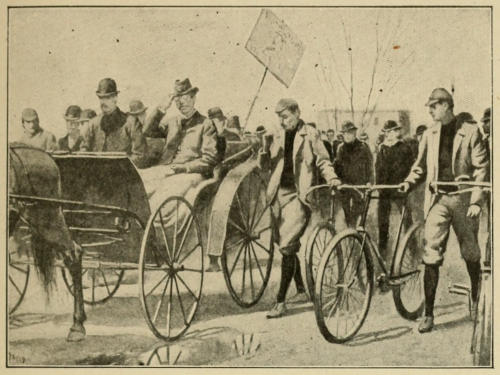
COXEY AND HIS ARMY APPROACHING WASHINGTON
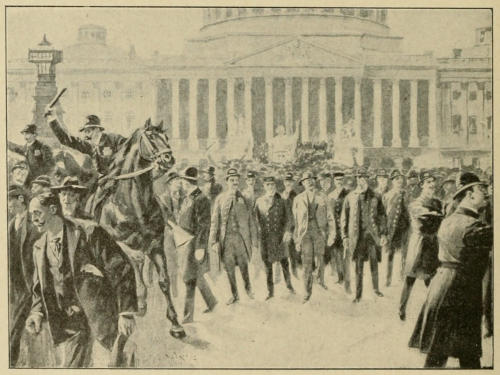
COXEY BEING ESCORTED FROM THE CAPITOL
It was in such an atmosphere that political opinion altered, that parties dissolved and were reconstituted with many a novel purpose of reform. And yet the President moved in all matters which it fell to him to act upon with a vigor and initiative which made the years memorable. Strikes had been added to the other disturbances of the time. From April until June, 1894, a strike of the bituminous coal miners, two hundred thousand strong, threatened to embarrass the industries of the whole country. Many manufacturing establishments were obliged to close for lack of fuel. Some of the railways seized the coal which they were carrying as freight for use in feeding the fires of their locomotives. On the 11th of May a strike of the employees of the Pullman Car Company, of Chicago, began which presently became a very formidable affair. The strikers and their sympathizers mustered in dangerous numbers and made concerted effort to prevent the use of the cars of the Pullman Company by any of the railways running out of Chicago. Their violence seemed about to stop all traffic on the western roads, and Mr. Cleveland intervened. The governor of Illinois had not asked for his aid, had not even called out the militia of the State to maintain order and protect property,—sympathized, indeed, with the strikers and resented interference. Neither had the federal courts acted or asked for assistance in the execution of their writs. Mr. Cleveland deliberately took the initiative and assumed the responsibility, on the ground that the strikers were preventing the movement of the mails and blocking the course of interstate commerce, and that the carrying of the mails and the protection of commerce between the States were indisputable duties of the federal government. He ordered federal troops to the points of greatest violence and danger, and, when their mere presence and mere action as armed police did not suffice to check the mobs that aided the strikers, he issued a proclamation which practically declared the disturbed regions in a state of insurrection and threatened merciless action against all rioters as against public enemies. Order was restored and the law prevailed again.
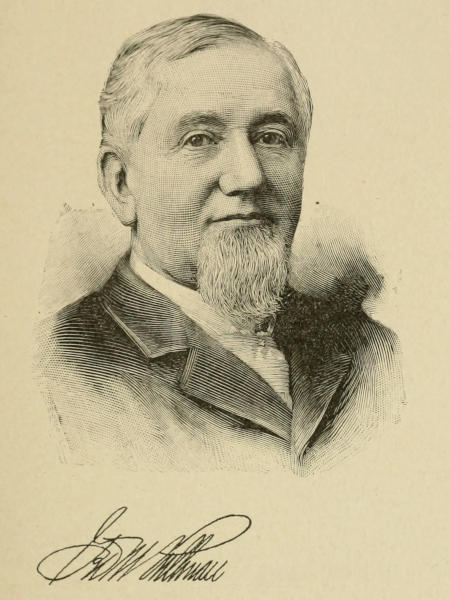
GEORGE M. PULLMAN
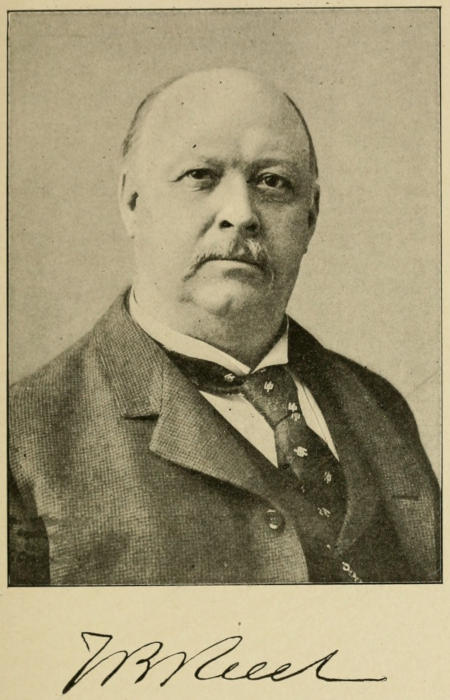
THOMAS BRACKETT REED
In foreign affairs Mr. Cleveland exhibited the same firmness and decision, and had given the country a touch of his quality at the very outset of his term of office. One of his very first acts had been to withdraw from the docket of the Senate the treaty which Mr. Harrison had submitted to it for the annexation of the Hawaiian Islands to the United States. That treaty was the culminating transaction of a singular revolution. The Hawaiian Islands were subject to a sovereign queen whose power had been reduced by constitutional changes to the merely administrative function of executing the laws passed by a representative chamber, to which, and not to herself, her ministers were responsible. Property and political power in the Islands had, by processes which seemed to change the very character of the kingdom, come chiefly into the hands of foreigners; and in January, 1893, the queen determined to promulgate, upon her own sole authority, a new constitution which should deprive them of the suffrage and bring the legislature again under the control of the crown. The foreigners at Honolulu, the capital, chiefly Americans, at once bestirred themselves to defeat her purpose and get the government into their own hands, and the resident minister of the United States lent them his open aid. Marines and pieces of artillery were ordered on shore from a United States man-of-war lying in the harbor; under their protection a revolutionary provisional government was set up which thrust the queen aside “until terms of union with the United States had been negotiated and agreed upon”; and on the 16th of February, 1893, but a little more than two weeks before the expiration of his term as President, Mr. Harrison hurried a message to the Senate submitting an annexation treaty and recommending its ratification. Meantime, on the 9th of February, the minister of the United States at Honolulu, acting without instructions, had proclaimed a protectorate of the United States over the Islands.
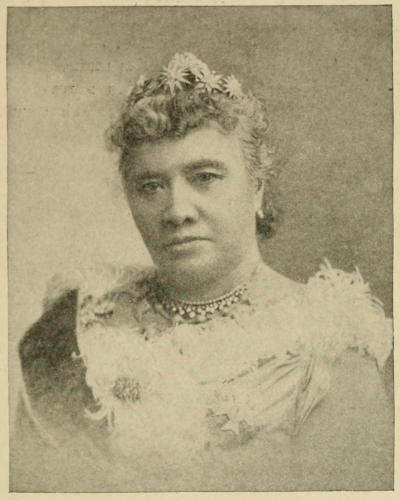
LILIUOKALANI, QUEEN OF HAWAIIAN ISLANDS
On the 4th of March Mr. Cleveland assumed the presidency, and promptly withdrew the treaty. A commissioner was at once despatched to Hawaii to ascertain the full facts of the extraordinary transaction, and on the 18th of December, 1893, the President submitted his report to Congress, accompanied by a message in which he emphatically repudiated and condemned what the minister of the United States had taken it upon himself to do in the name of his government to put the revolution afoot. Had the displaced queen consented to a general amnesty and security of rights as the condition of her restoration, as Mr. Cleveland proposed, he would have undertaken to undo what the minister had done; but she would consent to no terms whatever, and all things stood as they were, in the hands of the provisional government, self-constituted and born of revolution.
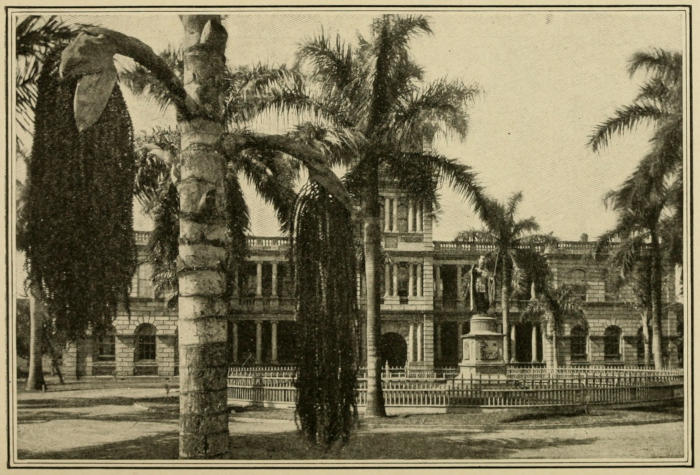
GOVERNMENT BUILDINGS. HONOLULU
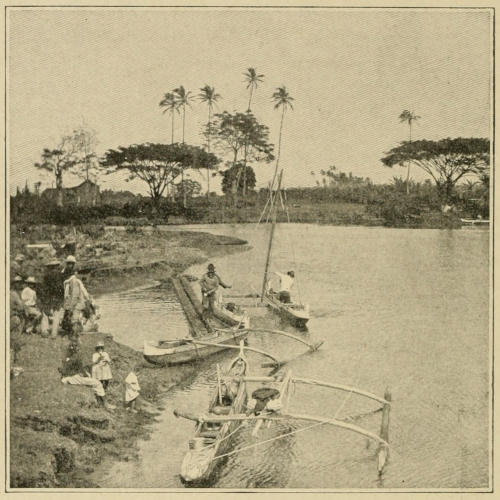
SETTING OUT FOR A DAY’S FISHING, HAWAII
Eighteen months elapsed, the country saw the anxious summer of 1894, another winter brought the Treasury of the United States once again within sight of an exhaustion of its supply of gold, and then (July-December, 1895) a question of foreign policy came under the President’s hand which might have embroiled two kindred nations in a great war. Once more the singular energy and decision of Mr. Cleveland’s character were made evident, and the country was thrilled. For year after year through a long generation the English government had disputed with the government of Venezuela the western boundary line of British Guiana. From stage to stage of the controversy the line of the British claims had been pushed forward. Again and again, through one administration after another, the government of the United States had used its good offices to bring the controversy to a pacific and satisfactory conclusion. Ever since the famous declaration of Mr. Monroe, in 1823, it had been understood that the government of the United States would make it its business to see to it that no European power extended its dominion or acquired fresh territory in the Americas. It had not undertaken to maintain an actual formal protectorate over the South American states, but it did frankly undertake to act as their nearest friend in the settlement of controversies with European nations, and no President, whether Republican or Democratic, had hesitated since this critical dispute concerning the boundaries of British Guiana arose to urge its settlement upon terms favorable to Venezuela. The government at London had put settlement off, had frequently shifted its ground in the controversy, had always spoken of moderation, and yet had conceded nothing, had refused arbitration and yet had proposed no terms which it was possible for the Venezuelan government to accept. Endless irritation had led to no issue, and the matter seemed without term or solution when Mr. Cleveland uttered the word that concluded it. Earnest and repeated representations to Lord Salisbury having proved of no avail, Mr. Cleveland sent to Congress on the 17th of December, 1895, a message in which he set forth in unmistakable language what he believed to be the duty of the United States in the protection of Venezuelan rights. He had urged arbitration upon Lord Salisbury, as the most equitable, indeed the only possible, means of settling so old and so tangled a controversy; Lord Salisbury had declined arbitration and every settlement except that which conceded the full claims of England; it was necessary, therefore, the President declared, that the government of the United States should ascertain for itself the merits of the controversy, and, having reached a conclusion, insist upon its acceptance at whatever cost.
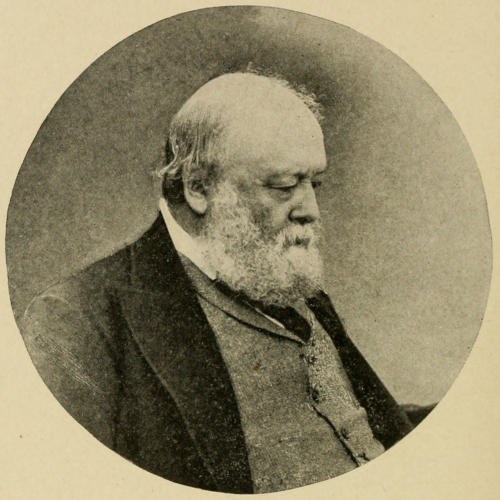
THE MARQUIS OF SALISBURY
A thrill of intense excitement and enthusiasm shot through the country. Neither house of Congress was any longer of the President’s party. The autumn elections of 1894 had replaced the heavy Democratic majority of 1892 by a Republican majority of one hundred and forty in the House of Representatives, and radical reversals of the majorities in the States had given the Senate also once more into the hands of the Republicans. But the houses forgot party differences in their eager and instant response to the President’s Venezuelan message. Within three days after its receipt money had been voted for the commission of inquiry for which he asked, and all the world was apprised how ready the Congress was to support the President to the very utmost in his new and vigorous assertion of the Monroe doctrine. Thoughtful men knew very well how grievous a thing it would be to see the two kindred nations which stood so hopefully together at the front of the world’s progress come to the awful grapple of war; no right-minded man in his senses wished to see so signal a catastrophe, least of all the President himself. He was a man of peace; but he deemed peace to be rooted in justice and feared it to be impossible with a nation which rejected the friendly offices of arbitration in a case like this that had arisen. He had in mind, too, the peculiar relations which the government over which he presided had always borne to the states of South America in respect of their dealings with the nations of Europe, and knew that he could not in fidelity relax the rigor of the principle upon which it had these seventy years been its avowed policy to act. It was that, his assertion of the Monroe doctrine in a new aspect, with a new dignity, even if with a new rigor, that caught the almost passionate enthusiasm of the country, and made war unnecessary. Lord Salisbury yielded; the dispute was submitted to arbitration; and Mr. Cleveland had a great triumph. He had exposed a hidden question to the public opinion of two nations, and that opinion had supported him and rebuked Lord Salisbury.
Mr. Cleveland pushed his belief in arbitration far beyond the individual instance. In the spring of 1895, Mr. Gresham, then Secretary of State, had suggested to Her Majesty’s government a general treaty of arbitration in which the two governments should pledge themselves to submit all serious matters of dispute that might arise between them to settlement by an impartial outside tribunal; the sudden heat of the Venezuelan controversy quickened the desire on both sides of the water to carry the plan into execution; and on the 11th of January, 1897, the President had the satisfaction of seeing such a treaty completed and signed. But the Senate rejected it. Mr. Cleveland’s term of office came to an end within two months after the exchange of signatures, and a Republican President succeeded him while the treaty pended. The new President urged the treaty upon the Senate as he had urged it, but it was rejected, notwithstanding. The Senate would not bind the government to submit its interests in all cases to the decisions of an outside tribunal, and the careful diplomatic work of two governments went for nothing.
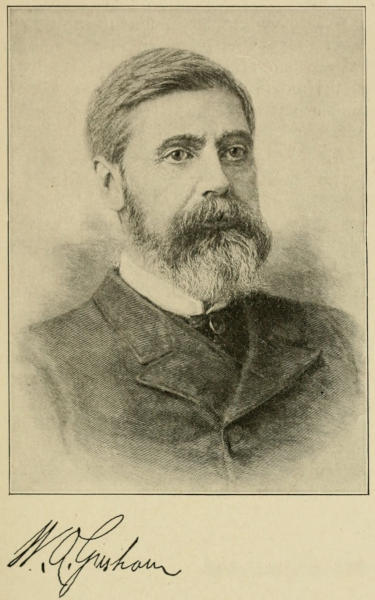
WALTER QUINTON GRESHAM
Those closing days of the Democratic administration were darkened by perplexities of foreign policy essentially more serious and difficult to handle than any that were likely to arise between the governments of the United States and Great Britain. The difficulties of Spanish rule in Cuba were growing intolerable. Sharp insurrection had broken forth there in the spring of 1895. It was but seventeen years since the last uprising in the island, which had lasted the ten years 1868-1878, and which had been brought to a conclusion only by promises of radical reform in the Spanish administration. Those promises had not been kept. The reforms instituted had proved delusive. The island was taxed to the uttermost farthing for the support of the army and navy and of the host of Spanish officials who throve as placemen in the innumerable offices of administration. The suffrage that had been granted the native inhabitants and the privileges of self-government which had been accorded them were effectually offset by laws which really put their affairs at the disposal of the Captain General who was their governor; and men who were not within the circles of official influence complained that they could get no privilege, enforce no right, even, which they did not pay for in hard cash. A mere petty fraction of the intolerable taxes they paid was expended upon the public works of the island itself. There seemed no way of reform except by revolution, and no hope even in revolution unless its object were absolute independence. The Spanish government met the insurrection with savage measures of suppression. In January, 1896, Don Valeriano Weyler was made governor and Captain General of the island, and proceeded to take measures of repression which shocked the humane sense of all civilized peoples looking on. Finding that it made no end of resistance merely to harry the country with its fastnesses of forest, swamp, and mountain, he began to destroy every village and habitation of the insurrectionary districts and to drive the women and children who inhabited them into camps of “concentration,” where they might be kept under guard and surveillance and held off from giving succor or intelligence to the insurgents, in order that the country might be empty and without homely shelter; and he did not take the precautions of mere prudence and mercy which were necessary to keep fatal diseases and pitiful starvation out of the camps, but let the poor creatures huddled there live for the most part as they could.
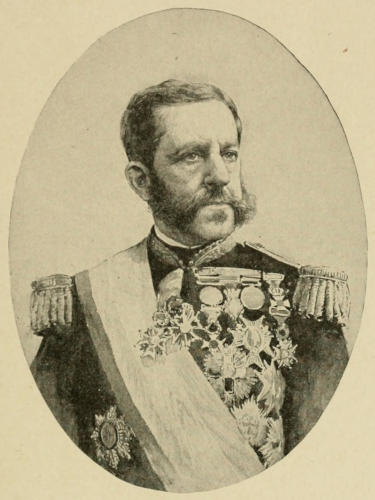
DON VALERIANO WEYLER
Opinion moved very uneasily in the United States at sight of such things and the President had no mind to ignore them. No one could pretend that it was, or that it ought to be, a thing indifferent to the United States to have chronic rebellion and suffering thus perpetuated from year to year in a populous island lying at their very doors, to which their people were closely bound by trade and all the intimate intercourse of neighbors. Fatal fevers had again and again crossed the narrow waters out of Cuba to the southern ports of the United States because the Spaniards would not look to the proper sanitation of the great towns which lay by the island’s harbors, and these distempers of revolution seemed as ill to take the wind of as the fevers themselves. Mr. Cleveland spoke very gravely in his annual message of December, 1896, of the necessity of bringing affairs in Cuba to a final pacification and adjustment. “It cannot be reasonably assumed,” he said, “that the hitherto expectant attitude of the United States will be indefinitely maintained. While we are anxious to accord all due respect to the sovereignty of Spain, we cannot view the pending conflict in all its features and properly apprehend our inevitably close relations to it, and its possible results, without considering that by the course of events we may be drawn into such an unusual and unprecedented condition as will fix a limit to our patient waiting for Spain to end the contest, either alone and in her own way, or with our friendly co-operation.” The phrases were guarded but the meaning was plain. Spain must come to some terms of accommodation with her Cuban subjects or the United States must intervene. Every private effort of negotiation had been made to bring peace and concession; the government’s words of protest began now to be spoken aloud and before the world.
It was not yet time to act, and the guidance of action, should action become necessary, must fall to other men. The end of Mr. Cleveland’s anxious term was at hand. He left his great office as if with a sense of relief. His party had turned away from him. For two years he had carried the burdens of the government alone. The Republican houses elected in 1894 would do nothing more to make his tasks possible than the Democratic houses had done. Again and again he had asked their assistance in the relief of the Treasury, to protect the gold reserve and steady the business of the country. Plan after plan had been matured by the Secretary of the Treasury, Mr. Carlisle, and the President had sought by every possible means to serve thoughtful opinion and right purposes of reform with regard to the finances. But Congress would accept nothing that he proposed. He had been left to come to what agreements he could with the great bankers of Wall Street for the protection and replenishment of the gold reserve, they alone being able, without legislation, to assist him in that matter. He was obliged to bargain with them like any other borrower to obtain the gold the Treasury needed and control the draughts the banks in their turn made upon it. The strain of the responsibility had been grievous to bear: the whole fabric of credit seemed to rest upon the foundations which he kept so laboriously in repair, and the months seemed very long while the doubtful work went on. When the end came he felt that he had earned his rest and quiet retirement.
The elections of 1896 had shown, in a fashion the country was not likely to forget, the volcanic forces which had been kept but just beneath the surface while he was President. The issue which had dominated all the rest was the question of the coinage. But that question did not stand alone. It seemed, indeed, but a single item in the agitated thought of the time. Opinion everywhere seemed to have broken from its old moorings. There had been real distress in the country, long continued, hopeless, as if the springs of wealth and prosperity were dried up. The distress was most marked and apparently most hopeless in the great agricultural areas of the South and West. The prices of agricultural products had fallen so low that universal bankruptcy seemed to the farmers to be but a little way off. There was a marked depression in all kinds of business, as if enterprise were out of heart and money nowhere to be had except among a few great capitalists in Wall Street. Men’s minds anxiously sought the cause, and each man reasoned upon it in the light of his own observation and experience, taking his views of matters which lay beyond his own life from the politicians who spoke most plausibly of public affairs. Every established relationship of law and of society fell under question. Did not the law too much favor the combinations of capital by which small dealers and producers were shut out of the markets? Were the courts not on the side of those who had privilege, and against those who had none? Were not the railways the real masters of the producer everywhere, able to make or to unmake him by their charges and discriminations? Was not money scarce because the government would issue none that was not kept to the standard of gold, itself too scarce, too artificially costly to be made the universal medium of exchange?
The money question was but one of the innumerable questions that crowded into men’s minds in that time of agitation, but it seemed the question which lay at the centre of all the rest, and it more than any other gathered passion about it. Men do not think with cool detachment about the financial questions which touch their very means of subsistence. They were easily persuaded that money would be more plentiful, for the individual as for the nation, if scarce gold were abandoned as the exclusive standard of value and abundant silver substituted, so that there should be metal currency enough for all; and they were easily beguiled to dream what a blessed age should come when the thing should have been done. They were not studious of the laws of value. They knew that the resources of the country were abundant, that its prosperity came from its own skill and its own wealth of rich material, and that it was getting a certain predominance in the markets of the world. They could not see why it should not be sufficient unto itself, why its standards of value should not be its own, irrespective of the practice of other countries, why its credit should be affected by the basis upon which the currency of other countries rested, or why international trade should dominate its domestic transactions. All the world had in fact become at last a single commercial community. No nation, least of all a nation which lived by trade and manufacture, could stand aloof and insist that an ounce of gold should not be considered more valuable than sixteen ounces of silver when mere fact was against it and the free law of supply and demand worked its will despite the statutes of legislatures. But very few men who did not actually handle the trade of the world saw the inexorable laws of value as they existed in fact. It went naturally with the vast extent of the continent that most men were shut off from a sight of the international forces which governed their economic interests, and a very passion of belief had got abroad that all the economic stagnation of the times could be relieved by the free coinage of both gold and silver at the ratio of sixteen to one.
It was no ordinary political opinion such as might in any election year come forward to dominate men’s votes. It set men’s minds on fire, filled them with an eager ardor like that of religious conviction, impelled them to break old associations and seek new comradeships in affairs. Party lines were cut athwart. The Republicans no doubt had their chief strength in the central and eastern States of the Union, where trade and manufacture moved strongest and men were most apt to understand the wide foundations of their business; the Democrats drew their support, rather, from the South and West, where disturbing changes of opinion had long been in progress and where radical programmes of relief were most apt to be looked upon with favor; and yet it was by no means certain that these new opinions upon the money question had not touched Republican voters too deeply to make it prudent for their leaders to take high ground of opposition against them. An extraordinary campaign of propaganda had been begun before the year of the presidential election came on. The advocates of the free coinage of silver were early afoot, with the ardor and irresistible zeal of veritable crusaders, to overcome dissent in both parties alike and force the country to a common view. A great national conference of silver advocates had been convened at Washington in March, 1895, and had marked the beginning of an organized movement which was carried forward with extraordinary vigor and effect, to control the action of the party conventions. As the year of the elections lengthened towards summer State after State in the South and West declared unequivocally for free coinage, and conservative men everywhere waited with a deep uneasiness to see what the leaders of the national parties would do.
The Republican convention met first, and in it the advocates of the gold standard won. The convention declared itself “unalterably opposed to every measure calculated to debase our currency or impair the credit of our country, and therefore opposed to the free coinage of silver except by international agreement with the leading commercial nations of the world.” Its choice of a candidate for the presidency was not quite so definite an evidence of its purpose with regard to the currency as the words of its platform. It nominated Mr. William McKinley, recently governor of Ohio, and known to all the country for his long service in the House of Representatives, especially as chairman of the Committee of Ways and Means which had formulated the tariff of 1890 against which the Democrats had won at the polls in 1892. Mr. McKinley had more than once spoken and voted on the silver question, and had not shown himself unwilling to consider very seriously the claims of the advocates of the cheaper metal as a standard of value. They had accounted him, if not a friend, at least no determined opponent, at any rate of some of the measures upon which they had set their hearts. But there was no doubt of his great credit with his party as a man and a leader, and his explicit acquiescence in the principles of the platform upon which he had been nominated satisfied the country of his good faith and conservative purpose. The issue was definitively made up.
Three weeks later the Democratic convention demanded “the free and unlimited coinage of both gold and silver at the present legal ratio of sixteen to one, without waiting for the aid or consent of any other nation,” and nominated Mr. William Jennings Bryan, of Nebraska, for the presidency. It acted with singular excitement and swung sharply away from conservative influences. It denounced what Mr. Cleveland had done to save the gold reserve and to check the riots at Chicago as hotly as any Republican policy; spoke of the decisions of the Supreme Court of the United States against the income tax as if it advocated a change in the very character of the court, should power come to the party it represented; and uttered radical doctrines of reform which sounded like sentences taken from the platforms of the People’s party. Its nomination for the presidency was significant of its temper and excitement. Mr. Bland, of Missouri, one of the older leaders of the party, and a man whose name all the country knew to stand for the advanced doctrines of free coinage, had at first led in the balloting. Mr. Bryan, though he had been a member of Congress and had spoken in the House upon the coinage question, had made no place of leadership for himself hitherto, was unknown to the country at large and even to the great mass of his fellow partisans, and had come to the convention with the delegation from Nebraska unheralded, unremarked. A single speech made from the platform of the convention had won him the nomination, a speech wrought, not of argument, but of fire, and uttered in the full tones of a voice which rang clear and passionate in the authentic key of the assembly’s own mood of vehemence and revolt. It was a thing for thoughtful men to note how a mere stroke of telling declamation might make an unknown, untested man the nominee of a great party for the highest office in the land, a popular assembly being the instrument of choice.
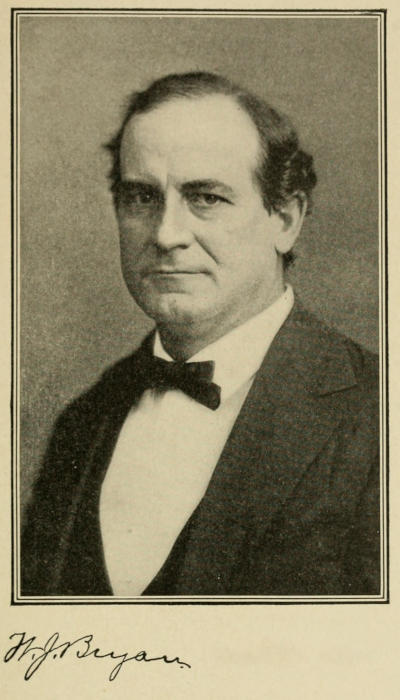
WILLIAM JENNINGS BRYAN
The People’s party also accepted Mr. Bryan as its candidate. It uttered in its platform some radical purposes which the new Democratic leaders had not adopted, but it did not require its candidate himself to accept them. It recognized the coinage issue as the chief question of the moment, and was willing that he should be its spokesman in that. Parties were singularly confused and broken. Two weeks after the Democratic convention a considerable body of Republicans, advocates of the free coinage of silver, rejected in the counsels of their own party, assembled in convention at St. Louis, calling themselves the National Silver party, and there in their turn endorsed the candidacy and the views of Mr. Bryan. Early in September an influential body of men out of the Democratic ranks came together in convention at Indianapolis, calling themselves the National Democratic party, and formulated once more what conservative men believed to be the true traditional doctrines of the Democratic party upon questions of taxation, revenue, and coinage. Men of strong party faith hardly knew which way to turn. The great deep seemed broken up, old landmarks swept away, parties merged, confused, dispersed. Only the Republican party preserved its full historical identity. Its opponents were united in novel, uncertain, motley assembly; it was at least compact and definite.
The money issue seemed the only issue of the campaign. Party orators spoke often of other things, but upon that they grappled in close, stubborn, impassioned argument. The country had never seen such a struggle to rule opinion. Such excitement, such a stirring of the moral and intellectual forces of the country, on the one side as if to regenerate society, on the other as if to save it from disruption, had never before marked a political campaign. The election even of 1860 had been preceded by no such fever of agitation. The Democrats and their allies had the dramatic advantage. Their candidate made a gallant figure wherever he moved, and went up and down the country, as no presidential candidate before him had ever done, to give the people his own striking version of the doctrines he preached. To the excited crowds which pressed about him he seemed a sort of knight errant going about to redress the wrongs of a nation. There could be no mistaking his earnestness or his conviction or the deep power of the motives to which he appealed. His gifts were those of the practised orator, his qualities those of the genuine man of the people. His strong, musical voice carried his message to the utmost limits of any throng, and rang in a tone which warmed men’s blood. There could be no doubting the forces of conviction which lay back of him. Very likely there were many charlatans in the convention which nominated him, and men who acted upon mere expediency, but the crowding ranks in that hall had been made up for the most part of men who deeply believed every word of the radical programme they put forth; and the great throngs out-of-doors who cheered the sentences of that platform with full-throated ardor cheered because they also believed. No one could deny that the country had fallen upon evil times, that the poor man found it harder than ever to live, and that many a law needed to be looked into which put the poor at a disadvantage. The country teemed with men who found themselves handicapped in all they tried to do,—they could but conjecture why. It was no new thing that multitudes, and multitudes of sensible men at that, should think that the remedy lay in making new laws of coinage and exchange. The battle was to be won by argument, not by ridicule or terror or mere stubbornness of vested interest.
It was won by argument. The country had never seen such a flood of pamphlets, such a rush of every man who could speak to the platform, of every man who could write into the columns of the newspapers and the pages of the magazines. It was in the last analysis a contest between the radical and the conservative forces of the country, and the conservative forces won. The election day, the 3d of November, saw more than fourteen million votes cast, and of these more than six and a half million were cast for Mr. Bryan. Mr. McKinley received 7,111,607. Every State north of the Ohio and the Potomac and east of the Mississippi gave its electoral votes to the Republican candidate, some of them, like New York and New Jersey, by unprecedented majorities. West of the Mississippi the Republicans carried Minnesota, Iowa, North Dakota, Oregon, and California, and south of the Ohio and Potomac West Virginia and Kentucky. Even in North Carolina and Tennessee the Republican vote leaped up in significant strength. Nowhere did the tide of Democratic votes run as the tide of Republican votes ran in the States where opinion rallied strong to maintain the established foundations of business. Republican majorities were returned again, also, to both houses of Congress; and no one could doubt the verdict of the country.
It was a singular thing how the excitement subsided when the sharp contest was over and the result known. Never before, perhaps, had there been occasion to witness so noteworthy an illustration of the peaceable fruits of untrammelled self-government, the cheerful, immediate, hearty acquiescence of a self-governing people in the processes of its own political life. Not a tone of revolt was to be heard. The defeated party was content to await another election and abide by the slow processes of argument and conviction, and affairs went forward almost as if with a sense of relief on both sides that the fight had been fought out and settled. Business took heart again. Whatever might be said for or against the free coinage of the two money metals at a ratio which was not the actual ratio of their real relative values, definite assurance as to the policy to be pursued was an indispensable prerequisite to the confident carrying forward of business enterprises; and the verdict of the country had at last been given so decisively that capitalists need, it seemed, have no uneasy misgivings even with regard to the next election, when another four years should have gone by.
And yet the air had not cleared entirely; the task of the party now restored to full power was not simplified by the mere vote of the people. Questions of internal war and peace were, indeed, past, forgotten. In March, 1896, the houses, Republican though they were, had taken from the statute book the only fragment that remained of confederate disabilities, enacting “That section twelve hundred and eighteen of the Revised Statutes of the United States, as amended by chapter forty-six of the laws of 1884, which section is as follows: ‘No person who held a commission in the Army or Navy of the United States at the beginning of the late rebellion, and afterwards served in any capacity in the military, naval, or civil service of the so-called Confederate States, or of either of the States in insurrection during the late rebellion, shall be appointed to any position in the Army or Navy of the United States,’ be, and the same is hereby, repealed.” It was the final “Act of Oblivion”; affairs would never again turn back to that day of bitterness and strife. It might be that even the deep agitation with regard to the money question was quieted. But no one could think that the influences which had stirred that troublesome question to such a heat had been set aside by the mere suffrages of the voters.
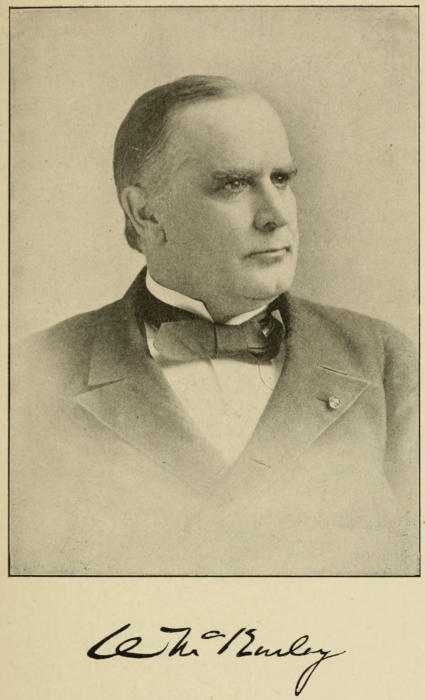
WILLIAM McKINLEY
Obviously the business world, the whole world of industry, was in process of revolution. America, in particular, had come to the crisis and turning point of her development. Until now she had been struggling to release and organize her resources, to win her true economic place in the world. Hitherto she had been always a debtor nation, her instruments of industry making and to be made, her means of transportation, the vast systems of steel highways which were to connect her fields and factories with the markets of the world, as yet only in course of construction. At the close of the civil war there were but thirty-five thousand miles of railway upon all the vast spaces of the continent; there were one hundred and fifty thousand more to add before its products and manufactures could be handled, freely in the world’s exchanges, and for that vast increase foreign as well as domestic capital had to be borrowed by the hundreds of millions. Except what her fields produced, the country had as yet but little with which to pay the interest and the capital of her debts: her fields were in some sense the granary of the world. As agricultural prices fell it required more and more food stuffs to pay her balances. In those fatal years of depression, 1893-1896, when business threatened to stand still because of the state of the currency and the crops fetched little more than would pay for their carriage, it was necessary to pay huge foreign balances in coin, and $87,000,000 in gold had had to be shipped over sea to the country’s creditors in a single twelvemonth (1893). It was that extraordinary drain that made Mr. Cleveland’s task next to impossible, to keep the Treasury reserve unexhausted and yet sustain the currency with gold payments. Not until the very year 1897, when the new Republican administration came in, did the crisis seem to be past. The country had at last built its railway and manufacturing systems up, had at last got ready to come out of its debts, command foreign markets with something more than its food stuffs, and make for itself a place of mastery. The turning point seemed to be marked by a notable transaction which took place the very month Mr. McKinley was inaugurated. In March, 1897, a great consolidation of iron-mining properties, foundries, steel mills, railroads, and steamship lines was effected which brought the country’s chief supplies of iron, its chief steel producing plants, and its chief means of transporting steel products to the markets of the continent and of the world under a single organization and management, and reduced the cost of steel to a figure which put American steel factories beyond fear of competition. Steel had become the structural stuff of the modern world. Commanding its manufacture, America might command the economic fortunes of the world.
It was this new aspect of industry that disclosed the problems Republican and Democratic statesmen were to face for the coming generation. The concentration of capital was no new thing; but the new scale upon which it now began to be effected made it seem a thing novel and unexpected. The control now of this industry and again of that by small groups of capitalists, the growth of monopolies, the union of producers in each line of manufacture for the purpose of regulating prices to their own liking and profit, had been familiar circumstances, familiar signs of the times, these twenty years. The farmers had seen them and had formed their granges, their Alliances, their People’s party to protect their own interests, by combination and political agitation, against the huge corporate powers that seemed to be gathering for the conquest of fortune. The industrial workingmen had seen them and had widened their organizations to meet the threat of subjection. The great strikes which followed one another, summer by summer, with such significant regularity were but the reflex of what was taking place in Wall Street, where huge combinations of capital were being arranged; at the manufacturing centres of the country, where the interests of producers were being pooled; at railway centres, where great systems of transportation were being drawn together under a single management. Mines, factories, railways, steamships were now, it appeared, to be brought into one corporate union as a single business. It was the culmination of the process, and seemed to put a new face on all that had gone before, on all that was to follow.
No wonder thoughtful men, as well as mere labor agitators, grew uneasy and looked about them to see what control the law could exercise. No doubt there was risk of deeply serious consequence in these vast aggregations of capital, these combinations of all the processes of a great industry in the hands of a single “Trust.” No doubt they did give to a few men a control over the economic life of the country which they might abuse to the undoing of millions of men, it might even be to the permanent demoralization of society itself and of the government which was the instrument of society in the conduct of its united interests. The programmes of socialists and extremists proposed a remedy which was but a completion of the process: the virtual control of all industry and of all the means of transportation by the government itself. The leaders of the People’s party, though they professed no socialistic doctrine, demanded government ownership of the railway and telegraph lines of the country, and their expressed desire with regard to the control of “Trusts” smacked of the extremest purposes of experiment in the field of legislation. The Interstate Commerce Act had been a beginning, a very conservative beginning, in the carrying out of what they wished to see undertaken. Neither the leaders of the Republican party nor the leaders of the Democratic party felt that such impulses of reform, such counsels of restriction could be entirely ignored; but neither party saw as yet the prudent and practicable lines of action. It would not do to check the processes which were adding so enormously to the economy and efficiency of the nation’s productive work and promising to give her now at last that first place in wealth and power in the world which every son who loved her had predicted she should some day have; and yet it would not do to leave the economic liberty of the individual or the freedom and self-respect of the workingman unprotected.
The first steps taken by the new administration for the relief of the economic situation were not of the new order, but of the old. Mr. McKinley at once summoned Congress to meet in extraordinary session on the 15th of March, in order to provide the government with additional revenue. He interpreted the elections which had brought him into office to mean that the country desired not only to avoid the free coinage of silver but also to return to the protective system of duties exemplified in the tariff of 1890. The Ways and Means Committee of the House had prepared a tariff bill during the last session, while they waited for the change of administration. Upon the convening of Congress in extraordinary session, Mr. Dingley, their chairman, reported it at once, and by the end of the month it had passed the House and been sent to the Senate. It lingered close upon four months in the Senate and in the conference committee which sat to adjust the differences between the two houses; and when it became law, on the 24th of July, contained no systematic scheme of taxation at all, but merely a miscellany of taxes on the innumerable imports which were to be expected every year out of foreign ports. Its rates, upon the average, rose even above those of 1890. Some articles, like raw hides, which had been on the free list for a quarter of a century, were again subjected to duty; the sugar men again got what they desired; some duties, like that on flax, were imposed to please the farmers; some, like that on lead and lead ores, to placate the senators who were of the silver interest of the western mining country. Here and there, noticeably in the metal schedules, the rates were left as they had stood since 1894; the duty on steel rails was even slightly reduced, as if the great steel industry at least were counted on to take care of itself. The net result was a return to the highest principles of protection, or, if no principle could be discovered in the Act, at least to its most extreme practices. A year later (June 18, 1898) an Act was passed which created an Industrial Commission whose function it was to be to collate information and to consider and recommend legislation with regard to the many complicated problems presented by labor, agriculture, and the industrial use of capital. An Act had preceded it by some two weeks (June 1, 1898) which made provision for the arbitration of labor disputes between common carriers and their employees engaged in interstate commerce, to avoid, if possible, the difficulties which Mr. Cleveland had been obliged to settle by the use of federal troops. But as yet protective tariffs, inquiry into economic conditions, and provision for arbitration were all that the leaders of the houses had to offer towards the solution of the questions out of which the silver agitation had sprung.
The attention of the country was for the time being drawn off to other things. There had come a day, the day to which Mr. Cleveland had looked forward and of whose approach he had warned the government of Spain, when the patience of the country with regard to the situation in Cuba was exhausted. Much as the pitiful process of subjugation still dragged, moving as was the spectacle of a fair country devastated to bring, not healing peace, but mere submission, opinion might for a little while longer have been held off from dangerous heat in the matter had not a sudden, startling incident, tragical and full of every element calculated to stir passion, sent a final thrill of excitement through the country. On the evening of the 14th of February, 1898, Saint Valentine’s Day, the United States battleship Maine, lying in Havana harbor upon a visit of courtesy, was blown to pieces, and two of her officers, two hundred and fifty-eight of her crew, killed upon the instant. The most careful investigation failed to disclose the origin of the explosion; but an examination of the twisted wreck made it plain that it had come from no accident within the ship itself. The explosives which had destroyed her had lain beneath her at the bottom of the harbor where she had her anchorage. Within two months Spain and the United States were at war,—not because a vessel of the American navy had been destroyed in a port of Spain, but because opinion leaped upon the provocation of that tragic incident from quiet inquiry to hot impatience with regard to all the ugly Cuban business. There was no evidence whatever that any one connected with the exercise of Spanish authority in Cuba had had so much as guilty knowledge of the plans made to destroy the Maine; but that unhappy explosion had changed the whole air of opinion the country through.