Chapter I · RECONSTRUCTION
Reading edition
Mr. Lincoln’s death made Mr. Johnson President. The first tasks of peace were to be hardly less difficult than the tasks of war had been; and the party which had triumphed was left without executive leadership at their very beginning. Mr. Johnson was a man who, like Mr. Lincoln himself, had risen from very humble origins to posts of trust and distinction; but his coarse fibre had taken no polish, no refinement in the process. He stopped neither to understand nor to persuade other men, but struck forward with crude, uncompromising force for his object, attempting mastery without wisdom or moderation. Wisdom of no common order was called for in the tasks immediately before him. What effect had the war wrought upon the federal system? What was now the status of the States which had attempted secession and been brought to terms only by two million armed men sent into the field and the pouring out of blood and treasure beyond all reckoning? Were they again States of the Union, or had they forfeited their statehood and become conquered provinces merely, to be dealt with at the will of Congress? If conquered possessions, how and when were they to be made States once more and the old federal circle restored in its integrity? Mr. Lincoln had made up his mind upon these points with characteristic directness and simplicity. So long ago as December, 1863, he had issued a proclamation of amnesty in which he had treated secession as a rebellion of individuals, not of States, and had offered full forgetfulness and the restoration of property and of citizenship to all who should take oath to “support, protect, and defend the constitution of the United States and the union of the States thereunder,” and respect the action of the federal government in the emancipation of the slaves. Some classes of persons he excepted from the amnesty: those who had taken a prominent and official part in secession or who had left the service of the United States for the service of the Confederacy; but he invited those who would take the oath proposed to set up governments once more and make ready to take part as of old in the federal system, though they should number but one tenth of the voters of 1860. The qualified voters of Arkansas, Louisiana, and Tennessee had accepted these terms before the war ended. Mr. Lincoln had fulfilled his promise to them and given full recognition to the new governments they set up, so far as the Executive was concerned, as once more in their places in the Union. He did not stop to discuss the question of the lawyers, whether these States had been all the while in the Union, despite their attempts at secession and their acts of war against the federal government, or had for a time been out of it; and declared that he thought that merely an abstract inquiry, a question practically immaterial. “We all agree that the seceded States, so called, are out of their proper practical relation with the Union,” he said, “and that the sole object of the government, civil and military, in regard to those States is to again get them into that proper practical relation. I believe that it is not only possible, but in fact easier, to do this without deciding or even considering whether these States have been out of the Union, than with it. Finding themselves safely at home, it would be utterly immaterial whether they had ever been abroad.”
But Congress had not acquiesced in Mr. Lincoln’s policy. Mr. Lincoln had been too much inclined, it seemed to the leaders of the houses, to regard the restoration of the southern States to their “proper practical relation to the Union” as a matter to be settled by the action of the Executive. The constitution made each house the sole judge of the validity of elections to its membership: Congress was at liberty, should it choose, to exclude all southern members until it should itself be satisfied with the process by which the States they claimed to represent had been re-established upon their old footing; and the temper of the congressional leaders had grown more and more radical as the fortunes of war had turned their doubt into hope, their hope into triumphant confidence. At first they had been puzzled how to read the law of the constitution in so unprecedented a matter; but each victory in arms had seemed to them to make it less necessary that they should read it with subtlety. Success seemed to clear the way for other considerations, of plainer dictate than the law of the constitution. Turn the matter this way or that, it seemed mere weakness to accord the southern States their old place in the Union without exacting of them something more than mere submission. Should their social system be left untouched, their old life and power given back to them to be used as before for the perpetuation of political beliefs and domestic institutions which had in fact lain at the heart of the war? Opinion slowly gathered head to prevent any such course. Something should be demanded of them which should make them like the rest of the Union, not in allegiance merely, but in principle and practice as well.
Mr. Lincoln had himself made it a condition precedent to his recognition of the re-established liberties and allegiance of those southerners whom he was ready to permit to bring their States into proper practical relation with the Union again that the laws of the rehabilitated governments should “recognize and declare the permanent freedom” of the negroes and provide for their education; no one, North or South, dreamed that slavery was to be set up again. But every man mistook his feeling for principle in that day of heat, and Mr. Lincoln’s cool, judicial tone and purpose in affairs was deeply disquieting to all who loved drastic action. The solemn, sweet-tempered sentences with which his second inaugural address had closed seemed themselves of bad omen to high-strung men. “With malice towards none; with charity for all; with firmness in the right, as God gives us to see the right, let us strive on to finish the work we are in; to bind up the nation’s wounds; ... to do all which may achieve and cherish a just and lasting peace among ourselves, and with all nations.” In the proclamation in which he had called upon all who were willing to return to their allegiance in the South to reconstruct their governments he had promised that, as President, he would object to no temporary legislation which should deal in exceptional fashion with the negroes “as a laboring, landless, homeless class” for a little while under tutelage, provided only their substantial freedom should be recognized and their ultimate elevation by education provided for. There was in all this entirely too much consideration for the southern people to suit the views of ordinary partisans. An opposition gathered head against Mr. Lincoln which it seemed likely even his tact, his genius for leadership and conciliation, his authority in that day of his final prestige could not overcome.
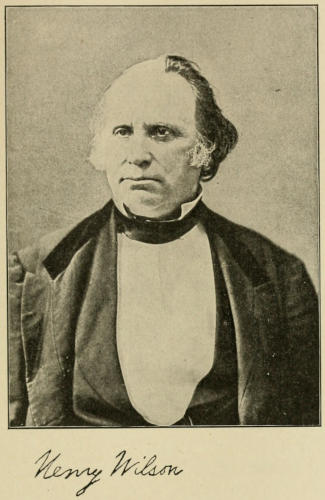
HENRY WILSON
Men of many minds and of all morals were arrayed against him: the philanthropist and the reformer, who saw the Rights of Man involved, the statesman who wished to see the ground once for all cleared of every matter of risk and controversy, the politician who was keen to gain the utmost advantage for his party, the vindictive bigot who wished to weak exemplary vengeance on the slaveholding rebels. To many of these nothing was so exasperating as moderation,—moderation in a day of absolute triumph, when every fruit of conquest they chose to stretch out their hands and pluck was within their easy reach. It was not an air in which to judge calmly. Four years of doubt and fear and struggle had wrought every sentiment, good or bad, to the pitch of ecstasy. A radical course of reconstruction in the South had come to look like the mere path of duty,—of duty not to opinion only but to mankind as well. Men of imagination felt every moment of action dramatic, full of consequence, and grew self-conscious, each as it were with a touch of the emotional actor, in what they did. The extraordinary strain and tension of feeling in the houses of Congress was perceptible to mere lookers on in the galleries. It had been notably manifest when the House of Representatives agreed, on the last day of January, 1865, to an amendment of the constitution formally abolishing slavery in the very terms of the Wilmot proviso, and the celebrated Ordinance of 1787 upon which so much bitter history had turned. The Senate had proposed the amendment, the Thirteenth it was to be,—the first change in the constitution proposed since 1803,—ten months before, on the 8th of April, 1864; but the necessary two-thirds vote had been lacking then in the House and it had been laid aside. When it came a second time to the vote a deathly stillness prevailed in the House while the roll call proceeded, until it became evident that the requisite majority was secured. Then members of the House itself broke through all restraint and joined in the great shout of joy that went up from the packed galleries, and embraced one another, with tears streaming down their cheeks, to see that prayed for end come at last. Men dreamed, as they had dreamed in the Constituent Assembly of France, that they had that day seen a new nation born, a new era ushered in.
Congress had already abolished slavery in the District of Columbia, prohibited slavery in the Territories, repealed the Fugitive Slave Law, and bestowed freedom upon the negroes who had served in the federal armies. The amendment was to complete the work of emancipation, and make the results of the war once for all safe against reaction. The votes of the southern States were necessary to make up the three-fourths vote of the States required to ratify the amendment. Those which accepted Mr. Lincoln’s terms of rehabilitation ratified it without hesitation: no one doubted that a condition precedent to the final closing of the long strife that had rent the Union; and on the 18th of December, 1865, it was proclaimed an integral part of the law of the constitution.
But there were men in Congress, true spokesmen of thousands of men out-of-doors, thoughtful and thoughtless, with consciences and without, who meant to go much further. By some means they meant to thrust their hands into southern affairs to control them, to make good the freedom and the privilege of the negroes even at the cost of all privilege to those who had been their masters. To some such a course seemed a mere dictate of humanity: the nation owed it to the negro that he should be supported by the federal power until he was able to make his freedom good for himself, unassisted. To others it seemed but the plain way of prudence in statesmanship. How else could a lasting structure of law be built about the new citizenship of the one-time slave: how else could he be kept safe from the intellectual and even physical domination of the white men who once had owned him? To others it was the course of personal satisfaction: in no other way could they bring upon the spirits of southern men the punishment merited by their rebellion. To others it was the obvious means of party mastery. These last it was who, when Mr. Lincoln was gone, ruled Congress, the masters of party strategy,—as clear of their motive as Samuel Adams, as astute to veil it upon occasion: masters always by consistent and aggressive force of purpose.
The party they spoke for was not one of the historic parties of the Union. It was the child of the slavery contest. It had come into existence, an odd mixture of Whigs, Democrats, Free Soilers, Anti-Nebraska men, to prevent the spread of slavery into the Territories, and had come into power with a programme which spoke, indeed, of other matters, with a tone which was chiefly the tone of the older Whigs, but which carried as its chief, its creative principle that single matter of the restriction of the slave power. It was without record or tradition of ordinary service in times of normal life and growth. Its single task had been war for the preservation of the Union. It could not of a sudden get the temper of that task out of its thoughts; conciliation it had never learned; compromise and accommodation seemed to it bad things of a past age when men were not bold for the right. Mr. Thaddeus Stevens, of Pennsylvania, was the real leader of the House. He had come slowly to his final view of what should be done, acted upon by the times and the confused voices of counsel about him, as every man was in that shifting air, but he had reached conclusions at last which he spoke with callous frankness. In his judgment, he said, the southern States “ought never to be recognized as capable of acting in the Union, or of being recognized as valid states, until the Constitution should have been so amended as to make it what its makers intended, and so as to secure perpetual ascendency to the party of the Union.” The perpetual ascendency of his party was, in his programme, to be the guarantee of the safe reconstruction of the southern governments.
The events of the memorable summer of 1865 had hardened his temper to that view. At first Mr. Johnson had seemed to the radical leaders of Congress a man to their own mind. His origin, his character, his place of leadership among the southern men who had doggedly set themselves against secession, had made him a fit instrument of radical action. He came of plebeian stock; had risen, not by address, but by blunt force of character, from among the humbler whites who owned no slaves, boasted no privilege, had no initiative voice in affairs; and had flung himself on the side of the Union as much out of antagonism to the men who played the parts of leadership in secession as out of principle. It was “a rich man’s war,” he said, “but a poor man’s fight”; and he, for one, would not fight for the behoof of the rich planters who assumed the mastery in such a struggle. A “Democrat” he was still, by cast and nature committed to the elder doctrines of the Jeffersonian creed, which exalted the common man and knew no rank or privilege of class; but a Democrat for the Union. He had been put upon the presidential ticket with Mr. Lincoln because upon every question that touched the war the Republican leaders had wished to keep men of all opinions upon other matters of policy united behind Mr. Lincoln. His short and heavy figure, his rugged, swarthy face, bespoke him a man as strong, as indomitable as Stephen Douglas, for all he lacked Douglas’s charm and had no gift of persuasion.
Mr. Lincoln had trusted him, and he had justified the confidence reposed in him, not indeed by wisdom, but by resolute, consistent, efficient action. When the war came he was one of the senators from Tennessee, and kept his post, ignoring the secession of his State. When his term as senator was ended Tennessee was in the hands of the federal troops, and Mr. Lincoln commissioned him military governor of the State, to bring it again into “proper practical relation to the Union” in accordance with the Executive’s plan of reconstruction. Like every man, untouched with greatness, who has stood out against his own people in matters that have been carried the length of civil war, there was a dash of bitterness in Mr. Johnson’s attitude and action in affairs. The first words he uttered as President showed with what spirit he meant to use his new power. “The American people,” he said, “must be taught to know and understand that treason is a crime.... It must not be regarded as a mere difference of political opinion. It must not be excused as an unsuccessful rebellion, to be overlooked and forgiven.” The Committee on the Conduct of the War, to which Congress had throughout the stress of the fighting intrusted the shaping of its business, called upon him the day following his assumption of the presidency, and took heart to believe after their interview with him that they might count upon such executive action as radicals would relish,—that they were once for all rid of the mild counsels of Mr. Lincoln. “Johnson, we have faith in you,” cried Mr. Benjamin Wade, the radical leader of the Senate. “By the gods! there will be no trouble now in running the government.”
But a few weeks changed the whole aspect of affairs. Mr. Johnson retained Mr. Lincoln’s cabinet unchanged. More than that, he kept to the plans Mr. Lincoln had made. Perhaps his judgment was cleared by sudden access of responsibility; no doubt his knowledge of the southern people enabled him to see, more clearly even than Mr. Lincoln had seen, the healing and beneficent effects of a plan of reconstruction which should make as little of the antagonism and as much of the community of interest between the sections as possible: for he acted upon experience, Mr. Lincoln only upon the instinct of a natural leader of men. No doubt men whom he trusted gave him moderate counsel and instructed his will. Whatever the forces that ruled him, he proved at once that he meant to take no radical course of his own, but would follow in Mr. Lincoln’s footsteps. On the 29th of May he issued his own proclamation of amnesty. Its terms were substantially the terms of Mr. Lincoln’s proclamation of 1863. The list of those excluded for the time being was a little extended. Besides persons still prisoners of war, those who had “held the pretended offices of governors of States in insurrection against the United States,” graduates of the military and naval academies who had been officers in the confederate service, those who had engaged in the destruction of the commerce of the United States in aid of the Confederacy,—whom Mr. Lincoln had not specifically included in his catalogue of exclusions,—he added, as if to please himself and satisfy his instinct of class, all participants in secession whose taxable property exceeded twenty thousand dollars in value. But even to those thus specifically excepted he promised to extend clemency upon very liberal terms, if they would make personal application for it, dealing with them in as generous a manner as might seem “consistent with the facts of the case and the peace and dignity of the United States.”
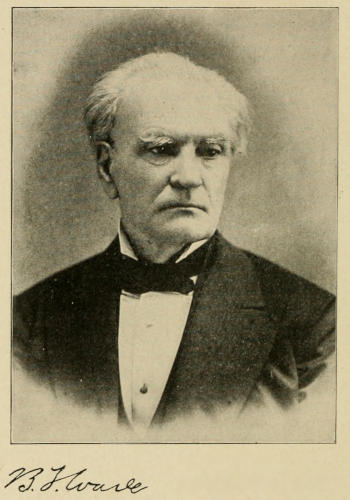
BENJAMIN FRANKLIN WADE
It was his plan, as it had been Mr. Lincoln’s, to set up new governments in the South by as simple and expeditious a process as possible. He knew as well as any man the practical details of what Mr. Lincoln had meant to do, for he had himself been Mr. Lincoln’s agent in putting his plan of reconstruction into execution in Tennessee. Each State was to have a provisional governor, appointed by the President, who should be authorized to summon a constitutional convention, to be chosen under its old laws of suffrage by such of the voters of the State as would take the unqualified oath of submission and allegiance prescribed by the proclamation of amnesty. It had been Mr. Lincoln’s wish to include among the voters such freedmen as could read and write and those who had served in the federal armies; Mr. Johnson confined his view to the white men qualified under the laws of their States as they had stood in the spring of 1861. Conventions made up of and selected by those who were willing and were permitted to take the oath offered were to be given full power to recast their state constitutions and set their state governments in order for the final withdrawal of the federal troops and the federal superintendence, provided only that the voters actually enrolled should number at least one tenth of the total number shown upon the rolls of 1861. The persons explicitly excluded from taking the oath and participating in the reconstitution of the southern governments,—those who had been the leading spirits and chief agents of the Confederacy, whether in counsel or in action,—were, of course, the leading men of the South. Almost no one could take the oath of amnesty except men of the rank and file, the men who had not been slaveholders, who had fought in the armies of the Confederacy but who had had no part except the part of mere acquiescence in bringing the war on,—the men of little property and no leading part in affairs from whose ranks Mr. Johnson himself had sprung. His added exclusion of all participants in secession who owned property valued at more than twenty thousand dollars made it the more certain that it should be a reconstruction by the third estate, and not by the old leaders of opinion. He had the greater heart and interest on that account to see the plan succeed.
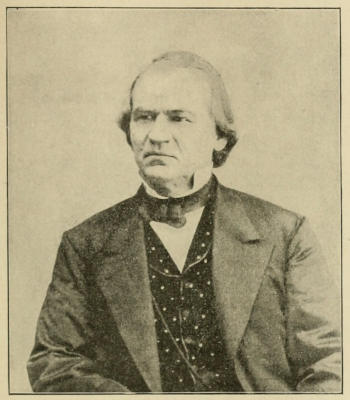
ANDREW JOHNSON
He had come into office at the beginning of the long congressional recess. The term of the Congress chosen in 1862 had expired on the 4th of March; the Congress chosen in the autumn of 1864 was not to come together until December. He had eight months before him in which to act without congressional interference. He was urged to call the houses together in extraordinary session and take counsel with them what should be done; but he refused to do so. He wished to act without restraint. He had no more doubt than Mr. Lincoln had had that the process of reconstruction, so far as it concerned the reorganization of the southern governments, was the function and the duty of the Executive, whose power of pardon covered every offence committed against the Union upon which Congress had not passed sentence of impeachment. It rested with Congress, he knew, to determine for itself whether it would receive the senators and representatives chosen under the governments which the President should authorize the southern conventions to set up; but the erection and recognition of those governments he conceived to be his own unquestionable constitutional prerogative. He filled the year, therefore, to the utmost with action and the rehabilitation of States. By the autumn every State of the one-time Confederacy had acted under his proclamation, had set up a new government, had formally agreed to the emancipation of the negroes, and had chosen senators and representatives ready to take their seats the moment Congress should admit them. Eleven of them had in due form adopted the Thirteenth Amendment, and their votes had been counted in its ratification.
But other things had happened which had touched Congress quite as nearly as these processes of reconstruction, and the houses came together in December in no temper either to accept Mr. Johnson’s leadership or to admit the southern members who had come to Washington under his patronage. Critical matters touching the negroes had put opinion in the North in a mood to insist on radical measures of legislation in behalf of the helpless multitudes whom the war had set free. Had there been no question what should be done with the negroes, all might have gone smoothly enough, whether the leaders of Congress and of opinion liked the readmission of the southerners to their place and privilege in the general government or not. But there was much more to be done, as it seemed to the radicals who now stood at the front of counsel, than merely to determine the processes by which the governments of the southern States were to be formally reconstituted and made safe within the Union: and it was no doubt necessary to do what was to be done before admitting southern men to Congress, where their presence would reduce the Republican majorities from absolute mastery to mere preponderance. They were but “whitewashed rebels,” at best, and in nothing showed their unchanged temper more clearly than in their treatment of the freedmen. That, in the view of the radicals, was the crux of the whole matter; and they had the pity and the humane feeling of the whole country on their side.
They did not deem the southerners safe friends of the freed slaves. They had not noted how quiet, how unexcited, how faithful and steady at their accustomed tasks, how devoted in the service of their masters the great mass of the negro people had remained amidst the very storm and upheaval of war; they had noted only how thousands had crowded into their camps as the armies advanced and plantations were laid waste, homes emptied of their inmates; and how every federal commander had had to lead in his train as he moved a dusky host of pitiful refugees. It was a mere act of imperative mercy to care in some sort for the helpless creatures, to give them food, if nothing else, out of the army’s stores; and yet to feed them was but to increase their numbers, as the news of bread without work spread through the country-sides. When the fighting neared its end, and it was likely that the whole South would be in the hands of the federal commanders through a long season of unsettled affairs, it became obviously necessary that, for a time at least, Congress should take the negroes under the direct supervision and care of the government. On the 3d of March, 1865, therefore, while Mr. Lincoln still lived, an Act had been passed which created in the War Department a “Bureau of Refugees, Freedmen, and Abandoned Lands,” whose powers were most elastic and paternal. It was in every way to succor the negroes: to supply their physical needs when necessary, to act as their representative and guardian in finding employment and making labor contracts, to settle labor disputes and act as the next friend of negro litigants in all trials and suits at law, to lease to them tracts of abandoned land temporarily in the hands of the government because of the removal or disappearance or technical outlawry of their white owners,—in all things to supply them with privilege and protection.
It was such aid and providential succor the negroes had ignorantly looked for as the news and vision of emancipation spread amongst them with the progress of the war. They had dreamed that the blue-coated armies which stormed slowly southward were bringing them, not freedom only, but largess of fortune as well; and now their dream seemed fulfilled. The government would find land for them, would feed them and give them clothes. It would find work for them, but it did not seem to matter whether work was found or not: they would be taken care of. They had the easy faith, the simplicity, the idle hopes, the inexperience of children. Their masterless, homeless freedom made them the more pitiable, the more dependent, because under slavery they had been shielded, the weak and incompetent with the strong and capable; had never learned independence or the rough buffets of freedom.
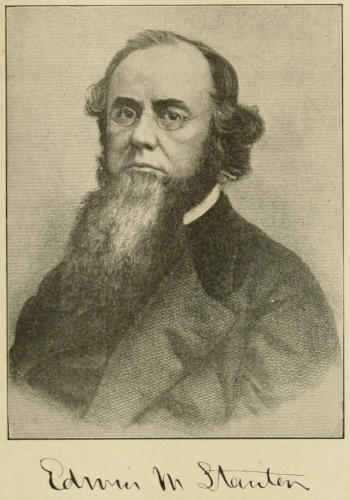
EDWIN McMASTERS STANTON
The southern legislatures which Mr. Johnson authorized set up saw the need for action no less than Congress did. It was a menace to society itself that the negroes should thus of a sudden be set free and left without tutelage or restraint. Some stayed very quietly by their old masters and gave no trouble; but most yielded, as was to have been expected, to the novel impulse and excitement of freedom and made their way straight to the camps and cities, where the blue-coated soldiers were, and the agents of the Freedmen’s Bureau. The country filled with vagrants, looking for pleasure and gratuitous fortune. Idleness bred want, as always, and the vagrants turned thieves or importunate beggars. The tasks of ordinary labor stood untouched; the idlers grew insolent, dangerous; nights went anxiously by, for fear of riot and incendiary fire. It was imperatively necessary that something should be done, if only to bring order again and make the streets of the towns and the highways of the country-sides safe to those who went about their tasks. The southern legislatures, therefore, promptly undertook remedies of their own,—such remedies as English legislators had been familiar with time out of mind.
The vagrants, it was enacted, should be bound out to compulsory labor; and all who would not work must be treated as vagrants. Written contracts of labor were required, and current rates of wages were prescribed. Those who did not enter into formal contracts for regular employment were obliged to obtain licenses for their trades and occupations from the magistrates or the police authorities of their places of labor, under the penalty of falling under the law of vagrancy. Minor negroes were to be put under masters by articles of apprenticeship. Negroes were forbidden, upon pain of arrest by a vigilant patrol, to be abroad after the ringing of the curfew at nine o’clock, without written permission from their employers. Fines were ordered for a numerous list of the more annoying minor offences likely to be committed by the freedmen, and it was directed that those who could not pay the fines should be hired out to labor by judicial process. There was no concert or uniformity between State and State in the measures adopted: some were more harsh and radical than others. Each State acted according to the apparent exigencies and circumstances of its own people. Where the negroes mustered in largest numbers, as in South Carolina, where they outnumbered the whites, restriction was, of course, pushed farthest and the most thorough-going legal tutelage for the freedmen attempted. Where their numbers were more manageable, where conditions were more favorable, their freedom of movement and of occupation was less interfered with.
There was nothing unprecedented in such legislation, even where it went farthest. The greater part of it was paralleled by statutes of labor and vagrancy still to be found on the statute books of several of the northern States. But it was impossible it should stand in the same light. The labor and vagrancy laws of Maine, Rhode Island, and Connecticut, which they most resembled, were uttered against a few tramps and beggars, here and there a runaway servant or apprentice, an occasional breach of duties regularly contracted for; while these new laws of the South were uttered against an entire race, but just now emancipated. Whatever their justification, it was inevitable that they should shock the sentiment of the North and make new and bitter enemies for the South in Congress. It was no ordinary time of action, when matters could be judged coolly and on their merits. For the leaders of Congress it was unpalatable enough that the southern States should have legislatures at all, upon a plan made and executed without conference with them; that those legislatures should thus undo the work of emancipation seemed a thing intolerable. And the new legislation seemed to them nothing less than that. It seemed to them merely an effort to substitute compulsory contracts of service and fixed rates of wages for the older rights of control and duties of support which custom had vouchsafed and assigned masters of slaves,—a sort of involuntary servitude by judicial process and under the forms of contract. They did not stop to consider the pressing necessity or the extraordinary circumstances which justified such legislation. There were many theories held among them as to the legal powers and remaining rights of the southern States, but their purpose of mastery in the readjustment of southern affairs was not materially affected by their differing theories. They in effect regarded the southern States as conquered provinces, and looked upon emancipation as the main fruit of conquest. To make that emancipation good was only to secure the conquest itself. The negro had got a veritable apotheosis in the minds of northern men by the processes of the war. Those who had sent their sons to the field of battle to die in order that he might be free could but regard him as the innocent victim of circumstances, a creature who needed only liberty to make him a man; could but regard any further attempt on the part of his one-time masters to restrain him as mere vindictive defiance. They did not look into the facts: they let their sentiment and their sense of power dictate their thought and purpose.
Neither was it any part of the case, so far as they and their leaders in Congress were concerned, that the restrictive legislation which they so bitterly resented had been practically without effect, because virtually set aside by the action of the Freedmen’s Bureau. Everywhere throughout the South agents of the Bureau practically made the law which should in fact govern the negro and determine his relation to his employer. It was a Bureau of the War Department; its head was a general of the army; and its agents were for the most part army officers. In many instances they were men of fine purpose and unimpeachable integrity, manly and anxious to do what was right and just to all concerned; but in many other instances they were men of petty temper, fond of using arbitrary power very masterfully, and glad upon occasion to use it for the utter humiliation of the southern white men with whom they dealt. Sometimes they were actually corrupt, and apt at every practice which promised them either added authority or private gain. Their powers, under the Act of Congress, were in effect unlimited. They interfered with the processes of the courts; constituted themselves judges of every matter, whether of law or policy, that affected the negroes; made contracts for them and released them from their obligations at will; prescribed the services they should render and the wages they should receive; ignored and set at naught every provision of state law which touched the action or the privileges of the freedmen; and, for good or ill, to fulfil their duty or to please themselves, were masters of the situation.
But that was what the congressional leaders had planned and expected. It did not lessen their irritation that the southern legislators had been in large part unsuccessful in what they had attempted to do. When at last the long recess was over, therefore, and the houses once more assembled (December 4, 1865), it at once became evident that they had come together in a mood to insist upon their own way of settling southern affairs. The names of all the States that had seceded were omitted in the roll call. As soon as possible after the organization of the House, a joint committee of fifteen, consisting of nine representatives and six senators, was set up to take charge of the business of the houses in the matter of reconstruction. It was commissioned to make thorough inquiry into the condition of affairs at the South and to advise Congress what action it should take with regard to the readmission of the southern States to representation. There was no need that it should be in haste to report. The houses had already in effect adopted the view of Mr. Thaddeus Stevens: that the secession of the southern States had suspended all federal law, whether of the constitution or of statute, so far as they were concerned; that only the law-making and war-making branch of the federal government, the Congress itself, could authoritatively declare that law in force again; and that it might and should refuse to do so until itself satisfied of the absolute submission and unqualified obedience of the rebellious communities. There was every reason, if the President meant to stand in its way, why Congress should keep for the present its omnipotent party majorities. Each house, as it stood, had a Republican majority large enough, and compact enough, if it came to a struggle with the President, to override any veto he might venture to interpose to check its action. Should the southern States be readmitted to representation as they stood, under the President’s reconstruction, they would quite certainly send Democratic members to swell the ranks of the party which had, in its convention of 1864, declared the war a failure, and would rob the war party of its predominance. For they must be accorded an increased representation. The slaves, now that they were free, must all be counted in apportioning representation; and yet the whites only would vote. It was that view of the future of party politics that had led Mr. Sumner to declare, even before the actual struggle of the war was over, that “the cause of human rights and of the Union needed the ballots as well as the muskets of the colored men”; and the leaders of the houses had no mind to yield their complete power until they had won their final ascendency.
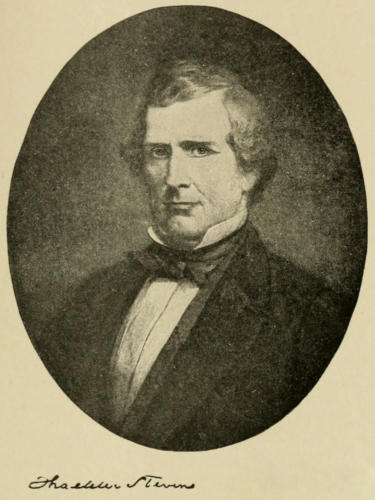
THADDEUS STEVENS
In February, 1866, their Committee on Reconstruction safely in the saddle, they found themselves in direct conflict with the President, and the fight for which they had made ready begun. The Act of March, 1865, which had established the Freedmen’s Bureau, had limited its operation to one year. On the 6th of February, 1866, a bill passed the houses continuing it indefinitely, and at the same time largely increasing its powers. It made any attempt to obstruct, interfere with, or abridge the civil rights and immunities of the freedmen a penal offence, to be adjudged and punished by federal military tribunals. The President vetoed it. He declared that he withheld his assent both because the measure was calculated to increase the restlessness and uneasiness of the negroes and delay their settlement to a normal way of life, and because it had been passed by a Congress in which the southern States were not represented; and so joined issue directly with the men who had set the houses in a way of mastery. An attempt to pass the bill over his veto failed. The full party vote was not yet at the command of the radicals; some still held off from an open and final breach with the President.
But not for long. The President was in a mood as bitter and defiant as that of the extremest radical of the congressional majority. By sheer rashness and intemperance he forced the consolidation of the majority against him. In a public speech uttered on the 22d of February, an anniversary of hope and good omen, he spoke of the majority in unmeasured terms of denunciation, and of its leaders by name, as men who themselves entertained some covert purpose of disloyalty to the government, planning to make it a government, not federal, but consolidated and unlimited in power,—it might be even encouraging some criminal deed against himself such as had once already removed an obstacle from the path of their ambition. Accommodation between himself and the houses was once for all impossible. It was as if he had openly declared war upon them; and their temper hardened to crush him. Though the effort to pass the bill for the continuation of the Freedmen’s Bureau had failed in the Senate, the houses had in their very hour of failure sent to the President and published to the country a concurrent resolution in which they announced that no senator or representative would be admitted from any State held to have been in insurrection until Congress had upon its own terms and initiative declared it entitled to representation. Having heard his bitter speech of the 22d, they moved forward to execute the programme of their Committee on Reconstruction with a new spirit of mastery.
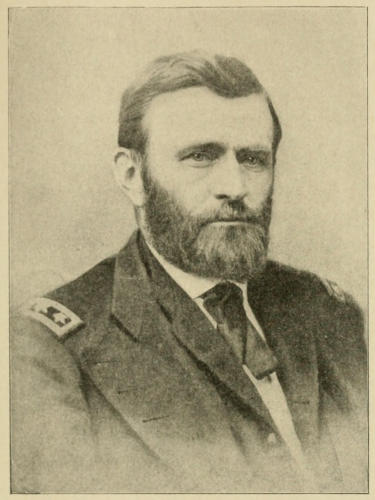
ULYSSES SIMPSON GRANT, ABOUT 1867
In March they sent to the President a “Civil Rights” bill which declared “all persons born in the United States, and not subject to any foreign power,” citizens of the United States; denounced severe penalties against interference with the civil rights of any class of citizens; and gave to officers of the United States the right to prosecute, to the courts of the United States the exclusive right to try, all such offences,—meaning thus to put the negroes upon a footing of civil equality with the whites in the South. The President vetoed the bill, as both unwise and in plain excess of the constitutional powers of Congress. In April, the houses passed it over his veto. The same month their Committee, as if less confident of their constitutional ground than of their parliamentary supremacy, submitted the draft of a Fourteenth Amendment to the constitution which should embody the principles of the Act in a form which would give them unalterable validity. It conferred citizenship in the terms of the bill the President had rejected. In June Congress adopted the Amendment, and it went to the States, with the understanding that no southern State which did not accept it should be readmitted to representation. Tennessee promptly adopted it, and in July was formally reinstated in her “former proper practical relation to the Union” by the admission of her senators and representatives to Congress. Her case stood apart from the rest. Ever since Mr. Lincoln’s proclamation of 1863 was put into effect she had been in process of reorganization. She had gone doubting and divided into the Confederacy, more than half her people, it might be, still staunchly minded to stand by the Union. Her “Union men” had controlled the process of reconstruction; and were heeded without serious difficulty when they knocked for admission into the houses. The other States, being as yet in other hands, were obliged to wait.
The troubled year went uneasily upon every hand. As the spring came on, and all the country saw how it had come to an open breach between the President and Congress, movements began on the Canadian frontier which discovered a new disturbing element in international politics. While the war lasted New York had become the seat of the offices of a great society of Irishmen whose purpose was revolution over sea and that liberation of Ireland which Irishmen had ever prayed for. Across the sea, in Ireland, it was an association of peasants, not of politicians: it held a rank and file, not of agitators, but of plain, unsophisticated, earnest men on its rolls, men who might be taken to stand for the mass of Irish Catholics. In America it grew strong and drank of the spirit of war from the thousands of Irish-American soldiers who served as enthusiastically in the execution of its plans as in the battles for the preservation of the Union. Servant girls, cab drivers, porters, laborers on the railways filled its treasury out of their scant earnings. “Fenian,” the name it bore, was said to have been the name of the ancient Celtic militia of the emerald isle from which no true Irishman ever really tore his heart entirely away. Every man who looked below the surface of affairs believed that some day the secret of this great organization would spring to light in some burst of revolution which would shake Ireland with the rising of a whole people; and the close of the war for the Union seemed the time it had sought for a release of its power. Its first sally was not in Ireland, but in America,—across the northern border, against the English empire in Canada. It proved a thing to smile at after it was over: a few hundred men attempting a set invasion; a fort here and there set upon by a handful of reckless adventurers; quick defeat, repulse, dispersion. It was no slight cause of irritation to Canada, none the less, and to the English government over sea that these foolhardy foes should come from the territory of a friendly power to attempt their purpose. The government at Washington seemed singularly indifferent; did little that was effective to check the criminal business; was apparently helpless against a handful of outlaws. A touch of tragedy was added to the perplexities of politics.
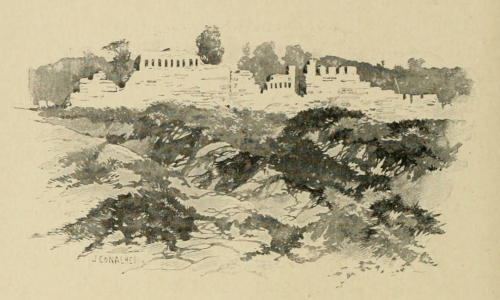
THE FENIAN RAID IN CANADA. RUINS OF FORT ERIE
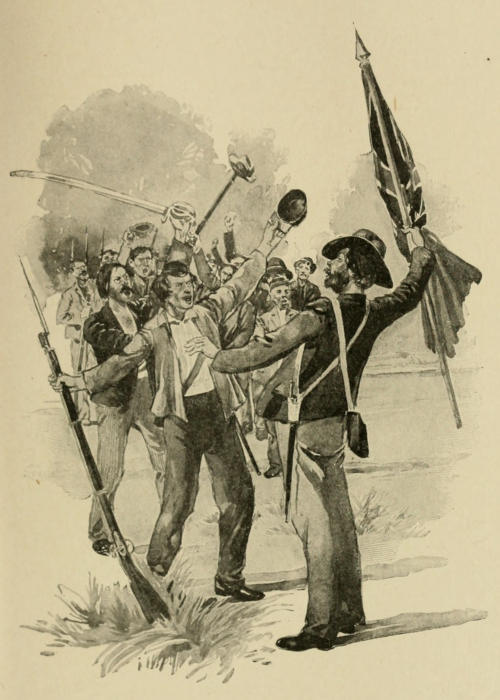
BRITISH FLAG CAPTURED BY THE FENIANS
There was tragedy enough in the domestic situation; but it was a moral tragedy, not the tragedy of bloody raids upon a peaceful border. It was impossible to come to an understanding with Mr. Johnson. A more moderate, more approachable, more sagacious, less headstrong man might by conference have hit upon some plan by which his differences with the leaders in Congress would have been accommodated and at least a modus vivendi devised. But to differ with Mr. Johnson was to make an enemy of him, and Congress had suspected him an opponent rather than a friend from the first and was disinclined to seek accommodation. His intemperate fashion of speech exaggerated his views in the mere statement; he seemed a violent partisan when he wished merely to enforce a conviction or make a resolute purpose plain. Mr. Sumner came away from an interview with him convinced that he had spoken with a man who heartily despised the entire North, felt a genuine contempt for its sentiments, and meant to serve the South as entirely, as openly, as illegally as Mr. Jefferson Davis himself. What was quite as bad, the South itself got wind of his partisan temper in its behalf, nursed the false hope that it would be shielded by his power, and deepened all the mischief by acting on the hope.
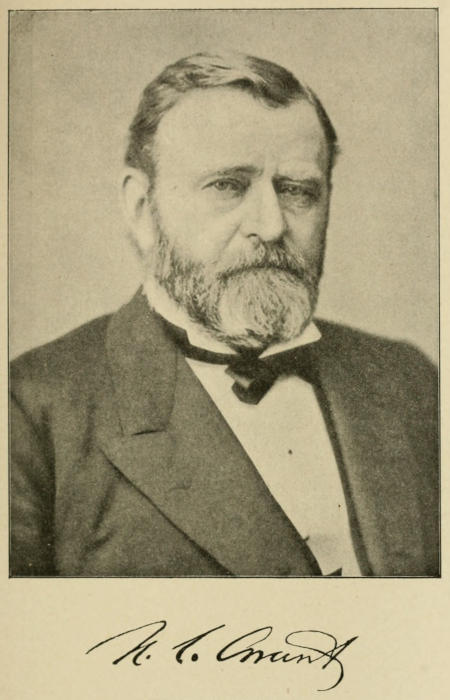
ULYSSES SIMPSON GRANT
It was no time at which to defy northern opinion and strengthen the hands of Congress by resistance. The autumn of the year was to bring another congressional election, and the leaders of the Republican majority in the houses would go to the country with a much better chance of winning than the President could possibly count upon in the equivocal position into which he had got himself. In July the houses passed, over the President’s veto, a bill which continued the Freedmen’s Bureau for two years; provided for the sale of public lands to the negroes on easy terms; appropriated the property of the confederate government to their education; and placed their civil rights under direct military protection. On the 18th of June the Committee on Reconstruction had made formal report of its views upon the situation. It was the policy of Congress enforced by reasons,—reasons which, it might be hoped, would fortify the minds of members of Congress and please the voters of the North in the coming contest. It declared that the governments of the States recently in secession were practically suspended, by reason both of the irregular character of the new governments which had been set up and of the reluctant acquiescence of the southern people in the results of the war; and that it was essential to the peace and sound policy of the Union that they should not be reinstated in their former privileges by Congress until they should have given substantial pledges, such pledges as Congress should demand, of their entire loyalty and submission. With that appeal the houses went to the country.
The friends of the President and of a moderate course in affairs, both Democrats and Republicans, came together in goodly numbers in convention, led by men whom the country knew and had reason to trust, and made a demonstration in favor of the policy which had been Mr. Lincoln’s and which should be that of every man who loved peace and sought accommodation; and their action did not fail to make a considerable impression everywhere upon those who could put passion aside. But Mr. Johnson would not let quiet counsel alone. Incapable of prudence, scornful of soft words, a bitter hater, cast by nature for the rough contacts of personal conflict and debate, he spoke to the country himself. At midsummer he made a journey to Chicago, and at almost every stopping place where the people crowded about his car he uttered, with that air of passion which always went with what he said, invectives against Congress so intemperate, so coarse, so hot with personal feeling that those who heard him looked upon him as almost a man distraught, thrown from his balance. He, not the leaders of Congress, seemed the radical, the apostle of passion; and his passion, men could say, was against the Union, not for it. He had set himself, his opponents declared, not to bring peace and restore the government to its integrity, but to perpetuate discord and cheat the party of the Union of its legitimate power.
Two days after Congress adjourned (July 30, 1866) a New Orleans mob broke up an irregular “constitutional convention” of negroes and their partisans with violence and bloodshed. In October the southern States, as if taking their cue from the President, not from Congress, began, one after the other, to reject the Fourteenth Amendment; and every impression that had been formed of reaction and recalcitrancy at the South was confirmed. The result of the elections was a foregone conclusion. A Republican majority was sent to the House as overwhelming as that which dominated the Congress about to expire; the Republican numbers in the Senate were maintained. The houses came together again in December heartened, resolute, triumphant, ready to override the President with a policy of Thorough which should put the fortunes of the South entirely at their disposal.
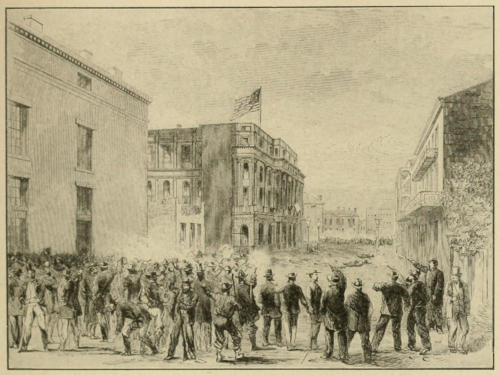
THE RIOT IN NEW ORLEANS. SIEGE AND ASSAULT ON THE CONVENTION
It was provided, by special Act, that the new Congress, just chosen, should convene, not in the following December, but on the 4th of March, 1867, in order that there might be no long vacation in which the President would be left free to exercise his independent authority. Before the 4th of March came a Reconstruction Act had passed through the slow fires of debate and become law (March 2d) which embodied in their unmarred integrity the radical plans of the joint committee of fifteen. It provided that the States of the Confederacy, with the exception of Tennessee, which had already been permitted to adopt the Fourteenth Amendment and resume its place in Congress, should be grouped for purposes of government in five military districts, under the command of five general officers of the army to be appointed by the President. These military governors were to control and direct the processes of reconstruction. A temporary clause of the proposed Fourteenth Amendment, which the southern States had rejected, excluded from office, whether under the States or under the federal government, at the pleasure of Congress, all who had at any time or in any capacity, civil or military, taken oath to support the constitution of the United States and afterwards “engaged in insurrection or rebellion” against it, “or given aid or comfort to its enemies.” The military governors under the Act were instructed to enroll in each State, under oath, only such citizens of voting age and of one year’s residence within the State as they should deem qualified in accordance with the spirit of this prospective Amendment, the negroes, of course, included. They were to reject as voters all whom the proposed Amendment disqualified for office. They were then to order and hold in each State an election for delegates to a constitutional convention, in which none but the voters on their rolls should be allowed either to vote or to stand for election. They were to direct the conventions thus chosen to frame constitutions by which the elective suffrage should be extended without distinction to all classes of citizens included within the terms of the enrolment already made; and were to submit the constitutions thus framed to the same voters for ratification. When adopted by the voters, the constitutions which this plan of Thorough had brought into existence were to be sent to Congress, through the President, for final approval. Each State, it was agreed, whose constitution Congress should approve was to be readmitted to representation so soon as its legislature had ratified the Fourteenth Amendment. Meanwhile, its government was to be deemed “provisional only, and in all respects subject to the paramount authority of the United States, at any time to abolish, control, or supersede it.” The houses had already ordered, by resolution, at their previous session, that the troops should be kept at their stations in the South until Congress should direct their recall. They now invested General Grant, the General of the Army, with powers which made him, and the army itself, practically independent of the President. He was given sole authority to order the removal or suspension of an officer, and military commanders were explicitly excused from accepting the opinion of any civil official of the government in the construction of their powers.
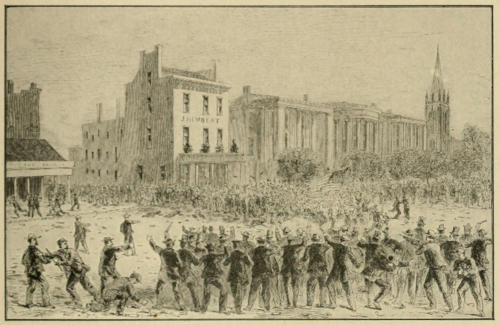
THE RIOT IN NEW ORLEANS. STRUGGLE FOR THE FLAG
Many motives had governed the members of Congress in the adoption of this extraordinary programme. Some had allowed themselves to be driven to radical courses by sheer bitter feeling against the President, who insisted so intemperately upon a course more simple, more moderate, more indulgent to the South; some could reason in statesmanlike fashion enough upon the premises of action, but could propose no alternative plan which seemed practicable or likely to command the support of the rank and file of their party; others were party men, without pretence or refinement of view, their whole temper hardened and embittered by the war and all its unpalatable consequences, and were willing to follow those who were frankly bent upon bringing the South to utter humiliation and penitent submission. Their leaders wished not only to give the negroes political privilege but also to put the white men of the South, for the nonce at any rate, under the negroes’ heels. Every black voter, they cynically predicted, would once for all become under such tutelage a Republican voter, and the party which had conquered the South would rule it. Men who looked more scrupulously to their motives saw no way to withstand what they disapproved; were themselves convinced that something must be done to protect the helpless blacks; feared as much as the radicals themselves to see the real leaders of the South again in control; and, with misgivings not a few, lent their aid to the revolutionary programme.
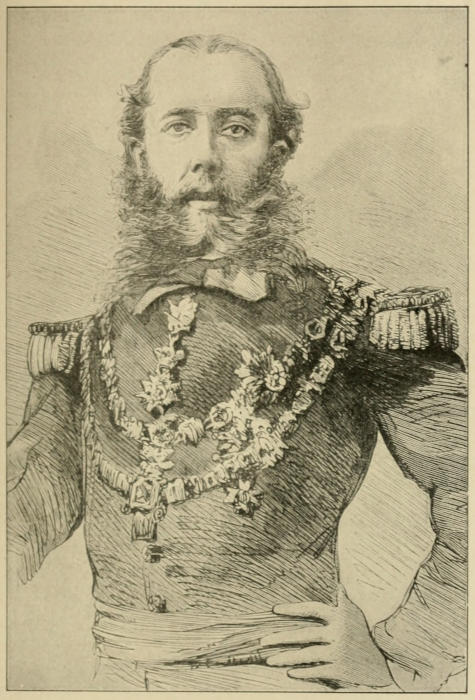
ARCHDUKE MAXIMILIAN
The same months that saw the drastic Act debated and adopted witnessed a tragic revolution at the further south in which the government at Washington also played its part. While the war for the Union was being fought, the emperor of France, looking to see that war rack the United States to pieces, had sent troops into Mexico and had set up a kingdom there for the Archduke Maximilian of Austria. He had got his opportunity in a way which had seemed for a time to make other great powers of Europe his partners and allies in the conquest. The closing days of the year 1857 had brought political upheaval and sharp civil war upon Mexico, which had resulted within two years in making Juarez, a Zapoteca Indian of singular capacity, master of the country. Juarez had not only confiscated the property of the church, but had also suspended by decree the payment of foreign debts, the debt of the Mexican nation itself included; and that decree had led, late in 1861, to a demonstration in force upon his coasts by the three nations, England, France, and Spain, who were Mexico’s principal creditors. England and Spain would consent to do no more than was necessary to enforce the just claims of their citizens, and Napoleon had agreed to be governed by the terms of co-operation which they prescribed: the seizure, it might be, of a custom house or two, but no serious stroke against the sovereignty of the country. From the first, nevertheless, he had meant to disregard his engagements in the matter. He had long dreamed of conquest there in the south, and saw the time come now, as he thought, when he need fear no enforcement of the Monroe doctrine against him by the distracted government at the north. In despite of protests, he sent an army of conquest to Mexico, and, postponing open possession by France, put the Archduke Maximilian in the usurped place of authority, keeping his armies there to secure his throne and the predominance of France. The government at Washington protested but could do nothing more. The usurped throne stood, the armies of France remained, until the war for the Union closed and the hands of the President were free. Then the protests from Washington took another tone and meaning, which Louis Napoleon was not self-deceived enough to suppose he could ignore. American troops began to be massed in the neighborhood of the Mexican frontier, near the familiar ground of General Taylor’s movements twenty years before; and the French government saw that it must yield. The French troops were withdrawn, and Maximilian was left to shape his fortunes alone. He was a man of high spirit, not apt to yield upon any point of honor, mindful of what he conceived to be his duty though he mistook it: a man of character, resolved to stand by his throne even though the French withdrew. The resolution cost him his life. Though he gathered a party about him, they were beaten by the partisans of Juarez. He was court-martialled, condemned, and shot. The melodramatic play which the histrionic genius of Napoleon had planned turned out a genuine tragedy, and a noble gentleman made a pitiful ending.
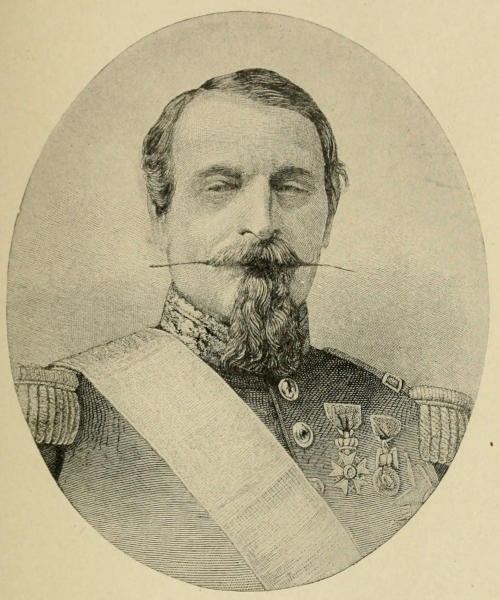
NAPOLEON III.
The same month that witnessed the withdrawal of the troops of France from Mexico saw final arrangements made for the withdrawal of Russia from the Pacific coast of North America. On the 30th of March, 1867, a treaty was agreed upon between Mr. Seward and the Russian minister at Washington for the sale of Alaska to the United States for the sum of seven million two hundred thousand dollars in gold. In May the treaty was ratified; and in the following October formal transfer of the great territory was effected. Mr. Monroe had checked the movement of Russian power southward upon the Pacific coast by his message of 1823, and in the forty odd years which had elapsed since that notable announcement of the supremacy of the United States in the western hemisphere the government at St. Petersburg had grown very indifferent to the retention of the bleak fragment of America left in its hands,—so far away, so difficult, it might be, of defence. Informal communications in regard to its sale had passed between the two governments so long ago as 1859. Russia was anxious to sell; and the final purchase of 1867 was easily arranged for. There was a certain dramatic consistency in the association of the purchase of Alaska with the forced “withdrawal” of the French from Mexico. They stood together as logical consequences of the Monroe doctrine, whose avowed object had been to keep the American continents free from the control of European monarchies.
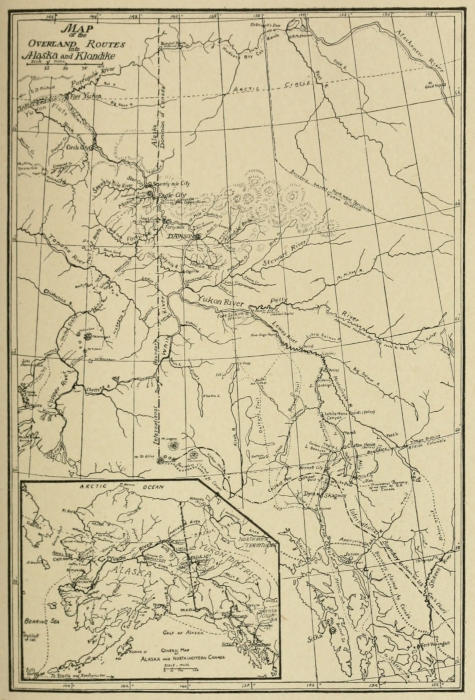
MAP OF ALASKA SHOWING THE GOLD-BEARING REGION
The deep effects wrought by Mr. Stevens’s policy of Thorough in the southern States worked themselves out more slowly than the tragedy in Mexico, but with no less revolutionary force. Its operation brought on as profound a social upheaval as its most extreme advocates could have desired. The natural leaders of the South either would not take the oath prescribed or were excluded from the right to enroll themselves as voters by the very terms of the Reconstruction Act. The negroes were the chief voters. The conventions which they chose and the governments which those conventions set up were constituted to secure them power. In Virginia, Mississippi, and Texas, after the conventions had acted, the white voters rallied strong enough at the polls, as it turned out, to defeat the constitutions they had framed when they were submitted for ratification; but they were only kept so much the longer under military government, and were obliged to accept them at last. In Georgia the new constitution was adopted; but the statutes of the reconstituted State debarred negroes from holding office, and Congress would not admit her to representation so long as those statutes stood unrepealed. In the Carolinas, in Florida, in Alabama, Arkansas, and Louisiana nothing stayed the execution of the congressional plan, and by midsummer, 1868, Congress was ready to readmit those States to representation. But South Carolina, Louisiana, and Florida were utterly given over in the process to the government of adventurers.
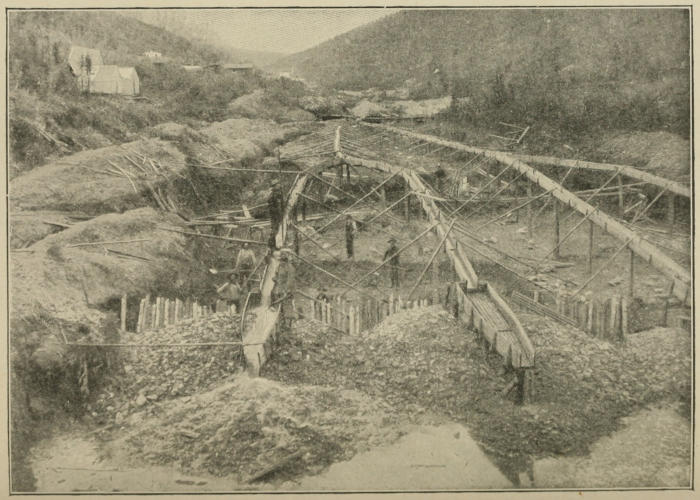
SLUICE-WASHING FOR GOLD IN THE KLONDIKE
Negroes constituted the majority of their electorates; but political power gave them no advantage of their own. Adventurers swarmed out of the North to cozen, beguile, and use them. These men, mere “carpet baggers” for the most part, who brought nothing with them, and had nothing to bring, but a change of clothing and their wits, became the new masters of the blacks. They gained the confidence of the negroes, obtained for themselves the more lucrative offices, and lived upon the public treasury, public contracts, and their easy control of affairs. For the negroes there was nothing but occasional allotments of abandoned or forfeited land, the pay of petty offices, a per diem allowance as members of the conventions and the state legislatures which their new masters made business for, or the wages of servants in the various offices of administration. Their ignorance and credulity made them easy dupes. A petty favor, a slender stipend, a trifling perquisite, a bit of poor land, a piece of money satisfied or silenced them. It was enough, for the rest, to play upon their passions. They were easily taught to hate the men who had once held them in slavery, and to follow blindly the political party which had brought on the war of their emancipation.
There were soon lands enough and to spare out of which to make small gifts to them without sacrifice of gain on the part of their new masters. In Mississippi, before the work of the carpet baggers was done, six hundred and forty thousand acres of land had been forfeited for taxes, twenty per cent. of the total acreage of the State. The state tax levy for 1871 was four times as great as the levy for 1869 had been; that for 1873 eight times as great; that for 1874 fourteen times. The impoverished planters could not carry the intolerable burden of taxes, and gave their lands up to be sold by the sheriff. There were few who could buy. The lands lay waste and neglected or were parcelled out at nominal rates among the negroes. In South Carolina the taxes of 1871 aggregated $2,000,000 as against a total of $400,000 in 1860, though the taxable values of the State were but $184,000,000 in 1871 and had been $490,000,000 in 1860. There were soon lands to be had for the asking wherever the tax gatherer of the new governments had pressed his claims. The assessed valuation of property in the city of New Orleans sank, during the eight years of carpet-bag rule, from $146,718,790 to $88,613,930. Four years and a half of “reconstruction” cost Louisiana $106,020,337. The demoralization of affairs in Louisiana had begun in 1862, when General Butler took possession of the city of New Orleans. The rich spoils of the place had proved too much for the principles of the men intrusted with the management of her affairs in times when law was silent; and the political adventurers who came out of the North to take charge of the new government set up under Mr. Stevens’s plan of reconstruction found the work they had come to do already begun.
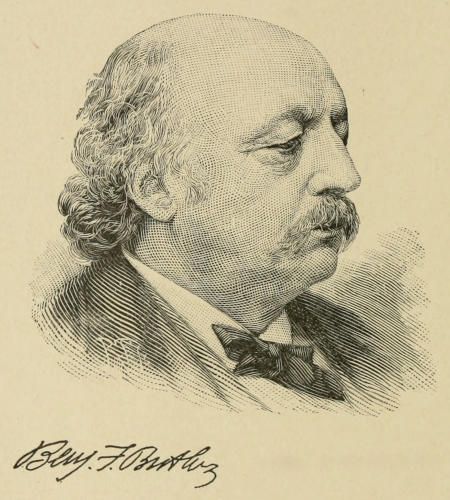
BENJAMIN FRANKLIN BUTLER
Taxes, of course, did not suffice. Enormous debts were piled up to satisfy the adventurers. The cases of Louisiana and South Carolina were no doubt the worst, but other States suffered in proportion to the opportunities they afforded for safe depredation. In 1868 the debt of South Carolina had been $5,000,000; in 1872 it was nearly $30,000,000. The debt of Louisiana in 1868 had been between six and seven millions; in 1872 it was $50,000,000. Where the new rulers acted with less assurance and immunity or with smaller resources at hand, debts grew more slowly, but the methods of spoliation were everywhere much the same; and with the rise of debts went always the disappearance of all assets wherewith to pay them. Treasuries were swept clean. Immense grants were made in aid of public works which were never completed, sometimes not even begun. Railways were subsidized, and the subsidies, by one device or another, converted into outright gifts, which went into the pockets of those who had procured them, not into the building or equipment of the road. A vast burden of debt was piled up for coming generations to carry; the present generation was much too poor to pay anything.
The real figures of the ruin wrought no man could get at. It was not to be expressed in state taxes or state debts. The increase in the expenditure and indebtedness of counties and towns, of school districts and cities, represented an aggregate greater even than that of the ruinous sums which had drained the treasuries and mortgaged the resources of the governments of the States; and men saw with their own eyes what was going on at their own doors. What was afoot at the capitals of their States they only read of in the newspapers or heard retailed in the gossip of the street, but the affairs of their own villages and country-sides they saw corrupted, mismanaged, made base use of under their very eyes. There the negroes themselves were the office holders, men who could not so much as write their names and who knew none of the uses of authority except its insolence. It was there that the policy of the congressional leaders wrought its perfect work of fear, demoralization, disgust, and social revolution.
No one who thought justly or tolerantly could think that this veritable overthrow of civilization in the South had been foreseen or desired by the men who had followed Mr. Stevens and Mr. Wade and Mr. Morton in their policy of rule or ruin. That handful of leaders it was, however, hard to acquit of the charge of knowing and intending the ruinous consequences of what they had planned. They would take counsel of moderation neither from northern men nor from southern. They were proof against both fact and reason in their determination to “put the white South under the heel of the black South.” They did not know the region with which they were dealing. Northern men who did know it tried to inform them of its character and of the danger and folly of what they were undertaking; but they refused to be informed, did not care to know, were in any case fixed upon the accomplishment of a single object. Their colleagues, their followers, kept, many of them, a cooler mind, a more prudent way of thought, but could not withstand them. They, too, were ignorant of the South. They saw but a little way into the future, had no means of calculating what the effects of these drastic measures would be upon the life and action of the South, and lacked even the knowledge of mere human nature which might have served them instead of an acquaintance with the actual men they were dealing with. They had not foreseen that to give the suffrage to the negroes and withhold it from the more capable white men would bestow political power, not upon the negroes, but upon white adventurers, as much the enemies of the one race as of the other. In that day of passion, indeed, they had not stopped to speculate what the effects would be. Their object had been to give the negro political power in order that he might defend his own rights, as voters everywhere else might defend theirs. They had not recked of consequences; for a little while they had not cared what they might be. They had prepared the way for the ruin of the South, but they had hardly planned to ruin it.
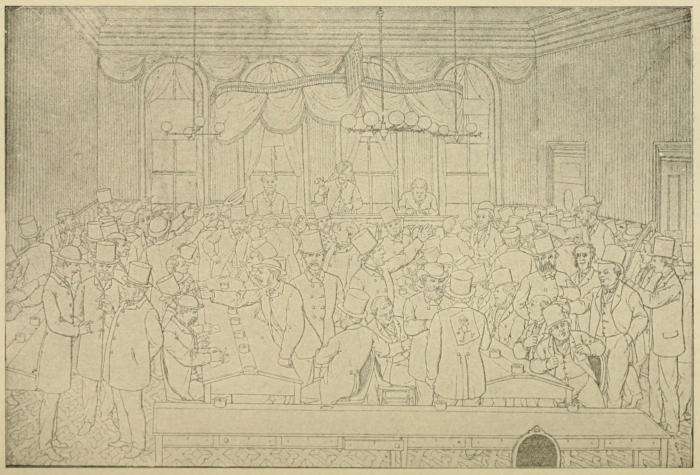
AN EXCITING DAY IN THE BOARD OF BROKERS, “ON THE RISE,” NEW YORK CITY, 1862
News of what was going on in the South was not slow to make its way to the ears of the country at large; but the editors of northern newspapers at first refused to credit what they heard. Men dismissed the reports with an easy laugh, as simply the South’s cry of exasperation that the negro should have been given the ballot and the power to rule. But incredulity grew more and more difficult; the accounts of what was going on grew more and more circumstantial; proof came close upon the heels of rumor; and opinion began to veer unsteadily. It shifted not only because of the disquieting news that came from the South, but also because of the desperate strain the government itself was put to at Washington by reason of the open breach and warfare between the President and Congress. The masterful men who led the congressional majority had not contented themselves with putting such laws as they chose upon the statute books despite the President’s vetoes; they had gone much further and taken steps to make the President a mere figurehead even in administration, and put themselves in virtual control of the executive personnel of the government. Along with the Reconstruction Act of 1867, which placed the governments of the southern States in their hands, they had forced through, over the President’s veto, a Tenure of Office Act which deprived the President of the power of removal from office except by the advice and with the consent of the Senate. It gave even to cabinet officers a fixed tenure of four years. They could be dismissed within the four years of the presidential term only by the consent of the Senate. Here was a deliberate reversal of the constitutional practice of more than two generations. The debates of the first Congress under the constitution, the views of the statesmen who had framed the law of the government, the opinions of lawyers, the unbroken practice of sixteen presidents had been thought to establish beyond question the right of the chief magistrate to remove federal administrative officials at his pleasure. Congress, it seemed, was ready to override law and precedent alike to make good its mastery.
Mr. Johnson was not the man to decline such a challenge. After fighting the policy of Congress in matters purely legislative with caustic vetoes and bitter condemnation he was not likely to submit to have his very powers of administration stripped away without resistance carried to the utmost bounds. He had kept Mr. Lincoln’s cabinet; but he had not relished the attitude of one or two of its members towards him. It had been hard enough for Mr. Lincoln, even, with his shrewd and kindly insight into the real nature of the man and his love for the sheer force and audacity with which he administered his critical office in days almost of revolution, to endure the wilful arrogance of Edwin M. Stanton, the Secretary of War; it was quite impossible for Mr. Johnson to endure it. It was something more than wilfulness that Mr. Stanton showed in his relations with Mr. Johnson. He became openly a partisan of the radical leaders in Congress, and set himself to defeat the President at his own council table. He administered the affairs of his Department as if he considered it an independent branch of the government; carried out the instructions of the President with regard to the South in a way to discredit as much as possible the policy which they embodied; and seemed bent upon maintaining the Department of War as a sort of counterpoise to the presidency itself until a man acceptable to the Republican majority in the houses should come to the head of the government. Mr. Johnson had wished from the first to be rid of him, but had wished also to preserve unbroken the tradition of policy handed on to him from Mr. Lincoln, and had hesitated to ask for his resignation. He determined now to make Mr. Stanton’s case a case for the test of his prerogative and of the Tenure of Office Act which sought to curtail it. In August (1867), during the congressional recess, he demanded Mr. Stanton’s resignation. Mr. Stanton refused to resign, and the President suspended him from office, as the terms of the Act itself permitted, putting General Grant in his place. When Congress reassembled in December the Senate refused to sanction the removal, and Mr. Stanton resumed his office. The President once again issued an order for his removal, and Mr. Stanton again refused to quit his office, appealing to the House for protection. On February 24, 1868, the House voted to impeach the President for high crimes and misdemeanors.
His only offences were that he had added to his vetoes unmeasured abuse of the houses and their leaders and that he had disregarded an Act of Congress in his removal of Mr. Stanton; but the impeachment had been resolved upon as a political, not as a judicial, process of removal, in passion, not in cool judgment,—in the spirit of the men who in Mr. Jefferson’s day had sought to make it a means of party mastery against the judges of the federal courts. From the 5th of March to the 16th of May the unedifying trial dragged on. Even while it pended the President went incorrigibly up and down the country speaking with his accustomed unguarded passion and open defiance of every one concerned against him in the long series of controversies which had brought the trial on. Fortunately there were men among the Republicans of the Senate who put their consciences as lawyers and their scruples as statesmen before their allegiance to their party leaders. On the 16th of May the impeachment broke down. The first test vote was taken; seven Republican senators voted with the ten Democrats of the upper house against the thirty-five Republican senators who cast their votes for conviction. The managers had failed to secure the two-thirds necessary to convict; and a verdict of acquittal was entered. The Secretary of War resigned his office, and the contest was over.
It was, it turned out, the President’s noisy, unapplauded exit from public trust and employment. Four days after the failure of the impeachment proceedings the Republican nominating convention met at Chicago which was to name a candidate for the presidential term to begin on the 4th of March, 1869. It nominated General Grant, unanimously and with genuine enthusiasm, because he was a faithful officer and no politician. Mr. Johnson had shown himself a Democrat, not a Republican, as party lines had been drawn upon the issue of reconstruction; but the Democrats wanted him for another term as little as the Republicans did. Their convention nominated Mr. Horatio Seymour, of New York, a man of high character and unimpeachable reputation in affairs, and went to the country on the question of reconstruction. The result no one seriously doubted from the first. Few voters in the Republican ranks at the North had as yet suffered themselves to see anything in Mr. Stevens’s plan of Thorough to daunt either their taste or their principles; the votes of most of the southern States then reconstructed were turned over to the Republican candidate, as expected, by the negro voters; and Mr. Seymour obtained but eighty ballots in the electoral college to General Grant’s two hundred and fourteen. It was a significant thing, nevertheless, that in a total popular vote of more than 5,700,000 General Grant’s majority was but a little more than three hundred thousand. Mr. Seymour had carried New York and New Jersey at the centre of the old Union. A slight shifting of the winds of opinion might bring weather on which the policy of reconstruction devised in Congress could not survive. But a more normal season seemed at hand. The country was to have at least peace at its capital, a President trusted by the leaders of Congress. Mr. Johnson’s tempestuous and troubled term was over, and a plain soldier again at the head of the government.
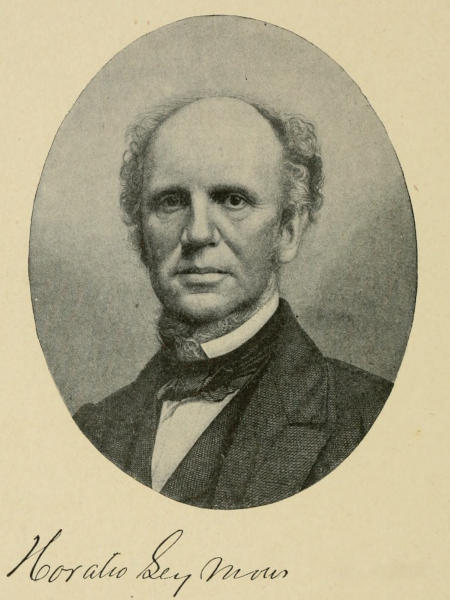
HORATIO SEYMOUR
Congress did not wait for General Grant’s inauguration, however, to go forward with its policy of reconstruction. Before the end of February, 1869 (February 25th), it proposed to the States a Fifteenth Amendment intended to lay in the constitution itself the foundations of negro suffrage which had as yet only the support of the Reconstruction Acts of 1867, mere statutes. “The right of citizens of the United States to vote,” so ran its terms, “shall not be denied or abridged by the United States or any State on account of race, color, or previous condition of servitude.” New Jersey, Delaware, Maryland, Kentucky, California, and Oregon rejected it; Tennessee did not act upon it; but thirty of the thirty-seven States accepted it, and it became part of the constitution. Virginia, Georgia, Mississippi, and Texas had not yet been reconstructed to the satisfaction of Congress; the acceptance of this new Amendment, accordingly, the enactment in perpetuity of the principle of the Reconstruction Act, was made a condition precedent to their readmission to Congress, as the acceptance of the Thirteenth Amendment, which gave the negroes their freedom, and of the Fourteenth, which made them citizens of the United States and of the States of their residence, had been. This, too, was to be part of the hard-driven bargain of reconstruction before the Republican leaders would be satisfied. The dominance of the negroes in the South was to be made a principle of the very constitution of the Union. A long year went by before three fourths of the States had ratified the radical Amendment, but the necessary votes came in at last, and on the 30th of March, 1870, the new article was officially declared in force.
The price of the policy to which it gave the final touch of permanence was the temporary disintegration of southern society and the utter, apparently the irretrievable, alienation of the South from the political party whose mastery it had been Mr. Stevens’s chief aim to perpetuate. The white men of the South were aroused by the mere instinct of self-preservation to rid themselves, by fair means or foul, of the intolerable burden of governments sustained by the votes of ignorant negroes and conducted in the interest of adventurers: governments whose incredible debts were incurred that thieves might be enriched, whose increasing loans and taxes went to no public use but into the pockets of party managers and corrupt contractors. There was no place of open action or of constitutional agitation, under the terms of reconstruction, for the men who were the real leaders of the southern communities. Its restrictions shut white men of the older order out from the suffrage even. They could act only by private combination, by private means, as a force outside the government, hostile to it, proscribed by it, of whom opposition and bitter resistance was expected, and expected with defiance. Sober men kept their heads; prudent men saw how sad an increase of passion would come out of hasty counsels of strife, an open grapple between those outlawed and those appointed to govern. Men whom experience had chastened saw that only the slow processes of opinion could mend the unutterable errors of a time like that. But there were men to whom counsels of prudence seemed as ineffectual as they were unpalatable, men who could not sit still and suffer what was now put upon them. It was folly for them to give rein to their impulses; it was impossible for them to do nothing.
They took the law into their own hands, and began to attempt by intimidation what they were not allowed to attempt by the ballot or by any ordered course of public action. They began to do by secret concert and association what they could not do in avowed parties. Almost by accident a way was found to succeed which led insensibly farther and farther afield into the ways of violence and outlawry. In May, 1866, a little group of young men in the Tennessee village of Pulaski, finding time hang heavy on their hands after the excitements of the field, so lately abandoned, formed a secret club for the mere pleasure of association, for private amusement,—for anything that might promise to break the monotony of the too quiet place, as their wits might work upon the matter, and one of their number suggested that they call themselves the Kuklos, the Circle. Secrecy and mystery were at the heart of the pranks they planned: secrecy with regard to the membership of their Circle, secrecy with regard to the place and the objects of its meetings; and the mystery of disguise and of silent parade when the comrades rode abroad at night when the moon was up: a white mask, a tall cardboard hat, the figures of man and horse sheeted like a ghost, and the horses’ feet muffled to move without sound of their approach. It was the delightful discovery of the thrill of awesome fear, the woeful looking for of calamity that swept through the country-sides as they moved from place to place upon their silent visitations, coming no man could say whence, going upon no man knew what errand, that put thought of mischief into the minds of the frolicking comrades. It threw the negroes into a very ecstasy of panic to see these sheeted “Ku Klux” move near them in the shrouded night; and their comic fear stimulated the lads who excited it to many an extravagant prank and mummery. No one knew or could discover who the masked players were; no one could say whether they meant serious or only innocent mischief; and the zest of the business lay in keeping the secret close.
Here was a very tempting and dangerous instrument of power for days of disorder and social upheaval, when law seemed set aside by the very government itself, and outsiders, adventurers, were in the seats of authority, the poor negroes, and white men without honor, their only partisans. Year by year the organization spread, from county to county, from State to State. Every country-side wished to have its own Ku Klux, founded in secrecy and mystery like the mother “Den” at Pulaski, until at last there had sprung into existence a great Ku Klux Klan, an “Invisible Empire of the South,” bound together in loose organization to protect the southern country from some of the ugliest hazards of a time of revolution. The objects of the mysterious brotherhood grew serious fast enough. It passed from jest to earnest. Men took hold of it who rejoiced to find in it a new instrument of political power: men half outlawed, denied the suffrage, without hope of justice in the courts, who meant to take this means to make their will felt. “They were to protect their people from indignities and wrongs; to succor the suffering, particularly the families of dead confederate soldiers”; to enforce what they conceived to be the real laws of their States “and defend the constitution of the United States and all laws passed in conformity thereto; to aid in executing all constitutional laws and protect the people from unlawful seizures and from trial otherwise than by jury.” Similar secret orders grew up alongside the great Klan, or in States where its “dens” had not been established: Knights of the White Camellia, Pale Faces, Constitutional Union Guards, the White Brotherhood, to serve the same ends by the same means. The Knights of the White Camellia, founded in New Orleans in the winter of 1867-1868, spread their organization abroad more widely even than the Ku Klux Klan.
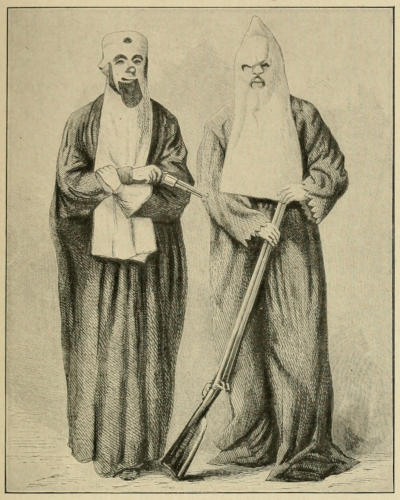
TWO MEMBERS OF THE KU KLUX KLAN
It was impossible to keep such a power in hand. Sober men governed the counsels and moderated the plans of these roving knights errant; but it was lawless work at best. They had set themselves, after the first year or two of mere mischievous frolic had passed, to right a disordered society through the power of fear. Men of hot passions who could not always be restrained carried their plans into effect. Reckless men not of their order, malicious fellows of the baser sort who did not feel the compulsions of honor and who had private grudges to satisfy, imitated their disguises and borrowed their methods. What was done passed beyond mere mummery, mere visiting the glimpses of the moon and making night hideous, that they might cause mere “fools of nature horridly to shake their disposition with thoughts beyond the reaches of their souls.” It became the chief object of the night-riding comrades to silence or drive from the country the principal mischief-makers of the reconstruction régime, whether white or black. The negroes were generally easy enough to deal with: a thorough fright usually disposed them to make utter submission, resign their parts in affairs, leave the country,—do anything their ghostly visitors demanded. But white men were less tractable; and here and there even a negro ignored or defied them. The regulators would not always threaten and never execute their threats. They backed their commands, when need arose, with violence. Houses were surrounded in the night and burned, and the inmates shot as they fled, as in the dreadful days of border warfare. Men were dragged from their houses and tarred and feathered. Some who defied the vigilant visitors came mysteriously to some sudden death.
The more ardent regulators made no nice discriminations. All northern white men or women who came into the South to work among the negroes, though they were but school teachers, were in danger of their enmity and silent onset. Many of the teachers who worked among the negroes did in fact do mischief as deep as any political adventurer. The lessons taught in their schools seemed to be lessons of self-assertion against the whites: they seemed too often to train their pupils to be aggressive Republican politicians and mischief-makers between the races. The innocent and enlightened among them suffered in the general opinion from the errors of those who deliberately sowed discord; and the regulators too often failed to discriminate between those who made trouble and those who fulfilled their gentle errand in peace and good temper.
The ranks of those who flocked into the South to take part in the reconstruction of the States and the habilitation of the negro for his life of freedom were strangely mixed of good and bad. The teachers came upon an errand of mercy and humanity, but came too many of them with bitter thoughts and intolerant purpose against the white people of the South, upon whom, as they did not reflect, the fortunes of the negro in any case depended. The politicians came for the most part like a predatory horde; but here and there emerged a man of integrity, of principle, of wise and moderate counsel, who in the long run won the confidence even of those who hated with an ineradicable hatred the party and the practice of federal control which he represented. The Ku Klux and those who masqueraded in their guise struck at first only at those who made palpable mischief between the races or set just law aside to make themselves masters; but their work grew under their hands, and their zest for it. Brutal crimes were committed; the innocent suffered with the guilty; a reign of terror was brought on, and society was infinitely more disturbed than defended. Law seemed oftentimes given over. The right to the writ of habeas corpus was again and again suspended to check the lawless work. At least one governor of the reconstruction period sent to his adjutant general lists of leading citizens proscribed, with the suggestion that those whose names were specially marked should be tried by court martial and executed at once before the use of the writ should be restored. One lawless force seemed in contest with another.
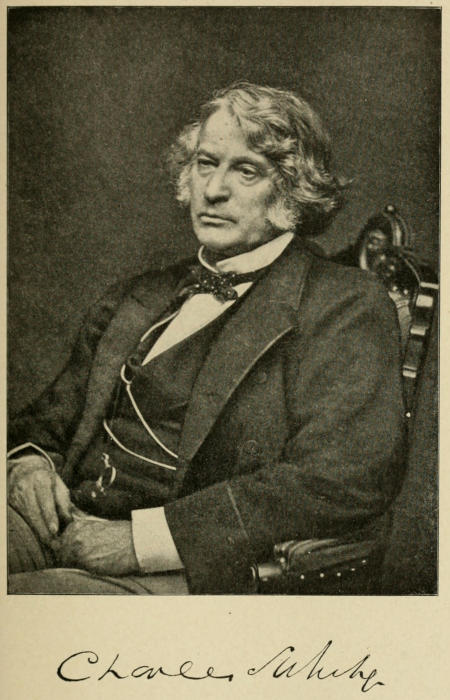
CHARLES SUMNER
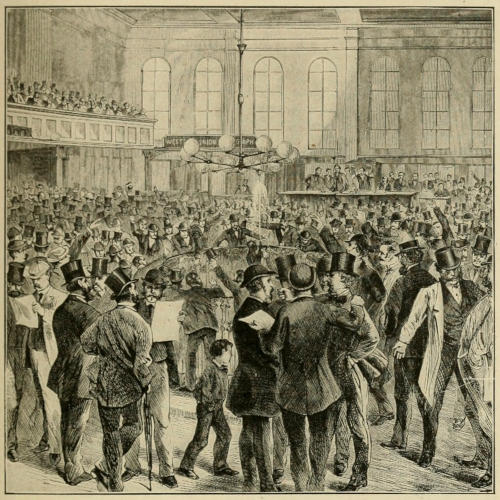
SCENE IN THE GOLD ROOM, NEW YORK CITY, ON “BLACK FRIDAY”
Such was the disturbing subject matter of the news which crept north during the first year of General Grant’s administration as President. It found business as well as politics moved by its own uneasy excitements. The year 1869 witnessed an attempt on the part of a small group of brokers to corner the gold market, singularly audacious, singularly fatal in its consequences to the business of the country. Their operations culminated on a certain “Black Friday,” the 24th of September, 1869. All foreign trade balances, all payments of customs duties at the ports, required gold, and the Wall Street firm of Smith, Gould, Martin & Co., in association with a few others, undertook nothing less than to get control of all the gold in the country that was available for such purposes, outside the Treasury of the United States. They sought to keep the gold in the Treasury out of their way in the market by interesting friends of the President to ply him with arguments based upon public policy to which they thought he would be amenable, and hurried their operations to a crisis while the arguments told; bought gold on every hand, at any figures; and forced its price up, up, until the end came on that Friday which the Street was never to forget. On that day they had the prices and the stock of gold almost at their disposal when the news came that the President had ordered the sub-treasury of the United States at New York to sell gold from the vaults of the government for the relief of the market and it was known that the hundred million which the government held had begun to be released. Then the crash came, and the ruin the operators had wrought, for themselves and others, was laid bare. Trade at home as well as abroad depended upon the available stores of gold. That desperate speculation had upset credit. The movement of the crops halted; foreign trade came to a standstill; the West would not deal with the East; the East could not deal over sea. No man who handled money knew just where he stood. The business of the continent was racked to its centre; and every man who knew the money market knew that it would be many a weary month, it might be many a weary year, before the demoralizing effects of that day would pass away. The operators who had brought the panic on shielded themselves in the courts, and even the immediate ruin they had wrought upon their victims could not be repaired.
There were abundant crops, and business lacked nothing to make it prosperous but a steady money market. The census taken in 1870 showed the population of the country increased by more than seven millions since 1860, for all it had been a decade filled with death and war. Even the South had added some eight hundred thousand to her reckoning. Industry went forward at a quiet pace, and the wealth of the country grew in the very season of financial panic. It was the unquiet spirit of adventure that upset affairs. The war had thrown business from its ordinary courses. The huge purchases of the War Department, the unusual peril of the seas so long as the confederate privateers were abroad, the necessary hazards of business while war filled every transaction with conjecture had bred the speculative temper and quickened the instinct for adventurous operations on the grand scale; had made men apt at managing “corners” and reckless what risks they added to the legitimate hazards of trade.
Embarrassments alike of business and of feeling, created by the war and all that had come in its train, cleared very slowly away. Local storm though it was, the war had not failed to send its airs abroad and create international disturbances as well as domestic. It had particularly threatened to bring about serious misunderstandings between England and the United States. Most of the confederate privateers and swift cruisers that had played havoc with the sea-going trade of the United States during the earlier years of the war had been built in English ship yards and had come from English ports. Their arms and equipment had been bought in England. Their officers had waited for them in England, drawing their pay, the while, through English banks. The English government acknowledged itself bound to prevent all overt attempts of its subjects to aid or arm the enemies of a nation with which it was at peace, and to prevent the use of its ports and waters as a base of naval operations against her; but it did not consider itself bound, as the government of the United States contended that it should, to canvass every case of suspicion in such matters and detain vessels merely upon reasonable ground of belief that they were intended for uses inconsistent with its neutrality. Mr. Charles Francis Adams, the minister of the United States, had brought every case promptly to the attention of her Majesty’s ministers and in more than one case had laid convincing evidence before them of the character and destination of vessels being fitted out in English ship yards for the service of the Confederacy; and the government at Washington could not but connect their slow and indifferent action in the cases submitted, their apparent unwillingness to examine the evidence, their slackness in taking steps to seize the suspected vessels with their manifest friendliness, or at least benevolent neutrality, towards the Confederate States, their recognition of their belligerent rights, their half inclination to accord them full recognition as an independent power. It soon became evident that entire cordiality of feeling between the two governments could not be restored until the matter had been brought to a definite reckoning and final adjustment.
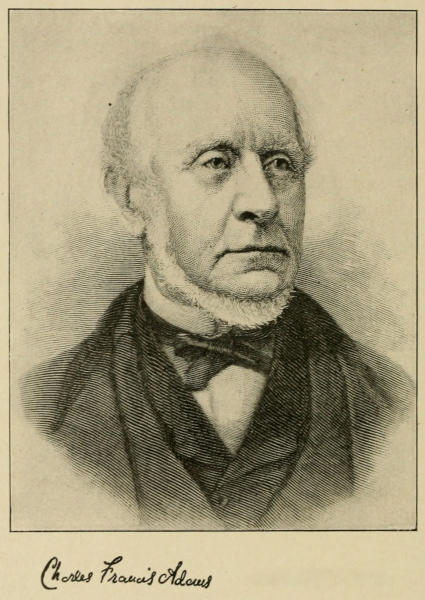
CHARLES FRANCIS ADAMS
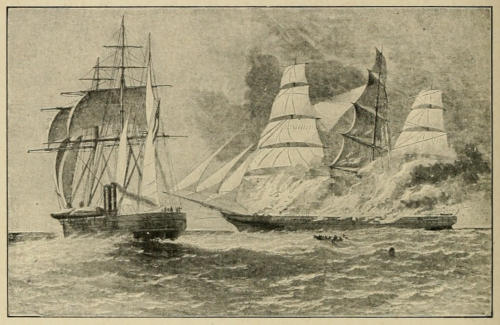
THE BURNING OF THE JACOB BELL BY THE ALABAMA
The reckoning came at the very outset of General Grant’s administration. Mr. Seward had tried to bring it about while Mr. Johnson was President, but the Senate had rejected the method of settlement he had been willing to adopt, and an arrangement agreeable to both governments was not arrived at until the spring of 1871. In May of that year, a Joint High Commission appointed by the President and the ministers in London and sitting in Washington, agreed upon a treaty, acceptable to the Senate, which referred the claims of the United States against Great Britain on account of the damage inflicted by the Alabama, the Florida, the Shenandoah, and all other confederate vessels alleged to have been fitted out in British ports, “generically known as the Alabama claims,” to the arbitration of a tribunal of five persons to be named by the President of the United States, the Queen of England, the King of Italy, the President of the Swiss Confederation, and the Emperor of Brazil respectively, and to sit at Geneva, in Switzerland. The treaty of Washington,—so it was called,—provided also for the settlement of other matters in dispute between the two governments which touched their permanent interests: the right of American fishermen to catch fish upon the Canadian coasts and of Canadian fishermen to make their catches upon the northern coasts of the United States, and the exact line of boundary between the United States and British North America within the streams which separated them and within the channel between Vancouver’s Island and the continent; but the Alabama claims for the moment seemed to all eyes to stand at the front of the matter. On the 14th of September, 1872, after a three months’ hearing, the Geneva tribunal rendered a decision in favor of the United States, only the English member of the court dissenting. It awarded to the United States $15,500,000 in damages. But the strain of the matter had been taken off by the treaty; the decision of the tribunal ended, not a controversy, but a judicial process at the end of controversy.