Chapter II · SCULPTURE.
Walter Armstrong translation
§ 1.—The principal themes of Chaldæo-Assyrian Sculpture.
The Egyptian notions as to a future life had much to do with the rapidity with which the art of sculpture was developed during the early years of their history. There was a close relation between their religion and the rites it implied, on the one hand, and the peculiar characteristics of the most ancient Memphite sculptures on the other. We cannot say the same of Chaldæa. So far as our present knowledge extends, we have no reason to suppose that the first efforts of the Mesopotamian sculptor were directed to providing the umbra, the immaterial inhabitant of the tomb, with a material support which should resemble as closely as possible the body of flesh and bones that, in spite of every precaution, would sooner or later end in dust and nothingness. No monument has come down to us in which we can recognize a portrait image executed for a sepulchre.[100]
And yet the basis of the Chaldæan religion was similar to that of Egypt. Taken as a whole, the beliefs as to a posthumous life were the same in both countries. Why then had they such different effects upon the arts? For this we may give several reasons. The first is the comparatively small importance forced upon the Chaldæan tomb by the nature of the soil. In mere coffins of terra-cotta, and even in those narrow brick vaults that are met with at certain points, at Mugheir and Warka for instance, there is no room for a single statue, still less for the crowds of images held by a Gizeh or Sakkarah mastaba. Add to this that stone was rare and dear, that it had to be brought from a great distance, and we shall comprehend why funerary rites and the worship of the dead exercised no appreciable influence over Chaldæan sculpture.
Here the beginnings of art are more obscure than in Egypt. In the first place we cannot trace them back nearly so far, in the second both statues and bas-reliefs are much less numerous. In spite of recent discoveries, to which we owe much, Egypt still remains unrivalled both by the prodigious antiquity into whose depths she allows us to catch a glimpse, and by the ever-increasing multitude of monuments and tombs that are found in her soil. The night that hides the birth of civilization is darker in Mesopotamia than in the Nile valley; it does not allow us to perceive how the plastic faculty was first awakened, and why it took one direction more than another; we cannot tell why the modeller of Lower Chaldæa set himself to handle clay, or carve wood and stone into the shape of some real or fantastic creature. On the other hand, when we study Chaldæan sculpture in the oldest of those works that have come down to us, we are struck by the fact that, even in the remote centuries to which those carvings belong, Chaldæan art interested itself in all the aspects of nature and in every variety of living form. It had nevertheless its favourite themes, namely, the representations of royal and divine personages.
When first called upon to suggest the ideas of divine power and perfection, art had no other resource but to borrow features and characteristics from those mortal forms that must always, in one point or another, seem incomplete and unfinished. Of all undertakings that could be proposed to it, this was at once the most noble and the most difficult. To find a real solution of the problem we must turn to the Greeks. Of all ancient peoples they were the first to perceive the unrivalled nobility of the human form; they were the first to decide that the notion of divine superiority, of a divine principle, could be best suggested in all its infinite varieties, through that form. We shall see them obtain the results at which they aimed by giving to man’s body and features a charm, a grandeur, a purity of line—in a word, a perfection, to which no single living member of the race can attain. The Chaldæans had no sufficiently clear idea of such a system, and, more especially, they never acquired enough familiarity with the nude, to rival the grace and dignity given by the Greeks to their divine types; but their art was more frankly anthropomorphic than that of Egypt, and, as we shall have occasion to show, it created many types that were transmitted to the Mediterranean nations, and soon adopted by them. These types were perfected, but not invented, by the Greeks.
We have already given more than one example of how the Chaldæan intellect set about the manifestation of its ideas as to gods and demons, how it expressed their characteristics by heterogeneous forms borrowed from various real animals. The powers of evil were first embodied in this fashion (Vol. I. Figs. 6, 7, 161, 162). The sculptor went far afield to find the elements of ugliness that he wished to combine in a single being; this is nowhere to be better seen than in a bronze statuette belonging to the Louvre (Fig. 32). Here too we are better informed than usual. An inscription engraved on the back tells us that this is the demon of the south-west wind, the most scorching and generally unpleasant of the winds that visit Mesopotamia. The ring in the head served to hang it up in front of the window or doorway of a house. Thanks to such a precaution, the inhabitants of that dwelling would be protected against the ill effects of the parching breath of the desert. The sculptor has wished to make this tyrant of the atmosphere as hideous and repulsive as possible, and he has only succeeded too well. One can hardly imagine anything more frightful than his grinning, quasi-human countenance, resembling a death’s head in some of its lines; the great round eyes and goat’s horns with which it is surrounded add to its deformity. Its meagre body has some hints at hair on its right side. The hands are large and flat, the fingers short and blunt, while the feet are a curious combination of human extremities with the talons of a bird of prey.
On the other hand this mixture of forms is by no means repulsive in the case of certain personages who appear to belong either to the class of beneficent genii or to that of the great deities of the Chaldee pantheon. The combination is especially well managed in the winged bulls. The head is that of a man, but about the tiara with which it is crowned several pairs of horns are bent. These horns are among the attributes of the beast by whose nature this complex being is dominated. They are part of the offensive armament of the one animal which enjoys in popular esteem an equal reputation for strength with the lion. The body and limbs, too, are those of a bull, while the curly main recalls that of the king of beasts. The whole is completed by a pair of large wings borrowed from the eagle.
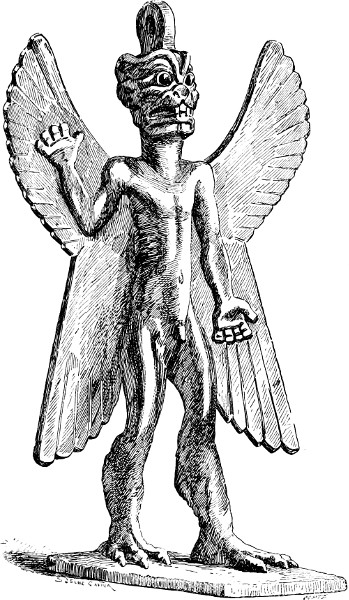
Fig. 32.—The demon of the South-West Wind. Louvre. Actual size.
Drawn by Saint-Elme Gautier.
Nothing could be clearer than the governing idea of this conception. The artist has wished to unite in a single being the highest powers of life and nature—the bull, the lion, the eagle: these are types of physical force differently applied. Patient and tenacious in the bull, who drags the plough and transports the heaviest burdens; violent and impetuous in the lion, while in the king of birds the formidable strength of beak and talons add to the fear inspired by his lightning flight. Finally, the head and countenance are those of a man, the impersonation of intelligent force, of will governed by reflection, before which every living thing has to bow.
The root of this conception is the same as that by which the Egyptian sphinx was suggested. The chief differences lie in the greater complexity of the winged bull and in its less quiescent attitude. The sphinx combines but two elements, the man and the lion; its pose is easier and perhaps more natural than that of the Assyrian animal. It is extended on the ground, its paws stretched idly before it, an attitude that could be preserved without fatigue for an indefinite time, and therefore in complete accordance with its governing idea, and with the function it had to fill at the gates of a palace or temple. That idea, for the bull as well as the sphinx, was force in repose. But the bull stands upright, and, when looked at from one side, seems to walk. We feel that if he did complete his stride he would bring the structure that stands on his loins down about our ears.
Here, as in most cases where comparison is possible, the advantage remains with Egypt. But yet the Assyrian type is by no means without a certain nobility and beauty of its own. In spite of their colossal dimensions, in spite of the supernatural vigour of their limbs and the exaggerated energy and salience of their muscles, there is a kind of robust grace in the leading lines and proportions of these figures to which we cannot be indifferent, and their effect is increased by the wings that lie along their backs and furnish so happily the upper part of the huge alabaster slabs, above which nothing rises but the horned tiara. Finally, the face with its strongly marked features, with its frame of closely curled hair and beard arranged in the strictest symmetry, is still more remarkable than all the rest (Fig. 33). The expression is grave and proud, and sometimes almost smiling. It is in fine harmony with the general idea that led the Chaldæans to create these mysterious but kindly beings, and to endow them with their mighty frames of stone.[101]
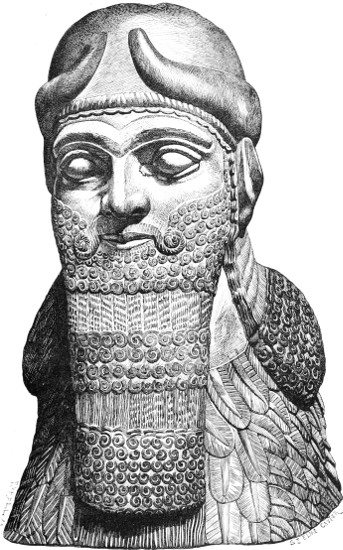
Fig. 33.—Head of a winged bull of Assurbanipal. British Museum. Height 38 inches.
Drawn by Saint-Elme Gautier.
These bulls have only been actually found in Assyria, but numerous and precise texts have been deciphered by which their existence at the gateways of Chaldæan temples and palaces has been proved.[102] They are not now to be met with in the country of their origin, because their material was too rare in the lower part of the great basin to escape the attacks of spoilers. Soft or hard, volcanic or calcareous, stone was there precious and difficult to find. Sooner or later such objects as these would be dragged from their ancient sites and broken up to be used anew. If chance had not so willed that the Assyrian palaces were preserved for us by entombment in their own ruins, we should now have known nothing of a type that played a great part in the decoration of Mesopotamian buildings, and, by its originality, made a great impression upon neighbouring peoples; or at least we should only know it by reproductions on a very small scale, like those we meet with on the cylinders, or by imitations vastly inferior to the originals, like those of the palaces at Persepolis.
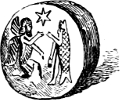
Fig. 34.—Cone of chalcedony. In the National Library at Paris. Actual size.
Instead of a human head on the body of a beast, we sometimes find the process reversed, but always with an amount of taste and reserve to which we are compelled to render due praise. We may, of course, quote instances in which the head of an eagle is put upon a human body (Vol. I. Fig. 8), or the shoulders of a man concealed under a fish’s scales (Vol. I. Fig. 9, and above, Fig. 34); but even then the sculptor has succeeded in giving to the characteristic lines and attitudes of the human figure the predominance that belongs to them, and, as it were, has made them cast an air of nobility over the whole composition.
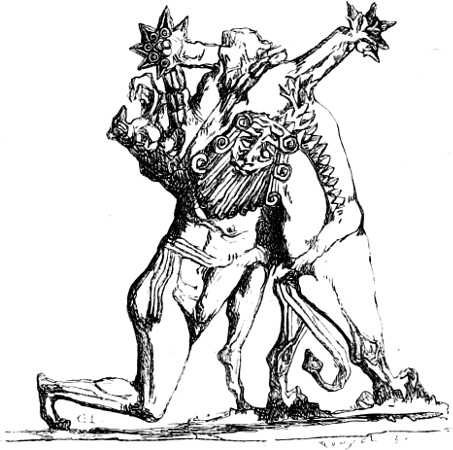
Fig. 35.—Izdubar and lion. Double the actual size. From a cylinder in the British Museum.
It is thus with a curious type to which our reader’s attention should be drawn; we mean that of the personage called Izdubar by some Assyriologists, and Hea-bani by others. Whichever name we may choose, the person in question was “a mighty hunter,” like the Nimrod of Genesis, a hero distinguished for his valour and for the difficulties he overcame. So that he might be free in his movements and ready for every work of activity and vigour, he is naked. Even under the dry method of the Chaldæan gem engraver we can appreciate the amplitude of his form and the power of his muscles. He is also distinguished by the size of his face, which is always fully seen, and seems to be the result of a compromise between the features of a man and those of a lion. This deliberately exaggerated head is enframed in long shaggy hair. Upon some cylinders we see Izdubar in a state of repose, behind the throne of a god to whom he acts as acolyte or guard of honour (Vol. I., Fig. 17), elsewhere he is seen in the exercise of his functions, if we may call them so, accomplishing some such task as those that made the fame of the Greek Hercules, whose ancestor he may perhaps have been. We find him on a cylinder in the British Museum carrying off a slain lion on his shoulders (Fig. 35).
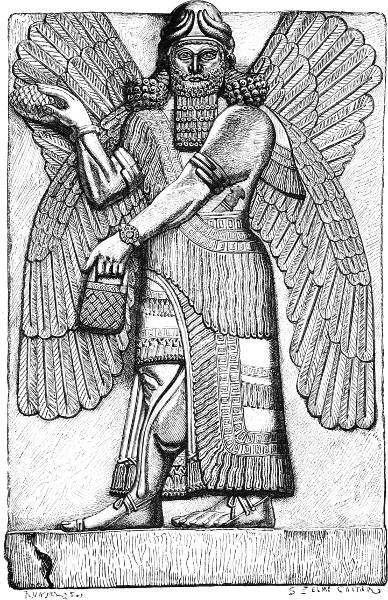
Fig. 36.—Winged genius. Louvre. Height 10 feet. Drawn by Saint-Elme Gautier.
We again find the human form predominant in those great winged genii for which Chaldæan art had so strong a predilection (Figs. 4 and 29). The two pairs of wings are very happily allied to the body, and both Greek and modern art has had recourse to the type thus created, the former for the figures of certain minor divinities, especially for that of Victory, and Christian art for its angels. In both these instances, however, we find but a single pair of wings. The artists of Assyria, especially in their rare attempts to treat the figure from a front view, have used the two pairs of wings with great felicity to furnish the background, against which the human form stands out in all the vigour of its robust muscularity. Our readers may judge of this from our reproduction of one of the reliefs brought to the Louvre from Khorsabad (Fig. 36).
These winged men serve as a kind of transition between the complex beings noticed above, and the sculptures in which the human form is treated without any supernatural additions. So far as we can guess in our present uncertainty as to the ranks of the celestial hierarchy of Chaldæa, it would appear that the forms and features of men and women were alone thought worthy to represent the greatest of their divinities. Take the statue of Nebo, figured on page 81 of our last volume, take the gods introduced into the ceremonies we have already figured (Vol. I., Figs. 13 and 14), after reliefs from Nimroud and Kouyundjik (Fig. 37).[103] In this last-named work the god, Raman or Marduk, holds a flower. At Nimroud there is a god with horned forehead who grasps an axe in one hand and a thunderbolt in the other. In the female figure, twice repeated with slightly different attributes, that precedes the god, Istar has been recognized. See also the statue of Istar in Vol. I., Fig. 16, and the image of that Chaldæan Venus so often repeated on the cylinders (Figs. 38 and 39). In form Istar is but a woman, and the artist would have made her beautiful if he had known how. She is shown naked, against the general custom of an art that everywhere else hid the human body under ample draperies. This nudity must have been intended to suggest those feminine charms by which desire is awakened and life preserved on the world.
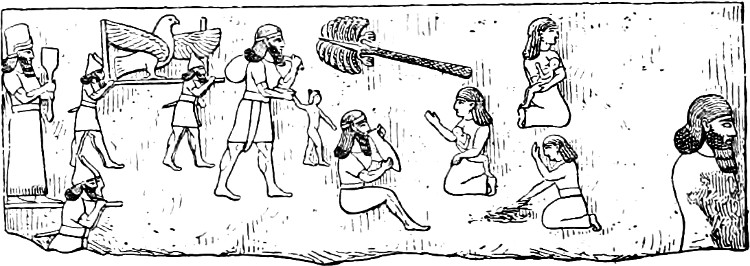
Fig. 37.—Carrying the gods. From the palace of Sennacherib; from Layard.
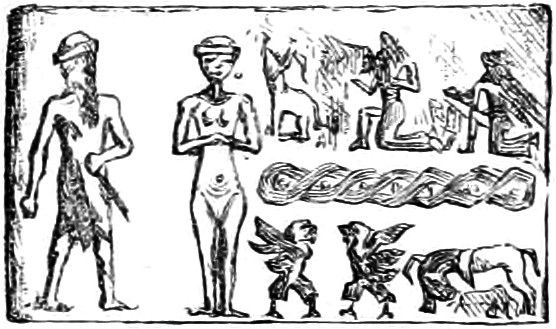
Fig. 38.—Istar and the sacrificing priest.
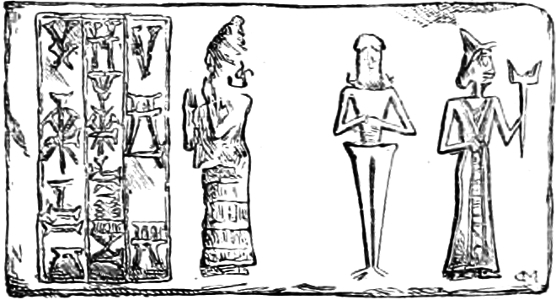
Fig. 39.—Istar between two personages.
Hague Museum.
The supreme gods, the Bels or Lords, were treated in the same way when all the majesty of their station had to be suggested. Each of these had his domicile in one of the principal sanctuaries of Chaldæa and Syria. At Sippara it was Samas, or the sun personified (Vol. I., Fig. 71); upon the seal of Ourkam (Vol. I., Fig. 3), upon another cylinder on which there are many curious and inexplicable details (Fig. 17), and upon a last monument of the same kind which dates from the early centuries of Chaldæan civilization (Fig. 40), it is a Bel whose name escapes us;[104] but in all the theme is the same, and the type almost exactly similar. We can hardly be mistaken in recognizing a god in the personage seated on a richly decorated throne, towards whom two or three figures, sometimes of smaller size than himself, advance in an attitude of respectful homage. He is crowned with a lofty tiara, a long beard flows over his breast, a robe of fine plaited stuff enwraps his whole body and falls to his feet. He is a man in the prime of life; his air and costume must have been taken from those of the king. May we not look upon him as the first sketch for the Greek Zeus, the Zeus of Homer and Phidias?
This type is never disfigured by any of those attempts, of which the Chaldæans were so fond, to add to the significance of the human figure by endowing it with features borrowed from various lower animals. It should be noticed, however, that on one of the cylinders we have figured (Vol. I., Fig. 17) there is a personage with two faces, like the Roman Janus. But this is not the seated god. It is not the great deity before whom the other actors in the scene stand erect, it is one of the secondary personages, one of the inferior divinities who bring offerings or receive instructions, in short, one of those genii whose numerous and complex attributes first suggested these fantastic combinations.
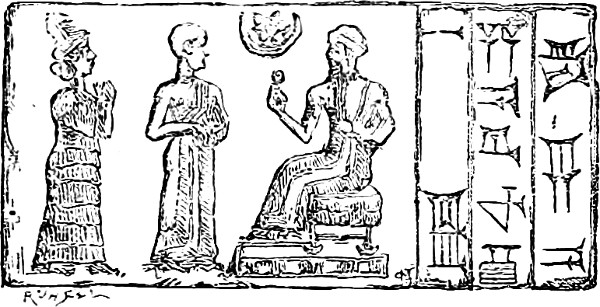
Fig. 40.—Lapis-lazuli cylinder. In the French National Library.
We find then that when the Chaldæans set themselves to search for the most suitable way of figuring their gods, they ended by thoroughly appreciating the excellence of the human form; with a few exceptions, they abandoned the idea of correcting and perfecting it; they were content to copy it sincerely and unaffectedly, to render the characteristic features of the maid and the mother, the youth and the man of mature age to whom years have lent dignity without taking away vitality. These forms they covered as a rule with ample drapery, but for certain types, those, for instance, of the goddess of love and fecundity, and the demi-god whom we have compared to the Greek Hercules, they had recourse to all the frankness of nudity. How was it that under such conditions they never succeeded in endowing their goddesses with grace, or their gods with nobility of form? Can it be denied that the few nude figures they have left us are far inferior, not only to those the Greeks were afterwards to design with so sure a hand, but even to the hundreds and thousands of human forms with which the Egyptians had already peopled their bas-reliefs and funerary pictures?
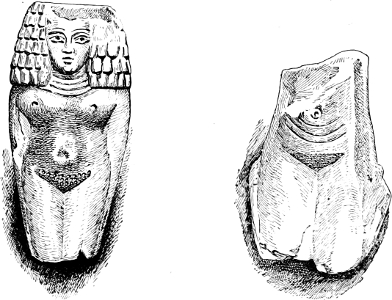
Figs. 41, 42.—Fragments of an ivory statuette. British Museum. Actual size.
Their first fault lay in an exaggerated striving after fidelity. They insisted blindly on certain details which are elsewhere suppressed or dissimulated, in obedience to a compromise which has been so generally accepted that it must surely be founded on reason. We may judge of this by two ivory fragments chosen from among those that were found in such numbers at Nimroud. They are, in all probability, statuettes of Istar (Figs. 41 and 42). The sculptor had noticed that the female pelvis was larger than the male, but he exaggerates its size and that of the bosom. The deep folds of the abdomen indicate an exhausted vitality, that of a woman who has been many times a mother, and other details of this region are rendered with a clumsy insistance.[105]
There is no evidence in Chaldæan art of the feeling for proportion which distinguishes Egyptian sculpture. Its renderings of the human figure are nearly always too short and thickset; even those works which by their general facility and justness of movement most strongly attract our admiration, are not free from this fault. Its effects may be estimated very clearly from the stele representing Marduk-idin-akhi, a king of Babylon (Fig. 43), whose date is placed in about the twelfth century B.C. It is true that the defect in question is more conspicuous in this relief than, perhaps, in any other work of the school to which we can point; but in all it is more or less perceptible. In Assyria, under the later Sargonids, sculptors made an effort to correct it, but even their comparatively slender figures have a certain heaviness. Assyrian sculpture has many good points, but it is never elegant. The Assyrian and Chaldæan sculptors were discouraged from acquiring a complete knowledge of the human form by the fact that it was not demanded by their patrons. The public who judged their works did not perceive their shortcomings in that respect. There was nothing in their daily life, or in the requirements they laboured to fulfil, which either assisted them to make good their deficiencies, or compelled them to do it for themselves. They seldom beheld the nude form, still more seldom did they have to introduce it into their works. The Greek writers speak of it as a peculiarity of “the barbarians,” whether Syrians or Chaldæans, Lydians or Persians, that they were ashamed to be seen naked, the men as much as the women. Such a scruple, especially in the male, would seem hardly comprehensible to the Greek accustomed to the nudity of the gymnasium.[106]
The origin of such a notion is to be sought, perhaps, so far as Mesopotamia is concerned, in a wise hygiene and in the rapid changes of an uncertain climate. The difference between the extremes of summer and winter temperature is far greater than in Egypt or on the Ionian coasts, and precautions had to be taken at one time against a scorching sun, at another against the cold of the nights. However this may have been, it is certain that these people, although they lived in a hot country, went about in a costume that covered their bodies as completely as that of modern Europe. It consisted of a long tunic, a tunica talaria (?) as the Romans would call it, and a mantle. The tunic left nothing exposed but the head and neck, the forearms, and the feet and ankles. It must have been of linen or hempen cloth;[107] when worn by a rich man it was embroidered and decorated about the foot with a sort of gimp fringe. The tunics of the poor were short and plain, often coming hardly lower than the knee. They were also looser and better fitted to work in; but they are never wanting altogether, even to the men of the corvée, the slaves and prisoners of war whom we see employed in the construction of the royal buildings (Vol. I. Figs. 151 and 152). Women were dressed in chemises coming down to their feet (Vol. I. Fig. 30), resembling the long robe of coarse blue cotton which still forms the only garment of the peasant women of Egypt and Syria. Sometimes we find a sort of cape thrown over the tunic (Vol. I. Fig. 31, and below, Fig. 44).
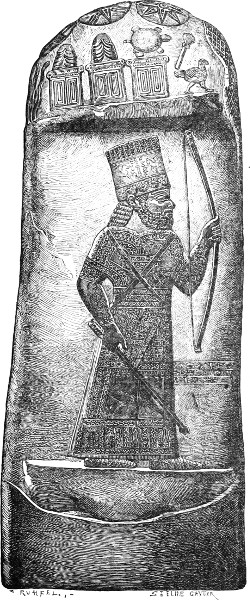
Fig. 43.—Merodach or Marduk-idin-akhi. From a basalt stele in the British Museum. Height 24 inches. Drawn by Saint-Elme Gautier.
As for the mantle, it was a fringed shawl, and, like the Greek peplos or the Roman toga, could be arranged in many different ways. In the painting at Beni-Hassan which shows us the arrival in Egypt of a band of Asiatic emigrants,[108] it leaves one shoulder and both arms uncovered, and forms a kind of frock round the body, which it entirely conceals. In the old Chaldæan statues from Sirtella the arrangement is more graceful (see Plate VI.); the piece of cloth is folded double and carried obliquely round the body so as to cover the left arm and shoulder and leave the right bare. The end is simply passed under the first fold, by which it is tightly held.[109] There is no trace of a tunic. In Assyria the mantle was variously arranged. It always left one shoulder free, which was covered, however, by the tunic. As a rule it reached to the feet (Vol. I. Fig. 22), but sometimes it was so contrived as to leave one leg exposed from the knee downwards. The robes of Sargon praying before the sacred tree are thus arranged (Fig. 45).
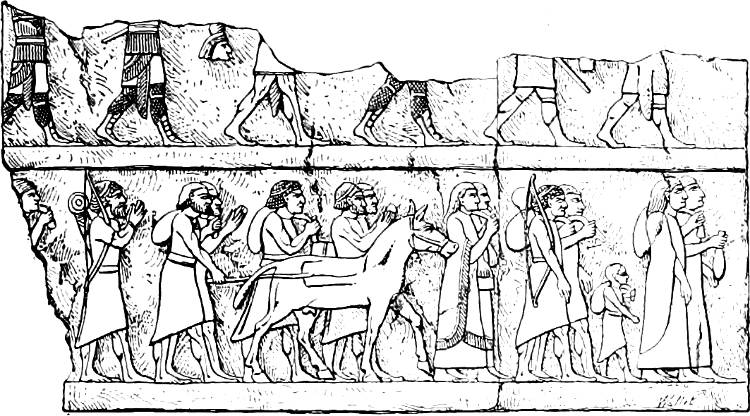
Fig. 44.—Captives on the march. From the palace of Sennacherib.
As for the women’s dress, it was still more impenetrable than that of the men. In the Assyrian bas-reliefs there are very few figures of women on any considerable scale. We can hardly point to an instance, except in the slab where Assurbanipal and his queen are shown feasting in a garden (Vol. I. Fig. 28). In this carved picture the queen is robed in a tunic and mantle, over which the embroiderers needle has thrown a profusion of those rosettes that are so popular in Mesopotamia!! art. We are allowed to glean no hint of the personal charms of the favoured sultana, who must have been young and beautiful. They are entirely masked by the envelope in which she is wrapped.
In all this we are far enough from the semi-nudity of the Egyptian sculptures, to say nothing of the frank display of the Greeks. On the banks of the Nile, where the climate had no violent changes and the air was deliciously dry and limpid, both poor and rich, both the king and his subjects, were contented with the white drawers, which were carefully plaited and knotted about the hips. On great occasions, when, as we should say, they wished to dress themselves, they put on long, bright-coloured, and elegantly embroidered robes; but those robes were of a fine linen tissue, every contour of the body could be easily followed through them, the age and character of every form could be distinctly appreciated.
The artist, even when he had to represent the wives and daughters of Pharaoh or the most august of the female deities, showed under their draperies the contours of their breasts, their hips, and the insertions of their limbs.[110] Still more transparent were the robes in which the dancing and singing women who occur so often in the tomb pictures were draped.[111] The calculated indiscretions of this sort of coa vestis invited the painter and sculptor to do justice to the elegance of the female form.
How different and how much less favourable were the conditions under which the Assyrian sculptor exercised his art! For him the contours of the body and the attachments of the limbs were hidden behind heavy tunics covered with embroidery, and shawls often folded double. If by chance he caught a passing glimpse of the forms beneath, to what use could he put it? Two or three at the most of the divine types upon which his skill was most frequently employed involved a very partial nudity; most of the gods, and nearly all the men, were draped. In a few very rare instances we find an Assyrian stripped of his clothes and crossing a river by means of an inflated skin.[112] But these figures, though fairly well drawn, are very small in scale, and occupy but a subordinate place in the bas-relief where they occur.[113]
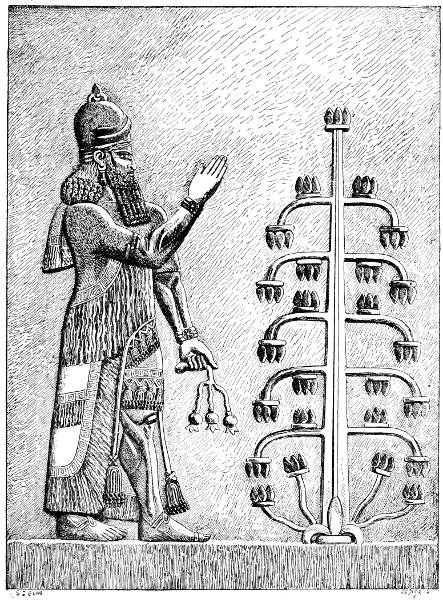
Fig. 45.—Sargon before the sacred tree. Louvre. Drawn by Saint-Elme Gautier.
Corpses stripped naked by the victor on the battle-field are of more frequent occurrence; but these, being the bodies of despised and hated enemies, are treated in very summary fashion.[114] We may say the same of the prisoners whom they behead and flay alive.[115] The mutilated statue of a nude female, rather less than life, which bears a votive inscription of Assurbilkala, the son of Tiglath-Pileser, and is now in the British Museum, is a great rarity. It is believed to represent Istar. The execution is careful, but the forms are clumsy and the proportions bad; the bust is a great deal too short.[116]
By his failure to appreciate living form for its own sake, for its beauty of line and harmony of proportion, the Mesopotamian sculptor put a voluntary limit to his ambition. He renounced, in advance, the only means within his reach of borrowing from the human figure the elements for a representation of the deity which should preserve a character of indefinite existence, of natural and sovereign excellence. But this abstention, or, if you like, this impotence, did not prevent Assyrian artists from fulfilling, in the most brilliant fashion, the other part of the task to which they were called by the habits and requirements of the society for which they laboured. The sculptors were mainly employed by the king; their chief business was to multiply his images; they were charged to commemorate the sovereign in every act of his life, in every one of the many parts involved by his indefatigable activity as builder, chief-justice, hunter, commander-in-chief, and supreme pontiff. From the king himself to the last of his soldiers or prisoners, every one who had his own marked place in a picture was draped; the sculptor could reproduce every episode of the royal life in the truest and most animated fashion, without ever having learnt to draw the nude. In fact, he was not called upon, like the Greek artist, to procure for the æsthetic sense the pure joys that are given by the sight of noble forms or movements well rendered; his duty was to commemorate by a series of clear and lively images those events that were celebrated in words in the text inscribed upon the very alabaster slabs beneath his hand.
Assyrian sculpture had this documentary character in the very highest degree; its creations, in the intention of those by whom they were commissioned, were less works of art than records.[117] The long inscriptions and the endless series of pictures with which the palace walls were covered were no more than an illustrated book.
And in what class of literature should that book be placed? It has been called an epic illustrated by sculptors—a description that seems hardly just. For in every epic worthy of the name the marvellous occupies an important place, while in these reliefs it scarcely has a place at all. With few exceptions the belief in a superior and divine world makes itself felt in Assyrian art only in those effigies of gods and demons we have already described. And such images have their places rigidly fixed by tradition; they stand at the palace gates, but are scarcely ever found within its saloons, and are entirely absent from the marches, battles, and sieges. Here and there among such pictures, but at long intervals, we find some feature that reminds us of the aid that Assur and the other national gods afforded their worshippers; now it is an eagle floating over the king’s chariot;[118] now the god himself, surrounded by a winged circle, draws his bow and launches his formidable shafts against the enemies of his people.[119] He is thus represented mounted on a galloping bull in the ring by which the standards of the Assyrian legions were surmounted.
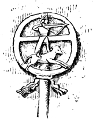
Fig. 46.—Assyrian standard; from Layard.
All these details were small in scale and unobtrusive. The rôle played by the architect was similar to that of the draughtsmen and photographers who sometimes accompany princes and generals on a modern campaign. The programme placed before him was as narrow as it could well be; he was required to be faithful and precise, not to give proof of inventive power.
The sculptor was, in a way, the editor of the military bulletins; his work was the newspaper of the day, explaining the political events of his time to those who could understand no other writing. There is complete coherence between his figures and the inscribed texts they accompany. Look, for instance, at the series of slabs from the Palace of Sennacherib, in which his Jewish campaign is retraced.[120] The final scene is thus described in words within a cartouche above the heads of the figures: “Sennacherib, king of Assyria, seated upon his throne of state, causes the prisoners taken in the town of Lachish to pass before him,”[121] In order to show the details of the magnificent chair upon which the king is seated we have reproduced only the two principal actors, in the sovereign and his grand vizier (Fig. 47). If we had been able to place the whole composition before our readers they would have seen how thoroughly the inscription describes it. Behind the general who is presenting the vanquished to the king, appear the prisoners, some prostrate, others kneeling or standing upright, but all turned towards their conqueror with gestures of supplication.
The spaces to be covered were vast, but the warlike kings of Assyria cut out enough work for their sculptors to keep them always busy. Every campaign, and every battle, every siege or passage of a river, seemed to them worthy of commemoration by the chisel. Those to whom the work was given were forced therefore to multiply figures; the task was complicated and yet had to be finished with extreme rapidity. The sovereign was in a hurry to enjoy the spectacle he had promised himself, he wished to inhabit for as many years as possible the dwelling whose walls, like so many magic mirrors, would reflect his own prowess and glory. And so the sculptor had to produce much and produce fast; we can therefore understand how it was that his creations never lost a certain look of improvisation. They had the good qualities of such a mode of work; namely, force, vitality, and abandon, but combined with all its defects, inequality, incoherence, and frequent repetition.
In order to cover the surface abandoned to the sculptor as quickly as possible, the work had to be divided; every one who was thought to be capable of wielding a chisel had to be pressed into the service. Sculptors of established fame who had already helped to decorate more than one palace, mediocre artists with more age and experience than talent, young apprentices entering the workshops for the first time, all were enlisted, and each received his share of the common task. Under such conditions, and especially when the utmost expedition was required, the collective work could not help showing signs of the many and variously skilled hands that had been employed upon it. Even with the Greeks, and even, which is still more to the point, with the Athenians of the age of Pericles, something of the same kind is to be noticed. The frieze of that temple of Pallas, which is, perhaps, the most carefully wrought creation of human hands, is not all equally fine in execution. Some parts show the work merely of a skilful carver, while before others we feel that here has been the hand of the great master himself, that the play of the chisel has been governed by the brain that traced the original sketch and thought out the whole marvellous conception.
And these differences are still more obvious in the great compositions turned out so rapidly by Assyrian sculptors. Examine at your leisure the long series of pictures from a single palace that hang on the walls of the British Museum—the only place where such a comparison is possible—and you will be astonished at the inequality of their execution. Among those taken from a single room some are far better than others. Here and there we find figures that seem to have been touched upon and corrected by an experienced artist, while their immediate neighbours are treated in a soft and hesitating fashion. Curiously enough the figures representing enemies are, as a rule, very roughly modelled; sometimes they are hardly more than blocked out. It seems as if they wished, from the beginning, to have no mistake as to relative dignity between the soldiers of Assur and those men of inferior race whom they condescended to slay.[122]
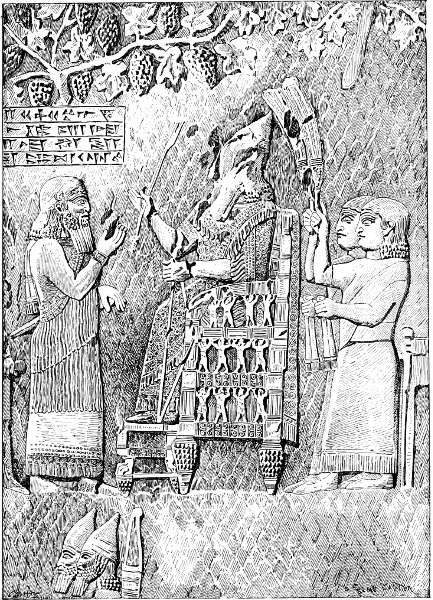
Fig. 47.—Sennacherib before Lachish, British Museum. From an unpublished drawing by Félix Thomas.
A hurried artist repeats himself deliberately. Repetition spares him the fatigue of reflection and invention. The Assyrians loved to represent processions. Sometimes these consist of the king’s servants carrying the ensign of royalty behind him (Vol. I. Figs. 22, 23, and 24); sometimes of priests carrying the images of the gods (Vol. I. Figs. 13 and 14); but more often of war chariots, cavalry, and infantry (Fig. 15), or bands of prisoners conducted by foot soldiers (Fig. 48). To groups and single individuals progressing in long succession the sculptor gave a certain rhythm that is not without its dignity, but yet his treatment of such themes is deficient in variety. The same fault occurs in Egyptian dealings with similar subjects; the figures seem all to reproduce a single type, as if they had been stencilled. The designer has made no real effort to avoid monotony; he has no suspicion of those skilful combinations by which the Greek sculptor would succeed in reconciling the unity of the whole with variety of detail; he makes no attempt to make those slight changes between one group and another that please and amuse the eye without hurting the general symmetry, or breaking those great leading lines by which the general character and movement of the composition is determined.[123]
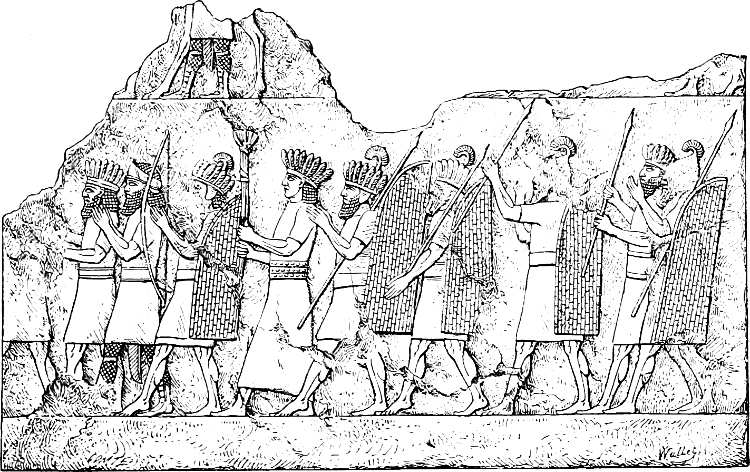
Fig. 48.—Procession of captives; from Layard.
The necessity for haste accounts for another defect of the same art. It was because he had no time that the sculptor did not choose and select, like the Greeks. The size of our page prevents us from reproducing one of those pictures in which the triumphs of Sennacherib are commemorated,[124] but some idea of that great military chronicle may be formed from the assault on page 30 (Fig. 30). There is nothing like a central group in which the episodes and incidents of the conflict could, as it were, be gathered up and epitomized. The sculptor exhausts himself in striving after the confused wealth of reality; our eye loses itself among the groups of combatants who seem to be sown broadcast over the field of the relief. The historian may find in it many curious details, but he who looks only for aesthetic enjoyment is soon bored. The whole composition is as confused as a real hand-to-hand fight.
In spite of all these defects, or perhaps owing to their existence, the realistic sculpture of Assyria must have had a strong attraction, not only for the kings, to whom it was a sort of apotheosis, but for their subjects, their officers, and for the soldiers who fought in the campaigns and brought off their share of the glory and spoil. We may well find these battle panoramas not a little wearisome; but if we put ourselves in the place of those who were actors in the scenes they portray, of those who could search among their countless, and, to us, often ambiguous incidents, and find, or think they found, their own deeds and persons introduced by the sculptor into his crowded pages, how great will be the change. The fatigue we feel will be changed into the interest that never palls of fighting one’s battles over again, and into the natural pride aroused by the pages of a history that chronicled no defeat, that spoke of nothing but the long sequence of victories won by the legions of Assyria over every nation that had the temerity to oppose her arms.
Such a spectacle had its eloquence and could not fail to react strongly upon those who gazed upon it, to incite them to new triumphs and to the renewed spoliation of their neighbours. In spite of its shortcomings, such an art had, then, one great merit; it was, in the highest degree, national; it was frankly inspired by the most universal passion of the people among whom it was born, by the ideas it suggested it helped to keep that passion alive and to add to its force, and so contributed not a little to develop the habits and sentiments in which the power and originality of a violent, fanatical, and warlike race consisted.
§ 2. Materials.
If the national dress and social régime, as well as the natural conditions of the country had their effect upon Mesopotamian art, so too had the materials employed. In our study of Egyptian sculpture we endeavoured to show how greatly the artist depended on his material, and what a strongly modifying effect the latter had upon the nature of the interpretation he could give to his thought.[125]
The monuments of Assyria especially invite the same remark. The Chaldæans seem to have made use, as a rule, of very hard rocks for their sculptures, rocks similar to those used by the later Egyptians for their more important works. In Chaldæa a stone statue was a rare object. On the few occasions when a Chaldæan prince, or even private individual, indulged in such a luxury, he did not spare expense; once in a way the cost did not matter; it was of far greater moment that the work should be durable, and blocks were brought from any distance that might be necessary to ensure that result. Thus it is that nearly all the monuments that have been recovered in the lower valley of the Euphrates are of basalt, diorite, or dolerite. The difference between the styles of the Egyptian and Chaldæan sculptures was not caused, then, by the materials employed, but by something far less easily defined—by the peculiar genius of the two peoples. They neither saw nature with the same eyes nor interpreted it in the same spirit.
The situation was rather different in Assyria. There a plentiful supply of easily-cut stone, alabaster, and several varieties of limestone of more or less hardness was to be had. These facilities had a double consequence: they led the Ninevite artist to make lavish use of sculpture in the decoration of buildings, and they had no little influence upon their habits of design and upon the executive processes they adopted. The most peculiar, the truly characteristic feature of their bas-reliefs so far as execution is concerned, is the combination of incisiveness and looseness in their handling. We feel that the chisel, in spite of the haste with which it worked, has been strongly driven. It is not so in the case of other countries; as a rule where work is rapid it is also slight and superficial. This apparent anomaly is to be explained by the qualities of the material. The alabaster used at Khorsabad and Kouyundjik is so soft that we can scratch it with the finger-nail, and even the limestone preferred by the artists of Assurbanipal is not much harder.[126] How this tempts the hand! Whether one tries to or not one writes boldly with a goose quill, and here the docility of the material becomes a danger. The carver’s tool, when it meets with no real resistance, runs away with the hand, and the sculptor is insensibly led on to over-accent his intentions, and to exaggerate his effects.
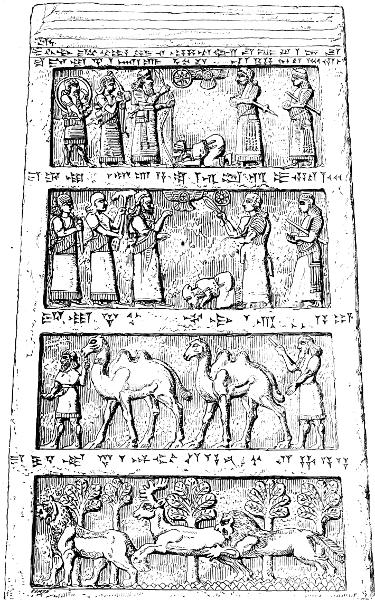
Fig. 49.—One face of the obelisk of Shalmaneser II. British Museum. Drawn by Bourgoin.
Sometimes the Assyrians attacked the harder stones, which they obtained from certain districts of Kurdistan and the neighbourhood of the extinct volcanoes of the Sinjar, between the valleys of the Tigris and the Khabour;[127] we shall be content with quoting as examples a basalt statue found at Kaleh-Shergat and the obelisk of Shalmaneser II., in the British Museum, which is cut from the same material (Vol. I. Fig. 111, and below, Fig. 49).[128] It deals with the homage done and the tribute offered to the king by five conquered nations. Among the offerings are several strange animals.[129] The small building at Khorsabad which has been called sometimes a throne-room and sometimes a temple, was decorated with reliefs in basalt,[130] but the use of these hard rocks was always very rare in Assyria. The habits of the northern artists were formed in cutting the softer stones, and their use of such materials explains not only their prodigious fecundity but certain qualities and defects of their style.
Both Chaldæa and Assyria made too constant and skilful use of plastic clay in their architecture for it to have been possible that they should overlook its capabilities as a material for the sculptor, especially in the production of small objects like sepulchral statuettes. Both nations have transmitted to us a vast quantity of such figures. In both cases they are solid; those of Chaldæa are stamped in a mould in a single piece; their reverse is flat and roughly smoothed by the hand; the clay is fine and close-grained, and so hard and well fired that it cannot be scratched with a metal point (Fig. 50).[131] The execution of the Assyrian figures is more simple. They are solidly modelled in clay, and without the use of a mould, although we often find a series made after one pattern and giving a high idea of the Assyrian modeller’s skill (Fig. 51). The coarseness of the material however is surprising; it is a dark grey earth, unequal, knotty, without any mixture of sand, but marked with cross hatchings left by the straw with which it seems to have been mixed. The body is so friable that it crumbles in the hand, but as it resists water it must have undergone a gentle burning.[132]
Examples are also to be found of objects in earthenware or terra-cotta coated with a vitreous glaze, like those that the Egyptians manufactured in such enormous quantities.[133] In these cases the figure is cast in a mould, and the enamel is either blue or green, as in Egypt (Fig. 52).[134]
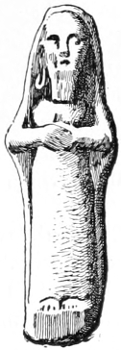
Fig. 50.—Statuette of a priest. Louvre; from Heuzey.
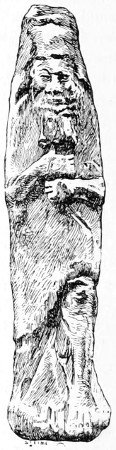
Fig. 51.—Dagon. British Museum. Actual size.
Clay was used for other things besides these small statuettes; it seems to have been employed in the first sketches from which the sculptor chiselled the alabaster slabs, at least when he attacked the more important and complex groups. We can hardly refuse to recognize such a purpose in a fine fragment brought from the palace of Assurbanipal to the British Museum. It is all that is left of a relief in terra-cotta. The grain is much finer and the colour far redder than in statuettes from the same place. In its present state this slab is about a foot high, and mutilated as it is, its subject may be recognized as an incident in the royal hunt, the rest of which helps to fill the Assyrian basement room. The larger part of the principal figure is wanting, but enough of him remains to leave no doubt as to the character of the scene; it represents a king attacked on two sides by lions, and defending himself with his lance. The firm and precise execution of the lions’ paws and of the king’s body should be noticed. According to the scale obtaining in the sculptures preserved this model was carried out on a half scale. So little of the group is left that we cannot make sure whether the reliefs now in London contain the episode of which this is the original sketch or not.[135] So far as we can tell, however, the exact passage executed after this model is not in the museum, but we must not forget that a large number of the sculptures were left in the palace where they were found; Mr. Rassam only removed the finest and those in the best condition.
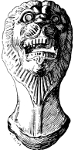
Fig. 52.—Head of a lioness. Louvre. Actual size.
The small winged bull carved in the finest limestone, which Mr. George Smith brought from Nimroud, was, no doubt, a model of the same sort (see Vol. I. Figs. 83 and 84). Its execution is of the most careful description, and yet it can hardly have had any other use. We may say the same of the square slab of terra-cotta just mentioned; its figures are too small for the decoration of palace saloons, and the material is too common to have formed a part of those rich schemes of ornament whose existence is attested by the texts as well as by the remains. We can suggest no more plausible explanation of these little monuments, or one in more complete accord with the necessities of rapid production. We have already shown that a vast number of hands were required for the prompt execution of these great sculptural works, and the provision of such models, whether in stone or terra-cotta, would do much towards preventing the evil consequences of employing so many different and variously gifted journeymen. The master produced the model, and nothing was required from the carvers who copied it but skill in enlarging and in the handling of their tools.
From the earliest times of which any remains have come down to us the Chaldæans understood how to make use of all the different materials that offer facilities to the artist for the rendering of living form. Until bronzes dating from the times of the pyramid builders were found,[136] it was thought that they had anticipated the Egyptians in the art of making that precious alloy and casting it in earthen moulds.[137] This conjecture was suggested by the discovery, near Bagdad, of a metal statuette, which is now in the Louvre (Fig. 53). It is what the Greeks called a canephoros. A young woman carries a basket on her completely shaven head, keeping it in place with her hands. From her waist upwards she is nude, but the lower part of her figure is wrapped in a kind of narrow skirt, on which is engraved a votive inscription containing the name of a king Kourdourmapouk, who is believed to have flourished in the sixteenth century before our era. The casting is solid.
The bronzes inscribed with the name of Gudea (Vol. I. Figs. 146–148) are perhaps still more ancient. The motive of one is identical with that of this canephoros. Metal working cannot have begun with such objects as these; it is pretty certain that forging metals was everywhere an earlier process than casting them. Before learning to prepare the mould and to force the liquid copper into its farthest recesses, men must have commenced by beating it into plates upon the anvil. When they had gathered sufficient skill to make these plates very thin and pliant, the next thing they attempted was to ornament them, which they first did by hammering one of their sides, and so producing reliefs on the other which could be brought to sufficient perfection by repeating the process with varying degrees of strength and delicacy, and by chasing. This is what is called repoussé work.
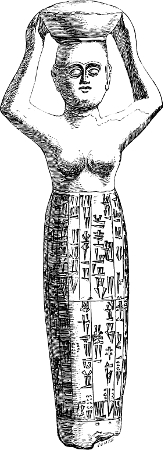
Fig. 53.—Canephoros. Louvre. Height 10½ inches.
There is no doubt that these processes were invented in the southern cities. The oldest of the Warka tombs show that metals were abundant from a very ancient period, and that their use was well understood; but we do not possess any important examples of repoussé work dating from the early days of Chaldæa. It is otherwise with Assyria. The exploration of her palaces has brought to light numerous fragments of ornamental sheathing in bronze; plaques and bands, sometimes curved, sometimes straight, according to the surface to which they were applied, were covered in some cases with mere ornamental designs, in others with numerous figures. Only within the last few years have we learnt to how high a pitch the sculptors of Mesopotamia had carried this art, and how well they understood that the rough form left by the hammer should be completed and defined with the burin and chisel. The most important discovery of the kind was made as recently as 1878, by Mr. Hormuzd Rassam, who found the bronze gates to which we have already more than once alluded, in the mound of Balawat.[138] Shalmaneser II., who built the palace to which these gates belonged, caused his victorious campaigns and his sacrifices to the gods to be represented upon them. We have already reproduced many of these curious reliefs (Vol. I., Figs. 51, 68, 73, 158; and above, Fig. 28); a last example will help to show the facility of the Assyrian artist and the boldness of his rendering of animals and men (Fig. 54). He played with bronze as he did with alabaster; in both his handling was firm and rapid and his modelling at once broad and strongly felt.[139]
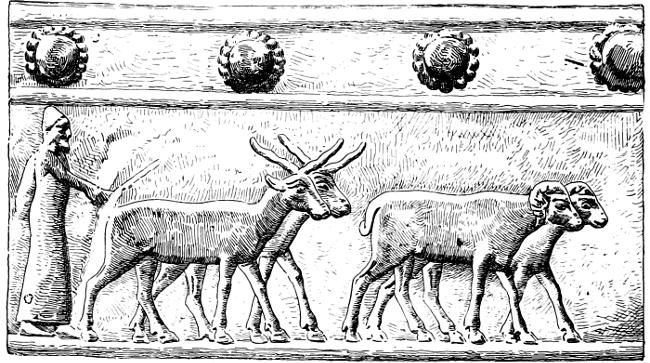
Fig. 54.—Man driving goats and sheep. From the Balawat gates. British Museum.
Drawn by Saint-Elme Gautier.
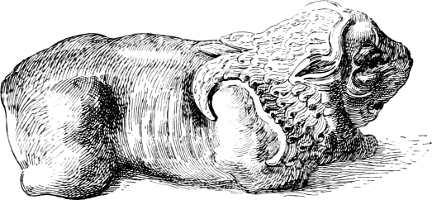
Fig. 55.—Lion carved in wood. Louvre. Length 4 inches. Drawn by Saint-Elme Gautier.
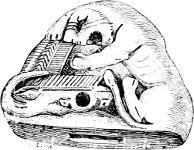
Fig. 56.—Ivory seal. Louvre. Actual size. Drawn by Saint-Elme Gautier.
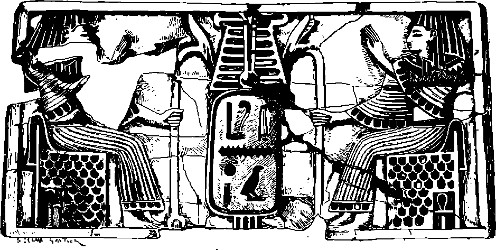
Fig. 57.—Ivory tablet in the British Museum. Drawn by Saint-Elme Gautier.
This peculiar handling, at once free and a little hard, is to be found in all the works of these people. It may be recognized in a wooden lion, unfortunately much mutilated, which belongs to the Louvre (Fig. 55), and in those carvings upon the shells of pearl oysters that have been found in such numbers, especially in Lower Chaldæa.[140] The ivories alone are, sometimes at least, without this peculiar character. They display a certain harshness in which the distinguishing mark of Chaldæan origin has been recognized. We may give as an instance the small object thus described in the catalogue of the Louvre: “Lion devouring a wild goat, of which only the head and neck are visible. This group ornaments one face of a small object, rounded above and with a flat base. There is an oblong slit in the latter. The object is apparently a seal” (Fig. 56).[141] On the other hand, although most of the ivory carvings that were used for the handles of walking-sticks and daggers and such purposes, show the characteristics we have mentioned, it must be acknowledged that the ivory tablets from Nimroud are free, for the most part, from the style we have attempted to define as that proper to Chaldæa and Assyria. The treatment is lighter and more elegant, reminding us of Egypt. Must we believe that when the Assyrians attacked this beautiful material they changed their confirmed habits and gave a refinement to their touch it had never known before? Such an idea seems very improbable. We know that their ornamentists borrowed certain motives from the Egyptians, such as the winged globe, the lotus-garland, the sphinx; but in doing so they stamped them with their own personal and independent taste. It seems likely, therefore, that the more carefully wrought of these ivories were imported from abroad, either from Egypt itself, or from its imitator, Phœnicia. In the fragments we have already figured (Vol. I. Figs. 129 and 130) the features and head-dresses are easily recognized as Egyptian. This character is still more marked in another tablet from Nimroud, of which there are several repetitions in the British Museum (Fig. 57). Two women are seated opposite to each other. They are Egyptian in every detail. Their attitudes and symmetrical arrangement; their robes and head coverings; the action of their hands, one raised in adoration, the other holding the hare-headed staff; the crux ansata under their chairs, all are continually found in the monuments of the Nile valley. A still more decisive feature is the oval surmounted by two ostrich plumes in the centre of the plaque. This is not inscribed with hieroglyphs taken at random, as in the small objects of Phœnician origin on which those characters are used merely as decoration, but with a royal name, Auben, or Auben-Ra.[142] It is true that no such name has as yet been encountered on any other monument, but it may very well have been that of one of those petty monarchs who swarmed in the Delta towards the time of the Ethiopian conquest. Most of them left very slight traces; not a few are known only by a single text. This tablet may have been carved, then, either in Egypt, or in Phœnicia after an Egyptian model. In any case, it seems clear to us that it is not the work of an Assyrian or Chaldæan. Other objects in the same material do not, like this, bear an irrefutable mark of their origin, but they are so like it in treatment that we are tempted to say they must have been produced under the same influence. Look at this fragment of a winged sphinx (Fig. 58). Its general physiognomy, the head-dress, the peculiar rendering of the wing-feathers, are none of them Chaldæan, but we often find them in Phœnicia and Cyprus. We may say the same of the fine piece in which two fantastic animals standing upon a peculiar and elaborate capital are surrounded by gracefully designed flowers and leafage (Fig. 59).
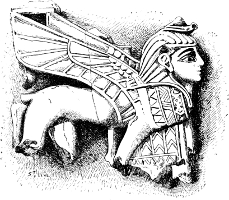
Fig. 58.—Ivory fragment in the British Museum. Actual size. Drawn by Saint-Elme Gautier.
In attempting to give a clear idea of Chaldæo-Assyrian sculpture we must, therefore, put aside the more artistic among the numerous ivory carvings found in the ruins at Nimroud, and especially in the palace of Assurbanipal. It would seem that such things were imported from abroad when something better than the ivory knobs and handles made in the country was required. When we come to speak of metal cups we shall have to repeat this remark.
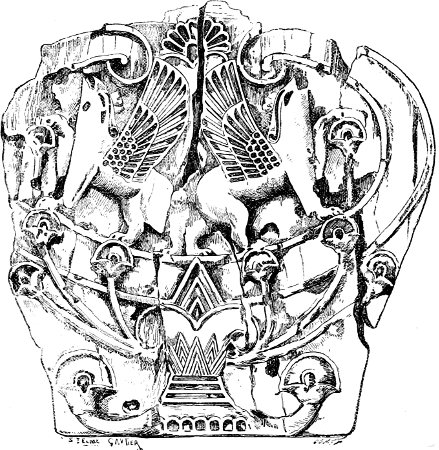
Fig. 59.—Ivory tablet in the British Museum. Actual size. Drawn by Saint-Elme Gautier.
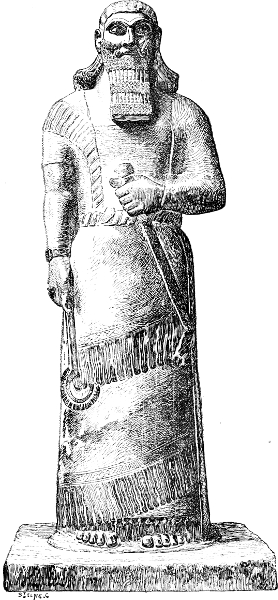
Fig. 60.—Statue of Assurnazirpal. Height 41 inches. British Museum. Drawn by Saint-Elme Gautier.
It may be said that we should have postponed our notice of these objects, and, if they had all borne as incontestable a mark of their origin as the tablet with the royal oval, we should have done so, we should have reserved both the carved ivories and the engraved cups of metal until we reached those pages of our history in which the arts of Phœnicia will be treated. But, unfortunately, when we come to details it is not always easy to establish the distinction between objects of foreign manufacture and those productions of the same kind that were made at home; in many cases it requires the tact and instinct of the archæologist to know one from the other. Such faculties are always, in some degree, liable to err, while in many cases it is very difficult to give reasons for the conclusions arrived at by their exercise. The simplest way out of the difficulty has seemed to us to describe these remains at the same time as the main compositions to which they were formerly attached. But while we do so we keep their doubtful character in mind; in our definition of the style of Chaldæo-Assyrian sculpture we shall only have recourse to them under great reserve, especially as the style in question is to be amply studied without their help.
§ 3. The Principal Conventions of Chaldæo-Assyrian Sculpture.
The art of Mesopotamia, like that of Egypt, had its conventions, some of which were peculiar to itself, while others are common to all nations that have arrived at sovereign power and maturity of knowledge.
Like all those who attempt plastic figuration by the light of nature, the artists of Mesopotamia began with profiles. In speaking of Egyptian sculpture we had occasion to show how this method of representation is always followed by first beginners,[143] as it is the simplest and easiest of all. The Chaldæo-Assyrian artists, unlike those of Egypt and Greece, were unaccustomed to the nude, and were therefore without the incentive it supplies to fight against nature and to make her live in all her variety of aspect, a variety which work in the round is alone able to grasp without the aid of convention. One consequence of this is that almost exclusive love of the bas-relief in which Mesopotamian art is unlike that of any other people. In its very beginning it seems to have made a vigorous and promising effort to rise to the production of statues in the round, but discouragement appears to have rapidly followed, and in later years but a very few attempts, and those attended with no great success, were made. The salience of figures was increased or diminished according to their place and the part they played, but the idea of detaching them altogether from the background and giving them an independent existence of their own, was soon abandoned. Under the first Chaldæan empire, real statues, round which we can walk, were modelled (see Plates VI. and VII.). In several of these, although the forms are not so round as in nature, the back is as carefully treated as the front. On the other hand, the few Assyrian statues that have come down to us are all too thin from front to back, while their backs are hardly more than roughly-dressed stone. You feel at once that they were made to stand against a wall, and you think of children and of those whose limbs are so infirm that they cannot stand without support. Before such things, we are far enough, not only from the grace, vitality, and freedom of the Greeks, but even from the proud repose of the Egyptian colossi. Although our figures show, of course, only the front view, this impression is very striking in the statues of Nebo (Vol. I. Fig. 15) and Assurnazirpal (Fig. 60), which have migrated from Nimroud to the British Museum. The latter was found by Layard at the entrance of one of the temples whose plans we have given (Vol. I. Fig. 189). It is cut from a very hard and close-grained limestone, and stands upon a pedestal that is nothing but another block of the same material. We have been compelled, in order to keep our figure sufficiently large, to reduce this block to the dimensions of a shallow plinth. In reality it is a cube thirty-one inches high and twenty-one and three-quarter inches wide.[144]
PLATE VI
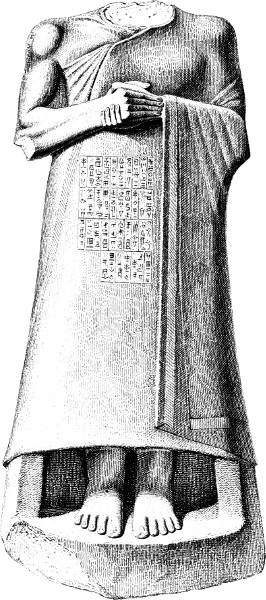
ROYAL STATUE
Louvre
J. Bourgoin, del. Imp. Ch. Chardon Sulpis, sc.
The statues of Nebo and Assurnazirpal are standing figures, but, at Kaleh-Shergat, Layard found a seated figure of Shalmaneser II. (Fig. 61).[145] It is in black basalt and has no head. It is of great interest because it recalls the very oldest Chaldæan statues both in material and attitude. It has suffered so much, however, and its workmanship seems to have been so sketchy, that even in the original itself the details of modelling and costume are hardly to be recognized. We give a slight sketch of it merely to show its pose.
These statues, if they deserve such a name, show the work of the Assyrians at its feeblest; the plastic genius of the people must not be judged from them, but from the genre in which they were most at home, from the long lines of figures that stand out in various salience from the palace walls. Among the productions of this latter class that have come down to our time we find every degree of relief, from the bas-relief strictly speaking, to what is but little removed from the round.
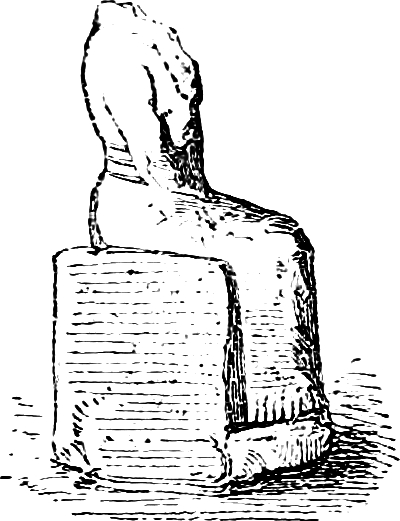
Fig. 61.—Statue of Shalmaneser II. Height 58 inches. British Museum.
Let us begin with the bas-relief. It is with sculptures executed on this principle that the walls of temples and palaces were covered, as if with a stone tapestry. The Assyrian process is identical in principle with that afterwards adopted by the Greeks, as, on the whole, the most convenient for the purpose in view. We find no examples of the Egyptian fashion of defining the outlines of figures by a deep groove cut with the point, nor of those figures that were, so to speak, let into and modelled within the surface of the wall.[146] In both Chaldæa and Assyria the figure stands out from the bed of the relief from two or three millimetres to a centimetre, according to its size. The bed is nowhere hollowed, it is one even surface, except that where the figures are very small, and consequently of very slight relief, the sculptor has reinforced them with an incised outline one or two millimetres deep. This artifice must be examined on the monuments themselves; it could hardly be shown in reproductions on a reduced scale.
Most of the great bas-reliefs have but one plane, and to this they owe the simplicity that gives them a certain nobility in spite of their monotonous design (see Vol. I. Figs. 4, 5, 6, 8, 13, 22, 23, 24, &c.). Examples of two planes, in which the figures are grouped in couples, the nearest to the spectator in each couple covering a large part of his companion, are by no means rare (see Fig. 62); we may say the same of those in which a background of trees is introduced beyond the figures (Fig. 63). This arrangement is especially frequent in the more complicated pictures, where the figures are small and numerous; but even in the last century of the Assyrian monarchy, when the sculptor showed an ever-increasing desire to draw attention and excite interest by the introduction of these picturesque details, he never quits his hold of a right instinct for the true conditions of the bas-relief. Unlike the Roman sculptors, and even those of the Renaissance, he shows no hankering after those effects that seem to get rid of the bed; he never destroys the clarity of his conception by unduly multiplying the planes. He did not understand how to put objects in perspective or manage foreshortening, and this ignorance served him well; it preserved him from the temptation into which more skilful artists are so prone to fall; it prevented him from forgetting “that the design best suited to the bas-relief is purely geometrical in its essentials.”[147]
The relief, of course, becomes higher as the size of the figures increases. It is as much as from eight to ten inches in the winged genii (Figs. 27 and 34) that accompany and divide the bulls on the decorated façades and in the gateways. Even when it is highest the salience does not go beyond what is called mezzo-relievo; that is to say, no part of the principal or accessory figure, of the genius himself or of the lion, stands out from the wall in the round, as, for instance, do the heads and limbs in the metopes of the Parthenon.
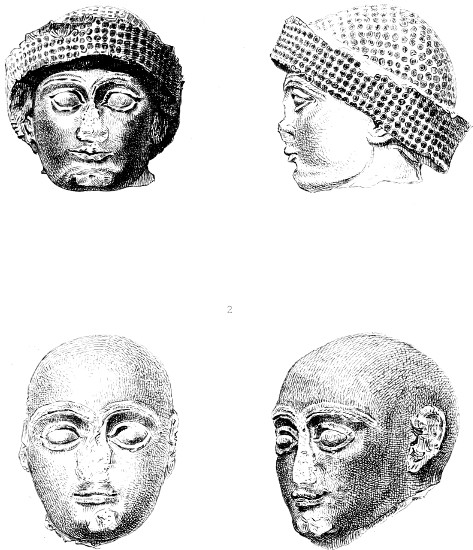
TWO CHALDÆAN HEADS
J. Bourgoin, del. Ramus sc.
Imp. Ch. Chardon
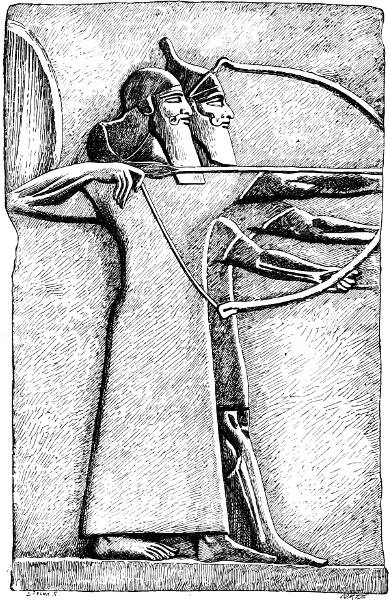
Fig. 62.—Pair of warriors. Louvre. Drawn by Saint-Elme Gautier.
The same remark holds good of the colossal figures of lions (Plate VIII.) and winged bulls (Plate IX.) which acted as guardians of the palace. We have already explained the ideas attached to these monsters by the Assyrians,[148] we shall here dwell upon some peculiarities of their execution. In these images there is a compromise between “the round” and the bas-relief of a very original and peculiar character.
Looked at from in front these lions and bulls seem to be independent statues; the head, the chest, the legs stand out with as much freedom and amplitude of development as in nature; but step a little to one side, to the right or the left as the case may be, and their aspect will change. You will then see that only the fore-part of the animal is disengaged from the block of alabaster or limestone in which it is cut, the rest of the body remains imprisoned in its substance. The contours alone are indicated, in low relief, on the two sides of the ponderous slab. Thus we have half, or rather a quarter, of the statue standing out from sixteen to twenty inches in front of the slab on which the sides are shown in silhouette. It looks as if the image had made an effort to shake itself clear of the mass of stone and had only partially succeeded. We find ourselves wondering whether, if Nineveh had not perished and the development of her art had gone on without interruption, these great beasts would not have ended by conquering their liberty and winning for themselves an existence independent of the walls to which they were attached. But the nature of the material employed says no—alabaster is too soft, and the legs of the lions and bulls could not support their massive bodies without assistance.
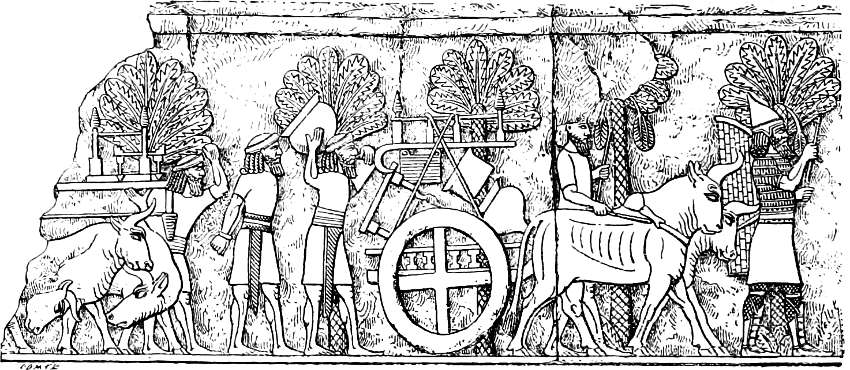
Fig. 63.—Prisoners. From the palace of Sennacherib; from Layard.
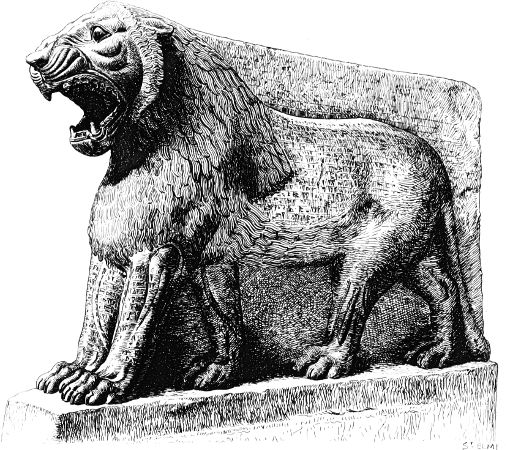
LION FROM THE PALACE OF ASSURNAZIRPAL, NIMROUD
British Museum
Saint-Elme Gautier del etsc Imp. Ch. Chardon
There are other peculiarities in these images. Looked at from in front they appear stationary, their two fore-feet being on the same plane and close together; any other arrangement would have been awkward. But if we look at them from the side they appear to be walking, in which attitude alone would all the four legs be visible and clear of each other. In most cases the bulls were not parallel to the façades they decorated, but perpendicular to them;[149] they faced the visitor as he approached the gate, and it was not until he entered the passage that he got a side view of their bodies stretching along its walls (Figs. 26 and 27). Some contrivance was sought by which their figures should appear complete from both points of view, and the following expedient was hit upon. As soon as you had entered the passage between the bulls, you could, of course, no longer see more than the fore-leg nearest you; the other was hidden by it. The latter was then repeated by the sculptor and thrown back under the body of the animal, which, in the result, had five legs.
The idea is a better one than we are at first inclined to believe. More than once, perhaps, at the Louvre or the British Museum, you have paused before these colossal images, you have measured their height with your eye and admired their tranquil majesty. But have you ever noticed the artifice I have just described? To see it clearly you must choose a standpoint on the right or left front, as our draughtsman has done (Plates VIII. and IX.). If no chance has led you to such a standpoint in the first instance, if you have, as is most likely, looked at the figure first in front and then from the side, you have probably never suspected the sort of trick that the sculptor has played upon you. This contrivance is one of the distinguishing marks of Ninevite art;[150] it occurs nowhere else, unless in monuments such as those of Cappadocia, which are more or less feeble copies of Assyrian models.[151]
The conventions that remain to be noticed will not detain us so long. They are such as have been practised in all imperfect schools of art,—in all, in fact, that preceded the art of the Greeks.
Even in the greatest and most perfect schools of sculpture, the bas-relief, as if influenced by a souvenir of its origin, prefers figures in profile to those in full face. In those exceptional instances in which the Assyrians abandoned this preference, as, for example, in the decoration of entrances, they were visibly embarrassed. They did not understand how to foreshorten the feet, therefore they put the lower part of the figure in profile while the upper part faced the spectator (see Fig. 34).[152] This puts the figure in a painful and awkward attitude which could not be imitated by a living man without a violent effort, or retained for more than a second or two. It is the same when they wish to make a figure turn; the movement of the shoulders and neck is so clumsily rendered that the sculptor seems to have put on the head the wrong side foremost.[153] In general, however, the ample draperies help the artist out of his difficulties. Thanks to the veil which hides his ignorance of the attachment of limbs and the play of muscles, he succeeds in avoiding those dislocations that are so frequent in the Egyptian bas-reliefs and sometimes result in obvious deformity.[154]
When he had to render the human countenance the sculptor of Babylon or Nineveh fell into the same fault as he of Memphis; he placed a full, or nearly a full, eye in his profiles, and for the same reason.[155] This defect is not always so conspicuous as in a bas-relief from Nimroud representing a tributary of Assurnazirpal bringing two apes, one of which stands on his master’s shoulders while the other leaps before his feet (Fig. 64); but it is never absent altogether.
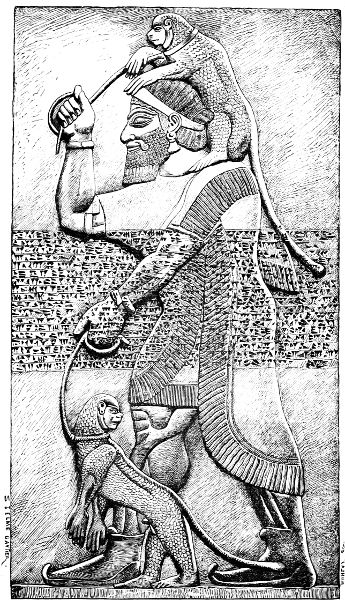
Fig. 64.—Vassal bringing monkeys. Height 8 feet. British Museum.
Drawn by Saint-Elme Gautier.
If in its fidelity to habits that we may call childish the sculpture of Mesopotamia bears a strong resemblance to that of Egypt, it is nevertheless far inferior to it in other respects. The artist never seems to have looked closely enough or with a sufficiently awakened eye to perceive the differences that distinguish one individual or even one race from another; at least if he saw them he did not understand how to reproduce them; he did not even try to do so. From the very beginning—so far as we know it—the art of the Nile valley turned out portraits both of Pharaoh and of private individuals that are astonishing in their truth and life.[156] Even in those executed in a more summary fashion and not in any way to be classed as masterpieces, we find a singular aptitude in seizing and noting those peculiarities which make of every human face an unique creation, a medal of which but one example has been struck. Ethnic characteristics are given with no less truth; we have seen elsewhere how many faithful portraits they have left of the races with whom they entertained long and unbroken relations.[157]
Very few traces of this talent or disposition are to be found in the monuments of Mesopotamia. Of course in a draped school of sculpture we could hardly expect to find any great preoccupation with the various beauties of the human body. Given the Assyrian costume, it was impossible that the Assyrian artist should aspire to bring out those beauties. In many works from the Nile valley the influence of the sex, the age, and even the profession upon the development of the muscles, upon, if we may be allowed the expression, the physiognomy of the flesh, is skilfully shown in the modelling.[158] But faces were not concealed by the Assyrian draperies; why then were their distinctive marks of individuality so consistently ignored? The sculptor should have concentrated his attention upon them all the more, and so arrived at a faithful portrait. He did not do so however. Neither Assyrian nor Chaldæan had any such ambition. By a process of selection and abstraction they arrived at a kind of mean, at a certain ideal of manly beauty which served them to the end. That ideal is characterized by the abundance and symmetrical arrangement of the hair and beard, by a low forehead, heavy and strongly-arched eyebrows, a hooked and rounded nose, a small mouth with full but not too heavy lips, a strong, rounded chin, and limbs whose muscular development betrayed their vigour.
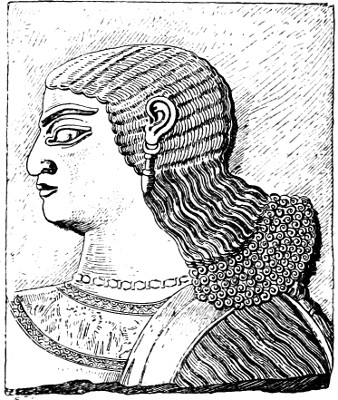
Fig. 65.—Head of a eunuch; from Layard.
The universal acceptance of this type is proved chiefly by the Assyrian sculpture. The fact is that among all the thousands of figures it produced there are but two heads, the one with, the other without, a beard. We have already encountered the first in all the scenes in which the king, his ministers, his officers or his soldiers appear. It is also used for the gods (Vol. I. Figs. 13 and 15) and the winged bulls, whose heads, perhaps, like the Egyptian sphinxes, were supposed to be reproductions of the royal features. The beardless variety seems, in the royal processions, to be confined to those eunuchs who have always played such an important part at Oriental courts (Vol. I. Figs. 23 and 24, and Vol. II. Plate X.); the fleshy heaviness of their cheeks and necks (Fig. 65) has been thought to confirm this idea. But we should be mistaken if we recognized these miserable beings in all the beardless figures. The latter are so numerous in some compositions that no such explanation is admissible. In many instances they seem to represent people of the lowest class, peasants, labourers, and slaves (see Vol. I. Figs. 45, 151, 152, and Vol. II. Figs. 44 and 48). As the oldest sculptures of Chaldæa suffice to prove, the habit of wearing the hair and beard long did not date from the earlier years of that country. In those sculptures we find heads completely shaved. It is possible that the ancient custom was changed when the formidable army to which Assyria owed its power and fortune was created. The beard may then have become, as the moustache used to be with us, a sign of the military caste. We never find soldiers or their officers without it;[159] but their hair and beards are shorter than those of the king and his ministers (Fig. 66); they do not fall upon the chest and shoulders in several rows of curls carefully arranged.[160] In the reliefs the amplitude and length of the beard are always a sign of the highest rank.
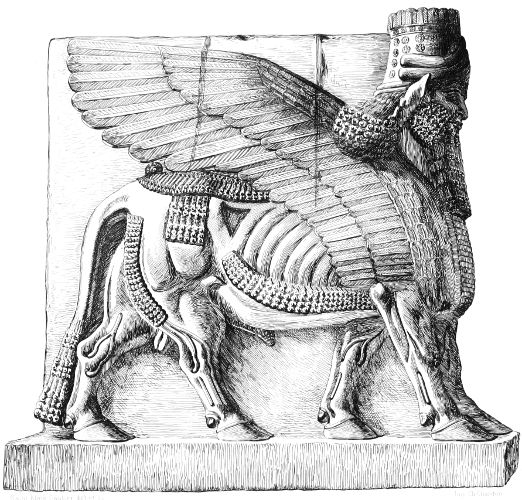
WINGED BULL
FROM KHORSABAD
Louvre
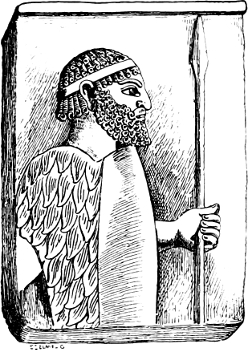
Fig. 66.—Assyrian soldier; from the Louvre. Height of slab 2 feet.
The temples, the forehead, and the nape of the neck were lost under this abundant hair, while the beard covered all below the cheek-bones and the tiara the top of the head. Beyond the nose and eyes there was hardly anything left by which one individual could be distinguished from another. Now the Assyrian race was a race in the proper sense of the word; it was homogeneous and pure-blooded. Between one member and another of the aristocracy that reigned and fought, these two features would vary little. All their noses were more or less aquiline, all or nearly all their eyes large and black. The national fashion of wearing the hair would suppress many of the characteristics by which we know one man from another. From all this it results that the crowd of kings and nobles who furnished the sculptor with his favourite theme are vastly like each other. This similarity or rather uniformity was ill calculated to awaken the sense of portraiture in the artist. The features that distinguished one king from another are slurred over by the sculptor simply because they were in reality so lightly marked that he hardly perceived their existence.
PLATE V
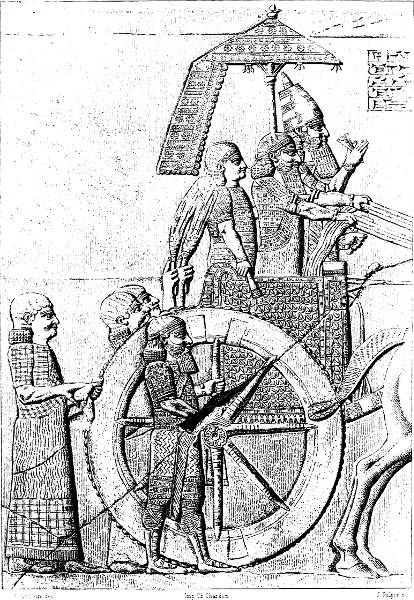
J.Bourgoin del. Imp.Ch.Chardon. J.Sulpis.sc.
ASSURBANIPAL IN HIS CHARIOT
FROM KOUYUNDJIK
Louvre
We know that this opinion is not shared by all those who have busied themselves with the Assyrian monuments. It has been said and, in the belief of some, proof has been given, that we possess the elements of an Assyrian iconography, that the images of the kings, in the steles and on the palace walls, are true and faithful portraits.[161] We believe this to be a mistake. No doubt the proportions of the body, the expression of the face, and the general lines of the profile, are not the same for Assurnazirpal, Sargon, and the sons and grandsons of that prince. But what must we conclude from that? Only that Assyria did not escape, any more than Egypt, from the action of that law of change which is the very condition of life; that from one century and one reign to another the taste and execution of the Assyrian sculptors were modified, though in a very feeble degree. Thus figures are shorter and more thickset in the north-western palace at Nimroud than at Khorsabad or Kouyundjik; they are finer in their proportions, more graceful, and altogether better in their art under Assurbanipal than under his grandfather, the founder of the dynasty. Art, as we shall bring abundant evidence to prove, followed the same path at Nineveh as everywhere else. This is not to be denied; but before the hypothesis against which we contend can be accepted, its advocates must show that, in each series of monuments, the king is to be distinguished by his personal features from the people about him. You must not take the evidence of drawings or even of photographs; you must examine the originals themselves. This I have done with the most scrupulous attention both in the British Museum and the Louvre. I have carefully examined and compared the four great series of royal bas-reliefs that have come down to us, belonging respectively to Assurnazirpal, Sargon, Sennacherib, and Assurbanipal. If such an examination be made without prejudice, I am satisfied that only one conclusion can be come to. In all the pictures dating from one reign the king himself differs not at all from his officers and nobles; he is only to be recognized by his lofty tiara, an ornament that he alone had the right to wear, by his sceptre or some other attribute of the kind, by his richer costume, and, finally, by his greater stature. The sculptor always makes him taller than his subjects, still more than his enemies and captives (Vol. I. Fig. 22, and Fig. 15 above). This latter proceeding seems childish, but it is so natural, and is found in so many countries, that it is not at all astonishing. The sculptor has counted upon all these attributes to show, at a glance, which is the king; and they are, in fact, of a nature to prevent any chance of a mistake. He has not troubled himself to seek in his royal features for something by which he might be distinguished from the people about him. Winged genii, king and viziers, all have the same eye, the same nose and the same mouth. One would say that for each group of bas-reliefs the original designer only drew one head, which was repeated by tracing or some other process as often as there might be heads in the composition, and that it was afterwards carved and modelled in the alabaster by the chisel of the journeyman.
No, in spite of all that has been said, the Assyrians made no portraits. They did not even attempt to mark in any precise fashion, those physical characteristics by which they themselves were so sharply divided from many of the races by whom they were surrounded. Among the numerous peoples that figure in the sieges and battles that cover the palace walls, although some, like the Chaldæans, the Jews, and the Syrians, were near relations of their own, others belonged either to the Aryan or Turanian family; but any one who will examine the reliefs as we have done, will see that all the prisoners of war and other vanquished enemies have the same features as their conquerors.[162] The only exception to which we can point is in the case of certain bas-reliefs of Assurbanipal in which the episodes of an expedition into Susiana are retraced. There we can perceive in some of the figures—by no means in all—an endeavour on the part of the sculptor to mark the difference of race otherwise than by details of costume and head-dress. Here and there we find a head that suggests a negro;[163] but his characteristics are never as clearly marked as in Egypt. This may be merely the result of caprice on the part of some individual artist who has amused himself by reproducing with the edge of the chisel some head which had struck his fancy; but even here we only find one profile several times repeated. The modelling is far from searching, but wherever the work is in fair condition and the scale not too small the character we have described may be easily distinguished. The only differences over which the Assyrian sculptors naturally troubled themselves were those of costume and equipment; thus we find them recording that the people subdued in one of the expeditions of Sennacherib wore a crown or wreath of feathers about their heads (Fig. 48).[164] So, too, in the relief of a man with apes, the foot-covering, a kind of buskin with upturned toes (Fig. 64), should be noticed. But the lines of his profile remain unchanged; and yet there can be no doubt that the sculptor here meant to represent a man of negro race, because, as Layard, who dug up the monument, tells us, traces of black paint might be distinctly perceived upon the faces of this man and his companions.[165] On a Babylonian stele that we have already figured (Fig. 43), some have attempted to recognize a Mongol type, and thence to confirm the hypothesis that would make a Turanian race the founders of the Chaldæan civilization. This, too, we think a mistake.[166]
At first sight this curious monument surprises those who are accustomed to Assyrian art, but the nature of the material has not a little to do with that. The hardness and darkness of basalt affect the treatment of the sculptor in quite a different way from a gypseous stone like alabaster. Add to this that the proportions are quite unlike those of the Ninevite reliefs. This Marduk-idin-akhi is a work of the ancient school, which made its figures far shorter than those of such Assyrian reliefs as have come down to us. Finally the head-dress should be noticed. In place of being conical it is cylindrical, a form which overweights the figure and shortens its apparent proportions. On the whole, any one looking at this stele without bias on one side or the other, will, we think, acknowledge that the type it presents is the same as the figures at Nimroud, Khorsabad, and Kouyundjik. It is, moreover, identical with that we see in monuments even older than this royal Babylonian stele, such as the fragmentary relief found by M. de Sarzec at Sirtella (Fig. 67).
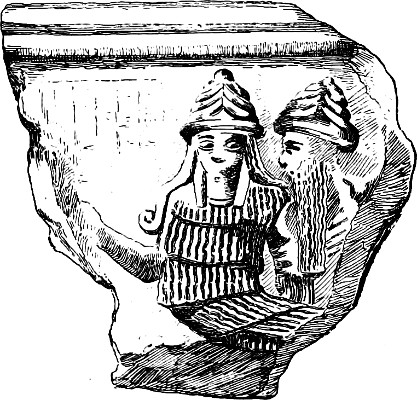
Fig. 67.—Fragment of a Chaldæan bas-relief. Louvre. Limestone. Height 3¾ inches.
The type which crops up so often in the pages of this history was fixed, in all its main features, in the earliest attempts at plastic art made by the Chaldæans. By them it was transmitted to their scholars, the Assyrians, and during long centuries, until the fall of Nineveh and Babylon, the painters and sculptors of Mesopotamia, from the shores of the Persian Gulf to the foot of the mountains of Armenia, did not cease to reproduce and perpetuate it, I might say to satiety; they reproduced it with infinite patience, and, so far as we can see, without once suspecting that the human visage might sometimes vary its lines and present another aspect.
§ 4. On the Representations of Animals.
In the preceding pages our chief aim has been to determine the nature and the mode of action of the influences under which the Assyro-Chaldæan sculptor had to do his work. We have explained how certain conditions hampered his progress and in some respects arrested the development of his skill.
The height to which the plastic genius of this people might have carried their art had their social habits been more favourable to the study of the nude, may perhaps be better judged from their treatment of animals than anything else. Some of these, both in relief and in the round, are far superior to their human figures, and even now excite the admiration of sculptors.
The cause of this difference is easily seen. When an artist had to represent an animal, his study of its form was not embarrassed by any such obstacle as a long and heavy robe. The animal could be watched in its naked simplicity and all its instinctive and characteristic movements grasped. The sculptor could follow each contour of his model; he could take account of the way in which the limbs were attached to the trunk; he saw the muscles swell beneath the skin, he saw them tighten with exertion and relax when at rest. He was not indifferent to such a sight; on the contrary, he eagerly drank in the instruction it afforded, and of all the works he produced those in which such knowledge is put into action are by far the most perfect; they show us better than anything else how great were his native gifts, and what a fund of sympathy with the beauties of life and with its inexhaustible variety his nature contained. Whether he model an animal separately or introduce it into some historic scene, it is always well rendered both in form and movement.
This is to be most clearly seen in the rich and varied series of Assyrian reliefs, but the less numerous works of the same kind of Babylonian origin show the same tendency and at least equal talent. In copying the principal types of the animal world with fidelity and vigour, the Assyrian sculptors only followed the example set them by their south-country masters.
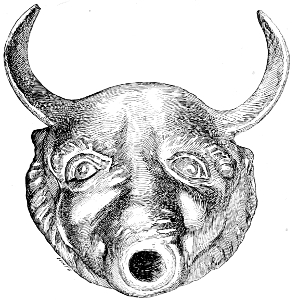
Fig. 68.—Head of a cow, bronze. British Museum. Width across the cheeks 3¾ inches.
A cow’s head in bronze, which was brought from Bagdad by Mr. Rassam, is broad in treatment and of great truth (Fig. 68); the same good qualities are to be found in a terra-cotta tablet found by Sir Henry Rawlinson in the course of his excavations in the Birs-Nimroud (Fig. 69). It represents a man, semi-nude and beardless and with a stout stick in his hand, leading a large and powerfully made dog by a plaited strap. It is a sort of mastiff that might be used for hunting the wild beasts in the desert and marshes, the wild boar, hyena, and panther, if not the lion. The characteristics of the species are so well marked that naturalists have believed themselves able to recognise it as that of a dog which is still extant, not in Mesopotamia indeed, but in Central Asia.[167] We may seek in it for the portrait of one of those Indian hounds kept, in the time of Herodotus, by the Satrap of Babylon. His pack was so numerous that it took the revenues of four large villages to support it.[168]
Similar subjects were represented upon other tablets of the same origin. One of them shows a lion about to devour a bull and disturbed by a man brandishing a mace. Nothing could be more faithful than the action of the animal; without letting go his prey he raises a paw, its claws opened and extended and ready to be buried in the side of the rash person who interrupts his meal.[169]
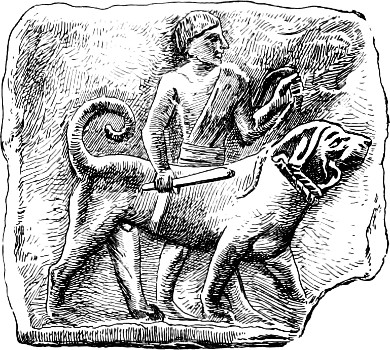
Fig. 69.—Terra-cotta tablet. British Museum. Height 3⅗ inches.
We may also mention a cylinder which, from its style, M. Ménant does not hesitate to ascribe to the first Chaldæan monarchy. It represents two oxen in a field of wheat. The latter, by a convention that also found favour with the Greeks, is indicated by two of those huge ears that so greatly astonished Herodotus.[170] Was it on a similar principle that the Chaldæan engraver gave his oxen but one horn apiece? In spite of this singularity and the peculiar difficulties offered by work in intaglio on a very hard material, the forms are well understood, and the artist has not been content to give them merely in outline. At the croup and under the belly an effort has been made to model the figure and to mark its thickness.
Judging from their style and inscriptions, several more of these engraved stones may be ascribed to the oldest Chaldæan schools of art, but we are satisfied with again reminding our readers that it was in Lower Mesopotamia that everything had its beginning. We shall take our remaining examples from the richer deposits of Assyria.
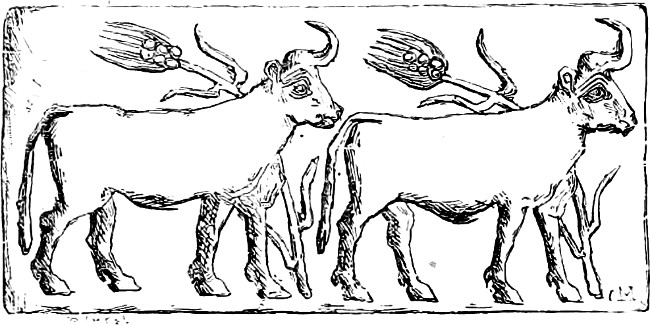
Fig. 70.—Cylinder of black marble. National Library, Paris.
Among all those animals that attracted the attention of man either by their size or strength, either by the services they rendered or the terror they caused, there were none that the chisel of the Assyrian sculptor did not treat and treat with taste and skill. With their passion for the chase the kings and nobles of Assyria were sure to love dogs and to train them with scrupulous care.[171] They did more. They employed sculptors in making portraits of them. In the palace of Assurbanipal terra-cotta statuettes of his best dogs have been found (Fig. 71). They belong to the same race as the Chaldæan mastiff above mentioned, but their strength, their fire, I might almost say their ferocity, is better shown in those pictures where they are no longer in a state of repose, but in movement and action. Look at the series of slabs representing the departure for the chase. The hounds are held in the leash by attendants who carry bags on their shoulders for the smaller game (see Fig. 72). Mark the tightened cord, the straining bodies, the tension of every muscle in their desire to get at their quarry! We can almost fancy we hear the deep, confused bayings with which they prelude the regular music of the hunt itself when the game is afoot. These animals are represented with no less truth and vivacity when a kill has taken, or is about to take, place. As an example of this we may point out a relief from the same palace in which two of these bloodhounds launch themselves upon a wild ass whose flight has been arrested by an arrow. The ass still manages to stagger along, but he will not go far; the hounds are already upon him and have buried their teeth in his flanks and croup.[172]
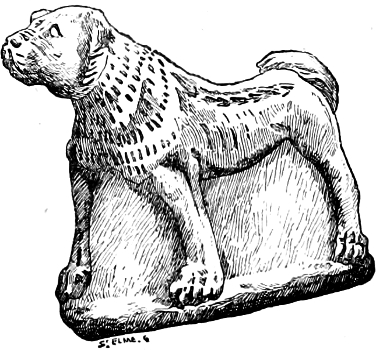
Fig. 71.—Terra-cotta dog. British Museum. Height 2⅖ inches.
Other domestic animals are figured with no less sure a hand; to each is given the proportions and attitudes that really characterise it. We shall now study them all in succession; others have done so, and have found much precious information upon the fauna of Western Asia and upon the state of Mesopotamian civilization;[173] we shall content ourselves with mentioning the principal types and those in which the sculptor has shown most skill.
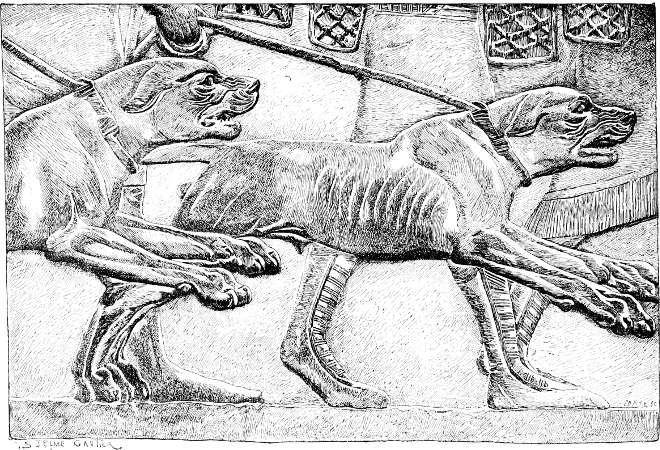
Fig. 72.—The hounds of Assurbanipal. British Museum. Height 26 inches. Drawn by Saint-Elme Gautier.
The colossi of the gateways have already given us an opportunity for showing how art enlisted the powerful limbs and natural majesty of the bull in its service. Elsewhere the bovine race occupies a less important part in Assyrian sculpture than in that of Egypt, in whose tombs scenes of agricultural art are of such constant occurrence. We find, however, the wild bull,[174] which the kings of Calah hunted in the neighbouring desert (Fig. 15), and the draught ox, which, after a lucky raid, the terrors of Asia drive before them with their prisoners and other booty (Vol. I. Fig. 30).[175]—We may also point to the heifer’s head in ivory which acts as tail-piece to the third chapter of our first volume. We sometimes find also sheep and goats of both sexes (Fig. 54);[176] but of all the animals that have close relations with man, that which occurs most often on the palace walls is the horse. They did not use him as a beast of burden; it was the mule that was used for drawing carts (Vol. I. Fig. 31), for carrying women and children and merchandise (Vol. I. Figs. 30 and 115). As with the Arabs of to-day, the horse was reserved for war and hunting. But the Assyrians were not, like the Egyptians, content to harness him to the chariot; they rode him as well. Their armies comprised a numerous and well-provided cavalry; and the Assyrian artist drew the horse a great deal better than his Egyptian confrère.