THE PRIMÆVAL HISTORY.
Reading edition
Chapters I‒XI.
It has been shown in the Introduction (page xxxiii) that the most obvious division of the book of Genesis is into four nearly equal parts, of which the first (chapters 1‒11) deals with the Creation of the world, and the history of primitive mankind prior to the call of Abraham. These chapters are composed of excerpts from two of the main sources of the Pentateuch, the Priestly Code, and the Yahwistic document. Attempts have been made from time to time (e.g. by Schrader, Dillmann, and more recently Winckler) to trace the hand of the Elohist in chapters 1‒11; but the closest examination has failed to produce any substantial evidence that Elohist is represented in the Primitive History at all. By the great majority of critics the non-Priestly traditions in this part of Genesis are assigned to the Yahwistic cycle: that is to say, they are held to have been collected and arranged by the school of rhapsodists to whose literary activity we owe the document known as Yahwist.
To the Priests’ Code, whose constituents can here be isolated with great certainty and precision, belong: 1. The Cosmogony (1¹‒24a); 2. The List of Patriarchs from Adam to Noah (5); 3. An account of the Flood (6⁹‒9²⁹*); 4. A Table of Peoples (10*); 5. The Genealogies of Shem (1110‒26), and Terah (1127‒32*), ending with Abraham. There is no reason to suppose either that the original Priestly-Code contained more than this, or, on the other hand, that Priestly-Code was written to supplement the older tradition, and to be read along with it. It is in accordance with the purpose and tendency of the document that the only events recorded in detail—the Creation and the Flood—are those which inaugurate two successive World-ages or Dispensations, and are associated with the origin of two fundamental observances of Judaism—the Sabbath (2³), and the sanctity of the blood (94 ff.).
* The asterisk denotes that the passages so marked are interspersed with extracts from another source. The detailed analysis will be found in the commentary on the various sections.
In marked contrast to the formalism of this meagre epitome is the rich variety of life and incident which characterises the Yahwistic sections, viz.: 1. The Creation and Fall of Man (24b‒3²⁴); 2. Cain and Abel (41‒16); 3. The Genealogy of Cain (417‒24); 4. A fragmentary Sethite Genealogy (425 f. ... 5²⁹ ...); 5. The marriages with divine beings (61‒4); 6. An account of the Flood (6⁵‒8²²*); 7. Noah’s Curse and Blessing (920‒27); 8. A Table of Peoples (10*); 9. The Tower of Babel (111‒9); 10. A fragment of the Genealogy of Teraḥ (1128‒30). Here we have a whole gallery of varied and graphic pictures, each complete in itself and essentially independent of the rest, arranged in a loosely chronological order, and with perhaps a certain unity of conception, in so far as they illustrate the increasing wickedness that accompanied the progress of mankind in civilisation. Even the genealogies are not (like those of Priestly-Code) bare lists of names and figures, but preserve incidental notices of new social or religious developments associated with particular personages (417. 20‒22. 26 5²⁹), besides other allusions to a more ancient mythology from which the names have been drawn (419. 22. 23 f.).
Composition of Yahwist.—That a narrative composed of so many separate and originally independent legends should present discrepancies and discontinuities is not surprising, and is certainly by itself no proof of literary diversity. At the same time there are many indications that Yahwist is a composite work, based on older collections of Hebrew traditions, whose outlines can still be dimly traced. (1) The existence of two parallel genealogies (Cainite and Sethite) at once suggests a conflate tradition. The impression is raised almost to certainty when we find that both are derived from a common original (page 138 f.). (2) The Cainite genealogy is incompatible with the Deluge tradition. The shepherds, musicians, and smiths, whose origin is traced to the last three members of the genealogy, are obviously not those of a bygone race which perished in the Flood, but those known to the author and his contemporaries (page 115 f.). (3) Similarly, the Table of Nations and the story of the Confusion of Tongues imply mutually exclusive explanations of the diversities of language and nationality: in one case the division proceeds slowly and naturally on genealogical lines, in the other it takes place by a sudden interposition of almighty power. (4) There is evidence that the story of the Fall was transmitted in two recensions (page 52 f.). If Gunkel be right, the same is true of Yahwist’s Table of Peoples, and of the account of the Dispersion; but there the analysis is less convincing. (5) In 4²⁶ we read that Enosh introduced the worship of Yahwe. The analogy of Exodus 62 f. (Priestly-Code) affords a certain presumption that the author of such a statement will have avoided the name יהוה up to this point; and as a matter of fact אֱלֹהִים occurs immediately before in verse ²⁵. It is true that the usage is observed in no earlier Yahwistic passage except 31‒5, where other explanations might be thought of. But throughout chapters 2 and 3 we find the very unusual compound name יהוה אלהים, and it is a plausible conjecture that one recension of the Paradise story was distinguished by the use of Elohim, and that Yahwe was inserted by a harmonising Yahwistic editor (so Budde, Gunkel, al.: see page 53).
To what precise extent these phenomena are due to documentary differences is a question that requires to be handled with the utmost caution and discrimination. It is conceivable that a single author should have compiled a narrative from a number of detached legends which he reported just as he found them, regardless of their internal consistency. Nevertheless, there seems sufficient evidence to warrant the conclusion that (as Wellhausen has said) we have to do not merely with aggregates but with sequences; although to unravel perfectly the various strands of narrative may be a task for ever beyond the resources of literary criticism. Here it will suffice to indicate the principal theories.—(a) Wellhausen (Die Composition des Hexateuchs und der historischen Bücher des Alten Testaments² 9‒14) seems to have been the first to perceive that 41‒16a is a late expansion based (as he supposed) on 416‒24 and on chapters 2, 3; that originally chapters 2‒4 existed not only without 41‒16a, but also without 425 f. and 5²⁹; and that chapters 2. 3. 416‒24 111‒9 form a connexion to which the story of the Flood is entirely foreign and irrelevant.—(b) The analysis was pushed many steps further by Budde (Biblische Urgeschichte, passim), who, after a most exhaustive and elaborate examination, arrived at the following theory: the primary document (Yahwist¹) consisted of 24b‒9. 16‒25 31‒19. 21 6³ 3²³ 41. 2bβ. 16b. 17‒24 61. 2. 4 10⁹ 111‒9 920‒27. This was recast by Yahwist² (substituting אלהים for יהוה down to 4²⁶), whose narrative contained a Cosmogony (but no Paradise story), the Sethite genealogy, the Flood-legend, the Table of Nations, and a seven-membered Shemite genealogy. These two recensions were then amalgamated by Yahwist³, who inserted dislocated passages of Yahwist¹ in the connexion of Yahwist², and added 41‒5 5²⁹ etc. Yahwist² attained the dignity of a standard official document, and is the authority followed by Priestly-Code at a later time. The astonishing acumen and thoroughness which characterise Budde’s work have had a great influence on critical opinion, yet his ingenious transpositions and reconstructions of the text seem too subtle and arbitrary to satisfy any but a slavish disciple. One feels that he has worked on too narrow a basis by confining his attention to successive overworkings of the same literary tradition, and not making sufficient allowance for the simultaneous existence of relatively independent forms.—(c) Stade (Zeitschrift für die alttestamentliche Wissenschaft, xiv. 274 ff. [= Ausgewählte akademische Reden und Abhandlungen 244‒251]) distinguishes three main strata: (1) chapters 2. 3. 111‒9; (2) 425 f. 17‒22 920‒27 10⁹? 61. 2?; (3) the Flood-legend, added later to the other two, by a redactor who also compiled a Sethite genealogy (425 f. ... 5²⁹ ...) and inserted the story of Cain and Abel, and the Song of Lamech (423 f.).—(d) Gunkel (Genesis übersetzt und erklärt² 1 ff.) proceeds on somewhat different lines from his predecessors. He refuses in principle to admit incongruity as a criterion of source, and relies on certain verses which bear the character of connecting links between different sections. The most important is 5²⁹ (belonging to the Sethite genealogy), where we read: “This (Noah) shall comfort us from our labour and from the toil of our hands on account of the ground which Yahwe has cursed.” Here there is an unmistakable reference backward to 3¹⁷, and forward to 920 ff.. Thus we obtain a faultless sequence, forming the core of a document where יהוה was not used till 4²⁶, and hence called Yahwistᵉ, consisting of: one recension of the Paradise story; the (complete) Sethite genealogy; and Noah’s discovery of wine. From this sequence are excluded obviously: the second recension of the Paradise story; the Cainite genealogy; and (as Gunkel thinks) the Flood-legend, where Noah appears in quite a different character: these belong to a second document (Yahwistʲ). Again, 918 f. form a connecting link between the Flood and the Table of Nations; but Gunkel distinguishes two Yahwistic strata in the Table of Nations and assigns one to each of his documents: similarly with the section on the Tower of Babel. The legend of Cain and Abel is regarded (with Wellhausen, Budde, Stade, al.) as an editorial expansion.
In this commentary the analysis of Gunkel is adopted in the main; but with the following reservations: (1) The account of the Flood cannot be naturally assigned to Yahwistʲ, because of its admitted incompatibility with the assumption of the Cainite genealogy (see above). Gunkel, indeed, refuses to take such inconsistencies into account; but in that case there is no reason for giving the Flood to Yahwistʲ rather than to Yahwistᵉ. There is no presumption whatever that only two documents are in evidence; and the chapters in question show peculiarities of language which justify the assumption of a separate source (Stade), say Yahwistᵈ. (2) With the Flood passage goes the Yahwistic Table of Peoples (918 f.). The arguments for two Yahwists in chapter 10 are hardly decisive; and Yahwistᵉ at all events had no apparent motive for attaching an ethnographic survey to the name of Noah. (3) Gunkel’s analysis of 111‒9 appears on the whole to be sound; but even so there is no ground for identifying the two components with Yahwistᵉ and Yahwistʲ respectively. On the contrary, the tone of both recensions has a striking affinity with that of Yahwistʲ: note especially (with Wellhausen) the close resemblance in form and substance between 11⁶ and 3²². Thus:
Yahwistʲ = 320‒22. 24 417‒24 61‒4 111‒9;
Yahwistᵉ = 24b‒319*. 23 425 f. ... 5²⁹ ... 920‒27;
Yahwistᵈ = 6⁵‒822* 918 f. 10*;
Yahwistʳ = 41‒16*.
Such constructions, it need hardly be added, are in the highest degree precarious and uncertain; and can only be regarded as tentative explanations of problems for which it is probable that no final solution will be found.
I. 1‒II. 3. Creation of the World in Six Days: Institution of the Sabbath.
A short Introduction describing the primæval chaos (11. 2) is followed by an account of the creation of the world in six days, by a series of eight divine fiats, viz.: (1) the creation of light, and the separation of light from darkness, 3‒5; (2) the division of the chaotic waters into two masses, one above and the other below the ‘firmament,’ 6‒8; (3) the separation of land and sea through the collecting of the lower waters into “one place,” 9. 10; (4) the clothing of the earth with its mantle of vegetation, 11‒13; (5) the formation of the heavenly bodies, 14‒19; (6) the peopling of sea and air with fishes and birds, 20‒23; (7) the production of land animals, 24. 25; and (8) the creation of man, 26‒31. Finally, the Creator is represented as resting from His works on the seventh day; and this becomes the sanction of the Jewish ordinance of the weekly Sabbath rest (21‒3).
Character of the Record.—It is evident even from this bare outline of its contents that the opening section of Genesis is not a scientific account of the actual process through which the universe originated. It is a world unknown to science whose origin is here described,—the world of antique imagination, composed of a solid expanse of earth, surrounded by and resting on a world-ocean, and surmounted by a vault called the ‘firmament,’ above which again are the waters of a heavenly ocean from which the rain descends on the earth (see on verses 6‒8).¹ That the writer believed this to be the true view of the universe, and that the narrative expresses his conception of how it actually came into being, we have, indeed, no reason to doubt (Wellhausen, Prolegomena zur Geschichte Israels⁶ 296). But the fundamental difference of standpoint just indicated shows that whatever the significance of the record may be, it is not a revelation of physical fact which can be brought into line with the results of modern science. The key to its interpretation must be found elsewhere.
¹ The fact referred to above seems to me to impose an absolute veto on the attempt to harmonise the teaching of the chapter with scientific theory. It may be useful, however, to specify one or two outstanding difficulties of detail. (1) It is recognised by all recent harmonists that the definition of ‘day’ as ‘geological period’ is essential to their theory: it is exegetically indefensible. (2) The creation of sun and moon after the earth, after the alternation of day and night, and even after the appearance of plant-life, are so many scientific impossibilities. (3) Palæontology shows that the origin of vegetable life, if it did not actually follow that of animal life, certainly did not precede it by an interval corresponding to two ‘days.’ (4) The order in which the various living forms are created, the manner in which they are grouped, and their whole development compressed into special periods, are all opposed to geological evidence. For a thorough and impartial discussion of these questions see Driver, Genesis, 19‒26. It is there shown conclusively, not only that the modern attempts at reconciliation fail, but (what is more important) that the point at issue is not one of science, but simply of exegesis. The facts of science are not in dispute; the only question is whether the language of Genesis will bear the construction which the harmonising scientists find it necessary to put upon it.
In order to understand the true character of the narrative, we must compare it with the cosmogonies which form an integral part of all the higher religions of antiquity. The demand for some rational theory of the origin of the world as known or conceived is one that emerges at a very early stage of culture; and the efforts of the human mind in this direction are observed to follow certain common lines of thought, which point to the existence of a cosmological tradition exerting a widespread influence over ancient speculation on the structure of the universe. There is ample evidence, as will be shown later (below, page 45 ff.), that the Hebrew thinkers were influenced by such a tradition; and in this fact we find a clue to the inner meaning of the narrative before us. The tradition was plastic, and therefore capable of being moulded in accordance with the genius of a particular religion; at the same time, being a tradition, it retained a residuum of unassimilated material derived from the common stock of cosmological speculation current in the East. What happened in the case of the biblical cosmogony is this: that during a long development within the sphere of Hebrew religion it was gradually stripped of its cruder mythological elements, and transformed into a vehicle for the spiritual ideas which were the peculiar heritage of Israel. It is to the depth and purity of these ideas that the narrative mainly owes that character of sobriety and sublimity which has led many to regard it as the primitive revealed cosmogony, of which all others are grotesque and fantastic variations (Dillmann, page 10).
The religious significance of this cosmogony lies, therefore, in the fact that in it the monotheistic principle of the Old Testament has obtained classical expression. The great idea of God, first proclaimed in all its breadth and fulness by the second Isaiah during the Exile, is here embodied in a detailed account of the genesis of the universe, which lays hold of the imagination as no abstract statement of the principle could ever do. The central doctrine is that the world is created,—that it originates in the will of God, a personal Being transcending the universe and existing independently of it. The pagan notion of a Theogony—a generation of the gods from the elementary world-matter—is entirely banished. It is, indeed, doubtful if the representation goes so far as a creatio ex nihilo, or whether a pre-existent chaotic material is postulated (see on verse ¹); it is certain at least that the kosmos, the ordered world with which alone man has to do, is wholly the product of divine intelligence and volition. The spirituality of the First Cause of all things, and His absolute sovereignty over the material He employs, are further emphasised in the idea of the word of God—the effortless expression of His thought and purpose—as the agency through which each successive effect is produced; and also in the recurrent refrain which affirms that the original creation in each of its parts was ‘good,’ and as a whole ‘very good’ (verse ³¹), i.e. that it perfectly reflected the divine thought which called it into existence. The traces of mythology and anthropomorphism which occur in the body of the narrative belong to the traditional material on which the author operated, and do not affect his own theological standpoint, which is defined by the doctrines just enumerated. When to these we add the doctrine of man, as made in the likeness of God, and marked out as the crown and goal of creation, we have a body of religious truth which distinguishes the cosmogony of Genesis from all similar compositions, and entitles it to rank among the most important documents of revealed religion.
The Framework.—The most noteworthy literary feature of the record is the use of a set of stereotyped formulæ, by which the separate acts of creation are reduced as far as possible to a common expression. The structure of this ‘framework’ (as it may be called) is less uniform than might be expected, and is much more regular in LXX than in Massoretic Text. It is impossible to decide how far the irregularities are due to the original writer, and how far to errors of transmission. Besides the possibility of accident, we have to allow on the one hand for the natural tendency of copyists to rectify apparent anomalies, and on the other hand for deliberate omissions, intended to bring out Sacred numbers in the occurrences of the several formulæ.¹
¹ A familiar instance is the ‘ten sayings’ of Pirḳê ’Abôth, 5, 1: בעשרה מאמרות נברא העולם, where the number 10 is arrived at by adding to the 8 fiats the two other occurrences of ויאמר in Massoretic Text (verses28. 29).
The facts are of some importance, and may be summarised here: (a) The fiat (And God said, Let ...) introduces (both in Massoretic Text and LXX) each of the eight works of creation (verses3. 6. 9. 11. 14. 20. 24. 26). (b) And it was so occurs literally 6 times in Massoretic Text, but virtually 7 times: i.e. in connection with all the works except the sixth (verses[3]. 7. 9. 11. 15. 24. 30); in LXX also in verse ²⁰. (c) The execution of the fiat (And God made ...—with variations) is likewise recorded 6 times in Massoretic Text and 7 times in LXX (verses7. [9]. 12. 16. 21. 25. 27). (d) The sentence of divine approval (And God saw that it was good) is pronounced over each work except the second (in LXX there also), though in the last instance with a significant variation: see verses4. [8]. 10. 12. 18. 21. 25. 31. (e) The naming of the objects created (And God called ...) is peculiar to the three acts of separation (verses5. 8. 10). (f) And God blessed ... (3 times) is said of the sixth and eighth works and of the Sabbath day (verses22. 28 2³). (g) The division into days is marked by the closing formula, And it was evening, etc., which, of course, occurs 6 times (verses5. 8. 13. 19. 23. 31), being omitted after the third and seventh works.
The occurrence of the ויהו כן before the execution of the fiat produces a redundancy which may be concealed but is not removed by substituting so for and in the translation (So God made, etc.). When we observe further that in 5 cases out of the 6 (in LXX 5 out of 7) the execution is described as a work, that the correspondence between fiat and fulfilment is often far from complete, and finally that 22a seems a duplicate of 2¹, the question arises whether all these circumstances do not point to a literary manipulation, in which the conception of creation as a series of fiats has been superimposed on another conception of it as a series of works. The observation does not carry us very far, since no analysis of sources can be founded on it; but it is perhaps a slight indication of what is otherwise probable, viz. that the cosmogony was not the free composition of a single mind, but reached its final form through the successive efforts of many writers (see below).¹
¹ See, now, Stade Biblische Theologie des Alten Testaments i. 349 and Schwally in Archiv für Religionswissenschaft., ix. 159‒175, which have appeared since the above paragraph was written. Both writers point out the twofold conception of the creation which runs through the chapter; and Schwally makes out a strong case for the composition of the passage from two distinct recensions of the cosmogony.
The Seven Days’ Scheme.—The distribution of the eight works over six days has appeared to many critics (Ilgen, Ewald, Schrader, Wellhausen, Dillmann, Budde, Gunkel, al.) a modification introduced in the interest of the Sabbath law, and at variance with the original intention of the cosmogony. Before entering on that question, it must be pointed out that the adjustment of days to works proceeds upon a clear principle, and results in a symmetrical arrangement. Its effect is to divide the creative process into two stages, each embracing four works and occupying three days, the last day of each series having two works assigned to it. There is, moreover, a remarkable, though not perfect, parallelism between the two great divisions. Thus the first day is marked by the creation of light, and the fourth by the creation of the heavenly bodies, which are expressly designated ‘light-bearers’; on the second day the waters which afterwards formed the seas are isolated and the space between heaven and earth is formed, and so the fifth day witnesses the peopling of these regions with their living denizens (fishes and fowls); on the third day the dry land emerges, and on the sixth terrestrial animals and man are created. And it is hardly accidental that the second work of the third day (trees and grasses) corresponds to the last appointment of the sixth day, by which these products are assigned as the food of men and animals. Broadly speaking, therefore, we may say that “the first three days are days of preparation, the next three are days of accomplishment” (Driver Genesis 2). Now whether this arrangement belongs to the original conception of the cosmogony, or at what stage it was introduced, are questions very difficult to answer. Nothing at all resembling it has as yet been found in Babylonian documents; for the division into seven tablets of the Enuma eliš series has no relation to the seven days of the biblical account.¹ If therefore a Babylonian origin is assumed, it seems reasonable to hold that the scheme of days is a Hebrew addition; and in that case it is hard to believe that it can have been introduced without a primary reference to the distinctively Israelitish institution of the weekly Sabbath. It then only remains to inquire whether we can go behind the present seven days’ scheme, and discover in the narrative evidence of an earlier arrangement which either ignored the seven days altogether, or had them in a form different from what we now find.
¹ See below, page 43 ff. On the other hand there are Persian and Etruscan analogies; see page 50.
The latter position is maintained by Wellhausen (Die Composition des Hexateuchs und der historischen Bücher des Alten Testaments² 187 ff.), who holds that the scheme of days is a secondary addition to the framework as it came from the hand of its Priestly author (Q). In the original cosmogony of Q a division into seven days was recognised, but in a different form from what now obtains; it was moreover not carried through in detail, but merely indicated by the statement of 2² that God finished His work on the seventh day. The key to the primary arrangement he finds in the formula of approval, the absence of which after the second work he explains by the consideration that the separation of the upper waters from the lower and of the lower from the dry land form really but one work, and were so regarded by Q. Thus the seven works of creation were (1) separation of light from darkness; (2) separation of waters (verses6‒10); (3) creation of plants; (4) luminaries; (5) fish and fowl; (6) land animals; (7) man. The statement that God finished His work on the seventh day Wellhausen considers to be inconsistent with a six days’ creation, and also with the view that the seventh was a day of rest; hence in chapter 2, he deletes 2b and 3b, and reads simply: “and God finished His work which He made on the seventh day, and God blessed the seventh day and sanctified it.”—This theory has been subjected to a searching criticism by Budde (Die biblische Urgeschichte 487 ff.; compare also Dillmann 15), who rightly protests against the subsuming of the creation of heaven and that of land and sea under one rubric as a ‘separation of waters,’ and gets rid of the difficulty presented by 22a by reading sixth instead of seventh (see on the verse). Budde urges further that the idea of the Sabbath as a day on which work might be done is one not likely to have been entertained in the circles from which the Priestly Code emanated,¹ and also (on the ground of Exodus 20¹¹) that the conception of a creation in six days followed by a divine Sabbath rest must have existed in Israel long before the age of that document.—It is to be observed that part of Budde’s argument (which as a whole seems to me valid against the specific form of the theory advanced by Wellhausen) only pushes the real question a step further back; and Budde himself, while denying that the seven days’ scheme is secondary to Priestly-Code, agrees with Ewald, Dillmann, and many others in thinking that there was an earlier Hebrew version of the cosmogony in which that scheme did not exist.
¹ See Jerome’s polemical note, in Quæstiones sive Traditiones hebraicæ in Genesim, ad loc.
The improbability that a disposition of the cosmogony in eight works should have obtained currency in Hebrew circles without an attempt to bring it into some relation with a sacred number has been urged in favour of the originality of the present setting (Holzinger, 23 f.). That argument might be turned the other way; for the very fact that the number 8 has been retained in spite of its apparent arbitrariness suggests that it had some traditional authority behind it. Other objections to the originality of the present scheme are: (a) the juxtaposition of two entirely dissimilar works under the third day; (b) the separation of two closely related works on the second and third days; (c) the alternation of day and night introduced before the existence of the planets by which their sequence is regulated (thus far Dillmann 15), and (d) the unnatural order of the fourth and fifth works (plants before heavenly bodies). These objections are not all of equal weight; and explanations more or less plausible have been given of all of them. But on the whole the evidence seems to warrant the conclusions: that the series of works and the series of days are fundamentally incongruous, that the latter has been superimposed on the former during the Hebrew development of the cosmogony, that this change is responsible for some of the irregularities of the disposition, and that it was introduced certainly not later than Priestly-Code, and in all probability long before his time.
Source and Style.—As has been already hinted, the section belongs to the Priestly Code (Priestly-Code). This is the unanimous opinion of all critics who accept the documentary analysis of the Hexateuch, and it is abundantly proved both by characteristic words and phrases, and general features of style. Expressions characteristic of Priestly-Code are (besides the divine name אלהים): ברא (see on verse¹), זכר ונקבה ²⁷, חיתו ארץ [חית ה׳] 24. 25. 30, לאכלה 29. 30, מין 11. 12. 21. 24. 25, מקוה ¹⁰, פרה ורבה 22. 28, רָמַשׂ, רֶמֶשׂ 21. 24. 25. 26. 28. 30, שָׁרַץ, שֶׁרֶץ 20. 21, and תולדות in 24a.—Compare the lists in Dillmann, page 1; Gunkel, page 107, and Oxford Hexateuch, i. 208‒220; and for details see the Commentary below.—Of even greater value as a criterion of authorship is the unmistakable literary manner of the Priestly historian. The orderly disposition of material, the strict adherence to a carefully thought out plan, the monotonous repetition of set phraseology, the aim at exact classification and definition, and generally the subordination of the concrete to the formal elements of composition: these are all features of the ‘juristic’ style cultivated by this school of writers,—“it is the same spirit that has shaped Genesis 1 and Genesis 5” (Gunkel).—On the artistic merits of the passage very diverse judgments have been pronounced. Gunkel, whose estimate is on the whole disparaging, complains of a lack of poetic enthusiasm and picturesqueness of conception, poorly compensated for by a marked predilection for method and order. It is hardly fair to judge a prose writer by the requirements of poetry; and even a critic so little partial to Priestly-Code as Wellhausen is impressed by “the majestic repose and sustained grandeur” of the narrative, especially of its incomparable exordium (Prolegomena zur Geschichte Israels⁶ 297). To deny to a writer capable of producing this impression all sense of literary effect is unreasonable; and it is perhaps near the truth to say that though the style of Priestly-Code may, in technical descriptions or enumerations, degenerate into a pedantic mannerism (see an extreme case in Numbers 7), he has found here a subject suited to his genius, and one which he handles with consummate skill. It is a bold thing to desiderate a treatment more worthy of the theme, or more impressive in effect, than we find in the severely chiselled outlines and stately cadences of the first chapter of Genesis.
In speaking of the style of Priestly-Code it has to be borne in mind that we are dealing with the literary tradition of a school rather than with the idiosyncrasy of an individual. It has, indeed, often been asserted that this particular passage is obviously the composition ‘at one heat’ of a single writer; but that is improbable. If the cosmogony rests ultimately on a Babylonian model, it “must have passed through a long period of naturalisation in Israel, and of gradual assimilation to the spirit of Israel’s religion before it could have reached its present form” (Driver, Genesis 31). All, therefore, that is necessarily implied in what has just been said is that the later stages of that process must have taken place under the auspices of the school of Priestly-Code, and that its work has entered very deeply into the substance of the composition.—Of the earlier stages we can say little except that traces of them remain in those elements which do not agree with the ruling ideas of the last editors. Budde has sought to prove that the story had passed through the school of Yahwist before being adopted by that of Priestly-Code; that it was in fact the form into which the cosmogony had been thrown by the writer called Yahwist². Of direct evidence for that hypothesis (such as would be supplied by allusions to Genesis 1 in other parts of Yahwist²) there is none: it is an inference deduced mainly from these premises: (1) that the creation story shows traces of overworking which presuppose the existence of an older Hebrew recension; (2) that in all other sections of the prehistoric tradition Priestly-Code betrays his dependence on Yahwist²; and (3) that Yahwist² in turn is markedly dependent on Babylonian sources (see Die biblische Urgeschichte 463‒496, and the summary on page 491 f.). Even if all these observations be well founded, it is obvious that they fall far short of a demonstration of Budde’s thesis. It is a plausible conjecture so long as we assume that little was written beyond what we have direct or indirect evidence of (ib. 463¹); but when we realise how little is known of the diffusion of literary activity in ancient Israel, the presumption that Yahwist² was the particular writer who threw the Hebrew cosmogony into shape becomes very slender indeed.
1. We are confronted at the outset by a troublesome question of syntax which affects the sense of every member of verse ¹. While all ancient versions and many moderns take the verse as a complete sentence, others (following Rashi and Ibn Ezra) treat it as a temporal clause, subordinate either to verse ³ (Rashi, and so most) or verse ² (Ibn Ezra, apparently). On the latter view the verse will read: In the beginning of God’s creating the heavens and the earth: בְּרֵאשִׁית being in the construct state, followed by a clause as genitive (compare Isaiah 29¹, Hosea 1² etc.; and see Gesenius-Kautzsch, § 130 d; Davidson § 25). In a note below reasons are given for preferring this construction to the other; but a decision is difficult, and in dealing with verse ¹ it is necessary to leave the alternative open.—In the beginning] If the clause be subordinate the reference of ראשית is defined by what immediately follows, and no further question arises. But if it be an independent statement beginning is used absolutely (as in John 1¹), and two interpretations become possible: (a) that the verse asserts the creation (ex nihilo) of the primæval chaos described in verse ²; or (b) that it summarises the whole creative process narrated in the chapter. The former view has prevailed in Jewish and Christian theology, and is still supported by the weighty authority of Wellhausen. But (1) it is not in accordance with the usage of ראשית (see below); (2) it is not required by the word ‘create,’—a created chaos is perhaps a contradiction (Isaiah 45¹⁸ לֹא־תֹהוּ בְרָאָהּ), and Wellhausen himself admits that it is a remarkable conception; and (3) it is excluded by the object of that verb: the heavens and the earth. For though that phrase is a Hebrew designation of the universe as a whole, it is only the organised universe, not the chaotic material out of which it was formed, that can naturally be so designated. The appropriate name for chaos is ‘the earth’ (verse ²); the representation being a chaotic earth from which the heavens were afterwards made (6 f.). The verse therefore (if an independent sentence at all) must be taken as an introductory heading to the rest of the chapter.¹—God created.] The verb בָּרָא contains the central idea of the passage. It is partly synonymous with עָשָׂה (compare verses 21. 27 with ²⁵), but 2³ shows that it had a specific shade of meaning. The idea cannot be defined with precision, but the following points are to be noted: (a) The most important fact is that it is used exclusively of divine activity—a restriction to which perhaps no parallel can be found in other languages (see Wellhausen Prolegomena zur Geschichte Israels⁶ 304). (b) The idea of novelty (Isaiah 486 f. 41²⁰ 6517 f., Jeremiah 31²¹) or extraordinariness (Exodus 34¹⁰, Numbers 16³⁰ [Yahwist]) of result is frequently implied, and it is noteworthy that this is the case in the only two passages of certainly early date where the word occurs. (c) It is probable also that it contains the idea of effortless production (such as befits the Almighty) by word or volition² (Psalms 33⁹). (d) It is obvious (from this chapter and many passages) that the sense stops short of creatio ex nihilo,—an idea first explicitly occurring in 2 Maccabees 7²⁸. At the same time the facts just stated, and the further circumstance that the word is always used with accusative of product and never of material, constitute a long advance towards the full theological doctrine, and make the word ‘create’ a suitable vehicle for it.
¹ The view that verse ¹ describes an earlier creation of heaven and earth, which were reduced to chaos and then re-fashioned, needs no refutation.
² The same thought was associated by the Babylonians with their word banû (see philosophical note); but the association seems accidental; and its significance is exaggerated by Gunkel when he says “the idea of creation is that man may form with his hands, the god brings to pass through his word” (Schöpfung und Chaos in Urzeit und Endzeit 23). Banû is quite synonymous with ipisû (make), and is not restricted to the divine activity.
1.—ראשית] The form is probably contracted from רְאֵשִׁית (compare שְׁאֵרִית), and therefore not derived directly from רֹאשׁ. It signifies primarily the first (or best) part of a thing: Genesis 10¹⁰ (‘nucleus’), 49³ (‘first product’), Deuteronomy 33²¹, Amos 6⁶ etc. (On its ritual sense as the first part of crops, etc., see Gray’s note, Numbers 226 ff.). From this it easily glides into a temporal sense, as the first stage of a process or series of events: Hosea 9¹⁰ (‘in its first stage’), Deuteronomy 11¹² (of the year), Job 8⁷ 40¹⁹ (a man’s life), Isaiah 46¹⁰ (starting point of a series), etc. Wellhausen (Prolegomena zur Geschichte Israels⁶ 386) has said that Deuteronomy 11¹² is the earliest instance of the temporal sense; but the distinction between ‘first part’ and ‘temporal beginning’ is so impalpable that not much importance can be attached to the remark. It is of more consequence to observe that at no period of the language does the temporal sense go beyond the definition already given, viz. the first stage of a process, either explicitly indicated or clearly implied. That being so, the prevalent determinate construction becomes intelligible. That in its ceremonial sense the word should be used absolutely was to be expected (so Leviticus 2¹² [Numbers 18¹²] Nehemiah 12⁴⁴: with these may be taken also Deuteronomy 33²¹). In its temporal applications it is always defined by genitive or suffix except in Isaiah. 46¹⁰, where the antithesis to אחרית inevitably suggests the intervening series of which ר׳ is the initial phase. It is therefore doubtful if בָּר׳ could be used of an absolute beginning detached from its sequel, or of an indefinite past, like בָּראשנה or בַּתּחלה (see Isaiah 1²⁶, Genesis 13³).—This brings us to the question of syntax. Three constructions have been proposed: (a) verse ¹ an independent sentence (all versions and the great majority of commentaries, including Calvin, Delitzsch, Tuch, Wellhausen, Driver). In sense this construction (taking the verse as superscription) is entirely free from objection: it yields an easy syntax, and a simple and majestic opening. The absence of the article tells against it, but is by no means decisive. At most it is a matter of pointing, and the sporadic Greek transliterations Βαρησηθ (Field, Origenis Hexaplorum quæ supersunt; sive Veterum Interpretum Græcorum in totum Vetus Testamentum Fragmenta), and Βαρησεθ (Lagarde, Ankündigung einer neuen Ausgabe der griech. Uebersezung des Alte Testament 5), alongside of Βρησιθ, may show that in ancient times the first word was sometimes read בָּר׳. Even the Massoretic pointing does not necessarily imply that the word was meant as construct; ר׳ is never found with articles, and Delitzsch has well pointed out that the stereotyped use or omission of articles with certain words is governed by a subtle linguistic sense which eludes our analysis (e.g. מִקֶּדֶם, מֵרֹאשׁ, בָּרִאשֹׁנָה: compare König Historisch-comparative Syntax der hebräischen Sprache § 294 g). The construction seems to me, however, opposed to the essentially relative idea of ר׳,—its express reference to that of which it is the beginning (see above). (b) verse ¹ protasis: verse ² parenthesis: verse ³ apodosis;—When God began to create ...—now the earth was ...—God said, Let there be light. So Rashi, Ewald, Dillmann,¹ Holzinger, Gunkel, al.—practically all who reject (a). Although first appearing explicitly in Rashi († 1105), it has been argued that this represents the old Jewish tradition, and that (a) came in under the influence of LXX from a desire to exclude the idea of an eternal chaos preceding the creation.² But the fact that TargumOnkelos agrees with LXX militates against that opinion. The one objection to (b) is the ‘verzweifelt geschmacklose Construction’ (Wellhausen) which it involves. It is replied (Gunkel, al.) that such openings may have been a traditional feature of creation stories, being found in several Babylonian accounts, as well as in Genesis 24b‒6. In any case a lengthy parenthesis is quite admissible in good prose style (see 1 Samuel 32aβ‒3, with Driver Notes on the Hebrew Text of the Books of Samuel, ad loc.), and may be safely assumed here if there be otherwise sufficient grounds for adopting it. The clause as genitive is perfectly regular, though it would be easy to substitute infinitive בְּרֹא (mentioned but not recommended by Rashi). (c) A third view, which perhaps deserves more consideration than it has received, is to take verse ¹ as protasis and verse ² as apodosis, ‘When God began to create the heavens and the earth, the earth was, etc.’ (Abraham Ibn Ezra? but see Cheyne, in Hebräica ii. 50). So far as sense goes the sequence is eminently satisfactory; the ויאמר of verse ³ is more natural as a continuation of verse ² than of verse ¹. The question is whether the form of verse ² permits its being construed as apodosis. The order of words (subject before predicate) is undoubtedly that proper to the circumstantial clause (Driver A Treatise on the use of the Tenses in Hebrew § 157; Davidson § 138 (c)); but there is no absolute rule against an apodosis assuming this form after a time-determination (see Driver A Treatise on the use of the Tenses in Hebrew § 78). Close parallels (for it is hard to see that the ויהי makes any essential difference) are Genesis 7¹⁰ (Yahwist), 22¹ (Elohist), or (with imperfect), Leviticus 716b (Priestly-Code). The construction is not appreciably harsher than in the analogous case of 2⁵, where it has been freely adopted.—ברא] enters fully into Old Testament usage only on the eve of the Exile. Apart from three critically dubious passages (Amos 4¹³, Isaiah 4⁵, Jeremiah 31²¹), its first emergence in prophecy is in Ezekiel (3 times); it is specially characteristic of II Isaiah (20 times), in Priestly-Code 10 times, and in other late passages 8 times. The proof of pre-exilic use rests on Exodus 34¹⁰, Numbers 16³⁰ (Yahwist), Deuteronomy 4³². There is no reason to doubt that it belongs to the early language; what can be fairly said is that at the Exile the thought of the divine creation of the world became prominent in the prophetic theology, and that for this reason the term which expressed it technically obtained a currency it had not previously enjoyed. The primary idea is uncertain. It is commonly regarded as the root of a Piel meaning ‘cut,’ hence ‘form by cutting,’ ‘carve,’ ‘fashion,’ (Aramaic baraʸ, Phœnician ברא [Corpus Inscriptionum Semiticarum, i. 347⁴]: see Brown-Driver-Briggs, s.v.; Lane, A Hebrew and English Lexicon of the Old Testament 197 b; Lidzbarski, Handbuch der nordsemitischen Epigraphik 244 [with ?]); but the evidence of the connexion is very slight. The only place where בֵּרֵא could mean ‘carve’ is Ezekiel 2124 bis; and there the text is almost certainly corrupt (see Cornill, Toy, Kraetschmar, ad loc.). Elsewhere it means ‘cut down’ (Ezekiel 23⁴⁷) or ‘clear ground by hewing down trees’ (Joshua 1715. 18 [Yahwist])—a sense as remote as possible from fashion or make (Dillmann, Gesenius-Buhl s.v.; Wellhausen Prolegomena zur Geschichte Israels⁶ 387). The Aramaic bara’a (used chiefly of creation of animate beings) is possibly borrowed from Hebrew. Native philologists connect it, very unnaturally, with bari’a, ‘be free’; so that ‘create’ means to liberate (from the clay, etc.) (Lane, 178 b, c): Dillmann’s view is similar. Barth (Zeitschrift für Assyriologie, iii. 58) has proposed to identify ברא (through mutation of liquids) with the Assyrian verb for ‘create,’ banū; but rejects the opinion that the latter is the common Semitic בנה ‘build’ (Die Keilinschriften und das Alte Testament³, 498¹), with which ברא alternates in Sabæan (Müller in Zeitschrift der deutschen morgenländischen Gesellschaft, xxxvii. 413, 415).
¹ Who, however, considers the present text to be the result of a redactional operation. Originally the place of verse ¹ was occupied by 24a in its correct form: אלה תולדות השמים והארץ בְּבָרְאָם אלהים. When this was transposed it was necessary to frame a new introduction, and in the hands of the editor it assumed the form of verse ¹ (similarly, Stade Biblische Theologie des Alten Testaments i. 349). I am unable to adopt this widely accepted view of the original position of 24a (see on the verse), and Dillmann’s intricate hypothesis would seem to me an additional argument against it.
² See Geiger, Urschrift und Uebersetzungen der Bibel in ihrer Abhängigkeit von der innern Entwickelung des Judenthums 344, 439, 444. The Mechilta (on Exodus 12⁴⁰: Winter and Wünsche’s German translation, page 48) gives verse ¹ as one of thirteen instances of things ‘written for King Ptolemy’; and Geiger infers that the change was deliberately made for the reason mentioned. The reading alleged by Mechilta is אלהים ברא בראשית, which gives the sense but not the order of LXX. The other variations given are only partly verified by our texts of LXX; see on 126 f. 2² 11⁷ 18¹² 49⁶.
2. Description of Chaos.—It is perhaps impossible to unite the features of the description in a single picture, but the constitutive elements of the notion of chaos appear to be Confusion (תהו ובהו), Darkness, and Water (תהום, מים). The weird effect of the language is very impressive. On the syntax, see above.—waste and void] The exact meaning of this alliterative phrase—Tōhû wā-Bōhû—is difficult to make out. The words are nouns; the connotation of תהו ranges from the concrete ‘desert’ to the abstract ‘nonentity’; while בהו possibly means ‘emptiness’ (v.i.). The exegetical tendency has been to emphasise the latter aspect, and approximate to the Greek notion of chaos as empty space (Gunkel). But our safest guide is perhaps Jeremiah’s vision of Chaos-come-again (423‒26), which is simply that of a darkened and devastated earth, from which life and order have fled. The idea here is probably similar, with this difference, that the distinction of land and sea is effaced, and the earth, which is the subject of the sentence, must be understood as the amorphous watery mass in which the elements of the future land and sea were commingled.—Darkness (an almost invariable feature of ancient conceptions of chaos) was upon the face of the Deep] The Deep (תְּהוֹם) is the subterranean ocean on which the earth rests (Genesis 7¹¹ 8² 49²⁵, Amos 7⁴ etc.); which, therefore, before the earth was formed, lay bare and open to the superincumbent darkness. In the Babylonian Creation-myth the primal chaos is personified under the name Ti’āmat. The Hebrew narrative is free from mythological associations, and it is doubtful if even a trace of personification lingers in the name תהום. In Babylonian, ti’āmatu or tāmtu is a generic term for ‘ocean’; and it is conceivable that this literal sense may be the origin of the Hebrew conception of the Deep (see page 47).—The Spirit of God was brooding] not, as has sometimes been supposed, a wind sent from God to dry up the waters (TargumOnkelos, Abraham Ibn Ezra, and a few moderns), but the divine Spirit, figured as a bird brooding over its nest, and perhaps symbolising an immanent principle of life and order in the as yet undeveloped chaos. Compare Milton, Paradise Lost, i. 19 ff., vii. 233 ff. It is remarkable, however, if this be the idea, that no further effect is given to it in the sequel. (1) The idea of the Spirit as formative principle of the kosmos, while in the line of the Old Testament doctrine that he is the source of life (Psalms 33⁶ 10429 f.), yet goes much beyond the ordinary representation, and occurs only here (possibly Isaiah 40¹³). (2) The image conveyed by the word brooding (מְרַחֶפֶת) is generally considered to rest on the widespread cosmogonic speculation of the world-egg (so even Delitzsch and Dillmann), in which the organised world was as it were hatched from the fluid chaos. If so, we have here a fragment of mythology not vitally connected with the main idea of the narrative, but introduced for the sake of its religious suggestiveness. In the source from which this myth was borrowed the brooding power might be a bird-like deity¹ (Gunkel), or an abstract principle like the Greek Ἔρως, the Phœnician Πόθος, etc.: for this the Hebrew writer, true to his monotheistic faith, substitutes the Spirit of God, and thereby transforms a “crude material representation ... into a beautiful and suggestive figure” (Driver The Book of Genesis with Introduction and Notes 5).
¹ In Polynesian mythology the supreme god Tangaloa is often represented as a bird hovering over the waters (Waitz-Gerland, Anthropologie der Naturvölker vi. 241).
The conceptions of chaos in antiquity fluctuate between that of empty space (Hesiod, Aristotle, Lucretius, etc.) and the ‘rudis indigestaque moles’ of Ovid (Metamorphoses i. 7). The Babylonian representation embraces the elements of darkness and water, and there is no doubt that this is the central idea of the Genesis narrative. It is singular, however, that of the three clauses of verse ² only the second (which includes the two elements mentioned) exercises any influence on the subsequent description (for on any view the ‘waters’ of the third must be identical with the Tĕhôm of the second). It is possible, therefore, that the verse combines ideas drawn from diverse sources which are not capable of complete synthesis. Only on this supposition would it be possible to accept Gunkel’s interpretation of the first clause as a description of empty space. In that case the earth is probably not inclusive of, but contrasted with, Tĕhôm: it denotes the space now occupied by the earth, which being empty leaves nothing but the deep and the darkness.
2. תהו ובהו] LXX ἀόρατος καὶ ἀκατασκεύαστος; Aquila κένωμα καὶ οὐθέν; Symmachus ἀργὸν καὶ ἀδιάκριτον; Theodotion κενὸν (or οὐθὲν) καὶ οὐθὲν; Vulgate inanis et vacua; TargumOnkelos צדיא וריקניא (‘desolate and empty’); Peshiṭtå . The fragmentary Jerome Targum has a double translation: “And the earth was תהיא ובהיא, and (compare TargumOnkelos) desolate from the sons of men, and empty of work.” תהו occurs along with בהו in Jeremiah 4²³, Isaiah 34¹¹; תהו alone in 17 passages besides. The meaning varies between two extremes: (a) a (trackless) desert (Job 12²⁴ [= Psalms 107⁴⁰] 6¹⁸, Deuteronomy 32¹⁰), and (b) unsubstantiality (שאין לו ממש, Abraham Ibn Ezra) or ‘nonentity,’ a sense all but peculiar to II Isaiah (also 1 Samuel 12²¹, and perhaps Isaiah 29²¹), but very frequent there. The primary idea is uncertain. It is perhaps easier on the whole to suppose that the abstract sense of ‘formlessness,’ or the like, gave rise to a poetic name for desert, than that the concrete ‘desert’ passed over into the abstract ‘formlessness’; but we have no assurance that either represents the actual development of the idea. It seems not improbable that the Old Testament usage is entirely based on the traditional description of the primæval chaos, and that the word had no definite connotation in Hebrew, but was used to express any conception naturally associated with the idea of chaos—‘formlessness,’ ‘confusion,’ ‘unreality,’ etc.—בהו] (never found apart from תהו) may be connected with bahiya = ‘be empty’; though Aramaic is hardly a safe guide in the case of a word with a long history behind it. The identification with Βααυ, the mother of the first man in Phœnician mythology (see page 49 f.), is probable.—תהום] is undoubtedly the philological equivalent of Babylonian Ti’āmat: a connexion with Aramaic Tihāmat, the Red Sea littoral province (Hoffmann in Zeitschrift für die alttestamentliche Wissenschaft, iii. 118), is more dubious (see Lane, 320 b, c; Jensen, Keilinschriftliche Bibliothek, vi. 1, 560). In early Hebrew the word is rare, and always (with possible exception of Exodus 155. 8) denotes the subterranean ocean, which is the source from which earthly springs and fountains are fed (Genesis 49²⁵, Deuteronomy 33¹³, Amos 7⁴, and so Deuteronomy 8⁷, Genesis 7¹¹ 8² (Priestly-Code); compare Homer Iliad xxi. 195), and is a remnant of the primal chaos (Genesis 1², Psalms 104⁶, Proverbs 8²⁷). In later writings it is used of the sea (plural, seas), and even of torrents of water (Psalms 42⁸); but, the passages being poetic, there is probably always to be detected a reference to the world-ocean, either as source of springs, or as specialised in earthly oceans (see Ezekiel 26¹⁹). Though the word is almost confined to poetry (except Genesis 1² 7¹¹ 8², Deuteronomy 8⁷, Amos 7⁴), the only clear cases of personification are Genesis 49²⁵, Deuteronomy 33¹³ (Tĕhôm that coucheth beneath). The invariable absence of the article (except with plural in Psalms 106⁹, Isaiah 63¹³) proves that it is a proper name, but not that it is a personification (compare the case of שְׁאוֹל). On the other hand, it is noteworthy that תהום, unlike most Hebrew names of fluids, is feminine, becoming occasionally masculine only in later times when its primary sense had been forgotten (compare Albrecht, Zeitschrift für die alttestamentliche Wissenschaft, xvi. 62): this might be due to an original female personification.—מרחפת] Greek Versions and Vulgate express merely the idea of motion (ἐπεφέρετο, ἐπιφερόμενον, ferebatur); TargumOnkelos מנשבא (‘blow’ or ‘breathe’); Peshiṭtå . Jerome (Quæstiones sive Traditiones hebraicæ in Genesim): “incubabat sive confovebat in similitudinem volucris ova calore animantis.” It is impossible to say whether ‘brood’ or ‘hover’ is the exact image here, or in Deuteronomy 32¹¹,—the only other place where the Piel occurs (the Qal in Jeremiah 23⁹ may be a separate root). The Syriac verb has great latitude of meaning; it describes, e.g., the action of Elisha in laying himself on the body of the dead child (2 Kings 4³⁴); and is used of angels hovering over the dying Virgin. It is also applied to a waving of the hands (or of fans) in certain ecclesiastical functions, etc. (see Payne Smith, Thesaurus Syriacus 3886).



3‒5. First work: Creation of light.—[And] God said] On the connexion, see above, pages 13 ff.; and on the significance of the fiat, page 7.—Let there be light] The thought of light as the first creation, naturally suggested by the phenomenon of the dawn, appears in several cosmogonies; but is not expressed in any known form of the Babylonian legend. There the creator, being the sun-god, is in a manner identified with the primal element of the kosmos; and the antithesis of light and darkness is dramatised as a conflict between the god and the Chaos monster. In Persian cosmogony also, light, as the sphere in which Mazda dwells, is uncreated and eternal (Tiele, Geschichte der Religion im Altertum ii. 295 f.). In Isaiah 45⁷ both light and darkness are creations of Yahwe, but that is certainly not the idea here. Compare Milton’s Paradise Lost, iii. 1 ff.:
“Hail, holy Light! offspring of heaven first-born;
Or, of the Eternal co-eternal beam,” etc.
3. ויהי אור corresponds to the ויהי כן of subsequent acts.
4. saw that the light was good] The formula of approval does not extend to the darkness, nor even to the coexistence of light and darkness, but is restricted to the light. “Good” expresses the contrast of God’s work to the chaos of which darkness is an element. Gunkel goes too far in suggesting that the expression covers a ‘strong anthropomorphism’ (the possibility of failure, happily overcome). But he rightly calls attention to the bright view of the world implied in the series of approving verdicts, as opposed to the pessimistic estimate which became common in later Judaism.—And God divided, etc.]. To us these words merely suggest alternation in time; but Hebrew conceives of a spatial distinction of light and darkness, each in its own ‘place’ or abode (Job 3819 f.). Even the separate days and nights of the year seem thought of as having independent and continuous existence (Job 3⁶).
The Hebrew mind had thus no difficulty in thinking of the existence of light before the heavenly bodies. The sun and moon rule the day and night, but light and darkness exist independently of them. It is a mistake, however, to compare this with the scientific hypothesis of a cosmical light diffused through the nebula from which the solar system was evolved. It is not merely light and darkness, but day and night, and even the alternation of evening and morning (verse ⁵), that are represented as existing before the creation of the sun.
4. האור כי טוב] with attracted object: see Gesenius-Kautzsch § 117 h; Davidson § 146.
5. And God called, etc.] The name—that by which the thing is summoned into the field of thought—belongs to the full existence of the thing itself. So in the first line of the Babylonian account, “the heaven was not yet named” means that it did not yet exist.—And it became evening, etc.] Simple as the words are, the sentence presents some difficulty, which is not removed by the supposition that the writer follows the Jewish custom of reckoning the day from sunset to sunset (Tuch, Gunkel, Bennett, etc.). The Jewish day may have begun at sunset, but it did not end at sunrise; and it is impossible to take the words as meaning that the evening and morning formed the first (second, etc.) day. Moreover, there could be no evening before the day on which light was created. The sentence must refer to the close of the first day with the first evening and the night that followed, leading the mind forward to the advent of a new day, and a new display of creative power (Delitzsch, Dillmann, Holzinger, al.). One must not overlook the majestic simplicity of the statement.
The interpretation of יום as æon, a favourite resource of harmonists of science and revelation, is opposed to the plain sense of the passage, and has no warrant in Hebrew usage (not even Psalms 90⁴). It is true that the conception of successive creative periods, extending over vast spaces of time, is found in other cosmogonies (Delitzsch 55); but it springs in part from views of the world which are foreign to the Old Testament. To introduce that idea here not only destroys the analogy on which the sanction of the sabbath rests, but misconceives the character of the Priestly Code. If the writer had had æons in his mind, he would hardly have missed the opportunity of stating how many millenniums each embraced.
5. יום in popular parlance denotes the period between dawn and dark, and is so used in 5a. When it became necessary to deal with the 24-hours’ day, it was most natural to connect the night with the preceding period of light, reckoning, i.e., from sunrise to sunrise; and this is the prevailing usage of Old Testament (יום ולילה). In post-exilic times we find traces of the reckoning from sunset to sunset in the phrase לילה ויום (νυχθήμερον), Isaiah 27³ 34¹⁰, Esther 4¹⁶. Priestly-Code regularly employs the form ‘day and night’; and if Leviticus 23³² can be cited as a case of the later reckoning, Exodus 12¹⁸ is as clearly in favour of the older (see Marti, Encyclopædia Biblica, 1036; König, Zeitschrift der deutschen morgenländischen Gesellschaft, lx. 605 ff.). There is therefore no presumption in favour of the less natural method in this passage.—קָ֫רָא] Mil‛el, to avoid concurrence of two accented syllables.—♦לַ֫יְלָה] (also Mil‛el) a reduplicated form (לַיְלַי; compare Aramaic ליליא): see Nöldeke, Mandäische Grammatik § 109; Prätorius, Zeitschrift für die alttestamentliche Wissenschaft, iii. 218; König ii. § 52 c.—יום אחד] ‘a first day,’ or perhaps better ‘one day.’ On אהד as ordinal, see Gesenius-Kautzsch §§ 98 a, 134 p; Davidson § 38, R. 1; but compare Wellhausen Prolegomena zur Geschichte Israels⁶ 387.
6‒8. Second work: The firmament.—The second fiat calls into existence a firmament, whose function is to divide the primæval waters into an upper and lower ocean, leaving a space between as the theatre of further creative developments. The “firmament” is the dome of heaven, which to the ancients was no optical illusion, but a material structure, sometimes compared to an “upper chamber” (Psalms 104¹³, Amos 9⁶) supported by “pillars” (Job 26¹¹), and resembling in its surface a “molten mirror” (Job 37¹⁸). Above this are the heavenly waters, from which the rain descends through “windows” or “doors” (Genesis 7¹¹ 8², 2 Kings 72. 19) opened and shut by God at His pleasure (Psalms 78²³). The general idea of a forcible separation of heaven and earth is widely diffused; it is perhaps embodied in our word ‘heaven’ (from heave?) and Old English ‘lift.’ A graphic illustration of it is found in Egyptian pictures, where the god Shu is seen holding aloft, with outstretched arms, the dark star-spangled figure of the heaven-goddess, while the earth-god lies prostrate beneath (see Jeremias Das Alte Testament im Lichte des alten Orients², 7).¹ But the special form in which it appears here is perhaps not fully intelligible apart from the Babylonian creation-myth, and the climatic phenomena on which it is based (see below, page 46).
¹ Compare also the Maori myth reported in Waitz, Anthropologie der Naturvölker vi. 245 ff.; Lang, Custom and Myth, 45 ff.
Another interpretation of the firmament has recently been propounded (Winckler, Himmels- und Weltbild der Babylonier, 25 ff.; Das Alte Testament im Lichte des alten Orients², 164, 174) which identifies it with the Babylonian šupuk šamē, and explains both of the Zodiac. The view seems based on the highly artificial Babylonian theory of a point-for-point correspondence between heaven and earth, according to which the Zodiac represents a heavenly earth, the northern heavens a heavenly heaven (atmospheric), and the southern a heavenly ocean. But whatever be the truth about šupuk šamē, such a restriction of the meaning of רקיע is inadmissible in Hebrew. In Psalms 19², Daniel 12³ it might be possible; but even there it is unnecessary, and in almost every other case it is absolutely excluded. It is so emphatically in this chapter, where the firmament is named heaven, and birds (whose flight is not restricted to 10° on either side of the ecliptic) are said to fly ‘in front of the firmament.’
6. רָקִיעַ] (LXX στερέωμα, Vulgate firmamentum) a word found only in Ezekiel, Priestly-Code, Psalms 19² 150¹, Daniel 12³. The absence of article shows that it is a descriptive term, though the only parallels to such a use would be Ezekiel 122 f. 25 f. 10¹ (compare Phœnician מרקע = ‘dish’ [Blechschale]: Corpus Inscriptionum Semiticarum, i. 90¹; see Lidzbarski 370, 421). The idea is solidity, not thinness or extension: the sense ‘beat thin’ belongs to the Piel (Exodus 39³ etc.); and this noun is formed from the Qal, which means either (intransitive) to ‘stamp with the foot’ (Ezekiel 6¹¹), or (transitive), ‘stamp firm,’ ‘consolidate’ (Isaiah 42⁵ etc.). It is curious that the verb is used of the creation of the earth, never of heaven, except Job 37¹⁸.—ויחי מבדיל] on participle expressing permanence, see Driver A Treatise on the use of the Tenses in Hebrew § 135, 5.—בֵּין־לְ: König Historisch-comparative Syntax der hebräischen Sprache § 319 n.—וַיַּבְדֵּל] LXX supplies as subject ὁ θεός.—7. ויהי כן] transposed in LXX to end of verse ⁶, its normal position,—if indeed it be not a gloss in both places (Wellhausen).—8. LXX also inserts here the formula of approval: on its omission in Hebrew, see above, pages 8, 9.
9, 10. Third work: Dry land and sea.—The shoreless lower ocean, which remained at the close of the second day, is now replaced by land and sea in their present configuration. The expressions used: gathered together ... appear—seem to imply that the earth already existed as a solid mass covered with water, as in Psalms 1045. 6; but Dillmann thinks the language not inconsistent with the idea of a muddy mixture of earth and water, as is most naturally suggested by verse ². Henceforth the only remains of the original chaos are the subterranean waters (commonly called Tĕhôm, but in Psalms 24² ‘sea’ and ‘streams’), and the circumfluent ocean on which the heaven rests (Job 26¹⁰, Psalms 139⁹, Proverbs 8²⁷), of which, however, earthly seas are parts.
Wellhausen’s argument, that verses 6‒10 are the account of a single work (above, page 9 f.), is partly anticipated by Abraham Ibn Ezra, who points out that what is here described is no true creation, but only a manifestation of what was before hidden and a gathering of what was dispersed. On the ground that earth and heaven were made on one day (2⁴), he is driven to take ויאמר as pluperfect, and assign verses 9. 10 to the second day. Some such idea may have dictated the omission of the formula of approval at the close of the second day’s work.
9. יִקָּווּ] in this sense, only Jeremiah 3¹⁷. For מָקוֹם read with LXX מִקְוֶה = ‘gathering-place,’ as in verse ¹⁰. Nestle (Marginalien und Materialien, 3) needlessly suggests for the latter מִקְרֶה, and for יקוו, יִקָּרוּ.—מִתַּחַת] not ‘from under’ but simply ‘under’ (see verse ¹⁰); Gesenius-Kautzsch § 119 c².—וְתֵרָאֶה] jussive unapocopated, as often near the principal pause; Gesenius-Kautzsch § 109 a.—At the end of the verse LXX adds: καὶ συνήχθη τὸ ὕδωρ τὸ ὑποκάτω τοῦ οὐρανοῦ εἰς τὰς συναγωγὰς αὐτῶν καὶ ὤφθη ἡ ξηρά: i.e. וַיִּקָּווּ הַמַּיִם אֲשֶׁר מִתַּחַת הַשָּׁמַיִם אֶל־מִקְוֵיהֶם וַתֵּרָא הַיַּבָּשָׁה. The addition is adopted by Ball, and the plural αὐτῶν proves at least that it rests on a Hebrew original, ὕδωρ being singular in Greek (Wellhausen).—10. יַמִּים] the plural (compare Genesis 49¹³, Deuteronomy 33¹⁹, Psalms 463 f. [where it is construed as singular] 24² etc.) is mostly poetic and late prose; it is probably not numerical, but plural of extension like מַיִם, שָׁמַיִם, and therefore to be rendered as singular.
11‒13. Fourth work: Creation of plants.—The appearing of the earth is followed on the same day, not inappropriately, by the origination of vegetable life. The earth itself is conceived as endowed with productive power—a recognition of the principle of development not to be explained as a mere imparting of the power of annual renewal (Dillmann); see to the contrary verse ¹² compared with verse ²⁴.—11. Let the earth produce verdure] דֶּשֶׁא means ‘fresh young herbage,’ and appears here to include all plants in the earliest stages of their growth; hence the classification of flora is not threefold—grass, herbs, trees (Dillmann, Driver, al.)—but twofold, the generic דשא including the two kinds עֵשֶׂב and עֵץ (Delitzsch, Gunkel, Holzinger, etc.). The distinction is based on the methods of reproduction; the one kind producing seed merely, the other fruit which contains the seed.—The verse continues (amending with the help of LXX): grass producing seed after its kind, and fruit-tree producing fruit in which (i.e. the fruit) is its (the tree’s) seed after its (the tree’s) kind.—after its kind] v.i.—upon the earth] comes in very awkwardly; it is difficult to find any suitable point of attachment except with the principal verb, which, however, is too remote.
11. תַּֽדְשֵׁא דֶּשֶׁא] literally ‘vegetate vegetation,’ the noun being accusative cognate with the verb.—תַּֽ׳ is ἅπαξ λεγόμενον; on the pointing with Metheg (Baer-Delitzsch page 74) see König i. § 42, 7. Peshiṭtå () must have read תוצא as verse ¹².—דֶּשֶׁא עֵשֶׂב] LXX (βοτάνην χόρτου) and Vulgate treat the words as in annexion, contrary to the accents and the usage of the terms. It is impossible to define them with scientific precision; and the twofold classification given above—herb and tree—is more or less precarious. It recurs, however, in Exodus 9²⁵ 1012. 15 (all Yahwist), and the reasons for rejecting the other are, first, the absence of וְ before עשב; and, second, the syntactic consideration that דשא as cognate accusative may be presumed to define completely the action of the verb.—דשׁא denotes especially fresh juicy herbage¹ (Proverbs 27²⁵) and those grasses which never to appearance get beyond that stage. עשב, on the other hand (unlike דּ׳), is used of human food, and therefore includes cultivated plants (the cereals, etc.) (Psalms 104¹⁴).—עץ] read וִעֵץ with The Samaritan Recension of the Pentateuch, LXX Vulgate, Peshiṭtå, and 3 Hebrew MSS (Ball).—למינו, למינהו] On form of suffix see Gesenius-Kautzsch § 91 d. LXX in verse ¹¹ inserts the word after זרע (rendering strangely κατὰ γένος καὶ καθ’ ὁμοιότητα,—and so verse ¹²), and later in the verse (κατὰ γένος εἰς ὁμοιότητα) transposes as indicated in the translation above.—מין] a characteristic word of Priestly-Code, found elsewhere only in Deuteronomy 1413. 14. 15. 18 (from Leviticus 11), and (dubiously) Ezekiel 47¹⁰,—everywhere with suffix. The etymology is uncertain. If connected with תְּמוּנָה (form, likeness), the meaning would be ‘form’ (Latin, species); but in usage it seems to mean simply ‘kind,’ the singular suffix here being distributive: “according to its several kinds.” In Syriac the corresponding word denotes a family or tribe. For another view, see Friedrich Delitzsch, Prolegomena eines neuen hebräisch-aramäischen Wörterbuchs zum Alten Testament 143 f.—12. ותוצא] One is tempted to substitute the rare ותדשא as in verse ¹¹ (so Ball).—After עץ LXX adds פרי: Ball deletes the פרי in verse ¹¹.

¹ In Aramaic this sense is said to belong to ‛ušb, but Hebrew עשׂב has no such restriction.
14‒19. Fifth work: The heavenly luminaries.—On the parallelism with the first day’s work see above, page 8 f. The verses describe only the creation of sun and moon; the clause and the stars in verse ¹⁶ appears to be an addition (v.i.). The whole conception is as unscientific (in the modern sense) as it could be—(a) in its geocentric standpoint, (b) in making the distinction of day and night prior to the sun, (c) in putting the creation of the vegetable world before that of the heavenly bodies. Its religious significance, however, is very great, inasmuch as it marks the advance of Hebrew thought from the heathen notion of the stars to a pure monotheism. To the ancient world, and the Babylonians in particular, the heavenly bodies were animated beings, and the more conspicuous of them were associated or identified with the gods. The idea of them as an animated host occurs in Hebrew poetry (Judges 5²⁰, Isaiah 40²⁶, Job 38⁷ etc.); but here it is entirely eliminated, the heavenly bodies being reduced to mere luminaries, i.e. either embodiments of light or perhaps simply ‘lamps’ (v.i.). It is possible, as Gunkel thinks, that a remnant of the old astrology lurks in the word dominion; but whereas in Babylonia the stars ruled over human affairs in general, their influence here is restricted to that which obviously depends on them, viz. the alternation of day and night, the festivals, etc. Compare Job 38³³, Psalms 1367‒9 (Jeremiah 31³⁵). It is noteworthy that this is the only work of creation of which the purpose is elaborately specified.—luminaries (מְא[וֹ]רֹת)] i.e. bearers or embodiments of light. The word is used most frequently of the sevenfold light of the tabernacle (Exodus 25⁶ etc.); and to speak of it as expressing a markedly prosaic view of the subject (Gunkel) is misleading.—in the firmament, etc.] moving in prescribed paths on its lower surface. This, however, does not justify the interpretation of רקיע as the Zodiac (above, page 22).—to separate between the day, etc.]. Day and night are independent entities; but they are now put under the rule of the heavenly bodies, as their respective spheres of influence (Psalms 121⁶).—for signs and for seasons, etc.] מוֹעֲדִים (seasons) appears never (certainly not in Priestly-Code) to be used of the natural seasons of the year (Hosea 2¹¹, Jeremiah 8⁷ are figurative), but always of a time conventionally agreed upon (see Exodus 9⁵), or fixed by some circumstance. The commonest application is to the sacred seasons of the ecclesiastical year, which are fixed by the moon (compare Psalms 104¹⁹). If the natural seasons are excluded, this seems the only possible sense here; and Priestly-Code’s predilection for matters of cultus makes the explanation plausible.—אֹתֹת (signs) is more difficult, and none of the explanations given is entirely satisfactory (v.i.).—16. for dominion over the day ... night] in the sense explained above; and so verse ¹⁸.—and the stars] Since the writer seems to avoid on principle the everyday names of the objects, and to describe them by their nature and the functions they serve, the clause is probably a gloss (but v.i.). On the other hand, it would be too bold an expedient to supply an express naming of the planets after the analogy of the first three works (Tuch).
The laboured explanation of the purposes of the heavenly bodies is confused, and suggests overworking (Holzinger). The clauses which most excite suspicion are the two beginning with והיו (the difficult 14b and 15aα);—note in particular the awkward repetition of למארות וגו׳. The functions are stated with perfect clearness in 16‒18: (a) to give light upon the earth, (b) to rule day and night, and (c) to separate light from darkness. I am disposed to think that 14b was introduced as an exposition of the idea of the verb משׁל, and that 15aα was then added to restore the connexion. Not much importance can be attached to the insertions of LXX (v.i.), which may be borrowed from verse 17 f..
14. יהי מארת] (∥ יהי אור in verse ³). On the breach of concord, see Gesenius-Kautzsch § 145 o; Davidson § 113 b.—מאור] a late word, is used of heavenly bodies in Ezekiel 32⁸, Psalms 74¹⁶; it never means ‘lamp’ exactly, but is often applied collectively to the seven-armed lampstand of the tabernacle; once it is used of the eyes (Proverbs 15³⁰), and once of the divine countenance (Psalms 90⁸).—ברקיע הש׳] the genitive is not partitive but explicative: Davidson § 24 (a).—LXX inserts at this point: εἰς φαῦσιν τῆς γῆς, καὶ ἄρχειν τῆς ἡμέρας καὶ τῆς νυκτὸς, καί.—לאתת] In Jeremiah 10² אתות השמים are astrological portents such as the heathen fear, and that is commonly taken as the meaning here, though it is not quite easy to believe the writer would have said the sun and moon were made for this purpose.¹ If we take אֹת in its ordinary sense of ‘token’ or ‘indication,’ we might suppose it defined by the words which follow. Tuch obtains a connexion by making the double ו = both ... and (“as signs, both for [sacred] seasons and for days and years”): others by a hendiadys (“signs of seasons”). It would be less violent to render the first ו und zwar (videlicet): “as signs, and that for seasons,” etc.; see Brown-Driver-Briggs, s. וְ 1. b, where some of the examples come, at any rate, very near the sense proposed. Olshausen arrives at the same sense by reading לְמוֹ׳ simply (Monatsberichte der Königlich-Preussischen Akadamie der Wissenschaften zu Berlin., 1870, 380).—16. ואת הכ׳] Driver (Hebrew ii. 33) renders “and the lesser light, as also the stars, to rule,” etc. The construction is not abnormal; but would the writer have said that the stars rule the night?—18. וּֽלְהַבדיל] On the comparative sheva see König i. § 10, 6 e.
¹ The prophetic passages cited by Driver (The Book of Genesis with Introduction and Notes 10¹) all contemplate a reversal of the order of nature, and cannot safely be appealed to as illustrations of its normal functions.
20‒23. Sixth work: Aquatic and aërial animals.—Let the waters swarm with swarming things—living creatures, and let fowl fly, etc.] The conjunction of two distinct forms of life under one creative act has led Gunkel to surmise that two originally separate works have been combined in order to bring the whole within the scheme of six days. Bennett (rendering and fowl that may fly) thinks the author was probably influenced by some ancient tradition that birds as well as fishes were produced by the water (so Rashi and Abraham Ibn Ezra on 2¹⁹). The conjecture is attractive, and the construction has the support of all Greek versions and Vulgate; but it is not certain that the verb can mean “produce a swarm.” More probably (in connexions like the present: see Exodus 7²⁸ [Yahwist] [English Version 8³], Psalms 105³⁰) the sense is simply teem with, indicating the place or element in which the swarming creatures abound, in which case it cannot possibly govern עוֹף as objective.—שֶׁרֶץ has a sense something like ‘vermin’: i.e. it never denotes ‘a swarm,’ but is always used of the creatures that appear in swarms (v.i.).—נֶפֶשׁ חַיָּה] literally, ‘living soul’; used here collectively, and with the sense of נפש weakened, as often, to ‘individual’ or ‘being’ (contrast verse ³⁰ and see on 2⁷). The creation of the aquatic animals marks, according to Old Testament ideas, the first appearance of life on the earth, for life is nowhere predicated of the vegetable kingdom.—over the earth in front of the firmament] i.e. in the atmosphere, for which Hebrew has no special name.—21. created] indistinguishable from made in verse ²⁵.—the great sea monsters] The introduction of this new detail in the execution of the fiat is remarkable. הַתַּנִינִם here denotes actual marine animals; but this is almost the only passage where it certainly bears that sense (Psalms 148⁷). There are strong traces of mythology in the usage of the word: Isaiah 27¹ 51⁹ (Gunkel Schöpfung und Chaos in Urzeit und Endzeit 30‒33), Psalms 74¹³(?); and it may have been originally the name of a class of legendary monsters like Ti’āmat. The mythological interpretation lingered in Jewish exegetical tradition (see below).—22. And God blessed them, etc.] In contrast with the plants, whose reproductive powers are included in their creation (verse 11 ff.), these living beings are endowed with the right of self-propagation by a separate act—a benediction (see verse ²⁸). The distinction is natural.—be fruitful, etc.] “There is nothing to indicate that only a single pair of each kind was originally produced” (Bennett); the language rather suggests that whole species, in something like their present multitude, were created.
20. ישרצו ... שרץ] On syntax see Davidson § 73, R. 2. The root has in Aramaic the sense of ‘creep,’ and there are many passages in Old Testament where that idea would be appropriate (Leviticus 1129. 41‒43 etc.); hence Robertson Smith (Lectures on the Religion of the Semites², 293), ‘creeping vermin generally.’ But here and Genesis 8¹⁷ 9⁷, Exodus 1⁷ 7²⁸, Psalms 105³⁰ it can only mean ‘teem’ or ‘swarm’; and Driver (Genesis 12) is probably right in extending that meaning to all the passages in Hebrew Genesis 120 f., Exodus 7²⁸, Psalms 105³⁰ are the only places where the construct with cognitive accusative appears; elsewhere the animals themselves are subject of the verb. The words, except in three passages, are peculiar to the vocabulary of Priestly-Code.—But for the fact that שֶׁרָץ never means ‘swarm,’ but always ‘swarming thing,’ it would be tempting to take it as construct state before נפש חיה (LXX, Aquila, Vulgate). As it is, נ׳ ח׳ has all the awkwardness of a gloss (see 2¹⁹). The phrase is applied once to man, 2⁷ (Yahwist); elsewhere to animals,—mostly in Priestly-Code (Genesis 121. 24. 30 910. 12. 15. 16, Leviticus 1110. 46 etc.).—ועוף יעופף] The order of words as in verse ²² (והעוף ירב), due to emphasis on the new subject. The use of descriptive imperfect (LXX, Aquila, Symmachus, Theodotion, Vulgate) is mostly poetic, and for reasons given above must here be refused.—על פני] = ‘in front of’: see Brown-Driver-Briggs, s. פנה, II. 7, a,—LXX inserts ויהי כן at the end of the verse.—21. התנינם] It is naturally difficult to determine exactly how far the Hebrew usage of the word is coloured by mythology. The important point is that it represents a power hostile to God, not only in the passages cited above, but also in Job 7¹². There are resemblances in the Aramaic tinnīn, a fabulous amphibious monster, appearing now on land and now in the sea (personification of the waterspout? Lectures on the Religion of the Semites², 176), concerning which the Arabian cosmographers have many wonderful tales to relate (Mas‛ūdī, i. 263, 266 ff.; Kazwīnī, Ethé’s translation i. 270 ff.). Rashi, after explaining literally, adds by way of Haggada that these are ‘Leviathan and his consort,’ who were created male and female, but the female was killed and salted for the righteous in the coming age, because if they had multiplied the world would not have stood before them (compare Enoch 607‒9, 4 Esdras 649‒52, Bereshith Rabba chapter 7).¹—ואת כל־נפש הח׳ Compare 9¹⁰, Leviticus 11¹⁰; נ׳ though without article is really determined by כל (but see Driver A Treatise on the use of the Tenses in Hebrew § 209 (1)).—אשר שרצו] א׳, accusative of definition, as שֶׁרֶץ in verse ²⁰.—22. פְּרוּ וּרְבוּ] highly characteristic of Priestly-Code (only 3 times elsewhere).
¹ In Babylonian tannînu is said to be a mythological designation of the earth (Jensen Die Kosmologie der Babylonier 161; Jeremias Das Alte Testament im Lichte des alten Orients², 136⁷; King, The Seven Tablets of Creation 109²⁴); but that throws no light on Hebrew.
24, 25. Seventh work: Terrestrial animals.—24. Let the earth bring forth living creatures] נפש חיה (again collectively) is here a generic name for land animals, being restricted by what precedes—‘living animals that spring from the earth.’ Like the plants (verse ¹²), they are boldly said to be produced by the earth, their bodies being part of the earth’s substance (27. 19); this could not be said of fishes in relation to the water, and hence a different form of expression had to be employed in verse ²⁰.—The classification of animals (best arranged in verse ²⁵) is threefold: (1) wild animals, חַיַּת הָאָרֶץ (roughly, carnivora); (2) domesticated animals, בְּהֵמָה (herbivora); (3) reptiles, רֶמֶשׂ הָאֲדָמָה, including perhaps creeping insects and very small quadrupeds (see Driver A Dictionary of the Bible, i. 518). A somewhat similar threefold division appears in a Babylonian tablet—‘cattle of the field, beasts of the field and creatures of the city’ (Jensen Keilinschriftliche Bibliothek, vi. 1, 42 f.; King, The Seven Tablets of Creation 112 f.).—25. God saw that it was good] The formula distinctly marks the separation of this work from the creation of man, which follows on the same day. The absence of a benediction corresponding to verses 22. 28 is surprising, but it is idle to speculate on the reason.
24. The distinctions noted above are not strictly observed throughout the Old Testament. בהמה (from a root signifying ‘be dumb’—Aramaic and Ethiopic) denotes collectively, first, animals as distinguished from man (Exodus 9¹⁹ etc.), but chiefly the larger mammals; then, domestic animals (the dumb creatures with which man has most to do), (Genesis 34²³ 36⁶ etc.). Of wild animals specially it is seldom used alone (Deuteronomy 32²⁴, Habakkuk 2¹⁷), but sometimes with an addition (אֶרֶץ, שָׂדֶה, יַעַר) which marks the unusual reference. As a noun of unity, Nehemiah 212. 14. See Brown-Driver-Briggs, s.v.—חַיְתוֹ אֶרֶץ] an archaic phrase in which וֹ represents the old case ending of the nominative, u or um (Gesenius-Kautzsch, § 90 n). So Psalms 79²; חיתו in other combinations Isaiah 56⁹, Zephaniah 2¹⁴, Psalms 104¹¹; Psalms 50¹⁰ 104²⁰. In sense it is exactly the same as the commoner חַיַּת הָאָרֶץ 125. 30 92. 10 etc.), and usually denotes wild animals, though sometimes animals in general (ζῶον).—רמש and שרץ naturally overlap; but the first name is derived from the manner of movement, and the second from the tendency to swarm (Driver l.c.).
26‒28. Eighth work: Creation of man.—As the narrative approaches its climax, the style loses something of its terse rigidity, and reveals a strain of poetic feeling which suggests that the passage is moulded on an ancient creation hymn (Gunkel). The distinctive features of this last work are: (a) instead of the simple jussive we have the cohortative of either self-deliberation or consultation with other divine beings; (b) in contrast to the lower animals, which are made each after its kind or type, man is made in the image of God; (c) man is designated as the head of creation by being charged with the rule of the earth and all the living creatures hitherto made.—26. Let us make man] The difficulty of the 1st person plural has always been felt.
Amongst the Jews an attempt was made to get rid of it by reading נַֽעֲשֶׂה as participle Niphal—a view the absurd grammatical consequences of which are trenchantly exposed by Abraham Ibn Ezra. The older Christian commentaries generally find in the expression an allusion to the Trinity (so even Calvin); but that doctrine is entirely unknown to the Old Testament, and cannot be implied here. In modern times it has sometimes been explained as plural of self-deliberation (Tuch), or after the analogy of the ‘we’ of royal edicts; but Dillmann has shown that neither is consistent with native Hebrew idiom. Dillmann himself regards it as based on the idea of God expressed by the plural אלהים, as ‘the living personal synthesis of a fulness of powers and forces’ (so Driver); but that philosophic rendering of the concept of deity appears to be foreign to the theology of the Old Testament.
26. בצלמנו כדמותנו] LXX κατ’ εἰκόνα ἡμετέραν καὶ καθ’ ὁμοίωσιν. Mechilta (see above, page 14), gives as LXX’s reading בצלם ובדמות.—On the בְּ ‘of a model,’ compare Exodus 25⁴⁰; Brown-Driver-Briggs, s.v. III. 8.—צלם] Assyrian ṣalmu, the technical expression for the statue of a god (Die Keilinschriften und das Alte Testament³, 476³); Aramaic and Syrian צַלְמָא, = ‘image’; the root is not ẓalima, ‘be dark,’ but possibly ṣalama, ‘cut off’ (Nöldeke, Zeitschrift für die alttestamentliche Wissenschaft, xvii. 185 f.). The idea of ‘pattern’ or ‘model’ is confined to the Priestly-Code passages cited above; it stands intermediate between the concrete sense just noted (an artificial material reproduction: 1 Samuel 6⁵ etc.) and another still more abstract, viz. ‘an unreal semblance’ (Psalms 39⁷ 73²⁰).—דְּמוּת is the abstract noun resemblance; but also used concretely (2 Chronicles 4³, like Syrian ); Aramaic dumyat = ‘effigy.’ The ו is radical (form דִּמְוַת, compare Aramaic); hence the ending וּת is no proof of Aramaic influence (Wellhausen Prolegomena zur Geschichte Israels⁵ 388); see Driver The Journal of Philology xi. 216.—ובכל־הארץ] Insert חַיַּת with Peshiṭtå (v.s.). Other versions agree with Massoretic Text.
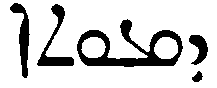
The most natural and most widely accepted explanation is that God is here represented as taking counsel with divine beings other than Himself, viz. the angels or host of heaven: compare 3²² 11⁷, Isaiah 6⁸, 1 Kings 2219‒22 (so Philo, Rashi, Abraham Ibn Ezra, Delitzsch, Holzinger, Gunkel, Bennett, al.). Dillmann objects to this interpretation, first, that it ascribes to angels some share in the creation of man, which is contrary to scriptural doctrine;¹ and, second, that the very existence of angels is nowhere alluded to by Priestly-Code at all. There is force in these considerations; and probably the ultimate explanation has to be sought in a pre-Israelite stage of the tradition (such as is represented by the Babylonian account: see below, page 46), where a polytheistic view of man’s origin found expression. This would naturally be replaced in a Hebrew recension by the idea of a heavenly council of angels, as in 1 Kings 22, Job 1, 38⁷, Daniel 4¹⁴ 7¹⁰ etc. That Priestly-Code retained the idea in spite of his silence as to the existence of angels is due to the fact that it was decidedly less anthropomorphic than the statement that man was made in the image of the one incomparable Deity.—in our image, according to our likeness] The general idea of likeness between God and man frequently occurs in classical literature, and sometimes the very term of this verse (εἰκών, ad imaginem) is employed. To speak of it, therefore, as “the distinctive feature of the Bible doctrine concerning man” is an exaggeration; although it is true that such expressions on the plane of heathenism import much less than in the religion of Israel (Dillmann). The idea in this precise form is in the Old Testament peculiar to Priestly-Code (51. 3 9⁶); the conception, but not the expression, appears in Psalms 8⁶: later biblical examples are Sirach 173 ff., Wisdom 2²³ (where the ‘image’ is equivalent to immortality), 1 Corinthians 11⁷, Colossians 3¹⁰, Ephesians 4²⁴, James 3⁹.
¹ Compare Calvin: “Minimam vero tam præclari operis partem Angelis adscribere abominandum sacrilegium est.”
The origin of the conception is probably to be found in the Babylonian mythology. Before proceeding to the creation of Ea-bani, Aruru forms a mental image (zikru: see Jensen Keilinschriftliche Bibliothek, vi. 1, 401 f.) of the God Anu (ib. 120, l. 33); and similarly, in the Descent of Ištar, Ea forms a zikru in his wise heart before creating Aṣūšunamir (ib. 86. l. 11). In both cases the reference is obviously to the bodily form of the created being. See, further, Die Keilinschriften und das Alte Testament³ 506; Das Alte Testament im Lichte des alten Orients², 167.
The patristic and other theological developments of the doctrine lie beyond the scope of this commentary;¹ and it is sufficient to observe with regard to them—(1) that the ‘image’ is not something peculiar to man’s original state, and lost by the Fall; because Priestly-Code, who alone uses the expression, knows nothing of a Fall, and in 9⁶ employs the term, without any restriction, of post-diluvian mankind. (2) The distinction between εἰκών (imago) and ὁμοίωσις (similitudo)—the former referring to the essence of human nature and the latter to its accidents or its endowments by grace—has an apparent justification in LXX, which inserts καί between the two phrases (see below), and never mentions the ‘likeness’ after 1²⁶; so that it was possible to regard the latter as something belonging to the divine idea of man, but not actually conferred at his creation. The Hebrew affords no basis for such speculations: compare 51. 3 9⁶.—(3) The view that the divine image consists in dominion over the creatures (Gregory of Nyssa, Chrysostom, Socinians, etc.) is still defended by Holzinger; but it cannot be held without an almost inconceivable weakening of the figure, and is inconsistent with the sequel, where the rule over the creatures is, by a separate benediction, conferred on man, already made in the image of God. The truth is that the image marks the distinction between man and the animals, and so qualifies him for dominion: the latter is the consequence, not the essence, of the divine image (compare Psalms 86 ff., Sirach 172‒4)—(4) Does the image refer primarily to the spiritual nature or to the bodily form (upright attitude, etc.) of man? The idea of a corporeal resemblance seems free from objection on the level of Old Testament theology; and it is certainly strongly suggested by a comparison of 5³ with 5¹. God is expressly said to have a ‘form’ which can be seen (תְּמוּנָה, Numbers 12⁸, Psalms 17¹⁵); the Old Testament writers constantly attribute to Him bodily parts; and that they ever advanced to the conception of God as formless spirit would be difficult to prove. On the other hand, it may well be questioned if the idea of a spiritual image was within the compass of Hebrew thought. Dillmann, while holding that the central idea is man’s spiritual nature, admits a reference to the bodily form in so far as it is the expression and organ of mind, and inseparable from spiritual qualities.² It might be truer to say that it denotes primarily the bodily form, but includes those spiritual attributes of which the former is the natural and self-evident symbol.³—Note the striking parallel in Ovid, Metamorphoses i. 76 ff.
¹ A good summary is given by Zapletal, Alttestamentliches, 1‒15.
² So Augustine, On Genesis against the Manichaeans 1. 17: “Ita intelligitur per animum maxime, attestante etiam erecta corporis forma, homo factus ad imaginem et similitudinem Dei.”
³ Compare Engert, Die Weltschöpfung, 33.
Man (אָדָם) is here generic (the human race), not the proper name of an individual, as 5³. Although the great majority of commentaries take it for granted that a single pair is contemplated, there is nothing in the narrative to bear out that view; and the analogy of the marine and land animals is against it on the whole (Tuch and Bennett).—fish of the sea, etc.] The enumeration coincides with the classification of animals already given, except that the earth occurs where we should expect wild beast of the earth. חַיַּת should undoubtedly be restored to the text on the authority of Peshiṭtå.—27. in his image, in the image of God, etc.] The repetition imparts a rhythmic movement to the language, which may be a faint echo of an old hymn on the glory of man, like Psalms 8 (Gunkel).—male and female] The persistent idea that man as first created was bi-sexual and the sexes separated afterwards (mentioned by Rashi as a piece of Haggada, and recently revived by Schwally, Archiv für Religionswissenschaft., ix. 172 ff.), is far from the thought of the passage.—28. A benediction is here again the source of fertility, but this time also of dominion: Gunkel regards this as another fragment of a hymn.
27. בצלמו] LXX omitted. The curious paraphrase of Symmachus appears to reflect the Ebionite tendency of that translator: ἐν εἰκόνι διαφόρῳ ὄρθιον ὁ θεὸς ἔκτισεν αὐτόν (Geiger, Jüdische Zeitschrift für Wissenschaft und Leben, i. 40 f.). See, however, Nestle, Marginalien und Materialien, 3 f., who calls attention to the ὄρθιον in LXX of 1 Samuel 28¹⁴, and considers this word the source of the idea that the upright form of man is part of the divine image. But LXX in 1 Samuel probably misread זקן as זקף.—אֹתוֹ] constructio ad formam: אֹתָם constructio ad sensum, אדם being collective: see Gesenius-Kautzsch § 132 g.—זכר ונקבה] The phrase confined to Priestly-Code except Deuteronomy 4¹⁶; נ׳ alone in Jeremiah 31²¹ (a gloss?). Although the application to a single pair of individuals predominates in the Law, the collective sense is established by Genesis 7¹⁶, and is to be assumed in some other cases (Numbers 5³ etc.). On its etymology see Gesenius Thesaurus philologicus criticus Linguæ Hebrææ et Chaldææ Veteris Testamenti, s.v., and (for a different view) Schwally, Zeitschrift für die alttestamentliche Wissenschaft, xi. 181 f.—28. ויאמר להם] LXX λέγων; perhaps original.—וכבשֻׁהָ] The only instance of a verbal suffix in this chapter: a strong preference for expression of accusative by את with suffix is characteristic of the style of Priestly-Code (Wellhausen Prolegomena zur Geschichte Israels⁶ 389).—הרמשת] participle with article = relative clause: see Davidson § 99, R. 1. The previous noun is defined by כל, as in verse ²¹ (The Samaritan Recension of the Pentateuch inserts the article).—After שמים Peshiṭtå read ובבהמה (so Ball). LXX has for the end of the verse: καὶ πάντων τῶν κτηνῶν καὶ πάσης τῆς γῆς καὶ πάντων [τῶν ἑρπετῶν] τῶν ἑρπόντων ἐπὶ τῆς γῆς.