Chapter XVII · The Covenant of Circumcision (Priestly-Code).
Reading edition
To Abram, who is henceforth to be called Abraham (⁵), God reveals Himself under a new name (¹), entering into a covenant with him (2‒8), of which the sign is the rite of circumcision (9‒14). The heir of this covenant is to be a son born to Sarai (whose name is changed to Sarah) in the following year (15‒22). Abraham immediately circumcises all the males of his household (23‒27).—To the writer of the Priestly Code the incident is important (1) as an explanation of the origin of circumcision, which in his day had become a fundamental institution of Judaism; and (2) as marking a new stage in the revelation of the true God to the world. The Abrahamic covenant inaugurates the third of the four epochs (commencing respectively with Adam, Noah, Abraham and Moses) into which the Priestly theory divides the history of mankind. On the ethnic parallels to this scheme, Gunkel’s note (page 233 ff.) may be consulted.
Source.—The marks of Priestly-Code’s authorship appear in every line of the chapter. Besides the general qualities of style, which need not again be particularised, we may note the following expressions: אלהים (throughout, except verse ¹, where יהוה is either a redactional change or a scribal error); אל שדי, ¹; הקים ברית, נתן ב׳, 2. 7. 19. 21; במאד מאד, 2. 6. 20; אתה וזרעך אחריך, 7. 8. 9. 10. 19; לדרתם, 7. 9. 12; מגרים, ⁸; ארץ כנען, ⁸; אחזה, ⁸; כל־זכר, 10. 12. 23; מקנה, 12. 13. 23. 27; בן־נכר, 12. 27; ונכרתה הנפש וגו׳, ¹⁴; פרה ורבה, ²⁰; נשיאם, ²⁰; הוליד, ²⁰; בעצם היום הזה, 23. 26; see Dillmann, Holzinger, Gunkel. References to the passage in other parts of Priestly-Code are 212. 4 28⁴ 35¹², Exodus 2²⁴ 63 f. (Leviticus 12³ ?).
The close parallelism with chapter 15 makes it probable that that chapter, in its present composite form, is the literary basis of Priestly-Code’s account of the covenant. Common to the two narratives are (a) the self-introduction of the Deity (17¹ ∥ 15⁷); (b) the covenant (17 passim ∥ 159 ff.); (c) the promise of a numerous seed (17⁴ passim ∥ 15⁵); (d) of the land (17⁸ ∥ 15¹⁸), (e) of a son (1719. 21 ∥ 15⁴); (f) Abraham’s incredulity (17¹⁷ ∥ 153. 8). The features peculiar to Priestly-Code, such as the sign of circumcision, the etymology of יִצְחָק in verse ¹⁷, the changes of names, etc., are obviously not of a kind to suggest the existence of a separate tradition independent of Yahwist and Elohist.
1‒8. The Covenant-promises.—These are three in number: (a) Abraham will be the father of a numerous posterity (2b. 4‒6); (b) God will be a God to him and to his seed (7b. 8b); (c) his seed shall inherit the land of Canaan (8a). We recognise here a trace of the ancient religious conception according to which god, land, and people formed an indissoluble triad, the land being an indispensable pledge of fellowship between the god and his worshippers (see Lectures on the Religion of the Semites², 92 f.).—1. appeared to Abram] i.e., in a theophany, as is clear from verse ²². It is the only direct communication of God to Abram recorded in Priestly-Code. Priestly-Code is indeed very sparing in his use of the theophany, though Exodus 6³ seems to imply that his narrative contained one to each of the three patriarchs. If that be so, the revelation to Isaac has been lost, while that to Jacob is twice referred to (35⁹ 48³).—I am ’El Shaddai] The origin, etymology, and significance of this title are alike obscure: see the footnote. In Priestly-Code it is the signature of the patriarchal age (Exodus 6³); or rather it designates the true God as the patron of the Abrahamic covenant, whose terms are explicitly referred to in every passage where the name occurs in Priestly-Code (28³ 35¹¹ 48³). That it marks an advance in the revelation of the divine character can hardly be shown, though the words immediately following may suggest that the moral condition on which the covenant is granted is not mere obedience to a positive precept, but a life ruled by the ever-present sense of God as the ideal of ethical perfection.—Walk before me (compare 24⁴⁰ 48¹⁵)] i.e., ‘Live consciously in My presence,’ 1 Samuel 12², Isaiah 38³; compare 1 John 1⁷.—perfect] or ‘blameless’; see on 6⁹.—2. On the idea and scope of the covenant (בְּרִית), see page 297 f. below.—4. father of a multitude (literally tumult) of nations] In substance the promise is repeated in 28³ 48⁴ (קְהַל עַמִּים) and 35¹¹ (ק׳ גּוֹיִם); the peculiar expression here anticipates the etymology of verse ⁵. While Yahwist (12² 18¹⁸ 46³) restricts the promise to Israel (גּוֹי גָּדוֹל), Priestly-Code speaks of ‘nations’ in the plural, including the Ishmaelites and Edomites amongst the descendants of Abraham. See, however, on 28³.—5. Abram’s name is changed to Abraham, interpreted as ‘Father of multitude.’ Compare Nehemiah 9⁷.
The equation אַבְרָהָם = אַב הֲמוֹן [גוים] is so forced that Dillmann al. doubt if a serious etymology was intended. The line between word-play and etymology is difficult to draw; and all that can safely be said is that the strained interpretation here given proves that אַבְרָהָם is no artificial formation, but a genuine element of tradition. (1) The form אַבְרָם is an abbreviation of אֲבִירָם (Numbers 16¹ etc.: compare אַבְנֵר, 1 Samuel 14⁵¹ etc., with אֲבִינֵר, 1 Samuel 14⁵⁰; אַבְשָׁלוֹם, 2 Chronicles 1120. 21, with אֲבִישָׁלוֹם, 1 Kings 152. 10), which occurs as a personal name not only in Hebrew but also as that of an Assyrian official (Abî-râmu) under Esarhaddon, B.C. 677 (see Die Keilinschriften und das Alte Testament³, 482)¹. (2) Of אברהם, on the other hand, no scientific etymology can be given. The nearest approach to Priestly-Code’s explanation would be found in the Arabic ruhām = ‘copious number’ (from a √ descriptive of a fine drizzling rain: Lane, s.v.).² Delitzsch thinks this the best explanation; but the etymology is far-fetched, and apart from the probably accidental correspondence with Priestly-Code’s interpretation the sense has no claim to be correct.—With regard to the relation of the two forms, various theories are propounded. Hommel (The Ancient Hebrew Tradition as illustrated by the Monuments, 275 ff.; Mittheilungen der vorderasiatischen Gesellschaft, ii. 271) regards the difference as merely orthographic, the ה being inserted, after the analogy of Minæan, to mark the long ā (אַבְרָהם), while a later misunderstanding is responsible for the pronunciation ־רָחָם. Strack and Stade (Zeitschrift für die alttestamentliche Wissenschaft, i. 349) suppose a dialectic distinction: according to the latter, אברהם is the original (Edomite) form, of which אברם is the Hebraïzed equivalent.³ Winckler (Geschichte Israels in Einzeldarstellungen, ii. 26) finds in them two distinct epithets of the moon-god Sin, one describing him as father of the gods (Sin abu ilâni), and the other (‘father of the strife of peoples’) as god of war (Sin ḳarib ilâni). The possibility must also be considered that the difference is due to the fusion in tradition of two originally distinct figures (see Paton, The Early History of Syria and Palestine 41). It is quite a plausible supposition, though the thoroughness of the redaction has effaced the proof of it, that אברם was peculiar to Yahwist and אברהם to Elohist.—Outside of Genesis (with the exception of the citations 1 Chronicles 1²⁷, Nehemiah 9⁷) the form Abraham alone is found in Old Testament.
¹ Hommel’s reading of Abî-râmu on a contract tablet of Abil-Sin, the grandfather of Ḫammurabi (see The Ancient Hebrew Tradition as illustrated by the Monuments, 96), has proved to be incorrect, the true reading being Abî-Eraḫ (see Ranke, Die Personennamen in den Urkunden der Hammurabi-dynastie, 1902, page 48). The name has, however, recently been discovered in several documents of the time of Ammizaduga, the 10th king of the same dynasty. See Beiträge zur Assyriologie und semitischen Sprachwissenschaft, vi. (1909), Heft 5, page 60, where Ungnad shows that the name is not West Semitic, but Babylonian, that the pronunciation was Abaram, and that the first element is an accusative. He suggests that it may mean “he loves the father” (râma = רחם), the unnamed subject being probably a god. Compare The Expository Times., xxi. (1909), 88 ff.
² The Arabic kunyā, ’Abū-ruhm is only an accidental coincidence: Nöldeke Zeitschrift der deutschen morgenländischen Gesellschaft, xlii. 484².
³ Similarly von Gall (Altisraelitische Kultstätten 53), who compares Aramaic , Arabic bht, appearing in Hebrew as בּוֹשׁ.

1. אֵל שֶׂדַּי] For a summary of the views held regarding this divine name, the reader may be referred to Baethgen, Beiträge zur Geschichte Cölestins 293 ff., or Kautzsch in Encyclopædia Biblica, iii. 3326 f. (compare Cheyne ib. iv. 4419 f.); on the renderings of the ancient versions, see the synopses of Dillmann (259), Driver (404 f.), and Valeton (Zeitschrift für die alttestamentliche Wissenschaft, xii. 11¹).—It is unfortunately impossible to ascertain whether שֶׂדַּי was originally an independent noun, or an attribute of אֵל: Nöldeke and Baethgen decide for the latter view. The traditional Jewish etymology resolves the word into שׁ = אֲשֶׁר and דַּי,—‘the all-sufficient’ or ‘self-sufficient’ (Bereshith Rabba § 46: compare Rashi אני הוא שיש די באלהותי לכל בדיה). Though this theory can be traced as far back as the rendering of Aquila, Symmachus, and Theodotion (ἱκανός), it is an utterly groundless conjecture that Priestly-Code used the name in this sense (Valeton). On the other hand, it seems rash to conclude (with Nöldeke al.) that the Massoretic punctuation has no better authority than this untenable interpretation, so that we are at liberty to vocalise as we please in accordance with any plausible etymological theory. The old derivation from √ שׁרד = ‘destroy,’ is still the best: it is grammatically unobjectionable, has at least some support in Isaiah 13⁶, Joel 1¹⁵, and is free from difficulty if we accept it as an ancient title appropriated by Priestly-Code without regard to its real significance. The assumption of a by-form שׁרה (Ewald, Tuch, al.) is gratuitous, and would yield a form שֶׂדָּי, not שֶׂדַּי. Other proposed etymologies are: from שֵׁד originally = ‘lord’ (Arabic sayyid), afterwards = ‘demon’ (pointing שֵׁדִי or שֵׁדַי [plural majority]: Nöldeke Zeitschrift der deutschen morgenländischen Gesellschaft, xl. 735 f., xlii. 480 f.); from √ שׁדה (Arabic ṯadā) = ‘be wet’ (‘the raingiver’: The Old Testament in the Jewish Church², 424); from Syrian , ‘hurl’ (Schwally, Zeitschrift der deutschen morgenländischen Gesellschaft, lii. 136: “a dialectic equivalent of יהוה in the sense of lightning-thrower” [שֶׂדָּי]). Vollers (Zeitschrift für Assyriologie, xvii. 310) argues for an original שֵׁד (√ שׁוד), afterwards, through popular etymology and change of religious meaning, fathered on √ שׁדד. Several Assyriologists connect the word with šadû rabû, ‘great mountain,’ a title of Bêl and other Babylonian deities (Hommel The Ancient Hebrew Tradition as illustrated by the Monuments, 109 f.; Zimmern, Die Keilinschriften und das Alte Testament³, 358): a view which would be more plausible if, as Friedrich Delitzsch (Prolegomena eines neuen hebräisch-aramäischen Wörterbuchs zum Alten Testament 95 f.) has maintained, the Assyrian √ meant ‘lofty’; but this is denied by other authorities (Halevy, Zeitschrift für Keilschriftsforschung, ii. 405 ff.; Jensen Zeitschrift für Assyriologie, i. 251). As to the origin of the name, there is a probability that אֵל שֶׂדַּי was an old (compare Genesis 49²⁵) Canaanite deity, of the same class as ’El ‛Elyôn (see on 14¹⁸), whom the Israelites identified with Yahwe (so Gunkel 235).—4. אֲנִי] is casus pendens (Driver A Treatise on the use of the Tenses in Hebrew § 197 (4)), not emphatic anticipation of following suffix (as Gesenius-Kautzsch § 135 f).—5. את־שמך] Gesenius-Kautzsch § 121 a, b; but את is omitted in some MSS and in The Samaritan Recension of the Pentateuch.

6. The promise of kings among Abraham’s descendants is again peculiar to Priestly-Code (35¹¹). The reference is to the Hebrew monarchy: the rulers of Ishmael are only ‘princes’ (נְשֵׁיאִם, verse ²⁰), and those of Edom (36⁴⁰) are styled אַלּוּף—7. to be to thee a God] The essence of the covenant relation is expressed by this frequently recurring formula.¹ It is important for Priestly-Code’s notion of the covenant that the correlative ‘they (ye) shall be to me a people,’ which is always added in other writings (except Ezekiel 34²⁴), is usually omitted by Priestly-Code (except Exodus 6⁷, Leviticus 26¹²). The bĕrîth is conceived as a self-determination of God to be to one particular race all that the word God implies, a reciprocal act of choice on man’s part being no essential feature of the relation.—8. land of thy sojourning] 28⁴ 36⁷ 37¹ 47⁹, Exodus 6⁴ (all Priestly-Code).
¹ The list of passages as given by Driver (page 186) is as follows: In Priestly-Code, Exodus 6⁷ 29⁴⁵, Leviticus 11⁴⁵; in Priestly-Codeʰ, Leviticus 22³³ 25³⁸ 2612. 45, Numbers 15⁴¹; elsewhere, Deuteronomy 29¹³ (compare 2617 f.), Jeremiah 7²³ 11⁴ 24⁷ 30²² 311. 33, Ezekiel 11²⁰ 14¹¹ 34²⁴ 36²⁸ 3723. 27, 2 Samuel 2²⁴ (= 1 Chronicles 17²²), Zechariah 8⁸.
6. ממך] Peshiṭtå = מִמֵּעֶיךָ; see on 15⁴.—8. אֲחֻזָּה] a common word in Priestly-Code; elsewhere only Psalms 2⁸, Ezekiel 44²⁸, 1 Chronicles 7²⁸.
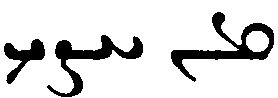
9‒14. The sign of the Covenant.—To the promises of verses 2‒8 there is attached a single command, with regard to which it is difficult to say whether it belongs to the content of the covenant (verse ¹⁰), or is merely an adjunct,—an external mark of the invisible bond which united every Jew to Yahwe (¹¹): see page 297. The theme at all events is the institution of circumcision. The legal style of the section is so pronounced that it reads like a stray leaf from the book of Leviticus (note the address in 2nd person plural from ¹⁰ onwards).—9. And God said] marks a new section (compare ¹⁵), וְאַתָּה being the antithesis to אֲנִי in ⁴.—keep my covenant] שָׁמַר is opposed to הֵפַֽר, ‘break,’ in ¹⁴; hence it cannot mean ‘watch over’ (Valeton), but must be used in the extremely common sense of ‘observe’ or ‘act according to.’ The question would never have been raised but for a disinclination to admit anything of the nature of a stipulation into Priestly-Code’s idea of the covenant.—10. This is my covenant] Circumcision is both the covenant and the sign of the covenant: the writer’s ideas are sufficiently vague and elastic to include both representations. It is therefore unnecessary (with Olshausen and Ball) to read זאת אֹת בריתי (see verse ¹³).—11. for a covenant-sign] i.e., after the analogy of 912 f., a token by which God is reminded of the existence of the covenant. The conception rises out of the extraordinary importance of the rite when the visible fabric of Hebrew nationality was dissolved, and nothing remained but this corporal badge as a mark of the religious standing of the Jew before Yahwe.—12a. at the age of eight days] connected with the period of the mother’s uncleanness: Leviticus 121. 3; compare Genesis 21⁴, Luke 1⁵⁹ 2²¹, Philippians 3⁵; Josephus Antiquities of the Jews i. 214.—12b, 13 go together (Delitzsch), extending the obligation to slaves, who as members of the household follow the religion of their master.—The penalty of disobedience is death or excommunication, according as one or the other is meant by the obscure formula: be cut off from its kindred (v.i.).
10. ובין זרעך אחריך] LXX + εἰς τὰς γενεὰς αὐτῶν. The whole is possibly a gloss (Kautzsch-Socin, Ball, Gunkel), due to confusion between the legislative standpoint of 10 ff. with its plural address, and the special communication to Abraham; see, however, verses 12 f.—המול] infinitive absolute used as jussive; Gesenius-Kautzsch § 113 cc, gg: compare Exodus 12⁴⁸, Leviticus 6⁷, Numbers 6⁵.—11. וּנְמַלְתֶּם] treated by TargumOnkelos-Jonathan as active, from √ נמל, but really abbreviated Niphal of √ מלל (compare Gesenius-Kautzsch § 67 dd), a rare by-form (Joshua 5²) of מוּל.—והיה] The Samaritan Recension of the Pentateuch והיתה, adopted by Ball.—12. יליד בית] see 14¹⁴.—מקנת כסף] only verses 13. 23. 27 and Exodus 12⁴⁴.—מזרעך is the individualising use of 2nd person singular, frequently alternating with 2nd plural in legal enactments. So verse ¹³.—14. ערלתו] The Samaritan Recension of the Pentateuch, LXX + ביום השמיני (Ball).—ונכרתה—מעמיה] So Exodus 3033. 38 31¹⁴, Leviticus 720 f. 25. 27 17⁹ 19⁸ 23²⁹, Numbers 9¹³,—all in Priestly-Code, who employs a number of similar phrases—‘his people,’ ‘Israel,’ ‘the congregation of Israel,’ ‘the assembly,’ etc.—to express the same idea (see Driver 187²). עַמִּים is here used in the sense of ‘kin,’ as occasionally in Old Testament (see 19³⁸ 25⁸). It is the Arabic ‛amm, which combines the two senses of ‘people,’ and ‘relative on the father’s side’: see Wellhausen Nachrichten von der Königlichen Gesellschaft der Wissenschaften zu Göttingen, 1893, 480, and compare Driver on Deuteronomy 32⁵⁰ (page 384); Krenkel, Zeitschrift für die alttestamentliche Wissenschaft, viii. 280 ff.; Nestle, ib. xvi. 322 f.; Die Keilinschriften und das Alte Testament³, 480 f. With regard to the sense of the formula there are two questions: (a) whether it embraces the death-penalty, or merely exclusion from the sacra of the clan and from burial in the family grave; and (b) whether the punishment is to be inflicted by the community, or by God in His providence. The interpretation seems to have varied in different ages. Exodus 3113 f. clearly contemplates the death penalty at the hands of the community; while Leviticus 179 f. 203. 6 point as clearly to a divine interposition. The probability is that it is an archaic juridical formula for the punishment of death, which came to be used vaguely “as a strong affirmation of divine disapproval, rather than as prescribing a penalty to be actually enforced” (Driver). See Stade Geschichte des Volkes Israel, i. 421 f.; Holzinger page 127 f.—הֵפַֽר] pausal form for הֵפֵר (Gesenius-Kautzsch § 29 q).
15‒22. The heir of the Covenant.—The promise of the birth of Isaac is brought into connexion with the main idea of the chapter by the assurance (19. 21) that the covenant is to be established with him and not with Ishmael.—15. Sarai’s name is changed to Sarah. The absence of an etymological motive is remarkable (v.i.).—16b. In LXX, Jubilees, Vulgate and Peshiṭtå, the blessing on Sarah is by slight changes of text turned into a blessing on the son whose birth has just been foretold (v.i.). The Massoretic Text, however, is more likely to be correct.—17. Abraham’s demeanour is a strange mixture of reverence and incredulity: “partim gaudio exultans, partim admiratione extra se raptus, in risum prorumpit” is Calvin’s comment. It is Priestly-Code’s somewhat unnatural clothing of the traditional etymology of Isaac (יִצְחָק, verse ¹⁹); compare 18¹² (Yahwist), 21⁶ (Elohist).—18. The prayer, O that Ishmael might live before thee!—under Thy protection and with Thy blessing (Hosea 6²)—is a fine touch of nature; but the writer’s interest lies rather in the ‘determinate counsel and foreknowledge of God,’ which overrides human feeling and irrevocably decrees the election of Israel (¹⁹).—19a. Compare the language with 16¹¹, and observe that the naming of the child is assigned to the father.—20. שְׁמַעְתִּיךָ] a remote allusion to the popular explanation of יִשְׁמָעֵאל, ‘May God hear’ (compare 16¹¹ 21¹⁷). Ishmael is to be endowed for Abraham’s sake with every kind of blessing, except the religious privileges of the covenant.—twelve princes] (compare 25¹⁶) as contrasted with the ‘kings’ of 6. 16.—22. The close of the theophany.—וַיַּעַל—מֵעַל as 35¹³.
15. שָׂרַי (LXX Σάρα) and שָׂרָה (LXX Σάῤῥα)] According to Nöldeke (Zeitschrift der deutschen morgenländischen Gesellschaft, xl. 183, xlii. 484), ־ַי is ♦an old feminine terminator surviving in Syrian, Arabian and Ethiopian. On this view שָׂרַי may be either the same word as שָׂרָה, ‘princess’ (√ שרר), or (as the differentiation of LXX suggests) from √ שרה, ‘strive,’ with which the name Israel was connected (Genesis 32²⁹, Hosea 12⁴: see William Robertson Smith Kinship and Marriage in Early Arabia², 34 f. [Nöldeke dissents]). On Lagarde’s (Mittheilungen ii. 185) attempt to connect the name with Arabic šaraʸ = ‘wild fertile spot,’ and so to identify Abraham (as ‘husband of Sarai’) with the Nabatean god Dusares (ḏū-ššaraʸ), see Meyer Die Israeliten und ihre Nachbarstämme, 269 f., who thinks the conjecture raised beyond doubt by the discovery of the name Šarayat as consort of Dusares on an inscription at Boṣra in the Ḥaurân. The identification remains highly problematical.—16. וברכתיה] The Samaritan Recension of the Pentateuch וברכתיו. So LXX, Jubilees, Vulgate, Peshiṭtå, which consistently maintain the masculine to the end of the verse.—17. ואם—הֲ׳] a combination of the disjunctive question with casus pendens; see Gesenius-Kautzsch § 150 g.
19. אבל] ‘Nay, but,’—a rare asseverative (42²¹, 2 Samuel 14⁵, 2 Kings 4¹⁴, 1 Kings 1⁴³) and adversative (Daniel 107. 21, Ezra 10¹³, 2 Chronicles 1⁴ 19³ 33¹⁷) particle. See the interesting note in Burney, Notes on Kings, page 11; and compare König, ii. 265.—לזרעו אחריו] LXX καὶ τῷ σπέρματι αὐτοῦ μετ’ αὐτὸν appears to imply a preceding clause εἶναι αὐτῷ θεός, which is found in many cursives. This is probably the correct reading.—20. נשיאם] LXX ἔθνη.
23‒27. Circumcision of Abraham’s household.—23. on that very day (compare 7¹³)] repeated in verse ²⁶. Throughout the section, Priestly-Code excels himself in pedantic and redundant circumstantiality of narration. The circumcision of Ishmael, however, is inconsistent with the theory that the rite is a sign of the covenant, from which Ishmael is excluded (Holzinger, Gunkel).—25. thirteen years old] This was the age of circumcision among the ancient Arabs, according to Josephus. Antiquities of the Jews i. 214. Origen (Eusebius Præparatio Evangelica vi. 11:¹ compare Wellhausen Reste arabischen Heidentums² 175³); and Ambrose (de Abraham ii. 348) give a similar age (14 years) for the Egyptians. It is possible that the notice here is based on a knowledge of this custom. Among the modern Arabs there is no fixed rule, the age varying from three to fifteen years: see Dillmann 264; Driver in A Dictionary of the Bible, ii. 504ᵇ.
¹ Edited by Heinichen, page 310 f.
Circumcision is a widely diffused rite of primitive religion, of whose introduction among the Hebrews there is no authentic tradition. One account (Exodus 424 f.) suggests a Midianite origin, another (Joshua 52 ff.) an Egyptian: the mention of flint knives in both these passages is a proof of the extreme antiquity of the custom (the Stone Age).¹ The anthropological evidence shows that it was originally performed at puberty, as a preliminary to marriage, or, more generally, as a ceremony of initiation into the full religious and civil status of manhood. This primary idea was dissipated when it came to be performed in infancy; and its perpetuation in this form can only be explained by the inherited belief that it was an indispensable condition of participation in the common cultus of the clan or nation. ♦Passages like Deuteronomy 10¹⁶ 30⁶, Ezekiel 447. 9, show that in Israel it came to be regarded as a token of allegiance to Yahwe; and in this fact we have the germ of the remarkable development which the rite underwent in post-Exilic Judaism. The new importance it then acquired was due to the experience of the Exile (partly continued in the Dispersion), when the suspension of public worship gave fresh emphasis to those rites which (like the Sabbath and circumcision) could be observed by the individual, and served to distinguish him from his heathen neighbours. In this way we can understand how, while the earlier legal codes have no law of circumcision, in Priestly-Code it becomes a prescription of the first magnitude, being placed above the Mosaic ritual, and second in dignity only to the Sabbath. The explicit formulating of the idea that circumcision is the sign of the national covenant with Yahwe was the work of the Priestly school of jurists; and very few legislative acts have exercised so tremendous an influence on the genius of a religion, or the character of a race, as this apparently trivial adjustment of a detail of ritual observance. For information on various aspects of the subject, see Ploss, Das Kind in Brauch und Sitte der Völker² (1894), i. 342‒372; Wellhausen Reste arabischen Heidentums² 174 f., Prolegomena zur Geschichte Israels⁶ 338 ff.; Stade Zeitschrift für die alttestamentliche Wissenschaft, vi. 132‒143; the articles in A Dictionary of the Bible (Macalister) and Encyclopædia Biblica (Benzinger); and the notes in Dillmann 258; Holzinger 129; Gunkel 237; Driver 189 ff.; Strack², 67; Matthes, Zeitschrift für die alttestamentliche Wissenschaft, xxix. 70 ff.
¹ In a tomb of the Old Empire at Sakkara there are wall-pictures of the operation, where the surgeon uses a flint knife: see G. Elliot Smith in British Medical Journal, 1908, 732 (quoted by Matthes); and the illustration in Texte und Bilder, ii. page 126.
The Covenant-idea in Priestly-Code (see also page 290 f. above). In Priestly-Code’s scheme of four world-ages, the word בְּרִית is used only of the revelations associated with Noah and Abraham. In the Creation-narrative the term is avoided because the constitution of nature then appointed was afterwards annulled, whereas the Bĕrîth is a permanent and irreversible determination of the divine will. The conception of the Mosaic revelation as a covenant is Jehovistic (Exodus 243‒8 3410 ff. etc.) and Deuteronomic (Deuteronomy 410 ff. 52 ff. 99 ff. etc.); and there are traces of it in secondary strata of Priestly-Code (Leviticus 26⁴⁵ [Priestly-Codeʰ], Exodus 3116 f.¹ [Priestly-Codeˢ]); but it is not found in the historical work which is the kernel of the Code (Priestly-CodeKernel). Hence in trying to understand the religious significance of the Bĕrîth in Priestly-CodeKernel, we have but two examples to guide us. And with regard to both, the question is keenly discussed whether it denotes a self-imposed obligation on the part of God, irrespective of any condition on the part of man (so Valeton, Zeitschrift für die alttestamentliche Wissenschaft, xii. 1 ff.), or a bilateral engagement involving reciprocal obligations between God and men (so in the main Kraetzschmar, Die Bundesvorstellung im Alten Testament 183 ff.). The answer depends on the view taken of circumcision in this chapter. According to Valeton, it is merely a sign and nothing more; i.e., a means whereby God is reminded of the covenant. According to Kraetzschmar, it is both a sign and a constituent of the covenant, forming the condition on which the covenant is entered into. The truth seems to lie somewhere between two extremes. The Bĕrîth is neither a simple divine promise to which no obligation on man’s part is attached (as in 15¹⁸), nor is it a mutual contract in the sense that the failure of one party dissolves the relation. It is an immutable determination of God’s purpose, which no unfaithfulness of man can invalidate; but it carries conditions, the neglect of which will exclude the individual from its benefits. It is perhaps an over-refinement when Kraetzschmar (l.c. 201) infers from the expressions הֵקִים and נָתַן that for Priestly-Code there is only one eternal divine Bĕrîth, immutably established by God and progressively revealed to man.
¹ Could this, however, be taken to mean that the Sabbath was a ‘sign’ of the Adamic dispensation conceived as a covenant?
24. שנה] The Samaritan Recension of the Pentateuch שנים.—בהמלו] The Niphal is here either reflexive or passive; in ²⁵ it is passive.—26. נמול] irregular perfect Niphal; Gesenius-Kautzsch § 72 ee. Peshiṭtå takes it as active. (√ נמל?) with Ishmael as object; and so LXX in verse ²⁷ (περιέτεμεν αὐτούς).