Chapter XV · God’s Covenant with Abram (Jehovist).
Reading edition
In a prolonged interview with Yahwe, Abram’s misgivings regarding the fulfilment of the divine promises are removed by solemn and explicit assurances, and by a symbolic act in which the Almighty binds Himself by the inviolable ceremonial of the berîth.¹ In the present form of the chapter there is a clear division between the promise of a son and heir (1‒6) and the promise of the land (7‒21), the latter alone being strictly embraced in the scope of the covenant.
¹ “Die Berîth ist diejenige kultische Handlung, durch die in feierlicher Weise Verpflichtungen oder Abmachungen irgend welcher Art absolut bindend und unverbrüchlich gemacht wurden” (Kraetzschmar, Die Bundesvorstellung im Alten Testament, 40 f.).
Analysis.—See, besides the commentary, Wellhausen Die Composition des Hexateuchs und der historischen Bücher des Alten Testaments² 23 f.; Budde Die biblische Urgeschichte 416¹; Bacon, Hebraica, vii. 75 ff.; Kraetzschmar, op. cit. 58 ff.—The chapter shows unmistakable signs of composition, but the analysis is beset with peculiar, and perhaps insurmountable, difficulties. We may begin by examining the solution proposed by Gunkel. He assigns 1a.* bγ. 2a. 3b. 4. 6. 9. 10. 12aα. b. 17. 18a. bα to Yahwist; 1bαβ. 3a. [2b?] 5. 11. 12aβ. 13a. 14 (to יצאו). 16 to Elohist; and 7. 8. 13b. 14bβ. 15. 18bβ. 19‒21 to a redactor. On this analysis the Yahwist fragments form a consecutive and nearly complete narrative, the break at verse ⁷ being caused by Redactor’s insertion of 7 f. But (1) it is not so easy to get rid of 7 f. Verse ⁸ is, and ⁶ is not, a suitable point of contact for 9 ff.; and the omission of 7 f. would make the covenant a confirmation of the promise of an heir, whereas ¹⁸ expressly restricts it to the possession of the land. And (2) the parts assigned to Yahwist contain no marks of the Yahwistic style except the name יהוה; they present features not elsewhere observed in that document, and are coloured by ideas characteristic of the Deuteronomic age. The following points may be here noted: (a) the prophetic character of the divine communication to Abram (1. 4); (b) the address אדני יהוה (2a [compare ⁸]); (c) the theological reflexion on the nature of Abram’s righteousness (⁶: compare Deuteronomy 6²⁵ 24¹³); (d) the idea of the Abrahamic covenant (found only in redactional expansions of Jehovist, and common in Deuteronomy); to which may be added (e) the ideal boundaries of the land and the enumeration of its inhabitants (18b‒21), both of which are Deuteronomistic (see on the verses below). The ceremonial of 9 f. 17 is no proof of antiquity (compare Jeremiah 3417 ff.), and the symbolic representation of Yahwe’s presence in ¹⁷ is certainly not decisive against the late authorship of the piece (against Gunkel). It is difficult to escape the impression that the whole of this Yahwist narrative (including 7 f.) is the composition of an editor who used the name יהוה, but whose affinities otherwise are with the school of Deuteronomy rather than with the early Yahwistic writers.—This result, however, still leaves unsolved problems. (1) It fails to account for the obvious doublets in 2. 3. 2b and 3a are generally recognised as the first traces in the Hexateuch of the document Elohist, and ⁵ (a night scene in contrast to 12. 17) is naturally assigned to the same source. (2) With regard to [12?] 13‒16, which most critics consider to be a redactional expansion of Yahwist, I incline to the opinion of Gunkel, that 11. 13‒16 form part of the sequel to the Elohist narrative recognised in 3a. 2b. 5 (note האמרי, verse ¹⁶). (3) The renewed introduction of Yahwe in verse ⁷ forms a hiatus barely consistent with unity of authorship. The difficulty would be partly met by Bacon’s suggestion that the proper position of the Yahwist material in 1‒6 is intermediate between 15¹⁸ and 16¹. But though this ingenious theory removes one difficulty it creates others, and it leaves untouched what seems to me the chief element of the problem, the marks of lateness both in 1‒6 and 7‒21.—The phenomena might be most fully explained by the assumption of an Elohistic basis, recast by a Jehovistic or Deuteronomic editor (probably RedactorJehovist), and afterwards combined with extracts from its own original; but so complex a hypothesis cannot be put forward with any confidence.
1‒6. The promise of an heir (Yahwist), and a numerous posterity (Elohist).—1. The verse presupposes a situation of anxiety on the part of Abram, following on some meritorious action performed by him. It is not certain that any definite set of circumstances was present to the mind of the writer, though the conditions are fairly well satisfied by Abram’s defenceless position amongst the Canaanites immediately after his heroic obedience to the divine call (Gunkel). The attempts to establish a connexion with the events of chapter 14 (Jewish Commentary and a few moderns) are far-fetched and misleading.—the word of Yahwe came] On the formula v.i. The conception of Abram as a prophet has no parallel in Yahwist; and even Elohist, though he speaks vaguely of Abram as a נָבִיא (20⁷, q.v.), does not describe his intercourse with God in technical prophetic phraseology. The representation is not likely to have arisen before the age of written prophecy.—in a vision] probably a night-vision (see verse ⁵), in which case the expression must be attributed to Elohist. The mediate character of revelation, as contrasted with the directness of the older theophanies (e.g. chapter 18), is at all events characteristic of Elohist.—thy shield] a figure for protection common in later writings: Deuteronomy 33²⁹, Psalms 3⁴ 7¹¹ often, Proverbs 2⁷ 30⁵.—thy reward [will be] very great] a new sentence (LXX, Peshiṭtå), not (as Vulgate, English Version) a second predicate to אָנֹכִי—2. seeing I go hence childless] So all versions, taking הָלַךְ in the sense of ‘die’ (Psalms 39¹⁴: compare Arabic halaka), though the other sense (‘walk’ = ‘live’) would be quite admissible. To die childless and leave no name on earth (Numbers 27⁴) is a fate so melancholy that even the assurance of present fellowship with God brings no hope or joy.—2b is absolutely unintelligible (v.i.). The versions agree in reading the names Eliezer and Damascus, and also (with the partial exception of LXX) in the general understanding that the clause is a statement as to Abram’s heir. This is probably correct; but the text is so corrupt that even the proper names are doubtful, and there is only a presumption that the sense agrees with 3b.—3. In the absence of children or near relatives, the slave, as a member of the family, might inherit (Stade Geschichte des Volkes Israel, i. 391; Benzinger, Hebräische Archäologie² 113). בֶּן־בַּֽיִת is a member of the household, but not necessarily a home-born slave (יְלִיד בַּֽיִת, 14¹⁴).—5. The promise of a numerous ‘seed’ (compare 3a. 13) is Elohist’s parallel to the announcement of the birth of a bodily heir in Yahwist (verse ⁴).—the stars] a favourite image of the later editors and Deuteronomy (22¹⁷ 26⁴, Exodus 32¹³, Deuteronomy 1¹⁰ 10²² 28⁶²).—6. counted it (his implicit trust in the character of Yahwe) as righteousness] 1 Maccabees 2⁵². צְדָקָה is here neither inherent moral character, nor piety in the subjective sense, but a right relation to God conferred by a divine sentence of approval (see Wellhausen Psalms, The Sacred Books of the Old Testament, 174).
This remarkable anticipation of the Pauline doctrine of justification by faith (Romans 43. 9. 22, Galatians 3⁶; compare James 2²³) must, of course, be understood in the light of Old Testament conceptions. The idea of righteousness as dependent on a divine judgment (חָשֶׂב) could only have arisen on the basis of legalism, while at the same time it points beyond it. It stands later in theological development than Deuteronomy 6²⁵ 24¹³, and has its nearest analogies in Psalms 106³¹ 24⁵. The reflexion is suggested by the question how Abram, who had no law to fulfil, was nevertheless ‘righteous’; and, finding the ground of his acceptance in an inward attitude towards God, it marks a real approximation to the Apostle’s standpoint. Gunkel (161) well remarks that an early writer would have given, instead of this abstract proposition, a concrete illustration in which Abram’s faith came to light.
1. אחר[י] הדברים האלה] frequent in Elohist (22¹ 40¹ 48¹, Joshua 24²⁹), but also used by Yahwist (22²⁰ 39⁷).—הָיָה דְבַר־יהוה (compare verse ⁴)] not elsewhere in the Hexateuch; found occasionally in the older writings (1 Samuel 15¹⁰, 2 Samuel 24¹¹), but chiefly in later prophets and superscriptions: specially common in Jeremiah and Ezekiel—מַֽחֲזֶה] Only Numbers 244. 16, Ezekiel 13⁷. The word is thus not at all characteristic of Elohist, though the idea of revelation through dreams and visions (מַרְאָה, Numbers 12⁶; מַרְאֹת הַלַּיְלָה, Genesis 46²) undoubtedly is. Considering the many traces of late editing in the chapter, it is highly precarious to divide the phrases of verse ¹ between Yahwist and Elohist.—הַרְבֵּה (infinitive absolute) as predicate is unusual and late (Psalms 130⁷, Ecclesiastes 11⁸). The Samaritan Recension of the Pentateuch ארבה, ‘I will multiply,’ is perhaps preferable.—2. אדני יהוה] (compare ⁸) is common in the elevated style of prophecy (especially Ezekiel), but rare in the Psalms. In the historical books it occurs only as a vocative (except 1 Kings 2²⁶): Joshua 7⁷, Judges 6²² 16²⁸,—Deuteronomy 3²⁴ 9²⁶, 2 Samuel 718. 19. 20. 28. 29, 1 Kings 8⁵³. Of these the first three are possibly Yahwist; the rest are Deuteronomic.—ובן—אליעזר] LXX has ὁ δὲ υἱὸς Μάσεκ τῆς οἰκογενοῦς μου, οὗτος Δαμασκὸς Ἐλιέζερ,—a meaningless sentence in the connexion, unless supplemented by κληρονομήσει με, as in some MSS of Philo (before οὗτος). Peshiṭtå paraphrases: . מֶשֶׁק is a ἅπαξ λεγόμενον, which appears not to have been understood by any of the Versions. LXX treats it as the name of Eliezer’s mother, Aquila (ποτίζοντος) as = מַשְׁקֶה; Theodotion, Vulgate, TargumOnkelos-Jonathan give it the sense of ‘steward,’ which may be a mere conjecture like the συγγενὴς of Symmachus. Modern commentaries generally regard the word as a modification of מֶשֶׁךְ (Job 28¹⁸?) with the sense of ‘possession’—בֶּן־מֶשֶׁךְ = ‘son of possession’ = ‘possessor’ or ‘inheritor’ (so Gesenius, Tuch, Kautzsch-Socin, Strack. al.); but this has neither philological justification nor traditional support. A √ משׁק (in spite of מִמְשָׁק, Zephaniah 2⁹) is extremely dubious. The last clause cannot be rendered either ‘This is Eliezer of Damascus,’ or ‘This is Damascus, namely Eliezer’ (Delitzsch). Peshiṭtå and TargumOnkelos adopt the summary expedient of turning the substantive into an adjective, and reading ‘Eliezer the Damascene’ (similarly Ὁ Ἑβραῖος in Field). It is difficult to imagine what Damascus can have to do here at all; and if a satisfactory sense for the previous words could be obtained, it would be plausible enough (with Hitzig, Tuch, Kautzsch-Socin, al.) to strike out [הוּא] דַּמֶּשֶׂק as a stupid gloss on מֶשֶׁק. Ball’s emendation, וּמשֵׁק בֵּיתִי הֻא בֶּן־דַּמֶּשֶׂק אֱלִיעֶזֶר, ‘and he who will possess my house is a Damascene—Eliezer,’ is plausible, but the singular בֶּן־ with the name of a city is contrary to Hebrew idiom. Bewer (Journal of Biblical Literature and Exegesis, 1908, part 2, 160 ff.) has proposed the reading—ingenious but not convincing—וּבָנִים בִּקּשְׁתִּי אֵין לִי זָרֲע. 2a and 3a are parallels (note the double ויאמר א׳), of which the former obviously belongs to Yahwist, the latter consequently to Elohist. Since 3b is Yahwist rather than Elohist (compare יוֹרֵשׁ with verse ⁴), it follows that 3a. 2b must be transposed if the latter be Elohist’s parallel to 3b.—3. ירש] in the sense of ‘be heir to’: compare 21¹⁰ (Elohist), 2 Samuel 14⁷, Jeremiah 49¹, Proverbs 30²³.—4. ממעיךָ (LXX מִמְּךָ?)] of the father, 2 Samuel 7¹² 16¹¹, Isaiah 48¹⁹; of the mother, 25²³ (Yahwist), Isaiah 49¹, Ruth 1¹¹, Psalms 71⁶.—5. החוצה] in Yahwist, 19¹⁷ 24²⁹ 3912. 13. 15. 18 (Joshua 2¹⁹?); but also Deuteronomy 24¹¹ 25⁵ etc.—6. והאמין] (on the tense, see Driver A Treatise on the use of the Tenses in Hebrew § 133; Gesenius-Kautzsch § 112 ss): LXX, Vulgate, Peshiṭtå add אַבְרָם. The construction with בְּ is usual when the object of faith is God (Exodus 14³¹, Numbers 14¹¹ 20¹², Deuteronomy 1³², 2 Kings 17¹⁴, 2 Chronicles 20²⁰, Psalms 78³², Jonah 3⁵): לְ only Deuteronomy 9²³, Isaiah 43¹⁰.—צְדָקָה] second objective accusative. The change to לִצְ׳ (Psalms 106³¹) is unnecessary.
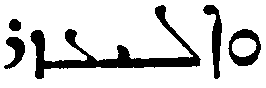






7‒21. The covenant.—7, 8. The promise of the land, Abram’s request for a pledge (contrast verse ⁶), and the self-introduction of Yahwe (which would be natural only at the commencement of an interview), are marks of discontinuity difficult to reconcile with the assumption of the unity of the narrative. Most critics accordingly recommend the excision of the verses as an interpolation.
So Dillmann, Kautzsch-Socin, Kraetzschmar, Gunkel, al. Their genuineness is maintained by Budde, Delitzsch, Bacon, Holzinger; Wellhausen thinks they have been at least worked over. The language certainly is hardly Yahwistic. The אני (⁷) is not a sufficient ground for rejection (see Budde 439); and although אור כשדים in a Yahwist-context may be suspicious, we have no right to assume that it did not occur in a stratum of Yahwistic tradition (see page 239 above). But לתת—לרשתה is a decidedly Deuteronomic phrase (see Oxford Hexateuch, i. 205): on אדני יהוה, see on verse ². On the theory of a late recension of the whole passage these linguistic difficulties would vanish; but the impression of a change of scene remains,—an impression, however, which the interpolation theory does not altogether remove, since the transition from ⁶ to ⁹ is very abrupt. Bacon’s transposition of the two sections of Yahwist is also unsatisfactory.
9, 10. The preparations for the covenant ceremony; on which see below, page 283. Although not strictly sacrificial,¹ the operation conforms to later Levitical usage in so far as the animals are all such as were allowed in sacrifice, and the birds are not divided (Leviticus 1¹⁷).—of three years old] This is obviously the meaning of מְשֻׁלָּשׁ here (compare 1 Samuel 1²⁴ [LXX]: elsewhere = ‘threefold,’ Ezekiel 42⁶, Ecclesiastes 4¹²). TargumOnkelos, which renders ‘three’ (calves, etc.), is curiously enough the only version that misses the sense; and it is followed by Bereshith Rabba, Rashi, al. On the number three in the Old Testament, see Stade, Zeitschrift für die alttestamentliche Wissenschaft, xxvi. 124 ff. [especially 127 f.].—11. The descent of the unclean birds of prey (עַיִט), and Abram’s driving them away, is a sacrificial omen of the kind familiar to antiquity.² The interpretation seems to follow in 13‒16 (Dillmann, Gunkel).—12. תַּרְדֵּמָה (LXX ἔκστασις) is the condition most favourable for the reception of visions (see on 2²¹).—a great horror] caused by the approach of the deity (omit חֲשֵׁכָה as a gloss). The text is mixed (see below), and the two representations belong, the one to Yahwist, and the other to Elohist (Gunkel). The scene is a vivid transcript of primitive religious experience. The bloody ceremony just described was no perfunctory piece of symbolism; it touched the mind below the level of consciousness; and that impression (heightened in this case by the growing darkness) induced a susceptibility to psychical influences readily culminating in ecstasy or vision.—13‒16. An oracle in which is unfolded the destiny of Abram’s descendants to the 4th generation. It is to be noted that the prediction relates to the fortunes of Abram’s ‘seed,’ the mention of the land (¹⁶) being indirect and incidental. The passage may therefore be the continuation of the Elohist-sections of 1‒6, on the understanding that in Elohist the covenant had to do with the promise of a seed, and not with the possession of the land.—13. a sojourner] (collective): see on 12¹⁰.—400 years] agreeing approximately with the 430 years of Exodus 12⁴⁰ (Priestly-Code).—15 is a parenthesis, if not an interpolation, reassuring Abram as to his own personal lot (see on 25⁸).—16. the fourth generation] e.g. Levi, Kohath, Amram, Aaron (or Moses) (Exodus 616 ff.). To the reckoning of a generation as 100 years (compare verse ¹³) doubtful classical parallels are cited by Knobel (Varro, De Lingua Latina 6, 11; Ovid, Metamorphoses xii. 188, etc.).³—the guilt of the Amorites] (the inhabitants of Palestine) is frequently dwelt upon in later writings (Deuteronomy 9⁵, 1 Kings 14²⁴, Leviticus 1824 f. etc. etc.); but the parallels from Jehovist cited by Knobel (Genesis 1820 ff. 191 ff. 20¹¹) are of quite a different character.
¹ So in the covenant between Ašur-nirâri and Mati’ilu (Mittheilungen der vorderasiatischen Gesellschaft, iii. 228 ff.), the victim is expressly said not to be a sacrifice.
² Compare Virgil Aeneid iii. 225 ff.
³ Compare Wellhausen Prolegomena zur Geschichte Israels⁶ 308 (English translation, page 308), who cites these verses as positive proof that the generation was reckoned as 100 years (see page 135 above),—a view which, of course, cannot be held unless verse 13‒16 are a unity.
Verses 13‒16 are obviously out of place in Yahwist, because they presuppose ¹⁸ (the promise of the land). They are generally assigned to a redactor, although it is difficult to conceive a motive for their insertion. Dillmann’s suggestion, that they were written to supply the interpretation of the omen of verse ¹¹, goes a certain distance; but fails to explain why the interpretation ever came to be omitted. Since ¹¹ is intimately connected with 13‒16, and at the same time has no influence on the account of Yahwist, the natural conclusion is that both ¹¹ and 13‒16 are documentary, but that the document is not Yahwist but Elohist (so Gunkel). It will be necessary, however, to delete the phrases בִּרְכֻשׁ גָּדוֹל in ¹⁴ and תִּקָּבֵר בְּשֶׁיבָה טוֹבָה in ¹⁵ as characteristic of the style of Priestly-Code; perhaps also אַרְבַּֽע מֵאוֹת שָׁנָה in ¹³. The whole of ¹⁵ may be removed with advantage to the sense.—The text of ¹² is not homogeneous, so that as a whole it cannot be linked either with ¹¹ or with 13 ff.. וְתַרְדֵּמָה וגו׳ and וְהִנֵּה אֵימָה וגו׳ are doublets (note the repetition of נפל על); and the poetic חֲשֵׁכָה (only here in Pentateuch) is doubtless a gloss to אימה. The opening clause וַיְהִי הַשּׁ׳ לָבוֹא is presumably Yahwist (in Elohist it is already night in verse ⁵). Elohist’s partiality for the visionary mode of revelation may be sufficient justification for assigning the תרדמה to him and the אימה to Yahwist; but the choice is immaterial.
9. גוזל Deuteronomy 32¹¹† = young of the vulture; but here = ‘young dove’; Arabic ǧauzal; Syriac .—10. וַיְבַתֵּר] a technical term; the verb only here; compare בֶּתֶר, Jeremiah 3418. 19—בתוך] The Samaritan Recension of the Pentateuch בתור (infinitive absolute).—אִישׁ בִּתְרוֹ וגו׳] compare 9⁵; Gesenius-Kautzsch § 139 c.—11. הַפְּגָרִים] LXXᴬ τὰ σώματα τὰ διχοτομήματα; a conflation of הפגרים and הַגְּזָרִים (verse ¹⁷).—וַיַּשֵּׁב] Hiphil of נשׁב only here in the sense of ‘scare away’: so Aquila (ἀπεσόβησεν) Peshiṭtå, Vulgate. TargumOnkelos read וַיָּשֶׁב, which is less expressive; and LXX וַיֵּשֶׁב אִתָּם is quite inadmissible.—12. ויהי—לבוא] Gesenius-Kautzsch § 114 i; compare Joshua 2⁵ (Yahwist).—13. ועבדום] LXX phrase καὶ κακώσουσιν αὐτοὺς; and apparently read וְעָבְדוּ בָם, avoiding the awkward interchange of subject and object.—16. ודור רביעי] accusative of condition, ‘as a fourth generation’ (compare Jeremiah 31⁸); Gesenius-Kautzsch § 118 q.

17. a smoking oven and a blazing torch] the two together making an emblem of the theophany, akin to the pillar of cloud and fire of the Exodus and Sinai narratives (compare Exodus 3² 19⁹ 13²¹ etc.). The oven is therefore not a symbol of Gehenna reserved for the nations (Rashi).—On the appearance of the תַּנּוּר, see the descriptions and illustrations in Riehm, Handwörterbuch des biblischen Altertums 178; Benzinger, Hebräische Archäologie² 65.—passed between these pieces] compare Jeremiah 3418 f. (the only other allusion).
On this rite see Kraetzschmar, op. cit. 44 ff. Although attested by only one other Old Testament reference, its prevalence in antiquity is proved by many analogies in classical and other writers. Its original significance is hardly exhausted by the well-known passage in Livy (i. 24), where a fate similar to that of the victim is invoked on the violators of the covenant.¹ This leaves unexplained the most characteristic feature,—the passing between the pieces. William Robertson Smith surmises that the divided victim was eaten by the contracting parties, and that afterwards “the parties stood between the pieces, as a symbol that they were taken within the mystical life of the victim” (Lectures on the Religion of the Semites², 480 f.).
¹ “... tum illo die, Juppiter, populum Romanum sic ferito, ut ego hunc porcum hic hodie feriam, tantoque magis ferito quanto magis potes pollesque.” Compare Iliad iii. 298 ff. Precisely the same idea is expressed with great circumstantiality in an Assyrian covenant between Ašur-nirâri and the Syrian prince Mati’ilu: see Peiser, Mittheilungen der vorderasiatischen Gesellschaft, iii. 228 ff.
17. ויהי—באה] perfect with sense of pluperfect (Gesenius-Kautzsch § 111 g).—עֲלָטָה] only here and Ezekiel 126. 7. 12. LXX φλὸξ is certainly wrong (לֶהָבָה? לַהַט?).—עָשָׁן] LXX, Vulgate, Peshiṭtå read the particle, hence Ball emends עָשֵׁן.—הַגְּזָרִים] the noun recurs only Psalms 136¹³; but compare the analogous use of the verb 1 Kings 325. 26.
18. This ceremony constitutes a Berîth, of which the one provision is the possession of ‘the land.’ A Berîth necessarily implies two or more parties; but it may happen that from the nature of the case its stipulations are binding only on one. So here: Yahwe alone passes (symbolically) between the pieces, because He alone contracts obligation.—The land is described according to its ideal limits; it is generally thought, however, that the closing words, along with 19‒21, were added by a Deuteronomic editor, and that in the original Yahwist the promise was restricted to Canaan proper.
The נְהַר מִצְרַיִם (not, as elsewhere נַחַל מ׳ = Wādī el-Arīsh) must be the Nile (compare Joshua 13³, 1 Chronicles 13⁵). On an old belief that the Wādī el-Arīsh was an arm of the Nile, see Tuch.—הַנָּהָר הַגָּדוֹל וגו׳] compare Deuteronomy 1⁷ 11²⁴, Joshua 1⁴. The boundary was never actually reached in the history of Israel (the notice in 1 Kings 51. 4 is late and unhistorical).—19‒21. Such lists of pre-Israelite inhabitants are characteristic of Deuteronomy and Deuteronomic expansions of Jehovist. They usually contain 5 or 6 or at most 7 names: here there are 10 (see Budde 344 ff., and Driver’s analysis, A critical and exegetical commentary on Deuteronomy 97). The first three names appear in none of the other lists; and the same is true of the Rĕphāîm in ²⁰. The Ḳenites (see page 113) and Ḳenizzites (36¹¹) are tribes of the Negeb, both partly incorporated in Judah: the Ḳadmonites (only here) are possibly identical with the בְּנֵי קֶדֶם (29¹), the inhabitants of the eastern desert.—The Ḥivvites, who regularly appear, are supplied here by The Samaritan Recension of the Pentateuch (after Girgashites) and LXX (after Canaanites).—On the Ḥittites, see page 215; and, further, on chapter 23 below.
The idea of a covenant (or oath) of Yahwe to the patriarchs does not appear in the literature till the time of Jeremiah (11⁵) and Deuteronomy (4³¹ 7¹² 8¹⁸, 2 Kings 13²³ etc.): see Kraetzschmar, 61 ff. Of 31 passages in Jehovist where Kraetzschmar finds the conception (the list might be reduced), all but three (15¹⁸ 12⁷ 24⁷) are assigned to the Deuteronomic (Jehovistic) redaction (see Staerk, Studien zur Religions- und Sprachgeschichte des alten Testaments, i. 37 ff.); and of these three 12⁷ is a mere promise without an oath, while in 24⁷ the words וַֽאֲשֶׁר נִשְׁבַּֽע לִי have all the appearance of a gloss. It is, of course, quite possible that 1517 f. may be very ancient, and have formed the nucleus of the theological development of the covenant-idea in the age of Deuteronomy. But it is certainly not unreasonable to suppose that it emanates from the period when Israel’s tenure of Canaan began to be precarious, and the popular religion sought to reassure itself by the inviolability of Yahwe’s oath to the fathers. And that is hardly earlier than the 7th century (Staerk, 47).