Chapter XLV · Joseph reveals himself to his Brethren (Elohist, Yahwist). (continued 2)
Reading edition


10b. The logical relation of the two halves of the verse is clear: the state of things described by 10a shall endure until—something happens which shall inaugurate a still more glorious future. Whether this event be the advent of a person—an ideal Ruler—who shall take the sceptre out of Judah’s hands, or a crisis in the fortunes of Judah which shall raise that tribe to the height of its destiny, is a question on which no final opinion can be expressed (see below).—and to him] Either Judah, or the predicted Ruler, according to the interpretation of 10bα.—obedience of peoples] Universal dominion, which, however, need not be understood absolutely.
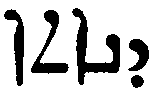
The crux of the passage is thus 10bα: עד כי־יבוא שילה. For a fuller statement of the various interpretations than is here possible, see Werliin, De laudibus Judæ, 1838 (not seen); Driver The Journal of Philology xiv. 1‒28 (and more briefly The Book of Genesis with Introduction and Notes 410‒415); Posnanski, Schilo Ein Beitrag zur Geschichte der Messiaslehre: 1 Theil: Auslegung von Genesis 49¹⁰ im Alterthume [und] bis zu Ende des Mittelalters, 1904; Dillmann 462 ff.—The renderings grammatically admissible fall into two groups, (i.) Those which adhere to the textus receptus, taking שילה as a proper noun (a) ‘Until Shiloh come’ (Shiloh, a name of the Messiah), the most obvious of all translations, first became current in versions and commentaries of the 16th century, largely through the influence of Sebastian Münster (1534). Although the Messianic acceptation of the passage prevailed in Jewish circles from the earliest times, it attached itself either to the reading שֶׁלֹּה (ii. below) or to the rendering ‘his son’ (שׁיל), or (later and more rarely) to שֵׁי לוֹ (‘gifts to him’). The earliest trace (if not the actual origin) of Shiloh as a personal name is found in the following passage of the Talmud (Sanhedrin 98b): אמר רב לא איברי עלמא אלא לדוד ושמואל אמר למשה ורבי יוחנן אמר למשיח מה שמו דבי ר׳ שילא אמרי שילה שמו שנאמר עד כי יבא שילה (the words are repeated in Echa Rabba, with the addition שלה כתיב): “Rab said, The world was created only for the sake of David; but Samuel said, For the sake of Moses; but R. Yoḥanan said, For the sake of the Messiah. What is his name? Those of the school of R. Shela say, Shiloh is his name, as it is said, ‘Until Shiloh come.’” The sequel of the quotation is: “Those of the school of R. Yannai say, Yinnôn is his name, as it is said (Psalms 72¹⁷), Let his name be for ever, before the sun let his name be perpetuated (יִנּוֹן). Those of the school of R. Ḥaninah say, Ḥanînāh is his name, as it is said (Jeremiah 16¹³), For I will give you no favour (חֲנִינָה). And some say Menahem is his name, ♦as it is said (Lamentations 1¹⁶), For comforter (מְנַחֵם) and restorer of my soul is far from me. And our Rabbis say, The leprous one of the school of Rabbi is his name, as it is said (Isaiah 53⁴), Surely our sicknesses he hath borne, and our pains he hath carried them, though we did esteem him stricken (sc. with leprosy), smitten of God, and afflicted.” Now there is nothing here to suggest that Shiloh was already a current designation of the Messiah any more than, e.g., the verb ינון in Psalms 72¹⁷ can have been a Messianic title. Yet, as Driver says, it is “in this doubtful company that Shiloh is first cited as a name of the Messiah, though we do not learn how the word was read, or what it was imagined to signify.” Subsequently Shiloh as a personal name appears in lists of Messianic titles of the 11th century (Posnanski, 40), and it is so used (alongside of the interpretation שֶׁלּוֹ) by Samuel of Russia (1124). Partly from this lack of traditional authority, and partly from the impossibility of finding a significant etymology for the word (v.i.), this explanation is now universally abandoned.—(b) ‘Until he [Judah] come to Shiloh’ (Herder, Ewald, Delitzsch, Dillmann [hesitatingly], al.). This is grammatically unexceptionable (compare 1 Samuel 4¹²), and has in its favour the fact that שילה (שִׁלוֹ, שִׁילוֹ [originally שִׁילוֹן]) everywhere in Old Testament is the name of the central Ephraimite sanctuary in the age of the Judges (Joshua 181 ff., 1 Samuel 1‒4 etc.). At the great gathering of the tribes at Shiloh, where the final partition of the land took place (Joshua 18 f.), Judah is imagined to have laid down the military leadership which had belonged to it during the wars of conquest; so that the prophecy marks the termination of that troubled period of the national life. But all this is unhistorical. The account in Joshua 18 belongs to the later idealisation of the conquest of Canaan; there is no evidence that Judah ever went to Shiloh, and none of a military hegemony of that tribe over the others, or of a subjugation of ‘peoples’ (10bβ), until the time of David, by which time Shiloh had ceased to be the central sanctuary. Even if (with Dillmann) we abandon the reference to Joshua 18, and take the sense to be merely that Judah will remain in full warlike activity till it has conquered its own territory, it is difficult to see (as Dillmann himself acknowledges) how that consummation could be expressed by a coming to Shiloh.—(c) The translation ‘As long as one comes to Shiloh,’ i.e. for ever (Hitzig, Tuch), gives a sense to עד כי which is barely defensible.—(ii.) Those which follow the text underlying all ancient Versions except Vulgate, viz. שֶׁלֹּה = אֲשֶׁר לוֹ. (a) ‘Until he comes to that which is his’ (Orelli, Br.) involves an improbable use of the accusative; and it is not easy to see how Judah’s coming to his own could be the signal for the cessation of any prerogatives previously enjoyed by him.—(b) ‘Until that which is his shall come’ is a legitimate rendering; but the thought is open to the same objection as ii. (a).—(c). The most noteworthy of this group of interpretations is: ‘Until he come whose’ [it is], sc. the sceptre, the kingdom, the right, etc.; i.e. the Messiah. This has the support not only of nearly all Versions, but of Ezekiel 21³² (where, however, the subject המשפט is expressed). The omission of the subject is a serious syntactic difficulty; and this, added to the questionable use of שֶׁ־ in an early and Judæan passage, makes this widely accepted interpretation extremely precarious. The first objection would be removed if (after a suggestion of Wellhausen [see Die Composition des Hexateuchs und der historischen Bücher des Alten Testaments² 320]) we could delete the following ולו as a gloss, and read ‘Until he come whose is the obedience,’ etc. But metrical considerations preclude this, as well as the more drastic excision of שלה as a gloss on ולו (ib. 321).—Of conjectural emendations the only one that calls for notice is that of Ball (followed by Gressmann), who reads משְׁלֹה: ‘Until his ruler (i.e. the Messiah) come.’
With regard to the general scope of the verse, the question recurs, whether the term fixed by 10bα is historic or ideal; whether, in other words, it is a prophecy of the Davidic kingdom or of a future Messiah. (1) The tendency of recent scholars has been to regard verse ¹⁰ as Messianic, but interpolated (Wellhausen, Stade, Dillmann, Holzinger, Driver, al.), on the double ground that it breaks the connexion between ⁹ and ¹¹, and that the idea of a personal Messiah is not older than the 8th century. But (apart from the question whether the subject in 11 f. be Judah or the Messiah) the connexion between ⁹ and ¹¹ is in any case not so obvious as to justify the removal of ¹⁰; and the assumption that the figure of the Messiah is a creation of the literary Prophets is based more on our ignorance of the early religious conceptions of the Israelites than on positive evidence. (2) Accordingly, Gunkel (followed by Gressmann, Der Ursprung der israelitisch-jüdischen Eschatologie, 263) finds in the passage proof of a pre-prophetic eschatology, which looked forward to the advent of a Ruler who should found a world-empire, the point of the oracle being that till that great event Judah’s dominion should not pass away. It is difficult, however, to believe that the climax of a blessing on Judah is the expectation of a world-ruler who takes the sceptre out of Judah’s hands; and though a reference to a Messianic tradition is quite conceivable, it is probable that it is here already applied to the Davidic monarchy. (3) It seems to me, therefore, that justice is done to the terms and the tenor of the oracle if we regard it as a prophecy of David and his dynasty,—a vaticinium ex eventu, like all the other oracles in the chapter. The meaning would be that Judah shall retain its tribal independence (see on 10a) against all adversaries until its great hero makes it the centre of a powerful kingdom, and imposes his sovereignty on the neighbouring peoples. As for the enigmatic שילה, we may, of course, adopt the reading שֶׁלּוֹ, which is as appropriate on this view as on the directly Messianic interpretation. But if the oracle rests on an early eschatological tradition, it is just possible that שִׁלֹה is a cryptic designation of the expected Ruler, which was applied by the poet to the person of David. Bennett (page 397) calls attention to the resemblance with שֵׁלָה in chapter 38; and it is a wonder that those who recognise mythical elements in the story of Judah and Tamar have not thought of identifying the שלה of our passage with Judah’s third son, of whose destiny the story leaves us in ignorance. Is it possible that this connexion was in the minds of the Jewish authorities (v.i.), who render שילה ‘his youngest son’? (see Posnanski, 36³).
10b. עד—שילה] LXX, Theodotion ἕως ἂν ἔλθῃ τὰ ἀποκείμενα αὐτῷ [variants ᾧ τὰ ἀποκείμενα ..., ᾧ ἀποκείμενα ... etc.]; Peshiṭtå ; Vulgate donec veniat qui mittendus est (reading שָׁלֻחַ: compare Σιλωάμ (ὃ ἑρμηνεύεται Ἀπεσταλμένος), John 9⁷); TargumOnkelos עד עלמא עד דייתי משיחא דדילהּ היא מלכותא; TargumJonathan לד זמן די ייתי מלכא משיחא זעיר בנוי. This last curious rendering (‘the youngest of his sons’) is followed by Kimchi and others; and apparently rests on a misunderstanding of שִׁלְיָתָהּ (‘afterbirth’) in Deuteronomy 28⁵⁷ (TargumOnkelos זעיר בנהא).—עד כי־] Only here with imperfect. With perfect (26¹³ 41⁴⁹, 2 Samuel 23¹⁰) it always marks a limit in the past (‘until’); but עַד alone sometimes means ‘while,’ both with perfect and imperfect (1 Samuel 14¹⁹, Psalms 141¹⁰), and so עַד שֶ־ (Canticles 1¹²), עד לא (Proverbs 8²⁶), and עד אשד לא (Ecclesiastes 121. 2. 6): see Brown-Driver-Briggs, page 725 a. The translation ‘as long as’ is thus perhaps not altogether impossible, though very improbable.—שילה] MSS and The Samaritan Recension of the Pentateuch שלה, probably the original text. The scriptio plena may have no better foundation than the common Jewish interpretation שִׁילוֹ, ‘his son,’—an impossible etymology, since there is no such word as שִׁיל in Hebrew, and the two forms which appear to have suggested it (viz., New Hebrew שָׁלִיל = ‘fœtus’ and שִׁלְיָה = ‘afterbirth’ [Deuteronomy 28⁵⁷†]) are obviously superficial and fallacious analogies. The Massoretic vocalisation is therefore open to question, and we are free to try any pronunciation of the Kethîb שלה which promises a solution of the exegetical riddle with which we are confronted. In spite of the unanimity of the Versions, the pointing שֶׁלֹּה is suspicious for the reasons given above,—the presence of —שֶׁ in an early document, and the want of a subject in the relative sentence. On the other hand, the attempts to connect the word with √ שׁלה, ‘be quiet,’ are all more or less dubious. (a) There is no complete parallel in Hebrew to a noun like שִׁילֹה from a ל״ה root. If it be of the type qîtôl, the regular form would be שִׁילוֹי; although König (ii. page 147) argues that as we find בֶּכֶה alongside of בְּכִי, so we might have a שִׁילֹה alongside of שִׁילוֹי. Again, if ô be an apocopated form of the nominal termination ôn, the √ would naturally be not שׁלה but שׁיל (in Arabic = ‘flow,’ whence seil, ‘a torrent’) or שׁול. It is true there are a few examples of unapocopated nouns of this type from ל״ה verbs (קִיִצוֹן, אִיתוֹן, [Ezekiel 40¹⁵?], הֵרוֹן [Genesis 3¹⁶†—probably an error for the regular הֵרָיוֹן, Hosea 9¹¹, Ruth 4¹³†]); and the possibility of deriving the form in ô from a root of this kind cannot be absolutely excluded (compare אֲבַדֹּה with אֲבַדּוֹן). (b) But even if these philological difficulties could be removed, there remains the objection that שׁלה (as contrasted with שׁלם) is in Old Testament at most a negative word, denoting mere tranquillity rather than full and positive prosperity, and is often used of the careless worldly ease of the ungodly. For all these reasons it is difficult to acquiesce in the view that שִׁלֹה can be a designation of the Messiah as the Peaceful or the Pacifier; while to change the pointing and render till tranquillity (שֶׁלֶה) ‘come,’ is exposed to the additional objection that the וְלוֹ of the following line is left without an antecedent.—יקּהת] (Proverbs 30¹⁷†) Dagesh forte dirimens. The √ appears in Arabic waḳiha, ‘be obedient’; Sabaean וקה. That a verb (יִקָּהֲלוּ, יִקָּווּ?) would be more natural (Ball) is not apparent; the verbs in TargumOnkelos-Jonathan paraphrase the sense given above. The √ was evidently not understood by LXX, Theodotion (προσδοκία), Vulgate (expectatio), Aquila (σύστημα), Peshiṭtå all of which probably derived from √ קַוַה (Aquila from √ קוה, II.: Brown-Driver-Briggs).





11, 12. As usually understood, the verses give a highly coloured picture of Judæan life after the conquest, in a land where vines are so common that they are used for tethering the ass, and wine so abundant that garments are washed in it. As a description of the vine-culture for which Judah was famous, the hyperbole is perhaps extreme; and Gressmann (l.c. 287) takes the subject to be not the personified tribe, but the Ruler of verse ¹⁰, the verses being a prediction of the ideal felicity to be introduced by his reign. Whether this be the original sense of the passage or not is hard to decide; but Gressman is doubtless right in thinking that it supplied the imagery for the well-known picture of the Messianic king in Zechariah 9⁹.—12. LXX, Vulgate take the adjectives as comparatives: ‘brighter than wine (v.i.) ... whiter than milk’: but this is less natural.
The section on Judah lacks the unity of the first two oracles, and is very probably composed of strophes of diverse origin and date. Verse ⁸ opens with a play on the name, like verses 16. 19, while verse ⁹ starts afresh with an animal comparison, like verses 14. 17. 27 (see Introductory Note, page 510). The impression of discontinuity is partly confirmed by the poetic form; verse ⁸ being an irregular tristich, and the remainder a series of 7 perfect trimeter distichs. The dekastich 10‒12 seems distinct from what precedes (note the repetition of the name in ¹⁰), but is itself a unity. The proposal to remove verse ¹⁰ as a late Messianic interpolation, and to make verse ¹¹ the continuation of verse ⁹, does not commend itself; and the excision of the third line in verse ¹⁰ (Meier, Fripp) merely avoids an exegetical difficulty by sacrificing the strophic arrangement.
11. אסרי] with archaic case-ending: compare בני below, and perhaps חכלילי in verse ¹².—שׂרֵקָה] ἅπαξ λεγόμενον = שׂרֵק, Isaiah 5², Jeremiah 2²¹ [שָׂרֹק, Isaiah 16⁸]; probably from the red colour of the best grapes.—סותה] The Samaritan Recension of the Pentateuch כסותה, ‘covering’ (Exodus 21¹⁰ etc.). סוּת (√ סָוָה?) does not occur elsewhere.—12. חכלילי] In Proverbs 23²⁹ חַכְלִלוּת עינים means ‘dulness of eyes,’ the effect of excessive drinking. This is the only sense justified by etymology (Assyrian akâlu, ‘be gloomy’; Arabic ḥakala, IV, ‘be confused’: see Brown-Driver-Briggs, s.v. חכל), and must be retained here, although, of course, it does not imply reproach, any more than שׁכר in 43³⁴. LXX χαροποι[οί], ‘glad-eyed’; and similarly Vulgate, Peshiṭtå.
13‒15. Zebulun and Issachar.
¹³ Zebulun shall dwell by the shore of the sea,
And ... shore of ships (?),
And his flank is on Ẓidon.
¹⁴ Issachar is a bony ass
Crouching between the panniers (?):
¹⁵ And he saw that rest was good,
And that the land was sweet;
So he bent his shoulder to bear,
And became a labouring drudge.
13. shall dwell] An allusion to the etymology in 30²⁰. It is plausibly conjectured that יִשְׁכֹּן has been substituted by mistake for the original יִזְבֹּל (Gunkel al.).—The second and third lines are unintelligible, and the text is probably corrupt. The comparison of Zebulun to a recumbent animal, with ‘itself’ (וְהוּא) towards the sea-coast, and its hind-parts towards Ẓidon (Dillmann, Gunkel, al.), is unsatisfying and almost grotesque. Deuteronomy 3319b shows that it is the advantageousness of Zebulun’s geographical position which is here celebrated.—Ẓîdôn] may be a name for Phœnicia, in whose commercial pursuits it has been surmised that Zebulun became more and more involved (Stade, Geschichte des Volkes Israel, i. 171).—14. bony] i.e. strong-limbed. Issachar had strength enough, but preferred ease to exertion.—הַמִּשְׁפְּתָֽיִם] The common interpretation ‘sheep-pens’ has no appropriateness here, and may be a conjecture based on Judges 5¹⁶. Equally unsuitable are the renderings of the old Versions (‘boundaries,’ etc.), and the ‘fire-places’ or ‘ash-heaps’ which the Hebrew etymology would suggest. The form is dual, and one naturally thinks of the ‘panniers’ carried by the ass (v.i.).—15. מְנוּחָה] A technical term for the settled, as contrasted with the nomadic, life (Gunkel).—a labouring drudge] literally ‘became a toiling labour-gang’; compare Joshua 16¹⁰. מַס is a levy raised under the system of forced labour (corvée). That a Hebrew tribe should submit to this indignity was a shameful reversal of the normal relations between Israel and the Canaanites (Joshua 16¹⁰ 17¹³ [= Judges 1²⁸], Judges 130. 33. 35).
The two northern Leah-tribes found a settlement in Lower Galilee, where they mingled with the Canaanite inhabitants. According to Joshua 1910‒16, Zebulun occupied the hills north of the Great Plain, being cut off from the sea both by Asher and by the strip of Phœnician coast. We must therefore suppose that the tribal boundaries fluctuated greatly in early times, and that at the date of the poem Zebulun had access at some point to the sea. The almost identical description on Judges 5¹⁷ is considered by Gunkel to have been transferred from Zebulun to Asher,—a view which, if it can be substantiated, affords a reliable criterion of the relative dates of the two oracles. The district of Issachar seems to have been between the Great Plain and the Jordan, including the Vale of Jezreel,—a position in which it was peculiarly difficult for a Hebrew tribe to maintain its independence. The tribe is not even mentioned in the survey of Judges 1, as if it had ceased to be part of Israel. Yet both it and Zebulun had played a gallant part in the wars of the Judges (Judges 46. 10 514. 18 6³⁵ 5¹⁵). The absence of any allusion to these exploits lends colour to the view that this part of the poem is of older date than the Song of Deborah.
13. חוף ימים] Judges 5¹⁷; compare ח׳ הים, Deuteronomy 1⁷, Joshua 9¹, Jeremiah 47⁷, Ezekiel 25¹⁶†: חוף is never found with any other genitive except in the next line.—והוא וגו׳] One is tempted to construe prosaically thus: ‘And that a shore for ships, with its flank on Ẓidon’; but this would entail elision of לְ, to the detriment of the rhythm: besides, the repetition of חוף and the unique combination ח׳ אניּת are suspicious. Ball reads יגור for לחוף (after Judges 5¹⁷), and deletes the last line.—על] The Samaritan Recension of the Pentateuch, LXX, Vulgate, Peshiṭtå, TargumOnkelos-Jonathan ע͏ד.—14. חמר גרם] The Samaritan Recension of the Pentateuch ח׳ גרים, ‘ass of sojourners’ (unless גָּרִים be an adjective from גרם). LXX τὸ καλὸν ἐπεθύμησεν (= חָמֶד גָּרַם: Ginsburg, Introduction of the Massoretico-critical edition of the Hebrew Bible page 254); Peshiṭtå , Aquila and Vulgate support on the whole Massoretic Text.—בין המשפתים] Judges 5¹⁶†, but compare Psalms 68¹⁴. The three passives are somehow interrelated, although no sense will suit them all. Versions mostly render ‘territories,’ or something equivalent, both here and in Judges. But the διγομίας of LXX in Judges (see Schleusner) is noteworthy, and shows that the rendering above has some show of authority. So the late Græcus-Venetus ἡμιφόρτια. For the rest, see Moore on Judges 5¹⁶.—15. טוב] The Samaritan Recension of the Pentateuch טובה.—למס עבד] LXX ἀνὴρ γεωργός (Ginsburg, l.c.).—On מס, see Brown-Driver-Briggs, and Moore, Judges page 47.


16‒21. Dan, Gad, Asher, and Naphtali.
¹⁶ Dan shall judge his people,
As one of the tribes of Israel.
¹⁷ Be Dan a serpent on the way,
A horned snake on the path,
That bites the hoofs of the horse,
And the rider tumbles backwards!
¹⁸ [I wait for thy salvation, Yahwe!]
¹⁹ Gad—raiders shall raid him,
But he shall raid their rear!
²⁰ Asher—his bread shall be fat,
And he shall yield dainties for kings.
²¹ Naphtali is a branching terebinth (?)
Producing comely tops (?).
16. Dân ... judge] See on 30⁶.—his people] Not Israel, but his own tribesmen. The meaning is not that Dan will produce a judge (Samson) as well as the other tribes (TargumOnkelos-Jonathan), nor that he will champion the national cause (Ewald, Delitzsch, Dillmann, al.); but that he will successfully assert an equal status with the other tribes. Note that in Judges 182. 11. 19 the Danites are spoken of as a ‘clan’ (מִשְׁפָּחָה).—17. The little snake, concealed by the wayside, may unhorse the rider as effectually as a fully armed antagonist: by such insidious, but not ignoble, warfare Dan in spite of his weakness may succeed.—שְׁפִיפֹן] ἅπαξ λεγόμενον is probably the cerastes cornutus, whose habits are here accurately described (see Driver, and Tristram, The Natural History of the Bible, 274).—18. An interpolation, marking (as nearly as possible) the middle of the poem (so Olshausen, Ball, Sievers, al.). The attempts to defend its genuineness as a sigh of exhaustion on Jacob’s part, or an utterance of the nation’s dependence on Yahwe’s help in such unequal conflicts as those predicted for Dan, are inept.—Dan was one of the weakest of the tribes, and perhaps the latest to secure a permanent settlement (Judges 134 f., Joshua 19⁴⁷, Judges 18). Its migration northward, and conquest of Laish, must have taken place early in what is known as the Judges’ period; and is apparently presupposed here and in Judges 5¹⁷.—19. Strictly: ‘A marauding band shall attack him, but he shall attack their heel’ (reading עֲקֵבִם, v.i.); i.e., press upon them in their flight. The marauders are the warlike peoples to the East, specially the Ammonites (1 Chronicles 518 ff., Judges 10 f.), who at a later time dispossessed the tribe (Jeremiah 49¹). As yet, however, Gad maintains its martial character (compare 1 Chronicles 128‒15), and more than holds its own.—20. Asher settled in the fertile strip along the coast, North of Carmel. The name occurs as a designation of Western Galilee in Egyptian inscriptions of the time of Seti and Ramses II. (see Müller, Asien und Europa nach altägyptischen Denkmälern, 236 ff.).—fat] Probably an allusion to the oil (Deuteronomy 33²⁴) for which the region was, and still is, famous.—royal dainties] fit for the tables of Phœnician kings (compare Ezekiel 27¹⁷).—21. The verse on Naphtali is ambiguous. Instead of אַיָּלָה, ‘hind,’ many moderns read אֵילָה (‘a spreading terebinth’). The following clause: ‘giving fair speeches,’ suits neither image; on the one view it is proposed to read ‘yielding goodly lambs’ (אִמְּרֵי), on the other ‘producing goodly shoots’ (אֲמִרֵי). No certain conclusion can be arrived at.
17. שפיפן LXX ἐνκαθήμενος, taking the ἅπαξ λεγόμενον as an adjective.—ויפל Ball וַיַפֵּל (after Peshiṭtå ).—19. גָּד] The name is here (otherwise than 30¹¹) connected with גדוד, ‘band’ (1 Samuel 308. 15. 23, 1 Kings 11²⁴, 2 Kings 5² 6²³ etc.), and with √ גוד, ‘assail’ (Habakkuk 3¹⁶, Psalms 94²¹†).—עקב] Read עקבָם, taking the ם from the beginning of verse ²⁰.—20. מאשר] Read with LXX, Peshiṭtå, Vulgate אָשֵׁר.—שמנה] The Samaritan Recension of the Pentateuch שמן.—21. אִיָּלָה שלחה] So Aquila, Vulgate (Jerome, Quæstiones sive Traditiones hebraicæ in Genesim). Peshiṭtå and TargumJonathan probably had the same text, but render ‘a swift messenger.’ On Jerome’s ager irriguus (Quæstiones sive Traditiones hebraicæ in Genesim) and its Rabbinical parallels, see Rahmer, Die Hebräischen Traditionen in den Werken des Hieronymus page 55. LXX στέλεχος seems to imply אֵילָה; but Ball dissents.—הנתן] After either אַיָּלָה or אֵילָה, נֹתְנָה would be better.—אִמְרֵי] ‘words,’ is unsuitable, and caused Peshiṭtå and TargumJonathan to change the metaphor to that of a messenger. An allusion to the eloquence of the tribe is out of place in the connexion. The reading אֲמִרֵי, ‘topmost boughs,’ has but doubtful support in Isaiah 17⁶ (see the commentary). אִמֵּר, ‘lamb,’ is not Hebrew, but is found in Assyrian, Phœnician, Aramaic, and Arabic. LXX ἐν τῷ γενήματι is traced by Ball to בִּפְרִי; but?—שֶׁפֶר] ἅπαξ λεγόμενον.—Ball argues ingeniously, but unconvincingly, that אַיָּלָה belongs to verse ²², and that the פרת of that verse stood originally in ²¹. His amended text reads:

נפתלי פֹּרָת שְׁלֻחָה
הנתנה פְּרִי שפר
Naphtali is a branching vine,
That yieldeth comely fruit.
22‒26. Joseph.
²² A fruitful bough (?) is Joseph—
A fruitful bough by a well (?).
²³ And ... dealt bitterly with him,
And the archers harassed him sorely.
²⁴ Yet his bow abode unmoved,
And nimble were the arms of his hands.
Through the hands of the Mighty One of Jacob,
Through the ⸢name⸣ of the Shepherd of the Israel-Stone,
²⁵ Through thy father’s God—may he help thee!
And El Shaddai—may he bless thee!
Blessings of heaven above,
Blessings of Tĕhôm ⸢ ⸣ beneath,
Blessings of breast and womb,
²⁶ Blessings of ... (?),
Blessings of the eternal, ⸢mountains⸣,
⸢Produce⸣ of the everlasting hills—
Be on the head of Joseph,
And on the crown of the consecrated one of his brethren.
The section is full of obscurities, and the text frequently quite untranslatable. Its integrity has naturally not passed unquestioned. We may distinguish four stages in the unfolding of the theme: (1) The opening tristich (²²), celebrating (as far as can be made out) the populousness and prosperity of the central double-tribe. (2) Joseph’s contest with the ‘archers’ (23. 24a). (3) A fourfold invocation of the Deity (24b. 25aαβ). (4) The blessing proper (25aγδb. 26), which closely resembles the corresponding part of the Blessing of Moses (Deuteronomy 3313‒16), the two being probably variants of a common original. Meyer (Die Israeliten und ihre Nachbarstämme, 282 ff.) accepts (1), (2), and (4) as genuine, but rejects (3) as a later addition, which has displaced the original transition from the conflict to the blessing. Fripp (Zeitschrift für die alttestamentliche Wissenschaft, xxi. 262 ff.) would remove (3) and (4) (24b‒26), which he holds to have been inserted by an Ephraimite editor from Deuteronomy 33: Holzinger seems in the main to agree. Sievers also (II. 362) questions the genuineness of 24b‒26 on metrical grounds. But we may admit the northern origin of some of the verses, and the resemblance to Deuteronomy 33, and even a difference of metre, and still hold that the whole belongs to the earliest literary recension of the Song to which we have access. The warm enthusiasm of the eulogy, and the generous recognition of Joseph’s services to the national cause, are no doubt remarkable in a Judæan document; but such a tone is not unintelligible in the time of David, when the unity of the empire had to be maintained by a friendly and conciliatory attitude to the high-spirited central tribes.
22. On the ordinary but highly questionable rendering, the image is that of a young thriving vine planted by a fountain and thus well supplied with water, whose tendrils extend over the wall.—a fruitful bough] Or ‘A young fruit-tree’: literally ‘son of a fruitful [tree’ or ‘vine’]. There is probably an etymological allusion to Ephraim (פְּרָת = אֶפְרָת: Wellhausen).—23, 24. The figure is abruptly changed: Joseph is now represented as beset by troops of archers, whose attack he repels.—dealt bitterly ...] The following word וָרֹבּוּ requires some amendment of text (v.i.).—24. abode unmoved] or ‘constant.’ Taken with the next line, this suggests a fine picture: the bow held steadily in position, while the hand that discharges the arrows in quick succession moves nimbly to and fro (Gunkel). The expressions, however, are peculiar, and a different reading of the second line given in some Versions is approved by several scholars (v.i.).—Strong One of Jacob] A poetic title of Yahwe, recurring Isaiah 49²⁶ 60¹⁶, Psalms 1322. 5, and (with Israel for Jacob) Isaiah 1²⁴. See, further, the footnote below.—Through the name] מִשֵּׁם, the reading of Peshiṭtå and TargumOnkelos, though not entirely satisfactory, is at least preferable to the meaningless מִשָּׁם of Massoretic Text.—the Shepherd of the Israel-Stone] A second designation of Yahwe as the Guardian of the Stone of Israel,—either the sacred stone of Bethel, or (better) that of Shechem (Joshua 2426 f.), which was the religious rendezvous of the tribes in early times (see page 416): so Luther, Die Israeliten und ihre Nachbarstämme, 284¹. Both text and translation are, however, uncertain (v.i.).—25, 26. The construction is ambiguous: it is not clear whether the lines beginning with Blessings are a series of accusatives depending on the וִיבָרְכֶךָּ of 25a (‘may he bless thee with blessings,’ etc.), or subjects to תִּֽהְיֶין in 26b. The second view is adopted above; but the ambiguity may be an intentional refinement.—25aαβ. ’Ēl Shaddai] For the reading, v.i.; and see on 17¹.—25aγδb, 26a. The blessings, arranged in three parallel couplets,—the first referring to the fertility of the soil.—Blessings of heaven above] Rain and dew, the cause of fertility (so Deuteronomy 33¹³ emended).—Tĕhôm ... beneath] The subterranean flood, whence springs and rivers are fed: see on 1².—Blessings of breasts and womb] Contrast the terrible imprecation, Hosea 9¹⁴.—26a. Passing over the first four words as absolutely unintelligible (v.i.), we come to the third pair of blessings: ... of the eternal mountains ... of the everlasting hills (Deuteronomy 33¹⁵, Habakkuk 3⁶)] In what sense the mountains were conceived as a source of blessing is not clear,—perhaps as abodes of deity; compare the ‘dew of Hermon’ (Psalms 133³).—The word rendered produce is uncertain; we should expect ‘blessings,’ as LXX actually reads (v.i.).—26b. Be on the head] as in benediction the hand is laid on the head (48¹⁴): compare Proverbs 10⁶ 11²⁶.—נְזִיר אֶחָיו] So Deuteronomy 33¹⁶. The נָזִיר is either the Nazirite—one ‘consecrated’ to God by a vow involving unshorn hair (Judges 135. 7 etc.)—or the prince (so only Lamentations 4⁷). For the rendering ‘crowned one’ there are no examples. The second interpretation is that usually adopted by recent scholars; some explaining it of the Northern monarchy, of which the Joseph-tribes were the chief part; though others think it merely ascribes to Joseph a position of princely superiority to his brethren. The other view is taken by Sellin (Beiträge zur israelitischen und jüdischen religionsgeschichte ii. 1, 132 ff.) and Gunkel, who conceive the ancient Nazirite as a man like Samson, dedicated to single-handed warfare against the foes of Israel (compare Schwally, Semitische Kriegsaltertümer, 101 ff.), and hold that Joseph is so designated as being the foremost champion of the national cause. The interpretation is certainly plausible; but it derives no support from the word קָדְקֹד (∥ ראשׁ), which is never used in connexion with the Nazirite, and is quite common in other connexions (see Deuteronomy 33²⁰).
The opinion confidently entertained by many scholars (see Wellhausen, Die Composition des Hexateuchs und der historischen Bücher des Alten Testaments² 321), that the Blessing of Joseph presupposes the divided kingdom, rests partly on this expression, and partly on the allusion to an arduous struggle in 23 f.. But it is clear that neither indication is at all decisive. If נָזִיר could mean only ‘crowned one,’ we should no doubt find ourselves in the time of the dual monarchy. In point of fact, it never denotes the king, and only once ‘princes’; and we have no right to deny that its import is adequately explained by the leadership which fell to the house of Joseph in the conquest of Canaan (Judges 122 ff.). Similarly, the ‘archers’ of verse ²³ might be the Aramæans of Damascus, in which case Joseph would be a name for the Northern kingdom as a whole; but they may as well be the Midianites (Judges 6 ff.) or other marauders who attacked central Israel between the settlement and the founding of the monarchy, and whose repeated and irritating incursions would admirably suit the terms of the description. The general considerations which plead for an early date are: (1) The analogy of the rest of the poem, some parts of which are earlier, and none demonstrably later, than the age of David or Solomon. (2) The incorporation of the blessing in a Judæan work is improbable at a time when Israel was a rival kingdom. (3) Although Joseph sometimes stands for the Northern kingdom, it can hardly do so here in an enumeration of the tribes. Consequently it takes us back to the time when Joseph was still a single tribe, or when at least the separation of Ephraim and Manasseh was not clearly recognised: the addition in Deuteronomy 3317b is instructive in this regard (see Gunkel, and Sellin, l.c. 134).
22. בן פרת] בֵּן is construct state: the rhythmic accent forbids the usual shortening of the vowel with Maqqeph (בֶּך).—פֹּרָת] Contracted from פֹּרִיָּת, ‘fruitful’ (Isaiah 17⁶ 32¹², Ezekiel 19¹⁰, Psalms 128³), or פֹּרַיַת, with archaic feminine termination. פֹּארָה, ‘bough’ (Ezekiel 17⁶ 315. 6), might be thought of, but would be hardly suitable as genitive after בן.—Down to עין the Versions have substantially the same text.—בנות צעדה עלי שור] defies explanation. Literally filiæ discurrerunt super murum (Vulgate). But בנות = ‘tendrils,’ has no analogy; צעד means ‘march’ or ‘stride,’ but not ‘extend’; and the discord of number is harsh (notwithstanding Gesenius-Kautzsch § 145 k). The Versions reveal early corruption of the text, without suggesting anything better. LXX υἱός μου νεώτατος (= The Samaritan Recension of the Pentateuch בני צעירי) πρὸς μὲ ἀνάστρεψον (= עָלַי שׁוּב). Peshiṭtå (? בִּנְיָן סָעֻד הָעֹלֶה שׁוּר).—Zimmern’s zodiacal theory, which identifies Joseph with the sign Taurus, finds two tempting points of contact in the consonantal text: reading פָּרָת = פָּרָה, ‘juvenca,’ at the beginning, and שוֹר, ‘ox,’ at the end. But the reconstruction of the text on these lines, with the help of Deuteronomy 33¹⁷ (see Zeitschrift für Assyriologie, vii. 164 ff.; Das Alte Testament im Lichte des alten Orients², 399), has no title to respect: against it see Ball, page 116.—23. וָרֹבּוּ] From √ רבב, a by-form of רבה,¹ ‘shoot,’ with intransitive perfect (Gesenius-Kautzsch § 67 m). The simple perfect between two consecutive imperfects being suspicious, the least change demanded is וַיָּרֹבּוּ. The Samaritan Recension of the Pentateuch, LXX (ἐλοιδόρουν) and Vulgate (jurgati sunt) read וַיְרִיבֻהוּ, ‘strove with him.’ Parallelism suggests a noun as subject to וַיְמ׳; we might read רַבִּים, ‘bowmen’ (Jeremiah 50²⁹), or (since the line is too short) רֹבֵי קֶשֶׁת (21²⁰)—24a. LXX καὶ συνετρίβη μετὰ κράτους τὰ τόξα αὐτῶν [= וַתִּשָּׁבֵר בְּאֵיתָן קַשְׁתָּם].—ותשב] Peshiṭtå = וַתָּֽשָׁב. The sense ‘abide’ for ישׁב is justified by Leviticus 12⁴, 1 Kings 22¹, Psalms 125¹, and nothing is gained by departing from Massoretic Text.—באיתן] Literally ‘as a permanent one’ (בְּ essentiæ).—ויפזר] 2 Samuel 6¹⁶†. LXX καὶ ἐξελύθη, Peshiṭtå may represent ויפזרו (see Ball).—[LXX יָדָם] זרועי ידיו] is a hard combination, but perhaps not too bold.—24b. אֲבִיר] occurs only in the passive cited above. It is reasonably suspected that the Massoretic changed the punctuation to avoid association of ideas with אַבִּיר, ‘bull,’ the idolatrous emblem of Yahwe in North Israel. Whether the name as applied to Yahwe be really a survival of the bull-worship of Bethel and Dan is another question; אַבִּיר (strong) is an epithet of men (Judges 5²², Job 24²² 34²⁰, Jeremiah 46¹⁵, 1 Samuel 21⁸ etc.), and horses (Jeremiah 8¹⁶ 47³ 50¹¹) much more often than of bulls (Psalms 22¹³ 68³¹ 50¹³, Isaiah 34⁷), and might have been transferred to Yahwe in its adjective sense. On the other hand, the parallelism with ‘Stone of Israel’ in the next line favours the idea that the title is derived from the cult of the Bull at Bethel, which may have had a more ancient significance than an image of Yahwe (compare Meyer, Die Israeliten und ihre Nachbarstämme, 282 ff.; Luther, Zeitschrift für die alttestamentliche Wissenschaft, xxi. 70 ff.). The further inference (Nöldeke, Luther, Meyer) that Jacob was the deity originally worshipped in the bull is perhaps too adventurous.—מִשָּׁם] So LXX, Vulgate; but Peshiṭtå, TargumOnkelos מִשֵּׁם.—אבן ישראל] Compare צור יש׳, 2 Samuel 23³, Isaiah 30²⁹; also א׳ הָעֶזָר, 1 Samuel 4¹ 5¹ 7¹². The translation above agrees with Peshiṭtå; Massoretic Text puts רֹעֶה in apposition with א׳ י׳ (so Vulgate); LXX ♦ἐκεῖθεν ὁ κατισχύσας Ἰσραήλ omits אבן, and may have read עזר (Ball). The line is too long for the metre, but אבן is the one word that should not be omitted.—25. ויעזרך ... ויברכך] Compare Psalms 69³³, and see Ewald § 347 a.—ואת־] Read with The Samaritan Recension of the Pentateuch, LXX (ὁ θεὸς ὁ ἐμός), Peshiṭtå וְאֵל: though שֶׂדַּי alone (Numbers 244. 16) would be suitable in an ancient poem.—רבצת] Metrically necessary in Deuteronomy 33¹³, but here redundant; probably, therefore, a gloss from the other recension (Sievers).—26. אביך גברו על־ברכת הורי עד־] There are two stages of corruption, one remediable, the other not. The last line is to be restored with LXX ברכת הַרְרֵי עַד, ‘blessings of the eternal mountains’ (Deuteronomy 33¹⁵, Habakkuk 3⁶). But the first three words, though represented by all Versions, must be wrong; for to put ברכת under the regimen of על destroys the parallelism, and the verb גָּֽבְרוּ cuts off תהיין from its subject. What is obviously required is a line parallel to ברכת שדים ורחם. Gunkel’s suggested emendation, though far from satisfying, is the best that can be proposed: ברכת אָב אַךְ נֶּבֶר וָעֻל = ‘Blessings of father, yea, man and child.’—אביך] The Samaritan Recension of the Pentateuch, LXX + ואמך, suggested no doubt by the previous line.—הורי] Vulgate, Peshiṭtå, TargumOnkelos-Jonathan render ‘my progenitors,’ by an impossible derivation from √ הרה, ‘be pregnant.’—תאות] English Version ‘utmost bound’ (so Delitzsch, from √ תאה or תוה; see Brown-Driver-Briggs), has no real philological or traditional justification. If the text were reliable, it might be the common word ‘desire,’ from √ אוה (LXXcursives, Old Latin Version, Vulgate, TargumOnkelos-Jonathan), in the sense of ‘desirable things.’ With some hesitation I follow above Olshausen, Gunkel, al., reading תבואת after Deuteronomy 33¹⁴. But LXXᴮ ברכת has great weight (all the greater that the translator has lost the thread of the thought), and ought perhaps to be preferred.—נזיר] is not necessarily a derivative from the noun נֵזָר, ‘diadem,’ = ‘the crowned one’; more probably it comes from the verb directly,—נזר = ‘dedicate’ (compare נדר)—which admits various shades of meaning. Of the Versions LXX, TargumJonathan represent the idea of ‘prince’ or ‘ruler,’ TargumOnkelos ‘the separated one,’ Vulgate, Saadya ‘the Nazirite,’ Peshiṭtå ‘the crown’ (נַזָר).






¹ But see above on 21²⁰.
27. Benjamin.
²⁷ Benjamin is a ravening wolf:
In the morning he devours the prey,
And at eve divides the spoil.
Benjamin is praised for its predatory instincts, and its unflagging zest for war. The early history contains a good deal to justify the comparison: its fight with Moab (Judges 315 ff.), its share in the struggle with the Canaanites (Judges 5¹⁴), its desperate stand against united Israel (Judges 19 f.); it was famous for its skill in slinging and archery (Judges 20¹⁶, 1 Chronicles 8⁴⁰ 12², 2 Chronicles 14⁷ 17¹⁷). But a special reference to the short-lived reign of Saul is probable: the dividing of spoil reminds us of the king who clothed the daughters of Israel with scarlet and ornaments (2 Samuel 1²⁴).—The contrast between this description and the conception of Benjamin in the Joseph-stories is an instructive example of how tribal characteristics were obscured in the biographical types evolved by the popular imagination.
27. זאב יטרָף] Descriptive imperfect, see Davidson § 44, R. 3, § 142. On pausal ā see Gesenius-Kautzsch § 29 u.—עד] = ‘booty,’ Isaiah 33²³, Zephaniah 3⁸ [? Isaiah 9⁵]; LXX ἔτι.
28abα (to אביהם) is the subscription to the poem; the remainder of the verse belongs to Priestly-Code, and probably continued 1a in that source.—the tribes of Israel, twelve in number] The division into 12 tribes is an artificial scheme, whose origin is uncertain (see Luther, Zeitschrift für die alttestamentliche Wissenschaft, xxi. 33 ff.; Peters, Early Hebrew Story, 55 ff.). It obtained also amongst the Edomites, Ishmaelites, and other peoples; and in Israel betrays its theoretic character by the different ways in which the number was made up, of which the oldest is probably that followed in the Song of Jacob. In Deuteronomy 33, Simeon is omitted, and Joseph divided into Ephraim and Manasseh; in Priestly-Code (Numbers 2) Joseph is again divided, to the exclusion not of Simeon, but of Levi.
The recently revived theory of a connexion between the original sayings of the Blessing and the signs of the Zodiac calls for a brief notice at this point. The most striking correspondences were set forth by Zimmern in Zeitschrift für Assyriologie, vii. (1892), 161 ff.; viz., Simeon and Levi = Gemini (see page 517); Judah = Leo, with the king-star Regulus on its breast (בין רגליו); and Joseph = Taurus. This last comparison, it is true, rests on Deuteronomy 33 rather than Genesis 49, and is only imported into this passage by a violent reconstruction of verse ²² (page 530). Other possible combinations mentioned by Zimmern are Issachar = Aselli (in Cancer), Dan = Serpens (North of Libra), Benjamin = Lupus (South of Scorpio), and Naphtali = Aries (reading אַיִל for אַיָּלָה). Stucken (Mittheilungen der vorderasiatischen Gesellschaft, 1902, 166 ff.), after a laboured proof that Reuben corresponds to Behemoth (hippopotamus), an old constellation now represented by Aquarius, completed the circle after a fashion, with the necessary addition of Dinah = Virgo as the missing sign; and his results are adopted by Jeremias (Das Alte Testament im Lichte des alten Orients², 395 ff.). A somewhat different arrangement is given by Winckler in Altorientalische Forschungen, iii. 465 ff. These conjectures, however, add little to the evidence for the theory, which must in the main be judged by the seven coincidences pointed out in Zimmern’s article. That these amount to a demonstration of the theory cannot be affirmed; but they seem to me to go far to show that it contains an element of truth. It is hardly accidental that in each series we have one double sign (Gemini, Simeon-Levi) and one female personification (Virgo, Dinah), and that all the animal names occurring in the Song (lion, ass, serpent, ram?, ox?, wolf) can be more or less plausibly identified with constellations either in the Zodiac or sufficiently near it to have been counted as Zodiacal signs in early times. The incompleteness of the correspondence is fairly explained by two facts: first, that the poem has undergone many changes in the course of its transmission, and no longer preserves the original form and order of the oracles; and second, that while the twelve-fold division of the ecliptic goes back to the remotest antiquity, the traditional names of the twelve signs cannot all be traced to the ancient Babylonian astronomy. It may be added that there is no prima facie objection to combinations of this sort. The theory does not mean that the sons of Jacob are the earthly counterparts of the Zodiacal constellations, and nothing more. All that is implied is that an attempt was made to discover points of resemblance between the fortunes and characteristics of the twelve tribes on the one hand, and the astro-mythological system on the other. Such combinations were necessarily arbitrary, and it might readily happen that some were too unreal to live in the popular memory. Where the correspondence is plausible, we may expect to find that the characterisation of the tribe has been partly accommodated to the conceptions suggested by the comparison; and great caution will have to be observed in separating the bare historical facts from the mythological allusions with which they are embellished. In the present state of the question, it may be safely said that the historical interpretation must take precedence. The Zodiacal theory will have to be reckoned with in the interpretation of the Song; but it has as yet furnished no trustworthy clue either to the explanation of obscure details, or to the restoration of the text.
28. שבטי ישראל] LXX υἱοὶ Ἰακώβ.—איש אשר כְּ׳] Such a construction is impossible. We must either omit the relatives (Versions) or read איש איש (Olshausen, Delitzsch, Kautzsch-Socin, Gunkel, al.).
XLIX. 28b‒L. 26. The Death and Burial of Jacob; and the Death of Joseph (Priestly-Code, Yahwist, Elohist).
Jacob charges his sons to bury him in the family sepulchre at Machpelah, and expires (28b‒33). Joseph causes the body to be embalmed; and, accompanied by his brethren and an imposing cortège, conveys it to its last resting-place in Canaan (501‒14). He pacifies and reassures his brethren, who fear his vengeance now that their father is gone (15‒21). He dies in a good old age, after exacting an oath that his bones shall be carried up from Egypt when the time of deliverance comes (22‒26).
Sources.—4928bβ‒33 belongs to Priestly-Code, with the possible exceptions of ³² (a gloss), and the clause 33aβ; note the reference to chapter 23 and the identical phraseology of the two passages; also the expressions גוע, אחזה, נאסף אל־עמיו (bis).—In chapter 50, verses 12. 13 are from Priestly-Code (Machpelah, etc.: note also that the suffix in בניו refers back to 49³³). Verses 1‒11. 14 are mainly Yahwist (ישראל, ²; מצא חן בע׳, ⁴; גּשֶׁן, ⁸; הכנעני, ¹¹: note the reference [5 f.] to Joseph’s oath [4729‒31]); and 15‒26 Elohist (אלהים, 19. 20. 24. 25; כלכל, ²¹ [45¹¹ 47¹²]; התחת אלהים אני ¹⁹ [30²]): the resemblance to 455. 7; and the backward reference in Exodus 13¹⁹, Joshua 24³²). The analysis might stop here (Dillmann, Wellhausen, Driver, al.); but a variant in ¹⁰ (10b ∥ 10aβ), and the double name of the place of burial suggest that there may be two accounts of the funeral (see Kautzsch-Socin An. 242). Holzinger, Gunkel, Procksch, however, seem to me to go too far in the attempt to establish a material difference of representation (e.g., that in Elohist’s account Joseph’s brethren did not go up with him to the burial). Traces of Yahwist in 15‒26 are equally insignificant (see the notes).
28b‒33. Jacob’s charge to his sons.—28bβ. The sequel to 1a in Priestly-Code. Note the close formal parallel to 28¹ (Priestly-Code): And ... called ... and blessed ... and charged ... and said ...—each with a special blessing] v.i.—29, 30. See on chapter 23.—31. Abraham and Sarah his wife] 25⁹ 23¹⁹. The burying-place of Isaac (35²⁹) is not elsewhere specified; and the burials of Rebekah and Leah are not recorded at all.—On the possibility that the notice of Rachel’s burial (48⁷) stood here originally, see page 504 f.—32. Probably a gloss (v.i.).—33. drew up his feet into the bed] The clause may have been inserted from Yahwist; compare 482b.—As in the case of all the patriarchs except Joseph, the actual account of the death is left to Priestly-Code.
29. ויצו אותם] LXX omits.—אל־עַמִּי] Read אל־עַמַּי (compare ³³): see on 25⁸.—30. For בשדה המ׳, LXX has simply במכפלה, and for the following השדה, המערה.—31. קברתי] LXX קָֽבְרוּ.—At the end of the verse Budde would add ואת־רחל as Priestly-Code’s original statement (Zeitschrift für die alttestamentliche Wissenschaft, iii. 82).—32. The verse has no syntactic connexion with the preceding, the construction is cumbrous in the extreme, and the notice superfluous after 30b. It should probably be deleted as a marginal variant to 30b (so Delitzsch, Gunkel).—מקנה] LXX במ׳.
L. 1‒14. The burial of Jacob.—1. The forms in which Joseph’s grief expressed itself were doubtless conventional, though they are not elsewhere alluded to in Old Testament.—2. The Egyptian practice of embalming originated in ideas with which the Hebrew mind had no sympathy,—the belief that the ka or ghostly double of the man might at any time return to take possession of the body, which consequently had at all costs to be preserved (Erman, Life in Ancient Egypt, 307). In the cases of Jacob and Joseph (verse ²⁶), it is merely an expedient for preserving the body till the burial could take place. On the various methods employed, see Herodotus, ii. 86‒88; Diodorus, i. 91; and Budge, The Mummy, 160 ff., 177 ff.—the physicians] In Egypt the embalmers formed a special profession.—3. forty days ... seventy days] The process of embalming occupied, according to Diodorus, over 30 days, according to Herodotus, 70 days; exact data from the monuments are not yet available (Erman, 315, 319 f.; Budge, 179). The mourning for Aaron and Moses lasted 30 days (Numbers 20²⁹, Deuteronomy 34⁸); the Egyptians (who are here expressly mentioned) are said to have mourned for a king 72 days (Diodorus, i. 72).—4‒6. Joseph seeks Pharaoh’s permission to absent himself from Egypt. Why he needed the court to intercede for him in such a matter does not appear.—5a. Compare 4729 ff..—have digged] The rendering ‘have purchased’ is possible, but much less probable (compare 2 Chronicles 16¹⁴). The confused notice Acts 7¹⁶ might suggest a tradition that Jacob’s grave was in the plot of ground he bought near Shechem (33¹⁹ Elohist), which is the view maintained by Bruston (Zeitschrift für die alttestamentliche Wissenschaft, vii. 202 ff.). On any view the contradiction to 47³⁰ remains.—7‒9. The funeral procession is described with empressement as a mark of the almost royal honours bestowed on the patriarch. Such processions are frequently depicted on Egyptian tombs: Erman, 320 f.; Ball, Light from the East, 119 f.—horsemen, however, never appear in them: “We have no representations of Egyptians on horseback; and were it not for a few literary allusions, we should not know that the subjects of the Pharaoh knew how to ride” (Erman, Life in Ancient Egypt, 492 f.).—10, 11. The mourning at the grave.—Gōren hā-Āṭād] ‘the threshing-floor of the bramble’; the locality is unknown (v.i.).—11. Ābēl Miẓraim] one of several place-names compounded with אָבֵל = ‘meadow’ (Numbers 33⁴⁹, Judges 11³³, 2 Samuel 20¹⁵, 2 Chronicles 16⁴); here interpreted as אֵבל מִצְרַיִם ‘mourning of Egypt.’ The real name ‘meadow of Egypt’ may have commemorated some incident of the Egyptian occupation of Palestine; but the situation is unknown.—The record of the actual burying in Yahwist and Elohist has not been preserved.
It is difficult to say whether Gōren hā-Āṭād and Ābēl Miẓraim are two different places, or two names for one place. Jerome (Onomastica Sacra, 8515 ff.) identifies the former with Bethagla (= ‛Ain Ḥaǧla, or Ḳaṣr Ḥaǧla, South of Jericho [Buhl, Geographie des alten Palaestina, 180]), but on what authority we do not know. The conjecture that it was in the neighbourhood of Rachel’s grave depends entirely on a dubious interpretation of 48⁷. Since there appears to be a doublet in verse ¹⁰ (10aβ ∥ 10b), it is natural to suppose that one name belongs to Yahwist and the other to Elohist, and therefore there is no great presumption that the localities are identical (בג׳ הא׳ in ¹¹ may be a gloss). According to the present text, both were East of the Jordan (10a. 11b); but such a statement if found in one document would readily be transferred by a redactor to the other; and all we can be reasonably confident of is that one or other was across the Jordan, for it is almost inconceivable that א׳ בע׳ הירדן should be an interpolation in both cases. Since it is to be assumed that in Yahwist and Elohist the place of mourning was also the place of burial, and since the theory of a détour round the Dead Sea and the East of Jordan to arrive at any spot in West Palestine is too extravagant to have arisen from a fanciful etymology, it would seem to follow that, according to at least one tradition, Jacob’s grave was shown at some now unknown place East of the Jordan (Meyer, Die Israeliten und ihre Nachbarstämme, 280 f.). Meyer’s inference that Jacob was originally a transjordanic hero, is, however, a doubtful one; for the East is dotted with graves of historic personages in impossible places, and we have no assurance that tradition was more reliable in ancient times.
2. חנט] verse ²⁶, Canticles 2¹³†. Apparently a Semitic √, meaning in Arabic ‘become mature,’ applied in Hebrew Aramaic and Arabic to the process of embalming.—3. חנֻטים] ἅπαξ λεγόμενον; abstract plural. = ‘embalming.’—4. בכיתו] The feminine only here, for בְּכִי. The suffix probably genitive object (weeping for Jacob).—דברו־נא] Add with LXX עָלֵי.—5. השביעני] The Samaritan Recension of the Pentateuch, LXXA, al. + לפני מותי.—הנה אנכי מת] LXX omits. The phrase occurs in Elohist 48²¹, and (without הנה) 50²⁴.—כריתי] LXX, Vulgate, TargumJonathan ‘have digged’; Peshiṭtå ‘have purchased,’ TargumOnkelos אַתְקְנֵת = ‘have prepared.’ The first sense preponderates in usage (the second, Deuteronomy 2⁶, Hosea 3², Job 6²⁷ 40³⁰†), and is here to be preferred.—את־אבי] The Samaritan Recension of the Pentateuch + כאשר השביעני.—10. אטד] The word for ‘bramble’ in Jotham’s parable from Gerizim, Judges 914 f. (only Psalms 58¹⁰ again). Can there be an allusion to the threshing-floor of this passage at Shechem?—11. בג׳ האטד] Possibly a gloss from verse ¹⁰. If so, שמהּ (The Samaritan Recension of the Pentateuch שמו), referring to גרן (whose gender is uncertain), must have been substituted for שם המקום (so Vulgate, TargumJonathan, Gunkel).
12, 13. The account of the actual burial (from Priestly-Code).—It is significant that here the Egyptians take no part in the obsequies: the final redactor may have assumed that they were left behind at the mourning place East of the Jordan.—See further on 4929 ff..—14 (Yahwist). The return to Egypt.
12. בניו לו] The suffixes find no suitable antecedents nearer than 49³³, the last excerpt from Priestly-Code.—כאשר צום] LXXB, al. καὶ ἔθαψαν αὐτὸν ἐκεῖ.—13. שדה] LXX τὸ σπήλαιον, and so again for את־השדה.—14. אחרי—אביו] LXX omits.
15‒21. Joseph removes his brethren’s fears.—The verses contain a variation of the theme of 455 ff. (Gunkel), as if to emphasize the lesson of the whole story, that out of a base intent God brought good to His people.—15. saw] i.e. ‘realised,’—took in the full significance of the fact (compare 30¹). If it were meant that they ‘learned’ for the first time that their father was dead, the inference would surely be not merely that the brethren had not been present at the funeral (Gunkel), but that Elohist had not recorded it at all.—16, 17. They send a message to Joseph, recalling a dying request of their father (not elsewhere mentioned).—the servants of the God of thy father] Religion is a stronger plea than even kinship (Gunkel).—18. Compare 44¹⁶. The verse may have been inserted from Yahwist (v.i.).—19. am I in God’s stead?] (30²): to judge and punish at my pleasure.—20. Compare 455. 7. 8.—21. The continuance of the famine seems presupposed, in opposition to the chronology of Priestly-Code (47²⁸).
15. לוּ וגו׳] Conditional sentence with suppressed apodosis, Gesenius-Kautzsch § 159 y.—16. ויצוו] LXX καὶ παρεγένοντο, and Peshiṭtå , seem to have read וַיִּגְּשׁוּ, which if correct would make the excision of verse ¹⁸ from Elohist almost imperative (see on the verse). But the sense of צִוָּה, ‘to commission,’ is justified by Exodus 6¹³, Jeremiah 27⁴, Esther 3¹² etc.; and נגש would not properly be followed by לאמר.—17. אָנָּא] a strong particle of entreaty; in Pentateuch only Exodus 32³¹.—18. גם—לפניו] LXX omits.—For וילכו, Ball (after Vatke) reads ויבכו, which would give point to the following גם. But the change is not necessary: וילכו would mean ‘they went away’ only if they had previously been present. That certainly seems implied in 17b (apart from the reading of LXX, Peshiṭtå in ¹⁶); and hence there is much to be said for assigning verse ¹⁸ to Yahwist (Dillmann, Holzinger, Procksch).—19b. LXX reads τοῦ γὰρ θεοῦ ἐγὼ εἰμί.—20. אלהים] The Samaritan Recension of the Pentateuch והא׳: LXX, Peshiṭtå, Vulgate also have the copula.—21. ועתה] LXX εἶπεν δὲ αὐτοῖς.

22‒26. Joseph’s old age and death.—22. a hundred and ten years] Compare Joshua 24²⁹. It is hardly a mere coincidence, but rather an instance of the Egyptian affinities of the narrative, that 110 years is at least three times spoken of as an ideal lifetime in Egyptian writings (Stern, Zeitschrift für Ägyptische Sprache und Altertumskunde, 1873, 75 f.).—23. Joseph lived to see his great-grandchildren by both his sons,—another token of a life crowned with blessing (Psalms 128⁶, Proverbs 13²² 17⁶ etc.). The expressions used of Ephraim’s descendants are somewhat difficult (v.i.).—Mākîr] the most powerful clan of Manasseh, in the Song of Deborah (Judges 5¹⁴) numbered among the tribes of Israel, and possibly therefore an older unit than Manasseh itself (see Meyer, Die Israeliten und ihre Nachbarstämme, 507, 516 f.).—The expression born on Joseph’s knees implies the adoption of Machir’s sons by Joseph (see on 30³), though the action does not seem to have any tribal significance.—24, 25. Joseph predicts the Exodus (as did Jacob, 48²¹), and directs his bones to be carried to Canaan. For the fulfilment of the wish, see Exodus 13¹⁹, Joshua 24³².—his brethren are here the Israelites as a whole (verse ²⁵).—26. The death of Joseph.—in a coffin] or mummy-case, the wooden inner shell, shaped like the mummy, which was placed in the stone sarcophagus (see Erman, Life in Ancient Egypt, 315 f.; Ball, Light from the East, 121). A mythological allusion to the ‘coffin’ of Osiris (Völter, 55) is not to be thought of.
“This ‘coffin in Egypt,’” remarks Delitzsch, “is the coffin of all Israel’s spiritual satisfaction in Egypt.” Gunkel shows sounder judgement and truer insight when he bids us admire the restful close of the narrative, and the forward glance to the eventful story of the Exodus.
22. ובית] LXX καὶ οἱ ἀδελφοὶ αὐτοῦ καὶ πᾶσα ἡ πανοικία.—23. בני שלשים] The Samaritan Recension of the Pentateuch בנים ש׳: so LXX, Peshiṭtå TargumOnkelos-Jonathan. שִׁלֵּשִׁים means ‘great-grandchildren’ (Exodus 34⁷); hence בני ש׳ ought to mean ‘great-great-grandchildren’ (not, of course, of Ephraim, but of Joseph in Ephraim’s line). But there being no reason why the descent should be carried further in the line of Ephraim than in that of Manasseh, we must understand ‘great-grandchildren,’ whether we read with The Samaritan Recension of the Pentateuch, or take בני ש׳ as appositional genitive (see Dillmann).—על־ברכי] The Samaritan Recension of the Pentateuch בימי, ‘in the days of,’—‘a bad correction’ (Ball), supported by no other Version.—24. נשבע] LXX + ὁ θεὸς τοῖς πατράσιν ἡμῶν.—25 end. Add with Hebrew MSS, The Samaritan Recension of the Pentateuch, LXX, Peshiṭtå, Vulgate אִתְּכֶם, ‘with you.’—26. ויישם] The Samaritan Recension of the Pentateuch ויושם. See on 24³³.