XII A CENTURY OF ZOOLOGY IN AMERICA
Reading edition
By WESLEY K. COE
This article is intended as a brief survey of the development of zoology in America, and no attempt is made to give a general history of the science. There are numerous accounts in several languages of zoological history in general, among them being W. A. Locy’s “Biology and its Makers.” Brief outlines of the history of zoology may be found in many zoological and biological text-books.
For the history of American zoology the reader is referred to Packard’s report on “A Century’s Progress in American Zoology,” published in the American Naturalist, (10, 591, 1876), to Packard’s “History of Zoology,” published in volume 1 of the Standard Natural History (pp. lxii to lxxii, 1885); to G. B. Goode’s “Beginnings of Natural History in America,”[172] and “Beginnings of American Science,”[173] and to H. S. Pratt’s Manual of the Common Invertebrate Animals (pp. 1–9), 1916. In Binney’s “Terrestrial Air-breathing Mollusks of the United States” (1851) is a chapter on the rise of scientific zoology in the United States which well describes the zoological conditions in the early part of the century, while numerous monographs and papers give the history of the investigations on the various groups of animals or on special fields of study.
Brief biographical sketches of the most distinguished of our older Naturalists—Wilson, Audubon, Agassiz, Wyman, Gray, Dana, Baird, Marsh, Cope, Goode and Brooks are given in “Leading American Men of Science,” edited by David Starr Jordan, 1910. More extensive biographies have been published separately, and the activities of a number of the more prominent American 392zoologists have been recorded in the Biographical Memoirs of the National Academy of Sciences.
The developmental history of zoology in America falls naturally into four fairly well marked periods, namely:—1, Period of descriptive natural history, previous to 1847, embracing the early studies on the classification and habits of animals, characteristic of the zoological work previous to the arrival of Louis Agassiz in America. 2, Period of morphology and embryology, 1847–1870, during which the influence of Agassiz directed the zoological studies toward problems concerning the relationships of animals as indicated by their structure and developmental history. 3, Period of evolution, 1870–1890, when the principle of natural selection received general recognition and the zoological studies were largely devoted to the applications of the theory to all groups of animals. 4, Period of experimental biology, since 1890, during which time have occurred the remarkable advances in our knowledge of the nature of organisms through the application of experimental methods in the various branches of the modern science of biology.
American Zoology in 1818.
At the beginning of the century which this volume commemorates, the accumulated biological knowledge of the world consisted mainly of what is to-day called descriptive natural history. The zoological treatises of the time were devoted to the names, distinguishing characters and habits of the species of animals and plants known to the naturalists of Europe either as native species or as the results of explorations in other parts of the world. This required little more than a superficial knowledge of their general anatomical structures.
The naturalists of those days had no conception of the life within the cell which we now know to form the basis of all the activities of animals and plants, nor had they even the necessary means of studying such life. The compound microscope, so necessary for the study of even the largest of the cells of the body, was not adapted to such use until 1835, although the instrument was invented in the seventeenth century. With the perfection of the microscope came a period of enthusiastic study of microscopic 393organisms and microscopic structures of higher animals and plants. It was not until twenty years after the founding of the Journal that the cell theory of structure and function in all organisms was established by the discoveries of Schleiden and Schwann.
The beginning of the nineteenth century saw great zoological activity in Europe, and particularly in France. Buffon’s great work on the Natural History of Animals had recently been completed, Cuvier had only one year before published his classic work in comparative anatomy, “Le Regne Animal,” and Lamarck’s “Philosophie Zoologique” had then aroused a new interest in classification and comparative anatomy from an evolutionary standpoint. E. Geoffroy St.-Hilaire was at the same time supporting an evolutionary theory based on embryonic influences resulting in sudden modifications of adult structure. These epoch-making discoveries and theories gained a considerable following in France, Germany and England, but seem to have had little influence on the zoological work of the following half century in America.
The science of zoology as understood to-day is commonly said to have been founded by Linnæus by the publication of the modern system of classification in the tenth edition of his “Systema Naturæ” in 1758. The influence of Linnæus aroused an interest in biological studies throughout Europe and stimulated new investigations in all groups of organisms. Such studies as related to animals naturally followed first the classification and relationship of species, that is, systematic zoology, and then led gradually into the development of the different branches of the subject, as morphology, comparative anatomy, physiology, and embryology, which eventually were recognized as almost independent sciences.
Of these sciences systematic zoology, which has come to mean the classification, structure, relationship, distribution and habits, or natural history, is the pioneer in any region. Thus we find in our new country at the time of the founding of the Journal in 1818, only sixty years after the publication of Linnæus’ great work, the beginning of American zoology taking the form of the collection and description of our native animals.
394It is true that many of our more conspicuous and easily collected animals were described long before the opening of the nineteenth century, but this is to be credited mainly to the work of European naturalists who had made expeditions to this country for the purpose of studying and collecting. These collections were then taken to Europe and the results published there. We thus find in the 12th edition of Linnæus descriptions of over 500 American species, about half of which were birds. As an illustration of the extent to which some of these works covered the field even in those early days may be mentioned a monograph in two quarto volumes with many beautifully colored plates on the “Natural History of the rarer Lepidopterous Insects of Georgia.” This was published in London in 1797 by J. E. Smith from the notes and drawings of John Abbot, one of the keenest naturalists of any period.
During the early years of the nineteenth century, however, economic conditions in our country became such as to give opportunity for scientific thought. Educated men then formed themselves into societies for the discussion of scientific matters. This naturally led to the establishment of publications whereby the papers presented to the societies could be published and made available to the advancement of science generally. The most influential of these was the Journal of the Philadelphia Academy of Natural Science, which was established in 1817, and was devoted largely to zoological papers. The Annals of the New York Lyceum of Natural History date from 1823, and the Journal of the Boston Society of Natural History from 1834. The Transactions of the American Philosophical Society in Philadelphia and the Memoirs of the American Academy of Arts and Sciences in Boston also published many zoological articles.
In these publications and in the Journal, which was founded in 1818, appear the descriptions of newly discovered animal species, with observations on their habits.
The number of investigators in this field in the first quarter of the nineteenth century was but few, and most of these were compelled to take for the work such time as they could spare from their various occupations.
Gradually the workers became more numerous until 395about the middle of the century zoology was taught in all the larger colleges. The science thereby developed into a profession.
For some years the studies remained largely of a systematic nature, and embraced all groups of animals, but long before the close of the century the attention of the majority of the ever increasing group of zoologists was directed into more promising channels for research and there came the development of the sciences of comparative anatomy, physiology, embryology, experimental zoology, cytology, genetics, and the like, while the systematists became specialists in the various animal groups.
But the work in systematic zoology remains incomplete and many native species are still undescribed or imperfectly classified. It is perhaps fortunate that a few faithful systematists remain at their tasks and tend to keep the experimentalists from the disaster which might otherwise result from the confusion of the species under investigation.
Period of Descriptive Natural History.—Previous to 1847.
Of the few American naturalists whose writings were published toward the end of the eighteenth century and at the beginning of the nineteenth the names of William Bartram (1739–1823), Benjamin Barton (1766–1815), Samuel Mitchill (1764–1831), William Peck (1763–1822), and Thomas Jefferson (1743–1826), require special mention. Bartram’s entertaining volume describing his travels through the Carolinas, Georgia and Florida, published in 1793, contains a most interesting account of the birds and other animals which he found.
Barton wrote many charming essays on the natural history of animals, but was more particularly interested in botany. Mitchill’s most important works include a history of the fishes of New York (1814), and additions to an edition of Bewick’s General History of Quadrupeds. The latter, published in 1804, contains descriptions and figures of some American species and is the first American work on mammals.
Peck has the distinction of writing the first paper on systematic zoology published in America. This was a description of new species of fishes and was printed in 3961794. He is also well known for his work on insects and fungi.
Jefferson in 1781 published an interesting book describing the natural history of Virginia, and during his presidency was of inestimable service to zoology through his support of scientific expeditions to the western portions of the country.
Previous to Agassiz’s introduction of laboratory methods of study in comparative anatomy and embryology in 1847, American naturalists generally confined their attention to the study of the classification and habits of the multitude of undescribed animals and plants of the region.
Such studies were naturally begun on the larger and more generally interesting animals such as the birds and mammals, and although many of these were fairly well described as to species before the opening of the nineteenth century, little was known of their habits. The natural history of our eastern birds first became well known through the accurate illustrations and exquisitely written descriptions of Alexander Wilson (in 1808–1813). Bonaparte’s continuation of Wilson’s work was published in four folio volumes beginning in 1826.
In 1828 appeared the first of Audubon’s magnificent folio illustrations of our birds. These were published in England, with later editions of smaller plates in America. Nuttall’s Manual of the Ornithology of the United States appeared in 1832–1834.
The second work on American mammals appeared in the second American edition of Guthrie’s Geography, published in 1815. The author is supposed to have been George Ord, although his name does not appear. In 1825 Harlan published his “Fauna Americana: Descriptions of the Mammiferous Animals inhabiting North America.” This was largely a compilation from European writers, particularly from Demarest’s Mammalogie, and had little value.
In 1826 Amos Eaton published a small “Zoological Text-book comprising Cuvier’s four grand divisions of Animals: also Shaw’s improved Linnean genera, arranged according to the classes and orders of Cuvier and Latreille. Short descriptions of some of the most 397common species are given for students’ exercises. Prepared for Rensselaer school and the popular class room.” “Four hundred and sixty-one genera are described in this text-book. They embrace every known species of the Animal Kingdom.” This is a compilation from European sources with a few American species of various groups included. On the other hand, Godman’s Natural History, in three volumes (1826–1828), was an illustrated and creditable work. Such was also the case with Sir John Richardson’s Fauna Boreali Americana of which the volume on quadrupeds was published in England in 1829. The other volumes on birds, fishes and insects appeared between 1827 and 1836. Audubon and Bachman’s beautifully illustrated “Quadrupeds of North America” was issued between 1841 and 1850.
About 1840 several of the states inaugurated natural history surveys and published catalogues of the local faunas. The reports on the animals of Massachusetts and New York are the most complete zoological monographs published in America up to that time. This is particularly true of DeKay’s Natural History of New York published between 1842 and 1844 in beautifully illustrated quarto volumes.
The leader in the systematic studies in the early part of the century was Thomas Say, who published descriptions of a large number of new species of animals, particularly reptiles, mollusks, crustacea and insects. Say’s conchology, printed in 1816 in Nicholson’s Cyclopedia, is the first American work of its kind. This was reprinted in 1819 under the title “Land and Fresh-water Shells of the United States.” In 1824–1828 appeared the three volumes of Say’s American Entomology.
The prominent position held by Say in the zoological work of this period is illustrated by the following paragraph from Eaton’s Zoological Text-book (1826, p. 133): “At present but a small proportion of American Animals, excepting those of large size, have been sought out ... And though Mr. Say is doing much; without assistance, his life must be protracted to a very advanced period to afford him time to complete the work. But if every student will contribute his mite, by sending Mr. Say duplicates of all undescribed species, we shall probably 398be in possession of a system, very nearly complete, in a few years.” How different is the attitude of the zoologist of to-day who sees the goal much further away after a century’s progress through the industry of hundreds of investigators.
During the period of Say’s most active work he is reported to have “slept in the hall of the Philadelphia Academy of Natural Sciences, where he made his bed beneath the skeleton of a horse and fed himself on bread and milk.”
Next to Say, the most active zoologist of the early part of the century was Charles Alexander Lesueur, who described and beautifully illustrated many new species of fishes, reptiles, and marine invertebrates. A memoir by George Ord, published in this Journal (8, 189, 1849), gives a full list of Lesueur’s papers.
One of the most prolific writers of the period was Constantine Rafinesque, a man of great brilliancy but one whose imagination so often dominated his observations that many of his descriptions of plants and animals are wholly unreliable.
United States Exploring Expedition.—In 1838 a fortunate circumstance occurred which eventually brought American systematic zoology into the front ranks of the science. This opportunity was offered by the United States Exploring Expedition under the command of Admiral Wilkes. With James D. Dana as naturalist, the expedition visited Madeira, Cape Verde Islands, eastern and western coasts of South America, Polynesia, Samoa, Australia, New Zealand, Fiji, Hawaiian Islands, west coast of United States, Philippines, Singapore, Cape of Good Hope, etc.
Of the extensive collections made on this four-years’ cruise, Dana had devoted particular attention to the study of the corals and allied animals (Zoophytes) and to the crustacea. In 1846 the report on the Zoophytes was published in elegant folio form with colored plates. Six years later the first volume of the report on Crustacea appeared, with a second volume after two additional years (1854). These reports describe and beautifully illustrate hundreds of new species, and include the first comprehensive studies of the animals 399forming well-known corals. They remain as the most conspicuous monuments in American invertebrate zoology. Unfortunately the very limited edition makes them accessible in only a few large libraries. The other, equally magnificent, volumes include: Mollusca and Shells, by A. A. Gould, 1856; Herpetology, by Charles Girard, 1858; Mammalogy and Ornithology, by John Cassin, 1858.
Principal investigators.—Of the many writers on animals at this period of descriptive natural history, the following were prominent in their special fields of study:
Ayres, Lesueur, Mitchill, Storer, Linsley, Wyman, DeKay, Smith, Kirtland, Rafinesque and Haldeman described the fishes.
Green, Barton, Harlan, Le Conte, Say, and especially Holbrook, studied the reptiles and amphibia. Holbrook’s great monograph of the reptiles (North American Herpetology) was published between 1834 and 1845.
Wilson, Audubon, Nuttall, Cooper, DeKay, Brewer, Ord, Baird, Gould, Bachman, Linsley and Fox were among the numerous writers on birds.
Godman, Ord, Richardson, Audubon, Bachman, DeKay, Linsley and Harlan published accounts of mammals.
On the invertebrates an important general work entitled “Invertebrata of Massachusetts; Mollusca, Crustacea, Annelida and Radiata” was published by A. A. Gould in 1841, which contains all the New England species of these groups known to that date.
Lea, Totten, Adams, Barnes, Gould, Binney, Conrad, Hildreth, Haldeman, were the principal writers on mollusks. The crustacea were studied by Say, Gould, Haldeman, Dana; the insects by Say, Melsheimer, Peck, Harris, Kirby, Herrick; the spiders by Hentz; the worms by Lee; the coelenterates and echinoderms by Say, Mantell and others.
The history of entomology in the United States previous to 1846 is given by John G. Morris in the Journal (1, 17, 1846). In this article F. V. Melsheimer is stated to be the father of American Entomology, while Say was the most prolific writer. Say’s entomological papers, edited by J. L. Le Conte, were completely reprinted with 400their colored illustrations in 1859. The first economic treatise is that by Harris on Insects Injurious to Vegetation; printed in 1841. This has had many editions.
Zoology in the American Journal of Science, 1818–1846.
The establishment of the Journal gave a further impetus to the scientific activities of Americans in furnishing a convenient means for publishing the results of their work. In the first volume of the Journal, for example, are two zoological articles by Say and a dozen short articles on various topics by Rafinesque, the latter being curious combinations of facts and fancy. Most of the zoological papers appearing in its first series of 50 volumes are characteristic of an undeveloped science in an undeveloped country. They deal, naturally, with observational studies on the structure and classification of species discovered in a virgin field, with notes on habits and life histories.
Many of the papers are purely systematic and include the first descriptions of numerous species of our mollusks, crustacea, insects, vertebrates and other groups. Of these, the writings of C. B. Adams, Barnes, A. A. Gould and Totten on mollusks, of J. D. Dana on corals and crustacea, of Harris on insects, of Harlan on reptiles, and of Jeffries Wyman and D. Humphreys Storer on fishes are representative and important.
The progress of zoology in America during the first twenty-eight years of the Journal’s existence, that is, up to the year 1846, is thus summarized by Professor Silliman in the preface to vol. 50 (page ix), 1847:
“Our zoology has been more fully investigated than our mineralogy and botany; but neither department is in danger of being exhausted. The interesting travels of Lewis and Clark have recently brought to our knowledge several plants and animals before unknown. Foreign naturalists are frequently visiting our territory; and, for the most part, convey to Europe the fruits of their researches, while but a small part of our own is examined and described by Americans: certainly this is little to our credit and still less to our advantage. Honorable exceptions to the truth of this remark are furnished by the 401exertions of some gentlemen in our principal cities, and in various other parts of the Union.”
During these 28 years the Journal had been of great service to zoology not only in the publication of the results of investigations but also in the review of important zoological publications in Europe as well as in America. There were also the reports of meetings of scientific societies. In fact all matters of zoological interest were brought to the attention of the Journal’s readers.
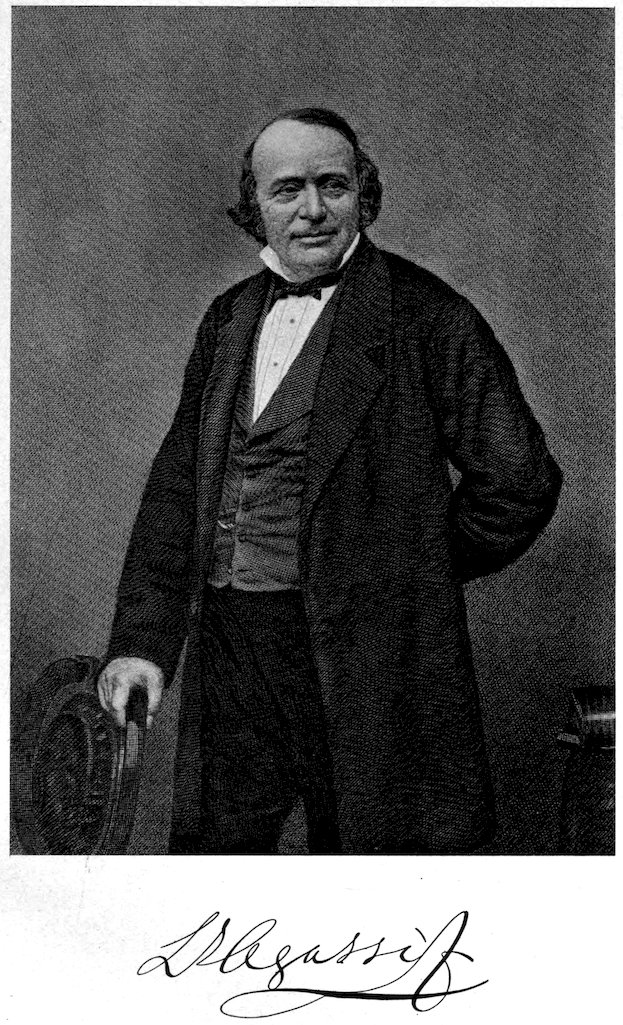
The Influence of Louis Agassiz.
At the time of the founding of the Journal and for nearly thirty years thereafter descriptive natural history constituted practically the entire work of American zoologists. In this respect American science was far behind that in Europe and particularly in France. It was not until the fortunate circumstances which brought the Swiss naturalist, Louis Agassiz, to our country in 1846 that the modern conceptions of biological science were established in America.
Agassiz was then 39 years of age and had already absorbed the spirit of generalization in comparative anatomy which dominated the work of the great leaders in Europe, and particularly in Paris. The influence of Leuckart, Tiedemann, Braun, Cuvier and Von Humboldt directed Agassiz’s great ability to similar investigations, and he was rapidly coming into prominence in the study of modern and fossil fishes when the opportunity to continue his research in America was presented. On arriving on our shores the young zoologist was so inspired with the opportunities for his studies in the new country that he decided to remain.
Bringing with him the broad conceptions of his distinguished European masters, he naturally founded a similar school of zoology in America. It is from this beginning that the present science of zoology with its many branches has developed.
It must be remembered in this connection that the great service which Agassiz rendered to American zoology consisted mainly in making available to students in America the ideals and methods of European zoologists. This he 402was eminently fitted to do both because of his European training and because of his natural ability as an inspiring leader.
The times in America, moreover, were fully ripe for the advent of European culture. There were already in existence natural history societies in many of our cities and college communities. These societies not only held meetings for the discussion of biological topics, but established museums open to the public, and to which the public was invited to contribute both funds and specimens. This led to a wide popular interest in natural history. It was therefore comparatively easy for such a man as Agassiz to develop this favorable public attitude into genuine enthusiasm.
The American Journal of Science announces the expected visit of Agassiz as a most promising event for American Zoology (1, 451, 1846): “His devotion, ability, and zeal—his high and deserved reputation and ... his amiable and conciliating character, will, without doubt, secure for him the cordial cooperation of our naturalists ... nor do we entertain a doubt that we shall be liberally repaid by his able review and exploration of our country.” We of to-day can realize how abundantly this prophecy was fulfilled.
In the succeeding volume (2, 440, 1846) occurs the record of Agassiz’s arrival. “We learn with pleasure that he will spend several years among us, in order thoroughly to understand our natural history.”
Immediately on reaching Boston, Agassiz began the publication of articles on our fauna, and the following year he was appointed to a professorship at Harvard. The Journal says (4, 449, 1847): “Every scientific man in America will be rejoiced to hear so unexpected a piece of good news.” The next year the Journal (5, 139, 1848) records Agassiz’s lecture courses at New York and Charleston, his popularity with all classes of the people and the gift of a silver case containing $250 in half eagles from the students of the College of Physicians and Surgeons.
The service of Agassiz to American zoology, therefore, consisted not only in the publication of the results of his researches and his philosophical considerations therefrom, 403but also, and perhaps in even greater degree, in the popularization of science. In the latter direction were his inspiring lectures before popular audiences and the early publication of a zoological text-book. This book, published in 1848, was entitled “Principles of Zoology, touching the Structure, Development, Distribution and Natural arrangement of the races of Animals, living and extinct, with numerous illustrations.” It was written with the cooperation of Augustus A. Gould. The review of this book in the Journal (6, 151, 1848) indicates clearly the broad modern principles underlying the new era which was beginning for American zoology.
“A work emanating from so high a source as the Principles of Zoology, hardly requires commendation to give it currency. The public have become acquainted with the eminent abilities of Prof. Agassiz through his lectures, and are aware of his vast learning, wide reach of mind, and popular mode of illustrating scientific subjects ... The volume is prepared for the student in zoological science; it is simple and elementary in style, full in its illustrations, comprehensive in its range, yet well considered and brought into the narrow compass requisite for the purpose intended.”
The titles of its chapters will show how little it differs in general subject matter from the most recent text-book in biology. Chapter I, The Sphere and fundamental principles of Zoology; II, General Properties of Organized Bodies; III, Organs and Functions of Animal Life; IV, Of Intelligence and Instinct; V, Of Motion (apparatus and modes); VI, Of Nutrition; VII, Of the Blood and Circulation; VIII, Of Respiration; IX, Of the Secretions; X, Embryology (Egg and its Development); XI, Peculiar Modes of Reproduction; XII, Metamorphoses of Animals; XIII, Geographical Distribution of Animals; XIV, Geological Succession of Animals, or their Distribution in Time.
A moment’s consideration of the fact that all these topics are excellently treated will show how great had been the progress of zoology in the first half of the nineteenth century. The sixty years that have elapsed since the publication of this book have served principally to develop these separate lines of biology into special fields of science without reorganization of the essential principles 404here recognized. This remained for many years the standard zoological and physiological text-book, and was republished in several editions here and in England. Another popular book is entitled “Methods of Study in Natural History” (1864).
More than 400 books and papers were written by Agassiz, over a third of which were published before he came to America. They cover both zoological and geological topics, including systematic papers on living and fossil groups of animals, but most important of all are his philosophical essays on the general principles of biology.
One of Agassiz’s greatest services to zoology was the publication of his “Bibliographia Zoologiæ et Geologiæ” by the Ray Society, beginning with 1848. The publication of the Lowell lectures in Comparative Embryology in 1849 gave wide audience to the general principles now recognized in the biogenetic law of ancestral reminiscence. As stated in the Journal (8, 157, 1849), the “object of the Lectures is to demonstrate that a natural method of classifying the animal kingdom may be attained by a comparison of the changes which are passed through by different animals in the course of their development from the egg to the perfect state; the change they undergo being considered as a scale to appreciate the relative position of the species.” These “principles of classification” are fully elucidated in a separate pamphlet, and are discussed at length in the Journal (11, 122, 1851).
One of the most interesting of Agassiz’s numerous philosophical essays, originally contributed to the Journal (9, 369, 1850), discusses the “Natural Relations between Animals and the elements in which they live.” Another philosophical paper contributed to the Journal discusses the “Primitive diversity and number of Animals in Geological times” (17, 309, 1854). Of his systematic papers, those on the fishes of the Tennessee river, describing many new species, were published in the Journal (17, 297, 353, 1854).
405Agassiz’s beautifully illustrated “Contributions to the Natural History of the United States” cover many subjects in morphology and embryology, which are treated with such thoroughness and breadth of view as to give them a place among the zoological classics. The Essay on Classification, the North American Testudinata, the Embryology of the turtle, and the Acalephs are the special topics. These are summarized and discussed at length in the Journal (25, 126, 202, 321, 342, 1858; 30, 142, 1860; 31, 295, 1861).
The volume on the “Journey in Brazil” (1868) in joint authorship with Mrs. Agassiz is a fascinating narrative of exploration.
The conceptions which Agassiz held as to the most essential aim of zoological study are well illustrated in his autobiographical sketch, where he writes:[174]
“I did not then know how much more important it is to the naturalist to understand the structure of a few animals, than to command the whole field of scientific nomenclature. Since I have become a teacher, and have watched the progress of students, I have seen that they all begin in the same way; but how many have grown old in the pursuit, without ever rising to any higher conception of the study of nature, spending their life in the determination of species, and in extending scientific terminology!”
It is not surprising, then, that under such influence the older systematic studies should be replaced in large measure by those of a morphological and embryological nature.
The personal influence of Agassiz is still felt in the lives of even the younger zoologists of the present day. For the investigators of the present generation are for the most part indebted to one or another of Agassiz’s pupils for their guidance in zoological studies. These pupils include his son Alexander Agassiz, Allen, Brooks, Clarke, Fewkes, Goode, Hyatt, Jordan, Lyman, Morse, Packard, Scudder, Verrill, Wilder, and others—leaders in zoological work during the last third of the nineteenth century. Through such men as these the inspiration of Agassiz has been handed on in turn to their pupils and from them to the younger generation of zoologists.
The essential difference between the work of Agassiz and that of the American zoologists who preceded him was in his power of broad generalizations. To him the 406organism meant a living witness of some great natural law, in the interpretation of which zoology was engaged. The organism in its structure, in its development, in its habits furnished links in the chain of evidence which, when completed, would reveal the meaning of nature. Of all Agassiz’s pupils, probably William K. Brooks most fittingly perpetuated his master’s ideals.
Period of Morphology and Embryology, 1847–1870.
The new aspect of zoology which came as a result of the influence of Agassiz characterized the zoological work of the fifties and sixties, that is, until the significance of the natural selection theory of Darwin and Wallace became generally appreciated.
The work in these years and well into the seventies was largely influenced by the morphological, embryological and systematic studies of Louis Agassiz and his school. The structure, development, and homologies of animals as indicating their relationship and position in the scheme of classification was prominent in the work of this period. The adaptations of animals to their environment and the application of the biogenetic law to the various groups of animals were also favorite subjects of study.
The most successful investigators in this period on the different groups of animals include:—Louis Agassiz on the natural history and embryology of coelenterates and turtles; A. Agassiz, embryology of echinoderms and worms; H. J. Clark, embryology of turtles and systematic papers on sponges and coelenterates; E. Desor, echinoderms and embryology of worms; C. Girard, embryology, worms, and reptiles; J. Leidy, protozoa, coelenterates, worms, anatomy of mollusks; W. O. Ayres and T. Lyman, natural history of echinoderms; McCrady, development of acalephs; W. Stimpson, marine invertebrates; A. E. Verrill, coelenterates, echinoderms, worms; A. Hyatt, evolutionary theories, bryozoa and mollusks; Pourtales, deep sea fauna; C. B. Adams, A. and W. G. Binney, Brooks, Carpenter, Conrad, Dall, Jay, Lea, S. Smith, Tryon, mollusks; E. S. Morse, brachiopods, mollusks; J. D. Dana, coelenterates and Crustacea; Kirtland, 407Loew, Edwards, Hagen, Melsheimer, Packard, Riley, Scudder, Walsh, insects; Gill, Holbrook, Storer, fishes; Cope, evolutionary theories, fishes and amphibia; Baird, reptiles and birds; J. A. Allen, amphibia, reptiles and birds; Brewer, Cassin, Coues, Lawrence, birds; Audubon, Bachman, Baird, Cope, Wilder, mammals.
The progress of ornithology in the United States previous to 1876 is well described in a paper by J. A. Allen in the American Naturalist (10, 536, 1876). A sketch of the early history of conchology is given by A. W. Tryon in the Journal (33, 13, 1862).
Jeffries Wyman was the most prominent comparative anatomist of this period. His work includes classic papers on the anatomy and embryology of fishes, amphibia, and reptiles.
Zoology in the American Journal of Science, 1846–1870.
The fifty volumes of the second series of the Journal, including the years 1846 to 1870, cover approximately this period of morphology and embryology. During this period the Journal occupied a very important place in zoological circles, for J. D. Dana was for most of this period the editor-in-chief, while Louis Agassiz and Asa Gray were connected with it as associate editors. Moreover, in 1864 one of the most promising of Agassiz’s pupils, Addison E. Verrill, was called to Yale as professor of zoology and was made an associate editor in 1869.
In the Journal, therefore, may be found, in its original articles, together with its reports of meetings and addresses and its reviews of literature, a fairly complete account of the zoological activity of the period. The most important zoological researches, both in Europe and America, were reviewed in the bibliographic notices.
The most important series of zoological articles are by Dana himself. As his work on the zoophytes and crustacea of the U. S. Exploring Expedition continued, he published from time to time general summaries of his conclusions regarding the relationships of the various groups. Included among these papers are philosophical essays on general biological principles which must have 408had much influence on the biological studies of the time, and which form a basis for many of our present concepts.
The importance of these papers warrants the list being given in full. The titles are here in many cases abbreviated and the subjects consolidated.
General views on Classification, 1, 286, 1846.
Zoophytes, 2, 64, 187, 1846; 3, 1, 160, 337, 1847.
Genus Astraea, 9, 295, 1850.
Conspectus crustaceorum, 8, 276, 424, 1849; 9, 129, 1850; 11, 268, 1851.
Genera of Gammaracea, 8, 135, 1849; of Cyclopacea, 1, 225, 1846.
Markings of Carapax of Crabs, 11, 95, 1851.
Classification of Crustacea, 11, 223, 425; 12, 121, 238, 1851; 13, 119; 14, 297, 1852; 22, 14, 1856.
Geographical distribution of Crustacea, 18, 314, 1854; 19, 6; 20, 168, 349, 1855.
Alternation of Generations in Plants and Radiata, 10, 341, 1850.
Parthenogenesis, 24, 399, 1857.
On Species, 24, 305, 1857.
Classification of Mammals, 35, 65, 1863; 37, 157, 1864.
Cephalization, 22, 14, 1856; 36, 1, 321, 440, 1863; 37, 10, 157, 184, 1864; 41, 163, 1866; 12, 245, 1876.
Homologies of insectean and crustacean types, 36, 233, 1863; 47, 325, 1894.
Origin of life, 41, 389, 1866.
Relations of death to life in nature, 34, 316, 1862.
Of the above, the articles on cephalization as a fundamental principle in the development of the system of animal life have attracted much attention. The evidence from comparative anatomy, paleontology, and embryology alike supports the view that advance in the ontogenetic as well as in the phylogenetic stages is correlated with the unequal growth of the cephalic region as compared with the rest of the body. Dana shows that this principle holds good for all groups of animals. His homologies of the limbs of arthropods and vertebrates, however, do not accord with more modern views.
Other papers on the same and allied topics were published by Dana in other periodicals. His most conspicuous zoological works, however, are his reports on the Zoophytes and Crustacea of the United States Exploring 409Expedition, 1837–1842. The former consists of 741 quarto pages and 61 folio plates, describing over 200 new species, while the Crustacea report, in two volumes, has 1620 pages and 96 folio plates, with descriptions of about 500 new species. Each of these remains to-day as the most important contribution to the classification of the respective groups. The relationships of the species, genera and families were recognized with such remarkable judgment that Dana’s admirable system of classification has remained the basis for all subsequent work.
Dana’s critical reviews (25, 202, 321, 1858) of Agassiz’s “Contribution to the Natural History of the United States” are among the most interesting of his philosophical discussions concerning the relationships of animals as revealed by their structure, their embryology, and their geological history.
The remaining zoological articles in this series cover nearly the whole range of systematic zoology. Especially important are the articles by Verrill on coelenterates, echinoderms, worms and other invertebrates.
In the years following the publication of Darwin’s Origin of Species in 1859 occur many articles on the theory of natural selection. Some of the writers attack the theory, while others give it more or less enthusiastic support.
Experimental methods in solving biological problems were little used at this time, although a few articles of this nature appear in the Journal. Of these, a paper by W. C. Minor (35, 35, 1863) on natural and artificial fission in some annelids has considerable interest to-day.
Exploring Expeditions.
Of the important zoological expeditions the following may be selected as showing their influence on American Zoology:
The North Pacific Expedition, with William Stimpson as zoologist, returned in 1856 with much new information concerning the marine life of the coasts of Alaska and Japan and many new species of invertebrates.
In 1867–1869 the United States Coast Survey extended its explorations to include the deep sea marine life off 410the southeastern coasts and Gulf of Mexico under the leadership of Pourtales and Agassiz.
The Challenger explorations (1872–1876) added greatly to the knowledge of marine life off the American coast as well as in other parts of the world.
The explorations of the United States Fish Commission succeeded those of the Coast Survey in the collection of marine life off our coasts and in our fresh waters. These have continued since 1872 and have yielded most important results from both the scientific and economic standpoints.
Under the charge of Alexander Agassiz the Coast Survey Steamer “Blake,” in 1877 to 1880, was engaged in dredging operations in three cruises to various parts of the Atlantic. The U. S. Fish Commission Steamer “Albatross,” also in charge of Agassiz, made three expeditions in the tropical and other parts of the Pacific in the years from 1891 to 1905. The study of these collections has added greatly to our knowledge of systematic zoology and geographical distribution. The reports on some of the groups are still in course of preparation.
Period of Evolution, 1870–1890.
The time from 1870 to 1890 may be appropriately called the period of evolution, for although it commences eleven years after the publication of the Origin of Species, the importance of the natural selection theory was but slowly receiving general recognition. The hesitation in accepting this theory was due in no small degree to the opposition of Louis Agassiz. After the acceptance of evolution, although morphological and embryological studies continued as before, they were prosecuted with reference to their bearing on evolutionary problems.
Following closely the methods which had produced so much progress during the life of Agassiz, the field of zoology was now occupied by a new generation, among whom the pupils of Agassiz were the most prominent.
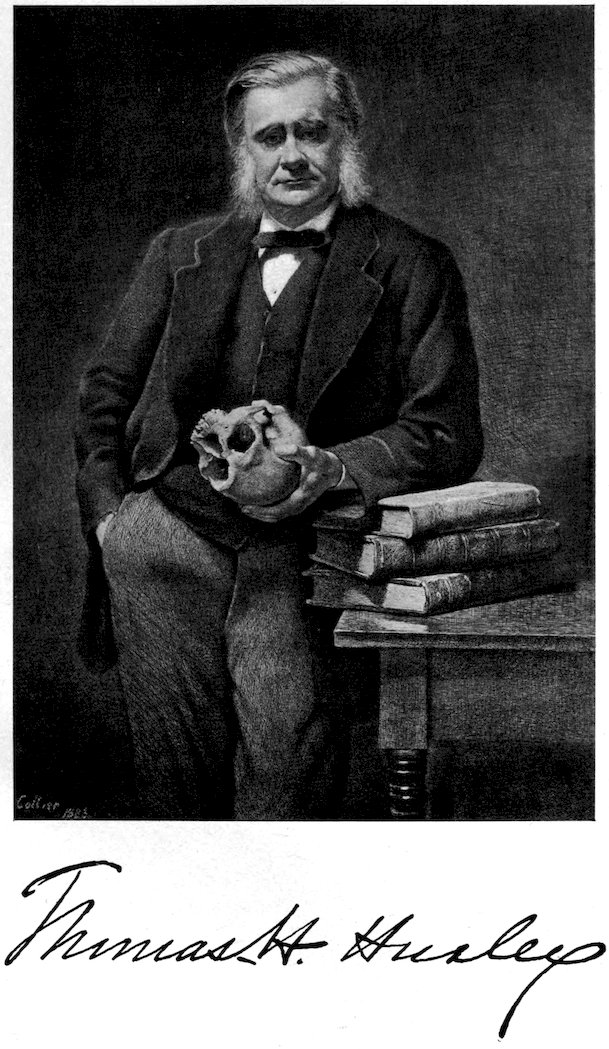
411The teaching of biology at this time was also strongly influenced by Huxley, whose methods of conducting laboratory classes for elementary students were adopted in most of our large schools and colleges. This placed biology on the same plane with chemistry as a means for training in laboratory methods and discipline, with the added advantage that the subject of biology is much more intimately connected with the student’s everyday life and affairs.
This increasing demand for instruction in biology and the consequent necessity for more teachers brought an increasing number of investigators into this field.
Conspicuous in this period was the work of E. D. Cope, best known as a paleontologist, but whose work on the classification of the various groups of vertebrates stands preeminent, and whose philosophical essays on evolution had much influence on the evolutionary thought of the time. He was a staunch supporter of the Lamarckian doctrine. Alpheus Hyatt also maintained this theory, and brought together a great accumulation of facts in its support. He thereby contributed largely to our knowledge of comparative anatomy and embryology. A. S. Packard, whose publications cover a wide range of topics, was best known for his text-books of zoology and his manuals on insects.
W. K. Brooks was a leading morphologist and embryologist. S. F. Baird, for many years the head of the United States Fish Commission, was the foremost authority on fish and fisheries and is also noted for his work on reptiles, birds and mammals. The man of greatest influence, although by no means the greatest investigator, was C. O. Whitman. It is to him that we owe the inception of the Marine Biological Laboratory, the most potent influence in American zoology to-day; the organization of the American Morphological Society, the forerunner of the present American Society of Zoologists; and the establishment of the Journal of Morphology. G. B. Goode was distinguished for his work on fishes and for his writings on the history of science.
E. L. Mark, C. S. Minot, and Alexander Agassiz were acknowledged leaders in their special fields of research—Mark in invertebrate morphology and embryology, and Minot in vertebrate embryology, while Alexander Agassiz made many important discoveries in the systematic zoology and embryology of marine animals, and to him 412we owe in large measure our knowledge of the life in the oceans of nearly all parts of the world.
The knowledge of the representatives of the different divisions of the American fauna had now become sufficient to allow the publication of monographs on the various classes, orders and families. At this time also particular attention was given to the marine invertebrates of all groups.
Of the many investigators working on the various groups of animals at this time only a few may be mentioned. The protozoa were studied by Leidy, Clark, Ryder, Stokes; the sponges by Clark, Hyatt; the coelenterates by A. Agassiz, S. F. Clarke, Verrill; the echinoderms by A. Agassiz, Brooks, Kingsley, Fewkes, Lyman, Verrill; the various groups of worms by Benedict, Eisen, Silliman, Verrill, Webster, Whitman; the mollusks by A. and W. G. Binney, Tryon, Conrad, Dall, Sanderson Smith, Stearns, Verrill; the Brachiopods by Dall and Morse; the Bryozoa by Hyatt; the crustacea by S. I. Smith, Harger, Hagen, Packard, Kingsley, Faxon, Herrick; the insects by Packard, Horn, Scudder, C. H. Fernald, Williston, Norton, Walsh, Fitch, J. B. Smith, Comstock, Howard, Riley and many others; spiders by Emerton, Marx, McCook; tunicates by Packard and Verrill; fishes by Baird, Bean, Cope, Gilbert, Gill, Goode, Jordan, Putnam; amphibians and reptiles by Cope; birds by Baird, Brewer, Coues, Elliott, Henshaw, Allen, Merriam, Brewster, Ridgway; and the mammals by Allen, Baird, Cope, Coues, Elliott, Merriam, Wilder.
Interest in the evolutionary theory continued to increase and eventually developed into the morphological and embryological studies which reached their culmination between 1885 and 1890 under the guidance of Whitman, Mark, Minot, Brooks, Kingsley, E. B. Wilson and other famous zoologists of the time. In these years the Journal of Morphology was established and the American Morphological Society was formed.
The morphological, embryological and paleontological evidences of evolution as indicated by homologies, developmental stages and adaptations were the most absorbing subjects of zoological research and discussion.
413
Zoology in the American Journal of Science, 1870–1918.
The third series of the Journal (1870–1895), likewise including fifty volumes, embraces this period of zoological activity in morphological and embryological studies, culminating with the inception of the modern experimental methods.
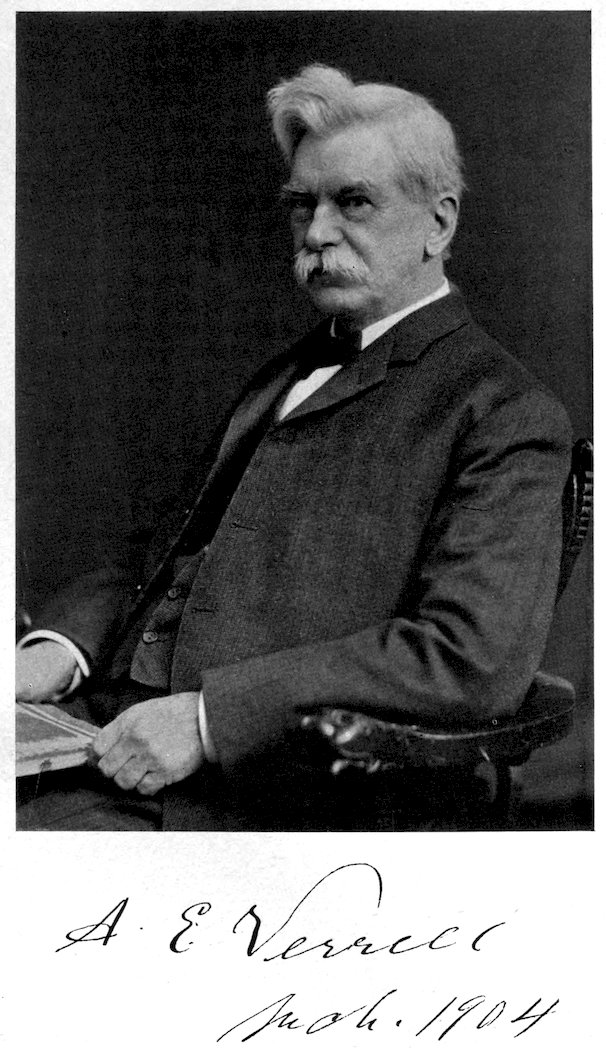
In this period also occurred the greatest progress in marine systematic zoology, due to the explorations of the United States Fish Commission off the Atlantic Coast. The Journal had an important share in the zoological development of this period also, for A. E. Verrill, who was now an associate editor, was in charge of the collections of marine invertebrates. Consequently most of the discoveries in this field were published in the Journal in numerous original contributions by Verrill and his associates. The explorations of the U. S. Fish Commission Steamer “Albatross” are described from year to year by Verrill, with descriptions of the new species of invertebrates discovered.
The numerous original contributions by Verrill on subjects of general zoological interest as well as on those of a systematic nature give this third series of the Journal much zoological importance. Verrill’s papers cover almost the whole field of descriptive zoology, but are mainly devoted to marine invertebrates. Those which were originally contributed to the Journal or summarized by him in his literature reviews include the following topics:
Sponges, 16, 406, 1878.
Coelenterates, 37, 450, 1864; 44, 125, 1867; 45, 411, 186; 46, 143, 1868; 47, 282, 1869; 48, 116, 419, 1869; 49, 370, 1870; 3, 187, 432, 1872; 6, 68, 1873; 21, 508, 1881; 6, 493, 1898; 7, 41, 143, 205, 375, 1899; 13, 75, 1902.
Echinoderms, 44, 125, 1867; 45, 417, 1868; 49, 93, 101, 1870; 2, 430, 1871; 11, 416, 1876; 49, 127, 199, 1895; 28, 59, 1909; 35, 477, 1913; 37, 483, 1914; 38, 107, 1914; 39, 684, 1915.
Worms, 50, 223, 1870; 3, 126, 1872.
Mollusks, 49, 217, 1870; 50, 405, 1870; 3, 209, 281, 1872; 5, 465, 1873; 7, 136, 158, 1874; 9, 123, 177, 1875; 10, 213, 1875; 41412, 236, 1876; 14, 425, 1877; 19, 284, 1880; 20, 250, 251, 1880; 2, 74, 91, 1896; 3, 51, 79, 162, 355, 1897.
Crustacea, 44, 126, 1867; 48, 244, 430, 1869; 25, 119, 534, 1908.
Ascidians, 1, 54, 93, 211, 288, 443, 1871; 20, 251, 1880.
Dredging operations and marine fauna, 49, 129, 1870; 2, 357, 1871; 5, 1, 98, 1873; 6, 435, 1873; 7, 38, 131, 405, 409, 498, 608, 1874; 9, 411, 1875; 10, 36, 196, 1875; 16, 207, 371, 1878; 17, 239, 258, 309, 472, 1879; 18, 52, 468, 1879; 19, 137, 187; 20, 390, 1880; 22, 292, 1881; 23, 135, 216, 309, 406, 1882; 24, 360, 477, 1882; 28, 213, 378, 1884; 29, 149, 1885.
Miscellaneous, 39, 221, 1865; 41, 249, 268, 1866; 44, 126, 1867; 48, 92, 1869; 3, 386, 1872; 7, 134, 1847; 10, 364, 1875; 16, 323, 1878; 20, 251, 1880; 3, 132, 135, 1897; 9, 313, 1900; 12, 88, 1901; 13, 327, 1902; 14, 72, 1902; 15, 332, 1903; 24, 179, 1907; 29, 561, 1910.
S. I. Smith describes the metamorphosis of the Crustacea (3, 401, 1872; 6, 67, 1873), species of crustacea (3, 373, 1872; 7, 601, 1874; 9, 476, 1875), and dredging operations in Lake Superior (2, 373, 448, 1871). In this series occurs also a series of papers on comparative anatomy and embryology from the Chesapeake Zoological Laboratory in charge of W. K. Brooks. In the 39th and 40th volumes of the third series (1890) occur several papers on evolutionary topics by John T. Gulick (39, 21; 40, 1, 437) which have attracted much attention.
Before the end of this period, however, the Journal was relieved from the necessity of publishing zoological articles by the establishment of several periodicals devoted especially to the various fields of zoology. We find, therefore, but few exclusively zoological papers after 1885, although articles of a general biological interest and the reviews of zoological books continue.
In the fourth series of the Journal, beginning in 1896, occur also a number of articles on systematic zoology by Verrill and others and several papers having a general biological interest. Brief reviews of a small number of zoological books are still continued, but at the present day the Journal, which played so important a part in the early development of American zoology, has been given over to the geological and physical sciences in harmony with the modern demand for specialization.
415
Period of Experimental Biology, since 1890.
Zoological studies remained in large measure observational and comparative until about 1890 when the experimental methods of Roux, Driesch and others came into prominence. Interest then turned from the accumulation of facts to an analysis of the underlying principles of biological phenomena. The question now was not so much what the organism does as how it does what is observed, and this question could be answered only by the experimental control of the conditions. These experimental studies met with such remarkable success that in a few years the older morphological studies were largely abandoned, the Morphological Society changed its name to the Society of Zoologists, and in 1904 the Journal of Experimental Zoology was established. The experimental methods were applied to all branches of biological science, and while it must be freely admitted that little progress has been made toward an understanding of the ultimate causes which underlie biological phenomena, a great advance has been made in the elucidation of the general principles involved.
Experimental embryology, histology, regeneration, comparative physiology, neurology, cytology, and heredity have in recent years successfully adopted an experimental aspect and have made significant progress thereby. Biology has now taken its place beside chemistry and physics as an experimental science.
The latest great advance in biology has been in the field of heredity. The rediscovery of the Mendelian principles of heredity in 1900 brought to light the most important generalization in biology in recent times. The new science of genetics is essentially the experimental study of heredity.
We are at the moment in the midst of an effort to establish in biology a few relatively simple laws by using for the purpose the vast accumulations of observational data gathered in past years, supplemented by such experimental data as have been provided by these more recent investigations. Such hypotheses as have been formulated are for the most part only tentatively held, for their 416validity is generally incapable of a critical test. But wherever such tests have been possible, the laws of mathematics, physics and chemistry are found applicable to biological phenomena.
The number of investigators has now become so great and their activities so prolific that the list and synopses of the zoological publications each year cover upwards of 1000 to 1500 pages in the International Catalogue of Scientific Literature.
American Leadership.—During the first half of the century the progress of zoology in America remained distinctly behind that of Europe. At the beginning of the century the science was farthest developed by the French and English, although Linnæus was a Swede and took his degree in Holland. Under the influence of Von Baer and his monumental treatise on embryology (Ueber Entwicklungsgeschichte der Thiere, 1828), and supported later by the great physiologist, Johannes Müller, whose “Physiologie des Menschen” (1846) forms the basis of modern physiology, the German school forged rapidly ahead and eventually assumed the leadership in zoology, as in several other branches of science.
In the latter half of the century the influence of the German universities dominated in a large measure the zoological investigations in America. The reason for this is partly due to the fact that many of our young zoologists, after finishing their college course, completed their preparation for research by a year or more at a German university. The more mature zoologists, too, looked forward with keen anticipation to spending their summer vacations and sabbatical years in research in a German laboratory or at the famous Naples station in which the German influence was dominant.
With the rise of experimental biology since 1890, however, the American zoologists have shown so high a degree of originality in devising experiments, so much skill in performing them, and such keenness in analyzing the results, that they have assumed the world leadership in several of the special fields into which the science of zoology is now divided.
417
Biological Periodicals.
Perhaps in no better way can the progress of biology in America be illustrated than by a brief survey of the origin and development of the more important biological journals. For it will be seen that these publications have become more numerous and more specialized as the science has advanced in specialization.
The early publications—which as is well known, treated mainly of the birds, mammals and other vertebrates, and of insects, crustacea and shells—consisted mainly of separate books or pamphlets, published by private subscription. After the establishment of the so-called Academies of Science, or of Arts and Sciences, toward the end of the eighteenth and in the first quarter of the nineteenth century, the reports of the meetings began to be published as periodical Journals, supported by the academies. In these publications, and in the Journal which was founded at the same time, appear papers on all branches of science, including zoology. As soon as zoology in America assumed its modern aspects through the influence of Louis Agassiz and his followers the earliest strictly zoological journals were established.
It should be noted, however, that the journals of the scientific and natural history societies were more or less fully devoted to zoological topics according to the nature of the activities of the members and correspondents. After the establishment of the Museum of Comparative Zoology by Louis Agassiz came the founding in 1863 of its Bulletin and later its Memoirs. These publications have continued to the present day as a standard of excellence for the reports of zoological investigations. In connection with the systematic work on mollusks, the American Journal of Conchology was established in 1865. The American Naturalist was founded in 1867 by four of Louis Agassiz’s pupils, Hyatt, Morse, Packard and Putnam. It was later edited by Cope as a leading periodical for the publication of biological papers, particularly those relating to evolution, and is at present devoted to evolutionary topics. It is now in the 52d volume of its new series.
418With the awakened interest in comparative anatomy and embryology came the need for an American journal which should supply a means of publication for the reports of researches accomplished by the increasing number of workers in these fields. This need was fully met by the establishment of the Journal of Morphology in 1887. This publication, now in its 30th volume, has equalled the best European journals in the character of its papers. A few years later (1891) came the Journal of Comparative Neurology for the publication of investigations relating to the morphology and physiology of the nervous system and to nervous and allied phenomena in all groups of organisms. Twenty-eight volumes of this journal have been completed. The Zoological Bulletin was started under the auspices of the Marine Biological Laboratory in 1897 for the publication of papers of a less extensive nature and which could be more promptly issued than those in the Journal of Morphology where elaborate plates were required. After two years the scope of the Bulletin was enlarged to include botanical and physiological subjects. The name was correspondingly changed to the Biological Bulletin. Of this important periodical 33 volumes have been issued.
For the publication of papers on human and comparative anatomy and embryology, the American Journal of Anatomy was established in 1901, and is now in its twenty-third volume.
Meanwhile the trend of zoological interest was toward topics connected with the ultimate nature of biological phenomena. The meaning of these phenomena could be determined only by the experimental method. Researches in this field became more prominent and the adequate publication of the numerous papers required the establishment of a new journal in 1904. This was named the Journal of Experimental Zoology. It immediately took its place in the front rank of American zoological periodicals. Twenty-four volumes have been published.
In spite of the constantly increasing number of journals, the science grew faster than the means of publication. So crowded did the American journals become that long delays often resulted before the results of an investigation could be issued. This condition was met in 419part by the sending of many papers to be published in European journals (a necessity most discreditable to American zoology) and in part by the establishment of additional means of publication. Of the latter the Anatomical Record, now in its fourteenth volume, was begun in 1906 for the prompt publication of briefer papers on vertebrate anatomy, embryology and histology and for preliminary reports and notes on technique.
During the past few years has come a great advance in the experimental breeding of plants and animals. Problems in heredity and evolution have taken on a new interest since the importance and validity of Mendel’s discovery have been recognized. To meet this development of biology the journal Genetics was begun in 1916 for the publication of technical papers, while the Journal of Heredity, modified from the American Breeders Magazine, is devoted to popular articles on animal and plant breeding, and Eugenics.
On the whole, the science of zoology is now assuming a closer relation to practical affairs. Entomology, for example, is now represented by the Journal of Economic Entomology, of which 10 volumes have been issued since 1907. The Journal of Animal Behavior covers another practical field of research. The Proceedings of the Society for Experimental Biology and Medicine, starting in 1903, the American Journal of Physiology, and several other publications cover the physiological field. The Journal of Parasitology, established 1914, now in its fourth volume, is devoted to the interests of medical zoology. The Auk, now in the 34th volume of its new series (42d of old series), is the official organ of the American Ornithologists Union and is devoted to the dissemination of knowledge concerning bird life. The Annals of the Entomological Society of America, established in 1908, and now in its 10th volume, is one of several important entomological journals. The Nautilus, of which 28 volumes have been issued, is one of the more successful journals devoted to conchology. This list might be extended to include numerous other periodicals of importance, both technical and popular, which have been of great service in the various fields of biology.
In addition to these are the many volumes of systematic 420papers in the Proceedings of the United States National Museum, the practical reports in the Bulletin of the United States Fish Commission, the vast literature issued yearly by the various divisions of the United States Department of Agriculture, Public Health Service and other Governmental departments, while the list of publications by scientific societies, museums, and other institutes is constantly increasing and covers all fields of biological research.
At the present time facilities for the publication of research on any branch of zoology are as a rule entirely adequate. For this highly satisfactory condition the science is indebted to the support given five of its most important journals by the Wistar Institute of Anatomy and Biology.
Biological Associations.
An important light on the history of biology in America can be thrown by a glance at the rise and development of societies or associations for the report and discussion of papers relating to that branch of science. In the first half of the nineteenth century natural history societies were formed in most cities and centers of learning. These were very important factors in the promotion of scientific research as well as in the diffusion of popular knowledge of living things. The aims and activities of twenty-nine such scientific societies, many of which were devoted especially to natural history, are described in one of the early volumes of the Journal (10, 369, 1826). The Connecticut Academy of Arts and Sciences, dating from 1799, the Philadelphia Academy of Natural Sciences from 1812, and the New York Lyceum of Natural History (in 1876 name changed to New York Academy of Sciences) from 1817 are among the oldest of those which still exist.
Of national institutions the American Philosophical Society was founded in 1743, the American Academy of Arts and Sciences in 1780, and the National Academy of Sciences in 1863.
The American Association for the Advancement of Science, with its thousands of members, now has separate sections for each of the special branches of science. This 421great association was organized in 1848, as the successor of the Association of American Geologists and Naturalists. This was itself a revival of the American Geological Society which first met at Yale in 1819. Its meetings have given a great support to the scientific work of the country.
The American Society of Naturalists was founded in 1883. The original plan of the society was for the discussion of methods of investigation, administration and instruction in the natural sciences, but its program is now entirely devoted to discussions and papers of a broad biological interest. It also arranges for an annual dinner of the several biological societies and an address on some general biological topic.
In 1890, toward the end of the period in which morphological studies were being emphasized, the professional zoologists of the eastern states founded the American Morphological Society. This association held annual meetings during the Christmas holidays for the presentation of zoological papers. This name became less appropriate after a few years because of the gradual decrease in the proportion of morphological investigations owing to the greater attention being directed to problems in experimental zoology and physiology. Consequently the name was changed to the American Society of Zoologists. To be eligible for membership in this society a person must be an active investigator in some branch of zoology, as indicated by the published results.
The American Association of Anatomists includes in its membership investigators and teachers in comparative anatomy, embryology, and histology as well as in human anatomy. Many professional zoologists and experimental biologists present their papers before this society, or at the meetings of the American Physiological Society. The Entomological Society of America and the American Association of Economic Entomologists are large and active societies.
These national societies have been of great service in fostering a high standard of zoological research. A still more important service, though generally less conspicuous, is rendered by the journal clubs in connection with all the larger zoological laboratories, and by local scientific 422societies which are now maintained in all the larger centers of learning throughout the country. There are also specific societies for some of the different fields of biological work.
Biological Stations.
No insignificant factor in the development of biological science has been the establishment of biological stations where investigators, teachers and students meet in the Summer vacation for special studies, discussions and research. The most successful of these laboratories have been located on the seashore and here the study of marine life in Summer supplements the work of the school or university biological courses. The famous Naples Station was founded in 1870, and was shortly after followed by several others. Similar biological stations are now supported on almost every coast in Europe and in several inland localities.
The first such American school was established by Louis Agassiz at the island of Penikese on the coast of Massachusetts in 1873, succeeding his private laboratory at Nahant. During that Summer more than forty students gained enthusiasm for the work of future years. Unfortunately the laboratory so auspiciously started was of brief duration, for the death of Agassiz occurred in December of the same year, and the laboratory was discontinued at the end of the following Summer. Shortly afterward Alexander Agassiz equipped a small private laboratory at Newport, Rhode Island, and W. K. Brooks established the Chesapeake Bay Zoological Laboratory.
At this time the United States Fish Commission was engaged under the direction of Spencer F. Baird in a survey of the marine life of the waters off the Eastern Coast. Between 1881 and 1886 the Commission established the splendidly equipped biological station at Woods Hole, Massachusetts. Both here and at the Fish Commission Laboratory at Beaufort, North Carolina, much work in general zoology as well as in economic problems is accomplished. These laboratories are designed particularly for specialists engaged in researches connected with the work of the Fish Commission.
423A need was soon felt for a marine laboratory along broader lines, and one available to the students and teachers of the schools and colleges. To meet these requirements the Woods Hole Marine Biological Laboratory was started in 1887, as the successor to an earlier laboratory at Annisquam, and has since become a great Summer congress for biologists from all parts of the country. It is safe to say that no other institution has been of equal service in securing for biology the high plane it now occupies in American science. The leading spirit in the establishment of this laboratory and its director for many years was Charles O. Whitman.
Successful marine laboratories are located also at Cold Spring Harbor, Long Island; at Harpswell, Maine; and at Bermuda. The Carnegie Institution maintains a laboratory at Tortugas Island, Florida, for the investigation of tropical marine life.
On the Pacific Coast marine laboratories are located at Pacific Grove and at La Jolla, California, and at Friday Harbor, Washington. Several other biological laboratories are open each Summer on our coasts, as well as a number of fresh-water laboratories on the interior lakes. There are also several mountain laboratories. The influence of these laboratories on American biology is immeasurable.
Natural History Museums.
Museums of Natural History or “Cabinets of Natural Curios” as they were sometimes called, were established in the first half of the nineteenth century in connection with the various natural history societies. These were of much service in stimulating the collection of zoological “specimens” and in arousing a popular interest in natural history.
The zoological museum of earlier days consisted of rows on rows of systematically arranged specimens, each carefully labelled with scientific name, locality, date of collection and donor—much like the pages of a catalogue. All this has now been changed; the bottles of specimens have been relegated to the storeroom, and the great plate glass cases of the modern museum represent individual studies in the various fields of modern zoological 424research, or individual chapters in the latest biological text-books. Often the talent of the artist and the skill of the taxidermist are cunningly combined to produce most realistic bits of nature.
The United States National Museum, the American Museum of Natural History, the Field Columbian Museum and the Museum of Comparative Zoology are among the finest museums of the world, while many of the states, cities, and universities maintain public museums as a part of their educational systems.
Systematic Zoology and Taxonomy.
The work in systematic zoology is now mainly carried on by specialists in relatively small groups of animals. This is necessitated both by the increasingly large number of species known to science and by the completeness and exactness with which species must now be defined. The majority of systematic workers are now connected with museums where the large collections furnish material for comparative studies.
Prominent in this field is the United States National Museum, the publications of which are mainly taxonomic and zoogeographic, and cover every group of organism. The adequacy of this great museum for such studies may be illustrated by the collection of mammals. This museum has the types of 1135 of the 2138 forms (including species and subspecies) of North American mammals recognized in Miller’s list,[175] and less than 200 forms lack representatives among the 120,000 specimens of mammals. Systematic monographs of several of the orders of mammals have been published.
Systematic study of the birds has brought the number of species and subspecies known to inhabit North and Middle America to above 3000. The most comprehensive systematic treatise is the still incomplete report of Ridgeway[176] of which seven large volumes have already been issued.
On the reptiles, the most complete monograph is that by Cope[177] entitled “The Crocodilians, Lizards and Snakes of North America.”
The Amphibia have also been studied by Cope, whose 425report on the Batrachia of North America[178] is the standard taxonomic work.
The most comprehensive systematic work on fishes is the “Descriptive Catalogue of the Fishes of North and Middle America” by Jordan and Evermann.[179]
The invertebrate groups have been in part similarly monographed by the members of the U. S. National Museum staff and others, and further studies are in progress. Other taxonomic monographs published by this museum include the various groups of animals from many different parts of the world.
A number of the larger State, municipal, and university museums publish bulletins on special groups represented in their collections as well as articles of general zoological interest.
Expeditions, subsidized by museum and private funds, are from time to time sent to various parts of the world and their results are often published in sumptuous manner.
The total number of living species of animals is unknown, but considering that about a quarter of a million new species have been described during the past thirty years, it is probable that several million species are in existence to-day. More than half a million have been described. These are probably but a small fraction of the number that have existed in past geological ages.
Thus, in spite of all the work that has been done in systematic zoology and as the number of known species continues to increase, there still remain many groups of animals, some of which are by no means rare or minute, in which probably only a small proportion of the species are as yet capable of identification.
It is only since the publication of Ward and Whipple’s “Fresh-water Biology” within the past year that the amateur zoologist could hope to find even the names of all the organisms which may be collected from a single pool of water. And in many cases he will still meet with disappointment, for many of our protozoa and other fresh-water organisms have not yet been described as species.
During the past few years there has been a tendency on 426the part of some of our biologists engaged in experimental work to disparage the studies of the systematists. It must be granted, however, that both lines of work are essential to the sound development of zoological science, for experimental investigations in which the accurate diagnosis of species is ignored always result in confusion.
Ecology.—The marvelous modifications in structure and instincts by which the various animals are adapted to their surroundings now forms a special topic in biological research and one of the most fascinating. The adaptations in habitat, time, behavior, appearance and even in structure are found capable of a certain individual modification when studied experimentally.
Zoogeography.—Closely associated with systematic zoology, and indeed a part of the subject in its broader sense, is the study of the geographical distribution of animal species and larger groups.
Paleontology.—The geological succession of organisms embraces a field where zoologist and geologist meet. The wonderful progress made by American investigators is well described in the preceding chapters on Historical Geology and Vertebrate Paleontology.
Biometry.
Since Darwin’s theory of evolution postulated the origin of new species by means of natural selection, it was obviously necessary in order to apply a critical test to determine the precise limits of a species. It was, therefore, proposed to subject a given species to a strict examination by the application of statistical methods to determine the range of variation of its members and the extent to which the species intergrades with others. Other problems, particularly those concerning heredity, were treated in similar manner. This branch of biological science was particularly developed by the English School, led by Sir Francis Galton, followed by Karl Pearson and William Bateson.
In America the methods of biometry have been utilized extensively by Charles B. Davenport, Raymond Pearl, H. S. Jennings and others in the solution of problems in genetics and evolution. Their work shows the great 427value of critical statistical analysis in the interpretation of biological data. A thorough training in mathematics is now found to be hardly less important for the biologist than is a knowledge of physics and chemistry, for the science of biometry has become one of the most important adjuncts to the study of genetics.
Comparative Anatomy and Embryology.
Comparative Anatomy.—Upon the foundations laid down by Cuvier a century ago the present elaborate structure of comparative anatomy of animals, both vertebrate and invertebrate, has been developed. Vast as is the present accumulation of facts and theories many important problems still await their solution. Jeffries Wyman was long a leader in this field, where many workers are now engaged.
Embryology.—The embryological studies, so brilliantly begun by Von Baer early in the nineteenth century, are still in progress. They have now been extended to the groups more difficult of investigation and into the earliest stages of fertilization and implantation in the mammals. Artificial cultural methods have yielded important results. Louis and Alexander Agassiz, Mark, Minot, Brooks, Whitman, Conklin and E. B. Wilson have taken prominent parts in this work.
In the early nineties embryological studies were directed to the arrangement of cells in the dividing egg, and there was much discussion of “cell lineage” in development. Valuable as were these studies they threw comparatively little light on the general problems of evolution.
Experimental Embryology.—A more fertile field, developed at the same period and a little later, was found in experimental embryology. The discoveries made by Driesch and others in shaking apart the cells of the dividing egg or by destroying one or more of these cells gave a new insight into the potency of cells for compensatory and regenerative processes. These studies attracted many able investigators, who made still further advance by subjecting the germ cells, developing eggs, embryos, 428and developing organs to a great variety of artificial conditions.
Artificial Parthenogenesis.—Another question concerns the nature of the process of fertilization and the agencies which cause the fertilized egg to develop into an embryo. In 1899 Jacques Loeb succeeded in causing development in unfertilized sea-urchin eggs by subjecting them to concentrated sea water for a period and then returning them to their normal environment. To this promising field of experimental work came many of the foremost biologists both in America and Europe. It was soon found that the eggs of most groups of animals except the higher vertebrates could be made to develop into more or less perfect embryos and larval forms by treatment with a great variety of chemical substances, by increased temperature, by mechanical stimuli and by other means. This artificial parthenogenesis, as it is called, has also been successful in plants (Fucus), and recently Loeb has reared several frogs to sexual maturity by merely puncturing with a sharp needle the eggs from which they were derived. Loeb, then, maintains that “the egg is the future embryo and animal; and that the spermatozoon, aside from its activating effect, only transmits Mendelian characters to the egg.”[180]
Further experimental analyses of the nature of the fertilization mechanism have recently been made by Morgan, Conklin, F. R. Lillie, and others.
Germinal Localization.—The question as to whether the egg contains localized organ-forming substances has been studied experimentally particularly by means of the centrifuge. The results indicate that neither of the older opposing theories of “performation” or “epigenesis” is applicable to all eggs, but that in certain organisms the eggs possess a well marked differentiation while in others each part of the egg is essentially, although probably not absolutely, equipotential.
The Germplasm Cycle.—Since Weismann’s postulation of the independence of soma and germplasm in 1885 many attempts have been made to trace the path of the hereditary substance from one generation to the next. A recent book by Hegner[181] summarizes the success attained in various groups of animals.
429
Cytology.
Another important field of investigation which has attracted many workers is that which pertains to the life of the cell—the science of cytology. Although the celltheory was established as early as 1839, little advance was made in this subject in America before 1880. Since that time, however, Americans have been so successful in cytological discoveries that they are now among the world’s leaders in this field.
These studies have been followed along both descriptive and experimental lines. The most prominent of the early workers in this field are E. L. Mark and E. B. Wilson. Mark’s description of the maturation, fecundation, and segmentation of the egg is the most accurate and complete of the early cytological studies. Wilson’s discoveries concerning the details of fertilization and his “Atlas of Fertilization and Karyokinesis,” published in 1895, have now become classic. Wilson, too, has published the only American text-book on cytology,[182] and has more recently taken the lead in studies concerning the relation between the chromosomes and sex. Besides Wilson, Montgomery, Mark, McClung, Morgan, Miss Stevens, Conklin and their associates and students have now furnished conclusive evidence that the sex of an organism is determined by, or associated with, the nuclear constitution of the fertilized egg. This constitution is moreover shown to be dependent upon the chromosomes received from the germ cells.
This explanation is in strict accordance with the results of experimental breeding. It is also quite in harmony with the Mendelian law of inheritance, and in fact forms one of the strongest supports for the view that all Mendelian factors are resident in the chromosomes. Recent work has also discovered the mechanism which governs the complicated conditions of sex which occur in those animals which exhibit alternating sexual and parthenogenetic generations. These remarkable processes are in all cases found to depend upon a definite distribution of the chromosomes.
Other recent experimental work has shown that while the sex is thus normally determined in the fertilized egg, 430it is in some animals not irrevocably fixed, and the normal effect of the sex chromosomes may be inhibited by abnormal conditions in the developing embryo, as is demonstrated by the recent work of Lillie and others.
The cytological basis for Mendelian inheritance has been very extensively studied by Morgan and his pupils in connection with their work on inheritance in the common fruit fly Drosophila. The evidence supports Weismann’s earlier hypothesis that the chromosomes are the bearers of the heritable factors, and that these are arranged in a series in the different chromosomes. This theory is shown to be in such strict accord with both the cytological studies and the results of experimental breeding that Morgan has ventured to indicate definite points in particular chromosomes as the loci of definite heritable factors, or genes.
Confirmation of this view is furnished by the behavior of the so-called sex-linked characters, the genes for which are situated in the same chromosome as that which carries the sex factor. Many ingenious breeding experiments indicate further that all the hereditary characters in Drosophila are borne in four great linkage groups corresponding with the four pairs of chromosomes which the cells of this fly possess.
Comparative Physiology.
None of the experimental fields has been of greater importance in zoological progress than that which concerns the functions of the various organs. Without this companion science morphology and comparative anatomy would have become unintelligible. American investigators, among whom G. H. Parker stands prominent, have taken a leading part in this field also.
Neurology.—The physiological analysis of the components of the nervous system, both in vertebrates and invertebrates, is another important branch of experimental biology. The 28 volumes of the Journal of Comparative Neurology attest the large influence that American investigators have had in the development of this science.
Regeneration.—Experimental studies on the powers of regeneration in plants and animals have been made from the earliest times. During the past few years, however, 431there has been made a concerted attempt to analyze the factors which determine the amount and rate of regeneration. Much progress has been made toward the postulation of definite laws applicable to the regenerative processes of the parts of each organism. The critical analyses of Morgan, Loeb and Child have been particularly stimulating.
Tissue Culture.—Another line of experimental work which has been developed within the past few years by Harrison, Carrell, and others is the culture of body tissues in artificial media. These experiments have included the cultivation in tubes or on glass slides of the various tissues of numerous species of animals. They have yielded much information regarding the structure, growth and multiplication of cells, the formation of tissues, and the healing of wounds.
Transplantation and Grafting.—Closely associated experiments consist in the transplantation of organs or other portions of the body to abnormal positions, to the bodies of other animals of the same species or of other species. In this way much has been learned about the potentiality of organs for self-differentiation, for regulation, for regeneration and for compensatory adaptations. The experiments have shown, further, the independence of soma and germplasm and have revealed the nature of certain organs whose functions were previously obscure.
Tropisms and Instincts.—Another field of experimental biology concerns the analysis of behavior of organisms in response to various forms of stimuli. These studies are being prosecuted on all groups of organisms, including the larval stages of many animals, and are yielding most remarkable results. The success in this field of research is largely due to stimulating influence of Jacques Loeb, Parker, Jennings, and their co-workers.
Biological Chemistry.—Still another experimental field which has developed into one of the most important of the biological sciences relates to the fundamental chemical and physical changes which underlie all organic phenomena. A knowledge of both physiological and physical chemistry is to-day essential for all advanced biological work. The peculiar nature of life itself, of growth, disease, old-age, degeneration, death and dissolution 432are presumably only manifestations of chemical and physical laws. The ultimate goal of all experimental biology, therefore, will be reached only when the basic physico-chemical properties of life are understood. At that time only will the perennial controversy between vitalism and mechanism be ended.
Economic Zoology.
A moment’s reflection will show that economic biology is the most essential of all sciences to the human welfare and progress. For man’s relation to his environment is such that the penalty for ignorance or neglect of the biological principles involved in the struggle for existence quickly overwhelms him with a horde of parasites or other enemies.
It is only by the intelligent application of biological knowledge that our food supplies, our forests, our domesticated animals and our bodies can be protected from the ever ravenous organisms which surround us.
The losses to food supplies and other products by insects alone amounts to 100 millions of dollars a month in the United States. And the parasites cause losses in sickness and premature deaths each year of many millions more. Then there are the destructive rodents and other animals which add largely to our burdens of support. These enemies next to wars and fungi are the most destructive agencies on earth. Could they but be eliminated man’s struggle against opposing forces would be in large measure overcome. The results of recent work in economic zoology, both in regard to the destruction of enemies and protection of useful mammals, birds and fishes, furnish a bright outlook for the future.
Protozoology.—Partly as an experimental field for the solution of general biological problems and partly because of its practical applications the study of protozoa has now developed into a special science.
The results of the investigations of Calkins, Woodruff, Jennings and others have greatly supplemented our understanding of the signification of such important biological phenomena as reproduction, sexual differentiation, conjugation, tropisms, and metabolism.
433From an economic standpoint the protozoa have recently been shown to be of the greatest importance because of the human and animal diseases for which they are responsible.
Parasitology.—The animal parasites of man, domesticated animals and plants include numerous species of protozoa, worms, and insects. Together with the bacteria and a few higher fungi they cause all communicable diseases. When we consider that not only our health but also our entire food supply is dependent upon the elimination of these organisms we must admit that parasitology is the most important economically of all the sciences.
The reports of the investigations of Stiles and his associates in the Hygienic Laboratory and of Ransom and his staff in the Bureau of Animal Industry are widely distributed by the federal government. The systematic studies so ably begun by Joseph Leidy in the middle of the last century have been continued by Ward, Linton, Pratt, Curtis and others on the parasites of many groups of animals.
Economic Entomology.—Another extremely important biological science, the practical applications of which are second only to those of parasitology in importance, is entomology. In the last few years economic entomology has exceeded any of the other branches of biology in the number of its investigators. The American Association of Economic Entomologists has a membership of about five hundred. The work of most of these is supported by appropriations from the State and federal governments, and the results of their investigations are widely published.
It is now well known that some of the protozoon parasites are conveyed from man to man only through the bites of insects. The local eradication of several of our most fatal diseases has recently been brought about by the application of measures to destroy such insects. This is the greatest triumph of economic zoology.
Economic Ichthyology.—The U. S. Fish Commission has for many years been actively engaged in investigations on the food fishes, including methods for increasing 434the food supply by suitable protection and artificial propagation. The work includes also edible and otherwise useful mollusks and crustacea. Their marine and fresh-water laboratories have also been of great service to general biological science.
Economic Ornithology and Mammalogy.—In addition to the local bird clubs and the American Ornithologists Union for the study and preservation of bird and mammal life, the Bureau of Biological Survey has for some years conducted investigations on the economic importance of the various species. The publications of this Bureau are of great value both in determining the economic status of our birds and mammals, and also in recommending means for the protection of the beneficial species and the destruction of the injurious. Several of the States issue similar publications.
Genetics.
One of the most interesting chapters in biology relates to the development of the modern science of heredity, or genetics.
Previous to the year 1900, when the Mendelian principle of inheritance was re-discovered, the relative importance of heredity and of environment in the development of an organism was little understood. It is true that Weismann had insisted on the independence of soma and germplasm some years earlier (1883), but the body of the individual was still generally considered the key to its inheritance.
The recognition of the general application of Mendel’s discovery gave a great impetus to experimental breeding both in plants and animals. While heretofore it had been necessary to depend upon the somatic characters as evidence of the hereditary constitution of an individual, it now became possible, knowing the hereditary constitution of the parents of any pair of individuals, to predict with almost mathematical certainty the characters of their possible offspring.
In general, the laws of possible chance combinations of any group of characters determine the probability of any particular offspring possessing one or many of those 435characters. The physical basis for such Mendelian inheritance is evidently the chance combinations of chromosomes which result from the processes of maturation and union of the germ cells.
Certain limitations to the law are met with because the relatively small number of chromosomes involves linkage of genes, because of the occasional interchange of groups of genes between homologous chromosomes, and because the relative activity or potency of any particular gene may differ in different races, and, finally, because the normal activity of any given gene may be modified or inhibited by the action of other genes. It is by no means certain, however, that all inheritance is Mendelian, for there still remains much evidence that the hereditary basis of certain characters may be resident in the cytoplasm, rather than in the chromosomes. A recent book by Morgan, Sturtevant, Müller and Bridges (1915), entitled “the mechanism of Mendelian heredity” gives the cytological explanation of Mendelian inheritance.
Americans have from the first taken a leading part in this field of research and have been quick to recognize its practical applications to the improvement of breeds in both animals and plants. This prominent position is largely due to the experimental work of Castle, Davenport, Morgan, Jennings, Pearl, and their co-workers on animals and that of East, Emerson, Davis, Hayes and Shull on plants.
The geneticist now realizes that the appearance of the body (phenotype) gives but little clue to the inheritance (genotype). That two white flowers produce only purple offspring, or two white fowls only deeply colored chickens, or that a pair of guinea pigs, one of which is black and the other white, have only gray agouti offspring, while other apparently similar white flowers or white animals produce offspring like themselves, is now readily comprehensible and mathematically predictable.
The most important application of our newly acquired knowledge of inheritance is in the improvement of the human race. The wonderful opportunity in this direction must be apparent to all. The welfare of humanity depends upon the immediate adoption of eugenic principles. 436The Eugenics Record Office has secured many of the essential data.
With the destruction of the world’s best germ plasm at a rate never equalled before, the outlook for the future race would be appalling were it not for the hope that with the advent of a righteous peace will come a realization of the necessity of applying these new biological discoveries to improving the races of men. That the discoveries have been made too late in the world’s history to be of such use to humanity must not be thought possible.
Evolution.
Previous to the publication of Darwin’s “Origin of Species” in 1859, American zoologists were generally inclined toward special creation, in spite of the evidences for evolution which had been presented by Erasmus Darwin, Buffon, Lamarck, and Geoffroy St.-Hilaire. This attitude of mind continued for some years after the publication of the natural selection theory of Darwin and Wallace. This was in part due to the powerful influence of Louis Agassiz and others who bitterly opposed the Darwinian theory. The influence of Asa Gray in gaining a general acceptance for this theory is explained in the following chapter.
A modified Lamarckian doctrine was widely accepted in the last quarter of the century, due largely to the influence of Cope, Hyatt and Packard. The inheritance of “acquired characters” demanded by this theory seems incompatible with the discoveries of recent times, so that “to-day the theory has few followers amongst trained investigators, but it still has a popular vogue that is wide-spread and vociferous.”[183]
The origin of new varieties and species by accidental and fortuitous modifications (mutations) of the germplasm is now the most widely accepted theory of evolution.
Some of the most important discoveries regarding the origin of new forms have been recently made by Morgan and his pupils. From a stock of the common fruit fly (Drosophila ampelophila) more than 125 new types have arisen within six years. Each of these types breeds true. “Each has arisen independently and suddenly. Every 437part of the body has been affected by one or another of these mutations.” To arrange these mutations arbitrarily into graded series would give the impression of an evolutionary series, but this is directly contrary to the known facts concerning their origin, for each mutation “originated independently from the wild type.” “Evolution has taken place by the incorporation into the race of those mutations that are beneficial to the life and reproduction of the individual.” This evolutionary process is usually accompanied by the elimination of those forms which have remained stable or which have developed adverse mutations.
A question that is being vigorously debated at this time concerns the possible effects of selection on the hereditary factors. Are the genes fixed both qualitatively and quantitatively or does a given gene vary in potency under different conditions and in different individuals? In the former case selection can only separate the existing genes into separate pure strains. But if the gene be quantitatively variable, then selection will result in the establishment of new types.
Castle has long stoutly maintained the effect of such selection, and his forces have recently been augmented by Jennings. The experimental work now in process will doubtless yield a decisive answer.
Conclusion.
A comparison of the simple descriptive natural history of a century ago with the foregoing manifold developments of modern biology will indicate the wonderful progress which has occurred during this period. The path has led from the crude methods of the almost unaided eye and hand to the applications of the most delicate experimental apparatus. For the marvelous success which zoology has attained has been possible only by the skillful use of scalpel, microscope, microtome and other mechanical devices and by the refined methods of the chemist and physicist.
The central truth to which all these discoveries consistently point is the unity and harmony of all biological phenomena, and indeed of all nature. No longer does the zoologist find any demarcated line separating his field of 438research from that of the botanist or the chemist or even of the physicist, for all the natural sciences obviously deal with closely associated phenomena. The aim of the future will be both to complete fields of study already marked out and to derive a comprehensive explanation of the general principles involved.
Notes.
439