X—“TO BE CONTINUED”—THE PRESENT PASTORATE [147]
Reading edition
X—“TO BE CONTINUED”—THE PRESENT PASTORATE [147]
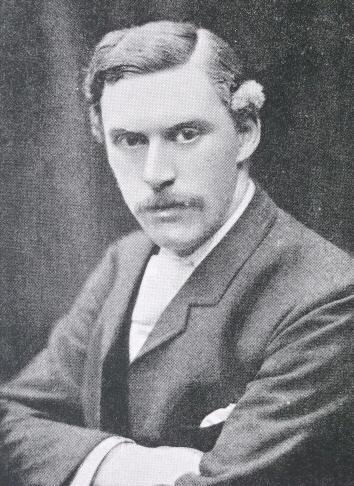
The retirement of a pastor so universally beloved as Mr. Symes left the Church in a position of some perplexity, from which it was to be rescued less by its own wisdom than by the manifest leading of Providence. For more than sixty years the congregation had welcomed to its pastorate ministers already enjoying reputations acquired in other Churches; and in the eyes of many this practice had acquired the authority of a traditionary rule. And it seems almost certain that, if any of the established ministers whom the Church would have been glad to call would have accepted what was recognised as an onerous charge, the traditions of 1825–80 would have been honoured by continued observance. But it was otherwise ordained. While as yet no one seems to have remembered how Dr. Leifchild came to Hornton Street fresh from his tutor, Mr. Charles Silvester Horne, a student only half through his theological course at Mansfield College, Oxford, came to Kensington as an ordinary pulpit supply, and preached with so much acceptance that request was made,—but without any ulterior view,—that he might be sent again. He had preached only a very few times, however, when it became evident that he was not only making a strong impression on the existing congregation, but attracting new hearers. It was noticed that, while the freshness and simplicity of his preaching, aided by a genial personality, drew simple natures, and especially the young, around him, the confidence of the elders was gained by the unexpected depth and maturity of his sermons; and then it was that the suppressed thought of many at length found simultaneous utterance, and the question was asked whether this was not the kind of minister most suited to the wants of the Kensington congregation.
Inquiries were made, and then it was ascertained that Mr. Horne had still eighteen months of his course at Mansfield to complete, and that of these Dr. Fairbairn would not abate even a week. By this time, however, the Church had made up its mind, and unanimously offered to pledge itself to call Mr. Horne in due form at the end of a year and a half, if he, in his turn, would engage to come to Kensington at that date, and also visit the congregation in the meantime as often as he could. This arrangement was made, together with a further and supplementary one with the Rev. Edward White, who had just left Kentish Town, and who kindly undertook the pastoral oversight of the Church till the autumn of 1889. In this way, as was pleasantly observed at the time, Kensington at once secured the services of “the youngest old man and the oldest young man in the Congregational body.” Mr. White more than fulfilled the expectations of the congregation, and in the brief period of his service established himself permanently in the affections of the congregation, while he prepared the way for the coming of his young successor.
Mr. Horne was ordained at Kensington in October 1889, the venerable Dr. Stoughton, Dr. Fairbairn, and Dr. Dale, with the Revs. E. White, R. F. Horton, and W. Roberts, taking part in the services. This is not the time to speak at large of a pastorate so recently begun, but it is not too soon to say that the hopes on which the Kensington Church acted five years ago have been justified by experience. Congregations were never larger; the young are being gathered and organised in guilds as well for instruction and work as for social purposes; the young members of the Church meet regularly for spiritual edification. The London Missionary Society and other agencies external to the congregation are supported with the old constancy and liberality, and the Church itself is as united as ever in purpose and heart.