IV—SIXTEEN YEARS OF SPIRITUAL PROGRESS—REV. JOHN LEIFCHILD
Reading edition
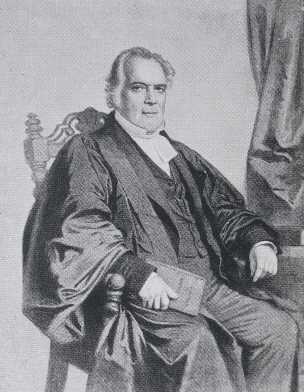
If the congregation at Kensington felt that John Clayton acted with something of the rashness and impatience of youth, there was at least no sign that they so regarded it: for after unsuccessful overtures had been made to the Rev. F. Hamilton, of Brighton, to become successor to Mr. Clayton, they turned to another young man fresh from college, whose name was John Leifchild. After patiently waiting until he had completed the few remaining months of his college course, they welcomed him to the pastorate in June, 1808; and a very remarkable ministry then began. It is impossible to feel surprise at Mr. Leifchild’s frank avowal of the defects of the congregation considered as a spiritual society. Any one who has wearily made his way through the minutes in the church-book relating to this period, might be pardoned for concluding that no spiritual body existed at all. The government of the church was in the hands of a small coterie of managers; and the records consist of an uninspiring succession of financial statistics and plans for raising money. To those of us who are more interested in the character of the Church than in the idiosyncrasies of any particular minister, these accounts are not good to read. Mr. Leifchild says, “There was a great prejudice in the town against the Dissenters”; and one can hardly wonder at that when we remember that Dissenters can only justify their existence as Dissenters by the superiority of their spiritual thought and work: and of this at present there is but too little trace in the history that we have received. But in every way—patience, perseverance, tact and courage—John Leifchild was just the man to inaugurate a better era. At this time the church made a resolute and successful endeavour to liquidate the old debt on the buildings: and then, after the manner of high-spirited communities, proceeded to contract a new one. The young minister had almost immediately attained considerable popularity, and a back gallery had to be erected. In a short time side galleries had to be added, to accommodate the people who desired to worship at Hornton Street Chapel. All these alterations involved the congregation in somewhat expensive liabilities, and, in addition, the incidental expenditure had not been met. These were only the necessary penalties of success, and it was quite clear that all would come right in time. But the financial apprehensions of the managers were excited; and they actually formulated proposals for taxing the seat-holders, inserting in their plan, however, a suitable declaration of their devotion to the voluntary principle. The proposals were overthrown by the unwavering resistance of Mr. Leifchild, and the voluntary principle, fairly applied, proved more than adequate to the necessities of the time.
Our Sunday Schools to-day are such a notable feature of Kensington Chapel, that it is interesting to find a record of this kind, dated February 22nd, 1814: “Resolved—In consequence of no other place being found so convenient as the vault under the chapel for a Sunday School, that we take the same into consideration.” We are sometimes tempted to complain of the discomforts of our present buildings, but those who began the work had to do it obviously under difficulties of which we know little. The managers, however, could not finally consent to bury the Sunday School in the vault,—and hence, by the removal of the staircase, a room was fitted up under the back gallery, and here the Sunday School was very narrowly housed. This important question having been thus disposed of, a more serious problem arose—that of music. There was at this time no organ; but it was natural that one so distinguished in the musical world as Mr. Broadwood should desire the introduction of a suitable instrument. Mr. Broadwood not only desired it; but he was liberal enough to offer to present an organ to the chapel. The conscientious objection to instrumental music in religious buildings is now, for the most part, ancient history. But feeling ran high on the question in the days I am writing of, and one “true-blue Presbyterian,” as Dr. Stoughton calls him, would have none of the new-fangled methods, and retired with his family from the scene, entering his protest against the whole proceedings in stout British fashion. Mr. Broadwood gave the organ; and the treasurer had great difficulty, apparently, in paying the organist; and, what with periodical discontinuance of the organ on the score of expense, and criticism of the organist by the congregation, the musical affairs were far from smooth and pleasant for some time to come. Kensington music has never ceased to be a source of anxious solicitude to the Church from that day to this.
Many are the stories of Mr. Leifchild’s power of preaching, and it is evident that he prepared his discourses with great care. His method of delivery was somewhat singular, and we should be inclined to regard it as artificial. But it was capable of great effect. The main portion of the discourse was delivered in a quiet, conversational tone, and was occupied in doctrinal, or exegetical, exposition. The audience listened languidly, if not drowsily. But suddenly there was an awakening. The preacher was approaching his application. Standing full back in the pulpit, and mustering all his energy, he proceeded to declaim the final passages of the sermon. In these he drove home the truths he had elicited in exposition with amazing force. The congregation was now listening with breathless interest. This was what they had come to hear; and they were simply at the preacher’s mercy for the remainder of his discourse. This old style of preaching has almost entirely, if not altogether, disappeared. But it was a great power in those days, and there were few more absolute masters of the art than John Leifchild. There are still two members connected with Kensington Chapel who were in Mr. Leifchild’s Bible Class.
After sixteen years of faithful ministry, Mr. Leifchild accepted a call to Bristol, and left amid genuine expressions of regret. It is interesting to note that, immediately after his departure, the minutes, which have only recorded “Managers’ meetings,” change to “Managers’ and Deacons’ meetings.” The introduction of the spiritual order of office-bearers is not without significance. Neither is the fact that the next minister was invited, not by the subscribers and trustees, but by the Church. Evidently “the old order changeth, yielding place to new”; and John Leifchild’s greatest success was his last—for we can hardly doubt that it was his—when the spiritual order superseded the purely business order, and the power of a body of managers gave way to the authority of a Church of Christ.