VII—A GRACIOUS MINISTRY—DR. ALEXANDER RALEIGH
Reading edition
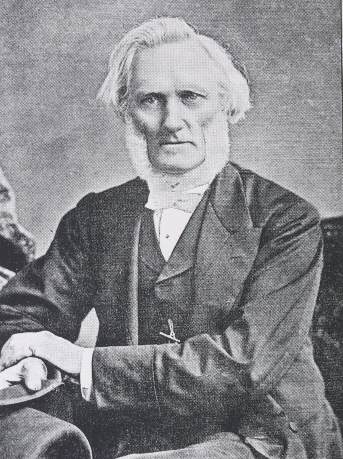
A distinguished living preacher once said to his congregation that his work would only be done when he had taught them to do without him. It is a true test of the soundness of a minister’s work when the congregation does not break up, nor even suffer loss at his withdrawal, but, in the spirit of faith and prayer and counsel, addresses itself to the delicate work of seeking a successor. A congregation, that for thirty-two years had enjoyed the ministry of so able a man as Dr. Stoughton, might have almost been forgiven, had it manifested some indecision when his guidance was withdrawn. But a true Independent Church is trained to habits of self-government; and at the critical periods of its history these habits are its protection and salvation. After unavailing efforts had been made to induce the Rev. G. S. Barrett, B.A., of Norwich, to accept the pastorate, the thought of the Church was directed to one whose name will ever be fragrant in the memory of the Church of Christ, Dr. Alexander Raleigh. At this time Dr. Raleigh was exercising his ministry in connection with two associated churches in Highbury; and only the strain of this exceptional work upon one of his advancing years could justify him in listening to any proposals that he should move westward. The work at Highbury was in the highest degree fruitful: but it was evident that Dr. Raleigh’s health was on the verge of breaking down; and when the cordial and unanimous call of the Kensington Church reached him he gave it earnest and anxious consideration, and finally determined to accept it.
In this way there was consummated a union of which those who were privileged to share in it speak to this day in the most tender and grateful terms. One feels that the very chapel has been hallowed and consecrated by the closing years of a beautiful ministry—years which brought with them all the radiant hues and tints of autumn. The story of these years, as, indeed, of the whole life of Alexander Raleigh, has been so inimitably written by his wife, that it has become a classic among Nonconformist biographies; and there are few libraries among us on the shelves of which there are not to be found “Quiet Resting-places,” “The Little Sanctuary,” “The Book of Esther,” or some other volume of those exquisitely finished and spiritual sermons which will embody the spirit of Alexander Raleigh for all future generations. Dr. Raleigh, especially at this period of his life, had an indefinable grace of spiritual repose and inward peace, which communicated itself to those who came under his influence. Not that he was a Quietist. He was an ardent politician, and never ceased to take a profound and practical interest in questions of national importance. He was an impassioned preacher of righteousness; and a robust and uncompromising Nonconformist. But controversy did not disturb his deep inward peace of spirit; and while it is true that, like the great Independent of earlier days,
“His heart The lowliest duties on herself did lay”;
it could also be said of him,
“Thy soul was like a star and dwelt apart.”
But it would be impossible to speak of Dr. Raleigh’s work at Kensington without speaking of Mrs. Raleigh’s work also. It is still a red-letter day in the experience of many at Kensington Chapel when Mrs. Raleigh revisits those in whose hearts she has so large a place, and to many of whom she made real the most sacred beliefs of Christianity. Mrs. Raleigh gathered a large Bible Class, which still continues to assemble in the Deacons’ Vestry on Sunday afternoons, and comprises not only elder girls and young women, but those who would not be offended if they were called elderly. The character of her influence over this class, and over all in the congregation who knew her—and who did not?—needs to be actually known to be adequately appreciated.
The congregations, under Dr. Raleigh’s inspiring ministry, filled the large chapel in every part. And, with this growth in the congregation, it must have been very encouraging, to all who were interested, to mark the growth in the Church. At one time forty-three members are recorded as having joined the Church, at another time thirty, at another twenty-five, and so on. Many who were of Scotch extraction found their patriotism too strong even for denominational preferences, and came great distances to hear “Raleigh” at Kensington. Brief as his ministry was—too brief, we say, with our imperfect conceptions—it was yet long enough to leave an indelible impression on numbers of his hearers, who will bear the marks of his fashioning to all eternity. His successors in the ministry here alone know, perhaps, how deep and abiding was the spiritual work done in those five years.
That, in the enjoyment of these rare spiritual privileges, the Church did not become self-centred, is manifest, not only in the steady interest in missionary and philanthropic work, but in the initiation of a movement, which was not realised until later, for planting a new church at West Kensington. With characteristic generosity Dr. Raleigh welcomed the proposal, but it was not given to him to do more than “greet the promise afar.” The shadow was even now beginning to fall upon him; yet those who had been most apprehensive of a serious breakdown in his health learned with something of stupefaction the doctors’ verdict that recovery was impossible. There is a deeply pathetic suggestiveness associated with the fact that the last sermon he preached was from the text, “And Enoch walked with God: and he was not, for God took him.” Possibly some premonition of the end had come to him; possibly a Higher than he had put the words into his heart for his final address to his beloved people. For the touching story of his last days, we shall still turn to the beautiful narrative of Mrs. Raleigh. It is not too much to say that not only all Congregationalists everywhere kept sympathetic watch, as it were, around the sick-bed; but the larger Church of Christ listened anxiously for tidings of the progress of the invalid. And progress it was, but progress heavenward. Shortly after noon on Monday, April 19th, 1880, he passed away; and, for the first time in its history, Death had sealed the ministry of a pastor of the Kensington Church while he was still in its service. There is a holy discipline for a Church in such a deep common sorrow, such as not the most eloquent preaching can convey. The “still” voice speaks louder even than the strong full voice of life. It is good sometimes for the soul of a people to be humbled by a great grief. At no past time had an experience so searching as this come to the Church at Kensington. Its pastors had left it for other work and other spheres. But this one had died among them; in the very ripeness of his powers he had passed away. All the demonstrations of their sorrow were but a weak expression of what they felt. And yet there was a meaning in the visitation; and one cannot doubt that out of their minister’s cheerful serenity, and calm and tranquil “exodus,” God wrought for them a quickening of faith. For of Alexander Raleigh it might well be said that the “manner of his passing” was an “evidence of the things unseen.”