IX—A NOTABLE INTERVAL—REV. EDWARD WHITE
Reading edition
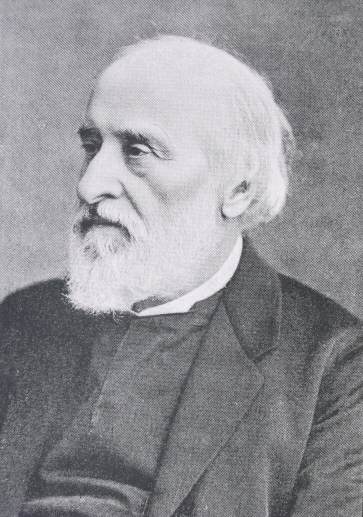
At the time of Mr. Symes’ resignation, the present minister of the church was a freshman at College, and a good deal more occupied with studies and athletics than with any question of settling in the ministry. It was not really a surprising thing to those who knew the traditions of Kensington Chapel, that a Church that had chosen John Clayton when he was twenty-one, and that had waited for Mr. Leifchild until he had completed his college course, should elect to wait nearly two years for its present minister. The course was an unusual one, but it had one conspicuous advantage. It enabled the Church to enjoy for eighteen months the ministry of the Rev. Edward White. It is unnecessary to explain to any one who knows any thing of Congregationalism, or the history of theological thought during the last half century, who Mr. Edward White is. There had been a time when he was suspected and misunderstood, for having interpreted the teaching of Scripture on one point in a sense different from the majority of his brethren. But we live in happier days, when our joy is to dwell rather on our substantial unity than on points of different interpretation. Mr. White has won the recognition of the whole Catholic Church as a stalwart standard-bearer in the “good fight of faith”; and great was the satisfaction at Kensington, when one who was just retiring from an arduous and remarkable ministry at Kentish Town was willing to give himself to the superintendence of the work at Kensington, until the minister-elect had completed his college training.
The result of this arrangement was exceedingly happy. We believe Mr. White was rewarded by the multitude of new friends that he thus made; and the congregation was abundantly rewarded, not only by the steady advance in interest that was made during the time of Mr. White’s ministry, but by the securing for itself of the sympathy and affection of such a friend as Mr. White has been. The young men remember to-day with the keenest relish the good times they had in Mr. White’s Bible Class; and, indeed, he has only to appear among us to evoke the loudest demonstrations of welcome. But in nothing did his loving and genial spirit appear more characteristically than in his relations with the one who was appointed to succeed him in the ministry at Kensington. The writer of this book records here the lasting debt of gratitude he is under to Mr. White for tender and helpful counsel and loving encouragement, such as he can never cease to remember with filial reverence and thankfulness.
The minister of a Church such as ours is always interested in discovering the “deposit” of well-remembered sayings and stories of the various ministers and prominent laymen that have been associated with the place. There grows up in this way a kind of Rabbinical tradition; and you can often estimate the force of character in a minister by the way in which people treasure up the memories of what he said and did. Mr. White added materially to the oral tradition of Kensington. His racy sayings, his epigrams, his reminiscences, are constantly recalled and repeated. And his successor has formed a very vivid conception of that genial and delightful ministry by which Mr. White attached to himself so warmly the hearts of this congregation.
But one most significant new departure must be remembered. Many are the strangers who visit us to-day who are greatly impressed with the successful blending in our service of general audible prayer, with the more individual prayer by the minister. They share with us the feeling, that to encourage an outward and audible expression of our worship is to cultivate the worshipful attitude of heart and soul. Nonconformists have too long thrown the whole burden of the service on the preacher, and not sufficiently elicited from the congregation the full expression of their feelings in prayer and praise. The new warmth that has come to our services at Allen Street, and the increased heartiness of them, is very largely due to the introduction of certain simple and comprehensive forms of worship and prayer, in which we can all unite with heart and soul. This most admirable system was initiated by Mr. White, who expressed himself as being quite willing to bear the burden of any temporary unpopularity of the change. The unpopularity was certainly never great, and has to-day given way to a very strong and general satisfaction.
Resolutions are apt to read coldly,—indeed, they are apt not to be read at all,—but when, at a large meeting of the Church and congregation to say farewell to Mr. White, on the completion of his eighteen months’ ministry, the people unanimously and enthusiastically declared that “he had been honoured to become the channel of blessings which this Church would ever acknowledge and keep in memory,” every word was as hearty as it was true. On October 17th, 1889, Mr. White presided at his successor’s ordination, and said to the assembled people: “In delivering up this sacred office, I shall humbly join my prayers with yours for God’s best blessing to rest on my dear successor, and on yourselves, whom he will love the more the longer he lives among you, and the more self-denyingly he serves you.” To which that successor may be allowed to write his own emphatic declaration that it has been true.