Part 3 — PART III. (continued 2)
Reading edition
But on this day he was fallen in hard luck. His father saw him coming, met him with a "gad" and lashed him furiously. Knowing perfectly well that the flogging would not stop till the proper effect was produced, and that was to be gauged by the racket, Guy yelled his loudest. This was the uproar the boys had heard.
"Now, ye idle young scut! I'll larn ye to go round leaving bars down. You go an' tend to your work." So instead of hiking back gloriously laden with Calfskins, Guy was sent to ignominious and un-Injun toil in the garden.
324 Soon he heard his mother: "Guysie, Guysie." He dropped his hoe and walked to the kitchen.
"Where you goin'?" roared his father from afar. "Go back and mind your work."
"Maw wants me. She called me."
"You mind your work. Don't you dar' on your life to go thayer."
But Guy took no notice and walked on to his mother. He knew that at this post-thrashing stage of wrath his father was mouthy and harmless, and soon he was happy eating a huge piece of bread and jam.
"Poor dear, you must be hungry, an' your Paw was so mean to you. There, now, don't cry," for Guy began to weep again at the recollection of his wrongs. Then she whispered confidentially: "Paw's going to Downey's this afternoon, an' you can slip away as soon as he's gone, an' if you work well before that he won't be so awful mad after you come back. But be sure you don't let down the bars, coz if the pig was to get in Raften's woods dear knows what."
This was the reason of Guy's delay. He did not return to camp with the skins till late that day. As soon as he was gone, his foolish, doting mother, already crushed with the burden of the house, left everything and hoed two or three extra rows of cabbages, so "Paw" should find a great showing of work when he came back.
The Calfskins were hard as tin and, of course, had the hair on.
325 Caleb remarked, "It'll take two or three days to get them right," and buried them in a marshy, muddy pool in the full sunlight. "The warmer the better."
Three days later he took them out. Instead of being thin, hard, yellow, semi-transparent, they now were much thicker, densely white, and soft as silk. The hair was easily scraped off and the two pieces were pronounced all right for drumheads.
Caleb washed them thoroughly in warm water, with soap to clear off the grease, scraping them on both sides with a blunt knife; then he straightened the outer edge of the largest, and cut a thin strip round and round it till he had some sixty feet of rawhide line, about three-quarters of an inch wide. This he twisted, rolled and stretched until it was nearly round, then he cut from the remainder a circular piece thirty inches across, and a second from the "unchawed" part of the other skin. He laid these one on the other, and with the sharp point of a knife he made a row of holes in both, one inch from the edge and two inches apart. Then he set one skin on the ground, the drum-log on that and the other skin on the top, and bound them together with the long lace, running it from hole No. 1 on the top to No. 2 on the bottom, then to No. 3 on the top, and No. 4 on the bottom, and so on twice around, till every hole had a lace through it and the crossing laces made a diamond pattern all around. At first this was done loosely, but tightened up when once around, and finally both the drum-heads were 326 drawn tense. To the surprise of all, Guy promptly took possession of the finished drum. "Them's my Calfskins," which, of course, was true.
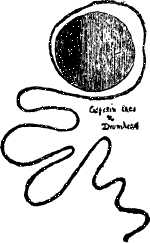
And Caleb said, with a twinkle in his eye, "The wood seems to go with the skins."
A drumstick of wood, with a piece of sacking lashed on to soften it, was made, and Guy was disgusted to find how little sound the drum gave out.
"'Bout like pounding a fur cap with a lamb's tail," Sam thought.
"You hang that up in the shade to dry and you'll find a change," said the Trapper.
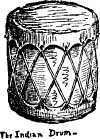
It was quite curious to note the effect of the drying as the hours went by. The drum seemed to be wracking and straining itself in the agony of effort, and slight noises came from it at times. When perfectly dry the semi-transparency of the rawhide came back, and the sound now was one to thrill the Red-man's heart.
Caleb taught them a little Indian war chant, and they danced round to it as he drummed and sang, till their savage instincts seemed to revive. But above all it worked on Yan. As he pranced around in step his whole nature seemed to respond; he felt himself a part of that dance. It was in himself; it thrilled him through and through and sent his blood exulting. He would gladly have given up all the White-man's "glorious gains" to live with the feeling called up by that Indian drum.
327
IX
The Cat And The Skunk
Sam was away on a "massacree" to get some bread. Guy had been trapped by his natural enemy and was serving a term of hard labour in the garden; so Yan was alone in camp. He went around the various mud albums, but discovered nothing new, except the fact that tracks were getting more numerous. There were small Skunk and Mink tracks with the large ones now. As he came by the brush fence at the end of the blazed trail he saw a dainty little Yellow Warbler feeding a great lubberly young Cow-bird that, evidently, it had brought up. He had often heard that the Cow-bird habitually "plays Cuckoo" and leaves its egg in the nest of another bird, but this was the first time he had actually seen anything of it with his own eyes. As he watched the awkward mud-coloured Cow-bird flutter its ungrown wings and beg help from the brilliant little Warbler, less than half its size, he wondered whether the fond mother really was fooled into thinking it her own young, or whether she did it simply out of compassion for the foundling. He now turned down creek to the lower mud album, and was puzzled by a new track like this.
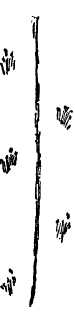
328 He sketched it, but before the drawing was done it dawned on him that this must be the track of a young Mud-turtle. He also saw a lot of very familiar tracks, not a few being those of the common Cat, and he wondered why they should be about so much and yet so rarely seen. Of course the animals were chiefly nocturnal, but the boys were partly so, and always on the ground now, so that explanation was not satisfactory. He lay down on his breast at the edge of the brook, which had here cut in a channel with steep clay walls six feet high and twenty feet apart. The stream was very small now—a mere thread of water zigzagging over the level muddy floor of the "cañon," as Yan loved to call it. A broad, muddy margin at each side of the water made a fine place of record for the travelling Four-foots, and tracks new and old were there in abundance.
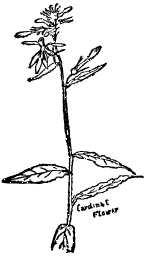
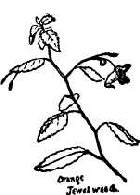
The herbage on the bank was very rank and full of noisy Grasshoppers and Crickets. Great masses of orange Jewelweed on one side were variegated with some wonderful Cardinal flowers. Yan viewed all this with placid content. He knew their names now, and thus they were transferred from the list of tantalizing mysteries to that of engaging and wonderful friends. As he lay there on his breast his thoughts wandered back to the days when he did not know the names of any flowers or birds—when all was strange and he alone in his hunger to know them, and Bonnerton came back to him with new, strange force of reminder. His father and mother, 329 his brother and schoolmates were there. It seemed like a bygone existence, though only two months ago. He had written his mother to tell of his arrival, and once since to say that he was well. He had received a kind letter from his mother, with a scripture text or two, and a postscript from his father with some sound advice and more scripture texts. Since then he had not written. He could not comprehend how he could so completely drift away, and yet clearly it was because he had found here in Sanger the well for which he had thirsted.
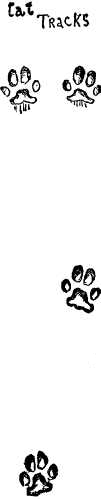
As he lay there thinking, a slight movement nearer the creek caught his eye. A large Basswood had been blown down. Like most of its kind, it was hollow. Its trunk was buried in the tangle of rank summer growth, but a branch had been broken off and left a hole in the main stem. In the black cavern of the hole there appeared a head with shining green eyes, then out there glided onto the log a common gray Cat. She sat there in the sunshine, licked her paws, dressed her fur generally, stretched her claws and legs after the manner of her kind, walked to the end of the log, then down the easy slope to the bottom of the cañon. Here she took a drink, daintily shook the water from her paws, and set the hair just right with a stroke. Then to Yan's amusement she examined all the tracks much as he had done, though it seemed clear that her nose, not her eyes, was judge. She walked down stream, leaving some very fine impressions that Yan mentally resolved to have 330 in his note-book, very soon suddenly stopped, looked upward and around, a living picture of elegance, sleekness and grace, with eyes of green fire then deliberately leaped from the creek bed to the tangle of the bank and disappeared.
This seemed a very commonplace happening, but the fact of a house Cat taking to the woods lent her unusual interest, and Yan felt much of the thrill that a truly wild animal would have given him, and had gone far enough in art to find exquisite pleasure in the series of pictures the Cat had presented to his eyes.
He lay there for some minutes expecting her to reappear; then far up the creek he heard slight rattling of the gravel. He turned and saw, not the Cat, but a very different and somewhat larger animal. Low, thick-set, jet black, with white marks and an immense bushy tail—Yan recognized the Skunk at once, although he had never before met a wild one in daylight. It came at a deliberate waddle, nosing this way and that. It rounded the bend and was nearly opposite Yan, when three little Skunks of this year's brood came toddling after the mother.
The old one examined the tracks much as the Cat had done, and Yan got a singular sense of brotherhood in seeing the wild things at his own study.
Then the old Skunk came to the fresh tracks of the Cat and paused so long to smell them that the three young ones came up and joined in. One of the young ones went to the bank where the Cat 331 came down. As it blew its little nose over the fresh scent, the old Skunk waddled to the place, became quite interested, then climbed the bank. The little ones followed in a disjointed procession, varied by one of them tumbling backward from the steep trail.
The old Skunk reached the top of the bank, then mounted the log and followed unerringly the Cat's back trail to the hole in the trunk. Down this she peered a minute, then, sniffing, walked in, till nothing could be seen but her tail. Now Yan heard loud, shrill mewing from the log, "Mew, mew, m-e-u-w, m-e-e-u-w," and the old Skunk came backing out, holding a small gray Kitten.
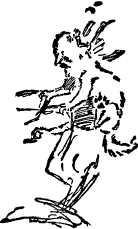
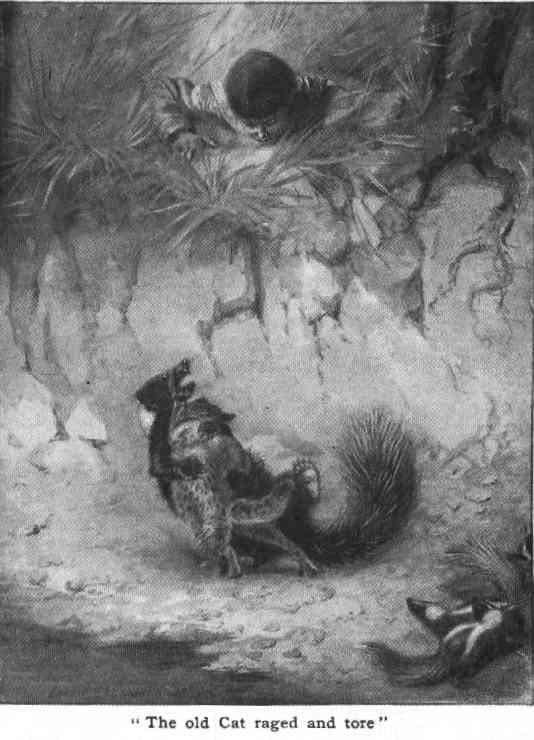
The little thing mewed and spit energetically, holding on to the inside of the log. But the old Skunk was too strong—she dragged it out. Then holding it down with both paws, she got a good firm grip of its neck and turned to carry it down to the bed of the brook. The Kitten struggled vigorously, and at last got its claws into the Skunk's eye and gave such a wrench that the ill-smelling villain loosened its hold a little and so gave the Kitten another chance to squeal, which it did with a will, putting all its strength into a succession of heartrending mee-ow—mee-ows. Yan's heart was touched. He was about to dash to the rescue when there was a scrambling in the far grass, a rush of gray, and the Cat—the old mother Cat was on the scene, a picture of demon rage, eyes ablaze, fur erect, ears back. With the 332 spring of a Deer and the courage of a Lion she made for the black murderer. Eye could not follow the flashings of her paws. The Skunk recoiled and stared stupidly, but not long; nothing was "long" about it. Her every superb muscle was tingling with force and mad with hate as the mother Cat closed like a swooping Falcon. The Skunk had no time to aim that dreadful gun, and in the excitement fired a volley of the deadly musky spray backward, drenching her own young as they huddled in the trail.
Tooth and claw and deadly grip—the old Cat raged and tore, the black fur flew in every direction, and the Skunk for once lost her head and fired random shots of choking spray that drenched herself as well as the Cat. The Skunk's head and neck were terribly torn. The air was suffocating with the poisonous musk. The Skunk was desperately wounded and threw herself backward into the water. Blinded and choking, though scarcely bleeding, the old Cat would have followed even there, but the Kitten, wedged under the log, mewed piteously and stayed the mother's fury. She dragged it out unharmed but drenched with musk and carried it quickly to the den in the hollow log, then came out again and stood erect, blinking her blazing eyes—for they were burning with the spray—lashing her tail, the image of a Tigress eager to fight either part or all the world for the little ones she nursed. But the old Skunk had had more than enough.
333
335
She scrambled off down the cañon. Her three young ones had tumbled over each other to get out of the way when they got that first accidental charge of their mother's battery. She waddled away, leaving a trail of blood and smell, and they waddled after, leaving an odour just as strong.
Yan was thrilled by the desperate fight of the heroic old Cat. Her whole race went up higher in his esteem that day; and the fact that the house Cat really could take to the woods and there maintain herself by hunting was all that was needed to give her a place in his list of animal heroes.
Pussy walked uneasily up and down the log, from the hole where the Kittens were to the end overlooking the cañon. She blinked very hard and was evidently suffering severely, but Yan knew quite well that there was no animal on earth big enough or strong enough to frighten that Cat from her post at the door of her home. There is no courage more indomitable than that of a mother Cat who is guarding her young.
At length all danger of attack seemed over, and Pussy, shaking her paws and wiping her eyes, glided into her hole. Oh, what a shock it must have been to the poor Kittens, though partly prepared by their brother's unsavoury coming back. There was the mother, whose return had always been heralded by a delicious odour of fresh Mouse or bird, interwoven with a loving and friendly odour of Cat, that was in itself a promise of happiness. Scent is the main thing in Cat life, and now the hole was darkened by 336 a creature that was rank with every nasal guarantee of deadly enmity. Little wonder that they all fled puffing and spitting to the dark corners. It was a hard case; all the little stomachs were upset for a long time. They could do nothing but make the best of it and get used to it. The den never smelt any better while they were there, and even after they grew up and lived elsewhere many storms passed overhead before the last of the Skunk smell left them.
337
X
The Adventures Of A Squirrel Family
"I'll bet I kin make a Woodpecker come out of that hole," said Sapwood, one day as the three Red-men proceeded, bow in hand, through a far corner of Burns's Bush. He pointed to a hole in the top of a tall dead stub, then going near he struck the stub a couple of heavy blows with a pole. To the surprise of all there flew out, not a Woodpecker, but a Flying Squirrel. It scrambled to the top of the stub, looked this way and that, then spread its legs, wings and tail and sailed downward, to rise slightly at the end of its flight against a tree some twenty feet away. Yan bounded to catch it. His fingers clutched on its furry back, but he got such a cut from its sharp teeth that he was glad to let it go. It scrambled up the far side of the trunk and soon was lost in the branches.
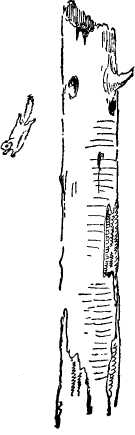
Guy was quite satisfied that he had carried out his promise of bringing a Woodpecker out of the hole, "For ain't a Flying Squirrel a kind of Woodpecker?" he argued. He was, in consequence, very "cocky" the rest of the day, proposing to produce a Squirrel whenever they came to a stub with a hole in it, and at length, after many failures, had the satisfaction of driving a belated Woodpecker out 338 of its nest.
The plan was evidently a good one for discovering living creatures. Yan promptly adopted it, and picking up a big stick as they drew near another stub with holes, he gave three or four heavy thumps. A Red Squirrel scrambled out of a lower hole and hid in an upper one; another sharp blow made it pop out and jump to the top of the stub, but eventually back into the lower hole.
The boys became much excited. They hammered the stub now without making the Squirrel reappear. "Let's cut it down," said Little Beaver.
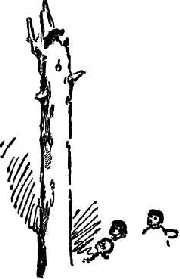
"Show you a better trick than that," replied the Woodpecker. He looked about and got a pole some twenty feet long. This he placed against a rough place high up on the stub and gave it a violent push, watching carefully the head of the stub. Yes! It swayed just a little. Sam repeated the push, careful to keep time with the stub and push always just as it began to swing away from him. The other boys took hold of the pole and all pushed together, as Sam called, "Now—now—now—"
A single push of 300 or 400 pounds would scarcely have moved the stub, but these little fifty-pound pushes at just the right time made it give more and more, and after three or four minutes the roots, that had begun to crack, gave way with a craunching sound, and down crashed the great stub. Its hollow top struck across a fallen log and burst open in a shower of dust, splinters and rotten wood. The 339 boys rushed to the spot to catch the Squirrel, if possible. It did not scramble out as they expected it would, even when they turned over the fragments. They found the front of the stub with the old Woodpecker hole in it, and under that was a mass of finely shredded cedar bark, evidently a nest. Yan eagerly turned it over, and there lay the Red Squirrel, quite still and unharmed apparently, but at the end of her nose was a single drop of blood. Close beside her were five little Squirrels, evidently a very late brood, for they were naked, blind and helpless. One of them had at its nose a drop of blood and it lay as still as the mother. At first the hunters thought the old one was playing 'Possum, but the stiffness of death soon set in.
Now the boys felt very guilty and sorry. By thoughtlessly giving way to their hunting instincts they had killed a harmless mother Squirrel in the act of protecting her young, and the surviving little ones had no prospect but starvation.
Yan had been the most active in the chase, and now was far more conscience-stricken than either of the others.
"What are we going to do with them?" asked the Woodpecker. "They are too young to be raised for pets."
"Better drown them and be done with them," suggested Sappy, recalling the last honours of several broods of Kittens at home.
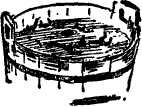
340 "I wish we could find another Squirrel's nest to put them into," said Little Beaver remorsefully, and then as he looked at the four squirming, helpless things in his hand the tears of repentance filled his eyes. "We might as well kill them and end their misery. We can't find another Squirrel's nest so late as this." But after a little silence he added, "I know some one who will put them out of pain. She may as well have them. She'd get them anyway, and that's the old gray wild Cat. Let's put them in her nest when she's away."
This seemed a reasonable, simple and merciful way of getting rid of the orphans. So the boys made for the "cañon" part of the brook. At one time of the afternoon the sun shone so as to show plainly all that was in the hole. The boys went very quietly to Yan's lookout bank, and seeing that only the Kittens were there, Yan crept across and dropped the young Squirrels into the nest, then went back to his friends to watch, like Miriam, the fate of the foundlings.
They had a full hour to wait for the old Cat, and as they were very still all that time they were rewarded with a sight of many pretty wild things.
A Humming-bird "boomed" into view and hung in a misty globe of wings before one Jewel-flower after another.
"Say, Beaver, you said Humming-birds was something or other awful beautiful," said Woodpecker, pointing to the dull grayish-green bird before them.
341 "And I say so yet. Look at that," as, with a turn in the air, the hanging Hummer changed its jet-black throat to flame and scarlet that silenced the critic.
After the Humming-bird went away a Field-mouse was seen for a moment dodging about in the grass, and shortly afterward a Shrew-mole, not so big as the Mouse, was seen in hot pursuit on its trail.
Later a short-legged brown animal, as big as a Rabbit, came nosing up the dry but shady bed of the brook, and as it went beneath them Yan recognized by its little Beaver-like head and scaly oar-shaped tail that it was a Muskrat, apparently seeking for water.
There was plenty in the swimming-pond yet, and the boys realized that this had become a gathering place for those wild things that were "drowned out by the drought," as Sam put it.
The Muskrat had not gone more than twenty minutes before another deep-brown animal appeared. "Another Muskrat; must be a meeting," whispered the Woodpecker. But this one, coming close, proved a very different creature. As long as a Cat, but lower, with broad, flat head and white chin and throat, short legs, in shape a huge Weasel, there was no mistaking it; this was a Mink, the deadly enemy of the Muskrat, and now on the track of its prey. It rapidly turned the corner, nosing the trail like a Hound. If it overtook the Muskrat before it got to the pond there would be a tragedy. If the Muskrat reached the deep water it might possibly 342 escape. But just as sure as the pond became a gathering place for Muskrats it would also become a gathering place for Mink.
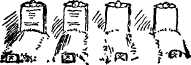
Not five minutes had gone since the Mink went by before a silent gray form flashed upon the log opposite. Oh, how sleek and elegant it looked! What perfection of grace she seemed after the waddling, hunchy Muskrat and the quick but lumbering Mink. There is nothing more supple and elegant than a fine Cat, and men of science the world over have taken the Cat as the standard of perfection in animal make-up. Pussy glanced about for danger. She had brought no bird or Mouse, for the Kittens were yet too young for such training. The boys watched her with intensest interest. She glided along the log to the hole—the Skunk-smelling hole—uttered her low "purrow, purrow," that always sets the hungry Kittens agog, and was curling in around them, when she discovered the pink Squirrel-babies among her own. She stopped licking the nearest Kitten, stared at a young Squirrel, and smelled it. Yan wondered what help that could be when everything smelled of Skunk. But it did seem to decide her, for she licked it a moment, then lying down she gathered them all in her four-legged embrace, turned her chin up in the air and Sappy announced gleefully that "The little Squirrels were feeding with the little Cats."
The boys waited a while longer, then having made sure that the little Squirrels had been lovingly 343 adopted by their natural enemy, they went quietly back to camp. Now they found a daily pleasure in watching the mixed family.
And here it may be as well to give the rest of the story. The old gray Cat faithfully and lovingly nursed those foundlings. They seemed to prosper, and Yan, recalling that he had heard of a Cat actually raising a brood of Rabbits, looked forward to the day when Kittens and Squirrelets should romp together in the sun. After a week Sappy maintained that only one Squirrel appeared at the breakfast table, and in ten days none. Yan stole over to the log and learned the truth. All four were dead in the bottom of the nest. There was nothing to tell why. The old Cat had done her best—had been all love and tenderness, but evidently had not been able to carry out her motherly intentions.
344
XI
How To See The Woodfolk
The days went merrily now, beginning each morning with a hunting of the Woodchuck. The boys were on terms of friendship with the woods that contrasted strongly with the feelings of that first night.
This was the thought in Sam's mind when he one day remarked, "Say, Yan, do you remember the night I slep' with the axe an' you with the hatchet?"
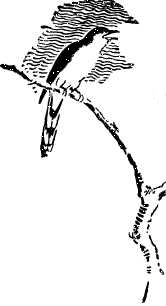
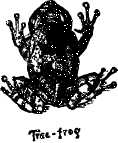
The Indians had learned to meet and conquer all the petty annoyances of camp life, and so forgot them. Their daily routine was simplified. Their acquaintance with woodfolk and wood-ways had grown so fast that now they were truly at home. The ringing "Kow—Kow—Kow" in the tree-tops was no longer a mere wandering voice, but the summer song of the Black-billed Cuckoo. The loud, rattling, birdy whistle in the low trees during dull weather Yan had traced to the Tree-frog.
The long-drawn "Pee—re-e-e-e" of hot afternoons was the call of the Wood-peewee, and a vast number of mysterious squeaks and warbles had been traced home to the ever-bright and mischievous Blue Jay.
The nesting season was now over, as well as the song season; the birds, therefore, were less to be seen, 345 but the drying of the streams had concentrated much life in the swimming-pond. The fence had been arranged so that the cattle could reach one end of it to drink, but the lower parts were safe from their clumsy feet, and wild life of many kinds were there in abundance.
The Muskrats were to be seen every evening in the calm pool, and fish in great numbers were in the deeper parts. Though they were small, the boys found them so numerous and so ready to bite that fishing was great sport, and more than one good meal they had from that pond. There were things of interest discovered daily. In a neighbour's field Sam had found another Woodchuck with a "price on his head." Rabbits began to come about the camp at night, especially when the moon was bright, and frequently of late they had heard a querulous, yelping bark that Caleb said was made by a Fox "probably that old rascal that lives in Callahan's woods."
The gray Cat in the log was always interesting. The boys went very regularly to watch from a distance, but for good reasons did not go near. First, they did not wish to scare her; second, they knew that if they went too close she would not hesitate to attack them.
One of the important lessons that Yan learned was this. In the woods the silent watcher sees the most. The great difficulty in watching was how to pass the time, and the solution was to sit and sketch. 346 Reading would have done had books been at hand, but not so well as sketching, because then the eyes are fixed on the book instead of the woods, and the turning of the white pages is apt to alarm the shy woodfolk.
Thus Yan put in many hours making drawings of things about the edge of the pond.
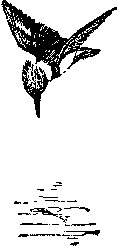
As he sat one day in stillness a Minnow leaped from the water and caught a Fly. Almost immediately a Kingfisher that had been shooting past stopped in air, hovered, and darting downward, came up with a Minnow in his beak, flew to a branch to swallow its prey, but no sooner got there when a Chicken-hawk flashed out of a thick tree, struck the Kingfisher with both feet and bore him downward to the bank—in a moment would have killed him, but a long, brown creature rushed from a hole in the bank and sprang on the struggling pair, to change the scene in a twinkling. The three stragglers separated, the Hawk to the left, the Kingfisher to the right, the Minnow flopped back into the pool, and the Mink was left on the shore with a mouthful of feathers and looking very foolish. As it stood shaking the down from its nose another animal came gliding down through the shrubbery to the shore—the old gray Cat. The Mink wrinkled up his nose, showed two rows of sharp teeth and snarled in a furious manner, but backed off under a lot of roots. The Cat laid down her ears; the fur on her back and tail stood up; she crouched a little, her eyes blazing 347 and the end of her tail twitching, and she answered the snarling of the Mink with a low growl. The Mink was evidently threatening "sudden death" to the Cat, and Pussy evidently was not much impressed. The Mink retreated farther under the roots till nothing but the green glowing of his eyes was to be seen, and the Cat, coming forward, walked calmly by his hiding-place and went about her business. The snarling under the root died away, and as soon as his enemy was gone the Mink dived into the water and was lost to view.
These two animals had a second meeting, as Yan had the luck to witness from his watching-place. He had heard the "plop" of a deft plunge, and looked in time only to see the spreading rings near the shore. Then the water was ruffled far up in the pond. A brown spot showed and was gone. A second appeared, to vanish as the first had done. Later, a Muskrat crawled out on the shore, waddled along for twenty feet, then, plunging in, swam below, came up at the other bank, and crawled under a lot of overhanging roots. A minute later the Mink appeared, his hair all plastered close till he looked like a four-legged Snake. He landed where the Muskrat had come out, followed the trail so that it was lost, then galloped up and down the shore, plunged in, swam across, and beat about the other shore. At last he struck the trail and followed. Under the root there were sounds of a struggle, the snarling of the mink, and in two or three minutes he appeared 348 dragging out the body of the Muskrat. He sucked its blood and was eating the brains when again the gray Cat came prowling up the edge of the pond and, not ten feet off, stood face to face with the Mink, as she had done before.
The Water Weasel saw his enemy but made no attempt to escape from her. He stood with forepaws on his victim and snarling a warning and defiance to the Cat. Pussy, after glaring for a few seconds, leaped lightly to the high bank, passed above the Mink, then farther on leaped down, and resumed her journey up the shore.
Why should the Mink fear the Cat the first time, and the Cat the Mink the second? Yan believed that ordinarily the Cat could "lick," but that now the Mink had right on his side; he was defending his property, and the Cat, knowing that, avoided a quarrel; whereas the same Cat would have faced a thousand Mink in defense of her Kittens.
These two scenes did not happen the same day, but are told together because Yan always told them together afterward to show that the animals understand something of right and wrong.
But later Yan had another experience with the Muskrats. He and Sam were smoothing out the lower album for the night, when a long stream of water came briskly down the middle of the creek bed, which had been dry for more than a week. "Hallo," said Woodpecker, "where's that from?"
349 "A leak in the dam," said Little Beaver, with fear in his voice.
The boys ran up to the dam and learned that the guess was right. The water had found an escape round the end of the dam, and a close examination showed that it had been made by a burrowing Muskrat.
It was no little job to get it tightly closed up. But the spade was handy, and a close-driven row of stakes with plenty of stiff clay packed behind not only stopped the leak but gave a guarantee that in future that corner at least would be safe.
When Caleb heard of the Muskrat mischief he said:
"Now ye know why the Beavers are always so dead sore on the Muskrats. They know the Rats are liable to spoil their dams any time, so they kill them whenever they get the chance."
Little Beaver rarely watched an hour without seeing something of interest in the swamp. The other warriors had not the patience to wait so long and they were not able to make a pastime of sketching.
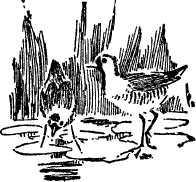
Yan made several hiding-places where he found that living things were most likely to be seen. Just below the dam was a little pool where various Crawfish and thread-like Eels abounding proved very attractive to Kingfisher and Crow, while little Tip-ups or Teetering Snipe would wiggle their latter end on the level dam, or late in the day the never-failing Muskrat would crawl out on a flat stone and sit 350 like a fur cap. The cañon part of the creek was another successful hiding-place, but the very best was at the upper end of the pond, for the simple reason that it gave a view of more different kinds of land. First the water with Muskrats and occasionally a Mink, next the little marsh, always there, but greatly increased now by the back-up of the water. Here one or two Field-mice and a pair of Sora Rails were at home. Close at hand was the thick woods, where Partridges and Black Squirrels were sometimes seen.
Yan was here one day sketching the trunk of a Hemlock to pass the watching time, but also because he had learned to love that old tree. He never sketched because he loved sketching; he did not; the motive always was love of the thing he was drawing.
A Black-and-white Creeper had crawled like a Lizard over all the trunks in sight. A Downy Woodpecker had digged a worm out of a log by labour that most birds would have thought ill-paid by a dozen such worms. A Chipmunk had come nearer and nearer till it had actually run over his foot and then scurried away chattering in dismay at its own rashness; finally, a preposterous little Cock Chickadee sang "Spring soon—spring soon," as though any one were interested in the gratuitous and unconvincing fib, when a brown, furry form hopped noiselessly from the green leaves by the pond, 351 skipped over a narrow bay without wetting its feet, paused once or twice, then in the middle of the open glade it sat up in plain view—a Rabbit. It sat so long and so still that Yan first made a sketch that took three of four minutes, then got out his watch and timed it for three minutes longer before it moved in the least. Then it fed for some time, and Yan tried to make a list of the things it ate and the things it shunned, but could not do so with certainty.
A noisy Flicker came out and alighted close by on a dried branch. The Rabbit, or really a Northern Hare, "froze"—that is, became perfectly still for a moment—but the Flicker marks were easy to read and had long ago been learned as the uniform of a friend, so the Rabbit resumed his meal, and when the Flicker flew again he paid no heed. A Crow passed over, and yet another. "No; no danger from them." A Red-shouldered Hawk wailed in the woods; the Rabbit heard that and every other sound, but the Red-shoulder is not dangerous, and he knew it. A large Hawk with red tail circled silently over the glade, and the Rabbit froze on the instant. That same red tail was the mark of a dreaded foe. How well Bunny had learned to know them all!
A bunch of clover tempted him to a full repast, after which he hopped into a tussock in the midst of the glade and there turned himself into a moss-bump, his legs swallowed up in his fur, and his ears laid over his back like a pair of empty gloves or 352 a couple of rounded shingles; his nose-wabblings reduced in number, and he seemed to be sleeping in the last warm rays of the sun. Yan was very anxious to see whether his eyes were open or not; he had been told that Rabbits sleep with open eyes, but at this distance he could not be sure. He had no field-glass and Guy was not at hand, so the point remained in doubt.
The last sun-blots had gone from the trail and the pond was all shadowed by the trees on the western side. A Robin began its evening hymn on a tall tree, where it could see the red sun going down, and a Veery was trilling his weary, weary, weary in the Elder thicket along the brook, when another, a larger animal, loomed up in the distant trail and glided silently toward Yan. Its head was low and he could not make out what it was. As it stood there for a few seconds Yan wet his finger in his mouth and held it up. A slight coolness on the side next the coming creature told Yan that the breeze was from it to him and would not betray him. It came on, seeming to grow larger, turned a little to one side, and then Yan saw plainly by the sharp nose and ears and the bushy tail that it was nothing less than a Fox, probably the one that often barked near camp at night.
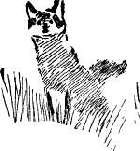
It was trotting away at an angle, knowing nothing of the watching boy nor of the crouching Rabbit, when Yan, merely to get a better look at the cunning one, put the back of his hand to his mouth and by 353 sucking made a slight Mouse-like squeak, sweetest music, potent spellbinder, to a hungry Fox, and he turned like a flash. For a moment he stood, head erect, full of poise and force in curb; a second squeak—he came slowly back toward the sound and in so doing passed between Yan and the Rabbit. He had crossed its old trail without feeling much interest, but now the breeze brought its body scent. Instantly the Fox gave up the Mouse hunt—no hunter goes after Mice when big game is at hand—and began an elaborate and beautiful stalk of the Rabbit—the Rabbit that he had not seen. But his nose was his best guide. He cautiously zigzagged up the wind, picking his steps with the greatest care, and pointing with his nose like a Pointer Dog. Each step was bringing him nearer to Bunny as it slept or seemed asleep in the tussock. Yan wondered whether he ought not to shout out and end the stalk before the Rabbit was caught, but as a naturalist he was eager to see the whole thing out and learn how the Fox would make the capture. The red-furred gentleman was now within fifteen feet of the tussock and still the gray one moved not. Now he was within twelve feet—and no move; ten feet—and Bunny seemed in tranquil sleep; eight feet—and now the Fox for the first time seemed to actually see his victim. Yan had hard work to keep from shouting a warning; six feet—and now the Fox was plainly preparing for a final spring.
354 "Is it right to let him?" and Yan's heart beat with excitement.
The Fox brought his feet well under him, tried the footing till it was perfect, gathered all his force, then with silent, vicious energy sprung straight for the sleeper. Sleeping? Oh, no! Not at all. Bunny was playing his own game. The moment the Fox leaped, he leaped with equal vigour the opposite way and out under his enemy, so Reynard landed on the empty bunch of grass. Again he sprang, but the Rabbit had rebounded like a ball in the other direction, and continued this bewildering succession of marvellous erratic hops. The Fox in vain tried to keep up, for these wonderful side jumps are the Rabbit's strength and the Fox's weakness; and Bunny went zigzag—hop—skip—into the thicket and was gone before the Fox could get his heavier body under speed at all.
Had the Rabbit bounded out as soon as he saw the Fox coming he might have betrayed himself unnecessarily; had he gone straight away when the Fox leaped for him he might have been caught in three or four leaps, for the enemy was under full speed, but by biding his time he had courted no danger, and when it did come he had played the only possible offset, and "lives in the greenwood still."
The Fox had to seek his supper somewhere else, and Yan went to camp happy in having learned another of the secrets of the woods.
355
XII
Indian Signs And Getting Lost
"What do you mean when you say Indian signs, Mr. Clark?"
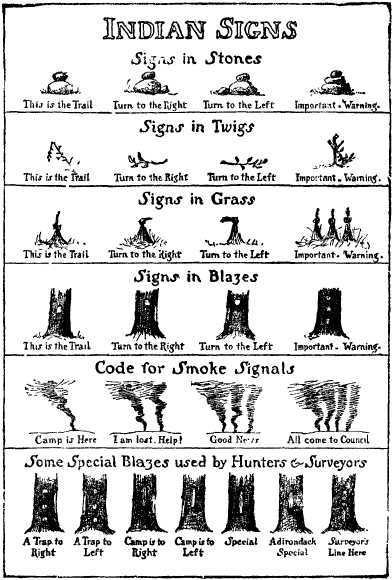
"Pretty near anything that shows there's Injuns round: a moccasin track, a smell of smoke, a twig bent, a village, one stone a-top of another or a white settlement scalped and burned—they all are Injun signs. They all mean something, and the Injuns read them an' make them, too, jest as you would writing."
"You remember the other day you told us three smokes meant you were coming back with scalps."
"Well, no; it don't har'ly mean that. It means 'Good news'—that is, with some tribes. Different tribes uses 'em different."
"Well, what does one smoke mean?"
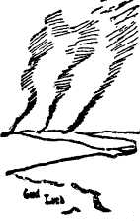
"As a rule just simply 'Camp is here'"
"And two smokes?"
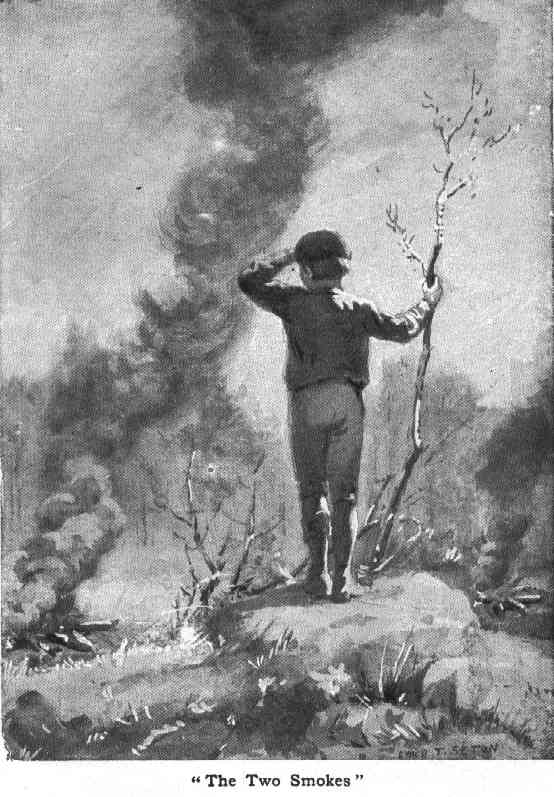
"Two smokes means 'Trouble'—may mean, 'I am lost.'"
"I'll remember that; double for trouble."
"Three means good news. There's luck in odd numbers."
"And what is four?"
356 "Well, it ain't har'ly ever used. If I seen four smokes in camp I'd know something big was on—maybe a Grand Council."
"Well, if you saw five smokes what would you think?"
"I'd think some blame fool was settin' the hull place a-blaze," Caleb replied with the sniff end of a laugh.
"Just now you said one stone on another was a sign. What does it mean?"
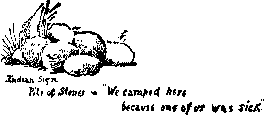
"Course I can't speak for all Injuns. Some has it for one thing an' some for another, but usually in the West two stones or 'Buffalo chips' settin' one on the other means 'This is the trail'; and a little stone at the left of the two would mean 'Here we turned off to the left'; and at the other side, 'Here we turned to the right.' Three stones settin' one on top of another means, 'This is sure enough the trail,' 'Special' or 'Particular' or 'Look out'; an' a pile of stones just throwed together means 'We camped here 'cause some one was sick.' They'd be the stones used for giving the sick one a steam bath."
"Well, what would they do if there were no stones?"
"Ye mean in the woods?"
"Yes, or smooth prairie."
"Well, I pretty near forget, it's so long ago, but le's see now," and Yan worried Caleb and Caleb threshed his memory till they got out a general scheme, or Indian code, though Caleb was careful to say that "some Injuns done it differently."
357
359 Yan must needs set about making a signal fire at once, and was disappointed to find that a hundred yards away the smoke could not be seen above the tree-tops, till Caleb showed him the difference between a clear fire and a smoke or smudge fire.
"Begin with a clear fire to get the heat, then smother it with green grass and rotten wood. There, now you see the difference," and a great crooked, angling pillar of smoke rolled upward as soon as the grass and punk began to sizzle in the glow of embers.
"I bet ye kin see that ten miles away if ye'r on a high place to look for it."
"I bet I could see it twenty miles," chirped in Guy.
"Mr. Clark, were you ever lost?" continued the tireless asker.
"Why, course I was, an' more than once. Every one that goes in the woods is bound to get lost once in awhile."
"What—do the Indians?"
"Of course! Why not? They're human, an' I tell you when you hear a man brag that he never was lost, I know he never was far from his mother's apron string. Every one is bound to get lost, but the real woodsman gets out all right; that's the difference."
"Well, what would you do if you got lost?"
"Depends on where. If it was a country that I didn't know, and I had friends in camp, after I'd tried my best I'd jest set right down and make two 360 smoke fires. 'Course, if I was alone I'd try to make a bee line in the likeliest direction, an' this is easy to make if ye kin see the sun and stars, but stormy weather 'tain't possible. No man kin do it, an' if ye don't know the country ye have to follow some stream; but I'm sorry for ye if ever ye have to do that, for it's the worst walking on earth. It will surely bring ye out some place—that is, it will keep ye from walking in a circle—but ye can't make more than four or five miles a day on it."
"Can't you get your direction from moss on the tree trunks?"
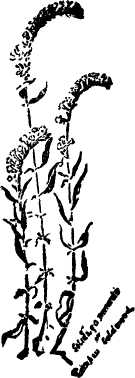
"Naw! Jest try it an' see; moss on the north side of a tree and rock; biggest branches on the south of a trunk; top of a Hemlock pointing to east; the biggest rings of growth on the south side of a stump, an' so on. It fits a tree standin' out by itself in the open—the biggest ring is in the south, but it don't fit a tree on the south side of an opening; then the biggest rings is on the north. If ye have a compass in hand it's all kind o' half true—that is, just a little bit true; but it ain't true; it's on'y a big lie, when ye'r scared out o' your wits an' needin' to know. I never seen but one good compass plant, an' that was the prairie Golden Rod. Get a bunch of them in the open and the most of them point north, but under cover of taller truck they jest point every which way for Sunday.
361
363
"If ye find a beaten game trail, ye follow that an it'll bring ye to water—that is, if ye go the right way, an' that ye know by its gettin' stronger. If it's peterin' out, ye'r goin' in the wrong direction. A flock of Ducks or a Loon going over is sure to be pointing for water. Y're safe to follow.
"If ye have a Dog or a Horse with ye he kin bring ye home all right. Never knew them to fail but oncet, an' that was a fool Horse; there is sech oncet in awhile, though there's more fool Dogs.
"But come right down to it, the compass is the safest thing. The sun and stars is next, an' if ye know your friends will come ye'r best plan is to set right down and make two smoke fires, keep them a-going, holler every little while, and keep calm. Ye won't come to no harm unless ye'r a blame fool, an' such ought to stay to hum, where they'll be nursed."
364
XIII
Tanning Skins and Making Moccasins
Sam had made a find. A Calf had been killed and its skin hung limp on a beam in the barn. His father allowed him to carry this off, and now he appeared with a "fresh Buffalo hide to make a robe."
"I don't know how the Injuns dress their robes," he explained, "but Caleb does, and he'll tell you, and, of course, I'll pay no attention."
The old Trapper had nothing to do, and the only bright spots in his lonely life, since his own door was shut in his face, were visits to the camp. These had become daily, so it was taken as a matter of course when, within an hour after Sam's return, he "happened round."
"How do the Indians tan furs and robes?" Yan asked at once.
"Wall, different ways—"
But before he could say more Hawkeye reappeared and shouted:
"Say, boys, Paw's old Horse died!" and he grinned joyfully, merely because he was the bearer of news.
"Sappy, you grin so much your back teeth is gettin' sunburned," and the Head Chief eyed him 365 sadly.
"Well, it's so, an' I'm going to skin out his tail for a scalp. I bet I'll be the Injunest one of the crowd."
"Why don't you skin the hull thing, an' I'll show you how to make lots of Injun things of the hide," Caleb added, as he lighted his pipe.
"Will you help me?
"It's same as skinnin a Calf. I'll show you where to get the sewing sinew after the hide's off."
So the whole camp went to Burns's field. Guy hung back and hid when he saw his father there drawing the dead Horse away with the plough team.
"Good-day, Jim," was Caleb's greeting, for they were good friends. "Struck hard luck with the Horse?"
"No! Not much. Didn't cost nothing; got him for boot in a swap. Glad he's dead, for he was foundered."
"We want his skin, if you don't."
"You're welcome to the hull thing."
"Well, just draw it over by the line fence we'll bury what's left when we're through."
"All right. You hain't seen that durn boy o' mine, have you?"
"Why, yes; I seen him not long ago," said Sam. "He was p'inting right for home then."
"H-m. Maybe I'll find him at the house."
366 "Maybe you will." Then Sam added under his breath, "I don't think."
So Burns left them, and a few minutes later Guy sneaked out of the woods to take a secondary part in the proceedings.
Caleb showed them how to split the skin along the under side of each leg and up the belly. It was slow work skinning, but not so unpleasant as Yan feared, since the animal was fresh.
Caleb did the most of the work; Sam and Yan helped. Guy assisted with reminiscences of his own Calf-skinning and with suggestions drawn from his vast experiences.
When the upper half of the skin was off, Caleb remarked: "Don't believe we can turn him over, and when the Injuns didn't have a Horse at hand to turn over the Buffalo they used to cut the skin in two down the line of the back. I guess we better do that. We've got all the rawhide we need, anyhow."
So they cut off the half they had skinned, took the tail and the mane for "scalps," and then Caleb sent Yan for the axe and a pail.
He cut out a lump of liver and the brains of the Horse. "That," said he, "is for tanning, an' here is where the Injun woman gits her sewing thread."
He made a deep cut alongside the back bone from the middle of the back to the loin, then forcing his fingers under a broad band of whitish fibrous tissue, he raised it up, working and cutting till it ran down to the hip bone and forward to the ribs. This 367 sewing sinew was about four inches wide, very thin, and could easily be split again and again till it was like fine thread.
"There," he said, "is a hank o' thread. Keep that. It'll dry up, but can be split at any time, and soaking in warm water for twenty minutes makes it soft and ready for use. Usually, when she's sewing, the squaw keeps a thread soaking in her mouth to be ready. Now we've got a Horse skin and a Calfskin I guess we better set up a tan-yard."
"Well, how do you tan furs, Mr. Clark?"
"Good many different ways. Sometimes just scrape and scrape till I get all the grease and meat off the inside, then coat it with alum and salt and leave it rolled up for a couple of days till the alum has struck through and made the skin white at the roots of the hair, then when this is half dry pull and work it till it is all soft.
"But the Injuns don't have alum and salt, and they make a fine tan out of the liver and brains, like I'm going to do with this."
"Well, I want to do it the Indian way."
"All right, you take the brains and liver of your Calf."
"Why not some of the Horse brains and liver?"
"Oh, I dunno. They never do it that way that I've seen. Seems like it went best with its own brains."
"Now," remarked the philosophical Woodpecker, "I call that a wonderful provision of nature, always 368 to put Calf brains and liver into a Calfskin, and just enough to tan it."
"First thing always is to clean your pelt, and while you do that I'll put the Horsehide in the mud to soak off the hair." He put it in the warm mud to soak there a couple of days, just as he had done the Calfskin for the drum-heads, then came to superintend the dressing of the Buffalo "robe."
Sam first went home for the Calf brains and liver, then he and Yan scraped the skin till they got out a vast quantity of grease, leaving the flesh side bluish-white and clammy, but not greasy to the touch. The liver of the Calf was boiled for an hour and then mashed up with the raw brains into a tanning "dope" or mash and spread on the flesh side of the hide, which was doubled, rolled up and put in a cool place for two days. It was then opened out, washed clean in the brook and hung till nearly dry. Then Caleb cut a hardwood stake to a sharp edge and showed Yan how to pull and work the hide over the edge till it was all soft and leathery.
The treatment of the Horsehide was the same, once the hair was removed, but the greater thickness needed a longer soaking in the "tan dope."
After two days the Trapper scraped it clean and worked it on the sharp-edged stake. It soon began to look like leather, except in one or two spots. On examining these he said:
"H-m, Tanning didn't strike right through every place. So he buttered it again with the mash and 369 gave it a day more; then worked it as before over the angle of the pole till it was soft and fibrous.
"There," said he, "that's Injun tan leather. I have seen it done by soaking the hide for a few days in liquor made by boiling Hemlock or Balsam bark in water till it's like brown ink, but it ain't any better than that. Now it needs one thing more to keep it from hardening after being wet. It has to be smoked."
So he made a smoke fire by smothering a clear fire with rotten wood; then fastening the Horsehide into a cone with a few wooden pins, he hung it in the dense smoke for a couple of hours, first one side out, then the other till it was all of a rich smoky-tan colour and had the smell so well known to those who handle Indian leather.
"There it is; that's Injun tan, an' I hope you see that elbow grease is the main thing in tannin'."
"Now, will you show us how to make moccasins and war-shirts?" asked Little Beaver, with his usual enthusiasm.
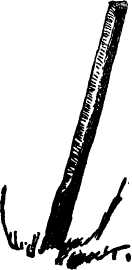
"Well, the moccasins is easy, but I won't promise about the war-shirts. That's pretty much a case of following the pattern of your own coat, with the front in one piece, but cut down just far enough for your head to go through, instead of all the way, and fixed with tie-strings at the throat and fringes at the seams and at the bottom; it hain't easy to do. But any one kin larn to make moccasins. There is two styles of them—that is, two main styles. Every 370 Tribe has its own make, and an Injun can tell what language another speaks as soon as he sees his footgear. The two best known are the Ojibwa, with soft sole—sole and upper all in one, an' a puckered instep—that's what Ojibwa means—'puckered moccasin.' The other style is the one most used in the Plains. You see, they have to wear a hard sole, 'cause the country is full of cactus and thorns as well as sharp stones."
"I want the Sioux style. We have copied their teepee and war bonnet—and the Sioux are the best Indians, anyway."
"Or the worst, according to what side you're on," was Caleb's reply. But he went on: "Sioux Injuns are Plains Injuns and wear a hard sole. Let's see, now. I'll cut you a pair."
"No, make them for me. It's my Horse," said Guy.
"No, you don't. Your Paw give that to me." Caleb's tone said plainly that Guy's laziness had made a bad impression, so he had to stand aside while Yan was measured. Caleb had saved a part of the hide untanned though thoroughly cleaned. This was soaked in warm water till soft. Yan's foot was placed on it and a line drawn around the foot for a guide; this when cut out made the sole of one moccasin (A, cut below), and by turning it underside up it served as pattern to cut the other.
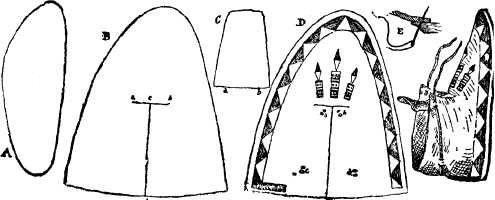
Now Caleb measured the length of the foot and added one inch, and the width across the instep, adding 371 half an inch, and with these as greatest length and breadth cut out a piece of soft leather (B). Then in this he made the cut a b on the middle line one way and c d on the middle line the other way. A second piece the reverse of this was cut, and next a piece of soft leather for inside tongue (C) was sewn to the large piece (B), so that the edge a b of C was fast to a b of B. A second piece was sewn to the other leather (B reversed).
"Them's your vamps for uppers. Now's the time to bead 'em if you want to."
"Don't know how."
"Well, I can't larn you that; that's a woman's work. But I kin show you the pattern of the first pair I ever wore; I ain't likely to forget 'em, for I killed the Buffalo myself and seen the hull making." He might have added that he subsequently married the squaw, but he did not.
"There's about the style" [D]. "Them three-cornered red and white things all round is the hills where the moccasins was to carry me safely; on the heel is a little blue pathway with nothing in it: that is behind—it's past. On the instep is three red, white and blue pathways where the moccasin was to take me: they're ahead—in the future. Each path has lots of things in it, mostly changes and trails, an' all three ends in an Eagle feather—that stands for an honour. Ye kin paint them that way after they're made. Well, now, we'll sew on the upper with a good thick strand of sinew in the 372 needle—or if you have an awl you kin do without a needle on a pinch—and be sure to bring the stitches out the edge of the sole instead of right through, then they don't wear off. That's the way." [E.]
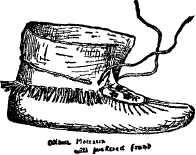
So they worked away, clumsily, while Guy snickered and sizzled, and Sam suggested that Si Lee would make a better squaw than both of them.
The sole as well as the upper being quite soft allowed them to turn the moccasin inside out as often as they liked—and they did like; it seemed necessary to reverse it every few minutes. But at length the two pieces were fastened together all around, the seam gap at the heel was quickly sewn up, four pairs of lace holes were made (a, b, c, d, in D), and an eighteen-inch strip of soft leather run through them for a lace.
Now Yan painted the uppers with his Indian paints in the pattern that Caleb had suggested, and the moccasins were done.
A squaw would have made half a dozen good pairs while Yan and Caleb made the one poor pair, but she would not have felt so happy about it.
373
XIV
Caleb's Philosophy
The tracks of Mink appeared from time to time on Yan's creekside mud albums, and at length another of these tireless watchers, placed at the Wakan Rock, reported to him that Mink as well as Skunks came there now for a nightly feast.
The Mink was a large one, judging by the marks, and Caleb was asked to help in trapping it.
"How do you trap Mink, Mr. Clark?" was the question.

"Don't trap 'em at all this time o' year, for they're no good till October," was the answer.
"Well, how do you trap them when they are in season?"
"Oh, different ways."
It was slow work, but Yan kept on and at length got the old man going.
"Airly days we always used a deadfall for Mink. That's made like this, with a bird or a Partridge head for bait. That kills him sure, sudden and merciful. Then if it's cold weather he freezes and keeps O.K. till you come around to get him; but in warm weather lots o' pelts are spoiled by being kept too long, so ye have to go round pretty often to save all you kill. Then some one brought in 374 them new-fangled steel traps that catches them by the foot and holds them for days and days, some times, till they jest starve to death or chaw their foot off to get free. I mind once I ketched a Mink with only two legs left. He had been in a steel trap twice before and chawed off his leg to get away. Them traps save the trapper going round so often, but they're expensive, and heavy to carry, and you have got to be awful hard-hearted before ye kin use 'em. I tell ye, when I thought of all the sufferin' that Mink went through it settled me for steel traps. Since then, says I, if ye must trap, use a deadfall or a ketchalive, one or other; no manglin' an' tormentin' for days. I tell ye that thar new Otter trap that grabs them in iron claws ought to be forbid by law; it ain't human.
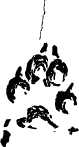
"Same way about huntin'. Huntin's great sport, an' it can't be bad, 'cause I can't for the life of me see that it makes men bad. 'Pears to me men as hunt is humaner than them as is above it; as for the cruelty—wall, we know that no wild animal dies easy abed. They all get killed soon or late, an' if it's any help to man to kill them I reckon he has as good a right to do it as Wolves an' Wildcats. It don't hurt any more—yes, a blame sight less—to be killed by a rifle ball than to be chawed by Wolves. The on'y thing I says is don't do it cruel—an' don't wipe out the hull bunch. If ye never kill a thing that's no harm to ye 'live an' no good to ye dead nor more than the country kin stand, 'pears to me 375 ye won't do much harm, an' ye'll have a lot o' real fun to think about afterward.
"But I mind a feller from Europe, some kind o' swell, that I was guidin' out West. He had crippled a Deer so it couldn't get away. Then he sat down to eat lunch right by, and every few moments he'd fire a shot into some part or another, experimentin' an' aimin' not to kill it for awhile. I heard the shootin' an' blattin', an when I come up I tell ye it set my blood a-boilin'. I called him some names men don't like, an' put that Deer out o' pain quick as I could pull trigger. That bu'st up our party—I didn't want no more o' him. He come pretty near lyin' by the Deer that day. It makes me hot yet when I think of it.
"If he'd shot that Deer down runnin' an' killed it as quick as he could it wouldn't 'a' suffered more than if it had been snagged a little, 'cause bullets of right weight numb when they hit. The Deer wouldn't have suffered more than he naturally would at his finish, maybe less, an' he'd 'a' suffered it at a time when he could be some good to them as hunted him. An' these yer new repeatin' guns is a curse. A feller knows he has lots of shot and so blazes away into a band o' Deer as long as he can see, an lots gets away crippled, to suffer an' die; but when a feller has only one shot he's going to place it mighty keerful. Ef it's sport ye want, get a single-shot rifle, ef it's destruction, get a Gatling-gun.
376 "Sport's good, but I'm agin this yer wholesale killin' an' cruelty. Steel traps, light-weight bullets an' repeatin' guns ain't human. I tell ye it's them as makes all the sufferin'."
This was a long speech for Caleb, but it was really less connected than here given. Yan had to keep him going with occasional questions. This he followed up.
"What do you think about bows and arrows, Mr. Clark?"
"I wouldn't like to use them on big game like Bear and Deer, but I'd be glad if shotguns was done away with and small game could be killed only with arrows. They are either sure death or clear miss. There's no cripples to get away and die. You can't fire an arrow into a flock of birds and wipe out one hundred, like you can with one of them blame scatterguns. It's them things that is killing off all the small game. Some day they'll invent a scattergun that is a pump repeater like them new rifles, and when every fool has one they'll wonder where all the small game has gone to.
"No, sir, I'm agin them. Bows and arrows is less destructful an' calls for more Woodcraft an' give more sport—that is, for small game. Besides, they don't make that awful racket, an' you know who is the party that owns the shot, for every arrow is marked."
Yan was sorry that Caleb did not indorse the arrow for big game, too.
377 The Trapper was well started now; he seemed ready enough with information to-day, and Yan knew enough to "run the rapids on the freshet."
"How do you make a ketchalive?"
"What for?"
"Oh, Mink."
"They ain't fit to catch now, and the young ones need the mothers."
"I wouldn't keep it. I only want to make a drawing."
"Guess that won't harm it if you don't keep it too long. Have ye any boards? We used to chop the whole thing out of a piece of Balsam wood or White Pine, but the more stuff ye find ready-made the easier it is. Now I'll show you how to make a ketchalive if ye'll promise me never to miss a day going to it while it is set."
The boys did not understand how any one could miss a day in visiting a place of so much interest, and readily promised.
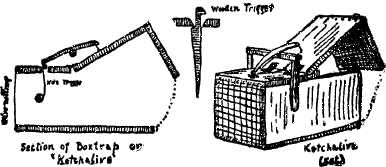
So they made a ketchalive, or box-trap, two feet long, using hay wire to make a strong netting at one end.
"Now," said the trapper, "that will catch Mink, Muskrat, Skunk, Rabbit—'most anything, 'cording to where you put it and how you bait it."
"Seems to me the Wakan Rock will be a good place to try."
So the trap was baited with a fish head firmly lashed on the wire trigger.
378 In the morning, as Yan approached, he saw that it was sprung. A peculiar whining and scratching came from it and he shouted in great excitement: "Boys, boys, I've got him! I've got the Mink!"
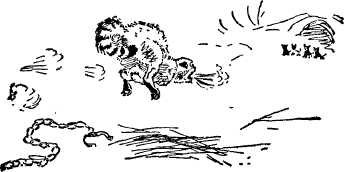
They seized the trap and held it cautiously up for the sunlight to shine through the bars, and there saw to their disgust that they had captured only the old gray Cat. As soon as the lid was raised she bounded away, spitting and hissing, no doubt to hurry home to tell the Kittens that it was all right, although she had been away so long.
379
XV
A Visit from Raften
Sam, I must have another note-book. It's no good getting up a new 'massacree' of Whites, 'cause there ain't any note-books there, but maybe your father would get one the next time he drove to Downey's Dump. I suppose I'll have to go on a peace party to ask him."
Sam made no answer, but looked and listened out toward the trail, then said: "Talk of the er—Angels, here comes Da."
When the big man strode up Yan and Guy became very shy and held back. Sam, in full war-paint, prattled on in his usual style.
"Morning, Da; I'm yer kid. Bet ye'r in trouble an' want advice or something."
Raften rolled up his pendulous lips and displayed his huge front tusks in a vast purple-and-yellow grin that set the boys' hearts at ease.
"Kind o' thought you'd be sick av it before now."
"Will you let us stay here till we are?" chimed in Sam, then without awaiting the reply that he did not want, "Say, Da, how long is it since there was any Deer around here?"
"Pretty near twenty years, I should say."
380
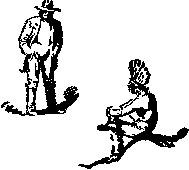
"Well, look at that now," whispered the Woodpecker.
Raften looked and got quite a thrill for the dummy, half hidden in the thicket, looked much like a real deer.
"Don't you want to try a shot?" ventured Yan.
Raften took the bow and arrow and made such a poor showing that he returned them with the remark. "Sure a gun's good enough for me," then, "Ole Caleb been around since?"
"Old Caleb? I should say so; why, he's our stiddy company."
"'Pears fonder o'you than he is of me."
"Say, Da, tell us about that. How do you know it was Caleb shot at you?"
"Oh, I don't know it to prove it in a coort o' law, but we quarr'led that day in town after the Horse trade an' he swore he'd fix me an' left town. His own stepson, Dick Pogue, stood right by and heard him say it; then at night when I came along the road by the green bush I was fired at, an' next day we found Caleb's tobacco pouch and some letters not far away. That's about all I know, an' all I want to know. Pogue served him a mean trick about the farm, but that's none o' my business. I 'spect the old fellow will have to get out an' scratch for himself pretty soon."
"He seems kind-hearted," said Yan.
"Ah, he's got an awful temper, an' when he gets drunk he'd do anything. Other times he's all right."
381
"Well, how is it about the farm?" Sam asked. "Doesn't he own it?"
"No, I guess not now. I don't r'aly know. I only hear them say. Av coorse, Saryann ain't his own daughter. She's nowt o' kin, but he has no one else, and Dick was my hired man—a purty slick feller with his tongue; he could talk a bird off a bush; but he was a good worker. He married Sary and persuaded the old man to deed them the place, him to live in comfort with them to the end of his days. But once they got the place, 'twas aisy to see that Dick meant to get rid o' Caleb, an' the capsheaf was put last year, about his Dog, old Turk. They wouldn't have him 'round. They said he was scaring the hens and chasing sheep, which is like enough, for I believe he killed wan ov my lambs, an' I'd give ten dollars to have him killed—making sure 'twas him, av coorse. Rather than give up the Dog, Caleb moved out into the shanty on the creek at the other end of the place. Things was better then, for Dick and Saryann let up for awhile an' sent him lots o' flour an' stuff, but folks say they're fixin' it to put the old man out o' that and get shet of him for good. But I dunno; it's none o' my business, though he does blame me for putting Dick up to it."
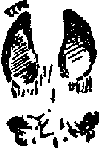
"How's the note-book?" as Raften's eye caught sight of the open sketch-book still in Yan's hand.
"Oh, that reminds me," was the reply. "But what is this?" He showed the hoof-mark be had sketched. Raften examined it curiously.
382 "H-m, I dunno'; 'pears to me moighty loike a big Buck. But I guess not; there ain't any left."
"Say, Da," Sam persisted, "wouldn't you be sore if you was an old man robbed and turned out?"
"Av coorse; but I wouldn't lose in a game of swap-horse, an' then go gunnin' after the feller. If I had owt agin him I'd go an' lick him or be licked, an' take it all good-natured. Now that's enough. We'll talk about something else."
"Will you buy me another note-book next time you go to Downey's Dump? I don't know how much it will cost or I'd give you the money," said Yan, praying mentally that it be not more than the five or ten cents which was all his capital.
"Shure; I'll charge it up. But ye needn't wait till next week. Thayer's one back at the White settlement ye can have for nothin'."
"Say, Mr. Raften," Guy broke in, "I kin lick them all at Deer-hunting."
Sam looked at Yan and Yan looked at Sam, then glanced at Guy, made some perfectly diabolical signs, seized each a long knife and sprung toward the Third War Chief, but he dodged behind Raften and commenced his usual "Now you let me 'lone—"
Raften's eye twinkled. "Shure, I thought ye was all wan Tribe an' paceable."
"We've got to suppress crime," retorted his son.
"Make him let me 'lone," whimpered Sapwood.
"We'll let ye off this time if ye find that Woodchuck. It's near two days since we've had a 383 skirmish."
"All right," and he went. Within five minutes he came running back, beckoning. The boys got their bows and arrows, but fearing a trick they held back. Guy dashed for his own weapons with unmistakable and reassuring zest; then all set out for the field. Raften followed, after asking if it would be safe for him to come along.
The grizzly old Woodchuck was there feeding in a bunch of clover. The boys sneaked under the fence, crawling through the grass in true Injun fashion, till the Woodchuck stood up to look around, then they lay still; when he went down they crawled again, and all got within forty yards. Now the old fellow seemed suspicious, so Sam said, "Next time he feeds we all fire together." As soon, then, as the Woodchuck's breast was replaced by the gray back, the boys got partly up and fired. The arrows whizzed around Old Grizzly, but all missed, and he had scrambled to his hole before they could send a second volley.
"Hallo, why didn't you hit him, Sappy?"
"I'll bet I do next time."
When they returned to Raften he received them with ridicule.
"But ye'r a poor lot o' hunters. Ye'd all starve if it wasn't for the White settlement nearby. Faith, if ye was rale Injun ye'd sit up all night at that hole till he come out in the morning: then ye'd get him; an' when ye get through with 384 that one I've got another in the high pasture ye kin work on."
So saying, he left them, and Sam called after him:
"Say, Da; where's that note-book for Yan? He's the Chief of the 'coup-tally,' and I reckon he'll soon have a job an' need his book. I feel it in my bones."
"I'll lave it on yer bed." Which he did, and Yan and Sam had the pleasure of lifting it out of the window with a split stick.

385
XVI
How Yan Knew the Ducks Afar
One day as the great Woodpecker lay on his back in the shade he said in a tone of lofty command:
"Little Beaver, I want to be amused. Come hyar. Tell me a story."
"How would you like a lesson in Tutnee?" was the Second Chief's reply, but he had tried this before, and he found neither Sam nor Guy inclined to take any interest in the very dead language.
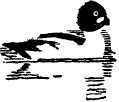
"Tell me a story, I said," was the savage answer of the scowling and ferocious Woodpecker. "All right," said Little Beaver. "I'll tell you a story of such a fine boy—oh, he was the noblest little hero that ever wore pantaloons or got spanked in school. Well, this boy went to live in the woods, and he wanted to get acquainted with all the living wild things. He found lots of difficulties and no one to help him, but he kept on and on—oh! he was so noble and brave—and made notes, and when he learned anything new he froze on to it like grim death. By and by he got a book that was some help, but not much. It told about some of the birds as if you had them in your hand. But this heroic youth only saw them at a distance and he was stuck. One day he saw a wild Duck on a pond so far away he could only see some spots of colour, but he made a 386 sketch of it, and later he found out from that rough sketch that it was a Whistler, and then this wonderful boy had an idea. All the Ducks are different; all have little blots and streaks that are their labels, or like the uniforms of soldiers. 'Now, if I can put their uniforms down on paper I'll know the Ducks as soon as I see them on a pond a long way off.' So he set to work and drew what he could find. One of his friends had a stuffed Wood-duck, so the 'Boy-that-wanted-to-know' drew that from a long way off. He got another from an engraving and two more from the window of a taxidermist shop. But he knew perfectly well that there are twenty or thirty different kinds of Ducks, for he often saw others at a distance and made far-sketches, hoping some day he'd find out what they were. Well, one day the 'Boy-that-wanted-to-know' sketched a new Duck on a pond, and he saw it again and again, but couldn't find out what it was, and there was his b-e-a-u-t-i-f-u-l sketch, but no one to tell him its name, so when he saw that he just had to go into the teepee and steal the First War Chief's last apple and eat it to hide his emotion."
Here Yan produced an apple and began to eat it with an air of sadness.
Without changing a muscle, the Great Woodpecker continued the tale:
"Then when the First War Chief heard the harrowing tale of a blighted life, he said: 'Shucks, I didn't want that old apple. It was fished out of the swill-barrel anyway, but 'pears to me when a feller sets 389 out to do a thing an' don't he's a 'dumb failure,' which ain't much difference from a 'durn fool.'
"Now, if this heroic youth had had gumption enough to come out flat-footed, an' instead of stealing rotten apples that the pigs has walked on, had told his trouble to the Great Head War Chief, that native-born noble Red-man would 'a' said: 'Sonny, quite right. When in doubt come to Grandpa. You want to get sharp on Duck. Ugh! Good'—then he'd 'a' took that simple youth to Downey's Hotel at Downey's Dump an' there showed him every kind o' Duck that ever was born, an' all tagged an' labelled. Wah! I have spoken."
And the Great Woodpecker scowled ferociously at Guy, who was vainly searching his face for a clue, not sure but what this whole thing was some subtle mockery. But Yan had been on the lookout for this. Sam's face throughout had shown nothing but real and growing interest. The good sense of this last suggestion was evident, and the result was an expedition was formed at once for Downey's Dump, a little town five miles away, where the railroad crossed a long bog on the Skagbog River. Here Downey, the contractor, had carried the railroad dump across a supposed bottomless morass and by good luck had soon made a bottom and in consequence a small fortune, with which he built a hotel, and was now the great man of the town for which he had done so much.
390 "Guess we'll leave the Third War Chief in charge of camp," said Sam, "an' I think we ought to go disguised as Whites."
"You mean to go back to the Settlement and join the Whites?"
"Yep, an' take a Horse an' buggy, too. It's five miles."
That was a jarring note. Yan's imagination had pictured a foot expedition through the woods, but this was more sensible, so he yielded.
They went to the house to report and had a loving reception from the mother and little Minnie. The men were away. The boys quickly harnessed a Horse and, charged also with some commissions from the mother, they drove to Downey's Dump.
On arriving they went first to the livery-stable to put up the horse, then to the store, where Sam delivered his mother's orders, and having made sure that Yan had pencil, paper and rubber, they went into Downey's. Yan's feelings were much like those of a country boy going for the first time to a circus—now he is really to see the things he has dreamed of so long; now all heaven is his.
And, curiously enough, he was not disappointed. Downey was a rough, vigorous business man. He took no notice of the boys beyond a brief "Morning, Sam," till he saw that Yan was making very fair sketches. All the world loves an artist, and now there was danger of too much assistance.
The cases could not be opened, but were swung around and shades raised to give the best light. Yan 393 went at once to the bird he had "far-sketched" on the pond. To his surprise, it was a female Wood-duck. He put in the whole afternoon drawing those Ducks, male and female, and as Downey had more than fifty specimens Yan felt like Aladdin in the Fairy Garden—overpowered with abundance of treasure. The birds were fairly well labelled with the popular names, and Yan brought away a lot of sketches, which made him very happy. These he afterward carefully finished and put together in a Duck Chart that solved many of his riddles about the Common Duck.
387
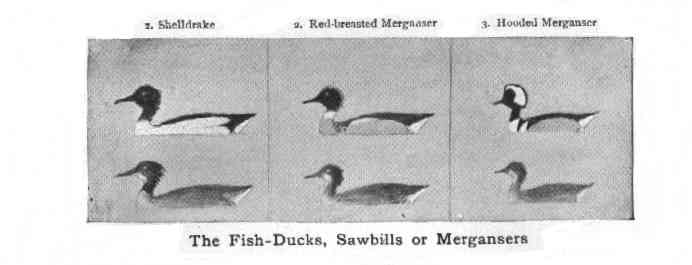
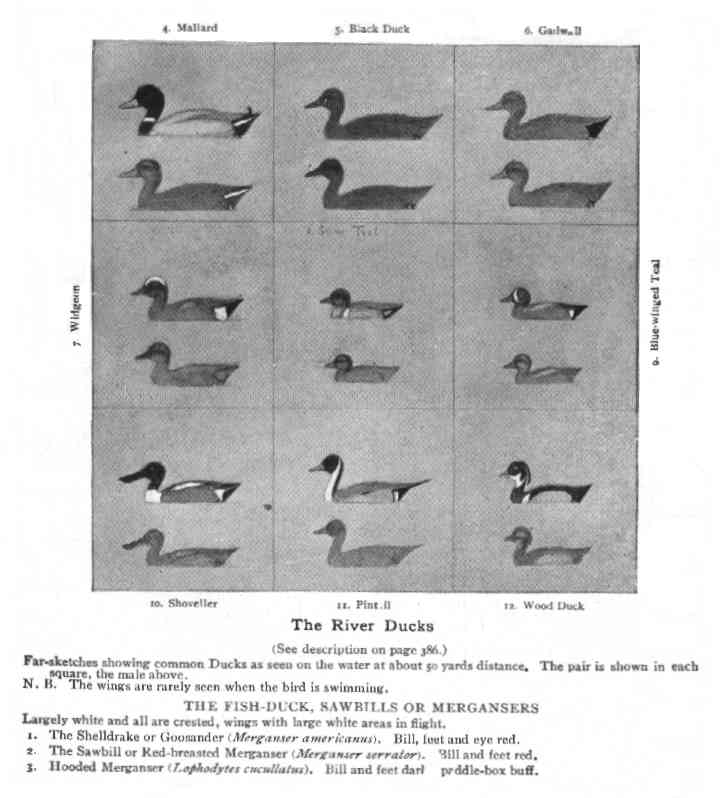
4. Mallard (Anas boschas). Red feet; male has pale, greenish bill. Known in flight by white tail feathers and thin white bar on wing. 5. Black Duck or Dusky Duck (Anas obscura). Dark bill, red feet, no white except in flight, then shows white lining of wings. 6. Gadwall or Gray Duck (Anas strepera). Beak flesh-coloured on edges, feet reddish, a white spot on wing showing in flight. 7. Widgeon or Baldpate (A. americana). Bill and feet dull blue; a large white spot on wing in flight; female has sides reddish. 8. Green-winged Teal (A. carolinensis). Bill and feet dark. 9. Blue-winged Teal (A. discors). Bill and feet dark. 10. Shoveller (Spatula clypeata). Bill dark, feet red, eye yellow-orange; a white patch on wings showing in flight. 11. Pintail or Sprigtail (Dafila acuta). Bill and feet dull blue. 12. Wood Duck or Summer Duck (Aix sponsa). Bill of male red, paddle-box buff, bill of female and feet of both dark.
391
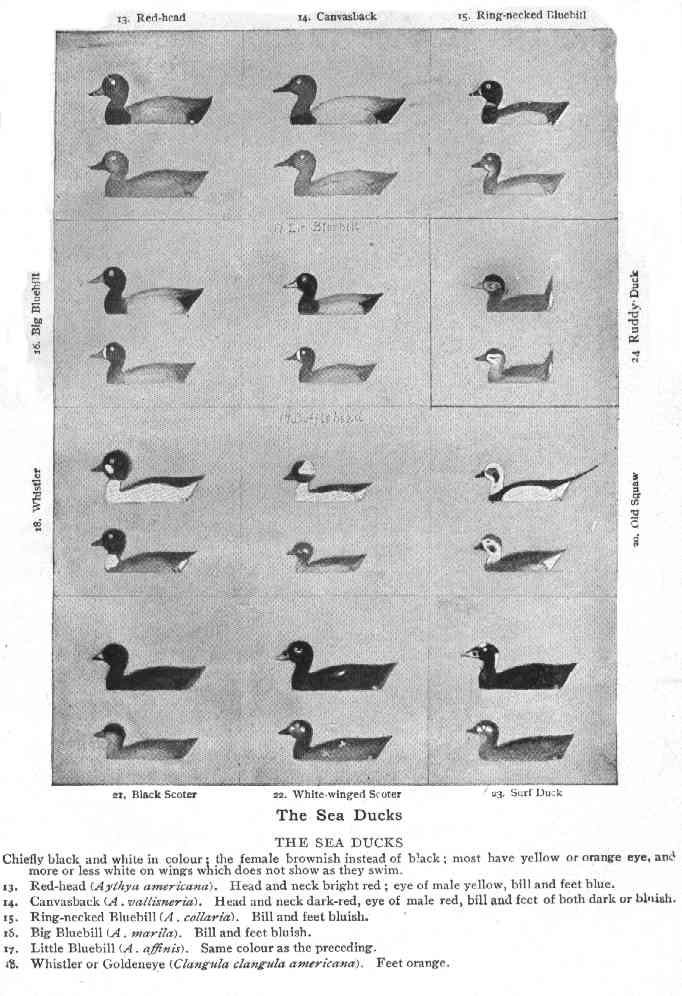
19. Bufflehead or Butterball (Charitonetta albeola). 20. Old-Squaw or Longtail (Harelda hyemalis). This is its winter plumage, in which it is mostly seen. 21. Black Scoter (Oidemia americana). A jet-black Duck with orange bill; no white on it anywhere. 22. White-winged Scoter (0. deglandi). A black Duck with white on cheek and wing; feet and bill orange; much white on wing shows as they fly, sometimes none as they swim. 23. Surf Duck or Sea Coot (O. perspicillata). A black Duck with white on head, but none on wings: bill and feet orange. 24. Ruddy Duck or Stiff-tailed Duck (Erismatura jamaicensis). Bill and feet bluish; male is in general a dull red with white face.
(393) When they got back to camp at dusk they found a surprise. On the trail was a white thing, which on investigation proved to be a ghost, evidently made by Guy. The head was a large puff-ball carved like a skull, and the body a newspaper.
But the teepee was empty. Guy probably felt too much reaction after the setting up of the ghost to sit there alone in the still night.
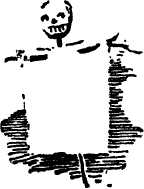
394
XVII
Sam's Woodcraft Exploit
Sam's "long suit," as he put it, was axemanship. He was remarkable even in this land of the axe, and, of course, among the "Injuns" he was a marvel. Yan might pound away for half an hour at some block that he was trying to split and make no headway, till Sam would say, "Yan, hit it right there," or perhaps take the axe and do it for him; then at one tap the block would fly apart. There was no rule for this happy hit. Sometimes it was above the binding knot, sometimes beside it, sometimes right in the middle of it, and sometimes in the end of the wood away from the binder altogether—often at the unlikeliest places. Sometimes it was done by a simple stroke, sometimes a glancing stroke, sometimes with the grain or again angling, and sometimes a compound of one or more of each kind of blow; but whatever was the right stroke, Sam seemed to know it instinctively and applied it to exactly the right spot, the only spot where the hard, tough log was open to attack, and rarely failed to make it tumble apart as though it were a trick got ready beforehand. He did not brag about it. He simply took it for granted that he was the master of the art, and as such the others accepted him.
395 On one occasion Yan, who began to think he now had some skill, was whacking away at a big, tough stick till he had tried, as he thought, every possible combination and still could make no sign of a crack. Then Guy insisted on "showing him how," without any better result.
"Here, Sam," cried Yan, "I'll bet this is a baffler for you."
Sam turned the stick over, selected a hopeless-looking spot, one as yet not touched by the axe, set the stick on end, poured a cup of water on the place, then, when that had soaked in, he struck with all his force a single straight blow at the line where the grain spread to embrace the knot. The aim was true to a hair and the block flew open.
"Hooray!" shouted Little Beaver in admiration.
"Pooh!" said Sapwood. "That was just chance. He couldn't do that again."
"Not to the same stick!" retorted Yan. He recognized the consummate skill and the cleverness of knowing that the cup of water was just what was needed to rob the wood of its spring and turn the balance.
But Guy continued contemptuously, "I had it started for him."
"I think that should count a coup," said Little Beaver.
"Coup nothin'," snorted the Third War Chief, in scorn. "I'll give you something to do that'll try if you can chop. Kin you chop a six-inch tree down 396 in three minutes an' throw it up the wind?"
"What kind o' tree?" asked the Woodpecker.
"Oh, any kind."
"I'll bet you five dollars I kin cut down a six-inch White Pine in two minutes an' throw it any way I want to. You pick out the spot for me to lay it. Mark it with a stake an' I'll drive the stake."
"I don't think any of the Tribe has five dollars to bet. If you can do it we'll give you a grand coup feather," answered Little Beaver.
"No spring pole," said Guy, eager to make it impossible.
"All right," replied the Woodpecker; "I'll do it without using a spring pole."
So he whetted up his axe, tried the lower margin of the head, found it was a trifle out of the true—that is, its under curve centred, not on the handle one span down, but half an inch out from the handle. A nail driven into the point of the axe-eye corrected this and the chiefs went forth to select a tree. A White Pine that measured roughly six inches through was soon found, and Sam was allowed to clear away the brush around it. Yan and Guy now took a stout stake and, standing close to the tree, looked up the trunk. Of course, every tree in the woods leans one way or another, and it was easy to see that this leaned slightly southward. What wind there was came from the north, so Yan decided to set the stake due north.
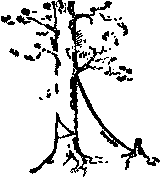
397
Sam's little Japanese eyes twinkled. But Guy who, of course, knew something of chopping, fairly exploded with scorn. "Pooh! What do you know? That's easy; any one can throw it straight up the wind. Give him a cornering shot and let him try. There, now," and Guy set the stake off to the north-west. "Now, smarty. Let's see you do that."
"All right. You'll see me. Just let me look at it a minute."
Sam walked round the tree, studied its lean and the force of the wind on its top, rolled up his sleeves, slipped his suspenders, spat on his palms, and, standing to west of the tree, said "Ready."
Yan had his watch out and shouted "Go."
Two firm, unhasty strokes up on the south side of the tree left a clean nick across and two inches deep in the middle. The chopper then stepped forward one pace and on the north-northwesterly side, eighteen inches lower down than the first cut, after reversing his hands—which is what few can do—he rapidly chopped a butt-kerf. Not a stroke was hasty; not a blow went wrong. The first chips that flew were ten inches long, but they quickly dwindled as the kerf sank in. The butt-kerf was two-thirds through the tree when Yan called "One minute up." Sam stopped work, apparently without cause, leaned one hand against the south side of the tree and gazed unconcernedly up at its top.
"Hurry up, Sam. You're losing time!" called his friend. Sam made no reply. He was watching 398 the wind pushes and waiting for a strong one. It came—it struck the tree-top. There was an ominous crack, but Sam had left enough and pushed hard to make sure; as soon as the recoil began he struck in very rapid succession three heavy strokes, cutting away all the remaining wood on the west side and leaving only a three-inch triangle of uncut fibre. All the weight was now northwest of this. The tree toppled that way, but swung around on the uncut part; another puff of wind gave help, the swing was lost, the tree crashed down to the northwest and drove the stake right out of sight in the ground.