A. Medical Experiments (continued 2)
Reading edition
Were the Ruff-Romberg high-altitude experiments in Dachau dangerous to life? If it is demanded that experiments on humans are carried out as humanely as possible, pain avoided wherever possible, and damage to health eliminated, it is obvious that deaths must be prevented in every way possible. The conscientious research worker will always start from the standpoint that experiments can only then be carried out when, according to human estimation and the experience of science, death can in no way be expected. According to German Law (Article 216 of the German Penal Code) the intentional killing of a person would not be legalized through his agreement, not even at his expressed desire.
To this question the presentation of evidence has shown the following:
1. In the Summary Report Ruff-Romberg-Rascher of 28 July 1942, it is “expressly stated that in the whole series of experiments no death and likewise no permanent oxygen deficiency damage occurred.” (NO-402, Pros. Ex. 66.) In direct contradiction to this appears to be, at least at first glance, the intermediary report which Dr. Rascher alone made on his experiments on 5 April 1942 to the Reich Leader SS Himmler (1971-A-PS, Pros. Ex. 49) and also the following secret report, which likewise Dr. Rascher alone sent to Himmler on 11 May 1942. (NO-220, Pros. Ex. 61.) These two special reports by Dr. Rascher prove that in the experiments described by Rascher alone several deaths occurred.
The explanation of the apparent contradiction is shown clearly by the presentation of evidence: In the experiments authorized by Dr. Ruff and carried out with his approval not a single death occurred. Only the arbitrary experiments which Rascher carried out without the approval of Dr. Ruff and against his will, and which were ordered by Himmler, were deadly.
This can be seen from Rascher’s intermediary report of 5 April 1942. (1971-A-PS, Pros. Ex. 49.) It falls into two parts.
In the first part Dr. Rascher describes the experiments carried out with Dr. Ruff’s approval. He states expressly, “the experiments conducted by myself and Dr. Romberg,” and he confirms that even “in a total of 15 extreme experiments, none of the experimental subjects died. Severe high-altitude sickness with unconsciousness occurred; however, the subject was always fully capable of action when approximately 7 km. was attained in the descent.”
In the second part, Rascher then describes his arbitrary experiments of which Ruff knew nothing, and was permitted to know nothing. This second part of the report is much more extensive and detailed than the first. That can be explained without difficulty because the experiments mentioned in this second part were carried out by Rascher himself; here he could describe the “merit” of the results he apparently gained all by himself. From this second part he obviously also hoped for complete new results for science, which he emphasized in the accompanying letter to Himmler of 5 April 1942, and he was obviously very proud that following his suggestions (as he emphasized) such “interesting standard experiments” were carried out. All this referred exclusively to the arbitrary experiments mentioned in the second part of the report, which Rascher carried out alone without the assistance of Dr. Romberg and without the authorization and previous knowledge of Dr. Ruff. (1971-A-PS, Pros. Ex. 49.)
Rascher himself made this distinction in his report (1971-A-PS, Pros. Ex. 49): He contrasts in the second part of his report the “extremely dangerous experiments” with the “experiments carried out by myself (Rascher) and Romberg,” while he specially asked for an “SS doctor from the camp as witness” for the arbitrary experiments of the second part of his report, as “I carried out these experiments by myself.” But surely Dr. Rascher had his reasons for specially requesting “a camp doctor as a witness” for these experiments (which are described in the second part of his report), but intentionally kept Dr. Romberg away. Dr. Rascher indicates these reasons in his accompanying letter of 5 April 1942, talking about difficulties which the Luftwaffe created for him up to that time, whose removal he hopes for by the intervention of SS Fuehrer Sievers. These difficulties which hindered the research work of Rascher were discussed in various other documents which concerned the use of the low-pressure chamber and its return to Dachau, which the SS tried to arrange but never succeeded.
If Dr. Rascher in his intermediary report (1971-A-PS, Pros. Ex. 49) emphasized that “only continuous experiments are fatal at heights above 10.5 km.”, this plainly confirms, in Dr. Rascher’s own words, what Ruff and Romberg stated from the very beginning, that two kinds of high-altitude experiments were carried out in Dachau with the low-pressure chamber. The one kind, which Dr. Romberg took part in and Dr. Ruff knew about, was carried out completely humanely and without any pain, and nothing happened; and the other kind, which Rascher carried out alone by order of Himmler, without Romberg and without the previous knowledge of Dr. Ruff, to which at one time an SS doctor was even asked to attend as a witness and which caused several fatalities.
This result is confirmed by the second report, which Rascher again alone (without the participation of Dr. Ruff and Dr. Romberg) submitted to Himmler, dated 11 May 1942, as a secret report (NO-220, Pros. Ex. 61). He describes here the experiments which he carried out jointly with Dr. Romberg and again states: “On the average, the experimental subjects were in complete accord of their actions at 12-13 km.; no disturbances of any kind in the general condition occurred in any of these experiments,” and even less, of course, a fatality. Only among the experiments described under figures 6 and 7 of this secret report of Rascher’s did fatalities occur, and that “during a continued high-altitude experiment, for example after half an hour in an altitude of 12 km.” But these experiments (according to figures 6 and 7) were the arbitrary experiments in which Rascher had other aims in mind, which had nothing to do with Ruff’s problem of “saving from high altitudes,” and which were carried out by Rascher alone.
It is also interesting that Rascher still mentions the partial assistance of Dr. Romberg in his first report (of 5 April 1942) (1971-A-PS, Pros. Ex. 49) but does not say anything more in the final second report (of 11 May 1942), (NO-220, Pros. Ex. 61) where he described the affair as though he alone had carried, out the experiments. Compare page 81, line 21: “Experiments carried out by myself”; or page 79, lines 15-16: “My heart experiments * * * that a very big sphere of work opened up for me,” etc. By that Rascher has clearly expressed that he did not have any assistance from Dr. Romberg in the experiments he thought particularly valuable, when he explains as particularly valuable his heart experiments and his observations concerning air embolism. Those were all experiments in which Ruff and Romberg had not the least interest, in which they never participated, and for which they would never have risked the health and the life of an experimental subject.
Even specialists like Dr. Ruff and Dr. Romberg could never understand the scientific or other aim which Rascher had in mind in the case of those arbitrary experiments with fatal endings. Even the layman can easily recognize the basic difference between the two categories of experiments. The legal experiments which had been authorized by Dr. Ruff were always restricted to a very short period of a few moments; but the fatal experiments of Dr. Rascher were, as he emphasized himself, continuous experiments without oxygen, therefore experiments lasting over 30 minutes. It is easily understandable that experiments of such a length without the administration of oxygen may be fatal. To prove this it would not have been necessary to sacrifice even one single human life in these experiments. Serious research workers like Dr. Ruff and Dr. Romberg had therefore never carried out and never authorized such experiments. That was also well known to Rascher, and this explains the fact as stated by Neff (German Tr. pp. 668, 670, 671) that Rascher kept Dr. Romberg intentionally away from his arbitrary experiments; furthermore that he even carried out his experiments at night to keep them secret from Dr. Romberg, and that he also did not ask Romberg to sign his intermediary report of 5 April 1942, nor his summarizing secret report of 11 May 1942, which Romberg would surely have refused to do.
It would therefore be quite wrong to attribute to Dr. Ruff and Dr. Romberg the intention of wanting to suppress something in their final report of 28 July 1942. (NO-402, Pros. Ex. 66.) For it is a proven fact that not only Himmler was informed by Rascher of the cases of death which had occurred, but that Dr. Ruff had also reported the cases of death for which Dr. Rascher was guilty, to his supreme superior, the Inspector of the Medical Service [of the air force], Dr. Hippke. For this same reason he had caused the low-pressure chamber to be removed from Dachau and had asked the witness, Dr. Hippke, to consent to this. These proven facts show that Dr. Ruff did not conceal anything and had nothing to conceal. The fact that the cases of death were not mentioned in the final report of 28 July 1942 has therefore nothing to do with any concealment but is only due to the fact that those experiments which had fatal results had nothing whatsoever to do with the experiments of Dr. Ruff and Dr. Romberg and their problem.
For the same reasons it is not surprising at all that Dr. Ruff did not inform Dr. Weltz of the fatal accidents during the special experiments of Rascher. Weltz was neither Ruff’s superior nor his subordinate, and at the time when Dr. Ruff learned of the deaths which had occurred during Rascher’s experiments, Dr. Rascher had already been transferred from the Weltz Institute.
The defense, therefore, arrives at the following conclusion:
Dr. Ruff only did what his superiors ordered him to do. If they have failed, they should be taken to account.
Dr. Ruff had no doubts concerning the orders of his superiors for his assignment was urgently necessary in the interest of his country, engaged in the most difficult war, and of its aviation. If Dr. Ruff at the time had been able to read all the international literature about medical experiments on human beings he would have learned that experiments much more exacting and much more dangerous than those with which he was familiar—which he knew and planned—were being conducted everywhere, also on prisoners; and perhaps they are still being conducted without the competent authorities or medical societies declaring them impermissible and intervening against them. Over many years, Dr. Ruff proved himself to be a particularly conscientious and considerate man of research who devoted his entire activity primarily to save endangered human lives. Neither can he be blamed for having collaborated for a short time with Dr. Rascher. He (Rascher) had been assigned to him as associate by his highest superiors; he had to rely upon that. If they ordered him to work together with a man who, later on, turned out to be a criminal, no liability can be charged to Dr. Ruff. When Dr. Ruff saw through his colleague who was forced upon him and realized his criminal activities, he immediately cut off all relations to him on his own initiative, avoided any further collaboration with him, and thus probably prevented much further disaster.
Field Marshal Milch was acquitted as far as the Dachau altitude tests are concerned.[21] Medical Inspector Dr. Hippke was not indicted at all. Under these circumstances justice demands that Dr. Ruff be acquitted.
EXTRACT FROM THE CLOSING BRIEF FOR DEFENDANT SIEVERS
Low-Pressure Experiments
Low-pressure experiments (high-altitude experiments) were carried out in the Dachau concentration camp from 22 February to the end of May 1942.
The first plans to carry out experiments “for rescue from high altitudes” were discussed already in 1941. The experiments were an affair of the Luftwaffe. (1581-A-PS, Pros. Ex. 48.)
The carrying out of experiments for “rescue from high altitudes” was agreed upon, as far as the Dachau concentration camp was concerned, by the Reich Minister for Aviation (represented by State Secretary and Field Marshal Milch) and the Reich Leader SS Himmler. (German Tr. p. 274. Also judgment of Military Tribunal II, Nuernberg in case of Field Marshal Milch. See Vol. II.) The witness Neff gave the exact date of the start of the experiments. The experiments were started on 22 February 1942. The witness could remember this date so well because it was his birthday. (German Tr. p. 606.) After a few interruptions the experiments ended in the second half of May. (German Tr. p. 6779.)
When answering the question whether the experiments could inflict torture and death on the experimental subjects, one has to distinguish between the experiments which according to the detailed instructions of Dr. Ruff were carried out by Dr. Rascher and Dr. Romberg in the Dachau concentration camp, and the experiments which Rascher carried out either with the knowledge and permission of Himmler, or without his permission on his own responsibility.
With regard to the first experiments it has to be said that they caused the experimental subjects some discomfort through high-altitude sickness, but that on no account did they mean torture and death for the experimental subjects. (Evidence of Dr. Ruff in direct examination.)
On the other hand the experiments which Rascher conducted on his responsibility have, according to Prosecution Document 1971-A-PS (Pros. Ex. 49), apparently to be judged in a different manner.
Sievers came in contact with the low-pressure experiments only; in the second half of March 1942. By letter of 21 March 1942 Rudolf Brandt replied to an inquiry of the Reich business manager of the Ahnenerbe of 9 March 1942 concerning Rascher, and informed him that low-pressure experiments were carried out in the Dachau camp: “The Reich Leader SS gave his permission on condition that Dr. Rascher would participate.” (1581-A-PS, Pros. Ex. 48.)
The cause of Sievers’ letter of 9 March 1942 was the statement of Dr. Rascher to the curator Wuest, according to which certain research work which he carried out for the Luftwaffe in Dachau, and of which he could give no details, was to be supported by the administration of the “Ahnenerbe”. (German Tr. p. 5671.) Following this, Sievers went to Dachau in late March or on 1 April 1942. (German Tr. p. 5672.)
Thus this date was the earliest on which Sievers could possibly have gained knowledge about the carrying out of high-altitude experiments in Dachau. It is important that at this time the experiments had already been under way for over a month.
The cunning Rascher took the first visit of Sievers as an opportunity to invite Sievers to have a look at the experiments directed by him, in spite of the fact that Sievers had nothing at all to do with the carrying out of the experiments. Sievers watched two experiments. He took the opportunity to speak to the two persons who were subjected to the experiments on that day. Both told Sievers that they had volunteered for the experiment. A few minutes after the experiment both experimental subjects did not show any after-effects and finished the experiment without suffering any bodily or physical damage. (German Tr. p. 5741.)
The following proceeding shows the special care which was taken in the carrying out of these experiments: It was agreed with the experimental persons that in case of earache they were to point with the hand to the ear. When one of the experimental subjects did this, Dr. Romberg immediately altered the pressure conditions, and the behavior of the experimental subject showed that he had no more discomfort. (German Tr. pp. 5743 and 6845.)
Since the question of the voluntary status of the human experimental subjects may be of significance in the case of all experiments, a comprehensive presentation of the most important depositions on this subject is given here.
Himmler stated at the Easter conference in 1942, in answer to the scruples of Sievers, that only volunteers were to be allowed to be drawn upon for the experiments, and if the experiments were fraught with danger to life then only major criminals under sentence of death and no political prisoners would be taken. (German Tr. p. 5677.) The witness Neff testified that volunteers presented themselves for the experiments. (German Tr. p. 614.)
Dr. Craemer of the Mountain Institute for Psychology of the Army Mountain Medical School [Gebirgspsychologisches, Institut der Heeres-Gebirgs-Sanitaets-Schule] has, in an affidavit, reported a conversation with Dr. Rascher in the course of which the latter said:
“Human experimental subjects. It is a question of major criminals under valid sentence of death who come forward voluntarily for the experiments in Dachau in order to have life and liberty given to them if they survive an experiment.” (Handloser 37, Handloser Ex. 18.)
The witness Meine declared:
“* * * since, furthermore, I knew from the series of experiments in Oranienburg that the prisoners had come forward voluntarily in crowds * * * my suspicion was not aroused during these years.” (German Tr. p. 4864.)
Dr. Mrugowsky deposed the following in his direct examination regarding yellow-fever experiments:
“Only volunteers were used, and Dr. Ding states in his declaration (NO-257, Pros. Ex. 283) that he knew of a list, and that for these kinds of cases always hundreds of volunteers offered themselves because they would not need to work for 4 weeks and were better fed.” (German Tr. p. 5195.)
Further, I refer to the affidavit of Dr. Morgen, which was submitted by Dr. Mrugowsky’s defense counsel, Mrugowsky 32 (Mrugowsky Exhibit 26):
“At the conference with Dr. Ding I learned that the human experimental subjects came forward voluntarily for these experiments. * * * In the case of the prisoner whose treatment I chanced to watch with others, I had the definite impression that he was a volunteer.” (German Tr. p. 5228.)
In connection with the high-altitude experiments in Dachau, I quote the following from Dr. Ruff’s deposition:
“Professor Dr. Weltz told me that these human experimental subjects were professional criminals who were allowed to volunteer for the experiments.” (German Tr. p. 6532.)
“Hippke told me also in this conversation that it was a question of major criminals who could offer themselves voluntarily for the experiments and who, following the experiments, were then to receive in some form a mitigation of their punishment, either reduction or remission.” (German Tr. p. 6534.)
The chief of Himmler’s personal staff, SS General Karl Wolff, gave an affidavit in London on 21 November 1946, which is of special importance because Wolff himself watched experiments in Dachau together with Himmler, and also reported to Hitler concerning the experiments:
“They (namely, the human experimental subjects) protested to Himmler in my presence that—after their request to be sent to the front had been turned down—they wanted to render a modest voluntary service to Germany and thereby give proof of the good will they really possessed. * * * That later low-pressure experiments are said to have taken place on prisoners on a nonvoluntary basis—of that I received no knowledge either from Himmler nor in any other way.” (German Tr. pp. 6757-58.)
Dr. Romberg declared in direct examination:
“In the course of time, not exactly on the first day, but as time went on, I spoke of course with all of them more often and in greater detail; then they told me gradually what previous sentences they had had, what prisons and penitentiaries they had already been at before coming to the camp. They told me also the reasons why they had come forward and had placed themselves voluntarily at the disposal of the experiments.”
To the question: “Do you mean by that, that all the human experimental subjects who were used for the altitude experiments were voluntarily human experimental subjects?” Dr. Romberg answered with a clear, “Yes.” (German Tr. pp. 6787-88.)
The following is quoted from Dr. Weltz’ deposition:
“When I first heard anything from Kottenhoff concerning Rascher’s proposals, Kottenhoff spoke already of volunteers. Later, after this conversation with Hippke I spoke again with Rascher. Rascher also spoke of volunteers. We then had Rascher at our joint consultation with Ruff and Romberg in my institute. There, too, he spoke of volunteers. In the observations that he made at the Nuernberg conference in connection with Holzloehner’s lecture, he spoke of volunteers. He spoke further of volunteers, on the return journey from the Nuernberg conference, with Dr. Craemer from St. Johann. * * * Thus I never heard Rascher speak otherwise than of volunteers, and, as I said already, that was the reason why we did not speak for a long time at all concerning compulsory experiments with Hippke.” (German Tr. p. 7064.)
The affidavit of the Polish Communist Wilschewske, an inmate of Dachau concentration camp, which was read on 28 April 1947, deposes as to the voluntary status of the human experimental subjects:
“Prisoners who came forward for these experiments did so, as far as I know, voluntarily, because they could thereby gain their own freedom and rehabilitation, and also favorable treatment for their relatives.” (German Tr. p. 6555.)
Dr. Becker-Freyseng deposed the following in his direct examination:
“Rascher spoke unequivocally of prisoners or criminal characters who were available because of special sanctions * * * by Hitler and Himmler, and through volunteering.” (German Tr. pp. 7850-51.)
The witness Dorn, a former prisoner in Buchenwald, deposed in answer to the following question: Were these people now forced into these experiments or was there a possibility of volunteering?
“I should like to give you an answer to that. Imagine the position of a prisoner who perhaps for years had not had enough to eat to satisfy him, and who perhaps learns from a camp conversation that if he were to offer himself for this or that experiment he would receive a double or triple amount of food. You can imagine that hundreds or more presented themselves merely from the purely human urge to eat their fill once again.” (German Tr. p. 8620.)
Dr. Beiglboeck likewise makes assertions in his direct examination concerning the voluntary status of the human experimental subjects, and declares in conclusion:
“I had at that time absolutely no reason to doubt that this information was correct. Superiors, officers of the SS, and the human experimental subjects themselves admitted this to me. And I do not know what more I could have done in order to assure myself still further.” (German Tr. p. 8701.)
The voluntary status of the prisoners is likewise confirmed in his affidavit by the witness Dr. Lesse, who worked as a doctor with Dr. Beiglboeck in Dachau. (Beiglboeck 14, Beiglboeck Ex. 20.)
The witness Mettbach has also confirmed the voluntary status of the human experimental subjects in connection with the sea-water experiments.
Finally reference is made to the deposition of the witness Nales, who was examined by the prosecution on 30 June 1947 in the second half of the forenoon session, and who testified to the voluntary status of the human experimental subjects used in the Lost gas experiments.
The evidence produced has not given the slightest grounds for believing that Sievers had any knowledge at all that nonvoluntary human experimental subjects were compelled to undergo experiments, or that the experiments would be painful or fraught with danger to life.
As a precaution let us also examine the question as to what further activity Sievers developed in connection with the low-pressure experiments. From the document book presented by the prosecution it appears that Sievers passed on letters which came to his office. Sievers is mentioned in some documents. The following separate letters are at hand:
In connection with the altitude experiments, the prosecution’s document book contains the following documents in which the Reich Business Manager of the Ahnenerbe is mentioned in one way or another. (NO-263, Pros. Ex. 47.) Letter from Frau Rascher to the Reich Leadership SS dated 24 February 1942:
“Rascher requests SS Obersturmbannfuehrer Schnitzler to acquaint the Reich Leader with the events and to say at the same time that Rascher, as a member of the Ahnenerbe, definitely wishes to participate scientifically in the experiments.”
From this it is seen how very keen even Frau Rascher was that her husband should participate in the experiments in Dachau. This was at a time when Sievers had as yet no knowledge at all of the altitude experiments.
Letter from the Reich Business Manager of the Ahnenerbe to Dr. Brandt, dated 26 August 1942 (NO-221, Pros. Ex. 68). This letter contains a copy of a letter from Rascher which had as its subject a report by Rascher and Romberg to Field Marshal Milch. The second part of the letter contains the report and the assent to the publication of the scientific results. Here the date of the letter must be pointed out, 26 August 1942, which was many weeks after the altitude experiments had come to an end, in May 1942.
Dr. Brandt’s reply to Sievers, dated 29 August 1942 (NO-222, Pros. Ex. 69):
“The letter of the Reich Leader SS, with which he has forwarded the report to Field Marshal Milch, was only signed and sent off a few days ago. Copy of the letter of the Reich Leader SS dated 25 August 1942 is enclosed for your information.”
Here it is to be observed that this letter likewise was written long after the conclusion of the altitude experiments and, like the preceding one, contains nothing at all concerning the experiments. It cannot be inferred from the letter dated 29 August 1942 that a copy of the report sent to Field Marshal Milch was also sent to the Ahnenerbe.
Brandt sends Sievers a copy of his letter to Dr. Rascher dated 6 September 1942 (NO-223, Pros. Ex. 71). It contains the information that Field Marshal Milch will ask Dr. Rascher and Dr. Romberg to meet shortly and report.
Letter from Rascher to Himmler, dated 9 October 1942 (1610-PS, Pros. Ex. 73). Sievers is mentioned in connection with the unsuccessful report to Milch. It is worth noting that Rascher asks that the low-pressure chamber may still be left at his disposal for further experiments.
Letter from the Reich Business Manager of the “Ahnenerbe” to the personal staff, for the attention of Dr. Brandt, dated 21 October 1942 (NO-226, Pros. Ex. 75 (Pros. Ex. 110 in Milch case); 1617-PS, Pros. Ex. 111 in Milch case). This letter contains the information that the freezing experiments are finished and that the altitude experiments desired by the Reich Leader SS can now be continued. For this purpose the low-pressure chamber will be needed again, and the Reich Leader SS is to write personally to Field Marshal Milch. The rough draft of a letter of the Reich Leader SS to Field Marshal Milch was enclosed with this letter. This rough draft is submitted by the prosecution as NO-226, Prosecution Exhibit 75. This draft was submitted by Sievers because of an assignment given to him by Himmler. The rough draft was drawn up in accordance with Rascher’s suggestions. (German Tr. p. 5682.)
This letter, dated 13 December 1942, contains several research commissions given personally by Himmler to Rascher (1612-PS, Pros. Ex. 79). Number 5 reads:
“The procuring of the apparatus necessary for all experiments is to be discussed separately with the offices of the Reich Physician SS of the SS Economic and Administrative Main Office, and with the Ahnenerbe Registered Association.”
A copy went to the Ahnenerbe.
This is a letter from the Vorstand [Board of Directors] of the Siemens-Schuckert-Werke, Berlin, and concerns the ordering of an electrocardiograph (NO-3675, Pros. Ex. 548). This apparatus was never delivered because the “SS priority grade” was not certified. Let it be remarked here, for the sake of understanding, that the designation “SS priority grade” was in general use and had nothing to do with the “SS”, the so-called “Schutzstaffeln” of the NSDAP.
Letter from Sievers to the Rector of the University of Munich concerning the loan of different pieces of apparatus (NO-3674, Pros. Ex. 549.) Dr. Wuest was, as repeatedly pointed out, office chief of the Ahnenerbe. As such he had exact information concerning the research commissions of the Institute for Military Scientific Research. A simple way to obtain the apparatus would have been an agreement made over the telephone. If Sievers chose to do it by letter it was only because of the delaying tactics practiced by him. This is seen clearly from the postscript intended for Rascher, telling him not to participate. It is also worthy of note that the apparatus was to be used in Munich and not in Dachau.
Sievers had no right to issue orders or instructions in connection with the low-pressure experiments, as is seen from part III of the closing brief. Sievers had not the slightest influence on the carrying out of the experiments.
Sievers could have had no knowledge that the experiments might be inhuman, because he, or the Ahnenerbe, was only brought in when the experiments had already been in progress for over a month.
The question still to be examined is whether and when Sievers received knowledge of Rascher’s reports concerning his experiments. To this the following details are pointed out: On 5 April 1942 Rascher sent an interim report on his low-pressure experiments direct to Himmler. He asked that the report should be treated as secret. (1971-A-PS, Pros. Ex. 49.)
The acknowledgment of the receipt did not go through the Ahnenerbe but went directly from Rudolf Brandt to Rascher. (1971-C-PS, Pros. Ex. 50.) It is nowhere mentioned that a copy went to the Ahnenerbe. From the distribution of the order issued by Himmler thereon (1971-B-PS, Pros. Ex. 51), it is clearly seen that the Ahnenerbe received no copy of the order.
On 11 May 1942 Rascher sent a further secret report direct to Himmler, so that Sievers here too had no possibility of acquiring any knowledge of this report. (NO-220, Pros. Ex. 61.)
On 22 September 1942 the German Experimental Station for Aviation sent copies of Nos. 2, 3, and 4 of the report “Experiments on Rescue from High Altitudes” as “top secret” matter to the Reich Leader SS “to be filed there”. (NO-402, Pros. Ex. 66.) Even if the first page of the report bears the note, “The investigations were conducted in conjunction with the Research and Instruction Association the Ahnenerbe”, no kind of proof is thereby furnished that a copy of the report reached the Ahnenerbe. It is true that Sievers does not exclude the possibility that such a report came to the Ahnenerbe, but he denies that he read such a report, because it did not concern him, and it also did not interest him as it dealt with medical matters. If he did read any of it, it was at the most the short summary to be found at the end. (German Tr. p. 5681.)
It must also be pointed out that there is nothing in this report which could lead to the conclusion that the experiments had fatal results. The prosecution’s expert Professor Ivy also confirmed this in answer to the Court’s question: “Is there anything mentioned in the Ruff-Romberg-Rascher report about experiments concerning which it can be asserted with absolute certainty that fatalities, permanent injury, or great pain have resulted in the case of human experimental subjects?” The expert’s answer was “No.” (German Tr. p. 9217.) In addition this report was sent to Himmler on 22 September 1942, thus, long after the close of the experiments. Sievers cannot then have gained any insight into Rascher’s criminal activity from Rascher’s reports.
Sievers had not the power or the opportunity of preventing Rascher’s criminal experiments or of bringing them to a standstill. It is true that at the Easter conference in 1942 he tried to move Himmler to discontinue all experiments in the concentration camps, or at least to bring about the suppression of the research of Rascher and Professor Dr. Hirt, which were not in harmony with the character of the Ahnenerbe. Both his suggestions were refuted by Himmler’s declaration that “all that” was no concern of Sievers and that he (Himmler) bore the sole responsibility. (German Tr. p. 5714.)
In spite of Himmler’s declaration, Sievers endeavored to halt further low-pressure experiments, when the low-pressure chamber had been removed from Dachau at the beginning of June 1942.
Already on 27 November 1942, the chief of the personal staff of the Reich Leader SS, SS General Wolff, had applied to Field Marshal Milch in order to make possible Rascher’s further experiments in Dachau. In the closing sentence of this letter the loan of the low-pressure chamber is once again requested. (NO-269, Pros. Ex. 78 (Pros. Ex. 118 in the Milch Case).)
That General Wolff by Himmler’s orders laid great stress on making further experiments possible is seen from the fact that a copy of the letter went also to SS Oberfuehrer Dr. Wuest, who was office chief of the Ahnenerbe. Thereby the special importance of the affair was to be shown also to the Ahnenerbe, on which the obligation rested to procure the requisite apparatus in accordance with figure three of Himmler’s order of 7 July 1942 (NO-422, Pros. Ex. 33) and repeated later under figure five of Himmler’s order of 13 December 1942 (1612-PS, Pros. Ex. 79).
When the Luftwaffe did not make the low-pressure chamber available again, Sievers was commissioned to buy a special portable low-pressure chamber for the SS. (German Tr. p. 5800.) And then Sievers did something unheard of and rang up Dr. Romberg of the German Experimental Station for Aviation. Romberg was very much surprised at this telephone call. (German Tr. pp. 6839-40.)
Through his communication that he had been commissioned by Himmler to procure a low-pressure chamber for Rascher, who at that time was still a member of the Luftwaffe, he aroused the attention of the Luftwaffe. For Dr. Romberg communicated this news to his superior Dr. Ruff, who, on his side, informed Dr. Becker-Freyseng of the Medical Inspectorate of the Luftwaffe. (German Tr. pp. 6607-08, 7878; Becker-Freyseng 24, Becker-Freyseng Ex. 11.) This was what Sievers counted upon. The consent of the Luftwaffe would have been necessary for the purpose of sanctioning the requisite priority grade for a low-pressure chamber. The Luftwaffe denied this necessity and thus the low-pressure chamber under consideration for Rascher was not procured.
When Himmler in the year 1943—probably at Rascher’s urging—ordered Sievers again to procure a low-pressure chamber, Sievers was able once more to prevent one from being procured. This time he pointed out that the research management of the Luftwaffe did not consider it necessary to continue with altitude experiments. Sievers advanced this statement at random, profiting by the fact that Rascher, though probably known to the Medical Inspectorate of the Luftwaffe, was not known to the research management of the Luftwaffe. (German Tr. p. 5801.)
Summary
Criminal action on the part of Sievers cannot be proved in connection with the low-pressure experiments. The carrying out of the experiments was neither ordered nor arranged for by him. He did not come into contact with the experiments until they had been in progress for over a month. What Sievers saw, heard, and read about the experiments could not in any way give him the knowledge that inadmissible experiments were being made. Sievers had no knowledge of Rascher’s criminal experiments while the experiments were in progress, because Rascher kept these experiments completely secret. Sievers’ activity was of a completely subordinate nature. Apart from that, however, Sievers helped to prevent Rascher (whom Sievers could not bear, for he was a pompous fellow and a protégé of Himmler) from being put again in a position to carry on further low-pressure experiments.
There is no criminal guilt then on the part of Sievers, as far as Sievers’ contact with the low-pressure experiments is concerned.
d. Evidence
Prosecution Documents
Pros.
Doc. No.Ex. No.Description of DocumentPage
1602-PS44Letter from Rascher to Himmler, 15 May 1941, concerning high-altitude experiments on human beings.141
1582-PS45Letter from Rudolf Brandt to Rascher, undated, nforming him that prisoners would be made available for high-altitude research.143
1581-A-PS48Letter from Rudolf Brandt to Sievers, 21 March 1942, concerning Rascher’s participation in high-altitude experiments.144
1971-A-PS49Letter from Rascher to Himmler, 5 April 1942, and report, undated, on high-altitude experiments.144
1971-C-PS50Letter from Rudolf Brandt to Rascher, 13 April 1942, regarding his success with high-altitude experiments.147
1971-B-PS51Letter from Himmler to Rascher, 13 April 1942, requesting a repetition of high-altitude experiments on prisoners condemned to death.148
1971-D-PS52Teletype from Rascher to Rudolf Brandt, 20 October 1942, requesting clarification on the pardon granted by Himmler.149
1971-E-PS53Teletype from Rudolf Brandt to Schnitzler, 21 October 1942, concerning the pardon granted by Himmler.149
NO-21856Letter from Rascher to Himmler, 16 April 1942, reporting on high-altitude experiments with fatal results and on experiments conducted together with Romberg.150
NO-26460File note for SS Obersturmfuehrer Schnitzler, 28 April 1942.151
NO-22061Letter from Rascher to Himmler, 11 May 1942, and secret report concerning high-altitude experiments.152
NO-40266Letter, 29 September 1942, and report, 28 July 1942, from Romberg and Ruff to Himmler concerning experiments on rescue from high altitudes.155
343-A-PS62Letter from Milch to Wolff, 20 May 1942, regarding continuation of experiments.172
343-B-PS70Letter from Milch to Himmler, 31 August 1942, acknowledging receipt of reports by Rascher and Romberg on high-altitude experiments.172
NO-28972Letter from Hippke to Himmler, 8 October 1942, thanking the latter for his assistance in high-altitude experiments in Dachau.173
NO-22476Note by Romberg on showing of film in office of State Secretary Milch and proposed report to Milch, 11 September 1942.174
1612-PS79Letter from Rudolf Brandt to Rascher, 13 December 1942, and Himmler’s order assigning Rascher to high-altitude experiments.176
NO-61041Inmates of the Dachau concentration camp in different stages of simulated altitude in the low-pressure chamber; postmortem dissections of experimental subjects who died from the effects of high-altitude experiments. (See Selections from Photographic Evidence of the Prosecution.)898
Testimony
Extracts from the testimony of tribunal witness Walter Neff177
Extracts from the testimony of defendant Rudolf Brandt183
Extracts from the testimony of defendant Romberg186
TRANSLATION OF DOCUMENT 1602-PS
PROSECUTION EXHIBIT 44
LETTER FROM RASCHER TO HIMMLER, 15 MAY 1941, CONCERNING HIGH-ALTITUDE EXPERIMENTS ON HUMAN BEINGS
[Stamp]
Sigmund Rascher, M. D.
Personal Staff Reich Leader SS
Archives File No. Secret/58
Munich, Trogerstrasse 56, 15 May 1941
Highly esteemed Reich Leader,
My most sincere thanks for your cordial wishes and flowers on the birth of my second son. This time, too, it is a strong boy, though he arrived 3 weeks too early. I shall take the liberty and send you a small picture of both children some time.
Since I want a third child very soon, I feel very grateful to you that with your help, highly esteemed Reich Leader, the wedding is made possible. Today I was informed by SS Standartenfuehrer Sollmann on the telephone that the 165 marks as required for a wedding will be charged to the account “R” and will be transmitted by the Ahnenerbe. I thank you heartily! I only need a short certificate concerning Aryan descent for the Luftwaffe, where the permit was already submitted. Tomorrow, prior to my departure, I shall dictate a rough text to Nini D; she will then forward the note to you, highly esteemed Reich Leader.
I also thank you very cordially for the generous regular allowance of fruit; this is at present extremely important for mother and children.
For the time being, have been assigned to the Luftgau Kommando VII, Munich, for a medical selection course. During this course, where research on high-altitude flying plays a prominent part, determined by the somewhat higher ceiling of the English fighter planes, considerable regret was expressed that no experiments on human beings have so far been possible for us because such experiments are very dangerous and nobody is volunteering. I therefore put the serious question: is there any possibility that two or three professional criminals can be made available for these experiments? The experiments are being performed at the Ground Station for High-Altitude Experiments of the Luftwaffe [Bodenstaendige Pruefstelle fuer Hoehenforschung der Luftwaffe] at Munich. The experiments, in which the experimental subject of course may die, would take place with my collaboration. They are absolutely essential for the research on high-altitude flying and cannot, as it has been tried until now, be carried out on monkeys, because monkeys offer entirely different test conditions. I had an absolutely confidential talk with the representative of the Luftwaffe physician who is conducting these experiments. He also is of the opinion that the problems in question can only be solved by experiments on human beings. (Feeble-minded individuals also could be used as experimental material.)
For the time being, SS men and some SS officers as well are detailed to the antiaircraft school IV, for studying the range-finding technique. The material is excellent. Nevertheless, I suggest that selection of range-finding men among SS troops should be carried out according to the methods of examination as used by the Luftwaffe. A still better selection would thus be the result. I am able to judge because I am the specialist for medical selection with the Luftwaffe range-finding unit, and all those detailed to these courses once more have to pass my examination. I therefore take the liberty to send to you from Schongau the method of selection as drafted by me. For this, I received the War Merit Cross, 2d Class, with Swords. It will not be a note for instruction but a draft for a lecture. I prefer to have it forwarded the direct way rather than that any SS officer should put it down in a mutilated way during my lectures. A similar instructional note was submitted to the Reich Ministry for Aviation.
Thanks to your generosity, the cancer research is progressing well, in spite of the war.
I do hope that you, highly esteemed Reich Leader, are in perfect health, in spite of your tremendous amount of work!
With my most hearty wishes, I am with
Heil Hitler!
[handwritten] Yours, gratefully devoted,
[Signed] S. Rascher
[Handwritten] RUSH
TRANSLATION OF DOCUMENT 1582-PS
PROSECUTION EXHIBIT 45
LETTER FROM RUDOLF BRANDT TO RASCHER, UNDATED, INFORMING HIM THAT PRISONERS WOULD BE MADE AVAILABLE FOR HIGH-ALTITUDE RESEARCH
AK/104a/LO Bra/V
[Stamp unintelligible May 2 (?) 1941]
SS Untersturmfuehrer Sigmund Rascher M. D.
Munich
Trogerstr. 56
Dear Dr. Rascher:
Shortly before flying to Oslo, the Reich Leader SS gave me your letter of 15 May 1941, for partial reply.
I can inform you that prisoners will, of course, be gladly made available for the high-flight researches. I have informed the Chief of the Security Police of this agreement of the Reich Leader SS, and requested that the competent official be instructed to get in touch with you.
I want to use the opportunity to extend my cordial wishes to you on the birth of your son.
I shall refer as soon as possible to the second part of your letter.
By order
Heil Hitler!
[initials] R Br [Rudolf Brandt]
SS Sturmbannfuehrer
[illegible markings]
TRANSLATION OF DOCUMENT 1581-A-PS
PROSECUTION EXHIBIT 48
LETTER FROM RUDOLF BRANDT TO SIEVERS, 21 MARCH 1942, CONCERNING RASCHER’S PARTICIPATION IN HIGH-ALTITUDE EXPERIMENTS
The Reich Leader SS Personal Staff
Journal No. AR 704/2 A/Bn.
[Stamp]
Personal Staff Reich Leader SS
Documentary Administration
Record number AR/704/2 A/Bn. 58
Fuehrer Headquarters, 21 March 1942
To the Reich Chief Manager [Reichsgeschaeftsfuehrer] of the “Ahnenerbe”
SS Obersturmbannfuehrer Sievers
Berlin—Dahlem
Dear Comrade Sievers,
I refer to your inquiry of 9 March 1942 B/151/r1 S/Wo—concerning Dr. Rascher.
Reference is made to the subatmospheric pressure experiments which are being carried out on concentration camp inmates in the Dachau camp by the air force. The Reich Leader SS has approved these experiments under the condition that SS Untersturmfuehrer Dr. Rascher, who is an Obersturmfuehrer of the air force, takes part in them. I am sure that Dr. Rascher will be able to give you further details.[22]
Heil Hitler!
[Signed] Brandt
SS Sturmbannfuehrer
TRANSLATION OF DOCUMENT 1971-A-PS
PROSECUTION EXHIBIT 49
LETTER FROM RASCHER TO HIMMLER, 5 APRIL 1942, AND REPORT, UNDATED, ON HIGH-ALTITUDE EXPERIMENTS
Sigmund Rascher, M. D.
5 April 1942
[Marginal note] Very interesting. 8-4-42.
[Apparently by Himmler]
Highly esteemed Reich Leader:
Enclosed is an interim report on the low-pressure experiments so far conducted in the concentration camp of Dachau. May I ask you respectively to treat the report as secret?
A few days ago Reich Physician SS [Reichsarzt SS] Professor Dr. Grawitz made a brief inspection of the experimentation plant. Since his time was very limited, no experiments could be demonstrated to him. SS Obersturmbannfuehrer Sievers took a whole day off to watch some of the interesting standard experiments and may have given you a brief report. I believe, highly esteemed Reich Leader, that you would be extraordinarily interested in those experiments. Is it not possible that on the occasion of a trip to southern Germany you have some of the experiments demonstrated to you? If the results so obtained by the experiments are confirmed by further experimentation, entirely new data will be secured for science; simultaneously, entirely new aspects will be opened to the Luftwaffe.
I hope that, thanks to the intended efforts of SS Obersturmbannfuehrer Sievers, the Luftwaffe will make no difficulties from now on. I am very much indebted to Obersturmbannfuehrer Sievers as he has shown a very active interest in my work in every respect.
I thank you respectfully, highly esteemed Reich Leader, for the generous realization of my proposition to conduct such experiments in the concentration camp.
With my best wishes for your personal well-being, I am
With Heil Hitler
Gratefully yours,
[Signed] S. Rascher
FIRST INTERIM REPORT ON THE LOW-PRESSURE CHAMBER EXPERIMENTS IN THE CONCENTRATION CAMP OF DACHAU
1. The object is to solve the problem of whether the theoretically established norms pertaining to the length of life of human beings breathing air with only a small proportion of oxygen and subjected to low pressure correspond with the results obtained by practical experiments. It has been asserted that a parachutist, who jumps from a height of 12 km. would suffer very severe injuries, probably even die, on account of the lack of oxygen. Practical experiments on this subject have always been discontinued after a maximum of 53 seconds, since very severe bends [Hoehenkrankheit] occurred.
2. Experiments testing the length of life of a human being above the normal breathing limits (4, 5, 6 km.) have not been conducted at all, since it has been a foregone conclusion that the human experimental subject [Versuchsperson—VP] would suffer death.
The experiments conducted by myself and Dr. Romberg proved the following:
Experiments on parachute jumps proved that the lack of oxygen and the low atmospheric pressure at 12 or 13 km. altitude did not cause death. Altogether 15 extreme experiments of this type were carried out in which none of VP’s died. Very severe bends together with unconsciousness occurred, but completely normal functions of the senses returned when a height of 7 km. was reached on descent. Electrocardiograms registering during the experiments did show certain irregularities, but by the time the experiments were over the curves had returned to normal and they did not indicate any abnormal changes during the following days. The extent to which deterioration of the organism may occur due to continuously repeated experiments can only be established at the end of the series of experiments. The extreme fatal experiments will be carried out on specially selected VP’s, otherwise it would not be possible to exercise the rigid control so extraordinarily important for practical purposes.
The VP’s were brought to a height of 8 km. under oxygen and then had to make 5 knee bends with and without oxygen. After a certain lapse of time, moderate to severe bends occurred and the VP’s became unconscious. However, after a certain period of accustoming themselves to the height of 8 km. all the VP’s recuperated and regained their consciousness and the normal functions of their senses.
Only continuous experiments at altitudes higher than 10.5 km. resulted in death. These experiments showed that breathing stopped after about 30 minutes, while in 2 cases the electrocardiographically charted action of the heart continued for another 20 minutes.
The third experiment of this type took such an extraordinary course that I called an SS physician of the camp as witness, since I had worked on these experiments all by myself. It was a continuous experiment without oxygen at a height of 12 km. conducted on a 37-year-old Jew in good general condition. Breathing continued up to 30 minutes. After 4 minutes the VP began to perspire and to wiggle his head, after 5 minutes cramps occurred, between 6 and 10 minutes breathing increased in speed and the VP became unconscious; from 11 to 30 minutes breathing slowed down to three breaths per minute, finally stopping altogether.
Severest cyanosis developed in between and foam appeared at the mouth.
At 5-minute intervals electrocardiograms from three leads were written. After breathing had stopped, the electrocardiogram was continuously written until the action of the heart had come to a complete standstill. About ½ hour after breathing had stopped, dissection was started.
Autopsy Report
When the cavity of the chest was opened the pericardium was filled tightly (heart tamponade). Upon opening of the pericardium 80 cc. of clear yellowish liquid gushed forth. The moment the tamponade had stopped, the right auricle began to beat heavily, at first at the rate of 60 actions per minute, then progressively slower. Twenty minutes after the pericardium had been opened, the right auricle was opened by puncturing it. For about 15 minutes, a thin stream of blood spurted forth. Thereafter clogging of the puncture wound in the auricle by coagulation of the blood and renewed acceleration of the action of the right auricle occurred.
One hour after breathing had stopped, the spinal marrow was completely severed and the brain removed. Thereupon the action of the auricle stopped for 40 seconds. It then renewed its action, coming to a complete standstill 8 minutes later. A heavy subarchnoid oedema was found in the brain. In the veins and arteries of the brain a considerable quantity of air was discovered. Furthermore, the blood vessels in the heart and liver were enormously obstructed by embolism.
The anatomical preparations will be preserved and so I shall be able to evaluate them later.
The last-mentioned case is to my knowledge the first one of this type ever observed on man. The above-described heart actions will gain particular scientific interest, since they were written down with an electrocardiogram to the very end.
The experiments will be continued and extended. Another interim report will follow after new results have been obtained.
[Signed] Dr. Rascher
TRANSLATION OF DOCUMENT 1971-C-PS
PROSECUTION EXHIBIT 50
LETTER FROM RUDOLF BRANDT TO RASCHER, 13 APRIL 1942, REGARDING HIS SUCCESS WITH HIGH-ALTITUDE EXPERIMENTS
1174/42 BRa/V
Fuehrer Headquarters, 13 April 1942
Top Secret
SS Untersturmfuehrer Rascher, M. D.
Munich, Trogerstrasse 56
Dear Comrade Dr. Rascher,
Your report of 5.4.1942 has been seen by the Reich Leader SS today. The tests on which SS Obersturmbannfuehrer Sievers gave a brief report interested him very much.
For the further tests I wish you a continuation of the success you have had so far.
Best regards also to your wife.
Heil Hitler!
Yours,
[Signed] B. [R.] Brandt
SS Sturmbannfuehrer
TRANSLATION OF DOCUMENT 1971-B-PS
PROSECUTION EXHIBIT 51
LETTER FROM HIMMLER TO RASCHER, 13 APRIL 1942, REQUESTING A REPETITION OF HIGH-ALTITUDE EXPERIMENTS ON PRISONERS CONDEMNED TO DEATH
The Reich Leader SS
Fuehrer Headquarters, 13 April 1942
SS Untersturmfuehrer Dr. Rascher
Munich 27, Trogerstrasse 56
Dear Dr. Rascher:
I want to answer your letter with which you sent me your reports. Especially the latest discoveries made in your experiments particularly have interested me. May I now ask you the following:
1. This experiment is to be repeated on other men condemned to death.
2. I would like Dr. Fahrenkamp to be taken into consultation on these experiments.
3. Considering the long-continued action of the heart the experiments should be specifically exploited in such a manner as to determine whether these men could be recalled to life. Should such an experiment succeed, then, of course, the person condemned to death shall be pardoned to concentration camp for life.
Please keep me further informed on the experiments.
Kind regards and
Heil Hitler!
Yours
[Signed] H. Himmler
2. Chief of the Security Police and SD.
3. SS Brigadefuehrer Gluecks.
Copy for your information.
by order [I. A.]
[initialed] BR. [Rudolf Brandt]
SS Sturmbannfuehrer
TRANSLATION OF DOCUMENT 1971-D-PS
PROSECUTION EXHIBIT 52
TELETYPE FROM RASCHER TO RUDOLF BRANDT, 20 OCTOBER 1942, REQUESTING CLARIFICATION ON THE PARDON GRANTED BY HIMMLER
Reich Security Main Office
Communication
Communication No. 11194 Urgent
RFSS Munich—Teletype No. 2020, 20 October 1942, 5:25 p. m.
To: SS Obersturmbannfuehrer Dr. Brandt
Field Command Post [Feldkommandostelle] Hegewald
Highly esteemed Obersturmbannfuehrer:
Will you please clarify the following case with the Reich Leader SS as soon as possible?
In communication RFSS [Reich Leader SS] of 13-1-42 under paragraph 3 it is ordered that if prisoners in Dachau condemned to death live through experiments which have endangered their lives, they should be pardoned. As up to now only Poles and Russians were available, some of whom had been condemned to death, it is not quite clear to me yet as to whether the above-mentioned paragraph also applies to them, and whether they may be pardoned to concentration camp for life after having lived through several very severe experiments.
Please answer by teletype via Adjutant’s Office, RFSS, Munich.
Obedient Greetings,
Heil Hitler!
Yours
[Signed] S. Rascher
TRANSLATION OF DOCUMENT 1971-E-PS
PROSECUTION EXHIBIT 53
TELETYPE FROM RUDOLF BRANDT TO SCHNITZLER, 21 OCTOBER 1942, CONCERNING THE PARDON GRANTED BY HIMMLER
Teletype
To SS Obersturmfuehrer Schnitzler
Munich
Please inform SS Untersturmfuehrer Dr. Rascher with regard to his teletype inquiry that the instruction given some time ago by the Reich Leader SS concerning amnesty of test persons does not apply to Poles and Russians.
[Signed] Brandt
SS Obersturmbannfuehrer
21 October 1942
Bra/Dr.
TRANSLATION OF DOCUMENT NO-218
PROSECUTION EXHIBIT 56
LETTER FROM RASCHER TO HIMMLER, 16 APRIL 1942, REPORTING ON HIGH-ALTITUDE EXPERIMENTS WITH FATAL RESULTS AND ON EXPERIMENTS CONDUCTED TOGETHER WITH ROMBERG
Munich, Trogerstrasse 56, 16 April 1942
Highly esteemed Reich Leader:
May I thank you for your letter of 13 April. I am delighted with the great interest which you, highly esteemed Reich Leader, are taking in the experiments and their results. I thank you for the inspiration you have given me in your letter.
The experiment described in the report of 4 April was repeated four times, each time with the same results. When Wagner, the last test person had stopped breathing, I let him come back to life by increasing pressure. Since test person “W . . .” was assigned for a terminal[23] experiment, as a repeated experiment held no prospect of new results, and since I had not been in possession of your letter at that time, I subsequently started another experiment through which Test Person Wagner did not live. Also in this case the results obtained by electrocardiographic registration were extraordinary.
In accordance with your orders, I tried to contact Dr. Fahrenkamp immediately upon receipt of your letter. However, I could not speak to him since he is laid up with angina. In a few days I shall ask again if Dr. Fahrenkamp is available.
Meanwhile, at times together with Dr. Romberg, I have carried out falling experiments from heights of from 16 to 20 kilometers. There, contrary to theoretical assumptions, it was proved that falling through space after jumping from an airplane in the stratosphere (pressure cabinplane) is quite possible, as after severe unconsciousness the test person regained complete consciousness in each case, at between 7 and 8 kilometers height when the parachute lever, installed in the chamber, was pulled.
Within the next few days, I shall report at length on these experiments as well as on the above-mentioned Test Person Wagner.
I also have a request to make: May I take pictures of the various dissection preparations in the dissecting room of the concentration camp to make a record of the strange formations of air embolism? In this connection, my wife has already written to SS Sturmbannfuehrer Dr. Brandt.
Highly esteemed Reich Leader, allow me to close by assuring you that your active interest in these experiments has a tremendous influence on one’s working capacity and initiative.
I am with devoted greeting and
Heil Hitler!
Yours gratefully devoted
[Signed] S. Rascher
TRANSLATION OF DOCUMENT NO-264
PROSECUTION EXHIBIT 60
FILE NOTE FOR SS OBERSTURMFUEHRER SCHNITZLER, 28 APRIL 1942
Frau Rascher was here today in the office and stated the following to me for you in a few words:
Oberstabsarzt Dr. Weltz still insists on participation in the experiments and on full responsibility. If not, the assignment of Dr. Rascher to the Weltz Institute must be changed. Weltz personally is not interested in these experiments. RLM [The Reich Air Ministry] asks Oberstabsarzt Dr. Weltz how long the experiments will last and whether it is justifiable to detail a medical officer for so long a time. RLM demands from Weltz an opinion on the experiments which he, however, cannot give, unless he is fully informed about them. Weltz will be in Berlin with Generaloberstabsarzt Hippke on Friday. Weltz demands a statement by Friday as to whether he should consider himself as still participating in the experiments, or whether it is requested that he should not participate in the experiments.
The assignment of Dr. Rascher must immediately be changed to “Assignment to Aviation Test Institute Berlin—Adlershof, Dachau Branch” (not Weltz Institute), because Weltz—as he stated—intends to cancel the assignment immediately, if he is not to participate in it.
For personal confidential information
Dr. Weltz confidentially informed Dr. Rascher that there is great mistrust against him in the RLM because of the experiments (SS membership); there is also animosity in the air force administrative command (Luftgau) Munich for this reason.
Munich, 28 April 1942.
Gr.
TRANSLATION OF DOCUMENT NO-220
PROSECUTION EXHIBIT 61
LETTER FROM RASCHER TO HIMMLER, 11 MAY 1942, AND SECRET REPORT CONCERNING HIGH-ALTITUDE EXPERIMENTS
Sigmund Rascher M. D.
Munich, Trogerstrasse 56, 11 May 1942
Highly esteemed Reich Leader:
Enclosed I am forwarding a short summary on the principal experiments conducted up to date. A detailed report on the practical as well as the theoretical results will take some more time. I shall hurry. Since the material has to be processed the exploitation of the pathological preparations will take about ½ year though the Kaiser Wilhelm Institute for Brain Research will help us, I hope.
Tonight I succeeded in seeing Dr. Fahrenkamp who has relatively recovered. He appeared to be very interested and I think there will be a fine and fruitful cooperation. Dr. Fahrenkamp who has an enormous knowledge most amiably promised to help me in everything. He will give to you himself his opinion on my heart experiments. From our conversation I have had the impression that a great field of work will open up to me yet. I thank you, highly esteemed Reich Leader, for having opened these opportunities to me to such an extent.
Unfortunately, the extension of my assignment has not been settled yet; in accordance with the present regulations, my assignment will be terminated on 15 May.
Thanking you again, I am with most obedient greetings and
Heil Hitler!
Yours gratefully,
[Signed] S. Rascher
Munich, 11 May 1942
SECRET REPORT
Based on results of experiments which up to now various scientists had conducted on animals only, the experiments in Dachau were to prove whether these results would maintain their validity on human beings.
1. The first experiments were to show whether the human being can gradually adapt himself to higher altitudes. Some 10 tests showed that a slower ascent without oxygen taking from 6 to 8 hours kept the functions of the senses of the various VP’s [Versuchspersonen—human experimental subjects] fully normal up to a height of 8,000 meters. Within 8 hours several VP’s had reached a height of 9.5 kilometers without oxygen when bends occurred suddenly.
2. Normally it is impossible to stay without oxygen at altitudes higher than 6 kilometers. Experiments showed however that after ascent to 8,000 meters without oxygen, bends combined with unconsciousness lasted only about 25 minutes. After this period the VP’s had mostly become accustomed to that altitude; consciousness returned, they could make knee bends, showed a normal electrocardiograph and were able to work (60 to 70 percent of the cases examined).
3. Descending tests on parachutes (suspended) without oxygen.
These experiments proved that from 14 kilometers on down severest bends occurred which remained until the ground was reached. The detrimental effects caused by these experiments manifested themselves at the beginning as unconsciousness, and subsequently as spastic and limp paralysis, catotomy, stereotypy, and as retrograde amnesia lasting several hours. About 1 hour after the end of the experiment the VP’s for the most part were still disoriented as to time and locality. The blood picture often showed a shift to the left; albumen and red and white blood corpuscles were regularly found in the urine after the experiment; cylinders were sometimes found. After several hours or days the blood and urine returned to normal. The changes of the electrocardiograph were reversible.
Contrary to descending tests on parachutes without oxygen, descending tests with oxygen were carried out from heights up to 18 kilometers. It was proved that on the average the VP’s regained the normal function of their senses at 12 to 13 kilometers. No disturbances of general conditions occurred during any of these experiments. Brief unconsciousness at the beginning of the experiment caused no lasting disturbances. Urine and blood showed only a slight change.
4. As the long time of descent on parachutes, under actual conditions, would cause severe freezing even if no detrimental effects were caused by lack of oxygen, VP’s were brought by sudden decreases in pressure with a cutting torch from 8 to 20 kilometers, simulating the damage to the pressure-machine of the high-altitude airplane. After a waiting period of 10 seconds, corresponding to stepping out of the machine, the VP’s were made to fall from this height with oxygen to a height where breathing is possible. The VP’s awoke between 10 and 12 kilometers and at about 8 kilometers pulled the parachute lever.
5. In experiments of falling from the same height without oxygen, the VP’s regained normal function of their senses only between 2 and 5 kilometers.
6. Experiments testing the effect of pervitin on the organism during parachute jumps, proved that the severe after-effects, as mentioned under No. 3, were considerably milder. The ability to withstand the conditions at high altitudes was only slightly improved, while the bends, since they were not noticed, occurred suddenly (restraint-loosening effects of pervitin).
7. Dr. Kliches, of the Charles University in Prague, reports in the publication of the Reich Research Council: “By prolonged breathing of oxygen, human beings should theoretically be kept fully fit up to 13 kilometers. In practice, the limit is around 11 kilometers. Experiments which I carried out in this connection proved that with pure oxygen no lowering of the measurable raw energy (ergometer) was noticeable up to 13.3 kilometers. The VP’s merely became unwilling since pains of the body cavities grew too severe, due to the lowering of pressure between body and thin air. When pure oxygen was inhaled bends occurred in all 25 cases only at heights above 14.2 kilometers.”
As practical result of the more than 200 experiments conducted at Dachau, the following can be assumed:
Flying in altitudes higher than 12 kilometers without pressure-cabin or pressure-suit is impossible even while breathing pure oxygen. If the airplane pressure-machine is damaged at altitudes of 13 kilometers and higher, the crew will not be able to bail out of the damaged plane themselves since at that height the bends appear rather suddenly. It must be requested that the crew should be removed automatically from the plane, for instance, by catapulting the seats by means of compressed air. Descending with opened parachute without oxygen would cause severe injuries due to the lack of oxygen, besides causing severe freezing; consciousness would not be regained until the ground was reached. Therefore the following is to be requested: 1. A parachute with barometrically controlled opening. 2. A portable oxygen apparatus for the jump.
For the following experiments Jewish professional criminals who had committed race pollution were used. The question of the formation of embolism was investigated in 10 cases. Some of the VP’s died during a continued high-altitude experiment; for instance, after one-half hour at a height of 12 kilometers. After the skull had been opened under water an ample amount of air embolism was found in the brain vessels and, in part, free air in the brain ventricles.
To find out whether the severe psychic and physical effects, as mentioned under No. 3, are due to the formation of embolism, the following was done: After relative recuperation from such a parachute descending test had taken place, however, before regaining consciousness, some VP’s were kept under water until they died. When the skull and the cavities of the breast and of the abdomen had been opened under water, an enormous amount of air embolism was found in the vessels of the brain, the coronary vessels, and the vessels of the liver and the intestines, etc.
That proves that air embolism, so far considered as absolutely fatal, is not fatal at all, but that is reversible as shown by the return to normal conditions of all the other VP’s.
It was also proved by experiments that air embolism occurs in practically all vessels even while pure oxygen is being inhaled. One VP was made to breathe pure oxygen for 2½ hours before the experiment started. After 6 minutes at a height of 20 kilometers, he died and at dissection also showed ample air embolism, as was the case in all other experiments.
At sudden decreases in pressure and subsequent immediate falls to heights where breathing is possible, no deep reaching damages due to air embolism could be noted. The formation of air embolism always needs a certain amount of time.
[Signed] Dr. Rascher
PARTIAL TRANSLATION OF DOCUMENT NO-402
PROSECUTION EXHIBIT 66
LETTER, 29 SEPTEMBER 1942, AND REPORT, 28 JULY 1942, FROM ROMBERG AND RUFF TO HIMMLER CONCERNING EXPERIMENTS ON RESCUE FROM HIGH ALTITUDES
German Aviation Research Institute
Berlin-Adlershof, Rudower Ch. 16-25
[Stamp] Secret
To the Reich Leader SS
Berlin SW 11
Prinz-Albrechtstr. 8
Your Ref.
Your communication of DVL-Ref. Day
R/Ru/Ko 2098/42, 22 September 1942
Military Secret
Re: Report “Experiments on Rescue from High Altitudes”
[handwritten]to files
B [initial]
Enclosed we submit copies Nos. 2, 3, and 4 of the report “Experiments on Rescue from High Altitudes” for your files.
German Aviation Research Institute
per procura
[Signed] Dr. Romberg
L. Ruff
[handwritten]
Report-3-received 2 November
[Signed] Sievers, SS Oberfuehrer
3 enclosures
Personal Staff Reich Leader SS 29 September 1942
Diary No. 1348/42 To RF
[handwritten] 1943
Top Secret [stamp]
Experiments on Rescue from High Altitudes.[24]
Abstract:A report is to be made on experiments in which the possibility of rescue from high altitudes in the low-pressure chamber is studied. Experiments were made at parachute sinking speeds up to 15 km. [49,200 ft.] without oxygen, and up to 18 km. [59,100 ft.] with oxygen breathing, as well as falling experiments speeds up to 21 km. [68,900 ft.] altitude with and without oxygen. The results with practical significance will be discussed below.
Organization:I.Introduction and statement of the problem.
II.Procedure of the experiment.
III.Results of the experiment.
1. Descending experiments withoutO2 breathing.
2. Descending experiments withO2 breathing.
3. Falling experiments withoutO2 breathing.
4. Falling experiments withO2 breathing.
IV.Discussion of the results.
V.Conclusions from the results.
VI.Summary.
Bibliography.
The report includes 28 pages with 3 figures and 6 tables.
German Aviation Research Institute
For the Institute
[signed]: L. Ruff
The Authors:
[Draft copy signed by] Dr. Rascher
Stabsarzt der Lw.
[signed] Dr. Romberg.
Berlin, Adlershof, 28 July 1942.
Rf 401/20
[page 2 of original]
I. Introduction and Statement of the Problem
It is theoretically possible for man to reach as high altitude as he may wish in an aircraft with a pressure cabin. However, the question must be settled as to what results or effects the destruction of the pressure cabin will have upon the human being, who in such cases is exposed in a few seconds to the low air pressure and thereby to the lack of oxygen, which is characteristic of high altitude. Of particular practical interest is the question from what altitudes and by what means the safest rescue of the crew can be made. In the work at hand, a report is presented on experiments in which the various possibilities of rescue were studied under special experimental conditions. Since the urgency of the solution of the problem was evident, it was necessary, especially under the given conditions of the experiment, to forego for the time being the thorough clearing up of purely scientific questions.
II. Procedure of the Experiment
The experiments were carried on in a portable low-pressure chamber with equipment for explosive decompression. The performance of this apparatus limited the highest altitude attainable to about 21,000 meters [68,900 feet].
In this experimental series, which was to clarify the possibilities of rescue from high altitudes, the experiments, simulating actual conditions, were carried out in such a way that rescue with parachute unfolded (designated as descending experiments) and with parachute folded (designated as falling experiments) were studied sometimes with and sometimes without oxygen breathing. Since the altitude or posture of the body is of essential significance for the demands made by the lack of O2 on the circulation, the experiments were carried out in sitting and prone positions; and, in descending experiments, in a suspended
[page 3 of original]
position in a parachute harness corresponding to the actual position. For purposes of demonstration certain of the experiments were recorded on film. Electrocardiograms were made of several experiments in the experimental series. Oxygen was breathed out of the customary low-pressure apparatus with continuous flow at altitudes over 10 km. [32,800 ft.]. The following experimental sequence was chosen:
1.Descending experiments withoutO2 breathing.
2.Descending experiments withO2 breathing.
3.Falling experiments withoutO2 breathing.
4.Falling experiments withO2 breathing.
The sinking and falling times which were used in the experiments are tabulated in figures 1 and 2. [Figure 2 not reproduced.]
III. Results of the Experiments
1. Sinking experiments without oxygen breathing
Since a thoroughly dependable parachute oxygen apparatus is not yet generally available, experimental tests were made to determine from what altitudes a rescue with open parachute without oxygen is possible. Therefore, sinking experiments were carried out in which the mask was taken off after ascent with O2 (for speed of ascent of the chamber see fig. 1), and, after a waiting period of 10 seconds the sinking was begun.
In the experiment no altitude sickness occurred at 9 km. [29,500 ft.] as was expected.
In the sinking experiments, from 10 km. [32,800 ft.] altitude, typical altitude sickness occurred after about 2 minutes, i. e., at an altitude of about 8.6 km. [28,200 ft.], which was indicated by a very pronounced scrawling in the writing test. However, no loss of consciousness occurred. (Kloos’ writing test.)
[page 7 of original]
The experiments from 12 to 15 km. altitude were made partly during suspension in a parachute harness, partly in a sitting position, and partly in a prone position. These experiments show that the body attitude has a very essential influence on the tolerance for a high degree of lack of oxygen. Since, besides this, every bodily exertion is of great importance, in one portion of the experiments six knee bends were made by the subject during the waiting period before beginning the descent. These six knee bends consisted of three knee bends while breathing oxygen followed by deep inhaling and holding of the breath, and then three more knee bends without oxygen breathing. This procedure was chosen in order not to neglect the bodily work involved in an actual parachute jump. The descending experiments from 12 km. [39,400 ft.] altitude yielded the following average times:
Table 1
Descending experimentUnconsciousnessRecovery of consciousness
from 12 km. [39,400 ft.]after—after—
Sitting without knee bends1′39″ = 10.85 km.6′38″ = 7.45 km.
[35,600 ft.].[24,440 ft.].
Sitting after 6 knee bends55″ = 11.4 km.6′55″ = 7.25 km.
[37,400 ft.].[23,786 ft.].
Suspended in parachute harness37″ = 11.65 km.7′40″ = 6.77 km.
[38,220 ft.].[22,212 ft.].
It is to be noted in connection with the stated time and altitude values that the beginning of unconsciousness, or of the recovery, was calculated from the withdrawal of oxygen, while in most experiments the sinking or free fall was begun at the expiration of the 10-second waiting period. Since in addition to this the stages of altitude were read off at the moment of unconsciousness, small variations from the times given in figs. 2 and 3 [not reproduced] are possible
[page 8 of original]
since, especially in the falling experiments, variations occurred because of the somewhat crude valve control. These variations, however, are small and may be overlooked since in any case the fall and sinking time under practical conditions are dependent on the flying attitude at the moment of the leap from the catapult seat. In addition to this, the calculated fall and sinking time are influenced to a high degree under actual conditions by weight and air resistance.
It should be kept in mind in regard to the experiments conducted in the sitting position that the subjects fell over at the beginning of unconsciousness and so passed the critical time of greatest load on the circulatory system in a prone position, while those suspended in the parachute harness remained throughout the experiment in a vertical position, the most unfavorable position for loading the circulatory system.
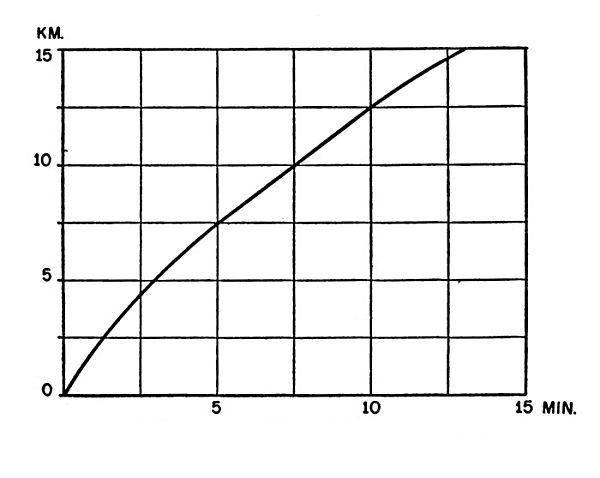
Figure 1. Speed of ascent in the portable low-pressure chamber.
In the writing test shown above [not reproduced] the occurrence of altitude sickness in a sinking experiment for 12 km. [39,400 ft.] altitude is shown in this manner: For example, after 1 minute and 20 seconds at 11 km. [36,100 ft.] altitude, the writing is interrupted because of sudden altitude sickness with unconsciousness, and is resumed after 4½ minutes at an altitude of 8.8 km. [28,870 ft.], with erroneous writing. At 8.3 km. [27,230 ft.] altitude the writing becomes free of errors. This is worthy of special attention because in this case a person has fully recovered mentally at an altitude of 8.3 km. [27,230 ft.], after 3 minutes of the most severe lack of oxygen, while in altitude endurance experiments at this altitude severe altitude sickness sets in after about 3 minutes. Here we are dealing with a process which in any case is very favorable but which is not yet entirely clear and which was already observed in earlier experiments of parachute jumps from great altitudes. Still, it appears from this that a rather long oxygen lack at altitudes up to 13 km. does not present any great strain in
[page 12 of original]
the sense of using the last reserves, but, on the contrary, the human organism seems to react to this loading with a certain increase in resistance to altitude.
In descending experiments from 13 km. [42,700 ft.] altitude the waiting time of 10 seconds was retained, but on the other hand exertion in the form of knee bends was omitted since technical difficulties interfered with this procedure.
The experiments involving suspension could be done only in the large low-pressure chamber, since suspension was impossible in the small low-pressure chamber for reasons of space. Therefore, the ascent to 13 km. [42,700 ft.] altitude was carried out slowly in the main chamber (without explosive decompression) so that when 13 km. [42,700 ft.] was reached a certain oxygen lack existed. With this oxygen lack the knee bends would have presented a great burden which would have falsified too greatly the results of the experiment. The same conditions were also given in further experiments at higher altitudes in the main chamber. For this reason, the 13 km. [42,700 ft.] descending experiments were carried out partly in the sitting position, partly in the sitting position strapped in, and partly suspended. They yielded the following average data:
Table 2
Descending experimentUnconsciousnessRecovery of consciousness
from 13 km. [42,700 ft.]after—after—
Seated (lying during unconsciousness)50″ = 12.4 km.8′ 12″ = 7.2 km.
[40,672 ft.].[23,620 ft.].
Seated strapped in35″ = 12.6 km.10′ 30″ = 5.85 km.
[41,340 ft.].[19,190 ft.].
Suspended20″ = 12.8 km.19′ = 1.6 km.
[41,980 ft.].[5,250 ft.].
[page 13 of original]
Since in unfavorable cases in these experiments, namely while suspended, recovery of consciousness did not occur until 1.6 km. [5,250 ft.] altitude, it had to be concluded that in jumps from altitudes over 13 km. [42,700 ft.], recovery of consciousness would follow only after 0 km., which would mean that in an actual situation the landing would be made in an unconscious condition. This raised the question of a safe means of rescue.
Descending experiments were made in larger numbers from 15 km. altitude, since it became evident that at this altitude the approximate limits for what was possible in emergencies had already been reached or essentially surpassed. After an ascent made as rapidly as possible, using oxygen apparatus with free flow, the mask was removed immediately upon attaining 15 km. [49,200 ft.] altitude and the descent was begun. Since the results of these descending experiments were very typical and especially impressive it is necessary to present one of these experiments in detail. The record of an experiment is represented as follows:
15 km. [49,200 ft.]Lets the mask fall, severe altitude sickness, clonic convulsions.
14.5 km. [47,560 ft.] 30 sec.Opisthotonus.
14.3 km. [46,900 ft.] 45 sec.Arms stretched stiffly forward; sits up like a dog (“Pfoetchenstellung”), legs spread stiffly apart.
13.7 km. [44,950 ft.] 1 min. 20 sec.Suspended in opisthotonus.
13.2 km. [43,310 ft.] 1 min. 50 sec.Agonal convulsive breathing.
12.2 km. [40,030 ft.] 3 min.Dyspnea, hangs limp.
7.2 km. [23,620 ft.] 10 min.Uncoordinated movements with the extremities.
6 km. [19,690 ft.] 12 min.Clonic convulsions, groaning.
5.5 km. [18,040 ft.] 13 min.Yells loudly.
[page 14 of original]
2.9 km. [9,520 ft.] 18 min.Still yelling, convulses arms and legs, head sinks forward.
2-0 km. [6,560-0 ft.] 20-24.5 min.Yells spasmodically, grimaces, bites his tongue.
0 km.Does not respond to speech, gives the impression of someone who is completely out of his mind.
5 min. (after reaching ground level).Reacts for the first time to vocal stimulation.
7 min.Attempts upon command to arise, says in stereotyped manner: “No, please”.
9 min.Stands up on command; severe ataxia; answers to all questions: “Just a minute”. Tries spasmodically to recall his birth date.
10 min.Typical stereotypes of attitude and movement (catatonia); mumbles number to himself.
11 min.Holds his head turned convulsively to the right; tries repeatedly to answer the first question concerning his birth date.
12 min.Questions of the subject: “May I slice something?” (Note: In civilian work he was a delicatessen clerk.) “May I pant, will it be all right if I inhale?” Breathes deeply, then says, “All right, thank you very much.”
15 min.On being ordered to walk, steps forward and says: “All right, thank you very much”.
17 min.Gives his name; says he was born in 1928 (born 1 November 1908). Experimenter asks: “Where?” “Something 1928” “Profession?” “28—1928”.
18 min.“May I inhale?” “Yes.” “I am content with that.”
25 min.Still the question continues: “Pant?”
28 min.Sees nothing; runs against open window sash upon which the sun is shining, so that large lump is formed on his forehead; says: “Excuse me please.” No expression of pain.
[page 15 of original]
30 min.Knows his name and place of birth. Upon being asked for the day’s date: “1 November 1928”. Shivering of the legs; stupor continues; cannot be frightened by the report of a shot. Dark objects are still not discerned; subject bumps against them. Is aware of bright light; knows his profession; spacially disoriented.
37 min.Reacts to pain stimuli.
40 min.Begins to observe differences. Falls continually into his previous speech stereotypes.
50 min.Spacially oriented.
75 min.Still disoriented in time; retrogressive amnesia over 3 days.
24 hoursNormal condition again attained; has no recollection of the experiment itself.
The events of the descending experiments from 15 km., as shown here through this example, repeated themselves in a similar way in all the rest of the experiments. The average data from 20 experiments with 15 different subjects are as follows:
Table 3
Clear
15 km.UnconsciousnessSubconscious awakeningconsciousness
[47,200 ft.]after—movementsat 0 km.
Suspended16″ = 14.7 km.20½′ = 1.8 km.
[48,220 ft.].[5,910 ft.].18′-90′
Lying20″ = 14.6 km.14′ = 5 km.15′-80′
[47,890 ft.].[16,400 ft.]
Unconsciousness after discontinuation of oxygen occurs following a short motor restlessness with severe altitude sickness, whereupon light spasmodic and then very severe tonic convulsions follow in a condition of complete unconsciousness. These tonic convulsions lasting virtually a minute are followed rather suddenly by a phase of complete
[page 16 of original]
flacidity with a drop in breathing rate and transition to convulsive breathing with 3 to 4 breaths per minute until complete cessation of breathing of 45 seconds duration (post-hypoxemic pseudo-death—Lutz). Then follows a period of improvement in breathing, until the first subconsciousness movements announce the gradual recovery of consciousness, during which, nevertheless, the higher mental functions are temporarily entirely absent. Further recovery proceeds slowly during the course of the following ½ to 1½ hours as may be seen from the above case record. During the time of complete unconsciousness, there was defecation and urination in the case of most subjects, increased salivation and, in some cases, vomiting.
Here we obviously have the conditions which Lutz and Wendt in their animal experimentation which is referred to in greater detail later found in falling experimentation with O2 breathing and designated as “post-hypoxemic twilight state” (“Posthypoxaemischen Daemmerzustand”) since we are dealing with a slow recovery of consciousness, especially also in view of the mental behavior of the experimental subjects. The post hypoxemic pseudo-death observed by Wendt and Lutz was not found in any experiments in the form which they had observed. The severe condition described above we could designate as hypoxemic pseudo-death only because it was limited to the period of the most severe O2 lack (on the average, between 13.3 and 12.3 km.).
In spite of the relatively large number of experiments, the actual cause of the severe mental disturbances and bodily failures (paralysis, blindness, etc.) attendant upon post-hypoxemic twilight state remains something of a riddle. It appeared often as though the phenomena of pressure drop sickness had combined with the results of severe oxygen lack. In this connection, the subjective accounts made by the authors in two experiments each were interesting. In the case of Ro. during a half hour stay at 12 km. [39,400 ft.] with oxygen,
[page 17 of original]
only the usual pains attendant with bends occurred. In a further experiment with a stay of 40 minutes duration at an altitude of between 13 [42,650 ft.] and 13.5 km. [44,290 ft.] there developed very gradually a condition of weakness, combined with a peculiar headache, which then led to a considerable slackening of strength in the arms and hands. As a result of this, Ro. could no longer hold the breathing mouthpiece (for special reasons in these experiments, Ro. had to breathe with a mouthpiece and nose clamp) so that it slid out of his mouth. All these phenomena were still clearly observed by Ro. Ra. returned the mouthpiece to Ro. However at this point Ro. failed rather suddenly with paleness, strong cyanosis of the lips and complete unconsciousness. After Ro. had regained clear consciousness through descent and sufficient O2 breathing, he determined the existence in himself of a complete paralysis of the legs, weakness of the arms and severe disturbances of vision. These serious disturbances developed although the time of oxygen lack and unconsciousness had lasted only about 5 seconds. Following descent soon after this to 0 km., the paralysis of the legs continued for about 5 minutes more and the very severe visual disturbances only cleared up after 2 hours. While this episode of Ro.’s occurred in an experiment at a special altitude, the disturbances occurred in Ra. at an altitude of between 12 [39,400 ft.] and 13 km. [42,700 ft.] while he was breathing sufficient oxygen with a mask and continuous flow into the circuit. After 10 minutes stay at this altitude, pains began on the right side with a spastic paralytic condition of the right leg which increased continually as though Ra.’s whole right side were being crushed between two presses. At the same time there were most severe headaches as though the skull were being burst apart. The pains became continually more severe so that at last the discontinuation of the experiment became necessary. The pains disappeared when ground level was reached while the disturbances of the right leg continued about 5 minutes more. Shortly before the
[page 18 of original]
second experiment, Ra. took two tablets of “Antineuralgica” (a coal tar derivative) and two tablets of pervitin. In the course of the experiments there occurred only light pains in the right arm and leg, moderate headaches, but a very severe uncontrollable urge to cough, actually less severe difficulties than in the foregoing experiment, although this one was made at 1,000 m. [3,280 ft.] higher.
Ro. experienced disturbances which in quality resembled the severe disturbances in the 15 km. [49,200 ft.] sinking experiment, although the degree of oxygen lack in this experiment was negligible in comparison to the 15 km. [49,200 ft.] experiment, so that the idea of a combination of pressure drop phenomena with the phenomena of oxygen lack is definitely suggested.
2. Descending experiments with O2 breathing
Since obviously the utmost limits of these experiments had been reached with the descending experiments from 15 km. [49,200 ft.] without oxygen breathing, descending experiments with oxygen breathing were conducted from greater heights.
In the experiments, the following experimental procedure was chosen: ascent to 8 km. [26,300 ft.], remaining there 5 to 10 minutes with oxygen breathing; then turning on the oxygen blower explosive decompression to a predetermined altitude; 10 seconds waiting time (experiments from 17 [55,800 ft.] and 18 km. [59,100 ft.], altitude without waiting time) and descent at sinking speed. In order to imitate the perpendicular body position as occurs in suspension in a parachute harness, the experimental subjects had to stand during the experiments since suspension was not possible in the small decompression chamber.
In the descending experiments from 15 km. [49,200 ft.] altitude there was no altitude sickness or only a slight temporary kind. In the further descending experiments, the following results were obtained (Table 4):
[page 19 of original]
Table 4.—Descending experiments with oxygen breathing
UnconsciousnessFrom—Recovery of
after—consciousness after—
23 sec. = 15.75 km.16 km. [52,500 ft.]2 min. 35 sec. = 13.55 km.
[51,660 ft.][44,460 ft.]
10 sec. = 16.8 km.17 km. [55,800 ft.]3 min. 50 sec. = 13 km.
[55,120 ft.][42,700 ft.]
7 sec. = 17.9 km.18 km. [59,100 ft.]10 min. 35 sec. = 8.5 km.
[58,740 ft.][27,890 ft.]
Thus it was shown that unconsciousness developed relatively early in spite of oxygen breathing, while the following convulsive stage ran its course in a much less severe form than in the experiments without oxygen breathing. Primarily spasmodic convulsions with only occasionally light tonic convulsions developed. Breathing paralysis never set in and upon recovery of consciousness the experimental subjects were again completely in control of themselves. The markedly quick development of unconsciousness was caused by the fact that the subjects were standing during the experiments (to be considered in comparison with the corresponding times in the falling experiments with oxygen breathing). Descending experiments from still greater altitudes were not undertaken, since in practice there is no need to escape from such altitudes with open parachute and thus to expose oneself to the danger of severe freezing.
3. Falling experiments without oxygen
Since the results of falling experiments from 12 km. altitude were known from earlier experimentation and indeed descending experiments up to 15 km. [49,200 ft.] without oxygen had been conducted within the scope of this work, falling experiments were begun at an altitude of 14 km. [45,900 ft.], in order not to increase unnecessarily the number of experiments.
[page 20 of original]
The ascent preceded by explosive decompression from 8 to 14 and 15 km. altitude, in which the ascent to 8 km. was made with oxygen and the explosive decompression with continuous flow, followed after 5 to 10 minutes waiting time. After the removal of the oxygen mask directly in connection with the explosive decompression, five knee bends were made during the waiting period of 10 seconds, then descent at free fall speed. During the explosive decompression the oxygen supply was interrupted from the outside. The results of these experiments were (Table 5):
Table 5.—Falling experiments without O2 breathing
UnconsciousnessFrom—Recovery of consciousness
after—after—
30 sec. = 13.2 km.14 km.65 sec. = 9.7 km.
[43,310 ft.][45,900 ft.][31,830 ft.]
28 sec. = 14.3 km.15 km.96 sec. = 7.6 km.
[46,900 ft.][49,200 ft.][24,940 ft.]
The further experiments up to 20 km. [65,600 ft.] altitude were made with the same procedure as those up to 15 km. [49,200 ft.], although without knee bends during the waiting period of 10 seconds, since unconsciousness would have occurred too soon as a result of the knee bends and the experimenters had become convinced that rescue from these altitudes would have to be brought about by abandonment of the aircraft without bodily exertion (catapult seat).
(Table 5—Continued)
UnconsciousnessFrom—Recovery of consciousness
after—after—
32 sec. = 14.7 km.16 km.118 sec. = 6.6 km.
[48,220 ft.][52,500 ft.][21,650 ft.]
27 sec. = 15.9 km.17 km.126 sec. = 6.3 km.
[52,150 ft.][55,800 ft.][20,660 ft.]
[page 21 of original]
UnconsciousnessFrom—Recovery of consciousness
after—after—
23 sec. = 17 km.18 km.156 sec. = 4.6 km.
[55,800 ft.][59,100 ft.][15,090 ft.]
20 sec. = 18.5 km.19 km.173 sec. = 3.7 km.
[60,700 ft.][62,300 ft.][12,140 ft.]
17 sec. = 19.75 km.20 km.178 sec. = 3.2 km.
[61,520 ft.][65,600 ft.][10,500 ft.]
15 sec. = 20.875 km.21 km.1 min., 10 sec. after
[68,490 ft.][68,900 ft.]reaching 0 m.
From 21 km. [68,900 ft.] altitude only one experiment was made in this series, just as in the falling experiments, with oxygen breathing since the pumps achieved the evacuation of the main chamber necessary for a pressure drop to 21 km. altitude only after hours of overloading and the fact that the mercury barometer used in these experiments had its limit of measurement at this altitude. The two experiments were considered only as an orientation on the behavior of the human organism at this altitude at which the ebullition point of the blood had already been far surpassed. A systematic working over of these altitudes must be carried on with perfected measuring instruments and a two-stage pump aggregate in a new experimental series.
The result of this falling experiment from 21 km. altitude was made unreliable through the fact that the subject experienced a paralysis of breathing from 11 to 7 km., through which his recovery was doubtless greatly delayed. However, no permanent damage occurred.
4. Falling experiments with oxygen breathing
Falling experiments with oxygen breathing were undertaken only in small numbers for crude orientation for the following reasons: The altitude
[page 22 of original]
was limited by the available equipment to a maximum of 21 km. [68,900 ft.], but indeed from this altitude falling experiments without oxygen breathing had already been profitably carried out. It is self-evident that oxygen breathing during parachute jumps from such extreme altitudes greatly increases in any case the chances of success of the jump and, therefore, is to be unconditionally demanded. For that reason it devolved upon the experimenters only to determine to what degree the results of the experiments are influenced by oxygen breathing, especially in regard to the recovery of consciousness, which, of course, followed without oxygen only at relatively low altitudes. As was to be expected, these experiments showed clearly the favorable effect of oxygen breathing. (Table 6):
Table 6.—Falling experiments with oxygen breathing
UnconsciousnessFrom—Recovery of consciousness
after—after—
21 sec. = 19.5 km.20 km.87 sec. = 10.55 km.
[63,980 ft.][65,600 ft.][34,620 ft.]
15 sec. = 20.875 km.21 km.60 sec. = 12.9 km.
[68,490 ft.][68,900 ft.][42,320 ft.]
The astonishing value of 60 seconds = 12.9 km. [42,320 ft.] for the recovery of consciousness in the 21 km. [68,900 ft.] experiment is explained on the basis that this value was obtained from a single experiment with one subject, who had shown himself in numerous other experiments to be especially resistant to altitude. On the other hand the 20 km. [65,600 ft.] values are the average of a series of experiments.
IV. Discussion of the Results
The descending experiments without oxygen show that the limit for a safe escape with an open parachute lies approximately at a jumping altitude of 13 km. [42,700 ft.], since in a jump from 13 km. [42,700 ft.] recovery of consciousness occurred only at an altitude of 1.6 km. [5,250 ft.], and so one must already consider the possibilities of landing in an unconscious condition with all the attendant dangers. This still does not take into account the heavy demands made on the body by the cold and the consequent risk. The great effect of the body position during the experiment makes it obvious how severe is the effect of every additional demand. While, for example, in the 13 km. [42,700 ft.], experiment upon a seated subject, recovery of consciousness took place after 8 minutes 12 seconds at an altitude of 7.2 km. [23,620 ft.], the suspended subjects recovered consciousness only after 19 minutes at 1.6 km. [5,250 ft.] altitude. Correspondingly also, unconsciousness occurred in the suspended subjects much more rapidly than in those who were seated. The same observation was made in the 15 km. [49,200 ft.] experiments, and indeed those who went through the experiment lying down could already state name and birth date immediately upon reaching ground level although they were paralyzed, while those who had been suspended did not respond at all to speech within this time. Except for one mentally very sluggish subject, the return of normal condition occurred much earlier to those who were lying down, namely within 15 minutes. The descending experiments extended to 18 km. [59,100 ft.] altitude with oxygen breathing showed that, except for the danger of cold, escape with an open parachute is possible from these altitudes even though, practically, no need exists for it.
Before we go into a discussion on the falling experiments it seems essential for us to cite the work of Lutz and Wendt on “Animal Experiments on Parachute Jumping from High-Pressure Cabins.” Unfortunately this work was not available to us during these experiments so that we could not build upon the valuable results contained in it and derived from numerous animal experiments, or upon the experience of the authors. Although both authors approach with necessary scepticism the problem of “reaching decisions through animal experimentation upon questions in
[page 24 of original]
which, in the final analysis, the behavior of the human being in identical situations is of exclusive interest,” they could, and had to depend upon the previously proved experience that no fundamental qualitative differences in the manner of reaction to oxygen lack is to be expected between animals and human beings although there are considerable quantitative differences which, in this case, mean temporal differences. However, the results of our experiments show that to some extent quantitative as well as qualitative differences are present to the extent that the above animal experiments must lead to great fallacies which are significant to future developments. This appears especially in a comparison of results obtained with animals with the collective results of human experimentation upon escape from high altitudes through free fall without oxygen. On the basis of animal experiments, Lutz and Wendt were forced to the conclusion that if oxygen is breathed before the pressure drop “jumps from 14 km. [45,900 ft.] altitude can theoretically be survived—at any rate, that is the maximum altitude * * *,” whereas we were able to carry out human experiments up to 21 km. [68,900 ft.] altitude without any harm whatever. In all experiments at 20 km. [65,600 ft.] the subjects recovered clear consciousness with spontaneous control above 3 km. [9,800 ft.], and so within a sufficient altitude for actual parachute jumping. As instructed before the experiment, the subject rang a cowbell hung up in the chamber by pulling a handle (the equivalent of pulling the rip cord) without a new order to do so, so that under actual conditions they would certainly have also pulled the rip cord at the right time.