JOURNEY ALONG THE BANKS OF THE NILE. (continued 3)
Reading edition
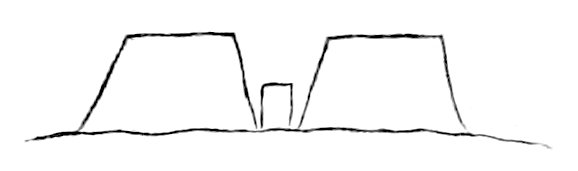
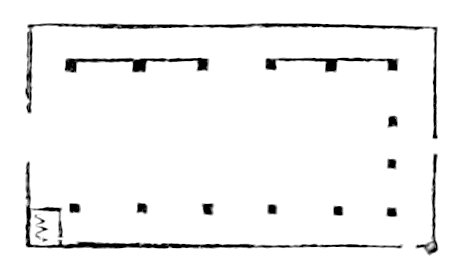
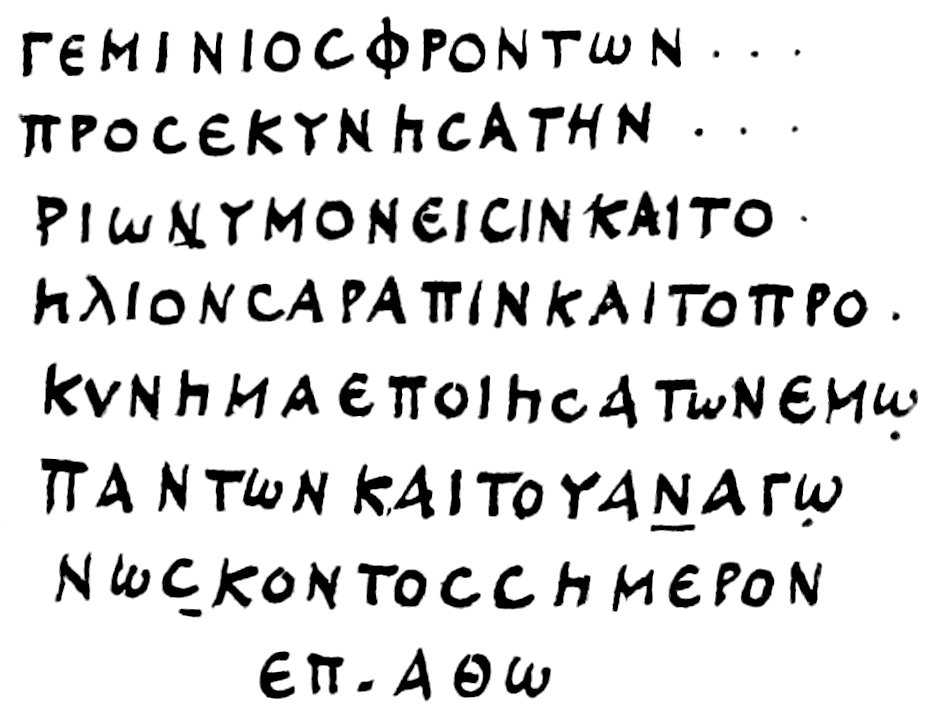
March 26th. In one hour and a half we came to Wady Medyk, which stands on both sides of the river. The Senna-mekke grows here in large quantities. The inhabitants of Medyk who retired to Esne after the passage of the Mamelouks, had not yet returned. Many of them died there of the small-pox.[53] In two hours and a half, we passed opposite to Wady Nasrellab. In three hours and a half, we came to El Nowabat, a ruined village, opposite to Thyale on the east bank. The shore is here very narrow, and the western hills are low, and sandy. At five hours and a half, we saw, upon the hills, the ruins of several Greek churches. Seven hours, El Meharraka, on both sides of the Nile. Upon the rocky hill, over the river, stands a small ruined city, the houses of which had been built partly of small stones, and partly of mud; they are of Arab construction. Eight hours and a half brought us to the northern extremity of Wady Meharraka, where the plain widens considerably, being broader than in any other part north of Derr; though it is cultivated at present only near the river. Here is the ruin of a temple, consisting of a portico of fourteen massy columns, with capitals of different sizes and forms, according to the ancient Egyptian taste in architecture. They are encompassed by a wall, which being joined to the entablature of the colonnade, forms a covered portico all round. The southern wall has fallen down, apparently from some sudden and violent concussion, as the stones are lying on the ground, in layers, as when placed in the wall; a proof that they must have fallen all at once. I observed some hieroglyphics sculptured upon single stones lying about in this part. The columns on the south side are joined to each other, except the two centre ones, by a low wall, half their height, in the same manner as those in the temple of the hawk-headed Osiris at Philæ. There is one large entrance, and two smaller ones, and a stair-case leading up to the top. Several paintings of Greek saints are upon the walls; but no hieroglyphics, nor sculptures, of any kind, are visible, not even the globe, common to all the Egyptian temples; neither are there any sculptures on the columns. The walls of this ruin are very neatly and well constructed. There are several Greek inscriptions upon them, in red ink; but I could only read the following clearly:
I also copied the following inscription, which is upon the wall; but I am unacquainted with the characters, and have no opportunity at present of ascertaining what they are:

There are besides, several inscriptions in the ancient popular Egyptian character, such as is seen on the manuscripts of papyrus.
The whole portico stands upon a terrace of massy stones, eight feet high towards the river; on this side is the great gate, but, as there are no steps up to it, it is probable that it was used only during the period of inundation, when vessels might moor close under it; at present, the water does not reach the temple at the time of the inundation. The portico is fifteen paces in length, and nine in breadth: there is nothing about it which denotes it to be of Egyptian origin, except the palm-leaves sculptured on the capitals of the columns; it possesses, however, an imposing simplicity, and belongs, I think, to the last epoch of Egyptian architecture. Close to the walls of the portico are the remains of another building, which had probably been a temple similar to the above, and not a part of the same structure, for I could not perceive any corresponding parts in the two buildings. A wall only remains, and the foundations of the principal building; on the former are several sculptures, one of which represents Isis sitting under a tree, and receiving offerings; it is in high relief, unlike any thing of the kind I have seen in Egyptian temples, and more resembling Grecian sculpture. This circumstance, and the Grecian-like simplicity of the portico, lead me to conjecture that both edifices were the work of the Ptolemies, who constructed temples to the Egyptian deities in several parts of Egypt, in which they imitated the architecture consecrated to their worship. I saw no hieroglyphics on the wall.
There are large mounds of rubbish, and fragments of pottery, in this place. Several travellers have expressed their astonishment at the immense heaps of rubbish consisting chiefly of pottery which are met with on the sites of ancient Egyptian towns; and, if we are to attribute their formation to the accumulation of the fragments of earthen vessels used by the inhabitants for domestic purposes, they are indeed truly surprising; but I ascribe their origin to another cause. In Upper Egypt, the walls of the peasants houses are very frequently constructed in part of jars placed one over the other, and cemented together with mud; in walls of inclosures, or in such as require only a slight roof, the upper part is very generally formed of the same materials; in the parapets also of the flat-roofed houses a double or triple row of red pots, one over the other, usually runs round the terrace, to conceal the females of the family when walking upon it. Pots are preferred to brick, because the walls formed of them are lighter, more quickly built, and have a much neater appearance. They possess, likewise, another advantage, which is, that they cannot be pierced at night by robbers, without occasioning noise, by the pots falling down, and thus awakening the inmates of the dwelling, while bricks can be removed silently, one by one, as is often done, by nightly depredators, who break into the houses in this manner. If then we suppose that pot walls were in common use by the ancient inhabitants, the large mounds of broken pottery may be satisfactorily accounted for. As for stone, it seems to have been as little used for the private habitations of the ancient Egyptians, as it is at the present day.
Near Wady Meharraka the island of Derar commences. At eight hours and three quarters is the village of Korty. About two hundred yards from the river stands a ruined temple; it is the smallest I have seen, and may truly be called an Egyptian temple in miniature, being only ten paces in length; the cella and adytum are yet standing; the pronaos seems to be buried under the sand. Of the sculptures, a few figures, and the winged globe over the gates, remain; but the whole temple is in a very mutilated state. At the end of nine hours and a half, we stopped at the house of a Shikh, on the southern extremity of Wady Dakke (وادي دقّه).
March 27th. After an hour’s march, we came to the ruin of a temple, one of the finest remains of antiquity that is met with in the valley of the Nile. In the front stands a large propylon, thirty paces in length, in the centre of which is a gate similar to that of the propylon at Edfou; before this gate lies a fragment of the body of a sphinx. There are neither hieroglyphics nor figures of any kind upon the outer wall of the propylon; in both the wings are staircases leading up to the top, exactly similar in their construction to those in the propylon at Philæ; the two wings communicate with each other by a terrace over the gate: there are numerous small chambers one above the other from the bottom to the top, in both wings. On the wall which fronts the gate of the temple, and on the sides of the gateway, are sculptures and hieroglyphics.
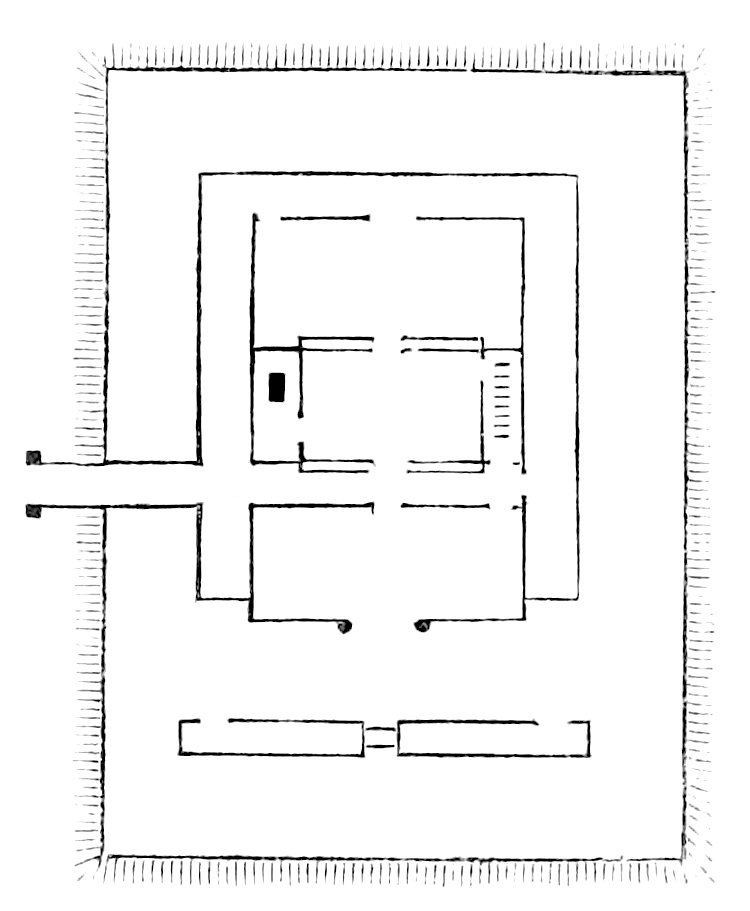
Sixteen paces distant from the propylon is the entrance to the pronaos, between two columns, united to the wall, which is half their height; they have the same capitals as the columns of the open temple at Philæ, which are seen no where else in Egypt, and which are represented in the travels of Denon, who says that they approach the Grecian style by the elegance of their forms. Upon the columns of the temple of Dakke are various figures, among which, I particularly noticed one of a harper. The pronaos is ten paces in length, and seven in breadth: its roof is formed of enormous blocks of stone, at least fifteen feet long. A door leads from the pronaos into a narrow apartment, only four paces in breadth,[54] which communicates with the adytum, by another door richly ornamented. On one side of the adytum is a small dark chamber, in which is a deep sepulchre, with a large lion sculptured in the wall immediately over it; and, on the other side, behind the wall, is a passage, communicating with the pronaos, and containing a staircase which leads up to the top of the building. The adytum is about six paces square; beyond it is another apartment, somewhat larger, communicating, by a small gate, with a narrow passage inclosed between the wall of the temple, and a thick stone wall which inclosed the building on three sides, but of which the foundations only are now remaining. A large block of granite lying on the floor of this apartment, is one of the few instances wherein granite is found in the temples of Nubia. Along the bottom of the walls are represented lotus plants in flower, to which offerings are presented.
There are no historical sculptures in any part of this temple, but the exterior walls, as well as all the apartments within, are thickly covered with figures representing religious subjects: on the former some of the figures are four feet in height; those on the latter are all beautifully executed, and equal, to the best specimens of the kind which travellers admire at Hermonthis and Philæ; indeed, I prefer the figures in the chamber behind the adytum, to any that are in the temples at those places: in no temple of Egypt have I seen such correctness of design or gracefulness of outline: some of the figures might have adorned a Grecian building. On each side of the narrow apartment behind the pronaos is a small gate, opening into the passage above mentioned; opposite to one of these gates is an avenue leading down to the river, and on the outside of the other are two long inscriptions; one of which is in hieroglyphics, and the other, immediately below it, and, apparently, by the same hand, in the common Egyptian character, like that on the rolls of papyrus. I conjecture the latter to be a translation of the former, and if so, it may prove to be of some interest. The propylon and the whole of the temple seem to have been encompassed by a brick inclosure, parts of which still remain, and traces of the rest may be discerned under the mounds of sand. The Greek Christians had appropriated this temple to their worship, several paintings of saints yet remaining on the walls. In the gateway, and on the wall of the propylon, are numerous Greek and Egyptian inscriptions, by curious visitors; of the former I copied the following:
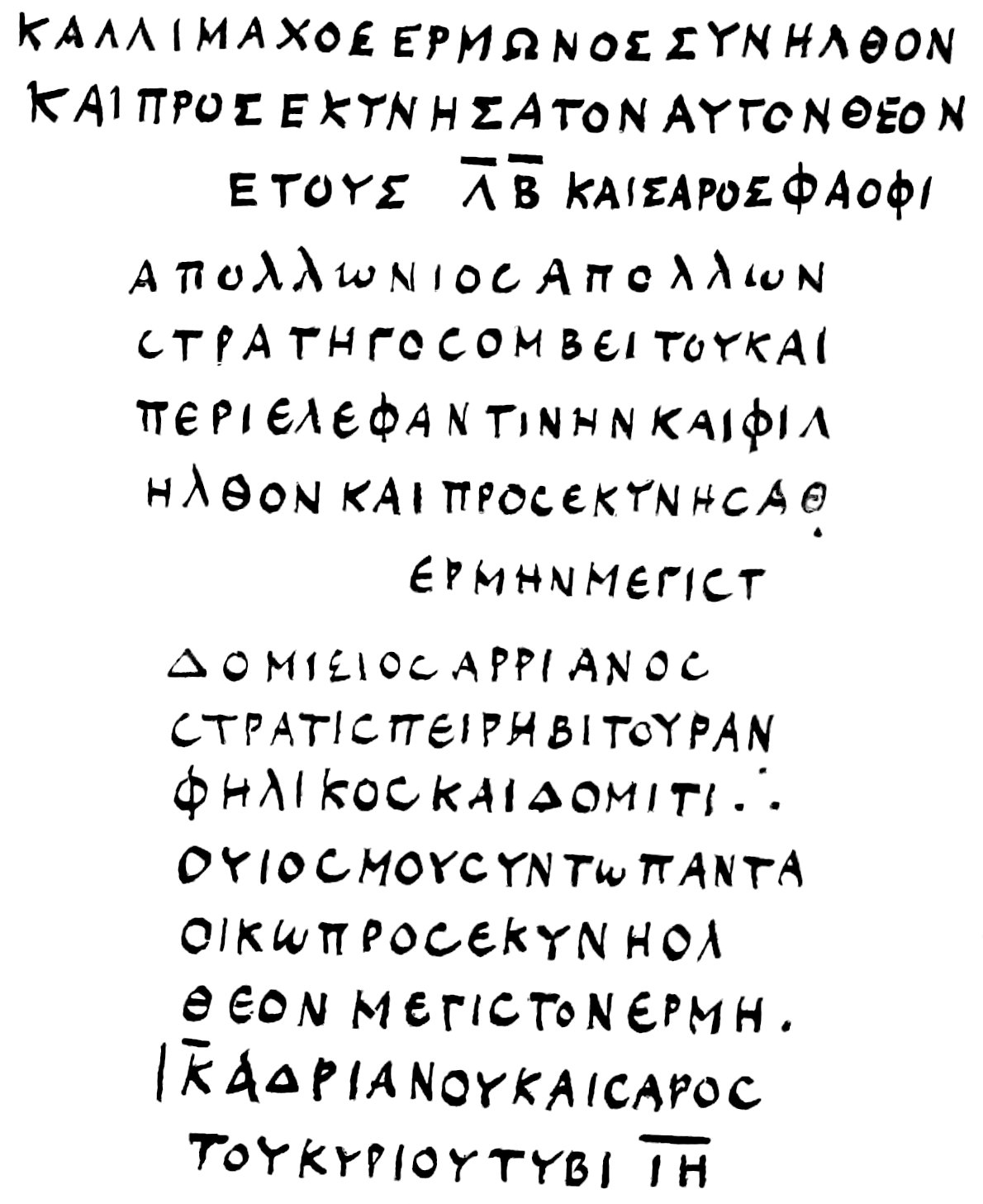
I conjecture the temple of Dakke to have been built after the plan of Philæ; although upon a smaller scale, its execution appeared to me to be still more careful than that of Philæ: and it is extremely interesting from the high preservation of all its details. Dakke is probably the ancient Pselcis, and the small chapel at Kobban, on the eastern side of the river, Contra-Pselcis. The temple at Korty has retained its ancient name, Corti; and the portico of Meharraka must therefore stand upon the site of Hierosycaminon: the temples of Seboua, Hassaya, and Ebsambal, with their cities, are consequently unknown to the itinerary of Antoninus.
To the north of the temple are the remains of an Arab town, where I saw some tombstones with Cufic inscriptions similar to those among the sepulchres of Assouan. The plain is covered with large heaps of rubbish. From Dakke to Benbaan, a village opposite Darau, twenty-five miles north of Assouan, there is a route of three easy days across the western mountain; there is a spring in the way, called Kurkur (قُرقُر), with date trees growing near it.
At the end of three hours travelling from our setting out in the morning, we reached Wady Kostamne, situated on both sides of the river. In five hours, Wady Gyrshe; at the northern extremity of this village is a temple, cut out of the rock, which presents a fine contrast to its neighbour at Dakke, having been executed in the infancy of architectural art, when the artist produced an imposing effect not by the gracefulness, but the magnitude of his figures. This temple stands upon the top of a hill, the broad declivity of which is covered with rubbish and some fragments of colossal statues. In front, is a portico, consisting of five square columns on each side, cut out of the rock, with a row of circular columns in front, constructed of several blocks, and which originally supported an entablature. Of these columns only two remain. Before each of the square side columns stands a colossal statue of sand-stone, about eighteen feet high, holding a flail in one hand, the other hanging down; they all represent male figures, with the narrow beard under the chin, and the high sphinx cap upon the head: their shoulders are covered with hieroglyphic inscriptions. On both sides of the portico is an open alley, hewn in the rock, from whence, perhaps, the materials of the front colonnade were taken. The pronaos, which is entered from the portico by a large gate, is eighteen paces square, and contains two rows, three in each, of immense columns, or rather props, (for they are without capitals,) measuring five feet by seven in the plan. In front of each of these columns is a colossal figure, more than twenty feet in height, representing the usual juvenile character, with the corn-measure or bonnet on the head, the hands crossed upon the breast, and holding the flail and crosier. Although these statues are rudely executed, the outlines of their bodies being less correct even than those of the statues at Seboua, and their legs mere round blocks, yet they have a striking effect in this comparatively small apartment; indeed, accustomed as I had been to the grandeur of Egyptian temples, of which I had examined so many incomparable specimens, I was nevertheless struck with admiration on entering this gloomy pronaos, and beholding these immense figures standing in silence before me. They immediately recalled to my memory the drawings I had seen of the caves near Surat, and other Indian excavated temples, which, in many respects, bear a strong resemblance to those of Nubia. On the side walls of the pronaos are four recesses, or niches, in each of which are three statues of the natural size, representing the different symbolical male and female figures which are seen on the walls of the temples of Egypt. The centre figures are generally clothed in a long dress, while the others are naked. All these figures, as well as the colossi, are covered with a thick coat of stucco, and had once been painted; they must then have had a splendid appearance. A door leads from the pronaos into the cella; in the centre of the cella are two massy pillars, and on either side a small apartment, which was probably a place of sepulture; in the floor of each are high stone benches, which may have served for supporting mummies, or perhaps as tables for embalming the bodies deposited in the temple; the floors have been broken up in search of treasure, and are now covered with rubbish. Behind the cella, and communicating with it by a door, is the adytum, on each side of which is a small chamber, also opening into the cella, exactly like those in the temple at Derr. In the posterior wall of the adytum are four statues, above the human size, seated; and in the centre of the floor is a large cubical stone, the use of which I cannot determine; its sides are quite smooth, and without any kind of sculpture. It may, perhaps, have served as the pedestal of a statue; or is it an inverted sarcophagus? Of the sculptures and hieroglyphics with which the walls of this temple were covered, very little is now discernible, the sand-stone being of a very friable nature, and soon falling to decay; added to this, the walls are quite black with smoke from the fires kindled by the neighbouring shepherds, who often pass the night in the temple with their cattle; enough, however, still remains to shew that the sculptures are rudely executed. The colossal figures are in good preservation, particularly those of the pronaos; those in the portico have been mutilated.
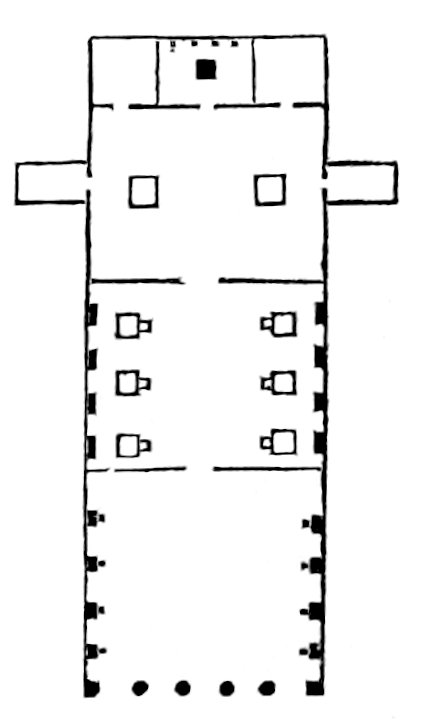
While inspecting the interior apartments of this temple with a lighted candle, for they receive no light but what is communicated through the outer gate, I was joined in the adytum by the Shikh of Gyrshe, who had hurried after me, on seeing us take the road to the building. He begged me to give him half the treasure I had found, or at least, a handful; but he was obliged to be contented with a piece of wax candle. He shewed me the place where the Englishmen (Messrs. Legh and Smelt), who had been here before me, found, as he asserted, an immense treasure, with which they loaded their vessel; one of the peasants had seen the gold! Similar tales are often spread abroad; every peasant swears to their truth; and singular as it may appear, all the inhabitants of Egypt, notwithstanding the long residence of the French in that country, and the continual passage of travellers, are still persuaded that the ancient temples are visited for no other purpose than to search for treasure.
I am uncertain whether Gyrshe, or the more northern Dandour, represents the ancient Tutzis. The spot upon which the temple just described stands, is called by the natives Djorn Hosseyn (جُرن حسين).
From Gyrshe, northward, the shore is very narrow; we rode over the rocky mountain, which is close to the river, and, at the end of six hours from Dakke, alighted at Merye (مريه), where we slept. There are only a few families in the western Merye; but the western Gyrshe is well inhabited.
March 28th. After a ride of one hour and a half, along the narrow shore, we came to Wady Gharby Dandour, or the western Dandour (غربي دندور), where I was surprised to meet with another ruin of a temple, as the shore is so narrow, that no city of any consequence could have been situated here. The shore, from the foot of the rocky hills to the banks of the river, is only thirty paces in breadth.
Before this temple stands a small propylon, or gateway, with a high projecting cornice, resembling that at Tintyra. Behind the propylon is the pronaos, with two columns in front, similar to those of the temple of Dakke. The pronaos is seven paces in length. Next follows the cella, and beyond that, the adytum; there are a few sculptures on the walls of the adytum; on those of the pronaos I observed lotus plants in flower, as at Dakke, with persons making offerings to them. On the exterior wall of the temple are figures in the style of those at Tintyra; I particularly remarked a fine figure of Horus, with a finger on his lip. This temple is, in general, extremely well built, and the sculptures are of the best times; though I conceive it to be posterior in date to the temple at Philæ, from a visible decline both in the architecture and sculpture. In front of the propylon, towards the river, is a stone inclosure, thirty-five paces in length, by fifteen in breadth; the stones with which it is constructed are in their rough state on the outside, but smoothly cut on the interior. The wall fronting the river is fifteen feet in height, and describes a slight curve. The floor of this inclosure, now covered with stones and ruins, is considerably below the level on which the propylon and the temple are built. Had it been a place for sacred processions, or for sepulture? I have seen nothing like it in any Egyptian temple; the stones and rubbish in its area, render it probable that it had originally a roof. In the rock, just behind the temple, a grotto is excavated.
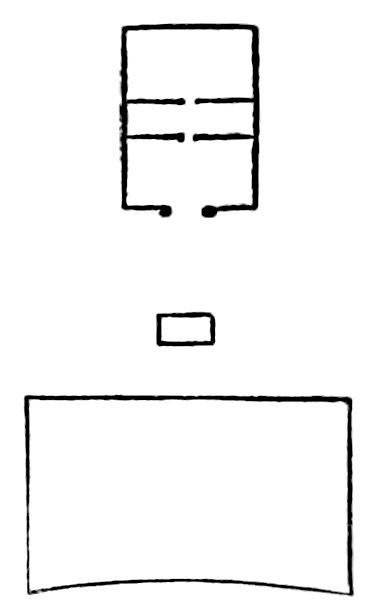
In two hours, we came to Merowau (مرواو); the shore is no where more than fifty yards in breadth; but is well cultivated. Merowau belongs to Wady Gharby Dandour. Four hours and a half, Abou Hor. In the rock, a little to the south of this place, a reservoir has been cut, with an outlet, through which the water descends into a lower and smaller basin; it is difficult to conceive for what purpose they were intended, being so near the river. There are many jetties or piers in the river, which prove how anxious the ancient inhabitants had been to preserve and increase the portion of cultivable soil in this part. Here are some rocky islands. In the sides of the western hills adjoining Merowau and Abou Hor, are several small quarries, and the foundations of ancient stone buildings. Like their ancestors, the Nubians of the present day build their huts of stone, upon the declivity of the hills, wherever the shore is very narrow, that they may not encroach upon the cultivable ground. Where the plain is broad their dwellings stand in the midst of it, and are formed of mud only. Date trees, and the various species of acacia, grow all along the shore; the latter produces, in the spring, a bitter fruit, in shape like that of the Karoub, or locust tree; this the Arabs gather and sell at Assouan to the merchants of Egypt, who use it in tanning leather; it is called Garad (قَرَظ). Large quantities of it, of a superior quality, grow in the neighbourhood of Siout, and have rendered the tanneries of that place highly celebrated.
After a slow ride of six hours we reached Kalabshe, the largest village on the west bank of the river between Assouan and Derr. At the foot of the hill, in the midst of the village, and reaching down to the river, is the ruin of a very large temple. The front of the portico consists of a large propylon of great beauty and simplicity, with a gate in the centre, by which the portico is entered; there had been a colonnade along the side wall of the latter, but one column only now remains, three feet three inches in diameter; the fragments of the others are lying in the area. On each side of the portico, and communicating with it, is a narrow, dark passage, with a door opening into the area which surrounds the temple, opposite a large gateway formed in the wall of the outer or general inclosure. The front of the pronaos is decorated with four beautiful columns, and two pilasters; the columns are united by a wall rising to half their height, similar to what is seen at Meharraka, Dakke, Dandour, Kardassy, and Debot, a mode of construction belonging apparently to the times in which the temples at Tintyra and Philæ were built. The roof of the pronaos has fallen in, and now covers the floor; of the columns which supported it, two only remain. There are no sculptures of any kind, either on the propylon, or in the pronaos, except on the back wall of the latter, or rather on the front wall of the cella, where the two-headed Briareus, under the hand of the victor, and protected by Osiris, is the most conspicuous.
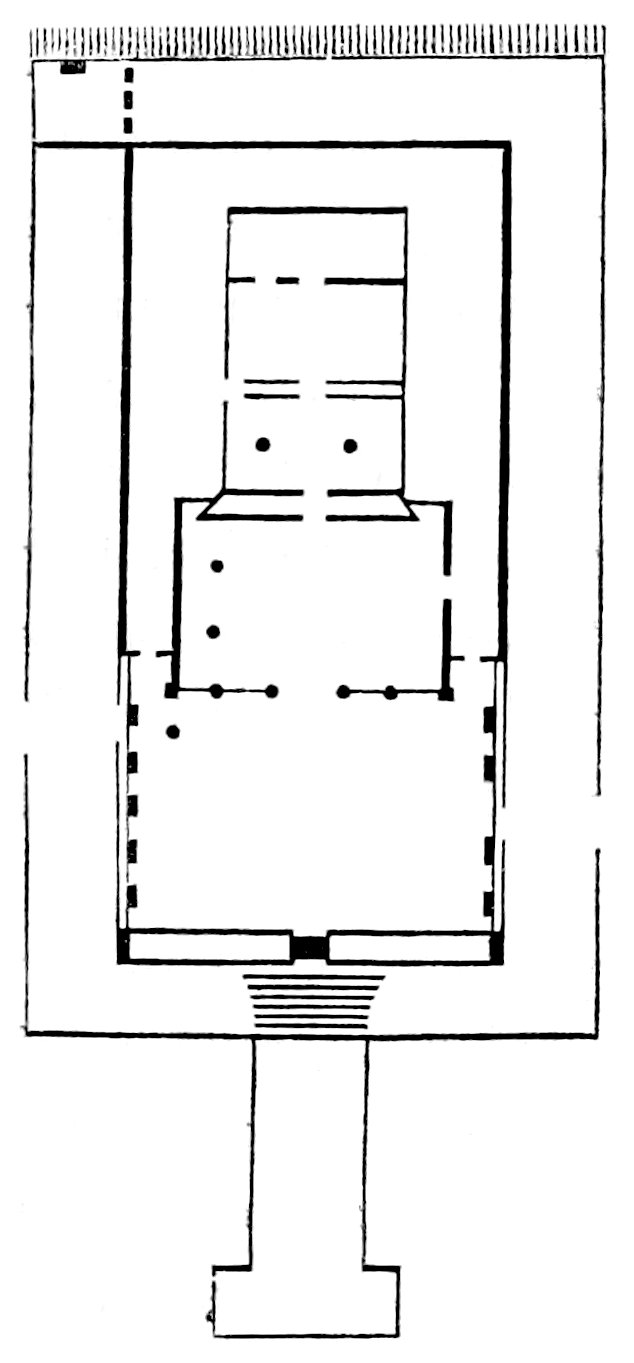
The cella is fifteen paces in length, by nine in breadth, and projects several feet into the pronaos, thus forming, as it were, an insulated chamber in the midst of the temple, a mode of construction which I observed at Dakke, and afterwards at Philæ: two low columns stand within the cella. In the adytum are the remains of columns, lying on the ground, the only instance of the kind I have seen in any Egyptian temple: in its walls are some low dark recesses, and windows or loop-holes like those in the temple at Tintyra: its roof is formed of single blocks of stone reaching the whole breadth, and upwards of three feet in thickness. There is a chamber behind the adytum, as at Dakke, and communicating with it by two doors; the roof has fallen in, but it may be seen that this chamber was lower than the adytum, and had a chamber over it. In the walls of this chamber are several cells, or recesses, each of which forms two small apartments, one behind the other, divided by a narrow entrance, and just sufficiently large to hold one person; they are closed in front by a stone, which may be removed at pleasure; and were, perhaps, prisons for refractory priests, or places of probation for those who aspired to the priesthood; the persons who were placed in them may be literally said to have been shut up in the wall, as there is not the slightest appearance of any recess being there, when the stones which close the outer entrance are in their places. I observed a hollow stone in the interior of one of them, but I am not certain whether it was a sarcophagus or not.
The walls of the cella and adytum are covered with painted figures, the colours of which still remain tolerably perfect, more so than those at Philæ, owing to a coat of plaister having been laid upon the walls by the Greeks, to receive the paintings of their saints; but which has for the most part fallen off; the colours generally used are red, blue, green, and black. The hawk-headed Osiris, with a staff in one hand, is painted of a light green colour, some females, holding the lotus in their hands, are quite black; the variously coloured striped robes of the Osiris with a tiara on his head have a most gaudy appearance; the hair, in general, of all the figures is painted black, though in some it is blue; the spaces between the different figures are covered with hieroglyphics, painted red. On the lower part of the side walls of the adytum are single human figures, each with an animal by its side, generally an ox, a gazell, or a goose. The exterior walls of the temple are covered with sculptures of colossal figures, like those at Tintyra and Edfou; though not so large: they are rudely executed, and by no means correspond with the beauty of the sculpture on the interior of the chambers. Heads of sphinxes project from the walls, as at Tintyra; through which perhaps the priests delivered their oracles.
The walls of the portico are prolonged the whole length of the temple, and by means of a transverse wall in the rear of the chamber behind the adytum, form a high inclosure all round; at about twenty feet beyond which, is the general inclosure to the whole building; this is carried to the foot of the hill, which has been cut down perpendicularly, so as to serve as the end wall. In the south-west corner of the area thus formed around the temple, is a small quadrangle formed on one side by three columns, and on the adjacent interior side by a short wall built across the area; here a grotto, or sepulchre, has been hewn in the perpendicular rock, similar to what I noticed behind the temple at Dandour; it consists of a single chamber, with the winged globe over its entrance, but without any other sculpture. A flight of steps leads from the propylon down to a paved terrace which extends to the foundations of an oblong building, standing just over the river, where are some fragments of columns. Visitors by water, during the inundations, might have stepped from their vessel into this building.
The temple of Kalabshe deserves to rank, with that of Dakke, amongst the most precious remains of Egyptian antiquity. I have given merely a rapid description of it, but, I hope, sufficient to shew, that it deserves to be investigated closely in all its details. In its site, it is to be compared with the temples of Tintyra and Edfou; and it belongs to the best period of Egyptian architecture, though it bears traces, in several of its parts, of a less careful and more hurried execution, than that of the two temples just mentioned. The walls are uncommonly well built: the existing columns have the Philæ capitals, but are less nicely worked.
The Greeks had formed this temple into a church; and several of the paintings of their saints are still remaining upon the walls. In the portico I copied the following inscription:
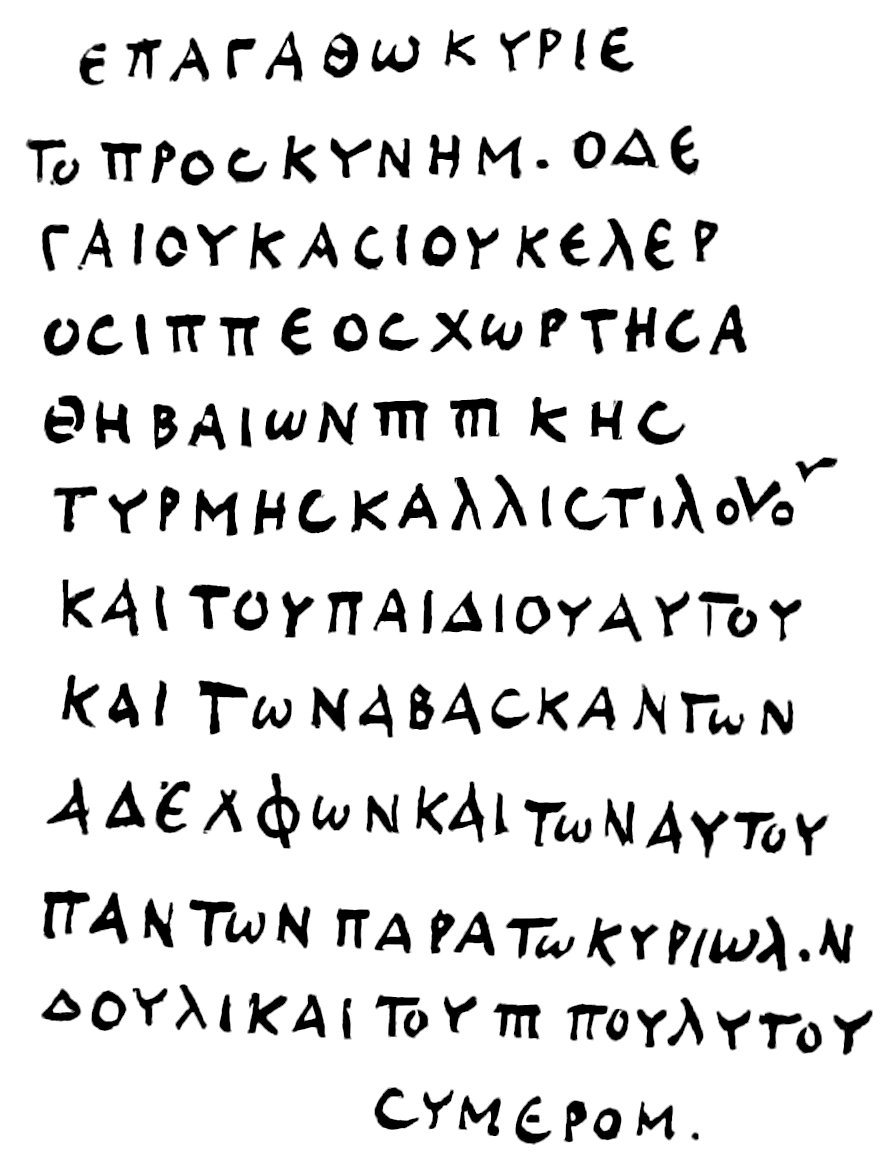
About a quarter of an hour distant from this temple, on its north-west side, is a small temple cut out of the rock; the road to it lies through the remains of the ancient town, a heap of stones and rubbish, covering a space along the shore of about a mile and a quarter. In front of the temple is an open area (also hewn out of the rock), in which is the entrance to the cella; the cella is thirteen paces in length, by six in breadth; its roof is supported by two polygonal pillars; in the walls are two small recesses, with three statues in each. Adjoining the cella is the adytum, a small room, eight feet square. The sculptures and hieroglyphics on the walls are of the same rude execution as those at Derr. The group of Briareus is again repeated on both sides of the entrance.[55] The walls of the open area in front of the temple are covered with sculptures representing very interesting historical subjects: on one side is a battle; the victor in a chariot, drawn by two fiery steeds, like those at Karnac, is driving his vanquished enemies before him, who are flying towards a country thickly covered with fruit trees of various shapes and sizes, some of which have large round leaves, and clusters of fruits hanging from them, with apes sporting amongst the branches. Behind the victor’s car are two smaller ones, of the same form, each drawn by two horses at full speed; and bearing a female, standing upright, with a charioteer in front holding the reins. In another compartment, on the same wall, is a triumphal procession passing before Osiris, seated: naked men come first, bearing upon their shoulders large blocks of wood, probably ebony;[56] one of them leads a wild mountain goat, a second carries an ostrich, a third holds in one hand a large shield, and in the other a gazell, and a fourth is bringing an ape into the royal presence; next comes a man bearing a block of precious wood, like the former, and driving two large buffaloes before him; the train is closed by a tall cameleopard, with its leader, followed by two prisoners, who are naked, with the exception of the skin of a wild beast tied round their waists. In another compartment, just above the latter, is a large lion, with his keeper; an animal of the size of a large goat, with long straight horns, and a pair of buffaloes. In front of these two compartments, and before the king, lie heaps of quivers and arrows, elephants teeth, skins and furs of wild beasts, and a row of calabashes, supposed, perhaps, to contain precious ointments or perfumes. On the wall opposite to this, is a compartment, in which the king is represented seated, while bearded prisoners, with their hands bound, are brought before him; amongst them a train of female slaves is distinguished, dressed in long robes, with a high head-dress of this shape, over which the cloke is thrown. In another compartment, close to this, a prisoner is immolated: and farther on, is a small battle-piece, in which the assault and capture of a tower are represented; a man, with an axe in his hand, is endeavouring to make a breach in the walls, from which some of the garrison are precipitated, while others are brought in prisoners. All these subjects are in bas-relief, and extremely well executed; they are the best specimens of historical sculpture that I have seen in the valley of the Nile, even more spirited than those at Thebes; the figures of the animals, in particular, are faithfully and correctly delineated. On considering the subjects they represent, they will be found very important, because they record a historical fact, no where else alluded to in any Egyptian structure. The hero of Egypt has here carried his arms into a country inhabited by lions, cameleopards, apes, and elephants: none of which animals are found in Nubia or Dóngola; the elephant and cameleopard inhabit the banks of the Nile towards Sennaar, the forests on the frontiers of Abyssinia, and the banks of the Astaboras and Astapus, from whence also the most beautiful and highest esteemed female slaves are now imported into Egypt: all the above-described trophies of victory, therefore, indicate, that the battles must have been fought in the countries to the south of the civilized country of the ancient Meroe; for the skin-clad prisoners denote a savage people. The battle-pieces of Thebes, at Luxor and Karnac, seem to allude to less distant scenes of warfare. May not the castles, surrounded with water, which are there represented, relate to the fortified islands in the Batn el Hadjar, where we still meet with so many brick ruins? The head-dress of the fugitives, which is close-cut hair, and not a cap, as has been erroneously described, and the short, narrow beard, under the chin, are perfectly characteristic of the southern Noubas, whose colour is not quite black, but of that deep copper tinge, which a painter, unskilled in mixing colours, would rather represent by dark red than black. It may readily be imagined, that the inhabitants of the sterile districts of Nubia, and the Batn el Hadjar, would look with an envious eye upon the riches of Egypt, and would frequently excite the resentment of the monarchs of Thebes, by making inroads from their strong-holds, upon the adjacent provinces of Egypt.
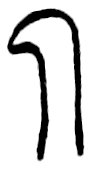
The small temple I have just described, is called by the natives Dar el Waly. Travellers proceeding by water are not likely to see it, without enquiring for it. In the hill close by, are the quarries whence the stones were hewn for the erection of the town and temples of Kalabshe. This, no doubt, was the ancient Talmis, and some mounds of rubbish on the east side, indicate the remains of Contra-Talmis. Talmis must have acquired its opulence by commerce, and not by agriculture, as the shore, in its neighbourhood, is no where more than forty yards in breadth. In ancient times, as at the present day, the traffic in dates probably supplied the Nubians with their chief means of subsistence, and gave life to the whole valley of the Nile from Wady Halfa to Philæ. Considerable profits might also be derived from the passage of vessels laden with goods from Meroe; whose traders perhaps, landed their merchandize at Sukkot, and transported it from thence upon camels, across the Batn el Hadjar. It is probable, however, that the principal part of the trade of that ancient city with Egypt was carried on over-land, by the present route of the Sennaar caravans; for had it been by water, I think that some remains of commercial towns would be met with at both extremities of the Batn el Hadjar, where the vessels must have been unloaded and reloaded, as navigation is impracticable throughout that rocky district. When we consider the cataracts which occur in the country of the Sheygya, south of Dóngola, at Koke, in Mahass, at Wady Dal, and in the Batn el Hadjar, and that the distance from Goos to Derr, through Dóngola, following the course of the river, is twenty-five days journeys, while it is only eight by the route of the slave caravans, across the mountains, it seems probable that the ancient caravans of the southern countries descended into the valley of the Nile opposite Ebsambal, where the navigation down the river may have recommenced.[57]
We halted for the night, a little way beyond Dar el Waly, at Khortum (خُرطم), a village opposite the island of Darmout, and belonging to Kalabshe, having rode about six hours and a half in the course of the day. There was a shower of rain in the night, by which both myself and my guide caught a severe cold. The heat, which, in my journey up the river, was very moderate during the day, began now to be great, and the sudden change occasioned by the rain from almost tropical heat to winter cold, affected the health of us both.
March 29th. We ascended the mountain which interrupts the road along the shore. On its summit I saw fragments of very small Egyptian columns and capitals, lying near some Arab structures. I observed no ancient edifice near them. The rock on the southern side of the mountain is granite and feldspath; on the northern side, it is sand-stone. At the end of two hours we again reached the banks of the river, at the village of Tafa, close to the spot where the rock projects perpendicularly into the water. Here are the ruins of two small temples: one of them consists of an apartment ten paces square, the roof and one side of which are in ruins; two columns are yet standing in it, two feet in diameter, with the palm-leaf capitals. Adjoining this apartment was the adytum, the foundations of which only remain. The winged globe is over the entrance into the adytum; but I saw no other sculptures, nor any hieroglyphics. The Greeks, as usual, have painted their saints upon the walls; and a Greek almanac, and several badly written inscriptions, are also visible upon them. The other temple is a small square apartment, quite entire, with six pillars in it, similar, in size and shape, to those just mentioned. The winged globe over the gates is the only sculpture of any kind about it. Around these two buildings are numerous remains of the private dwellings of the ancient inhabitants, consisting of thick and strongly built walls of stone; this material, from its greater proximity, having been frequently used in Nubia instead of bricks.
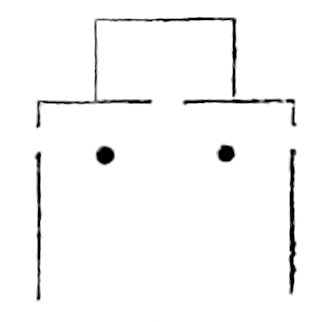
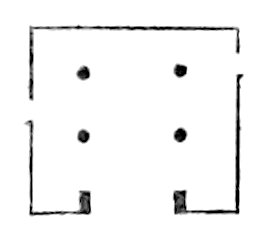
The peasants of Tafa (no doubt the ancient Taphis) relate that they are the descendants of the few Christian inhabitants of the city, who embraced the Mahommedan faith, when the country was conquered by the followers of the Prophet; the greater part of their brethren having either fled, or been put to death on that event taking place. They are still called Oulad el Nusara (اولاد النصَارَي); or the Christian progeny. On the east bank are some ancient remains, on the site of Contra Taphis.
From Tafa northwards, as far as Dehmyt, the shore bears the name of Wady el Mebarakat (وادي المباركات).The Arabs Mebarakat are a tribe of Kenous. The uncultivated fields here are overgrown with Senna-mekke. At three hours we passed Hindau; four hours, Kardassy, where, close to the water, is a large stone inclosure, about one hundred and thirty paces in length, by one hundred in breadth; in its area are heaps of ruined dwellings built of stone. The entrance into this inclosure is by a large gateway, similar in shape to that in the front of the temple near Merowau.[58] The walls are about ten feet in thickness, and are faced on either side with hewn stones, having the centre filled up by small ones thrown in confusedly, without cement; these walls were certainly intended for defence; it was, perhaps, a station of the Romans, against the Blemmyes. I searched in vain for remains of hieroglyphics or sculptures. About a mile farther down the river, upon the top of a hill, are the ruins of a temple, resembling in its construction that of the hawk-headed Osiris at Philæ. There remains no part but the portico; it consisted originally of eight columns, of which six are still standing; these are partly united with each other by a wall, rising to half their height, and inclosing the whole of them. Of the stones which formed the roof, one block only remains; it is at least sixteen feet in length, and reaches the whole breadth of the temple. Over four of the columns the architraves still remain; the capitals of the two others are formed by four faces of Isis, with the same head-dress as at Tintyra, but with countenances more juvenile and less grave; the ears are very peculiar, and of the annexed form. There is a sculptured figure on one of the columns only; the others bear traces of having been covered with hieroglyphics.
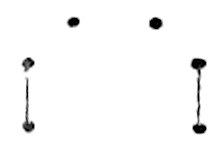
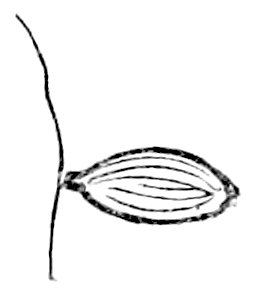
To the S. W. of the hill on which the above temple stands, and close to the river, are some very extensive quarries of sandstone, from whence the materials were probably taken for the erection of the sandstone temples at Philæ and Parembole, where the rocks are entirely of granite. In walking through the quarries, I came to a spot where a niche is cut in the levelled side of the rock; within it is a stone bench, which may have been the pedestal of a statue; small winged globes are sculptured above it. This niche seems to have been used by the ancient Egyptians, and subsequently both by the Pagan and Christian Greeks, as a shrine, at which they offered up their prayers to the deity for the preservation of their own health and that of their friends. Several heads of Greek saints are sculptured in the rock on both sides of the niche; and I also observed whole length figures, and small heads of sphinxes only three or four inches in length, representations, perhaps, of similar images of gold or silver offered to the Pagan deities. The adjoining rock is covered with a great number of Egyptian and Greek inscriptions. Of the latter, which are much more numerous than the Egyptian, I selected the following, as being the most interesting, from their purport.
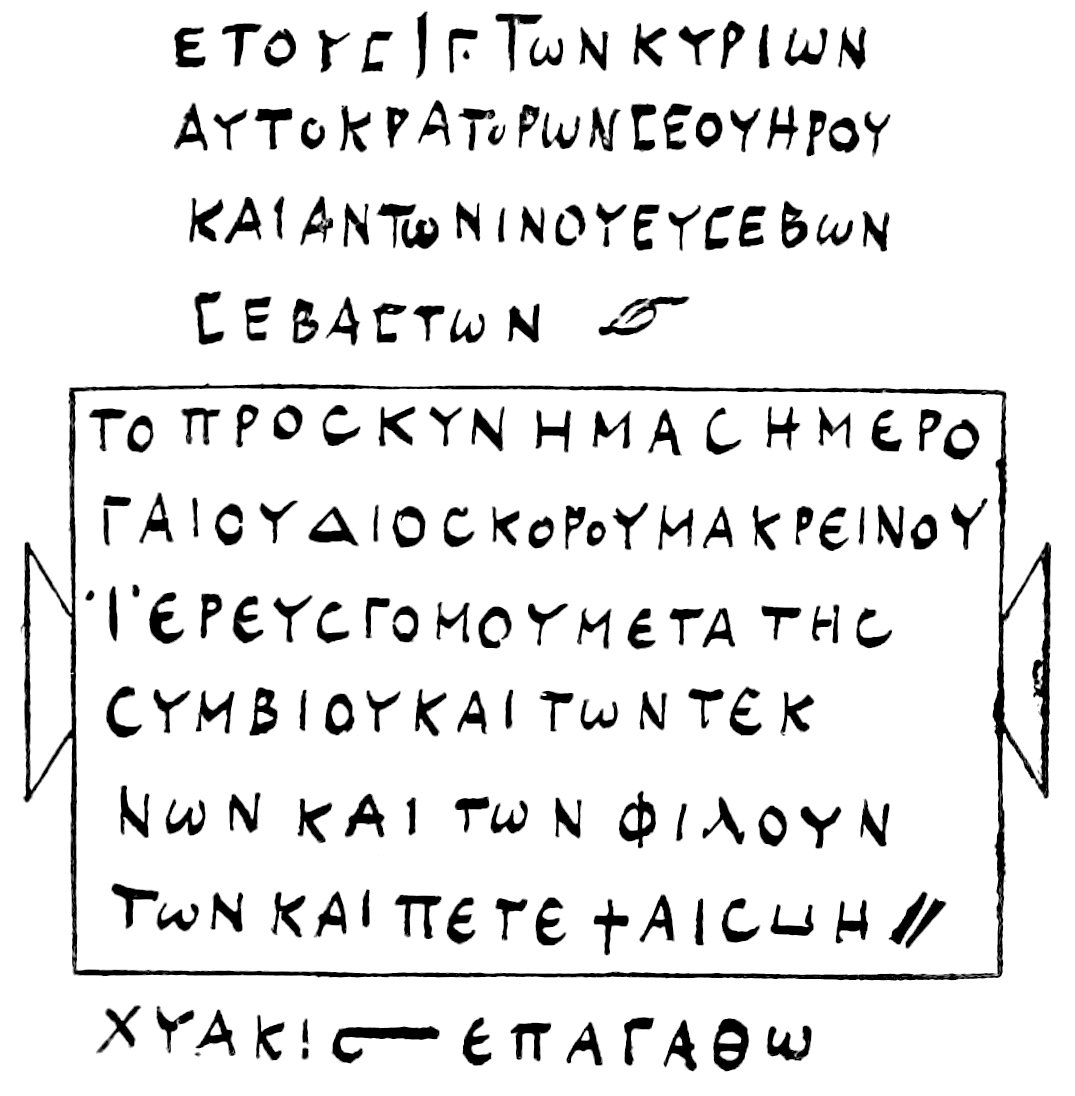
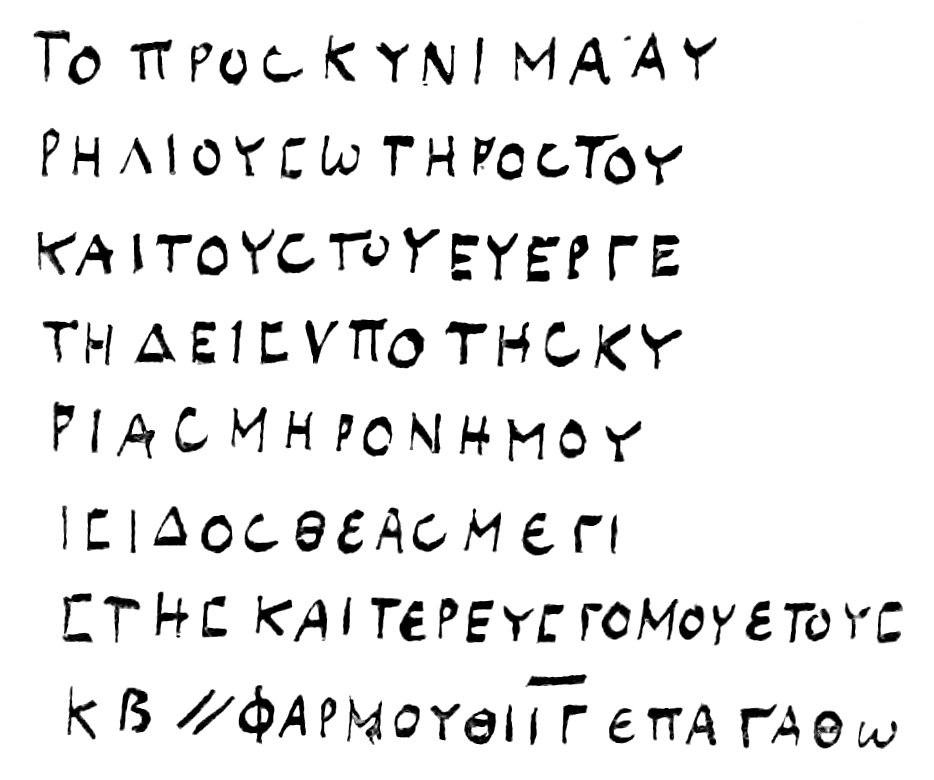
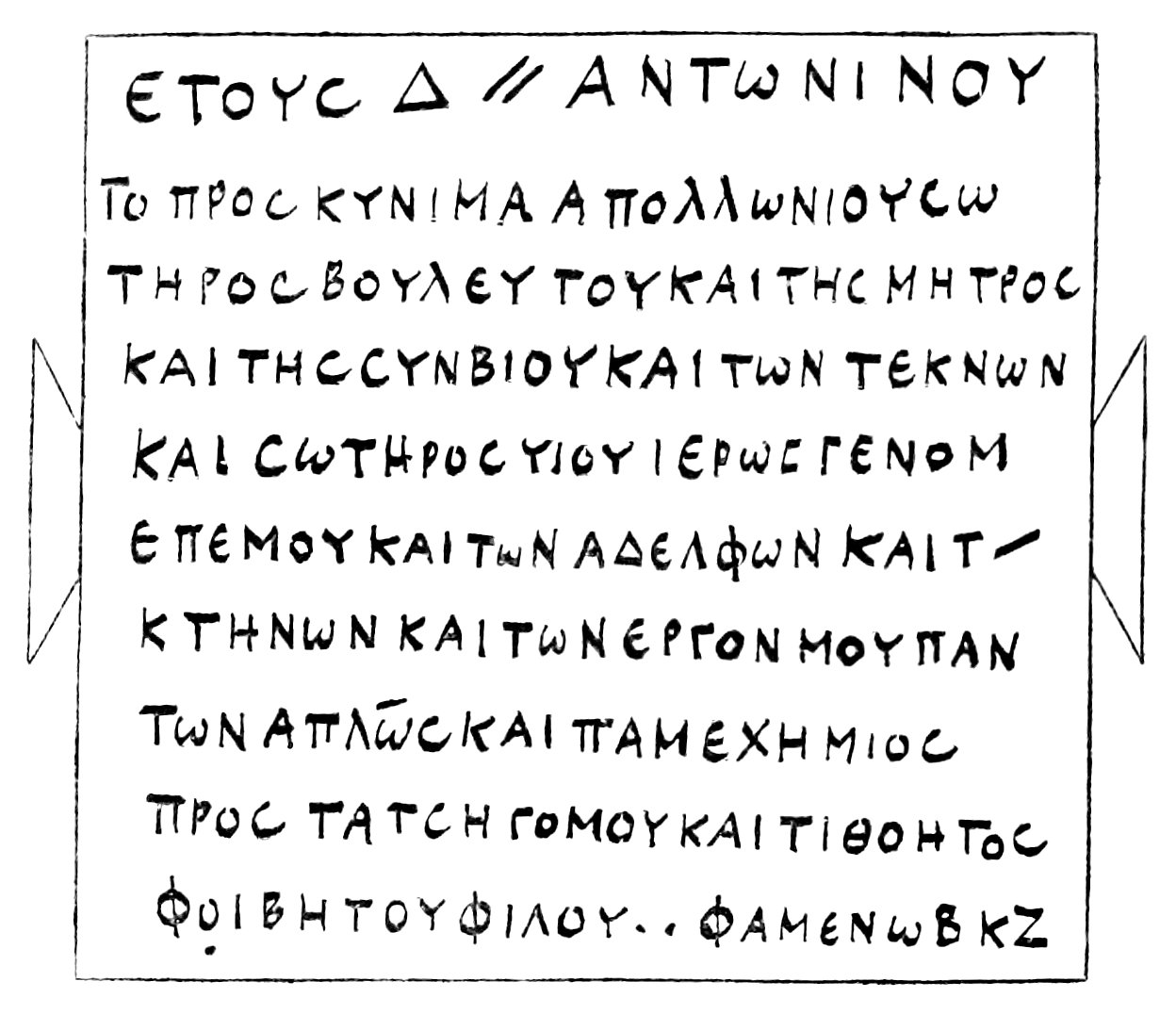
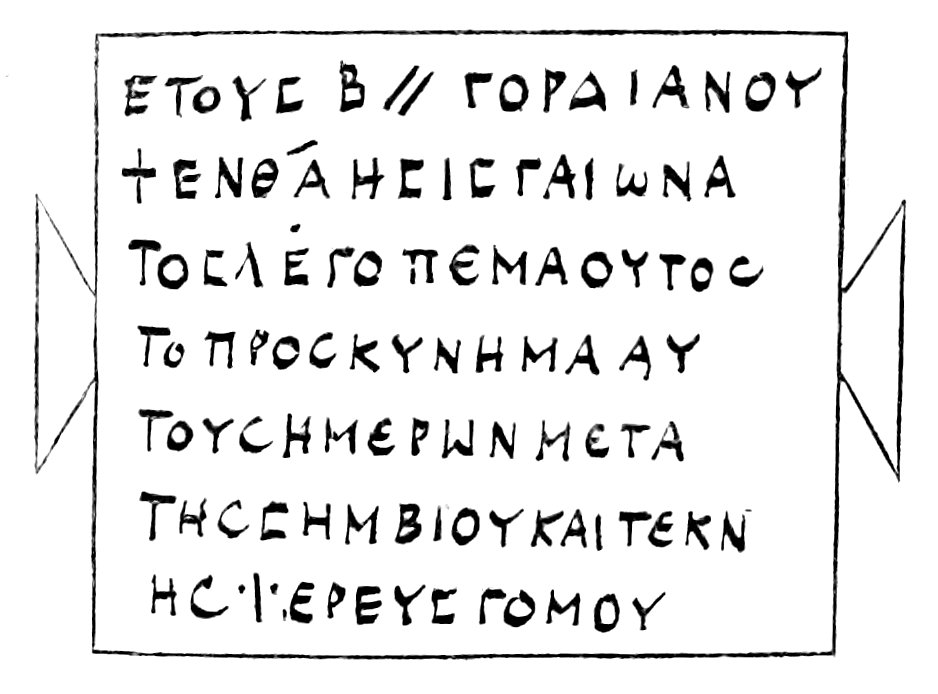
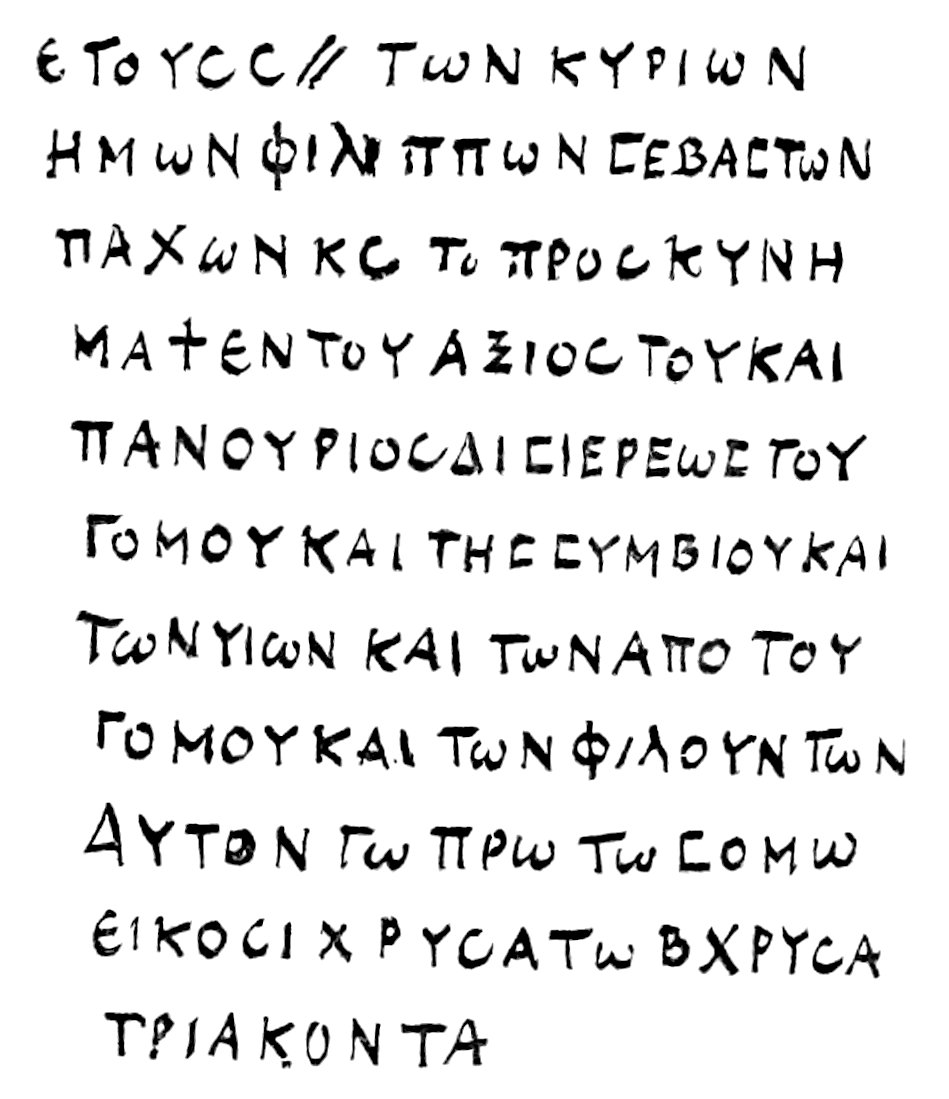
There is also a Latin inscription, of which I could only make out the two words, FABIO . CVM. There are small niches in several other parts of the rocks of this quarry, with the winged globe over them; but I saw no inscriptions upon any, except that abovementioned.
In four hours and a half, we passed Wady Hadyd; opposite to which, on the east side, is Wady Sahdab (وادي سهداب). On a rocky hill stands an insulated column, the only remains of a small temple, whose ruins are spread about; several small sepulchres are excavated in the declivity of the hill, and heaps of rubbish indicate an ancient city. Five hours, Djara (جعره). The shore from Tafa to this place is well cultivated. Five hours and a half, Dehmyt, where the Wady Mebarakat terminates. The eastern Dehmyt is better cultivated than the western. Here are the foundations of a small square edifice built of massy stones; with a thick mud wall running parallel to the hills, and the course of the stream, for about fifty yards; it was intended, perhaps, as a barrier against the sands of the desert. In six hours and a half we came to Merys (مريس); opposite to it, on the east side, is the village Syale. There is an island in the river, with several brick ruins on it. The rock is granite, and continues so all the way to Assouan. The road from Syale lies over a sandy plain, with insulated hills of granite, which separate it from the river. On the east side, to the north of Syale, is the village of Abdoun. At seven hours and a half is Debot (دبوت), consisting of several villages lying on both sides of the river. At seven hours and three quarters is a hill, overhanging the shore, and forming part of Wady Debot, on which are the ruins of an Arab town; the houses are of brick, and seem to have been extensive, and well built. In the river are several large granite piers. At the end of eight hours, we halted for the night at a small hamlet. The Mamelouks remained in this neighbourhood several months, till the advance of Ibrahim Beg compelled them to retire: during that period, fodder became so scarce, that they were obliged to feed their camels upon the palm-leaves: they stripped all the date trees of their leaves in this vicinity, and as far south also as Wady Halfa, so that the Nubians were a whole year without any produce from the trees.
March 30th. After a ride of half an hour, over a well cultivated plain, we came to the temple of Debot, which stands upon the site of the ancient Parembole.
The temple is approached through three high, insulated gateways, with projecting cornices, like that near Merowau. The distance between the first and second gateway is twenty paces; ten paces between the second and third; and fifteen paces between the third and the pronaos of the temple. In front of the pronaos are four columns, with a wall half their height. Along the centre of three of the interior walls of the pronaos is a compartment of sculpture, the other parts of the walls being quite bare; a peculiarity I saw no where else. Adjoining the pronaos to the left is a square chamber, the walls of which project beyond the side of the temple, and destroy its symmetry. There are no sculptures of any kind on the walls of this apartment.
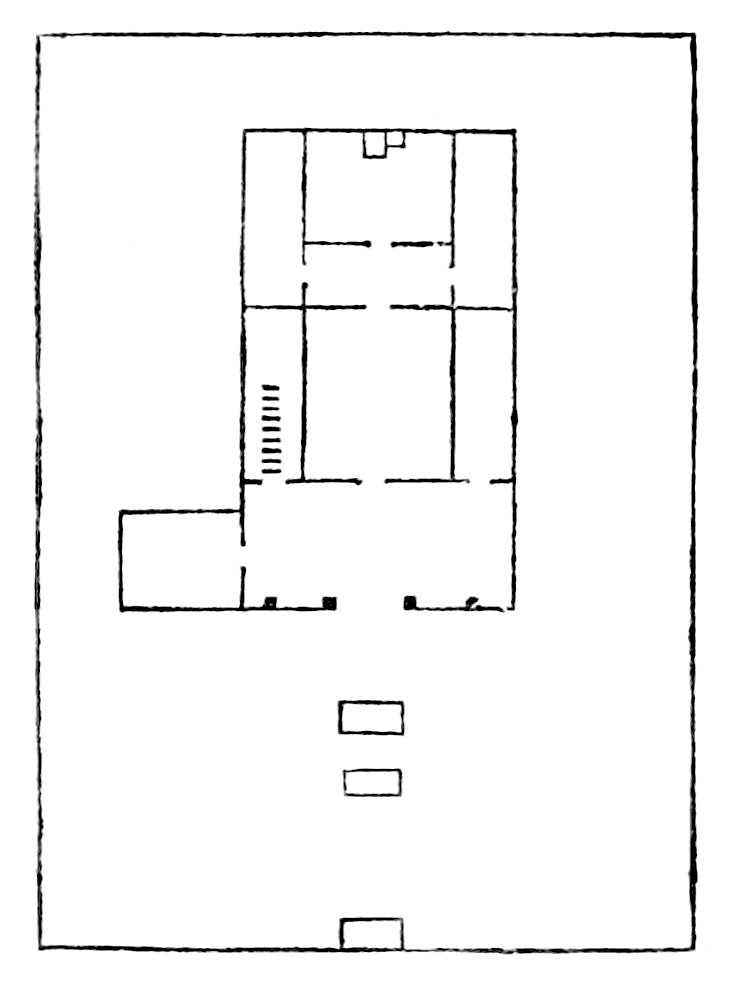
The cella is an oblong square; its walls are covered with hieroglyphics and sculptures: on one side of it is a dark apartment, opening into the pronaos, and on the other side is a staircase leading up to the top of the temple: below the staircase are several small rooms. The adytum, which is entered through a narrow chamber, three paces in breadth, is ten feet in length by nine in breadth; in its posterior wall are two fine monolith temples of granite, the largest of which is eight feet in height by three in breadth; the winged globe is sculptured over each of them. They appear to have been receptacles for some small sacred animals, perhaps beetles. The places are yet visible where turned the hinges of the door, which shut up whatever was contained within. These monolith temples are similar to those at Philæ; but differ in their construction from that at Gaou (Antæopolis), which is much larger:[59] nor are there any hieroglyphics in the interior, whereas that at Gaou is covered on the inside with inscriptions and sculptures, some of the latter representing scarabæi. On each side of the adytum at Debot is a small room, communicating with the narrow chamber behind the cella; the walls of both are without sculptures, but contain some secret recesses, similar to those at Kalabshe, and which were destined, probably, for the same purposes. One of these rooms had an upper story, like the one at Kalabshe, but it is now ruined; the other apartments of the temple are in good preservation. The sculptures on the inside walls are much defaced; but some faint remains of their colouring are yet visible. There are no sculptures whatever on the exterior walls. A wall, now in ruins, had encompassed the whole of this temple, including the three gateways in front of it. I observed in the broken-up floor of the pronaos deep stone foundations, upon which the temple is built. I should not be surprised if subterraneous rooms were discovered here, as well as in other Egyptian temples: they would be quite in the spirit of the Egyptian hierarchy.
The temple of Debot appeared to me to have been built at an epoch when the arts had begun to decline in Egypt. Its columns and sculptures are imitations of those at Philæ, but far inferior in beauty, to their models: the small temple at Merowau seemed to be about the same age, though of more careful execution. We thus find in Nubia specimens of all the different æras of Egyptian architecture, the history of which indeed can only be traced in Nubia; for all the remaining temples in Egypt (that of Gorne, perhaps, excepted) appear to have been erected in an age when the science of architecture had nearly attained to perfection. If I were to class the Nubian temples according to the probable order of their erection, it would be as follows: 1, Ebsambal. 2, Gyrshe. 3, Derr. 4, Samne. 5, Ballyane. 6, Hassaya. 7, Seboua. 8, Aamara, and Kalabshe. 9, Dakke, and Meharraka. 10, Kardassy. 11, Merowau. 12, Debot. 13, Korty. 14, Tafa.
At a short distance from the temple of Parembole, we ascended the sandy mountain; and after a ride of one hour, again reached the river at Wady Shamet el Wah: here is a small ferry-boat, by means of which, as I wished to visit the island of Philæ, I determined to cross over to the eastern shore; for there is no road fit for camels along the western bank, the common route from Debot lying directly over the mountain to the shore opposite Assouan. Having no inflated goat-skins to tie to the necks of the camels, we fastened cords round their bodies, and towed them across, along side the boat; but as the boat was very leaky, and had only two boys for rowers, we were more than a quarter of an hour in crossing the river, and one of the camels reached the shore in an almost lifeless state. There are only six ferry-boats between Philæ and Derr; these are at Debot, Kalabshe, Dehmyt, Gyrshe, Dakke, and Seboua. There is none south of Derr, as far as the frontiers of Dóngola. The owners of the boats take from every peasant a handful of whatever provision he happens to carry with him, or an armful of straw, &c.; women pass free. We landed at Sak el Djemel, the same place where I had slept on the night of my departure from Assouan; and from thence we recrossed the mountain towards Philæ by the same road as before.
It was about mid-day when I visited this celebrated island. The inhabitants of Birbe, a small village on the eastern shore, keep a boat for the conveyance of passengers to it, the ruins being often visited, and few of the Egyptian merchants, whom business brings to Assouan, returning without seeing the Cataract and Philæ. As there is no regular government in this part of the country, the people of Birbe have taken advantage of the necessity which the stranger is under of employing their boat, and make exorbitant demands upon him. On approaching the ferry, he is immediately beset by half a dozen of them, calling themselves the owners of the boat, and requiring their fare, while an equal number, representing themselves as the lords of the island, demand a compensation for permission to visit it. When I stepped into the boat, the people, who took me for a messenger from the Pasha on my way to Derr, crowded about me, and asked six piastres for carrying me over, and allowing me to see the island. This was certainly a trifling sum, for permission to examine the most precious remains of antiquity in Egypt; but I was determined, for once, not to be imposed upon by these extortioners, and offered them one piastre, to be divided amongst them;[60] on their refusing to take it, I gave my clothes to my guide, and putting my pocket-book into my turban, swam over to the island. I had scarcely landed when the boat came after me; and they were very glad afterwards to take the piastre for carrying me back again. On a second visit, two days afterwards, I found them more reasonable in their demands. I have been told of instances where they extorted upwards of twenty piastres from strangers, by threatening to return with the boat to the main land, and leave them upon the island. Birbe is under the government of the Nubian chiefs. The territory of Assouan, belonging to Egypt, commences to the north of Philæ.
I forbear making any remarks upon Philæ, or the adjoining island of Bidge, as the great French work on Egypt has so thoroughly described all the antiquities of that country.
I returned late in the evening to Assouan, where I found my servant, who had begun to despair of my return. During the thirty-five days I had been absent, I had rested only one day, on my first reaching Derr; being in consequence a good deal fatigued, no less than the camels, I determined to devote a few days to repose; I therefore hired a room in the Okale, or public carawanserai, where I remained five days, in the course of which, I visited at my leisure the invirons of the town; the bed of the river was almost dry between Assouan and the island of Elephantine, where I generally passed the morning. The nilometer of Elephantine will continue to puzzle the researches of travellers, as long as the high banks of the river are covered with rubbish. The nilometer built by the Calif Maouya is still extant. Near the extremity of the pier which forms the harbour of Assouan is a square aperture as low as the river, with steps at the bottom, by which the rise of the water might have been easily determined; it now bears the name of Mekyas, (Nilometer). This pier is not, as has been supposed by some travellers, a Roman bridge, but a Saracen erection.
On the western shore, somewhat to the north of Assouan, is an ancient convent; it stands on the declivity of the sandy hill upon the summit of which is the saint’s tomb generally known by the name of Kobbat el Howa, or the airy cupola. In the rocks below the convent are several ancient temples and sepulchres, hewn out of the rock, which have not been mentioned by any traveller. They are interesting on account of their antiquity: each of them consists of a square chamber, covered with hieroglyphics, in which are square pillars, without capitals; the largest of these pillars measure two feet and a half, and are fifteen feet in height; they are all of very rude workmanship: in some of the temples are four, in others, six, or eight pillars. The Greeks have made chapels of almost all these temples. Large sepulchral excavations remain in several of them.
The ruined convent of St. Lawrence, on the west side of the river, opposite to Assouan, little deserves the animated description which Denon has given of it. On a tombstone lying on the floor of one of its rooms, I read the following inscription, which I copied on account of the rude and uncommon appearance of the characters.
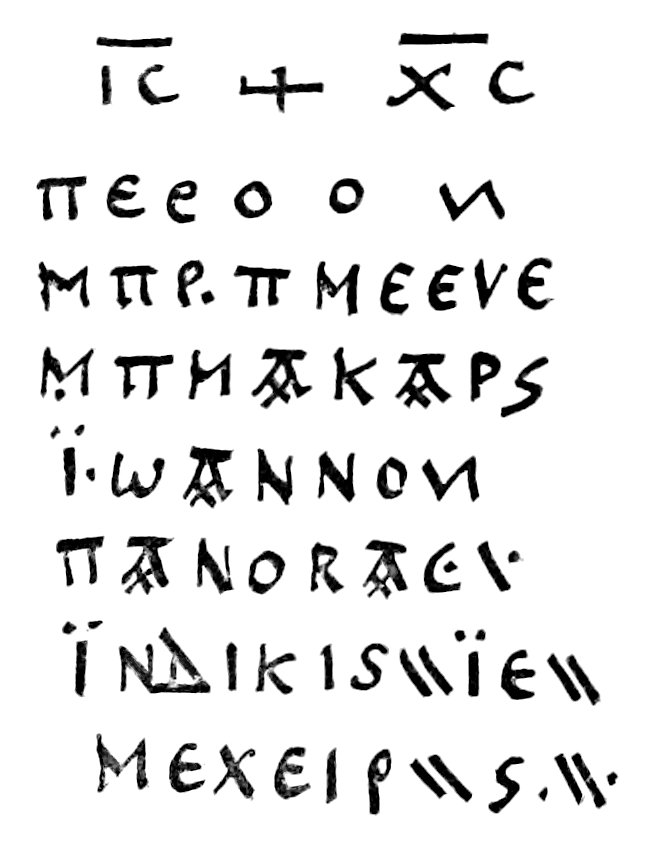
On the 9th of April, I returned to Esne.
I shall here subjoin a few general remarks upon the Nubians and their history;[61] my stay among them was too short to enable me to enter at length into the subject; and my observations were limited by my ignorance of the Nubian language, in which all conversation among the people, in my presence, was carried on.
I have already observed, that Nubia is divided into two parts, called Wady Kenous, and Wady el Nouba (often named exclusively Saÿd); the former extending from Assouan to Wady Seboua, and the latter comprising the country between Seboua and the northern frontier of Dóngola. The inhabitants of these two divisions are divided by their language, but in manners they appear to be the same.
According to their own traditions, the present Nubians derive their origin from the Arabian Bedouins, who invaded the country after the promulgation of the Mohammedan creed,[62] the greater part of the Christian inhabitants, whose churches I traced as far as Sukkot, having either fled before them or been killed; a few, as already mentioned, embraced the religion of the invaders, and their descendants may yet be distinguished at Tafa, and at Serra, north of Wady Halfa. The two tribes of Djowabere (جوابره) and El Gharbye (الغربيه), the latter a branch of the great tribe of Zenatye (زناتيه) took possession of the country from Assouan to Wady Halfa, and subsequently extended their authority over a great number of smaller tribes who had settled on the banks of the river at the period of the general invasion, among whom were the Kenous, a tribe from Nedjed and Irak.[63] The large tribe of Djaafere occupied the shores of the Nile from Esne to Assouan; a few families of Sherifs settled in the Batn el Hadjar; and a branch of the Koreysh possessed themselves of Mahass. For several centuries Nubia was occupied by these Arabs, who were at continual war with each other, in the course of which the kings of Dóngola had acquired so much influence over them, as to be able at last, to compel them to pay tribute. The Djowabere having nearly subdued the Gharbye, the latter sent an embassy to Constantinople, in the reign of the great Sultan Selym, to seek aid against their enemies, and they succeeded in procuring from the Sultan a body of several hundred Bosnian soldiers, under a commander named Hassan Coosy. By their means the Djowabere and people of Dóngola were driven out of Nubia, into the latter country; and to this day the more wealthy inhabitants of Dóngola derive their origin from the tribe of Djowabere. Some families of the Djowabere, however, remained peacefully behind, and their descendants, who are found chiefly at Derr and Wady Halfa, are still known by the name of their ancestors.
The Bosnian soldiers built the three castles, or rather repaired the existing fabrics, at Assouan, Ibrim, and Say; and those who garrisoned the castles obtained certain privileges for themselves, and for such of their descendants as should continue to occupy the castles, and the territory attached to them; one of these privileges was an exemption from all kind of land tax, which Selym had then for the first time imposed throughout his dominions; and as the country was thought incapable of affording food sufficient for the soldiers, an annual pension was likewise assigned to them out of the Sultan’s treasury at Cairo; the pay of the garrison of Ibrim was four purses, now equal only to £100., but then probably worth four times that sum. They were also made independent of the Pashas of Egypt. While the Pashas had any influence in Egypt, these pensions were paid; but the Mamelouks generally withheld them. Hassan Coosy, with his forces, chiefly cavalry, governed Nubia, while he lived, and was constantly moving from place to place; he paid an annual Miry to the Pasha of Egypt, but in other respects was independent of him. The descendants of such of the Bosnian soldiers as intermarried with the Gharbye and Djowabere tribes still occupy the territories assigned to their ancestors at Assouan, Ibrim, and Say; and they continue to enjoy immunity from taxes and contributions of every kind. They call themselves Kaladshy, or the people of the castles, but are distinguished by the Nubians by the appellation of Osmanli (Turks). They have long forgotten their native language; but their features still denote a northern origin, and their skin is of a light brown colour, while that of the Nubians is almost black. They are independent of the governors of Nubia, who are extremely jealous of them, and are often at open war with them. They are governed by their own Agas, who still boast of the Firmauns that render them accountable only to the Sultan.
About fifty years ago, Hamman, chief of the Howara Arabs, having taken possession of the whole country from Siout to Assouan, extended also his authority over Nubia, which he several times visited, as far as Mahass; but, at present, the political state of the country may be said to be, nominally at least, the same as when Hassan Coosy took possession of it. The present governors, Hosseyn, Hassan, and Mohammed, are his descendants; their father was named Soleyman, and had acquired some reputation from his vigorous system of government. The title of Kashef, assumed by the three brothers, is given in Egypt to governors of districts. The brothers pay an annual tribute of about £120. into the treasury of the Pasha of Egypt, in lieu of the Miry of Nubia, for which the Pasha is accountable to the Porte. In the time of the Mamelouks, this tribute was seldom paid, but Mohammed Aly has received it regularly for the last three years. The three Kashefs have about one hundred and twenty horsemen in their service, consisting chiefly of their own relations, or of slaves; these troops receive no regular pay; presents are made to them occasionally, and they are considered to be upon duty only when their masters are upon a journey. Derr is the chief residence of the governors;[64] but they are almost continually moving about, for the purpose of exacting the taxes from their subjects, who pay them only on the approach of superior force. During these excursions, the Kashefs commit acts of great injustice, wherever they find that there is none to resist them, which is frequently the case. The amount of the revenue is shared equally amongst the three brothers; but they are all very avaricious, extremely jealous of each other, and each robs clandestinely as much as he can. I estimate their annual income at about £3,000. each,[65] or from 8 to £10,000. in the whole. None of them spends more than £300. a year. Their principal wealth consists in dollars and slaves. In their manners they affect the haughty mien and deportment of Turkish grandees; but their dress, which is worse than what a Turkish soldier would like to wear, ill accords with this assumed air of dignity.
The mode of estimating the revenue in Nubia is not from a certain extent of ground, like the Syrian and Egyptian Fedhan, but from every Sakie, or water-wheel employed by the natives, after the inundation, and during the summer, for the purposes of irrigation; the same mode prevails on the banks of the Nile as far as Sennaar. In poor villages one Sakie is the common property of six or eight peasants; but the wealthier inhabitants have several. The number of water-wheels between Assouan and Wady Halfa, or between the first and second cataract, is from six to seven hundred. The ground watered by one Sakie, which requires the alternate labour of eight or ten cows, comprises from three to five Egyptian Fedhans. In fruitful years, the winter wheat and barley irrigated by one wheel yields from eighty to one hundred Erdebs (twelve to fifteen hundred bushels); the proportions sown of these grains are generally one fourth wheat and three fourths barley.[66] The rate of taxation is different in different places; thus at Wady Halfa, each Sakie pays annually six fat sheep, and six Egyptian Mouds, or measures of Dhourra. In Mahass, the Malek, or king, takes from every wheel six sheep, two Erdebs, (twenty-six bushels) of Dhourra, and a linen shirt. The governors also take from every date tree two clusters of fruit, whatever may be the quantity produced, and levy a duty upon all vessels that load dates at Derr.[67] But the whole system of taxation is extremely arbitrary and irregular, and poor villages are soon ruined by it, from their inability to resist the exactions made upon them, while the richer ones pay much less in proportion, because the governors are afraid of driving the inhabitants to acts of open resistance. The Kashefs derive also a considerable income from their office of judges; the administration of justice being a mere article of merchandize.
If one Nubian happen to kill another, he is obliged to pay the debt of blood to the family of the deceased, and a fine to the governors of six camels, a cow, and seven sheep; or they are taken from his relations. Every wound inflicted has its stated fine, consisting of sheep and Dhourra, but varying in quantity, according to the parts of the body wounded. This is an ancient Bedouin custom, and prevails also among the people of Ibrim, with this difference, that the mulct is given to the sufferer himself, and not to the Aga. If one of the governor’s tribe, or an El Ghoz (الغُزّ a name given in Egypt and Nubia to the Mamelouks) or any of the people of Ibrim is slain by a Nubian, no debt of blood is paid to the family of the deceased, he being considered a soldier, and not an Arab; but the governor still exacts his fine. Much animosity exists between the Kenous, and their southern neighbours the Noubas; the latter upbraiding the former with avarice, and bad faith, while the Kenous call the Noubas filthy slaves, living like the people of Soudan. Disputes and sanguinary quarrels often take place, in consequence, between the inhabitants of neighbouring villages; if death ensues, the family of the deceased has the option of taking the fine stipulated on such occasions, or of retaliating upon the family of the slayer. The people of Ibrim generally claim the right of retaliation; but it is not considered as sufficient to retaliate upon any person within the fifth degree of consanguinity, as among the Bedouins of Arabia; the brother, son, or first cousin only can supply the place of the murderer, and such being the case, the whole family often flies.
Although the governors of Nubia extort large sums by the various means above-mentioned, yet their tyranny is exercised only upon the property of their subjects, who are never beaten or put to death, except when in a state of open rebellion, which happens not unfrequently.[68] If a Nubian, from whom money is to be extorted, flies, his wife, or his young children, are imprisoned till he returns. This practice is much complained of by the people, and is unknown even among the tyrannical Pashas of Syria and Egypt, who respect the persons of the wives and children of their greatest enemies. The following is a curious method which the governors of Nubia have devised, of extorting money from their subjects. When any wealthy individual has a daughter of a suitable age, they demand her in marriage; the father seldom dares to refuse, and sometimes feels flattered by the honour; but he is soon ruined by his powerful son-in-law, who extorts from him every article of his property under the name of presents to his own daughter. All the governors are thus married to females in almost every considerable village; Hosseyn Kashef has above forty sons of whom twenty are married in the same manner.
The inhabitants of the banks of the Nile, from the first Cataract to the frontiers of Dóngola, do not plough their fields, after the inundation has subsided, as is done in Egypt; the waters above the Cataract never rising sufficiently high to overflow the shore. In a few places, where the cultivable soil is broader than usual, as at Kostamne, Gyrshe, Wady Halfa, &c., there are canals which convey the water towards the fields on the side of the mountain, but the water in them is not sufficiently high, as in Upper Egypt, to irrigate the low grounds near the hills. Irrigation in Nubia, therefore, is carried on entirely by means of the Sakies, or water-wheels. Immediately after the river has subsided, the fields are watered by them, and the first Dhourra seed is sown, the crop from which is reaped in December and January; the ground is then again irrigated, and barley sown; and after the barley harvest, the ground is sometimes sown a third time for the summer crop. The barley is either sold in exchange for Dhourra, or eaten green in soups. The harvest suffers greatly from the ravages of immense flocks of sparrows, which the united efforts of all the children in the villages cannot always keep at a distance; and whole fields of Dhourra and barley are often destroyed by a species of small worm, which ascends the stalks of the plant. Tobacco is every where cultivated; it retains, when dried, its green colour, and exactly resembles that of the mountains on the east side of the Dead Sea. Tobacco forms the chief luxury of all classes, who either smoke it, or mixing it with nitre suck it, by placing it between the lower gums and the lip.
The habitations of the Nubians are built either of mud or of loose stones; those of stone, as I have already observed, stand generally on the declivity of the hills, and consist of two separate round buildings, one of which is occupied by the males, and the other by the females of the family. The mud dwellings are generally so low, that one can hardly stand upright in them: the roof is covered with Dhourra stalks, which last till they are eaten up by the cattle, when palm leaves are laid across. The houses at Derr, and those of the wealthy inhabitants of the larger villages, are well built, having a large area in the centre with apartments all round, and a separation between those of the men and of the women. The utensils of a Nubian’s house consist of about half a dozen coarse earthen jars, from one to two feet in diameter, and about five feet in height, in which all the provisions of the family are kept; a few earthen plates; a hand-mill; a hatchet; and a few round sticks, over which the loom is laid.
To the north of Derr, the dress is usually a linen shirt only, which the wealthier classes wear of a blue colour; or the woollen cloak of the peasants of Upper Egypt; the head dress is a small white linen cap, with sometimes a few rags twisted round it in the shape of a turban. Young boys and girls go naked: the women wrap themselves up in linen rags, or black woollen gowns; they wear ear-rings, and glass bracelets; and those who cannot afford to buy the latter, form them of straw. Their hair falls in ringlets upon the neck, and on the back part of the head they wear short tassels of glass or stones, both as an ornament and an amulet. The richer class wear copper or silver rings round their ankles. South of Derr, and principally at Sukkot and in Mahass, grown up people go quite naked, with the exception of the sexual parts, which the men conceal in a small sack. This sack resembles exactly what is seen in the figures of the Egyptian Priapus upon the walls of the temples. The hair of the people of Mahass is very thick, but not woolly. All the young men wear one ear-ring, either of silver or copper, in the right ear only, and men of all classes usually carry a rosary suspended round the neck, which they never remove; they also tie round one arm, above the elbow, a number of amulets covered with leather about three or four inches broad, consisting of mystical writings and prayers, which are sold to them by the Fokara.
The Nubians seldom go unarmed; as soon as a boy grows up, his first endeavour is to purchase a short, crooked knife, which the men wear tied over the left elbow, under their shirt, and which they draw upon each other on the slightest quarrel. When a Nubian goes from one village to another, he either carries a long heavy stick (نَبّوت) covered with iron at one of its extremities, or his lance and target. The lance is about five feet in length, including the iron point; the targets are of various sizes; some are round, with a boss in the centre; others resemble the ancient Macedonian shield, being of an oblong form, four feet in length, and with curved edges, covering almost the whole body. These targets, which are sold by the Sheygya Arabs, are made of the skin of the hippopotamus, and are proof against the thrust of a lance, or the blow of a sabre. Those who can afford it, possess also a sword, resembling in shape the swords worn by the knights of the middle ages, a long straight blade, about two inches in breadth, with a handle in the form of a cross; the scabbard, for fashion sake, is broader near the point, than at the top. These swords are of German manufacture, and are sold to the Nubians by the merchants of Egypt, at from four to eight dollars apiece. Fire-arms are not common; the richer classes possess match-locks. Hassan Kashef himself had no pistols. Ammunition is very scarce and highly valued; travellers therefore will do well to carry with them a few dozen cartridges, which are very acceptable presents. When I left the camp of Mohammed Kashef at Tinareh, his nephew ran after me for at least two miles, to obtain a single cartridge from me, telling me that he had shot off the only one he had, during the rejoicings of the preceding day.
I have already mentioned the usual dishes of the Nubians. The Dhourra bread is extremely coarse, and is made without salt.[69] It is prepared upon the Sadj, or thin iron plate in use among the Bedouin Arabs; but as the whole operation of grinding, kneading, and baking does not occupy more than ten minutes, it may easily be supposed that it is never thoroughly baked. The Dhourra for the day’s use is ground early every morning by the women, for the Nubians never keep meal in store. In Sukkot and Mahass, the bread is made in very thin round cakes, which are placed upon each other when served up at meals. Animal food is rarely tasted by the Nubians; the governors even do not eat it every day. In the larger villages palm-wine is common; it is not unpleasant to the taste, though too sweet and thick, to be drank in any considerable quantity. It is obtained by the following process: as soon as the dates have come to maturity they are thrown into large earthen boilers, with water, and the whole is boiled for two days, without intermission; the liquid is then strained, and the clear juice is poured into earthen jars, which after being well closed, are buried under ground; here they are allowed to remain for ten or twelve days, during which the liquor ferments; the jars are then taken up, and their contents are fit to drink; but the wine will not keep longer than a year, or beyond the next date-harvest; if kept longer it turns sour. The Nubians also make a liquor called Bouza, much resembling beer; it is extracted from Dhourra or barley, but the best is furnished by the latter. It is of a pale muddy colour, and very nutricious. At Cairo, and in all the towns and larger villages of Upper Egypt, there are shops for the sale of Bouza, which are kept exclusively by Nubians. Great quantities both of the wine, and of the spirit distilled from dates, are drank at Derr, where they are sold in shops kept for the purpose, and where the upper classes are intoxicated with them every evening. From Siout, southward, through the whole of Upper Egypt, date spirits are made and publicly sold; and the Pasha levies a tax upon the venders. A kind of jelly or honey is also extracted from the date, which serves the rich as a sweet-meat. Except date trees, and a few grape vines which I saw at Derr, there are no fruit-trees in Nubia.
The climate of Nubia, though intensely hot in summer, particularly in the narrow rocky parts of the country, is very healthy, owing perhaps to the extreme aridity of the atmosphere. I do not recollect having seen a single person labouring under any disease, during the five weeks I was in the country. Occasionally, the small-pox, as I have already observed, makes dreadful ravages in every part except the Wady Kenous; inoculation being unknown, or at least unpractised, both here and in Upper Egypt; and the several attempts that have been made to introduce the vaccine into the latter country, or rather to establish it there, having entirely failed. Some travellers have supposed that the plague is communicated to Egypt from the south; but this is a very erroneous supposition, as it never prevails in Nubia so high as the second Cataract, and is unknown in Dóngola, and along the whole route to Sennaar.
The men in Nubia are generally well made, strong, and muscular, with fine features; in stature they are somewhat below the Egyptians; they have no mustachios, and but little beard, wearing it under the chin only, like the figures of the fugitives in the battle-pieces sculptured upon the walls of the Egyptian temples. In passing along the Wadys of Nubia, it often occurred to me to remark that the size and figure of the inhabitants was generally proportioned to the breadth of their cultivable soil; wherever the plain is broad, and the peasants from being enabled to carry on agriculture to a tolerable extent, are in comparatively easy circumstances, they are taller and more muscular and healthy; but in the rocky districts, where the plain is not more than twenty or thirty yards in breadth, they are poor meagre figures; in some places appearing almost like walking skeletons.
The women are all well made, and though not handsome, have generally sweet countenances, and very pleasing manners; I have even seen beauties among them. Denon has certainly not done justice to them; but they are worn down, from their earliest years, by continual labour; the whole business of the house being left to them, while the men are occupied exclusively in the culture of the soil. Of all the women of the East, those of Nubia are the most virtuous; and this is the more praiseworthy, as their vicinity to Upper Egypt, where licentiousness knows no bounds, might be expected to have some influence upon them. During my stay at Esne, girls came every morning to my lodging to offer milk for sale; the Egyptians boldly entered the court-yard and uncovered their faces, a behaviour equivalent to an offer of their persons; but the Nubians (of whom many families are settled at Esne) stood modestly before the threshold, over which nothing could induce them to step, and there they received the money for their milk without removing their veils.
The Nubians purchase their wives from the parents: the price usually paid by the Kenous is twelve Mahboubs, or thirty-six piastres. They frequently intermarry with the Arabs Ababde, some of whom cultivate the soil like themselves; an Ababde girl is worth six camels; these are paid to her father, who gives back three to his daughter, to be the common property of her and her husband; if a divorce takes place, half the value of the three camels goes to the latter.[70] In Upper Egypt, when a wife insists upon being divorced, her husband has the right to take all her wearing apparel from her, and to shave her head; nobody will then marry her till her hair be grown again. The Nubian is extremely jealous of his wife’s honour; and on the slightest suspicion of infidelity towards him, would carry her in the night to the side of the river, lay open her breast by a cut with his knife, and throw her into the water, “to be food for the crocodiles,” as they term it. A case of this kind lately happened at Assouan.
Public women, who are met with in thousands in every part of Egypt, are not tolerated in Nubia, except at Derr, and these are not natives, but emancipated female slaves, who being left destitute, betake themselves to this vile profession, to gain a subsistence. The execrable propensities which the Mamelouks have rendered so common in Egypt, even amongst the lowest peasants, are held in abhorrence in Nubia, except by the Kashefs and their relations, who endeavour to imitate the Mamelouks in every thing, even in their most detestable vices.
Small looms are frequently seen in the houses of the Nubians; with these the women weave very coarse woollen mantles, and cotton cloth, which they make into shirts. From the leaves of the date-tree they also form mats, small drinking bowls, and large plates on which the bread is served at table; and though these articles are formed entirely by the hand, they are made in so very neat a manner, as to have every appearance of being wrought by instruments. The above are the only manufactures in Nubia; every thing else is imported from Egypt.
The only musical instrument I saw in Nubia was a kind of Egyptian tamboura, with five strings, and covered with the skin of a gazell: it is of the shape here represented. The girls are fond of singing; and the Nubian airs are very melodious.
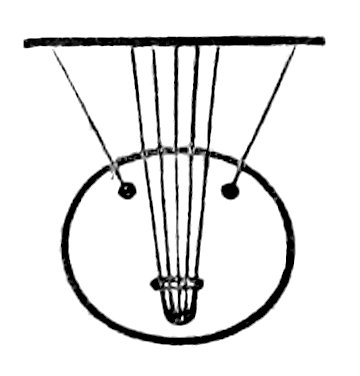
The game of chess is common at Derr; and that called Beyadh is also frequently played. I have described the latter in my journal through Arabia Petræa, when speaking of the Arabs of Kerek.
I found the Nubians, generally, to be of a kind disposition, and without that propensity to theft so characteristic of the Egyptians, at least of those to the north of Siout. Pilfering indeed is almost unknown amongst them, and any person convicted of such a crime would be expelled from his village by the unanimous voice of its inhabitants; I did not lose the most trifling article during my journey through the country, although I always slept in the open air in front of the house where I took up my quarters for the night. They are in general hospitable towards strangers, but the Kenous and the people of Sukkot are less so than the other inhabitants. Curiosity seems to be the most prominent feature in their character, and they generally ask their guest a thousand questions about the place he comes from, and the business which brings him into Nubia.
If the government were not so extremely despotic, the Nubians might become dangerous neighbours to Egypt; for they are of a much bolder and more independent spirit than the Egyptians, and ardently attached to their native soil. Great numbers of them go yearly to Cairo, where they generally act as porters, and are preferred to the Egyptians, on account of their honesty. After staying there six or eight years, they return to their native Wady, with the little property they have realized, although well knowing that the only luxuries they can there expect, in exchange for those of Cairo, are Dhourra bread and a linen shirt. Such of them as do not travel into Egypt, hardly ever go beyond the precincts of their village, for, generally, the Nubians have no inclination towards commercial speculations. At Ibrim I met with two old men, who assured me that they had never visited Derr, though it is only five hours distant. Those Nubians who have resided in Egypt, and can speak Arabic, are for the most part good Mussulmen, and repeat their prayers daily: but in general the only prayer known to the others is the exclamation of Allahu Akbar. A few make the pilgrimage to Mekka, by the way of Suakin.
I estimate the whole population of Nubia, from Assouan to the southern limits of Mahass, an extent of country about five hundred miles long, with an average breadth of half a mile, at one hundred thousand souls.
I shall subjoin to this account of Nubia some notices upon the Bedouins who inhabit the mountains lying between that country and the Red sea. They consist of two principal tribes, the Ababde and Bisharye. The Ababde (عبابده) occupy the country south of Kosseir, nearly as far as the latitude of Derr. The Bisharye (بشاري) inhabit the mountains from thence southwards, as far as Suakin, where they find pasture for their camels and cattle in the wild herbage which grows in the beds of the winter torrents. Many of the Ababde have settled in Upper Egypt, on the east bank of the Nile from Kenne to Assouan, and from thence to Derr; but the greater part of them still live like Bedouins. They act as guides to the Sennaar caravans which depart from Daraou (دَراوُ), and were formerly conductors likewise of the trade from Kosseir to Kenne; but their enemies, the Arabs Maazyu (معازي) and Ataony (عَتاونه), who live to the north of Kosseir, have succeeded in depriving them of the profits arising from this employment, which the latter now farm from the Pasha of Egypt. The Ababde are possessed of considerable property, but have a bad character, being described by all those who deal with them as a faithless people, who betray their companions, thus rendering themselves unworthy of that origin from the Arabian Bedouins, of which they boast. No oath binds an Ababde; but I was informed that they dread breaking their word, if they give it with the expression, “by the hope I entertain of remaining in good health (وحياة العا فيه).” They are known in Upper Egypt for their excellent breed of camels, particularly dromedaries, and they trade largely in Senna-Mekke, and in charcoal of acacia wood, both of which are produced from the trees, growing abundantly in their mountains; the fuel is exported as far as Cairo. The Ababde have few horses; when at war with other Arab tribes they fight upon camels, armed with a target, lance, and sword. Their principal tribes are, El Fokara (فُقَره), El Ashabat (عشَابات), and El Meleykab (مليقاب). The Ashabat seldom descend from the mountains to the banks of the Nile, but many individuals of the tribe have settled on its banks near Mograt and Demar, on the route to Sennaar, where they have intermarried with the native inhabitants. Such of them as encamp with the Bisharye speak the language of the latter.
The Bisharye, who rarely descend from their mountains, are a very savage people, and their character is worse even than that of the Ababde. Their only cattle are camels and sheep, and they live entirely upon flesh and milk, eating much of the former raw; according to the relation of several Nubians, they are very fond of the hot blood of slaughtered sheep; but their greatest luxury is said to be the raw marrow of camels. A few of these Arabs occasionally visit Derr or Assouan, with Senna, sheep, and ostrich feathers, the ostrich being common in their mountains; and their Senna is of the best kind. In exchange for these commodities they take linen shirts and Dhourra, the grains of which they swallow raw, as a dainty, and never make it into bread. These traders do not remain long on the banks of the Nile, as the dread of the small-pox soon drives them back to their tents. The Bisharye are much addicted to theft, and will even rob the house of the person who receives them as guests. Their youth make plundering excursions as far as Dóngola, and along the route to Sennaar, mounted upon camels, of a breed superior to any other, that exists between the shores of the Mediterranean and Abyssinia. Few of the Bisharye speak Arabic. They fear none but the Ababde, who know their pasturing places in the mountains, and often surprise their encampments. When the two tribes are at peace, which happens to be the case at present, the mountains inhabited by the Bisharye may be crossed in the company of an Ababdi; but the latter is not to be trusted, unless one of his nearest relations is left behind as a hostage. Great numbers of the dispersed Mamelouks fell victims to the treachery of these Arabs, and the others escaped only by keeping together in considerable bodies.
Encampments of the Bisharye are found on the northern frontier of Abyssinia; and the sea-coast from Suakin to Massuah is peopled by their tribes, the most noted of which are, Hammedab, Batra, Alyab, Amerab, Kamhetab, Hamdora, Eryab, Hazz, Modourab, Kameylab, el Amarer, all of whom live in separate encampments, and are often at war with each other. They have no fire-arms; towards the frontiers of Abyssinia some of the tribes use the bow and arrow, and, as I was informed, speak the Abyssinian language, or rather understand the Abyssinians, who are said to have greater difficulty in comprehending the Bisharye. The two languages are probably derived from the same source, like many others of the numerous dialects which prevail towards the northern frontiers of Abyssinia.
The Bisharye are kind, hospitable, and honest towards each other; their women, who are said to be as handsome as those of Abyssinia, mix in company with strangers, and are reported to be of very depraved habits. After long and fruitless enquiries for a Bisharye Arab, I at last met with a youth who had come to Esne to sell leather thongs, for the manufacture of which these Bedouins are famous. I enticed him to my dwelling by bargaining for his goods, and made him breakfast with me; but when I began to question him about his language he would stay no longer, although I offered him a shirt as a present. He imagined that I dealt in spells, which I meant to put in practise to the injury of his nation; he forced his way out of the court-yard of my house, and I could never afterwards prevail upon him to return. The words in the annexed vocabulary,[71] were procured from a Negro slave who had been educated among the Bisharye, and sold by them to the chief of a village near Esne.
FOOTNOTES:
VOCABULARY OF THE KENSY AND NOUBA LANGUAGES:
[The words derived from the Arabic, and especially from the dialect of Upper Egypt, are marked A.]

Kensy. Nouba.
Heaven Semeyg, A. Sema, A.
World Duinat, A. Duniatyka, A.
Day Ougresk Aly
Night Ougouk Awaka
Stars Woussik Windjega
Sun Masilk Mashakka
Shade Noogy Norga
Moon Ounatig Inatiga
Wind Tourouk Tonga
Rain Anessik Omorka
Clouds Ghaimk, A. Korungad
Water ⎫ ⎬ ⎭ Essig Amanga
Sea
River
Inundation Mossirk Dahmyre, A.
North Kalonger Kaloga
South Ongoger Oroga
East Maltigi Mattoga
West Tingaro Tinoga
Year Djeng Gemga
Last year Nyg Gemdjorok
Year before last Nisetti Nisidadjorok
Month Zoueyg Shaher, A.
Ramadhan (month) Dirtek Misse
Rabya el awal (do) Timangy Timanga
Summer Bogong Fagonga
Winter Otty Oronga
Morning Tedjerky, A. Mashanak
Evening Mogrebky, A. Megrebeddo. A.
Earth Aryd, A. Gourka
Shore or mountain Koloug Kitta
Sand Seevky Seevka
Wood Berk Koygga
Trees Djaoug Djollaga
Dust Kodeya Toka
Fire Yk Eeka
Coals Olutti Girgeeta
Cattle Orti Ortyga
Camel Kamk Kamikka
She camel Bakerak, A. Bakerakka, A.
Cow Tyg Tyga
Ox Gourky Gorondyga
Calf Gortot Gortoga
Buffalo Djamous, A. Djamous, A.
Horse Koky Mortyga
Ass Hanoub Kadja
Saddle Dogerk Dogerka
Sheep Eget Egedryga
Lamb Doyerk Egenandyga
Goat Bertigy Fakka
Dog Welk Mokka
Cat Sabky Kadeeska
Gazelle Gālk Kedjatta
Male Ondo Onda
Female Karou Karēa
Hare Wozla Doynga
Hyena Eddik Aadyga
Serpent Aayagy Ouslangyga
Scorpion Ikinki Segetka
Bird Kowertag Kowertyga
Feathers Ryshky, A. Ryshga, A.
Fowl Derbatti Derbatta
Cock Derbanondigy Derbanonda
Goose Allotti Kellayga
Raven Kok Koka
Partridge — —
Pigeon Mynek Hamamga, A.
Eagle Aboukodro Abakodro
Sparrow Sasurky, A. Sar Soura, A.
Fish Karāg Angissiga
Crocodile Elong Olonga
Nile horse (hippopotamus) Errid, ird Eritta, irta
Frog Golgodegyr Amankorkyga
Flies Kultigi Kuttiga
Mosquitos Namouski, A. Namousga, A.
Lice Issig Issiga
Worm Wigitty Wirkyga
Date tree ⎱ ⎰ Bentyg Fentyga
Dates
Acacia tree Saleyg Gandeyga
Tamarisk tree Shereg Moorka
Doum date Amboug Ambiga
Wheat Illeyk Illega
Dhourra Mareyg Mareyga
Dhourra stalks when dry Ageyk Ageyga
Barley Sering Seringa
The bitter horse-bean called in Egypt Turmus Angallag Agindeyga
Straw Siltiga Seetyga
The French bean or Louby Ogotty Tigeteyga
Common horse-bean Foulki, A. Foulga, A.
Chick pea Homosky, A. Homoska, A.
Lentils Nerk Adeska, A.
The Egyptian Gortum Koushag Kousheyga
A species of Dhourra called in Arabic dokhen Erdeyg Foulouga
Cotton Gottong, A. Koshmaka
Silk Haryrki, A. Haryrka, A.
Tobacco Dokhang, A. Toulyga
Grapes Anebky, A. Anebga, A.
Water melon Batyhky, A. Batyhga, A.
Coloquintida Oorky Tatourga
Senna plant Abyreyga
Lettuce Khasky, A. Khaska, A.
Wine Nebyg, A. Nebyd, A.
Oil Zeity, A. Zeyta, A.
Date spirits Aragyk, A. Aragyk, A.
Salt Ombotti Emetta
Pepper Falfelki, A. Felfelga, A.
Coffee Kahwagi, A. Gahwa, A.
Snuff Neshouki, Neshouka, A.
Cheese Djebenki, A. Djebenka, A.
Butter Desk Noyga
Honey Asselki, A. Asselga, A.
Milk Iddje Souga
Bread Kalk Kabaka
Meat Kosoug Arykka
Eggs Gasgantyk Komboug
Wool Aboky Faka
Horns Neshyg Nishyga
Dung Osel Osyga
Ship Koubki Sigirka
Sail Sariki, A. Kelaga, A.
Oars Wauadyk Soubeyga
A man Ogedj Itga
A woman Ing Ideynga
Son or boy Tot Tota
Girl or daughter Beroug Borouga
Husband Edy Etta
Wife Eyngy Adeynga
Father Ambabki Abouga, A.
Mother Eneygy Aneynga
Sister Anesyk Anessyga
Brother Ambeski Anyngaga
Uncle Ambanak Abanyngaga
Cousin Ambanentoti Abanyngagantato
Grandfather Anouky Annonga
Master Tirtyg Noranga
Servant Khadamky, A. Ashanga
Male slave Nogoutty Osheyga
Female slave Nogogy Oshaga
Virgin Fetagy Borou Beker, A.
Life Enougou Agni
Death Diark Dyakka
Disease Oddy Oddy
Small-pox Djedryki, A. Djedryka, A.
Plague Kobbaki, A. Kobbaga, A.
Old age Samelgy Gortyga
The head Ork Ourka
Eye Messik Maynga
Nose Soring Soringa
Mouth Agilk Akka
Lips Shendouk Shendouga
Teeth Nelky Nyta
Mustachios Sharibyk, A. Sharibka
Ears Oluk Okiga
Throat Goski Gooska
Beard Samēk Sameyga
Neck Eyik Eega
Arm Yg Eddiga
Back Djerk Dijrka
Posteriors Boungy Osyrka
Fingers Sebag, A. Sebakiga, A.
Stomach Toug Touga
Breasts Ertyg Dougoussiga
Pudenda viri Sorat Koffyga
Pudenda mulieris Osutti Kissiga, A.
Foot Ossi Öyga
Hair Seerki Shygertyga
Blood Gerki Beeska
Heart Aagy Ayka
Skin or leather Adjeng Nowakka
Bone Keet Kesyrga
House Kagy Noka
Door or gate Babki, A. Babka
Key Meftahky, A. Kusherka
Wall Katreg Sobeyga
Chamber Kerryg Kerryga
Bed Fershki, A. Bereshka, A.
Mat Hasyrk, A. Hasyrka, A.
Large water jar Barrat Gottiga
Water pot Ibryk, A. Ibrikka, A.
Large earthen vessel Gosseyg Shounaga
Hand mill Djouk Djaouga
Earthen plate Kissibk Faleka
Thin iron plate, upon which bread is baked Dābky Dabga
Boiler Deltig, A. Dystega, A.
Oven Taboungy Tabounga
Lamp Seraky, A. Seraka, A.
Ox Nowt Allatta
Water wheel Koleyg Askaleyga
Cords Irygy Allega
Sword Siouty Fareynga
Lance ⎰ ⎱ Shag Shartega
Selotyeg
Knife Kandyg Kandyga
Target Karoug Gunyega
Gun Bunduky, A. Baroudki, A.
Large stick covered with iron at both extremities Naboutdjy, A. Nabouta, A.
A small stick Wudjerg Galeyga
A cloak or shirt Kadeyg Kittiga
Egyptian Mellaye Foutek, A. Foutaga
Trowsers Sherwalky, A. Lebaska, A.
Turban Kasirk Kaserga
Red cap Tarboshki, A. Tarboshka, A.
Linnen bonnet Tarkya, A. Takyaga, A.
Ring Khatim, A. Khatimja, A.
Ear-ring Zummamki, A. Zummamka
Nose-ring Zorouski Korsyga
Bracelet Zouarki, A. Zouarga, A.
Amulet Sōrki Shoka
Shoes Koresk Dirka
Girdle Amadjerdyk Mergirka
Needle Entillagy Entellea
Rosary Soubhaki, A. Soubhaga
Book Sourky Shouka
Paper Gartaski, A. Waraka, A.