David Livingstone
Reading edition
By a Fellow-Townsman.
At Blantyre, Scotland, on the 19th March, 1813, a child was born to Neil and Agnes Livingstone. We never know when is happening an epoch-making event. Every new soul ushered into the world is a shut casket of possibilities. The boy born in the humble home consisting of a “but and a ben,” was destined to become one of the greatest missionaries; and the most conspicuous and intrepid explorer the world has ever seen; to achieve for himself a deathless fame, a name of imperishable memory, and to leave to mankind a heritage of truth and influence. His cradle was in the peasant’s cottage, but his grave is in Westminster Abbey. I have many times visited the house where he was born, and the mill where he worked, and oftentimes I have read the inscription that is over his grave. I esteem it a great privilege to have lived for years near the birthplace of the great and good David Livingstone. His home was one of those which are the glory of Scotland, the abode of the godly and intelligent working class. His mother was a sweet, gentle woman, and his father was a good man.
When ten years of age he went to work. His working hours were from six a.m. to eight p.m. His first week’s wages, sixty cents, he gave with pride to his mother. He saved a few pence and purchased a “Rudiments of Latin,” over which he pored when the day’s work was done. His thirst for knowledge was intense. At the age of sixteen he had read many of the classical authors and knew Horace and Virgil well.
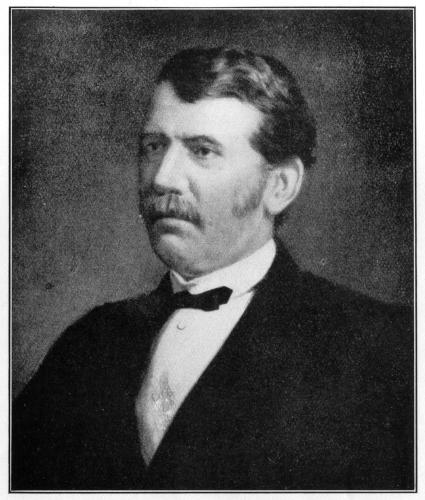
DAVID LIVINGSTONE (1813-1873)
The Great Missionary Explorer. Went to Africa 1840. Died in Africa 1873.
How David Livingstone gave.—
“I will place no value upon anything I have or may possess except in relation to the Kingdom of Christ.”
It was about his twentieth year that the great spiritual change took place, which was to determine Livingstone’s future life. At that time he definitely received Christ as his personal Saviour, and there can be no doubt that his heart was thoroughly penetrated by the new life that then flowed into it. Religion became the everyday business of his life and his daily prayer was that he might resemble Christ, a petition fulfilled in no ordinary degree. A desire was born within him to preach Christ in China, and that he might be fitted for that work he entered as a medical student in the University of Glasgow, and in due time was graduated in medicine. He received not a cent of aid from anyone. What a struggle he had! What economy he had to practice! Frequently his meal consisted entirely of oatmeal porridge.
He was accepted by the London Missionary Society and sent out in 1840—not to China—but to Africa. To God and to Africa he gave his manhood’s prime. No grander work was ever done than that accomplished by David Livingstone. In him life’s fire glowed. With magnanimous and self-sacrificing devotion, with undaunted courage, in the midst of manifold sufferings, through days of hunger and weariness, and nights of dreadful loneliness, he worked for Africa’s salvation. He loved the natives, and they loved the man who was ever kind and good. He worked amongst them with a vision ever before him of the men and women, whom they, by God’s grace, might become, and that vision shaped and controlled and sustained him in all his efforts. With the vision of the latter day before him he addressed himself nobly and well to the work of the present. God alone knows what Africa owes to Livingstone.
This full and overflowing life closed to earth’s activities in May, 1873. His spirit marches on. Such men never die. His spirit has entered into the great stream of the ever-swelling life of mankind, and continues, and will continue, to act there with its whole force for evermore. He lives in minds made better by his noble example. He lives in the Livingstonia Mission, that great beacon light; he lives in great numbers of the regenerated natives of Africa; he lives in all who are constrained to work for Christ in that dark land.
I pray our Epworth Leaguers to read the story of his life, that they may know what one consecrated man did in a lifetime, that they may have a revelation of the possibilities in man, that they may be inspired to emulate him in his noble simplicity, high resolve, invincible courage, exalted self-sacrifice; that they may be possessed with the overmastering purpose which guided and drove him on. Read his life and be inspired with the thought that life is a high and noble calling. Reading of his toils and struggles and victories, pray God for grace to “follow in his train.” His motto was: “Fear God, and work hard.” Make it your motto. The greatest of all tragedies is to live and die without a thing done by the sweat of the soul.
—Loch Ranza.