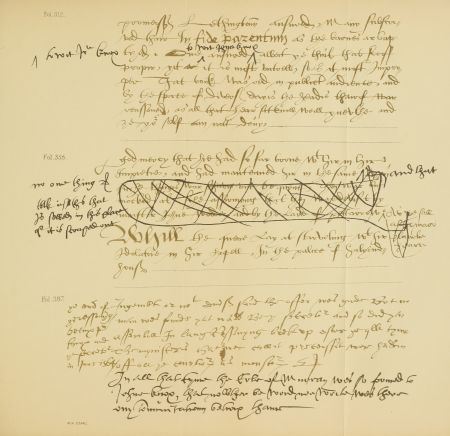
THE PREFACE (continued 5)
Reading edition
The flatteraris[978] of the Courte did daylie inrage aganis the pure Prechouris: happyest wes he that coulde invent the moist bytter tantis and disdainfull mokingis of the Mynisteris. And at lenth thai began to jest at the terme of Idolatrie, affirmyng, "That men wist nocht what thai spak, quhan thai callit the Messe Idolatrie." Yea, sum proceidit farder, and feirit nocht at opin tabilles to affirme, "That thai wald sustene the argument, that the Messe wes no Idolatrie." These thingis cuming to the earis of the prechouris, wer proclamit in publyct pulpett of Edinburgh, with this complaynt direct be the speikare[979] to his God. "O Lord, how lang sall the wyckit prevaill aganis the juste! How lang sall thou suffer thy self and thy blessit Evangill to be dyspysit of men; of men, we say, that makis[980] thame selfis defendaris of the treuth! For of thy manifest and knawin ennemeis we complene nocht, bot of such as unto whom thou hes reveilit thy lycht: for now it cumis into our eiris, that men, not Papistis, we say, bot cheif Protestantis, will defend the Messe to be no Idolatrie. Giff so wer, O Lord, myserablie haif I bene disavit, and myserablie, alace, O Lord, haif I deceavit thy peopill; quhilk thou knawis, O Lord, I haif evir moir abhorrit than a thousand deithis. Bot," said he, turnyng his face towardis the rowme where sik men as so had affirmed, sat, "Gif I be nocht able to prove the Messe to be the moist abhominable Idolatrie that evir wes useit sen the begynning of the Worlde, I offer my self to suffer the punischement appoyntit be God to a fals teichare; and it appeiris unto me," said the preichare, "that the affirmeris soulde be subject to the same law: for it is the treuthe of God that ye persecute and blaspheme; and it is the inventioun of the Devill, that obstinatlie aganis his Worde, ye menteyne. Whairat, albeit ye now flyrt and ye flyre, as [thocht] that all wer spokin wer but wind,[981] yit am I [als] assureit, as I am assureit that my God leveth, that sum that hear this your defectioun and railling aganis the treuthe and servandis of God, sall see ane pairt of Godis jugementis poured furth upoun this Realme, (and pryncipallie upoun you[982] that fastest cleifes to the favour of the Courte,) for the abominatiounes that ar be you menteneit." Albeit that suche vehemencie provoikit teiris of sum, yit those men that knew themselfis guilty, in a mocking maner said, "We must recant, and burne oure bill; for the Prechouris ar angrie."
ANNO 1564.
THIS WES NEVIR DONE BE THIS AUTHOR.
The Generall Assemblie, halden in Junij 1564,[983] approcheit, unto the which greit[984] pairt of the Nobylatie, of those that ar callit Protestantis, convenit; sum for assistance of the mynisteris, and sum to accuse thame, as we will efter heir.[985]
A lyttill befoir the trubles, quhich Sathan raised in the bodie of the Kirk, began Davie[986] to grow grit in Courte. The Quene usit him for Secretarie, in thingis that appertenit to hir secreit effaires, in France[987] or ellis quhair. Grit men maid in Courte unto him, and thair sutes wer the better heard. Bot of the begynning and progress, we delay now forder to speik, becaus his end will requyre the descryptioune of the whole: [And referris it unto suche, as God sall rayse up to do the same.][988]
The first day of the Generall Assemblie, the Courtiouris nor the Lordis that dependit upoun the Court, presentit nocht thame selfis in the sessioun with thair Bretherin. Whairat monie wondering, ane anceyant and honorable man, the Laird of Lundie,[989] said, "Nay, I wonder nocht of thair present absence; but I wonder that at our last Assemblie, thai drew thame selfis ane pairt, and joynit nocht with us, but drew from us some of our mynisteris, and wylleit thame to conclude sik thingis as war never proponit in the publick Assemblie, [quhilk apperis to me to be a thing][990] verrie prejudiciall to the libertie of the Kirk. And, thairfoir, my jugement is, that thai salbe informit of this offence, quhilk the whole Bretherin haif consaveit of thair former falt; humblie requyring thame, that gif thai be Bretherin, thai will assist thair Bretherin with thair presence and counsall, for we had nevir grytter neid. And gif thai be myndit to fall back from us, it wer better we knaw it now than afterward." Thairto aggreyit the whole Assemblie, and gaif commissioun to certene Bretherin to signify the myndis of the Assemblie to the Lordis; quhilk wes done that same day efter noon.[991]
The Courteouris at first semeit nocht a lyttill offendit, that thay sould be as it wer suspectit of defectioun: yit, nevirtheles, upoun the morrow, thai joynit with the Assemblie, and come into it: But thai drew thame selfis, lyke as thai did befoir, apairt, and enterit the Inner Counsell-house. Thair wes the Dukis Grace, the Erles Argyle, Murray, Mortoun, Glencarne, Merchell, Rothes; the Maister of Maxwell, Secretour Lethingtoun, the Justice Clark, the Clark of Register, and the Controllour, the Laird of Pittarro.
Efter a lyttill consultatioun, thai direct ane messinger, Mr. George Hay,[992] than callit the Minister of the Court, requyring the Superintendantis, and sum of the leirnit ministeris, to confer with thame. The Assemblie ansuerit, "That thai convenit to delyberat upoun the commoun effairis of the Kirk; and, thairfoir, that thay could nocht lack thair Superintendantis and cheif ministeris, whose jugementis wer so necessarie, that without thame the rest sould sit as it wer idill; and thairfoir willand thame (as of befoir) that gif thay acknawlege thame selfis memberis of the Kirk, that thai wald joyne with the Bretherin, and propone in publict sik thingis as thai pleissit; and so thai sould haif the assistance of the whole in all thingis that mycht stand to Godis commandiment. But to send from thame selfis a portioun of thair companie, thai understand that thairof hurt and sclander mycht aryse, rather than anie proffeit or conforte to the Kirk: for thay feirit, that all men sould nocht stand content with the conclusioun, whair the conference and ressounis wer hard but of a few."
This ansuer wes nocht giffin without cause; for no small travell wes maid, to haif drawin sum mynisteris to the factioun of the Courtiouris, and to haif sustenit thair argumentis and opiniounis. But whan it wes persaifit be the moist politick amangis thame, that thai could not prevaill be that meanes, thai proponeit the matter in uther termis, purging thame selfis, first, that thai nevir ment to devyde[993] thame selfis from the sociatie of thair bretherin; but, because thai had certane heidis to confer with certane ministeris; thairfoir, for avoyding of confusioun, thai thocht it mair expedient to haif the conference befoir a few, rather than in the publict audience. But the Assemblie[994] did still reply, "That secreit conference wald thay nocht admit in those heidis that sould be concludit be generall voit." The Lordis promeissit, "That no conclusioun sould be taikin, nether yit voit requyreit, till that bayth the propositiounis and the ressounis sould be heard, and considderit of the whole bodie." And upoun that conditioun wer directit unto thame, with expressit chairge to conclude no thing without the knawledge[995] and advyse of the Assemblie, the Laird of Dun, Superintendant of Anguss, the Superintendantis of Lothyane and Fyffe,[996] Mr. John Row, Mr. John Craig, Williame Crystisoune, Mr. David Lyndesay, mynisteris, with the Rectour of Sanctandrois,[997] and Mr. George Hay; the Superintendant of Glasgow, Mr. Johne Willok, wes Moderatour, and Johne Knox waitit upoun the Scrybe. And so thay wer appoyntit to sit with the Bretherin. And that because the principall compleint tuychit[998] Johne Knox, he wes also callit for.
LEDINGTOUN'S HARANGE AT THE ASSEMBLIE IN JUNIJ 1564 ZEIRIS.
Secretour Lethingtoun began the harangue,[999] which contenit these heidis: First, How much we wer adettit unto God, be whois providence we had libertie of religioun under the Quenis Majestie, albeit that sche wes nocht persuadeit in the same: Secoundlie, How necessarie ane thing it wes that the Quenis Majestic, be all gude offices, (so spak he,) of the Kirk, and of the mynisteris principally, sould be retenit in that constant opinioun, that thai unfeinzeitlie favourit hir advancement, and procureit hir subjectis to haif ane gude opinioun of hir: And, last, How daingerous ane thing it was, that mynisteris sould be noittit ane to disagree from ane uther, in form of prayer for hir Majestie, or in doctrine conserning obedience to hir Majesties authoritie: "And in these two last heidis, (said he,) we desyre you all to be circumspect; but especially we maun craif of you our brother, Johne Knox, to moderat your selff, als weall in form of praying for the Quenis Majestie, as in doctrine that ye propone tuyching hir estait and obedience. Neither sall ye tak this, (said he,) as spokin to your reproche, quia nevus[1000] interdum in corpore pulchro, but becaus that otheris, by your example, may imitate the lyke libertie, albeit nocht with the same modestie and foirsycht; and what opinioun may ingedder[1001] in the peopillis heidis, wyse men do forsee."
The said Johne prepairit him for ansuer, as followis: "Gif such as feir God haif occasioune to praise him, that becaus that idolatrie is maintenit, the servandis of God dispyseit, wyekit men placeit agane in honour and authoritie, (Mr. Henrie Synclair wes of schort tyme befoir maid President,[1002] who befoir durst nocht haif syttin in jugement;) and, finalie, (said he,) gif we aucht to prais God becaus that vice and impyettie overfloweth this hoill Realme without punischment, than haif we occasioun to rejoise and to prayse[1003] God: But gif those and the lyke use to provoik Godis vengeance aganis Realmis and Natiounis, than, in my jugement, the godlie within Scotland aucht to lament and murne; and so to prevent Goddis jugementis, leist that he, fynding all in a lyke security,[1004] stryke in his hot indignatioun, begynning [perchance] at sik as think thai offend nocht."
"That is ane heid," said Lethingtoun, "whairinto ye and I nevir aggreyit; for how ar ye abill to prove that evir God straik or plaigit ane natioun or peopill for the iniquitie of thair Prince, gif that thame selfis levit godlie?"
2 PARALI. 33.[1005]
"I lukeit," said he, "my Lord, to haif audience, till that I had absolvit the uthor two pairtis; but seing it pleissis your Lordship to cut me off befoir the myddis, I will ansuer to your questioun. The Scriptour of God teichis me, that Jerusalem and Juda wes punischit for the sinne of Manasses; and gif ye will allege, that thai wer punischit because that thai wer wyckit, and offendit with thair King, and nocht because thair King wes wyckit; I ansuer, that albeit the Spreit of God makis for me, saying in expressit wordis, 'For the syn of Manasses,' yit will I nocht be so obstinat as to lay the whole syn, and plaigis that thairof followit, upoun the King, and utterlie absolve the peopill; but I will grant with you, that the whole peopill offendit with the King: but how, and in what fassioun, I feir that ye and I sall nocht agrie. I doute nocht but the grit multitude accumpanit him in all abhominatiounis quhilk he did; for idolatrie, and ane fals religioun haith evir bene, is, and wilbe plesing to the moist pairt of men. But to affirm that all Juda committit realie the actis of his impyettie, is but to affirm that quhilk nether hes certentie, nor yit appeirence of ane treuth: for who can think it to be possible, that all those of Jerusalem sould so schoirtlie turn to externall idolatrie, considdering the notabill reformatioun laitlie befoir had in the days of Ezechias? But yit, says the text, 'Manasses maid Juda and the inhabitantis of Jerusalem to erre.' True it is; for the one pairt, as I haif said, willinglie followit him in his idolatrie, and the other, be ressoune of his authoritie, sufferit him to fyle Jerusalem, and the tempill of God, with all abhominatiounis, and so wer thai all cryminall for his sin; the one be act and deid, the uther be suffering and permissioun: even as hoill Scotland is guiltie this day of the Quenis idolatrie, and ye, my Lordis, speciallie above all utheris."
"Weill," said Lethingtoun, "that is the cheif heid quhairin we nevir aggreit; but of that we sall speik heirefter. What will ye say as tuyching the moveing of the peopill to haif ane gude opinioun of the Quenis Majestie, and as concerning obedience to be gevin to hir authoritie, as also of the form of the prayer quhilk commounlie ye use," &c.
"My Lord," said he, "moir eirnistlie to move the peopill, or yit utherwyse to pray than heirtofoir I haif done, a gude conscience will nocht suffer me; for He who knawis the secreittis of hertis, knawis that privilie and publictlie I haif callit to God for hir conversioun, and haif willit the peopill to do the same, schawing thame the dangerous estait quhairin nocht onelie sche hir self standis, but also the haill Realme, be the ressoun of hir indureit blindnes," &c.
"That is it," said Lethingtoun, "whairin we find gryttest falt. Your extremitie aganis hir Messe, in particular, passis meassour. Ye call hir ane slaif to Sathan; ye affirme that Godis vengeance hingis oure the Realme, be ressoune of hir impietie;[1006] and what is this ellis but to rouse up the hairt of the peopill aganis hir Majestie, and aganis thame that serve hir."
THE MR. OF MAXWELL'S WORDS IN THE ASSEMBLIE.
Thair wes heard ane exclamatioun of the rest of the flatteraris, that sick extremittie could nocht proffit. The Maister of Maxwell said in plane wordis, "Gif I war in the Quenis Majesties place, I wald nocht suffer sick thingis as I heir."
JOHN KNOX HIS PRAYER FOR THE QUENE.
"Gif the wordis of prechouris," said Johne Knox, "sall alwayis be rest to the worst pairt, than will it be hard to speik onie thing so circumspectlie, provyded that the treuth be spokin, quhilk sall not eschape the censure of the calamniatour. The moist vehement, and, as ye speak, excessive maneir of prayer that I use in publict is this, 'O Lord, gif thy plesour be, purge the hairt of the Quenis Majestie from the venoum of idolatrie, and deliver hir from the boundage and thraldom of Sathan, in the quhilk sche hes bene brocht up, and yit remanis, for the lack of true doctrine; and lat hir see, be the illuminatioun of thy Holie Spreit, that thair is no meane to pleis thee but be Jesus Christ thy onlie Son, and that Jesus Christ can nocht be found but in thy holie word, nor yit ressavit but as it prescrybeis; which is, to renunce our awin wittis, and preconsavit opinioun, and worschip thee as thou commandis; that in sa doing sche may avoid that eternall dampnatioun quhilk abydeis all obstinat and impenitent unto the end; and that this poor Realme may also eschaip that plaig and vengeance quhilk inevitablie followis idolatrie, menteinit aganis thy manifest worde, and the opin lycht thairof.' This, (said he,) is the form of my commoun prayer, as your selflis can witnes. Now, what is worthie reprehensioun in it I wald heir?"
"Thair ar three thingis," said Lethingtoun, "that nevir lykeit unto me. And the first is, Ye pray for the Quenis Majestie with ane conditioun, saying, 'Illuminat hir hairt, gif thy gude plesour be;' quhairby it may appeir, that ye doute of hir conversioun. Whair haif ye the example of sik prayer?"
"Whairsoevir the exampillis are," said the uther, "I am assureit of the reule, whilk is this, 'Gif we sall ask onie thing according to his will, he sall heir us;' and our Maister, Chryst Jesus, commandit us to pray unto our Father, 'Thy will be done.'"
"But," said Lethingtoun, "whair evir find ye onie of the Propheitis so to haif pray it?"
"It sufficeth me," said the uther, "my Lord, that the Maister and teicheare of bayth Prophettis and Appossillis hes taucht me so to pray."
"But in so doing," said he, "ye put ane doute in the peopillis heid of hir conversioun."[1007]
"Nocht I, my Lord," said the uther, "but hir awin obstinat rebellioune causis mo than me to doute of hir conversioun."
"Whairinto," said he, "rebellis sche aganis God?"
"In all the actiounis of hir lyffe," said he, "but in thir two heidis especiallie; former, That sche will nocht heir the preiching of the blissit evangill of Jesus Chryst; and secoundlie, That sche menteinis that idoll, the Messe."
"Sche thinkis nocht that rebellioune," said Lethingtoun, "but goode religion."
"So thocht thai," said the uther, "that sumtymes offerit thair childerin unto Moloch, and yit the Spreit of God affirmeis that thai offerit thame unto devillis, and nocht unto God. And this day the Turkis thinkis to haif ane better religioune than the Papistis haif; and yit, I think, ye will excuse nether of thame boith from committing rebellioun aganis God: nether yit justlie can ye do the Quene, onles that ye will mak God to be parcyall."
"But yit," said Lethingtoun, "why pray ye nocht for hir without moving onie doute?"
"Becaus," said the uther, "I haif leirnit to pray in faith. Now Faith, ye know, dependis upoun the wordis of God, and so it is that the word teichis me, that prayeris proffettis the sonis and dochteris of Godis electioun, of which noumer, quhether sche be ane or nocht, I haif just cause to doute; and, thairfoir, I pray God 'illuminat hir hairt, gif his gude plesour be.'"
"But yit," said Lethingtoun, "ye can produce the exampill of none that so hes prayit befoir you."
"Thairto I haif alreddy ansuerit," said Johne Knox; "but yit for farther declaratioun, I will demand ane questioun, quhilk is this, Quhider gif ye think that the Appossillis prayit thame selves as thai commandit utheris to pray."
"Who douttis of that?" said the haill companie that wer present.
"Weill than," said Johne Knox, "I am assureit that Peter said thir wordis to Symoun Magus, 'Repent thairfoir of this thy wyckitness, and pray to God, that gif it be possible the thought of your hairt may be forgevin thee.' Heir we may cleirlie see that Peter joynes ane conditioun with his commandiment, That Symoun sould repent and pray, to wit, gif it wer possible that his sin mycht be forgevin; for he wes nocht ignorant that sum synnis wer unto the deith, and so without all houpe of repentence or remissioun. And think ye nocht, my Lord Secretar, (said he,) but the same doute may tuich my hairt, as tuyching the Quenis conversioun, that then tuiched the hairt of the Appossill?"
"I wald nevir," said Lethingtoun, "heir you or onie uther call that in doubt."
"But your will," said the uther, "is no assurance to my conscience: And to speik frelie, my Lord, I wonder gif ye your self doute nocht of the Quenis conversioun; for more evident signes of induratioun haif appeirit, and still do appeir in hir, than Peter outwartlie could haif espyit in Symoun Magus. For albeit sum tymes he wes are sorcerar, yit joynit he with the Appossillis, belevit, and wes bapteissit; and albeit that the venome of avarice remaneit in his hairt, and that he wald haif bocht the Holie Goist, yit when he heard the feirfull threitnyngis of God pronunceand aganis him, he trymbillitt, desyreit the assistance of the prayeris of the Appossilis, and so humblit him self, so far as the jugement of man could perss, lyke ane true penitent, and yit we see that Peter douttis of his conversioun. [Quhy then may not all the godly justly doubt of the conversioun[1008]] of the Quene, wha hes usit idolatrie, quhilk is no less odious in the sicht of God than is the other and still continewis in the same, yea, that dispyseis all threitnyngis, and refuisses all godlie admonitiounis?"
"Quhy say ye that sche refuisses admonitioun?" said Lethingtoun. "She will glaidlie heir ony man."
"But what obedience," said the uther, "to God or to his worde, ensewis of all that is spokin unto hir? Or when sall sche be sene to gif hir presence to the publict preiching?"
"I think nevir," said Lethingtoun, "so lang as sche is thus intreittit."
"And so lang," said the uther, "ye and all utheris maun be content that I pray so as I may be assureit to be heard of my God, that his gude will may be done, ether in making hir comfortable to his Kirk, or gif that he hes appoyntit hir to be ane scurge to the same, that we may haif patience, and sche may be brydellit."
"Weill," said Lethingtoun, "lat us cum to the Secound Heid. Whair find ye that the Scriptour callis onie the bound slaiffis to Sathan? or that the Propheittis of God speik so irreverentlie of kingis and princes?"
ACTIS 26
2 TIMO. 2
"The Scriptour," said Johne Knox, "sayis, that 'be natour we are all the soneis of wraith.' Our Maister, Chryst Jesus, affirmes, 'that sik as do sin ar servandis to sin,' and that it is the onlie Son of God that settis men at freedome. Now what difference thair is betwix the sonnis of wraith, and the servandis of sin, and the slaiffis to the devill, I understand nocht, except I be taught; and gif the scharpnes of the terme offendit you, I haif nocht inventit that phrase of speich, but haif leirnit it out of Godis Scriptour; for those wordis I find spokin unto Paul, 'Behauld, I send thee to the Gentillis, to oppin thair eyes, that thay may turn from darknes to lycht, and from the power of Sathan unto God.' Mark thir wordis, my Lord, and sture nocht at the speiking of the Holie Goist. And the same Apostle wryting to his scoller Timotheus, says, 'Instruct with meiknes those that ar contrarie myndit, gif that God at onie tyme will gif thame repentence, that thay may knaw the treuth, and that thay may cum to amendment, out of the snair of the Devill, quhilk ar tackin of him at his will.' Gif your Lordschip rychtlie considder these sentences, ye sall nocht onlie find my wordis to be the wordis of the Holie Goist, but also the conditioune quhilk I use to adde, to haif the assurance of Godis Scriptouris."
"But thay spak nothing aganis kingis in especiall," said Lethingtoun, "and yit your continewall crying is, 'The Quenis Idolatrie, the Quenis Messe, will provoke Godis vengeance.'"
"In the former sentences," said the uther, "I heir nocht Kingis and Quenis excepit, but all unfaithfull ar pronunced to stand in one rank, and to be in bondage to ane tyrant, the Devill. But belyke, my Lord, ye lyttill regaird the estait whairin thay stand, when ye wald haif thame so flatterit, that the daingour thairfoir sould neither be knawin, neither yit declareit to the poore peopill."
"Quhair will ye find," said Lethingtoun, "that onie of the Propheittis did so intreat Kingis and Quenis, reuleris or magistratis?"
"In mo placeis than ane," said the uther. "Achab wes ane King, and Jesabell wes ane Quene, and yit what the Prophet Helias said to the one and to the uther, I suppois ye be nocht ignorant?"
"That wes nocht cryit out befoir the peopill," said Lethingtoun, "to mak thame odious unto thair subjectis."
"That Helias said, 'Doggis sail lyck the blude of Achab,'" said Johne Knox, "'and eat the flesche of Jesabell,' the Scriptouris assuris me; but that it wes whisperit in thair awin eir, or in ane cornar, I reid nocht. But the plane contrair appeiris to me, quhilk is, that boith the Peopill and the Court understude weill eneuch what the Propheit had promeissit;[1009] for so witnessit Jehu, efter that Godis vengeance had strickin Jesabell."
"Thay wer singular motiounis of the Spreit of God," said Lethingtoun, "and appertene nothing to this our aige."
"Then hes the Scriptour far dissavit me," said the uther; "for Sanct Paule teichis me, that 'Whatsoevir is wryttin within the Holie Scriptouris, the same is writtin for our instructioun,' And my Maister said, that 'Everie leirnit and wyise scribe bringis furth his tresour, baith thingis auld and thingis new.' And the Propheit Jeremye affirmis, that 'Everie realme and everie cytie that lykwyse offendis, as then did Jerusalem, sould lykewyse be punischit.' Why then that the factis of the ancient Propheittis, and the feirfull jugementis of God executed befoir us upoun the disobedient, appertene nocht unto this our aige, I neither see nor yit can understand. But now, to put end to this heid, my Lord, (said he,) the Propheittis of God hes nocht spairit to rebuke wickit kingis, alsweill in thair face as befoir the pepill and subjectis. Elischa[1010] feirit nocht to say to king Jehoram, 'What haif I to do with thee? Get thee to the Propheittis of thy [Father, and to the Propheittis of thy] Mother; for as the Lord of Hostis levis, in quhose sicht I stand, gif it wer nocht that I regaird the presens of Jehosaphat, the king of Juda, I wald nocht haif luikit toward thee, nor sene thee.' Plane it is, that the Propheitt wes ane subject in the kingdom of Israell, and yit how little reverence he gevis to the King, we heir. Jeremye the Propheit wes commandit to cry to the King and to the Quene, and to say, 'Behaif your selfis lawlie; execute justice and jugement; or ellis your carcageis salbe eassin to the heit of the day, and unto the froist of the nicht.' Unto Cononias, Sallum, and Zedechias, he speikis in speciall, and schawis into tham, in his publict sermoundis thair misserable endis; and thairfoir ye aucht nocht to think it strainge, my Lord, (said he,) albeit that the servandis of God mark the vice[1011] of Kingis and Quenis, evin als weill as of uther offendouris, and that because thair synnis be moir noisum to the Commounwelth, than ar the synnis of inferiour persounis."
The moist pairt of this ressounyng, Secretour Lethingtoun leanit upoun the Maister of Maxwellis breist, who said, "I am almoist werie: I wald that sum uther wald ressoun in the chief heid, quhilk is nocht tuychit."
Then the Erle of Mortoune, Chancellour, commandit Mr. George Hay to reassoun aganis Johne Knox, in the heid of Obedience dew unto Magistratis; who began so to do. Unto whom Johne Knox said, "Brother, that ye sall ressoun in my contrair I am weill content, because I know you boith ane man of leirnyng and of modestie: but that ye sall oppone your self in the treuth whairof,[1012] I suppoise, your awin conscience is no less perswaded than is mine, I can nocht weill approve; for I wald be sorie that I and ye suld be reputed to ressoun as two scolleris of Pythagoras, to schaw the quicknes of our ingyne, as it wer to ressoune on boith the pairtis. I protest heir befoir God, that whatsoevir I sustene, I do the same of conscience; yea, I dar no moir sustene ane propositioun knawin unto my self untrew, than that I dar teich false doctrine in the publict place: And thairfoir, Brother, gif conscience move you to oppone your self to that doctrine, whilk ye haif heard of my mouth in that maitter, do it bauldlie: it sall nevir offend me. But that ye sall be found to oppone[1013] your self unto me, ye being perswaidit in the same treuthe, I say yit agane, it pleisses me nocht; for thairin may be gritter inconvenient than either ye or I do considder for the present."
The said Mr. George ansuerit, "That I wald oppone my self unto you as willing to impugn or confute that heid of doctrine, whilk nocht onlie ye, but monie utheris, yea, and I my self haif affirmit, far be it from me; for so sould I be found contrarious to my self. For my Lord Secretour knawis my jugement in that heid."
"Marye!" said the Secretour, "ye ar the weall worst of the twa; for I remember weill your ressonyng whan the Quene wes in Caryke."[1014]
"Weill," said Johne Knox, "seing, Brother, that God hes maid you to occupy the chyre of verittie, whairin, I assure, we will aggrie in all principall heidis of doctrine, lat it nevir be said that we disaggrie in disputatioun." Johne Knox wes moved thus to speik, because he[1015] understood moir of the craft than the other did.
"Weill," said Lethingtoun, "I am sumwhat better provydeit in this last heid, then I wes in the uther twa. Mr. Knox, (said he,) yisterday we heard your jugement upoun the 13 to the Romanis; we heard the mynde of the Appossill weill opened; we heard the causses why God hes establissed Poweris upoun the earth; we heard the necessitie that mankynde hes of the same; and we heard the deutie of Magistratis sufficientlie declareit: But in two thingis I wes offendit, and I think sum mo of my Lordis that than wer present. The ane was, ye maid difference betwix the ordinance of God and the persounis that wer placeit in authoritie; and ye affirmed, that men mycht refuise[1016] the persounis, and yit nocht to offend againis Godis ordinance. This is the ane; the uther ye had na tyme to explane; but this methocht ye menit, that subjectis wer nocht bound to obey thair Princes gif thai commandit unlauchfull thingis; but that thai mycht resist thair Princes, and wer nocht ever bound to suffer."
"In verie deid," said the uther, "ye haif rychtlie bayth markit my wordis, and understand my mynd; for of that same jugement I haif lang bene, and so yit I remane."
"How will ye prove your divisioun and difference," said Lethingtoun, "and that the persoun placeit in authoritie may be resistit, and Godis ordinance nocht transgressit, seing that the Appossill says, 'He that resistis [the poweris,] resisteth the ordinance of God.'"
"My Lord," said he, "the plane wordis of the Appossill makis the difference, and the factis of many approved be God, prove my affirmative. First, The Appossill affirmis, that the poweris ar ordanit of God, [for the preservation of quyet and peacebill men, and for the punischment of malefactours; quhairof it is plane, That the ordinance of God,][1017] and the power giffin unto man, is one thing, and the persone clad with the power or with the authoritie, is ane uther; for Godis ordinance is the conservatioun of mankynd, the punischment of vyce, the mentenyng of vertew, quhilk is in it self holie, just, constant, stable, and perpetuall. But men clad with the authoritie, ar commounlie prophane and unjust; yea, thai ar mutabill and transitorie, and subject to corruptioun, as God threitneth thame be his Prophet David, saying, 'I haif said, Ye ar godis, and everie one of you the sones of the Moist Heichest; but ye sall die as men, and the princes sall fall like utheris.' Heir I am assureit, that persounis, the saule and bodie of wyckit Princes, ar threitnit with death: I think, that so ye will nocht affirm is the authoritie, the ordinance and the power, whairwith God hes indeuit sik persounis; for as I haif said, as it is holie, so it is the permanent will of God. And now, my Lord, that the Prince may be resistit, and yit the ordinance of God nocht violatit, it is evident; for the peopill resistit Saule, when he had sworn be the leving God that Jonathan sould die. The peopill, (I say,) swair in the contrair, and delyverit Jonathan, so that ane hair of his heid fell nocht. Now, Saule wes the anoyntit King, and thai wer his subjectis, and yit thai so resisted him, that thai maid him no better than mansworne."
"I doute," said Lethingtoun, "if in so doing the peopill did weill."
"The Spreit of God," said the uther, "accuses thame nocht of onie cryime, but rather praisses thame, and dampnis the King, alsweill for his foolish vow and law maid without God, as for his crewell mynd, that so seveirlie wald haif punischit ane innocent man. But heirin I sall nocht stand: this that followis sall confirm the former. This same Saule commandit Abimelech and the Preistis of the Lord to be slane, becaus thay had committit tressoune, as he allegit, for intercommuning with David: His gaird and principall servandis walde nocht obey his unjust commandiment; but Doeg the flatterar put the Kingis creweltie to executioun. I will nocht ask your jugement, Whidder that the servandis of the King, in nocht obeying his commandiment, resisted God or nocht? or whidder Doeg, in murthering the Preastis, gaif obedience to ane just authoritie? for I haif the Spreit of God, speiking be the mouth of David, to assure me of the one alsweill as of the uther; for he, in his 52d Psalme, dampnis that fact as ane moist crewell murther; and affirmis, that God wald punisch, nocht onlie the commander, but the mercyles executour. And thairfoir, I conclude, that thai who ganestand his commandiment, resistit nocht the ordinance of God.
"And now, my Lord, to ansueir to the place of the Appossill, who affirmis, 'That such as resistis the Power, resistis the ordinance of God;' I say, that the power in that place is nocht to be understande of the unjuste commandiment of men, but of the just power whairwith God hes armit his Magistratis and Lievtenentis to punische syn, and mentene vertew. As gif onie man sould interpryise to tak fra the handis of ane lauchful juge ane murderare, ane adulterar, or onie [uther] malefactour that be Godis law deserved deith, this same man resistit Godis ordinance, and procureit to him self vengeance and dampnatioune, because that he stayit Godis sworde[1018] to stryke. But so it is nocht, gif that men in the feir of God oppone[1019] thame selfis to the furie and blynd rage of Princes; for so thai resist nocht God, but the Devill, who abusis the swerd and authoritie of God."
"I understand sufficientlie," said Lethingtoun, "what ye mene; and to the one pairt I will nocht oppone[1019] my self. But I doute of the uther. For gif the Quene wald command me [to] slay Johne Knox, because sche is offendit at him, I wald nocht obey hir. But, and sche wald command utheris to do it, or yit be ane collour of justice tak his lyffe fra him, I can nocht tell gif I be found to defend him aganis the Quene and aganis hir officiaris."
"Under protestatioun," said the uther, "that the auditour think nocht that I seik favouris to my self,[1020] I say, my Lord, that gif ye be persuadeit of my innocency, and gif God hes giffin unto you sik ane power and credyt as mycht deliver me, and yit sufferit me to perisch, that in so doing ye soulde be cryminall and gyltie of my blude."
"Prove that, and win the play," said Lethingtoun.
"Weill, my Lord," said the uther, "remember your promeis, and I sail be schoirt of my probatioun. The Propheit Jeremey wes apprehendit be Preistis and Prophettis, (who wer ane pairt of the authoritie within Jerusalem,) and be the multitude of the peopill, and this sentence wes pronunceit aganis him, 'Thou sall dey the deith; for thou hes said, This hous salbe lyk Siloch, and this cytie salbe desolat without ane habitant.' The Princes heiring the uprore, come from the Kingis hous, and sit doune in jugement in the entrie of the new gait of the Lordis hous, and thair the Preistis find the Prophettis befoir the Princes, and befoir all the peopill, intendit thair accusatioun, in these wordis, 'This man is worthie to dye, for he hes propheissit aganis this cytie, as your eiris haif heard.' Jeremey ansuerit, 'That whatsoevir he had spokin proceidit from God; and thairfoir, (said he,) as for me, I am in your handis: do with me as ye think gude and rycht: But knaw ye for certane, that if ye put me to deith, ye sall surelie bring innocent blude upoun your saulis,[1021] and upoun this cytie, and upoun the habitatiounis[1022] thairof; for of treuth, the Lord hes send me unto you, to speik all these wordis.' Now, my Lord, gif the Princes and the hole peopill sould haif bene gyltie of the Propheittis blude, how sall ye or utheris be jugeit innocent befoir God, gif ye sall suffer the blude of sik as haif nocht deservit deith to be sched, when that ye may save it?"
"The cases ar nothing lyke," said Lethingtoun.
"And I wald learn," said the uther, "whairin the dissymilitude standis."
"First," said Lethingtoun, "the King had nocht condampnit him to the deith. And nixt, the false Propheittis and the Preistis and the peopill accuseit him without ane caus, and thairfoir thai could nocht but be gyltie of his blude."
"Nether of these," said Johne Knox, "fechtis aganis my argument; for albeit the King wes nether present, nor yit had condampnit him, yit wer the princes and cheif counsallouris thair sytting in jugement, who presentit the Kingis persoune and authoritie, heiring the accusatioune laid unto the chairge off the Propheit; and thairfoir he foirwairnis thame of the dainger, as befoir I said, to wit, that in case he soulde be condampnit, and so put to deith, that the King, the Counsell, and the whole cytie of Jerusalem, soulde be gyltie of his blude, becaus he had committit no cryme worthy of deith. And gif ye think, that thai souldo haif bene all cryminall onelie, becaus that thay all accuseit him, the plane text witnesses the contrair; for the princes defendit him, and so no doute did a greit pairt of the peopill; and yit he bauldlie affirmis, that thai soulde be all gyltie of his blude gif that he soulde be put to deith. And the propheit Ezechiell gifis the ressoune why all are guilty of ane commoune corruptioune, 'Becaus,' sayis he, 'I socht ane man amangis thame that soulde mak [up] the hedge, and stand in the gappe befoir me for the land, that I soulde nocht distroy it, but I fand none; thairfoir, haif I powrit my indignatioune upoun thame.' Heirof, my Lorde, (said he,) it is plaine, that God craveis nocht onlie that a man do no iniquittie in his awin persoune, but also that he oppone[1023] him self to all iniquitie, sa far furth as into him lyis."
"Than will ye," said Lethingtoun, "mak subjectis to controlle thair prynces and reuleris."
"And what harm," said the uther, "soulde the Commounewelth ressaif, gif that the corrupt effectiounis off ignorant reuleris wer moderatit, and so brydillit be the wisdome and discretioun of godlie subjectis, that thai soulde do wrang nor violence to no man?"
"All this ressonyng," said Lethingtoun, "is nocht of the purpois; for we ressoune as gif the Quene soulde becum sik an ennemye to oure religioune, that sche soulde persecute it, and put innocent men to deith; whilk I am assureit sche nevir thocht, nor nevir will do. For gif I soulde see hir begin at that end, yea, gif I soulde suspect onie sik thing in hir, I soulde be also far fordwarte in that argument as ye or onie uther within this Realme: Bot thair is nocht sik ane thing. Oure questioune is, Whidder that we may and aucht to suppres the Quenis Messe? Or whidder hir Idolatrie salbe laid to our chairge?"
"What ye may," said the uther, "be force, I disput nocht; bot what ye may and aucht to do be Godis express commandiment, that I can tell. Idolatrie aucht nocht [only] to be suppressit, but the idolater aucht to dey the deith, unless that we will accuse God."
"I knaw," said Lethingtoun, "the idolater is commandit to dey the deith; but be whome?"
"Be the peopill of God," said the uther; "for the commandiment wes gevin to Israell, as ye may reid, 'Heir, Israell,' sayis the Lorde, 'the statutis and the ordinancis of the Lord thy God,' &c. Yea, ane [commandment] wes gevin, That gif it be heard that idolatrie is committit in onie ane cytie, inquisitioune salbe taikin; and gif it be founde trew, that than the whole bodie of the peopill sall aryse and destroy that cytie, spairing in it nether man, woman, nor chylde."
"But thair is no commandiment gevin to the peopill," said the Secretour, "to punisch thair King gif he be ane idoliter."
"I find no moir privilege grantit unto Kingis," said the uther, "be God, moir than unto the peopill, to offend Godis majestie."
"I grant," said Lethingtoun; "but yit the peopill may nocht be jugeis unto thair King to punisch him, albeit he be ane idolater."
"God," said the uther, "is the Universall Judge, alsweill unto the King as to the peopill; so that what his worde commandis to be punischit in the one, is nocht to be absolved in the uther."
"We agree in that," said Lethingtoun; "but the peopill may nocht execute Godis jugement, but man leif it unto him self, who will either punische it be deith, be war, be emprisounment, or be sum uther plaigis."[1024]
"I knaw the last pairt of your ressoune," said Johne Knox, "to be trew; but for the first, to wit, that the peopill, yea, or ane pairt of the peopill may nocht execut God jugementis aganis thair King, being ane offender, I am assureit ye haif no uther warrand except your awin imaginatioun, and the opinioune of sik as moir feir to offend princes than God."
"Why say ye so?" said Lethingtoun, "I haif the jugementis of the most famous men within Europe, and of sik as ye your self will confes boith godlie and leirnit."
And with that he callit for his paperis, quhilk produceit be Mr. Robert Maitland,[1025] he began to reid with greit gravitie the jugementis of Luther, Melanchton, the myndis of Bucer, Musculus, and Calvin, how Christianis soulde behaffe thame selffis in tyme of persecutioun: yea, the Buik of Baruch wes nocht omittit with this conclusioune.[1026] "The gathering of these thingis," said he, "hes coist moir travell, than I tuik this sevin yearis in reiding of anie commentareis."
"The moir pitie," said the uther, "and yit, what ye haif proffeitit your awin cause, let utheris juge. But as for my argument, I am assureit, ye haif infirmit it nothing; for your first two witnesses speik aganis the Anabaptistis, who deny that Christianis soulde be subject to magistratis, or yit that is lauchfull for ane Christiane to be ane magistrate; quhilk opinioune I no less abhore than ye do, or onie uther that levis do. The uthers speik of Christiane subjectis unto tyrantis and infidellis, so dispersed that thai haif no uther force but onlie to sobbe to God for delyverance. That sik indeid sould haisard onie farder than these godlie men willis thame, I can nocht haistellie be of counsell. But my argument hes ane uther grounde; for I speik of the peopill assembled togidder in one bodie of ane Commounewelth, unto whome God hes gevin sufficient force, nocht onlie to resyst, but also to suppres all kynde of opin idolatrie: and sik ane peopill, yit agane I affirme, ar bound to kepe thair land clene and unpollutit. And that this my devissioune sall nocht appeir strange unto you, ye sall understand, that God requyreit one thing of Abrahame and of his seid, when he and thay wer strangeris and pilgremes in Egipte and Canaan; and ane uther thing requyrit he of thame, when thay wer delyverit fra the boundage of Egipt, and the possessioune of the land of Canaan grantit unto thame. At the first, and during all the tyme of thair boundage, God craveit no moir but that Abraham soulde nocht defyle himself with idolatrie. Nether wes he, nor yit his posterittie commandit to distroy the idollis that wer in Canaan or in Egypt. But when God gaif unto thame the possessioune of the land, he gaif unto thame this strait commandiment, 'Bewar that you mak league or confyderacye with the inhabitantis of this land: gif nocht thy sonnis unto thair dochteris, nor yit gif thy douchteris unto thair sonnis. But this sall ye do unto thame, cut downe thair grovis, destroy thair imageis, brek doune thair altaris, and leif thou no kynde of remembrance of those abominatiounis, whilk the inhabitantis of the land useit befoir: for thou art ane holie peopill unto the Lorde thy God. Defyle nocht thy self, thairwith, with thair goddis.'
"To this same commandiment, I say, are ye, my Lordis, and all sik as haif professit the Lorde Jesus within this Realme bound. For God hes wrocht no less myrakill upoun you, baith spirituall and corporall, than he did unto the carnell seid of Abraham. For in what estait your bodyis, and this pure Realme wes, within this sevin yeir, your selfis can nocht be ignorant: You and it wer boith in boundage of ane strange natioun; and what tyrrantis rang over your conscience, God perchance may lat you feill, becaus that ye do nocht rychtlie acknawlege the benefit ressavit. When oure pure Bretherin befoir us gave thair bodeis to the flamis of fyre, for the testimonie of the treuthe, and when skairslie coulde ten be founde into ane contrie, that rychtlie knew God, it had bene folishnes to haif craveit ether of the Nobillitie, or of the meane Subjectis, the suppressing of Idolatrie; for that had beene no thing but to haif exponeit the sempill scheip in ane prey to the woulves. But sen that God hes multipleyit knawlege, yea, and hes gevin the victorie to his treuthe, evin in the handis of his servandis, gif ye suffer the land agane to be defyleit, ye and your Princess sall boith drink the coupe of Godis indignatioun, sche for hir obstinat abydeing in manifest idolatrie, in this grit lycht of the Evangill of Jesus Chryste, and ye for your permissioune and mentenyng hir in the same."[1027]
Lethingtoun said, "In that poynt we will nevir agree; and whair find ye, I pray you, that evir onie of the Prophettis or of the Appossillis taucht sik ane doctrine, that the peopill soulde be plaigit for the idolatrie of the prince; or yit, that the subjectis mycht suppres the idolatrie of thair rewleris, or punisch thame for the same?"
"What wes the commissioune giffin to the Appossillis," said he, "my Lorde, we knaw: it wes to preche and plant the Evangill of Jesus Chryste, whair darkness affoir had dominioune; and thairfoir it behuifit thame, first to lat thame see the lycht befoir that thay soulde will thame to put to thair handis to suppress idolatrie. What preceptis the Appossillis gaif unto the faythfull in perticular, other than that thai commandit all to fley frome idolatrie, I will nocht affirme: But I find two thingis quhilk the faithfull did; the one wes, thay assisted thair preichouris, evin aganeis the reuleris and magistrates; the other wes, thay suppressit idolatrie whairsoever God gaif unto thame force, asking no leif at the Empriour, nor of his deputtis. Reid the Ecclesiasticall Historie, and ye sall find cxampill sufficient. And as to the doctrine of the Prophettis, we knaw thay wer interpretouris of the law of God; and we knaw thay spak alsweill to the kingis as to the peopill. I reid that nether of boith wald heir thame; and thairfoir come the plaig of God upoun boith. But that thai more flatterit Kingis than that thay did the peopill, I can nocht be persuadit. Now, Godis lawis pronunces deith, as befoir I haif said, to idolateris withoute exceptioune of onie persoune: Now, how the Propheittis coulde rychtlie interpret the law, and schew the causes of Godis jugementis, quhilk evir thay threitned soulde follow idolatrie, and for the rest of abominatiounis that accumpaney it, for it is nevir alone; but still corrupt religioune bringis with it ane fylthie and corrupt lyfe: How, I say, the Propheittis coulde reprove the vyces, and nocht schaw the peopill thair dewtie, I understand nocht; and thairfoir I constantlie beleif that the doctrine of the Prophettis wes so sensible, that the Kingis understude thair awin abhominatiounis, and the peopill understude what thay aucht to haif done, in punisching and repressing thame. But becaus that the moist pairt of the pepill wer no less rebellious unto God than wer thair princes, thairfoir the ane and the uther conveineit aganis God and aganis his servandis. And yit, my Lord, the factis of sum Propheittis ar so evident, that thairof we may collect what doctrine thay taucht; for it war no small absurdity to affirme that thair factis soulde repugn to their doctrine."
"I think," said Lethingtoun, "ye meane of the historie of Jehu. What will ye prove thairby?"
"The cheif heid," said Johne Knox, "that ye deny, to wit, That the Propheittis nevir taucht that it appertenit to the peopill to punisch the idolatrie of thair Kingis; the contrair whairof I affirm: And for the probatioun, I am reddie to produce the fact of ane Propheit; for ye knaw, my Lord, said he, that Eliseus send one of the childrene of the Propheittis to anoynt Jehu, who gaif him in commandiment to destroy the hous of his maister Achab for the idolatrie commitit be him, and for the innocent blude that Jesabell his wyckit wyff had sched: quhilk he obeyit, and pat in full execution; for the quhilk God promessit unto him the stabillatie of the kingdom to the fourt generation. Now, said he, heir is the fact of ane Propheit, that proveis that subjectis wer commandit to execute jugementis upoun thair King and Prince."
"Thair is eneuch," said Lethingtoun, "to be ansuerit thairto; for Jehu wes ane King befoir he pat onie thing in executioun; and besydis this, the fact is extraordinaire, and aucht nocht to be imitat."
"My Lord," said the uther, "he wes ane meir subject, and no King whan the Propheittis servand came unto him; yea, and albeit that his fellow capitanis, heiring of the message, blew the trumphet, and said, 'Jehu is king;' yit I doute nocht, but Jesabell boith thocht and said, 'He wes ane traitour;' and so did monie utheris that wer in Israell and in Samaria. And as tuiching that ye allege, that the fact wes extraordinarie, and is nocht to be imitat, I say, that it had ground of Godis ordinary jugement, whilk commandis the idolater to dey the deith; and, thairfoir, I yit agane affirme, that it is to be imitat of all those that prefferis the true honour, the true worschip and glorie of God, to the affectiounis of flesch, and of wickit Princes."[1028]
"We ar nocht bound to imitat extraordinarie exampillis," said Lethingtoun, "unles we haif the lyke commandiment and assurance."
"I grant," said the uther, "gif the exampill repugn to the law; and gif ane avaricious and deceitfull man wald borrow [gold,] silver, rayment, or [ony] uther necessaris from his nychtbour, and withhauld the same, alledging, that so thay mycht do and nocht offend God, because that the Iseraellitis did so to the Egiptianis at thair depairtour furth of Egipt. The exampill served to no purpoise unles that thai coulde produce the lyke cause, and the lyke commandiment that the Iseraellitis had, and that because thair fact repugnit to this commandiment of God, 'Thou sall nocht steill.' But whair the exampill aggreis with the law, and is, as it wer, the executioun of Godis jugementis expressit in the same, I say, that the exampill approved of God standis to us in place of a commandiment: for, as God of his natour is constant, immutable, sa can he nocht dampne in the aigis subsequent, that whilk he hes approvit in his servandis befoir us. But in his servandis befoir us, He be his awin commandiment hes approvit, that subjectis hes nocht onlie distroyit thair Kingis for idolatrie, but also hes ruitit out thair hoill posteritie, so that none of that race wes left efter to impyre above the peopill of God."
"Whatsoevir thai did," said Lethingtoun, "wes done at Godis commandiment."
"That fortifeis my argument," said the uther; "for be Godis commandiment he approvit, that subjectis punish thair Princes[1029] for idolatrie and wickitness be thame committit."
"We haif nocht the lyke commandiment," said Lethingtoun.
"That I deny," said the uther; "for the commandiment, 'The idolater sall dey the deith,' is perpetuall, as [ye] your self hes grantit: You douttit onlie who sould be executouris againis the King; and I said the peopill of God, and hes sufficientlie provin, as I think, that God hes raissit up the peopill, and by his Propheit hes anoyntit ane King to tak vengeance upoun the King, and upoun his posteritie. Quhilk fact, God sen that tyme hes nevir retreittit; and, thairfoir, to me it remanis for ane constant and cleane commandiment to all the peopill professing God, and haifing the power to punisch vyce, what thay aucht to do in the lyke caise. Gif the peopill had interprysit onie thing without Godis commandiment, we mycht haif doutit whidder thai had done weill or evill; but seing that God did bring the execution of his law agane in practice, efter that it wes cum in oblivioun and contempt, what ressonable man can doute now of Goddis will, unles we will doute of all thingis quhilk God renewis nocht unto us be miracallis, as it wer from age to age. But I am assureit, that the ansuer of Abraham unto the riche man, who being into hell, desyreit that Lazarus, or sum of the deid, sould be send unto his bretherin and freindis, to foirwairne thame of his incredable [pane and] tormentis, and that thay sould behaif thame selfis, so that thai sould nocht cum in that place of torment: the ansuer, I say, gevin unto him, sall confound sik as craif farder approbatioun of Godis will then is alreddy expressit within his holie Scriptouris; for Abraham said, 'Thay haif Moyses and the Propheittis, whome gif thay will nocht beleif, neither will thay beleif albeit that one of the deid sould ryise.' Evin so, I say, my Lord, that sik as will nocht be taucht what thay aucht to do, be commandiment of God anis gevin, and anis put in practice, will nocht beleif nor obey, albeit that God sould send angellis from hevin to instruct that doctrine."
"Ye haif but produceit ane exampill," said Lethingtoun.
2 PARALI.2[1030]
"One sufficeth," said the uther; "but yit, God be praissit, we lack nocht utheris; for the whole peopill conspyreit aganis Amasiath king of Juda, efter that he had turnit away from the Lord, followit him to Lachess and slew him, and tuik Uziah and anoyntit him king in steid of his father. The peopill had nocht altogidder forgottin[1031] the league and covenant quhilk wes maid betwix thair king and thame, at the inauguratioun of Joash, his father, to wit, 'That the King and the peopill sould be the peopill of the Lord,' and than sould thai be his faythfull subjectis: From the quhilk convenant, whan that first the father, and efter the sonne declynit, thai wer boith punischit to the deith, Joash be his awin servandis, and Amasias be the whole peopill."
"I doubt," said Lethingtoun, "whidder thay did weill or nocht."
"It salbe free for you," said the uther, "to doubt as ye pleis; but whair I find executioun according to Godis lawis, and God him self nocht to accuse the doaris, I dar nocht doubt of the equittie of thair cause. And farder, it appeiris unto me, that God gaif sufficient approbatioun and allowance to thair fact; for he blissit thame with victorie, peace, and prosperitie, the space of fifty-two yeiris thairafter."
"But prosperitie," said Lethingtoun, "does nocht alwayis prove that God approveis the factis of men."
"Yis," said the uther; "when the factis[1032] of men aggrie with the law of God, and ar rewairdit according to Godis awin promeise, expressit in his law, I say, that the prosperitie succeiding the fact is moist infallable assurance that God hes approvit that fact. Now so it is, that God hes promeissit in his law, that when his peopill sall exterminat and destroy sik as declyne from him, that he will bliss thame, and multipley thame, as he hes promeissit unto thair fatheris. But so it is, that Amasias turneit fra God; for so the text do witness; and plane it is the peopill slew thair king; and lyke plane it is, that God blissit thame: Thairfoir, yit agane conclude I, that God approvit thair fact, in so far as it wes done according to his commandiment, wes blissit according to his promeise."
"Weill," said Lethingtoun, "I think nocht the ground sa sure as I durst builde my conscience thairupoun."
"I pray God," said the uther, "that your conscience haif no worse ground than is this, when soevir ye sall begin that lyke work whilk God in your awin eis hes alreddie blessit. And now, my Lord, (said he,) I haif but one exampeill to produce, and than I will put [an] end to my ressonying, becaus I wearie langer to stand." (Commandiment wes gevin that he sould sytt doune; but he refuissit it, and said, "Melancholius[1033] ressouns wald haif sum myrth intermixed.") "My last exampill, (said he,) my Lord, is this:—Uzzias the King, nocht content of his royal estait, malepeirtlie tuk upoun him to enter within the temple of the Lord, to burne incense upoun the alter of incense; 'And Azarias the preist went in efter him, and with him fourscore preistis of the Lord, vailzeant men, and thay withstude Uzzias the king, and said unto him, It pertenith thee nocht, Uzzias,[1034] to burne incense unto the Lord, but to the preistis, the sonnis of Aaroune, that ar consecratit to offer incense: Go furth of the sanctuary, for thou hes transgressit, and you sall haif no honour of the Lord God.' Heirof, my Lord, I conclude, that subjectis nocht onlie may, but also aucht to withstand and resist thair princes, whensoever thay do onie thing that expreslie repugnis to God, his law, or holie ordinance."
"Thay that withstude the King," said Lethingtoun, "wer nocht sempill subjectis, but wer the Preistis of the Lord, and figoureis of Chryste, and sik preistis haif we none this day, to withstand Kingis gif thay do wrang."
"That the Hye Preist wes the figour of Chryste," said the uther, "I grant: but that he wes nocht ane subject, that I deny. For I am assureit, that he in his priestheid had no prerogative above those that had passit befoir him. Now, so it is, that Aaroune wes subject unto Moyses, and callit him his Lord. Samuell, being boith propheit and preist, subject him self to Saule, eftor he wes inaugurat of the peopill. Sadock bowit befoir David; and Abiathar wes depossit frome the preistheid be Salamoune, quhilkis all confessit thame selfis subjectis to the Kingis, albeit that thairwith thei ceissit nocht to be the figouris of Christe. And whairas ye say, that we haif no sik preistis this day, I mycht answer, that nether haif we sik Kingis this day as than wer annoyntit at Godis commandiment, and sat upoun the sait of David, and wer no les the figour of Chryste Jesus in thair juste administratioun, then wer the preistis in thair appoyntit office: and sik Kingis, I am assureit, we haif nocht now moir than that we haif sik preistis: for Chryste Jesus being annoyntit in our natour, of God his Father, both King, Priest, and Prophet, hes put an end to all externall unctioune. And yit, I think, ye will nocht say, that God hes now diminissit his graceis for those whome he appoyntis ambassadouris betwix him and his peopill, [more] than that he dois from kingis and princes; and thairfoir, why that the servandis of Jesus Chryste may not also justlie withstand kingis and princes, that this day no less offendit Godis majestie than Uzzias did, I see nocht, onless that ye will say, that we, in the brychtnes of the Evangill, ar nocht sa straitlie bound to regaird Godis glorie, nor yit his commandimentis, as wer the fatheris that leiffit under the dark schaddowis of the Law."
"Weill," said Lethingtoun, "I will dip no farder in that heid. But how resisted the Preistis the King? Thai onelie spak unto him without farder violence intendit."
"That thay withstude him," said the other, "the text assureis me; but that thay did nothing but speik, I can nocht understand; for the plane text affirms the contrair, to wit, that thay caused him haistilie to depairt frome the sanctuarie, yea, and that he wes compellit to depairt: quhilk maner of speiking, I am assureit in the Hebrew toung impoirtis uther thing than exhoirting, or commanding by worde."
"Thay did that," said Lethingtoun, "efter that he wes espyit leaprous."
"Thay withstude him hefoir," said the other; "but yit thair last fact confermes my propositioune so evidentlie, that sik as will oppone thame unto it, moist neidis oppone thame unto God; for my assertioun is, that kingis haif no previlege moir than has the peopill to offend Godis majestie; and gif that so thay do, thay ar no moir exempted from the punischment of the law than is onie uther subject; yea, and that subjectis may nocht onlie lauchfullie oppone thame selfis to thair kingis, whensoevir thay do onie thing that expressedlie repugnes to Goddis commandiment, but also that thay may execute jugement upoun thame according to Goddis law; so that [if] the king be ane murtherar, adulterar, or idolater, he soulde suffer according to Godis law, nocht as ane king, but as ane offender, and that the peopill may put Godis lawis in executioune, this Historie cleirlie proveis: for how soon that the leprosie appeirit[1035] in his foirheid, he wes nocht onelie compellit to depairt oute of the sanctuarie, but also he was removeit frome all publick socyetie and administratioune of the kingdome, and wes compellit to dwell in ane house ane pairt, evin as the law commandit, and gat no grytter privilage in that cais than onie uther of the peopill soulde haif done; and this wes executit be the peopill; for it is no doute mo wer witnesses of his leprossie than the preistis allone. But we fynd none oppone thame selfis to the sentence of God pronounced in his law aganis the leprouse; and thairfoir, yit agane say I, that the peopill aucht to execute Goddis law evin aganis thair princes, when that thair oppin crymes be Godis law deserve deith, but especialie when thay ar sik as may infect the rest of the multitude. And now, my Lordis, (said he,) I will ressoune no langer, for I haif spokin moir than I intendit."
"And yit," said Lethingtoun, "I can nocht tell what can be concludit."
"Albeit ye can nocht," said the uther, "yit I am assureit what I haif provin, to wit:—
"1. That subjectis haif delyverit ane innocent frome the handis of thair King, and thairintill offendit nocht God.
"2. That subjectis haif refuseit to stryke innocentis whan ane King commandit, and in so doing denyit no just obedience.
"3. That sik as struck at the commandiment of the King befoir God wer reputed murtheraris.
"4. That God hes nocht onlie of ane subject maid ane King, but also hes airmit subjectis aganis thair naturall Kings, and commandit thame to tak vengence upoun thame according to his law.
"And, last, That Godis pepill hes executit Godis law aganis thair King, having no farther regaird to him in that behalf, than gif he had bene the moist simpill subject within this Realme.
"And thairfoir, albeit ye will not understand what sould be concludeit, yit I am[1036] assureit that nocht onlie Goddis pepill [may], but also, that thai ar bounde to do the same whair the lyke crymes ar committit, and when he gevis unto thame the lyke power."
"Weill," said Lethingtoun, "I think ye sall nocht haif monie leirnit men of your oppinioun."
"My Lord," said the uther, "the treuthe ceisses nocht to be the treuthe, howsoevir it be that men [either] misknaw it, or yit ganestand it. And yit, (said he,) I praise my God, I lack nocht the consent of Godis servandis in that heid." And with that he presentit unto the Secretour the Apologie of Magdeburgh;[1037] and willit him to reid the names of the Mynisteris who had subscribed the defence of the Toune to be ane moist juste defence; and thairwith addit, "That to resist ane tyrant, is not to resist God, nor yit his ordinance."
Whilk when he had read, he scripped and said, "Homines obscuri."[1038] The uther ansuerit, "Dei tamen servi."[1039]
And [so] Lethingtoun arose and said, "My Lordis, ye haif hard the ressounis upoun boith pairteis: it becumis you now to decyde, and [to] put ane ordour unto preicheouris, that thay may be uniforme in doctrine. May we, think ye, tak the Queenis Messe frome hir?"
Whille that sum began to geif thair voittis, for sum wer appoyntit, as it wer, leaderis to the rest, Johne Knox said, "My Lordis, I suppois that ye will nocht [do] contrair to your [Lordships] promeis, maid to the whole Assemblie, whilk wes, That nothing soulde be voited in secreit, till that the first all maitteris soulde be debaittit in publict, and that than the voittis of the whole Assemblie sould put an end to the controversie. Now haif I onelie sustenit the argument, and haif rather schawin my conscience in moist simpill maner, than that I haif insystit upoun the force and vehemence of onie ane argument: And thairfoir I, for my pairt, utterlie disassent frome all voitting, till that the whole Assemblie haif hard the propositiounis and the ressounis of boith pairteis. For I unfeinyeitlie acknawlege, that monie in this cumpanie ar moir abill to sustene the argument than I am."
"Think ye it reasonable," said Lethingtoun, "that sik ane multitude [as] ar now convenit, soulde ressoune and voit in these heidis and matteris that concerne the Quenis Majesties awin persoune and effairis?"
"I think," said the uther, "that whatsoevir soulde bind, the multitude soulde heir, unless that thai haif resignit thair power unto thair Commissioneris, whilk thai haif nocht done, sua far as I understand; for my Lord Justice-Clark heard thame with ane voice say, That in no wayis wald thai consent that onie thing soulde ether here be voited or concludit."
"I can nocht tell," said Lethingtoun, "[if] that my Lordis that be heir present, and that beir the burding of sik maitteris, soulde be bounde to thair will. What say ye, (said he,) my Lordis? Will ye voit in this maitter, or will ye nocht voit?"
Efter lang ressonyng, sum that wer maid for the purpois said, "Why may nocht the Lordis voit, and than schaw unto the Kirk whatsoevir is done?"
"That appeiris to me," said Johne Knox, "nocht onlie ane backwart ordour, but also ane tyrranie usurpeit upoun the Kirk: But for me, do as ye list, (said he,) for as I ressoune, so I voit; yit protesting as befoir, that I dissent frome all voiting, till that the hoill Assemblie understand alsweill the questiounis as the ressonyngis."
"Weill," said Lethingtoun, "that can nocht be done now, for the tyme is spent; and thairfoir, my Lorde Chanceler, (said he,) ask ye the voittis, and tak [be course] everie ane of the Mynisteris, and ane of us."
MR. JOHNE DOUGLAS RECTOUR.
And so wes the Rectour of Sanctandrois[1040] commanded first to speik his conscience; who said, "I reffer, to the Superintendant of Fyffe, for I think we ar boith in one jugement; and yit, (said he,) gif ye will that I speik first, my conscience is this, That gif the Quene oppone hir self to oure religioun, whilk is the onelie trew religioun, that in that caise the Nobillitie and Estaitis of this Realme, professouris[1041] of the trew doctrine, may justlie oppone thame selffis unto hir. But as concernyng hir awin Messe, I knaw it is idolatrie, but yit I am nocht yit resolved, whidder that be violence we may tack it frome hir or nocht." The Superintendant of Fyffe[1042] said, "That same is my conscience." And so affirmit sum of the Nobillitie. But utheris voitted frankley, and said, "That as the Messe wes abominatioun, so wes it juste and rycht that it soulde be suppressit;[1043] and that in so doing, men did no moir wrong to the Quenis Majestie than thay that soulde be force tak frome hir ane poysonit coupe when sehe wes going to drink it."
MR. JOHN CRAIG.
At last, Mr. Johne Craig,[1044] fellow-minister with Johne Knox in the Kirk of Edinburgh, wes requyreit to gif his jugement and vote, who said, "I will glaidlie schaw unto your Honouris what I understand; but I gritlie doubt whidder my knawlege and conscience sall satisfy you, seing that ye haif heard so monie ressounis and ar so lyttil moved be thame. But yit I sall nocht conceill from you my jugement, adhering first to the protestatioun of my Brother, to wit, That our voitting prejudge nocht the lybertie of the Generall Assembly. I wes, (said he,) in the Universitie of Bononia,[1045] in the yeir of God 1554,[1046] whair, in the place of the Blak-Freiris of the same toune, I saw in the tyme of thair Generall Assemblie this Conclusioun set furth: This same I hard ressoned, determined, and concludit:—
Conclusio.
"Principes omnes, tam supremi, quam inferiores, possunt et debent reformari, vel deponi per eos, per quos eliguntur, confirmantur, vel admittuntur ad officium, quoties a fide præstita subditis per juramentum deficiunt: Quoniam relatio juramenti subditorum et principum mutua est, et utrinque æquo jure servanda et reformanda, juxta legem et conditionem juramenti ab utraque parte facti."
"That is, All Reuleris, be thay supreame or be thay inferiour, may and aucht to be reformed or deposed be thame be whom thay ar chosin, confirmed, or admitted to thair office, as oft as thay brak that promeis maid be the oath to thair subjectis: Because that thair Prince is no less bound be oath to the subjectis, then is the subjectis to thair Princeis, and thairfoir aucht to be keipit and reformed equallie, according to the law and conditioun of the oath that is maid of other partie."
"This Conclusioun, my Lordis, I heard sustenit and concludit, as I haif said, in ane moist notabill auditour. The sustenar wes ane leirnit man, M. Thomas de Finola, the Rectour of the Universitie, ane man famous in that cuntrie. Magister Vincentius de Placentia, affirmed the Conclusioun to be moist true and certane, agreable boith with the law of God and man. The occasioun of this Disputatioun and Conclusioun, wes ane certene disordour and tyrranie that wes attempit be the Paipes Governouris, who began to mak innovationis in the cuntrie aganis the lawis that wer befoir establischit, alledging thame selfis nocht to be subject to sik lawis, be ressoune that thay wer nocht institute be the peopill, but be the Paip, who wes King of that cuntrie; and, thairfoir thay, haifing full commissioun and authoritie of the Paip, mycht alter and change statuteis and ordinanceis of the cuntrie, without all consent of the peopill. Aganis this [thair] usurped tyrranie, the leirnit and the peopill opponcit thame selffis opinlie: and when that all ressounis whilk the Paipis governouris could allege wer heard and confuted, the Paip him self wes fane to tak up the maitter, and to promeis to keip nocht onlie the lybertie of the peopill, but also that he sould neither abrogat[1047] onie law [or] statute, neither yit mak onie new law without thair awin consent. And, thairfoir, my Lord, (said he,) my vote and consience is, that Princes ar nocht onlie bound to keip lawis and promeisses to thair subjectis, but also, that in caise thai faill, thay justlie may be deposeit; for the band betwix the Prince and the Peopill is reciproce."
Then start [up] ane claw-back of that corrupt Court, and said, "Ye wat nocht what ye say; for ye tell us what wes done in Bononia; we ar ane kingdome, and thai ar but ane Commounwelth."
"My Lord," said he, "my jugement is, that everie kingdom is, or at leist, sould be ane Commounwelth, albeit that everie Commounwelth be nocht ane kingdom; and, thairfoir, I think, that in ane kingdom no less dylligence aucht to be taikin, that lawis be nocht violatit, than is [in] ane Commounwelth; because that the tyrranie of Princeis who continwallie ring[1048] in ane kingdom, is moir hurtfull to the subjectis, than is the misgovernment of those that from yeir to yeir ar chaingit in fre Commounwelthis. But yit, my Lordis, to assure you and all utheris farder, that heid wes disputed be the utermoist; and than, in the end, it was concludit,[1049] that thay spak nocht of sik thingis as wer done in diverse kingdomis and natiounis be tyrranie and negligence of peopill. 'But we conclude,' said thai, 'what aucht to be done in all Kingdomis and Commounwelthis, according to the law of God, and unto the just lawis of man. And gif be the negligence of the peopill, or be tyrranie of Princes, contrair lawis haif bene maid, yit may that same peopill, or thair posteritie, justlie craif all thingis to be reformed,[1050] according to the originall institutioun of Kingis and Commounwelthis: and sik as will nocht [do] so, deserve to eit the frute of thair awin folischnes.'"
Maister James Makgill,[1051] than Clark of Register, persaifing the voittis to be different, and heiring the bauld plainess of the foirsaid servand of God, said, "I remember that this same questioun wes lang debaittit aneis befoir this in my house, and thair, be ressoune that we wer nocht all of ane mynd, it wes concludit, that Mr. Knox sould in all our names haif writtin to Mr. Calvin for his jugement in the contraversie."
"Nay," said Mr. Knox, "my Lord Secretour wald nocht consent that I sould wrytte, alleging, that the grittest weycht of the ansuer stude in the narrative, and thairfoir [promeisit that] he wald wryte, and I sould sey it. But when, (said he,) that diverse tymes I requyreit him to remember his promeis, I fand no thing but delay."
Whairto the Secretour did ansuer, "True it is, I promeist to wryte, and true it is, that diverse tymeis Mr. Knox requyreit me so to do. But when I had moir deiplie consydderit the weycht of the maitter, I began to find mo douttis than that I did befoir, and this one amangis utheris, How I durst, I being ane subject, and the Quenis Majesties Secretarie,[1052] tak upoun me to seik resolutioun of contraverseyis depending betwix hir Heyness and hir subjectis, without hir awin knawlege and consent." Than wes thair ane acclamatioun of the claw-backis of the Courte, as if Apollo had gevin his response: It wes wyselie and faythfullie done.
"Weill," said Johne Knox, "let warldlie men praise warldlie wisdome so heichlie as thay pleise, I am assureit, that be sik shiftis, idolatrie is mentenit, and the treuth of Jesus Chryste is betrayit, whairof God one day will be revengit." At this, and the lyke scherpnes, monie offendit, the voitting ceissit, and everie factioun began planelie to speik as effectioun moveit thame.
Johne Knox in the end wes commandit yit to wryte to Mr. Calvin, and to the leirnit in uther Kirkis, to knaw thair jugementis in that questioune; quhilk he refuissit, schawing his ressoun, "I myself am nocht onlie fullie resolved in conscience, but also I haif heard the jugementis in this, and all uther thingis that I haif affirmit within this Realme, of the moist godlie and moist leirnit that be knawin in Europe. I come nocht to this Realme without thair resolutioun; and for my assurance I haif the hand wrytingis of monie; and, thairfoir, gif I sould [now] move the same questioun agane, what sould I do uther, but either schaw my awin ignorance and forgetfulness, or ellis inconstancey: And, thairfoir, it may pleise you to appardoune me, albeit I wryte nocht. But I will teich you the surer way, whilk is [this], that ye wryte and complayne upoun me, that I teich publictlie and affirme constantlie sik doctrine as offendis you, and so sall ye knaw thair plane myndis, and whidder that I and thay aggrey in jugement or nocht."
THE END OF THE RESSONYNG BETWIX JOHN KNOX AND THE SECRETOUR IN JUNE 1564.
Diverse said the offer wes gude; bot no man wes founde that wald be the secretour. And so did that Assemblie in lang ressonyng brek up. Efter the whilk tyme, the mynisteris, that wer callit preceissit, wer haldin of all the Courteouris as monstouris.
In all that tyme[1053] the Erle of Murray wes so formed[1054] to Johne Knox, that nowther be word nor write wes there ony communicatioun betwix thame.[1055]