Volume 1 — CHAPTER IX. THE BRONZE AGE.
Reading edition
Abundance of gold—Stone occasionally used for arrow-heads—Pottery—Graves—Commencement of cremation—Objects of this period—Proficiency in the art of casting—Weapons—Ornaments more varied than in the stone age—The Kivik grave—Oak coffins—Clothing of the bronze age—Sewing implements—Burnt and unburnt bodies sometimes found in the same grave—Gold vessels and ornaments—Bronze vessels—Battle-horns—Bronze knives.
While the three ages to some extent overlap, while we find stone articles running into the bronze age, and bronze and even stone into the iron age, still the distinction between the three periods is too clearly marked to be overlooked. Thus in the bronze age, characterised by the use of that metal and of gold, the weapons were almost entirely of bronze; amber still continued to be used for ornaments, and towards the close of this epoch glass, in the shape of beads, and iron appeared, but silver seems to have been unknown. Sometimes stone continued to be used for arrow-heads and spear-points.
The pottery shows a distinct improvement on that of the stone age.
The graves of the bronze age, as in the preceding stone age, are covered by a mound of earth, or a cairn, and contain several burial places. During the latter part of the bronze age the custom of burning the dead was introduced, but in the earlier part the bodies were unburnt. When the custom of cremation commenced and how long it lasted it is utterly impossible to tell, but from the numerous finds it is evident that it must have been in use long before iron became known. The graves of this period also generally lie on the top of some high hill, or the cairns are placed on the summit of some promontory having an unobstructed view of the sea or some large sheet of water. These graves 85prove that the shores of the Baltic and of the Cattegat were once thickly inhabited by a people having the same customs and religion; and from the situations of the graves, as well as from the objects, etc., in them, we learn that they were a seafaring people. North of the great lakes on the large Scandinavian peninsula these antiquities become more rare, thus showing that country not to have been so thickly settled.
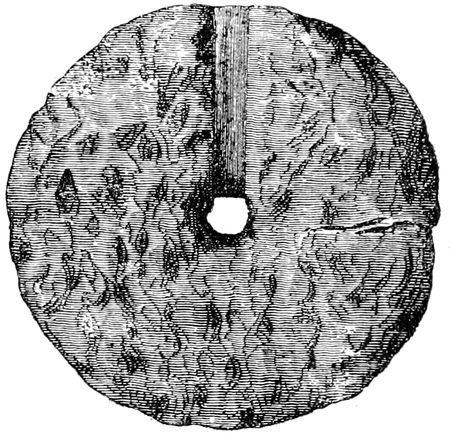
Fig. 25.—Cake of a rosin-like substance made of a paste of birch bark, and containing fragments of amber, used as a kind of putty to fill up the hollows of objects of bronze, &c., found in bogs and urns belonging to the bronze age.
From the finds of beautiful and often costly antiquities belonging to the bronze age,[113] and from their great numbers, the fact is brought vividly to our mind, that even before iron was discovered there existed in those regions a remarkable culture.
The people had attained very great proficiency in the art of casting, most of the objects are cast, and some of the weapons have still the mark of the clay upon them; the model was sometimes made of wax and clay put round it, the bronze was cast into the mould thus made, and the wax melted into the mould which afterwards was broken in order to take out the sword or object manufactured. Some of the small daggers especially are marvels of casting, which could not be surpassed to-day. The largest swords are cast in one piece. In the collection at Copenhagen nine of these are perfect, the size of the longest being from 35 to 38 inches. The swords, daggers, poniards often have their hilts ornamented or twisted with threads of gold.
The weapons of the bronze epoch are the same as those of 86the stone age; poniards, axes, spears, bows and arrows. The sword and the shield seem to have been in common use; one of these now in Copenhagen was found covered with thin gold.
The simple ornaments of the stone age are replaced by more varied and beautiful ones. Gold jewels and vases become common and testify to the wealth of the people. In this age as in the preceding age of stone, the people of the North attained a greater degree of proficiency, and seem to have possessed a higher degree of civilisation than the people of Central and Northern Europe belonging to the same period.
The graves containing unburnt bones which belong to the early period of the bronze age are very similar to those of the preceding period of the stone age, they contain several skeletons then finally decrease in size until they become about 7 feet long, or just large enough to contain one body.
The bodies were often not buried in stone chambers but in coffins made of the trunks of oak trees. It may be that at a later period the customs of burning bodies and burying bodies unburnt co-existed, as will be seen in the account of the iron age. The warrior was buried with his weapons just as in the stone age.
One of the most interesting graves which I have seen, belonging, probably, to the bronze age, is the Kivik cairn (see p. 88), near the sea on a beautiful bay near the town of Cimbrisham. This monument is the only one of its kind known in the North. It shows perfect resemblance to others of the bronze age, and differs only from the cairns found on the hilltops of Bohuslän in its larger size. We have looked with great care at the tracings, which are not so deep as those of the rock-tracings situated in the neighbourhood. The signs carved on the stones are evidently symbolical, and were so made as to look upon the great chief that had been buried there.
87
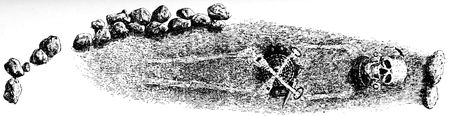
Fig. 26.—Skeleton in a grave, about 8 feet 5 inches long, lying south-west and north-east. The mound, which was about 4 feet high, with a diameter of 50 feet, contained in the centre another grave. Hesselagergaard, Broholm, Fyen. The original position of the head of the warrior was 19 inches from the line of stones. The warrior was buried with his weapons just as in the stone age. The following were some of the objects found in the grave: Fragments of a bronze fibula, a little above the head to the right. Two bronze rings, on each side of the head, 6 inches from it. A bronze necklet; 13 inches below the lower edge of the necklet was a large, flat, bronze titulus (sort of shield boss) ornamented with three rows of spirals. Above the edge of the large titulus was a bronze dagger, in a scabbard, 8½ inches long.
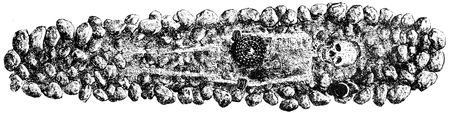
Fig. 27.—Man buried with ornaments. Grave, 9 feet 6 inches long, 2 feet 3 inches wide, in a mound, Hesselagergaard. Among the ornaments were some spiral bracelets and finger rings, amber beads and one light blue glass bead.
88
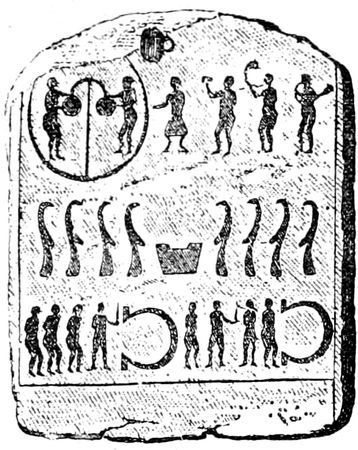
Fig. 28.
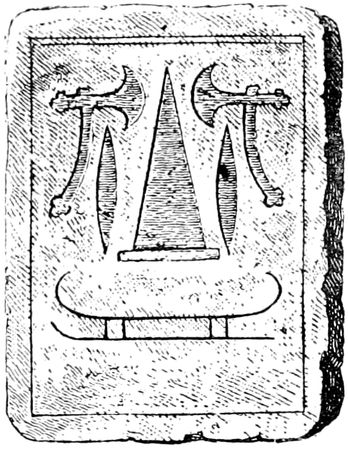
Fig. 29.
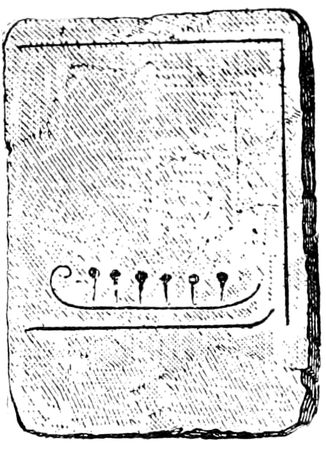
Fig. 30.
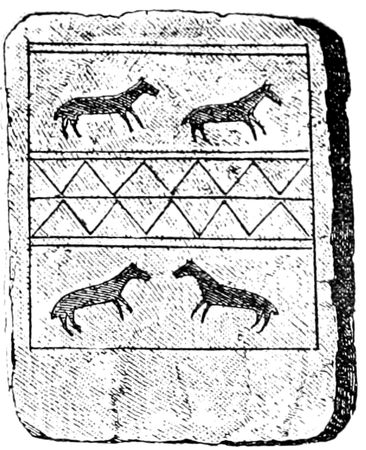
Fig. 31.
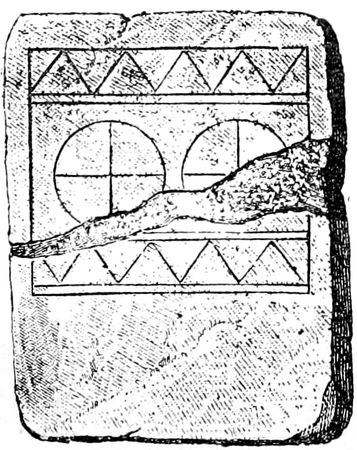
Fig. 32.
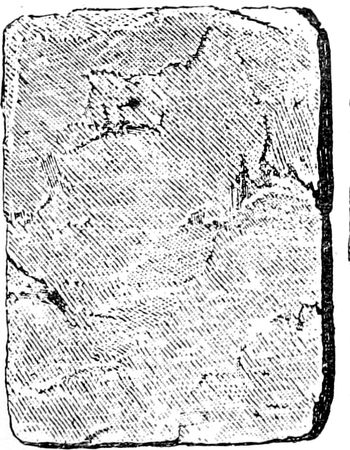
Fig. 33.
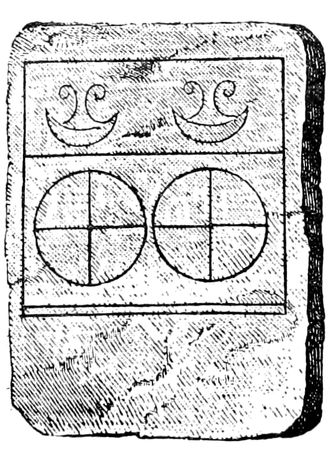
Fig. 34.
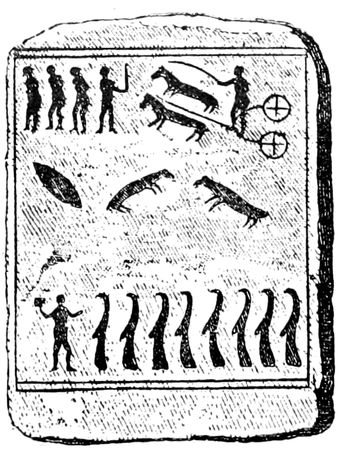
Fig. 35. Slab, from the Kivik grave.[114]
The Kivik grave, like many others belonging to the bronze age situated by the sea, is about 700 feet in circumference. The coffin, of flat upright slabs, was discovered in 1750; its length is fourteen feet; width, three feet. It is formed by 89four slabs on each side, and one at the north end. These were nearly four feet high, three feet wide, and eight to nine inches thick, and placed side by side. The inner surfaces were more or less smooth, though neither cut nor polished, and on these were the tracings. Two of these stones were lost about seventy years ago. The grave was covered with three slabs, and pointed north and south.
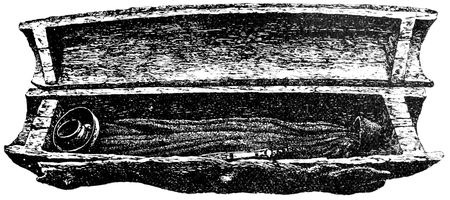
Fig. 36.—Oak coffin. Kongshöi find (Jutland).
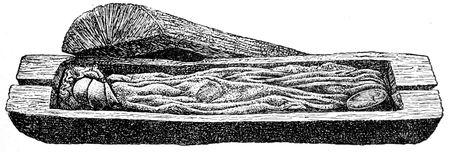
Fig. 37.—Oak coffin, with skeleton body covered with a woollen cloak, Treenhöi, Jutland; one half serving as bed.
In a mound at Havdrup in Ribe amt, Jutland, there were found in 1861 three well-preserved oak coffins. The contents of two had been taken out before the discovery was notified to the authorities, but the third was found in the state shown in the illustration. Near this mound was that of Kongshöi, containing four well-preserved oaken coffins. The contents of these were however not as well preserved as those in the coffins of Treenhöi. At the top of this mound there were discovered clay urns with burnt bones.
90In some of these oaken coffins are found wooden bowls with handles, and ornamented with inserted pins of tin.
The articles of dress, found in a most extraordinary state of preservation in the oak coffin, kept from decay no doubt by the tannin in the oak, show how the people of the North dressed well before iron had come into use among them. These are the earliest perfect garments known, and even the latest period to which they belong cannot be far from three thousand years ago, and they may be of a much earlier date.
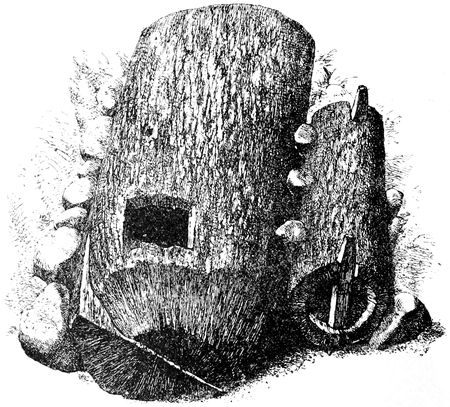
Fig. 38.—Oak coffin, Treenhöi, Jutland; one half serving as bed.
Among the most interesting graves which have given remarkable results in regard to dress are the mounds of Treenhöi by Vandrup, near Kolding, in Jutland.
In a man’s grave was a small cap covering the head of the body, which was wrapped in a deer-skin, composed of several sewn pieces of woven material, and ornamented outside with woollen threads, which had been inserted, and terminating with knots.
91
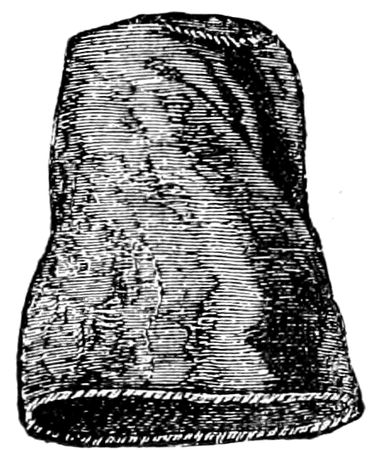
Fig. 39.—Cap.
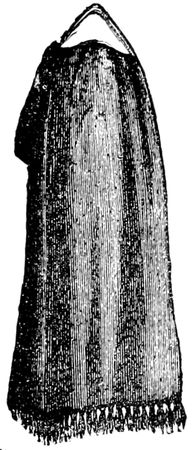
Fig. 40.—Woollen shawl.
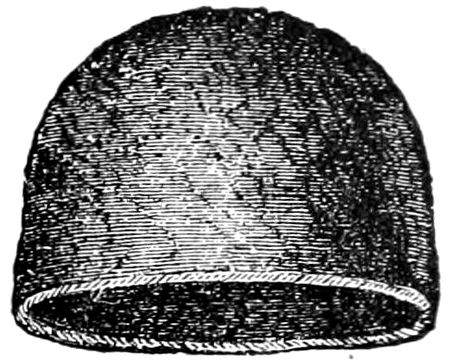
Fig. 41.—Cap.
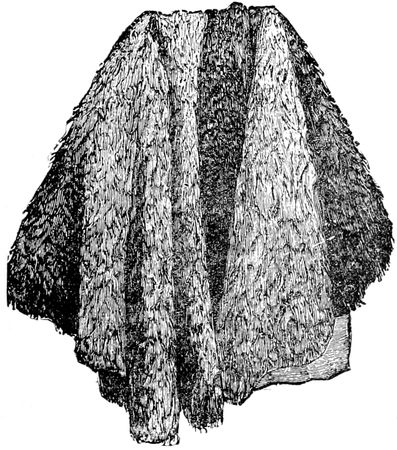
Fig. 42.—Coarse woollen cloak.
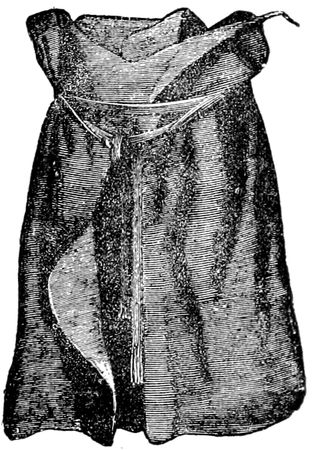
Fig. 43.—Woollen skirt held by a striped band. Articles of clothing, Treenhöi, Jutland.
On the left side under the cloak lay a bronze sword in a wooden sheath, of lath lined with deer-skin, the hair being inside. The hilt was ornamented by an oval bronze button at its top. There were no traces of leggings or other protection for the legs, but the feet seem to have been protected by strips of wool, and to have had leather shoes or sandals on.
92
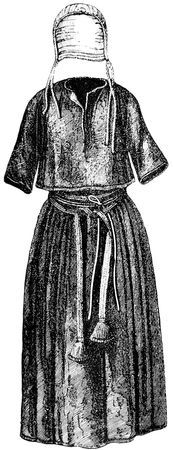
Fig. 44.—Woman’s skirt and bodice of wool, found with bronze ornaments, and a bronze poniard with horn handle by the side of the body which had been wrapped in a deer-skin.—Aarhus, North Jutland.
The graves of women contain daggers, which may possibly imply that the women had been warriors; also large spiral rings, various ornaments, finger-rings, bracelets, glass beads, &c.
Women’s dress of the bronze age seems to have consisted of the skirt and bodice as at the present time, but the men’s clothes were quite different from those of the iron age; in the earlier time trousers were not worn, while we see them in use in the latter.
Many sewing implements of bronze have been found in the graves, the needles like those of the stone age are sometimes made of bone, but many are of bronze; awls were used to pierce the holes in garments that were made of skins, and some peculiar shaped knives have been found which were probably used in the making of skin clothing, or in cutting leather.
In a grave-mound near Aarhus, in North Jutland, a coffin made of two oak logs was found. The bottom of the coffin was covered with an untanned ox or deer-hide. On this lay a large cloak, made of coarse wool and cattle-hair. In the cloak, which was partly destroyed, was wrapped the skeleton of a 93woman dressed. The hair was long and dark, and a net covered the head, tied under the chin.
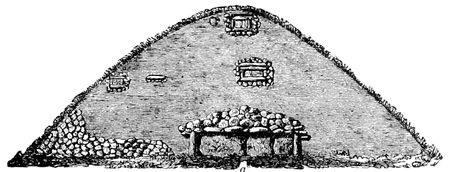
Fig. 45.—Profile of mound of the bronze age, with large coffin and unburnt body, and stone cist with cinerary urn containing burnt bones, also three smaller stone cists filled with burnt bones. Dömmerstorf, S. Halland.

Fig. 46.—Mound and sepulchral cist. The stones in this grave were of size of the fist, and formed a pavement of a diameter of about a yard. The urn contained burnt bones, among which were found a bronze awl, and fragments of a bronze saw.
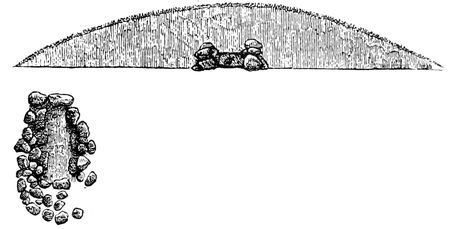
Fig. 47.—Mound at Elsehoved, Fyen. At the bottom, in the centre of the mound, was found an irregular grave filled with earth, of about 4 feet 9 inches in length, 1 foot 9 inches in width, 1 foot 10 inches in depth (measured inside). Outside, on the natural soil, was spread a bed of earth, rich in charcoal, which contained remains of burnt bones and pieces of a clay urn, &c.
Burnt and unburnt bodies are sometimes found in the same mound; the latter generally at the bottom of the graves, the former at the top, this shows that the graves with unburnt bodies are considerably the older of the two. A mound with several graves may possibly have been the burial place of one family. The graves of the later bronze age are more 94numerous on the shores of the Baltic than in other parts of Europe. Sometimes the burnt remains have been found wrapped in clothing, and placed in an ordinary sized coffin, but more generally these burnt bones are preserved in urns of clay enclosed in a small stone cist.
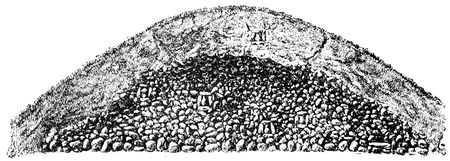
Fig. 48.—Cairn covered with earth, bronze age, Kongstrup, Zealand. Diameter nearly 40 feet; height, 10 feet; covered with about 3 feet of clay, containing over thirty urns, one of which was fastened with a resin-like substance; with burnt bones and cinders, protected by little sepulchral cists made of slabs.
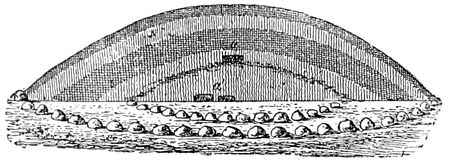
Fig. 49.—Mound of the bronze age, covering a double ring of stones; diameter of outside ring 86 feet; containing several burial-places, with urns and burnt bones.—Near Kallundborg, Zealand.
These stone cists of about the length of an average man are interesting as indicating the transition to the small ones containing burnt bones; some of these of a size large enough for an unburnt body have contained only a small heap of burnt bones, and evidently belonged to the period when the cremation of the dead began to prevail. Many of these little cists are only large enough to enclose a clay pot, in which the bones were collected; sometimes no coffins were found, but only clay pots containing ashes, a small bronze knife, a bit of bronze saw, or something of that kind. In some cases the bones were put simply into a hole in the mound and the whole covered with a stone slab.
95
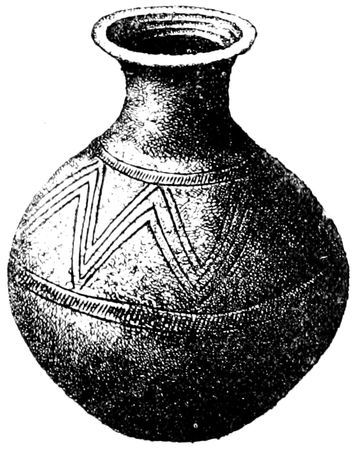
Fig. 50.—Clay vase; ⅙ real size. Found in stone cist in the mound with an urn containing burnt bones, among which lay two bronze knives.—Mound at Gjöttrup, near Lögstör, Denmark.
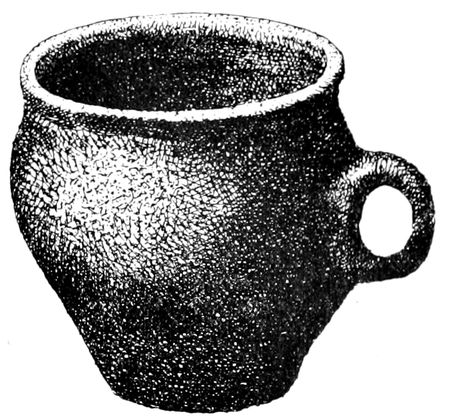
Fig. 51.—Pot of burned clay; ¼ real size. Found in a mound with urns and bronze objects.—Vidstrup, Hjörring amt, Denmark.
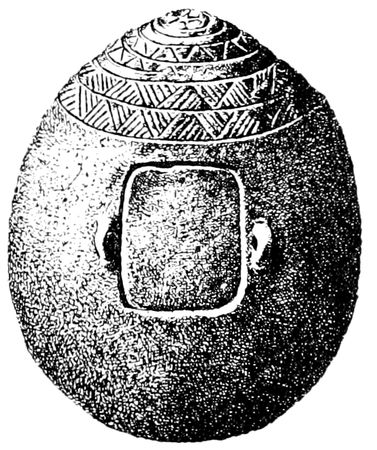
Fig. 52.—Cinerary urn, ⅙ real size. Burnt bones.—Holstein.
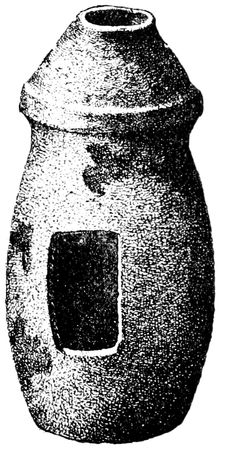
Fig. 53.—Cinerary urn, ⅙ real size. With burnt bones.—Jutland.
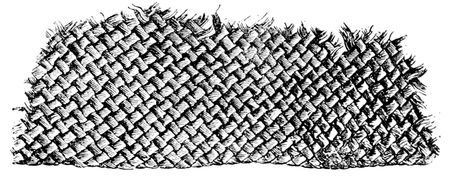
Fig. 54.—Fragment of woollen cloth. Real size. Found at the bottom of a mound at Dömmestorp, in Halland; in a fold of it lay a well-preserved bronze poniard with its leather scabbard. The shawl was 5 feet long and 20 inches wide.
96
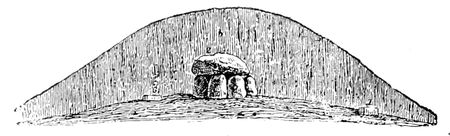
Fig. 55.—Maglehöj mound; height about 14 feet, diameter 40 to 50 feet; with sepulchral chamber, height, 5 feet; width, 5½ feet; length, 7 feet. Inside the chamber the ground was laid with cobble-stones; on top of these flint-stones, 2 to 3 inches in thickness; and then again a layer of cobble-stones, and among these were found: a diadem of bronze, two pieces of shields or breast-armour, the blade of a dagger, &c., &c.—Zeeland.
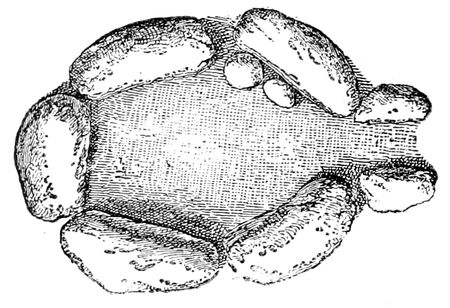
Fig. 56.—Floor of chamber.—Maglehöj.
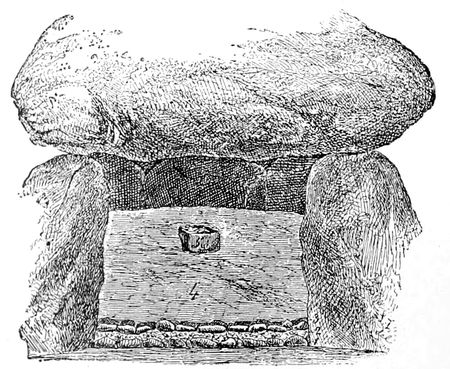
Fig. 57.—Interior of chamber with cinerary urn.—Maglehöj.
97
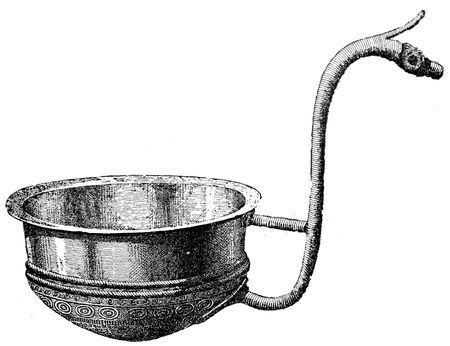
Fig. 58.—Gold vessel, ½ real size, found with ten other similar ones. All of 20-carat gold. Placed with the handles downward in the bronze urn, Fyen (see p. 101).
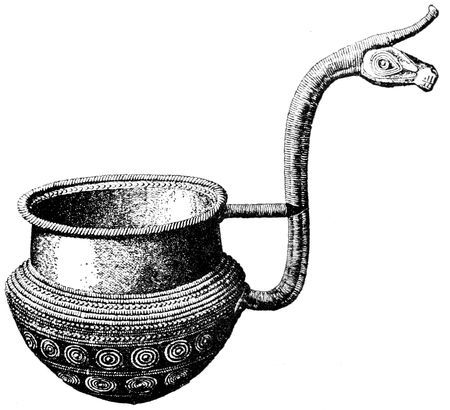
Fig. 59.—Gold vessel, ⅓ real size, handle surrounded with gold threads. Found with a gold vessel in a mound, Zeeland.
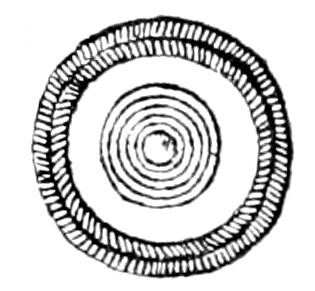
Fig. 60.—Bottom of the vase.
98
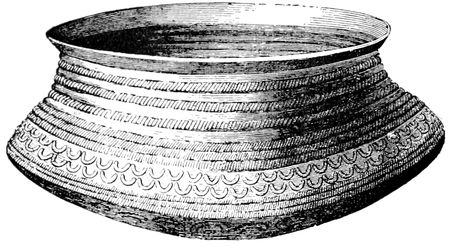
Fig. 61.—Gold vessel, about ½ real size, found under a slab, Halland. Weight, 2 oz. 5 dr.
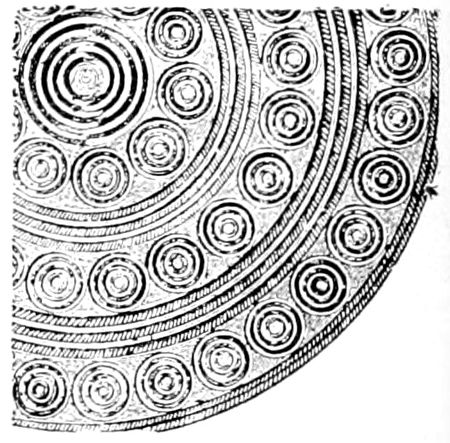
Fig. 62.—Design forming the bottom part of the vase. ¼ real size.
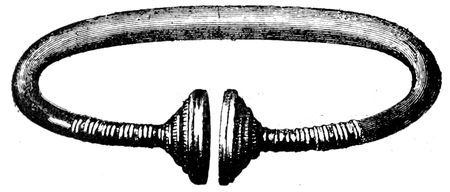
Fig. 63.—Bracelet of solid gold, ¾ real size; weight, 6 oz.—Scania.
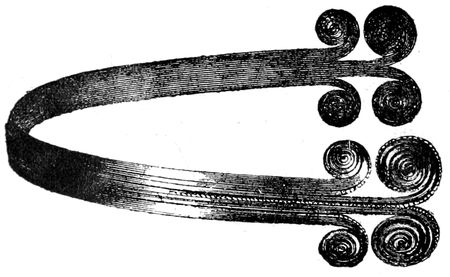
Fig. 64.—Diadem of gold, ⅔ real size, Balsby, Scania; deposited, together with four massive bronze axes, upon a slab below the surface of the ground.
99
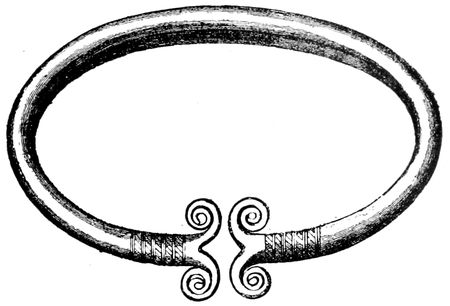
Fig. 65.—Hollow bracelet of gold, real size, found with four spiral gold bracelets near a large stone.—Skärje, Bohuslan.
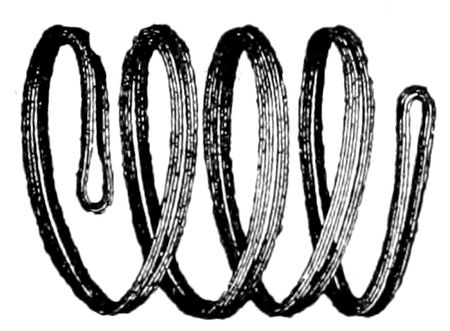
Fig. 66.—Spiral ring of double thread of gold.—Scania.
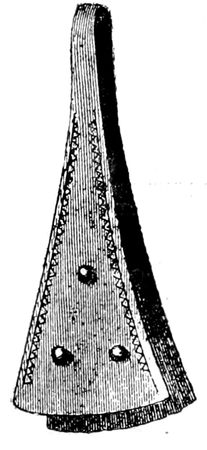
Fig. 67.—Pincers of gold. Real size.—Halland.
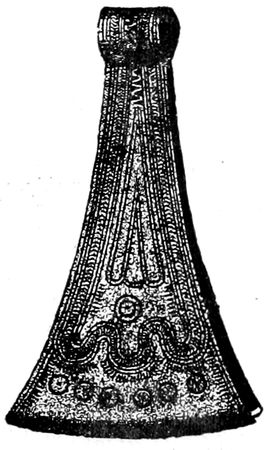
Fig. 68.—Bronze pincers. ¾ real size.—Fyen.
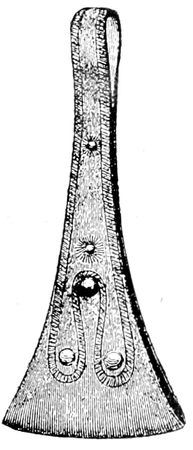
Fig. 69.—Bronze pincers. Real size.—Scania.
100
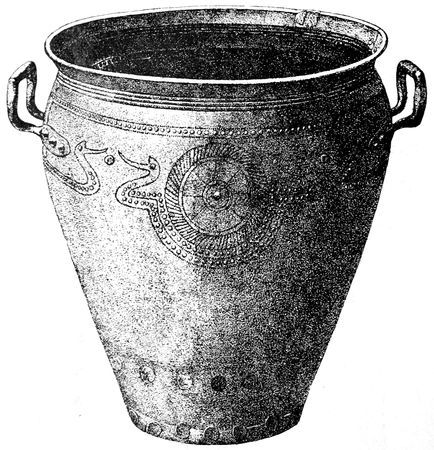
Fig. 70.—Bronze vessel, with representation of sun ship, with prow and stern alike, as in northern ships. ⅓ real size.—Bog near Aalborg, Denmark.
Vessels of bronze are uncommon in the graves; some by their form seem to be of Greek origin, while others appear to be of Northern make. Some beautifully cast, and of peculiar shape, seem to have been made to be suspended. Some are ornamented with the svastica[115] and other symbolic signs, and may have been used to carry offerings to the gods.
101
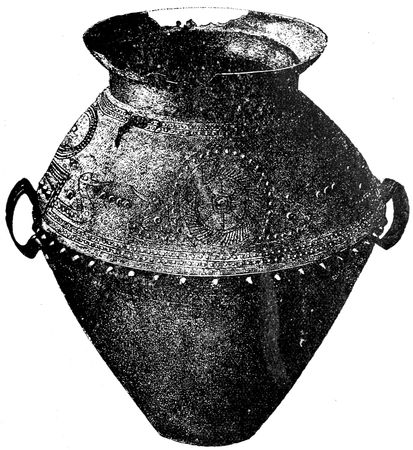
Fig. 71.—Bronze vase, in which were found eleven gold vessels with handles like illustration. Representation of sun ship, ⅓ real size.—Bog find, Rönninge, Fyen, Denmark.
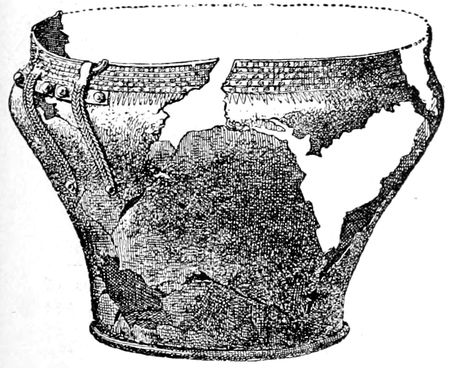
Fig. 72.—A vase of bronze found in a grave-cist in a mound, Fyen. The cist was three feet wide, built of stone slabs, with one on the top. ⅓ real size.
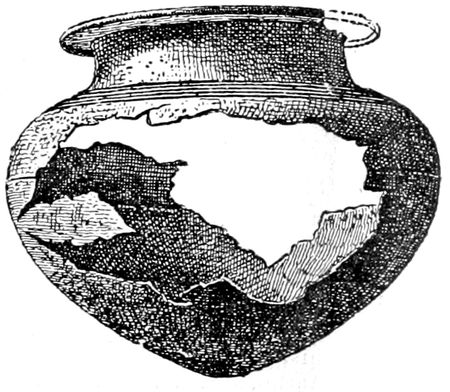
Fig. 73.—Bronze vase, with burnt bones, a gold arm-ring, four double buttons (two of gold and two of bronze), two bronze knives, &c., Denmark.
102
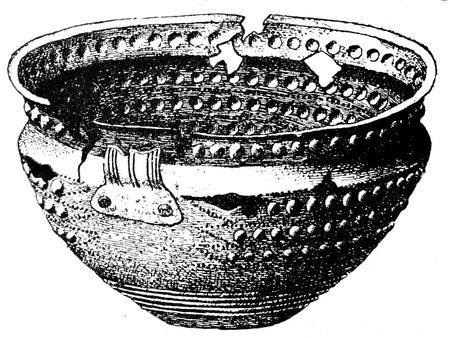
Fig. 74.—Bronze vase. ½ real size.—Broby, Denmark.
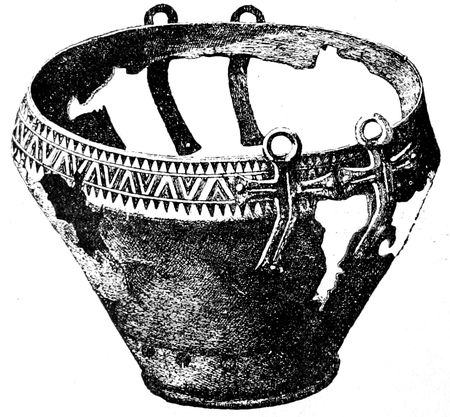
Fig. 75.—Bronze pail. ¼ real size.—Ögemose, Denmark.
103
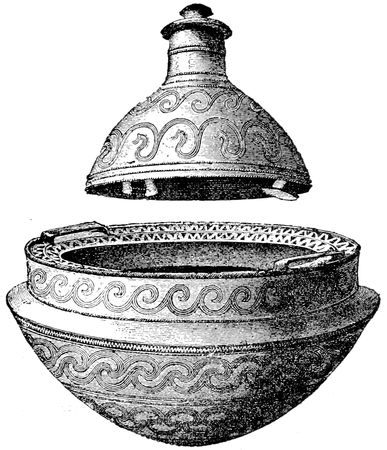
Fig. 76.—Hanging vase of bronze. ½ real size.—Bog, Senāte, Vestergötland.
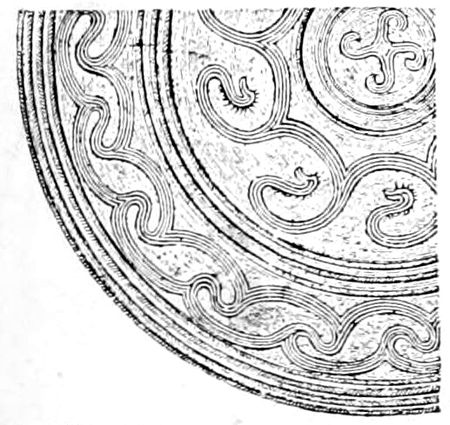
Fig. 77.—¼ real size. Svastica.
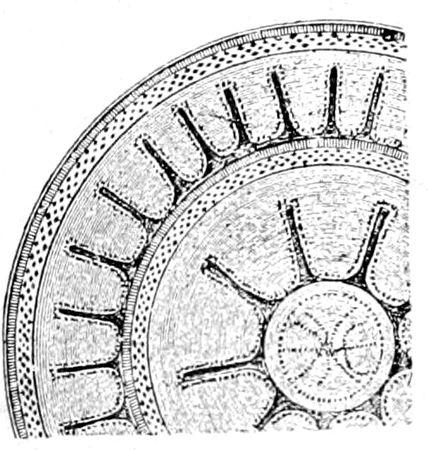
Fig. 78.—⅓ real size. Scania.
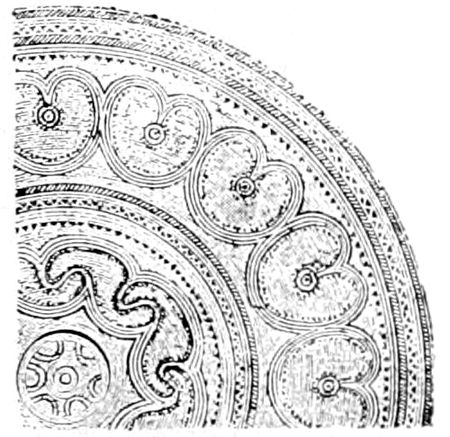
Fig. 79.—¼ real size. Patterns of the bottom of different vases.
The bogs[116] of Denmark contain large horns or trumpets, made entirely of bronze, with pendant chains (see p. 104). Nothing exactly corresponding to them has yet been discovered in other countries. They have been cast in several pieces, and with surprising skill, and are carefully fastened together by rivets which interlace each other. Sometimes they have been buried in the bogs in a broken state, but generally have been so well preserved that they can still be blown. They produce a dull and not very loud sound. On one occasion they have been found with a shield of bronze and a few bronze swords, hence their use in battle may be inferred. But generally several of them are found together, rarely less than two, and sometimes as many as six on the same spot.
104
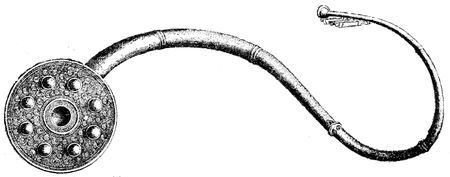
Fig. 80.—Battle horn of bronze, ⅛ real size.—Bog, Fredriksborg Amt, Denmark.
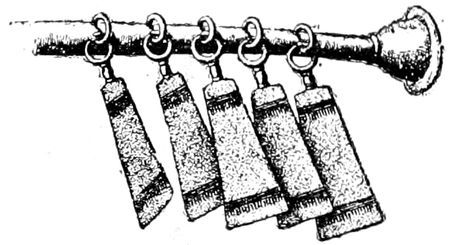
Fig. 81.—Ornament to battle-horn. ½ real size.
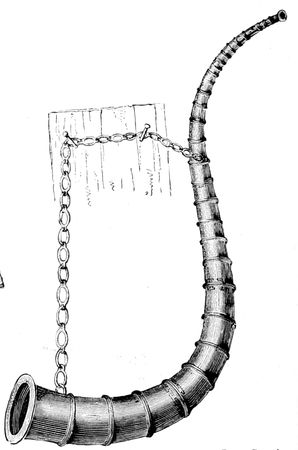
Fig. 82.—Horn of bronze, ⅐ real size.—Bog, Scania, at a depth of over 6 feet.
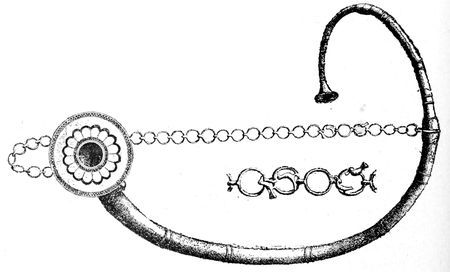
Fig. 83.—Battle horn of bronze, with chain ornamented with birds; ⅛ real size, or 30 inches long.—Bog, Ribe Amt, Denmark.
105
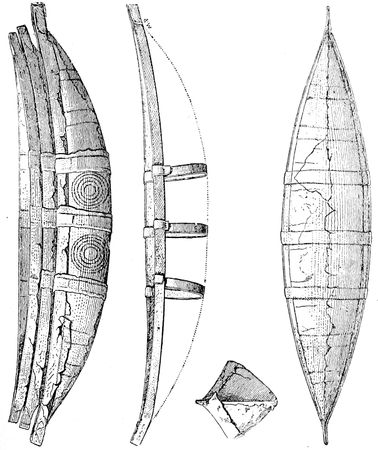
Fig. 84.—Bronze boats covered with gold.—Nors parish, North Jutland.
A perfectly unique find belonging to the bronze age is that discovered at Nors parish, Northern Jutland, in 1885. In an urn, greatly damaged, were about 100 small boats of bronze canoe-shaped, about four to five inches in length, placed one into another, all covered inside and outside with a thin sheet of gold; some have been found to be ornamented with concentric 106rings on the side. What was the meaning of the offering or find will always remain a mystery.
The curiously-shaped knives, which are found in very great numbers, seem to be peculiar to the North, and the North of Germany. What they were used for is hard to tell, possibly as sacrificial knives. It can hardly be doubted that the signs upon them are symbolical; some may be representations of the sun-ship, others are somewhat like minute representations of the rock-tracings, or designs upon Greek coins, while the heads of horses remind us of the gold vases represented in this chapter.
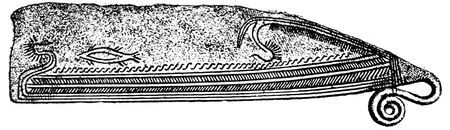
Fig. 85.—Bronze knife, with sun ship and fish. Real size. In a mound at Skjellerup, near Aarhus, North Jutland.
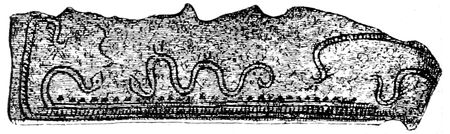
Fig. 86.—Bronze knife, without handle, with a serpent. Real size. In a mound, Jutland, with three stone coffins.
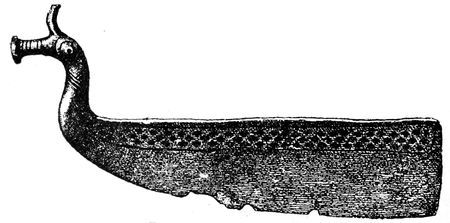
Fig. 87.—Bronze knife. Real size. Found in mound in Jutland.
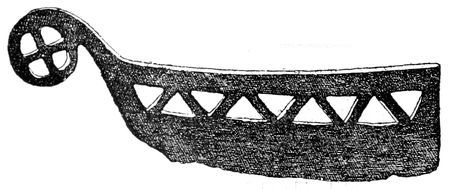
Fig. 88.—Bronze knife in clay urn, with burnt bones, two other knives, &c. ⅔ real size.—Denmark.
107
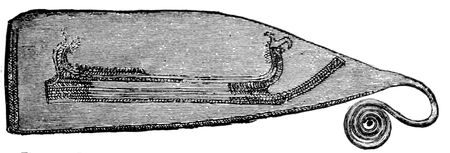
Fig. 89.—Bronze knife, with a vessel. ⅔ real size. In a mound.—Fyen.
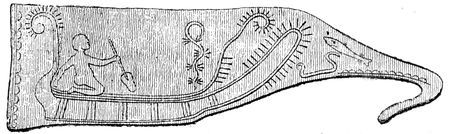
Fig. 90.—Bronze knife.—Jutland.
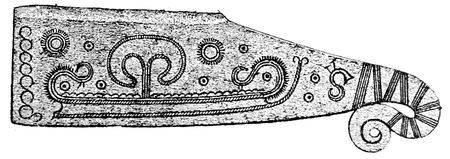
Fig. 91.—Bronze knife; ship, with two suns and S. Skanderborg Amt, Denmark. ⅔ real size.—Jutland.
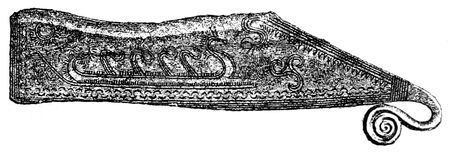
Fig. 92.—Bronze knife, with ship, sun, and triskele. ⅔ real size.—In an urn in Holstein.
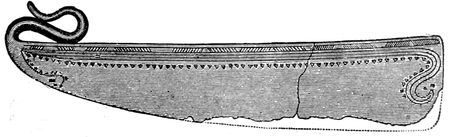
Fig. 93.—Bronze knife, mound at Dömmestorp, Halland, in a ruined stone cist. Real size.
108
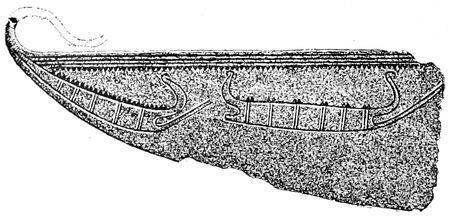
Fig. 94.—Bronze knife, with two ships very like those on rock-tracings. Real size.—In a mound near Vimose on Fyen.
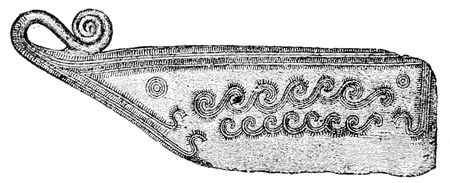
Fig. 95.—Bronze knife, Scania. Real size.—Scania.
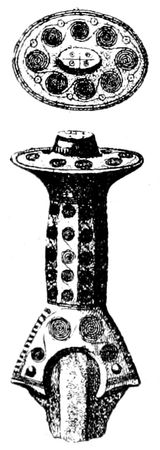
Fig. 96.—In a mound.—Zeeland.
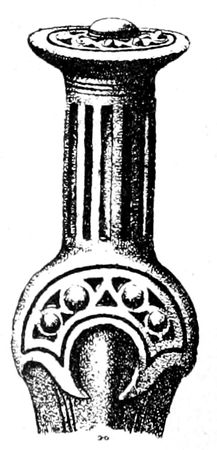
Fig. 97.—Found in a field in Fyen, near Svendborg, with two other swords.
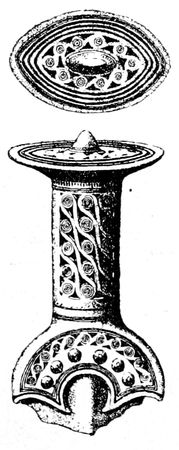
Fig. 98.
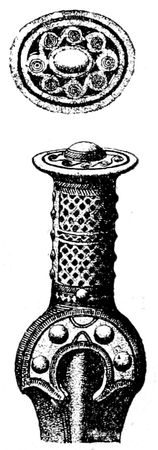
Fig. 99.—Found with bones and charcoal in a mound.—Fyen. Handles of bronze swords. ⅓ real size.
109
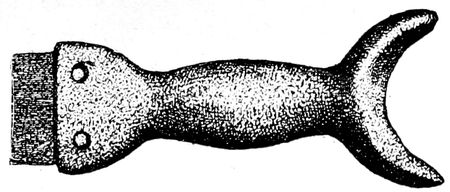
Fig. 100.—Real size.
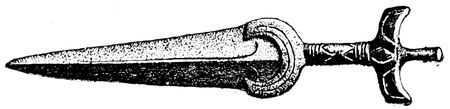
Fig. 101.—Real size.
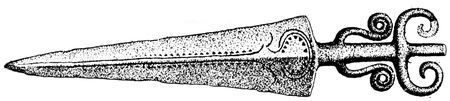
Fig. 102.—Real size.—Zeeland.
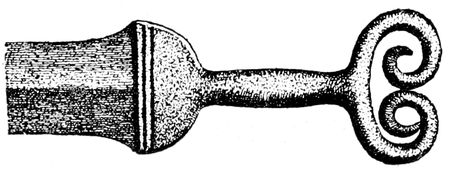
Fig. 103.—In urn with burnt bones, together with a bronze knife, tongs, and an arrow-point. Real size.—Möen.
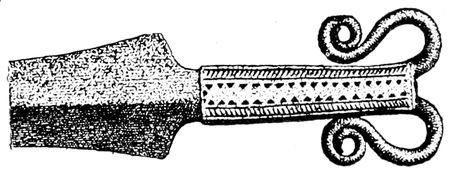
Fig. 104.—Real size.—Möen. Daggers. Varying in size from 3 inches to 6½ inches.
110
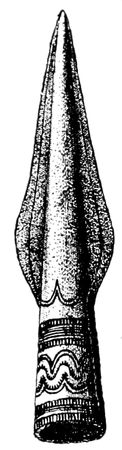
Fig. 105.—½ real size. In a field in the side of a lake with 163 pieces of bronze.
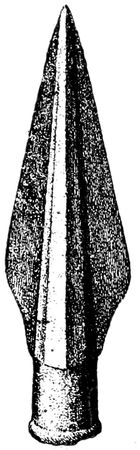
Fig. 106.—½ real size.
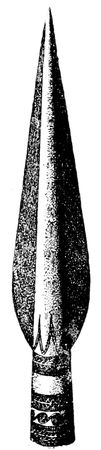
Fig. 107.—¼ real size. Found with Fig. 105.
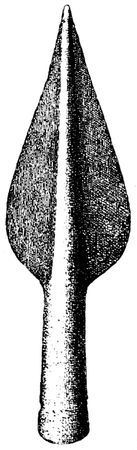
Fig. 108.—½ real size. Spear-heads, bronze.
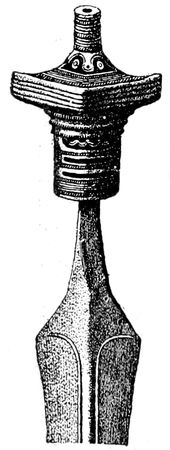
Fig. 109.—In a bog, Falster. ⅓ real size.
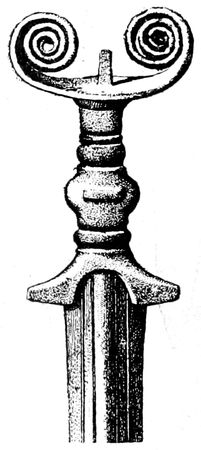
Fig. 110.—In a bog, Jutland. ⅓ real size.
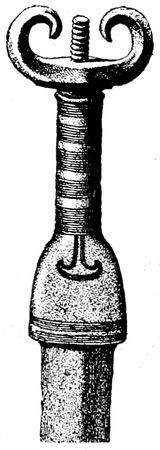
Fig. 111.—In mound, Jutland. ⅓ real size.
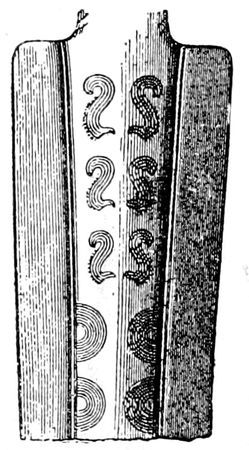
Fig. 112.—Upper part of bronze sword. ½ real size.—Scania. Swords.—These peculiar bronze swords are found in various towns in England and Germany.
111

Fig. 113.—Spear-point of bronze. ½ real size. In a heap of coals with twenty other spear-points.—Nordre Aurdal, Christiania.

Fig. 114.—Spear-head of bronze. ⅓ real size.—Fálköping, Vestergötland.
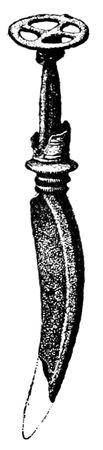
Fig. 115.—Knife of bronze. ⅙ real size. In stone coffin in a mound, Island of Möen, in the Baltic, with a sword and a knife.
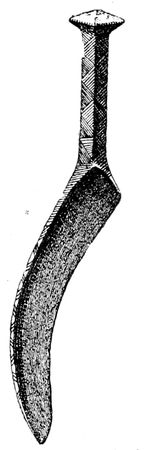
Fig. 116.—Knife of bronze. ⅓ real size.
112
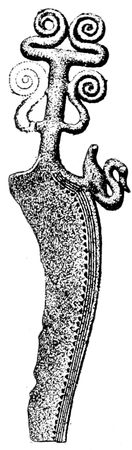
Fig. 117.—Knife of bronze. ⅓ real size. In mound, Zeeland.
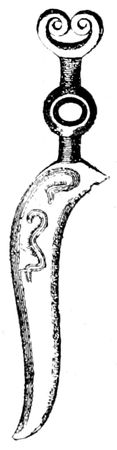
Fig. 118.—Knife of bronze. ½ real size.—Halland, Sweden.
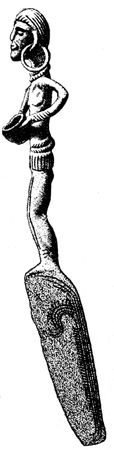
Fig. 119.—½ real size. In urn, Holstein.

Fig. 120.—⅓ real size. In urn, Fyen. Knives of bronze.

Fig. 121.—Bronze sword. ⅓ real size.—Vestergotland.
113

Fig. 122.—Sword of bronze, ⅕ real size.—Lake Längsjon, Uppland.

Fig. 123.—Dagger of bronze; full length, 24 inches.—Köngshöi find, Denmark.

Fig. 124.—Leather sheath for bronze dagger, handle of horn; in tumulus at Dömmestorp, Halland.
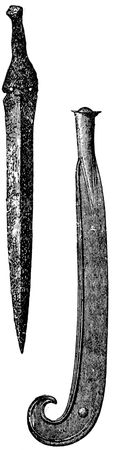
Fig. 125.—One-edged bronze sword, found in a bog, Östergötland, Sweden. Length, about 20 inches. The only one of this type found in the North. Prof. Stephens in his ‘Runic Monuments’ shows that the type is Assyrian, and that it has come by the trade routes through Russia into Sweden from Asia.
114
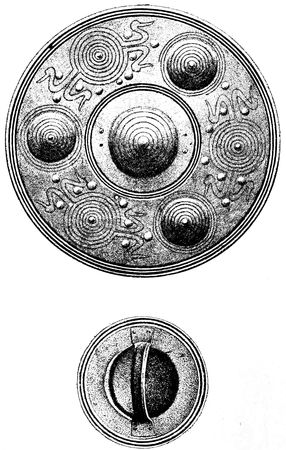
Fig. 126.—Bronze shield with handle. ⅕ real size.—Denmark.
115
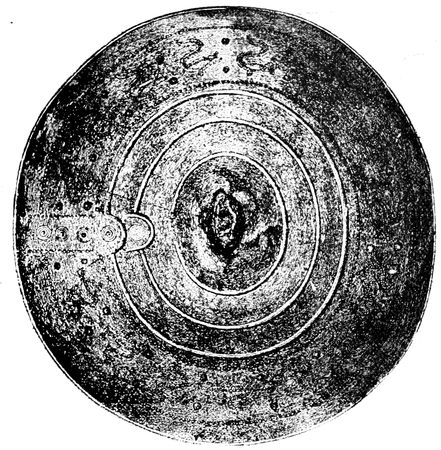
Fig. 127.—Thin shield of bronze, ⅛ real size, found in a bog at a depth of a little more than 3 feet. 66 inches full size diameter; bird-like figures round centre.—Halland.
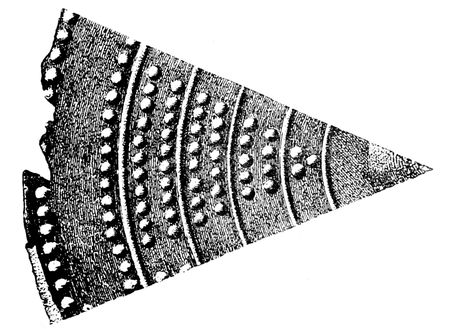
Fig. 128.—One-eighth part of a small bronze shield, measuring only 27 inches in diameter, containing eight triangles; ½ size. In a bog, Falster.
116
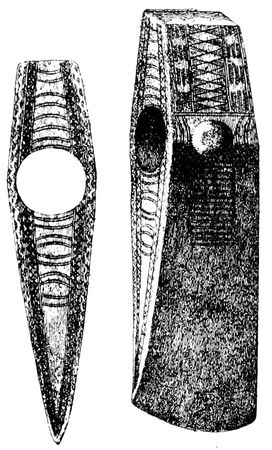
Fig. 129.—⅓ real size.—Flensborg amt. Denmark.
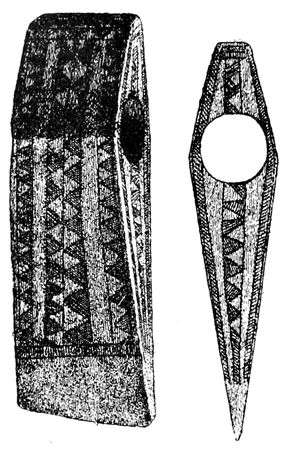
Fig. 130.—⅓ real size.
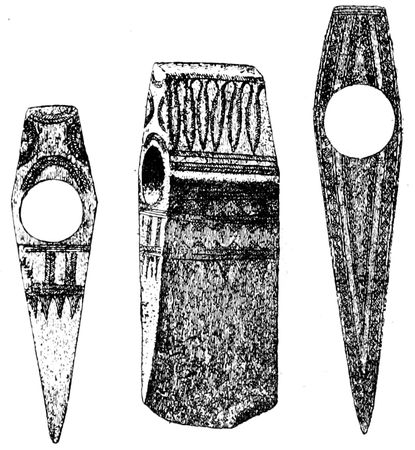
Fig. 131.—Massive bronze axe, ⅓ real size, ornamented on three sides.—Veile amt, Denmark.
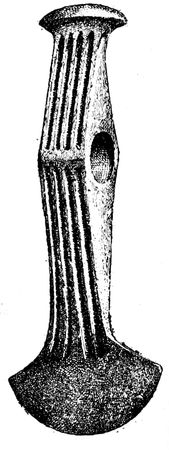
Fig. 132.—In Randersfjord, Jutland. ½ real size. Bronze axes.
117
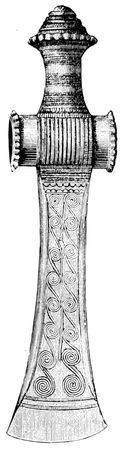
Fig. 133.—Bronze axe; ½ real size.—Scania.
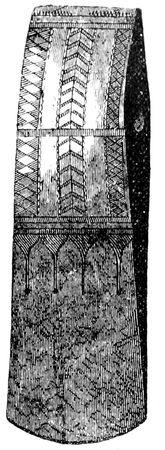
Fig. 134.—Bronze axe; ⅓ real size.—Bohuslän, Sweden.
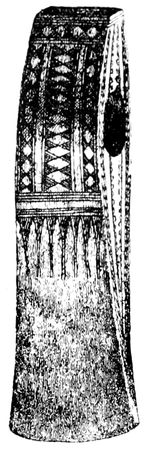
Fig. 135.—⅓ real size. Ploughed up in a field, Zeeland.
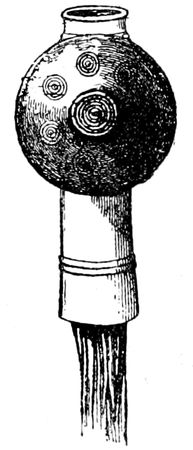
Fig. 136.—Fragment of bronze axe, ⅓ real size, with handle of oak.—Near Eskilstuna, Södermanland.
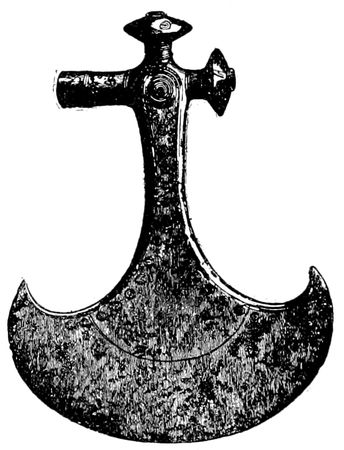
Fig. 137.—Axe of thin layer of bronze, ⅙ real size, cast upon a mould of clay, ornamented with some round plaques of gold, in the midst of which are pieces of amber.—Södermanland, Sweden.
118
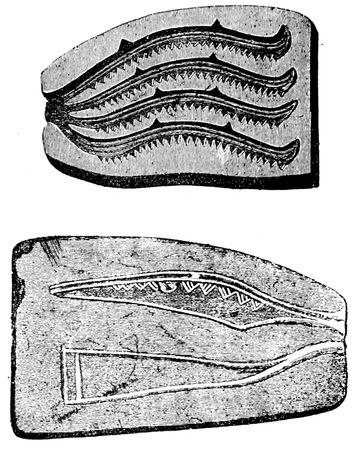
Fig. 138.—Two forms of stone for casting; one for four saws, the other for two knives. ⅓ real size.—Scania.
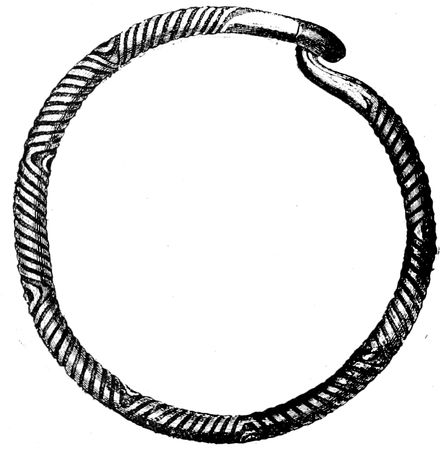
Fig. 139.—Necklace of bronze. ⅓ real size.—Bog, V.-Götland.
119
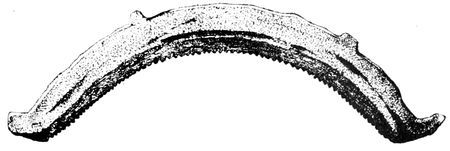
Fig. 140.—Saw of bronze. ½ real size.—Denmark.
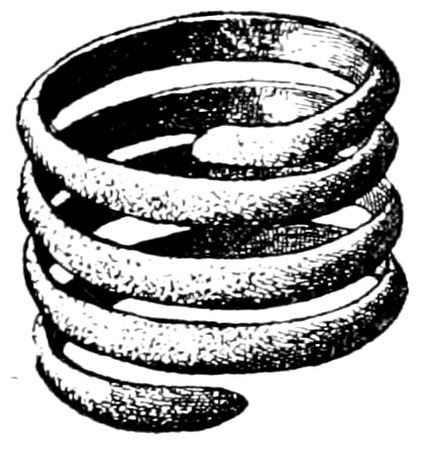
Fig. 141.—Bronze ring. Real size.—Denmark.
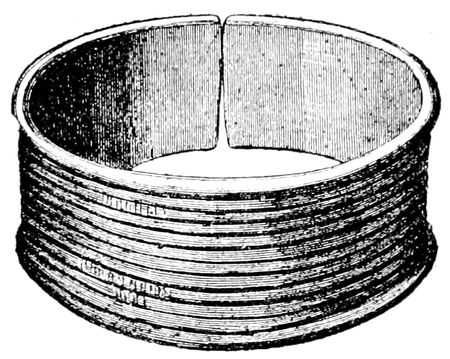
Fig. 142.—One of two bronze bracelets round wrist of skeleton in tumulus, Dömmestorp, Halland. ⅔ real size.
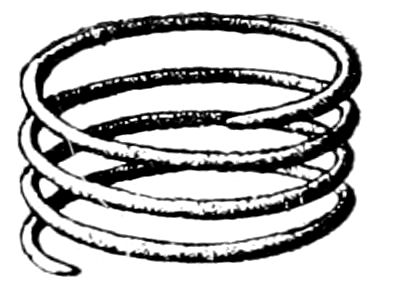
Fig. 143.—Bronze ring. Real size.—Denmark.
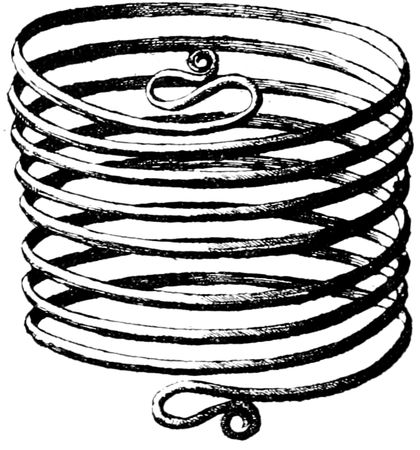
Fig. 144.—Bronze bracelet, ½ real size.—Denmark.
120
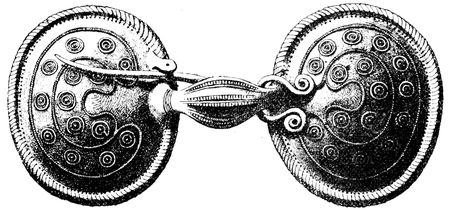
Fig. 145.—Fibula of bronze. ⅔ real size. Found with a bronze ring in bog, Zeeland.
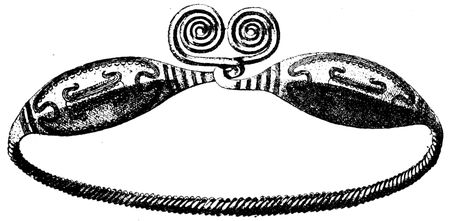
Fig. 146.—Head ornament or hair-ring. Little less than ½ size.
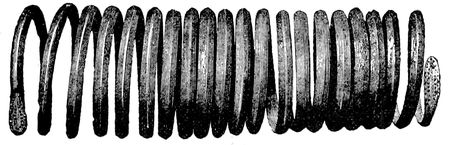
Fig. 147.—Long spiral bracelet, found near a big stone, Scania.
121
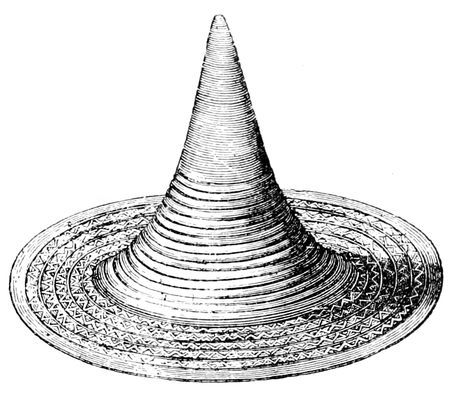
Fig. 148.—Tutulus of bronze, with many other objects, in a large mound at Bosgården, near Lund, Sweden.
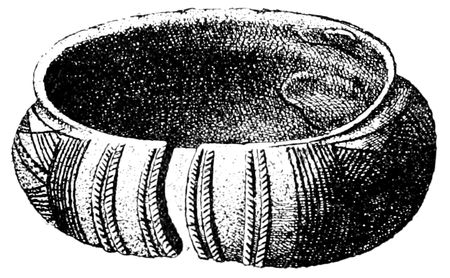
Fig. 149.—Bracelet. ½ real size.—Denmark.
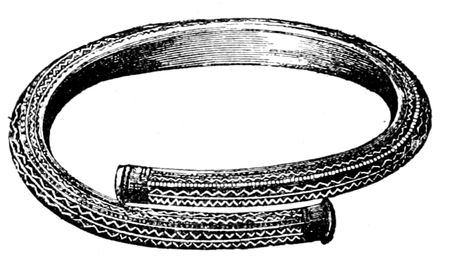
Fig. 150.—Bracelet of bronze. ⅔ real size.—Scania.
122
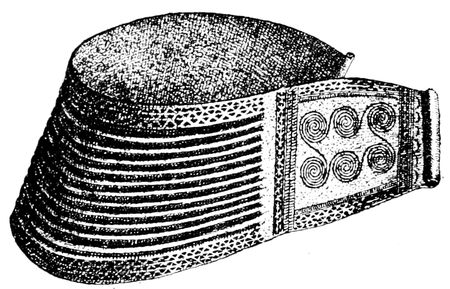
Fig. 151.—Diadem of bronze. ½ real size.—Denmark.
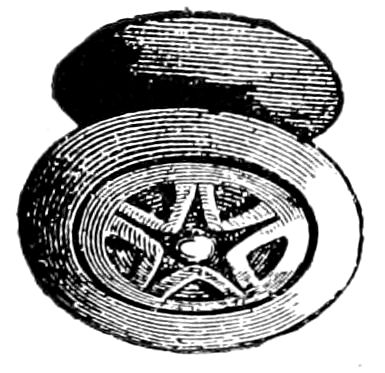
Fig. 152.—Button of bronze. Real size.—Scania.
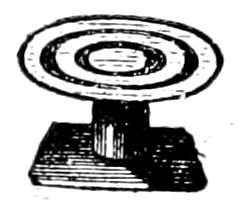
Fig. 153.—Button found with other objects in a small clay urn, with burnt bones, surrounded by little slabs; real size.—Dömmestorp, Halland.
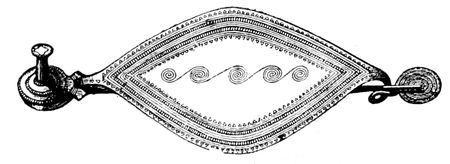
Fig. 154.—Fibula of bronze. ⅖ real size.—Scania.[117]

Fig. 155.—Bronze pin. ⅓ real size.—Bohuslän.
123
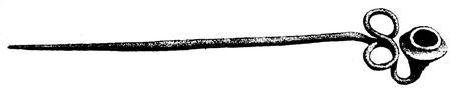
Fig. 156.—In a private collection. ⅔ real size.
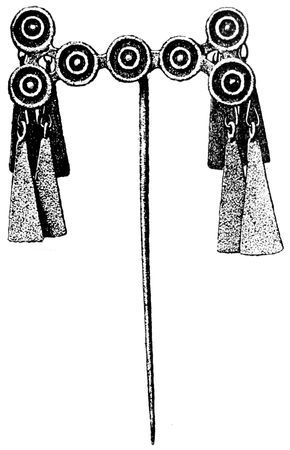
Fig. 157.—Found in a bog among the contents of a bronze vessel—rings, pins, knives, etc. ½ real size.—Fyen. Bronze pins.

Fig. 158.—⅔ real size.—Jutland.

Fig. 159.—In urn with burnt bones. ⅔ real size.—Jutland.
124
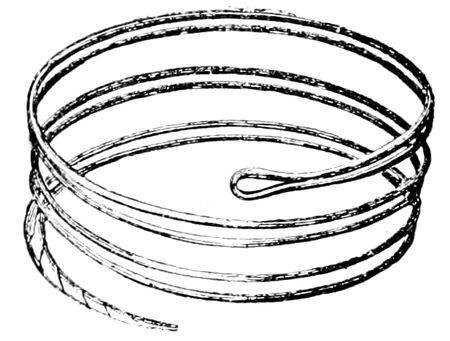
Fig. 160.—Bracelet of gold. ½ real size.
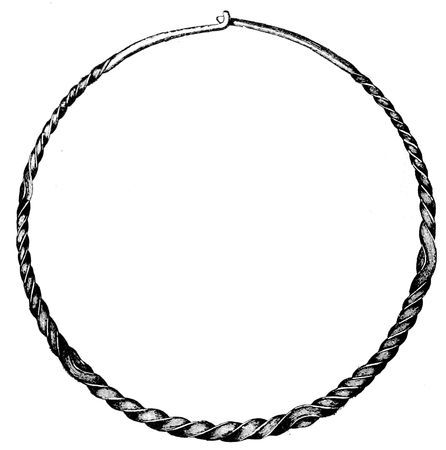
Fig. 161.—Twisted necklace of bronze, ½ real size, found in a bog at a depth of 1m. 5c. at Langhö, Södermanland.
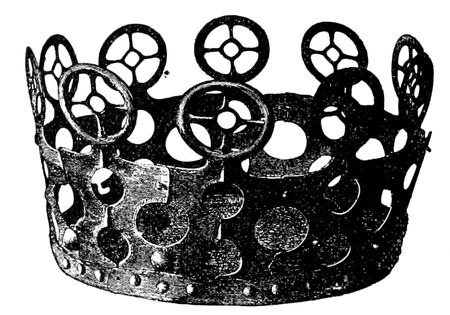
Fig. 162.—Ornament of bronze, ⅛ real size, for wooden pail.—Bog of Balkåkra, near Ystad, Scania.
125